EP1143729A1 - Dispositif de décodage d'un flux d'information de télévision et procédé de transmission de données relatives à une boíte à lettres électronique - Google Patents
Dispositif de décodage d'un flux d'information de télévision et procédé de transmission de données relatives à une boíte à lettres électronique Download PDFInfo
- Publication number
- EP1143729A1 EP1143729A1 EP01400119A EP01400119A EP1143729A1 EP 1143729 A1 EP1143729 A1 EP 1143729A1 EP 01400119 A EP01400119 A EP 01400119A EP 01400119 A EP01400119 A EP 01400119A EP 1143729 A1 EP1143729 A1 EP 1143729A1
- Authority
- EP
- European Patent Office
- Prior art keywords
- television
- subscriber
- operator
- data
- messages
- Prior art date
- Legal status (The legal status is an assumption and is not a legal conclusion. Google has not performed a legal analysis and makes no representation as to the accuracy of the status listed.)
- Withdrawn
Links
Images

Classifications
-
- H—ELECTRICITY
- H04—ELECTRIC COMMUNICATION TECHNIQUE
- H04N—PICTORIAL COMMUNICATION, e.g. TELEVISION
- H04N7/00—Television systems
- H04N7/16—Analogue secrecy systems; Analogue subscription systems
-
- H—ELECTRICITY
- H04—ELECTRIC COMMUNICATION TECHNIQUE
- H04L—TRANSMISSION OF DIGITAL INFORMATION, e.g. TELEGRAPHIC COMMUNICATION
- H04L51/00—User-to-user messaging in packet-switching networks, transmitted according to store-and-forward or real-time protocols, e.g. e-mail
- H04L51/21—Monitoring or handling of messages
- H04L51/224—Monitoring or handling of messages providing notification on incoming messages, e.g. pushed notifications of received messages
-
- H—ELECTRICITY
- H04—ELECTRIC COMMUNICATION TECHNIQUE
- H04N—PICTORIAL COMMUNICATION, e.g. TELEVISION
- H04N21/00—Selective content distribution, e.g. interactive television or video on demand [VOD]
- H04N21/20—Servers specifically adapted for the distribution of content, e.g. VOD servers; Operations thereof
- H04N21/23—Processing of content or additional data; Elementary server operations; Server middleware
- H04N21/235—Processing of additional data, e.g. scrambling of additional data or processing content descriptors
-
- H—ELECTRICITY
- H04—ELECTRIC COMMUNICATION TECHNIQUE
- H04N—PICTORIAL COMMUNICATION, e.g. TELEVISION
- H04N21/00—Selective content distribution, e.g. interactive television or video on demand [VOD]
- H04N21/20—Servers specifically adapted for the distribution of content, e.g. VOD servers; Operations thereof
- H04N21/23—Processing of content or additional data; Elementary server operations; Server middleware
- H04N21/236—Assembling of a multiplex stream, e.g. transport stream, by combining a video stream with other content or additional data, e.g. inserting a URL [Uniform Resource Locator] into a video stream, multiplexing software data into a video stream; Remultiplexing of multiplex streams; Insertion of stuffing bits into the multiplex stream, e.g. to obtain a constant bit-rate; Assembling of a packetised elementary stream
- H04N21/23614—Multiplexing of additional data and video streams
-
- H—ELECTRICITY
- H04—ELECTRIC COMMUNICATION TECHNIQUE
- H04N—PICTORIAL COMMUNICATION, e.g. TELEVISION
- H04N21/00—Selective content distribution, e.g. interactive television or video on demand [VOD]
- H04N21/40—Client devices specifically adapted for the reception of or interaction with content, e.g. set-top-box [STB]; Operations thereof
- H04N21/43—Processing of content or additional data, e.g. demultiplexing additional data from a digital video stream; Elementary client operations, e.g. monitoring of home network or synchronising decoder's clock; Client middleware
- H04N21/431—Generation of visual interfaces for content selection or interaction; Content or additional data rendering
- H04N21/4312—Generation of visual interfaces for content selection or interaction; Content or additional data rendering involving specific graphical features, e.g. screen layout, special fonts or colors, blinking icons, highlights or animations
-
- H—ELECTRICITY
- H04—ELECTRIC COMMUNICATION TECHNIQUE
- H04N—PICTORIAL COMMUNICATION, e.g. TELEVISION
- H04N21/00—Selective content distribution, e.g. interactive television or video on demand [VOD]
- H04N21/40—Client devices specifically adapted for the reception of or interaction with content, e.g. set-top-box [STB]; Operations thereof
- H04N21/43—Processing of content or additional data, e.g. demultiplexing additional data from a digital video stream; Elementary client operations, e.g. monitoring of home network or synchronising decoder's clock; Client middleware
- H04N21/431—Generation of visual interfaces for content selection or interaction; Content or additional data rendering
- H04N21/4312—Generation of visual interfaces for content selection or interaction; Content or additional data rendering involving specific graphical features, e.g. screen layout, special fonts or colors, blinking icons, highlights or animations
- H04N21/4314—Generation of visual interfaces for content selection or interaction; Content or additional data rendering involving specific graphical features, e.g. screen layout, special fonts or colors, blinking icons, highlights or animations for fitting data in a restricted space on the screen, e.g. EPG data in a rectangular grid
-
- H—ELECTRICITY
- H04—ELECTRIC COMMUNICATION TECHNIQUE
- H04N—PICTORIAL COMMUNICATION, e.g. TELEVISION
- H04N21/00—Selective content distribution, e.g. interactive television or video on demand [VOD]
- H04N21/40—Client devices specifically adapted for the reception of or interaction with content, e.g. set-top-box [STB]; Operations thereof
- H04N21/43—Processing of content or additional data, e.g. demultiplexing additional data from a digital video stream; Elementary client operations, e.g. monitoring of home network or synchronising decoder's clock; Client middleware
- H04N21/434—Disassembling of a multiplex stream, e.g. demultiplexing audio and video streams, extraction of additional data from a video stream; Remultiplexing of multiplex streams; Extraction or processing of SI; Disassembling of packetised elementary stream
- H04N21/4348—Demultiplexing of additional data and video streams
-
- H—ELECTRICITY
- H04—ELECTRIC COMMUNICATION TECHNIQUE
- H04N—PICTORIAL COMMUNICATION, e.g. TELEVISION
- H04N21/00—Selective content distribution, e.g. interactive television or video on demand [VOD]
- H04N21/40—Client devices specifically adapted for the reception of or interaction with content, e.g. set-top-box [STB]; Operations thereof
- H04N21/43—Processing of content or additional data, e.g. demultiplexing additional data from a digital video stream; Elementary client operations, e.g. monitoring of home network or synchronising decoder's clock; Client middleware
- H04N21/435—Processing of additional data, e.g. decrypting of additional data, reconstructing software from modules extracted from the transport stream
-
- H—ELECTRICITY
- H04—ELECTRIC COMMUNICATION TECHNIQUE
- H04N—PICTORIAL COMMUNICATION, e.g. TELEVISION
- H04N21/00—Selective content distribution, e.g. interactive television or video on demand [VOD]
- H04N21/40—Client devices specifically adapted for the reception of or interaction with content, e.g. set-top-box [STB]; Operations thereof
- H04N21/43—Processing of content or additional data, e.g. demultiplexing additional data from a digital video stream; Elementary client operations, e.g. monitoring of home network or synchronising decoder's clock; Client middleware
- H04N21/442—Monitoring of processes or resources, e.g. detecting the failure of a recording device, monitoring the downstream bandwidth, the number of times a movie has been viewed, the storage space available from the internal hard disk
- H04N21/4424—Monitoring of the internal components or processes of the client device, e.g. CPU or memory load, processing speed, timer, counter or percentage of the hard disk space used
-
- H—ELECTRICITY
- H04—ELECTRIC COMMUNICATION TECHNIQUE
- H04N—PICTORIAL COMMUNICATION, e.g. TELEVISION
- H04N21/00—Selective content distribution, e.g. interactive television or video on demand [VOD]
- H04N21/40—Client devices specifically adapted for the reception of or interaction with content, e.g. set-top-box [STB]; Operations thereof
- H04N21/45—Management operations performed by the client for facilitating the reception of or the interaction with the content or administrating data related to the end-user or to the client device itself, e.g. learning user preferences for recommending movies, resolving scheduling conflicts
- H04N21/462—Content or additional data management e.g. creating a master electronic programme guide from data received from the Internet and a Head-end or controlling the complexity of a video stream by scaling the resolution or bit-rate based on the client capabilities
- H04N21/4622—Retrieving content or additional data from different sources, e.g. from a broadcast channel and the Internet
-
- H—ELECTRICITY
- H04—ELECTRIC COMMUNICATION TECHNIQUE
- H04N—PICTORIAL COMMUNICATION, e.g. TELEVISION
- H04N21/00—Selective content distribution, e.g. interactive television or video on demand [VOD]
- H04N21/40—Client devices specifically adapted for the reception of or interaction with content, e.g. set-top-box [STB]; Operations thereof
- H04N21/47—End-user applications
- H04N21/478—Supplemental services, e.g. displaying phone caller identification, shopping application
- H04N21/4782—Web browsing, e.g. WebTV
-
- H—ELECTRICITY
- H04—ELECTRIC COMMUNICATION TECHNIQUE
- H04N—PICTORIAL COMMUNICATION, e.g. TELEVISION
- H04N21/00—Selective content distribution, e.g. interactive television or video on demand [VOD]
- H04N21/40—Client devices specifically adapted for the reception of or interaction with content, e.g. set-top-box [STB]; Operations thereof
- H04N21/47—End-user applications
- H04N21/478—Supplemental services, e.g. displaying phone caller identification, shopping application
- H04N21/4786—Supplemental services, e.g. displaying phone caller identification, shopping application e-mailing
Definitions
- the subject of the invention is a device for decoding a stream.
- the field of the invention is domain formed by the domains of television and messaging electronic.
- the object of the invention is, on the one hand to get rid of the setting using a personal computer to know the state of its box letters on the other hand to limit the congestion of Internet links traditional.
- traditional Internet link is meant the link which connects an individual to his Internet service provider, or i his messaging.
- a set-top box is a device that allows its user to receive and view television programs broadcast by a private television operator by example.
- a set-top box is therefore connected either to an antenna or to a cable which brings him a television signal.
- This television signal is then decoded by the decoder unit which produces a signal which is in turn supplied on a television.
- the user accesses the functions of the set-top box thanks to to a remote control of this set-top box. The user selects with this remote control the chain he wants the decoder to decode.
- decoder boxes that include means of connect to the Internet
- This connection is also controlled using a decoder box remote control.
- the user then presses a key of the remote control, which has the effect of connecting the set-top box to Internet.
- This connection is generally made by a telephone line.
- the set-top box will therefore take the telephone line, dial the telephone number of an Internet service provider and connect to it.
- the set-top box is also connected to a television screen on which the set-top box returns images corresponding to the information it receives from the Internet.
- the user can then use his remote control either to browse the Internet, or to query your mailbox electronic letters, or for other operations that the Internet service provider to which the user subscribes. To make these operations it suffices that in practice the remote control is provided with a pointing device, and that the set-top box incorporates software for navigation.
- the invention solves these problems by incorporating into the flow television information received by the data set-top box relating to the condition of the mailboxes of subscribers to a television operator private. In practice, this is not necessarily a private operator. It is finds that for the moment only private operators offer this mode of broadcasting of television programs. Data relating to the state of mailboxes are included in the TV news feed by the television operator. Television data and information is multiplexed in time. To get the data on the mailboxes of its subscribers a television operator connects to the supplier access to the Internet to which the operator's subscribers have declared having entrusted the management of their electronic mailboxes. A subscriber to an operator television will therefore receive data on its set-top box relating to the state of his electronic mailbox.
- This data will extracted by the decoder and displayed either via an element electroluminescent on the decoder, in this case the fact that this element LED flashing indicates to user that there are messages in his electronic mailbox.
- the indication of the condition of the mailbox electronics can also be performed by an icon overlay in the image of television.
- the user of the set-top box is then free to choose whether or not to connect to the Internet to read your messages.
- the connection mode by set-top box or by other means, also remains at its discretion.
- the invention therefore relates to a device for decoding a stream television information characterized in that it includes means for extract from the information flow data relating to the presence of one or several messages in an electronic mailbox, and means to view the content of this data during a session television.
- the invention can be transposed to another local network, of the Intranet type for example, or not yet set up square. We can therefore easily replace Internet service provider with network access provider.
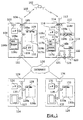
- FIG. 1 shows a station head 101 of an operator television.
- the station head 101 is in connection 103 with a satellite 102.
- the station head 101 comprises an antenna 104.
- the antenna 104 is on the other hand connected to circuits 105 digitization-digitization and modulation-demodulation.
- the circuits 105 receive analog signals from the antenna 104 demodulate them and produce digital signals.
- the circuits 105 receive also the digital signals that they will modulate and transform into signals analog signals which will be transmitted by antenna 104.
- Circuit 105 is therefore connected to a bus 106.
- the buses of this description contain all the wires or tracks necessary for the transmission of signals, data, addresses, interruptions and orders.
- a circuit 105 and the antenna 104 constitute therefore the interface of the station head 101 with the satellite 102.
- the station head 101 also includes a microprocessor 107, a program memory 108, data recording memory 109 on subscribers, and circuits 110 for producing digital signals from television. Elements 107 to 110 are connected to bus 106.
- the memory 108 comprises several zones, in particular a zone 108a known as MPE (Multiple Protocol Encapsulation) which contains codes instructions that control the microprocessor when it sends information at circuit 105.
- MPE Multiple Protocol Encapsulation
- the instruction codes in area 108a allow the microprocessor to mix data from circuits 110 and table 109.
- Memory 108 also contains an area 108b called Internet.
- the area 108b includes instruction codes which control the microprocessor when the station head 101 needs to connect to Internet.
- the area 108 includes an area 108c which includes the codes instruction necessary for the normal activity of the station head 101, data areas and so-called working memory areas.
- the memory 109 is structured in rows and columns, each row corresponds to a subscriber, each column corresponds to information on this subscriber. Memory 109 therefore comprises at least as many lines that there are subscribers managed by the head 101 of the station. Memory 109 has at least two columns, a first column 109a allows to register an identifier of the subscriber to the television operator who manages the station head 101, a second column 109b makes it possible to record a username to access the electronic mailbox of a subscriber to the television operator. We can also record in a third column 109c the number of messages present in the letter box. That allows to facilitate subsequent treatments.
- the station head 101 also includes a circuit 111 connected to the bus 106.
- the circuit 111 is an interface between the head 101 of the station and the network Internet.
- Circuit 111 can be an analog modem, a modem digital, or simply a network card depending on the connection mode of the head 101 of the Internet network station.
- FIG. 1 also shows a decoder box 112.
- the box 112 has an antenna 113 which receives emissions from satellite 102.
- the antenna 113 is connected to a circuit 114 called demultiplexing. Among all the information received by the antenna 113, it is the circuit 114 which makes the sorting to find out which ones are intended for the housing 112.
- the circuits 114 are connected to a bus 115.
- the housing 112 includes a microprocessor 116, a program memory 117, a parameterization memory 118, a 119 video memory, 120 electroluminescent device, and an interface 121 with the Internet. Elements 116 to 121 are connected to the bus 115.
- the memory 117 comprises several zones, including a first zone 117a.
- Area 117a includes instruction codes which control the microprocessor when this must activate the device 120 electroluminescent.
- a second area 117b includes codes instruction which control the microprocessor 116 when this one must to embed an icon in an image contained in memory 119.
- a third area 117c of the memory 117 includes instruction codes which control the microprocessor when the user of the housing 112 wishes surf the Internet.
- a fourth area 117d of memory 117 contains other instruction codes controlling the microprocessor 116 when the latter must carry out operations relating to the normal activity of the box 112.
- the area 117d also includes data areas and working memory areas.
- the memory 119 is connected by a bus 122 to a connector 123.
- the connector 123 can be connected to a television screen.
- the connector 123 has means for reading the contents of the memory 119 and transform it into a signal compatible with the screen connected to the connector 123.
- the microprocessor 116 under the control of the memory 117 receives data by circuit 114 and constitutes an image which it writes in memory 119. Memory 119 is therefore written by the microprocessor 116 and read by connector 123.
- the memory 118 includes information on the subscriber using the housing 112.
- the memory 118 comprises in particular an identifier 118a of the subscriber for the television operator, an identifier 118b of the supplier access to the Internet of the subscriber using the box 112 and a field 118c in which records the number of unread messages in the mailbox electronics of the user of the housing 112.
- the memory 118 may contain other fields.
- the interface 121 is of one of the types described for the circuits 111.
- the types described do not constitute an exhaustive list of possible nature for circuit 121.
- Figure 1 shows that it is possible to connect the devices 101 and 112 to the 136 Internet network.
- Figure 1 also shows two servers, 124 and 125 connected to the 136 Internet network.
- Servers 124 and 125 are Internet service provider servers. In practice the number of these servers is greater than two.
- the first server 124 includes a microprocessor 126, memory 127 and table 128 for managing subscribers, and an interface 129 for connection to the Internet.
- the elements 126 to 129 are connected to a bus 130.
- the memory contains the instruction codes, work and data areas, necessary for the activity of microprocessor 126.
- Memory 128 is structured in rows and columns, each row corresponds to a subscriber to the Internet service provider which manages the server 124. Each column of memory 128 corresponds to information on a subscriber. Memory 128 has at least two columns, one first column 128a records a subscriber identifier, a second column 128b records the number of unread messages on the server.
- Server 125 corresponds to another Internet service provider and has elements 131 to 135 identical to elements 126 to 130 respectively.
- FIG. 2 shows a preliminary first step 201 of retrieving information from electronic mailboxes.
- the microprocessor 107 controlled by instruction codes contained in zone 108b, browses table 109.
- table 109 For each subscriber to table 109 it constitutes a request which it sends on the Internet via the interface 111.
- the request thus constituted includes the identifier of column 109b. This identifier identifies an access provider, and a subscriber to this access provider.
- the request passes through the Internet 136 network, and according to the access provider arrives either on the server 124 or on the server 125. In our example we only deal with the case of two servers, but in the practical they are much more numerous.
- the request is intended for server 124.
- the server 124 therefore receives this request via the interface 129 which makes it available to the microprocessor 126.
- the microprocessor 126 controlled by the instruction codes contained in the memory 127, consult table 128 in order to find there the identifier of the subscriber contained in the request he received. To do this, the microprocessor 126 travels sequentially table 128 until it finds the subscriber identifier in column 128a. When it has found the subscriber's identifier, it retrieves the content of column 128b corresponding to this identifier. Therefore the microprocessor 126 is a response with the contents of the column 128b and it sends it towards the head 101 of the station. In practice, either the server 124 knows, for each subscriber, an identifier of the head of station to which it must send its response, i.e. the request sent by the head 101 of station includes the identifier to which the response should be returned.
- the station head 101 When the station head 101 receives the response to its request, either it saves it in a column of table 109, or it inserts it directly in the TV stream. In this example we consider that it saves it in a column 109c.
- the response from the server 124 includes the identifier of the subscriber so that the microprocessor 107 can update the correct line in table 109.
- the server 124 stores in a column of table 128 information making it possible to identify the operator of television to which a subscriber to the supplier is possibly subscribed of access managing the server 124.
- the server 124 can notify the station head 101 content changes to mailboxes electronic devices managed by the server 124. Indeed when a subscriber to a Internet service provider receives a message, this message before being transmitted to the subscriber is first stored on the server 124.
- the server 124 can then also notify the head 101 of the station when the subscriber consults his mailbox and he empties it of his messages.
- the table 128 must store for each subscriber an identifier of the television operator to be notified in the event of receipt of a new message.
- step 202 the microprocessor 107 controlled by instruction codes contained in zone 108a traverses table 109. For each subscriber contained in table 109 the microprocessor 107 reads the contents of column 109c. The microprocessor 107 then constitutes a frame containing the information in column 109c and the identifier of column 109a. Then it transmits this frame to circuit 105 which transmits it at the same time as the image stream from circuit 110.
- the frame formed by the microprocessor 107 is for example in TCP format IP while the image stream is in MPEG format.
- step 203 for receiving the television stream by the housing 112.
- the antenna 113 receives the information flow from a headend 101 via antenna 104 and satellite 102.
- Circuit 114 demodulates this radio signal in order to obtain digital signals and extracts from these digital signals of the data which interest the housing 112.
- These data are identified by the content of memory 118.
- the data intended for the device 112 are encapsulated in a frame, regardless of the protocol used, including the registered identifier in field 118a.
- the television program selected is, as for him, function of the parameter setting of the television channel that the box 112 must decode.
- step 204 for updating the information in the decoder.
- step 204 the microprocessor 116 reads in the frame that it received the number of messages in the user's mailbox decoder 112, then it stores this number in field 118c.
- step 205 the microprocessor 116 under code control instruction contained in memory 117a reads the content of field 118c. Then the microprocessor 116, depending on the content of the field 118c stimulates device 120. If the content of field 118c is 0, device 120 remains off. If the content of field 118c is n, the microprocessor will do flash the device 120 n times at close intervals, wait for a time interval roughly equal to five times the time interval close together and start the flashing sequence again. The report of five is variable and is set at the factory when the decoder is manufactured. This report must allow for an unambiguous count of the number of flashes in a sequence.
- microprocessor 116 under the control of instruction codes contained in memory 117b, embedded in the image contained in memory 119 a icon which indicates to the user the number of messages he has in his mailbox electronic letters.
- This icon can only be symbolic and indicate the presence of messages.
- This icon may also contain numbers indicating the number of messages. So when the user of the housing 112 turn on his TV, he sees an icon appear somewhere on his screen indicating that he has one or more messages in his mailbox electronic.
- memory 119 stores an image at BMP format The icon is therefore inlaid by simple modification of an area of memory 119.
- the overlay or not of the icon can be, preference set. Indeed, the user of the housing 112 may wish not to not have the icon while watching a movie.
- step 206 the user of the housing 112 connects to his access provider to the Internet, thanks to the 112 housing for example.
- the microprocessor 116 controlled by codes instruction contained in memory 117c, issues a request to the server 124 so that it sends the box 112 the messages contained in the electronic mailbox.
- the number of unread messages on the server 124 will therefore be decremented by as many messages as there are repatriated the housing 112. So during the next interrogation by the head 101 server station 124 the number of messages will have been changed.
- the data received by the unit 112 via the television stream and concerning the state of the electronic mailbox of the user of box 112 will therefore have been changed and field 118c will be updated.
- Field 118c can be updated as soon as the user of box 112 connects to the Internet, via the 112 unit and repatriates its messages electronic. Thus the field 118c is always synchronized with respect to the actual state of the user 112's electronic mailbox.
Landscapes
- Engineering & Computer Science (AREA)
- Signal Processing (AREA)
- Multimedia (AREA)
- Databases & Information Systems (AREA)
- Computer Networks & Wireless Communication (AREA)
- Information Transfer Between Computers (AREA)
- Computer And Data Communications (AREA)
Abstract
Description
- un opérateur de télévision se connecte à un fournisseur d'accès à Internet pour récupérer des données relatives au contenu de boítes aux lettres électroniques d'abonnés à l'opérateur et au fournisseur,
- l'opérateur incorpore dans un flux d'information de télévision qu'il diffuse les données qu'il a récupérées,
- on visualise ces données pendant une session de télévision.
- Figure 1 : une illustration de moyens utiles pour la mise en oeuvre de l'invention.
- Figure 2 : une illustration d'étape du procédé selon l'invention.
Claims (10)
- Dispositif de décodage d'un flux d'information de télévision caractérisé en ce qu'il comporte des moyens pour extraire du flux d'information des données relatives à la présence d'un ou plusieurs messages dans une boíte à lettres électronique, et des moyens pour visualiser le contenu de ces données pendant une session de télévision.
- Dispositif selon la revendication 1, caractérisé en ce que les moyens pour visualiser comportent un composant électroluminescent dont l'état est fonction des données extraites.
- Dispositif selon l'une des revendications 1 ou 2, caractérisé en ce que les moyens pour visualiser comportent des circuits d'incrustations d'une icône dans un signal d'image produit par le dispositif.
- Procédé de transmission de données relatives à la présence d'un ou plusieurs messages dans une boíte à lettres électronique caractérisé en ce que:un opérateur de télévision se connecte à un fournisseur d'accès à Internet pour récupérer des données relatives au contenu de boítes aux lettres électroniques d'abonnés à l'opérateur et au fournisseur,l'opérateur incorpore dans un flux d'information de télévision qu'il diffuse les données qu'il a récupérées,on visualise ces données pendant une session de télévision.
- Procédé selon la revendication 4, caractérisé en ce qu'en tant qu'abonné à l'opérateur de télévision et au fournisseur d'accès à Internet:on reçoit sur un décodeur un flux d'information de télévision,on extrait du flux de télévision de données relatives au contenu d'une boíte à lettres de l'abonné,on fait clignoter un composé électroluminescent du décodeur à selon une séquence en relation avec le contenu de la boíte à lettres électronique.
- Procédé selon la revendication 5, caractérisé en ce que:on éteint le composé électroluminescent si la boíte à lettre ne contient pas de message,on fait clignoter N fois le composant électroluminescent si la boíte à lettre contient N messages, l'intervalle de temps entre deux séquences de N clignotementsest supérieur à l'intervalle de temps entre deux clignotements d'une séquence de N clignotements.
- Procédé selon l'une des revendications 4 à 6, dans lequel:caractérisé en ce que:on produit un signal de télévision à partir du flux d'information de télévision reçu,on incruste dans le signal de télévision une image qui renseigne l'abonné sur le contenu d'une boíte à lettre électronique.
- Procédé selon l'une des revendications 4 à 7, caractérisé en ce que:on reçoit par le flux d'information de télévision des données indiquant qu'une boíte à lettre électronique contient des messages,on se connecte automatiquement à un fournisseur d'accès à Internet pour récupérer les messages contenus dans la boíte à lettre.
- Procédé selon l'une des revendications 4 à 8, caractérisé en ce que:on enregistre dans une mémoire chez un opérateur une liste des abonnés de l'opérateur,on enregistre en correspondance de chaque abonné des informations permettant d'obtenir le statut d'une boíte à lettre d'un abonné.
- Procédé selon l'une des revendications 4 à 9, caractérisé en ce que l'opérateur de télévision interroge régulièrement les boítes à lettres de ses abonnés pour connaítre leur statut.
Applications Claiming Priority (2)
| Application Number | Priority Date | Filing Date | Title |
|---|---|---|---|
| FR0002715 | 2000-03-02 | ||
| FR0002715A FR2805952B1 (fr) | 2000-03-02 | 2000-03-02 | Dispositif de decodage d'un flux d'information de television et procede de transmission de donnees relatives a une boite electronique |
Publications (1)
| Publication Number | Publication Date |
|---|---|
| EP1143729A1 true EP1143729A1 (fr) | 2001-10-10 |
Family
ID=8847664
Family Applications (1)
| Application Number | Title | Priority Date | Filing Date |
|---|---|---|---|
| EP01400119A Withdrawn EP1143729A1 (fr) | 2000-03-02 | 2001-01-16 | Dispositif de décodage d'un flux d'information de télévision et procédé de transmission de données relatives à une boíte à lettres électronique |
Country Status (2)
| Country | Link |
|---|---|
| EP (1) | EP1143729A1 (fr) |
| FR (1) | FR2805952B1 (fr) |
Citations (4)
| Publication number | Priority date | Publication date | Assignee | Title |
|---|---|---|---|---|
| WO1997027546A1 (fr) * | 1996-01-26 | 1997-07-31 | Ex Machina, Inc. | Systeme et procede de transmission de donnees |
| EP0793387A2 (fr) * | 1996-02-29 | 1997-09-03 | Kabushiki Kaisha Toshiba | Système de courrier par télévision |
| WO1999014953A1 (fr) * | 1997-09-15 | 1999-03-25 | Worldgate Service, Inc. | Systeme et procede de fourniture d'acces interactif a une source d'informations par un systeme de distribution en reseau |
| WO2000044173A1 (fr) * | 1999-01-19 | 2000-07-27 | Integra5 Communications, Inc. | Procede et dispositif de selection et d'affichage de messages multi-media |
-
2000
- 2000-03-02 FR FR0002715A patent/FR2805952B1/fr not_active Expired - Fee Related
-
2001
- 2001-01-16 EP EP01400119A patent/EP1143729A1/fr not_active Withdrawn
Patent Citations (4)
| Publication number | Priority date | Publication date | Assignee | Title |
|---|---|---|---|---|
| WO1997027546A1 (fr) * | 1996-01-26 | 1997-07-31 | Ex Machina, Inc. | Systeme et procede de transmission de donnees |
| EP0793387A2 (fr) * | 1996-02-29 | 1997-09-03 | Kabushiki Kaisha Toshiba | Système de courrier par télévision |
| WO1999014953A1 (fr) * | 1997-09-15 | 1999-03-25 | Worldgate Service, Inc. | Systeme et procede de fourniture d'acces interactif a une source d'informations par un systeme de distribution en reseau |
| WO2000044173A1 (fr) * | 1999-01-19 | 2000-07-27 | Integra5 Communications, Inc. | Procede et dispositif de selection et d'affichage de messages multi-media |
Also Published As
| Publication number | Publication date |
|---|---|
| FR2805952B1 (fr) | 2002-07-26 |
| FR2805952A1 (fr) | 2001-09-07 |
Similar Documents
| Publication | Publication Date | Title |
|---|---|---|
| US9009759B2 (en) | Terminating enhanced television broadcasts | |
| JP3310903B2 (ja) | 情報伝送表示方法および情報表示装置 | |
| EP1245116B1 (fr) | Procede de telechargement de donnees precedees par des signaux d'annonce | |
| WO1997043855A1 (fr) | Procede de transmission et d'affichage d'informations et dispositif d'affichage d'informations | |
| US8601132B2 (en) | Reception of audio-visual content addressed to several devices | |
| JP3209929B2 (ja) | 情報表示方法および装置 | |
| JPH1032802A (ja) | 情報表示方法および装置 | |
| EP1295472A1 (fr) | Methode de reception et de visualisation de sequences d'emissions audiovisuelles a theme, et recepteur pour la mise en oeuvre de la methode | |
| KR20040030132A (ko) | 웹 애플리케이션들에 동기된 tv 방송 컨텐트를 관리하는방법 및 장치 | |
| WO2004004336A2 (fr) | Systeme et procede de synchronisation pour programmes audiovisuels, dispositifs et procedes associes | |
| JP3277130B2 (ja) | 情報表示装置および方法 | |
| FR2805952A1 (fr) | Dispositif de decodage d'un flux d'information de television et procede de transmission de donnees relatives a une boite electronique | |
| FR2752351A1 (fr) | Procede d'indexation de donnees dans un systeme de transmission de television numerique | |
| JP3763371B2 (ja) | 情報表示方法および装置 | |
| JP3649433B2 (ja) | 情報表示装置および情報伝送表示方法 | |
| EP1247365A1 (fr) | Procede de mesure d'audience d'applications interactives telediffusees ou embarquees sur un decodeur de recepteur de television | |
| EP1152615B1 (fr) | Procédé de configuration d'un récepteur/décodeur de télévision | |
| JP3940814B2 (ja) | 情報伝送表示方法ならびに情報表示方法および装置 | |
| JPH1032798A (ja) | 情報表示方法および装置 | |
| EP1225761B1 (fr) | Procédé de commande d'un appareil comportant plusieurs sources vidéo | |
| JP3585167B2 (ja) | 情報表示方法および装置 | |
| JPH1032800A (ja) | 情報伝送方法および情報受信装置 | |
| FR2809567A1 (fr) | Procede de diffusion de messages complexes sur un reseau de communication | |
| FR2812160A1 (fr) | Decodeur avec fonction de creation d'images mosaiques de services de television | |
| EP1820344A1 (fr) | Procede, systeme et programmes d'ordinateur, de fourniture persnonalisee de services de television interactive et recepteurs de television associes |
Legal Events
| Date | Code | Title | Description |
|---|---|---|---|
| PUAI | Public reference made under article 153(3) epc to a published international application that has entered the european phase |
Free format text: ORIGINAL CODE: 0009012 |
|
| AK | Designated contracting states |
Kind code of ref document: A1 Designated state(s): DE ES FR GB IT Kind code of ref document: A1 Designated state(s): AT BE CH CY DE DK ES FI FR GB GR IE IT LI LU MC NL PT SE TR |
|
| AX | Request for extension of the european patent |
Free format text: AL;LT;LV;MK;RO;SI |
|
| RAP1 | Party data changed (applicant data changed or rights of an application transferred) |
Owner name: SAGEM S.A. |
|
| 17P | Request for examination filed |
Effective date: 20020204 |
|
| 17Q | First examination report despatched |
Effective date: 20020524 |
|
| AKX | Designation fees paid |
Free format text: DE ES FR GB IT |
|
| STAA | Information on the status of an ep patent application or granted ep patent |
Free format text: STATUS: THE APPLICATION IS DEEMED TO BE WITHDRAWN |
|
| 18D | Application deemed to be withdrawn |
Effective date: 20021204 |