EP1141701B1 - Procede de suivi d'une culture de plantes de grandes cultures a epis - Google Patents
Procede de suivi d'une culture de plantes de grandes cultures a epis Download PDFInfo
- Publication number
- EP1141701B1 EP1141701B1 EP99958248A EP99958248A EP1141701B1 EP 1141701 B1 EP1141701 B1 EP 1141701B1 EP 99958248 A EP99958248 A EP 99958248A EP 99958248 A EP99958248 A EP 99958248A EP 1141701 B1 EP1141701 B1 EP 1141701B1
- Authority
- EP
- European Patent Office
- Prior art keywords
- ears
- measurement
- content
- plants
- grains
- Prior art date
- Legal status (The legal status is an assumption and is not a legal conclusion. Google has not performed a legal analysis and makes no representation as to the accuracy of the status listed.)
- Expired - Lifetime
Links
- 238000000034 method Methods 0.000 title claims abstract description 37
- 238000012544 monitoring process Methods 0.000 title claims abstract description 9
- 230000008635 plant growth Effects 0.000 title abstract description 5
- IJGRMHOSHXDMSA-UHFFFAOYSA-N Atomic nitrogen Chemical compound N#N IJGRMHOSHXDMSA-UHFFFAOYSA-N 0.000 claims abstract description 39
- 238000005259 measurement Methods 0.000 claims abstract description 28
- 239000000470 constituent Substances 0.000 claims abstract description 27
- 229910052757 nitrogen Inorganic materials 0.000 claims abstract description 18
- 235000016709 nutrition Nutrition 0.000 claims abstract description 17
- 230000035764 nutrition Effects 0.000 claims abstract description 15
- NINIDFKCEFEMDL-UHFFFAOYSA-N Sulfur Chemical compound [S] NINIDFKCEFEMDL-UHFFFAOYSA-N 0.000 claims abstract description 14
- 238000004611 spectroscopical analysis Methods 0.000 claims abstract description 12
- 244000037666 field crops Species 0.000 claims abstract description 7
- 238000011161 development Methods 0.000 claims abstract description 6
- 239000003795 chemical substances by application Substances 0.000 claims abstract description 5
- 230000007812 deficiency Effects 0.000 claims abstract description 5
- 230000006735 deficit Effects 0.000 claims abstract description 5
- 235000013619 trace mineral Nutrition 0.000 claims abstract description 5
- 239000011573 trace mineral Substances 0.000 claims abstract description 5
- 239000005864 Sulphur Substances 0.000 claims abstract 4
- QJGQUHMNIGDVPM-UHFFFAOYSA-N nitrogen group Chemical group [N] QJGQUHMNIGDVPM-UHFFFAOYSA-N 0.000 claims abstract 3
- 235000013339 cereals Nutrition 0.000 claims description 63
- 210000005069 ears Anatomy 0.000 claims description 48
- 238000004458 analytical method Methods 0.000 claims description 26
- 108090000623 proteins and genes Proteins 0.000 claims description 11
- 102000004169 proteins and genes Human genes 0.000 claims description 11
- 230000005540 biological transmission Effects 0.000 claims description 8
- 229920002678 cellulose Polymers 0.000 claims description 7
- 239000001913 cellulose Substances 0.000 claims description 7
- 230000012010 growth Effects 0.000 claims description 7
- 230000018109 developmental process Effects 0.000 claims description 5
- 238000000862 absorption spectrum Methods 0.000 claims description 4
- 235000000346 sugar Nutrition 0.000 claims description 4
- 150000008163 sugars Chemical class 0.000 claims description 4
- 239000003925 fat Substances 0.000 claims description 3
- 230000035784 germination Effects 0.000 claims description 2
- 238000001228 spectrum Methods 0.000 claims description 2
- 235000013311 vegetables Nutrition 0.000 claims description 2
- 239000000523 sample Substances 0.000 description 35
- 241000196324 Embryophyta Species 0.000 description 26
- 238000012545 processing Methods 0.000 description 13
- 238000012937 correction Methods 0.000 description 8
- 238000009434 installation Methods 0.000 description 7
- 229910052717 sulfur Inorganic materials 0.000 description 7
- 239000011593 sulfur Substances 0.000 description 7
- 230000005670 electromagnetic radiation Effects 0.000 description 6
- 230000005855 radiation Effects 0.000 description 6
- 230000003595 spectral effect Effects 0.000 description 6
- 108010073032 Grain Proteins Proteins 0.000 description 5
- 241000209504 Poaceae Species 0.000 description 5
- 241000209140 Triticum Species 0.000 description 5
- 235000021307 Triticum Nutrition 0.000 description 5
- 240000008042 Zea mays Species 0.000 description 4
- 235000005824 Zea mays ssp. parviglumis Nutrition 0.000 description 4
- 235000002017 Zea mays subsp mays Nutrition 0.000 description 4
- 235000005822 corn Nutrition 0.000 description 4
- 235000007319 Avena orientalis Nutrition 0.000 description 3
- 244000075850 Avena orientalis Species 0.000 description 3
- 240000005979 Hordeum vulgare Species 0.000 description 3
- 235000007340 Hordeum vulgare Nutrition 0.000 description 3
- 238000002835 absorbance Methods 0.000 description 3
- 238000004364 calculation method Methods 0.000 description 3
- 239000003337 fertilizer Substances 0.000 description 3
- 238000003306 harvesting Methods 0.000 description 3
- 230000010365 information processing Effects 0.000 description 3
- 239000002917 insecticide Substances 0.000 description 3
- 238000000691 measurement method Methods 0.000 description 3
- 238000002360 preparation method Methods 0.000 description 3
- 238000000985 reflectance spectrum Methods 0.000 description 3
- 241000209056 Secale Species 0.000 description 2
- 235000007238 Secale cereale Nutrition 0.000 description 2
- 238000001035 drying Methods 0.000 description 2
- 230000004720 fertilization Effects 0.000 description 2
- 239000000417 fungicide Substances 0.000 description 2
- 210000000056 organ Anatomy 0.000 description 2
- XLYOFNOQVPJJNP-UHFFFAOYSA-N water Substances O XLYOFNOQVPJJNP-UHFFFAOYSA-N 0.000 description 2
- 239000002028 Biomass Substances 0.000 description 1
- 241001024327 Oenanthe <Aves> Species 0.000 description 1
- 238000010521 absorption reaction Methods 0.000 description 1
- 230000007613 environmental effect Effects 0.000 description 1
- 238000011156 evaluation Methods 0.000 description 1
- 238000002474 experimental method Methods 0.000 description 1
- 235000011389 fruit/vegetable juice Nutrition 0.000 description 1
- 230000003862 health status Effects 0.000 description 1
- -1 health status Substances 0.000 description 1
- 238000005286 illumination Methods 0.000 description 1
- 235000003715 nutritional status Nutrition 0.000 description 1
- 238000004321 preservation Methods 0.000 description 1
- 230000001850 reproductive effect Effects 0.000 description 1
- 241000894007 species Species 0.000 description 1
- WFKWXMTUELFFGS-UHFFFAOYSA-N tungsten Chemical compound [W] WFKWXMTUELFFGS-UHFFFAOYSA-N 0.000 description 1
- 229910052721 tungsten Inorganic materials 0.000 description 1
- 239000010937 tungsten Substances 0.000 description 1
Images

Classifications
-
- G—PHYSICS
- G01—MEASURING; TESTING
- G01N—INVESTIGATING OR ANALYSING MATERIALS BY DETERMINING THEIR CHEMICAL OR PHYSICAL PROPERTIES
- G01N33/00—Investigating or analysing materials by specific methods not covered by groups G01N1/00 - G01N31/00
- G01N33/02—Food
- G01N33/10—Starch-containing substances, e.g. dough
-
- G—PHYSICS
- G01—MEASURING; TESTING
- G01N—INVESTIGATING OR ANALYSING MATERIALS BY DETERMINING THEIR CHEMICAL OR PHYSICAL PROPERTIES
- G01N21/00—Investigating or analysing materials by the use of optical means, i.e. using sub-millimetre waves, infrared, visible or ultraviolet light
- G01N21/17—Systems in which incident light is modified in accordance with the properties of the material investigated
- G01N21/25—Colour; Spectral properties, i.e. comparison of effect of material on the light at two or more different wavelengths or wavelength bands
- G01N21/31—Investigating relative effect of material at wavelengths characteristic of specific elements or molecules, e.g. atomic absorption spectrometry
- G01N21/35—Investigating relative effect of material at wavelengths characteristic of specific elements or molecules, e.g. atomic absorption spectrometry using infrared light
- G01N21/3563—Investigating relative effect of material at wavelengths characteristic of specific elements or molecules, e.g. atomic absorption spectrometry using infrared light for analysing solids; Preparation of samples therefor
-
- G—PHYSICS
- G01—MEASURING; TESTING
- G01N—INVESTIGATING OR ANALYSING MATERIALS BY DETERMINING THEIR CHEMICAL OR PHYSICAL PROPERTIES
- G01N21/00—Investigating or analysing materials by the use of optical means, i.e. using sub-millimetre waves, infrared, visible or ultraviolet light
- G01N21/17—Systems in which incident light is modified in accordance with the properties of the material investigated
- G01N21/25—Colour; Spectral properties, i.e. comparison of effect of material on the light at two or more different wavelengths or wavelength bands
- G01N21/31—Investigating relative effect of material at wavelengths characteristic of specific elements or molecules, e.g. atomic absorption spectrometry
- G01N21/35—Investigating relative effect of material at wavelengths characteristic of specific elements or molecules, e.g. atomic absorption spectrometry using infrared light
- G01N21/359—Investigating relative effect of material at wavelengths characteristic of specific elements or molecules, e.g. atomic absorption spectrometry using infrared light using near infrared light
Definitions
- the present invention relates to a method for monitoring a culture of "field crops" type plants. with spikes
- Collecting and storing organizations are now committed to providing products for which they guarantee, among other criteria, the homogeneity and content of certain constituents.
- the control of these criteria passes in particular by strict monitoring of crop development and by various measures forecast at certain stages of plant growth.
- cereals of interest mention may in particular be made of the family of grasses, such as wheat, rye, barley, oats and But.
- This forecast analysis in particular facilitates the subsequent process collection and allotment.
- This last operation consists of the constitution of lots with homogeneous characteristics.
- FR-2,737,573 describes a method and a device for analysis by infrared of a sample in the cereal field. The sample considered is not specified.
- EP-A-0.388.082 describes the analysis of grains to determine them. the protein content in particular by near spectrometry infrared. This analysis is carried out directly on grains.
- the measurement of the content of a constituent requires a protocol difficult to implement for a farmer, since it is appropriate, for sample preparation, to cut ears of grain, to proceed drying them, then extract the grains.
- the object of the invention is to provide a method for monitoring the culture of "field crops” plants by measuring the content of a specific constituent, especially in proteins, not having the drawbacks mentioned above and which is simple to implement, in particular by a silo manager.
- the subject of the invention is a method for monitoring a culture of "field crops" with ears of corn including a measure the content of a constituent determined by spectrometry in the field near infrared directly on plants in post-germination development, characterized in that the measurement by spectrometry is carried out on the whole ears of the plant in order to determine the content of the grains in a determined constituent, and the result of the analysis of whole ears is processed to take into account the presence of different plant parts of the grains.
- the protein content determined by one of the variants of implementation of the method can be advantageously used in order to calculate the nitrogen nutrition index (IUU). This is in fact calculated from the dry biomass per hectare of grasses and the protein level of vegetative parts of the grasses considered.
- the nitrogen nutrition index (IUU) allows agronomists to determine if a supply of fertilizers is necessary to satisfactory plant growth.
- the calculation of the nitrogen nutrition index is more easily achievable, which allows improve monitoring of the vegetative cycle of cereals and intervene more easily on this one.
- the method according to the invention can advantageously be used for the purpose of estimating the state of nutrition, in particular nitrogen or sulfur, health status, water deficit or deficiency of trace elements in order to control the supply of fertilizers and phytosanitary products such as fungicides and / or insecticides.
- thresholds of the content of a given constituent could be determined for different stages of culture, allowing control and better management of fertilization, essential in terms of performance and environmental preservation.
- the method according to the invention is intended to monitor a cultivation of a cereal by implementing a measurement of the content of this cereal into a constituent determined by spectrometry, advantageously in the near infrared.
- the measurement is carried out directly on the plants in post-germination development.
- the method plans to measure the content of a specific constituent, in particular proteins, in grains from cereals, from an analysis of a sample consisting of a set of whole ears containing the grains.
- the determination of the content of the grains in the determined constituent comprises a step of processing the result of the sample analysis to hold account for the presence in the ears of plant parts different from grains.
- the expression “content of a specific constituent” designates the content for example protein or nitrogen from a grain.
- the content of a product agricultural in a given body is the ratio of the total mass of the body determined in the product on the total mass of dry matter of the product, or on the total mass of the product as is.
- ear designates the inflorescences consisting of sessile spikelets (like ears of wheat) or spikelet (like panicles) oats).
- Post-germinating plants means both the reproductive organs and the vegetative organs of plants, but at a stage subsequent to germination.
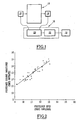
- the measurement method is implemented for example using the installation shown in FIG. 1.
- This comprises a chamber 10 of reception of the sample to be analyzed.
- a monochromatic source 12 producing a radiation electromagnetic in the near infrared spectral range and a cell 14 for receiving the electromagnetic radiation having passed through the sample placed in chamber 10.
- the source 12 and the cell 14 are connected to a central processing unit information 16, itself connected to means 18 for updating arrangement of measurement results, for example a display.
- the main elements of the installation of FIG. 1 are made up for example by the grain analyzer "Infratec 1221" whose central unit of information processing has been adapted to implement the method of measurement.
- the source 12 comprises a 50 W tungsten lamp and a mobile diffraction grating adapted to generate monochromatic light.
- the movement of the diffraction grating ensures an illumination of the sample placed in chamber 10 with electromagnetic radiation whose wavelength varies from 800 nm to 1100 nm.
- Cell 14 is adapted to receive electromagnetic radiation having crossed the ears constituting the sample placed in the chamber 10.
- the sensor 14 is connected to a processing module 20 of the unit information processing center 16.
- the processing module 20 includes an analog / digital converter linked to computing means implementing an algorithm to determine, from the signals collected by the probe 14, the protein content of the ears making up the sample.
- the processing module 20 implements an algorithm to determine the spectrum of absorption in transmission of the sample, in the spectral range of near infrared, and deduce the protein content of the ears.
- the information obtained at the output of the processing module 20 corresponds for example at the value measured by a grain analyzer "Infratec 1221 ”.
- the output of the processing module 20 is connected to a correction module 22 suitable for calculating, from the protein content of the ears determined by the processing module 20, the protein content of the grains by implementing a correction algorithm taking into account the presence in the spikes of different plant parts of the grains.
- Figure 2 shows the correlation between the protein content of the ears and protein content of the grains contained in these ears.
- the protein content of the ears was determined by the method from Kjeldahl while the protein content of the grains has been determined by using the "Infratec 1221" grain analyzer. This last analysis was carried out directly on grains from dried ears and beaten.
- the experiment covered thirty-seven samples whose grain protein content varied from 11 to 15% of the dry matter.
- the sample placed in the measuring chamber 10 is advantageously prepared and arranged, as shown in figure 3.
- whole ears physiologically mature, are separated of the stem, then distributed in successive layers.
- the spikes are arranged parallel to each other and in the same direction.
- the direction of the ears is alternated from one layer to another, the ears of two layers successive being arranged head to tail.
- the sample thus prepared is placed in chamber 10 so that that the electromagnetic radiation diagrammed by the arrow F1 crosses this perpendicular to the planes of the successive layers constituting the sample.
- Such an arrangement of the ears ensures a homogeneous distribution of grains over the entire volume of the sample, thereby improving the accuracy of the measured.
- the measurement of the content of a determined constituent is made while the ears are still carried by the standing plant, directly on the place of culture.
- the installation used comprises a portable probe 50 which can be held manually.
- the sensor 52 is connected to a central information processing unit 54 comprising, as before, a processing module 56 and a correction module 58, itself connected to a display 60.
- the processing module 56 is adapted to determine the protein content of the ears from the value of the reflectance of natural solar radiation on the cobs.
- the reflectance is determined from the signals received by the sensor 52.
- the protein content of the ears obtained in output of processing module 56 is corrected by the correction module 58 to take account of the different plant parts of the grains and so determine the protein content of only grains.
- the value thus obtained is made accessible to the user on the display screen 60.
- the operating protocol to determine the protein content of grains is simplified by compared to existing processes requiring heavy prior treatment of grains.
Landscapes
- Physics & Mathematics (AREA)
- Spectroscopy & Molecular Physics (AREA)
- Health & Medical Sciences (AREA)
- Life Sciences & Earth Sciences (AREA)
- Chemical & Material Sciences (AREA)
- Analytical Chemistry (AREA)
- Biochemistry (AREA)
- General Health & Medical Sciences (AREA)
- General Physics & Mathematics (AREA)
- Immunology (AREA)
- Pathology (AREA)
- Engineering & Computer Science (AREA)
- Food Science & Technology (AREA)
- Medicinal Chemistry (AREA)
- Investigating Or Analysing Materials By Optical Means (AREA)
- Hydroponics (AREA)
- Management, Administration, Business Operations System, And Electronic Commerce (AREA)
Description
- la mesure de la teneur en un constituant déterminé comporte une mesure du spectre d'absorbance en transmission et/ou en réflexion des épis ;
- avant la mesure par spectrométrie, les épis sont répartis par couches, dans chacune desquelles les épis sont disposés parallèlement les uns aux autres, le sens des épis étant alterné d'une couche adjacente à l'autre ;
- la mesure de la teneur en un constituant déterminé comporte une mesure du spectre de réflectance des épis éclairés par le rayonnement solaire naturel ;
- les épis sont portés par une céréale sur pied lors de la réalisation de la mesure ;
- la mesure par spectrométrie est réalisée sur les parties aériennes des plantes afin de calculer l'indice de nutrition azoté dans le but de contrôler et de déterminer l'apport en agents fertilisants nécessaires à une croissance satisfaisante des plantes ;
- la mesure par spectrométrie est réalisée sur les parties aériennes des plantes afin d'estimer l'état de nutrition azoté ou soufré, le déficit hydrique, la carence en oligo-éléments, et / ou l'état sanitaire dans le but de contrôler et de déterminer l'apport en agents fertilisants et/ou en produits phytosanitaires (fongicides, insecticides, etc) nécessaires à une croissance satisfaisante des plantes
- la teneur en le constituant donné est la teneur en protéines, en sucres solubles, en cellulose, en azote, en matières grasses, et/ou en soufre,
en ce que la détermination de la teneur des grains en le constituant déterminé comporte une étape de traitement du résultat de l'analyse de l'échantillon pour tenir compte de la présence dans les épis de parties végétales différentes des grains.
- l'analyse dudit échantillon s'effectue par mise en oeuvre d'un rayonnement électromagnétique dans le domaine spectral du proche infrarouge ;
- l'analyse de l'échantillon s'effectue par une mesure du spectre d'absorbance en transmission de l'échantillon ;
- la préparation de l'échantillon comporte une étape de répartition des épis par couches dans chacune desquelles les épis sont disposés parallèlement les uns aux autres, le sens des épis étant alterné d'une couche adjacente à l'autre ;
- l'analyse dudit échantillon s'effectue par une mesure du spectre de réflectance de l'échantillon éclairé par le rayonnement solaire naturel ;
- l'échantillon est constitué d'épis portés par une céréale sur pied ;
- la teneur en le constituant donné est la teneur en en protéines, en sucres solubles, en cellulose, en azote, en matières grasses, et/ou en soufre.
- l'analyse dudit échantillon s'effectue par mise en oeuvre d'un rayonnement électromagnétique dans le domaine spectral du proche infrarouge ;
- l'analyse de l'échantillon s'effectue par une mesure du spectre d'absorbance en transmission et/ou en réflexion de l'échantillon ;
- l'analyse de l'échantillon s'effectue par une mesure du spectre de réflectance de l'échantillon éclairé par le rayonnement solaire naturel ;
- la préparation de l'échantillon qui est constitué de parties aériennes des plantes (un ensemble de feuilles et/ou de tiges, et/ou d'épis le cas échéant) qui peuvent être directement au champ ou ramenés du champ;
- la teneur en le constituant donné est la teneur en protéines, en sucres solubles, en cellulose, en azote, et/ou en soufre.
- La figure 1 est une vue schématique d'une installation de mesure de la teneur en protéines de grains ;
- La figure 2 est une courbe illustrant la corrélation existant entre la teneur en protéines d'épis de blé et la teneur en protéines des grains qui y sont contenus ;
- La figure 3 est une vue en perspective illustrant un échantillon préparé ; et
- La figure 4 est une vue schématique d'une variante de réalisation d'une installation de mesure de la teneur en protéines de grains utilisable sur des plants sur pied.
Claims (12)
- Procédé de suivi d'une culture de plantes de grandes cultures à épis incluant une mesure de la teneur en un constituant déterminé par spectrométrie dans le domaine du proche infrarouge directement sur les parties aériennes des plantes en développement post-germination caractérisé en ce que la mesure par spectrométrie est réalisée sur les épis entiers des plantes afin de déterminer la teneur des grains en un constituant déterminé, et en ce que le résultat de l'analyse des épis entiers est traité pour tenir compte de la présence des parties végétales différentes des grains.
- Procédé selon la revendication 1, caractérisé en ce que la mesure de la teneur en un constituant déterminé comporte une mesure du spectre d'absorbance en transmission et/ou en réflexion des épis.
- Procédé selon la revendication 1 ou 2, caractérisé en ce que, avant la mesure par spectrométrie, les épis sont répartis par couches, dans chacune desquelles les épis sont disposés parallèlement les uns aux autres, le sens des épis étant alterné d'une couche adjacente à l'autre.
- Procédé selon la revendication 1, caractérisé en ce que la mesure de la teneur en un constituant déterminé comporte une mesure du spectre de réflectance des épis éclairés par le rayonnement solaire naturel.
- Procédé selon la revendication 4, caractérisé en ce que les épis sont portés par une céréale sur pied lors de la réalisation de la mesure.
- Procédé selon la revendication 1, caractérisé en ce que les échantillons analysés sont portés par des plantes sur pied lors de la réalisation de la mesure.
- Procédé selon l'une quelconque des revendications 1 à 6, caractérisé en ce que la mesure par spectrométrie est réalisée sur les parties aériennes des plantes afin de calculer l'indice de nutrition azoté.
- Procédé selon l'une quelconque des revendications 1 à 6, caractérisé en ce que la mesure par spectrométrie est réalisée sur les parties aériennes des plantes afin d'estimer l'état de nutrition, notamment azoté ou soufré, le déficit hydrique, la carence en oligo-éléments, ou l'état sanitaire de la culture dans le but de contrôler et de gérer l'apport en agents fertilisants et/ou l'apport en produits phytosanitaires.
- Procédé selon l'une quelconque des revendications précédentes caractérisé en ce que la teneur en le constituant donné est la teneur en protéines, en sucres solubles, en cellulose, en azote, en matières grasses, et/ou en soufre.
- Procédé selon l'une quelconque des revendications précédentes. caractérisé en ce que la culture de plantes de grandes cultures est une culture d'une céréale.
- Utilisation du procédé selon l'une quelconque des revendications 1 à 6 pour le calcul de l'indice de nutrition azoté.
- Utilisation du procédé selon l'une quelconque des revendications 1 à 6 pour l'estimation de l'état de nutrition, notamment azoté ou soufré, du déficit hydrique, de la carence en oligo-éléments, ou de l'état sanitaire de la culture.
Applications Claiming Priority (3)
| Application Number | Priority Date | Filing Date | Title |
|---|---|---|---|
| FR9815426 | 1998-12-07 | ||
| FR9815426A FR2786871B1 (fr) | 1998-12-07 | 1998-12-07 | Procede de suivi d'une culture d'une cereale |
| PCT/FR1999/003025 WO2000034772A1 (fr) | 1998-12-07 | 1999-12-06 | Procede de suivi d'une culture de plantes de grandes cultures |
Publications (2)
| Publication Number | Publication Date |
|---|---|
| EP1141701A1 EP1141701A1 (fr) | 2001-10-10 |
| EP1141701B1 true EP1141701B1 (fr) | 2004-02-25 |
Family
ID=9533668
Family Applications (1)
| Application Number | Title | Priority Date | Filing Date |
|---|---|---|---|
| EP99958248A Expired - Lifetime EP1141701B1 (fr) | 1998-12-07 | 1999-12-06 | Procede de suivi d'une culture de plantes de grandes cultures a epis |
Country Status (6)
| Country | Link |
|---|---|
| EP (1) | EP1141701B1 (fr) |
| AT (1) | ATE260464T1 (fr) |
| AU (1) | AU1566000A (fr) |
| DE (1) | DE69915119D1 (fr) |
| FR (1) | FR2786871B1 (fr) |
| WO (1) | WO2000034772A1 (fr) |
Families Citing this family (5)
| Publication number | Priority date | Publication date | Assignee | Title |
|---|---|---|---|---|
| FI115889B (fi) * | 2003-12-17 | 2005-08-15 | Kemira Growhow Oyj | Rikkilannoitusmenetelmä |
| US8889950B2 (en) | 2006-07-28 | 2014-11-18 | The George Washington University | Repression of AtGLR3.2 increases plant biomass |
| CN106441442B (zh) * | 2016-10-21 | 2018-10-30 | 中国科学院南京土壤研究所 | 一种大田作物表型信息高通量对等监测装置及监测方法 |
| CN106406178B (zh) * | 2016-10-21 | 2023-11-21 | 中国科学院南京土壤研究所 | 一种温室作物生长信息实时对等监测装置及监测方法 |
| CN107389573A (zh) * | 2017-07-28 | 2017-11-24 | 中国农业科学院农田灌溉研究所 | 氮营养指数估算方法及装置 |
Family Cites Families (5)
| Publication number | Priority date | Publication date | Assignee | Title |
|---|---|---|---|---|
| GB8906020D0 (en) * | 1989-03-16 | 1989-04-26 | Shields Instr Ltd | Infrared spectrometer |
| JPH0815141A (ja) * | 1994-06-24 | 1996-01-19 | Satake Eng Co Ltd | 葉の成分量測定方法及び装置 |
| FR2737573B1 (fr) * | 1995-07-31 | 1997-09-26 | Alliance Instr Sa | Procede d'analyse par infrarouge d'un echantillon et dispositif pour la mise en oeuvre du procede |
| JP4117853B2 (ja) * | 1996-06-13 | 2008-07-16 | 井関農機株式会社 | コンバインの車速制御装置 |
| JP3528513B2 (ja) * | 1997-04-21 | 2004-05-17 | 株式会社サタケ | 稲の特定成分測定方法 |
-
1998
- 1998-12-07 FR FR9815426A patent/FR2786871B1/fr not_active Expired - Fee Related
-
1999
- 1999-12-06 WO PCT/FR1999/003025 patent/WO2000034772A1/fr not_active Ceased
- 1999-12-06 DE DE69915119T patent/DE69915119D1/de not_active Expired - Lifetime
- 1999-12-06 AU AU15660/00A patent/AU1566000A/en not_active Abandoned
- 1999-12-06 AT AT99958248T patent/ATE260464T1/de not_active IP Right Cessation
- 1999-12-06 EP EP99958248A patent/EP1141701B1/fr not_active Expired - Lifetime
Also Published As
| Publication number | Publication date |
|---|---|
| FR2786871A1 (fr) | 2000-06-09 |
| AU1566000A (en) | 2000-06-26 |
| ATE260464T1 (de) | 2004-03-15 |
| FR2786871B1 (fr) | 2001-02-16 |
| WO2000034772A1 (fr) | 2000-06-15 |
| EP1141701A1 (fr) | 2001-10-10 |
| DE69915119D1 (de) | 2004-04-01 |
Similar Documents
| Publication | Publication Date | Title |
|---|---|---|
| Minas et al. | Accurate non-destructive prediction of peach fruit internal quality and physiological maturity with a single scan using near infrared spectroscopy | |
| Goffart et al. | Potato crop nitrogen status assessment to improve N fertilization management and efficiency: past–present–future | |
| Nawi et al. | Prediction and classification of sugar content of sugarcane based on skin scanning using visible and shortwave near infrared | |
| Daniels et al. | Measuring internal maturity parameters contactless on intact table grape bunches using NIR spectroscopy | |
| Slaughter et al. | Multispectral machine vision identification of lettuce and weed seedlings for automated weed control | |
| Tallada et al. | Prediction of maize seed attributes using a rapid single kernel near infrared instrument | |
| Sharabian et al. | Significant wavelengths for prediction of winter wheat growth status and grain yield using multivariate analysis | |
| UA79083C2 (en) | Device and method for analyzing agricultural products | |
| Teixeira et al. | How does defoliation management impact on yield, canopy forming processes and light interception of lucerne (Medicago sativa L.) crops? | |
| Belyakov et al. | Photoluminescent control ripeness of the seeds of plants | |
| Pires et al. | Ripening assessment of ‘Ortanique’(Citrus reticulata Blanco x Citrus sinensis (L) Osbeck) on tree by SW-NIR reflectance spectroscopy-based calibration models | |
| Nguyen et al. | Using canopy reflectance and partial least squares regression to calculate within-field statistical variation in crop growth and nitrogen status of rice | |
| CN1265469A (zh) | 评估谷物质量的方法和装置 | |
| Pullanagari et al. | The use of optical sensors to estimate pasture quality | |
| Mat et al. | Prediction of sugarcane quality parameters using visible-shortwave near infrared spectroradiometer | |
| Sun et al. | From lab to orchard use for models of hand-held NIRS instrument: A case for navel orange quality assessment considering ambient light correction | |
| EP1141701A1 (fr) | Procede de suivi d'une culture de plantes de grandes cultures a epis | |
| RU2597961C2 (ru) | Способ управления и система управления урожаем биомассы растений | |
| Hughes et al. | Non-destructive foliar chlorophyll measurement has the potential to predict crude protein concentration and in vitro ruminal organic matter digestibility in Bracharia decumbens herbage | |
| Yang et al. | Assessing shaded-leaf effects on photochemical reflectance index (PRI) for water stress detection in winter wheat | |
| JP3947819B2 (ja) | 光学的手法を用いた植物個体の選別方法 | |
| Lin et al. | Exploring physiological and nonphysiological responses of sun-induced chlorophyll fluorescence to different levels of water stress in winter wheat | |
| Lee et al. | Feasibility study for an optical sensing system for hardy kiwi (Actinidia arguta) sugar content estimation | |
| François et al. | The use of Vis/NIR spectroscopy to predict the optimal root harvesting date of chicory (Cichorium intybus L.) | |
| WO2023222456A1 (fr) | Procédé et système de mesure de l'humidité de céréales |
Legal Events
| Date | Code | Title | Description |
|---|---|---|---|
| PUAI | Public reference made under article 153(3) epc to a published international application that has entered the european phase |
Free format text: ORIGINAL CODE: 0009012 |
|
| 17P | Request for examination filed |
Effective date: 20010531 |
|
| AK | Designated contracting states |
Kind code of ref document: A1 Designated state(s): AT BE CH CY DE DK ES FI FR GB GR IE IT LI LU MC NL PT SE |
|
| AX | Request for extension of the european patent |
Free format text: AL;LT;LV;MK;RO;SI |
|
| 17Q | First examination report despatched |
Effective date: 20020506 |
|
| GRAP | Despatch of communication of intention to grant a patent |
Free format text: ORIGINAL CODE: EPIDOSNIGR1 |
|
| RTI1 | Title (correction) |
Free format text: METHOD FOR MONITORING PLANT GROWTH IN PANICLE CROPS |
|
| RTI1 | Title (correction) |
Free format text: METHOD FOR MONITORING PLANT GROWTH IN PANICLE CROPS |
|
| GRAS | Grant fee paid |
Free format text: ORIGINAL CODE: EPIDOSNIGR3 |
|
| GRAA | (expected) grant |
Free format text: ORIGINAL CODE: 0009210 |
|
| AK | Designated contracting states |
Kind code of ref document: B1 Designated state(s): AT BE CH CY DE DK ES FI FR GB GR IE IT LI LU MC NL PT SE |
|
| PG25 | Lapsed in a contracting state [announced via postgrant information from national office to epo] |
Ref country code: NL Free format text: LAPSE BECAUSE OF FAILURE TO SUBMIT A TRANSLATION OF THE DESCRIPTION OR TO PAY THE FEE WITHIN THE PRESCRIBED TIME-LIMIT Effective date: 20040225 Ref country code: IT Free format text: LAPSE BECAUSE OF FAILURE TO SUBMIT A TRANSLATION OF THE DESCRIPTION OR TO PAY THE FEE WITHIN THE PRE;WARNING: LAPSES OF ITALIAN PATENTS WITH EFFECTIVE DATE BEFORE 2007 MAY HAVE OCCURRED AT ANY TIME BEFORE 2007. THE CORRECT EFFECTIVE DATE MAY BE DIFFERENT FROM THE ONE RECORDED.SCRIBED TIME-LIMIT Effective date: 20040225 Ref country code: IE Free format text: LAPSE BECAUSE OF FAILURE TO SUBMIT A TRANSLATION OF THE DESCRIPTION OR TO PAY THE FEE WITHIN THE PRESCRIBED TIME-LIMIT Effective date: 20040225 Ref country code: GB Free format text: LAPSE BECAUSE OF FAILURE TO SUBMIT A TRANSLATION OF THE DESCRIPTION OR TO PAY THE FEE WITHIN THE PRESCRIBED TIME-LIMIT Effective date: 20040225 Ref country code: FI Free format text: LAPSE BECAUSE OF FAILURE TO SUBMIT A TRANSLATION OF THE DESCRIPTION OR TO PAY THE FEE WITHIN THE PRESCRIBED TIME-LIMIT Effective date: 20040225 Ref country code: CY Free format text: LAPSE BECAUSE OF FAILURE TO SUBMIT A TRANSLATION OF THE DESCRIPTION OR TO PAY THE FEE WITHIN THE PRESCRIBED TIME-LIMIT Effective date: 20040225 Ref country code: AT Free format text: LAPSE BECAUSE OF FAILURE TO SUBMIT A TRANSLATION OF THE DESCRIPTION OR TO PAY THE FEE WITHIN THE PRESCRIBED TIME-LIMIT Effective date: 20040225 |
|
| REG | Reference to a national code |
Ref country code: GB Ref legal event code: FG4D Free format text: NOT ENGLISH |
|
| REG | Reference to a national code |
Ref country code: CH Ref legal event code: EP |
|
| REG | Reference to a national code |
Ref country code: IE Ref legal event code: FG4D Free format text: FRENCH |
|
| REF | Corresponds to: |
Ref document number: 69915119 Country of ref document: DE Date of ref document: 20040401 Kind code of ref document: P |
|
| PG25 | Lapsed in a contracting state [announced via postgrant information from national office to epo] |
Ref country code: SE Free format text: LAPSE BECAUSE OF FAILURE TO SUBMIT A TRANSLATION OF THE DESCRIPTION OR TO PAY THE FEE WITHIN THE PRESCRIBED TIME-LIMIT Effective date: 20040525 Ref country code: GR Free format text: LAPSE BECAUSE OF FAILURE TO SUBMIT A TRANSLATION OF THE DESCRIPTION OR TO PAY THE FEE WITHIN THE PRESCRIBED TIME-LIMIT Effective date: 20040525 Ref country code: DK Free format text: LAPSE BECAUSE OF FAILURE TO SUBMIT A TRANSLATION OF THE DESCRIPTION OR TO PAY THE FEE WITHIN THE PRESCRIBED TIME-LIMIT Effective date: 20040525 |
|
| PG25 | Lapsed in a contracting state [announced via postgrant information from national office to epo] |
Ref country code: DE Free format text: LAPSE BECAUSE OF FAILURE TO SUBMIT A TRANSLATION OF THE DESCRIPTION OR TO PAY THE FEE WITHIN THE PRESCRIBED TIME-LIMIT Effective date: 20040526 |
|
| PG25 | Lapsed in a contracting state [announced via postgrant information from national office to epo] |
Ref country code: ES Free format text: LAPSE BECAUSE OF FAILURE TO SUBMIT A TRANSLATION OF THE DESCRIPTION OR TO PAY THE FEE WITHIN THE PRESCRIBED TIME-LIMIT Effective date: 20040605 |
|
| NLV1 | Nl: lapsed or annulled due to failure to fulfill the requirements of art. 29p and 29m of the patents act | ||
| GBV | Gb: ep patent (uk) treated as always having been void in accordance with gb section 77(7)/1977 [no translation filed] |
Effective date: 20040225 |
|
| REG | Reference to a national code |
Ref country code: IE Ref legal event code: FD4D |
|
| PG25 | Lapsed in a contracting state [announced via postgrant information from national office to epo] |
Ref country code: LU Free format text: LAPSE BECAUSE OF NON-PAYMENT OF DUE FEES Effective date: 20041206 |
|
| PG25 | Lapsed in a contracting state [announced via postgrant information from national office to epo] |
Ref country code: MC Free format text: LAPSE BECAUSE OF NON-PAYMENT OF DUE FEES Effective date: 20041231 Ref country code: LI Free format text: LAPSE BECAUSE OF NON-PAYMENT OF DUE FEES Effective date: 20041231 Ref country code: CH Free format text: LAPSE BECAUSE OF NON-PAYMENT OF DUE FEES Effective date: 20041231 Ref country code: BE Free format text: LAPSE BECAUSE OF NON-PAYMENT OF DUE FEES Effective date: 20041231 |
|
| PLBE | No opposition filed within time limit |
Free format text: ORIGINAL CODE: 0009261 |
|
| STAA | Information on the status of an ep patent application or granted ep patent |
Free format text: STATUS: NO OPPOSITION FILED WITHIN TIME LIMIT |
|
| 26N | No opposition filed |
Effective date: 20041126 |
|
| BERE | Be: lapsed |
Owner name: *ULICE Effective date: 20041231 |
|
| REG | Reference to a national code |
Ref country code: CH Ref legal event code: PL |
|
| BERE | Be: lapsed |
Owner name: *ULICE Effective date: 20041231 |
|
| PG25 | Lapsed in a contracting state [announced via postgrant information from national office to epo] |
Ref country code: PT Free format text: LAPSE BECAUSE OF NON-PAYMENT OF DUE FEES Effective date: 20040725 |
|
| PGFP | Annual fee paid to national office [announced via postgrant information from national office to epo] |
Ref country code: FR Payment date: 20071228 Year of fee payment: 9 |
|
| REG | Reference to a national code |
Ref country code: FR Ref legal event code: ST Effective date: 20090831 |
|
| PG25 | Lapsed in a contracting state [announced via postgrant information from national office to epo] |
Ref country code: FR Free format text: LAPSE BECAUSE OF NON-PAYMENT OF DUE FEES Effective date: 20081231 |