EP1139793B1 - Inhibitors of the bitter taste response - Google Patents
Inhibitors of the bitter taste response Download PDFInfo
- Publication number
- EP1139793B1 EP1139793B1 EP99967519A EP99967519A EP1139793B1 EP 1139793 B1 EP1139793 B1 EP 1139793B1 EP 99967519 A EP99967519 A EP 99967519A EP 99967519 A EP99967519 A EP 99967519A EP 1139793 B1 EP1139793 B1 EP 1139793B1
- Authority
- EP
- European Patent Office
- Prior art keywords
- adenosine
- taste
- bitter
- substance
- responses
- Prior art date
- Legal status (The legal status is an assumption and is not a legal conclusion. Google has not performed a legal analysis and makes no representation as to the accuracy of the status listed.)
- Expired - Lifetime
Links
- 235000019658 bitter taste Nutrition 0.000 title claims abstract description 23
- 239000003112 inhibitor Substances 0.000 title abstract description 16
- 230000036327 taste response Effects 0.000 title abstract 2
- 238000000034 method Methods 0.000 claims abstract description 29
- 235000013305 food Nutrition 0.000 claims abstract description 18
- 239000003814 drug Substances 0.000 claims abstract description 8
- LNQVTSROQXJCDD-UHFFFAOYSA-N adenosine monophosphate Natural products C1=NC=2C(N)=NC=NC=2N1C1OC(CO)C(OP(O)(O)=O)C1O LNQVTSROQXJCDD-UHFFFAOYSA-N 0.000 claims description 60
- UDMBCSSLTHHNCD-KQYNXXCUSA-N adenosine 5'-monophosphate Chemical compound C1=NC=2C(N)=NC=NC=2N1[C@@H]1O[C@H](COP(O)(O)=O)[C@@H](O)[C@H]1O UDMBCSSLTHHNCD-KQYNXXCUSA-N 0.000 claims description 58
- 150000001875 compounds Chemical class 0.000 claims description 57
- UDMBCSSLTHHNCD-UHFFFAOYSA-N Coenzym Q(11) Natural products C1=NC=2C(N)=NC=NC=2N1C1OC(COP(O)(O)=O)C(O)C1O UDMBCSSLTHHNCD-UHFFFAOYSA-N 0.000 claims description 56
- 235000019640 taste Nutrition 0.000 claims description 43
- 239000000126 substance Substances 0.000 claims description 27
- 239000000203 mixture Substances 0.000 claims description 18
- MWEQTWJABOLLOS-UHFFFAOYSA-L disodium;[[[5-(6-aminopurin-9-yl)-3,4-dihydroxyoxolan-2-yl]methoxy-hydroxyphosphoryl]oxy-oxidophosphoryl] hydrogen phosphate;trihydrate Chemical compound O.O.O.[Na+].[Na+].C1=NC=2C(N)=NC=NC=2N1C1OC(COP(O)(=O)OP([O-])(=O)OP(O)([O-])=O)C(O)C1O MWEQTWJABOLLOS-UHFFFAOYSA-L 0.000 claims description 10
- ZKHQWZAMYRWXGA-KQYNXXCUSA-N Adenosine triphosphate Chemical compound C1=NC=2C(N)=NC=NC=2N1[C@@H]1O[C@H](COP(O)(=O)OP(O)(=O)OP(O)(O)=O)[C@@H](O)[C@H]1O ZKHQWZAMYRWXGA-KQYNXXCUSA-N 0.000 claims description 9
- ZKHQWZAMYRWXGA-UHFFFAOYSA-N Adenosine triphosphate Natural products C1=NC=2C(N)=NC=NC=2N1C1OC(COP(O)(=O)OP(O)(=O)OP(O)(O)=O)C(O)C1O ZKHQWZAMYRWXGA-UHFFFAOYSA-N 0.000 claims description 9
- XTWYTFMLZFPYCI-KQYNXXCUSA-N 5'-adenylphosphoric acid Chemical compound C1=NC=2C(N)=NC=NC=2N1[C@@H]1O[C@H](COP(O)(=O)OP(O)(O)=O)[C@@H](O)[C@H]1O XTWYTFMLZFPYCI-KQYNXXCUSA-N 0.000 claims description 8
- GYOZYWVXFNDGLU-XLPZGREQSA-N dTMP Chemical compound O=C1NC(=O)C(C)=CN1[C@@H]1O[C@H](COP(O)(O)=O)[C@@H](O)C1 GYOZYWVXFNDGLU-XLPZGREQSA-N 0.000 claims description 8
- 230000002401 inhibitory effect Effects 0.000 claims description 8
- QDFHPFSBQFLLSW-UHFFFAOYSA-N UNPD78433 Natural products C1=NC=2C(N)=NC=NC=2N1C1OC(CO)C(O)C1OP(O)(O)=O QDFHPFSBQFLLSW-UHFFFAOYSA-N 0.000 claims description 6
- QDFHPFSBQFLLSW-KQYNXXCUSA-N adenosine 2'-phosphate Chemical compound C1=NC=2C(N)=NC=NC=2N1[C@@H]1O[C@H](CO)[C@@H](O)[C@H]1OP(O)(O)=O QDFHPFSBQFLLSW-KQYNXXCUSA-N 0.000 claims description 6
- LNQVTSROQXJCDD-KQYNXXCUSA-N 3'-AMP Chemical compound C1=NC=2C(N)=NC=NC=2N1[C@@H]1O[C@H](CO)[C@@H](OP(O)(O)=O)[C@H]1O LNQVTSROQXJCDD-KQYNXXCUSA-N 0.000 claims description 5
- 229960001456 adenosine triphosphate Drugs 0.000 claims description 5
- 239000002537 cosmetic Substances 0.000 claims description 5
- 241000607479 Yersinia pestis Species 0.000 claims description 4
- 239000003292 glue Substances 0.000 claims description 4
- 239000002453 shampoo Substances 0.000 claims description 4
- KDYFGRWQOYBRFD-UHFFFAOYSA-L succinate(2-) Chemical compound [O-]C(=O)CCC([O-])=O KDYFGRWQOYBRFD-UHFFFAOYSA-L 0.000 claims description 4
- 231100000331 toxic Toxicity 0.000 claims description 4
- 230000002588 toxic effect Effects 0.000 claims description 4
- 229950006790 adenosine phosphate Drugs 0.000 claims description 3
- 235000013361 beverage Nutrition 0.000 claims description 3
- 239000000344 soap Substances 0.000 claims description 3
- 229940086735 succinate Drugs 0.000 claims 2
- 229940023487 dental product Drugs 0.000 claims 1
- 230000001339 gustatory effect Effects 0.000 abstract description 8
- 230000008447 perception Effects 0.000 abstract description 7
- 235000019605 sweet taste sensations Nutrition 0.000 abstract description 6
- 239000004097 EU approved flavor enhancer Substances 0.000 abstract 1
- 235000019264 food flavour enhancer Nutrition 0.000 abstract 1
- 230000004044 response Effects 0.000 description 57
- 108010087042 Transducin Proteins 0.000 description 42
- 102000006612 Transducin Human genes 0.000 description 42
- VWTINHYPRWEBQY-UHFFFAOYSA-N denatonium Chemical compound [O-]C(=O)C1=CC=CC=C1.C=1C=CC=CC=1C[N+](CC)(CC)CC(=O)NC1=C(C)C=CC=C1C VWTINHYPRWEBQY-UHFFFAOYSA-N 0.000 description 37
- 229960001610 denatonium benzoate Drugs 0.000 description 32
- 230000004913 activation Effects 0.000 description 29
- LOUPRKONTZGTKE-UHFFFAOYSA-N cinchonine Natural products C1C(C(C2)C=C)CCN2C1C(O)C1=CC=NC2=CC=C(OC)C=C21 LOUPRKONTZGTKE-UHFFFAOYSA-N 0.000 description 26
- 239000001096 (4-ethenyl-1-azabicyclo[2.2.2]octan-7-yl)-(6-methoxyquinolin-4-yl)methanol hydrochloride Substances 0.000 description 25
- NNKXWRRDHYTHFP-HZQSTTLBSA-N (r)-[(2s,4s,5r)-5-ethenyl-1-azabicyclo[2.2.2]octan-2-yl]-(6-methoxyquinolin-4-yl)methanol;hydron;dichloride Chemical compound Cl.Cl.C([C@H]([C@H](C1)C=C)C2)CN1[C@@H]2[C@H](O)C1=CC=NC2=CC=C(OC)C=C21 NNKXWRRDHYTHFP-HZQSTTLBSA-N 0.000 description 25
- 229960001811 quinine hydrochloride Drugs 0.000 description 25
- 108010005995 gustducin Proteins 0.000 description 22
- 239000012528 membrane Substances 0.000 description 21
- 102100039215 Guanine nucleotide-binding protein G(t) subunit alpha-3 Human genes 0.000 description 20
- 108091005708 gustatory receptors Proteins 0.000 description 18
- QMGVPVSNSZLJIA-FVWCLLPLSA-N strychnine Chemical compound O([C@H]1CC(N([C@H]2[C@H]1[C@H]1C3)C=4C5=CC=CC=4)=O)CC=C1CN1[C@@H]3[C@]25CC1 QMGVPVSNSZLJIA-FVWCLLPLSA-N 0.000 description 16
- 241000699670 Mus sp. Species 0.000 description 15
- FAPWRFPIFSIZLT-UHFFFAOYSA-M Sodium chloride Chemical compound [Na+].[Cl-] FAPWRFPIFSIZLT-UHFFFAOYSA-M 0.000 description 14
- 235000009508 confectionery Nutrition 0.000 description 13
- 210000005036 nerve Anatomy 0.000 description 13
- 102000005962 receptors Human genes 0.000 description 12
- 108020003175 receptors Proteins 0.000 description 12
- 229930008564 C01BA04 - Sparteine Natural products 0.000 description 11
- SLRCCWJSBJZJBV-UHFFFAOYSA-N alpha-isosparteine Natural products C1N2CCCCC2C2CN3CCCCC3C1C2 SLRCCWJSBJZJBV-UHFFFAOYSA-N 0.000 description 11
- 229960001945 sparteine Drugs 0.000 description 11
- SLRCCWJSBJZJBV-AJNGGQMLSA-N sparteine Chemical compound C1N2CCCC[C@H]2[C@@H]2CN3CCCC[C@H]3[C@H]1C2 SLRCCWJSBJZJBV-AJNGGQMLSA-N 0.000 description 11
- 108091006027 G proteins Proteins 0.000 description 10
- 102000030782 GTP binding Human genes 0.000 description 10
- 108091000058 GTP-Binding Proteins 0.000 description 10
- 210000001932 glossopharyngeal nerve Anatomy 0.000 description 10
- 230000026683 transduction Effects 0.000 description 10
- 238000010361 transduction Methods 0.000 description 10
- 241000283690 Bos taurus Species 0.000 description 9
- RKUNBYITZUJHSG-UHFFFAOYSA-N Hyosciamin-hydrochlorid Natural products CN1C(C2)CCC1CC2OC(=O)C(CO)C1=CC=CC=C1 RKUNBYITZUJHSG-UHFFFAOYSA-N 0.000 description 9
- QMGVPVSNSZLJIA-UHFFFAOYSA-N Nux Vomica Natural products C1C2C3C4N(C=5C6=CC=CC=5)C(=O)CC3OCC=C2CN2C1C46CC2 QMGVPVSNSZLJIA-UHFFFAOYSA-N 0.000 description 9
- 235000003599 food sweetener Nutrition 0.000 description 9
- 229960005453 strychnine Drugs 0.000 description 9
- 239000003765 sweetening agent Substances 0.000 description 9
- LPSXGZAUAOMRNU-FZKQIMNGSA-N 2-{[(R)-{[4-(aminomethyl)phenyl]amino}{[(1R)-1-phenylethyl]amino}methyl]amino}ethane-1,1-diol Chemical compound N([C@H](NCC(O)O)N[C@H](C)C=1C=CC=CC=1)C1=CC=C(CN)C=C1 LPSXGZAUAOMRNU-FZKQIMNGSA-N 0.000 description 8
- 229930006000 Sucrose Natural products 0.000 description 8
- CZMRCDWAGMRECN-UGDNZRGBSA-N Sucrose Chemical compound O[C@H]1[C@H](O)[C@@H](CO)O[C@@]1(CO)O[C@@H]1[C@H](O)[C@@H](O)[C@H](O)[C@@H](CO)O1 CZMRCDWAGMRECN-UGDNZRGBSA-N 0.000 description 8
- RYYVLZVUVIJVGH-UHFFFAOYSA-N caffeine Chemical compound CN1C(=O)N(C)C(=O)C2=C1N=CN2C RYYVLZVUVIJVGH-UHFFFAOYSA-N 0.000 description 8
- 230000001965 increasing effect Effects 0.000 description 8
- 239000005720 sucrose Substances 0.000 description 8
- 210000002105 tongue Anatomy 0.000 description 8
- 230000001256 tonic effect Effects 0.000 description 8
- 229930003347 Atropine Natural products 0.000 description 7
- 241001279009 Strychnos toxifera Species 0.000 description 7
- RKUNBYITZUJHSG-SPUOUPEWSA-N atropine Chemical compound O([C@H]1C[C@H]2CC[C@@H](C1)N2C)C(=O)C(CO)C1=CC=CC=C1 RKUNBYITZUJHSG-SPUOUPEWSA-N 0.000 description 7
- 229960000396 atropine Drugs 0.000 description 7
- 230000006399 behavior Effects 0.000 description 7
- 230000000670 limiting effect Effects 0.000 description 7
- 210000003370 receptor cell Anatomy 0.000 description 7
- 239000011780 sodium chloride Substances 0.000 description 7
- 210000001519 tissue Anatomy 0.000 description 7
- 101150059923 trc gene Proteins 0.000 description 7
- XLYOFNOQVPJJNP-UHFFFAOYSA-N water Chemical compound O XLYOFNOQVPJJNP-UHFFFAOYSA-N 0.000 description 7
- NCYCYZXNIZJOKI-IOUUIBBYSA-N 11-cis-retinal Chemical compound O=C/C=C(\C)/C=C\C=C(/C)\C=C\C1=C(C)CCCC1(C)C NCYCYZXNIZJOKI-IOUUIBBYSA-N 0.000 description 6
- MMWCIQZXVOZEGG-XJTPDSDZSA-N D-myo-Inositol 1,4,5-trisphosphate Chemical compound O[C@@H]1[C@H](O)[C@@H](OP(O)(O)=O)[C@H](OP(O)(O)=O)[C@@H](O)[C@@H]1OP(O)(O)=O MMWCIQZXVOZEGG-XJTPDSDZSA-N 0.000 description 6
- VEXZGXHMUGYJMC-UHFFFAOYSA-N Hydrochloric acid Chemical compound Cl VEXZGXHMUGYJMC-UHFFFAOYSA-N 0.000 description 6
- LPHGQDQBBGAPDZ-UHFFFAOYSA-N Isocaffeine Natural products CN1C(=O)N(C)C(=O)C2=C1N(C)C=N2 LPHGQDQBBGAPDZ-UHFFFAOYSA-N 0.000 description 6
- LOUPRKONTZGTKE-WZBLMQSHSA-N Quinine Chemical compound C([C@H]([C@H](C1)C=C)C2)C[N@@]1[C@@H]2[C@H](O)C1=CC=NC2=CC=C(OC)C=C21 LOUPRKONTZGTKE-WZBLMQSHSA-N 0.000 description 6
- 102000004330 Rhodopsin Human genes 0.000 description 6
- 108090000820 Rhodopsin Proteins 0.000 description 6
- 229940006275 denatonium Drugs 0.000 description 6
- 210000001779 taste bud Anatomy 0.000 description 6
- -1 5.0 mM) Chemical compound 0.000 description 5
- NLXLAEXVIDQMFP-UHFFFAOYSA-N Ammonia chloride Chemical compound [NH4+].[Cl-] NLXLAEXVIDQMFP-UHFFFAOYSA-N 0.000 description 5
- 102000004142 Trypsin Human genes 0.000 description 5
- 108090000631 Trypsin Proteins 0.000 description 5
- 239000008122 artificial sweetener Substances 0.000 description 5
- 235000021311 artificial sweeteners Nutrition 0.000 description 5
- 238000003556 assay Methods 0.000 description 5
- 210000000170 cell membrane Anatomy 0.000 description 5
- 238000000338 in vitro Methods 0.000 description 5
- 230000037361 pathway Effects 0.000 description 5
- 230000000638 stimulation Effects 0.000 description 5
- 239000012588 trypsin Substances 0.000 description 5
- SNICXCGAKADSCV-JTQLQIEISA-N (-)-Nicotine Chemical compound CN1CCC[C@H]1C1=CC=CN=C1 SNICXCGAKADSCV-JTQLQIEISA-N 0.000 description 4
- PFTAWBLQPZVEMU-UKRRQHHQSA-N (-)-epicatechin Chemical compound C1([C@H]2OC3=CC(O)=CC(O)=C3C[C@H]2O)=CC=C(O)C(O)=C1 PFTAWBLQPZVEMU-UKRRQHHQSA-N 0.000 description 4
- GRSZFWQUAKGDAV-UHFFFAOYSA-N Inosinic acid Natural products OC1C(O)C(COP(O)(O)=O)OC1N1C(NC=NC2=O)=C2N=C1 GRSZFWQUAKGDAV-UHFFFAOYSA-N 0.000 description 4
- 102000004861 Phosphoric Diester Hydrolases Human genes 0.000 description 4
- 108090001050 Phosphoric Diester Hydrolases Proteins 0.000 description 4
- OIRDTQYFTABQOQ-KQYNXXCUSA-N adenosine Chemical compound C1=NC=2C(N)=NC=NC=2N1[C@@H]1O[C@H](CO)[C@@H](O)[C@H]1O OIRDTQYFTABQOQ-KQYNXXCUSA-N 0.000 description 4
- 230000003542 behavioural effect Effects 0.000 description 4
- 229960001948 caffeine Drugs 0.000 description 4
- VJEONQKOZGKCAK-UHFFFAOYSA-N caffeine Natural products CN1C(=O)N(C)C(=O)C2=C1C=CN2C VJEONQKOZGKCAK-UHFFFAOYSA-N 0.000 description 4
- QAIPRVGONGVQAS-UHFFFAOYSA-N cis-caffeic acid Natural products OC(=O)C=CC1=CC=C(O)C(O)=C1 QAIPRVGONGVQAS-UHFFFAOYSA-N 0.000 description 4
- 230000000694 effects Effects 0.000 description 4
- 230000005764 inhibitory process Effects 0.000 description 4
- 235000013902 inosinic acid Nutrition 0.000 description 4
- 230000003993 interaction Effects 0.000 description 4
- 229960002715 nicotine Drugs 0.000 description 4
- SNICXCGAKADSCV-UHFFFAOYSA-N nicotine Natural products CN1CCCC1C1=CC=CN=C1 SNICXCGAKADSCV-UHFFFAOYSA-N 0.000 description 4
- 238000012360 testing method Methods 0.000 description 4
- ZFXYFBGIUFBOJW-UHFFFAOYSA-N theophylline Chemical compound O=C1N(C)C(=O)N(C)C2=C1NC=N2 ZFXYFBGIUFBOJW-UHFFFAOYSA-N 0.000 description 4
- QAIPRVGONGVQAS-DUXPYHPUSA-N trans-caffeic acid Chemical compound OC(=O)\C=C\C1=CC=C(O)C(O)=C1 QAIPRVGONGVQAS-DUXPYHPUSA-N 0.000 description 4
- AUHDWARTFSKSAC-HEIFUQTGSA-N (2S,3R,4S,5R)-3,4-dihydroxy-5-(hydroxymethyl)-2-(6-oxo-1H-purin-9-yl)oxolane-2-carboxylic acid Chemical compound [C@]1([C@H](O)[C@H](O)[C@@H](CO)O1)(N1C=NC=2C(O)=NC=NC12)C(=O)O AUHDWARTFSKSAC-HEIFUQTGSA-N 0.000 description 3
- 238000011746 C57BL/6J (JAX™ mouse strain) Methods 0.000 description 3
- BHPQYMZQTOCNFJ-UHFFFAOYSA-N Calcium cation Chemical compound [Ca+2] BHPQYMZQTOCNFJ-UHFFFAOYSA-N 0.000 description 3
- 235000001258 Cinchona calisaya Nutrition 0.000 description 3
- 241000282412 Homo Species 0.000 description 3
- 241000699666 Mus <mouse, genus> Species 0.000 description 3
- 102000014384 Type C Phospholipases Human genes 0.000 description 3
- 108010079194 Type C Phospholipases Proteins 0.000 description 3
- 241000251539 Vertebrata <Metazoa> Species 0.000 description 3
- 230000009471 action Effects 0.000 description 3
- 210000004556 brain Anatomy 0.000 description 3
- 229910001424 calcium ion Inorganic materials 0.000 description 3
- IERHLVCPSMICTF-XVFCMESISA-N cytidine 5'-monophosphate Chemical compound O=C1N=C(N)C=CN1[C@H]1[C@H](O)[C@H](O)[C@@H](COP(O)(O)=O)O1 IERHLVCPSMICTF-XVFCMESISA-N 0.000 description 3
- 230000003247 decreasing effect Effects 0.000 description 3
- 230000029087 digestion Effects 0.000 description 3
- 230000003292 diminished effect Effects 0.000 description 3
- 239000000796 flavoring agent Substances 0.000 description 3
- 235000019634 flavors Nutrition 0.000 description 3
- 230000037406 food intake Effects 0.000 description 3
- 239000012634 fragment Substances 0.000 description 3
- 238000010348 incorporation Methods 0.000 description 3
- 239000004245 inosinic acid Substances 0.000 description 3
- 229940028843 inosinic acid Drugs 0.000 description 3
- 239000007788 liquid Substances 0.000 description 3
- 230000007246 mechanism Effects 0.000 description 3
- 210000002569 neuron Anatomy 0.000 description 3
- 108090000765 processed proteins & peptides Proteins 0.000 description 3
- 229960000948 quinine Drugs 0.000 description 3
- 230000004043 responsiveness Effects 0.000 description 3
- 230000001953 sensory effect Effects 0.000 description 3
- PFTAWBLQPZVEMU-DZGCQCFKSA-N (+)-3',4',5,7-Tetrahydroxy-2,3-trans-flavan-3-ol Natural products C1([C@H]2OC3=CC(O)=CC(O)=C3C[C@@H]2O)=CC=C(O)C(O)=C1 PFTAWBLQPZVEMU-DZGCQCFKSA-N 0.000 description 2
- PFTAWBLQPZVEMU-ZFWWWQNUSA-N (+)-epicatechin Natural products C1([C@@H]2OC3=CC(O)=CC(O)=C3C[C@@H]2O)=CC=C(O)C(O)=C1 PFTAWBLQPZVEMU-ZFWWWQNUSA-N 0.000 description 2
- 229930013783 (-)-epicatechin Natural products 0.000 description 2
- 235000007355 (-)-epicatechin Nutrition 0.000 description 2
- ACEAELOMUCBPJP-UHFFFAOYSA-N (E)-3,4,5-trihydroxycinnamic acid Natural products OC(=O)C=CC1=CC(O)=C(O)C(O)=C1 ACEAELOMUCBPJP-UHFFFAOYSA-N 0.000 description 2
- 239000001606 7-[(2S,3R,4S,5S,6R)-4,5-dihydroxy-6-(hydroxymethyl)-3-[(2S,3R,4R,5R,6S)-3,4,5-trihydroxy-6-methyloxan-2-yl]oxyoxan-2-yl]oxy-5-hydroxy-2-(4-hydroxyphenyl)chroman-4-one Substances 0.000 description 2
- IJGRMHOSHXDMSA-UHFFFAOYSA-N Atomic nitrogen Chemical compound N#N IJGRMHOSHXDMSA-UHFFFAOYSA-N 0.000 description 2
- 239000002126 C01EB10 - Adenosine Substances 0.000 description 2
- 241001465754 Metazoa Species 0.000 description 2
- 102000004257 Potassium Channel Human genes 0.000 description 2
- 108010052164 Sodium Channels Proteins 0.000 description 2
- 102000018674 Sodium Channels Human genes 0.000 description 2
- 238000000692 Student's t-test Methods 0.000 description 2
- XSQUKJJJFZCRTK-UHFFFAOYSA-N Urea Chemical compound NC(N)=O XSQUKJJJFZCRTK-UHFFFAOYSA-N 0.000 description 2
- 229960005305 adenosine Drugs 0.000 description 2
- XSDQTOBWRPYKKA-UHFFFAOYSA-N amiloride Chemical compound NC(=N)NC(=O)C1=NC(Cl)=C(N)N=C1N XSDQTOBWRPYKKA-UHFFFAOYSA-N 0.000 description 2
- 229960002576 amiloride Drugs 0.000 description 2
- 238000004458 analytical method Methods 0.000 description 2
- 239000000872 buffer Substances 0.000 description 2
- 229940074360 caffeic acid Drugs 0.000 description 2
- 235000004883 caffeic acid Nutrition 0.000 description 2
- 210000004027 cell Anatomy 0.000 description 2
- 230000002860 competitive effect Effects 0.000 description 2
- 125000004122 cyclic group Chemical group 0.000 description 2
- 239000012153 distilled water Substances 0.000 description 2
- VYFYYTLLBUKUHU-UHFFFAOYSA-N dopamine Chemical compound NCCC1=CC=C(O)C(O)=C1 VYFYYTLLBUKUHU-UHFFFAOYSA-N 0.000 description 2
- 229940079593 drug Drugs 0.000 description 2
- LPTRNLNOHUVQMS-UHFFFAOYSA-N epicatechin Natural products Cc1cc(O)cc2OC(C(O)Cc12)c1ccc(O)c(O)c1 LPTRNLNOHUVQMS-UHFFFAOYSA-N 0.000 description 2
- 235000012734 epicatechin Nutrition 0.000 description 2
- 230000002068 genetic effect Effects 0.000 description 2
- IXCSERBJSXMMFS-UHFFFAOYSA-N hydrogen chloride Substances Cl.Cl IXCSERBJSXMMFS-UHFFFAOYSA-N 0.000 description 2
- 230000003834 intracellular effect Effects 0.000 description 2
- 238000013227 male C57BL/6J mice Methods 0.000 description 2
- 239000000463 material Substances 0.000 description 2
- 230000001404 mediated effect Effects 0.000 description 2
- 229960000901 mepacrine Drugs 0.000 description 2
- 210000000214 mouth Anatomy 0.000 description 2
- DFPMSGMNTNDNHN-ZPHOTFPESA-N naringin Chemical compound O[C@@H]1[C@H](O)[C@@H](O)[C@H](C)O[C@H]1O[C@H]1[C@H](OC=2C=C3O[C@@H](CC(=O)C3=C(O)C=2)C=2C=CC(O)=CC=2)O[C@H](CO)[C@@H](O)[C@@H]1O DFPMSGMNTNDNHN-ZPHOTFPESA-N 0.000 description 2
- 229940052490 naringin Drugs 0.000 description 2
- 229930019673 naringin Natural products 0.000 description 2
- 210000004126 nerve fiber Anatomy 0.000 description 2
- 235000015097 nutrients Nutrition 0.000 description 2
- 235000016709 nutrition Nutrition 0.000 description 2
- 230000000050 nutritive effect Effects 0.000 description 2
- 108020001213 potassium channel Proteins 0.000 description 2
- 238000002360 preparation method Methods 0.000 description 2
- 102000004196 processed proteins & peptides Human genes 0.000 description 2
- 239000000047 product Substances 0.000 description 2
- GPKJTRJOBQGKQK-UHFFFAOYSA-N quinacrine Chemical compound C1=C(OC)C=C2C(NC(C)CCCN(CC)CC)=C(C=CC(Cl)=C3)C3=NC2=C1 GPKJTRJOBQGKQK-UHFFFAOYSA-N 0.000 description 2
- 230000035807 sensation Effects 0.000 description 2
- 235000019615 sensations Nutrition 0.000 description 2
- 230000001629 suppression Effects 0.000 description 2
- 210000000225 synapse Anatomy 0.000 description 2
- 229960000278 theophylline Drugs 0.000 description 2
- 235000019583 umami taste Nutrition 0.000 description 2
- YFJCRJZTDYDCRZ-MCDZGGTQSA-N (2r,3r,4s,5r)-2-(6-aminopurin-9-yl)-5-(hydroxymethyl)oxolane-3,4-diol;hydrochloride Chemical compound Cl.C1=NC=2C(N)=NC=NC=2N1[C@@H]1O[C@H](CO)[C@@H](O)[C@H]1O YFJCRJZTDYDCRZ-MCDZGGTQSA-N 0.000 description 1
- MMWCIQZXVOZEGG-UHFFFAOYSA-N 1,4,5-IP3 Natural products OC1C(O)C(OP(O)(O)=O)C(OP(O)(O)=O)C(O)C1OP(O)(O)=O MMWCIQZXVOZEGG-UHFFFAOYSA-N 0.000 description 1
- DGZSVBBLLGZHSF-UHFFFAOYSA-N 4,4-diethylpiperidine Chemical compound CCC1(CC)CCNCC1 DGZSVBBLLGZHSF-UHFFFAOYSA-N 0.000 description 1
- 229930024421 Adenine Natural products 0.000 description 1
- GFFGJBXGBJISGV-UHFFFAOYSA-N Adenine Chemical compound NC1=NC=NC2=C1N=CN2 GFFGJBXGBJISGV-UHFFFAOYSA-N 0.000 description 1
- XTWYTFMLZFPYCI-UHFFFAOYSA-N Adenosine diphosphate Natural products C1=NC=2C(N)=NC=NC=2N1C1OC(COP(O)(=O)OP(O)(O)=O)C(O)C1O XTWYTFMLZFPYCI-UHFFFAOYSA-N 0.000 description 1
- 206010002091 Anaesthesia Diseases 0.000 description 1
- 241001674044 Blattodea Species 0.000 description 1
- 241000283730 Bos primigenius Species 0.000 description 1
- 108090000312 Calcium Channels Proteins 0.000 description 1
- 102000003922 Calcium Channels Human genes 0.000 description 1
- 241000283707 Capra Species 0.000 description 1
- 102000000844 Cell Surface Receptors Human genes 0.000 description 1
- 108010001857 Cell Surface Receptors Proteins 0.000 description 1
- 241000699800 Cricetinae Species 0.000 description 1
- XFXPMWWXUTWYJX-UHFFFAOYSA-N Cyanide Chemical compound N#[C-] XFXPMWWXUTWYJX-UHFFFAOYSA-N 0.000 description 1
- 241000196324 Embryophyta Species 0.000 description 1
- 102000004190 Enzymes Human genes 0.000 description 1
- 108090000790 Enzymes Proteins 0.000 description 1
- 102000003688 G-Protein-Coupled Receptors Human genes 0.000 description 1
- 108090000045 G-Protein-Coupled Receptors Proteins 0.000 description 1
- 102000038630 GPCRs class A Human genes 0.000 description 1
- 108091007907 GPCRs class A Proteins 0.000 description 1
- 108010001336 Horseradish Peroxidase Proteins 0.000 description 1
- 241000699660 Mus musculus Species 0.000 description 1
- 241000146339 Necturus maculosus Species 0.000 description 1
- 102000001490 Opioid Peptides Human genes 0.000 description 1
- 108010093625 Opioid Peptides Proteins 0.000 description 1
- 241000283973 Oryctolagus cuniculus Species 0.000 description 1
- ZLMJMSJWJFRBEC-UHFFFAOYSA-N Potassium Chemical compound [K] ZLMJMSJWJFRBEC-UHFFFAOYSA-N 0.000 description 1
- 241000283984 Rodentia Species 0.000 description 1
- BQCADISMDOOEFD-UHFFFAOYSA-N Silver Chemical compound [Ag] BQCADISMDOOEFD-UHFFFAOYSA-N 0.000 description 1
- 102000016913 Voltage-Gated Sodium Channels Human genes 0.000 description 1
- 108010053752 Voltage-Gated Sodium Channels Proteins 0.000 description 1
- MMWCIQZXVOZEGG-HOZKJCLWSA-N [(1S,2R,3S,4S,5R,6S)-2,3,5-trihydroxy-4,6-diphosphonooxycyclohexyl] dihydrogen phosphate Chemical compound O[C@H]1[C@@H](O)[C@H](OP(O)(O)=O)[C@@H](OP(O)(O)=O)[C@H](O)[C@H]1OP(O)(O)=O MMWCIQZXVOZEGG-HOZKJCLWSA-N 0.000 description 1
- 239000002253 acid Substances 0.000 description 1
- 235000019631 acid taste sensations Nutrition 0.000 description 1
- 230000036982 action potential Effects 0.000 description 1
- 229960000643 adenine Drugs 0.000 description 1
- 102000030621 adenylate cyclase Human genes 0.000 description 1
- 108060000200 adenylate cyclase Proteins 0.000 description 1
- 239000000853 adhesive Substances 0.000 description 1
- 230000001070 adhesive effect Effects 0.000 description 1
- 229930013930 alkaloid Natural products 0.000 description 1
- 230000037005 anaesthesia Effects 0.000 description 1
- 229940035674 anesthetics Drugs 0.000 description 1
- 239000005557 antagonist Substances 0.000 description 1
- 238000013459 approach Methods 0.000 description 1
- 230000001174 ascending effect Effects 0.000 description 1
- AFYNADDZULBEJA-UHFFFAOYSA-N bicinchoninic acid Chemical compound C1=CC=CC2=NC(C=3C=C(C4=CC=CC=C4N=3)C(=O)O)=CC(C(O)=O)=C21 AFYNADDZULBEJA-UHFFFAOYSA-N 0.000 description 1
- 235000019611 bitter taste sensations Nutrition 0.000 description 1
- 230000000903 blocking effect Effects 0.000 description 1
- 210000004899 c-terminal region Anatomy 0.000 description 1
- 239000004202 carbamide Substances 0.000 description 1
- 238000005119 centrifugation Methods 0.000 description 1
- 239000002299 complementary DNA Substances 0.000 description 1
- 239000002872 contrast media Substances 0.000 description 1
- 239000006071 cream Substances 0.000 description 1
- 238000007405 data analysis Methods 0.000 description 1
- 230000001419 dependent effect Effects 0.000 description 1
- 238000001514 detection method Methods 0.000 description 1
- 150000001982 diacylglycerols Chemical class 0.000 description 1
- 238000002405 diagnostic procedure Methods 0.000 description 1
- 230000037213 diet Effects 0.000 description 1
- 235000005911 diet Nutrition 0.000 description 1
- 235000015872 dietary supplement Nutrition 0.000 description 1
- 229940042399 direct acting antivirals protease inhibitors Drugs 0.000 description 1
- 238000002224 dissection Methods 0.000 description 1
- 229960003638 dopamine Drugs 0.000 description 1
- 231100000673 dose–response relationship Toxicity 0.000 description 1
- 239000012636 effector Substances 0.000 description 1
- 230000002708 enhancing effect Effects 0.000 description 1
- 235000013861 fat-free Nutrition 0.000 description 1
- 239000000835 fiber Substances 0.000 description 1
- 235000012631 food intake Nutrition 0.000 description 1
- 239000005452 food preservative Substances 0.000 description 1
- 235000019249 food preservative Nutrition 0.000 description 1
- 230000006870 function Effects 0.000 description 1
- 239000003193 general anesthetic agent Substances 0.000 description 1
- 230000005484 gravity Effects 0.000 description 1
- 210000003128 head Anatomy 0.000 description 1
- 239000011539 homogenization buffer Substances 0.000 description 1
- UQVDQSWZQXDUJB-UHFFFAOYSA-N hydron;7h-purin-6-amine;chloride Chemical compound Cl.NC1=NC=NC2=C1NC=N2 UQVDQSWZQXDUJB-UHFFFAOYSA-N 0.000 description 1
- 210000003823 hyoid bone Anatomy 0.000 description 1
- 210000001169 hypoglossal nerve Anatomy 0.000 description 1
- 238000000099 in vitro assay Methods 0.000 description 1
- 238000001727 in vivo Methods 0.000 description 1
- 230000004941 influx Effects 0.000 description 1
- 239000007924 injection Substances 0.000 description 1
- 238000002347 injection Methods 0.000 description 1
- 239000007928 intraperitoneal injection Substances 0.000 description 1
- 238000011813 knockout mouse model Methods 0.000 description 1
- 239000003446 ligand Substances 0.000 description 1
- 244000144972 livestock Species 0.000 description 1
- 230000028161 membrane depolarization Effects 0.000 description 1
- 210000001259 mesencephalon Anatomy 0.000 description 1
- 230000002503 metabolic effect Effects 0.000 description 1
- 239000008267 milk Substances 0.000 description 1
- 210000004080 milk Anatomy 0.000 description 1
- 235000013336 milk Nutrition 0.000 description 1
- 230000004048 modification Effects 0.000 description 1
- 238000012986 modification Methods 0.000 description 1
- LPUQAYUQRXPFSQ-DFWYDOINSA-M monosodium L-glutamate Chemical compound [Na+].[O-]C(=O)[C@@H](N)CCC(O)=O LPUQAYUQRXPFSQ-DFWYDOINSA-M 0.000 description 1
- 235000013923 monosodium glutamate Nutrition 0.000 description 1
- 239000004223 monosodium glutamate Substances 0.000 description 1
- 210000003205 muscle Anatomy 0.000 description 1
- 235000021096 natural sweeteners Nutrition 0.000 description 1
- 230000001537 neural effect Effects 0.000 description 1
- 230000008904 neural response Effects 0.000 description 1
- 229910052757 nitrogen Inorganic materials 0.000 description 1
- 230000036963 noncompetitive effect Effects 0.000 description 1
- 238000010606 normalization Methods 0.000 description 1
- 230000035764 nutrition Effects 0.000 description 1
- 229960001412 pentobarbital Drugs 0.000 description 1
- WEXRUCMBJFQVBZ-UHFFFAOYSA-N pentobarbital Chemical compound CCCC(C)C1(CC)C(=O)NC(=O)NC1=O WEXRUCMBJFQVBZ-UHFFFAOYSA-N 0.000 description 1
- 239000000137 peptide hydrolase inhibitor Substances 0.000 description 1
- 230000000737 periodic effect Effects 0.000 description 1
- 230000002093 peripheral effect Effects 0.000 description 1
- 239000008194 pharmaceutical composition Substances 0.000 description 1
- 210000000608 photoreceptor cell Anatomy 0.000 description 1
- 230000037214 physiology of taste Effects 0.000 description 1
- 231100000614 poison Toxicity 0.000 description 1
- 239000002574 poison Substances 0.000 description 1
- 229920001184 polypeptide Polymers 0.000 description 1
- 239000011591 potassium Substances 0.000 description 1
- 230000003389 potentiating effect Effects 0.000 description 1
- 210000002248 primary sensory neuron Anatomy 0.000 description 1
- 102000004169 proteins and genes Human genes 0.000 description 1
- 108090000623 proteins and genes Proteins 0.000 description 1
- 230000002829 reductive effect Effects 0.000 description 1
- 238000011160 research Methods 0.000 description 1
- 210000001525 retina Anatomy 0.000 description 1
- 230000002207 retinal effect Effects 0.000 description 1
- 210000004358 rod cell outer segment Anatomy 0.000 description 1
- 235000019643 salty taste Nutrition 0.000 description 1
- 230000035945 sensitivity Effects 0.000 description 1
- 230000019491 signal transduction Effects 0.000 description 1
- 229910001415 sodium ion Inorganic materials 0.000 description 1
- 239000000243 solution Substances 0.000 description 1
- 235000019614 sour taste Nutrition 0.000 description 1
- 241000894007 species Species 0.000 description 1
- 239000012128 staining reagent Substances 0.000 description 1
- 238000010561 standard procedure Methods 0.000 description 1
- 238000007619 statistical method Methods 0.000 description 1
- 238000005556 structure-activity relationship Methods 0.000 description 1
- 230000000153 supplemental effect Effects 0.000 description 1
- 238000003239 susceptibility assay Methods 0.000 description 1
- 230000002459 sustained effect Effects 0.000 description 1
- 210000005182 tip of the tongue Anatomy 0.000 description 1
- 229940034610 toothpaste Drugs 0.000 description 1
- 239000000606 toothpaste Substances 0.000 description 1
- 230000000699 topical effect Effects 0.000 description 1
- 231100000167 toxic agent Toxicity 0.000 description 1
- 210000003437 trachea Anatomy 0.000 description 1
- 235000021404 traditional food Nutrition 0.000 description 1
- 238000011830 transgenic mouse model Methods 0.000 description 1
- 230000016776 visual perception Effects 0.000 description 1
- 239000002699 waste material Substances 0.000 description 1
Images




Classifications
-
- A—HUMAN NECESSITIES
- A61—MEDICAL OR VETERINARY SCIENCE; HYGIENE
- A61K—PREPARATIONS FOR MEDICAL, DENTAL OR TOILETRY PURPOSES
- A61K49/00—Preparations for testing in vivo
- A61K49/0004—Screening or testing of compounds for diagnosis of disorders, assessment of conditions, e.g. renal clearance, gastric emptying, testing for diabetes, allergy, rheuma, pancreas functions
-
- A—HUMAN NECESSITIES
- A23—FOODS OR FOODSTUFFS; TREATMENT THEREOF, NOT COVERED BY OTHER CLASSES
- A23L—FOODS, FOODSTUFFS OR NON-ALCOHOLIC BEVERAGES, NOT OTHERWISE PROVIDED FOR; PREPARATION OR TREATMENT THEREOF
- A23L27/00—Spices; Flavouring agents or condiments; Artificial sweetening agents; Table salts; Dietetic salt substitutes; Preparation or treatment thereof
- A23L27/20—Synthetic spices, flavouring agents or condiments
- A23L27/23—Synthetic spices, flavouring agents or condiments containing nucleotides
-
- A—HUMAN NECESSITIES
- A23—FOODS OR FOODSTUFFS; TREATMENT THEREOF, NOT COVERED BY OTHER CLASSES
- A23L—FOODS, FOODSTUFFS OR NON-ALCOHOLIC BEVERAGES, NOT OTHERWISE PROVIDED FOR; PREPARATION OR TREATMENT THEREOF
- A23L27/00—Spices; Flavouring agents or condiments; Artificial sweetening agents; Table salts; Dietetic salt substitutes; Preparation or treatment thereof
- A23L27/82—Acid flavourants
-
- A—HUMAN NECESSITIES
- A61—MEDICAL OR VETERINARY SCIENCE; HYGIENE
- A61P—SPECIFIC THERAPEUTIC ACTIVITY OF CHEMICAL COMPOUNDS OR MEDICINAL PREPARATIONS
- A61P1/00—Drugs for disorders of the alimentary tract or the digestive system
- A61P1/02—Stomatological preparations, e.g. drugs for caries, aphtae, periodontitis
-
- A—HUMAN NECESSITIES
- A61—MEDICAL OR VETERINARY SCIENCE; HYGIENE
- A61P—SPECIFIC THERAPEUTIC ACTIVITY OF CHEMICAL COMPOUNDS OR MEDICINAL PREPARATIONS
- A61P43/00—Drugs for specific purposes, not provided for in groups A61P1/00-A61P41/00
-
- G—PHYSICS
- G01—MEASURING; TESTING
- G01N—INVESTIGATING OR ANALYSING MATERIALS BY DETERMINING THEIR CHEMICAL OR PHYSICAL PROPERTIES
- G01N33/00—Investigating or analysing materials by specific methods not covered by groups G01N1/00 - G01N31/00
- G01N33/48—Biological material, e.g. blood, urine; Haemocytometers
- G01N33/50—Chemical analysis of biological material, e.g. blood, urine; Testing involving biospecific ligand binding methods; Immunological testing
- G01N33/53—Immunoassay; Biospecific binding assay; Materials therefor
- G01N33/566—Immunoassay; Biospecific binding assay; Materials therefor using specific carrier or receptor proteins as ligand binding reagents where possible specific carrier or receptor proteins are classified with their target compounds
-
- G—PHYSICS
- G01—MEASURING; TESTING
- G01N—INVESTIGATING OR ANALYSING MATERIALS BY DETERMINING THEIR CHEMICAL OR PHYSICAL PROPERTIES
- G01N33/00—Investigating or analysing materials by specific methods not covered by groups G01N1/00 - G01N31/00
- G01N33/48—Biological material, e.g. blood, urine; Haemocytometers
- G01N33/50—Chemical analysis of biological material, e.g. blood, urine; Testing involving biospecific ligand binding methods; Immunological testing
- G01N33/68—Chemical analysis of biological material, e.g. blood, urine; Testing involving biospecific ligand binding methods; Immunological testing involving proteins, peptides or amino acids
-
- G—PHYSICS
- G01—MEASURING; TESTING
- G01N—INVESTIGATING OR ANALYSING MATERIALS BY DETERMINING THEIR CHEMICAL OR PHYSICAL PROPERTIES
- G01N2500/00—Screening for compounds of potential therapeutic value
Definitions
- the present invention relates to a method of inhibiting bitter taste in a substance which may come in contact with taste tissue, selected from foods, beverages, pharmaceuticals, dental products, cosmetics, wetable glues used for envelopes and stamps, soaps, shampoos, and toxic compositions used in pest control.
- taste conveys numerous biological cues to humans and other animals, identifying tainted or spoiled foods and providing hedonic responses which may be proportionate to caloric or nutritive value.
- TRC taste receptor cell
- taste buds located in clusters referred to as "taste buds” (Lindemann, supra ).
- Taste buds are distributed throughout the oral cavity, including the tongue as well as extra-lingual locations ( see Hemess and Gilbertson).
- taste buds are organized into three specialized types of specialized structures, namely fungiform, foliate, and circumvallate papillae.
- Each taste bud comprises between about 50 and 100 individual cells grouped into a cluster that is between 20 and 40 microns in diameter.
- Nerve fibers enter from the base of the taste bud and synapse onto some of the taste receptor cells.
- a single TRC contacts several sensory nerve fibers, and each sensory fiber innervates several TRCs in the same taste bud (Lindemann, supra ).
- acid taste is associated with the influx of protons through an amiloride-sensitive sodium ion channel ( Id ., citing Gilbertson, T.
- Sweet taste has been associated with a second messenger system which may differ depending upon whether the tastant is a natural or artificial sweetener, the former believed to utilize cAMP, the latter inositol trisphosphate (IP 3 ; Hemess M.S. & Gilbertson, T.A., 1999, Annu. Rev. Physiol. 61:873-900 ).
- IP 3 inositol trisphosphate
- a membrane-bound receptor such as that involved in the activation of G s and adenylyl cyclase, may be involved in the perception of sweet tastes ( Id .).
- denatonium cannot pass the cell membrane, it has been suggested that it may activate G-protein-coupled receptors, whereby the ⁇ and/or ⁇ G protein subunits would activate phospholipase C, leading to IP 3 generation and the release of calcium ions (Kinnamon & Margolskee, supra).
- gustducin a taste-specific G protein termed "gustducin", which is homologous to the retinal G protein, transducin, has been cloned and characterized ( Id ., citing McLaughlin, S. et al., 1992, Nature (London) 357:563-569 ). Mice in which the ⁇ gustducin gene has been knocked out exhibit diminished responses to certain bitter (and certain sweet) tastants, suggesting that gustducin may regulate the TRC IP 3 response (Kinnamon & Margolskee, citing Wong, G.T. et al., 1996, Nature (London) 381:796-800 ).
- rod and cone transducins were specific G proteins present only in photoreceptor cells of the vertebrate retina ( Lochrie, M.A. et al., 1985, Science 228:96-99 ; Medynski, D.C. et al., 1985, Proc. Natl. Acad. Sci. U.S.A. 82:4311-4315 ; Tanabe, T. et al., 1985, Nature (London) 315:242-245 ; Yatsunami K. & Khorana, H.G., 1985, Proc. Natl. Acad. Sci. U.S.A.
- rod transducin is also present in vertebrate taste cells, where it specifically activates a phosphodiesterase isolated from taste tissue ( Ruiz-Avila, L. et al., 1995, Nature (London) 376:80-85 ).
- a trypsin-sensitivity assay it was demonstrated that the bitter compound denatonium, in the presence of taste cell membranes, activates transducin but not the G-protein, G i ( Id .). This activation could be inhibited by a peptide derived from the C-terminal region of transducin, which competitively inhibits the rhodopsin-transducin interaction ( Id .
- transducin may be involved in bitter taste transduction via a cascade similar to that which occurs in visual perception, whereby a stimulated bitter receptor may activate taste-cell transducin, which in turn activates phosphodiesterase.
- the activated phosphodiesterase may then decrease levels of intracellular 3',5'-cyclic nucleotides, and the resulting lower levels of cyclic nucleotides could lead to TRC depolarization by a mechanism referred to as "cyclic-nucleotide-suppressible conductance"( Id . citing Kolesnikov, S. & Margolskee, R.F., 1995, Nature (London) 376:85-88 ).
- the present invention relates to a method of inhibiting bitter taste in a substance which may come in contact with taste tissue as defined in claim 1. It is based at least in part, on the discovery that adenosine monophosphate (AMP) and related compounds inhibited the activation of transducin by bitter tastant-stimulated taste receptors, decreased neuronal stimulation by said tastants, and resulted in behavioral responses which indicate that the sensation of bitterness was greatly diminished.
- AMP adenosine monophosphate
- bitterness inhibitors may be used to decrease or abrogate the perception of bitterness of bitter tastants, in which capacity they are referred to as "bitterness inhibitors".
- Compounds according to the invention may also be found to convey sweetness to the substance.
- the compounds according to the invention may be used to enhance the flavor of foods, beverages, and pharmaceuticals by inhibiting bitter taste
- the compounds according to invention may also permit the incorporation, into foods and pharmaceuticals, of bitter tastants that improve shelf-life or nutritive value.
- the compounds according to the invention could increase food intake in humans or livestock.
- the compounds according to the invention could render medical procedures involving bitter substances more palatable, and improve compliance in drug regimens involving bitter tastants, particularly when administered to children.
- bitter tastant is a compound or molecular complex that induces, in a subject, the perception of a bitter taste.
- a bitter tastant is one which results in the activation of gustducin and/or transducin, for example, but not by way of limitation, in an assay such as that described in Ming, D. et al., 1998, Proc. Natl. Sci. U.S.A. 95:8933-8938 ( e . g ., see figure 3 of that reference).
- bitter tastants include but are not limited to denatonium benzoate (“denatonium”; also “DEN”), quinine hydrochloride (“quinine”; also “QUI”), strychnine hydrochloride (“strychnine”; also “STR”), nicotine hemisulfate (“nicotine”; also “NIC”), atropine hydrochloride ("atropine”; also “ATR”), sparteine, naringin, caffeic acid("caffeine”; also “CAF”), quinacrine, and epicatechin.
- denatonium denatonium
- DEN quinine hydrochloride
- strychnine strychnine hydrochloride
- STR nicotine hemisulfate
- NIC nicotine hemisulfate
- atropine hydrochloride also “atropine”; also "ATR”
- sparteine naringin
- the present invention provides for a method of inhibiting bitter taste in a substance, resulting from contacting taste tissue of a subject with the substance comprising incorporating into the substance 1 to 50 mM of a compound selected from adenosine 5' monophosphate ("AMP"), thymidine 5'monophosphate, adenosine 5' diphosphate, adenosine 3' monophospate (3'-AMP), adenosine 5'-succinate, adenosine 5' triphosphate (“ATP”) and adenosine 2' monophosphate.
- AMP adenosine 5' monophosphate
- thymidine 5'monophosphate thymidine 5'monophosphate
- adenosine 5' diphosphate adenosine 3' monophospate
- 3'-AMP adenosine 5'-succinate
- ATP adenosine 5' triphosphate
- ATP adeno
- the substance comprises a concentration of the compound of between about and 20 mM, preferably between about 1 and 5 mM.
- a composition comprising a bitter tastant may further comprise a concentration of thymidine 5' monophosphate of between about 0.01 and 20 mM, preferably between about 1 and 5 mM.
- a composition comprising a bitter tastant may further comprise a concentration of adenosine 5' diphosphate of between about 0.01 and 20 mM, preferably between about 1 and 5 mM.
- a composition comprising a bitter tastant may further comprise a concentration of adenosine 3' monophosphate of between about 0.01 and 20 mM, preferably between about 1 and 5 mM.
- a composition comprising a bitter tastant may further comprise a concentration of adenosine 5' succinate of between about 0.01 and 20 mM, preferably between about 1 and 5 mM.
- a composition comprising a bitter tastant may further comprise a concentration of adenosine 5' triphosphate of between about 0.01 and 20 mM, preferably between about 1 and 5 mM.
- a composition comprising a bitter tastant may further comprise a concentration of adenosine 2' monophosphate of between about 0.01 and 20 mM, preferably between about 1 and 5 mM.
- the present invention may be used to improve the taste of foods by decreasing or eliminating the aversive effects of bitter tastants.
- the inhibitors are inhibitor sweeteners, they may be used to improve food flavor by producing a sweet taste. If a bitter tastant is a food preservative, the inhibitors of the invention may permit or facilitate its incorporation into foods, thereby improving food safety. For foods administered as nutritional supplements, the incorporation of inhibitors of the invention may encourage ingestion, thereby enhancing the effectiveness of these compositions in providing nutrition or calories to a subject.
- the compound sweetens the substance.
- the compounds according to the invention may be incorporated into medical and/or dental compositions. Certain compositions used in diagnostic procedures have an unpleasant taste, such as contrast materials and local oral anesthetics. The compounds according to the invention may be used to improve the comfort of subjects undergoing such procedures by improving the taste of compositions. In addition, the compounds according to the invention may be incorporated into pharmaceutical compositions, including tablets and liquids, to improve their flavor and improve patient compliance (particularly where the patient is a child or a non-human animal).
- the compounds according to the invention may be comprised in cosmetics to improve their taste features.
- the compounds according to the invention may be incorporated into face creams and lipsticks.
- compositions that are not traditional foods, pharmaceuticals, or cosmetics, but which may contact taste membranes.
- examples include, but are not limited to, soaps, shampoos, toothpaste, denture adhesive, glue on the surfaces of stamps and envelopes, and toxic compositions used in pest control (e . g ., rat or cockroach poison).
- Bovine ( Bos primigenius ) tongues were collected fresh from a local slaughterhouse and transported on ice to the laboratory. Circrallate papillae were hand dissected, frozen in liquid nitrogen, and stored at - 80°C until use.
- the collected taste tissues were homogenized, particulates removed by centrifugation, and enriched taste cell membranes collected as described ( Ming. D., et al., 1998, Proc. Natl. Acad. Sci. U.S.A. 95:8933-8938 ).
- the pelleted membranes were rinsed twice, resuspended in homogenization buffer lacking protease inhibitors, and further homogenized by 20 passages through a 25-gauge needle.
- Rhodopsin was purified in the light as 6 M urea-washed bovine rod outer segments by using published procedures ( Mazzoni. M. R, et al., 1991, J. Biol. Chem. 266:14072-14081 ). Bovine transducin heterotrimer was purified by standard procedures ( Fung, B. K.-K., et al., 1981, Proc. Natl. Acad. Sci. U.S.A. 78:152-156 ). The rabbit polyclonal antitransducin antibody was a kind gift of Mel Simon and John Watson (California Institute of Technology, Pasadena, CA).
- Glossopharyngeal nerve responses were recorded from male C57BL/6J mice as previously described ( Ninomiya, Y., et al., 1997, Am. J Physiol. (London) 272:R1002-RI006 ). Each mouse was anesthetized with intraperitoneal injection of sodium pentobarbital (40-50 mg/kg) and maintained at a surgical level of anesthesia with supplemental injections of the drug. The trachea was cannulated, and the mouse was then fixed in the supine position with a head holder to allow dissection of the glossopharyngeal nerve. The hypoglossal nerve was transected bilaterally to prevent inadvertent tongue movements.
- the right glossopharyngeal nerve was exposed by removal of the digastric muscle and posterior horn of the hyoid bone. The glossopharyngeal nerve was then dissected free from underlying tissues and cut near its entrance to the posterior foramen lacerum. The entire nerve was placed on a silver wire electrode for whole nerve recording. An indifferent electrode was positioned nearby in the wound. Neural responses resulting from topical application of tastants to the tongue were fed into an amplifier and displayed on an oscilloscope screen. Whole nerve responses were integrated by using an RMS-DC converter (Hendrick, Tallahassee, FL) with a time constant of 0.5 s.
- RMS-DC converter Hendrick, Tallahassee, FL
- the tonic response represents the sustained nerve response to continuous tastant stimulation of taste receptor cells.
- the relative tonic response for each stimulus was obtained by normalization to the response from 0.1 M NH 4 Cl (the tonic response of NH 4 Cl was defined as 1.0). Student's t test was used for statistical analysis.
- GTP-bound form of G proteins such as gustducin and transducin can be distinguished from the inactive (GDP-bound) form by limited trypsin digestion ( Fung. B. K.-K. & Nash, C. R., 1983, J. Biol. Chem. 258:10503-10510 ; Halliday, K. R., et al., 1984, J. Biol. Chem. 259:516-525 ).
- trypsin digestion Fung. B. K.-K. & Nash, C. R., 1983, J. Biol. Chem. 258:10503-10510 ; Halliday, K. R., et al., 1984, J. Biol. Chem. 259:516-525 .
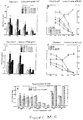
- FIGURE 1A and 1B Taste membrane activation of transducin by the bitter compounds denatonium benzoate (DEN) and quinine hydrochloride (QUI) was inhibited in a dose-dependent fashion by AMP ( FIGURE 1A and 1B ).
- the inhibitory effect of AMP generalized to every bitter compound that activated transducin in the presence of taste membranes: DEN, QUI, strychnine, nicotine, atropine ( FIGURE 1C ), sparteine, naringin, caffeic acid, and quinacrine.
- the inhibitory effect of AMP was specific and required taste receptors, because AMP did not inhibit rhodopsin-mediated activation of transducin ( FIGURE 1D ).
- GMP did not inhibit taste membrane activation of transducin in response to DEN ( FIGURE 1E ) or other bitter tastants. suggesting specificity of binding.
- AMP-related compounds potently inhibited DEN/taste receptor activation of transducin: thymidine 5'-monophosphate, ADP, 3'AMP, adenosinc 5'-succinate, ATP ( FIGURE 2 ) and adenosine 2'-monophosphate. 5'-Cytidylic acid, and inosinic acid partially inhibited DEN/taste membrane activation of transducin ( FIGURE 2 ).
- adenosine 5'-carboxylate, adenosine 5'-monosulfate, theophylline, adenine, adenosine, cAMP and caffeine did not block activation of transducin by DEN-stimulated taste membranes ( FIGURE 2 ).
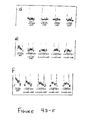
- AMP (0.1 mM) significantly inhibited the nerve responses to DEN, QUI, sparteine, strychnine, and atropine ( FIGURES 4A-F ).
- GMP (0.1 mM) had no effect on the glossopharyngeal responses to any of these bitter compounds ( FIGURE 4C ).
- AMP did not affect the nerve responses to NH 4 Cl, HCl, NaCl, or sucrose ( FIGURE 4I ), consistent with the behavioral responses.
- AMP inhibited slightly the glossopharyngeal responses to the artificial sweetener SC45647 ( FIGURE 4I ), it did not diminish the behavioral responses to this compound ( FIGURE 3E ).
- AMP and closely related compounds inhibited in vitro activation of transducin by taste membranes plus DEN, QUI, and several other bitter compounds. This effect was specific to the bitter- responsive heptahelical receptors presumably present in taste membranes and was not caused by nonspecific or general activation of rhodopsin-like receptors. AMP and like compounds also blocked behavioral and gustatory nerve responses to DEN, QUI, and other bitter compounds, but did not affect responses to NaCl, HCl, or sucrose. AMP did diminish glossopharyngeal responses to the high-potency sweetener SC45647, although it did not affect behavioral responses to this compound.
- AMP ADP, ATP, thymidine 5'-monophosphate, 5'-cytidylic acid, and inosinic acid all inhibited in vitro taste receptor responses, whereas GMP did not, indicating selectivity in the binding of these compounds.
- GMP did not, indicating selectivity in the binding of these compounds.
- the rapidity of AMP's actions in the electrophysiological assays argues against an intracellular site of action and suggests that AMP is probably acting at a cell-surface receptor. However, the present data do not distinguish between competitive or noncompetitive modes of action of AMP at the receptor.
- sweet-bitter “mixture suppression” Bartoshuk, L. M., 1975, Physiol. Behav. 14:643-649 ; Formaker. B. K. & Frank, M. E., 1996, Brain Res. 727: 79-90 ) may be explained in part by antagonist binding of sweeteners to the same receptor targets that bind bitter compounds and may relate to previous observations of chemical similarities of high-potency sweeteners and high-potency bitter compounds ( Lee. C. K., 1987, Adv.
- G proteins G s G i3 , and G 14 are also present in taste receptor cells ( Kinnamon, S. C. & Margolskee, R. F., 1996, Curr. Opin. Neurobiol. 6: 506-513 ; McLaughlin. S. K., et al., 1992, Nature (London) 357:563-569 ) and may be involved in taste transduction.
- Biochemical and electrophysiological studies implicate cyclic nucleotides, inositol triphosphate, diacyl glycerol, and Ca 2+ as second messengers in bitter and/or sweet taste transduction ( Tonosaki, K.
- gustducin null mice have markedly diminished behavioral and gustatory nerve responses to both bitter and sweet compounds ( Wong. G. T., et al., 1996, Nature (London) 381:796-800 );
- ii a mutated form of gustducin disrupted in its interactions with receptors acts as a dominant negative to block both bitter and sweet responsiveness in vivo;
- iii in vitro studies demonstrate that bovine taste receptor-containing membranes and solubilized taste receptors activate gustducin/transducin in the presence of DEN, QUI and several other bitter compounds ( Ming. D., et al., 1998, Proc.
- Typical naturally occurring bitter and sweet tastants are active in the range of 10-500 mM, whereas the most potent sweet or bitter tastants have thresholds for detection of 10-100 nM.
- the likelihood of receptor families and multiple independent pathways further compounds the difficulties of characterizing taste receptors. Structure-activity relationship analyses of high-potency sweeteners have led to working models of the physical nature of the receptor's binding pocket (reviewed in Roy. G., 1992, Crit. Rev Food Sci. Nutr. 31:59-77 ; Schiffman S. S. & Gatlin. C. A., 1993, Neurosci. Biobehav. Rev. 17:313-345 ); however these approaches are severely limited by the possibility of receptor heterogeneity and multiple independent pathways for sweetener function.
Landscapes
- Health & Medical Sciences (AREA)
- Life Sciences & Earth Sciences (AREA)
- Engineering & Computer Science (AREA)
- Chemical & Material Sciences (AREA)
- Immunology (AREA)
- Urology & Nephrology (AREA)
- Biomedical Technology (AREA)
- Hematology (AREA)
- Molecular Biology (AREA)
- Food Science & Technology (AREA)
- General Health & Medical Sciences (AREA)
- Medicinal Chemistry (AREA)
- Pathology (AREA)
- Animal Behavior & Ethology (AREA)
- Analytical Chemistry (AREA)
- Proteomics, Peptides & Aminoacids (AREA)
- Public Health (AREA)
- Biotechnology (AREA)
- Cell Biology (AREA)
- Polymers & Plastics (AREA)
- Nutrition Science (AREA)
- Microbiology (AREA)
- Veterinary Medicine (AREA)
- General Physics & Mathematics (AREA)
- Biochemistry (AREA)
- Physics & Mathematics (AREA)
- Nuclear Medicine, Radiotherapy & Molecular Imaging (AREA)
- Epidemiology (AREA)
- General Chemical & Material Sciences (AREA)
- Bioinformatics & Cheminformatics (AREA)
- Organic Chemistry (AREA)
- Pharmacology & Pharmacy (AREA)
- Diabetes (AREA)
- Endocrinology (AREA)
- Gastroenterology & Hepatology (AREA)
- Rheumatology (AREA)
- Toxicology (AREA)
- Chemical Kinetics & Catalysis (AREA)
- Pharmaceuticals Containing Other Organic And Inorganic Compounds (AREA)
- Investigating Or Analysing Biological Materials (AREA)
Abstract
Description
- The present invention relates to a method of inhibiting bitter taste in a substance which may come in contact with taste tissue, selected from foods, beverages, pharmaceuticals, dental products, cosmetics, wetable glues used for envelopes and stamps, soaps, shampoos, and toxic compositions used in pest control.
- The sensation of taste has profound biological significance. It has much wider ramifications than merely providing mankind with pleasurable culinary experiences. Taste conveys numerous biological cues to humans and other animals, identifying tainted or spoiled foods and providing hedonic responses which may be proportionate to caloric or nutritive value.
- There are generally considered to be only four or five categories of basic taste: sweet, sour, bitter, acid, and "umami" (the Japanese word describing the taste of monosodium glutamate; Herness, M.S. & Gilbertson, T.A., 1999, Annu. Rev. Physiol. 61:873-900). These can be sub-classified as the appetitive tastes, such as salty, sweet and umami, which are associated with nutrient-containing foods, and the bitter and sour tastes elicited by toxic compounds. The latter two produce an aversive reaction which may protect an organism by discouraging the ingestion of unhealthy or dangerous foods. Among the undesirable compounds associated with a bitter taste are plant alkaloids such as caffeine, strychnine and quinine, cyanide, and metabolic waste products such as urea (Lindemann, B., 1996, Physiol. Rev. 76:719-766). It has recently been suggested that fat, the most energy-dense nutrient, may possess gustatory cues (Id., citing Gilbertson T.A. et al., 1997, Am. J. Physiol. 272:C1203-1210 and Gilbertson, T.A., 1998, Curr. Opin. Neurobiol. 8:447-452).
- The anatomic basis for the initial events of taste is the taste receptor cell ("TRC"), located in clusters referred to as "taste buds" (Lindemann, supra). Taste buds are distributed throughout the oral cavity, including the tongue as well as extra-lingual locations (see Hemess and Gilbertson). In the human tongue, taste buds are organized into three specialized types of specialized structures, namely fungiform, foliate, and circumvallate papillae. Each taste bud comprises between about 50 and 100 individual cells grouped into a cluster that is between 20 and 40 microns in diameter. Nerve fibers enter from the base of the taste bud and synapse onto some of the taste receptor cells. Typically, a single TRC contacts several sensory nerve fibers, and each sensory fiber innervates several TRCs in the same taste bud (Lindemann, supra).
- When a subject ingests a tastant, and that tastant encounters a taste receptor cell in the appropriate concentration, an action potential is produced which, via synapses with primary sensory neurons, communicates the signal registered by the receptor, via afferent nerves, to the appropriate region of the sensory cortex of the brain, resulting in the perception of a particular taste by the subject. Food appraisal can give rise to a hedonic response involving the activation of midbrain dopamine neurons (Lindemann, supra, citing Mirenowicz, J. & Schultz, W., 1996, Nature (London) 379:449-451) and the release of endogenous opiates (Lindemann, supra, citing Drenowski, A., et al., 1992, Physiol. Behav. 51:371-379; Dum, J. et al., 1983, Pharmacol. Biochem. Behav. 18:443-447).
- Much research has been directed toward elucidating the physiology of taste. TRCs of most, if not all, vertebrate species possess voltage-gated sodium, potassium, and calcium ion channels with properties similar to those of neurons (Kinnamon, S.C. & Margolskee, R.F., 1996, Curr. Opin. Neurobiol. 6:506-513). Different types of primary tastes appear to utilize different types of transduction mechanisms, and certain types of tastes may employ multiple mechanisms which may reflect varying nutritional requirements amongst species (Kinnamon & Margolskee, supra). For example, in the hamster, acid taste is associated with the influx of protons through an amiloride-sensitive sodium ion channel (Id., citing Gilbertson, T. A. et al., 1993, Neuron 10:931-942), whereas in the mudpuppy, a proton block of potassium ion channels at the apical cell membrane is involved (Kinnamon & Margolskee, supra, citing Kinnamon, S.C. et al., 1988, Proc. Natl. Acad. Sci. U.S.A. 85:7023-7027). Salty taste is typically transduced via permeation of sodium ions through amiloride-sensitive sodium channels.
- Sweet taste has been associated with a second messenger system which may differ depending upon whether the tastant is a natural or artificial sweetener, the former believed to utilize cAMP, the latter inositol trisphosphate (IP3; Hemess M.S. & Gilbertson, T.A., 1999, Annu. Rev. Physiol. 61:873-900). There is evidence that a membrane-bound receptor, such as that involved in the activation of Gs and adenylyl cyclase, may be involved in the perception of sweet tastes (Id.).
- Bitter taste sensations are also thought to involve cAMP and IP3 (Kinnamon & Margolskee, supra). The bitter compound denatonium causes calcium ion release from rat TRCs and the rapid elevation of IP3 levels in rodent taste tissue (Id., citing Bernhardt, SJ. et al., 1996, J. Physiol. (London) 490:325-336 and Akabas, M.H., et al., 1988, Science 242:1047-1050). Since denatonium cannot pass the cell membrane, it has been suggested that it may activate G-protein-coupled receptors, whereby the α and/or βγ G protein subunits would activate phospholipase C, leading to IP3 generation and the release of calcium ions (Kinnamon & Margolskee, supra).
- In recent years, a taste-specific G protein termed "gustducin", which is homologous to the retinal G protein, transducin, has been cloned and characterized (Id., citing McLaughlin, S. et al., 1992, Nature (London) 357:563-569). Mice in which the α gustducin gene has been knocked out exhibit diminished responses to certain bitter (and certain sweet) tastants, suggesting that gustducin may regulate the TRC IP3 response (Kinnamon & Margolskee, citing Wong, G.T. et al., 1996, Nature (London) 381:796-800). Introducing a wild-type rat α-gustducin-encoding cDNA into α-gustducin null mice restored their responsiveness to bitter and sweet compounds (Ming, D. et al., 1998, Proc. Natl. Acad. Sci. U.S.A. 95:8933-8938, citing Wong, G.T., et al., 1996, Cold Spring Harbor Symp. Quant. Biol. 61:173-184). Gustducin's γ subunit (γ13) has recently been shown to mediate activation of phospholipase C in response to the bitter compound denatonium (Huang, L. et al., 1999, Nature Neurosci. 2:1055-1062).
- Although it had been believed that rod and cone transducins were specific G proteins present only in photoreceptor cells of the vertebrate retina (Lochrie, M.A. et al., 1985, Science 228:96-99; Medynski, D.C. et al., 1985, Proc. Natl. Acad. Sci. U.S.A. 82:4311-4315; Tanabe, T. et al., 1985, Nature (London) 315:242-245; Yatsunami K. & Khorana, H.G., 1985, Proc. Natl. Acad. Sci. U.S.A. 82:4316-4320), it was discovered that rod transducin is also present in vertebrate taste cells, where it specifically activates a phosphodiesterase isolated from taste tissue (Ruiz-Avila, L. et al., 1995, Nature (London) 376:80-85). Using a trypsin-sensitivity assay, it was demonstrated that the bitter compound denatonium, in the presence of taste cell membranes, activates transducin but not the G-protein, Gi (Id.). This activation could be inhibited by a peptide derived from the C-terminal region of transducin, which competitively inhibits the rhodopsin-transducin interaction (Id. and Hamm, H.E., et al., 1988, Science 241:832-8359). Ruiz-Avila et al. (supra) proposed that transducin may be involved in bitter taste transduction via a cascade similar to that which occurs in visual perception, whereby a stimulated bitter receptor may activate taste-cell transducin, which in turn activates phosphodiesterase. The activated phosphodiesterase may then decrease levels of intracellular 3',5'-cyclic nucleotides, and the resulting lower levels of cyclic nucleotides could lead to TRC depolarization by a mechanism referred to as "cyclic-nucleotide-suppressible conductance"(Id. citing Kolesnikov, S. & Margolskee, R.F., 1995, Nature (London) 376:85-88).
- More recently, Ming, D. et al., 1998, Proc. Natl. Acad. Sci. U.S.A. 95:8933-8938 reported that both gustducin and transducin, in the presence of bovine taste cell membranes, were specifically activated by a number of bitter compounds, including denatonium, quinine, and strychnine. This activation was found to depend upon an interaction with the C-terminus of gustducin and required the presence of G-protein βγ subunits; it could be competitively inhibited by peptides derived from the sites of interaction of rhodopsin and transducin.
- The present invention relates to a method of inhibiting bitter taste in a substance which may come in contact with taste tissue as defined in
claim 1. It is based at least in part, on the discovery that adenosine monophosphate (AMP) and related compounds inhibited the activation of transducin by bitter tastant-stimulated taste receptors, decreased neuronal stimulation by said tastants, and resulted in behavioral responses which indicate that the sensation of bitterness was greatly diminished. - Compounds according to the invention may be used to decrease or abrogate the perception of bitterness of bitter tastants, in which capacity they are referred to as "bitterness inhibitors".
- Compounds according to the invention may also be found to convey sweetness to the substance.
- The compounds according to the invention may be used to enhance the flavor of foods, beverages, and pharmaceuticals by inhibiting bitter taste In addition to increasing food consumer satisfaction, the compounds according to invention may also permit the incorporation, into foods and pharmaceuticals, of bitter tastants that improve shelf-life or nutritive value. The compounds according to the invention could increase food intake in humans or livestock. Moreover, the compounds according to the invention could render medical procedures involving bitter substances more palatable, and improve compliance in drug regimens involving bitter tastants, particularly when administered to children.
-
-
FIGURE 1A-E . AMP inhibits activation of transducin by bitter stimuli in the presence of bovine taste receptor cell membranes. (A) Inactive (GDP-bound) transducin (rightmost lane) generates a 23 kDa fragment on digestion with trypsin. Active (GTP-γS-bound) transducin (second from right lane) activated by DEN plus taste membranes generates a 32-kDa fragment on treatment with trypsin. Increasing concentrations of AMP (0.25, 0.5, 1.25, 2.5, and 5.0 mM) inhibit activation of transducin by DEN plus bovine taste receptor membranes. as determined by the shift from 32-kDa to 23-kDa fragments. (B) Increasing concentrations of AMP (0.01, 0.05, 0.10, 0.50, 1.0, 1.5, 2.0, and 2.5 mM) inhibit activation of transducin by 1.0 mM QUI plus bovine taste membranes. (C) AMP (2.5 mM) inhibits the taste membrane-dependant activation of transducin by DEN (5.0 mM), QUI (1.0 mM), strychnine hydrochloride (STR, 5.0 mM), nicotine hemisulfate (NIC, 5.0 mM), and atropine hydrochloride (ATR, 5.0 mM). (D) AMP (0.25, 0.5, 1.25, 2.5, and 5.0 mM) does not inhibit activation of transducin by 0.001 mM rhodopsin. (E) GMP (0.25, 0.5, 1.25, 2.5, and 5.0 mM) does not inhibit activation of transducin by DEN (5.0 mM) plus bovine taste membranes. -
FIGURE 2 . Only certain AMP analogues block activation of transducin by DEN plus taste membranes. Taste membrane-dependent activation of transducin by DEN (5.0 mM) is not inhibited by adenosine 5'-carboxylate (ACA, 5.0 mM). adenosine 5'-monosulfate (AMS, 5.0 mM), theophylline (THE, 5.0 mM), adenine hydrochloride (ADE, 5.0 mM). adenosine hydrochloride (ADO. 5.0 mM), cAMP (5.0 mM), or caffeine (CAF, 5.0 mM). DEN/taste membrane activation of transducin is inhibited by thymidine 5'- monophosphate (TMP, 5.0 mM), 5'-cytidylic acid (CMP, 5.0 mM), inosinic acid (IMP, 5.0 mM), ADP (5.0 mM), 3'AMP (5.0 mM), adenosine 5'-succinate (ASU, 5.0 mM) and ATP (5.0 mM). H2O and rhodopsin (RHO) lanes control for nonspecific receptor-independent effects. -
FIGURE 3A-E . AMP blocks aversive responses of mice to several bitter compounds. (A) Forty-eight-hour two-bottle preference responses of C57BL/6J mice (n = 10) to DEN alone, DEN plus AMP (0.1 and 1.0 mM), and DEN plus GMP (0.1 and 1.0 mM). AMP (0.1 and 1.0 mM) inhibited the aversive responses to DEN at 0.05, 0.10, 0.50, and 1.0 mM (P < 0.001). GMP (0.1 and 1.0 mM) did not inhibit the aversive responses to DEN. **P < 0.001. (B) Increasing concentrations of AMP (0.1, 1.0, 5.0 mM) shifted the dose-aversiveness curve to the right. AMP alone did not elicit behavioral responses until its concentration reached 0.5 mM. (C) Preference responses of C57BL/6J mice (n = 10) to QUI alone, QUI plus AMP (0.1 and 0.5 mM), and QUI plus GMP (0.1 and 0.5 mM). AMP (0.1 and 0.5 mM) inhibited the aversive responses to QUI at 0.05, 0.10, and 0.50 mM (P < 0.001). GMP (0.1 and 0.5 mM) did not inhibit the aversive responses to QUI **P < 0.001. (D) Increasing concentrations of AMP shifted the dose-aversiveness curve to the right. (E) Preference responses of C57BL/6J mice (n = 10) exposed to two different concentrations of tastants ± 0.1 mM AMP. AMP inhibited the aversive responses to the bitter tastants sparteine (SPA) at 0.05 and 0.10 mM (P < 0.001): and (-)-epicatechin (E.I.) at 0.05 mM and 0.10 mM (P < 0.01); AMP did not alter the behavioral responses to NaCl (0.1 and 0.3 M), HCl (0.01 and 0.10 mM), sucrose (SUC) (5.0 and 150 mM), or the high-potency artificial sweetener SC45647 (SC) (0.01 and 0.10 mM). **P < 0.001, *P < 0.01. -
FIGURE 4A-I . AMP diminishes the glossopharyngeal nerve responses of mice to lingual stimulation with bitter tastants. (A) Glossopharyngeal responses to 0.1 M NH4C1, 5.0 mM DEN, 1.0 mM sparteine (SPA), 1.0 mM strychnine (STR), and 1.0 mM atropine (ATR). (B) Glossopharyngeal responses to the above compounds mixed with 0.1 mM AMP. (C) Glossopharyngeal responses to the above compounds mixed with 0.1 mM GMP. (D) Glossopharyngeal responses to a series of concentrations of AMP (0.01, 0.1, 1.0, 5.0 mM) alone and in combination with QUI (0.1 mM and 1.0 mM) (E and F, respectively). (G) Relative tonic responses recorded from glossopharyngeal nerves of mice (n = 5 to 7) stimulated by lingual application of DEN (0.1, 0.5, 1.0,5.0, and 10.0 mM) ± AMP (0.1 and 1.0 mM). **P < 0.001; *P < 0.01. (H) Relative tonic responses recorded from glossopharyngeal nerves of mice (n = 6 to 8) stimulated by lingual application of QUI (0.1, 0.3, and 1.0 mM) and its mixtures with AMP (0.1 and 1.0 mM). **P < 0.001. (I) Relative tonic responses recorded from glossopharyngeal nerves of mice (n = 4 to 7) stimulated by lingual application of 5.0 mM HCl, 0.1 M NaCl, 3.0 mM SC45647, 0.5 M sucrose (SUC), 1.0 mM SPA, or water with or without 0.1 mM AMP. AMP inhibits the relative tonic responses of 1.0 mM SPA (P < 0.001) and 3.0 mM SC45647 (P < 0.01), but not of the other compounds. **P < 0.001; *P < 0.01. - A "bitter tastant", as defined herein, is a compound or molecular complex that induces, in a subject, the perception of a bitter taste. In particular, a bitter tastant is one which results in the activation of gustducin and/or transducin, for example, but not by way of limitation, in an assay such as that described in Ming, D. et al., 1998, Proc. Natl. Sci. U.S.A. 95:8933-8938 (e.g., see
figure 3 of that reference). Examples of bitter tastants include but are not limited to denatonium benzoate ("denatonium"; also "DEN"), quinine hydrochloride ("quinine"; also "QUI"), strychnine hydrochloride ("strychnine"; also "STR"), nicotine hemisulfate ("nicotine"; also "NIC"), atropine hydrochloride ("atropine"; also "ATR"), sparteine, naringin, caffeic acid("caffeine"; also "CAF"), quinacrine, and epicatechin. See Ming et al., 1999, Proc. Natl. Acad. Sci. U.S.A. 96:9903-9908, incorporated by reference herein. - The present invention provides for a method of inhibiting bitter taste in a substance, resulting from contacting taste tissue of a subject with the substance comprising incorporating into the
substance 1 to 50 mM of a compound selected from adenosine 5' monophosphate ("AMP"), thymidine 5'monophosphate, adenosine 5' diphosphate, adenosine 3' monophospate (3'-AMP), adenosine 5'-succinate, adenosine 5' triphosphate ("ATP") and adenosine 2' monophosphate. - In specific, non-limiting embodiments, the substance comprises a concentration of the compound of between about and 20 mM, preferably between about 1 and 5 mM.
- In specific, non-limiting embodiments, where thymidine 5' monophosphate is used as the bitterness inhibitor, a composition comprising a bitter tastant may further comprise a concentration of thymidine 5' monophosphate of between about 0.01 and 20 mM, preferably between about 1 and 5 mM.
- In specific, non-limiting embodiments, where adenosine 5' diphosphate is used as the bitterness inhibitor, a composition comprising a bitter tastant may further comprise a concentration of adenosine 5' diphosphate of between about 0.01 and 20 mM, preferably between about 1 and 5 mM.
- In specific, non-limiting embodiments, where adenosine 3' monophosphate is used as the bitterness inhibitor, a composition comprising a bitter tastant may further comprise a concentration of adenosine 3' monophosphate of between about 0.01 and 20 mM, preferably between about 1 and 5 mM.
- In specific, non-limiting embodiments, where adenosine 5' succinate is used as the bitterness inhibitor, a composition comprising a bitter tastant may further comprise a concentration of adenosine 5' succinate of between about 0.01 and 20 mM, preferably between about 1 and 5 mM.
- In specific, non-limiting embodiments, where adenosine 5' triphosphate is used as the bitterness inhibitor, a composition comprising a bitter tastant may further comprise a concentration of adenosine 5' triphosphate of between about 0.01 and 20 mM, preferably between about 1 and 5 mM.
- In specific, non-limiting embodiments, where adenosine 2' monophosphate is used as the bitterness inhibitor, a composition comprising a bitter tastant may further comprise a concentration of adenosine 2' monophosphate of between about 0.01 and 20 mM, preferably between about 1 and 5 mM.
- The present invention may be used to improve the taste of foods by decreasing or eliminating the aversive effects of bitter tastants. Where the inhibitors are inhibitor sweeteners, they may be used to improve food flavor by producing a sweet taste. If a bitter tastant is a food preservative, the inhibitors of the invention may permit or facilitate its incorporation into foods, thereby improving food safety. For foods administered as nutritional supplements, the incorporation of inhibitors of the invention may encourage ingestion, thereby enhancing the effectiveness of these compositions in providing nutrition or calories to a subject.
- Thus, according to a preferred embodiment, the compound sweetens the substance.
- The compounds according to the invention may be incorporated into medical and/or dental compositions. Certain compositions used in diagnostic procedures have an unpleasant taste, such as contrast materials and local oral anesthetics. The compounds according to the invention may be used to improve the comfort of subjects undergoing such procedures by improving the taste of compositions. In addition, the compounds according to the invention may be incorporated into pharmaceutical compositions, including tablets and liquids, to improve their flavor and improve patient compliance (particularly where the patient is a child or a non-human animal).
- The compounds according to the invention may be comprised in cosmetics to improve their taste features. For example, but not by way of limitation, the compounds according to the invention may be incorporated into face creams and lipsticks.
- In addition, the compounds according to the invention may be incorporated into compositions that are not traditional foods, pharmaceuticals, or cosmetics, but which may contact taste membranes. Examples include, but are not limited to, soaps, shampoos, toothpaste, denture adhesive, glue on the surfaces of stamps and envelopes, and toxic compositions used in pest control (e.g., rat or cockroach poison).
- G Protein Activation Assays. Bovine (Bos primigenius) tongues were collected fresh from a local slaughterhouse and transported on ice to the laboratory. Circumvallate papillae were hand dissected, frozen in liquid nitrogen, and stored at - 80°C until use. The collected taste tissues were homogenized, particulates removed by centrifugation, and enriched taste cell membranes collected as described (Ming. D., et al., 1998, Proc. Natl. Acad. Sci. U.S.A. 95:8933-8938). The pelleted membranes were rinsed twice, resuspended in homogenization buffer lacking protease inhibitors, and further homogenized by 20 passages through a 25-gauge needle. Aliquots were either flash frozen or stored on ice until use. The concentration of protein in the membrane preparations was determined by the Peterson modification of the micro-Lowry method (Peterson, G. L., 1977, Anal. Biochem. 83:346-356). Activation of transducin was based on the published trypsin sensitivity procedure (Ming. D., et al., 1998, Proc. Natl. Acad. Sci. U.S.A. 95:8933-8938, Neer, E. J., et al., 1994, Methods Enzymol. 237:226-239). After the trypsin digestion, samples were diluted with Laemmli buffer (Laemmli. U. K., 1970, Nature (London) 227:680-685) and separated by SDS/PAGE by using a 4-20% gel and Tris-glycine buffer. The separated polypeptides were transferred by electro-blotter to a poly(vinylidene difluoride) membrane, which was blocked by the addition of 5% BLOTTO [50 mM Tris-HCI, pH 7.4/100 mM NaCl/5% nonfat dry milk], (30 min), then transducin peptides were visualized by binding of transducin antiserum and horseradish peroxidase-labeled goat anti-rabbit secondary antibody, followed by developing with bicinchoninic acid staining reagents from Bio-Rad and exposure to x-ray film.
- Chemicals. All bitter tastant and buffer chemicals were of the highest purity available and were purchased either from Sigma or Boehringer Mannheim, unless otherwise noted. Rhodopsin was purified in the light as 6 M urea-washed bovine rod outer segments by using published procedures (Mazzoni. M. R, et al., 1991, J. Biol. Chem. 266:14072-14081). Bovine transducin heterotrimer was purified by standard procedures (Fung, B. K.-K., et al., 1981, Proc. Natl. Acad. Sci. U.S.A. 78:152-156). The rabbit polyclonal antitransducin antibody was a kind gift of Mel Simon and John Watson (California Institute of Technology, Pasadena, CA).
- Behavioral Assays. Multiple sets of male C57BL/6J mice from the Jackson Laboratory were tested. Each set (n = 10) was tested with tastant ± AMP or GMP. Between tests, mice were provided with acidified water (pH 4.5) for about 2 wk. Tested mice ranged in age from 8 to 20 wk. Mice were individually housed, provided with food ad libitum (Pico Lab Mouse Diet 20 no. 5058; PMI Feeds, St. Louis, MO) and presented with distilled water in two sipper bottles for 48 h before testing. During each 48-h test period, a given concentration of tastant was provided in one sipper bottle, whereas the other had distilled water. After 24 h, volumes consumed were recorded, the bottles refilled, and positions reversed (to control for positional cues). Tastants were presented in ascending concentration. Preference ratios were calculated as the fraction of tastant consumed as a percentage of the total volume of liquid consumed. Mean preference ratios and Student's t tests were calculated from total collected data.
- Nerve Recording. Glossopharyngeal nerve responses were recorded from male C57BL/6J mice as previously described (Ninomiya, Y., et al., 1997, Am. J Physiol. (London) 272:R1002-RI006). Each mouse was anesthetized with intraperitoneal injection of sodium pentobarbital (40-50 mg/kg) and maintained at a surgical level of anesthesia with supplemental injections of the drug. The trachea was cannulated, and the mouse was then fixed in the supine position with a head holder to allow dissection of the glossopharyngeal nerve. The hypoglossal nerve was transected bilaterally to prevent inadvertent tongue movements. The right glossopharyngeal nerve was exposed by removal of the digastric muscle and posterior horn of the hyoid bone. The glossopharyngeal nerve was then dissected free from underlying tissues and cut near its entrance to the posterior foramen lacerum. The entire nerve was placed on a silver wire electrode for whole nerve recording. An indifferent electrode was positioned nearby in the wound. Neural responses resulting from topical application of tastants to the tongue were fed into an amplifier and displayed on an oscilloscope screen. Whole nerve responses were integrated by using an RMS-DC converter (Hendrick, Tallahassee, FL) with a time constant of 0.5 s. For chemical stimulation of the circumvallate and foliate papillae, an incision was made on each side of the animal's face from the corner of the mouth to just above the angle of the jaw, the papillae were exposed, and their trenches opened via slight tension applied through a small suture sewn in the tip of the tongue. Tastant solutions were delivered to the tongue by gravity flow, and flowed over the tongue for a controlled period. The stability of each preparation was monitored by the periodic application of 0.1 M NH4Cl. A recording was considered to be stable when the 0.1 M NH4Cl response magnitudes at the beginning and end of each stimulation series deviated by no more than 15%. Only responses from stable recordings were used in the data analysis. In the analysis of whole nerve responses. the magnitudes of the integrated response at 20, 25, 30, 35. and 40 s after stimulus onset were measured and averaged to generate tonic responses: the tonic response represents the sustained nerve response to continuous tastant stimulation of taste receptor cells. The relative tonic response for each stimulus was obtained by normalization to the response from 0.1 M NH4Cl (the tonic response of NH4Cl was defined as 1.0). Student's t test was used for statistical analysis.
- The active (GTP-bound) form of G proteins such as gustducin and transducin can be distinguished from the inactive (GDP-bound) form by limited trypsin digestion (Fung. B. K.-K. & Nash, C. R., 1983, J. Biol. Chem. 258:10503-10510; Halliday, K. R., et al., 1984, J. Biol. Chem. 259:516-525). Using transducin as a reporter in this in vitro assay, we identified compounds that inhibited gustatory responses to bitter compounds. Taste membrane activation of transducin by the bitter compounds denatonium benzoate (DEN) and quinine hydrochloride (QUI) was inhibited in a dose-dependent fashion by AMP (
FIGURE 1A and 1B ). The inhibitory effect of AMP generalized to every bitter compound that activated transducin in the presence of taste membranes: DEN, QUI, strychnine, nicotine, atropine (FIGURE 1C ), sparteine, naringin, caffeic acid, and quinacrine. The inhibitory effect of AMP was specific and required taste receptors, because AMP did not inhibit rhodopsin-mediated activation of transducin (FIGURE 1D ). GMP did not inhibit taste membrane activation of transducin in response to DEN (FIGURE 1E ) or other bitter tastants. suggesting specificity of binding. Several AMP-related compounds potently inhibited DEN/taste receptor activation of transducin: thymidine 5'-monophosphate, ADP, 3'AMP, adenosinc 5'-succinate, ATP (FIGURE 2 ) and adenosine 2'-monophosphate. 5'-Cytidylic acid, and inosinic acid partially inhibited DEN/taste membrane activation of transducin (FIGURE 2 ). As with GMP (FIGURE 1E ), adenosine 5'-carboxylate, adenosine 5'-monosulfate, theophylline, adenine, adenosine, cAMP and caffeine did not block activation of transducin by DEN-stimulated taste membranes (FIGURE 2 ). - To determine whether AMP, as distinct from GMP, would diminish the gustatory responses to bitter compounds, two-bottle preference tests (Harder, D. B., et al., 1989, Chem. Senses 14:547-564) were carried out on mice presented with various tastants ± AMP or GMP. AMP, but not GMP, inhibited the aversive responses of mice to DEN (
FIGURES 3A and 3B ) and QUI (FIGURES 3C and 3D ). The inhibitory effect of AMP gradually decreased as the concentration of bitter tastant increased and was eliminated at the highest concentrations of DEN and QUI tested (5.0 and 1.0 mM. respectively) (FIGURES 3A-D ). Several other tastants that humans characterize as bitter [sparteine and (-)-epicatechin (Glendinning, J. 1., 1994, Physiol. Behav. 56:1217-1227)], sweet [sucrose and the high-potency artificial sweetener SC45647 (Nofre, C., et al., inventors, Université Claude Bernard,Lyon 1, France, assignee, "Sweetening Agents", United States Patent4,921,939, May 1, 1990 )], sour (HCl), or salty (NaCl) were also tested ± AMP. AMP inhibited the aversive responses to the two bitter compounds, sparteine and epicatechin, but did not affect the behavioral responses to sucrose, SC45647, NaCl, or HCl (FIGURE 3E ). - To determine whether the inhibition of aversive responses to bitter compounds by AMP was because of peripheral taste inhibition (as predicted by the biochemical data of
FIGURES 1 and2 ) we recorded summated glossopharyngeal nerve responses of mice (Ninomiya, Y., et al., 1997, Am. J Physiol. (London) 272:R1002-RI006) to various tastants ± AMP or GMP. The glossopharyngeal nerve innervates taste receptor cells of the posterior tongue and in mice is responsive to salty, sweet, sour, and bitter stimuli (Ninomiya, Y., et al. 1984, Brain Res. 302:305-314). AMP (0.1 mM) significantly inhibited the nerve responses to DEN, QUI, sparteine, strychnine, and atropine (FIGURES 4A-F ). GMP (0.1 mM) had no effect on the glossopharyngeal responses to any of these bitter compounds (FIGURE 4C ). The glossopharyngeal responses increased as QUI or DEN concentrations were raised: AMP (0.1 and 1.0 mM) significantly inhibited these nerve responses (FIGURES 4D-H ). In contrast, AMP did not affect the nerve responses to NH4Cl, HCl, NaCl, or sucrose (FIGURE 4I ), consistent with the behavioral responses. Interestingly, although AMP inhibited slightly the glossopharyngeal responses to the artificial sweetener SC45647 (FIGURE 4I ), it did not diminish the behavioral responses to this compound (FIGURE 3E ). - AMP and closely related compounds inhibited in vitro activation of transducin by taste membranes plus DEN, QUI, and several other bitter compounds. This effect was specific to the bitter- responsive heptahelical receptors presumably present in taste membranes and was not caused by nonspecific or general activation of rhodopsin-like receptors. AMP and like compounds also blocked behavioral and gustatory nerve responses to DEN, QUI, and other bitter compounds, but did not affect responses to NaCl, HCl, or sucrose. AMP did diminish glossopharyngeal responses to the high-potency sweetener SC45647, although it did not affect behavioral responses to this compound. AMP, ADP, ATP, thymidine 5'-monophosphate, 5'-cytidylic acid, and inosinic acid all inhibited in vitro taste receptor responses, whereas GMP did not, indicating selectivity in the binding of these compounds. The rapidity of AMP's actions in the electrophysiological assays argues against an intracellular site of action and suggests that AMP is probably acting at a cell-surface receptor. However, the present data do not distinguish between competitive or noncompetitive modes of action of AMP at the receptor.
- High concentrations of DEN, QUI, and other bitter tastants overcame AMP's inhibition of aversive responses, suggesting either that AMP is acting as a competitive inhibitor or that the bitter tastants activated other AMP-resistant bitter transduction pathways in addition to gustducin/transducin- mediated pathways, consistent with residual responsiveness to bitter compounds in gustducin knockout and transgenic mice expressing a mutated form of gustducin that disrupts signal transduction (Wong. G. T., et al., 1996, Nature (London) 381:796-800; Ming. D., et al., 1998, Proc. Natl. Acad. Sci. U.S.A. 95:8933-8938). The existence of multiple bitter transduction pathways is also supported by the observation that inhibition by AMP of glossopharyngeal responses to increasing concentrations of QUI reached a plateau at which glossopharyngeal responses to QUI could not be reduced further.
- In recent studies, it has been determined that certain artificial sweeteners inhibit in vitro activation of taste receptors by DEN, QUI, and other bitter compounds; these sweeteners also inhibited behavioral and gustatory nerve responses to these gustducin/transducin coupled bitter compounds. This phenomenon of sweet-bitter "mixture suppression" (Bartoshuk, L. M., 1975, Physiol. Behav. 14:643-649; Formaker. B. K. & Frank, M. E., 1996, Brain Res. 727: 79-90) may be explained in part by antagonist binding of sweeteners to the same receptor targets that bind bitter compounds and may relate to previous observations of chemical similarities of high-potency sweeteners and high-potency bitter compounds (Lee. C. K., 1987, Adv. Carbohydr. Chem. Biochem. 45:199-351; Benedetti, E., et al., 1995, J Pept. Sci. 1:349-359; Shin, W., et al., 1995, J. Med. Chem. 38:4325-4331 21-23). Multiple lines of evidence implicate gustducin/transducin, their coupled receptors, and effector enzymes (e.g., phosphodiesterases and phospholipase C) in bitter transduction (reviewed in Kinnamon, S. C. & Margolskee, R. F., 1996, Curr. Opin. Neurobiol. 6: 506-513; Lindemann, B., 1996, Physiol. Rev. 76: 719-766). In addition to gustducin and transducin, the G proteins Gs Gi3, and G14 are also present in taste receptor cells (Kinnamon, S. C. & Margolskee, R. F., 1996, Curr. Opin. Neurobiol. 6: 506-513; McLaughlin. S. K., et al., 1992, Nature (London) 357:563-569) and may be involved in taste transduction. Biochemical and electrophysiological studies implicate cyclic nucleotides, inositol triphosphate, diacyl glycerol, and Ca2+ as second messengers in bitter and/or sweet taste transduction (Tonosaki, K. & Funakoshi, M., 1988, Nature (London) 331:354-356; Behe, P., et al., 1990, J. Gen. Physiol. 96:1061-1084; Bernhardt. S. J., et al., 1996, J Physiol. (London) 490: 325-336; Cummings, T. A., et al., 1996, J. Neurophysiol. 75:1256-1263; Spielman. A. I., et al., 1996, Am. J. Physiol. 270:C926-C931 24-28). Biochemical and genetic data clearly implicate gustducin in the transduction of both bitter and sweet taste qualities: (i) gustducin null mice have markedly diminished behavioral and gustatory nerve responses to both bitter and sweet compounds (Wong. G. T., et al., 1996, Nature (London) 381:796-800); (ii) a mutated form of gustducin disrupted in its interactions with receptors acts as a dominant negative to block both bitter and sweet responsiveness in vivo; (iii) in vitro studies demonstrate that bovine taste receptor-containing membranes and solubilized taste receptors activate gustducin/transducin in the presence of DEN, QUI and several other bitter compounds (Ming. D., et al., 1998, Proc. Natl. Acad. Sci. U.S.A. 95:8933-8938); (iv) although sweet compounds do not activate gustducin/transducin in this assay, our data demonstrate that certain sweeteners block in vitro activation of gustducin/transducin and thereby lead to sweet-bitter "mixture suppression."
- Although biochemical and genetic studies of taste G proteins have provided new insights into the molecular nature of the sweet and bitter transduction cascades, physical studies of the taste receptors involved in bitter and sweet transduction (Cagan, R. H. & Morris, R. W., 1979, Proc. Natl. Acad. Sci. U.S.A. 76:1692-1696; Shimazaki. K., et al., 1986, Biochim. Biophys. Acta 884:291-298) have been of limited utility because of the scarcity of material and the lack of high-affinity ligands. Typical naturally occurring bitter and sweet tastants are active in the range of 10-500 mM, whereas the most potent sweet or bitter tastants have thresholds for detection of 10-100 nM. The likelihood of receptor families and multiple independent pathways further compounds the difficulties of characterizing taste receptors. Structure-activity relationship analyses of high-potency sweeteners have led to working models of the physical nature of the receptor's binding pocket (reviewed in Roy. G., 1992, Crit. Rev Food Sci. Nutr. 31:59-77; Schiffman S. S. & Gatlin. C. A., 1993, Neurosci. Biobehav. Rev. 17:313-345); however these approaches are severely limited by the possibility of receptor heterogeneity and multiple independent pathways for sweetener function.
Claims (15)
- A method of inhibiting bitter taste in a substance which may come in contact with taste tissue, selected from foods, beverages, pharmaceuticals, dental products, cosmetics, wetable glues used for envelopes and stanps, swaps, shampoos, and toxic compositions used in pest control, the method comprising incorporating into the substance 1 to 50 mM of a compound selected from adenosine 5' monophosphate, thymidine 5' monophosphate, adenosine 5' diphosphate, adenosine 3' monophosphate, adenosine 5' succinate, adenosine 5' triphosphate, and adenosine 2' monophosphate.
- The method of claim 1, wherein the substance is a food.
- The method of claim 1, wherein the substance is a bererage.
- The method of claim 1, wherein the substance is a pharmaceutical.
- The method of claim 1, wherein the substance is a cosmetic.
- The method of claim 1, wherein the substance is a soap.
- The method of claim 1, wherein the substance is a shampoo.
- The method of claim 1, wherein the substance a dental product.
- The method of claim 1, wherein the substance is a wetable glue used for envelopes and stamps.
- The method of claim 1, wherein the substance is a toxic composition used in pest control.
- The method of claim 1, wherein the sompound is adenosine 5' monophosphate.
- The method of claim 1, wherein the compound is selected from the group consisting of thymidine 5' monophosphate, adenosine 5' diphosphate, adenosine 3' monophosphate, adenosine 5' succinate, adenosine 5' triphosphate, and adenosine 2' monophosphate.
- The method of claim 1, wherein the substance comprises between about 1 and 20 mM of the compound.
- The method of claim 13, wherein the substance comprises between about 1 and 5 mM of the compound.
- The method of claim 1 wherein the compound sweetens the substance.
Applications Claiming Priority (3)
| Application Number | Priority Date | Filing Date | Title |
|---|---|---|---|
| US11356298P | 1998-12-23 | 1998-12-23 | |
| US113562P | 1998-12-23 | ||
| PCT/US1999/030610 WO2000038536A2 (en) | 1998-12-23 | 1999-12-22 | Inhibitors of the bitter taste response |
Publications (2)
| Publication Number | Publication Date |
|---|---|
| EP1139793A2 EP1139793A2 (en) | 2001-10-10 |
| EP1139793B1 true EP1139793B1 (en) | 2009-10-14 |
Family
ID=22350151
Family Applications (1)
| Application Number | Title | Priority Date | Filing Date |
|---|---|---|---|
| EP99967519A Expired - Lifetime EP1139793B1 (en) | 1998-12-23 | 1999-12-22 | Inhibitors of the bitter taste response |
Country Status (11)
| Country | Link |
|---|---|
| US (2) | US6540978B1 (en) |
| EP (1) | EP1139793B1 (en) |
| JP (1) | JP2002533693A (en) |
| AT (1) | ATE445335T1 (en) |
| AU (1) | AU2378600A (en) |
| CA (1) | CA2356533C (en) |
| DE (1) | DE69941544D1 (en) |
| DK (1) | DK1139793T3 (en) |
| ES (1) | ES2337322T3 (en) |
| PT (1) | PT1139793E (en) |
| WO (1) | WO2000038536A2 (en) |
Families Citing this family (59)
| Publication number | Priority date | Publication date | Assignee | Title |
|---|---|---|---|---|
| DK1139793T3 (en) | 1998-12-23 | 2010-03-01 | Sinai School Medicine | Bitter taste response inhibitors |
| US6558910B2 (en) | 1999-09-10 | 2003-05-06 | The Regents Of The University Of California | SF, a novel family of taste receptors |
| CA2384777A1 (en) | 1999-09-10 | 2001-03-15 | Charles S. Zuker | T2r taste receptor family |
| US7314716B2 (en) | 1999-11-19 | 2008-01-01 | Mount Sinai School Of Medicine | Gustducin γ subunit materials and methods |
| TW201006846A (en) | 2000-03-07 | 2010-02-16 | Senomyx Inc | T1R taste receptor and genes encidung same |
| TW201022287A (en) | 2001-01-03 | 2010-06-16 | Senomyx Inc | T1R taste receptors and genes encoding same |
| US7763431B1 (en) | 2001-03-07 | 2010-07-27 | Senomyx, Inc. | Binding assays that use the T1R2/T1R3 (sweet) taste receptor to identify compounds that elicit or modulate sweet taste |
| US20080244761A1 (en) * | 2001-03-07 | 2008-10-02 | Senomyx, Inc. | T1r hetero-oligomeric taste receptors and cell lines that express said receptors and use thereof for identification of taste compounds |
| US6955887B2 (en) | 2001-03-30 | 2005-10-18 | Senomyx, Inc. | Use of T1R hetero-oligomeric taste receptor to screen for compounds that modulate taste signaling |
| US7368285B2 (en) | 2001-03-07 | 2008-05-06 | Senomyx, Inc. | Heteromeric umami T1R1/T1R3 taste receptors and isolated cells that express same |
| US7301009B2 (en) | 2001-06-26 | 2007-11-27 | Senomyx, Inc. | Isolated (T1R1/T1R3) umami taste receptors that respond to umami taste stimuli |
| US7309577B2 (en) * | 2001-03-07 | 2007-12-18 | Senomyx, Inc. | Binding assays that use the T1R1/T1R3 (umami) taste receptor to identify compounds that elicit or modulate umami taste |
| US6942874B2 (en) * | 2001-05-25 | 2005-09-13 | Linguagen Corp. | Nucleotide compounds that block the bitter taste of oral compositions |
| DK2327985T3 (en) | 2001-06-26 | 2016-09-05 | Senomyx Inc | H1 Oligomeric T1R Taste Receptors and Cell Lines Expressing the Receptors, and Their Use to Identify Taste Compounds |
| JP4551656B2 (en) * | 2001-07-10 | 2010-09-29 | セノミックス インコーポレイテッド | Use of specific T2R taste receptors to identify compounds that block bitterness |
| AU2002326429B2 (en) | 2001-07-20 | 2007-09-20 | The Government Of The United States Of America, As Represented By The Secretary, Department Of Health And Human Services | Phenylthiocarbamide (PTC) taste receptor |
| AU2004258071A1 (en) * | 2003-06-19 | 2005-01-27 | The Government Of The United States Of America As Represented By The Secretary Of The Department Of Health And Human Services | Variants of human taste receptor genes |
| EP1706086A1 (en) * | 2004-01-21 | 2006-10-04 | 3M Innovative Properties Company | Dental compositions and kits containing bitterness inhibitors, and related methods |
| US7649029B2 (en) * | 2004-05-17 | 2010-01-19 | 3M Innovative Properties Company | Dental compositions containing nanozirconia fillers |
| US7156911B2 (en) * | 2004-05-17 | 2007-01-02 | 3M Innovative Properties Company | Dental compositions containing nanofillers and related methods |
| US7090722B2 (en) * | 2004-05-17 | 2006-08-15 | 3M Innovative Properties Company | Acid-reactive dental fillers, compositions, and methods |
| US7090721B2 (en) * | 2004-05-17 | 2006-08-15 | 3M Innovative Properties Company | Use of nanoparticles to adjust refractive index of dental compositions |
| JP2008526261A (en) * | 2005-01-17 | 2008-07-24 | ノボザイムス ノース アメリカ,インコーポレイティド | Flavor enhancement method |
| US8216801B2 (en) | 2005-02-25 | 2012-07-10 | The State Of Israel, Ministry Of Agriculture & Rural Development, Agricultural Research Organization, (A.R.O.), The Volcani Center | Methods for treating inflammatory disorders |
| JP2008537481A (en) * | 2005-03-07 | 2008-09-18 | ユニヴァーシティー オブ ロチェスター | Compositions and methods for inhibiting G protein signaling |
| US7452563B2 (en) * | 2005-06-20 | 2008-11-18 | Redpoint Bio Corporation | Compositions and methods for producing flavored seasonings that contain reduced quantities of common salt |
| US7455872B2 (en) * | 2005-06-20 | 2008-11-25 | Redpoint Bio Corporation | Compositions and methods for producing a salty taste in foods or beverages |
| RU2008115539A (en) * | 2005-11-03 | 2009-12-10 | Рэдпойнт Био Корпорэйшн (Us) | HYDRAZONE DERIVATIVES AND THEIR APPLICATION |
| US8956677B2 (en) * | 2005-11-23 | 2015-02-17 | The Coca-Cola Company | High-potency sweetener composition with glucosamine and compositions sweetened therewith |
| CA2629556A1 (en) * | 2005-11-23 | 2007-07-19 | The Coca Cola Company | Synthetic sweetener compositions with improved temporal profile and/or flavor profile, methods for their formulation, and uses |
| US20070116825A1 (en) * | 2005-11-23 | 2007-05-24 | The Coca-Cola Company | Confection with High-Potency Sweetener |
| US20070116836A1 (en) * | 2005-11-23 | 2007-05-24 | The Coca-Cola Company | High-Potency Sweetener Composition for Treatment and/or Prevention of Osteoporosis and Compositions Sweetened Therewith |
| US9101160B2 (en) | 2005-11-23 | 2015-08-11 | The Coca-Cola Company | Condiments with high-potency sweetener |
| US20070134391A1 (en) * | 2005-11-23 | 2007-06-14 | The Coca-Cola Company | High-Potency Sweetener Composition for Treatment and/or Prevention of Autoimmune Disorders and Compositions Sweetened Therewith |
| US20070116831A1 (en) * | 2005-11-23 | 2007-05-24 | The Coca-Cola Company | Dental Composition with High-Potency Sweetener |
| US20070116822A1 (en) * | 2005-11-23 | 2007-05-24 | The Coca-Cola Company | High-potency sweetener composition with saponin and compositions sweetened therewith |
| US9144251B2 (en) * | 2005-11-23 | 2015-09-29 | The Coca-Cola Company | High-potency sweetener composition with mineral and compositions sweetened therewith |
| US8993027B2 (en) * | 2005-11-23 | 2015-03-31 | The Coca-Cola Company | Natural high-potency tabletop sweetener compositions with improved temporal and/or flavor profile, methods for their formulation, and uses |
| EP1954716A4 (en) * | 2005-11-30 | 2009-06-10 | Axitare Inc | Compositions and methods of modulating the taste and smell receptors and screening methods therefore |
| AU2007261973B8 (en) * | 2006-06-21 | 2012-01-19 | Adeka Corporation | Taste improving agent |
| WO2008033545A2 (en) * | 2006-09-15 | 2008-03-20 | Redpoint Bio Corporation | Triphenylphosphine oxide derivatives and uses thereof |
| WO2008057300A2 (en) * | 2006-10-27 | 2008-05-15 | Redpoint Bio Corporation | Trpvi antagonists and uses thereof |
| US8017168B2 (en) | 2006-11-02 | 2011-09-13 | The Coca-Cola Company | High-potency sweetener composition with rubisco protein, rubiscolin, rubiscolin derivatives, ace inhibitory peptides, and combinations thereof, and compositions sweetened therewith |
| US20080107787A1 (en) * | 2006-11-02 | 2008-05-08 | The Coca-Cola Company | Anti-Diabetic Composition with High-Potency Sweetener |
| US9101161B2 (en) * | 2006-11-02 | 2015-08-11 | The Coca-Cola Company | High-potency sweetener composition with phytoestrogen and compositions sweetened therewith |
| AU2008214338A1 (en) * | 2007-02-02 | 2008-08-14 | Redpoint Bio Corporation | Use of a TRPM5 inhibitor to regulate insulin and GLP-1 release |
| AU2008349773B2 (en) * | 2008-02-06 | 2014-12-04 | The Campbell’s Company | Methods and compositions for reducing sodium content in food products |
| JP5564167B2 (en) * | 2008-05-22 | 2014-07-30 | 日本たばこ産業株式会社 | Bitter taste masking agent and method for reducing bitterness |
| WO2010123462A1 (en) | 2009-04-20 | 2010-10-28 | Agency For Science, Technology And Research | Vesicular system and uses thereof |
| EP2742350B1 (en) | 2011-08-08 | 2019-10-30 | The Coca-Cola Company | Cell lines comprising endogenous taste receptors and their uses |
| CN103998933B (en) | 2011-10-20 | 2016-12-14 | 卓莫赛尔公司 | Identify the mensuration of the compound of regulation bitterness |
| US10881698B2 (en) * | 2012-01-27 | 2021-01-05 | The Trustees Of The University Of Pennsylvania | Diagnosis and treatment for respiratory tract diseases |
| WO2013143822A1 (en) | 2012-03-26 | 2013-10-03 | Imax Discovery Gmbh | Adenosine as sweetness enhancer for certain sugars |
| CN103005367A (en) * | 2012-12-17 | 2013-04-03 | 楚大波 | Bitterness screening agent as well as preparation method and application thereof |
| US9668505B2 (en) * | 2013-02-18 | 2017-06-06 | Acme Specialty Products, Llc | Taste masking compositions and edible forms thereof for masking the taste of foods |
| US9804157B1 (en) | 2013-03-15 | 2017-10-31 | Senomyx, Inc. | Screening assays to identify compounds which modulate T1R associated taste modalities which eliminate false positives |
| CN105358983B (en) | 2013-04-24 | 2018-08-03 | 卓莫赛尔公司 | Measurement for identifying the compound for adjusting bitter taste |
| CN115869253A (en) * | 2021-09-28 | 2023-03-31 | 郑州深蓝海生物医药科技有限公司 | A kind of atomoxetine hydrochloride oral solution and preparation method thereof |
| PE20231574A1 (en) * | 2023-02-24 | 2023-10-04 | Agrovet Market S A | PHARMACEUTICAL COMPOSITION COMPRISING FLURALANER, MOXIDECTIN AND PRAZIQUANTEL FOR THE TREATMENT OF PARASITIC INFESTATIONS IN MINOR ANIMALS |
Family Cites Families (76)
| Publication number | Priority date | Publication date | Assignee | Title |
|---|---|---|---|---|
| JPS4810227B1 (en) * | 1964-02-27 | 1973-04-02 | ||
| CH497136A (en) * | 1966-04-18 | 1970-10-15 | Takeda Chemical Industries Ltd | Process for suppressing the bitter taste of edible substances |
| US3505082A (en) | 1967-06-12 | 1970-04-07 | Morton Int Inc | Salt substitute composition |
| US3647482A (en) * | 1970-03-04 | 1972-03-07 | Gen Mills Inc | Reduction and modification of the unpleasant aftertaste of saccharin |
| US3860732A (en) | 1970-03-30 | 1975-01-14 | Cumberland Packing Corp | Salt substitute |
| JPS4817044B1 (en) * | 1970-06-16 | 1973-05-26 | ||
| US3784390A (en) | 1971-07-23 | 1974-01-08 | Hayashibara Biochem Lab | Shaped bodies of pullulan and their use |
| DE2211019C3 (en) | 1972-03-08 | 1980-08-28 | Bayer Ag, 5090 Leverkusen | Oral penicillin flavor enhancing formulations |
| US4243691A (en) | 1979-05-18 | 1981-01-06 | The Procter & Gamble Company | Sodium-free salt substitute |
| US4297375A (en) | 1979-09-21 | 1981-10-27 | Standard Oil Company (Indiana) | Salt substitutes having reduced bitterness |
| DE3107800A1 (en) | 1981-02-28 | 1982-09-16 | Merck Patent Gmbh, 6100 Darmstadt | MIXTURE OF SALT, METHOD FOR THE PRODUCTION AND USE THEREOF |
| US4376132A (en) | 1981-10-06 | 1983-03-08 | Ajinomoto Co., Ltd. | Seasoning composition having crab meat flavor |
| ES8301593A1 (en) | 1981-11-16 | 1983-01-01 | Union Ind Y Agro Ganader S A U | Nucleotide enriched humanized milk and process for its preparation |
| EP0081236B1 (en) | 1981-12-07 | 1986-04-23 | Ajinomoto Co., Inc. | A compound seasoning composition, a process for its production and its use as a food component |
| US4567047A (en) | 1982-07-29 | 1986-01-28 | Scm Corp | Cheese-containing confectionary-like coating |
| LU84363A1 (en) | 1982-09-03 | 1983-02-28 | Hoechst Ag | PREPARATIONS WITH ACESULFAM WITH IMPROVED TASTE |
| JPS5955165A (en) | 1982-09-22 | 1984-03-30 | Kikkoman Corp | Preparation of soy sauce |
| US4562020A (en) | 1982-12-11 | 1985-12-31 | Kabushiki Kaisha Hayashibara Seibutsu Kagaku Kenkyujo | Process for producing self-supporting glucan film |
| JPS59154957A (en) | 1983-02-21 | 1984-09-04 | Takeda Chem Ind Ltd | Sweetening composition and sweetening method |
| JPS59187761A (en) | 1983-04-08 | 1984-10-24 | Takeda Chem Ind Ltd | Composition for seasoning |
| JPS59210866A (en) | 1983-05-13 | 1984-11-29 | Shinpan Fudousan Kk | Method for improving flavor of potassium chloride |
| US4514431A (en) | 1983-06-23 | 1985-04-30 | International Flavors & Fragrances Inc. | Enhancing the taste of a meat-flavored foodstuff |
| US4560574A (en) | 1983-06-30 | 1985-12-24 | Mallinckrodt, Inc. | Salt substitute containing potassium chloride, maltodextrin and sodium chloride and method of preparation |
| JPS60219238A (en) | 1984-04-14 | 1985-11-01 | Hayashibara Biochem Lab Inc | Formed product containing slowly disintegrating pullulan and its production |
| US4921939A (en) | 1985-03-19 | 1990-05-01 | Universite Claude Bernard -Lyon 1 | Sweetening agents |
| JPS61271969A (en) * | 1985-05-27 | 1986-12-02 | Takeda Chem Ind Ltd | Quality improver for drink and method of improving quality of drink |
| US4600708A (en) | 1985-07-19 | 1986-07-15 | American Home Products Corporation | Propranolol hydrochloride liquid formulations |
| US4826824A (en) * | 1985-10-25 | 1989-05-02 | Duke University | Method of enhancing the taste perception of sweetness of aspartame and derivatives thereof |
| US4851394A (en) | 1986-12-30 | 1989-07-25 | Uni Colloid Kabushiki Kaisha | Glucomannan/polyhydric alcohol composition and film prepared therefrom |
| US4820506A (en) | 1987-05-01 | 1989-04-11 | Research Foundation, State University Of New York | Salivary stimulant |
| DE3867308D1 (en) | 1987-05-20 | 1992-02-13 | Chugai Pharmaceutical Co Ltd | SALT REPLACEMENT AND FOOD CONTAINING THIS. |
| ES2007350A6 (en) | 1987-05-29 | 1989-06-16 | Ganadera Union Ind Agro | FOOD PRODUCTS ENRICHED WITH NUCLEOSIDES AND NOT NUCLEOTIDES FOR THE NUTRITION OF CHILDREN AND ADULTS, AND PROCEDURE FOR THEIR PREPARATION. |
| JPH01285157A (en) | 1988-05-11 | 1989-11-16 | Sanwa Kagaku Kenkyusho Co Ltd | Raw material for amino acid food |
| US4946701A (en) | 1989-08-04 | 1990-08-07 | Procter & Gamble | Beverages |
| HU217212B (en) | 1989-12-22 | 1999-12-28 | Applied Research Systems, ARS Holding M.V. | Modifying the expression of endogenous genes with a regulatory element |
| US5232735A (en) | 1990-06-01 | 1993-08-03 | Bioresearch, Inc. | Ingestibles containing substantially tasteless sweetness inhibitors as bitter taste reducers or substantially tasteless bitter inhibitors as sweet taste reducers |
| US5637618A (en) | 1990-06-01 | 1997-06-10 | Bioresearch, Inc. | Specific eatable taste modifiers |
| US5631038A (en) | 1990-06-01 | 1997-05-20 | Bioresearch, Inc. | Specific eatable taste modifiers |
| JPH0440881A (en) | 1990-06-05 | 1992-02-12 | Kongo Yakuhin Kk | Method for improving bitterness of kojic acid |
| AU664847B2 (en) | 1991-05-15 | 1995-12-07 | Cell Genesys, Inc. | Genomic modifications with homologous DNA targeting |
| JPH05236885A (en) | 1991-07-17 | 1993-09-17 | Tazawa Toshihiko | Flavoring and refreshing food formed into film |
| US5173323A (en) | 1991-07-22 | 1992-12-22 | Omari Yunis J | Process for removing the bitterness from potassium chloride |
| US5145707A (en) | 1991-12-12 | 1992-09-08 | Kraft General Foods, Inc. | Salt enhancer |
| JP3232488B2 (en) | 1992-08-20 | 2001-11-26 | 株式会社林原生物化学研究所 | High content of pullulan, its production method and use |
| US5817759A (en) * | 1992-04-09 | 1998-10-06 | Linguagen Corporation | Gustducin polypeptides and fragments |
| US5411945A (en) | 1992-08-29 | 1995-05-02 | Kabushiki Kaisha Hayashibara Seibutsu Kagaku Kenkyujo | Pullulan binder and its uses |
| FR2698245B1 (en) | 1992-11-25 | 1996-08-23 | Int Flavors & Fragrances Inc | USE OF ACONITIC, GLUCONIC AND / OR SUCCINIC ACIDS ALONE OR IN CONJUNCTION WITH SCLAREOLIDE TO INCREASE ORGANOLEPTIC PROPERTIES OF FOOD PRODUCTS. |
| TW402639B (en) | 1992-12-03 | 2000-08-21 | Transkaryotic Therapies Inc | Protein production and protein delivery |
| RU2003265C1 (en) * | 1992-12-08 | 1993-11-30 | Акционерное общество "Балашихинский экспериментальный пищекомбинат" | Mustard |
| US6015792A (en) | 1993-05-26 | 2000-01-18 | Bioresearch, Inc. | Specific eatable taste modifiers |
| US6008250A (en) | 1993-05-26 | 1999-12-28 | Bioresearch, Inc. | Specific eatable taste modifiers |
| US5405637A (en) | 1993-06-30 | 1995-04-11 | Bristol-Myers Squibb Company | Milk protein partial hydrolysate and infant formula containing same |
| US5693756A (en) | 1994-02-28 | 1997-12-02 | The Johns Hopkins University | Amiloride-sensitive sodium channel and method of identifying substances which stimulate or block salty taste perception |
| US5897908A (en) | 1995-01-23 | 1999-04-27 | Board Of Trustees Operating Michigan State University | Composition and method for producing a salty taste |
| JP3547760B2 (en) | 1995-03-30 | 2004-07-28 | アンリツ株式会社 | Taste Measurement Method Using Taste Sensor Using Molecular Membrane |
| WO1997004666A1 (en) * | 1995-07-31 | 1997-02-13 | Bush Boake Allen Inc. | Taste masking of thymol |
| IL118460A (en) | 1996-05-28 | 1999-09-22 | Dead Sea Works Ltd | Edible salt mixture |
| JPH10108655A (en) | 1996-10-08 | 1998-04-28 | Kanegafuchi Chem Ind Co Ltd | Retainer for nucleic acid umami components in food |
| DE19646392A1 (en) | 1996-11-11 | 1998-05-14 | Lohmann Therapie Syst Lts | Preparation for use in the oral cavity with a layer containing pressure-sensitive adhesive, pharmaceuticals or cosmetics for dosed delivery |
| DE19652268C2 (en) | 1996-12-16 | 2000-06-29 | Lohmann Therapie Syst Lts | Medicinal preparation for the release of apomorphine in the oral cavity |
| DE19652188C2 (en) | 1996-12-16 | 2002-02-14 | Lohmann Therapie Syst Lts | Flat drug preparation for application and release of buprenorphine or a pharmacologically comparable substance in the oral cavity and process for its preparation |
| JP3460538B2 (en) | 1997-10-08 | 2003-10-27 | 救急薬品工業株式会社 | Fast dissolving film preparation |
| JP4034865B2 (en) | 1997-12-15 | 2008-01-16 | 株式会社興人 | How to mask the scent of food |
| US6596298B2 (en) | 1998-09-25 | 2003-07-22 | Warner-Lambert Company | Fast dissolving orally comsumable films |
| US6541050B1 (en) | 1998-11-27 | 2003-04-01 | Campbell Soup Company | Salt flavor enhancing compositions, food products including such compositions, and methods for preparing such products |
| DK1139793T3 (en) | 1998-12-23 | 2010-03-01 | Sinai School Medicine | Bitter taste response inhibitors |
| JP3427775B2 (en) | 1999-04-15 | 2003-07-22 | 日本製紙株式会社 | Kokumi agent |
| US6368651B1 (en) | 1999-05-13 | 2002-04-09 | The Nutrasweet Company | Use of additives to modify the taste characteristics of N-neohexyl-α-aspartyl-L-phenylalanine methyl ester |
| US6558910B2 (en) | 1999-09-10 | 2003-05-06 | The Regents Of The University Of California | SF, a novel family of taste receptors |
| US7314716B2 (en) | 1999-11-19 | 2008-01-01 | Mount Sinai School Of Medicine | Gustducin γ subunit materials and methods |
| JP4182644B2 (en) | 2001-02-09 | 2008-11-19 | 味の素株式会社 | Seasoning composition and method for producing food product using the same |
| US20030035875A1 (en) | 2001-04-03 | 2003-02-20 | Dulebohn Joel I. | Composition for improving the taste and sweetness profile of beverages having intense sweeteners |
| US6942874B2 (en) | 2001-05-25 | 2005-09-13 | Linguagen Corp. | Nucleotide compounds that block the bitter taste of oral compositions |
| JP3506681B2 (en) | 2001-06-25 | 2004-03-15 | 正 濱田 | Method for producing blended vinegared egg beverage food and blended vinegared egg beverage food obtained by the method |
| AU2003230588A1 (en) | 2002-03-08 | 2003-09-22 | Linguagen Corp. | Oral formulations containing nucleotides that inhibit perception of unpleasant taste |
| US20030194423A1 (en) | 2002-04-15 | 2003-10-16 | Mars, Inc. | Composition for enhancing nutritional content of food |
-
1999
- 1999-12-22 DK DK99967519.2T patent/DK1139793T3/en active
- 1999-12-22 AU AU23786/00A patent/AU2378600A/en not_active Abandoned
- 1999-12-22 DE DE69941544T patent/DE69941544D1/en not_active Expired - Fee Related
- 1999-12-22 US US09/470,467 patent/US6540978B1/en not_active Ceased
- 1999-12-22 EP EP99967519A patent/EP1139793B1/en not_active Expired - Lifetime
- 1999-12-22 ES ES99967519T patent/ES2337322T3/en not_active Expired - Lifetime
- 1999-12-22 PT PT99967519T patent/PT1139793E/en unknown
- 1999-12-22 AT AT99967519T patent/ATE445335T1/en active
- 1999-12-22 JP JP2000590498A patent/JP2002533693A/en active Pending
- 1999-12-22 WO PCT/US1999/030610 patent/WO2000038536A2/en not_active Ceased
- 1999-12-22 CA CA2356533A patent/CA2356533C/en not_active Expired - Fee Related
-
2006
- 2006-03-28 US US11/391,670 patent/USRE40594E1/en not_active Expired - Fee Related
Also Published As
| Publication number | Publication date |
|---|---|
| ES2337322T3 (en) | 2010-04-22 |
| US6540978B1 (en) | 2003-04-01 |
| CA2356533C (en) | 2010-07-13 |
| DE69941544D1 (en) | 2009-11-26 |
| EP1139793A2 (en) | 2001-10-10 |
| DK1139793T3 (en) | 2010-03-01 |
| WO2000038536A2 (en) | 2000-07-06 |
| AU2378600A (en) | 2000-07-31 |
| WO2000038536A3 (en) | 2000-11-16 |
| PT1139793E (en) | 2010-01-19 |
| USRE40594E1 (en) | 2008-12-02 |
| ATE445335T1 (en) | 2009-10-15 |
| JP2002533693A (en) | 2002-10-08 |
| CA2356533A1 (en) | 2000-07-06 |
Similar Documents
| Publication | Publication Date | Title |
|---|---|---|
| USRE40594E1 (en) | Inhibitors of the bitter taste response | |
| US6942874B2 (en) | Nucleotide compounds that block the bitter taste of oral compositions | |
| Arbisi et al. | The effect of naltrexone on taste detection and recognition threshold | |
| Gutierrez et al. | Physiology of taste processing in the tongue, gut, and brain | |
| Eggers et al. | Sweetness chemoreception theory and sweetness transduction | |
| Reed et al. | Recent advances in fatty acid perception and genetics | |
| Gilbertson et al. | Taste transduction: appetizing times in gustation | |
| Nakashima et al. | Behavioral taste similarities and differences among monosodium L-glutamate and glutamate receptor agonists in C57BL mice | |
| Monastyrskaia et al. | Effect of the umami peptides on the ligand binding and function of rat mGlu4a receptor might implicate this receptor in the monosodium glutamate taste transduction | |
| Lorier et al. | P2 receptors modulate respiratory rhythm but do not contribute to central CO2 sensitivity in vitro | |
| Avenet et al. | Cellular basis of taste reception | |
| Delay et al. | Umami taste signaling from the taste bud to cortex | |
| Ghamari-Langroudi | Electrophysiological analysis of circuits controlling energy homeostasis | |
| Haas et al. | Histaminergic and histaminoceptive neurons: electrophysiological studies in vertebrates | |
| Berger | Recent advances in respiratory neurobiology using in vitro methods | |
| Tordoff et al. | Calcium-deprived rats avoid sweet compounds | |
| DeSimone et al. | Chemical modulators of taste | |
| Dwivedi | Molecular basis of sweetness, recent concepts, an ideal sweetener and saccharide and non-saccharide sweet principles qualifying It | |
| Hollis | In vivo foundations of sensory in vitro testing systems | |
| Upadhyaya et al. | Biochemistry of human bitter taste receptors | |
| Yamamoto et al. | Characteristics of umami responses in rats | |
| Schiffman et al. | Inhibition of sweet taste in humans by methyl 4, 6-dichloro-4, 6-dideoxy-α-D-galactopyranoside | |
| Stratford et al. | Saliva and other taste stimuli are important for gustatory processing of linoleic acid | |
| Kubale | Taste perception: from anatomical to molecular level. | |
| Sugimoto et al. | Glutamate transduction mechanism in mouse taste cells |
Legal Events
| Date | Code | Title | Description |
|---|---|---|---|
| PUAI | Public reference made under article 153(3) epc to a published international application that has entered the european phase |
Free format text: ORIGINAL CODE: 0009012 |
|
| 17P | Request for examination filed |
Effective date: 20010709 |
|
| AK | Designated contracting states |
Kind code of ref document: A2 Designated state(s): AT BE CH CY DE DK ES FI FR GB GR IE IT LI LU MC NL PT SE |
|
| RAP1 | Party data changed (applicant data changed or rights of an application transferred) |
Owner name: MOUNT SINAI SCHOOL OF MEDICINE OF NEW YORK UNIVERS |
|
| 17Q | First examination report despatched |
Effective date: 20040524 |
|
| APBN | Date of receipt of notice of appeal recorded |
Free format text: ORIGINAL CODE: EPIDOSNNOA2E |
|
| APBR | Date of receipt of statement of grounds of appeal recorded |
Free format text: ORIGINAL CODE: EPIDOSNNOA3E |
|
| APAF | Appeal reference modified |
Free format text: ORIGINAL CODE: EPIDOSCREFNE |
|
| APAF | Appeal reference modified |
Free format text: ORIGINAL CODE: EPIDOSCREFNE |
|
| APBT | Appeal procedure closed |
Free format text: ORIGINAL CODE: EPIDOSNNOA9E |
|
| GRAP | Despatch of communication of intention to grant a patent |
Free format text: ORIGINAL CODE: EPIDOSNIGR1 |
|
| GRAS | Grant fee paid |
Free format text: ORIGINAL CODE: EPIDOSNIGR3 |
|
| GRAA | (expected) grant |
Free format text: ORIGINAL CODE: 0009210 |
|
| AK | Designated contracting states |
Kind code of ref document: B1 Designated state(s): AT BE CH CY DE DK ES FI FR GB GR IE IT LI LU MC NL PT SE |
|
| REG | Reference to a national code |
Ref country code: GB Ref legal event code: FG4D |
|
| REG | Reference to a national code |
Ref country code: CH Ref legal event code: EP |
|
| REG | Reference to a national code |
Ref country code: IE Ref legal event code: FG4D |
|
| REF | Corresponds to: |
Ref document number: 69941544 Country of ref document: DE Date of ref document: 20091126 Kind code of ref document: P |
|
| REG | Reference to a national code |
Ref country code: PT Ref legal event code: SC4A Free format text: AVAILABILITY OF NATIONAL TRANSLATION Effective date: 20100112 |
|
| REG | Reference to a national code |
Ref country code: SE Ref legal event code: TRGR |
|
| REG | Reference to a national code |
Ref country code: DK Ref legal event code: T3 |
|
| REG | Reference to a national code |
Ref country code: CH Ref legal event code: NV Representative=s name: BOHEST AG |
|
| NLV1 | Nl: lapsed or annulled due to failure to fulfill the requirements of art. 29p and 29m of the patents act | ||
| REG | Reference to a national code |
Ref country code: ES Ref legal event code: FG2A Ref document number: 2337322 Country of ref document: ES Kind code of ref document: T3 |
|
| PG25 | Lapsed in a contracting state [announced via postgrant information from national office to epo] |
Ref country code: FI Free format text: LAPSE BECAUSE OF FAILURE TO SUBMIT A TRANSLATION OF THE DESCRIPTION OR TO PAY THE FEE WITHIN THE PRESCRIBED TIME-LIMIT Effective date: 20091014 |
|
| BERE | Be: lapsed |
Owner name: MOUNT SINAI SCHOOL OF MEDICINE OF NEW YORK UNIVER Effective date: 20091231 |
|
| EUG | Se: european patent has lapsed | ||
| PG25 | Lapsed in a contracting state [announced via postgrant information from national office to epo] |
Ref country code: MC Free format text: LAPSE BECAUSE OF NON-PAYMENT OF DUE FEES Effective date: 20100701 |
|
| REG | Reference to a national code |
Ref country code: CH Ref legal event code: PL |
|
| PLBE | No opposition filed within time limit |
Free format text: ORIGINAL CODE: 0009261 |
|
| STAA | Information on the status of an ep patent application or granted ep patent |
Free format text: STATUS: NO OPPOSITION FILED WITHIN TIME LIMIT |
|
| 26N | No opposition filed |
Effective date: 20100715 |
|
| REG | Reference to a national code |
Ref country code: FR Ref legal event code: ST Effective date: 20100831 |
|
| PG25 | Lapsed in a contracting state [announced via postgrant information from national office to epo] |
Ref country code: LI Free format text: LAPSE BECAUSE OF NON-PAYMENT OF DUE FEES Effective date: 20091231 Ref country code: IE Free format text: LAPSE BECAUSE OF NON-PAYMENT OF DUE FEES Effective date: 20091222 Ref country code: GR Free format text: LAPSE BECAUSE OF FAILURE TO SUBMIT A TRANSLATION OF THE DESCRIPTION OR TO PAY THE FEE WITHIN THE PRESCRIBED TIME-LIMIT Effective date: 20100115 Ref country code: FR Free format text: LAPSE BECAUSE OF NON-PAYMENT OF DUE FEES Effective date: 20091231 Ref country code: CH Free format text: LAPSE BECAUSE OF NON-PAYMENT OF DUE FEES Effective date: 20091231 Ref country code: BE Free format text: LAPSE BECAUSE OF NON-PAYMENT OF DUE FEES Effective date: 20091231 |
|
| PG25 | Lapsed in a contracting state [announced via postgrant information from national office to epo] |
Ref country code: DE Free format text: LAPSE BECAUSE OF NON-PAYMENT OF DUE FEES Effective date: 20100701 |
|
| PGFP | Annual fee paid to national office [announced via postgrant information from national office to epo] |
Ref country code: DK Payment date: 20101210 Year of fee payment: 12 Ref country code: AT Payment date: 20101129 Year of fee payment: 12 |
|
| PGFP | Annual fee paid to national office [announced via postgrant information from national office to epo] |
Ref country code: GB Payment date: 20101222 Year of fee payment: 12 |
|
| PG25 | Lapsed in a contracting state [announced via postgrant information from national office to epo] |
Ref country code: LU Free format text: LAPSE BECAUSE OF NON-PAYMENT OF DUE FEES Effective date: 20091222 |
|
| PG25 | Lapsed in a contracting state [announced via postgrant information from national office to epo] |
Ref country code: SE Free format text: LAPSE BECAUSE OF NON-PAYMENT OF DUE FEES Effective date: 20091223 |
|
| PGFP | Annual fee paid to national office [announced via postgrant information from national office to epo] |
Ref country code: ES Payment date: 20110120 Year of fee payment: 12 Ref country code: IT Payment date: 20100723 Year of fee payment: 12 |
|
| PG25 | Lapsed in a contracting state [announced via postgrant information from national office to epo] |
Ref country code: CY Free format text: LAPSE BECAUSE OF FAILURE TO SUBMIT A TRANSLATION OF THE DESCRIPTION OR TO PAY THE FEE WITHIN THE PRESCRIBED TIME-LIMIT Effective date: 20091014 |
|
| REG | Reference to a national code |
Ref country code: PT Ref legal event code: MM4A Free format text: LAPSE DUE TO NON-PAYMENT OF FEES Effective date: 20110922 |
|
| PG25 | Lapsed in a contracting state [announced via postgrant information from national office to epo] |
Ref country code: PT Free format text: LAPSE BECAUSE OF NON-PAYMENT OF DUE FEES Effective date: 20110922 |
|
| REG | Reference to a national code |
Ref country code: DK Ref legal event code: EBP |
|
| GBPC | Gb: european patent ceased through non-payment of renewal fee |
Effective date: 20111222 |
|
| PG25 | Lapsed in a contracting state [announced via postgrant information from national office to epo] |
Ref country code: NL Free format text: LAPSE BECAUSE OF FAILURE TO SUBMIT A TRANSLATION OF THE DESCRIPTION OR TO PAY THE FEE WITHIN THE PRESCRIBED TIME-LIMIT Effective date: 20091014 |
|
| PG25 | Lapsed in a contracting state [announced via postgrant information from national office to epo] |
Ref country code: GB Free format text: LAPSE BECAUSE OF NON-PAYMENT OF DUE FEES Effective date: 20111222 |
|
| PG25 | Lapsed in a contracting state [announced via postgrant information from national office to epo] |
Ref country code: IT Free format text: LAPSE BECAUSE OF NON-PAYMENT OF DUE FEES Effective date: 20111222 |
|
| REG | Reference to a national code |
Ref country code: AT Ref legal event code: MM01 Ref document number: 445335 Country of ref document: AT Kind code of ref document: T Effective date: 20111222 |
|
| PG25 | Lapsed in a contracting state [announced via postgrant information from national office to epo] |
Ref country code: AT Free format text: LAPSE BECAUSE OF NON-PAYMENT OF DUE FEES Effective date: 20111222 Ref country code: DK Free format text: LAPSE BECAUSE OF NON-PAYMENT OF DUE FEES Effective date: 20120102 |
|
| REG | Reference to a national code |
Ref country code: ES Ref legal event code: FD2A Effective date: 20130704 |
|
| PG25 | Lapsed in a contracting state [announced via postgrant information from national office to epo] |
Ref country code: ES Free format text: LAPSE BECAUSE OF NON-PAYMENT OF DUE FEES Effective date: 20111223 |