EP1136558A1 - Genetically modified plants and plant cells comprising heterologous heavy metal transport and complexation proteins - Google Patents
Genetically modified plants and plant cells comprising heterologous heavy metal transport and complexation proteins Download PDFInfo
- Publication number
- EP1136558A1 EP1136558A1 EP00870051A EP00870051A EP1136558A1 EP 1136558 A1 EP1136558 A1 EP 1136558A1 EP 00870051 A EP00870051 A EP 00870051A EP 00870051 A EP00870051 A EP 00870051A EP 1136558 A1 EP1136558 A1 EP 1136558A1
- Authority
- EP
- European Patent Office
- Prior art keywords
- heavy metal
- plant cells
- genetically modified
- modified plants
- proteins
- Prior art date
- Legal status (The legal status is an assumption and is not a legal conclusion. Google has not performed a legal analysis and makes no representation as to the accuracy of the status listed.)
- Withdrawn
Links
- 229910001385 heavy metal Inorganic materials 0.000 title claims abstract description 35
- 108090000623 proteins and genes Proteins 0.000 title claims description 27
- 102000004169 proteins and genes Human genes 0.000 title claims description 15
- 238000010668 complexation reaction Methods 0.000 title description 2
- 108010078791 Carrier Proteins Proteins 0.000 claims abstract description 9
- 108091028043 Nucleic acid sequence Proteins 0.000 claims abstract description 6
- 102000014914 Carrier Proteins Human genes 0.000 claims abstract description 5
- 102000003697 P-type ATPases Human genes 0.000 claims description 11
- 108090000069 P-type ATPases Proteins 0.000 claims description 11
- 229910052793 cadmium Inorganic materials 0.000 claims description 8
- 230000009919 sequestration Effects 0.000 claims description 7
- 239000002773 nucleotide Substances 0.000 claims description 6
- 125000003729 nucleotide group Chemical group 0.000 claims description 6
- 239000011573 trace mineral Substances 0.000 claims description 6
- 235000013619 trace mineral Nutrition 0.000 claims description 6
- 108091006112 ATPases Proteins 0.000 claims description 5
- 102000057290 Adenosine Triphosphatases Human genes 0.000 claims description 5
- BDOSMKKIYDKNTQ-UHFFFAOYSA-N cadmium atom Chemical compound [Cd] BDOSMKKIYDKNTQ-UHFFFAOYSA-N 0.000 claims description 5
- 108010006533 ATP-Binding Cassette Transporters Proteins 0.000 claims description 2
- 102000005416 ATP-Binding Cassette Transporters Human genes 0.000 claims description 2
- 241000761389 Copa Species 0.000 claims description 2
- 239000002689 soil Substances 0.000 claims 1
- XLYOFNOQVPJJNP-UHFFFAOYSA-N water Substances O XLYOFNOQVPJJNP-UHFFFAOYSA-N 0.000 claims 1
- 241000196324 Embryophyta Species 0.000 description 35
- 239000010949 copper Substances 0.000 description 12
- 210000004027 cell Anatomy 0.000 description 10
- 239000013598 vector Substances 0.000 description 8
- 101150008667 cadA gene Proteins 0.000 description 7
- 101100519138 Escherichia coli pcoA gene Proteins 0.000 description 6
- 101100276041 Mycolicibacterium smegmatis (strain ATCC 700084 / mc(2)155) ctpD gene Proteins 0.000 description 5
- 238000009825 accumulation Methods 0.000 description 5
- 229910052802 copper Inorganic materials 0.000 description 5
- SBUJHOSQTJFQJX-NOAMYHISSA-N kanamycin Chemical compound O[C@@H]1[C@@H](O)[C@H](O)[C@@H](CN)O[C@@H]1O[C@H]1[C@H](O)[C@@H](O[C@@H]2[C@@H]([C@@H](N)[C@H](O)[C@@H](CO)O2)O)[C@H](N)C[C@@H]1N SBUJHOSQTJFQJX-NOAMYHISSA-N 0.000 description 5
- 230000009466 transformation Effects 0.000 description 5
- 229910052725 zinc Inorganic materials 0.000 description 5
- 239000011701 zinc Substances 0.000 description 5
- 241000588724 Escherichia coli Species 0.000 description 4
- 229910052751 metal Inorganic materials 0.000 description 4
- 239000002184 metal Substances 0.000 description 4
- 229910052709 silver Inorganic materials 0.000 description 4
- 241000589155 Agrobacterium tumefaciens Species 0.000 description 3
- RYGMFSIKBFXOCR-UHFFFAOYSA-N Copper Chemical compound [Cu] RYGMFSIKBFXOCR-UHFFFAOYSA-N 0.000 description 3
- 244000061176 Nicotiana tabacum Species 0.000 description 3
- 240000004713 Pisum sativum Species 0.000 description 3
- 235000010582 Pisum sativum Nutrition 0.000 description 3
- 239000011133 lead Substances 0.000 description 3
- 241000589158 Agrobacterium Species 0.000 description 2
- 241000219195 Arabidopsis thaliana Species 0.000 description 2
- 239000002028 Biomass Substances 0.000 description 2
- 108090000157 Metallothionein Proteins 0.000 description 2
- 102000003792 Metallothionein Human genes 0.000 description 2
- 235000002637 Nicotiana tabacum Nutrition 0.000 description 2
- 241000607142 Salmonella Species 0.000 description 2
- BQCADISMDOOEFD-UHFFFAOYSA-N Silver Chemical compound [Ag] BQCADISMDOOEFD-UHFFFAOYSA-N 0.000 description 2
- 238000003556 assay Methods 0.000 description 2
- 230000001580 bacterial effect Effects 0.000 description 2
- 230000008901 benefit Effects 0.000 description 2
- 238000010367 cloning Methods 0.000 description 2
- 229910052745 lead Inorganic materials 0.000 description 2
- 238000004519 manufacturing process Methods 0.000 description 2
- QSHDDOUJBYECFT-UHFFFAOYSA-N mercury Chemical compound [Hg] QSHDDOUJBYECFT-UHFFFAOYSA-N 0.000 description 2
- 150000002739 metals Chemical class 0.000 description 2
- 230000008635 plant growth Effects 0.000 description 2
- 230000009467 reduction Effects 0.000 description 2
- 239000013605 shuttle vector Substances 0.000 description 2
- 239000004332 silver Substances 0.000 description 2
- 239000010944 silver (metal) Substances 0.000 description 2
- DIGQNXIGRZPYDK-WKSCXVIASA-N (2R)-6-amino-2-[[2-[[(2S)-2-[[2-[[(2R)-2-[[(2S)-2-[[(2R,3S)-2-[[2-[[(2S)-2-[[2-[[(2S)-2-[[(2S)-2-[[(2R)-2-[[(2S,3S)-2-[[(2R)-2-[[(2S)-2-[[(2S)-2-[[(2S)-2-[[2-[[(2S)-2-[[(2R)-2-[[2-[[2-[[2-[(2-amino-1-hydroxyethylidene)amino]-3-carboxy-1-hydroxypropylidene]amino]-1-hydroxy-3-sulfanylpropylidene]amino]-1-hydroxyethylidene]amino]-1-hydroxy-3-sulfanylpropylidene]amino]-1,3-dihydroxypropylidene]amino]-1-hydroxyethylidene]amino]-1-hydroxypropylidene]amino]-1,3-dihydroxypropylidene]amino]-1,3-dihydroxypropylidene]amino]-1-hydroxy-3-sulfanylpropylidene]amino]-1,3-dihydroxybutylidene]amino]-1-hydroxy-3-sulfanylpropylidene]amino]-1-hydroxypropylidene]amino]-1,3-dihydroxypropylidene]amino]-1-hydroxyethylidene]amino]-1,5-dihydroxy-5-iminopentylidene]amino]-1-hydroxy-3-sulfanylpropylidene]amino]-1,3-dihydroxybutylidene]amino]-1-hydroxy-3-sulfanylpropylidene]amino]-1,3-dihydroxypropylidene]amino]-1-hydroxyethylidene]amino]-1-hydroxy-3-sulfanylpropylidene]amino]-1-hydroxyethylidene]amino]hexanoic acid Chemical compound C[C@@H]([C@@H](C(=N[C@@H](CS)C(=N[C@@H](C)C(=N[C@@H](CO)C(=NCC(=N[C@@H](CCC(=N)O)C(=NC(CS)C(=N[C@H]([C@H](C)O)C(=N[C@H](CS)C(=N[C@H](CO)C(=NCC(=N[C@H](CS)C(=NCC(=N[C@H](CCCCN)C(=O)O)O)O)O)O)O)O)O)O)O)O)O)O)O)N=C([C@H](CS)N=C([C@H](CO)N=C([C@H](CO)N=C([C@H](C)N=C(CN=C([C@H](CO)N=C([C@H](CS)N=C(CN=C(C(CS)N=C(C(CC(=O)O)N=C(CN)O)O)O)O)O)O)O)O)O)O)O)O DIGQNXIGRZPYDK-WKSCXVIASA-N 0.000 description 1
- 235000011299 Brassica oleracea var botrytis Nutrition 0.000 description 1
- 240000003259 Brassica oleracea var. botrytis Species 0.000 description 1
- 101100327917 Caenorhabditis elegans chup-1 gene Proteins 0.000 description 1
- 102000014459 Cation Transport Proteins Human genes 0.000 description 1
- 108010078140 Cation Transport Proteins Proteins 0.000 description 1
- 208000011359 Chromosome disease Diseases 0.000 description 1
- 108091026890 Coding region Proteins 0.000 description 1
- 241000699802 Cricetulus griseus Species 0.000 description 1
- 102000004190 Enzymes Human genes 0.000 description 1
- 108090000790 Enzymes Proteins 0.000 description 1
- 101000936277 Homo sapiens Copper-transporting ATPase 1 Proteins 0.000 description 1
- 108010052285 Membrane Proteins Proteins 0.000 description 1
- 208000008948 Menkes Kinky Hair Syndrome Diseases 0.000 description 1
- 241000589615 Pseudomonas syringae Species 0.000 description 1
- 240000004808 Saccharomyces cerevisiae Species 0.000 description 1
- 241000607762 Shigella flexneri Species 0.000 description 1
- 241000191967 Staphylococcus aureus Species 0.000 description 1
- 241000192707 Synechococcus Species 0.000 description 1
- 238000006023 Wilson reaction Methods 0.000 description 1
- 210000001766 X chromosome Anatomy 0.000 description 1
- HCHKCACWOHOZIP-UHFFFAOYSA-N Zinc Chemical compound [Zn] HCHKCACWOHOZIP-UHFFFAOYSA-N 0.000 description 1
- CKLJMWTZIZZHCS-REOHCLBHSA-L aspartate group Chemical group N[C@@H](CC(=O)[O-])C(=O)[O-] CKLJMWTZIZZHCS-REOHCLBHSA-L 0.000 description 1
- 108091008324 binding proteins Proteins 0.000 description 1
- 238000005341 cation exchange Methods 0.000 description 1
- 150000001768 cations Chemical class 0.000 description 1
- XUJNEKJLAYXESH-UHFFFAOYSA-N cysteine Natural products SCC(N)C(O)=O XUJNEKJLAYXESH-UHFFFAOYSA-N 0.000 description 1
- 230000001086 cytosolic effect Effects 0.000 description 1
- 238000009792 diffusion process Methods 0.000 description 1
- 201000010099 disease Diseases 0.000 description 1
- 208000037265 diseases, disorders, signs and symptoms Diseases 0.000 description 1
- 238000005516 engineering process Methods 0.000 description 1
- 230000007613 environmental effect Effects 0.000 description 1
- 239000012634 fragment Substances 0.000 description 1
- 230000002068 genetic effect Effects 0.000 description 1
- 230000012010 growth Effects 0.000 description 1
- 102000055255 human ATP7A Human genes 0.000 description 1
- 150000002500 ions Chemical class 0.000 description 1
- 239000003550 marker Substances 0.000 description 1
- 101150054612 merA gene Proteins 0.000 description 1
- 229910052753 mercury Inorganic materials 0.000 description 1
- 229940008718 metallic mercury Drugs 0.000 description 1
- 238000000034 method Methods 0.000 description 1
- 150000007523 nucleic acids Chemical group 0.000 description 1
- 101150031900 pcoA gene Proteins 0.000 description 1
- 210000001322 periplasm Anatomy 0.000 description 1
- 230000008092 positive effect Effects 0.000 description 1
- 230000008929 regeneration Effects 0.000 description 1
- 238000011069 regeneration method Methods 0.000 description 1
- 230000008261 resistance mechanism Effects 0.000 description 1
- 241000894007 species Species 0.000 description 1
- 238000012360 testing method Methods 0.000 description 1
- 125000003396 thiol group Chemical group [H]S* 0.000 description 1
- 231100000331 toxic Toxicity 0.000 description 1
- 230000002588 toxic effect Effects 0.000 description 1
- 231100000701 toxic element Toxicity 0.000 description 1
- 231100000419 toxicity Toxicity 0.000 description 1
- 230000001988 toxicity Effects 0.000 description 1
- 238000001890 transfection Methods 0.000 description 1
- 230000009261 transgenic effect Effects 0.000 description 1
- 238000013519 translation Methods 0.000 description 1
Images

Classifications
-
- C—CHEMISTRY; METALLURGY
- C07—ORGANIC CHEMISTRY
- C07K—PEPTIDES
- C07K14/00—Peptides having more than 20 amino acids; Gastrins; Somatostatins; Melanotropins; Derivatives thereof
- C07K14/195—Peptides having more than 20 amino acids; Gastrins; Somatostatins; Melanotropins; Derivatives thereof from bacteria
-
- A—HUMAN NECESSITIES
- A61—MEDICAL OR VETERINARY SCIENCE; HYGIENE
- A61P—SPECIFIC THERAPEUTIC ACTIVITY OF CHEMICAL COMPOUNDS OR MEDICINAL PREPARATIONS
- A61P3/00—Drugs for disorders of the metabolism
-
- C—CHEMISTRY; METALLURGY
- C12—BIOCHEMISTRY; BEER; SPIRITS; WINE; VINEGAR; MICROBIOLOGY; ENZYMOLOGY; MUTATION OR GENETIC ENGINEERING
- C12N—MICROORGANISMS OR ENZYMES; COMPOSITIONS THEREOF; PROPAGATING, PRESERVING, OR MAINTAINING MICROORGANISMS; MUTATION OR GENETIC ENGINEERING; CULTURE MEDIA
- C12N15/00—Mutation or genetic engineering; DNA or RNA concerning genetic engineering, vectors, e.g. plasmids, or their isolation, preparation or purification; Use of hosts therefor
- C12N15/09—Recombinant DNA-technology
- C12N15/63—Introduction of foreign genetic material using vectors; Vectors; Use of hosts therefor; Regulation of expression
- C12N15/79—Vectors or expression systems specially adapted for eukaryotic hosts
- C12N15/82—Vectors or expression systems specially adapted for eukaryotic hosts for plant cells, e.g. plant artificial chromosomes (PACs)
- C12N15/8241—Phenotypically and genetically modified plants via recombinant DNA technology
- C12N15/8242—Phenotypically and genetically modified plants via recombinant DNA technology with non-agronomic quality (output) traits, e.g. for industrial processing; Value added, non-agronomic traits
-
- C—CHEMISTRY; METALLURGY
- C12—BIOCHEMISTRY; BEER; SPIRITS; WINE; VINEGAR; MICROBIOLOGY; ENZYMOLOGY; MUTATION OR GENETIC ENGINEERING
- C12N—MICROORGANISMS OR ENZYMES; COMPOSITIONS THEREOF; PROPAGATING, PRESERVING, OR MAINTAINING MICROORGANISMS; MUTATION OR GENETIC ENGINEERING; CULTURE MEDIA
- C12N15/00—Mutation or genetic engineering; DNA or RNA concerning genetic engineering, vectors, e.g. plasmids, or their isolation, preparation or purification; Use of hosts therefor
- C12N15/09—Recombinant DNA-technology
- C12N15/63—Introduction of foreign genetic material using vectors; Vectors; Use of hosts therefor; Regulation of expression
- C12N15/79—Vectors or expression systems specially adapted for eukaryotic hosts
- C12N15/82—Vectors or expression systems specially adapted for eukaryotic hosts for plant cells, e.g. plant artificial chromosomes (PACs)
- C12N15/8241—Phenotypically and genetically modified plants via recombinant DNA technology
- C12N15/8242—Phenotypically and genetically modified plants via recombinant DNA technology with non-agronomic quality (output) traits, e.g. for industrial processing; Value added, non-agronomic traits
- C12N15/8259—Phytoremediation
-
- C—CHEMISTRY; METALLURGY
- C12—BIOCHEMISTRY; BEER; SPIRITS; WINE; VINEGAR; MICROBIOLOGY; ENZYMOLOGY; MUTATION OR GENETIC ENGINEERING
- C12N—MICROORGANISMS OR ENZYMES; COMPOSITIONS THEREOF; PROPAGATING, PRESERVING, OR MAINTAINING MICROORGANISMS; MUTATION OR GENETIC ENGINEERING; CULTURE MEDIA
- C12N15/00—Mutation or genetic engineering; DNA or RNA concerning genetic engineering, vectors, e.g. plasmids, or their isolation, preparation or purification; Use of hosts therefor
- C12N15/09—Recombinant DNA-technology
- C12N15/63—Introduction of foreign genetic material using vectors; Vectors; Use of hosts therefor; Regulation of expression
- C12N15/79—Vectors or expression systems specially adapted for eukaryotic hosts
- C12N15/82—Vectors or expression systems specially adapted for eukaryotic hosts for plant cells, e.g. plant artificial chromosomes (PACs)
- C12N15/8241—Phenotypically and genetically modified plants via recombinant DNA technology
- C12N15/8261—Phenotypically and genetically modified plants via recombinant DNA technology with agronomic (input) traits, e.g. crop yield
- C12N15/8271—Phenotypically and genetically modified plants via recombinant DNA technology with agronomic (input) traits, e.g. crop yield for stress resistance, e.g. heavy metal resistance
-
- C—CHEMISTRY; METALLURGY
- C12—BIOCHEMISTRY; BEER; SPIRITS; WINE; VINEGAR; MICROBIOLOGY; ENZYMOLOGY; MUTATION OR GENETIC ENGINEERING
- C12N—MICROORGANISMS OR ENZYMES; COMPOSITIONS THEREOF; PROPAGATING, PRESERVING, OR MAINTAINING MICROORGANISMS; MUTATION OR GENETIC ENGINEERING; CULTURE MEDIA
- C12N9/00—Enzymes; Proenzymes; Compositions thereof; Processes for preparing, activating, inhibiting, separating or purifying enzymes
- C12N9/14—Hydrolases (3)
Definitions
- the present invention is in the field of genetically modified plants and plants cells having improved heavy metal tolerance and accumulation due to increased plant growth and biomass production based upon the expression of exo-cytoplasmic heavy metal resistance system (efflux and complexation).
- the present invention is related to genetically modified plants and plant cells, comprising nucleotide sequences encoding heterologous heavy metal transport proteins and exocytoplasmic metal binding proteins of various origins.
- heterologous nucleic acid sequences coding for heavy metal resistance, were functionally expressed in plants, to improve their tolerance against these toxic elements.
- the heterologous heavy metal resistance genes, in casu represent either heavy metal efflux systems or functions involved in heavy metal sequestration.
- Metallothioneins and phytochelatines which are rich in cystein sulfhydryl residues that bind and sequester heavy metal ions in very stable complexes (Karin, 1985), are found in eukaryotic organisms, but recently also in Synechococcus.
- the present invention aims to provide a new way in obtaining plants and plant cells with improved heavy metal tolerance characteristics, and possibly heavy metal accumulation.
- Another aim of the present invention is to provide such plants and plant cells which allow increased heavy metal resistance for revegetation and phytostabilisation of heavy metal contaminated sites.
- a further aim of the present invention is to provide plants and plant cells, characterised by increased heavy metal accumulation combined with increased heavy metal tolerance which allow phytoextraction of heavy metals (inclusive rhizofiltration).
- a last aim of the present invention is to provide a method which results in the possibility to improve important agriculture crop species with high biomass production in their heavy metal tolerance and accumulation.
- the present invention is related to genetically modified plants and plant cells, comprising nucleotide sequences encoding one or more heterologous heavy metal transport and/or sequestration proteins of various prokaryotic or eukaryotic origins.
- Said transporters are preferably membrane proteins, which result in reduced toxicity due to the efflux of heavy metals from the cells, being preferably selected from the group consisting of P-type ATPases, 3 component efflux pumps, ABC transporters and CDF proteins (Cation Diffusion Facilitator proteins).
- the family of the P-type ATPases is preferred, because of their advantage that for functional resistance only one protein is required.
- Said proteins are found in both prokaryotic and eukaryotic organisms including plants.
- Another advantage of said transporters is found as resistance mechanisms against many toxic trace elements of environmental concern, such as copper, cadmium, lead, zinc and silver.
- the gene incorporated in the plants or plant cells is a gene encoding a bacterial P-type ATPase, preferably the cadmium ATPase, such as the cadA gene.
- the system is based upon a prokaryotic heavy metal sequestration system, such as the pcoA family protein (more preferably the pcoA gene).
- a prokaryotic heavy metal sequestration system such as the pcoA family protein (more preferably the pcoA gene).
- heterologous heavy metal transport proteins can be deleted partially from non-specific nucleotide sequences which are not involved in efficient heavy metal transport or accumulation.
- Said genetic sequences could be incorporated in a vector for the transfection of said plants or plant cells, such as the pBI121 vector, as described in the figure 1, said vector being advantageously an E. coli/Agrobacterium /plant shuttle vector, said vector comprising preferably a CaMV 35S promoter (a strong promoter constitutively expressed in plants).
- the system was introduced in the plants, such system allowing the transformation of plants with the Agrobacterium tumefaciens technology.
- Fig. 1 is a schematic representation of the cloning of cadA in pBI121.
- Fig. 2 is a leaf disk-test with Nt WT SR1 (wild type), Nt PBI14 (pBI121) and Nt Cd 309 (pBI121- cadA ) on 350 ⁇ M Cd and control medium without Cd.
- Fig. 3 represents the regeneration and growth of Nt WT SR1 (wild type), Nt PBI14 (pBI121) and Nt Cu122 (pBI121-pcoA) on 100 ⁇ M Cu, the plant growth being shown from above (left) and top (right).
- the heavy metal efflux system was CadA, a member of the P-type heavy metal efflux ATPase family of proteins found both in prokaryotic and eukaryotic organisms.
- P-type ATPases are all cation pumps, either for uptake, for efflux or for cation exchange. These enzymes have a conserved aspartate residue that is transiently phosphorylated from ATP during the transport cycle, hence the name 'P-type' ATPase (Silver et al ., 1993).
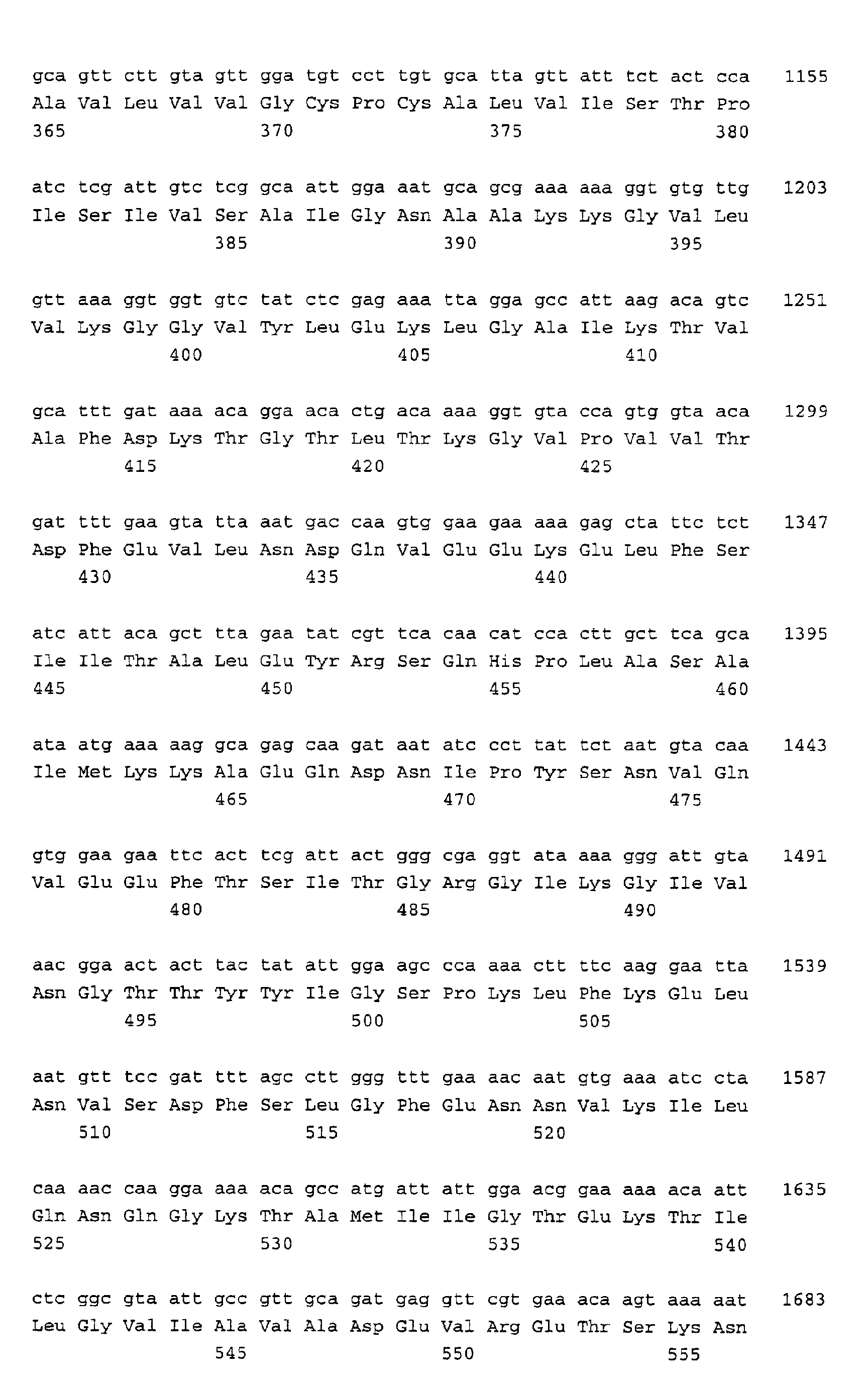
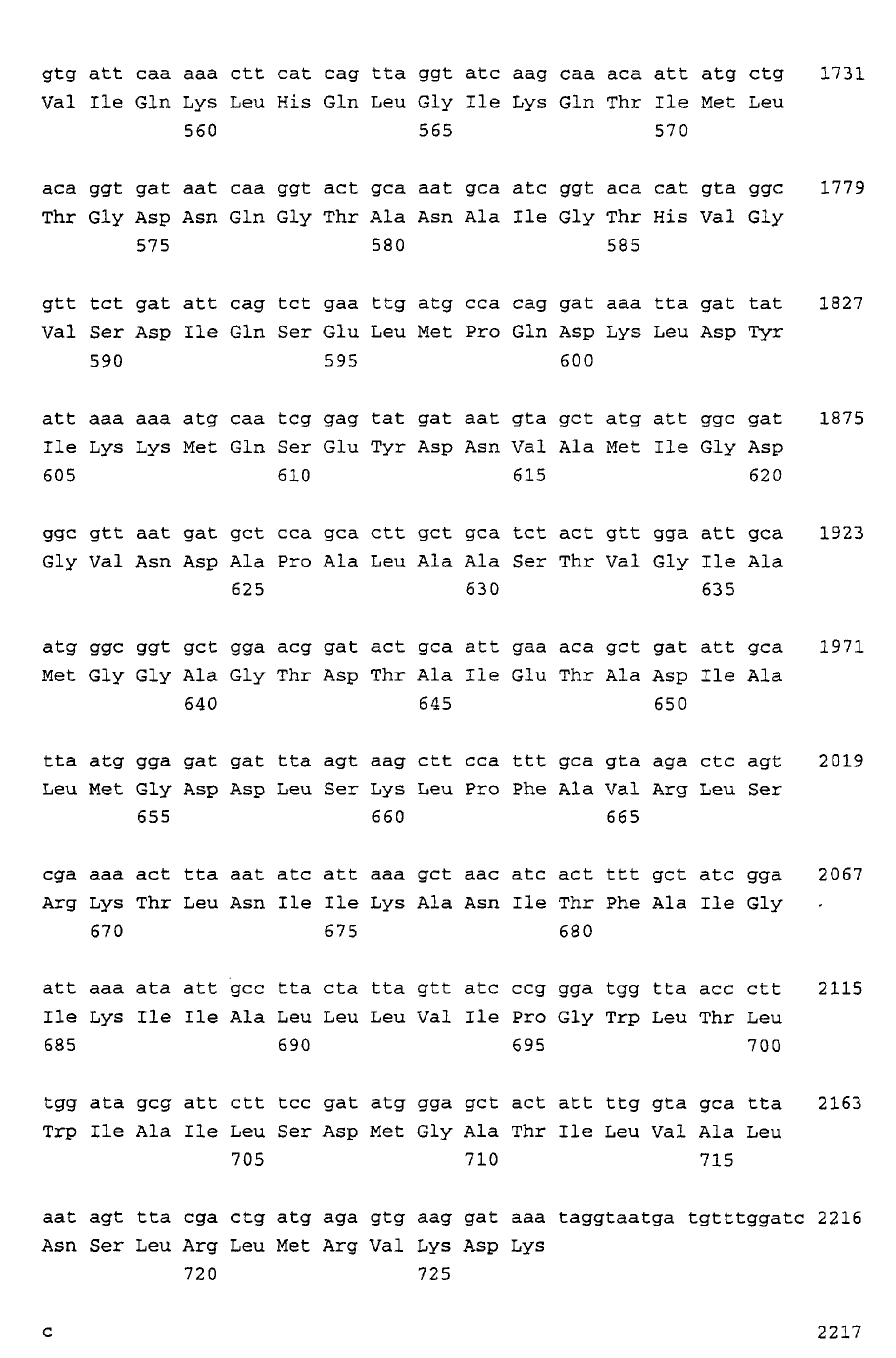
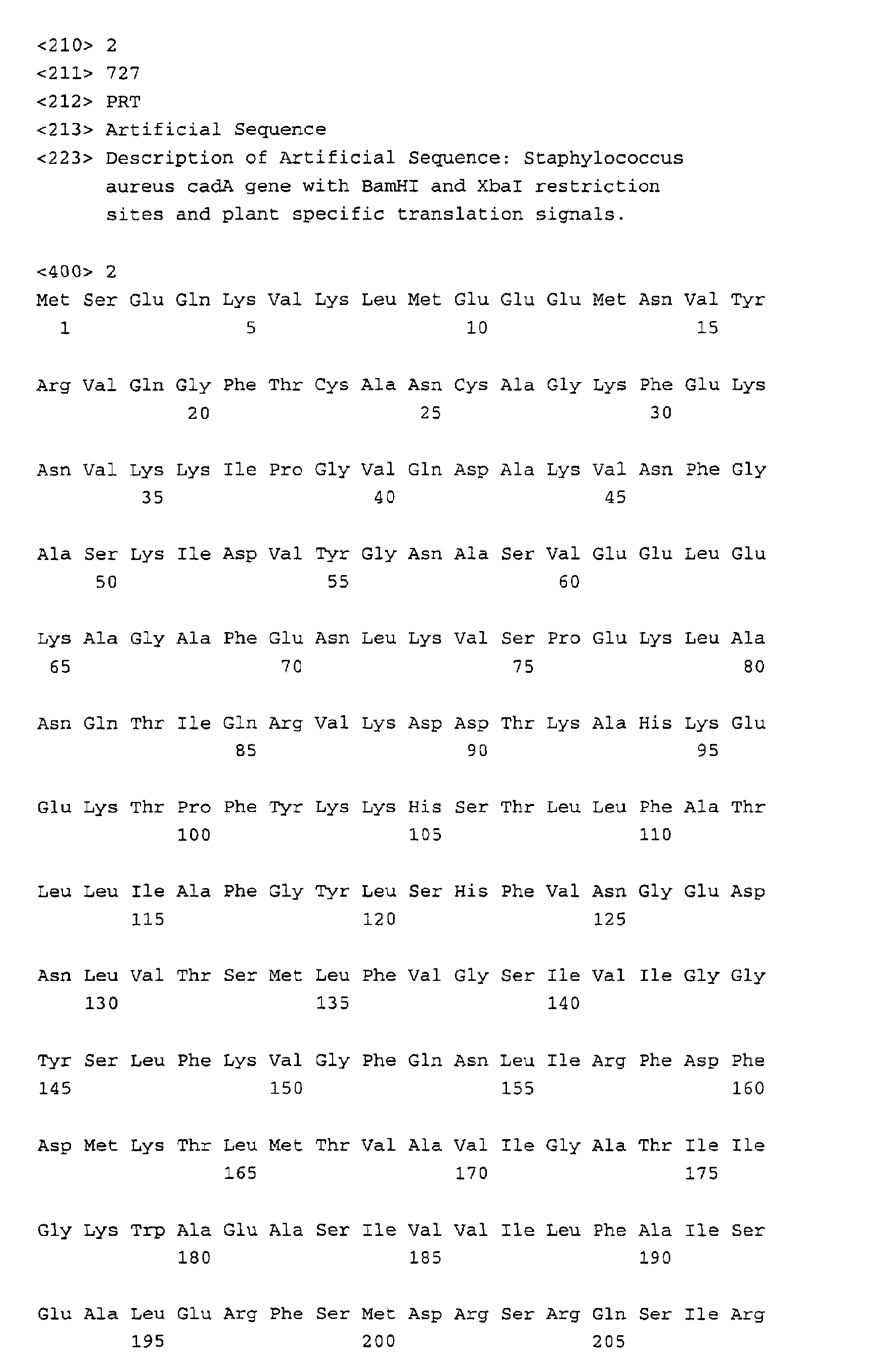
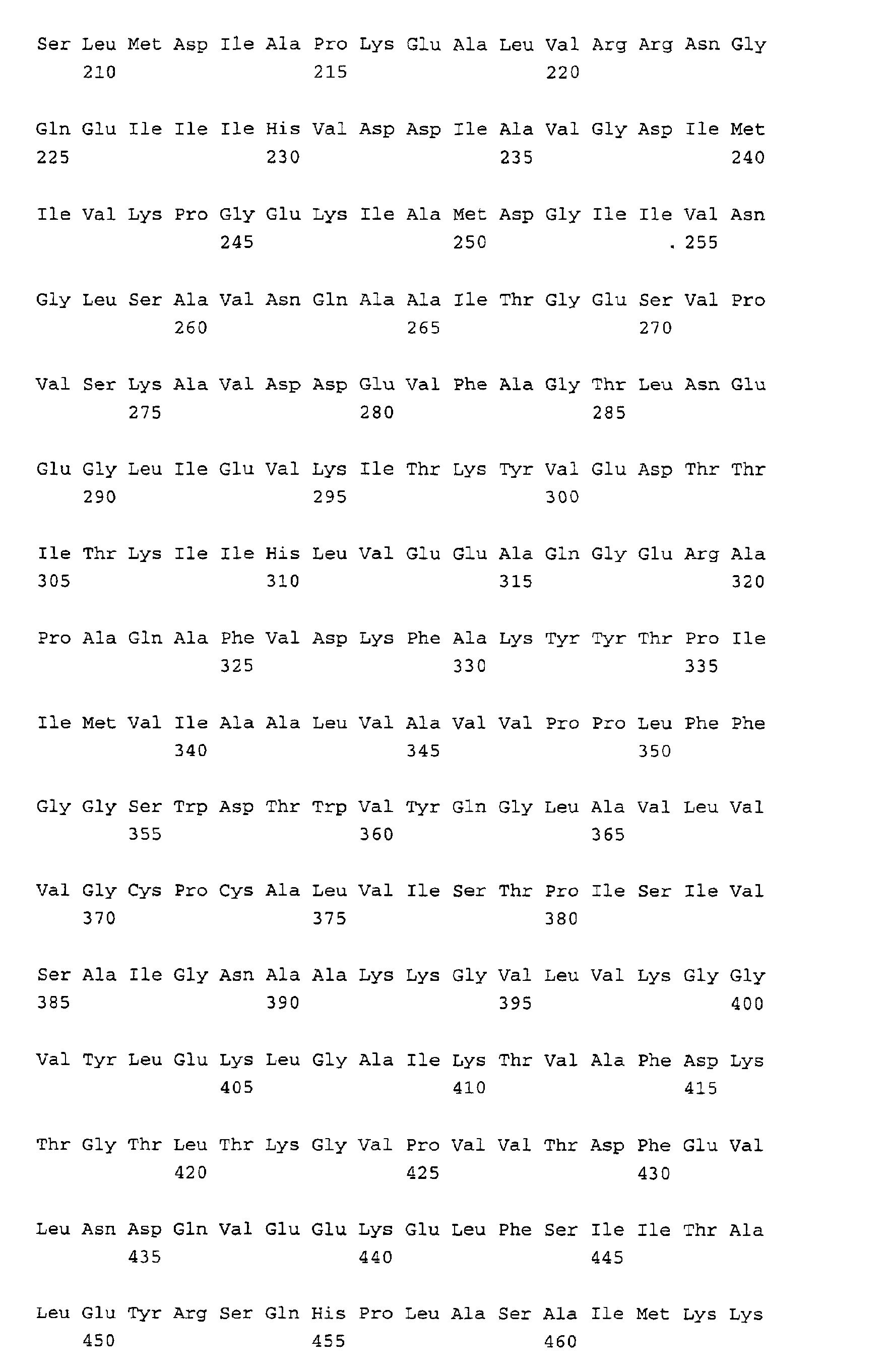
- the cadA gene from Staphylococcus aureus was amplified by PCR and cloned in the pBI121 vector.
- the cadA fragment was cloned in the Escherichia coli/Agrobacterium/plant shuttle vector pBI121.
- cadA expression is derived from the CaMV35S promotor, a strong promoter constitutively expressed in plants.
- the system was introduced in the plant Nicotiana tabacum cv. Petit Havana line SR1 via an Agrobacterium tumefaciens transformation (Horsch et al ., 1985).
- the selection marker used was kanamycine.
- Kanamycine resistant transformants were obtained after transformation. All the kanamycine resistant transformants tested showed an increased resistance to cadmium (tested by a leaf disk assay) compared to the wild type and transformant with the pBI121 vector without gene (fig. 1). This proves that the CadA P-type ATPase can be functionally expressed in plants, resulting in an increased resistance of the plant to the trace element (in casu cadmium).
- the other heavy metal resistance system is involved in exo-cytoplasmic heavy metal sequestration.
- the tested gene here was pcoA from Escherichia coli (Brown et al., 1995), which was also cloned in pBI121 and introduced in Nicotiana tabacum through an Agrobacterium tumefaciens transformation in a way similar as described for cadA .
- Kanamycine resistant transformants were obtained after transformation. All the kanamycine resistant transformants tested showed an increased resistance to copper (tested by a leaf disk assay) compared to the wild type and transformant with the pBI121 vector without gene (Fig. 3).
- the pcoA protein has many closely related members, found to be involved in resistance against Cu.
- other proteins of these copper resistance determinants have also been shown to be involved in Cu sequestration, such as PcoC/CopC and CopE.
- PcoC/CopC and CopE proteins of these copper resistance determinants have also been shown to be involved in Cu sequestration, such as PcoC/CopC and CopE.
- These proteins although different in structure, are also active in the bacterial periplasm and possess similar heavy metal binding sites as pcoA.
- a CopE like protein, referred to as SilE was identified in the Salmonella sil operon encoding for Ag-resistance.
- the potential genes whose heterologous expression can result in improved resistance are summarised in table 2.
Landscapes
- Health & Medical Sciences (AREA)
- Genetics & Genomics (AREA)
- Life Sciences & Earth Sciences (AREA)
- Chemical & Material Sciences (AREA)
- Engineering & Computer Science (AREA)
- Organic Chemistry (AREA)
- Bioinformatics & Cheminformatics (AREA)
- Molecular Biology (AREA)
- Zoology (AREA)
- Wood Science & Technology (AREA)
- General Engineering & Computer Science (AREA)
- Biotechnology (AREA)
- Biomedical Technology (AREA)
- General Health & Medical Sciences (AREA)
- Biochemistry (AREA)
- Microbiology (AREA)
- Biophysics (AREA)
- Plant Pathology (AREA)
- Physics & Mathematics (AREA)
- Cell Biology (AREA)
- Medicinal Chemistry (AREA)
- Gastroenterology & Hepatology (AREA)
- Proteomics, Peptides & Aminoacids (AREA)
- Animal Behavior & Ethology (AREA)
- Veterinary Medicine (AREA)
- Obesity (AREA)
- Chemical Kinetics & Catalysis (AREA)
- General Chemical & Material Sciences (AREA)
- Nuclear Medicine, Radiotherapy & Molecular Imaging (AREA)
- Pharmacology & Pharmacy (AREA)
- Diabetes (AREA)
- Hematology (AREA)
- Public Health (AREA)
- Micro-Organisms Or Cultivation Processes Thereof (AREA)
- Breeding Of Plants And Reproduction By Means Of Culturing (AREA)
- Fodder In General (AREA)
- Purification Treatments By Anaerobic Or Anaerobic And Aerobic Bacteria Or Animals (AREA)
- Medicines That Contain Protein Lipid Enzymes And Other Medicines (AREA)
- Medicines Containing Plant Substances (AREA)
- Processing Of Solid Wastes (AREA)
Abstract
The present invention relates to genetically
modified plants and plant cells, comprising nucleotide
sequences encoding heterologous heavy metal transport
protein.
Description
- The present invention is in the field of genetically modified plants and plants cells having improved heavy metal tolerance and accumulation due to increased plant growth and biomass production based upon the expression of exo-cytoplasmic heavy metal resistance system (efflux and complexation).
- More particularly, the present invention is related to genetically modified plants and plant cells, comprising nucleotide sequences encoding heterologous heavy metal transport proteins and exocytoplasmic metal binding proteins of various origins.
- Heterologous nucleic acid sequences, coding for heavy metal resistance, were functionally expressed in plants, to improve their tolerance against these toxic elements. The heterologous heavy metal resistance genes, in casu represent either heavy metal efflux systems or functions involved in heavy metal sequestration.
- Until present, only cytoplasmic functions that provide increased heavy metal resistance were expressed in plants :
- Metallothioneins and phytochelatines, which are rich in cystein sulfhydryl residues that bind and sequester heavy metal ions in very stable complexes (Karin, 1985), are found in eukaryotic organisms, but recently also in Synechococcus. Various MT genes - mouse MTI, human MTIA (alpha domain), human MTII, Chinese hamster MTII, yeast CUP1, pea PsMTA - have been transferred to tobacco, cauliflower or Arabidopsis thaliana (Lefebre et al., 1987; Maiti et al., 1988, 1989, 1991; Misra and Gedamu, 1989; Evans et al., 1992; Yeargan et al., 1992; Brandle et al., 1993; Pan et al., 1993; Elmayan and Tepfer, 1994; Hattori et al., 1994; Pan et al., 1994a, b; Hasegawa et al., 1997). As a result, varying degrees of enhanced Cd tolerance have been achieved, being maximally 20-fold compared with the control. Metal uptake levels were not dramatically changed; in some cases there were no differences, in others maximally 70% less or 60% more Cd was taken up by the shoots or leaves. Only one study has been reported on a transgenic plant generated with MT of plant origin. When pea (Pisum sativum) MT-like gene PsMTA was expressed in Arabidopsis thaliana, more Cu (several-fold in some plants) accumulated in transformed than in control plants (Evans et al., 1992).
- The only example known is the mer operon of Tn21 of Shigella flexneri, whose expression in plants results in the reduction mercury (Hg2+) in its metallic form (Hg0). This metallic mercury is volatilized out of the cell (Rugh et al. 1996).
- The present invention aims to provide a new way in obtaining plants and plant cells with improved heavy metal tolerance characteristics, and possibly heavy metal accumulation.
- Another aim of the present invention is to provide such plants and plant cells which allow increased heavy metal resistance for revegetation and phytostabilisation of heavy metal contaminated sites.
- A further aim of the present invention is to provide plants and plant cells, characterised by increased heavy metal accumulation combined with increased heavy metal tolerance which allow phytoextraction of heavy metals (inclusive rhizofiltration).
- A last aim of the present invention is to provide a method which results in the possibility to improve important agriculture crop species with high biomass production in their heavy metal tolerance and accumulation.
- The present invention is related to genetically modified plants and plant cells, comprising nucleotide sequences encoding one or more heterologous heavy metal transport and/or sequestration proteins of various prokaryotic or eukaryotic origins.
- Said transporters are preferably membrane proteins, which result in reduced toxicity due to the efflux of heavy metals from the cells, being preferably selected from the group consisting of P-type ATPases, 3 component efflux pumps, ABC transporters and CDF proteins (Cation Diffusion Facilitator proteins).
- The family of the P-type ATPases is preferred, because of their advantage that for functional resistance only one protein is required.
- Said proteins are found in both prokaryotic and eukaryotic organisms including plants.
- Another advantage of said transporters is found as resistance mechanisms against many toxic trace elements of environmental concern, such as copper, cadmium, lead, zinc and silver.
- Unexpectedly, it was not necessary to make structural changes in the coding sequence of said proteins, like it is necessary for the merA gene in order to obtain functional expression in plants (Rugh et al., 1996).
- Preferably, the gene incorporated in the plants or plant cells is a gene encoding a bacterial P-type ATPase, preferably the cadmium ATPase, such as the cadA gene.
- According to a second embodiment of the present invention, the system is based upon a prokaryotic heavy metal sequestration system, such as the pcoA family protein (more preferably the pcoA gene).
- The various nucleotide sequences encoding heterologous heavy metal transport proteins can be deleted partially from non-specific nucleotide sequences which are not involved in efficient heavy metal transport or accumulation.
- Said genetic sequences could be incorporated in a vector for the transfection of said plants or plant cells, such as the pBI121 vector, as described in the figure 1, said vector being advantageously an E. coli/Agrobacterium/plant shuttle vector, said vector comprising preferably a CaMV 35S promoter (a strong promoter constitutively expressed in plants).
- Preferably, the system was introduced in the plants, such system allowing the transformation of plants with the Agrobacterium tumefaciens technology.
- Fig. 1 is a schematic representation of the cloning of cadA in pBI121.
- Fig. 2 is a leaf disk-test with Nt WT SR1 (wild type), Nt PBI14 (pBI121) and Nt Cd 309 (pBI121-cadA) on 350 µM Cd and control medium without Cd.
- Fig. 3 represents the regeneration and growth of Nt WT SR1 (wild type), Nt PBI14 (pBI121) and Nt Cu122 (pBI121-pcoA) on 100 µM Cu, the plant growth being shown from above (left) and top (right).
- The heavy metal efflux system was CadA, a member of the P-type heavy metal efflux ATPase family of proteins found both in prokaryotic and eukaryotic organisms. P-type ATPases are all cation pumps, either for uptake, for efflux or for cation exchange. These enzymes have a conserved aspartate residue that is transiently phosphorylated from ATP during the transport cycle, hence the name 'P-type' ATPase (Silver et al., 1993).
- The cadA gene from Staphylococcus aureus was amplified by PCR and cloned in the pBI121 vector.
- During PCR, appropriate plant specific translation signals were added as well as XbaI and BamHI restriction sites, allowing cloning of the insert in the correct orientation.
- The cadA fragment was cloned in the Escherichia coli/Agrobacterium/plant shuttle vector pBI121. In this vector, cadA expression is derived from the CaMV35S promotor, a strong promoter constitutively expressed in plants. The system was introduced in the plant Nicotiana tabacum cv. Petit Havana line SR1 via an Agrobacterium tumefaciens transformation (Horsch et al., 1985). The selection marker used was kanamycine.
- Kanamycine resistant transformants were obtained after transformation. All the kanamycine resistant transformants tested showed an increased resistance to cadmium (tested by a leaf disk assay) compared to the wild type and transformant with the pBI121 vector without gene (fig. 1). This proves that the CadA P-type ATPase can be functionally expressed in plants, resulting in an increased resistance of the plant to the trace element (in casu cadmium).
- It can be expected that for other members of the P-type ATPase family, which form a family of closely related proteins (both structural and functional) the same positive effect on resistance to specific trace elements will be found. Until present, P-type ATPases from both prokaryotic and eukaryotic have been identified that were found to interact with Zn, Cd, Pb, Cu and Ag (see table 1). It can not be excluded that P-type ATPases, encoding resistance to other trace elements including radioisotopes, will be identified.
different representatives of the family of P-type ATPases, from prokaryotic and eukariotic origin, which encode resistance against trace elements such as Zn, Cd, Pb, Cu and Ag. Gene Sequence ID Metals Reference CadA P20021 Cd, Zn and Pb Nucifora et al. 1989 Rensing et al. 1998 ZntA P37617 Zn and Pb Rensing et al. 1997 Rensing et al. 1998 CopF Non available Cu van der Lelie and Borremans unpublished PbrA Not available Pb Borremans et al, 2000 SilP AF067954, nucleotide sequence sil operon Ag Gupta et al, 1999 Menkes' disease Q04656 Cu Vulpe et al. 1993 Wilsons' disease U08344 Cu Pethrukin et al. 1993 - The other heavy metal resistance system is involved in exo-cytoplasmic heavy metal sequestration. The tested gene here was pcoA from Escherichia coli (Brown et al., 1995), which was also cloned in pBI121 and introduced in Nicotiana tabacum through an Agrobacterium tumefaciens transformation in a way similar as described for cadA. Kanamycine resistant transformants were obtained after transformation. All the kanamycine resistant transformants tested showed an increased resistance to copper (tested by a leaf disk assay) compared to the wild type and transformant with the pBI121 vector without gene (Fig. 3).
- The pcoA protein has many closely related members, found to be involved in resistance against Cu. In addition, other proteins of these copper resistance determinants have also been shown to be involved in Cu sequestration, such as PcoC/CopC and CopE. These proteins, although different in structure, are also active in the bacterial periplasm and possess similar heavy metal binding sites as pcoA. In addition, a CopE like protein, referred to as SilE, was identified in the Salmonella sil operon encoding for Ag-resistance. The potential genes whose heterologous expression can result in improved resistance, are summarised in table 2.
Genes Sequence ID Metals References cop operon (copA, C) e.g. of Pseudomonas syringae M19930 Cu Mellano and Cooksey (1988) pco operon (pcoA, C) of e.g. E. coli G619126 Cu Brown et al., 1995 PcoE X83541 Cu Brown et al., 1995 sil operon of Salmonella AF067954, nucleotide sequence sil operon Ag Gupta et al., 1999 -
- Silver S. et al. (1993). Human Menkes X-chromosome disease and the Staphylococcal cadmium-resistance ATPase: a remarkable similarity in protein sequence; Molecular Microbiology 10(1): 7 - 12.
- Horsch R.B. et al. (1985). A simple and general method for transferring genes into plants; Science 227: 1229 - 1231.
- Karin M (1985). Metallothioneins: Proteins in search of function; Cell 41, 9 - 10.
- Brown N.L. et al. (1995). Molecular genetics and transport analysis of the copper-resistance determinant (pco) from Escherichia coli plasmid pRJ1004; Molecular Microbiology 17(6): 1153 - 1166.
- Mellano, M.A. et al. (1988). Nucleotide sequence and organization of copper resistance genes from Pseudomonas syringae pv. Tomato. J. Bacteriol. 170: 2879-2883
- Vulpe C.D., et al. (1993). Isolation of a candidate gene for Menkes disease and evidence that it encodes a copper-transporting ATPase; Nature genet. 3: 7 - 13.
- Petrukhin, K. et al. (1993). Mapping, cloning and genetic characterization of the region containing the Wilson disease gene; Nature Genet. 5 (4): 338-343.
- Rugh C.L. et al. (1996). Mercuric reduction and resistance in transgenic Arabidopsis thaliana plants expressing a modified bacterial merA gene; Proc.Natl.Acad.Sci.USA 93: 3182 - 3187.
- Lefebvre, D. D. et al, 1987. Mammalian metallothionein functions in plants. Bio/Technology 5, 1053-1056.
- Maiti, I. B. et al, 1988. Seed-transmissable expression of mammalian metallothionein in transgenic tobacco. Biochemical and Biophysical Research Communications 150, 640-647.
- Maiti, I. B. et al, 1989. Inheritance and expression of the mouse metallothionein gene in tobacco. Plant Physiology 91, 1020-1024.
- Maiti, I. B. et al. 1991. Light-inducible and tissue-specific expression of a chimeric mouse metallothionein cDNA gene in tobacco. Plant Science 76, 99-107.
- Misra, S. et al. 1989. Heavy metal tolerant transgenic Brassica napus L. and Nicotiana tabacum L. plants. Theoretical and Applied Genetics 78, 161-168.
- Evans, K. M. et al 1992. Expression of the pea metallothionein-like gene PsMTA in Escherichia coli and Arabidopsis thaliana and analysis of trace metal ion accumulation: implications for PsMTA function. Plant Molecular Biology 20, 1019-1028.
- Yeargan, R. et al 1992. Tissue partitioning of cadmium in transgenic tobacco seedlings and field grown plants expressing the mouse metallothionein I gene. Transgenic Research 1, 261-267.
- Nucifora G. et al. (1989) Cadmium resistance from Staphylococcus aureus plasmid pI258 cadA gene results from a cadmium-efflux ATPase. Proc. Natl. Acad. Sci. U.S.A. 86 (10): 3544-3548
- Rensing C., et al. (1998). Pb2+ (II)-translocating P-type ATPases. J. Biol. Chem. 273: 32614-32617.
- Rensing C., et al. (1997). The zntA gene of Escherichia coli encodes a Zn(II)-translocating P-type ATPase. Proc. Natl. Acad. Sci. U.S.A. 94 (26): 14326-14331
- Gupta, A., et al. 1999. Molecular basis for resistance to silver cations in Salmonella. Nature Medicine 5: 183-188.
-




Claims (6)
- Genetically modified plants and plant cells, comprising nucleotide sequences encoding one or more heterologous heavy metal transporters or sequestration proteins.
- Genetically modified plants or plant cells, the nucleotide sequence encoding the heterologous heavy metal transport proteins being genes encoding heavy metal transporters, such as transporters selected from the group consisting of P-type ATPase, 3 components efflux pumps or ABC transporters.
- Genetically modified plants or plant cells according to the claim 2, characterised in that the nucleotide sequence encodes for cadmium ATPase.
- Genetically modified plants or plant cells according to the claim 2 or 3, wherein the nucleotide sequence is cad A or a portion thereof allowing heavy metal transport.
- Genetically modified plants or plant cells according to the claim 1, characterised in that the nucleotide sequence encoding the heavy metal sequestration protein belongs to the copA family.
- Use of the genetically modified plants or plant cells according to any of the preceding claims for phytoremediation of contaminated sites, especially for the revegetation, phytostabilisation, phytoextraction of soils and/or water contaminated with trace elements.
Priority Applications (6)
| Application Number | Priority Date | Filing Date | Title |
|---|---|---|---|
| EP00870051A EP1136558A1 (en) | 2000-03-22 | 2000-03-22 | Genetically modified plants and plant cells comprising heterologous heavy metal transport and complexation proteins |
| US10/239,339 US20040055040A1 (en) | 2000-03-22 | 2001-03-22 | Genetically modified plants and plant cells comprising heterologous heavy metal transport and complexation proteins |
| JP2001569372A JP2003527862A (en) | 2000-03-22 | 2001-03-22 | Genetically modified plants and plant cells containing heterologous heavy metal transport and complex forming proteins |
| AU2001242123A AU2001242123A1 (en) | 2000-03-22 | 2001-03-22 | Genetically modified plants and plant cells comprising heterologous heavy metal transport and complexation proteins |
| EP01914851A EP1266010A2 (en) | 2000-03-22 | 2001-03-22 | Genetically modified plants and plant cells comprising heterologous heavy metal transport and complexation proteins |
| PCT/BE2001/000049 WO2001070989A2 (en) | 2000-03-22 | 2001-03-22 | Genetically modified plants and plant cells comprising heterologous heavy metal transport and complexation proteins |
Applications Claiming Priority (1)
| Application Number | Priority Date | Filing Date | Title |
|---|---|---|---|
| EP00870051A EP1136558A1 (en) | 2000-03-22 | 2000-03-22 | Genetically modified plants and plant cells comprising heterologous heavy metal transport and complexation proteins |
Publications (1)
| Publication Number | Publication Date |
|---|---|
| EP1136558A1 true EP1136558A1 (en) | 2001-09-26 |
Family
ID=8175720
Family Applications (2)
| Application Number | Title | Priority Date | Filing Date |
|---|---|---|---|
| EP00870051A Withdrawn EP1136558A1 (en) | 2000-03-22 | 2000-03-22 | Genetically modified plants and plant cells comprising heterologous heavy metal transport and complexation proteins |
| EP01914851A Withdrawn EP1266010A2 (en) | 2000-03-22 | 2001-03-22 | Genetically modified plants and plant cells comprising heterologous heavy metal transport and complexation proteins |
Family Applications After (1)
| Application Number | Title | Priority Date | Filing Date |
|---|---|---|---|
| EP01914851A Withdrawn EP1266010A2 (en) | 2000-03-22 | 2001-03-22 | Genetically modified plants and plant cells comprising heterologous heavy metal transport and complexation proteins |
Country Status (5)
| Country | Link |
|---|---|
| US (1) | US20040055040A1 (en) |
| EP (2) | EP1136558A1 (en) |
| JP (1) | JP2003527862A (en) |
| AU (1) | AU2001242123A1 (en) |
| WO (1) | WO2001070989A2 (en) |
Cited By (2)
| Publication number | Priority date | Publication date | Assignee | Title |
|---|---|---|---|---|
| WO2002081707A1 (en) * | 2001-04-04 | 2002-10-17 | Posco | Genetic modification of plants for enhanced resistance and decreased uptake of heavy metals |
| CN107022015A (en) * | 2017-04-27 | 2017-08-08 | 北京市农林科学院 | Chinese small iris heavy metal ATP enzyme transport protein IlHMA2 and its encoding gene and application |
Families Citing this family (1)
| Publication number | Priority date | Publication date | Assignee | Title |
|---|---|---|---|---|
| CN100360559C (en) * | 2004-10-12 | 2008-01-09 | 中国科学院植物研究所 | A kind of centipede grass ABC transport protein and its coding gene and application |
Citations (3)
| Publication number | Priority date | Publication date | Assignee | Title |
|---|---|---|---|---|
| WO1997045000A1 (en) * | 1996-05-29 | 1997-12-04 | Trustees Of Dartmouth College | Metal-regulated transporters and uses therefor |
| WO1998004700A1 (en) * | 1996-07-29 | 1998-02-05 | The Regents Of The University Of California | Nucleic acids encoding metal uptake transporters and their uses |
| WO2000004760A1 (en) * | 1998-07-22 | 2000-02-03 | The Trustees Of The University Of Pennsylvania | Copper transporter in ethylene signaling pathway |
Family Cites Families (7)
| Publication number | Priority date | Publication date | Assignee | Title |
|---|---|---|---|---|
| IL109654A (en) * | 1993-06-04 | 1999-08-17 | Phytotech Inc | Phytoremediation of metals |
| US5668294A (en) * | 1995-04-21 | 1997-09-16 | University Of Georgia Research Foundation Inc. | Metal resistance sequences and transgenic plants |
| JP2001504700A (en) * | 1996-11-18 | 2001-04-10 | ザ・トラステイーズ・オブ・ザ・ユニバーシテイ・オブ・ペンシルベニア | Glutathione-S-conjugate transport in plants |
| WO1999022885A1 (en) * | 1997-11-04 | 1999-05-14 | University Of Guelph | Method of using pelargonium sp. as hyperaccumulators for remediating contaminated soil |
| WO1999060838A1 (en) * | 1998-05-28 | 1999-12-02 | The Ohio State University Research Foundation | Organism and method for metal recovery, remediation and separation |
| AU4371800A (en) * | 1999-04-29 | 2000-11-17 | Salem-Teikyo University | Cloned and engineered plants and methods of use for bioremediation |
| DE19934720A1 (en) * | 1999-07-23 | 2001-01-25 | Inst Genomic Res Tigr Rockvill | New DNA encoding iron or heavy metal transporters, useful for promoting growth of plants on polluted soil |
-
2000
- 2000-03-22 EP EP00870051A patent/EP1136558A1/en not_active Withdrawn
-
2001
- 2001-03-22 WO PCT/BE2001/000049 patent/WO2001070989A2/en not_active Ceased
- 2001-03-22 JP JP2001569372A patent/JP2003527862A/en active Pending
- 2001-03-22 EP EP01914851A patent/EP1266010A2/en not_active Withdrawn
- 2001-03-22 AU AU2001242123A patent/AU2001242123A1/en not_active Abandoned
- 2001-03-22 US US10/239,339 patent/US20040055040A1/en not_active Abandoned
Patent Citations (3)
| Publication number | Priority date | Publication date | Assignee | Title |
|---|---|---|---|---|
| WO1997045000A1 (en) * | 1996-05-29 | 1997-12-04 | Trustees Of Dartmouth College | Metal-regulated transporters and uses therefor |
| WO1998004700A1 (en) * | 1996-07-29 | 1998-02-05 | The Regents Of The University Of California | Nucleic acids encoding metal uptake transporters and their uses |
| WO2000004760A1 (en) * | 1998-07-22 | 2000-02-03 | The Trustees Of The University Of Pennsylvania | Copper transporter in ethylene signaling pathway |
Non-Patent Citations (3)
| Title |
|---|
| NUCIFORA, G. ET AL.: "Cadmium resisance from Staphylococcus aureus plasmid pI258 cad A gene results from a cadmium-efflux ATPase", PROCEEDINGS OF THE NATIONAL ACADEMY OF SCIENCES OF USA, vol. 86, no. 10, May 1989 (1989-05-01), pages 3544 - 3548, XP000938702 * |
| OW, D.W.: "Heavy metal tolerance genes: prospective tools for bioremediation", RESOURCES, CONSERVATION AND RECYCLING, vol. 18, no. 1, 1 November 1996 (1996-11-01), pages 135 - 149, XP004016621 * |
| SILVER, S. & PHUNG, L.T.: "Bacterial Heavy Metal Resistence: New Surprises", ANNUAL REVIEW OF MICROBIOLOGY, vol. 50, 1996, pages 753 - 789, XP000925885 * |
Cited By (4)
| Publication number | Priority date | Publication date | Assignee | Title |
|---|---|---|---|---|
| WO2002081707A1 (en) * | 2001-04-04 | 2002-10-17 | Posco | Genetic modification of plants for enhanced resistance and decreased uptake of heavy metals |
| US7173163B2 (en) | 2001-04-04 | 2007-02-06 | Posco | Methods for producing transgenic plants with enhanced resistance and decreased uptake of heavy metals |
| CN107022015A (en) * | 2017-04-27 | 2017-08-08 | 北京市农林科学院 | Chinese small iris heavy metal ATP enzyme transport protein IlHMA2 and its encoding gene and application |
| CN107022015B (en) * | 2017-04-27 | 2020-07-28 | 北京市农林科学院 | IlHMA2, the heavy metal ATPase transporter of horse lin and its encoding gene and application |
Also Published As
| Publication number | Publication date |
|---|---|
| WO2001070989A3 (en) | 2002-04-11 |
| EP1266010A2 (en) | 2002-12-18 |
| AU2001242123A1 (en) | 2001-10-03 |
| JP2003527862A (en) | 2003-09-24 |
| US20040055040A1 (en) | 2004-03-18 |
| WO2001070989A2 (en) | 2001-09-27 |
Similar Documents
| Publication | Publication Date | Title |
|---|---|---|
| Briat | Roles of ferritin in plants | |
| Dayakar et al. | Ferredoxin from sweet pepper (Capsicum annuum L.) intensifying harpinpss-mediated hypersensitive response shows an enhanced production of active oxygen species (AOS) | |
| US10913939B2 (en) | Compositions and methods for expression of nitrogenase in plant cells | |
| US20210102218A1 (en) | Expression of transcription regulators that provide heat tolerance | |
| MX2014009113A (en) | Pathogen resistant citrus compositions, organisms, systems, and methods. | |
| EP2439275A1 (en) | Gene capable of increasing protein content in seed, and method for utilization thereof | |
| RS52073B (en) | PLANTS WITH IMPROVED GROWTH ABILITY AND RESISTANCE TO DISEASES AND THE METHOD OF PRODUCTION | |
| CN110714013A (en) | Application of soybean E2 ubiquitin-conjugating enzyme gene GmUBC1 | |
| CN111574606B (en) | Wheat disease-resistant and heading regulation gene TaCOK and related biological material and application thereof | |
| Wang et al. | Genetic engineering of alfalfa (Medicago sativa L.) | |
| Li et al. | A JAZ protein in Astragalus sinicus interacts with a leghemoglobin through the TIFY domain and is involved in nodule development and nitrogen fixation | |
| Valdez-Ortiz et al. | One-step purification and structural characterization of a recombinant His-tag 11S globulin expressed in transgenic tobacco | |
| CN111944832A (en) | Voluntary nitrogen-fixing gene for plants, nitrogenase expression cassette, preparation method and application thereof | |
| US7173163B2 (en) | Methods for producing transgenic plants with enhanced resistance and decreased uptake of heavy metals | |
| WO2000026344A1 (en) | Peptides with enhanced stability to protease degradation | |
| US20040055040A1 (en) | Genetically modified plants and plant cells comprising heterologous heavy metal transport and complexation proteins | |
| Murad et al. | Novel findings of defensins and their utilization in construction of transgenic plants | |
| US20070277257A1 (en) | Recombinant bacillus phytases and uses thereof | |
| KR100328507B1 (en) | Recombinant Plant Expression Vector Comprising cDNA Encoding Antimicrobial Peptide Derived from Seed of Pharbitis nil L. | |
| KR20160025822A (en) | OsNRT1 gene from Oryza sativa for improving nitrogen availability of plant and uses thereof | |
| JP3940793B2 (en) | Method of accumulating arbitrary peptides in plant protein granules | |
| AU772335B2 (en) | Peptides with enhanced stability to protease degradation | |
| WO1995008633A1 (en) | Plant genetic manipulation | |
| US20060148059A1 (en) | Salt tolerant l-myo-inositol 1-phosphate synthase and the process of obtaining the same | |
| JP4606140B2 (en) | Seed coat-specific inducible promoter |
Legal Events
| Date | Code | Title | Description |
|---|---|---|---|
| PUAI | Public reference made under article 153(3) epc to a published international application that has entered the european phase |
Free format text: ORIGINAL CODE: 0009012 |
|
| AK | Designated contracting states |
Kind code of ref document: A1 Designated state(s): AT BE CH CY DE DK ES FI FR GB GR IE IT LI LU MC NL PT SE |
|
| AX | Request for extension of the european patent |
Free format text: AL;LT;LV;MK;RO;SI |
|
| AKX | Designation fees paid | ||
| REG | Reference to a national code |
Ref country code: DE Ref legal event code: 8566 |
|
| STAA | Information on the status of an ep patent application or granted ep patent |
Free format text: STATUS: THE APPLICATION IS DEEMED TO BE WITHDRAWN |
|
| 18D | Application deemed to be withdrawn |
Effective date: 20020326 |