EP1128632A2 - System und Verfahren für mobilen Datendienst - Google Patents
System und Verfahren für mobilen Datendienst Download PDFInfo
- Publication number
- EP1128632A2 EP1128632A2 EP01102841A EP01102841A EP1128632A2 EP 1128632 A2 EP1128632 A2 EP 1128632A2 EP 01102841 A EP01102841 A EP 01102841A EP 01102841 A EP01102841 A EP 01102841A EP 1128632 A2 EP1128632 A2 EP 1128632A2
- Authority
- EP
- European Patent Office
- Prior art keywords
- service
- mobile node
- service profile
- agent
- foreign
- Prior art date
- Legal status (The legal status is an assumption and is not a legal conclusion. Google has not performed a legal analysis and makes no representation as to the accuracy of the status listed.)
- Granted
Links
Images






















Classifications
-
- H—ELECTRICITY
- H04—ELECTRIC COMMUNICATION TECHNIQUE
- H04W—WIRELESS COMMUNICATION NETWORKS
- H04W8/00—Network data management
- H04W8/18—Processing of user or subscriber data, e.g. subscribed services, user preferences or user profiles; Transfer of user or subscriber data
- H04W8/20—Transfer of user or subscriber data
-
- H—ELECTRICITY
- H04—ELECTRIC COMMUNICATION TECHNIQUE
- H04L—TRANSMISSION OF DIGITAL INFORMATION, e.g. TELEGRAPHIC COMMUNICATION
- H04L63/00—Network architectures or network communication protocols for network security
- H04L63/08—Network architectures or network communication protocols for network security for authentication of entities
-
- H—ELECTRICITY
- H04—ELECTRIC COMMUNICATION TECHNIQUE
- H04L—TRANSMISSION OF DIGITAL INFORMATION, e.g. TELEGRAPHIC COMMUNICATION
- H04L67/00—Network arrangements or protocols for supporting network services or applications
- H04L67/2866—Architectures; Arrangements
- H04L67/30—Profiles
-
- H—ELECTRICITY
- H04—ELECTRIC COMMUNICATION TECHNIQUE
- H04W—WIRELESS COMMUNICATION NETWORKS
- H04W12/00—Security arrangements; Authentication; Protecting privacy or anonymity
- H04W12/06—Authentication
-
- H—ELECTRICITY
- H04—ELECTRIC COMMUNICATION TECHNIQUE
- H04W—WIRELESS COMMUNICATION NETWORKS
- H04W12/00—Security arrangements; Authentication; Protecting privacy or anonymity
- H04W12/08—Access security
-
- H—ELECTRICITY
- H04—ELECTRIC COMMUNICATION TECHNIQUE
- H04W—WIRELESS COMMUNICATION NETWORKS
- H04W12/00—Security arrangements; Authentication; Protecting privacy or anonymity
- H04W12/60—Context-dependent security
- H04W12/63—Location-dependent; Proximity-dependent
-
- H—ELECTRICITY
- H04—ELECTRIC COMMUNICATION TECHNIQUE
- H04W—WIRELESS COMMUNICATION NETWORKS
- H04W4/00—Services specially adapted for wireless communication networks; Facilities therefor
- H04W4/18—Information format or content conversion, e.g. adaptation by the network of the transmitted or received information for the purpose of wireless delivery to users or terminals
-
- H—ELECTRICITY
- H04—ELECTRIC COMMUNICATION TECHNIQUE
- H04W—WIRELESS COMMUNICATION NETWORKS
- H04W60/00—Affiliation to network, e.g. registration; Terminating affiliation with the network, e.g. de-registration
-
- H—ELECTRICITY
- H04—ELECTRIC COMMUNICATION TECHNIQUE
- H04W—WIRELESS COMMUNICATION NETWORKS
- H04W8/00—Network data management
- H04W8/02—Processing of mobility data, e.g. registration information at HLR [Home Location Register] or VLR [Visitor Location Register]; Transfer of mobility data, e.g. between HLR, VLR or external networks
- H04W8/08—Mobility data transfer
- H04W8/12—Mobility data transfer between location registers or mobility servers
-
- H—ELECTRICITY
- H04—ELECTRIC COMMUNICATION TECHNIQUE
- H04W—WIRELESS COMMUNICATION NETWORKS
- H04W8/00—Network data management
- H04W8/22—Processing or transfer of terminal data, e.g. status or physical capabilities
- H04W8/24—Transfer of terminal data
-
- H—ELECTRICITY
- H04—ELECTRIC COMMUNICATION TECHNIQUE
- H04W—WIRELESS COMMUNICATION NETWORKS
- H04W80/00—Wireless network protocols or protocol adaptations to wireless operation
- H04W80/04—Network layer protocols, e.g. mobile IP [Internet Protocol]
Definitions
- the present invention relates to a system and a method distributing service information in a network, and more particularly, to a system and a method distributing to network devices information about a service provided by a network in the network that accommodates mobile nodes.
- IP packet traffic With the rapid expansion of the Internet, the volume of IP packet traffic has been sharply increasing. Also, with the popularization of cellular phones, standardization has been advancing by IMT-2000 (International Mobile Telecommunications 2000), and high-speed IP communications are expected to become widespread under a mobile environment. However, it cannot be said that the techniques for enhancing the functions of IP communications (for example, QoS (Quality of Service) , a value-added service such as a network-wide load distribution of a WWW server, etc.) have not fully matured although they are likely to be in great demand.
- QoS Quality of Service
- a value-added service such as a network-wide load distribution of a WWW server, etc.
- PBN Policy-Based Networking
- an operation policy is set in a network device arranged on a network, and each network device operates in compliance with the policy, whereby diversified value-added services are provided.
- the value-added services include guarantee of a bandwidth, guarantee of a delay time, packet filtering, access restriction, etc.
- RSVP Resource Reservation Protocol
- Diff-Serv Differentiated Services
- the Diff-Serv is a protocol for preferentially transferring a particular packet based on the priority assigned to each packet.
- IP Mobility Support (hereinafter referred to as a “mobile IP” or “MIP”) is issued by RFC 2002.
- policies must be set for all of network devices on a path. Therefore, network management is complicated only with the Diff-Serv.
- a concept is proposed such that a policy server is arranged on a network, and the policy server sets policies for respective devices, whereby the entire network is managed in a centralized manner (this concept is sometimes referred to as the PBN).
- the applicant of the present invention previously proposed the method distributing the information about a value-added service to network devices by using a protocol which is similar and relevant to the mobile IP.
- a patent application disclosing this method was filed (Patent Application Numbers in Japan are 11-276703 and 2000-101414, and Application Number in United States is 09/672,866).
- Patent Application Numbers in Japan are 11-276703 and 2000-101414, and Application Number in United States is 09/672,866).
- the mobile IP and the method proposed in that patent application will be briefly described.
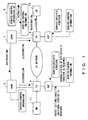
- Fig. 1 is a schematic diagram for explaining the mobile IP and the previously filed invention.
- An AAAH (Authentication, Authorization and Accounting Home) 1 and an AAAF (Authentication, Authorization and Accounting Foreign) 2 authenticate a mobile node (MN) 11, determine whether or not to authorize an access to/from the mobile node 11, and perform an accounting process for the mobile node 11.
- a service control database 3 stores the information (service control information) about a service provided to each mobile node 11.
- An HA (Home Agent) 4 and an FA (Foreign Agent) 5 are routers which accommodate the mobile node 11, and relay IP packets according to the service control information distributed from the AAAH 1 or the AAAF 2.
- This network comprises: (1) the function for detecting the location of a mobile node 11; (2) the function for registering the location of the mobile node 11; and (3) the function for transferring packets to the mobile node 11 at a location where the mobile node visits.
- Each FA periodically broadcasts an advertisement message.
- the IP address of the corresponding FA is included in the advertisement message. Accordingly, if the mobile node 11 moves from the communication area of one FA to that of another, the IP address included in the advertisement message received by the mobile node 11 will change at a certain time point.
- the mobile node 11 is recognized to enter the communication area of a different FA, and the IP address of the mobile node 11 is notified to the new FA and HA 4.
- the new FA notifies its IP address to the HA 4. In this way, the new FA that newly accommodates the mobile node 11 is registered to the HA 4, and the IP address of the mobile node 11 is registered to the new FA.
- a packet transfer from a CN (Correspondent Node) 12 to the mobile node 11 is made as follows. Namely, the packet to which the IP address of the mobile node 11 is assigned as a destination address is once transferred to the HA 4. Upon receipt of the packet addressed to the mobile node 11, the HA 4 transfers this packet to the FA that currently accommodates the mobile node 11. Here, the FA 5 is assumed to accommodate the mobile node 11. In this case, the FA 5 receives the packet from the HA 4, and transmits the packet to the mobile node 11. In this way, the packet is transferred to the node at a location where the mobile node visits.
- service control information for each mobile node is distributed to the FA which accommodates the mobile node 11 according to the location registration.
- the AAAH 1 extracts the service control information of the mobile node 11 from the service control database 3, and distributes the extracted information to the HA 4 and the FA 5.
- the HA 4 and the FA 5 then execute the value-added service (QoS, packet filtering, and so on) requested by the mobile node 11 according to the service control information.
- the service control information (corresponding to a PBN policy) is distributed not to all of FAs, but only to the FA which actually accommodates the mobile node 11.
- the present invention aims at providing a method defining a value-added service for each terminal in an IP network including a mobile environment, and allowing a value-added service to be added and extended with greater scalability.
- a mobile communications service providing system assumes the configuration where the location registration request information transmitted from a mobile node is notified to a home agent via a foreign agent and a server system, and the information in reply to the location registration request information is returned from the home agent to the mobile node via the server system and the foreign agent, whereby the location of the mobile node is registered to the home agent and the foreign agent, and a mobile communications service is provided based on the registration.
- the home agent and the foreign agent comprise a controlling unit for determining the transfer destination of a packet.
- the server system comprises: an extracting unit extracting a service profile corresponding to the mobile node from the database for managing service profiles including the information for providing a service requested by a mobile node; a service managing unit editing the service profile extracted by the extracting unit into the format which is available to the controlling unit; and a distributing unit distributing the service profile edited by the service managing unit to the home agent and the foreign agent.
- the home agent and the foreign agent utilize the controlling unit according to the service profile distributed by the server system, whereby a service is provided.
- a service profile is edited by a server system into the format that is available to a home agent and a foreign agent unchanged.
- the home agent and the foreign agent do not need to be conscious of the type of a service when providing a requested service to each mobile node.
- modifications are reduced in the programs or the data used by the home agent and the foreign agent when a service is added/changed.
- the server system may not distribute a service profile to the home agent and the foreign agent if the mobile node does not request a value-added service in the above described configuration.
- the home agent and the foreign agent may respectively provide a fundamental service according to the information that the home and the foreign agents themselves generate.
- the amounts of information exchanged between the server system, and the home and the foreign agent decrease. Additionally, the memory space for storing a service profile can be reduced in each home agent and foreign agent, which contributes to an improvement in the processing speed.
- a service profile including the information representing the address range specified beforehand as a condition for extracting a particular packet from among received packets may be preset in the home agent and the foreign agent, and the server system may assign an address within the address range specified beforehand to the mobile node which requests the predetermined service.
- the packet transmitted to/from the mobile node is extracted by the home agent or the foreign agent according to the service profile, and the service (namely, the above described predetermined service) corresponding to the service profile is executed. Accordingly, also in this configuration, the amounts of information exchanged between the server system, and the home agent and the foreign agent decrease. Furthermore, the memory space for storing a service profile can be reduced in each home agent and foreign agent, which contributes to an improvement in the processing speed.
- an address proxy server which receives the packet assigned the above described virtual address maybe arranged, and the server system may distribute to the address proxy server the service profile for extracting the packet assigned the virtual address and for transferring the packet to a particular mobile node among the plurality of mobile nodes, and may also distribute to a foreign agent the service profile for transferring the packet addressed to the foreign agent which accommodates the particular mobile node to the particular mobile node.
- the transfer of the packet assigned the virtual address is controlled by the server system in a unified manner. Accordingly, the packet having the virtual address as a destination is securely transferred to the particular node determined by the server system.
- a mobile node accommodated by a home agent moves to the communication area of a foreign agent.
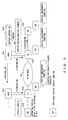
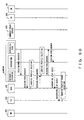
- Procedural step 1 A home agent (HA) 200 and a foreign agent (FA) 500 periodically issue an agent advertisement message in which the IP address of either of the agents itself is set.
- Amobile node 600 determines whether the mobile node 600 itself stays in either the communication area of the home agent 200 or that of the foreign agent 500 by receiving an agent advertisement message. It is assumed that the mobile node 600 currently visits the communication area of the home agent 200.
- Procedural step 2 When the mobile node 600 moves from the communication area of the home agent 200 to that of the foreign agent 500, it receives an agent advertisement message from the foreign agent 500. Upon receipt of this message, the mobile node 600 issues a location registration request message to the foreign agent 500. The information for identifying the mobile node 600 is set in this message.
- Procedural step 3 Upon receipt of the location registration request message from the mobile node 600, the foreign agent 500 transmits an AMR (authentication request) message to an AAAF (Authentication, Authorization and Accounting Foreign) 400 via an IP network 80 so that authentication, authorization, accounting, etc. are performed.
- AMR authentication request
- AAAF Authentication, Authorization and Accounting Foreign
- Procedural step 4 The AAAF 400 identifies an AAAH (Authentication, Authorization and Accounting Home) 100, which performs the authentication of the mobile node 600, by analyzing the received message, and forwards the AMR message to the AAAH 100 via the IP network 80.
- AAAH Authentication, Authorization and Accounting Home
- Procedural step 5 The AAAH 100 extracts necessary information from the received AMR message, and performs the authentication of the mobile node 600.
- the AAAH 100 extracts, for example, a mobile node identifier (NAI: Network Access Identifier) from the AMR message, and accesses a service control database 300 by using the extracted identifier as a key.
- NAI Network Access Identifier
- a user profile service profile information
- the AAAH 100 If the AAAH 100 successfully performs the authentication of the AMR message, it adds the above described service profile information to an HAR (registration request) message, and forwards the message to the home agent 200 via the IP network 80.
- Procedural step 6 The home agent 200 extracts information such as a session ID, lifetime, etc. from the received HAR message, and performs a location registration of the mobile node 600. Namely, the home agent 200 extracts from the HAR message the information for forwarding a packet addressed to the mobile node 600 to a location where the mobile node 600 visits, and generates service control information (a service profile table of a service control transaction 230). The resultant information is notified to the AAAH 100 by using an HAA (Home-Agent-MIP Answer: registration reply) message. At this time, the HAA message may include the service profile information of the mobile node 600.
- HAA Home-Agent-MIP Answer: registration reply
- Procedural step 7 Upon receipt of the HAA message, the AAAH 100 extracts necessary information from the above described AMR message or user profile, and generates service control information (a service profile table of a service control transaction 120). Additionally, the AAAH 100 transmits to the AAAF 400 an AMA (AA-mobile-Node Answer: authentication reply) message as a message in reply to the AMR message. At this time, the above described service profile information is added to this AMA message.
- AMA AA-mobile-Node Answer: authentication reply
- Procedural step 8 The AAAF 400 extracts necessary information from the AMA message, and generates service control information (a service profile table of a service control transaction 420). Additionally, the AAAF 400 forwards the AMA message to the foreign agent 500.
- Procedural step 9 The foreign agent 500 extracts necessary information from the AMA message, and generates service control information (a service profile table of a service control transaction 530). Furthermore, the foreign agent 500 transmits a registration reply message based on the AMA message, and transmits the generated message to the mobile node 600. In this way, the location registration procedure is completed. Thereafter, the foreign agent 500 provides the mobile node 600 with a service by using received service control information.
- service control information a service profile table of a service control transaction 530
- the location of the mobile node 600 is always managed by the home agent 200. Additionally, since the service control information for the mobile node 600 is transmitted to the foreign agent that is to accommodate the mobile node 600, the mobile node 600 can receive a service equivalent to the PBN at any location where there is the foreign agent.
- the packet addressed to the mobile node 600 is once transferred to the home agent 200 in normal cases.
- the home agent 200 recognizes that the mobile node 600 is accommodated by the foreign agent 500. Accordingly, the home agent 200 forwards a received packet to the foreign agent 500, which then forwards the packet to the mobile node 600.
- an "individual service” indicates a set of services customized for each user. Additionally, a service entity (such as Diff-Serv, ANYCAST, etc.) configuring an individual service is referred to simply as a "service” . In the meantime, a service that is not customized for each user (such as a mobile IP stipulated by the IETF (Internet Engineering Task Force), etc.) is referred to as a “fundamental service”.
- a service entity such as Diff-Serv, ANYCAST, etc.
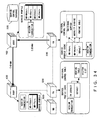
- Fig. 3 is a schematic diagram showing the network configuration according to one embodiment of the present invention.
- an AAAH 100 extracts the service control information corresponding to the mobile node 600 from a service control database 300 as explained by referring to Fig. 2.
- the information (service profile) for providing an individual service requested by each user is stored in the service control database 300 for each user.
- the AAAH 100 distributes the extracted service profile to the foreign agent 500.
- the format of the service profile is unified regardless of a service type. That is, the service profile does not include service-dependent information.
- the service profile distributed from the AAAH 100 to the foreign agent 500 (and the home agent 200) is unified in a format that can be processed by the functions that the foreign agent 500 and the home agent 200 originally prepare.
- the foreign agent 500 and the home agent 200 are implemented, for example, by routers.
- the functions that the foreign agent 500 and the home agent 200 originally prepare are, for example, (1) the function for routing a packet, (2) the function for extracting a particular packet from among received packets, (3) the editing function for rewriting part of the information of a received packet, and the like.
- These functions are implemented, for example, by the process for referencing a table which stores routing information, the process for making a matching between preset data and the header of a received packet, and the like.
- the AAAH 100 distributes the edited information to the foreign agent 500 (and the home agent 200).
- each foreign agent 500 and each home agent 200 are fundamentally the same, and respectively include a service-independent function for controlling a fundamental service, and an individual service control function (SCF).
- the service profile distributed from the AAAH 100 is processed by the individual service control function.
- the service profile is written or converted in a format which can be processed by the function that the foreign agent 500 originally prepares. Accordingly, the foreign agent 500 can use the received service profile unchanged without editing it.
- the service-independent function and the individual service control function cooperate with each other, so that the foreign agent 500 provides a service according to the service profile.
- the location registration procedure of the mobile IP, the hand-off (handover) procedure of a mobile node, or a route optimization procedure and the above described functions are made to cooperate with one another, it becomes possible to control an individual service while taking full advantage of the functions specific to the mobile IP.
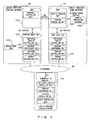
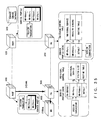
- Fig. 4 is a block diagram showing the functions of the embodiment according to the present invention. The functions are respectively explained below by referring to Fig. 4.
- a service provider (home network) 50, an access provider (foreign network) 60, and a correspondent node 700 are interconnected via an IP network 80 (or a mobile IP.
- the service provider 50 includes an AAAH 100, a service control database 300 and a home agent (HA) 200.
- the connection between the AAAH 100 and the HA 200 is made, for example, by using an AAA protocol.
- the AAAH 100 accesses the service control database 300 by using a predetermined database search protocol.
- the database search protocol is, for example, an LDAP (Light Directory Access Protocol) although it is not particularly limited.
- the access provider 60 includes an AAAF 400 and a foreign agent (FA) 500.
- the connection between the AAAF 400 and the FA 500 is made, for example, by using the AAA protocol.
- a mobile node (MN) 600 is currently accommodated by the FA 500 with the mobile IP.
- the connection between the AAAH 100 and the AAAF 400 is made with the AAA protocol.
- the AAAs are servers which perform authentication, authorization, and accounting.
- the configurations of the AAAH and the AAAF are fundamentally the same.
- the AAA that can access the database to which the subscriber data of a particular user is registered is referred to as an AAAH, and other AAAs are referred to as AAAFs, when attention is focused on the particular user.
- the AAAH 100 has a function for notifying the HA 200 and the FA 500 of service profile information.
- the service profile information is extracted from the service control database 300 by a service managing unit. That is, the service managing unit of the AAAH 100 extracts from the service control database 300 the service profile of the user who issues an authentication request, and generates a service profile having a general-purpose format in which packet control information can be set.
- the service profile is notified to the HA 200 by using an HA registration request message (HAR), and to the FA 500 by using an authentication reply message (AMA) .
- the AAAH comprises an ANYCAST address management table for an ANYCAST service to be described later.
- the AAAF identifies the AAAH according to the NAI of a user, and performs a message exchange between the FA and the AAAH as a proxy.
- the AAA according to the present invention executes the hand-off between ISPs, details of which have not yet stipulated by the IETF, and holds an extended session transaction for keeping the relationship with another entity to maintain the consistency of service control while a user is connected.
- a protocol controlling unit is an interface for the AAA protocol.
- the HA and the FA fundamentally have the same configuration, and are functional entities which are respectively defined by the RFC2002. If attention is focused on a certain mobile node, an agent which has the home address assigned to the mobile node is an HA, whereas an agent which does not have the home address assigned to the mobile node is an FA.
- the HA Upon receipt of a packet to which the home address of a mobile node is assigned as a destination, the HA encapsulates the packet and transmits the packet to the care-of address of the FA, which corresponds to the home address.
- This address is originally managed by a table referred to as mobility binding.
- the HA is an AAA protocol client.
- the HA comprises a service-independent unit for executing the above described functions, a service profile cache for storing a service file set in the registration request (HAR) information from the AAAH, and an individual service controlling unit for performing packet control by referencing a search policy management table which defines the search policy of the service profile cache.
- the FA decapsulates the packet which is encapsulated and transmitted, and forwards this packet to the link layer address corresponding to the home address.
- This address is originally managed by a table referred to as a visitor list.
- the FA is an access router of a mobile node, and is also an AAA protocol client at the same time.
- the FA further comprises a service-independent unit for executing the above described functions, a service profile cache for storing a service profile set in an authentication reply (AMA) message from the AAA, an individual service controlling unit for performing packet control by referencing a search policy management table which defines the search policy of the service profile cache, and an ANYCAST table which is a visitor list extended to store the information for an ANYCAST service.
- AMA authentication reply
- the HA and the FA respectively comprise a session transaction for managing a DIAMETER session.
- a protocol controlling unit is an interface for the AAA protocol and the mobile IP.
- a packet controlling unit performs packet routing, filtering, header rewrite, etc.
- the mobile node (MN) 600 is a mobile terminal having the functions for transmitting and receiving packets with the mobile IP.
- the correspondent node (CN) 700 transmits/receives packets to/from the mobile node 600.
- the correspondent node 700 comprises a service-independent unit, an individual service controlling unit, a protocol controlling unit, and a packet controlling unit.
- the mobile IP is a protocol stipulated by the RFC2002.
- the mobile IP referred to in this specification includes extensions that can possibly be stipulated in the future.
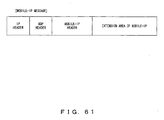
- the format of the mobile IP is shown in Figs. 61 through 66.
- Fig. 61 shows the format of a mobile IP message.
- the IP header and the UDP header of this message are shown in Figs. 62A and 62B respectively.
- TOS Type of Service
- a source address, a destination address, etc. are set in the IP header
- a source port, a destination port, etc. are set in the UDP header.
- Fig. 63A shows the format of a mobile IP registration request message. This message is used between a mobile node and a foreign agent.
- Fig. 63B shows the format of Registration Request within the registration request message.
- the Registration Request includes Lifetime, Home Address, Home Agent, Care-of address, Identifier, etc., and further includes an extension area.
- Fig. 63C shows the format of the extension area (Mobile Node NAI Extension) shown in Fig. 63B. In this extension area, the NAI of a mobile node is set.
- Fig. 63D shows the format of the extension area (Previous Foreign Agent Notification Extension) shown in Fig. 63B. In this extension area, the lifetime of a cache, the address of a previous foreign agent, a new care-of address, etc. are set.
- Fig. 64A shows the format of a mobile IP registration reply message. This message is used between a mobile node and a foreign agent.
- Fig. 64B shows the format of Registration Reply within the registration reply message.
- the Registration Reply includes a lifetime, a home address, a home agent, an identifier, etc., and further includes an extension area.
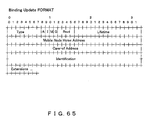
- Fig. 65 shows the format of a mobile IP BU (Binding Update) message. This message is used between foreign agents, and between a home agent and a correspondent node.
- Fig. 66 shows the format of a mobile IP BA (Binding Acknowledge) message. Also this message is used between foreign agents, and between a home agent and a correspondent node.
- the AAA protocol is not particularly limited. However, the DIAMETER protocol that is currently being reviewed by the IETF is assumed to be used in the embodiments.
- the AAA protocol is available to all of protocols that can transmit the information about authentication, authorization, accounting, and policies.
- the service profile information according to the present invention is transmitted with an extensible attribute parameter that is referred to as an AVP (Attribute Value Pair) defined by the DIAMETER protocol.
- the extended attribute is service profile information.
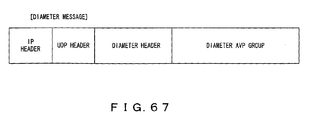
- Fig. 67 shows the format of a DIAMETER message.
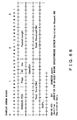
- the common header of this message is shown in Fig. 68.
- Identifier uniquely identifies a relation between Registration Request and Registration Reply.
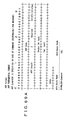
- DIAMETER AVP Attribute Value Pair
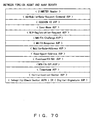
- Fig. 70 shows the format of an AMR message of the DIAMETER protocol. This message is used between a foreign agent and an AAAH server.
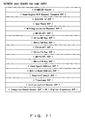
- Fig. 71 shows the format of an HAR message of the DIAMETER protocol. This message is used between an AAAH server and a home agent.
- Fig. 72 shows the format of an AMA message of the DIAMETER protocol. This message is used between a foreign agent and an AAAH server.
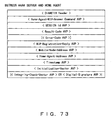
- Fig. 73 shows the format of an HAA message of the DIAMETER protocol. This message is used between an AAAH server and a home agent.
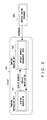
- Fig. 5 is a block diagram showing the functions of an AAAH. Here, authentication, authorization, and accounting functions are omitted.
- AnAAAH 100 extracts from a service control database 300 a service profile corresponding to a user who issues an authentication request, for example, upon receipt of an authentication request (AMR) message, and distributes the extracted service profile to an HA and an FA.
- AMR authentication request
- the AAAH acts as a server in a system which provides a mobile communications service.
- the AAAH 100 comprises a service managing unit 102 and a protocol controlling unit 101.
- the protocol controlling unit 101 generates a session transaction for managing a DIAMETER session.
- the service managing unit 102 generates a service profile by referencing the service control database 300.
- the service managing unit 102 comprises the management table for managing a particular group in order to provide a service.
- the service managing unit 102 comprises, for example, an ANYCAST address management table as a management table.
- Fig. 6 exemplifies the original data of a service profile stored in the service control database 300.
- the subscriber information of each user is stored by using the NAI of a user as a key.
- SLA Service Level Agreement: a contract condition of a subscriber
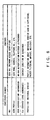
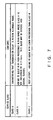
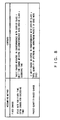
- the service qualities shown in Fig. 7, the accounting method shown in Fig. 8, the restriction conditions shown in Fig. 9, etc. are set.
- an individual service for example, Diff-Serv, packet filtering, ANYCAST, multicast, etc. can be set.
- the profile for the Diff-Serv service is shown in Fig. 10
- the profile for the ANYCAST service is shown in Fig. 11.
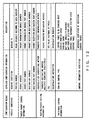
- Fig. 12 exemplifies the service profile generated by the service managing unit 102 of the AAAH 100.
- This service profile is obtained by editing the data extracted from the service control database 300, and distributed to an HA and an FA.
- the service profile is composed of a profile identifier, target packet control information, routing/packet editing information, and individual control information.
- the profile identifier is a value for uniquely identifying a service profile in a network.
- the target packet control information is filter information for classifying a received packet.
- the routing/packet editing information is editing information of an IP header, which is applied to the packet that hits the target packet control information, and information indicating the forwarding destination of the packet.
- the individual control information indicates a service-specific control table, that is possessed by a service-independent unit, and is to be searched next for the packet which hits the target packet control information.
- profile identifier is composed of a session identifier and a profile number.
- the session identifier is a session ID, whereas the profile number is a value that is uniquely assigned to each session.
- the profile identifier is shared by respective entities (AAAH, AAAF HA, FA, etc.), and is used to determine a service profile relating to a user session, and to identify a specific service within a user session.
- a session ID for example, a session ID used in a DIAMETER session ID-AVP is utilized.
- the session ID is represented by using the NAI of a mobile node as follows in this embodiment. ⁇ NAI of MN> ⁇ 32-bit value) ⁇ option>
- target packet control information is composed of the IP address of a transmission source, the IP address or a destination, the port number of the transmission source, and the port number of the destination. If part of the bits of the IP address is set to "don't care", this part is represented by a wildcard “*" as follows. 172.27.180.* 172.27.*.*
- encapsulation (encryption) method specifies an encapsulation method to be executed when a packet is encapsulated not by a service-independent function.
- the information for encapsulating a packet by a service-independent function is set in an HA or an FA.
- transfer destination address specifies a destination address when a packet is transferred not by the service-independent function.
- a plurality of addresses can be specified as "transfer destination address”. Additionally, if a packet is transferred to the care-of address of a mobile node, the packet transfer is made according to a mobility binding table to be described later.
- TOS specifies a value to be written to the TOS field of the packet received by the HA or the FA. If this value is specified, the IP header of the packet that hits the above described target packet control information, and that of the packet edited by the service-independent function (such as a packet encapsulated by referencing the mobility binding table) are rewritten.
- decapsulation instruction specifies whether or not to decapsulate a packet that hits the above described target packet control information if it is encapsulated. The decapsulation process is executed before an individual control table is searched.
- “Individual control information” is composed of service control type information and a control information identifier.
- the service control type information is intended to instruct the control table to be accessed by the HA or the FA.
- the control table arranged in the HA or the FA is, for example, a service profile cache, control data specific to the mobile IP (a binding cache, mobility binding, a visitor list), a routing table, and service-specific control data (an ANYCAST table, etc.).
- the control information identifier indicates the link destination of the control table accessed according to the service control type information.
- the control information identifier is, for example, an identifier for identifying or a pointer pointing to an entry of each control table.
- the AAAH 100 generates the service profile shown in Fig. 12 based on the original data of the service profile shown in Figs . 6 through 11.
- a method generating a service profile is not particularly limited. However, a service profile can be generated based on the type and the contents of a service requested by a user. For example, if a user requests the Diff-Serv service, the IP address, the port number, etc., which are shown in Fig. 10, may be set in the target packet control information. Additionally, the TOS may be set based on a search expression and a service class of a Diff-Serv policy. Or, if an ANYCAST service is requested, an ANYCAST table may be specified in the service control type information, and at the same time, target packet control information may be set based on an ANYCAST address.
- the service profile is always in the same format regardless of the type of a service to be provided to a user. Namely, the entire information for providing an individual service is stored in the format shown in Fig. 12 and distributed to the HA and the FA.
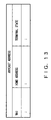
- Fig. 13 exemplifies an ANYCAST address management table arranged in the AAAH 100.
- This table is configured in units of ANYCAST address blocks.
- Each of the blocks includes an ANYCAST address, one or more NAIs corresponding to the ANYCAST address, the home address of the terminal identified by each NAI, and the state of the terminal identified by each NAI.
- the state of the terminal is, for example, an online, an offline, a pending, a faulty, a congested state, etc.
- Fig. 14 exemplifies the session transaction of the AAAH.
- the session transaction is generated and held to transmit/receive a DIAMETER message and to maintain the link with a service profile.
- the session transaction of the AAAH includes a session ID, an HA address, the address of the current AAAF, the address of the AAAF which transmits an AMR message, security information, a session timer, and service profiles.
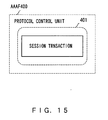
- Fig. 15 is a block diagram showing the functions of an AAAF.
- an AAAF 400 Upon receipt of an authentication request (AMR) message from a mobile node, an AAAF 400 forwards this message to an AAAH 100.
- AMR authentication request
- the AAAF 400 Upon receipt of a service profile from the AAAH 100, the AAAF 400 distributes the service profile to an FA 500.
- the AAAF 400 can also specify an HA. In this case, the AAAF 400 distributes the service profile to an HA 200 and the FA 500 upon receipt of the service profile from the AAAH 100.
- the AAAF 400 comprises a protocol controlling unit 401.
- the protocol controlling unit 401 generates a session transaction for managing a DIAMETER session.
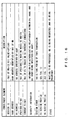
- the session transaction of the AAAF includes a session ID, an AAAH address, an HA address, the NAI of a previous FA, the NAI of a current FA, security information, a session timer, a service profile, and a transaction state as shown in Fig. 16.
- the AAAF fundamentally has the same configuration as that of the AAAH. Accordingly, the AAAF acts as a server in a system that provides a mobile communications service, similar to the AAAH.
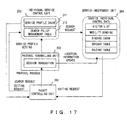
- Fig. 17 is a block diagram showing the functions of an HA, an FA, and a CN.
- the HA, FA, and CN fundamentally have the same configuration, and respectively comprise a packet controlling unit 201, a protocol controlling unit 202, an individual service controlling unit 203, and a service-independent function unit 204.
- the packet controlling unit 201 has the function for filtering a packet, and classifies received packets into protocol packet and data packet by decoding the header of each packet. Upon receipt of a protocol packet, the packet controlling unit 201 requests the protocol controlling unit to process the packet. Upon receipt of a data packet, the packet controlling unit 201 passes the information required for processing the packet to the individual service controlling unit 203. The packet controlling unit 201 edits the packets (rewrites their headers, etc.), and forwards the packets according to the instructions from the individual service controlling unit 203 and the service-independent function unit 204.
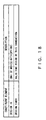
- the protocol controlling unit 202 is a unit processing the mobile IP and the DIAMETER protocol, and sets necessary information (such as the information for location registration, etc.) in the service-independent function unit 204 in compliance with the protocol. Additionally, the protocol controlling unit 202 generates a session transaction for managing a DIAMETER session. The session transaction of the HA and the FA is shown in Fig. 18. Furthermore, if a service profile is notified from an AAA, the protocol controlling unit 202 stores the service profile in the service profile cache of the individual service controlling unit 203.
- the individual service controlling unit 203 comprises a service profile cache 211 being a set of service control information, and a search policy management table 212 in which the policy for searching the service profile cache 211 is set.
- the service profile cache is composed of an individual node SPC (NSPC) and an AAA-notified SPC (ASPC).
- the individual node SPC is a service profile cache that the HA, the FA, or the CN comprises beforehand, and is composed of a source service profile (NSPCsrc), a source default service profile (NDSPsrc), a destination service profile (NSPCdst), a destination default service profile (NDSPdst), and a default service profile (NDSP).
- the AAA-notified SPC is a service profile cache distributed from the AAAH, and is composed of a source profile (ASPCsrc) and a destination service profile (ASPCdst).
- the service profiles are mutually independent.
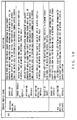
- each of the service profiles includes (1) the information (target packet control information) for extracting a particular packet from among received packets, (2) the information (routing/packet editing information) for editing an extracted packet, and (3) the information (individual control information) for referencing corresponding table arranged in the service-independent unit 204.
- Fig. 12 shows the service profile distributed from the AAA to the HA or the FA. Also the service profile that is arranged as an individual node SPC beforehand in the HA or the FA has the same configuration.
- the AAAH extracts the original data of a service profile from the service control database, it edits the original data into the same format as that of the service profile that is arranged in the HA or the FA beforehand, and distributes the service profile to the HA or the FA.
- the target packet control information of the source SPC (NSPCsrc and ASPCsrc) and the source default SP (NDSPsrc)
- NDSPsrc source default SP
- the packet transmitted from a particular transmission source or source port is processed according to the service profile.
- at least either of the destination address and the destination port number is set in the target packet control information of the destination SPC (NSPCdst and ASPCdst) and the destination default SP (NDSPdst). Therefore, the packet proceeding to a particular destination or destination port is processed according to the service profile.
- the default SP (NDSP) is arranged to process the packet that is not processed according to any of the above service profiles.
- the individual service controlling unit 203 determines the service profile for processing the packet.
- the method selecting a predetermined service profile from the service profile cache 211 is described in a search policy management table 212.
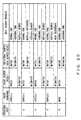
- Fig. 20 exemplifies the search policy management table 212.
- the search policy management table 211 manages a search policy (search order) for searching the service profile cache 211.
- the search policy is not particularly limited. However, it is written so that a search range is widened, for example, from a service-specific profile to a shared service profile.
- the target packet control information of the source SPC (ASPCsrc) distributed from an AAA is first extracted. Then, the source address and the source port number, which are set in the target packet control information, are respectively compared with the source address and the source port number within a received packet. If these addresses and port numbers respectively match at this time, the table of the service-independent unit 204 is referenced according to the source SPC (ASPCsrc). If the corresponding information is stored in the referenced table, the received packet is processed according to this information. If the corresponding information is not stored in the referenced table, the process is terminated by recognizing that a fault occurs. If at least either of the source addresses and the source port numbers do not match, the source SPC (NSPCsrc) preset in the HA, the FA, or the CN is extracted.
- the source SPC (NSPCsrc) preset in the HA, the FA, or the CN is extracted.
- the process performed when the source SPC (NSPCsrc) is extracted is fundamentally the same as that performed when the source SPC (ASPCsrc) distributed from the AAA is exracted. Namely, if the source addresses and the source port numbers match respectively, a received packet is processed by referencing the table of the service-independent unit 204 according to the source SPC (NSPCsrc). If corresponding information is not stored in the table of the service-independent unit 204 although the source addresses and the source port numbers match respectively, a source default SP (NDSPsrc) is extracted.
- NDSPsrc source default SP
- NDSP default SP
- the service profile in which the same address and port number as those of a data packet are set is extracted upon arrival of the data packet, and the packet is processed according to the service profile.
- the HA, FA, and CN can process the received packet only by referencing the table of the service-independent unit 204 according to the service file distributed from an AAA, or a prearranged service profile. Namely, the HA, FA, and CN can provide an individual service for each user, which is stored in the service control database 300, by using the service profile distributed from the AAA unchanged.
- the service-independent unit 204 comprises a visitor list, mobility binding, a binding cache, an ANYCAST table, and a routing table.
- the visitor list, the mobility binding and the binding cache among them tables are control tables for managing the mobile IP.
- the routing table is a packet control table that a router originally comprises.
- the ANYCAST table is a control table that is arranged to execute an ANYCAST service being a value-added service.
- the visitor list which is arranged in the FA, is a table for making a correspondence between the IP address (home address) of a mobile node and the link layer address (such as an MAC address) of the mobile node.
- the mobility binding which is arranged in the HA, is a table for making a correspondence between the IP address (home address) of a mobile node and the address (care-of address) of the FA that accommodates the mobile node.
- the mobility binding is referenced when the HA receives the packet addressed to the mobile node.
- the care-of address that corresponds to the IP address of the packet is extracted, and the packet is encapsulated and forwarded to the FA having the extracted care-of address.
- the mobility binding is updated, for example, when the mobile node moves from the communication area of one FA to that of another.
- the binding cache which is arranged in the FA and the CN, is a routing table that is temporarily used to improve the transfer efficiency of a packet.
- the binding cache is given higher reference precedence than that of the routing table.
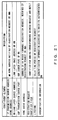
- Fig. 24 exemplifies the ANYCAST table.
- the ANYCAST table which is arranged in the FA, stores the information required to provide an ANYCAST service.
- the ANYCAST table is obtained, for example, by additionally registering an ANYCAST address and the address of an address proxy server having the ANYCAST address.
- Fig. 25 exemplifies the routing table.
- the routing table which is arranged in the HA, FA, and CN, is used to obtain the next hop address (such as the next router) as a transfer destination, to which a packet is to be transferred, based on the destination address stored in the header of the received packet.
- the essence of an IP service is condensed into a target packet selection, packet editing, and routing destination determination.
- the editing process of service control information for each service is executed by an AAAH, and generalized packet editing information is distributed to a mobile agent (such as an FA).
- a mobile agent such as an FA
- the mobile agent can use the distributed service profile as packet control information unchanged, leading to the speed-up of the process.
- the configuration of a service profile cache being a set of service profiles, and a method searching the service profile cache are systematized.
- the service-independent unit which performs packet control based on the mobile IP, and the individual service controlling unit which uses the service-independent unit based on a service set for each user are separated. Accordingly, for example, if a service is added/changed, there is no fundamental need to rewrite the program or the data of the service-independent unit, and the only operation that must be performed is to update the settings of the individual service controlling unit. That is, service addition, change, implementation, etc. are expected to become easy.
- a service profile managing method which enables service control within the framework of the messages stipulated by the existing mobile IP is devised.
- an HA may be specified either by an AAAH or by an AAAF. Described below are the case (A) where an AAAH specifies an HA, and the case (B) where an AAAF specifies an HA.
- Described in the following embodiment are (1) the sequence at the time of an initial registration, (2) the sequence in the case where a mobile node moves from the communication area of one FA within a certain AAAF to that of another FA, and (3) the sequence in the case where a mobile node moves from the communication area of an FA within one AAAF to that of an FA within another AAAF.
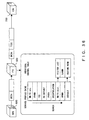
- Fig. 26 shows the sequence for distributing service profiles. Illustrated here is the sequence after the advertisement message that an FA 500 periodically outputs is received by a mobile node 600. In this figure, messages succeeded by an asterisk "*" indicate that a service profile is attached.
- the mobile node 600 transmits a registration request (Reg-Req) message to the FA 500.
- the FA500 Upon receipt of the registration request (Reg-Req) message, the FA500 transmits an authentication request (AMR) message to an AAAF 400.
- the AAAF 400 Upon receipt of the authentication request (AMR) message, the AAAF 400 forwards this message to an AAAH 100 of the mobile node 600.
- the AAAH 100 extracts the original data of the service profile of the mobile node 600 from a service control database 300, and edits the data into a format that is available to an HA 200 and the FA 500 unchanged.
- the AAAH 100 transmits to the HA 200 the edited service profile by using a registration request (HAR) message.
- HAR registration request
- the HA 200 generates mobility binding (including the information indicating that the mobile node 600 is accommodated by the FA 500), and adds the received service profile to a service profile cache at the same time.
- the HA 200 transmits a registration reply (HAA) message to the AAAH 100.
- the AAAH 100 transmits the service profile to the AAAF 400 by using an authentication reply (AMA) message.
- the AAAF 400 transmits the service profile to the FA 500 by using the authentication reply (AMA) message.
- the FA 500 generates a visitor list (including the information indicating that the mobile node 600 is accommodated by the FA 500), and adds the received service profile to a service profile cache.
- the FA 500 returns a registration reply (Reg-Resp) message to the mobile node 600.
- the service profile indicating the individual service for the mobile node 600 is distributed to the HA 200 and the FA 500 when the location registration sequence of the mobile node 600 is executed. Accordingly, the mobile node 600 can receive the individual service, which is contracted beforehand, while being accommodated by the FA 500.
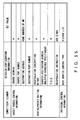
- Figs. 28A and 28B exemplify the service profiles generated by the FA at the time of an initial configuration.
- the service profile shown in Fig. 28A represents that the routing table is referenced when the route of a received packet is determined.
- the service profile shown in Fig. 28B represents that the cache shown in Fig. 28A is referenced after a decapsulation process is executed, upon receipt of a packet in which the FA 500 is set as a destination address.
- Fig. 29 exemplifies the service profile generated by the HA at the time of an initial configuration.
- This service profile represents that the routing table is referenced when the route of a received packet is determined.
- Fig. 30 shows the procedure for generating a service profile by the AAAH.
- the service profiles are respectively set in the service profile caches of the HA 200 and the FA 500. Thereafter, the packet transmitted from the mobile node 600 to an arbitrary terminal (correspondent node CN 700), and the packet transmitted from the correspondent node CN 700 to the mobile node 600 are processed according to these service profiles.
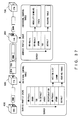
- Fig. 36 shows the procedure for transferring a packet from the mobile node to the correspondent node.
- the service profile shown in Fig. 32 is set in the FA 500.
- the FA 500 Upon receipt of the data packet addressed to the correspondent node CN 700, the FA 500 searches the service profile cache in the order described in the search policy management table shown in Fig. 20. Namely, the FA 500 extracts the service profile (ASPCsrc) shown in Fig. 32B. Because the "address of the mobile node 600" and the “address of the correspondent node 700" are respectively set as the source address and the destination address of the received packet, the source address set in the received packet and that in the extracted service profile match. Accordingly, the received packet is processed according to the service profile (ASPCsrc) shown in Fig. 32B. As a result, this packet is routed according to the routing table after the TOS value is set.
- the service profile (ASPCsrc) shown in Fig. 32B.
- Fig. 37 shows the procedure for transferring a packet from the correspondent node to the mobile node. Also here, suppose that the Diff-Serv service is provided, the service profile shown in Fig. 31 is set in the HA 200, and the service profile shown in Fig. 32 is set in the FA 500.
- the "mobile node 600" As the destination address of the decapsulated packet, the "mobile node 600" is set. Accordingly, this decapsulated packet hits the service profile (ASPCdst) shown in Fig. 32A. Furthermore, a visitor list is specified as a link destination in this service profile. Accordingly, the FA 500 forwards the data packet to the link layer address of the mobile node 600 registered to the visitor list according to the mobile IP procedure.
- APCdst service profile
- a visitor list is specified as a link destination in this service profile. Accordingly, the FA 500 forwards the data packet to the link layer address of the mobile node 600 registered to the visitor list according to the mobile IP procedure.
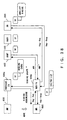
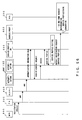
- Fig. 38 shows the sequence for distributing service profiles. Illustrated here is the case where the mobile node 600 moves from the communication area of an FA 500p to that of an FA 500n. Assume that both of the FA 500p and the FA 500n belong to the AAAF 400.
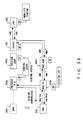
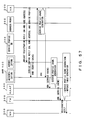
- Fig. 39 shows the sequence for distributing service profiles. Illustrated here is the case where the mobile node 600 moves from the communication area of an FA 500p subordinate to an AAAF 400p to that of an FA 500n subordinate to an AAAF 400n.
- Described in the following embodiment are (1) the sequence at the time of initial registration, (2) the sequence in the case where a mobile node moves from the communication area of one FA within a certain AAAF to that of another FA, and (3) the sequence in the case where a mobile node moves from the communication area of an FA within one AAAF to that of an FA within another AAAF.
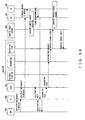
- Fig. 40 shows the sequence for distributing service profiles.
- the process from when the mobile node 600 transmits a registration request message till when the AAAH 100 generates a service profile is the same as that in the case where the AAAH 100 specifies the HA (see the above described 7A(1)). Explanation of the sequence for that portion is therefore omitted here.
- the service profiles are respectively set in the service profile caches of the HA 200 and the FA 500. Thereafter, the packet transmitted from the mobile node 600 to the correspondent node CN 700, and the packet transmitted from the correspondent node CN 700 to the mobile node 600 are processed according to these service profiles.
- the operations performed when a data packet is processed by referencing the service profile cache are the same as those in the case where the AAAH 100 specifies the HA (see the above described 7A(1)). Accordingly, explanation of the sequence for that portion is omitted here.
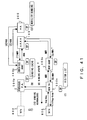
- Fig. 41 shows the sequence for distributing service profiles. Illustrated here is the case where the mobile node 600 moves from the communication area of an FA 500p subordinate to an AAAF 400p to that of an FA 500n subordinate to an AAAF 400n, in a similar manner in the example shown in Fig. 39.
- the process from when the mobile node 600 receives an agent advertisement from the FA 500n till when the AAAH 100 generates a transaction is the same as that in the case where the AAAH 100 specifies the HA 20 (see the above described 7A(3)). Its explanation is therefore omitted here.
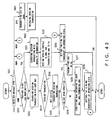
- Fig. 42 is a flowchart explaining the process of the AAAH 100. This process is performed, for example, upon receipt of a DIAMETER protocol packet.
- step S1 the message type of a received packet is detected. If the message type is an AMR message, the process proceeds to step S2. If the message type is either an AMA or an HAA message, the process proceeds to step S8. If the message type is an SFR message, the process proceeds to step S13. In step S2, it is detected whether or not a session transaction has already been generated. If the session transaction has already been generated, the process proceeds to step S9. If the session transaction has not been generated yet, it is generated in step S3.
- step S4 a service control database is searched by using the NAI set in the AMR message as a key, and a service profile is generated based on the result of the search.
- step S5 the generated service profile is set in the session transaction.
- step S6 it is detected whether or not the AAAH must specify an HA. Which of the AAAH and an AAAF specifies an HA may be predetermined or changed dynamically. If the AAAH must specify an HA, the HAR message to which the service profile is attached is transmitted to the HA in step S7. If the AAAH does not need to specify an HA, the AMA message to which the service profile is attached is transmitted to the AAAF in step S8.
- step S9 it is detected whether or not the AAAF has been changed. If the AAAF has been changed, the process proceeds to step S10. If the AAAF has not been changed, the process proceeds to step S8 where an AMA message is transmitted. In step S10, it is detected whether or not an HA has already been specified. If the HA has already been specified, an HAR message is transmitted to the HA in step S11. If the HA has not been specified yet, an AMR message is transmitted to the AAAF that previously accommodated the mobile node.
- step S13 an SFA message is returned to the source of the SFR message.
- step S14 a session transaction is released.
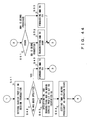
- Figs. 43 and 44 are flowcharts explaining the process of the AAAF 400. This process is performed, for example, upon receipt of a DIAMETER protocol packet.
- step S21 the message type of a received packet is detected. If the message type is an AMR message, the process proceeds to step S22. If the message type is an AMA message, the process proceeds to step S41. If the message type is an HAA message, the process proceeds to step S51. Or, if the message type is an SFR message, the process proceeds to step S61. In step S22, it is detected whether or not "previous FA-NAI" is notified by the AMR message. If the "previous FA-NAI" is notified, the process proceeds to step S31. If the "previous FA-NAI" is not notified, the process proceeds to step S23.
- step S23 a session transaction is searched by using the NAI set in the AMR message as a key.
- step S24 it is detected whether or not a session transaction has already been generated. If the session transaction has not been generated yet, it is generated in step S25.
- step S26 it is detected whether or not an HA has already been specified by the AAAF itself. If the HA has already been specified, an HAR message is transmitted to the HA in step S27. If the HA has not been specified yet, an AAAH is identified based on the NAI set in the AMR message in step S28, and the AMR message is forwarded to the identified AAAH. Then, "HA is being requested" is set as an operation state in step S29.
- step S31 the session transaction is searched by using security information.
- step S32 a service profile is attached to the AMA message, which is then transmitted to the FA.
- step S33 "waiting to be processed" is set as an operation state.
- step S41 the service profile is set in the session transaction.
- step S42 it is detected whether or not the HA has already been specified by the AAAF itself. If the HA has not been specified yet, it is specified, and at the same time, the HAR message to which the service profile is attached is transmitted to the specified HA in step S43. Then, "AMA is being processed" is set as the operation state in step S44. On the other hand, if the HA has already been specified, the process proceeds to step S33, after the AMA message is forwarded to the FA in step S45.
- step S51 the operation state is examined. If "HA is being requested” is set as the operation state, the process proceeds to step S33, after transmitting the AMA message to the AAAH in step S52. On the other hand, if the "AMA is being processed” is set as the operation state, the process proceeds to step S33 after forwarding the AMA message to the FA in step S53.
- step S61 an SFA message is transmitted to the AAAH. Then, the session transaction is released in step S62.
- Fig. 45 is a flowchart explaining the operations of the HA 200, FA 500, or the CN 700. This process is performed upon receipt of a packet.
- step S71 the IP header information of a received packet is extracted.
- the IP header is the one shown in Fig. 62A.
- Step S72 the destination address and the port number in the header information are referenced, and whether the received packet is either a data or a protocol packet is detected.
- Steps S73 through S75 are executed if a protocol packet is received, and steps S76 through S79 are executed if a data packet is received.
- each user can select a service that he or she desires to use. Accordingly, a variety of users exist: one user requests various value-added services, another user requests no value-added services, and still another user requests only a particular fundamental value-added service.
- the information about the service requested by each user is stored in the service control database 300 for each user.
- a method efficiently using a service profile is explained below by assuming the case where no value-added services are requested, and the case where only a particular fundamental value-added service is requested.
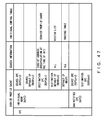
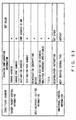
- An HA and an FA respectively generate the service profiles shown in Figs. 46 and 47 at the time of an initial configuration.
- a minimum of the information required to support the mobile IP is set in each of the service profiles.
- An AAAH does not generate a service profile for the user who requests no value-added services when the registration of his or her mobile node is requested. Whether or not the user of the mobile node that transmits the registration request message requests a value-added service may be determined, for example, by searching a service control database with the use of the NAI set in the AMR message transmitted upon a registration request, as a key. "not generating a service profile upon request of mobile node registration" is one example of a service profile configuration policy in step S4 of Fig. 42.
- a service profile for a value-added service is not newly distributed from the AAAH to the HA and the FA. Furthermore, no settings are made by the HA and the FA in the AAA-notified SPC in the service profile caches for this user, as shown in Figs. 46 and 47.
- the FA When the data packet addressed to the correspondent node CN is transmitted from the mobile node in the above described configuration, it is received by the FA which accommodates the mobile node. Upon receipt of this data packet, the FA searches the service profile cache shown in Fig. 47. Here, the "mobile node” and the “correspondent node CN" are set as the source address and the destination address of this data packet respectively. Accordingly, if the service profile cache shown in Fig. 47 is searched according to the search policy shown in Fig. 20, a default service profile (NDSP) is to be referenced. In the default service profile (NDSP), a routing table that a router originally manages is desginated as a table to be accessed. The received data packet is therefore forwarded to the correspondent node CN according to the routing table.
- NDSP default service profile
- the HA searches the service profile cache shown in Fig. 46.
- the "correspondent node” and the “mobile node” are set as the source address and the destination address of the data packet respectively. Accordingly, if the service profile cache shown in Fig. 46 is searched according to the search policy shown in Fig. 20, a destination service profile (NSPCdst) is tobe referenced. Because a mobility binding is designated by the destination service profile (NSPCdst) as a table to be accessed, the received data packet is forwarded to the FA according to the mobility binding. At this time, this packet is encapsulated.
- the FA Upon receipt of the encapsulated packet, the FA searches the service profile shown in Fig. 47.
- the "HA” and the "FA (care-of address)" are set as the source address and the destination address of this data packet, respectively. Accordingly, if the service profile cache shown in Fig. 47 is searched according to the search policy shown in Fig. 20, the destination service profile is to be referenced. As a result, this data packet is decapsulated. Furthermore, since the service profile cache is designated as information to be accessed by the destination service profile (NSPCdst), it is again searched by using the header information of the decapsulated packet as a key.
- the "HA” and the “mobile node” are respectively set as the source address and the destination address of the decapsulated data packet. Therefore, if the service profile cache shown in Fig. 47 is searched according to the search policy shown in Fig. 20, the destination default service profile (NDSPdst) is to be referenced. Accordingly, the decapsulated packet is forwarded to the mobile node according to the visitor list.
- a method overcoming this problem is a method making a correspondence between a service class to be provided and the IP address assigned by an AAA or an HA beforehand.
- an Internet service provider predetermines the IP address range assigned to a mobile node for each service class, and notifies other providers of the predetermined range.
- the provider which receives this notification sets necessary information in the service profile caches of each HA and FA according to the notification.
- the AAAH determines whether or not the user of a mobile node requests only the fundamental value-added service set when assigning an IP address to the mobile node, for example, in a dial-up procedure. Whether or not each user requests only the fundamental value-added service set, and which service class is selected if the fundamental set is requested can be detected by referencing the service control database 300. If the user requests only the fundamental value-added service set, the AAAH assigns to the mobile node the IP address corresponding to the service class selected by the user. At this time, the AAAH does not distribute a service profile to the HA and the FA. Note that "not generating a service profile when an IP address is assigned" is one example of the service profile configuration policy in step S4 of Fig. 42.
- the HA and FA provide the fundamental value-added service set by referencing the service profile cache. As a result, the capacity of the service profile cache is reduced. Furthermore, it is sufficient to examine only the upper portion of an IP address when the service profile cache is searched, thereby speeding up the search.
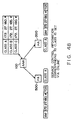
- Fig. 48 shows an example of the method predetermining IP address ranges used for service classes.
- "172.27.180. * ", “172.27.185. * “, and “172.27.190. * " are respectively assigned to service classes A, B, and C as the IP address ranges.
- "*" is a wildcard.
- "172.27.180. * " is set as target packet control information, and the information for providing the service class A is set as a routing/packet editing method and individual control information. Accordingly, upon receipt of the packet having the upper address portion "172.27.180" as a source address or a destination address, the HA and the FA perform the process for supporting the service class A for this packet.
- the packet addressed from the correspondent node CN 700 to the mobile node 600 is once transferred to the HA 200 according to the address of the mobile node 600 in normal cases.
- the packet is then transmitted to the mobile node 600 after being forwarded from the HA 200 to the FA 500.
- a route optimization process is a procedure for directly transferring the packet addressed to the mobile node 600 to the FA 500 not via the HA 200 in the above described case. Distribution of a service profile, which is required to implement the above described optimization, is explained below by referring to Fig. 49.
- a service profile is distributed from the HA to the correspondent node CN, so that the distribution of the service profile with route optimization can be easily implemented. If the route optimization process is not required, there is no need to arrange the individual service controlling unit 203 and the service-independent unit 204 in the correspondent node CN.
- one virtual address shared by the plurality of terminals is used.
- a packet is transmitted to the virtual address, it is forwarded to a predetermined one of the terminals .
- one virtual address shared by the plurality of servers is used.
- an access is made to this address, a packet is transmitted to a predetermined one of the servers.
- the above described service is defined to be called an "ANYCAST service”. Additionally, the virtual address in the above described example is defined to be called an "ANYCAST address”.
- Fig. 50 is a schematic diagram explaining an ANYCAST service.
- an ANYCAST address IP#A1 is assigned to a plurality of servers #1 through #4.
- an ANYCAST address is a subnet of an address proxy server (AP) 800 to be described later.
- actual IP addresses of the servers #1 through #4 are respectively "IP#H1" through "IP#H4".
- the servers #1 and #2 are accommodated by an FA 500 (#1), whereas the servers #3 and #4 are accommodated by an FA 500 (#2).
- the address proxy server 800 has fundamentally the same configuration as that of an HA. Note that, however, the address proxy server 800 transfers the packet in which an ANYCAST address is set to one or a plurality of addresses corresponding to the ANYCAST address. In the example shown in Fig. 50, upon receipt of the packet in which the ANYCAST address (IP#A1) is set, the address proxy server 800 transfers the packet to one of the servers #1 through #4. To which of the servers the packet is to be transferred is described in the service profile generated and distributed by an AAAH.
- An ANYCAST service is managed by the AAAH in the ANYCAST address management table shown in Fig. 13.
- This table stores one or more NAIs corresponding to an ANYCAST address, the home address of the terminal identified by each NAI, and the state of the terminal identified by each NAI for each ANYCAST address.
- the state of the terminal is, for example, an online, an offline, a pending, a faulty, a congested state, etc.
- the IP addresses (IP#H1 through IP#H4) of the servers #1 through #4 and their states are set for the ANYCAST address (IP#A1).
- the AAAH generates a service profile for transferring the packet in which an ANYCAST address is set to one or a plurality of addresses corresponding to the ANYCAST address, and distributes the generated profile to the address proxy server 800.
- An example of the service profile distributed to the address proxy server 800 is shown in Fig. 51.
- IP#H1 through IP#H4 IP#H1 through IP#H4
- Which of the addresses is to be set is determined according to the address selection policy in the profile shown in Fig. 11.
- the address selection policy is, for example, "selecting a terminal in an online state", "not selecting a terminal in an offline, a pending, a faulty, or a congested state", etc.
- the address proxy server 800 transmits the packet to the destination specified by the service profile. If a plurality of destinations are specified by the service profile, the address proxy server 800 can sequentially select the transfer destinations one by one.
- the service profile shown in Fig. 52 is distributed.
- mobility binding is specified as a table to be accessed.
- the FA 500 (#1) is assigned to the IP addresses of the servers #1 and #2 as shown in Fig. 50
- the FA 500 (#2) is assigned to the IP addresses of the servers #3 and #4.
- the service profile shown in Fig. 53 is distributed.
- This service profile is generated for the terminal that subscribes to an ANYCAST service.
- the ANYCAST table shown in Fig. 24 is specified as a table to be accessed.
- the ANYCAST table is obtained by setting an "ANYCAST address" and the "address of an address proxy server" in a normal visitor list.
- the FA 500 generates the service profile shown in Fig. 54.
- this service profile the information for providing the fundamental functions of the mobile IP are set.
- the service profile shown in Fig. 55 is distributed to the FA 500. This service profile is generated for the terminal that does not subscribe to an ANYCAST service.
- the address proxy server 800 transfers this packet to a predetermined server according to the service profile distributed from the AAAH.
- IP#H2 the IP address of the server #2 is set in this packet.
- This packet is transferred to the HA 200, which is the home agent of the server #2.
- the HA 200 transfers the packet to the FA 500 (#1) according to the mobility binding.
- This packet is doubly encapsulated.
- the FA 500 (#1) Upon receipt of this packet, the FA 500 (#1) calls the ANYCAST table by referencing the service profiles shown in Figs. 54 and 53. The FA 500 (#1) then decapsulates the packet by detecting the link layer address of the server #2 from the IP address of the server #2 based on the ANYCAST table, and by recognizing the ANYCAST address and the address proxy server 800. As a result, the decapsulated packet is delivered to the server #2. Similarly, the packet transmitted from the terminal #2 is transferred to the server #3.
- the address proxy server, HA, and FA execute the ANYCAST service according to the service profiles generated by the AAAH.
- the terminal that subscribes to the ANYCAST service is managed by the AAAH in a centralized manner. Accordingly, the packet in the ANYCAST service is transferred to a suitable mobile node without fail.
- Figs. 56 and 57 exemplify the sequence for setting ANYCAST information. This sequence is started when the mobile node 600 transmits a registration request message to the FA 500.
- the AAAH 100 includes an authentication server and an authorization server.
- Fig. 58 exemplifies the sequence for transferring a packet by using an ANYCAST service .
- Each of the packets shown in Fig. 58 sequentially represents "source address”, “destination address”, and "payload” from the left side of the drawing sheet.
- the addresses indicated by arrows in this figure are those referenced in a routing process.
- the correspondent node CN 700 that has received a data packet from the mobile node 600 returns the packet to the mobile node 600. It is assumed that the mobile node 600 is given an ANYCAST address with the above described process.
- the correspondent node CN 700 After receiving the binding update message by the above described (3), the correspondent node CN 700 transmits an encapsulated packet to the network after encapsulating the packet in which an ANYCAST address is set as a destination address, for itself.
- Figs. 59 and 60 exemplify the sequence for canceling a registration to an ANYCAST service.
- the AAAH 100 includes an authentication server, an authorization server, and an accounting server.
- the functions for controlling services are centralized in an AAA, whereby the loads on an HA and an FA are reduced, and the maintenance (including a function addition and deletion) is facilitated.
- a service profile which is referenced when a service is provided to a plurality of mobile nodes that request the same service set is shared, so that it becomes easy to manage the service profile, and a search speed can be increased owing to the compression of search data.
- a service-independent unit providing the fundamental functions (including a routing process and the mobile IP) which are not dependent on a service, and an individual service unit using the service-independent unit based on the information for providing each service are separated, thereby adding/changing a service with ease.
- a particular terminal can be accurately specified on a network-wide scale in a service with which one virtual address is assigned to a plurality of terminals.
Landscapes
- Engineering & Computer Science (AREA)
- Computer Networks & Wireless Communication (AREA)
- Signal Processing (AREA)
- Databases & Information Systems (AREA)
- Computer Hardware Design (AREA)
- Computer Security & Cryptography (AREA)
- Computing Systems (AREA)
- General Engineering & Computer Science (AREA)
- Mobile Radio Communication Systems (AREA)
- Data Exchanges In Wide-Area Networks (AREA)
- Small-Scale Networks (AREA)
Priority Applications (1)
| Application Number | Priority Date | Filing Date | Title |
|---|---|---|---|
| EP20050024828 EP1624643A1 (de) | 2000-02-21 | 2001-02-13 | System und Verfahren für mobilen Datendienst |
Applications Claiming Priority (2)
| Application Number | Priority Date | Filing Date | Title |
|---|---|---|---|
| JP2000043408A JP4060021B2 (ja) | 2000-02-21 | 2000-02-21 | 移動通信サービス提供システム、および移動通信サービス提供方法 |
| JP2000043408 | 2000-02-21 |
Related Child Applications (1)
| Application Number | Title | Priority Date | Filing Date |
|---|---|---|---|
| EP20050024828 Division EP1624643A1 (de) | 2000-02-21 | 2001-02-13 | System und Verfahren für mobilen Datendienst |
Publications (3)
| Publication Number | Publication Date |
|---|---|
| EP1128632A2 true EP1128632A2 (de) | 2001-08-29 |
| EP1128632A3 EP1128632A3 (de) | 2002-08-21 |
| EP1128632B1 EP1128632B1 (de) | 2006-04-26 |
Family
ID=18566331
Family Applications (2)
| Application Number | Title | Priority Date | Filing Date |
|---|---|---|---|
| EP20010102841 Expired - Lifetime EP1128632B1 (de) | 2000-02-21 | 2001-02-13 | System und Verfahren für mobilen Datendienst |
| EP20050024828 Withdrawn EP1624643A1 (de) | 2000-02-21 | 2001-02-13 | System und Verfahren für mobilen Datendienst |
Family Applications After (1)
| Application Number | Title | Priority Date | Filing Date |
|---|---|---|---|
| EP20050024828 Withdrawn EP1624643A1 (de) | 2000-02-21 | 2001-02-13 | System und Verfahren für mobilen Datendienst |
Country Status (4)
| Country | Link |
|---|---|
| US (1) | US20010016492A1 (de) |
| EP (2) | EP1128632B1 (de) |
| JP (1) | JP4060021B2 (de) |
| DE (1) | DE60119009T2 (de) |
Cited By (6)
| Publication number | Priority date | Publication date | Assignee | Title |
|---|---|---|---|---|
| WO2003107600A1 (en) * | 2002-06-14 | 2003-12-24 | Nokia Corporation | A method and system for local mobility management |
| EP1422909A3 (de) * | 2002-11-19 | 2004-08-18 | Fujitsu Limited | Netzwerksystem zur Dienststeuerung |
| WO2006060131A1 (en) * | 2004-11-30 | 2006-06-08 | Gidwani Sanjay M | A distributed disparate wireless switching netword |
| US7539164B2 (en) | 2002-06-14 | 2009-05-26 | Nokia Corporation | Method and system for local mobility management |
| US8938062B2 (en) | 1995-12-11 | 2015-01-20 | Comcast Ip Holdings I, Llc | Method for accessing service resource items that are for use in a telecommunications system |
| US9191505B2 (en) | 2009-05-28 | 2015-11-17 | Comcast Cable Communications, Llc | Stateful home phone service |
Families Citing this family (69)
| Publication number | Priority date | Publication date | Assignee | Title |
|---|---|---|---|---|
| US6360100B1 (en) | 1998-09-22 | 2002-03-19 | Qualcomm Incorporated | Method for robust handoff in wireless communication system |
| US6578085B1 (en) * | 1999-01-27 | 2003-06-10 | Nortel Networks Limited | System and method for route optimization in a wireless internet protocol network |
| US7260638B2 (en) * | 2000-07-24 | 2007-08-21 | Bluesocket, Inc. | Method and system for enabling seamless roaming in a wireless network |
| US7146636B2 (en) * | 2000-07-24 | 2006-12-05 | Bluesocket, Inc. | Method and system for enabling centralized control of wireless local area networks |
| US7126937B2 (en) * | 2000-12-26 | 2006-10-24 | Bluesocket, Inc. | Methods and systems for clock synchronization across wireless networks |
| JP4186620B2 (ja) | 2001-01-23 | 2008-11-26 | ソニー株式会社 | 通信装置及び通信方法、電子機器及びその制御方法、並びに記憶媒体 |
| US8214501B1 (en) | 2001-03-02 | 2012-07-03 | At&T Intellectual Property I, L.P. | Methods and systems for electronic data exchange utilizing centralized management technology |
| US20020136226A1 (en) * | 2001-03-26 | 2002-09-26 | Bluesocket, Inc. | Methods and systems for enabling seamless roaming of mobile devices among wireless networks |
| US7966657B2 (en) * | 2001-04-05 | 2011-06-21 | Siemens Aktiengesellschaft | Method for a secure information transfer |
| US20020157024A1 (en) * | 2001-04-06 | 2002-10-24 | Aki Yokote | Intelligent security association management server for mobile IP networks |
| US7339928B2 (en) * | 2001-08-29 | 2008-03-04 | Alcatel Lucent | Micro-mobility network routing system and method |
| KR100421931B1 (ko) * | 2001-09-04 | 2004-03-11 | 주식회사 현대시스콤 | Imt-2000 데이터 핵심망에서의 패킷 데이터 서비스노드와 aaa 서버 간 사용자 정보 전송 방법 |
| AU2002343424A1 (en) * | 2001-09-28 | 2003-04-14 | Bluesocket, Inc. | Method and system for managing data traffic in wireless networks |
| US7382748B1 (en) * | 2001-10-24 | 2008-06-03 | Nortel Networks Limited | Assigning a dynamic home agent for a mobile network element |
| US7711819B2 (en) * | 2001-10-31 | 2010-05-04 | Fujitsu Limited | Load balancer |
| WO2003067439A1 (en) * | 2002-02-04 | 2003-08-14 | Flarion Technologies, Inc. | A method for extending mobile ip and aaa to enable integrated support for local access and roaming access connectivity |
| US7564824B2 (en) * | 2002-02-04 | 2009-07-21 | Qualcomm Incorporated | Methods and apparatus for aggregating MIP and AAA messages |
| US20030193952A1 (en) * | 2002-02-04 | 2003-10-16 | O'neill Alan | Mobile node handoff methods and apparatus |
| US8649352B2 (en) * | 2002-02-04 | 2014-02-11 | Qualcomm Incorporated | Packet forwarding methods for use in handoffs |
| US7236475B2 (en) * | 2002-02-06 | 2007-06-26 | Ntt Docomo, Inc. | Using subnet relations to conserve power in a wireless communication device |
| US7298847B2 (en) * | 2002-02-07 | 2007-11-20 | Nokia Inc. | Secure key distribution protocol in AAA for mobile IP |
| US7342894B2 (en) * | 2002-04-03 | 2008-03-11 | Qualcomm Incorporated | System and method for transparent Mobile IP registration within PPP negotiation |
| US7590408B2 (en) * | 2002-04-03 | 2009-09-15 | Qualcomm Incorporated | Systems and methods for early determination of network support for mobile IP |
| FR2838281B1 (fr) * | 2002-04-04 | 2004-07-09 | Evolium Sas | Procede pour le controle de droits d'acces dans un systeme cellulaire de radiocommunications mobiles |
| US7801976B2 (en) * | 2002-05-28 | 2010-09-21 | At&T Intellectual Property I, L.P. | Service-oriented architecture systems and methods |
| US8667105B1 (en) * | 2002-06-26 | 2014-03-04 | Apple Inc. | Systems and methods facilitating relocatability of devices between networks |
| KR100450941B1 (ko) * | 2002-09-11 | 2004-10-02 | 삼성전자주식회사 | 부호분할다중접속 시스템에서 단말에 대한 아이피 할당 방법 |
| JP4063024B2 (ja) * | 2002-09-13 | 2008-03-19 | 三菱電機株式会社 | 分散MobileIPによる移動管理方式 |
| JP3813571B2 (ja) * | 2002-11-13 | 2006-08-23 | 株式会社東芝 | 境界ルータ装置、通信システム、ルーティング方法、及びルーティングプログラム |
| US7668541B2 (en) | 2003-01-31 | 2010-02-23 | Qualcomm Incorporated | Enhanced techniques for using core based nodes for state transfer |
| US20040236939A1 (en) * | 2003-02-20 | 2004-11-25 | Docomo Communications Laboratories Usa, Inc. | Wireless network handoff key |
| KR100524069B1 (ko) * | 2003-04-04 | 2005-10-26 | 삼성전자주식회사 | 홈 에이전트 관리장치 및 관리방법 |
| WO2005006674A1 (ja) | 2003-07-09 | 2005-01-20 | Hitachi Communication Technologies, Ltd. | 端末及び通信システム |
| US8139585B1 (en) * | 2003-07-10 | 2012-03-20 | Sprint Spectrum L.P. | Method and system for controlling sessions from a subscriber terminal |
| US7269727B1 (en) * | 2003-08-11 | 2007-09-11 | Cisco Technology, Inc. | System and method for optimizing authentication in a network environment |
| WO2006010081A1 (en) * | 2004-07-08 | 2006-01-26 | Link Us All, L.L.C. | Optimized peer-to-peer mobile communications |
| KR100651716B1 (ko) * | 2004-10-11 | 2006-12-01 | 한국전자통신연구원 | Diameter 기반 프로토콜에서 모바일 네트워크의부트스트랩핑 방법 및 그 시스템 |
| JP2006121599A (ja) * | 2004-10-25 | 2006-05-11 | Fujitsu Ltd | モバイルネットワークシステム |
| US20060153120A1 (en) * | 2004-12-28 | 2006-07-13 | Utstarcom, Inc. | Method, apparatus, and system for implementing proxy accounting for a home agent |
| US7773552B2 (en) * | 2005-03-09 | 2010-08-10 | Yokogawa Electric Corporation | Mobile communication system and mobile communication method |
| US8982778B2 (en) | 2005-09-19 | 2015-03-17 | Qualcomm Incorporated | Packet routing in a wireless communications environment |
| US8509799B2 (en) | 2005-09-19 | 2013-08-13 | Qualcomm Incorporated | Provision of QoS treatment based upon multiple requests |
| US9736752B2 (en) | 2005-12-22 | 2017-08-15 | Qualcomm Incorporated | Communications methods and apparatus using physical attachment point identifiers which support dual communications links |
| US9078084B2 (en) | 2005-12-22 | 2015-07-07 | Qualcomm Incorporated | Method and apparatus for end node assisted neighbor discovery |
| US9066344B2 (en) | 2005-09-19 | 2015-06-23 | Qualcomm Incorporated | State synchronization of access routers |
| US8983468B2 (en) | 2005-12-22 | 2015-03-17 | Qualcomm Incorporated | Communications methods and apparatus using physical attachment point identifiers |
| US20070109982A1 (en) * | 2005-11-11 | 2007-05-17 | Computer Associates Think, Inc. | Method and system for managing ad-hoc connections in a wireless network |
| KR101207467B1 (ko) * | 2005-12-16 | 2012-12-03 | 삼성전자주식회사 | 이동 통신 시스템에서 세션 정보 관리 방법 및 시스템과 그장치 |
| KR100695100B1 (ko) | 2006-01-03 | 2007-03-14 | 에스케이 텔레콤주식회사 | 패킷 데이터망에서의 한도 가입자 관리 방법 |
| US20070179974A1 (en) * | 2006-01-31 | 2007-08-02 | Yigang Cai | System and method for integrating policy management into converged prepaid/postpaid telecommunications services |
| US8144644B1 (en) | 2006-02-07 | 2012-03-27 | Sprint Spectrum L.P. | Network-side setup of a packet-data communication session on behalf of a mobile station, followed by transfer of the communication session to the mobile station |
| US9083355B2 (en) | 2006-02-24 | 2015-07-14 | Qualcomm Incorporated | Method and apparatus for end node assisted neighbor discovery |
| US8929345B2 (en) * | 2006-08-22 | 2015-01-06 | Ca, Inc. | Method and system for managing devices in a wireless network |
| US7881699B2 (en) * | 2006-09-26 | 2011-02-01 | Bridgewater Systems Corp | Systems and methods for subscriber profile management |
| US8320332B2 (en) * | 2006-12-08 | 2012-11-27 | Electronics And Telecommunications Research Institute | IP handoff process method and system for connection of internet protocols between mobile agents in heterogeneous network |
| US9155008B2 (en) | 2007-03-26 | 2015-10-06 | Qualcomm Incorporated | Apparatus and method of performing a handoff in a communication network |
| US8830818B2 (en) | 2007-06-07 | 2014-09-09 | Qualcomm Incorporated | Forward handover under radio link failure |
| US9094173B2 (en) | 2007-06-25 | 2015-07-28 | Qualcomm Incorporated | Recovery from handoff error due to false detection of handoff completion signal at access terminal |
| CN101779482B (zh) | 2007-08-13 | 2014-01-22 | 苹果公司 | 用于移动ipv4的新diameter信令 |
| US8411866B2 (en) * | 2007-11-14 | 2013-04-02 | Cisco Technology, Inc. | Distribution of group cryptography material in a mobile IP environment |
| US20090170586A1 (en) * | 2007-12-26 | 2009-07-02 | Springtime Productions, Llc | Springtime productions special charity fund raising process |
| US8345694B2 (en) * | 2007-12-31 | 2013-01-01 | Airvana, Corp. | Network address translation for tunnel mobility |
| US8560598B2 (en) * | 2009-12-22 | 2013-10-15 | At&T Intellectual Property I, L.P. | Integrated adaptive anycast for content distribution |
| US8615241B2 (en) | 2010-04-09 | 2013-12-24 | Qualcomm Incorporated | Methods and apparatus for facilitating robust forward handover in long term evolution (LTE) communication systems |
| US8792883B2 (en) * | 2011-10-18 | 2014-07-29 | Alcatel Lucent | Integration of roaming and non-roaming message processing |
| US10075334B1 (en) * | 2012-04-11 | 2018-09-11 | Google Llc | Systems and methods for commissioning a smart hub device |
| US9198204B2 (en) | 2012-04-11 | 2015-11-24 | Google Inc. | Apparatus and method for seamless commissioning of wireless devices |
| DE102013206661A1 (de) * | 2013-04-15 | 2014-10-16 | Robert Bosch Gmbh | Kommunikationsverfahren zum Übertragen von Nutzdaten sowie entsprechendes Kommunikationssystem |
| FR3095567B1 (fr) * | 2019-04-29 | 2021-04-16 | Airbus Ds Slc | Reseau de communication et procede de gestion decentralisee de communications via le reseau de communication |
Family Cites Families (12)
| Publication number | Priority date | Publication date | Assignee | Title |
|---|---|---|---|---|
| EP0890284A1 (de) * | 1996-03-28 | 1999-01-13 | Markport Limited | Übergreifender durchgang zum umherstreifen in mobilen telekommunikationssystemen |
| US7359720B2 (en) * | 1996-09-27 | 2008-04-15 | Openwave Systems Inc. | Mobility extended telephone application programming interface and method of use |
| US6097950A (en) * | 1996-12-27 | 2000-08-01 | Telefonaktiebolaget Lm Ericsson (Publ) | Method and system for global roaming in a cellular telecommunications system |
| US5915220A (en) * | 1997-05-05 | 1999-06-22 | Northern Telecom Limited | System and method for maintaining profile information in a telecommunications network |
| US6172986B1 (en) * | 1997-05-13 | 2001-01-09 | Hitachi, Ltd. | Mobile node, mobile agent and network system |
| US6311060B1 (en) * | 1998-05-21 | 2001-10-30 | Cellemetry Llc | Method and system for registering the location of a mobile cellular communications device |
| US6219790B1 (en) * | 1998-06-19 | 2001-04-17 | Lucent Technologies Inc. | Centralized authentication, authorization and accounting server with support for multiple transport protocols and multiple client types |
| US6584312B1 (en) * | 1998-08-31 | 2003-06-24 | Telefonaktiebolaget Lm Ericsson (Publ) | Adaptive subscriber service allocation |
| US6272129B1 (en) * | 1999-01-19 | 2001-08-07 | 3Com Corporation | Dynamic allocation of wireless mobile nodes over an internet protocol (IP) network |
| US6707809B1 (en) * | 1999-02-25 | 2004-03-16 | Utstarcom, Inc. | Method for forwarding data to idle mobile nodes, and home agent control node for use in the method |
| US6466964B1 (en) * | 1999-06-15 | 2002-10-15 | Cisco Technology, Inc. | Methods and apparatus for providing mobility of a node that does not support mobility |
| US7072653B1 (en) * | 1999-10-04 | 2006-07-04 | Sprint Specrtrum L.P. | System for controlled provisioning of telecommunications services |
-
2000
- 2000-02-21 JP JP2000043408A patent/JP4060021B2/ja not_active Expired - Fee Related
-
2001
- 2001-02-13 EP EP20010102841 patent/EP1128632B1/de not_active Expired - Lifetime
- 2001-02-13 DE DE2001619009 patent/DE60119009T2/de not_active Expired - Fee Related
- 2001-02-13 EP EP20050024828 patent/EP1624643A1/de not_active Withdrawn
- 2001-02-14 US US09/783,185 patent/US20010016492A1/en not_active Abandoned
Cited By (8)
| Publication number | Priority date | Publication date | Assignee | Title |
|---|---|---|---|---|
| US8938062B2 (en) | 1995-12-11 | 2015-01-20 | Comcast Ip Holdings I, Llc | Method for accessing service resource items that are for use in a telecommunications system |
| WO2003107600A1 (en) * | 2002-06-14 | 2003-12-24 | Nokia Corporation | A method and system for local mobility management |
| US7539164B2 (en) | 2002-06-14 | 2009-05-26 | Nokia Corporation | Method and system for local mobility management |
| EP1422909A3 (de) * | 2002-11-19 | 2004-08-18 | Fujitsu Limited | Netzwerksystem zur Dienststeuerung |
| US7424538B2 (en) | 2002-11-19 | 2008-09-09 | Fujitsu Limited | Service control network system |
| WO2006060131A1 (en) * | 2004-11-30 | 2006-06-08 | Gidwani Sanjay M | A distributed disparate wireless switching netword |
| US7733822B2 (en) | 2004-11-30 | 2010-06-08 | Sanjay M. Gidwani | Distributed disparate wireless switching network |
| US9191505B2 (en) | 2009-05-28 | 2015-11-17 | Comcast Cable Communications, Llc | Stateful home phone service |
Also Published As
| Publication number | Publication date |
|---|---|
| EP1128632A3 (de) | 2002-08-21 |
| DE60119009D1 (de) | 2006-06-01 |
| US20010016492A1 (en) | 2001-08-23 |
| JP2001237878A (ja) | 2001-08-31 |
| EP1624643A1 (de) | 2006-02-08 |
| EP1128632B1 (de) | 2006-04-26 |
| DE60119009T2 (de) | 2006-11-23 |
| JP4060021B2 (ja) | 2008-03-12 |
Similar Documents
| Publication | Publication Date | Title |
|---|---|---|
| EP1128632B1 (de) | System und Verfahren für mobilen Datendienst | |
| US10979338B2 (en) | Optimization of packet transmission paths | |
| EP1124396B1 (de) | Mobilitätsunterstützung für einen korrespondierenden Knoten in einem mobilen IP Netzwerk | |
| US6917605B2 (en) | Mobile network system and service control information changing method | |
| US7068640B2 (en) | VPN system in mobile IP network, and method of setting VPN | |
| CA2321396C (en) | Mobile communications service system, mobile communications service method, authentication apparatus, and home agent apparatus | |
| JP3587984B2 (ja) | 移動通信システム、パケットゲートウェイ装置、位置情報管理方法、および、位置情報通知方法 | |
| JP4034729B2 (ja) | モバイルインターネット通信装置及び方法 | |
| US7277948B2 (en) | Network system with dynamic service profile updating functions | |
| AU767782B2 (en) | Buffer management for mobile internet protocol | |
| US8391210B2 (en) | Radio communication system and radio transmission path control method | |
| US20030026241A1 (en) | Packet transfer method for hierarchical packet network, hierarchical packet communication system, and gate node, edge node and mobile terminal for use with hierarchical packet communication system, as well as handover method and routing node for packet network | |
| US20040141488A1 (en) | Network architecture for mobile communication system and communication method using the same | |
| US7224695B2 (en) | Router and communication network system | |
| US20080112414A1 (en) | Mobility management system and method for mobile internet protocol network | |
| WO2011050724A1 (zh) | 基于wcdma核心网实现移动通信的系统及终端接入方法 | |
| US20250126490A1 (en) | Computing-aware traffic steering method, apparatus, and system in mobile network | |
| WO2011026355A1 (zh) | 节点接入家乡代理的方法、家乡代理集群系统及业务路由器 | |
| CN105357774A (zh) | 针对改进服务质量处理的电信方法、协议和设备 |
Legal Events
| Date | Code | Title | Description |
|---|---|---|---|
| PUAI | Public reference made under article 153(3) epc to a published international application that has entered the european phase |
Free format text: ORIGINAL CODE: 0009012 |
|
| AK | Designated contracting states |
Kind code of ref document: A2 Designated state(s): AT BE CH CY DE DK ES FI FR GB GR IE IT LI LU MC NL PT SE TR |
|
| AX | Request for extension of the european patent |
Free format text: AL;LT;LV;MK;RO;SI |
|
| PUAL | Search report despatched |
Free format text: ORIGINAL CODE: 0009013 |
|
| AK | Designated contracting states |
Kind code of ref document: A3 Designated state(s): AT BE CH CY DE DK ES FI FR GB GR IE IT LI LU MC NL PT SE TR |
|
| AX | Request for extension of the european patent |
Free format text: AL;LT;LV;MK;RO;SI |
|
| 17P | Request for examination filed |
Effective date: 20020916 |
|
| 17Q | First examination report despatched |
Effective date: 20021106 |
|
| AKX | Designation fees paid |
Designated state(s): DE FR GB |
|
| GRAP | Despatch of communication of intention to grant a patent |
Free format text: ORIGINAL CODE: EPIDOSNIGR1 |
|
| GRAS | Grant fee paid |
Free format text: ORIGINAL CODE: EPIDOSNIGR3 |
|
| GRAA | (expected) grant |
Free format text: ORIGINAL CODE: 0009210 |
|
| AK | Designated contracting states |
Kind code of ref document: B1 Designated state(s): DE FR GB |
|
| REG | Reference to a national code |
Ref country code: GB Ref legal event code: FG4D |
|
| RIN1 | Information on inventor provided before grant (corrected) |
Inventor name: MURATA, KAZUNORI,FUJITSU NISHI-NIHON Inventor name: YAMAMURA, SHINYA,FUJITSU NISHI-NIHON Inventor name: WAKAMOTO, MASAAKI,FUJITSU LIMITED Inventor name: IGARASHI, YOICHIRO,FUJITSU LIMITED Inventor name: KAKEMIZU, MITSUAKI,FUJITSU LIMITED |
|
| REF | Corresponds to: |
Ref document number: 60119009 Country of ref document: DE Date of ref document: 20060601 Kind code of ref document: P |
|
| ET | Fr: translation filed | ||
| PLBE | No opposition filed within time limit |
Free format text: ORIGINAL CODE: 0009261 |
|
| STAA | Information on the status of an ep patent application or granted ep patent |
Free format text: STATUS: NO OPPOSITION FILED WITHIN TIME LIMIT |
|
| 26N | No opposition filed |
Effective date: 20070129 |
|
| PGFP | Annual fee paid to national office [announced via postgrant information from national office to epo] |
Ref country code: DE Payment date: 20080207 Year of fee payment: 8 Ref country code: GB Payment date: 20080213 Year of fee payment: 8 |
|
| PGFP | Annual fee paid to national office [announced via postgrant information from national office to epo] |
Ref country code: FR Payment date: 20080208 Year of fee payment: 8 |
|
| GBPC | Gb: european patent ceased through non-payment of renewal fee |
Effective date: 20090213 |
|
| REG | Reference to a national code |
Ref country code: FR Ref legal event code: ST Effective date: 20091030 |
|
| PG25 | Lapsed in a contracting state [announced via postgrant information from national office to epo] |
Ref country code: DE Free format text: LAPSE BECAUSE OF NON-PAYMENT OF DUE FEES Effective date: 20090901 |
|
| PG25 | Lapsed in a contracting state [announced via postgrant information from national office to epo] |
Ref country code: FR Free format text: LAPSE BECAUSE OF NON-PAYMENT OF DUE FEES Effective date: 20090302 Ref country code: GB Free format text: LAPSE BECAUSE OF NON-PAYMENT OF DUE FEES Effective date: 20090213 |