EP1122805A2 - Method for operating a combustor in a fuel cell system - Google Patents
Method for operating a combustor in a fuel cell system Download PDFInfo
- Publication number
- EP1122805A2 EP1122805A2 EP00126078A EP00126078A EP1122805A2 EP 1122805 A2 EP1122805 A2 EP 1122805A2 EP 00126078 A EP00126078 A EP 00126078A EP 00126078 A EP00126078 A EP 00126078A EP 1122805 A2 EP1122805 A2 EP 1122805A2
- Authority
- EP
- European Patent Office
- Prior art keywords
- fuel
- combustor
- stream
- fuel processor
- fuel cell
- Prior art date
- Legal status (The legal status is an assumption and is not a legal conclusion. Google has not performed a legal analysis and makes no representation as to the accuracy of the status listed.)
- Withdrawn
Links
Images
Classifications
-
- H—ELECTRICITY
- H01—ELECTRIC ELEMENTS
- H01M—PROCESSES OR MEANS, e.g. BATTERIES, FOR THE DIRECT CONVERSION OF CHEMICAL ENERGY INTO ELECTRICAL ENERGY
- H01M8/00—Fuel cells; Manufacture thereof
- H01M8/04—Auxiliary arrangements, e.g. for control of pressure or for circulation of fluids
- H01M8/04007—Auxiliary arrangements, e.g. for control of pressure or for circulation of fluids related to heat exchange
- H01M8/04014—Heat exchange using gaseous fluids; Heat exchange by combustion of reactants
- H01M8/04022—Heating by combustion
-
- B—PERFORMING OPERATIONS; TRANSPORTING
- B60—VEHICLES IN GENERAL
- B60L—PROPULSION OF ELECTRICALLY-PROPELLED VEHICLES; SUPPLYING ELECTRIC POWER FOR AUXILIARY EQUIPMENT OF ELECTRICALLY-PROPELLED VEHICLES; ELECTRODYNAMIC BRAKE SYSTEMS FOR VEHICLES IN GENERAL; MAGNETIC SUSPENSION OR LEVITATION FOR VEHICLES; MONITORING OPERATING VARIABLES OF ELECTRICALLY-PROPELLED VEHICLES; ELECTRIC SAFETY DEVICES FOR ELECTRICALLY-PROPELLED VEHICLES
- B60L50/00—Electric propulsion with power supplied within the vehicle
- B60L50/50—Electric propulsion with power supplied within the vehicle using propulsion power supplied by batteries or fuel cells
- B60L50/51—Electric propulsion with power supplied within the vehicle using propulsion power supplied by batteries or fuel cells characterised by AC-motors
-
- B—PERFORMING OPERATIONS; TRANSPORTING
- B60—VEHICLES IN GENERAL
- B60L—PROPULSION OF ELECTRICALLY-PROPELLED VEHICLES; SUPPLYING ELECTRIC POWER FOR AUXILIARY EQUIPMENT OF ELECTRICALLY-PROPELLED VEHICLES; ELECTRODYNAMIC BRAKE SYSTEMS FOR VEHICLES IN GENERAL; MAGNETIC SUSPENSION OR LEVITATION FOR VEHICLES; MONITORING OPERATING VARIABLES OF ELECTRICALLY-PROPELLED VEHICLES; ELECTRIC SAFETY DEVICES FOR ELECTRICALLY-PROPELLED VEHICLES
- B60L50/00—Electric propulsion with power supplied within the vehicle
- B60L50/50—Electric propulsion with power supplied within the vehicle using propulsion power supplied by batteries or fuel cells
- B60L50/70—Electric propulsion with power supplied within the vehicle using propulsion power supplied by batteries or fuel cells using power supplied by fuel cells
- B60L50/72—Constructional details of fuel cells specially adapted for electric vehicles
-
- B—PERFORMING OPERATIONS; TRANSPORTING
- B60—VEHICLES IN GENERAL
- B60L—PROPULSION OF ELECTRICALLY-PROPELLED VEHICLES; SUPPLYING ELECTRIC POWER FOR AUXILIARY EQUIPMENT OF ELECTRICALLY-PROPELLED VEHICLES; ELECTRODYNAMIC BRAKE SYSTEMS FOR VEHICLES IN GENERAL; MAGNETIC SUSPENSION OR LEVITATION FOR VEHICLES; MONITORING OPERATING VARIABLES OF ELECTRICALLY-PROPELLED VEHICLES; ELECTRIC SAFETY DEVICES FOR ELECTRICALLY-PROPELLED VEHICLES
- B60L58/00—Methods or circuit arrangements for monitoring or controlling batteries or fuel cells, specially adapted for electric vehicles
- B60L58/30—Methods or circuit arrangements for monitoring or controlling batteries or fuel cells, specially adapted for electric vehicles for monitoring or controlling fuel cells
- B60L58/32—Methods or circuit arrangements for monitoring or controlling batteries or fuel cells, specially adapted for electric vehicles for monitoring or controlling fuel cells for controlling the temperature of fuel cells, e.g. by controlling the electric load
- B60L58/34—Methods or circuit arrangements for monitoring or controlling batteries or fuel cells, specially adapted for electric vehicles for monitoring or controlling fuel cells for controlling the temperature of fuel cells, e.g. by controlling the electric load by heating
-
- C—CHEMISTRY; METALLURGY
- C01—INORGANIC CHEMISTRY
- C01B—NON-METALLIC ELEMENTS; COMPOUNDS THEREOF; METALLOIDS OR COMPOUNDS THEREOF NOT COVERED BY SUBCLASS C01C
- C01B3/00—Hydrogen; Gaseous mixtures containing hydrogen; Separation of hydrogen from mixtures containing it; Purification of hydrogen; Reversible storage of hydrogen
- C01B3/02—Production of hydrogen; Production of gaseous mixtures containing hydrogen
- C01B3/32—Production of hydrogen; Production of gaseous mixtures containing hydrogen by reaction of gaseous or liquid organic compounds with gasifying agents, e.g. water, carbon dioxide or air
- C01B3/34—Production of hydrogen; Production of gaseous mixtures containing hydrogen by reaction of gaseous or liquid organic compounds with gasifying agents, e.g. water, carbon dioxide or air by reaction of hydrocarbons with gasifying agents
- C01B3/38—Production of hydrogen; Production of gaseous mixtures containing hydrogen by reaction of gaseous or liquid organic compounds with gasifying agents, e.g. water, carbon dioxide or air by reaction of hydrocarbons with gasifying agents using catalysts
-
- F—MECHANICAL ENGINEERING; LIGHTING; HEATING; WEAPONS; BLASTING
- F23—COMBUSTION APPARATUS; COMBUSTION PROCESSES
- F23N—REGULATING OR CONTROLLING COMBUSTION
- F23N1/00—Regulating fuel supply
- F23N1/002—Regulating fuel supply using electronic means
-
- F—MECHANICAL ENGINEERING; LIGHTING; HEATING; WEAPONS; BLASTING
- F23—COMBUSTION APPARATUS; COMBUSTION PROCESSES
- F23N—REGULATING OR CONTROLLING COMBUSTION
- F23N5/00—Systems for controlling combustion
- F23N5/003—Systems for controlling combustion using detectors sensitive to combustion gas properties
-
- H—ELECTRICITY
- H01—ELECTRIC ELEMENTS
- H01M—PROCESSES OR MEANS, e.g. BATTERIES, FOR THE DIRECT CONVERSION OF CHEMICAL ENERGY INTO ELECTRICAL ENERGY
- H01M8/00—Fuel cells; Manufacture thereof
- H01M8/06—Combination of fuel cells with means for production of reactants or for treatment of residues
- H01M8/0606—Combination of fuel cells with means for production of reactants or for treatment of residues with means for production of gaseous reactants
- H01M8/0612—Combination of fuel cells with means for production of reactants or for treatment of residues with means for production of gaseous reactants from carbon-containing material
-
- B—PERFORMING OPERATIONS; TRANSPORTING
- B01—PHYSICAL OR CHEMICAL PROCESSES OR APPARATUS IN GENERAL
- B01B—BOILING; BOILING APPARATUS ; EVAPORATION; EVAPORATION APPARATUS
- B01B1/00—Boiling; Boiling apparatus for physical or chemical purposes ; Evaporation in general
- B01B1/005—Evaporation for physical or chemical purposes; Evaporation apparatus therefor, e.g. evaporation of liquids for gas phase reactions
-
- B—PERFORMING OPERATIONS; TRANSPORTING
- B60—VEHICLES IN GENERAL
- B60L—PROPULSION OF ELECTRICALLY-PROPELLED VEHICLES; SUPPLYING ELECTRIC POWER FOR AUXILIARY EQUIPMENT OF ELECTRICALLY-PROPELLED VEHICLES; ELECTRODYNAMIC BRAKE SYSTEMS FOR VEHICLES IN GENERAL; MAGNETIC SUSPENSION OR LEVITATION FOR VEHICLES; MONITORING OPERATING VARIABLES OF ELECTRICALLY-PROPELLED VEHICLES; ELECTRIC SAFETY DEVICES FOR ELECTRICALLY-PROPELLED VEHICLES
- B60L2210/00—Converter types
- B60L2210/10—DC to DC converters
-
- B—PERFORMING OPERATIONS; TRANSPORTING
- B60—VEHICLES IN GENERAL
- B60L—PROPULSION OF ELECTRICALLY-PROPELLED VEHICLES; SUPPLYING ELECTRIC POWER FOR AUXILIARY EQUIPMENT OF ELECTRICALLY-PROPELLED VEHICLES; ELECTRODYNAMIC BRAKE SYSTEMS FOR VEHICLES IN GENERAL; MAGNETIC SUSPENSION OR LEVITATION FOR VEHICLES; MONITORING OPERATING VARIABLES OF ELECTRICALLY-PROPELLED VEHICLES; ELECTRIC SAFETY DEVICES FOR ELECTRICALLY-PROPELLED VEHICLES
- B60L2240/00—Control parameters of input or output; Target parameters
- B60L2240/10—Vehicle control parameters
- B60L2240/36—Temperature of vehicle components or parts
-
- C—CHEMISTRY; METALLURGY
- C01—INORGANIC CHEMISTRY
- C01B—NON-METALLIC ELEMENTS; COMPOUNDS THEREOF; METALLOIDS OR COMPOUNDS THEREOF NOT COVERED BY SUBCLASS C01C
- C01B2203/00—Integrated processes for the production of hydrogen or synthesis gas
- C01B2203/02—Processes for making hydrogen or synthesis gas
- C01B2203/0205—Processes for making hydrogen or synthesis gas containing a reforming step
- C01B2203/0227—Processes for making hydrogen or synthesis gas containing a reforming step containing a catalytic reforming step
-
- C—CHEMISTRY; METALLURGY
- C01—INORGANIC CHEMISTRY
- C01B—NON-METALLIC ELEMENTS; COMPOUNDS THEREOF; METALLOIDS OR COMPOUNDS THEREOF NOT COVERED BY SUBCLASS C01C
- C01B2203/00—Integrated processes for the production of hydrogen or synthesis gas
- C01B2203/06—Integration with other chemical processes
- C01B2203/066—Integration with other chemical processes with fuel cells
-
- C—CHEMISTRY; METALLURGY
- C01—INORGANIC CHEMISTRY
- C01B—NON-METALLIC ELEMENTS; COMPOUNDS THEREOF; METALLOIDS OR COMPOUNDS THEREOF NOT COVERED BY SUBCLASS C01C
- C01B2203/00—Integrated processes for the production of hydrogen or synthesis gas
- C01B2203/08—Methods of heating or cooling
- C01B2203/0805—Methods of heating the process for making hydrogen or synthesis gas
- C01B2203/0811—Methods of heating the process for making hydrogen or synthesis gas by combustion of fuel
-
- C—CHEMISTRY; METALLURGY
- C01—INORGANIC CHEMISTRY
- C01B—NON-METALLIC ELEMENTS; COMPOUNDS THEREOF; METALLOIDS OR COMPOUNDS THEREOF NOT COVERED BY SUBCLASS C01C
- C01B2203/00—Integrated processes for the production of hydrogen or synthesis gas
- C01B2203/08—Methods of heating or cooling
- C01B2203/0805—Methods of heating the process for making hydrogen or synthesis gas
- C01B2203/0811—Methods of heating the process for making hydrogen or synthesis gas by combustion of fuel
- C01B2203/0822—Methods of heating the process for making hydrogen or synthesis gas by combustion of fuel the fuel containing hydrogen
-
- C—CHEMISTRY; METALLURGY
- C01—INORGANIC CHEMISTRY
- C01B—NON-METALLIC ELEMENTS; COMPOUNDS THEREOF; METALLOIDS OR COMPOUNDS THEREOF NOT COVERED BY SUBCLASS C01C
- C01B2203/00—Integrated processes for the production of hydrogen or synthesis gas
- C01B2203/08—Methods of heating or cooling
- C01B2203/0805—Methods of heating the process for making hydrogen or synthesis gas
- C01B2203/0811—Methods of heating the process for making hydrogen or synthesis gas by combustion of fuel
- C01B2203/0827—Methods of heating the process for making hydrogen or synthesis gas by combustion of fuel at least part of the fuel being a recycle stream
-
- C—CHEMISTRY; METALLURGY
- C01—INORGANIC CHEMISTRY
- C01B—NON-METALLIC ELEMENTS; COMPOUNDS THEREOF; METALLOIDS OR COMPOUNDS THEREOF NOT COVERED BY SUBCLASS C01C
- C01B2203/00—Integrated processes for the production of hydrogen or synthesis gas
- C01B2203/16—Controlling the process
- C01B2203/1604—Starting up the process
-
- C—CHEMISTRY; METALLURGY
- C01—INORGANIC CHEMISTRY
- C01B—NON-METALLIC ELEMENTS; COMPOUNDS THEREOF; METALLOIDS OR COMPOUNDS THEREOF NOT COVERED BY SUBCLASS C01C
- C01B2203/00—Integrated processes for the production of hydrogen or synthesis gas
- C01B2203/16—Controlling the process
- C01B2203/1614—Controlling the temperature
- C01B2203/1619—Measuring the temperature
-
- C—CHEMISTRY; METALLURGY
- C01—INORGANIC CHEMISTRY
- C01B—NON-METALLIC ELEMENTS; COMPOUNDS THEREOF; METALLOIDS OR COMPOUNDS THEREOF NOT COVERED BY SUBCLASS C01C
- C01B2203/00—Integrated processes for the production of hydrogen or synthesis gas
- C01B2203/16—Controlling the process
- C01B2203/1695—Adjusting the feed of the combustion
-
- F—MECHANICAL ENGINEERING; LIGHTING; HEATING; WEAPONS; BLASTING
- F23—COMBUSTION APPARATUS; COMBUSTION PROCESSES
- F23C—METHODS OR APPARATUS FOR COMBUSTION USING FLUID FUEL OR SOLID FUEL SUSPENDED IN A CARRIER GAS OR AIR
- F23C2900/00—Special features of, or arrangements for combustion apparatus using fluid fuels or solid fuels suspended in air; Combustion processes therefor
- F23C2900/9901—Combustion process using hydrogen, hydrogen peroxide water or brown gas as fuel
-
- F—MECHANICAL ENGINEERING; LIGHTING; HEATING; WEAPONS; BLASTING
- F23—COMBUSTION APPARATUS; COMBUSTION PROCESSES
- F23N—REGULATING OR CONTROLLING COMBUSTION
- F23N2225/00—Measuring
- F23N2225/08—Measuring temperature
-
- Y—GENERAL TAGGING OF NEW TECHNOLOGICAL DEVELOPMENTS; GENERAL TAGGING OF CROSS-SECTIONAL TECHNOLOGIES SPANNING OVER SEVERAL SECTIONS OF THE IPC; TECHNICAL SUBJECTS COVERED BY FORMER USPC CROSS-REFERENCE ART COLLECTIONS [XRACs] AND DIGESTS
- Y02—TECHNOLOGIES OR APPLICATIONS FOR MITIGATION OR ADAPTATION AGAINST CLIMATE CHANGE
- Y02E—REDUCTION OF GREENHOUSE GAS [GHG] EMISSIONS, RELATED TO ENERGY GENERATION, TRANSMISSION OR DISTRIBUTION
- Y02E60/00—Enabling technologies; Technologies with a potential or indirect contribution to GHG emissions mitigation
- Y02E60/30—Hydrogen technology
- Y02E60/50—Fuel cells
-
- Y—GENERAL TAGGING OF NEW TECHNOLOGICAL DEVELOPMENTS; GENERAL TAGGING OF CROSS-SECTIONAL TECHNOLOGIES SPANNING OVER SEVERAL SECTIONS OF THE IPC; TECHNICAL SUBJECTS COVERED BY FORMER USPC CROSS-REFERENCE ART COLLECTIONS [XRACs] AND DIGESTS
- Y02—TECHNOLOGIES OR APPLICATIONS FOR MITIGATION OR ADAPTATION AGAINST CLIMATE CHANGE
- Y02P—CLIMATE CHANGE MITIGATION TECHNOLOGIES IN THE PRODUCTION OR PROCESSING OF GOODS
- Y02P20/00—Technologies relating to chemical industry
- Y02P20/10—Process efficiency
-
- Y—GENERAL TAGGING OF NEW TECHNOLOGICAL DEVELOPMENTS; GENERAL TAGGING OF CROSS-SECTIONAL TECHNOLOGIES SPANNING OVER SEVERAL SECTIONS OF THE IPC; TECHNICAL SUBJECTS COVERED BY FORMER USPC CROSS-REFERENCE ART COLLECTIONS [XRACs] AND DIGESTS
- Y02—TECHNOLOGIES OR APPLICATIONS FOR MITIGATION OR ADAPTATION AGAINST CLIMATE CHANGE
- Y02P—CLIMATE CHANGE MITIGATION TECHNOLOGIES IN THE PRODUCTION OR PROCESSING OF GOODS
- Y02P70/00—Climate change mitigation technologies in the production process for final industrial or consumer products
- Y02P70/50—Manufacturing or production processes characterised by the final manufactured product
-
- Y—GENERAL TAGGING OF NEW TECHNOLOGICAL DEVELOPMENTS; GENERAL TAGGING OF CROSS-SECTIONAL TECHNOLOGIES SPANNING OVER SEVERAL SECTIONS OF THE IPC; TECHNICAL SUBJECTS COVERED BY FORMER USPC CROSS-REFERENCE ART COLLECTIONS [XRACs] AND DIGESTS
- Y02—TECHNOLOGIES OR APPLICATIONS FOR MITIGATION OR ADAPTATION AGAINST CLIMATE CHANGE
- Y02T—CLIMATE CHANGE MITIGATION TECHNOLOGIES RELATED TO TRANSPORTATION
- Y02T10/00—Road transport of goods or passengers
- Y02T10/60—Other road transportation technologies with climate change mitigation effect
- Y02T10/70—Energy storage systems for electromobility, e.g. batteries
-
- Y—GENERAL TAGGING OF NEW TECHNOLOGICAL DEVELOPMENTS; GENERAL TAGGING OF CROSS-SECTIONAL TECHNOLOGIES SPANNING OVER SEVERAL SECTIONS OF THE IPC; TECHNICAL SUBJECTS COVERED BY FORMER USPC CROSS-REFERENCE ART COLLECTIONS [XRACs] AND DIGESTS
- Y02—TECHNOLOGIES OR APPLICATIONS FOR MITIGATION OR ADAPTATION AGAINST CLIMATE CHANGE
- Y02T—CLIMATE CHANGE MITIGATION TECHNOLOGIES RELATED TO TRANSPORTATION
- Y02T10/00—Road transport of goods or passengers
- Y02T10/60—Other road transportation technologies with climate change mitigation effect
- Y02T10/72—Electric energy management in electromobility
-
- Y—GENERAL TAGGING OF NEW TECHNOLOGICAL DEVELOPMENTS; GENERAL TAGGING OF CROSS-SECTIONAL TECHNOLOGIES SPANNING OVER SEVERAL SECTIONS OF THE IPC; TECHNICAL SUBJECTS COVERED BY FORMER USPC CROSS-REFERENCE ART COLLECTIONS [XRACs] AND DIGESTS
- Y02—TECHNOLOGIES OR APPLICATIONS FOR MITIGATION OR ADAPTATION AGAINST CLIMATE CHANGE
- Y02T—CLIMATE CHANGE MITIGATION TECHNOLOGIES RELATED TO TRANSPORTATION
- Y02T50/00—Aeronautics or air transport
- Y02T50/60—Efficient propulsion technologies, e.g. for aircraft
-
- Y—GENERAL TAGGING OF NEW TECHNOLOGICAL DEVELOPMENTS; GENERAL TAGGING OF CROSS-SECTIONAL TECHNOLOGIES SPANNING OVER SEVERAL SECTIONS OF THE IPC; TECHNICAL SUBJECTS COVERED BY FORMER USPC CROSS-REFERENCE ART COLLECTIONS [XRACs] AND DIGESTS
- Y02—TECHNOLOGIES OR APPLICATIONS FOR MITIGATION OR ADAPTATION AGAINST CLIMATE CHANGE
- Y02T—CLIMATE CHANGE MITIGATION TECHNOLOGIES RELATED TO TRANSPORTATION
- Y02T90/00—Enabling technologies or technologies with a potential or indirect contribution to GHG emissions mitigation
- Y02T90/40—Application of hydrogen technology to transportation, e.g. using fuel cells
Definitions
- This invention relates to a fuel cell system and more particularly to a combustor which heats a fuel processor which produces an H 2 -rich feed gas for consumption in a fuel cell stack.
- Fuel cells have been used as a power source in many applications. For example, fuel cells have been proposed for use in electrical vehicular power plants to replace internal combustion engines.
- PEM proton exchange membrane
- hydrogen is supplied to the anode of the fuel cell and oxygen is supplied as the oxidant to the cathode.
- PEM fuel cells include a membrane electrode assembly (MEA) comprising a thin, proton transmissive, non-electrically conductive solid polymer electrolyte membrane having the anode catalyst on one of its faces and the cathode catalyst on the opposite face.
- MEA membrane electrode assembly
- the MEA is sandwiched between a pair of electrically conductive elements which (1) serve as current collectors for the anode and cathode, and (2) contain appropriate channels and/or openings therein for distributing the fuel cells gaseous reactants over the surfaces of the respective anode and cathode catalysts.
- the term fuel cell is typically used to refer to either a single cell or a plurality of cells (stack) depending on the context.
- a plurality of individual cells are commonly bundled together to form a fuel cell stack and are commonly arranged in series.
- Each cell within the stack comprises the membrane electrode assembly (MEA) described earlier, and each such MEA provides its increment of voltage.
- a group of adjacent cells within the stack is referred to as a cluster. Typical arrangements of multiple cells in a stack are described in U.S. Patent No. 5,763,113, assigned to General Motors Corporation.
- hydrogen (H 2 ) is the anode reactant (i.e., fuel) and oxygen is the cathode reactant (i.e., oxidant).
- the oxygen can be either a pure form (O 2 ), or air (a mixture of O 2 and N 2 ).
- the solid polymer electrolytes are typically made from ion exchange resins such as perfluoronated sulfonic acid.
- the anode/cathode typically comprises finely divided catalytic particles, which are often supported on carbon particles, and mixed with a proton conductive resin.
- the catalytic particles are typically costly precious metal particles.
- a liquid fuel such as an alcohol (e.g., methanol or ethanol), or hydrocarbons (e.g., gasoline) as the source of hydrogen for the fuel cell.
- a liquid fuel such as an alcohol (e.g., methanol or ethanol), or hydrocarbons (e.g., gasoline)
- Such liquid fuels for the vehicle are easy to store onboard and there is a nationwide infrastructure for supplying liquid fuels.
- Such fuels must be dissociated to release the hydrogen content thereof for fueling the fuel cell.
- the dissociation reaction is accomplished within a chemical fuel processor or reformer.
- the fuel processor contains one or more reactors wherein the fuel reacts with steam and sometimes air, to yield a reformate gas comprising primarily hydrogen and carbon dioxide.
- methanol and water are ideally reacted to generate hydrogen and carbon dioxide.
- carbon monoxide and water are also produced.
- a gasoline reformation process steam, air and gasoline are reacted in a fuel processor which contains two sections. One is primarily a partial oxidation reactor (POX) and the other is primarily a steam reformer (SR).
- POX partial oxidation reactor
- SR steam reformer
- the fuel processor produces hydrogen, carbon dioxide, carbon monoxide and water.
- Downstream reactors may include a water/gas shift (WGS) and preferential oxidizer (PROX) reactors.
- GGS water/gas shift
- PROX preferential oxidizer
- CO 2 carbon dioxide
- a combustor typically is included in a fuel cell system and is used to heat various parts of the fuel processor, including reactors, as needed.
- Fuel cell systems which process a hydrocarbon fuel to produce a hydrogen-rich reformate for consumption by PEM fuel cells are known and are described in copending United States Patent Application Serial Nos. 08/975,442 and 08/980,087, filed in November, 1997, and U.S. Serial No. 09/187,125, filed in November, 1998, and each assigned to General Motors Corporation, assignee of the present invention; and in International Application Publication Number WO 98/08771, published March 5, 1998.
- a typical PEM fuel cell and its membrane electrode assembly (MEA) are described in United States Patent Nos. 5,272,017 and 5,316,871, issued respectively December 21, 1993 and May 31, 1994, and assigned to General Motors Corporation.
- Efficient operation of a fuel cell system depends on the ability to effectively control operation of major interdependent components or subsystems such as the combustor and fuel processor.
- the interpendent operation of the combustor and fuel processor render control of each particularly difficult.
- the combustor heats up the fuel processor to a temperature sufficient for the fuel processor to generate hydrogen-rich feed for the fuel cell. Then, the combustor is at least partially fueled by the hydrogen-rich stream from the fuel processor.
- the present invention is directed to the operation of a fuel cell system which comprises a combustor which heats a fuel processor which, in turn, generates a hydrogen-rich feed stream for use in a fuel cell stack.
- the hydrogen-rich feed stream is consumed in the fuel cell stack whereby electricity is produced.
- the present invention provides a new method for operating the combustor within the system and, particularly, an improved method for regulating fuel input to the combustor.
- supplemental, hydrocarbon fuel input to the combustor is regulated based on the temperature of the fuel processor.
- the fuel processor comprises a reactor having a catalytic bed, and the fuel input to the combustor is adjusted based on a change in temperature of such catalytic bed.
- the invention provides a method for operating a combustor in response to a monitored temperature of the fuel processor, detecting a relatively low temperature of the fuel processor, adjusting hydrocarbon fuel supply to the combustor, and comparing such adjusted supply (fuel flow) to the combustor to a predetermined fuel flow rate or range of fuel flow rates.
- the fuel processor generates a hydrogen-rich product (feed stream) from a hydrocarbon.
- the hydrogen-rich feed stream from the fuel processor is supplied to a fuel cell stack which generates electricity by oxidation of the hydrogen with oxygen.
- a hydrocarbon fuel stream and an air stream are supplied to the combustor.
- the hydrocarbon fuel and air are reacted or burned in the combustor in order to generate heat to heat the fuel processor.
- the products of the combustion reaction in the combustor are supplied to the fuel processor.
- one or more reactors within the fuel processor are heated by indirect heat transfer from the products of combustion.
- a hydrocarbon reactant is supplied to the fuel processor.
- the hydrocarbon reactant is reacted with steam, air, or a combination of both in the fuel processor.
- the reaction between the hydrocarbon reactant and the steam and/or air produces a hydrogen-rich feed stream which is usable in the fuel cell stack to produce electricity.
- the fuel processor after the fuel processor has attained and maintained its desired temperature, it produces the hydrogen-rich stream which is consumed in the fuel cell stack to produce electricity.
- the quantity of hydrogen supplied to the fuel cell stack is greater than that required to produce the increment of power desired from the system, therefore, at least a portion of the hydrogen-rich feed stream is not consumed in the fuel cell stack and is directed to the combustor. This excess portion of the hydrogen-rich feed stream is reacted with the air stream in the combustor for generation of heat to heat the fuel processor.
- the invention provides a method of operating a combustor to heat a fuel processor in a fuel cell system, in which the fuel processor generates a hydrogen-rich stream, a portion of which is consumed in a fuel cell stack and a portion of which is discharged from the fuel cell stack and supplied to the combustor.
- first and second streams are supplied to the combustor.
- the first stream is a hydrocarbon fuel stream and the second stream consists of the hydrogen-rich stream.
- the method comprises the steps of: monitoring the temperature of the fuel processor; regulating the quantity of the first stream to the combustor according to the temperature of the fuel processor; and comparing said quantity of said first stream to a predetermined value or range of predetermined values.
- the method of the invention includes generating an output signal when the quantity of the fuel stream supplied to the combustor is different from a predetermined value. Preferably, this comparison occurs after each adjustment in the quantity takes place. Such comparison preferably occurs before and/or after each adjustment. If desired, the quantity of the first stream may be compared to a range of predetermined values and an output signal generated if the value is outside the predetermined range.
- the method further includes increasing the quantity of the first stream to the combustor in response to a decrease in the temperature of the fuel processor.
- Another corrective action is terminating operation of the fuel cell stack when the output signal is generated. It is possible to block the output signal for a period of time called a time delay and then terminate operation of the fuel cell stack when the time duration of the signal exceeds a predetermined time period.
- the fuel processor comprises a reactor having a catalytic bed and the monitored temperature of the fuel processor is the temperature of such bed.
- the monitored temperature of the fuel processor is the temperature of such bed.
- the method of the invention determines a relatively low temperature level in the fuel processor, increases the quantity of the first stream supplied to the combustor, and then compares such adjusted quantity to a desired or predetermined value or range of values.
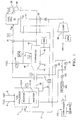
- Figure 1 is a drawing depicting a fuel cell system which comprises a combustor, fuel processor and fuel cell stack, operated according to the present invention.
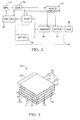
- Figure 2 is a drawing of the fuel cell stack shown in Figure 1 connected in a pictorial representation of a use application.
- Figure 3 is a partial perspective view of an interior section of a reactor.
- the invention provides a method of operating a combustor to heat a fuel processor to a desired temperature in a fuel cell system, wherein the fuel processor generates hydrogen (H 2 ) from a hydrocarbon for reaction within a fuel cell to generate electricity.
- the combustor mode of operation changes from one wherein a hydrocarbon fuel is reacted in the combustor to heat the fuel processor, to a mode where hydrogen-rich feed stream produced by the fuel processor is re-circulated back to the combustor for reaction therein to supply heat to the system.
- the fuel processor generates hydrogen-rich feed for the fuel cell stack in an amount significantly greater than that required for consumption by the stack.
- a portion of the hydrogen-rich feed stock is recirculated back to the combustor as stated.
- the invention provides a method and select system design features which cooperate to regulate fuel input to the combustor based on the temperature of the fuel processor.
- Figure 1 illustrates an example of a fuel cell system.
- the system may be used in a vehicle (not shown) as an energy source for vehicle propulsion.
- a hydrocarbon is processed in a fuel processor, for example, by reformation and preferential oxidation processes, to produce a reformate gas which has a relatively high hydrogen content on a volume or molar basis. Therefore, reference is made to hydrogen-rich (H 2 ) or relatively high hydrogen content reformate or feed stream.
- H 2 hydrogen-rich
- the invention is hereafter described in the context of a fuel cell fueled by an H 2 -rich reformate regardless of the method by which such reformate is made. It is to be understood that the principles embodied herein are applicable to fuel cells fueled by H 2 obtained from any source, including reformable hydrocarbon and hydrogen-containing fuels such as methanol, ethanol, gasoline, alkene, or other aliphatic or aromatic hydrocarbons in liquid or gaseous forms.
- reformable hydrocarbon and hydrogen-containing fuels such as methanol, ethanol, gasoline, alkene, or other aliphatic or aromatic hydrocarbons in liquid or gaseous forms.
- a fuel cell apparatus includes a fuel processor 2 for catalytically reacting a reformable hydrocarbon fuel stream 6, and water in the form of steam from a water stream 8.
- a fuel processor 2 for catalytically reacting a reformable hydrocarbon fuel stream 6, and water in the form of steam from a water stream 8.
- air is also used in a combination preferential oxidation/steam reforming reaction.
- fuel processor 2 also receives an air stream 9.
- the fuel processor contains one or more reactors 12 wherein the reformable hydrocarbon fuel in stream 6 undergoes dissociation in the presence of water/steam 8 and sometimes air (in stream 9) to produce the hydrogen-rich reformate.
- each reactor 12 may comprise one or more reactor beds.
- Reactor 12 may have one or more sections or beds, and a variety of designs are known and usable. Therefore, the selection and arrangement of reactors 12 may vary; and exemplary fuel reformation reactor(s) 14 and downstream reactor(s) 16 are described immediately below.
- methanol and water are ideally reacted in a reactor 14 to generate hydrogen and carbon dioxide as described earlier in the background. In reality, carbon monoxide and water are also produced.
- a gasoline reformation process steam, air and gasoline are reacted in a fuel processor which comprises a reactor 14 which has two sections. One section of the reactor 14 is primarily a partial oxidation reactor (POX) and the other section of the reactor is primarily a steam reformer (SR).
- POX partial oxidation reactor
- SR steam reformer
- gasoline reformation produces the desired hydrogen but, in addition, produces carbon dioxide, water and carbon monoxide. After each type of reformation, it is desirable to reduce the carbon monoxide content of the product stream.
- the fuel processor 2 also typically also includes one or more downstream reactors 16, such as water/gas shift (WGS) and preferential oxidizer (PROX) reactors which are used to produce carbon dioxide from carbon monoxide, as described earlier in the background.
- WGS water/gas shift
- PROX preferential oxidizer
- the initial reformate output gas stream which comprises hydrogen, carbon dioxide, carbon monoxide (CO) and water is further treated in a preferential oxidation (PROX) reactor 16 to reduce the CO-levels therein to acceptable levels, for example, below 20 ppm.
- the H 2 -rich reformate 20 is fed through valve 31 into the anode chamber of a fuel cell stack 22.
- oxygen e.g., air
- Air for the oxidant stream 24 is provided by an air supply, preferably compressor 30.
- the hydrogen from the reformate stream 20 and the oxygen from the oxidant stream 24 react in the fuel cell 22 to produce electricity.
- Exhaust or effluent 26 from the anode side of the fuel cell 22 contains some unreacted hydrogen.
- the exhaust or effluent 28 from the cathode side of the fuel cell 22 contains some unreacted oxygen.
- air from the air supply (compressor 30) is directed to the fuel cell 22 by a valve 32.
- the valve 32 is actuated to provide air directly to the input of a combustor 34.
- the air is used in combustor 34 to react with a fuel, preferably a liquid hydrocarbon, supplied through line 46.
- the heat of combustion is used to heat various parts of the fuel processor 2.
- Heat from the combustor 34 is directed through line 36 to heat selected reactant inputs and/or reactors and reactor beds in the fuel processor 2.
- the combustor 34 achieves heating of the selected components, reactors and beds in the fuel processor 2, as necessary, by indirect heat transfer thereto.
- indirectly heated reactor 102 comprise a reaction chamber 105 with inlet 103 and an outlet 107 ( Figure 3 ).
- the beds are in the form of carrier member substrates 110 each having a first surface 112 carrying catalytically active material for accomplishing the desired chemical reactions.
- a second surface 114 opposite the first surface is for heat transfer from hot gases to the carrier member substrates 110.
- temperature monitor "T” ( Figure 3 ) is used to monitor the temperature of the catalytic bed 112 and reactant gases 103.
- the temperature monitor is a thermocouple which monitors the temperature of the catalytic bed 112.
- the combustor 34 is usable to preheat the fuel 6, water 8 and air 9 being supplied as reactants to the fuel processor 2.
- the air 9 supplied to the fuel processor 2 may be used in one or more of the reactors 12. If reactor 14 is a gasoline reformation reactor, then air from line 9 is supplied to reactor 14.
- the PROX reactor 16 also utilizes air to oxidize CO to CO 2 and also receives air from air supply source (compressor 30) via line 9.
- the combustor 34 defines a chamber 41 with an inlet end 42, an exhaust end 44 and a catalyst section 48 between the ends.
- hydrocarbon fuel 46 is injected into the combustor.
- the hydrocarbon fuel if in liquid form, is preferably vaporized either before being injected into the combustor or in a section of the combustor to disperse the fuel for combustion. It is to be understood that although preferably disclosed as a liquid hydrocarbon fuel, the hydrocarbon may take another form such as a gas. Vaporization may be done by an electric heater. Once the system is operating and the combustor has heated up, vaporization may occur by heat exchange using heat from the combustor exhaust to vaporize incoming fuel.
- a fuel metering device or injector 43 is provided to control the rate at which hydrocarbon fuel is provided to the combustor.
- the hydrocarbon fuel 46 and the anode effluent 26 are reacted in the catalyst section 48 of the combustor 34, which section is between the inlet and exhaust ends 42 and 44, respectively, of the combustor 34.
- Oxygen is provided to the combustor 34 either from the air supply (i.e., compressor 30) via valve 32 or from a second air flow stream, such as a cathode effluent stream 28, depending on system operating conditions.
- a valve 50 permits release of the combustor exhaust 36 to the atmosphere when it is not needed to heat reactors in the fuel processor 2.
- the hydrocarbon fuel stream 46 supplements the anode effluent 26 fuel for the combustor 34, as may be needed, to meet the transient and steady state needs of the fuel cell system.
- exhaust gas passes through a regulator 38, a shutoff valve 140 and a muffler 142 before being released to the atmosphere.
- the symbols are as follows: “V” is valve, “MFM” is mass flow meter, “T” is temperature monitor, “R” is regulator, “C” is cathode side of the fuel cell, “A” is anode side of the fuel cell, “INJ” is injector, “COMA” is compressor, and “P” is pressure monitor.
- the amount of heat demanded by the selected reactors within the fuel processor 2, which is to be supplied by the combustor 34, is dependent upon the amount of fuel and water input and ultimately the desired reaction temperature in the fuel processor 2. As stated earlier, sometimes air through line 9 is also used in the fuel processor and must also be considered along with the fuel and water input.
- the combustor 34 utilizes all anode exhaust or effluent 26 and potentially some hydrocarbon fuel 46. Enthalpy equations are used to determine the amount of cathode exhaust air to be supplied to the combustor 34 to meet the desired temperature requirements of the combustor 34 and ultimately to satisfy the fuel processor 2.
- the oxygen or air provided to the combustor 34 includes one or both of cathode effluent exhaust 28, which is typically a percentage of the total oxygen supplied to the cathode of the fuel cell 22, and an air stream from compressor 30 depending on whether the apparatus is operating in a start-up mode wherein the compressor air stream is exclusively employed, or in a run mode using the cathode effluent 28 and/or compressor air.
- any total air, oxygen or diluent demand required by the combustor 34, which is not met by the cathode effluent 28, is supplied by the compressor 30 in an amount to satisfy the temperature and heat demanded by the combustor 34 and the fuel processor 2, respectively.
- the air control is implemented via an air dilution valve 47 which preferably is a stepper motor driven valve having a variable orifice to control the amount of bleed-off of cathode exhaust 28 supplied to the combustor 34.
- operation of the combustor and start-up in a fuel cell system is as follows. At the beginning of operations when the fuel cell apparatus is cold and starting up: (1) the compressor 30 is driven by an electric motor energized from an external source (e.g., a battery) to provide the necessary air to the system; (2) air is introduced into the combustor 34 and hydrocarbon fuel 46 (e.g., MeOH or gasoline) is injected into the combustor 34; (3) the air and fuel react in the combustor 34, where substantially complete combustion of the fuel is effected; and (4) the hot exhaust gases exiting the combustor 34 are conveyed through line 36 to the selected components, such as reactant 6, 8 and/or 9 and reactors 12 associated with the fuel processor 2.
- an external source e.g., a battery
- step (2) is implemented first along with the supplying of air directly to the combustor. Then, when the hydrogen-rich stream has adequately low CO level, steps (1) and (3) are implemented, followed by steps (4), (5) and (6).
- the combustor 34 could operate solely on the anode 26 and cathode 28 effluents, without the need for additional hydrocarbon fuel 46. Under such conditions, fuel injection to the combustor 34 is discontinued. Under other conditions, e.g., increased power demands, fuel 46 is provided to supplement the Aout, 26 to combustor 34. It can be seen that the combustor 34 receives multiple fuels, such as a hydrocarbon fuel 46 as well as anode effluent 26 from the anode of the fuel cell 22. Oxygen depleted exhaust air 28 from the cathode of the fuel cell 22 and air from the compressor 30 are also supplied to the combustor 34.
- a controller 150 shown in Figure 1 controls various aspects of the operation of the system shown in Figure 1 .
- the controller 150 may comprise any suitable microprocessor, microcontroller, personal computer, etc., which has a central processing unit capable of executing a control program and data stored in a memory.
- the controller 150 may be a dedicated controller specific to any of the components in Figure 1 , or implemented in software stored in the main vehicle electronic control module. Further, although software based control programs are usable for controlling system components in various modes of operation as described above, it will also be understood that the control can also be implemented in part or whole by dedicated electronic circuitry.
- the controller 150 controls the injector 43 thereby regulating the rate of hydrocarbon fuel fed to the combustor 34.
- the controller 150 also monitors various parameters in the system such as pressure and temperature. Preferably, controller 150 regulates the operation of injector 43 to control supply of fuel to the combustor 34.
- the fuel cell system comprises the fuel cell 22 as part of a vehicle propulsion system 60 (see Figure 2 ).
- a portion of the circuit 60 external to fuel cell system comprises a battery 62, an electric motor 64, and associated drive electronics including inverter 65 constructed and arranged to accept electric energy from a DC/DC converter 61 associated with the fuel cell system, and particularly fuel cell 22, and to convert it to mechanical energy produced by motor 64.
- the battery 62 is constructed and arranged to accept and store electrical energy supplied by fuel cell 22 and to accept and store electrical energy supplied by motor 64 during regenerative braking, and to provide electric energy to motor 64.
- the motor 64 is coupled to driving axle 66 to rotate wheels of a vehicle (not shown).
- An electrochemical engine control module (EECM) 70 and a battery pack module (BPM) 71 monitor various operating parameters, including, but not limited to, the voltage and current of the stack. For example, this is done by the battery pack module (BPM) 71, or by the BPM 71 and the EECM 70 together, to send an output signal (message) to the vehicle controller 74 based on conditions monitored by the BPM 71.
- the vehicle controller 74 controls the electric motor 64, the drive electronics including inverter 65, the DC/DC converter 61, and requests a power level from the EECM 70.
- the combustor 34 is first started.
- the combustor is typically heated by the use of external fuel 46 which is preferably a liquid hydrocarbon fuel.
- hydrocarbon fuel 46 may be the same as or different from the fuel 6 that is used as a reactant in the fuel processor.
- the delivery of air by compressor 30, and fuel 46 through injector 43, initiates the start-up mode.
- the compressor 30 provides the air flow and the injector 43 provides the liquid hydrocarbon fuel to the combustor 34 which converts the fuel to heat, and delivers the heat to fuel processor 2 through line 36.
- the heat is used to preheat input reactants, fuel 6, water 8, and/or air and also to preheat selected reactors 12 as necessary.
- Such preheat is typically done by indirect heat transfer using appropriate heat exchangers (not shown) within fuel processor 2.
- hydrocarbon fuel 6 referred to as one of the reactants
- hydrocarbon fuel 6 is injected into the fuel processor 2.
- the hydrocarbon reactant 6 is reacted with water 8 (steam), air, or both to convert the hydrocarbon reactant to a hydrogen-rich (H 2 )stream.
- the hydrogen-rich feed stream also contains other constituents such as water, carbon monoxide, and carbon dioxide. These gases ultimately flow to the fuel i cell stack 22 through line 20 as described earlier.
- stack 22 does not consume all of the hydrogen feed produced by the fuel processor 2, so some portion of the hydrogen feed passes through the stack 22 and onto the combustor 34. This portion is referred to as effluent.
- the combustor 34 receives both hydrogen-rich stack effluent and liquid hydrocarbon fuel 46 provided through injector 43.
- the liquid fuel is regulated according to the temperature of the fuel processor. The amount of liquid fuel 46 injected through injector 43 is adjusted since it is preferred to use the heating value of the hydrogen containing anode effluent 26 first, and the liquid fuel supplements as necessary based on fuel processor temperature.
- the heat generated by the combustor, the heat demanded by the fuel processor, and the consumption of hydrogen-rich feed stream by the fuel processor, are all subject to variations during system operation. More specifically, the production of hydrogen-rich feed stream by the fuel processor 2, and the consumption of such stream by the stack 22, affect the quantity of hydrogen available to the combustor 34, and there are other factors within the system which also affect such quantity of hydrogen available to the combustor 34, such as diversion of the hydrogen flow or degradation of the catalytic bed 112 within the fuel processor 2.
- the quantity of such injected fuel required at various points in time must be determined.
- Such quantity will, in turn, depend on the amount of hydrogen being provided to the combustor.
- the amount of hydrogen being provided to the combustor is based on an estimate. In other words, as the fuel processor makes hydrogen, the quantity of hydrogen being made by the fuel processor is typically not measured but rather is estimated. Therefore, the quantity of hydrogen being sent from the fuel processor to the stack is usually an estimated quantity. Further, the amount of hydrogen consumed by the stack to produce power is typically not measured, but rather is estimated. Therefore, the amount of hydrogen ultimately received by the combustor is typically based on two estimates.
- the quantity of hydrogen received by the combustor may become lower than expected.
- the present invention is primarily directed to the situation where the quantity of hydrogen received by the combustor is lower than an expected amount. If such occurs, it will generally be manifest at an early stage in the temperature of a fuel processor catalytic bed being at a relatively low temperature.
- the sequence of the events is typically as follows. The combustor starts receiving less fuel, that is, the amount of hydrogen received by the combustor decreases for some reason.
- the control of air flow to the combustor is adjusted in accordance with the new level of fuel flow to the combustor, so that the combustor temperature does not drop.
- the total quantity of energy input in the form of fuel being supplied to the combustor is relatively low. Therefore, although the combustor continues to maintain its internal temperature, the heat output of the combustor is reduced. Consequently, the amount of heat available for extraction by indirect heat transfer of certain parts of the fuel processor becomes less.
- the system is permitted to increase the amount of supplemental fuel flow based on a reduction in the catalytic bed temperature, the system has been permitted to respond to a problem without having a specific diagnosis made. For example, such a closed loop correction would increase combustor supplemental fuel flow to compensate for a drop in the fuel processor temperature but, as can be appreciated, the injection of supplemental fuel may continue to occur with ever increasing amounts being injected. Therefore, it is necessary to compare the amount of supplemental fuel injected in the combustor 34 to a predetermined value or range of predetermined values. Therefore, by the method of the invention, it is possible to flag the existence of a low temperature in a component of a fuel processor, preferably a catalytic bed 112, and provide a signal.
- the method of the invention provides the flexibility to signal the existence of a low temperature problem in the fuel processor 2, and also to respond to such low temperature condition by initiating or increasing supplemental fuel injected by injector 43 to adjust the temperature and then provide a signal if the amount of supplemental fuel exceeds an expected value or predetermined values.
- the invention provides the ability to signal the occurrence of a temperature drop or relatively low temperature condition, take corrective action, and then determine if the corrective action is appropriate.
- such corrective action sequence is as follows. Assume that the supplemental fuel injection rate is set at 2 gms/sec at injector 43. The fuel injected is methanol or gasoline. The controller senses that the temperature in the catalytic bed 112 of the fuel processor 2 has declined, on the order of 5°C, as compared to an expected nominal operating temperature. As a result, a signal is sent. Thereafter, corrective action is taken. For example, an injection rate of 7 gms/sec may be implemented. The controller then determines whether the new injection rate of 7 gms/sec is acceptable based on a predetermined mode of operation of the system.
- the injection rate of 7 gms/sec is within an acceptable predetermined range or falls below a maximum predetermined value, then the correction is maintained. If, however, the injection rate of 7 gms/sec falls outside the range or above a predetermined value, then other corrective action may be necessary such as to decrease the load on the system or shut down the system. It is evident that a series of corrective adjustments can be made in the fuel injection rate at injector 43 before it is determined that the increased level of injection falls outside a predetermined range or is above the predetermined value.
- monitoring and control method and apparatus of the invention is particularly useful for determining a low temperature condition in the fuel processor and signaling such low temperature condition, and further providing corrective action in response to such low temperature condition by initiating or by increasing the amount of supplemental fuel injected into the combustor.
- the invention finds its particular usefulness as adapted to the determining of a low temperature condition and the initiating or increasing of fuel injection, it will be evident to those skilled in the art that similar adjustment is within the scope of the invention when a relatively high temperature condition is observed and decrease or termination of supplemental fuel is appropriate.
- the invention provides the ability to monitor the temperature condition within the fuel processor 2 and regulate the quantity of the supplemental fuel to the combustor 34 according to the temperature of the fuel processor. Thereafter, the invention provides the ability to compare the quantity of the supplemental fuel to a predetermined value or range of predetermined values.
Landscapes
- Engineering & Computer Science (AREA)
- Chemical & Material Sciences (AREA)
- Sustainable Development (AREA)
- Sustainable Energy (AREA)
- Life Sciences & Earth Sciences (AREA)
- Chemical Kinetics & Catalysis (AREA)
- Combustion & Propulsion (AREA)
- Mechanical Engineering (AREA)
- Power Engineering (AREA)
- Transportation (AREA)
- Organic Chemistry (AREA)
- Manufacturing & Machinery (AREA)
- Electrochemistry (AREA)
- General Chemical & Material Sciences (AREA)
- General Engineering & Computer Science (AREA)
- Health & Medical Sciences (AREA)
- General Health & Medical Sciences (AREA)
- Inorganic Chemistry (AREA)
- Fuel Cell (AREA)
Abstract
Description
Claims (9)
- A method of operating a combustor to heat a fuel processor in a fuel cell system, in which the fuel processor generates a hydrogen-rich stream a portion of which is consumed in a fuel cell stack and a portion of which is discharged from the fuel cell stack and supplied to the combustor, and wherein first and second streams are supplied to the combustor, the first stream being a hydrocarbon fuel stream and the second stream consisting of said hydrogen-rich stream, the method comprising the steps of:monitoring the temperature of the fuel processor;regulating the quantity of the first stream to the combustor according to the temperature of the fuel processor; andcomparing said quantity of said first stream to a predetermined value or range of predetermined values.
- The method of claim 1 which further includes increasing the quantity of said first stream to the combustor in response to a decrease in the temperature of the fuel processor.
- The method of claim 1 and further including generating an output signal when said quantity is different from said predetermined value or range of predetermined values.
- The method of claim 3 and further comprising terminating operation of said fuel cell stack when said output signal is generated.
- The method of claim 4 and further comprising blocking said signal for a period of time and terminating operation of said fuel cell stack when the time duration of said signal exceeds said time period.
- The method of claim 1 and further including generating an output signal when said quantity is greater than said predetermined value.
- The method of claim 1 and further including generating an output signal when said quantity is a value outside the range of said predetermined values.
- The method of claim 1 wherein the first stream is supplied to the combustor before the second stream is supplied to the combustor and wherein the supply of said first stream is decreased in response to an increase in the temperature of the fuel processor.
- The method of claim 1 wherein said fuel processor comprises a reactor having a catalytic bed and wherein said monitored temperature is the temperature of said bed.
Applications Claiming Priority (2)
| Application Number | Priority Date | Filing Date | Title |
|---|---|---|---|
| US498889 | 1990-03-26 | ||
| US09/498,889 US6451465B1 (en) | 2000-02-07 | 2000-02-07 | Method for operating a combustor in a fuel cell system |
Publications (2)
| Publication Number | Publication Date |
|---|---|
| EP1122805A2 true EP1122805A2 (en) | 2001-08-08 |
| EP1122805A3 EP1122805A3 (en) | 2003-10-29 |
Family
ID=23982918
Family Applications (1)
| Application Number | Title | Priority Date | Filing Date |
|---|---|---|---|
| EP00126078A Withdrawn EP1122805A3 (en) | 2000-02-07 | 2000-11-29 | Method for operating a combustor in a fuel cell system |
Country Status (4)
| Country | Link |
|---|---|
| US (1) | US6451465B1 (en) |
| EP (1) | EP1122805A3 (en) |
| JP (1) | JP2001223016A (en) |
| CA (1) | CA2327598A1 (en) |
Cited By (8)
| Publication number | Priority date | Publication date | Assignee | Title |
|---|---|---|---|---|
| EP1261054A3 (en) * | 2001-05-25 | 2003-01-02 | Nissan Motor Co., Ltd. | Combustor temperature control of a fuel cell power plant |
| EP1205991A3 (en) * | 2000-11-04 | 2005-05-11 | Ballard Power Systems AG | Process for setting a fuel cell into electrical operation |
| WO2004045004A3 (en) * | 2002-11-13 | 2005-06-02 | Nissan Motor | Fuel cell system and related method |
| FR2877497A1 (en) * | 2004-10-29 | 2006-05-05 | Renault Sas | DEVICE AND METHOD FOR CONTROLLING AN INJECTED FUEL QUANTITY IN A FUEL CELL REFORMER ONBOARD A MOTOR VEHICLE |
| EP1487042A4 (en) * | 2002-03-19 | 2007-09-19 | Matsushita Electric Industrial Co Ltd | ENERGY MANAGEMENT SYSTEM COMBUSTIBLE BATTERY |
| FR2900934A1 (en) * | 2006-05-09 | 2007-11-16 | Inst Francais Du Petrole | PROCESS FOR COPRODUCTION OF ELECTRICITY AND HYDROGEN-RICH GAS BY VAPOREFORMING HYDROCARBON CUTTING WITH CALORIES BY IN SITU HYDROGEN COMBUSTION |
| WO2008029233A1 (en) * | 2006-08-31 | 2008-03-13 | Toyota Jidosha Kabushiki Kaisha | Fuel cell system |
| CN100468848C (en) * | 2002-11-13 | 2009-03-11 | 日产自动车株式会社 | Fuel cell system and related methods |
Families Citing this family (11)
| Publication number | Priority date | Publication date | Assignee | Title |
|---|---|---|---|---|
| JP4310881B2 (en) * | 2000-04-12 | 2009-08-12 | トヨタ自動車株式会社 | Combustion heating device, fuel reforming device including the same, and fuel cell system |
| US7691271B1 (en) * | 2007-05-30 | 2010-04-06 | University Of Central Florida Research Foundation, Inc. | Filamentous carbon particles for cleaning oil spills and method of production |
| US6653005B1 (en) * | 2000-05-10 | 2003-11-25 | University Of Central Florida | Portable hydrogen generator-fuel cell apparatus |
| US6805721B2 (en) | 2002-01-10 | 2004-10-19 | Steven D. Burch | Fuel processor thermal management system |
| US6608463B1 (en) * | 2002-06-24 | 2003-08-19 | Delphi Technologies, Inc. | Solid-oxide fuel cell system having an integrated air supply system |
| US20040081868A1 (en) * | 2002-10-23 | 2004-04-29 | Edlund David J. | Distributed fuel cell network |
| JP4457559B2 (en) | 2003-01-09 | 2010-04-28 | 日産自動車株式会社 | Fuel evaporator |
| JP2006151298A (en) * | 2004-11-30 | 2006-06-15 | Honda Motor Co Ltd | Fuel cell vehicle |
| WO2009102760A1 (en) * | 2008-02-12 | 2009-08-20 | Genesis Fueltech, Inc. | Reformer and method of startup |
| US20090253092A1 (en) * | 2008-04-07 | 2009-10-08 | Hunter Manufacturing Co. | Fuel cell heater |
| JP5649760B2 (en) * | 2012-04-10 | 2015-01-07 | パナソニック株式会社 | Fuel cell system and operation method thereof |
Family Cites Families (21)
| Publication number | Priority date | Publication date | Assignee | Title |
|---|---|---|---|---|
| US3615850A (en) * | 1969-03-10 | 1971-10-26 | Gen Electric | System and process employing a reformable fuel to generate electrical energy |
| US3607419A (en) * | 1969-10-01 | 1971-09-21 | United Aircraft Corp | Fuel cell system control |
| US4128700A (en) | 1977-11-26 | 1978-12-05 | United Technologies Corp. | Fuel cell power plant and method for operating the same |
| US4659634A (en) | 1984-12-18 | 1987-04-21 | Struthers Ralph C | Methanol hydrogen fuel cell system |
| US4670359A (en) | 1985-06-10 | 1987-06-02 | Engelhard Corporation | Fuel cell integrated with steam reformer |
| US4650727A (en) | 1986-01-28 | 1987-03-17 | The United States Of America As Represented By The United States Department Of Energy | Fuel processor for fuel cell power system |
| JPH02168569A (en) | 1988-08-22 | 1990-06-28 | Fuji Electric Co Ltd | Fuel battery power generating system |
| US4994331A (en) | 1989-08-28 | 1991-02-19 | International Fuel Cells Corporation | Fuel cell evaporative cooling using fuel as a carrier gas |
| US5154986A (en) * | 1991-03-22 | 1992-10-13 | Yamaha Hatsudoki Kabushiki Kaisha | Shut-off device for fuel cell system |
| US5271916A (en) | 1991-07-08 | 1993-12-21 | General Motors Corporation | Device for staged carbon monoxide oxidation |
| JPH05135793A (en) * | 1991-11-13 | 1993-06-01 | Ishikawajima Harima Heavy Ind Co Ltd | Combustion control device for fuel cell power generating facilities |
| US5248567A (en) | 1991-12-24 | 1993-09-28 | Kabushiki Kaisha Toshiba | Power generation plant including fuel cell |
| US5272017A (en) | 1992-04-03 | 1993-12-21 | General Motors Corporation | Membrane-electrode assemblies for electrochemical cells |
| US5484577A (en) | 1994-05-27 | 1996-01-16 | Ballard Power System Inc. | Catalytic hydrocarbon reformer with enhanced internal heat transfer mechanism |
| US5554453A (en) | 1995-01-04 | 1996-09-10 | Energy Research Corporation | Carbonate fuel cell system with thermally integrated gasification |
| EP0741428A1 (en) | 1995-05-04 | 1996-11-06 | FINMECCANICA S.p.A. AZIENDA ANSALDO | A supply system for fuel cells of the S.P.E. (SOLID POLYMER ELECTROLYTE) type for hybrid vehicles). |
| JPH09315801A (en) * | 1996-03-26 | 1997-12-09 | Toyota Motor Corp | Fuel reforming method, fuel reforming apparatus, and fuel cell system including the fuel reforming apparatus |
| US5763113A (en) | 1996-08-26 | 1998-06-09 | General Motors Corporation | PEM fuel cell monitoring system |
| US6126908A (en) | 1996-08-26 | 2000-10-03 | Arthur D. Little, Inc. | Method and apparatus for converting hydrocarbon fuel into hydrogen gas and carbon dioxide |
| US5637415A (en) | 1996-08-30 | 1997-06-10 | General Motors Corporation | Controlled CO preferential oxidation |
| JPH10134838A (en) * | 1996-10-29 | 1998-05-22 | Fuji Electric Co Ltd | Fuel cell reformer and control method therefor |
-
2000
- 2000-02-07 US US09/498,889 patent/US6451465B1/en not_active Expired - Fee Related
- 2000-11-29 EP EP00126078A patent/EP1122805A3/en not_active Withdrawn
- 2000-12-05 CA CA002327598A patent/CA2327598A1/en not_active Abandoned
-
2001
- 2001-01-22 JP JP2001013737A patent/JP2001223016A/en active Pending
Cited By (13)
| Publication number | Priority date | Publication date | Assignee | Title |
|---|---|---|---|---|
| EP1205991A3 (en) * | 2000-11-04 | 2005-05-11 | Ballard Power Systems AG | Process for setting a fuel cell into electrical operation |
| US6777123B2 (en) | 2001-05-25 | 2004-08-17 | Nissan Motor Co., Ltd. | Combustor temperature control of fuel cell power plant |
| EP1261054A3 (en) * | 2001-05-25 | 2003-01-02 | Nissan Motor Co., Ltd. | Combustor temperature control of a fuel cell power plant |
| EP1487042A4 (en) * | 2002-03-19 | 2007-09-19 | Matsushita Electric Industrial Co Ltd | ENERGY MANAGEMENT SYSTEM COMBUSTIBLE BATTERY |
| US7504168B2 (en) | 2002-03-19 | 2009-03-17 | Panasonic Corporation | Systems for controlling operation of a fuel cell electricity generating system responsive to detection of abnormalities |
| CN100468848C (en) * | 2002-11-13 | 2009-03-11 | 日产自动车株式会社 | Fuel cell system and related methods |
| US7425380B2 (en) | 2002-11-13 | 2008-09-16 | Nissan Motor Co., Ltd. | Fuel cell system and related method |
| WO2004045004A3 (en) * | 2002-11-13 | 2005-06-02 | Nissan Motor | Fuel cell system and related method |
| FR2877497A1 (en) * | 2004-10-29 | 2006-05-05 | Renault Sas | DEVICE AND METHOD FOR CONTROLLING AN INJECTED FUEL QUANTITY IN A FUEL CELL REFORMER ONBOARD A MOTOR VEHICLE |
| FR2900934A1 (en) * | 2006-05-09 | 2007-11-16 | Inst Francais Du Petrole | PROCESS FOR COPRODUCTION OF ELECTRICITY AND HYDROGEN-RICH GAS BY VAPOREFORMING HYDROCARBON CUTTING WITH CALORIES BY IN SITU HYDROGEN COMBUSTION |
| EP1854761A3 (en) * | 2006-05-09 | 2010-12-29 | IFP Energies nouvelles | Method of producing electricity and a hydrogen-rich gas by steam reforming a hydrocarbon fraction with calorie input by in situ hydrogen combustion |
| WO2008029233A1 (en) * | 2006-08-31 | 2008-03-13 | Toyota Jidosha Kabushiki Kaisha | Fuel cell system |
| US8808935B2 (en) | 2006-08-31 | 2014-08-19 | Toyota Jidosha Kabushiki Kaisha | Fuel cell system |
Also Published As
| Publication number | Publication date |
|---|---|
| CA2327598A1 (en) | 2001-08-07 |
| US6451465B1 (en) | 2002-09-17 |
| JP2001223016A (en) | 2001-08-17 |
| EP1122805A3 (en) | 2003-10-29 |
Similar Documents
| Publication | Publication Date | Title |
|---|---|---|
| US6451465B1 (en) | Method for operating a combustor in a fuel cell system | |
| JP3527691B2 (en) | Fuel cell system logic to identify fast and standard stop commands. | |
| US6406806B1 (en) | Fuel cell voltage monitoring and system control | |
| US6790548B2 (en) | Staged venting of fuel cell system during rapid shutdown | |
| EP1069636B1 (en) | Fuel cell stack monitoring and system control | |
| US6413661B1 (en) | Method for operating a combustor in a fuel cell system | |
| US6413662B1 (en) | Fuel cell system shutdown with anode pressure control | |
| US6391484B1 (en) | Fuel processor temperature monitoring and control | |
| JP2001148254A (en) | Fuel cell system with air injection control and method of operating this fuel cell system | |
| US6602624B1 (en) | Control apparatus and method for efficiently heating a fuel processor in a fuel cell system | |
| US6416893B1 (en) | Method and apparatus for controlling combustor temperature during transient load changes | |
| US6376112B1 (en) | Controlled shutdown of a fuel cell | |
| JP3429478B2 (en) | A method for flexible monitoring of fuel cell voltage | |
| US6569551B2 (en) | Oxidant injection control | |
| US7998629B2 (en) | Method of operating hydrogen and power generating system | |
| EP1128456A2 (en) | Method and apparatus for preventing cell reversal in a fuel cell stack |
Legal Events
| Date | Code | Title | Description |
|---|---|---|---|
| PUAI | Public reference made under article 153(3) epc to a published international application that has entered the european phase |
Free format text: ORIGINAL CODE: 0009012 |
|
| AK | Designated contracting states |
Kind code of ref document: A2 Designated state(s): AT BE CH CY DE DK ES FI FR GB GR IE IT LI LU MC NL PT SE TR |
|
| AX | Request for extension of the european patent |
Free format text: AL;LT;LV;MK;RO;SI |
|
| PUAL | Search report despatched |
Free format text: ORIGINAL CODE: 0009013 |
|
| RIC1 | Information provided on ipc code assigned before grant |
Ipc: 7C 01B 3/38 B Ipc: 7H 01M 8/06 A |
|
| AK | Designated contracting states |
Kind code of ref document: A3 Designated state(s): AT BE CH CY DE DK ES FI FR GB GR IE IT LI LU MC NL PT SE TR |
|
| AX | Request for extension of the european patent |
Extension state: AL LT LV MK RO SI |
|
| AKX | Designation fees paid | ||
| 17P | Request for examination filed |
Effective date: 20040213 |
|
| RBV | Designated contracting states (corrected) |
Designated state(s): DE FR GB |
|
| REG | Reference to a national code |
Ref country code: DE Ref legal event code: 8566 |
|
| 17Q | First examination report despatched |
Effective date: 20061211 |
|
| STAA | Information on the status of an ep patent application or granted ep patent |
Free format text: STATUS: THE APPLICATION IS DEEMED TO BE WITHDRAWN |
|
| 18D | Application deemed to be withdrawn |
Effective date: 20070424 |