EP1120722A2 - Verfahren und Gerät um Kategoriedaten zu generieren - Google Patents
Verfahren und Gerät um Kategoriedaten zu generieren Download PDFInfo
- Publication number
- EP1120722A2 EP1120722A2 EP01300250A EP01300250A EP1120722A2 EP 1120722 A2 EP1120722 A2 EP 1120722A2 EP 01300250 A EP01300250 A EP 01300250A EP 01300250 A EP01300250 A EP 01300250A EP 1120722 A2 EP1120722 A2 EP 1120722A2
- Authority
- EP
- European Patent Office
- Prior art keywords
- data
- user
- classification
- identification data
- received
- Prior art date
- Legal status (The legal status is an assumption and is not a legal conclusion. Google has not performed a legal analysis and makes no representation as to the accuracy of the status listed.)
- Withdrawn
Links
Images


Classifications
-
- G—PHYSICS
- G06—COMPUTING OR CALCULATING; COUNTING
- G06F—ELECTRIC DIGITAL DATA PROCESSING
- G06F16/00—Information retrieval; Database structures therefor; File system structures therefor
- G06F16/90—Details of database functions independent of the retrieved data types
- G06F16/95—Retrieval from the web
- G06F16/951—Indexing; Web crawling techniques
-
- G—PHYSICS
- G06—COMPUTING OR CALCULATING; COUNTING
- G06F—ELECTRIC DIGITAL DATA PROCESSING
- G06F16/00—Information retrieval; Database structures therefor; File system structures therefor
- G06F16/90—Details of database functions independent of the retrieved data types
- G06F16/95—Retrieval from the web
- G06F16/953—Querying, e.g. by the use of web search engines
- G06F16/9538—Presentation of query results
Definitions
- the present application relates to method and apparatus for generating categorization data.
- embodiments of the present invention relate to method and apparatus for generating categorization data, sometimes referred to as meta data categorizing content accessible via a communications network such as the Internet.
- classification data In order to reduce the amount of labour involved in generating classification data for use by search engines, the generation of classification data has to a certain extent been automated by computer programs arranged to search for key words within the text of a website. Although such classification programs do reduce the amount of human input required to generate classification data, the accuracy of the resulting classification data is dependent upon key words being included within text of an Internet website and for those detected key words being an accurate reflection of the content of a website. These limitations of automated classification programs can result in the mis-classification of websites.
- computer apparatus comprising:
- the applicants have appreciated that one way in which the content of a website may be classified is in terms of the interests of users accessing the website. Furthermore, the interests of users may be determined from the classification of the websites which those users access. Therefore, following an arbitrary initial assessment of the content of a website, the classification of a website can then be more accurately determined by monitoring and updating assigned classification data utilising interest data associated with the users accessing that website. At the same time more accurate user interest profiles can be generated by modifying such profiles utilising data indicative of the content of websites those users visit. Thus even if the initial assessment of the users interests or the content of a website is not particularly accurate, the subsequent modification as a result of different users visiting different websites will cause the accuracy of the classification data to improve.
- embodiments of the present invention provide a learning system for generating categorization data or meta data indicative of the content of websites and of user's interests.
- the generated categorization data can then be utilized either by search engines to enable users to select sites of interest or to enable advertising of websites to be targeted to individuals associated with metadata indicative of particular interests.
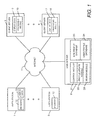
- FIG. 1 is a schematic block diagram of a computer network embodying the present invention.
- the computer network comprises a plurality of user stations 1,3 that are connected to a plurality of client servers 5,7 and a main server 9 via the Internet 11 which enables data to be transferred between the user stations 1,3, the plurality of client servers 5,7 and the main server 9.
- the plurality of user stations 1,3 each comprise conventional computer apparatus which are connected to a display and a user input device such as a keyboard or mouse (not shown in Figure 1).
- a browser program 12 comprising a conventional browser program such as Netscape Navigator or Microsoft Explorer.
- user identification data 15 stored within the memories of some of the user stations 1 is user identification data 15.
- the plurality of client servers 5,7 each have stored therein display data 17 comprising hypertext markup (HTML) scripts defining websites, for dispatch via the Internet 11 to the user stations 1,3 to cause the browser programs 12 within the user stations 1,3 to generate and display screen displays corresponding to the websites.
- the plurality of client servers 5,7 also each have stored therein a processing module 19 for coordinating the transfer of data between the client server 5;7, the main server 5 and the plurality of user stations 1,3 as will be described in detail later.
- the main server 9 has stored therein a control module program 21 for controlling the overall processing of the main server 9; a site profile database 23 containing site profile records associating data indicative of websites with classification data and display data; a user profile database for storing user records associating data corresponding to user identification data 15 stored within user stations 1,3 with further classification data; a profile update module 25 for generating and amending records stored within the site profile database 23 and the user profile database 24; and a search module 29 for retrieving records from the site profile database 23.
- a control module program 21 for controlling the overall processing of the main server 9
- a site profile database 23 containing site profile records associating data indicative of websites with classification data and display data
- a user profile database for storing user records associating data corresponding to user identification data 15 stored within user stations 1,3 with further classification data
- a profile update module 25 for generating and amending records stored within the site profile database 23 and the user profile database 24
- a search module 29 for retrieving records from the site profile database 23.
- the data transfer module 19 causes data to be dispatched to the main server 9 via the Internet 11.
- the data dispatched by a client server comprises data identifying the website corresponding to the display data 17 accessed by a user together with data corresponding to user identification data 15, stored in the memory of the user station 1, used to access the display data 17 if such data exists.
- the control module 21 causes the profile update module 25 to amend the classification data stored within the site profile database 23 and the user profile database 24 within records associated with received data. This is achieved by the profile update module 25 updating the classification data within the site profile database 23 associated with received website data utilizing the classification data associated with the received user data and the profile update module 25 updating the classification data associated with received user identification data 5 utilizing the classification data associated with the received website data.
- the classification data associated with a website within site profile records in the site profile database 23 are made dependent upon the classification data associated with user identification data 15 of individuals accessing the website identified by the site profile record.
- the classification data associated with user identification data 15 within records in the user profile database 24 is made dependent upon the classification data associated with websites by site profile records in the site profile database 23 corresponding to websites accessed via a user station 1 having corresponding user identification data 15 stored thereon.
- the repeated access of different websites by different individuals therefore causes the site profile records and user profile records stored within the site profile database 23 and user profile database 24 to be amended so that the classification data associated with websites within the site profile database 23 more closely reflects the interests of individuals accessing a particular website and the classification data within the user profile record in the user profile database 24 more closely reflects the content of websites accessed by an individual, classified in terms of the content of other websites accessed by other individuals who have also accessed the websites accessed by that individual.
- the generated user profile records within the user profile database 24 are then used by the search module 29 to select from the site profile database advertisement data associated with a website and classification data determined to be similar to the classification data corresponding to received user identification data 15.
- This advertisement data is then transmitted via the Internet 11 to the data transfer module 19 of a client server 5;7 that has been accessed via a user station 1;3 which then causes the advertisement data to be incorporated in display data which is transmitted to a user station 1;3 for display to a user.
- the data within the site profile database 23 and user profile database 24 is utilized to cause to be incorporated within display data shown to a user advertisement data for websites determined to have content corresponding to a user's interests.
- a user station 1 can be used to access the main server 9 directly via the Internet 11, to request a list of websites identified as corresponding to a user's interests.
- this causes the search module 29 to select a number of items of website data stored within the site profile database 23 associated with classification data which is similar to input classification data or alternatively similar to classification data associated with data corresponding to the user identification data 15 stored within the user station 1 accessing the main server 9.
- the retrieved data from the site profile database 23 is then utilised to generate display data to be dispatched to the user station 1;2.
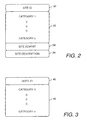
- Figure 2 is a schematic block diagram of an exemplary data structure for site profile records stored within the site profile database 23 of the main server 9.
- site profile records within the site profile database 23 comprise site identification data 30 comprising data identifying the universal resource locator address (URL) of a website stored on a client server 5;7, n items of classification data 32 being an assessment of the content of a website having a URL corresponding to the site identification data 30 of the record; site advert data 34 comprising display data for generating a banner advert, advertising the website having a URL corresponding to the site identification data 30 of the record and a site description 36 comprising text data being a text description of the content of the website having a URL corresponding to the site ID 30 of the record.
- site identification data 30 comprising data identifying the universal resource locator address (URL) of a website stored on a client server 5;7, n items of classification data 32 being an assessment of the content of a website having a URL corresponding to the site identification data 30 of the record
- site advert data 34 comprising display data for generating a banner advert, advertising the website having a URL corresponding to the site identification data 30 of the record
- a site description 36
- Each site profile record within the site profile database 23 enables site identification data 30 to be associated with data comprising an advertisement for the site 34, a text description of the content of the site 36, and n items of classification data 32.
- the n items of classification data 32 provide a means by which the content of a website is classified in terms of percentage of a website dedicated to a particular area of interest.
- An exemplary classification could comprise data indicative of the extent to which the content of a website concerns the following five items:
- a site profile record is entered in the site profile database 23 an assessment is made of the content of a website stored at the URL indicated by the site ID of the content of a website stored at the URL indicated by the site ID 30 regarding the content of that site.
- the site profile record for a website concerned solely with sport might have as its classification data 32 the following values for the above five categories.
- the initial classification data associated with websites having different content would comprise classification data 32 having different values where the different values are indicative of the portion of the site concerned with the different categories of classification data 32.
- Another site concerned with sales of televisions and computers for use at home might be initially classified with the following classification data.
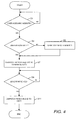
- Figure 3 is a schematic block diagram of an exemplary data structure for a user profile record stored within the user profile database 24 of the main server 9.
- the user profile record within the user profile database 24 comprises user identification data 40 corresponding to user identification data 15 stored within a user station 1 and classification data 42 comprising n categories corresponding to the n categories of classification data 32 within site profile records within the site profile database 23.
- the processing module 19 stored within the client server 5;7 determines if the user station 1;3 accessing display data 17 within the client server 5;7 has stored thereon user identification data 15. If no user identification data 15 is determined to be stored within the user station 3 the processing module 19 then causes the control module 21 of the main server 9 to create a new user profile record within the user profile database 24 comprising a newly generated user identification data 40 and n items of classification data 42 corresponding to the n items of classification data 32 of the record within the site profile database 23 having a site identification data 30 corresponding to the URL of the server 5;7. The processing module 19 then causes new user identification data corresponding to the newly generated user identification data 40 of the new record within the user profile database 24 to be stored on the user station 3 with access data within the client server 5;7.
- the profile update module 25 of the main server 9 then causes the user profile record corresponding to the user to be amended to indicate that the user station had been utilized to access a website identified with classification data 42 indicating interests in home, technology and gifts.
- classification data 42 associated with the individual would be amended to become as follows: HOME 50 TECHNOLOGY 30 SPORT 100 TRAVEL 0 GIFTS 20
- classification data 42 corresponding to the stored user identification data 15 within a user profile record in the user profile database 24 is amended by adding to the value of the n categories of classification data 42 values corresponding to the n values of classification data 32 associated with the site.
- the repeated amendment of classification data 42 associated with user identification data 40 corresponding to user identification data 15 stored within the user station thus causes the distribution of values within classification data 42 associated with the user identification data 40 to reflect the average content of websites accessed by that individual.
- classification data 32 within the site profile record corresponding to the website accessed by a user is also amended.
- this amendment is such to alter the classification data 32 to account for the access of that website by an individual having interests corresponding to the interests indicated by the classification data 42 indicated by the user profile record within the user profile database 24 corresponding to the user identification data 15 stored within the user station.
- the classification data 32 associated with the site would be amended by initially determining the percentages of the values associated with each category by the classification data 32 for the individual corresponds relative to the total for all n categories.
- New classification data 42 for the site would then be determined by calculating a weighted sum for each category and then rescaling the determined sum so that the total for all n categories remains constant, in this example equal to one hundred.
- the reassessment of categorization values might be as follows where the current values for a site are weighted ten times greater than the individual's values: CATEGORY USER VALUES USER % OLD SITE VALUES SCALED SUM NEW SITE VALUE HOME 157 15.7 50 515.7 47 TECHNOLOGY 240 24.0 30 324.0 29 SPORT 58 5.8 0 5.8 0 TRAVEL 402 40.2 0 40.2 4 GIFTS 143 14.3 20 214.3 20 TOTAL 1000 100 100 1100 100
- the categories associated with the site are adjusted to reflect the interest of the individuals accessing that site.
- the classification data 32 associated with that site therefore reflects the interests of individuals accessing the site rather than the arbitrary initial classification data associated with that site.
- Figure 4 is a flow diagram illustrating the processing of a processing module 19 stored within a client server 5;7.
- the processing module 19 determines (S1) whether a user station 1;3 is attempting to access the display data 17 stored within the client server 5. When the processing module 19 determines that a user station 1;3 is attempting to access the display data 17 stored within the client server 5;7 the processing module 19 then requests that the user station 1;3 accessing the client server 5;7 via the Internet 11 outputs a copy of user identification data 15 stored within the memory of the user station 5;3 if such data exists. If following the request the client server 5;7 determines (S3) that data received via the Internet 11 indicates that no user identification data 15 stored within the user station 1;3 the processing module 19 then generates (S5) a new unique user identification number for use as user identification data 15.
- the client server 5;7 determines (S3) that data received via the Internet 11 comprises a copy of the user identification data 15 stored within a user station 1 or after a new unique user identification number has been generated (S5) the processing module 19 of the client server 5;7 then (S7) transmits this data together with data indicative of the URL of the website stored as display data 17 within the client server 5 via the Internet 11 to the main server 9.
- the processing module 19 then (S9) waits until a display data for a site advert is received from the main server 9. When advert data has been received the processing module 19 then dispatches (s11) display data for generating a web page utilising display data 17 stored within the client server 5;7 and the received advert data to a user station 1;3 together with any generated user identification data (S5). This display data is then utilized by the browser program 12 within the user station 1;3 to generate a user display. After the display data has been dispatched to the user station 1;3 via the Internet 11 the processing of the processing module 19 ends.
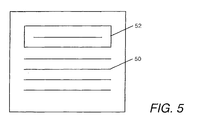
- FIG. 5 is an exemplary illustration of a user display shown on the screen of a user station 1;3 following the receipt of display data from a client server 5;7 via the Internet.
- the screen display comprises a main display 50 corresponding to the display data 17 stored on the client server 5;7 from which display data has been received and a banner advert 52 at the top of the display corresponding to selected advert data within a site profile record within the site profile database 23 of the main server 9.
- the site advert data 34 incorporated with display data 17 from a client server 5; 7 is selected so that the classification data 32 of the record within the site profile database 23 including the site advert data 34 is similar to the classification data 42 associated with user identification data 15 stored within a user station 1;3.
- the present invention therefore provides means by which advertising for a particular website may be targeted towards users who are most likely to be interested in visiting a particular website since the classification data 32 associated with the website substantially corresponds to the classification data 42 associated with the user identification data on the user station 1;3 indicating that user's interests.
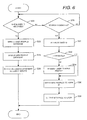
- FIG. 6 is a flow diagram of the processing of the control module 21 of the main server 9.
- the control module 21 determines whether data received from the Internet 11 corresponds to site identification data and user data dispatched from a client server 5;7. If data received does correspond to site identification data and user data the control module 21 then invokes (S22) the profile update module 25 to cause records within the user profile database 24 to be updated to account for a user station 1;3 having user identification data 15 corresponding to received user identification data stored thereon, being used to access website display data 17 on the client server 5, identified with site identification data associated with a record within the site profile database 23.
- the profile update module 25 initially determining whether the received user identification data received from the client server 5 corresponds to user identification data 40 within a record in the user profile database. If a user profile record within the user profile database 24 does correspond to the received user identification data, the profile update module 25 causes the classification data 42 in the user profile record with a user identification data 40 corresponding to the received user identification data to be amended by adding to each of the n categories of classification data 42 values corresponding to the n categories of classification data 32 of the site profile record within the site profile record database 23 having site identification data 30 corresponding to the received site identification data.
- the profile update module 25 determines that the received user identification data received from a client server 5;7 does not correspond to any of the user identification data 40 of records within the user profile database 24, this is indicative of the user identification data received from a client server 5;7 having been newly generated by the processing module 19 of that client server 5;7 and therefore indicates that the user station 1;3 accessing the client server 5;7 does not have any user identification data 15 stored within its memory.
- the profile update module 25 therefore causes a new user profile record to be generated within the user profile database 24 comprising user identification data 40 corresponding to the received user identification data and classification data 40 comprising a copy of the classification data 32 associated with the site profile record within the site profile database 23 associated with site identification data 30 corresponding to the received site identification data from the client server 5;7.
- the classification data 42 of that user profile record is amended to account for the user station having the received user identification data 15 stored thereon having visited the website indicated by the received site data, whereas if the user data received by the Internet does not correspond to any of the user profile records within the user profile database 24 a new record is generated and associated with classification data 42 indicative of the user station that has just accessed data on a client server 5;7 only having been used to access the website associated with classification data 32 corresponding to the classification data 32 of the record of the website that has been accessed.
- the profile update module 25 modifies the site profile record within the site profile database 23 including site identification data 30 corresponding to the received site identification data.
- the amendment of classification data 32 associated with received site identification data is achieved by the profile update module 25 initially determining a sum of the n values of classification data 42 associated with the user profile record within the user profile database 24 including user identification data 40 corresponding to the received user identification data.
- the profile update module 25 calculates for each of the n categories a new value of site classification data 32 utilising the following formula: where the site total corresponds to the sum of all n items of classification data 32 within the record in the site profile database 23 to be updated and the scaling factor is a selected variable for weighting the amount by which category values of classification data 32 for a site are to be varied by an individual user visiting that site.
- the scaling factor is set to be equal to the site total for a site profile record the new site value is for a category is the average of the old category value and the category value for the same category within the category data 42 associated with the user profile record within the user profile database 24 associated with the user identification data 40 corresponding to the received user identification data.
- the total values for category data for the n categories for classification data for a site profile record within the site profile record database 24 is selected to be equal to 100 so that the n categories are indicative of percentages of content within a website dedicated to a particular category.
- the scaling factor is selected to be equal to ten so that an individual accessing a website only has a limited effect on the change of values for classification data 32 for that website.
- the control module 21 causes the search module 29 to utilize the classification data 42 associated with the received user identification data by a record within the user profile database 24 to select (S26) a site advert 34 corresponding to a website associated with classification data 32 in a record within the site profile database 23 that is similar to the classification data 42 of the user profile record.
- search module 29 initially generating search data comprising n items of classification data corresponding to the n items of classification data within the user profile record corresponding to received user identification data where each of the items of classification data are scaled by a value equal to 100 divided by the sum of all of the category values for the classification data 42 for that record.
- search module 29 generates search data where the sum of the n categories of search data is equal to 100 which corresponds to the sum of category values for classification data 32 of site records within the site profile database 24.
- the search module 29 then utilizes the calculated search data to determine which of the records within the site profile database 23 have classification data 32 similar to the search data. In this embodiment this is achieved by the search module 29 determining for each of the records within the site profile database 23 the sum of the squares of differences between each item of category value of classification data 32 and the corresponding category value of search data generated by the search module 29. This value is then stored with respect to each of the records within the site profile database 23.
- the search module 29 selects and outputs as display data, advert data 34 corresponding to the record within the user profile database 24 associated with the lowest calculated value where the site identification data 30 for that record does not correspond to the site identification data received by the main server.
- the search module 29 selects output for display corresponding to a site advert 34 for the website that is different to the website that a user is currently accessing but which is associated with classification data 32 which matches the classification data 42 associated with the received user identification data more closely than other records within the site profile database 23.
- the processing of the control module 21 and search module 29 then comes to an end.
- control module 21 determines whether a request has been received to search the site profile database 23 direct from a user station 1;3 . If no search has been requested the control module 21 repeats its determination as to whether site and user identification data has been received (S20).
- control module 21 determines (S28) that a request for searching the site profile database 23 has been received from a user station 1;3 the control module 21 then (S30) sends a message via the Internet 11 to the user station 1;3 from which a request has been received to request that the user station 1;3 outputs via the Internet to the main server 9 a copy of user identification data 15 stored on the user station 1;3.
- the control module 21 then waits (S32) until data is received from the user station 1;3 via the Internet 11 and determines whether the data received comprises user identification data corresponding to user identification data 40 of a record within the user profile database 24. If data received from a user station does not correspond to user identification data 40 of a record within the user profile database 24 the control module 21 then outputs to the user station 1;3 from which a request has been received a user interface for inputting a user profile data for use by the search module 29 to search the site profile database 23.
- Figure 7 is an exemplary illustration of a user interface for inputting a user profile data generated from data dispatched from the main server 9 to a user station 1.
- This exemplary user input interface comprises n category titles 55 each associated with a value window 56.
- Beneath the list of category titles 55 and the windows 56 is a send button 57.
- the browser program 12 stored within the user station 1;3 causes the data to be converted into a display shown on the screen of the user station 1;3.
- the user can then select any of the value windows 56 using a keyboard or mouse or other user input device and input a value for use as part of a user profile when values have been entered in all of the value windows 56 a user can then select the send button 57 which causes classification data comprising n category values corresponding to values entered in the n value windows 56 for each of the n categories labelled by category labels 55 in the user interface to be despatched to the main server 9 via the Internet 11.
- control module 21 invokes the search module to utilize either the received classification data or classification data 42 associated with the received user identification number to identify classification data 32 within records within the site profile database 23 that substantially match the user classification data input or selected from the user profile database.
- this is achieved in a similar way to which the search module 29 selects site advert data 34 for dispatch (S26) in that initially a sum of all of the category values of the classification data is determined and each of the individual category values is then scaled by a predetermined value divided by this sum.
- this predetermined value is set equal to 100.
- the search module 29 then calculates for each of the records within the site profile database 23 the difference between the scaled user classification data category values and the corresponding category values for classification data 32 within each of the records within the site profile database 23. A sum of the squares of these differences is then determined as a score indicative of how closely the classification data matches the classification data 32 of the record.
- the search module 29 selects site descriptions 36 associated with records having the lowest calculated matching values and outputs (S38) to a user via the Internet 11 data comprising the site identification data 30 and site descriptions 36, for the selected records together with the calculated values.
- the processing of the search module 29 and the control module 21 then comes to an end.
- Figure 8 is an exemplary interface of a screen display generated by a browser program 12 following receipt of display data comprising site description data 36 and calculated value output by the main server 9 following the processing of the search module 29.
- the screen display comprises a list comprising site description 60 corresponding to site descriptions 36 of records within the site profile database 23 having the lowest calculated matching scores.
- Each of the site descriptions 60 within the display has displayed next to it a matching score 62 indicating how closely the classification data 32 associated with the site description 36 matches the user classification data used to select the site description data 36.
- the browser program 12 then enables a user to select using the input device such as a keyboard or mouse to select any of the site descriptions 36 which causes the user station 1 to connect via the Internet 11 to the client server 5;7 corresponding to the selected site description 60 selected.
- a user is provided with a list of sites having classification data which substantially corresponds to the classification data associated with that user or a user profile input by a user and the user is then directed towards those sites which substantially correspond to that at user's interests.
- Figure 9 is a schematic block diagram of a computer network embodying a second embodiment of the present invention.
- the computer network in accordance with this embodiment is substantially the same as the computer network described in relation to the previous embodiment and the same reference numbers have been used in Figure 9 to denote the elements which correspond to the same elements described in relation to Figure 1. Description of these elements will not be repeated here.
- the plurality of client servers 5;7 in this embodiment do not have processing modules 19 stored thereon.
- the main server 9 also does not have a user profile database 24 for storing data associating user identification data 40 with classification data 42 indicative of a user's interest.
- the control module 21 is modified as will be described in detail later.
- the conventional browser programs 12 of the plurality of user stations 1;3 are each arranged to store lists of URLs of servers 5;7 accessed by the user station 1;3.
- the user stations 1;3 are also arranged to have stored thereon profile data 70, comprising n items of classification data 32 corresponding to the n items of classification data stored as part of records within a user profile database 24 in the previous embodiment.
- control module 21 is arranged to determine when a user station 1;3 initially accesses the main server 9, whether a user station has profile data 70 stored thereon.
- control module 21 If the user station 3 does not have profile data 70 stored thereon the control module 21 generates profile data utilising the list of sites accessed stored by the browser 12 within the user station 3 and the classification data 32 of records in the site profile database 23 for sites corresponding to sites within that list.
- the profile update module 25 initially generating profile data 70 corresponding to the classification data 32 associated with site identification data 30 corresponding to the URL of the first site within the list of websites accessed by the user station 3 having a site profile record 23 associated with the URL for the site.
- the profile update module 25 modifies this profile data 70 and the classification data 32 associated with the next URL in the list of sites visited by the user station 3 associated with a record within the site profile database 23 in the same manner as has previously been described in relation to the first embodiment. This is then repeated for each of the websites within the list of websites retrieved from the user station 1;3 corresponding to site records within the site profile database 23.
- the profile data 70 generated by the profile update module 25 corresponds to classification data within the user profile database 27 in the first embodiment and the classification data 32 of the site profile database records corresponds to site classification data 32 of site profile database records in the first embodiment.
- user profile data 70 is output for storage on the user station 3 together with a list of sites associated with similar classification data 32 by records within the site profile database 23 selected in the same way in which such records are selected on the first embodiment of this invention.
- the control module 21 determines this and then utilises this profile data 70 as initial profile data together with the list of sites generated by the browser program 12 within the user station 1 to amend the site profile database records within the site profile database 23 and to generate new profile data 70 for subsequent storage on the user station 1 in a similar manner to which newly generated user profile data 70 is modified and site profile database records are modified when no profile data is determined to be stored on a user station 1;3 as have been described in detail above.
- the classification data for a site could be determined initially by being set equal to classification data associated with the first user accessing a site. The effect of other users accessing the site could then be made to decrease by the classification data for a site being made equal to the sum of the user classification data for each user accessing the site, in a similar manner to how the user classification data has been described as being generated in the first embodiment.
- the embodiments of the invention described with reference to the drawings comprise computer apparatus and processes performed in computer apparatus, the invention also extends to computer programs, particularly computer programs on or in a carrier, adapted for putting the invention into practice.
- the program may be in the form of source or object code or in any other form suitable for use in the implementation of the processes according to the invention.
- the carrier be any entity or device capable of carrying the program.
- the carrier may comprise a storage medium, such as a ROM, for example a CD ROM or a semiconductor ROM, or a magnetic recording medium, for example a floppy disc or hard disk.
- a storage medium such as a ROM, for example a CD ROM or a semiconductor ROM, or a magnetic recording medium, for example a floppy disc or hard disk.
- the carrier may be a transmissible carrier such as an electrical or optical signal which may be conveyed via electrical or optical cable or by radio or other means.
- the carrier When a program is embodied in a signal which may be conveyed directly by a cable or other device or means, the carrier may be constituted by such cable or other device or means.
- the carrier may be an integrated circuit in which the program is embedded, the integrated circuit being adapted for performing, or for use in the performance of, the relevant processes.
Landscapes
- Engineering & Computer Science (AREA)
- Databases & Information Systems (AREA)
- Theoretical Computer Science (AREA)
- Data Mining & Analysis (AREA)
- Physics & Mathematics (AREA)
- General Engineering & Computer Science (AREA)
- General Physics & Mathematics (AREA)
- Information Retrieval, Db Structures And Fs Structures Therefor (AREA)
Applications Claiming Priority (4)
| Application Number | Priority Date | Filing Date | Title |
|---|---|---|---|
| US17590000P | 2000-01-13 | 2000-01-13 | |
| US175900P | 2000-01-13 | ||
| GB0006290A GB2358262B (en) | 2000-01-13 | 2000-03-15 | Method and apparatus for generating classification data |
| GB0006290 | 2000-03-15 |
Publications (2)
| Publication Number | Publication Date |
|---|---|
| EP1120722A2 true EP1120722A2 (de) | 2001-08-01 |
| EP1120722A3 EP1120722A3 (de) | 2004-01-14 |
Family
ID=26243883
Family Applications (1)
| Application Number | Title | Priority Date | Filing Date |
|---|---|---|---|
| EP01300250A Withdrawn EP1120722A3 (de) | 2000-01-13 | 2001-01-12 | Verfahren und Gerät um Kategoriedaten zu generieren |
Country Status (1)
| Country | Link |
|---|---|
| EP (1) | EP1120722A3 (de) |
Cited By (6)
| Publication number | Priority date | Publication date | Assignee | Title |
|---|---|---|---|---|
| FR2840088A1 (fr) * | 2002-05-24 | 2003-11-28 | Overture Services Inc | Moteur de recherche et base de donnees, et procedes pour leur mise en oeuvre |
| US20090049469A1 (en) * | 2007-08-17 | 2009-02-19 | Att Knowledge Ventures L.P. | Targeted online, telephone and television advertisements based on cross-service subscriber profiling |
| US8260786B2 (en) | 2002-05-24 | 2012-09-04 | Yahoo! Inc. | Method and apparatus for categorizing and presenting documents of a distributed database |
| US8510262B2 (en) | 2008-05-21 | 2013-08-13 | Microsoft Corporation | Promoting websites based on location |
| US8918903B1 (en) * | 2011-11-08 | 2014-12-23 | Symantec Corporation | Systems and methods for performing authentication validation |
| WO2022111071A1 (zh) * | 2020-11-25 | 2022-06-02 | Oppo广东移动通信有限公司 | 用户画像生成方法、装置、服务器及存储介质 |
Family Cites Families (3)
| Publication number | Priority date | Publication date | Assignee | Title |
|---|---|---|---|---|
| US5933827A (en) * | 1996-09-25 | 1999-08-03 | International Business Machines Corporation | System for identifying new web pages of interest to a user |
| US5895470A (en) * | 1997-04-09 | 1999-04-20 | Xerox Corporation | System for categorizing documents in a linked collection of documents |
| US5924090A (en) * | 1997-05-01 | 1999-07-13 | Northern Light Technology Llc | Method and apparatus for searching a database of records |
-
2001
- 2001-01-12 EP EP01300250A patent/EP1120722A3/de not_active Withdrawn
Cited By (11)
| Publication number | Priority date | Publication date | Assignee | Title |
|---|---|---|---|---|
| FR2840088A1 (fr) * | 2002-05-24 | 2003-11-28 | Overture Services Inc | Moteur de recherche et base de donnees, et procedes pour leur mise en oeuvre |
| EP1367509A3 (de) * | 2002-05-24 | 2005-08-31 | Overture Services, Inc. | Verfahren und Anordnung zur Kategorisierung und Darstellung von Dokumenten aus einer verteilten Datenbank |
| US7231395B2 (en) | 2002-05-24 | 2007-06-12 | Overture Services, Inc. | Method and apparatus for categorizing and presenting documents of a distributed database |
| US7792818B2 (en) | 2002-05-24 | 2010-09-07 | Overture Services, Inc. | Method and apparatus for categorizing and presenting documents of a distributed database |
| US8260786B2 (en) | 2002-05-24 | 2012-09-04 | Yahoo! Inc. | Method and apparatus for categorizing and presenting documents of a distributed database |
| US20090049469A1 (en) * | 2007-08-17 | 2009-02-19 | Att Knowledge Ventures L.P. | Targeted online, telephone and television advertisements based on cross-service subscriber profiling |
| US8505046B2 (en) * | 2007-08-17 | 2013-08-06 | At&T Intellectual Property I, L.P. | Targeted online, telephone and television advertisements based on cross-service subscriber profiling |
| US9860579B2 (en) | 2007-08-17 | 2018-01-02 | At&T Intellectual Property I, L.P. | Targeted online, telephone and television advertisements based on cross-service subscriber profile |
| US8510262B2 (en) | 2008-05-21 | 2013-08-13 | Microsoft Corporation | Promoting websites based on location |
| US8918903B1 (en) * | 2011-11-08 | 2014-12-23 | Symantec Corporation | Systems and methods for performing authentication validation |
| WO2022111071A1 (zh) * | 2020-11-25 | 2022-06-02 | Oppo广东移动通信有限公司 | 用户画像生成方法、装置、服务器及存储介质 |
Also Published As
| Publication number | Publication date |
|---|---|
| EP1120722A3 (de) | 2004-01-14 |
Similar Documents
| Publication | Publication Date | Title |
|---|---|---|
| US8413042B2 (en) | Referrer-based website personalization | |
| US7594189B1 (en) | Systems and methods for statistically selecting content items to be used in a dynamically-generated display | |
| US8768954B2 (en) | Relevancy-based domain classification | |
| US8510294B2 (en) | Methods and systems for improving a search ranking using population information | |
| US7941383B2 (en) | Maintaining state transition data for a plurality of users, modeling, detecting, and predicting user states and behavior | |
| US8069099B2 (en) | Systems and methods for presenting advertising content based on publisher-selected labels | |
| US10042927B2 (en) | Interest keyword identification | |
| US10114803B2 (en) | System and method for providing content to users based on interactions by similar other users | |
| US20180121556A1 (en) | Personalized network searching | |
| US20050038894A1 (en) | Internet domain keyword optimization | |
| JP4215518B2 (ja) | ウェブ・ページのアノテーション・システム | |
| JP2008502052A (ja) | ユーザ行動ターゲティング用コンテンツ管理システム | |
| US20090024467A1 (en) | Serving Advertisements with a Webpage Based on a Referrer Address of the Webpage | |
| KR20050112088A (ko) | 관련 정보 제공 컨텐츠를 식별하는 방법 및/또는컨텐츠-관련 광고들과 연관된 관련 정보 제공 방법 | |
| US7813959B2 (en) | Altering keyword-based requests for content | |
| US9594809B2 (en) | System and method for compiling search results using information regarding length of time users spend interacting with individual search results | |
| US20090043874A1 (en) | Method and System for Replacing Hyperlinks in a Webpage | |
| US20090083223A1 (en) | Method and apparatus for associating menu information | |
| JP2002539559A (ja) | インターネット検索とホットリンクを結びつける、相乗作用を生むインターネットブックマーク | |
| US20080034083A1 (en) | Automatic identification of event classification errors in a network | |
| US9135345B1 (en) | Generating and updating online content using standardized tagged data | |
| EP1120722A2 (de) | Verfahren und Gerät um Kategoriedaten zu generieren | |
| US20090248655A1 (en) | Method and Apparatus for Providing Sponsored Search Ads for an Esoteric Web Search Query | |
| GB2358262A (en) | Generating classification data | |
| US9141589B2 (en) | Method and an apparatus to provide a personalized page |
Legal Events
| Date | Code | Title | Description |
|---|---|---|---|
| PUAI | Public reference made under article 153(3) epc to a published international application that has entered the european phase |
Free format text: ORIGINAL CODE: 0009012 |
|
| AK | Designated contracting states |
Kind code of ref document: A2 Designated state(s): AT BE CH CY DE DK ES FI FR GB GR IE IT LI LU MC NL PT SE TR |
|
| AX | Request for extension of the european patent |
Free format text: AL;LT;LV;MK;RO;SI |
|
| PUAL | Search report despatched |
Free format text: ORIGINAL CODE: 0009013 |
|
| AK | Designated contracting states |
Kind code of ref document: A3 Designated state(s): AT BE CH CY DE DK ES FI FR GB GR IE IT LI LU MC NL PT SE TR |
|
| AX | Request for extension of the european patent |
Extension state: AL LT LV MK RO SI |
|
| RAP1 | Party data changed (applicant data changed or rights of an application transferred) |
Owner name: DEFENSIVE ASSET MANAGEMENT FUND LIMITED |
|
| 17P | Request for examination filed |
Effective date: 20040713 |
|
| AKX | Designation fees paid |
Designated state(s): AT BE CH CY DE DK ES FI FR GB GR IE IT LI LU MC NL PT SE TR |
|
| STAA | Information on the status of an ep patent application or granted ep patent |
Free format text: STATUS: THE APPLICATION IS DEEMED TO BE WITHDRAWN |
|
| 18D | Application deemed to be withdrawn |
Effective date: 20060301 |
|
| REG | Reference to a national code |
Ref country code: HK Ref legal event code: WD Ref document number: 1036336 Country of ref document: HK |