EP1118933A2 - Method, system, program, and data structures for transforming an instruction in a first bit architecture to an instruction in a second bit architecture - Google Patents
Method, system, program, and data structures for transforming an instruction in a first bit architecture to an instruction in a second bit architecture Download PDFInfo
- Publication number
- EP1118933A2 EP1118933A2 EP00311086A EP00311086A EP1118933A2 EP 1118933 A2 EP1118933 A2 EP 1118933A2 EP 00311086 A EP00311086 A EP 00311086A EP 00311086 A EP00311086 A EP 00311086A EP 1118933 A2 EP1118933 A2 EP 1118933A2
- Authority
- EP
- European Patent Office
- Prior art keywords
- bit architecture
- instruction
- operand
- bit
- transformation
- Prior art date
- Legal status (The legal status is an assumption and is not a legal conclusion. Google has not performed a legal analysis and makes no representation as to the accuracy of the status listed.)
- Withdrawn
Links
Images


Classifications
-
- G—PHYSICS
- G06—COMPUTING OR CALCULATING; COUNTING
- G06F—ELECTRIC DIGITAL DATA PROCESSING
- G06F8/00—Arrangements for software engineering
- G06F8/40—Transformation of program code
- G06F8/52—Binary to binary
Definitions
- Preferred embodiments provide a method, system, program, and data structure for transforming an instruction in a first bit architecture to an instruction in a second bit architecture.
- a 64 bit computing architecture substantially increases the address space, register size, and data structure size that may be used. Further, 64-bit computing provides much faster processing and data transfer than 32 bit. For example, one 64-bit instruction can handle operations that would otherwise take several 32 bit instructions, plus "clean-up" code. A 64-bit system can address more memory directly without using complex indexing or register-addressing schemes.
- a method for transforming an instruction in a first bit architecture to an instruction in a second bit architecture comprising: transforming code to an instruction in the first bit architecture having an operation code and at least one operand; accessing a transform table including information for transforming the instruction in the first bit architecture to the second bit architecture; and transforming the instruction in the first bit architecture to a corresponding instruction in the second bit architecture if the transform table includes information indicating to modify the instruction in the first bit architecture, wherein the transformation is based on transformation operations that modify the instruction in the first bit architecture to generate the instruction in the second bit architecture.
- a system for transforming an instruction in a first bit architecture to an instruction in a second bit architecture comprising: means for transforming code to an instruction in the first bit architecture having an operation code and at least one operand; means for accessing a transform table including information for transforming the instruction in the first bit architecture to the second bit architecture; and means for transforming the instruction in the first bit architecture to a corresponding instruction in the second bit architecture if the transform table includes information indicating to modify the instruction in the first bit architecture, wherein the transformation is based on transformation operations that modify the instruction in the first bit architecture to generate the instruction in the second bit architecture.
- the first bit architecture may be a 32 bit architecture and the second bit architecture may be a 64 bit architecture.
- the transform table includes one entry for each operation code.
- the entry for each operation code is capable of including a pointer to an operand table if a transformation is to be performed. No transformation is performed if the entry for the operation code does not include a pointer to one operand table.
- the operand table includes an entry for each possible combination of operand bit architecture types. Each entry in the operand table indicates at least one transformation operation. In such case, transforming the instruction involves determining one entry in the operand table having operand bit architecture types that match the bit architecture types of each operand in the instruction in the first bit architecture. At least one transformation operation is then executed to transform the instruction in the first bit architecture to the second bit architecture.
- Preferred embodiments provide a technique for transforming instructions from one architecture to another, e.g., 32 bit to 64 bit.
- the compiler that transforms the code, e.g., intermediate code, to the 32 bit instructions does not have to be modified. Instead, the resulting 32 bit instruction is processed using various tables that provide transformation operations for each operation code type.
- Preferred embodiments are especially useful for machines that want to support both the 32 bit and 64 bit architectures to allow source programs to be written using 32 bit instructions and data and still operate on the machine.
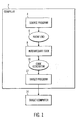
- FIG. 1 illustrates the general components of a compiler 2.
- the compiler 2 receives as input a source program 4, written in a high level source language.
- a front end process 6 converts the source program 4 to intermediate code 8, by scanning, parsing, and translating the source program 4 into a detailed intermediate representation 8 such that the values of names appearing in the intermediate code 8 can be represented by quantities that the target machine can directly manipulate, e.g., bits, integers, reals, pointers, etc.
- a code generator 10 receives the intermediate code 8 as input and produces as output a target program 12, which may comprise absolute machine language, relocatable machine language or assembly language.
- the target program 12 is intended to execute on a target computer 14.
- the target computer 14 is capable of processing both 32 bit and 64 bit instructions.
- the target computer may implement the Intel IA-64 Architecture, which supports both 32 and 64 bit instruction sets.
- the Intel IA-64 processors can run 32 bit applications on a 64 bit operating system that supports execution of 32 bit applications.
- the Intel IA-64 architecture also is capable of executing mixed 32 and 64 bit code. Further details of the Intel IA-64 architecture are described in the Intel publication "IA-64 Application Developer's Architecture Guide,” Order No. 245188-011 (Copyright Intel Corporation, May, 1999), which publication is incorporated herein by reference in its entirety.
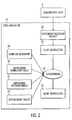
- FIG. 2 illustrates the components of the code generator 10 to transform 32 bit instructions to 64 bit instructions in accordance with the preferred embodiments.
- a statement processor module 20 receives as input the intermediate code 8 and generates a 32 bit instruction 22.
- the 32 bit instruction is inputted into transformer 24, which then converts the 32 bit instruction into a 64 bit instruction 26 by using a compiler dictionary 28, instruction transform table 30, transform operand tables 32, and replacement tables 34. These tables 28, 30, 32, and 34 provide the information the transformer 24 needs in order to perform the 32 to 64 bit transformation.
- the compiler dictionary 28 is assembled from the 32 bit instructions and includes information on the instructions, including the properties of the operands and data fields for the instruction.
- a typical instruction is of the form: op operand 1, operand 2 where "op" is the operation code indicating the type of operation, and operand 1 and operand 2 are the data subject to the operation (op).
- operand 1 may be the source data subject to the operation and operand 2 may be the destination including the result of the operation.
- Both operands 1 and 2 are addressable locations, such as registers in memory.
- the compiler dictionary 28 would include information on the properties of all data defined and used in the source program 4, including whether the data (operand) in a particular register is 32 or 64 bit, the size of the data field, etc.
- the instruction transform table 30 includes an entry for each operation type, i.e., each op code. An index may be provided to map a particular operation code to an entry in the instruction transform table 30.
- the instruction transform table 30 includes an array of pointers containing either zero or an address. If the instruction is not to be transformed, then the corresponding entry in the instruction transform table 30 will be set to zero. Otherwise, if the instruction is to be transformed, then the entry in the instruction transform table 30 will include an address to one transform operand table 32. In preferred embodiments, there is one transform operand table 32 for each entry in the instruction transform table 30 having a non-zero value, i.e., for each operation subject to transformation.
- the transform operand table 32 includes an entry for the each different possible combination of operand values for the instruction type.
- the transform operand table 32 for a STORE instruction which transfers data from a register to memory, may allow each operand, operands 1 and 2, to be either 32 or 64 bit.
- each replacement table 34 which provides information on how to implement the transformation for that particular operand architecture combination. For instance, there may be a different transformation performed for each of the four possible combinations of operand architecture types for the STORE instruction shown above.
- Each replacement table 34 would include fields instructing the transformer 24 on how to implement the transformation, i.e., transformation operations.
- the replacement table 34 would include a field indicating the new transform op code or instruction to use in lieu of the instruction op code that is subject to the transformation and a flag indicating whether to update a register status table to indicate whether the register has 32 or 64 bit data, or to leave the register status unchanged.
- This register status table may be part of the compiler control structures or maintained in the compiler dictionary 28. Other flags may also be provided to indicate further transform steps to perform to complete the 32 to 64 bit transformation of the input 32 bit instruction 22.
- Part of the transformation may include changing the name of the op code.
- 32 bit instructions may have a mnemonic format such as ST for store and L for load, and the 64 bit instructions may vary slightly, such as STG for store and LG for load.
- the "G" mnemonic indicates that the instruction has at least one 64 bit operand.
- other mnemonics may be used to distinguish the 32 and 64 bit instructions.
- FIG. 3 illustrates logic implemented in the transformer 24 component of the code generator 10 to use the tables 28, 30, 32, and 34 to transform a 32 bit instruction to a 64 bit instruction.
- Control begins at block 100 with the transformer 24 receiving a 32 bit instruction generated from the statement processor module 20.
- the transformer 24 looks- up (at block 102) the entry in the instruction transform table 30 for the op code of the received instruction. As discussed this look-up operation may involve using an index to locate the entry corresponding to the particular op code. If the value at the looked-up entry is zero (at block 104), then the transform process ends (at block 106) as a zero indicates that no transform process is to be performed for the particular op code. Otherwise, the value in the entry is a pointer to a transform operand table 32.
- the transformer 24 accesses (at block 108) the transform operand table 32 addressed by the pointer in the entry.
- the transformer 24 would also determine (at block 110) properties for the operands of the received instruction from the compiler dictionary 28, such as whether each operand is 32 or 64 bit data.
- the transformer 24 would then loop (at block 112) through the entries in the transform operand table 32 to locate the entry having operand properties matching the properties of the operands of the received instruction. For instance, if the operands of the received instruction are 32 bit and 64 bit respectively, then the entry in the transform operand table 32 designated for those operand bit architecture values would be selected, which in the example of the entries for the STORE instruction above, would comprise the third entry listed above.
- the transformer 24 would then access (at block 114) the replacement table 34 listed in the located entry in the transform operand table 32.
- the transformer 24 would then replace (at block 116) the op code of the received instruction with one or more replacement op codes listed in the replacement table 34, thereby transforming the 32 bit instruction into the 64 bit instruction 26.
- the transformer 24 updates the register status table to indicate a new 32 or 64 bit status as a result of the transformation as indicated in the replacement table 34. For instance, any operand in the received 32 bit instruction that is transformed would have a 64 bit value following the transformation. In such case, the register status for that previously 32 bit operand would be updated to reflect that it is now a 64 bit operand.
- FIG. 4 has a table 150 that illustrates how the replacement would occur for the STORE instruction.
- Each entry in the table 150 would form an entry in the transform operand table 32 for the STORE instruction.
- the table 150 lists the replacement operations, including the new instruction(s) and whether the register status table is updated.
- Table 150 thus combines the replacement table and transform operand table entries for each combination of possible operand values.
- the third and fourth entries in Table 150 show that the register 1 status flag is updated as operand 1 was a 32 bit value prior to the transformation.
- the "G" mnemonic in the new instructions indicate that the instructions are 64 bit instructions. Further, in Table 150, a 32 bit STORE instruction having a 32 bit operand 1 is transformed into two 64 bit instructions.
- the replacement table 34 will include a transform operation to instruct the transformer 24 to transform the other operand to 64 bit.
- the transformer 24 will not be instructed to transform such register to 64 bit. Further instructions to the transformer 24 on how to transform the 32 bit instruction to 64 bit would be encoded into the replacement tables 34.
- Preferred embodiments provide a method, system, and program for transforming 32 bit instructions to 64 bit.
- One advantage of the preferred embodiment technique is the actual statement processor module 20 that generates the 32 bit instructions from the intermediate code does not have to be altered to accomplish the transformation. Instead, separate tables 28, 30, 32, and 34 and a transformer 24 component are added to perform the additional step of transforming the 32 bit instruction into the 64 bit instruction.
- the compiler code for the statement processor module 20 does not have to be modified and the initial 32 bit instruction is generated using the current compiler.
- the compiler developer need only add the tables and transformer 24 logic to perform the final transformation without modifying or disturbing the code generator portion that transforms intermediate code to 32 bit instructions.
- Preferred embodiments thus provide a technique for converting 32 bit instructions to 64 bit for target computers that only operate with 64 bit instructions or for computers, such as systems using the Intel IA-64 architecture, that can process both 32 and 64 bit instructions.
- the preferred embodiments may be implemented as a method, apparatus or article of manufacture using standard programming and/or engineering techniques to produce software, firmware, hardware, or any combination thereof.
- article of manufacture (or alternatively, "computer program product”) as used herein is intended to encompass one or more computer programs and/or data files accessible from one or more computer-readable devices, carriers, or media, such as magnetic storage media, "floppy disk,” CD-ROM, optical disks, holographic units, volatile or non-volatile electronic memory, a file server providing access to the programs via a network transmission line, wireless transmission media, signals propagating through space, etc.
- computer-readable devices, carriers, or media such as magnetic storage media, "floppy disk,” CD-ROM, optical disks, holographic units, volatile or non-volatile electronic memory, a file server providing access to the programs via a network transmission line, wireless transmission media, signals propagating through space, etc.
- the table and transformer methodology of the preferred embodiments may apply to any instruction format and bit architectures other than 32 and 64 bit, such as 8 to 16, 16 to 32, or for transformations for architectures not yet developed. This is possible because the preferred embodiment technique compiles the initial instruction into a first bit format architecture using current compilation techniques and then uses the tables and transformer to transform the instruction in the first bit architecture to a second bit format architecture. Moreover, the transformation may be performed from a larger bit architecture, e.g., 64 bit, to a smaller bit architecture, e.g., 32 bit.
- Preferred embodiments described the compiler dictionary, instruction transform table, transform operand table, and replacement tables as separate tables.
- the data within the described separate tables may be combined into one or more tables.
- the present invention provides a method, system, program, and data structures for transforming an instruction from a first bit architecture to an instruction in a second bit architecture.
- Code is transformed from an instruction in the first bit architecture having an operation code and at least one operand.
- a transform table is accessed including information for transforming the instruction in the first bit architecture to the second bit architecture.
- the instruction in the first bit architecture is transformed to a corresponding instruction in the second bit architecture if the transform table includes information indicating to modify the instruction in the first bit architecture.
- the transformation is based on transformation operations that modify the instruction in the first bit architecture to generate the instruction in the second bit architecture.
Landscapes
- Engineering & Computer Science (AREA)
- General Engineering & Computer Science (AREA)
- Theoretical Computer Science (AREA)
- Software Systems (AREA)
- Physics & Mathematics (AREA)
- General Physics & Mathematics (AREA)
- Executing Machine-Instructions (AREA)
- Devices For Executing Special Programs (AREA)
Abstract
Description
op
where "op" is the operation code indicating the type of operation, and
| 1. | |
| operand | |
| 2 = 32 | |
| 2. | |
| operand | |
| 2 = 64 bit value | |
| 3. | |
| operand | |
| 2 = 64 | |
| 4. | |
| operand | |
| 2 = 32 bit value |
Claims (22)
- A method for transforming an instruction in a first bit architecture to an instruction in a second bit architecture, comprising:transforming code to an instruction in the first bit architecture having an operation code and at least one operand;accessing a transform table including information for transforming the instruction in the first bit architecture to the second bit architecture; andtransforming the instruction in the first bit architecture to a corresponding instruction in the second bit architecture if the transform table includes information indicating to modify the instruction in the first bit architecture, wherein the transformation is based on transformation operations that modify the instruction in the first bit architecture to generate the instruction in the second bit architecture.
- The method of claim 1, wherein the transform table includes one entry for each operation code, wherein the entry for each operation code is capable of including a pointer to an operand table if a transformation is to be performed, wherein no transformation is performed if the entry for the operation code does not include a pointer to one operand table.
- The method of claim 2, wherein the operand table includes an entry for each possible combination of operand bit architecture types, wherein each entry in the operand table indicates at least one transformation operation, wherein transforming the instruction comprises:determining one entry in the operand table having operand bit architecture types that match the bit architecture types of each operand in the instruction in the first bit architecture; andexecuting the at least one transformation operation to transform the instruction in the first bit architecture to the second bit architecture.
- The method of claim 3, wherein determining the bit architecture types of each operand in the instruction in the first bit architecture comprises processing a dictionary including information on the properties of each instruction in the first bit architecture.
- The method of claim 3, wherein executing the at least one transformation operation includes changing a name of the operation code to indicate that the operation code is in the second bit architecture.
- The method of claim 3, wherein executing the at least one transformation operation includes updating a register status table including information on each register including an operand to indicate that the register including one operand in the instruction subject to the transformation is in the second bit architecture.
- The method of claim 6, wherein the register status table is updated to indicate that the register including one operand in the instruction subject to the transformation is in the second bit architecture when the operand in the instruction subject to the transformation is in the first bit architecture and another operand in the instruction subject to the transformation is in the second bit architecture.
- The method of claim 3, wherein each entry in the operand table includes a pointer to a replacement table including the at least one transformation operation to transform the instruction in the first bit architecture to the second bit architecture.
- The method of claim 1, wherein the instruction in the first bit architecture is capable of having operands in both the first bit architecture and the second bit architecture.
- The method of claim 1, wherein the first bit architecture is a 32 bit architecture and the second bit architecture is a 64 bit architecture.
- A system for transforming an instruction in a first bit architecture to an instruction in a second bit architecture, comprising:means for transforming code to an instruction in the first bit architecture having an operation code and at least one operand;means for accessing a transform table including information for transforming the instruction in the first bit architecture to the second bit architecture; andmeans for transforming the instruction in the first bit architecture to a corresponding instruction in the second bit architecture if the transform table includes information indicating to modify the instruction in the first bit architecture, wherein the transformation is based on transformation operations that modify the instruction in the first bit architecture to generate the instruction in the second bit architecture.
- The system of claim 11, wherein the transform table includes one entry for each operation code, wherein the entry for each operation code is capable of including a pointer to an operand table if a transformation is to be performed, wherein no transformation is performed if the entry for the operation code does not include a pointer to one operand table.
- The system of claim 12, wherein the operand table includes an entry for each possible combination of operand bit architecture types, wherein each entry in the operand table indicates at least one transformation operation, wherein the means for transforming the instruction comprises:means for determining one entry in the operand table having operand bit architecture types that match the bit architecture types of each operand in the instruction in the first bit architecture; andmeans for executing the at least one transformation operation to transform the instruction in the first bit architecture to the second bit architecture.
- The system of claim 13, wherein the means for determining the bit architecture types of each operand in the instruction in the first bit architecture comprises processing a dictionary including information on the properties of each instruction in the first bit architecture.
- The system of claim 13, wherein the means for executing the at least one transformation operation includes changing a name of the operation code to indicate that the operation code is in the second bit architecture.
- The system of claim 13, wherein the means for executing the at least one transformation operation includes updating a register status table including information on each register including an operand to indicate that the register including one operand in the instruction subject to the transformation is in the second bit architecture.
- The system of claim 16, wherein the register status table is updated to indicate that the register including one operand in the instruction subject to the transformation is in the second bit architecture when the operand in the instruction subject to the transformation is in the first bit architecture and another operand in the instruction subject to the transformation is in the second bit architecture.
- The system of claim 13, wherein each entry in the operand table includes a pointer to a replacement table including the at least one transformation operation to transform the instruction in the first bit architecture to the second bit architecture.
- The system of claim 13, wherein the instruction in the first bit architecture is capable of having operands in both the first bit architecture and the second bit architecture.
- The system of claim 13, wherein the first bit architecture is a 32 bit architecture and the second bit architecture is a 64 bit architecture.
- A computer program comprising computer program code means adapted to perform all the steps of any claim 1-10 when said program is run on a computer.
- A computer readable data transmission medium containing at least one data structure for use in transforming an instruction in a first bit architecture to an instruction in a second bit architecture, comprising:at least one transform table including information for transforming an instruction in the first bit architecture to the second bit architecture, wherein the instruction in the first bit architecture is transformed to a corresponding instruction in the second bit architecture if the transform table includes information indicating to modify the instruction in the first bit architecture; andtransformation operations indicating operations to perform to modify the instruction in the first bit architecture to generate the instruction in the second bit architecture.
Applications Claiming Priority (2)
| Application Number | Priority Date | Filing Date | Title |
|---|---|---|---|
| US483203 | 2000-01-14 | ||
| US09/483,203 US6662361B1 (en) | 2000-01-14 | 2000-01-14 | Method, system, program, and data structures for transforming an instruction in a first bit architecture to an instruction in a second bit architecture |
Publications (2)
| Publication Number | Publication Date |
|---|---|
| EP1118933A2 true EP1118933A2 (en) | 2001-07-25 |
| EP1118933A3 EP1118933A3 (en) | 2004-04-07 |
Family
ID=23919104
Family Applications (1)
| Application Number | Title | Priority Date | Filing Date |
|---|---|---|---|
| EP00311086A Withdrawn EP1118933A3 (en) | 2000-01-14 | 2000-12-13 | Method, system, program, and data structures for transforming an instruction in a first bit architecture to an instruction in a second bit architecture |
Country Status (7)
| Country | Link |
|---|---|
| US (1) | US6662361B1 (en) |
| EP (1) | EP1118933A3 (en) |
| JP (1) | JP3606561B2 (en) |
| KR (1) | KR20010086328A (en) |
| CN (1) | CN1127688C (en) |
| SG (1) | SG99328A1 (en) |
| TW (1) | TW494361B (en) |
Cited By (2)
| Publication number | Priority date | Publication date | Assignee | Title |
|---|---|---|---|---|
| US11126434B2 (en) * | 2017-11-21 | 2021-09-21 | Sony Semiconductor Solutions Corporation | Processor, information processing apparatus, and processing method for converting a field of an instruction |
| EP4350504A4 (en) * | 2022-08-17 | 2024-04-24 | VeriSilicon Microelectronics (Shanghai) Co., Ltd. | CROSS-LINK METHOD AND APPARATUS, ELECTRONIC DEVICE AND STORAGE MEDIUM |
Families Citing this family (23)
| Publication number | Priority date | Publication date | Assignee | Title |
|---|---|---|---|---|
| US7024666B1 (en) * | 2002-01-28 | 2006-04-04 | Roy-G-Biv Corporation | Motion control systems and methods |
| US7137107B1 (en) | 2003-04-29 | 2006-11-14 | Roy-G-Biv Corporation | Motion control systems and methods |
| US20010032278A1 (en) | 1997-10-07 | 2001-10-18 | Brown Stephen J. | Remote generation and distribution of command programs for programmable devices |
| US8032605B2 (en) | 1999-10-27 | 2011-10-04 | Roy-G-Biv Corporation | Generation and distribution of motion commands over a distributed network |
| US6880069B1 (en) * | 2000-06-30 | 2005-04-12 | Intel Corporation | Replay instruction morphing |
| US7904194B2 (en) | 2001-02-09 | 2011-03-08 | Roy-G-Biv Corporation | Event management systems and methods for motion control systems |
| WO2002071241A1 (en) | 2001-02-09 | 2002-09-12 | Roy-G-Biv Corporation | Event management systems and methods for the distribution of motion control commands |
| US6819270B1 (en) * | 2003-06-30 | 2004-11-16 | American Express Travel Related Services Company, Inc. | Method and system for universal conversion of MCC, SIC or other codes |
| US8027349B2 (en) | 2003-09-25 | 2011-09-27 | Roy-G-Biv Corporation | Database event driven motion systems |
| US20060064503A1 (en) | 2003-09-25 | 2006-03-23 | Brown David W | Data routing systems and methods |
| CN100345136C (en) * | 2004-06-30 | 2007-10-24 | 中国科学院计算技术研究所 | System for making 64 bit processor compatibe with 32 bit bridge chip and conversion device |
| US7437541B2 (en) * | 2004-07-08 | 2008-10-14 | International Business Machiens Corporation | Atomically updating 64 bit fields in the 32 bit AIX kernel |
| CN100388195C (en) * | 2006-02-22 | 2008-05-14 | 北京金山软件有限公司 | Method and system for obtaining function parameters under 64-bit Windows operating system |
| US8832679B2 (en) * | 2007-08-28 | 2014-09-09 | Red Hat, Inc. | Registration process for determining compatibility with 32-bit or 64-bit software |
| US9652210B2 (en) | 2007-08-28 | 2017-05-16 | Red Hat, Inc. | Provisioning a device with multiple bit-size versions of a software component |
| US10120663B2 (en) | 2014-03-28 | 2018-11-06 | Intel Corporation | Inter-architecture compatability module to allow code module of one architecture to use library module of another architecture |
| AU2016396782B2 (en) | 2016-03-11 | 2021-07-22 | Lzlabs Gmbh | Load module compiler |
| CN107423084B (en) * | 2017-04-24 | 2021-02-02 | 武汉斗鱼网络科技有限公司 | Program modification method and device |
| CN109491659B (en) * | 2017-09-11 | 2022-06-21 | 龙芯中科技术股份有限公司 | Instruction conversion method and device |
| EP3761973B1 (en) | 2018-03-05 | 2024-01-03 | Pure Care Pro Llc | Natural combination products and methods for regulation of kidney and excretory system function |
| US12118359B2 (en) | 2021-05-20 | 2024-10-15 | Huawei Technologies Co., Ltd. | Method and system for optimizing address calculations |
| EP4223961A1 (en) * | 2022-02-07 | 2023-08-09 | iLOQ Oy | Electromechanical lock and method |
| CN114721661B (en) * | 2022-03-30 | 2025-12-05 | 湖南长城银河科技有限公司 | Automatic bidirectional instruction set conversion method and apparatus for heterogeneous multi-core projects |
Family Cites Families (15)
| Publication number | Priority date | Publication date | Assignee | Title |
|---|---|---|---|---|
| WO1990001738A1 (en) * | 1988-07-29 | 1990-02-22 | Hunter Systems Software, Inc. | Machine process for translating programs in binary machine language into another binary machine language |
| EP0503514B1 (en) | 1991-03-11 | 1998-11-18 | Silicon Graphics, Inc. | Backward-compatible computer architecture with extended word size and address space |
| DE69429061T2 (en) | 1993-10-29 | 2002-07-18 | Advanced Micro Devices, Inc. | Superskalarmikroprozessoren |
| US5781750A (en) * | 1994-01-11 | 1998-07-14 | Exponential Technology, Inc. | Dual-instruction-set architecture CPU with hidden software emulation mode |
| US5577231A (en) * | 1994-12-06 | 1996-11-19 | International Business Machines Corporation | Storage access authorization controls in a computer system using dynamic translation of large addresses |
| US5826089A (en) | 1996-01-04 | 1998-10-20 | Advanced Micro Devices, Inc. | Instruction translation unit configured to translate from a first instruction set to a second instruction set |
| US5842017A (en) * | 1996-01-29 | 1998-11-24 | Digital Equipment Corporation | Method and apparatus for forming a translation unit |
| US5819067A (en) | 1996-02-23 | 1998-10-06 | Advanced Micro Devices, Inc. | Computer system configured to translate a computer program into a second computer program prior to executing the computer program |
| US5875318A (en) | 1996-04-12 | 1999-02-23 | International Business Machines Corporation | Apparatus and method of minimizing performance degradation of an instruction set translator due to self-modifying code |
| US5710731A (en) * | 1996-05-07 | 1998-01-20 | International Business Machines Corporation | Combined adder and decoder digital circuit |
| US5774694A (en) * | 1996-09-25 | 1998-06-30 | Intel Corporation | Method and apparatus for emulating status flag |
| US5875336A (en) | 1997-03-31 | 1999-02-23 | International Business Machines Corporation | Method and system for translating a non-native bytecode to a set of codes native to a processor within a computer system |
| US6009261A (en) * | 1997-12-16 | 1999-12-28 | International Business Machines Corporation | Preprocessing of stored target routines for emulating incompatible instructions on a target processor |
| US6199202B1 (en) * | 1998-01-06 | 2001-03-06 | Hewlett-Packard Company | Method and apparatus for the inter-operation of differing architectural and run time conventions |
| US6018799A (en) * | 1998-07-22 | 2000-01-25 | Sun Microsystems, Inc. | Method, apparatus and computer program product for optimizing registers in a stack using a register allocator |
-
2000
- 2000-01-14 US US09/483,203 patent/US6662361B1/en not_active Expired - Fee Related
- 2000-10-13 TW TW089121467A patent/TW494361B/en not_active IP Right Cessation
- 2000-12-13 EP EP00311086A patent/EP1118933A3/en not_active Withdrawn
- 2000-12-29 CN CN00129488A patent/CN1127688C/en not_active Expired - Fee Related
-
2001
- 2001-01-05 SG SG200100114A patent/SG99328A1/en unknown
- 2001-01-11 JP JP2001003173A patent/JP3606561B2/en not_active Expired - Fee Related
- 2001-01-12 KR KR1020010001884A patent/KR20010086328A/en not_active Ceased
Cited By (2)
| Publication number | Priority date | Publication date | Assignee | Title |
|---|---|---|---|---|
| US11126434B2 (en) * | 2017-11-21 | 2021-09-21 | Sony Semiconductor Solutions Corporation | Processor, information processing apparatus, and processing method for converting a field of an instruction |
| EP4350504A4 (en) * | 2022-08-17 | 2024-04-24 | VeriSilicon Microelectronics (Shanghai) Co., Ltd. | CROSS-LINK METHOD AND APPARATUS, ELECTRONIC DEVICE AND STORAGE MEDIUM |
Also Published As
| Publication number | Publication date |
|---|---|
| JP2001216169A (en) | 2001-08-10 |
| CN1306245A (en) | 2001-08-01 |
| US6662361B1 (en) | 2003-12-09 |
| TW494361B (en) | 2002-07-11 |
| SG99328A1 (en) | 2003-10-27 |
| JP3606561B2 (en) | 2005-01-05 |
| EP1118933A3 (en) | 2004-04-07 |
| CN1127688C (en) | 2003-11-12 |
| KR20010086328A (en) | 2001-09-10 |
Similar Documents
| Publication | Publication Date | Title |
|---|---|---|
| US6662361B1 (en) | Method, system, program, and data structures for transforming an instruction in a first bit architecture to an instruction in a second bit architecture | |
| US5432937A (en) | Method and apparatus for architecture independent executable files | |
| US5546586A (en) | Method and apparatus for vectorizing the contents of a read only memory device without modifying underlying source code | |
| US5729748A (en) | Call template builder and method | |
| EP1280056B1 (en) | Generation of debugging information | |
| KR20050081869A (en) | Views for software atomization | |
| US6983458B1 (en) | System for optimizing data type definition in program language processing, method and computer readable recording medium therefor | |
| US7200843B2 (en) | Retrieval of symbol attributes | |
| WO1994027219A1 (en) | Method and apparatus for patching code residing on a read only moemory device | |
| US6684394B1 (en) | Relocation format for linking with relocation instructions containing operations for combining section data | |
| US6859932B1 (en) | Relocation format for linking | |
| Kusswurm et al. | Modern X86 assembly language programming | |
| US6687899B1 (en) | Relocation format for linking | |
| US7032230B2 (en) | Efficient virtual function calls for compiled/interpreted environments | |
| US8392888B2 (en) | Method of translating n to n instructions employing an enhanced extended translation facility | |
| US6704928B1 (en) | Relocation format for linking | |
| US6802060B1 (en) | Linker using relocation sequences | |
| US7779391B2 (en) | Method of employing instructions to convert UTF characters with an enhanced extended translation facility | |
| US20160335061A1 (en) | Specifying user defined or translator definitions to use to interpret mnemonics in a computer program | |
| US20030121029A1 (en) | Method and system for type demotion of expressions and variables by bitwise constant propagation | |
| US7155709B2 (en) | Displaying user readable information during linking | |
| WO2024169618A1 (en) | Code compiling method and electronic device | |
| Von Eicken | Software support for Motorola 68000 microprocessor at CERN: M68MIL cross macro assembler | |
| JPH10301791A (en) | Object code optimizing device, object code optimizing method, machine-readable recording medium storing object code optimizing program, and compiler | |
| Montuelle | CUFOM: the CERN Universal Format for Object Modules |
Legal Events
| Date | Code | Title | Description |
|---|---|---|---|
| PUAI | Public reference made under article 153(3) epc to a published international application that has entered the european phase |
Free format text: ORIGINAL CODE: 0009012 |
|
| AK | Designated contracting states |
Kind code of ref document: A2 Designated state(s): AT BE CH CY DE DK ES FI FR GB GR IE IT LI LU MC NL PT SE TR |
|
| AX | Request for extension of the european patent |
Free format text: AL;LT;LV;MK;RO;SI |
|
| PUAL | Search report despatched |
Free format text: ORIGINAL CODE: 0009013 |
|
| AK | Designated contracting states |
Kind code of ref document: A3 Designated state(s): AT BE CH CY DE DK ES FI FR GB GR IE IT LI LU MC NL PT SE TR |
|
| AX | Request for extension of the european patent |
Extension state: AL LT LV MK RO SI |
|
| 17P | Request for examination filed |
Effective date: 20040522 |
|
| AKX | Designation fees paid |
Designated state(s): AT BE CH CY DE DK ES FI FR GB GR IE IT LI LU MC NL PT SE TR |
|
| 17Q | First examination report despatched |
Effective date: 20050421 |
|
| STAA | Information on the status of an ep patent application or granted ep patent |
Free format text: STATUS: THE APPLICATION HAS BEEN WITHDRAWN |
|
| 18W | Application withdrawn |
Effective date: 20071008 |