EP1118629A2 - Polyhydroxyalkanoates and method of producing them by utilizing microorganisms - Google Patents
Polyhydroxyalkanoates and method of producing them by utilizing microorganisms Download PDFInfo
- Publication number
- EP1118629A2 EP1118629A2 EP00128540A EP00128540A EP1118629A2 EP 1118629 A2 EP1118629 A2 EP 1118629A2 EP 00128540 A EP00128540 A EP 00128540A EP 00128540 A EP00128540 A EP 00128540A EP 1118629 A2 EP1118629 A2 EP 1118629A2
- Authority
- EP
- European Patent Office
- Prior art keywords
- acid
- formula
- hydroxy
- pha
- monomer unit
- Prior art date
- Legal status (The legal status is an assumption and is not a legal conclusion. Google has not performed a legal analysis and makes no representation as to the accuracy of the status listed.)
- Granted
Links
- TXHLBYIRNSEPQC-UHFFFAOYSA-N CC(CC(OC)=O)COc1ccccc1 Chemical compound CC(CC(OC)=O)COc1ccccc1 TXHLBYIRNSEPQC-UHFFFAOYSA-N 0.000 description 1
- KJUQVQSNDHKMEI-UHFFFAOYSA-N CC(CCCOc1ccccc1)CC(OC)=O Chemical compound CC(CCCOc1ccccc1)CC(OC)=O KJUQVQSNDHKMEI-UHFFFAOYSA-N 0.000 description 1
- AMIIRVABHLCNQY-UHFFFAOYSA-N CC(CCOc1ccccc1)CC(OC)=O Chemical compound CC(CCOc1ccccc1)CC(OC)=O AMIIRVABHLCNQY-UHFFFAOYSA-N 0.000 description 1
- WXBSZFQIKPSFNJ-UHFFFAOYSA-N OC(CCCCCCCOc1ccccc1)=O Chemical compound OC(CCCCCCCOc1ccccc1)=O WXBSZFQIKPSFNJ-UHFFFAOYSA-N 0.000 description 1
Images














Classifications
-
- C—CHEMISTRY; METALLURGY
- C12—BIOCHEMISTRY; BEER; SPIRITS; WINE; VINEGAR; MICROBIOLOGY; ENZYMOLOGY; MUTATION OR GENETIC ENGINEERING
- C12P—FERMENTATION OR ENZYME-USING PROCESSES TO SYNTHESISE A DESIRED CHEMICAL COMPOUND OR COMPOSITION OR TO SEPARATE OPTICAL ISOMERS FROM A RACEMIC MIXTURE
- C12P7/00—Preparation of oxygen-containing organic compounds
- C12P7/62—Carboxylic acid esters
-
- C—CHEMISTRY; METALLURGY
- C08—ORGANIC MACROMOLECULAR COMPOUNDS; THEIR PREPARATION OR CHEMICAL WORKING-UP; COMPOSITIONS BASED THEREON
- C08G—MACROMOLECULAR COMPOUNDS OBTAINED OTHERWISE THAN BY REACTIONS ONLY INVOLVING UNSATURATED CARBON-TO-CARBON BONDS
- C08G63/00—Macromolecular compounds obtained by reactions forming a carboxylic ester link in the main chain of the macromolecule
- C08G63/68—Polyesters containing atoms other than carbon, hydrogen and oxygen
- C08G63/685—Polyesters containing atoms other than carbon, hydrogen and oxygen containing nitrogen
- C08G63/6852—Polyesters containing atoms other than carbon, hydrogen and oxygen containing nitrogen derived from hydroxy carboxylic acids
-
- C—CHEMISTRY; METALLURGY
- C08—ORGANIC MACROMOLECULAR COMPOUNDS; THEIR PREPARATION OR CHEMICAL WORKING-UP; COMPOSITIONS BASED THEREON
- C08G—MACROMOLECULAR COMPOUNDS OBTAINED OTHERWISE THAN BY REACTIONS ONLY INVOLVING UNSATURATED CARBON-TO-CARBON BONDS
- C08G63/00—Macromolecular compounds obtained by reactions forming a carboxylic ester link in the main chain of the macromolecule
- C08G63/02—Polyesters derived from hydroxycarboxylic acids or from polycarboxylic acids and polyhydroxy compounds
- C08G63/06—Polyesters derived from hydroxycarboxylic acids or from polycarboxylic acids and polyhydroxy compounds derived from hydroxycarboxylic acids
-
- C—CHEMISTRY; METALLURGY
- C08—ORGANIC MACROMOLECULAR COMPOUNDS; THEIR PREPARATION OR CHEMICAL WORKING-UP; COMPOSITIONS BASED THEREON
- C08G—MACROMOLECULAR COMPOUNDS OBTAINED OTHERWISE THAN BY REACTIONS ONLY INVOLVING UNSATURATED CARBON-TO-CARBON BONDS
- C08G63/00—Macromolecular compounds obtained by reactions forming a carboxylic ester link in the main chain of the macromolecule
- C08G63/68—Polyesters containing atoms other than carbon, hydrogen and oxygen
- C08G63/682—Polyesters containing atoms other than carbon, hydrogen and oxygen containing halogens
- C08G63/6822—Polyesters containing atoms other than carbon, hydrogen and oxygen containing halogens derived from hydroxy carboxylic acids
-
- C—CHEMISTRY; METALLURGY
- C12—BIOCHEMISTRY; BEER; SPIRITS; WINE; VINEGAR; MICROBIOLOGY; ENZYMOLOGY; MUTATION OR GENETIC ENGINEERING
- C12P—FERMENTATION OR ENZYME-USING PROCESSES TO SYNTHESISE A DESIRED CHEMICAL COMPOUND OR COMPOSITION OR TO SEPARATE OPTICAL ISOMERS FROM A RACEMIC MIXTURE
- C12P7/00—Preparation of oxygen-containing organic compounds
- C12P7/62—Carboxylic acid esters
- C12P7/625—Polyesters of hydroxy carboxylic acids
-
- Y—GENERAL TAGGING OF NEW TECHNOLOGICAL DEVELOPMENTS; GENERAL TAGGING OF CROSS-SECTIONAL TECHNOLOGIES SPANNING OVER SEVERAL SECTIONS OF THE IPC; TECHNICAL SUBJECTS COVERED BY FORMER USPC CROSS-REFERENCE ART COLLECTIONS [XRACs] AND DIGESTS
- Y10—TECHNICAL SUBJECTS COVERED BY FORMER USPC
- Y10T—TECHNICAL SUBJECTS COVERED BY FORMER US CLASSIFICATION
- Y10T428/00—Stock material or miscellaneous articles
- Y10T428/29—Coated or structually defined flake, particle, cell, strand, strand portion, rod, filament, macroscopic fiber or mass thereof
- Y10T428/2904—Staple length fiber
- Y10T428/2907—Staple length fiber with coating or impregnation
Definitions
- the present invention relates to novel polyhydroxyalkanoate (PHA), as well as a method of producing such a novel PHA by utilizing microorganisms.
- PHA polyhydroxyalkanoate
- Synthetic polymers derived from petroleum have been used as plastics etc. for a long time. Recently, the treatment of the used plastics has become one of serious social problems. These synthetic polymers have advantages of hard-to-decompose have been used in the place of metal or glass materials. On mass consumption and mass disposal, however, this feature of hard-to-decompose makes them accumulated in waste-disposal facilities, or when they are burned, it causes increased carbon dioxide exhaust, and harmful substances such as dioxin and endocrine-disruptors may be generated to cause environmental pollution.
- polyesters produced by microorganisms can be biologically degraded to be incorporated in a natural recycling system. Thus they would not remain in natural environment without causing pollution, in contrast to the numerous usual synthetic polymer compounds. Furthermore, since the biodegradability dispenses with incinerating treatment, microbial polyesters are effective from the standpoint of the prevention of air pollution and global warming, and usable as plastics to maintain the environment. In addition, their potential as soft materials for medical use has been investigated (Japanese Patent Application Laid-Open No. 5-159, Nos. 6-169980, 6-169988, 6-225921, etc.).
- Microbial PHA thus obtained is known to have various compositions and structures depending on the class of microorganisms used, medium composition, culture conditions, etc. during production, and many studies related to the control of composition and structure of PHA products have been conducted to improve PHA properties.
- Alcaligenes eutropus H16 ATCC No. 17699 and its mutants can produce copolymers of 3-hydroxybutyric acid (3HB) and 3-hydroxyvaleric acid (3HV) at a various composition ratio by varying carbon sources during culture (Published Japanese Translation of PCT International Publication Nos. 6-15604, 7-14352, 8-19227, etc.).
- Japanese Patent No. 2642937 discloses that Pseudomonas oleovorans ATCC29347, when given acyclic aliphatic hydrocarbons as a carbon source, produces PHA having a monomer unit of 3-hydroxyalkanoate of 6 to 12 carbon atoms.
- Japanese Patent Application Laid-Open No. 5-74492 discloses the method comprising contacting a microorganism of Methylobacterium sp., Paracoccus sp., Alcaligenes sp., or Pseudomonas sp. with a primary alcohol of 3 to 7 carbon atoms, thereby allowing to produce a copolymer of 3HB and 3HV.
- Aeromonas caviae can produce, by using oleic acid and olive oil as carbon sources, a binary copolymer of 3HB and 3-hydroxyhexanoic acid (3HHx).
- Comamonas acidovorans IFO13852 can produce, by using gluconic acid and 1,4-butanediol as a carbon source, a polyester having monomer units of 3HB and 4-hydroxybutyric acid.
- microbial PHA of various compositions/structures can be obtained by varying the microorganism, medium composition, culture conditions, etc. for polymer production. Their physical properties, however, are still insufficient for plastics. In order to further extend the application field, it is important to investigate more extensively the improvement of properties, and it is, therefore, essential to develop and search PHA made of structurally various monomer units, methods of producing them, as well as microorganisms capable of efficiently producing the desired PHA.
- those PHA having introduced substituents in the side chains as described above can be expected to be developed as "functional polymer” having useful functions and properties by selecting the substituent to be introduced according to the desired properties, etc. It is also important to develop and search PHA satisfying both functionality and biodegradability, methods of producing them, as well as microorganisms capable of efficiently producing desired PHA.
- PHA having a substituent introduced in side chains is PHA having phenoxy in side chains.
- Pseudomonas oleovorans can be used to produce PHA containing 3-hydroxy-4-phenoxyburyric acid and 3-hydroxy-6-phenoxyhexanoic acid units from 6-phenoxyhexanoic acid, PHA containing 3-hydroxy-6-phenoxyhexanoic acid and 3-hydroxy-8-phenoxyoctanoic acid units from 8-phenoxyoctanoic acid, and PHA containing 3-hydroxy-5-phenoxyvaleric acid and 3-hydroxy-7-phenoxyheptanoic acid units from 11-phenoxyunndecanoic acid.
- the polymer yield is as follows.
- Japanese Patent No. 2989175 describes a homopolymer consisting of 3-hydroxy-5-(monofluorophenoxy)pentanoate (3H5(MFP)P) unit or 3-hydroxy-5-(difluorophenoxy)pentanoate (3H5(DFP)P) unit, a copolymer containing at least one of 3H5(MFP)P unit and 3H5(DFP)P unit, Pseudomonas putida which can produce such polymers; and a method of producing the above polymers by using a Pseudomonas sp.
- Such productions are conducted by "2-step culture” described below. Culture period: step 1 - 24 hours; step 2 - 96 hours.
- the microorganism can assimilate substituted aliphatic acids of a medium chain length to produce a polymer having phenoxy group substituted with 1 to 2 fluorine atoms at the end of a side chain, and such a polymer has stereoregularity and water repellency while keeping a high melting point and a good processibility.
- Pseudomonas oleovorans is cultured in a medium containing nonanoic acid (hereinafter referred to as NA), and 4-cyclohexylbutyric acid (hereinafter referred to as CHBA) or 5-cyclohexylvaleric acid (hereinafter referred to as CHVA) to obtain PHA made of a cyclohexyl-containing unit and a unit derived from nonanoic acid (each proportion is unknown).
- NA nonanoic acid
- CHBA 4-cyclohexylbutyric acid
- CHVA 5-cyclohexylvaleric acid
- an alkanoate having a substituent to be introduced has been utilized not only as a polymer raw material but also as a carbon source for growth.
- Such a method to utilize an alkanoate having a substituent to be introduced into the polymer, not only as a raw material for the polymer but also as a carbon source for growth expects to supply the carbon source and energy source as the acetyl-CoA formed by ⁇ -oxidation of the alkanoate.
- acetyl-CoA would not be formed by ⁇ -oxidation unless the substrate has a certain chain length, so that there is a serious problem that the alkanoate available as the substrate for PHA is limited.
- ⁇ -oxidation generates a new substrate, of which chain length is shorter by two methylene units at a time, and they are incorporated as the monomer units of PHA
- synthesized PHA is often a copolymer consisting of monomer units each differing by two methylene chains in the chain length.
- the produced polymer is a copolymer consisting of three monomer units, that is, 3-hydroxy-8-phenoxyoctanoic acid derived from the substrate 8-phenoxyoctanoic acid, 3-hydroxy-6-phenoxyhexanoic acid and 3-hydroxy-4-phenoxybutyric acid being metabolic by-products.
- PHA consisting of a single monomer unit is hard to obtain by this method.
- the method depending on the acetyl-CoA formed by ⁇ -oxidation as the carbon and energy source there are such problems as slow growth rate of the microorganism, slow synthesis of PHA, and low yield of PHA.
- the microorganism is grown in a medium containing a medium-length aliphatic acid such as octanoic acid and nonanoic acid, etc. as a carbon source for growth in addition to the alkanoate having a substituent to be introduced, and then PHA is extracted.
- a medium-length aliphatic acid such as octanoic acid and nonanoic acid, etc.
- the PHA produced by the above method contains monomer units having a substituent to be introduced and monomer units derived from the carbon source for growth (for example, 3-hydroxyoctanoic acid and 3-hydroxynonanoic acid).
- the polymer of such a medium chain length (mcl) monomer unit is adhesive at ambient temperature, and, when mixed with the desired PHA, significantly lowers the glass transition point (Tg).
- Tg glass transition point
- to obtain a polymer being solid at ambient temperature contamination of mcl-monomer units is undesirable.
- the presence of heterogeneous side chains is known to interfere with intramolecular or intermolecular interactions due to the side chain structure, and significantly affects crystallinity and orientation.
- the present invention can solve the above problems.
- the object of the present invention is to provide a PHA containing monomer units of various structures having substituents useful for device materials, medical materials, etc. in the side chains.
- Another object of the present invention is to provide a method of producing such a PHA by utilizing microorganisms, especially a method of producing PHA with little contamination of monomer units and in a high yield.
- the other object of the present invention is to provide novel PHA consisting only of the desired monomer units without contamination of unintended monomer units, as well as a method of producing such a PHA by utilizing microorganisms.
- the present inventor have extensively searched for novel microorganisms capable of producing and accumulating PHA in the cell, and a method of producing the desired PHA by utilizing novel microorganisms.
- the present inventors made extensive study and found that by culturing the microorganism in a medium supplemented with yeast extract in addition to an alkanoate having a desired atomic group, it is possible to produce selectively only the desired PHA without being mixed with unintended monomer units or with reduced incorporation of unintended monomer units, then completed the present invention.
- the method of producing novel PHA of the present invention is characterized by culturing a microorganism in a culture medium containing an alkanoate and yeast extract, which microorganism is capable of producing the object PHA by utilizing the alkanoate in the medium as a low material.
- the method of producing PHA of the present invention can be carried out in accordance with the embodiments described below.
- a polyhydroxyalkanoate comprising one or more of monomer units represented by Formula (1),
- a process of producing a polyhydroxyalkanoate comprising the step of: culturing a microorganism in a culture medium containing a raw material alkanoate and an yeast extract, wherein the microorganism produces a polyhydroxyalkanoate utilizing the alkanoate.
- the present invention provides a method for producing polyhydroxyalkanoate, which uses ⁇ -substituted-straight-chain alkanoic acid, of which terminal of a chain is substituted by any one of 6-carbon ring atomic group of a substituted or unsubstituted phenyl group, a substituted or unsubstituted phenoxy group, and a substituted or unsubstituted cyclohexyl group, as the material and also which contains corresponding ⁇ -substituted-3-hydroxy-alkanoic acid as the monomer units, and also provides microorganisms suitable for selective production of polyhydroxyalkanoate having 6-carbon ring atomic group in the terminal of these side chains.
- polyhydroxyalkanoate of which production by microorganisms becomes first possible according to the present invention
- an inorganic culture medium containing the yeast extract and the ⁇ -substituted-straight-chain alkanoic acid as the material a microorganism belonging to the genus Pseudomonas, for example, is cultured to work on the ⁇ -substituted-straight-chain alkanoic acid as the material allowing an efficient production. Therefore, polyhydroxyalkanoate useful as a functional polymer having biodegradability can be expected application thereof to various fields such as a device material and a material for a medical treatment.
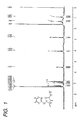
- FIG. 1 is an 1 H-NMR spectrum of PHA collected from the cultured cells of strain P91 in Example A-2.
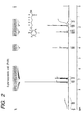
- FIG. 2 is an NMR spectrum of 5-phenoxy valeric acid obtained in Example B-1.
- FIG. 3A is a total ion chromatogram (TIC) of GC-MS measurement of a methyl esterified compound of the monomer unit composing PHA obtained in Example B-2
- FIG. 3B is a mass spectrum of a main peak in the TIC.
- FIG. 4 is an NMR spectrum of PHA obtained in Example B-2.
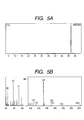
- FIG. 5A is a total ion chromatogram (TIC) of GC-MS measurement of a methyl esterified compound of the monomer unit composing PHA obtained in Example B-3
- FIG. 5B is a mass spectrum of a main peak in the TIC.
- FIG. 6 is an NMR spectrum of 5-(4-fluorophenoxy) valeric acid obtained in Example C-1.
- FIG. 7A is a total ion chromatogram (TIC) of GC-MS measurement of a methyl esterified compound of the monomer unit composing PHA obtained in Example C-2
- FIG. 7B is a mass spectrum of a main peak in the TIC.
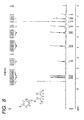
- FIG. 8 is an NMR spectrum of PHA obtained in Example C-2.
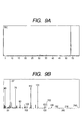
- FIG. 9A is a total ion chromatogram (TIC) of GC-MS measurement of a methyl esterified compound of the monomer unit composing PHA obtained in Example C-3
- FIG. 9B is a mass spectrum of a main peak in the TIC.
- FIG. 10 is an 1 H-NMR spectrum of poly-3-hydroxy-5-phenyl valeric acid produced by strain H45 in Example D-5.
- FIG. 11 is a 13 C-NMR spectrum of poly-3-hydroxy-5-phenyl valeric acid produced by strain H45 in Example D-5.
- FIG. 12 is a DNA sequence of a 16s rRNA coding region of Pseudomonas jessenii P161; FERM BP-7376.
- FIG. 13 is an NMR spectrum of FPVA biosynthesized as alkanoate as the material in Example E-1.
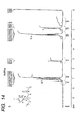
- FIG. 14 is a 1 H-NMR spectrum of PHA obtained by the production method of the present invention using FPVA as the material in Example E-5.
- FIG. 15 is a 13 C-NMR spectrum of PHA obtained by in Example E-5 using FPVA as the material.
- FIG. 16 is a 1 H-NMR spectrum of PHA consisting of 3-hydroxy-4-cyclohexyl butyric acid unit purified in Example F-3.
- FIG. 17 is a 13 C-NMR spectrum of PHA consisting of 3-hydroxy-4-cyclohexyl butyric acid unit purified in Example F-3.
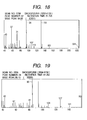
- FIG. 18 is a mass spectrum of a 3-hydroxy-5-phenoxyvaleric acid (3HPxV) methyl ester obtained by GC-MS of the polymer produced in Example G-1.
- FIG. 19 is a mass spectrum of 3-hydroxy-7-phenoxyheptanoic acid (3HPxHp) methyl ester obtained by GC-MS of the polymer produced in Example G-1.
- FIG. 20 is a mass spectrum of 3-hydroxy-5-phenoxyvaleric acid (3HPxV) methyl ester obtained by GC-MS of the polymer produced in Example G-2.
- FIG. 21 is a mass spectrum of 3-hydroxy-7-phenoxyheptanoic acid (3HPxHp) methyl ester obtained by GC-MS of the polymer produced in Example G-2.
- FIG. 22 is a mass spectrum of 3-hydroxy-4-phenoxy butyric acid (3HPxB) methyl ester obtained by GC-MS of the polymer produced in Example H-1.
- FIG. 23 is a mass spectrum of 3-hydroxy-6-phenoxy hexanoic acid (3HPxHx) methyl ester obtained by GC-MS of the polymer produced in Example H-1.
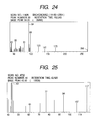
- FIG. 24 is a mass spectrum of 3-hydroxy-8-phenoxy octanoic acid (3HPxO) methyl ester obtained by GC-MS of the polymer produced in Example H-1.
- FIG. 25 is a mass spectrum of 3-hydroxy-4-phenoxy butyric acid (3HPxB) methyl ester obtained by GC-MS of the polymer produced in Example H-2.
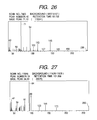
- FIG. 26 is a mass spectrum of 3-hydroxy-6-phenoxy hexanoic acid (3HPxHx) methyl ester obtained by GC-MS of the polymer produced in Example H-2.
- FIG. 27 is a mass spectrum of 3-hydroxy-8-phenoxy octanoic acid (3HPxO) methyl ester obtained by GC-MS of the polymer produced in Example H-2.
- FIG. 28 is a mass spectrum of 3-hydroxy-5-phenoxyvaleric acid (3HPxV) methyl ester obtained by GC-MS of the polymer produced in Example I-1.
- FIG. 29 is a mass spectrum of 3-hydroxy-7-phenoxyheptanoic acid (3HPxHp) methyl ester obtained by GC-MS of the polymer produced in Example I-1.
- FIG. 30 is a mass spectrum of 3-hydroxy-9-phenoxy nonanoic acid (3HPxN) methyl ester obtained by GC-MS of the polymer produced in Example I-1.
- FIG. 31 is a mass spectrum of 3-hydroxy-5-phenoxyvaleric acid (3HPxV) methyl ester obtained by GC-MS of the polymer produced in Example I-2.
- FIG. 32 is a mass spectrum of 3-hydroxy-7-phenoxyheptanoic acid (3HPxHp) methyl ester obtained by GC-MS of the polymer produced in Example I-2.
- FIG. 33 is a mass spectrum of 3-hydroxy-9-phenoxy nonanoic acid (3HPxN) methyl ester obtained by GC-MS of the polymer produced in Example I-2.
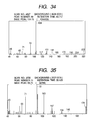
- FIG. 34 is a mass spectrum of 3-hydroxy-6-phenyl hexanoic acid (3HPHx) methyl ester obtained by GC-MS of the polymer produced in Example J-1.
- FIG. 35 is a mass spectrum of 3-hydroxy-4-phenyl butyric acid (3HPB) methyl ester obtained by GC-MS of the polymer produced in Example J-2.
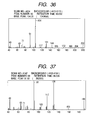
- FIG. 36 is a mass spectrum of 3-hydroxy-6-phenyl hexanoic acid (3HPHx) methyl ester obtained by GC-MS of the polymer produced in Example J-2.
- FIG. 37 is a mass spectrum of 3-hydroxy-5-phenyl valeric acid (3HPV) methyl ester obtained by GC-MS of the polymer produced in Example K-1.
- FIG. 38 is a mass spectrum of 3-hydroxy-5-phenoxyvaleric acid (3HPxV) methyl ester obtained by GC-MS of the polymer produced in Example K-1.
- FIG. 39 is a mass spectrum of 3-hydroxy-5-phenyl valeric acid (3HPV) methyl ester obtained by GC-MS of the polymer produced in Example K-2.
- FIG. 40 is a mass spectrum of 3-hydroxy-5-phenoxyvaleric acid (3HPxV) methyl ester obtained by GC-MS of the polymer produced in Example K-2.
- the present invention relates to a novel polyhydroxyalkanoate (PHA) and a method of producing PHA.
- PHA polyhydroxyalkanoate
- the first embodiment in the method of producing PHA of the present invention is a production method characterized by
- PHA containing the corresponding monomer unit, as well as, in some cases, an accompanying secondary monomer unit having shorter carbon chain can be produced by using a single kind of alkanoate of Formula (12) as a raw material.
- a plurality of alkanoates of Formula (12) can also be used as a raw material, and at that time, it is preferred to use an appropriate number of alkanoates, in consideration of function and property requisite for polymer to be produced.
- the above aim can be expected to fully achieve by using up to about five different alkanoates of Formula (12) as a raw material.
- five or more of different raw materials can be utilized.
- the total of more than five different raw materials can be used which consist of up to about three different alkanoates selected each from alkanoate group represented by the above general Formula (2), (3), and (4).
- the substituent R1 on benzene ring in the general Formula (2) and the substituent R2 on benzene ring in the general Formula (3) can be selected from any of ortho-position (2- or 6-position), meta-position (3- or 5-position), or para-position (4-position).
- the resultant polyhydroxyalkanoate will contain a monomer unit having the corresponding substituted benzene ring. Which isomer is selected as a raw material is properly determined depending on intended functions and properties. When differences in the above functions and properties is not a critical problem, an alkanoate having substituent at para-position (4-position) on benzene ring can be more advantageously used similar to an unsubstituted alkanoate with respect to yield and readiness to be incorporated into polymer.
- substituent R3 on cyclohexyl ring of the general Formula (4) can be selected from any of 1-, 2- (or 6-), 3- (or 5-), and 4-position, and both cis-and trans-configuration can be selected.
- the resultant polyhydroxyalkanoate will contain monomer unit having the corresponding substituted cyclohexyl ring. Which isomer is selected as a raw material is properly determined depending on intended functions and properties. When differences in the above functions and properties is not a critical problem, an alkanoate having substituents at 4-position on cyclohexyl ring can be more advantageously used similar to an unsubstituted alkanoate with respect to yield and readiness to be incorporated into polymer.
- Polyhydroxyalkanoate produced by microorganisms which has chiral center at 3-position carbon atom of monomer unit, is generally a polymer consisting only of R-body, that is, an isotactic polymer.
- PHA produced by the present method becomes a polymer having biodegradability.
- microorganisms can be cultured by two steps comprising the initial culture in the medium containing alkanoate of Formula (12) and yeast extract, and subsequent culture in the medium containing the alkanoate and restricted nitrogen source.
- Microorganism can also be cultured in one step in the medium containing alkanoate of Formula (12) and yeast extract.
- the microorganism utilized is preferably selected from those belonging to Pseudomonas sp.
- strains belonging to Pseudomonas sp. Pseudomonas cichorii YN2 (FERM BP-7375), Pseudomonas cichorii H45 (FERM BP-7374), Pseudomonas putida P91 (FERM BP-7373), and Pseudomonas jessenii P161 (FERM BP-7376) can be shown, and it is more preferred to select any of the above four strains.
- Preferred mode of the invention in the first embodiment of the method of producing polyhydroxyalkanoate of the present invention will be individually and more definitely described below.
- PPPxB poly-3-hydroxy-4-phenoxybutyric acid
- 3HPxB 3-hydroxy-4-phenoxybutyric acid
- PxBA 4-phenoxybutyric acid
- one mode included in the above first embodiment according to the method of producing polyhydroxyalkanoates of the present invention is a method characterized by having a process of incubating a microorganism capable of producing PHPxB homopolymer consisting of repeats units of 3HPxB monomer unit of Formula (5) by utilizing PxBA in the medium containing PxBA of Formula (14) and yeast extract.
- the present inventors have also succeeded in obtaining microorganism capable of producing a homopolymer consisting of 3-hydroxy-5-phenoxyvaleric acid (3HPxV) monomer unit of Formula (6): when cultured in a medium containing yeast extract and 5-phenoxyvaleric acid (PxVA) of Formula (15).
- 3-hydroxy-5-phenoxyvaleric acid (3HPxV) monomer unit of Formula (6) when cultured in a medium containing yeast extract and 5-phenoxyvaleric acid (PxVA) of Formula (15).
- another one mode included in the above first embodiment is a method characterized by having a process of incubating a microorganism capable of producing poly-3-hydroxy-5-phenoxyvaleric acid (PHPxV) homopolymer consisting of repeats units of 3HPxV monomer unit of Formula (6) by utilizing PxVA in a medium containing PxVA of Formula (15) and yeast extract.
- PPPxV poly-3-hydroxy-5-phenoxyvaleric acid
- the present inventors have also succeeded in obtaining microorganism capable of producing a homopolymer consisting of 3-hydroxy-5-(fluorophenoxy)valeric acid (3HFPxV) monomer unit of Formula (16): when cultured in the medium containing yeast extract and 5-(4-fluorophenoxy)valeric acid (FPxVA) of Formula (17).
- 3HFPxV 3-hydroxy-5-(fluorophenoxy)valeric acid
- FPxVA 5-(4-fluorophenoxy)valeric acid
- another mode included in the above first embodiment is a method characterized by having a process of incubating a microorganism capable of producing poly-3-hydroxy-5-(fluorophenoxy)valeric acid (PHFPxV) homopolymer consisting of repeats units of 3HFPxV monomer unit of Formula (16) by utilizing FPxVA in a medium containing FPxVA of Formula (17) and yeast extract.
- PHFPxV poly-3-hydroxy-5-(fluorophenoxy)valeric acid
- the present inventors have also succeeded in obtaining microorganism capable of producing a copolymer consisting of 3-hydroxy-5-phenoxyvaleric acid (3HPxV) and 3-hydroxy-7-phenoxyheptanoic acid (3HPxHp) of Formula (6) and (22), respectively: when cultured in a medium containing yeast extract 7-phenoxyheptanoic acid (PxHpA) of Formula (23).
- another mode included in the above first embodiment is a method characterized by having a process to culture a microorganism capable of producing a polyhydroxyalkanoate copolymer consisting of 3HPxV and 3HPxHp monomer units of Formula (6) and (22), respectively, by utilizing PxHpA in the medium containing PxHpA of Formula (23) and yeast extract.
- the present inventors have also succeeded in obtaining a microorganism capable of producing a copolymer consisting of 3-hydroxy-4-phenoxybutyric acid (3HPxB), 3-hydroxy-6-phenoxyhexanoic acid (3HPxHx), and 3-hydroxy-8-phenoxyoctanoic acid (3HPxO) of Formula (5), (24), and (25), respectively: when cultured in a medium containing yeast extract and 8-phenoxyoctanoic acid (PxOA) of Formula (26).
- another mode included in the above first embodiment is the method characterized by having a process of incubating a microorganism capable of producing a polyhydroxyalkanoate copolymer consisting of 3HPxB, 3HPxHx, and 3HPxO monomer units of Formula (5), (24), and (25), respectively, by utilizing PxOA in the medium containing PxOA of Formula (26) and yeast extract.
- One more mode included in the above described first embodiment is a method having a step of culturing of microorganisms to produce a polyhydroxyalkanoate copolymer consisting of 3HPxV, 3HPxHp, and 3HPxN monomer units expressed by the above described Formulae (6), (22), and (27) using PxUDA in a culture medium containing PxUDA expressed by the above described Formula (28) and yeast extract.
- an alkanoate, of Formula (12) in which a side chain having a phenoxy group is replaced with a desired group as a material of the monomer component, PHA having various corresponding side chains can be selectively produced using microorganisms.
- a production method for polyhydroxyalkanoate using alkanoate of Formula (12) as the material and having the monomer unit composition shown by Formula (13) is also included in the above described first embodiment by the production method for polyhydroxyalkanoate of the present invention.
- R is at least one or more groups selected from groups expressed by Formula (3));
- r 0 -2, r 0 -4, or r 0 -6 can be an integer value of 1 or more;
- R2 is the group selected from a hydrogen atom (H), halogen atom, -CN, -NO 2 , -CF 3 , -C 2 F 5 , and -C 3 F 7 and r is selected from integers of 1 to 8.
- any one of a substitution position of R2 on a benzene ring Formula (3) can be selected from an ortho position (position 2 or position 6), meta position (position 3 or position 5), or para position (position 4).
- Polyhydroxyalkanoate yielded is that containing the monomer unit having a corresponding substituted phenoxy group.
- An isomer to be selected as the material is determined appropriately according to objective functionality and physical property. In the case where a difference in the above described functionality and physical property are not become the problem, normally, that having the substitution group in the para position (position 4) on the benzene ring can be more preferably used, in a point of yield or easy uptake into the polymer, comparably to that not substituted.
- a carbon atom of the position 3 of the monomer unit has the chiral in a center and in general, is the polymer consisting of only R-body and hence, isotactic polymer. Consequently, PHA produced by such method is the polymer having biodegradability.
- the inventors successfully obtained the microorganism capable of producing a homopolymer consisting of 3-hydroxy-5-phenylvaleric acid (3HPV) monomer unit expressed by Formula (9), when cultured in a culture medium containing 5-phenylvaleric acid (PVA), expressed by Formula (18), and yeast extract.
- 3-hydroxy-5-phenylvaleric acid (3HPV) monomer unit expressed by Formula (9) when cultured in a culture medium containing 5-phenylvaleric acid (PVA), expressed by Formula (18), and yeast extract.
- an alternative mode included in the above described first embodiment is a method characterized by having a step of culturing a microorganism which can produce a poly-3-hydroxy-5-phenylvaleric acid (PHPV) homopolymer consisting of repeated units of 3HPV monomer units expressed by the above described Formula (9), using PVA in a culture medium containing PVA of Formula (18) and yeast extract.
- PHPV poly-3-hydroxy-5-phenylvaleric acid
- the inventors also successfully obtained the microorganism capable of producing the homopolymer consisting of 3-hydroxy-5-(4-fluorophenyl) valeric acid (3HFPV) monomer unit expressed by Formula (7) when cultured in a culture medium containing 5-(4-fluorophenyl) valeric acid (FPVA) of Formula (19), and yeast extract.
- 3HFPV 3-hydroxy-5-(4-fluorophenyl) valeric acid
- FPVA 5-(4-fluorophenyl) valeric acid
- an alternative mode included in the above described first embodiment is a method characterized by having a step of cultivation of a microorganism which can produce a poly-3-hydroxy-5-(4-fluorophenyl) valeric acid (PHFPV) homopolymer consisting of repeated units of 3HFPV monomer units of Formula (7), using FPVA in a culture medium containing FPVA of Formula (19) and yeast extract.
- PHFPV poly-3-hydroxy-5-(4-fluorophenyl) valeric acid
- the inventors also successfully obtained the microorganism capable of producing the copolymer consisting of 3-hydroxy-4-phenylbutyric acid (3HPB) and 3-hydroxy-6-phenylhexanoic acid (3HPHx) units expressed by Formulas (10) and (11) when cultured in a culture medium containing 6-phenylhexanoic acid (PHxA), expressed by Formula (21), and yeast extract,
- an alternative mode included in the above described first embodiment is a method characterized by having a step of cultivation of a microorganism to produce a polyhydroxyalkanoate copolymer consisting of 3HPB and 3HPHx monomer units expressed by the above described Formula (10) and (11), using PHxA in a culture medium containing PHxA, expressed by the above described Formula (21), and the yeast extract.
- an alkanoate, of Formula (12) in which a side chain having a phenyl group is substituted to a desired group as a material of the monomer component, PHA having various corresponding side chains can be selectively produced using microorganisms.
- a production method for polyhydroxyalkanoate using alkanoate of Formula (12) as the material and having the monomer unit composition shown by Formula (13) is also included in the above described first embodiment by the production method for polyhydroxyalkanoate of the present invention.
- any one of the substitution position of R1 on the benzene ring of Formula (2) can be selected from the ortho position (position 2 or position 6), meta position (position 3 or position 5), or para position (position 4).
- Polyhydroxyalkanoate yielded is that containing the monomer unit having the corresponding substituted phenyl group.
- the isomer to be selected as the material is determined appropriately according to objective functionality and physical property. In the case where the difference in the above described functionality and physical property does not become the problem, normally, that having the substitution group in the para position (position 4) on the benzene ring can be more preferably used, in the point of yield or easy uptake into the polymer, comparably to that not substituted.
- the carbon atom of the position 3 of the monomer unit has the chiral in the center and in general, is the polymer consisting of only R-body and hence, the isotactic polymer. Consequently, PHA produced by such method is the polymer having biodegradability.
- the inventors found that when by using 4-cyclohexyl butyric acid (CHBA) as the substrate, microorganisms are cultured in the culture medium containing CHBA and yeast extract to produce polyhydroxyalkanoate to accumulate in cells; the monomer unit of polyhydroxyalkanoate contains 3-hydroxy-4-cyclohexyl butyric acid (3HCHB) in the high ratio and showed the sufficiently high yield and for polyhydroxyalkanoate containing 3HCHB yielded, found that the PHCHB homopolymer consisting of the repeated unit of 3HCHB monomer units can be separated by carrying out purification treatment.
- CHBA 4-cyclohexyl butyric acid
- any one of the substitution positions of R3 on the cyclohexyl ring of Formula (4) can be selected from position 1, position 2 (or position 6), position 3 (or position 5), and position 4.
- either cis configuration or trans configuration can be selected.
- Polyhydroxyalkanoate yielded is that containing the monomer unit having the corresponding substituted cyclohexyl ring.
- the isomer to be selected as the material is determined appropriately according to objective functionality and physical property. In the case where the difference in the above described functionality and physical property does not become the problem, normally, that having the substitution group in the 4 on the cyclohexyl ring can be more preferably used, in the point of yield or easy uptake into the polymer, comparably to that not substituted.
- the carbon atom of the position 3 of the monomer unit has the chiral in the center and in general, is the polymer consisting of only R-body and hence, the isotactic polymer. Consequently, PHA produced by such method is the polymer having biodegradability.
- the inventors successfully obtained a microorganism capable of producing copolymer consisting of 3-hydroxy-5-phenoxy valeric acid (3HPxV) monomer unit expressed by Formula (6) and 3-hydroxy-5-phenyl valeric acid (HPV) monomer unit expressed by Formula (9) when cultured in the culture medium containing yeast extract and 5-phenoxy valeric acid (PxVA) expressed by Formula (15), and 5-phenyl valeric acid (PVA) expressed by Formula (18).
- 3-HPxV 3-hydroxy-5-phenoxy valeric acid
- HPV 3-hydroxy-5-phenyl valeric acid
- an alternative mode included in the above described first embodiment is the method of producing a poly-(3-hydroxy-5-phenoxy valeric acid/3-hydroxy-5-phenyl valeric acid) copolymer consisting of repeated units of the 3HPxV monomer unit and the 3HPV monomer units expressed by the above described Formula (6) and (9), using PxVA and PVA and characterized by having the step of cultivation of microorganisms in the culture medium containing PxVA and PVA expressed by the above described Formula (15), (18), and the yeast extract.
- the first embodiment of the production method for polyhydroxyalkanoate of the present invention includes the specific form of production method for polyhydroxyalkanoate containing a plurality of kinds of monomer units having various corresponding side chains by using a plurality of kinds of alkanoate of as the material.
- the production method is characterized in that a microorganism is cultured in a culture medium containing yeast extract and the alkanoate expressed by Formula (12):
- the alkanoate as the material expressed by Formula (12) PHA containing the corresponding monomer unit and in some cases, the by-produced monomer unit of, which carbon chain accompanied is reduced, can produced.
- the alkanoate as the material expressed by Formula (12) the plurality of kinds can be used for culture. In consideration of the function and the physical property necessary for the polymer produced, it is preferable to use the proper number of kinds. In general, by using about 5 kinds, in maximum, of alkanoate expressed by Formula (12) as the material, it is expected that the above described purpose can be sufficiently achieved. In addition, in the purpose to control finely the functionality and the physical property, many kinds of materials more than five can be used. For example, it is possible to contain all three of the above described general Formula (2), general Formula (3), or general Formula (4), select three about kinds in maximum, and sum them to use more than 5 kinds of materials.
- substitution group R1 on the benzene ring in the general Formula (2) and the substitution group R2 on the benzene ring in the general Formula (3) can be selected from any one of the ortho position (position 2 or position 6), meta position (position 3 or position 5), and para position (position 4).
- Polyhydroxyalkanoate yielded is that containing the monomer unit having a corresponding substituted benzene ring.
- An isomer to be selected as the material is determined appropriately according to objective functionality and physical property.
- substitution group in the para position (position 4) on the benzene ring can be more preferably used, in the point of yield or easy uptake into the polymer, comparably to that not substituted.
- substitution group R3 on the cyclohexyl ring in the general Formula (4) can be selected from any one of the position 1, position 2 (or position 6), position 3 (or position 5), and position 4.
- either cis configuration or trans configuration can be selected.
- Polyhydroxyalkanoate yielded is that containing the monomer unit having the corresponding substituted cyclohexyl ring.
- the isomer to be selected as the material is determined appropriately according to objective functionality and physical property.
- that having the substitution group in the position 4 on the cyclohexyl ring can be more preferably used, in the point of yield or easy uptake into the polymer, comparably to that not substituted.
- the carbon atom of the position 3 of the monomer unit has the chiral in a center and in general, is the polymer consisting of only R-body and hence, isotactic polymer. Consequently, PHA produced by such method is the polymer having biodegradability.
- polyhydroxyalkanoate having various corresponding side chains as the monomer components can be selectively produced by using microorganisms by using a derivative, which was made by substituting the side chain of alkanoate by the desired group, as the material and therefore, the present invention also provides an invention of polyhydroxyalkanoate, obtained by such method, having a monomer composition expressed by the following general Formula (1).
- a new polyhydroxyalkanoate according to the present invention is polyhydroxyalkanoate consisting of monomer units expressed by Formula (1).
- R is at least one or more group selected from groups expressed by any one of the following general Formula (2), general Formula (3), or general Formula (4)).
- R1 is the group selected from the hydrogen atom (H), halogen atom, -CN, -NO 2 , -CF 3 , -C 2 F 5 , and -C 3 F 7 and q is selected from integers of 1 to 8;
- the R2 is the group selected from the hydrogen atom (H), halogen atom, -CN, -NO 2 , -CF 3 , -C 2 F 5 , and -C 3 F 7 and r is selected from integers of 1 to 8;
- the R3 is the group selected from the hydrogen atom (H), halogen atom, -CN, -NO 2 , -CF 3 , -C 2 F 5 , and -C 3 F 7 and s is selected from integers of 1 to 8.
- Polyhydroxyalkanoate of the present invention can contain one kind of monomer unit expressed by the general Formula (1) and also contain a plurality of kinds. In consideration of a function and a physical property necessary for the objective polymer, it is preferable to use a proper number of kinds of monomer units. In general, by selecting 10 kinds of monomer units, in total, expressed by Formula (1), it is expected that the above described purpose can be sufficiently achieved. In addition, in the purpose to control finely functionality and the physical property, many kinds of monomer units more than 10 can be contained in configuration.
- the present invention include that in which even if alkanoate itself is about 5 kinds as the material, each yields monomer unit of two kinds or more including the by-produced monomer unit and as the results, PHA contains monomer units of 10 kinds or more in total.
- the present invention include that in which contains all of three kinds of the above described general Formula (2), general Formula (3), and general Formula (4), of which about 3 kinds in maximum are selected each, and becomes about 10 kinds of alkanoate as the material in total to yield PHA containing monomer units of 10 kinds or more containing a little numbers of the by-produced monomer unit.
- substitution position of R1 on a benzene ring Formula (2) and the substitution position of R2 on a benzene ring Formula (3) can be selected from the ortho position (position 2 or position 6), meta position (position 3 or position 5), and para position (position 4).
- Polyhydroxyalkanoate yielded is that containing the monomer unit having a corresponding substituted benzene group.
- An isomer to be selected as the material is determined appropriately according to objective functionality and physical property.
- the isomer to be selected is determined appropriately according to objective functionality and physical property.
- that having the substitution group in the position 4 on the cyclohexyl ring can be more preferably used, in a point of yield or easy uptake into the polymer, comparably to that not substituted.
- the carbon atom of the position 3 of the monomer unit has the chiral in a center and in general, is the polymer consisting of only R-body and hence, isotactic polymer. Consequently, PHA producible by such method using microorganisms is the polymer having biodegradability.
- the production method for PHA of the present invention is characterized in that in cultivation of microorganisms, by adding the yeast extract to alkanoate of Formula (12) as the material in the culture medium, content ratio of the objective monomer unit in PHA is increased very high or PHA consists of the objective monomer unit only in PHA produced by microorganisms to accumulate.
- An effect to enhance prioritization of a specified monomer unit is realized by adding only yeast extract to the culture medium as a carbon source other than alkanoate used as the material of PHA.
- yeast extract in the PHA biosynthetic path of the object of the present invention.
- addition of the yeast extract shows the effect to increase in PHA accumulation simply in cells and the yeast extract is not added for cell proliferation.
- the present invention carries out production and accumulation of PHA as well as proliferation by coexistence of alkanoate of Formula (12) with the yeast extract and thus, the yeast extract expresses a quite different effect.
- prioritization being the effect of the present invention, of the specified monomer unit was never mentioned and therefore, in the composition of PHA produced by microorganisms, the effect, found in the present invention, of prioritization of the specified monomer unit having phenoxy group, phenyl group, and cyclohexyl group as the substitution group was not shown.
- the method, described on the above described Japanese Patent No. 2989175, using Pseudomonas putida is exemplified.
- the production method for PHA disclosed in this patent uses the two-step cultivation and it is disclosed that PHA accumulation is carried out in only the cultivation of a second step under limitation of a nutrient source other than carbon source.
- this method quite differs in configuration and effect from the method of the present invention, in which cultivation is one step only in the culture medium containing alkanoate of Formula (12) and the yeast extract to perform biosynthesis and accumulation of the desired PHA.
- any one of citric acid, octanoic acid, nonanoic acid coexists as the carbon source in the first step cultivation and hence, it also differs in configuration from the present invention, in which alkanoate of Formula (12) and the yeast extract coexist.
- the copolymer which consists of three kinds of monomers of 3-hydroxy-8-phenoxy octanoic acid derived from PxOA as the substrate, 3-hydroxy-6-phenoxy hexanoic acid being the by-product derived from a metabolite, and 3HPxB, is produced.
- use of the yeast extract allows production of PHA containing only 3HPxB derived from PxBA as the monomer unit containing the phenoxy group.
- PHA itself to be produced differs clearly between the above described reported and the present invention.
- there is no report of the production of PHA, containing only 3HPxB as the monomer unit containing the phenoxy group by microorganisms using PxBA as the substrate.
- Microorganisms used for the present invention may be any microorganisms, which is microorganisms capable of production of PHA from the alkanoate to accumulate using the alkanoate of Formula (12) as the substrate. According to the inventors' study, bacteria of Pseudomonas is good and among them, we found that Pseudomonas cichorii YN2, FERM BP-7375; Pseudomonas cichorii H45, FERM BP-7374; Pseudomonas putida P91, FERM BP-7373; and Pseudomonas jessenii P161 FERM BP-7376 are preferable microorganisms.
- bacteria belonging to, for example, the genus Pseudomonas by cultivation using the alkanoate as the substrate, by carrying out screening of bacteria belonging to, for example, the genus Pseudomonas, microorganisms usable for the production method for PHA, of the present invention, can be obtained.
- bacteria belonging to the genus Pseudomonas using Pseudomonas oleovorans is possible.
- microorganisms belonging to the genus Pseudomonas In addition to microorganisms belonging to the genus Pseudomonas, use of microorganisms, which belongs to the genera Aeromonas, Comamonas, and Burkholderia and, by using the alkanoate as the material (substrate), produce PHA containing corresponding 3-hydroxyalkanoate as the monomer unit, is possible.
- the above described 4 strains can be recommended as the most preferable strains.
- strains YN2, H45, P91, and P161 The details of strains YN2, H45, P91, and P161 will be listed below.
- strains YN2 and H45 are identified to belong to Pseudomonas cichorii and strain P91 to Pseudomonas putida, respectively. Therefore, we gave names these strains as Pseudomonas cichorii YN2, Pseudomonas cichorii H45, and Pseudomonas putida P91.
- strain P161 was identified as to belong to the genus Pseudomonas, taxonomic identification was impossible on the basis of bacteriological properties. Then, in order to attempt identification based on genetic criteria, the DNA sequence, as shown in the FIG. 12, of 16s rRNA of P 161 was determined (SEQ ID NO:1) to test the homology with the DNA sequences of 16s rRNA of known microorganisms of genus Pseudomonas. As the result, a very high homology was found between sequences of the strain P161 and Pseudomonas jessenii.
- the strain P161 can be justifiably identified as Pseudomonas jessenii and hence, we named the strain P161 as Pseudomonas jessenii P161.
- strains YN2, H45, P91 and P161 are deposited in National Institute of Bioscience and Human-Technology, Agency of Industrial Science and Technology, the Japanese Ministry of International Trade and Industry by receiving identification code of FERM BP-7375, FERM BP-7374, FERM BP-7373, and FERM BP-7376, respectively.
- the objective PHA can be produced.
- any kinds of culture medium for example, a general culture medium and an synthetic culture medium to which the nutrient source has been added, can be used.
- a cultivation condition such as temperature, aeration, and stirring is properly adjusted in accordance with the microorganism used.
- an inorganic culture medium containing at least alkanoate of the corresponding general Formula (12) can be used as the culture medium for PHA production. It is the feature that in this case, as carbon or energy source other than alkanoate as the material of PHA, only the yeast extract is added.
- any one containing necessary components such as a phosphor source (for example, phosphate salt) and nitrogen source (for example, ammonium salt and nitrate salt), for proliferation of microorganisms can be used.
- a phosphor source for example, phosphate salt
- nitrogen source for example, ammonium salt and nitrate salt
- MSB medium MSB medium
- E medium J. Biol. Chem. 218: 97-106 (1956)
- M9 medium M9 medium.
- composition of the M9 culture medium used in Examples of the present invention is as follows. Na 2 HPO 4 6.2 g KH 2 PO 4 3.0 g NaCl 0.5 g NH 4 Cl 1.0 g (for one liter culture medium; pH 7.0)
- shaking culture and stirring culture under 15 to 40°C, preferably 20 to 35°C, and aerobic condition are exemplified.
- any method, used for normal microorganisms such as batch system, fluidized batch system, semi-continuous culture, continuous culture, and reactor type can be used.
- a multi-step system by connecting a plurality of these steps may be utilized.
- the first step as the carbon source for cell proliferation, employing the inorganic culture medium containing about 0.1 wt% to 1.0 wt% of the yeast extract and about 0.01 wt% to 0.5 wt% of alkanoate of Formula (12), cultivation is conducted from the late stage of the logarithmic growth period to the point of a standing state period and in the second step, cells after completion of cultivation in the first step are collected by a centrifugation followed by a further cultivation in the inorganic culture medium containing about 0.01 wt% to 0.5 wt% of alkanoate of Formula (12) as the material and lacking any nitrogen source and after completion of cultivation, cells are collected to extract desired PHA.
- a concentration of the yeast extract to be added to the culture medium is properly chosen in accordance with the kind of alkanoate of Formula (12), species and genus of the microorganism, a density of cells, or culture method. Normally, it is preferable to choose from a range from about 0.1 wt% to 1.0 wt% of content ratio in the culture medium in order to add it.
- the yeast extract any one of commercialized yeast extract generally used for cultivation of microorganisms can be preferably used.
- that prepared by pulverizing a lyophilized yeast product, which naturally contains the components of the yeast extract can be also used.
- the concentration of alkanoate of Formula (12) as the material is properly chosen in accordance with species and genus of the microorganism, a density of cells, or culture method. Normally, it is preferable to choose from a range from about 0.01 wt% to 0.5 wt% of content ratio in the culture medium in order to add it.
- a middle chain fatty acid of C6 to C12 (for example, octanoic acid, nonanoic acid, and the like), for example, is used as the carbon source for cell proliferation
- PHA yielded is that in which the monomer unit derived from the middle chain fatty acid, which has been added, is mixed.
- the case employing the method in which employing the inorganic culture medium, in which as the carbon source for cell proliferation, the middle chain fatty acid such as octanoic acid, nonanoic acid, and the like are added and also alkanoate of Formula (12) is added as the material, cultivation is conducted from the late stage of the logarithmic growth period to the point of a standing state period, cells are collected by centrifugation and then, the middle chain fatty acid and alkanoate of Formula (12) are added to carry out further cultivation in the inorganic culture medium lacking the nitrogen source.
- the middle chain fatty acid such as octanoic acid, nonanoic acid, and the like
- alkanoate of Formula (12) is added as the material
- the case employing the method in which the concentration of the nitrogen source is limited to 1/10 in the inorganic culture medium, cultivation is carried out in the culture medium to which the middle chain fatty acid and alkanoate of Formula (12) are added, cells are collected in the period from the late stage of the logarithmic growth period to the point of a standing state period to extract the desired PHA.
- these methods in which the middle chain fatty acid is added to the culture medium as the carbon source for cell proliferation, is applied, PHA yielded is becomes PHA, to which the monomer unit, derived from the middle chain fatty acid is added as the carbon source for cell proliferation, has been mixed.
- the desired PHA which contains a little amount of or no amount of any unnecessary monomer unit other than the monomer unit derived from the objective alkanoate of Formula (12), is produced and accumulated.
- Collection of PHA from cells in the method according to the present invention is most conveniently carried out by extraction using such organic solvent as chloroform normally used.
- organic solvent as chloroform normally used.
- the method to collect PHA by removing cell components other than PHA by treatment with such surfactant as SDS, treatment with such enzyme as lysozyme, and treatment with such reagent as EDTA, sodium hypochlorite, and ammonium can be used.
- the cultivation of microorganisms, production of PHA by microorganisms and accumulation in cells, and collection of PHA from cells are not restricted to the above described methods.
- microorganisms used for production method of PHA, according to the present invention, microorganisms, other than the above described 4 bacterial strains, having productivity of PHA production, according to the present invention and similar to that of these 4 bacterial strains, can be used.
- PHA having repeated units expressed by Formula (1) can be yielded. It is preferable that a number average molecular weight of this PHA is at least 10000 or more and a range of 10000 to 200000 is more preferable. In other words, to get stably a desired characteristic as a polymer, specifically, it is preferable that the PHA has repetition number to make the number average molecular weight to at least about 10000 to make characteristics, such as a glass transition temperature, softening point, melting point, crystallinity, and orientation which are designated by a structure of the monomer unit composing the monomer, to a specified range.
- the number average molecular weight is preferably under about 200000. Usually, the range from 10000 to 100000 is more preferable.
- the number average molecular weight of PHA yielded by the production method according to the present invention is 10000 or more and about 20000 or more and is within the range expectable sufficiently of a stable expression of a physical property of the above described polymer.
- PPPxB poly-3-hydroxy-4-phenoxy butyric acid
- 3HPxB 3-hydroxy-4-phenoxy butyric acid
- PxBA 4-phenoxy butyric acid
- the strain P 91 was inoculated in a 200 ml of the M9 culture medium containing the yeast extract of 0.5% and PxBA of 0.1% and subjected to shaking-cultivation at 30°C and 125 strokes/min. After 24 hours, cells were collected by centrifugation, suspended again in a 200 ml of the M9 culture medium containing a 0.1% PxBA and lacking the nitrogen source (NH 4 Cl), and subjected to the shaking-cultivation at 30°C and 125 strokes/min. After 24 hours, cells were collected by centrifugation, washed with cold methanol once, and subjected to freeze-dry.
- This lyophilized pellet was suspended in chloroform of 100 ml and PHA was extracted by stirring at 60°C for 20 hours. An extracted fluid was filtered using a membrane filter with a pore size of 0.45 ⁇ m followed by concentration by a rotary evaporator and then, concentrated fluid was precipitated again in cold methanol and precipitation only was collected and dried in vacuo to yield PHA. PHA yielded was subjected to methanolysis by a routine method followed by analysis by a gas chromatography mass spectrometry apparatus (GC-MS, Shimadzu QP-5050, EI method) and a methyl esterified product of the PHA monomer unit was identified.
- GC-MS gas chromatography mass spectrometry apparatus
- Table 3 shows the result of identification and an average molecular weight. It is known that PHA yielded contains only monomer unit derived from 3-hydroxy-4-phenoxy butyric acid expressed by Formula (5) as the monomer unit and is a poly-3-hydroxy-4-phenoxy butyric acid.
- the strain P 91 was inoculated in a 200 ml of the M9 culture medium containing the yeast extract of 0.5% and PxBA of 0.2% and subjected to shaking-cultivation at 30°C and 125 strokes/min. After 48 hours, cells were collected by centrifugation, washed with cold methanol once, and subjected to freeze-drying.
- This lyophilized pellet was suspended in chloroform of 100 ml and PHA was extracted by stirring at 60°C for 20 hours. An extracted fluid was filtered using a membrane filter with a pore size of 0.45 ⁇ m followed by concentration by a rotary evaporator and then, concentrated fluid was precipitated again in cold methanol and precipitation only was collected and dried in vacuo to yield PHA.
- PHA yielded was subjected to methanolysis by a routine method followed by analysis by a gas chromatography mass spectrometry apparatus (GC-MS, Shimadzu QP-5050, EI method) and a methyl esterified product of the PHA monomer unit was identified. Table 4 shows the result of identification. It is known that PHA yielded contains only monomer unit derived from 3-hydroxy-4-phenoxy butyric acid expressed by Formula (5) as the monomer unit and is a poly-3-hydroxy-4-phenoxy butyric acid.
- FIG. 1 shows the result of measurement and a Table 5 shows the result of analysis (attribute) of each signal.
- Table 5 shows the result of 3-hydroxy-4-phenoxy butyric acid described below. From the result, PHA contains only monomer unit derived from 3-hydroxy-4-phenoxy butyric acid expressed by Formula (5) and is confirmed that it is poly-3-hydroxy-4-phenoxy butyric acid.
- PPPxV poly-3-hydroxy-5-phenoxy valeric acid
- HPxVA 3-hydroxy-5-phenoxy valeric acid
- PxVA 5-phenoxy valeric acid
- Reactant (ester) yielded was dissolved in ethanol water (9:1 (v/v)) to make 5 wt%, potassium hydroxide of 10 times mol was added to react at 0 to 4°C for 4 hours to carry out hydrolysis of the ester.
- This reaction solution was added to 0.1 mol hydrochloric acid aqueous solution of 10 times volume and then, precipitation was collected by filtration. The precipitation (reactant) collected was dried under a reduced pressure under a room temperature for 36 hours.
- the dried matter yielded was dissolved in a small volume of hot methanol, the solution was gradually cooled to precipitate again, and the precipitation was dried under a reduced pressure under the room temperature for 24 hours resulting in yield of 5-phenoxy valeric acid, the objective compound.
- the yield ratio of this objective compound to 5-bromo valeric acid ethyl ester was 53 mol %.
- FIG. 2 shows a chart of the spectrum and Table 6 shows the result of identification.
- Example B-2 Production of PHPxV homopolymer by strain P91.
- the strain P 91 was inoculated in a 200 ml of the M9 culture medium containing the yeast extract (DIFCO made) of 0.5 wt% and PxVA of 0.1 wt% and subjected to shaking-cultivation at 30°C and 125 strokes/min. After 24 hours, cells were collected by centrifugation, suspended again in 200 ml of the M9 culture medium containing 0.1% PxVA and lacking any nitrogen source (NH 4 Cl), and further subjected to the shaking cultivation at 30°C and 125 strokes/min. After 24 hours, cells were collected by centrifugation, washed with cold methanol once, and subjected to freeze-drying and weighing.
- yeast extract DIFCO made
- This lyophilized pellet was suspended in chloroform of 100 ml and PHA was extracted by stirring at 60°C for 20 hours.
- the extracted fluid was filtered using a membrane filter with the pore size of 0.45 ⁇ m followed by concentration by the rotary evaporator and then, concentrated fluid was precipitated again in cold methanol and precipitation only was collected and dried in vacuo to yield PHA and weigh.
- Table 7 shows the yields of cells and the polymer.
- a composition of PHA yielded was analyzed according to the following steps. PHA sample of 5 mg was put in an egg-shaped flask of 25 ml volume, methanol of 2 ml containing chloroform of 2 ml and sulfuric acid of 3% (v/v) was added to reflux at 100°C for 3.5 hours, and water was added to separate, and then, the organic layer was analyzed by the gas chromatography mass spectrometry apparatus (GC-MS, Shimadzu QP-5050, DB-WAXETR (J & W Co. made), EI method) and a methyl esterified product of the PHA monomer unit was identified. As the result, there was a single main peak.
- GC-MS gas chromatography mass spectrometry apparatus
- FIGS. 3A and 3B show the total ion chromatogram (TIC) of GC-MS and the mass spectrum of the main peak.
- the polymer yielded was subjected to NMR analysis under the following condition.
- FIG. 4 shows the chart of the spectrum and Table 8 shows the result of identification.
- Example B-3 Production of PHPxV homopolymer by the strain H45.
- the strain H45 was inoculated in a 200 ml of the M9 culture medium containing the yeast extract (DIFCO made) of 0.5 wt% and PxVA of 0.1 wt% and subjected to shaking-cultivation at 30°C and 125 strokes/min. After 24 hours, cells were collected by centrifugation, washed with cold methanol once, and subjected to freeze-drying and weighing.
- yeast extract DIFCO made
- This lyophilized pellet was suspended in chloroform of 100 ml and PHA was extracted by stirring at 60°C for 20 hours.
- the extracted fluid was filtered using a membrane filter with the pore size of 0.45 ⁇ m followed by concentration by the rotary evaporator and then, concentrated fluid was precipitated again in cold methanol and precipitation only was collected and dried in vacuo to yield PHA and weigh.
- Table 9 shows the yields of cells and the polymer.
- the composition of PHA yielded was analyzed according to the following steps. PHA sample of 5 mg was put in the egg-shaped flask of 25 ml volume, methanol of 2 ml containing chloroform of 2 ml and sulfuric acid of 3% (v/v) was added to reflux at 100°C for 3.5 hours, and water was added to separate, and then, the organic layer was analyzed by the gas chromatography mass spectrometry apparatus (GC-MS, Shimadzu QP-5050, DB-WAXETR (J & W Co. made), EI method) and the methyl esterified product of the PHA monomer unit was identified. As the result, there was a single main peak.
- GC-MS gas chromatography mass spectrometry apparatus
- FIGS. 5A and 5B show the total ion chromatogram (TIC) of GC-MS and the mass spectrum of the main peak.
- poly-3-hydroxy-5-(4-fluorophenoxy) valeric acid consisting of the monomer unit, which is derived from 3-hydroxy-5-(4-fluorophenoxy) valeric acid (HFPxVA) expressed by Formula (16) using 5-(4-fluorophenoxy) valeric acid (FPxVA) of Formula (17) as the material, will be shown.
- the obtained reactant (ester) was dissolved in ethanol-water (9:1 (v/v)) to make a 5 wt% solution, 10 times the mol of potassium hydroxide added, and the mixture allowed to react at 0 to 4°C for 4 hours to hydrolyze the ester.
- the reactant solution was added in 10 times the volume of 0.1 M hydrochloric acid and the precipitate collected by filtration.
- the collected precipitate (the reactant) was dried under decreased pressure at room temperature for 36 hours.
- the dried reactant was dissolved in a small amount of hot ethanol and the solution gradually cooled for reprecipitation.
- the precipitate was dried under decreased pressure at room temperature for 24 hours to obtain the goal compound 5-(4-fluorophenoxy) valeric acid expressed as Equation (17).
- the yield rate of this compound to 5-bromo valeric acid ethyl ester was 49 mol%.
- the obtained compound was analyzed using NMR under the following conditions.
- FIG. 6 shows the 1 H-NMR spectrum chart and Table 10 indicates the results of identification.
- the strain P91 was inoculated in 200 ml of M9 medium containing 0.5 wt% yeast extract (DIFCO) and 0.1 wt% FPxVA and subjected to shake culture at 30°C and at 125 strokes/min. After 24 hours, the bacterial cells were collected by centrifugation and suspended again in 200 ml of M9 medium containing 0.1 wt% FPxVA without a nitrogen source (NH 4 Cl), followed by shake culture at 30°C and at 125 strokes/min. After 24 hours, the bacterial cells were collected by centrifugation, washed with cold methanol once, lyophilized, and weighed.
- M9 medium containing 0.5 wt% yeast extract (DIFCO) and 0.1 wt% FPxVA
- NH 4 Cl nitrogen source
- the lyophilized pellet was suspended in 100 ml of chloroform and stirred at 60°C for 20 hours to extract PHA.
- the extract solution was filtered with a 0.45- ⁇ m membrane filter and concentrated using a rotary evaporator.
- the concentrate was reprecipitated in cold methanol and the precipitate was collected and vacuum-dried to obtain PHA.
- the obtained PHA was weighed. Table 11 shows the yields of the bacterial cell and polymer.
- the obtained PHA was analyzed for composition as follows: 5 mg of the PHA sample was put in a 25-ml eggplant-type flask, 2 ml of chloroform and 2 ml of methanol containing 3% (v/v) sulfuric acid added, the mixture refluxed at 100°C for 3.5 hours, and water added for separation. After separation, the organic solvent layer was analyzed using gas chromatography-mass spectrometry (GC-MS, Shimadzu QP-5050, column: DB-WAXETR (J&W Co.), EI method) to identify the methyl ester of PHA monomer unit.
- GC-MS gas chromatography-mass spectrometry
- FIGS. 7A and 7B show the TCI and mass spectrum of the methyl ester of 3-hydroxy-5-(4-fluorophenoxy) valeric acid.
- the obtained PHA was further analyzed for structure using nuclear magnetic resonance (NMR) under the following conditions.
- FIG. 8 shows the 1 H-NMR spectrum chart and Table 12 the results of the identification.
- strain H45 The cells of strain H45 were inoculated in 200 ml of M9 medium containing 0.5 wt% yeast extract (DIFCO) and 0.1 wt% FPxVA and subjected to shake culture at 30°C and at 125 strokes/min. After 24 hours, the bacterial cells were collected by centrifugation, washed with cold methanol once, lyophilized, and weighed.
- DIFCO 0.5 wt% yeast extract
- FPxVA 0.1 wt% FPxVA
- the lyophilized pellet was suspended in 100 ml of chloroform and stirred at 60°C for 20 hours to extract PHA.
- the extract was filtered with a 0.45- ⁇ m membrane filter and concentrated using a rotary evaporator.
- the concentrate was reprecipitated in cold methanol and the precipitate was collected and vacuum-dried to obtain and weigh PHA.
- Table 13 shows the yields of the bacterial cells and polymer.
- the obtained PHA was analyzed for composition as follows: 5 mg of the PHA sample was put in a 25-ml eggplant-type flask, 2 ml of chloroform and 2 ml of methanol containing 3% (v/v) sulfuric acid added, the mixture refluxed at 100°C for 3.5 hours, and water added for separation. After separation, the organic solvent layer was analyzed using gas chromatography-mass spectrometry (GC-MS, Shimadzu QP-5050, column: DB-WAXETR (J&W Co.), EI method) to identify the methyl ester of PHA monomer unit.
- GC-MS gas chromatography-mass spectrometry
- FIGS. 9A and 9B show the GC-MS total ion chromatogram (TIC) and mass spectrum of the main peak.
- the strain H45 was inoculated in 200 ml of medium M9 containing 0.5% yeast extract (Difco Co.) and 0.05% PVA and subjected to shake culture at 30°C and at 125 strokes/min. After 24 hours, the bacterial cells were collected by centrifugation, washed with cold methanol once, and lyophilized.
- medium M9 containing 0.5% yeast extract (Difco Co.) and 0.05% PVA
- the lyophilized pellet was suspended in 100 ml of chloroform and stirred at 60°C for 20 hours to extract PHA.
- the extract solution was filtered with a 0.45- ⁇ m membrane filter and concentrated using a rotary evaporator.
- the concentrate was reprecipitated in cold methanol and the precipitate was collected and vacuum-dried to obtain PHA.
- the obtained PHA was subjected to methanolysis by the usual method and analyzed using gas chromatography-mass spectrometry (GC-MS, Shimadzu QP-5050, EI method) to identify the methyl ester of the PHA monomer unit.
- the molecular weight of the PHA was determined using gel permeation chromatography (GPC: Toso HLC-8020, column: Polymer Laboratory ⁇ PLgel ⁇ MIXED-C ⁇ 5 ⁇ m, solvent; chloroform, polystyrene-converted molecular weight).
- GPC gel permeation chromatography
- column Polymer Laboratory ⁇ PLgel ⁇ MIXED-C ⁇ 5 ⁇ m, solvent; chloroform, polystyrene-converted molecular weight
- Table 14 shows the results of identification, average molecular weight, and the yield and yield rate of the lyophilized pellet and collected polymer.
- the polymer, extracted and collected from the bacterial cells has been confirmed to contain only the monomer unit derived from 3-hydroxy-5-phenyl valeric acid expressed as Equation (9) as the PHA monomer unit.
- the strain H45 was inoculated in 200 ml of M9 medium containing 0.5% yeast extract (Difco Co.) and 0.1% PVA and subjected to shake culture at 30°C and at 125 strokes/min. After 24 hours, the bacterial cells were collected by centrifugation, suspended again in 200 ml of medium M9 containing 0.2% PVA without a nitrogen source (NH 4 Cl), and subjected to shake culture at 30°C and at 125 strokes/min. After 24 hours, the bacterial cells were collected by centrifugation, washed with cold methanol once, and lyophilized.
- M9 medium containing 0.5% yeast extract (Difco Co.) and 0.1% PVA and subjected to shake culture at 30°C and at 125 strokes/min. After 24 hours, the bacterial cells were collected by centrifugation, washed with cold methanol once, and lyophilized.
- the lyophilized pellet was suspended in 100 ml of chloroform and stirred at 60°C for 20 hours to extract PHA.
- the extract solution was filtered with a 0.45- ⁇ m membrane filter and concentrated using a rotary evaporator.
- the concentrate was reprecipitated in cold methanol and the precipitate was collected and vacuum-dried to obtain PHA.
- the obtained PHA was subjected to methanolysis by the usual method and analyzed using gas chromatography-mass spectrometry (GC-MS, Shimadzu QP-5050, EI method) to identify the methyl ester of PHA monomer unit.
- GC-MS gas chromatography-mass spectrometry
- the molecular weight of the PHA was determined using gel permeation chromatography (GPC: Toso HLC-8020, column: Polymer Laboratory ⁇ PLgel ⁇ MIXED-C ⁇ 5 ⁇ m, solvent: chloroform, polystyrene-converted molecular weight).
- GPC gel permeation chromatography
- column Polymer Laboratory ⁇ PLgel ⁇ MIXED-C ⁇ 5 ⁇ m
- solvent chloroform
- polystyrene-converted molecular weight polystyrene-converted molecular weight
- the polymer, extracted and collected from the bacterial cells has been confirmed to contain only the monomer unit derived from 3-hydroxy-5-phenyl valeric acid expressed as Equation (9), as the PHA monomer unit.
- the strain P91 was inoculated in 200 ml of M9 medium containing 0.5% yeast extract (Difco Co.) and 0.1% PVA and subjected to shake culture at 30°C and at 125 strokes/min. After 24 hours, the bacterial cells were collected by centrifugation, suspended again in 200 ml of M9 medium containing 0.1% PVA without a nitrogen source (NH 4 Cl), and subjected to shake culture at 30°C and at 125 strokes/min. After 24 hours, the bacterial cells were collected by centrifugation, washed with cold methanol once, and lyophilized.
- M9 medium containing 0.5% yeast extract (Difco Co.) and 0.1% PVA
- the dried pellet was suspended in 100 ml of chloroform and stirred at 60°C for 20 hours to extract PHA.
- the extract solution was filtered with a 0.45- ⁇ m membrane filter and concentrated using a rotary evaporator.
- the concentrate was reprecipitated in cold methanol and the precipitate was collected and vacuum-dried to obtain PHA.
- the PHA was subjected to methanolysis by the usual method and analyzed using gas chromatography-mass spectrometry (GC-MS, Shimadzu QP-5050, EI method) to identify the methyl ester of PHA monomer unit.
- Table 16 shows the results of identification and the yield and yield rate of the lyophilized pellet and collected polymer.
- the polymer, extracted and collected from the bacterial cells has been confirmed to contain only the monomer unit derived from 3-hydroxy-5-phenyl valeric acid expressed as Equation (9), as the PHA monomer unit.
- the strain P161 was inoculated in 200 ml of medium M9 containing 0.5% yeast extract (Difco Co.) and 0.1% PVA and subjected to shake culture at 30°C and at 125 strokes/min. After 24 hours, the bacterial cells were collected by centrifugation, suspended again in 200 ml of M9 medium containing 0.1% PVA without a nitrogen source (NH 4 Cl), and subjected to shake culture at 30°C and at 125 strokes/min. After 24 hours, the bacterial cells were collected by centrifugation, washed with cold methanol once, and lyophilized.
- medium M9 containing 0.5% yeast extract (Difco Co.) and 0.1% PVA
- This lyophilized pellet was suspended in 100 ml of chloroform and stirred at 60°C for 20 hours to extract PHA.
- the extract solution was filtered with a 0.45- ⁇ m membrane filter and concentrated using a rotary evaporator.
- the concentrate was reprecipitated in cold methanol and the precipitate was collected and vacuum-dried to obtain PHA.
- the obtained PHA was subjected to methanolysis by the usual method and then analyzed using gas chromatography-mass spectrometry (GC-MS, Shimadzu QP5050, EI method) to identify the methyl ester of PHA monomer unit.
- GC-MS gas chromatography-mass spectrometry
- the molecular weight of the obtained PHS was determined by gel permeation chromatography (GPC; Toso ⁇ HLC-8020, column: Polymer Laboratory ⁇ PLgel ⁇ Mixed-C ⁇ 5 ⁇ m, solvent: chloroform, polystyrene-concerted molecular weight).
- GPC gel permeation chromatography
- the polymer, extracted and collected from the bacterial cells has been confirmed to contain only the monomer unit derived from 3-hydroxy-5-phenyl valeric acid, expressed as Equation (9), as the PHA monomer.
- PHPV produced through the strain H45 was analyzed using nuclear magnetic resonance (FT-NMR: Bruker DPX400) under the following conditions: nuclide: 1 H and 13 C, solvent: heavy chloroform (containing TMS).
- FIG. 10 shows the 1 H-NMR spectrum chart and Table 18 lists the identification of each peak.
- FIG. 11 shows the 13 C-NMR spectrum chart and Table 19 lists the identification of each peak.
- the polymer, extracted and collected from the bacterial cells has been shown to be poly-3-hydroxy-5-phenyl valeric acid containing only the monomer unit derived from 3-hydroxy-5-phenyl valeric acid expressed as Equation (9), as the PHA monomer unit.
- the substrate FPVA was synthesized first through Grignard reaction as shown in Macromolecules, 29, 1762-1766 (1996) and 27, 45-49 (1994): 5-bromo valeric acid was dissolved in anhydrous tetrahydrofuran (THF) and a 3M methylmagnesiumchloride THF solution was added by dripping at -20°C in an argon atmosphere. After stirring for 15 minutes, a THF solution of 1-bromo-4-fluorobenzene and magnesium was further dripped and a O.1M Li 2 CuCl 4 THF solution added (the temperature was kept at -20°C). The temperature of the reaction solution was returned to the room temperature.
- THF tetrahydrofuran
- the solution was stirred overnight, then poured in 20% ice-cooled sulfuric acid and stirred.
- the water layer was collected and saturated with sodium chloride, followed by extraction with ether.
- the extract was further extracted with 100 ml of deionized water including 50 g of potassium hydroxide and oxidized with 20% sulfuric acid, followed by collection of the precipitate.
- the strain H45 was inoculated in 200 ml of M9 medium containing 0.5% yeast extract (Difco Co.) and 0.1% FPVA and subjected to shake culture at 30°C and at 125 strokes/min. After 24 hours, the bacterial cells were collected by centrifugation, washed with cold methanol once, and lyophilized.
- This lyophilized pellet was suspended in 100 ml of chloroform and stirred at 60°C for 20 hours to extract PHA.
- the extract solution was filtered with a 0.45- ⁇ m membrane filter and concentrated using a rotary evaporator.
- the concentrate was reprecipitated in cold methanol and the precipitate was collected and vacuum-dried to obtain PHA.
- the obtained PHA was subjected to methanolysis by the usual method and analyzed using gas chromatography-mass spectrometry (GC-MS, Shimadzu QP-5050, EI method) to identify the methyl ester of PHA monomer unit. Table 21 shows the results.
- the P91 strain was inoculated in 200 ml of M9 medium containing 0.5% yeast extract (Difco Co.) and 0.1% FPVA and subjected to shake culture at 30°C and at 125 strokes/min. After 24 hours, the bacterial cells were collected by centrifugation, suspended again in 200 ml of M9 medium containing 0.1% FPVA without a nitrogen source (NH 4 Cl), and subjected to shake culture at 30°C and 125 strokes/min. After 24 hours, the bacterial cells were collected by centrifugation, washed with cold methanol once, and lyophilized.
- M9 medium containing 0.5% yeast extract (Difco Co.) and 0.1% FPVA
- the lyophilized pellet was suspended in 100 ml of chloroform and stirred at 60°C for 20 hours to extract PHA.
- the extract solution was filtered with a 0.45- ⁇ m membrane filter and concentrated using a rotary evaporator.
- the concentrate was reprecipitated in cold methanol and the precipitate was collected and vacuum-dried to obtain PHA.
- the obtained PHS was subjected to methanolysis by the usual method and analyzed using gas chromatography-mass spectrometry (GC-MS, Shimadzu QP-5050, EI method) to identify the methyl ester of PHS monomer unit. Table 22 lists the results.
- the P161 strain was inoculated in 200 ml of M9 medium containing of 0.5% yeast extract (Difco Co.) and 0.1% FPVA and subjected to shake culture at 30°C and 125 strokes/min. After 24 hours, the bacterial cells were collected by centrifugation, suspended again in 200 ml of M9 medium containing 0.1% FPVA without a nitrogen source (NH 4 Cl), and subjected to shake culture at 30°C and 125 strokes/min. After 24 hours, the bacterial cells were collected by centrifugation, washed with cold methanol once, and lyophilized.
- M9 medium containing of 0.5% yeast extract (Difco Co.) and 0.1% FPVA
- the lyophilized pellet was suspended in 100 ml of chloroform and stirred at 60°C for 20 hours to extract PHA.
- the extract solution was filtered with a 0.45- ⁇ m membrane filter and concentrated using a rotary evaporator.
- the concentrate was reprecipitated in cold methanol and the precipitate was collected and vacuum-dried to obtain PHA.
- the obtained PHA was subjected to methanolysis by the usual method, and analyzed using gas chromatography-mass spectrometry (GC-MS, Shimadzu QP-5050, EI method) to identify the methyl ester of PHA monomer unit. Table 23 shows the results.
- Example F-1 Production of PHA containing 3-hydroxy-4-cyclohexylbutyric acid as a monomer unit by strain YN2 (one-step culture)
- Colonies of strain YN2 grown on an M9 agar medium supplemented with 0.1% yeast extract were inoculated in 200 ml of a liquid M9 medium supplemented with 0.5% yeast extract and 0.1% 4-cyclohexylbutyric acid, and then cultured at 30°C. After 24 hours, the cells were collected by centrifugation, washed with methanol and then lyophilized.
- the lyophiled pellet was suspended in 100 ml of chloroform to extract PHA at 60°C for 20 hours with mixing. Then the mixture was filtered through a 0.45 ⁇ m filter, the filtrate was concentrated by an evaporator. Cold methanol was added to the concentrate to reprecipitate the polymer material. The polymer was then vacuum-dried at room temperature and weighed. Table 26 shows the weight of the obtained lyophilized pellet and collected polymer and the yield of the polymer (CDW: cell mass (dry weight), PDW: polymer (dry weight)).
- the composition of the obtained PHA was analyzed as follows:
- Colonies of strain H45 grown on an M9 agar medium supplemented with 0.1% yeast extract were inoculated in 200 ml of a liquid M9 medium supplemented with 0.5% yeast extract and 0.1% 4-cyclohexylbutyric acid, and then cultured at 30°C. After 24 hours, the cells were collected by centrifugation, washed with methanol and then lyophilized.
- the lyophiled pellet was suspended in 100 ml of chloroform to extract PHA at 60°C for 20 hours with mixing. Then the mixture was filtered through a 0.45 ⁇ m filter, the filtrate was concentrated by an evaporator. Cold methanol was added to the concentrate to reprecipitate the polymer material. The polymer was then vacuum dried at room temperature and weighed. Table 27 shows the weight of the obtained lyophilized pellet (CDW) and collected polymer (PDW) and the yield of the polymer.
- CDW lyophilized pellet
- PDW collected polymer
- the composition of the obtained PHA was analyzed as follows:
- Colonies of strain H45 grown on an M9 agar medium supplemented with 0.1% yeast extract were inoculated in 200 ml of a liquid M9 medium supplemented with 0.5% yeast extract and 0.1% 4-cyclohexylbutyric acid, and then cultured at 30°C. After 24 hours, the cells were collected by centrifugation, washed with methanol and then lyophilized.
- the lyophiled pellet was suspended in 100 ml of chloroform to extract PHA at 60°C for 20 hours with mixing. Then the mixture was filtered through a 0.45 ⁇ m filter, the filtrate was concentrated by an evaporator. Cold methanol was added to the concentrate to reprecipitate the polymer material. The polymer was then vacuum dried at room temperature and weighed. Table 28 shows the weight of the obtained lyophilized pellet and collected polymer and the yield of the polymer.
- the composition of the obtained PHA was analyzed as follows:
- Strain YN2 colonies grown on an M9 agar medium containing 0.1% yeast extract were inoculated in an M9 liquid medium (200 mL) containing 0.5% yeast extract and 0.1% 4-cyclohexylbutyric acid, and then cultured at 30°C. After 24 hours, the cells were collected by centrifugation. Subsequently, the cells were transferred into a fresh M9 medium containing 0.1% 4-cyclohexylbutyric acid but free from NaCl and NH 4 Cl, and cultured for 21 hours at 30°C. Subsequently, the cells were washed once with methanol and lyophilized.
- composition of the obtained PHA was evaluated with the same process as that conducted in Example of the invention F-1. Consequently, 99% of them were derived from units of 3-hydroxy-4-cyclohexylbutyric acid expressed as Formula (8) and 1% of them were units of 3-hydroxybutyric acid. A little amount of cyclohexyl methanol was also existed.
- Example F-1 and this Example were compared and then it was verified that the obtained PHA can also contain a significantly high level of 3-hydroxy-4-cyclohexylbutyric acid unit by using a process where the cells are cultured in a mineral medium containing yeast extract and 4-cyclohexylbutyric acid, and then transferred and cultured in a mineral medium not containing yeast extract.
- the polymer was suspended in acetone, and extraction was conducted for 24 hours at 60°C. Supernatant liquid was collected with centrifugation and extraction from the precipitated segment with acetone was conducted again. This operation was repeated 5 times, and then the collected supernatant liquid was condensed and dried thoroughly with an evaporator. The thoroughly dried sample was dissolved in a small amount of chloroform, and then precipitated again in cold methanol. This operation was repeated 3 times, and then the obtained polymer was vacuum dried. The obtained dried polymer was weighed as 281 mg.
- polyhydroxyalkanoate consisting of the monomer units including 3-hydroxy-7-phenoxyheptanoic acid (3HPxHp) and 3-hydroxy-5-phenoxyvaleric acid (3HPxV) with using 7-phenoxyheptanoic acid as a material
- polyhydroxyalkanoate consisting of the monomer units including 3-hydroxy-7-phenoxyheptanoic acid (3HPxHp) and 3-hydroxy-5-phenoxyvaleric acid (3HPxV) with using 7-phenoxyheptanoic acid as a material
- copolymer consisting of 3-hydroxy-7-phenoxyheptanoic acid (3HPxHp) and 3-hydroxy-5-phenoxyvaleric acid (3HPxV).
- Strain YN2 was inoculated into 200 mL of M9 medium containing 0.5% yeast extract (produced by Difco) and 0.1% 7-phenoxyheptanoic acid (PxHpA), and shake-cultured with 125 strokes per minute and at 30°C. After 64 hours, cells were collected by centrifugation, washed once with cold methanol, lyophilized and weighed.
- This lyophilized pellet was suspended into 100 mL of acetone and the polymer was extracted through mixing for 72 hours at the room temperature (23°C). The extract was filtrated through a membrane-filter of 0.45 ⁇ m pore size and then concentrated by a rotary evaporator. Subsequently, the concentrate was reprecipitated in cold methanol and then the precipitate was collected. The obtained polymer was vacuum-dried and weighed.
- the molecular weight of the obtained polymer was determined by gel permeation chromatography (GPC: Toso HLC-8020, column: Polymer laboratory ⁇ PLgel ⁇ MIXED-C ⁇ 5 ⁇ m, solvent: chloroform, molecular weight converted in polystyrene).
- the composition of the obtained polymer unit was analyzed with the following process: the 5 mg of the polymer sample was put into the 25 mL eggplant shaped flask, 2 mL of chloroform and 2 mL of methanol containing 3% sulfuric acid (v/v) were added to the solution, and reflux for 3.5 hours at 100°C was conducted. Separating occurred by adding water to the solution. Then the organic layer was analyzed with a gas chromatograph-mass spectrometer (GC-MS, Shimadzu QP-5050, column: DB-WAXETR (produced by J&W), EI method) and identification for methylesterified compounds of PHA monomer unit was conducted.
- GC-MS gas chromatograph-mass spectrometer
- Example G-2 Production of P (HPxV/HPxHp) polymer by using strain H45 (Yeast extract single-step culture)
- Strain H45 was inoculated in a 200 ml M9 culture medium containing 0.5% yeast extract (produced by Difco Co.) and 0.1% 7-phenoxyheptanoic acid (PxHpA), and shake-cultured at 30°C, 125 stroke/min. After 64 hr, cells were collected by centrifugation, washed once with cold methanol, lyophilized and weighed.
- This lyophilized pellet was suspended in 100 ml of acetone, and a polymer was extracted by mixing for 72 hr at a room temperature (23°C).
- the fluid extract was filtered by a membrane filter of 0.45 pm pore size, and condensed by a rotary evaporator.
- the condensed fluid was reprecipitated in cold methanol, and then the precipitate was collected and vacuum-dried to obtain a polymer to be weighed.
- the molecular weight of the polymer obtained was measured by gel permeation chromatography (GPC: Toso, HLC-8020; Column: Polymer Laboratory, PLgel MIXED-C, 5 ⁇ m; Solvent: chloroform; Polystyrene-converted molecular weight).
- the unit composition of the polymer obtained was analyzed as follows: Five milligram of polymer sample put into a 25 ml eggplant-type flask was added with 2 ml of chloroform and 2 ml of methanol containing 3% (v/v) sulfuric acid, and was refluxed for 3.5 hr at 100°C. After addition of water for phase separation, the organic layer was analyzed by a gas-chromatograph-mass spectrometer (GC-MS: Shimadzu QP-5050; Column: DB-WAXETR (produced by J&W Co); EI method) to identify the methyl esterified compound of PHA monomer unit. The yield of the cells and polymer, and the result of analysis of monomer unit are shown in Table 33.
- strain H45 can produce PHA copolymer composed of only two units of 3-hydroxy-5-phenoxyvaleic acid (3HPxV) and 3-hydroxy-7-phenoxyheptanoic acid (3HPxHp) by using 7-phenoxyheptanoic acid as substrate.
- Example H-1 Production of P (HPxB/HPxHx/HPxO) polymer by using strain YN2 (Yeast extract, single-step culture)
- Strain YN2 was inoculated in 200 ml of an M9 medium containing 0.5% yeast extract (produced by Difco Co) and 0.1% 8-phenoxyoctanoic acid (PxOA), and shaking cultured at 30°C, 125 stroke/min. After 24 hr, cells were collected by centrifugation, washed once with cold methanol, lyophilized and weighed.
- M9 medium containing 0.5% yeast extract (produced by Difco Co) and 0.1% 8-phenoxyoctanoic acid (PxOA)
- This lyophilized pellet was suspended in 100 ml of acetone, and the polymer was extracted by mixing for 72 hr at a room temperature (23°C).
- the liquid extract was filtered by a membrane filter of 0.45 ⁇ m pore size, and condensed by a rotary evaporator.
- the concentrate was reprecipitated in cold methanol, and then the precipitate was collected and vacuum-dried to obtain a polymer to be weighed.
- the molecular weight of the polymer obtained was measured by gel permeation chromatography (GPC: Toso HLC-8020; Column: Polymer Laboratory, PLgel MIXED-C, 5 ⁇ m; Solvent: chloroform; Polystyrene-converted molecular weight).
- the unit composition of the polymer obtained was analyzed as follows: Five milligram of polymer sample put into a 25 ml eggplant-type flask was added with 2 ml of chloroform and 2 ml of methanol containing 3% (v/v) sulfuric acid, and was refluxed for 3.5 hr at 100°C. After addition of water for phase separation, the organic layer was analyzed by a gas-chromatograph-mass spectrometer (GC-MS: Shimadzu QP-5050; Column: DB-WAXETR (produced by J&W Co); EI method) to identify the methyl esterified compound of PHA monomer unit. The yield of the cells and polymer, and the result of analysis of monomer unit are shown in Table 34.
- strain YN2 can produce PHA copolymer composed of only three units of 3-hydroxy-4-phenoxybutyric acid (3HPxB), 3-hydroxy-6-phenoxyhexanoic acid (3HPxHx) and 3-hydroxy-8-phenoxyoctanoic acid (3HPxO) by using 8-phenoxyoctanoic acid as substrate.
- 3-hydroxy-4-phenoxybutyric acid 3-hydroxy-6-phenoxyhexanoic acid
- HPxO 3-hydroxy-8-phenoxyoctanoic acid
- Example H-2 Production of P (HPxB/HPxHx/HPxO) polymer by using strain H45 (Yeast extract single-step culture)
- strain H45 was inoculated on M9 culture medium, 200 ml in volume, including 0.5% yeast extract (produced by Difco Co) and 0.1% 8-phenoxyoctanoic acid (PxOA), and its shaking culture was done at 30°C, 125 stroke/min. After 24 hr, cells were collected by centrifugation, washed once with cold methanol, lyophilized and weighed.
- This lyophilized pellet was suspended in 100 ml of acetone, and a polymer was extracted by mixing for 72 hr at a room temperature (23°C).
- the fluid extract was filtered by a membrane filter with 0.45 ⁇ m pore diameter, and was condensed by a rotary evaporator.
- the condensed fluid was reprecipitated in cold methanol, and then the precipitate alone was collected and vacuum-dried to obtain a polymer to be weighed.
- the molecular weight of the polymer obtained was measured by gel permeation chromatography (GPC: Toso, HLC-8020; Column: Polymer Laboratory, PLgel MIXED-C, 5 ⁇ m; Solvent: chloroform; Polystyrene-converted molecular weight).
- the unit composition of the polymer obtained was analyzed as follows: Five milligram of polymer sample put into a 25 ml eggplant-type flask was added with 2 ml of chloroform and 2 ml of methanol containing 3% (v/v) sulfuric acid, and was refluxed for 3.5 hr at 100°C. After addition of water for phase separation, the organic layer was analyzed by a gas-chromatograph-mass spectrometer (GC-MS: Shimadzu QP-5050; Column: DB-WAXETR (produced by J&W Co); EI method) to identify the methyl esterified compound of PHA monomer unit. The yield of the cells and polymer, and the result of analysis of monomer unit are shown in Table 35.
- strain H45 can produce PHA copolymer composed of only three units of 3-hydroxy-4-phenoxybutyric acid (3HPxB), 3-hydroxy-6-phenoxyhexanoic acid (3HPxHx) and 3-hydroxy-8-phenoxyoctanoic acid (3HPxO) by using 8-phenoxyoctanoic acid as substrate.
- Example I-1 Production of P (HPxN/HPxHp/HPxV) polymer by using strain YN2 (Yeast extract, single-step culture)
- Strain YN2 was inoculated in 200 ml of an M9 medium containing 0.5% yeast extract (produced by Difco Co) and 0.1% 11-phenoxyundecanoic acid (PxUDA), and cultured at 30°C with shaking at 125 stroke/min. After 64 hr, the cells were collected by centrifugation, washed once with cold methanol, lyophilized and weighed.
- This lyophilized pellet was suspended in 100 ml of acetone, and the polymer was extracted by mixing for 72 hr at a room temperature (23°C). The extract was filtered by a membrane filter of 0.45 ⁇ m pore size and was condensed by a rotary evaporator. The condensate was reprecipitated in cold methanol, and then the precipitate was collected and vacuum-dried to obtain a polymer to be weighed.
- the molecular weight of the polymer obtained was measured by gel permeation chromatography (GPC: Toso, HLC-8020; Column: Polymer Laboratory, PLgel MIXED-C, 5 ⁇ m; Solvent: chloroform; Polystyrene-converted molecular weight).
- the unit composition of the polymer obtained was analyzed as follows: Five milligram of polymer sample put into a 25 ml eggplant-type flask was added with 2 ml of chloroform and 2 ml of methanol containing 3% (v/v) sulfuric acid, and was refluxed for 3.5 hr at 100°C. After addition of water for phase separation, the organic layer was subjected to the analysis by gas-chromatograph-mass spectrometer (GC-MS: Shimadzu QP-5050; Column: DB-WAXETR (produced by J&W Co); EI method) to identify the methyl esterified compound of PHA monomer unit. The yield of the cells and polymer, and the result of analysis of the monomer unit are shown in Table 36.
- strain YN2 can produce PHA copolymer composed of only three units of 3-hydroxy-5-phenoxyvaleric acid (3HPxV), 3-hydroxy-7-phenoxyheptanoic acid (3HPxHp) and 3-hydroxy-9-phenoxynonanoic acid (3HPxN) by using 11-phenoxyundecanoic acid as substrate.
- Strain H45 was inoculated in 200 ml of an M9 medium containing 0.5% yeast extract (produced by Difco Co) and 0.1% 11-phenoxyundecanoic acid (PxUDA), and cultured at 30°C, with shaking at 125 stroke/min. After 64 hr, the cells were collected by centrifugation, washed once with cold methanol, lyophilized and weighed.
- This lyophilized pellet was suspended in 100 ml of acetone, and the polymer was extracted by mixing for 72 hr at a room temperature (23°C). The extract was filtered by a membrane filter of 0.45 ⁇ m pore size and was condensed by a rotary evaporator. The condensed fluid was reprecipitated in cold methanol, and then the precipitate was collected and vacuum-dried to obtain a polymer to be weighed.
- the molecular weight of the polymer obtained was measured by gel permeation chromatography (GPC: Toso, HLC-8020; Column: Polymer Laboratory, PLgel MIXED-C, 5 ⁇ m; Solvent: chloroform; Polystyrene-converted molecular weight).
- the unit composition of the polymer obtained was analyzed as follows: Five milligram of polymer sample put into a 25 ml eggplant-type flask was added with 2 ml of chloroform and 2 ml of methanol containing 3% (v/v) sulfuric acid, and was refluxed for 3.5 hr at 100°C. After addition of water for phase separation, the organic layer was analyzed by a gas-chromatograph-mass spectrometer (GC-MS: Shimadzu QP-5050; Column: DB-WAXETR (produced by J&W Co); EI method) to identify the methyl esterified compound of PHA monomer unit. The yield of the cells and polymer, and the result of analysis of monomer unit are shown in Table 37.
- strain H45 can produce PHA copolymer composed of only three units of 3-hydroxy-5-phenoxyvaleric acid (3HPxV), 3-hydroxy-7-phenoxyheptanoic acid (3HPxHp) and 3-hydroxy-9-phenoxynonanoic acid (3HPxN) by using 11-phenoxyundecanoic acid as substrate.
- Strain YN2 was inoculated in 200 ml of an M9 medium containing 0.5% yeast extract (produced by Difco Co) and 0.1% 6-phenylhexanoic acid (PHxA), and cultured at 30°C with shaking at 125 stroke/min. After 27 hr, cells were collected by centrifugation, washed once with cold methanol, lyophilized and weighed.
- M9 medium containing 0.5% yeast extract (produced by Difco Co) and 0.1% 6-phenylhexanoic acid (PHxA)
- This lyophilized pellet was suspended in 100 ml of acetone, and the polymer was extracted by mixing for 72 hr at room temperature (23°C). The extract was filtered by a membrane filter of 0.45 ⁇ m pore size, and was condensed by a rotary evaporator. The condensed fluid was reprecipitated in cold methanol, and then the precipitate alone was collected and vacuum-dried to obtain a polymer to be weighed.
- the molecular weight of the polymer obtained was measured by gel permeation chromatography (GPC: Toso, HLC-8020; Column: Polymer Laboratory, PLgel MIXED-C, 5 ⁇ m; Solvent: chloroform; Polystyrene-converted molecular weight).
- the unit composition of the polymer obtained was analyzed as follows: Five milligram of polymer sample put into a 25 ml eggplant-type flask was added with 2 ml of chloroform and 2 ml of methanol containing 3% (v/v) sulfuric acid, and was refluxed for 3.5 hr at 100°C. After addition of water and fractional separation of the fluid, the organic layer was analyzed by a gas-chromatograph-mass spectrometer (GC-MS: Shimadzu QP-5050; Column: DB-WAXETR (produced by J&W Co); EI method) to identify the methyl esterified compound of PHA monomer unit. The yield of cells and polymer, and the result of analysis of monomer unit are shown in Table 38. The mass spectrum of 3-hydroxy-6-phenylhexanoic acid (3HPHx) methyl ester obtained by GC-MS measurement is shown in FIG. 34.
- strain YN2 can produce PHA polymer consisted of 3-hydroxy-6-phenylhexanoic acid (3HPHx) alone by using 6-phenylhexanoic acid as substrate.
- Strain H45 was inoculated in 200 ml of an M9 culture medium containing 0.5% yeast extract (produced by Difco Co) and 0.1% 6-phenylhexanoic acid (PHxA), and was cultured at 30°C, with shaking at 125 stroke/min. After 27 hr, cells were collected by centrifugation, washed once with cold methanol, lyophilized and weighed.
- This lyophilized pellet was suspended in 100 ml of acetone, and a polymer was extracted by mixing for 72 hr at a room temperature (23°C). The extract was filtered by a membrane filter of 0.45 ⁇ m pore size, and was condensed by a rotary evaporator. The condensed fluid was reprecipitated in cold methanol, and then the precipitate alone was collected and vacuum-dried to obtain a polymer to be weighed.
- the molecular weight of the polymer obtained was measured by gel permeation chromatography (GPC: Toso, HLC-8020; Column: Polymer Laboratory, PLgel MIXED-C, 5 ⁇ m; Solvent: chloroform; Polystyrene-converted molecular weight).
- the unit composition of the polymer obtained was analyzed as follows: Five milligram of polymer sample put into a 25 ml eggplant-type flask was added with 2 ml of chloroform and 2 ml of methanol containing 3% (v/v) sulfuric acid, and was refluxed for 3.5 hr at 100°C. After addition of water for phase separation, the organic layer was analyzed by a gas-chromatograph-mass spectrometer (GC-MS: Shimadzu QP-5050; Column: DB-WAXETR (produced by J&W Co); EI method) to identify the methyl esterified compound of PHA monomer unit. The yield of cells and polymer, and the result of analysis of monomer unit are shown in Table 39.
- strain H45 can produce PHA copolymer composed only of 3-hydroxy-4-phenylbutyric acid (3HPB) and 3-hydroxy-6-phenylhexanoic acid (3HPHx) by using 6-phenylhexanoic acid as substrate.
- Strain YN2 was inoculated in 200 ml of an M9 culture medium containing 0.5% yeast extract (produced by Difco Co), 0.05% 5-phenylvaleric acid (PVA) and 0.05% 5-phenoxyvaleric acid (PxVA), and cultured at 30°C, with shaking at 125 stroke/min. After 24 hr, cells were collected by centrifugation, washed once with cold methanol, lyophilized and weighed.
- yeast extract produced by Difco Co
- PVA 5-phenylvaleric acid
- PxVA 5-phenoxyvaleric acid
- This lyophilized pellet was suspended in 100 ml of acetone, and the polymer was extracted by mixing for 72 hr at room temperature (23°C). The extract was filtered by a membrane filter with 0.45 ⁇ m pore size, and was concentrated by a rotary evaporator. The concentrate was reprecipitated in cold methanol, and then the precipitate was collected and vacuum-dried to obtain a polymer to be weighed.
- the molecular weight of the polymer obtained was measured by gel permeation chromatography (GPC: Toso, HLC-8020; Column: Polymer Laboratory, PLgel MIXED-C, 5 ⁇ m; Solvent: chloroform; Polystyrene-converted molecular weight).
- the unit composition of the polymer obtained was analyzed as follows: Five milligram of polymer sample put into a 25 ml eggplant-type flask was added with 2 ml of chloroform and 2 ml of methanol containing 3% (v/v) sulfuric acid, and was refluxed for 3.5 hr at 100°C. After addition of water and fractional separation of the fluid, the organic layer was analyzed by a gas-chromatograph-mass spectrometer (GC-MS: Shimadzu QP-5050; Column: DB-WAXETR (produced by J&W Co); EI method) to identify the methyl esterified compound of PHA monomer unit. The yield of cells and polymer, and the result of analysis of monomer unit are shown in Table 40. The mass spectrum of 3-hydroxy-5-phenylvaleric acid (3HPV) methyl ester and 3-hydroxy-5-phenoxyvaleric acid (3HPxV), which were obtained by GC-MS measurement, are shown in FIG. 37 and FIG. 38, respectively.
- strain YN2 can produce PHA copolymer composed only of 3-hydroxy-5-phenylvaleric acid (3HPv) and 3-hydroxy-5-phenoxyvaleric acid (3HPxV) corresponding to 5-phenylvaleric acid and 5-phenoxyvaleric acid as substrates.
- Strain H45 was inoculated into 200 ml of an M9 culture medium containing 0.5% yeast extract (produced by Difco Co), 0.05% 5-phenylvaleric acid (PVA) and 0.05% 5-phenoxyvaleric acid (PxVA), and cultured at 30°C with shaking at 125 stroke/min. After 24 hr, cells were collected by centrifugation, washed once with cold methanol, lyophilized and weighed.
- yeast extract produced by Difco Co
- PVA 5-phenylvaleric acid
- PxVA 5-phenoxyvaleric acid
- This lyophilized pellet was suspended in 100 ml of acetone, and a polymer was extracted by mixing for 72 hr at room temperature (23°C). The extract was filtered by a membrane filter of 0.45 ⁇ m pore size, and was concentrated by a rotary evaporator. The concentrate was reprecipitated in cold methanol, and then the precipitate was collected and vacuum-dried to obtain a polymer to be weighed.
- the molecular weight of the polymer obtained was measured by gel permeation chromatography (GPC: Toso, HLC-8020; Column: Polymer Laboratory, PLgel MIXED-C, 5 ⁇ m; Solvent: chloroform; Polystyrene-converted molecular weight).
- the unit composition of the polymer obtained was analyzed as follows: Five milligram of polymer sample put into a 25 ml eggplant-type flask was added with 2 ml of chloroform and 2 ml of methanol containing 3% (v/v) sulfuric acid, and was refluxed for 3.5 hr at 100°C. After addition of water for phase separation, the organic layer was analyzed by a gas-chromatograph-mass spectrometer (GC-MS: Shimadzu QP-5050; Column: DB-WAXETR (produced by J&W Co); EI method) to identify the methyl esterified compound of PHA monomer unit. The yield of cells and polymer, and the result of analysis of monomer unit are shown in Table 41. The mass spectrum of 3-hydroxy-5-phenylvaleric acid (3HPV) methyl ester and 3-hydroxy-5-phenoxyvaleric acid (3HPxV), which were obtained by GC-MS measurement, are shown in FIG. 39 and FIG. 40, respectively.
- strain H45 can produce PHA copolymer composed only of 3-hydroxy-5-phenylvaleric acid (3HPV) and 3-hydroxy-5-phenoxyvaleric acid (3HPxV) corresponding to 5-phenylvaleric acid and 5-phenoxyvaleric acid as substrates.
Landscapes
- Chemical & Material Sciences (AREA)
- Organic Chemistry (AREA)
- Health & Medical Sciences (AREA)
- Chemical Kinetics & Catalysis (AREA)
- Medicinal Chemistry (AREA)
- Polymers & Plastics (AREA)
- Life Sciences & Earth Sciences (AREA)
- Engineering & Computer Science (AREA)
- Zoology (AREA)
- Wood Science & Technology (AREA)
- Microbiology (AREA)
- General Chemical & Material Sciences (AREA)
- Biotechnology (AREA)
- Biochemistry (AREA)
- Bioinformatics & Cheminformatics (AREA)
- General Engineering & Computer Science (AREA)
- General Health & Medical Sciences (AREA)
- Genetics & Genomics (AREA)
- Preparation Of Compounds By Using Micro-Organisms (AREA)
- Polyesters Or Polycarbonates (AREA)
- Micro-Organisms Or Cultivation Processes Thereof (AREA)
- Biological Depolymerization Polymers (AREA)
Abstract

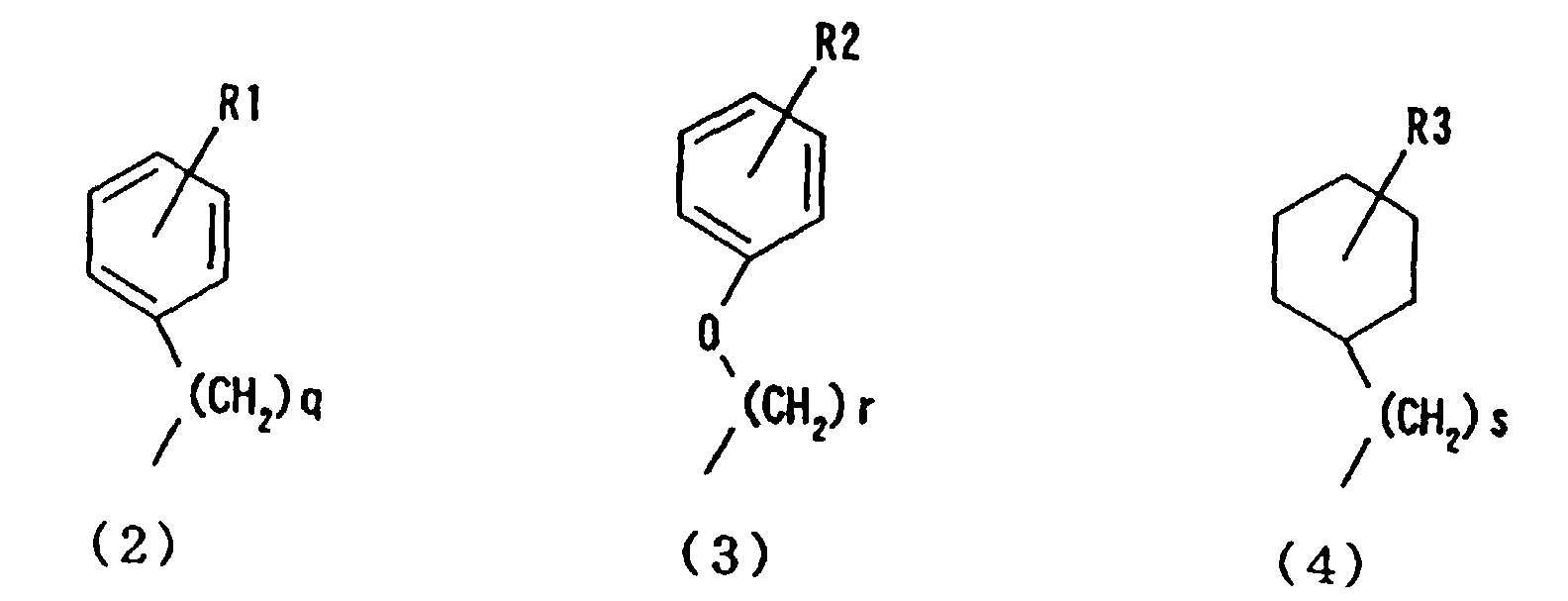
in Formula (3), R2 is selected from the group consisting of hydrogen atom (H), halogen atom, -CN, -NO2, -CF3, -C2F5 and -C3F7, and r is an integer of 1 to 8;
in Formula (4), R3 is selected from the group consisting of hydrogen atom (H), halogen atom, -CN, -NO2, -CF3, -C2F5 and -C3F7, and s is an integer of 1 to 8. The production method is also disclosed.
Description


- when one kind of R is selected:
- R being R1=H and q=2, R being R1=H and q=3 in Formula (2),
- R being R2=halogen and r=2, or R being R2=-CN and r=3 and
- R being R2=-NO2 and r=3 in Formula (3);
culturing a microorganism in a culture medium containing a raw material alkanoate and an yeast extract, wherein the microorganism produces a polyhydroxyalkanoate utilizing the alkanoate.




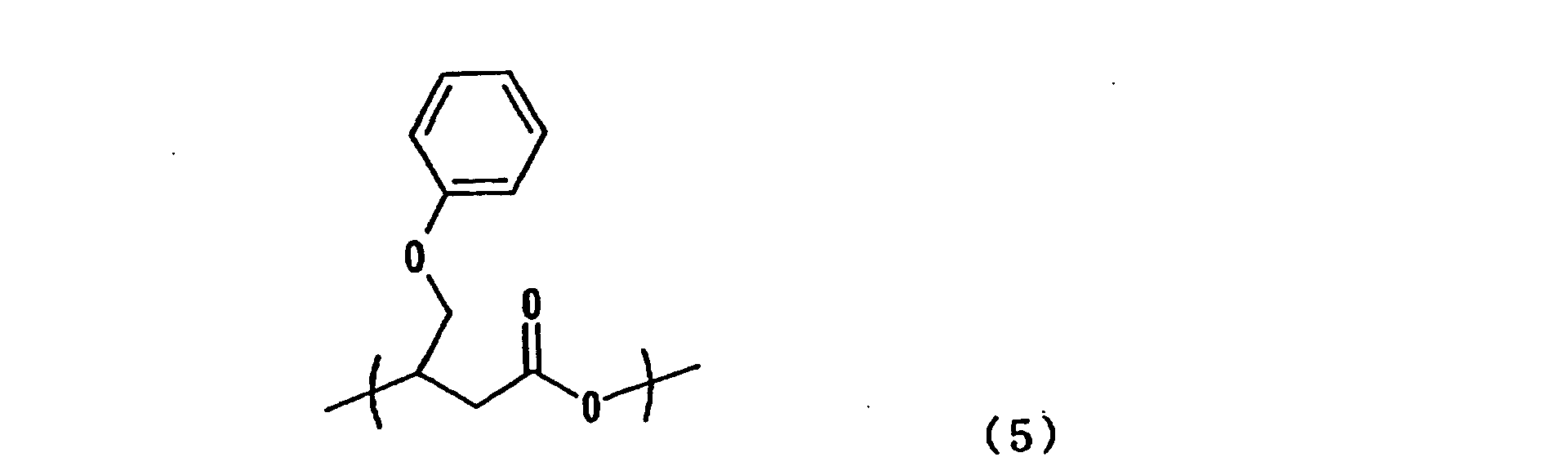

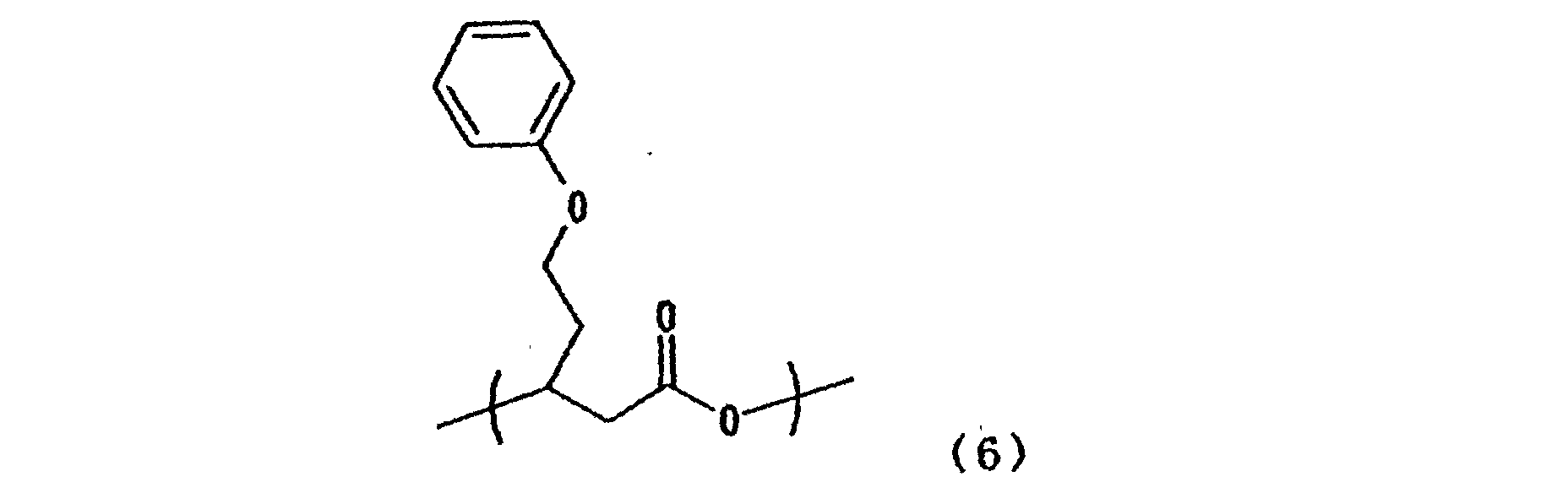

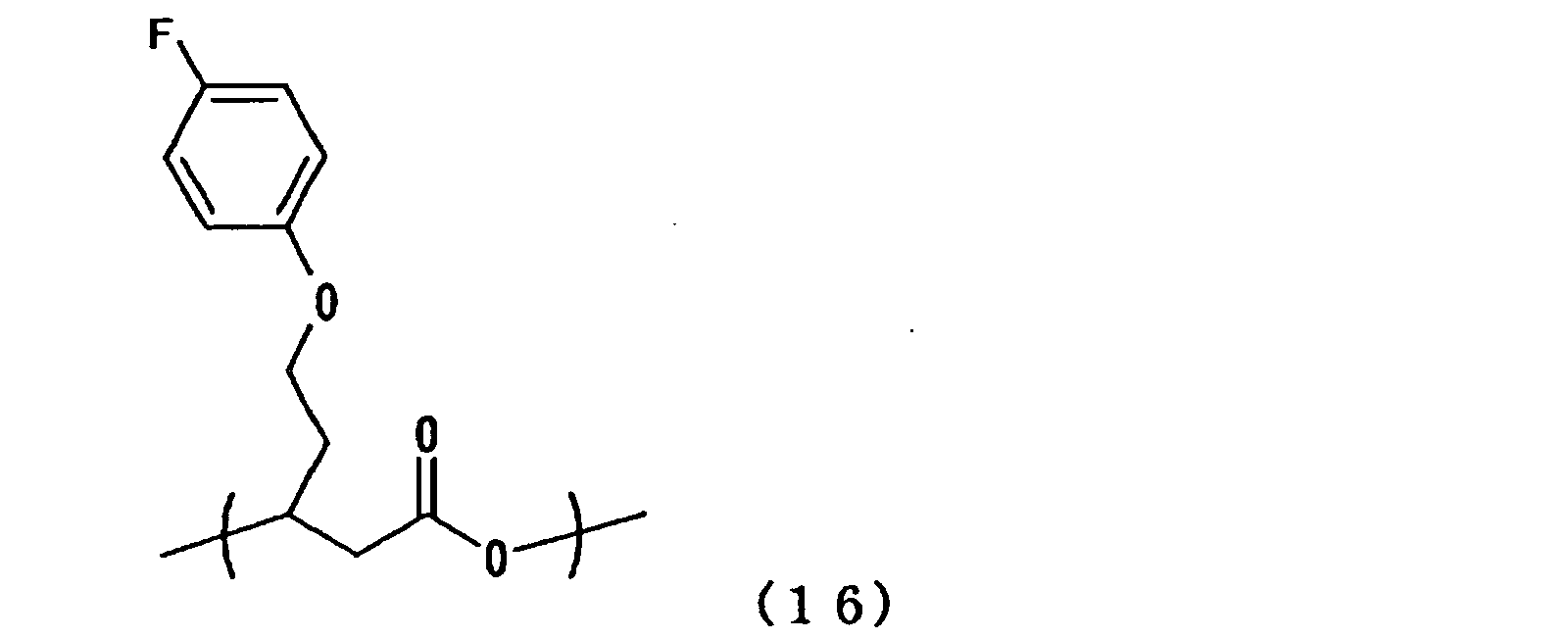

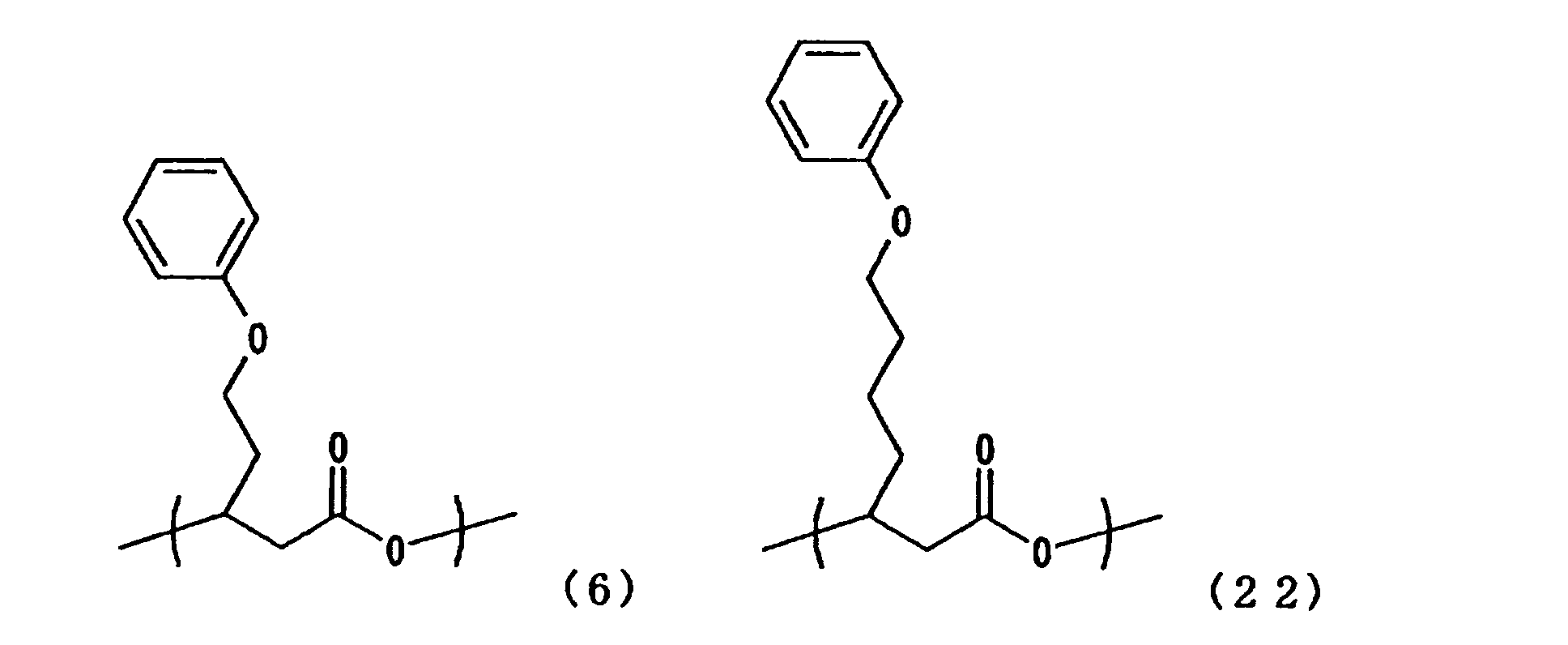

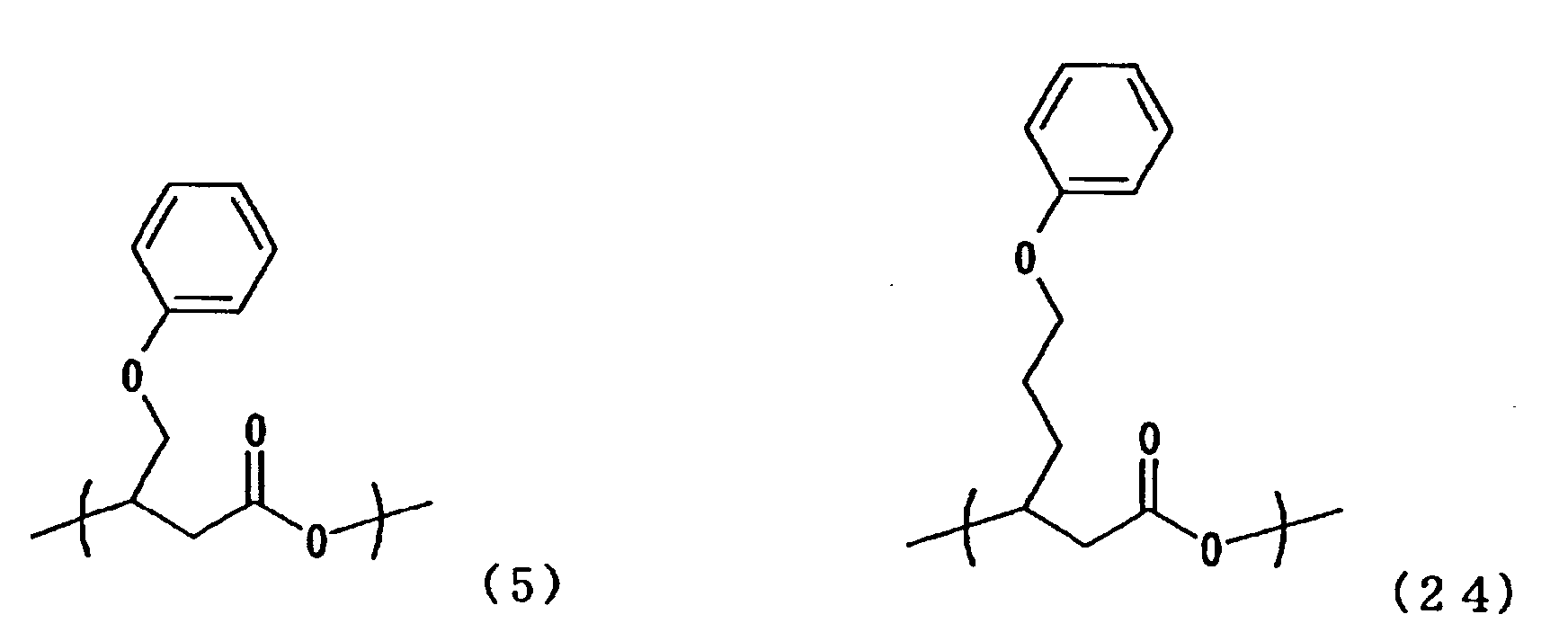
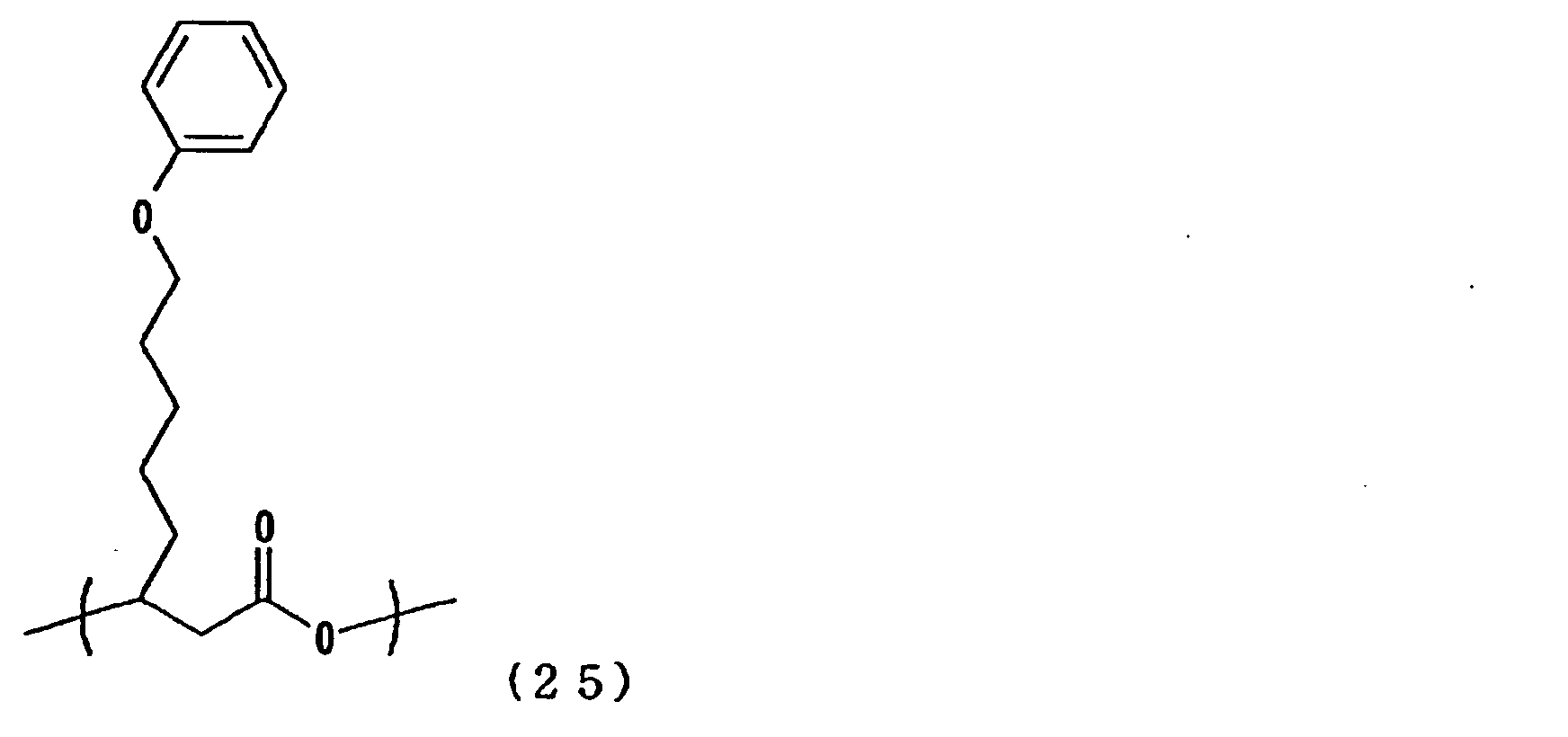
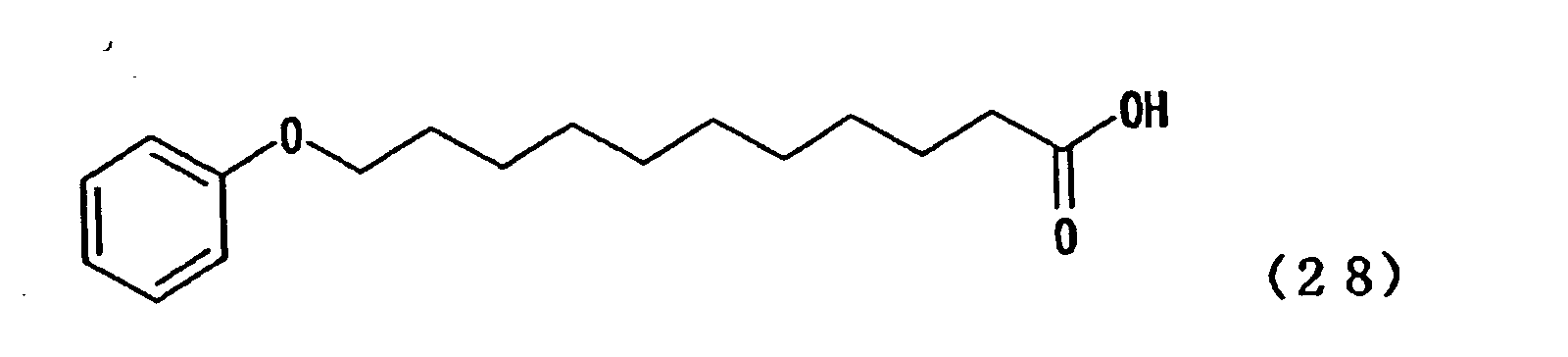

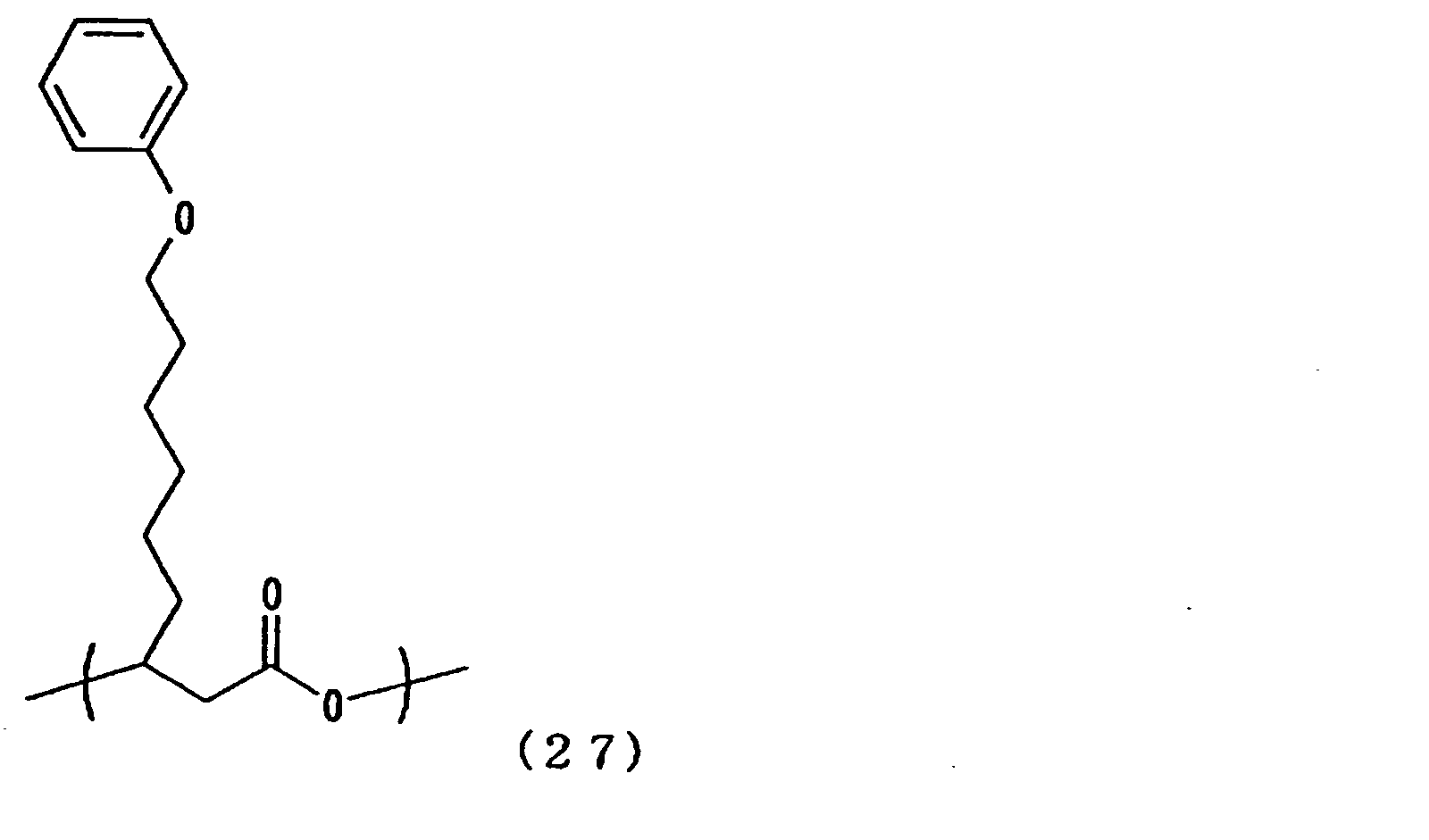


and in the case where expressed by the following Formula (3) and is the group of r=r0, the group selected as the R has a corresponding R2 and at least one or more group selected from groups of r=r0-2, q=r0-4, or r=r0-6.)
r0-2, r0-4, or r0-6 can be an integer value of 1 or more;

when cultured in a culture medium containing 5-phenylvaleric acid (PVA), expressed by Formula (18), and yeast extract.




when by using 4-cyclohexyl butyric acid (CHBA) as the substrate, microorganisms are cultured in the culture medium containing CHBA and yeast extract to produce polyhydroxyalkanoate to accumulate in cells; the monomer unit of polyhydroxyalkanoate contains 3-hydroxy-4-cyclohexyl butyric acid (3HCHB) in the high ratio and showed the sufficiently high yield and for polyhydroxyalkanoate containing 3HCHB yielded, found that the PHCHB homopolymer consisting of the repeated unit of 3HCHB monomer units can be separated by carrying out purification treatment.






5-phenyl valeric acid (PVA) expressed by Formula (18).


by using a plurality of kinds of alkanoate, as the material, selected from the following alkanoate of Formula (12), polyhydroxyalkanoate containing a plurality of kinds of monomer units having various corresponding side chains can be selectively produced using microorganisms. In other words, the first embodiment of the production method for polyhydroxyalkanoate of the present invention includes the specific form of production method for polyhydroxyalkanoate containing a plurality of kinds of monomer units having various corresponding side chains by using a plurality of kinds of alkanoate of as the material.


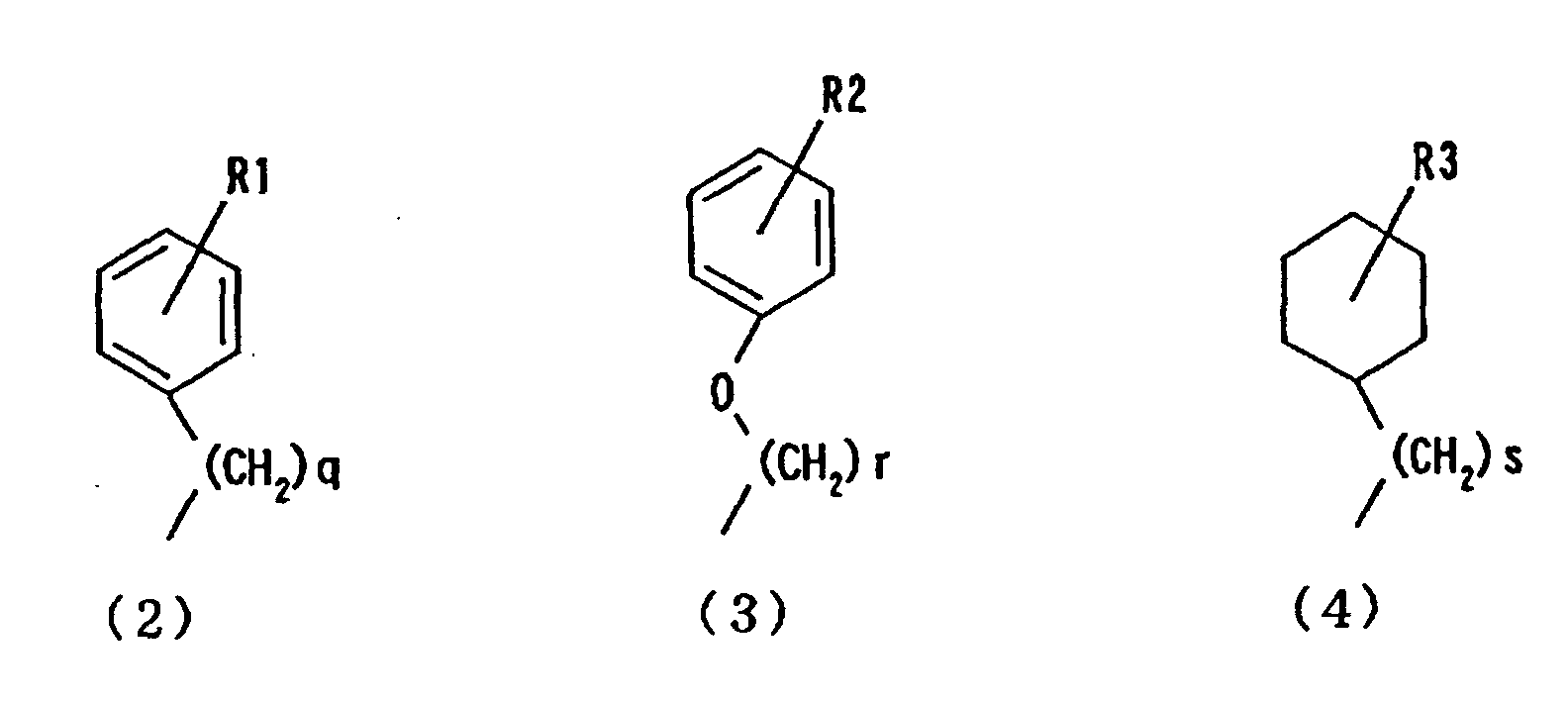
Similarly, the substitution group R3 on the cyclohexyl ring in the general Formula (4) can be selected from any one of the

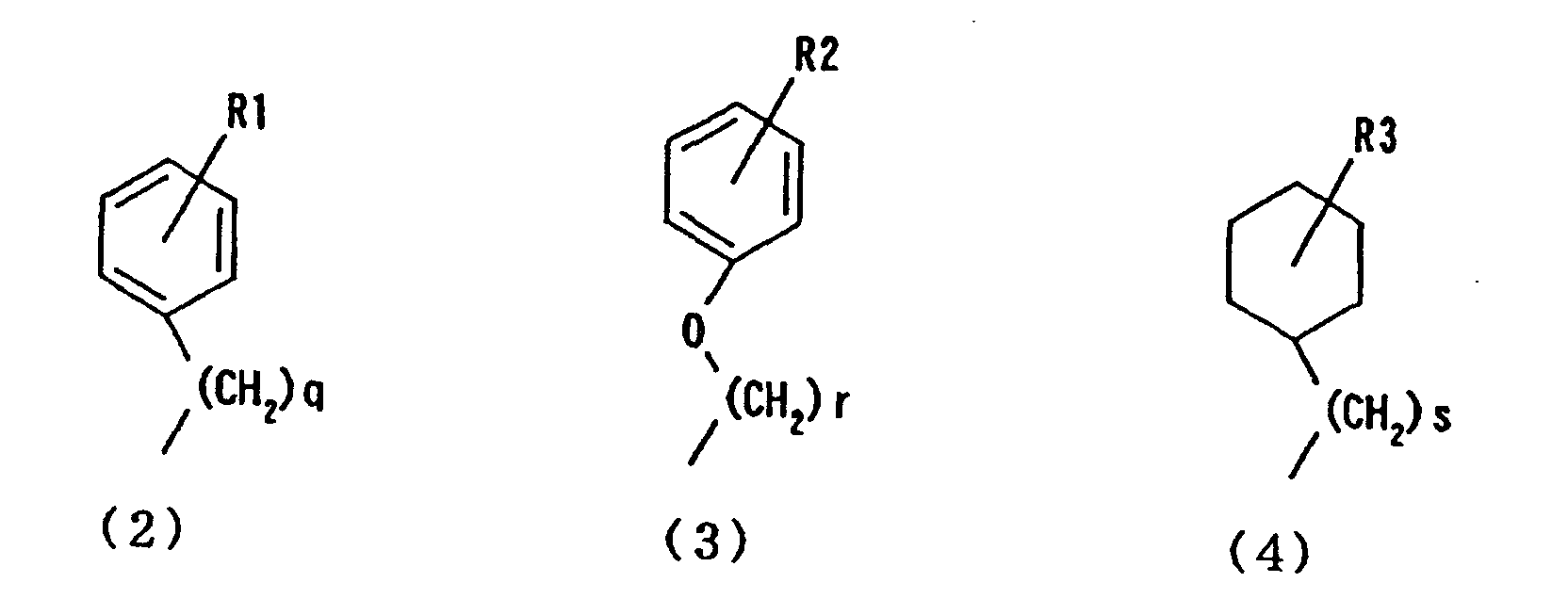
| Na2HPO4 | 6.2 g |
| KH2PO4 | 3.0 g |
| NaCl | 0.5 g |
| NH4Cl | 1.0 g |
| Carbon source (Alkanoate) | Cell (Dry weight) (mg/l) | Polymer (Dry weight) (mg/l) | Yield (%) |
| 6-Phenoxyhexanoic acid | 950 | 100 | 10.5 |
| 8-Phenoxyoctanoic acid | 820 | 90 | 11 |
| 11-Phenoxyundecanoic acid | 150 | 15 | 10 |
| NA:CHBA | Unit | |||
| 5:5 | 756.0 | 89.1 | 11.8 | NA, CHBA |
| 1:9 | 132.8 | 19.3 | 14.5 | NA, CHBA |
| P. putida P91 | |
| Cell (Dry weight) | 520 mg/l |
| Polymer (Dry weight) | 14 mg/l |
| Polymer (Dry weight)/Cell (Dry weight) | 2.7 % |
| Polymer molecular weight | Mn = 42,000 |
| Mw = 84,000 | |
| Monomer unit composition (area ratio) | |
| 3-hydroxy butyric acid | 0 % |
| 3-hydroxy valeric acid | 0 % |
| 3-hydroxy hexanoic acid | 0 % |
| 3-hydroxy heptanoic acid | 0 % |
| 3-hydroxy octanoic acid | 0 % |
| 3-hydroxy nonanoic acid | 0 % |
| 3-hydroxy decanoic acid | 0 % |
| 3-hydroxy-4-phenoxy butyric acid | 100 % |
| P. putida P91 | |
| Cell (Dry weight) | 590 mg/l |
| Polymer (Dry weight) | 8 mg/l |
| Polymer (Dry weight)/Cell (Dry weight) | 1.4 % |
| Monomer unit composition (area ratio) | |
| 3-hydroxy butyric acid | 0 % |
| 3-hydroxy valeric acid | 0 % |
| 3-hydroxy hexanoic acid | 0 % |
| 3-hydroxy heptanoic acid | 0 % |
| 3-hydroxy octanoic acid | 0 % |
| 3-hydroxy nonanoic acid | 0 % |
| 3-hydroxy decanoic acid | 0 % |
| 3-hydroxy-4-phenoxy butyric acid | 100 % |
| 1H NMR Spectrum | |
| Resonance frequency: 400 MHz | |
| δ (ppm) | Assignment |
| 0.8 to 1.6 | Impurity |
| 2.71 | d ; 2H, a |
| 3.97 | d ; 2H, c |
| 5.47 | ; 1H, b |
| 6.79 | d ; 2H, f, h |
| 6.90 | t ; 1H, g |
| 7.19 | t ; 2H, e, i |
| 1H NMR Spectrum | |||
| Resonance frequency: 400 MHz | |||
| Chemical Shift/ppm | Integral value/H | type | Identification |
| 1.562 | broad | Impurity | |
| 1.863 | 4 | c, d | |
| 2.474 | 2 | t | b |
| 3.994 | 2 | t | c |
| 6.905 | 2 | t | h, j |
| 6.964 | 1 | t | i |
| 7.28 | 2 | t | g, k |
| 9.35 | broad | -COOH |
| Dry cell (mg/l) | Dry polymer (mg/l) | Yield (dry polymer/dry cell, %) |
| 750 | 45 | 6.0 |
| 1H NMR Spectrum | |||
| Resonance frequency: 400 MHz | |||
| Chemical Shift/ppm | Integral value/H | type | Identification |
| 1.562 | broad | Impurity | |
| 2.009 | 2 | d | |
| 2.585 | 2 | d | b |
| 3.9 | 2 | m | e |
| 5.365 | 1 | m | c |
| 6.81 | 2 | m | h, j |
| 6.89 | 1 | t | i |
| 7.21 | 2 | t | g, k |
| Dry cell (mg/l) | Dry polymer (mg/l) | Yield (Dry polymer/dry cell, %) |
| 850 | 95 | 11.2 |
| 1H NMR Spectrum | |||
| Resonance frequency: 400 MHz | |||
| Chemical Shift/ppm | Integral/H | type | Identification |
| 1.85 | 4 | c, d | |
| 2.46 | 2 | t | b |
| 3.95 | 2 | t | e |
| 6.83 | 2 | t | h, j |
| 6.97 | 2 | t | g, k |
| 10.15 | broad | -COOH |
| Dry cell (mg/l) | Dry polymer (mg/l) | Yield (dry polymer/dry cell, %) |
| 700 | 35 | 5.0 |
| 1H NMR Spectrum | |||
| Resonance frequency: 400 MHz | |||
| Chemical Shift/ppm | Integral/H | type | Identification |
| to 1.55 | Impurity | ||
| 2.00 | 2 | d | |
| 2.59 | 2 | d | b |
| 3.86 | 2 | m | c |
| 5.36 | 1 | m | c |
| 6.74 | 2 | m | h, j |
| 6.90 | 2 | t | g, k |
| Dry cell (mg/l) | Dry polymer (mg/l) | Yield (dry polymer/dry cell, %) |
| 830 | 72 | 8.7 |
| P. cichorii H45 | |
| Cell (Dry weight) | 1050 mg/l |
| Polymer (Dry weight) | 310 mg/l |
| Polymer (Dry weight)/Cell (Dry weight) | 30 % |
| Polymer molecular weight | Mn = 1.5 × 10⁵ |
| Mw = 1.8 × 10⁵ | |
| Monomer unit composition (area ratio) | |
| 3-hydroxy butyric acid | 0 % |
| 3-hydroxy valeric acid | 0 % |
| 3-hydroxy hexanoic acid | 0 % |
| 3-hydroxy heptanoic acid | 0 % |
| 3-hydroxy octanoic acid | 0 % |
| 3-hydroxy nonanoic acid | 0 % |
| 3-hydroxy decanoic acid | 0 % |
| 3-hydroxy-5-phenyl valeric acid | 100 % |
| P. cichorii H45 | |
| Cell (Dry weight) | 800 mg/l |
| Polymer (Dry weight) | 320 mg/l |
| Polymer (Dry weight)/Cell (Dry weight) | 40 % |
| Polymer molecular weight | Mn = 9.7 × 10⁴ |
| Mw = 2.1 × 10⁵ | |
| Monomer unit composition (area ratio) | |
| 3-hydroxy butyric acid | 0 % |
| 3-hydroxy valeric acid | 0 % |
| 3-hydroxy hexanoic acid | 0 % |
| 3-hydroxy heptanoic acid | 0 % |
| 3-hydroxy octanoic acid | 0 % |
| 3-hydroxy nonanoic acid | 0 % |
| 3-hydroxy decanoic acid | 0 % |
| 3-hydroxy-5-phenyl valeric acid | 100 % |
| P. putida P91 | |
| Cell (Dry weight) | 880 mg/l |
| Polymer (Dry weight) | 96 mg/l |
| Polymer (Dry weight)/Cell (Dry weight) | 11 % |
| Monomer unit composition (area ratio) | |
| 3-hydroxy butyric acid | 0 % |
| 3-hydroxy valeric acid | 0 % |
| 3-hydroxy hexanoic acid | 0 % |
| 3-hydroxy heptanoic acid | 0 % |
| 3-hydroxy octanoic acid | 0 % |
| 3-hydroxy nonanoic acid | 0 % |
| 3-hydroxy decanoic acid | 0 % |
| 3-hydroxy-5-phenyl valeric acid | 100 % |
| P. jessenii P161 | |
| Cell (Dry weight) | 650 mg/l |
| Polymer (Dry weight) | 410 mg/l |
| Polymer (Dry weight)/Cell (Dry weight) | 63 % |
| Polymer molecular weight | Mn = 4.9 × 10⁴ |
| Mw = 9.2 × 10⁴ | |
| Monomer unit composition (area ratio) | |
| 3-hydroxy butyric acid | 0 % |
| 3-hydroxy valeric acid | 0 % |
| 3-hydroxy hexanoic acid | 0 % |
| 3-hydroxy heptanoic acid | 0 % |
| 3-hydroxy octanoic acid | 0 % |
| 3-hydroxy nonanoic acid | 0 % |
| 3-hydroxy decanoic acid | 0 % |
| 3-hydroxy-5-phenyl valeric acid | 100 % |
| 1H NMR Spectrum | |
| Resonance frequency: 400 MHz | |
| δ (ppm) | Assignment |
| 0.9 to 1.7 | Broad peak → Impurities |
| 1.9 | ; 2H, -CH2 → d |
| 2.4 to 2.6 | m; 4H, -CH2 × 2 → b, e |
| 5.2 to 5.3 | m; 1H, -OCH → c |
| 6.9 to 7.0 | m; 3H, → Benzene proton → h, i, j |
| 7.1 | m; 2H, → Benzene proton → g, k |
| 7.3 | s; Solvent (CDCl3) |
| 13C-NMR Spectrum | |
| Resonance frequency: 100 MHz | |
| δ (ppm) | Assignment |
| 31.8 | -CH2 → d |
| 35.8 | -CH2 → e |
| 39.4 | -CH2 → b |
| 70.9 | -CH → c |
| 77.1 to 77.7 | Solvent (CDCl3) |
| 126.5 | -CH (benzene ring) → i |
| 128.7 to 128.9 | -CH (benzene ring) → g, h, j, k |
| 141.3 | C (benzene ring) → f |
| 169.7 | Carbonyl -C=O → a |
| Chemical shift/ppm | type | Identification |
| 1.67 | c, d | |
| 2.39 | t | b |
| 2.62 | t | e |
| 6.97 | t | h, j |
| 7.12 | t | g, k |
| 10.7 | broad | COOH |
| P. cichorii H45 | |
| Cell (Dry weight) | 1310 mg/l |
| Polymer (Dry weight) | 270 mg/l |
| Polymer (Dry weight)/Cell (Dry weight) | 21 % |
| Monomer unit composition (area ratio) | |
| 3-hydroxy butyric acid | 0 % |
| 3-hydroxy valeric acid | 0 % |
| 3-hydroxy hexanoic acid | 0 % |
| 3-hydroxy heptanoic acid | 0 % |
| 3-hydroxy octanoic acid | 0 % |
| 3-hydroxy nonanoic acid | 0 % |
| 3-hydroxy decanoic acid | 0 % |
| 3-hydroxy-5-(4-fluorophenyl) valeric acid | 100 % |
| P. putida P91 | |
| Cell (Dry weight) | 430 mg/l |
| Polymer (Dry weight) | 17 mg/l |
| Polymer (Dry weight)/Cell (Dry weight) | 4 % |
| Monomer unit composition (area ratio) | |
| 3-hydroxy butyric acid | 0 % |
| 3-hydroxy valeric acid | 0 % |
| 3-hydroxy hexanoic acid | 0 % |
| 3-hydroxy heptanoic acid | 0 % |
| 3-hydroxy octanoic acid | 0 % |
| 3-hydroxy nonanoic acid | 0 % |
| 3-hydroxy decanoic acid | 0 % |
| 3-hydroxy-5-(4-fluorophenyl) valeric acid | 100 % |
| P. jessenii P161 | |
| Cell (Dry weight) | 780 mg/l |
| Polymer (Dry weight) | 330 mg/l |
| Polymer (Dry weight)/Cell (Dry weight) | 42 % |
| Monomer unit composition (area ratio) | |
| 3-hydroxy butyric acid | 0 % |
| 3-hydroxy valeric acid | 0 % |
| 3-hydroxy hexanoic acid | 0 % |
| 3-hydroxy heptanoic acid | 0 % |
| 3-hydroxy octanoic acid | 0 % |
| 3-hydroxy nonanoic acid | 0 % |
| 3-hydroxy decanoic acid | 0 % |
| 3-hydroxy-5-(4-fluorophenyl) valeric acid | 100 % |
| 1H-NMR Spectrum | |
| Resonance frequency: 400 MHz | |
| δ (ppm) | Assignment |
| 0.9 to 1.7 | Broad peak → Impurities |
| 1.8 to 1.9 | ; 2H, -CH2 → d |
| 2.4 to 2.6 | m; 4H, -CH2 × 2 → b, e |
| 5.2 to 5.3 | m; 1H, -OCH → c |
| 6.9 to 7.0 | t; 2H, Proton at o-benzene → h, j |
| 7.1 | t; 2H, Proton at m-benzene → g, k |
| 7.3 | s; Solvent (CDCl3) |
| 13C-NMR Spectrum | |
| Resonance frequency: 100 MHz | |
| δ (ppm) | Assignment |
| 31.0 | -CH2 → d |
| 35.9 | -CH2 → e |
| 39.4 | -CH2 → b |
| 70.5 | -CH → c |
| 77.1 to 77.7 | Solvent (CDCl3) |
| 115.5, 115.7 | -CH at o-benzene → h, i |
| 130.0 | -CH at m-benzene → g, k |
| 136.3 | C at p-benzene → f |
| 160.5, 163.0 | -C at with F substitution → i |
| 169.7 | Carbonyl -C=O → a |
| 1100 | 225 | 20.5 |
| 800 | 120 | 15.0 |
| 750 | 130 | 17.3 |
| 1100 | 285 | 25.9 |
| 1H Spectrum | |
| Resonans frequency: 400 MHz | |
| δ (ppm) | Assignment |
| 0.9 to 1.8 | m; 11H, |
| -CH2 × 5 → f, g, h, i, j | |
| -CH → e | |
| 1.5 to 1.7 | m; 2H, |
| -CH2 → | |
| 2.5 to 2.6 | dd; 2H, |
| - CH2 → b (further splitting due to remote H-H coupling with hexyl group) | |
| 5.2 to 5.3 | m; 1H, |
| -OCH → c |
| 13C Spectrum | |
| Resonans frequency: 100 MHz | |
| δ (ppm) | Assignment |
| 26.4 to 34.3 | hexyl -CH2, -CH → e to j |
| 40.1 | -CH2 → d |
| 41.9 | -CH2 → b |
| 69.3 | -CH → c |
| 77.1 to 77.7 | Solvent (CDCl3) |
| 169.8 | Carbonyl -C=O → a |
| Cell (Dry weight) (mg/l) | 1295 |
| Polymer (Dry weight) (mg/l) | 350 |
| Number average molecular weight (Mn) × 104 | 3.9 |
| Weight average molecular weight (Mw) × 104 | 8.1 |
| 3-hydroxy-5-phenoxyvaleic acid (%) | 60.0 |
| 3-hydroxy-7-phenoxyheptanoic acid (%) | 40.0 |
| Cell (Dry weight) (mg/l) | 1070 |
| Polymer (Dry weight) (mg/l) | 235 |
| Number average molecular weight (Mn) × 104 | 2.9 |
| Weight average molecular weight (Mw) × 104 | 5.7 |
| 3-hydroxy-5-phenoxyvaleic acid (%) | 27.9 |
| 3-hydroxy-7-phenoxyheptanoic acid (%) | 72.1 |
| Cell (Dry weight) (mg/l) | 1315 |
| Polymer (Dry weight) (mg/l) | 415 |
| Number average molecular weight (Mn) × 104 | 2.5 |
| Weight average molecular weight (Mw) × 104 | 5.5 |
| 3-hydroxy-4-phenoxybutyric acid (%) | 2.2 |
| 3-hydroxy-6-phenoxyhexanoic acid (%) | 68.7 |
| 3-hydroxy-8-phenoxyoctanoic acid (%) | 29.1 |
| Cell (Dry weight) (mg/l) | 990 |
| Polymer (Dry weight) (mg/l) | 225 |
| Number average molecular weight (Mn) × 104 | 1.8 |
| Weight average molecular weight (Mw) × 104 | 4.3 |
| 3-hydroxy-4-phenoxybutyric acid (%) | 2.4 |
| 3-hydroxy-6-phenoxyhexanoic acid (%) | 73.2 |
| 3-hydroxy-8-phenoxyoctanoic acid (%) | 24.4 |
| Cell (Dry weight) (mg/l) | 1510 |
| Polymer (Dry weight) (mg/l) | 385 |
| Number average molecular weight (Mn) × 104 | 1.8 |
| Weight average molecular weight (Mw) × 104 | 3.8 |
| 3-hydroxy-5-phenoxyvaleric acid (%) | 32.0 |
| 3-hydroxy-7-phenoxyheptanoic acid (%) | 65.6 |
| 3-hydroxy-9-phenoxynonanoic acid (%) | 2.4 |
| Cell (Dry weight) (mg/l) | 1015 |
| Polymer (Dry weight) (mg/l) | 120 |
| Number average molecular weight (Mn) × 104 | 2.2 |
| Weight average molecular weight (Mw) × 104 | 4.5 |
| 3-hydroxy-5-phenoxyvaleric acid (%) | 45.8 |
| 3-hydroxy-7-phenoxyheptanoic acid (%) | 47.8 |
| 3-hydroxy-9-phenoxynonanoic acid (%) | 6.4 |
| Cell (Dry weight) (mg/l) | 1095 |
| Polymer (Dry weight) (mg/l) | 90 |
| Number average molecular weight (Mn) × 104 | 6.8 |
| Weight average molecular weight (Mw) × 104 | 17.9 |
| 3-hydroxy-6-phenylhexanoic acid (%) | 100.0 |
| Cell (Dry weight) (mg/l) | 935 |
| Polymer (Dry weight) (mg/l) | 90 |
| Number average molecular weight (Mn) × 104 | 6.9 |
| Weight average molecular weight (Mw) × 104 | 15.5 |
| 3-hydroxy-4-phenylbutyric acid (%) | 1.7 |
| 3-hydroxy-6-phenylhexanoic acid (%) | 98.7 |
| Cell (Dry weight) (mg/l) | 1300 |
| Polymer (Dry weight) (mg/l) | 330 |
| Number average molecular weight (Mn) × 104 | 5.0 |
| Weight average molecular weight (Mw) × 104 | 10.8 |
| 3-hydroxy-5-phenylvaleric acid (%) | 62.3 |
| 3-hydroxy-5-phenoxyvaleric acid (%) | 37.7 |
| Cell (Dry weight) (mg/l) | 1050 |
| Polymer (Dry weight) (mg/l) | 165 |
| Number average molecular weight (Mn) × 104 | 3.6 |
| Weight average molecular weight (Mw) × 104 | 7.7 |
| 3-hydroxy-5-phenylvaleric acid (%) | 76.4 |
| 3-hydroxy-5-phenoxyvaleric acid (%) | 23.6 |
Claims (26)
- A polyhydroxyalkanoate comprising one or more of monomer units represented by Formula (1),where R is at least one selected from the group represented by any one of Formulas (2), (3) and (4);

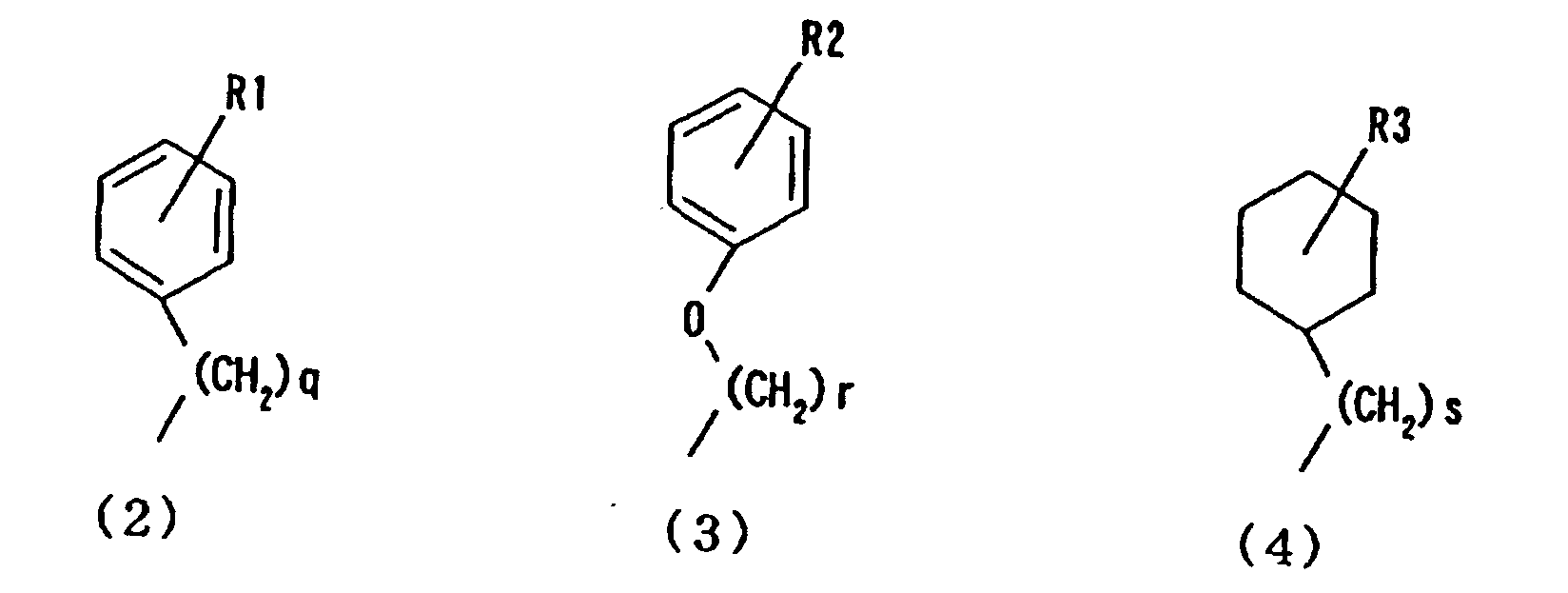 in Formula (2), R1 is selected from the group consisting of hydrogen atom (H), halogen atom, -CN, -NO2, -CF3, -C2F5 and -C3F7, and q is an integer of 1 to 8;in Formula (3), R2 is selected from the group consisting of hydrogen atom (H), halogen atom, -CN, -NO2, -CF3, -C2F5 and -C3F7, and r is an integer of 1 to 8;in Formula (4), R3 is selected from the group consisting of hydrogen atom (H), halogen atom, -CN, -NO2, -CF3, -C2F5 and -C3F7, and s is an integer of 1 to 8;provided that following R is not selected:
when one kind of R is selected:- R being R1=H and q=2, R being R1=H and q=3 in Formula (2),
- R being R2=halogen and r=2, or R being R2=-CN and r=3 and R being R2=-NO2 and r=3 in Formula (3);
when two kinds of R are selected:- a combination of R being R1=H and q=3 and 5 respectively in Formula (2),
- a combination of R being R2=H and r=2 and 4 respectively,
- a combination of R being R2=H and r=2 and 6 respectively, and a combination of R being R2=halogen and r=2 and 4 respectively in Formula (3);
when three kinds of R are selected:- a combination of R being R1=H and q=3, 5 and 7 respectively in Formula (2),
- a combination of R being R2=H and r=1, 3 and 5 respectively, and a combination of R being R2=H and r=2, 4 and 6 respectively in Formula (3).
- The polyhydroxyalkanoate according to claim 1 wherein the monomer unit is 3-hydroxy-4-phenoxybutyric acid unit of Formula (5).

- The polyhydroxyalkanoate according to claim 1 wherein the monomer unit is 3-hydroxy-5-phenoxyvaleric acid unit of Formula (6).
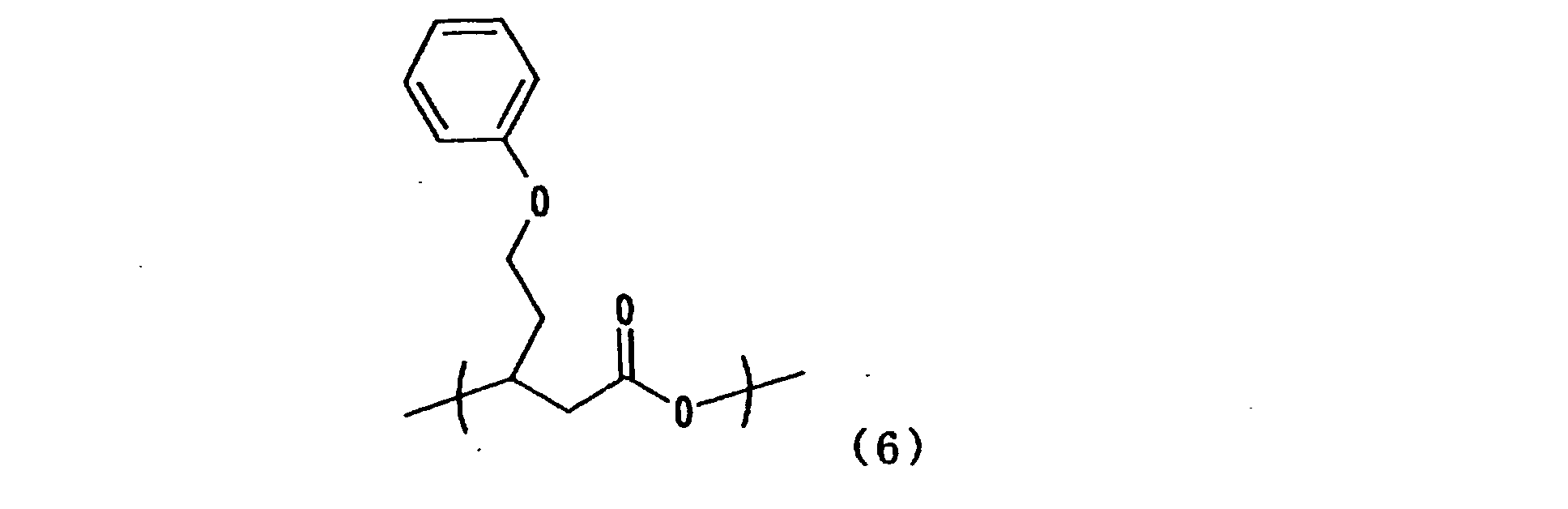
- The polyhydroxyalkanoate according to claim 1 wherein the monomer unit is 3-hydroxy-5-(4-fluorophenyl)valeric acid unit of Formula (7).

- The polyhydroxyalkanoate according to claim 1 wherein the monomer unit is 3-hydroxy-4-cyclohexylbutyric acid unit of Formula (8).

- The polyhydroxyalkanoate according to claim 1 wherein the monomer unit is 3-hydroxy-5-phenoxyvaleric acid unit of Formula (6) and 3-hydroxy-5-phenylvaleric acid unit of Formula (9).

- The polyhydroxyalkanoate according to claim 1 wherein the monomer unit is 3-hydroxy-4-phenylbutyric acid unit of Formula (10) and 3-hydroxy-6-phenylhexanoic acid units of Formula (11).

- The polyhydroxyalkanoate according to any one of claims 1 to 7 wherein a number average molecular weight is 10 to 200 thousands.
- A process of producing a polyhydroxyalkanoate comprising the step of:
culturing a microorganism in a culture medium containing a raw material alkanoate and an yeast extract, wherein the microorganism produces a polyhydroxyalkanoate utilizing the alkanoate. - The process according to claim 9, wherein the alkanoate is represented by Formula (12), and the polyhydroxyalkanoate has one or more of monomer units represented by Formula (13):wherein in Formula (12), R is at least one selected from the group consisting of Formulas (2), (3) and (4);
 wherein in Formula (2), R1 is selected from the group consisting of hydrogen atom (H), halogen atom, -CN, -NO2, -CF3, -C2F5 and -C3F7, and q is an integer of 1 to 8;
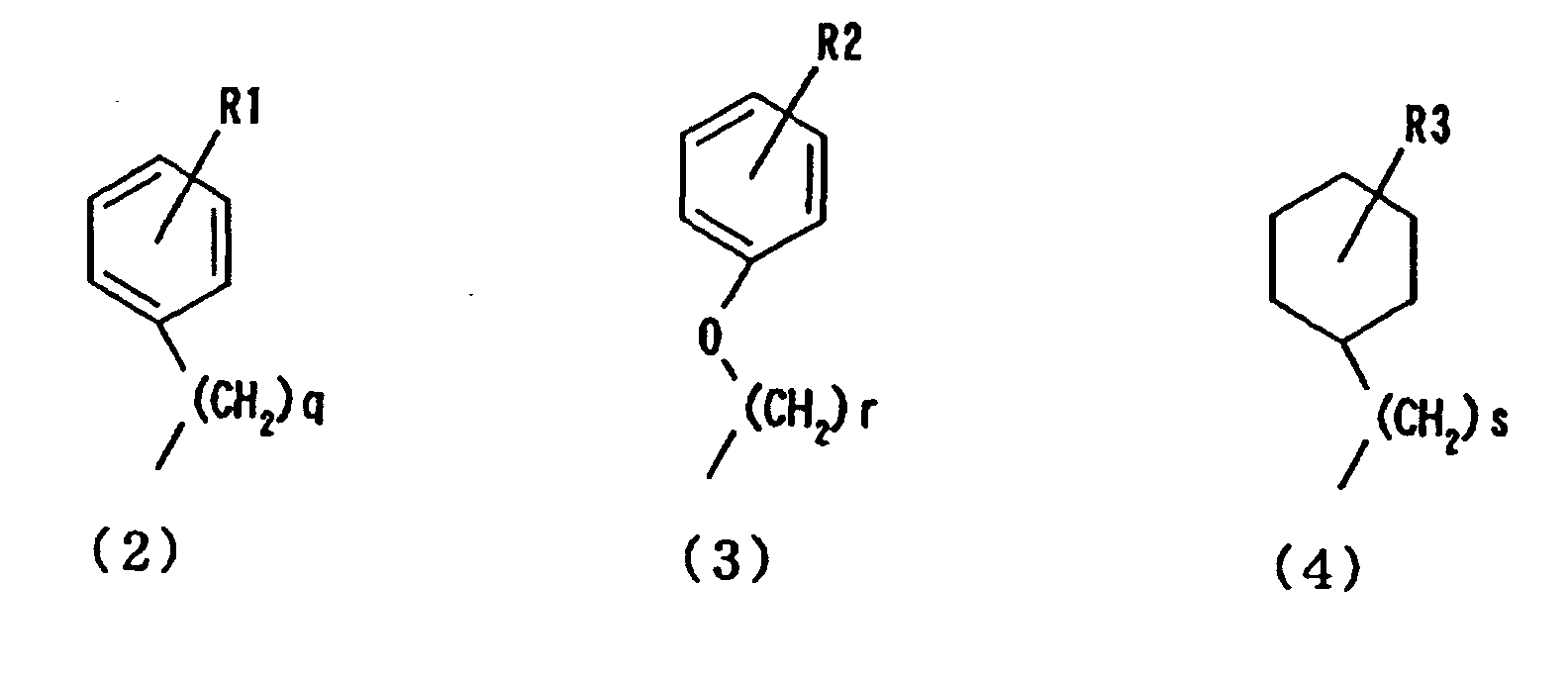 in Formula (3), R2 is selected from the group consisting of hydrogen atom (H), halogen atom, -CN, -NO2, -CF3, -C2F5 and -C3F7, and r is an integer of 1 to 8;in Formula (4), R3 is selected from the group consisting of hydrogen atom (H), halogen atom, -CN, -NO2, -CF3, -C2F5 and -C3F7, and s is an integer of 1 to 8;wherein R' is the selected R for the alkanoate or a group having the same R1, R2 or R3 as R but q=qo, q=qo-2, q=qo-4 q=qo-6; or r=ro, r=ro-2, r=ro-4 or r=ro-6; or s=so or s=so-2, s=so-4 or s=so-6; wherein qo, ro, and so are q, r, or s of the R, and qo-2, ro-2; so-2, qo-4, ro-4; so-4, qo-6, ro-6; or so-6 being integers only more than 1.
- The process according to claim 10 wherein the monomer unit is of Formula (5), and the microorganism is cultured in a culture medium containing 4-phenoxybutyric acid of Formula (14) and an yeast extract, the microorganism produces poly-3-hydroxy-4-phenoxybutyric acid utilizing 4-phenoxybutyric acid.

- The process according to claim 10 wherein the monomer unit is of Formula (6), and the culture medium contains 5-phenoxyvaleric acid of Formula (15) and an yeast extract, and the microorganism produces poly-3-hydroxy-5-phenoxyvaleric acid utilizing 5-phenoxyvaleric acid.
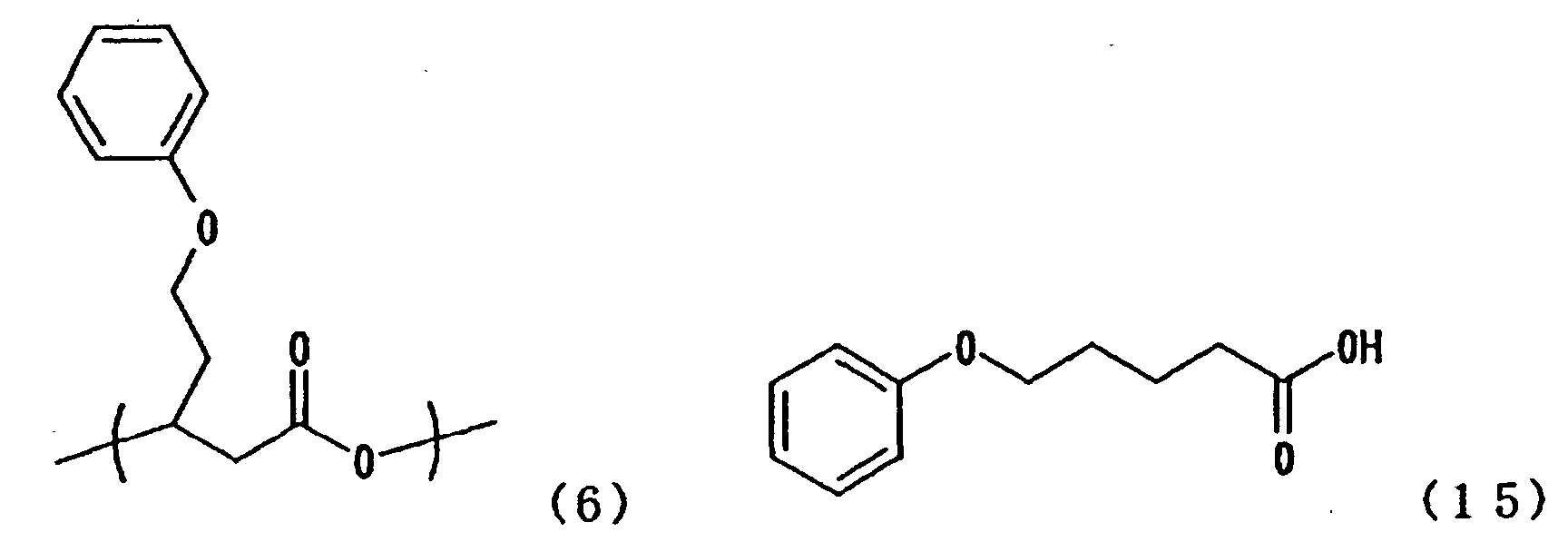
- The process according to claim 10 wherein the monomer unit is of Formula (16), the culture medium contains 5-(4-fluorophenoxy)valeric acid of Formula (17) and yeast extract, and the microorganism produces poly-3-hydroxy-5-(4-fluorophenoxy)valeric acid utilizing 5-(4-fluorophenoxy)valeric acid.

- The process according to claim 10 wherein the monomer unit is of Formula (9), the culture medium contains 5-phenylvaleric acid of Formula (18) and an yeast extract, and the microorganism produces poly-3-hydroxy-5-phenylvaleric acid utilizing 5-phenylvaleric acid.

- The process according to claim 10 wherein the monomer unit is of Formula (7), the culture medium contains 5-(4-fluorophenyl)valeric acid of Formula (19) and an yeast extract, and the microorganism produces poly-3-hydroxy-5-(4-fluorophenyl)valeric acid utilizing 5-(4-fluorophenyl)valeric acid.
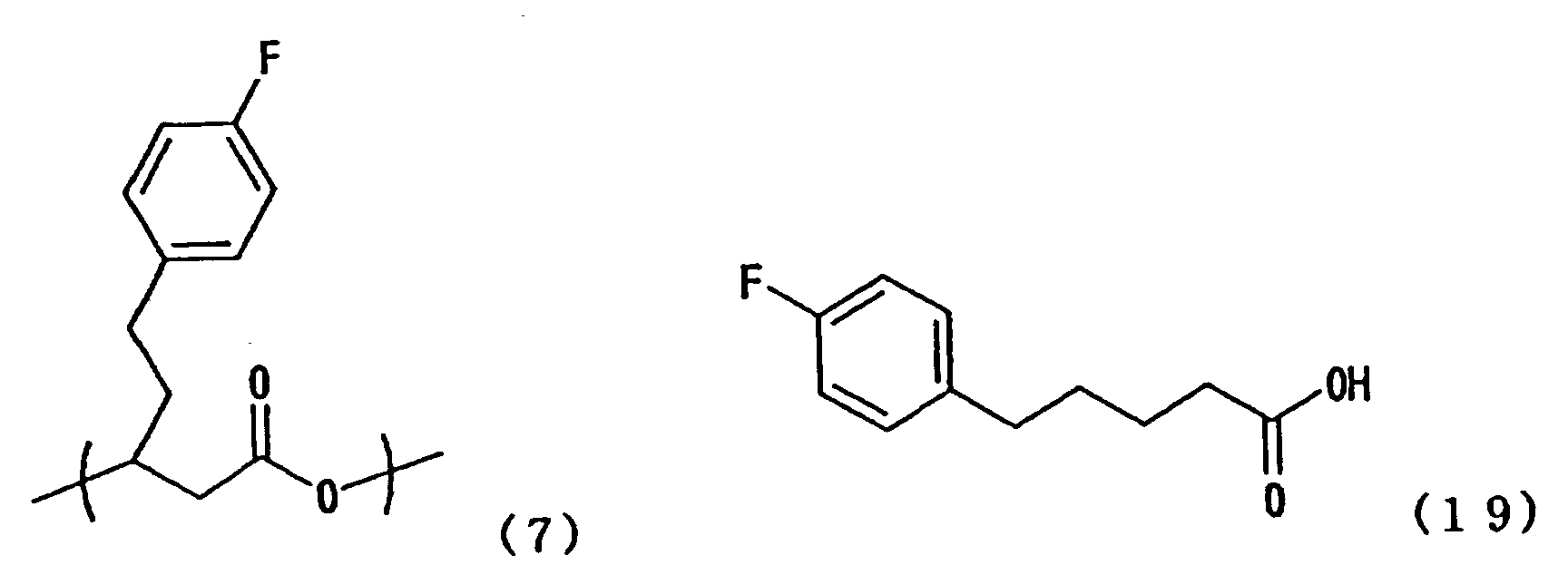
- The process according to claim 10 wherein the monomer unit is of Formula (8), the culture medium contains 4-cyclohexylbutyric acid of Formula (20) and an yeast extract, and the microorganism produces poly-3-hydroxy-4-cyclohexylbutyric acid utilizing 4-cyclohexylbutyric acid.

- The process according to claim 10 wherein the monomer unit is of Formulas (6) and (9), the culture medium contains 5-phenoxyvaleric acid of Formula (15), 5-phenylvaleric acid of Formula (18) and an yeast extract, and the microorganism produces a polyhydroxyalkanoate comprising 3-hydroxy-5-phenoxyvaleric acid and 3-hydroxy-5-phenylvaleric acid utilizing 5-phenoxyvaleric acid and 5-phenylvaleric acid.

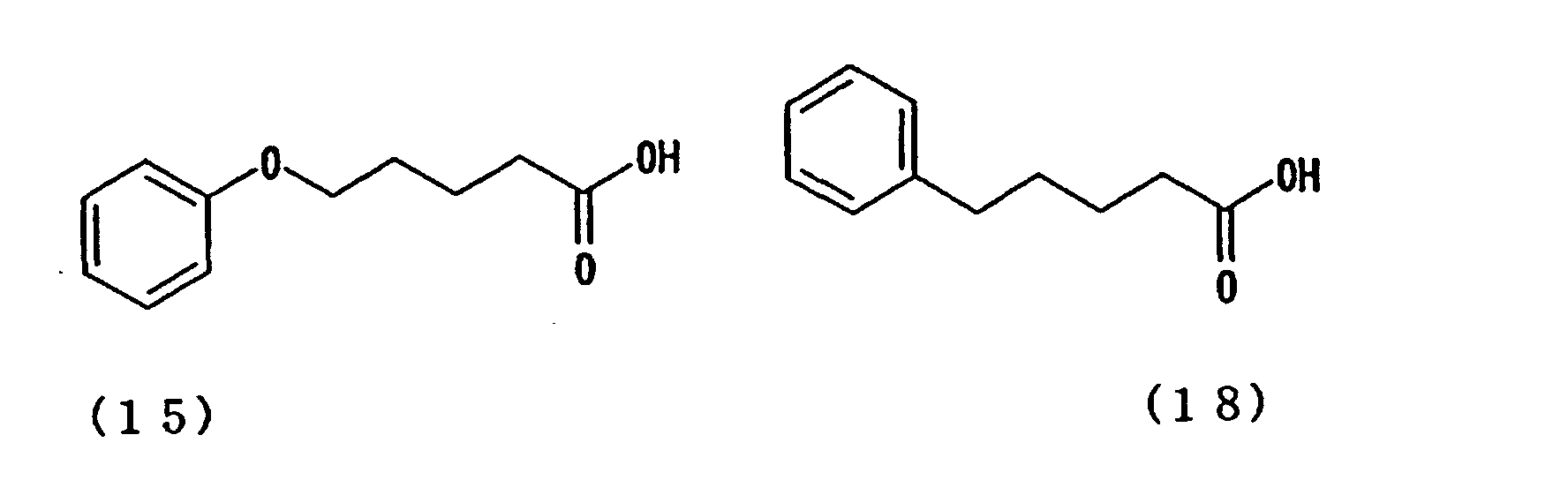
- The process according to claim 10 wherein the monomer unit is of Formulas (10) and (11), the culture medium contains 6-phenylhexanoic acid of Formula (21) and an yeast extract, and the microorganism produces a polyhydroxyalkanoate comprising 3-hydroxy-4-phenylbutyric acid and 3-hydroxy-6-phenylhexanoic acid utilizing 6-phenylhexanoic acid.

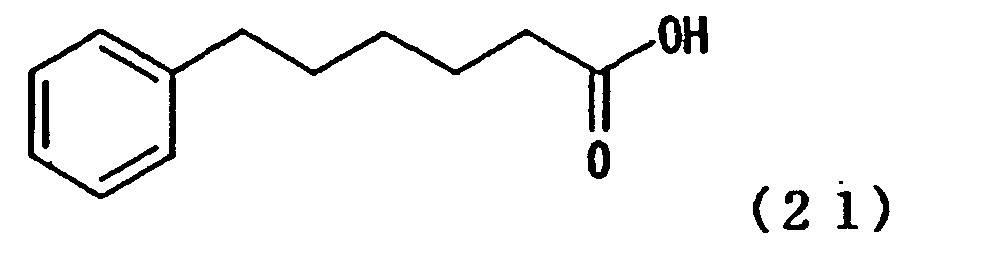
- The process according to claim 10 wherein the monomer unit is of Formulas (6) and (22), the culture medium contains 7-phenoxyheptanoic acid of Formula (23) and an yeast extract, and the microorganism produces a polyhydroxyalkanoate comprising 3-hydroxy-5-phenoxyvaleric acid and 3-hydroxy-7-phenoxyheptanoic acid utilizing 7-phenoxyheptanoic acid.
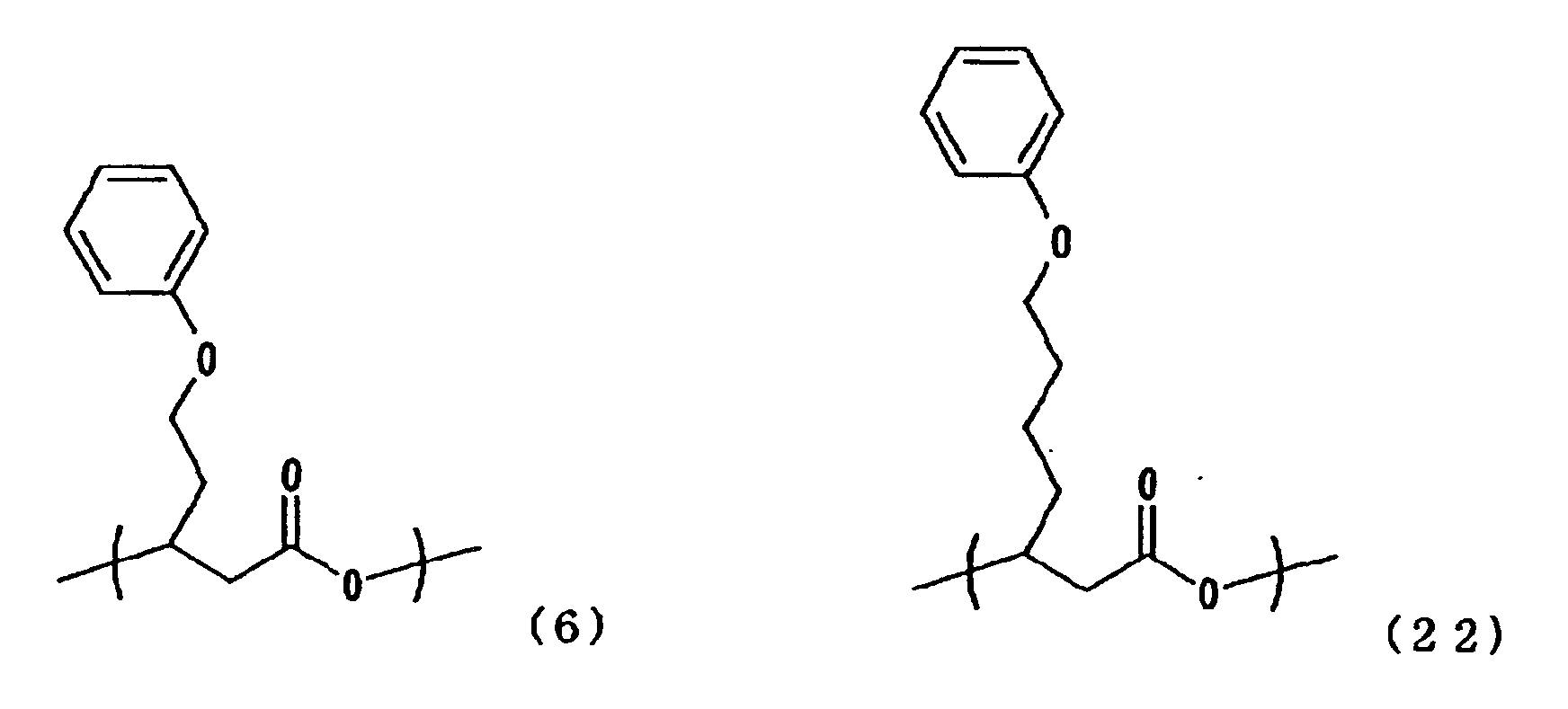

- The process according to claim 10 wherein the monomer unit is of Formulas (5), (24) and (25), the culture medium contains 8-phenoxyoctanoic acid of Formula (26) and an yeast extract, and the microorganism produces a polyhydroxyalkanoate comprising 3-hydroxy-4-phenoxybutyric acid, 3-hydroxy-6-phenoxyhexanoic acid and 3-hydroxy-8-phenoxyoctanoic acid utilizing 8-phenoxyoctanoic acid.


- The process according to claim 10 wherein the monomer unit is of Formulas (6), (22) and (27), the culture medium contains 11-phenoxyundecanoic acid of Formula (28) and an yeast extract, the microorganism produces a polyhydroxyalkanoate comprising 3-hydroxy-5-phenoxyvaleric acid, 3-hydroxy-7-phenoxyheptanoic acid and 3-hydroxy-9-phenoxynonanoic acid utilizing 11-phenoxyundecanoic acid.


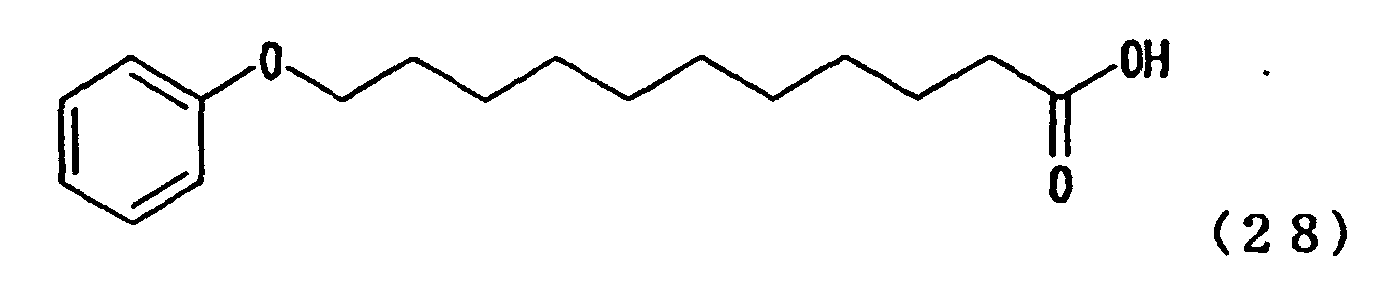
- The process according to claim 9 wherein the step of culturing is one step culture in a culture medium containing an alkanoate and an yeast extract.
- The process according to claim 9 wherein the step of culturing is two step culture in a culture medium containing an alkanoate and an yeast extract followed by culturing in a nitrogen-restricted culture medium containing the alkanoate.
- The process according to claim 9 which further comprises a step of separation/refinement of the polyhydroxyalkanoate.
- The process according to claim 9 wherein the microorganism belongs to a genus Pseudomonas.
- The process according to claim 25 wherein the microorganism is at least one selected from the group consisting of Pseudomonas cichorii YN2 (FERM BP-7375); Pseudomonas cichorii H45 (FERM BP-7374); Pseudomonas putida P91 (FERM BP-7373); and Pseudomonas jessenii P161 (FERM BP-7376).
Applications Claiming Priority (14)
| Application Number | Priority Date | Filing Date | Title |
|---|---|---|---|
| JP37186499 | 1999-12-27 | ||
| JP37186799 | 1999-12-27 | ||
| JP37186499 | 1999-12-27 | ||
| JP37186899 | 1999-12-27 | ||
| JP37186799 | 1999-12-27 | ||
| JP37186999 | 1999-12-27 | ||
| JP37186999 | 1999-12-27 | ||
| JP37186899 | 1999-12-27 | ||
| JP2000023025 | 2000-01-31 | ||
| JP2000023024 | 2000-01-31 | ||
| JP2000023025 | 2000-01-31 | ||
| JP2000023024 | 2000-01-31 | ||
| JP2000361323 | 2000-11-28 | ||
| JP2000361323A JP3673711B2 (en) | 1999-12-27 | 2000-11-28 | Polyhydroxyalkanoate and its production method using microorganism |
Publications (3)
| Publication Number | Publication Date |
|---|---|
| EP1118629A2 true EP1118629A2 (en) | 2001-07-25 |
| EP1118629A3 EP1118629A3 (en) | 2004-01-14 |
| EP1118629B1 EP1118629B1 (en) | 2007-04-25 |
Family
ID=27566939
Family Applications (1)
| Application Number | Title | Priority Date | Filing Date |
|---|---|---|---|
| EP00128540A Expired - Lifetime EP1118629B1 (en) | 1999-12-27 | 2000-12-27 | Polyhydroxyalkanoates and method of producing them by utilizing microorganisms |
Country Status (7)
| Country | Link |
|---|---|
| US (2) | US6521429B2 (en) |
| EP (1) | EP1118629B1 (en) |
| JP (1) | JP3673711B2 (en) |
| KR (2) | KR100487554B1 (en) |
| CN (1) | CN1260265C (en) |
| AT (1) | ATE360657T1 (en) |
| DE (1) | DE60034543T2 (en) |
Cited By (4)
| Publication number | Priority date | Publication date | Assignee | Title |
|---|---|---|---|---|
| EP1340777A1 (en) * | 2002-02-28 | 2003-09-03 | Canon Kabushiki Kaisha | Novel polyhydroxyalkanoate, method of producing the same, charge controlling agent containing polyhydroxyalkanoate, toner binder and toner, and image formation method and image forming apparatus using toner |
| WO2004044031A1 (en) * | 2002-10-24 | 2004-05-27 | Canon Kabushiki Kaisha | New polyhydroxyalkanoate comprising unit having (phenylmethyl)oxy structure on side chain thereof, and method for producing the same |
| US8802792B2 (en) | 2010-09-17 | 2014-08-12 | Empire Technology Development Llc | Partially hydrogenated bisphenol-A-based polymers as substitutes for bisphenol-A-based polymers |
| US10465214B2 (en) | 2014-11-20 | 2019-11-05 | Full Cycle Bioplastics Llc | Producing resins from organic waste products |
Families Citing this family (30)
| Publication number | Priority date | Publication date | Assignee | Title |
|---|---|---|---|---|
| US6872788B2 (en) * | 2000-08-31 | 2005-03-29 | Canon Kabushiki Kaisha | Production method of polyester containing epoxy group in side chain and production method of crosslinked polymer |
| JP3740358B2 (en) * | 2000-08-31 | 2006-02-01 | キヤノン株式会社 | Method for producing polyester having epoxy group in side chain and method for producing crosslinked polymer |
| KR100462543B1 (en) * | 2000-09-14 | 2004-12-17 | 캐논 가부시끼가이샤 | Polyhydroxyalkanoate and manufacturing method thereof |
| JP3768799B2 (en) * | 2000-10-30 | 2006-04-19 | キヤノン株式会社 | Process for producing polyhydroxyalkanoate from substituted fatty acid ester |
| US6964860B2 (en) * | 2001-04-25 | 2005-11-15 | Wyeth Holdings Corporation | Glycopeptide antibiotics |
| US6911521B2 (en) | 2001-05-31 | 2005-06-28 | Canon Kabushiki Kaisha | Polyhydroxyalkanoate that comprises unit having substituted or unsubstituted (phenylmethyl) sulfanyl structure in side chain thereof and process for producing the same |
| US6869782B2 (en) * | 2001-07-10 | 2005-03-22 | Canon Kabushiki Kaisha | Polyhydroxyalkanoate that comprises unit having (methylsulfanyl) phenoxy structure in side chain thereof and process for producing the same |
| JP3990880B2 (en) | 2001-07-10 | 2007-10-17 | キヤノン株式会社 | Method for producing polyhydroxyalkanoate-coated liposome |
| JP3754956B2 (en) * | 2002-02-15 | 2006-03-15 | キヤノン株式会社 | NOVEL POLYHYDROXYALKANOATE COPOLYMER CONTAINING UNIT HAVING BROMO GROUP IN SIDE CHAIN AND METHOD FOR PRODUCING THE SAME |
| JP3689700B2 (en) | 2002-02-28 | 2005-08-31 | キヤノン株式会社 | NOVEL POLYHYDROXYALKANOATE COPOLYMER CONTAINING UNIT COMPRISING VINYLPHENYL STRUCTURE IN SIDE CHAIN AND METHOD FOR PRODUCING THE SAME |
| JP2003319792A (en) | 2002-02-28 | 2003-11-11 | Canon Inc | Method for controlling molecular weight of polyhydroxyalkanoate in which units containing phenyl, thienyl or cyclohexyl structure-having residues in side chains are contained, and polyhydroxyalkanoate |
| JP2003310292A (en) | 2002-04-26 | 2003-11-05 | Canon Inc | Method for producing polyhydroxyalkanoate from alkane having residue containing aromatic ring in molecule |
| JP4027297B2 (en) | 2002-10-24 | 2007-12-26 | キヤノン株式会社 | NOVEL POLYHYDROXYALKANOATE AND METHOD FOR PRODUCING THE SAME; RESIN COMPOSITION CONTAINING THE SAME; NOVEL POLYHYDROXYALKANOATE-CONTAINING CHARGE CONTROL AGENT, ELECTROSTATIC IMAGE DEVELOPING TONER AND Binder Resin Composition |
| JP3647432B2 (en) * | 2002-10-24 | 2005-05-11 | キヤノン株式会社 | NOVEL POLYHYDROXYALKANOATES CONTAINING UNITS HAVING CYCLOXY STRUCTURES IN SIDE CHAINS, PROCESS FOR PRODUCING THE SAME, AND BINDER RESIN CONTAINING THE POLYHYDROXYALKANOATES |
| JP4502363B2 (en) * | 2002-10-24 | 2010-07-14 | キヤノン株式会社 | NOVEL POLYHYDROXYALKANOATE COPOLYMERS CONTAINING UNITS HAVING VINYL GROUPS IN SIDE CHAINS, NOVEL POLYHYDROXYALKANOATE COPOLYMERS CONTAINING UNITS HAVING CARBOXY GROUPS IN SIDE CHAINS, Method |
| CN100381940C (en) * | 2002-12-27 | 2008-04-16 | 佳能株式会社 | Polyhydroxyalkanoate, production method thereof, charge regulator, toner, image forming method, and image forming apparatus |
| KR100482776B1 (en) * | 2003-04-23 | 2005-04-14 | 한국과학기술원 | Process for Preparing Polyhydroxyalkanoate Employing MaoC protein |
| US20070003975A1 (en) * | 2003-05-02 | 2007-01-04 | Canon Kabushiki Kaisha | Structured construct and producing method therefor |
| US7010379B2 (en) * | 2003-06-25 | 2006-03-07 | Arvin Technologies, Inc. | Converter substrate verification |
| DE602005018917D1 (en) * | 2004-06-11 | 2010-03-04 | Canon Kk | POLYHYDROXYALKANOATE WITH VINYL GROUP, ESTER GROUP, CARBOXYL GROUP AND SULPHONIC ACID GROUP AND METHOD OF MANUFACTURING THEREOF |
| JP4741883B2 (en) | 2004-06-11 | 2011-08-10 | キヤノン株式会社 | Polyhydroxyalkanoate having ester group, carboxyl group and sulfonic acid group and method for producing the same |
| EP1758948B1 (en) * | 2004-06-11 | 2009-05-13 | Canon Kabushiki Kaisha | Polyhydroxyalkanoic acid having vinyl, ester, carboxyl or sulfonic acid group and producing method therefor |
| US7510813B2 (en) | 2004-06-24 | 2009-03-31 | Canon Kabushiki Kaisha | Resin-coated carrier for electrophotographic developer |
| US20060194071A1 (en) * | 2004-06-25 | 2006-08-31 | Canon Kabushiki Kaisha | Developer carrying member and development apparatus |
| WO2008049099A1 (en) * | 2006-10-21 | 2008-04-24 | Polyone Corporation | Thermoplastic polyhydroxyalkanoate compounds |
| PT103714B (en) * | 2007-04-11 | 2020-07-28 | 73100 - Setenta E Três Mil E Cem, Lda. | PROCESS FOR OBTAINING A GALACTOSE-BASED POLYMER |
| US20100018674A1 (en) * | 2008-07-22 | 2010-01-28 | Donald John Enzinna | Reservoir with moveable partition for quick recovery |
| US8002399B2 (en) | 2009-12-02 | 2011-08-23 | Xerox Corporation | Solid inks incorporating a polyhydroxyalkanoate compound for enhanced properties |
| US8894762B2 (en) | 2012-09-24 | 2014-11-25 | Xerox Corporation | Phase change ink comprising a polyhydroxyalkanoate compound |
| CN110628187B (en) * | 2019-09-30 | 2021-09-07 | 中国科学院理化技术研究所 | A kind of water-collecting degradable plastic film and preparation method thereof |
Family Cites Families (40)
| Publication number | Priority date | Publication date | Assignee | Title |
|---|---|---|---|---|
| NL8603073A (en) | 1986-12-02 | 1988-07-01 | Rijksuniversiteit | METHOD FOR PREPARING POLYESTERS BY FERMENTATION; METHOD FOR PREPARING OPTICALLY ACTIVE CARBONIC ACIDS AND ESTERS; POLYESTER INCLUDING PRODUCTS. |
| US4876331A (en) * | 1987-08-18 | 1989-10-24 | Mitsubishi Kasei Corporation | Copolyester and process for producing the same |
| JPH057492A (en) | 1990-09-14 | 1993-01-19 | Mitsubishi Gas Chem Co Inc | Method for producing copolymer |
| EP0475785A3 (en) | 1990-09-14 | 1993-04-14 | Mitsubishi Gas Chemical Company, Inc. | Process for preparation of copolymer |
| JPH05159A (en) | 1990-09-27 | 1993-01-08 | Terumo Corp | Medical soft member |
| JP2925385B2 (en) | 1991-06-11 | 1999-07-28 | 鐘紡株式会社 | Method for producing polyhydroxy organic acid ester |
| GB9113219D0 (en) | 1991-06-19 | 1991-08-07 | Fujisawa Pharmaceutical Co | Peptide compound,processes for preparation thereof and pharmaceutical composition comprising the same |
| JP2777757B2 (en) | 1991-09-17 | 1998-07-23 | 鐘淵化学工業株式会社 | Copolymer and method for producing the same |
| JPH06169980A (en) | 1992-12-03 | 1994-06-21 | Nitto Denko Corp | Artificial skin and wound dressing |
| JPH06169988A (en) | 1992-12-03 | 1994-06-21 | Nitto Denko Corp | Dialyzing film |
| JPH06225921A (en) | 1993-02-04 | 1994-08-16 | Nitto Denko Corp | Bag and tube for medical treatment |
| JPH07265065A (en) | 1994-03-29 | 1995-10-17 | Kanegafuchi Chem Ind Co Ltd | Method for producing transformant and copolymer with synthetic gene of copolymer |
| JPH09191893A (en) | 1996-01-22 | 1997-07-29 | Taisei Corp | Method for producing hydroxyalkanoic acid copolymer |
| EP0881293A1 (en) * | 1997-05-28 | 1998-12-02 | Eidgenössische Technische Hochschule Zürich Institut für Biotechnologie | Production of medium chain length poly-3-hydroxy alkanoates in Escherichia coli, and monomers derived therefrom |
| JP3684150B2 (en) * | 1999-12-27 | 2005-08-17 | キヤノン株式会社 | Polyhydroxyalkanoate |
| US6861550B2 (en) * | 2000-02-29 | 2005-03-01 | Canon Kabushiki Kaisha | Polyhydroxyalkanoate containing 3-hydroxybenzoylalkanoic acid as monomer unit, and method for producing the same |
| EP1130043B1 (en) * | 2000-02-29 | 2006-01-25 | Canon Kabushiki Kaisha | Polyhydroxyalkanoate containing 3-hydroxythienylalkanoic acid as monomer unit and method for producing the same |
| JP3848047B2 (en) * | 2000-03-30 | 2006-11-22 | キヤノン株式会社 | Polyhydroxyalkanoate synthase and gene encoding the enzyme |
| US6872788B2 (en) * | 2000-08-31 | 2005-03-29 | Canon Kabushiki Kaisha | Production method of polyester containing epoxy group in side chain and production method of crosslinked polymer |
| KR100462543B1 (en) * | 2000-09-14 | 2004-12-17 | 캐논 가부시끼가이샤 | Polyhydroxyalkanoate and manufacturing method thereof |
| JP3768799B2 (en) * | 2000-10-30 | 2006-04-19 | キヤノン株式会社 | Process for producing polyhydroxyalkanoate from substituted fatty acid ester |
| JP3720779B2 (en) * | 2001-02-28 | 2005-11-30 | キヤノン株式会社 | NOVEL POLYHYDROXYALKANOATE TYPE POLYESTER HAVING VINYLPHENYL STRUCTURE IN SIDE CHAIN AND PROCESS FOR PRODUCING THE SAME |
| JP3748537B2 (en) * | 2001-03-01 | 2006-02-22 | キヤノン株式会社 | POLYHYDROXYALKANOATE AND PROCESS FOR PRODUCING THE SAME, AND ω- (2-THIENYLSULFANYL) ALKANOIC ACID AND PROCESS FOR PRODUCING THE SAME |
| JP5121101B2 (en) * | 2001-04-27 | 2013-01-16 | キヤノン株式会社 | Pigment ink and method for producing the same |
| KR100528749B1 (en) * | 2001-04-27 | 2005-11-15 | 캐논 가부시끼가이샤 | Novel polyhydroxyalkanoates having in its side chain phenylsulfinyl structure and/or phenyl sulfonyl structure and production process therefor, charge control agent, toner binder and toner containing same, and image forming method and image forming apparatus using the toner |
| KR100461511B1 (en) * | 2001-04-27 | 2004-12-14 | 캐논 가부시끼가이샤 | Novel polyhydroxyalkanoate, its production method, charge control agent containing the polyhydroxyalkanoate, toner binder and toner, and image forming method image forming apparatus using the toner |
| JP3496002B2 (en) * | 2001-04-27 | 2004-02-09 | キヤノン株式会社 | Binder resin containing novel polyhydroxyalkanoate, toner containing the binder resin; image forming method and image forming apparatus using the toner |
| KR100487555B1 (en) * | 2001-04-27 | 2005-05-06 | 캐논 가부시끼가이샤 | Novel polyhydroxyalkanoate, producing method therefor, charge control agent containing such polyhydroxyalkanoate, toner contatining such charge control agent and image-forming method and image-forming apparatus utilizing such toner |
| US7153622B2 (en) * | 2001-04-27 | 2006-12-26 | Canon Kabushiki Kaisha | Electrostatic charge image developing toner, producing method therefor, image forming method and image forming apparatus utilizing the toner, construct and method for making the construct |
| JP3501771B2 (en) * | 2001-04-27 | 2004-03-02 | キヤノン株式会社 | Binder resin containing polyhydroxyalkanoate, toner containing the binder resin; image forming method and image forming apparatus using the toner |
| JP2003015168A (en) * | 2001-04-27 | 2003-01-15 | Canon Inc | Electrophoretic particles, method for producing electrophoretic particles, and electrophoretic display element |
| US6911521B2 (en) * | 2001-05-31 | 2005-06-28 | Canon Kabushiki Kaisha | Polyhydroxyalkanoate that comprises unit having substituted or unsubstituted (phenylmethyl) sulfanyl structure in side chain thereof and process for producing the same |
| KR100521526B1 (en) * | 2001-07-10 | 2005-10-13 | 캐논 가부시끼가이샤 | Particulate construct comprising polyhydroxyalkanoate and method for producing it |
| JP3990880B2 (en) * | 2001-07-10 | 2007-10-17 | キヤノン株式会社 | Method for producing polyhydroxyalkanoate-coated liposome |
| JP3754936B2 (en) * | 2001-07-10 | 2006-03-15 | キヤノン株式会社 | Polyhydroxyalkanoate-containing structure and method for producing the same |
| US6869782B2 (en) * | 2001-07-10 | 2005-03-22 | Canon Kabushiki Kaisha | Polyhydroxyalkanoate that comprises unit having (methylsulfanyl) phenoxy structure in side chain thereof and process for producing the same |
| JP3754956B2 (en) * | 2002-02-15 | 2006-03-15 | キヤノン株式会社 | NOVEL POLYHYDROXYALKANOATE COPOLYMER CONTAINING UNIT HAVING BROMO GROUP IN SIDE CHAIN AND METHOD FOR PRODUCING THE SAME |
| JP3689700B2 (en) * | 2002-02-28 | 2005-08-31 | キヤノン株式会社 | NOVEL POLYHYDROXYALKANOATE COPOLYMER CONTAINING UNIT COMPRISING VINYLPHENYL STRUCTURE IN SIDE CHAIN AND METHOD FOR PRODUCING THE SAME |
| JP2003319792A (en) * | 2002-02-28 | 2003-11-11 | Canon Inc | Method for controlling molecular weight of polyhydroxyalkanoate in which units containing phenyl, thienyl or cyclohexyl structure-having residues in side chains are contained, and polyhydroxyalkanoate |
| JP2003310292A (en) * | 2002-04-26 | 2003-11-05 | Canon Inc | Method for producing polyhydroxyalkanoate from alkane having residue containing aromatic ring in molecule |
-
2000
- 2000-11-28 JP JP2000361323A patent/JP3673711B2/en not_active Expired - Fee Related
- 2000-12-26 US US09/745,476 patent/US6521429B2/en not_active Expired - Fee Related
- 2000-12-27 DE DE60034543T patent/DE60034543T2/en not_active Expired - Lifetime
- 2000-12-27 AT AT00128540T patent/ATE360657T1/en not_active IP Right Cessation
- 2000-12-27 KR KR10-2000-0082872A patent/KR100487554B1/en not_active Expired - Fee Related
- 2000-12-27 CN CNB001376519A patent/CN1260265C/en not_active Expired - Fee Related
- 2000-12-27 EP EP00128540A patent/EP1118629B1/en not_active Expired - Lifetime
-
2002
- 2002-09-13 US US10/242,696 patent/US20030180899A1/en not_active Abandoned
-
2003
- 2003-10-23 KR KR10-2003-0074145A patent/KR100487553B1/en not_active Expired - Fee Related
Cited By (6)
| Publication number | Priority date | Publication date | Assignee | Title |
|---|---|---|---|---|
| EP1340777A1 (en) * | 2002-02-28 | 2003-09-03 | Canon Kabushiki Kaisha | Novel polyhydroxyalkanoate, method of producing the same, charge controlling agent containing polyhydroxyalkanoate, toner binder and toner, and image formation method and image forming apparatus using toner |
| US6911520B2 (en) | 2002-02-28 | 2005-06-28 | Canon Kabushiki Kaisha | Polyhydroxyalkanoate, method of producing the same, charge controlling agent containing polyhydroxyalkanoate, toner binder and toner, and image formation method and image forming apparatus using toner |
| WO2004044031A1 (en) * | 2002-10-24 | 2004-05-27 | Canon Kabushiki Kaisha | New polyhydroxyalkanoate comprising unit having (phenylmethyl)oxy structure on side chain thereof, and method for producing the same |
| US8802792B2 (en) | 2010-09-17 | 2014-08-12 | Empire Technology Development Llc | Partially hydrogenated bisphenol-A-based polymers as substitutes for bisphenol-A-based polymers |
| US10465214B2 (en) | 2014-11-20 | 2019-11-05 | Full Cycle Bioplastics Llc | Producing resins from organic waste products |
| US11377672B2 (en) | 2014-11-20 | 2022-07-05 | Full Cycle Bioplastics Llc | Producing resins from organic waste products |
Also Published As
| Publication number | Publication date |
|---|---|
| CN1260265C (en) | 2006-06-21 |
| US6521429B2 (en) | 2003-02-18 |
| JP2001288256A (en) | 2001-10-16 |
| CN1322768A (en) | 2001-11-21 |
| KR20040010425A (en) | 2004-01-31 |
| EP1118629B1 (en) | 2007-04-25 |
| EP1118629A3 (en) | 2004-01-14 |
| DE60034543T2 (en) | 2007-12-27 |
| US20030180899A1 (en) | 2003-09-25 |
| KR100487554B1 (en) | 2005-05-09 |
| ATE360657T1 (en) | 2007-05-15 |
| KR100487553B1 (en) | 2005-05-06 |
| JP3673711B2 (en) | 2005-07-20 |
| KR20010082606A (en) | 2001-08-30 |
| DE60034543D1 (en) | 2007-06-06 |
| US20010029039A1 (en) | 2001-10-11 |
Similar Documents
| Publication | Publication Date | Title |
|---|---|---|
| EP1118629B1 (en) | Polyhydroxyalkanoates and method of producing them by utilizing microorganisms | |
| JP3684150B2 (en) | Polyhydroxyalkanoate | |
| US6803444B2 (en) | Polyhydroxyalkanoate polyester having vinyl phenyl structure in the side chain and its production method | |
| KR100485119B1 (en) | POLYHYDROXYALKANOATE AND METHOD OF PRODUCING SAME, AND ω-(2-THIENYLSULFANYL) ALKANOIC ACID AND METHOD OF PRODUCING SAME | |
| US6479621B2 (en) | Polyhydroxyalkanoate containing 3-hydroxythienylalkanoic acid as monomer unit and method for producing the same | |
| EP1130042B1 (en) | Polyhydroxyalkanoate containing 3-hydroxybenzoylalkanoic acid as monomer unit, and method for producing the same | |
| KR100462543B1 (en) | Polyhydroxyalkanoate and manufacturing method thereof | |
| US6645743B1 (en) | Polyhydroxyalkanoate copolymer containing in molecule unit with vinylphenyl structure in its side chain and method of manufacturing the same | |
| EP1367078B1 (en) | Method of producing polyhydroxyalkanoate from alkane having residue containing aromatic ring in its molecule | |
| KR100491307B1 (en) | Novel polyhydroxyalkanoate that comprises unit having substituted or unsubstituted (phenylmethyl)sulfanyl structure in side chain thereof and process for producing the same | |
| JP2001316462A (en) | Polyhydroxyalkanoate containing 3-hydroxythienylalkanoic acid as a monomer unit and method for producing the same | |
| JP4147225B2 (en) | Polyhydroxyalkanoate and its production method using microorganism | |
| JP2005097633A (en) | Polyhydroxyalkanoate, method for producing the same, and microorganism used therefor | |
| JP2003047494A (en) | Method for producing polyhydroxyalkanoate from alkane having residue containing aromatic ring in molecule | |
| JP3768835B2 (en) | Polyhydroxyalkanoate containing 3-hydroxy-substituted benzoylalkanoic acid as monomer unit and process for producing the same | |
| JP2001178486A (en) | Method for producing polyhydroxyalkanoate |
Legal Events
| Date | Code | Title | Description |
|---|---|---|---|
| PUAI | Public reference made under article 153(3) epc to a published international application that has entered the european phase |
Free format text: ORIGINAL CODE: 0009012 |
|
| AK | Designated contracting states |
Kind code of ref document: A2 Designated state(s): AT BE CH CY DE DK ES FI FR GB GR IE IT LI LU MC NL PT SE TR |
|
| AX | Request for extension of the european patent |
Free format text: AL;LT;LV;MK;RO;SI |
|
| PUAL | Search report despatched |
Free format text: ORIGINAL CODE: 0009013 |
|
| AK | Designated contracting states |
Kind code of ref document: A3 Designated state(s): AT BE CH CY DE DK ES FI FR GB GR IE IT LI LU MC NL PT SE TR |
|
| AX | Request for extension of the european patent |
Extension state: AL LT LV MK RO SI |
|
| RIC1 | Information provided on ipc code assigned before grant |
Ipc: 7C 12R 1:38 J Ipc: 7C 08G 63/06 A Ipc: 7C 12P 7/62 J Ipc: 7C 08G 63/682 B Ipc: 7C 08G 63/685 B Ipc: 7C 12P 7/62 B Ipc: 7C 08G 63/664 B |
|
| 17P | Request for examination filed |
Effective date: 20040714 |
|
| 17Q | First examination report despatched |
Effective date: 20040809 |
|
| AKX | Designation fees paid |
Designated state(s): AT BE CH CY DE DK ES FI FR GB GR IE IT LI LU MC NL PT SE TR |
|
| GRAP | Despatch of communication of intention to grant a patent |
Free format text: ORIGINAL CODE: EPIDOSNIGR1 |
|
| RIC1 | Information provided on ipc code assigned before grant |
Ipc: C08G 63/664 20060101ALI20061013BHEP Ipc: C08G 63/685 20060101ALI20061013BHEP Ipc: C08G 63/682 20060101ALI20061013BHEP Ipc: C12R 1/38 20060101ALI20061013BHEP Ipc: C08G 63/06 20060101AFI20061013BHEP Ipc: C12P 7/62 20060101ALI20061013BHEP |
|
| GRAS | Grant fee paid |
Free format text: ORIGINAL CODE: EPIDOSNIGR3 |
|
| GRAA | (expected) grant |
Free format text: ORIGINAL CODE: 0009210 |
|
| AK | Designated contracting states |
Kind code of ref document: B1 Designated state(s): AT BE CH CY DE DK ES FI FR GB GR IE IT LI LU MC NL PT SE TR |
|
| PG25 | Lapsed in a contracting state [announced via postgrant information from national office to epo] |
Ref country code: CH Free format text: LAPSE BECAUSE OF FAILURE TO SUBMIT A TRANSLATION OF THE DESCRIPTION OR TO PAY THE FEE WITHIN THE PRESCRIBED TIME-LIMIT Effective date: 20070425 Ref country code: FI Free format text: LAPSE BECAUSE OF FAILURE TO SUBMIT A TRANSLATION OF THE DESCRIPTION OR TO PAY THE FEE WITHIN THE PRESCRIBED TIME-LIMIT Effective date: 20070425 Ref country code: LI Free format text: LAPSE BECAUSE OF FAILURE TO SUBMIT A TRANSLATION OF THE DESCRIPTION OR TO PAY THE FEE WITHIN THE PRESCRIBED TIME-LIMIT Effective date: 20070425 |
|
| REG | Reference to a national code |
Ref country code: GB Ref legal event code: FG4D |
|
| REG | Reference to a national code |
Ref country code: IE Ref legal event code: FG4D |
|
| REG | Reference to a national code |
Ref country code: CH Ref legal event code: EP |
|
| REF | Corresponds to: |
Ref document number: 60034543 Country of ref document: DE Date of ref document: 20070606 Kind code of ref document: P |
|
| PG25 | Lapsed in a contracting state [announced via postgrant information from national office to epo] |
Ref country code: SE Free format text: LAPSE BECAUSE OF FAILURE TO SUBMIT A TRANSLATION OF THE DESCRIPTION OR TO PAY THE FEE WITHIN THE PRESCRIBED TIME-LIMIT Effective date: 20070725 |
|
| PG25 | Lapsed in a contracting state [announced via postgrant information from national office to epo] |
Ref country code: ES Free format text: LAPSE BECAUSE OF FAILURE TO SUBMIT A TRANSLATION OF THE DESCRIPTION OR TO PAY THE FEE WITHIN THE PRESCRIBED TIME-LIMIT Effective date: 20070805 |
|
| PG25 | Lapsed in a contracting state [announced via postgrant information from national office to epo] |
Ref country code: PT Free format text: LAPSE BECAUSE OF FAILURE TO SUBMIT A TRANSLATION OF THE DESCRIPTION OR TO PAY THE FEE WITHIN THE PRESCRIBED TIME-LIMIT Effective date: 20070925 |
|
| REG | Reference to a national code |
Ref country code: CH Ref legal event code: PL |
|
| NLV1 | Nl: lapsed or annulled due to failure to fulfill the requirements of art. 29p and 29m of the patents act | ||
| PG25 | Lapsed in a contracting state [announced via postgrant information from national office to epo] |
Ref country code: AT Free format text: LAPSE BECAUSE OF FAILURE TO SUBMIT A TRANSLATION OF THE DESCRIPTION OR TO PAY THE FEE WITHIN THE PRESCRIBED TIME-LIMIT Effective date: 20070425 |
|
| EN | Fr: translation not filed | ||
| PG25 | Lapsed in a contracting state [announced via postgrant information from national office to epo] |
Ref country code: BE Free format text: LAPSE BECAUSE OF FAILURE TO SUBMIT A TRANSLATION OF THE DESCRIPTION OR TO PAY THE FEE WITHIN THE PRESCRIBED TIME-LIMIT Effective date: 20070425 |
|
| PG25 | Lapsed in a contracting state [announced via postgrant information from national office to epo] |
Ref country code: DK Free format text: LAPSE BECAUSE OF FAILURE TO SUBMIT A TRANSLATION OF THE DESCRIPTION OR TO PAY THE FEE WITHIN THE PRESCRIBED TIME-LIMIT Effective date: 20070425 Ref country code: NL Free format text: LAPSE BECAUSE OF FAILURE TO SUBMIT A TRANSLATION OF THE DESCRIPTION OR TO PAY THE FEE WITHIN THE PRESCRIBED TIME-LIMIT Effective date: 20070425 |
|
| PLBE | No opposition filed within time limit |
Free format text: ORIGINAL CODE: 0009261 |
|
| STAA | Information on the status of an ep patent application or granted ep patent |
Free format text: STATUS: NO OPPOSITION FILED WITHIN TIME LIMIT |
|
| 26N | No opposition filed |
Effective date: 20080128 |
|
| PG25 | Lapsed in a contracting state [announced via postgrant information from national office to epo] |
Ref country code: IT Free format text: LAPSE BECAUSE OF FAILURE TO SUBMIT A TRANSLATION OF THE DESCRIPTION OR TO PAY THE FEE WITHIN THE PRESCRIBED TIME-LIMIT Effective date: 20070425 Ref country code: GR Free format text: LAPSE BECAUSE OF FAILURE TO SUBMIT A TRANSLATION OF THE DESCRIPTION OR TO PAY THE FEE WITHIN THE PRESCRIBED TIME-LIMIT Effective date: 20070726 Ref country code: FR Free format text: LAPSE BECAUSE OF FAILURE TO SUBMIT A TRANSLATION OF THE DESCRIPTION OR TO PAY THE FEE WITHIN THE PRESCRIBED TIME-LIMIT Effective date: 20071221 |
|
| PG25 | Lapsed in a contracting state [announced via postgrant information from national office to epo] |
Ref country code: MC Free format text: LAPSE BECAUSE OF NON-PAYMENT OF DUE FEES Effective date: 20071231 |
|
| PG25 | Lapsed in a contracting state [announced via postgrant information from national office to epo] |
Ref country code: IE Free format text: LAPSE BECAUSE OF NON-PAYMENT OF DUE FEES Effective date: 20071228 |
|
| PG25 | Lapsed in a contracting state [announced via postgrant information from national office to epo] |
Ref country code: FR Free format text: LAPSE BECAUSE OF FAILURE TO SUBMIT A TRANSLATION OF THE DESCRIPTION OR TO PAY THE FEE WITHIN THE PRESCRIBED TIME-LIMIT Effective date: 20070425 |
|
| PG25 | Lapsed in a contracting state [announced via postgrant information from national office to epo] |
Ref country code: CY Free format text: LAPSE BECAUSE OF FAILURE TO SUBMIT A TRANSLATION OF THE DESCRIPTION OR TO PAY THE FEE WITHIN THE PRESCRIBED TIME-LIMIT Effective date: 20070425 |
|
| PG25 | Lapsed in a contracting state [announced via postgrant information from national office to epo] |
Ref country code: LU Free format text: LAPSE BECAUSE OF NON-PAYMENT OF DUE FEES Effective date: 20071227 |
|
| PG25 | Lapsed in a contracting state [announced via postgrant information from national office to epo] |
Ref country code: TR Free format text: LAPSE BECAUSE OF FAILURE TO SUBMIT A TRANSLATION OF THE DESCRIPTION OR TO PAY THE FEE WITHIN THE PRESCRIBED TIME-LIMIT Effective date: 20070425 |
|
| PGFP | Annual fee paid to national office [announced via postgrant information from national office to epo] |
Ref country code: GB Payment date: 20101223 Year of fee payment: 11 |
|
| PGFP | Annual fee paid to national office [announced via postgrant information from national office to epo] |
Ref country code: DE Payment date: 20101231 Year of fee payment: 11 |
|
| GBPC | Gb: european patent ceased through non-payment of renewal fee |
Effective date: 20121227 |
|
| REG | Reference to a national code |
Ref country code: DE Ref legal event code: R119 Ref document number: 60034543 Country of ref document: DE Effective date: 20130702 |
|
| PG25 | Lapsed in a contracting state [announced via postgrant information from national office to epo] |
Ref country code: DE Free format text: LAPSE BECAUSE OF NON-PAYMENT OF DUE FEES Effective date: 20130702 |
|
| PG25 | Lapsed in a contracting state [announced via postgrant information from national office to epo] |
Ref country code: GB Free format text: LAPSE BECAUSE OF NON-PAYMENT OF DUE FEES Effective date: 20121227 |