EP1101887A2 - Semi passive keyless entry method and device - Google Patents
Semi passive keyless entry method and device Download PDFInfo
- Publication number
- EP1101887A2 EP1101887A2 EP00650189A EP00650189A EP1101887A2 EP 1101887 A2 EP1101887 A2 EP 1101887A2 EP 00650189 A EP00650189 A EP 00650189A EP 00650189 A EP00650189 A EP 00650189A EP 1101887 A2 EP1101887 A2 EP 1101887A2
- Authority
- EP
- European Patent Office
- Prior art keywords
- signal
- semi
- passive
- fob
- transmitter
- Prior art date
- Legal status (The legal status is an assumption and is not a legal conclusion. Google has not performed a legal analysis and makes no representation as to the accuracy of the status listed.)
- Granted
Links
- 230000005540 biological transmission Effects 0.000 claims abstract description 12
- 230000008054 signal transmission Effects 0.000 claims abstract description 3
- 230000004044 response Effects 0.000 claims description 10
- 230000000977 initiatory effect Effects 0.000 claims 1
- 230000007704 transition Effects 0.000 abstract 1
- 238000013459 approach Methods 0.000 description 8
- 230000008901 benefit Effects 0.000 description 3
- 238000012986 modification Methods 0.000 description 3
- 230000004048 modification Effects 0.000 description 3
- 230000009471 action Effects 0.000 description 2
- 230000000994 depressogenic effect Effects 0.000 description 2
- 238000010586 diagram Methods 0.000 description 2
- 230000001960 triggered effect Effects 0.000 description 2
- 238000012512 characterization method Methods 0.000 description 1
- 238000012790 confirmation Methods 0.000 description 1
- 230000000694 effects Effects 0.000 description 1
- 230000007274 generation of a signal involved in cell-cell signaling Effects 0.000 description 1
Images

Classifications
-
- B—PERFORMING OPERATIONS; TRANSPORTING
- B60—VEHICLES IN GENERAL
- B60R—VEHICLES, VEHICLE FITTINGS, OR VEHICLE PARTS, NOT OTHERWISE PROVIDED FOR
- B60R25/00—Fittings or systems for preventing or indicating unauthorised use or theft of vehicles
- B60R25/20—Means to switch the anti-theft system on or off
- B60R25/24—Means to switch the anti-theft system on or off using electronic identifiers containing a code not memorised by the user
-
- G—PHYSICS
- G07—CHECKING-DEVICES
- G07C—TIME OR ATTENDANCE REGISTERS; REGISTERING OR INDICATING THE WORKING OF MACHINES; GENERATING RANDOM NUMBERS; VOTING OR LOTTERY APPARATUS; ARRANGEMENTS, SYSTEMS OR APPARATUS FOR CHECKING NOT PROVIDED FOR ELSEWHERE
- G07C9/00—Individual registration on entry or exit
- G07C9/00174—Electronically operated locks; Circuits therefor; Nonmechanical keys therefor, e.g. passive or active electrical keys or other data carriers without mechanical keys
- G07C9/00309—Electronically operated locks; Circuits therefor; Nonmechanical keys therefor, e.g. passive or active electrical keys or other data carriers without mechanical keys operated with bidirectional data transmission between data carrier and locks
-
- G—PHYSICS
- G07—CHECKING-DEVICES
- G07C—TIME OR ATTENDANCE REGISTERS; REGISTERING OR INDICATING THE WORKING OF MACHINES; GENERATING RANDOM NUMBERS; VOTING OR LOTTERY APPARATUS; ARRANGEMENTS, SYSTEMS OR APPARATUS FOR CHECKING NOT PROVIDED FOR ELSEWHERE
- G07C9/00—Individual registration on entry or exit
- G07C9/00174—Electronically operated locks; Circuits therefor; Nonmechanical keys therefor, e.g. passive or active electrical keys or other data carriers without mechanical keys
- G07C9/00182—Electronically operated locks; Circuits therefor; Nonmechanical keys therefor, e.g. passive or active electrical keys or other data carriers without mechanical keys operated with unidirectional data transmission between data carrier and locks
- G07C2009/00206—Electronically operated locks; Circuits therefor; Nonmechanical keys therefor, e.g. passive or active electrical keys or other data carriers without mechanical keys operated with unidirectional data transmission between data carrier and locks the keyless data carrier being hand operated
-
- G—PHYSICS
- G07—CHECKING-DEVICES
- G07C—TIME OR ATTENDANCE REGISTERS; REGISTERING OR INDICATING THE WORKING OF MACHINES; GENERATING RANDOM NUMBERS; VOTING OR LOTTERY APPARATUS; ARRANGEMENTS, SYSTEMS OR APPARATUS FOR CHECKING NOT PROVIDED FOR ELSEWHERE
- G07C9/00—Individual registration on entry or exit
- G07C9/00174—Electronically operated locks; Circuits therefor; Nonmechanical keys therefor, e.g. passive or active electrical keys or other data carriers without mechanical keys
- G07C9/00309—Electronically operated locks; Circuits therefor; Nonmechanical keys therefor, e.g. passive or active electrical keys or other data carriers without mechanical keys operated with bidirectional data transmission between data carrier and locks
- G07C2009/00341—Electronically operated locks; Circuits therefor; Nonmechanical keys therefor, e.g. passive or active electrical keys or other data carriers without mechanical keys operated with bidirectional data transmission between data carrier and locks keyless data carrier having more than one limited data transmission ranges
- G07C2009/00349—Electronically operated locks; Circuits therefor; Nonmechanical keys therefor, e.g. passive or active electrical keys or other data carriers without mechanical keys operated with bidirectional data transmission between data carrier and locks keyless data carrier having more than one limited data transmission ranges and the lock having only one limited data transmission range
-
- G—PHYSICS
- G07—CHECKING-DEVICES
- G07C—TIME OR ATTENDANCE REGISTERS; REGISTERING OR INDICATING THE WORKING OF MACHINES; GENERATING RANDOM NUMBERS; VOTING OR LOTTERY APPARATUS; ARRANGEMENTS, SYSTEMS OR APPARATUS FOR CHECKING NOT PROVIDED FOR ELSEWHERE
- G07C9/00—Individual registration on entry or exit
- G07C9/00174—Electronically operated locks; Circuits therefor; Nonmechanical keys therefor, e.g. passive or active electrical keys or other data carriers without mechanical keys
- G07C2009/00968—Electronically operated locks; Circuits therefor; Nonmechanical keys therefor, e.g. passive or active electrical keys or other data carriers without mechanical keys shape of the data carrier
- G07C2009/00984—Electronically operated locks; Circuits therefor; Nonmechanical keys therefor, e.g. passive or active electrical keys or other data carriers without mechanical keys shape of the data carrier fob
Definitions
- This invention relates to an improved keyless fob as used in conjunction with a vehicle receiving module which opens the vehicle door locks and/or trunk, for example, in response to transmissions from the fob.
- Systems for unlocking automobile doors and trunks include conventional keys, coded keypads on the automobile itself and lock systems which employ remote transmission, as for example from a key chain fob. While conventional keys and coded keypads may provide high security, many drivers today prefer to use keyless fobs for their greater convenience.
- Such fobs generally include one or more pushbutton keys or actuators that, when pressed, cause the fob to emit a coded transmission including both an identification code for the particular fob and information to authorize the execution of a particular action or vehicle function, e.g. unlocking the automobile doors or opening the trunk.
- a control module or receiver on the automobile at which the fob is pointed picks up the coded transmission and decodes it.
- Such a control module constitutes, or is part of, the general electronic module (GEM) controlling the electrical system of the automobile and powered by the standard automobile battery. If the identification code in the transmission identifies the fob as one assigned to that automobile, the control module causes the electrical system of the automobile to execute the indicated action. As a result, the driver of the automobile can unlock the door and/or the trunk for example as he or she approaches the automobile.
- GEM general electronic module
- RKE remote keyless entry
- RKE or keyless fob systems for automobiles are designed so that a user can push a fob button and actuate a vehicle function from at least 10 meters from the vehicle and upwards to 40 or 50 meters from the vehicle as a matter of design choice.
- a drawback to this type of conventional keyless fob involves the typical situation of when a user's hands may not be free to push a fob button as he/she approaches the related automobile.
- a user may be carrying bags of groceries whereby the fob could not be actuated without having to unload the bags first; or, before picking up the bags the user may be beyond the range of the fob signal being received and even if the fob was operable at a distance significantly greater than the typical 10 to 50 meters range from the vehicle, the user may not feel comfortable opening his/her trunk or doors at such a distance and then having to approach the vehicle with hands encumbered.
- an the object of the invention is to provide a semi-passive keyless fob entry system for an automobile wherein vehicular functions can be preprogramed to occur in a hands free fashion as the user approaches the vehicle.
- prior art keyless fobs may include maximum operable ranges with respect to an automobile in the order of 40-50 meters and typically will be operable for at least a 10 meter range as indicated by the outer range 20 in FIG. 1.
- RKE remote keyless entry
- prior art keyless fobs as manual fobs in the sense that an actuator or button typically has to be depressed by the user within the operating range of the manual fob to concurrently trigger a corresponding function in the automobile e.g. trunk release, door unlock, door lock.
- a fundamental aspect of the present invention is that there will be situations in which the user will want the ability to actuate a keyless fob function as he/she approaches the vehicle without having to manually engage a pushbutton or actuator on the fob.
- a user's hands could be encumbered while carrying purchased goods from a retail outlet to one's automobile.
- the user very well could be beyond the manual operating range when his/her hands are available to manually actuate the fob, but even if within range the question of whether a user would want to open his/her trunk from a significant distance away from the vehicle could still be present.
- the present invention provides what I refer to as a semi passive entry system or semi-passive keyless fob as indicated in FIG. 1.
- the semi-passive characterization is intended to include a keyless fob which passively actuates the desired vehicle function as the user approaches the vehicle without any manual or hand held actuation required.
- the semi-passive function may be incorporated into the same fob having manul functionality whereby the user may then select manual or semi-passive actuation.
- the semi-passive range as considered in more detail below can be designed for a distance less than the manual range.
- the semi-passive range is operable only within a short distance of the automobile, on the order of 3 meters as indicated in FIG. 1 at 22.
- the reason for setting the sem-passive range to be relatively close to the vehicle involves a user who may be approaching the vehicle with hands not free and deciding for whatever reason that he/she may want to return to a store for something that has been forgotten for example. In such a situation, the user would not want the trunk lid to open or doors unlock while the forgotten item or whatever is being attended to.
- the present invention is not intended to alter those operating ranges presently being used for manual keyless fobs.
- relatively greater operating ranges may be desired for manual fobs operation when used for car locating purposes or panic alarm situations, which functions do not directly relate to the context in which the semi-passive functionality of the present invention is used.
- the more limited operating range of the semi-passive fob operation enhances safety consideration. In other words, when one is approaching his/her automobile with hands encumbered, it is not desirable necessarily to unlock the doors or the trunk lid when the user is on the order of 50 meters away from the vehicle.
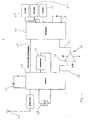
- FIG. 2 is intended to set forth a block diagram of receiver network which would correspond to an RKE fob having the semi-passive functionality of the present invention.
- the receiver network of FIG. 2 would of course reside in the vehicle to which the keyless fob of the present invention is mated.
- the prior art has considered a number of ways to uniquely mate one or more keyless fobs to a corresponding vehicle receiver for obvious security reasons. Such security measures can involve encryption systems and the like which are not part of the present invention but, as readily apparent to those skilled in the art, are usable with the present invention.
- the receiver network includes an antenna and matching network for receiving signals from the RKE fob.
- the fob has a transmitter for sending a signal to antenna 24, such transmitter operating in response to a pushbutton or other similar actuators.
- the signal transmitted is coded for the function selected, i.e. door unlock, trunk opening, etc. Within the context of the present invention, the transmitted signal would further include coding to indicate whether it was manually generated or semi-passively generated as considered hereinabove.
- the receiver IC 26 typically includes an IF filter circuit 28 and a local oscillator (LO) circuit 30 as well as base band circuitry as indicated at 32.
- a received signal passes on line 34 to microprocessor 36 which typically includes a resonator circuit 38.
- the microprocessor uses the received signal to control for example, the vehicle trunk, unlock, and lock relays as respectively shown at 40, 42, and 44.
- the receiver 26 includes super-heterodyne architecture.
- RSSI received signal strength indicator circuitry generally indicated as 46 is provided between receiver 26 and microprocessor 36.
- the semi-passive functionality of the present invention is not operable until the user is approximately 3 meters or closer to the vehicle. Accordingly, it is an aspect of my invention that a RKE fob having semi-passive functionality operate in conjunction with the receiver network being able to determine whether the user (and fob) are 3 meters or closer to the vehicle before any semi-passive selected function is triggered.
- the RSSI circuitry 46 receives an indication of the fob input signal strength on line 48.
- the fob semi-passive input signal strength to antenna 24/receiver IC 26 will increase as the fob moves closer to the vehicle receiver with everything else being equal.
- the strength of the semi-passive input signal is monitored on line 48 and is compared in comparitor 50 against a signal level strength equivalent to the fob transmitting the semi-passive signal at 3 meters away for example from the vehicle. Accordingly, an output signal is provided on line 52 to microprocessor 36 to indicate as a threshold matter whether the fob is more than or less than 3 meters from the vehicle. In other words, even though a semi-passive signal may be received, if the semi-passive signal indicates that the fob is more than 3 meters from the vehicle, the corresponding functionality of the semi-passive signal will not be triggered by the microprocessor.
- the manual and semi-passive functionalities are part of a single RKE fob.
- Manual actuation and use are the same as in previously available devices- the fob is pointed at the vehicle, a selected function button is pressed or actuated, and a correspondingly transmitted signal causes the selected function to occur if the vehicle is within the range of the fob transmitter.
- the function button is depressed and held down to activate repetitious transmission of a semi-passive function signal.
- Such repetitious transmission could be designed to continue for 15 minutes for example.
- An LED could be provided to confirm whether the repetitious semi-passive signal has been initiated.
- the LED on the RKE fob body can be designed into the circuitry to provide one blink when the function button has been held only long enough for a corresponding manual signal and could provide two blinks to confirm that the function button has been pressed or held down long enough to initiate the repetitious semi-passive signal.
- This arrangement avoids the need for two actuation buttons for each function- one for manual and one for semi-passive actuation.
- the duration of the repetitious semi-passive signal being transmitted could be extended by the user if for example the 15 minute transmission duration as considered above was not deemed long enough for whatever reason.
- the user could again actuate or press down the function button for sufficient duration to obtain confirmation (two blinks of LED) that the semi-passive signal transmission has again been called for in which event the initial 15 minutes could be extended to a total of 30 minutes for example. Necessarily, the initial 15 minute duration mentioned, and the amount of time added by the user for whatever reason are simply matters of design choice.
- the semi-passive signal will be repetitiously transmitted in a continuous fashion when the fob is beyond the semi-passive range of the vehicle and will result in the selected function occurring only when the user reaches the outermost limit of the semi-passive range with respect to the vehicle.
- the benefits of the present invention could still be enjoyed in good part without having a semi-passive range smaller than a manual range, I believe the relatively smaller semi-passive range to be the preferred way of practicing my invention.
- the relatively smaller semi-passive range could be eliminated whereby the manual and semi-passive ranges could be identical whereby the fundamental benefit of my invention would still be enjoyed.
- my preferred way of practicing the invention includes the vehicle receiver only acting on a semi-passive signal once during a repetitious semi-passive signal 15 minute (or user extended) cycle unless during the cycle the corresponding manual signal has been initiated.
- the semi-passive trunk opening signal was being transmitted, it would continue to be transmitted after the trunk has opened and then been closed. In that event the continuation of the semi-passive signal to open the trunk will be of no effect for the balance of the cycle.
- another semi-passive signal generation cycle may be initiated by appropriate engagement of the pushbutton actuator.
Landscapes
- Engineering & Computer Science (AREA)
- Mechanical Engineering (AREA)
- Computer Networks & Wireless Communication (AREA)
- Physics & Mathematics (AREA)
- General Physics & Mathematics (AREA)
- Lock And Its Accessories (AREA)
Abstract
Description
Claims (15)
- A keyless fob for transmitting a wireless signal to a receiver on a vehicle whereby the received signal causes a vehicle function corresponding to the signal to occur, said keyless fob comprising:a housing including a transmitter and at least one signal actuator, said signal actuator being operably connected to said transmitter so that a user may selectively engage said actuator whereby said transmitter transmits a semi-passive signal to the vehicle receiver which is adapted to initiate the occurrence of a predetermined vehicle function upon receiving said semi-passive signal; andsaid transmitter being characterized in that it continues to transmit said semi-passive signal for at least a predetermined period of time after initial engagement of said actuator whereby said semi-passive signal will be received by the vehicle receiver when said fob transmitter is within range of the receiver for said semi-passive signal without further actuation required by the user.
- A fob as claimed in Claim 1 wherein said signal actuator includes the capability to cause the transmitter to transmit a manual signal which is received by the vehicle receiver when said fob transmitter is within range of the receiver for said manual signal so as to initiate occurrence of a predetermined vehicle function; and preferably, wherein the same vehicle function is initiated by said semi-passive and manual signals; and, further preferably, wherein the predetermined vehicle function occurs in response to said manual signal when said fob transmitter is at a relatively greater distance from the vehicle receiver than said transmitter is when the predetermined vehicle function occurs in response said semi-passive signal.
- A keyless fob as claimed in Claim 1 or Claim 2 wherein the user's hands may be free of said fob after actuation of said semi-passive signal.
- A fob as claimed in any of Claims 1-3 further including means confirming that said actuator has been engaged by the user to transmit said semi-passive signal.
- A fob as claimed in Claim 4 wherein said confirming means comprises a light which provides at least a temporary visible indication to the user that said actuator, which, preferably, comprises a pushbutton, has been properly engaged to cause said transmitter to transmit said semi-passive signal; and, optionally, wherein said confirming means also confirms that said manual signal is being transmitted in contrast to said semi-passive signal.
- A remote keyless entry system for transmitting a wireless signal to a receiver on a vehicle whereby the received signal causes a vehicle function corresponding to the signal to occur, said system comprising:a keyless fob having a housing including a transmitter and at least one signal actuator, said signal actuator being operably connected to said transmitter so that a user may selectively engage said actuator whereby said transmitter transmits a semi-passive signal to said vehicle and said vehicle having a receiver which is adapted to initiate the occurrence of a predetermined vehicle function upon receiving said semi-passive signal; andsaid transmitter being characterized in that it continues to transmit said semi-passive signal for at least a predetermined period of time after initial engagement of said actuator whereby said semi-passive signal will be received by said vehicle receiver when said fob transmitter is within range of said receiver for said semi-passive signal without further actuation required by the user.
- A system as claimed in Claim 6 wherein said signal actuator includes the capability to cause said transmitter to transmit a manual signal which is received by said vehicle receiver when said fob transmitter is within range of said receiver for said manual signal so as to initiate occurrence of a predetermined vehicle function.
- A system as claimed in Claim 7 wherein the same vehicle function is initiated by said semi-passive and manual signals; and optionally, wherein the predetermined vehicle function occurs in response to said manual signal when said fob transmitter is at a relatively greater distance from said vehicle receiver than said transmitter is when the predetermined vehicle function occurs in response said semi-passive signal.
- A system as claimed in any of Claims 6-8 wherein the user's hands may be free of said fob after actuation of said semi-passive signal.
- A system as claimed in any of claims 6-9 further including means confirming that said actuator has been engaged by the user to transmit said semi-passive signal and, optionally, wherein said confirming means comprises a light which provides at least a temporary visible indication to the user that said actuator, which, preferably, comprises a pushbutton, has been properly engaged to cause said transmitter to transmit said semi-passive signal; and, further optionally, wherein said confirming means also confirms that said manual signal is being transmitted in contrast to said semi-passive signal.
- A method for transmitting a wireless semi-passive signal to a receiver on a vehicle whereby the received signal causes a vehicle function corresponding to the signal to occur, said method comprising the steps of:transmitting selectively a semi-passive signal to the vehicle receiver which is adapted to initiate the occurrence of a predetermined vehicle function upon receiving said semi-passive signal; andcontinuing to transmit said semi-passive signal for at least a predetermined period of time after initial transmission thereof whereby said semi-passive signal will be received by the vehicle receiver when the point of transmission is within range of the receiver for said semi-passive signal without further initiation of said semi-passive signal transmission required by the user.
- A method as claimed in Claim 11 including the further step of selectively transmitting a manual signal which is received by the vehicle receiver when said fob transmitter is within range of the receiver for said manual signal so as to initiate occurrence of a predetermined vehicle function and, optionally, wherein the same vehicle function is initiated by transmitting said semi-passive and manual signals; and, further optionally, wherein the predetermined vehicle function occurs in response to said manual signal when said manual signal is transmitted from a relatively greater distance from the vehicle receiver than when the predetermined vehicle function occurs in response said semi-passive signal.
- A keyless fob for transmitting a wireless signal to a receiver on a device whereby the received signal causes a device function corresponding to the signal to occur, said keyless fob comprising:a housing including a transmitter and at least one signal actuator, said signal actuator being operably connected to said transmitter so that a user may selectively engage said actuator whereby said transmitter transmits a semi-passive signal to the device receiver which is adapted to initiate the occurrence of a predetermined device function upon receiving said semi-passive signal; andsaid transmitter being characterized in that it continues to transmit said semi-passive signal for at least a predetermined period of time after initial engagement of said actuator whereby said semi-passive signal will be received by the device receiver when said fob transmitter is within range of the receiver for said semi-passive signal without further actuation required by the user.
- A fob as claimed in Claim 13 wherein said signal actuator includes the capability to cause the transmitter to transmit a manual signal which is received by the device receiver when said fob transmitter is within range of the receiver for said manual signal so as to initiate occurrence of a predetermined device function and, optionally, wherein the same device function is initiated by said semi-passive and manual signals; and, further optionally, wherein the predetermined device function occurs in response to said manual signal when said fob transmitter is at a relatively greater distance from the device receiver than said transmitter is when the predetermined device function occurs in response said semi-passive signal.
- A fob as claimed in Claim 13 or Claim 14 wherein the user's hands may be free of said fob after actuation of said semi-passive signal.
Applications Claiming Priority (2)
| Application Number | Priority Date | Filing Date | Title |
|---|---|---|---|
| US09/440,070 US6359348B1 (en) | 1999-11-15 | 1999-11-15 | Semi-passive keyless entry method and device |
| US440070 | 1999-11-15 |
Publications (3)
| Publication Number | Publication Date |
|---|---|
| EP1101887A2 true EP1101887A2 (en) | 2001-05-23 |
| EP1101887A3 EP1101887A3 (en) | 2002-02-27 |
| EP1101887B1 EP1101887B1 (en) | 2009-04-08 |
Family
ID=23747304
Family Applications (1)
| Application Number | Title | Priority Date | Filing Date |
|---|---|---|---|
| EP00650189A Expired - Lifetime EP1101887B1 (en) | 1999-11-15 | 2000-11-14 | Semi passive keyless entry device |
Country Status (3)
| Country | Link |
|---|---|
| US (1) | US6359348B1 (en) |
| EP (1) | EP1101887B1 (en) |
| DE (1) | DE60041948D1 (en) |
Cited By (4)
| Publication number | Priority date | Publication date | Assignee | Title |
|---|---|---|---|---|
| US6906612B2 (en) | 2002-04-11 | 2005-06-14 | Lear Corporation | System and method for vehicle passive entry having inside/outside detection |
| DE10361115A1 (en) * | 2003-12-22 | 2005-07-21 | Daimlerchrysler Ag | Control method for remote control of motor vehicle doors/tailboards detects when a vehicle is approached and/or the position of an associated authenticating element |
| WO2007074354A1 (en) * | 2005-12-29 | 2007-07-05 | Renault Trucks | Method for passive keyless entry of a motor vehicle especially of an industrial vehicle |
| US8571725B2 (en) | 2009-01-29 | 2013-10-29 | Trw Automotive U.S. Llc | Apparatus for locating a vehicle electronic key |
Families Citing this family (36)
| Publication number | Priority date | Publication date | Assignee | Title |
|---|---|---|---|---|
| US7346374B2 (en) | 1999-05-26 | 2008-03-18 | Johnson Controls Technology Company | Wireless communications system and method |
| EP1246414B1 (en) * | 1999-05-26 | 2012-05-23 | Johnson Controls Technology Company | Wireless communications system and method therefor |
| JP4389366B2 (en) * | 2000-08-11 | 2009-12-24 | 株式会社デンソー | Electronic control unit |
| JP3983634B2 (en) * | 2002-09-02 | 2007-09-26 | カルソニックカンセイ株式会社 | Vehicle radio equipment |
| US6914522B2 (en) | 2003-05-23 | 2005-07-05 | Lear Corporation | Clamping circuit for an RF receiver system |
| US9035741B2 (en) * | 2003-06-27 | 2015-05-19 | Stryker Corporation | Foot-operated control console for wirelessly controlling medical devices |
| US7883458B2 (en) * | 2003-06-27 | 2011-02-08 | Stryker Corporation | System for remotely controlling two or more medical devices |
| DE10334625A1 (en) * | 2003-07-29 | 2005-03-03 | Siemens Ag | Method for proving an authorization for locking and unlocking and / or the use of an object and security device |
| US7868745B2 (en) * | 2004-06-25 | 2011-01-11 | Lear Corporation | Integrated passive entry transmitter/receiver |
| US9007195B2 (en) * | 2004-06-25 | 2015-04-14 | Lear Corporation | Remote FOB integrated in a personal convenience device |
| US7397344B2 (en) * | 2005-01-06 | 2008-07-08 | Lear Corporation | Dual range vehicle remote |
| JP4507884B2 (en) * | 2005-01-11 | 2010-07-21 | トヨタ自動車株式会社 | Vehicle with remote control system and remote control device |
| JP4501719B2 (en) * | 2005-02-22 | 2010-07-14 | トヨタ自動車株式会社 | Vehicle remote control device |
| JP4702613B2 (en) * | 2005-11-16 | 2011-06-15 | アイシン精機株式会社 | Vehicle door opening / closing device and vehicle door opening / closing control method |
| US7474208B1 (en) | 2006-05-10 | 2009-01-06 | Richard Ira Klein | Method and system for locating an object |
| DE102006042976A1 (en) * | 2006-09-13 | 2008-04-03 | Siemens Ag | Access arrangement for a vehicle |
| DE102006042974B4 (en) * | 2006-09-13 | 2009-07-23 | Continental Automotive Gmbh | Method for access control to a vehicle |
| USD594734S1 (en) | 2008-06-10 | 2009-06-23 | Glenn Youngerman | Automobile shaped key fob |
| US8203424B2 (en) * | 2009-03-25 | 2012-06-19 | Lear Corporation | Automatic walk-away detection |
| DE102010010057B4 (en) * | 2010-03-03 | 2012-09-06 | Continental Automotive Gmbh | Method for controlling a door of a vehicle |
| US8907760B2 (en) * | 2010-09-09 | 2014-12-09 | Nxp B.V. | Multiple-frequency solutions for remote access systems |
| USD676650S1 (en) | 2012-06-05 | 2013-02-26 | Christopher Farris | Key fob |
| US20140028440A1 (en) * | 2012-07-30 | 2014-01-30 | AISIN Technical Center of America, Inc. | Apparatus and method for automotive proximity detection and control |
| DE102014101199A1 (en) * | 2014-01-31 | 2015-08-06 | Huf Hülsbeck & Fürst Gmbh & Co. Kg | Assembly module for a motor vehicle with an optical sensor system and an emergency operation |
| US10380817B2 (en) | 2016-11-28 | 2019-08-13 | Honda Motor Co., Ltd. | System and method for providing hands free operation of at least one vehicle door |
| US10815717B2 (en) | 2016-11-28 | 2020-10-27 | Honda Motor Co., Ltd. | System and method for providing hands free operation of at least one vehicle door |
| CN106934887A (en) * | 2017-02-27 | 2017-07-07 | 南京聚鲲物联网科技有限公司 | The smart bluetooth entrance guard device and control method of a kind of integrated position judgment and the direction of motion |
| US20180298670A1 (en) * | 2017-04-13 | 2018-10-18 | Ford Global Technologies, Llc | Vehicle hands-free closure initializer |
| US11377071B2 (en) * | 2018-09-18 | 2022-07-05 | Gogoro Inc. | Methods for locking and/or unlocking electric vehicle and associated apparatus |
| US11894136B2 (en) | 2021-08-12 | 2024-02-06 | Toyota Motor North America, Inc. | Occupant injury determination |
| US12214779B2 (en) | 2021-08-12 | 2025-02-04 | Toyota Motor North America, Inc. | Minimizing airborne objects in a collision |
| US12190733B2 (en) | 2021-08-12 | 2025-01-07 | Toyota Connected North America, Inc. | Message construction based on potential for collision |
| US11887460B2 (en) | 2021-08-12 | 2024-01-30 | Toyota Motor North America, Inc. | Transport-related contact notification |
| US11608030B2 (en) * | 2021-08-12 | 2023-03-21 | Toyota Connected North America, Inc. | Vehicle surveillance system and early vehicle warning of potential threat |
| US12030489B2 (en) | 2021-08-12 | 2024-07-09 | Toyota Connected North America, Inc. | Transport related emergency service notification |
| US12097815B2 (en) | 2021-08-12 | 2024-09-24 | Toyota Connected North America, Inc. | Protecting living objects in transports |
Family Cites Families (6)
| Publication number | Priority date | Publication date | Assignee | Title |
|---|---|---|---|---|
| DE4422906C2 (en) * | 1994-06-30 | 1996-12-05 | Telefunken Microelectron | Method for operating a locking system for lockable objects |
| US5973611A (en) * | 1995-03-27 | 1999-10-26 | Ut Automotive Dearborn, Inc. | Hands-free remote entry system |
| DE19531219C1 (en) * | 1995-08-24 | 1996-12-05 | Siemens Ag | Vehicle anti-theft arrangement |
| AU739172B2 (en) * | 1997-10-10 | 2001-10-04 | Robert Bosch Gmbh | An entry system |
| US6034617A (en) * | 1998-12-04 | 2000-03-07 | Eaton Corporation | Operator intent based passive keyless vehicle control system |
| JP4552169B2 (en) * | 1999-11-09 | 2010-09-29 | マツダ株式会社 | Control device for opening / closing body of vehicle |
-
1999
- 1999-11-15 US US09/440,070 patent/US6359348B1/en not_active Expired - Fee Related
-
2000
- 2000-11-14 EP EP00650189A patent/EP1101887B1/en not_active Expired - Lifetime
- 2000-11-14 DE DE60041948T patent/DE60041948D1/en not_active Expired - Lifetime
Cited By (5)
| Publication number | Priority date | Publication date | Assignee | Title |
|---|---|---|---|---|
| US6906612B2 (en) | 2002-04-11 | 2005-06-14 | Lear Corporation | System and method for vehicle passive entry having inside/outside detection |
| DE10361115A1 (en) * | 2003-12-22 | 2005-07-21 | Daimlerchrysler Ag | Control method for remote control of motor vehicle doors/tailboards detects when a vehicle is approached and/or the position of an associated authenticating element |
| WO2007074354A1 (en) * | 2005-12-29 | 2007-07-05 | Renault Trucks | Method for passive keyless entry of a motor vehicle especially of an industrial vehicle |
| US8179230B2 (en) | 2005-12-29 | 2012-05-15 | Renault Trucks | Method for passive keyless entry of a motor vehicle especially of an industrial vehicle |
| US8571725B2 (en) | 2009-01-29 | 2013-10-29 | Trw Automotive U.S. Llc | Apparatus for locating a vehicle electronic key |
Also Published As
| Publication number | Publication date |
|---|---|
| DE60041948D1 (en) | 2009-05-20 |
| EP1101887B1 (en) | 2009-04-08 |
| US6359348B1 (en) | 2002-03-19 |
| EP1101887A3 (en) | 2002-02-27 |
Similar Documents
| Publication | Publication Date | Title |
|---|---|---|
| US6359348B1 (en) | Semi-passive keyless entry method and device | |
| US7388466B2 (en) | Integrated passive entry and remote keyless entry system | |
| US6034617A (en) | Operator intent based passive keyless vehicle control system | |
| US6448894B1 (en) | Passive actuation of home security system | |
| JP4320554B2 (en) | Remote control system for vehicles | |
| US20160019734A1 (en) | Hands-free trunk release and vehicle entry | |
| US6703919B2 (en) | Method of confirming remote keyless entry lock button status | |
| EP1288841A1 (en) | Passive response communication system | |
| FR2590308A1 (en) | LOCKING AND UNLOCKING SYSTEM FOR CAR CONTROL BY RADIO SIGNAL | |
| US7433647B2 (en) | Transmit antenna multiplexing for vehicular passive entry systems | |
| JP2005299098A (en) | Remote locking / unlocking control device for vehicle | |
| JP3679194B2 (en) | Wireless door unlock system for vehicles | |
| US6094131A (en) | Keyless lock device for a car | |
| US6677851B1 (en) | Remote keyless entry system with advanced activation features | |
| US10145153B2 (en) | Closing element, in particular for a motor vehicle | |
| CN205722028U (en) | The mobile device with locking and the system of protection vehicle is unlocked for vehicle | |
| EP1090198A1 (en) | Remote control transmitter broadcasting rf signals conveying plural information components | |
| US20170350183A1 (en) | System and Method for Selectively Controlling a Window of a Power Window System of a Vehicle | |
| US20020011920A1 (en) | Keyless access control device for motor vehicles | |
| US7956720B2 (en) | Remote control system for a vehicle | |
| DE19859344A1 (en) | Control of a security system within a road vehicle using a number of directional signals transmitted by a unit carried by driver | |
| JP3815598B2 (en) | Wireless door lock device | |
| WO2003079298A2 (en) | Passive vehicle actuation card incorporated into personal use item | |
| JPH0658029A (en) | Remote locking device for rear body door of truck | |
| JP2002339609A (en) | Transmitter for keyless entry system |
Legal Events
| Date | Code | Title | Description |
|---|---|---|---|
| PUAI | Public reference made under article 153(3) epc to a published international application that has entered the european phase |
Free format text: ORIGINAL CODE: 0009012 |
|
| AK | Designated contracting states |
Kind code of ref document: A2 Designated state(s): AT BE CH CY DE DK ES FI FR GB GR IE IT LI LU MC NL PT SE TR Kind code of ref document: A2 Designated state(s): DE GB |
|
| AX | Request for extension of the european patent |
Free format text: AL;LT;LV;MK;RO;SI |
|
| PUAL | Search report despatched |
Free format text: ORIGINAL CODE: 0009013 |
|
| AK | Designated contracting states |
Kind code of ref document: A3 Designated state(s): AT BE CH CY DE DK ES FI FR GB GR IE IT LI LU MC NL PT SE TR |
|
| AX | Request for extension of the european patent |
Free format text: AL;LT;LV;MK;RO;SI |
|
| RIC1 | Information provided on ipc code assigned before grant |
Free format text: 7E 05B 49/00 A, 7B 60R 25/00 B, 7G 07C 9/00 B |
|
| 17P | Request for examination filed |
Effective date: 20020827 |
|
| AKX | Designation fees paid |
Free format text: DE GB |
|
| 17Q | First examination report despatched |
Effective date: 20040702 |
|
| 17Q | First examination report despatched |
Effective date: 20040702 |
|
| RTI1 | Title (correction) |
Free format text: SEMI PASSIVE KEYLESS ENTRY DEVICE |
|
| GRAP | Despatch of communication of intention to grant a patent |
Free format text: ORIGINAL CODE: EPIDOSNIGR1 |
|
| GRAS | Grant fee paid |
Free format text: ORIGINAL CODE: EPIDOSNIGR3 |
|
| GRAA | (expected) grant |
Free format text: ORIGINAL CODE: 0009210 |
|
| AK | Designated contracting states |
Kind code of ref document: B1 Designated state(s): DE GB |
|
| REG | Reference to a national code |
Ref country code: GB Ref legal event code: FG4D |
|
| REF | Corresponds to: |
Ref document number: 60041948 Country of ref document: DE Date of ref document: 20090520 Kind code of ref document: P |
|
| PLBE | No opposition filed within time limit |
Free format text: ORIGINAL CODE: 0009261 |
|
| STAA | Information on the status of an ep patent application or granted ep patent |
Free format text: STATUS: NO OPPOSITION FILED WITHIN TIME LIMIT |
|
| 26N | No opposition filed |
Effective date: 20100111 |
|
| GBPC | Gb: european patent ceased through non-payment of renewal fee |
Effective date: 20091114 |
|
| PG25 | Lapsed in a contracting state [announced via postgrant information from national office to epo] |
Ref country code: GB Free format text: LAPSE BECAUSE OF NON-PAYMENT OF DUE FEES Effective date: 20091114 |
|
| PGFP | Annual fee paid to national office [announced via postgrant information from national office to epo] |
Ref country code: DE Payment date: 20151127 Year of fee payment: 16 |
|
| REG | Reference to a national code |
Ref country code: DE Ref legal event code: R119 Ref document number: 60041948 Country of ref document: DE |
|
| PG25 | Lapsed in a contracting state [announced via postgrant information from national office to epo] |
Ref country code: DE Free format text: LAPSE BECAUSE OF NON-PAYMENT OF DUE FEES Effective date: 20170601 |