EP1101793A1 - Heat ageing resistant rubber composition - Google Patents
Heat ageing resistant rubber composition Download PDFInfo
- Publication number
- EP1101793A1 EP1101793A1 EP00310245A EP00310245A EP1101793A1 EP 1101793 A1 EP1101793 A1 EP 1101793A1 EP 00310245 A EP00310245 A EP 00310245A EP 00310245 A EP00310245 A EP 00310245A EP 1101793 A1 EP1101793 A1 EP 1101793A1
- Authority
- EP
- European Patent Office
- Prior art keywords
- base
- group
- rubber composition
- rubber
- parts
- Prior art date
- Legal status (The legal status is an assumption and is not a legal conclusion. Google has not performed a legal analysis and makes no representation as to the accuracy of the status listed.)
- Granted
Links
- 229920001971 elastomer Polymers 0.000 title claims abstract description 56
- 239000005060 rubber Substances 0.000 title claims abstract description 56
- 239000000203 mixture Substances 0.000 title claims abstract description 38
- 230000032683 aging Effects 0.000 title description 23
- 150000001875 compounds Chemical class 0.000 claims abstract description 54
- 125000000217 alkyl group Chemical group 0.000 claims abstract description 10
- 125000004432 carbon atom Chemical group C* 0.000 claims abstract description 10
- 125000004435 hydrogen atom Chemical group [H]* 0.000 claims abstract description 10
- 229920003051 synthetic elastomer Polymers 0.000 claims abstract description 9
- 239000005061 synthetic rubber Substances 0.000 claims abstract description 9
- 244000043261 Hevea brasiliensis Species 0.000 claims abstract description 8
- 229920003052 natural elastomer Polymers 0.000 claims abstract description 8
- 229920001194 natural rubber Polymers 0.000 claims abstract description 8
- 229910052717 sulfur Inorganic materials 0.000 claims abstract description 8
- 125000003118 aryl group Chemical group 0.000 claims abstract description 5
- 229910052757 nitrogen Inorganic materials 0.000 claims abstract description 5
- 125000003342 alkenyl group Chemical group 0.000 claims abstract description 4
- 125000002877 alkyl aryl group Chemical group 0.000 claims abstract description 4
- 125000000753 cycloalkyl group Chemical group 0.000 claims abstract description 4
- 125000004433 nitrogen atom Chemical group N* 0.000 claims abstract description 4
- 125000004430 oxygen atom Chemical group O* 0.000 claims abstract description 4
- 125000001424 substituent group Chemical group 0.000 claims abstract description 4
- 125000004434 sulfur atom Chemical group 0.000 claims abstract description 4
- 239000003963 antioxidant agent Substances 0.000 claims description 39
- DMBHHRLKUKUOEG-UHFFFAOYSA-N diphenylamine Chemical compound C=1C=CC=CC=1NC1=CC=CC=C1 DMBHHRLKUKUOEG-UHFFFAOYSA-N 0.000 claims description 26
- 230000003078 antioxidant effect Effects 0.000 claims description 15
- ISWSIDIOOBJBQZ-UHFFFAOYSA-N Phenol Chemical compound OC1=CC=CC=C1 ISWSIDIOOBJBQZ-UHFFFAOYSA-N 0.000 claims description 10
- CBCKQZAAMUWICA-UHFFFAOYSA-N 1,4-phenylenediamine Chemical compound NC1=CC=C(N)C=C1 CBCKQZAAMUWICA-UHFFFAOYSA-N 0.000 claims description 7
- SMWDFEZZVXVKRB-UHFFFAOYSA-N Quinoline Chemical compound N1=CC=CC2=CC=CC=C21 SMWDFEZZVXVKRB-UHFFFAOYSA-N 0.000 claims description 6
- AJDQRQQNNLZLPM-UHFFFAOYSA-N n-(diaminomethylidene)benzamide Chemical compound NC(N)=NC(=O)C1=CC=CC=C1 AJDQRQQNNLZLPM-UHFFFAOYSA-N 0.000 claims description 6
- ZCTUNKMRAODYBZ-UHFFFAOYSA-N n-[amino-(2-benzoylhydrazinyl)methylidene]benzamide Chemical compound C=1C=CC=CC=1C(=O)N=C(N)NNC(=O)C1=CC=CC=C1 ZCTUNKMRAODYBZ-UHFFFAOYSA-N 0.000 claims description 6
- 150000005208 1,4-dihydroxybenzenes Chemical class 0.000 claims description 3
- RUFPHBVGCFYCNW-UHFFFAOYSA-N 1-naphthylamine Chemical compound C1=CC=C2C(N)=CC=CC2=C1 RUFPHBVGCFYCNW-UHFFFAOYSA-N 0.000 claims description 3
- VWGKEVWFBOUAND-UHFFFAOYSA-N 4,4'-thiodiphenol Chemical compound C1=CC(O)=CC=C1SC1=CC=C(O)C=C1 VWGKEVWFBOUAND-UHFFFAOYSA-N 0.000 claims description 3
- 229930185605 Bisphenol Natural products 0.000 claims description 3
- IISBACLAFKSPIT-UHFFFAOYSA-N bisphenol A Chemical compound C=1C=C(O)C=CC=1C(C)(C)C1=CC=C(O)C=C1 IISBACLAFKSPIT-UHFFFAOYSA-N 0.000 claims description 3
- 150000008442 polyphenolic compounds Chemical class 0.000 claims description 3
- 235000013824 polyphenols Nutrition 0.000 claims description 3
- 239000013078 crystal Substances 0.000 description 18
- 230000003405 preventing effect Effects 0.000 description 10
- OKKJLVBELUTLKV-UHFFFAOYSA-N Methanol Chemical compound OC OKKJLVBELUTLKV-UHFFFAOYSA-N 0.000 description 9
- YXFVVABEGXRONW-UHFFFAOYSA-N Toluene Chemical compound CC1=CC=CC=C1 YXFVVABEGXRONW-UHFFFAOYSA-N 0.000 description 9
- 238000006243 chemical reaction Methods 0.000 description 8
- 238000002156 mixing Methods 0.000 description 8
- 238000003756 stirring Methods 0.000 description 7
- RTZKZFJDLAIYFH-UHFFFAOYSA-N Diethyl ether Chemical compound CCOCC RTZKZFJDLAIYFH-UHFFFAOYSA-N 0.000 description 6
- ZMXDDKWLCZADIW-UHFFFAOYSA-N N,N-Dimethylformamide Chemical compound CN(C)C=O ZMXDDKWLCZADIW-UHFFFAOYSA-N 0.000 description 6
- -1 peroxy radicals Chemical class 0.000 description 6
- 230000015572 biosynthetic process Effects 0.000 description 5
- 239000006229 carbon black Substances 0.000 description 5
- 239000012452 mother liquor Substances 0.000 description 5
- 238000003786 synthesis reaction Methods 0.000 description 5
- XLYOFNOQVPJJNP-UHFFFAOYSA-N water Chemical compound O XLYOFNOQVPJJNP-UHFFFAOYSA-N 0.000 description 5
- KXDAEFPNCMNJSK-UHFFFAOYSA-N Benzamide Chemical compound NC(=O)C1=CC=CC=C1 KXDAEFPNCMNJSK-UHFFFAOYSA-N 0.000 description 4
- MYMOFIZGZYHOMD-UHFFFAOYSA-N Dioxygen Chemical compound O=O MYMOFIZGZYHOMD-UHFFFAOYSA-N 0.000 description 4
- VYPSYNLAJGMNEJ-UHFFFAOYSA-N Silicium dioxide Chemical compound O=[Si]=O VYPSYNLAJGMNEJ-UHFFFAOYSA-N 0.000 description 4
- CDBYLPFSWZWCQE-UHFFFAOYSA-L Sodium Carbonate Chemical compound [Na+].[Na+].[O-]C([O-])=O CDBYLPFSWZWCQE-UHFFFAOYSA-L 0.000 description 4
- WQDUMFSSJAZKTM-UHFFFAOYSA-N Sodium methoxide Chemical compound [Na+].[O-]C WQDUMFSSJAZKTM-UHFFFAOYSA-N 0.000 description 4
- NINIDFKCEFEMDL-UHFFFAOYSA-N Sulfur Chemical compound [S] NINIDFKCEFEMDL-UHFFFAOYSA-N 0.000 description 4
- 239000003795 chemical substances by application Substances 0.000 description 4
- 230000000052 comparative effect Effects 0.000 description 4
- 239000008367 deionised water Substances 0.000 description 4
- 229910021641 deionized water Inorganic materials 0.000 description 4
- 230000000694 effects Effects 0.000 description 4
- 230000000704 physical effect Effects 0.000 description 4
- 239000002516 radical scavenger Substances 0.000 description 4
- 239000012763 reinforcing filler Substances 0.000 description 4
- 239000011593 sulfur Substances 0.000 description 4
- KFZMGEQAYNKOFK-UHFFFAOYSA-N Isopropanol Chemical compound CC(C)O KFZMGEQAYNKOFK-UHFFFAOYSA-N 0.000 description 3
- CSNNHWWHGAXBCP-UHFFFAOYSA-L Magnesium sulfate Chemical compound [Mg+2].[O-][S+2]([O-])([O-])[O-] CSNNHWWHGAXBCP-UHFFFAOYSA-L 0.000 description 3
- CHJJGSNFBQVOTG-UHFFFAOYSA-N N-methyl-guanidine Natural products CNC(N)=N CHJJGSNFBQVOTG-UHFFFAOYSA-N 0.000 description 3
- 235000021355 Stearic acid Nutrition 0.000 description 3
- XLOMVQKBTHCTTD-UHFFFAOYSA-N Zinc monoxide Chemical compound [Zn]=O XLOMVQKBTHCTTD-UHFFFAOYSA-N 0.000 description 3
- PASDCCFISLVPSO-UHFFFAOYSA-N benzoyl chloride Chemical compound ClC(=O)C1=CC=CC=C1 PASDCCFISLVPSO-UHFFFAOYSA-N 0.000 description 3
- 230000015556 catabolic process Effects 0.000 description 3
- 238000006731 degradation reaction Methods 0.000 description 3
- 230000007246 mechanism Effects 0.000 description 3
- VLKZOEOYAKHREP-UHFFFAOYSA-N n-Hexane Chemical compound CCCCCC VLKZOEOYAKHREP-UHFFFAOYSA-N 0.000 description 3
- QIQXTHQIDYTFRH-UHFFFAOYSA-N octadecanoic acid Chemical compound CCCCCCCCCCCCCCCCCC(O)=O QIQXTHQIDYTFRH-UHFFFAOYSA-N 0.000 description 3
- OQCDKBAXFALNLD-UHFFFAOYSA-N octadecanoic acid Natural products CCCCCCCC(C)CCCCCCCCC(O)=O OQCDKBAXFALNLD-UHFFFAOYSA-N 0.000 description 3
- 230000009467 reduction Effects 0.000 description 3
- 239000008117 stearic acid Substances 0.000 description 3
- 239000011787 zinc oxide Substances 0.000 description 3
- 235000014692 zinc oxide Nutrition 0.000 description 3
- YXIWHUQXZSMYRE-UHFFFAOYSA-N 1,3-benzothiazole-2-thiol Chemical compound C1=CC=C2SC(S)=NC2=C1 YXIWHUQXZSMYRE-UHFFFAOYSA-N 0.000 description 2
- OWRCNXZUPFZXOS-UHFFFAOYSA-N 1,3-diphenylguanidine Chemical compound C=1C=CC=CC=1NC(=N)NC1=CC=CC=C1 OWRCNXZUPFZXOS-UHFFFAOYSA-N 0.000 description 2
- WGMHMVLZFAJNOT-UHFFFAOYSA-N 1-ethoxyethylideneazanium;chloride Chemical compound [Cl-].CCOC(C)=[NH2+] WGMHMVLZFAJNOT-UHFFFAOYSA-N 0.000 description 2
- ZZMVLMVFYMGSMY-UHFFFAOYSA-N 4-n-(4-methylpentan-2-yl)-1-n-phenylbenzene-1,4-diamine Chemical compound C1=CC(NC(C)CC(C)C)=CC=C1NC1=CC=CC=C1 ZZMVLMVFYMGSMY-UHFFFAOYSA-N 0.000 description 2
- VTYYLEPIZMXCLO-UHFFFAOYSA-L Calcium carbonate Chemical compound [Ca+2].[O-]C([O-])=O VTYYLEPIZMXCLO-UHFFFAOYSA-L 0.000 description 2
- ZRALSGWEFCBTJO-UHFFFAOYSA-N Guanidine Chemical compound NC(N)=N ZRALSGWEFCBTJO-UHFFFAOYSA-N 0.000 description 2
- 230000001133 acceleration Effects 0.000 description 2
- 230000009471 action Effects 0.000 description 2
- 239000012190 activator Substances 0.000 description 2
- 150000001412 amines Chemical class 0.000 description 2
- HAMNKKUPIHEESI-UHFFFAOYSA-N aminoguanidine Chemical compound NNC(N)=N HAMNKKUPIHEESI-UHFFFAOYSA-N 0.000 description 2
- 239000011324 bead Substances 0.000 description 2
- 230000008859 change Effects 0.000 description 2
- 238000007796 conventional method Methods 0.000 description 2
- 150000002357 guanidines Chemical class 0.000 description 2
- 238000000034 method Methods 0.000 description 2
- GNSLIAZAWYIOOE-UHFFFAOYSA-N n-(diaminomethylideneamino)benzamide Chemical compound NC(=N)NNC(=O)C1=CC=CC=C1 GNSLIAZAWYIOOE-UHFFFAOYSA-N 0.000 description 2
- LYRFLYHAGKPMFH-UHFFFAOYSA-N octadecanamide Chemical compound CCCCCCCCCCCCCCCCCC(N)=O LYRFLYHAGKPMFH-UHFFFAOYSA-N 0.000 description 2
- 238000007254 oxidation reaction Methods 0.000 description 2
- 150000002978 peroxides Chemical class 0.000 description 2
- 230000003449 preventive effect Effects 0.000 description 2
- 239000010734 process oil Substances 0.000 description 2
- 239000000377 silicon dioxide Substances 0.000 description 2
- 230000002195 synergetic effect Effects 0.000 description 2
- NDDITRZWTHAVLP-UHFFFAOYSA-N 1,2-bis(methylamino)guanidine Chemical compound CNN\C(N)=N\NC NDDITRZWTHAVLP-UHFFFAOYSA-N 0.000 description 1
- HAZRIBSLCUYMQP-UHFFFAOYSA-N 1,2-diaminoguanidine;hydron;chloride Chemical compound Cl.NN\C(N)=N/N HAZRIBSLCUYMQP-UHFFFAOYSA-N 0.000 description 1
- OYNMOXHXIQIFMP-UHFFFAOYSA-N 1,2-dipropylguanidine Chemical compound CCCNC(=N)NCCC OYNMOXHXIQIFMP-UHFFFAOYSA-N 0.000 description 1
- HCESUOSGDBVIHN-UHFFFAOYSA-N 1-(methylamino)-2-phenylguanidine Chemical compound CNNC(N)=NC1=CC=CC=C1 HCESUOSGDBVIHN-UHFFFAOYSA-N 0.000 description 1
- REBDYFVAXTTZTM-UHFFFAOYSA-N 1-(octanoylamino)-2-phenylguanidine Chemical compound CCCCCCCC(=O)NNC(N)=NC1=CC=CC=C1 REBDYFVAXTTZTM-UHFFFAOYSA-N 0.000 description 1
- GCMNSGZMJNOBQJ-UHFFFAOYSA-N 1-acetamido-2-anilinoguanidine Chemical compound C(C)(=O)NNC(NNC1=CC=CC=C1)=N GCMNSGZMJNOBQJ-UHFFFAOYSA-N 0.000 description 1
- MZJRVFDJIUIUOU-UHFFFAOYSA-N 1-acetamido-2-phenylguanidine Chemical compound CC(=O)NNC(N)=NC1=CC=CC=C1 MZJRVFDJIUIUOU-UHFFFAOYSA-N 0.000 description 1
- RHXYLNBIHBDYLH-UHFFFAOYSA-N 1-amino-2-phenylguanidine Chemical compound NNC(=N)NC1=CC=CC=C1 RHXYLNBIHBDYLH-UHFFFAOYSA-N 0.000 description 1
- PSSQETYJGJBFIQ-UHFFFAOYSA-N 1-anilino-2-methylguanidine Chemical compound CN=C(N)NNC1=CC=CC=C1 PSSQETYJGJBFIQ-UHFFFAOYSA-N 0.000 description 1
- YDSNPZWNIXJHJT-UHFFFAOYSA-N 1-anilino-2-phenylguanidine Chemical compound C=1C=CC=CC=1N=C(N)NNC1=CC=CC=C1 YDSNPZWNIXJHJT-UHFFFAOYSA-N 0.000 description 1
- PJOTUOLTPYBYJB-UHFFFAOYSA-N 1-benzamido-2-methylguanidine Chemical compound CN=C(N)NNC(=O)C1=CC=CC=C1 PJOTUOLTPYBYJB-UHFFFAOYSA-N 0.000 description 1
- LIRNOYPBKGEILN-UHFFFAOYSA-N 1-benzamido-2-phenylguanidine Chemical compound C=1C=CC=CC=1N=C(N)NNC(=O)C1=CC=CC=C1 LIRNOYPBKGEILN-UHFFFAOYSA-N 0.000 description 1
- JUHXTONDLXIGGK-UHFFFAOYSA-N 1-n,4-n-bis(5-methylheptan-3-yl)benzene-1,4-diamine Chemical compound CCC(C)CC(CC)NC1=CC=C(NC(CC)CC(C)CC)C=C1 JUHXTONDLXIGGK-UHFFFAOYSA-N 0.000 description 1
- ZJNLYGOUHDJHMG-UHFFFAOYSA-N 1-n,4-n-bis(5-methylhexan-2-yl)benzene-1,4-diamine Chemical compound CC(C)CCC(C)NC1=CC=C(NC(C)CCC(C)C)C=C1 ZJNLYGOUHDJHMG-UHFFFAOYSA-N 0.000 description 1
- APTGHASZJUAUCP-UHFFFAOYSA-N 1-n,4-n-di(octan-2-yl)benzene-1,4-diamine Chemical compound CCCCCCC(C)NC1=CC=C(NC(C)CCCCCC)C=C1 APTGHASZJUAUCP-UHFFFAOYSA-N 0.000 description 1
- VETPHHXZEJAYOB-UHFFFAOYSA-N 1-n,4-n-dinaphthalen-2-ylbenzene-1,4-diamine Chemical compound C1=CC=CC2=CC(NC=3C=CC(NC=4C=C5C=CC=CC5=CC=4)=CC=3)=CC=C21 VETPHHXZEJAYOB-UHFFFAOYSA-N 0.000 description 1
- ZRMMVODKVLXCBB-UHFFFAOYSA-N 1-n-cyclohexyl-4-n-phenylbenzene-1,4-diamine Chemical compound C1CCCCC1NC(C=C1)=CC=C1NC1=CC=CC=C1 ZRMMVODKVLXCBB-UHFFFAOYSA-N 0.000 description 1
- YNFWTLXJAGKJRB-UHFFFAOYSA-N 1-phenylethanimine Chemical compound CC(=N)C1=CC=CC=C1 YNFWTLXJAGKJRB-UHFFFAOYSA-N 0.000 description 1
- KZKXOJRHZAEKLC-UHFFFAOYSA-N 2-anilino-1-benzamidoguanidine Chemical compound C(C1=CC=CC=C1)(=O)NNC(NNC1=CC=CC=C1)=N KZKXOJRHZAEKLC-UHFFFAOYSA-N 0.000 description 1
- BJEXWFRASFTKNJ-UHFFFAOYSA-N 2-anilinoguanidine Chemical compound NC(=N)NNC1=CC=CC=C1 BJEXWFRASFTKNJ-UHFFFAOYSA-N 0.000 description 1
- DQYNDISDCLYELZ-UHFFFAOYSA-N 2-methyl-1-phenylguanidine Chemical compound CNC(=N)NC1=CC=CC=C1 DQYNDISDCLYELZ-UHFFFAOYSA-N 0.000 description 1
- UJJUWUQWMCYQEH-UHFFFAOYSA-N 2-n'-aminobenzene-1,2-dicarboximidamide Chemical compound NN=C(N)C1=CC=CC=C1C(N)=N UJJUWUQWMCYQEH-UHFFFAOYSA-N 0.000 description 1
- QRJZGVVKGFIGLI-UHFFFAOYSA-N 2-phenylguanidine Chemical compound NC(=N)NC1=CC=CC=C1 QRJZGVVKGFIGLI-UHFFFAOYSA-N 0.000 description 1
- DLFVBJFMPXGRIB-UHFFFAOYSA-N Acetamide Chemical compound CC(N)=O DLFVBJFMPXGRIB-UHFFFAOYSA-N 0.000 description 1
- OQLZINXFSUDMHM-UHFFFAOYSA-N Acetamidine Chemical compound CC(N)=N OQLZINXFSUDMHM-UHFFFAOYSA-N 0.000 description 1
- XNCOSPRUTUOJCJ-UHFFFAOYSA-N Biguanide Chemical compound NC(N)=NC(N)=N XNCOSPRUTUOJCJ-UHFFFAOYSA-N 0.000 description 1
- 229940123208 Biguanide Drugs 0.000 description 1
- QFLPBXYTVLNACR-UHFFFAOYSA-N C(C)(=O)C1(C(=N)N)CC=CC=C1 Chemical compound C(C)(=O)C1(C(=N)N)CC=CC=C1 QFLPBXYTVLNACR-UHFFFAOYSA-N 0.000 description 1
- CJIRQWLGFHQLHN-UHFFFAOYSA-N C(C1=CC=CC=C1)(=O)C1(C(=N)N)CC=CC=C1 Chemical compound C(C1=CC=CC=C1)(=O)C1(C(=N)N)CC=CC=C1 CJIRQWLGFHQLHN-UHFFFAOYSA-N 0.000 description 1
- YPAMFTVIGQWBHH-UHFFFAOYSA-N C=1C=CC=CC=1C1(C(=N)N)CC=CC=C1 Chemical compound C=1C=CC=CC=1C1(C(=N)N)CC=CC=C1 YPAMFTVIGQWBHH-UHFFFAOYSA-N 0.000 description 1
- ZSWPQPQWTBJLLO-UHFFFAOYSA-N CC1(C(=N)N)CC=CC=C1 Chemical compound CC1(C(=N)N)CC=CC=C1 ZSWPQPQWTBJLLO-UHFFFAOYSA-N 0.000 description 1
- 239000006237 Intermediate SAF Substances 0.000 description 1
- UTGQNNCQYDRXCH-UHFFFAOYSA-N N,N'-diphenyl-1,4-phenylenediamine Chemical compound C=1C=C(NC=2C=CC=CC=2)C=CC=1NC1=CC=CC=C1 UTGQNNCQYDRXCH-UHFFFAOYSA-N 0.000 description 1
- LELWPPFMTMVKON-UHFFFAOYSA-N N-[[(2-acetylhydrazinyl)-aminomethylidene]amino]acetamide Chemical compound C(C)(=O)NNC(NNC(C)=O)=N LELWPPFMTMVKON-UHFFFAOYSA-N 0.000 description 1
- UQPUWXJPBVGXMP-UHFFFAOYSA-N N-[[amino-(2-benzoylhydrazinyl)methylidene]amino]benzamide Chemical compound C(C1=CC=CC=C1)(=O)NNC(NNC(C1=CC=CC=C1)=O)=N UQPUWXJPBVGXMP-UHFFFAOYSA-N 0.000 description 1
- SJDQGLGWOUDIMY-UHFFFAOYSA-N N-[[amino-(2-methylhydrazinyl)methylidene]amino]benzamide Chemical compound C(C1=CC=CC=C1)(=O)NNC(NNC)=N SJDQGLGWOUDIMY-UHFFFAOYSA-N 0.000 description 1
- OUBMGJOQLXMSNT-UHFFFAOYSA-N N-isopropyl-N'-phenyl-p-phenylenediamine Chemical compound C1=CC(NC(C)C)=CC=C1NC1=CC=CC=C1 OUBMGJOQLXMSNT-UHFFFAOYSA-N 0.000 description 1
- UFWIBTONFRDIAS-UHFFFAOYSA-N Naphthalene Chemical compound C1=CC=CC2=CC=CC=C21 UFWIBTONFRDIAS-UHFFFAOYSA-N 0.000 description 1
- 229920000459 Nitrile rubber Polymers 0.000 description 1
- 239000005062 Polybutadiene Substances 0.000 description 1
- GWEVSGVZZGPLCZ-UHFFFAOYSA-N Titan oxide Chemical compound O=[Ti]=O GWEVSGVZZGPLCZ-UHFFFAOYSA-N 0.000 description 1
- JYSSGQITKNFRQE-UHFFFAOYSA-N [3-(4-anilinoanilino)-2-hydroxypropyl] 2-methylprop-2-enoate Chemical compound C1=CC(NCC(O)COC(=O)C(=C)C)=CC=C1NC1=CC=CC=C1 JYSSGQITKNFRQE-UHFFFAOYSA-N 0.000 description 1
- PXXJHWLDUBFPOL-UHFFFAOYSA-N benzamidine Chemical compound NC(=N)C1=CC=CC=C1 PXXJHWLDUBFPOL-UHFFFAOYSA-N 0.000 description 1
- WARCRYXKINZHGQ-UHFFFAOYSA-N benzohydrazide Chemical compound NNC(=O)C1=CC=CC=C1 WARCRYXKINZHGQ-UHFFFAOYSA-N 0.000 description 1
- 229910000019 calcium carbonate Inorganic materials 0.000 description 1
- 229920003211 cis-1,4-polyisoprene Polymers 0.000 description 1
- 238000013329 compounding Methods 0.000 description 1
- 238000010276 construction Methods 0.000 description 1
- 238000001816 cooling Methods 0.000 description 1
- 229920001577 copolymer Polymers 0.000 description 1
- 230000003247 decreasing effect Effects 0.000 description 1
- AFZSMODLJJCVPP-UHFFFAOYSA-N dibenzothiazol-2-yl disulfide Chemical compound C1=CC=C2SC(SSC=3SC4=CC=CC=C4N=3)=NC2=C1 AFZSMODLJJCVPP-UHFFFAOYSA-N 0.000 description 1
- 150000001993 dienes Chemical class 0.000 description 1
- SWSQBOPZIKWTGO-UHFFFAOYSA-N dimethylaminoamidine Natural products CN(C)C(N)=N SWSQBOPZIKWTGO-UHFFFAOYSA-N 0.000 description 1
- SXZIXHOMFPUIRK-UHFFFAOYSA-N diphenylmethanimine Chemical compound C=1C=CC=CC=1C(=N)C1=CC=CC=C1 SXZIXHOMFPUIRK-UHFFFAOYSA-N 0.000 description 1
- 238000001035 drying Methods 0.000 description 1
- MPAYEWNVIPXRDP-UHFFFAOYSA-N ethanimine Chemical compound CC=N MPAYEWNVIPXRDP-UHFFFAOYSA-N 0.000 description 1
- 239000000945 filler Substances 0.000 description 1
- 229960004198 guanidine Drugs 0.000 description 1
- 229960000789 guanidine hydrochloride Drugs 0.000 description 1
- PJJJBBJSCAKJQF-UHFFFAOYSA-N guanidinium chloride Chemical compound [Cl-].NC(N)=[NH2+] PJJJBBJSCAKJQF-UHFFFAOYSA-N 0.000 description 1
- 229920005555 halobutyl Polymers 0.000 description 1
- 229940042795 hydrazides for tuberculosis treatment Drugs 0.000 description 1
- 150000002429 hydrazines Chemical class 0.000 description 1
- 150000002463 imidates Chemical class 0.000 description 1
- 238000002329 infrared spectrum Methods 0.000 description 1
- 239000004615 ingredient Substances 0.000 description 1
- 239000012212 insulator Substances 0.000 description 1
- 150000002576 ketones Chemical class 0.000 description 1
- 238000004898 kneading Methods 0.000 description 1
- 229910052943 magnesium sulfate Inorganic materials 0.000 description 1
- 235000019341 magnesium sulphate Nutrition 0.000 description 1
- 238000001819 mass spectrum Methods 0.000 description 1
- 239000000463 material Substances 0.000 description 1
- ICRLYTWSZQTCQE-UHFFFAOYSA-N n'-amino-2-benzoylbenzenecarboximidamide Chemical compound NN=C(N)C1=CC=CC=C1C(=O)C1=CC=CC=C1 ICRLYTWSZQTCQE-UHFFFAOYSA-N 0.000 description 1
- OBDKABNXCJMAID-UHFFFAOYSA-N n'-amino-2-methylbenzenecarboximidamide Chemical compound CC1=CC=CC=C1\C(N)=N/N OBDKABNXCJMAID-UHFFFAOYSA-N 0.000 description 1
- XWSQVVRIKZXCEF-UHFFFAOYSA-N n'-amino-2-phenylbenzenecarboximidamide Chemical compound NN=C(N)C1=CC=CC=C1C1=CC=CC=C1 XWSQVVRIKZXCEF-UHFFFAOYSA-N 0.000 description 1
- DHROKUPHGQWNCL-UHFFFAOYSA-N n'-amino-2-phenylethanimidamide Chemical compound NN=C(N)CC1=CC=CC=C1 DHROKUPHGQWNCL-UHFFFAOYSA-N 0.000 description 1
- ZVOKRFNAHPBMPU-UHFFFAOYSA-N n'-amino-3-oxo-3-phenylpropanimidamide Chemical compound NN=C(N)CC(=O)C1=CC=CC=C1 ZVOKRFNAHPBMPU-UHFFFAOYSA-N 0.000 description 1
- LPNPFQNKOSDVTM-UHFFFAOYSA-N n'-aminobenzenecarboximidamide Chemical compound NN=C(N)C1=CC=CC=C1 LPNPFQNKOSDVTM-UHFFFAOYSA-N 0.000 description 1
- MIDZOHILFFUXMZ-UHFFFAOYSA-N n'-aminoethanimidamide Chemical compound CC(N)=NN MIDZOHILFFUXMZ-UHFFFAOYSA-N 0.000 description 1
- DEQZTKGFXNUBJL-UHFFFAOYSA-N n-(1,3-benzothiazol-2-ylsulfanyl)cyclohexanamine Chemical compound C1CCCCC1NSC1=NC2=CC=CC=C2S1 DEQZTKGFXNUBJL-UHFFFAOYSA-N 0.000 description 1
- NGGXACLSAZXJGM-UHFFFAOYSA-N n-(diaminomethylidene)acetamide Chemical compound CC(=O)N=C(N)N NGGXACLSAZXJGM-UHFFFAOYSA-N 0.000 description 1
- KNLOMZYFIDSLHX-UHFFFAOYSA-N n-(diaminomethylideneamino)octanamide Chemical compound CCCCCCCC(=O)NN=C(N)N KNLOMZYFIDSLHX-UHFFFAOYSA-N 0.000 description 1
- JNLYJTIJWMFCCQ-UHFFFAOYSA-N n-(n'-acetylcarbamimidoyl)acetamide Chemical compound CC(=O)NC(=N)NC(C)=O JNLYJTIJWMFCCQ-UHFFFAOYSA-N 0.000 description 1
- UDTFOUKVNYOVEH-UHFFFAOYSA-N n-(n'-benzoylcarbamimidoyl)benzamide Chemical compound C=1C=CC=CC=1C(=O)NC(=N)NC(=O)C1=CC=CC=C1 UDTFOUKVNYOVEH-UHFFFAOYSA-N 0.000 description 1
- FYSGDTRGOPAINU-UHFFFAOYSA-N n-[[amino-(2-octanoylhydrazinyl)methylidene]amino]octanamide Chemical compound CCCCCCCC(=O)NNC(N)=NNC(=O)CCCCCCC FYSGDTRGOPAINU-UHFFFAOYSA-N 0.000 description 1
- MVZSFBXTPYJICT-UHFFFAOYSA-N n-[acetamido(amino)methylidene]benzamide Chemical compound CC(=O)NC(N)=NC(=O)C1=CC=CC=C1 MVZSFBXTPYJICT-UHFFFAOYSA-N 0.000 description 1
- NBVQDUUFTJCGQD-UHFFFAOYSA-N n-[amino-(2-benzoylhydrazinyl)methylidene]acetamide Chemical compound CC(=O)N=C(N)NNC(=O)C1=CC=CC=C1 NBVQDUUFTJCGQD-UHFFFAOYSA-N 0.000 description 1
- STZUHPISXNHEOI-UHFFFAOYSA-N n-[amino-(2-octadecanoylhydrazinyl)methylidene]benzamide Chemical compound CCCCCCCCCCCCCCCCCC(=O)NNC(N)=NC(=O)C1=CC=CC=C1 STZUHPISXNHEOI-UHFFFAOYSA-N 0.000 description 1
- QMDPYUPMLPFHOE-UHFFFAOYSA-N n-[amino-(2-octanoylhydrazinyl)methylidene]benzamide Chemical compound CCCCCCCC(=O)NNC(N)=NC(=O)C1=CC=CC=C1 QMDPYUPMLPFHOE-UHFFFAOYSA-N 0.000 description 1
- QOWBGUNMJPOTIP-UHFFFAOYSA-N n-[amino-(2-octanoylhydrazinyl)methylidene]octanamide Chemical compound CCCCCCCC(=O)NNC(N)=NC(=O)CCCCCCC QOWBGUNMJPOTIP-UHFFFAOYSA-N 0.000 description 1
- JTIHFMGAHZFYAX-UHFFFAOYSA-N n-[amino-(2-propanoylhydrazinyl)methylidene]benzamide Chemical compound CCC(=O)NNC(N)=NC(=O)C1=CC=CC=C1 JTIHFMGAHZFYAX-UHFFFAOYSA-N 0.000 description 1
- 150000002825 nitriles Chemical class 0.000 description 1
- 238000000655 nuclear magnetic resonance spectrum Methods 0.000 description 1
- REEZZSHJLXOIHL-UHFFFAOYSA-N octanoyl chloride Chemical compound CCCCCCCC(Cl)=O REEZZSHJLXOIHL-UHFFFAOYSA-N 0.000 description 1
- 238000010525 oxidative degradation reaction Methods 0.000 description 1
- 239000012188 paraffin wax Substances 0.000 description 1
- AFDMODCXODAXLC-UHFFFAOYSA-N phenylmethanimine Chemical compound N=CC1=CC=CC=C1 AFDMODCXODAXLC-UHFFFAOYSA-N 0.000 description 1
- 229920001084 poly(chloroprene) Polymers 0.000 description 1
- 229920002857 polybutadiene Polymers 0.000 description 1
- 229920000642 polymer Polymers 0.000 description 1
- XDAGXZXKTKRFMT-UHFFFAOYSA-N propan-2-imine Chemical compound CC(C)=N XDAGXZXKTKRFMT-UHFFFAOYSA-N 0.000 description 1
- 239000002994 raw material Substances 0.000 description 1
- 239000000376 reactant Substances 0.000 description 1
- 238000011160 research Methods 0.000 description 1
- 238000005096 rolling process Methods 0.000 description 1
- 229940037312 stearamide Drugs 0.000 description 1
- 229920003048 styrene butadiene rubber Polymers 0.000 description 1
- 239000000126 substance Substances 0.000 description 1
- 238000009864 tensile test Methods 0.000 description 1
- 150000003557 thiazoles Chemical class 0.000 description 1
- OGIDPMRJRNCKJF-UHFFFAOYSA-N titanium oxide Inorganic materials [Ti]=O OGIDPMRJRNCKJF-UHFFFAOYSA-N 0.000 description 1
- 238000004073 vulcanization Methods 0.000 description 1
Classifications
-
- C—CHEMISTRY; METALLURGY
- C08—ORGANIC MACROMOLECULAR COMPOUNDS; THEIR PREPARATION OR CHEMICAL WORKING-UP; COMPOSITIONS BASED THEREON
- C08K—Use of inorganic or non-macromolecular organic substances as compounding ingredients
- C08K5/00—Use of organic ingredients
- C08K5/16—Nitrogen-containing compounds
- C08K5/29—Compounds containing one or more carbon-to-nitrogen double bonds
Definitions
- the present invention relates to a rubber composition which is excellent in heat aging resistance.
- Heat aging of rubber is caused according to an auto-oxidation mechanism of polymers which is generally known, and therefore it is effective for preventing heat aging to inactivate peroxy radicals produced in this course.
- diphenyldiamine based compounds and hindered phenol based compounds have so far been used as an antioxidant. These compounds give "H” in “>NH” and “-OH” to peroxy radicals produced in the course of auto-oxidative degradation to inactivate them, and the compounds themselves change to stable compounds through more stable radicals.
- peroxy radicals are inactivated to terminate a radical chain reaction to thereby prevent aging.
- Both the conventional diphenyldiamine based antioxidants and hindered phenol based antioxidants described above have an aging preventing action.
- an aging preventing effect grows large correspondingly in an area where the blending amount is small, but when they are used in a large amount, an increment in the effect becomes gradually small. The effect is even reduced due to bloom in a certain case, and therefore involved is the problem that the optimum use amount has to be set.
- a rubber composition using a diphenylamine based antioxidant has a large change rate in an elastic modulus before and after degradation, and the rubber composition is notably hardened and reduced in its physical properties in a certain case depending on the blending recipe of the rubber composition and the conditions of degradation.
- an object of the present invention is to solve the problems and to provide a rubber composition which is excellent in heat aging resistance without causing a reduction in physical properties.
- the rubber composition of the present invention relates to the following compositions (1) to (8):
- a rubber composition which is better in heat aging resistance is provided by using at least one selected from the compounds (A) represented by Formula (I) in combination with an antioxidant.
- the rubber composition of the present invention is characterized by comprising 100 parts by weight of a rubber component comprising at least one selected from the group consisting of natural rubber and synthetic rubbers and 0.05 to 20 parts by weight of at least one selected from the compounds (A) represented by the following Formula (I): wherein A 1 and A 2 each represent R-, R-NH-, R-X-NH-, R-NH-NH- or R-X-NH- NH-, and A 1 and A 2 may be the same or different.
- X represents any one of those shown below:
- the compound (A) represented by Formula (I) used in the present invention is used as a novel heat aging preventive. Although an action mechanism thereof is not sufficiently made clear, it is considered that ">NH" is contained in the structure thereof as is the case with conventional diphenylamine base antioxidants and therefore gives a proton to peroxy radicals produced in the course of an auto-oxidation of the rubber composition to stabilize, whereby the aging preventing action is displayed (this point shall further be explained in examples described later).
- the compound (A) represented by Formula (I) includes, for example, various compounds shown in the following items (1) to (14).
- These compounds (A) can be used alone or in a mixture of two or more kinds thereof.
- the compound (A) represented by Formula (I) described above used in the present invention is preferably the compound represented by the following Formula (II) or (III): wherein B 1 and B 2 each represent a hydrogen atom or an alkyl group having 1 to 18 carbon atoms which may be branced, and B 1 and B 2 may be the same or different; wherein B 1 and B 2 each represent a hydrogen atom or an alkyl group having 1 to 18 carbon atoms which may be branched, and B 1 and B 2 may be the same or different.
- the compound (A) is preferably N'-(N- benzoylamidino)benzoic acid hydrazide in Formula (II) and N-amidinobenzamide in Formula (III). In these cases, better heat aging preventive action is displayed.
- These compounds (A) can be relatively easily synthesized by reacting readily available raw materials such as ketones, amines, nitriles, hydrazines, hydrazides, guanidines, aminoguanidines and iminoethers with each other, or reacting these compounds with suitable reactants.
- suitable reactants such as ketones, amines, nitriles, hydrazines, hydrazides, guanidines, aminoguanidines and iminoethers.
- a content of at least one of the compounds (A) represented by Formula (I) described above used in the present invention is 0.05 to 20 parts by weight, preferably 0.1 to 5.0 parts by weight and more preferably 0.5 to 3.0 parts by weight per 100 parts by weight of the rubber component.
- the amount of the compound (A) described above falls in a range of 0.05 to 20 parts by weight, the intended heat aging preventing effect is exhibited without bringing about a reduction in the other physical properties and a rise in the cost.
- At least one of the various compounds described above is used in combination with an antioxidant which is conventionally used in the rubber industry, whereby better heat aging preventing action is displayed.
- various kinds of the preceding compounds (A) are, as described above, the antioxidants of a peroxy radical scavenger type, and when they are used in combination with other conventional antioxidants of a peroxy radical scavenger type such as a diphenyldiamine base and a hindered phenol base, the former homosynergism is revealed.
- a peroxy radical scavenger type such as a diphenyldiamine base and a hindered phenol base
- the former homosynergism is revealed.
- displayed is the specific effect that the larger effect is obtained in a smaller amount in the case of using the compound (A) in combination with the conventional antioxidants of a diphenyldiamine base and a hindered phenol base rather than in the case of using the conventional antioxidants alone in a large amount.
- Rubber composition using this compound (A) is less deteriorated in the elastic modulus before and after degradation than rubber composition blending a diphenyldiamine based antioxidant.
- antioxidants used in combination are a naphthylamine base, a p-phenylenediamine base, a hydroquinone derivative, a monophenol base, a bisphenol base, a trisphenol base, a polyphenol base, a diphenylamine base, a quinoline base, a thiobisphenol base and a hindered phenol base.
- amine based antioxidants of a p-phenylenediamine base and a diphenylamine base are preferred in terms of the higher aging preventing effect.
- the antioxidants of a p-phenylenediamine base include, for example, N,N'-diphenyl-p-phenylenediamine, N-isopropyl-N'-phenyl-p-phenylenediamine, N,N'-di-2-naphthyl-p-phenylenediamine, N-cyclohexyl-N'-phenyl-p- phenylenediamine, N-phenyl-N'-(3-methacryloyloxy-2-hydroxypropyl) -p-phenylenediamine, N,N'-bis(1-methyl-heptyl)-p-phenylenediamine, N,N'-bis(1,4-dimethylpentyl)-p-phenylenediamine, N,N'-bis(1-ethyl-3-methylpentyl)-p-phenylenediamine and N-(1,3-dimethylbutyl)- N'
- the antioxidants of a diphenylamine base include, for example, 4,4'-( ⁇ -methylbenzyl)diphenylamine, 4,4'-( a, a -dimethylbenzyl)diphenylamine, p-(p-toluene-sulfonylamide)diphenylamine and 4,4'-dioctyldiphenyamine.
- 4,4'-( a -methylbenzyl)diphenylamine is most preferred in terms of the higher aging preventing effect.
- the antioxidants used in combination with the compound (A) represented by Formula (I) described above can be used alone or in combination of two or more kinds thereof, and they are used in a range of 0.1 to 5.0 parts by weight, preferably 0.2 to 3.0 parts by weight per 100 parts by weight of the rubber component.
- the rubber component used in the present invention is natural rubber and/or synthetic rubbers.
- the synthetic rubbers include, for example, cis-1,4-polyisoprene, styrene-butadiene copolymers, 1,4-polybutadiene, ethylene-propylene-diene copolymers, polychloroprene, halogenated butyl rubber and acrylonitrile-butadiene rubber. At least one of them can be used, and natural rubber or diene base synthetic rubber is preferably used.
- compounding ingredients usually used in the rubber industry for example, reinforcing fillers such as carbon black and silica, process oil, other antioxidants than the antioxidants described above, vulcanization-accelerators, acceleration activators such as stearic acid and zinc white, and vulcanizing agents such as sulfur.
- the reinforcing fillers include, for example, carbon black, silica, calcium carbonate and titanium oxide, and among them, carbon black is preferred.
- carbon black is preferred.
- One usually used in the rubber industry can suitably be used as carbon black.
- carbon black of HAF, ISAF or SAF grade is preferred.
- An amount of the reinforcing filler is preferably 20 to 150 parts by weight per 100 parts by weight of the rubber component.
- the process oil which can be used includes, for example, a paraffin base, a naphthene base and an aromatic base.
- the vulcanization-accelerators which can be used shall not specifically be restricted and include thiazoles such as mercaptobenzothiazole and dibenzothiazyldisulfide, sulfenamides such as N-cyclohexyl-2- benzothiazolylsulfenamide, N,N'-dicyclohexyl-2-benzothiazolylsulfeneamide and N'-t-butyl-2-benzothiazolyl-sulfenamide, and guanidines such as diphenylguanidine.
- the blending amount thereof is preferably 0.1 to 5 parts by weight per 100 parts by weight of the rubber component.
- the acceleration activators shall not specifically be restricted and include stearic acid and zinc white.
- Vulcanizing agents usually used in the rubber industry can suitably be used and include sulfur and peroxides, and sulfur is preferred.
- a blending amount of the vulcanizing agent is preferably 0.5 to 8.0 parts by weight, more preferably 0.5 to 5.0 parts by weight per 100 parts by weight of the rubber component. When the amount of the vulcanizing agent falls in a range of 0.5 to 8.0 parts by weight, vulcanization is sufficiently carried out. In addition thereto, the scorching time can be extended, and rubber does not get scorched during kneading.
- the rubber composition of the present invention can be used for industrial articles such as rubber vibration insulators, belts and hoses as well as tire materials such as tire treads, under treads, carcasses, side walls and beads. It is used preferably for tire treads.
- Products including tires, power belts and the like are envisioned.
- Decreased rolling resistance is, of course, a useful property for pneumatic tires, both radial as well as bias ply types and thus, the vulcanizable elastomeric compositions of the present invention can be utilized to form treadstocks for such tires.
- Pneumatic tires can be made according to the constructions disclosed in U.S. Patent Numbers 5,866,171; 5,876,527; 5,931,211; and 5,971,046, the disclosures of which are incorporated herein by reference.
- the composition can also be used to form other elastomeric tire components such as subtreads, black sidewalls, body ply skims, bead fillers and the like.
- the resulting residue was dissolved in 100 cc of isopropyl alcohol, and the solution was slowly dropwise added to one liter of deionized water to deposit crystals.
- the resulting crystals were filtered off, sufficiently washed with deionized water and then dried under reduced pressure, whereby the intended compound (pale yellow crystals) was obtained.
- a four neck flask (3 liters) equipped with a thermometer and a stirrer was charged with 573.2 g (6.0 mole) of guanidine hydrochloride and 1.5 liter of methanol and cooled to 20°C. Slowly dropwise added thereto was 324.1 g (6.0 mole) of sodium methoxide crystal at 20°C or lower and stirred for 3 hours. Deposited crystals were filtered off.
- the mother liquor was charged to the four neck flask (3 liters) equipped with the above devices, and 337.4 g (2.4 mole) of benzoyl chloride was slowly dropwise added at 15°C or lower and stirred for 12 hours.
- a four neck flask (one liter) equipped with a thermometer and a stirrer was charged with 70.9 g (0.75 mole) of ethylacetoimidate hydrochloride (CAS. 2208-01- 3) and 400 cc of dimethylformamide and cooled down to 0°C or lower.
- Added thereto was 79.5 g (0.75 mole) of anhydrous sodium carbonate, and subsequently 42.2 g (0.3 mole) of benzoyl chloride was slowly dropwise added under stirring so that the temperature was maintained at 0°C or lower and stirred at 20°C for 2 days. Deposited crystals were filtered off, and the mother liquor was concentrated under reduced pressure to obtain a residue.
- This residue was extracted with water 200 cc/toluene 200 cc, and the separated toluene layer was dehydrated with anhydrous magnesium sulfate. Magnesium sulfate was filtered off, and then toluene was distilled off under reduced pressure, followed by drying the residue under reduced pressure, whereby the intended compound was obtained.
- a four neck flask (one liter) equipped with a thermometer and a stirrer was charged with 51.8 g (0.42 mole) of ethylacetoimidate hydrochloride and 500 cc of methanol. Added thereto was 46.6 g (0.44 mole) of anhydrous sodium carbonate under stirring at room temperature and stirred at room temperature for 3 hours. Deposited crystals were filtered off, and the mother liquor was charged to the four neck flask (one liter) equipped with the above devices. Slowly added was 54.4 g (0.4 mole) of benzoic acid hydrazide under stirring at room temperature and stirred for 12 hours.
- the reaction solution was concentrated under reduced pressure, and the resulting oily product was added to 300 cc of diethyl ether to deposit crystals. These crystals were washed with 100 cc of diethyl ether and dried under reduced pressure, whereby the intended compound (pale yellow crystals) was obtained.
- a four neck flask (2 liters) equipped with a thermometer and a stirrer was charged with 10.8 g (0.2 mole) of sodium methoxide and 800 cc of methanol and cooled to 20°C or lower. Added thereto little by little under stirring was 25.1 g (0.2 mole) of 1,3-diaminoguanidine hydrochloride at 20°C or lower and stirred for 3 hours. Subsequently, 44.5 g (0.42 mole) of anhydrous sodium carbonate was added, and octanoic acid chloride was further dropwise added at 20°C or lower, followed by stirring the solution at 20°C for 12 hours. Deposited crystals were filtered off, and the crystals thus obtained were washed with 400 cc of deionized water and 200 cc of hexane and dried under reduced pressure, whereby the intended compound (white crystals) was obtained.
- Rubber compositions blended according to recipes shown in the following Table 1 and Table 2 were kneaded by means of a Banbury mixer® and then turned into sheets (160 mm ⁇ 160 mm) having a thickness of about 2 mm, followed by press-vulcanizing at 145°C for 30 minutes.
- the vulcanized rubbers obtained in Examples 1 to 10 and Comparative Examples 1 to 4 were subjected to a tensile test according to JIS K6301-1975 before heat aging and after heat aging in the air under the conditions of 100°C for 48 hours to determine an elastic modulus in elongation by 100 % and an elongation at break (%).
- the rubber composition having excellent heat aging resistance is obtained by using the compounds described above of the present invention. Further, it has been found that the rubber composition having better heat aging resistance is obtained by using the compound (A) in combination with a diphenyldiamine base antioxidant.
Landscapes
- Chemical & Material Sciences (AREA)
- Health & Medical Sciences (AREA)
- Chemical Kinetics & Catalysis (AREA)
- Medicinal Chemistry (AREA)
- Polymers & Plastics (AREA)
- Organic Chemistry (AREA)
- Compositions Of Macromolecular Compounds (AREA)
Abstract

Description
- The present invention relates to a rubber composition which is excellent in heat aging resistance.
- Heat aging of rubber is caused according to an auto-oxidation mechanism of polymers which is generally known, and therefore it is effective for preventing heat aging to inactivate peroxy radicals produced in this course.
- In general, diphenyldiamine based compounds and hindered phenol based compounds have so far been used as an antioxidant. These compounds give "H" in ">NH" and "-OH" to peroxy radicals produced in the course of auto-oxidative degradation to inactivate them, and the compounds themselves change to stable compounds through more stable radicals. Thus, widely known is a method in which peroxy radicals are inactivated to terminate a radical chain reaction to thereby prevent aging.
- Both the conventional diphenyldiamine based antioxidants and hindered phenol based antioxidants described above have an aging preventing action. In general, as the blending amount thereof is increased, an aging preventing effect grows large correspondingly in an area where the blending amount is small, but when they are used in a large amount, an increment in the effect becomes gradually small. The effect is even reduced due to bloom in a certain case, and therefore involved is the problem that the optimum use amount has to be set.
- Further, a rubber composition using a diphenylamine based antioxidant has a large change rate in an elastic modulus before and after degradation, and the rubber composition is notably hardened and reduced in its physical properties in a certain case depending on the blending recipe of the rubber composition and the conditions of degradation.
- In light of the problems of the conventional techniques described above, an object of the present invention is to solve the problems and to provide a rubber composition which is excellent in heat aging resistance without causing a reduction in physical properties.
- Intensive researches repeated by the present inventors in order to solve the problems of the conventional technique described above have resulted in successfully obtaining a rubber composition meeting the object described above by blending a specific amount of a specific compound with a rubber component comprising at least one selected from the group consisting of natural rubber and synthetic rubbers, and thus the invention has been completed.
- That is, the rubber composition of the present invention relates to the following compositions (1) to (8):
- (1) A rubber composition comprising 100 parts by weight of a rubber component
comprising at least one selected from the group consisting of natural rubber and
synthetic rubbers and 0.05 to 20 parts by weight of at least one selected from
compounds (A) represented by the following Formula (I):
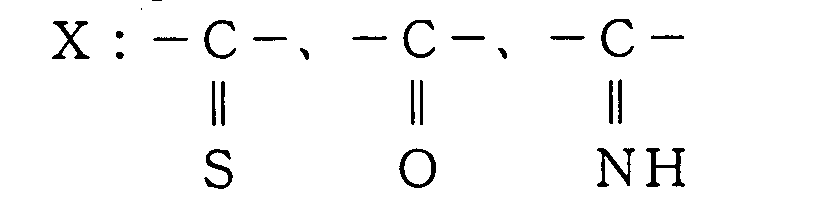
wherein A1 and A2 each represent R-, R-NH-, R-X-NH-, R-NH-NH- or R-X-NH- NH-, and A1 and A2 may be the same or different; R represents any one of a hydrogen atom, an alkyl group having 1 to 18 carbon atoms which may be branched, a cycloalkyl group, an aryl group, an alkylaryl group or an alkenyl group, each group of which may include at least one substituent containing a sulfur atom, a nitrogen atom and an oxygen atom, and two R's may be combined in a molecule to form a ring containing a >C=NH bond; and X represents any one of those shown below:


- (2) The rubber composition as described in the above item (1), wherein the
compound (A) represented by Formula (I) described above is a compound
represented by the following Formula (II):
wherein B1 and B2 each represent
 a hydrogen atom or an alkyl group having 1 to 18 carbon atoms which may be branched, and B1 and B2 may be the same or different.
- (3) The rubber composition as described in the above item (2), wherein the compound represented by Formula (II) is N'-(N-benzoylamidino)benzoic acid hydrazide.
- (4) The rubber composition as described in the above item (3), wherein the
compound (A) represented by Formula (I) described above is a compound
represented by the following Formula (III):
wherein B1 and B2 each represent
 a hydrogen atom or an alkyl group having 1 to 18 carbon atoms which may be branched, and B1 and B2 may be the same or different.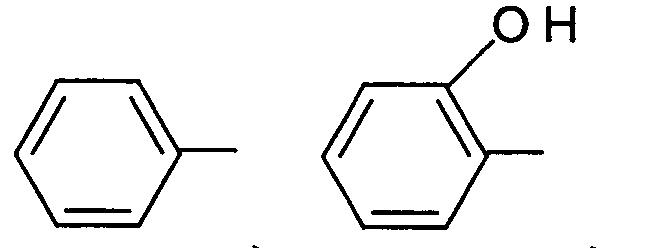
- (5) The rubber composition as described in the above item (4), wherein the compound represented by Formula (III) is N-amidinobenzamide.
- (6) The rubber composition as described in any of the above items (1) to (5), further comprising an antioxidant, wherein the antioxidant is at least one selected from the group consisting of antioxidants of a naphthylamine base, a p-phenylenediamine base, a hydroquinone derivative, a monophenol base, a bisphenol base, a trisphenol base, a polyphenol base, a diphenylamine base, a quinoline base, a thiobisphenol base and a hindered phenol base.
- (7) The rubber composition as described in the above item (6), wherein the antioxidant described above is at least one selected from the group consisting of antioxidants of a p-phenylenediamine base and a diphenylamine base.
- (8) The rubber composition as described in the above item (5) or (6), wherein an amount of the antioxidant described above is 0.1 to 5.0 parts by weight per 100 parts by weight of the rubber component.
-
- A rubber composition which is better in heat aging resistance is provided by using at least one selected from the compounds (A) represented by Formula (I) in combination with an antioxidant.
- The present invention shall be explained below in detail.
- The rubber composition of the present invention is characterized by comprising 100 parts by weight of a rubber component comprising at least one selected from the group consisting of natural rubber and synthetic rubbers and 0.05 to 20 parts by weight of at least one selected from the compounds (A) represented by the following Formula (I):wherein A1 and A2 each represent R-, R-NH-, R-X-NH-, R-NH-NH- or R-X-NH- NH-, and A1 and A2 may be the same or different.

- Above R is any one of a hydrogen atom, an alkyl group having 1 to 18 carbon atoms which may be branched, a cycloalkyl group, an aryl group, an alkylaryl group or an alkenyl group (these groups include a group having at least one substituent containing a sulfur atom, a nitrogen atom and an oxygen atom), and two R's may be combined in a molecule to form a ring containing a >C=NH bond. X represents any one of those shown below:

- The compound (A) represented by Formula (I) used in the present invention is used as a novel heat aging preventive. Although an action mechanism thereof is not sufficiently made clear, it is considered that ">NH" is contained in the structure thereof as is the case with conventional diphenylamine base antioxidants and therefore gives a proton to peroxy radicals produced in the course of an auto-oxidation of the rubber composition to stabilize, whereby the aging preventing action is displayed (this point shall further be explained in examples described later).
- The compound (A) represented by Formula (I) includes, for example, various compounds shown in the following items (1) to (14).
- (1) When A1 and A2 are R-, included are, for example, ethaneimine, benzylimine, acetoneimine, acetophenoneimine and benzophenoneimine.
- (2) When A1 is R- and A2 is R-NH-, included are, for example, benzoamidine,
acetoamidine, 1-phenylbenzoamidine, 1-methylbenzoamidine and
1 -phenylacetoamidine. - (3) When A1 is R- and A2 is R-X-NH-, included are, for example,
1-benzoylbenzoamidine, 1-acetylbenzoamidine and 1-benzoylacetoamidine. - (4) When A1 and A2 are R-NH-, included are, for example, guanidine,
1-phenylguanidine, 1-methylguanidine, 1,3-diphenylguanidine,
1,3-dipropylguanidine and 1 -phenyl-3-methylguanidine. - (5) When A1 is R-NH- and A2 is R-X-NH-, included are, for example, N-amidinobenzamide, N-amidinoacetoamide, N'-(N-phenylamidino)benzamide, N'-(N-phenylamidino)acetoamide, N'-(N-phenylamidino)stearamide, N'-(N-methylamidino)benzamide and biguanide.
- (6) When A1 and A2 are R-X-NH-, included are, for example, 1,3-dibenzoylguanidine, 1,3-diacetylguanidine and 1-acetyl-3-benzoylguanidine.
- (7) When A1 is R- and A2 is R-NH-NH-, included are, for example,
benzohydrazideimine, acetohydrazideimine, 2-phenylbenzohydrazideimine, 2-methylbenzohydrazideimine and 2-phenylacetohydrazideimine. - (8) When A1 is R- and A2 is R-X-NH-NH-, included are, for example,
2-benzoylbenzohydrazideimine, 2-acetylbenzo-hydrazideimine,
2-benzoylacetohydrazideimine and 2-amidinobenzohydrazideimine. - (9) When A1 is R-NH- and A2 is R-NH-NH-, included are, for example, aminoguanidine, 1-amino-2-phenylguanidine, 1-amidino-2-phenylhydrazine, 1-phenyl-2-(N-phenyl-amidino)hydrazine, 1-methyl-2-(N-phenylamidino)hydrazine and 1-phenyl-2-(N-methylamidino)hydrazine.
- (10) When A1 is R-NH- and A2 is R-X-NH-NH-, included are, for example, N'-amidinobenzoic acid hydrazide, N'-amidinooctanoic acid hydrazide, N'-(N-phenylamidino)benzoic acid hydrazide, N'-(N-methylamidino)benzoic acid hydrazide, N'-(N-phenylamidino)acetohydrazide and N'-(N-phenylamidino)octanoic acid hydrazide.
- (11) When A1 is R-X-NH- and A2 is R-X-NH-NH-, included are, for example,
N'-(N-benzoylamidino)benzoic acid hydrazide, N'-(N-octanoylamidino)octanoic
acid hydrazide, N'-(N-acetylamidino)benzoic acid hydrazide,
N'-(N-benzoylamidino)propionic acid hydrazide, N'-(N-benzoylamidino)octanoic acid hydrazide and N'-(N-benzoylamidino)stearic acid hydrazide. - (12) When A1 and A2 are R-NH-NH-, included are, for example,
carbohydrazideimine, 1,5-diphenylcarbo-hydrazideimine and
1,5-dimethylcarbohydrazideimine. - (13) When A1 is R-NH-NH- and A2 is R-X-NH-NH-, included are, for example, 1-benzoyl-5-phenylcarbohydrazideimine, 1-acetyl-5-phenylcarbohydrazideimine and 1 -benzoyl-5-methylcarbohydrazideimine.
- (14) When A1 and A2 are R-X-NH-NH-, included are, for example,
1,5-dibenzoylcarbohydrazideimine, 1,5-diacetylcarbohydrazideimine and 1,5-dioctanoylcarbo-hydrazideimine. -
- In the various compounds of the items (1) to (14) described above, those in which structural double bond isomers are present shall not be restricted only to one isomer.
- These compounds (A) can be used alone or in a mixture of two or more kinds thereof.
- The compound (A) represented by Formula (I) described above used in the present invention is preferably the compound represented by the following Formula (II) or (III):wherein B1 and B2 each represent
 a hydrogen atom or an alkyl group having 1 to 18 carbon atoms which may be branced, and B1 and B2 may be the same or different;
 wherein B1 and B2 each represent
 a hydrogen atom or an alkyl group having 1 to 18 carbon atoms which may be branched, and B1 and B2 may be the same or different.
- To be specific, the compound (A) is preferably N'-(N- benzoylamidino)benzoic acid hydrazide in Formula (II) and N-amidinobenzamide in Formula (III). In these cases, better heat aging preventive action is displayed.
- These compounds (A) can be relatively easily synthesized by reacting readily available raw materials such as ketones, amines, nitriles, hydrazines, hydrazides, guanidines, aminoguanidines and iminoethers with each other, or reacting these compounds with suitable reactants. The specific synthetic examples shall further be explained in examples.
- A content of at least one of the compounds (A) represented by Formula (I) described above used in the present invention is 0.05 to 20 parts by weight, preferably 0.1 to 5.0 parts by weight and more preferably 0.5 to 3.0 parts by weight per 100 parts by weight of the rubber component.
- If the amount of the compound (A) described above falls in a range of 0.05 to 20 parts by weight, the intended heat aging preventing effect is exhibited without bringing about a reduction in the other physical properties and a rise in the cost.
- In the present invention, at least one of the various compounds described above is used in combination with an antioxidant which is conventionally used in the rubber industry, whereby better heat aging preventing action is displayed.
- It has so far been known that when two or more kinds of antioxidants are used in combination, a synergistic effect is exhibited depending on the combination of the antioxidants used, and it is widely known that the kind of this synergistic effect includes homosynergism which takes place when two or more kinds of antioxidants themselves of a peroxy radical scavenger type are used in combination, and heterosynegism which takes place when antioxidants having different action mechanisms are used in combination, for example, when antioxidants of a peroxy radical scavenger type are combined with antioxidants of a peroxide decomposer type. In the present invention, various kinds of the preceding compounds (A) are, as described above, the antioxidants of a peroxy radical scavenger type, and when they are used in combination with other conventional antioxidants of a peroxy radical scavenger type such as a diphenyldiamine base and a hindered phenol base, the former homosynergism is revealed. As a result, displayed is the specific effect that the larger effect is obtained in a smaller amount in the case of using the compound (A) in combination with the conventional antioxidants of a diphenyldiamine base and a hindered phenol base rather than in the case of using the conventional antioxidants alone in a large amount.
- Rubber composition using this compound (A) is less deteriorated in the elastic modulus before and after degradation than rubber composition blending a diphenyldiamine based antioxidant.
- Given as the antioxidants used in combination are a naphthylamine base, a p-phenylenediamine base, a hydroquinone derivative, a monophenol base, a bisphenol base, a trisphenol base, a polyphenol base, a diphenylamine base, a quinoline base, a thiobisphenol base and a hindered phenol base. Among them, amine based antioxidants of a p-phenylenediamine base and a diphenylamine base are preferred in terms of the higher aging preventing effect.
- The antioxidants of a p-phenylenediamine base include, for example, N,N'-diphenyl-p-phenylenediamine, N-isopropyl-N'-phenyl-p-phenylenediamine, N,N'-di-2-naphthyl-p-phenylenediamine, N-cyclohexyl-N'-phenyl-p- phenylenediamine, N-phenyl-N'-(3-methacryloyloxy-2-hydroxypropyl) -p-phenylenediamine, N,N'-bis(1-methyl-heptyl)-p-phenylenediamine, N,N'-bis(1,4-dimethylpentyl)-p-phenylenediamine, N,N'-bis(1-ethyl-3-methylpentyl)-p-phenylenediamine and N-(1,3-dimethylbutyl)- N'-phenyl-p-phenylenediamine. Among them, N-(1,3-dimethylbutyl)-N'-phenyl-p- phenylenediamine is most preferred in terms of the higher aging preventing effect.
- The antioxidants of a diphenylamine base include, for example, 4,4'-( α -methylbenzyl)diphenylamine, 4,4'-( a, a -dimethylbenzyl)diphenylamine, p-(p-toluene-sulfonylamide)diphenylamine and 4,4'-dioctyldiphenyamine. Among them, 4,4'-( a -methylbenzyl)diphenylamine is most preferred in terms of the higher aging preventing effect.
- The antioxidants used in combination with the compound (A) represented by Formula (I) described above can be used alone or in combination of two or more kinds thereof, and they are used in a range of 0.1 to 5.0 parts by weight, preferably 0.2 to 3.0 parts by weight per 100 parts by weight of the rubber component.
- When a content of the compound described above falls in a range of 0.1 to 5.0 parts by weight, the higher aging preventing effect is exhibited without causing bloom on a surface of a rubber article and a reduction in other physical properties.
- The rubber component used in the present invention is natural rubber and/or synthetic rubbers. The synthetic rubbers include, for example, cis-1,4-polyisoprene, styrene-butadiene copolymers, 1,4-polybutadiene, ethylene-propylene-diene copolymers, polychloroprene, halogenated butyl rubber and acrylonitrile-butadiene rubber. At least one of them can be used, and natural rubber or diene base synthetic rubber is preferably used.
- In the present invention, capable of being suitably blended, if necessary, in addition to the compounds described above are compounding ingredients usually used in the rubber industry, for example, reinforcing fillers such as carbon black and silica, process oil, other antioxidants than the antioxidants described above, vulcanization-accelerators, acceleration activators such as stearic acid and zinc white, and vulcanizing agents such as sulfur.
- The reinforcing fillers include, for example, carbon black, silica, calcium carbonate and titanium oxide, and among them, carbon black is preferred. One usually used in the rubber industry can suitably be used as carbon black. In particular, carbon black of HAF, ISAF or SAF grade is preferred.
- An amount of the reinforcing filler is preferably 20 to 150 parts by weight per 100 parts by weight of the rubber component.
- The process oil which can be used includes, for example, a paraffin base, a naphthene base and an aromatic base.
- The vulcanization-accelerators which can be used shall not specifically be restricted and include thiazoles such as mercaptobenzothiazole and dibenzothiazyldisulfide, sulfenamides such as N-cyclohexyl-2- benzothiazolylsulfenamide, N,N'-dicyclohexyl-2-benzothiazolylsulfeneamide and N'-t-butyl-2-benzothiazolyl-sulfenamide, and guanidines such as diphenylguanidine. The blending amount thereof is preferably 0.1 to 5 parts by weight per 100 parts by weight of the rubber component.
- The acceleration activators shall not specifically be restricted and include stearic acid and zinc white.
- Vulcanizing agents usually used in the rubber industry can suitably be used and include sulfur and peroxides, and sulfur is preferred. A blending amount of the vulcanizing agent is preferably 0.5 to 8.0 parts by weight, more preferably 0.5 to 5.0 parts by weight per 100 parts by weight of the rubber component. When the amount of the vulcanizing agent falls in a range of 0.5 to 8.0 parts by weight, vulcanization is sufficiently carried out. In addition thereto, the scorching time can be extended, and rubber does not get scorched during kneading.
- The rubber composition of the present invention can be used for industrial articles such as rubber vibration insulators, belts and hoses as well as tire materials such as tire treads, under treads, carcasses, side walls and beads. It is used preferably for tire treads.
- Products including tires, power belts and the like are envisioned. Decreased rolling resistance is, of course, a useful property for pneumatic tires, both radial as well as bias ply types and thus, the vulcanizable elastomeric compositions of the present invention can be utilized to form treadstocks for such tires. Pneumatic tires can be made according to the constructions disclosed in U.S. Patent Numbers 5,866,171; 5,876,527; 5,931,211; and 5,971,046, the disclosures of which are incorporated herein by reference. The composition can also be used to form other elastomeric tire components such as subtreads, black sidewalls, body ply skims, bead fillers and the like.
- The present invention shall more specifically be explained below in further details with reference to synthetic examples, examples and comparative examples, but the present invention shall not be restricted to these examples.
- Synthesized by the following methods were five kinds of compounds of N'-(N-benzoylamidino)benzoic acid hydrazide, N-amidinobenzamide, 1-benzoylacetoamidine, 2-benzoylaceto-hydrazideimine and 1,5-dioctanoylcarbohydrazideimine which were representative compounds among the compounds (A) in the present invention.
- Unless otherwise described, it was carried to identify and to confirm compounds obtained by the following reactions by obtaining satisfactory proton nuclear magnetic resonance spectra, infrared spectra and mass spectra.
- A four neck flask (one liter) equipped with a thermometer and a stirrer was charged with 71.3 g (0.4 mole) of N'-amidinobenzoic acid hydrazide (CAS. 3679-92- 3), 46.6 g (0.44 mole) of anhydrous sodium carbonate and 360 cc of dimethylformamide. Dropwise added thereto in about 2 hours was 59.0 g (0.42 mole) of benzoyl chloride under stirring while cooling so that the temperature was maintained at 20°C or lower. After stirring at 20°C (room temperature) for 12 hours, deposited crystals were filtered off, and the mother liquor was concentrated under reduced pressure. The resulting residue was dissolved in 100 cc of isopropyl alcohol, and the solution was slowly dropwise added to one liter of deionized water to deposit crystals. The resulting crystals were filtered off, sufficiently washed with deionized water and then dried under reduced pressure, whereby the intended compound (pale yellow crystals) was obtained.
- The yielded amount in this reaction was 73.5 g (0.26 mole), and the yield thereof was 65 %.
- A four neck flask (3 liters) equipped with a thermometer and a stirrer was charged with 573.2 g (6.0 mole) of guanidine hydrochloride and 1.5 liter of methanol and cooled to 20°C. Slowly dropwise added thereto was 324.1 g (6.0 mole) of sodium methoxide crystal at 20°C or lower and stirred for 3 hours. Deposited crystals were filtered off. The mother liquor was charged to the four neck flask (3 liters) equipped with the above devices, and 337.4 g (2.4 mole) of benzoyl chloride was slowly dropwise added at 15°C or lower and stirred for 12 hours. Deposited crystals were filtered off, and the mother liquor was concentrated under reduced pressure to obtain white crystals. The resulting crystals were sufficiently washed with 3 liters of deionized water and dried under reduced pressure, whereby the intended compound (white crystals) was obtained.
- The yielded amount in this reaction was 292 g (1.79 mole), and the yield thereof was 75 %.
- A four neck flask (one liter) equipped with a thermometer and a stirrer was charged with 70.9 g (0.75 mole) of ethylacetoimidate hydrochloride (CAS. 2208-01- 3) and 400 cc of dimethylformamide and cooled down to 0°C or lower. Added thereto was 79.5 g (0.75 mole) of anhydrous sodium carbonate, and subsequently 42.2 g (0.3 mole) of benzoyl chloride was slowly dropwise added under stirring so that the temperature was maintained at 0°C or lower and stirred at 20°C for 2 days. Deposited crystals were filtered off, and the mother liquor was concentrated under reduced pressure to obtain a residue. This residue was extracted with water 200 cc/toluene 200 cc, and the separated toluene layer was dehydrated with anhydrous magnesium sulfate. Magnesium sulfate was filtered off, and then toluene was distilled off under reduced pressure, followed by drying the residue under reduced pressure, whereby the intended compound was obtained.
- The yielded amount in this reaction was 20.5 g (0.13 mole), and the yield thereof was 42 %.
- A four neck flask (one liter) equipped with a thermometer and a stirrer was charged with 51.8 g (0.42 mole) of ethylacetoimidate hydrochloride and 500 cc of methanol. Added thereto was 46.6 g (0.44 mole) of anhydrous sodium carbonate under stirring at room temperature and stirred at room temperature for 3 hours. Deposited crystals were filtered off, and the mother liquor was charged to the four neck flask (one liter) equipped with the above devices. Slowly added was 54.4 g (0.4 mole) of benzoic acid hydrazide under stirring at room temperature and stirred for 12 hours. The reaction solution was concentrated under reduced pressure, and the resulting oily product was added to 300 cc of diethyl ether to deposit crystals. These crystals were washed with 100 cc of diethyl ether and dried under reduced pressure, whereby the intended compound (pale yellow crystals) was obtained.
- The yielded amount in this reaction was 47.1 g (0.26 mole), and the yield thereof was 66 %.
- A four neck flask (2 liters) equipped with a thermometer and a stirrer was charged with 10.8 g (0.2 mole) of sodium methoxide and 800 cc of methanol and cooled to 20°C or lower. Added thereto little by little under stirring was 25.1 g (0.2 mole) of 1,3-diaminoguanidine hydrochloride at 20°C or lower and stirred for 3 hours. Subsequently, 44.5 g (0.42 mole) of anhydrous sodium carbonate was added, and octanoic acid chloride was further dropwise added at 20°C or lower, followed by stirring the solution at 20°C for 12 hours. Deposited crystals were filtered off, and the crystals thus obtained were washed with 400 cc of deionized water and 200 cc of hexane and dried under reduced pressure, whereby the intended compound (white crystals) was obtained.
- The yielded amount in this reaction was 47.1 g (0.14 mole), and the yield thereof was 69 %.
- Rubber compositions blended according to recipes shown in the following Table 1 and Table 2 were kneaded by means of a Banbury mixer® and then turned into sheets (160 mm × 160 mm) having a thickness of about 2 mm, followed by press-vulcanizing at 145°C for 30 minutes.
- The vulcanized rubbers obtained in Examples 1 to 10 and Comparative Examples 1 to 4 were subjected to a tensile test according to JIS K6301-1975 before heat aging and after heat aging in the air under the conditions of 100°C for 48 hours to determine an elastic modulus in elongation by 100 % and an elongation at break (%).
- These results are shown in the following Table 1 and Table 2. Further, the structural formulas of chemicals A to E in Table 2 are shown below.
Blending recipe (part by weight) Natural rubber 70 Synthetic rubber 1 30 Reinforcing filler 2 50 Stearic acid 2.0 Zinc white 3.0 Antioxidant 3 Table 2 Various compounds (A) Table 2 Vulcanization-accelerator 3 1.0 Sulfur 1.2 

- As apparent from the results shown in Table 1 and Table 2, it has been found that the elastic modulus in elongation by 100 % is excellent and the elongation at break rupture extension is high after heat aging in Examples 1 to 10 falling in the scope of the present invention as compared with Comparative Examples 1 to 4 falling outside the scope of the present invention.
- It has been found as well that the rubber composition having excellent heat aging resistance is obtained by using the compounds described above of the present invention. Further, it has been found that the rubber composition having better heat aging resistance is obtained by using the compound (A) in combination with a diphenyldiamine base antioxidant.
Claims (8)
- A rubber composition comprising 100 parts by weight of a rubber component comprising at least one selected from the group consisting of natural rubber and synthetic rubbers and 0.05 to 20 parts by weight of at least one selected from compounds (A) represented by the following Formula (I):wherein A1 and A2 each represent R-, R-NH-, R-X-NH-, R-NH-NH- or R-X-NH- NH-, and A1 and A2 may be the same or different; R represents any one of a hydrogen atom, an alkyl group having 1 to 18 carbon atoms which may be branched, a cycloalkyl group, an aryl group, an alkylaryl group or an alkenyl group, each group of which may include at least one substituent containing a sulfur atom, a nitrogen atom and an oxygen atom, and two R's may be combined in a molecule to form a ring containing a >C=NH bond; and X represents any one of those shown below:

- The rubber composition as described in claim 1, wherein the compound (A) represented by Formula (I) is a compound represented by the following Formula (II):wherein B1 and B2 each represent
 a hydrogen atom or an alkyl group having 1 to 18 carbon atoms which may be branched, and B1 and B2 may be the same or different.
- The rubber composition as described in claim 2, wherein the compound represented by Formula (II) is N'-(N-benzoylamidino)benzoic acid hydrazide.
- The rubber composition as described in claim 1, wherein the compound (A) represented by Formula (I) is a compound represented by the following Formula (III):wherein B1 and B2 each represent
 a hydrogen atom or an alkyl group having 1 to 18 carbon atoms which may be branced, and B1 and B2 may be the same or different.
- The rubber composition as described in claim 4, wherein the compound represented by Formula (III) is N-amidinobenzamide.
- The rubber composition as described in any of claims 1 to 5, further comprising an antioxidant, wherein said antioxidant is at least one selected from the group consisting of antioxidants of a naphthylamine base, a p-phenylenediamine base, a hydroquinone derivative, a monophenol base, a bisphenol base, a trisphenol base, a polyphenol base, a diphenylamine base, a quinoline base, a thiobisphenol base and a hindered phenol base.
- The rubber composition as described in claim 6, wherein the antioxidant is at least one selected from the group consisting of antioxidants of a p-phenylenediamine base and a diphenylamine base.
- The rubber composition as described in claim 5 or 6, wherein an amount of the antioxidant is 0.1 to 5.0 parts by weight per 100 parts by weight of the rubber component.
Applications Claiming Priority (2)
| Application Number | Priority Date | Filing Date | Title |
|---|---|---|---|
| JP32692399A JP2001139728A (en) | 1999-11-17 | 1999-11-17 | Rubber composition |
| JP32692399 | 1999-11-17 |
Publications (2)
| Publication Number | Publication Date |
|---|---|
| EP1101793A1 true EP1101793A1 (en) | 2001-05-23 |
| EP1101793B1 EP1101793B1 (en) | 2006-01-25 |
Family
ID=18193279
Family Applications (1)
| Application Number | Title | Priority Date | Filing Date |
|---|---|---|---|
| EP00310245A Expired - Lifetime EP1101793B1 (en) | 1999-11-17 | 2000-11-17 | Heat ageing resistant rubber composition |
Country Status (5)
| Country | Link |
|---|---|
| US (2) | US6515055B1 (en) |
| EP (1) | EP1101793B1 (en) |
| JP (1) | JP2001139728A (en) |
| DE (1) | DE60025685T2 (en) |
| ES (1) | ES2255950T3 (en) |
Cited By (1)
| Publication number | Priority date | Publication date | Assignee | Title |
|---|---|---|---|---|
| EP2952541B1 (en) * | 2013-01-30 | 2026-01-14 | Bridgestone Corporation | Rubber composition, and pneumatic tire using same |
Families Citing this family (11)
| Publication number | Priority date | Publication date | Assignee | Title |
|---|---|---|---|---|
| JP4665493B2 (en) * | 2004-11-30 | 2011-04-06 | 株式会社ブリヂストン | Rubber composition and pneumatic tire |
| US20130312890A1 (en) * | 2011-02-08 | 2013-11-28 | Bridgestone Corporation | Rubber laminate, run-flat tire, and pneumatic tire |
| JP5890679B2 (en) * | 2011-12-26 | 2016-03-22 | 株式会社ブリヂストン | Method for producing rubber composition |
| JP6334415B2 (en) * | 2013-01-30 | 2018-05-30 | 株式会社ブリヂストン | Rubber composition and pneumatic tire using the same |
| JP5557945B1 (en) * | 2013-05-01 | 2014-07-23 | 株式会社ブリヂストン | Tire manufacturing method |
| JP6036673B2 (en) | 2013-12-19 | 2016-11-30 | 横浜ゴム株式会社 | Rubber composition containing natural rubber and method for making natural rubber constant viscosity and suppressing odor |
| WO2015190519A1 (en) * | 2014-06-10 | 2015-12-17 | 三菱瓦斯化学株式会社 | Modified rubber for tyre, rubber composition for tyre using said modified rubber and tyre |
| WO2016039274A1 (en) * | 2014-09-12 | 2016-03-17 | 三菱瓦斯化学株式会社 | Bis(alkylidene)diaminoguanidine and salt thereof, modified rubber, rubber composition, and tire |
| US20170260302A1 (en) * | 2014-09-12 | 2017-09-14 | Mitsubishi Gas Chemical Company, Inc. | Modified rubber, rubber composition and tire |
| US20180155277A1 (en) * | 2015-04-23 | 2018-06-07 | Mitsubishi Gas Chemical Company, Inc. | Gas generating agent, and method for producing foam using the same |
| JP6323801B1 (en) | 2016-09-02 | 2018-05-16 | 三菱瓦斯化学株式会社 | Vulcanized rubber composition and method for producing the same |
Citations (4)
| Publication number | Priority date | Publication date | Assignee | Title |
|---|---|---|---|---|
| EP0433808A2 (en) * | 1989-12-22 | 1991-06-26 | Bayer Ag | Process for vulcanising polychloroprene |
| EP0905163A1 (en) * | 1997-09-26 | 1999-03-31 | Nippon Mektron, Limited | Acrylic elastomer composition |
| EP0909788A1 (en) * | 1997-04-02 | 1999-04-21 | Bridgestone Corporation | Rubber composition and pneumatic tires |
| EP1000968A1 (en) * | 1998-11-16 | 2000-05-17 | Bayer Aktiengesellschaft | Vulcanizable rubber compositions containing styrene-butadiene and butadiene rubbers |
Family Cites Families (8)
| Publication number | Priority date | Publication date | Assignee | Title |
|---|---|---|---|---|
| DE2008479A1 (en) * | 1970-02-24 | 1971-09-09 | Huels Chemische Werke Ag | Method for vulcanizing Homobzw. Copolymerization of conjugated dienes |
| SU765310A1 (en) * | 1978-10-16 | 1980-09-23 | Кировский Политехнический Институт | Fluororubber-based rubber mixture |
| JPS57177045A (en) * | 1981-04-24 | 1982-10-30 | Denki Kagaku Kogyo Kk | Rubber composition |
| JPH01306442A (en) * | 1988-06-02 | 1989-12-11 | Sanshin Chem Ind Co Ltd | Chloroprene rubber vulcanized composition |
| JP3555809B2 (en) | 1995-06-19 | 2004-08-18 | 株式会社ブリヂストン | Radial tire |
| JP3606411B2 (en) | 1996-07-10 | 2005-01-05 | 株式会社ブリヂストン | Tire vulcanization mold and manufacturing method thereof |
| JP3117645B2 (en) | 1996-09-03 | 2000-12-18 | 株式会社ブリヂストン | Pneumatic radial tire |
| US5971046A (en) | 1997-09-17 | 1999-10-26 | Bridgestone/Firestone, Inc. | Method and apparatus for bonding an active tag to a patch and a tire |
-
1999
- 1999-11-17 JP JP32692399A patent/JP2001139728A/en active Pending
-
2000
- 2000-11-17 DE DE60025685T patent/DE60025685T2/en not_active Expired - Fee Related
- 2000-11-17 US US09/714,507 patent/US6515055B1/en not_active Expired - Fee Related
- 2000-11-17 ES ES00310245T patent/ES2255950T3/en not_active Expired - Lifetime
- 2000-11-17 EP EP00310245A patent/EP1101793B1/en not_active Expired - Lifetime
-
2002
- 2002-11-25 US US10/303,164 patent/US6667356B2/en not_active Expired - Fee Related
Patent Citations (4)
| Publication number | Priority date | Publication date | Assignee | Title |
|---|---|---|---|---|
| EP0433808A2 (en) * | 1989-12-22 | 1991-06-26 | Bayer Ag | Process for vulcanising polychloroprene |
| EP0909788A1 (en) * | 1997-04-02 | 1999-04-21 | Bridgestone Corporation | Rubber composition and pneumatic tires |
| EP0905163A1 (en) * | 1997-09-26 | 1999-03-31 | Nippon Mektron, Limited | Acrylic elastomer composition |
| EP1000968A1 (en) * | 1998-11-16 | 2000-05-17 | Bayer Aktiengesellschaft | Vulcanizable rubber compositions containing styrene-butadiene and butadiene rubbers |
Cited By (1)
| Publication number | Priority date | Publication date | Assignee | Title |
|---|---|---|---|---|
| EP2952541B1 (en) * | 2013-01-30 | 2026-01-14 | Bridgestone Corporation | Rubber composition, and pneumatic tire using same |
Also Published As
| Publication number | Publication date |
|---|---|
| EP1101793B1 (en) | 2006-01-25 |
| ES2255950T3 (en) | 2006-07-16 |
| JP2001139728A (en) | 2001-05-22 |
| US6515055B1 (en) | 2003-02-04 |
| DE60025685T2 (en) | 2006-09-14 |
| DE60025685D1 (en) | 2006-04-13 |
| US20030134947A1 (en) | 2003-07-17 |
| US6667356B2 (en) | 2003-12-23 |
Similar Documents
| Publication | Publication Date | Title |
|---|---|---|
| EP0909788B1 (en) | Rubber composition and pneumatic tires | |
| US5130363A (en) | Rubber vulcanizates having improved hysteresis behavior | |
| US8546582B2 (en) | Sulfenamide, vulcanization accelerator containing the sulfenamide for rubber, and process for producing the vulcanization accelerator | |
| US5665799A (en) | Rubber composition and a vulcanizing adhesion method using the same | |
| US6667356B2 (en) | Rubber composition | |
| CN102177200B (en) | Rubber composition | |
| JPH10330549A (en) | Pneumatic tire | |
| US5840908A (en) | Sulfenamide accelerators and rubber compositions containing the same | |
| CA1042888A (en) | Vulcanizable rubber compositions | |
| US5981662A (en) | Rubber compounds containing polymeric bis-succinimide polysulfides | |
| US5442099A (en) | Bis-(thiobenzoyldisulfido)-alkanes | |
| CS276589B6 (en) | N,n'-substituted bis(2,4-diamino-s-triazin-6-yl) tetrasulfides, process of their preparation and their use in curable masterbatches | |
| WO2019156093A1 (en) | Rubber composition and tire | |
| JPH11228737A (en) | Rubber composition | |
| JP3746368B2 (en) | Rubber composition | |
| US3634318A (en) | Rubber formulations comprising phenylenediamines and n-aryl sulfenamides | |
| US6465604B2 (en) | Pyrimidine derivatives as hardness stabilizers | |
| JPH11228739A (en) | Rubber composition | |
| JPH05140127A (en) | Triazine-based compound and rubber composition | |
| US4248805A (en) | Vulcanizable rubber compositions containing N-(sulfenyl) phthalamides as scorch inhibitors | |
| JP3915736B2 (en) | Chroman compounds | |
| US4313892A (en) | N-(Sulfenyl) phthalamides | |
| JPH05202231A (en) | Rubber composition | |
| SK122295A3 (en) | Mixture liquid stabilizer for rubbers, preparation method thereof and mixtures prepared with its use | |
| JPH04288354A (en) | Rubber composition |
Legal Events
| Date | Code | Title | Description |
|---|---|---|---|
| PUAI | Public reference made under article 153(3) epc to a published international application that has entered the european phase |
Free format text: ORIGINAL CODE: 0009012 |
|
| AK | Designated contracting states |
Kind code of ref document: A1 Designated state(s): DE ES FR GB IT |
|
| AX | Request for extension of the european patent |
Free format text: AL;LT;LV;MK;RO;SI |
|
| 17P | Request for examination filed |
Effective date: 20010830 |
|
| 17Q | First examination report despatched |
Effective date: 20011203 |
|
| AKX | Designation fees paid |
Free format text: DE ES FR GB IT |
|
| GRAP | Despatch of communication of intention to grant a patent |
Free format text: ORIGINAL CODE: EPIDOSNIGR1 |
|
| GRAS | Grant fee paid |
Free format text: ORIGINAL CODE: EPIDOSNIGR3 |
|
| GRAA | (expected) grant |
Free format text: ORIGINAL CODE: 0009210 |
|
| AK | Designated contracting states |
Kind code of ref document: B1 Designated state(s): DE ES FR GB IT |
|
| PG25 | Lapsed in a contracting state [announced via postgrant information from national office to epo] |
Ref country code: IT Free format text: LAPSE BECAUSE OF FAILURE TO SUBMIT A TRANSLATION OF THE DESCRIPTION OR TO PAY THE FEE WITHIN THE PRESCRIBED TIME-LIMIT;WARNING: LAPSES OF ITALIAN PATENTS WITH EFFECTIVE DATE BEFORE 2007 MAY HAVE OCCURRED AT ANY TIME BEFORE 2007. THE CORRECT EFFECTIVE DATE MAY BE DIFFERENT FROM THE ONE RECORDED. Effective date: 20060125 |
|
| REG | Reference to a national code |
Ref country code: GB Ref legal event code: FG4D |
|
| REF | Corresponds to: |
Ref document number: 60025685 Country of ref document: DE Date of ref document: 20060413 Kind code of ref document: P |
|
| REG | Reference to a national code |
Ref country code: ES Ref legal event code: FG2A Ref document number: 2255950 Country of ref document: ES Kind code of ref document: T3 |
|
| ET | Fr: translation filed | ||
| PGFP | Annual fee paid to national office [announced via postgrant information from national office to epo] |
Ref country code: IT Payment date: 20061130 Year of fee payment: 7 |
|
| PLBE | No opposition filed within time limit |
Free format text: ORIGINAL CODE: 0009261 |
|
| STAA | Information on the status of an ep patent application or granted ep patent |
Free format text: STATUS: NO OPPOSITION FILED WITHIN TIME LIMIT |
|
| 26N | No opposition filed |
Effective date: 20061026 |
|
| PG25 | Lapsed in a contracting state [announced via postgrant information from national office to epo] |
Ref country code: DE Free format text: LAPSE BECAUSE OF NON-PAYMENT OF DUE FEES Effective date: 20070601 |
|
| GBPC | Gb: european patent ceased through non-payment of renewal fee |
Effective date: 20061117 |
|
| REG | Reference to a national code |
Ref country code: FR Ref legal event code: ST Effective date: 20070731 |
|
| PG25 | Lapsed in a contracting state [announced via postgrant information from national office to epo] |
Ref country code: GB Free format text: LAPSE BECAUSE OF NON-PAYMENT OF DUE FEES Effective date: 20061117 |
|
| REG | Reference to a national code |
Ref country code: ES Ref legal event code: FD2A Effective date: 20061118 |
|
| PG25 | Lapsed in a contracting state [announced via postgrant information from national office to epo] |
Ref country code: ES Free format text: LAPSE BECAUSE OF NON-PAYMENT OF DUE FEES Effective date: 20061118 Ref country code: FR Free format text: LAPSE BECAUSE OF NON-PAYMENT OF DUE FEES Effective date: 20061130 |
|
| PG25 | Lapsed in a contracting state [announced via postgrant information from national office to epo] |
Ref country code: IT Free format text: LAPSE BECAUSE OF NON-PAYMENT OF DUE FEES Effective date: 20071117 |