EP1098508A2 - Apparatus and method for resolution transformation of orthogonal transformation image - Google Patents
Apparatus and method for resolution transformation of orthogonal transformation image Download PDFInfo
- Publication number
- EP1098508A2 EP1098508A2 EP00124150A EP00124150A EP1098508A2 EP 1098508 A2 EP1098508 A2 EP 1098508A2 EP 00124150 A EP00124150 A EP 00124150A EP 00124150 A EP00124150 A EP 00124150A EP 1098508 A2 EP1098508 A2 EP 1098508A2
- Authority
- EP
- European Patent Office
- Prior art keywords
- transformation
- resolution
- orthogonal transformation
- orthogonal
- blocks
- Prior art date
- Legal status (The legal status is an assumption and is not a legal conclusion. Google has not performed a legal analysis and makes no representation as to the accuracy of the status listed.)
- Withdrawn
Links
Images












Classifications
-
- G—PHYSICS
- G06—COMPUTING OR CALCULATING; COUNTING
- G06T—IMAGE DATA PROCESSING OR GENERATION, IN GENERAL
- G06T9/00—Image coding
- G06T9/007—Transform coding, e.g. discrete cosine transform
-
- G—PHYSICS
- G06—COMPUTING OR CALCULATING; COUNTING
- G06T—IMAGE DATA PROCESSING OR GENERATION, IN GENERAL
- G06T3/00—Geometric image transformations in the plane of the image
- G06T3/40—Scaling of whole images or parts thereof, e.g. expanding or contracting
- G06T3/4084—Scaling of whole images or parts thereof, e.g. expanding or contracting in the transform domain, e.g. fast Fourier transform [FFT] domain scaling
Definitions
- This invention relates to an apparatus and a method of transforming a compressed image with one resolution to a compressed image with a different resolution at an orthogonal transformation coefficient level.
- the image is restored to the non-compression state using inverse DCT (IDCT) and thinning-out processing, etc., is performed for the image for transforming the resolution of the image, then DCT is again executed.
- IDCT inverse DCT
- thinning-out processing etc.
- the resolution transformation method requires the image processing of DCT and inverse DCT in addition to the resolution transformation processing, and, therefore, high-speed processing cannot be performed.
- Applications of transforming the resolution of a discretecosinetransformed image at high speed such as a program picture thumbnail function of scaling down a plurality of program pictures received in a digital broadcast (MPEG) and displaying a plurality of programs on one screen, are likely to be necessary in the future.
- MPEG digital broadcast
- JP-A-8-180194 The method of transforming the resolution of an image at high speed is disclosed, for example, in JP-A-8-180194.
- image coded data is decoded into orthogonal transformation coefficient data by variable-length decoding means and inverse quantization means, the resolution of the data is transformed at an orthogonal transformation coefficient level by transformation coefficient combining means for generating one transformation coefficient block from two or more (n) transformation coefficient blocks, and the orthogonal transformation coefficient data is again coded by quantization means and variable-length coding means, whereby the effect of being capable of transforming the resolution at high speed at the orthogonal transformation coefficient level can be produced without involving image processing of orthogonal transformation and orthogonal inverse transformation.
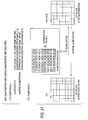
- the case where one orthogonal transformation block is calculated from two x two orthogonal transformation blocks (reduction to a half in a longitudinal direction and a half in a lateral direction) as shown in FIG. 25 is taken as an example.
- two-dimensional DCT with eight rows and eight columns is used as orthogonal (inverse) transformation and a block consisting of A rows and B columns of DCT coefficients is defined as an AXB DCT block, a non-compression block with A rows and B columns is defined as an AxB non-compression block, and two-dimensional DCT (IDCT) with A rows and B columns is defined as DCT AxB (IDCT AxB).
- a transformation matrix for generating one 8x8 DCT block from two x two of 8x8 DCT blocks is calculated by the following method:
- DCT DCT
- the transformation matrix or transformation expression of resolution transformation must be generated in response to the longitudinal and lateral change ratios; this is a problem.
- a method of executing resolution transformation of one-dimensional orthogonal transformation blocks in response to the longitudinal and lateral change ratios of an image is not designed.
- the transformation matrixes or transformation expressions of resolution transformation corresponding to all longitudinal and lateral change ratios are previously stored in nonvolatile memory.
- the effect of being capable of decreasing processing of generating each transformation matrix or transformation expression of resolution transformation in response to the longitudinal and lateral change ratios is produced.
- the even-numbered'th and odd-numbered'th coefficients of the orthogonal transformation block after resolution transformation are calculated using the nature of orthogonal transformation.
- the coefficients on (even-numbered rows, even-numbered columns), (even-numbered rows, odd-numbered columns), (odd-numbered rows, even-numbered columns), and (odd-numbered rows, odd-numbered columns) of the orthogonal transformation block after resolution transformation are calculated using the nature of orthogonal transformation.
- the intermediate information data generated for one resolution transformation processing is used for another resolution transformation processing.
- the effect of improving the resolution transformation processing and the image quality after resolution transformation is produced.
- the quantization values and quantization matrix of orthogonal transformation blocks before and after resolution transformation are input and requantization is also performed at the same time in the resolution transformation process.
- the effect of improving the computation efficiency of the whole resolution transformation also containing quantization is produced.
- the intermediate information data after quantization generated for one resolution transformation processing is used for another resolution transformation processing.
- the effect of improving the computation efficiency of the whole resolution transformation also containing quantization is produced.
- an apparatus for extracting only low-frequency areas of orthogonal transformation blocks required for resolution transformation and performing resolution transformation processing an apparatus for calculating the coefficient of an orthogonal transformation block at high speed using the characteristic of orthogonal transformation, and an apparatus for performing resolution transformation processing at high speed using nonvolatile memory.
- the resolution transformation apparatus of an orthogonal transformation image comprises longitudinal and lateral change ratio input means 101 for inputting the longitudinal and lateral change ratios of an image, low-frequency orthogonal transformation block extraction means 103 for determining the number of orthogonal transformation blocks required for resolution transformation, N, from the longitudinal and lateral change ratios input from the longitudinal and lateral change ratio input means 101 and extracting only low-frequency areas of the N orthogonal transformation blocks required for resolution transformation from before-transformation orthogonal transformation image memory 102 for storing orthogonal transformation images before undergoing resolution transformation, resolution transformation means 104 for determining the number of orthogonal transformation blocks to be generated after resolution transformation, M, from the longitudinal and lateral change ratios input from the longitudinal and lateral change ratio input means 101 and executing resolution transformation and generating M orthogonal transformation blocks from the N low-frequency orthogonal transformation blocks extracted by the low-frequency orthogonal transformation block extraction means 103, and orthogonal transformation block storage means 105 for storing the M orthogonal transformation blocks generated by the resolution transformation means 104 in after
- the orthogonal transformation includes one-dimensional orthogonal transformation of transforming a block consisting of a plurality of pixels in one dimension into frequency component and two-dimensional orthogonal transformation of transforming a block consisting of a plurality of pixels in two dimensions into frequency component.
- two-dimensional DCT8x8 of calculating the correlation between the pixels of eight pixels in a horizontal direction and eight pixels in a vertical direction is used as orthogonal transformation.
- two-dimensional DCT8x8 is used.
- the low-frequency orthogonal transformation block extraction means 103 determines the number of orthogonal transformation blocks required for resolution transformation, N, and the low-frequency areas to be extracted in response to the longitudinal and lateral change ratios input from the longitudinal and lateral change ratio input means 101.
- the resolution transformation means 104 executes resolution transformation at the DCT coefficient level using the low-frequency orthogonal transformation blocks extracted by the low-frequency orthogonal transformation block extraction means 103 and generates M orthogonal transformation blocks.
- 8x8 non-compression blocks are calculated from 4x4 low-frequency areas of the four 8x8DCT blocks.
- a matrix representing the 4x4 low-frequency areas be X
- a matrix representing the8x8 non-compression blocks be Y
- a transformation matrix of IDCT4x4 be IT44
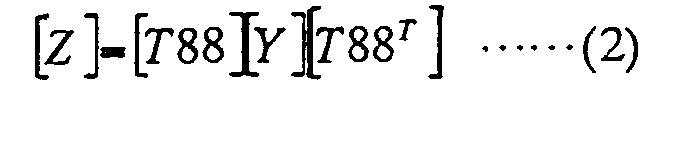
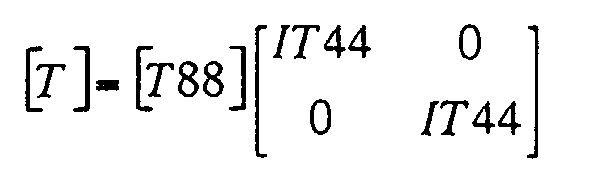
- 8x8DCT block is calculated from the 8x8 non-compression blocks. Letting a matrix of the 8x8 noncompression blocks be T88, the following expression (2) holds:
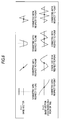
- the 8x8 non-compression block (Z) can be calculated from the four 8x8DCT blocks (X) simply by performing two 8x8 matrix computations. Since the two 8x8 matrix computations correspond to the DCT8x8 computation amount, processing with expression (3) can be executed at higher speed than processing in FIG. 4 performed sequentially.
- the matrixes of T88 and IT44T in expression (3) are represented as in expression (4) (A0, A1, B0, and B1 in expression (4) are constants) and the rows are called DCT4x4 base vectors and DCT8x8 base vectors.
- the four DCT4x4 base vectors or the eight DCT8x8 base vectors are orthogonal to each other and the inner products become zero.
- the DCT4x4 base vector (a0, a1, a2, a3) is represented as a DCT4x4 base expansion 1 vector of (a0, a1, a2, a3, 0, 0, 0, 0)
- the four DCT8x8 base vectors on the even-numbered rows of T88 and the four DCT4x4 base expansion 1 vectors become the same vectors or orthogonal vectors and the inner product at the orthogonal time becomes zero.
- the four following element waveforms of the DCT8x8 base vectors on the even-numbered rows of T88 become the same as the waveforms of the four DCT4x4 base vectors or they become of opposite sign. Therefore, if the DCT4x4 base vector (a0, a1, a2, a3) is represented as a DCT4x4 base expansion 2 vector of (0, 0, 0, 0, a0, a1, a2, a3), the four DCT8x8 base vectors on the even-numbered rows of T88 and the four DCT4x4 base expansion 2 vectors become the same vectors, vectors of opposite sign, or orthogonal vectors and the inner product at the orthogonal time becomes zero.
- the inner product of the DCT8x8 base vector on an even-numbered row of T88 and the DCT4x4 base expansion 1 vector (a0, a1, a2, a3, 0, 0, 0, 0) becomes the same value as the inner product of the DCT8x8 base vector on the even-numbered row of T88 and the DCT4x4 base expansion 2 vector (0, 0, 0, 0, a0, a1, a2, a3) or becomes a negative value.
- the vector becomes symmetric with respect to one point as an axis. Therefore, the inner product of the DCT8x8 base vector symmetric with respect to a point and the DCT4x4 base expansion 1 vector symmetric with respect to a line becomes the negative value of the inner product of the DCT8x8 base vector and the DCT4x4 base expansion 2 vector.
- the inner product of the DCT8x8 base vector symmetric with respect to a point and the DCT4x4 base expansion 1 vector symmetric with respect to a point becomes the same value as the inner product of the DCT8x8 base vector and the DCT4x4 base expansion 2 vector.
- each of the elements of even-numbered rows, even-numbered columns can be calculated as the product of the sum (difference) of four coefficients of the matrix X and constant
- each of the elements of even-numbered rows, odd-numbered columns and odd-numbered rows, even-numbered columns can be calculated as (product of sum (difference) of four coefficients and constant) * 4 times and the sum
- each of the elements of odd-numbered rows, odd-numbered columns can be calculated as (product of sum (difference) of four coefficients and constant)*16 times and the sum, as shown in FIG. 7.
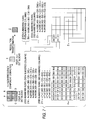
- the result of the sum of four coefficients of the matrix X or the sum of two coefficients can also be effectively used to calculate the elements of even-numbered rows, even-numbered columns, even-numbered rows, odd-numbered columns, odd-numbered rows, even-numbered columns, and odd-numbered rows, odd-numbered columns at high speed.
- zigzag scan technique for coding the block in order starting at a low-frequency component is used, as shown in FIG. 26.
- coefficients in the areas not required for resolution transformation are also found to find 4x4 low-frequency areas of four orthogonal transformation blocks required for resolution transformation, as shown in FIG. 27.
- orthogonal transformation blocks assuming that when the 4x4 low-frequency area is exceeded, the subsequent coefficients of the coefficients arranged in the zigzag scan technique are zero can also be stored in the before-transformation orthogonal transformation image memory 102.
- the resolution transformation means 104 skips computation on the coefficients assumed to be zero in the 4x4 low-frequency area, whereby the processing speed of resolution transformation can be improved.
- the resolution transformation apparatus can also be applied to the case where resolution transformation is executed while a 4:1:1 format image is transformed to a 4:2:0 format image.
- FIG. 8 shows the case where a 4:1:1 format image is transformed to a 4:2:0 format image while resolution transformation of a half in longitudinal and lateral directions is executed.
- transformation of Y intensity
- Transformation of U, V color difference
- U, V color difference
- U, V can be calculated in an expression of resolution transformation of a quarter in the longitudinal direction because resolution transformation of a half in the longitudinal direction and a half in the lateral direction and 4:1:1 to 4:2:0 format transformation of a half in the longitudinal direction and twice in the lateral direction are executed.
- the resolution transformation expression of a quarter in the longitudinal direction is found as in expression (6) shown below by first performing IDCT2x8 for 2x8DCT areas of four 8x8DCT blocks arranged longitudinally to calculate an 8x8 non-compression block and next performing DCT8x8 to calculate an 8x8DCT block.
- Matrix X in expression (6) is a matrix representing the 2x8 low-frequency areas of the four 8x8DCT blocks in the longitudinal direction and matrix Z a matrix representing the 8x8DCT block after transformation.
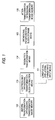
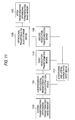
- FIG. 9 is a flowchart to show a processing flow of the resolution transformation apparatus in frame units. The operation is as follows:
- the resolution transformation apparatus extracts only low-frequency areas of the orthogonal transformation blocks required for resolution transformation and performs resolution transformation processing, whereby an increase in the computation amount of resolution transformation in response to the longitudinal and lateral change ratios can be suppressed, so that the resolution transformation apparatus provides a large practical advantage.
- the coefficients on (even-numbered rows, even-numbered columns), (even-numbered rows, odd-numbered columns), (odd-numbered rows, even-numbered columns), and (odd-numbered rows, odd-numbered columns) of orthogonal transformation block after undergoing resolution transformation are calculated using the nature of orthogonal transformation, whereby the computation amount of resolution transformation can be furthermore suppressed and thus the resolution transformation apparatus provides a large practical advantage.
- the transformation matrixes or transformation expressions corresponding to all longitudinal and lateral change ratios are previously stored in nonvolatile memory, whereby processing of generating each transformation matrix of resolution transformation in response to the longitudinal and lateral change ratios can be skipped, thus the resolution transformation apparatus provides a large practical advantage.
- an apparatus for executing resolution transformation of an image made up of one-dimensional orthogonal transformation blocks in a lateral direction in two-dimensional directions of longitudinal and lateral directions as shown in FIG. 10 will be discussed.
- the resolution transformation apparatus applied when orthogonal transformation blocks are one-dimensional orthogonal transformation blocks in the lateral direction comprises longitudinal and lateral change ratio input means 1101 for inputting the longitudinal and lateral change ratios of an image
- low-frequency orthogonal transformation block extraction means 1103 for determining the number of orthogonal transformation blocks required for resolution transformation, N, from the longitudinal and lateral change ratios input from the longitudinal and lateral change ratio input means 1101 and extracting only low-frequency areas of the N orthogonal transformation blocks required for resolution transformation from before transformation orthogonal transformation image memory 1102 for storing orthogonal transformation images before undergoing resolution transformation
- first resolution transformation means 1104 for determining the number of low-frequency orthogonal transformation blocks to be generated after resolution transformation in the longitudinal direction, L, from the longitudinal change ratio input from the longitudinal and lateral change ratio input means 1101 and performing averaging processing or thinning-out processing among the N low-frequency orthogonal transformation blocks extracted by the low-frequency orthogonal transformation block extraction means 1103 to generate L low-frequency orthogonal transformation blocks
- the low-frequency orthogonal transformation block extraction means 1103 determines the number of orthogonal transformation blocks required for resolution transformation, N, and the low-frequency areas to be extracted in response to the longitudinal and lateral change ratios input from the longitudinal and lateral change ratio input means 1101.
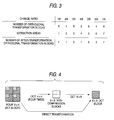
- the determination method is as follows: First, using the table in FIG. 3, the number of orthogonal transformation blocks (H blocks in the lateral direction) and each extraction area (h pixels in the lateral direction) responsive to the lateral change ratio are found. Next, the number of orthogonal transformation blocks responsive to the longitudinal change ratio, B, is found from the longitudinal change ratio (A/B (A and B: Natural numbers, A ⁇ B)).
- the longitudinal change ratio can be set as desired by using the thinning-out processing and averaging processing in combination.
- the second resolution transformation means 1105 executes resolution transformation using the low-frequency areas lxh of the L orthogonal transformation blocks generated by the first resolution transformation means 1104 to generate Morthogonal transformation blocks.
- the determination method of M is as follows: Using the table in FIG.
- the resolution transformation method of one-dimensional orthogonal transformation blocks of the second resolution transformation means 1105 is similar to the resolution transformation method of two-dimensional orthogonal transformation blocks in the first embodiment.
- the computation amount of the averaging processing or thinning-out processing of the first resolution transformation means 1104 is less than that of the resolution transformation processing of orthogonal transformation blocks of the second resolution transformation means 1105, if processing of the second resolution transformationmeans 1105 is performed after processing of the first resolution transformation means 1104, the computation amount can be decreased as compared with the case where processing of the first resolution transformation means 1104 is performed after processing of the second resolution transformation means 1105.
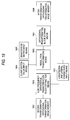
- FIG. 13 is a flowchart to show a processing flow of the resolution transformation apparatus in frame units. The operation is as follows:
- the resolution transformation apparatus first executes resolution transformation of averaging processing or thinning-out processing among the orthogonal transformation blocks and next executes resolution transformation in the orthogonal transformation block in the lateral direction, whereby the whole computation amount of the resolution transformation can be decreased, so that the resolution transformation apparatus provides a large practical advantage.
- the case where an image is made up of one-dimensional orthogonal transformation blocks in the lateral direction is taken as an example; however, if the image is made up of one-dimensional orthogonal transformation blocks in the longitudinal direction, similar advantages can also be provided.
- one-dimensional DCT in eight-pixel units is used as orthogonal transformation; however, if orthogonal transformation of any other one-dimensional DCT, wavelet transformation, etc., is used, similar advantages can also be provided.
- the resolution transformation apparatus of orthogonal transformation blocks comprises longitudinal and lateral change ratio input means 1401 for inputting two pairs of longitudinal and lateral change ratios of an image
- low-frequency orthogonal transformation block extraction means 1403 for determining the number of orthogonal transformation blocks required for resolution transformation, N, from the two pairs of longitudinal and lateral change ratios input from the longitudinal and lateral change ratio input means 1401 and extracting only low-frequency areas of the N orthogonal transformation blocks required for resolution transformation from before-transformation orthogonal transformation image memory 1402 for storing orthogonal transformation images before undergoing resolution transformation
- third resolution transformation means 1404 for determining the number of orthogonal transformation blocks to be generated after resolution transformation, L, from the longitudinal and lateral change ratios input from the longitudinal and lateral change ratio input means 1401, executing resolution transformation from the N low-frequency orthogonal transformation blocks extracted by the low-frequency orthogonal transformation block extraction means 1403 to generate M orthogonal transformation blocks, and storing intermediate information generated in the resolution transformation process in temporary memory of intermediate data 1405, fourth resolution transformation means 14
- the low-frequency orthogonal transformation block extraction means 1403 determines the number of orthogonal transformation blocks required for resolution transformation, N, and the low-frequency areas to be extracted. The determination method is as follows: Using the table in FIG.
- the third resolution transformation means 1404 determines the number of orthogonal transformation blocks to be generated after resolution transformation using the change ratios of [rv1, rh1] input from the longitudinal and lateral change ratio input means 1401.
- the determination method of M is as follows: Using the table in FIG.
- the fourth resolution transformation means 1406 determines the number of orthogonal transformation blocks to be generated after resolution transformation, L, using the change ratios of [rv2, rh2] input from the longitudinal and lateral change ratio input means 1401.
- the determination method of L is similar to the determination method of M.
- a resolution transformation method using the temporary memory of intermediate data 1405 will be discussed by taking the case of reducing to a half in both longitudinal and lateral directions and reducing to a quarter in both longitudinal and lateral directions as an example.
- DCT is used as orthogonal transformation.
- FIG. 15 shows the case where an image reduced to a half in both longitudinal and lateral directions and an image reduced to a quarter in both longitudinal and lateral directions are generated separately.
- 4x4 low-frequency areas of 16 8x8DCT blocks are extracted and resolution transformation is executed from four 4x4 low-frequency areas to generate one 8x8DCT block. This resolution transformation is executed four times.
- 2x2 low-frequency areas of 16 8x8DCT blocks are extracted and resolution transformation is executed from 16 2x2 low-frequency areas to generate one 8x8DCT block.
- reduction processing to a half in both longitudinal and lateral directions and reduction processing to a quarter in both longitudinal and lateral directions contain a large number of the same computations.
- the computation of DC components of four 8x8DCT blocks generated after reduction to a half in both longitudinal and lateral directions is used in the computation process of DC component of the 8x8DCT block generated after reduction to a quarter in both longitudinal and lateral directions.
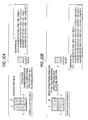
- FIGS. 16A and 16B show the case where the intermediate data generated in the reduction process to a half in both longitudinal and lateral directions is used effectively for reduction processing to a quarter in both longitudinal and lateral directions.
- the third resolution transformation means 1404 performs reduction processing to a half in both longitudinal and lateral directions four times using the 16 4x4 low-frequency components. If intermediate information required for reduction to a quarter in both longitudinal and lateral directions at the resolution transformation time, the information is stored in the temporary memory of intermediate data 1405. Two methods of storing the intermediate data are shown in FIGS. 16A and 16B.
- the fourth resolution transformation means 1406 performs reducing to a half in both longitudinal and lateral directions.
- the number of times a DTC4x4 base vector used in reducing to a half in both longitudinal and lateral directions becomes orthogonal to a DTC8x8 base vector is twice as large as the number of times a DTC2x2 base vector used in reducing to a quarter in both longitudinal and lateral directions becomes orthogonal to the DTC8x8 base vector.
- the values of the 4x4 low-frequency components stored as the intermediate data are calculated from the 4x4 low-frequency areas of the former 16 8x8DCT blocks.
- the coefficient values of 8x8DCT blocks after reduction contain the components of the 4x4 low-frequency areas of the former 16 8x8DCT blocks.
- the values of Z01, Z10, and Z11 in FIG. 7 are calculated from the values of the 4x4 low-frequency areas of the former 8x8DCT blocks.
- a resolution conversion apparatus as shown in FIG. 17 can also accomplish simultaneous reducing to a half in both longitudinal and lateral directions and to a quarter in both longitudinal and lateral directions.
- the resolution transformation apparatus comprises longitudinal and lateral change ratio input means 1701 for inputting the longitudinal and lateral change ratios of an image
- low-frequency orthogonal transformation block extraction means 1703 for determining the number of orthogonal transformation blocks required for resolution transformation, N, from the longitudinal and lateral change ratios input from the longitudinal and lateral change ratio input means 1701 and extracting only low-frequency areas of the N orthogonal transformation blocks required for resolution transformation from beforetransformation orthogonal transformation image memory 1702 for storing orthogonal transformation images before undergoing resolution transformation
- resolution transformation means 1704 for executing resolution transformation from the N low-frequency orthogonal transformation blocks extracted by the low-frequency orthogonal transformation block extraction means 1703 to generate M orthogonal transformation blocks and at the same time, temporarily storing low-frequency areas of the M orthogonal transformation blocks after undergoing resolution transformation in temporary memory of orthogonal transformation image 1705 and again executing resolution transformation in the same longitudinal and lateral change ratios from the temporary memory of orthogonal transformation image 1705
- orthogonal transformation block storage means 1706 for storing
- the method (a) can also be used if [rv1, rv2] and [rh1, rh2] take the value of [1/4, 1/8], [1/2, 1/8], [1/2, 1/4], [1/2, 3/8].
- a part of computation processing performed at the reducing time to a quarter in both longitudinal and lateral directions is performed at the reducing time to a half in both longitudinal and lateral directions, whereby it is made possible to speed up reducing to a quarter in both longitudinal and lateral directions as with the method (a).
- the image quality can also be improved, as with the method (a), by effectively using also the computation result of the coefficients of 4x4 low-frequency areas other than 2x2 low-frequency areas normally unused for reducing to a quarter in both longitudinal and lateral directions.
- the method (b) can be used only if rv1, rv2, rh1, and rh2 take values of (1/8, 1/4, 3/8, 1/2, 5/8, 3/4, 7/8) satisfying rv1>rv2 and rh1>rh2.
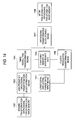
- FIG. 18 is a flowchart to show a processing flow of the resolution transformation apparatus in frame units. The operation is as follows:
- the resolution transformation apparatus can improve resolution transformation processing and the image quality after resolution transformation by using the intermediate information data generated for one resolution transformation processing for another resolution transformation processing; the resolution transformation apparatus provides a large practical advantage.
- the case of reducing to a half in both longitudinal and lateral directions and reducing to a quarter in both longitudinal and lateral directions is taken as an example; however, similar advantages can also be provided if another change ratio of 1/8, 1/4, 3/8, 1/2, 5/8, 3/4, or 7/8 is used.
- DCT8x8 is used as orthogonal transformation; however, if orthogonal transformation of any other two-dimensional DCT, one-dimensional DCT, wavelet transformation, etc., is used, similar advantages can also be provided.
- an apparatus for also executing requantization at the same time in a resolution transformation process an apparatus for generating orthogonal transformation blocks with a plurality of resolutions from a plurality of orthogonal transformation blocks having the same quantization value at the same time containing requantization, and an apparatus for executing resolution transformation containing requantization at high speed using nonvolatile memory will be discussed.
- the resolution transformation apparatus comprises longitudinal and lateral change ratio input means 1901 for inputting the longitudinal and lateral change ratios of an image
- low-frequency orthogonal transformation block extraction means 1903 for determining the number of orthogonal transformation blocks required for resolution transformation, N, from the longitudinal and lateral change ratios input from the longitudinal and lateral change ratio input means 1901 and extracting only low-frequency areas of the N orthogonal transformation blocks required for resolution transformation from before-transformation orthogonal transformation image memory 1902 for storing orthogonal transformation images before undergoing resolution transformation
- quantization value input means 1904 for inputting quantization values of orthogonal transformation blocks before and after resolution transformation
- quantization matrix input means 1905 for inputting a quantization matrix of orthogonal transformation blocks before and after resolution transformation
- resolution transformation means 1906 for determining the number of orthogonal transformation blocks to be generated after resolution transformation, M, from the longitudinal and lateral change ratios input from the longitudinal and lateral change ratio input means 1901 and executing resolution transformation and generating M orthogonal transformation blocks while also executing requantization at the same time
- the orthogonal transformation blocks stored in the before-transformation orthogonal transformation image memory 1902 and the after-transformation orthogonal transformation image memory 1908 are quantized orthogonal transformation blocks, normally, as shown in FIG. 20, it is necessary to inversely quantize the orthogonal transformation block in the before-transformation orthogonal transformation image memory 1902 before executing resolution transformation and quantize the orthogonal transformation block generated in resolution transformation and store the block in the after-transformation orthogonal transformation image memory 1908 after the resolution transformation.
- DCT is used as orthogonal transformation.
- FIG. 21 shows the way quantization and inverse quantization used in MPEG are executed.
- DC components direct current components, for example, A00, B00, C00, D00 in FIG. 7
- a DCT block is quantized by dividing the coefficient of a DC component by one constant (for example, 8);
- AC components alternating current components
- a DCT block is quantized by dividing each coefficient of the DCT block by the corresponding coefficient in the quantization matrix multiplied by a quantization value.
- inverse quantization is executed by multiplying the coefficient of a DC component quantized by one constant (for example, 8); for AC components (alternating current components), inverse quantization is executed by multiplying each coefficient of DCT block by the corresponding coefficient in the quantization matrix and a quantization value.
- constants are also used in addition to the quantization matrix and the quantization value; however, in the description to follow, the constants are omitted.
- the apparatus in the embodiment is intended for decreasing the above-mentioned computation amount by performing inverse quantization plus quantization, which will be hereinafter referred to as requantization, in a resolution transformation process.
- FIG. 29 shows the mechanism for calculating while quantizing each coefficient (for example, Z01, Z10, Z11 in FIG. 7) after reduction to reduce to a half in both longitudinal and lateral directions.
- the mechanism in FIG. 29 can be applied to quantization of assignment of one quantization value in two X two DCT block units like quantization of intensity component in MPEG.
- Coefficient classification means 2901 classifies the components of low-frequency areas extracted by the low-frequency orthogonal transformation block extraction means 1903 into AC components and DC components.
- DC component computation means 2902 performs computation of A00+B00-C00-D00, for example, to calculate Z10 in FIG. 7.
- AC component computation means 2903 performs computation of A10+B10+C10+D10, A20+B20-C20-D20, etc., for example, to calculate Z10 in FIG. 7.
- Constant term change means 2904 multiplies a constant term by a quantization matrix coefficient ratio for executing requantization using before-and after-resolution-transformation quantization matrixes input from the quantization matrix input means 1905, and stores the result in constant term 1 memory 2907 and constant term 2 memory 2908.
- the constant term denotes a constant (for example, 4 ⁇ 1A0B0) multiplied after computation of the sum (difference) of the coefficients on the same row, the same column of four DCT blocks before resolution transformation shown in FIG. 7.
- the quantization matrix coefficient ratio denotes the coefficient ratio between the coefficient of quantization matrix by which the coefficients on the same row, the same column of four DCT blocks before resolution transformation are multiplied for executing inverse quantization and the coefficient of the quantization matrix by which the coefficient after resolution transformation is divided for executing quantization.
- the quantization matrix coefficient ratio for A00+B00-C00-D00 becomes 8/16 (assuming that the constant of inverse quantization of DC component is 8) and the quantization matrix coefficient ratio for A10+B10+C10+D10 becomes 16/16.
- the constant term concerning the DC component before resolution transformation is stored in the constant term 1 memory 2907 and the constant term concerning the AC component is stored in the constant term 2 memory 2908.
- Constant term computation 1 means 2906 extracts the corresponding constant term from the constant term 1 memory 2907 and multiplies the computation result of the DC component computation means 2902 by the constant term.
- Constant term computation 2 means 2909 extracts the corresponding constant term from the constant term 2 memory 2908 and multiplies a plurality of computation results of the AC component computation means 2903 (A10+B10+C10+D10 and A20+B20-C20-D20, for example, to calculate Z10 in FIG. 7) by the constant term and finds the sum of the computation results.
- Quantization value ratio generation means 2905 uses the quantization values before and after resolution transformation, input from the quantization value input means 1904 to generate a quantization value ratio for executing requantization and stores the quantization value ratio in quantization value ratio 1 memory 2911 and quantization value ratio 2 memory 2912.
- Quantization value ratio multiplication 1 means 2910 multiplies the computation result of the constant term computation 1 means 2906 by the quantization value ratio in the quantization value ratio 1 memory 2911.
- Quantization value ratio multiplication 2 means 2913 multiplies the computation result of the constant term computation 2 means 2909 by the quantization value ratio in the quantization value ratio 2 memory 2912.
- Sum means 2914 finds the sum of the computation results of the quantization value ratio multiplication 1 means 2910 and the quantization value ratio multiplication 2 means 2913 and calculates each coefficient after resolution transformation.
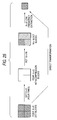
- FIG. 22A shows a transformation expression of requantization of Z10 to reduce to a half in both longitudinal and lateral directions from two X two 8x8DCT blocks each with a quantization value of 8 and generate one 8x8DCT block quantized with a quantization value of 7; constant term is multiplied by quantization matrix coefficient ratio and DC component computation portion and AC component computation portion before resolution transformation are multiplied by quantization value ratio.
- the quantization matrix coefficient ratio may be calculated and the constant term 1 memory 2907 and the constant term 2 memory 2908 may be changed only when the quantization matrix is changed. Therefore, requantization in the resolution transformation process becomes almost equal to computation only on quantization value ratio. Consequently, processing can be performed only by 0 computations (the quantization value ratio becomes 1) to calculate the DC component after resolution transformation and 189 computations (63 coefficients*three multiplication and division computations) to calculate the AC component after resolution transformation. Further, if the quantization values before and after resolution transformation are made the same, processing can be performed only by 63 computations (63 coefficients*one division) to calculate the AC component after resolution transformation.
- requantization can be accomplished in the resolution transformation process if the expression of calculating Z10 in FIG. 7 is used to multiply quantization matrix coefficient ratio and quantization value ratio of DC component computation portion before resolution transformation as in FIG. 22A and multiply AC component computation portion before resolution transformation and coefficient of DCT block used in the resolution transformation process by quantization value ratio.
- processing of multiplying the AC component of DCT block before resolution transformation by the quantization value ratio can be performed by executing 120 computations (15 coefficients*four DCT blocks*two multiplication and division computations) and 63 computations (63 coefficients*one division) to calculate the AC component after resolution transformation, namely, a total of 183 computations.
- the resolution transformation apparatus can decrease the computation amounts of the normal quantization and inverse quantization by also performing requantization at the same time in the resolution transformation process.
- the computation amount of requantization can be decreased by adopting a method as shown in FIG. 23.
- 16 8x8DCT blocks are reduced to a half in both longitudinal and lateral directions in the method in FIG. 22A.
- the quantization values of the four 8x8DCT blocks after reduction to a half in both longitudinal and lateral directions are the same.
- the four 8x8DCT blocks are reduced to a half in both longitudinal and lateral directions to generate one 8x8DCT block. Since the quantization values of the four 8x8DCT blocks after reduction to a half in both longitudinal and lateral directions are the same, to again reduce to a half in both longitudinal and lateral directions, requantization can also be executed in the method in FIG. 22A and processing can be performed at higher speed than processing of directly reducing to a quarter in both longitudinal and lateral directions.
- FIG. 24 is a flowchart to show a processing flow of the resolution transformation apparatus in frame units. The operation is as follows:
- the resolution transformation apparatus inputs the quantization values of the orthogonal transformation blocks before and after resolution transformation and quantization matrix and also performs requantization at the same time in the resolution transformation process, whereby the whole computation amount of the resolution transformation also containing quantization can be decreased and the resolution transformation apparatus provides a large practical advantage.
- the intermediate information data after quantization generated for one resolution transformation processing is used for another resolution transformation processing, whereby the whole computation amount of the resolution transformation also containing quantization can be decreased and the resolution transformation apparatus provides a large practical advantage.
- the resolution transformation expressions multiplied by the coefficient ratios of quantization matrixes corresponding to all longitudinal and lateral change ratios are stored in nonvolatile memory, whereby processing of generating each transformation matrix of resolution transformation containing quantization in response to the longitudinal and lateral change ratios can be skipped, thus the resolution transformation apparatus provides a large practical advantage.
- the transformation matrixes or transformation expressions corresponding to all longitudinal and lateral change ratios are previously stored in nonvolatile memory, whereby the advantage of being capable of decreasing processing of generating each transformation matrix or transformation expression of resolution transformation in response to the longitudinal and lateral change ratios can be provided.
- a third aspect of the invention if an image made up of one-dimensional orthogonal transformation blocks in a lateral direction, resolution transformation of averaging processing or thinning-out processing among orthogonal transformation blocks is performed in a longitudinal direction, then resolution transformation in orthogonal transformation block in the lateral direction is executed, whereby the advantage of being capable of executing resolution transformation of one-dimensional orthogonal transformation blocks in two-dimensional directions of longitudinal and lateral directions can be provided.
- the even-numbered'th and odd-numbered'th coefficients of the orthogonal transformation block after resolution transformation are calculated using the nature of orthogonal transformation
- the coefficients on (even-numbered rows, even-numbered columns), (even-numbered rows, odd-numbered columns), (odd-numbered rows, even-numbered columns), and (odd-numbered rows, odd-numbered columns) of the orthogonal transformation block after resolution transformation are calculated using the nature of orthogonal transformation, whereby the advantage of being capable of improving the computation processing of resolution transformation can be provided.
- the intermediate information data generated for one resolution transformation processing is used for another resolution transformation processing, whereby the advantage of being capable of improving the resolution transformation processing and the image quality after resolution transformation can be provided.
- the quantization values and quantization matrix of orthogonal transformation blocks before and after resolution transformation are input and requantization is also performed at the same time in the resolution transformation process, whereby the advantage of being capable of improving the computation efficiency of the whole resolution transformation also containing quantization can be provided.
- a seventh of the invention to execute resolution transformation containing quantization, constant terms of transformation expressions multiplied by the coefficient ratio of a default quantization matrix are stored in nonvolatile memory corresponding to all longitudinal and lateral change ratios, whereby the advantage of being capable of eliminating processing of generating the transformation expression containing quantization in response to the longitudinal and lateral change ratios can be provided.
- the intermediate information data after quantization generated for one resolution transformation processing is used for another resolution transformation processing, whereby the advantage of being capable of improving the computation efficiency of the whole resolution transformation also containing quantization can be provided.
Landscapes
- Physics & Mathematics (AREA)
- General Physics & Mathematics (AREA)
- Engineering & Computer Science (AREA)
- Theoretical Computer Science (AREA)
- Discrete Mathematics (AREA)
- Multimedia (AREA)
- Compression Or Coding Systems Of Tv Signals (AREA)
- Compression Of Band Width Or Redundancy In Fax (AREA)
- Compression, Expansion, Code Conversion, And Decoders (AREA)
- Editing Of Facsimile Originals (AREA)
- Image Processing (AREA)
- Storing Facsimile Image Data (AREA)
Abstract
Description






For example, to reduce to a half in both longitudinal and lateral directions and reduce to three-eighths in both longitudinal and lateral directions, if 6X6 low-frequency area of 8x8DCT block after reduction to a half is used further to reduce to three-fourths in both longitudinal and lateral directions after reduction to a half in both longitudinal and lateral directions, reduction to three-eighths in both longitudinal and lateral directions can be executed.
Claims (24)
- A resolution transformation apparatus of an orthogonal transformation image for changing the number of pixels thereof comprises:longitudinal and lateral change ratio input means for inputting longitudinal and lateral change ratios of the image;low-frequency orthogonal transformation block extraction means for determining the number of orthogonal transformation blocks required for resolution transformation, N, from the longitudinal and lateral change ratios input from said longitudinal and lateral change ratio input means and extracting only low-frequency areas of the N orthogonal transformation blocks from before-transformation orthogonal transformation image memory for storing orthogonal transformation images before undergoing resolution transformation;resolution transformation means for determining the number of orthogonal transformation blocks to be generated after resolution transformation, M, from the longitudinal and lateral change ratios input from said longitudinal and lateral change ratio input means and executing resolution transformation and generating M orthogonal transformation blocks from the N low-frequency orthogonal transformation blocks extracted by said low-frequency orthogonal transformation block extraction means; andorthogonal transformation block storage means for storing the Morthogonal transformation blocks generated by said resolution transformation means in after-transformation orthogonal transformation image memory for storing orthogonal transformation images after undergoing resolution transformation.
- The resolution transformation apparatus of an orthogonal transformation image as claimed in claim 1 wherein said resolution transformation means comprises transformation portion generation means for generating a transformation matrix or a transformation expression required for executing resolution transformation from the longitudinal and lateral change ratios input from said longitudinal and lateral change ratio input means and storing the transformation matrix or the transformation expression in temporary memory and resolution transformation computation means for performing resolution transformation computation using the transformation matrix or the transformation expression in the temporary memory.
- The resolution transformation apparatus of an orthogonal transformation image as claimed in claim 1 wherein said resolution transformation means comprises nonvolatile memory previously storing transformation matrixes or transformation expressions required for executing resolution transformation corresponding to all longitudinal and lateral change ratios that can be input from said longitudinal and lateral change ratio input means and resolution transformation computation means for extracting the transformation matrix or the transformation expression corresponding to the change ratio specified from said longitudinal and lateral change ratio input means from the nonvolatile memory and performing resolution transformation computation.
- The resolution transformation apparatus of an orthogonal transformation image as claimed in claim 1 wherein if the orthogonal transformation blocks in the before-transformation orthogonal transformation image memory are one-dimensional orthogonal transformation blocks in a lateral direction, said resolution transformation means comprises first resolution transformation means for performing averaging processing or thinning-out processing among the orthogonal transformation blocks using the longitudinal change ratio input from said longitudinal and lateral change ratio input means and second resolution transformation means for executing resolution transformation in the orthogonal transformation blocks using the lateral change ratio.
- The resolution transformation apparatus of an orthogonal transformation image as claimed in claim 1 wherein if the orthogonal transformation blocks in the before-transformation orthogonal transformation image memory are one-dimensional orthogonal transformation blocks in a longitudinal direction, said resolution transformation means comprises first resolution transformation means for performing averaging processing or thinning-out processing among the orthogonal transformation blocks using the lateral change ratio input from said longitudinal and lateral change ratio input means and second resolution transformation means for executing resolution transformation in the orthogonal transformation blocks using the longitudinal change ratio.
- The resolution transformation apparatus of an orthogonal transformation image as claimed in claim 4 or 5 wherein if the change ratio used with the second resolution transformation means is a half, even-numbered'th and odd-numbered'th coefficients of the orthogonal transformation block generated by the second resolution transformation means are calculated at high speed using the nature of orthogonal transformation.
- The resolution transformation apparatus of an orthogonal transformation image as claimed in claim 1 wherein if the orthogonal transformation blocks in the before-transformation orthogonal transformation image memory are two-dimensional orthogonal transformation blocks and the longitudinal and lateral change ratios input from said longitudinal and lateral change ratio input means are each a half, coefficients on (even-numbered rows, even-numbered columns), (even-numbered rows, odd-numbered columns), (odd-numbered rows, even-numbered columns), and (odd-numbered rows, odd-numbered columns) of the orthogonal transformation block generated by said resolution transformation means are calculated at high speed using the nature of orthogonal transformation.
- The resolution transformation apparatus of an orthogonal transformation image as claimed in claim 1 wherein said resolution transformation means comprises temporary memory of orthogonal transformation image for temporarily storing the orthogonal transformation block after undergoing resolution transformation and further executes resolution transformation of the image after undergoing resolution transformation according to the change ratio input from said longitudinal and lateral change ratio input means.
- The resolution transformation apparatus of an orthogonal transformation image as claimed in claim 1 wherein to generate a plurality of orthogonal transformation images different in resolution from the same before-transformation orthogonal transformation image memory, said resolution transformation means comprises a plurality of resolution transformation means for generating orthogonal transformation images different in resolution and temporary memory of intermediate data capable of temporarily storing intermediate data being undergoing resolution transformation with the plurality of resolution transformation means and wherein if information generated by one resolution transformation means, namely, third resolution transformation means during the resolution transformation is information effective for transformation processing of another resolution transformation means, namely, fourth resolution transformation means, the information is stored in the temporary memory of intermediate data and the fourth resolution transformation means performs transformation processing from the temporary memory of intermediate data.
- The resolution transformation apparatus of an orthogonal transformation image as claimed in claim 1 further including quantization value input means for inputting (N+M) quantization values of orthogonal transformation blocks before and after resolution transformation to transform resolution from N low-frequency orthogonal transformation blocks to M orthogonal transformation blocks and quantization matrix input means for inputting a quantization matrix of the orthogonal transformation blocks before and after resolution transformation, wherein said resolution transformation means also performs requantization at the same time in the resolution transformation process using the quantization values input from said quantization value input means and the quantization matrix input from said quantization matrix input means.
- The resolution transformation apparatus of an orthogonal transformation image as claimed in claim 10 wherein said resolution transformation means comprises transformation portion generation means for generating a transformation expression required for executing resolution transformation from the longitudinal and lateral change ratios input from said longitudinal and lateral change ratio input means and the quantization matrixes before and after resolution transformation input from said quantization matrix input means and storing the transformation expression in temporary memory and resolution transformation computation means for performing resolution transformation computation using the transformation expression in the temporary memory and the quantization values input from said quantization value input means.
- The resolution transformation apparatus of an orthogonal transformation image as claimed in claim 10 wherein said resolution transformation means comprises nonvolatile memory previously storing all transformation expressions required for executing resolution transformation calculated from all longitudinal and lateral change ratios that can be input from said longitudinal and lateral change ratio input means and default quantization matrixes input from said quantization matrix input means and resolution transformation computation means for extracting the transformation expression corresponding to the change ratio specified from said longitudinal and lateral change ratio input means from the nonvolatile memory and performing resolution transformation computation using the quantization value input from said quantization value input means.
- The resolution transformation apparatus of an orthogonal transformation image as claimed in claim 8 or 9 wherein if one quantization value is assigned to a plurality of orthogonal transformation blocks before resolution transformation, said resolution transformation means also performs requantization at the same time in the resolution transformation process.
- In a resolution transformation apparatus for changing the number of pixels of an image, a resolution transformation method of an orthogonal transformation image comprises the steps of:longitudinal and lateral change ratio input step of inputting longitudinal and lateral change ratios of the image;low-frequency orthogonal transformation block extraction step of determining the number of orthogonal transformation blocks required for resolution transformation, N, from the longitudinal and lateral change ratios input at said longitudinal and lateral change ratio input step and extracting only low-frequency areas of the N orthogonal transformation blocks;resolution transformation step of determining the number of orthogonal transformation blocks to be generated after resolution transformation, M, from the longitudinal and lateral change ratios input at said longitudinal and lateral change ratio input step and executing resolution transformation and generating M orthogonal transformation blocks from the N low-frequency orthogonal transformation blocks extracted at said low-frequency orthogonal transformation block extraction step; andorthogonal transformation block storage step of outputting the M orthogonal transformation blocks generated at said resolution transformation step.
- The resolution transformation method of an orthogonal transformation image as claimed in claim 14 wherein if the orthogonal transformation blocks are one-dimensional orthogonal transformation blocks in a lateral direction, said resolution transformation step comprises first resolution transformation step of performing averaging processing or thinning-out processing among the orthogonal transformation blocks using the longitudinal change ratio input at said longitudinal and lateral change ratio input step and second resolution transformation step of executing resolution transformation in the orthogonal transformation blocks using the lateral change ratio.
- The resolution transformation method of an orthogonal transformation image as claimed in claim 14 wherein if the orthogonal transformation blocks are one-dimensional orthogonal transformation blocks in a longitudinal direction, said resolution transformation step comprises first resolution transformation step of performing averaging processing or thinning-out processing among the orthogonal transformation blocks using the lateral change ratio input at said longitudinal and lateral change ratio input step and second resolution transformation step of executing resolution transformation in the orthogonal transformation blocks using the longitudinal change ratio.
- The resolution transformation method of an orthogonal transformation image as claimed in claim 15 or 16 wherein if the change ratio used with the second resolution transformation step is a half, even-numbered'th and odd-numbered'th coefficients of the orthogonal transformation block generated at the second resolution transformation step are calculated at high speed using the nature of orthogonal transformation.
- The resolution transformation method of an orthogonal transformation image as claimed in claim 14 wherein if the orthogonal transformation blocks are two-dimensional orthogonal transformation blocks and the longitudinal and lateral change ratios input at said longitudinal and lateral change ratio input step are each a half, coefficients on (even-numbered rows, even-numbered columns), (even-numbered rows, odd-numbered columns), (odd-numbered rows, even-numbered columns), and (odd-numbered rows, odd-numbered columns) of the orthogonal transformation block generated at said resolution transformation step are calculated at high speed using the nature of orthogonal transformation.
- The resolution transformation method of an orthogonal transformation image as claimed in claim 14 wherein said resolution transformation step is to temporarily store the orthogonal transformation block after undergoing resolution transformation and further execute resolution transformation of the image after undergoing resolution transformation according to the change ratio input at said longitudinal and lateral change ratio input step.
- The resolution transformation method of an orthogonal transformation image as claimed in claim 14 wherein to generate a plurality of orthogonal transformation images different in resolution, said resolution transformation step comprises a plurality of resolution transformation steps for generating orthogonal transformation images different in resolution and wherein information generated at one resolution transformation step during the resolution transformation is used effectively for transformation processing of another resolution transformation step.
- The resolution transformation method of an orthogonal transformation image as claimed in claim 14 further comprising quantization value input step of inputting (N+M) quantization values of orthogonal transformation blocks before and after resolution transformation to transform resolution from N low-frequency orthogonal transformation blocks to M orthogonal transformation blocks and quantization matrix input step of inputting a quantization matrix of the orthogonal transformation blocks before and after resolution transformation, wherein said resolution transformation step is also to perform requantization at the same time in the resolution transformation process using the quantization values input at said quantization value input step and the quantization matrix input at said quantization matrix input step.
- The resolution transformation method of an orthogonal transformation image as claimed in claim 19 or 20 wherein if one quantization value is assigned to a plurality of orthogonal transformation blocks, said resolution transformation step is also to perform requantization at the same time in the resolution transformation process.
- The resolution transformation apparatus of an orthogonal transformation image as claimed in claim 1 wherein said low-frequency orthogonal transformation block extraction means assumes that the orthogonal transformation block coefficients of some of the extracted low-frequency areas are 0 and said resolution transformation means does not perform computation on the coefficients assumed to be 0 by said low-frequency orthogonal transformation block extraction means.
- The resolution transformation method of an orthogonal transformation image as claimed in claim 14 wherein said low-frequency orthogonal transformation block extraction step assumes that the orthogonal transformation block coefficients of some of the extracted low-frequency areas are 0 and said resolution transformation step does not perform computation on the coefficients assumed to be 0 at said low-frequency orthogonal transformation block extraction means.
Applications Claiming Priority (2)
| Application Number | Priority Date | Filing Date | Title |
|---|---|---|---|
| JP31716099 | 1999-11-08 | ||
| JP31716099A JP2001136527A (en) | 1999-11-08 | 1999-11-08 | Apparatus and method for resolution conversion of orthogonally transformed image |
Publications (2)
| Publication Number | Publication Date |
|---|---|
| EP1098508A2 true EP1098508A2 (en) | 2001-05-09 |
| EP1098508A3 EP1098508A3 (en) | 2003-05-07 |
Family
ID=18085133
Family Applications (1)
| Application Number | Title | Priority Date | Filing Date |
|---|---|---|---|
| EP20000124150 Withdrawn EP1098508A3 (en) | 1999-11-08 | 2000-11-07 | Apparatus and method for resolution transformation of orthogonal transformation image |
Country Status (4)
| Country | Link |
|---|---|
| US (1) | US6683997B1 (en) |
| EP (1) | EP1098508A3 (en) |
| JP (1) | JP2001136527A (en) |
| CN (1) | CN1229758C (en) |
Cited By (2)
| Publication number | Priority date | Publication date | Assignee | Title |
|---|---|---|---|---|
| FR2858096A1 (en) * | 2003-07-23 | 2005-01-28 | Compression D Images En Reseau | Digital image e.g. digital video image, decoding process for image display device e.g. mobile telephone screen, involves decoding sub-sets of modified data to restore decoded sub-image, and allocating memory with decoded image data |
| CN104981766A (en) * | 2014-04-28 | 2015-10-14 | 华为终端有限公司 | Method for displaying data on screen and display control device |
Families Citing this family (12)
| Publication number | Priority date | Publication date | Assignee | Title |
|---|---|---|---|---|
| JP2003052054A (en) * | 2001-08-07 | 2003-02-21 | Sony Corp | Image processing apparatus and method, recording medium, and program |
| JP2003319184A (en) * | 2002-04-18 | 2003-11-07 | Toshiba Tec Corp | Image processing apparatus, image processing method, image display method, and image storage method |
| JP2004264920A (en) * | 2003-02-26 | 2004-09-24 | Sony Corp | Apparatus and method for creating thumbnail images and improving image quality of resized images |
| US7382937B2 (en) * | 2003-03-07 | 2008-06-03 | Hewlett-Packard Development Company, L.P. | Method and apparatus for re-constructing high-resolution images |
| JP4277987B2 (en) | 2003-06-18 | 2009-06-10 | Kddi株式会社 | Sampling conversion / resolution conversion apparatus for transform coding coefficient |
| JP4500707B2 (en) * | 2004-03-24 | 2010-07-14 | キヤノン株式会社 | Image data processing device |
| TWI463863B (en) * | 2009-04-13 | 2014-12-01 | Chunghwa Picture Tubes Ltd | Image processing method |
| JP5328629B2 (en) * | 2009-12-17 | 2013-10-30 | 株式会社メガチップス | Encoder and image conversion apparatus |
| JP2013098730A (en) * | 2011-10-31 | 2013-05-20 | Toshiba Corp | Resolution converter, resolution conversion method and moving image decoder |
| US10102613B2 (en) * | 2014-09-25 | 2018-10-16 | Google Llc | Frequency-domain denoising |
| US11259052B2 (en) * | 2018-07-16 | 2022-02-22 | Qualcomm Incorporated | Transform variations of multiple separable transform selection |
| JP2020150340A (en) * | 2019-03-11 | 2020-09-17 | キヤノン株式会社 | Image coding device, image coding method, and program |
Family Cites Families (5)
| Publication number | Priority date | Publication date | Assignee | Title |
|---|---|---|---|---|
| JPH08180194A (en) | 1994-12-26 | 1996-07-12 | Canon Inc | Encoding apparatus and method |
| US5872874A (en) | 1995-04-26 | 1999-02-16 | Hewlett-Packard Company | Method and apparatus for scaling down images that are provided in a compressed data format |
| JPH10233693A (en) * | 1996-12-16 | 1998-09-02 | Canon Inc | Image processing method and apparatus, and storage medium |
| JPH1118087A (en) * | 1997-06-20 | 1999-01-22 | Olympus Optical Co Ltd | Device and method for converting image data |
| US6483944B1 (en) * | 1998-07-01 | 2002-11-19 | Victor Company Of Japan, Limited | Data coding method and apparatus therefor |
-
1999
- 1999-11-08 JP JP31716099A patent/JP2001136527A/en active Pending
-
2000
- 2000-11-06 US US09/707,136 patent/US6683997B1/en not_active Expired - Fee Related
- 2000-11-07 EP EP20000124150 patent/EP1098508A3/en not_active Withdrawn
- 2000-11-08 CN CNB001323946A patent/CN1229758C/en not_active Expired - Fee Related
Cited By (3)
| Publication number | Priority date | Publication date | Assignee | Title |
|---|---|---|---|---|
| FR2858096A1 (en) * | 2003-07-23 | 2005-01-28 | Compression D Images En Reseau | Digital image e.g. digital video image, decoding process for image display device e.g. mobile telephone screen, involves decoding sub-sets of modified data to restore decoded sub-image, and allocating memory with decoded image data |
| WO2005010815A3 (en) * | 2003-07-23 | 2005-03-24 | Compression D Images En Reseau | Image decoding method and device for carrying out said method |
| CN104981766A (en) * | 2014-04-28 | 2015-10-14 | 华为终端有限公司 | Method for displaying data on screen and display control device |
Also Published As
| Publication number | Publication date |
|---|---|
| CN1229758C (en) | 2005-11-30 |
| JP2001136527A (en) | 2001-05-18 |
| EP1098508A3 (en) | 2003-05-07 |
| CN1295310A (en) | 2001-05-16 |
| US6683997B1 (en) | 2004-01-27 |
Similar Documents
| Publication | Publication Date | Title |
|---|---|---|
| US5767907A (en) | Drift reduction methods and apparatus | |
| US6351570B1 (en) | Image coding and decoding apparatus, method of image coding and decoding, and recording medium for recording program for image coding and decoding | |
| US5327254A (en) | Method and apparatus for compressing and decompressing image data | |
| DE69836696T2 (en) | METHOD AND DEVICE FOR IMPLEMENTING A HIERARCHICAL MOTOR ESTIMATION USING A NONLINEINE PYRAMID | |
| DE69813911T2 (en) | METHOD FOR DETERMINING MOTION VECTOR FIELDS WITH LOCAL MOTION ESTIMATION | |
| US6449395B1 (en) | Image encoding apparatus, image encoding method, and recording medium in which image encoding program is recorded | |
| EP1098508A2 (en) | Apparatus and method for resolution transformation of orthogonal transformation image | |
| JPH09130802A (en) | Image compressing method | |
| US5822462A (en) | Image processing apparatus | |
| US7627180B2 (en) | Image compression apparatus | |
| US6546145B1 (en) | Image compression using selection of quantization method | |
| JPH07123269A (en) | Corder for picture signal | |
| US5956430A (en) | Image information coding apparatus and method using code amount of a selected pixel block for changing coding parameter | |
| EP1840836B1 (en) | Method of performing fast compression for an image | |
| JPH04229382A (en) | Digital image data resolution exchange device | |
| JPH0487460A (en) | Picture processor | |
| US7630439B2 (en) | Apparatus for converting conversion encoding coefficients using sampling/resolution conversion | |
| JP3722169B2 (en) | Image processing apparatus and image processing method | |
| JP3837197B2 (en) | Image data decompression device | |
| JP3593727B2 (en) | Image compression device | |
| KR100233123B1 (en) | Apparatus and method for fractal encoding moving picture | |
| JP2887843B2 (en) | Image data restoration method and apparatus | |
| EP1589762A1 (en) | Image compression with reduced block artefacts | |
| JPH0595484A (en) | Picture compressor and its method | |
| JPH06339020A (en) | Image processing method and image processing apparatus |
Legal Events
| Date | Code | Title | Description |
|---|---|---|---|
| PUAI | Public reference made under article 153(3) epc to a published international application that has entered the european phase |
Free format text: ORIGINAL CODE: 0009012 |
|
| AK | Designated contracting states |
Kind code of ref document: A2 Designated state(s): AT BE CH CY DE DK ES FI FR GB GR IE IT LI LU MC NL PT SE TR |
|
| AX | Request for extension of the european patent |
Free format text: AL;LT;LV;MK;RO;SI |
|
| PUAL | Search report despatched |
Free format text: ORIGINAL CODE: 0009013 |
|
| AK | Designated contracting states |
Designated state(s): AT BE CH CY DE DK ES FI FR GB GR IE IT LI LU MC NL PT SE TR |
|
| AX | Request for extension of the european patent |
Extension state: AL LT LV MK RO SI |
|
| RIC1 | Information provided on ipc code assigned before grant |
Ipc: 7H 04N 1/40 B Ipc: 7G 06T 9/00 A |
|
| 17P | Request for examination filed |
Effective date: 20030813 |
|
| AKX | Designation fees paid |
Designated state(s): DE FR GB |
|
| 17Q | First examination report despatched |
Effective date: 20040109 |
|
| RAP1 | Party data changed (applicant data changed or rights of an application transferred) |
Owner name: PANASONIC CORPORATION |
|
| 18D | Application deemed to be withdrawn |
Effective date: 20080531 |
|
| STAA | Information on the status of an ep patent application or granted ep patent |
Free format text: STATUS: THE APPLICATION IS DEEMED TO BE WITHDRAWN |
|
| R18D | Application deemed to be withdrawn (corrected) |
Effective date: 20080602 |