EP1086552B1 - Transferoptimierung von datenpaketen zwischen lans - Google Patents
Transferoptimierung von datenpaketen zwischen lans Download PDFInfo
- Publication number
- EP1086552B1 EP1086552B1 EP99927458A EP99927458A EP1086552B1 EP 1086552 B1 EP1086552 B1 EP 1086552B1 EP 99927458 A EP99927458 A EP 99927458A EP 99927458 A EP99927458 A EP 99927458A EP 1086552 B1 EP1086552 B1 EP 1086552B1
- Authority
- EP
- European Patent Office
- Prior art keywords
- buffer
- data
- packet
- mac
- receive
- Prior art date
- Legal status (The legal status is an assumption and is not a legal conclusion. Google has not performed a legal analysis and makes no representation as to the accuracy of the status listed.)
- Expired - Lifetime
Links
- 238000012546 transfer Methods 0.000 title claims abstract description 22
- 239000000872 buffer Substances 0.000 claims abstract description 140
- 230000015654 memory Effects 0.000 claims abstract description 135
- 230000003139 buffering effect Effects 0.000 claims description 11
- 230000005540 biological transmission Effects 0.000 claims description 7
- 230000004044 response Effects 0.000 claims description 4
- 239000013598 vector Substances 0.000 description 21
- 238000000034 method Methods 0.000 description 11
- 238000010586 diagram Methods 0.000 description 8
- 230000002457 bidirectional effect Effects 0.000 description 5
- 241001522296 Erithacus rubecula Species 0.000 description 4
- 238000002826 magnetic-activated cell sorting Methods 0.000 description 4
- 238000004891 communication Methods 0.000 description 2
- 238000006424 Flood reaction Methods 0.000 description 1
- 238000013479 data entry Methods 0.000 description 1
- 230000006870 function Effects 0.000 description 1
- 230000001788 irregular Effects 0.000 description 1
- 238000012986 modification Methods 0.000 description 1
- 230000004048 modification Effects 0.000 description 1
- 230000000737 periodic effect Effects 0.000 description 1
- 238000012545 processing Methods 0.000 description 1
Images


Classifications
-
- H—ELECTRICITY
- H04—ELECTRIC COMMUNICATION TECHNIQUE
- H04L—TRANSMISSION OF DIGITAL INFORMATION, e.g. TELEGRAPHIC COMMUNICATION
- H04L49/00—Packet switching elements
- H04L49/90—Buffering arrangements
- H04L49/9047—Buffering arrangements including multiple buffers, e.g. buffer pools
-
- H—ELECTRICITY
- H04—ELECTRIC COMMUNICATION TECHNIQUE
- H04L—TRANSMISSION OF DIGITAL INFORMATION, e.g. TELEGRAPHIC COMMUNICATION
- H04L49/00—Packet switching elements
- H04L49/35—Switches specially adapted for specific applications
- H04L49/351—Switches specially adapted for specific applications for local area network [LAN], e.g. Ethernet switches
-
- H—ELECTRICITY
- H04—ELECTRIC COMMUNICATION TECHNIQUE
- H04L—TRANSMISSION OF DIGITAL INFORMATION, e.g. TELEGRAPHIC COMMUNICATION
- H04L49/00—Packet switching elements
- H04L49/90—Buffering arrangements
-
- H—ELECTRICITY
- H04—ELECTRIC COMMUNICATION TECHNIQUE
- H04L—TRANSMISSION OF DIGITAL INFORMATION, e.g. TELEGRAPHIC COMMUNICATION
- H04L49/00—Packet switching elements
- H04L49/90—Buffering arrangements
- H04L49/901—Buffering arrangements using storage descriptor, e.g. read or write pointers
-
- H—ELECTRICITY
- H04—ELECTRIC COMMUNICATION TECHNIQUE
- H04L—TRANSMISSION OF DIGITAL INFORMATION, e.g. TELEGRAPHIC COMMUNICATION
- H04L49/00—Packet switching elements
- H04L49/90—Buffering arrangements
- H04L49/9042—Separate storage for different parts of the packet, e.g. header and payload
-
- H—ELECTRICITY
- H04—ELECTRIC COMMUNICATION TECHNIQUE
- H04L—TRANSMISSION OF DIGITAL INFORMATION, e.g. TELEGRAPHIC COMMUNICATION
- H04L49/00—Packet switching elements
- H04L49/90—Buffering arrangements
- H04L49/9057—Arrangements for supporting packet reassembly or resequencing
-
- H—ELECTRICITY
- H04—ELECTRIC COMMUNICATION TECHNIQUE
- H04L—TRANSMISSION OF DIGITAL INFORMATION, e.g. TELEGRAPHIC COMMUNICATION
- H04L49/00—Packet switching elements
- H04L49/90—Buffering arrangements
- H04L49/9084—Reactions to storage capacity overflow
- H04L49/9089—Reactions to storage capacity overflow replacing packets in a storage arrangement, e.g. pushout
-
- H—ELECTRICITY
- H04—ELECTRIC COMMUNICATION TECHNIQUE
- H04L—TRANSMISSION OF DIGITAL INFORMATION, e.g. TELEGRAPHIC COMMUNICATION
- H04L49/00—Packet switching elements
- H04L49/30—Peripheral units, e.g. input or output ports
- H04L49/3018—Input queuing
-
- H—ELECTRICITY
- H04—ELECTRIC COMMUNICATION TECHNIQUE
- H04L—TRANSMISSION OF DIGITAL INFORMATION, e.g. TELEGRAPHIC COMMUNICATION
- H04L49/00—Packet switching elements
- H04L49/30—Peripheral units, e.g. input or output ports
- H04L49/3027—Output queuing
Definitions
- the present invention relates generally to a method and apparatus for transferring data packets between a plurality of local area networks (LANs) and more particularly to a switch architecture capable of high speed packet transfer between multiple data ports (e.g., 28 Ethernet ports comprised of 10/100 and/or 10 Mbps ports).
- LANs local area networks
- switch architecture capable of high speed packet transfer between multiple data ports (e.g., 28 Ethernet ports comprised of 10/100 and/or 10 Mbps ports).
- U.S. Patents directed to apparatus for switching or bridging LANs include 4,627,052 ; 4,715,030 ; 4,737,953 ; 4,922,503 ; 5,136,580 , and 5,633,865 .
- the present invention relates to a method and apparatus for optimizing the transfer of data packets between a plurality of local area networks (LANs).
- LANs local area networks
- Apparatus of the present invention are comprised of multiple independent controllers, e.g., a receive controller and a transmit controller, which share common resources including a first memory (a packet memory) which stores the data packets, a second memory (a descriptor memory) which stores pointers to the stored data packets, and buffered data paths (preferably using FIFO buffers).
- the independent controllers operate essentially concurrently for most tasks while interleaving their use of the shared resources. Consequently, embodiments of the present invention can simultaneously receive and transmit data across multiple LAN data ports (e.g., 28 Ethernet ports comprised of 10/100 and/or 10 Mbps ports) .
- a system for selectively transferring data packets between a plurality of local area networks (LANs), wherein the data packets identify destination and source addresses comprises: (1) a plurality of media access controllers (MACs) each configured for receiving and transmitting data packets to and/or from a different LAN, the MACS including at least a first MAC associated with a first LAN for receiving data packets from the first LAN and a second MAC associated with a second LAN for transmitting data packets to the second LAN wherein each of the MACs is connected to a shared data bus such that data packets can be presented for transfer across the shared data bus, (2) a MAC receive buffer for periodically receiving at least a portion of data packets from the MACs across the shared data bus, (3) a MAC transmit buffer capable of operating concurrently with said MAC receive buffer for periodically transmitting at least a portion of data packets directed to the MACs across the shared data bus, (4) a shared packet memory for storing a plurality of data packet
- the system additionally includes: (1) receive session registers for storing descriptors generated by the receive controller before the descriptors are stored in the descriptor memory and (2) transmit session registers for storing descriptors retrieved from the descriptor memory, wherein the transmit controller is responsive to the retrieved descriptors within the transmit registers for selecting data packets from the packet memory for transmission to the MACs.
- the aforementioned buffers are organized as first in first out buffers (FIFOs) capable of inputting data at a first rate and outputting data at a second rate.
- FIFOs first in first out buffers
- the aforementioned buffers and the receive and transmit controllers are all implemented within a single integrated circuit package.
- the aforementioned receive and transmit controllers are state machines.
- the present invention relates to a method and apparatus for optimizing the transfer of data packets between a plurality of local area networks (LANs).
- LANs local area networks
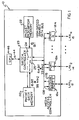
- FIG. 1 shows a functional block diagram of a preferred system 10, commonly known as a switch, for optimizing the transfer of data packets between a plurality of local area networks (LANs) e.g., 12, 14, and 16, according to data contained within each data packet (described further below in reference to FIG. 3 ).
- LANs local area networks
- the system 10 is primarily comprised of (1) a plurality of media access controllers (MACs) 18 each corresponding to a different LAN 12, 14, 16 for bidirectionally transferring data packets, (2) a shared packet data memory 20 (preferably RAM and referred to as packet memory) for storing data packets prior to transferring to another LAN, (3) a shared packet descriptor memory 22 (preferably RAM and referred to as descriptor memory) for storing pointers identifying the location of the data packets in the packet memory 20, and (4) a switch controller 23 defining a receive data path 24 and a transmit data path 25 for concurrently transferring data in both directions between the MACs 18 and the packet memory 20.
- MACs media access controllers
- the switch controller 23 periodically shares resources including the packet memory 20 and the descriptor memory 22.
- periodic is intended to refer to events occurring at regular or irregular intervals.
- the independent controllers within the switch controller 23 operate essentially concurrently for most tasks while interleaving their use of the shared resources. Consequently, embodiments of the present invention can simultaneously receive and transmit data across multiple LAN data ports, e.g., LAN 1 12, LAN N 14, LAN N 16, etc., via a plurality of media access controllers 18.
- Table I shows a simplified example of multiple receive tasks, i.e., a first data packet RX 1 being received from a first LAN 1 (column 2) and a second data packet RX 2 being received from a second LAN 2 (column 3), being processed concurrently with a third data packet TX 3 being transmitted on a third LAN 3 (column 4) in a time distributed manner during each time slot T x .
- the time slots T x can have variable durations for each task, e.g., as needed for a particular subtask.
- the transmit task of column 4 may overlap different portions of the receive tasks and may have unequal time slot durations.
- the media access controllers 18 preferably interface to the LANs via a PHY, i.e., a physical interface layer, (not shown).
- a PHY i.e., a physical interface layer
- 28 Ethernet ports comprised of 10/100 and/or 10 Mbps ports are simultaneously supported.
- Table I T 0 RX 1 to MAC 1 from LAN 1 RX 2 to MAC 2 from LAN 2 TX 3 from Packet Memory to MAC 2 on Transmit Data Path T 1 RX 1 from MAC 1 to Packet Memory on Receive Data Path TX 3 to LAN 3 from MAC 3 T 2 RX 2 from MAC 2 to Packet Memory on Receive Data Path
- FIG. 2 shows the switch controller 23 of FIG. 1 primarily comprised of (1) a MAC receive (RCV) buffer 30 for periodically receiving and buffering at least a portion of data packets from the MACs 18 via a bidirectional MAC interface bus 31, (2) a MAC transmit (XMIT) buffer 32 capable of operating concurrently with the MAC receive buffer 30 for periodically buffering and transmitting at least a portion of data packets directed to the MACs 18 via the MAC interface bus 31, (3) a packet memory input buffer 34 for periodically receiving and buffering at least a portion of data packets from the packet memory 20 via a bidirectional packet memory interface bus 35, (4) a packet memory output buffer 36 capable of operating concurrently with the packet memory input buffer 34 for periodically buffering and transmitting at least a portion of data packets to the packet memory 20 via the packet memory interface bus 35, (5) an address table 38 for correlating the destination address of each data packet with one of the MACs 18 and its corresponding LAN, (6) a receive (RCV) controller 40 for causing a data packet from
- embodiments of the invention preferably include a CPU interface bus 44 to a CPU 46 which can monitor and/or alter the flow of data within the switch controller 23.
- a CPU transmit (XMIT) buffer 48 and a CPU receive (RCV) buffer 50 which perform a similar function to that of the MAC transmit 32 and receive 30 buffers.
- XMIT CPU transmit
- RCV CPU receive
- a multiplexer 51 under control of the transmit 42 and receive 40 controllers is used to direct data between the packet memory 20 to either the MACs 18 or the CPU 46 via its associated buffered interfaces 31, 35, and 44.
- the MAC receive buffer 30 is essentially coupled to the packet memory output buffer 36 via path 52 to form the receive data path 24.
- the MAC transmit buffer 32 is essentially coupled to the packet memory input buffer 34 via path 53 to form the transmit data path 25.
- embodiments of the present invention are capable of concurrently receiving and transmitting data packets on a plurality of LANs by using a plurality of controllers (e.g., 40-42) which concurrently process portions of data packets.
- controllers e.g., 40-42
- Table II shows an expanded view of the simplified example previously shown in Table I corresponding to the preferred implementation of the receive 24 and transmit 25 data paths shown in FIG. 2 .
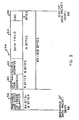
- FIG. 3 shows the basic structure of an exemplary received data packet 54 (e.g., for an Ethernet data transfer protocol) comprised of (1) a preamble 56 for designating the beginning of the data packet 58 (BOP), (2) a destination address (DA) 60 for identifying a destination device present on a destination LAN, e.g., LAN 2 14, (3) a source address 62 (SA) for identifying an originating device present on a source LAN, e.g., LAN 1 12, (4) a data field 64 containing the information content of the data packet 54, and (5) a CRC field 66 at the end of the data packet (EOP 68) for performing an integrity check on the contents of the data packet 54.
- the overall length of the data packet 54 (absent the preamble 56) is variable between a minimum length of 64 bytes and a maximum length of 1518 bytes.
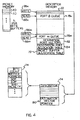
- Received data packets 54 are stored in one or more buffers 70 within the packet memory 20 (see FIG. 4 ).
- the size of the buffers 70 is selected such that the smallest size data packet, i.e., 64 bytes, can fit within a single buffer 70 while the largest size data packet, i.e., 1518 bytes, will require a plurality of buffers 70.
- This buffer size selection e.g., 256 bytes per buffer in a preferred embodiment, alternatively allows the size of the packet memory 20 to be reduced or the number of packets for a given packet memory size to be increased.
- a minimum of 219 buffers, each 256 bytes are available for each port, i.e., each MAC 18 and its associated LAN interface.
- the packet memory size would be 1,794,048 (219 * 256 * 32), preferably implemented in a 2 Mb block of memory. Since the data packet communication rate will typically be different on each port, the buffers 70 can be allocated on the fly between ports with low data packet communication rates to those with higher demands. As each buffer 70 is allocated, data is set in a packet buffer allocation table 72 stored within the descriptor memory 22, e.g., stetting one of the N bytes in the packet buffer allocation table 72 corresponding to each packet memory buffer 70. Similarly, this data is reset when a buffer 70 is deallocated, freeing the buffer 70 for future data packets.
- pointers referred to as descriptors 74
- receive session registers 76 which individually point to the buffers 70 that have been allocated for an incoming data packet.
- these descriptors 74 are copied from the receive session registers 76 to one of M output queues 78 (one for each MAC port connected to the switch controller 23) that are saved in the descriptor memory 22.
- a destination vector pointer 80 associated with a set of (1-6) descriptors 74, is stored in the output queue 78.
- the destination vector pointer 80 points to a destination vector 82 also contained within the descriptor memory 22.
- Each destination vector 82 contains a bit corresponding to each potential destination port, e.g., a 32 bit destination vector can be used to allocate up to 32 destination ports.
- the destination port vectors 82 are allocated using a destination port allocation table 84 in a similar manner to the packet buffer allocation table 72.
- a data packet 54 is directed, i.e., unicast, to a single destination address 60 on a known port, i.e., LAN.
- a known port i.e., LAN.
- a single bit corresponding to the one destination port is set in the destination port vector 82 and after transmission to this single port, both the buffers 70 and the destination port vector 82 are both deallocated.
- write 86 and read 88 pointers are contained within the switch controller 23 for each of the output queues 78.
- the queues 78 are organized as circular (ring) buffers, i.e., so that data entries following the physical end of each queue 78 are located at the physical beginning of the queue 78.
- the write pointer 86 points to the last entry stored in the queue 78 and the read pointer 88 points to the last entry read from the queue 78.
- the read pointer 88 does not equal the write pointer 86, it signifies that there is new data (pointing to a received data packet) within the queue 78. However, if the write pointer 86 were permitted to loop around the read pointer 88, the queue 78 would lose data.
- the write pointer is not permitted to loop the read pointer and instead the most recently received data packet is dropped and (2) the queue size is made large enough, 256 entries long in an exemplary embodiment, to reduce the probability that a data packet would be dropped. Since the number of queue entries required for a particular data packet varies from a minimum of 2 (1 descriptor 74 plus a destination vector pointer 80) to a maximum of 7 (6 descriptors 74 plus a destination vector pointer 80), the amount of data packets 54 that can be referenced from the queue 78 also varies from 128 for a minimum size packet to 36 for a maximum size packet in an embodiment having a 256 entry queue.
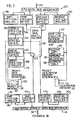
- FIG. 5 shows an exemplary block diagram of the portion of the switch controller 23 dedicated to processing received data packets.
- This portion i.e., the receive controller 40 (preferably a state machine), is preferably comprised of multiple state machines, each of which concurrently processes portions of a receive task 90.
- the receive controller 40 preferably a state machine
- the receive task 90 is preferably comprised of multiple state machines, each of which concurrently processes portions of a receive task 90.
- the receive controller 40 preferably a state machine
- the primary state machines are (1) a main receive state machine 92 for exercising supervisory control over the other state machines, controlling the flow of data between the operational blocks, and controlling requests for packet memory buffers 70 and 64 byte subpackets according to the descriptors 74 stored in the session registers 76 (2) a receive ring state machine 94 for controlling the storage of descriptors 74 and destination vector pointers 80 into one or port queues 78, (3) a receive session state machine 96 for controlling access to the descriptors 74 stored in the session registers 76, (4) a buffer allocator 98 for allocating (and deallocating, e.g., in the case of a data packet received with a CRC error) buffers 70 in the packet memory 20, and (5) an address table state machine 100 for determining the destination port or ports according to the destination address 60 of the received data packet 54.
- a main receive state machine 92 for exercising supervisory control over the other state machines, controlling the flow of data between the operational blocks, and controlling requests for packet memory buffers 70
- an arbiter 102 is used to control the submission of tasks to the state machines of the receive controller 40 on a per port basis, preferably in a round robin fashion based upon status data returned from each MAC 18 and/or a data available signal 103 from the MAC receive buffer 30.
- the arbiter 102 can submit tasks based on other criterion, e.g., the transmission speed of the port (10 Mbps, 100 Mbps, 1000 Mbps), the probability of an additional packet being received inversely based on when the last packet was received, etc.
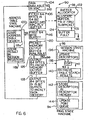
- the exemplary receive task 90 begins in block 104 where the task waits by periodically polling the MAC 18 for the selected port to determine if data is available.
- a burst of data (64 bytes in this exemplary embodiment) is fetched from the selected MAC 18.
- each MAC 18 has a receive buffer 108, e.g., a first in first out buffer (FIFO), that provides the oldest buffered data across the bidirectional MAC interface bus 31 (see FIG. 2 ), common to all of the MACs 18, to the MAC receive buffer 30.
- FIFO first in first out buffer
- the MAC receive buffer 30 is comprised of a receive first in first out buffer (FIFO) 110 under control of a receive FIFO controller 112 operating in coordination with a high speed shared data bus interface 114 to control the transfer data across the MAC interface bus 31.
- the FIFO controller 112 independently controls this data transfer once it receives a command from the receive controller 40.
- the MAC interface bus 31 and the data bus interface 114 are 64 bits wide. Accordingly, the data bus interface 114 is used to fetch and load the 64 byte MAC receive buffer 30 in eight 64 bit bursts.
- the MAC receive buffer 30 can receive data at a first rate from the MACs 18 via the MAC interface bus 31 and send this received data or portion of this data toward the packet memory 20 at a second rate, i.e., the data transfers can overlap.
- a search begins in block 118a to determine the destination port according to the data contained within the first 6 bytes of the incoming data packet, i.e., the destination address 60, using the address table state machine 100 which processes the contents of the address table 38.
- the address table state machine 100 proceeds independently and since this task begins early in the receive task 90, sufficient time is allocated for it to complete (in block 118b where the results are stored in the receive session registers 76) before the end 68 of the data packet 54 is reached.
- the buffer allocator 98 begins in response to receipt of the first 64 byte portion, a subpacket or subportion of a data packet, of buffer 70.
- the associated descriptor 74 in the receive session registers 76 is updated and maintained by the concurrently operating receive session state machine 96.
- Buffer 70 is allocated (in block 122) from the packet memory 20 whenever it is determined (e.g., in block 124) that the next subpacket will require a new 256 byte buffer, i.e., four of four 64 byte subpackets have been used.
- the buffer allocator 98 is preferably a separate state machine that operates concurrently with the other tasks.
- the simplified buffer allocator 98 of FIG. 6 shows buffer allocation beginning when each new buffer 70 is needed.
- this allocation task actually begins by always having the next free buffer 70 allocated in advance so that a new buffer is always available when needed. This alternative embodiment is possible as a consequence of the use of independent state machines.
- Each 64 byte subpacket is stored (see blocks 126 and 128) in the allocated buffer portion of the packet memory 20 described by the current session register 76 and maintained by the receive session state machine 96. Actually, this process occurs in two stages. First, the 64 byte subpacket is stored in the packet memory output buffer 36. Next, the contents of the output buffer 36 are sent to packet memory 20 via a packet memory interface 130 and the bidirectional packet memory interface bus 35 (see FIG. 2 ), preferably using circuitry similar to that described in reference to the MAC receive buffer 30, e.g., a controller 132 that independently controls the transfer of data into a FIFO 134 once it receives a command from the receive controller 40. In an exemplary embodiment, the bidirectional packet memory interface bus 35 is 16 bits wide.
- the packet memory output buffer 36 is preferably implemented as a FIFO (similar to the MAC receive buffer 30), permitting data to be written into the packet memory 20 at a different rate than it is written into the packet memory output buffer 36.
- This structure is advantageous to accommodate the different bus widths (16 bit external vs 64 bit internal) and different external and internal clock rates.
- the descriptors 74 are updated by the receive session state machine 92 in block 136. If an end of packet (EOP) 64 has been detected in block 138, the results of the address table search of block 118 are retrieved from the address table state machine 100 in block 140 (e.g., from data stored in the receive session registers 76) and submitted to the concurrently operating ring state machine 94. In the case of a unicast message where the destination address 60 is known to the address table 38, the received data packet 54 is forwarded to the port which contains a device corresponding to the destination address 60.
- EOP end of packet
- the address table state machine 100 updates the address table 38 according to the contents of the source address 62 and forwards the received data packet 54 to all ports with the exception of the port which received the data packet, i.e., floods the data ports with the received data packet.
- This task is done in block 142 by storing the descriptors 74 and the destination port vector 82 for the received data packet 54 in one or more output queues 78 in the descriptor memory 22.
- the write pointer 86 for each of the updated output queues 78 is accordingly updated in block 144. Following updating the write pointer 86, there will be a difference between the write pointer 86 and the read pointer 88 and it is this difference that is detected by the transmit controller 42 in determining whether there are data packets to be output on each port.
- Each of the aforementioned blocks perform portions of the receive task 90.
- the arbiter 102 preferably allows only a portion, e.g., one task block, of the receive task 90 to complete before moving on, e.g., in a round robin manner, to complete a portion of the receive task 90 for a next port.
- different portions of each receive task 90 can occur concurrently for each port using shared resources while maintaining data in buffers 70 within a common packet memory 20.
- a first port could be beginning receipt of a data packet 54a into its MAC 18a
- a second port could have received a first 64 bytes into its MAC 18b and could be transferring 64 bytes into the MAC receive buffer 30
- a third MAC 18c could have received a second portion of a data packet into its internal FIFO 108 and could be awaiting its transfer to the MAC receive buffer 30 which is currently busy. Similar overlapping uses of the structure of the receive controller 40 occur throughout.
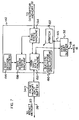
- FIG. 7 shows an exemplary block diagram of the portion of the switch controller 23 dedicated to transmitting data packets.
- This portion i.e., the transmit controller 42 (preferably a state machine), is preferably comprised of multiple state machines, each of which concurrently processes portions of a transmit task 150.
- the transmit controller 42 preferably a state machine
- the transmit task 150 is preferably comprised of multiple state machines, each of which concurrently processes portions of a transmit task 150.
- different portions of the various tasks used for transmitting data to multiple MACS 18 can be performed concurrently.
- the primary state machines are (1) a main transmit state machine 152 for exercising supervisory control over the other state machines, controlling the flow of data between the operational blocks, and controlling access to 64 byte subpackets within the buffer 70 pointed to by the current session register 76, (2) a transmit ring state machine 154 for controlling the retrieval of descriptors 74 and the destination vector pointer 80 from port queues 78 into internal transmit session registers 156, (3) a transmit session state machine 158 for controlling access to the transmit session registers 156, and (4) a buffer deallocator 160 for deallocating buffers 70 in the packet memory 20. Additionally, an arbiter 162 is used to control the submission of tasks to the state machines of the transmit controller 42 on a per port basis, preferably in a round robin fashion.
- the arbiter 162 can submit tasks based on other criterion, e.g., the transmission speed of the port (10 Mbps, 100 Mbps, 1000 Mbps), the probability of an additional packet being received inversely based on when the last packet was transmitted, etc.
- other criterion e.g., the transmission speed of the port (10 Mbps, 100 Mbps, 1000 Mbps), the probability of an additional packet being received inversely based on when the last packet was transmitted, etc.
- the exemplary transmit task 150 begins in block 164 where the task periodically (1) compares the write 86 and read 88 pointers for the selected port to determine if the selected port queue 78 has data, i.e., a data packet is available for transmission, and (2) if the MAC transmit FIFO 178 is available to receive data, e.g., by polling a space available line 165.
- the task continues in block 166 where descriptors 74 are fetched from the port queue 78 in the descriptor memory 22 stored in the transmit session registers 156.
- a 64 byte subpacket is retrieved into the packet memory input buffer 34 from the buffer 70 in the packet memory 20 pointed to by the transmit session registers 156.
- the packet memory input buffer 34 is configured as a FIFO operating in a similar manner to that described in reference to the MAC receive buffer 30, e.g., a controller 169 independently controls the transfer of data into a FIFO 170 once it receives a command from the transmit controller 42.
- the MAC transmit buffer 32 is available and, if so, a 64 byte subpacket is transferred to the MAC transmit buffer 32.
- the MAC transmit buffer 32 is preferably comprised of a transmit FIFO 174 and a transmit FIFO controller 176 which independently controls the transfer of the subpacket to a transmit FIFO 178 within the designated MAC 78 via the high speed shared data bus interface 114 and the MAC interface bus 31 once it receives a command from the transmit controller 42.
- the transmit session state machine 158 is updated in block 182 to point to the next subpacket in the packet memory 20 and, in block 183, it is determined if the MAC transmit FIFO 178 is available to accept more data. If so, the process continues with block 168 fetching the next 64 byte subpacket. If the EOP 68 has been detected, the buffer deallocator 160 (in block 184) clears the bit corresponding to the selected port in the destination port vector 82 and the ring state machine 154 concurrently updates the read pointer 88 to deallocate the descriptors 74 in the selected port queue 78 in block 186.
- the buffer deallocator 160 (in block 188) deallocates the buffers 70 used to store the data packet. However, if bits are still set in the destination port sector 82, it signifies that other port queues 78 will still be transmitting the stored data packet and, thus, the buffers 70 are retrained.
- Each of the aforementioned blocks perform portions of the transmit task 150.
- the arbiter 162 preferably allows only a portion, e.g., one task block, of the transmit task 150 to complete before moving on, e.g., in a round robin manner based upon status from each MAC 18 and/or status data on the space available line 165 from the MAC transmit buffer 32, to complete a portion of the transmit task 150 for a next port.
- different portions of each transmit task 150 can occur concurrently using shared resources while operating on data packets in buffers 70 within the common packet memory 20.
- a first MAC 18a could begin transmitting a portion of a data packet 54a from within its MAC transmit FIFO 178, a first 64 bytes of data packet 54b could have been transferred into the MAC transmit buffer 32 and could now be transferring its contents to the MAC transmit FIFO 178 in MAC 18b, and the transmit controller 42 could be awaiting the availability of the MAC transmit FIFO 178 in MAC 18c before transferring a 64 byte subpacket of the data packet 54c from the packet memory 20 to the MAC transmit buffer 32 which is currently busy. Similar overlapping uses of the structure of the transmit controllers 42 occur throughout.
- the receive 40 and transmit 42 controllers operate essentially independently, they can concurrently perform portions of their tasks for each of a plurality of LAN ports. Additionally, as previously described, the receive 40 and transmit 42 controllers are preferably comprised of a plurality of controllers, e.g., state machines, that each operate concurrently to perform portions of the receive and transmit tasks.
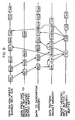
- FIG. 9 shows exemplary receive 90 and transmit 150 tasks overlaping in the present invention (for simplicity, this is shown in the case where the data packet size is 64 bytes, i.e., a subpacket is the same as a packet).
- a first receive task RX1 (on a first port) is shown placing a 64 byte packet on the MAC interface bus 31.
- the packet is stored into the MAC receive buffer 30.
- a buffer 70 is then allocated and pointed to by the receive session registers 76 to control the transfer of data from the packet memory 20 to the packet memory output buffer 36.
- This sequence of operations is shown concurrently overlapping a different portion of the receive task 90 on a second port. This is possible since the receive task 90 has been subdivided to permit different portions of the task to be performed on different portions of the shared resources. Additionally, due to the buffering on the interfaces to the shared resources, each port can withstand at least a packet (64 byte) transmission delay time without any data loss.
- multiple transmit tasks 150 can overlap each other as well as the receive tasks which can overlap each other as well as concurrent transmit tasks, e.g., TX1 data on the MAC interface bus 31 is shown overlapping TX2 data coming from the packet memory 20 and RX3 descriptor data being entered into the descriptor memory 22. Again, this is possible since each task is accessing different portions of the shared resources while maintaining intermediate data within the buffered data interfaces.
- the described architecture of the switch controller (see FIG. 2 )is conducive to being implemented within a single integrated circuit package, e.g., an application specific integrated circuit (ASIC), with the packet 20 and descriptor 22 memories and the MACs 18 being external to the single integrated circuit package.
- these external memories are commercially produced off-the-shelf RAM (or any other read/write memory) and the MACs are also readily available off the shelf devices.
- MACS are commercially available devices that support eight ports, i.e., octal MACs. Using such a device, allows the component count to be further minimized.
- each described aforementioned MAC 18 would then refer to one of the eight ports within such a device.
Landscapes
- Engineering & Computer Science (AREA)
- Computer Networks & Wireless Communication (AREA)
- Signal Processing (AREA)
- Small-Scale Networks (AREA)
- Data Exchanges In Wide-Area Networks (AREA)
Claims (6)
- System zur selektiven Übertragung von Datenpaketen zwischen einer Vielzahl von lokalen Netzwerken LANs (12, 14, 16), worin die Datenpakete Ziel- und Ursprungsadressen identifizieren, wobei das System Folgendes umfasst:eine Vielzahl an Medienzugangscontroller MACs (18), die jeweils konfiguriert sind, um Datenpakete von verschiedenen LANs (12, 14, 16) zu empfangen und an verschiedene LANs (12, 14, 16) zu senden, wobei die MACs zumindest einen ersten MAC (18a), der einem ersten LAN (12) zum Empfang von Datenpaketen von dem ersten LAN zugeordnet ist, und einen zweiten MAC (18b) umfassen, der einem zweiten LAN (14) zum Senden von Datenpaketen an das zweite LAN zugeordnet ist;einen gemeinsamen Datenbus (114);wobei jeder der MACs (18) mit dem gemeinsamen Datenbus (114) verbunden ist, um Datenpakete für die Übertragung über den Datenbus zu präsentieren;einen gemeinsamen Paketspeicher (20) zum Speichern einer Vielzahl an Datenpaketen;einen gemeinsamen Deskriptorenspeicher (22) zum Speichern von Deskriptoren, die auf die in dem Paketspeicher (20) gespeicherten Datenpakete zeigen;eine Adressentabelle (38), um die Zieladresse jedes Datenpakets mit einem der MACs (18) in Beziehung zu setzen;dadurch gekennzeichnet, dass es außerdem Folgendes umfasst:einen MAC-Empfangspuffer (30), der einen Controller (112) umfasst, um durch die MACs (18) präsentierte Datenpakete über den gemeinsamen Datenbus (114) zu übertragen und zumindest einen Teil der übertragenen Datenpakete zwischenzuspeichern;einen MAC-Sendepuffer (32), der einen Controller (176) umfasst, um Datenpakete über den gemeinsamen Datenbus zu übertragen und zumindest einen Teil der übertragenen Datenpakete zwischenzuspeichern;einen Paketspeichereingangspuffer (34), um regelmäßig zumindest einen Teil der Datenpakete von dem Paketspeicher (20) zu empfangen und zwischenzuspeichern;einen Paketspeicherausgangspuffer (36), um regelmäßig zumindest einen Teil der Datenpakete zwischenzuspeichern und sie an den Paketspeicher (20) zu übertragen;einen Empfangscontroller (40) zur Übertragung eines Datenpakets von dem MAC-Empfangspuffer (30) an den Paketspeicher (20) über den Paketspeicherausgangspuffer (36) und zur Erzeugung von Deskriptoren, die der Position des Datenpakets innerhalb des Paketspeichers (20) entsprechen; wobei der Empfangscontroller (40) die Deskriptoren in dem Deskriptorenspeicher (22) als Antwort auf die Adressentabelle (38) und die Zieladresse des Datenpakets speichert; undeinen Sendecontroller (42) zur Übertragung eines Datenpakets von dem Paketspeicher (20) über den Paketspeichereingangspuffer (34) an den MAC-Sendepuffer (32) gemäß den in dem Deskriptorenspeicher (22) gespeicherten Deskriptoren;und dadurch, dass:der MAC-Sendepuffercontroller (176) gleichzeitig mit dem MAC-Empfangspuffercontroller (112) arbeiten kann;der Paketspeicherausgangspuffer (36) gleichzeitig mit dem Paketspeichereingangspuffer (34) arbeiten kann undder Sendecontroller (42) gleichzeitig mit dem Empfangscontroller (40) arbeiten kann.
- System nach Anspruch 1, worin jeder der Empfangs- und Sendecontroller (40, 42) ein Zustandsautomat ist.
- System nach Anspruch 1, worin der MAC-Empfangspuffer (30), der MAC-Sendepuffer (32), der Paketspeichereingangspuffer (34), der Paketspeicherausgangspuffer (36), der Empfangscontroller (40) und der Sendecontroller (42) in einem einzigen integrierten Schaltkreisbaustein implementiert sind.
- System nach Anspruch 1, das zusätzlich Folgendes umfasst:Empfangssitzungsregister (76) zum Speichern von durch den Empfangscontroller (40) erzeugten Deskriptoren, bevor die Deskriptoren in dem Deskriptorenspeicher gespeichert werden;Sendesitzungsregister (156) zum Speichern von aus dem Deskriptorenspeicher (22) abgerufenen Deskriptoren; und worinder Sendecontroller (42) auf die abgerufenen Deskriptoren in den Übertragungssitzungsregistern (156) reponsiv ist, um Datenpakete aus dem Paketspeicher (20) zur Übertragung an die MACs (18) auszuwählen.
- System nach Anspruch 4, worin der MAC-Empfangspuffer (30), der MAC-Sendepuffer (32), der Paketspeichereingangspuffer (34), der Paketspeicherausgangspuffer (36), der Empfangscontroller (40), der Sendecontroller (42), die Empfangssitzungsregister (76) und die Sendesitzungsregister (156) in einem einzigen integrierten Schaltkreispaket implementiert sind.
- System nach Anspruch 1, worin der MAC-Empfangspuffer (30), der MAC-Sendepuffer (32), der Paketspeichereingangspuffer (34) und der Paketspeicherausgangspuffer (36) jeweils als First-In-First-Out-Puffer (FIFOs) organisiert sind, die Daten in einer ersten Rate eingeben und Daten in einer zweiten Rate ausgeben können.
Applications Claiming Priority (3)
| Application Number | Priority Date | Filing Date | Title |
|---|---|---|---|
| US96110 | 1998-06-11 | ||
| US09/096,110 US6067300A (en) | 1998-06-11 | 1998-06-11 | Method and apparatus for optimizing the transfer of data packets between local area networks |
| PCT/US1999/013166 WO1999065193A1 (en) | 1998-06-11 | 1999-06-10 | Optimizing the transfer of data packets between lans |
Publications (3)
| Publication Number | Publication Date |
|---|---|
| EP1086552A1 EP1086552A1 (de) | 2001-03-28 |
| EP1086552A4 EP1086552A4 (de) | 2001-10-04 |
| EP1086552B1 true EP1086552B1 (de) | 2009-11-25 |
Family
ID=22255404
Family Applications (1)
| Application Number | Title | Priority Date | Filing Date |
|---|---|---|---|
| EP99927458A Expired - Lifetime EP1086552B1 (de) | 1998-06-11 | 1999-06-10 | Transferoptimierung von datenpaketen zwischen lans |
Country Status (6)
| Country | Link |
|---|---|
| US (1) | US6067300A (de) |
| EP (1) | EP1086552B1 (de) |
| AU (1) | AU767085B2 (de) |
| CA (1) | CA2328220C (de) |
| DE (1) | DE69941697D1 (de) |
| WO (1) | WO1999065193A1 (de) |
Families Citing this family (96)
| Publication number | Priority date | Publication date | Assignee | Title |
|---|---|---|---|---|
| US6301256B1 (en) | 1997-09-17 | 2001-10-09 | Sony Corporation | Selection technique for preventing a source port from becoming a destination port in a multi-port bridge for a local area network |
| US6446173B1 (en) | 1997-09-17 | 2002-09-03 | Sony Corporation | Memory controller in a multi-port bridge for a local area network |
| US6363067B1 (en) | 1997-09-17 | 2002-03-26 | Sony Corporation | Staged partitioned communication bus for a multi-port bridge for a local area network |
| US6617879B1 (en) | 1997-09-17 | 2003-09-09 | Sony Corporation | Transparently partitioned communication bus for multi-port bridge for a local area network |
| US6442168B1 (en) | 1997-09-17 | 2002-08-27 | Sony Corporation | High speed bus structure in a multi-port bridge for a local area network |
| US6252879B1 (en) | 1997-09-17 | 2001-06-26 | Sony Corporation | Single counter for controlling multiple finite state machines in a multi-port bridge for local area network |
| US6744728B1 (en) | 1997-09-17 | 2004-06-01 | Sony Corporation & Sony Electronics, Inc. | Data pipeline timing optimization technique in a multi-port bridge for a local area network |
| US6308218B1 (en) | 1997-09-17 | 2001-10-23 | Sony Corporation | Address look-up mechanism in a multi-port bridge for a local area network |
| JP3456398B2 (ja) * | 1998-02-02 | 2003-10-14 | 日本電気株式会社 | プロセッサ間ネットワークのフロー制御方法および装置 |
| KR100261149B1 (ko) * | 1998-02-06 | 2000-07-01 | 김영환 | 피씨아이(pci) 이더넷(ethernet) 제어장치 및 제어방법 |
| TW374967B (en) * | 1998-06-22 | 1999-11-21 | Winbond Electronics Corp | Ethernet switch having shared memory structure and method of the shared memory |
| US7899052B1 (en) * | 1999-01-27 | 2011-03-01 | Broadcom Corporation | Memory structure for resolving addresses in a packet-based network switch |
| US6975637B1 (en) * | 1999-01-27 | 2005-12-13 | Broadcom Corporation | Apparatus for ethernet PHY/MAC communication |
| US6601150B1 (en) * | 1999-05-10 | 2003-07-29 | Nortel Networks Limited | Memory management technique for maintaining packet order in a packet processing system |
| US6781986B1 (en) * | 1999-06-25 | 2004-08-24 | Nortel Networks Limited | Scalable high capacity switch architecture method, apparatus and system |
| US6584517B1 (en) * | 1999-07-02 | 2003-06-24 | Cypress Semiconductor Corp. | Circuit and method for supporting multicast/broadcast operations in multi-queue storage devices |
| US7159030B1 (en) * | 1999-07-30 | 2007-01-02 | Intel Corporation | Associating a packet with a flow |
| US6606704B1 (en) * | 1999-08-31 | 2003-08-12 | Intel Corporation | Parallel multithreaded processor with plural microengines executing multiple threads each microengine having loadable microcode |
| US6983350B1 (en) | 1999-08-31 | 2006-01-03 | Intel Corporation | SDRAM controller for parallel processor architecture |
| US6775283B1 (en) * | 1999-11-16 | 2004-08-10 | Advanced Micro Devices, Inc. | Passing vlan information through descriptors |
| US6532509B1 (en) | 1999-12-22 | 2003-03-11 | Intel Corporation | Arbitrating command requests in a parallel multi-threaded processing system |
| US6694380B1 (en) | 1999-12-27 | 2004-02-17 | Intel Corporation | Mapping requests from a processing unit that uses memory-mapped input-output space |
| US7620702B1 (en) | 1999-12-28 | 2009-11-17 | Intel Corporation | Providing real-time control data for a network processor |
| US6661794B1 (en) | 1999-12-29 | 2003-12-09 | Intel Corporation | Method and apparatus for gigabit packet assignment for multithreaded packet processing |
| US6584522B1 (en) | 1999-12-30 | 2003-06-24 | Intel Corporation | Communication between processors |
| US7480706B1 (en) * | 1999-12-30 | 2009-01-20 | Intel Corporation | Multi-threaded round-robin receive for fast network port |
| US6952824B1 (en) * | 1999-12-30 | 2005-10-04 | Intel Corporation | Multi-threaded sequenced receive for fast network port stream of packets |
| US6748445B1 (en) * | 2000-02-01 | 2004-06-08 | Microsoft Corporation | System and method for exchanging data |
| US7065580B1 (en) | 2000-03-31 | 2006-06-20 | Sun Microsystems, Inc. | Method and apparatus for a pipelined network |
| US7020161B1 (en) | 2000-03-31 | 2006-03-28 | Sun Microsystems, Inc. | Prescheduling arbitrated resources |
| US6975626B1 (en) | 2000-03-31 | 2005-12-13 | Sun Microsystems, Inc. | Switched network for low latency communication |
| US7061929B1 (en) * | 2000-03-31 | 2006-06-13 | Sun Microsystems, Inc. | Data network with independent transmission channels |
| US6654811B1 (en) * | 2000-04-13 | 2003-11-25 | Nokia Inc. | Backpressure arrangement in client-server environment |
| JP2004507164A (ja) * | 2000-08-11 | 2004-03-04 | パイオン・カンパニー・リミテッド | 新しいスイッチ・ファブリック・チップセット・システムおよび方法 |
| US6804731B1 (en) | 2000-08-11 | 2004-10-12 | Paion Company, Limited | System, method and article of manufacture for storing an incoming datagram in switch matrix in a switch fabric chipset system |
| US6731631B1 (en) | 2000-08-11 | 2004-05-04 | Paion Company, Limited | System, method and article of manufacture for updating a switching table in a switch fabric chipset system |
| US6724759B1 (en) | 2000-08-11 | 2004-04-20 | Paion Company, Limited | System, method and article of manufacture for transferring a packet from a port controller to a switch fabric in a switch fabric chipset system |
| US7401126B2 (en) * | 2001-03-23 | 2008-07-15 | Neteffect, Inc. | Transaction switch and network interface adapter incorporating same |
| DE10119754B4 (de) * | 2001-04-23 | 2007-11-29 | Infineon Technologies Ag | Verfahren und Vorrichtung zum Speichern von Datenpaketen |
| US6981014B2 (en) * | 2001-08-31 | 2005-12-27 | Adaptec Corporation | Systems and methods for high speed data transmission using TCP/IP |
| US7096247B2 (en) * | 2001-08-31 | 2006-08-22 | Adaptec, Inc. | Apparatus and methods for receiving data at high speed using TCP/IP |
| US7126952B2 (en) * | 2001-09-28 | 2006-10-24 | Intel Corporation | Multiprotocol decapsulation/encapsulation control structure and packet protocol conversion method |
| US7457862B2 (en) * | 2001-10-22 | 2008-11-25 | Avaya, Inc. | Real time control protocol session matching |
| US6934951B2 (en) * | 2002-01-17 | 2005-08-23 | Intel Corporation | Parallel processor with functional pipeline providing programming engines by supporting multiple contexts and critical section |
| US7181594B2 (en) * | 2002-01-25 | 2007-02-20 | Intel Corporation | Context pipelines |
| JP3925234B2 (ja) * | 2002-02-18 | 2007-06-06 | ソニー株式会社 | データ通信システム、データ通信管理装置、および方法、並びにコンピュータ・プログラム |
| US7352741B2 (en) * | 2002-02-21 | 2008-04-01 | Sun Microsystems, Inc. | Method and apparatus for speculative arbitration |
| US7212530B1 (en) | 2002-03-22 | 2007-05-01 | Juniper Networks, Inc. | Optimized buffer loading for packet header processing |
| US7236501B1 (en) | 2002-03-22 | 2007-06-26 | Juniper Networks, Inc. | Systems and methods for handling packet fragmentation |
| US7180893B1 (en) | 2002-03-22 | 2007-02-20 | Juniper Networks, Inc. | Parallel layer 2 and layer 3 processing components in a network router |
| US7283528B1 (en) | 2002-03-22 | 2007-10-16 | Raymond Marcelino Manese Lim | On the fly header checksum processing using dedicated logic |
| US7215662B1 (en) * | 2002-03-22 | 2007-05-08 | Juniper Networks, Inc. | Logical separation and accessing of descriptor memories |
| US7158520B1 (en) | 2002-03-22 | 2007-01-02 | Juniper Networks, Inc. | Mailbox registers for synchronizing header processing execution |
| US7239630B1 (en) * | 2002-03-22 | 2007-07-03 | Juniper Networks, Inc. | Dedicated processing resources for packet header generation |
| US7489687B2 (en) * | 2002-04-11 | 2009-02-10 | Avaya. Inc. | Emergency bandwidth allocation with an RSVP-like protocol |
| US7400640B2 (en) * | 2002-05-03 | 2008-07-15 | Conexant, Inc. | Partitioned medium access control implementation |
| US7471688B2 (en) | 2002-06-18 | 2008-12-30 | Intel Corporation | Scheduling system for transmission of cells to ATM virtual circuits and DSL ports |
| US6701393B1 (en) * | 2002-06-27 | 2004-03-02 | Emc Corporation | Systems and methods for managing storage location descriptors |
| US7352769B2 (en) | 2002-09-12 | 2008-04-01 | Intel Corporation | Multiple calendar schedule reservation structure and method |
| US8176154B2 (en) * | 2002-09-30 | 2012-05-08 | Avaya Inc. | Instantaneous user initiation voice quality feedback |
| US7359979B2 (en) | 2002-09-30 | 2008-04-15 | Avaya Technology Corp. | Packet prioritization and associated bandwidth and buffer management techniques for audio over IP |
| US20040073690A1 (en) * | 2002-09-30 | 2004-04-15 | Neil Hepworth | Voice over IP endpoint call admission |
| US7433307B2 (en) | 2002-11-05 | 2008-10-07 | Intel Corporation | Flow control in a network environment |
| US7263648B2 (en) * | 2003-01-24 | 2007-08-28 | Wegener Communications, Inc. | Apparatus and method for accommodating loss of signal |
| JPWO2004077304A1 (ja) * | 2003-02-27 | 2006-06-08 | 富士通株式会社 | データ転送装置 |
| US7327700B2 (en) * | 2003-05-30 | 2008-02-05 | Redpine Signals, Inc. | Flexible multi-channel multi-thread media access controller and physical layer interface for wireless networks |
| US7443836B2 (en) | 2003-06-16 | 2008-10-28 | Intel Corporation | Processing a data packet |
| US7206411B2 (en) | 2003-06-25 | 2007-04-17 | Wegener Communications, Inc. | Rapid decryption of data by key synchronization and indexing |
| US20050063407A1 (en) * | 2003-09-23 | 2005-03-24 | Samsung Electronics Co., Ltd. | Apparatus and method for maintaining high-speed forwarding tables in a massively parallel router |
| US7114016B2 (en) * | 2003-12-23 | 2006-09-26 | Intel Corporation | Page-aware descriptor management |
| US7447223B2 (en) * | 2004-01-28 | 2008-11-04 | Hewlett-Packard Development Company, L.P. | Switching mesh with broadcast path redundancy |
| US7284075B2 (en) * | 2004-03-23 | 2007-10-16 | Intel Corporation | Inbound packet placement in host memory |
| JP2005303356A (ja) * | 2004-04-06 | 2005-10-27 | Oki Electric Ind Co Ltd | 転送処理装置 |
| US7978827B1 (en) | 2004-06-30 | 2011-07-12 | Avaya Inc. | Automatic configuration of call handling based on end-user needs and characteristics |
| US8190796B2 (en) * | 2004-11-02 | 2012-05-29 | Standard Microsystems Corporation | Hardware supported peripheral component memory alignment method |
| US8121148B2 (en) * | 2005-03-24 | 2012-02-21 | Ixia | Protocol stack using shared memory |
| US8458280B2 (en) * | 2005-04-08 | 2013-06-04 | Intel-Ne, Inc. | Apparatus and method for packet transmission over a high speed network supporting remote direct memory access operations |
| US7889762B2 (en) * | 2006-01-19 | 2011-02-15 | Intel-Ne, Inc. | Apparatus and method for in-line insertion and removal of markers |
| US7782905B2 (en) * | 2006-01-19 | 2010-08-24 | Intel-Ne, Inc. | Apparatus and method for stateless CRC calculation |
| US8316156B2 (en) * | 2006-02-17 | 2012-11-20 | Intel-Ne, Inc. | Method and apparatus for interfacing device drivers to single multi-function adapter |
| US8078743B2 (en) * | 2006-02-17 | 2011-12-13 | Intel-Ne, Inc. | Pipelined processing of RDMA-type network transactions |
| US7849232B2 (en) | 2006-02-17 | 2010-12-07 | Intel-Ne, Inc. | Method and apparatus for using a single multi-function adapter with different operating systems |
| US20070208820A1 (en) * | 2006-02-17 | 2007-09-06 | Neteffect, Inc. | Apparatus and method for out-of-order placement and in-order completion reporting of remote direct memory access operations |
| US7617337B1 (en) | 2007-02-06 | 2009-11-10 | Avaya Inc. | VoIP quality tradeoff system |
| US8307180B2 (en) | 2008-02-28 | 2012-11-06 | Nokia Corporation | Extended utilization area for a memory device |
| US8218751B2 (en) | 2008-09-29 | 2012-07-10 | Avaya Inc. | Method and apparatus for identifying and eliminating the source of background noise in multi-party teleconferences |
| US8874824B2 (en) | 2009-06-04 | 2014-10-28 | Memory Technologies, LLC | Apparatus and method to share host system RAM with mass storage memory RAM |
| WO2012019114A1 (en) * | 2010-08-06 | 2012-02-09 | Citrix Systems, Inc. | Systems and methods for a para-virtualized driver in a multi-core virtual packet engine device |
| US20120137102A1 (en) * | 2010-11-30 | 2012-05-31 | Ramkumar Perumanam | Consumer approach based memory buffer optimization for multimedia applications |
| US9008734B2 (en) * | 2011-11-21 | 2015-04-14 | Broadcom Corporation | Wireless communication device having reduced power consumption |
| US9417998B2 (en) * | 2012-01-26 | 2016-08-16 | Memory Technologies Llc | Apparatus and method to provide cache move with non-volatile mass memory system |
| US9311226B2 (en) | 2012-04-20 | 2016-04-12 | Memory Technologies Llc | Managing operational state data of a memory module using host memory in association with state change |
| US9143562B2 (en) * | 2012-04-27 | 2015-09-22 | Hewlett-Packard Development Company, L.P. | Managing transfer of data from a source to a destination machine cluster |
| US9164804B2 (en) | 2012-06-20 | 2015-10-20 | Memory Technologies Llc | Virtual memory module |
| US9116820B2 (en) | 2012-08-28 | 2015-08-25 | Memory Technologies Llc | Dynamic central cache memory |
| US9166914B2 (en) * | 2013-12-09 | 2015-10-20 | International Business Machines Corporation | FIFO affinity for multiple ports |
Family Cites Families (8)
| Publication number | Priority date | Publication date | Assignee | Title |
|---|---|---|---|---|
| US5058110A (en) * | 1989-05-03 | 1991-10-15 | Ultra Network Technologies | Protocol processor |
| US5742760A (en) * | 1992-05-12 | 1998-04-21 | Compaq Computer Corporation | Network packet switch using shared memory for repeating and bridging packets at media rate |
| US5434976A (en) * | 1992-09-28 | 1995-07-18 | Standard Microsystems Corporation | Communications controller utilizing an external buffer memory with plural channels between a host and network interface operating independently for transferring packets between protocol layers |
| US5448565A (en) * | 1992-11-12 | 1995-09-05 | International Business Machines Corp. | Multiport LAN bridge |
| US5687316A (en) * | 1994-07-29 | 1997-11-11 | International Business Machines Corporation | Communication apparatus and methods having P-MAC, I-MAC engines and buffer bypass for simultaneously transmitting multimedia and packet data |
| US5764895A (en) * | 1995-01-11 | 1998-06-09 | Sony Corporation | Method and apparatus for directing data packets in a local area network device having a plurality of ports interconnected by a high-speed communication bus |
| US5633865A (en) * | 1995-03-31 | 1997-05-27 | Netvantage | Apparatus for selectively transferring data packets between local area networks |
| US5878028A (en) * | 1996-06-06 | 1999-03-02 | Advanced Micro Devices, Inc. | Data structure to support multiple transmit packets for high performance |
-
1998
- 1998-06-11 US US09/096,110 patent/US6067300A/en not_active Expired - Lifetime
-
1999
- 1999-06-10 DE DE69941697T patent/DE69941697D1/de not_active Expired - Lifetime
- 1999-06-10 WO PCT/US1999/013166 patent/WO1999065193A1/en not_active Ceased
- 1999-06-10 CA CA002328220A patent/CA2328220C/en not_active Expired - Fee Related
- 1999-06-10 AU AU44356/99A patent/AU767085B2/en not_active Ceased
- 1999-06-10 EP EP99927458A patent/EP1086552B1/de not_active Expired - Lifetime
Also Published As
| Publication number | Publication date |
|---|---|
| DE69941697D1 (de) | 2010-01-07 |
| EP1086552A4 (de) | 2001-10-04 |
| CA2328220A1 (en) | 1999-12-16 |
| AU4435699A (en) | 1999-12-30 |
| CA2328220C (en) | 2003-12-23 |
| US6067300A (en) | 2000-05-23 |
| WO1999065193A1 (en) | 1999-12-16 |
| EP1086552A1 (de) | 2001-03-28 |
| AU767085B2 (en) | 2003-10-30 |
Similar Documents
| Publication | Publication Date | Title |
|---|---|---|
| US6067300A (en) | Method and apparatus for optimizing the transfer of data packets between local area networks | |
| US5884040A (en) | Per-packet jamming in a multi-port bridge for a local area network | |
| US6526451B2 (en) | Method and network device for creating circular queue structures in shared memory | |
| US6754222B1 (en) | Packet switching apparatus and method in data network | |
| US6922408B2 (en) | Packet communication buffering with dynamic flow control | |
| US5619497A (en) | Method and apparatus for reordering frames | |
| US6128310A (en) | Multiport data network switch having a random number generator shared by multiple media access controllers | |
| US5778180A (en) | Mechanism for reducing data copying overhead in protected memory operating systems | |
| US7260104B2 (en) | Deferred queuing in a buffered switch | |
| US6795886B1 (en) | Interconnect switch method and apparatus | |
| EP1421739B1 (de) | Übertragung von Datenpaketen an mehrere Zieladressen | |
| US6816490B1 (en) | Statistical learning technique in a multi-port bridge for a local area network | |
| US7782849B2 (en) | Data switch and switch fabric | |
| US6091707A (en) | Methods and apparatus for preventing under-flow conditions in a multiple-port switching device | |
| US5633865A (en) | Apparatus for selectively transferring data packets between local area networks | |
| US5940597A (en) | Method and apparatus for periodically updating entries in a content addressable memory | |
| EP1014649A2 (de) | Verfahren und Vorrichtung zur Datenübertragungssteuerung | |
| US6601116B1 (en) | Network switch having descriptor cache and method thereof | |
| US6442168B1 (en) | High speed bus structure in a multi-port bridge for a local area network | |
| US6157951A (en) | Dual priority chains for data-communication ports in a multi-port bridge for a local area network | |
| WO1999014892A2 (en) | Preventing a source from becoming a destination port in a multi-port bridge | |
| US5748633A (en) | Method and apparatus for the concurrent reception and transmission of packets in a communications internetworking device | |
| US7113516B1 (en) | Transmit buffer with dynamic size queues | |
| US6256313B1 (en) | Triplet architecture in a multi-port bridge for a local area network | |
| US6741611B1 (en) | Packet memory management (PACMAN) scheme |
Legal Events
| Date | Code | Title | Description |
|---|---|---|---|
| PUAI | Public reference made under article 153(3) epc to a published international application that has entered the european phase |
Free format text: ORIGINAL CODE: 0009012 |
|
| 17P | Request for examination filed |
Effective date: 20001027 |
|
| AK | Designated contracting states |
Kind code of ref document: A1 Designated state(s): DE FR GB |
|
| A4 | Supplementary search report drawn up and despatched |
Effective date: 20010817 |
|
| AK | Designated contracting states |
Kind code of ref document: A4 Designated state(s): DE FR GB |
|
| RIC1 | Information provided on ipc code assigned before grant |
Free format text: 7H 04L 12/28 A, 7H 04L 12/56 B, 7H 04L 12/44 B |
|
| 17Q | First examination report despatched |
Effective date: 20030820 |
|
| GRAP | Despatch of communication of intention to grant a patent |
Free format text: ORIGINAL CODE: EPIDOSNIGR1 |
|
| GRAS | Grant fee paid |
Free format text: ORIGINAL CODE: EPIDOSNIGR3 |
|
| RAP1 | Party data changed (applicant data changed or rights of an application transferred) |
Owner name: ENTERASYS NETWORKS, INC. |
|
| GRAA | (expected) grant |
Free format text: ORIGINAL CODE: 0009210 |
|
| AK | Designated contracting states |
Kind code of ref document: B1 Designated state(s): DE FR GB |
|
| REG | Reference to a national code |
Ref country code: GB Ref legal event code: FG4D |
|
| REF | Corresponds to: |
Ref document number: 69941697 Country of ref document: DE Date of ref document: 20100107 Kind code of ref document: P |
|
| PLBE | No opposition filed within time limit |
Free format text: ORIGINAL CODE: 0009261 |
|
| STAA | Information on the status of an ep patent application or granted ep patent |
Free format text: STATUS: NO OPPOSITION FILED WITHIN TIME LIMIT |
|
| 26N | No opposition filed |
Effective date: 20100826 |
|
| REG | Reference to a national code |
Ref country code: FR Ref legal event code: PLFP Year of fee payment: 17 |
|
| REG | Reference to a national code |
Ref country code: GB Ref legal event code: 732E Free format text: REGISTERED BETWEEN 20151217 AND 20151223 |
|
| REG | Reference to a national code |
Ref country code: DE Ref legal event code: R082 Ref document number: 69941697 Country of ref document: DE Representative=s name: DENNEMEYER & ASSOCIATES S.A., LU Ref country code: DE Ref legal event code: R081 Ref document number: 69941697 Country of ref document: DE Owner name: EXTREME NETWORKS, INC. (N.D.GES.D. STAATES DEL, US Free format text: FORMER OWNER: ENTERASYS NETWORKS, INC., ANDOVER, MASS., US |
|
| REG | Reference to a national code |
Ref country code: FR Ref legal event code: TP Owner name: EXTREME NETWORKS, INC., US Effective date: 20160229 Ref country code: FR Ref legal event code: CA Effective date: 20160229 |
|
| REG | Reference to a national code |
Ref country code: FR Ref legal event code: PLFP Year of fee payment: 18 |
|
| REG | Reference to a national code |
Ref country code: FR Ref legal event code: PLFP Year of fee payment: 19 |
|
| REG | Reference to a national code |
Ref country code: FR Ref legal event code: PLFP Year of fee payment: 20 |
|
| PGFP | Annual fee paid to national office [announced via postgrant information from national office to epo] |
Ref country code: FR Payment date: 20180626 Year of fee payment: 20 |
|
| PGFP | Annual fee paid to national office [announced via postgrant information from national office to epo] |
Ref country code: DE Payment date: 20180627 Year of fee payment: 20 Ref country code: GB Payment date: 20180627 Year of fee payment: 20 |
|
| REG | Reference to a national code |
Ref country code: DE Ref legal event code: R071 Ref document number: 69941697 Country of ref document: DE |
|
| REG | Reference to a national code |
Ref country code: GB Ref legal event code: PE20 Expiry date: 20190609 |
|
| PG25 | Lapsed in a contracting state [announced via postgrant information from national office to epo] |
Ref country code: GB Free format text: LAPSE BECAUSE OF EXPIRATION OF PROTECTION Effective date: 20190609 |