EP1086253B1 - Verfahren zur behandlung von zuckerrüben - Google Patents
Verfahren zur behandlung von zuckerrüben Download PDFInfo
- Publication number
- EP1086253B1 EP1086253B1 EP99923708A EP99923708A EP1086253B1 EP 1086253 B1 EP1086253 B1 EP 1086253B1 EP 99923708 A EP99923708 A EP 99923708A EP 99923708 A EP99923708 A EP 99923708A EP 1086253 B1 EP1086253 B1 EP 1086253B1
- Authority
- EP
- European Patent Office
- Prior art keywords
- sugar
- cehp
- treatment
- beets
- extraction
- Prior art date
- Legal status (The legal status is an assumption and is not a legal conclusion. Google has not performed a legal analysis and makes no representation as to the accuracy of the status listed.)
- Expired - Lifetime
Links
- 241000219310 Beta vulgaris subsp. vulgaris Species 0.000 title claims abstract description 66
- 235000021536 Sugar beet Nutrition 0.000 title claims abstract description 66
- 238000000034 method Methods 0.000 title claims abstract description 45
- 238000000605 extraction Methods 0.000 claims abstract description 68
- 238000003825 pressing Methods 0.000 claims abstract description 43
- 230000005684 electric field Effects 0.000 claims abstract description 26
- 235000016068 Berberis vulgaris Nutrition 0.000 claims description 66
- 241000335053 Beta vulgaris Species 0.000 claims description 66
- XLYOFNOQVPJJNP-UHFFFAOYSA-N water Substances O XLYOFNOQVPJJNP-UHFFFAOYSA-N 0.000 claims description 48
- 239000000463 material Substances 0.000 claims description 28
- 244000005700 microbiome Species 0.000 claims description 7
- 239000012535 impurity Substances 0.000 abstract description 3
- 235000011389 fruit/vegetable juice Nutrition 0.000 description 34
- 230000008823 permeabilization Effects 0.000 description 29
- 229930006000 Sucrose Natural products 0.000 description 23
- 239000005720 sucrose Substances 0.000 description 23
- CZMRCDWAGMRECN-UGDNZRGBSA-N Sucrose Chemical compound O[C@H]1[C@H](O)[C@@H](CO)O[C@@]1(CO)O[C@@H]1[C@H](O)[C@@H](O)[C@H](O)[C@@H](CO)O1 CZMRCDWAGMRECN-UGDNZRGBSA-N 0.000 description 22
- 238000010438 heat treatment Methods 0.000 description 12
- 210000004027 cell Anatomy 0.000 description 10
- 230000000694 effects Effects 0.000 description 10
- 239000012530 fluid Substances 0.000 description 10
- 238000001035 drying Methods 0.000 description 8
- 235000021537 Beetroot Nutrition 0.000 description 6
- 239000003990 capacitor Substances 0.000 description 6
- 239000000284 extract Substances 0.000 description 6
- 239000000047 product Substances 0.000 description 5
- 238000005259 measurement Methods 0.000 description 4
- 238000012545 processing Methods 0.000 description 4
- 238000004458 analytical method Methods 0.000 description 3
- 238000005520 cutting process Methods 0.000 description 3
- 238000003860 storage Methods 0.000 description 3
- 239000000126 substance Substances 0.000 description 3
- 210000003934 vacuole Anatomy 0.000 description 3
- 238000005406 washing Methods 0.000 description 3
- 241000196324 Embryophyta Species 0.000 description 2
- 210000000170 cell membrane Anatomy 0.000 description 2
- 230000001413 cellular effect Effects 0.000 description 2
- 238000002474 experimental method Methods 0.000 description 2
- 235000013305 food Nutrition 0.000 description 2
- 238000007654 immersion Methods 0.000 description 2
- 238000002955 isolation Methods 0.000 description 2
- 229940046892 lead acetate Drugs 0.000 description 2
- 230000035699 permeability Effects 0.000 description 2
- 102000004169 proteins and genes Human genes 0.000 description 2
- 108090000623 proteins and genes Proteins 0.000 description 2
- 238000000746 purification Methods 0.000 description 2
- 238000011084 recovery Methods 0.000 description 2
- 239000000725 suspension Substances 0.000 description 2
- 244000298479 Cichorium intybus Species 0.000 description 1
- 235000002767 Daucus carota Nutrition 0.000 description 1
- 244000000626 Daucus carota Species 0.000 description 1
- 241000427324 Glinus Species 0.000 description 1
- 229920001202 Inulin Polymers 0.000 description 1
- 241001465754 Metazoa Species 0.000 description 1
- VVQNEPGJFQJSBK-UHFFFAOYSA-N Methyl methacrylate Chemical compound COC(=O)C(C)=C VVQNEPGJFQJSBK-UHFFFAOYSA-N 0.000 description 1
- WGZDBVOTUVNQFP-UHFFFAOYSA-N N-(1-phthalazinylamino)carbamic acid ethyl ester Chemical compound C1=CC=C2C(NNC(=O)OCC)=NN=CC2=C1 WGZDBVOTUVNQFP-UHFFFAOYSA-N 0.000 description 1
- 229920005372 Plexiglas® Polymers 0.000 description 1
- 241001062472 Stokellia anisodon Species 0.000 description 1
- 230000006978 adaptation Effects 0.000 description 1
- 235000015197 apple juice Nutrition 0.000 description 1
- 235000015191 beet juice Nutrition 0.000 description 1
- 239000006227 byproduct Substances 0.000 description 1
- 210000002421 cell wall Anatomy 0.000 description 1
- 229920002678 cellulose Polymers 0.000 description 1
- 239000001913 cellulose Substances 0.000 description 1
- 238000012512 characterization method Methods 0.000 description 1
- 230000000052 comparative effect Effects 0.000 description 1
- 150000001875 compounds Chemical class 0.000 description 1
- 238000001816 cooling Methods 0.000 description 1
- 238000002425 crystallisation Methods 0.000 description 1
- 230000008025 crystallization Effects 0.000 description 1
- 230000007423 decrease Effects 0.000 description 1
- 230000003247 decreasing effect Effects 0.000 description 1
- 238000004925 denaturation Methods 0.000 description 1
- 230000036425 denaturation Effects 0.000 description 1
- 238000009792 diffusion process Methods 0.000 description 1
- 230000029087 digestion Effects 0.000 description 1
- 239000012153 distilled water Substances 0.000 description 1
- 238000002848 electrochemical method Methods 0.000 description 1
- 238000004520 electroporation Methods 0.000 description 1
- 238000001125 extrusion Methods 0.000 description 1
- 230000002349 favourable effect Effects 0.000 description 1
- 239000000706 filtrate Substances 0.000 description 1
- 238000001914 filtration Methods 0.000 description 1
- 238000007710 freezing Methods 0.000 description 1
- 230000008014 freezing Effects 0.000 description 1
- 235000019674 grape juice Nutrition 0.000 description 1
- 230000002779 inactivation Effects 0.000 description 1
- 229940029339 inulin Drugs 0.000 description 1
- JYJIGFIDKWBXDU-MNNPPOADSA-N inulin Chemical compound O[C@H]1[C@H](O)[C@@H](CO)O[C@@]1(CO)OC[C@]1(OC[C@]2(OC[C@]3(OC[C@]4(OC[C@]5(OC[C@]6(OC[C@]7(OC[C@]8(OC[C@]9(OC[C@]%10(OC[C@]%11(OC[C@]%12(OC[C@]%13(OC[C@]%14(OC[C@]%15(OC[C@]%16(OC[C@]%17(OC[C@]%18(OC[C@]%19(OC[C@]%20(OC[C@]%21(OC[C@]%22(OC[C@]%23(OC[C@]%24(OC[C@]%25(OC[C@]%26(OC[C@]%27(OC[C@]%28(OC[C@]%29(OC[C@]%30(OC[C@]%31(OC[C@]%32(OC[C@]%33(OC[C@]%34(OC[C@]%35(OC[C@]%36(O[C@@H]%37[C@@H]([C@@H](O)[C@H](O)[C@@H](CO)O%37)O)[C@H]([C@H](O)[C@@H](CO)O%36)O)[C@H]([C@H](O)[C@@H](CO)O%35)O)[C@H]([C@H](O)[C@@H](CO)O%34)O)[C@H]([C@H](O)[C@@H](CO)O%33)O)[C@H]([C@H](O)[C@@H](CO)O%32)O)[C@H]([C@H](O)[C@@H](CO)O%31)O)[C@H]([C@H](O)[C@@H](CO)O%30)O)[C@H]([C@H](O)[C@@H](CO)O%29)O)[C@H]([C@H](O)[C@@H](CO)O%28)O)[C@H]([C@H](O)[C@@H](CO)O%27)O)[C@H]([C@H](O)[C@@H](CO)O%26)O)[C@H]([C@H](O)[C@@H](CO)O%25)O)[C@H]([C@H](O)[C@@H](CO)O%24)O)[C@H]([C@H](O)[C@@H](CO)O%23)O)[C@H]([C@H](O)[C@@H](CO)O%22)O)[C@H]([C@H](O)[C@@H](CO)O%21)O)[C@H]([C@H](O)[C@@H](CO)O%20)O)[C@H]([C@H](O)[C@@H](CO)O%19)O)[C@H]([C@H](O)[C@@H](CO)O%18)O)[C@H]([C@H](O)[C@@H](CO)O%17)O)[C@H]([C@H](O)[C@@H](CO)O%16)O)[C@H]([C@H](O)[C@@H](CO)O%15)O)[C@H]([C@H](O)[C@@H](CO)O%14)O)[C@H]([C@H](O)[C@@H](CO)O%13)O)[C@H]([C@H](O)[C@@H](CO)O%12)O)[C@H]([C@H](O)[C@@H](CO)O%11)O)[C@H]([C@H](O)[C@@H](CO)O%10)O)[C@H]([C@H](O)[C@@H](CO)O9)O)[C@H]([C@H](O)[C@@H](CO)O8)O)[C@H]([C@H](O)[C@@H](CO)O7)O)[C@H]([C@H](O)[C@@H](CO)O6)O)[C@H]([C@H](O)[C@@H](CO)O5)O)[C@H]([C@H](O)[C@@H](CO)O4)O)[C@H]([C@H](O)[C@@H](CO)O3)O)[C@H]([C@H](O)[C@@H](CO)O2)O)[C@@H](O)[C@H](O)[C@@H](CO)O1 JYJIGFIDKWBXDU-MNNPPOADSA-N 0.000 description 1
- 239000012528 membrane Substances 0.000 description 1
- 238000002156 mixing Methods 0.000 description 1
- 230000003287 optical effect Effects 0.000 description 1
- 210000000056 organ Anatomy 0.000 description 1
- 210000004738 parenchymal cell Anatomy 0.000 description 1
- 238000000711 polarimetry Methods 0.000 description 1
- 238000002360 preparation method Methods 0.000 description 1
- 230000010349 pulsation Effects 0.000 description 1
- 238000011160 research Methods 0.000 description 1
- 150000003839 salts Chemical class 0.000 description 1
- 229930000044 secondary metabolite Natural products 0.000 description 1
- 238000007873 sieving Methods 0.000 description 1
- 230000001954 sterilising effect Effects 0.000 description 1
- 238000004659 sterilization and disinfection Methods 0.000 description 1
- 125000000185 sucrose group Chemical group 0.000 description 1
- 239000008399 tap water Substances 0.000 description 1
- 235000020679 tap water Nutrition 0.000 description 1
- 238000012360 testing method Methods 0.000 description 1
- 210000001519 tissue Anatomy 0.000 description 1
- 235000013311 vegetables Nutrition 0.000 description 1
- 239000002699 waste material Substances 0.000 description 1
Images










Classifications
-
- C—CHEMISTRY; METALLURGY
- C13—SUGAR INDUSTRY
- C13B—PRODUCTION OF SUCROSE; APPARATUS SPECIALLY ADAPTED THEREFOR
- C13B10/00—Production of sugar juices
- C13B10/08—Extraction of sugar from sugar beet with water
-
- C—CHEMISTRY; METALLURGY
- C13—SUGAR INDUSTRY
- C13B—PRODUCTION OF SUCROSE; APPARATUS SPECIALLY ADAPTED THEREFOR
- C13B10/00—Production of sugar juices
- C13B10/08—Extraction of sugar from sugar beet with water
- C13B10/083—Treatment of sugar beet before extraction
Definitions
- the present invention relates to a method of sugar beet processing.
- the process includes the processing of sugar beets whole or in pieces with an electric field, followed by extraction and / or pressing.
- the process combines mild conditions of treatment of sugar beets with a high sugar yield containing a small amount of by-products.
- the conventional processes for extracting sugar from from sugar beets number of mainly physical stages. Given that sugar beets have approximately the same density as water, they are moved from piles of storage at the plant in water supply channels. These water supply channels contain devices disposal of pebbles, devices for separate waste from vegetation, and devices for washing beets. Once washed, the beets are cut into chips, which are long slats (ribbons) thin V-shaped or square section. Typically, the ribbons are from 2 to 3 mm thick and 15 cm long. Sugar, which forms between 10% and 22% of the whole beet, is extract chips in a diffuser. We extract the chips with water in which the sugar gets dissolves. We drive the extraction process so continue in a countercurrent mode.
- Extraction is done by flowing water hot through the mass of the beet to a temperature up to 85 ° C. We choose the temperature in a way to extract the maximum of sugar without at the same time extracting a large amount of impurities.
- the slats that are spread apart preferably contain more sugar. On the On the other hand, it is desirable to have as little as possible unsweetened compounds in the extraction water to minimize purification steps later.
- Sugar in sugar beet is contained in parenchymal cells. These cells are mainly consisting of a large vacuole containing sucrose surrounded by a cell wall constituted in approximately equal quantities of cellulose and protopectin. The walls of the vacuole are covered with proteins. When heating, proteins coagulate. Extraction of sugar from lamellae sugar beet is only possible when the cells are permeabilized. We generally perform permeabilization by heating the extrusion water to about 75 ° C. As other methods of permeabilization, it is necessary to mention the treatment chemical or freezing. We can extract more than one third of the beet juice without heating substantial, that is to say without permeabilization. This is due to rupture of cell membranes during slicing and the effect of pressure resulting in break the cells again and release fluid at during the pressing stage.
- CEHP Electric Field at High Pulsation
- German Patent Application No. 3,733,927 describes the use of electropermeabilization for the isolation of secondary metabolites from vegetable crops.
- the invention described in this German patent application relates to permeabilization cell membranes, which are suspended and that one cultivates in a form "free". Specifically, it is mentioned that we take out the Cellular agglomerates of the medium by sieving.
- Russian patent application SU 1521439 discloses a electric field treatment applied to sugar beets cut into slices and traspressées.
- Russian Patent Application SU 1 192 370 discloses a process of extracting sugar from beet, which consists in applying to the chips a low voltage electric field.
- the reference Bazhal et al. ("Quality of diffusion juice prepared by an electrochemical method", Sakh Prom-st ., 1982, 10, 42-43) relates to an electrodiffusion in which beet chips undergo a very low voltage electric field.
- CEHPs are therefore also used to sterilization of food intended for humans or animals.
- the invention specifies the use of CEHPs on pieces of sugar beet with at least following dimensions during the application of a electric field, 2 x 10 x 10 cm (as a block) or 2 x 10 cm (in the form of a cylinder).
- the method of CEHP treatment is carried out during the transport of beets in the supply channels or after washing and / or cutting the beets.
- Another object of the invention is that the treatment CEHP reduces the number of viable microorganisms grow on sugar or beet pulp. This has have the effect of increasing the possible duration of storage product of CEHP treatment before the sugar is crystallized.
- Another object of the invention is that before or after the CEHP treatment between 0.5 and 40 kV / cm is performed a treatment with impulses of the order of 20 to 70 kV / cm to inactivate microorganisms that otherwise could easily grow on sugar or beets.
- step b) Pressing is also done at a pressure requiring the use of a much lesser amount of water. This results in a lower final volume; in such a case the resuspension in step b) is made in water at 1: 0.25 (material of beetroot: water), and the pressing is repeated once at 30 MPa for 15 minutes.
- process according to the invention can also be applied to the isolation of inulin at from Cichorium intybus plants.
- Extraction is conducted at a temperature below 45 ° C, and preferably the temperature is between 0 and 45 ° C.
- Sugar beets are used whole. Given the variability of the format, it can be necessary to reduce the size of the beets. In one such case, the slices are cut or sliced beet, the pieces of which are kept as big as possible.
- the invention shows the use of CEHP on beet pieces with at least the following dimensions at during the application of an electric field, 2 x 10 x 10 cm (in block form) or 2 x 10 cm (in the form of cylinder) or similar dimensions under any what other form. It should be recognized that the size of sugar beet pieces depends on the size of the equipment available for treatment CEHP.
- beets which can be processed, also depends on the intensity of the field and the homogeneity of the electric field that we can produce. Cutting and slicing the material results in the release of quantities already sugar. However, the rupture of vacuoles and membranes results in a high amount of unwanted impurities in the sugar that we get finally, and therefore, we prefer to maintain beets or pieces of beetroot as possible.
- the electric field is preferably applied under form of pulses.
- the pulses are at least 0.5 kV and are preferably between 0.5 and 40 kV / cm, the exact value depending on the medium and the type equipment used. We have achieved good results with pulses between 1 and 4 kV / cm. We have found further that the impulses must be applied at a frequency of at least 5 pulses per second or in a total number of 20 to 40 pulses. Yes we use low voltages, it is also possible to increase the number of pulses to 2000 / seconds or even more.
- CEHP treatment reduces the number of microorganisms viable, which grow in the sugar solution or on the pulp of the beetroot. This has the effect of increasing the possible storage time of the treatment product CEHP before crystallization of sugar.
- the invention also aims to administer before or after the CEHP treatment between 0.5 and 40 kV / cm a treatment with impulses of the order of 20 to 70 kV / cm in order to inactivate microorganisms that otherwise can easily grow on sugar or the beets. Inactivation of microorganisms and the conditions necessary to do so were reviewed by Wouters, P.C. and J.P.P.M., Smelt in Food Biotechnology 11 (3) 193-229 (1997).
- CEHP treatment is carried out during beet transport in the supply channels or after washing and / or cutting the beets.
- the capacity of the capacitor used in present experiments is between 0.025 and 5.0 uF.
- the industrial application of the invention requires the adaptation of the capacitor and the generator pulses, and this depends on the type of equipment used and the flow rate of material to be processed.
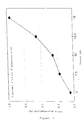
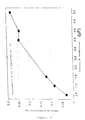
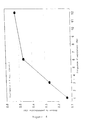
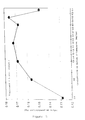
- Example 1 It is shown in Example 1 that the degree of permeabilization increases with the number and pulse frequency, pulse intensity, the capacitor capacitance and the conductivity of the immersion medium.
- the temperature and format of the beet or beet slices play also a role. If we take all these parameters in account it means that the optimal values of a parameter depend on the set value of others settings.
- Example 1 It is further shown in Example 1 that the degree of permeabilization obtained with the treatment CEHP (10 kV, 5 ⁇ F, 20 pulses, 1 Hz, 20 ° C) is equal to the degree that is obtained with a heat treatment at 72 ° C. This means that we have to use a lot less energy and the duration of the process is considerably decreased by treatment CEHP.
- the measurement of the texture shows that the treatment CEHP results in a smoother texture of the product of sugar beet.
- the CEHP process can be carried out at any what a desirable temperature.
- the temperature is chosen in a way that the results in terms of yield and purity are high while at the same time the energy needs are low and the duration treatment is also weak.
- the CEHP process is carried out at the temperature of beets and water prevailing at the time of the sugar extraction campaign.
- temperature can therefore be between 0 ° C or temperature close to which the material does not not freeze and a temperature around 30 ° C.
- Example 2 shows that the CEHP treatment before slicing results in a quantity a little lower sucrose in the extraction fluid after continuous extraction. However, a larger amount of fluid is extracted from the pulp by pressure so that the extractability is equal. A extraction in three steps resulted in extractability higher than the pulp treated with CEHP and a higher great juice recovery. When finely ground slices, it appears that the material treated by CEHP becomes almost completely extractable.
- Example 6 shows that the difference of extractability between sugar beets treated by CEHP and untreated is much more pronounced when the slices have a larger cut.
- Example 7 confirms this fact for a pressing unique. It follows that the CEHP generally leads to improve the extractability.
- the sugar beet processing process described in the invention results in the extraction from sugar beet of at least an equal quantity of sucrose when compared with the process classical extraction, and it is also shown that under certain conditions the amount of sucrose is higher than what is obtained by extraction classic. However the process is much more fast and requires a lot less energy.
- the method of the invention requires a duration of less than 1 to 5 seconds and a supply of energy about 12 kJ / kg. By increasing the frequency of impulses, we get much faster the energy input required and the duration of treatment shortens so. With appropriate equipment, it is even possible to reach 2000 pulses / second.
- the treatment temperature is between 0 and 45 ° C, which requires much less energy input than heating at 75 ° C. Note that heating from 25 to 75 ° C requires about 20 kJ / kg of water.
- the total amount of water can also be much weaker. From the process point of view, one can use the transport water of the sugar beets as the medium in which the treatment is performed CEHP. When after treatment we press directly beets, the level of amount of water in which the sucrose is dissolved. The conductivity of the medium is also important. The conductivity of the medium must be less than that of sugar beet to obtain the electric effect longed for. To achieve this, it must be necessary to dilute the water or add some salts to the water. The purity of the product is higher because the cells are become more permeable without breaking the material cellular. In addition, it is found that after treatment CEHP the residual pulp can be dried much more quickly as the heat-treated pulp.
- the present invention also aims at a process for increasing the rate of dry matter of sugar beet pulp obtained after extraction and / or pressing, characterized in that it includes a beet processing step sugar or pieces of it in the water with electric field pulses.
- the strong pulses of electric field are generated using an ELSTERIL unit (company Herrfurt, Hamburg, Germany).
- a high voltage generator (5-15 kV)
- three capacitors of C 0.5, 1.0 or 3.5 ⁇ F, which by their parallel can be used additively, and a pulse generator for pulses from 1 to 22 Hz.
- Measurements are carried out in cuvettes of Plexiglass in which the electrodes are spaced 2 or 3.8 cm.
- a press is used hydraulic piston type LM (Seifert KG, Rastatt, Germany).
- the beets are washed sugar with tap water and cut into V-shaped slices having a length of 8 to 12 cm, sides of about 5 mm and a thickness of 12 mm.
- the first steps are beets in blocks (3.8 x 10 x 10-15 cm) or in cylinders and are treated with impulses electric and then cut into slices.
- the standard CEHP treatment is 2 kV / cm, 5.0 ⁇ F, 20 pulses.
- the treatment medium has a conductivity 0.75 mS / cm.
- Extraction is carried out in an extraction tank containing up to 15 kg of material.
- the temperature is raised to about 75 ° C and we let the extraction take place for about 70 minutes.
- the temperature is 83 ⁇ 2 ° C.
- the temperature is 45 ° C. The measures are performed on juice that has passed twice through tank.
- Sliced sugar beets are sliced washed and used immediately for extraction, or first of all blocks beetroot by CEHP and then cut into slices.
- 200 g of slices are mixed with 200 ml of water distilled (85 ° C) and maintained at about 85 ° C for 5 minutes after the temperature of the center slices reached 80 ° C.
- the time needed to reaching a center temperature of 80 ° C depends on diameter of the slices. In a typical experience, this time is about 15 minutes.
- We use for the extraction of second stage the fluid collected in this first step. The fluid is preheated. After the fourth extracted, the pulp is extracted once more with the water.
- the third stage extraction is carried out in using the fluid from the second stage, again after the fourth extraction, the pulp is extracted with some water.
- the pulp is pressed at 30 MPa extracted from the three stages and the fluid is stored -30 ° C before analyzing it.
- 600 g of non-beet slices are mixed treated or treated with CEHP with 600 g of water distilled hot at 85 ° C (untreated), to arrive at an extraction temperature of 75 ° C.
- distilled water is added to the 60 ° C, to reach a temperature of extraction of 45 ° C, and the extraction is carried out as for extraction in three stages, but here we only use the first step.
- the pulp is pressed at 30 MPa for 15 minutes. minutes, and dried in a drying apparatus fluidized bed at an air velocity of 1.5 m / s and at a air temperature 70 ° C.
- Ts (%) Dry matter content (g / 100 g) of untreated beet or pressed pulp.
- ° S Sucrose content (g / 100 g) of the untreated beet or pressed pulp.
- Weight (%) Weight of the pulp after comparative pressing with untreated beet.
- W P Weight of the pressed pulp (in% of the untreated beet)
- ° S P Sucrose content (g / 100 g pressed pulp)
- Purity of juice (%) purity (° S / percentage by weight of dry matter) x 100
- ° S Sucrose content in raw juice (g / 100 g)
- ° Brix dry matter in the raw juice (g / 100 g).
- Sugar beet cylinders are prepared (diameter 2 cm and length 10 cm) and place them in the bowl of the electric field generator.
- the degree of permeabilization also increases with the number of pulses. From 1 to 5 pulses the increase is very fast, and above about 20 pulses the effect knows a plateau. ( Figure 2).
- Permeabilization is also influenced by the conductivity of the medium. It is especially between 0.7 and 1.2 ms / cm that the permeabilization must be performed ( Figure 5).
- the degree of permeabilization depends on the temperature. Up to 55 ° C no permeabilization product. Above this temperature, the degree of permeabilization increases. From Figure 6, we see that the degree of permeabilization obtained with the CEHP treatment (10 kV, 5 ⁇ F, 20 pulses of 1 Hz, 20 ° C) is equal to the degree obtained with a heat treatment at 72 ° C.
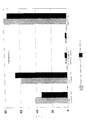
- Example 2 the influence of the CEHP-treated slices on the percentage by weight of dry matter, the purity, the sucrose content (FIG. 10) and the pressability (FIG. 11) is determined.
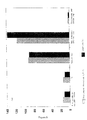
- sucrose extracted is only slightly lower with slices processed by CEHP to what it is with slices processed at the heat (75 ° C) ( Figure 13). However, the ability to pressing is about 22% higher (Table 4).
- the CEHP treated slices (2 or 5 MPa for 5 minutes) are gently pressed three times with intermittent mixing with water (1: 1). 1).
- sucrose is collected two to three times faster than with untreated slices (20 ° C).
- the total amount of juice is only 40% greater than the quantity of starting slices (Table 5). This highlights the economic advantage of the current process.
- the thermally extracted material is conventionally pressurized at 30 MPa for 15 minutes, and dried at a much lower dry substance content. This not only means that the process takes longer, but is also much more expensive from an energy point of view. Three pressing.
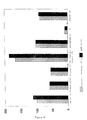
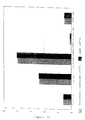
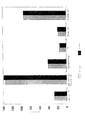
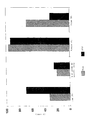
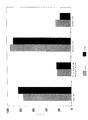
- Figures 16 to 18 and Tables 6 to 8 provide an overview of the effect of different sizes of sliced sugar beet materials on extraction and pressing.
- the pressing is done twice (2 MPa, 5 minutes and 30 MPa, 15 minutes) with intermittent resuspension of the material in a quarter of the volume of water.
- the CEHP treatment of the sugar beet material results in increased recovery of sucrose compared to an untreated material of the same size.
- the effect of the CEHP treatment becomes less pronounced, but the effect is still present and favorable for the CEHP treatment.
- Slices (pressed twice).
- the amount of sucrose extracted for treated beets is higher than it is for the untreated material in all cases.
- the figures are 88% against 42%, for thin slices of 95.2% against 49% and for the crushed material of 98% against 89%.
- juices having a high percentage value by weight of dry matter and a pulp having a small amount of residual sucrose are obtained.
Landscapes
- Chemical & Material Sciences (AREA)
- Life Sciences & Earth Sciences (AREA)
- Biochemistry (AREA)
- Organic Chemistry (AREA)
- Preparation Of Fruits And Vegetables (AREA)
- Saccharide Compounds (AREA)
- Non-Alcoholic Beverages (AREA)
- Seasonings (AREA)
Claims (7)
- Verfahren zur Extraktion von Zucker aus Zuckerrüben oder Stücken von Zuckerrüben, dadurch gekennzeichnet, dassa) man Zuckerrüben oder große Stücke von Zuckerrüben in Wasser mit elektrischen Feldimpulsen behandelt, die aus elektrischen Feldimpulsen von 0,5 bis 40 kV/cm, 0,025 bis 5 µF und 1 bis 2000 Impulsen bestehen, wobei die Zuckerrüben oder die großen Stücke dieser Rüben beim Anlegen eines elektrischen Feldes wenigstens die folgenden Ausmaße haben: 2 x 10 x 10 cm (in der Form eines Blocks) oder 2 x 10 cm (in der Form eines Zylinders),b) man die Zuckerrüben oder die Stücke dieser Rüben bei einer Temperatur zwischen 0 und 45°C extrahiert und/oder presst.
- Verfahren nach Anspruch 1, bei dem man die Zuckerrüben oder die großen Stücke dieser Zuckerrüben vor der Extraktion und/oder dem Pressen in Scheiben zerlegt und/oder zerreibt.
- Verfahren nach Anspruch 1 oder 2, dadurch gekennzeichnet, dass man vor oder nach der CEHP-Behandlung von 0,5 bis 40 kV/cm eine Behandlung mit Impulsen in der Größenordnung von 20 bis 70 kV/cm vornimmt, um Mikroorganismen zu inaktivieren.
- Verfahren nach Anspruch 1, dadurch gekennzeichnet, dass man das mit einem elektrischen Feld behandelte Material mit 2 bis 30 MPa presst.
- Verfahren nach Anspruch 4, dadurch gekennzeichnet, dass das gepresste Materiala) in Wasser resuspendiert wird, undb) erneut bei 20 bis 300 bar gepresst wird, und fakultativc) die Schritte a) und b) wiederholt werden.
- Verfahren nach Anspruch 5, dadurch gekennzeichnet, dass das Resuspendieren im Schritt a) in Wasser mit 1:0,25 (Rübenmaterial:Wasser (v/v)) erfolgt und man das Pressen einmal bei 300 bar für 15 Minuten wiederholt.
- Verfahren nach Anspruch 1, das man beim Transport der Rüben in Werkkanälen oder nach Waschen und/oder Zerkleinern der Rüben realisiert.
Applications Claiming Priority (3)
| Application Number | Priority Date | Filing Date | Title |
|---|---|---|---|
| FR9807368A FR2779741B1 (fr) | 1998-06-11 | 1998-06-11 | Procede de traitement des betteraves sucrieres |
| FR9807368 | 1998-06-11 | ||
| PCT/FR1999/001368 WO1999064634A1 (fr) | 1998-06-11 | 1999-06-09 | Procede de traitement des betteraves sucrieres |
Publications (2)
| Publication Number | Publication Date |
|---|---|
| EP1086253A1 EP1086253A1 (de) | 2001-03-28 |
| EP1086253B1 true EP1086253B1 (de) | 2004-01-28 |
Family
ID=9527273
Family Applications (1)
| Application Number | Title | Priority Date | Filing Date |
|---|---|---|---|
| EP99923708A Expired - Lifetime EP1086253B1 (de) | 1998-06-11 | 1999-06-09 | Verfahren zur behandlung von zuckerrüben |
Country Status (8)
| Country | Link |
|---|---|
| EP (1) | EP1086253B1 (de) |
| AT (1) | ATE258607T1 (de) |
| AU (1) | AU4048099A (de) |
| DE (1) | DE69914480T2 (de) |
| FR (1) | FR2779741B1 (de) |
| HU (1) | HUP0102652A3 (de) |
| PL (1) | PL192311B1 (de) |
| WO (1) | WO1999064634A1 (de) |
Families Citing this family (6)
| Publication number | Priority date | Publication date | Assignee | Title |
|---|---|---|---|---|
| FR2805199B1 (fr) * | 2000-02-22 | 2002-06-21 | Gradient Ass | Procede d'extraction de liquide d'un materiau cellulaire, et dispositifs de mise en oeuvre dudit procede |
| AT410941B (de) | 2001-06-07 | 2003-08-25 | Suedzucker Ag | Verfahren zur herstellung von stärke oder stärkehaltigen produkten aus stärkehaltigen pflanzlichen rohstoffen |
| DE10262073B4 (de) | 2002-12-18 | 2007-12-20 | Südzucker AG Mannheim/Ochsenfurt | Gewinnung von Inhaltsstoffen aus Zichorie |
| DE102004028782B4 (de) * | 2004-06-16 | 2012-03-01 | Südzucker Aktiengesellschaft Mannheim/Ochsenfurt | Extraktion von Inhaltsstoffen aus Rübenschnitzeln |
| EP3783115A1 (de) | 2019-08-23 | 2021-02-24 | Cooperatie Koninklijke Cosun U.A. | Zuckerrübensaftherstellung und -verarbeitung |
| EP4320279A1 (de) * | 2021-04-09 | 2024-02-14 | suiteg GmbH | Verfahren zur behandlung von zuckerrüben |
Family Cites Families (5)
| Publication number | Priority date | Publication date | Assignee | Title |
|---|---|---|---|---|
| SU854984A1 (ru) * | 1979-07-18 | 1981-08-15 | Институт технической теплофизики АН УССР | Способ получени диффузионного сока |
| RU1192370C (en) * | 1984-05-11 | 1993-11-30 | Inst Tekhn Teplofiziki An Ussr | Method of producing diffusive juice |
| SU1521439A1 (ru) * | 1985-12-03 | 1989-11-15 | Институт Прикладной Физики Ан Мсср | Способ переработки растительного сырь |
| CH668984A5 (de) * | 1986-10-10 | 1989-02-15 | Electropore Inc | Verfahren zur gewinnung von zellinhaltsstoffen. |
| UA10293C2 (uk) * | 1994-09-21 | 1996-12-25 | Фірма "Регул" Товариство З Обмеженою Відповідальністю | Спосіб одержання дифузійного соку з цукрових буряків |
-
1998
- 1998-06-11 FR FR9807368A patent/FR2779741B1/fr not_active Expired - Lifetime
-
1999
- 1999-06-09 AU AU40480/99A patent/AU4048099A/en not_active Abandoned
- 1999-06-09 DE DE69914480T patent/DE69914480T2/de not_active Expired - Lifetime
- 1999-06-09 AT AT99923708T patent/ATE258607T1/de active
- 1999-06-09 HU HU0102652A patent/HUP0102652A3/hu unknown
- 1999-06-09 WO PCT/FR1999/001368 patent/WO1999064634A1/fr not_active Ceased
- 1999-06-09 PL PL344677A patent/PL192311B1/pl unknown
- 1999-06-09 EP EP99923708A patent/EP1086253B1/de not_active Expired - Lifetime
Also Published As
| Publication number | Publication date |
|---|---|
| FR2779741A1 (fr) | 1999-12-17 |
| HUP0102652A2 (hu) | 2001-11-28 |
| WO1999064634A1 (fr) | 1999-12-16 |
| FR2779741B1 (fr) | 2000-08-11 |
| AU4048099A (en) | 1999-12-30 |
| DE69914480D1 (de) | 2004-03-04 |
| PL192311B1 (pl) | 2006-09-29 |
| DE69914480T2 (de) | 2004-11-25 |
| ATE258607T1 (de) | 2004-02-15 |
| HUP0102652A3 (en) | 2003-01-28 |
| PL344677A1 (en) | 2001-11-19 |
| EP1086253A1 (de) | 2001-03-28 |
Similar Documents
| Publication | Publication Date | Title |
|---|---|---|
| EP2126142B1 (de) | Verfahren und anlage zur herstellung von fruchtzuckersirup mit hohem fructosegehalt | |
| EP2640482B1 (de) | Verfahren zum extrahieren von zielmolekülen ausgehend von einer pflanzlichen matrix oder teilen davon | |
| FR2682613A1 (fr) | Procede de deshydratation au moins partielle d'une composition aqueuse et dispositifs pour mettre en óoeuvre le procede. | |
| EP1086253B1 (de) | Verfahren zur behandlung von zuckerrüben | |
| AU2017230440B2 (en) | Industrialised production process of total nutrient pure powdered sugar and liquid syrup and equipment | |
| CA1332368C (fr) | Procede d'obtention de boissons alcoolisees a partir d'un jus vegetal | |
| Vorobiev et al. | Pulsed electric field in green processing and preservation of food products | |
| WO1982000569A1 (fr) | Procede d'obtention de jus clairs de vegetaux et de recuperation de constituants valorisables | |
| WO2018015228A1 (fr) | Separation des enzymes issues de trichoderma reesei par filtre presse et filtration tangentielle sur membrane ceramique | |
| FR2575748A1 (fr) | Procede d'extraction du carotene des carottes et concentre de carotene obtenu | |
| FR3076298A1 (fr) | Procede de traitement de fluides par champs electriques pulses et dispositif de mise en oeuvre | |
| CA3137832C (fr) | Compositions a base de seve d'erable, de jus de legumes ou de fruits et leurs procedes de fabrication | |
| EP0545944B1 (de) | Verfahren zur gewinnung von naturtrüben frucht- und gemüsesäften | |
| FR2569720A1 (fr) | Utilisation de derives d'algues marines comme agents de culture, activateurs de croissance, et agents anti-stress, de micro-organismes et champignons, et applications a l'enrobage des semences et aux engrais | |
| EP1257413A1 (de) | Verfahren für die extraktion einer flüssigkeit aus einem zellularen material und vorrichtungen zur durchführung dieses verfahrens | |
| Vorobiev et al. | Principles of physically assisted extractions and applications in the food, beverage and nutraceutical industries | |
| CN112195083A (zh) | 一种苹果梨蒸馏酒的生产方法 | |
| KR101975913B1 (ko) | 감귤 부산물액을 이용한 미생물 셀룰로오스의 제조방법 | |
| FR3148382A1 (fr) | Procédé d’extraction assistée par ultrasons utilisant des sèves de plantes | |
| BE569278A (de) | ||
| KR20140129925A (ko) | 감귤 부산물액을 이용한 미생물 셀룰로오스의 제조방법 | |
| RU2130278C1 (ru) | Способ извлечения полезных компонентов из плодоягодного сырья и устройство для его осуществления | |
| EP0080993A1 (de) | Verfahren zum Ausscheiden auflösbarer Kohlenhydrate aus Pflanzen oder Früchten, insbesondere Zucker aus Zuckerrüben und/oder -rohren, sowie Inulin aus Topinamburen | |
| FR2719784A1 (fr) | Procédé de production d'un extrait concentré liquide de végétaux à partir de végétaux renfermant du mannitol, extrait et mannitol ainsi obtenus. | |
| FR2716081A1 (fr) | Procédé de préparation de jus de fruits aptes à être conservés, dispositif pour mettre en Óoeuvre ledit procédé et jus de fruits de longue conservation. |
Legal Events
| Date | Code | Title | Description |
|---|---|---|---|
| PUAI | Public reference made under article 153(3) epc to a published international application that has entered the european phase |
Free format text: ORIGINAL CODE: 0009012 |
|
| 17P | Request for examination filed |
Effective date: 20001128 |
|
| AK | Designated contracting states |
Kind code of ref document: A1 Designated state(s): AT BE CH CY DE DK ES FI FR GB GR IE IT LI LU MC NL PT SE |
|
| 17Q | First examination report despatched |
Effective date: 20010508 |
|
| RAP1 | Party data changed (applicant data changed or rights of an application transferred) |
Owner name: BEGHIN-SAY S.A. |
|
| RTI1 | Title (correction) |
Free format text: METHOD FOR TREATING SUGAR BEETS |
|
| GRAP | Despatch of communication of intention to grant a patent |
Free format text: ORIGINAL CODE: EPIDOSNIGR1 |
|
| GRAS | Grant fee paid |
Free format text: ORIGINAL CODE: EPIDOSNIGR3 |
|
| GRAA | (expected) grant |
Free format text: ORIGINAL CODE: 0009210 |
|
| AK | Designated contracting states |
Kind code of ref document: B1 Designated state(s): AT BE CH CY DE DK ES FI FR GB GR IE IT LI LU MC NL PT SE |
|
| PG25 | Lapsed in a contracting state [announced via postgrant information from national office to epo] |
Ref country code: NL Free format text: LAPSE BECAUSE OF FAILURE TO SUBMIT A TRANSLATION OF THE DESCRIPTION OR TO PAY THE FEE WITHIN THE PRESCRIBED TIME-LIMIT Effective date: 20040128 Ref country code: IT Free format text: LAPSE BECAUSE OF FAILURE TO SUBMIT A TRANSLATION OF THE DESCRIPTION OR TO PAY THE FEE WITHIN THE PRESCRIBED TIME-LIMIT;WARNING: LAPSES OF ITALIAN PATENTS WITH EFFECTIVE DATE BEFORE 2007 MAY HAVE OCCURRED AT ANY TIME BEFORE 2007. THE CORRECT EFFECTIVE DATE MAY BE DIFFERENT FROM THE ONE RECORDED. Effective date: 20040128 Ref country code: IE Free format text: LAPSE BECAUSE OF FAILURE TO SUBMIT A TRANSLATION OF THE DESCRIPTION OR TO PAY THE FEE WITHIN THE PRESCRIBED TIME-LIMIT Effective date: 20040128 Ref country code: GB Free format text: LAPSE BECAUSE OF FAILURE TO SUBMIT A TRANSLATION OF THE DESCRIPTION OR TO PAY THE FEE WITHIN THE PRESCRIBED TIME-LIMIT Effective date: 20040128 Ref country code: FI Free format text: LAPSE BECAUSE OF FAILURE TO SUBMIT A TRANSLATION OF THE DESCRIPTION OR TO PAY THE FEE WITHIN THE PRESCRIBED TIME-LIMIT Effective date: 20040128 Ref country code: CY Free format text: LAPSE BECAUSE OF FAILURE TO SUBMIT A TRANSLATION OF THE DESCRIPTION OR TO PAY THE FEE WITHIN THE PRESCRIBED TIME-LIMIT Effective date: 20040128 |
|
| REG | Reference to a national code |
Ref country code: GB Ref legal event code: FG4D Free format text: NOT ENGLISH |
|
| REG | Reference to a national code |
Ref country code: CH Ref legal event code: EP |
|
| REG | Reference to a national code |
Ref country code: IE Ref legal event code: FG4D Free format text: FRENCH |
|
| REF | Corresponds to: |
Ref document number: 69914480 Country of ref document: DE Date of ref document: 20040304 Kind code of ref document: P |
|
| PG25 | Lapsed in a contracting state [announced via postgrant information from national office to epo] |
Ref country code: SE Free format text: LAPSE BECAUSE OF FAILURE TO SUBMIT A TRANSLATION OF THE DESCRIPTION OR TO PAY THE FEE WITHIN THE PRESCRIBED TIME-LIMIT Effective date: 20040428 Ref country code: GR Free format text: LAPSE BECAUSE OF FAILURE TO SUBMIT A TRANSLATION OF THE DESCRIPTION OR TO PAY THE FEE WITHIN THE PRESCRIBED TIME-LIMIT Effective date: 20040428 Ref country code: DK Free format text: LAPSE BECAUSE OF FAILURE TO SUBMIT A TRANSLATION OF THE DESCRIPTION OR TO PAY THE FEE WITHIN THE PRESCRIBED TIME-LIMIT Effective date: 20040428 |
|
| PG25 | Lapsed in a contracting state [announced via postgrant information from national office to epo] |
Ref country code: ES Free format text: LAPSE BECAUSE OF FAILURE TO SUBMIT A TRANSLATION OF THE DESCRIPTION OR TO PAY THE FEE WITHIN THE PRESCRIBED TIME-LIMIT Effective date: 20040509 |
|
| PG25 | Lapsed in a contracting state [announced via postgrant information from national office to epo] |
Ref country code: LU Free format text: LAPSE BECAUSE OF NON-PAYMENT OF DUE FEES Effective date: 20040609 |
|
| PG25 | Lapsed in a contracting state [announced via postgrant information from national office to epo] |
Ref country code: MC Free format text: LAPSE BECAUSE OF NON-PAYMENT OF DUE FEES Effective date: 20040630 Ref country code: LI Free format text: LAPSE BECAUSE OF NON-PAYMENT OF DUE FEES Effective date: 20040630 Ref country code: CH Free format text: LAPSE BECAUSE OF NON-PAYMENT OF DUE FEES Effective date: 20040630 |
|
| NLV1 | Nl: lapsed or annulled due to failure to fulfill the requirements of art. 29p and 29m of the patents act | ||
| GBV | Gb: ep patent (uk) treated as always having been void in accordance with gb section 77(7)/1977 [no translation filed] |
Effective date: 20040128 |
|
| REG | Reference to a national code |
Ref country code: IE Ref legal event code: FD4D |
|
| PLBI | Opposition filed |
Free format text: ORIGINAL CODE: 0009260 |
|
| PLBQ | Unpublished change to opponent data |
Free format text: ORIGINAL CODE: EPIDOS OPPO |
|
| PLAX | Notice of opposition and request to file observation + time limit sent |
Free format text: ORIGINAL CODE: EPIDOSNOBS2 |
|
| 26 | Opposition filed |
Opponent name: SUEDZUCKER AKTIENGESELLSCHAFTMANNHEIM/OCHSENFURT Effective date: 20040127 Opponent name: FORSCHUNGSZENTRUM KARLSRUHE GMBH Effective date: 20041026 |
|
| REG | Reference to a national code |
Ref country code: CH Ref legal event code: PL |
|
| PLAX | Notice of opposition and request to file observation + time limit sent |
Free format text: ORIGINAL CODE: EPIDOSNOBS2 |
|
| RAP2 | Party data changed (patent owner data changed or rights of a patent transferred) |
Owner name: TEREOS SA |
|
| RAP2 | Party data changed (patent owner data changed or rights of a patent transferred) |
Owner name: TEREOS |
|
| RAP4 | Party data changed (patent owner data changed or rights of a patent transferred) |
Owner name: TEREOS |
|
| PLBB | Reply of patent proprietor to notice(s) of opposition received |
Free format text: ORIGINAL CODE: EPIDOSNOBS3 |
|
| PLCK | Communication despatched that opposition was rejected |
Free format text: ORIGINAL CODE: EPIDOSNREJ1 |
|
| APBP | Date of receipt of notice of appeal recorded |
Free format text: ORIGINAL CODE: EPIDOSNNOA2O |
|
| APAH | Appeal reference modified |
Free format text: ORIGINAL CODE: EPIDOSCREFNO |
|
| APBQ | Date of receipt of statement of grounds of appeal recorded |
Free format text: ORIGINAL CODE: EPIDOSNNOA3O |
|
| PG25 | Lapsed in a contracting state [announced via postgrant information from national office to epo] |
Ref country code: PT Free format text: LAPSE BECAUSE OF NON-PAYMENT OF DUE FEES Effective date: 20040628 |
|
| APBU | Appeal procedure closed |
Free format text: ORIGINAL CODE: EPIDOSNNOA9O |
|
| PLAB | Opposition data, opponent's data or that of the opponent's representative modified |
Free format text: ORIGINAL CODE: 0009299OPPO |
|
| PLAB | Opposition data, opponent's data or that of the opponent's representative modified |
Free format text: ORIGINAL CODE: 0009299OPPO |
|
| APAN | Information on closure of appeal procedure modified |
Free format text: ORIGINAL CODE: EPIDOSCNOA9O |
|
| PLBN | Opposition rejected |
Free format text: ORIGINAL CODE: 0009273 |
|
| STAA | Information on the status of an ep patent application or granted ep patent |
Free format text: STATUS: OPPOSITION REJECTED |
|
| 27O | Opposition rejected |
Effective date: 20080603 |
|
| APAN | Information on closure of appeal procedure modified |
Free format text: ORIGINAL CODE: EPIDOSCNOA9O |
|
| REG | Reference to a national code |
Ref country code: FR Ref legal event code: PLFP Year of fee payment: 18 |
|
| REG | Reference to a national code |
Ref country code: FR Ref legal event code: PLFP Year of fee payment: 19 |
|
| REG | Reference to a national code |
Ref country code: FR Ref legal event code: PLFP Year of fee payment: 20 |
|
| PGFP | Annual fee paid to national office [announced via postgrant information from national office to epo] |
Ref country code: DE Payment date: 20180522 Year of fee payment: 20 |
|
| PGFP | Annual fee paid to national office [announced via postgrant information from national office to epo] |
Ref country code: FR Payment date: 20180525 Year of fee payment: 20 Ref country code: BE Payment date: 20180525 Year of fee payment: 20 Ref country code: AT Payment date: 20180524 Year of fee payment: 20 |
|
| REG | Reference to a national code |
Ref country code: DE Ref legal event code: R071 Ref document number: 69914480 Country of ref document: DE |
|
| REG | Reference to a national code |
Ref country code: BE Ref legal event code: MK Effective date: 20190609 |
|
| REG | Reference to a national code |
Ref country code: AT Ref legal event code: MK07 Ref document number: 258607 Country of ref document: AT Kind code of ref document: T Effective date: 20190609 |