EP1083666A2 - Automatic receive mode for infrared devices - Google Patents
Automatic receive mode for infrared devices Download PDFInfo
- Publication number
- EP1083666A2 EP1083666A2 EP00306977A EP00306977A EP1083666A2 EP 1083666 A2 EP1083666 A2 EP 1083666A2 EP 00306977 A EP00306977 A EP 00306977A EP 00306977 A EP00306977 A EP 00306977A EP 1083666 A2 EP1083666 A2 EP 1083666A2
- Authority
- EP
- European Patent Office
- Prior art keywords
- receive mode
- mode circuitry
- appliance
- predetermined
- circuitry
- Prior art date
- Legal status (The legal status is an assumption and is not a legal conclusion. Google has not performed a legal analysis and makes no representation as to the accuracy of the status listed.)
- Withdrawn
Links
Images


Classifications
-
- H—ELECTRICITY
- H04—ELECTRIC COMMUNICATION TECHNIQUE
- H04B—TRANSMISSION
- H04B10/00—Transmission systems employing electromagnetic waves other than radio-waves, e.g. infrared, visible or ultraviolet light, or employing corpuscular radiation, e.g. quantum communication
- H04B10/11—Arrangements specific to free-space transmission, i.e. transmission through air or vacuum
- H04B10/114—Indoor or close-range type systems
-
- H—ELECTRICITY
- H04—ELECTRIC COMMUNICATION TECHNIQUE
- H04W—WIRELESS COMMUNICATION NETWORKS
- H04W52/00—Power management, e.g. Transmission Power Control [TPC] or power classes
- H04W52/02—Power saving arrangements
- H04W52/0209—Power saving arrangements in terminal devices
- H04W52/0212—Power saving arrangements in terminal devices managed by the network, e.g. network or access point is leader and terminal is follower
- H04W52/0216—Power saving arrangements in terminal devices managed by the network, e.g. network or access point is leader and terminal is follower using a pre-established activity schedule, e.g. traffic indication frame
-
- Y—GENERAL TAGGING OF NEW TECHNOLOGICAL DEVELOPMENTS; GENERAL TAGGING OF CROSS-SECTIONAL TECHNOLOGIES SPANNING OVER SEVERAL SECTIONS OF THE IPC; TECHNICAL SUBJECTS COVERED BY FORMER USPC CROSS-REFERENCE ART COLLECTIONS [XRACs] AND DIGESTS
- Y02—TECHNOLOGIES OR APPLICATIONS FOR MITIGATION OR ADAPTATION AGAINST CLIMATE CHANGE
- Y02D—CLIMATE CHANGE MITIGATION TECHNOLOGIES IN INFORMATION AND COMMUNICATION TECHNOLOGIES [ICT], I.E. INFORMATION AND COMMUNICATION TECHNOLOGIES AIMING AT THE REDUCTION OF THEIR OWN ENERGY USE
- Y02D30/00—Reducing energy consumption in communication networks
- Y02D30/70—Reducing energy consumption in communication networks in wireless communication networks
Definitions
- the present invention pertains generally to electronic appliances, and more particularly to a method and apparatus for allowing appliances which communicate via infrared technology to automatically enter a receive mode when powered up.
- portable computing appliances means that a user may store and work on data files on a fixed desktop computer at his workstation on site, and take a personal computing appliance such as a portable or palm top computer with him for use off-site. Data is typically transferred between the desktop appliance and the personal computer appliance via a cable or a close range infrared (IR) link.
- IR infrared
- the present invention is a novel automatic receive mode for infrared devices.
- an appliance implemented in accordance with the invention no longer requires a user interface associated with placing the device in a receive mode, thereby reducing or eliminating user interface space and complexity.
- the invention eliminates any user intervention required to place the device into receive mode, thereby simplifying the operation of the device by the user. Because appliances implemented in accordance with the invention automatically enter receive mode upon power up, this both eliminates any receive problems associated with the malfunctioning of a user interface as in prior art appliances, and also allows technical support engineers to run diagnostics on the appliance when it is not working properly if the device is capable of receiving and processing diagnostic commands through this interface.
- the automatic receive mode upon power up provides a simple method for conserving power in battery powered applications.
- the appliance simply remains off unless the user knows a communication is about to be received.
- the other appliance is powered on, automatically enters receive mode for a predetermined period of time, receives the communication if one is received within the predetermined period of time, and then acts on the communication in accordance with the functional purpose of the particular appliance.
- the invention provides a simple method for conserving power in portable batter-powered appliances.
- a battery-powered electronic appliance comprises a communications interface including receive mode circuitry and a battery that supplies power to the receive mode circuitry when the receive mode circuitry is enabled.
- the communication interface Upon power up, the communication interface is initialized and the receive mode circuitry enabled to operate in a receive mode for a predetermined amount of time. A timer times the predetermined amount of time. If the timer expires , the receive mode circuitry is disabled to remove power from the receive mode circuitry, thereby conserving battery power in the device.
- the predetermined enable time expires while the receive mode circuitry is currently receiving input, the predetermined enable time is extended by an extension time and the timer restarted, with this process repeating until the receive mode circuitry is no longer receiving input.
- the receive mode circuitry is re-enabled periodically after a predetermined disable time, and the timing process repeated, causing the receive mode circuitry to be disabled again if data is not received within the predetermined enable time.
- appliances are capable of communicating directly with one another, as illustrated in FIG. 1.
- an appliance scanner 1 is capable of communicating directly with one or more of appliance printer 2, appliance facsimile machine 3, appliance overhead projector 4, appliance storage device 5 (e.g., a document briefcase), appliance whiteboard 6, and/or to another appliance scanner 7.
- Communication links 8 are established between the communicating appliances by way of an automatic receive mode implemented in accordance with the invention.
- Appliance 10 comprises a processor 20, program memory 30, data memory 40, and a communication interface 50.
- Program memory 30 stores initialization routine 32 which is executed by processor 20 upon power up of the appliance 10.
- Initialization routine 32 performs a self-test of the appliance 10 and performs any necessary initialization of memory, interfaces, and appliance components.
- initialization routine 32 initializes the communication interface 50 and then enables its receive mode, which remains enabled for a predetermined amount of time. To enable receive mode, the receive portion 55 of the communications interface 50 must be powered, in the preferred embodiment by a battery power supply 5.
- Battery 5 generally supplies all power to the appliance 10; however, battery 5 is shown in FIG. 2 as powering only the receive circuitry 55 for ease of illustration.
- initialization routine 32 starts up and passes control of the appliance 10 to an operating system 34, which resides in program memory 30 and is executed by processor 20.
- communication interface 50 is initialized to allow appliance 10 to send and/or receive communications from other appliances.
- the receive mode of the appliance 10 is enabled immediately after the communications interface is initialized and for a predetermined period thereafter, as monitored by a timer 25, with optional time extensions. After the predetermined period with optional time extensions has expired, the receive mode of communications interface 50 is disabled in order to conserve power in the appliance 10. This is typically acceptable to the user since the main function of the appliance is not typically to receive information via the IR port, but rather to send information via the IR port. For example, if appliance 10 is an appliance printer, it may normally receive data to be printed via a dedicated parallel print port connected directly to a computer.
- the IR port in such a device is typically used to send the printed information to another appliance such as an appliance whiteboard, a document briefcase, or an appliance fax machine. However, it may also provide functionality to receive input via IR communications interface 50 to allow other appliances such as a palmtop computer to send data to the appliance printer to be printed without requiring a direct-wire connection between the palmtop and appliance printer.
- communication interface 50 establishes communication with other remote appliances over an infrared (IR) communication link 60.
- IR infrared
- the particular technology of the communication link may be any type, including via an analog or digital modem, short-wave radio, an internet link, etc., over which two or more remote appliances can communicate.
- processor 10 interprets the received appliance signals over communication link 60 and executes appliance functionality process 36 which processes the signals according to the function of the particular appliance 10. For example, if the appliance 10 is an appliance printer, appliance functionality process 36 processes the data to be printed and causes it to be printed.
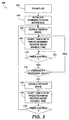
- FIG. 3 is an operational flowchart of a method 100 implemented in accordance with the invention.
- Method 100 begins upon power up 102 of appliance 10.
- the communications interface 50 is initialized 104 by the initialization routine 32.
- Initialization routine 32 then enables 106 the receive mode of the communications interface 50.
- a timer 25 initialized with a predetermined time period is started 108. When the timer 25 expires 110 and communications interface 50 is not currently receiving data, as determined in step 112, the receive mode of communications interface 50 is disabled 114 in order to conserve appliance power.
- timer 25 expires 110 and communications interface 50 is currently receiving data, as determined in step 112, the timer 25 is reset to a predetermined extension period of time, and steps 108 through 116 are repeated until a condition in which the timer 25 expires, as determined in step 110 and in which the appliance is not currently receiving data, as determined in step 112, exist.
- the appliance is placed in receive mode for a predetermined portion of a predetermined interval of time.
- FIG. 3 illustrates the method of this embodiment with additional steps 116 and 118.
- a timer 25 is initialized with a predetermined interval of time during which the receive mode is to be disabled and started 116.
- the receive mode of communications interface 50 is enabled 106, and the method continues through steps 106 to 118 as described above.
- the timer used to monitor the enabled portion versus the disabled portion of the predetermined receive mode period may be the same implemented with a single timer or with multiple timers, depending on the complexity of the algorithm.
- the predetermined amount of time in step 108 may be different (e.g., a smaller amount) than the predetermined amount of time that the timer is initialized to during the first pass of the method 100.
- the above described invention provides several advantages over the prior art. By causing an appliance to automatically enter receive mode for a predetermined amount of time upon power up of the device, the additional cost and unnecessary complexity from both the manufacturer's standpoint and the user's standpoint is eliminated. Additionally, with an automatic receive mode, the appliance is no longer susceptible to malfunctions of the receive mode user interface, thereby increasing the ability for technical support engineers to utilized the IR communications interface of the appliance to run diagnostics to debug any problems that may exist in any other portion of the appliance. Finally, the invention provides a method for conserving power in battery powered appliances.
Landscapes
- Engineering & Computer Science (AREA)
- Computer Networks & Wireless Communication (AREA)
- Signal Processing (AREA)
- Physics & Mathematics (AREA)
- Electromagnetism (AREA)
- Power Sources (AREA)
- Selective Calling Equipment (AREA)
Abstract
Description
Claims (9)
- A method for conserving power in a battery-powered electronic appliance (1, 2, 3, 4, 5, 6, 7), said appliance (1, 2, 3, 4, 5, 6, 7) comprising a communications interface (50) comprising receive mode circuitry (55) and a battery (5) that supplies power to said receive mode circuitry (55) when said receive mode circuitry (55) is enabled, said method comprising the steps of:initializing (104) said communication interface (50);enabling (106) said receive mode circuitry (55) to operate in a receive mode;timing (108) a predetermined enable time;disabling (114) said receive mode circuitry (55) when said predetermined enable time expires.
- A method in accordance with claim 1, wherein:said enabling step (106) comprises supplying said battery power (5) to said receive mode circuitry (55).
- A method in accordance with claim 1 or 2, wherein:said disabling step (114) comprises not supplying said battery power (5) to said receive mode circuitry (55).
- A method in accordance with claim 1, 2 or 3, wherein:if said predetermined enable time expires and said receive mode circuitry is currently receiving input (112), timing (108) a predetermined enable extension time; andwhen said predetermined enable extension time expires (112), repeating said timing a predetermined enable extension time until said receive mode circuitry is no longer receiving input.
- A method in accordance with claim 1, 2, 3, or 4, comprising:after said disabling step (114), timing (116) a predetermined disable time; andrepeating said enabling step through said repeating step.
- A method in accordance with claim 5, wherein:if said predetermined enable time expires and said receive mode circuitry is currently receiving input (112), timing a predetermined enable extension time; andwhen said predetermined enable extension time expires, repeating said timing a predetermined enable extension time until said receive mode circuitry is no longer receiving input.
- An electronic appliance (1, 2, 3, 4, 5, 6, 7) that is powered by a battery (5), comprising:a communications interface (50) comprising receive mode circuitry (55) that allows said appliance to receive input, said receive mode circuitry (55) receiving power from said battery (5) when said receive mode circuitry (55) is enabled;a program memory (30);an automatic receive mode process (36), stored in said program memory (30), which enables said receive mode circuitry (55) to operate in said receive mode, times a predetermined receive mode enable time, and disables said receive mode circuitry when said predetermined receive mode enable time expires; anda processor (20) which executes said automatic receive mode process (36).
- An electronic appliance in accordance with claim 7, wherein:said automatic receive mode process (36) is executed upon power up of said appliance (1, 2, 3, 4, 5, 6, 7).
- An electronic appliance in accordance with claim 7 or 8, comprising:a timer (25) which times said receive mode enable time and alerts said processor (20) when said receive mode enable time expires.
Applications Claiming Priority (2)
| Application Number | Priority Date | Filing Date | Title |
|---|---|---|---|
| US09/392,424 US6668329B1 (en) | 1999-09-09 | 1999-09-09 | System for enabling a receiver for only a fix amount of time and disabling the receiver thereafter |
| US392424 | 1999-09-09 |
Publications (2)
| Publication Number | Publication Date |
|---|---|
| EP1083666A2 true EP1083666A2 (en) | 2001-03-14 |
| EP1083666A3 EP1083666A3 (en) | 2003-06-04 |
Family
ID=23550537
Family Applications (1)
| Application Number | Title | Priority Date | Filing Date |
|---|---|---|---|
| EP00306977A Withdrawn EP1083666A3 (en) | 1999-09-09 | 2000-08-15 | Automatic receive mode for infrared devices |
Country Status (5)
| Country | Link |
|---|---|
| US (1) | US6668329B1 (en) |
| EP (1) | EP1083666A3 (en) |
| JP (1) | JP4510255B2 (en) |
| SG (1) | SG91863A1 (en) |
| TW (1) | TW504908B (en) |
Cited By (1)
| Publication number | Priority date | Publication date | Assignee | Title |
|---|---|---|---|---|
| GB2398686A (en) * | 2003-01-10 | 2004-08-25 | Agilent Technologies Inc | Power saving during loss of signal (LOS) condition |
Families Citing this family (9)
| Publication number | Priority date | Publication date | Assignee | Title |
|---|---|---|---|---|
| KR100353460B1 (en) | 1999-12-29 | 2002-09-19 | 삼성전자 주식회사 | Method for controlling power in wireless telephone set |
| US6950645B1 (en) * | 2000-09-28 | 2005-09-27 | Palmsource, Inc. | Power-conserving intuitive device discovery technique in a bluetooth environment |
| US20030039360A1 (en) * | 2001-08-21 | 2003-02-27 | Younis Saed G. | Method and system for restricting mobility using unique encrypted chargers |
| MXPA05009774A (en) | 2003-03-13 | 2006-03-08 | Great Stuff Inc | Remote control for hose operation. |
| TW200848347A (en) * | 2007-02-23 | 2008-12-16 | Great Stuff Inc | Remote control for valve and hose reel system |
| TWI448111B (en) * | 2008-03-18 | 2014-08-01 | Icm Inc | Automobile detection and control integration device and method thereof |
| CN102089730A (en) * | 2008-07-08 | 2011-06-08 | Nec显示器解决方案株式会社 | Terminal device and power saving control method |
| JP5821216B2 (en) * | 2011-03-01 | 2015-11-24 | ソニー株式会社 | Information processing apparatus, power control method for information processing apparatus, and program |
| US9819560B2 (en) * | 2014-12-24 | 2017-11-14 | Mediatek Inc. | Dynamic data distribution method in private network and associated electronic device |
Family Cites Families (18)
| Publication number | Priority date | Publication date | Assignee | Title |
|---|---|---|---|---|
| US4449248A (en) | 1982-02-01 | 1984-05-15 | General Electric Company | Battery saving radio circuit and system |
| JPS58188943A (en) | 1982-04-14 | 1983-11-04 | Nec Corp | Radio selective calling receiver |
| US5940771A (en) * | 1991-05-13 | 1999-08-17 | Norand Corporation | Network supporting roaming, sleeping terminals |
| GB2265232A (en) | 1992-05-12 | 1993-09-22 | John Roger Clarke | Power saving unit |
| US5440559A (en) * | 1993-11-10 | 1995-08-08 | Seiko Communications Holding N.V. | Portable wireless communication device |
| US5481732A (en) * | 1993-12-14 | 1996-01-02 | Shahbazi; Horyeh D. | CRT monitor power control unit |
| CA2184286C (en) | 1994-03-04 | 2000-06-06 | Ronald L. Bane | Remote meter reading power reduction method |
| GB2290399B (en) | 1994-06-11 | 1997-10-22 | Motorola Israel Ltd | Method of operation of a radio system |
| DE19502148C2 (en) | 1995-01-25 | 2003-08-28 | Grohe Armaturen Friedrich | Control for a sanitary fitting |
| JPH09171422A (en) * | 1995-12-20 | 1997-06-30 | Fujitsu Ltd | Information processing device |
| US5923443A (en) * | 1996-01-16 | 1999-07-13 | Nokia Mobile Phones Limited | Infrared communication port fax software legacy flow control emulation |
| USD382297S (en) * | 1996-02-28 | 1997-08-12 | Hewlett-Packard Company | Infrared communication port for a portable inkjet printer |
| JP3780519B2 (en) | 1997-05-16 | 2006-05-31 | ソニー株式会社 | Remote control light receiving circuit |
| US6097933A (en) | 1997-12-04 | 2000-08-01 | Glenayre Electronics, Inc. | Method and apparatus for conserving power in a pager |
| JP3715772B2 (en) * | 1998-02-04 | 2005-11-16 | キヤノン株式会社 | Host computer, data processing method, and computer-readable storage medium |
| JP3578310B2 (en) * | 1998-02-20 | 2004-10-20 | セイコーインスツルメンツ株式会社 | Portable information equipment |
| US6144840A (en) * | 1998-04-13 | 2000-11-07 | Advanced Micro Devices, Inc. | Wireless telephone ring detection method for extended battery life |
| US6040572A (en) * | 1998-05-21 | 2000-03-21 | Hewlett-Packard Company | Notebook styled scanner |
-
1999
- 1999-09-09 US US09/392,424 patent/US6668329B1/en not_active Expired - Lifetime
-
2000
- 2000-04-07 TW TW089106441A patent/TW504908B/en not_active IP Right Cessation
- 2000-04-13 SG SG200002118A patent/SG91863A1/en unknown
- 2000-08-15 EP EP00306977A patent/EP1083666A3/en not_active Withdrawn
- 2000-09-05 JP JP2000268130A patent/JP4510255B2/en not_active Expired - Fee Related
Cited By (2)
| Publication number | Priority date | Publication date | Assignee | Title |
|---|---|---|---|---|
| GB2398686A (en) * | 2003-01-10 | 2004-08-25 | Agilent Technologies Inc | Power saving during loss of signal (LOS) condition |
| GB2398686B (en) * | 2003-01-10 | 2007-04-18 | Agilent Technologies Inc | Loss of signal detection and programmable behaviour after error detection |
Also Published As
| Publication number | Publication date |
|---|---|
| JP2001092566A (en) | 2001-04-06 |
| US6668329B1 (en) | 2003-12-23 |
| TW504908B (en) | 2002-10-01 |
| SG91863A1 (en) | 2002-10-15 |
| EP1083666A3 (en) | 2003-06-04 |
| JP4510255B2 (en) | 2010-07-21 |
Similar Documents
| Publication | Publication Date | Title |
|---|---|---|
| US6457134B1 (en) | Portable computer with differentiated time-out feature | |
| US5410713A (en) | Power-management system for a computer | |
| US9618992B2 (en) | Information processing apparatus and control method therefor | |
| US6668329B1 (en) | System for enabling a receiver for only a fix amount of time and disabling the receiver thereafter | |
| JP2002116905A (en) | Information processor | |
| JP2000284867A (en) | Low power information system, low power peripheral device and low power IrDAControl dongle | |
| WO2002022022A1 (en) | Portable ultrasound system with battery backup for efficient shutdown and restart | |
| JP2004508125A (en) | Portable ultrasound system with effective shutdown and startup functions | |
| US20100185884A1 (en) | Standby power saving system and computer power-on and power-off method thereof | |
| US7403232B1 (en) | Intelligent power management system | |
| KR100448274B1 (en) | A power supply control device for cutting off stand-by electric power and for saving electric power, a control method thereof and a power saving system | |
| US7315954B2 (en) | Hardware switching apparatus for soft power-down and remote power-up | |
| US6687830B2 (en) | Energy-saving control interface and method for power-on identification | |
| CN109688393B (en) | Screen projection control method and first electronic device | |
| JPH08297622A (en) | Communication system of information portable terminal and used terminal | |
| JP3679513B2 (en) | camera | |
| JP2997584B2 (en) | Power control device | |
| JP2965643B2 (en) | Connection control mechanism for extension unit | |
| JP2004130561A (en) | Image processing device | |
| US7337015B2 (en) | Method and apparatus for controlling digital electronic products | |
| JP3466240B2 (en) | Power control circuit | |
| JPH04363712A (en) | Portable computer system | |
| KR101972917B1 (en) | A power saving method of a computer system by automatically controlling registry setting values according to the idle resource | |
| JP2654400B2 (en) | Information processing device | |
| JP3618899B2 (en) | Facsimile apparatus and method for controlling the apparatus |
Legal Events
| Date | Code | Title | Description |
|---|---|---|---|
| PUAI | Public reference made under article 153(3) epc to a published international application that has entered the european phase |
Free format text: ORIGINAL CODE: 0009012 |
|
| AK | Designated contracting states |
Kind code of ref document: A2 Designated state(s): AT BE CH CY DE DK ES FI FR GB GR IE IT LI LU MC NL PT SE |
|
| AX | Request for extension of the european patent |
Free format text: AL;LT;LV;MK;RO;SI |
|
| RAP1 | Party data changed (applicant data changed or rights of an application transferred) |
Owner name: HEWLETT-PACKARD COMPANY, A DELAWARE CORPORATION |
|
| PUAL | Search report despatched |
Free format text: ORIGINAL CODE: 0009013 |
|
| AK | Designated contracting states |
Designated state(s): AT BE CH CY DE DK ES FI FR GB GR IE IT LI LU MC NL PT SE |
|
| AX | Request for extension of the european patent |
Extension state: AL LT LV MK RO SI |
|
| 17P | Request for examination filed |
Effective date: 20030804 |
|
| 17Q | First examination report despatched |
Effective date: 20030929 |
|
| AKX | Designation fees paid |
Designated state(s): DE FR GB |
|
| STAA | Information on the status of an ep patent application or granted ep patent |
Free format text: STATUS: THE APPLICATION HAS BEEN WITHDRAWN |
|
| 18W | Application withdrawn |
Effective date: 20041228 |