EP1076094A2 - Plasmid capable of autonomous replication in coryneform bacteria - Google Patents
Plasmid capable of autonomous replication in coryneform bacteria Download PDFInfo
- Publication number
- EP1076094A2 EP1076094A2 EP00117225A EP00117225A EP1076094A2 EP 1076094 A2 EP1076094 A2 EP 1076094A2 EP 00117225 A EP00117225 A EP 00117225A EP 00117225 A EP00117225 A EP 00117225A EP 1076094 A2 EP1076094 A2 EP 1076094A2
- Authority
- EP
- European Patent Office
- Prior art keywords
- plasmid
- ferm
- seq
- pym2
- amino acid
- Prior art date
- Legal status (The legal status is an assumption and is not a legal conclusion. Google has not performed a legal analysis and makes no representation as to the accuracy of the status listed.)
- Withdrawn
Links
Images



Classifications
-
- C—CHEMISTRY; METALLURGY
- C12—BIOCHEMISTRY; BEER; SPIRITS; WINE; VINEGAR; MICROBIOLOGY; ENZYMOLOGY; MUTATION OR GENETIC ENGINEERING
- C12N—MICROORGANISMS OR ENZYMES; COMPOSITIONS THEREOF; PROPAGATING, PRESERVING, OR MAINTAINING MICROORGANISMS; MUTATION OR GENETIC ENGINEERING; CULTURE MEDIA
- C12N15/00—Mutation or genetic engineering; DNA or RNA concerning genetic engineering, vectors, e.g. plasmids, or their isolation, preparation or purification; Use of hosts therefor
- C12N15/09—Recombinant DNA-technology
- C12N15/63—Introduction of foreign genetic material using vectors; Vectors; Use of hosts therefor; Regulation of expression
- C12N15/74—Vectors or expression systems specially adapted for prokaryotic hosts other than E. coli, e.g. Lactobacillus, Micromonospora
- C12N15/77—Vectors or expression systems specially adapted for prokaryotic hosts other than E. coli, e.g. Lactobacillus, Micromonospora for Corynebacterium; for Brevibacterium
Definitions
- the present invention relates to a novel plasmid derived from Corynebacterium thermoaminogenes .
- the plasmid of the present invention can be utilized for improving of coryneform bacteria, which are used as bacteria for producing useful substances such as L-amino acids.
- Amino acids including L-glutamic acid and L-lysine are produced by fermentative methods using the so-called coryneform bacteria, which generally belong to the genus Brevibacterium, Corynebacterium or Microbacterium , or variant strains thereof (Amino Acid Fermentation, Gakkai Shuppan Center, pp.195-215, 1986).
- Corynebacterium thermoaminogenes has been isolated as a coryneform bacterium that can grow in a high temperature region (Japanese Patent Application Laid-open (Kokai) No. 63-240779). Whereas growth of Corynebacterium glutamicum is markedly suppressed at 40°C, Corynebacterium thermoaminogenes can grow at a temperature of about 40°C or higher, and is considered to be suitable for high temperature fermentation.
- plasmids derived from coryneform bacteria are pAM330 from Brevibacterium lactofermentum ATCC13869 (Japanese Patent Application Laid-open (Kokai) No. 58-67669), pBL1 from Brevibacterium lactofermentum ATCC21798 (Santamaria. R. et al., J. Gen. Microbiol., 130, pp.2237-2246, 1984), pHM1519 from Corynebacterium glutamicum ATCC13058 (Japanese Patent Application Laid-open (Kokai) No.
- An object of the present invention is to provide a plasmid useful for improving of the coryneform bacterium that can grow at an elevated temperature, Corynebacterium thermoaminogenes .
- the inventors of the present invention found that Corynebacterium thermoaminogenes AJ12340 (FERM BP-1539), AJ12308 (FERM BP-1540), AJ12309 (FERM BP-1541) and AJ12310 (FERM BP-1542) each harbored a cryptic plasmid proper to each strain, and successfully isolated and identified each plasmid. Thus, they accomplished the present invention.
- the present invention provides a plasmid isolable from Corynebacterium thermoaminogenes , which comprises a gene ( rep gene) coding for a Rep protein having the amino acid sequence shown in SEQ ID NO: 2 or an amino acid sequence having homology of 90% or more to the foregoing amino acid sequence, and has a size of about 4.4 kb or about 6 kb, or a derivative thereof.
- Examples of the aforementioned plasmid include a plasmid isolable from Corynebacterium thermoaminogenes AJ12340 (FERM BP-1539), AJ12308 (FERM BP-1540) or AJ12310 (FERM BP-1542), which has a size of about 4.4 kb and is represented by the restriction map shown in Fig. 1, and a plasmid isolable from Corynebacterium thermoaminogenes AJ12309 (FERM BP-1541), which has a size of about 6 kb and is represented by the restriction map shown in Fig. 2.
- plasmid which comprises a gene coding for a Rep protein having the amino acid sequence shown in SEQ ID NO: 2, 4 or 6, and a plasmid which comprises a gene coding for a Rep protein having the amino acid sequence shown in SEQ ID NO: 8.
- the plasmid of the present invention can be isolated form Corynebacterium thermoaminogenes AJ12340 (FERM BP-1539), AJ12308 (FERM BP-1540), AJ12309 (FERM BP-1541) or AJ12310 (FERM BP-1542) according to a usual method for preparing a plasmid such as the alkali method (Text for Bioengineering Experiments, Edited by the Society for Bioscience and Bioengineering, Japan, p.105, Baifukan, 1992).
- FERM BP-1539 its original deposition, which was deposited at the National Institute of Bioscience and Human-Technology, Agency of Industrial Science and Technology (postal code 305-8566, 1-3 Higashi 1-chome, Tsukuba-shi, Ibaraki-ken, Japan) on March 13, 1987 and given an accession number of FERM P-9277, was transferred to an international deposition under the provisions of the Budapest Treaty on October 27, 1987 and has been deposited at the same depository.
- FERM BP-1540, FERM BP-1541 and FERM BP-1542 their original depositions, which were deposited at the aforementioned depository on March 10, 1987 and given accession numbers of FERM P-9244, FERM P-9245 and FERM P-9246, were transferred to international depositions under the provisions of the Budapest Treaty on October 27, 1987 and have been deposited at the same depository.
- the inventors of the present invention isolated and identified plasmids each proper to each of the aforementioned Corynebacterium thermoaminogenes AJ12308 (FERM BP-1540), AJ12310 (FERM BP-1542), AJ12340 (FERM BP-1539) and AJ12309 (FERM BP-1541) from them, and designated as pYM1, pYM2, pYM3 and pYM4 in that order.
- These plasmids are plasmids that exist as double-stranded circular DNA in a cell of Corynebacterium thermoaminogenes .
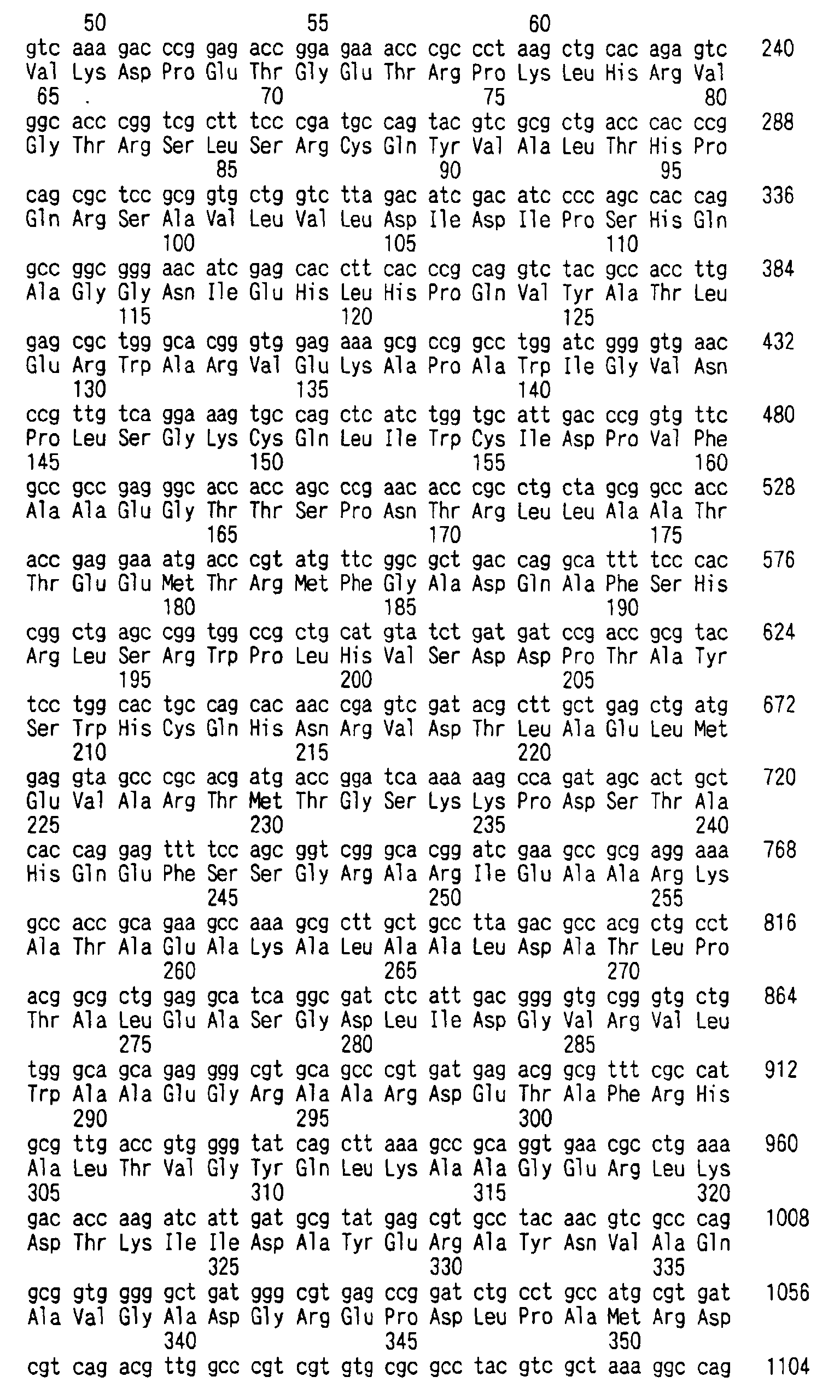
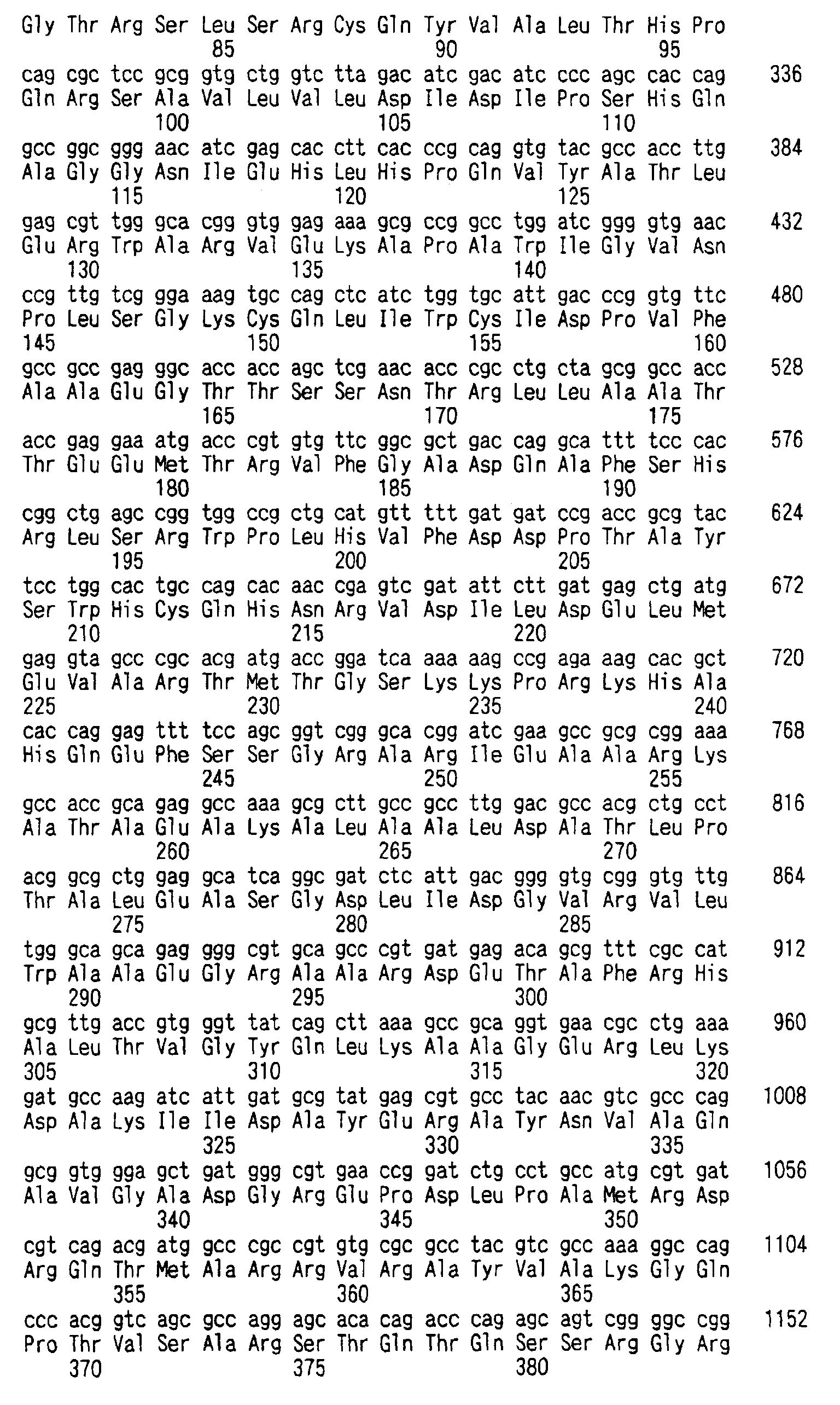
- the nucleotide sequence of the rep gene contained in pYM1 is shown in SEQ ID NO: 1
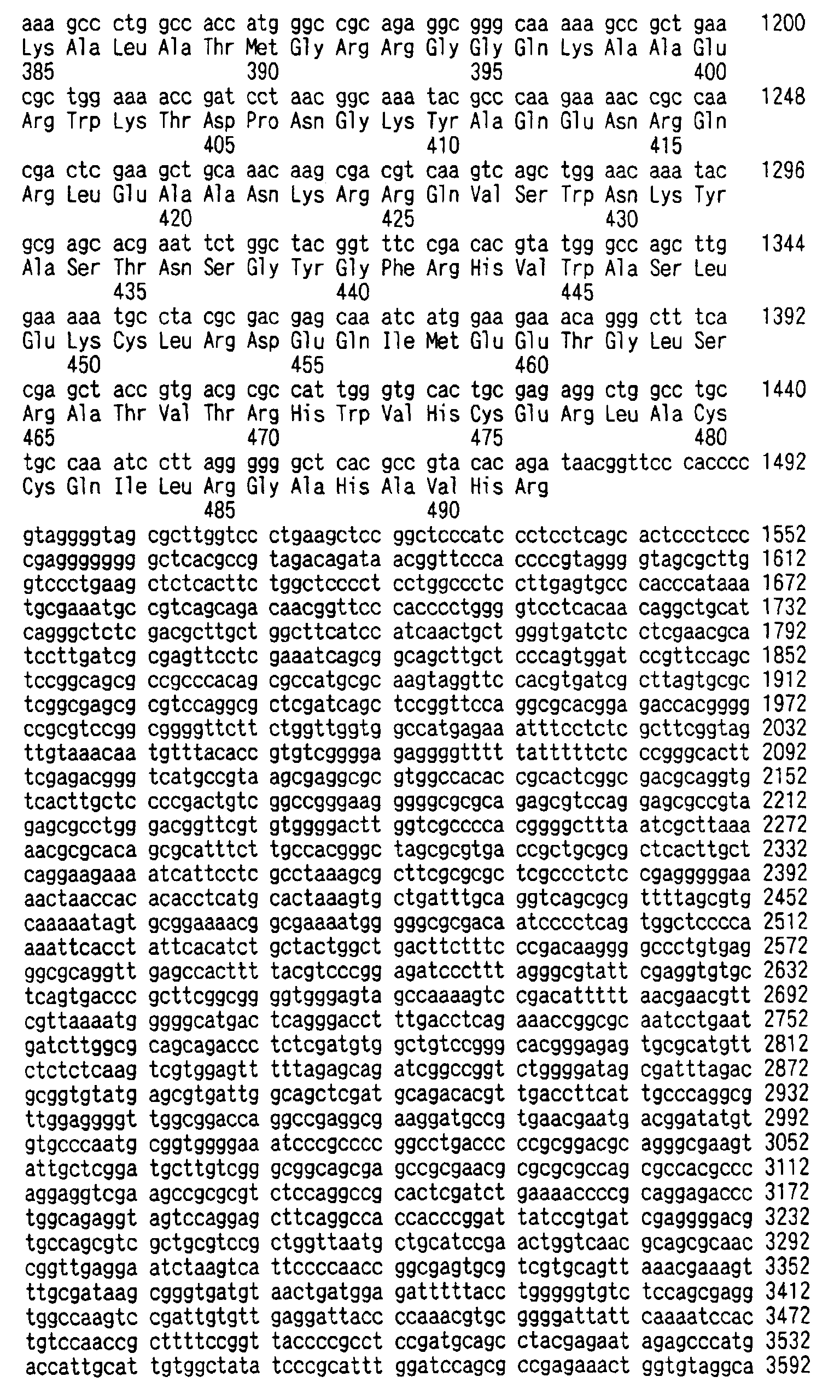
- the nucleotide sequence of the rep gene contained in pYM2 is shown in SEQ ID NO: 3
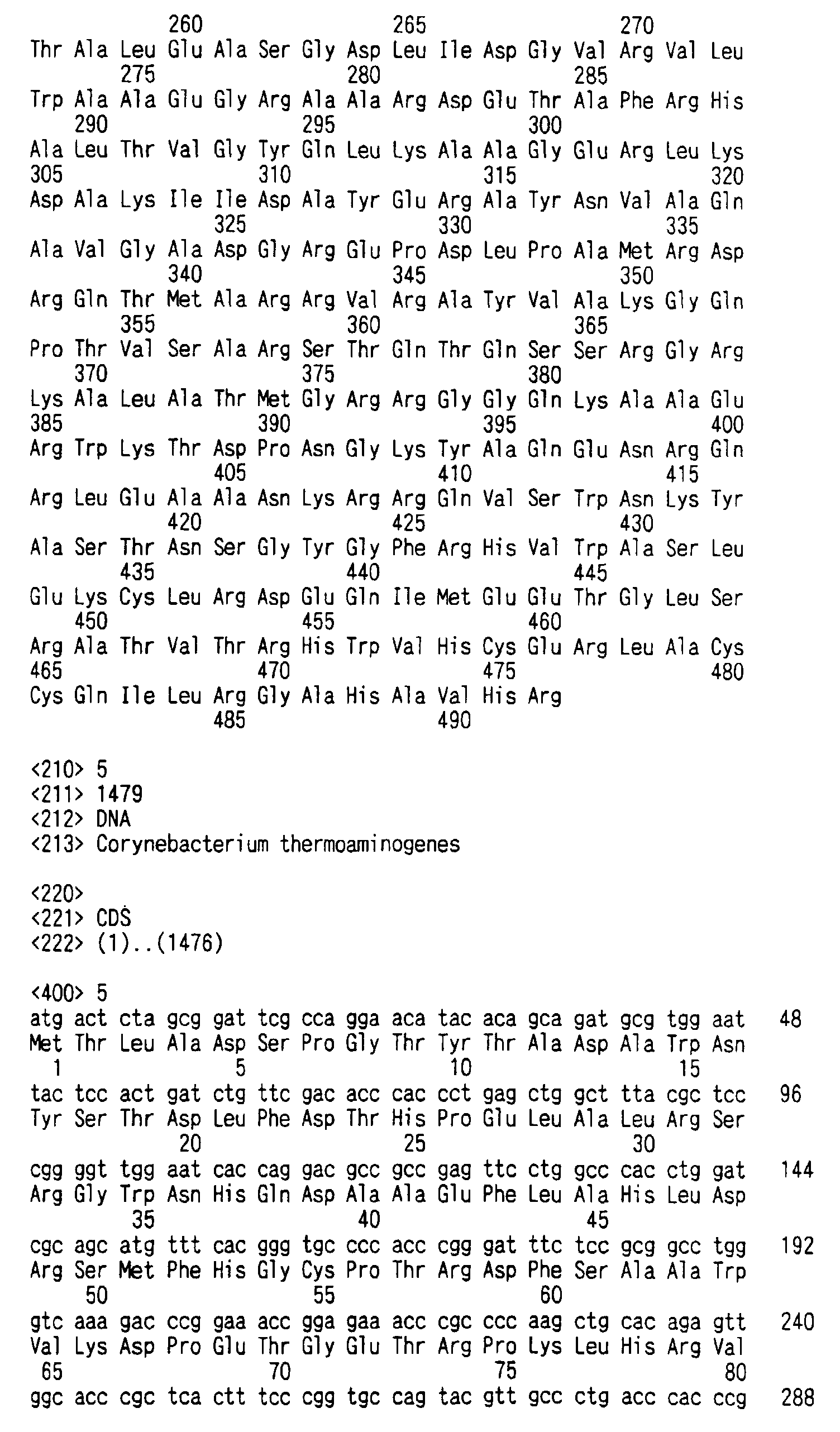
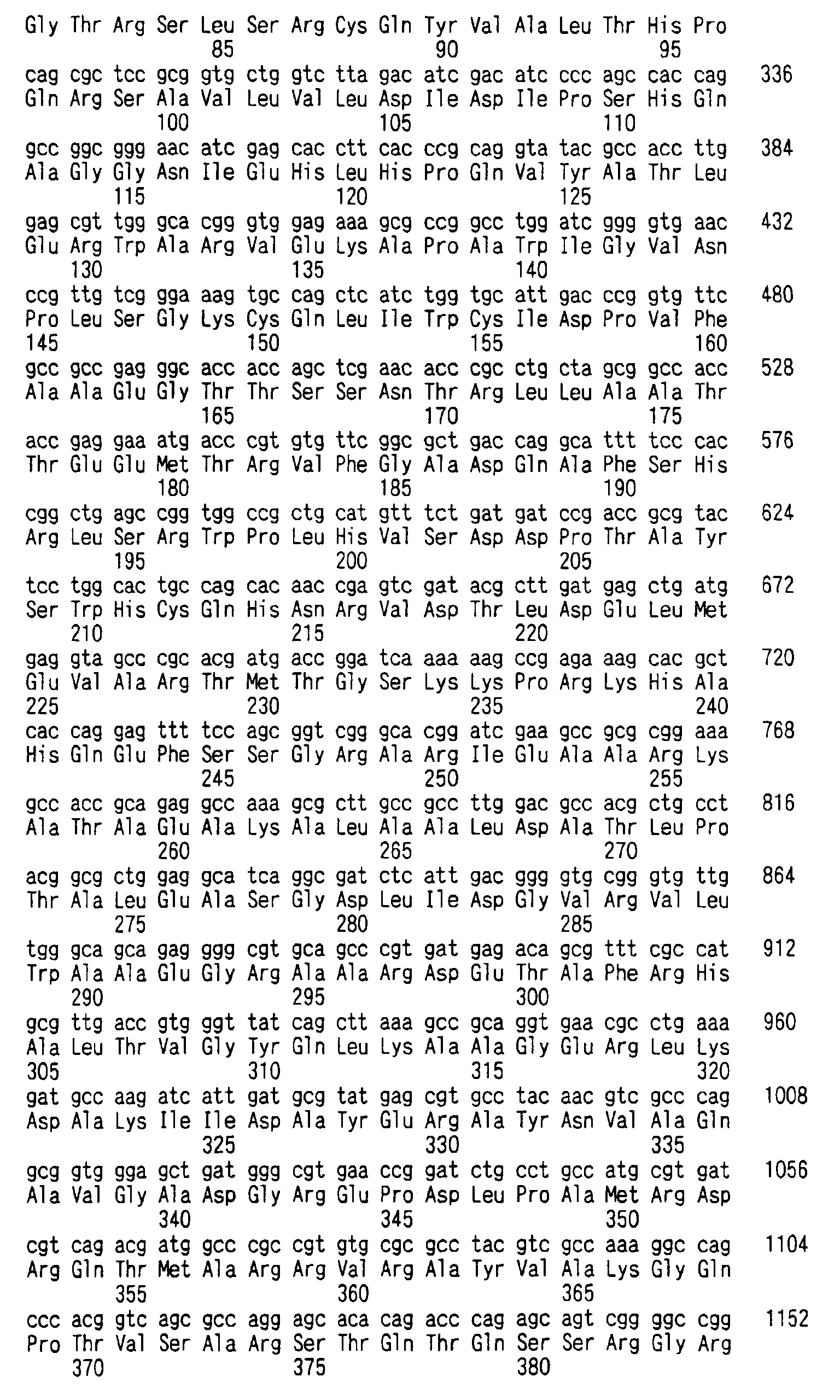
- the nucleotide sequence of the rep gene contained in pYM3 is shown in SEQ ID NO: 5
- the nucleotide sequence of the rep gene contained in pYM4 is shown in SEQ ID NO: 7.
- the amino acid sequences that can be encoded by the rep genes contained in these plasmids are shown in SEQ ID NOS: 2, 4, 6 and 8.
- pYM1, pYM2 and pYM3 each have a size of about 4.4 kb.
- pYM4 has a size of about 6 kb.
- pYM1, pYM2, and pYM3 contained 4368 bp, 4369 bp and 4369 bp, respectively, and they had substantially the same structure and showed homology of 99.9% to one another on the nucleotide sequence level.
- pYM4 contained 5967 bp and it showed extremely high homology to pYM1, pYM2 and pYM3 for the region of about 4.4 kb except for the region of about 1.6 kb, while it showed homology of about 81% to them as a whole.
- the plasmids contain respective rep genes which show high homology to one another. Homology was compared for the amino acid sequences of the Rep proteins encoded by the rep genes (SEQ ID NOS: 2, 4, 6 and 8) and the amino acid sequences of the Rep proteins encoded by rep genes of known plasmids derived from coryneform bacteria. Homology of 99% or more was observed among pYM1, pYM2 and pYM3, and homology of 81.91% was observed between pYM2 and pYM4. On the other hand, they showed no homology to the known plasmid pAM330 of a coryneform bacterium, and they showed homology of 80% or less to pGA1 and pCG1. The results are shown in Table 3. Thus, the plasmid of the present invention and the known plasmids of coryneform bacteria are distinguishable based on the homology of the Rep protein.
- the plasmid of the present invention can sufficiently replicate in cells of coryneform bacteria including Corynebacterium thermoaminogenes , genetic information of a foreign gene can be expressed in a host microorganism by inserting the foreign gene at any site of the plasmid or the derivative thereof, and transforming the host microorganism with the obtained recombinant plasmid.
- coryneform bacteria examples include coryneform bacteria.
- a derivative of the plasmid of the present invention means a plasmid composed of a part of the plasmid of the present invention, or a part of the plasmid of the present invention or the plasmid of present invention and another DNA sequence.
- the part means a part containing a region essential for the autonomous replication of the plasmid.
- the plasmid of the present invention can replicate in a host microorganism even if a region other than the region essential for the autonomous replication of the plasmid (replication control region), that is, the region other than the region containing the replication origin and genes necessary for the replication, is deleted.
- a plasmid including such a deletion has a smaller size.
- a plasmid having such a deletion is preferred for use as a vector.
- a marker gene such as a drug resistance gene is inserted into the plasmid of the present invention or a part thereof, it becomes easy to detect transformants thanks to phenotype of the marker gene in the transformants.
- Examples of such a marker gene that can be used in the host include a chloramphenicol resistance gene, kanamycin resistance gene, streptomycin resistance gene, tetracycline resistence gene, trimethoprim resistance gene, erythromycin resistance gene and so forth.
- the plasmid of the present invention is made as a shuttle vector autonomously replicable in coryneform bacteria and other bacteria such as Escherichia coli by ligating the plasmid of the present invention or a part thereof with a plasmid autonomously replicable in the other bacteria such as Escherichia coli or a part thereof containing a replication control region thereof, manipulations such as preparation of plasmid and preparation of recombinant plasmid containing a target gene can be performed using Escherichia coli .
- Examples of the plasmid autonomously replicable i n Escherichia coli include, for example, pUC19, pUC18, pBR322, pHSG299, pHSG298, pHSG399, pHSG398, RSF1010, pMW119, pMW118, pMW219, pMW218 and so forth.
- pYM1, pYM2, pYM3 and pYM4 themselves are characterized by the restriction maps shown in Figs. 1 and 2, the plasmid of present invention is not necessarily required to have these restriction maps, and any restriction site may be deleted so long as such deletion does not affect the autonomous replication ability. Further, the plasmid of the present invention may contain a restriction site that is not contained in pYM1, pYM2, pYM3 and pYM4.
- the derivative of the plasmid as described above can be constructed in the same manner as the conventionally known construction of cloning vectors, expression vectors and so forth. In order to construct the derivative, it is preferable to determine the nucleotide sequences of pYM1, pYM2, pYM3 and pYM4. The nucleotide sequence can be determined by known methods such as the dideoxy method.
- the plasmid and a source of the foreign gene such as genome DNA can be partially or fully digested with one or more restriction enzymes that provide the same cohesive ends for the both, e.g., the same restriction enzyme, and they can be ligated under a suitable condition. They may also be ligated at blunt ends.
- a novel plasmid derived from Corynebacterium thermoaminogenes is provided as described above.
- Corynebacterium thermoaminogenes AJ12340 (FERM BP-1539), AJ12308 (FERM BP-1540), AJ12309 (FERM BP-1541) and AJ12310 (FERM BP-1542) were cultured for 12 hours in CM2B liquid medium (Bacto-trypton (Difco): 1%, Bacto-yeast-extract (Difco): 1%, NaCl: 0.5%, biotin: 10 ⁇ g/L), and plasmid DNA fractions were obtained by the alkali method (Text for Bioengineering Experiments, Edited by the Society for Bioscience and Bioengineering, Japan, p.105, Baifukan, 1992).
- the plasmids prepared from FERM BP-1540, FERM BP-1542 and FERM BP-1539 were designated as pYM1, pYM2 and pYM3, respectively.
- the plasmid prepared from FERM BP-1541 was designated as pYM4.
- the plasmids pYM1, pYM2 and pYM3 each had a length of about 4.4 kb, and the plasmid pYM4 had a length of about 6.0 kb.
- the plasmids pYM1, pYM2, pYM3 and pYM4 were digested with restriction enzymes Bgl II, Bam HI, Bst PI, Eco RI, Hin cII, Hin dIII, Kpn I, Nae I, Nco I, Nhe I, Pma CI, Sac I, Sac II, Sal I, Sma I, Sph I, Tth 111I and Xba I (produced by Takara Co.), and lengths of the produced DNA fragments were measured by agarose gel electrophoresis. The electrophoresis was performed at 100 V/cm and a constant voltage for several hours by using 0.8% agarose gel.
- ⁇ phage DNA (Takara Shuzo) digested with a restriction enzyme Hin dIII was used.
- the results obtained for pYM1, pYM2 and pYM3 are shown in Table 1.
- the results obtained for pYM4 are shown in Table 2.
- the restriction map of pYM1, pYM2 and pYM3 is shown in Fig. 1, and the restriction map of pYM4 is shown in Fig. 2, which were prepared based on the above results.
- a vector having a drug resistance gene of S. faecalis was constructed.
- the kanamycin resistance gene of S. faecalis was amplified by PCR from a known plasmid containing that gene.
- the nucleotide sequence of the kanamycin resistance gene of the S. faecalis has already been elucidated (Trieu-Cuot, P. and Courvalin, P., Gene , 23 (3), pp.331-341 (1983)).
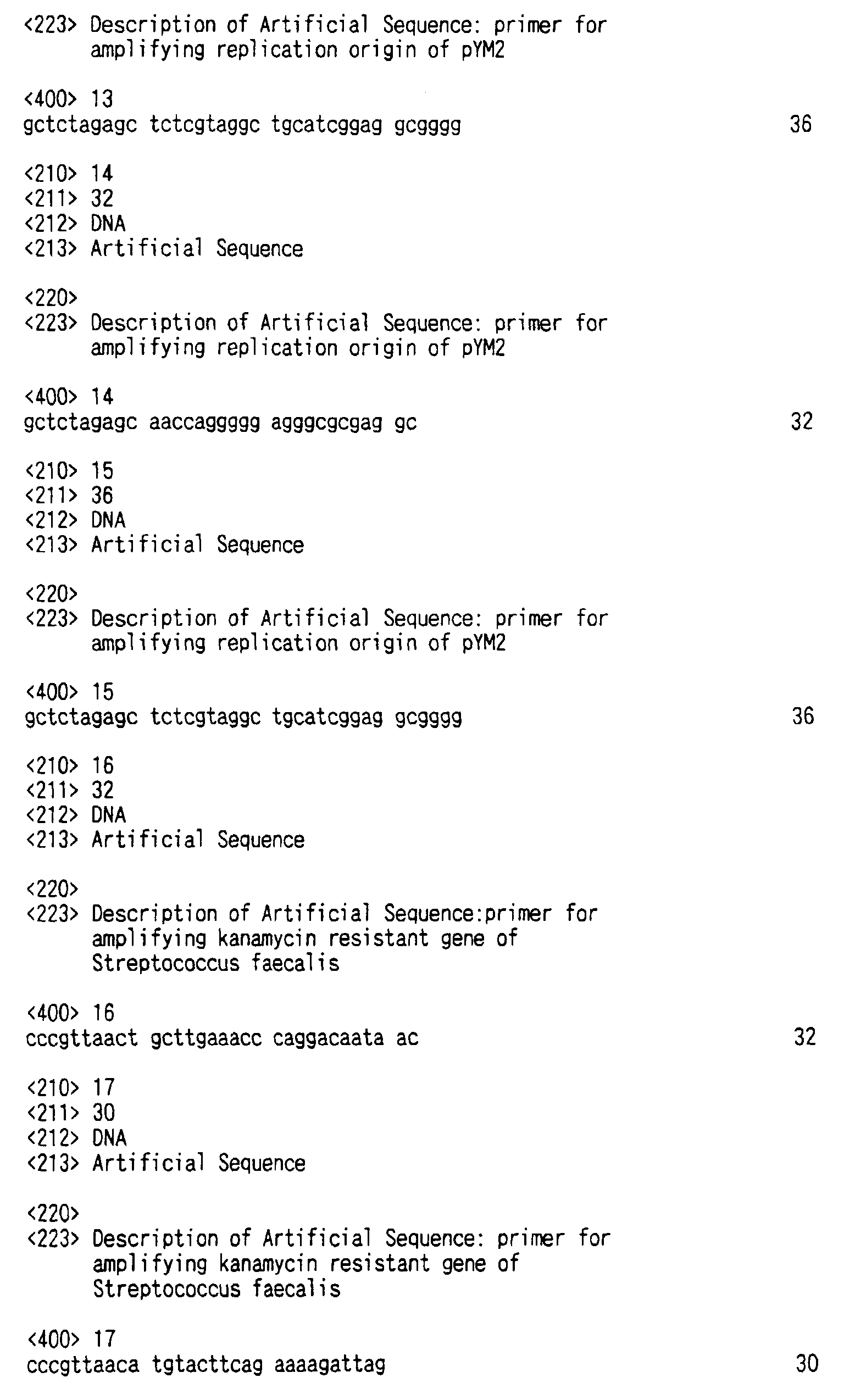
- the primers having the nucleotide sequences shown as SEQ ID NOS: 16 and 17 were synthesized, and PCR was performed by using pDG783 (Anne-Marie Guerout-Fleury et al., Gene, 167 , pp.335-337 (1995)) as a template to amplify a DNA fragment containing the kanamycin resistance gene and its promoter.
- pDG783 Anne-Marie Guerout-Fleury et al., Gene, 167 , pp.335-337 (1995)
- the above DNA fragment was purified by using SUPREC02 produced by Takara Shuzo Co., Ltd., completely digested with restriction enzymes Hin dIII and Hin cII, and blunt-ended.
- the blunt-ending was performed by using Blunting Kit produced by Takara Shuzo Co., Ltd.
- This DNA fragment and an amplification product obtained by PCR utilizing the primers having the nucleotide sequences shown as SEQ ID NOS: 18 and 19 and pHSG399 (see S. Takeshita et al ., Gene , 61 , pp.63-74 (1987)) as a template and purification and blunt-ending of the PCR product were mixed and ligated.
- the ligation reaction was performed by using DNA Ligation Kit ver.2 produced by Takara Shuzo Co., Ltd. Competent cells of Escherichia coli JM109 (produced by Takara Shuzo Co., Ltd.) were transformed with the ligated DNA, and applied to L medium (10 g/L of Bacto trypton, 5 g/L of Bacto yeast extract, 5 g/L of NaCl, and 15 g/L of agar, pH 7.2) containing 10 ⁇ g/ml of IPTG (isopropyl- ⁇ -D-thiogalactopyranoside), 40 ⁇ g/ml of X-Gal (5-bromo-4-chloro-3-indolyl- ⁇ -D-galactoside) and 25 ⁇ g/ml of kanamycin, and cultured overnight. Then, the formed blue colonies were picked up, and subjected to single colony isolation to obtain transformants.
- L medium 10 g/L of Bacto trypton, 5 g/L of
- Plasmids were prepared from the transformants by using the alkaline method (Text for Bioengineering Experiments, Edited by the Society for Bioscience and Bioengineering, Japan, p.105, Baifukan, 1992), and restriction maps were prepared.
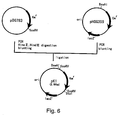
- a plasmid having a restriction map equivalent to that shown at a lower position in Fig. 6 was designated as pK1.
- This plasmid is stably harbored in Escherichia coli , and imparts kanamycin resistance to a host. Moreover, since it contains the lacZ ' gene, it is suitable for use as a cloning vector.
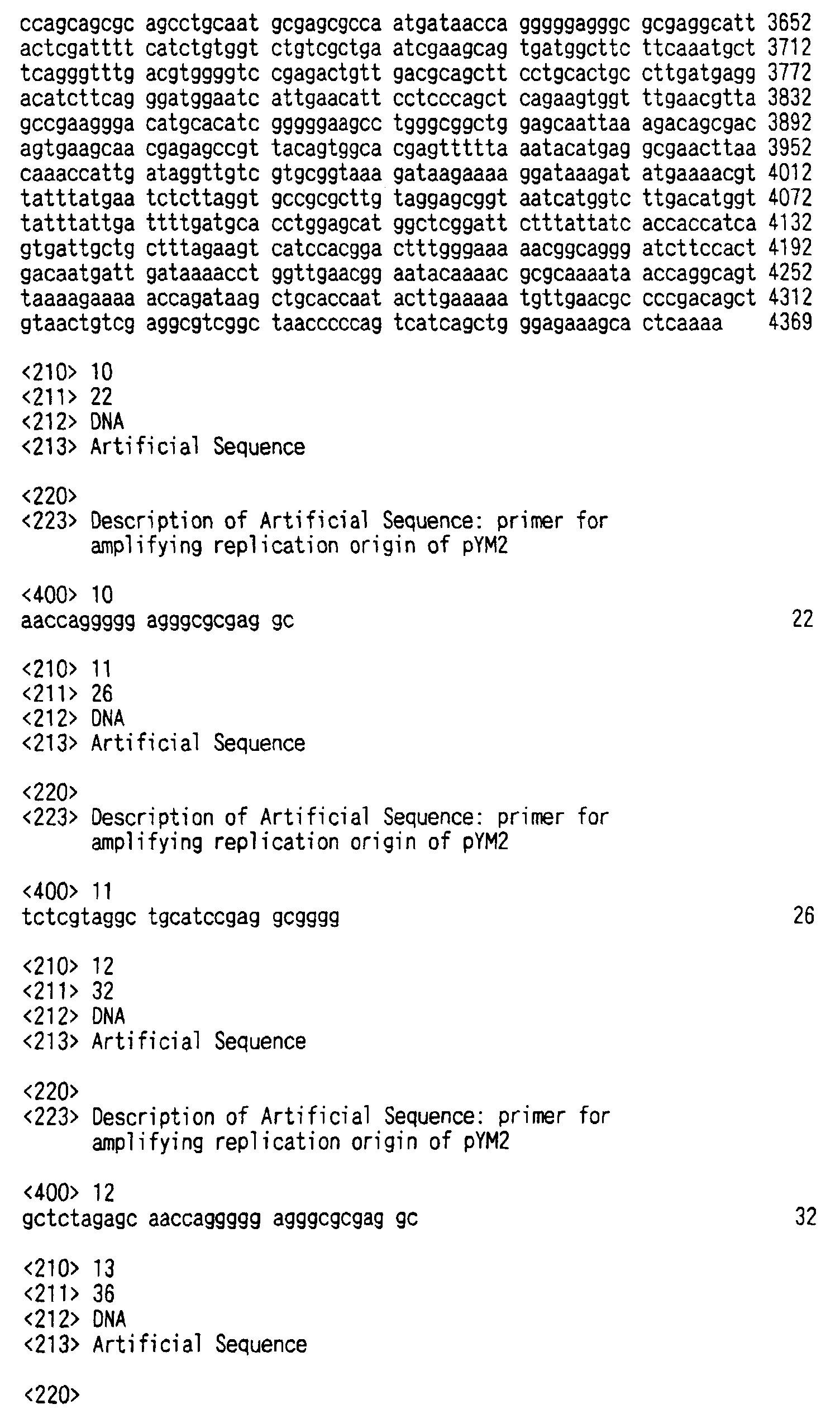
- a region containing the replication origin was amplified by Pyrobest-Taq (Takara Shuzo Co., Ltd.) using pYM2 extracted from C. thermoaminogenes AJ12310 (FERM BP-1542) as a template (The entire nucleotide sequence of pYM2 is shown in SEQ ID NO: 9.) and the following primers prepared based on a sequence in pYM2 near the Bst PI site:
- the obtained amplified fragment was purified by using MicroSpin TM S-400 HR columns produced by Amersham Pharmacia Biotech Co., blunt-ended by using DNA Blunting Kit produced by Takara Shuzo Co., Ltd., and then ligated to pK1 treated with Hin cII by using DNA Ligation Kit. ver. 2 produced by Takara Shuzo Co., Ltd. Competent cells of Escherichia coli JM109 (produced by Takara Shuzo) were transformed with the ligated DNA to obtain transformant strains.
- Plasmids were prepared from the transformant strains using the alkali method (Text for Bioengineering Experiments, Edited by the Society for Bioscience and Bioengineering, Japan, p.105, Baifukan, 1992) and restriction maps of the plasmids were prepared.
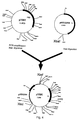
- One showing a restriction map equivalent to that shown at a lower position in Fig. 3 was designated as pYMFK.
- pYMFK had a size of about 7.0 kb, and was able to autonomously replicate in E. coli and coryneform bacteria and impart Km resistance to a host.
- a region containing the replication origin was amplified in the same manner as in Example 2 by using pYM2 extracted from C. thermoaminogenes AJ12310 (FERM BP-1542) as a template and the following primers:
- the obtained amplified fragment was purified by using MicroSpin TM S-400 HR columns produced by Amersham Pharmacia Biotech Co., digested with a restriction enzyme Xba I produced by Takara Shuzo Co., Ltd., and then ligated to a fragment obtained by fully digesting pHSG299 (Takara Shuzo Co., Ltd.) with Xba I by using DNA Ligation Kit. ver. 2 produced by Takara Shuzo Co., Ltd. Competent cells of Escherichia coli JM109 (produced by Takara Shuzo) were transformed with the ligated DNA to obtain transformant strains.
- Plasmids were prepared from the transformant strains using the alkali method (Text for Bioengineering Experiments, Edited by the Society for Bioscience and Bioengineering, Japan, p.105, Baifukan, 1992) and restriction maps of the plasmids were prepared.
- One showing a restriction map equivalent to that shown at a lower position in Fig. 4 was designated as pYMK.
- pYMK had a size of about 7.0 kb, and was able to autonomously replicate in E. coli and coryneform bacteria and impart Km resistance to a host.
- a region containing the replication origin was amplified in the same manner as in Example 2 by using pYM2 extracted from C. thermoaminogenes AJ12310 (FERM BP-1542) as a template and the following primers:
- the above DNA was purified by using MicroSpin TM S-400 HR columns produced by Amersham Pharmacia Biotech Co., digested with a restriction enzyme Xba I produced by Takara Shuzo Co., Ltd., and then ligated to a fragment obtained by treating pHSG399 (Takara Shuzo Co., Ltd.) with Xba I by using DNA Ligation Kit. ver. 2 produced by Takara Shuzo Co., Ltd. Competent cells of Escherichia coli JM109 (produced by Takara Shuzo) were transformed with the ligated DNA to obtain transformant strains.
- Plasmids were prepared from the transformant strains using the alkali method (Text for Bioengineering Experiments, Edited by the Society for Bioscience and Bioengineering, Japan, p.105, Baifukan, 1992) and restriction maps of the plasmids were prepared.
- One showing a restriction map equivalent to that shown at a lower position in Fig. 5 was designated as pYMC.
- pYMC had a size of about 6.6 kb, and was able to autonomously replicate in E. coli and coryneform bacteria and impart Cm resistance to a host.
Landscapes
- Genetics & Genomics (AREA)
- Health & Medical Sciences (AREA)
- Engineering & Computer Science (AREA)
- Life Sciences & Earth Sciences (AREA)
- Chemical & Material Sciences (AREA)
- Wood Science & Technology (AREA)
- Organic Chemistry (AREA)
- Biotechnology (AREA)
- General Engineering & Computer Science (AREA)
- Biomedical Technology (AREA)
- Zoology (AREA)
- Bioinformatics & Cheminformatics (AREA)
- Molecular Biology (AREA)
- Microbiology (AREA)
- Plant Pathology (AREA)
- Physics & Mathematics (AREA)
- Biochemistry (AREA)
- General Health & Medical Sciences (AREA)
- Biophysics (AREA)
- Micro-Organisms Or Cultivation Processes Thereof (AREA)
- Preparation Of Compounds By Using Micro-Organisms (AREA)
- Agricultural Chemicals And Associated Chemicals (AREA)
Abstract
Description
| Restriction enzyme | Number of digestion site | DNA fragment (kb) |
| BglII | 0 | - |
| BamHI | 2 | 1.8, 2.6 |
| BstPI | 1 | 4.4 |
| EcoRI | 1 | 4.4 |
| HincII | 4 | 0.3, 0.5, 2.0, 1.6 |
| HindIII | 0 | - |
| KpnI | 0 | - |
| NaeI | 2 | 0.1, 4.3 |
| NcoI | 1 | 4.4 |
| NheI | 2 | 1.8, 2.6 |
| PmaCI | 1 | 4.4 |
| SacI | 0 | - |
| Sall | 0 | - |
| SacII | 3 | 0.1, 1.4, 2.9 |
| SmaI | 3 | 0.1, 1.8, 2.5 |
| SphI | 0 | - |
| Tth111I | 1 | 4.4 |
| XbaI | 0 | - |
| Restriction enzyme | Number of digestion site | DNA fragment (kb) |
| BglII | 1 | 6.0 |
| BamHI | 2 | 3.8, 2.2 |
| BstPI | 2 | 1.2, 4.8 |
| EcoRI | 1 | 6.0 |
| HincII | 4 | 0.3, 0.4, 1.2, 1.7, 2.4 |
| HindIII | 0 | - |
| KpnI | 0 | - |
| NaeI | 2 | 0.1, 5.9 |
| NcoI | 3 | 0.2, 2.8, 3.0 |
| NheI | 3 | 0.1, 2.3, 3.6 |
| PmaCI | 0 | - |
| SacI | 0 | - |
| SalI | 0 | - |
| SacII | 5 | 0.1, 0.2, 0.9, 1.8, 3.0 |
| SmaI | 2 | 0.1, 5.9 |
| SphI | 0 | - |
| Tth111I | 0 | - |
| XbaI | 0 | - |
| Homology of amino acid sequences of Rep protein encoded by various plasmids | ||||
| PYM2 | pYM4 | pGA1 | pCG1 | |
| PYM2 | - | 81.91% | 68.01% | 70.73% |
| PYM4 | - | - | 69.39% | 70.23% |
| PGA1 | - | - | - | 75.31% |
| PCG1 | - | - | - | - |







Claims (5)
- A plasmid isolable from Corynebacterium thermoaminogenes, which comprises a gene coding for a Rep protein having the amino acid sequence shown in SEQ ID NO: 2 or an amino acid sequence having homology of 90% or more to the amino acid sequence shown in SEQ ID NO: 2, and has a size of about 4.4 kb or about 6 kb, or a derivative thereof.
- The plasmid or the derivative thereof according to claim 1, which is isolable from Corynebacterium thermoaminogenes AJ12340 (FERM BP-1539), AJ12308 (FERM BP-1540) or AJ12310 (FERM BP-1542), has a size of about 4.4 kb and is represented by the restriction map shown in Fig. 1.
- The plasmid or the derivative thereof according to claim 1, which is isolable from Corynebacterium thermoaminogenes AJ12309 (FERM BP-1541), has a size of about 6 kb and is represented by the restriction map shown in Fig. 2.
- The plasmid or the derivative thereof according to claim 1, which comprises a gene coding for a Rep protein having the amino acid sequence shown in SEQ ID NO: 2, 4 or 6.
- The plasmid or the derivative thereof according to claim 1, which comprises a gene coding for a Rep protein having the amino acid sequence shown in SEQ ID NO: 8.
Applications Claiming Priority (2)
| Application Number | Priority Date | Filing Date | Title |
|---|---|---|---|
| JP22839199 | 1999-08-12 | ||
| JP22839199 | 1999-08-12 |
Publications (2)
| Publication Number | Publication Date |
|---|---|
| EP1076094A2 true EP1076094A2 (en) | 2001-02-14 |
| EP1076094A3 EP1076094A3 (en) | 2001-04-11 |
Family
ID=16875742
Family Applications (1)
| Application Number | Title | Priority Date | Filing Date |
|---|---|---|---|
| EP00117225A Withdrawn EP1076094A3 (en) | 1999-08-12 | 2000-08-11 | Plasmid capable of autonomous replication in coryneform bacteria |
Country Status (12)
| Country | Link |
|---|---|
| US (2) | US6905819B1 (en) |
| EP (1) | EP1076094A3 (en) |
| KR (1) | KR100714107B1 (en) |
| CN (1) | CN1163611C (en) |
| AU (1) | AU779397B2 (en) |
| BR (1) | BR0003498A (en) |
| ID (1) | ID26904A (en) |
| MY (1) | MY127754A (en) |
| PE (1) | PE20010694A1 (en) |
| PL (1) | PL341895A1 (en) |
| RU (1) | RU2223317C2 (en) |
| TW (1) | TWI231313B (en) |
Cited By (5)
| Publication number | Priority date | Publication date | Assignee | Title |
|---|---|---|---|---|
| US6503748B2 (en) | 2000-04-05 | 2003-01-07 | Archer-Daniels-Midland Company | Endogenous ketogulonigenium plasmid |
| US6506583B1 (en) | 1998-09-11 | 2003-01-14 | Archer-Daniels-Midland Company | Bacterial strains for the production of 2-keto-L-gulonic acid |
| US6541239B1 (en) | 1996-10-24 | 2003-04-01 | Archer-Daniels-Midland Company | Bacterial strains and use thereof in fermentation processes for 2-keto-L-gulonic acid production |
| US7030233B2 (en) | 2000-04-05 | 2006-04-18 | Archer-Daniels-Midland Company | Ketogulonigenium endogeneous plasmids |
| US7033824B2 (en) | 2000-04-05 | 2006-04-25 | Archer-Daniels-Midland Company | Ketogulonigenium shuttle vectors |
Families Citing this family (19)
| Publication number | Priority date | Publication date | Assignee | Title |
|---|---|---|---|---|
| AU705550B2 (en) | 1995-06-07 | 1999-05-27 | Ajinomoto Co., Inc. | Method of producing L-lysine |
| JP2001046067A (en) * | 1999-08-04 | 2001-02-20 | Ajinomoto Co Inc | L-Lysine biosynthesis gene derived from thermophilic Bacillus bacteria |
| JP2003250544A (en) | 2002-03-04 | 2003-09-09 | National Institute Of Technology & Evaluation | Methods for altering protein properties |
| US6911332B2 (en) | 2002-06-12 | 2005-06-28 | Ajinomoto Co., Inc. | Isolated polynucleotides encoding d-arabino-3-hexulose-6-phosphate synthases from Methylophilus methylotrophus |
| RU2245919C2 (en) * | 2002-09-06 | 2005-02-10 | Закрытое акционерное общество "Научно-исследовательский институт Аджиномото-Генетика" | Method for producing l-amino acid, strain escherichia coli tdh7δmlc::cat/pprt614 as producer of l-threonine |
| US7060475B2 (en) * | 2003-02-28 | 2006-06-13 | Ajinomoto Co., Inc. | Polynucleotides encoding polypeptides involved in intermediates metabolism of central metabolic pathway in methylophilus methylotrophus |
| US20060019356A1 (en) * | 2003-02-28 | 2006-01-26 | Yoshihiro Usuda | Polynucleotides encoding polypeptides involved in intermediates metabolism of the central metabolic pathway in Methylophilus methylotrophus |
| US7026149B2 (en) * | 2003-02-28 | 2006-04-11 | Ajinomoto Co., Inc. | Polynucleotides encoding polypeptides involved in the stress response to environmental changes in Methylophilus methylotrophus |
| US7029893B2 (en) * | 2003-02-28 | 2006-04-18 | Ajinomoto Co., Inc. | Polynucleotides encoding polypeptides involved in amino acid biosynthesis in methylophilus methylotrophus |
| EP1460128B1 (en) * | 2003-03-03 | 2016-11-30 | Ajinomoto Co., Inc. | Method for producing L-arginine or L-lysine by fermentation |
| US7468262B2 (en) * | 2003-05-16 | 2008-12-23 | Ajinomoto Co., Inc. | Polynucleotides encoding useful polypeptides in corynebacterium glutamicum ssp. lactofermentum |
| JP4655539B2 (en) * | 2004-08-06 | 2011-03-23 | 味の素株式会社 | Method for producing β-amino acid using acylase |
| ES2941685T3 (en) | 2004-10-07 | 2023-05-24 | Ajinomoto Kk | Method for production of a basic substance |
| JP2007185184A (en) * | 2005-12-16 | 2007-07-26 | Ajinomoto Co Inc | L-amino acid-productive microorganism and method for producing l-amino acid |
| WO2007086618A1 (en) | 2006-01-30 | 2007-08-02 | Ajinomoto Co., Inc. | L-amino acid producing bacterium and method of producing l-amino acid |
| JP2010017082A (en) | 2006-10-10 | 2010-01-28 | Ajinomoto Co Inc | Method for producing l-amino acid |
| JP2010110216A (en) * | 2007-02-20 | 2010-05-20 | Ajinomoto Co Inc | Method for producing l-amino acid or nucleic acid |
| WO2009154280A1 (en) * | 2008-06-19 | 2009-12-23 | 味の素株式会社 | Agent for preventing excessive appetite |
| CN101838663B (en) * | 2009-12-18 | 2013-05-22 | 江南大学 | Colibacillus-corynebacterium shuttle constitutive expression carrier and construction method thereof |
Family Cites Families (20)
| Publication number | Priority date | Publication date | Assignee | Title |
|---|---|---|---|---|
| JPS57134500A (en) | 1981-02-12 | 1982-08-19 | Kyowa Hakko Kogyo Co Ltd | Plasmid pcg1 |
| JPH0691827B2 (en) * | 1981-12-17 | 1994-11-16 | 協和醗酵工業株式会社 | New vector-plasmid |
| US5250434A (en) | 1987-03-27 | 1993-10-05 | Ajinomoto Co., Inc. | Microorganisms for production of glutamic acid |
| JPH0763383B2 (en) | 1987-03-27 | 1995-07-12 | 味の素株式会社 | Novel microorganism and method for producing glutamic acid using the same |
| KR910007853B1 (en) * | 1989-04-27 | 1991-10-02 | 제일제당 주식회사 | New Composite Plasmid |
| US5081267A (en) * | 1989-10-05 | 1992-01-14 | Arco Chemical Technology, Inc. | Epoxidation process |
| DE4027453A1 (en) * | 1990-08-30 | 1992-03-05 | Degussa | NEW PLASMIDES FROM CORYNEBACTERIUM GLUTAMICUM AND DERIVED PLASMIDE VECTORS |
| AU705550B2 (en) * | 1995-06-07 | 1999-05-27 | Ajinomoto Co., Inc. | Method of producing L-lysine |
| JP2001046067A (en) * | 1999-08-04 | 2001-02-20 | Ajinomoto Co Inc | L-Lysine biosynthesis gene derived from thermophilic Bacillus bacteria |
| JP2001120292A (en) * | 1999-08-17 | 2001-05-08 | Ajinomoto Co Inc | Method for producing L-amino acid by fermentation method |
| JP2001120269A (en) * | 1999-10-22 | 2001-05-08 | Ajinomoto Co Inc | Production method of L-lysine by fermentation method |
| ATE417094T1 (en) * | 1999-12-24 | 2008-12-15 | Ajinomoto Kk | METHOD FOR PRODUCING L-AMINO ACID |
| JP4380029B2 (en) * | 2000-07-05 | 2009-12-09 | 味の素株式会社 | Manufacturing method of substances using microorganisms |
| EP1217076B1 (en) * | 2000-12-22 | 2006-06-14 | Ajinomoto Co., Inc. | Method of producing a target substance by fermentation |
| US6911332B2 (en) * | 2002-06-12 | 2005-06-28 | Ajinomoto Co., Inc. | Isolated polynucleotides encoding d-arabino-3-hexulose-6-phosphate synthases from Methylophilus methylotrophus |
| US7029893B2 (en) * | 2003-02-28 | 2006-04-18 | Ajinomoto Co., Inc. | Polynucleotides encoding polypeptides involved in amino acid biosynthesis in methylophilus methylotrophus |
| US7060475B2 (en) * | 2003-02-28 | 2006-06-13 | Ajinomoto Co., Inc. | Polynucleotides encoding polypeptides involved in intermediates metabolism of central metabolic pathway in methylophilus methylotrophus |
| US7026149B2 (en) * | 2003-02-28 | 2006-04-11 | Ajinomoto Co., Inc. | Polynucleotides encoding polypeptides involved in the stress response to environmental changes in Methylophilus methylotrophus |
| EP1460128B1 (en) * | 2003-03-03 | 2016-11-30 | Ajinomoto Co., Inc. | Method for producing L-arginine or L-lysine by fermentation |
| US7468262B2 (en) * | 2003-05-16 | 2008-12-23 | Ajinomoto Co., Inc. | Polynucleotides encoding useful polypeptides in corynebacterium glutamicum ssp. lactofermentum |
-
2000
- 2000-08-08 PL PL00341895A patent/PL341895A1/en not_active IP Right Cessation
- 2000-08-09 MY MYPI20003628A patent/MY127754A/en unknown
- 2000-08-10 ID IDP20000667D patent/ID26904A/en unknown
- 2000-08-11 TW TW089116284A patent/TWI231313B/en not_active IP Right Cessation
- 2000-08-11 BR BR0003498-3A patent/BR0003498A/en not_active Application Discontinuation
- 2000-08-11 US US09/636,458 patent/US6905819B1/en not_active Expired - Fee Related
- 2000-08-11 PE PE2000000818A patent/PE20010694A1/en not_active Application Discontinuation
- 2000-08-11 AU AU53380/00A patent/AU779397B2/en not_active Ceased
- 2000-08-11 KR KR1020000046544A patent/KR100714107B1/en not_active Expired - Fee Related
- 2000-08-11 EP EP00117225A patent/EP1076094A3/en not_active Withdrawn
- 2000-08-11 RU RU2000121598/13A patent/RU2223317C2/en not_active IP Right Cessation
- 2000-08-12 CN CNB001306693A patent/CN1163611C/en not_active Expired - Fee Related
-
2004
- 2004-04-27 US US10/832,299 patent/US7244569B2/en not_active Expired - Fee Related
Cited By (9)
| Publication number | Priority date | Publication date | Assignee | Title |
|---|---|---|---|---|
| US6541239B1 (en) | 1996-10-24 | 2003-04-01 | Archer-Daniels-Midland Company | Bacterial strains and use thereof in fermentation processes for 2-keto-L-gulonic acid production |
| US6506583B1 (en) | 1998-09-11 | 2003-01-14 | Archer-Daniels-Midland Company | Bacterial strains for the production of 2-keto-L-gulonic acid |
| US6511820B1 (en) | 1998-09-11 | 2003-01-28 | Archer-Daniels-Midland Company | Bacterial strains for the production of Pyrroloquinoline Quinone |
| US6562584B1 (en) | 1998-09-11 | 2003-05-13 | Archer-Daniels-Midland Company | Bacterial strains for the production of 2-keto-L-gulonic acid |
| US6503748B2 (en) | 2000-04-05 | 2003-01-07 | Archer-Daniels-Midland Company | Endogenous ketogulonigenium plasmid |
| US7030233B2 (en) | 2000-04-05 | 2006-04-18 | Archer-Daniels-Midland Company | Ketogulonigenium endogeneous plasmids |
| US7033824B2 (en) | 2000-04-05 | 2006-04-25 | Archer-Daniels-Midland Company | Ketogulonigenium shuttle vectors |
| US7053197B2 (en) | 2000-04-05 | 2006-05-30 | Archer-Daniels-Midland Company | Ketogulonigenium endogenous plasmids |
| US7053196B2 (en) | 2000-04-05 | 2006-05-30 | Archer-Daniels-Midland Company | Ketogulonigenium endogenous plasmids |
Also Published As
| Publication number | Publication date |
|---|---|
| US20040197918A1 (en) | 2004-10-07 |
| US7244569B2 (en) | 2007-07-17 |
| BR0003498A (en) | 2001-06-05 |
| KR100714107B1 (en) | 2007-05-07 |
| RU2223317C2 (en) | 2004-02-10 |
| TWI231313B (en) | 2005-04-21 |
| ID26904A (en) | 2001-02-15 |
| CN1163611C (en) | 2004-08-25 |
| MY127754A (en) | 2006-12-29 |
| AU779397B2 (en) | 2005-01-20 |
| AU5338000A (en) | 2001-02-15 |
| PE20010694A1 (en) | 2001-07-04 |
| CN1288060A (en) | 2001-03-21 |
| EP1076094A3 (en) | 2001-04-11 |
| KR20010070019A (en) | 2001-07-25 |
| PL341895A1 (en) | 2001-02-26 |
| US6905819B1 (en) | 2005-06-14 |
Similar Documents
| Publication | Publication Date | Title |
|---|---|---|
| US7244569B2 (en) | Plasmid autonomously replicable in coryneform bacteria | |
| US6303383B1 (en) | Temperature sensitive plasmid for coryneform bacteria | |
| US6962805B2 (en) | Method of constructing amino acid producing bacterial strains, and method of preparing amino acids by fermentation with the constructed amino acid producing bacterial strains | |
| EP1010755B1 (en) | Method for producing L-Glutamic acid by fermentation | |
| EP0334391B1 (en) | Process for preparing l-isoleucine | |
| US7160705B2 (en) | Arginine repressor deficient strain of coryneform bacterium and method for producing L-arginine | |
| US7846698B2 (en) | Method of producing L-lysine | |
| EP0699759A1 (en) | Variant aspartokinase gene | |
| US11365400B2 (en) | Microorganism for producing ornithine and process for producing ornithine using them | |
| RU2671106C1 (en) | Microorganism of corynebacterium genus for production of l-arginine and method of production of l-arginine using this microorganism | |
| HU224409B1 (en) | Method for producing l-lysine | |
| BR112017028181B1 (en) | MICROORGANISM MODIFIED TO PRODUCE PUTRESCINE OR ORNITHINE AND METHOD FOR PRODUCING PUTRESCINE OR ORNITINE USING SAID MICROORGANISM | |
| CN115135759B (en) | Novel glucosamine-6-phosphate deaminase variant and method for producing L-glutamic acid using same | |
| WO2000056858A1 (en) | Process for producing l-lysine | |
| CN115044490B (en) | Corynebacterium glutamicum mutant strain having improved L-lysine productivity and method for producing L-lysine using same | |
| KR20180134695A (en) | Mutant strain with enhanced l-leucine productivity and method for preparing l-leucine using the same | |
| ES3009768T3 (en) | Recombinant vector for transformation improving glutamine productivity, and strain employing same | |
| KR102869884B1 (en) | Mutant of Corynebacterium glutamicum with enhanced L-lysine productivity and method for preparing L-lysine using the same | |
| JP2001112479A (en) | New plasmid capable of autonomously replicating in coryneform bacterium | |
| KR20250153365A (en) | A Fructokinase variant and method for producing L-amino acid using the same | |
| KR20250166386A (en) | Microorganism of Corynebacterium genus having enhanced L-citrulline or L-arginine productivity and method for producing L-citrulline or L-arginine using the same | |
| KR20250177477A (en) | Microorganism of Brevibacterium or Corynebacterium genus having enhanced L-isoleucine productivity and method for producing L-isoleucine using the same | |
| JP2024515389A (en) | Corynebacterium glutamicum mutant with improved L-lysine production ability and method for producing L-lysine using the same | |
| CN104136600A (en) | Recombinant microorganism with improved putrescine production and method for preparing putrescine | |
| BR112014017091A2 (en) | recombinant microorganisms with improved putrescine productivity and putrescine production method using the same |
Legal Events
| Date | Code | Title | Description |
|---|---|---|---|
| PUAI | Public reference made under article 153(3) epc to a published international application that has entered the european phase |
Free format text: ORIGINAL CODE: 0009012 |
|
| AK | Designated contracting states |
Kind code of ref document: A2 Designated state(s): AT BE CH CY DE DK ES FI FR GB GR IE IT LI LU MC NL PT SE |
|
| AX | Request for extension of the european patent |
Free format text: AL;LT;LV;MK;RO;SI |
|
| PUAL | Search report despatched |
Free format text: ORIGINAL CODE: 0009013 |
|
| AK | Designated contracting states |
Kind code of ref document: A3 Designated state(s): AT BE CH CY DE DK ES FI FR GB GR IE IT LI LU MC NL PT SE |
|
| AX | Request for extension of the european patent |
Free format text: AL;LT;LV;MK;RO;SI |
|
| 17P | Request for examination filed |
Effective date: 20010607 |
|
| AKX | Designation fees paid |
Free format text: AT BE CH CY DE DK ES FI FR GB GR IE IT LI LU MC NL PT SE |
|
| 17Q | First examination report despatched |
Effective date: 20030822 |
|
| GRAP | Despatch of communication of intention to grant a patent |
Free format text: ORIGINAL CODE: EPIDOSNIGR1 |
|
| RIN1 | Information on inventor provided before grant (corrected) |
Inventor name: MATSUZAKI, YUMI,C/O AJINOMOTO CO., INC. Inventor name: NAKAMATSU, TSUYOSHI,C/O AJINOMOTO CO., INC. Inventor name: SUGIMOTO, SHINICHI,C/O AJINOMOTO CO., INC. Inventor name: KAWAHARA, YOSHIO,C/O AJINOMOTO CO., INC. Inventor name: KURAHASHI, OSAMU,C/O AJINOMOTO CO., INC. Inventor name: KIMURA, EIICHIRO,C/O AJINOMOTO CO., INC. |
|
| STAA | Information on the status of an ep patent application or granted ep patent |
Free format text: STATUS: THE APPLICATION IS DEEMED TO BE WITHDRAWN |
|
| 18D | Application deemed to be withdrawn |
Effective date: 20080729 |