EP1072653B1 - Wasserhaltige Tinte und ihre Verwendung - Google Patents
Wasserhaltige Tinte und ihre Verwendung Download PDFInfo
- Publication number
- EP1072653B1 EP1072653B1 EP00110328A EP00110328A EP1072653B1 EP 1072653 B1 EP1072653 B1 EP 1072653B1 EP 00110328 A EP00110328 A EP 00110328A EP 00110328 A EP00110328 A EP 00110328A EP 1072653 B1 EP1072653 B1 EP 1072653B1
- Authority
- EP
- European Patent Office
- Prior art keywords
- aqueous ink
- ink according
- water
- black
- ink
- Prior art date
- Legal status (The legal status is an assumption and is not a legal conclusion. Google has not performed a legal analysis and makes no representation as to the accuracy of the status listed.)
- Expired - Lifetime
Links
Images


Classifications
-
- C—CHEMISTRY; METALLURGY
- C09—DYES; PAINTS; POLISHES; NATURAL RESINS; ADHESIVES; COMPOSITIONS NOT OTHERWISE PROVIDED FOR; APPLICATIONS OF MATERIALS NOT OTHERWISE PROVIDED FOR
- C09D—COATING COMPOSITIONS, e.g. PAINTS, VARNISHES OR LACQUERS; FILLING PASTES; CHEMICAL PAINT OR INK REMOVERS; INKS; CORRECTING FLUIDS; WOODSTAINS; PASTES OR SOLIDS FOR COLOURING OR PRINTING; USE OF MATERIALS THEREFOR
- C09D11/00—Inks
- C09D11/30—Inkjet printing inks
Definitions
- the invention relates to a hydrous ink and its use.
- Water-based inks are used in inkjet printing or inkjet printing, applied to the paper to be printed on the droplet of ink or ink become.
- This can either be a liquid ink in which the dye or the dyes are dissolved in a solvent, or solid at room temperature Color to be used, which is melted.
- the liquid paint is used to produce the print image in the form of a droplet by electrostatic or magnetic Fields or piezoelectric forces dosed and steered.
- electrostatic or magnetic Fields or piezoelectric forces dosed and steered.
- the droplets are removed by evaporation of the solvent resulting pressure on the paper steered.
- the inks used in such systems must immediately be printed in the Penetrate material (which is also known as knocking off) so as not to smudge to be able to. This is achieved by the choice of solvents.
- inks contain a solvent mixture of solvents having different properties to achieve desirable effects. These solvents must be compatible with each other, ie they should be soluble or emulsifiable in the base solvent so that no phase separation occurs. If, for environmental and economic reasons, water is the solvent of choice, the other solvents used must be water-soluble or emulsifiable.
- the ink In order for the ink to be quickly absorbed by the material to be printed, it contains a penetrating accelerating penetrant. Taking the time required for a particular amount of solvent, eg water, to penetrate into a substrate, in a graph, depending on the amount of penetrant, gives a curve with a minimum for the penetration time, expressed as t min referred to as. To achieve this minimum penetration time, a minimum amount of penetrant, referred to as the limit concentration, is necessary. The smaller t min and the smaller the limit concentration, the more advantageous the contraceptive agent considered.
- the minimum penetration time is affected by others in the composition existing components, in particular of the other existing solvents.
- inks typically contain one or more of the solvent mixture several high-boiling components, which the drying of the nozzles and the To prevent crusting of the nozzles.
- This high boiling solvent like explained above with the basic solvent compatible and therefore for water-based inks water-soluble or emulsifiable, changes the penetration behavior the ink, i. the limit concentration becomes smaller, but the penetration times get longer, and more so, the more polar and therefore water-soluble that high-boiling solvent.
- the ability to penetrate decreases of the ink, as these include the wetting ability of the ink printing material and nonpolar solvents, e.g.
- Gasoline a paper surface better than polar, e.g. Water. It must therefore be one high-boiling solvent can be found, which is polar enough on the one hand, so that it is water soluble, and on the other hand does not interfere too much with penetration.
- aqueous inks is often a solvent mixture of a Glycol used as a high boiler and a glycol ether as a penetration promoter.
- these known ink formulations have the disadvantage that they are in many Paper types, e.g. for recycled papers and paper papers, a strong one Bleeding the ink in width and fraying along the paper fibers (also known as sprites or feathering) cause the image to be negative affected.
- an ink to provide for printing machine readable characters and barcodes with a Color or inkjet printer is suitable and can also be used for franking machines is.
- a water-based ink containing one or more dyes at least one alkanol with a straight or branched C 3 -C 8 alkyl chain and 2 to 4 hydroxy groups, at least one C 1 -C 6 alkyl ester of an ⁇ -hydroxycarboxylic acid Formula RC (OH) -COOH, wherein R is H or a straight or branched C 1 -C 6 alkyl radical and optionally contains further auxiliaries, the remainder being water.
- the basic solvent of the ink according to the invention is water which is obtained from cost and environmental reasons is a very preferred solvent. It therefore forms the basis the ink of the invention.
- the hydrous ink according to the invention also contains as essential ingredients one or more polyhydric alkanols as high boiling solvents, one or more alkyl esters of an ⁇ -hydroxycarboxylic acid as a penetrating agent, a or more dyes and a surfactant, and may optionally further other usual Auxiliaries, such as a water-soluble polymer, buffer substances, biocides, Adjusting agents and other ingredients customary for inks.
- a C 3 -C 8 -alkanol having 2 to 4 hydroxyl groups or a mixture of several alkanols is used as the high-boiling solvent. It has been found that the use of such an alkanol over ethylene glycol used in known inks increases the contrast intensity and decreases the fraying of the printed characters with equally good strike times.
- the alkanol used is preferably a C 3 -C 6 -alkanol having 2 or 3 hydroxyl groups.
- a particularly good balance between the penetration rate and the limiting concentration was achieved with 1.5 pentanediol, 1.2 propanediol, 1,2,6-hexanetriol and glycerol or a mixture thereof.
- other solvents have the same properties, namely well dissolving or dispersing the dye and preventing excessive penetration of the dye and fraying of the printed characters, they can equivalently be used as a high-boiling solvent.
- Penetrating agent according to the invention is an alkyl ester of an ⁇ -hydroxycarboxylic acid or a mixture of several esters.
- the alkyl ester content has 1 to 6 carbon atoms, preferably 1 to 3 carbon atoms and may be straight-chain or be branched.
- the ⁇ -hydroxycarboxylic acid has a carbon skeleton of 2 to 8 Carbon atoms, preferably 2 to 4 carbon atoms and is in particular D-, L- or D, L-lactic acid or glycolic acid.
- the printing properties are determined by the Use of the alkyl ester of the ⁇ -hydroxycarboxylic acid according to the invention greatly improved in comparison to the previously known systems.
- alkyl lactates of which particularly preferred Ethyl lactate is used.
- butyl lactate is also very beneficial Properties in terms of penetration time and the generation of clear typefaces It is less preferred because its odor is unpleasant.
- Especially preferred are (S) - (-) - methyl lactate, (S) - (-) - ethyl lactate, (S) - (-) - propyl lactate, (S) - (-) - isopropyl lactate, (S) - (-) - n-butyl lactate, (S) - (-) - isobutyl lactate or a mixture thereof used.
- ethyl lactate Since ethyl lactate is available in light and in large quantities, it is, too Cost reasons, particularly preferred. Moreover, it has the advantage that it is biological is degradable.
- glycolic acid alkyl esters in particular of glycolic acid butyl ester a high resolution and a very low fraying
- the penetration time is slightly longer than in the Lactates. Therefore, glycolic acid alkyl esters are preferred in such ink systems used, where there is less on a fast penetration time, but more on a high resolution and a minimal fiber sprites arrives.
- the concentration of the penetrant must be greater than or equal to the limit concentration which can easily be determined for a chosen agent.
- the concentration should preferably be in such a range that Wegschlag practitioner for 100 pl ⁇ 50 pl ink of not more than 2 seconds on commercial envelope paper and cardboard are achieved.
- the inventive hydrous contains Ink a dye, wherein under dye also a mixture of different dyes is understood to achieve a desired hue.
- the dye may be a black dye or a colored dye.
- the invention used dye or the combination of dyes should have a high contrast in the visible spectral range, so that the printed characters or Codes are easy to read both visually and mechanically.
- black or colored dyes or mixtures thereof which are in accordance with the invention used solvents are readily soluble and soluble in water and emulsifiable are used.
- a dye is used which is selected from the group of basic, acidic or substantive dyes is selected.
- a black or colored dye is used or a dye mixture, which gives a black or dark colored color when printed.
- Especially preferred black dyes used for the water-based ink of the invention Brilliant Black are C.I. No. 28440, Chromogen Black C.I. No. 14645, direct deep black E C.I. No. 30235, true black salt B C.I. No. 37245, true black salt K C.I. No. 37190, Sudan Black HB C.I. 26150, Naphtol Black C.I. No. 20470, Bayscript® Black Liquid, C.I. Basic Black 11, C.I.
- Basic Blue 154 Cartasol® Turquoise K-ZL liquid, Cartasol Turquoise K-RL liquid (C.I. Basic Blue 140), Cartasol Blue K5R liquid, Cartasol Brilliant scarlet K-4GL liquid or a combination of these dyes.
- the one used for the ink of the invention Dye can also be a pigment.
- Suitable are e.g. the commercially available dyes Hostafine® Black TS liquid (sold by Clariant GmbH Germany), Bayscript® Black Liquid (C.I. mixture sold by Bayer AG Germany), Cartasol® Black MG liquid (C.I. Basic Black 11, registered trademark of Clariant GmbH Germany), Flexonyl Black PR 100 (direct deep black E C.I. No. 30235, distributed by Hoechst AG).
- Hostafine® Black TS liquid sold by Clariant GmbH Germany
- Bayscript® Black Liquid C.I. mixture sold by Bayer AG Germany
- Cartasol® Black MG liquid C.I. Basic Black 11, registered trademark of Clariant GmbH Germany
- Flexonyl Black PR 100 direct deep black E C.I. No. 30235, distributed by Hoechst AG.
- the hydrous ink of the present invention contains a surfactant for adjustment the surface tension.
- the surfactant also contributes to penetration control at. It may be the surfactants commonly used for inks into consideration to be pulled. Because cationic or anionic surfactants are charged by their Groups change the properties of the dye or the solvent system can, preferably an amphoteric or nonionic surfactant is used. Of the Use of special anionic or cationic surfactants which have the properties of water-based ink, but is also possible and the expert can easily find such suitable surfactants.
- Surfactants that are particularly suitable for the formulation of the hydrous Inks are amphoteric surfactants from the group of betaines, ethoxylated diols, e.g. those from the Surfynol product range of Air Products Germany, or a mixture of it.
- a particularly preferred surfactant system is a mixture of N, [N- (N-2-hydroxyethyl-N-carboxyethylaminoethyl) acetic acid amido] -N, N-dimethyl-N-coco ammonium betaine, 2,4,7,9-tetramethyldec-5-in-4,7-diol, which is ethoxylated with 5-30 moles (e.g., from Airproducts, Germany from the Surfynol series), and the sodium salt of N- ⁇ -hydroxyethyl-N-carboxymethyl fatty acid amidoethylamine.
- the surfactant is used in the amount usual for inks. It is preferred in used in such an amount that the surface tension of the ink in a Range of 15 to 60, preferably 25 to 45 mN / m, measured at 25 ° C, is located.
- inks with a kinematic viscosity in the range of 2 to 12 mm 2 / s, preferably 4 to 9.5 mm 2 / s, are well suited for ink jet printers.
- the viscosity of the ink according to the invention is therefore preferably set in this range. This is done essentially by the amount of water used and can also be done via the addition of water-soluble polymers.
- the hydrous ink of the present invention may be used in addition to those mentioned above Ingredients still optionally contain other excipients that have the properties improve or vary the ink.
- Ingredients still optionally contain other excipients that have the properties improve or vary the ink.
- water-soluble polymers, buffer substances, biocides, adjusters and others for Inks are called customary ingredients.
- the water-based ink usually contains a water-soluble polymer, which binds the dye or a pigment on the paper surface.
- a water-soluble polymer which binds the dye or a pigment on the paper surface.
- the average molecular weight of the water-soluble Polymers should be at least 1000 and preferably, depending on the nature of the selected polymer, not more than 1 million, preferably not more than 250,000.
- a biocidal preservative can be added to the ink.
- Any preservative which is known for such hydrous systems and the properties the ink does not change, is suitable here.
- a microbicide sold under the name PROXEL® GXL by ICI Preservatives based on 1,2-benzisothiazolin-3-one compounds, proved.
- the biocidal preservative is used in the commonly used Quantities used, preferably in a range of 500 to 3000 ppm, based on the weight of the finished ink.
- the ink can vary with the pH, For example, it is preferred that the ink contain a buffering system to maintain the pH in the desired range To buffer the area.
- the pH of the ink can be in a wide range from 2.5 to 8.5 and preferably ranges from 5 to 8. Um Corrosion of the parts of the printer that come in contact with the ink too avoid and not negatively affect the material to be printed, should the pH is neither too acidic, i. below 2, still too basic, i. over 10, his.
- Suitable buffer systems which usually used for water-based inks become. Suitable buffer systems must not encrust the nozzles Cause crystal formation, with the ingredients of the ink no reactions especially those which alter the dye or are encrusted lead the nozzles, and, in the case of a bubble jet system, no encrustation form the Schudots by pyrolysis.
- the printing properties, e.g. the penetration properties, the ink, through the buffer system not be changed significantly.
- the buffer system carries to stabilize the ink formulation.
- buffer systems may be lithium acetate, borate buffer, triethanolamine or acetic acid / sodium acetate to be named.
- the buffer will vary depending on whether the dye used acidic or basic is selected. Particularly good results were in the acidic Range with sodium acetate and acetic acid and in the basic range with triethanolamine achieved.
- the buffer system is preferably in a concentration range of 0.1 to 10 wt .-% used.
- the hydrous ink of the invention has the following composition, which has proved to be particularly advantageous: 0.1 to 6 wt .-% of dye (s) (based on dry matter) 15 to 55% polyvalent Alkanol (s), 1 to 25 wt .-% alkyl ester of an ⁇ -hydroxycarboxylic acid, 0 to 5 % By weight of water-soluble polymer, 0 to 3000 ppm of biocide, 0 to 10% by weight of buffer and 30 to 60% by weight of water.
- the physical parameters of the ink according to the invention can be set in a manner known per se for the printer to be used in each case.
- the following parameters have proved suitable: Kinematic viscosity at 32 ° C 4.0 to 9.5 mm 2 / s, surface tension 25 to 45 mN / m, contact angle on paper less than 45 ° and a strike time of 100 pl ⁇ 50 pl ink less than 2 s on commercially available envelope papers and paperboards.
- the water-containing ink of the present invention has a high penetrability and delivers sharp, barely frayed printed characters. It is therefore particularly suitable good for printing machine readable characters and barcodes.
- Another object of the present invention is therefore the use of a aqueous ink of the invention for the printing of machine-readable characters and barcodes.
- the invention provides the use of the invention aqueous ink for digitally printed franking machines, in particular those those using ink jet printing technology, e.g. Piezo and bubble jet processes, operate.
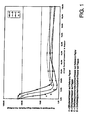
- the graph shows that all lactates tested are well suited as penetrants are, with n-butyl lactate the fastest penetration times are achieved. There however, the smell of n-butyl lactate is unpleasant, it is opposite to the others Lactates less preferred, but may, if the odor does not play a role, be used equally well.
- the pH of this composition was 6.9, measured at 25 ° C.
- the ink had a kinematic viscosity at 32 ° C of 6.0 mm 2 / s.
- the surface tension was 37 mN / m at 25 ° C
- the pH of this composition which was determined at 25 ° C, was 8.0.
- the kinematic viscosity was determined to be 6.6 mm 2 / s at 32 ° C.
- the surface tension was 35 mN / m at 25 ° C.
- the kinematic viscosity of the ink at 32 ° C was 6.7 mm 2 / s, the surface tension at 25 ° C was 35 mN / m and the pH at 25 ° C was 7.7.
- the kinematic viscosity at 32 ° C was determined to be 9.5 mm 2 / s, the pH was 8.2 at 25 ° C and the surface tension at 25 ° C was 35 mN / m.
- the kinematic viscosity at 32 ° C was 5.7 mm 2 / s, the surface tension (at 25 ° C) was 36 mN / m and the pH at 25 ° C was 5.1.
- the kinematic viscosity at 32 ° C was 6.6 mm 2 / s, the surface tension at 25 ° C was 39 mN / m.
- the kinematic viscosity at 32 ° C was 8.2 mm 2 / s, the surface tension at 25 ° C was 36 mN / m.
- the pH of 25 ° C was 3.5.
- PCS Print Contrast Signal
- the Wegschlagzeit is determined with a 0.5 ul capillary and can as Wegschlagzeit calculated as follows:
- the correct reference for the calculation of the travel time in the printer provides the Surface coverage achieved during printing and with the 0.5 ⁇ l capillary:
- the evaluation of the feathering took place on the basis of the evaluation, as shown in FIG. 5 can be taken (reference paper with 2400 dpi scan at 8x magnification).
- the inks of the invention provide advantageous Results both in terms of penetration time and resolution and the feathering.
- water-containing inks are provided which provide an optimal combination of penetration time, dissolution and fraying.
Landscapes
- Chemical & Material Sciences (AREA)
- Life Sciences & Earth Sciences (AREA)
- Engineering & Computer Science (AREA)
- Materials Engineering (AREA)
- Wood Science & Technology (AREA)
- Organic Chemistry (AREA)
- Inks, Pencil-Leads, Or Crayons (AREA)
- Ink Jet Recording Methods And Recording Media Thereof (AREA)
Description
- Fig. 1
- ein Diagramm ist, in dem die Penetrationszeiten für verschiedene Penetrationsmittel mit H2O aufgetragen sind,
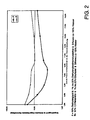
- Fig. 2
- ein Diagramm ist, in dem die Penetrationszeiten für Mischungen von Lösemitteln mit verschiedenen Anteilen an Penetrationsmittel aufgezeichnet sind,
- Fig. 3
- ein Diagramm ist, das die Penetrationszeiten für Pentandiol mit verschiedenen Anteilen an Penetrationsmittel zeigt,
- Fig. 4
- ein Diagramm ist, das die Penetrationszeiten von Mischungen aus Glycerin mit verschiedenen Penetrationsmitteln zeigt,
- Fig. 5
- ein Original-Scan zur Beurteilung des Featherings ist und
- Fig. 6
- zwei Referenzausdrucke zur Beurteilung der Auflösung zeigt.
| A | (0 % bis 100 % Ethyllactat, Differenz zu 100 % Wasser) | = Ethyllactat und Wasser auf Referenzpapier |
| B | (0 % bis 100 % Ethyllactat, Differenz zu 100 % Wasser) | = Ethyllactat und Wasser auf Pappe |
| C | (0 % bis 100 % Diethylenglycolmonobutylether, Differenz zu 100 % Wasser) Vergleich | = Diethylenglycolmonobutylether und Wasser auf Referenzpapier, |
| D | (0 % bis 100 % Diethylenglycolmonobutylether, Differenz zu 100 % Wasser) Vergleich | = Diethylenglycolmonobutylether und Wasser auf Pappe. |
| A | (Vergleich) | = 50 % Diethylenglycol und 1-20 % Diethylenglycol-Monobutylether, Differenz zu 100 % Wasser; |
| B | (erfindungsgemäß) | = 50 % 1,5-Pentandiol und 1-20 % Ethyllactat und Differenz zu 100 % Wasser. |
| Wasser | 28,9 Gew.% |
| Glycerin (87%) | 18,0 Gew.% |
| 1,2 Propandiol | 32,0 Gew.% |
| Ethyllactat | 11,0 Gew.% |
| Hostafine® Schwarz TS flüssig | 10,0 Gew.% |
| PROXEL®GXL | 00,1 Gew.% |
| Wasser | 30,9 Gew.% |
| Glycerin (87%) | 18,0 Gew.% |
| 1,2-Propandiol | 31,0 Gew.% |
| Diethylenglycol-monobutylether | 10,0 Gew.% |
| Hostafine® Schwarz TS flüssig | 10,0 Gew.% |
| PROXEL®GXL | 00,1 Gew.% |
| Wasser | 32,5 Gew.% |
| Glycerin (87%) | 20,5 Gew.% |
| 1,5-Pentandiol | 18,5 Gew.% |
| Ethyllactat | 10,0 Gew.% |
| Bayscript®Schwarz flüssig | 13,5 Gew. % |
| Surfynol®485 | 00,4 Gew.% |
| Pluronic® RPE 2520 | 04,0 Gew.% |
| PROXEL®GXL | 00,1 Gew.% |
| Triethanolamin | 00,5 Gew.% |
| Wasser | 27,0 Gew.% |
| Glycerin (87%) | 20,5 Gew.% |
| 1,5-Pentandiol | 18,5 Gew.% |
| Diethylenglycol-monobutylether | 15,0 Gew.% |
| Bayscript®Schwarz flüssig | 14,0 Gew.% |
| Surfynol® 485 | 00,4 Gew.% |
| Pluronic® RPE 2520 | 04,0 Gew.% |
| PROXEL®GXL | 00,1 Gew.% |
| Triethanolamin | 00,5 Gew.% |
| Wasser | 31,4 Gew.% |
| Glycerin (87%) | 20,0 Gew.% |
| 1,5-Pentandiol | 21,5 Gew.% |
| Ethyllactat | 10,0 Gew.% |
| Cartasol® Schwarz MG flüssig | 15,0 Gew.% |
| Pluronic® RPE 2520 | 02,0 Gew.% |
| PROXEL®GXL | 00,1 Gew.% |
| Wasser | 12,7 Gew.-% |
| Glycerin (87%) | 35,0 Gew.-% |
| 1,5-Pentandiol | 13,8 Gew.-% |
| Etyllactat | 15,0 Gew.-% |
| Cartasol®-Türkis K-ZL flüssig | 12,2 Gew.-% |
| Cartasol®-Brillantscharlach K-4GL flüssig | 11,1 Gew.-% |
| PROXEL®GXL (ICI) | 00,2 Gew.-% |
| Wasser | 12,7 Gew.-% |
| Glycerin (87%) | 35,0 Gew.-% |
| 1,5-Pentandiol | 13,8 Gew.-% |
| Diethylenglycolmonobutylether | 15,0 Gew.-% |
| Cartasol®-Türkis K-ZL flüssig | 12,2 Gew.% |
| Cartasol® -Brilliantscharlach K-4GL flussug | 11,1 Gew.-% |
| PROXEL®GXL(ICI) | 00,2 Gew.-% |
| Tinte | Wegschlagzeit 0,5µl | Feathering | Auflösung | PCS-Wert (E) Kontrast |
| Rezeptur 1 | 06 s | + | 2 | 0,84 |
| Rezeptur A | 09 s | o | 4 | 0,83 |
| Rezeptur 2 | 08 s | + | 2 | 0,88 |
| Rezeptur B | 12 s | - | 4 | 0,85 |
| Rezeptur 3 | 06 s | + | 2 | 0,85 |
| Rezeptur 4 | 10 s | + | 1 | 0,84 |
| Rezeptur C | 18 s | o | 4 | 0,83 |
| FP Post Red 2 | 07 s | - | 6 | n.v. |
| HP 51645 A | 61 s | + + | n.v. | n.v. |
| HP 51626 A | 146 s | + + | n.v. | n.v. |

Claims (21)
- Wasserhaltige Tinte enthaltend:ein oder mehrere Farbstoffe,mindestens einen Alkanol mit einer geraden oder verzweigten C3-C8-Alkylkette und 2 bis 4 Hydroxygruppen, als Hochsieder,mindestens einen C1-C6-Alkyester einer α-Hydroxycarbonsäure der Formel R-C(OH)-COOH, worin R = H oder ein gerader oder verzweigter C1-C6-Alkylrest ist als Penetrationsmittel,ggf. weitere Hilfsstoffe,wobei der Rest Wasser ist.
- Wasserhaltige Tinte nach Anspruch 1 mit einem Tensid.
- Wasserhaltige Tinte nach Anspruch 1 oder 2,
dadurch gekennzeichnet, daß die Tinte vorzugsweise bis zu 5% Glycolether aufweist. - Wasserhaltige Tinte nach einem der Ansprüche 1 bis 3,
dadurch gekennzeichnet, daß der Alkanol ein C3-C6-Alkanol mit 2 oder 3 Hydroxygruppen ist. - Wasserhaltige Tinte nach einem der Ansprüche 1 bis 4,
dadurch gekennzeichnet, daß der Alkanol 1,2-Propandiol, 1,5-Pentandiol, 1,2,6-Hexantriol, Glycerin oder eine Mischung davon ist. - Wasserhaltige Tinte nach einem der vorhergehenden Ansprüche,
dadurch gekennzeichnet, daß das Penetrationsmittel ein C1-C3-Alkylester einer α-Hydroxycarbonsäure ist. - Wasserhaltige Tinte nach einem der vorhergehenden Ansprüche,
dadurch gekennzeichnet, daß das Penetrationsmittel der Alkylester von Glycolsäure, D-, L- oder D,L-Milchsäure ist. - Wasserhaltige Tinte nach einem der vorhergehenden Ansprüche,
dadurch gekennzeichnet, daß sie die folgende Zusammensetzung hat: 0,1 bis 6 Gew.-% Farbstoff (bezogen auf Trockenmasse), 5 bis 55% mehrwertigen Alkanol 1 bis 25 Gew.-% Alkylester einer α-Hydroxycarbonsäure, 0 bis 5 Gew.-% wasserlösliches Polymer, 0 bis 3000 ppm Biozid, 0 bis 10 Gew.-% Puffer und 30 bis 60 Gew.-% Wasser. - Wasserhaltige Tinte nach einem der vorhergehenden Ansprüche,
dadurch gekennzeichnet, daß das Penetrationsmittel (S)-(-)-Methyllactat, (S)-(-)-Ethyllactat, (S)-(-)-Propyllactat, (S)-(-)-Isopropyllactat, (S)-(-)-n-Butyllactat, (S)-(-)-Isobuyllactat, Glycolether oder eine Mischung davon ist. - Wasserhaltige Tinte nach einem der vorhergehenden Ansprüche, dadurch gekennzeichnet, daß der Farbstoff ein schwarzer Farbstoff oder ein dunkler bunter Farbstoff ist, oder eine Mischung von Farbstoffen umfaßt, die im Ausdruck schwarz oder dunkel erscheinen, der die in organischen Lösemitteln löslich ist, sind.
- Wasserhaltige Tinte nach einem der vorhergehenden Ansprüche, dadurch gekennzeichnet, daß der Farbstoff ausgewählt ist aus der Gruppe basischer, saurer oder substantiver Farbstoffe.
- Wasserhaltige Tinte nach einem der vorhergehenden Ansprüche, dadurch gekennzeichnet, daß der Farbstoff Brillantschwarz C.I. Nr. 28440, Chromogenschwarz C.I. Nr. 14645, Direkttiefschwarz ECI. Nr. 30235, Echtschwarzsalz B C.I. Nr. 37245, Echtschwarzsalz K C.I. Nr. 37190, Sudanschwarz HB C.I. 26150, Naphtolschwarz C.I. Nr. 20470, Bayscriptschwarz flüssig, C.I. Basic Black 11, C.I. Basic Blue 154, Cartasol Türkis K-ZL flüssig, Cartasol Türkis K-RL flüssig (C.I. Basic Blue 140), Cartasol Blau K5R flüssig, Cartasol Brilliantscharlach K-4GL flüssig oder eine Kombination dieser Farbstoffe, oder ein Pigment ist.
- Wasserhaltige Tinte nach einem der vorhergehenden Ansprüche, dadurch gekennzeichnet, daß als Hilfsstoffe wasserlösliche Polymere, Puffersubstanzen, Biozide, Stellmittel und andere für Tinten übliche Inhaltsstoffe enthalten sind.
- Wasserhaltige Tinte nach einem der vorhergehenden Ansprüche,
dadurch gekennzeichnet, daß sie ein wasserlösliches Polymer mit einem mittleren Molekulargewicht von mindestens 1000 enthält. - Wasserhaltige Tinte nach Anspruch 12,
dadurch gekennzeichnet, daß das wasserlösliche Polymer ausgewählt ist aus: wasserlöslicher Stärke insbesondere mit einem mittleren Molekulargewicht von 3.000 bis 7.000, Polyvinylpyrolidon insbesondere mit einem mittleren Molekulargewicht von 25.000 bis 250.000, Polyvinylalkohol insbesondere mit einem mittleren Molekulargewicht von 10.000 bis 20.000, Xanthangummi, Carboxymethylcellulose, Ethylenoxid/Propylenoxidblockcopolymer mit einem mittleren Molekulargewicht von 1000 bis 8000 oder einer Mischung davon. - Wasserhaltige Tinte nach einem der vorhergehenden Ansprüche,
dadurch gekennzeichnet, daß sie als Puffer zur chemischen Stabilisierung Triethanolamin oder Natriumacetat und Essigsäure enthält. - Wasserhaltige Tinte nach einem der vorhergehenden Ansprüche,
dadurch gekennzeichnet, daß sie als Tensid ein amphoteres oder nicht ionisches Tensid oder eine Mischung davon enthält. - Verwendung einer wasserhaltigen Tinte nach einem der Ansprüche 1 bis 17 für Farbstrahldruck mit der Piezo-InkJet-Technologie.
- Verwendung einer wasserhaltigen Tinte nach einem der Ansprüche 1 bis 17 für ein Frankiermaschinensystem.
- Frankiermaschine mit einer Tinte nach einem der vorhergehenden Ansprüche und einer Druckeinrichtung, welche die Tinte zum Aufdruck auf Poststücken verarbeitet.
- Postgut, welches mit einer Tinte nach einem der vorhergehenden Ansprüche bedruckt ist.
Applications Claiming Priority (2)
| Application Number | Priority Date | Filing Date | Title |
|---|---|---|---|
| DE19933889A DE19933889A1 (de) | 1999-07-22 | 1999-07-22 | Wasserhaltige Tinte und ihre Verwendung |
| DE19933889 | 1999-07-22 |
Publications (3)
| Publication Number | Publication Date |
|---|---|
| EP1072653A2 EP1072653A2 (de) | 2001-01-31 |
| EP1072653A3 EP1072653A3 (de) | 2003-08-27 |
| EP1072653B1 true EP1072653B1 (de) | 2005-03-02 |
Family
ID=7915352
Family Applications (1)
| Application Number | Title | Priority Date | Filing Date |
|---|---|---|---|
| EP00110328A Expired - Lifetime EP1072653B1 (de) | 1999-07-22 | 2000-05-13 | Wasserhaltige Tinte und ihre Verwendung |
Country Status (5)
| Country | Link |
|---|---|
| US (1) | US6551391B1 (de) |
| EP (1) | EP1072653B1 (de) |
| CN (1) | CN1194054C (de) |
| AT (1) | ATE290053T1 (de) |
| DE (2) | DE19933889A1 (de) |
Families Citing this family (19)
| Publication number | Priority date | Publication date | Assignee | Title |
|---|---|---|---|---|
| US6391103B1 (en) † | 2000-02-02 | 2002-05-21 | Pitney Bowes Inc. | Color imparting compositions for ink jet printer inks and machine readable ink compositions containing same |
| JP4386156B2 (ja) * | 2001-05-30 | 2009-12-16 | 日信化学工業株式会社 | 水溶性界面活性剤組成物 |
| WO2005049719A2 (en) * | 2003-11-12 | 2005-06-02 | Omnova Solutions Inc. | Aqueous compositions comprising esters of lactic acid and methods of use |
| US7211135B2 (en) | 2004-03-16 | 2007-05-01 | Nanogate Coating Systems Gmbh | Writable and printable colloidal gold solution |
| DE202005002122U1 (de) | 2005-02-09 | 2005-04-21 | Francotyp-Postalia Ag & Co. Kg | Tinte für den Tintenstrahldruck |
| US7919543B2 (en) * | 2005-08-16 | 2011-04-05 | Electronics For Imaging, Inc. | Inkjet inks, methods for applying inkjet ink, and articles printed with inkjet inks |
| DE102006014164A1 (de) * | 2006-03-24 | 2007-09-27 | Francotyp-Postalia Gmbh | Schließflüssigkeit |
| US9383322B2 (en) | 2006-05-29 | 2016-07-05 | Fracotyp-Postalia GmbH | Kit containing sealing liquid for safety closures |
| DE102006025200A1 (de) * | 2006-05-29 | 2007-12-06 | Francotyp-Postalia Gmbh | Schließflüssigkeit für Sicherheitsschließungen |
| CN101134863B (zh) * | 2007-10-11 | 2011-02-02 | 西安理工大学 | 耐候的红色喷墨打印水基油墨及其制备方法 |
| US9930297B2 (en) | 2010-04-30 | 2018-03-27 | Becton, Dickinson And Company | System and method for acquiring images of medication preparations |
| JP5821515B2 (ja) * | 2011-10-19 | 2015-11-24 | セイコーエプソン株式会社 | インクジェット用インクおよびこれを用いたインクジェット記録方法 |
| DE102012104154A1 (de) | 2012-05-11 | 2013-11-14 | Böwe Systec Gmbh | Vorrichtung und Verfahren zum Bedrucken von Postsendungen |
| DE202012101746U1 (de) | 2012-05-11 | 2013-08-12 | Böwe Systec Gmbh | Vorrichtung zum Bedrucken von Postsendungen |
| CN102876115A (zh) * | 2012-09-29 | 2013-01-16 | 苏州安洁科技股份有限公司 | 一种枪灰色油墨 |
| CN102876124A (zh) * | 2012-09-29 | 2013-01-16 | 苏州安洁科技股份有限公司 | 一种绝缘灰油墨 |
| CN102863839A (zh) * | 2012-09-29 | 2013-01-09 | 苏州安洁科技股份有限公司 | 一种深灰色玻璃油墨 |
| DE202013005455U1 (de) | 2013-06-18 | 2014-06-25 | Francotyp-Postalia Gmbh | Kit zur Detektion unauthorisierter Öffnung eines Poststückes |
| SG10202109116YA (en) | 2014-09-08 | 2021-09-29 | Becton Dickinson Co | System and method for preparing a pharmaceutical compound |
Family Cites Families (13)
| Publication number | Priority date | Publication date | Assignee | Title |
|---|---|---|---|---|
| JPH066684B2 (ja) * | 1984-04-24 | 1994-01-26 | 住友化学工業株式会社 | インクジエツトプリント用インク組成物 |
| US5069718A (en) * | 1989-05-10 | 1991-12-03 | Hewlett-Packard Company | Potassium substituted inks for ink-jet printers |
| JP3162096B2 (ja) * | 1991-04-10 | 2001-04-25 | オリヱント化学工業株式会社 | 造塩体染料の濃厚液組成物及びインキ組成物 |
| US5106416A (en) * | 1991-08-28 | 1992-04-21 | Hewlett-Packard Company | Bleed alleviation using zwitterionic surfactants and cationic dyes |
| JP2986605B2 (ja) * | 1992-02-12 | 1999-12-06 | オリヱント化学工業株式会社 | 新規トリスアゾ染料およびこれらを含有する染料組成物 |
| JP2983742B2 (ja) * | 1992-02-12 | 1999-11-29 | オリヱント化学工業株式会社 | 新規トリスアゾ染料およびこれらを含有する染料組成物 |
| US5792249A (en) * | 1995-01-25 | 1998-08-11 | Canon Kabushiki Kaisha | Liquid composition, ink set, image-forming method and apparatus using the same |
| US5681381A (en) * | 1995-12-11 | 1997-10-28 | Pitney Bowes Inc. | Fluorescent red and magenta waterfast ink jet inks |
| US5674314A (en) * | 1995-12-11 | 1997-10-07 | Pitney Bowes Inc. | Waterfast ink composition for printers |
| AU4311797A (en) * | 1996-10-01 | 1998-04-24 | Zeneca Limited | Aqueous ink compositions |
| GB9726814D0 (en) * | 1997-12-19 | 1998-02-18 | Zeneca Ltd | Compositions |
| US6261353B1 (en) * | 1998-05-29 | 2001-07-17 | Fuji Xerox Co., Ltd | Recording material and image forming method using the same |
| US6045606A (en) * | 1999-03-04 | 2000-04-04 | Westvaco Corporation | Water-based ink jet ink compositions containing carboxylated lignin |
-
1999
- 1999-07-22 DE DE19933889A patent/DE19933889A1/de not_active Withdrawn
-
2000
- 2000-05-13 EP EP00110328A patent/EP1072653B1/de not_active Expired - Lifetime
- 2000-05-13 DE DE50009619T patent/DE50009619D1/de not_active Expired - Lifetime
- 2000-05-13 AT AT00110328T patent/ATE290053T1/de active
- 2000-07-21 CN CNB001216147A patent/CN1194054C/zh not_active Expired - Fee Related
- 2000-07-24 US US09/624,454 patent/US6551391B1/en not_active Expired - Lifetime
Also Published As
| Publication number | Publication date |
|---|---|
| CN1281877A (zh) | 2001-01-31 |
| EP1072653A3 (de) | 2003-08-27 |
| US6551391B1 (en) | 2003-04-22 |
| ATE290053T1 (de) | 2005-03-15 |
| CN1194054C (zh) | 2005-03-23 |
| DE50009619D1 (de) | 2005-04-07 |
| EP1072653A2 (de) | 2001-01-31 |
| DE19933889A1 (de) | 2001-01-25 |
Similar Documents
| Publication | Publication Date | Title |
|---|---|---|
| DE69204138T2 (de) | Tintenzusammensetzungen auf wässriger Basis die eine verminderte Krustung, Verstopfung und Kogation aufweisen. | |
| DE69302854T2 (de) | Tinte für Tintenstrahldruck auf Basis von Mikroemulsion enthaltend einen wasserunlöslichen Farbstoff | |
| DE69308186T2 (de) | Schwarz/Farbe Verlaufskontrolle in thermischem Tintenstrahldruckverfahren | |
| DE19933889A1 (de) | Wasserhaltige Tinte und ihre Verwendung | |
| DE69518472T2 (de) | Tintezusammensetzung für den Tintenstrahldruck | |
| DE69204199T2 (de) | Schmierenfeste Tinte für Tintenstrahldruckvorrichtung. | |
| DE69815571T2 (de) | Netzmittel enthaltende Tintenstrahltinte | |
| DE69025026T2 (de) | Nichtwässrige thermische Tintenstrahldruckzusammensetzungen | |
| DE69609006T2 (de) | Tintenstrahldrucktinten | |
| DE69704247T2 (de) | Zerfliessverminderung in Tintenstrahldrucktinten unter Verwendung von Säuren, die basische funktionelle Gruppen enthalten | |
| DE60306019T2 (de) | Tintenzusammensetzung, Tintenstrahlaufzeichnungsverfahren unter Verwendung derselben und damit aufgezeichnetes Substrat | |
| DE68909630T2 (de) | Aufzeichnungs-Flüssigkeit und Tintenstrahlverfahren unter Verwendung dieser Flüssigkeit. | |
| DE69627601T2 (de) | Tintenzusammensetzung für das Tintenstrahlaufzeichnen und Tintenstrahl-Aufzeichnungsverfahren | |
| DE60211812T2 (de) | Tinte, Tintenpatrone, Aufzeichnungseinheit, Tintenstrahlaufzeichnungsverfahren, Tintenstrahlaufzeichnungsgerät und Verfahren zum Stabilisieren von Tintenausstoss | |
| DE69329613T2 (de) | Tinte, Verfahren zur Tintenstrahlaufzeichnung und Tintenstrahlaufzeichnungsgerät | |
| DE69608085T2 (de) | Tintenstrahl-Tinte, Tintenstrahl-Aufzeichnungsverfahren und Tintenstrahlgerät | |
| DE69321450T2 (de) | Tinten für Tintenstrahlverfahren | |
| DE3751420T2 (de) | Registrierverfahren und Flüssigkeit unter Verwendung eines wasserlöslichen organischen Lösungsmittels. | |
| DE69432550T2 (de) | Farbtintenzusammensetzung und mehrfarbiges tintenstrahlaufzeichnungsverfahren | |
| DE69107372T2 (de) | Aufzeichnungslösung, ihre Verwendung in Tintenstrahldruckverfahren und Verfahren zur Herstellung derselben. | |
| DE60305567T2 (de) | Nicht-wässrige Tintenzusammensetzung | |
| DE69017534T2 (de) | Strahldrucktinte für den Betrieb bei Raumtemperatur und Verfahren hierzu. | |
| DE69215138T2 (de) | Tintenzusammensetzungen mit verminderten Trocknungszeiten | |
| DE112014001322T5 (de) | Wässrige Dispersionen, die nanokristalline Cellulose umfassen, undZusammensetzungen für den kommerziellen Tintenstrahldruck | |
| DE69801780T2 (de) | Tintenstrahltinten enthaltend langkettige Alkohole |
Legal Events
| Date | Code | Title | Description |
|---|---|---|---|
| PUAI | Public reference made under article 153(3) epc to a published international application that has entered the european phase |
Free format text: ORIGINAL CODE: 0009012 |
|
| AK | Designated contracting states |
Kind code of ref document: A2 Designated state(s): AT BE CH CY DE DK ES FI FR GB GR IE IT LI LU MC NL PT SE |
|
| AX | Request for extension of the european patent |
Free format text: AL;LT;LV;MK;RO;SI |
|
| RAP1 | Party data changed (applicant data changed or rights of an application transferred) |
Owner name: FRANCOTYP-POSTALIA AG & CO. KG |
|
| PUAL | Search report despatched |
Free format text: ORIGINAL CODE: 0009013 |
|
| AK | Designated contracting states |
Designated state(s): AT BE CH CY DE DK ES FI FR GB GR IE IT LI LU MC NL PT SE |
|
| AX | Request for extension of the european patent |
Extension state: AL LT LV MK RO SI |
|
| 17P | Request for examination filed |
Effective date: 20040227 |
|
| 17Q | First examination report despatched |
Effective date: 20040329 |
|
| AKX | Designation fees paid |
Designated state(s): AT CH DE FR GB IT LI |
|
| GRAP | Despatch of communication of intention to grant a patent |
Free format text: ORIGINAL CODE: EPIDOSNIGR1 |
|
| GRAS | Grant fee paid |
Free format text: ORIGINAL CODE: EPIDOSNIGR3 |
|
| GRAA | (expected) grant |
Free format text: ORIGINAL CODE: 0009210 |
|
| AK | Designated contracting states |
Kind code of ref document: B1 Designated state(s): AT CH DE FR GB IT LI |
|
| REG | Reference to a national code |
Ref country code: GB Ref legal event code: FG4D Free format text: NOT ENGLISH |
|
| REG | Reference to a national code |
Ref country code: CH Ref legal event code: NV Representative=s name: ROTTMANN, ZIMMERMANN + PARTNER AG Ref country code: CH Ref legal event code: EP |
|
| REG | Reference to a national code |
Ref country code: IE Ref legal event code: FG4D Free format text: GERMAN |
|
| REF | Corresponds to: |
Ref document number: 50009619 Country of ref document: DE Date of ref document: 20050407 Kind code of ref document: P |
|
| GBT | Gb: translation of ep patent filed (gb section 77(6)(a)/1977) |
Effective date: 20050427 |
|
| ET | Fr: translation filed | ||
| PLBE | No opposition filed within time limit |
Free format text: ORIGINAL CODE: 0009261 |
|
| STAA | Information on the status of an ep patent application or granted ep patent |
Free format text: STATUS: NO OPPOSITION FILED WITHIN TIME LIMIT |
|
| RAP2 | Party data changed (patent owner data changed or rights of a patent transferred) |
Owner name: FRANCOTYP-POSTALIA GMBH |
|
| 26N | No opposition filed |
Effective date: 20051205 |
|
| REG | Reference to a national code |
Ref country code: CH Ref legal event code: PFA Owner name: FRANCOTYP-POSTALIA AG & CO. KG Free format text: FRANCOTYP-POSTALIA AG & CO. KG#TRIFTWEG 21-26#16547 BIRKENWERDER (DE) -TRANSFER TO- FRANCOTYP-POSTALIA AG & CO. KG#TRIFTWEG 21-26#16547 BIRKENWERDER (DE) |
|
| REG | Reference to a national code |
Ref country code: DE Ref legal event code: R084 Ref document number: 50009619 Country of ref document: DE Effective date: 20130222 |
|
| REG | Reference to a national code |
Ref country code: GB Ref legal event code: 746 Effective date: 20130722 |
|
| REG | Reference to a national code |
Ref country code: GB Ref legal event code: 732E Free format text: REGISTERED BETWEEN 20131121 AND 20131127 |
|
| REG | Reference to a national code |
Ref country code: DE Ref legal event code: R082 Ref document number: 50009619 Country of ref document: DE Representative=s name: EISENFUEHR SPEISER PATENTANWAELTE RECHTSANWAEL, DE |
|
| REG | Reference to a national code |
Ref country code: DE Ref legal event code: R082 Ref document number: 50009619 Country of ref document: DE Representative=s name: EISENFUEHR SPEISER PATENTANWAELTE RECHTSANWAEL, DE Effective date: 20150330 Ref country code: DE Ref legal event code: R081 Ref document number: 50009619 Country of ref document: DE Owner name: FRANCOTYP-POSTALIA GMBH, DE Free format text: FORMER OWNER: FRANCOTYP-POSTALIA GMBH, 16547 BIRKENWERDER, DE Effective date: 20150330 |
|
| REG | Reference to a national code |
Ref country code: FR Ref legal event code: PLFP Year of fee payment: 17 |
|
| REG | Reference to a national code |
Ref country code: CH Ref legal event code: PCAR Free format text: NEW ADDRESS: GARTENSTRASSE 28 A, 5400 BADEN (CH) |
|
| REG | Reference to a national code |
Ref country code: FR Ref legal event code: PLFP Year of fee payment: 18 |
|
| REG | Reference to a national code |
Ref country code: FR Ref legal event code: PLFP Year of fee payment: 19 |
|
| PGFP | Annual fee paid to national office [announced via postgrant information from national office to epo] |
Ref country code: CH Payment date: 20180523 Year of fee payment: 19 Ref country code: DE Payment date: 20180411 Year of fee payment: 19 |
|
| PGFP | Annual fee paid to national office [announced via postgrant information from national office to epo] |
Ref country code: IT Payment date: 20180530 Year of fee payment: 19 Ref country code: FR Payment date: 20180522 Year of fee payment: 19 Ref country code: AT Payment date: 20180522 Year of fee payment: 19 |
|
| PGFP | Annual fee paid to national office [announced via postgrant information from national office to epo] |
Ref country code: GB Payment date: 20180518 Year of fee payment: 19 |
|
| REG | Reference to a national code |
Ref country code: DE Ref legal event code: R119 Ref document number: 50009619 Country of ref document: DE |
|
| REG | Reference to a national code |
Ref country code: CH Ref legal event code: PL |
|
| REG | Reference to a national code |
Ref country code: AT Ref legal event code: MM01 Ref document number: 290053 Country of ref document: AT Kind code of ref document: T Effective date: 20190513 |
|
| GBPC | Gb: european patent ceased through non-payment of renewal fee |
Effective date: 20190513 |
|
| PG25 | Lapsed in a contracting state [announced via postgrant information from national office to epo] |
Ref country code: LI Free format text: LAPSE BECAUSE OF NON-PAYMENT OF DUE FEES Effective date: 20190531 Ref country code: AT Free format text: LAPSE BECAUSE OF NON-PAYMENT OF DUE FEES Effective date: 20190513 Ref country code: CH Free format text: LAPSE BECAUSE OF NON-PAYMENT OF DUE FEES Effective date: 20190531 |
|
| PG25 | Lapsed in a contracting state [announced via postgrant information from national office to epo] |
Ref country code: IT Free format text: LAPSE BECAUSE OF NON-PAYMENT OF DUE FEES Effective date: 20190513 Ref country code: GB Free format text: LAPSE BECAUSE OF NON-PAYMENT OF DUE FEES Effective date: 20190513 Ref country code: DE Free format text: LAPSE BECAUSE OF NON-PAYMENT OF DUE FEES Effective date: 20191203 |
|
| PG25 | Lapsed in a contracting state [announced via postgrant information from national office to epo] |
Ref country code: FR Free format text: LAPSE BECAUSE OF NON-PAYMENT OF DUE FEES Effective date: 20190531 |