EP1072631A2 - Gas barrier film and method for producing the same - Google Patents
Gas barrier film and method for producing the same Download PDFInfo
- Publication number
- EP1072631A2 EP1072631A2 EP00116396A EP00116396A EP1072631A2 EP 1072631 A2 EP1072631 A2 EP 1072631A2 EP 00116396 A EP00116396 A EP 00116396A EP 00116396 A EP00116396 A EP 00116396A EP 1072631 A2 EP1072631 A2 EP 1072631A2
- Authority
- EP
- European Patent Office
- Prior art keywords
- gas barrier
- barrier film
- less
- thermoplastic resin
- oxygen
- Prior art date
- Legal status (The legal status is an assumption and is not a legal conclusion. Google has not performed a legal analysis and makes no representation as to the accuracy of the status listed.)
- Withdrawn
Links
Images

Classifications
-
- C—CHEMISTRY; METALLURGY
- C08—ORGANIC MACROMOLECULAR COMPOUNDS; THEIR PREPARATION OR CHEMICAL WORKING-UP; COMPOSITIONS BASED THEREON
- C08J—WORKING-UP; GENERAL PROCESSES OF COMPOUNDING; AFTER-TREATMENT NOT COVERED BY SUBCLASSES C08B, C08C, C08F, C08G or C08H
- C08J5/00—Manufacture of articles or shaped materials containing macromolecular substances
- C08J5/18—Manufacture of films or sheets
-
- C—CHEMISTRY; METALLURGY
- C08—ORGANIC MACROMOLECULAR COMPOUNDS; THEIR PREPARATION OR CHEMICAL WORKING-UP; COMPOSITIONS BASED THEREON
- C08J—WORKING-UP; GENERAL PROCESSES OF COMPOUNDING; AFTER-TREATMENT NOT COVERED BY SUBCLASSES C08B, C08C, C08F, C08G or C08H
- C08J2300/00—Characterised by the use of unspecified polymers
- C08J2300/12—Polymers characterised by physical features, e.g. anisotropy, viscosity or electrical conductivity
-
- C—CHEMISTRY; METALLURGY
- C08—ORGANIC MACROMOLECULAR COMPOUNDS; THEIR PREPARATION OR CHEMICAL WORKING-UP; COMPOSITIONS BASED THEREON
- C08J—WORKING-UP; GENERAL PROCESSES OF COMPOUNDING; AFTER-TREATMENT NOT COVERED BY SUBCLASSES C08B, C08C, C08F, C08G or C08H
- C08J2367/00—Characterised by the use of polyesters obtained by reactions forming a carboxylic ester link in the main chain; Derivatives of such polymers
- C08J2367/02—Polyesters derived from dicarboxylic acids and dihydroxy compounds
- C08J2367/03—Polyesters derived from dicarboxylic acids and dihydroxy compounds the dicarboxylic acids and dihydroxy compounds having the hydroxy and the carboxyl groups directly linked to aromatic rings
Definitions
- the present invention relates a film composed of a thermoplastic resin manifesting high gas barrierring properties though the thickness thereof is small and a method for producing the same.
- Gas barrier films having gas barrierring properties such as oxygen barrierring properties, water vapor barrierring properties and the like (gas barrier films) are used in fields such as packages of food, drink, medicine, industrial parts and the like.
- gas barrier films composed of thermoplastic resins instead of an aluminum foil, vinyl chloride and the like conventionally used.
- thermoplastic resin usable for gas barrier film there are polyacrylonitrile, and an ethylene-vinyl acetate copolymer, ethylene-vinyl alcohol copolymer, poly-p-phenylene terephthalate and the like, however, they do not have necessarily sufficient gas barrierring properties, and sometimes cause deterioration in gas barrierring properties under high humidity.
- a gas barrier film composed of a thermoplastic resin has been known, whereas a film which is as thin as 18 ⁇ m or less and further has extremely excellent gas barrierring properties has not been known yet.
- a problem to be solved by the present invention is to provide a gas barrier film which is composed of a thermoplastic resin and shows high gas barrierring properties in spite of its small thickness, and a method for producing the same.
- the present invention relates to a gas barrier film having a thickness of 18 ⁇ m or less composed of a thermoplastic resin wherein the oxygen permeation coefficient is 30 ⁇ 10 -15 cm 3 ⁇ cm/cm 2 ⁇ s ⁇ cmHg or less, measured at a temperature of 23°C and a relative humidity of 60%, and a gas barrier film having a thickness of 18 ⁇ m or less composed of a thermoplastic resin wherein the oxygen solubility coefficient is 3.0 ⁇ 10 -3 cm 3 /cm 3 ⁇ atm or less and the oxygen diffusion coefficient is 10.0 ⁇ 10 -10 cm 2 /s or less, measured at a temperature of 23°C and a relative humidity of 60%.
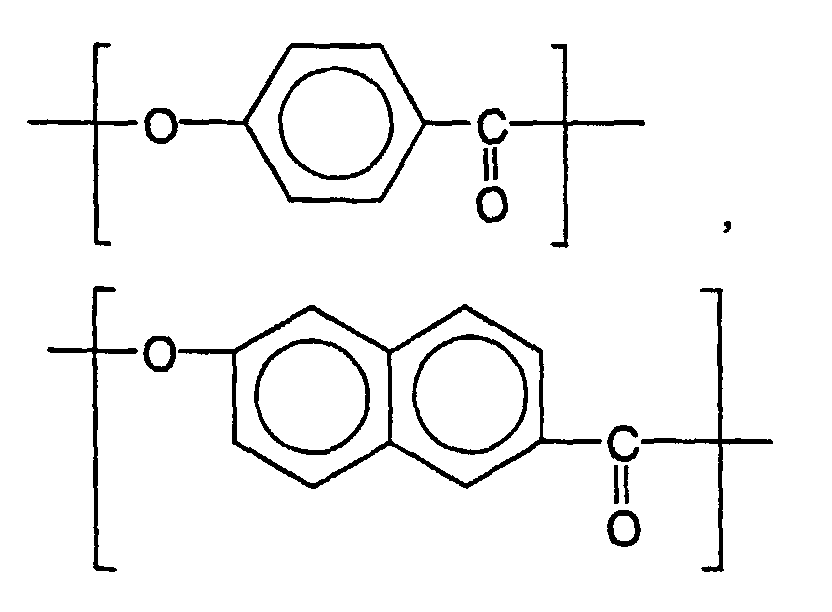
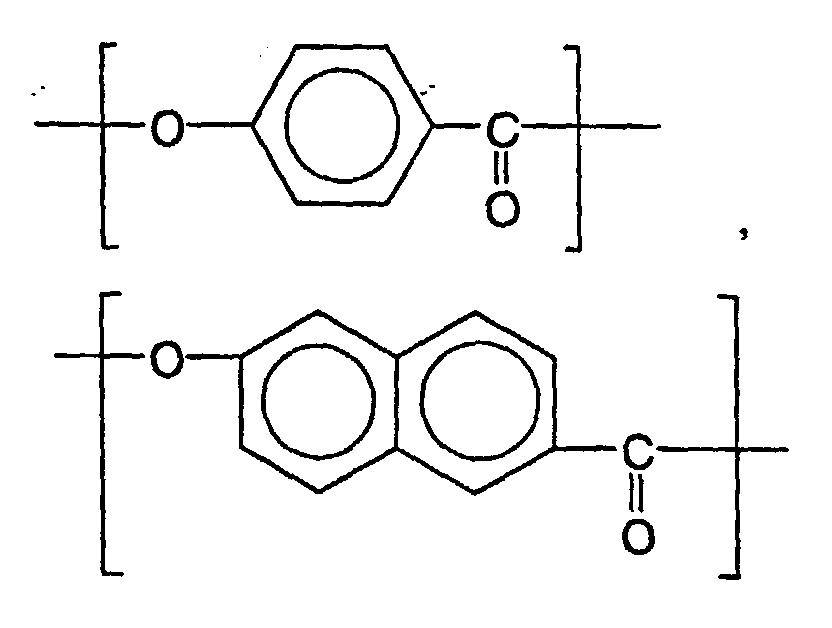
- the present invention relates to a gas barrier film having a thickness of 18 ⁇ m or less composed of a thermoplastic resin wherein the aforementioned thermoplastic resin is a wholly aromatic liquid crystal polyester comprising the following repeating units, and a method for producing a gas barrier film having a thickness of 18 ⁇ m or less wherein film forming is conducted using a wholly aromatic liquid crystal polyester comprising the following repeating units: wherein, hydrogen atoms of the aromatic ring in the above-described repeating units may be substituted with a halogen atom, alkyl group having 1 to 3 carbon atoms or aryl group having 6 to 18 carbon atoms.
- the first gas barrier film of the present invention is a gas barrier film having a thickness of 18 ⁇ m or less composed of a thermoplastic resin wherein the oxygen permeation coefficient is 30 ⁇ 10 -15 cm 3 ⁇ cm/cm 2 ⁇ s ⁇ cmHg or less, measured at a temperature of 23°C and a relative humidity of 60%.
- P (1.523 ⁇ 10 -12 ) ⁇ OTR ⁇ d
- P represents the oxygen permeation coefficient (unit: cm 3 ⁇ cm/cm 2 ⁇ s ⁇ cmHg)
- OTR represents the oxygen permeability (unit: cm 3 /m 2 ⁇ 24 hr ⁇ atm)
- d represents the thickness (unit: mm) of a sample (film).
- the gas barrier film having a small oxygen permeation coefficient of the present invention has extremely excellent oxygen barrierring properties even if the thickness of the film is small.
- the oxygen permeation coefficient of the gas barrier film of the present invention measured at a temperature of 23°C and a relative humidity of 60% is preferably 25 ⁇ 10 -15 cm 3 ⁇ cm/cm 2 ⁇ s ⁇ cmHg or less, more preferably 20 ⁇ 10 -15 cm 3 ⁇ cm/cm 2 ⁇ s ⁇ cmHg or less.
- a gas barrier film having an oxygen permeation coefficient of 30 ⁇ 10 -15 cm 3 ⁇ cm/cm 2 ⁇ s ⁇ cmHg or less, measured at a temperature of 23°C and a relative humidity of 90% is further preferable.
- Such a gas barrier film is excellent in oxygen barrierring properties even under high humidity.
- the second gas barrier film of the present invention is a gas barrier film having small values in both of them (oxygen solubility coefficient and oxygen diffusion coefficient).
- the second gas barrier film of the present invention is a gas barrier film having a thickness of 18 ⁇ m or less composed of a thermoplastic resin wherein the oxygen solubility coefficient is 3.0 ⁇ 10 -3 cm 3 /cm 3 ⁇ atm or less and the oxygen diffusion coefficient is 10.0 ⁇ 10 -10 cm 2 /s or less, measured at a temperature of 23°C and a relative humidity of 60%.
- the gas barrier film of the present invention is preferably a gas barrier film having both features of the first gas barrier film and the second gas barrier film.
- the gas barrier film of the present invention preferable is a gas barrier film having a thickness of 18 ⁇ m or less composed of a thermoplastic resin wherein the oxygen permeation coefficient is 30 ⁇ 10 -15 cm 3 ⁇ cm/cm 2 ⁇ s ⁇ cmHg or less, measured at a temperature of 23°C and a relative humidity of 60%, and the oxygen solubility coefficient is 3.0 ⁇ 10 -3 cm 3 ⁇ atm or less and the oxygen diffusion coefficient is 10.0 ⁇ 10 -10 cm 2 /s or less, measured at a temperature of 23°C and a relative humidity of 60%.
- oxygen solubility coefficient and oxygen diffusion coefficient herein referred to are obtained, respectively, as described below.
- the oxygen permeation amount in measuring oxygen permeability (permeation amount of oxygen per 24 hours per 1 m 2 of a measuring sample (film) under condition of an atmosphere of 1 atm) is plotted, the oxygen permeation amount increases approximately linearly from certain point and reaches about constant value after a while.
- the range in which the oxygen permeation amount increases is approximated by straight line, and the time at the crossing point where the straight line crosses the time axis is regarded as lag time.
- the oxygen diffusion coefficient is calculated according to the following formula (2) using the thickness of a measuring sample (film) and the lag time.
- D d 2 ⁇ (6 ⁇ )
- D represents the oxygen diffusion coefficient (unit: cm 2 /s)
- d represents the thickness (unit: cm) of a measuring sample (film)
- ⁇ represents lag time (unit:s).
- the oxygen solubility coefficient is calculated according to the following formula (3) using the oxygen permeation coefficient and the oxygen diffusion coefficient.
- S represents the oxygen solubility coefficient (unit: cm 3 /cm 3 ⁇ atm)
- P represents the oxygen permeation coefficient (unit: cm 3 ⁇ cm/cm 2 ⁇ s ⁇ cmHg)
- D represents the oxygen diffusion coefficient (unit: cm 2 /s).
- the gas barrier film of the present invention is preferably a gas barrier film having an oxygen solubility coefficient of 2.5 ⁇ 10 -3 cm 3 /cm 3 ⁇ atm or less and an oxygen diffusion coefficient of 8.0 ⁇ 10 -10 cm 2 /s or less. Though it is more suitable if the solubility coefficient and diffusion coefficient are smaller, they never become 0.0 ⁇ 10 -3 cm 3 /cm 3 ⁇ atm and 0.0 ⁇ 10 -10 cm 2 /s, respectively.
- the gas barrier film of the present invention a film having a water vapor permeability of 1.0 g/m 2 ⁇ 24 hr or less, measured at a temperature of 25°C and a relative humidity of 90%, is preferable because of excellent moisture proofing property.
- the gas barrier film of the present invention has such a water vapor permeability, more preferably, of 0.8 g/m 2 ⁇ 24 hr or less, further preferably, 0.6 g/m 2 ⁇ 24 hr or less.
- thermoplastic resin which is a raw material of the gas barrier film of the present invention
- a resin manifesting optical anisotropy in molten state namely, a melting type liquid crystal polymer is preferable.
- a wholly aromatic liquid crystal polyester is used among others, high gas barrierring property is more preferably obtained even under high humidity.
- a polyester having a linear molecular chain is more preferable.
- a wholly aromatic liquid crystal polyester in which aromatic rings constituting the wholly aromatic liquid crystal polyester are selected from the group consisting of a benzene ring, naphthalene ring and anthracene ring and when this aromatic ring is a benzene ring, the bonding mode in the molecular chain is 1,4-bond and when the aromatic ring is a naphthalene ring or an anthracene ring, the bonding mode in the molecular chain is 2,6-bond.
- the wholly aromatic liquid crystal polyester is particularly preferably a wholly aromatic liquid crystal polyester comprising the following repeating units (hereinafter, sometimes abbreviated as "LCP1" ).
- Hydrogen atoms of the aromatic ring in the above-described repeating units may be substituted with a halogen atom, alkyl group or aryl group, however, a ring having no such substitution is further preferable.
- LCP1 preferable is a wholly aromatic liquid crystal polyester comprising, as a repeating unit, a p-hydroxybenzoic acid unit in an amount of 30 to 90 mol% based on the total amount of repeating units and a 6-hydroxy-2-naphthoic acid unit in an amount of 70 to 10 mol% based on the total amount of repeating units.
- liquid crystal polymer there can also be used a resin composition
- a resin composition comprising (A) a wholly aromatic liquid crystal polyester, as a continuous phase, and (B) a copolymer having a functional group reactive with the polyester (A), as a dispersed phase
- this resin composition is preferable since it can provide high gas barrierring property under high humidity, and additionally, it can be easily processed into a film and can give a film having more improved anisotropy, and more flexibility.
- the gas barrier film of the resin composition has relatively large thermal shrinkage(>1%). This may be sometimes useful for lamination with other film of thermoplastic polymers.
- any group may be available providing it has reactivity with the wholly aromatic liquid crystal polyester (A), and an oxazolyl group, epoxy group or amino group is preferable, and an epoxy group is more preferable.
- An epoxy group and the like may also be present as a part of other functional group, and the example thereof include a glycidyl group, for example.
- the copolymer (B) is preferably a copolymer comprising 0.1 to 30% by weight of a unsaturated glycidyl carboxylate unit and/or a unsaturated glycidyl ether unit.
- unsaturated glycidyl ether examples include vinylglycidyl ether, allylglycidyl ether, 2-methylallylglycidyl ether, methacrylglycidyl ether, styrene-p-glycidyl ether and the like.
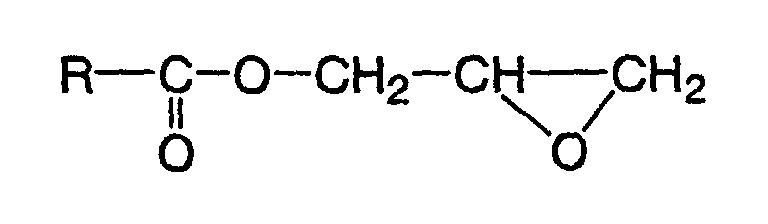
- the unsaturated glycidyl carboxylate is preferably a compound represented by the general formula: wherein, R is a hydrocarbon group having 2 to 13 carbon atoms containing an ethylenically unsaturated bond
- the unsaturated glycidyl ether is preferably a compound represented by the general formula: wherein, R is a hydrocarbon group having 2 to 18 carbon atoms containing an ethylenically unsaturated bond
- X is -CH 2 -O- or
- the above-mentioned copolymer (B) may be a thermoplastic resin or rubber, or may be a mixture of a thermoplastic resin and rubber. Rubber which provides excellent thermal stability and flexibility of a film obtained by using the resin composition, is more preferable.
- the specific example of the copolymer (B) includes (meth)acrylate-ethylene-(unsaturated glycidyl carboxylate and/or unsaturated glycidyl ether) copolymer rubber, as rubber having an epoxy group.
- the (meth)acrylate herein referred to is an ester obtained from acrylic acid or methacrylic acid and alcohol.
- the alcohol is preferably an alcohol having 1 to 8 carbon atoms.
- Specific examples of the (meth)acrylate include methyl acrylate, methyl methacrylate, n-butyl acrylate, n-butyl methacrylate, tert-butyl acrylate, tert-butyl methacrylate, 2-ethylhexyl acrylate, 2-ethylhexyl methacrylate and the like.
- the (meth)acrylate one may be used alone, or two or more may be used in combination.
- the amount of a (meth)acrylate unit is preferably over 40% by weight and less then 97% by weight, more preferably, from 45 to 70% by weight, and the amount of an ethylene unit is 3% by weight or more and less than 50% by weight, more preferably, from 10 to 49% by weight, and the amount of a unsaturated glycidyl carboxylate unit and/or a unsaturated glycidyl ether unit is from 0.1 to 30% by weight, more preferably, from 0.5 to 20% by weight.
- the thermal stability and mechanical property of the resulting film may become insufficient undesirably.
- This copolymer rubber can be produced by a usual method, for example, bulk polymerization, emulsion polymerization, solution polymerization and the like using a free radical initiator.
- Typical polymerization methods are described in Japanese Patent Application Publication (JP ⁇ B) Nos. 46-45085, 61-127709 and the like, and the copolymer rubber can be produced under conditions of a pressure of 500 kg/cm 2 or more and a temperature from 40 to 300°C, in the presence of a polymerization initiator which produces a free radical.
- the copolymer (B) include epoxy group-containing ethylene copolymers composed of (a) 50 to 99% by weight of an ethylene unit, (b) 0.1 to 30% by weight, preferably 0.5 to 20% by weight of a unsaturated glycidyl carboxylate unit and/or a unsaturated glycidyl ether unit, and (c) 0 to 50% by weight of an ethylenically unsaturated ester compound unit, as a thermoplastic resin having an epoxy group.
- epoxy group-containing ethylene copolymers composed of (a) 50 to 99% by weight of an ethylene unit, (b) 0.1 to 30% by weight, preferably 0.5 to 20% by weight of a unsaturated glycidyl carboxylate unit and/or a unsaturated glycidyl ether unit, and (c) 0 to 50% by weight of an ethylenically unsaturated ester compound unit, as a thermoplastic resin having an epoxy group.
- Examples of the ethylenically unsaturated ester compound (c) include vinyl carboxylates such as vinyl acetate, vinyl propionate, methyl acrylate, ethyl acrylate, butyl acrylate, methyl methacrylate, ethyl methacrylate, butyl methacrylate and the like, and ⁇ , ⁇ -unsaturated alkyl carboxylates, and the like. Particularly, vinyl acetate, methyl acrylate and ethyl acrylate are preferable.
- epoxy group-containing ethylene copolymer examples include copolymers composed of an ethylene unit and glycidyl methacrylate unit, copolymers composed of an ethylene unit, glycidyl methacrylate unit and methyl acrylate unit, copolymers composed of an ethylene unit, glycidyl methacrylate unit and ethyl acrylate unit, copolymers composed of an ethylene unit, glycidyl methacrylate unit and vinyl acetate unit, and the like.
- the above-mentioned epoxy group-containing ethylene copolymer is produced by a high pressure radical polymerization method in which a unsaturated epoxy compound and ethylene are copolymerized, usually, in the presence of a radical generating agent, at a pressure of 500 to 4000 atom and a temperature of 100 to 300°C, in the presence or absence of a suitable solvent and chain transfer agent.
- a radical generating agent usually, in the presence of a radical generating agent, at a pressure of 500 to 4000 atom and a temperature of 100 to 300°C, in the presence or absence of a suitable solvent and chain transfer agent.
- it is also produced by a method in which a unsaturated epoxy compound and radical generating agent are mixed with polyethylene, and they are subjected to melting graft copolymerization in an extruder.
- the above-mentioned resin composition is a resin composition comprising (A) a wholly aromatic liquid crystal polyester, as a continuous phase, and (B) a copolymer having a functional group reactive with the polyester (A), as a dispersed phase.
- A a wholly aromatic liquid crystal polyester
- B a copolymer having a functional group reactive with the polyester (A), as a dispersed phase.
- the third gas barrier film of the present invention is a gas barrier film having a thickness of 18 ⁇ m or less composed of a thermoplastic resin wherein the thermoplastic resin is the above-mentioned LCP1.
- a film composed of LCP1 is excellent in the oxygen barrierring property and water vapor barrierring property even if the thickness thereof is small.
- LCP1 a resin composition prepared by using LCP1 as the wholly aromatic liquid crystal polyester (A) in the above-mentioned resin composition. From the standpoint of gas barrierring property, it is more preferable to use LCP1 than to use this resin composition.
- the gas barrier film of the present invention is a gas barrier film as described above wherein the thickness thereof is 18 ⁇ m or less. Even a thinner film can provide high gas barrierring property providing the above-described constitution is satisfied, therefore, it is preferable to apply such a theory to a thinner film, for example, a gas barrier film having a thickness of 15 ⁇ m or less. That is, the thickness of the gas barrier film of the present invention is preferably 15 ⁇ m or less, further preferably 12 ⁇ m or less.
- the lower limit of this thickness is not restricted, and usually 3 ⁇ m or more.
- the method for obtaining a gas barrier film of the present invention is preferably conducted by melt extrusion, and further preferably, a blown film forming method is used.
- a blown film forming method By melting and kneading a resin in an extruder, the resin becomes more uniform and a gas barrierring ability thereof is stabilized.
- a blown film forming method drawing of a melted resin is realized easily, and a gas barrierring ability is improved by the drawing. For example, when a thin film is obtained by press molding, a pin hole and the like may be formed to reduced a gas barrierring ability, undesirably.
- thermoplastic resin used in blown film forming it is preferable to use a resin which has been sufficiently kneaded and homogenized, for realizing uniform blown bubbles, and for stabilizing a gas barrierring property of the resulted film.
- a resin which has been sufficiently kneaded and homogenized for realizing uniform blown bubbles, and for stabilizing a gas barrierring property of the resulted film.
- melt kneading is conducted twice, as well as other methods.
- thermoplastic resin When blown film forming is conducted not by using the above-mentioned resin composition but by using a wholly aromatic liquid crystal polyester, as a thermoplastic resin, it is preferable to set the temperature of a raw material (thermoplastic resin) charging part of an extruder to temperatures lower than the flow initiation temperature of the wholly aromatic liquid crystal polyester used.
- the setting temperature is higher than the flow initiation temperature, film forming may be impossible due to discharge failure and the like, undesirably.
- a device to control the setting temperature of the lowest stream part an extruder and the setting temperature of a die to temperatures higher than the flow initiation temperature by +20°C or more is preferably adopted for inflating stably and uniformly a discharged wholly aromatic liquid crystal polyester.
- the flow initiation temperature is measured by using a capillary type rheometer (for example, Shimadzu Flow Tester type CFT-500, manufactured by Shimadzu Corp.), and means a temperature (°C) at which the melt viscosity is 48000 poise when a thermoplastic resin which has been melted by heating at a temperature raising speed of 4°C/min. is extruded through a nozzle having an internal diameter of 1 mm and a length of 10 mm under a load of 100 kgf/cm 2 .
- a capillary type rheometer for example, Shimadzu Flow Tester type CFT-500, manufactured by Shimadzu Corp.
- the gas barrier film of the present invention can be a film laminated with other film.
- an adhesive may be present between layers, and the gas barrier film of resin composition of the present invention is more preferable due to adequate thermal shrinkage.
- the oxygen permeability at a temperature of 23°C and a relative humidity of 60% was measured by using an oxygen permeability measuring apparatus (OX-TRAN10/50A, manufactured by MOCON), using a test gas containing 99.99% of oxygen and a carrier gas containing 98% of nitrogen and 2% of hydrogen, at a temperature of 23°C and a relative humidity on both of the test gas side and the carrier gas side of 60%, according to JIS K7126 method B (isobaric method).
- the unit of the oxygen permeability is cc/m 2 ⁇ 24 hr ⁇ atm, at the thickness of a film used, without thickness conversion.
- the oxygen permeation coefficient was calculated according to the following formula (1).
- P represents the oxygen permeation coefficient (unit: cm 3 ⁇ cm/cm 2 ⁇ s ⁇ cmHg)
- OTR represents the oxygen permeability (unit: cm 3 /m 3 ⁇ 24 hr ⁇ atm)
- d represents the thickness (unit: mm) of a measuring sample (film).
- the oxygen solubility coefficient was calculated according to the following formula (3) using the oxygen permeation coefficient and the oxygen diffusion coefficient.
- S represents the oxygen solubility coefficient (unit: cm 3 /cm 3 ⁇ atm)
- P represents the oxygen permeation coefficient (unit: cm 3 ⁇ cm/cm 2 ⁇ s ⁇ cmHg)
- D represents the oxygen diffusion coefficient (unit: cm 2 /s).
- the water vapor permeability was measured under conditions of a temperature of 25°C and a relative humidity of 90%, according to JIS Z0208 (cup method).
- the unit is g/m 2 ⁇ 24 hr. This is a value at the thickness of a film, without thickness conversion.
- thermo shrinkage A length each is marked on test film along its machine direction(MD) and transverse one(TD). The specimen is allows to stand in a high-temperature circulating-air oven at 250 °C for 30 minutes. Difference in the length before and after the heat treatment is determined.
- the resulted polymer was ground by a hammer mill manufactured by Hosokawa Micron Corp., to give particles having a particle size of 2,5 mm or less. This was further treated at 240°C for 5 hours under nitrogen atmosphere in a rotary kiln to give a wholly aromatic liquid crystal polyester in the form of particle having a flow initiation temperature of 270°C composed of the following repeating units.
- this wholly aromatic liquid crystal polyester is abbreviated as A-1.
- the flow initiation temperature means a temperature (°C) at which the melt viscosity is 48000 poise when a resin which has been melted by heating at a temperature raising speed of 4°C/min. is extruded through a nozzle having an internal diameter of 1 mm and a length of 10 mm under a load of 100 kgf/cm 2 , using Shimadzu Flow Tester type CFT-500 manufactured by Shimadzu Corp.
- the wholly aromatic liquid crystal polyester A-1 revealed optical anisotropy at a temperature of 280°C or more under pressure, when observed by a polarizing microscope.
- the ratio of repeating structure units in A-1 is as shown below.
- This resulted polymer was ground by a hammer mill manufactured by Hosokawa Micron Corp., to give a particle having a particle size of 2,5 mm or less. This was further treated at 290°C for 6 hours under nitrogen atmosphere in a rotary kiln to give a wholly aromatic liquid crystal polyester in the form of a particle having a flow initiation temperature of 346°C composed of the following repeating units.
- this wholly aromatic liquid crystal polyester is abbreviated as A-2.
- This polymer revealed optical anisotropy at a temperature of 359°C or more under pressure.
- the repeating structure units in A-2 are as shown below.
- a rubber consisting of methylacrylate/ethylene/glycidyl methacrylate 59.0/38.7/2.3 (weight ratio) was obtained according to Example 5 described in JP-A-61-127709.
- the rubber has Mooney viscosity of 15, and heat of crystal-fusion of less than 1 J/g.
- this rubber is abbreviated as Y-1.
- the Mooney viscosity is measured according to JIS K6300 with using a large rotor.
- the heat of crystal-fusion is measured using DSC with heating the rubber from -150°C to 100°C at the rate of 20°C/minute.
- A-1 was melt-kneaded using a type TEX-30 twin-screw extruder manufactured by The Japan Steel Works. Ltd at a set average temperature of a cylinder of 285°C and a screw revolution of 250 rpm, to give a pellet of A-1.
- this thermoplastic resin in the form of a pellet is abbreviated as P-1.
- the flow initiation temperature of P-1 was 263°C.
- thermoplastic resin pellet was melt-kneaded again under the same conditions as described above to obtain a pellet.
- This thermoplastic resin pellet revealed optical anisotropy at a temperature of 272°C or more under pressure.
- the flow initiation temperature was 260°C.
- this thermoplastic resin in a form of pellet is abbreviated as PP-1.
- PP-1 was melt-extruded using a single-screw extruder of 60 mm ⁇ equipped with a cylindrical die(blown film die), while setting the cylinder temperatures of extruder at 255°C (raw material charging part), 285°C and 295°C respectively from the upstream side, at a screw revolution of 100 rpm, and the molten resin was extruded upward through a cylindrical die which had a diameter of 50 mm and a lip interval of 1.0 mm and of which set temperature was controlled to 295°C which was +35°C higher than the flow initiation temperature of PP-1.
- Dry air was compressed into a hollow part of this cylindrical molten resin, to inflate the resin, then the resin was passed through nip rolls to obtain a film.
- This film had a blow up ratio of 3.8, drawdown ratio of 18.8, and the measured average thickness of the film was 14 ⁇ m.
- the oxygen permeability of this film was measured at a temperature of 23°C and a relative humidity of 60%, to find it was 0.87 cc/m 2 ⁇ 24 hr ⁇ atm, and the oxygen permeation coefficient was 18.6 ⁇ 10 -15 cm 3 ⁇ cm/cm 2 ⁇ s ⁇ cmHg.
- the lag time obtained from the figure (Fig. 1) showing the time-dependency of oxygen permeability was 440 seconds, accordingly, the diffusion coefficient was 7.4 ⁇ 10 -10 cm 2 /s, and the solubility coefficient was 1.91 ⁇ 10 -3 cm 3 /cm 3 ⁇ atm.
- the water vapor permeability was measured to find it was as extremely excellent as 0.25 g/m 2 ⁇ 24 hr.
- the oxygen permeability was measured at a temperature of 23°C and a relative humidity of 90%, to find it was 0.91 cc/m 2 ⁇ 24 hr ⁇ atm, and the oxygen permeation coefficient was 19.4 ⁇ 10 -15 cm 3 ⁇ cm/cm 2 ⁇ s ⁇ cmHg.
- a film having a measured average thickness of 11 ⁇ m was obtained in the same manner as in Example 1 except that the blow up ratio was 4.2 and the drawdown ratio was 22.3.
- the oxygen permeability of this film was measured , to find it was 0.95 cc/m 2 ⁇ 24 hr ⁇ atm (at relative humidity of 60%) and 1.02 cc/m 2 ⁇ 24 hr ⁇ atm (at relative humidity of 90%), and the oxygen permeation coefficient was 15.9 ⁇ 10 -15 cm 3 ⁇ cm/cm 2 ⁇ s ⁇ cmHg (at relative humidity of 60%) and 17.1 ⁇ 10 -15 cm 3 ⁇ cm/cm 2 ⁇ s ⁇ cmHg (at relative humidity of 90%).
- the lag time obtained from a view showing the time-dependency of the oxygen permeability was 340 seconds, accordingly, the diffusion coefficient was 5.9 ⁇ 10 -10 cm 2 /s, and the solubility coefficient was 2.05 ⁇ 10 -3 cm 3 /cm 3 ⁇ atm.
- the water vapor permeability was measured to find it was as extremely excellent as 0.29 g/m 2 ⁇ 24 hr.
- the oxygen permeability was measured at a temperature of 23°C and a relative humidity of 90%, to find it was 1.02 cc/m 2 ⁇ 24 hr ⁇ atm, and the oxygen permeation coefficient was 17.1 ⁇ 10 -15 cm 3 ⁇ cm/cm 2 ⁇ s ⁇ cmHg.
- thermoplastic resin in the form of a pellet is abbreviated as S-1.
- the flow initiation temperature of P-1 was 264°C.
- thermoplastic resin pellet revealed optical anisotropy at a temperature of 271°C or more under pressure.
- the flow initiation temperature was 262°C.
- this thermoplastic resin in the form of pellet is abbreviated as ss-1.
- Dry air was compressed into a hollow part of this cylindrical molten resin, to inflate the resin, then the resin was passed through nip rolls to obtain a film.
- This film had a blow up ratio of 3.6, drawdown ratio of 30.0, and the measured average thickness of the film was 10 ⁇ m.
- the oxygen permeability of this film was measured at a temperature of 23°C and a relative humidity of 60%, to find it was 1.5 cc/m 2 ⁇ 24 hr ⁇ atm, and the oxygen permeation coefficient was 22.8 ⁇ 10 -15 cm 3 ⁇ cm/cm 2 ⁇ s ⁇ cmHg.
- the water vapor permeability was measured to find it was as extremely excellent as 0.30 g/m 2 ⁇ 24 hr.
- the oxygen permeability was measured at a temperature of 23°C and a relative humidity of 90%, to find it was 1.7 cc/m 2 ⁇ 24 hr ⁇ atm, and the oxygen permeation coefficient was 25.9 ⁇ 10 -15 cm 3 ⁇ cm/cm 2 ⁇ s ⁇ cmHg.
- the thermal shrinkage of this film was 2.15% for MD and 1.04% for TD.
- A-2 was melt-kneaded using a type TEX-30 twin-screw extruder manufactured by The Japan Steel Works. Ltd at a set average temperature of a cylinder of 355°C and a screw revolution of 250 rpm, to give a pellet of A-2.
- This thermoplastic resin pellet revealed optical anisotropy at a temperature of 348°C or more under pressure.
- this thermoplastic resin in the form of a pellet is abbreviated as P-2.
- the flow initiation temperature of P-2 was 342°C.
- P-2 was melt-kneaded again under the same conditions as described above to obtain PP-2.
- the flow initiation temperature of PP-2 was 340°C.
- PP-2 was melt-extruded using a single-screw extruder of 60 mm ⁇ equipped with a cylindrical die, while setting the cylinder temperatures at 335°C (raw material charging part), 350°C and 360°C respectively from the upstream side, at a screw revolution of 80 rpm, and the molten resin was extruded upward through a cylindrical die which had a diameter of 50 mm, a lip interval of 1.0 mm and a die set temperature of 365°C, dry air was compressed into a hollow part of this cylindrical molten resin, to inflate the resin, then the resin was passed through nip rolls to obtain a film.
- the blow up ratio was 4.1, the drawdown ratio was 15.5, and the measured average thickness of the film was 16 ⁇ m.
- the oxygen permeability of this film was measured, to find it was 4.33 cc/m 2 ⁇ 24 hr ⁇ atm, and the oxygen permeation coefficient was 105.5 ⁇ 10 -15 cm 3 ⁇ cm/cm 2 ⁇ s ⁇ cmHg.
- the lag time obtained from a view showing the time-dependency of the oxygen permeability was 140 seconds, accordingly, the diffusion coefficient was 30.5 ⁇ 10 -10 cm 2 /s, and the solubility coefficient was 2.63 ⁇ 10 -3 cm 3 /cm 3 ⁇ atm which was not admitted as excellent.
- the water vapor permeability was measured to find it was 0.7 g/m 2 ⁇ 24 hr.
- a film having a thickness of 10 ⁇ m was obtained in the same manner as in Comparative Example 1 except that the blow up ratio was 4.2 and the drawdown ratio was 24.0.
- the oxygen permeability of this film was measured, to find it was 8.2 cc/m 2 ⁇ 24 hr ⁇ atm, and the oxygen permeation coefficient was 124.9 ⁇ 10 -15 cm 3 ⁇ cm/cm 2 ⁇ s ⁇ cmHg.
- the lag time obtained from a view showing the time-dependency of the oxygen permeability was 55 seconds, accordingly, the diffusion coefficient was 30.3 ⁇ 10 -10 cm 2 /s, and the solubility coefficient was 3.13 ⁇ 10 -3 cm 3 /cm 3 ⁇ atm.
- the water vapor permeability was measured to find it was 1/1 g/m 2 ⁇ 24 hr.
- a gas barrier film which is composed of a thermoplastic resin and shows high gas barrierring property in spite of its small thickness, and a method for producing the same are provided.
- This gas barrier film has extremely large use value in industry since such a gas barrier film which has excellent oxygen barrierring property and water vapor barrierring property can be obtained and such a gas barrier film which does not release a halide gas in burning and further, does not leave ash after burning can be obtained.
Landscapes
- Chemical & Material Sciences (AREA)
- Engineering & Computer Science (AREA)
- Manufacturing & Machinery (AREA)
- Materials Engineering (AREA)
- Health & Medical Sciences (AREA)
- Chemical Kinetics & Catalysis (AREA)
- Medicinal Chemistry (AREA)
- Polymers & Plastics (AREA)
- Organic Chemistry (AREA)
- Manufacture Of Macromolecular Shaped Articles (AREA)
- Laminated Bodies (AREA)
- Treatments Of Macromolecular Shaped Articles (AREA)
Abstract
Description




Claims (15)
- A gas barrier film having a thickness of 18 µm or less composed of a thermoplastic resin wherein the oxygen permeation coefficient is 30×10-15cm3·cm/cm2·s·cmHg or less, measured at a temperature of 23°C and a relative humidity of 60%.
- A gas barrier film having a thickness of 18 µm or less composed of a thermoplastic resin wherein the oxygen permeation coefficient is 30×10-15cm3·cm/cm2·s·cmHg or less, measured at a temperature of 23°C and a relative humidity of 90%.
- A gas barrier film having a thickness of 18 µm or less composed of a thermoplastic resin wherein the oxygen solubility coefficient is 3.0×10⁻³cm3/cm3·atm or less and the oxygen diffusion coefficient is 10.0×10⁻¹⁰cm2/s or less, measured at a temperature of 23°C and a relative humidity of 60%.
- The gas barrier film according to Claim 1 or 2 wherein the oxygen solubility coefficient is 3.0×10⁻³cm3/cm3·atm or less and the oxygen diffusion coefficient is 10.0×10⁻¹⁰cm2/s or less, measured at a temperature of 23°C and a relative humidity of 60%.
- The gas barrier film according to any of Claims 1 to 4 wherein the water vapor permeability is 1.0 g/m2·24 hr or less, measured at a temperature of 25°C and a relative humidity of 90%.
- The gas barrier film according to any of Claims 1 to 5 wherein the thermoplastic resin is a resin manifesting optical anisotropy in molten state.
- The gas barrier film according to any of Claims 1 to 5 wherein the thermoplastic resin is a wholly aromatic liquid crystal polyester.
- The gas barrier film according to any of Claims 1 to 5 wherein the thermoplastic resin is a resin composition comprising (A) a wholly aromatic liquid crystal polyester, as a continuous phase, and (B) a copolymer having a functional group reactive with the polyester (A), as a dispersed phase.
- The gas barrier film according to Claim 7 or 8 wherein the wholly aromatic liquid crystal polyester is a wholly aromatic liquid crystal polyester comprising the following repeating units:wherein, hydrogen atoms of the aromatic ring in the above-described repeating units may be substituted with a halogen atom, alkyl group or aryl group.
- A gas barrier film having a thickness of 18 µm or less composed of a thermoplastic resin wherein said thermoplastic resin is a wholly aromatic liquid crystal polyester comprising the following repeating units:wherein, hydrogen atoms of the aromatic ring in the above-described repeating units may be substituted with a halogen atom, alkyl group or aryl group.

- The gas barrier film according to any of Claims 1 to 10 wherein the thickness of the film is 15 µm or less.
- The gas barrier film according to any of Claims 1 to 11 wherein the gas barrier film is a film obtained by a blown film forming method.
- A method for producing a gas barrier film having a thickness of 18 µm or less wherein film forming is conducted using a wholly aromatic liquid crystal polyester comprising the following repeating units:wherein, hydrogen atoms of the aromatic ring in the above-described repeating units may be substituted with a halogen atom, alkyl group or aryl group.
- The method for producing a gas barrier film according to Claim 13 wherein the film forming is blown film forming.
- The method for producing a gas barrier film according to Claim 13 or 14 wherein the thickness of the film is 15 µm or less.
Applications Claiming Priority (2)
| Application Number | Priority Date | Filing Date | Title |
|---|---|---|---|
| JP21758399 | 1999-07-30 | ||
| JP21758399 | 1999-07-30 |
Publications (2)
| Publication Number | Publication Date |
|---|---|
| EP1072631A2 true EP1072631A2 (en) | 2001-01-31 |
| EP1072631A3 EP1072631A3 (en) | 2001-02-07 |
Family
ID=16706567
Family Applications (1)
| Application Number | Title | Priority Date | Filing Date |
|---|---|---|---|
| EP00116396A Withdrawn EP1072631A3 (en) | 1999-07-30 | 2000-07-28 | Gas barrier film and method for producing the same |
Country Status (3)
| Country | Link |
|---|---|
| EP (1) | EP1072631A3 (en) |
| KR (1) | KR20010049908A (en) |
| CN (1) | CN1287916A (en) |
Cited By (3)
| Publication number | Priority date | Publication date | Assignee | Title |
|---|---|---|---|---|
| EP1081173A3 (en) * | 1999-09-03 | 2002-10-23 | Sumitomo Chemical Company, Limited | Process for producing aromatic liquid crystalline polyester and film thereof |
| EP1350822A1 (en) * | 2002-04-04 | 2003-10-08 | Mitsubishi Gas Chemical Company, Inc. | Organic coated steel having excellent rust preventive and corrosion preventive performances and rust preventing method for metal |
| DE10316939A1 (en) * | 2003-04-12 | 2004-11-04 | Tscheulin-Rothal Gmbh | Gas-tight laminate useful as a packaging material comprises adhesive layers of compatible copolymer between a barrier layer of liquid-crystalline polymer and protective layers of polyolefin |
Families Citing this family (2)
| Publication number | Priority date | Publication date | Assignee | Title |
|---|---|---|---|---|
| TWI574836B (en) | 2014-10-29 | 2017-03-21 | 財團法人工業技術研究院 | Gas barrier composite film |
| JP6516002B2 (en) * | 2015-04-30 | 2019-05-22 | 王子ホールディングス株式会社 | Capacitor film and method for manufacturing the same |
Family Cites Families (4)
| Publication number | Priority date | Publication date | Assignee | Title |
|---|---|---|---|---|
| JPH0774281B2 (en) * | 1989-01-19 | 1995-08-09 | 東レ株式会社 | Gas barrier film |
| JP3473237B2 (en) * | 1995-12-27 | 2003-12-02 | 住友化学工業株式会社 | Method for producing liquid crystal polyester resin composition film |
| EP0790279B2 (en) * | 1996-02-19 | 2007-07-18 | Sumitomo Chemical Company, Limited | Liquid crystal polyester resin composition |
| JPH1160756A (en) * | 1997-08-12 | 1999-03-05 | Toray Ind Inc | Liquid crystalline polyester film and method for producing the same |
-
2000
- 2000-07-27 KR KR1020000043426A patent/KR20010049908A/en not_active Withdrawn
- 2000-07-28 EP EP00116396A patent/EP1072631A3/en not_active Withdrawn
- 2000-07-28 CN CN00126829A patent/CN1287916A/en active Pending
Cited By (7)
| Publication number | Priority date | Publication date | Assignee | Title |
|---|---|---|---|---|
| EP1081173A3 (en) * | 1999-09-03 | 2002-10-23 | Sumitomo Chemical Company, Limited | Process for producing aromatic liquid crystalline polyester and film thereof |
| US6528164B1 (en) | 1999-09-03 | 2003-03-04 | Sumitomo Chemical Company, Limited | Process for producing aromatic liquid crystalline polyester and film thereof |
| US6656578B2 (en) | 1999-09-03 | 2003-12-02 | Sumitomo Chemical Company, Limited | Process for producing aromatic liquid crystalline polyester and film thereof |
| EP1350822A1 (en) * | 2002-04-04 | 2003-10-08 | Mitsubishi Gas Chemical Company, Inc. | Organic coated steel having excellent rust preventive and corrosion preventive performances and rust preventing method for metal |
| US7018715B2 (en) | 2002-04-04 | 2006-03-28 | Mitsubishi Gas Chemical Company, Inc. | Organic coated steel having excellent rust preventive and corrosion preventive performances and rust preventing method for metal |
| DE10316939A1 (en) * | 2003-04-12 | 2004-11-04 | Tscheulin-Rothal Gmbh | Gas-tight laminate useful as a packaging material comprises adhesive layers of compatible copolymer between a barrier layer of liquid-crystalline polymer and protective layers of polyolefin |
| DE10316939B4 (en) * | 2003-04-12 | 2007-07-12 | Alcan Technology & Management Ag | Composite laminate with LCP coating |
Also Published As
| Publication number | Publication date |
|---|---|
| KR20010049908A (en) | 2001-06-15 |
| EP1072631A3 (en) | 2001-02-07 |
| CN1287916A (en) | 2001-03-21 |
Similar Documents
| Publication | Publication Date | Title |
|---|---|---|
| US5891532A (en) | Liquid crystal polyester resin composition film | |
| EP1081173B1 (en) | Process for producing aromatic liquid crystalline polyester and film thereof | |
| EP0964014A2 (en) | Aromatic liquid crystalline polyester resin and resin composition thereof | |
| JP3949215B2 (en) | LAMINATE, METHOD FOR PRODUCING LAMINATE, AND MULTILAYER SUBSTRATE | |
| JP3949213B2 (en) | Laminated material and paper pack container formed from the material | |
| KR20010049908A (en) | Gas barrier film and method for producing the same | |
| JP2000080254A (en) | Liquid crystal polyester resin composition, liquid crystal polyester resin composition film and method for producing the same | |
| JP2001072750A (en) | Aromatic liquid crystalline polyester and method for producing the same | |
| JP3650459B2 (en) | Liquid crystal polyester resin composition film and method for producing the same | |
| JP3648863B2 (en) | Pouch packaging | |
| JP3339296B2 (en) | Liquid crystal polyester resin composition film and method for producing the same | |
| JP2001301081A (en) | Laminate | |
| JP2001106809A (en) | Gas barrier film and method for producing the same | |
| US20020048681A1 (en) | Laminate of liquid crystalline polymer | |
| JP3326480B2 (en) | Container made of liquid crystal polyester resin composition | |
| JPH11302402A (en) | Light-shielding film | |
| JP3637678B2 (en) | Liquid crystal polyester resin composition and film | |
| JP2000334906A (en) | Evaporated film | |
| JP3473237B2 (en) | Method for producing liquid crystal polyester resin composition film | |
| JP3735951B2 (en) | Liquid crystal polyester resin composition and film | |
| JP2002178414A (en) | Thermoplastic resin film and method for producing the same | |
| JP2001151872A (en) | Liquid crystalline aromatic polyester film and method for producing the same | |
| JP2005153148A (en) | Method for producing liquid crystal polymer sheet | |
| JP2000309648A (en) | the film | |
| JP2025528830A (en) | Polymer compositions, methods for preparing same, and products |
Legal Events
| Date | Code | Title | Description |
|---|---|---|---|
| PUAI | Public reference made under article 153(3) epc to a published international application that has entered the european phase |
Free format text: ORIGINAL CODE: 0009012 |
|
| PUAL | Search report despatched |
Free format text: ORIGINAL CODE: 0009013 |
|
| AK | Designated contracting states |
Kind code of ref document: A2 Designated state(s): DE FR GB |
|
| AX | Request for extension of the european patent |
Free format text: AL;LT;LV;MK;RO;SI |
|
| AK | Designated contracting states |
Kind code of ref document: A3 Designated state(s): AT BE CH CY DE DK ES FI FR GB GR IE IT LI LU MC NL PT SE |
|
| AX | Request for extension of the european patent |
Free format text: AL;LT;LV;MK;RO;SI |
|
| 17P | Request for examination filed |
Effective date: 20010710 |
|
| AKX | Designation fees paid |
Free format text: DE FR GB |
|
| RAP1 | Party data changed (applicant data changed or rights of an application transferred) |
Owner name: SUMITOMO CHEMICAL COMPANY, LIMITED |
|
| 17Q | First examination report despatched |
Effective date: 20041208 |
|
| STAA | Information on the status of an ep patent application or granted ep patent |
Free format text: STATUS: THE APPLICATION IS DEEMED TO BE WITHDRAWN |
|
| 18D | Application deemed to be withdrawn |
Effective date: 20050419 |