FIELD OF THE INVENTION
The present invention relates to an alumina ceramic composition,
more particularly to an alumina ceramic composition exhibiting a high Q
factor in a high frequency band such as a radio frequency band, a
microwave band, etc.
DESCRIPTION OF PRIOR ART
For circuit substrates used in a high-frequency band and parts for
microwave transmission apparatuses, alumina ceramic compositions having
small dielectric loss are required to reduce transmission loss. Though
so-called high-purity alumina having a purity of about 99.999% is a
material having a small dielectric loss, it cannot advantageously be used for
alumina ceramic compositions for parts of the above microwave
transmission apparatuses, etc., because its sintering temperature is
disadvantageously as high as 1600°C. For instance, when the sintering
temperature exceeds 1500°C, higher-quality sintering furnaces are needed,
resulting in decrease in productivity and higher production cost. Also, the
high-purity alumina per se is so expensive that it cannot be used for parts of
microwave transmission apparatuses, etc., which are required to be small
and inexpensive with high performance.
Thus widely used as inexpensive alumina materials having a purity
of about 99.8% for parts of microwave transmission apparatuses, etc are
alumina ceramic compositions with improved sinterability by lowering a
sintering temperature to 1400-1500°C with small amounts of MgO or TiO2.
Though the addition of MgO, etc. is effective to lower the sintering
temperature, it tends to increase the dielectric constant of the resultant
alumina ceramic compositions. As a result, such alumina ceramic
compositions as containing MgO or TiO2 fail to have sufficient Q factors
for practical applications due to extremely increased dielectric loss as
compared with high-purity alumina.
Disclosed as an alumina ceramic composition with lowered
dielectric loss and increased Q factor in Japanese Patent Laid-Open No.
4-356922 is an alumina ceramic composition having a dielectric loss (tan δ)
of 1 x 10⁻⁴ to 1 x 10⁻³ and a Q factor of 1,000 to 10,000 by limiting the total
content of alkali metals (as Na2O, K2O) to 150 ppm or less. Further, an
alumina ceramic composition disclosed in Japanese Patent Laid-Open No.
8-59338 has a Q factor of 10,000 or more by limiting the total content of
alkali metals (calculated as Na2O, K2O) to 100 ppm or less and the content
of Mg (calculated as MgO) to a particular range of 100 ppm or less or
1,000 to 50,000 ppm. Japanese Patent Laid-Open No. 8-59338 suggests
that inevitable impurities such as Si, Fe, Ca, Ti, etc. are contained in the
alumina ceramic composition, and that the amount of each impurity is 500
ppm or less.
However, both of Japanese Patent Laid-Open Nos. 4-356922 and
8-59338 are directed to alumina ceramic compositions with relatively high
Q factors, in which the total content of alkali metals (as Na2O, K2O) are
necessary to be limited to extremely small amounts such as 100-150 ppm
or lower. For this purpose, expensive high-purity alumina is used as a
starting material, or when a common-grade alumina is used as a starting
material, an additional step of fully removing alkali metals is needed,
resulting in higher production cost.
It has conventionally been considered that in alumina ceramic
compositions, the amounts of impurities dissolved in grain boundaries and
alumina crystal grains contribute to increase in their dielectric loss.
Generally adopted to obtain alumina ceramic compositions with low
dielectric loss is to use as a starting material high-purity alumina, in which
the total content of impurities such as alkali metals (Na2O, K2O) are limited.
As described above, however, this may deteriorate the productivity and
sinterability of alumina ceramic compositions. Thus, there has
conventionally not been proposed an alumina ceramic composition formed
from a usual low-purity alumina starting material and having low loss (high
Q factor) and low-temperature sinterability.
OBJECT OF THE INVENTION
Accordingly, an object of the present invention is to provide an
alumina ceramic composition having a low dielectric loss (high Q factor)
and improved sinterability and productivity, which is formed from a usual
low-purity alumina starting material without using high-purity alumina.
SUMMARY OF THE INVENTION
As a result of research on the influence of various impurities and
additives on the dielectric loss of an alumina ceramic composition, the
inventor has found that when the amount of Mg added to improve the
sinterability of alumina is within a particular range, the resultant alumina
ceramic composition has an extremely decreased Q factor. Specifically,
when the content of Mg is 0.2 weight % or less when calculated as MgO,
the Q factor of the alumina ceramic composition is small, and when the Mg
content is near 0.05 weight %, the Q factor of the alumina ceramic
composition is extremely small. On the other hand, the addition of Ti in
an amount of 0.2-10 weight % (calculated as TiO2) improves the Q factor
of an alumina ceramic composition, which would be extremely low if
otherwise, even with the Ti content of 0.2 weight % or less, for instance,
0.05 weight % (calculated as TiO2). In sum, while the dielectric loss of an
alumina ceramic composition is suppressed to provide an improved Q
factor by limiting the contents of alkali metals and MgO to particular
ranges in the above prior art, the present invention has achieved to provide
an alumina ceramic composition formed from a low-purity alumina starting
material with an improved Q factor by adding both Mg and Ti in particular
amounts.
Thus, the first alumina ceramic composition according to the
present invention comprises 10 weight % or less (calculated as MgO) of
Mg, and 0.2-10 weight % (calculated as TiO2) of Ti, the balance being
substantially an Al2O3 phase and inevitable impurities.
In the first alumina ceramic composition, the content of Mg is
preferably 0.2 weight % or less, more preferably about 0.05 weight %,
when calculated as MgO. Also, the content of Ti added together with Mg
is preferably 0.5-10 weight %, more preferably 0.75-5 weight %, when
calculated as TiO2. The proportion of Mg to Ti is properly balanced
within the above ranges. It is preferable that the structure of the alumina
ceramic composition partially contains an Al2TiO5 phase.
The second alumina ceramic composition according to the present
invention has a structure based on an Al2O3 main phase and partially
containing an Al2TiO5 phase, a ratio X of [I (AT) / I (Al) x 100%] being
0.2-15%, wherein I (Al) represents a diffraction intensity in a (113) plane in
the Al2O3 phase, and I (AT) represents a diffraction intensity in a (110)
plane in the Al2TiO5 phase, both determined from an X-ray diffraction
pattern.
In the first and second alumina ceramic compositions, the Al2TiO5
phase is preferably precipitated in grain boundaries. The Al2TiO5 phase
precipitated in grain boundaries preferably surrounds part of grain
boundaries composed of inevitable impurities.
The third alumina ceramic composition according to the present
invention is based on Al2O3 and containing Mg, Ti and inevitable
impurities, wherein the value ΔLa obtained by subtracting the standard
value Ls of an a-axis lattice constant of Al2O3 in the standard data list of
powder X-ray diffraction patterns (JCPDS card No. 46-1212) from an
a-axis lattice constant La of the Al2O3 phase in the alumina ceramic
composition is in the range of - 0.003 ≤ ΔLa < 0 (unit: angstrom).
The first to third alumina ceramic compositions preferably have a Q
factor of 850 or more, particularly 1000 or more, when measured at a
frequency of 10 GHz. The upper limit of the Q factor is preferably about
3800. An available range of the Q factor is thus about 850 to about 3800.
BRIEF DESCRIPTION OF THE DRAWINGS
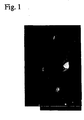
Fig. 1 is a photomicrograph showing the structure of an alumina
ceramic composition of Sample No. 10 (EXAMPLE 7);
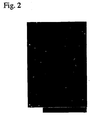
Fig. 2 is a photomicrograph showing the structure of an alumina
ceramic composition of Sample No. 2 (COMPARATIVE EXAMPLE 2);
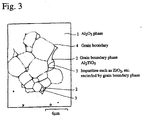
Fig. 3 is a schematic view of the photomicrograph shown in Fig. 1;
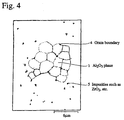
Fig. 4 is a schematic view of the photomicrograph shown in Fig. 2;
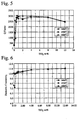
Fig. 5 is a graph showing the relation between the content of TiO2
and a Q factor in alumina ceramic compositions containing 0.05 weight %
of MgO and various amounts (0.00-12.00 weight %) of TiO2;
Fig. 6 is a graph showing the relation between the content of TiO2
and a dielectric constant in alumina ceramic compositions containing 0.05
weight % of MgO and various amounts (0.00-12.00 weight %) of TiO2;
Fig. 7 is a graph showing the relation between the content of TiO2
and a sintering density in alumina ceramic compositions containing 0.05
weight % of MgO and various amounts (0.00-12.00 weight %) of TiO2; and
Fig. 8 is a graph showing the relation between the content of MgO
and a Q factor in alumina ceramic compositions containing various
amounts (0-1 weight %) of MgO and 1.0 weight % of TiO2.
DESCRIPTION OF THE PREFERRED EMBODIMENTS
[1] Composition
(A) Mg
Mg is effective to improve the sinterability of low-purity alumina
by suppressing its sintering temperature. When the content of Mg
exceeds 10 weight % (calculated as MgO), however, further improvement
in sinterability cannot be obtained, only resulting in decrease in a Q factor
to less than 850. Thus, the content of Mg should be 10 weight % or less.
The content of Mg is preferably 8 weight % or less, more preferably 5
weight % or less, most preferably 1 weight % or less, particularly about
0.05 weight %. The lower limit of the Mg content is generally 0.01
weight %, preferably 0.02 weight %, more preferably 0.05 weight %.
(B) Ti
Because the dielectric loss increases and thus the Q factor
drastically decreases when the Mg content becomes 0.2-0.01 weight %, Ti
is effectively added to improve the Q factor. When the content of Ti is
less than 0.2 weight % (calculated as TiO2), improvement in the
sinterability of the alumina ceramic composition cannot be expected. As
the content of Ti increases to 0.5 weight % or further, the Q factor is
improved rapidly. Though further addition of Ti keeps the improved Q
factor, more than 10 weight % of Ti rather decreases the Q factor. Thus,
the content of Ti is 0.2-10 weight % (calculated as TiO2), preferably 0.5-10
weight % and more preferably 0.75-5 weight %.
With both Mg and Ti added to alumina in the above ranges, the
resultant alumina ceramic composition is provided with a high Q factor and
improved sinterability. Though the mechanism of improving a Q factor
and sinterability by adding both Mg and Ti is not necessarily clear, it may
be presumed that MgO and TiO2 function to improve the sinterability of an
alumina ceramic composition, while prompting the formation of Al2TiO5 in
grain boundaries such that it surrounds impurities in the grain boundaries,
thereby suppressing impurities from dissolving into the alumina crystal
grains, resulting in improvement in the Q factor of the alumina ceramic
composition.
(C) Impurities
Though the amounts of impurities are preferably as small as
possible in the alumina ceramic composition of the present invention, the
inclusion of inevitable impurities such as alkali metals such as Na and K,
Zr, Y, Fe, Si, Ca, Ga, Cr, etc. cannot be avoided in the production thereof.
Particularly, alkali metals such as Na and K are contained in the alumina
ceramic composition in a total amount of 0.02-0.2 weight %, preferably
0.02-0.1 weight %, more preferably 0.04-0.1 weight %, based on alumina.
With respect to other impurities, their permissible amounts
(calculated as oxides) are approximately as follows: Zr; 2 weight % or less,
Y; 0.2 weight % or less, Fe; 0.05 weight % or less, Si; 0.02 weight % or
less, Ca; 0.02 weight % or less, Ga; 0.01 weight % or less, and Cr; 0.005
weight % or less. Within the above ranges of inevitable impurities, the Q
factor of the alumina ceramic composition is scarcely affected.
[2] Structure
The alumina ceramic composition of the present invention has a
structure having a main phase composed of Al2O3 crystal grains and grain
boundaries containing Al2TiO5. An Al2TiO5 phase precipitated in the
grain boundaries functions to surround or wrap inevitable impurities such
as ZrO2, etc., thereby preventing these inevitable impurities from
dissolving into alumina crystal grains. Thus, in a preferred embodiment,
the grain boundaries are substantially constituted by Al2TiO5 crystals.
If inevitable impurities dissolved into alumina crystal grains, the
dielectric loss of the alumina ceramic composition would increase,
resulting in decrease in a Q factor. However, because the inevitable
impurities are prevented from dissolving into alumina crystal grains by the
existence of Al2TiO5, the dielectric loss of the alumina ceramic
composition does not increase, and the growth of Al2O3 crystal grains is
accelerated to reduce pores, resulting in a dense alumina sintered body.
The decrease in pores is preferable in improvement in dielectric constant.
Thus, the formation of an Al2TiO5 phase in the grain boundaries accelerates
improvement in the Q factor and sinterability.
The structure of the alumina ceramic composition according to
another embodiment of the present invention is characterized in that a ratio
X of [I (AT) / I (Al) x 100%] is 0.2-15%, wherein I (AT) represents a
diffraction intensity in a (110) plane in the Al2TiO5 phase, and I (Al)
represents a diffraction intensity in a (113) plane in the Al2O3 phase, both
determined from an X-ray diffraction pattern. The diffraction intensity
ratio X corresponds to the proportion of the Al2TiO5 phase to the Al2O3
crystal grains. When X is less than 0.2, the alumina ceramic composition
is poor in sinterability, failing to achieve improvement in the Q factor. On
the other hand, when X is more than 15, the Q factor tends to deteriorate.
Thus, the ratio X should be 0.2-15. The preferred ratio X is 0.2-10.
According to a further embodiment of the present invention, the
value ΔLa obtained by subtracting the standard value Ls of an a-axis lattice
constant of Al2O3 in a standard powder X-ray diffraction pattern data list
(JCPDS card No. 46-1212) from an a-axis lattice constant La of the Al2O3
phase is in the range of - 0.003 ≤ ΔLa < 0 (unit:angstrom). This
parameter ΔLa is related to the crystal structure and strain of the alumina
ceramic composition, because part of Mg and impurities, once dissolved in
the Al2O3 crystal grams, distort the crystal structure, resulting in change in
lattice constant ad thus deterioration in the Q factor. When ΔLa is less
than - 0.003 or equal to or more than 0, the alumina ceramic composition
cannot be provided with a Q factor of 850 or more.
[3] Production
To produce the alumina ceramic composition of the present
invention, low-purity alumina powder, 10 weight % or less of magnesium
oxide (calculated as MgO), and 0.2-10 weight % of titanium oxide
(calculated as TiO2) may be formulated and ball-milled with
yttria-stabilized zirconia balls and pure water. The resultant slurry is dried
by a spray drier, crushed and then granulated. The resultant granular
powder is molded by a die press and sintered at 1400-1600°C for 0.5-4
hours in the air. After ball-milling, calcination may be carried out.
In the production of the alumina ceramic composition of the present
invention, high-purity alumina needs not be used as a starting material, and
low-purity alumina having a purity of 99.8% or less is used. The
low-purity alumina contains generally 0.02-0.2 weight %, particularly
0.02-0.1 weight %, more particularly 0.04-0.1 weight % (calculated as
oxides), in total, of alkali metals such as Na, K, etc. Other impurities may
be Zr, Y, Fe; Si, Ca, Ga Cr, etc. With such low-purity alumina, it is
possible to produce an alumina ceramic composition with a Q factor of 850
or more at 10 GHz at a lower sintering temperature that enables it to use
common sintering furnace, thereby improving productivity.
Each of magnesium oxide and titanium oxide may have a purity of
0.1 % or less, and their impurities are, for instance, alkali metals, Zr, Y, Fe;
Si, Ca, Ga Cr, etc. The alumina ceramic composition may also be
contaminated with Zr, Y, etc. during the ball-milling process using
Y2O3-stabilized ZrO2 balls.
The present invention will be described in detail referring to
EXAMPLES below without intention of limiting the present invention
thereto.
EXAMPLES 1-23, COMPARATIVE EXAMPLES 1-12
Widely used low-purity alumina (purity: 99.5%, average particle
size: 0.3 µm), MgO powder (average particle size: 0.1 µm), and TiO2
powder (average particle size: 0.3 µm) were weighed to provide
compositions shown in Table 1 below, and each of the resultant mixtures
was charged into a plastic pot together with Y2O3-stabilized ZrO2 balls and
pure water to carry out ball milling for 20 hours. Each of the resultant
slurries was mixed with 1 weight % of polyvinyl alcohol and stirred. The
resultant mixture slurry was dried at 90°C by a spray drier in the air for
granulation. The resultant granular powder was molded to 15 mm in
diameter x 7.5 mm in thickness by a die press. The resultant green body
was sintered at a temperature in the range of 1400-1600°C as shown in
Table 1 for 2 hours, and the resultant sintered body was ground to provide a
test piece of 10 mm in diameter x 5 mm in thickness.
Composition analysis revealed that the above low-purity alumina
contained as impurities 0.05 weight % of Na (calculated as Na2O), 0.6
weight % of Zr (calculated as ZrO2), 0.2 weight % of Y (calculated as
Y2O3), 0.15 weight % of Fe (calculated as Fe2O3), 0.01 weight % of Si
(calculated as SiO2), 0.01 weight % of Ca (calculated as CaO), 0.0025
weight % of Ga (calculated as Ga2O3), and 0.001 weight % of Cr (Cr2O3).
With respect to each test piece, a Q factor was measured by a Hakki
& Coleman method. Further, measurement was conducted on each test
piece with respect to a dielectric constant εr and a density of a sintered body.
The results are shown in Table 1.
Also, with respect to samples containing 0.05 weight % of MgO,
the relation between the content of TiO2 and a Q factor is shown in Fig. 5,
the relation between the content of TiO2 and a dielectric constant is shown
in Fig. 6, and the relation between the content of TiO2 and density of a
sintered body is shown in Fig. 7. In each test, sintering was conducted at
1400°C, 1500°C and 1600°C, respectively.
Fig. 8 shows the influence of the MgO content on the Q factor in
alumina ceramic compositions containing various amounts (0-1 weight %)
of MgO and 1.0 weight % of TiO
2. It was observed that the Q factor of
the alumina ceramic composition was drastically reduced when the content
of MgO was from 0.01 weight % to 0.2 weight %, and that it was
extremely low at the MgO content of 0.05 weight %.
It is clear from Table 1 and Fig. 5 that the Q factor of 850 or more
can be obtained in these alumina ceramic compositions when Mg is 10
weight % or less (calculated as MgO), and Ti is 0.2-10 weight %
(calculated as TiO2). While the Q factor of alumina is extremely low at
the MgO content of 0.05 weight %, the data of sample Nos. 1-16 show that
as the content of TiO2 increases, the Q factor increases, and that the Q
factor is maximum at the TiO2 content of 0.75 weight %. Also, as the
sintering temperature is elevated, the Q factor increases together with a
dielectric constant and a sintered body density. A practically acceptable Q
factor is obtained at a sintering temperature of 1500°C or lower. Though
the effects of TiO2 continue exhibiting as its content increases, the Q factor
tends to decrease when the TiO2 content exceeds 10 weight %. Excellent
effects can be obtained by adding both Mg and Ti, while their proportions
affect the Q factor. In general, the Q factor when obtained by adding both
Mg and Ti is about 4-10 times that when there is no Ti. It is also
confirmed that a dielectric constant εr was essentially constant when both
Mg and Ti were added.
On the other hand, in Sample Nos. 19, 22, 25 and 29 containing no
TiO2 despite of inclusion of MgO, and in Sample Nos. 16 and 35
containing more than 10 weight % of MgO, the Q factor was as small as
less than 850, failing to obtain a sufficient Q factor at a sintering
temperature of 1500°C. Also, in Sample Nos. 1-3 containing only MgO, a
sufficient Q factor was not obtained.
With respect to samples of EXAMPLES 2, 5, 7, 9, 11 and 12 and
COMPARATIVE EXAMPLES 2 and 4, crystal phases in each sintered body
were identified by an X-ray diffraction apparatus using a CuKα ray, and
lattice constants of an Al
2O
3 phase were measured. The results are shown
in Table 2. Fig. 1 is a photomicrograph of Sample No. 10 (EXAMPLE 7)
containing 0.75 weight % of TiO
2, and Fig. 2 is a photomicrograph of
Sample No. 2 (COMPARATIVE EXAMPLE 2) containing no TiO
2. Both
photomicrographs were taken by a scanning-type electron microscope
(SEM) at 5000 times on a representative ground surface of each sample.
From X-ray diffraction results, a black background was identified as an
Al
2O
3 phase, white regions were identified as ZrO
2, and gray regions were
identified as an Al
2TiO
5 phase in Figs. 1 and 2. Figs. 3 and 4 are
schematic views of Figs. 1 and 2, respectively to clearly identify these
phases. It should be noted that grain boundaries around alumina crystal
grains are marked by dotted lines.
Al2TiO5 phases were clearly observed in the grain boundaries in
X-ray diffraction measurement, when 0.75 weight % or more of TiO2 were
contained. Though it was determined that Al2TiO5 phases were formed
even when TiO2 was less than 0.75 weight %, clear observation of Al2TiO5
phases were impossible due to the precision of a measurement apparatus
when TiO2 was less than 0.5 weight %. In a sample (COMPARATIVE
EXAMPLE 2) containing no TiO2 as shown in Fig. 4, an impurity phase
such as a ZrO2 phase 5 was precipitated in such a dispersed manner that it
inhibited the growth of an Al2O3 main phase.
On the other hand, in a sample (EXAMPLE 7) containing 0.75
weight % of TiO2 as shown in Fig. 3, Al2TiO5 phases appeared in the
structure of the alumina ceramic composition, precipitating at triple points
of grain boundaries 4 (indicated by dotted lines) of an Al2O3 phase (main
phase) 1 such that it surrounded impurity phases 3. Thus, Al2TiO5 phases
2 were formed around impurity phases 3 composed of ZrO2, etc., thereby
preventing the impurity phases 3 from dissolving into the Al2O3 main phase.
As a result, the dielectric loss is suppressed, while increasing the Q factor.
Observation on a fracture surface of a sample (EXAMPLE 7) in Fig. 3
revealed that an Al2O3 phase had an average particle size of about 4 µm,
about three times as large as that of a sample (COMPARATIVE EXAMPLE
2) containing no TiO2 in Fig. 4. This confirmed that the growth of main
crystal grains was accelerated in the alumina ceramic composition of the
present invention, thereby making it possible to provide a sintered body
with a high density even at a low sintering temperature, verifying the effect
of Al2TiO5 on improvement in sinterability.
It was also confirmed from Tables 1 and 2 that the Q factor of 850
or more was obtained in the range of x = 0.2-15%.
Next, with respect to samples of EXAMPLES 2, 5, 7, 9, 11 and 12
and COMPARATIVE EXAMPLE 2, measurement results of lattice constants
of the Al
2O
3 phase in each alumina ceramic composition are shown in
Table 3.
| Example No. | MgO (weight %) | TiO2 (weight %) | Lattice Constant of Al2O3 (Å) |
| | | | a-axis | c-axis |
| COMP. EX. 2 | 0.05 | 0.00 | 4.7555 | 12.9869 |
| EXAMPLE 2 | 0.05 | 0.25 | 4.7567 | 12.9880 |
| EXAMPLE 5 | 0.05 | 0.50 | 4.7561 | 12.9846 |
| EXAMPLE 7 | 0.05 | 0.75 | 4.7558 | 12.9850 |
| EXAMPLE 9 | 0.05 | 1.00 | 4.7562 | 12.9857 |
| EXAMPLE 11 | 0.05 | 2.00 | 4.7565 | 12.9884 |
| EXAMPLE 12 | 0.05 | 4.00 | 4.7584 | 12.9847 |
| Standard Value | 4.7587 | 12.9829 |
The above measurement results of lattice constants revealed that the
lattice constants of the Al2O3 phase in a sample (COMPARATIVE
EXAMPLE 2) containing no TiO2 were much smaller than the standard
values both in an a-axis and a c axis, suggesting that there was large lattice
strain. It is considered that this lattice strain is caused by impurities such
as MgO, etc. dissolved into the Al2O3 phase. The inclusion of TiO2 makes
the lattice constant of an alumina ceramic composition closer to the
standard lattice strain value of alumina, thereby removing the lattice strain
and thus increasing the Q factor. Defining a proper range of the lattice
strain with respect to the a-axis, - 0.003 ≤ ΔLa < 0 (unit: angstrom). It is
clear from Tables 1 and 3 that when ΔLa is less than -0.003, the Q factor of
850 or more cannot be obtained.
As described above in detail, the alumina ceramic composition
containing proper amounts of MgO and TiO2 according to the present
invention has a Q factor of 850 or more, even though it is formed from
low-purity alumina. The alumina ceramic composition of the present
invention has excellent sinterability and productivity. In the alumina
ceramic composition having a rat X [I (AT) / I (Al) x 100%] of 0.2-15%,
wherein I (Al) represents a diffraction intensity in a (113) plane in an Al2O3
phase, and I (AT) represents a diffraction intensity in a (110) plane in an
Al2TiO5 phase, the Al2TiO5 phase is properly precipitated in the grain
boundaries to prevent impurities from dissolving into an Al2O3 main phase,
thereby suppressing increase in a dielectric loss and improving a Q factor.
Also, in the alumina ceramic composition meeting -0.003 ≤ ΔLa < 0 (unit:
angstrom), a lattice strain is suppressed, thereby suppressing increase in a
dielectric loss and improving a Q factor.