EP1048183B1 - System zur identifikation der funksignalquelle - Google Patents
System zur identifikation der funksignalquelle Download PDFInfo
- Publication number
- EP1048183B1 EP1048183B1 EP98945686A EP98945686A EP1048183B1 EP 1048183 B1 EP1048183 B1 EP 1048183B1 EP 98945686 A EP98945686 A EP 98945686A EP 98945686 A EP98945686 A EP 98945686A EP 1048183 B1 EP1048183 B1 EP 1048183B1
- Authority
- EP
- European Patent Office
- Prior art keywords
- base station
- network
- signal
- mobile station
- radio signal
- Prior art date
- Legal status (The legal status is an assumption and is not a legal conclusion. Google has not performed a legal analysis and makes no representation as to the accuracy of the status listed.)
- Expired - Lifetime
Links
- 238000000034 method Methods 0.000 claims abstract description 64
- 230000001413 cellular effect Effects 0.000 claims abstract description 48
- 238000005259 measurement Methods 0.000 claims description 89
- 238000004891 communication Methods 0.000 claims description 30
- 230000003044 adaptive effect Effects 0.000 description 9
- 238000010586 diagram Methods 0.000 description 7
- 238000007726 management method Methods 0.000 description 4
- 230000008569 process Effects 0.000 description 4
- IRLPACMLTUPBCL-KQYNXXCUSA-N 5'-adenylyl sulfate Chemical compound C1=NC=2C(N)=NC=NC=2N1[C@@H]1O[C@H](COP(O)(=O)OS(O)(=O)=O)[C@@H](O)[C@H]1O IRLPACMLTUPBCL-KQYNXXCUSA-N 0.000 description 3
- 238000011161 development Methods 0.000 description 3
- 230000002452 interceptive effect Effects 0.000 description 3
- 230000008901 benefit Effects 0.000 description 2
- 238000013461 design Methods 0.000 description 2
- 230000009977 dual effect Effects 0.000 description 2
- 230000000694 effects Effects 0.000 description 2
- 238000012544 monitoring process Methods 0.000 description 2
- 101150117600 msc1 gene Proteins 0.000 description 2
- 230000008707 rearrangement Effects 0.000 description 2
- 238000001228 spectrum Methods 0.000 description 2
- 230000009897 systematic effect Effects 0.000 description 2
- 101150093388 MSC3 gene Proteins 0.000 description 1
- 101100078001 Saccharomyces cerevisiae (strain ATCC 204508 / S288c) MSC2 gene Proteins 0.000 description 1
- 239000000969 carrier Substances 0.000 description 1
- 238000010276 construction Methods 0.000 description 1
- 238000013479 data entry Methods 0.000 description 1
- 230000001419 dependent effect Effects 0.000 description 1
- 238000011156 evaluation Methods 0.000 description 1
- 230000014509 gene expression Effects 0.000 description 1
- 238000010295 mobile communication Methods 0.000 description 1
- 238000012986 modification Methods 0.000 description 1
- 230000004048 modification Effects 0.000 description 1
- 230000008054 signal transmission Effects 0.000 description 1
- 238000006467 substitution reaction Methods 0.000 description 1
Images

Classifications
-
- H—ELECTRICITY
- H04—ELECTRIC COMMUNICATION TECHNIQUE
- H04W—WIRELESS COMMUNICATION NETWORKS
- H04W16/00—Network planning, e.g. coverage or traffic planning tools; Network deployment, e.g. resource partitioning or cells structures
-
- H—ELECTRICITY
- H04—ELECTRIC COMMUNICATION TECHNIQUE
- H04W—WIRELESS COMMUNICATION NETWORKS
- H04W24/00—Supervisory, monitoring or testing arrangements
Definitions
- the present invention relates to cellular radio telecommunication systems and, more particularly, to a method and system for uniquely locating the source of a radio signal within the cells of a cellular radio system.
- a cellular radio telecommunications system the area within which a plurality of mobile stations are served by the system is divided into cells. Each idle and active mobile station within a cell remains in radio contact with the base station serving that cell.
- the cellular system performs a hand-off in which the moving mobile station is instructed to retune its radio to a new traffic channel which is served by the base station of the cell it is now entering.
- a cellular system must know the approximate location of each of the mobile stations engaged in active communication in order to provide efficient hand-off and traffic management functionality.
- Location information is generally provided by the measurement of signal strength of radio signals passing between the mobile station and its serving base station as well as radio signals of neighboring base stations serving the cells in the surrounding geographic area.
- Cellular radio telecommunication systems require information concerning a mobile station's location primarily for hand-off administration and other traffic management functions. As a mobile station traverses the cell boundaries of a system it is handed off from one cell to another. In North American analog cellular systems, once a mobile station's transmitted signal is perceived as being below a preselected threshold value at the base station currently serving that mobile, the serving base station sends a measurement request to neighboring cells asking for a measurement of the received signal strength indication (RSSI) of the mobile station's signal by the base stations serving these neighboring cells. If the mobile's current serving base station does not have the strongest RSSI the system will identify the cell with the strongest RSSI as the target cell for a hand-off; that is, the next cell to serve the mobile station when hand-off is executed.
- RSSI received signal strength indication
- a mobile station In the North American dual mode digital cellular system, implemented in accordance with IS-54 and IS-136, digital mobile stations are equipped with mobile assisted hand-off (MAHO) capabilities.
- MAHO mobile assisted hand-off
- a mobile station When MAHO is activated, a mobile station periodically measures and reports the strength of the signal transmitted from its serving base station as well as the strengths of signals from up to 12 other neighboring base stations.
- the network of the serving base station may use MAHO-reported signal strength in the downlink (base to mobile) direction together with the signal strength in the uplink (mobile to base) direction, together with the decoded color code, measured by neighboring base stations to make its hand-off decisions.
- GSM Global System for Mobile
- a mobile is intended to be able to identify the source of the signal being received from one of its neighboring base stations by decoding the base station identity code (BSIC) which is transmitted on the broadcast control channel (BCCH) frequency of each of the cells.
- BSIC base station identity code
- BCCH broadcast control channel
- AMPS North American analog system
- D-AMPS dual mode system
- a "color code" signal is instead transmitted by each of the base stations so that a mobile station can listen to the color code signal of its base station and then rebroadcast that color code to allow identification of the base station by which it is currently being served.
- the synchronization code sent in each burst can also be used as an identification of the origin of the signal.
- the identity information encoded into the BSIC signal and in the color codes incorporated into the AMPS and D-AMPS signals consists of only a few bits and are reused within the same system, it is likely that more than one transmitter within a single large system may transmit the same identity information on the same frequency. Thus, it is impossible with these techniques for the network control of the system to uniquely identify a signal as having its source as being from within a particular cell or from a particular mobile on a system-wide basis.
- a mobile station When a mobile station is engaged in the call setup process with the cellular system it periodically broadcasts an identification of its identity, for example, its international mobile subscriber identity (IMSI).
- IMSI international mobile subscriber identity
- the mobile While the mobile is actively engaged in a call, it generally does not sent out any indicia which specifically identifies it and from which the system can associate that mobile with a specific traffic channel frequency being served by a specific base station within the system. Thus, the network cannot discern from the signal broadcast by the mobile on its traffic channel the specific identity of that mobile.
- each cellular system must have a good frequency plan specifying which frequencies are reused in different cells of the system to maximize the availability of traffic channels to its subscribers throughout the system while minimizing cochannel interference between different cells.
- Most frequency plans are formulated today by either predicting interference between frequencies reused in different cells with a propagation model or by systematic measurement of system performance to develop empirical data and experience. For operators whose systems are growing rapidly with the frequent addition and rearrangement of base stations, these techniques of frequency planning are both slow and costly.
- the recent introduction of microcells and picocells into a system make frequency planning even more difficult.
- Another exemplary administrative function within a cellular system which is a possible candidate for automation is the assembly of a neighbor cell list to be sent to a mobile during a call.
- This list specifies which neighboring cell carrier frequencies on which the mobile is to periodically measure the signal strength and report the results to the serving base station and the network for possible handoff purposes.
- Today the preparation of such lists is a non-trivial exercise of examining the coverage areas of different cells and deciding which are likely to be the best possible neighboring cells in each instance. If the system could directly measure and monitor the signal strength of the frequencies in various cells, and determine, for example, which frequencies in which cells are experiencing interference and from which other cells that interference is coming, such information could be used in an algorithm to prepare a best neighbor cell list.
- a measured good frequency could be identified as being associated with the unique identity of the base station of its origin and added to the neighbor cell list.
- the BSIC value transmitted as part of the BCCH carrier frequency signal associated with each base station is not "system unique", and consequently insufficient for providing the basis for such adaptive algorithms.
- the prior art further includes the following documents,
- United States patent 5,542,120 relates to a method for monitoring a communication system including uniquely identifying a mobile phone unit in operation within the communications system, in order to identify a faulty mobile phone unit.
- European patent application EP 0 752 766 relates to a mobile radio communication system including a service area of a system A, a service area of a system B independent from system A, base stations in the system A, a base station in the system B, and the transmission of signals from the base stations of the system A to a mobile station in the system B.
- International application WO 97/32445 relates to a method and system for creating a neighbor cell list in a mobile communication system.
- United States patent 5,212,831 relates to a method and apparatus for autonomous adaptive frequency assignment in TDMA portable radio systems wherein each port in a frequency-channelized frequency-reusing radio system is assigned a frequency based on a simple autonomous procedure based on signal strength measurements at the ports.
- the method includes identification of a particular cell from which a measured radio signal is received from a mobile station within a cellular radio communication network.
- Indicia which associates each mobile station with the base station which is currently serving it are stored within the network.
- An identity signal which contains the unique identity of the mobile station within said network is periodically transmitted as part of the radio signal from a mobile station.
- the radio signal containing the identity signal is received from the mobile station at a base station which serves a cell which is not the current serving cell of the mobile station.
- the value of the received radio signal is measured, and a message is sent from the receiving base station to the network to determine with which base station the mobile station having the unique identity is presently associated.
- the cell served by the associated base station is considered as the source of the signal received from the mobile station and measured by the receiving base station.
- the measurement information from said measurement reports is used within the network to formulate a best neighbor list for at least one mobile station. It may also be used to formulate a frequency usage plan for a group of cells within said network which include the cell serving said uniquely identified mobile station.
- the method includes the identification of a particular cell from which a measured radio signal is received from a mobile station within a cellular radio communication network.
- An identity signal which contains the unique identity of the base station is transmitted from a base station to each mobile station it is serving.
- the radio signal which is to be measured is received at a mobile station.
- An identity signal which contains the unique identity of the base station which it is serving is periodically transmitted as part of the radio signal from the mobile station.
- the value of the received radio signal from the mobile, station is periodically measured at a base station which is not serving the mobile station.
- the measurements of the received radio signal are associated with the cell served by the base station identified in the identity signal as the source of the signal received from the mobile station and measured by the receiving base station.
- the method includes the identification of a particular cell from which a measured radio signal is received by a mobile station within a cellular radio communication network.
- An identity signal which contains the unique identity of said base station is periodically transmitted from a base station.
- a radio signal from a base station which is to be measured is received at a mobile station and contains the unique identity signal.
- the value of the received radio signal from said base station is periodically measured at a mobile station which is not being served by the base station.
- the measurements of the received radio signal is associated with the cell served by the base station identified in the identity signal as the source of the signal.
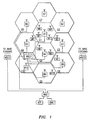
- Fig. 1 is a diagrammatic representation of such a system which contains ten cells, C1-C10.
- a cellular radio system would contain many more cells than ten but for purposes of this illustration the system shown in Fig. 1 may be considered to be an isolated portion of a larger system, only ten cells of which are shown.
- each of the cells C1-10 there is a corresponding respective base station B1-B10 serving that cell.
- the base stations B1-B10 are shown as having omni-directional antennas and being located in the vicinity of the center of the cells, however, a person skilled in this art will recognize that base stations may typically be located in other areas of the cells, for example, at the intersection of three adjacent cells and have sectorized antennas so that a single base station may serve three cells.
- M1-M10 which are subject to movement within each cell and from one cell to another cell. Of course, a typical cellular system would have many more mobile stations operating within it than ten.
- a mobile switching center MSC1 is connected to each of the base stations B1-B10 by means of a cable or microwave and to a switched telecommunication network (PSTN).
- the mobile switching center MSC1, along with other mobile switching centers MSC2 and MSC3, are each connected to a radio network controller (RNC) which handles the overall control of the entire cellular radio telecommunication network.
- RNC radio network controller
- An operation and maintenance center (OMC) is connected to the RNC which is also connected to administrative control modules such as the exemplary automatic frequency planner (AFP) indicated.
- AFP automatic frequency planner
- Each cellular radio telecommunication system is assigned a particular frequency band within which it must operate. This frequency band is subdivided into units called frequencies, groupings of which are allocated to the cells located in a particular area. Because of the limited radio frequency spectrum which is available to each operator, it is important to efficiently use these frequencies in order to maximize the traffic capacity and economic return of the cellular system. Many different frequency reuse plans have been implemented in order to try and more efficiently allocate radio channels within the available spectrum to different cells. Certain of the these channel allocation methodologies assign fixed sets of channels to each cell, while others allocate channels dynamically based upon traffic densities and/or interference situations.
- the present invention relates to uniquely identifying the source of signals within a cellular network to enhance the accuracy and ease with which frequency planning may be performed. Such identification also allows automated administration algorithms, such as an automatic frequency planning module for example, to perform regular and systematic dynamic channel allocation within cells in order to automatically realign the frequency allocation plan of the system to maximize channel utilization while minimizing co-channel interference within the system.
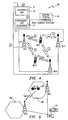
- Fig.2 illustrates another exemplary cellular radio telecommunication system which employs base stations each having three sectorized antennas.
- the system shown generally at 10, comprises a cellular network 12 which includes a plurality of fixed site base stations 16 positioned at spaced-apart locations throughout a geographical area.
- each of the base stations 16 defines a cell 18 and groups of three base stations 16 are located together and each of the co-located base stations serves a coverage area which defines three adjacent but separate cells 18-18.
- Each base station 16 typically includes a fixed site transceiver which utilizes a sectorized antenna covering approximately 120° and is located on the periphery of the cell which it is serving.
- Each of the base stations 16 permit wireless radio communication to be effectuated with remotely positioned mobile subscriber terminals, such as the subscriber terminal 22, when the mobile is positioned within communication range of the respective one of the base stations.
- the cells 18-18 defined by the coverage areas of the base stations are shown to be hexagonal in shape purely for purposes of illustration.
- the communication range, i.e., the coverage area, of a base station would differ from that shown in the figure. That is to say, cells 18-18 may well be non-symmetrical with respect to the base station and the cells defined by different ones of the base stations 16-16 would likely differ in shape from one another.
- the coverage areas of different (such as adjacent) base stations would overlap with one another to a certain degree.
- Groups of the base stations 16 are coupled to a base station controller (BSC) 24.
- Communication lines 26 couple the base stations 16-16 to the BSCs 24 which are in turn coupled to mobile switching centers (MSCs), such as MSC 27 by way of communication lines 28.
- MSCs mobile switching centers
- the MSCs, of which one MSC 27 is illustrated in Fig. 2 are coupled to a radio network controller (RNC) 30 which is responsible to coordinate the control and administrative functions of the entire network.
- Administration modules such as automatic frequency planner (AFP) module 29, are connected to the RNC 30 to perform specialized tasks.
- AFP automatic frequency planner
- Fig. 2 when the mobile subscriber terminal 22 communicates with another communication station connected to the network, those communications are effected by way of a base station 16 within the network 12. When the mobile terminal 22 moves between cells 18-18 of the network 12, ongoing communications are handed over between successive ones of the base stations 16. If the mobile terminal is in the idle mode, cell selection, such as that which occurs during registration procedures, is performed when the mobile moves from cell to cell.
- the mobile terminal 22 tunes to the broadcast control channel (BCCH) of the base station serving the cell in which it is located.
- BCCH broadcast control channel
- the mobile is sent on the BCCH a list of the BCCH carrier frequencies associated with base stations defining cells which are neighbors to the cell in which the mobile terminal is located, the so-called BA-list.
- BA-list may be periodically updated on the slow associated control channel (SACCH).
- SACCH slow associated control channel
- the mobile terminal is provided with the BA-list of radio frequencies of the BCCHs of the base stations associated with the "neighbor cells" to the mobile's currently serving cell in order to permit the mobile terminal to sequentially tune its radio to each of these channels for signal quality measurements.
- Signal strength measurements are made by the mobile terminal of the BCCHs broadcast by each of the base stations of the neighboring cells and also of the BCCH of the base station through which the mobile station is currently communicating, i.e. the mobile's "serving" base station.
- the mobile also seeks to decode the base station identity code (BSIC) of each of the BCCH signals it measures. Indications of the results of signal quality measurements by the mobile, e.g., the six largest value signals on BCCH's for which it could decode BSIC, are reported back to its serving base station in the form of a measurement report and from there to the BSC 24 and the RNC 30.
- BSIC base station identity code
- the BSC 24 or MSC 27 permits a new cell selection, such as a hand-over, to be effectuated.
- Another signal quality measurement commonly performed in cellular systems is that of various frequencies, both BCCH and TCH channels, on the uplink; that is, the signal strength as received at the base station.
- BCCH and TCH channels on the uplink; that is, the signal strength as received at the base station.
- Fig. 3 in order to choose the best target cell for possible hand-over, signal quality measurements are performed by both the mobile station and the base station.
- the fact that the mobile station contributes to the decision to perform the hand-off is referred to as mobile assisted hand-off (MAHO).
- MAHO mobile assisted hand-off
- a base station 16 is connected to a base site controller 24 which is, in turn, connected to an MSC 27.
- the MSC 27 is shown in Fig. 3 as being associated with a visiting location register (VLR) 21.
- VLR visiting location register
- the base station 16, also referred to as a base transceiver station (BTS) is in communication with the mobile station 22 over a traffic channel (TCH).
- TCH traffic channel
- the mobile station 22 continuously measures signal quality, i.e. signal strength and bit error rate (BER) on its own serving cell and signal quality on the BCCH-carriers of the neighboring cells based upon a list of carrier frequencies, the BA-list, to be used for cell selection for possible hand-off of the mobile. These measurements are made on the downlink radio connection. Measurement results obtained by the mobile station are periodically sent to the base station on the slow associated control channel (SACCH). The serving base station measures the signal quality on the uplink from the mobile station. The measurements by the base station and the measurements by the mobile station are both sent from the base station to the BSC as measurement reports.
- signal quality i.e. signal strength and bit error rate (BER) on its own serving cell and signal quality on the BCCH-carriers of the neighboring cells based upon a list of carrier frequencies, the BA-list, to be used for cell selection for possible hand-off of the mobile. These measurements are made on the downlink radio connection. Measurement results obtained by the mobile station are periodically sent to the base station on the slow
- the BSC in cooperation with the MSC 27 in some cases, decides if a hand-over is necessary and to which new cell the hand-off should be made. In general, as soon as one of the neighboring cells is considered better than the serving cell a hand-off is attempted.
- BSIC base station identity codes
- the BCC identifies a particular base station to distinguish between respective BTSs using the same BCCH frequencies.
- neither of these techniques for identifying a base station are sufficiently reliable to ensure unique identification of the source of a signal which has been measured. Such unique identification is essential for purposes of automated algorithm based administrative functions.
- the radio network controller 30 includes an administration module 41 incorporating a statistics unit 42 and a frequency list generator 43.
- a repository of general knowledge about the architecture and configuration of the system 44 is connected to the frequency list generator 43 to assist in the preparation of a best neighbor cell list in accordance with the present invention.
- the module 41 is connected to receive measurement reports from the three illustrative base stations BS1-BS3 while the frequency list generator 43 of the module 41 is connected to supply lists of frequencies upon which measurement is to be made to each of the base stations BS1-BS3.
- the frequency list generator 43 determines which cells should be investigated by, for example, BS1 for neighbor cell relationships or for interference relationship for purposes of frequency planning or admission control.
- the appropriate frequencies used by BS2 and BS3 are determined from a database and passed on from the frequency list generator 43 to BS1. This is represented at numeral "1" in the diagram of Fig. 4 .
- Each of the base stations BS2 and BS3 is transmitting a unique identification in accordance with the present invention.
- the frequencies on which the base stations of neighboring cells are transmitting are sent to MS1 by BS1 so that the mobile station knows what frequencies to listen to and measure. This is represented at "2".
- the mobile stations MS1 and MS2 and/or the base stations BS1-BS3 listen to the appropriate BCCH carrier frequencies and attempt to decode the unique ID carried by each frequency and measure its signal strength. Once the unique ID is decoded and the signal strength is measured by a mobile or base station, it then passes that information back to its serving base station in the same way that the frequency information was passed on from base station to mobile in "2". For example, if the network is attempting to determine whether BS2 is a good neighbor of BS1, the mobile station MS1 will measure the strength of the control channel of BS2 and decode the unique ID transmitted on that channel.
- the network By having a unique ID transmitted on the channel, it is possible for the network to distinguish between signals from BS2 and BS3 even they may be using the same control channel frequency. Similarly, if the information measured and sent to the network was for purposes of frequency planning, the origin of any measured interference on frequencies transmitted by BS2 or BS3 can be determined by decoding the unique ID associated with the interfering signal. If, on the other hand, measurements are made at "3" by the base station in an attempt to ascertain uplink interference, it is necessary for the mobile stations operating in other cells and producing the interference to also be transmitting either mobile specific unique IDs or an ID which is unique to the cell within which those mobile stations are then operating. If the measurements are being made by the mobile stations for purposes of ascertaining downlink interference, the measured signals of the base stations contain a unique ID which specifically identifies the source of that signal.
- Represented at "4" is the process by which the information, including unique base station and mobile station IDs which were successfully decoded and the associated signal strength of the signals carrying those IDs, is transmitted back to the radio network controller 30.
- the measured information may be compiled over a period of time in each of the respective base stations BS1-BS3 before it is sent back to the network controller 30. It should be noted that information about the strength of signals from other cells is included so that an analysis of best neighbor server can be made.
- the statistics unit 42 performs analysis of the received information at "5" and, sends that analysis to the frequency list generator 43.
- the frequency list generator 43 integrates the information based on the analysis by the statistics unit 41 with the general system knowledge 44 and decides the next step in proceeding with the measurement/frequency allocation process.
- the present invention incorporates three separate techniques by which identity codes which are unique system-wide may be transmitted over the air interface between a base station and a mobile station to enable the receiver to identify the specific base station and/or mobile station associated with each frequency which is measured. This enables the system to determine the source of each signal and use that information in various algorithmic expressions for system control.
- the three separate techniques include the following:
- Each of these three techniques enables unique identification of the cell within the system from which particular signal quality measurements were made and from which the radio signal was sent. These unique cell-specific data then allow algorithms to be formulated and generate adaptive procedures within the cellular radio system.
- the mobile station 22 has set up a call in a first cell 18a which is being served by a base station BS 1.
- the base station BS2 in a cell 18b listens to the channel on which the mobile 22 is connected and picks up the message which includes the mobile station's unique identity within the system.
- the network normally stores the information that the mobile station 22 ("MS1") is connected to the base station BS 1 in the form of a data entry 51 in the MSC 27. Thereafter, when signal quality measurements are received and associated with a particular mobile station the origin of the signal within the network can be determined and used to implement specific procedures within the system.
- a remote cell from which is received a signal which is producing cochannel interference in the cell where measurements are being made can be identified and subsequent changes in the frequency plan made to eliminate that interference.
- a very high quality neighbor cell can be identified and that cell added to the neighbor cell list of the mobile even though it had not originally been included.
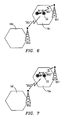
- the second technique for unique identification of cell location is illustrated in Fig. 6 in which mobile station 22 has set up a call in a first cell 18c served by a base station BS1.
- the base station BS1 sends out its own system-unique identity code one or more times to the mobile 22. Thereafter, periodically within each certain time interval, the mobile 22 transmits the identity of its base station which can be received by all neighboring base stations, for example, base station BS2 serving cell 18d.
- the base station BS2 serving the second cell 18d listens to the channel on which the mobile 22 is connected and picks up the base station identity associated with that message.
- the network knows the origin of the signal for future administrative use.
- a mobile station 22 has set up a call in a first cell 18e served by a base station BS1.
- Each of the base stations BS1 and BS2 periodically sends out its own system-unique identity code.
- the mobile 22 being served by the first base station BS1 listens to a channel being broadcast by the second base station BS2 and picks up its identity message.
- the mobile then reports the identity of the neighbor base station BS2 associated with that channel to its own base station BS1.
- the network knows the origin of the signal quality measurement signals received from the mobile.
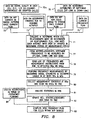
- the radio network decides on the interrelationships among the various cells which must be determined or redetermined. That is, the RNC determines which of the cell relationships in the group is currently unknown and, thus, must be (re)determined. The RNC also determines the period over which measurement cycles are to be repeated. RNC makes its evaluation and determination based upon the input of data from a number of different sources and with respect to a number of different parameters.
- data relating to any changes in the traffic pattern which have occurred since the implementation of the current frequency plan is input to the RNC.
- the RNC may determine that the load in different cells has changed over time. Similarly, at 73 data on any geographic changes due to building activities is input. At 73a the system inputs data on the signal quality which is currently understood to be in existent in each of the cells. For example, the C/I, the co-channel interference information and statistics on dropped calls may be included within these data. At 74 data on any new cells which have been added to the system since the implementation of the current frequency plan is input to the RNC and at 75 data on the current frequency plan itself is entered. At 76 data on the measuring capabilities of each of the different cells in both the uplink and downlink direction is input to the RNC.
- the RNC determines which frequencies are to be measured in the different cells.
- a list of each of these frequencies is sent from the RNC to the affected base stations which are to perform the measurements via their respective MSCs.
- the signal quality measurements are performed within both base stations and mobile stations of the affected cells. In this process signal strength on each of the frequencies measured as well as the unique ID s indicative of the source of those signals is decoded. The information on which frequencies to measure and the measurement results are sent on the control channels (primarily SACCH) from the base station to the mobile stations just as in the case of MAHO measurements today.
- measurement statistics are collected at the base stations of the affected cells and sent via their respective MSCs to the RNC.
- the statistics are analyzed within the RNC and at 82 the cell interrelationships are updated and sent to the automatic frequency planning module.
- the AFP module computes a new frequency plan for the affected cells based upon the interrelationships input to it from the RNC as well as data input at 84 relating to the system restrictions in terms of frequency planning.
- the system of the present invention allows unique identification of a particular cell enabling more accurate and efficient frequency planning and neighbor cell list preparation and the implementation of cellular system management algorithms of an adaptive nature.
Landscapes
- Engineering & Computer Science (AREA)
- Computer Networks & Wireless Communication (AREA)
- Signal Processing (AREA)
- Mobile Radio Communication Systems (AREA)
Claims (44)
- Verfahren zur Identifikation einer bestimmten Zelle (18a), aus der ein gemessenes Funksignal von einer Mobilstation (22) in einem zellularen Funkkommunikationsnetz empfangen wird, wobei das Verfahren die folgenden Schritte umfasst:Speichern eines Zeichens, das jede Mobilstation mit der Basisstation (BS1) assoziiert, die sie gerade versorgt, in dem Netz;Senden eines Identitätssignals, das die einzigartige Identität der Mobilstation (22) in dem Netz enthält, als Teil des Funksignals von der Mobilstation (22);Empfangen des Funksignals, das das Identitätssignal enthält, von der Mobilstation (22) an einer Basisstation (BS2), die eine Zelle (18b) versorgt, die nicht die aktuell versorgende Zelle der Mobilstation (22) ist;Messen des Werts des empfangenen Funksignals; undSenden einer Nachricht von der empfangenen Basisstation (BS2) zu dem Netz, um zu bestimmen, mit welcher Basisstation die Mobilstation (22), die die einzigartige Identität aufweist, zur Zeit assoziiert ist, und Betrachten der durch die assoziierte Basisstation (BS2) versorgten Zelle (18b) als die Quelle des Signals, das von der Mobilstation (22) empfangen und durch die empfangende Basisstation (BS2) gemessen wird.
- Verfahren nach Anspruch 1, wobei die Mobilstation (22) im aktiven Modus operiert.
- Verfahren nach Anspruch 1, wobei das Funksignal, das ein Identitätssignal enthält, periodisch von der Mobilstation (22) gesendet wird.
- Verfahren nach Anspruch 1, wobei das Funksignal, das ein Identitätssignal enthält, als Reaktion auf eine Anforderung durch das Funkkommunikationsnetz von der Mobilstation (22) gesendet wird.
- Verfahren nach Anspruch 1, das außerdem Folgendes umfasst:Assoziieren von aus der Messung des Funksignals erhaltenen Informationen und der Quelle, aus der das Funksignal stammt, in der messenden Basisstation (BS2); undSenden eines Messberichts von der Basisstation (BS2) zu dem Netz, der Messinformationen über mehrere Trägerfrequenzen und die Quelle in dem Netz jedes Trägersignals enthält.
- Verfahren nach Anspruch 5, das außerdem Folgendes umfasst:Verwenden der Messinformationen von den Messberichten in dem Netz zum Formulieren einer Liste bester Nachbarn für mindestens eine Mobilstation.
- Verfahren nach Anspruch 5, das außerdem Folgendes umfasst:Verwenden der Messinformationen von den Messberichten in dem Netz zum Formulieren eines Frequenzbenutzungsplans für eine Gruppe von Zellen in dem Netz, die die Zelle (18a) umfasst, die die einzigartig identifizierte Mobilstation (22) versorgt.
- Verfahren zur Identifikation einer bestimmten Zelle (18c), aus der ein gemessenes Funksignal von einer Mobilstation (22) in einem zellularen Funkkommunikationsnetz empfangen wird, wobei das Verfahren die folgenden Schritte umfasst:Senden eines Identitätssignals, das die einzigartige Identität der Basisstation (BS1) in dem Netz enthält, von einer Basisstation (BS1) zu jeder Mobilstation, die sie versorgt;Empfangen des einzigartigen Identitätssignals in einer Mobilstation (22), von der das Funksignal zu messen ist, von ihrer versorgenden Basisstation (BS1);Senden eines Identitätssignals als Teil des Funksignals von der Mobilstation (22), die. im aktiven Modus operiert, das die einzigartige Identität der Basisstation (BS1) enthält, die sie versorgt;Messen des Werts des empfangenen Funksignals von der Mobilstation (22) in einer Basisstation (BS2), die die Mobilstation (22) nicht versorgt; undAssoziieren der Messungen des empfangenen Funksignals mit der Zelle (18c), die durch die Basisstation (BS1) versorgt wird, die in dem Identitätssignal als die Quelle des von der Mobilstation (22) empfangenen und durch die empfangende Basisstation (BS2) gemessenen Signals identifiziert wird.
- Verfahren nach Anspruch 8, wobei die Mobilstation (22) in dem aktiven Modus operiert.
- Verfahren nach Anspruch 8, wobei das Funksignal, das ein Identitätssignal enthält, periodisch von der Mobilstation (22) gesendet wird.
- Verfahren nach Anspruch 8, wobei das Funksignal, das ein Identitätssignal enthält, als Reaktion auf eine Anforderung durch das Funkkommunikationsnetz von der Mobilstation (22) gesendet wird.
- Verfahren nach Anspruch 8, das den folgenden zusätzlichen Schritt umfasst:Senden eines Messberichts von der messenden Basisstation (BS2) zu dem Netz, der Messinformationen über mehrere Trägerfrequenzen und die Quelle in dem Netz des jeweiligen Trägersignals enthält.
- Verfahren nach Anspruch 8, wobei
das Identitätssignal, das die einzigartige Identität der Basisstation (BS1) enthält, periodisch von der Basisstation (BS1) gesendet wird. - Verfahren nach Anspruch 12, das den folgenden zusätzlichen Schritt enthält:Verwenden der Messinformationen aus den Messberichten in dem Netz zum Formulieren einer Liste bester Nachbarn für mindestens eine Mobilstation.
- Verfahren nach Anspruch 12, das außerdem Folgendes umfasst:Verwenden der Messinformationen aus den Messberichten in dem Netz zum Formulieren eines Frequenzbenutzungsplans für eine Gruppe von Zellen in dem Netz, die die Zelle (18c) umfasst, die durch die einzigartig identifizierte Basisstation (BS1) versorgt wird.
- Verfahren zur Identifikation einer bestimmten Zelle (18f), aus der ein gemessenes Funksignal empfangen wird, durch eine Mobilstation (22) in einem zellularen Funkkommunikationsnetz, wobei das Verfahren die folgenden Schritte umfasst:Senden eines Identitätssignals, das die einzigartige Identität der Basisstation in dem Netz enthält, von einer Basisstation (BS2);Empfangen eines Funksignals von einer Basisstation (BS2), das zu messen ist, in einer Mobilstation (22), wobei das Funksignal das einzigartige Identitätssignal enthält;Messen des Werts des empfangenen Funksignals von der Basisstation (BS2) in einer Mobilstation (22), die nicht durch die Basisstation (BS2) versorgt wird; undAssoziieren der Messungen des empfangenen Funksignals mit der Zelle (18f), die durch die Basisstation (BS2) versorgt wird, die in dem Identitätssignal als die Quelle des Signals identifiziert wird.
- Verfahren nach Anspruch 16, wobei die Mobilstation (22) in dem aktiven Modus operiert.
- Verfahren nach Anspruch 16, wobei das Funksignal, das ein Identitätssignal enthält, periodisch von der Basisstation (BS2) gesendet wird.
- Verfahren nach Anspruch 16, wobei das Funksignal, das ein Identitätssignal enthält, als Reaktion auf eine Anforderung durch das Funkkommunikationsnetz von der Basisstation (BS2) gesendet wird.
- Verfahren zur Identifikation einer bestimmten Zelle, aus der ein gemessenes Funksignal empfangen wird, durch eine Basisstation in einem zellularen Funkkommunikationsnetz, wobei das Verfahren die folgenden Schritte umfasst:Senden eines Identitätssignals von einer ersten Basisstation, das die einzigartige Identität der Basisstation in dem Netz enthält;Empfangen eines Funksignals von einer Basisstation, das zu messen ist, in einer zweiten Basisstation, wobei das Funksignal das einzigartige Identitätssignal enthält;Messen des Werts des empfangenen Funksignals von der ersten Basisstation in der zweiten Basisstation; undAssoziieren der Messungen des empfangenen Funksignals mit der Zelle, die durch die Basisstation versorgt wird, die in dem Identitätssignal als die Quelle des Signals identifiziert wird.
- Verfahren nach Anspruch 20, wobei das Funksignals, das ein Identitätssignal enthält, periodisch von der ersten Basisstation gesendet wird.
- Verfahren nach Anspruch 20, wobei das Funksignal, das ein Identitätssignal enthält, als Reaktion auf eine Anforderung durch das Funkkommunikationsnetz von der ersten Basisstation gesendet wird.
- Verfahren nach Anspruch 20, wobei der Schritt des Assoziierens Folgendes umfasst:Senden der Messergebnisse jedes gemessenen Funksignals zusammen mit Identitätsinformationen, die in diesem Signal enthalten sind, von der messenden Basisstation zu dem Netz als Messinformationen; undIdentifizieren der Basisstation und der Zelle, die mit den einzigartigen Identitätsinformationen assoziiert ist, in dem Netz.
- Verfahren nach Anspruch 23, das den folgenden zusätzlichen Schritt enthält:Verwenden der Messinformationen in dem Netz zum Formulieren einer Liste bester Nachbarn für mindestens eine Mobilstation.
- Verfahren nach Anspruch 23, das außerdem Folgendes umfasst:Verwenden der Messinformationen in dem Netz zum Formulieren eines Frequenzbenutzungsplans für eine Gruppe von Zellen in dem Netz, die die Zelle umfasst, die durch die eindeutig identifizierte Basisstation versorgt wird.
- System zur Identifikation einer bestimmten Zelle (18a), aus der ein gemessenes Funksignal von einer Mobilstation (22) in einem zellularen Funkkommunikationsnetz empfangen wird, umfassend:Mittel zum Speichern eines Zeichens, das jede Mobilstation mit der Basisstation (BS1) assoziiert, die sie gerade versorgt, in dem Netz;Mittel zum Senden eines Identitätssignals, das die einzigartige Identität der Mobilstation (22) in dem Netz enthält, als Teil des Funksignals von der Mobilstation (22), die im aktiven Modus operiert;Mittel zum Empfangen des Funksignals, das das Identitätssignal enthält, von der Mobilstation (22) an einer Basisstation (BS2), die eine Zelle (18b) versorgt, die nicht die aktuell versorgende Zelle der Mobilstation (22) ist;Mittel zum Messen des Werts des empfangenen Funksignals; undMittel zum Senden einer Nachricht von der empfangenden Basisstation (BS2) zu dem Netz, um zu bestimmten, mit welcher Basisstation die Mobilstation (22), die die einzigartige Identität aufweist, zur Zeit assoziiert ist, und Betrachten der durch die assoziierte Basisstation (BS2) versorgten Zelle (18b) als die Quelle des Signals, das von der Mobilstation (22) empfangen und durch die empfangende Basisstation (BS2) gemessen wird.
- System nach Anspruch 26, das außerdem Folgendes umfasst:Mittel zum Assoziieren von aus der Messung des Funksignals erhaltenen Informationen und der Quelle, aus der das Funksignal stammt, in der messenden Basisstation (BS2); undMittel zum Senden eines Messberichts von der Basisstation (BS2) zu dem Netz, der Messinformationen über mehrere Trägerfrequenzen und die Quelle in dem Netz jedes Trägersignals enthält.
- System nach Anspruch 26, das außerdem Folgendes umfasst:Mittel zum Verwenden der Messinformationen von den Messberichten in dem Netz zum Formulieren einer Liste bester Nachbarn für mindestens eine Mobilstation.
- System nach Anspruch 26, das außerdem Folgendes umfasst:Mittel zum Verwenden der Messinformationen von den Messberichten in dem Netz zum Formulieren eines Frequenzbenutzungsplans für eine Gruppe von Zellen in dem Netz, die die Zelle (18a) umfasst, die die einzigartig identifizierte Mobilstation (22) versorgt.
- System zur Identifikation einer bestimmten Zelle (18c) aus der ein gemessenes Funksignal von einer Mobilstation in einem zellularen Funkkommunikationsnetz empfangen wird, umfassend:Mittel zum Senden eines Identitätssignals, das die einzigartige Identität der Basisstation (BS1) in dem Netz enthält, von einer Basisstation (BS1) zu jeder Mobilstation, die sie versorgt;Mittel zum Empfangen des einzigartigen Identitätssignals in einer Mobilstation (22), von der das Funksignal zu messen ist, von ihrer versorgenden Basisstation (BS1);Mittel zum Senden eines Identitätssignals als Teil des Funksignals von der Mobilstation (22), das die einzigartige Identität der Basisstation (BS1) enthält, die sie versorgt;Mittel zum Messen des Werts des empfangenen Funksignals von der Mobilstation (22) in einer Basisstation (BS2), die die Mobilstation (22) nicht versorgt; undMittel zum Assoziieren der Messungen des empfangenen Funksignals mit der Zelle (18c), die durch die Basisstation (BS1) versorgt wird, die in dem Identitätssignal als die Quelle des von der Mobilstation (22) empfangenen und durch die empfangende Basisstation (BS2) gemessenen Signals identifiziert wird.
- System nach Anspruch 30, das ferner Folgendes enthält:Mittel zum Senden eines Messberichts von der messenden Basisstation (BS2) zu dem Netz, der Messinformationen über mehrere Trägerfrequenzen und die Quelle in dem Netz des jeweiligen Trägersignals enthält.
- System nach Anspruch 30, wobei
das Identitätssignal, das die einzigartige Identität der Basisstation enthält, periodisch von der Basisstation (BS1) gesendet wird. - System nach Anspruch 31, das außerdem Folgendes umfasst:Mittel zum Verwenden der Messinformationen aus den Messberichten in dem Netz zum Formulieren einer Liste bester Nachbarn für mindestens eine Mobilstation.
- System nach Anspruch 31, das außerdem Folgendes umfasst:Mittel zum Verwenden der Messinformationen aus den Messberichten in dem Netz zum Formulieren eines Frequenzbenutzungsplans für eine Gruppe von Zellen in dem Netz, die die Zelle (18c) umfasst, die durch die einzigartig identifizierte Basisstation (BS1) versorgt wird.
- System zur Identifikation einer bestimmten Zelle (18f), aus der ein gemessenes Funksignal empfangen wird, durch eine Mobilstation (22) in einem zellularen Funkkommunikationsnetz, umfassend:Mittel zum Senden eines Identitätssignals, das die einzigartige Identität der Basisstation in dem Netz enthält, von einer Basisstation (BS2);Mittel zum Empfangen eines Funksignals von einer Basisstation (BS2), das zu messen ist, in einer Mobilstation (22), wobei das Funksignal das einzigartige Identitätssignal enthält;Mittel zum Messen des Werts des empfangenen Funksignals von der Basisstation (BS2) in einer Mobilstation (22), die nicht durch die Basisstation (BS2) versorgt wird; undMittel zum Assoziieren der Messungen des empfangenen Funksignals mit der Zelle (18f), die durch die Basisstation (BS2) versorgt wird, die in dem Identitätssignal als die Quelle des Signals identifiziert wird.
- System nach Anspruch 35, wobei die Mittel zum Assoziieren Folgendes umfassen:Mittel zum Senden der Messergebnisse jedes gemessenen Funksignals zusammen mit Identitätsinformationen, die in diesem Signal enthalten sind, von der messenden Mobilstation (22) zu ihrer versorgenden Basisstation (18e); undMittel zum Identifizieren der Basisstation (BS2) und der Zelle (18f), die mit den einzigartigen Identitätsinformationen assoziiert ist, in dem Netz.
- System nach Anspruch 36, das außerdem Folgendes enthält:Mittel zum Verwenden der Messinformationen in dem Netz zum Formulieren einer Liste bester Nachbarn für mindestens eine Mobilstation.
- System nach Anspruch 35, das außerdem Folgendes umfasst:Mittel zum Verwenden der Messinformationen in dem Netz zum Formulieren eines Frequenzbenutzungsplans für eine Gruppe von Zellen in dem Netz, die die Zelle umfasst, die durch die eindeutig identifizierte Basisstation (BS2) versorgt wird.
- Verfahren zum Ausführen von Funktionen der automatischen Systemadministration in einem Zellularfunknetz mit mehreren Zellen, die durch mehrere Basisstationen versorgt werden, die durch mindestens eine Mobilvermittlungsstelle verbunden werden, und mehreren sich in den Zellen bewegenden Mobilstationen, wobei das Verfahren die folgenden Schritte umfasst:Bestimmen, von welchen Zellen aus einer Gruppe, die mehrere Zellen in dem Netz umfasst, ihre gegenseitigen Beziehungen bestimmt werden müssen;Bestimmen einer Liste von zu messenden Frequenzen auf der Basis des derzeitigen Frequenzvergabeplans des Netzes, um relative Stärken dieser und Störungen zwischen ihnen an verschiedenen Orten in der Gruppe von Zellen zu bestimmen;Senden der Liste von Frequenzen und von Messanweisungen zu jeder von mehreren Basisstationen, die die Zellen in der Gruppe versorgen, und zu mehreren Mobilstationen, die sich in den Zellen in der Gruppe bewegen;Ausführen von Frequenzmessungen durch Messen der Signalstärken jeder der Frequenzen in der Liste;Bestimmen der Quelle, von der jedes der Signale auf jeder der Frequenzen in der Liste ausgestrahlt wird, gemäß einem beliebigen der Verfahren nach Anspruch 1 bis 25 und Assoziieren jeder Messung mit ihrer Quelle;Sammeln der Messstatistiken und assoziierten Quelleninformationen in jeder der Basisstationen, die die Zellen der Gruppe versorgen;Senden der gesammelten Informationen zu dem Netz; undAusführen von Funktionen der automatischen Systemadministration in dem Netz auf der Basis der gesammelten Informationen.
- Verfahren nach Anspruch 39, bei dem der Schritt des Ausführens von Funktionen der automatischen Systemadministration Folgendes umfasst:Umdefinieren (82) der gegenseitigen Beziehung zwischen den Zellen in der Gruppe auf der Basis der gesammelten Informationen; undBerechnen (83) eines neuen Frequenzvergabeplans für die Zellen in der Gruppe auf der Basis der gesammelten Informationen.
- Verfahren nach Anspruch 39, wobei der Schritt des Ausführens von Funktionen der automatischen Systemadministration Folgendes umfasst:Umdefinieren der gegenseitigen Beziehung zwischen den Zellen in der Gruppe auf der Basis der gesammelten Informationen; undErstellen einer Liste bester Nachbarn für jede der Zellen in der Gruppe.
- System zum Ausführen von Funktionen der automatischen Systemadministration in einem Zellularfunknetz mit mehreren Zellen, die durch mehrere Basisstationen versorgt werden, die durch mindestens eine Mobilvermittlungsstelle verbunden werden, und mehreren sich in den Zellen bewegenden Mobilstationen, umfassend:Mittel zum Bestimmen der gegenseitigen Beziehungen zwischen einer Gruppe, die mehrere Zellen in dem Netz umfasst, einschließlich des Bestimmens, wie jede Zelle in der Gruppe mit jeder der anderen Zellen in der Gruppe interagiert;Mittel zum Bestimmen einer Liste von zu messenden Frequenzen auf der Basis des derzeitigen Frequenzvergabeplans des Netzes, um relative Stärken dieser und Störungen zwischen ihnen an verschiedenen Orten in der Gruppe von Zellen zu bestimmen;Mittel zum Senden der Liste von Frequenzen und von Messanweisungen zu jeder von mehreren Basisstationen, die die Zellen in der Gruppe versorgen, und zu mehreren Mobilstationen, die sich in den Zellen in der Gruppe bewegen;Mittel zum Ausführen von Frequenzmessungen durch Messen der Signalstärken jeder der Frequenzen in der Liste;Mittel zum Bestimmen der Quelle, von der jedes der Signale auf jeder der Frequenzen in der Liste ausgestrahlt wird, mit dem System nach einem der Ansprüche 26 bis 38 und Assoziieren jeder Messung mit ihrer Quelle;Mittel zum Sammeln der Messstatistiken und assoziierten Quelleninformationen in jeder der Basisstationen, die die Zellen der Gruppe versorgen;Mittel zum Senden der gesammelten Informationen zu dem Netz; undMittel zum Ausführen von Funktionen der automatischen Systemadministration in dem Netz auf der Basis der gesammelten Informationen.
- System nach Anspruch 39, wobei die Mittel zum Ausführen von Funktionen der automatischen Systemadministration Folgendes umfassen:Mittel zum Umdefinieren der gegenseitigen Beziehung zwischen den Zellen in der Gruppe auf der Basis der gesammelten Informationen; undMittel zum Berechnen eines neuen Frequenzvergabeplans für die Zellen in der Gruppe auf der Basis der gesammelten Informationen.
- System nach Anspruch 39, wobei die Mittel zum Ausführen von Funktionen der automatischen Systemadministration Folgendes umfassen:Mittel zum Umdefinieren der gegenseitigen Beziehung zwischen den Zellen in der Gruppe auf der Basis der gesammelten Informationen; undMittel zum Erstellen einer Liste bester Nachbarn für jede der Zellen in der Gruppe.
Applications Claiming Priority (3)
| Application Number | Priority Date | Filing Date | Title |
|---|---|---|---|
| US08/940,263 US6212384B1 (en) | 1997-09-29 | 1997-09-29 | Radio signal source identification system |
| US940263 | 1997-09-29 | ||
| PCT/SE1998/001643 WO1999017571A1 (en) | 1997-09-29 | 1998-09-15 | Radio signal source identification system |
Publications (2)
| Publication Number | Publication Date |
|---|---|
| EP1048183A1 EP1048183A1 (de) | 2000-11-02 |
| EP1048183B1 true EP1048183B1 (de) | 2011-03-16 |
Family
ID=25474522
Family Applications (1)
| Application Number | Title | Priority Date | Filing Date |
|---|---|---|---|
| EP98945686A Expired - Lifetime EP1048183B1 (de) | 1997-09-29 | 1998-09-15 | System zur identifikation der funksignalquelle |
Country Status (5)
| Country | Link |
|---|---|
| US (1) | US6212384B1 (de) |
| EP (1) | EP1048183B1 (de) |
| AU (1) | AU9287398A (de) |
| DE (1) | DE69842188D1 (de) |
| WO (1) | WO1999017571A1 (de) |
Families Citing this family (33)
| Publication number | Priority date | Publication date | Assignee | Title |
|---|---|---|---|---|
| US6212384B1 (en) | 1997-09-29 | 2001-04-03 | Telefonaktiebolaget L M Ericsson (Publ) | Radio signal source identification system |
| FI974646A7 (fi) * | 1997-12-30 | 1999-07-01 | Nokia Corp | Häiriöiden tasoittaminen matkaviestinjärjestelmässä |
| FI106353B (fi) * | 1998-01-09 | 2001-01-15 | Sonera Oyj | Menetelmä ja järjestelmä tilaajaprofiilin muuttamiseksi päätelaitetta palvelevan tukiaseman identiteetin perusteella |
| FI109956B (fi) * | 1998-12-16 | 2002-10-31 | Nokia Corp | Menetelmä lähisolujen tietojen välittämiseksi sekä menetelmän toteuttava järjestelmä ja matkaviestin |
| FI107505B (fi) * | 1999-02-16 | 2001-08-15 | Nokia Networks Oy | Pääsynvalvontamenetelmä |
| US6304754B1 (en) * | 1999-06-02 | 2001-10-16 | Avaya Technology Corp. | System and method for laying out wireless cells to account for cell handoff |
| GB2352586B (en) * | 1999-06-07 | 2004-03-10 | Nec Corp | Handover between mobile networks |
| SE515986C2 (sv) * | 1999-12-10 | 2001-11-05 | Ericsson Telefon Ab L M | Förfarande i ett telekommunikationssystem |
| JP4180236B2 (ja) * | 1999-12-28 | 2008-11-12 | 株式会社エヌ・ティ・ティ・ドコモ | ハンドオーバ制御方法及びシステム |
| US6311067B1 (en) * | 1999-12-30 | 2001-10-30 | Telefonaktiebolaget Lm Ericsson (Publ) | Gradual frequency plan revision methodology |
| CN100472983C (zh) | 2000-07-27 | 2009-03-25 | 交互数字技术公司 | 混合无线tdma/cdma系统及其时隙分配方法 |
| US7430197B1 (en) * | 2000-09-29 | 2008-09-30 | Arraycomm, Llc | Radio communications system with a shared broadcast channel |
| DE10121978B4 (de) * | 2001-05-05 | 2012-06-28 | T-Mobile Deutschland Gmbh | Verfahren zur Zuweisung von Frequenzen zu Basisstationen eines Mobilfunknetzes |
| US6591109B2 (en) * | 2001-08-17 | 2003-07-08 | Interdigital Technology Corporation | Cross cell user equipment interference reduction in a time division duplex communication system using code division multiple access |
| US6832090B2 (en) * | 2001-09-10 | 2004-12-14 | Qualcomm Incorporated | System and method for identification of transmitters with limited information |
| GB2392801B (en) * | 2001-11-05 | 2005-08-17 | Nokia Corp | A method for identification of base stations and for checking measurement values of an observed time difference between transmissions from base stations |
| US7693522B2 (en) * | 2001-12-19 | 2010-04-06 | Thomson Licensing | Method and apparatus for handing off a mobile terminal between a mobile network and a wireless LAN |
| CA2485961A1 (en) * | 2002-05-13 | 2003-11-20 | Interdigital Technology Corporation | Resource allocation to users in slotted code division multiple access systems using beams |
| GB2395620B (en) * | 2002-11-19 | 2004-09-29 | Nec Technologies | Cellular network acquisition method and apparatus |
| US8249550B2 (en) * | 2003-09-26 | 2012-08-21 | Nokia Corporation | Method and apparatus for achieving good usability for networked applications in multi mode mobile terminals |
| US20050111409A1 (en) * | 2003-11-25 | 2005-05-26 | Spear Stephen L. | Method and apparatus for mobile station registration in a cellular communication system |
| ES2452524T3 (es) * | 2007-02-28 | 2014-04-01 | Unwired Planet, Llc | Autoconfiguración y optimización de células vecinas en redes de telecomunicaciones inalámbricas |
| US8285281B2 (en) * | 2007-10-29 | 2012-10-09 | Qualcomm Incorporated | Methods and apparatus for self configuring network relations |
| KR20090055786A (ko) * | 2007-11-29 | 2009-06-03 | 삼성전자주식회사 | 채널 특성을 적용하여 핸드오버를 수행하는 단말기 및 그제어방법 |
| GB2455703B (en) * | 2007-12-03 | 2010-03-03 | Motorola Inc | Frequency planning for a cellular communication system |
| GB2509912B (en) * | 2013-01-16 | 2018-08-15 | Sony Corp | Telecommunications Apparatus and Methods |
| CN104811946B (zh) * | 2014-01-29 | 2020-03-20 | 北京三星通信技术研究有限公司 | 处理干扰信号的方法及设备 |
| CN107079359B (zh) * | 2014-10-23 | 2021-05-07 | 索尼公司 | 用于监测小区的方法和无线通信系统中的基站 |
| US9769018B2 (en) * | 2015-01-22 | 2017-09-19 | Telefonaktiebolaget Lm Ericsson (Publ) | Reporting technique for a telecommunications network |
| US10957445B2 (en) | 2017-10-05 | 2021-03-23 | Hill-Rom Services, Inc. | Caregiver and staff information system |
| US11606732B1 (en) | 2021-09-08 | 2023-03-14 | T-Mobile Usa, Inc. | Coverage improvement for 5G new radio wireless communication network, such as for over-shooting cells |
| US12089069B1 (en) | 2021-09-08 | 2024-09-10 | T-Mobile Usa, Inc. | Coverage improvement for 5G new radio wireless communication network to automatically adjust cell properties to improve coverage and capacity |
| US11800382B1 (en) | 2021-09-08 | 2023-10-24 | T-Mobile Usa, Inc. | Coverage improvement for 5G new radio wireless communication network |
Family Cites Families (33)
| Publication number | Priority date | Publication date | Assignee | Title |
|---|---|---|---|---|
| US4918690A (en) | 1987-11-10 | 1990-04-17 | Echelon Systems Corp. | Network and intelligent cell for providing sensing, bidirectional communications and control |
| US5023900A (en) | 1989-12-07 | 1991-06-11 | Tayloe Daniel R | Cellular radiotelephone diagnostic system |
| US5095500A (en) * | 1989-12-07 | 1992-03-10 | Motorola, Inc. | Cellular radiotelephone diagnostic system |
| GB9022347D0 (en) | 1990-10-15 | 1990-11-28 | Smith Myer Communications Limi | System monitoring |
| US5218716A (en) | 1990-11-05 | 1993-06-08 | Motorola, Inc. | Method for locating a communication unit within a multi mode communication system |
| US5212831A (en) | 1990-11-28 | 1993-05-18 | Bell Communications Research, Inc. | Method and apparatus for autonomous adaptive frequency assignment in TDMA portable radio systems |
| US5293642A (en) | 1990-12-19 | 1994-03-08 | Northern Telecom Limited | Method of locating a mobile station |
| US5408683A (en) | 1991-07-18 | 1995-04-18 | Motorola, Inc. | Method of anticipating a communication unit's location in a networked radio communications system |
| US5642398A (en) * | 1991-09-20 | 1997-06-24 | Qualcomm Incorporated | Comprehensive mobile communications device registration method |
| AU2869892A (en) * | 1991-12-11 | 1993-07-19 | Motorola, Inc. | Handover decision algorithm using power budget values |
| FR2687520B1 (fr) * | 1992-02-14 | 1994-05-06 | France Telecom | Procede d'implantation de l'infrastructure d'un reseau cellulaire de communication. |
| JPH06165242A (ja) * | 1992-10-26 | 1994-06-10 | Philips Electron Nv | 通信システム |
| US5548801A (en) | 1993-02-10 | 1996-08-20 | Kokusai Denshin Denwa Kabushiki Kaisha | System for determining and registering location of mobile terminal for communication system with non-geosynchronous satellites |
| SE9302140L (sv) | 1993-06-21 | 1994-08-29 | Televerket | Förfarande för lokalisering av mobilstationer i digitalt telenät |
| US5548816A (en) * | 1993-11-16 | 1996-08-20 | Astronet | Method and system for locating mobile units in a cellular telephone system by use of virtual location areas |
| US5724665A (en) * | 1993-11-24 | 1998-03-03 | Lucent Technologies Inc. | Wireless communication base station |
| EP0666700A1 (de) | 1994-02-03 | 1995-08-09 | AT&T Corp. | Virtuelle Lokalisierungszone für mobile Einheit |
| US5526400A (en) * | 1994-04-01 | 1996-06-11 | Telefonaktiebolaget Lm Ericsson | System for routing calls to mobile subscribers |
| US5519760A (en) | 1994-06-22 | 1996-05-21 | Gte Laboratories Incorporated | Cellular network-based location system |
| EP0766901B1 (de) * | 1994-06-23 | 2004-10-27 | Telefonaktiebolaget LM Ericsson (publ) | Weiterreichen innerhalb einer zelle mit gruppenantenne |
| US5537460A (en) | 1994-07-08 | 1996-07-16 | Holliday, Jr.; Robert O. | Method and apparatus for determining the precise location of a modified cellular telephone using registration messages and reverse control channel transmission |
| US5509053A (en) * | 1994-09-14 | 1996-04-16 | Motorola, Inc. | Method and apparatus for routing a call to a mobile communication unit in a telepoint communication system |
| JPH08205239A (ja) * | 1995-01-25 | 1996-08-09 | Matsushita Electric Ind Co Ltd | 無線電話装置 |
| CN1089972C (zh) | 1995-01-25 | 2002-08-28 | Ntt移动通信网株式会社 | 移动通信系统 |
| US5706333A (en) * | 1995-02-24 | 1998-01-06 | Teradyne, Inc. | Method and apparatus for analyzing cellular telephone network |
| US5682416A (en) * | 1995-05-09 | 1997-10-28 | Motorola, Inc. | Method and apparatus communication handover in a communication system |
| US5854981A (en) | 1995-08-08 | 1998-12-29 | Telefonaktiebolaget L M Ericsson | Adaptive neighbor cell list |
| US5805633A (en) * | 1995-09-06 | 1998-09-08 | Telefonaktiebolaget L M Ericsson | Method and apparatus for frequency planning in a multi-system cellular communication network |
| US5768267A (en) * | 1995-10-18 | 1998-06-16 | Telefonaktiebolaget Lm Ericsson | Method for system registration and cell reselection |
| US5903840A (en) * | 1996-01-16 | 1999-05-11 | Telefonaktiebolaget Im Ericsson (Publ) | System and method for adaptive measurement collection and handoff queuing in a radio telecommunications network |
| US5943332A (en) * | 1996-12-31 | 1999-08-24 | Lucent Technologies Inc. | Method for implementing virtual private wireless telecommunications networks |
| US6212384B1 (en) | 1997-09-29 | 2001-04-03 | Telefonaktiebolaget L M Ericsson (Publ) | Radio signal source identification system |
| US6078815A (en) * | 1997-10-23 | 2000-06-20 | Nortel Networks Corporation | Method and apparatus for allocating radio channels |
-
1997
- 1997-09-29 US US08/940,263 patent/US6212384B1/en not_active Expired - Lifetime
-
1998
- 1998-09-15 EP EP98945686A patent/EP1048183B1/de not_active Expired - Lifetime
- 1998-09-15 DE DE69842188T patent/DE69842188D1/de not_active Expired - Lifetime
- 1998-09-15 AU AU92873/98A patent/AU9287398A/en not_active Abandoned
- 1998-09-15 WO PCT/SE1998/001643 patent/WO1999017571A1/en not_active Ceased
Also Published As
| Publication number | Publication date |
|---|---|
| WO1999017571A1 (en) | 1999-04-08 |
| DE69842188D1 (de) | 2011-04-28 |
| EP1048183A1 (de) | 2000-11-02 |
| US6212384B1 (en) | 2001-04-03 |
| AU9287398A (en) | 1999-04-23 |
Similar Documents
| Publication | Publication Date | Title |
|---|---|---|
| EP1048183B1 (de) | System zur identifikation der funksignalquelle | |
| US5966657A (en) | Method and system for radio frequency measurement and automatic frequency planning in a cellular radio system | |
| US5974320A (en) | Providing a neighborhood zone within a mobile telecommunications network | |
| US6137991A (en) | Estimating downlink interference in a cellular communications system | |
| US5499386A (en) | Best server selection in layered cellular radio system | |
| CA2272088C (en) | Method and apparatus for inter-exchange handoff taking into account the service capabilities of the candidate cell | |
| CA2143761C (en) | A method of performing handoff in a cellular communication system | |
| US5854981A (en) | Adaptive neighbor cell list | |
| CA2311337A1 (en) | Cell identification based on distance | |
| JP2000505251A (ja) | 通信システムでの隣接セルの作成および確認 | |
| KR20000012138A (ko) | 무선 통신 네트워크 | |
| US7701899B2 (en) | Base station identification | |
| CN101523950B (zh) | 蜂窝通信系统中生成目标小区集合以适于从源小区进行切换的方法和系统 | |
| US6853842B1 (en) | System and method for using mobile station signal strength measurements to collect radio frequency isolation data in a cellular network | |
| RU2335097C2 (ru) | Способ работы системы мобильной связи, система мобильной связи, мобильная станция и устройство для определения подгруппы смежных ячеек радиосвязи системы мобильной связи | |
| JPH11215538A (ja) | 移動局装置及び基地局装置、並びに移動通信システム | |
| EP0720402B1 (de) | Verfahren zur automatischen Bildung einer peripheren Zoneninformation | |
| US6167272A (en) | Test transmitter, method and computer for testing a cellular mobile radio network | |
| US8942129B1 (en) | Method and system for optimizing inter-frequency handoff in wireless coverage areas | |
| GB2316579A (en) | Handover management for cellular network | |
| Del Re et al. | Issues on the protocol definition for an integrated space/terrestrial mobile communication system |
Legal Events
| Date | Code | Title | Description |
|---|---|---|---|
| PUAI | Public reference made under article 153(3) epc to a published international application that has entered the european phase |
Free format text: ORIGINAL CODE: 0009012 |
|
| 17P | Request for examination filed |
Effective date: 20000706 |
|
| AK | Designated contracting states |
Kind code of ref document: A1 Designated state(s): DE FR GB |
|
| RAP1 | Party data changed (applicant data changed or rights of an application transferred) |
Owner name: TELEFONAKTIEBOLAGET LM ERICSSON (PUBL) |
|
| 17Q | First examination report despatched |
Effective date: 20071015 |
|
| RIC1 | Information provided on ipc code assigned before grant |
Ipc: H04W 24/00 20090101ALI20100609BHEP Ipc: H04W 16/00 20090101AFI20100609BHEP |
|
| GRAP | Despatch of communication of intention to grant a patent |
Free format text: ORIGINAL CODE: EPIDOSNIGR1 |
|
| RAP1 | Party data changed (applicant data changed or rights of an application transferred) |
Owner name: ASCOM NETWORK TESTING AB |
|
| GRAS | Grant fee paid |
Free format text: ORIGINAL CODE: EPIDOSNIGR3 |
|
| GRAA | (expected) grant |
Free format text: ORIGINAL CODE: 0009210 |
|
| AK | Designated contracting states |
Kind code of ref document: B1 Designated state(s): DE FR GB |
|
| REG | Reference to a national code |
Ref country code: GB Ref legal event code: FG4D |
|
| REF | Corresponds to: |
Ref document number: 69842188 Country of ref document: DE Date of ref document: 20110428 Kind code of ref document: P |
|
| REG | Reference to a national code |
Ref country code: DE Ref legal event code: R096 Ref document number: 69842188 Country of ref document: DE Effective date: 20110428 |
|
| PLBE | No opposition filed within time limit |
Free format text: ORIGINAL CODE: 0009261 |
|
| STAA | Information on the status of an ep patent application or granted ep patent |
Free format text: STATUS: NO OPPOSITION FILED WITHIN TIME LIMIT |
|
| 26N | No opposition filed |
Effective date: 20111219 |
|
| REG | Reference to a national code |
Ref country code: DE Ref legal event code: R097 Ref document number: 69842188 Country of ref document: DE Effective date: 20111219 |
|
| REG | Reference to a national code |
Ref country code: FR Ref legal event code: PLFP Year of fee payment: 18 |
|
| REG | Reference to a national code |
Ref country code: FR Ref legal event code: PLFP Year of fee payment: 19 |
|
| REG | Reference to a national code |
Ref country code: FR Ref legal event code: PLFP Year of fee payment: 20 |
|
| PGFP | Annual fee paid to national office [announced via postgrant information from national office to epo] |
Ref country code: DE Payment date: 20170928 Year of fee payment: 20 Ref country code: GB Payment date: 20170921 Year of fee payment: 20 Ref country code: FR Payment date: 20170928 Year of fee payment: 20 |
|
| REG | Reference to a national code |
Ref country code: DE Ref legal event code: R071 Ref document number: 69842188 Country of ref document: DE |
|
| REG | Reference to a national code |
Ref country code: GB Ref legal event code: PE20 Expiry date: 20180914 |
|
| PG25 | Lapsed in a contracting state [announced via postgrant information from national office to epo] |
Ref country code: GB Free format text: LAPSE BECAUSE OF EXPIRATION OF PROTECTION Effective date: 20180914 |