EP1043063A2 - Reaction apparatus for production of alkanolamine and method for production of alkanolamine using the apparatus - Google Patents
Reaction apparatus for production of alkanolamine and method for production of alkanolamine using the apparatus Download PDFInfo
- Publication number
- EP1043063A2 EP1043063A2 EP00302939A EP00302939A EP1043063A2 EP 1043063 A2 EP1043063 A2 EP 1043063A2 EP 00302939 A EP00302939 A EP 00302939A EP 00302939 A EP00302939 A EP 00302939A EP 1043063 A2 EP1043063 A2 EP 1043063A2
- Authority
- EP
- European Patent Office
- Prior art keywords
- reactor
- catalyst
- alkylene oxide
- temperature
- reaction
- Prior art date
- Legal status (The legal status is an assumption and is not a legal conclusion. Google has not performed a legal analysis and makes no representation as to the accuracy of the status listed.)
- Granted
Links
- 238000006243 chemical reaction Methods 0.000 title claims abstract description 168
- 238000004519 manufacturing process Methods 0.000 title claims abstract description 45
- 239000003054 catalyst Substances 0.000 claims abstract description 205
- 125000002947 alkylene group Chemical group 0.000 claims abstract description 117
- 239000012530 fluid Substances 0.000 claims abstract description 42
- 239000000203 mixture Substances 0.000 claims abstract description 9
- QGZKDVFQNNGYKY-UHFFFAOYSA-N Ammonia Chemical compound N QGZKDVFQNNGYKY-UHFFFAOYSA-N 0.000 claims description 223
- 229910021529 ammonia Inorganic materials 0.000 claims description 111
- 238000000034 method Methods 0.000 claims description 67
- 239000002245 particle Substances 0.000 claims description 65
- 239000011949 solid catalyst Substances 0.000 claims description 18
- 238000012856 packing Methods 0.000 claims description 17
- 238000002156 mixing Methods 0.000 claims description 16
- 230000000977 initiatory effect Effects 0.000 claims description 9
- 239000011369 resultant mixture Substances 0.000 claims description 7
- 230000014759 maintenance of location Effects 0.000 claims description 4
- 238000011049 filling Methods 0.000 claims description 3
- 238000010438 heat treatment Methods 0.000 claims description 2
- 230000015572 biosynthetic process Effects 0.000 abstract description 11
- 230000005465 channeling Effects 0.000 abstract description 7
- 239000000376 reactant Substances 0.000 abstract description 5
- 230000000754 repressing effect Effects 0.000 abstract description 5
- IAYPIBMASNFSPL-UHFFFAOYSA-N Ethylene oxide Chemical compound C1CO1 IAYPIBMASNFSPL-UHFFFAOYSA-N 0.000 description 52
- 239000002994 raw material Substances 0.000 description 33
- GSEJCLTVZPLZKY-UHFFFAOYSA-N Triethanolamine Chemical compound OCCN(CCO)CCO GSEJCLTVZPLZKY-UHFFFAOYSA-N 0.000 description 18
- 230000001965 increasing effect Effects 0.000 description 18
- ZBCBWPMODOFKDW-UHFFFAOYSA-N diethanolamine Chemical compound OCCNCCO ZBCBWPMODOFKDW-UHFFFAOYSA-N 0.000 description 17
- VYPSYNLAJGMNEJ-UHFFFAOYSA-N Silicium dioxide Chemical compound O=[Si]=O VYPSYNLAJGMNEJ-UHFFFAOYSA-N 0.000 description 13
- 230000000052 comparative effect Effects 0.000 description 12
- 239000003456 ion exchange resin Substances 0.000 description 12
- 229920003303 ion-exchange polymer Polymers 0.000 description 12
- 238000010586 diagram Methods 0.000 description 11
- 239000002638 heterogeneous catalyst Substances 0.000 description 11
- 150000001875 compounds Chemical class 0.000 description 9
- 239000007788 liquid Substances 0.000 description 9
- HZAXFHJVJLSVMW-UHFFFAOYSA-N 2-Aminoethan-1-ol Chemical compound NCCO HZAXFHJVJLSVMW-UHFFFAOYSA-N 0.000 description 8
- NWUYHJFMYQTDRP-UHFFFAOYSA-N 1,2-bis(ethenyl)benzene;1-ethenyl-2-ethylbenzene;styrene Chemical compound C=CC1=CC=CC=C1.CCC1=CC=CC=C1C=C.C=CC1=CC=CC=C1C=C NWUYHJFMYQTDRP-UHFFFAOYSA-N 0.000 description 7
- 238000009826 distribution Methods 0.000 description 7
- 239000007791 liquid phase Substances 0.000 description 7
- 239000000463 material Substances 0.000 description 7
- 229910052761 rare earth metal Inorganic materials 0.000 description 7
- 230000007423 decrease Effects 0.000 description 6
- 230000002349 favourable effect Effects 0.000 description 6
- 239000011541 reaction mixture Substances 0.000 description 6
- 239000000377 silicon dioxide Substances 0.000 description 6
- 230000003068 static effect Effects 0.000 description 6
- 239000010457 zeolite Substances 0.000 description 6
- PNEYBMLMFCGWSK-UHFFFAOYSA-N aluminium oxide Inorganic materials [O-2].[O-2].[O-2].[Al+3].[Al+3] PNEYBMLMFCGWSK-UHFFFAOYSA-N 0.000 description 5
- 229910001220 stainless steel Inorganic materials 0.000 description 5
- 239000010935 stainless steel Substances 0.000 description 5
- 229910021536 Zeolite Inorganic materials 0.000 description 4
- 150000001412 amines Chemical class 0.000 description 4
- 238000010276 construction Methods 0.000 description 4
- 230000003247 decreasing effect Effects 0.000 description 4
- HNPSIPDUKPIQMN-UHFFFAOYSA-N dioxosilane;oxo(oxoalumanyloxy)alumane Chemical compound O=[Si]=O.O=[Al]O[Al]=O HNPSIPDUKPIQMN-UHFFFAOYSA-N 0.000 description 4
- 230000000694 effects Effects 0.000 description 4
- 241000894007 species Species 0.000 description 4
- 239000000126 substance Substances 0.000 description 4
- 238000011144 upstream manufacturing Methods 0.000 description 4
- 230000008016 vaporization Effects 0.000 description 4
- 239000004927 clay Substances 0.000 description 3
- 230000001939 inductive effect Effects 0.000 description 3
- 238000005342 ion exchange Methods 0.000 description 3
- 229910052746 lanthanum Inorganic materials 0.000 description 3
- FZLIPJUXYLNCLC-UHFFFAOYSA-N lanthanum atom Chemical compound [La] FZLIPJUXYLNCLC-UHFFFAOYSA-N 0.000 description 3
- 239000000178 monomer Substances 0.000 description 3
- 238000006116 polymerization reaction Methods 0.000 description 3
- 239000007787 solid Substances 0.000 description 3
- 238000009834 vaporization Methods 0.000 description 3
- 229910052684 Cerium Inorganic materials 0.000 description 2
- GWEVSGVZZGPLCZ-UHFFFAOYSA-N Titan oxide Chemical compound O=[Ti]=O GWEVSGVZZGPLCZ-UHFFFAOYSA-N 0.000 description 2
- MCMNRKCIXSYSNV-UHFFFAOYSA-N Zirconium dioxide Chemical compound O=[Zr]=O MCMNRKCIXSYSNV-UHFFFAOYSA-N 0.000 description 2
- 230000002159 abnormal effect Effects 0.000 description 2
- 238000013019 agitation Methods 0.000 description 2
- 239000000969 carrier Substances 0.000 description 2
- 230000015556 catabolic process Effects 0.000 description 2
- GWXLDORMOJMVQZ-UHFFFAOYSA-N cerium Chemical compound [Ce] GWXLDORMOJMVQZ-UHFFFAOYSA-N 0.000 description 2
- 238000001816 cooling Methods 0.000 description 2
- 230000002950 deficient Effects 0.000 description 2
- 238000006731 degradation reaction Methods 0.000 description 2
- 238000004821 distillation Methods 0.000 description 2
- 230000002708 enhancing effect Effects 0.000 description 2
- 150000002169 ethanolamines Chemical class 0.000 description 2
- 239000012634 fragment Substances 0.000 description 2
- 239000002815 homogeneous catalyst Substances 0.000 description 2
- 230000001976 improved effect Effects 0.000 description 2
- 238000010348 incorporation Methods 0.000 description 2
- 239000011810 insulating material Substances 0.000 description 2
- 238000005304 joining Methods 0.000 description 2
- 239000012229 microporous material Substances 0.000 description 2
- 239000010453 quartz Substances 0.000 description 2
- 230000009257 reactivity Effects 0.000 description 2
- 238000011084 recovery Methods 0.000 description 2
- 230000000717 retained effect Effects 0.000 description 2
- HBMJWWWQQXIZIP-UHFFFAOYSA-N silicon carbide Chemical compound [Si+]#[C-] HBMJWWWQQXIZIP-UHFFFAOYSA-N 0.000 description 2
- 229910010271 silicon carbide Inorganic materials 0.000 description 2
- 229910052727 yttrium Inorganic materials 0.000 description 2
- VWQVUPCCIRVNHF-UHFFFAOYSA-N yttrium atom Chemical compound [Y] VWQVUPCCIRVNHF-UHFFFAOYSA-N 0.000 description 2
- NGDQQLAVJWUYSF-UHFFFAOYSA-N 4-methyl-2-phenyl-1,3-thiazole-5-sulfonyl chloride Chemical compound S1C(S(Cl)(=O)=O)=C(C)N=C1C1=CC=CC=C1 NGDQQLAVJWUYSF-UHFFFAOYSA-N 0.000 description 1
- VHUUQVKOLVNVRT-UHFFFAOYSA-N Ammonium hydroxide Chemical compound [NH4+].[OH-] VHUUQVKOLVNVRT-UHFFFAOYSA-N 0.000 description 1
- 241000269350 Anura Species 0.000 description 1
- OKTJSMMVPCPJKN-UHFFFAOYSA-N Carbon Chemical compound [C] OKTJSMMVPCPJKN-UHFFFAOYSA-N 0.000 description 1
- 229910052692 Dysprosium Inorganic materials 0.000 description 1
- 229910052691 Erbium Inorganic materials 0.000 description 1
- 229910052693 Europium Inorganic materials 0.000 description 1
- 229910052688 Gadolinium Inorganic materials 0.000 description 1
- 229910052689 Holmium Inorganic materials 0.000 description 1
- UFHFLCQGNIYNRP-UHFFFAOYSA-N Hydrogen Chemical compound [H][H] UFHFLCQGNIYNRP-UHFFFAOYSA-N 0.000 description 1
- 239000005909 Kieselgur Substances 0.000 description 1
- 229910052779 Neodymium Inorganic materials 0.000 description 1
- 229910052777 Praseodymium Inorganic materials 0.000 description 1
- GOOHAUXETOMSMM-UHFFFAOYSA-N Propylene oxide Chemical compound CC1CO1 GOOHAUXETOMSMM-UHFFFAOYSA-N 0.000 description 1
- 239000012494 Quartz wool Substances 0.000 description 1
- KJTLSVCANCCWHF-UHFFFAOYSA-N Ruthenium Chemical compound [Ru] KJTLSVCANCCWHF-UHFFFAOYSA-N 0.000 description 1
- 229910052772 Samarium Inorganic materials 0.000 description 1
- 229910052581 Si3N4 Inorganic materials 0.000 description 1
- 229910000831 Steel Inorganic materials 0.000 description 1
- 229910052771 Terbium Inorganic materials 0.000 description 1
- WYURNTSHIVDZCO-UHFFFAOYSA-N Tetrahydrofuran Chemical compound C1CCOC1 WYURNTSHIVDZCO-UHFFFAOYSA-N 0.000 description 1
- 229910052775 Thulium Inorganic materials 0.000 description 1
- 229910052769 Ytterbium Inorganic materials 0.000 description 1
- 239000002253 acid Substances 0.000 description 1
- 239000003377 acid catalyst Substances 0.000 description 1
- 238000005576 amination reaction Methods 0.000 description 1
- 235000011114 ammonium hydroxide Nutrition 0.000 description 1
- 150000003863 ammonium salts Chemical class 0.000 description 1
- 238000013459 approach Methods 0.000 description 1
- 125000004432 carbon atom Chemical group C* 0.000 description 1
- 238000005266 casting Methods 0.000 description 1
- 230000003197 catalytic effect Effects 0.000 description 1
- 238000000748 compression moulding Methods 0.000 description 1
- 125000004122 cyclic group Chemical group 0.000 description 1
- 230000007812 deficiency Effects 0.000 description 1
- 230000006866 deterioration Effects 0.000 description 1
- 238000011161 development Methods 0.000 description 1
- GUJOJGAPFQRJSV-UHFFFAOYSA-N dialuminum;dioxosilane;oxygen(2-);hydrate Chemical compound O.[O-2].[O-2].[O-2].[Al+3].[Al+3].O=[Si]=O.O=[Si]=O.O=[Si]=O.O=[Si]=O GUJOJGAPFQRJSV-UHFFFAOYSA-N 0.000 description 1
- 238000009792 diffusion process Methods 0.000 description 1
- 238000001035 drying Methods 0.000 description 1
- 239000000428 dust Substances 0.000 description 1
- KBQHZAAAGSGFKK-UHFFFAOYSA-N dysprosium atom Chemical compound [Dy] KBQHZAAAGSGFKK-UHFFFAOYSA-N 0.000 description 1
- UYAHIZSMUZPPFV-UHFFFAOYSA-N erbium Chemical compound [Er] UYAHIZSMUZPPFV-UHFFFAOYSA-N 0.000 description 1
- 125000001495 ethyl group Chemical group [H]C([H])([H])C([H])([H])* 0.000 description 1
- OGPBJKLSAFTDLK-UHFFFAOYSA-N europium atom Chemical compound [Eu] OGPBJKLSAFTDLK-UHFFFAOYSA-N 0.000 description 1
- 238000011156 evaluation Methods 0.000 description 1
- 230000001747 exhibiting effect Effects 0.000 description 1
- 238000001125 extrusion Methods 0.000 description 1
- 238000001914 filtration Methods 0.000 description 1
- 239000010419 fine particle Substances 0.000 description 1
- UIWYJDYFSGRHKR-UHFFFAOYSA-N gadolinium atom Chemical compound [Gd] UIWYJDYFSGRHKR-UHFFFAOYSA-N 0.000 description 1
- 239000007789 gas Substances 0.000 description 1
- 239000008187 granular material Substances 0.000 description 1
- 239000010439 graphite Substances 0.000 description 1
- 229910002804 graphite Inorganic materials 0.000 description 1
- KJZYNXUDTRRSPN-UHFFFAOYSA-N holmium atom Chemical compound [Ho] KJZYNXUDTRRSPN-UHFFFAOYSA-N 0.000 description 1
- 125000004435 hydrogen atom Chemical group [H]* 0.000 description 1
- 229910001410 inorganic ion Inorganic materials 0.000 description 1
- 125000002496 methyl group Chemical group [H]C([H])([H])* 0.000 description 1
- 150000007522 mineralic acids Chemical class 0.000 description 1
- 229910052901 montmorillonite Inorganic materials 0.000 description 1
- 238000000465 moulding Methods 0.000 description 1
- 239000005445 natural material Substances 0.000 description 1
- QEFYFXOXNSNQGX-UHFFFAOYSA-N neodymium atom Chemical compound [Nd] QEFYFXOXNSNQGX-UHFFFAOYSA-N 0.000 description 1
- 150000007524 organic acids Chemical class 0.000 description 1
- 235000005985 organic acids Nutrition 0.000 description 1
- 239000011148 porous material Substances 0.000 description 1
- PUDIUYLPXJFUGB-UHFFFAOYSA-N praseodymium atom Chemical compound [Pr] PUDIUYLPXJFUGB-UHFFFAOYSA-N 0.000 description 1
- 238000002360 preparation method Methods 0.000 description 1
- 230000000135 prohibitive effect Effects 0.000 description 1
- 150000003152 propanolamines Chemical class 0.000 description 1
- 239000008262 pumice Substances 0.000 description 1
- 239000008213 purified water Substances 0.000 description 1
- 230000005855 radiation Effects 0.000 description 1
- 238000004064 recycling Methods 0.000 description 1
- 238000012827 research and development Methods 0.000 description 1
- 239000011347 resin Substances 0.000 description 1
- 229920005989 resin Polymers 0.000 description 1
- 238000005096 rolling process Methods 0.000 description 1
- 229910052707 ruthenium Inorganic materials 0.000 description 1
- KZUNJOHGWZRPMI-UHFFFAOYSA-N samarium atom Chemical compound [Sm] KZUNJOHGWZRPMI-UHFFFAOYSA-N 0.000 description 1
- 229910052706 scandium Inorganic materials 0.000 description 1
- SIXSYDAISGFNSX-UHFFFAOYSA-N scandium atom Chemical compound [Sc] SIXSYDAISGFNSX-UHFFFAOYSA-N 0.000 description 1
- 229910052710 silicon Inorganic materials 0.000 description 1
- 239000010703 silicon Substances 0.000 description 1
- HQVNEWCFYHHQES-UHFFFAOYSA-N silicon nitride Chemical compound N12[Si]34N5[Si]62N3[Si]51N64 HQVNEWCFYHHQES-UHFFFAOYSA-N 0.000 description 1
- 239000010959 steel Substances 0.000 description 1
- 238000003756 stirring Methods 0.000 description 1
- 125000001273 sulfonato group Chemical group [O-]S(*)(=O)=O 0.000 description 1
- 238000004381 surface treatment Methods 0.000 description 1
- GZCRRIHWUXGPOV-UHFFFAOYSA-N terbium atom Chemical compound [Tb] GZCRRIHWUXGPOV-UHFFFAOYSA-N 0.000 description 1
- 238000012546 transfer Methods 0.000 description 1
- 238000010792 warming Methods 0.000 description 1
- XLYOFNOQVPJJNP-UHFFFAOYSA-N water Chemical compound O XLYOFNOQVPJJNP-UHFFFAOYSA-N 0.000 description 1
- NAWDYIZEMPQZHO-UHFFFAOYSA-N ytterbium Chemical compound [Yb] NAWDYIZEMPQZHO-UHFFFAOYSA-N 0.000 description 1
Images


Classifications
-
- B—PERFORMING OPERATIONS; TRANSPORTING
- B01—PHYSICAL OR CHEMICAL PROCESSES OR APPARATUS IN GENERAL
- B01J—CHEMICAL OR PHYSICAL PROCESSES, e.g. CATALYSIS OR COLLOID CHEMISTRY; THEIR RELEVANT APPARATUS
- B01J8/00—Chemical or physical processes in general, conducted in the presence of fluids and solid particles; Apparatus for such processes
- B01J8/02—Chemical or physical processes in general, conducted in the presence of fluids and solid particles; Apparatus for such processes with stationary particles, e.g. in fixed beds
- B01J8/04—Chemical or physical processes in general, conducted in the presence of fluids and solid particles; Apparatus for such processes with stationary particles, e.g. in fixed beds the fluid passing successively through two or more beds
- B01J8/0492—Feeding reactive fluids
-
- B—PERFORMING OPERATIONS; TRANSPORTING
- B01—PHYSICAL OR CHEMICAL PROCESSES OR APPARATUS IN GENERAL
- B01J—CHEMICAL OR PHYSICAL PROCESSES, e.g. CATALYSIS OR COLLOID CHEMISTRY; THEIR RELEVANT APPARATUS
- B01J8/00—Chemical or physical processes in general, conducted in the presence of fluids and solid particles; Apparatus for such processes
- B01J8/008—Details of the reactor or of the particulate material; Processes to increase or to retard the rate of reaction
-
- B—PERFORMING OPERATIONS; TRANSPORTING
- B01—PHYSICAL OR CHEMICAL PROCESSES OR APPARATUS IN GENERAL
- B01J—CHEMICAL OR PHYSICAL PROCESSES, e.g. CATALYSIS OR COLLOID CHEMISTRY; THEIR RELEVANT APPARATUS
- B01J8/00—Chemical or physical processes in general, conducted in the presence of fluids and solid particles; Apparatus for such processes
- B01J8/008—Details of the reactor or of the particulate material; Processes to increase or to retard the rate of reaction
- B01J8/0085—Details of the reactor or of the particulate material; Processes to increase or to retard the rate of reaction promoting uninterrupted fluid flow, e.g. by filtering out particles in front of the catalyst layer
-
- B—PERFORMING OPERATIONS; TRANSPORTING
- B01—PHYSICAL OR CHEMICAL PROCESSES OR APPARATUS IN GENERAL
- B01J—CHEMICAL OR PHYSICAL PROCESSES, e.g. CATALYSIS OR COLLOID CHEMISTRY; THEIR RELEVANT APPARATUS
- B01J8/00—Chemical or physical processes in general, conducted in the presence of fluids and solid particles; Apparatus for such processes
- B01J8/02—Chemical or physical processes in general, conducted in the presence of fluids and solid particles; Apparatus for such processes with stationary particles, e.g. in fixed beds
- B01J8/0242—Chemical or physical processes in general, conducted in the presence of fluids and solid particles; Apparatus for such processes with stationary particles, e.g. in fixed beds the fluid flow within the bed being predominantly vertical
- B01J8/025—Chemical or physical processes in general, conducted in the presence of fluids and solid particles; Apparatus for such processes with stationary particles, e.g. in fixed beds the fluid flow within the bed being predominantly vertical in a cylindrical shaped bed
-
- B—PERFORMING OPERATIONS; TRANSPORTING
- B01—PHYSICAL OR CHEMICAL PROCESSES OR APPARATUS IN GENERAL
- B01J—CHEMICAL OR PHYSICAL PROCESSES, e.g. CATALYSIS OR COLLOID CHEMISTRY; THEIR RELEVANT APPARATUS
- B01J8/00—Chemical or physical processes in general, conducted in the presence of fluids and solid particles; Apparatus for such processes
- B01J8/02—Chemical or physical processes in general, conducted in the presence of fluids and solid particles; Apparatus for such processes with stationary particles, e.g. in fixed beds
- B01J8/0278—Feeding reactive fluids
-
- B—PERFORMING OPERATIONS; TRANSPORTING
- B01—PHYSICAL OR CHEMICAL PROCESSES OR APPARATUS IN GENERAL
- B01J—CHEMICAL OR PHYSICAL PROCESSES, e.g. CATALYSIS OR COLLOID CHEMISTRY; THEIR RELEVANT APPARATUS
- B01J8/00—Chemical or physical processes in general, conducted in the presence of fluids and solid particles; Apparatus for such processes
- B01J8/02—Chemical or physical processes in general, conducted in the presence of fluids and solid particles; Apparatus for such processes with stationary particles, e.g. in fixed beds
- B01J8/0285—Heating or cooling the reactor
-
- B—PERFORMING OPERATIONS; TRANSPORTING
- B01—PHYSICAL OR CHEMICAL PROCESSES OR APPARATUS IN GENERAL
- B01J—CHEMICAL OR PHYSICAL PROCESSES, e.g. CATALYSIS OR COLLOID CHEMISTRY; THEIR RELEVANT APPARATUS
- B01J8/00—Chemical or physical processes in general, conducted in the presence of fluids and solid particles; Apparatus for such processes
- B01J8/02—Chemical or physical processes in general, conducted in the presence of fluids and solid particles; Apparatus for such processes with stationary particles, e.g. in fixed beds
- B01J8/0292—Chemical or physical processes in general, conducted in the presence of fluids and solid particles; Apparatus for such processes with stationary particles, e.g. in fixed beds with stationary packing material in the bed, e.g. bricks, wire rings, baffles
-
- B—PERFORMING OPERATIONS; TRANSPORTING
- B01—PHYSICAL OR CHEMICAL PROCESSES OR APPARATUS IN GENERAL
- B01J—CHEMICAL OR PHYSICAL PROCESSES, e.g. CATALYSIS OR COLLOID CHEMISTRY; THEIR RELEVANT APPARATUS
- B01J8/00—Chemical or physical processes in general, conducted in the presence of fluids and solid particles; Apparatus for such processes
- B01J8/02—Chemical or physical processes in general, conducted in the presence of fluids and solid particles; Apparatus for such processes with stationary particles, e.g. in fixed beds
- B01J8/04—Chemical or physical processes in general, conducted in the presence of fluids and solid particles; Apparatus for such processes with stationary particles, e.g. in fixed beds the fluid passing successively through two or more beds
- B01J8/0446—Chemical or physical processes in general, conducted in the presence of fluids and solid particles; Apparatus for such processes with stationary particles, e.g. in fixed beds the fluid passing successively through two or more beds the flow within the beds being predominantly vertical
- B01J8/0449—Chemical or physical processes in general, conducted in the presence of fluids and solid particles; Apparatus for such processes with stationary particles, e.g. in fixed beds the fluid passing successively through two or more beds the flow within the beds being predominantly vertical in two or more cylindrical beds
- B01J8/0453—Chemical or physical processes in general, conducted in the presence of fluids and solid particles; Apparatus for such processes with stationary particles, e.g. in fixed beds the fluid passing successively through two or more beds the flow within the beds being predominantly vertical in two or more cylindrical beds the beds being superimposed one above the other
-
- B—PERFORMING OPERATIONS; TRANSPORTING
- B01—PHYSICAL OR CHEMICAL PROCESSES OR APPARATUS IN GENERAL
- B01J—CHEMICAL OR PHYSICAL PROCESSES, e.g. CATALYSIS OR COLLOID CHEMISTRY; THEIR RELEVANT APPARATUS
- B01J8/00—Chemical or physical processes in general, conducted in the presence of fluids and solid particles; Apparatus for such processes
- B01J8/02—Chemical or physical processes in general, conducted in the presence of fluids and solid particles; Apparatus for such processes with stationary particles, e.g. in fixed beds
- B01J8/04—Chemical or physical processes in general, conducted in the presence of fluids and solid particles; Apparatus for such processes with stationary particles, e.g. in fixed beds the fluid passing successively through two or more beds
- B01J8/0496—Heating or cooling the reactor
-
- C—CHEMISTRY; METALLURGY
- C07—ORGANIC CHEMISTRY
- C07C—ACYCLIC OR CARBOCYCLIC COMPOUNDS
- C07C213/00—Preparation of compounds containing amino and hydroxy, amino and etherified hydroxy or amino and esterified hydroxy groups bound to the same carbon skeleton
- C07C213/04—Preparation of compounds containing amino and hydroxy, amino and etherified hydroxy or amino and esterified hydroxy groups bound to the same carbon skeleton by reaction of ammonia or amines with olefin oxides or halohydrins
-
- B—PERFORMING OPERATIONS; TRANSPORTING
- B01—PHYSICAL OR CHEMICAL PROCESSES OR APPARATUS IN GENERAL
- B01J—CHEMICAL OR PHYSICAL PROCESSES, e.g. CATALYSIS OR COLLOID CHEMISTRY; THEIR RELEVANT APPARATUS
- B01J2208/00—Processes carried out in the presence of solid particles; Reactors therefor
- B01J2208/00008—Controlling the process
- B01J2208/00017—Controlling the temperature
- B01J2208/00106—Controlling the temperature by indirect heat exchange
- B01J2208/00265—Part of all of the reactants being heated or cooled outside the reactor while recycling
-
- B—PERFORMING OPERATIONS; TRANSPORTING
- B01—PHYSICAL OR CHEMICAL PROCESSES OR APPARATUS IN GENERAL
- B01J—CHEMICAL OR PHYSICAL PROCESSES, e.g. CATALYSIS OR COLLOID CHEMISTRY; THEIR RELEVANT APPARATUS
- B01J2208/00—Processes carried out in the presence of solid particles; Reactors therefor
- B01J2208/00008—Controlling the process
- B01J2208/00017—Controlling the temperature
- B01J2208/00106—Controlling the temperature by indirect heat exchange
- B01J2208/00265—Part of all of the reactants being heated or cooled outside the reactor while recycling
- B01J2208/00274—Part of all of the reactants being heated or cooled outside the reactor while recycling involving reactant vapours
-
- B—PERFORMING OPERATIONS; TRANSPORTING
- B01—PHYSICAL OR CHEMICAL PROCESSES OR APPARATUS IN GENERAL
- B01J—CHEMICAL OR PHYSICAL PROCESSES, e.g. CATALYSIS OR COLLOID CHEMISTRY; THEIR RELEVANT APPARATUS
- B01J2208/00—Processes carried out in the presence of solid particles; Reactors therefor
- B01J2208/00008—Controlling the process
- B01J2208/00017—Controlling the temperature
- B01J2208/00106—Controlling the temperature by indirect heat exchange
- B01J2208/00265—Part of all of the reactants being heated or cooled outside the reactor while recycling
- B01J2208/00283—Part of all of the reactants being heated or cooled outside the reactor while recycling involving reactant liquids
-
- B—PERFORMING OPERATIONS; TRANSPORTING
- B01—PHYSICAL OR CHEMICAL PROCESSES OR APPARATUS IN GENERAL
- B01J—CHEMICAL OR PHYSICAL PROCESSES, e.g. CATALYSIS OR COLLOID CHEMISTRY; THEIR RELEVANT APPARATUS
- B01J2208/00—Processes carried out in the presence of solid particles; Reactors therefor
- B01J2208/00796—Details of the reactor or of the particulate material
- B01J2208/00823—Mixing elements
- B01J2208/00831—Stationary elements
- B01J2208/0084—Stationary elements inside the bed, e.g. baffles
-
- B—PERFORMING OPERATIONS; TRANSPORTING
- B01—PHYSICAL OR CHEMICAL PROCESSES OR APPARATUS IN GENERAL
- B01J—CHEMICAL OR PHYSICAL PROCESSES, e.g. CATALYSIS OR COLLOID CHEMISTRY; THEIR RELEVANT APPARATUS
- B01J2208/00—Processes carried out in the presence of solid particles; Reactors therefor
- B01J2208/02—Processes carried out in the presence of solid particles; Reactors therefor with stationary particles
- B01J2208/021—Processes carried out in the presence of solid particles; Reactors therefor with stationary particles comprising a plurality of beds with flow of reactants in parallel
- B01J2208/022—Plate-type reactors filled with granular catalyst
-
- B—PERFORMING OPERATIONS; TRANSPORTING
- B01—PHYSICAL OR CHEMICAL PROCESSES OR APPARATUS IN GENERAL
- B01J—CHEMICAL OR PHYSICAL PROCESSES, e.g. CATALYSIS OR COLLOID CHEMISTRY; THEIR RELEVANT APPARATUS
- B01J2208/00—Processes carried out in the presence of solid particles; Reactors therefor
- B01J2208/02—Processes carried out in the presence of solid particles; Reactors therefor with stationary particles
- B01J2208/023—Details
- B01J2208/024—Particulate material
- B01J2208/025—Two or more types of catalyst
-
- B—PERFORMING OPERATIONS; TRANSPORTING
- B01—PHYSICAL OR CHEMICAL PROCESSES OR APPARATUS IN GENERAL
- B01J—CHEMICAL OR PHYSICAL PROCESSES, e.g. CATALYSIS OR COLLOID CHEMISTRY; THEIR RELEVANT APPARATUS
- B01J2219/00—Chemical, physical or physico-chemical processes in general; Their relevant apparatus
- B01J2219/18—Details relating to the spatial orientation of the reactor
- B01J2219/185—Details relating to the spatial orientation of the reactor vertical
-
- B—PERFORMING OPERATIONS; TRANSPORTING
- B01—PHYSICAL OR CHEMICAL PROCESSES OR APPARATUS IN GENERAL
- B01J—CHEMICAL OR PHYSICAL PROCESSES, e.g. CATALYSIS OR COLLOID CHEMISTRY; THEIR RELEVANT APPARATUS
- B01J2219/00—Chemical, physical or physico-chemical processes in general; Their relevant apparatus
- B01J2219/19—Details relating to the geometry of the reactor
- B01J2219/194—Details relating to the geometry of the reactor round
- B01J2219/1941—Details relating to the geometry of the reactor round circular or disk-shaped
- B01J2219/1943—Details relating to the geometry of the reactor round circular or disk-shaped cylindrical
Definitions
- This invention relates to a reaction apparatus to be used in the production of an alkanolamine, a method for production of an alkanolamine using the apparatus, a reactor, a method for charging the reactor with a catalyst, and a method for start-up of the production of an alkanolamine.
- a reaction apparatus to be used in producing a dialkanolamine by the reaction of ammonia, a monoalkanolamine, and an alkylene oxide in the presence of a solid catalyst, a method for selectively producing the dialkanolamine using the reaction apparatus, a reactor to be used in the production of an alkanolamine, a method for charging the reactor with a catalyst, and a start-up method for safe and efficient production of an alkanolamine using an adiabatic reactor in the presence of a solid catalyst by adjusting the temperature and the concentration of the raw material components during the contact between the raw materials and the catalyst.
- an ion-exchange resin having a sulfonate group immobilized on resin has been proposed (U.S. 3,697,597). Since this catalyst manifests relatively good activity and selectivity, it has been already practiced on a commercial scale.
- the ion-exchange resin entails the problem of having a low maximum working temperature.
- the ion-exchange resins which are commercially available generally have rather low maximum working temperatures of 120°C ("Ion Exchange - Introduction to Theory and Practice" translated jointly by Rokuro Kuroda and Masami Shibukawa, published by Maruzen Co., Ltd., 1981, page 34).
- U.S. Patent No. 4,438,281 discloses silica alumina in popular use manifests a good catalytic activity.
- U.S. 4,939,301 discloses acid activated clay catalysts. Some of these catalysts have manifested high yields of monoethanolamine of not less than 60 % by weight. Since no catalyst has manifested a fully satisfactory selectivity to a monoalkanolamine, the reaction of ammonia and ethylene oxide is carried out with the molar ratio of these reactants increased to not less than 20 - 30 times the stoichiometric level. This reaction, however, is hardly practicable because the cost of equipment for recovering ammonia for cyclic use is prohibitive.
- EP 652 207 A proposes use of a catalyst having a rare earth element carried on a heat-resistant carrier to produce a monoalkanolamine with a high selectivity. Since this catalyst is aimed at producing a monoalkanolamine with a high degree of selectivity, it is still deficient to produce a dialkanolamine.
- a catalyst having a high degree of selectivity for a dialkanolamine can be obtained by using a microporous material having an effective pore diameter in the range of 0.45 to 0.8 nm or a catalyst obtained by subjecting this microporous material to an ion-exchange treatment and/or a surface treatment.
- EP 652 207 A discloses catalyst for the production of an alkalolamine, which are characterized by carrying a rare earth element on a heat resisitant inorganic carrier. Since this catalyst itself carries heat resistance unlike an ion-exchange resin, the reaction can be carried out at a temperature of 50 - 300°C, preferably of 80 - 200°C.
- the adiabatic reaction has an advantage that, when the reaction starts once, it continues the reaction by heat generated and ensures the sufficient rise of temperature necessary for performing the reaction promptly.
- the reaction of ammonia with an alkylene oxide is effected with the heterogeneous catalyst excelling in heat resistance under the adiabatic conditions between the exterior and the reactor, the interior of the reactor assumes an unstable state for a short while after the start-up.
- the heterogeneous catalyst excelling in heat resistance is used, the ethylene oxide concentration can be maintained at a rather high level and the corresponding alkanolamine can be produced efficiently because the ratio of the ethylene oxide to ammonia can be increased.
- the alkanolamine can be produced in a constant quality because the reaction temperatures in the pre-heater and the reactor are stable and the molar ratio of the ethylene oxide to ammonia is stable as well.
- the reaction is initiated at the time that the contact is established between the raw material components and the catalyst, the internal temperature of the reactor does not immediately rise uniformly after the introduction of the mixed liquid of raw materials, i.e. ammonia and the alkylene oxide, into the reactor with the catalyst.
- the internal temperature of the reactor does not rise to the highest reaction temperature till the mixed gas reaches the terminal end of the catalyst bed and thus the internal temperature has its distribution varied from the inlet toward the outlet, of the reactor.
- the heterogeneous catalyst excelling in heat resistance is used particularly, the difference in temperature between the inlet and the outlet of the reactor is increased because the rise of temperature is large.
- the reaction temperature is low. This low reaction temperature is obtained by increasing the molar ratio of ammonia to the ethylene oxide to a level of not less than about 25. Under these conditions, even the adiabatic reaction brings only a small rise of temperature in the reactor. Thus, even when no special operation is made during the start-up or when the temperature in the catalyst bed is not uniform, neither any special inconvenience nor any noticeable hindrance is suffered to arise.
- an alkylene oxide reacts with a monoalkanolamine or a dialkanolamine at a relatively large reaction rate.
- the reaction rate is nearly equal between the two species of amine or rather larger with the dialkanolamine. No selectivity exists for the formation of dialkanolamine.
- the reaction of the alkylene oxide with the monoalkanolamine occurs before the arrival at the catalyst bed and consequently forms not only the dialkanolamine but also the trialkanolamine, with the problematic result that the selectivity of the dialkanolamine will be lowered and, at the same time, the amount of the triethanolamine will be increased.
- An object of the present invention is to provide a method for producing a dialkanolamine with a high degree of selectivity and an apparatus therefor.
- reaction apparatus for producing a dialkanolamine with a high selectivity by causing ammonia and a monoalkanolamine to react with an alkylene oxide in the presence of a solid catalyst
- reaction apparatus is provided with a mixer for mixing ammonia with a monoalkanolamine, a pre-heater for preheating the fluid flowing from the mixer, an alkylene oxide mixer with a feed inlet for supplying an alkylene oxide and interposed between the pre-heater and a reactor for supplying an alkylene oxide via the feed inlet and mixing it into a fluid preheated by the pre-heater, and a reactor adapted to introduce the preheated mixture of ammonia, monoalkanolamine, and alkylene oxide flowing from the alkylene oxide mixer and with a catalyst bed packed with a solid catalyst.
- the object mentioned above is further accomplished, in the production of a dialkanolamine with a high selectivity by the reaction of ammonia with a monoalkanolamine and an alkylene oxide in the presence of a solid catalyst, by a method for the production of a dialkanolamine which is characterized by supplying the alkylene oxide to a fluid obtained by mixing ammonia with a monoalkanolamine and preheating the resultant mixture.
- the reaction apparatus of this invention is capable of repressing the conversion of a dialkanolamine into the trialkanolamine and allaying the degradation of the selectivity of the dialkanolamine.
- the method of this invention is capable of repressing the conversion of a dialkanolamine into the trialkanolamine and allowing a dialkanolamine to be produced conveniently and efficiently.
- the object of the present invention is, in view of the situation described above, to provide a reaction apparatus which prevents the solution from generating a channeling in the catalyst bed and prevents particles of the catalyst from flowing out of the reactor by a simple apparatus and a simple operation and a method for packing a catalyst.
- the object mentioned above is also accomplished by a reactor for the production of an alkanolamine, which is characterized by having a honeycomb structure disposed inside the reactor.
- the object mentioned above is accomplished by a method for packing a reactor for the production of an alkanolamine with a catalyst, which method is characterized by disposing a honeycomb structure inside a reactor and packing the structure with a catalyst.
- the object mentioned above is further accomplished by a method for packing an up-flow type reactor for the production of an alkanolamine with a catalyst, which method is characterized by packing a catalyst having a particle diameter of not more than 1 mm, superposing on the resultant catalyst layer inert particles having a particle diameter of 0.5 to 10 times that of the catalyst, and further superposing on the resultant superposed layer of the inert particles having a particle diameter of 1.5 to 10 times that of the inert particles.
- a further object of this invention is to provide a start-up method that is capable of initiating the production of an alkanolamine safely and efficiently.
- the object mentioned above is accomplished by a startup method for the production of an alkanolamine by the reaction of ammonia with an alkylene oxide using an adiabatic reactor in the presence of a solid catalyst, which start-up method is characterized by initiating the reaction at an inlet temperature of the reactor higher than the prescribed temperature at an alkylene oxide concentration lower than the prescribed concentration and subsequently changing the inlet temperature and the alkylene oxide concentration gradually to the prescribed levels, respectively.
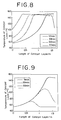
- the temperature of the catalyst bed can be maintained at a high level from the beginning of the start-up operation by supplying ammonia at a temperature higher than the prescribed temperature to the reactor (the curve of 17 minutes in the diagram of Fig. 8 to be described below).
- the reactor is externally heated, it requires a separate apparatus.
- the inlet temperature of the reactor can be readily heightened by using an adiabatic reactor with a pre-heater that is normally disposed in any apparatus of this class (Fig. 8 to be described below) .
- the degree of conversion of ethylene oxide was low and the unaltered ethylene oxide flowed out of the reactor because the temperature of the catalyst was not raised fully during the initial stage of reaction and the temperature of the reactor barely began to rise after the elapse of 30 minutes.
- the alkylene oxide of a rather low concentration is supplied and this concentration is subsequently elevated gradually after the temperature of the reactor has been raised, the alklene oxide so supplied can acquire the reactivity at a sufficiently high catalyst temperature and no unaltered alkylene oxide occur at the outlet of the catalyst bed.
- the product of high quality can be obtained with high efficiency because it is not necessary to remove unaltered raw materials from the product.
- the favorable outcome of this operation may be logically explained by a supposition that, as clearly noted from Fig. 10 which will be described below, the start-up can be stably implemented even under such conditions that the molar ratio of the alkanolamine to ammonia may be as low as 8 and the ethylene oxide concentration may be high.
- the elevation of temperature cannot occur rapidly because the temperature of the catalyst bed is gradually elevated by the heat of reaction.
- the alkylene oxide to be used in this invention is preferably a compound of 2 - 4 carbon atoms represented by the following structural formula 1: wherein R 1 , R 2 , R 3 , and R 4 independently represent a hydrogen atom, a methyl group, or an ethyl group.
- R 1 , R 2 , R 3 , and R 4 independently represent a hydrogen atom, a methyl group, or an ethyl group.
- R 1 , R 2 , R 3 , and R 4 independently represent a hydrogen atom, a methyl group, or an ethyl group.
- ethylene oxide, propylene oxide, and butylene oxide may be cited.
- This invention may use these alkylene oxides either singly or a combination of two or more species.
- ethylene oxide proves advantageous among other alkylene oxides because it allows the production of ethanolamines particularly useful economically.
- the solid catalyst for use in this invention is not particularly limited but has only to be adapted for the production of alkanolamines.
- the solid catalyst may cite known ion-exchange resins used for the production of alkanolamines; zeolites; catalysts having compounds of rare earth elements such as lanthanum, cerium, praseodymium, neodymium, samarium, europium, gadolinium, terbium, dysprosium, holmium, erbium, thulium, ytterbium, ruthenium, scandium, and yttrium carried on refractory inorganic carriers having a specific surface area of 1 - 500 m 2 /g such as, natural substances (such as diatomaceous earth, pumice, and clay), simple oxides (such as silica, alumina, titania, and zirconia), complex oxides (such as silica-alumina, titania-silica, zir
- particle diameter means the average diameter of catalysts and inert particles. It is not applied exclusively to spheres but may be applied to arbitrary shapes such as cylinders, fragments, and rings as well. Spheres and approximate spheres prove particularly advantageous for inert particles among other shapes in terms of the ease of handling.
- the particle diameter (equivalent diameter) of such a catalyst is required not more than 1 mm, preferably in the range of 1 - 0.1 mm. If the particle diameter exceeds the upper limit of the range, it will lower the amount of the product to be obtained. If it falls short of the lower limit of the range, it will entail a disadvantage in suffering the catalyst to flow out of position or increasing the pressure loss.
- the "adiabatic reactor” or briefly the “reactor” for use in this invention is not particularly limited but only required a continuous-flow type reactor which is capable of continuing a given reaction in an adiabatic state.
- the term "adiabatic state” as used herein refers to the condition in which the transfer of heat between the reactor and the exterior thereof is blocked.
- This invention is aimed at providing a method for effecting efficient production of an alkanolamine by effectively utilizing the heat of reaction generated by the contact of the catalyst with the raw material components and further controlling the temperature of reaction by adjusting the concentration of the raw material components.
- the adiabatic reactor that is externally provided with a cooling device and consequently enabled to adjust the reaction temperature at a fixed level and the adiabatic reactor which is furnished with an external heater and consequently enabled to fix the internal temperature of the reactor primarily do not belong to the adiabatic reactor that is contemplated by the present invention.
- the adiabatic reactor that is furnished with such a temperature adjusting device may be used for implementing the method of this invention. This performance of the method, when effected without using the temperature adjusting device, equals the operation of the adiabatic reactor of this invention.
- alkanolamine By varying the molar ratio of ammonia and the alkylene oxide, it is possible to produce three kinds of product (monoalkanolamine, dialkanolamine, and trialkanolamine) having 1, 2, and 3 alkylene oxide molecules added to one ammonia molecule.
- the alkanolamine it may cite (mono-, di-, and tri-)ethanolamines, (mono-, di-, and tri-) propanolamines, and (mono-, di-, and tri-) butanolamines.
- This invention relates to a reaction apparatus for use in the production of a dialkanolamine mainly by the reaction of ammonia, a monoalkanolamine, and an alkylene oxide in the presence of a solid catalyst, which apparatus is characterized by being so constructed as to supply the alkylene oxide to a fluid which has been formed by mixing ammonia and the monoalkanolamine and then preheating the resultant mixture.
- the reaction apparatus mentioned above is provided with a mixer for mixing ammonia with a monoalkanolamine; a pre-heater for preheating the fluid flowing from the mixer; an alkylene oxide mixer with a feed inlet for supplying an alkylene oxide and interposed between the pre-heater mentioned above and a reactor for introducing an alkylene oxide via the feed inlet and mixing it into a fluid preheated by the pre-heater; and a reactor adapted to introduce the preheated mixture of the ammonia, monoalkanolamine, and alkylene oxide flowing from the alkylene oxide mixer and possessed of a catalyst bed packed with a solid catalyst.
- the mixer for mixing ammonia and a monoalkanolamine is not particularly limited but required only to be capable of mixing the ammonia and monoalkanolamine.
- a method of joining a pipe for ammonia to a pipe for monoalkanolamine in the pattern of the letter T or the letter Y may be cited as one concrete example of the concept of the mixer.
- the pre-heater for preheating the fluid flowing from the mixer is not particularly limited but required only to be capable of preheating the mixed fluid composed of ammonia and a monoalkanolamine.
- Heat exchangers particularly pre-heaters, may be cited as concrete examples of the pre-heater.
- the heat exchangers include, for example, shell-and-tube type heat exchangers, double-pipe type heat exchangers, single-pipe type heat exchangers, and plate-type heat exchangers.
- the shell-and-tube type heat exchangers prove particularly advantageous from the viewpoint of the efficiency of heat exchange.
- the alkylene oxide mixer provided with a supply inlet for an alkylene oxide, interposed between the pre-heater mentioned above and the reactor, and adapted to introduce the alkylene oxide through the supply inlet into the fluid preheated by the pre-heater mentioned above is not particularly limited but required only to be capable of mixing the preheated fluid and anlkylene oxide.
- a method for joining a pipe for the preheated mixture to a pipe for alkylene oxide in the pattern of the letter T or the letter of Y and a method for effecting the mixture by the use of a nozzle may be cited as concrete examples of the alkylene oxide mixer.
- the structure molded like the letter T and provided with a nozzle proves particularly favorable from the viewpoint of the efficiency of mixing.
- the reactor adapted to introduce the preheated mixture of ammonia, monoalkanolamine, and alkylene oxide flowed from the alkylene oxide mixer and furnished with a catalyst bed packed with a solid catalyst is not particularly limited but required only to be capable of implementing adiabatic reaction because the reaction involved herein is adiabatic reaction.
- this reactor may cite fixed-bed type reactors and cascade fixed-bed reactors.
- the fixed bed type reactors prove particularly favorable among other reactors cited above from the viewpoint of the cost of equipment.
- the available volume from the supply inlet for an alkylene oxide through the inlet of the catalyst bed is expected generally not more than 0.5 times, more preferably in the range of 0.01 to 0.5 times, and especially 0.01 to 0.2 times, the volume of the catalyst bed which is formed in the reactor.
- available volume refers to the volume from the supply inlet for the alkylene oxide to the mixed fluid of ammonia and monoalkanolamine through the inlet of the catalyst bed in the reactor. It should take care of the size of this volume because the dialkanolamine is converted into the trialkanolamine by a reaction in the absence of a catalyst.
- volume of the catalyst bed refers not only to the catalyst alone but also to the apparent volume of the catalyst, inclusive of the voids entrained. Specifically, the formation of trialkanolamine by the reaction in the absence of a catalyst must be repressed for the purpose of allaying the decline of the degree of selectivity of dialkanolamine. This repression of the reaction in the absence of a catalyst can be attained by decreasing to the fullest possible extent the dead volume extending to the catalyst bed.
- reaction apparatus of this invention is preferably provided with a static mixer (mixer using no agitation) between the alkylene oxide mixer and the reactor.
- a static mixer mixer using no agitation
- the reaction apparatus of this invention is preferably packed with a liquid-pervious inert material on the upstream side in the interior of the reactor.
- the liquid-pervious inert material to be used herein is not particularly limited but required only to avoid interacting with the reactants.
- the liquid-pervious inert material it may cite a casting, crush, woolen material of quartz, ⁇ -alumina, stainless steel, carbonized silicon, and silica. By the incorporation of such a liquid-pervious inert material, it is possible to preheat the fluid effectively and enhance readily the efficiency of the reaction.
- This invention concerns a method for the production of a dialkanolamine by the reaction of ammonia, a monoalkanolamine, and an alkylene oxide in the presence of a solid catalyst, which method is characterized by supplying the alkylene oxide to the preheated fluid formed in advance by mixing the ammonia and monoalkanolamine and preheating the resultant mixture.
- the molded particles of zeolite which has undergone ion-exchange with a rare earth element, in particular MFI or MEL structure (code exhibiting the structure by International Zeolite Society), proves particularly advantageous from the viewpoint of the selectivity of diethanolamine.
- a rare earth element in particular MFI or MEL structure (code exhibiting the structure by International Zeolite Society)
- lanthanum, yttrium, and cerium prove particularly advantageous from the viewpoint of the cost of catalyst.
- the monoalkanolamine as the raw material for use in this invention is preferred to be a compound represented by the following structural formula 2: wherein R 1 , R 2 , R 3 , and R 4 have the same meanings as in the structural formula 1.
- Ethanolamine may be cited as one concrete example of this compound.
- the monoalkanolamine formed in the conventional production of an alkanolamine may be separated by a known method such as distillation and part of the separated monoalkanolamine may be used as the raw material for the monoalkanolamine contemplated by this invention.
- dialkanolamine that corresponds to the raw material mentioned above is obtained. It is preferred to be a dialkanolamine that is represented by the following structural formula 3: wherein R 1 , R 2 , R 3 , and R 4 have the same meanings as in the structural formula 1. Diethanolamine may be cited as one concrete example of this compound.
- the time required for the preheated fluid which has received the alkylene oxide to reach the catalyst mentioned above is preferred not more than 0.5 times, , more preferably in the range of 0.01 to 0.5 times, and especially 0.01 to 0.2 times, the retention time in the catalyst bed.
- the retention time in the catalyst bed in this case is represented by the formula, (Volume of catalyst bed) / (Volumetric flow rate).
- the temperature of the fluid at the inlet of the catalyst bed is preferred to be lower by not less than 50°C, preferably 50 to 150°C, than the temperature at the outlet of the catalyst bed. Since this reaction is adiabatic, the temperature in the direction of cross section of the catalyst bed may be substantially uniform.
- the decline of the selectivity of the dialkanolamine can be prevented.
- the temperature at the inlet of the catalyst bed to the minimum, it is possible to lower the reaction rate at the site of the absence of a catalyst and repress the formation of the trialkanolamine.
- the temperature of the fluid at the inlet of the catalyst bed in the second and following stages is preferably cooled to a level lower by not more than 50°C, preferably 50 to 150°C, than the temperature at the outlet of the catalyst bed at the immediately preceding stage.
- the reaction apparatus may be provided with one reactor or a plurality of reactors.
- the number of reactors may be selected, depending on the degree to which the dialkanolamine aimed at is formed.
- the reaction pressure is preferably maintained at a level higher than the vapor pressure of the reaction mixture at the highest temperature to be reached in the reactor.
- the elevation of temperature can be curbed by utilizing the latent heat of vaporization obtained by vaporizing part of ammonia. In this case, the reaction pressure is lowered than the vapor pressure of the reaction mixture.
- the reaction may be carried out in any of the modes, i.e. down flow, upper flow, and horizontal flow, relative to the catalyst.
- the mode of upper flow proves favorable among other modes from the viewpoint of the ease with which the catalyst is packed.
- the production of a dialkanolamine is generally carried out at a temperature in the range of 5 - 300°C, preferably in the range of 20 - 200°C.
- the operation pressure is generally in the range of 5 - 20 MPa, preferably in the range of 7 - 15 MPa.
- the molar ratio of ammonia and a monoalkanolamine is not particularly limited but required only to be such that the amount of a monoalkanolamine in the reaction system may be larger than the amount thereof which is not substantially consumed. It is expected generally in the range of 200 : 1 - 1 : 2, preferably in the range of 100 : 1 - 1 : 1, and more preferably in the range of 50 : 1 - 2 : 1.
- the molar ratio of an alkylene oxide and monoalkanolamine is expected generally in the range of 1 : 0.01 - 1 : 20, preferably in the range of 1 : 0.05 - 1 : 10, and more preferably in the range of 1 : 0.1 - 1 : 8. If the proportion of an alkylene oxide is less than 0.01, the amount of diethanolamine is not inreased. Conversely, if this proportion exceeds 20, the excess will be at a disadvantage in increasing the recycle of the monoalkanolamine to an excessive extent.
- liquid hourly space velocity is preferred in the range of 0.1 - 50 hr -1 from the viewpoint of the productivity.
- the fixed-bed type reactor For the production of an alkanolamine, the fixed-bed type reactor is generally used. In this reactor, one or more one-piece honeycomb structures are disposed.
- the one-piece honeycomb structure has a catalyst for the production of an alkanolamine packed and retained therein and is put to use for a given reaction.
- the one-piece structure in the shape of a cylinder for example, has a plurality of non-crossing through holes from one end face toward the other end face and is manufactured in a known method such as a method of combining sheet elements of prescribed shapes and compressing or rolling them.
- the size of the honeycomb structure is properly decided, depending on the amount of the product aimed at.
- the shape of the flow paths for the raw material liquid in the honeycomb structure is not particularly limited but required only to avoid exerting a large load on the fluid. It may be any of various shapes such as circle, hexagon, square, triangle, and corrugation. Since the alkanolamine obtained by the reaction is corrosive, the material for the one-piece honeycomb structure is preferred to have a corrosion-proofing quality. Stainless steel, for example, may be used as the material.
- the size of the individual flow paths (lattice or cell) has no particular limitation. For the purpose of enhancing the effect of the false shell-and-tube type structure, this size is expected preferably not more than 30 cm and more preferably in the range of 10 - 2 cm. Further, from the viewpoint of preventing the fluids of the raw materials and the product from forming a channeling, the adjacent through holes of the one-piece structure are preferred to be impervious to liquid.
- the reactor may be provided therein with one or more honeycomb structures.
- honeycomb structures When a plurality of honeycomb structures are provided in the reactor, the individual flow paths in the honeycomb structures may be varied in size. It is permissible, for example, to give decreasing diameters to the flow paths on the upstream side of the fluid of raw materials and increasing diameters to the flow paths on the downstream side or vice versa.
- the plurality of honeycomb structures may be serially arranged in the flow direction of the raw materials. Alternatively, it is permissible to interpose a suitable empty space between the structures in the flow directions of the fluids and mix the fluids by utilizing the empty spaces to enhance the efficiency of agitation.
- the one-piece honeycomb structure is preferred such that it may be carried in its unmodified form into the reactor or similarly carried out from the interior of the reactor.
- the honeycomb structure is formed in a one-piece construction and the upper part of the reactor is formed in an open-close construction resorting to such a closing device as a flange, then the honeycomb structure can be readily carried into and out of the reactor through the upper part thereof. Consequently, the inner part of the reactor itself is not formed in a complicated construction because the honeycomb structure is formed in a one-piece construction.
- the reactor is provided in the inner wall of the lower end thereof with a hollow disc for passing the fluid of raw materials so as to ensure fast retention of the honeycomb structure therein and, at the same time, prevent leakage of liquid through the gap between the reactor and the honeycomb structure.
- the hollow part of the hollow disc is preferably provided with a gauze or a mesh capable of retaining the catalyst which is packed in the honeycomb structure.
- the catalyst in a prescribed amount is dropped into the honeycomb structure in the reactor till the structure is packed to capacity with the catalyst.
- the reaction is generally a liquid-phase reaction under pressure.
- the flow of the liquid phase may be in any of the three modes, down-flow, up-flow, and horizontal flow.
- the upper flow proves favorable from the viewpoint of the case of packing the catalyst.
- the upper side of the catalyst bed is overlain by a retainer layer of inert particles having a particle diameter of 0.5 to 10 times that of the catalyst.
- the superposed layer of the inert particles is further overlain by inert particles having a particle diameter of 1.5 to 10 times that of the former inert particles.
- the ratio of the catalyst, the inert particles having a particle diameter of 0.5 to 10 times, and the finally superposed inert particles having a particle diameter of 1.5 to 10 times is not particularly limited, it is generally in the range of 10 - 100 : 1 - 10 : 2 - 20, preferably in the range of 10 - 500 : 1 - 5 : 2 - 10 (by volume).
- This method of packing the catalyst to the reactor is not limited but may be similarly applied to a reactor of other type.
- inert particles to be used effectively in this invention molded masses, fragments, and woolly masses made of granules of quartz, ⁇ -alumina, stainless steel, silicon carbide, and silica may be cited.
- the inert particles formed as spheres or approximate spheres prove particularly favorable among other shapes of inert particles in terms of the ease of handling.
- the used catalyst may be easily extracted from the honeycomb structure.
- the packing of the newly supplied catalyst can be effected in the same manner as described above.
- This invention concerns a start-up method for the production of an alkanolamine by the reaction of ammonia and an alkylene oxide using an adiabatic reactor in the presence of a solid catalyst, which start-up method is characterized by initiating the reaction at a higher inlet temperature of the reactor than the prescribed temperature with a lower alkylene oxide concentration than the prescribed concentration and subsequently gradually changing the inlet temperature and the alkylene dioxide concentration toward the prescribed levels, respectively.
- the heterogeneous catalyst By using the heterogeneous catalyst, it is possible to heighten the molar ratio of an alkylene oxide to ammonia and produce an alkanolamine efficiently.
- the reaction is so active that the interior of the reactor may become unstable, the control of temperature may become difficult during the course of the start-up, and the product may be contaminated with the unaltered raw material.
- the concentration of an alkylene oxide and the temperature of the raw material substances introduced into the reactor it is possible to preclude the rapid rise of temperature, ensure safety of the reaction, and prevent the possible leakage of the unaltered raw material into the ammonia recovery system.
- this invention finds an inorganic catalyst preferable and a catalyst having a rare earth element carried on a heat-resistant carrier particularly preferable on account of excellent heat resistance. Since this invention is aimed at ensuring the safety of the reaction during the course of the start-up when the rise of the temperature in the adiabatic reaction is large, the inorganic catalyst is particularly suitable for effecting this invention because it excels in heat resistance and allows a large temperature rise in the adiabatic reaction.
- this invention enables the reaction temperature to be adjusted with the molar ratio of ammonia to the alkylene oxide and, so long as the catalyst excels in heat resistance, also allows the alkylene oxide ratio to be heightened and enables the production of an alkanolamine to be attained with unusually high efficiency.
- this invention is capable of repressing the elevation of temperature in the reactor (continuous-flow type reactor), it allows the ion-exchange resin which, on account of deficiency in heat resistance, has been heretofore rejected as not usable when the molar ratio of ammonia and an alkylene oxide is low (when the concentration of an alkylene oxide is high in the reaction mixture) to be used therein as a heterogeneous catalyst.
- the adiabatic reactor used herein may be any of the known adiabatic reactor which is packed with a heterogeneous catalyst and then put to use for producing an alkanolamine from ammonia and an alkylene oxide.
- the reactor is packed in the interior thereof with the heterogeneous catalyst.
- the method for supplying the raw material to the reactor and the method for packing the reactor with the catalyst are not particularly limited.
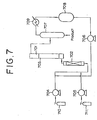
- ammonia from an ammonia cylinder 710 is supplied via an ammonia pump 704 and an alkylene oxide from an alkylene oxide cylinder 711 is supplied via an alkylene oxide pump 705 respectively to a pre-heater 702.
- the raw materials thus supplied are heated in the pre-heater 702 and introduced into a reactor 701.
- the temperature in the pre-heater in which the reaction has been stabilized is maintained in a range of 20 - 100°C, preferably in the range of 30 - 80°C, and especially in the range of 30 - 70°C. If this temperature is less than 20°C, it will not maintain the temperature of a catalyst 703 proper for a highly efficient reaction. Conversely, if the temperature exceeds 100°C, it will render the temperature adjustment in the reactor difficult, with the reaction heat generated in the reactor as a contributory factor.
- the mixture of raw materials that has been introduced into the pre-heater is guided to the inlet of the reactor, with the temperature thereof kept intact.
- the alkylene oxide is converted into the corresponding alkanolamine by reacting with ammonia in the reactor 701.
- the internal temperature of the reactor in the steady state is not particularly limited, it is preferably in the range of 20 - 300°C, more preferably in the range of 30 - 250°C, and most preferably in the range of 30 - 200°C.
- the internal temperature of the reactor largely varies from the inlet toward the outlet of the reactor because the reaction is adiabatic. The temperature mentioned above, therefore, does not mean that the temperature is uniform at this level from the inlet through the outlet of the reactor.
- the temperature of the reactor 701 is brought by the temperature of the raw material components heated in the pre-heater coupled with the consequently generated heat of reaction. If the reaction temperature in the adiabatic reactor is lower than 20°C, it will decrease the reaction rate and unduly increase the amount of the catalyst for thorough conversion of the alkylene oxide into the corresponding alkanolamine. If the reactor is enlarged with a view to overcoming such drawback, it will boost the cost of equipment prohibitively. Conversely, if the reaction temperature is higher than 300°C, it will raise the internal temperature of the reactor excessively and possibly color the product. Incidentally, the adjustment of the internal temperature of the reactor can be attained under the adiabatic condition by adjusting the temperature of the pre-heater and the molar ratio of an alkylene oxide and ammonia.
- the amount of ammonia to be added relative to the alkylene oxide is not particularly limited, it is preferably in the range of 2 - 30 mols, and more preferably in the range of 4 - 20 mols, per mol of the alkylene oxide.
- the reaction temperature can be adjusted by the molar ratio mentioned above. If this amount is less than 2 mols, it will excessively increase the molar ratio of the alkylene oxide to ammonia, excessively increase the reaction heat to be generated, and possibly cause coloration of the product. Conversely, if the amount exceeds 30 mols, it will excessively decrease the molar ratio of the alkylene oxide to ammonia and excessively increase the amount of ammonia to be recovered.
- the reaction pressure in a stabilized state is preferably in the range of 2 - 30 MPa, more preferably in the range of 4 - 20 MPa, and especially in the range of 5 - 15 MPa. If the reaction pressure is lower than 2 MPa, it will not enable the reaction to keep perfectly in the liquid-phase condition, excessively increasing the amount of ammonia to vaporize, and suffering the liquid-phase part to decrease to the extent of preventing the reaction of ammonia and the alkylene oxide from proceeding smoothly. Conversely, if the reaction pressure is higher than 30 MPa, it will require unduly high pressure resistance and boosting the cost of the equipment.
- the conditions of temperature and pressure may be so set as to allow vaporization of part of the ammonia during the course of the reaction.
- the heat of vaporization of ammonia represses the elevation of temperature in the reactor and permits the reaction to proceed at a high alkylene oxide concentration.
- the liquid hourly space velocity is preferably in the range of 0.5 - 100 hr -1 and more preferably in the range of 1 - 50 hr -1 , though depending on the reaction temperature and the kind and the amount of the catalyst. If the LHSV is smaller than 0.5 hr -1 , it will excessively increase the amount of the catalyst for thorough conversion of the alkylene oxide into the corresponding alkanolamine, notwithstanding the contact time between ammonia and the alkylene oxide is elongated and the conversion of the alkylene oxide into the corresponding ankanolamine is attained with high efficiency. Further, the amount of the alkanolamine to be produced per unit time will be decreased.
- the LHSV is larger than 100 hr -1 , it will shorten the contact time between ammonia and the alkylene oxide and consequently failing to attain sufficient conversion of the alkylene oxide into the corresponding alkanolamine.
- the LHSV during the start-up operation may be different from that in the static condition.
- ammonia and the alkanolamine as the product are distilled and introduced into an ammonia recovering column 707, wherein the ammonia and the alkanolamine are separated from each other.
- the alkanolamine as the product is obtained through the bottom of the ammonia recovering column 707.
- the ammonia which has been distilled through the top of the ammonia recovering column is cooled and separated by a heat-exchanger 709 and recovered in an ammonia recovering tank 708.
- the ammonia thus recovered can be introduced into the pre-heater 702 via a recycle ammonia pump 706.
- the raw materials excluding the alkylene oxide are preheated in the pre-heater 702.
- the preheating temperature is higher by 20 - 100°C, preferably by 30 - 90°C, and especially by 40 - 80°C, than the prescribed temperature.
- the term "prescribed” as used in this invention refers to the steady state in which the reaction is stabilized with the catalyst and the molar ratio of ammonia and alklene oxide maintained under approximately fixed conditions.
- the term "prescribed temperature” as used herein refers to the temperature of the inlet of the reactor under the steady state mentioned above. Where the raw material compounds are directly introduced from the pre-heater to the reactor, the temperatures of the pre-heater and the inlet of the reactor are equal. Incidentally, the prescribed temperature of the inlet of the reactor is variable with such factors as the kinds of catalyst to be used, the molar ratio of ammonia and an alkylene oxide, and the scale of the reactor.
- the prescribed temperature of the inlet of the reactor is generally in the range of 20 - 100°C, preferably in the range of 30 - 90°C, and more preferably in the range of 30 - 80°C. So long as the prescribed temperature which is set in consideration of the fact that the product succumbs to coloration under the condition of a high temperature falls in the range mentioned above, the rapid rise of temperature can be prevented and, at the same time, the distillation of the unaltered product can be prevented.
- an alkylene oxide at a prescribed concentration in the range of 10 - 90 v/v %, preferably in the range of 20 - 80 v/v %, and especially in the range of 20 - 70 v/v % is supplied to the reactor. If the concentration exceeds 90 v/v %, it will be difficult to avoid the rapid elevation of the reaction temperature due to the reaction heat of the alkylene oxide. Conversely, if this concentration is less than 10 v/v %, it will fail to obtain a fully satisfactory heat of reaction.
- concentration refers to the concentration of the alkylene oxide under the conditions of steady state. It is variable with such factors as the kind of catalyst to be used and the molar ratio of ammonia.
- the temperature of the pre-heater 702 is gradually lowered toward the prescribed temperature and the alkylene oxide concentration is gradually increased toward the prescribed alkylene oxide concentration.
- the adjustment of the preheating temperature therefore, can be judged by confirming the elevation of the catalyst temperature.
- This invention concerns a start-up method for obtaining the product of excellent quality safely under the condition that the reaction heat generated is utilized more efficiently using an adiabatic reactor.
- this invention by initiating the reaction at a reaction temperature higher than the prescribed temperature, it is possible to prevent the unaltered alkylene oxide from flowing out of the reaction system.
- the temperature in the catalyst bed is not suffered to rise excessively and the degradation of quality of the product is not suffered to ensue even when the temperature of the inlet of the reactor is higher than the prescribed temperature.
- Example I represents a case of producing diethanolamine by using ethylene oxide mainly as an alkylene oxide solely for the purpose of illustration. It is not meant to limit this invention.
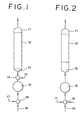
- Fig. 1 is an illustration of a reaction apparatus.
- the apparatus in Fig. 1 was used to carry out a liquid-phase reaction.
- Ammonia supplied via an ammonia line 16 and a monoalkanolamine recycle via a monoalkanol amine line 17 were mixed in a mixer 18.
- the resultant mixture (fluid) was heated to a temperature in a pre-heater 15 and then mixed in an alkylene oxide mixer 14 with the alkylene oxide fed via an alkylene oxide line 19.
- the available volume of a reactor 11 inclusive of the volume of an inlet part 13 was set at not more than 0.5 times the volume of a catalyst (packed) bed 12.
- the reactor 11 was formed of a stainless steel tube, 20 mm in inside diameter and 200 mm in length, which was wrapped on the perimeter thereof with a warming heater and insulated with an insulating material.
- the inlet part 13 of the reactor (catalyst bed) was filled with quartz wool spread in a thickness of 10 mm so as to serve concurrently as a retainer for the catalyst.
- the pre-heater 15 was wrapped on the perimeter thereof with a heater. It was formed of a stainless steel tube, 10 mm in inside diameter and 100 mm in length. The temperature of the pre-heater was controlled with the temperature of the fluid in the middle part of the pre-heater.
- the catalyst bed 12 was packed with 10 cm 3 of a catalyst obtained by compression molding ZSM-5 zeolite which had been ion-exchanged with lanthanum and crushing the resultant mold to a particle size of 50 - 100 mesh (based on Japanese Industrial Standard).
- Ammonia was fed at a flow rate of 18.8 g/hr and monoethanolamine at a flow rate of 6.7 g/hr as liquid reactants by the use of a high pressure pump to the pre-heater and were heated therein to 70°C.
- the inlet temperature of the reactor was 60°C.
- the reaction pressure was controlled constantly at 10 MPa with a control valve disposed at the outlet of the reactor.
- the temperature of the catalyst bed at the outlet of the reactor was 130°C.
- the product at the outlet of the reactor was analyzed, it was found to comprise 65.8 wt. % of MEA, 32.2 wt. % of diethanolamine (DEA), and 2.0 wt. % of triethanolamine (TEA).
- the selectivity of DEA exclusive of the recycled MEA was 90 wt. %.
- the degree with which the by-production of TEA was repressed during the production of DEA and the degree of selectivity with which the DEA was produced formed important considerations.
- the formation ratio of TEA and DEA was used as an index. In the present example, the ratio of TEA/DEA was 0.062.
- the conditions used and the TEA/DEA ratio are shown in the following Table 1.
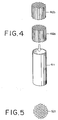
- Fig. 2 is an illustration of a reaction apparatus.
- the apparatus shown in Fig. 2 was used to carry out a reaction.
- the reference numerals in the diagram are identical with those of Fig. 1.
- the reactor and the pre-heater used herein were the same as those of Example 1, the ethylene oxide was mixed in front of the pre-heater.
- the volume of the reactor plus the pre-heater was 8 cm 3 .
- the reaction proceeded even in the pre-heater and the temperature at the inlet of the reactor was raised to 98°C.
- the temperature at the outlet of the reactor was 140°C.
- Fig. 3 represents an illustration of a reaction apparatus of this example.
- the reference numerals which are the sums of the reference numeral 310 and 10 or 20 represent the same members or parts as those denoted respectively by the reference numerals 310 - 319.
- ammonia supplied via an ammonia line 316 and a monoalkanolamine supplied via a monoalkanolamine line 317 are mixed in a mixer 318, heated to a prescribed temperature in a pre-heater 315, then mixed with ethylene oxide supplied via a line 319, and supplied to a reactor 311.
- the fluid at the outlet of reactor was cooled with the heat exchanger 315 to a level lower by not less than 50°C than the outlet temperature.
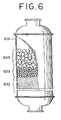
- Fig. 4 illustrates the reactor of Example II-1 according to the second mode of embodying this invention and the honeycomb structure disposed in the reactor.
- Reference numeral 411 is a reactor proof against pressure. This reactor was furnished at the upper and lower ends thereof with flat panels. In a process for producing an alkanolamine, the reactor 411 had an inner volume only on the order of several cubic meters (m 3 ). Since it was used under such high pressure as 10 - 15 MPa, it was preferred to assume a slender shape. The diameter of the reactor, therefore, is only on the order of 1 to 4 meters. In this case, the apparatus having a complicated structure is not suitable for filling with a catalyst. It was advantageous in this case to use a reactor with such a structure as illustrated in Fig. 4.
- the reactor may be provided on the upstream side of the catalyst bed disposed therein with a distributor which was intended to uniform the flow of raw materials up to the catalyst bed.
- Two structures 412a and 412b were packed in the reactor.
- One structure or three structures may be used instead. When the plurality of such structures were installed, the angles of the lattice were preferred to be staggered.
- the structures were not required to resist pressure because they were installed within the reactor. They were formed by assembling fairly thin plates.
- the size of the individual through holes is not particularly limited, it is preferably not more than 30 cm, more preferably not more than 10 cm for the purpose of enhancing the effect of the false shell-and-tube type reactor.
- Fig. 5 is a plan view illustrating a structure 521 of Example II-2 as viewed from above.
- the use of such a hexagon as shown in the diagram was convenient. Since the lattice formed of squares at times prevented the catalyst from filling the squares uniformly to the corners thereof, the hexagons were advantageous from the viewpoint of ensuring uniform packing of the catalyst.
- the size of each cell is preferably not more than 30 cm, more preferably not more than 10 cm in terms of the radius of an inscribed circle.
- Fig. 6 illustrates the structure of an upper catalyst retainer to be used when the reactor was packed with a catalyst in the up-flow mode.
- the catalyst to be used for producing an alkanolamine was preferred to have as small a particle diameter as permissible because the diffusion in the catalyst particles posed a problem.
- the particle diameter of such a catalyst is expected generally to be not more than 1 mm (equivalent diameter where the catalyst particles were not in a spherical shape), preferably in the range of 1 - 0.1 mm.
- a catalyst retainer was used with a view to preventing the catalyst bed from moving or the catalyst particles from flowing out of the reactor. Inert particles were proper for use in the catalyst retainer.
- the reference numeral 631 denotes a reactor, the reference numeral 632 a catalyst bed, and the reference numeral 633 inert particles of the first layer having a particle diameter of 0.5 to 10 times, specifically 3 times, the particle diameter of the catalyst in the catalyst bed 632.
- This part was formed of relatively small particles and was capable of repressing the outflow of the catalyst particles.
- the thickness of this layer is not particularly limited. If it is increased unduly, it will only add to pressure loss without doing any good. Properly, the thickness is 5 to 20 times the diameter of the inert particles.
- the shape of the inert particles is not particularly limited.
- the inert particles in the shape of spheres prove advantageous for the purpose of being packed most closely.
- the reference numeral 634 denotes a second layer of inert particles having a particle diameter of 1.5 to 10 times, specifically 5 times, the diameter of the particles of the layer 633. Since this layer is expected to support the first layer, it is preferred to have a relatively large packing density, i.e. 1 g/cm 3 to 5 g/cm 3 .
- the second layer 634 When the second layer 634 is overlaid by a gap, one or more layers may be further superposed thereon or a demister placed to fill up the gap.
- the reactor when necessary, may be provided at the outlet thereof with a filter capable of trapping a fine dust of the catalyst.
- a reaction was carried out in a reaction apparatus shown in Fig. 7 in the presence of Catalyst A.
- a reactor 701 made of steel and measuring 67 mm in inside diameter
- a pre-heater 702 (measuring 1 m in length and 5 mm in diameter and including a preheating part, 20 mm in inside diameter) provided on the perimeter thereof with an electric heater (not shown) was disposed.
- the preheating part was heated by the electric heater.
- ammonia and ethylene oxide were continuously fed at stated speeds using high-pressure pumps 704 and 705.
- the ammonia from an ammonia cylinder 710 and the ethylene oxide from an ethylene oxide cylinder 711 were mixed and heated and were then supplied to the reactor 701.
- the reactor 701 was kept in a substantially adiabatic state by being slightly heated by a heater (not shown) and consequently allowed to replenish the quantity of heat lost by radiation.
- the reaction pressure was controlled to 12 MPa. Then, the ethylene oxide and the ammonia were continuously reacted.
- the temperature at the inlet of the reactor was at 55°C, the LHSV at 3.5 hr -1 , and the ammonia/ethylene oxide molar ratio at 14.
- the startup operation for initiating the reaction was carried out by the following procedure, (1) - (5).
- Example III-1 The temperature distribution in the catalyst bed along the course of time obtained in Example III-1 is shown in Fig. 8. It is noted from the diagram that the temperature of the catalyst bed was wholly kept at a sufficiently high level and showed no sign of abnormal rise. From the initial stage of the start-up, the reaction mixture at the outlet showed no discernible sign of ethylene oxide, indicating the substantial absence of unaltered ethylene oxide.
- a procedure was carried out by following the procedure of Example III-1 while changing the procedure of startup, namely setting the reaction conditions from the beginning at the prescribed levels (the inlet temperature at 55°C, the molar ratio of ammonia to ethylene oxide at 14, the LHSV at 3.5 hr -1 , and the reaction pressure at 12 MPa).
- Fig. 9 illustrates the temperature distribution in the catalyst layer along the course of time. It is noted from this diagram that the temperature of the catalyst bed was not raised fully satisfactorily during the initial stage and the temperature of the reactor barely began to rise after the elapse of not less than 30 minutes. The degree of conversion of the ethylene oxide during the initial state was only about 40%, indicating that the unaltered ethylene oxide of a large amount flowed out of the reactor.
- a static reaction was carried out by following the procedure of Example III-1 while setting the prescribed inlet temperature at 45°C, the molar ratio of ammonia to ethylene oxide at 8, the reaction pressure at 10 MPa, and the LHSV at 3.5 hr -1 .
- the startup for initiating this reaction was effected by the following procedure, (1) - (6).
- Fig. 10 illustrates the temperature distribution in the catalyst bed along the course of time. It is noted from this diagram that the temperature of the catalyst bed was maintained wholly at a high level and showed no sign of abnormal rise. From the initial stage of the start-up, the reaction mixture at the outlet showed no discernible sign of ethylene oxide, indicating the substantial absence of unaltered ethylene oxide. It is also noted that the start-up was stably effected even when the molar ratio was as small as 8 and the ethylene oxide concentration high.
- a procedure was carried out by following the procedure of Example III-2 while changing the procedure of start-up from that of Example III-2, namely setting the reactions conditions from the beginning at the prescribed levels (the inlet temperature at 45°C, the molar ratio of ammonia to ethylene oxide at 8, the LHSV at 3.5 hr -1 , and the reaction pressure at 10 MPa).
- the temperature of the catalyst bed was not raised fully satisfactorily during the initial stage and the temperature of the reactor barely began to rise after the elapse of not less than 40 minutes.
- the degree of conversion of the ethylene oxide during the initial state was only about 20%, indicating that the unaltered ethylene oxide of a large amount flowed out of the reactor.
Landscapes
- Chemical & Material Sciences (AREA)
- Organic Chemistry (AREA)
- Chemical Kinetics & Catalysis (AREA)
- Physics & Mathematics (AREA)
- Fluid Mechanics (AREA)
- Organic Low-Molecular-Weight Compounds And Preparation Thereof (AREA)
- Low-Molecular Organic Synthesis Reactions Using Catalysts (AREA)
Abstract
Description


| Ratio of available volume/catalyst bed | Temperature of pre-hater °C | T E A / D E A | |
| Example 1 | 0.08 | 70 | 0.062 |
| Comparative Example 1 | 0.8 | 70 | 0.077 |
| Comparative Example 2 | 0.8 | 70 | 0.102 |
| DEA: Diethanolamine | |||
| TEA: Triethanolamine |
Claims (10)
- A reaction apparatus for producing a dialkanolamine by causing an alkylene oxide to react with ammonia and a monoalkanolamine in the presence of a solid catalyst, characterized by a mixer for mixing ammonia with the monoalkanolamine; a pre-heater for heating the fluid flowed from the mixer; an alkylene oxide mixer with a feed inlet for supplying an alkylene oxide and interposed between the pre-heater and a reactor for introducing the alkylene oxide via the feed inlet and mixing it into the fluid heated by the pre-heater; and a reactor equipped with a catalyst bed packed with a solid catalyst for introducing the preheated mixture of ammonia, monoalkanolamine, and alkylene oxide flowed from the alkylene oxide mixer to react.
- A reaction apparatus according to claim 1, characterized in that an available volume from the supply inlet for an alkylene oxide through the inlet of the catalyst bed is not more than 0.5 times the volume of the catalyst bed in the reactor.
- A method for producing a dialkanolamine by causing an alkylene oxide to react with ammonia and a monoalkanolamine in the presence of a solid catalyst, characterized by supplying the alkylene oxide into a fluid obtained in advance by mixing the ammonia and monoalkanolamine and preheating the resultant mixture.
- A method according to claim 3, characterized in that a time required for the preheated fluid containing the alkylene oxide in reaching the catalyst is set at not more than 0.5 times the retention time in the catalyst bed.
- A method according to claim 3 or claim 4, characterized in that a temperature of the fluid at the inlet of the catalyst bed is set at not less than 50 °C lower than the temperature at the outlet of the catalyst bed.
- A method according to any one of claims 3 to 5, characterized in that a reactor containing the catalyst is a cascade type reactor and the temperature of the fluid at the inlet of the catalyst bed at the second or subsequent stage is cooled to not more than 50 °C below the temperature at the outlet of the catalyst bed at the immediately preceding stage.
- A reactor for the production of an alkanolamine, characterized by disposing in the interior thereof a honeycomb structure.
- A method for packing a reactor for the production of an alkanolamine with a catalyst, characterized by disposing a honeycomb structure in the reactor and filling the structure with the catalyst.
- A method for packing an up-flow type reactor for the production of an alkanolamine with a catalyst, characterized by packing a catalyst having a particle diameter of not more than 1 mm, then overlaying the resultant catalyst bed with inert particles having a particle diameter of 0.5 to 10 times the particle diameter of the catalyst, and further overlaying the superposed layer of the inert particles with inert particles having a particle diameter of 1.5 to 10 times the particle diameter of the inert particles in the superposed layer.
- A startup method for the production of an alkanolamine by the reaction of ammonia with an alkylene oxide using an adiabatic reactor in the presence of a solid catalyst, characterized by initiating the reaction while setting the inlet temperature of the reactor at a higher level than the prescribed temperature and the alkylene oxide concentration at a lower level than the prescribed concentration and thereafter gradually changing the inlet temperature and the alkylene oxide concentration toward the prescribed levels, respectively.
Applications Claiming Priority (6)
| Application Number | Priority Date | Filing Date | Title |
|---|---|---|---|
| JP10297599A JP3421272B2 (en) | 1999-04-09 | 1999-04-09 | Reaction apparatus and production method for dialkanolamine production |
| JP10297599 | 1999-04-09 | ||
| JP10458299 | 1999-04-12 | ||
| JP11104582A JP2000296325A (en) | 1999-04-12 | 1999-04-12 | Reactor for producing alkanolamine and method for charging catalyst |
| JP16392099A JP3655776B2 (en) | 1999-06-10 | 1999-06-10 | Startup methods in alkanolamine production |
| JP16392099 | 1999-06-10 |
Publications (3)
| Publication Number | Publication Date |
|---|---|
| EP1043063A2 true EP1043063A2 (en) | 2000-10-11 |
| EP1043063A3 EP1043063A3 (en) | 2001-07-25 |
| EP1043063B1 EP1043063B1 (en) | 2005-12-14 |
Family
ID=27309853
Family Applications (1)
| Application Number | Title | Priority Date | Filing Date |
|---|---|---|---|
| EP00302939A Expired - Lifetime EP1043063B1 (en) | 1999-04-09 | 2000-04-07 | Reaction apparatus for production of alkanolamine and method for production of alkanolamine using the apparatus |
Country Status (6)
| Country | Link |
|---|---|
| US (2) | US6455016B1 (en) |
| EP (1) | EP1043063B1 (en) |
| CN (1) | CN1213996C (en) |
| DE (1) | DE60024705T2 (en) |
| MY (1) | MY120607A (en) |
| TW (1) | TW524721B (en) |
Cited By (9)
| Publication number | Priority date | Publication date | Assignee | Title |
|---|---|---|---|---|
| EP1219592A1 (en) * | 2000-12-19 | 2002-07-03 | Nippon Shokubai Co., Ltd. | Method for production of alkanolamine and apparatus therefor |
| EP1297881A1 (en) * | 2001-09-26 | 2003-04-02 | Air Products And Chemicals, Inc. | Granular bed restraint system |
| US6566556B2 (en) | 2000-12-19 | 2003-05-20 | Nippon Shokubai Co., Ltd. | Method for production of alkanolamine and apparatus therefor |
| CN103073437A (en) * | 2012-12-31 | 2013-05-01 | 浙江江山化工股份有限公司 | Preparation method of N-methyl diethanolamine |
| ITVR20120098A1 (en) * | 2012-05-18 | 2013-11-19 | I C I Caldaie S P A | CHEMICAL REACTOR |
| ITVR20120099A1 (en) * | 2012-05-18 | 2013-11-19 | I C I Caldaie S P A | CHEMICAL REACTOR FOR ENDOTHERMAL REACTIONS |
| ITVR20120101A1 (en) * | 2012-05-18 | 2013-11-19 | I C I Caldaie S P A | CHEMICAL REACTOR STRUCTURE |
| CN110586175A (en) * | 2018-06-12 | 2019-12-20 | 中国石油化工股份有限公司 | Catalyst for increasing production of monoethanolamine and diethanolamine |
| FR3134996A1 (en) * | 2022-04-27 | 2023-11-03 | Ipsomedic | Gas-Liquid-Solid and Liquid-Solid reactor cascade for carrying out chemical reactions in continuous flow under pressure or high pressure |
Families Citing this family (10)
| Publication number | Priority date | Publication date | Assignee | Title |
|---|---|---|---|---|
| US20090048648A1 (en) * | 2007-08-17 | 2009-02-19 | Searete Llc, A Limited Liability Corporation Of The State Of Delaware | Self-sterilizing device |
| CN101475494B (en) * | 2009-01-19 | 2012-01-18 | 佳化化学股份有限公司 | Production process of alkanolamine |
| CN101885686B (en) * | 2009-05-13 | 2013-04-03 | 中国石油化工股份有限公司 | Method for producing ethanolamine |
| US8459284B2 (en) * | 2010-09-17 | 2013-06-11 | Arch Chemicals, Inc. | Method and means for the preparation of solutions from dry chemicals |
| CN110590572B (en) * | 2018-06-12 | 2021-11-30 | 中国石油化工股份有限公司 | Method for producing monoethanolamine and diethanolamine |
| CN110639600B (en) * | 2018-06-27 | 2021-10-01 | 中国石油化工股份有限公司 | Catalyst rich in monoethanolamine and diethanolamine |
| CN110639601B (en) * | 2018-06-27 | 2021-10-01 | 中国石油化工股份有限公司 | Catalyst for synthesizing monoethanolamine and diethanolamine |
| CN110639605B (en) * | 2018-06-27 | 2021-10-01 | 中国石油化工股份有限公司 | Catalyst for increasing production of monoethanolamine and diethanolamine |
| JP7386898B2 (en) | 2019-05-03 | 2023-11-27 | イノベイティブ ウォーター ケア, エルエルシー | Devices and systems for water treatment |
| CN116987586A (en) * | 2023-07-28 | 2023-11-03 | 安及义实业(上海)有限公司 | Bioreactor and continuous flow reaction system |
Family Cites Families (18)
| Publication number | Priority date | Publication date | Assignee | Title |
|---|---|---|---|---|
| DE298636C (en) | ||||
| US559999A (en) * | 1896-05-12 | Sash-holder | ||
| US3697598A (en) * | 1968-08-20 | 1972-10-10 | Mo Och Ab | Continuous process for preparing monoalkanolamines from ammonia and alkylene oxides |
| US3595626A (en) * | 1968-11-14 | 1971-07-27 | Du Pont | Ceramic fillers and covers for packed beds |
| US3986839A (en) * | 1973-01-11 | 1976-10-19 | Licentia Patent-Verwaltungs-G.M.B.H. | Flow-guiding device for a catalytic converter |
| BE834514A (en) * | 1974-10-24 | 1976-04-15 | PROCESS FOR PREPARING DIALKANOLAMINS | |
| US4400539A (en) * | 1981-09-30 | 1983-08-23 | Union Carbide Corporation | Process for the manufacture of ethylenediamine |
| US4615796A (en) * | 1981-10-29 | 1986-10-07 | Chevron Research Company | Method for contacting solids-containing feeds in a layered bed reactor |
| US4438281A (en) | 1983-01-24 | 1984-03-20 | Texaco Inc. | Selective production of monoalkanolamines from alkylene oxides and ammonia over acidic inorganic catalysts |
| US4847418A (en) * | 1983-12-13 | 1989-07-11 | Union Carbide Corporation | Continuous process for preparing alkanolamines |
| US4939301A (en) | 1988-12-23 | 1990-07-03 | Texaco Chemical Company | Production of ethanolamine by amination of ethylene oxide over acid activated clays |
| DD298636A5 (en) * | 1989-12-11 | 1992-03-05 | Buna Ag,De | PROCESS FOR PREPARING OVER DIETHANOLAMINE CONTAINING REACTION MIXES FROM THE IMPLEMENTATION OF ETHENOXIDE AND AMMONIA |
| JP3355201B2 (en) | 1992-04-08 | 2002-12-09 | 株式会社ナガオカ | Catalyst holding device in down-flow type catalyst packed tower |
| US5795550A (en) | 1993-08-27 | 1998-08-18 | Idemitsu Engineering Co., Ltd. | Apparatus for packing catalyst |
| DE69409463T2 (en) | 1993-11-02 | 1998-07-30 | Nippon Catalytic Chem Ind | Process for the preparation of alkanolamine, catalyst for this process and process for the preparation of the catalyst |
| JPH1066858A (en) | 1996-08-27 | 1998-03-10 | Idemitsu Eng Co Ltd | Catalyst filling device and method |
| US6258900B1 (en) * | 1998-07-16 | 2001-07-10 | Crystaphase International, Inc | Filtration and flow distribution method for chemical reactors |
| US6063965A (en) * | 1997-09-05 | 2000-05-16 | Huntsman Petrochemical Corporation | Production of diethanolamine |
-
2000
- 2000-04-03 MY MYPI20001373A patent/MY120607A/en unknown
- 2000-04-05 TW TW089106259A patent/TW524721B/en not_active IP Right Cessation
- 2000-04-07 DE DE60024705T patent/DE60024705T2/en not_active Expired - Fee Related
- 2000-04-07 EP EP00302939A patent/EP1043063B1/en not_active Expired - Lifetime
- 2000-04-07 CN CNB001065351A patent/CN1213996C/en not_active Expired - Fee Related
- 2000-04-07 US US09/545,722 patent/US6455016B1/en not_active Expired - Fee Related
-
2002
- 2002-07-31 US US10/209,058 patent/US20030017093A1/en not_active Abandoned
Cited By (12)
| Publication number | Priority date | Publication date | Assignee | Title |
|---|---|---|---|---|
| EP1219592A1 (en) * | 2000-12-19 | 2002-07-03 | Nippon Shokubai Co., Ltd. | Method for production of alkanolamine and apparatus therefor |
| US6566556B2 (en) | 2000-12-19 | 2003-05-20 | Nippon Shokubai Co., Ltd. | Method for production of alkanolamine and apparatus therefor |
| MY119894A (en) * | 2000-12-19 | 2005-07-29 | Nippon Catalytic Chem Ind | Method for production of alkanolamine and apparatus therefor |
| EP1297881A1 (en) * | 2001-09-26 | 2003-04-02 | Air Products And Chemicals, Inc. | Granular bed restraint system |
| ITVR20120098A1 (en) * | 2012-05-18 | 2013-11-19 | I C I Caldaie S P A | CHEMICAL REACTOR |
| ITVR20120099A1 (en) * | 2012-05-18 | 2013-11-19 | I C I Caldaie S P A | CHEMICAL REACTOR FOR ENDOTHERMAL REACTIONS |
| ITVR20120101A1 (en) * | 2012-05-18 | 2013-11-19 | I C I Caldaie S P A | CHEMICAL REACTOR STRUCTURE |
| CN103073437A (en) * | 2012-12-31 | 2013-05-01 | 浙江江山化工股份有限公司 | Preparation method of N-methyl diethanolamine |
| CN103073437B (en) * | 2012-12-31 | 2015-02-11 | 浙江江山化工股份有限公司 | Preparation method of N-methyl diethanolamine |
| CN110586175A (en) * | 2018-06-12 | 2019-12-20 | 中国石油化工股份有限公司 | Catalyst for increasing production of monoethanolamine and diethanolamine |
| CN110586175B (en) * | 2018-06-12 | 2021-10-01 | 中国石油化工股份有限公司 | Catalyst for increasing production of monoethanolamine and diethanolamine |
| FR3134996A1 (en) * | 2022-04-27 | 2023-11-03 | Ipsomedic | Gas-Liquid-Solid and Liquid-Solid reactor cascade for carrying out chemical reactions in continuous flow under pressure or high pressure |
Also Published As
| Publication number | Publication date |
|---|---|
| CN1273235A (en) | 2000-11-15 |
| TW524721B (en) | 2003-03-21 |
| US6455016B1 (en) | 2002-09-24 |
| US20030017093A1 (en) | 2003-01-23 |
| MY120607A (en) | 2005-11-30 |
| DE60024705D1 (en) | 2006-01-19 |
| EP1043063B1 (en) | 2005-12-14 |
| CN1213996C (en) | 2005-08-10 |
| DE60024705T2 (en) | 2006-08-24 |
| EP1043063A3 (en) | 2001-07-25 |
Similar Documents
| Publication | Publication Date | Title |
|---|---|---|
| EP1043063B1 (en) | Reaction apparatus for production of alkanolamine and method for production of alkanolamine using the apparatus | |
| KR100537808B1 (en) | Reactor for catalytic gas phase oxidation | |
| JP5926305B2 (en) | Method for separating alkylethyleneamine or alkylethylenediamine | |
| RU2398733C2 (en) | Converter system with maximum reaction speed for exothermic reactions | |
| US6169207B1 (en) | Process for producing dialkanolamines | |
| EP1839735B1 (en) | A transverse tubular heat exchange reactor and a process for catalytic synthesis therein | |
| TW572873B (en) | Method of producing alkanolamines and method of regenerating a catalyst used therein | |
| KR20010102500A (en) | Production of vinyl acetate in a catalytic reactor equipped with filter and distribution bed | |
| JP3805152B2 (en) | Method for producing alkanolamine and apparatus for producing the same | |
| US6566556B2 (en) | Method for production of alkanolamine and apparatus therefor | |
| TW200936245A (en) | Horizontal reactor for reacting a fluid feed stream with a fluid oxidant stream in the presence of a solid catalyst | |
| KR20100118949A (en) | Process for the preparation of aromatic amines | |
| KR100663218B1 (en) | Isothermal Operation of Heterogeneously Catalyzed Three Phase Reactions | |
| CN204710282U (en) | For the fixed bed reactors of catalytic ammoniation legal system monoethanolamine | |
| EP1219592A1 (en) | Method for production of alkanolamine and apparatus therefor | |
| JPH093013A (en) | Production of aromatic amine by vapor-phase hydrogenation and catalyst useful therefor | |
| JP3421272B2 (en) | Reaction apparatus and production method for dialkanolamine production | |
| JP2000351754A (en) | Method and apparatus for producing dialkanolamine | |
| JP2002249470A (en) | Method and apparatus for producing alkanolamine | |
| KR100566450B1 (en) | Continuous production method of aromatic amine | |
| JP3830329B2 (en) | Method for regenerating catalyst for alkanolamine production | |
| JP3655776B2 (en) | Startup methods in alkanolamine production | |
| CN112588206B (en) | A horizontal multi-flow plate reaction equipment for large-scale DMO reaction | |
| JP2996914B2 (en) | Method for producing alkanolamine | |
| JP2004231540A (en) | Method for producing amines |
Legal Events
| Date | Code | Title | Description |
|---|---|---|---|
| PUAI | Public reference made under article 153(3) epc to a published international application that has entered the european phase |
Free format text: ORIGINAL CODE: 0009012 |
|
| AK | Designated contracting states |
Kind code of ref document: A2 Designated state(s): DE FR GB SE |
|
| AX | Request for extension of the european patent |
Free format text: AL;LT;LV;MK;RO;SI |
|
| PUAL | Search report despatched |
Free format text: ORIGINAL CODE: 0009013 |
|
| AK | Designated contracting states |
Kind code of ref document: A3 Designated state(s): AT BE CH CY DE DK ES FI FR GB GR IE IT LI LU MC NL PT SE |
|
| AX | Request for extension of the european patent |
Free format text: AL;LT;LV;MK;RO;SI |
|
| 17P | Request for examination filed |
Effective date: 20011211 |
|
| AKX | Designation fees paid |
Free format text: DE FR GB SE |
|
| 17Q | First examination report despatched |
Effective date: 20041229 |
|
| GRAP | Despatch of communication of intention to grant a patent |
Free format text: ORIGINAL CODE: EPIDOSNIGR1 |
|
| GRAS | Grant fee paid |
Free format text: ORIGINAL CODE: EPIDOSNIGR3 |
|
| GRAA | (expected) grant |
Free format text: ORIGINAL CODE: 0009210 |
|
| AK | Designated contracting states |
Kind code of ref document: B1 Designated state(s): DE FR GB SE |
|
| REG | Reference to a national code |
Ref country code: GB Ref legal event code: FG4D |
|
| REF | Corresponds to: |
Ref document number: 60024705 Country of ref document: DE Date of ref document: 20060119 Kind code of ref document: P |
|
| REG | Reference to a national code |
Ref country code: SE Ref legal event code: TRGR |
|
| ET | Fr: translation filed | ||
| PLBE | No opposition filed within time limit |
Free format text: ORIGINAL CODE: 0009261 |
|
| STAA | Information on the status of an ep patent application or granted ep patent |
Free format text: STATUS: NO OPPOSITION FILED WITHIN TIME LIMIT |
|
| 26N | No opposition filed |
Effective date: 20060915 |
|
| PGFP | Annual fee paid to national office [announced via postgrant information from national office to epo] |
Ref country code: DE Payment date: 20080411 Year of fee payment: 9 Ref country code: FR Payment date: 20080312 Year of fee payment: 9 |
|
| PGFP | Annual fee paid to national office [announced via postgrant information from national office to epo] |
Ref country code: SE Payment date: 20080408 Year of fee payment: 9 |
|
| PGFP | Annual fee paid to national office [announced via postgrant information from national office to epo] |
Ref country code: GB Payment date: 20080409 Year of fee payment: 9 |
|
| EUG | Se: european patent has lapsed | ||
| GBPC | Gb: european patent ceased through non-payment of renewal fee |
Effective date: 20090407 |
|
| REG | Reference to a national code |
Ref country code: FR Ref legal event code: ST Effective date: 20091231 |
|
| PG25 | Lapsed in a contracting state [announced via postgrant information from national office to epo] |
Ref country code: DE Free format text: LAPSE BECAUSE OF NON-PAYMENT OF DUE FEES Effective date: 20091103 |
|
| PG25 | Lapsed in a contracting state [announced via postgrant information from national office to epo] |
Ref country code: FR Free format text: LAPSE BECAUSE OF NON-PAYMENT OF DUE FEES Effective date: 20091222 Ref country code: GB Free format text: LAPSE BECAUSE OF NON-PAYMENT OF DUE FEES Effective date: 20090407 |
|
| PG25 | Lapsed in a contracting state [announced via postgrant information from national office to epo] |
Ref country code: SE Free format text: LAPSE BECAUSE OF NON-PAYMENT OF DUE FEES Effective date: 20090408 |