EP1041736A2 - Diversity receiver for burst OFDM signal transmission - Google Patents
Diversity receiver for burst OFDM signal transmission Download PDFInfo
- Publication number
- EP1041736A2 EP1041736A2 EP00106031A EP00106031A EP1041736A2 EP 1041736 A2 EP1041736 A2 EP 1041736A2 EP 00106031 A EP00106031 A EP 00106031A EP 00106031 A EP00106031 A EP 00106031A EP 1041736 A2 EP1041736 A2 EP 1041736A2
- Authority
- EP
- European Patent Office
- Prior art keywords
- signal
- burst
- switches
- output
- diversity receiver
- Prior art date
- Legal status (The legal status is an assumption and is not a legal conclusion. Google has not performed a legal analysis and makes no representation as to the accuracy of the status listed.)
- Granted
Links
Images




Classifications
-
- H—ELECTRICITY
- H04—ELECTRIC COMMUNICATION TECHNIQUE
- H04B—TRANSMISSION
- H04B7/00—Radio transmission systems, i.e. using radiation field
- H04B7/02—Diversity systems; Multi-antenna system, i.e. transmission or reception using multiple antennas
- H04B7/04—Diversity systems; Multi-antenna system, i.e. transmission or reception using multiple antennas using two or more spaced independent antennas
- H04B7/08—Diversity systems; Multi-antenna system, i.e. transmission or reception using multiple antennas using two or more spaced independent antennas at the receiving station
- H04B7/0802—Diversity systems; Multi-antenna system, i.e. transmission or reception using multiple antennas using two or more spaced independent antennas at the receiving station using antenna selection
- H04B7/0805—Diversity systems; Multi-antenna system, i.e. transmission or reception using multiple antennas using two or more spaced independent antennas at the receiving station using antenna selection with single receiver and antenna switching
- H04B7/0808—Diversity systems; Multi-antenna system, i.e. transmission or reception using multiple antennas using two or more spaced independent antennas at the receiving station using antenna selection with single receiver and antenna switching comparing all antennas before reception
- H04B7/0811—Diversity systems; Multi-antenna system, i.e. transmission or reception using multiple antennas using two or more spaced independent antennas at the receiving station using antenna selection with single receiver and antenna switching comparing all antennas before reception during preamble or gap period
Definitions
- the present invention relates to a diversity receiver for a burst OFDM modulated signal transmission system using orthogonal frequency domain multiplex (which will be referred to as OFDM hereunder), and more particularly to a diversity receiver superior in an anti-multi-path fading characteristic.
- OFDM orthogonal frequency domain multiplex
- the orthogonal frequency domain multiplex modulation mode is a multi-carrier modulation mode using a plurality of sub-carriers.
- transmission data is divided and distributed in accordance with each sub-carrier to be transmitted. Since a plurality of sub-carriers are used to transmit data, there is no need to assure a wide band for each sub-carrier. This is advantageous in the anti-multi-path fading characteristic.
- the further prevalence of the data transmission system using OFDM is expected in the field of mobile radio communication.
- Various kinds of personal digital assistance are proposed in the field of mobile ratio communication.
- a user is becoming capable of performing data communication even when the user is moving at high speed, and a need for improvement in the communication performance in the mobile communication.
- a receiver having the excellent anti-multi-path fading characteristic in a further simple structure is desired.
- a diversity receiver such as shown in Fig. 1 has been used.
- the illustrated diversity receiver has been conventionally known. This is a so-called an antenna selective diversity system.
- An OFDM modulated signal received by this diversity receiver is intermittently transmitted.
- Each intermittently transmitted signal is referred to as an OFDM burst signal and has a fixed format.
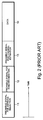
- Fig. 2 shows a structure of the OFDM burst signal received by the diversity receiver depicted in Fig. 1.
- each OFDM burst signal is constituted by a preamble signal for antenna selection 11, a preamble signal for synchronization 12, a preamble signal for channel estimation 13, and data 14 in the mentioned order.
- the OFDM modulated signals (RF signals) received by antennas 101-1 to 101-N are respectively amplified by low noise amplifiers 201-1 to 201-N and inputted to a selection circuit 1101.
- the selection circuit 1101 switches output signals from the low noise amplifiers 201-1 to 201-N to be sequentially selected.
- the output signals which are outputted from the low noise amplifiers 201-1 to 201-N and selected by the selection circuit 1101 are inputted to a frequency conversion circuit 501.
- the frequency conversion circuit 501 converts the output signal from the selection circuit 1101 to an IF frequency to be outputted therefrom.
- An OFDM demodulation circuit 601 demodulates an output signal from the frequency conversion circuit 501.
- the reception level measurement circuit 701 measures a level of the input signal and outputs received signal level information.
- the selection circuit 1101 refers to the received signal level information outputted from the reception level measurement circuit 701 and selects an antenna whose reception level is maximum.
- the above-described receiver adopting the OFDM modulation mode in the antenna selective diversity system can not necessarily demonstrate the excellent anti-multi-path fading characteristic in the multi-path fading environment.
- the reception level of a given sub-carrier may be lowered in some cases even if an antenna having the maximum reception level is selected. In such a case, data transmitted by using the sub-carrier having the lowered reception level can not be accurately demodulated, which may cause an error.
- selection of an antenna having the maximum reception level can not be necessarily optimum.
- a diversity receiver has a structure in which received signals of a plurality of antennas receiving burst OFDM modulated signals are selected to be synthesized.
- Controlling means for selecting an antenna in accordance with the reception state of each antenna controls so as to synthesize received signals of all the antennas upon detecting the OFDM burst signal.
- another controlling means controls so as to turn on all ON/OFF switches of the antennas whose reception level exceeds a determined reception level to synthesize received signals upon detecting the OFDM burst signal.
- Still another controlling means measures channel delay spread of the received signal of each antenna upon detecting the OFDM burst signal and turn on all ON/OFF switches of the antennas whose delay spread is within a determined threshold value to synthesize a received signal.
- yet another controlling means measures a phase of the received signal of each antenna upon detecting the OFDM burst signal and turn on all ON/OFF switches of the antennas having the received signal with the same phase to be synthesized.
- further controlling means controls so as to turn on power supplies of only low noise amplifiers of the antennas used for reception in order to reduce the consumption power.
- Fig. 3 is a block diagram showing a structure of a diversity receiver according to a first embodiment of the present invention.
- N antennas 101-1 to 101-N receive OFDM modulated signals transmitted from a transmitter.
- the OFDM burst signals received by the respective antennas are amplified by low noise amplifiers 201-1 to 201-N.
- ON/OFF switches 301-1 to 301-N are respectively provided at rear stages of the low noise amplifiers 201-1 to 201-N and causes output signals from the low noise amplifiers 201-1 to 201-N to become intermittent in accordance with a control signal from an antenna control circuit 801.
- An synthesization circuit 401 synthesizes output signals from the ON/OFF switches 301-1 to 301-N.
- a frequency conversion circuit 501 converts an output signal from the synthesization circuit 401 into a signal for an IF frequency band.
- An OFDM demodulation circuit 601 demodulates the IF frequency signal outputted from the frequency conversion circuit 501.
- a reception level measurement circuit 701 receives the IF frequency signal outputted from the frequency conversion circuit 501 to measure a signal level thereof and outputs received signal level information to the antenna control circuit 801.
- the antenna control circuit 801 is constituted by a burst signal detection circuit 901 and a control signal generation circuit 1001.
- the burst signal detection circuit 901 compares a predetermined threshold value with the received signal level information of the reception level measurement circuit 701 and detects a bust signal.
- the control signal generation circuit 1001 sequentially changes over the ON/OFF switches until the burst signal detection circuit 901 detects the burst signal.
- the reception level measurement circuit 701 individually measures levels of the received signals from the antennas 101-1 to 101-N, and the burst signal detection circuit 901 detects the burst signal.
- the control signal generation circuit 1001 controls so as to turn on all the ON/OFF switches 301-1 to 301-N.
- the above-described diversity receiver synthesizes the received signals from other antennas and averages the reception levels of the respective sub-carriers even though a level of a specific sub-carrier received by a given antenna is lowered due to the multi-path fading and an error is thereby generated in the demodulated data.
- This can compensate the reduction in the level of the specific sub-carrier received by a given antenna and prevent an error in the demodulated data from occurring. In this manner, the anti-multi-path fading characteristic can be improved.
- the control signal generation circuit 1001 may sequentially change over the reception antennas by controlling the ON/OFF switches 301-1 to 301-N and the reception level measurement circuit 701 may measure the reception levels of the respective antennas.
- the control signal generation circuit 1001 refers to a result of measurement by the reception level measurement circuit 701 and controls so as to turn on all the ON/OFF switches of the antennas whose reception level exceeds the predetermined threshold value in the ON/OFF switches 301-1 to 301-N.
- the received signals of the antennas having the excellent reception state can be synthesized to improve the anti-multi-path fading characteristic.
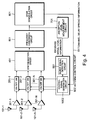
- Fig. 4 is a block diagram of a diversity receiver according to a second embodiment of the present invention.
- a difference from Fig. 3 lies in that channel delay spread information 611 is inputted from the OFDM demodulation circuit 601 to the control signal generation circuit 1002 of the antenna control circuit 802.
- the control signal generating means 1002 sequentially changes over the ON/OFF switches until the burst signal is detected by the burst signal detection circuit 901.
- the reception level measurement circuit 701 individually measures levels of the received signals from the antennas 101-1 to 101-N, and the burst signal detection circuit 901 detects the burst signal.
- the control signal generation circuit 1002 sequentially changes over the respective antennas and measures the delay spread of the received signals from the respective selected antennas in the OFDM demodulation circuit 601.
- Fig. 5 is a block diagram showing the structure of the OFDM demodulation circuit 601.
- a synchronization circuit 604 inputs a digital complex baseband signal 609 which has been sample-quantized by an A/D converter (not shown) for digitizing an output signal from the frequency conversion circuit 501 and detects a preamble signal for synchronization 12 to synchronize.
- a Fourier conversion circuit (FFT) 605 subjects an output signal from the synchronization circuit 604 to Fourier conversion and separates the OFDM modulated signal into signals for the respective sub-carriers to be outputted.
- FFT Fourier conversion circuit
- a sub-carrier demodulation circuit 606 receives an output signal from the FFT 605 and demodulates the received signal in accordance with each sub-carrier.
- a correlator 602 establishes correlation between an output signal from a preamble storage circuit 603 previously storing a signal pattern of a preamble signal for antenna selection 11 and the digital complex baseband signal 609 and outputs impulse response characteristic information.
- the impulse response characteristic information represents a channel impulse response characteristic of the channel in the digital form.
- a delay spread detection circuit 607 detects channel delay spread from the impulse response characteristic information outputted from the correlator 602 and outputs the channel delay spread information 611 to the antenna control circuit 802.
- control signal generating means 1002 refers to the channel delay spread information 611 from the delay spread detection circuit 607 and controls the ON/OFF switches 301-1 to 301-N so as to turn on all ON/OFF switches of the antennas which receives a delay spread signal smaller than the predetermined threshold value.
- the anti-multi-path fading characteristic can be improved without increasing the interference between codes.
- Fig. 6 is a block diagram of a diversity receiver according to a third embodiment of the present invention.
- a difference from Fig. 3 lies in that the channel impulse response characteristic information 612 is inputted from the OFDM demodulation circuit 601 to the control signal generation circuit 1003 of the antenna control circuit 803.
- the control signal generating means 1003 sequentially changes over the ON/OFF switches until the burst signal detection circuit 901 detects the burst signal; the reception level measurement circuit 701 individually measures levels of the received signals from the antennas 101-1 to 101-N; and the burst signal detection circuit 901 detects the burst signal.
- the control signal generation circuit 1002 sequentially changes over the respective antennas and measures the phase of the received signal from each selected antenna in the OFDM demodulation circuit 601.
- a phase information detection circuit 608 detects a phase of the received signal output from the correlator 602 and outputs channel phase information 612 to the antenna control circuit 803.
- control signal generating means 1003 refers to the channel phase information 612 from the phase information detection circuit 608 and controls the ON/OFF switches 301-1 to 301-N in such a manner that the antennas having the received signal in phase are combined.
- To the synthesization circuit 401 are inputted signals from the antennas having the received signals in phase and these signals are synthesized.
- control signal generating means 1003 can be designed so as to refer to both the channel phase information 612 from the phase information detection circuit 608 and the channel delay spread information 611 outputted from the delay spread detection circuit 607.
- an antenna for receiving e.g., a signal with the anti-phase can be eliminated from the antenna having the small delay spread when the control signal generating means 1003 also refers to the channel phase information 612 of the received signal of each antenna, and the anti-multi-path fading characteristic can be further improved.
- Fig. 7 is a block diagram of a diversity receiver according to a fourth embodiment of the present invention.
- a difference from Fig. 3 lies in that the antenna control circuit 801 controls to turn on/off the low noise amplifiers 201-1 to 201-N in place of controlling the ON/OFF switches 301-1 to 301-N.
- the power supply control circuit 202 controls to turn on/off the power supply of the respective low noise amplifiers 201-1 to 201-N upon receiving an output signal from the control signal generation circuit 1001.
- This embodiment can be similarly applied to the second and third embodiments as well as the first embodiment, each of which can have the effect for reducing the consumption power.
- consumption power can be further reduced by appropriately turning on/off the power supply of the low noise amplifier of the non-selected antenna not only in the received signal waiting mode but also after detection of the burst signal.
- the levels of the respective sub-carriers can be averaged and an error rate characteristic can be improved in the multi-path environment when the diversity receiver according to the present invention appropriately selects and synthesizes the received signals from other antennas.
- the diversity receiver according to the present invention operates so as to select the received signal from any one antenna until the burst signal is detected, the consumption power in the reception standby mode can be suppressed as similar to a receiver having no diversity processing.
Landscapes
- Engineering & Computer Science (AREA)
- Computer Networks & Wireless Communication (AREA)
- Signal Processing (AREA)
- Radio Transmission System (AREA)
Abstract
Description
Claims (12)
- A diversity receiver for use in a burst OFDM modulated signal transmission system, comprising:a plurality of antennas for receiving burst OFDM modulated signals;a plurality of amplifiers for respectively amplifying output signals from said antennas;a plurality of switches for respectively turning on/off output signals from said amplifiers;a synthesizer for synthesizing output signals from said switches;a detector for detecting an output level of said synthesizer;an antenna control circuit which sequentially turns on said switches one by one based on an output from said detector or controls so as to turn on said switches in accordance with a predetermined number of outputs; anda demodulator for demodulating said burst OFDM modulated signal based on an output from said detector.
- A diversity receiver according to claim 1, wherein said antenna control circuit comprises: a burst signal detector for comparing an output from said detector with a first threshold value to detect said burst OFDM modulated signal; and a control signal generation circuit which sequentially turns on said switches one by one before detecting said burst OFDM modulation signal and controls so as to turn on said all switches after detecting said burst OFDM modulated signal.
- A diversity receiver according to claim 1, wherein said antenna control circuit comprises: a burst signal detector for comparing an output from said detecting means with a first threshold value to detect said burst OFDM modulated signal; and a control signal generation circuit which measures each output level of a plurality of said amplifiers after detecting said burst OFDM modulated signal and controls said switches so as to input to said synthesizer an output signal from said amplifier having an output level higher than a second threshold value.
- A diversity receiver according to claim 1, wherein said antenna control circuit comprises: a burst signal detector for comparing an output from said detector with a first threshold value to detect said burst OFDM modulated signal; and a control signal generation circuit which sequentially turns on said switches one by one before detecting said burst OFDM modulated signal, measures delay spread of each output from a plurality of said amplifiers after detecting said burst OFDM modulated signal and controls said switches so as to input to said synthesizer an output signal of said amplifier having said delay spread smaller than a second threshold value in a plurality of said amplifiers.
- A diversity receiver according to claim 4, wherein said delay spread is derived based on channel delay spread obtained by said demodulator.
- A diversity receiver according to claim 5, wherein said demodulator detects said channel delay spread based on correlation between an input signal and a previously stored preamble pattern of said burst OFDM modulated signal.
- A diversity receiver according to claim 1, wherein said antenna control circuit comprises: a burst signal detector for comparing an output from said detector with a first threshold value to detect said burst OFDM modulated signal; and a control signal generation circuit which sequentially turns on said switches one by one before detecting said burst OFDM modulated signal, measures channel phase information of each output signal from a plurality of said amplifiers after detecting said burst OFDM modulated signal and controls said switches so as to input an output signal from said amplifier in phase to said synthesizer.
- A diversity receiver according to claim 7, wherein said channel phase information is derived based on an impulse response characteristic obtained by said demodulator.
- A diversity receiver according to claim 8, wherein said demodulator detects said channel phase information based on correlation between an input signal and a previously stored preamble pattern of said burst OFDM modulated signal.
- A diversity receiver according to any of claims 1 to 9, wherein a plurality of said switches turn on or off power supplies of a plurality of said amplifying means.
- A diversity receiver according to any of claims 1 to 10, wherein said burst OFDM modulated signal has a preamble signal for antenna selection, a preamble signal for synchronization and a preamble signal for channel estimation at the forefront of data.
- A method for performing method steps corresponding to any function of any of the means of any of claims 1 to 11.
Applications Claiming Priority (2)
| Application Number | Priority Date | Filing Date | Title |
|---|---|---|---|
| JP08535499A JP3667549B2 (en) | 1999-03-29 | 1999-03-29 | Diversity receiver |
| JP8535499 | 1999-03-29 |
Publications (3)
| Publication Number | Publication Date |
|---|---|
| EP1041736A2 true EP1041736A2 (en) | 2000-10-04 |
| EP1041736A3 EP1041736A3 (en) | 2004-01-21 |
| EP1041736B1 EP1041736B1 (en) | 2006-12-20 |
Family
ID=13856368
Family Applications (1)
| Application Number | Title | Priority Date | Filing Date |
|---|---|---|---|
| EP00106031A Expired - Lifetime EP1041736B1 (en) | 1999-03-29 | 2000-03-28 | Diversity receiver for burst OFDM signal transmission |
Country Status (4)
| Country | Link |
|---|---|
| US (1) | US6700865B1 (en) |
| EP (1) | EP1041736B1 (en) |
| JP (1) | JP3667549B2 (en) |
| DE (1) | DE60032408T2 (en) |
Cited By (8)
| Publication number | Priority date | Publication date | Assignee | Title |
|---|---|---|---|---|
| WO2002039633A1 (en) * | 2000-11-10 | 2002-05-16 | Kabushiki Kaisha Kenwood | Diversity receiver and orthogonal frequency division multiplexed signal receiving method |
| WO2002049250A1 (en) * | 2000-12-12 | 2002-06-20 | Kabushiki Kaisha Kenwood | Diversity receiver, and method for receiving orthogonal frequency division multiplex signal |
| EP1239608A1 (en) * | 2001-03-02 | 2002-09-11 | FUBA Automotive GmbH & Co. KG | Diversity system for receipt of digital terrestrial and/or satellite radio signals for cars |
| FR2828352A1 (en) * | 2001-08-03 | 2003-02-07 | Thomson Licensing Sa | OFDM diversity receiver uses delay and switching to single receiver chain |
| EP1363411A1 (en) * | 2002-05-16 | 2003-11-19 | Matsushita Electric Industrial Co., Ltd. | Diversity system and diversity method |
| EP1396947A1 (en) * | 2002-09-05 | 2004-03-10 | Thomson Licensing S.A. | Process for selecting a transmission channel and receiver of signals with antenna diversity |
| US6768457B2 (en) | 2001-03-02 | 2004-07-27 | Fuba Automotive Gmbh & Co. Kg | Diversity systems for receiving digital terrestrial and/or satellite radio signals for motor vehicles |
| EP1552391A4 (en) * | 2002-06-28 | 2011-03-09 | Thomson Licensing | METHOD AND APPARATUS FOR ANTENNA SELECTION USING CHANNEL RESPONSE INFORMATION IN A MULTI-CARRIER SYSTEM |
Families Citing this family (33)
| Publication number | Priority date | Publication date | Assignee | Title |
|---|---|---|---|---|
| US7952511B1 (en) | 1999-04-07 | 2011-05-31 | Geer James L | Method and apparatus for the detection of objects using electromagnetic wave attenuation patterns |
| EP1148659B1 (en) * | 2000-04-18 | 2005-07-27 | Sony International (Europe) GmbH | OFDM diversity transmission |
| EP1821480B1 (en) | 2000-08-24 | 2009-10-21 | Sony Deutschland Gmbh | Communication device for receiving and transmitting OFDM signals in a wireless communication system |
| US7009931B2 (en) * | 2000-09-01 | 2006-03-07 | Nortel Networks Limited | Synchronization in a multiple-input/multiple-output (MIMO) orthogonal frequency division multiplexing (OFDM) system for wireless applications |
| JP3679325B2 (en) * | 2000-12-12 | 2005-08-03 | 株式会社ケンウッド | Diversity receiver and orthogonal frequency division multiplex signal receiving method |
| JP3606450B2 (en) * | 2000-12-14 | 2005-01-05 | 株式会社ケンウッド | Diversity receiver and orthogonal frequency division multiplexing signal receiving method |
| US7110381B1 (en) * | 2001-03-19 | 2006-09-19 | Cisco Systems Wireless Networking (Australia) Pty Limited | Diversity transceiver for a wireless local area network |
| US7043273B2 (en) * | 2002-01-15 | 2006-05-09 | Telefonaktiebolaget Lm Ericsson (Publ) | Diversity branch delay alignment in radio base station |
| US7039001B2 (en) * | 2002-10-29 | 2006-05-02 | Qualcomm, Incorporated | Channel estimation for OFDM communication systems |
| US7042857B2 (en) * | 2002-10-29 | 2006-05-09 | Qualcom, Incorporated | Uplink pilot and signaling transmission in wireless communication systems |
| KR100548321B1 (en) * | 2003-01-07 | 2006-02-02 | 엘지전자 주식회사 | In-Phase Synthetic Diversity Receiver Apparatus and Method |
| JP4119763B2 (en) * | 2003-02-04 | 2008-07-16 | 富士通株式会社 | Interference suppression device and interference suppression system |
| JP4133531B2 (en) * | 2003-04-15 | 2008-08-13 | シャープ株式会社 | Wireless communication apparatus and wireless communication system |
| US7177297B2 (en) * | 2003-05-12 | 2007-02-13 | Qualcomm Incorporated | Fast frequency hopping with a code division multiplexed pilot in an OFDMA system |
| JP4187104B2 (en) * | 2003-10-20 | 2008-11-26 | 京セラ株式会社 | Base station apparatus with multiple antennas |
| US8611283B2 (en) * | 2004-01-28 | 2013-12-17 | Qualcomm Incorporated | Method and apparatus of using a single channel to provide acknowledgement and assignment messages |
| US8891349B2 (en) | 2004-07-23 | 2014-11-18 | Qualcomm Incorporated | Method of optimizing portions of a frame |
| JP4525227B2 (en) * | 2004-07-28 | 2010-08-18 | ソニー株式会社 | Wireless communication apparatus, wireless communication method, and computer program |
| US7548564B2 (en) * | 2004-12-10 | 2009-06-16 | Electronics And Telecommunications Research Institute | Method and apparatus for transmitting data based on OFDM |
| US8831115B2 (en) * | 2004-12-22 | 2014-09-09 | Qualcomm Incorporated | MC-CDMA multiplexing in an orthogonal uplink |
| US8238923B2 (en) * | 2004-12-22 | 2012-08-07 | Qualcomm Incorporated | Method of using shared resources in a communication system |
| US7453849B2 (en) * | 2004-12-22 | 2008-11-18 | Qualcomm Incorporated | Method of implicit deassignment of resources |
| CN101567996B (en) * | 2005-08-24 | 2011-05-18 | 汤姆森特许公司 | Method and apparatus for providing channel history |
| US8441913B2 (en) | 2005-09-27 | 2013-05-14 | Qualcomm Incorporated | Switching diversity in broadcast OFDM systems based on multiple receive antennas |
| JP2007150872A (en) * | 2005-11-29 | 2007-06-14 | Matsushita Electric Ind Co Ltd | Signal output circuit and communication device |
| JP4612607B2 (en) * | 2006-10-16 | 2011-01-12 | 株式会社東芝 | Radio receiving apparatus and radio receiving method |
| DE102007058520A1 (en) | 2007-12-05 | 2009-06-10 | Robert Bosch Gmbh | Method and apparatus for receiving a data signal with multiple antennas |
| US20090170424A1 (en) * | 2007-12-31 | 2009-07-02 | Agere Systems, Inc. | Low power mode for sdars receiver |
| EP2445120B1 (en) * | 2010-10-25 | 2016-09-14 | Telefonaktiebolaget LM Ericsson (publ) | Wireless communications system and method |
| JP5627817B2 (en) * | 2012-03-01 | 2014-11-19 | 三菱電機株式会社 | Receiving apparatus and receiving method |
| US10057796B2 (en) * | 2014-11-25 | 2018-08-21 | Intel Corporation | Dual polarized antenna array |
| JP6859238B2 (en) * | 2017-09-15 | 2021-04-14 | マスプロ電工株式会社 | CATV headend device |
| JP7038878B2 (en) * | 2020-07-10 | 2022-03-18 | アドソル日進株式会社 | Wireless device, antenna selection method and program |
Family Cites Families (15)
| Publication number | Priority date | Publication date | Assignee | Title |
|---|---|---|---|---|
| US5097484A (en) * | 1988-10-12 | 1992-03-17 | Sumitomo Electric Industries, Ltd. | Diversity transmission and reception method and equipment |
| JP2728547B2 (en) * | 1990-06-13 | 1998-03-18 | 株式会社日立製作所 | Diversity receiver |
| DE69327837T2 (en) * | 1992-12-01 | 2000-10-12 | Koninklijke Philips Electronics N.V., Eindhoven | Subband diversity transmission system |
| US5446922A (en) * | 1992-12-21 | 1995-08-29 | Motorola, Inc. | Method and apparatus for switched diversity reception of a radio signal |
| JPH06303220A (en) | 1993-04-16 | 1994-10-28 | Matsushita Electric Ind Co Ltd | Diversity reception device |
| US5561673A (en) * | 1993-04-16 | 1996-10-01 | Matsushita Electric Industrial Co., Ltd. | Antenna switched diversity reciever |
| JPH0879147A (en) | 1994-09-07 | 1996-03-22 | Nippon Telegr & Teleph Corp <Ntt> | Diversity method |
| JPH08223143A (en) | 1995-02-20 | 1996-08-30 | Nec Corp | Method and device for diversity reception |
| JPH09307491A (en) | 1996-05-20 | 1997-11-28 | Oki Electric Ind Co Ltd | Diversity receiving circuit |
| US6085076A (en) * | 1997-04-07 | 2000-07-04 | Omnipoint Corporation | Antenna diversity for wireless communication system |
| GB2324932B (en) * | 1997-05-02 | 2002-03-06 | Motorola Ltd | Communication system having diversity in an orthogonal frequency division multiplexing environment and operating method therefor |
| US6009307A (en) * | 1997-05-13 | 1999-12-28 | Qualcomm Incorporated | Multiple antenna detecting and selecting |
| DE69828476T2 (en) * | 1997-10-31 | 2005-12-29 | Matsushita Electric Industrial Co., Ltd., Kadoma | Device for diversity reception |
| JP3737264B2 (en) * | 1998-01-14 | 2006-01-18 | 株式会社東芝 | Diversity receiver |
| US6678310B1 (en) * | 1998-01-16 | 2004-01-13 | Intersil Americas Inc | Wireless local area network spread spectrum transceiver with multipath mitigation |
-
1999
- 1999-03-29 JP JP08535499A patent/JP3667549B2/en not_active Expired - Fee Related
-
2000
- 2000-03-28 EP EP00106031A patent/EP1041736B1/en not_active Expired - Lifetime
- 2000-03-28 DE DE60032408T patent/DE60032408T2/en not_active Expired - Lifetime
- 2000-03-28 US US09/536,143 patent/US6700865B1/en not_active Expired - Lifetime
Cited By (15)
| Publication number | Priority date | Publication date | Assignee | Title |
|---|---|---|---|---|
| WO2002039633A1 (en) * | 2000-11-10 | 2002-05-16 | Kabushiki Kaisha Kenwood | Diversity receiver and orthogonal frequency division multiplexed signal receiving method |
| US7095995B2 (en) | 2000-11-10 | 2006-08-22 | Kabushiki Kaisha Kenwood | Diversity receiver and orthogonal frequency division multiplexed signal receiving method |
| WO2002049250A1 (en) * | 2000-12-12 | 2002-06-20 | Kabushiki Kaisha Kenwood | Diversity receiver, and method for receiving orthogonal frequency division multiplex signal |
| US7801018B2 (en) | 2000-12-12 | 2010-09-21 | Kabushiki Kaisha Kenwood | Diversity receiver, and method for receiving orthogonal frequency division multiplex signal |
| EP1343264A4 (en) * | 2000-12-12 | 2010-05-05 | Kenwood Corp | Diversity receiver, and method for receiving orthogonal frequency division multiplex signal |
| EP1239608A1 (en) * | 2001-03-02 | 2002-09-11 | FUBA Automotive GmbH & Co. KG | Diversity system for receipt of digital terrestrial and/or satellite radio signals for cars |
| US6633258B2 (en) | 2001-03-02 | 2003-10-14 | Fuba Automotive Gmbh & Co Kg | Diversity system for receiving digital terrestrial and/or satellite radio signals for motor vehicles |
| US6768457B2 (en) | 2001-03-02 | 2004-07-27 | Fuba Automotive Gmbh & Co. Kg | Diversity systems for receiving digital terrestrial and/or satellite radio signals for motor vehicles |
| FR2828352A1 (en) * | 2001-08-03 | 2003-02-07 | Thomson Licensing Sa | OFDM diversity receiver uses delay and switching to single receiver chain |
| US6970686B2 (en) | 2002-05-16 | 2005-11-29 | Matsushita Electric Industrial Co., Ltd. | Diversity system and diversity method |
| EP1363411A1 (en) * | 2002-05-16 | 2003-11-19 | Matsushita Electric Industrial Co., Ltd. | Diversity system and diversity method |
| EP1552391A4 (en) * | 2002-06-28 | 2011-03-09 | Thomson Licensing | METHOD AND APPARATUS FOR ANTENNA SELECTION USING CHANNEL RESPONSE INFORMATION IN A MULTI-CARRIER SYSTEM |
| FR2844407A1 (en) * | 2002-09-05 | 2004-03-12 | Thomson Licensing Sa | TRANSMISSION CHANNEL SELECTION METHOD AND ANTENNA DIVERSITY SIGNAL RECEIVER |
| US7639752B2 (en) | 2002-09-05 | 2009-12-29 | Thomson Licensing | Process for selecting a transmission channel and receiver of signals with antenna diversity |
| EP1396947A1 (en) * | 2002-09-05 | 2004-03-10 | Thomson Licensing S.A. | Process for selecting a transmission channel and receiver of signals with antenna diversity |
Also Published As
| Publication number | Publication date |
|---|---|
| JP2000278243A (en) | 2000-10-06 |
| DE60032408D1 (en) | 2007-02-01 |
| US6700865B1 (en) | 2004-03-02 |
| EP1041736A3 (en) | 2004-01-21 |
| JP3667549B2 (en) | 2005-07-06 |
| EP1041736B1 (en) | 2006-12-20 |
| DE60032408T2 (en) | 2007-04-12 |
Similar Documents
| Publication | Publication Date | Title |
|---|---|---|
| EP1041736B1 (en) | Diversity receiver for burst OFDM signal transmission | |
| US6668172B1 (en) | Reception apparatus and reception processing method | |
| US7058006B2 (en) | OFDM communication apparatus | |
| EP2264934B1 (en) | Digital radio communication system and method | |
| US8045927B2 (en) | Signal detection in multicarrier communication system | |
| JP2010226236A (en) | Wireless receiver power consumption control method | |
| JP2003244043A (en) | Diversity receiving circuit | |
| JP2008005324A (en) | TRANSMISSION DEVICE, TRANSMISSION METHOD, RECEPTION DEVICE, RECEPTION METHOD, AND TRANSMISSION SYSTEM | |
| EP1914918A1 (en) | Ofdm reception device and ofdm receiver using the same | |
| EP1347588B1 (en) | Radio communication apparatus and radio communication method | |
| US7634026B2 (en) | Receiving method and receiving apparatus | |
| JP3610914B2 (en) | Wireless communication apparatus and wireless communication method | |
| JP2003309501A (en) | Wireless receiver and wireless receiving method | |
| JP2002232385A (en) | OFDM receiver using diversity adaptive array | |
| US20050213645A1 (en) | Method and apparatus for detecting signals, and transmitting apparatus and receiving apparatus using the same | |
| JP2009081701A (en) | Reception control method and receiving apparatus | |
| US20070053461A1 (en) | Receiving method and receiving apparatus, and communication system utilizing the same | |
| JP3380481B2 (en) | Base station equipment | |
| JP2001345778A (en) | OFDM reception signal synchronizer using diversity | |
| JP4116504B2 (en) | Diversity receiving device and electronic device | |
| JP3613266B2 (en) | Diversity receiver | |
| JP2002271294A (en) | OFDM communication apparatus and OFDM communication method | |
| JP2008136255A (en) | Diversity receiving device and electronic device | |
| JP4378856B2 (en) | OFDM receiver using selective diversity | |
| JP3776825B2 (en) | Diversity receiver |
Legal Events
| Date | Code | Title | Description |
|---|---|---|---|
| PUAI | Public reference made under article 153(3) epc to a published international application that has entered the european phase |
Free format text: ORIGINAL CODE: 0009012 |
|
| AK | Designated contracting states |
Kind code of ref document: A2 Designated state(s): AT BE CH CY DE DK ES FI FR GB GR IE IT LI LU MC NL PT SE |
|
| AX | Request for extension of the european patent |
Free format text: AL;LT;LV;MK;RO;SI |
|
| PUAL | Search report despatched |
Free format text: ORIGINAL CODE: 0009013 |
|
| AK | Designated contracting states |
Kind code of ref document: A3 Designated state(s): AT BE CH CY DE DK ES FI FR GB GR IE IT LI LU MC NL PT SE |
|
| AX | Request for extension of the european patent |
Extension state: AL LT LV MK RO SI |
|
| 17P | Request for examination filed |
Effective date: 20031212 |
|
| AKX | Designation fees paid |
Designated state(s): DE NL SE |
|
| 17Q | First examination report despatched |
Effective date: 20050504 |
|
| GRAP | Despatch of communication of intention to grant a patent |
Free format text: ORIGINAL CODE: EPIDOSNIGR1 |
|
| GRAS | Grant fee paid |
Free format text: ORIGINAL CODE: EPIDOSNIGR3 |
|
| GRAA | (expected) grant |
Free format text: ORIGINAL CODE: 0009210 |
|
| RIN1 | Information on inventor provided before grant (corrected) |
Inventor name: OSAWA, TOMOKI Inventor name: YAMAMOTO, TAKESHI Inventor name: OKANOUE, KAZUHIRO |
|
| AK | Designated contracting states |
Kind code of ref document: B1 Designated state(s): DE NL SE |
|
| PG25 | Lapsed in a contracting state [announced via postgrant information from national office to epo] |
Ref country code: NL Free format text: LAPSE BECAUSE OF FAILURE TO SUBMIT A TRANSLATION OF THE DESCRIPTION OR TO PAY THE FEE WITHIN THE PRESCRIBED TIME-LIMIT Effective date: 20061220 |
|
| REF | Corresponds to: |
Ref document number: 60032408 Country of ref document: DE Date of ref document: 20070201 Kind code of ref document: P |
|
| PG25 | Lapsed in a contracting state [announced via postgrant information from national office to epo] |
Ref country code: SE Free format text: LAPSE BECAUSE OF FAILURE TO SUBMIT A TRANSLATION OF THE DESCRIPTION OR TO PAY THE FEE WITHIN THE PRESCRIBED TIME-LIMIT Effective date: 20070320 |
|
| NLV1 | Nl: lapsed or annulled due to failure to fulfill the requirements of art. 29p and 29m of the patents act | ||
| PLBE | No opposition filed within time limit |
Free format text: ORIGINAL CODE: 0009261 |
|
| STAA | Information on the status of an ep patent application or granted ep patent |
Free format text: STATUS: NO OPPOSITION FILED WITHIN TIME LIMIT |
|
| 26N | No opposition filed |
Effective date: 20070921 |
|
| PGFP | Annual fee paid to national office [announced via postgrant information from national office to epo] |
Ref country code: DE Payment date: 20150324 Year of fee payment: 16 |
|
| REG | Reference to a national code |
Ref country code: DE Ref legal event code: R119 Ref document number: 60032408 Country of ref document: DE |
|
| PG25 | Lapsed in a contracting state [announced via postgrant information from national office to epo] |
Ref country code: DE Free format text: LAPSE BECAUSE OF NON-PAYMENT OF DUE FEES Effective date: 20161001 |