EP1041481A2 - Data interchange method and system - Google Patents
Data interchange method and system Download PDFInfo
- Publication number
- EP1041481A2 EP1041481A2 EP20000104285 EP00104285A EP1041481A2 EP 1041481 A2 EP1041481 A2 EP 1041481A2 EP 20000104285 EP20000104285 EP 20000104285 EP 00104285 A EP00104285 A EP 00104285A EP 1041481 A2 EP1041481 A2 EP 1041481A2
- Authority
- EP
- European Patent Office
- Prior art keywords
- message
- computer
- data
- digital signature
- validation
- Prior art date
- Legal status (The legal status is an assumption and is not a legal conclusion. Google has not performed a legal analysis and makes no representation as to the accuracy of the status listed.)
- Withdrawn
Links
Images






Classifications
-
- G—PHYSICS
- G06—COMPUTING OR CALCULATING; COUNTING
- G06Q—INFORMATION AND COMMUNICATION TECHNOLOGY [ICT] SPECIALLY ADAPTED FOR ADMINISTRATIVE, COMMERCIAL, FINANCIAL, MANAGERIAL OR SUPERVISORY PURPOSES; SYSTEMS OR METHODS SPECIALLY ADAPTED FOR ADMINISTRATIVE, COMMERCIAL, FINANCIAL, MANAGERIAL OR SUPERVISORY PURPOSES, NOT OTHERWISE PROVIDED FOR
- G06Q99/00—Subject matter not provided for in other groups of this subclass
Definitions
- the present invention relates to a data interchange method for interchanging digital data between systems of two parties via a network or a digital medium and to a system to which such a method is applied. More particularly, the invention relates to a data interchange method suitable for mutually checking and safely interchanging digital data of a digital document or the like which is circulated among a plurality of parties, a system to which such a method is applied and a data interchange executing program recording medium.
- B/L bill of lading
- the B/L is a bill which can be interchanged with the freight at an importing place of the freight and denotes valuable papers for authenticating the owner of the freight and a duty of a payment for the freight at any time point of the import and export.
- the B/L is formed by using a sheet of paper as a medium in the present situation. A party who possesses the original of papers can own the right as valuable papers.
- JP-A-9-251502. The technique to pay data having a money value, namely, digital money is disclosed in JP-A-9-251502.
- a payer authorized by some certificate authority adds his own digital signature to data (digital money) to be interchanged and transmits it to a partner, thereby assuring the contents of the data to be transmitted.
- JP-B-8-27812 a technique such that digital data as transaction information is checked by two parties, digital seal information indicative of agreement with the transaction contents is mutually interchanged, and the two parties have the information together with digital data, thereby assuring the transaction itself is disclosed.
- a receiver of the digital data forms a compression cryptogram of the received digital data and returns a part of it as tally information to a transmitter.
- the transmitter checks the tally information and transmits his own tally information to the receiver. After that, the receiver checks the tally information of the transmitter and transmits his own tally information to the transmitter. Consequently, even if the receiver denies a fact of the transaction and runs away with the digital seal of the transmitter without returning the digital seal of the receiver to the transmitter, the transmitter uses the received tally information as an evidence, thereby enabling the digital transaction to be assured.
- the transmitter assures its contents.
- the method is applied to the interchange of a concerned document in the trade and finance.
- the receiver in order to prevent an unauthentic act for the data with the digital signature transmitted by the transmitter, for example, such an act that after the reception is refused, the received data is circulated, the receiver cannot refuse the reception of the data. Therefore, the receiver cannot perform the operation such that he checks the contents of the transmitted data and judges whether he receives it or not, so that there is a possibility such that the defective data is received.
- the receiver In case of the B/L, in the present situation, if only a part of the B/L is different from that formed by the shipping company, it cannot be interchanged with cargo. Accordingly, the receiver has a large risk.
- JP-B-8-27812 When it is considered that the technique disclosed in JP-B-8-27812 is applied to the interchange of the concerned document in the trade and finance, it is difficult to unconditionally identify the owner from the data to be interchanged, so that the data cannot be transferred as a right. If a process for adding the contents of the interchange such as names or the like of the transaction parties who perform the transaction to the data to be interchanged is performed, it is considered that the owner can be identified from the data even by the technique disclosed in JP-B-8-27812.
- the B/L is circulated among at least three parties.
- a data forming person it is necessary that a data forming person has to form data by inserting the names of all of the concerning parties among which the data is circulated. It obstructs the circulation performance of the B/L as valuable papers, so that a mechanism of the trading transaction business itself is obstructed. In order to interchange the trading document concerned, therefore, the technique disclosed in JP-B-8-27812 cannot be substantially applied.
- Another object of the invention is to provide a data interchange method whereby digital data can be interchanged among a plurality of parties without passing through a center system or the like as a third party, and a system to which such a method is applied, and a program recording medium for embodying such method and program.
- a data interchange method for interchanging data among a plurality of computers through a network or a digital medium comprising the following steps.
- a first computer serving as a transmitting source of data a first message obtained by adding a first digital signature to indicate the validation or authentication of the data to the data is formed and transferred to a second computer.
- the validation of the first message is checked on the basis of the first digital signature.
- a second message is formed by adding a second digital signature to indicate the validation to the first message and transferred to the first computer.
- the validation of the second message is checked on the basis of the second digital signature, and a third message is formed by adding a third digital signature to indicate the validation to the second message and transferred to the second computer.
- the validation of the third message is checked on the basis of the third digital signature and the third message is held as data to be received from the first computer.
- data included in the first message is outputted to an output unit and the second message is formed in accordance with information which is inputted from an input unit in response to the output of the data.
- Information of validation indicating that the transmitting source is the first computer is added to the first message.
- information of validation indicating that the transmitting source is the second computer is added to the second message.
- a fourth message is formed by adding a fourth digital signature to indicate the validation of the third message to the third message and transferred to a third computer.
- the validation of the fourth message is checked on the basis of the digital signature included in the fourth message and a fifth message is formed by adding a fifth digital signature to indicate the validation to the fourth message and transferred to the second computer.
- the validation of the fifth message is checked on the basis of the fifth digital signature and a sixth message is formed by adding a sixth digital signature to indicate the validation to the fifth message and transferred to the third computer.
- the validation of the sixth message is checked on the basis of the sixth digital signature and the sixth message is held as data to be received from the second computer.
- a fourth message to be transferred to a third computer is formed on the basis of the third message and transferred to a third computer.
- a fifth message is formed by adding a fourth digital signature to indicate the validation to data except for the third digital signature included in the fourth message and transferred to the second computer.
- the validation of the fifth message is checked on the basis of the fourth digital signature and a sixth message is formed by adding a fifth digital signature to indicate the validation to the fifth message and transferred to the third computer.
- the validation of the sixth message is checked on the basis of the fifth digital signature and the sixth message is held as data to be received from the second computer.
- Fig. 1 is a block diagram showing a construction of a system in an embodiment of a data interchange system to which a data interchange method according to the invention is applied.
- a trade and finance system for digitally interchanging Bill of Lading (B/L) as a kind of valuable papers in the trade and finance will be described as an example.
- a plurality of computer systems 10 to 40 which are operated by a plurality of parties regarding the trade and finance such as bank, trading company, shipping company, and the like are mutually connected to the present system through a network 50. Besides various information regarding the trade and finance, the interchange of the B/L is performed between the computer systems through the network 50.
- computers such as personal computers, workstations, or the like which are generally and widely used at present can be used.
- Those computers can be constructed by a so-called mainframe computer of a larger scale or can be constructed as a computer system comprising a plurality of computers connected via an LAN or the like in each party where the computers are provided so long as they can realize the functions as computer systems, which will be explained hereinlater.
- the computer systems which are connected to the network 50 are not limited to the four systems as shown in the diagram but an arbitrary number of computer systems can be connected.
- Fig. 2 is a block diagram showing a construction of a computer system.
- a construction of the computer system 10 provided for the bank is shown as an example and the computer systems 20 to 40 provided for the other parties are also similarly constructed.
- functional constructions which are necessary for interchanging B/L among the computer systems are shown.
- the computer system 10 can also have functions for the other bank business. This point is also similarly applied to the computer systems provided for the parties other than the bank.
- the functions which are not directly concerned with the invention are not particularly shown in the diagrams and their descriptions are also omitted.
- the computer system 10 comprises: a processing unit 100; a memory 110; a storage device 120 represented by a magnetic disk device; a communication control unit 130; an input unit 140 such as keyboard, mouse, or the like; an output unit 150 such as CRT display, liquid crystal display (LCD), or the like; and an IC card reader/writer (IC card R/W) 160.
- a processing unit 100 a memory 110
- a storage device 120 represented by a magnetic disk device
- a communication control unit 130 such as keyboard, mouse, or the like
- an input unit 140 such as keyboard, mouse, or the like
- an output unit 150 such as CRT display, liquid crystal display (LCD), or the like
- IC card R/W IC card reader/writer
- a certificate check program 112, a data interchange program 115, and a control program 117 have been stored in the memory 110.
- the processing unit 100 realizes various processes, which will be explained hereinlater, by executing those programs stored in the memory 110.
- the certificate check program 112 is a program to realize a process to check the authentication of the B/L which is interchanged among the computer systems.
- the data interchange program 115 causes to interchange B/L which is performed among the computer systems.
- the control program 117 manages: an input of data from the input unit 140 by the user; an output of information to the output unit 150; an access to the storage device 120; reading/writing operations of data in an IC card through the IC card R/W; a transmission and reception of data to/from other computer systems through the communication control unit 130; and the like.
- Certificate data 125 has been stored in the storage device 120.
- the certificate data 125 is issued from a third party such as certification authority (CA), registration authority (RA), or the like and is information to objectively certify the owner of the certificate data 125.
- the certificate data 125 is data which has been digitally signed by the third party to a public key information (hereinbelow, simply referred to as a public key) corresponding to a private key that is used by a party which receives a certificate.
- a public key information hereinbelow, simply referred to as a public key
- the certificate data 125 is stored in the storage device 120 different from the memory 110 in which the program has been stored, it can be stored in the same memory as that of the program.
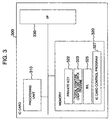
- Fig. 3 is a block diagram of an IC card which is owned by each party of the bank, trading company, and shipping company and is used to interchange and hold the B/L in the embodiment.
- An IC card 300 has a processing unit 310, a memory 320, and an interface 330.
- a private key information (hereinbelow, simply referred to as a private key) 322 which is used when the party who has the IC card sends its own B/L to another party and a B/L 325 in which the party has the right are stored in the memory 320.
- the memory 320 includes a digital signature creation and check program 323 as functionally describe here.
- An IC card control program 327 for managing the private key 322 of the party and the B/L 325 in the IC card 300 and controlling an interchange of data between the computer systems through the interface 330 has been stored in the memory 320.
- the processing unit 310 executes the IC card control program 327, thereby controlling the management of various information in the IC card 300 and the interchange of information between the computer systems.
- the shipping company issues a valuable paper (B/L) to accurately express a state of freight and decide the owner of the freight and passes it to the exporter.
- B/L valuable paper
- the exporter takes the B/L to a bank on the export side and requests to buy or collect it. In case of buying it, the exporter receives the cost for freight when the B/L is transferred.
- the bank on the export side sends the obtained B/L to a bank on the import side. In this case, a settlement is performed even between the banks.
- the bank on the import side transfers the B/L in accordance with the payment of the importer.
- the importer receives the freight in exchange for the B/L when a ship in which the freight has been loaded enters a port.
- Fig. 4 is a flowchart showing a flow of processes which are executed when B/L data is newly formed in the shipping company computer system 40 and the formed B/L is transferred to the bank computer system 10.
- the left side shows the flow for processes which are executed by the shipping company computer system 40 serving as an issuing source of the B/L and the right side shows the flow for processes which are executed by the bank computer system 10 serving as an interchange destination of the B/L in parallel with them.
- an arrow shown by a broken line indicates a transfer of a message between the shipping company computer system 40 and the bank computer system 10.
- the shipping company computer system 40 forms a B/L message which is transferred to the bank computer system 10 (step 402).
- the formed B/L message is sent to the bank computer system 10 by the communication control unit 130 through the network 50 (step 404).
- the bank computer system 10 receives the B/L message via the communication control unit 130 (step 450).
- a signature validity check of the B/L message is performed by the certificate check program and the contents of the interchange data included in the B/L message are displayed to the output unit 150.
- an agreement message showing that the user agrees with the contents is formed by the data interchange program 115 (step 452).
- the formed agreement message is sent to the shipping company computer system 40 by the communication control unit 130 via the network 50 (step 454).
- the shipping company computer system 40 receives the agreement message via the communication control unit 130 (step 406).
- the shipping company computer system 40 checks the validation of the received agreement message by the certificate check program 112.
- Assignment assuring message which is held as B/L in the bank computer system 10 is formed by the data interchange program 115 (step 408).
- the assignment assuring message is a message to assure that the B/L was assigned from the shipping company to the bank and the message itself indicates a valuable paper data. After that, the assignment assuring message is sent to the bank computer system 10 by the communication control unit 130 via the network 50 (step 410).
- step 456 When the bank computer system 10 receives the assignment assuring message (step 456), the received agreement message is finally stored and held and held as B/L into the IC card by the data interchange program 115 (step 458). An end message indicative of the completion of the interchange of the B/L is sent to the shipping company computer system 40 and the processing routine is finished (step 460).
- the shipping company computer system 40 deletes the B/L data owned by itself and finishes the processing routine (step 414).
- Fig. 5 is a detailed flowchart for the forming process of the B/L message which is performed in step 402.
- the control program 117 Upon formation of the B/L message, first, the control program 117 receives an input of a scheduled interchange day of the B/L and a name of an interchange destination from the input unit 140 (step 500). The scheduled interchange day and the name of the interchange destination which were inputted are added to the B/L data which is sent to the computer system of the interchange destination by the data interchange program 115 (step 502).
- a digital signature is made to the interchange data comprising the B/L data, the scheduled interchange day, and the name of the interchange destination.
- the digital signature is made by the IC card 300 owned by the operator of the present system.
- the interchange data is once stored in the IC card 300.
- a hash value of the interchange data is obtained by using a predetermined hash algorithm (function).
- the hash value is enciphered by the private key 322 and resultant information is used as a digital signature.
- the hash algorithm is a function which can be unconditionally coupled to the original data and form data whose size was reduced.
- the sender assures the contents of the information which is interchanged (step 504).
- the data which is digitally signed by the IC card 300 is again read out by the computer system.
- the certificate data 125 held in the storage device 120 is added to the data by the data interchange program 115 and the B/L message is formed (step 506).
- Fig. 6 shows a data format of the B/L message which is sent to the bank computer system 10 on the receiving side from the shipping company computer system 40 as a sending side of the B/L formed in step 402.
- a B/L message 600 includes: a B/L data field 602 having information as inherent B/L; a scheduled interchange day field 604 in which a scheduled interchange day of the B/L from the shipping company to the bank has been set; an interchange destination name field 606 in which the name of a trading company as an interchange destination is set; a first digital signature field 608 of transmitting source in which a first digital signature of the shipping company as a transmitting source is set; and a certificate field 610 of transmitting source in which a certificate of the shipping company as a transmitting source is set.
- the first digital signature field 608 of transmitting source is data in which interchange data comprising the B/L data field 602, scheduled interchange day field 604, and interchange destination name field 606 has been enciphered by the private key 322.
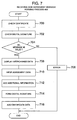
- Fig. 7 is a detailed flowchart for the forming process of the agreement message which is executed in step 452.
- step 700 whether the certificate data set in the transmitting source certificate field 610 of the B/L message 600 sent from the transmitting source of the B/L is valid or not is first checked by the certificate check program 112. This check is performed by using the public key corresponding to the private key of the third party such as a CA/RA which issued the certificate (step 700).
- step 702 whether the digital signature of the transmitter set in the transmitting source first digital signature field 608 of the B/L message 600 is valid or not is checked. This check is performed by comparing the hash value obtained by deciphering the digital signature by using the public key of the transmitter calculated from the certificate with the hash value obtained from the interchange data comprising the B/L data field 602, scheduled interchange day field 604, and interchange destination name field 606 (step 702).
- the data interchange program 115 checks whether the certificate data and the first digital signature are valid or not as results of the checks in steps 700 and 702 (step 704). As a result, if the certificate data or the first digital signature is not valid, an error process is performed in step 706 and the processing routine is finished.
- the data interchange program 115 When the authentication of the B/L message is checked in step 704, the data interchange program 115 outputs the interchange data, namely, the B/L data, the scheduled interchange day, and the name of the interchange destination to the output unit 150 (step 708).
- An input of the agreement data regarding the contract contents by the user (in this case, the bank is shown as an example) is received from the input unit 140.
- the data interchange program 115 When a message indicative of a refusal of the display contents is inputted by the user, the data interchange program 115 notifies the computer system of the transmitting source of the refusal of the reception of the B/L as an error process. In this instance, for example, it is also possible to receive refusal reasons as an input from the input unit 140 and transmit it to the computer system of the transmitting source together with the interchange data (step 710).
- step 712 additional information such as image data of a handwriting signature, change data of the scheduled interchange day, or the like is added to the received B/L message as necessary (step 712).
- step 712 a digital signature is made to the agreement data comprising the B/L message and the additional information by using the IC card 300 (step 714).
- certificate data is added and the agreement message is formed (step 716).
- Fig. 8 is a data constructional diagram showing a format of the agreement message which is transferred from the computer system of the interchange destination of the B/L to the computer system of the sending source in step 454.
- An agreement message 800 is constructed by adding the following data to the B/L message 600 received from the transmitting source: namely, an interchange destination additional data field 802 in which a handwriting signature or the data of the scheduled interchange day, or the like which is added on the interchange destination side is set; an interchange destination digital signature field 804 in which digital signature data of the interchange destination is set; and an interchange destination certificate field 806 in which the certificate of the interchange destination is set.
- the digital signature data which is set to the interchange destination digital signature field 804 is the data in which the B/L message 600 obtained by a predetermined hash algorithm and the hash value of the interchange destination additional data field 802 was encrypted by the private key 322 of the interchange destination.
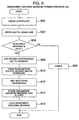
- Fig. 9 is a detailed flowchart for the forming process of the assignment assuring message which is executed in step 408.
- step 900 whether the certificate data set in the interchange destination certificate field 806 of the agreement message 800 sent from the interchange destination of the B/L is valid or not is checked by the certificate check program 112. This check is performed by using the public key corresponding to the private key of the third party which issued the certificate (step 900).
- step 902 whether the digital signature of the interchange destination set in the interchange destination digital signature field 804 of the agreement message 800 is valid or not is checked. This check is performed by comparing the hash value obtained by decrypting the digital signature by using the public key of the transmitter obtained from the certificate with the hash value calculated from the data comprising the B/L message field 600 and interchange destination additional data field 802 (step 902).
- the data interchange program 115 checks whether the certificate data and digital signature of the interchange destination are valid or not as results of the checks in steps 900 and 902 (step 904). When either the certificate data or the digital signature is invalid as a result of the validation check, an error process is executed in step 906 and the processing routine is finished.
- the data interchange program 115 receives a decided interchange day which is inputted from the input unit 140 by the user (in this case, the shipping company is shown as an example) through the control program 117.
- the data interchange program 115 adds the received decided interchange day to the received agreement message 800 (step 908).
- a digital signature namely, a second digital signature of the transmitting source is made by using the private key of the transmitting source to the data comprising the agreement message and the decided interchange day by the IC card 300 (step 910).
- the data interchange program 115 forms the assignment assuring message by adding additional information such as advertisement information or the like to the data to which the second digital signature was made as necessary.
- the additional information is not essential information in the interchange of the B/L but information such that there is no need to deny for the interchange destination (step 912).
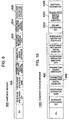
- Fig. 10 shows a data format of the assignment assuring message formed as mentioned above.
- an assignment assuring message 1000 is constructed by adding the following data to the agreement message 800 sent from the interchange destination of the B/L: namely, a decided interchange day field 1002 in which the decided interchange day is set; a transmitting source second digital signature field 1004 in which the second digital signature of the transmitting source is set; and an additional information field 1006 in which the additional information is set.
- the digital signature data which is set to the transmitting source second digital signature field 1004 is the data in which the agreement message 800 obtained by the predetermined hash algorithm and the hash value of the decided interchange day field 1002 were encrypted by the private key 322 of the transmitting source.
- the data interchange program 115 instructs the writing of the formed assignment assuring message to the IC card 300 by the IC card reader/writer 160 through the control program 117.
- the IC card control program 327 of the IC card 300 checks that the first digital signature 608 and the second digital signature 1004 of the transmitting source are encrypted by the same private key 322. If this check is valid, the IC card control program 327 stores the received assignment assuring message into the memory 320, then notifies the computer system at the end of the storing process (step 914).
- the data interchange program 115 confirms the two digital signatures has been created by the same private key. Then, a transmitting process of the assignment assuring message is started. After that, the IC card locks the assignment assuring message stored in the memory 320 and inhibits the subsequent accesses (step 916). The assignment assuring message stored in the memory 320 on the forming side is deleted in step 414 after the reception of the end message in step 412.
- Fig. 11 shows a detailed flowchart of the B/L storing process which is executed in step 458.
- the data interchange program 115 checks whether the second digital signature of the transmitting source is valid or not as a result of the check (step 1102). If the digital signature is invalid, an error process is executed in step 1104 and the processing routine is finished. If the second digital signature is valid, the data interchange program 115 sends the assignment assuring message 1000 to the IC card 300 through the control program 117 and instructs its storage (step 1106).
- the IC card control program 327 of the IC card 300 on the receiving side (the bank is shown as an example) checks whether the first digital signature 608 of the transmitting source included in the assignment assuring message 1000 and second digital signature 1004 of the transmitting source are created by the same private key, or not. Whether the interchange destination digital signature field 804 is its own digital signature or not is also checked (step 1108).
- the IC card control program 327 stores the assignment assuring message 1000 as a B/L into the B/L storing field 325 in the memory 320 and notifies the computer system of the end of the process (step 1110).
- the computer system executes the transmitting process of the end message in step 460 (Fig. 4).
- Fig. 12 shows a flowchart for processes which are executed in the case where the B/L received from the other computer system is transferred to further another computer system.
- the left side shows a flow for the processes which are executed by the computer system as a transmitting source of the B/L
- the right side shows a flow for the processes which are executed by the computer system as an interchange destination of the B/L in parallel with the processes shown on the left side.
- the data interchange program 115 In response to an interchange instruction of the B/L which is inputted from the input unit 140, the data interchange program 115 starts the interchange process of the B/L stored in the IC card 300 (step 1200).
- the data interchange program 115 reads out the B/L held in the B/L storing field 325 in the memory 320 from the IC card 300 through the control program 117 (step 1202).
- the B/L which is read out here is the assignment assuring message transferred to the computer system as a transmitting source from the other computer system.
- the B/L is the data that is expressed by the format shown in Fig. 10.
- the data interchange program 115 of the transmitting source system forms the B/L message from the read-out B/L (step 1204).
- the forming process of the B/L message is executed in accordance with the flowchart as shown in Fig. 5. It differs from step 402 with respect to a point that the source data to which the interchange destination name, the digital signature, and the like are added is the assignment assuring message transferred from the other computer system (corresponds to that of the trading company here) and a point that the process in step 506 of adding the certificate data in Fig. 5 is not performed.
- step 506 can be omitted.
- the other points are not particularly different from those in step 402 and their detailed descriptions are omitted here.
- the data interchange program 115 transfers the formed B/L message to the computer system of the interchange destination through the network 50 (step 1206).
- the data interchange program 115 forms the agreement message in accordance with the flowchart shown in Fig. 7 in a manner similar to step 452.
- the check about the validity check is made in steps 700 and 702 in Fig. 7 with regard to all of the certificates and digital signatures included in the B/L message.
- the other processes are similar to those in step 454 described before in Fig. 7 and their descriptions are omitted here (step 1252).
- the agreement message formed in step 1252 is sent to the computer system of the transmitting source of the B/L through the network 50 (step 1254).
- step 1208 when the agreement message is received (step 1208), the validity check of the received agreement message of the interchange destination is made by the certificate check program 112. When the validity is checked, the assignment assuring message held as a B/L in the computer system of the interchange destination is formed by the data interchange program 115. This process is similar to that in the flowchart shown in Fig. 9. (step 1210)
- the assignment assuring message is transferred to the computer system of the interchange destination by the communication control unit 130 via the network 50 (step 1212).
- the computer system of the interchange destination When the assignment assuring message is received (step 1256), the computer system of the interchange destination finally stores and holds the received assignment assuring message as a B/L into its own IC card by the data interchange program 115 (step 1258).
- the end message indicative of the completion of the interchange of the B/L is transmitted to the computer system of the transmitting source and the processing routine is finished (step 1260).
- the computer system of the transmitting source deletes the B/L data owned by itself and finishes the processing routine (step 1216).
- Figs. 13, 14, and 15 are data constructional diagrams showing data formats of the messages which are transferred in steps 1206, 1254, and 1212. The diagrams show each message when the bank receives the B/L issued from the shipping company and transfers it to the trading company (the trading company computer system 20).
- Fig. 13 shows a construction of the B/L message which is sent from the bank computer system 10 as a transmitting source to the trading company computer system 20 as an interchange destination.
- the data corresponding to the assignment assuring message shown in Fig. 10 is included in a data field 1302 corresponding to the B/L field 602 of the B/L message shown in Fig. 6.
- the following data is included in the data field 1302: namely, a B/L field 1320 having the information of the inherent B/L; a shipping company certificate 1324 in which certificates of the shipping company as an issuing source; a bank certificate 1328 in which certificate of the bank as a present transmitting source has been set; a first digital signature 1322 (corresponding to the transmitting source first digital signature 608 in Fig.
- a first digital signature 1326 (corresponding to the interchange destination digital signature 804 in Fig. 8) of the bank; and a second digital signature 1330 (corresponding to the transmitting source second digital signature 1004 in Fig. 9) of the shipping company.
- a scheduled day of the interchange of the B/L from the trading company to the shipping company is set as a scheduled interchange day 1304.
- the name of the shipping company as an interchange destination of the B/L is set as an interchange destination name 1306.
- the digital signature created by the private key of the trading company is set in a transmitting source digital signature 1308.
- the digital signature 1308 of the transmitting source is a digital signature that is made to the B/L at the second time by the trading company and can be regarded as a second digital signature for the trading company.
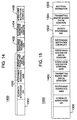
- Fig. 14 shows the agreement message which is sent from the computer system of the trading company to the computer system of the bank.
- An agreement message 1400 is constructed by adding the following data to a B/L message 1300 shown in Fig. 13: that is, interchange destination additional data 1402 which is added by the trading company; a digital signature 1404 of the interchange destination made by the trading company; and an interchange destination certificate 1406 as a certificate of the trading company.
- Fig. 15 shows a data format of the assignment assuring message which is transferred from the computer system of the bank to the computer system of the trading company.
- An assignment assuring message 1500 is constructed by adding the following data to the agreement message shown in Fig. 14: namely, a decided interchange day 1502 from the bank to the trading company; a second digital signature 1504 of the bank as a transmitting source; and additional information 1506 which is added by the bank.
- the second digital signature of the transmitting source becomes a third digital signature which is made by the bank by passing through all of the messages.
- the interchange destination of the B/L can refuse the reception of it if necessary. Since the received B/L message is incomplete as a B/L to be circulated, the operation such that the interchange destination illegally uses the received information in spite of a fact that it refused the information can be avoided. Thus, when the B/L is circulated, the reliability can be improved without needing a center-like system which manages the circulation of the B/L.
- step 1204 in Fig. 12 the B/L message is formed without the digital signature of the transmitting source and transferred to the computer system of the interchange destination. Therefore, the message that is transferred to the computer system of the interchange destination becomes a message without the digital signature 1308 of the transmitting source from the message shown in Fig. 13.
- the preceding second digital signature of the transmitting source added to the preceding assignment assuring message by the transmitting source of the B/L owned by the transmitting source at this time point is deleted.
- Predetermined data is added to the data in this state, thereby forming the agreement message.
- step 1258 as a check of the digital signatures included in the assignment assuring message, its own digital signature added at the second order from the last is validity-checked, and whether the last digital signature and the digital signature added at the third order from the last, namely, the digital signature added to the assignment assuring message by the transmitting source computer system and the digital signature added to the assignment assuring message transferred to the transmitter when the transmitting source computer system receives the B/L are digitally signed by the same private key or not is checked.
- the agreement message becomes a message without a digital signature field 1330 and the digital signature field 1308 (refer to Fig. 13) from the data field 1302 in the message shown in Fig. 14.
- the agreement message becomes a message without the digital signature field 1330 and digital signature field 1308 (refer to Fig. 13) from the data field 1302 in the message shown in Fig. 15.
- the number of digital signatures of the party who owned the B/L at the halfway stage can be set to one and the number of digital signatures in the message can be reduced as compared with that in the foregoing embodiment. Even if the number of times of transmutation increases, a large increase in processing time can be prevented.
- the network is used for transfer of the B/L in the embodiment described above. Although a transmutation might be troublesome, a storage medium such as floppy disk, magnetic tape, or the like, for example, can be also used in place of the network.
- a storage medium such as floppy disk, magnetic tape, or the like, for example, can be also used in place of the network.
- the information that is stored in the IC card is not limited to the whole digital signature target data but can be set only to the digital signature data, and the actual information can be stored in the storage device of the computer system.
- the invention is not limited to the circulation of the data among the three parties but the right can be sequentially circulated by repeating the data transfer process between the bank and the trading company described as an example.
- the digital signatures in the message can be also used as history information of the transmutation of the right.
- the certificate that is used in the embodiment does not depend on the certificate issuer. Therefore, when the digital signature made finally in the assignment assuring message and the digital signatures (the first digital signature of the transmitting source and the second digital signature of the transmitting source) made at the third order from the last are checked as to if these digital signatures are made by the same party, different certificates can be also used to check each digital signature. In this case, each time the digital signature is made and the message is sent to the partner, it is sufficient that the person who makes the digital signature allows the certificate corresponding to the digital signature made at this time to be included in the message. By this method, the certificates issued from a plurality of authorities can be also used together.
- the invention is not limited to the circulation of the B/L in the trade and finance system as mentioned above but can be widely applied to the transfer of the data such as various digital documents or the like which are circulated among a plurality of parties.
- the executing steps in each of the computer system of the data transmitting source and the computer system of the interchange destination shown in Figs. 4 and 12 can be stored as a form of program codes into a recording medium such as semiconductor memory, floppy disk, CD-ROM, or the like. In place of them, programs for executing the processing steps can be also loaded into each computer through a communication line.
- the interchange of the digital documents among a plurality of parties can be performed while assuring the contents.
- the circulation of the digital document whose contents need to be assured can be realized without intervening a third party-like system serving as a center, for example, a third trust party (TTP).
- TTP third trust party
Landscapes
- Business, Economics & Management (AREA)
- Physics & Mathematics (AREA)
- General Business, Economics & Management (AREA)
- General Physics & Mathematics (AREA)
- Engineering & Computer Science (AREA)
- Theoretical Computer Science (AREA)
- Storage Device Security (AREA)
- Financial Or Insurance-Related Operations Such As Payment And Settlement (AREA)
- Computer And Data Communications (AREA)
Abstract
Data interchange method and apparatus for enabling an interchange of digital data which is performed among a plurality of parties (10, 20, 30, 40) to be executed without intervening a center system or the like as a third party while assuring the contents of the digital data. When data is transmitted between two parties who transmit and receive the data, a right assignor of the data makes his own digital signature, assures the contents of the data, and transmits the data. A right assignee of the data confirms the contents of the data and the right assignor, subsequently makes his digital signature to the data, and transmits the data to the right assignor. The right assignor checks the data assignee, makes his own digital signature to the data and transfers the right of the data to the assignee, thereby executing the interchange of the data between the two parties. <IMAGE>
Description
The present invention relates to a data
interchange method for interchanging digital data
between systems of two parties via a network or a digital
medium and to a system to which such a method is applied.
More particularly, the invention relates to a data
interchange method suitable for mutually checking and
safely interchanging digital data of a digital document
or the like which is circulated among a plurality of
parties, a system to which such a method is applied and
a data interchange executing program recording medium.
In recent years, owing to the progress of an
information processing technique, for example, in
various trades, a demand such that a document which is
interchanged between trading parties is replaced with
digital document data and the digital document data is
interchanged between the parties via a digital medium
such as a network to thereby perform the trade has been
widespread.
For example, also in the field of trade and
finance, digitization of a document which is
interchanged between the trading parties is examined.
The interchange of the document between the parties
concerned with the document in the trade and finance
can be divided into two kinds and considered due to the
nature. One is an interchange of a document as
information and the other is an interchange of a
document in which transmutation has to be managed.
As a document in which the transmutation has to
be managed, for example, there is a bill of lading
(hereinafter, abbreviated to B/L) on which information
for freight or cargo loaded in a ship by a shipping
company has correctly been recorded. The B/L is a bill
which can be interchanged with the freight at an importing
place of the freight and denotes valuable papers for
authenticating the owner of the freight and a duty of a
payment for the freight at any time point of the import
and export. The B/L is formed by using a sheet of
paper as a medium in the present situation. A party
who possesses the original of papers can own the right
as valuable papers. When it is considered to realize
the B/L as digital data, a technique to correctly
assure the transmutation while the digitized B/L is
circulated is necessary.
As one of well-known techniques to interchange
digital data, there is a technique disclosed in, for
example, JP-A-9-251502. The technique to pay data
having a money value, namely, digital money is
disclosed in JP-A-9-251502. In this case, a payer
authorized by some certificate authority adds his own
digital signature to data (digital money) to be
interchanged and transmits it to a partner, thereby
assuring the contents of the data to be transmitted.
In JP-B-8-27812, a technique such that digital
data as transaction information is checked by two
parties, digital seal information indicative of
agreement with the transaction contents is mutually
interchanged, and the two parties have the information
together with digital data, thereby assuring the
transaction itself is disclosed. According to the
technique disclosed here, a receiver of the digital
data forms a compression cryptogram of the received
digital data and returns a part of it as tally
information to a transmitter. The transmitter checks
the tally information and transmits his own tally
information to the receiver. After that, the receiver
checks the tally information of the transmitter and
transmits his own tally information to the transmitter.
Consequently, even if the receiver denies a fact of the
transaction and runs away with the digital seal of the
transmitter without returning the digital seal of the
receiver to the transmitter, the transmitter uses the
received tally information as an evidence, thereby
enabling the digital transaction to be assured.
According to the technique disclosed in the
foregoing JP-A-9-251502, by adding the digital
signature of the transmitter to the data and transmitting
the resultant data to a partner, the transmitter assures
its contents. It is now considered that the method is
applied to the interchange of a concerned document in the
trade and finance. In this case, in order to prevent an
unauthentic act for the data with the digital signature
transmitted by the transmitter, for example, such an act
that after the reception is refused, the received data is
circulated, the receiver cannot refuse the reception of
the data. Therefore, the receiver cannot perform the
operation such that he checks the contents of the
transmitted data and judges whether he receives it or not,
so that there is a possibility such that the defective
data is received. In case of the B/L, in the present
situation, if only a part of the B/L is different from
that formed by the shipping company, it cannot be
interchanged with cargo. Accordingly, the receiver
has a large risk.
In addition, according to the technique, double
payment by the payer is tried to be avoided by criminal
and social sanctions after the revelation of the
unauthentication. However, it is impossible to prevent
a third party in good faith from being damaged. In the
trading transaction, such a situation results in a
fatal defect.
When it is considered that the technique
disclosed in JP-B-8-27812 is applied to the interchange of
the concerned document in the trade and finance, it is
difficult to unconditionally identify the owner from
the data to be interchanged, so that the data cannot be
transferred as a right. If a process for adding the
contents of the interchange such as names or the like
of the transaction parties who perform the transaction
to the data to be interchanged is performed, it is
considered that the owner can be identified from the
data even by the technique disclosed in JP-B-8-27812.
Generally, the B/L is circulated among at least three
parties. In consideration of it, when data is
interchanged, it is necessary that a data forming
person has to form data by inserting the names of all
of the concerning parties among which the data is
circulated. It obstructs the circulation performance
of the B/L as valuable papers, so that a mechanism of
the trading transaction business itself is obstructed.
In order to interchange the trading document concerned,
therefore, the technique disclosed in JP-B-8-27812 cannot
be substantially applied.
It is an object of the invention to provide a
data interchange method which can interchange digital data
among a plurality of parties while its contents are
assured, a system to which such a method is applied,
and a program recording medium for embodying such
method and system.
Another object of the invention is to provide a
data interchange method whereby digital data can be
interchanged among a plurality of parties without passing
through a center system or the like as a third party, and
a system to which such a method is applied, and a program
recording medium for embodying such method and program.
To accomplish the above objects, according to
one aspect of the invention, there is provided a data
interchange method for interchanging data among a
plurality of computers through a network or a digital
medium, comprising the following steps. In a first
computer serving as a transmitting source of data, a first
message obtained by adding a first digital signature to
indicate the validation or authentication of the data to
the data is formed and transferred to a second computer.
In the second computer, the validation of the first
message is checked on the basis of the first digital
signature. In the second computer, a second message is
formed by adding a second digital signature to indicate
the validation to the first message and transferred to the
first computer. In the first computer, the validation of
the second message is checked on the basis of the second
digital signature, and a third message is formed by adding
a third digital signature to indicate the validation to
the second message and transferred to the second computer.
In the second computer, the validation of the third
message is checked on the basis of the third digital
signature and the third message is held as data to be
received from the first computer.
According to the aspect of the invention, in the
process for forming the second message, data included in
the first message is outputted to an output unit and the
second message is formed in accordance with information
which is inputted from an input unit in response to the
output of the data.
Information of validation indicating that the
transmitting source is the first computer is added to
the first message. Similarly, information of validation
indicating that the transmitting source is the second
computer is added to the second message.
According to another aspect of the invention,
further in the second computer, a fourth message is
formed by adding a fourth digital signature to indicate
the validation of the third message to the third message
and transferred to a third computer. In the third
computer, the validation of the fourth message is checked
on the basis of the digital signature included in the
fourth message and a fifth message is formed by adding a
fifth digital signature to indicate the validation to the
fourth message and transferred to the second computer. In
the second computer, the validation of the fifth message
is checked on the basis of the fifth digital signature and
a sixth message is formed by adding a sixth digital
signature to indicate the validation to the fifth message
and transferred to the third computer. In the third
computer, the validation of the sixth message is checked
on the basis of the sixth digital signature and the sixth
message is held as data to be received from the second
computer.
According to still another aspect of the
invention, in the second computer, a fourth message to be
transferred to a third computer is formed on the basis of
the third message and transferred to a third computer. In
the third computer, a fifth message is formed by adding a
fourth digital signature to indicate the validation to
data except for the third digital signature included in
the fourth message and transferred to the second computer.
In the second computer, the validation of the fifth
message is checked on the basis of the fourth digital
signature and a sixth message is formed by adding a fifth
digital signature to indicate the validation to the fifth
message and transferred to the third computer. In the
third computer, the validation of the sixth message is
checked on the basis of the fifth digital signature and
the sixth message is held as data to be received from the
second computer.
Other objects, features and advantages of the
present invention will become apparent from the
description of the following embodiments of the invention
taken in conjunction with the accompanying drawings.
An embodiment of the invention will now be
described in detail hereinbelow with reference to the
drawings.
Fig. 1 is a block diagram showing a construction
of a system in an embodiment of a data interchange system
to which a data interchange method according to the
invention is applied. In the embodiment, a trade and
finance system for digitally interchanging Bill of Lading
(B/L) as a kind of valuable papers in the trade and
finance will be described as an example.
As shown in Fig. 1, a plurality of computer
systems 10 to 40 which are operated by a plurality of
parties regarding the trade and finance such as bank,
trading company, shipping company, and the like are
mutually connected to the present system through a
network 50. Besides various information regarding the
trade and finance, the interchange of the B/L is performed
between the computer systems through the network 50.
As computer systems 10 to 40, computers such as
personal computers, workstations, or the like which are
generally and widely used at present can be used. Those
computers can be constructed by a so-called mainframe
computer of a larger scale or can be constructed as a
computer system comprising a plurality of computers
connected via an LAN or the like in each party where the
computers are provided so long as they can realize the
functions as computer systems, which will be explained
hereinlater. The computer systems which are connected to
the network 50 are not limited to the four systems as
shown in the diagram but an arbitrary number of computer
systems can be connected.
Fig. 2 is a block diagram showing a construction
of a computer system. In Fig. 2, a construction of the
computer system 10 provided for the bank is shown as an
example and the computer systems 20 to 40 provided for the
other parties are also similarly constructed. In the
diagram, in the embodiment, functional constructions which
are necessary for interchanging B/L among the computer
systems are shown. The computer system 10 can also have
functions for the other bank business. This point is also
similarly applied to the computer systems provided for the
parties other than the bank. The functions which are not
directly concerned with the invention are not particularly
shown in the diagrams and their descriptions are also
omitted.
As shown in Fig. 2, the computer system 10
comprises: a processing unit 100; a memory 110; a storage
device 120 represented by a magnetic disk device; a
communication control unit 130; an input unit 140 such as
keyboard, mouse, or the like; an output unit 150 such as
CRT display, liquid crystal display (LCD), or the like;
and an IC card reader/writer (IC card R/W) 160.
A certificate check program 112, a data
interchange program 115, and a control program 117 have
been stored in the memory 110. The processing unit 100
realizes various processes, which will be explained
hereinlater, by executing those programs stored in the
memory 110.
The certificate check program 112 is a program
to realize a process to check the authentication of the
B/L which is interchanged among the computer systems. The
data interchange program 115 causes to interchange B/L
which is performed among the computer systems. The
control program 117 manages: an input of data from the
input unit 140 by the user; an output of information to
the output unit 150; an access to the storage device 120;
reading/writing operations of data in an IC card through
the IC card R/W; a transmission and reception of data
to/from other computer systems through the communication
control unit 130; and the like.
In the embodiment, although the certificate data
125 is stored in the storage device 120 different from the
memory 110 in which the program has been stored, it can be
stored in the same memory as that of the program.
Fig. 3 is a block diagram of an IC card which is
owned by each party of the bank, trading company, and
shipping company and is used to interchange and hold the
B/L in the embodiment.
An IC card 300 has a processing unit 310, a
memory 320, and an interface 330. A private key
information (hereinbelow, simply referred to as a private
key) 322 which is used when the party who has the IC card
sends its own B/L to another party and a B/L 325 in which
the party has the right are stored in the memory 320. The
memory 320 includes a digital signature creation and check
program 323 as functionally describe here. An IC card
control program 327 for managing the private key 322 of
the party and the B/L 325 in the IC card 300 and
controlling an interchange of data between the computer
systems through the interface 330 has been stored in the
memory 320. The processing unit 310 executes the IC card
control program 327, thereby controlling the management of
various information in the IC card 300 and the interchange
of information between the computer systems.
In the subsequent description, when the computer
system provided for each party and the IC card owned by
each party are mentioned, it is assumed that the reference
numerals used in Figs. 2 and 3 are used in common.
Prior to describing the process for interchanging
the B/L in the embodiment, a flow of the whole
transaction in the trade and finance will now be explained
simply.
In the trade and finance, a contract of trade is
first made between the exporter and the importer.
At a point when freight to be subsequently
exported is loaded to a ship for conveying, the shipping
company issues a valuable paper (B/L) to accurately
express a state of freight and decide the owner of the
freight and passes it to the exporter. The exporter takes
the B/L to a bank on the export side and requests to buy
or collect it. In case of buying it, the exporter
receives the cost for freight when the B/L is transferred.
The bank on the export side sends the obtained
B/L to a bank on the import side. In this case, a
settlement is performed even between the banks. The bank
on the import side transfers the B/L in accordance with
the payment of the importer. The importer receives the
freight in exchange for the B/L when a ship in which the
freight has been loaded enters a port.
In the trading transaction, there are various
forms including a settlement method for buying and
collecting and the settlement methods, timings, and the
like are different. When attention is paid to a flow of
the B/L, a fundamental flow is as mentioned above.
Fig. 4 is a flowchart showing a flow of
processes which are executed when B/L data is newly formed
in the shipping company computer system 40 and the formed
B/L is transferred to the bank computer system 10. In
Fig. 4, the left side shows the flow for processes which
are executed by the shipping company computer system 40
serving as an issuing source of the B/L and the right side
shows the flow for processes which are executed by the
bank computer system 10 serving as an interchange
destination of the B/L in parallel with them. In Fig. 4,
an arrow shown by a broken line indicates a transfer of a
message between the shipping company computer system 40
and the bank computer system 10.
First, in the shipping company computer system
40, an input of data from the input unit 140, specifically
speaking, an input of the contents of the freight loaded
in the ship and information showing their states is
received. B/L data having the information as B/L is
formed on the basis of the inputted information. (step
400).
On the basis of the formed B/L, the shipping
company computer system 40 forms a B/L message which is
transferred to the bank computer system 10 (step 402).
The formed B/L message is sent to the bank computer system
10 by the communication control unit 130 through the
network 50 (step 404).
The bank computer system 10 receives the B/L
message via the communication control unit 130 (step 450).
In the bank computer system 10, a signature validity check
of the B/L message is performed by the certificate check
program and the contents of the interchange data included
in the B/L message are displayed to the output unit 150.
When an acknowledgment input regarding the contents of the
contract by the user on the receiving side is received, an
agreement message showing that the user agrees with the
contents is formed by the data interchange program 115
(step 452). The formed agreement message is sent to the
shipping company computer system 40 by the communication
control unit 130 via the network 50 (step 454).
The shipping company computer system 40 receives
the agreement message via the communication control unit
130 (step 406). The shipping company computer system 40
checks the validation of the received agreement message by
the certificate check program 112. Assignment assuring
message which is held as B/L in the bank computer system
10 is formed by the data interchange program 115 (step
408). The assignment assuring message is a message to
assure that the B/L was assigned from the shipping company
to the bank and the message itself indicates a valuable
paper data. After that, the assignment assuring message
is sent to the bank computer system 10 by the
communication control unit 130 via the network 50 (step
410).
When the bank computer system 10 receives the
assignment assuring message (step 456), the received
agreement message is finally stored and held and held as
B/L into the IC card by the data interchange program 115
(step 458). An end message indicative of the completion
of the interchange of the B/L is sent to the shipping
company computer system 40 and the processing routine is
finished (step 460).
When the end message is received from the bank
computer system 10 (step 412), the shipping company
computer system 40 deletes the B/L data owned by itself
and finishes the processing routine (step 414).
Fig. 5 is a detailed flowchart for the forming
process of the B/L message which is performed in step 402.
Upon formation of the B/L message, first, the
control program 117 receives an input of a scheduled
interchange day of the B/L and a name of an interchange
destination from the input unit 140 (step 500). The
scheduled interchange day and the name of the interchange
destination which were inputted are added to the B/L data
which is sent to the computer system of the interchange
destination by the data interchange program 115 (step
502).
After that, a digital signature is made to the
interchange data comprising the B/L data, the scheduled
interchange day, and the name of the interchange
destination. In the embodiment, the digital signature is
made by the IC card 300 owned by the operator of the
present system. For this purpose, the interchange data is
once stored in the IC card 300. In the IC card 300, a
hash value of the interchange data is obtained by using a
predetermined hash algorithm (function). The hash value
is enciphered by the private key 322 and resultant
information is used as a digital signature. The hash
algorithm is a function which can be unconditionally
coupled to the original data and form data whose size was
reduced. In the embodiment, by forming the digital
signature as mentioned above, the sender assures the
contents of the information which is interchanged (step
504).
The data which is digitally signed by the IC
card 300 is again read out by the computer system. The
certificate data 125 held in the storage device 120 is
added to the data by the data interchange program 115 and
the B/L message is formed (step 506).
Fig. 6 shows a data format of the B/L message
which is sent to the bank computer system 10 on the
receiving side from the shipping company computer system
40 as a sending side of the B/L formed in step 402. A B/L
message 600 includes: a B/L data field 602 having
information as inherent B/L; a scheduled interchange day
field 604 in which a scheduled interchange day of the B/L
from the shipping company to the bank has been set; an
interchange destination name field 606 in which the name
of a trading company as an interchange destination is set;
a first digital signature field 608 of transmitting source
in which a first digital signature of the shipping company
as a transmitting source is set; and a certificate field
610 of transmitting source in which a certificate of the
shipping company as a transmitting source is set. As
mentioned above, the first digital signature field 608 of
transmitting source is data in which interchange data
comprising the B/L data field 602, scheduled interchange
day field 604, and interchange destination name field 606
has been enciphered by the private key 322.
Fig. 7 is a detailed flowchart for the forming
process of the agreement message which is executed in
step 452.
In the forming process of the agreement message,
whether the certificate data set in the transmitting
source certificate field 610 of the B/L message 600 sent
from the transmitting source of the B/L is valid or not is
first checked by the certificate check program 112. This
check is performed by using the public key corresponding
to the private key of the third party such as a CA/RA
which issued the certificate (step 700).
Further, whether the digital signature of the
transmitter set in the transmitting source first digital
signature field 608 of the B/L message 600 is valid or not
is checked. This check is performed by comparing the hash
value obtained by deciphering the digital signature by
using the public key of the transmitter calculated from
the certificate with the hash value obtained from the
interchange data comprising the B/L data field 602,
scheduled interchange day field 604, and interchange
destination name field 606 (step 702).
The data interchange program 115 checks whether
the certificate data and the first digital signature are
valid or not as results of the checks in steps 700 and 702
(step 704). As a result, if the certificate data or the
first digital signature is not valid, an error process is
performed in step 706 and the processing routine is
finished.
When the authentication of the B/L message is
checked in step 704, the data interchange program 115
outputs the interchange data, namely, the B/L data, the
scheduled interchange day, and the name of the interchange
destination to the output unit 150 (step 708). An input
of the agreement data regarding the contract contents by
the user (in this case, the bank is shown as an example)
is received from the input unit 140. When a message
indicative of a refusal of the display contents is
inputted by the user, the data interchange program 115
notifies the computer system of the transmitting source of
the refusal of the reception of the B/L as an error
process. In this instance, for example, it is also
possible to receive refusal reasons as an input from the
input unit 140 and transmit it to the computer system of
the transmitting source together with the interchange data
(step 710).
Once the user has checked the interchange data,
additional information such as image data of a handwriting
signature, change data of the scheduled interchange day,
or the like is added to the received B/L message as
necessary (step 712). After that, in a manner similar to
steps 504 and 506 in the forming process of the B/L
message, a digital signature is made to the agreement data
comprising the B/L message and the additional information
by using the IC card 300 (step 714). Thereafter,
certificate data is added and the agreement message is
formed (step 716).
Fig. 8 is a data constructional diagram showing
a format of the agreement message which is transferred
from the computer system of the interchange destination of
the B/L to the computer system of the sending source in
step 454.
An agreement message 800 is constructed by
adding the following data to the B/L message 600 received
from the transmitting source: namely, an interchange
destination additional data field 802 in which a
handwriting signature or the data of the scheduled
interchange day, or the like which is added on the
interchange destination side is set; an interchange
destination digital signature field 804 in which digital
signature data of the interchange destination is set; and
an interchange destination certificate field 806 in which
the certificate of the interchange destination is set.
The digital signature data which is set to the interchange
destination digital signature field 804 is the data in
which the B/L message 600 obtained by a predetermined
hash algorithm and the hash value of the interchange
destination additional data field 802 was encrypted by the
private key 322 of the interchange destination.
Fig. 9 is a detailed flowchart for the forming
process of the assignment assuring message which is
executed in step 408.
In the forming process of the assignment
assuring message, first, whether the certificate data set
in the interchange destination certificate field 806 of
the agreement message 800 sent from the interchange
destination of the B/L is valid or not is checked by the
certificate check program 112. This check is performed by
using the public key corresponding to the private key of
the third party which issued the certificate (step 900).
Further, whether the digital signature of the
interchange destination set in the interchange destination
digital signature field 804 of the agreement message 800
is valid or not is checked. This check is performed by
comparing the hash value obtained by decrypting the
digital signature by using the public key of the
transmitter obtained from the certificate with the hash
value calculated from the data comprising the B/L message
field 600 and interchange destination additional data
field 802 (step 902).
The data interchange program 115 checks whether
the certificate data and digital signature of the
interchange destination are valid or not as results of the
checks in steps 900 and 902 (step 904). When either the
certificate data or the digital signature is invalid as a
result of the validation check, an error process is
executed in step 906 and the processing routine is
finished.
If the authentication of the agreement message
is checked in step 904, the data interchange program 115
receives a decided interchange day which is inputted from
the input unit 140 by the user (in this case, the shipping
company is shown as an example) through the control
program 117. The data interchange program 115 adds the
received decided interchange day to the received agreement
message 800 (step 908).
Subsequently, in a manner similar to step 504 or
714, a digital signature, namely, a second digital
signature of the transmitting source is made by using the
private key of the transmitting source to the data
comprising the agreement message and the decided
interchange day by the IC card 300 (step 910).
After that, the data interchange program 115
forms the assignment assuring message by adding additional
information such as advertisement information or the like
to the data to which the second digital signature was made
as necessary. The additional information is not essential
information in the interchange of the B/L but information
such that there is no need to deny for the interchange
destination (step 912).
Fig. 10 shows a data format of the assignment
assuring message formed as mentioned above. As shown in
the diagram, an assignment assuring message 1000 is
constructed by adding the following data to the agreement
message 800 sent from the interchange destination of the
B/L: namely, a decided interchange day field 1002 in which
the decided interchange day is set; a transmitting source
second digital signature field 1004 in which the second
digital signature of the transmitting source is set; and
an additional information field 1006 in which the
additional information is set. The digital signature data
which is set to the transmitting source second digital
signature field 1004 is the data in which the agreement
message 800 obtained by the predetermined hash algorithm
and the hash value of the decided interchange day field
1002 were encrypted by the private key 322 of the
transmitting source.
The data interchange program 115 instructs the
writing of the formed assignment assuring message to the
IC card 300 by the IC card reader/writer 160 through the
control program 117. When the assignment assuring message
in which the writing was instructed is received, the IC
card control program 327 of the IC card 300 checks that
the first digital signature 608 and the second digital
signature 1004 of the transmitting source are encrypted by
the same private key 322. If this check is valid, the IC
card control program 327 stores the received assignment
assuring message into the memory 320, then notifies the
computer system at the end of the storing process (step
914).
When the program has notified the end of the
data storing process is received from the IC card 300, the
data interchange program 115 confirms the two digital
signatures has been created by the same private key.
Then, a transmitting process of the assignment assuring
message is started. After that, the IC card locks the
assignment assuring message stored in the memory 320 and
inhibits the subsequent accesses (step 916). The
assignment assuring message stored in the memory 320 on
the forming side is deleted in step 414 after the
reception of the end message in step 412.
Fig. 11 shows a detailed flowchart of the B/L
storing process which is executed in step 458.
In the storing process of the B/L, whether the
second digital signature of the transmitting source set in
the transmitting source second digital signature field
1004 of the assignment assuring message 1000 sent from the
transmitting source is valid or not is checked. This
check is performed by comparing the hash value obtained by
decrypting the digital signature by using the public key
of the transmitter used in step 702 with the hash value
calculated from the data comprising the agreement message
field 800 and decided interchange day field 1002 (step
1100).
The data interchange program 115 checks whether
the second digital signature of the transmitting source is
valid or not as a result of the check (step 1102). If the
digital signature is invalid, an error process is executed
in step 1104 and the processing routine is finished. If
the second digital signature is valid, the data interchange
program 115 sends the assignment assuring message
1000 to the IC card 300 through the control program 117
and instructs its storage (step 1106).
In a manner similar to step 914, when the
assignment assuring message 1000 is received, the IC card
control program 327 of the IC card 300 on the receiving
side (the bank is shown as an example) checks whether the
first digital signature 608 of the transmitting source
included in the assignment assuring message 1000 and
second digital signature 1004 of the transmitting source
are created by the same private key, or not. Whether the
interchange destination digital signature field 804 is its
own digital signature or not is also checked (step 1108).
When the check is made with respect to the
digital signature, the IC card control program 327 stores
the assignment assuring message 1000 as a B/L into the B/L
storing field 325 in the memory 320 and notifies the
computer system of the end of the process (step 1110).
When this notice is received, the computer system executes
the transmitting process of the end message in step 460
(Fig. 4).
Subsequently, processes in the case where the
received B/L is further transferred to another computer
system will be described. Fig. 12 shows a flowchart for
processes which are executed in the case where the B/L
received from the other computer system is transferred to
further another computer system. In Fig. 12, the left
side shows a flow for the processes which are executed by
the computer system as a transmitting source of the B/L
and the right side shows a flow for the processes which
are executed by the computer system as an interchange
destination of the B/L in parallel with the processes
shown on the left side.
In response to an interchange instruction of the
B/L which is inputted from the input unit 140, the data
interchange program 115 starts the interchange process of
the B/L stored in the IC card 300 (step 1200).
When the interchange instruction is received,
the data interchange program 115 reads out the B/L held in
the B/L storing field 325 in the memory 320 from the IC
card 300 through the control program 117 (step 1202). The
B/L which is read out here is the assignment assuring
message transferred to the computer system as a
transmitting source from the other computer system. For
example, in case of the computer system which received the
interchange of the B/L from the computer system of the
issuing source, the B/L is the data that is expressed by
the format shown in Fig. 10.
The data interchange program 115 of the
transmitting source system forms the B/L message from the
read-out B/L (step 1204). In a manner similar to step 402
(Fig. 4), the forming process of the B/L message is
executed in accordance with the flowchart as shown in Fig.
5. It differs from step 402 with respect to a point that
the source data to which the interchange destination name,
the digital signature, and the like are added is the
assignment assuring message transferred from the other
computer system (corresponds to that of the trading
company here) and a point that the process in step 506 of
adding the certificate data in Fig. 5 is not performed.
Since the B/L that is sent here has already included the
certificate of the computer system as a transmitting
source as a result of the process for previously receiving
the B/L from the other computer system, the process in
step 506 can be omitted. The other points are not
particularly different from those in step 402 and their
detailed descriptions are omitted here.
The data interchange program 115 transfers the
formed B/L message to the computer system of the
interchange destination through the network 50 (step
1206).
In the computer system of the interchange
destination, when the transferred B/L message is received
(step 1250), the data interchange program 115 forms the
agreement message in accordance with the flowchart shown
in Fig. 7 in a manner similar to step 452. As for the
processes here, the check about the validity check is made
in steps 700 and 702 in Fig. 7 with regard to all of the
certificates and digital signatures included in the B/L
message. The other processes are similar to those in step
454 described before in Fig. 7 and their descriptions are
omitted here (step 1252).
The agreement message formed in step 1252 is
sent to the computer system of the transmitting source of
the B/L through the network 50 (step 1254).
In the computer system of the transmitting
source, when the agreement message is received (step
1208), the validity check of the received agreement
message of the interchange destination is made by the
certificate check program 112. When the validity is
checked, the assignment assuring message held as a B/L in
the computer system of the interchange destination is
formed by the data interchange program 115. This process
is similar to that in the flowchart shown in Fig. 9.
(step 1210)
After that, the assignment assuring message is
transferred to the computer system of the interchange
destination by the communication control unit 130 via the
network 50 (step 1212).
When the assignment assuring message is received
(step 1256), the computer system of the interchange
destination finally stores and holds the received
assignment assuring message as a B/L into its own IC card
by the data interchange program 115 (step 1258). The end
message indicative of the completion of the interchange of
the B/L is transmitted to the computer system of the
transmitting source and the processing routine is finished
(step 1260).
When the end message is received from the
computer system of the interchange destination (step
1214), the computer system of the transmitting source
deletes the B/L data owned by itself and finishes the
processing routine (step 1216).
Figs. 13, 14, and 15 are data constructional
diagrams showing data formats of the messages which are
transferred in steps 1206, 1254, and 1212. The diagrams
show each message when the bank receives the B/L issued
from the shipping company and transfers it to the trading
company (the trading company computer system 20).
Fig. 13 shows a construction of the B/L message
which is sent from the bank computer system 10 as a
transmitting source to the trading company computer system
20 as an interchange destination. The data corresponding
to the assignment assuring message shown in Fig. 10 is
included in a data field 1302 corresponding to the B/L
field 602 of the B/L message shown in Fig. 6. The
following data is included in the data field 1302: namely,
a B/L field 1320 having the information of the inherent
B/L; a shipping company certificate 1324 in which
certificates of the shipping company as an issuing source;
a bank certificate 1328 in which certificate of the bank
as a present transmitting source has been set; a first
digital signature 1322 (corresponding to the transmitting
source first digital signature 608 in Fig. 6) of the
shipping company used when the B/L is interchanged between
the shipping company and the bank; a first digital
signature 1326 (corresponding to the interchange
destination digital signature 804 in Fig. 8) of the bank;
and a second digital signature 1330 (corresponding to the
transmitting source second digital signature 1004 in Fig.
9) of the shipping company.
A scheduled day of the interchange of the B/L
from the trading company to the shipping company is set as
a scheduled interchange day 1304. The name of the
shipping company as an interchange destination of the B/L
is set as an interchange destination name 1306. The
digital signature created by the private key of the
trading company is set in a transmitting source digital
signature 1308. The digital signature 1308 of the
transmitting source is a digital signature that is made to
the B/L at the second time by the trading company and can
be regarded as a second digital signature for the trading
company.
Fig. 14 shows the agreement message which is
sent from the computer system of the trading company to
the computer system of the bank. An agreement message
1400 is constructed by adding the following data to a B/L
message 1300 shown in Fig. 13: that is, interchange
destination additional data 1402 which is added by the
trading company; a digital signature 1404 of the
interchange destination made by the trading company; and
an interchange destination certificate 1406 as a
certificate of the trading company.
Fig. 15 shows a data format of the assignment
assuring message which is transferred from the computer
system of the bank to the computer system of the trading
company. An assignment assuring message 1500 is
constructed by adding the following data to the agreement
message shown in Fig. 14: namely, a decided interchange
day 1502 from the bank to the trading company; a second
digital signature 1504 of the bank as a transmitting
source; and additional information 1506 which is added
by the bank. The second digital signature of the
transmitting source becomes a third digital signature
which is made by the bank by passing through all of the
messages.
Although the above embodiment has been described
with respect to the interchange of the B/L among three
parties, the B/L can be sequentially circulated among a
larger number of parties by repeating the processes
described in Fig. 12.
According to the system described in the
embodiment, after checking the contents of the information
that is transmitted at the stage where the B/L message is
received, the interchange destination of the B/L can
refuse the reception of it if necessary. Since the
received B/L message is incomplete as a B/L to be
circulated, the operation such that the interchange
destination illegally uses the received information in
spite of a fact that it refused the information can be
avoided. Thus, when the B/L is circulated, the
reliability can be improved without needing a center-like
system which manages the circulation of the B/L.
In the embodiment described above, three digital
signatures are added to the message by the party concerned
with the interchange each time the B/L is transferred.
Therefore, while the B/L is sequentially circulated, the
number of digital signatures to be checked increases and
much time is required for processes. To avoid such a
problem, a process when the B/L received from another
company is transferred to further another company can be
changed as follows.
First, in step 1204 in Fig. 12, the B/L message
is formed without the digital signature of the transmitting
source and transferred to the computer system of
the interchange destination. Therefore, the message that
is transferred to the computer system of the interchange
destination becomes a message without the digital
signature 1308 of the transmitting source from the message
shown in Fig. 13.
In the computer system of the interchange
destination, after the validation was sequentially checked
with respect to the digital signatures in the message in
B/L storing step 1252, for example, at the stage (step 710
in Fig. 7) where the agreement of the information is
obtained from the user, the preceding second digital
signature of the transmitting source added to the
preceding assignment assuring message by the transmitting
source of the B/L owned by the transmitting source at this
time point is deleted. Predetermined data is added to the
data in this state, thereby forming the agreement message.
Moreover, in the computer system of the
interchange destination, in step 1258, as a check of the
digital signatures included in the assignment assuring
message, its own digital signature added at the second
order from the last is validity-checked, and whether the
last digital signature and the digital signature added at
the third order from the last, namely, the digital
signature added to the assignment assuring message by the
transmitting source computer system and the digital
signature added to the assignment assuring message
transferred to the transmitter when the transmitting
source computer system receives the B/L are digitally
signed by the same private key or not is checked.
By the above processes, the agreement message
becomes a message without a digital signature field 1330
and the digital signature field 1308 (refer to Fig. 13)
from the data field 1302 in the message shown in Fig. 14.
Similarly, the agreement message becomes a message without
the digital signature field 1330 and digital signature
field 1308 (refer to Fig. 13) from the data field 1302 in
the message shown in Fig. 15.
By the above processes, the number of digital
signatures of the party who owned the B/L at the halfway
stage can be set to one and the number of digital
signatures in the message can be reduced as compared with
that in the foregoing embodiment. Even if the number of
times of transmutation increases, a large increase in
processing time can be prevented.
The network is used for transfer of the B/L in
the embodiment described above. Although a transmutation
might be troublesome, a storage medium such as floppy
disk, magnetic tape, or the like, for example, can be also
used in place of the network. When the digital signature
is made, it is also possible to construct the system so
that the hash value is calculated in each computer system,
the obtained hash value is inputted to the IC card, and
the digital signature is made.
The information that is stored in the IC card is
not limited to the whole digital signature target data but
can be set only to the digital signature data, and the
actual information can be stored in the storage device of
the computer system.
Further, as for the data which is not concerned
with the digital signature of the transmitter in the data
in each message, it is possible to delete such data on the
receiving side and then form the next message.
Moreover, as a specific example, an example of
the circulation among the three parties such that the
shipping company generates the right and transfers it to
the bank and the bank transfers it to the trading company
has been described in the embodiment. However, the
invention is not limited to the circulation of the data
among the three parties but the right can be sequentially
circulated by repeating the data transfer process between
the bank and the trading company described as an example.
In this instance, the digital signatures in the message
can be also used as history information of the transmutation
of the right.
The certificate that is used in the embodiment
does not depend on the certificate issuer. Therefore,
when the digital signature made finally in the assignment
assuring message and the digital signatures (the first
digital signature of the transmitting source and the
second digital signature of the transmitting source) made
at the third order from the last are checked as to if
these digital signatures are made by the same party,
different certificates can be also used to check each
digital signature. In this case, each time the digital
signature is made and the message is sent to the partner,
it is sufficient that the person who makes the digital
signature allows the certificate corresponding to the
digital signature made at this time to be included in the
message. By this method, the certificates issued from a
plurality of authorities can be also used together.
The invention is not limited to the circulation
of the B/L in the trade and finance system as mentioned
above but can be widely applied to the transfer of the
data such as various digital documents or the like which
are circulated among a plurality of parties.
In the above embodiments, the executing steps in
each of the computer system of the data transmitting
source and the computer system of the interchange
destination shown in Figs. 4 and 12 can be stored as a
form of program codes into a recording medium such as
semiconductor memory, floppy disk, CD-ROM, or the like.
In place of them, programs for executing the processing
steps can be also loaded into each computer through a
communication line.
According to the invention, the interchange of
the digital documents among a plurality of parties can be
performed while assuring the contents. The circulation of
the digital document whose contents need to be assured can
be realized without intervening a third party-like system
serving as a center, for example, a third trust party
(TTP).
Claims (25)
- A data interchange method for interchanging data among a plurality of computers (10, 20, 30, 40) through a network (50), comprising the steps of:in a first computer as a transmitting source of said data, forming a first message obtained by adding a first digital signature to indicate validation of said data and transferring said first message to a second computer;in said second computer, checking validation of said first message on the basis of said first digital signature;in said second computer, forming a second message by adding a second digital signature to indicate validation of said first message to the first message and transferring said second message to said first computer;in said first computer, checking validation of said second message on the basis of said second digital signature;in said first computer, forming a third message by adding a third digital signature to indicate validation of said second message to the second message and transferring said third message to said second computer; andin said second computer, checking validation of said third message on the basis of said third digital signature and holding said third message as data to be received from said first computer.
- A method according to claim 1, wherein in a process to form said second message, said data is outputted to an output unit (150) and said second message is formed in accordance with information which is inputted from an input unit (140) in response to the output of said data.
- A method according to claim 1, whereina process to form said first message has a step of adding a certificate to indicate that a transmitting source of said first message is said first computer to said data, anda process to form said second message has a step of adding a certificate to indicate that a transmitting source of said second message is said second computer.
- A method according to claim 1, further comprising the steps of:in said second computer, forming a fourth message by adding a fourth digital signature to indicate validation of said third message to the third message and transferring said fourth message to a third computer;in said third computer, checking validation of said fourth message on the basis of the digital signature included in said fourth message;in said third computer, forming a fifth message by adding a fifth digital signature to indicate validation of said fourth message to the fourth message and transferring said fifth message to said second computer;in said second computer, checking validation of said fifth message on the basis of said fifth digital signature;in said second computer, forming a sixth message by adding a sixth digital signature to indicate validation of said fifth message to the fifth message and transferring said sixth message to said third computer; andin said third computer, checking validation of said sixth message on the basis of said sixth digital signature and holding said sixth message as data to be received from said second computer.
- A method according to claim 1, further comprising the steps of:in said second computer, forming a fourth message to be transferred to a third computer on the basis of said third message and transferring said fourth message to said third computer;in said third computer, forming a fifth message by adding a fifth digital signature to indicate validation of said fourth message to the data excluding said third digital signature included in said fourth message and transferring said fifth message to said second computer;in said second computer, checking validation of said fifth message on the basis of said fifth digital signature;in said second computer, forming a sixth message by adding a sixth digital signature to indicate validation of said fifth message to the fifth message and transferring said sixth message to said third computer; andin said third computer, checking validation of said sixth message on the basis of said sixth digital signature and holding said sixth message as data to be received from said second computer.
- A data interchange system which comprises a first computer (10, 20, 30, 40), a second computer (10, 20, 30, 40), and a network (50) to transmit data between said first and second computers and interchanges a digital document through said network, wherein:said first computer includes means (323) for forming a first message by adding a first digital signature to indicate validation of document data which is transferred to said second computer to said document data and transferring said first message through said network;said second computer includes means (323) for checking validation of said first message on the basis of said first digital signature and means (323) for forming a second message by adding a second digital signature to indicate validation of said first message to the first message and transferring said second message to said first computer;said first computer further includes means (323) for checking validation of said second message on the basis of said second digital signature and means (323) for forming a third message by adding a third digital signature to indicate validation of said second message to the second message and transferring said third message to said second computer; andsaid second computer further includes means (323) for checking validation of said third message on the basis of said third digital signature and memory means (325) for holding said third message.
- A system according to claim 6, whereinsaid second computer includes an output unit (150) to display information and an input unit (140) to receive an input from the user, andsaid means for forming and transferring said second message outputs said document data to said output unit and forms said second message in accordance with information that is inputted from said input unit in response to the output of said data.
- A system according to claim 6, whereinsaid first computer includes means (323) for adding a certificate to indicate that a transmitting source of said first message is said first computer to said first message, andsaid second computer includes means (323) for adding a certificate to indicate that a transmitting source of said second message is said second computer to said second message.
- A system according to claim 6, further comprising a third computer, and
wherein:said second computer includes means (323) for forming a fourth message by adding a fourth digital signature to indicate validation of said third message and transferring said fourth message to said third computer;said third computer includes means (323) for checking validation of said fourth message on the basis of the digital signature included in said fourth message and means (323) for forming a fifth message by adding a fifth digital signature to indicate validation of said fourth message to the fourth message and transferring said fifth message to said second computer;said second computer further includes means (323) for checking validation of said fifth message on the basis of said fifth digital signature and means (323) for forming a sixth message by adding a sixth digital signature to indicate validation of said fifth message to the fifth message and transferring said sixth message to said third computer; andsaid third computer further includes means (323) for checking validation of said sixth message on the basis of said sixth digital signature and memory means (325) for holding said sixth message. - A system according to claim 6, further comprising a third computer, and
wherein:said second computer includes means (323) for forming a fourth message to be transferred to said third computer on the basis of said third message and transferring said fourth message to said third computer;said third computer includes means (323) for forming a fifth message by adding a fifth digital signature to indicate validation of said fourth message to the data excluding said third digital signature included in said fourth message and transferring said fifth message to said second computer;said second computer further includes means (323) for checking validation of said fifth message on the basis of said fifth digital signature and means (323) for forming a sixth message by adding a sixth digital signature to indicate validation of said fifth message to the fifth message and transferring said sixth message to said third computer; andsaid third computer further has means (323) for checking validation of said sixth message on the basis of said sixth digital signature and memory means (325) for holding said sixth message. - A memory medium which stores a program that is executed by a computer in order to interchange digital data among computers (10, 20, 30, 40) through a network (50), wherein said program comprises the steps of:forming a first message obtained by adding a first digital signature to indicate validation of data to said data;transferring said first message to another computer through said network;receiving a second message which includes said first message and to which a second digital signature to indicate validation of said first message has been added by said another computer;checking validation of said second message on the basis of said second digital signature; andforming a third message by adding a third digital signature to indicate validation of said second message to the second message and transferring said third message to said another computer.
- A memory medium which stores a program that is executed by a computer in order to interchange digital data among computers (10, 20, 30, 40) through a network (50), wherein said program comprises the steps of:receiving a first message including said digital data from another computer and a first digital signature added to said digital data to indicate validation of said digital data by said another computer;checking validation of said digital data on the basis of said first digital signature;forming a second message by adding a second digital signature to indicate validation of said first message to the first message;transmitting said second message to said another computer;by said another computer, receiving a third message which includes said second message and to which a third digital signature to indicate validation of said second message has been added by said another computer; andstoring and holding said third message into a memory device (320).
- A medium according to claim 12, wherein said program further comprises the steps of:transferring said third message to further another computer through said network;receiving a fourth message which includes said third message and to which a fourth digital signature to indicate validation of said third message has been added by said further another computer;checking validation of said fourth message on the basis of said fourth digital signature; andforming a fifth message by adding a fifth digital signature to indicate validation of said fourth message to the fourth message and transferring said fifth message to said another computer.
- A medium according to claim 13, wherein said step of transferring said third message to said further another computer includes a step of adding a sixth digital signature to said third message.
- A medium according to claim 12, wherein said step of checking the validation of said digital data includes a step of, in the case where a plurality of digital signatures are included in said first message, deleting a message finally added to said first message.
- A medium according to claim 12, wherein said step of forming said second message includes a step of outputting contents of said digital data to an output unit (150) and a step of receiving a check reply from the user which is inputted from an input unit (140) in accordance with a result of said output.
- A data processing method for a first party constructing a data transmitting source to sequentially interchange data among computers (10, 20, 30, 40) of at least the first party and a second party through a network or a digital medium (300), comprising the steps of:by using the computer of said first party as a transmitting source of said data, forming a first message in which a first digital signature to indicate validation of said data has been added to said data and transferring said first message to the computer of said second party;receiving, from said second party, a second message in which validation of said first message is checked on the basis of said first digital signature and adding a second digital signature to indicate validation of said first message has been added to the first message by the computer of said second party; andchecking validation of said received second message on the basis of said second digital signature, forming a third message by adding a third digital signature to indicate validation of said second message to the second message, and transferring said third message to the computer of said second party; andthereby, causing the computer of said second party to check validation of said third message on the basis of said third digital signature and enable said third message to be held as data to be received from said first computer.
- A method according to claim 17, wherein said first to third messages include data which have been irreversibly compressed and are transferred between said first and second parties without an intervening party.
- A data processing method for a second party constructing a receiving source to sequentially interchange data among computers (10, 20, 30, 40) of at least a first party and the second party through a network or a digital medium (50, 300), comprising the steps of:receiving a first message formed by adding a first digital signature to indicate validation of said data to the data by the computer of said first party as a transmitting source of said data;by using the computer of the second party checking validation of said received first message on the basis of said first digital signature, forming a second message by adding a second digital signature to indicate validation of said first message to the first message, and transferring said second message to the computer of said first party;receiving a third message formed by checking validation of said second message on the basis of said second digital signature and then adding a third digital signature to indicate an assurance of validation of said second message to the second message by the computer of said first party; andchecking validation of said received third message on the basis of said third digital signature and holding said third message as data to be received from the computer of said first party.
- A method according to claim 19, wherein in a process to form said second message, said data is outputted to an output unit (150) and said second message indicative of an agreement is formed in accordance with information that is inputted from an input unit (140) in response to the output of said data.
- A method according to claim 1, wherein said network is formed of a digital medium (300).
- A computer-executable program for implementing a digital signature-based data processing for a first party constructing a data transmitting source to sequentially interchange data among computers (10, 20, 30, 40) of at least the first party and a second party through a data transmission means (50, 300), said program executing the steps of:by using the computer of said first party as a transmitting source of said data, forming a first message in which a first digital signature to indicate validation of said data has been added to said data and transferring said first message to the computer of said second party;receiving, from said second party, a second message in which validation of said first message is checked on the basis of said first digital signature and a second digital signature to indicate validation of said first message has been added to the first message by the computer of said second party; andchecking validation of said received second message on the basis of said second digital signature, forming a third message by adding a third digital signature to indicate validation of said second message to the second message, and transferring said third message to the computer of said second party; andthereby, causing the computer of said second party to check validation of said third message on the basis of said third digital signature and enable said third message to be held as data to be received from said first computer.
- A program according to claim 22, wherein said first to third messages include data which have been irreversibly compressed and are transferred between said first and second parties without an intervening party.
- A computer-executable program for implementing a digital signature-based data processing for a second party constructing a receiving source to sequentially interchange data among computers (10, 20, 30, 40) of at least a first party and the second party through a data transmission means (300, 50), said program executing the steps of:receiving a first message formed by adding a first digital signature to indicate validation of said data to the data by the computer of said first party as a transmitting source of said data;by using the computer of the second party, checking validation of said received first message on the basis of said first digital signature, forming a second message by adding a second digital signature to indicate validation of said first message to the first message, and sending said second message to the computer of said first party;receiving a third message formed by checking validation of said second message on the basis of said second digital signature and then adding a third digital signature to indicate an assurance of validation of said second message to the second message by the computer of said first party; andchecking validation of said received third message on the basis of said third digital signature and holding said third message as data to be received from the computer of said first party.
- A program according to claim 24, wherein in a process to form said second message, said data is outputted to an output unit (150) and said second message indicative of an agreement is formed in accordance with information that is inputted from an input unit (140) in response to the output of said data.
Applications Claiming Priority (2)
| Application Number | Priority Date | Filing Date | Title |
|---|---|---|---|
| JP9127399 | 1999-03-31 | ||
| JP9127399A JP2000285186A (en) | 1999-03-31 | 1999-03-31 | Data transfer method |
Publications (1)
| Publication Number | Publication Date |
|---|---|
| EP1041481A2 true EP1041481A2 (en) | 2000-10-04 |
Family
ID=14021857
Family Applications (1)
| Application Number | Title | Priority Date | Filing Date |
|---|---|---|---|
| EP20000104285 Withdrawn EP1041481A2 (en) | 1999-03-31 | 2000-03-01 | Data interchange method and system |
Country Status (3)
| Country | Link |
|---|---|
| EP (1) | EP1041481A2 (en) |
| JP (1) | JP2000285186A (en) |
| SG (1) | SG100614A1 (en) |
Cited By (4)
| Publication number | Priority date | Publication date | Assignee | Title |
|---|---|---|---|---|
| US7461249B1 (en) | 1999-08-13 | 2008-12-02 | Hewlett-Packard Development Company, L.P. | Computer platforms and their methods of operation |
| US7526785B1 (en) | 1999-09-25 | 2009-04-28 | Hewlett-Packard Development Company, L.P. | Trusted computing platform for restricting use of data |
| US7917752B2 (en) | 2002-08-23 | 2011-03-29 | Hewlett-Packard Development Company, L.P. | Method of controlling the processing of data |
| US8909555B2 (en) | 2001-04-24 | 2014-12-09 | Hewlett-Packard Development Company, L.P. | Information security system |
Families Citing this family (2)
| Publication number | Priority date | Publication date | Assignee | Title |
|---|---|---|---|---|
| JP2002023628A (en) * | 2000-07-07 | 2002-01-23 | Fujitsu Ltd | Electronic trade transaction server, seller client, buyer client and electronic trade transaction method |
| JP3578100B2 (en) * | 2001-03-23 | 2004-10-20 | 日本電信電話株式会社 | Content providing method and system, content providing program, and storage medium storing content providing program |
Family Cites Families (3)
| Publication number | Priority date | Publication date | Assignee | Title |
|---|---|---|---|---|
| US4458109A (en) * | 1982-02-05 | 1984-07-03 | Siemens Corporation | Method and apparatus providing registered mail features in an electronic communication system |
| NL8201077A (en) * | 1982-03-16 | 1983-10-17 | Philips Nv | A COMMUNICATION SYSTEM, CONTAINING A CENTRAL DATA PROCESSING DEVICE, ACCESS STATIONS AND EXTERNAL STATIONS, WHICH A CRYPTOGRAPHIC CHECK IS FORDICULARIZING AN EXTERNAL STATION, AND EXTERNAL STATIONS FOR USE IN SUCH A COMMUNITY. |
| ATE63086T1 (en) * | 1985-09-12 | 1991-05-15 | Stained Glass Overlay Inc | METHOD AND WORK TABLE FOR IMITATION OF ANTIQUE COLORED GLASS. |
-
1999
- 1999-03-31 JP JP9127399A patent/JP2000285186A/en not_active Withdrawn
-
2000
- 2000-03-01 EP EP20000104285 patent/EP1041481A2/en not_active Withdrawn
- 2000-03-02 SG SG200001154A patent/SG100614A1/en unknown
Cited By (4)
| Publication number | Priority date | Publication date | Assignee | Title |
|---|---|---|---|---|
| US7461249B1 (en) | 1999-08-13 | 2008-12-02 | Hewlett-Packard Development Company, L.P. | Computer platforms and their methods of operation |
| US7526785B1 (en) | 1999-09-25 | 2009-04-28 | Hewlett-Packard Development Company, L.P. | Trusted computing platform for restricting use of data |
| US8909555B2 (en) | 2001-04-24 | 2014-12-09 | Hewlett-Packard Development Company, L.P. | Information security system |
| US7917752B2 (en) | 2002-08-23 | 2011-03-29 | Hewlett-Packard Development Company, L.P. | Method of controlling the processing of data |
Also Published As
| Publication number | Publication date |
|---|---|
| SG100614A1 (en) | 2003-12-26 |
| JP2000285186A (en) | 2000-10-13 |
Similar Documents
| Publication | Publication Date | Title |
|---|---|---|
| JP5190036B2 (en) | System and method for electronic transmission, storage and retrieval of authenticated documents | |
| ES2352743T3 (en) | ELECTRONIC METHOD FOR STORAGE AND RECOVERING ORIGINAL AUTHENTICATED DOCUMENTS. | |
| RU2144269C1 (en) | Method of secret use of digital signatures in commercial cryptographic system | |
| US8132237B2 (en) | System of electronic document repository which guarantees authenticity of the electronic document and issues certificates and method of registering, reading, issuing, transferring, a certificate issuing performed in the system | |
| US7162635B2 (en) | System and method for electronic transmission, storage, and retrieval of authenticated electronic original documents | |
| US6609200B2 (en) | Method and system for processing electronic documents | |
| EP2042966B1 (en) | Original data circulation method, system, apparatus, and computer readable medium | |
| JP2000148742A (en) | System and method for authentication management | |
| JP4245492B2 (en) | Electronic loan contract system and electronic loan contract method | |
| US20250104070A1 (en) | Leveraging Tamper-Resistant Hardware to Transfer Digital Currency between Local Devices | |
| EP1041481A2 (en) | Data interchange method and system | |
| Dosdale | Security in EDIFACT systems | |
| US20250173740A1 (en) | Method and system for freight broker trust authority | |
| JP2002073972A (en) | Electronic commerce system | |
| WO2025210326A1 (en) | System for generating verifiable physical transaction documents | |
| Devikar | Security issues in electronic data interchange (EDI) systems | |
| CZ20004085A3 (en) | Method and apparatus for electronically transmitting, storing and retrieving verified documents |
Legal Events
| Date | Code | Title | Description |
|---|---|---|---|
| PUAI | Public reference made under article 153(3) epc to a published international application that has entered the european phase |
Free format text: ORIGINAL CODE: 0009012 |
|
| AK | Designated contracting states |
Kind code of ref document: A2 Designated state(s): AT BE CH CY DE DK ES FI FR GB GR IE IT LI LU MC NL PT SE |
|
| AX | Request for extension of the european patent |
Free format text: AL;LT;LV;MK;RO;SI |
|
| STAA | Information on the status of an ep patent application or granted ep patent |
Free format text: STATUS: THE APPLICATION HAS BEEN WITHDRAWN |
|
| 18W | Application withdrawn |
Effective date: 20040109 |