EP1037453A2 - Verfahren zum Verteilen von Informationen an eine Auswahl von Teilnehmern in einem Telekommunikationsnetz - Google Patents
Verfahren zum Verteilen von Informationen an eine Auswahl von Teilnehmern in einem Telekommunikationsnetz Download PDFInfo
- Publication number
- EP1037453A2 EP1037453A2 EP00105727A EP00105727A EP1037453A2 EP 1037453 A2 EP1037453 A2 EP 1037453A2 EP 00105727 A EP00105727 A EP 00105727A EP 00105727 A EP00105727 A EP 00105727A EP 1037453 A2 EP1037453 A2 EP 1037453A2
- Authority
- EP
- European Patent Office
- Prior art keywords
- information
- subscriber
- connection
- communication
- service
- Prior art date
- Legal status (The legal status is an assumption and is not a legal conclusion. Google has not performed a legal analysis and makes no representation as to the accuracy of the status listed.)
- Ceased
Links
Images


Classifications
-
- H—ELECTRICITY
- H04—ELECTRIC COMMUNICATION TECHNIQUE
- H04M—TELEPHONIC COMMUNICATION
- H04M3/00—Automatic or semi-automatic exchanges
- H04M3/42—Systems providing special services or facilities to subscribers
- H04M3/487—Arrangements for providing information services, e.g. recorded voice services or time announcements
- H04M3/4872—Non-interactive information services
-
- H—ELECTRICITY
- H04—ELECTRIC COMMUNICATION TECHNIQUE
- H04M—TELEPHONIC COMMUNICATION
- H04M2201/00—Electronic components, circuits, software, systems or apparatus used in telephone systems
- H04M2201/60—Medium conversion
-
- H—ELECTRICITY
- H04—ELECTRIC COMMUNICATION TECHNIQUE
- H04W—WIRELESS COMMUNICATION NETWORKS
- H04W4/00—Services specially adapted for wireless communication networks; Facilities therefor
- H04W4/06—Selective distribution of broadcast services, e.g. multimedia broadcast multicast service [MBMS]; Services to user groups; One-way selective calling services
Definitions
- the invention relates to a method for distributing information over a telephone network.
- the number of subscribers in the telecommunications networks is increasing steadily.
- the users of the mobile radio networks are often on the road a lot and are therefore otherwise difficult to reach with certain information.
- a telephone or fax call must be triggered by the subscriber himself.
- Such information services are also often language-dependent and person-dependent.
- a so-called Off-line "query, for example a menu-driven announcement function, does not offer efficient access to the desired information, but often less user-friendly, complicated menus.
- the problem to be solved is to distribute current information at a suitable time to a selected group of subscribers in a telecommunications network.
- the object of the invention is to automate the process of information distribution.
- the inventive method is characterized by the occurrence of a defined event (a so-called event) triggered.
- This event happens outside of the telecommunication system.
- the event is stored in a suitable database retrieved relevant data about the participants concerned, especially communication information such as a mobile phone number. From this communication information an order list is then created and it is made to that to the participants concerned based on the communication information a connection is established.
- the described method and the device enable central, efficient access to Real-time "data, which can also be location-dependent. This makes mobile phone use even more attractive for subscribers as they are offered an extended service functionality.
- a prepared text or voice message is transmitted to the subscriber directly after the connection is established.
- the content of this message can be identical to the triggering event, for example an announcement or display. If it is not possible to establish a first connection with the subscriber on the basis of the communication information contained in the order list, it is advantageous if the system offers further possibilities of establishing a connection, for example an alternative telephone number, a mailbox or the like.
- the job list can contain any additional information contain. If there is a timestamp, i.e. an indication about when the triggering event occurred or when the entry in the order list was made, then follow-up actions can use this time. A cancellation For example, a booking order can only be made within the first 14 days after booking.
- the subscriber concerned can present the triggering event for the information service by dialing a service number and thus activating the information service itself.
- the desired answer, ie the requested information can then be transmitted on-line, or also off-line, that is, after a new connection is established. It is also favorable if the actions carried out by the participant can be recorded and evaluated statistically.
- a service that is often requested can already be pre-assigned and offered.
- a device is also claimed for implementation of the method in claim 1.
- the device contains in particular a monitoring unit EÜE, which expects the occurrence of a certain event, to carry out the service according to the invention. Furthermore must Storage means are available which contain the required subscriber information, especially the communication information contain. Transmission means then enable processing the previously created order list and the connection establishment to the affected participants.
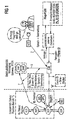
- the information service according to the invention is shown in a first embodiment, event-controlled, using the example of a flight information service.
- the triggering event is flight # 520, which is canceled.
- flight # 520 which is canceled.
- the announcement is saved as a voice message, for example digitally.
- a voice recognition module can also convert this voice message into a text message, V2T, if this is advantageous for output on a corresponding terminal (for example SMS to a mobile phone, fax message, email).
- the text or voice message is reported to a central monitoring unit EÜE, 2.
- This monitoring unit analyzes the message and makes a request to a specialized external database 3, which is offered, for example, by the airport or the airline in order to ascertain the flight canceled # 520 information belonging to it, 4.
- This database therefore contains communication information, in particular the telephone numbers of the passengers.
- the monitoring unit EÜE then creates an order list of passengers who are also service subscribers and should therefore be provided with a message.
- the order list is then provided with an identification feature (a unique number, event ID) and a time stamp by the monitoring unit and forwarded together with the voice or text message to the event-controlled message gateway IP / SN, 5.
- a service control function SCF receives from the monitoring unit EÜE the identification feature and the time stamp of the order list, 6. All affected passengers MS of flight # 520 are then sent the new flight information with the aid of the determined communication information . It is the task of the service control station to choose the appropriate communication path: online or often, so-called Hunting lists "etc.
- FIG. 2 describes the communication between the service control function SCF and the home or visitor register HLR, VLR, when information about the status and location of the subscriber is exchanged, with the aid of CAMEL phase 1.
- a CAMEL-based service can be periodically used by the service control function SCF at Query home location register HLR information. This is done with a so-called Any_Time_Interrogation Request, 1.
- the request is rejected, ATI_Reject, 2a. If the mobile station MS at the HLR is known, the affected VLR is informed by Provide_Subscriber_Info, 2b. If the mobile station is not known in the HLR or the current position is not known, then this information is also forwarded to the service control station, 2c.
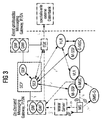
- the triggering event this time is the ordering of the flight information by the subscriber concerned himself, for example via a mobile phone or PDA, in any format, such as SMS, email or voice.
- the subscriber MS dials a special service number, 1a, 1b, 1c.
- the input is made via the keyboard (Dial Tone Multiple Frequency DTMF), as a service number or menu-driven, or also voice-controlled (voice activated dialing), with special speech recognition, for example in an intelligent peripheral instance of the intelligent network.
- the mobile switching center MSC notifies the service call of the service control function SCF (service identifier, communication address such as telephone number or HTML address etc.), 2.
- the service requirement is stored in the messaging gateway upon confirmation of the SCF, 3.
- This provides the service call with a Identification feature (demand no.), Which it communicates to the service control function SCF, 4.
- the service control function SCF then transmits this demand no. with the communication address of the participant and possibly a time stamp to the monitoring unit EÜE, 5.
- the EÜE calls up the stored request from the service subscriber; if there are language requests, a translation into a text format may have to be carried out.
- the search for the desired flight information is then initialized in the specialized external database. 6. As soon as the desired information has been found, the method continues, as already described in FIG. 1.
- the order from the EÜE to the database and the Information transfer after investigation can be done online or also done offline.
- the Request the connection cleared and when information transfer only rebuilt again. This will provide important information the identifier (demand no.) and further information such as the time stamp is also used (also depending on the desired timeliness of the information, which are included in the participant profile, for example can).
- FIG 4 describes an expanded embodiment of the invention Information service.
- Information that has reached the monitoring instance in this way is in turn provided with an identification number and a time stamp, and then to the specialized external database, for example via an SQL interface.
- the matched information is returned to the network subscriber in the same way.
- the participant can then make his entries using the menu, the booking confirmation is sent to the database later (including time stamp and identification number).
- the checking of the time stamp is an advantageous embodiment for checking the validity of a transaction.
- a database a Statistical Module. This allows regularities in the flight behavior of the participant be recognized. Depending on the analysis results can then already prepared the service subscriber Suggestions are sent that only accept or reject it must, or can change.
- the service user can have a successful booking process later confirmed on his telephone bill, for example find, or on the credit card statement.
- the implementation of the extended service linked to a payment transaction can be delayed (depending on the timestamp that Identification number), also depending on the desired Service, for example two weeks before the booked start Flight.
- the payment canceled a desired flight reservation become.
Landscapes
- Engineering & Computer Science (AREA)
- Signal Processing (AREA)
- Mobile Radio Communication Systems (AREA)
Abstract
Description
Die Anzahl der Teilnehmer in den Telekommunikationsnetzen nimmt stetig zu. Insbesondere die Nutzer der Mobilfunknetze sind oftmals sehr viel unterwegs und daher mit bestimmten Informationen ansonsten nur schwer erreichbar.
Andererseits gibt es bestimmte Situationen, in denen es günstig ist, spezielle, aktuelle Informationen an bestimmte Personen verteilen zu können, deren Aufenthaltsort unbekannt sein kann.
Bisher ist eine Suche nach solchen Informationen mühsam. Es gibt verschiedene Angebote wie Videotext, Internet oder Telefonauskunft, die ein Reisender selber abfragen kann. Weiterhin sind diese Informationen nur temporär gültig. Oftmals sind diese Informationen auch nur dann interessant, wenn sich etwas ändert, wenn sich beispielsweise die Abflugzeit um 1 Stunde verschiebt.
Eine sogenannte

Aufgabe der Erfindung ist es, das Verfahren der Informationsverteilung zu automatisieren.
Eine Mobiltelefonnutzung wird so für Teilnehmer noch attraktiver, da sie eine erweiterte Dienstfunktionalität angeboten bekommen.
Wenn ein erster Verbindungsaufbau mit dem Teilnehmer anhand der in der Auftragsliste enthaltenen Kommunikationsinformation nicht möglich ist, ist es vorteilhaft, wenn das System weitere Möglichkeiten des Verbindungsaufbaus anbietet, beispielsweise eine alternative Rufnummer, eine Mailbox oder ähnliches.
Es ist weiterhin günstig, wenn die von dem Teilnehmer durchgeführten Aktionen statistisch erfaßt und ausgewertet werden können. Bei einem erneuten Zugriff auf den Dienst kann dann bereits ein oft gewünschter Dienst vorbelegt und angeboten werden.
- Figur 1
- ein Beispiel für einen Event-gesteuerten Informationsdienst,
- Figur 2
- den Informationsaustausch zwischen SCR, HLR und VLR,
- Figur 3
- ein Beispiel für den Informationsdienst on-demand und
- Figur 4
- eine erweiterte Version des enfindungsgemäßen Dienstes.
Die einzelnen Module werden mit den folgenden Abkürzungen bezeichnet, die aus der GSM- und IN-Technik bereits bekannt sind:
- VLR:
- Visitor Location Register (Besuchsverzeichnis, bei GSM verwendet)
- HLR:
- Home Location Register (Heimatverzeichnis, ebenfalls GSM)
- SCF:
- Service Control Function (Dienstesteuerfunktion)
- SDF:
- Service Data Function
- SRF:
- Service Resource Function
- SSF:
- Service Switching Function
- SMS:
- Short Message Service
- GWF:
- Gateway Function
- CSC:
- Customer Service Control
Das auslösende Ereignis ist der Flug #520 der storniert wird. Im Flughafen wird dies beispielsweise durch Sprachansagen, 1, zur Kenntnis gegeben. Die Ansage wird als Sprachmeldung abgespeichert, beispielsweise digital. Ein Spracherkennungsmodul kann diese Sprachmeldung aber auch in eine Textnachricht umgesetzt werden, V2T, wenn dies für die Ausgabe an einem entsprechenden Endgerät (beispielsweise SMS an ein Mobiltelefon, Faxnachricht, E-Mail) vorteilhaft ist.
Die Text- oder Sprachnachricht wird an eine zentrale Überwachungseinheit EÜE gemeldet, 2. Diese Überwachungseinheit analysiert die Nachricht und stellt eine Anfrage an eine spezialisierte externe Datenbank, 3, die beispielsweise vom Flughafen oder der Fluggesellschaft angeboten wird, um sich die zu dem gecancelten Flug #520 gehörenden Informationen abzufragen, 4. Diese Datenbank enthält also Kommunikationsinformationen, insbesondere die Telefonnummern der Passagiere.
Anschließend erstellt die Überwachungseinheit EÜE eine Auftragsliste von Passagieren, die auch Dienst-Teilnehmer sind und daher mit einer Nachricht versorgt werden sollen. Die Auftragsliste wird dann von der Überwachungseinheit mit einem Identifizierungsmerkmal (eine eindeutige Nummer, Event-ID) und einem Zeitstempel versehen und zusammen mit der Sprach- oder Textnachricht an das ereignisgesteuerte Nachrichten-Gateway IP/SN weitergeleitet, 5.
Eine Instanz in dem Telekommunikationsnetz übernimmt dann die weitere Steuerung des Informationsdienstes: eine Dienstesteuerfunktion SCF erhält von der Überwachungseinheit EÜE das Identifizierungsmerkmal und den Zeitstempel der Auftragsliste, 6. Allen betroffenen Fluggäste MS des Fluges #520 wird dann die neue Fluginformation mit Hilfe der ermittelten Kommunikationsinformation zugestellt. Dabei ist es Aufgabe der Dienstesteuerstation, den geeigneten Kommunikationsweg zu wählen: on- oder oft-line, sogenannte
Figur 2 beschreibt die Kommunikation zwischen der Dienstesteuerfunktion SCF und dem Heimat- bzw Besucherregister HLR, VLR, wenn Informationen über den Status und den Standort des Teilnehmers ausgetauscht werden, mit Hilfe von CAMEL Phase 1. Ein CAMEL basierter Dienst kann periodisch von der Dienstesteuerfunktion SCF beim Heimatregister HLR Informationen abfragen. Dies geschieht mit einem sogenannten Any_Time_Interrogation Request, 1. Ist die SCF-Identität beim HLR nicht bekannt, oder ist der Diensteanbieter beim Netzbetreiber nicht bekannt, so wird die Anfrage abgelehnt, ATI_Reject, 2a. Ist die Mobilstation MS beim HLR bekannt, so wird mittels Provide_Subscriber_Info das betroffene VLR informiert, 2b.
Ist die Mobilstation nicht bekannt im HLR, oder ist die aktuelle Position nicht bekannt, dann wird diese Information ebenfalls an die Dienstesteuerstation weitergeleitet, 2c.
Der Teilnehmer MS wählt dabei eine spezielle Dienstenummer, 1a, 1b, 1c. Die Eingabe erfolgt über die Tastatur (Dial Tone Multiple Frequency DTMF), als Dienst-Nummer oder auch Menügesteuert,, oder auch sprachgesteuert (voice activated dialing), mit spezieller Spracherkennung beispielsweise in einer Intelligent Peripheral Instanz des Intelligenten Netzes.
Das EÜE ruft die abgespeicherte Anfrage des Dienstteilnehmers ab, bei Sprachanforderungen muß gegebenenfalls eine Übersetzung in ein Textformat durchgeführt werden. Anschließend wird die Suche nach der gewünschten Fluginformation in der spezialisierten externen Datenbank initialisiert, 6. Sobald die gewünschte Information gefunden wurde, wird in dem Verfahren weiter vorgegangen, wie bereits bei Figur 1 beschrieben.
Dies ist vorteilhaft, weil zeitliche, lokale und informative Voraussetzungen nicht mehr bindend sind, beispielsweie Öffnungszeiten oder die Bezahlung mit Kreditkarte oder per Rechnung.
Ein Dienstteilnehmer gibt über sein Endgerät, MS, PDA, Informationen (also beispielsweise einen Flugbuchungswunsch) ein, 11a, 11b. Diese Informationen können verschiedene Komponenten beinhalten, beispielsweise eine Flugnummer, Datum und Uhrzeit, Personenzahl, Preislimit, usw. In einer weiteren Ausführungsform kann der Teilnehmer die notwendigen Informationen auch zuvor abrufen, wie bei Figur 3 bereits beschrieben. Die Eingabe kann wiederum On-Line oder auch Off-Line erfolgen.
Folgendermaßen werden die Informationen dann weitergeleitet:
- Über das Intelligente Netz (Intelligent Network) wo sie mit einem Identifizierungskennzeichen versehen werden zu der Überwachungseinheit EÜE, siehe 12 a bis 12g oder
- Über ein Datennetz wie das Internet: mittels WAP/WTA etc.
Zunächst wird die Information vom Endgerät über einen geeigneten
Client an ein WAP Gateway gegeben. Das WAP Gateway
gegeben. Das WAP Gateway holt sich die Kommunikationsinformation
(Telefonnummer des Teilnehmers) von
SCF/SDF/HLR.
Im WWW CSC wird die Kommunikationsinformation in eine IP Adresse umgewandelt, entweder via NumberTranslation Tabelle oder es wird eine temporäre Internet-Adresse umgewandelt. Dann wird die Information an die Überwachungsinstanz EÜE übergeben, 13a, 13b, 13c.
Die abgeglichene Information gelangt über den gleichen Weg zurück an den Netzteilnehmer. Menügesteuert kann der Teilnehmer dann seine Eingaben machen, die Buchungsbestätigung gelangt später zur Datenbank (inklusive Zeitstempel und Identifikationsnummer).
Ebenso wird mit einer Änderung oder einem Storno der Transaktion verfahren. Hier ist die Überprüfung des Zeitstempels eine vorteilhafte Ausgestaltung, um die Gültigkeit einer Transaktion zu überprüfen.
Claims (12)
- Verfahren zum Verteilen von kommunikationsunabhängiger Informationen an eine Auswahl von Teilnehmern in einem TelekommunikationsnetZ bei demdas Auftreten eines definierten auslösenden Ereignisses außerhalb des Telekommunikationsnetzes gemeldet wird (1, 2),aus einer zu diesem Ereignis gehörigen Datenbank geeignete Kommunikationsinformation zu Teilnehmern des Telekommunikationsnetzes ausgewählt wird (3, 4), die zu dem auslösenden Ereignis assoziiert sind, undaus dieser Kommunikationsinformation eine Auftragsliste erstellt wird (5),zu den in der Auftragsliste enthaltenen Teilnehmern eine Verbindung aufgebaut wird (6, 7).
- Verfahren nach Patentanspruch 1,
dadurch gekennzeichnet, dass
nach dem Verbindungsaufbau den Teilnehmern eine Sprach- und/oder Textnachricht übermittelt wird. - Verfahren nach einem der vorigen Patentansprüche,
dadurch gekennzeichnet, dass
ein Teilnehmer, zu dem aufgrund der ersten Kommunikationsinformation in der Auftragsliste keine Verbindung aufgebaut werden konnte, aufgrund zweiter Kommunikationsinformation zu diesem Teilnehmer im Telekommunikationsnetz eine Verbindung aufgebaut wird. - Verfahren nach einem der vorigen Patentansprüche,
dadurch gekennzeichnet, dass
die Auftragsliste eine zusätzliche Zeitinformation enthält, welche das auslösende Ereignis betrifft. - Verfahren nach einem der vorigen Patentansprüche,
dadurch gekennzeichnet, dass
die in der Datenbank enthaltene, geeignete Kommunikationsinformation von dem betroffenen Teilnehmer selber eingegeben wird. - Verfahren nach einem der vorigen Patentansprüche,
dadurch gekennzeichnet, dass
das definierte auslösende Ereignis von dem betroffenen Teilnehmer selber erzeugt wird. - Verfahren nach einem der vorigen Patentansprüche,
dadurch gekennzeichnet, dass
Posititionsinformation über den Teilnehmer ermittelt und diese verwendet. - Verfahren nach einem der vorigen Patentansprüche,
dadurch gekennzeichnet, dass
nach Aufbau einer Verbindung weitere Aktionen ausgelöst werden, die abhängig sind von dem Inhalt der kommunikationsunabhängigen Information. - Verfahren nach einem der Patentansprüche 5 bis 8,
dadurch gekennzeichnet, dass
das Verhalten des Teilnehmers erfaßt und ausgewertet wird, und diese Statistikinformation bei folgenden Transaktionen berücksichtigt wird. - Vorrichtung zum Verteilen von Informationen an eine Auswahl von Teilnehmern in einem Telekommunikationsnetz, mitSpeichermitteln (spezialisierte externe Datenbank), die Teilnehmerinformationen enthalten, undeiner Überwachungseinheit (EueE), die das Auftreten eines Ereignisses überwacht, undMittel zum Erzeugen einer Auftragsliste, undeinem Nachrichten-Gateway mit einer Verbindung zu einem Kommunikationsnetz zum Aufbau einer Verbindung.
- Vorrichtung nach Patentanspruch 9
dadurch gekennzeichnet, dass
der Datenbank eine statistische Auswertungseinheit zugeordnet ist, die teilnehmerabhängige Transaktionsdaten ermittelt. - Vorrichtung nach einem der Patentansprüche 9 oder 10,
dadurch gekennzeichnet, dass
Mittel zur Ermittlung der Position des Teilnehmers existieren, welche die Auswahlkriterien für Information aus den Speichermitteln beeinflussen.
Applications Claiming Priority (2)
| Application Number | Priority Date | Filing Date | Title |
|---|---|---|---|
| DE19912238 | 1999-03-18 | ||
| DE19912238 | 1999-03-18 |
Publications (2)
| Publication Number | Publication Date |
|---|---|
| EP1037453A2 true EP1037453A2 (de) | 2000-09-20 |
| EP1037453A3 EP1037453A3 (de) | 2004-03-03 |
Family
ID=7901531
Family Applications (1)
| Application Number | Title | Priority Date | Filing Date |
|---|---|---|---|
| EP00105727A Ceased EP1037453A3 (de) | 1999-03-18 | 2000-03-17 | Verfahren zum Verteilen von Informationen an eine Auswahl von Teilnehmern in einem Telekommunikationsnetz |
Country Status (1)
| Country | Link |
|---|---|
| EP (1) | EP1037453A3 (de) |
Cited By (4)
| Publication number | Priority date | Publication date | Assignee | Title |
|---|---|---|---|---|
| WO2002001405A1 (en) * | 2000-06-23 | 2002-01-03 | John Hancock | A people networking and locating system |
| EP1286507A1 (de) * | 2001-08-16 | 2003-02-26 | Siemens Aktiengesellschaft | Verzögerungsfreie Übermittlung lokaler Informationen über eine Ad-Hoc-Funkverbindung |
| EP1367784A1 (de) * | 2002-05-27 | 2003-12-03 | Siemens Aktiengesellschaft | Ereignisgesteuerter Benachrichtigungsdienst |
| FR2842973A1 (fr) * | 2002-07-29 | 2004-01-30 | Orange France Sa | Systeme de diffusion de messages sms a une pluralite d'abonnes et son procede |
Family Cites Families (4)
| Publication number | Priority date | Publication date | Assignee | Title |
|---|---|---|---|---|
| US4932021A (en) * | 1989-04-03 | 1990-06-05 | At&T Bell Laboratories | Path learning feature for an automated telemarketing system |
| CA2134132A1 (en) * | 1994-01-06 | 1995-07-07 | Ewald Christoph Anderl | Voice mail network gateway |
| AUPN955096A0 (en) * | 1996-04-29 | 1996-05-23 | Telefonaktiebolaget Lm Ericsson (Publ) | Telecommunications information dissemination system |
| US5905789A (en) * | 1996-10-07 | 1999-05-18 | Northern Telecom Limited | Call-forwarding system using adaptive model of user behavior |
-
2000
- 2000-03-17 EP EP00105727A patent/EP1037453A3/de not_active Ceased
Cited By (5)
| Publication number | Priority date | Publication date | Assignee | Title |
|---|---|---|---|---|
| WO2002001405A1 (en) * | 2000-06-23 | 2002-01-03 | John Hancock | A people networking and locating system |
| EP1286507A1 (de) * | 2001-08-16 | 2003-02-26 | Siemens Aktiengesellschaft | Verzögerungsfreie Übermittlung lokaler Informationen über eine Ad-Hoc-Funkverbindung |
| EP1367784A1 (de) * | 2002-05-27 | 2003-12-03 | Siemens Aktiengesellschaft | Ereignisgesteuerter Benachrichtigungsdienst |
| WO2003101056A1 (de) * | 2002-05-27 | 2003-12-04 | Siemens Aktiengesellschaft | Ereignisgesteuerter benachrichtigungsdienst |
| FR2842973A1 (fr) * | 2002-07-29 | 2004-01-30 | Orange France Sa | Systeme de diffusion de messages sms a une pluralite d'abonnes et son procede |
Also Published As
| Publication number | Publication date |
|---|---|
| EP1037453A3 (de) | 2004-03-03 |
Similar Documents
| Publication | Publication Date | Title |
|---|---|---|
| DE60021761T2 (de) | System zur speicherung und bereitstellung von mobilkommunikations - adress - informationen | |
| CH692261A5 (de) | Kurznachrichtendienst Bestellwesen. | |
| EP1282054A1 (de) | Verfahren zum Durchführen eines Dienstes zur Organisation von Besprechungen für Teilnehmer eines Kommunikationsnetzes, sowie Diensterechner und Programmmodul hierfür | |
| EP0924916A2 (de) | Verfahren und Telekommunikationsnetz zum Informationsaustausch zwischen einem Teilnehmer und einem Servicedienst | |
| EP0817458A2 (de) | Vorrichtung zur Ermöglichung einer kostenoptimierten Telekommunikation | |
| EP1163783B1 (de) | Verfahren und einrichtung zum ermitteln von teilnehmerrufnummern durch eingabe des kfz-kennzeichens, um kontakt mit einem kfz-halter über ein mobilfunknetz zu ermöglichen | |
| EP1484882A1 (de) | Verfahren zum Überwachen von Teilnehmerdiensten in einem Telekommunikationsnetz | |
| EP0944231B1 (de) | Verfahren zur Bereitstellung von telekommunikationsgestützten Dienstleistungen | |
| DE10229017A1 (de) | Mobiles Wertkettensystem und dessen Verfahren | |
| EP1280081A1 (de) | Verfahren zum Erbringen eines Dienstes zur Organisation von Begegnungen für Teilnehmer eines Kommunikationsnetzes, sowie Kommunikationsnetz, Diensterechner und Programmmodul hierfür | |
| EP1312233B1 (de) | Verfahren zum eingeben einer rufnummer in einen rufnummernspeicher eines telekommunikations-endgerätes | |
| EP1158471B1 (de) | System, Verfahren und Programm zur Zahlung in einem Telekommunikationsnetz | |
| DE10146518A1 (de) | Verfahren zum Verbinden von zwei Endgeräten über ein Informationsnetz, sowie Endgeräte und Server zur Durchführung des Verfahrens | |
| EP1014645A2 (de) | Verfahren zum Betrieb komfortabler Mehrwertdienste in Telekommunikationsnetzen | |
| EP0956717B1 (de) | System zur telefonischen vermittlung von mobilen dienstleistungsanbietern sowie fahrzeug für dieses system | |
| DE10050360B4 (de) | Verfahren Aktivierung und/oder Deaktivierung von Diensten in einem Vermittlungssystem | |
| DE10019727A1 (de) | Netzwerkserver | |
| DE19936783C2 (de) | Verfahren zur Nutzung von durch ein Kommunikationsnetz bereitgestellten teilnehmerbezogenen Wirknetzinformationen in Mehrwert- oder Internetdiensten | |
| EP1395017A1 (de) | Verfahren zum Bereitstellen von Präsenzanzeigedaten | |
| EP1035723B1 (de) | Vorrichtung und Verfahren zur Vergebührung von Diensten in einem intelligenten Netzwerk | |
| DE19911439B4 (de) | Verfahren für ein elektronisches Sekretariat in Telekommunikationsnetzen | |
| EP1081926B1 (de) | Verfahren und Diensterechner zum Einbeziehen eines Übersetzers in ein Telefongespräch | |
| DE10204135A1 (de) | Kommunikationsgerät | |
| EP1512273A1 (de) | VERFAHREN, COMPUTERPROGRAMM U. COMPUTERSYSTEM F R EINEN PREP AID TELE­KOMMUNIKATIONSDIENST | |
| EP1001357A1 (de) | Bonusbearbeitungsverfahren |
Legal Events
| Date | Code | Title | Description |
|---|---|---|---|
| PUAI | Public reference made under article 153(3) epc to a published international application that has entered the european phase |
Free format text: ORIGINAL CODE: 0009012 |
|
| AK | Designated contracting states |
Kind code of ref document: A2 Designated state(s): AT BE CH CY DE DK ES FI FR GB GR IE IT LI LU MC NL PT SE |
|
| AX | Request for extension of the european patent |
Free format text: AL;LT;LV;MK;RO;SI |
|
| PUAL | Search report despatched |
Free format text: ORIGINAL CODE: 0009013 |
|
| AK | Designated contracting states |
Kind code of ref document: A3 Designated state(s): AT BE CH CY DE DK ES FI FR GB GR IE IT LI LU MC NL PT SE |
|
| AX | Request for extension of the european patent |
Extension state: AL LT LV MK RO SI |
|
| RIC1 | Information provided on ipc code assigned before grant |
Ipc: 7H 04M 3/432 B Ipc: 7H 04M 3/487 A |
|
| 17P | Request for examination filed |
Effective date: 20040903 |
|
| 17Q | First examination report despatched |
Effective date: 20041008 |
|
| AKX | Designation fees paid |
Designated state(s): DE FR GB IT |
|
| RAP1 | Party data changed (applicant data changed or rights of an application transferred) |
Owner name: NOKIA SIEMENS NETWORKS GMBH & CO. KG |
|
| RAP3 | Party data changed (applicant data changed or rights of an application transferred) |
Owner name: NOKIA SIEMENS NETWORKS S.P.A. |
|
| RAP3 | Party data changed (applicant data changed or rights of an application transferred) |
Owner name: NOKIA SIEMENS NETWORKS GMBH & CO. KG |
|
| STAA | Information on the status of an ep patent application or granted ep patent |
Free format text: STATUS: THE APPLICATION HAS BEEN REFUSED |
|
| 18R | Application refused |
Effective date: 20071103 |