EP1035498A2 - Printer, printer control method and storage medium for recording program - Google Patents
Printer, printer control method and storage medium for recording program Download PDFInfo
- Publication number
- EP1035498A2 EP1035498A2 EP00301851A EP00301851A EP1035498A2 EP 1035498 A2 EP1035498 A2 EP 1035498A2 EP 00301851 A EP00301851 A EP 00301851A EP 00301851 A EP00301851 A EP 00301851A EP 1035498 A2 EP1035498 A2 EP 1035498A2
- Authority
- EP
- European Patent Office
- Prior art keywords
- task
- printing
- auxiliary storage
- priority
- writing
- Prior art date
- Legal status (The legal status is an assumption and is not a legal conclusion. Google has not performed a legal analysis and makes no representation as to the accuracy of the status listed.)
- Granted
Links
Images







Classifications
-
- G—PHYSICS
- G06—COMPUTING OR CALCULATING; COUNTING
- G06K—GRAPHICAL DATA READING; PRESENTATION OF DATA; RECORD CARRIERS; HANDLING RECORD CARRIERS
- G06K15/00—Arrangements for producing a permanent visual presentation of the output data, e.g. computer output printers
-
- G—PHYSICS
- G06—COMPUTING OR CALCULATING; COUNTING
- G06K—GRAPHICAL DATA READING; PRESENTATION OF DATA; RECORD CARRIERS; HANDLING RECORD CARRIERS
- G06K2215/00—Arrangements for producing a permanent visual presentation of the output data
- G06K2215/0002—Handling the output data
-
- G—PHYSICS
- G06—COMPUTING OR CALCULATING; COUNTING
- G06K—GRAPHICAL DATA READING; PRESENTATION OF DATA; RECORD CARRIERS; HANDLING RECORD CARRIERS
- G06K2215/00—Arrangements for producing a permanent visual presentation of the output data
- G06K2215/0002—Handling the output data
- G06K2215/002—Generic data access
- G06K2215/0022—Generic data access characterised by the storage means used
Definitions
- the present invention relates to a printer, a printer control method and a record medium for recording a program.
- the present invention relates to a printer provided with an auxiliary storage such as a hard disk (HD) separately from a buffer memory, a printer control method and a record medium for recording a program.
- auxiliary storage such as a hard disk (HD) separately from a buffer memory
- a conventional type printer stores print job data from a host computer in a receive buffer, sequentially interprets data stored in the receive buffer, generates image data for printing and output and prints it.
- a so-called local printer has only to have a memory enough to temporarily store data for one band or one page for example according to the format of its print engine.
- a host computer which desires a document for a few hundred pages to be printed is required to continue to send print job data for a long time.
- the other many host computers connected via the network are required to wait for a long time.
- auxiliary storage such as HD inside the printer so that received data is stored in the auxiliary storage so as to store enormous print job data promptly and release a host computer early
- the above auxiliary storage is not limited to HD, includes various recording devices using a record medium such as an optical record medium and a magneto-optic record medium and means a storage speed for writing and reading data to/from which is slower than a conventional type buffer memory, that is, RAM. At least, the reduction of speed caused by an access of a head to a record medium such as a disk is caused by the above auxiliary storage.
- a case using HD will be described below.
- a host computer can be released early.
- speed for reading or writing data is slower than that in case a memory such as a random access memory (RAM) is accessed.
- RAM random access memory
- the present invention is made in view of such problems. That is, the object is to provide a printer wherein prompt printing processing and the prompt release of a host computer are compatible by dynamically varying the priority of various processing required for printing processing in the printer, a printer control method and a record medium for recording a program.
- a printer is based upon a printer provided with an auxiliary storage and is characterized in that a printing task for executing processing related to the control of a print engine based upon a request for printing, an image generation task for generating the above request for printing based upon print data sent from an external device, a task for writing to an auxiliary storage that data related to printing is stored in the auxiliary storage and a task for reading from the auxiliary storage that the above data stored in the auxiliary storage is read are exclusively selected and executed according to each priority, and further the relative order of priority based upon the priority of the above task for writing to the auxiliary storage and the priority of the above image generation task is varied when a predetermined event occurs.
- CPU can be allocated to each task in a well-balanced state and efficient processing is enabled as the whole printer.
- a print engine can be smoothly operated by applying lower priority than the priority of the above printing task to the above task for writing to the auxiliary storage and the above task for reading from the auxiliary storage and particularly, if an engine of a laser printer is used, extremely prompt printing is also enabled.
- the above predetermined event may be also the occurrence of a predetermined situation which occurs in the processing of any task. That is, according to a situation under which a task is processed, CPU can be efficiently allocated to each task that determines the rate of the whole processing.
- the above predetermined event may be also made to occur according to the quantity of requests for printing generated by the above image generation task and stored to be processed by the above printing task. If so, data can be efficiently written to the auxiliary storage, continuously operating the print engine and a host computer can be released early.
- priority lower than the priority of the above task for reading from the auxiliary storage may be also applied to the above task for writing to the auxiliary storage. If so, data can be written to the auxiliary storage without limiting the rate of reading processing.
- a printer is based upon a printer provided with an auxiliary storage for storing data related to printing, a print engine for executing printing and a controller and is characterized in that the above controller comprises writing means for storing data to an auxiliary storage, reading means for reading the data stored in the auxiliary storage, image generation means for generating a request for printing supplied to a print engine and printing execution means for controlling the print engine and if a predetermined event occurs during processing for generating the request for printing by the above image generation means, the writing means is executed more precedently than the generation of the request for printing by the image generation means, and prompt printing and the early release of a host computer are compatible.
- print data related to printing stored in the auxiliary storage in any of the above printers includes print data sent from an external device, print data received via a network can be stored in large quantity and a host computer can be released early.
- auxiliary storage includes at least a part of the above request for printing, a large quantity of image data to be transferred to the print engine and others are stored and continuous printing operation is enabled.
- a printer control method comprises a writing process for storing print data received from an external device in the auxiliary storage, a reading process for reading print data written to the auxiliary storage, a generation process for generating a request for printing based upon the read print data and a printing process for printing based upon the above request for printing, and the above writing process is controlled so that it is periodically executed by CPU even while the above generation process is executed by CPU. That is, priority is varied by a method such as timer interrupt and efficient processing is extremely easily realized.
- a printer control method comprises a writing process for storing print data received from an external device in the auxiliary storage, a reading process for reading print data written to the auxiliary storage, a generation process for generating a request for printing based upon the read print data and a printing process for printing based upon the above request for printing, and the above writing process is controlled so that it is precedently executed by CPU in case the stored quantity of the requests for printing generated by executing the above generation process by CPU is equal to predetermined quantity. That is, according to a situation under which a task is processed, CPU can be efficiently allocated to each task that determines the rate of the whole processing.
- a medium that records a program according to the present invention is based upon a record medium that records a program for operating the printer provided with the auxiliary storage and the print engine by exclusively selecting and executing any of plural tasks according to priority, and is characterized in that the medium that records a program according to the present invention is a record medium that records a program comprising a writing task for storing data in the auxiliary storage, a reading task for reading data stored in the auxiliary storage, an image generation task for generating a request for printing supplied to the print engine and a printing task for controlling the print engine and controlling so that the above printing task is most precedently executed, the print engine can be smoothly operated and particularly, if an engine of a laser printer is used, extremely prompt printing is also enabled.
- a medium that records a program according to the present invention is based upon a record medium that records a program for operating a printer provided with an auxiliary storage and a print engine by exclusively selecting and executing any of plural tasks according to priority, and is characterized in that the medium that records a program according to the present invention is a record medium that records a program comprising a writing task for storing data in the auxiliary storage, a reading task for reading data stored in the auxiliary storage, an image generation task for generating a request for printing supplied to the print engine and a printing task for controlling the print engine and controlling so that priority according to which the above writing task and the above image generation task are executed is varied according to a predetermined condition, CPU can be allocated to each task in a well-balanced state and efficient processing is enabled as the whole printer.
- the above record medium also includes a memory such as RAM and ROM in addition to a hard disk (HD), DVD-RAM, DVD-ROM a flexible disk (FD) and CD-ROM.
- a memory such as RAM and ROM in addition to a hard disk (HD), DVD-RAM, DVD-ROM a flexible disk (FD) and CD-ROM.
- a program to be recorded on these media may be also sold with the program enciphered, with the program modulated or with the program compressed via a wire circuit such as the Internet and a radio link or in a state in which the program is stored on a record medium.
- Fig. 1 is an explanatory drawing schematically showing the configuration of a printer equivalent to an embodiment of the present invention.
- a printer is provided with interfaces 1 and 2, CPU 3, RAM 4, ROM 5, an engine controller 8, a print engine 9 and an auxiliary storage 10.
- interfaces 1 and 2 CPU 3, RAM 4, ROM 5, an engine controller 8, a print engine 9 and an auxiliary storage 10.
- HD high definition hard disk drive
- auxiliary storage 10 A case using HD for an example of the auxiliary storage 10 will be described below.
- the interfaces 1 and 2, CPU 3, RAM 4, ROM 5 and HD 10 are connected via a bus 6 and the engine controller 8 is connected to the bus 6 via the interfaces 2 and 7.
- CPU 3 communicates data with an external network 100 such as LAN via the interface 1 and communicates data with the engine controller 8 via the interface 2.
- CPU 3 acts as an arithmetic processing unit and exclusively selects and executes any of plural tasks (also called processes). That is, CPU 3 exclusively selects and executes any of a communication task 11, a task for writing to HD 12, a task for reading from HD 13, an image generation task 14 and a printing task 15 as shown in Fig. 1. In addition to these typical tasks, various tasks not shown such as an idle task for realizing an idle state of a printer and a control task for executing error processing are provided.
- the switching of tasks, that is, to which task CPU is allocated is controlled by a scheduler 17 which can be represented as a switching control section.
- the scheduler 17 is provided with a priority table 18 and a priority changing section 19 for changing the priority of each task.
- the priority table 18 data corresponding to the priority of each task 11 to 15 is stored.
- the priority changing section 19 fills a role of suitably changing the priority of each task and rewriting data in the priority table 18 as described in detail later.
- the scheduler 17 allocates CPU to any of each task 11 to 15 according to priority stored in the priority table 18.
- each task including the printing task and the communication task is placed in an execution queue using a preset event as a trigger and is sequentially executed after it is scheduled according to priority. That is, these tasks become executable when an event occurs and a task the priority of which is the highest of executable tasks is executed by CPU 3. For the above event, there are external interruption, timer interrupt and others.
- the communication task 11 acts as a communications processor unit and when a packet is sent from the network 100, the unit is activated via CPU.
- the communication task 11 deletes extra data such as an IP address from the received packet and extracts print data.
- the print data is stored until a predetermined memory block provided to RAM 4 is filled.
- the communication task 11 becomes sleeping when the storage of the print data is finished. As described later, a memory block in which data is stored is passed to the task for writing to HD 12.
- the communication task 11 can be composed of plural tasks corresponding to each protocol such as a file transfer protocol (FTP) and a line printer protocol (LPP).
- FTP file transfer protocol
- LPP line printer protocol
- the task for writing to HD 12 acts as a processor for writing to HD and writes data input from the communication task 11 via the memory block of RAM 4 to HD 10 as described later.
- the task for reading from HD 13 acts as a processor for reading from HD, reads data stored in HD 10, stores it in a memory block provided to RAM 4 and transfers it to the image generation task 14.
- the image generation task 14 acts as a print image generator and is activated when a memory block in which data is stored is passed.
- the image generation task 14 reads print data in the memory block of RAM 4, generates a request for printing and passes the generated request for printing to the printing task 15. When all print data is read, the image generation task becomes sleeping.
- a request for printing is also called printing request structure and includes the specification of paper size, of the number of copies (the number of printed copies) and of whether a printed place is the surface or the back of paper and the information of all image data and others included in the page. That is, all the information of paper and images respectively required for printing the page is acquired by analyzing a request for printing.
- the image generation task 14 is not composed of tasks respectively corresponding to plural printing languages but can be a single task corresponding to one printing language. Normally, one print job is described by one type of printing language and when a print job is switched, a task in printing language corresponding to the print job has only to be activated. As described above, a print job can be promptly processed by composing the image generation task 14 by a task in single printing language.
- the image generation task 14 is not limited to this and may be also composed of plural tasks.
- printing language requiring high-grade processing such as a trade name "PostScript”
- PostScript if a request for printing is generated by the cooperative operation of plural tasks, the efficiency of processing is more enhanced.
- the printing task 15 acts as a printing executing section. That is, the printing task is activated when a request for printing is input from the image generation task 14, reads image data included in the request for printing and drives the engine controller 8.
- the engine controller 8 drives the print engine 9 and prints. When the engine controller finishes all printing control processing based upon the request for printing, it becomes sleeping.
- the idle task 16 is a task executed for waiting for an event. The lowest priority is applied to the idle task and if no task described above is executed, the idle task is executed. For example, immediately after the printer is powered on or after printing is finished, the idle task is executed.
- the print engine 9 includes a paper feeding mechanism, a print head and others and executes printing on a print medium such as paper. Concretely, various engines respectively corresponding to a page printer for printing in units of page, a serial printer for executing printing every predetermined bandwidth, a line printer for printing every line and others can be used.
- a so-called laser printer which is provided with a laser beam source or an LED light source and which can execute printing by electrophotography via a photoconductive drum can be given.
- a serial printer a so-called ink-jet printer and a so-called thermal printer can be given.
- the engine controller 8 and the print engine 9 can be respectively also represented as printing means and a printing mechanism or a printing section.
- Fig. 2 is a schematic diagram showing the flow of data inside the printer equivalent to this embodiment. That is, the configuration shown in Fig. 2 is equivalent to an example that HD 10 is provided between the communication task 11 and the image generation task 14. Data transfer between the communication task 11 and the task for writing to HD 12 is performed via a first buffer memory 4a and data transfer between the task for reading from HD 13 and the image generation task 14 is performed via a second buffer memory 4b.
- HD 10 three types of files of a file data in which is being written by the task for writing to HD 12, a file already written and waiting for processing and a file data in which is read by the task for reading from HD 13 may exist. These three types of files are equivalent to data being processed or residual data.
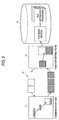
- Fig. 3 is a schematic diagram showing the flow of data from the communication task 11 to HD 10 further in detail. That is, the communication task 11 deletes extra data such as header information from a received packet and stores data until an empty memory block of the first buffer memory 4a is filled.
- the task for writing to HD 12 extracts data from a memory block when the memory block not empty is received and writes data to an empty file inside HD 10. The memory block from which data is extracted is returned to the first buffer memory 4a.
- Fig. 4 is a flowchart showing processing by the communication task 11 in the configuration shown in Fig. 3.
- the communication task 11 is activated in a step S101 when packet data is received from the network 100.
- a step S102 it is checked whether an empty memory block exists in the first buffer memory 4a or not. If an empty memory block exists in the step S102, one empty memory block is extracted from the first buffer memory 4a and data is stored in the memory block in a step S103. If no empty memory block exists in the first buffer memory 4a, processing is returned to the step S102 because no data can be stored.
- processing is returned to the step S101 and waits.
- Fig. 5 is a flowchart showing the processing of the task for writing to HD 12.
- a step S111 It is checked whether empty capacity exists in HD 10 or not in a step S111. If empty capacity exists in HD 10, data can be transferred to HD 10. If it is checked in a step S112 whether an empty memory block exists in the first buffer memory 4a or not and it is checked in a step S113 whether the communication task 11 receives the next print job and requires an empty memory block or not. If no empty memory block exists in the first buffer memory 4a and the communication task 11 requires a new empty memory block, data is extracted from a memory block not empty and a file is written to HD 10 in a step S114 to generate an empty memory block. The memory block from which data is extracted is returned to the first buffer memory 4a in a step S115. Hereby, the communication task 11 can store packet data newly received in the memory block.
- step S111 processing waits because no data can be transferred to HD 10.
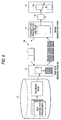
- Fig. 6 is a schematic diagram showing the flow of data from HD 10 to the printing task 15 in detail. That is, the task for reading from HD 13 reads data from a file in HD 10 and stores the data until an empty block of the second buffer memory 4b is filled.
- the image generation task 14 receives a memory block not empty, it extracts data from the memory block, generates a request for printing and returns the empty memory block from which the data is extracted.
- the request for printing generated by the image generation task 14 is stored in a buffer 4c between the image generation task and the printing task 15.
- a print engine control section 15a and a buffer control section 15b are provided to the printing task 15.
- the print engine control section 15a reads the request for printing stored in the buffer 4c and drives the engine controller 8 based upon the request for printing to execute printing.
- the buffer control section 15b controls the buffer 4c.
- the print engine control section 15a informs the buffer control section 15b of it and the buffer control section 15b clears the request for printing stored in the buffer 4c.
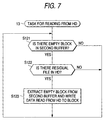
- Fig. 7 is a flowchart showing the processing of the task for reading from HD 13.
- a step S121 whether an empty memory block exists in the second buffer memory 4b or not.
- a step S122 whether a residual file exists in HD 10 or not. If no empty memory block exists in the second buffer memory (NO in the step S121) or if no file to be read exists in HD 10 (NO in the step S122), processing is returned to the step S121 and waits because no data can be transferred.
- the steps S121 and S122 are judged as YES, an empty memory block in the second buffer memory 4b is extracted and data read from a file in HD 10 is written to the memory block in a step S123.
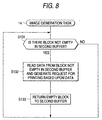
- Fig. 8 is a flowchart showing the processing of the image generation task 14.
- a step S131 it is determined in a step S131 whether a memory block not empty exists in the second buffer memory 4b or not. If a memory block not empty exists in the second buffer memory 4b (YES in S131), one memory block not empty is extracted from the second buffer memory 4b, data is read and a request for printing is generated in a step S132. The memory block from which the data is extracted is returned to the second buffer memory in a step S133.
- CPU 3 is allocated to another executable task. For example, in the communication task, a case that no packet destined for the communication task is sent from a network (packets having various destinations flow in a network and a packet destined for the communication task often intermittently arrives) and a case that there is no memory block for storing a received packet can be given.
- a case that no request for printing to be processed exists and a case that a work memory becomes full can be given. Further, in the case of the printing task, a case that a part printed by the print engine becomes a part where no image data exists and no data to be processed exists and a case that printing becomes a waiting state by a part of a margin of paper and paper feeding timing can be also given.
- each task is executed according to each priority and if a predetermined event occurs, the priority of a specific task is changed. That is, priority is allocated to each task and each task is executed according to the priority. If a predetermined event occurs while a certain task is executed, the priority of the task for writing to HD 12 and the task for reading from HD 13 is relatively enhanced and each task is executed even if either of the task for writing to HD 12 or the task for reading from HD 13 has low priority corresponding to the above event.
- Fig. 9 is a conceptual drawing showing an example of relationship among the priority of each task in the printer according to the present invention. That is, Fig. 9 shows a case of a laser printer, and the priority of a communication task 11 is set so that it is higher than that of an image generation task 14 and the priority of the communication task 11 is lower than that of a printing task 15. Therefore, if a packet is received during the generation of a request for printing, the communication task 11 is executed prior to the image generation task, however, during the execution of the printing task 15, the communication task 11 is not executed even if a packet is received from the network 100.
- the priority of the task for writing to HD 12 and the priority of the task for reading from HD 13 are dynamically changed. Specifically, the priority of the task for writing to HD 12 and the task for reading from HD 13 and the priority of the image generation task are reversed every predetermined time interval.
- the above change of priority is executed by the priority changing section 19 shown in Fig. 1. That is, if a predetermined event occurs, the priority changing section 19 rewrites the priority of predetermined tasks stored in the priority table 18.
- the above change of priority can be performed by instructing the scheduler 17 of CPU 3 to execute timer interrupt processing for example. Or the priority of tasks having higher priority in which CPU is allocated may be periodically also changed.
- a reason why the priority of the printing task 15 is set so that it is the highest as shown in Fig. 9 is that in the laser printer, when the print engine is intermittently operated, the loss of rise time occurs and it is the most efficient processing to continuously operate the print engine. The above will be described in detail later.
- the major object of the present invention is to dynamically change the priority of the task for writing to HD so that it is higher than the priority of another any task. Therefore, it is desirable that the priority of the printing task, the communication task and the image generation task is suitably changed according to the format of a printer.
- Fig. 10 is a flowchart showing a case that the priority of the task for writing to HD 12 is periodically rewritten. That is, when processing is started, first, processing waits by predetermined time X in a step S1. The above time X is concretely approximately 10 seconds. When predetermined time X elapses, the priority of the task for writing to HD 12 is rewritten so that it is higher than the priority of the image generation task 14 in a step S2. That is, the priority changing section 19 sets so that the priority of the task for writing to HD 12 stored in the priority table 18 is lower than the priority of the image generation task 14. If the priority of the image generation task 14 is set to 146 for example, the priority of the task for writing to HD 12 is rewritten so that it is 147.
- processing waits by predetermined time Y in a step S3.
- the time Y may be set to approximately 50 seconds.
- the priority of the task for writing to HD 12 is set in a step S4 so that it is higher than the priority of the image generation task 14. If the priority of the image generation task 14 is set to 146 for example, the priority of the task for writing to HD 12 is rewritten so that it is 145.
- Fig. 11 is a time chart schematically showing a state in which each task is executed when priority is rewritten as described above. That is, as shown in Fig. 11, in a predetermined period X, the priority of the task for writing to HD is set so that it is higher than the priority of the image generation task and in a predetermined period Y, the priority of the task for writing to HD is set so that it is lower than the priority of the image generation task. There is a period of timer interrupt between these periods X and Y, however, the above period is momentary time shorter than one second and is as short time as cannot be compared with the periods X and Y. In addition, when predetermined time comes, the allocation of CPU is forcedly lost.
- Fig. 11 four types of typical situations A to D are shown in a horizontal direction corresponding to whether an event occurs in each task or not. These situations A to D correspond to whether an event occurs in each task or not shown in a table in Fig. 11.
- the situation shown by a letter A in Fig. 11 shows a case that an event which the task for writing to HD should process, that is, data to be written to HD is input and an event which the image generation task should process, that is, print data is input.
- the priority of the task for writing to HD is set during the period X so that it is higher than the priority of the image generation task, the allocation of CPU is transferred to the task for writing to HD and data is written to HD.
- the priority of the task for writing to HD is set when the period Y comes so that it is lower, the allocation of CPU is transferred to the image generation task and a job of the generation of a request for printing and others is executed in the image generation task.
- the situation shown by a letter B in Fig. 11 shows a case that there is an event which the task for writing to HD should process and there is no event which the image generation task should process.
- the priority of the task for writing to HD is set at the beginning of the period Y so that it is low, CPU is allocated to the image generation task, however, as there is no event to be processed in the image generation task, CPU is allocated to the task for writing to HD and data is written to HD.
- the succeeding period X as the priority of the task for writing to HD is set so that it is higher than the priority of the image generation task, a state in which CPU is allocated to the task for writing to HD is kept and data is written to HD.
- the situation shown by a letter C in Fig. 11 shows a case that there is no event which the task for writing to HD should process and there is an event which the image generation task should process.
- the priority of the task for writing to HD is set in the period Y so that it is low
- CPU is allocated to the image generation task and a job of the generation of a request for printing and others is executed in the image generation task.
- the succeeding period X as there is no event to be processed in the task for writing to HD though the priority of the task for writing to HD is set so that it is higher than that of the image generation task, the allocation of CPU is transferred to the image generation task and the processing of the generation of a request for printing and others is executed.
- the situation shown by a letter D in Fig. 11 shows a case that there is no event to be processed both in the task for writing to HD and in the image generation task.
- CPU is allocated to the idle task and a waiting state is kept.
- CPU can be efficiently allocated to each task by dynamically changing the priority of the task for writing to HD 12 as described above.
- the print engine can be efficiently operated and a host computer connected to the network can be released early.
- the engine of a laser printer is used for the print engine as an example, it is desirable that the engine is continuously operated without stopping it possibly to realize prompt printing.
- the reason is that once the operation of the engine is stopped, an extra step such as the heating of a fixing head is required before the engine is next activated and the loss of time is caused. Therefore, to keep printing speed maximum, it is required that the image generation task 14 continuously outputs a request for printing to the printing task 15 so that the engine can be continuously operated.
- garbage collection means processing for collecting memory areas used as if they are worm-eaten and improving the efficiency of the utilization of a work memory, however, the priority of the processing is not high so much originally. That is, if a part of time in which the image generation task should execute garbage collection is allocated to the task for writing to HD 12 and data is written to HD, a host computer in the network can be released early without reducing printing speed.
- the priority of the task for reading from HD 13 may be also changed at the same time as the priority of the task for writing to HD is changed if necessary.
- speed for reading data from HD or an auxiliary storage such as an optical disk and a magneto-optic disk is faster than speed for writing to them. That is, if the priority of the task for writing to HD is set so that it is higher than the priority of the task for reading from HD, the task for reading data is started after the task for writing data the processing speed of which is slow is finished, the rate of reading processing is limited and a situation that the quantity of data stored in HD temporarily overflows may also occur.
- the rate of processing for reading data from HD is not limited by processing the speed of which is slow and the smoothness of processing is kept.
- the priority of each task is rewritten not every predetermined time but according to a situation of the processing of the task.
- Fig. 12 is a flowchart showing processing for changing the priority of a task in this embodiment. That is, in an example shown in Fig. 12, the priority of a task for writing to HD is changed according to the number of unprocessed requests for printing.
- a printing task 15 reads a request for printing stored in a buffer 4c and executes printing. Therefore, as printing is continuously executed without stopping for a while in case the enough number of requests for printing are already stored in the buffer 4c, it is more efficient to execute processing for writing to HD and for reading from HD than to generate more requests for printing.
- the number of unprocessed ones of requests for printing is first detected in a step S11 and it is determined whether the number is larger, compared with a predetermined number n or not.
- the priority of the task for writing to HD is made higher than that of the image generation task. Specifically, if the priority of the image generation task is 146 for example, the priority of the task for writing to HD is 145. This is executed by rewriting a priority table by CPU.
- the image generation task continues to generate more requests for printing so as to continuously operate a print engine. Then, in a step S13, the priority of the task for writing to HD is rewritten to 147 so as to make the image generation task precede.
- the priority of the task for reading from HD may be also changed at the same time as the change of the priority of the task for writing to HD.
- the priority of the task for reading from HD is set so that it is approximately always higher than the priority of the task for writing to HD.
- the upper limit may be also provided so that the setting of the same priority does not continue longer than fixed time.
- the print engine can be further continuously operated by changing the priority according to the stored quantity of requests for printing.
- smooth printing the receiving and writing of data can be balanced and a host computer can be released early without reducing printing speed.
- the priority of the task for writing to HD 12 is changed according to the number of unprocessed requests for printing has been described above as the example.
- the present invention is not limited to the above case.
- the priority of a task may be also changed according to the quantity of image data included in unprocessed requests for printing.
- the priority of the task for writing to HD 12 for a communication task 11 may be also changed according to the number of unprocessed requests for printing. For example, if speed for receiving from a network is very fast, the rate of processing for writing to HD 10 is limited and the whole processing may be also delayed. In such a case, it is efficient to make the priority of the task for writing to HD 12 higher than that of the communication task 11 and promote writing to HD.
- the priority of the task for reading from HD 13 may be also changed at the same time as the task for writing to HD 12. The reason is that it realizes efficient processing to promote both writing and reading to/from HD 10 so that high speed receiving by the communication task 11 can be supported.
- further efficient processing is realized by bypassing at least either of a task for writing to HD or a task for reading from HD according to a situation in addition to the change of the priority of a task described in the first and second embodiments.
- Fig. 13 is a schematic diagram showing the flow of data inside a printer equivalent to this embodiment.
- a first bypass line 31 and a second bypass line 32 are provided.
- the first bypass line 31 a task for writing to HD 12, HD 10 and a task for reading from HD 13 are skipped and data is directly transferred to a second buffer 4b from a communication task 11.
- the second bypass line 32 HD is skipped and data is directly transferred to the second buffer 4b from the task for writing to HD 12.
- received data is stored in HD 10 via the communication task 11, a first buffer memory 4a and the task for writing to HD 12 and the data is input to an image generation task 14 via the task for reading from HD 13 and the second buffer memory 4b.
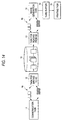
- Fig. 14 is a schematic diagram showing the flow of data in the normal mode.
- the priority of the task for writing to H 12 for the image generation task 14 is changed.
- printing is promptly executed and a host computer can be released early.
- mass data is sent via a network, effect is produced.
- the throughput of a computer is enhanced, the performance of a peripheral device such as an image input device is enhanced or a large-scale network is developed, and the huge increase of print data and the increase of a load upon the printer rapidly advance. Therefore, it is extremely effective to efficiently store print data in a mass auxiliary storage in such a normal mode.
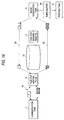
- Fig. 15 is a schematic diagram showing the flow of data in a first bypass mode via the first bypass line.
- this mode as received data is directly stored in a memory block of the second buffer memory, the processing of the task for writing to HD 12 and the task for reading from HD 13 is omitted and data can be promptly input to the image generation task 14.
- Fig. 16 is a schematic diagram showing the flow of data in a second bypass mode via the second bypass line.
- the task for writing to HD 12 stores data in a memory block of the second buffer memory 4b in place of writing data to HD 10, data can be promptly transferred to the image generation task 14.
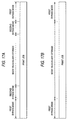
- Figs. 17A and 17B are schematic diagrams showing the appearance of the change of a transfer mode caused when one print job is transferred.
- transfer is performed in the first bypass mode.
- the communication task 11 uses up a memory block of the second buffer memory 4b
- received data is stored in a memory block of the first buffer memory 4a.
- the image generation task 14 receives a memory block not empty from the second buffer memory 4b and generates a request for printing.
- the first bypass mode is switched to the second bypass mode by the task for writing to HD 12.
- the task for writing to HD 12 stores data in a memory block of the second buffer memory 4b.
- the second bypass mode is switched to the mode via the auxiliary storage (the normal mode) and data is input to the image generation task 14 via HD 10.
- the normal mode the priority of the task for writing to HD 12 for the image generation task 14 is changed as in the first or second embodiment.
- high speed data transfer in the first and second bypass modes is performed immediately after a print job is received, the first and second bypass modes are switched to the normal mode in the vicinity of the middle of the print job and in this step, smooth printing and the early release of a host computer are also compatible.
- the normal mode is switched to the second bypass mode.
- the second bypass mode is switched to the first bypass mode.
- mode switching shown in Fig. 17A is not performed.
- a situation of mode switching also changes according to the change of various parameters such as speed for receiving a packet, the quantity of data included in a print job and the processing speed of the image generation task 14.
- a case that the first bypass mode is switched to the mode via the auxiliary storage (the normal mode) is also conceivable.
- smooth processing is also realized by dynamically changing the priority of a task in the normal mode.
- the priority of the task for writing to HD may be also changed according to a situation of the processing of any task. That is, according to the present invention, as a result, the relative priority of the task for writing to HD for another task has only to be changed. Therefore, for example, the priority of the image generation task or another task may be also rewritten in place of changing the priority of the task for writing to HD or at the same time as it.
- print data received from the network 100 is stored in HD 10 is given as the example, however, in addition, for example, a request for printing generated by the image generation task may be also stored in HD 10.
- the request for printing generated by the image generation task 14 is stored in HD 10 by the task for writing to HD 12.
- Data read by the task for reading from HD 13 is transferred to a printing task 15.
- the quantity of data included in a request for printing is particularly much of data generated by the image generation task, it is efficient to store the request for printing in HD.
- the image generation task sequentially continues to generate a large quantity of requests for printing in such configuration, receiving a large quantity of print data via the network, the writing of data to HD does not catch up and a situation that the transfer of data is delayed may occur.
- the priority of the task for writing to HD is suitably set so that it is higher than the priority of the image generation task, the transfer of a request for printing to HD is secured and the processing of the whole printer can be smoothly executed.
- various recording devices not limited to HD using a record medium such as an optical record medium and a magneto-optic record medium can be used for the auxiliary storage. That is, if a recording device the speed for writing data of which is slower than a conventional type buffer memory, that is, RAM is used for the auxiliary storage, the present invention is similarly applied and the similar effect can be acquired.
- the size of a memory block which is the unit of the use of each buffer memory can be changed according to a state in which data is processed.
- the size of a memory block can be also set to a fixed value of approximately 100 kB and block size can be also changed according to a data processing rate inside the printer.
- the size of a memory block of each buffer memory is not necessarily required to be equal and may be also different. However, if block size is the same, it is convenient in view of data transfer.
- the printer according to the present invention is not limited to a printer dedicated device and may be also a compound device provided with another function such as a copying machine and a facsimile.
- the present invention is embodied in the above embodiments and the following effect is produced.
- a host computer in a network can be released early without reducing printing speed by changing the priority of the task for writing to HD by timer interrupt.
- the balance of plural tasks can be improved by allocating a part of processing time such as garbage collection by the image generation task to the task for writing to HD.
- the priority of the task for writing to HD is changed according to a situation such as the stored quantity of requests for printing generated by the image generation task, data can be efficiently written to HD without stopping the print engine.
- the continuous operation of the print engine can be secured by changing the priority according to the stored quantity of requests for printing.
- smooth printing the smooth receiving of data and smooth writing can be balanced and a host computer can be released early without reducing printing speed.
- the effect produced by the present invention is particularly remarkable in case the engine of a laser printer is used. That is, it is desirable that the laser printer is continuously operated without stopping the engine possibly so as to realize prompt printing, however, according to the present invention, the priority of the task for writing to HD is adjusted, storing requests for printing so that the engine can be continuously operated.
- the bypass lines are further provided and the normal mode via HD and the bypass mode for bypassing HD are switched according to a state in which data is processed, processing time can be more greatly reduced than that in case the whole print job is stored in HD.
- efficient processing is enabled by dynamically adjusting the priority of a task as in the first or second embodiment.
- further high speed processing by the bypass mode is enabled in addition to prompt printing in the normal mode and the release of a host computer and the usability of the printer is further improved.
- the processing speed of the whole printer can be enhanced without using a high-priced high speed interface, DMA and others.
- the printer the cost of which is low and which is extremely usable can be provided and industrial merits are great.
Landscapes
- Engineering & Computer Science (AREA)
- General Engineering & Computer Science (AREA)
- Physics & Mathematics (AREA)
- General Physics & Mathematics (AREA)
- Theoretical Computer Science (AREA)
- Record Information Processing For Printing (AREA)
- Accessory Devices And Overall Control Thereof (AREA)
- Storing Facsimile Image Data (AREA)
- Stored Programmes (AREA)
- Television Signal Processing For Recording (AREA)
- Input Circuits Of Receivers And Coupling Of Receivers And Audio Equipment (AREA)
Abstract
Description
Claims (13)
- A printer provided with an auxiliary storage, comprising:a printing task for executing processing related to the control of a print engine according to a request for printing;an image generation task for generating said request for printing based upon print data sent from an external device;a task for writing to the auxiliary storage, by which data related to printing is stored in said auxiliary storage; anda task for reading from the auxiliary storage, by which said data stored in said auxiliary storage is read,
wherein each of said tasks are exclusively selected and executed according to each priority,
wherein a relative order of priority based upon the priority of said task for writing to said auxiliary storage and the priority of said image generation task is varied when a predetermined event occurs. - A printer according to claim 1, wherein priorities lower than the priority of said printing task is applied to said task for writing to said auxiliary storage and said task for reading from said auxiliary storage.
- A printer according to claim 1, wherein said predetermined event is a predetermined elapse of time.
- A printer according to claim 1, wherein said predetermined event is an occurrence of a predetermined situation which occurs in a processing of any of tasks.
- A printer according to claim 4, wherein said predetermined event is judgment that quantity of requests for printing generated by said image generation task and stored to be consumed by said printing task exceeds predetermined quantity.
- A printer according to claim 1, wherein a priority lower than the priority of said task for reading from said auxiliary storage is applied to said task for writing to said auxiliary storage.
- A printer comprising:an auxiliary storage for storing data related to printing;a print engine for executing printing; anda controller comprising:writing means for storing said data in said auxiliary storage;reading means for reading said data stored in said auxiliary storage;image generation means for generating a request for printing supplied to said print engine; andprinting execution means for controlling said print engine,
wherein, if a predetermined event occurs during processing for generating said printing request by said image generation means, said writing means is executed more precedently than a generation of said request for printing by said image generation means. - A printer according to claim 1, wherein said data related to printing stored in said auxiliary storage includes print data sent from an external device.
- A printer according to claim 1, wherein said data related to printing stored in said auxiliary storage includes at least a part of said request for printing.
- A printer control method, comprising:a writing process for storing print data received from an external device in an auxiliary storage;a reading process for reading print data written to said auxiliary storage;a generation process for generating a request for printing based upon said read print data; anda printing process for printing based upon said request for printing,
wherein said writing process is controlled so that it is periodically executed by CPU even while said generation process is executed by said CPU. - A printer control method, comprising:a writing process for storing print data received from an external device in an auxiliary storage;a reading process for reading print data written to said auxiliary storage;a generation process for generating a request for printing based upon said read print data; anda printing process for printing based upon said request for printing,
wherein said writing process is controlled so that it is precedently executed by said CPU in case a stored quantity of said requests for printing generated by an execution of said generation process by CPU is equal to predetermined quantity. - A record medium for recording a program for operating a printer provided with an auxiliary storage and a print engine by exclusively selecting and executing any of plural tasks according to priority, wherein said program comprises:a writing task for storing data in said auxiliary storage;a reading task for reading data stored in said auxiliary storage;an image generation task for generating a request for printing supplied to said print engine; anda printing task for controlling said print engine,
wherein said printing task is controlled so that it is most precedently executed. - A record medium for recording a program for operating a printer provided with an auxiliary storage and a print engine by exclusively selecting and executing any of plural tasks according to priority, wherein:said program comprises:a writing task for storing data in said auxiliary storage;a reading task for reading data stored in said auxiliary storage;an image generation task for generating a request for printing supplied to said print engine; anda printing task for controlling said print engine,
wherein priority according to which said writing task and said image generation task are executed is controlled so that it is varied according to a predetermined condition.
Applications Claiming Priority (2)
| Application Number | Priority Date | Filing Date | Title |
|---|---|---|---|
| JP06387799A JP3273600B2 (en) | 1999-03-10 | 1999-03-10 | Printer, printer control method, and storage medium recording program |
| JP6387799 | 1999-03-10 |
Publications (3)
| Publication Number | Publication Date |
|---|---|
| EP1035498A2 true EP1035498A2 (en) | 2000-09-13 |
| EP1035498A3 EP1035498A3 (en) | 2002-07-24 |
| EP1035498B1 EP1035498B1 (en) | 2008-09-24 |
Family
ID=13241975
Family Applications (1)
| Application Number | Title | Priority Date | Filing Date |
|---|---|---|---|
| EP00301851A Expired - Lifetime EP1035498B1 (en) | 1999-03-10 | 2000-03-07 | Printer, printer control method and storage medium for recording program |
Country Status (5)
| Country | Link |
|---|---|
| US (2) | US7256904B1 (en) |
| EP (1) | EP1035498B1 (en) |
| JP (1) | JP3273600B2 (en) |
| AT (1) | ATE409331T1 (en) |
| DE (1) | DE60040314D1 (en) |
Families Citing this family (13)
| Publication number | Priority date | Publication date | Assignee | Title |
|---|---|---|---|---|
| US7826076B2 (en) * | 2001-09-05 | 2010-11-02 | Xerox Corporation | System and method for providing secure value-added document network services |
| JP2003316546A (en) * | 2002-04-24 | 2003-11-07 | Sharp Corp | Image processing device |
| KR100490412B1 (en) * | 2002-10-11 | 2005-05-17 | 삼성전자주식회사 | Method of controlling printing job schedule and print system employing the same |
| JP4704414B2 (en) * | 2007-12-10 | 2011-06-15 | 株式会社リコー | Image processing apparatus, transmission / reception data processing method, and transmission / reception data processing program |
| JP5402392B2 (en) * | 2009-08-19 | 2014-01-29 | 株式会社リコー | Printer network system, server apparatus, printing method, program, and recording medium |
| JP5298154B2 (en) * | 2011-03-30 | 2013-09-25 | 京セラドキュメントソリューションズ株式会社 | Data processing apparatus and data processing program |
| JP5824845B2 (en) * | 2011-04-20 | 2015-12-02 | セイコーエプソン株式会社 | Recording apparatus and method for controlling recording apparatus |
| JP6167711B2 (en) * | 2013-07-12 | 2017-07-26 | ブラザー工業株式会社 | Print processing program |
| JP6299340B2 (en) * | 2014-03-31 | 2018-03-28 | 京セラドキュメントソリューションズ株式会社 | Transfer side facsimile apparatus, facsimile communication system, and reception side facsimile apparatus |
| JP6372262B2 (en) * | 2014-09-05 | 2018-08-15 | 富士ゼロックス株式会社 | Printing apparatus and program |
| JP2019061467A (en) * | 2017-09-26 | 2019-04-18 | オムロン株式会社 | Support system and support program |
| JP2024102682A (en) * | 2023-01-19 | 2024-07-31 | シャープ株式会社 | Image processing device and image processing method |
| KR20250033813A (en) * | 2023-09-01 | 2025-03-10 | 삼성전자주식회사 | Memory devices and method of controlling operation modes of memory devices |
Family Cites Families (17)
| Publication number | Priority date | Publication date | Assignee | Title |
|---|---|---|---|---|
| JP2816184B2 (en) | 1988-06-27 | 1998-10-27 | 株式会社日立製作所 | Printing control device |
| JP2813801B2 (en) | 1989-02-01 | 1998-10-22 | 鐘淵化学工業株式会社 | Bonding method |
| JP2911666B2 (en) * | 1991-11-07 | 1999-06-23 | キヤノン株式会社 | Image forming device |
| US5247677A (en) * | 1992-05-22 | 1993-09-21 | Apple Computer, Inc. | Stochastic priority-based task scheduler |
| JPH0695814A (en) | 1992-09-14 | 1994-04-08 | Canon Inc | Printing data transfer system |
| US5490237A (en) * | 1993-04-26 | 1996-02-06 | Hewlett-Packard Company | Page printer having improved system for receiving and printing raster pixel image data from a host computer |
| JPH07134639A (en) | 1993-11-09 | 1995-05-23 | Fuji Xerox Co Ltd | Printing system and gateway |
| JPH0971012A (en) | 1995-09-07 | 1997-03-18 | Canon Inc | Image processing apparatus and method |
| JPH09207410A (en) * | 1995-11-30 | 1997-08-12 | Seiko Epson Corp | Image information printing apparatus and method |
| US5791790A (en) * | 1996-03-13 | 1998-08-11 | Lexmark International, Inc. | Method and apparatus for providing print job buffering for a printer on a fast data path |
| JPH09314929A (en) | 1996-05-31 | 1997-12-09 | Canon Inc | Printing device, printing method, printing system, information processing device, and storage medium |
| JP3175620B2 (en) * | 1996-06-21 | 2001-06-11 | セイコーエプソン株式会社 | Printing equipment |
| JPH1065894A (en) | 1996-08-19 | 1998-03-06 | Ricoh Co Ltd | Facsimile machine |
| JPH1078857A (en) | 1996-09-05 | 1998-03-24 | Seiko Epson Corp | Printing apparatus and printing method |
| JP3603510B2 (en) | 1996-12-12 | 2004-12-22 | 富士ゼロックス株式会社 | Image processing device |
| JPH11157146A (en) * | 1997-09-26 | 1999-06-15 | Ricoh Co Ltd | Image processing method for printing apparatus and printing apparatus |
| US6560627B1 (en) * | 1999-01-28 | 2003-05-06 | Cisco Technology, Inc. | Mutual exclusion at the record level with priority inheritance for embedded systems using one semaphore |
-
1999
- 1999-03-10 JP JP06387799A patent/JP3273600B2/en not_active Expired - Fee Related
-
2000
- 2000-03-07 DE DE60040314T patent/DE60040314D1/en not_active Expired - Lifetime
- 2000-03-07 EP EP00301851A patent/EP1035498B1/en not_active Expired - Lifetime
- 2000-03-07 AT AT00301851T patent/ATE409331T1/en not_active IP Right Cessation
- 2000-03-09 US US09/522,407 patent/US7256904B1/en not_active Expired - Fee Related
-
2006
- 2006-12-21 US US11/614,769 patent/US20070139684A1/en not_active Abandoned
Also Published As
| Publication number | Publication date |
|---|---|
| ATE409331T1 (en) | 2008-10-15 |
| EP1035498A3 (en) | 2002-07-24 |
| US7256904B1 (en) | 2007-08-14 |
| US20070139684A1 (en) | 2007-06-21 |
| EP1035498B1 (en) | 2008-09-24 |
| JP2000255144A (en) | 2000-09-19 |
| DE60040314D1 (en) | 2008-11-06 |
| JP3273600B2 (en) | 2002-04-08 |
Similar Documents
| Publication | Publication Date | Title |
|---|---|---|
| JP4101860B2 (en) | Interrupt system for multi-function printing system | |
| US5717842A (en) | Method of managing memory allocation in a printing system | |
| JP3786152B2 (en) | Printing system, printing method, and printer | |
| US8472043B2 (en) | Information processing apparatus and its control method for managing distributed processing | |
| US6678065B1 (en) | Image forming apparatus and control method thereof | |
| US7382484B2 (en) | Information processing apparatus and its control method | |
| EP1035498B1 (en) | Printer, printer control method and storage medium for recording program | |
| US7872769B2 (en) | Divided job scheduler | |
| JPH10289074A (en) | Job processing management method in multi-function print system | |
| KR100490412B1 (en) | Method of controlling printing job schedule and print system employing the same | |
| JP4196271B2 (en) | Print data processing apparatus and data processing apparatus | |
| JP2002011925A (en) | Printer, printer control method, and storage medium recording program | |
| JP3724536B2 (en) | Image output control device and process execution control method thereof | |
| EP1035467B1 (en) | Printer and printer data processing method | |
| US20060082827A1 (en) | Network printer to control a print queue and method thereof | |
| EP1069524B1 (en) | Printing out multiple copies | |
| US6618164B1 (en) | Network printer and network printing method | |
| JP4027711B2 (en) | Network printing system and management method thereof | |
| JP4253227B2 (en) | Multi-function image forming apparatus and control method of multi-function image forming apparatus | |
| JP2004291371A (en) | Option module, option program, printer system | |
| JP2002169676A (en) | Network print system and recording medium | |
| JP2000259373A (en) | Network printer and network printing system | |
| JPH0971012A (en) | Image processing apparatus and method | |
| JP2004096507A (en) | Device and system for forming image | |
| JP2001175434A (en) | Method for operating digital printing device |
Legal Events
| Date | Code | Title | Description |
|---|---|---|---|
| PUAI | Public reference made under article 153(3) epc to a published international application that has entered the european phase |
Free format text: ORIGINAL CODE: 0009012 |
|
| AK | Designated contracting states |
Kind code of ref document: A2 Designated state(s): AT BE CH CY DE DK ES FI FR GB GR IE IT LI LU MC NL PT SE |
|
| AX | Request for extension of the european patent |
Free format text: AL;LT;LV;MK;RO;SI |
|
| PUAL | Search report despatched |
Free format text: ORIGINAL CODE: 0009013 |
|
| AK | Designated contracting states |
Kind code of ref document: A3 Designated state(s): AT BE CH CY DE DK ES FI FR GB GR IE IT LI LU MC NL PT SE |
|
| AX | Request for extension of the european patent |
Free format text: AL;LT;LV;MK;RO;SI |
|
| 17P | Request for examination filed |
Effective date: 20021211 |
|
| AKX | Designation fees paid |
Designated state(s): AT BE CH CY DE DK ES FI FR GB GR IE IT LI LU MC NL PT SE |
|
| 17Q | First examination report despatched |
Effective date: 20060706 |
|
| GRAP | Despatch of communication of intention to grant a patent |
Free format text: ORIGINAL CODE: EPIDOSNIGR1 |
|
| GRAS | Grant fee paid |
Free format text: ORIGINAL CODE: EPIDOSNIGR3 |
|
| GRAA | (expected) grant |
Free format text: ORIGINAL CODE: 0009210 |
|
| AK | Designated contracting states |
Kind code of ref document: B1 Designated state(s): AT BE CH CY DE DK ES FI FR GB GR IE IT LI LU MC NL PT SE |
|
| REG | Reference to a national code |
Ref country code: GB Ref legal event code: FG4D |
|
| REG | Reference to a national code |
Ref country code: CH Ref legal event code: EP |
|
| REG | Reference to a national code |
Ref country code: IE Ref legal event code: FG4D |
|
| REF | Corresponds to: |
Ref document number: 60040314 Country of ref document: DE Date of ref document: 20081106 Kind code of ref document: P |
|
| PG25 | Lapsed in a contracting state [announced via postgrant information from national office to epo] |
Ref country code: AT Free format text: LAPSE BECAUSE OF FAILURE TO SUBMIT A TRANSLATION OF THE DESCRIPTION OR TO PAY THE FEE WITHIN THE PRESCRIBED TIME-LIMIT Effective date: 20080924 Ref country code: FI Free format text: LAPSE BECAUSE OF FAILURE TO SUBMIT A TRANSLATION OF THE DESCRIPTION OR TO PAY THE FEE WITHIN THE PRESCRIBED TIME-LIMIT Effective date: 20080924 |
|
| PG25 | Lapsed in a contracting state [announced via postgrant information from national office to epo] |
Ref country code: BE Free format text: LAPSE BECAUSE OF FAILURE TO SUBMIT A TRANSLATION OF THE DESCRIPTION OR TO PAY THE FEE WITHIN THE PRESCRIBED TIME-LIMIT Effective date: 20080924 |
|
| PG25 | Lapsed in a contracting state [announced via postgrant information from national office to epo] |
Ref country code: ES Free format text: LAPSE BECAUSE OF FAILURE TO SUBMIT A TRANSLATION OF THE DESCRIPTION OR TO PAY THE FEE WITHIN THE PRESCRIBED TIME-LIMIT Effective date: 20090104 |
|
| PG25 | Lapsed in a contracting state [announced via postgrant information from national office to epo] |
Ref country code: PT Free format text: LAPSE BECAUSE OF FAILURE TO SUBMIT A TRANSLATION OF THE DESCRIPTION OR TO PAY THE FEE WITHIN THE PRESCRIBED TIME-LIMIT Effective date: 20090224 |
|
| PG25 | Lapsed in a contracting state [announced via postgrant information from national office to epo] |
Ref country code: DK Free format text: LAPSE BECAUSE OF FAILURE TO SUBMIT A TRANSLATION OF THE DESCRIPTION OR TO PAY THE FEE WITHIN THE PRESCRIBED TIME-LIMIT Effective date: 20080924 |
|
| PLBE | No opposition filed within time limit |
Free format text: ORIGINAL CODE: 0009261 |
|
| STAA | Information on the status of an ep patent application or granted ep patent |
Free format text: STATUS: NO OPPOSITION FILED WITHIN TIME LIMIT |
|
| PG25 | Lapsed in a contracting state [announced via postgrant information from national office to epo] |
Ref country code: IT Free format text: LAPSE BECAUSE OF FAILURE TO SUBMIT A TRANSLATION OF THE DESCRIPTION OR TO PAY THE FEE WITHIN THE PRESCRIBED TIME-LIMIT Effective date: 20080924 |
|
| 26N | No opposition filed |
Effective date: 20090625 |
|
| PG25 | Lapsed in a contracting state [announced via postgrant information from national office to epo] |
Ref country code: MC Free format text: LAPSE BECAUSE OF NON-PAYMENT OF DUE FEES Effective date: 20090331 |
|
| REG | Reference to a national code |
Ref country code: CH Ref legal event code: PL |
|
| PG25 | Lapsed in a contracting state [announced via postgrant information from national office to epo] |
Ref country code: CH Free format text: LAPSE BECAUSE OF NON-PAYMENT OF DUE FEES Effective date: 20090331 Ref country code: IE Free format text: LAPSE BECAUSE OF NON-PAYMENT OF DUE FEES Effective date: 20090307 Ref country code: SE Free format text: LAPSE BECAUSE OF FAILURE TO SUBMIT A TRANSLATION OF THE DESCRIPTION OR TO PAY THE FEE WITHIN THE PRESCRIBED TIME-LIMIT Effective date: 20081224 Ref country code: LI Free format text: LAPSE BECAUSE OF NON-PAYMENT OF DUE FEES Effective date: 20090331 |
|
| PG25 | Lapsed in a contracting state [announced via postgrant information from national office to epo] |
Ref country code: GR Free format text: LAPSE BECAUSE OF FAILURE TO SUBMIT A TRANSLATION OF THE DESCRIPTION OR TO PAY THE FEE WITHIN THE PRESCRIBED TIME-LIMIT Effective date: 20081225 |
|
| PG25 | Lapsed in a contracting state [announced via postgrant information from national office to epo] |
Ref country code: LU Free format text: LAPSE BECAUSE OF NON-PAYMENT OF DUE FEES Effective date: 20090307 |
|
| PG25 | Lapsed in a contracting state [announced via postgrant information from national office to epo] |
Ref country code: CY Free format text: LAPSE BECAUSE OF FAILURE TO SUBMIT A TRANSLATION OF THE DESCRIPTION OR TO PAY THE FEE WITHIN THE PRESCRIBED TIME-LIMIT Effective date: 20080924 |
|
| PGFP | Annual fee paid to national office [announced via postgrant information from national office to epo] |
Ref country code: FR Payment date: 20140311 Year of fee payment: 15 |
|
| PGFP | Annual fee paid to national office [announced via postgrant information from national office to epo] |
Ref country code: GB Payment date: 20140305 Year of fee payment: 15 |
|
| PGFP | Annual fee paid to national office [announced via postgrant information from national office to epo] |
Ref country code: DE Payment date: 20140417 Year of fee payment: 15 |
|
| PG25 | Lapsed in a contracting state [announced via postgrant information from national office to epo] |
Ref country code: NL Free format text: LAPSE BECAUSE OF FAILURE TO SUBMIT A TRANSLATION OF THE DESCRIPTION OR TO PAY THE FEE WITHIN THE PRESCRIBED TIME-LIMIT Effective date: 20080924 |
|
| REG | Reference to a national code |
Ref country code: DE Ref legal event code: R119 Ref document number: 60040314 Country of ref document: DE |
|
| GBPC | Gb: european patent ceased through non-payment of renewal fee |
Effective date: 20150307 |
|
| REG | Reference to a national code |
Ref country code: FR Ref legal event code: ST Effective date: 20151130 |
|
| PG25 | Lapsed in a contracting state [announced via postgrant information from national office to epo] |
Ref country code: GB Free format text: LAPSE BECAUSE OF NON-PAYMENT OF DUE FEES Effective date: 20150307 Ref country code: DE Free format text: LAPSE BECAUSE OF NON-PAYMENT OF DUE FEES Effective date: 20151001 |
|
| PG25 | Lapsed in a contracting state [announced via postgrant information from national office to epo] |
Ref country code: FR Free format text: LAPSE BECAUSE OF NON-PAYMENT OF DUE FEES Effective date: 20150331 |