EP1032894B1 - Verfahren und rechnerprogrammprodukt zur klassifizierung von in einem netzwerkstack verarbeiteten netzübertragungspaketen - Google Patents
Verfahren und rechnerprogrammprodukt zur klassifizierung von in einem netzwerkstack verarbeiteten netzübertragungspaketen Download PDFInfo
- Publication number
- EP1032894B1 EP1032894B1 EP98926242A EP98926242A EP1032894B1 EP 1032894 B1 EP1032894 B1 EP 1032894B1 EP 98926242 A EP98926242 A EP 98926242A EP 98926242 A EP98926242 A EP 98926242A EP 1032894 B1 EP1032894 B1 EP 1032894B1
- Authority
- EP
- European Patent Office
- Prior art keywords
- classification
- reference pattern
- specific
- general
- pattern
- Prior art date
- Legal status (The legal status is an assumption and is not a legal conclusion. Google has not performed a legal analysis and makes no representation as to the accuracy of the status listed.)
- Expired - Lifetime
Links
- 238000004891 communication Methods 0.000 title claims abstract description 29
- 238000000034 method Methods 0.000 title claims abstract description 27
- 238000004590 computer program Methods 0.000 title abstract 3
- 238000012545 processing Methods 0.000 claims description 65
- 230000001965 increasing effect Effects 0.000 claims description 6
- 238000011161 development Methods 0.000 abstract description 8
- 238000012423 maintenance Methods 0.000 abstract description 2
- 238000009434 installation Methods 0.000 description 44
- 238000010586 diagram Methods 0.000 description 18
- 230000008569 process Effects 0.000 description 12
- 230000015654 memory Effects 0.000 description 9
- 230000003287 optical effect Effects 0.000 description 7
- 230000008901 benefit Effects 0.000 description 6
- 230000008520 organization Effects 0.000 description 5
- 230000005540 biological transmission Effects 0.000 description 4
- 230000008859 change Effects 0.000 description 4
- 230000005055 memory storage Effects 0.000 description 3
- 230000006855 networking Effects 0.000 description 3
- 241000712062 Patricia Species 0.000 description 2
- 230000002708 enhancing effect Effects 0.000 description 2
- 230000002093 peripheral effect Effects 0.000 description 2
- 230000009471 action Effects 0.000 description 1
- 239000006227 byproduct Substances 0.000 description 1
- 230000008602 contraction Effects 0.000 description 1
- 238000013479 data entry Methods 0.000 description 1
- 230000003247 decreasing effect Effects 0.000 description 1
- 230000006870 function Effects 0.000 description 1
- 230000003993 interaction Effects 0.000 description 1
- 238000012986 modification Methods 0.000 description 1
- 230000004048 modification Effects 0.000 description 1
- 238000009877 rendering Methods 0.000 description 1
- 238000012360 testing method Methods 0.000 description 1
- 238000012546 transfer Methods 0.000 description 1
Images





Classifications
-
- H—ELECTRICITY
- H04—ELECTRIC COMMUNICATION TECHNIQUE
- H04L—TRANSMISSION OF DIGITAL INFORMATION, e.g. TELEGRAPHIC COMMUNICATION
- H04L69/00—Network arrangements, protocols or services independent of the application payload and not provided for in the other groups of this subclass
- H04L69/30—Definitions, standards or architectural aspects of layered protocol stacks
- H04L69/32—Architecture of open systems interconnection [OSI] 7-layer type protocol stacks, e.g. the interfaces between the data link level and the physical level
- H04L69/322—Intralayer communication protocols among peer entities or protocol data unit [PDU] definitions
- H04L69/324—Intralayer communication protocols among peer entities or protocol data unit [PDU] definitions in the data link layer [OSI layer 2], e.g. HDLC
-
- H—ELECTRICITY
- H04—ELECTRIC COMMUNICATION TECHNIQUE
- H04L—TRANSMISSION OF DIGITAL INFORMATION, e.g. TELEGRAPHIC COMMUNICATION
- H04L67/00—Network arrangements or protocols for supporting network services or applications
- H04L67/50—Network services
- H04L67/60—Scheduling or organising the servicing of application requests, e.g. requests for application data transmissions using the analysis and optimisation of the required network resources
- H04L67/61—Scheduling or organising the servicing of application requests, e.g. requests for application data transmissions using the analysis and optimisation of the required network resources taking into account QoS or priority requirements
-
- H—ELECTRICITY
- H04—ELECTRIC COMMUNICATION TECHNIQUE
- H04L—TRANSMISSION OF DIGITAL INFORMATION, e.g. TELEGRAPHIC COMMUNICATION
- H04L9/00—Cryptographic mechanisms or cryptographic arrangements for secret or secure communications; Network security protocols
- H04L9/40—Network security protocols
-
- H—ELECTRICITY
- H04—ELECTRIC COMMUNICATION TECHNIQUE
- H04L—TRANSMISSION OF DIGITAL INFORMATION, e.g. TELEGRAPHIC COMMUNICATION
- H04L69/00—Network arrangements, protocols or services independent of the application payload and not provided for in the other groups of this subclass
- H04L69/22—Parsing or analysis of headers
-
- H—ELECTRICITY
- H04—ELECTRIC COMMUNICATION TECHNIQUE
- H04L—TRANSMISSION OF DIGITAL INFORMATION, e.g. TELEGRAPHIC COMMUNICATION
- H04L69/00—Network arrangements, protocols or services independent of the application payload and not provided for in the other groups of this subclass
- H04L69/30—Definitions, standards or architectural aspects of layered protocol stacks
- H04L69/32—Architecture of open systems interconnection [OSI] 7-layer type protocol stacks, e.g. the interfaces between the data link level and the physical level
-
- H—ELECTRICITY
- H04—ELECTRIC COMMUNICATION TECHNIQUE
- H04L—TRANSMISSION OF DIGITAL INFORMATION, e.g. TELEGRAPHIC COMMUNICATION
- H04L69/00—Network arrangements, protocols or services independent of the application payload and not provided for in the other groups of this subclass
- H04L69/30—Definitions, standards or architectural aspects of layered protocol stacks
- H04L69/32—Architecture of open systems interconnection [OSI] 7-layer type protocol stacks, e.g. the interfaces between the data link level and the physical level
- H04L69/322—Intralayer communication protocols among peer entities or protocol data unit [PDU] definitions
- H04L69/329—Intralayer communication protocols among peer entities or protocol data unit [PDU] definitions in the application layer [OSI layer 7]
Definitions
- the field of the present invention is the classification of network communication packets processed in a network stack. More particularly, the invention presents a generalized packet classifier that may be used to classify network communication packets from different software components, such as drivers, that each may have different purposes for making the classification.
- network communication packets For communicating over a network, information that is to be transported from one computer to another is divided into a number of network communication packets. These network communication packets (also known simply as "packets") will eventually be transported across the physical communications network. In the PC environment, transmission is handled by a network interface card residing in the personal computer. Throughout this application, the PC environment will be assumed though the discussion and application of the concepts apply to many different network computing environments as will be appreciated by those skilled in the art.
- the information originating at an application program running on a PC becomes packetized into network communication packets by passing through various software components before arriving at the network interface card for transmission on the physical communications network.
- the software components are typically layered drivers interconnected as appropriate to form what is known as the network stack.
- Each driver or other processing component will process the data in succession as the original data is broken into successively different packetizing schemes from one level to the next down the network stack until the data is formed into packets that are transmitted by the network interface.
- the term "network communications packets" refer to any of the data packets used in the network protocol stack regardless of actual format.
- the original data is progressively packetized and formatted as it progresses down through the driver layers. For example, a TCP layer encapsulates the data in TCP packets, each of which may be further fragmented into multiple IP packets by an IP layer.
- each driver has a particular function specified by a certain protocol or other constraint.
- a network protocol such as the internet protocol (IP)
- IP internet protocol
- the network protocol may be disassociated from any particular physical transmission system.
- the same network protocol driver may be used with various physical interface drivers according to the particular physical configuration.
- the text of the information is placed in a higher level protocol packet along with some packet header information and passed from the application into the network stack.
- Each element of the network stack may add additional header information and make processing decisions based on the information in the packet itself or any of the header information previously created by higher level drivers.
- packets at one level of the network stack may be broken down or recast into multiple packets at another level of the network stack. Eventually, all data will be packetized into packets suitable for transmission over the network interface.
- Sending an email message may be viewed analogously to sending a letter by regular mail.
- the body of the message itself is created in both instances by the user.
- An envelope must be procured, an address written on the envelope, and postage affixed to the envelope prior to placing the letter into the mail box.
- Each intermediate step may be thought of as header information (addressing, envelope, etc.) created by individual drivers processing an email message for delivery over a communications network between computers.
- packets are passed up the network stack.
- Each element of the network stack may remove a portion of the header information and make processing decisions based on the information in the packet itself or any of the header information not removed by lower level drivers.
- multiple packets at one level of the network stack may be combined into aggregate packets at another level of the network stack.
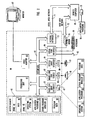
- Figure 1 shows an example of a network stack with an application program 20 at the highest level and a number of drivers at each successive level before reaching the network interface card 22, namely, driver A 24, driver B 26, driver C 28 and driver D 30. Each driver will perform processing in association with the packet before passing the packet on down to the next driver.
- a packet is "classified" for certain processing in a given driver based on information about the packet that is contained in the headers or from information inside the data portion of the packet itself. Based on its classification, a packet will be processed by the driver differently and as shown in Figure 1, a driver that needs to make a packet classification or make decisions based on information in the packet has a special portion of driver code called a packet classifier.
- driver A 24 will use packet classifier 32
- driver C 28 will use packet classifier 34
- driver D 30 will use packet classifier 36.
- the packetization of the original data may be of a different format at each different driver. Note that driver B 26 will process packets in such a way that no packet classification is needed.
- Table 1 illustrates six different possible classifications for a packet based on a packet's exactly matching one of the destination addresses listed in the table. For example, a packet will be classified as belonging to classification 0 if and only if its destination address is "11.22.33.44". Similarly, an exact match of the destination address field for a particular packet to be classified is necessary for each of the other five classifications.
- Table 2 illustrates six different multiple-field classifications having a value for the destination address and the destination port. For example, a packet will be classified as belonging to classification 0 if and only if both its destination address is "11.22.33.44" and its destination port is "1". In like manner, in order for a packet to be classified according to the other classifications shown in Table 2, exact matches of both the destination address field and the destination port field as found in the network packet must match corresponding entries exactly for each of the other five classifications.
- classifications 0 and 1 contain no wildcards and thus are exact reference specifications, just like those found in Table 2 requiring an identical match in order for a classification to occur.
- classification 2 will be matched by all packets having a destination address value of "11.22.55.66" irrespective of the value of the destination port filed in the packet.
- classification 3 will be met for all network packets whose destination address begins with "11.22.77” and have a destination port field value of "1".
- wildcards allow a shorthand representation of a set of specific classifications and can be used advantageously in situations where all of the processing associated with a group of specific classifications is the same.
- Such a classification containing wildcards or otherwise allowing different values that will result in a match can be referred to as general classification.
- overlapping classifications occur in two varieties: (1) a subsuming or hierarchical overlap where each and every value of one classification will be contained in another more general classification, and (2) partial overlap where one classification will share some, but not all, values with another classification.
- a subsuming overlap a packet that matches the more specific classification will by definition match the more general classification while in a partial overlap a given packet may or may not fit into both classifications depending on the actual values of the relevant packet fields.
- classification generally requires that a single best classification category be returned, rules and other criteria must be implemented to return a single classification when an overlap condition results. It is often the case that, when a packet matches multiple classifications, the best match is considered to be that which is most specific. Therefore, in the case of a subsuming overlap, the most specific classification would generally be used.
- a winning classification In a partial overlap, a winning classification must be selected based on other criteria since neither classification is more specific than the other.
- One example criterion is an explicit and distinct priority attribute associated with each classification that has a partial overlap condition. Such a criterion could be used to arbitrate between the overlapping classifications so that a best match may be made in each instance.
- Table 4 specifies six classifications, some general and some specific.
- a packet with a destination address of "11.22.33.44" and a destination port of "1" will match both classification 0 and classification 1. Since classification 0 and classification 1 are subsuming overlapping classifications, according to the general rule the best match would be the most specific classification which in this case would be classification 0.
- a packet having a destination address of "11.22.55.66" and a destination port of "2" will match both classification 4 and classification 5. This is a partial overlap situation since neither classification 4 nor classification 5 is more specific than the other and resort to the priority information associated with the overlapping classifications is made in order to find the -best match. Since classification 4 is shown to have a lower priority than classification 5, the best match would be classification 5.
- a "pattern” is all the classification criteria concatenated together in a certain order.
- a reference pattern would be the concatenation of the destination address and the destination port as found in Table 4 for each classification.
- Table 4 would contain six reference patterns that may be matched by a corresponding classification pattern created by the actual values of the fields in a network communication packet.
- a classification pattern is created by placing actual values taken from the packet into the prescribed order so that it may be compared with a number of reference patterns in order to arrive a particular classification should a match occur.
- packet classifiers are developed independently in each driver as part of the driver code development. Because packet classification is similar for all drivers in many respects, this represents a duplication of effort and added complexity in driver code development. This inefficiency exhibits itself in the form of the extra time taken for the packet classification code development as well as the added time for debugging and maintaining the extra code.
- Another problem is the repeated classifications that must occur by each driver for the same packet during run time. Since each driver may perform the same classification for each packet as it passes it up or down the protocol stack, redundant processing commonly results.
- a generalized and centralized packet classifier will reduce code development for drivers requiring packet classification and further allows features added to the centralized packet classifier to be immediately available by driver developers.
- Another problem associated with a generalized and centralized packet classifier is that it may not be flexible enough to meet the customized needs of a particular driver.
- the driver developer may customize and tune the driver code for optimum performance and applicability to the desired purpose.
- a centralized packet classifier may not be adequately flexible for all drivers.
- BPF BSD Packet Filter
- a method, according to claim 1, and computer-readable medium, according to claim 8, for classifying network communication packets processed in a network stack is provided.
- the present invention is directed to a method for classifying packets during the processing ofpacketized network data where processing occurs over successive layered drivers in a network stack.
- a packet is "classified" for different kinds of processing based on certain values in the packet that are collectively known as a classification pattern.
- a method, according to claim 1, for classifying data packets processed by a plurality of drivers included in a stack comprising the steps of: storing, in a shared reference pattern database shared by a plurality of drivers, at least one reference pattern and corresponding classification information, the shared reference pattern database containing a specific database for all specific reference patterns regardless of classification family and, for each classification family, a general database for general reference patterns pertaining to that classification family; searching the shared reference pattern database for a reference pattern that matches a classification pattern created from a network communication packet by searching first the specific database for the classification pattern followed by, if the classification pattern is not found, by searching the general database pertaining to the classification family for the classification pattern; and if the classification pattern matches a stored reference pattern, processing the network communication packet using the classification information corresponding to the matched reference pattern.
- the present invention is a generalized and centralized packet classifying service or packet classifier that serves multiple drivers or other clients and simplifies development of packet classification code for each driver. After registration of one or more reference patterns along with corresponding classification information that may be used to process a packet, any driver may present a classification pattern that can be matched with the stored reference patterns and receive access to the corresponding classification information when a match occurs. Having a centralized packet classifier translates into savings in driver development time, debugging time, and general code maintenance. Furthermore, any new features added to the packet classifier can then be used by all drivers or other clients to the service.
- the present invention overcomes the performance limitations associated with centralizing and generalizing packet classification by segregating reference patterns into two different types of databases and grouping reference patterns into classification families.
- a classification family is a group of drivers or other clients that share a set of packet classification information.
- General reference patterns that may match more than one classification pattern are stored into a general pattern database whose search time may vary according to the amount and type of data stored. In order to reduce search time, there exists a general pattern database for each classification family.
- Specific reference patterns for all classification families are stored in a specific pattern database, such as a hash table, that has a constant search time regardless of the number of specific reference patterns contained therein.
- the centralized packet classifier When servicing a classification request, the centralized packet classifier will search the specific pattern database first before searching the general pattern database for the classification family. This arrangement compares favorably performance wise with customized classification code.
- software component refers to any set of executable instructions separately cognisable to an operating system that manages a computer system. Examples would include separate processes or threads, application programs, system device drivers, and any other such operating system entity.
- driver refers to software driver programs running in a privileged system environment and that interacts with an I/O subsystem as part of an operating system architecture. Such a driver is distinguishable from an application program and other software.
- the term "client” refers to any portion of code that may use the centralized packet classifier of the present invention disclosed herein. Because a single software component, such as a driver, may have multiple classification needs, it may be viewed as multiple clients as seen by the centralized packet classifier. In other words, the centralized packet classifier does not necessarily distinguish the origin of classification requests. It is simply a means for classifying network communications packets.
- pattern refers to specific or general values of the fields found in a packet or packet header that are concatenated together in a certain order and considered a set or series of bits.
- a “reference pattern” is a pattern having associated therewith certain classification information that can be used by a particular driver or software component and is held in a database by the centralized packet classifier.
- a “specific reference pattern” is a reference pattern having specific values for each and every value therein.
- a “general reference pattern” is a reference pattern having one or more wildcards contained therein that may have any value such that different patterns may match the general reference pattern. In this manner, a general reference pattern can be viewed as a short-hand way of specifying a group or set of specific reference patterns.
- a "classification pattern” is a pattern presented to the generalized packet classifier by a driver or other client and is made from actual values of a packet to be classified. If the classification pattern is matched with a reference pattern (either specific or general) then access is returned to the driver to classification information associated with the matched reference pattern that can be used by the driver to process the packet according to its classification.
- classification information refers to any relevant information associated with a reference pattern. Examples of such classification information include a simple numeric indication of classification, a block of data that may be used to perform further processing, or any other information useful to a driver in processing.
- classification family refers to a logically related set of reference patterns shared by multiple drivers. This allows a set of drivers or other clients to share a database of related classification information. As used herein, each reference pattern has a classification family associated therewith such that different classification information may be used with the exact same reference pattern based on classification family.
- classification block refers to a block of data associated with a specific reference pattern that can be used to access the classification information for all classification families installed for that specific reference pattern.
- One implementation of a classification block disclosed herein is a list of pointers that can be indexed by the classification family.
- classification handle is a reference to all the different classification information associated with a given specific reference pattern. In other words, using the classification handle with a particular classification family will allow a driver to arrive at the classification information for a given specific reference pattern and classification family.
- a classification handle is a pointer to a classification block. The classification handle is useful in that, if the specific reference pattern is already attained and known, then only the classification family need be used with the classification handle in order to arrive at desired classification information.
- FIG. 2 and the following discussion are intended to provide a brief, general description of a suitable computing environment in which the invention may be implemented.
- the invention will be described in the general context of computer-executable instructions, such as program modules, being executed by a personal computer.
- program modules include routines, programs, objects, components, data structures, etc. that perform particular tasks or implement particular abstract data types.
- program modules include routines, programs, objects, components, data structures, etc. that perform particular tasks or implement particular abstract data types.
- program modules include routines, programs, objects, components, data structures, etc. that perform particular tasks or implement particular abstract data types.
- the invention may be practiced with other computer system configurations, including handheld devices, multi-processor systems, microprocessor-based or programmable consumer electronics, network PCs, minicomputers, mainframe computers, and the like.
- the invention may also be practiced in distributed computing environments where tasks are performed by remote processing devices that are linked through a communications network.
- program modules may be located in both local and remote memory storage devices.
- an exemplary system for implementing the invention includes a general purpose computing device in the form of a conventional personal computer 40, including a processing unit 41, a system memory 42, and a system bus 43 that couples various system components including the system memory to the processing unit 41.
- the system bus 43 may be any of several types of bus structures including a memory bus or memory controller, a peripheral bus, and a local bus using any of a variety of bus architectures.
- the system memory includes read only memory (ROM) 44 and random access memory (RAM) 45.
- ROM read only memory
- RAM random access memory
- the personal computer 40 further includes a hard disk drive 47 for reading from and writing to a hard disk, not shown, a magnetic disk drive 48 for reading from or writing to a removable magnetic disk 49, and an optical disk drive 50 for reading from or writing to removable optical disk 51 such as a CD ROM or other optical media.
- the hard disk drive 47, magnetic disk drive 48, and optical disk drive 50 are connected to the system bus 43 by a hard disk drive interface 52, a magnetic disk drive-interface 53, and an optical drive interface 54, respectively.
- the drives and their associated computer-readable media provide nonvolatile storage of computer readable instructions, data structures, program modules and other data for the personal computer 40.
- a number of program modules may be stored on the hard disk, magnetic disk 49, optical disk 51, ROM 44 or RAM 45, including an operating system 55, one or more application programs 56, other program modules 57, and program data 58.
- a user may enter commands and information into the personal computer 40 through input devices such as a keyboard 60 and pointing device 62.
- Other input devices may include a microphone, joystick, game pad, satellite dish, scanner, or the like.
- These and other input devices are often connected to the processing unit 41 through a serial port interface 66 that is coupled to the system bus, but may be connected by other interfaces, such as a parallel port, game port or a universal serial bus (USB).
- a monitor 67 or other type of display device is also connected to the system bus 43 via an interface, such as a video adapter 68.
- personal computers typically include other peripheral output devices (not shown), such as speakers and printers.
- the personal computer 40 may operate in a networked environment using logical connections to one or more remote computers, such as a remote computer 69.
- the remote computer 69 may be another personal computer, a server, a router, a network PC, a peer device or other common network node, and typically includes many or all of the elements described above relative to the personal computer 40, although only a memory storage device 70 has been illustrated in Figure 2.
- the logical connections depicted in Figure 2 include a local area network (LAN) 71 and a wide area network (WAN) 72.
- LAN local area network
- WAN wide area network
- the personal computer 40 When used in a LAN networking environment, the personal computer 40 is connected to the local network 71 through a network or adapter 73. When used in a WAN networking environment, the personal computer 40 typically includes a modem 74 or other means for establishing communications over the wide area network 72, such as the Internet.
- the modem 74 which may be internal or external, is connected to the system bus 43 via the serial port interface 66.
- program modules depicted relative to the personal computer 40, or portions thereof may be stored in the remote memory storage device. It will be appreciated that the network connections shown are exemplary and other means of establishing a communications link between the computers may be used.
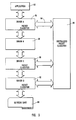
- FIG. 3 a logical diagram illustrating the interaction between the centralized packet classifier 80 and various drivers in the network stack is shown that is similar to Figure 1.
- the centralized packet classifier 80 is used as a means for classifying the network communication packets processed by the drivers of the network stack.
- an application program 82 wishes to send data over the network through a network interface card 84 and will pass that information through a plurality of stacked drivers to be processed in succession.
- the information will initially pass from the application 82 to driver A 86, then to driver B 88, then to driver C 90, and then, finally, to driver 92 before being sent out over the communications network under the control of the network interface card 84.
- Each driver that needs classification services for the network communication packets during processing may use the centralized packet classifier 80 to perform the classification.
- driver A 86 uses the centralized packet classifier as shown by the arrow 94.
- driver C 90 and driver D 92 uses the centralized packet classifier 80.
- driver B 88 does not use the centralized packet classifier though it may do internal packet classification.
- patterns are segregated into different databases depending on whether they are specific reference patterns or general reference patterns.
- specific database specific reference pattern database
- general database general reference pattern database
- all specific reference patterns in the specific pattern database are stored in a data structure that can be searched in constant time therefore rendering the database size irrelevant to the actual search time.
- a pattern that is stored in the database is said to also be installed into the database or into the system of the present invention.
- each installed general reference pattern is a pointer to the appropriate classification information according to the classification family and general database pertaining to the particular general pattern.
- From each installed specific reference pattern are multiple pointers to the appropriate classification information, one for each classification family having a matching pattern installed in the specific database.
- Table 5 illustrates the information contained in the classification system shown in Figure 4.
- Classification Family Reference Pattern I Classification Information I 0 101100 0 a 0 010100 0b 0 100111 0c 0 01XX00 0d 1 100111 1a 1 011000 1b 1 101XXX 1c 1 101XX0 1d
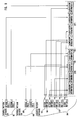
- a general pattern database or general database 96 for classification family 1 will have entries that point to the classification family information 98 for classification family 1, a general database 100 for classification family 0 will point to the classification family information 102 for classification family 0, and a specific pattern database or specific database 104 will have entries that point to both classification family information 98 for classification family 1 and classification information 102 for classification family 0.
- Reference count field 112 will indicate the number of classification families that have the specific reference pattern for this entry (e.g., "101100" for this entry) explicitly installed therein.
- a specific pattern is explicitly installed for a classification family when installed by a client or when automatically installed as a result of a client search. Both of these procedures will be explained hereafter.
- a specific pattern is implicitly installed when a classification block is updated as a performance enhancement resulting from the installation of a general pattern. This process will also be shown hereafter. An implicit installation will not cause the reference count field to be incremented.
- Classification block 108 contains pointers to the particular classification information depending on classification family. For example, pointer 114 points to classification information 0a 116 while pointer 118 points classification information 1d 120. Note that entry 122 for pattern "010100" has only one pointer in the classification block 124 and a reference count field 126 value of 1. When a particular specific reference pattern is not installed for a particular classification family, the classification block will contain a no value for that pointer.
- the reference count of the entry only indicates the number of explicitly installed instances of the particular specific reference pattern (i.e., those having classification information associated therewith by a client installation or automatically installed as a result of a client search). Implicit installations may exist but will not be reflected by the reference count.
- the present invention contains a hash table for this purpose, specifically, an incrementally sizable hash table as disclosed in U. S. patent document US 6 067 547, published on 23 May 2000 , entitled Improved Hash Table Expansion and Contraction for Use with Internal Searching.
- each specific reference pattern is also stored in a Patricia tree, a structure commonly known in the art.
- the Patricia tree allows the specific pattern database to be quickly-searched for all specific reference patterns that match a given general reference pattern. This is a necessary utility operation that is performed in connection with the installation and removal of reference patterns that will be explained in more detail hereafter.
- the general reference patterns contain wildcards and are thus not simply values like the specific reference patterns, they cannot be stored in conventional constant search time data structures.
- One data structure that accommodates the storage of general reference patterns and supports subsuming overlapping patterns, (i.e., a match will be found for the most specific of the hierarchically related and subsuming overlapping patterns) is the Rhizome data structure as described in U.S. patent document US 6 041 053, published on 21 may 2000 , entitled A Technique for Efficiently Classifying Packets Using a Trie-Indexed Hierarchy Forest that Accommodates Wildcards.
- priority information is necessary to determine the actual best matching pattern during a search. This is implemented by using an array of Rhizome data structures, one for each priority level, and conducting a search in the Rhizome at the highest priority level followed by searches of the Rhizome at each successive priority level until a match is found or all priority level Rhizomes have been exhausted in the array.
- Rhizome data structures one for each priority level
- Rhizome at the highest priority level followed by searches of the Rhizome at each successive priority level until a match is found or all priority level Rhizomes have been exhausted in the array.
- entry 128 as shown contains an actual reference pattern 130 having a value of "101XXX,” a pointer 132 that indicates classification information 1c 134, and a priority field 136 having a value of zero.
- entry 128 contains an actual reference pattern 130 having a value of "101XXX,” a pointer 132 that indicates classification information 1c 134, and a priority field 136 having a value of zero.
- the centralized packet classifier When a driver or other client installs a reference pattern, the centralized packet classifier first determines whether the reference pattern is specific or general by checking for wildcards within the reference pattern. If the reference pattern contains no wildcards, then it is specific, so the processing steps of the flow chart shown in Figure 5 are taken, whereas processing steps of the flow chart shown in Figure 7 are taken for reference patterns containing wildcards, since they are general.
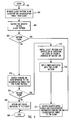
- the processing steps for installing a specific reference pattern into the specific database are shown.
- a driver or other client When presenting a reference pattern for installation, a driver or other client will present the reference pattern, the associated classification information, the classification family, and in the case of general reference pattern priority information.
- the specific database is searched for the new specific reference pattern given to the centralized packet classifier from the driver or other client at step 138. As mentioned previously, this search can be done relatively quickly in constant time because the specific database uses a hash table or other constant search time structure.
- step 140 a determination is made whether the specific database already contains the new specific reference pattern in one of its entries. If so, at step 142, the classification block is accessed and the pointer therein pertinent to the classification family for the new specific reference pattern is set to point to the specified classification information. Additionally, the reference count field will also be incremented at step 142 since this installation is explicit by the client. Finally, processing will end at step 144 and the pattern will be installed. Note that this scenario, comprising step 142, occurs for those specific reference patterns that have been installed previously for another classification family so that the specific database entry structure is already created and in place and need only be modified as explained in step 142 to perform the installation.
- step 140 If, at step 140, it is determined that the specific database does not contain the new pattern, the data entry must be created and initialized for a new specific pattern at step 146.
- This process entails installing the new specific pattern in the specific database, creating the classification block and setting the pointer indicated by the classification family presented by the client to point to the specified classification information, and setting the reference count to one for the entry since this is an explicit installation by a client.
- the new specific pattern exists for one classification family, all the general databases for the classification families other than the client's classification family are searched for general reference patterns that are matched by the new specific reference pattern. If a match occurs, the specific database may be set up so that matches for other classification families will be found during a specific database search thereby increasing the efficiency and lessening classification time. The first of these general databases is searched at step 148 for the best match to the new specific pattern.
- This process includes setting the pointer in the classification block indicated by the classification family of the general database to point to the corresponding classification information. Note that the reference count for the specific database entry pertaining to the new specific reference pattern is not incremented since this would be an implicit installation due to performance enhancement based on general database matches to the newly installed pattern for other classification families than the one explicitly installing the specific pattern.
- step 154 determination is made at step 154 as to whether all relevant general databases have been searched. If so, processing ends at step 144 otherwise, the next general database is searched for the best match to the new specific pattern at step 156. In this manner, all general databases other than the one for the classification family of the new specific reference pattern are searched for the best match to the new specific reference installed. For each match that occurs, the specific database will install the new reference pattern for that classification family and automatically get the classification information from the search of the corresponding general database.
- step 140 processing will proceed to step 142 where the pointer in the classification block is changed from null to indicate classification information 1a 158 and the reference count field 126 for the entry 122 is incremented from 1 to 2 as can be seen in Figure 6 since this is an explicit client installation. Note that a new entry was not created and that such an installation will occur more quickly then one requiring the creation of a new entry into the specific database.
- a new entry 162 is made as can be seen in Figure 6. This occurs during the processing steps taken in the flow chart of Figure 5 when it is determined at step 140 that the new specific reference pattern does not exist in an existing entry of the specific database thereby requiring the processing of step 146 to be taken. These steps will create the new entry having the pointer in the classification block pointing to classification information 1a 158 and the reference count field 164 initially set at 1 since this is an explicit client installation.
- Figure 6 shows the classification system example of Figure 4 with the addition of specific reference pattern "010100” for classification family 1 and specific reference pattern "011100” for classification family 1.
- specific reference pattern "010100” for classification family 1 the same reference pattern was found for classification family 0 by virtue of the general reference pattern found in the general reference database 100 and a corresponding specific reference pattern was installed for classification family 0 in order to provide increased efficiency.
- the specific reference pattern "011100” would also be de-installed automatically for classification family 0.
- a general reference pattern is one that contains at least one wildcard as explained previously.
- a driver or other client installing a general reference pattern will present the general reference pattern, a classification family associated with the general reference pattern, the classification information, and a priority to be used in resolving partial overlap conditions to the centralized packet classifier.
- the new general reference pattern will be installed in the general database pertaining to the particular classification family at step 170. Also, a pointer is set to point to the indicated classification information.
- a search is made into the specific database for an existing specific reference pattern entry that matches the new general pattern. If a specific reference pattern already exists that matches this general reference pattern, links may be made in the specific database to the classification information associated with the installed general reference pattern. This increases search efficiency that thereby reduces total classification time.
- the general reference pattern can be expanded into a set of specific reference patterns, and the purpose of searching the specific database is to find all the currently installed specific reference patterns that would match the general reference pattern to be installed.
- step 184 a determination is made at step 184 as to whether the classification information was explicitly assigned or automatically assigned to the particular reference pattern.
- An explicit assignment occurs when the specific reference pattern was independently installed into the specific database rather than automatically installed during the installation of the specific reference pattern for another classification family or the installation of a general pattern.
- an automatic installation may occur as a performance enhancement that is a byproduct of another independent reference pattern installation.
- step 184 If the classification information was explicitly assigned as determined in step 184, then no further action need be taken and the processing proceeds to search for the next match in the specific database that matches the general reference pattern at step 182. An explicit assignment will naturally take precedence over a performance enhancing automatic assignment.
- the classification information associated with the best match, if any, found in the general database for the particular classification family is assigned to the specific reference pattern for that classification family. This occurs at step 186, where the general database is searched in order to find the best match to this specific reference pattern. Note that the installation of the new general reference pattern may or may not change the best match for the specific reference pattern that will result. In other words, the existing non-explicitly assigned classification information may already be the best match due to the fact that a more specific overlapping general reference pattern exists or a higher priority partial overlapping general reference pattern exists.
- the pointer in the classification block for the specific reference pattern corresponding to the classification family for the newly installed general reference pattern is set to point to the classification information indicated by the search at step 188.
- step 182 the next match in the specific database for the pattern matching the new general reference pattern is taken at step 182 for processing. Again, as explained previously, when no other matching specific reference pattern can be found as determined at step 174, processing ends at step 176.
- Another performance benefit that may be implemented in some embodiments is automatic expansion of the general reference pattern into a corresponding set of specific reference patterns.
- This set of specific reference patterns can then be installed into the specific database so that every match to the general reference pattern can be made in the constant search time specific database.
- This may be practical with general reference patterns with a relatively few number of wildcards found therein and may be too inefficient for general reference patterns that are expanded into large sets of specific reference patterns.
- Those skilled in the art will note that the auto-expansion described above and other performance enhancing modifications may be made to the present invention in order to better classification efficiency.
- the new general reference pattern is installed at step 170 as entry 196 in Figure 8 with the pointer pointing to the classification information 0c 190.
- two specific reference patterns will be found in the specific database 104, namely, the pattern "011100" represented by entry 162 and pattern "010100" as represented by entry 122.
- entry 122 was explicitly installed previously for classification family 0 and points to classification information 0b 195 while entry 162 initially points to classification information 0d 166 as a result of an implicit installation as can be seen in Figure 6.
- the pointer in the classification block indicated by the classification family will already be assigned as determined at step 178 ( Figure 7). Therefore, processing of step 180 will not be taken.
- entry 122 corresponding to the reference pattern "010100" was explicitly assigned. Therefore, entry 122 will not be changed in any manner by the addition of the new general reference pattern.
- processing steps 186 and 188 are followed in order to automatically re-assign the classification information corresponding to the best match found in the general reference database for this specific reference pattern.
- FIG. 9 a flow chart showing the processing steps taken in order to perform a classification on a classification pattern received from a driver or other client is explained.
- the driver or other client will create a classification pattern by taking values from the packet to be classified and concatenating them together in the proper order.
- the classification pattern created by the client or client pattern along with the client's classification family is received by the centralized packet classifier at step 200.
- a search is made for the client classification pattern at step 202 in the specific database. If an entry is found in the specific database corresponding to the client classification pattern, the associated classification block can be accessed and the client's classification family is used to access the appropriate pointer in the classification block. If the pointer in the classification block corresponding to the classification family is non-null, then the classification pattern is considered found at step 204. If either the entry does not exist for the client classification pattern or the entry exists but the pointer is null for the client's classification family, the pattern is considered not found at step 204.
- a pointer to the classification information as well as a handle to the classification block are returned to the client at step 206 before ending processing at step 208.
- the pointer to the appropriate classification information can be used in processing the now classified packet by the driver or other client.
- the classification handle is useful in later processing by other drivers that may need to perform classification that may belong to different classification families. In other words, a driver may pass the classification handle to other drivers and by using the classification handle, the other drivers or the current driver may more quickly and efficiently perform a classification using the centralized packet classifier without making any searches to either the specific database or a general database.
- the classification handle is a more reliable way of getting to the actual classification information than a pointer to the information itself since the classification information and hence the pointers may change during installation and de-installation of reference patterns or other centralized packet classifier operation such as the expiration of automatically installed reference patterns.
- the general database corresponding to the classification family for the client classification pattern is searched in order to find an existing general reference pattern that matches the client classification pattern at step 210. If a match to the client pattern is found as determined at step 212, the client pattern is installed into the specific database at step 214 using the steps of the flow chart shown in Figure 5 encircled by dashed line 216. The operation of these steps was explained previously. Note that all other general databases for the other classification families will be searched as well in order to fully optimize the installation.
- a timer is set associated with this automatically installed client classification pattern at step 218 that will allow the pattern to remain installed as a specific reference pattern in the specific database for a certain period of time.
- the specific reference pattern will be de-installed in an automatic fashion.
- the reason for a temporary installation is that in many instances, a given client classification pattern will be used multiple times by the current driver and other drivers in the network stack.
- the classification handle and classification information pointers are returned to the client at step 206 before processing ends at step 208. Note that, as far as the driver or other client is concerned, it cannot perceive the difference of a classification information pointer and classification block handle retrieved from either a specific database or a general database.
- processing ends at step 208.
- a client classification pattern of "101111" for classification family 1 is presented to the centralized packet classifier. After searching the specific database in step 202 ( Figure 9) the pattern will not be found. A search of the general database corresponding to the client's classification family will then be made at step 210. The client pattern will match the general pattern "101XXX" in the general database 96 for classification family 0. -At step 214, the client pattern will be installed into the specific database.
- a timer is set for the entry at step 218 before the classification handle and pointer to the classification information is returned to the client at step 206. Note that the same information is returned to the client regardless of whether the pattern was found in the specific database or the general database.
- FIG 10 a logical diagram of a classification system like that of Figure 8 is shown with the addition of the added specific reference pattern due to a classification request initiated by a driver or other client.
- the new entry 222 has a timer 224 associated therewith.
- the reference count value 228 is initially set to 1. Since the specific reference pattern for classification family 0 was not found, the pointer 232 for the reference block 230 is null while the pointer 234 points to classification information 1c 134.
- the processing steps taken by the centralized packet classifier for the de-installation of a specific reference pattern are shown.
- the reference count field value for the entry in the specific database for the particular specific reference pattern is decremented by one at step 238.
- a reference count field value of zero indicates that this specific pattern is not explicitly installed for any classification family and therefore it should be removed.
- step 240 If the reference count field value is not equal to zero as determined in step 240, a search is made into the general database for the classification family indicated in the de-install operation for the best match to the specific reference pattern at step 246. Even though a specific reference pattern is de-installed for a particular classification family, there may yet be a match in the general pattern database for that specific reference pattern. If so, than an efficiency is gained by placing a pointer to the relevant classification information and to the appropriate location in the classification block.
- the pointer in the classification block indicated by the classification family is set to point to the classification information found during the general database search performed at step 246.
- the setting of the pointer occurs at step 250 before processing ends at step 244.
- step 248 If no matching general reference pattern is found as determined in step 248, the pointer in the classification block indicated by the classification family is set to null at step 252 before ending at step 244. In that case, there truly is no classification information available for that specific reference pattern and classification family.
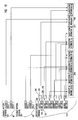
- FIG 12 a logical diagram of the configuration system shown in Figure 10 is shown after the removal of three specific reference patterns according to the processing steps explained in Figure 11. Namely, the specific reference pattern "010100” was removed for classification family 0 causing the corresponding pointer to change the indicated classification information, the specific reference pattern "101100” was removed for classification family 0 causing the pattern to be removed entirely from the database, and the specific reference pattern "100111” was removed for classification family 0 causing the corresponding pointer to be set to null.
- the reference count will eventually equal zero as determined at step 240 of Figure 11 such that the entire specific pattern is removed from the specific pattern database 104 as seen by the arrow 254 pointing to the missing entry that existed previously as shown if Figure 10.
- the implicit installation of the specific reference pattern "101100” for classification family 1 would also be removed. Any effort by a client to classify the specific reference pattern for classification family 1 would result in an automatic installation with a timer as explained previously.
- the entry 106 in the specific pattern database 104 will show a reference count field 112 value of one due to decrementing the specific pattern reference count field 112 value at step 238 of Figure 11. Also, since no match was found in the general pattern database for classification family 0 as determined in step 248, the pointer 114 of the classification block 108 corresponding to classification family 0 was set to null at step 252 ( Figure 11). Note that the pointer 118 of the classification block 108 still indicates classification information 1a 119 of classification family 1.
- entry 122 of Figure 12 With respect to the de-installation of the specific reference pattern "010100" for classification family 0, entry 122 of Figure 12 applies. After decrementing the reference count field at step 238 and performing the general database search at step 246 of Figure 11, and upon finding a matching general reference pattern at step 248 in the general database, the pointer then points to classification information 0c 190. This occurs since a match was found to the general reference pattern "01X100" as found by entry 196 in the general pattern database 100 for classification family 0. In other words, the pointer for the classification block associated with entry 122 in classification family 0 switches from pointing from classification information 0b 163 to classification information 0c 190.
- the specific database is searched for all specific reference patterns that match the set of specific patterns corresponding to the general reference pattern.
- the specific database is searched for the first match to the general reference pattern. If it is determined at step 276 that no more matching specific reference patterns can be found, then processing ends at step 278. Otherwise, the main body of the flow chart continues until all matching specific patterns have been found and processed.
- step 280 Upon finding a matching specific reference pattern as determined in step 276, a determination is made at step 280 whether or not the classification information for the particular classification family was explicitly assigned to this specific reference pattern. If so, then no new processing is necessary since the specific reference pattern was designed to be more specific and was not automatically assigned in some fashion. Therefore, at step 282 the specific database is searched for the next match to the general reference pattern and the loop iterates.
- the general database is searched for the best match to this particular specific pattern and classification family at step 284.
- the results of such search will either indicate null if no best match was found or will indicate the classification information associated with that best match.
- the entry's classification block pointer indicated by the classification family is set to point to the classification information resulting from the search done in step 284. Essentially, an automatically installed specific reference pattern will be reinstalled and automatically get the best match from the general database for the particular classification family. In some instances the pointer in the classification block will change and in others it will not.
- FIG 14 a logical diagram representing the example classification system of Figure 12 is shown after a general reference pattern has been removed. Specifically, the general reference pattern "01XX00" for classification family 0 having a priority of 0 has been removed according to the processing steps explained in the flow chart of Figure 13. This is shown in Figure 14 by the arrow 288 indicating the missing entry for that general reference pattern.
- the classification information was implicitly assigned to the specific reference pattern for classification family 0. Therefore after such determination is made at step 280, the general database for classification family 0 was searched again at step 284 using the specific reference pattern of entry 292. The results of this search indicate that no other general reference pattern exists that matches the specific reference pattern "011000.” In step 286, the classification block 294 associated with entry 292 having pointer 296 is adjusted so that point 296 is now null. In this manner, the automatically generated specific pattern database 104 references to classification information are reconciled due to the removal of the general pattern database 102 for classification family 0.
Landscapes
- Engineering & Computer Science (AREA)
- Computer Networks & Wireless Communication (AREA)
- Signal Processing (AREA)
- Computer Security & Cryptography (AREA)
- Data Exchanges In Wide-Area Networks (AREA)
- Computer And Data Communications (AREA)
- Information Retrieval, Db Structures And Fs Structures Therefor (AREA)
Claims (8)
- Verfahren zum Klassifizieren von Datenpaketen, die durch eine Vielzahl von in einem Stack enthaltenen Treibern verarbeitet werden, das die folgenden Schritte umfasst:Speichern, in einer gemeinsam genutzten Referenzmuster-Datenbank (80), die von einer Vielzahl von Treibern (86, 88, 90, 92) gemeinsam genutzt wird, wenigstens eines Referenzmusters und entsprechender Klassifizierungsinformationen, wobei die gespeicherten Referenzmuster in Klassifizierungsfamilien logisch in Beziehung stehen und wobei die gespeicherten Referenzmuster entweder allgemeine oder spezifische Referenzmuster sind und einer Klassifizierungsfamilie zugehören, die gemeinsam genutzte Referenzmuster-Datenbank eine spezifische Datenbank (104) für alle spezifischen Referenzmuster, unabhängig von der Klassifizierungsfamilie, und für jede Klassifizierungsfamilie eine allgemeine Datenbank (96) für allgemeine Referenzmuster, die dieser Klassifizierungsfamilie zugehörig sind, enthält;Durchsuchen der gemeinsam genutzten Referenzmuster-Datenbank nach einem Referenzmuster, das mit einem Klassifizierungsmuster, das von einem Netzwerkkommunikationspaket erzeugt wurde, übereinstimmt, durch Durchsuchen (202) zuerst der spezifischen Datenbank (104) nach dem Klassifizierungsmuster, gefolgt von, wenn das Klassifizierungsmuster nicht gefunden (204) ist, Durchsuchen (210) der allgemeinen Datenbank (96), die der Klassifizierungsfamilie des Klassifizierungsmusters zugehört, und,wenn das Klassifizierungsmuster mit einem gespeicherten Referenzmuster übereinstimmt, Verarbeiten des Netzwerkkommunikationspaketes unter Verwendung der Klassifizierungsinformation, die dem als übereinstimmend festgestellten Referenzmuster entspricht.
- Verfahren nach Anspruch 1, wobei die spezifische Datenbank (104) eine Klassifizierungs-Blockstruktur umfasst, wobei die Klassifizierungs-Blockstruktur für jedes gespeicherte spezifische Referenzmuster mehrere Referenzen zu Klassifizierungsinformationen enthält, jede der mehreren Referenzen einer Klassifizierungsfamilie entspricht und der Speicherschritt für ein für eine Klassifizierungsfamilie gespeichertes spezifisches Referenzmuster des Weiteren die folgenden Schritte umfasst:Durchsuchen der allgemeinen Datenbanken aller restlichen Klassifizierungsfamilien nach einem allgemeinen Referenzmuster, das mit dem gespeicherten spezifischen Referenzmuster übereinstimmt, undErstellen einer Referenz in der Klassifizierungs-Blockstruktur des gespeicherten spezifischen Referenzmusters für jede Übereinstimmung, wobei die Referenz der Klassifizierungsfamilie entspricht, in deren allgemeiner Datenbank das als übereinstimmend festgestellte allgemeine Referenzmuster gefunden wurde, und die Referenz auf die Klassifizierungsinformation des als übereinstimmend festgestellten allgemeinen Referenzmusters verweist, so dass zukünftig vorliegende Klassifizierungsmuster, die mit dem spezifischen Referenzmuster in anderen Klassifizierungsfamilien übereinstimmen, beim Durchsuchen der spezifischen Datenbank übereinstimmen werden, ohne auf Durchsuchen der allgemeinen Datenbank zurückzugreifen, wodurch die Sucheffizienz erhöht wird.
- Verfahren nach Anspruch 1, wobei die spezifische Datenbank (104) eine Klassifizierungs-Blockstruktur umfasst, die Klassifizierungs-Blockstruktur für jedes gespeicherte spezifische Referenzmuster mehrere Referenzen zu Klassifizierungsinformationen hat, jede der mehreren Referenzen einer Klassifizierungsfamilie entspricht und der Speicherschritt für ein für eine Klassifizierungsfamilie gespeichertes spezifisches Referenzmuster des Weiteren die folgenden Schritte umfasst:Durchsuchen der spezifischen Datenbank, wenn ein neues allgemeines Referenzmuster für eine bestimmte Klassifizierungsfamilie gespeichert wird, nach gespeicherten spezifischen Referenzmustern, die mit dem neu gespeicherten allgemeinen Referenzmuster übereinstimmen, und für jede Übereinstimmung, wenn die Klassifizierungs-Blockstruktur des als übereinstimmend festgestellten, gespeicherten spezifischen Referenzmusters keine Referenz enthält, die der bestimmten Klassifizierungsfamilie des neuen allgemeinen Referenzmusters entspricht, Erstellen einer Referenz des als übereinstimmend festgestellten, gespeicherten spezifischen Referenzmusters in der Klassifizierungs-Blockstruktur, wobei die Referenz der bestimmten Klassifizierungsfamilie des neuen allgemeinen Referenzmusters entspricht und die Referenz auf Klassifizierungsinformation des neuen allgemeinen Referenzmusters verweist, so dass zukünftig vorliegende Klassifizierungsmuster, die mit dem spezifischen Referenzmuster für die bestimmte Klassifizierungsfamilie übereinstimmen, beim Durchsuchen der spezifischen Datenbank übereinstimmen werden, ohne auf Durchsuchen der allgemeinen Datenbank zurückzugreifen, wodurch die Sucheffizienz erhöht wird.
- Verfahren nach Anspruch 1, wobei die spezifische Datenbank (194) eine Klassifizierungs-Blockstruktur umfasst, die Klassifizierungs-Blockstruktur für jedes gespeicherte spezifische Referenzmuster mehrere Referenzen zu Klassifizierungsinformationen hat, jede der mehreren Referenzen einer Klassifizierungsfamilie entspricht und der Speicherschritt für ein für eine Klassifizierungsfamilie gespeichertes spezifisches Referenzmuster des Weiteren die folgenden Schritte umfasst:Durchsuchen der spezifischen Datenbank, wenn ein neues allgemeines Referenzmuster für eine bestimmte Klassifizierungsfamilie gespeichert wird, nach gespeicherten spezifischen Referenzmustern, die mit dem neu gespeicherten allgemeinen Referenzmuster übereinstimmen, und für jedes als übereinstimmend festgestellte, gespeicherte spezifische Referenzmuster, wenn die Klassifizierungs-Blockstruktur des als übereinstimmend festgestellten, gespeicherten spezifischen Referenzmusters eine Referenz enthält, die der bestimmten Klassifizierungsfamilie des neuen allgemeinen Referenzmusters entspricht, Durchsuchen der allgemeinen Datenbank, die der bestimmten Klassifizierungsfamilie des neu gespeicherten allgemeinen Referenzmusters entspricht, nach dem allgemeinen Referenzmuster, das mit dem als übereinstimmend festgestellten, gespeicherten spezifischen Referenzmuster am besten übereinstimmt, und Erstellen einer Referenz in der Klassifizierungs-Blockstruktur des als übereinstimmend festgestellten, gespeicherten spezifischen Referenzmusters, wobei die Referenz der bestimmten Klassifizierungsfamilie des neuen allgemeinen Referenzmusters entspricht und die Referenz auf die Klassifizierungsinformation des am besten übereinstimmenden allgemeinen Referenzmusters verweist, so dass zukünftig vorliegende Klassifizierungsmuster, die mit dem spezifischen Referenzmuster für die bestimmte Klassifizierungsfamilie übereinstimmen, beim Durchsuchen der spezifischen Datenbank übereinstimmen werden, ohne auf Durchsuchen der allgemeinen Datenbank zurückzugreifen, wodurch die Sucheffizienz erhöht wird.
- Verfahren nach Anspruch 1, wobei der Speicherschritt für ein allgemeines Referenzmuster des Weiteren die folgenden Schritte umfasst:Erzeugen eines vollständigen Satzes von spezifischen Referenzmustern entsprechend dem allgemeinen Referenzmuster undSpeichern jedes spezifischen Referenzmusters des Satzes spezifischer Referenzmuster in der spezifischen Datenbank, verweisend auf die Klassifizierungsinformation, die mit dem allgemeinen Referenzmuster bereitgestellt wird.
- Verfahren nach Anspruch 1, wobei jedes gesuchte Klassifizierungsmuster automatisch als ein spezifisches Referenzmuster in der spezifischen Datenbank gespeichert (214) wird, um die Klassifizierungseffizienz zu erhöhen.
- Verfahren nach Anspruch 1, wobei jedes gesuchte Klassifizierungsmuster automatisch als ein spezifisches Referenzmuster in der spezifischen Datenbank gespeichert (214) wird und weiterhin, nachdem ein Zeitraum vergangen ist, in dem keine Klassifizierungen dazu vorgenommen wurden, entfernt wird, um die Klassifizierungseffizienz zu erhöhen.
- Computerlesbares Medium mit durch einen Computer ausführbaren Befehlen zum Durchführen der Schritte nach einem der vorhergehenden Ansprüche.
Priority Applications (1)
| Application Number | Priority Date | Filing Date | Title |
|---|---|---|---|
| EP07012975.4A EP1843546B1 (de) | 1997-09-19 | 1998-06-03 | Verfahren und computerprogramm zur klassifizierung von in einem netzwerkstapel verarbeiteten netzwerkkommunikationspaketen |
Applications Claiming Priority (3)
| Application Number | Priority Date | Filing Date | Title |
|---|---|---|---|
| US08/933,868 US5956721A (en) | 1997-09-19 | 1997-09-19 | Method and computer program product for classifying network communication packets processed in a network stack |
| US933868 | 1997-09-19 | ||
| PCT/US1998/011430 WO1999015993A1 (en) | 1997-09-19 | 1998-06-03 | Method and computer program product for classifying network communication packets processed in a network stack |
Related Child Applications (1)
| Application Number | Title | Priority Date | Filing Date |
|---|---|---|---|
| EP07012975.4A Division EP1843546B1 (de) | 1997-09-19 | 1998-06-03 | Verfahren und computerprogramm zur klassifizierung von in einem netzwerkstapel verarbeiteten netzwerkkommunikationspaketen |
Publications (3)
| Publication Number | Publication Date |
|---|---|
| EP1032894A1 EP1032894A1 (de) | 2000-09-06 |
| EP1032894A4 EP1032894A4 (de) | 2005-02-09 |
| EP1032894B1 true EP1032894B1 (de) | 2007-08-01 |
Family
ID=25464632
Family Applications (2)
| Application Number | Title | Priority Date | Filing Date |
|---|---|---|---|
| EP98926242A Expired - Lifetime EP1032894B1 (de) | 1997-09-19 | 1998-06-03 | Verfahren und rechnerprogrammprodukt zur klassifizierung von in einem netzwerkstack verarbeiteten netzübertragungspaketen |
| EP07012975.4A Expired - Lifetime EP1843546B1 (de) | 1997-09-19 | 1998-06-03 | Verfahren und computerprogramm zur klassifizierung von in einem netzwerkstapel verarbeiteten netzwerkkommunikationspaketen |
Family Applications After (1)
| Application Number | Title | Priority Date | Filing Date |
|---|---|---|---|
| EP07012975.4A Expired - Lifetime EP1843546B1 (de) | 1997-09-19 | 1998-06-03 | Verfahren und computerprogramm zur klassifizierung von in einem netzwerkstapel verarbeiteten netzwerkkommunikationspaketen |
Country Status (8)
| Country | Link |
|---|---|
| US (2) | US5956721A (de) |
| EP (2) | EP1032894B1 (de) |
| JP (1) | JP3461802B2 (de) |
| AT (1) | ATE368896T1 (de) |
| AU (1) | AU7812498A (de) |
| CA (1) | CA2304145C (de) |
| DE (1) | DE69838180T2 (de) |
| WO (1) | WO1999015993A1 (de) |
Families Citing this family (75)
| Publication number | Priority date | Publication date | Assignee | Title |
|---|---|---|---|---|
| US5956721A (en) * | 1997-09-19 | 1999-09-21 | Microsoft Corporation | Method and computer program product for classifying network communication packets processed in a network stack |
| US6141686A (en) * | 1998-03-13 | 2000-10-31 | Deterministic Networks, Inc. | Client-side application-classifier gathering network-traffic statistics and application and user names using extensible-service provider plugin for policy-based network control |
| JP2000092118A (ja) * | 1998-09-08 | 2000-03-31 | Hitachi Ltd | プログラマブルネットワーク |
| US6807667B1 (en) * | 1998-09-21 | 2004-10-19 | Microsoft Corporation | Method and system of an application program interface for abstracting network traffic control components to application programs |
| US7188168B1 (en) | 1999-04-30 | 2007-03-06 | Pmc-Sierra, Inc. | Method and apparatus for grammatical packet classifier |
| US7185081B1 (en) | 1999-04-30 | 2007-02-27 | Pmc-Sierra, Inc. | Method and apparatus for programmable lexical packet classifier |
| GB2349717A (en) * | 1999-05-04 | 2000-11-08 | At & T Lab Cambridge Ltd | Low latency network |
| US7069335B1 (en) * | 1999-08-10 | 2006-06-27 | Microsoft Corporation | Method and system for exchanging messages between entities on a network comprising an actor attribute and a mandatory attribute in the header data structure |
| US7043467B1 (en) | 2000-02-08 | 2006-05-09 | Mips Technologies, Inc. | Wire-speed multi-dimensional packet classifier |
| US7436830B2 (en) | 2000-04-03 | 2008-10-14 | P-Cube Ltd. | Method and apparatus for wire-speed application layer classification of upstream and downstream data packets |
| US6831893B1 (en) | 2000-04-03 | 2004-12-14 | P-Cube, Ltd. | Apparatus and method for wire-speed classification and pre-processing of data packets in a full duplex network |
| US20050195743A1 (en) * | 2000-04-03 | 2005-09-08 | P-Cube Ltd. | Real time charging of pre-paid accounts |
| US6947931B1 (en) * | 2000-04-06 | 2005-09-20 | International Business Machines Corporation | Longest prefix match (LPM) algorithm implementation for a network processor |
| CN1271529C (zh) | 2000-10-03 | 2006-08-23 | 网络知德株式会社 | 通信信息记录装置 |
| US7379475B2 (en) * | 2002-01-25 | 2008-05-27 | Nvidia Corporation | Communications processor |
| US7116663B2 (en) * | 2001-07-20 | 2006-10-03 | Pmc-Sierra Ltd. | Multi-field classification using enhanced masked matching |
| CN100454857C (zh) * | 2001-08-09 | 2009-01-21 | 松下电器产业株式会社 | 传送装置和传送方法 |
| US7506068B2 (en) * | 2001-08-30 | 2009-03-17 | Siebel Systems, Inc. | Method, apparatus and system for transforming, converting and processing messages between multiple systems |
| US7299230B2 (en) * | 2001-08-30 | 2007-11-20 | Siebel Systems, Inc. | Method, apparatus and system for transforming, converting and processing messages between multiple systems |
| US7769896B2 (en) * | 2001-08-30 | 2010-08-03 | Siebel Systems, Inc. | Method, apparatus and system for dispatching messages within a system |
| US7054315B2 (en) * | 2001-09-17 | 2006-05-30 | Pmc-Sierra Ltd. | Efficiency masked matching |
| US7765313B2 (en) * | 2001-10-09 | 2010-07-27 | Alcatel Lucent | Hierarchical protocol classification engine |
| US20030093566A1 (en) * | 2001-11-09 | 2003-05-15 | Jardin Cary A. | System and method for network and application transparent database acceleration |
| US7042886B2 (en) | 2001-12-06 | 2006-05-09 | P-Cube Ltd. | Apparatus, method, and computer program for wire-speed classification and pre-processing of data packets in an ATM network |
| US7814204B1 (en) | 2002-02-11 | 2010-10-12 | Extreme Networks, Inc. | Method of and system for analyzing the content of resource requests |
| US7584262B1 (en) | 2002-02-11 | 2009-09-01 | Extreme Networks | Method of and system for allocating resources to resource requests based on application of persistence policies |
| US7512129B1 (en) * | 2002-02-19 | 2009-03-31 | Redback Networks Inc. | Method and apparatus for implementing a switching unit including a bypass path |
| US7145874B2 (en) | 2002-03-01 | 2006-12-05 | P-Cube Ltd. | Apparatus, method, and software for limiting session rates in a computer network |
| US7054950B2 (en) * | 2002-04-15 | 2006-05-30 | Intel Corporation | Network thread scheduling |
| US7254632B2 (en) * | 2002-04-26 | 2007-08-07 | P-Cube Ltd. | Apparatus and method for pattern matching in text based protocol |
| US7587517B2 (en) * | 2002-07-08 | 2009-09-08 | Precache Inc. | Packet routing via payload inspection for quality of service management |
| US20040015591A1 (en) * | 2002-07-18 | 2004-01-22 | Wang Frank Xiao-Dong | Collective TCP control for improved wireless network performance |
| US7684400B2 (en) * | 2002-08-08 | 2010-03-23 | Intel Corporation | Logarithmic time range-based multifield-correlation packet classification |
| US20040078447A1 (en) * | 2002-09-17 | 2004-04-22 | Malik Dale W. | User profiles for managing email and instant messaging (IM) |
| US7657598B2 (en) * | 2002-09-17 | 2010-02-02 | At&T Intellectual Property I, L.P. | Address book for integrating email and instant messaging (IM) |
| US8037141B2 (en) | 2002-09-17 | 2011-10-11 | At&T Intellectual Property I, L.P. | Instant messaging (IM) internet chat capability from displayed email messages |
| US7933957B2 (en) * | 2002-09-17 | 2011-04-26 | At&T Intellectual Property Ii, L.P. | Tracking email and instant messaging (IM) thread history |
| US20040054736A1 (en) * | 2002-09-17 | 2004-03-18 | Daniell W. Todd | Object architecture for integration of email and instant messaging (IM) |
| US7921160B2 (en) | 2002-09-17 | 2011-04-05 | At&T Intellectual Property I, L.P. | Initiating instant messaging (IM) chat sessions from email messages |
| US7085745B2 (en) * | 2003-03-05 | 2006-08-01 | Klug John R | Method and apparatus for identifying, managing, and controlling communications |
| US7227994B2 (en) * | 2003-03-20 | 2007-06-05 | International Business Machines Corporation | Method and apparatus for imbedded pattern recognition using dual alternating pointers |
| US7366352B2 (en) * | 2003-03-20 | 2008-04-29 | International Business Machines Corporation | Method and apparatus for performing fast closest match in pattern recognition |
| US20040190506A1 (en) * | 2003-03-24 | 2004-09-30 | International Business Machines Corp. | Method and apparatus for performing complex pattern matching in a data stream within a computer network |
| EP1625713B1 (de) * | 2003-05-16 | 2011-11-09 | Panasonic Corporation | Paketklassifizierung und -verkettung über ein netzleitungsübertragungssystem |
| US7840696B2 (en) * | 2003-07-25 | 2010-11-23 | Broadcom Corporation | Apparatus and method for classifier identification |
| US7996470B2 (en) * | 2003-10-14 | 2011-08-09 | At&T Intellectual Property I, L.P. | Processing rules for digital messages |
| US7408932B2 (en) * | 2003-10-20 | 2008-08-05 | Intel Corporation | Method and apparatus for two-stage packet classification using most specific filter matching and transport level sharing |
| US20050232153A1 (en) * | 2004-04-16 | 2005-10-20 | Vieo, Inc. | Method and system for application-aware network quality of service |
| US7599361B2 (en) * | 2004-07-02 | 2009-10-06 | P-Cube Ltd. | Wire-speed packet management in a multi-pipeline network processor |
| US8966551B2 (en) | 2007-11-01 | 2015-02-24 | Cisco Technology, Inc. | Locating points of interest using references to media frames within a packet flow |
| US9197857B2 (en) | 2004-09-24 | 2015-11-24 | Cisco Technology, Inc. | IP-based stream splicing with content-specific splice points |
| US7855974B2 (en) * | 2004-12-23 | 2010-12-21 | Solera Networks, Inc. | Method and apparatus for network packet capture distributed storage system |
| US20100195538A1 (en) * | 2009-02-04 | 2010-08-05 | Merkey Jeffrey V | Method and apparatus for network packet capture distributed storage system |
| US7860844B2 (en) * | 2005-07-15 | 2010-12-28 | Indxit Systems Inc. | System and methods for data indexing and processing |
| US8023419B2 (en) | 2007-05-14 | 2011-09-20 | Cisco Technology, Inc. | Remote monitoring of real-time internet protocol media streams |
| US7936695B2 (en) | 2007-05-14 | 2011-05-03 | Cisco Technology, Inc. | Tunneling reports for real-time internet protocol media streams |
| US7835406B2 (en) * | 2007-06-18 | 2010-11-16 | Cisco Technology, Inc. | Surrogate stream for monitoring realtime media |
| US7817546B2 (en) | 2007-07-06 | 2010-10-19 | Cisco Technology, Inc. | Quasi RTP metrics for non-RTP media flows |
| US7996520B2 (en) | 2007-09-19 | 2011-08-09 | Cisco Technology, Inc. | Behavioral classification of communication sessions using active session initiation |
| US20090292736A1 (en) * | 2008-05-23 | 2009-11-26 | Matthew Scott Wood | On demand network activity reporting through a dynamic file system and method |
| US8521732B2 (en) | 2008-05-23 | 2013-08-27 | Solera Networks, Inc. | Presentation of an extracted artifact based on an indexing technique |
| US8004998B2 (en) * | 2008-05-23 | 2011-08-23 | Solera Networks, Inc. | Capture and regeneration of a network data using a virtual software switch |
| US8625642B2 (en) | 2008-05-23 | 2014-01-07 | Solera Networks, Inc. | Method and apparatus of network artifact indentification and extraction |
| US9342589B2 (en) * | 2008-07-30 | 2016-05-17 | Nec Corporation | Data classifier system, data classifier method and data classifier program stored on storage medium |
| WO2010013473A1 (ja) * | 2008-07-30 | 2010-02-04 | 日本電気株式会社 | データ分類システム、データ分類方法、及びデータ分類プログラム |
| US8418079B2 (en) | 2009-09-01 | 2013-04-09 | James J. Nicholas, III | System and method for cursor-based application management |
| US20110125749A1 (en) * | 2009-11-15 | 2011-05-26 | Solera Networks, Inc. | Method and Apparatus for Storing and Indexing High-Speed Network Traffic Data |
| WO2011060377A1 (en) * | 2009-11-15 | 2011-05-19 | Solera Networks, Inc. | Method and apparatus for real time identification and recording of artifacts |
| US8301982B2 (en) * | 2009-11-18 | 2012-10-30 | Cisco Technology, Inc. | RTP-based loss recovery and quality monitoring for non-IP and raw-IP MPEG transport flows |
| US8819714B2 (en) | 2010-05-19 | 2014-08-26 | Cisco Technology, Inc. | Ratings and quality measurements for digital broadcast viewers |
| US8849991B2 (en) | 2010-12-15 | 2014-09-30 | Blue Coat Systems, Inc. | System and method for hypertext transfer protocol layered reconstruction |
| US8666985B2 (en) | 2011-03-16 | 2014-03-04 | Solera Networks, Inc. | Hardware accelerated application-based pattern matching for real time classification and recording of network traffic |
| JP6102108B2 (ja) * | 2012-07-24 | 2017-03-29 | 富士通株式会社 | 情報処理装置、データ提供方法、及びデータ提供プログラム |
| US10095720B2 (en) * | 2016-02-05 | 2018-10-09 | Amadeus S.A.S. | Database table index |
| EP4002151A1 (de) * | 2020-11-16 | 2022-05-25 | Prescient Healthcare Group Limited | System zur etikettierung und synchronisierung von daten |
Family Cites Families (10)
| Publication number | Priority date | Publication date | Assignee | Title |
|---|---|---|---|---|
| US5983004A (en) * | 1991-09-20 | 1999-11-09 | Shaw; Venson M. | Computer, memory, telephone, communications, and transportation system and methods |
| US5414650A (en) * | 1993-03-24 | 1995-05-09 | Compression Research Group, Inc. | Parsing information onto packets using context-insensitive parsing rules based on packet characteristics |
| US5446736A (en) * | 1993-10-07 | 1995-08-29 | Ast Research, Inc. | Method and apparatus for connecting a node to a wireless network using a standard protocol |
| US5787430A (en) * | 1994-06-30 | 1998-07-28 | International Business Machines Corporation | Variable length data sequence backtracking a trie structure |
| US5485460A (en) * | 1994-08-19 | 1996-01-16 | Microsoft Corporation | System and method for running multiple incompatible network protocol stacks |
| US5648965A (en) * | 1995-07-07 | 1997-07-15 | Sun Microsystems, Inc. | Method and apparatus for dynamic distributed packet tracing and analysis |
| US5802307A (en) * | 1995-11-24 | 1998-09-01 | Sun Microsystems, Inc. | Network communications subsystem and method for digital computer system employing protocol stack having diverse lower-level network driver components optimized for each of base and enhance operating systems |
| US5761424A (en) * | 1995-12-29 | 1998-06-02 | Symbios, Inc. | Method and apparatus for programmable filtration and generation of information in packetized communication systems |
| US5802511A (en) * | 1996-01-02 | 1998-09-01 | Timeline, Inc. | Data retrieval method and apparatus with multiple source capability |
| US5956721A (en) * | 1997-09-19 | 1999-09-21 | Microsoft Corporation | Method and computer program product for classifying network communication packets processed in a network stack |
-
1997
- 1997-09-19 US US08/933,868 patent/US5956721A/en not_active Expired - Lifetime
-
1998
- 1998-06-03 AT AT98926242T patent/ATE368896T1/de not_active IP Right Cessation
- 1998-06-03 DE DE69838180T patent/DE69838180T2/de not_active Expired - Lifetime
- 1998-06-03 CA CA002304145A patent/CA2304145C/en not_active Expired - Lifetime
- 1998-06-03 WO PCT/US1998/011430 patent/WO1999015993A1/en not_active Ceased
- 1998-06-03 AU AU78124/98A patent/AU7812498A/en not_active Abandoned
- 1998-06-03 JP JP2000513226A patent/JP3461802B2/ja not_active Expired - Fee Related
- 1998-06-03 EP EP98926242A patent/EP1032894B1/de not_active Expired - Lifetime
- 1998-06-03 EP EP07012975.4A patent/EP1843546B1/de not_active Expired - Lifetime
-
1999
- 1999-06-15 US US09/333,797 patent/US6185568B1/en not_active Expired - Lifetime
Non-Patent Citations (1)
| Title |
|---|
| None * |
Also Published As
| Publication number | Publication date |
|---|---|
| JP3461802B2 (ja) | 2003-10-27 |
| EP1843546A1 (de) | 2007-10-10 |
| DE69838180D1 (de) | 2007-09-13 |
| WO1999015993A1 (en) | 1999-04-01 |
| US5956721A (en) | 1999-09-21 |
| EP1032894A1 (de) | 2000-09-06 |
| EP1032894A4 (de) | 2005-02-09 |
| US6185568B1 (en) | 2001-02-06 |
| AU7812498A (en) | 1999-04-12 |
| CA2304145A1 (en) | 1999-04-01 |
| JP2001517878A (ja) | 2001-10-09 |
| EP1843546B1 (de) | 2017-11-15 |
| DE69838180T2 (de) | 2008-04-30 |
| CA2304145C (en) | 2005-05-03 |
| ATE368896T1 (de) | 2007-08-15 |
Similar Documents
| Publication | Publication Date | Title |
|---|---|---|
| EP1032894B1 (de) | Verfahren und rechnerprogrammprodukt zur klassifizierung von in einem netzwerkstack verarbeiteten netzübertragungspaketen | |
| US6424650B1 (en) | Network address filter device | |
| US7603474B2 (en) | Efficient endpoint matching using a header-to-bit conversion table | |
| US8412838B1 (en) | Method of and system for analyzing the content of resource requests | |
| US6377984B1 (en) | Web crawler system using parallel queues for queing data sets having common address and concurrently downloading data associated with data set in each queue | |
| US6212184B1 (en) | Fast scaleable methods and devices for layer four switching | |
| US7584262B1 (en) | Method of and system for allocating resources to resource requests based on application of persistence policies | |
| US20030009453A1 (en) | Method and system for performing a pattern match search for text strings | |
| US6289013B1 (en) | Packet filter method and apparatus employing reduced memory | |
| US7603483B2 (en) | Method and system for class-based management of dynamic content in a networked environment | |
| US6182146B1 (en) | Automatic identification of application protocols through dynamic mapping of application-port associations | |
| CN103220375B (zh) | 结构化数据的方法、预编译的异常列表引擎和网络设备 | |
| US20020032681A1 (en) | Partially-ordered CAMs used in ternary hierarchical address searching/sorting | |
| CN1482548A (zh) | 对多重搜索实行的过滤器规则进行划分的方法和系统 | |
| US20050171937A1 (en) | Memory efficient hashing algorithm | |
| US20060187834A1 (en) | Reassembly engines for multilink applications | |
| EP1649387A1 (de) | Verteiltes datenbanksystem | |
| CN1493132A (zh) | 基于交换的网络处理器 | |
| AU2001238189A1 (en) | System and method for representing and maintaining redundant data sets utilizing DNA transmission and transcription techniques | |
| US8407778B2 (en) | Apparatus and methods for processing filter rules | |
| US6687715B2 (en) | Parallel lookups that keep order | |
| WO2005064495A1 (en) | Multi-dimensional packet classification by disjunct filter sets whereby the sets are based on wilcard properties | |
| US6826621B1 (en) | Method and system for aggregating interface addresses | |
| US6009423A (en) | Search apparatus | |
| US6657959B1 (en) | Systems and methods for implementing ABR with guaranteed MCR |
Legal Events
| Date | Code | Title | Description |
|---|---|---|---|
| PUAI | Public reference made under article 153(3) epc to a published international application that has entered the european phase |
Free format text: ORIGINAL CODE: 0009012 |
|
| 17P | Request for examination filed |
Effective date: 20000406 |
|
| AK | Designated contracting states |
Kind code of ref document: A1 Designated state(s): AT BE CH CY DE DK ES FI FR GB GR IE IT LI LU MC NL PT SE |
|
| A4 | Supplementary search report drawn up and despatched |
Effective date: 20041223 |
|
| RIC1 | Information provided on ipc code assigned before grant |
Ipc: 7H 04L 29/06 B Ipc: 7G 06F 17/30 A |
|
| GRAP | Despatch of communication of intention to grant a patent |
Free format text: ORIGINAL CODE: EPIDOSNIGR1 |
|
| GRAS | Grant fee paid |
Free format text: ORIGINAL CODE: EPIDOSNIGR3 |
|
| GRAA | (expected) grant |
Free format text: ORIGINAL CODE: 0009210 |
|
| AK | Designated contracting states |
Kind code of ref document: B1 Designated state(s): AT BE CH CY DE DK ES FI FR GB GR IE IT LI LU MC NL PT SE |
|
| REG | Reference to a national code |
Ref country code: GB Ref legal event code: FG4D |
|
| REG | Reference to a national code |
Ref country code: CH Ref legal event code: EP |
|
| REG | Reference to a national code |
Ref country code: IE Ref legal event code: FG4D |
|
| REF | Corresponds to: |
Ref document number: 69838180 Country of ref document: DE Date of ref document: 20070913 Kind code of ref document: P |
|
| PG25 | Lapsed in a contracting state [announced via postgrant information from national office to epo] |
Ref country code: NL Free format text: LAPSE BECAUSE OF FAILURE TO SUBMIT A TRANSLATION OF THE DESCRIPTION OR TO PAY THE FEE WITHIN THE PRESCRIBED TIME-LIMIT Effective date: 20070801 Ref country code: FI Free format text: LAPSE BECAUSE OF FAILURE TO SUBMIT A TRANSLATION OF THE DESCRIPTION OR TO PAY THE FEE WITHIN THE PRESCRIBED TIME-LIMIT Effective date: 20070801 Ref country code: ES Free format text: LAPSE BECAUSE OF FAILURE TO SUBMIT A TRANSLATION OF THE DESCRIPTION OR TO PAY THE FEE WITHIN THE PRESCRIBED TIME-LIMIT Effective date: 20071112 |
|
| NLV1 | Nl: lapsed or annulled due to failure to fulfill the requirements of art. 29p and 29m of the patents act | ||
| REG | Reference to a national code |
Ref country code: CH Ref legal event code: PL |
|
| PG25 | Lapsed in a contracting state [announced via postgrant information from national office to epo] |
Ref country code: AT Free format text: LAPSE BECAUSE OF FAILURE TO SUBMIT A TRANSLATION OF THE DESCRIPTION OR TO PAY THE FEE WITHIN THE PRESCRIBED TIME-LIMIT Effective date: 20070801 Ref country code: CH Free format text: LAPSE BECAUSE OF FAILURE TO SUBMIT A TRANSLATION OF THE DESCRIPTION OR TO PAY THE FEE WITHIN THE PRESCRIBED TIME-LIMIT Effective date: 20070801 Ref country code: LI Free format text: LAPSE BECAUSE OF FAILURE TO SUBMIT A TRANSLATION OF THE DESCRIPTION OR TO PAY THE FEE WITHIN THE PRESCRIBED TIME-LIMIT Effective date: 20070801 |
|
| PG25 | Lapsed in a contracting state [announced via postgrant information from national office to epo] |
Ref country code: BE Free format text: LAPSE BECAUSE OF FAILURE TO SUBMIT A TRANSLATION OF THE DESCRIPTION OR TO PAY THE FEE WITHIN THE PRESCRIBED TIME-LIMIT Effective date: 20070801 |
|
| PG25 | Lapsed in a contracting state [announced via postgrant information from national office to epo] |
Ref country code: GR Free format text: LAPSE BECAUSE OF FAILURE TO SUBMIT A TRANSLATION OF THE DESCRIPTION OR TO PAY THE FEE WITHIN THE PRESCRIBED TIME-LIMIT Effective date: 20071102 Ref country code: DK Free format text: LAPSE BECAUSE OF FAILURE TO SUBMIT A TRANSLATION OF THE DESCRIPTION OR TO PAY THE FEE WITHIN THE PRESCRIBED TIME-LIMIT Effective date: 20070801 |
|
| PG25 | Lapsed in a contracting state [announced via postgrant information from national office to epo] |
Ref country code: PT Free format text: LAPSE BECAUSE OF FAILURE TO SUBMIT A TRANSLATION OF THE DESCRIPTION OR TO PAY THE FEE WITHIN THE PRESCRIBED TIME-LIMIT Effective date: 20080102 |
|
| PLBE | No opposition filed within time limit |
Free format text: ORIGINAL CODE: 0009261 |
|
| STAA | Information on the status of an ep patent application or granted ep patent |
Free format text: STATUS: NO OPPOSITION FILED WITHIN TIME LIMIT |
|
| PG25 | Lapsed in a contracting state [announced via postgrant information from national office to epo] |
Ref country code: SE Free format text: LAPSE BECAUSE OF FAILURE TO SUBMIT A TRANSLATION OF THE DESCRIPTION OR TO PAY THE FEE WITHIN THE PRESCRIBED TIME-LIMIT Effective date: 20071101 |
|
| 26N | No opposition filed |
Effective date: 20080506 |
|
| PGFP | Annual fee paid to national office [announced via postgrant information from national office to epo] |
Ref country code: LU Payment date: 20080618 Year of fee payment: 11 |
|
| PGFP | Annual fee paid to national office [announced via postgrant information from national office to epo] |
Ref country code: MC Payment date: 20080529 Year of fee payment: 11 |
|
| PGFP | Annual fee paid to national office [announced via postgrant information from national office to epo] |
Ref country code: IE Payment date: 20080613 Year of fee payment: 11 |
|
| PG25 | Lapsed in a contracting state [announced via postgrant information from national office to epo] |
Ref country code: CY Free format text: LAPSE BECAUSE OF FAILURE TO SUBMIT A TRANSLATION OF THE DESCRIPTION OR TO PAY THE FEE WITHIN THE PRESCRIBED TIME-LIMIT Effective date: 20070801 |
|
| PG25 | Lapsed in a contracting state [announced via postgrant information from national office to epo] |
Ref country code: MC Free format text: LAPSE BECAUSE OF NON-PAYMENT OF DUE FEES Effective date: 20090630 |
|
| PG25 | Lapsed in a contracting state [announced via postgrant information from national office to epo] |
Ref country code: IE Free format text: LAPSE BECAUSE OF NON-PAYMENT OF DUE FEES Effective date: 20090603 |
|
| PG25 | Lapsed in a contracting state [announced via postgrant information from national office to epo] |
Ref country code: LU Free format text: LAPSE BECAUSE OF NON-PAYMENT OF DUE FEES Effective date: 20090603 |
|
| REG | Reference to a national code |
Ref country code: DE Ref legal event code: R082 Ref document number: 69838180 Country of ref document: DE Representative=s name: GRUENECKER, KINKELDEY, STOCKMAIR & SCHWANHAEUS, DE |
|
| REG | Reference to a national code |
Ref country code: GB Ref legal event code: 732E Free format text: REGISTERED BETWEEN 20150115 AND 20150121 |
|
| REG | Reference to a national code |
Ref country code: DE Ref legal event code: R082 Ref document number: 69838180 Country of ref document: DE Representative=s name: GRUENECKER PATENT- UND RECHTSANWAELTE PARTG MB, DE Effective date: 20150126 Ref country code: DE Ref legal event code: R081 Ref document number: 69838180 Country of ref document: DE Owner name: MICROSOFT TECHNOLOGY LICENSING, LLC, REDMOND, US Free format text: FORMER OWNER: MICROSOFT CORP., REDMOND, WASH., US Effective date: 20150126 |
|
| REG | Reference to a national code |
Ref country code: FR Ref legal event code: TP Owner name: MICROSOFT TECHNOLOGY LICENSING, LLC, US Effective date: 20150724 |
|
| REG | Reference to a national code |
Ref country code: FR Ref legal event code: PLFP Year of fee payment: 19 |
|
| REG | Reference to a national code |
Ref country code: FR Ref legal event code: PLFP Year of fee payment: 20 |
|
| PGFP | Annual fee paid to national office [announced via postgrant information from national office to epo] |
Ref country code: GB Payment date: 20170531 Year of fee payment: 20 Ref country code: FR Payment date: 20170511 Year of fee payment: 20 Ref country code: DE Payment date: 20170530 Year of fee payment: 20 |
|
| PGFP | Annual fee paid to national office [announced via postgrant information from national office to epo] |
Ref country code: IT Payment date: 20170619 Year of fee payment: 20 |
|
| REG | Reference to a national code |
Ref country code: DE Ref legal event code: R071 Ref document number: 69838180 Country of ref document: DE |
|
| REG | Reference to a national code |
Ref country code: GB Ref legal event code: PE20 Expiry date: 20180602 |
|
| PG25 | Lapsed in a contracting state [announced via postgrant information from national office to epo] |
Ref country code: GB Free format text: LAPSE BECAUSE OF EXPIRATION OF PROTECTION Effective date: 20180602 |