EP1032167A2 - Redundantes Steuerungssystem für eine Paketvermittlungseinrichtung - Google Patents
Redundantes Steuerungssystem für eine Paketvermittlungseinrichtung Download PDFInfo
- Publication number
- EP1032167A2 EP1032167A2 EP00102208A EP00102208A EP1032167A2 EP 1032167 A2 EP1032167 A2 EP 1032167A2 EP 00102208 A EP00102208 A EP 00102208A EP 00102208 A EP00102208 A EP 00102208A EP 1032167 A2 EP1032167 A2 EP 1032167A2
- Authority
- EP
- European Patent Office
- Prior art keywords
- switch
- processor
- processors
- data packets
- modules
- Prior art date
- Legal status (The legal status is an assumption and is not a legal conclusion. Google has not performed a legal analysis and makes no representation as to the accuracy of the status listed.)
- Withdrawn
Links
Images




Classifications
-
- H—ELECTRICITY
- H04—ELECTRIC COMMUNICATION TECHNIQUE
- H04L—TRANSMISSION OF DIGITAL INFORMATION, e.g. TELEGRAPHIC COMMUNICATION
- H04L49/00—Packet switching elements
- H04L49/25—Routing or path finding in a switch fabric
- H04L49/253—Routing or path finding in a switch fabric using establishment or release of connections between ports
- H04L49/254—Centralised controller, i.e. arbitration or scheduling
-
- H—ELECTRICITY
- H04—ELECTRIC COMMUNICATION TECHNIQUE
- H04B—TRANSMISSION
- H04B7/00—Radio transmission systems, i.e. using radiation field
- H04B7/14—Relay systems
- H04B7/15—Active relay systems
- H04B7/185—Space-based or airborne stations; Stations for satellite systems
- H04B7/1851—Systems using a satellite or space-based relay
- H04B7/18515—Transmission equipment in satellites or space-based relays
-
- H—ELECTRICITY
- H04—ELECTRIC COMMUNICATION TECHNIQUE
- H04L—TRANSMISSION OF DIGITAL INFORMATION, e.g. TELEGRAPHIC COMMUNICATION
- H04L49/00—Packet switching elements
- H04L49/20—Support for services
- H04L49/201—Multicast operation; Broadcast operation
- H04L49/203—ATM switching fabrics with multicast or broadcast capabilities
-
- H—ELECTRICITY
- H04—ELECTRIC COMMUNICATION TECHNIQUE
- H04L—TRANSMISSION OF DIGITAL INFORMATION, e.g. TELEGRAPHIC COMMUNICATION
- H04L49/00—Packet switching elements
- H04L49/25—Routing or path finding in a switch fabric
- H04L49/253—Routing or path finding in a switch fabric using establishment or release of connections between ports
- H04L49/255—Control mechanisms for ATM switching fabrics
-
- H—ELECTRICITY
- H04—ELECTRIC COMMUNICATION TECHNIQUE
- H04L—TRANSMISSION OF DIGITAL INFORMATION, e.g. TELEGRAPHIC COMMUNICATION
- H04L49/00—Packet switching elements
- H04L49/30—Peripheral units, e.g. input or output ports
- H04L49/3081—ATM peripheral units, e.g. policing, insertion or extraction
-
- H—ELECTRICITY
- H04—ELECTRIC COMMUNICATION TECHNIQUE
- H04L—TRANSMISSION OF DIGITAL INFORMATION, e.g. TELEGRAPHIC COMMUNICATION
- H04L49/00—Packet switching elements
- H04L49/55—Prevention, detection or correction of errors
- H04L49/552—Prevention, detection or correction of errors by ensuring the integrity of packets received through redundant connections
-
- H—ELECTRICITY
- H04—ELECTRIC COMMUNICATION TECHNIQUE
- H04Q—SELECTING
- H04Q11/00—Selecting arrangements for multiplex systems
- H04Q11/04—Selecting arrangements for multiplex systems for time-division multiplexing
- H04Q11/0428—Integrated services digital network, i.e. systems for transmission of different types of digitised signals, e.g. speech, data, telecentral, television signals
- H04Q11/0478—Provisions for broadband connections
-
- H—ELECTRICITY
- H04—ELECTRIC COMMUNICATION TECHNIQUE
- H04L—TRANSMISSION OF DIGITAL INFORMATION, e.g. TELEGRAPHIC COMMUNICATION
- H04L12/00—Data switching networks
- H04L12/54—Store-and-forward switching systems
- H04L12/56—Packet switching systems
- H04L12/5601—Transfer mode dependent, e.g. ATM
- H04L2012/5603—Access techniques
- H04L2012/5604—Medium of transmission, e.g. fibre, cable, radio
- H04L2012/5608—Satellite
-
- H—ELECTRICITY
- H04—ELECTRIC COMMUNICATION TECHNIQUE
- H04L—TRANSMISSION OF DIGITAL INFORMATION, e.g. TELEGRAPHIC COMMUNICATION
- H04L12/00—Data switching networks
- H04L12/54—Store-and-forward switching systems
- H04L12/56—Packet switching systems
- H04L12/5601—Transfer mode dependent, e.g. ATM
- H04L2012/5625—Operations, administration and maintenance [OAM]
- H04L2012/5627—Fault tolerance and recovery
Definitions
- This invention relates generally to data communications systems and methods.
- the present invention relates to a packet data switch controller suitable for implementation in a communications satellite.
- Switched packet data communications systems and methods are well known in the art. Perhaps the most prevalent examples of switched packet data communications systems are those utilizing the Asynchronous Transfer Mode (ATM) network protocol developed to efficiently move information at a faster rate.
- the networks of switched packet data communications systems include a number of packet switches of otherwise minimum functionality which move user information encapsulated into packets (sometimes referred to as cells) from an input port to an output port.
- packets sometimes referred to as cells
- these packets have a header containing information to be used inside the network for routing, error correction, flow control, etc.
- the packets in an ATM network are defined as having 53 bytes composed of a 5 byte header and 48 byte payload information.
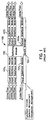
- a conventional packet switch 100 in such a network is shown in Fig. 1. It consists of a number of input interface modules 101 1 to 101 n , a switching module 102, a number of output interface modules 103 1 to 103 n , and a switch manager 104.
- Each input interface module 101 1 to 101 n includes a physical interface to an optic fiber or a cable, such as a coaxial cable commonly used in CATV systems, of the network.
- Each input interface module 101 1 to 101 n performs validation and translation of virtual channel identifier (VCI) and virtual path identifier (VPI), a header error control (HEC) check, statistics collection, conforming traffic validation, and general traffic shaping and policing.
- VCI virtual channel identifier
- VPN virtual path identifier
- HEC header error control
- Switching module 102 routes the packets from each input interface module 101 1 to 101 n to the correct output port, replicates multicast packets, discards packets depending on traffic congestion, and performs priority queuing of packets.
- Each input interface module 103 1 to 103 n also includes a physical interface to an optic fiber or a cable, such as a coaxial cable commonly used in CATV systems, of the network and also performs statistics collection.
- Switch manager 104 performs network management and connection management.
- conventional packet switch 100 may utilize a number of general purpose processors. These processors are usually tightly coupled in a specific configuration, with a connection path between the general purpose processors fixed by hardware, and having one operating system performing unified management for the configuration of processors. However, the general purpose processors may be loosely coupled to one another and operated by independent operating systems. In such a loosely coupled system, if one processor fails, the system can be rebooted and the failed processor replaced with another processor.
- Packet switch 100 is usually provided as a discrete element in a terrestrial based network. As such, there is usually easy access to the packet switch in the event of a fault or malfunction, and in order to perform maintenance, diagnostic tests, or software update installations. Packet switch 100 is thus generally unacceptable for installation in extremely remote locations and the network thus has geographical limitations, such as those imposed by large bodies of water and by space.
- Remote locations also present other obstacles.
- packet switch 100 is a discrete element in a terrestrial communications system, it is usually designed independently without taking into consideration the other elements of the network in which it is installed and is unsuitable for use in a communications satellite. For example, during a long period of operation in orbit, several processors and other elements of a communications satellite may fail. Although a limited amount of redundancy is inherent in those systems with loosely coupled processors described above, there is a need for a structure that efficiently meets the operational performance requirements and provides a framework for more operational robustness, fault tolerance and reliability.
- the preferred embodiments preferably include packet switches installed on board satellites located in a geosynchronous, medium earth, or low earth orbit in space.
- the satellites of these embodiments are preferably capable of operating in different communications applications.
- the fast cell/packet switch having a general architecture particularly well suited for the above objects.
- the architecture of the fast cell/packet switch is preferably flexible so as to be able to satisfy the communications desires of different users.
- the switch must be able to operate at speeds higher than conventional packet switches.
- a real-time control processor is used in the communications satellite of the preferred embodiments. In addition to managing the overall operation of the processing suite, it also provides a packet switch controller performing switch configuration and management, and dissemination functions. This real-time control processor, including the packet switch controller, is resistant to failures yet operates with efficiency to achieve the throughput required of the switch control function.
- Throughput efficiency is achieved through a hierarchical structure and organization combining general purpose processors (GPs) and multiple digital signal processors (DSPs) working in a independent distributed fashion and an optimization of the distribution of software control functions and application software to each processor.
- Robustness to failure is achieved through: (a) a distributed and loosely coupled unifying control method; (b) the use of redundant processors; and (c) the interconnection of the processors by a dual redundant bus structure. In the event of a failure, tasks can be redistributed or a switch can be made to a redundant processor.
- a preferred application of the present invention is in a wideband satellite communications system transmitting payload data over a number of different frequency channels at extremely high data rates.
- the communications satellite of such a system has significant processing requirements, such as demodulation and channelization of the wideband signal into narrowband channels, in addition to the packet switch controller.
- the system may be a "secure" frequency-hopped communications system in which reception of the transmitted waveform by the communications satellite requires dehopping and/or frequency hopping of the data transmitted by the communications satellite.
- Fig. 2 is an overview of an exemplary satellite communications system 200 in which the preferred embodiments of the invention may be implemented.
- the system includes a plurality of communications satellites in geosynchronous orbit, of which communications satellites 201 1 and 201 2 are shown. While the preferred embodiment is for use with a geosynchronous satellite, the invention is also useful with satellites in low earth orbit (LEO) and medium earth orbit (MEO).
- LEO low earth orbit
- MEO medium earth orbit
- the communications satellites are linked to each other and have bidirectional Ka wideband links, containing a number of relatively narrowband signaling channels, with respective network operation centers (NOCs) 202.
- NOCs network operation centers
- the NOCs 202 are in turn connected, perhaps by a wired connection of a suitable type, to a terrestrial network having a satellite management center (SMC) managing the satellite communications system.
- SMC satellite management center
- Each communications satellite 201 has a Ka wideband transmission link, with a number of relatively narrowband data and signaling channels, for transmitting to and from each one of a number of user end terminals (UETs).
- These terminals may be for a single user or they may be a gateway for information to or from a number of users such as with the public switched telephone network (PSTN), the internet or a video server.
- PSTN public switched telephone network
- NOC 202 may communicate with communications satellite 201 to manage the switch through a separate interface to the communications satellite than the UETs, preferably through a different antenna and in a secure mode such as a frequency hopping scheme.
- NOC 202 implements a switch manager 301 for providing some switch configuration and management directives, which may be physically located in NOC 202 or in the SMC, or distributed in some manner therebetween. It should be noted that switch manager 301 in satellite communications system 200 is different than switch manager 104 in conventional packet switch 100.
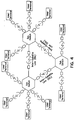
- Fig. 4 is a schematic mapping of the satellite switches and communication links in the exemplary satellite communications system of Fig. 2. It helps illustrate that, when viewed in the aggregate, satellite communications system 200 provides a complete network enabling switched packet data communication between a large number of user terminals.
- communications satellite 201 contains a significant number of elements, only the switch is shown in Fig. 3 merely to emphasize the present invention. Certain functions must be performed to receive, switch and transmit data packets in communications satellite 201 which are, separation of the various uplink channels by frequency, the recovery of estimates of the modulated data packets from the burst body and the passing of the estimates to error control processing, and the performing of decoding.
- the communications satellite 201 has three major functional sub-systems.
- the Ka wideband data transmitted on a satellite uplink is typically frequency division multiplexed (FDM) and further divided by time division multiplexing (TDM) into slots occupied by a transmission burst. These bursts utilize phase shift keying (usually either BPSK or QPSK) as the modulation method.
- the transmission bursts have a header that facilitates forming an initial estimate of the carrier phase and a body which carries information typically decoded by means of an error control code.
- the first functional subsystem has a tuner and channelizers to divide the data of the transmission bursts into sub-bands which are typically 17 MHz, and a demodulator and decoder to perform demodulation and decoding of the data in each sub-band outputted by the channelizers using the initial estimate of the carrier phase formed from the transmission bursts.
- the data packets may be in the form of ATM cells which are well known in the art. When encoding utilizes ATM cells, it is necessary to recover the cells from the decoded data and to perform integrity checks upon them. This processing may include decoding a Reed-Solomon outer code.
- the data transmissions may be configured into any one of three modes. The details of these modes, and of the correspondingly preferred demodulator and decoder, are explained in further detail in the co-pending applications entitled “Buffering and Sequencing of Soft Decisions of Multiple Channels Into a Single Shared Biorthogonal Decoder", filed on January 19, 1999 (TRW Docket No. 22-0071); “Serial to Parallel Conversion of Data to Facilitate Sharing a Single Buffer Among Multiple Channels", filed on January 19, 1999 (TRW Docket No. 22-0072); and “Buffering and Sequencing of Data From Multiple Channels Through a Shared Decoder", filed on January 19, 1999 (TRW Docket No. 22-0073), which applications are incorporated herein by reference in their entirety.
- the second functional sub-system performs cell level functions on the data received from the demodulator and decoder in the first sub-system and performs appropriate switching of the data packets.
- the second sub-system includes the switch shown in Fig. 3. It is the primary focus of this application and will be described in more detail below.
- the third major functional sub-system has downlink modulators for receiving the data packets from the switch and transmitting them to the user end terminals. It is preferably able to accommodate a number of different transmission modes, including a downlink hopping beam scheme.
- Fig. 5 is a general block diagram of the physical implementation of a processor subsystem 501 in a preferred embodiment of communications satellite 201.
- Processor subsystem 501 includes a resource controller 504 which controls demodulator and decoders 503 1 to 503 n as well as fast packet/cell switch 502.
- the demodulator and decoders 503 1 to 503 n receive the signals from the downconverter of, and are themselves part of, the first functional up-link subsystem. Nevertheless, due in part to the amount of data processing performed therein, they are controlled by resource controller 504 together with fast packet/cell switch 502 in processor subsystem 501. The data output from processor subsystem 501 is provided to the modulators of the third downlink functional subsystem.
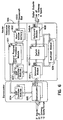
- Fig. 6 is a more detailed block diagram of processor subsystem 501.
- Resource controller 504 has primary and redundant general purpose (GP) computer modules 601, primary and redundant non-volatile (NV) system memories 602, and a number of digital signal processor (DSP) controller modules 603.
- the non-volatile memories 602 have a 1553 interface to the remainder of communications satellite 201 and an autonomous software upload capability.
- the signals from NOC 202 may be forwarded to GP computer modules 601 through this 1553 interface, or through the ATM data paths through a secure uplink channel.
- Each GP computer module 601 has its own memory space associated with it. If a processor is redundant, then the memory that's associated with it is also redundant.
- the non-volatile memory 602 used for storing the static images and configuration information has its own redundant set of memories. It is connected to the spacecraft bus to connect to the telemetry, health and status information, software images, etc., uploaded and sent to the processor subsystem.
- a smart I/O processor contained in the resource controller handles transfer of data in and out of the memory, and locking of memory segments, a region that the type of operation needs to be performed with any communication data that should be run into the specific processor. If it's actually a new image that's being uploaded, then it needs to know that it's in a volatile memory and then signal the processor that the new memory image has been loaded.
- Each GP computer module 601 preferably includes a 32-bit computer capable of performing 40 to 100 million instructions per second (MIPS).
- MIPS million instructions per second
- any suitable general purpose processor such as a Power PC or RH32, may be used.
- a maintenance processor which can be a relatively less powerful 16-bit processor, is also included in each general purpose computer module 601.
- the GP computer modules 601 are connected to demodulator DSP controller modules 604 of demodulators 503 1 to 503 n through a serial interface such as 1773A.
- Each demodulator controller module 604 is preferably implemented using 21020 digital signal processors by TEMIC.
- a dual redundant PBI interface connects demodulator controller modules 604 to demodulator boards 605.
- the number of demodulator boards 605 is preferably equal to the number of IF inputs received by demodulators 503 1 to 503 n .
- the GP computer modules 601 are connected to DSP controller modules 603 through a dual redundant PCI interface.
- Each DSP controller module 603 is connected to a number of modules in switch 502 through a dual redundant PCI bus discussed in more detail below with respect to Fig. 7.
- inbound modules 606 receive the outputs of demodulators 503 1 to 503 n .
- the output of inbound modules 606 is provided to primary and redundant switch fabrics 607.
- Outbound modules 608 receive an output of switch fabrics 607 and provide digital outputs to be sent by the downlink subsystem.
- Multicast modules 609 receive an output of switch fabrics 607 and provide an input to switch fabrics 607 in order to carry out multicasting by port duplication.
- processor subsystem 501 One important feature of the processor subsystem in the preferred embodiments is the redundancy that is built into many of the modules and further provided in the form of dual redundant buses.
- the various modules of processor subsystem 501 described above can be interconnected over duplicates of the same bus. If one of the buses, or one of the components that connects to a bus fails, a switch can be made over to the redundant bus or redundant component.
- the buses are truly physically redundant so that, in the back plane of the module according to the preferred embodiments, there are two separate sets of physical trace lines and separate pin outs for each bus.
- an I/O interface is modified to provide cross copying where the single input and output from the GP processor can be provided to either one of two redundant PCI buses. Both of the processor on the primary GP computer module 601 or the processor on the redundant GP computer module 601 can use either bus. If the GP computer module fails to switch the redundant processor to PCI bus A or if bus A itself fails, then the redundant processor can be connected to PCI bus B.
- PCI bus A or PCI bus B depends on the failure mode of the processor subsystem 501 at the time.
- the failure mode is tracked by registers at multiple places in processor subsystem 501. For example, if a bus is always timing out and not getting its I/O communication handled properly, it can inform the software that's running on those processors connected to and using the bus. Depending on the type and location of the failure, processor subsystem 501 will go to a higher level of decision making to select the failure mode.
- the failure can go all the way to ground if, for example, an entire GP computer module 601 or DSP controller module 603 is inoperable, in which case the module will simply be powered off and routing of data to and from the inoperable module convened so that it does not utilize that module.
- failure modes utilize a number of registers in the 16-bit maintenance processor of the GP computer module 601.
- the maintenance processor continuously updates its registers so the software knows whether or not there is any fault.
- There are also fault registers for each one of the PCI buses which log whether or not there have been any failures on the bus.
- a fault management tab will periodically look at the status of these registers and record any failure information.
- a higher level of decision making process can occur in multiple levels of the design.
- a failure is detected in a processor, an attempt is made to reach the failure or fix it in software. If the failure keeps occurring in a processor, the decision making process to switch out the processor is done elsewhere. If a certain amount of information logged, it can be sent to NOC 202 and to other units of the communications satellite 201 so that a suitable determination can be made in light of the network management. While this process doesn't have to be performed in any particular manner, a key feature of the preferred embodiments is that it isn't made autonomously.
- Fig. 7 more clearly shows a preferred organization of general processors (GP). digital signal processors (DSP), and application specific hardware (ASH) in a loosely coupled distributed processing architecture using dual redundant industry standard PCI buses.
- GP general processors
- DSP digital signal processors
- ASH application specific hardware
- At the top of the hierarchy is the GP computer module that performs unstructured high level control and coordination functions among DSPs and interacts with the spacecraft control processor.
- the GP set communicates with remote DSPs via dual-redundant 1773 standard serial buses and physically co-located DSPs via dual-redundant parallel PCI buses.
- the DSPs connect with ASH using dual redundant PCI buses as well.
- the ASH elements are themselves interconnected in their own specialized internal scheme to provide functionality and redundancy spares management. All of the processors execute their specialized tasks while interacting wit each other as enabled by a loosely coupled multi-processing structure. Some of the processors are powered on and ready to assume processing responsibilities on short order. Other processors are turned off to save power, but are ready to be configured as may be required to replace a failed processor.
- the preferred embodiment using this architecture provides the communications satellite 201 with the advantageous ability to resist faults, reconfigure to correct or compensate for the faults and resume normal operation following the failure of any processor.
- the application processor code is built on top of a layered distributed operating system such that the function can be run on any processor connected to the ASH.
- the failed processor's task assignment and related database is transferred to a new processor connected by dual-redundant buses whereupon it continues the failed processor's task. Dual redundant busing increases the reliability of the system by ensuring that a pat will exist among the processors and the ASH.
- each dual DSP signal processor 701 is actually dual redundant. There are two buses as well as two signal processors. Depending on the location of the failure, for example if the failure is in primary DSP processor 701, it can be switched to the redundant signal processor. If both signal processors fail, the system can be operated by another one of the dual DSP signal processors 701 which can take over the task.
- the elements are grouped together in a number of clusters, each of the clusters having respective redundant cluster buses. If one of the clusters, signal processors, or both, fail, there's no more redundancy within that cluster. In such a case, one of the signal processors from another cluster can take over the task of the failed signal processor.
- the plurality of clusters allow switchover between different processors without affecting the main dual redundant bus in resource controller 504.
- the operation is mostly carried out in software.
- a specific path to each DSP is independent from the other ones that makes it a more distributed system as opposed to both of them working on the exact same task at the exact same time.
- the software will petition the amount of work that is done on each computer. That makes it distributed so that they don't have to communicate tightly between them in looped up type mode, for example.
- the DSPs have conventional real-time OS interrupts and loop timers to detect whether processing is caught in a loop. There are different applications associated with each timer. For example, on a DSP handling task switching, if a task gets stuck and doesn't switch off properly, it can generate a time-out and interrupt to indicate the presence of an error in the system, communication passes between different processors and is used to signal an event.
- the events are all generic in the sense that they interrupt the processors and timers that time out.
- the tightly or more closely coupled processors can have a higher bandwidth and communication to the processors in terms of how the task is distributed. They can be set up so that they communicate more often and can be reallocated if they need to communicate more often. Since they're loosely coupled, they become more independent. They can operate separately and still communicate as much information.
- the specifications for the PCI Local Bus, Revision 2.1 has a number of configurable items.
- the preferred embodiment defines some of those configurable items for fault status.
- Additional status registers are included for each one of the dual redundant PCI buses that will log certain information transferred on the bus. These extensions include, for example, parity for the PCI bus and additional hand out information for indicating whether or not there is confirmation of receipt of data.
- memory and the switch modules connected to a PCI bus is an integrated chip that can become a master in the system so there's a controllable connection to the PCI bus within each of those blocks. There's at least one state in each of those blocks in which that particular block is connected to the PCI bus and can be a master of the bus. Consequently, while there are multiple possible masters and slaves, there is in any instance one chip responsible for arbitrating the information to and from each of the processors that transfer data to each other over the bus.
Landscapes
- Engineering & Computer Science (AREA)
- Computer Networks & Wireless Communication (AREA)
- Signal Processing (AREA)
- Physics & Mathematics (AREA)
- Astronomy & Astrophysics (AREA)
- Aviation & Aerospace Engineering (AREA)
- General Physics & Mathematics (AREA)
- Computer Security & Cryptography (AREA)
- Data Exchanges In Wide-Area Networks (AREA)
- Hardware Redundancy (AREA)
- Safety Devices In Control Systems (AREA)
- Radio Relay Systems (AREA)
Applications Claiming Priority (2)
| Application Number | Priority Date | Filing Date | Title |
|---|---|---|---|
| US25735499A | 1999-02-25 | 1999-02-25 | |
| US257354 | 1999-02-25 |
Publications (2)
| Publication Number | Publication Date |
|---|---|
| EP1032167A2 true EP1032167A2 (de) | 2000-08-30 |
| EP1032167A3 EP1032167A3 (de) | 2004-06-16 |
Family
ID=22975973
Family Applications (1)
| Application Number | Title | Priority Date | Filing Date |
|---|---|---|---|
| EP00102208A Withdrawn EP1032167A3 (de) | 1999-02-25 | 2000-02-10 | Redundantes Steuerungssystem für eine Paketvermittlungseinrichtung |
Country Status (3)
| Country | Link |
|---|---|
| EP (1) | EP1032167A3 (de) |
| JP (1) | JP2000252904A (de) |
| CA (1) | CA2298916A1 (de) |
Cited By (2)
| Publication number | Priority date | Publication date | Assignee | Title |
|---|---|---|---|---|
| EP1328075A3 (de) * | 2002-01-11 | 2003-12-17 | Northrop Grumman Corporation | Redundante Schaltung einer Nutzlast für einen Satelliten |
| WO2017123310A3 (en) * | 2015-11-12 | 2017-10-05 | Space Systems/Loral, Llc | Channelizer supplemented spacecraft telemetry and command functionality |
Families Citing this family (5)
| Publication number | Priority date | Publication date | Assignee | Title |
|---|---|---|---|---|
| JP2002171572A (ja) * | 2000-12-01 | 2002-06-14 | Hitachi Ltd | 無線基地局、パケット中継装置並びに無線通信システム |
| JP5680434B2 (ja) * | 2011-02-14 | 2015-03-04 | 富士通テレコムネットワークス株式会社 | Pciバス制御システム |
| CN106484572A (zh) * | 2016-12-09 | 2017-03-08 | 天津凌天科技有限公司 | 一种双冗余计算机系统 |
| CN106788681A (zh) * | 2016-12-29 | 2017-05-31 | 北京邮电大学 | 一种信息转发方法及天基信息网络系统 |
| CN112650168A (zh) * | 2020-12-16 | 2021-04-13 | 武汉第二船舶设计研究所(中国船舶重工集团公司第七一九研究所) | 分布式控制系统及其动态调度资源的方法 |
Family Cites Families (2)
| Publication number | Priority date | Publication date | Assignee | Title |
|---|---|---|---|---|
| US4931802A (en) * | 1988-03-11 | 1990-06-05 | Communications Satellite Corporation | Multiple spot-beam systems for satellite communications |
| AU3124393A (en) * | 1991-11-08 | 1993-06-07 | Calling Communications Corporation | Switching methods for satellite communication system |
-
2000
- 2000-02-10 EP EP00102208A patent/EP1032167A3/de not_active Withdrawn
- 2000-02-17 CA CA002298916A patent/CA2298916A1/en not_active Abandoned
- 2000-02-21 JP JP2000042768A patent/JP2000252904A/ja active Pending
Cited By (3)
| Publication number | Priority date | Publication date | Assignee | Title |
|---|---|---|---|---|
| EP1328075A3 (de) * | 2002-01-11 | 2003-12-17 | Northrop Grumman Corporation | Redundante Schaltung einer Nutzlast für einen Satelliten |
| WO2017123310A3 (en) * | 2015-11-12 | 2017-10-05 | Space Systems/Loral, Llc | Channelizer supplemented spacecraft telemetry and command functionality |
| US10033455B2 (en) | 2015-11-12 | 2018-07-24 | Space Systems/Loral, Llc | Channelizer supplemented spacecraft telemetry and command functionality |
Also Published As
| Publication number | Publication date |
|---|---|
| CA2298916A1 (en) | 2000-08-25 |
| JP2000252904A (ja) | 2000-09-14 |
| EP1032167A3 (de) | 2004-06-16 |
Similar Documents
| Publication | Publication Date | Title |
|---|---|---|
| US6400925B1 (en) | Packet switch control with layered software | |
| US4907232A (en) | Fault-tolerant parallel processing system | |
| JP3640187B2 (ja) | マルチプロセッサシステムの障害処理方法、マルチプロセッサシステム及びノード | |
| US5572674A (en) | Method of dynamically adjusting SNA network control program parameters | |
| EP1793542A2 (de) | Non-Stop-Weiterleitung in einem Multi-Chassis-Router | |
| EP1518337A2 (de) | Verminderung von service-unterbrechungen in einem mehrfachstrahlen-satellitensystem | |
| CN110830104B (zh) | 低轨卫星网络结构、组网方法以及控制器和介质 | |
| US7840852B2 (en) | Method and system for environmentally adaptive fault tolerant computing | |
| EP1032167A2 (de) | Redundantes Steuerungssystem für eine Paketvermittlungseinrichtung | |
| WO2012109254A1 (en) | Distributed management of leo satellite networks with management agility and network efficiency | |
| CN113726415B (zh) | 一种数据传输方法、测控导航综合系统、电子设备及介质 | |
| CN115441934B (zh) | 一种星座卫星一体化高速数据交互网络架构 | |
| CA2562506C (en) | Data monitoring and recovery | |
| CN103220169B (zh) | 一种航天器层状信息流传输系统 | |
| CN210807274U (zh) | 低轨卫星网络结构 | |
| US20060023627A1 (en) | Computing system redundancy and fault tolerance | |
| Peng et al. | A new SpaceWire protocol for reconfigurable distributed on-board computers: SpaceWire networks and protocols, long paper | |
| CN116865830A (zh) | 一种基于星上处理的星载交换控制装置 | |
| JP7745816B1 (ja) | 制御局、制御方法、制御回路および記憶媒体 | |
| US6538869B1 (en) | Protection switch architecture for digital cross-connect system | |
| Rozhdestvenskaya et al. | Additional approaches for onboard networks FDIR | |
| KR100258243B1 (ko) | 전전자 교환기 프로세서의 절체시의 메시지 복구 방법 | |
| DECHANT et al. | AOSP-Multiprocessor architecture and system considerations | |
| Reed | Operating and managing a commercial worldwide network | |
| Farazdel et al. | Understanding and using the SP Switch |
Legal Events
| Date | Code | Title | Description |
|---|---|---|---|
| PUAI | Public reference made under article 153(3) epc to a published international application that has entered the european phase |
Free format text: ORIGINAL CODE: 0009012 |
|
| AK | Designated contracting states |
Kind code of ref document: A2 Designated state(s): AT BE CH CY DE DK ES FI FR GB GR IE IT LI LU MC NL PT SE |
|
| AX | Request for extension of the european patent |
Free format text: AL;LT;LV;MK;RO;SI |
|
| RAP1 | Party data changed (applicant data changed or rights of an application transferred) |
Owner name: NORTHROP GRUMMAN CORPORATION |
|
| RAP1 | Party data changed (applicant data changed or rights of an application transferred) |
Owner name: NORTHROP GRUMMAN CORPORATION |
|
| PUAL | Search report despatched |
Free format text: ORIGINAL CODE: 0009013 |
|
| AK | Designated contracting states |
Kind code of ref document: A3 Designated state(s): AT BE CH CY DE DK ES FI FR GB GR IE IT LI LU MC NL PT SE |
|
| AX | Request for extension of the european patent |
Extension state: AL LT LV MK RO SI |
|
| RIC1 | Information provided on ipc code assigned before grant |
Ipc: 7H 04Q 11/00 B Ipc: 7H 04L 12/56 A |
|
| STAA | Information on the status of an ep patent application or granted ep patent |
Free format text: STATUS: THE APPLICATION IS DEEMED TO BE WITHDRAWN |
|
| 18D | Application deemed to be withdrawn |
Effective date: 20040901 |
|
| REG | Reference to a national code |
Ref country code: DE Ref legal event code: 8566 |