EP1028378A2 - Robuste und Rückstellbare Interprozessverriegelung - Google Patents
Robuste und Rückstellbare Interprozessverriegelung Download PDFInfo
- Publication number
- EP1028378A2 EP1028378A2 EP00200223A EP00200223A EP1028378A2 EP 1028378 A2 EP1028378 A2 EP 1028378A2 EP 00200223 A EP00200223 A EP 00200223A EP 00200223 A EP00200223 A EP 00200223A EP 1028378 A2 EP1028378 A2 EP 1028378A2
- Authority
- EP
- European Patent Office
- Prior art keywords
- lock
- acquire
- attempt
- processes
- holding
- Prior art date
- Legal status (The legal status is an assumption and is not a legal conclusion. Google has not performed a legal analysis and makes no representation as to the accuracy of the status listed.)
- Withdrawn
Links
Images


Classifications
-
- G—PHYSICS
- G06—COMPUTING OR CALCULATING; COUNTING
- G06F—ELECTRIC DIGITAL DATA PROCESSING
- G06F9/00—Arrangements for program control, e.g. control units
- G06F9/06—Arrangements for program control, e.g. control units using stored programs, i.e. using an internal store of processing equipment to receive or retain programs
- G06F9/46—Multiprogramming arrangements
- G06F9/52—Program synchronisation; Mutual exclusion, e.g. by means of semaphores
- G06F9/526—Mutual exclusion algorithms
Definitions
- the present invention relates to inter-process synchronization mechanisms in computer systems. More specifically, the present invention relates to a method and apparatus for implementing inter-process locks that provides for robust recovery in the event a process fails while holding a lock.
- mutex locks mutual exclusion locks
- a process typically attempts to "acquire" a lock before executing a critical section of code or accessing specific items of shared data. If no other process presently holds the lock, the process acquires the lock by setting the lock to a locked state. After acquiring the lock, the process is free to execute the critical section of code or manipulate the items of shared data without interference from other processes. While the process holds the lock, other processes attempting to acquire the lock will "block” waiting for the lock, and will not be able to proceed until the lock is released. After the process completes the task, it releases the lock, thereby allowing other processes to acquire the lock.
- Mutual exclusion locks create complications for computer systems that operate robustly. Such "robust" computer systems are designed to continue processing even if some of the processes or processors involved in a computational task fail during program execution. If a process fails while holding a mutual exclusion lock, other processes attempting to acquire the lock will "hang,” waiting for the failed process to release the lock. The computational task will consequently come to a halt.
- What is needed is a method or an apparatus that provides robust recoverable locks that do not let other processes hang if a process holding a lock fails, and which allows the other processes to restore the state protected by the lock to a consistent state.
- One embodiment of the present invention provides a system that supports recovery in the event a previous process holding a lock used for mutual exclusion purposes loses ownership of the lock. This loss of ownership may occur due to the previous process dying or the lock becoming unmapped.
- a process first attempts to acquire the lock. If the attempt to acquire the lock returns with an error indicating that the previous process holding the lock lost ownership of the lock, the process attempts to make program state protected by the lock consistent. If the attempt to make the program state consistent is successful, the system reinitializes and unlocks the lock. Otherwise, the system marks the lock as unrecoverable so that subsequent processes attempting to acquire the lock are notified that the lock is not recoverable.
- One aspect of the present invention includes receiving a notification in an operating system that a process died, and determining if the process died while holding a lock. If the process died while holding the lock, the system marks the lock to indicate to subsequent acquirers of the lock that a previous holder of the lock died, and unlocks the lock so that other processes may acquire the lock.
- the process if the attempt to acquire the lock returns with an error indicating the lock is not recoverable, the process performs operations to work around the program state that is inconsistent, and reinitializes the lock.
- a computer readable storage medium which may be any device or medium that can store code and/or data for use by a computer system.
- the carrier wave may originate from a communications network, such as the Internet.
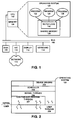
- FIG. 1 illustrates a computer system that is able to execute multiple processes in accordance with an embodiment of the present invention.
- the system includes central processing unit (CPU) 102, which is coupled to memory 104.
- CPU 102 may include any type of computing device that is capable of processing code and/or data. This includes, but is not limited to, a mainframe processor, a multi-processor, a microprocessor, a device controller, and a computational unit within an appliance.
- Memory 104 includes any type of random access memory that can be used to store code and/or data for execution by CPU 102.
- CPU 102 may be coupled to memory 104 in a number of ways, including through a dedicated processor-to-memory bus, through a system bus or through an intervening core logic unit.
- CPU 102 is additionally coupled to a number of other peripherals through bus 106.
- peripherals include disk 108, network interface controller (NIC) 110, display 112 and keyboard 114.
- Disk 108 refers to any type of secondary storage device, including a magnetic or optical disk drive or a tape drive.
- NIC 110 includes circuitry for coupling the computer system to a computer network 113.
- Network 113 may be any type of network or collection of networks that can be used to couple together computer systems, such as a local area network and/or a wide area network.
- Display 112 may be any output device for the computer system, including a computer monitor for graphical images or an audio output device, for audio data.
- Keyboard 114 may include any type of device for receiving input into a computer system. This includes, but is not limited to, a computer keyboard and a computer mouse.
- FIG. 1 Note that although a particular implementation of a computer system is illustrated in FIG. 1, the present invention applies generally to all computer systems that can run multiple processes, including computer systems with multiple processors.
- FIG. 1 additionally illustrates operating system 120, which facilitates execution of a collection of processes, including processes 122, 124 and 126.
- Processes 122, 124 and 126 may be any type of processes that are commonly executed by a computer system, including lightweight processes and heavyweight processes, as well as system processes and user processes.
- Shared memory 128 includes mutex lock 130, which is mutual exclusion lock used by processes 122, 124 and 126 for providing exclusive access to a critical section of code or to items of shared data in memory 104.
- FIG. 2 illustrates part of the internal structure of operating system 120 in accordance with an embodiment of the present invention.
- Operating system 120 includes a number of layers and functional modules, including user threads layer 208, kernel threads layer 206, scheduler 204 and device driver 202.
- Device driver 202 includes device driven for operating devices attached to the computer system.
- device driver 202 may include a device driver for accessing disk 108 and a device driver for accessing NIC 110.
- Scheduler 204 includes resources for scheduling threads and or processes for execution on one or more central processing units. Scheduler 204 manipulates both kernel threads 206 and user threads 208. Kernel threads 206 include kernel-level threads that operate entirely on operating system functions inside of operating system 120, as well as lightweight process threads 207 that are associated with user threads 208. User threads 208 are used to execute user programs. In the embodiment illustrated in FIG. 2, multiple user threads 208 can be mapped onto a single lightweight process thread 207.
- FIG. 3 illustrates some of the data structures involved in implementing robust locks in accordance with an embodiment of the present invention.
- This embodiment illustrates process state 302, which contains state associated with a process that has access to mutex lock 308, such as process 122 from FIG. 1.
- Process state 302 includes state associated with process 122. This state is stored in a data structure (or data object) within operating system 120. For example, process state 302 includes a list of open files 304 for the process.
- lock registry 306 which includes a list of locks that may be in use by process 122. For example, in FIG. 3, lock registry 306 contains a pointer to mutex lock 308.
- Lock registry 306 allows operating system 120 to determine if process 122 died while holding a lock. After a mutex lock 308 is initialized, it is registered in the lock registry 306 of any processes that desires to have access to mutex lock 308. For example, mutex lock 308 may be registered in lock registry 306 for process 122. This allows the operating system to determine and identify any locks that process 122 holds when and if process 122 dies. Note that lock registry 306 may alternatively reside outside of process state 302 in a separate lock registry table that is indexed by process identifier.
- Mutex lock 308 contains state associated with a lock. This state includes lock flag 310, consistency flag 312, recoverability indicator 314 and lock type indicator 316.
- Lock flag 310 includes a byte or word of data indicating whether or not mutex lock 308 is locked. While mutex lock 308 is held by a process, lock flag 310 is set to a locked state so that other processes cannot acquire mutex lock 308.
- Consistency flag 312 indicates whether or not the program state protected by mutex lock 308 is consistent.
- Recoverability indicator 314 indicates whether or not the process state protected by mutex lock 308 is recoverable after a process holding mutex lock 308 dies.
- lock type indicator 316 indicates what type of lock mutex lock 308 is. For example, lock type indicator 316 may indicate whether mutex lock 308 is a robust lock or a non-robust lock.
- FIG. 4 is a flow chart illustrating how an operating system handles a process that dies while holding a mutex lock 308 in accordance with an embodiment of the present invention
- operating system 120 first receives a notification that a process 122 died (step 402).
- Operating system 120 examines a lock registry 306 within process state 302 to determine if process 122 died while holding mutex lock 308 (step 404). If so, operating system 120 marks the mutex lock 308 to indicate that a previous process died while holding mutex lock 308, and then unlocks mutex lock 308 by unmarking lock flag 310 in FIG. 3. This allows a subsequent process to grab mutex lock 308 and to determine that process 122 died while holding mutex lock 308.
- operating system 120 may indicate that a previous process died while holding mutex lock 308 by setting consistency flag 312 in FIG. 3 to an inconsistent state.
- consistency flag 312 may be set by a process that has acquired mutex lock 308 prior modifying the state protected by mutex lock 308. After this process has finished modifying the state protected by mutex lock 308, it unsets consistency flag 312.
- FIG. 5 is a flow chart illustrating how a robust lock is used in accordance with an embodiment of the present invention.
- a process such as process 122 from FIG. 1, makes a function call in an attempt to acquire a lock, such as mutex lock 308 from FIG. 3 (step 502).
- the function call examines lock flag 310 to determine if another process presently holds mutex lock 308. If another process currently holds mutex lock 308, process 122 blocks on mutex lock 308. When the other process ultimately releases mutex lock 308, process 122 acquires mutex lock 308 by marking lock flag 310 and the function call returns.
- the system performs the required work on the program state protected by the mutex lock 308 (step 514). After the required work is performed, the system releases mutex lock 308 by unmarking lock flag 310 so that another process can acquire mutex lock 308.
- process 122 attempts to make the program state protected by mutex lock 308 consistent (step 504). If process 122 is able the make the program state consistent, it re-initializes mutex lock 308 and then unlocks mutex lock 308 (step 506). If process 122 is not successful in making the program state consistent, it marks mutex lock 308 as unrecoverable (by setting recoverability indicator 314 in FIG.
- Process 122 will additionally unmark lock flag 310 to unlock mutex lock 308. This allows other processes to acquire mutex lock 308. Process 122 may also wake up processes that are waiting on mutex lock 308.
- process 122 knows that a previous process has already attempted to make the program state protected by mutex lock 308 consistent.
- Process 122 attempts to work around the inconsistent program state by, for example, repeating program operations that were required to produce the program state to begin with, or alternatively by restarting the program from the beginning (step 510).
- process 122 destroys mutex lock 308 (step 512) and reinitializes mutex lock 308 so that another process can acquire mutex lock 308 (step 512).
- Tables 1A and 1B present an example in the C programming language of how one embodiment of robust locks is used.
- the first portion of the main program (in Table 1A) initializes the mutex lock.
- the second portion of the main program (in Table 1B) includes a loop that cycles through a "switch" statement. This switch statement handles the three cases of "owner dead,” “not recoverable” and "no error,” which correspond to the three-way branch in the flow chart of FIG.5.
Landscapes
- Engineering & Computer Science (AREA)
- Software Systems (AREA)
- Theoretical Computer Science (AREA)
- Physics & Mathematics (AREA)
- General Engineering & Computer Science (AREA)
- General Physics & Mathematics (AREA)
- Information Retrieval, Db Structures And Fs Structures Therefor (AREA)
- Stored Programmes (AREA)
Applications Claiming Priority (2)
| Application Number | Priority Date | Filing Date | Title |
|---|---|---|---|
| US09/235,881 US6301676B1 (en) | 1999-01-22 | 1999-01-22 | Robust and recoverable interprocess locks |
| US235881 | 1999-01-22 |
Publications (2)
| Publication Number | Publication Date |
|---|---|
| EP1028378A2 true EP1028378A2 (de) | 2000-08-16 |
| EP1028378A3 EP1028378A3 (de) | 2004-03-17 |
Family
ID=22887265
Family Applications (1)
| Application Number | Title | Priority Date | Filing Date |
|---|---|---|---|
| EP00200223A Withdrawn EP1028378A3 (de) | 1999-01-22 | 2000-01-20 | Robuste und Rückstellbare Interprozessverriegelung |
Country Status (3)
| Country | Link |
|---|---|
| US (1) | US6301676B1 (de) |
| EP (1) | EP1028378A3 (de) |
| JP (1) | JP4327972B2 (de) |
Cited By (1)
| Publication number | Priority date | Publication date | Assignee | Title |
|---|---|---|---|---|
| GB2367162A (en) * | 2000-03-09 | 2002-03-27 | Dell Products Lp | System and method for managing storage resources in a clustered computing environment |
Families Citing this family (21)
| Publication number | Priority date | Publication date | Assignee | Title |
|---|---|---|---|---|
| US6499048B1 (en) | 1998-06-30 | 2002-12-24 | Sun Microsystems, Inc. | Control of multiple computer processes using a mutual exclusion primitive ordering mechanism |
| US6574749B1 (en) * | 1999-10-29 | 2003-06-03 | Nortel Networks Limited | Reliable distributed shared memory |
| US6742135B1 (en) * | 2000-11-07 | 2004-05-25 | At&T Corp. | Fault-tolerant match-and-set locking mechanism for multiprocessor systems |
| US7287258B1 (en) * | 2001-08-31 | 2007-10-23 | International Business Machines Corporation | Thread consistency support system and method |
| US7200846B2 (en) * | 2002-08-05 | 2007-04-03 | Sun Microsystems, Inc. | System and method for maintaining data synchronization |
| US6886081B2 (en) * | 2002-09-17 | 2005-04-26 | Sun Microsystems, Inc. | Method and tool for determining ownership of a multiple owner lock in multithreading environments |
| US7571354B2 (en) * | 2003-05-09 | 2009-08-04 | Sun Microsystems, Inc. | System and method for request routing |
| US7100076B2 (en) * | 2003-05-09 | 2006-08-29 | Hewlett-Packard Development Company, L.P. | Minimum latency reinstatement of database transaction locks |
| US20050022202A1 (en) * | 2003-07-09 | 2005-01-27 | Sun Microsystems, Inc. | Request failover mechanism for a load balancing system |
| US7284151B2 (en) * | 2003-07-21 | 2007-10-16 | Oracle International Corporation | Conditional data access after database system failure |
| US7493618B2 (en) * | 2003-09-19 | 2009-02-17 | International Business Machines Corporation | Fault tolerant mutual exclusion locks for shared memory systems |
| US7168001B2 (en) * | 2004-02-06 | 2007-01-23 | Hewlett-Packard Development Company, L.P. | Transaction processing apparatus and method |
| US7315910B2 (en) * | 2005-06-16 | 2008-01-01 | Oracle International Corporation | Techniques for handling lock-related inconsistencies |
| US7502957B2 (en) * | 2005-09-09 | 2009-03-10 | International Business Machines Corporation | Method and system to execute recovery in non-homogeneous multi processor environments |
| US7788529B2 (en) * | 2005-12-08 | 2010-08-31 | International Business Machines Corporation | Method for safely interrupting blocked work in a server |
| WO2008111124A1 (ja) * | 2007-03-12 | 2008-09-18 | Fujitsu Limited | マルチcpu異常検出復旧システム、方法及びプログラム |
| US7925631B1 (en) * | 2007-08-08 | 2011-04-12 | Network Appliance, Inc. | Method and system for reporting inconsistency of file system persistent point in time images and automatically thawing a file system |
| CN102103523A (zh) * | 2009-12-22 | 2011-06-22 | 国际商业机器公司 | 锁分配控制的方法和装置 |
| US8682876B2 (en) * | 2012-04-03 | 2014-03-25 | Sas Institute, Inc. | Techniques to perform in-database computational programming |
| US9665432B2 (en) * | 2014-08-07 | 2017-05-30 | Microsoft Technology Licensing, Llc | Safe data access following storage failure |
| US9847918B2 (en) | 2014-08-12 | 2017-12-19 | Microsoft Technology Licensing, Llc | Distributed workload reassignment following communication failure |
Family Cites Families (4)
| Publication number | Priority date | Publication date | Assignee | Title |
|---|---|---|---|---|
| US5136704A (en) * | 1989-06-28 | 1992-08-04 | Motorola, Inc. | Redundant microprocessor control system using locks and keys |
| JPH06342396A (ja) * | 1990-07-02 | 1994-12-13 | Internatl Business Mach Corp <Ibm> | 共有データのアクセスを直列化する方法及び装置 |
| US5623670A (en) * | 1995-02-17 | 1997-04-22 | Lucent Technologies Inc. | Method and apparatus for crash safe enforcement of mutually exclusive access to shared resources in a multitasking computer system |
| US5734817A (en) * | 1995-03-01 | 1998-03-31 | Unisys Corporation | Method for making a data base available to a user program during data base recovery |
-
1999
- 1999-01-22 US US09/235,881 patent/US6301676B1/en not_active Expired - Lifetime
-
2000
- 2000-01-20 EP EP00200223A patent/EP1028378A3/de not_active Withdrawn
- 2000-01-21 JP JP2000013313A patent/JP4327972B2/ja not_active Expired - Lifetime
Cited By (3)
| Publication number | Priority date | Publication date | Assignee | Title |
|---|---|---|---|---|
| GB2367162A (en) * | 2000-03-09 | 2002-03-27 | Dell Products Lp | System and method for managing storage resources in a clustered computing environment |
| GB2367162B (en) * | 2000-03-09 | 2003-09-10 | Dell Products Lp | System and method for managing storage resources in a clustered computing environment |
| KR100777437B1 (ko) * | 2000-03-09 | 2007-11-21 | 델 프로덕트 엘 피 | 클러스터 컴퓨팅 환경에서의 스토리지 자원관리 시스템 및 방법 |
Also Published As
| Publication number | Publication date |
|---|---|
| EP1028378A3 (de) | 2004-03-17 |
| JP2000215070A (ja) | 2000-08-04 |
| JP4327972B2 (ja) | 2009-09-09 |
| US6301676B1 (en) | 2001-10-09 |
Similar Documents
| Publication | Publication Date | Title |
|---|---|---|
| EP1028378A2 (de) | Robuste und Rückstellbare Interprozessverriegelung | |
| EP0747815B1 (de) | Verfahren und Gerät zur Vermeidung von Verklemmungen durch Serialisierung des Multithreaded-Zugriffes auf unsichere Betriebsmittel | |
| US5442763A (en) | System and method for preventing deadlock in multiprocessor multiple resource instructions | |
| JP4759273B2 (ja) | データ処理装置及び共用資源へのアクセス制御方法 | |
| US6546443B1 (en) | Concurrency-safe reader-writer lock with time out support | |
| US4318182A (en) | Deadlock detection and prevention mechanism for a computer system | |
| US6173442B1 (en) | Busy-wait-free synchronization | |
| Drepper | Futexes are tricky | |
| US9218307B2 (en) | Reader-writer synchronization with high-performance readers and low-latency writers | |
| US5966543A (en) | Method of using collaborative spinlocks to provide exclusive access to a resource in a multiprocessor computer system | |
| US8234646B2 (en) | Fault tolerant mutual exclusion locks for shared memory systems | |
| US20070157200A1 (en) | System and method for generating a lock-free dual queue | |
| JPH1115793A (ja) | 資源の保全性を保護する方法 | |
| EP1435572A2 (de) | Verfahren und Vorrichtung zur dynamischen Ressourcenverriegelung | |
| KR100850387B1 (ko) | 패시브 스레드 및 액티브 세마포어를 갖는 처리 아키텍쳐 | |
| EP1163581B1 (de) | Monitorkonvertierung in einem multi-threaded computer system | |
| US8769546B2 (en) | Busy-wait time for threads | |
| US8495642B2 (en) | Mechanism for priority inheritance for read/write locks | |
| US6349322B1 (en) | Fast synchronization for programs written in the JAVA programming language | |
| US7747996B1 (en) | Method of mixed lock-free and locking synchronization | |
| US7793023B2 (en) | Exclusion control | |
| Michael et al. | Relative performance of preemption-safe locking and non-blocking synchronization on multiprogrammed shared memory multiprocessors | |
| US7743234B2 (en) | Facilitating communication within an emulated processing environment | |
| JP3422504B2 (ja) | タスク間排他制御方法 | |
| JP3764282B2 (ja) | プログラム制御システムの制御装置 |
Legal Events
| Date | Code | Title | Description |
|---|---|---|---|
| PUAI | Public reference made under article 153(3) epc to a published international application that has entered the european phase |
Free format text: ORIGINAL CODE: 0009012 |
|
| AK | Designated contracting states |
Kind code of ref document: A2 Designated state(s): AT BE CH CY DE DK ES FI FR GB GR IE IT LI LU MC NL PT SE |
|
| AX | Request for extension of the european patent |
Free format text: AL;LT;LV;MK;RO;SI |
|
| PUAL | Search report despatched |
Free format text: ORIGINAL CODE: 0009013 |
|
| AK | Designated contracting states |
Kind code of ref document: A3 Designated state(s): AT BE CH CY DE DK ES FI FR GB GR IE IT LI LU MC NL PT SE |
|
| AX | Request for extension of the european patent |
Extension state: AL LT LV MK RO SI |
|
| 17P | Request for examination filed |
Effective date: 20040514 |
|
| 17Q | First examination report despatched |
Effective date: 20040707 |
|
| AKX | Designation fees paid |
Designated state(s): DE FR GB IE |
|
| STAA | Information on the status of an ep patent application or granted ep patent |
Free format text: STATUS: THE APPLICATION IS DEEMED TO BE WITHDRAWN |
|
| 18D | Application deemed to be withdrawn |
Effective date: 20041118 |