EP1024204A2 - Method of manufacturing a high Mn non-magnetic steel sheet for cryogenic temperature use - Google Patents
Method of manufacturing a high Mn non-magnetic steel sheet for cryogenic temperature use Download PDFInfo
- Publication number
- EP1024204A2 EP1024204A2 EP00101428A EP00101428A EP1024204A2 EP 1024204 A2 EP1024204 A2 EP 1024204A2 EP 00101428 A EP00101428 A EP 00101428A EP 00101428 A EP00101428 A EP 00101428A EP 1024204 A2 EP1024204 A2 EP 1024204A2
- Authority
- EP
- European Patent Office
- Prior art keywords
- temperature
- rolling
- annealing
- sheet
- hot
- Prior art date
- Legal status (The legal status is an assumption and is not a legal conclusion. Google has not performed a legal analysis and makes no representation as to the accuracy of the status listed.)
- Withdrawn
Links
Images
Classifications
-
- C—CHEMISTRY; METALLURGY
- C22—METALLURGY; FERROUS OR NON-FERROUS ALLOYS; TREATMENT OF ALLOYS OR NON-FERROUS METALS
- C22C—ALLOYS
- C22C38/00—Ferrous alloys, e.g. steel alloys
- C22C38/001—Ferrous alloys, e.g. steel alloys containing N
-
- C—CHEMISTRY; METALLURGY
- C21—METALLURGY OF IRON
- C21D—MODIFYING THE PHYSICAL STRUCTURE OF FERROUS METALS; GENERAL DEVICES FOR HEAT TREATMENT OF FERROUS OR NON-FERROUS METALS OR ALLOYS; MAKING METAL MALLEABLE, e.g. BY DECARBURISATION OR TEMPERING
- C21D8/00—Modifying the physical properties of ferrous metals or ferrous alloys by deformation combined with, or followed by, heat treatment
- C21D8/02—Modifying the physical properties of ferrous metals or ferrous alloys by deformation combined with, or followed by, heat treatment during manufacturing of plates or strips
-
- C—CHEMISTRY; METALLURGY
- C22—METALLURGY; FERROUS OR NON-FERROUS ALLOYS; TREATMENT OF ALLOYS OR NON-FERROUS METALS
- C22C—ALLOYS
- C22C38/00—Ferrous alloys, e.g. steel alloys
- C22C38/18—Ferrous alloys, e.g. steel alloys containing chromium
- C22C38/38—Ferrous alloys, e.g. steel alloys containing chromium with more than 1.5% by weight of manganese
-
- C—CHEMISTRY; METALLURGY
- C22—METALLURGY; FERROUS OR NON-FERROUS ALLOYS; TREATMENT OF ALLOYS OR NON-FERROUS METALS
- C22C—ALLOYS
- C22C38/00—Ferrous alloys, e.g. steel alloys
- C22C38/18—Ferrous alloys, e.g. steel alloys containing chromium
- C22C38/40—Ferrous alloys, e.g. steel alloys containing chromium with nickel
- C22C38/58—Ferrous alloys, e.g. steel alloys containing chromium with nickel with more than 1.5% by weight of manganese
-
- C—CHEMISTRY; METALLURGY
- C21—METALLURGY OF IRON
- C21D—MODIFYING THE PHYSICAL STRUCTURE OF FERROUS METALS; GENERAL DEVICES FOR HEAT TREATMENT OF FERROUS OR NON-FERROUS METALS OR ALLOYS; MAKING METAL MALLEABLE, e.g. BY DECARBURISATION OR TEMPERING
- C21D8/00—Modifying the physical properties of ferrous metals or ferrous alloys by deformation combined with, or followed by, heat treatment
- C21D8/02—Modifying the physical properties of ferrous metals or ferrous alloys by deformation combined with, or followed by, heat treatment during manufacturing of plates or strips
- C21D8/0221—Modifying the physical properties of ferrous metals or ferrous alloys by deformation combined with, or followed by, heat treatment during manufacturing of plates or strips characterised by the working steps
- C21D8/0226—Hot rolling
-
- C—CHEMISTRY; METALLURGY
- C21—METALLURGY OF IRON
- C21D—MODIFYING THE PHYSICAL STRUCTURE OF FERROUS METALS; GENERAL DEVICES FOR HEAT TREATMENT OF FERROUS OR NON-FERROUS METALS OR ALLOYS; MAKING METAL MALLEABLE, e.g. BY DECARBURISATION OR TEMPERING
- C21D8/00—Modifying the physical properties of ferrous metals or ferrous alloys by deformation combined with, or followed by, heat treatment
- C21D8/02—Modifying the physical properties of ferrous metals or ferrous alloys by deformation combined with, or followed by, heat treatment during manufacturing of plates or strips
- C21D8/0221—Modifying the physical properties of ferrous metals or ferrous alloys by deformation combined with, or followed by, heat treatment during manufacturing of plates or strips characterised by the working steps
- C21D8/0236—Cold rolling
-
- C—CHEMISTRY; METALLURGY
- C21—METALLURGY OF IRON
- C21D—MODIFYING THE PHYSICAL STRUCTURE OF FERROUS METALS; GENERAL DEVICES FOR HEAT TREATMENT OF FERROUS OR NON-FERROUS METALS OR ALLOYS; MAKING METAL MALLEABLE, e.g. BY DECARBURISATION OR TEMPERING
- C21D8/00—Modifying the physical properties of ferrous metals or ferrous alloys by deformation combined with, or followed by, heat treatment
- C21D8/02—Modifying the physical properties of ferrous metals or ferrous alloys by deformation combined with, or followed by, heat treatment during manufacturing of plates or strips
- C21D8/0247—Modifying the physical properties of ferrous metals or ferrous alloys by deformation combined with, or followed by, heat treatment during manufacturing of plates or strips characterised by the heat treatment
- C21D8/0263—Modifying the physical properties of ferrous metals or ferrous alloys by deformation combined with, or followed by, heat treatment during manufacturing of plates or strips characterised by the heat treatment following hot rolling
-
- C—CHEMISTRY; METALLURGY
- C21—METALLURGY OF IRON
- C21D—MODIFYING THE PHYSICAL STRUCTURE OF FERROUS METALS; GENERAL DEVICES FOR HEAT TREATMENT OF FERROUS OR NON-FERROUS METALS OR ALLOYS; MAKING METAL MALLEABLE, e.g. BY DECARBURISATION OR TEMPERING
- C21D8/00—Modifying the physical properties of ferrous metals or ferrous alloys by deformation combined with, or followed by, heat treatment
- C21D8/02—Modifying the physical properties of ferrous metals or ferrous alloys by deformation combined with, or followed by, heat treatment during manufacturing of plates or strips
- C21D8/0247—Modifying the physical properties of ferrous metals or ferrous alloys by deformation combined with, or followed by, heat treatment during manufacturing of plates or strips characterised by the heat treatment
- C21D8/0273—Final recrystallisation annealing
Definitions
- the present invention concerns a structural material for cryogenic temperature use and, more in particular, it relates to a non-magnetic structural material for cryogenic temperature use, required for constituting superconductive magnets.
- the steel sheet referred to this invention includes steel sheets and steel strips.
- superconductive magnets are used in view of the requirement of supplying a large amount of current for generating strong magnetic fields. Since large electromagnetic forces are induced in the superconductive magnet and it is usually cooled to a cryogenic temperature at 2 - 4 K by liquid helium, structural materials supporting the superconductive magnet require high strength capable of withstanding the large electromagnetic forces under the cryogenic temperature. In addition, since it is a basic object to generate a strong magnetic field at a uniform and stable distribution and in a range as wide as possible, it is essential to minimize the effects of the structural materials on the magnetic fields. Accordingly, it is an essential condition for the materials that they are non-magnetic materials not causing interaction with the magnetic fields.
- the structural materials used at the inside or the periphery of the superconductive magnet are required to have high mechanical characteristics and extremely low magnetic permeability at a cryogenic temperature and, further, it is also necessary to take a consideration on thermal deformation in order to firmly hold the superconductive magnet in a composite structure. Further, in the manufacture of the superconductive magnet, it is required for the structural materials that they are excellent in machinability such as punching or boring property or weldability and, further, also excellent in surface flatness or fitness required for laminating a plurality of sheets.
- Existent materials considered as structural materials for supporting the superconductive magnet can include austenitic stainless steels, high Mn steels, aluminum alloys, titanium alloys and fiber-reinforced plastics.
- the mechanical strength, the magnetic permeability and the thermal expansion coefficient required for the structural materials for supporting the superconductive magnet vary depending on the designed intensity of the magnetic fields in the superconductive magnet to be manufactured or the aimed uniformity for the distribution of the magnetic fields and it is important for the selection of the materials that the strength is high, and the permeability and the thermal expansion coefficient are low at a cryogenic temperature.
- the fiber-reinforced plastics are non-magnetic and easy to handle with being of low specific gravity and have lower thermal expansion coefficient compared with austenitic stainless steels but the strength per unit cross sectional area is lower. Further, while titanium alloys are low in the specific gravity and high in the strength and have high specific strength, they involve a problem that the toughness is low at a low temperature and is expensive.
- Aluminum alloys are used in various applications at cryogenic temperatures since they are light in weight, and have high specific strength and extremely low permeability but they lack in the strength when the designed magnetic fields are applied as in large scale particle accelerators and also involve a problem in the weldability.
- austenitic stainless steels with further increased Ni content have been developed but they involve a problem of increased cost and high thermal expansion coefficient as the structural material for cryogenic temperature use.
- Japanese Patent Publications No. 11661/1984 and No. 18887/1993 propose relatively inexpensive high Mn non-magnetic steels and manufacturing methods thereof.
- the high Mn non-magnetic steels described in Japanese Patent Publication No. 11661/1984 have high permeability at a cryogenic temperature and involve problems as a large scale particle accelerator use.
- the technique disclosed in Japanese Patent Publication No. 18887/1993 involves problems of requiring long time aging treatment and lowering the productivity.
- a non-magnetic member referred to as a collar is required as fixing members for superconducting wires as conductor coils and the collar is formed by laminating a plurality of non-magnetic steel sheets. Then, the collar also requires an appropriate mechanical strength in order to withstand strong electromagnetic forces caused when it is cooled to a cryogenic temperature and a large amount of current is supplied as the superconductive magnet.
- the mechanical strength of the non-magnetic steel sheet is excessively high or the residual stress therein is excessive, the working life of a punching die is shortened or warps are caused after punching the non-magnetic steel sheet into a predetermined shape of the collar.
- the collar In the superconductive magnet, the collar is often manufactured by precision punching as fine blanking. With the view point as described above, the mechanical strength of the material used for the collar is determined while taking the strength and the distribution of the designed magnetic field into a consideration. Accordingly, it has been demanded for a method of manufacturing a non-magnetic steel sheet that can easily control the strength of the non-magnetic steel sheet as the material to a desired strength demanded in the design.
- An object of this invention is to effectively overcome the foregoing problems in the prior art and provide a method of manufacturing a high Mn non-magnetic steel sheet for cryogenic temperature use, capable of manufacturing, with industrial stability and high productivity, and a high Mn non-magnetic steel sheet which is suitable for use in large scale particle accelerators, and has a high yield point at a cryogenic temperature and low permeability at the cryogenic temperature.
- the present inventors have investigated characteristics required for supporting structural members used in superconductive magnets for use in large scale particle accelerators and have made an earnest study for the factors giving effects on the permeability and the yield stress at a cryogenic temperature of high Mn non-magnetic steel sheets.
- the permeability of the high Mn non-magnetic steel at the cryogenic temperature can be lowered by further stabilizing the austenitic phase by increasing the content of Mn.
- the yield stress of the high Mn non-magnetic steel at the cryogenic temperature can be controlled easily to 900 MPa or more by applying temper rolling to a steel sheet after intermediate annealing.
- this invention has been constituted based on the findings described above. That is, this invention provides a method of manufacturing a hot rolled high Mn non-magnetic steel sheet for cryogenic temperature use, which comprises:
- this invention provides a method of manufacturing a cold rolled high Mn non-magnetic steel sheet for cryogenic temperature use, which comprises:
- the steel material is, preferably, a steel material containing, on the weight percent basis, from 0.05 to 0.18% of C, from 26.0 to 30.0% of Mn, from 5.0 to 10.0% of Cr, from 0.50 to 5.0 of Ni and from 0.05 to 0.15% of N and, optionally, 0.02% or less of Ca.
- temper rolling at a draft ratio of 30% or lower is preferably applied after the cold rolled sheet annealing.
- Both of C and N are interstitial solute elements, which are effective for increasing the strength of steels by solid-solution hardening.
- C and N are interstitial solute elements, which are effective for increasing the strength of steels by solid-solution hardening.
- C and N it is necessary to contain C and N by 0.05% or more.
- C exceeds 0.18%, the austenitic phase becomes instable to precipitate carbides, and the permeability can no more be kept lower at a cryogenic temperature, and the weldability and the workability are deteriorated.
- C is defined within a range from 0.05 to 0.18%.
- a preferred range for C is from 0.07 to 0.15%.
- N is an addition element useful for stabilizing the austenitic phase and increasing of the strength at a cryogenic temperature but, if the content exceeds 0.15%, the weldability is deteriorated and abrasion of a tool upon punching fabrication is accelerated, as well as the permeability is increased by precipitation of nitrides or carbonitrides. Accordingly, N is defined within a range from 0.05 to 0.15%. A preferred range for N is from 0.07 to 0.13%.
- Mn is an important element in this invention, which is useful for stabilizing the austenitic phase and attaining an extremely low permeability even at a cryogenic temperature. In order to obtain such an effect, it is necessary to contain Mn by 26.0% or more. On the other hand, if it exceeds 30.0%, the toughness and the weldability, as well as the productivity are deteriorated, so that Mn is defined within a range from 26.0 to 30.0%.
- Cr contributes to the increase of the strength by solid-solution hardening and also functions effectively to the improvement of corrosion resistance. Such an effect is recognized at the content of 5.0% or more but the content in excess of 10.0% hinders stabilization of the austenitic phase and results in increase of the permeability at a low temperature. Therefore, Cr is defined within a range from 5.0 to 10.0%.
- the circumstance in which the material as a target of this invention is used is basically at cryogenic temperature and in high vacuum where chemical reactions proceed extremely slowly, which is not so severe in view of corrosion and a sufficient corrosion resistance can be ensured by the Cr content at such a level.
- a preferred range for Cr is from 6 to 8%.
- Ni contributes to the stabilization of the austenitic phase and improvement of the toughness at a cryogenic temperature, as well as improves the corrosion resistance. It can be contained optionally in this invention. Such effect is recognizable at the content of at least 0.50% or more, a great amount of content is not industrially desirable since Ni is expensive. Therefore, Ni is preferably within a range from 0.50 to 5.0%. According to this, the steel material of this invention have remarkable advantages not only in the thermal expansion coefficient but also in view of the cost, as compared with high Ni austenite stainless steels such as SUS 316LN.
- Ca can be added optionally with a purpose of suppressing damages caused by S mingled as an inevitable impurity, to thereby improve hot workability.
- a preferred addition amount for S is within a range from 0.004 to 0.01%, and it is effective for ensuring the hot workability to satisfy the following equation (1): 0.8 ⁇ Ca + 30 > S + O in which the content for each of elements Ca, S and O is indicated on the weight ppm basis.
- Ca/S ⁇ 2 preferably, Ca/S ⁇ 3 may also be used.
- the balance other than the chemical compositions described above substantially comprises Fe and inevitable impurities.
- the inevitable impurities S: 0.005% or less, P: 0.05% or less and O: 0.005% or less are permissible with a view point of the industrial economy.
- the contents for precipitates such as carbides, nitrides and carbonitrides, particularly, Fe 3 C and Fe 4 N that form ferromagnetic precipitates or deteriorate the stability of the austenitic phase are as low as possible.
- the steel material of the chemical composition as described above is at first heated and hot rolled into a hot rolled sheet.
- the steel material suitable to this invention contains a great amount of Mn and Mn is easily oxidized at a high temperature, it is not desired to excessively increase the temperature for heating slabs since this not only increases scale losses but also results in excessive formation of Mn fumes. Further, the hot workability of the steel material of the chemical composition described above is not always excellent.
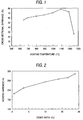
- the hot workability of the steel material suitable to this invention (C: 0.12%, Si: 0.05%, Mn: 27.9%, P: 0.029%, S: 0.002%, Cr: 7.0%, N: 0.10%, Ni: 0.15% and Ca: 0.006%) was evaluated at first by a high temperature tensile test.
- the results are shown in Fig. 1. It can be seen from Fig. 1, that the cross sectional shrinkage decreases as the temperature exceeds 1200°C and the trend of the hot shortness develops.
- the upper limit for the rolling start temperature in hot rolling is preferably 1200°C.
- the rolling start temperature for hot rolling is within a range from 1050 to 1200°C. It is preferably from 1100 to 1180°C.
- the rolling end temperature for the hot rolling is defined to 700°C or higher in this invention. Further, when the rolling end temperature for the hot rolling exceeds 1000°C, crystal grains undesirably grow coarser by recrystallization. Therefore, the rolling end temperature for the hot rolling is defined within a range from 700 to 1000°C. It is preferably from 800 to 950°C in view of prevention for edge cracks.
- the hot rolled sheet can be used as a product sheet as it is or after application of hot rolled sheet annealing.
- the hot rolled sheet is then applied with hot rolled sheet annealing.
- the hot rolled sheet annealing is conducted for homogenizing the structure.
- the hot rolled sheet annealing is desirably conducted within a temperature range from 950 to 1200°C. When the annealing temperature is lower than 950°C, the cross sectional shrinkage is decreased, whereas scales are formed excessively together with embrittlement if the temperature exceeds 1200°C.
- the hot rolled sheet is applied with cold rolling into a cold rolled sheet.
- the rolling condition is not necessarily restricted so long as a predetermined sheet thickness can be obtained by the cold rolling.
- the cold rolled sheet fabricated to a predetermined sheet thickness is then applied with cold rolled sheet annealing.
- the cold rolled sheet annealing is conducted mainly for the purpose of relieving internal strains caused by cold rolling, recrystallization and solid solution of precipitates. Particularly, this is an indispensable process for complete solid solution of carbides, nitrides and carbonitrides into an austenitic matrix phase to eliminate a precipitation phase disadvantageous to the keeping of the low permeability.
- the annealing temperature is from 1050 to 1200°C. When the annealing temperature is lower than 1050°C, solid solution of precipitates is insufficient. On the other hand, if it exceeds 1200°C, continuous annealing can not be conducted industrially stably.
- a preferred annealing temperature is from 1050 to 1180°C. Further, the holding time for annealing is desirably such that the temperature of the sheet is kept at the temperature described above for 10 to 120 sec.
- the cold rolled sheet is cooled after it has been maintained at the annealing temperature within the range described above. Cooling is conducted with an aim of preventing precipitation of carbides or carbonitrides and there is no particular restriction for the cooling manner so long as the cooling is conducted at a cooling rate of 5 to 30°C/s.
- temper rolling may further be applied after the cold rolled sheet annealing.
- Combination of cold rolled sheet annealing and subsequent temper rolling can easily control the collar as the fixing members for superconductive magnet conductor wires to a required mechanical strength.
- the temper rolling is conducted in a cold state, preferably, at a room temperature to 150°C, and the draft ratio is controlled in accordance with the desired strength.
- the draft ratio is desirably 30% or lower. When the draft ratio in the temper rolling exceeds 30%, the internal strains increase excessively to deteriorate the flatness after slitting/punching.
- Fig. 2 shows a relation between the draft ratio in the temper rolling and the hardness after temper rolling.
- the hardness Hv increases from 170 to 270 and 0.2% yield point increases from about 300 MPa to about 700 MPa by changing the draft ratio from 0.5 to 15%.
- the permeability is kept at as low as about 1.001 and this low permeability scarcely changes even at a cryogenic temperature such as 4 K.
- temper rolling was further applied under the conditions shown in Table 2.
- the thus obtained steel sheets were subjected to: (1) observation for the appearance of hot rolled sheet with naked eyes, (2) tensile test at room temperature and at 4 K, (3) measuring test for permeability at room temperature and 4 K using a vibrating sample magnetometer, (4) measuring test for average thermal expansion coefficient at a temperature range from room temperature to liquid nitrogen temperature and (5) precision punching test by fine blanking.
- the flatness was evaluated for the entire portion of 200 ⁇ 200 mm steel sheets as: ⁇ where warp was 0.2mm or less, as ⁇ where it was from 0.2 mm to 0.5 mm and as X where it was more than 0.5 mm.
- the precision punching test circular 50 mm ⁇ test pieces were punched and the punching accuracy for the punched test specimens was measured.
- the punching accuracy was measured by the height of burrs and evaluated as ⁇ in a case of 20 ⁇ m or lower, as ⁇ in a case of from 20 ⁇ m to 50 ⁇ m and as X in a case of higher than 50 ⁇ m.
- tests (2) - (5) were conducted for thin Ti alloy (5% Al - 2.5% Sn-Ti) sheets of 2.5 mm thickness, thin Al alloy (5% Mg - 0.6% Mn-Al) sheets and thin SUS 304 cold rolled sheets.
- occurrence of edge cracks and fine cracks were scarcely observed on the surface of hot rolled sheets and the appearance of the hot rolled sheets was favorable.
- tensile strength at a cryogenic temperature (4 K) is high and it has a sufficient strength as structural materials for large scale particle accelerators.
- the average thermal expansion coefficient in the examples of this invention is smaller compared with that of austenitic stainless steels (about 11 ⁇ 10 -6 ), and it shows a value closely approximate to that of pure iron used generally as yoke materials for superconductive magnets.
- the permeability in the examples of this invention is low also at room temperature and cryogenic temperature, and shows less temperature dependence. Further, in the examples of this invention, defects such as warps and burrs did not occur even when conducting precision punch and, further, the flatness and punching accuracy were also satisfactory ( ⁇ ).
- comparative examples out of this invention caused cracks on the surface of steel sheets to show defective appearance, and had high permeability at cryogenic temperature and poor flatness and poor punching accuracy in a precision punching test.
- the examples of this invention show lower permeability and lower thermal expansion coefficient compared with existent examples and have sufficient performance for use at cryogenic temperature.
- a high Mn non-magnetic steel sheet showing high yield stress (yield point) at cryogenic temperature, low magnetic permeability at cryogenic temperature and low average thermal expansion coefficient can be industrially manufactured stably and at high productivity to provide outstanding industrial effects. Further, the high Mn non-magnetic steel sheet according to this invention has sufficient characteristics for large scale particle accelerators and it is industrially useful.
Landscapes
- Chemical & Material Sciences (AREA)
- Engineering & Computer Science (AREA)
- Mechanical Engineering (AREA)
- Materials Engineering (AREA)
- Metallurgy (AREA)
- Organic Chemistry (AREA)
- Physics & Mathematics (AREA)
- Thermal Sciences (AREA)
- Crystallography & Structural Chemistry (AREA)
- Heat Treatment Of Sheet Steel (AREA)
- Hard Magnetic Materials (AREA)
- Heat Treatment Of Steel (AREA)
Abstract
Description
and hot rolling the material into a hot rolled steel sheet, in which a hot rolling start temperature is from 1050 to 1200°C and the rolling end temperature is 700 to 1000°C for the hot rolling. Further, in a preferred embodiment of this invention, the steel material preferably contains, on the weight percent basis: from 0.05 to 0.18% of C, from 26.0 to 30.0% of Mn, from 5.0 to 10.0% of Cr, from 0.50 to 5.0 of Ni and from 0.05 to 0.15% of N and, optionally, 0.02% or less of Ca.
and hot rolling the material into a hot rolled steel sheet, applying hot rolled plate annealing for the hot rolled sheet then applying cold rolling to form a cold rolled sheet and then applying annealing to the cold rolled sheet, in which a hot rolling start temperature is from 1050 to 1200°C and a rolling end temperature is 700 to 1000°C for the hot rolling and, further, the annealing temperature for the cold rolled sheet annealing is from 1050 to 1200°C.
| Steel No. | Chemical composition (wt%) | |||||||
| C | Mn | Cr | Ni | N | S | Ca | O | |
| A | 0.09 | 28.5 | 8.0 | 1.2 | 0.11 | 0.002 | 0.006 | 0.004 |
| B | 0.09 | 29.0 | 7.5 | - | 0.11 | 0.002 | 0.0065 | 0.004 |
| C | 0.09 | 28.5 | 8.0 | - | 0.11 | 0.003 | 0.007 | 0.005 |
| D | 0.14 | 29.5 | 6.0 | 2.5 | 0.10 | 0.002 | 0.006 | 0.004 |
| E | 0.09 | 29.0 | 7.5 | 0.8 | 0.11 | 0.003 | 0.0075 | 0.003 |
| F | 0.10 | 27.5 | 7.0 | 2.5 | 0.10 | 0.003 | 0.007 | 0.005 |
| G | 0.20 | 22.0 | 11.5 | - | 0.03 | 0.003 | 0.008 | 0.005 |
| H | 0.12 | 25.0 | 8.0 | - | 0.10 | 0.002 | 0.006 | 0.004 |
| I | 0.02 | 28.5 | 8.0 | - | 0.10 | 0.003 | 0.008 | 0.005 |
| J | 0.10 | 28.5 | 8.0 | - | 0.20 | 0.002 | 0.007 | 0.004 |
| Steel sheet No. | Steel No. | Hot rolling condition | Hot rolled sheet annealing | Cold rolled sheet annealing | Temper rolling | ||
| Start temp(°C) | End temp(°C) | Annealing temp(°C) | Annealing temp(°C) | Draft % | Sheet thickness mm | ||
| 1 | A | 1100 | 900 | 1050 | 1100 | 5 | 2.5 |
| 2 | B | 1080 | 850 | 1050 | 1050 | 3.5 | 1.5 |
| 3 | A | 1080 | 800 | 1050 | 1050 | 10 | 2.5 |
| 4 | C | 1030 | 750 | 1050 | 1100 | 5 | 2.5 |
| 5 | | 1100 | 900 | 1050 | 1100 | 10 | 2.5 |
| 6 | D | 1080 | 790 | 1050 | 1050 | 3 | 2.5 |
| 7 | B | 1120 | 900 | 1050 | 1050 | 5 | 2.5 |
| 8 | E | 1050 | 850 | 1050 | 1100 | 10 | 2.5 |
| 9 | F | 1080 | 850 | 1050 | 1050 | 3 | 2.5 |
| 10 | F | 1120 | 900 | 1050 | 1050 | 5 | 2.5 |
| 11 | E | 1050 | 850 | 1050 | 1100 | 15 | 2.5 |
| 12 | F | 1120 | 900 | 1050 | 1050 | 1 | 2.5 |
| 13 | | 1100 | 900 | 1050 | 1050 | 5 | 2.5 |
| 14 | | 1100 | 920 | 1050 | 900 | 10 | 2.5 |
| 15 | A | 1020 | 650 | 1050 | 1050 | 3 | 2.5 |
| 16 | A | 1250 | 950 | 1050 | 1100 | 10 | 2.5 |
| 17 | I | 1100 | 900 | 1050 | 1050 | 3 | 2.5 |
| 18 | | 1100 | 900 | 1050 | 1100 | 10 | 2.5 |
| 22 | K | Ti alloy (Al: 5%, Sn: 2.5%) cold rolled sheet | 2.5 | ||||
| 23 | L | Al alloy (Mg: 5%, Mn 0.6%) cold rolled sheet | 2.5 | ||||
| 24 | M | SUS 304 (Cr: 18%, Ni: 8%, C: 0.02%. Mn: 1.5%) cold rolled sheet | 2.5 |

Claims (5)
- A method of manufacturing a hot rolled high Mn non-magnetic steel sheet for cryogenic temperature use, which comprises:heating a steel material containing, on the weight percent basis:from 0.05 to 0.18% of C,from 26.0 to 30.0% of Mn,from 5.0 to 10.0% of Cr, andfrom 0.05 to 0.15% of N
and hot rolling the material into a hot rolled steel sheet, in which a hot rolling start temperature is from 1050 to 1200°C and the rolling end temperature is 700 to 1000°C for the hot rolling. - A method of manufacturing a hot rolled high Mn non-magnetic steel sheet for cryogenic temperature use as defined in claim 1, in which the steel material contains, on the weight percent basis:from 0.05 to 0.18% of C,from 26.0 to 30.0% of Mn,from 5.0 to 10.0% of Cr,from 0.50 to 5.0 % of Ni, and,from 0.05 to 0.15% of N.
- A method of manufacturing a cold rolled high Mn non-magnetic steel sheet for cryogenic temperature use, which comprises:heating a steel material containing, on the weight percent basis:from 0.05 to 0.18% of C,from 26.0 to 30.0% of Mn,from 5.0 to 10.0% of Cr, andfrom 0.05 to 0.15% of N
and hot rolling the material into a hot rolled steel sheet, applying hot rolled plate annealing for the hot rolled sheet then applying cold rolling to form a cold rolled sheet and then applying cold rolled sheet annealing to the cold rolled sheet, in which a hot rolling start temperature is from 1050 to 1200°C and a rolling end temperature is 700 to 1000°C for the hot rolling and, further, the annealing temperature for the cold rolled sheet annealing is from 1050 to 1200°C. - A method of manufacturing a cold rolled high Mn non-magnetic steel sheet for cryogenic temperature use as defined in claim 3, in which the steel material contains, on the weight percent basis:from 0.05 to 0.18% of C,from 26.0 to 30.0% of Mn,from 5.0 to 10.0% of Cr,from 0.50 to 5.0 % of Ni, andfrom 0.05 to 0.15% of N.
- A method of manufacturing a cold rolled high Mn non-magnetic steel sheet for cryogenic temperature use as defined in claim 3 or 4, wherein temper rolling is further applied after the cold rolled sheet annealing.
Applications Claiming Priority (2)
| Application Number | Priority Date | Filing Date | Title |
|---|---|---|---|
| JP1791299 | 1999-01-27 | ||
| JP01791299A JP3864600B2 (en) | 1999-01-27 | 1999-01-27 | Method for producing high Mn non-magnetic steel sheet for cryogenic use |
Publications (2)
| Publication Number | Publication Date |
|---|---|
| EP1024204A2 true EP1024204A2 (en) | 2000-08-02 |
| EP1024204A3 EP1024204A3 (en) | 2004-01-28 |
Family
ID=11956975
Family Applications (1)
| Application Number | Title | Priority Date | Filing Date |
|---|---|---|---|
| EP00101428A Withdrawn EP1024204A3 (en) | 1999-01-27 | 2000-01-25 | Method of manufacturing a high Mn non-magnetic steel sheet for cryogenic temperature use |
Country Status (2)
| Country | Link |
|---|---|
| EP (1) | EP1024204A3 (en) |
| JP (1) | JP3864600B2 (en) |
Cited By (2)
| Publication number | Priority date | Publication date | Assignee | Title |
|---|---|---|---|---|
| CN101798658A (en) * | 2010-04-12 | 2010-08-11 | 中国石油天然气集团公司 | 24-30% Mn-containing alloy pipe material and manufacture method thereof |
| CN103834781A (en) * | 2014-03-20 | 2014-06-04 | 何萌 | Metal piece treatment method |
Family Cites Families (10)
| Publication number | Priority date | Publication date | Assignee | Title |
|---|---|---|---|---|
| JPS60204864A (en) * | 1984-03-29 | 1985-10-16 | Sanyo Tokushu Seikou Kk | Nonmagnetic high-mn steel having superior toughness at ordinary and low temperatures |
| DE3577882D1 (en) * | 1984-05-22 | 1990-06-28 | Westinghouse Electric Corp | Austenitic alloys based on iron manganese and iron manganese chromium. |
| US4875933A (en) * | 1988-07-08 | 1989-10-24 | Famcy Steel Corporation | Melting method for producing low chromium corrosion resistant and high damping capacity Fe-Mn-Al-C based alloys |
| JPH06100941A (en) * | 1991-10-30 | 1994-04-12 | Kawasaki Steel Corp | Method for producing high manganese non-magnetic steel strip |
| US5431753A (en) * | 1991-12-30 | 1995-07-11 | Pohang Iron & Steel Co. Ltd. | Manufacturing process for austenitic high manganese steel having superior formability, strengths and weldability |
| JPH0641685A (en) * | 1992-07-28 | 1994-02-15 | Kawasaki Steel Corp | High Mn non-magnetic cold rolled steel sheet and method for producing the same |
| JPH0657379A (en) * | 1992-08-12 | 1994-03-01 | Nippon Steel Corp | Non-magnetic steel with excellent hot workability and corrosion resistance |
| JPH0762432A (en) * | 1993-08-27 | 1995-03-07 | Kobe Steel Ltd | Manufacturing method of high-strength non-magnetic ring chain excellent in corrosion resistance and heat resistance |
| JP2978427B2 (en) * | 1995-05-22 | 1999-11-15 | 株式会社神戸製鋼所 | High Mn nonmagnetic steel for cryogenic use and manufacturing method |
| AU6361396A (en) * | 1995-07-11 | 1997-02-10 | Kari Martti Ullakko | Iron-based shape memory and vibration damping alloys containing nitrogen |
-
1999
- 1999-01-27 JP JP01791299A patent/JP3864600B2/en not_active Expired - Fee Related
-
2000
- 2000-01-25 EP EP00101428A patent/EP1024204A3/en not_active Withdrawn
Cited By (4)
| Publication number | Priority date | Publication date | Assignee | Title |
|---|---|---|---|---|
| CN101798658A (en) * | 2010-04-12 | 2010-08-11 | 中国石油天然气集团公司 | 24-30% Mn-containing alloy pipe material and manufacture method thereof |
| CN101798658B (en) * | 2010-04-12 | 2011-06-22 | 中国石油天然气集团公司 | 24-30% Mn-containing alloy pipe material and manufacture method thereof |
| CN103834781A (en) * | 2014-03-20 | 2014-06-04 | 何萌 | Metal piece treatment method |
| CN103834781B (en) * | 2014-03-20 | 2015-05-27 | 何萌 | Metal piece treatment method |
Also Published As
| Publication number | Publication date |
|---|---|
| JP3864600B2 (en) | 2007-01-10 |
| JP2000212646A (en) | 2000-08-02 |
| EP1024204A3 (en) | 2004-01-28 |
Similar Documents
| Publication | Publication Date | Title |
|---|---|---|
| JP5408382B2 (en) | Hot rolled steel sheet and manufacturing method thereof | |
| JP5488764B2 (en) | Hot rolled steel sheet and manufacturing method thereof | |
| JP2807566B2 (en) | Austenitic high manganese steel having excellent formability, strength and weldability, and method for producing the same | |
| JP6737419B1 (en) | Thin steel sheet and method of manufacturing the same | |
| JP4712838B2 (en) | High strength cold-rolled steel sheet with excellent hydrogen embrittlement resistance and workability | |
| KR20190060805A (en) | Carbon steel sheet for carburizing and method of manufacturing steel sheet for carburizing | |
| KR101892526B1 (en) | High-carbon hot-rolled steel sheet and method for manufacturing the same | |
| US20180363083A1 (en) | Material for cold rolled stainless steel sheets, method for manufacturing the same, and cold rolled steel sheet | |
| WO2021141006A1 (en) | Steel sheet and method for manufacturing same | |
| KR102658729B1 (en) | hot stamp molding body | |
| WO2020195012A1 (en) | Steel sheet for hot stamping use | |
| JP7272438B2 (en) | Steel material, manufacturing method thereof, and tank | |
| US6761780B2 (en) | Method of manufacturing a high Mn non-magnetic steel sheet for cryogenic temperature use | |
| JP7618699B2 (en) | Ferritic stainless steel sheet and manufacturing method | |
| US12110579B2 (en) | Method of producing a CoFe alloy strip | |
| JP2002194507A (en) | Ferritic stainless steel with excellent workability and small in-plane anisotropy and method for producing the same | |
| JPH0581651B2 (en) | ||
| JP3864600B2 (en) | Method for producing high Mn non-magnetic steel sheet for cryogenic use | |
| JP2006169615A (en) | Electrical steel sheet with excellent high-frequency magnetic properties and manufacturing method thereof | |
| JP2007302937A (en) | Steel plate for quenched member, quenched member and method for producing the same | |
| JPS61170545A (en) | High manganese steel for very low temperature use having superior rust resistance | |
| JPS61143563A (en) | Rust resistant, tough and hard high-manganese steel for use at very low temperature | |
| JP2002249853A (en) | Ferrite stainless steel for frame and method of manufacturing the same | |
| JP2013224482A (en) | Method for producing raw material for composite magnetic material and method for producing the composite magnetic material | |
| RU2652934C1 (en) | Structural wrought austenitic non-magnetic heat-resistant cryogenic steel with high specific strength and method of its treatment |
Legal Events
| Date | Code | Title | Description |
|---|---|---|---|
| PUAI | Public reference made under article 153(3) epc to a published international application that has entered the european phase |
Free format text: ORIGINAL CODE: 0009012 |
|
| AK | Designated contracting states |
Kind code of ref document: A2 Designated state(s): AT BE CH CY DE DK ES FI FR GB GR IE IT LI LU MC NL PT SE |
|
| AX | Request for extension of the european patent |
Free format text: AL;LT;LV;MK;RO;SI |
|
| RAP1 | Party data changed (applicant data changed or rights of an application transferred) |
Owner name: JFE STEEL CORPORATION |
|
| PUAL | Search report despatched |
Free format text: ORIGINAL CODE: 0009013 |
|
| AK | Designated contracting states |
Kind code of ref document: A3 Designated state(s): AT BE CH CY DE DK ES FI FR GB GR IE IT LI LU MC NL PT SE |
|
| AX | Request for extension of the european patent |
Extension state: AL LT LV MK RO SI |
|
| 17P | Request for examination filed |
Effective date: 20040310 |
|
| AKX | Designation fees paid |
Designated state(s): DE FR GB SE |
|
| 17Q | First examination report despatched |
Effective date: 20050307 |
|
| STAA | Information on the status of an ep patent application or granted ep patent |
Free format text: STATUS: THE APPLICATION IS DEEMED TO BE WITHDRAWN |
|
| 18D | Application deemed to be withdrawn |
Effective date: 20050719 |