EP1021089B1 - Use of glyphosate salts in seed dressing herbicidal compositions - Google Patents
Use of glyphosate salts in seed dressing herbicidal compositions Download PDFInfo
- Publication number
- EP1021089B1 EP1021089B1 EP97900035A EP97900035A EP1021089B1 EP 1021089 B1 EP1021089 B1 EP 1021089B1 EP 97900035 A EP97900035 A EP 97900035A EP 97900035 A EP97900035 A EP 97900035A EP 1021089 B1 EP1021089 B1 EP 1021089B1
- Authority
- EP
- European Patent Office
- Prior art keywords
- glyphosate
- salt
- glyphosate salt
- seeds
- spp
- Prior art date
- Legal status (The legal status is an assumption and is not a legal conclusion. Google has not performed a legal analysis and makes no representation as to the accuracy of the status listed.)
- Expired - Lifetime
Links
Images
Classifications
-
- A—HUMAN NECESSITIES
- A01—AGRICULTURE; FORESTRY; ANIMAL HUSBANDRY; HUNTING; TRAPPING; FISHING
- A01N—PRESERVATION OF BODIES OF HUMANS OR ANIMALS OR PLANTS OR PARTS THEREOF; BIOCIDES, e.g. AS DISINFECTANTS, AS PESTICIDES OR AS HERBICIDES; PEST REPELLANTS OR ATTRACTANTS; PLANT GROWTH REGULATORS
- A01N57/00—Biocides, pest repellants or attractants, or plant growth regulators containing organic phosphorus compounds
- A01N57/18—Biocides, pest repellants or attractants, or plant growth regulators containing organic phosphorus compounds having phosphorus-to-carbon bonds
- A01N57/20—Biocides, pest repellants or attractants, or plant growth regulators containing organic phosphorus compounds having phosphorus-to-carbon bonds containing acyclic or cycloaliphatic radicals
Definitions
- the present invention relates to means and methods for control of parasitic weeds in glyphosate-resistant crop plants, and in particular to the use of glyphosate in seed dressing herbicidal compositions for this purpose.
- Glyphosate International Standards Organization common name for the anionic form of N-phosphonomethylglycine
- glyphosate could only be used to control weeds in a non-selective manner, i.e. if applied to foliage of a standing crop it would kill the crop as well as the weeds.
- Very low rates of postemergence foliar application of glyphosate have been shown to allow the control of parasitic weeds on standing crops (Foy et al., 1989), but the rate dependence was so crucial and hard to adjust that this use has not been widespread. This use though was predicated on the well known fact that glyphosate is systemic once applied to plant foliage.
- glyphosate has been used as a non-selective herbicide until recently. That has been changed with the advent of glyphosate-resistant crops. This change has been achieved by engineering a gene coding for enolphosphate shikimate phosphate synthase also known as 5-enolpyruvyl-3-phosphoshikimate (EPSP) synthase, an enzyme that is found in, and is vital to, all plants, and is inhibited by glyphosate.
- ESP 5-enolpyruvyl-3-phosphoshikimate
- the transgenic plants either contain multiple copies of the natural gene (Rogers et al., 1983) or a modified gene coding for an enzyme that still has a modicum of natural enzyme capacity but is severely reduced in its capacity to bind glyphosate and thus be inhibited (Comai et al., 1985).
- the gene must code for a modified form of the EPSP synthase, whereby this enzyme is less inhibited by glyphosate than the naturally-occurring enzyme, or for elevated expression of the enzyme, or both.
- Such engineered glyphosate-resistant plants often contain subsidiary genetic elements that target the modified gene product to the chloroplasts, and control the level and tissue-localization of the gene (Shah et al., 1986; Kishore, et al., 1988). Examples of such transformed plants are described in patents US 5,145,783, EP 550633, US 5,310,667 and US 4,971,908.
- glyphosate resistance can also be achieved when a plant is able to amplify the gene (Suh et al., 1993) or to enhance the expression of the gene (Hollander-Czytko et al., 1992) coding for EPSP synthase.
- Parasitic weeds can either be holoparasites, i.e. plants totally lacking the capacity to produce nutrients for themselves, e.g. Orobanche spp. (common name: broomrapes), or hemiparasites, i.e. they can perform photosynthesis for pans of their life cycles (e.g. Cuscuta spp. (dodders), Striga spp. (witchweeds) and Alectra spp.), but derive much of their organic nutrition, water and minerals from the host plants.
- the Cuscuta spp. attach to stems and grow above ground, the others attach to roots and spend much of their life cycle below ground until a flower stalk emerges from the soil.
- the yield loss (on the average) is more than 50% in the infested fields. Till recently there were few selective herbicides capable of controlling the root parasitic weeds while they are still underground, perpetrating their damage.
- glyphosate salts can be used on seeds of glyphosate-resistant crop plants, where the resistance is due to a modified EPSP synthase and/or enhanced amounts of EPSP synthase, in order to protect said crop plants from parasitic weeds.
- the present invention thus relates to the use of a glyphosate salt or a mixture thereof as a seed dressing herbicidal composition for control of parasitic weeds in glyphosate-resistant crop plants that contains a gene encoding a modified 5-enolpyruvyl-3-phosphoshikimate (EPSP) synthase and/or produce enhanced amounts of EPSP synthase.
- ESP modified 5-enolpyruvyl-3-phosphoshikimate
- the invention in another embodiment, relates to a method for control of parasitic weeds in glyphosate-resistant crop plants that contains a gene encoding a modified EPSP synthase and/or produce enhanced amounts of EPSP synthase, said method comprising application of a herbicidal composition comprising an effective amount of a glyphosate salt or a mixture thereof to seeds of the glyphosate-resistant crop plant prior to planting of said seeds.
- the invention relates to a method of disinfection of seedlots of glyphosate-resistant crop plants from both parasitic and non-parasitic weed seeds which comprises soaking the seedlots with a composition comprising an effective amount of a glyphosate salt or a mixture thereof.
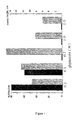
- Fig. 1 shows the effect of increasing concentrations of glyphosate isopropylamine salt on infestation of oilseed rape by broomrape (dark bars) and on growth of crop shoots (light bars).
- Salts of glyphosate are degraded in soil and have been used only as foliar applied herbicides. They lacked selectivity with crops until the advent of glyphosate-resistant plants.
- a novel seed dressing technology is disclosed for treating glyphosate-resistant crops to simultaneously rid the crop seed of contaminating weed seed prior to planting, while providing future immunity to the crop from infection by parasitic weeds residing in the soil.
- the present invention thus relates to a novel means for disinfecting certain crop plant seeds from contaminating weed seeds as well as for protecting crop plants from infection by parasitic weed seed that contaminates the soil.
- a glyphosate salt is used as a seed dressing, i.e. a seed priming and a seed coating herbicidal composition for control of parasitic weeds in gly Newly filed.
- compositions of the invention are very useful in disinfecting specific crop seed of parasitic and normal weed seeds.
- glyphosate can be "primed" in crop seeds by soaking glyphosate-resistant crop seeds with exceedingly high concentrations of glyphosate.
- the invention also encompasses seed priming and seed coating by using technologies well-known in the art for seed priming (Bradford, 1986) and seed coating (Scott, 1989) with vitamins and nutrients as well as microorganisms.
- compositions of the invention comprise a soluble form of glyphosate, i.e. a salt or other derivative.
- salts are known, as for example those disclosed in US Patent No. 4,405,531 and in Israeli Patent No. 37993.
- examples of such salts include, but are not limited to, inorganic salts such as salts of alkali metals, e.g. sodium, potassium, lithium, cesium and rubidium; alkaline earth metals, e.g. magnesium, calcium, barium, strontium and beryllium; iron. manganese, zinc, copper, nickel and ammonium, as well as organic salts such as those derived from primary, secondary, tertiary and heterocyclic amines.
- inorganic salts such as salts of alkali metals, e.g. sodium, potassium, lithium, cesium and rubidium
- alkaline earth metals e.g. magnesium, calcium, barium, strontium and beryllium
- the amines may be aliphatic such as C 1 -C 20 mono-, di- and tri-alkyl, -hydroxyalkyl and -alkenyl monoamines or diamines, e.g. methylamine. ethylamine, n-propylamine, isopropylamine, n-butylamine, isobutylamine, sec-butylamine.
- n-amylamine isoamylamine, hexylamine, heptylamine, octylamine, nonylamine, decylamine, undecylamine, dodecylamine, tridecylamine, tetradecylamine, pentadecylamine, hexadecylamine, heptadecylamine, octadecylamine, nonadecylamine, eicosylamine, dimethylamine, methylethylamine, diethylamine, methylisopropylamine, ethylisopropylamine, di-n-propylamine, diisopropylamine, methybutylamine, methylhexylamine, ethylbutylamine, trimethylamine.
- the most active glyphosate salts have as counter ions monovalent metal cations, NH 4 + , cationic detergents, or organic cations, such as organic amines.
- the most widely counter ion used to solubilize glyphosate in water in agricultural use is isopropylamine, and constitutes a preferred embodiment of the invention.
- a chelating agent of stronger binding capacity than the weak binding capacity of glyphosate e.g. EDTA (ethylene diamine tetraacetic acid) (Shea and Tupy, 1984).
- EDTA ethylene diamine tetraacetic acid
- a mixture of counter ions can be used as fertilizer to support growth of the crop seeds (e.g. K + , NH 4 + ) along with Na + , organic amine cations, or small amounts of a cationic detergent to lower the surface tension of the mixture around both the crop seeds and the contaminating parasite seeds.
- a non-ionic detergent in small amounts can also be used for the latter purpose.
- the type of glyphosate salts, duration of soaking, and concentration of glyphosate appropriate for charging the crop seed with sufficient glyphosate to systemically disinfect the crop from attacking parasite as well as to disinfect seed batches from parasite and normal weed seeds. will be dependent on the crop species as each crop species has seed with different properties.
- the conditions required are determined by seed priming technologies well-known in the art. Similarly, seed can be sown wet, partially dried or redried, again as determined for different crops and cropping systems along well developed lines for seed priming and vernalization that can be readily determined from the teaching of this specification, including examples, by one skilled in the art.
- dressing is used here to denote all treatments of seeds including “coating”, i.e. external covering of the seeds, and “priming”, i.e. treatments whereby the seed is soaked in a solution. Seeds can be planted wet after priming or can be re-dried, as used herein.
- the term “disinfectant” is used here for materials that render normal or parasitic weed seeds inactive or for a compound that systematically stops or suppresses the growth of a parasitic weed before or after it attaches to the crop.
- parasitic weed is used for members of several genera of weeds: e.g. Orobanche, Striga, Cuscuta , Alectra, which germinate and then attach to root, stems or leaves of plants.
- “Crop” is used herein for any plant species cultivated by man for economic or esthetic reasons, whether for food, fiber, decoration, medicines, or otherwise, preferably vegetables, legumes and cereals.
- “Normal” weeds are used herein to distinguish from parasitic weeds.
- Systemic disinfectant is used for a disinfectant that moves within crop tissues to the organ attacked by the parasite, moving to the parasite from within the plant tissues.
- composition for seed dressing used according to the invention will comprise about 0.3-2M, preferably 0.6-0.8M, of an active glyphosate salt. Very good results of control of broomrapes with little effect on the crop were achieved according to the invention with e.g. 0.7M glyphosate salt (see Fig. 1), a concentration much higher than the range usually employed with soil-active herbicides when the herbicide is applied directly to the soil. In the priming method the herbicide is localized and thus less herbicide per hectare is used.
- seed treatment and priming of transgenic, target site glyphosate-resistant crop plants can be achieved with active salts of glyphosate or mixtures thereof or with other seed-priming compounds to control all parasitic weeds attacking these crops and for disinfecting such crop seeds from contaminating parasitic and normal weed seeds.
- the concentration of the glyphosate composition and the time of seed priming or soaking will vary according to the plant species.
- the soaking time is usually in the range of 30 min to 8 hours, preferably 2-4 hours.
- Formulated glyphosate (RoundupTM, Monsanto, isopropylamine salt in solution with detergent) was brought to 1.0 M. seed of transgenic oilseed rape ( Brassica napus ) bearing a modified EPSP synthase was soaked in solutions of various concentrations of the glyphosate salt for four hours and then planted in pots containing 10 mg seeds/kg soil of the root infecting parasitic weed Orobanche aegyptiaca (Egyptian broomrape). The results are illustrated in Figure 1. From the data it is apparent that rates lower than 0.7 M of this formulation (at this duration of soaking) did not protect against the parasite.
- the rate of 0.7 M gave maximum growth of the crop with total disinfection of broomrape, as ascertained both by counting emerging stalks of the parasite and by removing adhering soil and viewing the roots.
- 1 M glyphosate also caused some reduction of crop growth, possibly due to toxicity from the isopropylamine counter ion or from the detergent.
- a solution of the formulated isopropylamine salt was prepared as in Example 1 or the potassium glyphosate salt was prepared by titrating a suspension of glyphosate acid to a neutral pH 7 solution with KOH. Seeds of two weey grasses ( Avena sterilis and Phalaris minor ) and two small-seed broad leaf weeds ( Stellaria media and Amaranthus sp.) and one larger seeded broadleaf weed ( Sinapis arvensis ) were soaked in glyphosate salt. Parallel seed of all species was soaked in water for same duration of time. The seeds were planted in soil and observed.
- a neutral glyphosate salt solution is prepared as described in Example 2 and seeds of the parasitic weed, e.g. Orobanche aegyptiaca , are soaked in various concentrations of the glyphosate salt for 4 h.
- the germination stimulator GR 47 is added at a standard concentration and time to cause rapid and uniform germination of the parasite seeds.
- the seeds are sedimented by centrifugation and suspended in water and immediately planted on a medium typically used to check Orobanche seed viability.
Landscapes
- Life Sciences & Earth Sciences (AREA)
- Agronomy & Crop Science (AREA)
- Pest Control & Pesticides (AREA)
- Plant Pathology (AREA)
- Health & Medical Sciences (AREA)
- Engineering & Computer Science (AREA)
- Dentistry (AREA)
- General Health & Medical Sciences (AREA)
- Wood Science & Technology (AREA)
- Zoology (AREA)
- Environmental Sciences (AREA)
- Agricultural Chemicals And Associated Chemicals (AREA)
Abstract
Description
- The present invention relates to means and methods for control of parasitic weeds in glyphosate-resistant crop plants, and in particular to the use of glyphosate in seed dressing herbicidal compositions for this purpose.
- Glyphosate (International Standards Organization common name for the anionic form of N-phosphonomethylglycine) is widely used as a postemergence foliarly applied herbicide.
Until recently glyphosate could only be used to control weeds in a non-selective manner, i.e. if applied to foliage of a standing crop it would kill the crop as well as the weeds.Very low rates of postemergence foliar application of glyphosate have been shown to allow the control of parasitic weeds on standing crops (Foy et al., 1989), but the rate dependence was so crucial and hard to adjust that this use has not been widespread. This use though was predicated on the well known fact that glyphosate is systemic once applied to plant foliage. The ability of glyphosate to act solely through foliage is well accepted in agriculture, as it is well known that it is rapidly degraded in all natural soils, i.e. soils that have not been sterilized (Rueppel et al., 1977). It thus cannot be used as a soil-applied "preemergence" herbicide to control weeds underground, unlike so many commonly used herbicides in agriculture. - As noted above, glyphosate has been used as a non-selective herbicide until recently. That has been changed with the advent of glyphosate-resistant crops. This change has been achieved by engineering a gene coding for enolphosphate shikimate phosphate synthase also known as 5-enolpyruvyl-3-phosphoshikimate (EPSP) synthase, an enzyme that is found in, and is vital to, all plants, and is inhibited by glyphosate. The transgenic plants either contain multiple copies of the natural gene (Rogers et al., 1983) or a modified gene coding for an enzyme that still has a modicum of natural enzyme capacity but is severely reduced in its capacity to bind glyphosate and thus be inhibited (Comai et al., 1985). The gene must code for a modified form of the EPSP synthase, whereby this enzyme is less inhibited by glyphosate than the naturally-occurring enzyme, or for elevated expression of the enzyme, or both.
- Such engineered glyphosate-resistant plants often contain subsidiary genetic elements that target the modified gene product to the chloroplasts, and control the level and tissue-localization of the gene (Shah et al., 1986; Kishore, et al., 1988). Examples of such transformed plants are described in patents US 5,145,783, EP 550633, US 5,310,667 and US 4,971,908. In addition, glyphosate resistance can also be achieved when a plant is able to amplify the gene (Suh et al., 1993) or to enhance the expression of the gene (Hollander-Czytko et al., 1992) coding for EPSP synthase.
- Parasitic weeds can either be holoparasites, i.e. plants totally lacking the capacity to produce nutrients for themselves, e.g. Orobanche spp. (common name: broomrapes), or hemiparasites, i.e. they can perform photosynthesis for pans of their life cycles (e.g. Cuscuta spp. (dodders), Striga spp. (witchweeds) and Alectra spp.), but derive much of their organic nutrition, water and minerals from the host plants. The Cuscuta spp. attach to stems and grow above ground, the others attach to roots and spend much of their life cycle below ground until a flower stalk emerges from the soil. One of the major modes of dissemination of parasitic weeds is by contamination of crop seed. Half of the seedlots sampled in local African markets by Berner et al., 1994 were contaminated with Striga seeds. Orobanche seeds stick to crop seeds and arduous procedures are required to remove them so as not to infest uninfested fields. Thus, a good general topical disinfectant is needed for inactivating parasitic weed seeds in contaminated seedlots prior to sowing. Additionally, there is also a general need for ridding crop seed of other contaminating non-parasitic weed seeds.
- Parasitic weeds are a scourge threatening 4% of cropland worldwide, infecting all grains cultivated south of the Sahara (witchweeds = Striga spp) and vegetables, legumes and sunflowers (broomrape = Orobanche spp.) in the Mediterranean, including Israel. The yield loss (on the average) is more than 50% in the infested fields. Till recently there were few selective herbicides capable of controlling the root parasitic weeds while they are still underground, perpetrating their damage.
- It has been shown that a foliar application of glyphosate to transgenic plants of the type discussed above allows the systemic inactivation of parasitic weeds (Joel et al., 1995), as had been predicted earlier (Gressel, 1992). It has also been shown that soil-active herbicides at very low rates can be applied to seeds of cow peas. known to be capable of degrading particular soil-active herbicides, in order to control parasitic Striga.. Striga has also been controlled at much higher rates in maize with biotechnologically-derived resistance to the same groups of soil-active herbicides (Ransom et al., 1995). Glyphosate is far superior to these other herbicides insofar as weeds are far more prone to evolving resistance to the other herbicides previously used.
- None of the prior art publications disclose or suggest the use of the foliar herbicide glyphosate in the soil or for seed dressing.
- It has now been found according to the present invention that glyphosate salts can be used on seeds of glyphosate-resistant crop plants, where the resistance is due to a modified EPSP synthase and/or enhanced amounts of EPSP synthase, in order to protect said crop plants from parasitic weeds.
- The present invention thus relates to the use of a glyphosate salt or a mixture thereof as a seed dressing herbicidal composition for control of parasitic weeds in glyphosate-resistant crop plants that contains a gene encoding a modified 5-enolpyruvyl-3-phosphoshikimate (EPSP) synthase and/or produce enhanced amounts of EPSP synthase.
- In another embodiment, the invention relates to a method for control of parasitic weeds in glyphosate-resistant crop plants that contains a gene encoding a modified EPSP synthase and/or produce enhanced amounts of EPSP synthase, said method comprising application of a herbicidal composition comprising an effective amount of a glyphosate salt or a mixture thereof to seeds of the glyphosate-resistant crop plant prior to planting of said seeds.
- In still another embodiment, the invention relates to a method of disinfection of seedlots of glyphosate-resistant crop plants from both parasitic and non-parasitic weed seeds which comprises soaking the seedlots with a composition comprising an effective amount of a glyphosate salt or a mixture thereof.
- Fig. 1 shows the effect of increasing concentrations of glyphosate isopropylamine salt on infestation of oilseed rape by broomrape (dark bars) and on growth of crop shoots (light bars).
- Salts of glyphosate are degraded in soil and have been used only as foliar applied herbicides. They lacked selectivity with crops until the advent of glyphosate-resistant plants. According to the invention, a novel seed dressing technology is disclosed for treating glyphosate-resistant crops to simultaneously rid the crop seed of contaminating weed seed prior to planting, while providing future immunity to the crop from infection by parasitic weeds residing in the soil.
- The present invention thus relates to a novel means for disinfecting certain crop plant seeds from contaminating weed seeds as well as for protecting crop plants from infection by parasitic weed seed that contaminates the soil.
- According to the invention, a glyphosate salt is used as a seed dressing, i.e. a seed priming and a seed coating herbicidal composition for control of parasitic weeds in gly Newly filed.
- The compositions of the invention are very useful in disinfecting specific crop seed of parasitic and normal weed seeds. As described in the examples herein, glyphosate can be "primed" in crop seeds by soaking glyphosate-resistant crop seeds with exceedingly high concentrations of glyphosate. The invention also encompasses seed priming and seed coating by using technologies well-known in the art for seed priming (Bradford, 1986) and seed coating (Scott, 1989) with vitamins and nutrients as well as microorganisms.
- The compositions of the invention comprise a soluble form of glyphosate, i.e. a salt or other derivative. Many such salts are known, as for example those disclosed in US Patent No. 4,405,531 and in Israeli Patent No. 37993. Examples of such salts include, but are not limited to, inorganic salts such as salts of alkali metals, e.g. sodium, potassium, lithium, cesium and rubidium; alkaline earth metals, e.g. magnesium, calcium, barium, strontium and beryllium; iron. manganese, zinc, copper, nickel and ammonium, as well as organic salts such as those derived from primary, secondary, tertiary and heterocyclic amines. The amines may be aliphatic such as C1-C20 mono-, di- and tri-alkyl, -hydroxyalkyl and -alkenyl monoamines or diamines, e.g. methylamine. ethylamine, n-propylamine, isopropylamine, n-butylamine, isobutylamine, sec-butylamine. n-amylamine, isoamylamine, hexylamine, heptylamine, octylamine, nonylamine, decylamine, undecylamine, dodecylamine, tridecylamine, tetradecylamine, pentadecylamine, hexadecylamine, heptadecylamine, octadecylamine, nonadecylamine, eicosylamine, dimethylamine, methylethylamine, diethylamine, methylisopropylamine, ethylisopropylamine, di-n-propylamine, diisopropylamine, methybutylamine, methylhexylamine, ethylbutylamine, trimethylamine. triethylamine, tri-n-propylamine, triisopropylamine, tri-n-butylamine, tri-sec-butylamine, triisobutylamine, hydroxyethylamine, di(hydroxyethyl)amine, hydroxy-n-propylamine, hydroxyisopropyl-amine, allylamine, n-butenyl-2-amine, n-pentenyl-2-amine, ethylenediamine and propylenediamine, or aromatic amines, e.g. aniline, methoxyaniline, ethoxyaniline, o,m,p-toluidine, phenylenediamine, benzidine, naphthylamine, or heterocyclic amines, e.g. pyrrolidine, piperidine, pyridine, morpholine, indoline, azepine, and thiamine.
- The most active glyphosate salts have as counter ions monovalent metal cations, NH4 +, cationic detergents, or organic cations, such as organic amines. The most widely counter ion used to solubilize glyphosate in water in agricultural use is isopropylamine, and constitutes a preferred embodiment of the invention.
- Some inorganic divalent and trivalent metal cations known to precipitate or otherwise inactivate glyphosate, e.g. Ca, Mg, Fe, can also be used according to the invention when applied together with a chelating agent of stronger binding capacity than the weak binding capacity of glyphosate, e.g. EDTA (ethylene diamine tetraacetic acid) (Shea and Tupy, 1984). Thus, such compounds, commonly used in agriculture to stabilize iron ions from precipitating, may possibly be added to a priming solution of the invention.
- A mixture of counter ions can be used as fertilizer to support growth of the crop seeds (e.g. K+, NH4 +) along with Na+, organic amine cations, or small amounts of a cationic detergent to lower the surface tension of the mixture around both the crop seeds and the contaminating parasite seeds. A non-ionic detergent in small amounts can also be used for the latter purpose.
- The type of glyphosate salts, duration of soaking, and concentration of glyphosate appropriate for charging the crop seed with sufficient glyphosate to systemically disinfect the crop from attacking parasite as well as to disinfect seed batches from parasite and normal weed seeds. will be dependent on the crop species as each crop species has seed with different properties. The conditions required are determined by seed priming technologies well-known in the art. Similarly, seed can be sown wet, partially dried or redried, again as determined for different crops and cropping systems along well developed lines for seed priming and vernalization that can be readily determined from the teaching of this specification, including examples, by one skilled in the art.
- The term "dressing" is used here to denote all treatments of seeds including "coating", i.e. external covering of the seeds, and "priming", i.e. treatments whereby the seed is soaked in a solution. Seeds can be planted wet after priming or can be re-dried, as used herein.
- The term "disinfectant" is used here for materials that render normal or parasitic weed seeds inactive or for a compound that systematically stops or suppresses the growth of a parasitic weed before or after it attaches to the crop. The term "parasitic weed" is used for members of several genera of weeds: e.g. Orobanche, Striga, Cuscuta, Alectra, which germinate and then attach to root, stems or leaves of plants. "Crop" is used herein for any plant species cultivated by man for economic or esthetic reasons, whether for food, fiber, decoration, medicines, or otherwise, preferably vegetables, legumes and cereals. "Normal" weeds are used herein to distinguish from parasitic weeds. "Systemic disinfectant" is used for a disinfectant that moves within crop tissues to the organ attacked by the parasite, moving to the parasite from within the plant tissues.
- The composition for seed dressing used according to the invention will comprise about 0.3-2M, preferably 0.6-0.8M, of an active glyphosate salt. Very good results of control of broomrapes with little effect on the crop were achieved according to the invention with e.g. 0.7M glyphosate salt (see Fig. 1), a concentration much higher than the range usually employed with soil-active herbicides when the herbicide is applied directly to the soil. In the priming method the herbicide is localized and thus less herbicide per hectare is used.
- Thus according to the invention, seed treatment and priming of transgenic, target site glyphosate-resistant crop plants can be achieved with active salts of glyphosate or mixtures thereof or with other seed-priming compounds to control all parasitic weeds attacking these crops and for disinfecting such crop seeds from contaminating parasitic and normal weed seeds.
- The concentration of the glyphosate composition and the time of seed priming or soaking will vary according to the plant species. The soaking time is usually in the range of 30 min to 8 hours, preferably 2-4 hours.
- The invention will now be illustrated by the following non-limiting examples.
- Formulated glyphosate (Roundup™, Monsanto, isopropylamine salt in solution with detergent) was brought to 1.0 M. seed of transgenic oilseed rape (Brassica napus) bearing a modified EPSP synthase was soaked in solutions of various concentrations of the glyphosate salt for four hours and then planted in pots containing 10 mg seeds/kg soil of the root infecting parasitic weed Orobanche aegyptiaca (Egyptian broomrape). The results are illustrated in Figure 1. From the data it is apparent that rates lower than 0.7 M of this formulation (at this duration of soaking) did not protect against the parasite. The rate of 0.7 M gave maximum growth of the crop with total disinfection of broomrape, as ascertained both by counting emerging stalks of the parasite and by removing adhering soil and viewing the roots. 1 M glyphosate also caused some reduction of crop growth, possibly due to toxicity from the isopropylamine counter ion or from the detergent.
- A solution of the formulated isopropylamine salt was prepared as in Example 1 or the potassium glyphosate salt was prepared by titrating a suspension of glyphosate acid to a neutral pH 7 solution with KOH. Seeds of two weey grasses (Avena sterilis and Phalaris minor) and two small-seed broad leaf weeds (Stellaria media and Amaranthus sp.) and one larger seeded broadleaf weed (Sinapis arvensis) were soaked in glyphosate salt. Parallel seed of all species was soaked in water for same duration of time. The seeds were planted in soil and observed. From the results in Table 1 it is clear that glyphosate effectively inactivated weed seeds by a treatment that did not affect the glyphosate-resistant crop.
Toxicity of glyphosate to weed seeds following soaking M glyphosate duration of soaking(h) weed species symptoms on treated weeds 0.7 IPA 4 Avena sterilis no emergence 0.7 IPA 4 Phalaris minor emergence, chlorosis,death 0.7 IPA 4 Amaranthus sp. emergence, chlorosis,death 0.67 K 2 Sinapsis arvensis no emergence 0.67 K 2 Stellaria media emergence, chlorosis,death - A neutral glyphosate salt solution is prepared as described in Example 2 and seeds of the parasitic weed, e.g. Orobanche aegyptiaca, are soaked in various concentrations of the glyphosate salt for 4 h. The germination stimulator GR 47 is added at a standard concentration and time to cause rapid and uniform germination of the parasite seeds. The seeds are sedimented by centrifugation and suspended in water and immediately planted on a medium typically used to check Orobanche seed viability.
- Although the invention is described with respect to a specific salt, the details hereof are not to be construed as limitations except to the extent indicated in the following claims.
-
- 1. Berner, D.K., Cardwell, K.F., Faturoti, B.O., Ikie, F.O., and Williams, O.A. (1994) Relative roles of wind, crop seeds, and cattle in the dispersal of Striga species. Plant Disease 78: 402-406.
- 2. Bradford, K. J. (1986) Manipulation of seed water relations via osmotic priming to improve germination under stress conditions. HortScience 2:1105-1112.
- 3. Comai, L., Faccioti, D., Hiatt, W.R., Thompson, G., Rose, R.E. and Stalker, D.M. (1985) Expression in plants of a mutant aroA gene from Salmonella typhimurium confers tolerance to glyphosate. Nature 317: 741-744.
- 4. Foy, C. L., Jain, R. and Jacobsohn. R. (1989) Recent approaches for chemical control of broomrape (Orobanche spp.) Rev. Weed Sci. 4:123-152.
- 5. Gressel, J. (1992) The need for new herbicide-resistant crops. In Denholm, A., A.L. Devonshire, D.W. Hollomon (eds), Achievements and developments in combating pesticide resistance. (London: Elsevier), pp. 283-294.
- 6. Hollander-Czytko, H; Sommer, I and Amrhein, N (1992) Glyphosate tolerance of cultured Corydalis sempervirens cells is acquired by an increased rate of transcription of EPSP-synthase as well as by reduced enzyme turnover. Plant Molecular Biology 20:1029-1036.
- 7. Joel, D. M., Kleifeld, Y., Losner Goshen, D., Herzlinger, G. and Gressel, J. (1995) Transgenic crops against parasites. Nature 374, 220-221.
- 8. Kishore, G., Shah, D., Padgerte, S., della-Cioppa, G., Gasser, C., Re, D., Hironaka, C. Taylor, M., Wibbenmeyer, J., Eichholtz, D., Hayford, M., Hoffman, N., Delannay, X., Horsch, R., Klee, H., Rogers, S., Rochester, D., Brundage, L., Sanders, P. and Fraley, R.T., (1988) 5-Enolpyruvylshikimate 3-phosphate synthase: from biochemistry to genetic engineering of glyphosate tolerance. Biotechnology for Crop Protection (Hedin, P.A., Menn, J.J. and Hollingworth, R.M. eds.) Am. Chem. Soc. Symp. Ser Washington DC, 379:37-48.
- 9. Ransom, J. K., Odhiambo, G. D., Kisumu, K. and Gressel, J.,(1995). Seed dressing maize with imidazolinone herbicides to control Striga hermonthica (Del.) Benth. Weed Science Society American Abstracts 35, 15.
- 10. Rogers, S.G., Brand, L.A., Holder, S.B., Sharp, E.S. and Brackin, M.J. (1983) Amplification of the aroA gene from E. coli results in tolerance to the herbicide glyphosate. Appl. Environ. Microbiol. 46:37-43.
- 11. Rueppel, M.L., Brighrwell, B.B., Schaefer, J. and Marvel, J.T.(1977) Metabolism and degradation of glyphosate in soil and water. J. Agric. Food Chem. 25: 517-528.
- 12. Scott, J. (1989) Seed coatings and treatments and their effects on plant establishment. Adv. in Agron. 42:43-83.
- 13. Shah, D.M., Horsch, R.B., Klee, H.J., Kishore, G.M., Winter, J.A., Turner, N.E., Hironaka, C.M., Sanders, P.R., Gasser, C.S., Aykent, S., Siegel, N.R., Rogers, S.G. and Fraley R.T. (1986) Engineering herbicide tolerance in transgenic plants. Science 233:478-481.
- 14. Shea, P.J. and Tupy, D.R.(1984) Reversal of cation-induced reduction in glyphosate activity with EDTA. Weed Science 32: 802-806.
- 15. Sun, H; Hepburn, A G; Kriz, A L and Widholm, J M(1993) Structure of the amplified EPSP-synthase gene in glyphosate-resistant carrot cells. Plant Molecular Biology 22 :195-205.
-
Claims (24)
- Use of a glyphosate salt or a mixture thereof as a seed dressing, i.e. a seed priming and a seed coating herbicidal composition for control of parasitic weeds in glyphosate-resistant crop plants that contain a gene encoding a modified 5-enolpyruvyl-3-phosphoshikimate (EPSP) synthase and/or produce enhanced amounts of EPSP synthase prior to planting said seeds.
- Use according to claim 1 for control of parasitic weeds selected from Orobanche spp., Cuscuta spp., Striga spp. and Alectra spp.
- Use according to claim 1 or 2 wherein the crop plants are vegetables, legumes or cereals susceptible to attack by parasitic weeds.
- Use according to any one of claims 1 to 3 wherein the composition is a predominantly aqueous composition comprising 0.3-2 M of the glyphosate salt.
- Use according to claim 4 wherein the aqueous composition comprises 0.6-0.8 M of the glyphosate salt.
- Use according to any one of claims 1 to 5 wherein the glyphosate salt is an inorganic salt selected from salts of alkali metals, alkaline earth metals, manganese, copper, zinc, iron, nickel and ammonium.
- Use according to claim 6 wherein the alkali metal is potassium.
- Use according to any one of claims 1 to 5 wherein the glyphosate salt is an organic salt of an aliphatic mono-, di- or tri-alkylamine, -hydroxyalkylamine or -alkenyl-amine, an aromatic amine or a heterocyclic amine.
- Use according to claim 8 wherein the salt is the isopropylamine glyphosate salt.
- A method for control of parasitic weeds in glyphosate-resistant crop plants that contain a gene encoding a modified EPSP synthase and/or produce enhanced amounts of EPSP synthase, said method comprising the application of a herbicidal composition comprising an effective amount of a glyphosate salt or. a mixture thereof to seeds of said glyphosate-resistant crop plant prior to planting of said seeds.
- A method according to claim 10 wherein the seeds are soaked with a predominantly aqueous composition of a glyphosate salt or a mixture thereof for a period of time sufficient to immunize the seeds against the parasitic weeds.
- A method according to claim 10 or 11 wherein the composition comprises 0.3-2 M of the glyphosate salt.
- A method according to claim 12 wherein the composition comprises 0.6-0.8 M of the glyphosate salt.
- A method according to any one of claims 10 to 13 wherein the seeds are soaked for 30 min to 8 hours, preferably 2-4 hours.
- A method according to any one of claims 10 to 14 for control of parasitic weeds selected from Orobanche spp., Cuscuta spp., Striga spp. and Alectra spp.
- A method according to any one of claims 10 to 15 wherein the crop plants are vegetables, legumes or cereals.
- A method of disinfection of seedlots of glyphosate-resistant crop plants that contain a gene encoding a modified EPSP synthase and/or produce enhanced amounts of EPSP synthase, from contaminating parasitic and normal weed seeds, which comprises soaking said seedlots with a composition comprising an effective amount of a glyphosate salt or a mixture thereof.
- A method according to claim 17 wherein the glyphosate salt is an inorganic salt selected from salts of alkali metals, alkaline earth metals, manganese, copper, zinc, iron, nickel and ammonium.
- A method according to claim 18 wherein the alkali metal is potassium.
- A method according to claim 17 wherein the glyphosate salt is an organic salt of an aliphatic mono-, di- or tri-alkylamine, -hydroxyalkylamine or -alkenyl-amine, an aromatic amine or a heterocyclic amine.
- A method according to claim 20 wherein the glyphosate salt is the isopropylamine glyphosate salt.
- A method according to any one of claims 17 to 21 wherein the composition is a predominantly aqueous composition comprising 0.3-2 M of the glyphosate salt.
- A method according to claim 22 wherein the aqueous composition comprises 0.6-0.8 M of the glyphosate salt.
- A seed of a glyphosate-resistant crop plant that contains a gene encoding a modified 5-enolpyruvyl-3-phosphoshikimate (EPSP) Synthase, and/or produces enhanced amounts of EPSP Synthase, which seed has been dressed with a glyphosate salt or a mixture thereof.
Applications Claiming Priority (3)
| Application Number | Priority Date | Filing Date | Title |
|---|---|---|---|
| IL11669596A IL116695A0 (en) | 1996-01-07 | 1996-01-07 | Seed dressing compositions |
| IL11669596 | 1996-01-07 | ||
| PCT/IL1997/000007 WO1997024931A1 (en) | 1996-01-07 | 1997-01-05 | Use of glyphosate salts in seed dressing herbicidal compositions |
Publications (2)
| Publication Number | Publication Date |
|---|---|
| EP1021089A1 EP1021089A1 (en) | 2000-07-26 |
| EP1021089B1 true EP1021089B1 (en) | 2002-08-07 |
Family
ID=11068415
Family Applications (1)
| Application Number | Title | Priority Date | Filing Date |
|---|---|---|---|
| EP97900035A Expired - Lifetime EP1021089B1 (en) | 1996-01-07 | 1997-01-05 | Use of glyphosate salts in seed dressing herbicidal compositions |
Country Status (6)
| Country | Link |
|---|---|
| US (1) | US6096686A (en) |
| EP (1) | EP1021089B1 (en) |
| AU (1) | AU1169997A (en) |
| ES (1) | ES2183123T3 (en) |
| IL (1) | IL116695A0 (en) |
| WO (1) | WO1997024931A1 (en) |
Families Citing this family (12)
| Publication number | Priority date | Publication date | Assignee | Title |
|---|---|---|---|---|
| US7836630B2 (en) * | 2002-12-03 | 2010-11-23 | Monsanto Technology Llc | Method of protecting seeds treated with a phytotoxic agent |
| US7578598B2 (en) * | 2006-11-13 | 2009-08-25 | Black & Decker Inc. | Battery charging work light |
| US20070220627A1 (en) * | 2006-03-20 | 2007-09-20 | Pioneer Hi-Bred International, Inc. | Methods and Compositions for the Selection of a Transgenic Plant |
| RU2356229C2 (en) * | 2007-05-10 | 2009-05-27 | Государственное учреждение "Научно-исследовательский технологический институт гербицидов и регуляторов роста растений с опытно-экспериментальным производством Академии наук Республики Башкортостан" | Herbicidal agent and method of its preparation |
| US8133848B2 (en) * | 2007-09-04 | 2012-03-13 | Nufarm Americas Inc. | Glyphosate composition and method of controlling weeds |
| HUE029068T2 (en) | 2009-09-30 | 2017-01-30 | Basf Corp | Low volatile amine salts of anionic pesticides |
| EP2460404A1 (en) | 2010-12-01 | 2012-06-06 | Basf Se | Compositions containing identical polyamine salts of mixed anionic pesticides |
| JP5529832B2 (en) * | 2010-12-22 | 2014-06-25 | ダウ グローバル テクノロジーズ エルエルシー | Synergistic combination of one of DCOIT or OIT or BBIT and glyphosate compound |
| JP5511093B2 (en) * | 2010-12-22 | 2014-06-04 | ダウ グローバル テクノロジーズ エルエルシー | Synergistic combination of glyphosate compound and TBZ |
| AR091268A1 (en) | 2012-06-04 | 2015-01-21 | Monsanto Technology Llc | WATER CONCENTRATED HERBICIDE COMPOSITIONS CONTAINING GLYPHOSATE SALTS AND DICAMBA SALTS |
| DE102014012022A1 (en) | 2014-08-13 | 2016-02-18 | Clariant International Ltd. | Organic ammonium salts of anionic pesticides |
| US11109591B2 (en) | 2017-04-24 | 2021-09-07 | Taminco Bvba | Single phase liquids of alkanolamine salts of dicamba |
Family Cites Families (4)
| Publication number | Priority date | Publication date | Assignee | Title |
|---|---|---|---|---|
| PH16509A (en) * | 1971-03-10 | 1983-11-08 | Monsanto Co | N-phosphonomethylglycine phytotoxicant composition |
| US4405531A (en) * | 1975-11-10 | 1983-09-20 | Monsanto Company | Salts of N-phosphonomethylglycine |
| NZ217113A (en) * | 1985-08-07 | 1988-06-30 | Monsanto Co | Production of eucaryotic plants which are glyphosate resistant, vectors (transformation and expression), chimeric gene and plant cells |
| US5866775A (en) * | 1990-09-28 | 1999-02-02 | Monsanto Company | Glyphosate-tolerant 5-enolpyruvyl-3-phosphoshikimate synthases |
-
1996
- 1996-01-07 IL IL11669596A patent/IL116695A0/en unknown
-
1997
- 1997-01-05 WO PCT/IL1997/000007 patent/WO1997024931A1/en not_active Ceased
- 1997-01-05 AU AU11699/97A patent/AU1169997A/en not_active Abandoned
- 1997-01-05 US US09/101,330 patent/US6096686A/en not_active Expired - Fee Related
- 1997-01-05 ES ES97900035T patent/ES2183123T3/en not_active Expired - Lifetime
- 1997-01-05 EP EP97900035A patent/EP1021089B1/en not_active Expired - Lifetime
Also Published As
| Publication number | Publication date |
|---|---|
| ES2183123T3 (en) | 2003-03-16 |
| EP1021089A1 (en) | 2000-07-26 |
| AU1169997A (en) | 1997-08-01 |
| US6096686A (en) | 2000-08-01 |
| IL116695A0 (en) | 1996-05-14 |
| WO1997024931A1 (en) | 1997-07-17 |
Similar Documents
| Publication | Publication Date | Title |
|---|---|---|
| US6096686A (en) | Use of glyphosate salts in seed dressing herbicidal compositions | |
| DE2167051C2 (en) | Alkaline earth salts of N-phosphonomethylglycines | |
| JPH04352704A (en) | Glyphosate composition and its use | |
| GB2182563A (en) | Biocidal hydroxyalkyl phosphines | |
| JPS632901A (en) | Agent for controlling viral disease of plant | |
| Tucker et al. | A biotype of hare barley (Hordeum leporinum) resistant to paraquat and diquat | |
| JP7128744B2 (en) | Method for improving plant growth and stress tolerance | |
| US6331505B1 (en) | Method for increasing plant productivity using glutamic acid and glycolic acid | |
| EP1124419B1 (en) | Method for increasing plant productivity using glutamic acid and glycolic acid | |
| US20160227783A1 (en) | Agrochemical formulation aid for micronutrient uptake in plants, plant health benefits and herbicide performance | |
| HU220775B1 (en) | Method of increasing the yield of herbicide-resistant crop plants | |
| Ganie et al. | Effect of late-season herbicide applications on inflorescence and seed production of glyphosate-resistant giant ragweed (Ambrosia trifida) | |
| IL125243A (en) | Use of glyphosate salts in seed dressing herbicidal compositions | |
| Kanatas et al. | Pyraflufen-ethyl and florasulam efficacy against glyphosate resistant horseweed (Conyza canadensis) biotypes. | |
| SU1727597A1 (en) | Method for biological control of russian sweet-sultan | |
| RU2729388C1 (en) | Polyfunctional agent for plants | |
| US20260041093A1 (en) | Ionic Derivatives Of Aromatic Carboxylic Acid For Use As Plant Stimulants, Method For Stimulating Plants And Use Of These Derivatives For Manufacturing Compositions For Stimulating Plants | |
| US12550902B2 (en) | Method for preparing a formulation for inducing an immune response of a plant to a pathogen, and formulation | |
| Sukhadia et al. | Efficacy ofHerbicides on Cynodon dactylon and Cyperus rotundus Control under Non-crop Situation and its After Effect on Succeeding Summer Greengram | |
| PL247555B1 (en) | Choline derivatives of aromatic carboxylic acid for use as plant stimulants preventing the effects of biotic stress and method of plant stimulation | |
| Baumann et al. | Suggestions for Weed Control in Peanuts | |
| WO2020092641A1 (en) | Candidatus liberibacter plant disease control by application of glyphosate | |
| AU2013337720A1 (en) | Residual weed control with flumioxazin and gibberellic acid | |
| Baumann et al. | Suggestions for weed control in pastures and forages | |
| Courson | The effect of atrazine and varying tillage practices on the yield of corn |
Legal Events
| Date | Code | Title | Description |
|---|---|---|---|
| PUAI | Public reference made under article 153(3) epc to a published international application that has entered the european phase |
Free format text: ORIGINAL CODE: 0009012 |
|
| 17P | Request for examination filed |
Effective date: 19980807 |
|
| AK | Designated contracting states |
Kind code of ref document: A1 Designated state(s): ES FR GR IT PT |
|
| 17Q | First examination report despatched |
Effective date: 20001002 |
|
| GRAG | Despatch of communication of intention to grant |
Free format text: ORIGINAL CODE: EPIDOS AGRA |
|
| GRAG | Despatch of communication of intention to grant |
Free format text: ORIGINAL CODE: EPIDOS AGRA |
|
| GRAG | Despatch of communication of intention to grant |
Free format text: ORIGINAL CODE: EPIDOS AGRA |
|
| GRAH | Despatch of communication of intention to grant a patent |
Free format text: ORIGINAL CODE: EPIDOS IGRA |
|
| GRAH | Despatch of communication of intention to grant a patent |
Free format text: ORIGINAL CODE: EPIDOS IGRA |
|
| GRAA | (expected) grant |
Free format text: ORIGINAL CODE: 0009210 |
|
| AK | Designated contracting states |
Kind code of ref document: B1 Designated state(s): ES FR GR IT PT |
|
| PG25 | Lapsed in a contracting state [announced via postgrant information from national office to epo] |
Ref country code: FR Free format text: LAPSE BECAUSE OF NON-PAYMENT OF DUE FEES Effective date: 20020807 |
|
| PG25 | Lapsed in a contracting state [announced via postgrant information from national office to epo] |
Ref country code: PT Free format text: LAPSE BECAUSE OF FAILURE TO SUBMIT A TRANSLATION OF THE DESCRIPTION OR TO PAY THE FEE WITHIN THE PRESCRIBED TIME-LIMIT Effective date: 20021122 |
|
| REG | Reference to a national code |
Ref country code: GR Ref legal event code: EP Ref document number: 20020403744 Country of ref document: GR |
|
| PGFP | Annual fee paid to national office [announced via postgrant information from national office to epo] |
Ref country code: GR Payment date: 20030130 Year of fee payment: 7 |
|
| PGFP | Annual fee paid to national office [announced via postgrant information from national office to epo] |
Ref country code: ES Payment date: 20030218 Year of fee payment: 7 |
|
| REG | Reference to a national code |
Ref country code: ES Ref legal event code: FG2A Ref document number: 2183123 Country of ref document: ES Kind code of ref document: T3 |
|
| PLBE | No opposition filed within time limit |
Free format text: ORIGINAL CODE: 0009261 |
|
| STAA | Information on the status of an ep patent application or granted ep patent |
Free format text: STATUS: NO OPPOSITION FILED WITHIN TIME LIMIT |
|
| 26N | No opposition filed |
Effective date: 20030508 |
|
| PG25 | Lapsed in a contracting state [announced via postgrant information from national office to epo] |
Ref country code: ES Free format text: LAPSE BECAUSE OF NON-PAYMENT OF DUE FEES Effective date: 20040107 |
|
| PG25 | Lapsed in a contracting state [announced via postgrant information from national office to epo] |
Ref country code: GR Free format text: LAPSE BECAUSE OF NON-PAYMENT OF DUE FEES Effective date: 20040804 |
|
| PG25 | Lapsed in a contracting state [announced via postgrant information from national office to epo] |
Ref country code: IT Free format text: LAPSE BECAUSE OF NON-PAYMENT OF DUE FEES Effective date: 20050105 |
|
| REG | Reference to a national code |
Ref country code: ES Ref legal event code: FD2A Effective date: 20040107 |