EP1021066A2 - Microwave operating method - Google Patents
Microwave operating method Download PDFInfo
- Publication number
- EP1021066A2 EP1021066A2 EP00300213A EP00300213A EP1021066A2 EP 1021066 A2 EP1021066 A2 EP 1021066A2 EP 00300213 A EP00300213 A EP 00300213A EP 00300213 A EP00300213 A EP 00300213A EP 1021066 A2 EP1021066 A2 EP 1021066A2
- Authority
- EP
- European Patent Office
- Prior art keywords
- data
- microwave oven
- cooking
- collected
- data pattern
- Prior art date
- Legal status (The legal status is an assumption and is not a legal conclusion. Google has not performed a legal analysis and makes no representation as to the accuracy of the status listed.)
- Granted
Links
Images



Classifications
-
- H—ELECTRICITY
- H05—ELECTRIC TECHNIQUES NOT OTHERWISE PROVIDED FOR
- H05B—ELECTRIC HEATING; ELECTRIC LIGHT SOURCES NOT OTHERWISE PROVIDED FOR; CIRCUIT ARRANGEMENTS FOR ELECTRIC LIGHT SOURCES, IN GENERAL
- H05B6/00—Heating by electric, magnetic or electromagnetic fields
- H05B6/64—Heating using microwaves
- H05B6/6435—Aspects relating to the user interface of the microwave heating apparatus
- H05B6/6438—Aspects relating to the user interface of the microwave heating apparatus allowing the recording of a program of operation of the microwave heating apparatus
-
- H—ELECTRICITY
- H05—ELECTRIC TECHNIQUES NOT OTHERWISE PROVIDED FOR
- H05B—ELECTRIC HEATING; ELECTRIC LIGHT SOURCES NOT OTHERWISE PROVIDED FOR; CIRCUIT ARRANGEMENTS FOR ELECTRIC LIGHT SOURCES, IN GENERAL
- H05B6/00—Heating by electric, magnetic or electromagnetic fields
- H05B6/64—Heating using microwaves
- H05B6/66—Circuits
- H05B6/68—Circuits for monitoring or control
- H05B6/687—Circuits for monitoring or control for cooking
Definitions
- the present invention relates to an operating method for a microwave oven.
- Figure 1 is a partial cutaway view of a conventional microwave oven.
- a user can control the operation of the oven by inputting and selecting various control parameters, including type and weight of food and heating time, by means of the control panel 7.
- the microcomputer MICOM performs the appropriate cooking function in accordance with the weight data input through the control panel 7.
- the defrosting function for which the user inputs data regarding the substance of the food to be defrosted, i.e. whether the food to be defrosted is fish or meat or some other substance, and the microwave oven accordingly performs the defrosting operation.
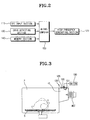
- the standing wave sensor 130 includes an antenna 131 disposed in the waveguide 10, a shield member 133 for fixing the antenna 131 and a circuit section 135, having a diode connected to the antenna 131 for rectifying the voltage induced across the antenna 131 by the magnetic field of the standing wave in the waveguide 10 to produce voltage data regarding the stationary wave in the waveguide 10.
- the antenna sensor is as described in KR-A-98-161026.
- a user places the food to be cooked in the cooking chamber, and selects the desired cooking function (step S10).
- the user selects the popcorn function for the popcorn, the defrosting function for frozen meat or the warming function for warming water.
- the microcomputer compares the data pattern stored in the memory section 140 with the collected data of step S12 (step S14).
- the data patterns compared with the collected data may be all the data patterns in the memory section 140 or may be selected data patterns appropriate to the function selected at step S10. In the latter case, the microcomputer 100 performs the comparing process more reliably.
- the microwave oven operates according to the selected function in S20 (step S22).
- the microcomputer 100 samples the voltage output by the standing wave sensor 130 for a predetermined time period, e.g. five revolutions of the turntable 5.
- the microcomputer 130 selects the compared data pattern in the memory section 140 which is most similar to the collected data (step S26). Then, the microcomputer 100 checks whether the selected data pattern from the memory section 140 is the no-load pattern (step S27).
- step S88 the microcomputer 130 performs the cooking operation according to the selected data pattern if the selected pattern is not the no-load pattern in step S27 (step S88). If the selected pattern is the no-load pattern, the microcomputer 100 stops the cooking operation (step S29).
Landscapes
- Physics & Mathematics (AREA)
- Electromagnetism (AREA)
- Engineering & Computer Science (AREA)
- Human Computer Interaction (AREA)
- Electric Ovens (AREA)
- Control Of High-Frequency Heating Circuits (AREA)
Abstract
Description
Claims (15)
- An operating method for a microwave oven, the method being characterised by:-monitoring the heating process for a predetermined period to produce a monitored data set representative of an aspect of the cooking process;selecting the stored data set, from a set of stored data sets, which best matches the monitored data set; andcontrolling the operation of oven in a manner determined by the identity of the selected stored data set.
- A method according to claim 1, wherein said monitoring comprises monitoring the standing wave magnitude in a waveguide (10) from a source (MGT) of microwaves to a cooking chamber (2).
- An operating method for a microwave oven, the method comprising performing a method according to claim 1 or 2 a plurality of times during one heating operation.
- A microwave oven including control means and monitoring means and configured to operating according to a method according to claim 1, 2 or 3.
- An automatic cooking control method for a microwave oven comprising the steps of:(a) collecting data outputted from a data detecting section for a predetermined time;(b) comparing the collected data with at least one prestored data pattern; and(c) selecting the data pattern among the prestored data pattern that is most similar with the collected data, and performing a cooking operation corresponding to the selected data pattern.
- The method as claimed in claim 5, wherein the data detecting section comprises an antenna sensor for detecting microwaves, and the data collected from the data detecting section are comprised of voltage of the microwaves reflected from food based on the voltage of the microwaves radiated into a cooking chamber of the microwave oven.
- The method as claimed in claim 5, wherein the collected data is compared with all the data patterns prestored in the microwave oven.
- The method as claimed in claim 5, wherein the at least one data pattern comprises a data pattern corresponding to a no-load of the microwave oven, and the microwave oven stops the cooking operation when the data collected for the predetermined time period corresponds with the no-load of the microwave oven.
- The method as claimed in claim 5, wherein the collected data is compared with the selected data patterns from the prestored data patterns which are performed on the same cooking function as the cooking function corresponding to the collected data.
- The method as claimed in claim 9, wherein the selected data pattern comprises a data pattern corresponding to a no-load of the microwave oven, and the microwave oven stops the cooking operation when the data collected for the predetermined time period corresponds with the no-load of the microwave oven.
- An automatic cooking control method for a microwave oven, comprising the steps of:(a) collecting data outputted from a data detecting section during a predetermined number of rotations;(b) comparing the collected data with a data pattern prestored in the microwave oven on the basis of same rotation counts;(c) selecting the data pattern among the prestored data pattern that is most similar with the collected data on the basis of the same rotation counts, and performing a cooking operation corresponding to the selected data pattern; and(d) repeating the steps of (a), (b), and (c) until a completion of the cooking operation.
- The method as claimed in claim 11, wherein the collected data is compared with all the data patterns prestored in the microwave oven.
- The method as claimed in claim 11, wherein the at least one data pattern comprises a data pattern corresponding to a no-load of the microwave oven, and the microwave oven stops the cooking operation when the data collected for the predetermined time period corresponds with the no-load of the microwave oven.
- The method as claimed in claim 11, wherein the collected data is compared with the selected data patterns from the prestored data patterns which are performed on the same cooking function as the cooking function corresponding to the collected data.
- The method as claimed in claim 14, wherein the selected data pattern comprises a data pattern corresponding to a no-load of the microwave oven, and the microwave oven stops the cooking operation when the data collected for the predetermined time period corresponds with the no-load of the microwave oven.
Applications Claiming Priority (6)
| Application Number | Priority Date | Filing Date | Title |
|---|---|---|---|
| KR19990000762 | 1999-01-14 | ||
| KR9900762 | 1999-01-14 | ||
| KR9927332 | 1999-07-07 | ||
| KR19990027330 | 1999-07-07 | ||
| KR9927330 | 1999-07-07 | ||
| KR19990027332 | 1999-07-07 |
Publications (3)
| Publication Number | Publication Date |
|---|---|
| EP1021066A2 true EP1021066A2 (en) | 2000-07-19 |
| EP1021066A3 EP1021066A3 (en) | 2003-10-08 |
| EP1021066B1 EP1021066B1 (en) | 2005-11-23 |
Family
ID=36580450
Family Applications (1)
| Application Number | Title | Priority Date | Filing Date |
|---|---|---|---|
| EP00300213A Expired - Lifetime EP1021066B1 (en) | 1999-01-14 | 2000-01-13 | Operating method for a microwave oven |
Country Status (7)
| Country | Link |
|---|---|
| US (1) | US6166362A (en) |
| EP (1) | EP1021066B1 (en) |
| JP (1) | JP2000220837A (en) |
| CN (1) | CN100353119C (en) |
| AU (1) | AU745320B2 (en) |
| CA (1) | CA2295391C (en) |
| DE (1) | DE60024155T2 (en) |
Cited By (3)
| Publication number | Priority date | Publication date | Assignee | Title |
|---|---|---|---|---|
| DE102012006578A1 (en) * | 2012-03-30 | 2013-10-02 | Topinox Sarl | Cooking apparatus e.g. microwave oven used in restaurant, irradiates high frequency radiation from high-frequency radiation source into cooking chamber, and evaluates reflected radio frequency radiation received by detector |
| EP2683219A3 (en) * | 2012-07-05 | 2014-03-26 | Nxp B.V. | Microwave power source and method of automatic adjustement of operation frequence |
| DE202014004050U1 (en) | 2013-10-01 | 2014-06-16 | Ulrich Schlösser | Waterstick coating |
Families Citing this family (16)
| Publication number | Priority date | Publication date | Assignee | Title |
|---|---|---|---|---|
| KR100279295B1 (en) * | 1998-06-02 | 2001-02-01 | 윤종용 | Active pixel sensor |
| US6867402B1 (en) | 2004-04-08 | 2005-03-15 | Maytag Corporation | System for sensing the presence of a load in an oven cavity of a microwave cooking appliance |
| US9398646B2 (en) * | 2009-07-10 | 2016-07-19 | Panasonic Intellectual Property Management Co., Ltd. | Microwave heating device and microwave heating control method |
| WO2011149275A2 (en) * | 2010-05-26 | 2011-12-01 | Lg Electronics Inc. | Cooking apparatus |
| CN102657482B (en) * | 2012-03-16 | 2017-05-17 | 邓力 | Method for converting manual cooking operation into automatic/semi-automatic cooking operation |
| CN102818301B (en) * | 2012-08-24 | 2015-03-11 | 美的集团股份有限公司 | Microwave oven control method and device, as well as microwave oven |
| CN104456647B (en) * | 2014-11-19 | 2018-01-02 | 广东美的厨房电器制造有限公司 | The unloaded detection means of micro-wave oven and the unloaded detection method of micro-wave oven |
| KR101637153B1 (en) * | 2015-09-11 | 2016-07-07 | 허진숙 | Induction Heating Cooker Having Bottom Heater and Side Heater |
| CN105444221B (en) * | 2015-12-09 | 2019-04-02 | 九阳股份有限公司 | A kind of electromagnetic oven and its Poewr control method |
| KR102281258B1 (en) * | 2017-04-13 | 2021-07-23 | 주식회사 위니아전자 | Cooking apparatus for popcorn and control method of the same |
| US10247519B2 (en) | 2017-05-09 | 2019-04-02 | Raytheon Company | Methods and apparatus for controlling line of sight drift |
| DE102017214751A1 (en) * | 2017-08-23 | 2019-02-28 | BSH Hausgeräte GmbH | Operating a microwave home appliance |
| CN107703803B (en) * | 2017-10-02 | 2020-06-05 | 广东美的厨房电器制造有限公司 | Load detection method, device and computer readable storage medium |
| CN108289351B (en) * | 2018-01-02 | 2021-05-25 | 广东美的厨房电器制造有限公司 | Microwave cooking development method, device and system |
| CN113124429B (en) * | 2019-12-31 | 2023-10-31 | 广东美的白色家电技术创新中心有限公司 | Microwave oven and method for detecting load information in microwave oven |
| CN112401640B (en) * | 2020-10-13 | 2022-12-02 | 华帝股份有限公司 | Control method for secondary cooking of cooking equipment and cooking equipment |
Family Cites Families (14)
| Publication number | Priority date | Publication date | Assignee | Title |
|---|---|---|---|---|
| US4210795A (en) * | 1978-11-30 | 1980-07-01 | Litton Systems, Inc. | System and method for regulating power output in a microwave oven |
| US4317977A (en) * | 1979-09-06 | 1982-03-02 | Litton Systems, Inc. | Power controlled microwave oven |
| CA1192618A (en) * | 1981-09-03 | 1985-08-27 | Sharp Kabushiki Kaisha | Microwave oven with automatic cooking performance having additional heating process |
| GB2117925B (en) * | 1982-02-19 | 1986-02-05 | Hitachi Heating Appl | Heating apparatus of thawing sensor controlled type |
| JPS59176655A (en) * | 1983-03-28 | 1984-10-06 | Hitachi Heating Appliance Co Ltd | Detector for thawing state |
| US4864088A (en) * | 1987-07-03 | 1989-09-05 | Sanyo Electric Co., Ltd. | Electronically controlled cooking apparatus for controlling heating of food using a humidity sensor |
| DE3743921A1 (en) * | 1987-12-23 | 1989-07-13 | Bosch Siemens Hausgeraete | CONTROL ARRANGEMENT FOR HEATING TECHNICAL TREATMENT OF FOODS BY MICROWAVE ENERGY |
| IT1237959B (en) * | 1990-02-01 | 1993-06-19 | Eurodomestici Ind Riunite | METHOD AND DEVICE FOR THE DETECTION OF THE WEIGHT OF FOOD PLACED IN A MICROWAVE OVEN AND TO CONTROL THE TREATMENT |
| JP2852458B2 (en) * | 1990-07-02 | 1999-02-03 | 松下電器産業株式会社 | High frequency heating equipment |
| JP2736845B2 (en) * | 1992-12-14 | 1998-04-02 | シャープ株式会社 | High frequency heating equipment |
| KR0128675B1 (en) * | 1993-06-29 | 1998-04-09 | 김광호 | Microwave drive control method and device |
| SE502883C2 (en) * | 1994-06-13 | 1996-02-12 | Whirlpool Europ | Control method for a microwave oven, microwave oven and its use for cooking / heating a food product according to the control procedure |
| KR100196692B1 (en) * | 1996-03-26 | 1999-06-15 | 구자홍 | Cover and volume detecting apparatus |
| JP3364405B2 (en) * | 1997-02-28 | 2003-01-08 | シャープ株式会社 | microwave |
-
2000
- 2000-01-11 US US09/480,674 patent/US6166362A/en not_active Expired - Lifetime
- 2000-01-12 CN CNB001002619A patent/CN100353119C/en not_active Expired - Fee Related
- 2000-01-13 EP EP00300213A patent/EP1021066B1/en not_active Expired - Lifetime
- 2000-01-13 CA CA002295391A patent/CA2295391C/en not_active Expired - Fee Related
- 2000-01-13 DE DE60024155T patent/DE60024155T2/en not_active Expired - Lifetime
- 2000-01-13 AU AU10078/00A patent/AU745320B2/en not_active Ceased
- 2000-01-14 JP JP2000007165A patent/JP2000220837A/en active Pending
Cited By (3)
| Publication number | Priority date | Publication date | Assignee | Title |
|---|---|---|---|---|
| DE102012006578A1 (en) * | 2012-03-30 | 2013-10-02 | Topinox Sarl | Cooking apparatus e.g. microwave oven used in restaurant, irradiates high frequency radiation from high-frequency radiation source into cooking chamber, and evaluates reflected radio frequency radiation received by detector |
| EP2683219A3 (en) * | 2012-07-05 | 2014-03-26 | Nxp B.V. | Microwave power source and method of automatic adjustement of operation frequence |
| DE202014004050U1 (en) | 2013-10-01 | 2014-06-16 | Ulrich Schlösser | Waterstick coating |
Also Published As
| Publication number | Publication date |
|---|---|
| DE60024155D1 (en) | 2005-12-29 |
| DE60024155T2 (en) | 2006-06-29 |
| CA2295391C (en) | 2003-04-15 |
| US6166362A (en) | 2000-12-26 |
| EP1021066A3 (en) | 2003-10-08 |
| CA2295391A1 (en) | 2000-07-14 |
| AU1007800A (en) | 2000-08-03 |
| CN1266162A (en) | 2000-09-13 |
| AU745320B2 (en) | 2002-03-21 |
| EP1021066B1 (en) | 2005-11-23 |
| CN100353119C (en) | 2007-12-05 |
| JP2000220837A (en) | 2000-08-08 |
Similar Documents
| Publication | Publication Date | Title |
|---|---|---|
| EP1021066B1 (en) | Operating method for a microwave oven | |
| US12058798B2 (en) | Cooking apparatus and control method thereof | |
| EP1021067B1 (en) | Microwave oven operating method | |
| KR0130741B1 (en) | Heating cooker | |
| US5545880A (en) | Method for automatic control of a microwave oven | |
| JP3402051B2 (en) | Induction heating cooker | |
| KR100341328B1 (en) | Automatic cooking control method for a microwave oven | |
| JP2988364B2 (en) | High frequency heating equipment | |
| KR100277590B1 (en) | microwave | |
| AU763026B2 (en) | Data obtaining method for a microwave oven | |
| JP3246202B2 (en) | High frequency heater | |
| KR100499478B1 (en) | Microwave oven having toaster function and method for controlling the same | |
| KR0128560B1 (en) | Control method of latent heat of microwave | |
| KR100276028B1 (en) | How to display cooking menu and cooking time of microwave | |
| KR19990058209A (en) | Control method of thawing by weight of microwave oven | |
| KR19990047959A (en) | Microwave humidifier and its method | |
| JPH102561A (en) | microwave | |
| JP2004060969A (en) | Cooking device | |
| KR19990005179A (en) | Cooking control method of microwave oven | |
| KR19990010369U (en) | Manual cooking control device of microwave oven | |
| KR20060004350A (en) | Microwave oven with temperature sensing device | |
| KR19990035656A (en) | Microwave tray control device and method | |
| JP2002054815A (en) | High frequency heater |
Legal Events
| Date | Code | Title | Description |
|---|---|---|---|
| PUAI | Public reference made under article 153(3) epc to a published international application that has entered the european phase |
Free format text: ORIGINAL CODE: 0009012 |
|
| AK | Designated contracting states |
Kind code of ref document: A2 Designated state(s): AT BE CH CY DE DK ES FI FR GB GR IE IT LI LU MC NL PT SE |
|
| AX | Request for extension of the european patent |
Free format text: AL;LT;LV;MK;RO;SI |
|
| RIN1 | Information on inventor provided before grant (corrected) |
Inventor name: JANG, BO-IN Inventor name: JEONG, JOON-YOUNG Inventor name: SHON, JONG-CHULL Inventor name: LIM, DONG-BIN Inventor name: LEE, WON-WOO Inventor name: PARK, TAE-SOO |
|
| PUAL | Search report despatched |
Free format text: ORIGINAL CODE: 0009013 |
|
| AK | Designated contracting states |
Kind code of ref document: A3 Designated state(s): AT BE CH CY DE DK ES FI FR GB GR IE IT LI LU MC NL PT SE |
|
| AX | Request for extension of the european patent |
Extension state: AL LT LV MK RO SI |
|
| 17P | Request for examination filed |
Effective date: 20031103 |
|
| 17Q | First examination report despatched |
Effective date: 20031201 |
|
| AKX | Designation fees paid |
Designated state(s): DE FR GB NL |
|
| RAP1 | Party data changed (applicant data changed or rights of an application transferred) |
Owner name: SAMSUNG ELECTRONICS CO., LTD. |
|
| GRAP | Despatch of communication of intention to grant a patent |
Free format text: ORIGINAL CODE: EPIDOSNIGR1 |
|
| RTI1 | Title (correction) |
Free format text: OPERATING METHOD FOR A MICROWAVE OVEN |
|
| RIN1 | Information on inventor provided before grant (corrected) |
Inventor name: JANG, BO-IN Inventor name: PARK, TAE-SOO Inventor name: LIM, DONG-BIN Inventor name: SHON, JONG-CHULL Inventor name: JEONG, JOON-YOUNG Inventor name: LEE, WON-WOO |
|
| GRAS | Grant fee paid |
Free format text: ORIGINAL CODE: EPIDOSNIGR3 |
|
| GRAA | (expected) grant |
Free format text: ORIGINAL CODE: 0009210 |
|
| AK | Designated contracting states |
Kind code of ref document: B1 Designated state(s): DE FR GB NL |
|
| REG | Reference to a national code |
Ref country code: GB Ref legal event code: FG4D |
|
| REF | Corresponds to: |
Ref document number: 60024155 Country of ref document: DE Date of ref document: 20051229 Kind code of ref document: P |
|
| ET | Fr: translation filed | ||
| PLBE | No opposition filed within time limit |
Free format text: ORIGINAL CODE: 0009261 |
|
| STAA | Information on the status of an ep patent application or granted ep patent |
Free format text: STATUS: NO OPPOSITION FILED WITHIN TIME LIMIT |
|
| 26N | No opposition filed |
Effective date: 20060824 |
|
| REG | Reference to a national code |
Ref country code: FR Ref legal event code: PLFP Year of fee payment: 16 |
|
| PGFP | Annual fee paid to national office [announced via postgrant information from national office to epo] |
Ref country code: NL Payment date: 20150121 Year of fee payment: 16 |
|
| PGFP | Annual fee paid to national office [announced via postgrant information from national office to epo] |
Ref country code: DE Payment date: 20150122 Year of fee payment: 16 |
|
| PGFP | Annual fee paid to national office [announced via postgrant information from national office to epo] |
Ref country code: FR Payment date: 20150122 Year of fee payment: 16 Ref country code: GB Payment date: 20150122 Year of fee payment: 16 |
|
| REG | Reference to a national code |
Ref country code: DE Ref legal event code: R119 Ref document number: 60024155 Country of ref document: DE |
|
| GBPC | Gb: european patent ceased through non-payment of renewal fee |
Effective date: 20160113 |
|
| REG | Reference to a national code |
Ref country code: NL Ref legal event code: MM Effective date: 20160201 |
|
| REG | Reference to a national code |
Ref country code: FR Ref legal event code: ST Effective date: 20160930 |
|
| PG25 | Lapsed in a contracting state [announced via postgrant information from national office to epo] |
Ref country code: DE Free format text: LAPSE BECAUSE OF NON-PAYMENT OF DUE FEES Effective date: 20160802 Ref country code: GB Free format text: LAPSE BECAUSE OF NON-PAYMENT OF DUE FEES Effective date: 20160113 |
|
| PG25 | Lapsed in a contracting state [announced via postgrant information from national office to epo] |
Ref country code: FR Free format text: LAPSE BECAUSE OF NON-PAYMENT OF DUE FEES Effective date: 20160201 Ref country code: NL Free format text: LAPSE BECAUSE OF NON-PAYMENT OF DUE FEES Effective date: 20160201 |