EP1019085B1 - Non-anaphylactic forms of allergens and their use - Google Patents
Non-anaphylactic forms of allergens and their use Download PDFInfo
- Publication number
- EP1019085B1 EP1019085B1 EP98946774A EP98946774A EP1019085B1 EP 1019085 B1 EP1019085 B1 EP 1019085B1 EP 98946774 A EP98946774 A EP 98946774A EP 98946774 A EP98946774 A EP 98946774A EP 1019085 B1 EP1019085 B1 EP 1019085B1
- Authority
- EP
- European Patent Office
- Prior art keywords
- bet
- recombinant
- ige
- anaphylactic
- immunogen
- Prior art date
- Legal status (The legal status is an assumption and is not a legal conclusion. Google has not performed a legal analysis and makes no representation as to the accuracy of the status listed.)
- Expired - Lifetime
Links
Images



Classifications
-
- C—CHEMISTRY; METALLURGY
- C07—ORGANIC CHEMISTRY
- C07K—PEPTIDES
- C07K16/00—Immunoglobulins [IG], e.g. monoclonal or polyclonal antibodies
- C07K16/16—Immunoglobulins [IG], e.g. monoclonal or polyclonal antibodies against material from plants
-
- A—HUMAN NECESSITIES
- A61—MEDICAL OR VETERINARY SCIENCE; HYGIENE
- A61P—SPECIFIC THERAPEUTIC ACTIVITY OF CHEMICAL COMPOUNDS OR MEDICINAL PREPARATIONS
- A61P37/00—Drugs for immunological or allergic disorders
- A61P37/08—Antiallergic agents
-
- C—CHEMISTRY; METALLURGY
- C07—ORGANIC CHEMISTRY
- C07K—PEPTIDES
- C07K14/00—Peptides having more than 20 amino acids; Gastrins; Somatostatins; Melanotropins; Derivatives thereof
- C07K14/415—Peptides having more than 20 amino acids; Gastrins; Somatostatins; Melanotropins; Derivatives thereof from plants
-
- A—HUMAN NECESSITIES
- A61—MEDICAL OR VETERINARY SCIENCE; HYGIENE
- A61K—PREPARATIONS FOR MEDICAL, DENTAL OR TOILETRY PURPOSES
- A61K39/00—Medicinal preparations containing antigens or antibodies
-
- Y—GENERAL TAGGING OF NEW TECHNOLOGICAL DEVELOPMENTS; GENERAL TAGGING OF CROSS-SECTIONAL TECHNOLOGIES SPANNING OVER SEVERAL SECTIONS OF THE IPC; TECHNICAL SUBJECTS COVERED BY FORMER USPC CROSS-REFERENCE ART COLLECTIONS [XRACs] AND DIGESTS
- Y10—TECHNICAL SUBJECTS COVERED BY FORMER USPC
- Y10S—TECHNICAL SUBJECTS COVERED BY FORMER USPC CROSS-REFERENCE ART COLLECTIONS [XRACs] AND DIGESTS
- Y10S530/00—Chemistry: natural resins or derivatives; peptides or proteins; lignins or reaction products thereof
- Y10S530/868—Chemistry: natural resins or derivatives; peptides or proteins; lignins or reaction products thereof involving autoimmunity, allergy, immediate hypersensitivity, delayed hypersensitivity, immunosuppression, or immunotolerance
Definitions
- the present invention concerns non-anaphylactic forms of a protein allergen and the use of the forms for hyposensitization.
- the invention also concerns the use of the non-anaphylactic forms for the preparation of a medicament to be used in a method for hyposensitization of a mammalian individual, typically a human individual, suffering from type I allergy against a protein allergen.
- the invention primarily concerns protein allergens for treating humans.
- a protein allergen is meant the major birch pollen allergen Bet v 1.
- Type I allergy represents a major health problem in industrialised countries where more than 20 % of the population suffer from Type I allergic reactions (allergic rhinitis, conjunctivitis, allergic asthma and anaphylactic shock) ( Kaplan (ed) Allergy. Churchill Livingstone, New York (1985 )).
- Environmental proteins from pollen, mites and animal dander belong to the major components which induce release of biological mediators (e.g. histamine) by crosslinking effector cell (mast cell, basophil) bound specific IgE antibodies.
- the production of specific IgE from B-cells is stimulated by allergen specific T-helper cells which in their majority belong to the TH2 type ( Romagnani, Immunol. Today 13 (1992) 379-381 ).
- T-cell epitopes harbour a great variety of different T-cell epitopes ( Ebner et al., J. Immunol 150 (1993) 1047-1054 ; Joost-van-Neerven et al., J. Immunol. 151 (1993) 2326-2335 ; and Schenket al., J. Allergy Clin. Immunol. 96 (1995) 986-996 ) which may overlap with continuous IgE-epitopes. To prevent crosslinking of effector cell (mast cell, basophil) bound IgE and mediator release, T-cell epitopes and IgE epitopes need to be dissected.
- Bet v 1 ( Why a major allergen into a T-cell vaccine, the present inventors selected Bet v 1 ( Why a major allergen into a T-cell vaccine, the present inventors selected Bet v 1 ( Why a major allergen into a T-cell vaccine, the present inventors selected Bet v 1 ( Why a major allergen into a T-cell vaccine, the present inventors selected Bet v 1 ( Why a major allergen into a T-cell vaccine, the present inventors selected Bet v 1 ( Breedneder et al., EMBO J. 8 (1989) 1935-1938 ), the major birch pollen allergen, as a model.
- Bet v 1 was selected because epitope analysis indicated that it forms conformational IgE epitopes ( Visco et al., J. Immunol. 157 (1996) 956-962 ; and Laffer et al., J. Immunol. 157 (1996) 4953-4962 ).
- Bet v 1 represents one of the most common allergens which is recognized by 95% of tree pollen and food allergic individuals and almost 60% of them are sensitized exclusively against Bet v 1 ( Jarolim et al., Allergy 44 (1989) 385-394 ).
- the cDNA coding for Bet v 1 has recently been isolated ( Popeeder et al., EMBO J.
- a first aspect of the present invention is an immunogen derived from Bet v 1. It has a strongly reduced anaphylactic ability compared to the protein allergen from which it derives and will therefore in the context of the present invention be called non-anaphylactic.
- the immunogen is characterized in that it comprises:
- the IgE-binding capacity of an allergen is reduced by polymerization.
- polymeric forms means that the immunogen comprises 2-10 of the monomeric units defined above. At the priority date results had been obtained with polymeric forms containing 2, 3 and 4 monomeric units.
- the immunogens are produced by recombinant techniques to directly give the polymeric forms.
- the polymeric forms may have been linked to a carrier in order to increase the immunogenicity.
- this carrier is a protein and one wants to have a linear immunogen it is possible to produce the immunogen in one step by expression of the corresponding gene construct in the appropriate host cell, such as a procaryotic (e.g. E. coli) or eucaryotic (yeast or a mammalian cell line) cell. See further Scheiner O and Kraft D, Allergy 50 (1995) 384-391 ; and Valenta R and Kraft D, Current Opinion in Immunology 7 (1995) 751-756 .
- oligopeptide linkers between each monomeric unit of the polymeric forms of the immunogen.
- Suitable amino acid residues in the linker may be selected among hydrophobic or hydrophilic or among basic, acid or neutral amino acids.
- Hydrophobic amino acids are Trp, Gly, Ala, Phe, Pro, Met, Val, Leu, and Ile.
- Hydrophilic amino acids are for instance Gln, Ser, Gly, Glu, Pro, His and Arg.
- the length of the oligopeptide linker typically is an integer in the interval 0-30, such as in the interval 0-10, amino acid residues. At the priority date, the preferred linker was the tripeptide Leu-Val-Pro.
- a second aspect of the invention relates to a specific hyposensitization therapy.
- This therapy may be performed as known in the art for protein allergens and encompasses administering repeatedly to the mammal, typically a human individual, suffering from type I allergy against the protein allergen an immunogen that is capable of raising an IgG immune response against the protein allergen. Administration may be done systemically, for instance by injection, infusion, etc, but also the oral route has been suggested in order to expose the intestinal part of the immune system.
- the immunogen may be admixed with suitable adjuvants such as aluminium oxide. Se further Norman PS, "Current status of immunotherapy for allergies and anaphylactic reactions" Adv. Internal. Medicine 41 (1996) 681-713 .
- Bet v 1-cDNA ( Breedneder et al., "The gene coding for the major birch pollen allergen Bet v 1 is highly homologous to a pea resistance response gene", EMBO J. 8 (1989) 1935-1938 ) was PCR-amplified with the following oligonucleotide primers:
- Protocol for PCR-amplification Reaction mix (GeneAmp PCR kit, Perkin Elmer, Branchburg, N.J. USA): 44 ⁇ l H 2 O dd , 10xl 10x PCR buffer, 4 ⁇ l 5mM dATP, 4 ⁇ l 5mM dCTP, 4 ⁇ l 5mM dGTP, 4 ⁇ l 5mM dGTP, 4 ⁇ l 25mM MgCl 2 , 3 ⁇ l 10xM primer 1, 3 ⁇ l 10xM primer 2, 10 ⁇ l 1ng/ ⁇ l Bet v 1.
- 10x PCR-buffer 100mM Tris-HCl, pH 8.3, and 500 mM KCl.
- the reaction mixture was heated for 5 minutes at 94°C, afterwards 35 cycles of 1min at 94°C, 2min at 40°C, and 3 min at 72°C were performed. During the first cycle 10 ⁇ l of AmpliTaq DNA Polymerase (2.5 U/10 ⁇ l) were added.
- PCR-products were digested with the corresponding restriction enzymes. Primers which contained additional Eco RI sites, were digested first with Eco RI to facilitate subcloning. Digested fragments were purified using Nick columns (Pharmacia Biotech AB, Uppsala, Sweden), and ligated into pET-17b plasmids (Novagen, Madison, USA).
- the plasmid, containing the first Bet v 1-segment, was further digested with Kpn I/Xho I in the case of Bet v 1-dimer, or with Kpn I/Spe I in the case of Bet v 1-trimer, to obtain vectors, in which the second Bet v 1-segments could be incorporated.
- this construct was further digested with Spe I/Eco R I and the third Bet v 1-segment was added.
- Recombinant Bet v 1-polymers were expressed as inclusion bodies and isolated as described ( Vrtala et al., "Immunologic characterization of purified recombinant timothy grass pollen (Phleum pratense) allergens (Phl p 1, Phl p 2, Phl p 5)", J. Allergy Clin. Immunol. 97 (1996) 781-786 .
- Inclusion bodies were solubilized with 8M urea, 10mM Tris, pH 8, 1mM EDTA, 5mM beta-mercaptoethanol, diluted with 10mM Tris, pH 8, to a concentration of 6M urea and centrifuged for 15min at 10,000g to remove insoluble material.
- Bet v 1 polymers Construction of the Bet v 1 polymers. It is referred to the scheme with sequences and vector figures at the end of the descriptive part.
- the Bet v 1-cDNA ( Breedneder et al., EMBO J. 8 (1989) 1935-1938 ) was PCR-amplified with oligonucleotide primers containing different restriction enzyme cleavage sites. The PCR-products were then ligated as indicated in the scheme and subcloned into the plasmid pET-17b (Novagen, Madison, USA).
- Figure 1 Coomassie stained SDS-PAGE gel showing purified recombinant Bet v 1-monomer and Bet v 1-polymers
- Lane M Molecular weight marker; lane 1 contains 3 ⁇ g purified, recombinant Bet v 1 monomer, lane 2 3 ⁇ g purified, recombinant Bet v 1-dimer, and lane 3 3 ⁇ g purified recombinant Bet v 1-trimer. Result: The purified proteins were more than 95% pure. The dissolved proteins were separated from insoluble material by high speed centrifugation prior to loading the samples.
- Figure 3 Determination of IgE-reactivity of sera from birch pollen allergic patients with Bet v 1-monomer and polymers by ELISA.
- Sera from 4 birch-pollen allergic patients were diluted 1:2 (1), 1:10 (2), 1:20 (3), 1:40 (4) and 1:80 (5) and tested for IgE-reactivity with purified, recombinant Bet v 1-monomer, Bet v 1-dimer and Bet v 1-trimer. The OD-values are displayed on the y-axis. Result: Serum IgE from allergic patients bound to Bet v 1-polymers in a comparable manner as to Bet v 1-monomer.
- the symbols represent the OD-values that correspond to the IgG 1 -binding of the 8 different Bet v 1-dimer or Bet v 1-trimer mice. Result: The Bet v 1-polymers are able to induce high levels of IgG 1 -antibodies, which crossreact with Bet v 1-monomer.
- Granulocytes from a birch pollen allergic patient were incubated with increasing concentrations (0.01 ⁇ g/ml, 0.1 ⁇ g/ml, 1 ⁇ g/ml and 10 ⁇ g/ml) of purified, recombinant Bet v 1-monomer, Bet v 1-dimer, Bet v 1-trimer, Bet v 1-tetramer and anti-IgE antibodies as positive control. Histamine release in the cell free supernatant was measured by RIA (Immunotech, Marseille) and is expressed as percentage of total histamine release.
- Bet v 1-dimer induced a slightly reduced histamine release from patients' basophils compared to the monomer, whereas Bet v 1-trimer and tetramer had an approximately 100 fold reduced capacity to induce histamine release.
- Bet v 1-monomer induced maximal histamine release at a concentration of 0.01 ⁇ g/ml, Bet v 1-trimer and tetramer at a concentration of 1 ⁇ g/ml.
- T-cell clones from different pollen allergic donors (column 2 shows the initials of the donors) with specificity for different Bet v 1 epitopes (in column 1 the position of the epitopes are indicated) were incubated with purified, recombinant Bet v 1-monomer (column 4), Bet v 1-dimer (column 5), Bet v 1-trimer (column 6) and Bet v 1-tetramer (column 7).
- As negative control clones were tested with medium alone (column 3). Proliferation was determined by 3 H Thymidine uptake and is displayed as counts per minute (cpm) (columns 3-7).
- Bet v 1-polymers and Bet v 1-monomer induced comparable proliferation of specific T cell clones.
- the wheal reaction increased dose dependently with the protein concentrations.
- the non-allergic control individuals displayed only skin reactions with histamine but not with the Bet v 1-preparations. Both the histamine release assays and the skin tests indicate that the Bet v 1-polymers have a greatly (up to 100 fold) reduced anaphylactic activity compared to Bet v 1-monomer. The reduction of anaphylactic potential is proportional to the degree of polymerization.
- Bet v 1 was expressed in pET 17b plasmids (Novagen, Madison, USA) Bet v 1 as dimer, trimer and tetramer.
- the Bet v 1-polymers were expressed at high levels in E. coli BL21 (DE3) (Novagen, Madison, USA) and purified to homogeneity.
- the Bet v 1-polymers retained their IgE-binding capacity, as was shown by immunoblotting and by ELISA. T-cell clones from birch allergic donors, with specificity for Bet v 1 proliferated upon incubation with all the polymers, indicating that the polymers contain the relevant T-cell epitopes of Bet v 1.
- Bet v 1-trimer and tetramer had an approximately 100 fold reduced capacity to induce histamine release from patients' basophils and a greatly reduced anaphylactic potential as evaluated by skin testing. Because of the reduction of their anaphylactic activity the Bet v 1-polymers may be considered as safe tools for specific immunotherapy of tree pollen and associated food allergy. Allergic patients may be treated with high doses of these derivatives with reduced risk of anaphylactic side effects.
- the difference of the recombinant polymers to non-anaphylactic T-cell epitope containing allergen derivative is that they contain the IgE-binding sites but have a reduced anaphylactic potential.
- Example 2 Mapping the binding site of antibodies in Bet v 1.
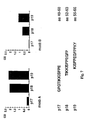
- FIG. 7 Two monoclonal anti-Bet v 1-antibodies (moAb A and B) were used together with three synthetic Bet v 1-derived peptides in ELISA. The sequences of the three peptides are shown in the lower part of the figure and correspond to aa 49-60 (p17), aa 52-63 (p18) and aa 55-66 (p19) of Bet v 1. The peptides were tested for binding to the two Bet v 1 specific monoclonals. The OD values are displayed on the y-axis. Both moAbs bind to the peptides p18 and p19, which are mapped to the first half of Bet v 1.
- the % inhibition of IgE-binding compared to preincubation with buffer is displayed in the table.
- Sera from allergic patients, antibodies, protein extracts and E. coli strains Sera from birch pollen allergic patients and control individuals were characterized by RAST and testing with recombinant allergens as described ( Valenta et al., J. Allergy Clin. Immunol. 88 (1991) 889-894 ; Valenta et al., Int. Arch. Allergy Immunol. 97 (1992) 287-294 ). In addition, all patients were characterized by case history and skin prick test. The mouse monoclonal antibody moab 14 with specificity for aa 40-65 of Bet v 1 is described ( Lebecque et al., J. Allergy Clin. Immunol.
- Natural birch pollen extract was prepared as described ( Vrtala et al., Int. Arch. Allergy Immunol. 102 (1993) 160-169 ). Plasmid pET-17b containing the ampicillin resistance and a T7 promotor was obtained from Novagen, Madison, USA. Recombinant Bet v 1 fragments were expressed in ⁇ DE3 lysogens of E. coli strain BL21 (F- ompTr b -m B -) ( Studier et al., Meth. Enzymol. 185 (1990) 60-89 ).
- Bet v 1 (aa 1-74, aa 75-160) fragments in E. coli.
- Recombinant Bet v 1 fragments (aa 1-74, aa 75-160) were generated to maintain the epitopes (aa 40-65) of murine monoclonal antibodies which inhibited binding of allergic patients IgE to Bet v 1 ( Lebecque et al., J. Allergy Clin. Immunol. 99(3) (1997) 374-384 ) and in order to preserve major T-cell epitopes which had been mapped using overlapping peptides synthesized according to the Bet v 1 sequence ( Ebner et al., J. Immunol. 150 (1993) 1047-1054 ).
- the cDNAs coding for fragment aa 1-74 and aa 75-160 were obtained by PCR amplification of the Bet v 1 cDNA using the following oligonucleotide primers (Pharmacia Biotech AB, Upsala Sweden):
- PCR-products were first cut with Eco RI and Kpn I, purified by preparative agarose gel electrophoresis, subcloned into Eco RI and Kpn I site of plasmid pEt-17b (Novagen, Madison, USA) and transformed into E. coli BL21 (DE3) (Novagen, Madison, USA) by electroporation. Inserts were then excised with Nde I/Kpn I and subcloned again in plasmid pET-17b and transformed.
- Colonies expressing the correct fragments were identified by immunoscreening using mab 14 for Bet v 1 aa 1-74 and a rabbit anti-Bet v 1 C-terminal antiserum for Bet v1 aa 75-160.
- DNA from positive clones was isolated using Qiagen tips (Quiagen, Hilden, Germany) and both DNA strands were sequenced according to Sanger using a T7 polymerase sequencing kit (Pharmacia Biotech AB, Uppsala, Sweden) and 35 S dCTP (NEN, Stevehage, UK)(24).
- Recombinant Bet v 1 (aa 1-74 and Bet v1 (aa 75-160) were expressed in E. coli BL21 (DE3) by induction with 0.5 mM IPTG at an OD600 of 0.5-0.8 in liquid culture for 5 hours at 37°C.
- Bet v1 (aa 1-74) and Bet v1 (aa 75-160) were expressed in inclusion bodies isolated as described ( Vrtala et al., J. Allergy Clin. Immunol. 97 (1996) 781-787 ). Inclusion bodies were solubilized with 8M urea, 10 mM Tris, pH 8, 1 mM EDTA (ethylenediaminetetraacetic acid), 5 mm ⁇ -mercaptoethanol, diluted with 10 mM Tris, pH 8 to a concentration of 6 M urea and centrifuged for 15 minutes at 10,000xg to remove insoluble material.
- 8M urea 10 mM Tris, pH 8, 1 mM EDTA (ethylenediaminetetraacetic acid), 5 mm ⁇ -mercaptoethanol
- the supernatant containing the recombinant protein was dialyzed to a final concentration of 2M urea. Following centrifugation (15min, 10,000xg), the supernatant was applied to a column packed with DEAE (diethylaminoethyl) Sepharose (Pharmacia Biotech AB) and the protein eluted with a 0-0.5M NaCl concentration gradient. Fractions, containing the recombinant protein which was more than 80% pure, were dialyzed against 6M urea, 10mM NaH 2 PO 4 , pH 4.8 and rechromatographed on a column packed with SP Sepharose (Pharmacia Biotech AB).
- IgE binding capacity of recombinant Bet v 1 and Bet v 1 fragments Purified recombinant Bet v 1 and Bet v 1 fragments (aa 1-74, aa 75-160) were tested for IgE-binding capacity by Western blotting and in dot blot assays. For immunoblotting, approximately 1 ⁇ g/cm purified protein was separated by SDS-PAGE ( Fling et al., Anal. Biochem. 155 (1986) 83-88 ) and blotted onto nitrocellulsoe according to Towbin ( Towbin et al., Proc. Natl. Acad. Sci. USA 76 (1979) 4350-4353 ).
- Circular dichroism showed that the two Bet v 1 fragments showed no tendency to fold, even in the presence of each other.
- Granulocytes were isolated from heparinized blood of birch pollen allergic individuals by dextran sedimentation ( Valent et al., Proc. Natl. Acad. Sci. USA 86 (1989) 5542-5547 ). Cells were incubated with different concentrations (0.001 ⁇ g/ml-10 ⁇ g/ml) of purified rcombinant Bet v 1, recombinant Bet v 1 fragments (aa 1-74, aa 75-160) separately and in equimolar mixture, or anti-human IgE antibodies.
Landscapes
- Chemical & Material Sciences (AREA)
- Health & Medical Sciences (AREA)
- Life Sciences & Earth Sciences (AREA)
- Organic Chemistry (AREA)
- Medicinal Chemistry (AREA)
- General Health & Medical Sciences (AREA)
- Biophysics (AREA)
- Biochemistry (AREA)
- Genetics & Genomics (AREA)
- Molecular Biology (AREA)
- Proteomics, Peptides & Aminoacids (AREA)
- Botany (AREA)
- Immunology (AREA)
- Gastroenterology & Hepatology (AREA)
- Pulmonology (AREA)
- Engineering & Computer Science (AREA)
- Bioinformatics & Cheminformatics (AREA)
- Chemical Kinetics & Catalysis (AREA)
- General Chemical & Material Sciences (AREA)
- Nuclear Medicine, Radiotherapy & Molecular Imaging (AREA)
- Pharmacology & Pharmacy (AREA)
- Animal Behavior & Ethology (AREA)
- Public Health (AREA)
- Veterinary Medicine (AREA)
- Medicines Containing Antibodies Or Antigens For Use As Internal Diagnostic Agents (AREA)
- Peptides Or Proteins (AREA)
- Preparation Of Compounds By Using Micro-Organisms (AREA)
- Pharmaceuticals Containing Other Organic And Inorganic Compounds (AREA)
Abstract
Description
- The present invention concerns non-anaphylactic forms of a protein allergen and the use of the forms for hyposensitization. The invention also concerns the use of the non-anaphylactic forms for the preparation of a medicament to be used in a method for hyposensitization of a mammalian individual, typically a human individual, suffering from type I allergy against a protein allergen.
- The invention primarily concerns protein allergens for treating humans.
- By a protein allergen is meant the major birch pollen allergen Bet v 1.
- In April 1997, the present inventors published an article dealing with non-anaphylactic fragments of the Bet v 1 allergen. See Vrtala et al., "Conversion of the major birch pollen allergen, .
- Type I allergy represents a major health problem in industrialised countries where more than 20 % of the population suffer from Type I allergic reactions (allergic rhinitis, conjunctivitis, allergic asthma and anaphylactic shock) (Kaplan (ed) Allergy. Churchill Livingstone, New York (1985)). Environmental proteins from pollen, mites and animal dander belong to the major components which induce release of biological mediators (e.g. histamine) by crosslinking effector cell (mast cell, basophil) bound specific IgE antibodies. The production of specific IgE from B-cells is stimulated by allergen specific T-helper cells which in their majority belong to the TH2 type (Romagnani, Immunol. Today 13 (1992) 379-381). Therapy of Type allergic diseases is currently performed by pharmacological treatment and by specific immunotherapy. Specific immunotherapy has been established already early in this century (Noon, Lancet 1 (1911) 1572-1573) and involves the systemic application of increasing doses of allergens for extended periods. Although specific immunotherapy is recognized as effective treatment, the occurrence of anaphylactic side effects represents one of the major disadvantages of this therapy. To reduce anaphylactic reactions the use of T-cell epitopes has recently been proposed for allergen specific immunotherapy (Briner et al., Proc. Natl. Acad. Sci. USA 90 (1993) 7608-7612, and Norman, Curr. Opin. Immunol. 5 (1993) 986-973).
- Allergens harbour a great variety of different T-cell epitopes (Ebner et al., J. Immunol 150 (1993) 1047-1054; Joost-van-Neerven et al., J. Immunol. 151 (1993) 2326-2335; and Schenket al., J. Allergy Clin. Immunol. 96 (1995) 986-996) which may overlap with continuous IgE-epitopes. To prevent crosslinking of effector cell (mast cell, basophil) bound IgE and mediator release, T-cell epitopes and IgE epitopes need to be dissected. Following the concept of converting a major allergen into a T-cell vaccine, the present inventors selected Bet v 1 (Breiteneder et al., EMBO J. 8 (1989) 1935-1938), the major birch pollen allergen, as a model.
- Bet
v 1 was selected because epitope analysis indicated that it forms conformational IgE epitopes (Visco et al., J. Immunol. 157 (1996) 956-962; and Laffer et al., J. Immunol. 157 (1996) 4953-4962). In addition, Betv 1 represents one of the most common allergens which is recognized by 95% of tree pollen and food allergic individuals and almost 60% of them are sensitized exclusively against Bet v 1 (Jarolim et al., Allergy 44 (1989) 385-394). The cDNA coding for Betv 1 has recently been isolated (Breiteneder et al., EMBO J. 8 (1989) 1935-1938) andrecombinant Bet v 1 was expressed in Escherichia coli (Valenta et al., J. Allergy Clin. Immunol. 88 (1991) 889-894; and Ferreira et al., J. Biol. Chem. 268 (1993) 19574-19580). RecombinantBet v 1 has been shown to possess an IgE-binding capacity similar to that ofnatural Bet v 1 and shares IgE as well as T-cell epitopes with Bet v 1 homologous proteins present in pollen from various trees and plant derived foods (Ebner et al., J. Allergy Clin. Immunol. 95 (1995) 962-969; Ebner et al., J. Immunol. 150 (1993) 1047-1054; and Schenk et al., Eur. J. Biochem. 224 (1994) 717-724). The biological activity of therecombinant Bet v 1 has been demonstrated by histamine release experiments and by skin prick testing of allergic patients (Valenta et al., J. Allergy Clin. Immunol. 91 (1993) 88-97; Pauli et al., J. Allergy Clin. Immunol. 98 (1996) 1100-1109; and Menz et al., Clin. Exp. Allergy 26 (1995) 50-60). - Reduction of allergenicity of allergens by chemical polymerization is known e.g. through Patterson and Suszko, arbeiten aus dem Paul-Ehrlich-Institut, Heft F8, 1983.
- High-level expression and purification of Bet v 1 and use of Bet
v 1 in immuno-therapy is known through Hoffmann-Sommergruber et al., protein expression and purification, 9, 33-39 (1997). - A first aspect of the present invention is an immunogen derived from Bet v 1. It has a strongly reduced anaphylactic ability compared to the protein allergen from which it derives and will therefore in the context of the present invention be called non-anaphylactic. The immunogen is characterized in that it comprises:
- a recombinant polymeric form of said protein allergen in which the protein allergen constitutes the monomeric units, wherein the number of monomeric units in the polymeric form is an integer selected from 2-10.
- Thus, in accordance with the present invention, the IgE-binding capacity of an allergen is reduced by polymerization.
- By polymeric forms means that the immunogen comprises 2-10 of the monomeric units defined above. At the priority date results had been obtained with polymeric forms containing 2, 3 and 4 monomeric units.
- The immunogens are produced by recombinant techniques to directly give the polymeric forms. In the final immunogen that is to be used for hyposensitization therapy, the polymeric forms may have been linked to a carrier in order to increase the immunogenicity. In case this carrier is a protein and one wants to have a linear immunogen it is possible to produce the immunogen in one step by expression of the corresponding gene construct in the appropriate host cell, such as a procaryotic (e.g. E. coli) or eucaryotic (yeast or a mammalian cell line) cell. See further Scheiner O and Kraft D, Allergy 50 (1995) 384-391; and Valenta R and Kraft D, Current Opinion in Immunology 7 (1995) 751-756.
- By the use of recombinant techniques it is easy to introduce oligopeptide linkers between each monomeric unit of the polymeric forms of the immunogen. Suitable amino acid residues in the linker may be selected among hydrophobic or hydrophilic or among basic, acid or neutral amino acids. Hydrophobic amino acids are Trp, Gly, Ala, Phe, Pro, Met, Val, Leu, and Ile. Hydrophilic amino acids are for instance Gln, Ser, Gly, Glu, Pro, His and Arg. The length of the oligopeptide linker typically is an integer in the interval 0-30, such as in the interval 0-10, amino acid residues. At the priority date, the preferred linker was the tripeptide Leu-Val-Pro.
- In the experimental part the invention is illustrated with the birch pollen allergen Bet v 1.
- A second aspect of the invention relates to a specific hyposensitization therapy. This therapy may be performed as known in the art for protein allergens and encompasses administering repeatedly to the mammal, typically a human individual, suffering from type I allergy against the protein allergen an immunogen that is capable of raising an IgG immune response against the protein allergen. Administration may be done systemically, for instance by injection, infusion, etc, but also the oral route has been suggested in order to expose the intestinal part of the immune system. The immunogen may be admixed with suitable adjuvants such as aluminium oxide. Se further Norman PS, "Current status of immunotherapy for allergies and anaphylactic reactions" Adv. Internal. Medicine 41 (1996) 681-713.
- The invention will be defined in the attached claims that are part of the specification. The invention will now be illustrated by three non-limiting Examples.
- The Bet v 1-cDNA (Breiteneder et al., "The gene coding for the major birch pollen ) was PCR-amplified with the following oligonucleotide primers:
- For construction of the first Bet v 1-segment:


- For construction of the second Bet v 1-segment:


- The same primers were used as for construction of the first segment of Bet v 1-dimer.
-


-


- Protocol for PCR-amplification. Reaction mix (GeneAmp PCR kit, Perkin Elmer, Branchburg, N.J. USA): 44µl H2Odd, 10xl 10x PCR buffer, 4µl 5mM dATP, 4µl 5mM dCTP, 4µl 5mM dGTP, 4µl 5mM dGTP, 4µl 25mM MgCl2,
3µl 10xM primer 1,3µl 10xM primer 2, 10µl 1ng/µl Bet v 1. 10x PCR-buffer: 100mM Tris-HCl, pH 8.3, and 500 mM KCl. The reaction mixture was heated for 5 minutes at 94°C, afterwards 35 cycles of 1min at 94°C, 2min at 40°C, and 3 min at 72°C were performed. During the first cycle 10µl of AmpliTaq DNA Polymerase (2.5 U/10µl) were added. - After PCR-amplification, the PCR-products were digested with the corresponding restriction enzymes. Primers which contained additional Eco RI sites, were digested first with Eco RI to facilitate subcloning. Digested fragments were purified using Nick columns (Pharmacia Biotech AB, Uppsala, Sweden), and ligated into pET-17b plasmids (Novagen, Madison, USA). The plasmid, containing the first Bet v 1-segment, was further digested with Kpn I/Xho I in the case of Bet v 1-dimer, or with Kpn I/Spe I in the case of Bet v 1-trimer, to obtain vectors, in which the second Bet v 1-segments could be incorporated. In the case of Bet v 1-trimer, this construct was further digested with Spe I/Eco R I and the third Bet v 1-segment was added.
- Expression and purification of recombinant Bet v 1-polymers Recombinant Bet v 1-dimer and recombinant Bet v 1-trimer were expressed in E. coli BL21 (DE3) by induction with 0.5 mM isopropyl beta-thiogalactopyranoside at an OD600 of 0.5-0.8 in liquid culture (LB-medium) for 5h at 37°C. E. coli cells were the harvested by centrifugation and washed to remove the culture medium.
LB-medium: 10g sodium chloride, 10g peptone, 5g yeast extract, pH 7.5 with NaOH, autoclaved prior to use. - Purification. Recombinant Bet v 1-polymers were expressed as inclusion bodies and isolated as described (Vrtala et al., "Immunologic characterization of purified recombinant timothy grass pollen (Phleum pratense) allergens (. Inclusion bodies were solubilized with 8M urea, 10mM Tris,
pH 8, 1mM EDTA, 5mM beta-mercaptoethanol, diluted with 10mM Tris,pH 8, to a concentration of 6M urea and centrifuged for 15min at 10,000g to remove insoluble material. The supernatant, containing the recombinant protein, was dialyzed to a final concentration of 2M urea. After centrifugation (15min, 10,000g), the supernatant was applied to a column packed with DEAE Sepharose (Pharmacia Biotech AB, Uppsala, Sweden), and the protein was eluted with a 0-0.5M NaCl-gradient. Fractions, containing the recombinant protein which was > 80% pure, were dialyzed against 6M urea, 10mM NaH2PO4, pH 4.8, and rechromatographed on a column packed with SP Sepharose (Pharmacia Biotech AB, Uppsala, Sweden). Fractions, containing recombinant Bet v 1-dimer or recombinant Bet v 1-trimer of > 95% purity were dialyzed against 10mM Tris, pH 7.5 and stored at -20°C until used. - Construction of the
Bet v 1 polymers. It is referred to the scheme with sequences and vector figures at the end of the descriptive part. The Bet v 1-cDNA (Breiteneder et al., EMBO J. 8 (1989) 1935-1938) was PCR-amplified with oligonucleotide primers containing different restriction enzyme cleavage sites. The PCR-products were then ligated as indicated in the scheme and subcloned into the plasmid pET-17b (Novagen, Madison, USA). - Lane M: Molecular weight marker;
lane 1 contains 3µg purified,recombinant Bet v 1 monomer,lane 2 3µg purified, recombinant Bet v 1-dimer, andlane 3 3µg purified recombinant Bet v 1-trimer.
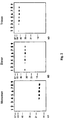
Result: The purified proteins were more than 95% pure. The dissolved proteins were separated from insoluble material by high speed centrifugation prior to loading the samples. - Purified recombinant Bet v 1-monomer, dimer and trimer were separated by SDS-PAGE and blotted onto nitro-cellulose. Sera from 8 different birch pollen allergic patients (lanes 1-8) and serum from a non-allergic person (lane 9) were used to detect the blotted allergens. Bound IgE was detected with 125I labelled anti-human >IgE antibodies (Pharmacia & Upjohn Diagnostics, Uppsala, Sweden) and visualised by autoradiography.
Result: The IgE-binding capacity of nitrocellulose-blotted Bet v 1-polymers was comparable to that of Bet v 1-monomer. - Sera from 4 birch-pollen allergic patients (A-D) were diluted 1:2 (1), 1:10 (2), 1:20 (3), 1:40 (4) and 1:80 (5) and tested for IgE-reactivity with purified, recombinant Bet v 1-monomer, Bet v 1-dimer and Bet v 1-trimer. The OD-values are displayed on the y-axis.
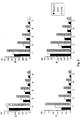
Result: Serum IgE from allergic patients bound to Bet v 1-polymers in a comparable manner as to Bet v 1-monomer. - Sera from 4 birch-pollen allergic patients (A-D) were preincubated with different concentrations (5µg, 500ng, 50ng and 5ng) of purified, recombinant Bet v 1-monomer, Bet v 1-dimer and Bet v 1-trimer. The preincubated sera were then tested for IgE-reactivity to purified, recombinant Bet v 1-monomer by ELISA. The optical densities (OD) are displayed on the y-axis.
Result: IgE-binding to Bet v 1-monomer is inhibited by increasing concentrations of the Bet v 1-polymers in a dose dependent manner. The amounts of Bet v 1-polymers needed for inhibition at certain concentrations (50 ng versus 5 ng) was however approximately tenfold higher compared to the monomer. - 8 Balb/c mice were immunized monthly with 5µg purified, recombinant Bet v 1-dimer and Al(OH)3 as adjuvant, 8 Balb/c mice were immunized monthly with 5µg purified, recombinant Bet v 1-trimer-Al (OH)3 and blood samples were taken after each immunization. Serum samples obtained after
weeks preimmune serum 0 =) were diluted 1:1000 and tested for IgG1-reactivity with purified, recombinant Bet v 1-monomer in an ELISA. The symbols represent the OD-values that correspond to the IgG1-binding of the 8 different Bet v 1-dimer or Bet v 1-trimer mice.
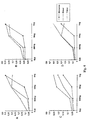
Result: The Bet v 1-polymers are able to induce high levels of IgG1-antibodies, which crossreact with Bet v 1-monomer. - Granulocytes from a birch pollen allergic patient were incubated with increasing concentrations (0.01 µg/ml, 0.1 µ g/ml, 1 µg/ml and 10 µg/ml) of purified, recombinant Bet v 1-monomer, Bet v 1-dimer, Bet v 1-trimer, Bet v 1-tetramer and anti-IgE antibodies as positive control. Histamine release in the cell free supernatant was measured by RIA (Immunotech, Marseille) and is expressed as percentage of total histamine release.
Result: Bet v 1-dimer induced a slightly reduced histamine release from patients' basophils compared to the monomer, whereas Bet v 1-trimer and tetramer had an approximately 100 fold reduced capacity to induce histamine release. In the donors tested, Bet v 1-monomer induced maximal histamine release at a concentration of 0.01 µg/ml, Bet v 1-trimer and tetramer at a concentration of 1 µg/ml. - The full table is given at the end of the descriptive part. T-cell clones from different pollen allergic donors (
column 2 shows the initials of the donors) with specificity fordifferent Bet v 1 epitopes (incolumn 1 the position of the epitopes are indicated) were incubated with purified, recombinant Bet v 1-monomer (column 4), Bet v 1-dimer (column 5), Bet v 1-trimer (column 6) and Bet v 1-tetramer (column 7). As negative control, clones were tested with medium alone (column 3). Proliferation was determined by 3H Thymidine uptake and is displayed as counts per minute (cpm) (columns 3-7).
Result: Bet v 1-polymers and Bet v 1-monomer induced comparable proliferation of specific T cell clones. - The full table is given at the end of the descriptive part. 6 birch-pollen allergic individuals and 4 non-allergic control individuals were skin prick tested on their forearms with natural birch pollen extract, histamine as positive control and with 10µg/ml and 100µg/ml of purified, recombinant Bet v 1-monomer, Bet v 1-dimer and Bet v 1-trimer. The mean wheal diameters (DM) are displayed in the table.
Result: Bet v 1-dimer induced an approximately 10-fold reduced skin reaction in allergic patients compared to Bet v 1-monomer, whereas Bet v 1-trimer induced in some patients no wheal reactions at all, up to a concentration of 100µ g/ml. The wheal reaction increased dose dependently with the protein concentrations. The non-allergic control individuals displayed only skin reactions with histamine but not with the Bet v 1-preparations. Both the histamine release assays and the skin tests indicate that the Bet v 1-polymers have a greatly (up to 100 fold) reduced anaphylactic activity compared to Bet v 1-monomer. The reduction of anaphylactic potential is proportional to the degree of polymerization. - We expressed in pET 17b plasmids (Novagen, Madison, USA)
Bet v 1 as dimer, trimer and tetramer. The Bet v 1-polymers were expressed at high levels in E. coli BL21 (DE3) (Novagen, Madison, USA) and purified to homogeneity. The Bet v 1-polymers retained their IgE-binding capacity, as was shown by immunoblotting and by ELISA. T-cell clones from birch allergic donors, with specificity forBet v 1 proliferated upon incubation with all the polymers, indicating that the polymers contain the relevant T-cell epitopes ofBet v 1. Bet v 1-trimer and tetramer had an approximately 100 fold reduced capacity to induce histamine release from patients' basophils and a greatly reduced anaphylactic potential as evaluated by skin testing. Because of the reduction of their anaphylactic activity the Bet v 1-polymers may be considered as safe tools for specific immunotherapy of tree pollen and associated food allergy. Allergic patients may be treated with high doses of these derivatives with reduced risk of anaphylactic side effects. The difference of the recombinant polymers to non-anaphylactic T-cell epitope containing allergen derivative is that they contain the IgE-binding sites but have a reduced anaphylactic potential. - For illustrative purposes only.
-
Figure 7 : Two monoclonal anti-Bet v 1-antibodies (moAb A and B) were used together with three synthetic Bet v 1-derived peptides in ELISA. The sequences of the three peptides are shown in the lower part of the figure and correspond to aa 49-60 (p17), aa 52-63 (p18) and aa 55-66 (p19) ofBet v 1. The peptides were tested for binding to the twoBet v 1 specific monoclonals. The OD values are displayed on the y-axis. Both moAbs bind to the peptides p18 and p19, which are mapped to the first half ofBet v 1. - Table 3. The full table is given at the end of the descriptive part. Monoclonal
anti-Bet v 1 antibodies (A,B) inhibit binding of human IgE torecombinant Bet v 1. Dot-blottedBet v 1 was preincubated with MoAb A and B prior to probing with serum IgE from 60Bet v 1 allergic individuals. Bound IgE was detected with 125I-labelled anti-human IgE antibodies and quantified by gamma-counting. Inhibition of IgE binding was determined as follows:
- cpm1 = count per minutes for incubation with moAb
- cpm2 = count per minutes for incubation buffer
- The % inhibition of IgE-binding compared to preincubation with buffer is displayed in the table.
- For illustrative purposes only.
- See further Vrtala et al., "Conversion of the major birch pollen allergen, .
- Sera from allergic patients, antibodies, protein extracts and E. coli strains. Sera from birch pollen allergic patients and control individuals were characterized by RAST and testing with recombinant allergens as described (Valenta et al., J. Allergy Clin. Immunol. 88 (1991) 889-894; Valenta et al., Int. Arch. Allergy Immunol. 97 (1992) 287-294). In addition, all patients were characterized by case history and skin prick test. The mouse
monoclonal antibody moab 14 with specificity for aa 40-65 ofBet v 1 is described (Lebecque et al., J. Allergy Clin. Immunol. 99(3) (1997) 374-384). Natural birch pollen extract was prepared as described (Vrtala et al., Int. Arch. Allergy Immunol. 102 (1993) 160-169). Plasmid pET-17b containing the ampicillin resistance and a T7 promotor was obtained from Novagen, Madison, USA.Recombinant Bet v 1 fragments were expressed in λDE3 lysogens of E. coli strain BL21 (F- ompTrb-mB-) (Studier et al., Meth. Enzymol. 185 (1990) 60-89). - Expression of Bet v 1 (aa 1-74, aa 75-160) fragments in E. coli.
Recombinant Bet v 1 fragments (aa 1-74, aa 75-160) were generated to maintain the epitopes (aa 40-65) of murine monoclonal antibodies which inhibited binding of allergic patients IgE to Bet v 1 (Lebecque et al., J. Allergy Clin. Immunol. 99(3) (1997) 374-384) and in order to preserve major T-cell epitopes which had been mapped using overlapping peptides synthesized according to theBet v 1 sequence (Ebner et al., J. Immunol. 150 (1993) 1047-1054). The cDNAs coding for fragment aa 1-74 and aa 75-160 were obtained by PCR amplification of theBet v 1 cDNA using the following oligonucleotide primers (Pharmacia Biotech AB, Upsala Sweden): -
- Sequence Id No 9:
5'GGG AAT TCC ATA TGG GTG TTT TCA ATT AC3' - Sequence Id No 10:
5'CGG GGT ACC TTA CTC ATC AAC TCT GTC CTT3' -
- Sequence Id No 11:
5'GGG AAT TC C ATA TGG TGG ACC ACA CAA ACT3' - Sequence Id No 12:
5'CGG GGT ACC TTA GTT GTA GGC ATC GGA3' - The Eco RI sites which were incorporated in the first primers are underlined, Nde I and Kpn I sites are in italics. To improve subcloning efficiency, PCR-products were first cut with Eco RI and Kpn I, purified by preparative agarose gel electrophoresis, subcloned into Eco RI and Kpn I site of plasmid pEt-17b (Novagen, Madison, USA) and transformed into E. coli BL21 (DE3) (Novagen, Madison, USA) by electroporation. Inserts were then excised with Nde I/Kpn I and subcloned again in plasmid pET-17b and transformed. Colonies expressing the correct fragments were identified by
immunoscreening using mab 14 forBet v 1 aa 1-74 and a rabbit anti-Bet v 1 C-terminal antiserum for Bet v1 aa 75-160. DNA from positive clones was isolated using Qiagen tips (Quiagen, Hilden, Germany) and both DNA strands were sequenced according to Sanger using a T7 polymerase sequencing kit (Pharmacia Biotech AB, Uppsala, Sweden) and 35S dCTP (NEN, Stevehage, UK)(24). Recombinant Bet v 1 (aa 1-74 and Bet v1 (aa 75-160) were expressed in E. coli BL21 (DE3) by induction with 0.5 mM IPTG at an OD600 of 0.5-0.8 in liquid culture for 5 hours at 37°C. - Purification of recombinant Bet v1 (aa 1-74) and Bet v1 (aa 75-160). Bet v1 (aa 1-74) and Bet v1 (aa 75-160) were expressed in inclusion bodies isolated as described (Vrtala et al., J. Allergy Clin. Immunol. 97 (1996) 781-787). Inclusion bodies were solubilized with 8M urea, 10 mM Tris,
pH pH 8 to a concentration of 6 M urea and centrifuged for 15 minutes at 10,000xg to remove insoluble material. The supernatant containing the recombinant protein was dialyzed to a final concentration of 2M urea. Following centrifugation (15min, 10,000xg), the supernatant was applied to a column packed with DEAE (diethylaminoethyl) Sepharose (Pharmacia Biotech AB) and the protein eluted with a 0-0.5M NaCl concentration gradient. Fractions, containing the recombinant protein which was more than 80% pure, were dialyzed against 6M urea, 10mM NaH2PO4, pH 4.8 and rechromatographed on a column packed with SP Sepharose (Pharmacia Biotech AB). Fractions containing recombinant Bet v 1 (aa 1-74) or recombinant Bet v 1 (aa75-160) of greater than 95% purity, were dialyzed against 10mM Tris, pH 7.5 and lyophilized until used. - IgE binding capacity of
recombinant Bet v 1 andBet v 1 fragments. Purifiedrecombinant Bet v 1 andBet v 1 fragments (aa 1-74, aa 75-160) were tested for IgE-binding capacity by Western blotting and in dot blot assays. For immunoblotting, approximately 1 µg/cm purified protein was separated by SDS-PAGE (Fling et al., Anal. Biochem. 155 (1986) 83-88) and blotted onto nitrocellulsoe according to Towbin (Towbin et al., Proc. Natl. Acad. Sci. USA 76 (1979) 4350-4353). To avoid denaturation of the proteins, dot blot experiments were performed in parallel. 1 µg of purified,recombinant Bet v Bet v 1 fragment and 1 µg of bovine serum albumin and human serum albumin (HSA) (negative controls) were dotted on nitrocellulose strips. Nitrocellulose strips containing Western blotted allergens or the dot blotted proteins were incubated with serum IgE from allergic individuals, non-allergic control individuals and buffer without addition of serum as described (Valenta et al., J. Exp. Med. 175 (1992) 377-385). Bound IgE antibodies were detected with 125I labelled anti-human IgE antibodies and visualized by autoradiography. Results: Sera of birch pollen allergic patients reacted withrecombinant Bet v 1 but not withBet v 1 fragments. Sera of grass pollen allergic individuals reacted neither withrecombinant Bet v 1 nor with therecombinant Bet v 1 fragments. - Circular dichroism showed that the two
Bet v 1 fragments showed no tendency to fold, even in the presence of each other. - Histamine release experiments. Granulocytes were isolated from heparinized blood of birch pollen allergic individuals by dextran sedimentation (Valent et al., Proc. Natl. Acad. Sci. USA 86 (1989) 5542-5547). Cells were incubated with different concentrations (0.001µg/ml-10µg/ml) of purified
rcombinant Bet v 1,recombinant Bet v 1 fragments (aa 1-74, aa 75-160) separately and in equimolar mixture, or anti-human IgE antibodies. Histamine released in the supernatant was measured by radioimuoassay (RIA) (Immunotech, Marseille, France) (Valenta et al., J. Allergy Clin. Immunol. 91 (1993) 88-97). Total histamine was determined in cell lysates after freeze thawing. Results were obtained as mean values from triplicate determinations and expressed as percentage of total histamine release.
Results:Recombinant Bet v 1 fragments have approximately 1000 fold reduced capacity to induce histamine release from patients basophils compared torecombinant Bet v 1. An equimolar mixture of bothBet v 1 fragments did not induce significant release of histamine compared to each of the tested fragments. - Skin testing. Skin prick tests were performed on the individuals' forearms by placing 20 µl of each solution (Pauli et al., J. Allergy Clin. Immunol. 97 (1996) 1100-1109; Menz et al., Clin. Exp. Allergy 26 (1996) 50-60).
Recombinant Bet v 1 andrecombinant Bet v 1 fragments were freshly dissolved in a 0.9% w/v sterile sodium chloride solution at concentrations of 100µg/ml and 10µg/ml. As controls birch pollen SQ (standard quality) extract, sodium chloride solution (negative control) and histamine hydrochloride (positive control)(ALK, Horsholm, Denmark) were used. Each drop was pricked with a fresh prick lancette (ALK, Horsholm, Denmark) and results were recorded after 20 minutes with a ball point pen by transferring the wheal area with a tape paper and by photography. The mean wheal diameter (Dm) was calculated by measuring the maximal longitudinal diameter (D9 and the maximal transversal diameter (d) according to the formula (D+d)/2=Dm.
Results: The tworecombinant Bet v 1 fragments, neither alone nor in combination, do not elicit anaphylactic skin reactions compared to the intactrecombinant Bet v 1.Table 1: Proliferation of Bet v 1 specific T-cell clones with recombinant Bet v 1-polymers.1 2 3 4 5 6 7 Epitop Bet v 1TCC Control Bet v 1 Bet v 1-dimer Bet v 1-trimer Bet v 1-tetramer 1-15 CGE 147 15567 47570 97939 67299 79741 1-18 HC 26/11 1264 9977 32667 14170 22178 10-27 WF 110/III. 87 6402 12571 5823 9542 10-27 WF 110/III 146 3575 13340 5428 6961 10-27 WF 121/III 287 3914 22099 5117 13000 11-27 TF 7B 359 10492 42352 9869 29900 35-48 HC 3/III 40.7 10499 21301 15761 25609 64-75 CGE 110 612 107103 121178 96135 117930 64-75 CGE 31 2937 71176 55728 38955 67625 64-75 CGE 33 3096 99633 85438 80077 91755 77-93 WF 29R 143 12638 28579 14576 14677 77-93 GZ 17M 172 61463 90586 54988 84237 88-10 CGE 34 515 16045 20531 14176 15217 93-110 TF 1M 438 21423 29741 11500 23454 106-120 WF 9/III 305 43203 81605 32735 65592 109-120 WD 7/III 130 53362 41875 50489 48601 110-128 EC 33/II 134 18099 46022 17917 42051 112-123 WF 112/111 85 10494 12778 7585 11106 112-123 WF 97/III 91 4569 6884 3352 5950 127-138 GZ 10A 182 3347 8379 3227 6645 141-156 TF 10A 215 4862 4438 2232 57 141-156 RR4R 1416 88361 85594 102303 117122 141-156 SAZ 10/IV 612 5121 3830 5207 3979 Table 2: Skin testing with recombinant Bet v 1-monomer and polymers Bet v 1 Bet v 1 Bet v 1 Bet v 1 Bet v 1 Bet v 1 Individual Histamine birch monomer monomer dimer dimer trimer trimer 10µg/ml 100µg/ml 10µg/ml 100µg/ml 10µg/ml 100µg/ml birch pollen allergic patients MS 8 5.5 4 7 3 6 0 0 SF 6 7 8 12 7.5 8 2 5.5 PSt 8 7 6.5 16 6 7 2 4.5 SO 6.5 5.5 5.5 14 0 4.5 0 3.5 SS 4.5 8 5.5 9 0 4 0 0 MD 5.5 9.5 7 11.5 4.5 7 0 5 non-allergic controls TB 6 0 0 0 0 0 0 0 VR 8.5 0 0 0 0 0 0 0 CD 6.5 0 0 0 0 0 0 0 TL 9 0 0 0 0 0 0 0 Table 3: patient # 1 2 3 4 5 6 7 8 9 10 11 12 13 14 15 Inhibition of IgE binding moAb A 49 - - 57 93 96 - 41 - 41 27 - 29 47 - In % moAb B 96 - - 45 - 97 - 31 - 45 24 - - 26 - patient # 16 17 18 19 20 21 22 23 24 25 26 27 28 29 30 inhibition of IgE binding moAb A 19 21 35 - 36 - - 10 20 51 30 - 30 - 55 in % moAb B 24 25 12 14 21 - - - 22 31 33 - 24 - 50 patient # 31 32 33 34 35 36 37 38 39 40 41 42 43 44 45 inhibition of IgE binding moAb A 10 28 8 18 23 23 3 - 46 22 - 8 30 80 33 In % moAb B 4 90 5 59 87 97 13 - 18 19 65 80 10 94 17 patient # 16 17 18 49 50 51 52 53 54 55 56 57 58 59 60 inhibition of IgE binding moAb A - 6 54 30 36 12 - - - 72 31 1 12 38 - in % moAb B - 31 97 - 35 8 - - - 67 41 - 10 28 - 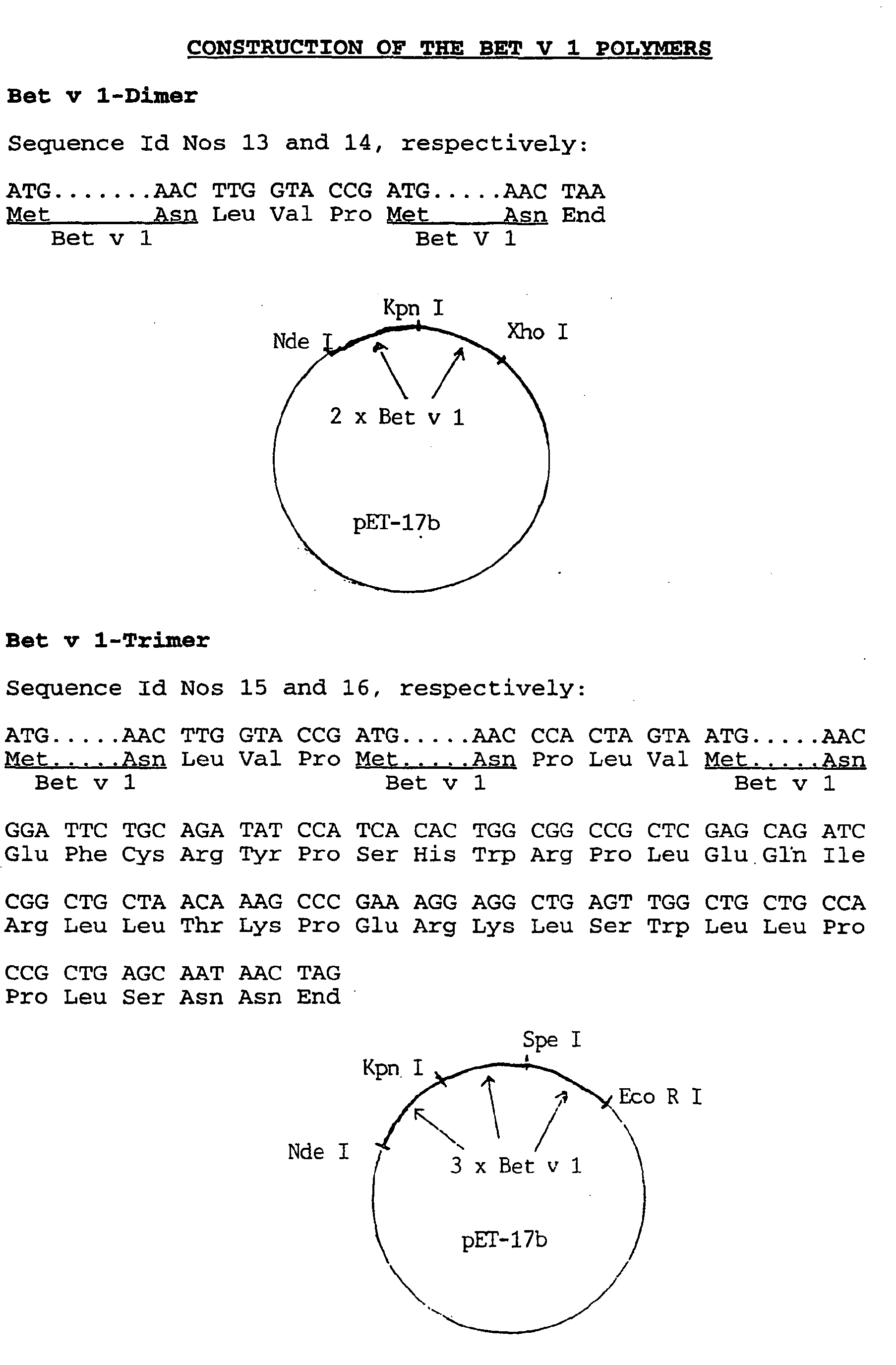

Claims (4)
- An immunogen derived from a protein allergen, characterized in that said immunogen comprises
a recombinant polymeric form of a Bet v 1 protein allergen in which the protein allergen constitutes the monomeric units,
wherein the number of monomeric units in the polymeric form is an integer selected from 2-10. - The immunogen according to claim 1, characterized in that said monomeric units are separated from each other by an oligopeptide linker, typically consisting of 1-30 amino acid residues that may be hydrophilic.
- The immunogen according to any one of claims 1 to 2, characterized in that said immunogen also contains a carrier for said polymeric form.
- The use of the immunogen according any one of claims 1 to 3 for the preparation of a medicament to be used in the hyposensitization of a mammalian individual suffering from a type I allergy.
Applications Claiming Priority (3)
| Application Number | Priority Date | Filing Date | Title |
|---|---|---|---|
| SE9703531 | 1997-09-30 | ||
| SE9703531A SE9703531D0 (en) | 1997-09-30 | 1997-09-30 | Non-anaphlactic forms of allergens and their use |
| PCT/SE1998/001765 WO1999016467A1 (en) | 1997-09-30 | 1998-09-30 | Non-anaphylactic forms of allergens and their use |
Publications (2)
| Publication Number | Publication Date |
|---|---|
| EP1019085A1 EP1019085A1 (en) | 2000-07-19 |
| EP1019085B1 true EP1019085B1 (en) | 2009-03-04 |
Family
ID=20408428
Family Applications (1)
| Application Number | Title | Priority Date | Filing Date |
|---|---|---|---|
| EP98946774A Expired - Lifetime EP1019085B1 (en) | 1997-09-30 | 1998-09-30 | Non-anaphylactic forms of allergens and their use |
Country Status (9)
| Country | Link |
|---|---|
| US (1) | US7108858B2 (en) |
| EP (1) | EP1019085B1 (en) |
| JP (1) | JP4253122B2 (en) |
| AT (1) | ATE424216T1 (en) |
| DE (1) | DE69840628D1 (en) |
| DK (1) | DK1019085T3 (en) |
| ES (1) | ES2321992T3 (en) |
| SE (1) | SE9703531D0 (en) |
| WO (1) | WO1999016467A1 (en) |
Families Citing this family (8)
| Publication number | Priority date | Publication date | Assignee | Title |
|---|---|---|---|---|
| ATE430199T1 (en) | 1998-01-31 | 2009-05-15 | Univ Arkansas | METHODS AND REAGENTS FOR REDUCING THE CLINICAL RESPONSE TO ALLERGY |
| US6572859B1 (en) | 1999-10-29 | 2003-06-03 | Pharmacia Diagnostics Ab | Non-anaphylactic forms of grass pollen Phl p 6 allergen and their use |
| DE10044360A1 (en) * | 2000-09-08 | 2002-03-21 | Merck Patent Gmbh | Process for the purification of recombinant proteins expressed as insoluble aggregates |
| DK1219300T3 (en) * | 2000-12-28 | 2007-03-05 | Biomay Prod & Handel | Treatment of allergies |
| JP2005505495A (en) * | 2001-02-28 | 2005-02-24 | インヴァレックス, インコーポレイテッド | Composition of multimeric profilin for diagnosis and treatment of allergies |
| US7428580B2 (en) * | 2003-11-26 | 2008-09-23 | Aol Llc | Electronic message forwarding |
| AT503297B1 (en) * | 2006-05-18 | 2007-09-15 | Biomay Ag | Use of antibody or its derivative for preparation of medicament for passive immunization of individual for preventing and/or treating allergic reactions in individual caused by exposure to birch pollen allergen |
| JP2014231500A (en) * | 2013-05-29 | 2014-12-11 | 元晴 植原 | Peptide mixture used for immunotherapy of betula pollinosis |
Family Cites Families (10)
| Publication number | Priority date | Publication date | Assignee | Title |
|---|---|---|---|---|
| US4269764A (en) * | 1979-08-02 | 1981-05-26 | Roy Patterson | Preparation for treatment of allergic patients sensitive to ragweed pollen |
| US4629783A (en) * | 1985-04-29 | 1986-12-16 | Genetic Systems Corporation | Synthetic antigen for the detection of AIDS-related disease |
| US6019972A (en) * | 1989-11-03 | 2000-02-01 | Immulogic Pharmaceutical Corporation | Peptides of human T cell reactive feline protein (TRFP) |
| EP0572443A1 (en) * | 1990-12-17 | 1993-12-08 | The Johns Hopkins University | Suppression of immune responses with oligomeric forms of antigen of controlled chemistry |
| WO1994010194A2 (en) * | 1992-10-27 | 1994-05-11 | Biomay Produktions- Und Handelsgesellschaft M.B.H. | Molecule fragments (peptides) of the main allergens contained in the pollen of trees of the fagales order |
| US5449669A (en) * | 1993-11-10 | 1995-09-12 | The United States Of America As Represented By The Department Of Health And Human Services | IgE-binding epitopes of a major heat-stable crustacean allergen derived from shrimp |
| SE9402089D0 (en) * | 1994-06-14 | 1994-06-14 | Rudolf Valenta | Recombinant allergen, fragments thereof, corresponding recombinant DNA molecules, vectors and hosts containing the DNA molecules, diagnostic and therapeutic uses of said allergens and fragments |
| AU3338195A (en) * | 1994-07-26 | 1996-02-22 | University Of Manitoba | Allergen peptides |
| JPH11507840A (en) * | 1995-12-29 | 1999-07-13 | ユニバーシティ オブ アーカンソー | Peanut allergens and methods |
| US6126939A (en) * | 1996-09-03 | 2000-10-03 | Yeda Research And Development Co. Ltd. | Anti-inflammatory dipeptide and pharmaceutical composition thereof |
-
1997
- 1997-09-30 SE SE9703531A patent/SE9703531D0/en unknown
-
1998
- 1998-09-30 EP EP98946774A patent/EP1019085B1/en not_active Expired - Lifetime
- 1998-09-30 ES ES98946774T patent/ES2321992T3/en not_active Expired - Lifetime
- 1998-09-30 DE DE69840628T patent/DE69840628D1/en not_active Expired - Lifetime
- 1998-09-30 AT AT98946774T patent/ATE424216T1/en not_active IP Right Cessation
- 1998-09-30 DK DK98946774T patent/DK1019085T3/en active
- 1998-09-30 JP JP2000513600A patent/JP4253122B2/en not_active Expired - Lifetime
- 1998-09-30 WO PCT/SE1998/001765 patent/WO1999016467A1/en not_active Ceased
-
2001
- 2001-07-03 US US09/897,042 patent/US7108858B2/en not_active Expired - Fee Related
Non-Patent Citations (11)
| Title |
|---|
| CRETICS P.S.: "Immunotherapy with allergens", JAMA, vol. 268, no. 20, 1992, pages 2834 - 2839, XP009090742 * |
| HOFFMANN-SOMMERGRUBER K. ET AL: "High-level expression and purification of major birch pollen allergen, Bet v 1", PROTEIN EXPRESSION AND PURIFICATION, vol. 9, 1997, pages 33 - 39, XP002240372 * |
| KELLY J.F. ET AL: "Polymerized whole ragweed: Human safety and immune response", JOURNAL OF ALLERGY AND CLINICAL IMMUNOLOGY, vol. 65, no. 1, 1980, pages 50 - 56 * |
| METZGER W.J. ET AL: "Comparison of polymerized and unpolymerized antigen E for immunotherapy of ragweed allergy", THE NEW ENGLAND JOURNAL OF MEDICINE, vol. 295, no. 18, 1976, pages 1160 - 1164, XP009090758 * |
| NIEDERBERGER V. ET AL: "Vaccination with genetically engineered allergens prevents progression of allergic disease", PNAS, vol. 101, 5 October 2004 (2004-10-05), pages 14677 - 14682 * |
| PATTERSON R. ET AL: "Polymerised tree pollen allergens", THE JOURNAL OF ALLERGY AND CLINICAL IMMUNOLOGY, vol. 67, no. 2, 1981, pages 162 - 165 * |
| PATTERSON R. ET AL: "Polymerized allergens", ARBEITEN AUS DEM PAUL-EHRLICH INSTITUT, DEM GEORG-SPEYER-HAUS UND DEM FERDINAND-BLUM-INSTITUT, vol. 78, 1983, XP009090745 * |
| SCHEINER O. ET AL: "Basic and practical aspects of recombinant allergens", ALLERGY, vol. 50, 1995, pages 384 - 391 * |
| VRTALA ET AL: "Conversion of the major birch pollen allergen, Bet v 1, into two nonanaphylactic T cell epitope-containing fragments.", JOURNAL OF CLINICAL INVESTIGATION, vol. 99, no. 7, April 1997 (1997-04-01), pages 1673 - 1681, XP002221492 * |
| VRTALA ET AL: "Humoral immune response to recombinant tree pollen allergens (Bet v I and Bet v II) in mice: consruction of a live oral allergy vaccine", ALLERGENS AND IMMUNOTHERAPY, vol. 107, 1995, pages 290 - 294, XP001024439 * |
| VRTALA S. ET AL: "T cell epitope-containing hypoallergenic recombinant fragments of the major birch pollen allergen, Bet v 1, induce blocking antibodies", JOURNAL OF IMMUNOLOGY, vol. 165, 2000, pages 6653 - 6659 * |
Also Published As
| Publication number | Publication date |
|---|---|
| SE9703531D0 (en) | 1997-09-30 |
| US7108858B2 (en) | 2006-09-19 |
| DE69840628D1 (en) | 2009-04-16 |
| ATE424216T1 (en) | 2009-03-15 |
| JP4253122B2 (en) | 2009-04-08 |
| ES2321992T3 (en) | 2009-06-15 |
| JP2001518451A (en) | 2001-10-16 |
| EP1019085A1 (en) | 2000-07-19 |
| DK1019085T3 (en) | 2009-06-22 |
| WO1999016467A1 (en) | 1999-04-08 |
| US20020018779A1 (en) | 2002-02-14 |
Similar Documents
| Publication | Publication Date | Title |
|---|---|---|
| Slater et al. | Identification, cloning, and sequence of a major allergen (Hev b 5) from natural rubber latex (Hevea brasiliensis) | |
| Shen et al. | Molecular cloning of a house dust mite allergen with common antibody binding specificities with multiple components in mite extracts | |
| US20040057959A1 (en) | Recombitope peptides | |
| US6413738B1 (en) | House dust mite allergen, Der f VII, and uses therefor | |
| JP3575802B2 (en) | Allergenic proteins and peptides from Japanese cedar pollen | |
| US8287875B2 (en) | Nucleic acids encoding a house dust mite allergen, Der p III, and uses therefor | |
| Aki et al. | Cloning and characterization of cDNA coding for a new allergen from the house dust mite, Dermatophagoides farinae | |
| EP0665888B2 (en) | Ryegrass pollen allergen | |
| US7108858B2 (en) | Non-anaphylactic forms of allergens and their use | |
| JPH05502589A (en) | Birch pollen allergen P14 for diagnosis and treatment of allergic diseases | |
| US6187311B1 (en) | Engineered acarid allergen and process for producing the same | |
| NZ252013A (en) | T cell receptor epitopes for short ragweed pollen | |
| JP3990730B2 (en) | Antigenic protein from Malassezia | |
| JP3649460B2 (en) | Japanese cedar pollen allergen Cry j II epitope | |
| US6335020B1 (en) | Allergenic peptides from ragweed pollen | |
| JPH08502163A (en) | Allergenic proteins and peptides derived from cedar pollen | |
| US6214358B1 (en) | Protein allergens of the species Cynodon dactylon | |
| US6441157B1 (en) | Nucleic acid sequences encoding protein allergens of the species Cynodon dactylon | |
| WO1992016554A1 (en) | Protein allergens of the species cynodon dactylon | |
| JPH07188289A (en) | Polypeptide, production method and use thereof | |
| AU2926492A (en) | Protein allergens of the species cynodon dactylon | |
| US6559121B2 (en) | Vaccines for the protection of cattle from psoroptic scabies |
Legal Events
| Date | Code | Title | Description |
|---|---|---|---|
| PUAI | Public reference made under article 153(3) epc to a published international application that has entered the european phase |
Free format text: ORIGINAL CODE: 0009012 |
|
| 17P | Request for examination filed |
Effective date: 20000425 |
|
| AK | Designated contracting states |
Kind code of ref document: A1 Designated state(s): AT BE CH CY DE DK ES FI FR GB GR IE IT LI LU MC NL PT SE |
|
| RAP1 | Party data changed (applicant data changed or rights of an application transferred) |
Owner name: PHARMACIA DIAGNOSTICS AB |
|
| RAP1 | Party data changed (applicant data changed or rights of an application transferred) |
Owner name: PHARMACIA DIAGNOSTICS AB |
|
| 17Q | First examination report despatched |
Effective date: 20051227 |
|
| RAP1 | Party data changed (applicant data changed or rights of an application transferred) |
Owner name: PHADIA AB |
|
| RAP1 | Party data changed (applicant data changed or rights of an application transferred) |
Owner name: VALENTA, RUDOLF Owner name: PHADIA AB |
|
| GRAP | Despatch of communication of intention to grant a patent |
Free format text: ORIGINAL CODE: EPIDOSNIGR1 |
|
| RAP1 | Party data changed (applicant data changed or rights of an application transferred) |
Owner name: PHADIA AB |
|
| GRAS | Grant fee paid |
Free format text: ORIGINAL CODE: EPIDOSNIGR3 |
|
| GRAA | (expected) grant |
Free format text: ORIGINAL CODE: 0009210 |
|
| AK | Designated contracting states |
Kind code of ref document: B1 Designated state(s): AT BE CH CY DE DK ES FI FR GB GR IE IT LI LU MC NL PT SE |
|
| REG | Reference to a national code |
Ref country code: GB Ref legal event code: FG4D |
|
| REG | Reference to a national code |
Ref country code: CH Ref legal event code: EP |
|
| REG | Reference to a national code |
Ref country code: IE Ref legal event code: FG4D |
|
| REF | Corresponds to: |
Ref document number: 69840628 Country of ref document: DE Date of ref document: 20090416 Kind code of ref document: P |
|
| REG | Reference to a national code |
Ref country code: CH Ref legal event code: NV Representative=s name: PATENTANWAELTE SCHAAD, BALASS, MENZL & PARTNER AG |
|
| REG | Reference to a national code |
Ref country code: SE Ref legal event code: TRGR |
|
| REG | Reference to a national code |
Ref country code: ES Ref legal event code: FG2A Ref document number: 2321992 Country of ref document: ES Kind code of ref document: T3 |
|
| REG | Reference to a national code |
Ref country code: DK Ref legal event code: T3 |
|
| PG25 | Lapsed in a contracting state [announced via postgrant information from national office to epo] |
Ref country code: FI Free format text: LAPSE BECAUSE OF FAILURE TO SUBMIT A TRANSLATION OF THE DESCRIPTION OR TO PAY THE FEE WITHIN THE PRESCRIBED TIME-LIMIT Effective date: 20090304 |
|
| PG25 | Lapsed in a contracting state [announced via postgrant information from national office to epo] |
Ref country code: AT Free format text: LAPSE BECAUSE OF FAILURE TO SUBMIT A TRANSLATION OF THE DESCRIPTION OR TO PAY THE FEE WITHIN THE PRESCRIBED TIME-LIMIT Effective date: 20090304 |
|
| PG25 | Lapsed in a contracting state [announced via postgrant information from national office to epo] |
Ref country code: BE Free format text: LAPSE BECAUSE OF FAILURE TO SUBMIT A TRANSLATION OF THE DESCRIPTION OR TO PAY THE FEE WITHIN THE PRESCRIBED TIME-LIMIT Effective date: 20090304 |
|
| PG25 | Lapsed in a contracting state [announced via postgrant information from national office to epo] |
Ref country code: PT Free format text: LAPSE BECAUSE OF FAILURE TO SUBMIT A TRANSLATION OF THE DESCRIPTION OR TO PAY THE FEE WITHIN THE PRESCRIBED TIME-LIMIT Effective date: 20090818 |
|
| PLBE | No opposition filed within time limit |
Free format text: ORIGINAL CODE: 0009261 |
|
| STAA | Information on the status of an ep patent application or granted ep patent |
Free format text: STATUS: NO OPPOSITION FILED WITHIN TIME LIMIT |
|
| 26N | No opposition filed |
Effective date: 20091207 |
|
| PG25 | Lapsed in a contracting state [announced via postgrant information from national office to epo] |
Ref country code: MC Free format text: LAPSE BECAUSE OF NON-PAYMENT OF DUE FEES Effective date: 20090930 |
|
| PG25 | Lapsed in a contracting state [announced via postgrant information from national office to epo] |
Ref country code: IE Free format text: LAPSE BECAUSE OF NON-PAYMENT OF DUE FEES Effective date: 20090930 |
|
| PG25 | Lapsed in a contracting state [announced via postgrant information from national office to epo] |
Ref country code: GR Free format text: LAPSE BECAUSE OF FAILURE TO SUBMIT A TRANSLATION OF THE DESCRIPTION OR TO PAY THE FEE WITHIN THE PRESCRIBED TIME-LIMIT Effective date: 20090605 |
|
| PG25 | Lapsed in a contracting state [announced via postgrant information from national office to epo] |
Ref country code: LU Free format text: LAPSE BECAUSE OF NON-PAYMENT OF DUE FEES Effective date: 20090930 |
|
| PG25 | Lapsed in a contracting state [announced via postgrant information from national office to epo] |
Ref country code: CY Free format text: LAPSE BECAUSE OF FAILURE TO SUBMIT A TRANSLATION OF THE DESCRIPTION OR TO PAY THE FEE WITHIN THE PRESCRIBED TIME-LIMIT Effective date: 20090304 |
|
| REG | Reference to a national code |
Ref country code: FR Ref legal event code: PLFP Year of fee payment: 19 |
|
| REG | Reference to a national code |
Ref country code: FR Ref legal event code: PLFP Year of fee payment: 20 |
|
| PGFP | Annual fee paid to national office [announced via postgrant information from national office to epo] |
Ref country code: GB Payment date: 20170927 Year of fee payment: 20 Ref country code: IT Payment date: 20170925 Year of fee payment: 20 Ref country code: FR Payment date: 20170810 Year of fee payment: 20 Ref country code: CH Payment date: 20170912 Year of fee payment: 20 |
|
| PGFP | Annual fee paid to national office [announced via postgrant information from national office to epo] |
Ref country code: DK Payment date: 20170912 Year of fee payment: 20 Ref country code: NL Payment date: 20170919 Year of fee payment: 20 Ref country code: SE Payment date: 20170912 Year of fee payment: 20 |
|
| PGFP | Annual fee paid to national office [announced via postgrant information from national office to epo] |
Ref country code: DE Payment date: 20170927 Year of fee payment: 20 |
|
| PGFP | Annual fee paid to national office [announced via postgrant information from national office to epo] |
Ref country code: ES Payment date: 20171002 Year of fee payment: 20 |
|
| REG | Reference to a national code |
Ref country code: DE Ref legal event code: R071 Ref document number: 69840628 Country of ref document: DE |
|
| REG | Reference to a national code |
Ref country code: DK Ref legal event code: EUP Effective date: 20180930 |
|
| REG | Reference to a national code |
Ref country code: NL Ref legal event code: MK Effective date: 20180929 |
|
| REG | Reference to a national code |
Ref country code: CH Ref legal event code: PL |
|
| REG | Reference to a national code |
Ref country code: GB Ref legal event code: PE20 Expiry date: 20180929 |
|
| PG25 | Lapsed in a contracting state [announced via postgrant information from national office to epo] |
Ref country code: GB Free format text: LAPSE BECAUSE OF EXPIRATION OF PROTECTION Effective date: 20180929 |
|
| REG | Reference to a national code |
Ref country code: SE Ref legal event code: EUG |
|
| REG | Reference to a national code |
Ref country code: ES Ref legal event code: FD2A Effective date: 20201204 |
|
| PG25 | Lapsed in a contracting state [announced via postgrant information from national office to epo] |
Ref country code: ES Free format text: LAPSE BECAUSE OF EXPIRATION OF PROTECTION Effective date: 20181001 |