EP1014752A2 - Verfahren und Vorrichtung zur Durchführung der direkten Verbindung eines B-Kanals einer Primäranschlussschnittstelle in einem ISDN Kommunikationssystem - Google Patents
Verfahren und Vorrichtung zur Durchführung der direkten Verbindung eines B-Kanals einer Primäranschlussschnittstelle in einem ISDN Kommunikationssystem Download PDFInfo
- Publication number
- EP1014752A2 EP1014752A2 EP99310312A EP99310312A EP1014752A2 EP 1014752 A2 EP1014752 A2 EP 1014752A2 EP 99310312 A EP99310312 A EP 99310312A EP 99310312 A EP99310312 A EP 99310312A EP 1014752 A2 EP1014752 A2 EP 1014752A2
- Authority
- EP
- European Patent Office
- Prior art keywords
- switch
- pri
- channel
- specific
- identifier
- Prior art date
- Legal status (The legal status is an assumption and is not a legal conclusion. Google has not performed a legal analysis and makes no representation as to the accuracy of the status listed.)
- Withdrawn
Links
Images
Classifications
-
- H—ELECTRICITY
- H04—ELECTRIC COMMUNICATION TECHNIQUE
- H04Q—SELECTING
- H04Q11/00—Selecting arrangements for multiplex systems
- H04Q11/04—Selecting arrangements for multiplex systems for time-division multiplexing
- H04Q11/0428—Integrated services digital network, i.e. systems for transmission of different types of digitised signals, e.g. speech, data, telecentral, television signals
- H04Q11/0435—Details
- H04Q11/045—Selection or connection testing arrangements
-
- H—ELECTRICITY
- H04—ELECTRIC COMMUNICATION TECHNIQUE
- H04Q—SELECTING
- H04Q11/00—Selecting arrangements for multiplex systems
- H04Q11/04—Selecting arrangements for multiplex systems for time-division multiplexing
- H04Q11/0428—Integrated services digital network, i.e. systems for transmission of different types of digitised signals, e.g. speech, data, telecentral, television signals
- H04Q11/0435—Details
- H04Q11/0464—Primary rate access circuits
Definitions
- the invention relates generally to methods and apparatus for directly connecting users of a telephone communications system to a specific ISDN PRI B-Channel using a program controlled switch such as, for example, a data tandem switch, an internet concentrator or an end office switch.
- a program controlled switch such as, for example, a data tandem switch, an internet concentrator or an end office switch.
- the invention relates to methods and apparatus which enable the functionality of equipment that can be associated with a specific B-Channel, such as the modems in an Internet Service Providers (ISP's) a modem pool, etc., to be directly and conveniently accessed from equipment subtending the switch and/or from equipment located external to the switch, connected thereto by (for example) the Public Switched Telephone Network (PSTN).
- ISP's Internet Service Providers
- PSTN Public Switched Telephone Network
- ISDN Integrated Services Digital Network
- PRI Primary Rate Interface
- program controlled switches of the type that may be used to implement the invention are well known to those skilled in the art as exemplified by the commercially available Siemens AG, EWSD Switching System ("EWSD” is a registered trademark of Siemens AG, Federal Republic of Germany).
- test calls may be required to isolate a specific device (such as, for example, a modem coupled to a specific B-Channel) for testing or servicing. This is because there are currently no known methods or apparatus for setting up a call directly to the specific PRI B-Channel associated with the device to be tested.
- PRI Primary Rate Interface
- ISDN Integrated Services Digital Network
- This type of functionality could be used in conjunction with PRIs that support connections for dial up ISP access. This would allow the Point Of Presence (POP) and/or the ISP to verify the functionality of specific B-Channels/modems (and other hardware and software modules) on a PRI, quickly, easily and cost effectively.
- POP Point Of Presence
- ISP Infrastructure Protocol
- ISDN Integrated Services Digital Network
- a program controlled switch with at least one Primary Rate Interface (PRI) for providing connectivity to a specific B-channel on a specific Primary Rate Interface (PRI), from either line side equipment subtending the switch and/or from a location remote from the switch using, for example, the PSTN.
- PRI Primary Rate Interface
- the setting up of a call directly to, for example, a specified B-Channel/ modem may allow the modem pool provider to use the PSTN interface that exists for the public, to verify the functionality of a modem.
- An operations center located anywhere in the PSTN, could preferably use its modem test equipment to make one call and be connected to any of its modems that are interfacing to the PSTN via a switching system that utilizes the invention.
- PRI Primary Rate Interface
- ISDN Integrated Services Digital Network
- ISDN Integrated Services Digital Network
- a program controlled switch with at least one Primary Rate Interface (PRI) for providing connectivity to a specific B-channel on a specific Primary Rate Interface (PRI), from either line side equipment subtending the switch and/or from a location remote from the switch using, for example, the PSTN.
- PRI Primary Rate Interface
- ISDN Integrated Services Digital Network
- a program controlled switch with at least one Primary Rate Interface (PRI) wherein each of a set of modems are connected to said switch via specific B-Channels on at least one PRI.
- PRI Primary Rate Interface
- ISDN Integrated Services Digital Network
- PRI Primary Rate Interface
- ISDN Integrated Services Digital Network
- a program controlled switch with at least one Primary Rate Interface (PRI) to a specific B-channel on a specific PRI from a line subtending said switch, and/or from a location remote from the switch, comprising the steps of:
- a method for providing connectivity through an Integrated Services Digital Network (ISDN) communications system including a program controlled switch with at least one Primary Rate Interface (PRI), to a specific B-channel on a specific PRI from a line subtending the switch, comprises the steps of defining an access code for invoking a direct connection via the switch to a specific B-Channel on a specific PRI; providing the switch, via a call initiated by the line side equipment, data including at least the access code, a specific B-channel identifier and a specific PRI identifier; translating the access code at the switch to invoke direct connection via the switch to the specific B-Channel and PRI identified; collecting the B-Channel identifier and PRI identifier provided to the switch with the access code; routing the call via the switch to the PRI identified by the collected PRI identifier; and setting up the call via the switch to the specific B-Channel identified by the collected B-Channel identifier to thereby provide connectivity to the specified B
- ISDN Integrated Services Digital Network
- the invention may further contemplate the step of associating each of a set of modems in a modem pool (or in fact, instances of other types of equipment as well, such as circuit cards, etc.), with a specific B-Channel on a PRI to thereby enable modem (or other type of hardware or software) functionality to be verified via direct connection thereto from the line subtending the switch.
- switch could be for example, a data tandem switch; an internet concentrator switch; an end office switch or the like.
- a method for providing connectivity through an Integrated Services Digital Network (ISDN) communications system including a program controlled switch with at least one Primary Rate Interface (PRI), to a specific B-channel on a specific PRI from a location remote from the switch, comprises the steps of: defining a signal (for example, a predefined Directory Number (DN)) to indicate that a call to the switch using the signal (DN) is for invoking a direct connection via the switch to a specific B-Channel on a PRI from a location external thereto; returning a dial tone from the switch to the location external upon receipt of a call to the switch using the signal (DN); providing the switch, via data input from the location external following receipt of said dial tone, data including at least a specific B-channel identifier and a specific PRI identifier; collecting the B-Channel identifier and PRI identifier provided to the switch; routing the call via the switch to the PRI identified by the collected PRI identifier; and setting up the call
- DN Integrated Services Digital Network
- a method for verifying modem functionality using an Integrated Services Digital Network (ISDN) communications system including a program controlled switch with at least one Primary Rate Interface (PRI), wherein each of a set of modems are connected to the switch via specific B-Channels on the at least one PRI, comprises the steps of: associating each of a set of modems in a modem pool with a specific B-Channel on the at least one a PRI; and providing direct connectivity via the switch to a specific B-channel on a specific PRI to thereby enable modem functionality to be verified via the direct connection thereto.
- ISDN Integrated Services Digital Network
- the step of providing direct connectivity further comprises the step of utilizing line side equipment subtending the switch to input to the switch the identity of the specific PRI and specific B-Channel to be directly connected to; and/or utilizing externally located equipment that interfaces with the switch via trunk over the Public Switched Telephone Network (PSTN) to input to the switch the identity of the specific PRI and specific B-Channel to be directly connected to.
- PSTN Public Switched Telephone Network
- an apparatus for providing connectivity to a specific B-channel on a specific Primary Rate Interface (PRI) in an Integrated Services Digital Network (ISDN) communications system comprising:
- the invention features methods and apparatus which may allow a program controlled switching system, such as the exemplary previously referenced EWSD Switching System, to setup a basic call directly to a specific B-Channel on a PRI via a call initiated by line side equipment subtending the switch with the PRI and/or via a call initiated by equipment anywhere in the PSTN and routed to the switch with the PRI.
- a program controlled switching system such as the exemplary previously referenced EWSD Switching System
- the invention may allow for the PRI B-Channel direct feature to be implemented in switch implementations of both National ISDN PRI and Custom PRI.
- a primary application for the invention is within Data Tandem Switches, Internet Concentrator Switches and End Office Switches with PRI connections for Internet Service Providers.
- modem pool providers can quickly and efficiently verify the functionality of specific channels and their associated modems. This feature would provide a switch with a very distinct advantage in the maintenance area of POP/ISP PRI connectivity as comparable functionality is not currently available.
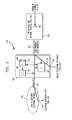
- FIG. 1 illustrates how the invention may be used and implemented in a telephone communications system in conjunction with an exemplary program controlled ISDN switch having at least one PRI.
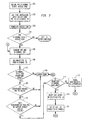
- FIG. 2 depicts, in the form of a flow chart, an exemplary method that illustrates how the invention may be implemented to support a PRI B-Channel direct feature invoked using line side equipment.
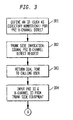
- FIG. 3 depicts, in the form of a flow chart, an exemplary method that illustrates how the invention may be implemented to support a PRI B-Channel direct feature invoked using trunk side equipment remotely located from the target switch.
- FIG. 1 illustrates how the invention may be used and implemented in a telephone communications system in conjunction with an exemplary program controlled ISDN switch having at least one PRI.
- telephone communications system 100 is depicted including: PSTN 101; trunk side telephone interface 102 to PSTN 101; program controlled ISDN switch 103 including at least one PRI (shown as PRI 104 in FIG. 1); call processor 105 (including call routing means 120 and call set up means 121), data storage device 106 and dial tone generator 107, all located at switch 103; modem pool 108 including modem 109 specifically associated with a particular B-Channel; and line side interface 110 to switch 103.
- PRI shown as PRI 104 in FIG. 1
- call processor 105 including call routing means 120 and call set up means 121
- data storage device 106 and dial tone generator 107 all located at switch 103
- modem pool 108 including modem 109 specifically associated with a particular B-Channel
- line side interface 110 to switch 103.
- Signals (data) input to switch 103 from either trunk side telephone interface 102 or line side interface 110 are illustratively shown as communicated to switch 103 via calls on links 115 and 116 respectively.
- Data is illustratively shown as processed at switch 103 via call processor 105 which obtains input signals (data) from data storage device 106.
- Dial tone generator 107 is shown under the control of call processor 105.
- Call routing and call set up modules 120 and 121 respectively, in switch 103 operating under the control of call processor 105, used by the methods and apparatus constituting the invention, are well known to those skilled in the art and will not be described further herein.
- the ISDN PRI B-Channel Direct feature contemplated by the invention provides the ability for a customer to dial digits to identify both the PRI and the B-Channel within the PRI to which the customer wishes to be connected.
- PRI B-Channel Direct feature There are at least two ways to invoke the PRI B-Channel Direct feature: (1) from a line subtending a program controlled switch, such as switch 103, with the PRI of B-Channel to be connected; and (2) from, for example, the PSTN via a trunk interface to the switch with the PRI of B-Channel to be connected.
- the user would, according to a preferred embodiment of the invention, provide a digit string to switch 103 via equipment (not shown) coupled to interface 110, which would identify three things: (1) the invocation of the feature by providing a predefined access code; (2) the identification of the specific B-Channel (a B-Channel Identifier) via a number in a predefined range (for example, 1-119 where 5 PRI capacity is available; 1-23 where a single PRI is used, etc.); and (3) the identification of the PRI (a PRI Identifier) via, for example, a 7 or 10 digit PRI Directory Number (DN).
- a digital telephone set could, for example, be connected to interface 110 and provide the aforementioned inputs.
- equipment interconnected to interface 110 could be used to dial in *2420#9411234 to switch 103, where *24 represents a predefined access code to invoke the PRI B-Channel Direct feature, 20 identifies the B-Channel to be connected and 9411234 represents the DN of the PRI.
- a "#" is used in the example set forth hereinabove to delineate the B-Channel number from the PRI DN to allow, according to the illustrative embodiment of the invention, for either a 1, 2, or 3 digit B-Channel number.
- the data input via interface 110 is illustratively shown as routed to data storage device 106 where it may be obtained by call processor 105 for translation via, for example, a program module designed to perform the translation function; and further program modules designed to facilitate call routing and call set up based on collected and delineated PRI IDs and B-Channel IDs.
- call processor 105 would route the call via link 116 from interface 110 to the PRI identified by "9411234" (PRI 104 being presumed for the sake of illustration only to be PRI 9411234); and set the call up on B-Channel 20 as requested (assuming the channel is available), to directly access modem 109 in modem pool 108.
- the user would dial an access code, the B-Channel number, and the DN identifying the actual PRI of the B-Channel.
- the access code may be defined on a per switch basis, although a customer with multiple switches may certainly use the same access code for all their switches.
- the B-Channel number can identify any DSO on the PRI, (except a DSO functioning a a D-Channel, e.g. port 24 on a PRI with a D-channel or backup D-channel). Where a DN is used for identifying the PRI, the DN may be assigned as part of creation of the PRI.
- PRI B-Channel Direct feature from a location external to switch 103 (trunk side), such as from telephone-PSTN interface 102 (coupled to switch 103 via PSTN 101)
- the user would provide a 2 stage sequence of digits to the switch.
- a digital telephone connected to interface 102 could, once again, serve as a means for providing a sequence of digits to switch 103.
- a reserved office DN (or any other unique signalling method to identify that the PRI B-Channel Direct feature is to be invoked) could be used to route the call to switch 103 via link 115.
- switch 103 would return Dial Tone to the calling user.
- Dial tone generator 107 operating under control of call processor 105, could be used to send a dial tone back to the interface 102 (upon call processor 105 recognizing the DN associated with invoking the PRI B-Channel Direct feature), to enable the second stage of digits to be input by the user.
- the identification of the B-Channel via a number e.g., a number in the range 1-119 for 5 PRI capacity, 1-23 for a single PRI, etc.
- the identification of the PRI e.g., via a 7 or 10 digit PRI DN
- switch 103 receives the dial tone from switch 103 (actually a second dial tone for the calling equipment).
- switch 103 e.g., an Internet Concentrator, end office switch, etc.
- the user would then dial, for example, 20#8609411234, where 20 identifies the B-Channel to be connected and 8609411234 represents the DN of the PRI.
- a "#" once again used in the example to delineate the B-Channel number from the PRI DN to allow for either a 1, 2, or 3 digit B-Channel number.
- call processor 105 would route the call via link 115 from interface 102 to the PRI identified by "8609411234" (PRI 104 being presumed for the sake of illustration only to be PRI 8609411234); and set the call up on B-Channel 20 as requested (assuming the channel is available), to directly access modem 109 in modem pool 108.
- the user could dial a DN that would route to the switch where the PRI B-Channel resides (for example PRI 104 for switch 103 as per the aforestated examples).
- the switch (such as exemplary switch 103) would return a dial tone (actually the second dial tone for the user; the first tone being provided locally to allow input of the DN); and thereafter the user would dial the B-Channel number and the DN identifying the actual PRI of the B-Channel.
- the initial DN could be a DN with an Numbering Plan Area ("area code”) and office code routed through the PSTN to the required switch.
- the switch must be programmed to identify (“translate") the DN as the DN to invoke PRI B-Channel Direct.
- Developing a program module to recognize a predefined DN and invoking the PRI B-Channel direct feature upon detection of the DN is well within the purview of those of ordinary skill in the art.
- the B-Channel number and the DN of the PRI are the same as described hereinabove for the line side interface.
- the functional requirements to implement the invention as described hereinabove can be divided into three functional areas: (1) Administration; (2) Line Side Invocation; and (3) Trunk Side Invocation.
- a new access code should be defined to allow for line side invocations of the PRI B-Channel Direct feature, as described in the aforementioned line side invocation example (i.e., an access code type which indicates that the subscriber is performing a PRI B-Channel Direct call and will follow the access code with a B-Channel number and a PRI ID, such as a line DN); and (3) for trunk side invocations of the PRI B-Channel Direct feature, a signal (such as a specially designated DN coming into the target switch) needs to be defined so that a translation of the signal results in the target switch returning dial tone on the trunk; and then collecting the B-Channel number and the PRI ID (e.g.,DN) input during the aforementioned "second stage".
- a signal such as a specially designated DN coming into the target switch
- FIG. 2 depicts, in the form of a flow chart, an exemplary method that illustrates how the invention may be implemented to support a PRI B-Channel direct feature invoked using line side equipment.
- an access code representing the PRI B-Channel Direct feature must first be defined (as shown at Block 201 in FIG. 2); and be input to the target switch along with PRI ID andB-Channel ID information (as shown at Block 202 in FIG. 2) to invoke thePRI B-Channel Direct feature using line side equipment (e.g., a line subtending the switch itself).
- line side equipment e.g., a line subtending the switch itself.
- the access code must be first translated. If the access code presented to the target switch is not a PRI B-Channel Direct feature access code, processing at the target switch is shown follow a path from Block 204 in FIG. 2 that allows the function called for to be processed ("Exit To Other Function" in FIG. 2).
- Block 204 If a proper defined PRI B-Channel Direct feature access code is detected at Block 204 (by, for example, call processor 105), the B-Channel number and PRI ID (such as a predefined DN) have to be examined (as shown at Block 205 in FIG. 2).
- the target switch must be able to delineate the B-Channel number from the PRI DN (Block 206 in FIG. 2).
- a "#" could be used as the delineation character by placing the # after the B-Channel number.
- the flow chart in FIG. 2 next depicts several tests which, for the sake of convenience and illustration only, are shown following the delineation of the B-Channel ID and PRI ID.
- Block 207 a test is shown at Block 207 to determine if the B-Channel ID is within a predefined range.
- a predefined range For example, if only a single PRI capacity is defined at the switch and the user tries to connect to B-Channel 55 (when only 23 channels at most are available); an error is to be signalled as shown at Block 208 in FIG. 2.
- a test could next be performed to determine if the subscriber has entered a valid PRI ID. This is shown at Block 209 in FIG. 2. If not, an error should once again be signalled as shown by the path from Block 209 in FIG. 2 to Block 208 in FIG. 2.
- a test can be performed to determine if the subscriber entered DN (assuming a DN type PRI ID) supports the PRI B-Channel Direct access feature. This is shown at Block 210 in FIG. 2. If not, an error should yet again be signalled as shown by the path from Block 210 in FIG. 2 to Block 208 in FIG. 2.
- the target switch should also be programmed, according to the preferred embodiment of the invention, to determine if the requested B-Channel is available. This is shown at Block 211 in FIG. 2. If not available, a B-Channel blocked or busy signal, as shown developed at Block 212 in FIG. 2, should be returned by the switch.
- the switch should route the call based on the collected PRI ID (as shown at Block 213 in FIG. 2); and then complete call set up to the requested B-Channel (as shown at Block 214 in FIG. 2). This would complete the line side implementation of the desired direct connection to a B-Channel.
- FIG. 3 depicts, in the form of a flow chart, an exemplary method that illustrates how the invention may be implemented to support a PRI B-Channel direct feature invoked using trunk side equipment remotely located from the target switch.
- a signal such as a DN
- a signal first needs to be defined (as shown at Block 301 in FIG. 3).
- the user at the remote location such as a user at interface 102 in FIG. 1
- the target switch such as switch 103 in FIG. 1.
- This truck side invocation of the desired feature is represented at Block 302 in FIG. 3.
- the signal needs to be defined so that a translation of the signal by the target switch results in the switch returning dial tone on the trunk (as shown at Block 303 in FIG. 3).
- FIG. 3 The flow chart depicted in FIG. 3 is then shown flowing into Block 205 of FIG. 2 (at "A"). This is because the remainder of the exemplary processing flow contemplated by this illustrative embodiment of the invention (for trunk side invocations of the PRI B-Channel Direct feature) could be the same as set forth herein for line side processing (illustrated and described hereinbefore with reference to Blocks 205-214 of FIG. 2).
- the user can test and maintain specific equipment (like a modem in a modem pool); and services provided by whatever unit or module is known to be associated with a specific B-Channel.
Landscapes
- Engineering & Computer Science (AREA)
- Computer Networks & Wireless Communication (AREA)
- Telephonic Communication Services (AREA)
Applications Claiming Priority (2)
| Application Number | Priority Date | Filing Date | Title |
|---|---|---|---|
| US217329 | 1998-12-21 | ||
| US09/217,329 US6549535B1 (en) | 1998-12-21 | 1998-12-21 | Methods and apparatus for performing primary rate interface (PRI) B-channel direct connectivity in an integrated services digital network (ISDN) communications system |
Publications (2)
| Publication Number | Publication Date |
|---|---|
| EP1014752A2 true EP1014752A2 (de) | 2000-06-28 |
| EP1014752A3 EP1014752A3 (de) | 2003-01-08 |
Family
ID=22810604
Family Applications (1)
| Application Number | Title | Priority Date | Filing Date |
|---|---|---|---|
| EP99310312A Withdrawn EP1014752A3 (de) | 1998-12-21 | 1999-12-21 | Verfahren und Vorrichtung zur Durchführung der direkten Verbindung eines B-Kanals einer Primäranschlussschnittstelle in einem ISDN Kommunikationssystem |
Country Status (3)
| Country | Link |
|---|---|
| US (1) | US6549535B1 (de) |
| EP (1) | EP1014752A3 (de) |
| CA (1) | CA2292829A1 (de) |
Families Citing this family (1)
| Publication number | Priority date | Publication date | Assignee | Title |
|---|---|---|---|---|
| JP2006019985A (ja) * | 2004-06-30 | 2006-01-19 | Toshiba Corp | 電話交換装置及び交換ネットワークシステム |
Family Cites Families (9)
| Publication number | Priority date | Publication date | Assignee | Title |
|---|---|---|---|---|
| US4730313A (en) * | 1986-08-18 | 1988-03-08 | Racal Data Communications Inc. | Access circuit diagnostics for integrated services digital network |
| JP2658111B2 (ja) * | 1988-01-13 | 1997-09-30 | セイコーエプソン株式会社 | 手動式プリンタ |
| US4989202A (en) * | 1988-10-14 | 1991-01-29 | Harris Corporation | ISDN testing device and method |
| US4961186A (en) * | 1988-11-30 | 1990-10-02 | At&T Bell Laboratories | Communication channel reallocation |
| US5442621A (en) * | 1991-11-27 | 1995-08-15 | Fujitsu Limited | ISDN switching system having testing facilities |
| JPH08130577A (ja) * | 1994-10-31 | 1996-05-21 | Fujitsu Ltd | 交換機装置及び同交換機装置の試験方法 |
| US5680391A (en) * | 1995-06-20 | 1997-10-21 | Harris Corporation | Arrangement for testing telephone subscriber line circuit via B-ISDN channel linking central office test system and metallic channel unit installed in digital loop carrier remote terminal |
| US5809108A (en) * | 1996-09-27 | 1998-09-15 | Mci Communications Corporation | Automated test call generation and execution system |
| EP0877520A1 (de) * | 1997-05-09 | 1998-11-11 | Siemens Aktiengesellschaft | Verfahren zur Kommunikationssteuerung in einem Netz |
-
1998
- 1998-12-21 US US09/217,329 patent/US6549535B1/en not_active Expired - Fee Related
-
1999
- 1999-12-17 CA CA002292829A patent/CA2292829A1/en not_active Abandoned
- 1999-12-21 EP EP99310312A patent/EP1014752A3/de not_active Withdrawn
Also Published As
| Publication number | Publication date |
|---|---|
| CA2292829A1 (en) | 2000-06-21 |
| EP1014752A3 (de) | 2003-01-08 |
| US6549535B1 (en) | 2003-04-15 |
Similar Documents
| Publication | Publication Date | Title |
|---|---|---|
| US5771279A (en) | Advanced intelligent network interacting with customer premises equipment | |
| US5732130A (en) | System and method of providing enhanced subscriber services in a multi-node telecommunications network | |
| AU749173B2 (en) | Intercepting call communications within an intelligent network | |
| US5418844A (en) | Automatic access to information service providers | |
| US5619562A (en) | Method and system for remotely activating/changing subscriber services in a public switched telephone network | |
| CA2081037C (en) | Common channel signaling message intercept system | |
| US5586177A (en) | Intelligent signal transfer point (ISTP) | |
| US6078648A (en) | Advanced intelligent network (AIN) functionality for electronic surveillance | |
| US5659605A (en) | Method and apparatus for providing soft dial tone using office equipment designators | |
| AU707617B2 (en) | Providing special services to a caller configured as a virtual called party | |
| CZ299058B6 (cs) | Systém pro spravování telekomunikace | |
| EP0830039A1 (de) | Intelligentes Fernmeldenetz | |
| US6549535B1 (en) | Methods and apparatus for performing primary rate interface (PRI) B-channel direct connectivity in an integrated services digital network (ISDN) communications system | |
| US5805570A (en) | Method of simulating an ISDN-BRI central office switch using a single microcomputer | |
| US5448617A (en) | Method of processing intelligent network service call with DTMF subscriber signalling in electronic switching system for toll/tandem | |
| US3462557A (en) | Intra-concentrator call detecting circuit | |
| KR0139586B1 (ko) | 중계 서비스 교환기를 이용한 단국 서비스 교환기의 지능망 서비스 호처리 방법 | |
| US6243456B1 (en) | ETSI intelligent network capability set 1 trigger detection points on a service switching point | |
| EP0782309A2 (de) | Sprachgesteuertes Wählsystem und Verfahren | |
| US6381328B1 (en) | ETSI intelligent network capability set 1 intelligent network application protocol service switching point finite state machine | |
| JP2000078282A (ja) | 接続確立方法、サ―ビス制御点、および通信網 | |
| KR0134713B1 (ko) | 지능망 서비스 교환기(ssp)의 지능망 서비스 제어 시스템(scp) 시뮬레이션 방법. | |
| Shah et al. | Application of a new network concept for faster service deployment | |
| KR950009432B1 (ko) | 전전자 교환기에서 서비스 번호를 이용한 지능망 서비스 인지 방법 | |
| US6466665B1 (en) | Method for concentrating subscribers in a local exchange |
Legal Events
| Date | Code | Title | Description |
|---|---|---|---|
| PUAI | Public reference made under article 153(3) epc to a published international application that has entered the european phase |
Free format text: ORIGINAL CODE: 0009012 |
|
| AK | Designated contracting states |
Kind code of ref document: A2 Designated state(s): AT BE CH CY DE DK ES FI FR GB GR IE IT LI LU MC NL PT SE |
|
| AX | Request for extension of the european patent |
Free format text: AL;LT;LV;MK;RO;SI |
|
| PUAL | Search report despatched |
Free format text: ORIGINAL CODE: 0009013 |
|
| AK | Designated contracting states |
Kind code of ref document: A3 Designated state(s): AT BE CH CY DE DK ES FI FR GB GR IE IT LI LU MC NL PT SE |
|
| AX | Request for extension of the european patent |
Free format text: AL;LT;LV;MK;RO;SI |
|
| 17P | Request for examination filed |
Effective date: 20030620 |
|
| AKX | Designation fees paid |
Designated state(s): DE FR GB IT |
|
| RAP1 | Party data changed (applicant data changed or rights of an application transferred) |
Owner name: SIEMENS COMMUNICATION, INC. |
|
| GRAP | Despatch of communication of intention to grant a patent |
Free format text: ORIGINAL CODE: EPIDOSNIGR1 |
|
| STAA | Information on the status of an ep patent application or granted ep patent |
Free format text: STATUS: THE APPLICATION IS DEEMED TO BE WITHDRAWN |
|
| 18D | Application deemed to be withdrawn |
Effective date: 20070123 |