EP1001571B1 - Verfahren und System zur Kommunikation mit einer Telekommunikationsvermittlungseinrichtung - Google Patents
Verfahren und System zur Kommunikation mit einer Telekommunikationsvermittlungseinrichtung Download PDFInfo
- Publication number
- EP1001571B1 EP1001571B1 EP99116487A EP99116487A EP1001571B1 EP 1001571 B1 EP1001571 B1 EP 1001571B1 EP 99116487 A EP99116487 A EP 99116487A EP 99116487 A EP99116487 A EP 99116487A EP 1001571 B1 EP1001571 B1 EP 1001571B1
- Authority
- EP
- European Patent Office
- Prior art keywords
- server
- proxy server
- switch
- application
- client
- Prior art date
- Legal status (The legal status is an assumption and is not a legal conclusion. Google has not performed a legal analysis and makes no representation as to the accuracy of the status listed.)
- Expired - Lifetime
Links
- 238000000034 method Methods 0.000 title claims description 24
- 238000004891 communication Methods 0.000 claims description 43
- 230000007246 mechanism Effects 0.000 claims description 5
- 238000010586 diagram Methods 0.000 description 6
- 238000007726 management method Methods 0.000 description 5
- 230000004044 response Effects 0.000 description 4
- 230000008901 benefit Effects 0.000 description 3
- 238000012545 processing Methods 0.000 description 3
- 238000012546 transfer Methods 0.000 description 3
- 238000013459 approach Methods 0.000 description 2
- 238000012550 audit Methods 0.000 description 2
- 238000004458 analytical method Methods 0.000 description 1
- 230000003466 anti-cipated effect Effects 0.000 description 1
- 230000005540 biological transmission Effects 0.000 description 1
- 238000004364 calculation method Methods 0.000 description 1
- 230000000694 effects Effects 0.000 description 1
- 230000008676 import Effects 0.000 description 1
- 238000012423 maintenance Methods 0.000 description 1
- 239000011159 matrix material Substances 0.000 description 1
- 238000012544 monitoring process Methods 0.000 description 1
- 230000006855 networking Effects 0.000 description 1
- 230000008569 process Effects 0.000 description 1
Images



Classifications
-
- H—ELECTRICITY
- H04—ELECTRIC COMMUNICATION TECHNIQUE
- H04L—TRANSMISSION OF DIGITAL INFORMATION, e.g. TELEGRAPHIC COMMUNICATION
- H04L41/00—Arrangements for maintenance, administration or management of data switching networks, e.g. of packet switching networks
- H04L41/02—Standardisation; Integration
- H04L41/0246—Exchanging or transporting network management information using the Internet; Embedding network management web servers in network elements; Web-services-based protocols
- H04L41/0253—Exchanging or transporting network management information using the Internet; Embedding network management web servers in network elements; Web-services-based protocols using browsers or web-pages for accessing management information
-
- H—ELECTRICITY
- H04—ELECTRIC COMMUNICATION TECHNIQUE
- H04Q—SELECTING
- H04Q3/00—Selecting arrangements
- H04Q3/0016—Arrangements providing connection between exchanges
- H04Q3/0029—Provisions for intelligent networking
Definitions
- the present invention generally relates to networked communications, and in particular, to an improved method and system for accessing software applications of a telecommunications switch.
- Telecommunications (telecom) switches are signal transfer point devices that provide switching and call setup services in a telephone network.
- Various types of telecom switches include computerized branch exchanges (CBXs) and private branch exchanges (PBXs).
- Modern telecom switches typically include resources such as software applications and data bases for configuring the services provided by the switch.
- a computer console can be provided at the switch which provides a user interface to the software and database resources. This technique has several drawbacks; specifically, it requires the user to be physically located at the switch, it does not permit concurrent application sessions, and it consumes the processing resources of the switch itself.
- the second technique for accessing switch resources involves providing a network interface to the switch. The network interface permits a user to access switch resources from a remote location using a networked computer, or the like. Although this technique permits the user to remotely access the switch resources, it does not permit concurrent application sessions. Moreover, remotely executing the applications also consumes the switch's processing resources.
- the proxy server can include a web server and conventional LAN (Local Area Network) interface, which permits remote users to access the switch using a commercially available web browser, such as the Netscape Navigator from Netscape, Inc. or the Internet Explorer from Microsoft, Inc.
- LAN Local Area Network
- the system 10 permits a user to remotely access software applications residing on a telecommunications switch 12.
- the switch applications support client-server operation between the switch and network clients.
- the system includes a communications server 14 coupled to the switch 12 using a local area network (LAN) 16.
- the communication server 14 provides a single point of entry to various software applications included in the switch 12.
- the communications server 14 is coupled to a customer LAN that includes an Intranet 18 that communicates through a firewall computer 24 to the Internet 28.
- the communications server 14 can be coupled to a remote workstation 32 using any conventional communications network, such as ISDN, xDSL, or as shown, a standard modem 30 communicating via a telephone line 20.
- Connected to the intranet 18 is a plurality of in-house computers 22.
- a plurality of external computer sites 26 can communicate with devices connected to the Intranet 18 via the Internet 28 through the firewall 24. This arrangement permits a remote client to access the switch 12 from almost anywhere on the globe.
- the communications server 14 acts as a gateway that permits client-server communication between the computers 22, 26, 32 and switch applications. This permits multiple users to access the switch applications from remote locations without unduly burdening the processor resources of the switch 12.
- the communications server 14 can be implemented using a conventional personal computer (PC) or computer workstation running a commercially available operating system (OS), such as Windows TM NT from Microsoft, Inc. or UNIX developed by AT&T, Inc.
- OS operating system
- the function of the communications server 14 can be provided by a novel software program executing in conjunction with the OS.
- Each of the computers 22-26, 32 can be any conventional computer that supports networked communications using TCP/IP.
- Each computer 22-26, 32 can also include a conventional web browser capable of running JAVA applets.
- the firewall computer 24 prevents unauthorized access to the resources connected to the Intranet 18. Suitable firewall computers are commercially-available and used throughout the networking industry.
- the telecom switch 12 can be a configurable device for providing switching services on a telephone network, such as a PBX, CBX, or the like.
- the switch 12 can be a Hicom family PBX manufactured by Siemens Corp.
- the switch 12 and the communications server 14 communicate using the LAN 16.
- the LAN 16 can be an Atlantic-LAN, which is provided with a Hicom PBX.
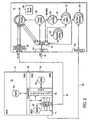
- FIG. 2 shows a detailed block diagram of the communications server 14 and the switch 12.
- the communications server 14 includes a proxy server 50 and an HTTP server 52, also called a web server.
- the communications server 14 also includes a first conventional network interface 54 for communicating with the customer LAN 18, a second network interface 54 for communicating with the switch 12, a TCP/IP protocol stack 55, common gateway interface (CGI) applications 61, and a serial I/O interface 67.
- a watchdog timer 58 is provided to detect a hangup condition.
- the proxy server 50 manages connectivity between software applications residing on the switch 12 and corresponding client applications residing on the remote computers 22-26, 32 communicating over the customer LAN 18.
- the proxy server 50 can maintain concurrent connectivity by establishing separate session threads 62 for each of a plurality of application sessions.
- the proxy server 50 provides single-point entry to the switch applications, and provides related functions, such as presentation of a user interface, authentication of user log-ons, and monitoring of connectivity status.
- the proxy server 50 is a novel software program that can be invoked by a conventional HTTP server 52.
- the HTTP server 52 provides a web page for easy user access to the switch applications.
- the HTTP server 52 can be a commercially available software program, such as the HTTP server provided with the Windows NT TM operating system. Using the Windows TM NT, the proxy server 50 can be invoked by the HTTP server using JAVA servlets 63 or common gateway interface (CGI) software applications 61.
- CGI common gateway interface
- the HTTP server 52 can run JAVA servlets 63 to permit JAVA-based web browsers on the remote computers 22, 26 to easily access the switch applications and services.
- JAVA applets can be transferred to the clients by the HTTP server 52. These applets allow remote users to enter data and request services provided by the switch 12. For instance, the user interface can be implemented using JAVA applets. Using applets has advantages in that it permits platform independence.
- the serial I/O interface 67 includes standard I/O devices 65 and I/O server software 64 for providing an alternative communication path to the switch 12 via a serial line 69.
- the serial I/O interface can use a conventional z-modem, V.24 protocol, or the like to achieve communication between the server 14 and the switch 12.
- the TCP/IP stack 55 is conventional TCP/IP software that permits the various elements of the server 14 to communicate with one another, as well as permitting the customer LAN 18 to communication with the server elements and the switch LAN 18.
- a remote client can access server applications on the switch 12 in either of three ways.
- a remote client can request a switch service using the serial I/O interface 67.
- the remote client executes a client application which requests the I/O server 64 to setup an application session.
- the request can be transferred over the LAN 18 using a TCP/IP protocol.
- communication between the server 14 and the switch 12 take place over the serial line 69.
- the second manner in which a client-server session can be established is to use a web browser on one of the remote clients.
- the remote user submits a connection request to the HTTP server 52, which in response, transfers an applet back to the client.
- the applet can be specific to a particular switch service and can request user information, such as login identification or service parameters.
- the HTTP server 52 runs a corresponding servlet 63 to invoke the proxy server 50 via the TCP/IP stack 55.
- the proxy server 50 attempts to establish an application session thread 62 between the switch server application and the remote client, as will be discussed below.
- the CGI applications 61 can be used to invoke the proxy server 50.
- An HTML request submitted to the HTTP server 52 by the remote client can start a CGI application, which, in turn, requests the proxy server 50 to establish an application session.
- communication between the remote client and switch server passes through the TCP/IP stack 55, the CGI application 61, and the HTTP server 52.
- the third method for establishing a client-server session involves using conventional network communication protocols, such as the file transfer protocol (FTP) or telenet.
- FTP file transfer protocol
- a remote client can submit a session request directly to the proxy server 50 via the TCP/IP stack 55.
- One or more resident client applications 60 can be included on the server 14.
- the applications 60 can be the same as those residing on the remote clients 22-24, 32. However, the resident applications 60 are executed by the server 14 itself. Communication between the resident client applications 60 and the switch server applications can be established using the same methods as described earlier for remote clients.
- the watchdog timer 58 can be a commercially available watchdog card such as the PC Watchdog, Part No. 1090-1, manufactured by Berkshire Products of Suwance, GA. Typically, in a PC environment, the watchdog card interfaces to an ISA bus and includes software drivers to interface to OS and applications software. In the event of a system hang-up, i.e., a permanent lack of communication between either the customer LAN 18 or the switch 12, the watchdog timer 58 generates a signal indicating a hang-up condition.
- the proxy server 50 can respond to the hang-up condition by issuing an alarm to alert an operator of the problem and can likewise reset the communications server 14. If left undetected, the hang-up condition could cause the telecommunications switch 12 to fail, consequently disabling phone service to a large number of users.
- the switch 12 shown in FIG. 2 is exemplary and illustrates components found in commercially-available telecom switches, such as the Hicom 80EX manufactured by Siemens Corp.
- the telecom switch 12 includes an additional data processor (ADP) 70 and a switching unit (SWU) 72.
- the SWU 72 executes one or more applications 84 under the RMX operating system, which is a real-time OS provided with a Hicom 80EX switch; while the ADP can execute one or more applications 80, 82 under either the UNIX or RMX operating system respectively.
- the software applications on the ADP 70 and SWU 72 support client-server execution and can include a local configuration tool (LCT), a lightweight directory access protocol (LDAP), an enhanced error analysis (EEA) program, and a trunk diagnostic server (TDS). Each of these applications can be accessed from a remote client via the communications server 14.
- LCT local configuration tool
- LDAP lightweight directory access protocol
- EOA enhanced error analysis
- TDS trunk diagnostic server
- the ADP 70 can be implemented using a conventional data processor, such as a DM4L card available from Siemens Corp.; while the SWU 72 can be implemented using a conventional switching unit, such as the DP4L card, also available from Siemens Corp.
- the SWU 72 includes a matrix switch and provides switching and call setup services to the telephone network.
- the ADP 70 is a file server that provides file management services and maintains all I/O interfaces.
- the file management services include database management services for the local switch.
- a network interface 74 is included in the ADP 70.
- the network interface 74 includes a conventional LAN circuit provided with Hicom switches. Included with the network interface 74 are software drivers for interfacing the LAN card to the RMX operating system of the ADP 70.
- the network interface 74 also includes a software component providing a TCP/IP. protocol, and software providing an OSI transport layer interface (CMS) to the RMX operating system and RMX applications in the ADP 70.
- CMS protocol also interfaces to the transport layer 76, which provides communication with the RMX OS and applications 84 in the SWU 72 and the CMX transport interface in the ADP 70.
- the CMX interface communicates with the UNIX OS and applications 80 in the ADP 70.
- FIG. 3 illustrates a software complex 90 that can be included in the proxy server 50.
- the software complex 90 includes various software components, such as a startup component 100, a login component 102, a session controller 104, a shut-down routine 106, an administrator component 108, a load control mechanism 110, an alarm generation routine 112, an audit component 114, and an error-reporting routine 116.
- the startup component 100 is a software routine that executes upon first starting the proxy server 50.
- the startup component 50 initializes internal data structures within the proxy server 50 and also opens and initializes sockets for communicating with the customer LAN 18 and the switch LAN 16.
- the startup component 100 can also initiate a session supervisor included in the session controller 104, as described below.
- the login routine 102 receives and authenticates client requests to connect to the proxy server 50.
- a client submits a sign-up envelope.
- the sign-up envelope is a data packet transferred from the client to the proxy server 50, and contains the following information: class of service ID, service request, and client name and password or authentication information. If the sign-up envelope is not received within a predetermined time after establishing the open request, the login routine 102 will close the connection.
- the login routine checks the sign-up envelope for consistency and matches it against its local database. Based on the class of service ID, the login routine authenticates the client by means of password or authentication method.
- the authentication method can be a conventional authentication process based on public-key encryption schemes, such as RSA.
- the login routine 102 would include a local database storing public keys corresponding to authorized users.
- the authentication information in the envelope would include a digital signature encrypted by the particular client using a private key.
- the login routine 102 would decrypt the digital signature using the stored public key and verify the signature against a list of signatures of authorized users.
- the database would include a list of client names and passwords.
- the client name and password in the envelope would be compared to the database list. If a match is found, the connection would be authorized; otherwise, it would be disconnected.
- the session control component 104 includes a session setup component and a session supervisor.
- the session setup uses the class of service ID to fetch a service class provided by the server for the particular service ID.
- Each service class has attributes of priority, maximum number of concurrent sessions allowed, maximum time period for a connection to remain open, and file name for recording requests and responses for debugging purposes.
- the session setup checks the request and negotiates with the load control component 110 to see if the connection is permitted at the particular time. If the client request passes these checks, the session setup prepares the session environment and starts a session thread to service the transport layer. If the session setup check fails, the client is notified of the reason and the connection closed.
- the session supervisor is a continuously active software thread that monitors the status of each of the connected session threads. If a connected session has reached its maximum login duration time, the session supervisor terminates the session, and notifies and disconnects the client.
- Each active session thread handles one transport layer connection and passes requests and responses between a network application on the client and a switch application running on the server 14 or the switch 12.
- the load control component 110 monitors system performance and prevents overloading due to client application requests. Since a single client request can initiate activities with high calculation and search demands in either the SWU 72 or the ADP 70 of the switch 12, a load control mechanism is used rather than a message flow control scheme.
- the load control component 110 maintains two sets of thresholds: (1) system thresholds and, (2) service thresholds. The operation of the load control mechanism 110 is based upon these threshold values.
- the system thresholds contain information about limitations of the switch 12 components, i.e., the SWU 72 and ADP 70, as well as the communications server 14 itself.
- the information can include the maximum number of active sessions, maximum log file size, maximum computational load allowed in the SWU 72, and maximum computational load allowed in the ADP 70.
- Computational loads typically reflect the amount of time a processor is dedicating to a particular task.
- Conventional operating systems such as UNIX and Windows TM NT include library functions for determining computational loads at given times.
- the service thresholds can be specific to each class of service.
- the thresholds can include maximum session duration allowed for the service, maximum concurrent connections, maximum percentage computational load to be caused by the requested service in the SWU 72, maximum percentage of computational loads to be caused by the service in the ADP 70, and service priority.
- the load control mechanism 110 acts to prevent overloading the ADP 70, the SWU 72, and communications server 14. It does this based on the anticipated load that the requesting application will cause if executed. A new connection is allowed if the ADP 70, SWU 72 and communications server 14 thresholds are not exceeded. If they are exceeded, the load control component 110 notifies the session setup routine in the session controller 104, which rejects the requested connection and so notifies the requesting client.
- the administrator component 108 maintains the proxy server database and can also perform functions such as displaying the on-line status of the server 14, displaying error logs, auditing and statistical information.
- the administrator 108 can also include a routine to deactivate the proxy server 50.
- the administrator component 108 can be accessed via a JAVA applet executing on a remote client.
- the administrator applet can include password protection.
- the proxy server database management of the administrator 108 includes the following functions: the ability the lock and unlock the database during transactions, database configuration, and export and import of database information.
- the database can include information on authorized users, such as client names, passwords and the like.
- the database can include the above-described threshold values used by the load control component 110.
- the error report component 116 generates a central error log file which contains information about transmission errors between the clients and communication server. Each error record has a distinct header, which contains information about the particular server or client application that generated it. The maximum size allowed for the error log file is configurable by the administrator component 108.
- the alarm component 112 alerts network administrators to run-time problems such as resource over allocation or data inconsistency.
- the alarm component 112 can generate an e-mail message that can be transferred over the customer LAN to a predetermined e-mail address of a network administrator.
- the alarm component 112 can generate messages that are immediately displayable on an administrator's monitor (not shown), connected directly to the communications server 14.
- the alarm component 112 can also include a software routine for generating an alarm message by dialing out through a modem to an administrators workstation.
- the audit component 114 includes software for auditing and generating statistics on operational parameters such as time of connection, connection duration, time of termination, termination status, the IP address of each client, and the like.
- the shutdown component 106 is included to permit the proxy server 50 to be stopped for various reasons such as maintenance. Upon detecting a shutdown request from the administrator component 108, the shutdown component 106 can generate a message that will be sent to all clients having open sessions. The shutdown routine can also cause the proxy server to wait for a predetermined time limit to expire before disconnecting all sessions and releasing all resources.
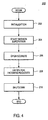
- FIG. 4 is a flowchart diagram illustrating an operational procedure 200 of the proxy server 50.
- the proxy server initializes its internal data structures using the startup component 100.
- the proxy server 50 starts the session supervisor included in the session control component 104.
- the proxy server 50 opens sockets so that communication over the customer and switch LANs 16-18 can take place.
- a socket is essentially a software object that connects an application to a network protocol. In UNIX, for example, an application can send and receive TCP/IP messages by opening a socket and reading and writing data to and from the socket.
- the proxy server 50 enters a continuous loop routine to listen for incoming requests from the clients and the switch. Details on how the proxy server 50 responds to an incoming request are illustrated in FIG. 5.
- the proxy server 50 can be shut down by a request by the administrator component 108 or a power-down condition.
- FIG. 5 illustrates a method 300 for responding to client requests that is executable by the proxy server 50.
- the proxy server Upon receiving a connection request from a client, the proxy server authenticates the login (step 310). If the login is not authorized, the proxy server 50 denies the connection (step 312). However, if the proxy server verifies that the login is authorized, it proceeds with an attempt to set up a session (step 314). As discussed earlier, the proxy server 50 ascertains the current number of connections and computational load and then determines whether the requested session will exceed the limitations of either the switch 12 or the server 14. If the requested session exceeds these limitations, then the connection is denied (step 312). If the limitations are not exceeded, the session is established by the proxy server 50 and a session thread is activated (step 316). The session supervisor continuously monitors the status of the active session thread to determine whether the session has terminated or the predetermined session duration limit has been exceeded (step 318). If a termination condition does arise, the session supervisor causes the client to disconnect and terminates the session (step 320).
Landscapes
- Engineering & Computer Science (AREA)
- Computer Networks & Wireless Communication (AREA)
- Signal Processing (AREA)
- Computer And Data Communications (AREA)
- Communication Control (AREA)
- Data Exchanges In Wide-Area Networks (AREA)
Claims (14)
- System zur Kommunikation mit einer Telekommunikationsvermittlungseinrichtung, welches Folgendes umfasst:einen Proxy-Server (50) auf einem Kommunikations-Server (14) für die Verwaltung der Konnektivität zwischen und des Zugriffs auf verschiedene(n) Software-Anwendungen (80) auf der Telekommunikationsvermittlungseinrichtung (12) sowie mindestens eine Netzwerkanwendung (60) auf dem Kommunikations-Server (14), wobei der genannte Proxy-Server (50) die Client-Server-Kommunikation für die Einrichtung der Anwendungssitzungen zwischen der mindestens einen Netzwerkanwendung und einer Software-Anwendung (80) der genannten verschiedenen Software-Anwendungen (80) verwaltet und wobei der genannte Proxy-Server (50) einen zentralen Einstiegspunkt zu der genannten einen Software-Anwendung bereitstellt und gleichzeitige Konnektivität für jede aus einer Mehrzahl von Anwendungssitzungen zwischen der mindestens einen Netzwerkanwendung (60) und mindestens einer weiteren der genannten verschiedenen Software-Anwendungen (80) ermöglicht.
- System nach Anspruch 1, das ferner umfasst:einen HTTP-Server (52) in Kommunikation mit dem Proxy-Server (50).
- System nach Anspruch 1 oder 2, das ferner umfasst:einen Überwachungs-Timer (58) für das Erkennen einer Aufhänge-Bedingung.
- System nach Anspruch 1, 2 oder 3, das ferner umfasst:eine LAN-Schnittstelle (54), die es dem Proxy-Server (50) ermöglicht, über ein TCP/IP-Protokoll mit der Telekommunikationsvermittlungseinrichtung (12) zu kommunizieren.
- System nach Anspruch 1, das ferner umfasst:einen entfernten Client (22, 26, 32) einschließlich mindestens einer Netzwerkanwendung; undein Netzwerk (28, 18, 20), das die Kommunikation zwischen dem entfernten Client und dem Proxy-Server ermöglicht.
- System nach Anspruch 5, wobei das Netzwerk das Internet (28) beinhaltet.
- System nach Anspruch 5 oder 6, wobei der entfernte Client in einem Personal Computer (32, 26) beinhaltet ist.
- System nach einem der vorausgegangenen Ansprüche, wobei der Proxy-Server (50) einen Lastregelungsmechanismus beinhaltet.
- System nach einem der vorausgegangenen Ansprüche, wobei der Proxy-Server (50) eine Client-Authentifizierungsroutine beinhaltet.
- Verfahren zur Kommunikation mit einer Telekommunikationsvermittlungseinrichtung, das umfasst:die Bereitstellung eines Proxy-Servers (50) auf einem Kommunikations-Server (14) für die Verwaltung der Konnektivität zwischen und des Zugriffs auf verschiedene(n) Software-Anwendungen (80) auf der Telekommunikationsvermittlungseinrichtung (12) sowie mindestens eine Netzwerkanwendung (60) auf dem Kommunikations-Server (14), wobei der genannte Proxy-Server (50) die Client-Server-Kommunikation für die Einrichtung der Anwendungssitzungen zwischen der mindestens einen Netzwerkanwendung und einer Software-Anwendung (80) der genannten verschiedenen Software-Anwendungen verwaltet und wobei der genannte Proxy-Server (50) einen zentralen Einstiegspunkt zu der einen Software-Anwendung bereitstellt und gleichzeitige Konnektivität für jede aus einer Mehrzahl von Anwendungssitzungen zwischen der mindestens einen Netzwerkanwendung (60) und mindestens einer weiteren der genannten verschiedenen Software-Anwendungen (80) ermöglicht.
- Verfahren nach Anspruch 10, das ferner umfasst:die Anmeldung bei dem Proxy-Server (50).
- Verfahren nach Anspruch 10, das ferner umfasst:die Bereitstellung mindestens eines Applet auf einem entfernten Client für die Kommunikation mit der Telekommunikationsvermittlungseinrichtung (12).
- Verfahren nach Anspruch 10 für die Konfiguration der Telekommunikationsvermittlungseinrichtung per Fernzugriff, das ferner umfasst:den Aufruf eines Applet auf einem entfernten Client für die Aktualisierung der Konfigurationsdaten, die auf der Telekommunikationsvermittlungseinrichtung gespeichert sind.
- Verfahren nach Anspruch 10, das ferner umfasst:die Verwendung eines Web-Browsers für die Verbindung zu dem Proxy-Server.
Applications Claiming Priority (2)
| Application Number | Priority Date | Filing Date | Title |
|---|---|---|---|
| US09/167,398 US6636503B1 (en) | 1998-10-06 | 1998-10-06 | Method and system for communicating with a telecommunications switch |
| US167398 | 1998-10-06 |
Publications (3)
| Publication Number | Publication Date |
|---|---|
| EP1001571A2 EP1001571A2 (de) | 2000-05-17 |
| EP1001571A3 EP1001571A3 (de) | 2003-10-08 |
| EP1001571B1 true EP1001571B1 (de) | 2007-04-25 |
Family
ID=22607218
Family Applications (1)
| Application Number | Title | Priority Date | Filing Date |
|---|---|---|---|
| EP99116487A Expired - Lifetime EP1001571B1 (de) | 1998-10-06 | 1999-08-23 | Verfahren und System zur Kommunikation mit einer Telekommunikationsvermittlungseinrichtung |
Country Status (3)
| Country | Link |
|---|---|
| US (1) | US6636503B1 (de) |
| EP (1) | EP1001571B1 (de) |
| DE (1) | DE69935894T2 (de) |
Families Citing this family (66)
| Publication number | Priority date | Publication date | Assignee | Title |
|---|---|---|---|---|
| US6766369B1 (en) * | 1998-03-09 | 2004-07-20 | Net Zero, Inc. | Internet service error tracking |
| US6360270B1 (en) * | 1998-11-16 | 2002-03-19 | Hewlett-Packard Company | Hybrid and predictive admission control strategies for a server |
| US6430619B1 (en) | 1999-05-06 | 2002-08-06 | Cisco Technology, Inc. | Virtual private data network session count limitation |
| US6529955B1 (en) | 1999-05-06 | 2003-03-04 | Cisco Technology, Inc. | Proxy session count limitation |
| US7213258B1 (en) * | 1999-06-30 | 2007-05-01 | Bellsouth Intellectual Property Corp. | System and method for managing and controlling data |
| JP3565490B2 (ja) * | 1999-11-09 | 2004-09-15 | インターナショナル・ビジネス・マシーンズ・コーポレーション | クライアントサーバシステム、サーバ、クライアント、プロキシサーバ制御方法、プロキシサーバ機能提供方法および記憶媒体 |
| US7343413B2 (en) * | 2000-03-21 | 2008-03-11 | F5 Networks, Inc. | Method and system for optimizing a network by independently scaling control segments and data flow |
| US8380854B2 (en) * | 2000-03-21 | 2013-02-19 | F5 Networks, Inc. | Simplified method for processing multiple connections from the same client |
| KR100365796B1 (ko) * | 2000-08-17 | 2002-12-27 | 삼성전자 주식회사 | 웹서버를 이용한 간이 교환 시스템용 사용자 프로그래밍시스템 |
| US7420977B2 (en) * | 2000-10-03 | 2008-09-02 | Broadcom Corporation | Method and apparatus of inter-chip bus shared by message passing and memory access |
| KR100464150B1 (ko) * | 2000-12-15 | 2004-12-31 | 엘지전자 주식회사 | 교환기와 엠엠아이/티엠엔 에이전트 간의 정합 방법 |
| US7054925B2 (en) * | 2001-11-21 | 2006-05-30 | International Business Machines Corporation | Efficient method for determining record based I/O on top of streaming protocols |
| US8090866B1 (en) * | 2002-01-18 | 2012-01-03 | Cisco Technology, Inc. | TCP proxy connection management in a gigabit environment |
| US20040083386A1 (en) * | 2002-10-28 | 2004-04-29 | Bertrand Marquet | Non-repudiable distributed security policy synchronization |
| US8285881B2 (en) * | 2003-09-10 | 2012-10-09 | Broadcom Corporation | System and method for load balancing and fail over |
| EP1704699B1 (de) * | 2003-12-08 | 2018-04-25 | Avago Technologies General IP (Singapore) Pte. Ltd. | Schnittstelle zwischen ethernet und storage area netzwerk |
| US9055088B2 (en) * | 2005-03-15 | 2015-06-09 | International Business Machines Corporation | Managing a communication session with improved session establishment |
| US20070067638A1 (en) * | 2005-09-22 | 2007-03-22 | Roland Haibl | Method of Session Consolidation |
| US20070083792A1 (en) * | 2005-10-11 | 2007-04-12 | Mcdermott Andrew | System and method for error detection and reporting |
| US20070282964A1 (en) * | 2006-06-06 | 2007-12-06 | International Business Machines Corporation | Method and apparatus for processing remote shell commands |
| US8806053B1 (en) | 2008-04-29 | 2014-08-12 | F5 Networks, Inc. | Methods and systems for optimizing network traffic using preemptive acknowledgment signals |
| US8566444B1 (en) | 2008-10-30 | 2013-10-22 | F5 Networks, Inc. | Methods and system for simultaneous multiple rules checking |
| US10157280B2 (en) | 2009-09-23 | 2018-12-18 | F5 Networks, Inc. | System and method for identifying security breach attempts of a website |
| US10721269B1 (en) | 2009-11-06 | 2020-07-21 | F5 Networks, Inc. | Methods and system for returning requests with javascript for clients before passing a request to a server |
| US8868961B1 (en) | 2009-11-06 | 2014-10-21 | F5 Networks, Inc. | Methods for acquiring hyper transport timing and devices thereof |
| US9313047B2 (en) | 2009-11-06 | 2016-04-12 | F5 Networks, Inc. | Handling high throughput and low latency network data packets in a traffic management device |
| US9141625B1 (en) | 2010-06-22 | 2015-09-22 | F5 Networks, Inc. | Methods for preserving flow state during virtual machine migration and devices thereof |
| US10015286B1 (en) | 2010-06-23 | 2018-07-03 | F5 Networks, Inc. | System and method for proxying HTTP single sign on across network domains |
| US8908545B1 (en) | 2010-07-08 | 2014-12-09 | F5 Networks, Inc. | System and method for handling TCP performance in network access with driver initiated application tunnel |
| US8347100B1 (en) | 2010-07-14 | 2013-01-01 | F5 Networks, Inc. | Methods for DNSSEC proxying and deployment amelioration and systems thereof |
| US9083760B1 (en) | 2010-08-09 | 2015-07-14 | F5 Networks, Inc. | Dynamic cloning and reservation of detached idle connections |
| US8630174B1 (en) | 2010-09-14 | 2014-01-14 | F5 Networks, Inc. | System and method for post shaping TCP packetization |
| US8463909B1 (en) | 2010-09-15 | 2013-06-11 | F5 Networks, Inc. | Systems and methods for managing server resources |
| US8886981B1 (en) | 2010-09-15 | 2014-11-11 | F5 Networks, Inc. | Systems and methods for idle driven scheduling |
| US8804504B1 (en) | 2010-09-16 | 2014-08-12 | F5 Networks, Inc. | System and method for reducing CPU load in processing PPP packets on a SSL-VPN tunneling device |
| US9554276B2 (en) | 2010-10-29 | 2017-01-24 | F5 Networks, Inc. | System and method for on the fly protocol conversion in obtaining policy enforcement information |
| WO2012058486A2 (en) | 2010-10-29 | 2012-05-03 | F5 Networks, Inc. | Automated policy builder |
| US8627467B2 (en) | 2011-01-14 | 2014-01-07 | F5 Networks, Inc. | System and method for selectively storing web objects in a cache memory based on policy decisions |
| US10135831B2 (en) | 2011-01-28 | 2018-11-20 | F5 Networks, Inc. | System and method for combining an access control system with a traffic management system |
| EP2637365B1 (de) * | 2011-04-29 | 2018-06-13 | Huawei Technologies Co., Ltd. | Verfahren zur steuerung von internetdiensten sowie entsprechende vorrichtung und system |
| US9246819B1 (en) | 2011-06-20 | 2016-01-26 | F5 Networks, Inc. | System and method for performing message-based load balancing |
| US9270766B2 (en) | 2011-12-30 | 2016-02-23 | F5 Networks, Inc. | Methods for identifying network traffic characteristics to correlate and manage one or more subsequent flows and devices thereof |
| US10230566B1 (en) | 2012-02-17 | 2019-03-12 | F5 Networks, Inc. | Methods for dynamically constructing a service principal name and devices thereof |
| US9231879B1 (en) | 2012-02-20 | 2016-01-05 | F5 Networks, Inc. | Methods for policy-based network traffic queue management and devices thereof |
| US9172753B1 (en) | 2012-02-20 | 2015-10-27 | F5 Networks, Inc. | Methods for optimizing HTTP header based authentication and devices thereof |
| EP2853074B1 (de) | 2012-04-27 | 2021-03-24 | F5 Networks, Inc | Verfahren zur optimierung von inhaltsdienstanfragen und vorrichtungen dafür |
| US10375155B1 (en) | 2013-02-19 | 2019-08-06 | F5 Networks, Inc. | System and method for achieving hardware acceleration for asymmetric flow connections |
| US10187317B1 (en) | 2013-11-15 | 2019-01-22 | F5 Networks, Inc. | Methods for traffic rate control and devices thereof |
| US10015143B1 (en) | 2014-06-05 | 2018-07-03 | F5 Networks, Inc. | Methods for securing one or more license entitlement grants and devices thereof |
| US11838851B1 (en) | 2014-07-15 | 2023-12-05 | F5, Inc. | Methods for managing L7 traffic classification and devices thereof |
| US10122630B1 (en) | 2014-08-15 | 2018-11-06 | F5 Networks, Inc. | Methods for network traffic presteering and devices thereof |
| US10182013B1 (en) | 2014-12-01 | 2019-01-15 | F5 Networks, Inc. | Methods for managing progressive image delivery and devices thereof |
| US11895138B1 (en) | 2015-02-02 | 2024-02-06 | F5, Inc. | Methods for improving web scanner accuracy and devices thereof |
| US10834065B1 (en) | 2015-03-31 | 2020-11-10 | F5 Networks, Inc. | Methods for SSL protected NTLM re-authentication and devices thereof |
| US10505818B1 (en) | 2015-05-05 | 2019-12-10 | F5 Networks. Inc. | Methods for analyzing and load balancing based on server health and devices thereof |
| US10404698B1 (en) | 2016-01-15 | 2019-09-03 | F5 Networks, Inc. | Methods for adaptive organization of web application access points in webtops and devices thereof |
| US10797888B1 (en) | 2016-01-20 | 2020-10-06 | F5 Networks, Inc. | Methods for secured SCEP enrollment for client devices and devices thereof |
| US10791088B1 (en) | 2016-06-17 | 2020-09-29 | F5 Networks, Inc. | Methods for disaggregating subscribers via DHCP address translation and devices thereof |
| US11063758B1 (en) | 2016-11-01 | 2021-07-13 | F5 Networks, Inc. | Methods for facilitating cipher selection and devices thereof |
| US11496438B1 (en) | 2017-02-07 | 2022-11-08 | F5, Inc. | Methods for improved network security using asymmetric traffic delivery and devices thereof |
| US10791119B1 (en) | 2017-03-14 | 2020-09-29 | F5 Networks, Inc. | Methods for temporal password injection and devices thereof |
| US10931662B1 (en) | 2017-04-10 | 2021-02-23 | F5 Networks, Inc. | Methods for ephemeral authentication screening and devices thereof |
| US10972453B1 (en) | 2017-05-03 | 2021-04-06 | F5 Networks, Inc. | Methods for token refreshment based on single sign-on (SSO) for federated identity environments and devices thereof |
| US11122083B1 (en) | 2017-09-08 | 2021-09-14 | F5 Networks, Inc. | Methods for managing network connections based on DNS data and network policies and devices thereof |
| US11658995B1 (en) | 2018-03-20 | 2023-05-23 | F5, Inc. | Methods for dynamically mitigating network attacks and devices thereof |
| US11044200B1 (en) | 2018-07-06 | 2021-06-22 | F5 Networks, Inc. | Methods for service stitching using a packet header and devices thereof |
Citations (1)
| Publication number | Priority date | Publication date | Assignee | Title |
|---|---|---|---|---|
| WO1998010564A1 (en) * | 1996-09-09 | 1998-03-12 | Telefonaktiebolaget Lm Ericsson (Publ) | Buffer for connection data |
Family Cites Families (4)
| Publication number | Priority date | Publication date | Assignee | Title |
|---|---|---|---|---|
| US5596579A (en) | 1993-10-01 | 1997-01-21 | International Business Machines Corporation | High performance machine for switched communications in a heterogeneous data processing network gateway |
| US5742762A (en) | 1995-05-19 | 1998-04-21 | Telogy Networks, Inc. | Network management gateway |
| US5649005A (en) | 1995-07-07 | 1997-07-15 | Northern Telecom Limited | PC with telephony exchange function |
| US5915008A (en) * | 1995-10-04 | 1999-06-22 | Bell Atlantic Network Services, Inc. | System and method for changing advanced intelligent network services from customer premises equipment |
-
1998
- 1998-10-06 US US09/167,398 patent/US6636503B1/en not_active Expired - Lifetime
-
1999
- 1999-08-23 DE DE69935894T patent/DE69935894T2/de not_active Expired - Lifetime
- 1999-08-23 EP EP99116487A patent/EP1001571B1/de not_active Expired - Lifetime
Patent Citations (1)
| Publication number | Priority date | Publication date | Assignee | Title |
|---|---|---|---|---|
| WO1998010564A1 (en) * | 1996-09-09 | 1998-03-12 | Telefonaktiebolaget Lm Ericsson (Publ) | Buffer for connection data |
Also Published As
| Publication number | Publication date |
|---|---|
| DE69935894D1 (de) | 2007-06-06 |
| EP1001571A3 (de) | 2003-10-08 |
| DE69935894T2 (de) | 2007-09-06 |
| EP1001571A2 (de) | 2000-05-17 |
| US6636503B1 (en) | 2003-10-21 |
Similar Documents
| Publication | Publication Date | Title |
|---|---|---|
| EP1001571B1 (de) | Verfahren und System zur Kommunikation mit einer Telekommunikationsvermittlungseinrichtung | |
| US9258308B1 (en) | Point to multi-point connections | |
| US5987611A (en) | System and methodology for managing internet access on a per application basis for client computers connected to the internet | |
| Samar | Unified login with pluggable authentication modules (PAM) | |
| US7853682B2 (en) | System and method for consolidating, securing and automating out-of-band access to nodes in a data network | |
| US8627417B2 (en) | Login administration method and server | |
| US8078717B1 (en) | System and method for providing services for offline servers using the same network address | |
| EP1311930B1 (de) | System und Verfahren zum authentifizierten Zugang eines Benutzers zu einem Web-Server | |
| Ioannidis et al. | Implementing a distributed firewall | |
| AU784199B2 (en) | Method and transaction interface for secure data exchange between distinguishable networks | |
| US20020112186A1 (en) | Authentication and authorization for access to remote production devices | |
| AU2001280975A1 (en) | Systems and methods for authenticating a user to a web server | |
| WO2003100638A1 (en) | Network resource management system | |
| EP1626553A2 (de) | System und Verfahren für das Steuern des Netzzugangs | |
| US20060224897A1 (en) | Access control service and control server | |
| GB2341291A (en) | Line information security interface for TAPI service provider | |
| US7437732B1 (en) | Computer system having an authentication and/or authorization routing service and a CORBA-compliant interceptor for monitoring the same | |
| EP1038217A1 (de) | System und verfahren zum sichern eines computers vor unbefugtem zugang | |
| Kamens | Retrofitting Network Security to Third-Party Applications-The SecureBase Experience. | |
| EP1530343B1 (de) | Verfahren und System zur Generierung von Authentifizierungsstapeln in Kommunikationsnetzen | |
| WO1998032077A1 (en) | Method for connecting multiple heterogeneous computers to public networks using a single physical connection | |
| JP2001229098A (ja) | ネットワーク監視方式 | |
| Terlegård | Design of a Secure Network Management System | |
| Knezevic et al. | A method of centralized administration, users authorization, monitoring and control of services in computer networks | |
| Detry et al. | The Technology Information Environment with Industry {trademark} system description |
Legal Events
| Date | Code | Title | Description |
|---|---|---|---|
| PUAI | Public reference made under article 153(3) epc to a published international application that has entered the european phase |
Free format text: ORIGINAL CODE: 0009012 |
|
| AK | Designated contracting states |
Kind code of ref document: A2 Designated state(s): AT BE CH CY DE DK ES FI FR GB GR IE IT LI LU MC NL PT SE |
|
| AX | Request for extension of the european patent |
Free format text: AL;LT;LV;MK;RO;SI |
|
| 17P | Request for examination filed |
Effective date: 20001006 |
|
| PUAL | Search report despatched |
Free format text: ORIGINAL CODE: 0009013 |
|
| AK | Designated contracting states |
Kind code of ref document: A3 Designated state(s): AT BE CH CY DE DK ES FI FR GB GR IE IT LI LU MC NL PT SE |
|
| AX | Request for extension of the european patent |
Extension state: AL LT LV MK RO SI |
|
| RIC1 | Information provided on ipc code assigned before grant |
Ipc: 7H 04L 29/06 B Ipc: 7H 04Q 3/00 B Ipc: 7H 04L 12/24 A |
|
| 17Q | First examination report despatched |
Effective date: 20040329 |
|
| AKX | Designation fees paid |
Designated state(s): DE FR GB IT |
|
| RAP1 | Party data changed (applicant data changed or rights of an application transferred) |
Owner name: SIEMENS COMMUNICATIONS, INC. |
|
| GRAP | Despatch of communication of intention to grant a patent |
Free format text: ORIGINAL CODE: EPIDOSNIGR1 |
|
| GRAS | Grant fee paid |
Free format text: ORIGINAL CODE: EPIDOSNIGR3 |
|
| GRAA | (expected) grant |
Free format text: ORIGINAL CODE: 0009210 |
|
| AK | Designated contracting states |
Kind code of ref document: B1 Designated state(s): DE FR GB IT |
|
| REG | Reference to a national code |
Ref country code: GB Ref legal event code: FG4D |
|
| REF | Corresponds to: |
Ref document number: 69935894 Country of ref document: DE Date of ref document: 20070606 Kind code of ref document: P |
|
| ET | Fr: translation filed | ||
| PLBE | No opposition filed within time limit |
Free format text: ORIGINAL CODE: 0009261 |
|
| STAA | Information on the status of an ep patent application or granted ep patent |
Free format text: STATUS: NO OPPOSITION FILED WITHIN TIME LIMIT |
|
| 26N | No opposition filed |
Effective date: 20080128 |
|
| REG | Reference to a national code |
Ref country code: DE Ref legal event code: R082 Ref document number: 69935894 Country of ref document: DE Representative=s name: FRITZSCHE PATENTANWAELTE, DE Effective date: 20120809 Ref country code: DE Ref legal event code: R082 Ref document number: 69935894 Country of ref document: DE Representative=s name: FRITZSCHE PATENT, DE Effective date: 20120809 Ref country code: DE Ref legal event code: R081 Ref document number: 69935894 Country of ref document: DE Owner name: UNIFY INC. (N.D.GES.D. STAATES DELAWARE), BOCA, US Free format text: FORMER OWNER: SIEMENS COMMUNICATIONS, INC., BOCA RATON, FLA., US Effective date: 20120809 Ref country code: DE Ref legal event code: R081 Ref document number: 69935894 Country of ref document: DE Owner name: UNIFY INC. (N.D.GES.D. STAATES DELAWARE), US Free format text: FORMER OWNER: SIEMENS COMMUNICATIONS, INC., BOCA RATON, US Effective date: 20120809 Ref country code: DE Ref legal event code: R081 Ref document number: 69935894 Country of ref document: DE Owner name: SIEMENS ENTERPRISE COMMUNICATIONS, INC., US Free format text: FORMER OWNER: SIEMENS COMMUNICATIONS, INC., BOCA RATON, US Effective date: 20120809 |
|
| REG | Reference to a national code |
Ref country code: GB Ref legal event code: 746 Effective date: 20130418 |
|
| REG | Reference to a national code |
Ref country code: DE Ref legal event code: R082 Ref document number: 69935894 Country of ref document: DE Representative=s name: FRITZSCHE PATENT, DE |
|
| REG | Reference to a national code |
Ref country code: DE Ref legal event code: R082 Ref document number: 69935894 Country of ref document: DE Representative=s name: FRITZSCHE PATENTANWAELTE, DE Effective date: 20140110 Ref country code: DE Ref legal event code: R082 Ref document number: 69935894 Country of ref document: DE Representative=s name: FRITZSCHE PATENT, DE Effective date: 20140110 Ref country code: DE Ref legal event code: R081 Ref document number: 69935894 Country of ref document: DE Owner name: UNIFY INC. (N.D.GES.D. STAATES DELAWARE), BOCA, US Free format text: FORMER OWNER: SIEMENS ENTERPRISE COMMUNICATIONS, INC., BOCA RATON, FLA., US Effective date: 20140110 Ref country code: DE Ref legal event code: R081 Ref document number: 69935894 Country of ref document: DE Owner name: UNIFY INC. (N.D.GES.D. STAATES DELAWARE), US Free format text: FORMER OWNER: SIEMENS ENTERPRISE COMMUNICATIONS, INC., BOCA RATON, US Effective date: 20140110 |
|
| REG | Reference to a national code |
Ref country code: FR Ref legal event code: PLFP Year of fee payment: 18 |
|
| REG | Reference to a national code |
Ref country code: FR Ref legal event code: PLFP Year of fee payment: 19 |
|
| REG | Reference to a national code |
Ref country code: FR Ref legal event code: PLFP Year of fee payment: 20 |
|
| PGFP | Annual fee paid to national office [announced via postgrant information from national office to epo] |
Ref country code: DE Payment date: 20180827 Year of fee payment: 20 Ref country code: IT Payment date: 20180823 Year of fee payment: 20 Ref country code: FR Payment date: 20180824 Year of fee payment: 20 |
|
| PGFP | Annual fee paid to national office [announced via postgrant information from national office to epo] |
Ref country code: GB Payment date: 20180828 Year of fee payment: 20 |
|
| REG | Reference to a national code |
Ref country code: DE Ref legal event code: R071 Ref document number: 69935894 Country of ref document: DE |
|
| REG | Reference to a national code |
Ref country code: GB Ref legal event code: PE20 Expiry date: 20190822 |
|
| PG25 | Lapsed in a contracting state [announced via postgrant information from national office to epo] |
Ref country code: GB Free format text: LAPSE BECAUSE OF EXPIRATION OF PROTECTION Effective date: 20190822 |