EP0987334B1 - Verfahren zur Rechnung von Hefemenge für Verwendung in einem Prozess - Google Patents
Verfahren zur Rechnung von Hefemenge für Verwendung in einem Prozess Download PDFInfo
- Publication number
- EP0987334B1 EP0987334B1 EP99307285A EP99307285A EP0987334B1 EP 0987334 B1 EP0987334 B1 EP 0987334B1 EP 99307285 A EP99307285 A EP 99307285A EP 99307285 A EP99307285 A EP 99307285A EP 0987334 B1 EP0987334 B1 EP 0987334B1
- Authority
- EP
- European Patent Office
- Prior art keywords
- yeast
- viability
- measured
- cells
- volume
- Prior art date
- Legal status (The legal status is an assumption and is not a legal conclusion. Google has not performed a legal analysis and makes no representation as to the accuracy of the status listed.)
- Expired - Lifetime
Links
- 240000004808 Saccharomyces cerevisiae Species 0.000 title claims abstract description 186
- 238000000034 method Methods 0.000 title claims abstract description 75
- 230000008569 process Effects 0.000 title claims abstract description 26
- 210000004027 cell Anatomy 0.000 claims abstract description 77
- 210000005253 yeast cell Anatomy 0.000 claims abstract description 64
- 230000035899 viability Effects 0.000 claims abstract description 50
- 235000014680 Saccharomyces cerevisiae Nutrition 0.000 claims description 186
- 238000000855 fermentation Methods 0.000 claims description 80
- 230000004151 fermentation Effects 0.000 claims description 80
- 239000000203 mixture Substances 0.000 claims description 32
- 238000010191 image analysis Methods 0.000 claims description 10
- 238000005070 sampling Methods 0.000 claims description 7
- 238000004519 manufacturing process Methods 0.000 claims description 6
- 239000007787 solid Substances 0.000 claims description 6
- 230000001902 propagating effect Effects 0.000 claims description 4
- 235000013405 beer Nutrition 0.000 claims description 2
- 239000012530 fluid Substances 0.000 claims 1
- 238000003860 storage Methods 0.000 description 39
- 239000002002 slurry Substances 0.000 description 16
- 230000007423 decrease Effects 0.000 description 14
- 239000000523 sample Substances 0.000 description 14
- RBTBFTRPCNLSDE-UHFFFAOYSA-N 3,7-bis(dimethylamino)phenothiazin-5-ium Chemical compound C1=CC(N(C)C)=CC2=[S+]C3=CC(N(C)C)=CC=C3N=C21 RBTBFTRPCNLSDE-UHFFFAOYSA-N 0.000 description 9
- 229960000907 methylthioninium chloride Drugs 0.000 description 9
- 239000002028 Biomass Substances 0.000 description 8
- 230000000694 effects Effects 0.000 description 8
- 238000005259 measurement Methods 0.000 description 8
- 230000009467 reduction Effects 0.000 description 8
- 229920002527 Glycogen Polymers 0.000 description 7
- 229940096919 glycogen Drugs 0.000 description 7
- 230000005484 gravity Effects 0.000 description 6
- 238000012937 correction Methods 0.000 description 5
- 238000009826 distribution Methods 0.000 description 5
- 238000010186 staining Methods 0.000 description 5
- 210000004962 mammalian cell Anatomy 0.000 description 4
- 235000013365 dairy product Nutrition 0.000 description 3
- 230000007613 environmental effect Effects 0.000 description 3
- 235000013305 food Nutrition 0.000 description 3
- 238000011514 vinification Methods 0.000 description 3
- LFQSCWFLJHTTHZ-UHFFFAOYSA-N Ethanol Chemical compound CCO LFQSCWFLJHTTHZ-UHFFFAOYSA-N 0.000 description 2
- 230000036541 health Effects 0.000 description 2
- 238000003825 pressing Methods 0.000 description 2
- 206010007733 Catabolic state Diseases 0.000 description 1
- 241001123227 Saccharomyces pastorianus Species 0.000 description 1
- 238000013019 agitation Methods 0.000 description 1
- 238000004458 analytical method Methods 0.000 description 1
- 235000013361 beverage Nutrition 0.000 description 1
- 238000013124 brewing process Methods 0.000 description 1
- 238000004364 calculation method Methods 0.000 description 1
- 230000034303 cell budding Effects 0.000 description 1
- 230000030833 cell death Effects 0.000 description 1
- 230000003833 cell viability Effects 0.000 description 1
- 230000008859 change Effects 0.000 description 1
- 230000003247 decreasing effect Effects 0.000 description 1
- 230000001419 dependent effect Effects 0.000 description 1
- 238000001514 detection method Methods 0.000 description 1
- 230000006866 deterioration Effects 0.000 description 1
- 230000010339 dilation Effects 0.000 description 1
- 230000003628 erosive effect Effects 0.000 description 1
- 235000003642 hunger Nutrition 0.000 description 1
- 208000015181 infectious disease Diseases 0.000 description 1
- 239000000463 material Substances 0.000 description 1
- 238000002156 mixing Methods 0.000 description 1
- 238000002360 preparation method Methods 0.000 description 1
- 230000000644 propagated effect Effects 0.000 description 1
- 230000011218 segmentation Effects 0.000 description 1
- 229910001220 stainless steel Inorganic materials 0.000 description 1
- 239000010935 stainless steel Substances 0.000 description 1
- 230000037351 starvation Effects 0.000 description 1
- 238000003026 viability measurement method Methods 0.000 description 1
- 238000003260 vortexing Methods 0.000 description 1
Images



Classifications
-
- C—CHEMISTRY; METALLURGY
- C12—BIOCHEMISTRY; BEER; SPIRITS; WINE; VINEGAR; MICROBIOLOGY; ENZYMOLOGY; MUTATION OR GENETIC ENGINEERING
- C12Q—MEASURING OR TESTING PROCESSES INVOLVING ENZYMES, NUCLEIC ACIDS OR MICROORGANISMS; COMPOSITIONS OR TEST PAPERS THEREFOR; PROCESSES OF PREPARING SUCH COMPOSITIONS; CONDITION-RESPONSIVE CONTROL IN MICROBIOLOGICAL OR ENZYMOLOGICAL PROCESSES
- C12Q1/00—Measuring or testing processes involving enzymes, nucleic acids or microorganisms; Compositions therefor; Processes of preparing such compositions
- C12Q1/02—Measuring or testing processes involving enzymes, nucleic acids or microorganisms; Compositions therefor; Processes of preparing such compositions involving viable microorganisms
- C12Q1/24—Methods of sampling, or inoculating or spreading a sample; Methods of physically isolating an intact microorganisms
-
- C—CHEMISTRY; METALLURGY
- C12—BIOCHEMISTRY; BEER; SPIRITS; WINE; VINEGAR; MICROBIOLOGY; ENZYMOLOGY; MUTATION OR GENETIC ENGINEERING
- C12C—BEER; PREPARATION OF BEER BY FERMENTATION; PREPARATION OF MALT FOR MAKING BEER; PREPARATION OF HOPS FOR MAKING BEER
- C12C11/00—Fermentation processes for beer
-
- C—CHEMISTRY; METALLURGY
- C12—BIOCHEMISTRY; BEER; SPIRITS; WINE; VINEGAR; MICROBIOLOGY; ENZYMOLOGY; MUTATION OR GENETIC ENGINEERING
- C12Q—MEASURING OR TESTING PROCESSES INVOLVING ENZYMES, NUCLEIC ACIDS OR MICROORGANISMS; COMPOSITIONS OR TEST PAPERS THEREFOR; PROCESSES OF PREPARING SUCH COMPOSITIONS; CONDITION-RESPONSIVE CONTROL IN MICROBIOLOGICAL OR ENZYMOLOGICAL PROCESSES
- C12Q1/00—Measuring or testing processes involving enzymes, nucleic acids or microorganisms; Compositions therefor; Processes of preparing such compositions
- C12Q1/02—Measuring or testing processes involving enzymes, nucleic acids or microorganisms; Compositions therefor; Processes of preparing such compositions involving viable microorganisms
-
- G—PHYSICS
- G01—MEASURING; TESTING
- G01N—INVESTIGATING OR ANALYSING MATERIALS BY DETERMINING THEIR CHEMICAL OR PHYSICAL PROPERTIES
- G01N15/00—Investigating characteristics of particles; Investigating permeability, pore-volume or surface-area of porous materials
- G01N15/10—Investigating individual particles
- G01N15/14—Optical investigation techniques, e.g. flow cytometry
- G01N15/1456—Optical investigation techniques, e.g. flow cytometry without spatial resolution of the texture or inner structure of the particle, e.g. processing of pulse signals
- G01N15/1459—Optical investigation techniques, e.g. flow cytometry without spatial resolution of the texture or inner structure of the particle, e.g. processing of pulse signals the analysis being performed on a sample stream
-
- G—PHYSICS
- G01—MEASURING; TESTING
- G01N—INVESTIGATING OR ANALYSING MATERIALS BY DETERMINING THEIR CHEMICAL OR PHYSICAL PROPERTIES
- G01N15/00—Investigating characteristics of particles; Investigating permeability, pore-volume or surface-area of porous materials
- G01N15/10—Investigating individual particles
- G01N15/14—Optical investigation techniques, e.g. flow cytometry
- G01N15/1429—Signal processing
- G01N15/1433—Signal processing using image recognition
-
- G—PHYSICS
- G01—MEASURING; TESTING
- G01N—INVESTIGATING OR ANALYSING MATERIALS BY DETERMINING THEIR CHEMICAL OR PHYSICAL PROPERTIES
- G01N15/00—Investigating characteristics of particles; Investigating permeability, pore-volume or surface-area of porous materials
- G01N15/10—Investigating individual particles
- G01N15/14—Optical investigation techniques, e.g. flow cytometry
- G01N2015/1497—Particle shape
-
- G—PHYSICS
- G01—MEASURING; TESTING
- G01N—INVESTIGATING OR ANALYSING MATERIALS BY DETERMINING THEIR CHEMICAL OR PHYSICAL PROPERTIES
- G01N2333/00—Assays involving biological materials from specific organisms or of a specific nature
- G01N2333/37—Assays involving biological materials from specific organisms or of a specific nature from fungi
- G01N2333/39—Assays involving biological materials from specific organisms or of a specific nature from fungi from yeasts
- G01N2333/395—Assays involving biological materials from specific organisms or of a specific nature from fungi from yeasts from Saccharomyces
Definitions
- This invention relates to improved methods of calculating amounts of yeast for use in a process and particularly to improved methods of stored yeast pitching in brewing.
- yeast is cropped from fermentations, stored in cold conditions and then used to carry out subsequent fermentations.
- the introduction of yeast to a mixture for fermentation is referred to as yeast pitching.
- the yeast is re-used between 8 and 20 times on successive fermentation cycles before a fresh yeast propagation is introduced into the process.
- Yeast pitching is also carried out in a number of other processes in the production of food and drink, including winemaking, breadmaking, dairy fermentations, and bakers yeast production. Yeast pitching is also required in pharmaceutical yeast fermentations.
- the paper "Practical Procedures to Measure Yeast Viability and Vitality Prior to Pitching" by Mochaba, F et al from the Journal of the American Society of Brewing Chemists 1998 Volume 56, Number 1 pages 1 to 6, explains that yeast viability and yeast vitality are of great importance to brewers in order to ensure that their fermentation processes are controlled to guarantee the finished beer quality.
- the paper discloses a number of methods which can be used to measure the health or vitality of yeast prior to use in the brewing process and it is explained that the health of the yeast cells is essential to the overall product quality.
- the paper notes that fermentation should be pitched with a constant number of yeast cells per volume of the fermentation material. It is suggested that the amount of yeast used for pitching should be based on yeast cell viability together with a parameter relating to either yeast cell mass or count.
- This invention is intended to improve the accuracy with which the amount of yeast for use in a process can be calculated.
- this invention provides a method of determining the amount of yeast to be used in a process comprising the steps of:
- the calculated average size of the cells is an average volume.
- the calculated average volume is a mean volume
- the viability data is derived from the calculated average size of the measured yeast cells.
- the size ofyeast cells can be measured by image analysis such as by using a video camera and a digital image analyzer.
- the method can be used when the yeast is stored yeast.
- the invention can be applied to yeast pitching in a fermentation for brewing.
- the method includes the step of pitching the calculated amount of yeast.
- this invention provides a method of assessing the viability of yeast comprising the steps of:
- Yeast slurry having a 30% wet solids content of a first type of yeast typical of those used for ale fermentation was obtained from a brewing fermentation by gathering yeast which had sedimented out ofthe fermentation into a fermentation vessel plug. Once the yeast slurry had been removed from the fermentation vessel plug, it was stored in a stainless steel vessel at 4°C with continuous agitation and an air headspace within the vessel at atmospheric pressure.
- the mixing was carried out using a propeller mixer operating at a low enough speed that no vortexing of the mixture occurred.
- This cropping and storage regime is one commonly used in cropping and storing yeast from brewing fermentations for use in subsequent fermentations.
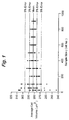
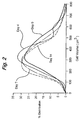
- the sizes of the yeast cells in the stored yeast slurry were measured when the slurry was first placed within the storage vessel and re-measured periodically during storage.
- the size measurement was carried out by placing yeast samples under a microscope having 400X magnification. The microscopic images of the yeast samples were then recorded using a colour video camera and processed using a digital image analyzer. The system was calibrated using a stage graticule and the resolution obtained was 0.26 micrometers per image pixel. The image analyzer produced a digitized image (720 X 512 square pixels) with grey scale values assigned to each pixel in the range 0 to 255.
- the system was programmed to enhance the grey images to enable detection of all yeast cells in the samples.
- the binary images produced were enhanced using standard image processing techniques including erosion and dilation steps, hole filling and segmentation to ensure that separating and budding cells were separately measured.
- the single yeast cells in the processed binary images were measured to measure individual cell length, breadth and cross-sectional area.
- This measurement data was then used to calculate the mean cell volume of the yeast cells assuming that each yeast cell generally conforms to the shape of a prolate ellipsoid.
- the measured cross-sectional area of the yeast cells was compared to the cross-sectional area of an ellipse calculated from the measured cell length and width to verify this assumption and it was found that in all samples, the measured and calculated cross-sectional areas agreed to within 3% or better.
- the processing can be carried out effectively in real time because the time required to carry out the sampling and processing can be made relatively small compared to the time taken to measure and pitch yeast into a fermentation tank in practice.
- the stored yeast slurry was sampled at regular intervals and the mean cell volume of the yeast measured and the viability ofthe yeast measured using the methylene blue staining technique.
- the pitching of yeast is carried out on the basis ofthe volume or weight of yeast per volume of the mixture to be fermented, with a correction for the viability of the yeast so that a desired volume or weight of viable yeast is added per unit volume of the mixture to be fermented.
- the viability of the yeast is measured by a known technique, such as methylene blue staining, at the time of pitching.
- a biomass probe is used to directly sense the mass of viable yeast solids.
- the fermentation activity of yeast is based upon the number of viable yeast cells per unit volume of the mixture to be fermented. As has been shown above, the size of the individual yeast cells will drop over time in storage. As a result, pitching of yeast into a fermentation mixture on the basis of the viable mass or volume of yeast per unit volume of mixture will result in overpitching, i.e., the addition of too many yeast cells, when stored yeast is used because the reduction in average cell size results in an increase in the number of viable yeast cells per viable yeast unit mass or volume.
- yeast pitching such as pressing stored yeast slurry to produce a yeast cake, placing the appropriate pitching weight of the yeast cake in a wort to re-suspend the yeast and then adding this mixture to the fermentation vessel.
- the percentage viable solids in the yeast slurry can be measured using a biomass probe, the viable mass of yeast cells per unit volume of the yeast slurry can be calculated and an appropriate volume of the yeast slurry added to the fermentation mixture.
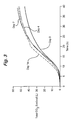
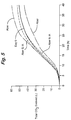
- This overpitching phenomenon was confirmed by taking yeast from the stored ale yeast slurry periodically and using the yeast to pitch fermentation mixtures at a rate of 2.5 grams of viable yeast cells per litre of fermentation mixture, viability being measured by the methylene blue staining technique.
- the CO 2 evolution rate (CER) of the fermenting mixture was measured using a mass flow meter.
- the CER is directly related to the fermentation activity and to the number of viable yeast cells added.
- the methylene blue only pitched fermentations tend to ferment at a faster rate than the ideal day zero profile while MB & IA pitched fermentations adhere more closely to the ideal day zero profile.
- any method of measuring an amount of yeast for use in a process which uses a set mass or volume of yeast taken from storage will be vulnerable to using too little yeast if changes in the average cell size of the yeast are not taken into account.
- the set amounts of yeast to be used in most processes for the production of food and drink and in pharmaceutical yeast fermentations have been arrived at empirically by a process of trial and error, it follows that where these processes employ yeast taken from storage the specified mass or volume of viable yeast to be used in these processes must have been arrived at using yeast which has undergone some shrinkage during storage.
- any method of measuring an amount of yeast for use in a process which relies on using a set mass or volume of yeast will be vulnerable to using too little or too much yeast if the average cell size of the yeast changes for any reason and it is believed that all industrial and pharmaceutical yeast propagation and fermentation applications rely on measuring yeast in exactly this way.
- the average cell size of yeast varies not only with storage but with environmental conditions in a fermenting or propagating mixture.
- this invention can be usefully applied to any method in which an amount of yeast is to be used in a process whether the yeast is taken from storage or from a fermentating or propagating mixture.
- this invention can usefully be used in brewing, winemaking, dairy fermentations, breadmaking, the production ofbakers yeast, yeast propagation, pharmaceutical yeast fermentations and any other fermentations or propagations involving yeast.
- the mean cell volume of the yeast strain studied decreases during storage as shown above and it is believed that this reduction in mean cell volume is linked to the utilization of internal glycogen reserves by the yeast.
- yeast When yeast is sedimented from a fermentation and stored in the fermentation vessel plug of sedimented yeast, the yeast is effectively removed from the active fermentation. Because ofheat generation by the yeast itself, temperature control within the fermentation vessel plug cannot be maintained and yeast plug temperatures up to 18°C higher than the fermentation vessel temperature has been reported even where the fermentation vessel is cooled.
- the mean yeast cell volume ofthe stored yeast is directly related to the quality or viability of the yeast. It is believed that this correlation applies to yeast in general and not only to yeast in storage.
- image analysis techniques to measure the mean volume of the yeast cells as described above can be used to provide a measure ofthe viability of the yeast cells as well as being used to reduce overpitching or oversupply of yeast cells by measuring the change in volume directly.
- image processing to measure the volume of the stored yeast cells can be used to calculate pitching volumes or masses by measuring the cell volumes and using this mean cell volume information to both calculate the viability of the yeast cells and the correction to be applied to allow for the reduction in mean cell volume and so allow pitching with the correct number of viable yeast cells per unit volume to be carried out.
- viability measurements should be carried out for the strain to be used to provide a measure of viability against mean cell size. This relationship can then be stored in the form of a look-up table so that once the mean cell size has been measured, the corresponding viability value can be found.
- yeast storage relate to yeast storage, propagation and fermentation pitching.
- the invention can be applied to any process where a set amount of yeast should be used. Examples would be the production of bakers yeast, food preparation and beverage fermentations involving yeast such as winemaking, breadmaking and dairy fermentations, yeast propagations, pharmaceutical yeast fermentations and any other fermentations involving yeast.
Landscapes
- Chemical & Material Sciences (AREA)
- Organic Chemistry (AREA)
- Life Sciences & Earth Sciences (AREA)
- Health & Medical Sciences (AREA)
- Engineering & Computer Science (AREA)
- Wood Science & Technology (AREA)
- Zoology (AREA)
- Proteomics, Peptides & Aminoacids (AREA)
- Biochemistry (AREA)
- General Health & Medical Sciences (AREA)
- Analytical Chemistry (AREA)
- Physics & Mathematics (AREA)
- Immunology (AREA)
- General Engineering & Computer Science (AREA)
- Bioinformatics & Cheminformatics (AREA)
- Genetics & Genomics (AREA)
- Biophysics (AREA)
- Molecular Biology (AREA)
- Microbiology (AREA)
- Biotechnology (AREA)
- Pathology (AREA)
- Food Science & Technology (AREA)
- Dispersion Chemistry (AREA)
- General Physics & Mathematics (AREA)
- Micro-Organisms Or Cultivation Processes Thereof (AREA)
- Measuring Or Testing Involving Enzymes Or Micro-Organisms (AREA)
Claims (23)
- Methode für das Bestimmen der Menge Hefe, die bei eine Verfahren verwendet werden soll, das folgende Schritte umfasst:Probenahme aus der Hefe;Messen der Größe von Hefezellen in der oder jeder Probe;Berechnen einer Durchschnittsgröße der gemessenen Hefezellen; undVerwenden der Durchschnittsgröße der gemessenen Hefezellen zusammen mit ihrer Lebensfähigkeit zum Berechnen der zu verwendenden Menge Hefe.
- Methode nach Anspruch 1, bei der der Anteil an Feststoffen in der Mischung, wenn die Hefe mit einer Flüssigkeit vermischt wird, zum Berechnen der Menge der zu verwendenden Mischung verwendet wird.
- Methode nach Anspruch 1 oder Anspruch 2, bei der die berechnete Durchschnittsgröße der Hefezellen ein Durchschnittsvolumen ist.
- Methode nach Anspruch 3, bei der das berechnete Durchschnittsvolumen ein mittleres Volumen ist.
- Methode nach einem der vorhergehenden Ansprüche, bei der die Lebensfähigkeitsdaten aus der berechneten Durchschnittsgröße der gemessenen Hefezellen abgeleitet werden.
- Methode nach einem der vorhergehenden Ansprüche, bei der die Größen der Hefezellen unter Zuhilfenahme der Bildanalyse gemessen werden.
- Methode nach Anspruch 6, bei der die Größen der Hefezellen mit Hilfe einer Videokamera und einem digitalen Bildanalysator gemessen werden.
- Methode nach einem der vorhergehenden Ansprüche, bei der die Hefe aufbewahrte Hefe ist.
- Methode nach einem der Ansprüche 1 bis 7, bei der die Hefe aus einer Propagierungsmischung stammt.
- Methode nach einem der vorhergehenden Ansprüche, bei der das Verfahren das Hefeanstellen bei einer Gärung ist.
- Methode nach Anspruch 10, bei der die Gärung ein Brauvorgang ist.
- Methode nach einem der Ansprüche 1 bis 10, bei der das Verfahren eine pharmazeutische Gärung ist.
- Methode nach einem der Ansprüche 1 bis 9, bei der das Verfahren die Herstellung von Backhefe ist.
- Methode nach einem der Ansprüche 1 bis 9, bei der das Verfahren die Brotherstellung ist.
- Methode nach einem der Ansprüche 1 bis 11, bei der das Verfahren ein Wein- oder Bierbrauvorgang ist.
- Methode nach einem der vorhergehenden Ansprüche einschließlich des Schritts des Ansetzens der berechneten Menge Hefe.
- Methode für das Beurteilten der Lebensfähigkeit von Hefe, umfassend die Schritte:der Probenahme aus der Hefe;des Messens der Größe von Hefezellen in der oder jeder Probe;des Berechnens einer Durchschnittsgröße der gemessenen Hefezellen; unddes Berechnens der Lebensfähigkeit der Hefe aus der Durchschnittsgröße der gemessenen Hefezellen.
- Methode nach Anspruch 17, bei der die berechnete Durchschnittsgröße der Hefezellen ein Durchschnittsvolumen ist.
- Methode nach Anspruch 18, bei der das berechnete Durchschnittsvolumen ein mittleres Volumen ist.
- Methode nach einem Ansprüche 17 bis 19, bei der die Größen der Hefezellen unter Zuhilfenahme der Bildanalyse gemessen werden.
- Methode nach Anspruch 20, bei der die Größen der Hefezellen mit Hilfe einer Videokamera und einem digitalen Bildanalysator gemessen werden.
- Methode nach einem der Ansprüche 17 bis 21, bei der die Lebensfähigkeit der Hefe unter Bezugnahme auf eine Nachschlagtabelle berechnet wird, die Eingaben enthält, die die Lebensfähigkeit mit Bezug auf die Durchschnittszellgröße angeben.
- Methode nach einem der Ansprüche 17 bis 22, bei der die Hefe aufbewahrte Hefe ist.
Priority Applications (1)
| Application Number | Priority Date | Filing Date | Title |
|---|---|---|---|
| DK99307285T DK0987334T3 (da) | 1998-09-17 | 1999-09-14 | Fremgangsmåde til beregning af gærmængder til anvendelse i en proces |
Applications Claiming Priority (2)
| Application Number | Priority Date | Filing Date | Title |
|---|---|---|---|
| GB9820279A GB2341610B (en) | 1998-09-17 | 1998-09-17 | Method of calculating amounts of yeast for use in a process |
| GB9820279 | 1998-09-17 |
Publications (2)
| Publication Number | Publication Date |
|---|---|
| EP0987334A1 EP0987334A1 (de) | 2000-03-22 |
| EP0987334B1 true EP0987334B1 (de) | 2004-11-17 |
Family
ID=10839033
Family Applications (1)
| Application Number | Title | Priority Date | Filing Date |
|---|---|---|---|
| EP99307285A Expired - Lifetime EP0987334B1 (de) | 1998-09-17 | 1999-09-14 | Verfahren zur Rechnung von Hefemenge für Verwendung in einem Prozess |
Country Status (9)
| Country | Link |
|---|---|
| EP (1) | EP0987334B1 (de) |
| JP (1) | JP2000093194A (de) |
| AT (1) | ATE282711T1 (de) |
| AU (1) | AU774462B2 (de) |
| CA (1) | CA2282576A1 (de) |
| DE (1) | DE69921924T2 (de) |
| DK (1) | DK0987334T3 (de) |
| GB (1) | GB2341610B (de) |
| NZ (1) | NZ337808A (de) |
Families Citing this family (1)
| Publication number | Priority date | Publication date | Assignee | Title |
|---|---|---|---|---|
| CN103234892A (zh) * | 2013-04-11 | 2013-08-07 | 广州南沙珠江啤酒有限公司 | 酵母浓度的流式细胞术检测方法 |
Family Cites Families (1)
| Publication number | Priority date | Publication date | Assignee | Title |
|---|---|---|---|---|
| JPH03503845A (ja) * | 1988-04-22 | 1991-08-29 | マサチユセツツ・インスチチユート・オブ・テクノロジー | 微小滴を形成しそして使用する方法 |
-
1998
- 1998-09-17 GB GB9820279A patent/GB2341610B/en not_active Revoked
-
1999
- 1999-09-14 AT AT99307285T patent/ATE282711T1/de not_active IP Right Cessation
- 1999-09-14 NZ NZ337808A patent/NZ337808A/en unknown
- 1999-09-14 DK DK99307285T patent/DK0987334T3/da active
- 1999-09-14 DE DE69921924T patent/DE69921924T2/de not_active Expired - Fee Related
- 1999-09-14 EP EP99307285A patent/EP0987334B1/de not_active Expired - Lifetime
- 1999-09-16 CA CA002282576A patent/CA2282576A1/en not_active Abandoned
- 1999-09-17 AU AU48783/99A patent/AU774462B2/en not_active Expired - Fee Related
- 1999-09-17 JP JP11263682A patent/JP2000093194A/ja active Pending
Non-Patent Citations (1)
| Title |
|---|
| MOCHABA F. ET AL: "Practical procedures to measure yeast viability and vitality prior to pitching", J. AM. SOC. BREW. CHEM., vol. 56, no. 1, 1998, pages 1 - 6, XP008008353 * |
Also Published As
| Publication number | Publication date |
|---|---|
| GB9820279D0 (en) | 1998-11-11 |
| EP0987334A1 (de) | 2000-03-22 |
| CA2282576A1 (en) | 2000-03-17 |
| DK0987334T3 (da) | 2005-03-29 |
| NZ337808A (en) | 2001-06-29 |
| JP2000093194A (ja) | 2000-04-04 |
| AU774462B2 (en) | 2004-06-24 |
| GB2341610A (en) | 2000-03-22 |
| GB2341610B (en) | 2003-12-03 |
| ATE282711T1 (de) | 2004-12-15 |
| DE69921924T2 (de) | 2005-11-10 |
| DE69921924D1 (de) | 2004-12-23 |
| AU4878399A (en) | 2000-03-23 |
Similar Documents
| Publication | Publication Date | Title |
|---|---|---|
| Kara et al. | Prediction of the fermentation performance of brewing yeast with the acidification power test | |
| US20050214408A1 (en) | Combination continuous/batch fermentation processes | |
| EP4502138A1 (de) | Saccharomyces cerevisiae stamm, verfahren zu seiner untersuchung und verwendung davon | |
| Cahill et al. | Effect of the concentration of propagation wort on yeast cell volume and fermentation performance | |
| EP0271380A1 (de) | Verfahren zur On-Line-Vorausberechnung und -Kontrolle von alkoholischen Gärungen | |
| CN118034402B (zh) | 一种温度调控系统 | |
| US10787634B2 (en) | Space-efficient, high throughput fermenting system for producing alcohol-limited kombucha | |
| Layfield et al. | What brewers should know about viability, vitality, and overall brewing fitness: a mini-review | |
| Buonocore et al. | An IoT-based beer fermentation monitoring system | |
| US4343231A (en) | Brewing apparatus having sampling means delivering suspension to fermenting vessel | |
| Lake et al. | Miniaturizing the fermentation assay: Effects of fermentor size and fermentation kinetics on detection of premature yeast flocculation | |
| EP0987334A1 (de) | Verfahren zur Rechnung von Hefemenge für Verwendung in einem Prozess | |
| Martyniak et al. | A novel concentration and viability detection method for Brettanomyces using the Cellometer image cytometry | |
| Van Hamersveld et al. | Quantification of brewers' yeast flocculation in a stirred tank: Effect of physical parameters on flocculation | |
| Cahill et al. | Improved control of brewery yeast pitching using image analysis | |
| CN109852555B (zh) | 一种耐酸酵母及其应用 | |
| Gasent-Ramírez et al. | Genomic stability of Saccharomyces cerevisiae baker's yeasts | |
| Boulton | Fermentation | |
| GB2610309A (en) | A process for fed-batch yeast propagation | |
| Stumpf et al. | Enhancing main fermentation velocities in beer by the use of a membrane bioreactor–approach and preliminary results (membrane bioreactor beer) | |
| Knudsen | Fermentation variables and their control | |
| Bolat et al. | Isolation and characterization of two new lager yeast strains from the WS34/70 population | |
| Bathgate | The determination of fermentable extract in brewing worts | |
| Luna‐Solano et al. | Effect of drying type and drying conditions over fermentative ability of brewer's yeast | |
| GB2584286A (en) | A process for fed-batch yeast propagation |
Legal Events
| Date | Code | Title | Description |
|---|---|---|---|
| PUAI | Public reference made under article 153(3) epc to a published international application that has entered the european phase |
Free format text: ORIGINAL CODE: 0009012 |
|
| AK | Designated contracting states |
Kind code of ref document: A1 Designated state(s): AT BE CH CY DE DK ES FI FR GB GR IE IT LI LU MC NL PT SE |
|
| AX | Request for extension of the european patent |
Free format text: AL;LT;LV;MK;RO;SI |
|
| 17P | Request for examination filed |
Effective date: 20000805 |
|
| AKX | Designation fees paid |
Free format text: AT BE CH CY DE DK ES FI FR GB GR IE IT LI LU MC NL PT SE |
|
| 17Q | First examination report despatched |
Effective date: 20021118 |
|
| GRAP | Despatch of communication of intention to grant a patent |
Free format text: ORIGINAL CODE: EPIDOSNIGR1 |
|
| GRAS | Grant fee paid |
Free format text: ORIGINAL CODE: EPIDOSNIGR3 |
|
| GRAA | (expected) grant |
Free format text: ORIGINAL CODE: 0009210 |
|
| AK | Designated contracting states |
Kind code of ref document: B1 Designated state(s): AT BE CH CY DE DK ES FI FR GB GR IE IT LI LU MC NL PT SE |
|
| PG25 | Lapsed in a contracting state [announced via postgrant information from national office to epo] |
Ref country code: FI Free format text: LAPSE BECAUSE OF FAILURE TO SUBMIT A TRANSLATION OF THE DESCRIPTION OR TO PAY THE FEE WITHIN THE PRESCRIBED TIME-LIMIT Effective date: 20041117 Ref country code: ES Free format text: LAPSE BECAUSE OF FAILURE TO SUBMIT A TRANSLATION OF THE DESCRIPTION OR TO PAY THE FEE WITHIN THE PRESCRIBED TIME-LIMIT Effective date: 20041117 Ref country code: AT Free format text: LAPSE BECAUSE OF FAILURE TO SUBMIT A TRANSLATION OF THE DESCRIPTION OR TO PAY THE FEE WITHIN THE PRESCRIBED TIME-LIMIT Effective date: 20041117 |
|
| REG | Reference to a national code |
Ref country code: GB Ref legal event code: FG4D |
|
| REG | Reference to a national code |
Ref country code: CH Ref legal event code: EP |
|
| REG | Reference to a national code |
Ref country code: IE Ref legal event code: FG4D |
|
| REF | Corresponds to: |
Ref document number: 69921924 Country of ref document: DE Date of ref document: 20041223 Kind code of ref document: P |
|
| PG25 | Lapsed in a contracting state [announced via postgrant information from national office to epo] |
Ref country code: GR Free format text: LAPSE BECAUSE OF FAILURE TO SUBMIT A TRANSLATION OF THE DESCRIPTION OR TO PAY THE FEE WITHIN THE PRESCRIBED TIME-LIMIT Effective date: 20050217 |
|
| REG | Reference to a national code |
Ref country code: SE Ref legal event code: TRGR |
|
| REG | Reference to a national code |
Ref country code: DK Ref legal event code: T3 |
|
| REG | Reference to a national code |
Ref country code: CH Ref legal event code: NV Representative=s name: ISLER & PEDRAZZINI AG |
|
| PGFP | Annual fee paid to national office [announced via postgrant information from national office to epo] |
Ref country code: FR Payment date: 20050823 Year of fee payment: 7 |
|
| PGFP | Annual fee paid to national office [announced via postgrant information from national office to epo] |
Ref country code: SE Payment date: 20050906 Year of fee payment: 7 |
|
| PGFP | Annual fee paid to national office [announced via postgrant information from national office to epo] |
Ref country code: DE Payment date: 20050909 Year of fee payment: 7 |
|
| PG25 | Lapsed in a contracting state [announced via postgrant information from national office to epo] |
Ref country code: CY Free format text: LAPSE BECAUSE OF FAILURE TO SUBMIT A TRANSLATION OF THE DESCRIPTION OR TO PAY THE FEE WITHIN THE PRESCRIBED TIME-LIMIT Effective date: 20050914 |
|
| PGFP | Annual fee paid to national office [announced via postgrant information from national office to epo] |
Ref country code: GB Payment date: 20050914 Year of fee payment: 7 Ref country code: CH Payment date: 20050914 Year of fee payment: 7 |
|
| PGFP | Annual fee paid to national office [announced via postgrant information from national office to epo] |
Ref country code: DK Payment date: 20050915 Year of fee payment: 7 |
|
| PLBE | No opposition filed within time limit |
Free format text: ORIGINAL CODE: 0009261 |
|
| STAA | Information on the status of an ep patent application or granted ep patent |
Free format text: STATUS: NO OPPOSITION FILED WITHIN TIME LIMIT |
|
| PG25 | Lapsed in a contracting state [announced via postgrant information from national office to epo] |
Ref country code: MC Free format text: LAPSE BECAUSE OF NON-PAYMENT OF DUE FEES Effective date: 20050930 Ref country code: LU Free format text: LAPSE BECAUSE OF NON-PAYMENT OF DUE FEES Effective date: 20050930 Ref country code: BE Free format text: LAPSE BECAUSE OF NON-PAYMENT OF DUE FEES Effective date: 20050930 |
|
| 26N | No opposition filed |
Effective date: 20050818 |
|
| ET | Fr: translation filed | ||
| PG25 | Lapsed in a contracting state [announced via postgrant information from national office to epo] |
Ref country code: NL Free format text: LAPSE BECAUSE OF NON-PAYMENT OF DUE FEES Effective date: 20060401 |
|
| NLV4 | Nl: lapsed or anulled due to non-payment of the annual fee |
Effective date: 20060401 |
|
| PGFP | Annual fee paid to national office [announced via postgrant information from national office to epo] |
Ref country code: IE Payment date: 20060913 Year of fee payment: 8 |
|
| PG25 | Lapsed in a contracting state [announced via postgrant information from national office to epo] |
Ref country code: SE Free format text: LAPSE BECAUSE OF NON-PAYMENT OF DUE FEES Effective date: 20060915 |
|
| PG25 | Lapsed in a contracting state [announced via postgrant information from national office to epo] |
Ref country code: LI Free format text: LAPSE BECAUSE OF NON-PAYMENT OF DUE FEES Effective date: 20060930 Ref country code: CH Free format text: LAPSE BECAUSE OF NON-PAYMENT OF DUE FEES Effective date: 20060930 |
|
| PGFP | Annual fee paid to national office [announced via postgrant information from national office to epo] |
Ref country code: IT Payment date: 20060930 Year of fee payment: 8 |
|
| PG25 | Lapsed in a contracting state [announced via postgrant information from national office to epo] |
Ref country code: DK Free format text: LAPSE BECAUSE OF NON-PAYMENT OF DUE FEES Effective date: 20061002 |
|
| PG25 | Lapsed in a contracting state [announced via postgrant information from national office to epo] |
Ref country code: DE Free format text: LAPSE BECAUSE OF NON-PAYMENT OF DUE FEES Effective date: 20070403 |
|
| REG | Reference to a national code |
Ref country code: DK Ref legal event code: EBP |
|
| REG | Reference to a national code |
Ref country code: CH Ref legal event code: PL |
|
| EUG | Se: european patent has lapsed | ||
| GBPC | Gb: european patent ceased through non-payment of renewal fee |
Effective date: 20060914 |
|
| REG | Reference to a national code |
Ref country code: FR Ref legal event code: ST Effective date: 20070531 |
|
| PG25 | Lapsed in a contracting state [announced via postgrant information from national office to epo] |
Ref country code: GB Free format text: LAPSE BECAUSE OF NON-PAYMENT OF DUE FEES Effective date: 20060914 |
|
| BERE | Be: lapsed |
Owner name: *GUINNESS LTD Effective date: 20050930 |
|
| PG25 | Lapsed in a contracting state [announced via postgrant information from national office to epo] |
Ref country code: PT Free format text: LAPSE BECAUSE OF NON-PAYMENT OF DUE FEES Effective date: 20050417 |
|
| PG25 | Lapsed in a contracting state [announced via postgrant information from national office to epo] |
Ref country code: FR Free format text: LAPSE BECAUSE OF NON-PAYMENT OF DUE FEES Effective date: 20061002 |
|
| REG | Reference to a national code |
Ref country code: IE Ref legal event code: MM4A |
|
| PG25 | Lapsed in a contracting state [announced via postgrant information from national office to epo] |
Ref country code: IE Free format text: LAPSE BECAUSE OF NON-PAYMENT OF DUE FEES Effective date: 20070914 |
|
| PG25 | Lapsed in a contracting state [announced via postgrant information from national office to epo] |
Ref country code: IT Free format text: LAPSE BECAUSE OF NON-PAYMENT OF DUE FEES Effective date: 20070914 |