EP0985732A2 - Trimeric chimera protein and collagen matrix containing chimera protein - Google Patents
Trimeric chimera protein and collagen matrix containing chimera protein Download PDFInfo
- Publication number
- EP0985732A2 EP0985732A2 EP99402195A EP99402195A EP0985732A2 EP 0985732 A2 EP0985732 A2 EP 0985732A2 EP 99402195 A EP99402195 A EP 99402195A EP 99402195 A EP99402195 A EP 99402195A EP 0985732 A2 EP0985732 A2 EP 0985732A2
- Authority
- EP
- European Patent Office
- Prior art keywords
- collagen
- chimera protein
- trimeric
- biologically active
- active peptide
- Prior art date
- Legal status (The legal status is an assumption and is not a legal conclusion. Google has not performed a legal analysis and makes no representation as to the accuracy of the status listed.)
- Withdrawn
Links
Images

Classifications
-
- C—CHEMISTRY; METALLURGY
- C07—ORGANIC CHEMISTRY
- C07K—PEPTIDES
- C07K14/00—Peptides having more than 20 amino acids; Gastrins; Somatostatins; Melanotropins; Derivatives thereof
- C07K14/435—Peptides having more than 20 amino acids; Gastrins; Somatostatins; Melanotropins; Derivatives thereof from animals; from humans
- C07K14/78—Connective tissue peptides, e.g. collagen, elastin, laminin, fibronectin, vitronectin or cold insoluble globulin [CIG]
-
- A—HUMAN NECESSITIES
- A61—MEDICAL OR VETERINARY SCIENCE; HYGIENE
- A61K—PREPARATIONS FOR MEDICAL, DENTAL OR TOILETRY PURPOSES
- A61K47/00—Medicinal preparations characterised by the non-active ingredients used, e.g. carriers or inert additives; Targeting or modifying agents chemically bound to the active ingredient
- A61K47/50—Medicinal preparations characterised by the non-active ingredients used, e.g. carriers or inert additives; Targeting or modifying agents chemically bound to the active ingredient the non-active ingredient being chemically bound to the active ingredient, e.g. polymer-drug conjugates
- A61K47/51—Medicinal preparations characterised by the non-active ingredients used, e.g. carriers or inert additives; Targeting or modifying agents chemically bound to the active ingredient the non-active ingredient being chemically bound to the active ingredient, e.g. polymer-drug conjugates the non-active ingredient being a modifying agent
- A61K47/62—Medicinal preparations characterised by the non-active ingredients used, e.g. carriers or inert additives; Targeting or modifying agents chemically bound to the active ingredient the non-active ingredient being chemically bound to the active ingredient, e.g. polymer-drug conjugates the non-active ingredient being a modifying agent the modifying agent being a protein, peptide or polyamino acid
- A61K47/64—Drug-peptide, drug-protein or drug-polyamino acid conjugates, i.e. the modifying agent being a peptide, protein or polyamino acid which is covalently bonded or complexed to a therapeutically active agent
- A61K47/6435—Drug-peptide, drug-protein or drug-polyamino acid conjugates, i.e. the modifying agent being a peptide, protein or polyamino acid which is covalently bonded or complexed to a therapeutically active agent the peptide or protein in the drug conjugate being a connective tissue peptide, e.g. collagen, fibronectin or gelatin
-
- C—CHEMISTRY; METALLURGY
- C07—ORGANIC CHEMISTRY
- C07K—PEPTIDES
- C07K2319/00—Fusion polypeptide
Definitions
- This invention relates to a novel chimera protein comprising a collagen having covalently bonded thereto a biologically active peptide such as a cell growth factor or a cytokine; and a method for producing such chimera protein.
- This invention is also directed to a novel collagen matrix produced through fibril-formation of such chimera protein.
- Collagen is a protein which is widely used in medical field as a biomaterial for restoring the body damage and as a carrier of various drugs.
- the collagens currently used for such applications are collagens of animal origin extracted from the tissue of cows, pigs, and the like.
- Use of a collagen of human origin is desirable in consideration of immunological reactions, and also, contamination of pathogens such as viruses and prions from animal tissues which is currently a serious issue.
- the inventors of the present invention have proposed a method for producing a recombinant human collagen having a triple helical structure equivalent to the one found in human body by infecting insect cells with a recombinant virus having the cDNA coding for a human collagen inserted therein (JP-A 8-23979).
- Prockop et al. have also proposed a method for producing recombinant human collagens by using mammal cells or yeasts (JP-A 7-501939, Published Japanese Translation of WO93/07889).
- Ala-Kokko et al. J. Biol. Chem. 266, 14175-14178 (1991)
- Geddis et al. Geddis et al.
- Fertala et al. Biochemical, J. 298, 31-37 (1994) disclose the similar methods.
- collagen is expected for its use as a carrier of various biologically active peptides which enable controlled release of the peptides. Affinity of the collagen for the biologically active peptide is not necessarily high, and the biologically active peptide is not stably retained in the collagen matrix for a prolonged period of time by merely mixing the biologically active peptides with the collagen. When the biologically active peptide is chemically bonded to the collagen using glutaraldehyde or the like, the biologically active peptide will undergo total or partial inactivation.
- an object of the present invention is to provide a method for fusing a biologically active peptide to a collagen with no loss in the activity, and hence, to provide a novel trimeric chimera protein which is simultaneously provided with the features of the biologically active peptide and the collagen.
- Another object of the invention is to provide a novel collagen matrix produced by polymerizing the chimera protein.
- the inventors of the present invention have invented a method for producing a recombinant chimera protein wherein the chimera protein is produced by ligating the gene coding for a procollagen and the gene coding for a biologically active peptide by genetic engineering means, and the ligation product is expressed by using a recombinant protein expression system.
- various methods are reported to produce collagen with native conformation by recombinant method. In these reports there are not any indications of the technical possibilities to produce a chimera protein of biologically active peptide and collagen. There have been no attempt to produce such a chimera protein in the prior art.
- the inventors invented a collagen matrix comprising collagen fiber which is produced through polymerizing such chimera protein either alone or after mixing with collagen molecule.
- the present invention was thereby completed.
- the objects of the present invention are attained by means of (1) to (14) as described below.
- FIGS. 1A and 1B are schematic views respectively showing the production process and the structure of collagen matrix by using the chimera protein of the present invention.
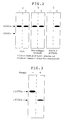
- FIG. 2 A, B and C are an each electrophoretic diagram showing the immunoreactivity of the chimera protein.
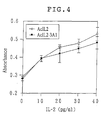
- FIG. 3 is an electrophoretic diagram indicating the triple helical structure of the chimera protein.
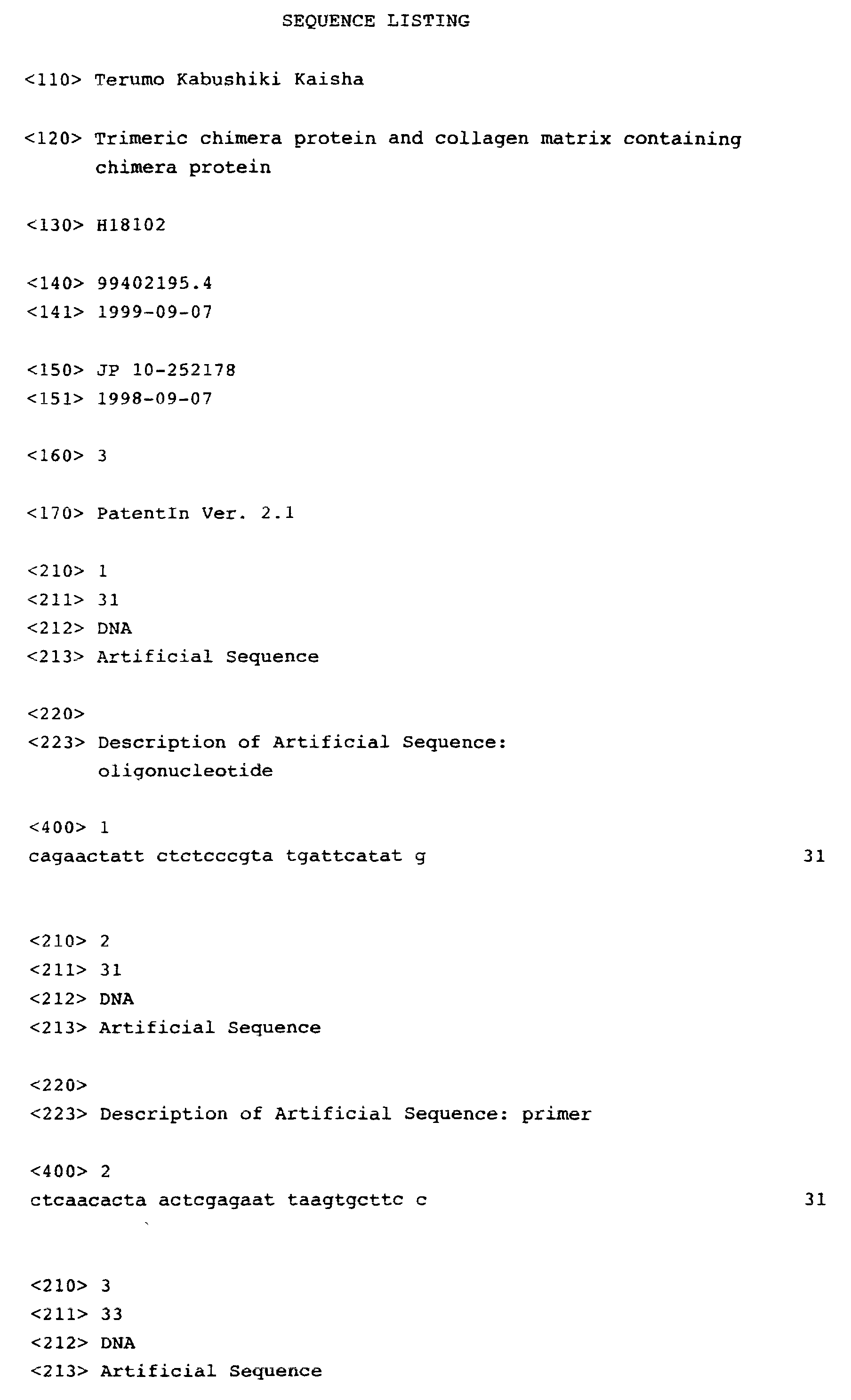
- FIG. 4 is a graph showing biological activity of the chimera protein.
- types I, II, III, V and XI are referred to as fibril-forming collagens since collagens of these types polymerize to form a water-insoluble fibrillar structure (collagen fibrils or fibers, Kielty et al., Connective Tissue and Its Heritable Disorders, Chapter 3, Wiley and Lis, Inc. (1993)).
- fibril-forming collagens are provided with uninterrupted triple helical structure of about 300 nm in length, and molecules of these fibril-forming collagens undergo spontaneous polymerization under physiological conditions. The resulting collagen fibrils or fibers intertwine with each other to form a collagen matrix.
- procollagen In the biosynthesis of the fibril-forming collagen, a precursor, namely, procollagen is first synthesized.
- the procollagen is synthesized as the precursor in all types of fibril-forming collagens, and the procollagen molecules have the common structure comprising a triple helix region provided with an amino propeptide region on its amino terminal and a carboxyl propeptide region on its carboxyl terminal.
- three pro ⁇ -chains constituting a helical molecule first associate at the carboxyl propeptide regions, and the three chains zip together in the direction of from the carboxyl terminal to the amino terminal.
- the biologically active peptide is fused to the procollagen on the side of the amino terminal so that the fusion of them does not prevent the triple helix formation.
- the fusion site of the biologically active peptide on the amino terminal side of the procollagen may be either the amino terminal of the amino propeptide, or the amino terminal formed after removal of a part or all of the amino propeptide. As long as no adverse effects on the triple helix formation are induced, the fusion site may have other amino acid sequence inserted therein.
- the carboxyl propeptide region which plays an important role in the formation of the triple helical structure is removed after the formation of the triple helical structure of the chimera protein.
- the production of the chimera protein is accomplished by ligating the cDNA coding for the biologically active peptide and the cDNA coding for the procollagen with no frame shift, and expressing the ligated cDNA from a recombinant protein expression system.
- the ligation of the cDNAs may be accomplished, for example, by introducing the same restriction enzyme site in the region immediately before the termination codon of the cDNA for the biologically active peptide and in the nucleotide sequence coding for the amino propeptide region of the procollagen cDNA.
- the procollagen cDNA used may be any of the cDNAs coding for the fibril-forming collagens of type I, II, III, V, and XI.
- biologically active peptides used herein generally designates proteins and peptides which have various biological activities.
- Typical biologically active peptides include growth factors such as fibroblast growth factors (FGFs), transforming growth factors (TGFs), bone morphogenetic proteins (BMPs), epidermal growth factors (EGFs), platelet derived growth factor (PDGF), insulin-like growth factors (IGFs), insulin, nerve growth factor (NGF), vascular endothelial growth factor (VEGF), and hepatocyte growth factor (HGF); cytokines such as interferons (INFs), interleukins (ILs), colony stimulating factors (CSFs), erythropoietin, and tumor necrosis factors (TNFs); and various hormones and enzymes.
- FGFs fibroblast growth factors
- TGFs transforming growth factors
- BMPs bone morphogenetic proteins
- EGFs epidermal growth factors
- PDGF platelet derived growth factor
- IGFs insulin-like
- the chimera protein In order to enable fibril-formation of the chimera protein including the biologically active peptide and the procollagen to thereby produce the insoluble collagen matrix, the chimera protein should have the triple helical structure inherent to the collagen. Therefore, the recombinant protein expression system used in the present invention should be capable of synthesizing a procollagen which has the triple helical structure.
- the host of the expression system should have activities of collagen modification enzymes including prolyl hydroxylase activity required for the formation of the triple helical structure.
- the expression system used may be any system as long as the system is provided with such ability.
- An exemplary system is a baculovirus expression system of the present inventors (JP-A 8-23979) wherein insect cells with prolyl hydroxylase activity are utilized as the host.
- the amino propeptide of the procollagen takes place after the secretion of the procollagen through recognition by N-proteinase of a particular sequence at the boundary between the amino propeptide region and the triple helix region and cleavage at the recognized site (Kielty et al., Connective Tissue and Its Heritable Disorders, Chapter 3, Wiley and Lis, Inc. (1993)).
- the amino acid sequence recognized by the proteinase may be altered when stable connection of the biologically active peptide and the procollagen is desired.
- Such alteration may be accomplished by substituting the nucleotide sequence coding for the amino propeptide cleavage sequence with an appropriate sequence by means of, for example, site-directed mutagenesis.
- the nucleotide sequence coding for the amino acid sequence Pro-Gln in the N-proteinase cleavage site of type III procollagen is changed to the nucleotide sequence coding for Leu-Pro.
- Carboxyl propeptide plays an important role in the formation of the triple helical structure of the procollagen. Carboxyl propeptide, however, prevents further fibril-formation of the triple helical molecules. Accordingly, fibril-formation of the chimera protein is enabled, for example, by removing the carboxyl propeptide from the chimera protein including the biologically active peptide and the procollagen after the triple helix formation. Such removal of the carboxyl propeptide may be accomplished by using C-proteinase/BMP-1 (Kessler et al., Science 271, 360-362 (1996)), a proteinase that cleaves the boundary between the triple helix region and the carboxyl propeptide region.
- C-proteinase/BMP-1 Kessler et al., Science 271, 360-362 (1996)
- an amino acid sequence which is recognized and cleaved by a protease such as factor Xa or enterokinase may be inserted in the boundary between the triple helix region and the carboxyl propeptide region, and the carboxyl propeptide may be removed by such enzyme.
- Fibril-formation of the chimera protein may be also enabled by substituting the carboxyl propeptide of the chimera protein with a peptide from a trimer forming protein such as transmembrane domain of influenza virus hemagglutinin. It should be noted that formation of a trimer procollagen molecule having the triple helical structure is already confirmed for the molecule wherein the carboxyl propeptide of the procollagen is substituted with the transmembrane domain of the influenza virus hemagglutinin (Bulleid et al., EMBO J. 16, 6694-6701, (1997)).
- This peptide which comprises a short sequence of about 30 amino acid residues, will not hinder the fibril-formation of the chimera protein according to the present invention.
- the substitution of the carboxyl propeptide region may be accomplished by substituting the nucleotide sequence coding for the carboxyl propeptide of the procollagen cDNA with the nucleotide sequence coding for the transmembrane domain of the influenza virus hemagglutinin and expressing in a recombinant protein expression system as in the case of substituting the amino propeptide region with the biologically active peptide.
- the chimera protein of the invention can form a trimer and retains the activity of the biologically active peptide, and hence has an industrially high utility.
- the collagen must be a trimer in order to form the insoluble collagen matrix by spontaneous polymerization.
- the biologically active peptide cannot be immobilized on the surface or inside of the collagen matrix without obtaining a trimeric chimera protein retaining the biological activity.
- a collagen matrix having the activity of the biologically active peptide may be produced by incubating the trimeric chimera protein which is substantially free from the carboxyl propeptide or the chimera protein having its carboxyl propeptide substituted with a peptide from a trimer forming protein such as transmembrane domain of influenza virus hemagglutinin either alone or after mixing with native collagen of animal tissue origin under physiological conditions to thereby facilitate fibril-formation.
- the chimera protein may be mixed with the native collagen at a mole ratio of at least 10 -12 chimera protein to 1 native collagen to realize the activity of the physiologically active peptide; up to 10 -1 chimera protein to 1 native collagen to avoid hindrance of collagen fibril-formation by the chimera protein. The mole ratio, however, may vary depending on the type of the physiologically active peptide.
- the chimera protein is incorporated into the collagen fiber in one of the two modes (1) and (2) as described below depending on the presence/absence of the amino propeptide at the fusion site of the physiologically active peptide and the collagen.
- the collagen matrix is preferably formed through fibril-formation such that the chimera protein is uniformly distributed in the collagen fibers and the biologically active peptide is embedded in the collagen fibers (FIG. 1A).
- the biologically active peptide embedded in the collagen fiber which is stably maintained without being attacked by the protease will be slowly released from the collagen matrix with decomposition of the collagen in the body.
- the residential period of the collagen matrix in the body ranges from several weeks to several months depending on the production process of collagen matrix, and the biologically active peptide will be slowly released from the collagen matrix until the matrix is fully decomposed.
- Such collagen matrix may be produced by mixing the chimera protein and the native collagen in a solution of physiological salt concentration and pH, and promoting the fibril-formation by incubation at the physiological temperature.
- the domain of the biologically active peptide in the chimera protein incorporated in the collagen fiber is embedded in the gaps formed between the collagen molecules formed during the fibril-formation.
- the collagen matrix is preferably formed through fibril-formation such that the chimera protein is incorporated in the collagen fibers with the biologically active peptide protruding beyond the fibers via the intervening amino propeptide (FIG. 1B).
- FIG. 1B the intervening amino propeptide
- the collagen matrix may be produced as in the case of above (1) by mixing the chimera protein and the native collagen in a solution of physiological salt concentration and pH, and promoting the fibril-formation by incubation at the physiological temperature.
- the amino propeptide region of the chimera protein will be bent at a particular angle in relation to the triple helix region so as not to avoid the fibril-formation, and thus the biologically active peptide will spontaneously protrude beyond the surface of the fibers.
- a chimera protein of interleukin-2 (IL-2) and type III collagen is produced by using a baculovirus expression system.
- the present invention is not limited to such examples.
- the cDNA coding for the human type III procollagen used was the one cloned by the inventors and was described in the previous invention (JP-A 8-23979).
- the nucleotide sequence of this cDNA is the same one reported by Ala-Kokko et al., (Biochem. J., 260, 508-517 (1989)).
- the cDNA coding for the human IL-2 was the one having a sequence the same as the one inserted in pIL2-50A (Taniguchi et al., Nature 302, 305-310, (1983)).
- the nucleotide numbers of the cDNAs of the human type III procollagen and the human IL-2 are based on the nucleotide numbers of Accession Nos. X14420 and U25676 registered in GeneBank database.
- C at nucleotide number 560 was altered to T
- a at nucleotide number 563 was altered to C in the cDNA of type III procollagen by site-directed mutagenesis (Deng and Nickoloff, Anal.
- the XhoI restriction site was introduced immediately before the termination codon of IL-2cDNA (nucleotide numbers 514 to 519) and within the nucleotide sequence coding for the amino propeptide of the type III procollagen cDNA (nucleotide numbers 308-313) by the site-directed mutanegensis as described above.
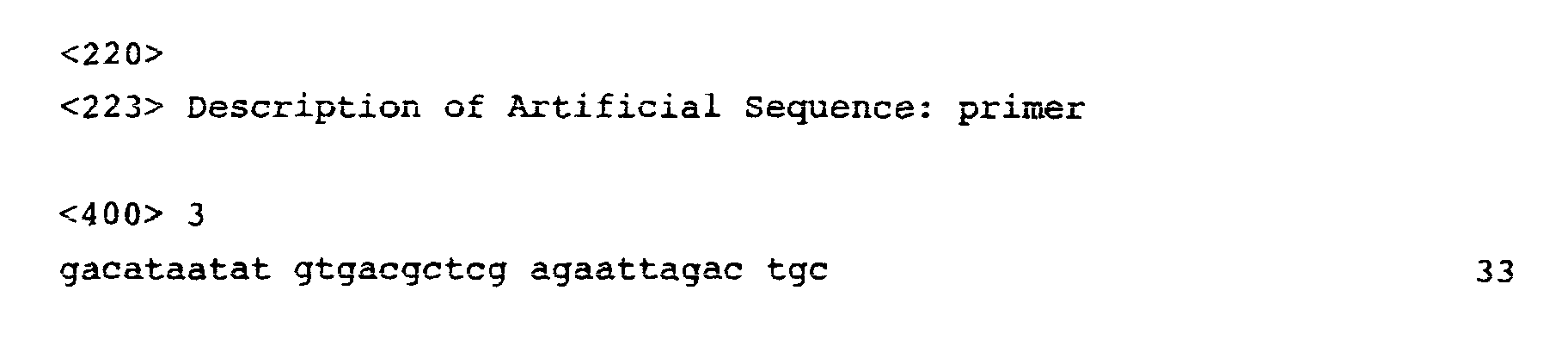
- the primers employed had the nucleotide sequences 5' CTCAACACTA ACTCGAG AATTAAGTGCTTCC 3' and 5' GACATAATATGTGACG CTCGAG AATTAGACTGC 3', and these sequences corresponded to nucleotide numbers 503 to 533 of the IL-2 cDNA and nucleotide numbers 292 to 324 of the type III procollagen cDNA.
- the primers had XhoI restriction site inserted therein.
- the cDNAs respectively having the XhoI restriction site introduced therein were cleaved by XhoI, and then ligated with T4 DNA ligase.
- the resulting cDNA was inserted at the BamHI restriction site of a baculovirus transfer vector pAcYM1 (Matsuura et al., J. Gen. Virol., 173, 674-682 (1987)) to obtain a transfer vector pAcIL2-3A1.
- a transfer vector for control experiment was also prepared by inserting only IL-2 cDNA in the BamHI restriction site of pAcYM1.
- the transfected cells were cultured at 28°C for 4 days, and the culture supernatant was recovered. A part of the culture supernatant was used to infect Sf9 cells which had been cultivated separately, and the infected cells were overlaid with the above-described medium containing 1% agarose and solidified. After incubating for 3 days, the plaque developed was removed together with the agarose to obtain recombinant virus AcIL2-3A1 wherein homologous recombination had taken place between pAcIL2-3A1 and the baculovirus genome DNA. 1 x 10 6 Sf9 cells were infected with the recombinant virus, and the cells were cultured at 28°C for 3 days.
- a recombinant virus AcIL2 was also produced from transfer vector pAcIL2 as described above.
- Sf9 cells were infected with thus obtained AcIL2-3A1 virus to a multiplicity of infection of 10.
- the infected cells were cultured in Grace's medium supplemented with 10% fetal bovine serum at 28°C for 48 hours, and the culture medium was collected and ammonium sulfate was added to the medium to 30% saturation. After allowing to stand at 4°C for 16 hours, the medium was centrifuged at 10,000 g at 4°C for 30 minutes. The protein precipitate was dissolved in 20 mM Tris-HCl, pH 7.5 / 150 mM NaCl. Sf9 cells were also infected with AcIL2 and Ac3Al (human type III procollagen recombinant virus described in JP-A 8-23979) by the procedure as described above to recover the protein in the culture medium.
- the electrophoresed proteins were also transferred to nitrocellulose membrane BA85 (S&S) according to the method of Matsudaira (J. Biol. Chem. 261, 10035-10038 (1987)).
- the nitrocellulose membrane having the protein transferred thereto was treated with a blocking solution (3% BAS / 50 mM Tris-HCl, pH 7.5 / 150 mM NaCl) at 4°C for 16 hours, and reacted at room temperature for 1 hour with anti-human/bovine type III collagen antibody (LSL) or anti-human IL-2 antibody (Chemicon) which had been diluted 1 : 200 in the blocking solution.
- a blocking solution 3% BAS / 50 mM Tris-HCl, pH 7.5 / 150 mM NaCl
- the proteins reacted with these antibodies were detected with Vectastain ABC kit (Vector Laboratory), and it was then confirmed that the protein of 150 kDa from the Ac3A1 infected cells only reacts with the type III collagen antibody, and the protein from AcIL2-3A1 infected cells reacts with both the type III collagen antibody and the IL-2 antibody (FIGS. 2, B and C). It was then concluded that the protein of about 150 kDa synthesized by the Sf9 cells infected with the recombinant virus AcIL2-3A1 was the IL-2-type III procollagen chimera protein.
- Triple helical structure of the collagen is not digested with a protease such as pepsin or trypsin.
- a protease such as pepsin or trypsin.
- band of only the triple helix region having a molecular weight of about 100 kDa is detected. Presence of the triple helical structure in the IL-2-type III procollagen chimera protein was confirmed by utilizing this principle.
- pepsin dissolved in 0.5M acetic acid at a concentration of 100 ⁇ g/ml was added to the lyophilized sample and the treatment was conducted at 4°C for 16 hours. After the treatment, the solution was neutralized with 1N NaOH, and 2XSDS-sample buffer was added. The protein samples were electrophoresed by the procedure as described in the above "C", and stained by protein staining with Coomasie-Brilliant Blue.
- This change in the molecular weight indicates removal by decomposition of the IL-2 domain and the propeptide region from the chimera protein and conversion into the triple helical collagen molecule.
- the results as described above indicate that the IL-2-type III procollagen chimera protein synthesized by the Sf9 cells is a trimer molecule that has a triple helical structure.
- the CTLL2 cells supplemented with the culture medium was cultivated for 24 hours, supplemented with MTT reagent (Chemicon), and further cultivated. After 4 hours, MTT formazan precipitate formed in the wells was dissolved by adding 0.04N HCl/isopropanol, and absorbance was measured at a wavelength of 630 nm. As a consequence, an activity of the IL-2-type III procollagen chimera protein substantially equivalent to that of IL-2 was confirmed as shown in FIG. 4.
- the trimer of IL-2-type III procollagen chimera protein from which carboxyl propeptide had been removed was mixed with bovine skin type I collagen solution.
- the mixture was incubated in a buffer (pH 7.4) containing 150 mM NaCl at 37°C for more than 30 minutes to polymerize the collagen.
- the IL-2-type III collagen chimera protein was thus immobilized in the collagen matrix.
- the present invention provides a trimeric chimera protein wherein physiological activity of the physiologically active peptide and fibril-forming activity of the collagen are maintained.
- the present invention has enabled to produce various chimera proteins which are simultaneously provided with the functions of the physiologically active peptides and the collagen.
- a collagen matrix which can be used in preparing novel controlled release drugs and the like wherein the physiologically active peptide stably incorporated in the collagen matrix is released as the collagen is decomposed in the body. Since functional modification of collagen with new physiological activity has been enabled by the present invention, new collagen matrices for medical use can be developed and used as new biomaterials adapted for remedy of damaged tissues.
Landscapes
- Health & Medical Sciences (AREA)
- Life Sciences & Earth Sciences (AREA)
- Chemical & Material Sciences (AREA)
- Bioinformatics & Cheminformatics (AREA)
- Engineering & Computer Science (AREA)
- Proteomics, Peptides & Aminoacids (AREA)
- Medicinal Chemistry (AREA)
- Organic Chemistry (AREA)
- General Health & Medical Sciences (AREA)
- Molecular Biology (AREA)
- Biochemistry (AREA)
- Pharmacology & Pharmacy (AREA)
- Biophysics (AREA)
- Gastroenterology & Hepatology (AREA)
- Zoology (AREA)
- Toxicology (AREA)
- Biomedical Technology (AREA)
- Genetics & Genomics (AREA)
- Epidemiology (AREA)
- Animal Behavior & Ethology (AREA)
- Public Health (AREA)
- Veterinary Medicine (AREA)
- Peptides Or Proteins (AREA)
- Preparation Of Compounds By Using Micro-Organisms (AREA)
- Micro-Organisms Or Cultivation Processes Thereof (AREA)
Abstract
Description
Claims (14)
- A trimeric chimera protein comprising a collagen and a biologically active peptide fused to the collagen, wherein said biologically active peptide is fused on the side of the amino terminal of the collagen, and the collagen is a fibril-forming collagen having a triple helical structure in its triple helix region.
- A trimeric chimera protein according to claim 1 wherein said trimeric chimera protein substantially lacks carboxyl propeptide region of the procollagen which is a collagen precursor; or said carboxyl propeptide region has been substituted with a peptide which does not inhibit fibril-formation and which is capable of forming the trimer.
- A trimeric chimera protein according to claim 1 or 2 wherein said biologically active peptide is directly fused to the amino terminal of the triple helix region of the collagen; or a part of the amino propeptide region of the collagen precursor procollagen is inserted at the fusion site of the biologically active peptide and the collagen.
- A trimeric chimera protein according to claim 1 or 2 wherein full or substantially full length of the amino propeptide region of the procollagen is inserted in the fusion site of the biologically active peptide and the collagen.
- A collagen matrix comprising collagen fiber containing a chimera protein comprising a collagen and a biologically active peptide fused to the amino terminal of the collagen as its constituent.
- A collagen matrix according to claim 5 wherein said collagen fiber comprises a mixture of a chimera protein and a collagen molecule.
- A collagen matrix according to claim 6 wherein said chimera protein is uniformly distributed in the collagen fiber, and the portion of said biologically active peptide is embedded in the collagen fiber.
- A collagen matrix according to claim 7 wherein said chimera protein is a trimeric chimera protein of any one of claims 1 to 3.
- A collagen matrix according to claim 6 wherein said chimera protein is distributed in the surface region of said collagen fiber, and said biologically active peptide protrudes beyond the surface of said collagen fiber.
- A collagen matrix according to claim 9 wherein said chimera protein is a trimeric chimera protein of any one of claims 1, 2 or 4.
- A method for producing a trimeric chimera protein wherein a trimeric chimera protein of any one of claims 1 to 4 is produced by ligating the gene coding for a procollagen and the gene coding for a biologically active peptide by genetic engineering means, and expressing the ligation product using a recombinant protein expression system.
- A method for producing a trimeric chimera protein according to claim 11 wherein said recombinant protein expression system is a baculovirus expression system.
- A vector for expressing a trimeric chimera protein of any one of claims 1 to 4, said vector containing the gene coding for a procollagen and the gene coding for a biologically active peptide.
- A cell for producing a trimeric chimera protein of any one of claims 1 to 4, said cell having the vector of claim 13 incorporated therein.
Applications Claiming Priority (2)
| Application Number | Priority Date | Filing Date | Title |
|---|---|---|---|
| JP10252178A JP2000125872A (en) | 1998-09-07 | 1998-09-07 | Trimer chimeric protein and collagen matrix containing chimeric protein |
| JP25217898 | 1998-09-07 |
Publications (2)
| Publication Number | Publication Date |
|---|---|
| EP0985732A2 true EP0985732A2 (en) | 2000-03-15 |
| EP0985732A3 EP0985732A3 (en) | 2003-10-01 |
Family
ID=17233584
Family Applications (1)
| Application Number | Title | Priority Date | Filing Date |
|---|---|---|---|
| EP99402195A Withdrawn EP0985732A3 (en) | 1998-09-07 | 1999-09-07 | Trimeric chimera protein and collagen matrix containing chimera protein |
Country Status (3)
| Country | Link |
|---|---|
| US (1) | US6277600B1 (en) |
| EP (1) | EP0985732A3 (en) |
| JP (1) | JP2000125872A (en) |
Cited By (10)
| Publication number | Priority date | Publication date | Assignee | Title |
|---|---|---|---|---|
| US6369554B1 (en) | 2000-09-01 | 2002-04-09 | Marvell International, Ltd. | Linear regulator which provides stabilized current flow |
| WO2002090553A3 (en) * | 2001-05-08 | 2003-05-01 | Apoxis Sa | Recombinant fusion proteins and the trimers thereof |
| WO2003035692A3 (en) * | 2001-10-23 | 2003-10-30 | Univ Manchester | Modified peptides and their uses |
| GB2400852A (en) * | 2003-04-22 | 2004-10-27 | Univ Manchester | Modified pro-alpha chain peptides and their uses, particularly for wound healing |
| WO2005047850A2 (en) | 2003-10-02 | 2005-05-26 | Genhunter Corporation | Methods and compositions for producing secreted trimeric receptor analogs and biologically active fusion proteins |
| WO2006076711A3 (en) * | 2005-01-14 | 2007-07-05 | Tufts College | Fibrous protein fusions and use thereof in the formation of advanced organic/inorganic composite materials |
| WO2012055854A1 (en) | 2010-10-27 | 2012-05-03 | Spiber Technologies Ab | Spider silk fusion protein structures for binding to an organic target |
| WO2013164404A1 (en) | 2012-05-02 | 2013-11-07 | Spiber Technologies Ab | Spider silk fusion protein structures incorporating immunoglobulin fragments as affinity ligands |
| WO2013164405A1 (en) | 2012-05-02 | 2013-11-07 | Spiber Technologies Ab | Spider silk fusion protein structures without repetitive fragment for binding to an organic target |
| WO2021249452A1 (en) * | 2020-06-10 | 2021-12-16 | Sichuan Clover Biopharmaceuticals, Inc. | Rsv vaccine compositions, methods, and uses thereof |
Families Citing this family (17)
| Publication number | Priority date | Publication date | Assignee | Title |
|---|---|---|---|---|
| US7090282B2 (en) * | 2004-09-07 | 2006-08-15 | Yu Jin Li | Shading assembly |
| US20070264687A1 (en) * | 2005-12-15 | 2007-11-15 | Min-Yuan Chou | Recombinant triplex scaffold-based polypeptides |
| US10183986B2 (en) * | 2005-12-15 | 2019-01-22 | Industrial Technology Research Institute | Trimeric collagen scaffold antibodies |
| US10329350B2 (en) | 2012-12-26 | 2019-06-25 | Industrial Technology Research Institute | Method for producing a multivalent fab fragment with collagen-like peptide |
| ES2842501T5 (en) | 2015-09-21 | 2023-04-13 | Modern Meadow Inc | Fiber Reinforced Fabric Composite Materials |
| US11525042B2 (en) | 2016-02-15 | 2022-12-13 | Modern Meadow, Inc. | Composite biofabricated material |
| US11377490B2 (en) | 2017-05-31 | 2022-07-05 | Sichuan Clover Biopharmaceuticals, Inc | Method for treating cancer using disulfide-linked trimeric 4-1BBL |
| AU2018253595A1 (en) | 2017-11-13 | 2019-05-30 | Modern Meadow, Inc. | Biofabricated leather articles having zonal properties |
| WO2019098246A1 (en) * | 2017-11-14 | 2019-05-23 | 国立大学法人筑波大学 | Modified collagen protein and application of same |
| CN107988259B (en) * | 2018-01-12 | 2020-01-21 | 中国科学院生物物理研究所 | SmartBac baculovirus expression system and its application |
| EP3704202A4 (en) | 2019-01-17 | 2020-12-16 | Modern Meadow, Inc. | LAYERED COLLAGEN MATERIALS AND METHOD FOR MAKING THEM |
| EP4143258A4 (en) | 2020-05-01 | 2024-05-22 | Modern Meadow, Inc. | PROTEIN-POLYURETHANE ALLOYS AND LAYERED MATERIALS INCLUDING THE SAME |
| WO2021249011A1 (en) | 2020-06-10 | 2021-12-16 | Sichuan Clover Biopharmaceuticals, Inc. | Hiv vaccine compositions, methods, and uses thereof |
| WO2021249116A1 (en) | 2020-06-10 | 2021-12-16 | Sichuan Clover Biopharmaceuticals, Inc. | Coronavirus vaccine compositions, methods, and uses thereof |
| WO2022041760A1 (en) | 2020-08-31 | 2022-03-03 | Sichuan Clover Biopharmaceuticals, Inc. | Methods and compositions for purification of trimeric fusion proteins |
| CN116808276B (en) * | 2023-07-03 | 2025-12-26 | 南开大学 | A method for preparing a recombinant ternary fusion protein dressing with epidermal cell activation function |
| CN119198577B (en) * | 2024-08-19 | 2025-04-25 | 加密瑞(广东)生物医药科技有限公司 | A method for detecting the integrity of the triple helix structure of active collagen |
Family Cites Families (9)
| Publication number | Priority date | Publication date | Assignee | Title |
|---|---|---|---|---|
| WO1993007889A1 (en) * | 1991-10-23 | 1993-04-29 | Thomas Jefferson University | Synthesis of human procollagens and collagens in recombinant dna systems |
| EP0635029A4 (en) * | 1992-04-10 | 1996-01-24 | Gen Hospital Corp | CARTILAGE MATRIX PROTEIN AND METHODS OF USE. |
| CA2151547C (en) * | 1994-06-10 | 2010-10-12 | Elliott A. Gruskin | Recombinant chimeric proteins and methods of use thereof |
| JPH0823979A (en) | 1994-07-15 | 1996-01-30 | Terumo Corp | Human collagen expression vector and method for producing human collagen |
| US5925736A (en) * | 1995-01-10 | 1999-07-20 | Fibrogen, Inc. | Collagen-based methods and formulations for the treatment of arthritis |
| US5693341A (en) | 1995-03-16 | 1997-12-02 | Collagen Corporation | Affinity bound collagen matrices for the delivery of biologically active agents |
| US5800811A (en) * | 1995-06-06 | 1998-09-01 | Hall; Frederick L. | Artificial skin prepared from coclagen matrix containing transforming growth factor-β having a collagen binding site |
| ATE242325T1 (en) * | 1995-08-31 | 2003-06-15 | Univ Manchester | PROCOLLAGENS |
| US5856308A (en) * | 1996-09-27 | 1999-01-05 | Haemacure Corporation | Artificial collagen |
-
1998
- 1998-09-07 JP JP10252178A patent/JP2000125872A/en active Pending
-
1999
- 1999-09-07 US US09/391,001 patent/US6277600B1/en not_active Expired - Lifetime
- 1999-09-07 EP EP99402195A patent/EP0985732A3/en not_active Withdrawn
Cited By (21)
| Publication number | Priority date | Publication date | Assignee | Title |
|---|---|---|---|---|
| US6369554B1 (en) | 2000-09-01 | 2002-04-09 | Marvell International, Ltd. | Linear regulator which provides stabilized current flow |
| WO2002090553A3 (en) * | 2001-05-08 | 2003-05-01 | Apoxis Sa | Recombinant fusion proteins and the trimers thereof |
| WO2003035692A3 (en) * | 2001-10-23 | 2003-10-30 | Univ Manchester | Modified peptides and their uses |
| US7741279B2 (en) | 2003-04-22 | 2010-06-22 | Karl Kadler | Modified peptides and their uses |
| GB2400852A (en) * | 2003-04-22 | 2004-10-27 | Univ Manchester | Modified pro-alpha chain peptides and their uses, particularly for wound healing |
| WO2004094472A3 (en) * | 2003-04-22 | 2005-09-15 | Univ Manchester | Collagen fibrils carrying bioactive heterologous domains and their use in e.g. wound healing |
| US7351552B2 (en) | 2003-04-22 | 2008-04-01 | The University Of Manchester | Modified pro-α peptides and their uses |
| EP1992642A1 (en) | 2003-04-22 | 2008-11-19 | The University of Manchester | Collagen fibrils carrying bioactive heterologous domains and their use in e.g. wound healing |
| WO2005047850A2 (en) | 2003-10-02 | 2005-05-26 | Genhunter Corporation | Methods and compositions for producing secreted trimeric receptor analogs and biologically active fusion proteins |
| EP1671097A4 (en) * | 2003-10-02 | 2010-04-21 | Genhunter Corp | METHODS AND COMPOSITIONS FOR THE PRODUCTION OF SECRET TRIMER RECEPTOR ANALOGS AND BIOLOGICALLY ACTIVATED FUSION PROTEINS |
| US8129141B2 (en) | 2005-01-14 | 2012-03-06 | Trustees Of Tufts College | Fibrous protein fusions and use thereof in the formation of advanced organic/inorganic composite materials |
| US7960509B2 (en) | 2005-01-14 | 2011-06-14 | Trustees Of Tufts College | Fibrous protein fusions and use thereof in the formation of advanced organic/inorganic composite materials |
| WO2006076711A3 (en) * | 2005-01-14 | 2007-07-05 | Tufts College | Fibrous protein fusions and use thereof in the formation of advanced organic/inorganic composite materials |
| US8501437B2 (en) | 2005-01-14 | 2013-08-06 | Trustees Of Tufts College | Fibrous protein fusions and use thereof in the formation of advanced organic/inorganic composite materials |
| WO2012055854A1 (en) | 2010-10-27 | 2012-05-03 | Spiber Technologies Ab | Spider silk fusion protein structures for binding to an organic target |
| US9115204B2 (en) | 2010-10-27 | 2015-08-25 | Spiber Technologies Ab | Spider silk fusion protein structures for binding to an organic target |
| US9309299B2 (en) | 2010-10-27 | 2016-04-12 | Spiber Technologies Ab | Spider silk fusion protein structures for binding to an organic target |
| EP3178843A1 (en) | 2010-10-27 | 2017-06-14 | Spiber Technologies AB | Spider silk fusion protein structures for binding to an organic target |
| WO2013164404A1 (en) | 2012-05-02 | 2013-11-07 | Spiber Technologies Ab | Spider silk fusion protein structures incorporating immunoglobulin fragments as affinity ligands |
| WO2013164405A1 (en) | 2012-05-02 | 2013-11-07 | Spiber Technologies Ab | Spider silk fusion protein structures without repetitive fragment for binding to an organic target |
| WO2021249452A1 (en) * | 2020-06-10 | 2021-12-16 | Sichuan Clover Biopharmaceuticals, Inc. | Rsv vaccine compositions, methods, and uses thereof |
Also Published As
| Publication number | Publication date |
|---|---|
| EP0985732A3 (en) | 2003-10-01 |
| JP2000125872A (en) | 2000-05-09 |
| US6277600B1 (en) | 2001-08-21 |
Similar Documents
| Publication | Publication Date | Title |
|---|---|---|
| US6277600B1 (en) | Trimeric chimera protein and collagen matrix containing chimera protein | |
| EP1446478B1 (en) | Dimerized growth factor and materials and methods for producing it | |
| EP0704532B1 (en) | Recombinant chimeric proteins and methods of use thereof | |
| CA2230556C (en) | Novel procollagens | |
| US20090280562A1 (en) | Materials and methods for preparing dimeric growth factors | |
| JPH08502884A (en) | Preparation of heterodimer PDGF-AB using multiple cistron vector system in mammalian cells | |
| US5304541A (en) | Methods using novel chimeric transforming growth factor-β1/β2 | |
| KR950001992B1 (en) | Method for producing peptide using baculovirus vector in cultured cells | |
| EP0432510B1 (en) | Process for the preparation of genetic vectors for the nerve growth factor expression in eukaryotic cells | |
| US5244793A (en) | TGF-β1/β2: a novel chimeric transforming growth factor-beta | |
| ES2303364T3 (en) | EXTRACELLULAR MATRIX PROTEINS WITH MODIFIED AMINO ACIDS. | |
| CA2267210C (en) | Method of stabilizing useful protein and useful protein composition | |
| CN1265144A (en) | Identification of human cell lines for prodn. of human proteins by endogenous gene activation | |
| US5641649A (en) | Expression of osteogenic factor OP-1 in cells of spodoptera frugiperda infected with recombinant baculovirus | |
| US5731425A (en) | Polypeptide surface marker for cells | |
| Nokelainen | Recombinant human collagens: Characterization of type II collagen expressed in insect cells and production of types I-III collagen in the yeast pichia pastoris | |
| GB2210620A (en) | Transforming growth factor beta -2 | |
| IL103749A (en) | Method for production of transforming growth factor beta 2 | |
| MXPA01005667A (en) | Expression system for factor viii |
Legal Events
| Date | Code | Title | Description |
|---|---|---|---|
| PUAI | Public reference made under article 153(3) epc to a published international application that has entered the european phase |
Free format text: ORIGINAL CODE: 0009012 |
|
| AK | Designated contracting states |
Kind code of ref document: A2 Designated state(s): AT BE CH CY DE DK ES FI FR GB GR IE IT LI LU MC NL PT SE |
|
| AX | Request for extension of the european patent |
Free format text: AL;LT;LV;MK;RO;SI |
|
| PUAL | Search report despatched |
Free format text: ORIGINAL CODE: 0009013 |
|
| AK | Designated contracting states |
Kind code of ref document: A3 Designated state(s): AT BE CH CY DE DK ES FI FR GB GR IE IT LI LU MC NL PT SE |
|
| AX | Request for extension of the european patent |
Extension state: AL LT LV MK RO SI |
|
| 17P | Request for examination filed |
Effective date: 20040325 |
|
| AKX | Designation fees paid |
Designated state(s): AT BE CH CY DE DK ES FI FR GB GR IE IT LI LU MC NL PT SE |
|
| 17Q | First examination report despatched |
Effective date: 20090520 |
|
| STAA | Information on the status of an ep patent application or granted ep patent |
Free format text: STATUS: THE APPLICATION IS DEEMED TO BE WITHDRAWN |
|
| 18D | Application deemed to be withdrawn |
Effective date: 20091001 |