EP0967280A1 - Hefe mit fil Phenotyp, stress-resistent unter Wachstum- und/oder Gährungsbedingungen - Google Patents
Hefe mit fil Phenotyp, stress-resistent unter Wachstum- und/oder Gährungsbedingungen Download PDFInfo
- Publication number
- EP0967280A1 EP0967280A1 EP99401444A EP99401444A EP0967280A1 EP 0967280 A1 EP0967280 A1 EP 0967280A1 EP 99401444 A EP99401444 A EP 99401444A EP 99401444 A EP99401444 A EP 99401444A EP 0967280 A1 EP0967280 A1 EP 0967280A1
- Authority
- EP
- European Patent Office
- Prior art keywords
- strain
- strains
- cells
- gene
- phenotype
- Prior art date
- Legal status (The legal status is an assumption and is not a legal conclusion. Google has not performed a legal analysis and makes no representation as to the accuracy of the status listed.)
- Granted
Links
Images





Classifications
-
- C—CHEMISTRY; METALLURGY
- C12—BIOCHEMISTRY; BEER; SPIRITS; WINE; VINEGAR; MICROBIOLOGY; ENZYMOLOGY; MUTATION OR GENETIC ENGINEERING
- C12N—MICROORGANISMS OR ENZYMES; COMPOSITIONS THEREOF; PROPAGATING, PRESERVING, OR MAINTAINING MICROORGANISMS; MUTATION OR GENETIC ENGINEERING; CULTURE MEDIA
- C12N1/00—Microorganisms, e.g. protozoa; Compositions thereof; Processes of propagating, maintaining or preserving microorganisms or compositions thereof; Processes of preparing or isolating a composition containing a microorganism; Culture media therefor
- C12N1/14—Fungi; Culture media therefor
- C12N1/16—Yeasts; Culture media therefor
- C12N1/18—Baker's yeast; Brewer's yeast
- C12N1/185—Saccharomyces isolates
-
- A—HUMAN NECESSITIES
- A21—BAKING; EDIBLE DOUGHS
- A21D—TREATMENT OF FLOUR OR DOUGH FOR BAKING, e.g. BY ADDITION OF MATERIALS; BAKING; BAKERY PRODUCTS
- A21D8/00—Methods for preparing or baking dough
- A21D8/02—Methods for preparing dough; Treating dough prior to baking
- A21D8/04—Methods for preparing dough; Treating dough prior to baking treating dough with microorganisms or enzymes
- A21D8/047—Methods for preparing dough; Treating dough prior to baking treating dough with microorganisms or enzymes with yeasts
-
- C—CHEMISTRY; METALLURGY
- C07—ORGANIC CHEMISTRY
- C07K—PEPTIDES
- C07K14/00—Peptides having more than 20 amino acids; Gastrins; Somatostatins; Melanotropins; Derivatives thereof
- C07K14/37—Peptides having more than 20 amino acids; Gastrins; Somatostatins; Melanotropins; Derivatives thereof from fungi
- C07K14/39—Peptides having more than 20 amino acids; Gastrins; Somatostatins; Melanotropins; Derivatives thereof from fungi from yeasts
- C07K14/395—Peptides having more than 20 amino acids; Gastrins; Somatostatins; Melanotropins; Derivatives thereof from fungi from yeasts from Saccharomyces
-
- C—CHEMISTRY; METALLURGY
- C12—BIOCHEMISTRY; BEER; SPIRITS; WINE; VINEGAR; MICROBIOLOGY; ENZYMOLOGY; MUTATION OR GENETIC ENGINEERING
- C12N—MICROORGANISMS OR ENZYMES; COMPOSITIONS THEREOF; PROPAGATING, PRESERVING, OR MAINTAINING MICROORGANISMS; MUTATION OR GENETIC ENGINEERING; CULTURE MEDIA
- C12N1/00—Microorganisms, e.g. protozoa; Compositions thereof; Processes of propagating, maintaining or preserving microorganisms or compositions thereof; Processes of preparing or isolating a composition containing a microorganism; Culture media therefor
- C12N1/14—Fungi; Culture media therefor
- C12N1/16—Yeasts; Culture media therefor
- C12N1/18—Baker's yeast; Brewer's yeast
-
- C—CHEMISTRY; METALLURGY
- C12—BIOCHEMISTRY; BEER; SPIRITS; WINE; VINEGAR; MICROBIOLOGY; ENZYMOLOGY; MUTATION OR GENETIC ENGINEERING
- C12N—MICROORGANISMS OR ENZYMES; COMPOSITIONS THEREOF; PROPAGATING, PRESERVING, OR MAINTAINING MICROORGANISMS; MUTATION OR GENETIC ENGINEERING; CULTURE MEDIA
- C12N9/00—Enzymes; Proenzymes; Compositions thereof; Processes for preparing, activating, inhibiting, separating or purifying enzymes
- C12N9/88—Lyases (4.)
-
- C—CHEMISTRY; METALLURGY
- C12—BIOCHEMISTRY; BEER; SPIRITS; WINE; VINEGAR; MICROBIOLOGY; ENZYMOLOGY; MUTATION OR GENETIC ENGINEERING
- C12R—INDEXING SCHEME ASSOCIATED WITH SUBCLASSES C12C - C12Q, RELATING TO MICROORGANISMS
- C12R2001/00—Microorganisms ; Processes using microorganisms
- C12R2001/645—Fungi ; Processes using fungi
- C12R2001/85—Saccharomyces
- C12R2001/865—Saccharomyces cerevisiae
Definitions
- the subject of the present invention is new eukaryotic strains, preferably of yeasts, having the new yarn phenotype, that is to say having the unexpected property of retaining significant resistance to stress during the fermentation and / or growth phase, while they maintained a normal respiratory metabolism and fermentative metabolism on fermentable sugar such as glucose.
- Another object of the invention is the process for obtaining such strains.
- Another object of the invention is the use of such strains for obtaining baker's yeasts more resistant to drying, more suitable for the preparation of frozen doughs and / or for other applications where high resistance to stress during the fermentation phase is sought.
- Yeasts of the genus Saccharomyces are used as a fermentation agent in bakery, brewery, winemaking, distillery and in other fields.
- the present invention relates to new eukaryotic strains and in particular to new yeast strains obtainable by mutation or transformation by Recombinant DNA, called "wire” strains.
- the use of lowercase letters means they don't have the FIL phenotype which is the normal phenotype meaning "Fermentation-Induced Loss of stress resistance", that is to say loss of resistance to stress induced by fermentation.
- the new wire strains have a phenotype "deficient in Fermentation-lnduced Loss of stress resistance” ie that they have a deficiency in the loss of resistance to stress induced by fermentation, without annoying loss or impairment of their fermentation potential and / or growth.
- the new strains keep in the active metabolism a high level of resistance to stress, comparable to that of cells which are not in fermentation or in growth, i.e. which are in phase stationary.
- This new property of the new strains is all the more unexpected that maintaining a high resistance to stress is obtained without loss significant simultaneous growth and fermentation capacities.
- Another subject of the invention is a mutated gene or mutated genes conferring the wire phenotype, this or these genes being obtained by the methods of biology molecular from the eukaryotic fil strains obtained by the process for obtaining wire mutants.
- said gene is the gene or genes which confer the fil phenotype to one of the fil strains which exemplify the present invention and which have been deposited at the CNCM
- This gene can also be the mutated gene or one of the mutated genes conferring the wire phenotype on one of the strains CNCM I-2033, I-2035, I-2036.
- this gene can code for a protein associated with the protein coded by the GPR1 gene defined above, and in particular this gene can be the GPA2 gene from yeast carrying a mutation conferring the fil phenotype.
- the present invention is not limited to yeast strains and concerns any eukaryotic strain carrying a wire mutation, that is to say having the wire phenotype and preferably being an industrial strain.
- Said eukaryotic strain is advantageously transformed so that at least some of the alleles of a gene which, when mutated, can confer the fil phenotype, carry the mutation conferring said fil phenotype.
- Said eukaryotic strain is from preferably an industrial strain and preferably an industrial yeast strain.
- the present invention also relates to the application of said mutated strains and selected or processed to obtain dry baking yeasts.
- the present invention also relates to the application of said mutated strains and selected or processed to obtain industrial brewer's yeasts, industrial wine-making yeasts, or industrial yeasts intended for alcohol production.
- the present invention relates to the application of new eukaryotic strains with the fil phenotype in any industrial condition requiring both stress resistance and active metabolism properties said eukaryotic strains.
- This method of searching for yarn strains can be applied to any eukaryotic strain, the tests possibly being adapted as a function of the characteristics of said eukaryotic strain. It is noted that given that the resistances are generally crossed, the tests of resistance to heat or to freezing are good tests of selection for the search for any new strain resistant to a given stress, which it will have to bear during its industrial use. For simplification of language, these two tests are hereinafter called thermal shock resistance tests. Completely unexpected since it was admitted that such strains did not exist, the process thus described effectively led to the selection of several perfectly stable strains having these characteristics corresponding to the fil phenotype and in particular to the selection of new industrial strains of yeasts baking (or bakery), non GMO and directly usable to market new baking yeasts.
- the culture media used in the context of carrying out the present invention are: YPD medium yeast extract 10 g / l bactopeptone 20 g / l glucose 20 g / l YPD-A medium yeast extract 10 g / l bactopeptone 20 g / l glucose 20 g / l agar 20 g / l Middle YP yeast extract 10 g / l bactopeptone 20 g / l SD-URA medium amino acid-free nitrogenous base medium (Yeast Nitrogen Base DIFCO®) 6.7 g / l uracil-free supplementation mixture (CSM-URA, Bio 101®) 0.77 g / l glucose 20 g / l agar 15 g / l Middle R glucose 1.5 g / l yeast extract 1.0 g / l MgSO 4 0.7 g / l CaCl 2 0.4 g / l (NH 4 ) 2 SO 4 2.0 g /
- T1 test Survival rate of cells after hot thermal shock
- the cells are cultured with stirring on YPD type medium until the stationary phase is obtained.
- These stationary phase cells are washed and resuspended in ice-cold YP medium, preferably so that the optical density at 600 nm is between 1 and 2 relative to the medium.
- This suspension is then incubated at 30 ° C until it reaches this temperature. Part is then stored on ice to serve as a control for cells in the stationary phase, while the other part of the suspension is subjected to the addition of glucose to obtain a final concentration of 100 mM, followed by incubation at 30 ° C from 10 to 90 minutes and put on ice at the end of the chosen time.
- the two suspensions are the subject on the one hand of a count of viable cells after dilution of 1000 to 10000 times and on the other hand of a heat treatment of at least 20 minutes at 52 ° C followed by the same count of viable cells.
- This counting is carried out on YPD-A after an incubation of two days at 30 ° C. It can thus be obtained a measure of resistance to stress or survival rate on the one hand of the cells in stationary phase and on the other hand of the cells in active metabolism.
- the survival rate is expressed by the ratio between the number of colonies formed in the heat-treated samples and the number of colonies formed in the control samples.
- the suspension is incubated from -20 ° C to -30 ° C for 1 to 12 days.
- the cells are cultured on YPD medium at 30 ° C. with stirring 180 rpm until the stationary phase is obtained.
- the growth rate is the rate of increase in the number of cells, i.e. the slope of the absorbance curve as a function of time.
- the cells are cultured on YP medium + glucose at 10 or 100 mM or on YP medium + beet molasses at 5 g / liter at 30 ° C. and in microtiter plates. 250 microliters of medium are seeded by cells in stationary phase so as to obtain 0.05 OD at 600 nm relative to the unseeded medium. The microplates are shaken for 30 seconds every minute and the absorbance at 600 nm is measured every 30 seconds. The growth rate corresponds to the slope of the absorbance curve, the ⁇ max or maximum growth rate is then determined.
- Test T5 Production on molasses medium in a given time:
- Boxes containing 100 grams of agar medium having the following composition are inoculated: beet molasses 5 g / l (NH 4 ) 2 HPo 4 0.5 g / l agar 26 g / l pH 5 - 5.5 biotin added after autoclaving 0.5 ⁇ g / l with the equivalent of 2mg of dry yeast materials per can.
- These boxes are incubated at 30 ° C for 20 to 40 hours.
- the final amount of yeast dry matter produced is measured by weight, on 10 to 20 boxes, generally on 16 boxes.
- the medium is supplemented with the missing nutrient.
- the glucose consumption of frozen cells is compared to the glucose consumption of the same cells not frozen but stored in ice.
- the residual fermentative activity after freezing is then determined by the ratio between the glucose consumption of frozen cells and the glucose consumption of non-frozen cells.
- the ratio obtained corresponds to the T7 test
- the glucose consumption of the non-frozen cells corresponds to the T6 test.
- the cells are first cultivated at 30 ° C on YPD medium until the stationary phase is obtained, then are resuspended in YP medium and incubated at 30 ° C for 30 minutes.
- Glucose is added so as to obtain a final concentration of 100 mM, and the incubation is continued at 30 ° C for 30 minutes without shaking and without aeration, so as to be in fermentation conditions.
- the cells are then resuspended in YP medium so as to obtain an optical density at 600 nm equal to 15.
- Samples of 0.03 ml are taken and frozen at -25 ° C for 1 hour in a methanol bath; they are then stored at -30 ° C for 1 to 36 days and then thawed at room temperature. At the same time, samples are stored on ice and serve as non-frozen controls.
- the frozen and thawed samples are diluted 11 times with YP medium containing 10 mM glucose, then incubated at 30 ° C. 0.01 ml samples no longer containing cells are taken after 90 and 120 minutes.
- the residual glucose is measured using the Trinder Reagent® kit (SIGMA supplier) by adding 0.2 ml of reagent. After 15 minutes of incubation at 30 ° C, the absorbance is measured at 505 nm. It has been verified that, under these conditions, there is a linear correlation between the quantity of active cells and the consumption of glucose, which makes it easy to determine the residual fermentative activity after freezing.
- Tests A1, A20, A'1, A'20, C1 and C2, used to determine the fermentative force of the yeasts, that is to say their capacity to produce CO 2 are carried out using the Burrows fermentometer and Harrison, described in the "Journal of the Institute of Brewing", 1959, LXV, 1, January-February, and are defined exactly as follows:
- Test A1 fermentative force (fresh yeasts. Industrial strains)
- a yeast weight corresponding to 160 mg of dry matter is added, this yeast being diluted in 15 ml of water containing 27 g of NaCl per liter and 4 g of (NH 4 ) 2 SO 4 per liter; kneading using a spatula for 40 seconds, so as to obtain a paste which is placed at 30 ° C; thirteen minutes after the start of mixing, the container containing the dough is hermetically sealed; the total amount of carbon dioxide (CO 2 ) produced is measured after 60 and 120 minutes, this amount is expressed in ml at 20 ° C and under 760 mm of mercury (Hg).
- CO 2 carbon dioxide
- Test A20 fermentative force (fresh yeasts, other strains)
- Test identical to test A1, but the composition of the dough pieces is modified as follows: 1g (one gram) of sucrose is added to the mixture of flour, water, yeast and salt, before kneading. In addition, the CO 2 release is measured over 120 and 240 minutes at 30 ° C (instead of 60 and 120 minutes for the A1 test).
- Test A'1 fermentative force (dry yeasts industrial strains)
- Test A'20 fermentative force (dry yeasts other strains)
- Test identical to test A'1, but 1 g of sucrose is added to the flour; the amount total gas produced is also measured over 240 minutes.
- Test C1 fermentative strength (industrial strains after freezing)
- the dough pieces are shaped according to the conditions of test A1, but after kneading, the dough pieces are incubated at 30 ° C. for 30 minutes.
- the pre-fermented dough pieces are then immediately stored at -20 ° C and kept at this temperature for periods ranging from 1 day to 2 months.
- To measure the fermentative activity after storage at -20 ° C the frozen dough is placed in an enclosure at 30 ° C; after thirteen minutes, the container containing the dough is hermetically closed and the total amount of CO2 produced (expressed in ml at 20 ° C and under 760 mm Hg) is measured over 120 minutes.
- the evolution of CO 2 reference is the CO 2 release of the dough stored for one day at -20 ° C.
- the other dough pieces are thawed at regular intervals (for example, after 1 week, 2 weeks, 1 month, 1 1 ⁇ 2 months and 2 months of storage at -20 ° C), and the CO 2 release measured so as to follow the evolution of the fermentative activity as a function of the shelf life at -20 ° C.
- the freezing stability is the ratio between the CO 2 evolution over 2 hours after 1 month (30 days) of freezing and the reference gas evolution after 1 day of freezing.
- Test R determination of the assimilation of ethanol
- 100 ml of medium R are seeded so that the optical density of the medium seeded either from 0.05 OD at 600 nm by cells in stationary phase, obtained after culture on YP medium + 100 mM glucose for 24 to 48 hours.
- the middle R seeded is then placed at 30 ° C and stirred continuously at 180 rpm.
- the absorbance at 600 nm is followed by regular samples until obtaining stable OD.
- a strain not assimilating ethanol reaches a OD approximately 4 times weaker than a strain which assimilates ethanol normally.
- the method according to the invention leads to the production of two types of mutant laboratory yeast strains called LAN1 and LAN2, a different numbering (LAN1, LAN2, ...) given to each mutation appears to affect a different gene .
- This mutant is derived from the wild type laboratory strain M5 (Schaaff et al., 1989, Curr. Genet., 15, pp.75-81).
- the fil1 mutation is carried by the CYR1 / CDC35 gene , which codes for adenylate cyclase, that is to say for the enzyme which synthesizes cAMP.
- the mutation has been identified as a substitution of a glutamate residue for a lysine residue at position 1682 of the protein.
- This point change is localized in the catalytic domain of adenylate cyclase, near the region which is considered to be involved in the activation of adenylate cyclase by the Ras proteins.
- the change from an acidic amino acid to a basic amino acid is capable of strongly influencing the activity of the catalytic site, all the more so since this change occurs in a very conserved zone.
- This fil1 introduced mutation in the gene CYR1 / CDC35 2 different strains of laboratory, they did acquire said phenotype wire. Consequently the fil1 mutation in the CYR1 / CDC35 gene allows the construction of industrial strains having the fil phenotype.
- This mutant is derived from the laboratory strain W303-1A (Thomas and Rothstein (1989) Cell, 56, pp. 619- 630).
- the fil2 mutation is carried by the YDL035c gene called the GPR1 gene by Xue et al, EMBO J., 1998, 17,7, 1996-2007.
- the GPR1 gene was isolated and identified as a gene coding for a protein associating with the Gpa2 protein coded by the GPA2 gene .
- the introduction of this mutated GPR1 gene into industrial strains will give them the fil phenotype. Mutations in the family of genes coding for proteins associated with the protein coded by the GPR1 gene , such as a mutation in the GPA2 gene , are likely with a very high probability of leading to the fil phenotype.
- the process which is the subject of the invention has led to the production of two industrial segregants carrying the mutation called fil 300.
- These two strains are derived from an industrial segregator. They allow by crossing with other industrial segregants, then selection of at least two segregants of opposite sign carrying the wire phenotype, and finally crossing between these segregants, to build new industrial strains having the wire phenotype
- the two strains AT25 and AT28 have been the subject of complete studies leading to the conclusion that a priori these are two different mutations.
- the AT25 strain allows direct use as an industrial strain of bread yeast for application of frozen pasta.
- the invention is not limited to the isolation of genes carrying the mutation in fil laboratory strains. It encompasses the same approach to isolate the gene carrying the mutation in industrial segregants or in industrial strains. In industrial polyploid strains, the mutation is probably dominant and consequently the strategy of isolation of the gene (s) concerned will have to be adapted accordingly.
- a genomic DNA library of the fil mutant is constructed in a centromeric vector such as the vector Ycp50, usually available, which has the marker UR43.
- the starting strain is the haploid strain M5 hxk2 ⁇ (strain carrying a deletion of the hexokinase II gene) which is derived from the haploid strain M5, itself derived from the diploid strain M5 (Schaaff et al. (1989) , Curr. Genet. 15: 75-81).
- EMS (Ethyl Methyl Sulfonate) mutagenesis was carried out according to the technique described in "Methods in yeast Genetics, Cold Spring Harbor Laboratory Press” (Sherman et al., 1986) so as to obtain a survival rate of approximately 10%. After this treatment, the cells were washed and resuspended in YPD medium. Then they were cultivated until the stationary phase was obtained.
- a 0.25 ml take of this culture was then taken and used to inoculate 25 ml of YPD medium.
- the inoculated medium was incubated at 30 ° C for 90 minutes, then transferred to 52 ° C for 30 minutes. It was then incubated at 30 ° C for 24 hours, then 0.5 ml of the culture was transferred to 25 ml of YPD medium. This medium was incubated at 30 ° C for 90 minutes. 100 ⁇ l fractions were then taken and placed at 56 ° C for 30 minutes. Then, the surviving cells were spread on YPD-A medium. Resistance to stress was then evaluated on the cells that had grown.
- the yeast cells of the strains obtained were tested according to the T1 test, with an incubation at 52 ° C. fixed at 30 minutes.
- a strain was selected and named Mutl or PVD1050. This strain has been shown to carry a stable mutation, which has been named fil1, and which is monogenic and recessive.
- the haploid strain PVD1050 has a surprisingly high survival rate after heat treatment, both in the stationary phase and in the exponential phase, as shown by the results in Table 1-A.
- CAMP levels and trehalose were studied in both strains carrying the mutation fil1 (PVD1050 and PVD1150) compared to their respective controls ( ⁇ hxk2 M5 and M5).
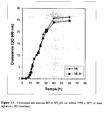
- the level of cAMP was measured on the PVD1150 and M5 strains, according to the method described by Thévelein et al., 1987, J. Gen. Microbiol., 133, pp. 2197-2205. This level of cAMP was thus determined after induction of its synthesis by adding glucose (at 100 mM) on cells which have reached the stationary phase after growth on glycerol. An attenuated cAMP signal was demonstrated in the PVD1150 mutant ( Figure 1-2).
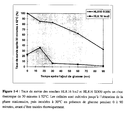
- Trehalose was also assayed on the strains PVD1150, PVD1050, M5 and M5 hxk2 ⁇ , according to the conditions described by Neves et al., 1991, FEBS Lett., 283, pp. 19-22. Much less rapid mobilization of trehalose (after induction by glucose on cells in the stationary phase) is observed in the strains carrying the fil1 mutation than in the control strains ( Figure 1-3). In view of the results of the trehalose and cAMP measurements, it seems clear that the fil1 mutation affects the Ras-cAMP pathway. However, and unlike the mutants of the Ras-cAMP pathway previously isolated and which exhibit growth and fermentation delays, the fil1 mutant is only very slightly penalized in growth and fermentation.
- the TPS1 gene (which codes for the synthesis of trehalose phosphate from glucose) was deleted in the fil1 strains and the strains departure witnesses. Although these fil1 tps1 ⁇ strains no longer synthesize trehalose, they retain much better resistance to thermal stress than the tps1 ⁇ control strains: 30% survival after 30 minutes at 52 ° C versus 0.1% for controls (test conditions T1). This corroborates the results published by Van Dijck et al. (1995, Appl. Environ. Microbiol ,. 61, pp.109-115) which demonstrated that trehalose is not, by itself, responsible for improving resistance to stress.
- Mutagenesis was carried out on the HL8.16 leu2 strain (aneuploid strain, segregating industrial strain made auxotrophic for leucine; LESAFFRE collection): the cells were cultured at 30 ° C. in YPD medium until the phase was obtained. stationary. The cells were then incubated at 30 ° C for 1 hour, in the presence of EMS (Ethyl Methyl Sulfonate) according to the technique described in "Methods in yeast Genetics, Cold Spring Harbor Laboratory Press” (Sherman et al., 1986) from so as to obtain a survival rate of around 10%. After this treatment, the cells were washed, resuspended in YPD medium and cultured at 30 ° C until the stationary phase was obtained.
- EMS Ethyl Methyl Sulfonate
- Glucose was then added to the stationary phase culture so as to obtain a final glucose concentration equal to 100 mM.
- the inoculated medium was incubated at 30 ° C for 30 minutes, then at 56 ° C for 30 minutes, and finally at 65 ° C for 30 minutes.
- the surviving cells were isolated by spreading on YPD-A medium. Then they were individually subjected to a heat resistance test, according to the conditions of the T1 test with an incubation of 30 minutes at 52 ° C.
- the six strains with the highest survival rates were selected and used for a second mutagenic treatment, this time with ultraviolet (UV), according to the technique described by Spencer JFT and Spencer DM, Chapter “Yeast genetics” extract from “Yeast a practical approach", 1988, Campbell and Duffus Eds.
- UV ultraviolet
- the cells of each of the 6 strains were cultured in YPD medium until the stationary phase was obtained. They were then washed with water, diluted and then spread on YPD-A medium. A dose of 30 mJ of UV light (wavelength equal to 260 nm) was applied to the open boxes.
- the 248 colonies that survived the mutagenic treatment were subcultured on YPD-A medium and then incubated for 2 hours at 60 ° C. At the end of this heat treatment, only 2 colonies survived.
- a heat resistance test in a liquid medium was then carried out on these two colonies, according to the conditions of the T1 test with an incubation of 30 minutes at 52 ° C. after an incubation in the presence of glucose for 1 hour at 30 ° C.
- the best of the 2 strains was chosen for a last mutagenic ultraviolet (UV) treatment, according to the conditions described above but with a dose of 10 mJ of UV light (260 nm).
- UV mutagenic ultraviolet
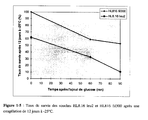
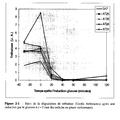
- the HLB16 fil300 strain has, under the conditions of the T2 test, a survival rate of more than 50% after freezing for 12 days at -20 ° C. pre-fermented cells 90 minutes at 30 ° C while the control survival rate is under the same conditions less than 11% ( Figure 1-5).
- the HLB16 fil300 strain therefore also resists freezing much better than the control strain, whether the cells are in the stationary phase or undergoing fermentation.
- the levels of trehalose and cAMP were measured on cells in the stationary phase which are subjected to glucose induction.
- the control strain is the starting strain HL8.16 leu2.
- the trehalose level is 3 to 4 times higher in the fil300 mutant than in the HL8.16 leu2 control.
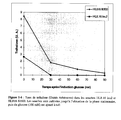
- the degradation rate of trehalose in the HL8.16 fil300 strain is generally slowed down, compared to that of the control ( Figure 1-6). It is also observed in the mutant HL816 fil300 a cAMP response reduced by almost 50% after induction of synthesis by glucose on cells in the stationary phase (FIG.
- the growth and fermentative performance of the HL8.16 leu2 (control) and HL816 fil300 strains were determined according to tests T5 and A20. The results are given in Table 1-C. The fil300 strain retains in these tests 80% of the characteristics measured for the starting strain.
- the strain HL822 fi1300 also called FDH16-22, was thus isolated.
- This strain which is a segregant resulting from a cross between the strain HL816 fil300 and the segregant HL816 (LESAFFRE collection), has a growth yield on molasses and a fermentative force identical to those of the control strain HL8.16 leu2 (table 1-D). It also has a level of thermoresistance identical to that of the HL816 fil300 strain.
- the stability in frozen dough pieces was compared to that of the control strain HLB.12 leu2 by measuring the evolution of the fermentative activity as a function of the duration of freezing. according to the conditions of test C2.
- a very clear improvement in freezing stability was observed for the fil300 strains compared to the control HL8.16 leu2 (Table 1-E).
- the fil300 strains retain at least 60% of their fermentative strength after 1 month of storage at a temperature of -20 ° C while the control retains only 40% of its fermentative strength under the same conditions (Table 1-E) .
- EXAMPLE 2 Use of freeze / thaw cycles as a tool isolation of wire mutants from an industrial strain
- Each gene located less than 25 kb from the centromere was amplified by PCR, then cloned into the vector YCplac33 (Gietz RD and Sugino A. (1988), Gene, 74, pp.527-534) which carries the URA3 gene .
- Each of the vectors obtained is used to transform the strain PVD1150 (auxotrophic for uracil). The presence of the plasmids is then verified on the transformants obtained.
- each strain PVD1150 carrying one of the genes located around the centromere of chromosome X is deposited in streaks on a YPD-A medium preheated to 57 ° C, which is incubated for 90 minutes at 57 ° C.
- the strain PVD1150 which carries a single-copy plasmid without insert, in this case the vector YCplac33 is used as a non-complemented control. After this heat treatment, the strains are incubated at 30 ° C.
- the strains carrying a gene which complements the fil1 mutation are those which have not yet developed.
- the results of these tests made it possible to show that the fil1 mutation was localized in the CYR1 gene (also called CDC35), since only this gene was capable of complementing the fil phenotype in the strain PVD1150.
- the CYR1 / CDC35 gene codes for adenylate cyclase, an enzyme in the Ras-cAMP pathway that allows the synthesis of cAMP from ATP. This result is consistent with the fact that the strain PVD1150 has a reduced level of cAMP (Example 1).
- the strain PVD1150 containing the vector YCplac33-CYR1 was cultured on YPD medium, a non-selective medium making it possible to lose quickly the plasmid. Colonies were isolated from this culture on YPD-A medium, then replicated on selective SD-URA medium (medium lacking uracil) to search for clones which do not grow and which therefore have lost the plasmid. A heat resistance test identical to the previous one confirms that all of these clones which have lost the plasmid have again become heat resistant.
- the mutated CYR1 mut gene from PVD1150 and the wild CYR1 gene from M5 were sequenced in parallel by the direct sequencing technique on PCR products obtained by amplification of fragments covering the entire gene, which enabled the localization of the mutation. fil1 . It is a change from a G base to an A base in position No. 5044 of the coding part of the CYR1 gene (gene referenced under the name YJL005w in Sacccharomyces cerevisiae). This also corresponds to a change in position 429888 of the X chromosome, according to the classification of the MIPS (Munich Information Center for Protein Sequence). This change is shown in the table below.
- the mutation was verified both by sequencing a mixture of three independent PCR products and also by sequencing the complementary DNA strand. This change leads to the passage of a glutamic acid into lysine at position 1682 of the protein. It is involved in the region coding for the catalytic site of the enzyme, and close to the region which is supposed to be involved in the activation of adenylate cyclase by the Ras proteins:
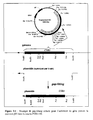
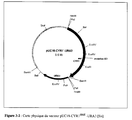
- the PstI-BamHI fragment of the vector YCplac33 CYR1-mutated fragment that contains the 3 'portion of the gene CYR1 mut (LAN1 mutation included) was subcloned into pUC18 vector. Then the auxotrophy marker URA3, derived from the vector pJJ242 (Jones and Prakash (1990) Yeast, 6, pp. 363-366) was inserted into this new vector, downstream of the coding part of the CYR1 mut gene in the region 3 'non-coding, at a single restriction site (Sna BI).
- the vector obtained, named pUC18-CYR1 mut -URA3 is presented in Figure 3-3.
- the vector pUC18-CYR1 mut -URA3 was hydrolyzed by the appropriate enzyme (in this case Bal I), which made it possible to release a linear fragment of 3.2 kb containing the mutation fil1, the marker URA3 as well as sequences at the ends allowing homologous recombination.
- This fragment was used to transform laboratory strains: the M5 strain (ura3, trp1, leu2) which is a true 16n haploid from the M5 2n strain described by Schaaf et al. (1989) Curr. Genet., 15, pp. 78-81, and the strain SP1 (ura3, trp1, leu2, ade8) described by Toda et al. (1985) Cell, 40, pp. 27-36.
- the presence of the mutation was then sought on some of the transformants thus obtained, by sequencing the zone carrying in principle the mutation. This allowed us to isolate M5 fil1 and SP1 fil1 strains.
- the heat resistance of the M5 fil1 and SP1 fil1 strains was compared with that of their respective controls (M5 and SP1) according to the conditions of the T1 test with an incubation in the presence of glucose for 30 minutes at 30 ° C. and a heat treatment for 20 minutes. at 52 ° C.
- the results concerning the reconstructed strains M5 fil1 and SP1 fil1 which are presented in Table 3-A show that these strains actually exhibit a thermoresistance phenotype, which is not observed in the control strains.
- the fil1 mutation is a point mutation in the CDC35 / CYR1 gene .
- a deletion of this gene is lethal, the cyrl mutants described hitherto led to very reduced growth rates.
- the mutated strain fil1 the mutated CDC35 / CYR1 gene is overexpressed, it seems to compensate for the effect of the mutation, it being understood that the level of cyclic AMP remains lower.
- the response to the fil1 mutation seems to correspond to a complex metabolic balance, which may depend on the genetic background of the strain.
- the fil1 mutation seems to significantly delay the germination of the spores containing this mutation. This deficiency in meiosis is not found in the active phase. It should only be taken into account at the level of fil1 strain constructions by classical genetics.
- the fil2 mutation is monogenic and recessive. Initially, a heat resistance test confirmed the improvement brought by the fil2 mutation . It was then highlighted a cross resistance to stress.
- the mutated strain fil2 was found to be a fil mutation, because this mutated strain was not significantly affected compared to the starting strain with regard to its growth or its fermentative activity. As it is a laboratory strain, the gene carrying the mutation was sought.
- the KL1 and W303-1A strains were cultured on YPD medium at 30 ° C until the stationary phase was obtained. After centrifugation, the cells were resuspended in YP medium and incubated at 30 ° C. After 30 minutes, glucose was added until a final concentration of 100 mM was reached in the medium. In the case of heat stress, the incubation at 30 ° C was continued for 30 minutes, then the cells were incubated at 52 ° C for 30 minutes.
- the KL1 strain thus has a survival rate of 80% after heat treatment against 20% for the control strain W303-1A; similarly after freezing in the severe test carried out, the survival rate of the KL1 mutant is almost 4 times higher than that of the control: approximately 30% for KL1 against approximately 8% for W303-1A.
- the results of the complementation tests made it possible to show that the fil2 mutation was localized in the GPR1 gene .
- This gene codes for a potential receptor coupled to a G protein and it is supposed to initiate the signaling path associated with the G protein encoded by the GPA2 gene (Xue, Y et al. (1998) EMBO Journal 17: 1996-2007).
- the level of thermoresistance of the KL1 strain was compared with that of the W303-1A strain in which the GPR1 gene was deleted (deletion not lethal), as well as that of temperature-sensitive control W303-1A.
- the GPR1 gene mutated so as to confer the fil2 phenotype can be isolated according to the technique described in Example 4 and it will make it possible to transform industrial strains so as to obtain industrial strains having the fil2 phenotype.
- the base 948 from the start of the coding phase i.e. ATG
- a Thymine (T) becomes an Adenine (A).
- the codon in the wild strain is TAT which codes for a Tyrosine at position 316 in the protein, it is changed to TAA which codes for a STOP.
- the fil2 allele appears to code for a truncated version of the Gpr1 protein which contains a total of 962 amino acids.
- the amino acid 316 which stops before the synthesis of the truncated protein LAN2, is located in the 3 rd intracellular loop of the receptor protein Gpr1. It is this loop which is known to interact in mammalian receptor proteins with the G protein, it is probably this loop which interacts in yeast with the Gpa2 protein.
- the starting diploid strain and the fil2 diploid strain were cultivated on molasses in fed-batch, in pilot fermenters.
- the yeasts obtained were subjected to a drying and frozen dough test. There is a slight decrease in the loss of strength on drying, at the limit of significance, with the diploid strain fil2 compared to the starting strain. There is a very clear improvement in the stability of frozen dough pieces which after 15 days at -20 ° C is multiplied by about 1.5.
- the yarn phenotype is interesting for obtaining more active dry yeasts, because it makes it possible to subject more active biomass to drying, without dramatic loss of fermentative activity during drying.
- the fermentative force of the biomass obtained with each of the 4 strains before drying was measured according to the A20 test.
- the fermentative strength of dry yeasts at around 95% dry matter was measured according to the A'20 test.
- the fermentative forces in absolute value have little meaning, we assigned the drying loss obtained with each starting strain of the coefficient 100 and we expressed the loss on drying of the strains reconstructed fil1 obtained according to Example 3 as a percentage of the loss on drying of the starting strain.
- the freezing stability of these fil strains is compared to that of strain S47, the control strain from which they are derived.
- strain S47 the control strain from which they are derived.
- the yeasts are cultivated on molasses, in fed batch on a pilot fermenter so as to obtain active biomasses having a maximum nitrogen content of 8% on dry matter, then used to shape dough pieces, according to the conditions described in test C1.
- the reference gas evolution value corresponds to the gas evolution value measured after 1 day of storage at -20 ° C.
- the other dough pieces are thawed after 1 week, 2 weeks, 3 weeks, 4 weeks and 6 weeks; they make it possible to follow the evolution of the fermentative activity as a function of the shelf life at -20 ° C. Furthermore, the stability in dough of each strain after n days of storage at -20 ° C is measured by the following ratio: CO release 2 according to test C1 on the nth day of storage at -20 ° C CO release 2 according to test C1 after the first day of storage at -20 ° C.
Landscapes
- Life Sciences & Earth Sciences (AREA)
- Chemical & Material Sciences (AREA)
- Health & Medical Sciences (AREA)
- Mycology (AREA)
- Engineering & Computer Science (AREA)
- Organic Chemistry (AREA)
- Genetics & Genomics (AREA)
- Bioinformatics & Cheminformatics (AREA)
- Wood Science & Technology (AREA)
- Zoology (AREA)
- Biotechnology (AREA)
- Microbiology (AREA)
- General Health & Medical Sciences (AREA)
- Biochemistry (AREA)
- Medicinal Chemistry (AREA)
- General Engineering & Computer Science (AREA)
- Biomedical Technology (AREA)
- Molecular Biology (AREA)
- Botany (AREA)
- Tropical Medicine & Parasitology (AREA)
- Virology (AREA)
- Food Science & Technology (AREA)
- Gastroenterology & Hepatology (AREA)
- Biophysics (AREA)
- Proteomics, Peptides & Aminoacids (AREA)
- Micro-Organisms Or Cultivation Processes Thereof (AREA)
- Preparation Of Compounds By Using Micro-Organisms (AREA)
- Saccharide Compounds (AREA)
Applications Claiming Priority (2)
| Application Number | Priority Date | Filing Date | Title |
|---|---|---|---|
| FR9807463 | 1998-06-12 | ||
| FR9807463A FR2779735B1 (fr) | 1998-06-12 | 1998-06-12 | Nouvelles souches "fil" resistantes au stress en condition de fermentation et/ou de croissance |
Publications (2)
| Publication Number | Publication Date |
|---|---|
| EP0967280A1 true EP0967280A1 (de) | 1999-12-29 |
| EP0967280B1 EP0967280B1 (de) | 2009-08-12 |
Family
ID=9527348
Family Applications (1)
| Application Number | Title | Priority Date | Filing Date |
|---|---|---|---|
| EP99401444A Expired - Lifetime EP0967280B1 (de) | 1998-06-12 | 1999-06-11 | Hefe mit fil Phenotyp, stress-resistent unter Wachstum- und/oder Gährungsbedingungen |
Country Status (7)
| Country | Link |
|---|---|
| US (1) | US20040175831A1 (de) |
| EP (1) | EP0967280B1 (de) |
| AT (1) | ATE439444T1 (de) |
| AU (1) | AU764917B2 (de) |
| CA (1) | CA2273047A1 (de) |
| DE (1) | DE69941242D1 (de) |
| FR (1) | FR2779735B1 (de) |
Families Citing this family (5)
| Publication number | Priority date | Publication date | Assignee | Title |
|---|---|---|---|---|
| JP2009502158A (ja) * | 2005-07-26 | 2009-01-29 | カウンシル オブ サイエンティフィック アンド インダストリアル リサーチ | 酵母のストレス耐性を増加させる遺伝子類の同定方法類、およびそれらの遺伝子類の酵母株改良のための使用 |
| FR2920157B1 (fr) * | 2007-08-23 | 2009-10-16 | Lesaffre Et Cie Sa | Nouvelles souches de levure de panification |
| FR2972728B1 (fr) * | 2011-03-18 | 2015-08-07 | Lesaffre & Cie | Amelioration des panifications a fort taux de levure |
| US9273330B2 (en) | 2012-10-03 | 2016-03-01 | Butamax Advanced Biofuels Llc | Butanol tolerance in microorganisms |
| CN112614549B (zh) * | 2019-10-06 | 2022-09-30 | 燕京啤酒(曲阜三孔)有限责任公司 | 一种啤酒发酵酵母量的控制方法 |
Citations (5)
| Publication number | Priority date | Publication date | Assignee | Title |
|---|---|---|---|---|
| US4547374A (en) | 1982-05-21 | 1985-10-15 | Oriental Yeast Co., Ltd. | Saccharomyces species FD 612 and the utilization thereof in bread production |
| EP0196233A2 (de) | 1985-03-27 | 1986-10-01 | Kyowa Hakko Kogyo Co., Ltd. | Gefrierresistenter Teig und darin verwendbarer Mikroorganismus |
| EP0388262A1 (de) | 1989-03-14 | 1990-09-19 | National Food Research Institute, Ministry Of Agriculture, Forestry And Fisheries | Backhefe |
| EP0487878A1 (de) * | 1990-11-09 | 1992-06-03 | Societe Des Produits Nestle S.A. | Backhefe |
| JPH0851917A (ja) * | 1994-08-09 | 1996-02-27 | Kanegafuchi Chem Ind Co Ltd | パン酵母のスクリーニング方法 |
Family Cites Families (2)
| Publication number | Priority date | Publication date | Assignee | Title |
|---|---|---|---|---|
| US5587290A (en) * | 1995-06-26 | 1996-12-24 | The Regents Of The University Of California | Stress tolerant yeast mutants |
| JPH10117771A (ja) * | 1996-10-23 | 1998-05-12 | Natl Food Res Inst | 冷凍生地耐性実用パン酵母 |
-
1998
- 1998-06-12 FR FR9807463A patent/FR2779735B1/fr not_active Expired - Fee Related
-
1999
- 1999-06-11 AU AU35025/99A patent/AU764917B2/en not_active Ceased
- 1999-06-11 EP EP99401444A patent/EP0967280B1/de not_active Expired - Lifetime
- 1999-06-11 AT AT99401444T patent/ATE439444T1/de not_active IP Right Cessation
- 1999-06-11 DE DE69941242T patent/DE69941242D1/de not_active Expired - Fee Related
- 1999-06-11 CA CA002273047A patent/CA2273047A1/en not_active Abandoned
-
2004
- 2004-03-10 US US10/796,166 patent/US20040175831A1/en not_active Abandoned
Patent Citations (5)
| Publication number | Priority date | Publication date | Assignee | Title |
|---|---|---|---|---|
| US4547374A (en) | 1982-05-21 | 1985-10-15 | Oriental Yeast Co., Ltd. | Saccharomyces species FD 612 and the utilization thereof in bread production |
| EP0196233A2 (de) | 1985-03-27 | 1986-10-01 | Kyowa Hakko Kogyo Co., Ltd. | Gefrierresistenter Teig und darin verwendbarer Mikroorganismus |
| EP0388262A1 (de) | 1989-03-14 | 1990-09-19 | National Food Research Institute, Ministry Of Agriculture, Forestry And Fisheries | Backhefe |
| EP0487878A1 (de) * | 1990-11-09 | 1992-06-03 | Societe Des Produits Nestle S.A. | Backhefe |
| JPH0851917A (ja) * | 1994-08-09 | 1996-02-27 | Kanegafuchi Chem Ind Co Ltd | パン酵母のスクリーニング方法 |
Non-Patent Citations (4)
| Title |
|---|
| IIDA H.: "Multistress resistance of Saccharomyces cerevisiae is generated by insertion of retrotransposon Ty into the 5' coding region of the adenylate cyclase gene", MOL. CELL. BIOL., vol. 8, no. 12, December 1988 (1988-12-01), pages 5555 - 5560, XP002095497 * |
| PARK J.I. ET AL.: "The freeze-thaw stress response of the yeast Saccharomyces cerevisiae is growth phase specific and is controlled by nutritional state via the RAS-cyclic AMP signal transduction pathway", APPL. ENVIRONM. MICROBIOL., vol. 63, no. 10, October 1997 (1997-10-01), pages 3818 - 3824, XP002095496 * |
| RO 111471 B (INST. CERC. CHIM. BUCURESTI) 31 octobre 1996 * |
| YUN C.W. ET AL.: "G-protein-coupled receptor from yeast S. cerevisiae", BIOCHEM. BIOPHYS. RES. COMM., vol. 240, 1997, pages 287 - 292, XP002095499 * |
Also Published As
| Publication number | Publication date |
|---|---|
| EP0967280B1 (de) | 2009-08-12 |
| FR2779735A1 (fr) | 1999-12-17 |
| AU764917B2 (en) | 2003-09-04 |
| ATE439444T1 (de) | 2009-08-15 |
| CA2273047A1 (en) | 1999-12-12 |
| AU3502599A (en) | 1999-12-23 |
| DE69941242D1 (de) | 2009-09-24 |
| FR2779735B1 (fr) | 2002-06-21 |
| US20040175831A1 (en) | 2004-09-09 |
Similar Documents
| Publication | Publication Date | Title |
|---|---|---|
| EP0487878B1 (de) | Backhefe | |
| Nagodawithana et al. | Yeast selection for baking | |
| US20040152066A1 (en) | Freeze-tolerant eukaryotic cells | |
| Trivedi et al. | Bakers' yeast | |
| AU2002336876B2 (en) | Modulating urea degradation in wine yeast | |
| EP0511108B1 (de) | Backhefestämme, deren Verfahren zur Herstellung, und zugehörige trockene und frische Hefe | |
| EP0577915A1 (de) | Transformierte Hefestämme mit Spannungsbeständigkeit und/oder verbesserten Gärungsverhalten | |
| FR2998898A1 (fr) | Procede d'amelioration de souches de levure | |
| EP0967280B1 (de) | Hefe mit fil Phenotyp, stress-resistent unter Wachstum- und/oder Gährungsbedingungen | |
| EP0663441A1 (de) | Industrielle, kaltinaktive Backhefe | |
| EP0651784B1 (de) | Hefeart die das gen der laktatdehydrogenase der milch exprimiert, und verwendbare vektoren zur herstellung dieser arten | |
| EP0878996B1 (de) | Neue kälteempfindliche bäckerhefe | |
| EP3108016B1 (de) | Pentose-pentose-fermentierender stamm mit optimierter vermehrung | |
| JP4278726B2 (ja) | 冷凍生地耐性および高糖生地耐性実用パン酵母 | |
| EP1805301A1 (de) | Genetisch veränderter hefestamm mit verbesserter produktion und abgabe von s-adenosylmethionin | |
| FR2735145A1 (fr) | Souches de levures presentant un bilan de fermentation alcoolique des sucres modifie et leurs applications, vecteurs utilisables pour l'obtention desdites souches. | |
| JP4580055B2 (ja) | アミノ酸高蓄積実用パン酵母 | |
| CA2822536C (fr) | Nouvelles souches de levure de panification | |
| EP0173619B1 (de) | Verfahren zur Herstellung eines Stammes, insbesondere von Hefe, transformiert mit einem Expressionsvektor, der gezüchtet werden kann in einem kompletten Medium ohne Selektionsdruck und auf diese Weise erhaltener Stamm | |
| Legras et al. | Ecology, diversity and applications of saccharomyces yeasts in food and beverages | |
| Shima et al. | Breeding of freeze-tolerant baker's yeast by the regulation of trehalose metabolism | |
| EP1346047A2 (de) | Hefe die mit kältetoleranz-erhöhung gene transformiert sind | |
| JPH11243944A (ja) | 製パン用乾燥耐性実用パン酵母 | |
| Weining et al. | Genetic Manipulation and Genome Editing of Saccharomyces cerevisiae | |
| Trindade de Carvalho et al. | Polygenic analysis of phenylethyl acetate production in yeast for aroma production improvement in alcoholic beverages |
Legal Events
| Date | Code | Title | Description |
|---|---|---|---|
| PUAI | Public reference made under article 153(3) epc to a published international application that has entered the european phase |
Free format text: ORIGINAL CODE: 0009012 |
|
| AK | Designated contracting states |
Kind code of ref document: A1 Designated state(s): AT BE CH DE DK ES FI FR GB GR IE IT LI LU NL PT SE |
|
| AX | Request for extension of the european patent |
Free format text: AL;LT;LV;MK;RO;SI |
|
| 17P | Request for examination filed |
Effective date: 20000627 |
|
| AKX | Designation fees paid |
Free format text: AT BE CH DE DK ES FI FR GB GR IE IT LI LU NL PT SE |
|
| AXX | Extension fees paid |
Free format text: LT PAYMENT 20000627;LV PAYMENT 20000627;RO PAYMENT 20000627;SI PAYMENT 20000627 |
|
| 17Q | First examination report despatched |
Effective date: 20040426 |
|
| GRAP | Despatch of communication of intention to grant a patent |
Free format text: ORIGINAL CODE: EPIDOSNIGR1 |
|
| GRAS | Grant fee paid |
Free format text: ORIGINAL CODE: EPIDOSNIGR3 |
|
| GRAA | (expected) grant |
Free format text: ORIGINAL CODE: 0009210 |
|
| AK | Designated contracting states |
Kind code of ref document: B1 Designated state(s): AT BE CH DE DK ES FI FR GB GR IE IT LI LU NL PT SE |
|
| AX | Request for extension of the european patent |
Extension state: LT LV RO SI |
|
| REG | Reference to a national code |
Ref country code: GB Ref legal event code: FG4D Free format text: NOT ENGLISH |
|
| REG | Reference to a national code |
Ref country code: CH Ref legal event code: EP |
|
| REG | Reference to a national code |
Ref country code: IE Ref legal event code: FG4D |
|
| REF | Corresponds to: |
Ref document number: 69941242 Country of ref document: DE Date of ref document: 20090924 Kind code of ref document: P |
|
| LTIE | Lt: invalidation of european patent or patent extension |
Effective date: 20090812 |
|
| PG25 | Lapsed in a contracting state [announced via postgrant information from national office to epo] |
Ref country code: SE Free format text: LAPSE BECAUSE OF FAILURE TO SUBMIT A TRANSLATION OF THE DESCRIPTION OR TO PAY THE FEE WITHIN THE PRESCRIBED TIME-LIMIT Effective date: 20090812 Ref country code: FI Free format text: LAPSE BECAUSE OF FAILURE TO SUBMIT A TRANSLATION OF THE DESCRIPTION OR TO PAY THE FEE WITHIN THE PRESCRIBED TIME-LIMIT Effective date: 20090812 Ref country code: ES Free format text: LAPSE BECAUSE OF FAILURE TO SUBMIT A TRANSLATION OF THE DESCRIPTION OR TO PAY THE FEE WITHIN THE PRESCRIBED TIME-LIMIT Effective date: 20091123 Ref country code: AT Free format text: LAPSE BECAUSE OF FAILURE TO SUBMIT A TRANSLATION OF THE DESCRIPTION OR TO PAY THE FEE WITHIN THE PRESCRIBED TIME-LIMIT Effective date: 20090812 |
|
| NLV1 | Nl: lapsed or annulled due to failure to fulfill the requirements of art. 29p and 29m of the patents act | ||
| PG25 | Lapsed in a contracting state [announced via postgrant information from national office to epo] |
Ref country code: NL Free format text: LAPSE BECAUSE OF FAILURE TO SUBMIT A TRANSLATION OF THE DESCRIPTION OR TO PAY THE FEE WITHIN THE PRESCRIBED TIME-LIMIT Effective date: 20090812 |
|
| REG | Reference to a national code |
Ref country code: IE Ref legal event code: FD4D |
|
| PG25 | Lapsed in a contracting state [announced via postgrant information from national office to epo] |
Ref country code: PT Free format text: LAPSE BECAUSE OF FAILURE TO SUBMIT A TRANSLATION OF THE DESCRIPTION OR TO PAY THE FEE WITHIN THE PRESCRIBED TIME-LIMIT Effective date: 20091212 |
|
| PG25 | Lapsed in a contracting state [announced via postgrant information from national office to epo] |
Ref country code: IE Free format text: LAPSE BECAUSE OF FAILURE TO SUBMIT A TRANSLATION OF THE DESCRIPTION OR TO PAY THE FEE WITHIN THE PRESCRIBED TIME-LIMIT Effective date: 20090812 Ref country code: DK Free format text: LAPSE BECAUSE OF FAILURE TO SUBMIT A TRANSLATION OF THE DESCRIPTION OR TO PAY THE FEE WITHIN THE PRESCRIBED TIME-LIMIT Effective date: 20090812 |
|
| PLBE | No opposition filed within time limit |
Free format text: ORIGINAL CODE: 0009261 |
|
| STAA | Information on the status of an ep patent application or granted ep patent |
Free format text: STATUS: NO OPPOSITION FILED WITHIN TIME LIMIT |
|
| 26N | No opposition filed |
Effective date: 20100517 |
|
| PG25 | Lapsed in a contracting state [announced via postgrant information from national office to epo] |
Ref country code: GR Free format text: LAPSE BECAUSE OF FAILURE TO SUBMIT A TRANSLATION OF THE DESCRIPTION OR TO PAY THE FEE WITHIN THE PRESCRIBED TIME-LIMIT Effective date: 20091113 |
|
| BERE | Be: lapsed |
Owner name: LESAFFRE ET CIE Effective date: 20100630 |
|
| REG | Reference to a national code |
Ref country code: CH Ref legal event code: PL |
|
| GBPC | Gb: european patent ceased through non-payment of renewal fee |
Effective date: 20100611 |
|
| REG | Reference to a national code |
Ref country code: FR Ref legal event code: ST Effective date: 20110228 |
|
| PG25 | Lapsed in a contracting state [announced via postgrant information from national office to epo] |
Ref country code: IT Free format text: LAPSE BECAUSE OF FAILURE TO SUBMIT A TRANSLATION OF THE DESCRIPTION OR TO PAY THE FEE WITHIN THE PRESCRIBED TIME-LIMIT Effective date: 20090812 |
|
| PG25 | Lapsed in a contracting state [announced via postgrant information from national office to epo] |
Ref country code: DE Free format text: LAPSE BECAUSE OF NON-PAYMENT OF DUE FEES Effective date: 20110101 Ref country code: LI Free format text: LAPSE BECAUSE OF NON-PAYMENT OF DUE FEES Effective date: 20100630 Ref country code: CH Free format text: LAPSE BECAUSE OF NON-PAYMENT OF DUE FEES Effective date: 20100630 |
|
| PG25 | Lapsed in a contracting state [announced via postgrant information from national office to epo] |
Ref country code: FR Free format text: LAPSE BECAUSE OF NON-PAYMENT OF DUE FEES Effective date: 20100630 |
|
| PG25 | Lapsed in a contracting state [announced via postgrant information from national office to epo] |
Ref country code: BE Free format text: LAPSE BECAUSE OF NON-PAYMENT OF DUE FEES Effective date: 20100630 |
|
| PG25 | Lapsed in a contracting state [announced via postgrant information from national office to epo] |
Ref country code: GB Free format text: LAPSE BECAUSE OF NON-PAYMENT OF DUE FEES Effective date: 20100611 |
|
| PG25 | Lapsed in a contracting state [announced via postgrant information from national office to epo] |
Ref country code: LU Free format text: LAPSE BECAUSE OF NON-PAYMENT OF DUE FEES Effective date: 20100611 |