EP0959634B1 - Data communications in a radio communication system - Google Patents
Data communications in a radio communication system Download PDFInfo
- Publication number
- EP0959634B1 EP0959634B1 EP99302388A EP99302388A EP0959634B1 EP 0959634 B1 EP0959634 B1 EP 0959634B1 EP 99302388 A EP99302388 A EP 99302388A EP 99302388 A EP99302388 A EP 99302388A EP 0959634 B1 EP0959634 B1 EP 0959634B1
- Authority
- EP
- European Patent Office
- Prior art keywords
- mobile station
- state
- channel
- communication
- packet data
- Prior art date
- Legal status (The legal status is an assumption and is not a legal conclusion. Google has not performed a legal analysis and makes no representation as to the accuracy of the status listed.)
- Expired - Lifetime
Links
Images


Classifications
-
- H—ELECTRICITY
- H04—ELECTRIC COMMUNICATION TECHNIQUE
- H04W—WIRELESS COMMUNICATION NETWORKS
- H04W76/00—Connection management
- H04W76/20—Manipulation of established connections
- H04W76/27—Transitions between radio resource control [RRC] states
-
- H—ELECTRICITY
- H04—ELECTRIC COMMUNICATION TECHNIQUE
- H04W—WIRELESS COMMUNICATION NETWORKS
- H04W28/00—Network traffic management; Network resource management
- H04W28/16—Central resource management; Negotiation of resources or communication parameters, e.g. negotiating bandwidth or QoS [Quality of Service]
- H04W28/18—Negotiating wireless communication parameters
-
- H—ELECTRICITY
- H04—ELECTRIC COMMUNICATION TECHNIQUE
- H04W—WIRELESS COMMUNICATION NETWORKS
- H04W28/00—Network traffic management; Network resource management
- H04W28/16—Central resource management; Negotiation of resources or communication parameters, e.g. negotiating bandwidth or QoS [Quality of Service]
- H04W28/24—Negotiating SLA [Service Level Agreement]; Negotiating QoS [Quality of Service]
-
- H—ELECTRICITY
- H04—ELECTRIC COMMUNICATION TECHNIQUE
- H04W—WIRELESS COMMUNICATION NETWORKS
- H04W52/00—Power management, e.g. Transmission Power Control [TPC] or power classes
- H04W52/02—Power saving arrangements
- H04W52/0209—Power saving arrangements in terminal devices
- H04W52/0225—Power saving arrangements in terminal devices using monitoring of external events, e.g. the presence of a signal
- H04W52/0241—Power saving arrangements in terminal devices using monitoring of external events, e.g. the presence of a signal where no transmission is received, e.g. out of range of the transmitter
-
- H—ELECTRICITY
- H04—ELECTRIC COMMUNICATION TECHNIQUE
- H04W—WIRELESS COMMUNICATION NETWORKS
- H04W76/00—Connection management
- H04W76/30—Connection release
-
- H—ELECTRICITY
- H04—ELECTRIC COMMUNICATION TECHNIQUE
- H04W—WIRELESS COMMUNICATION NETWORKS
- H04W88/00—Devices specially adapted for wireless communication networks, e.g. terminals, base stations or access point devices
- H04W88/02—Terminal devices
-
- Y—GENERAL TAGGING OF NEW TECHNOLOGICAL DEVELOPMENTS; GENERAL TAGGING OF CROSS-SECTIONAL TECHNOLOGIES SPANNING OVER SEVERAL SECTIONS OF THE IPC; TECHNICAL SUBJECTS COVERED BY FORMER USPC CROSS-REFERENCE ART COLLECTIONS [XRACs] AND DIGESTS
- Y02—TECHNOLOGIES OR APPLICATIONS FOR MITIGATION OR ADAPTATION AGAINST CLIMATE CHANGE
- Y02D—CLIMATE CHANGE MITIGATION TECHNOLOGIES IN INFORMATION AND COMMUNICATION TECHNOLOGIES [ICT], I.E. INFORMATION AND COMMUNICATION TECHNOLOGIES AIMING AT THE REDUCTION OF THEIR OWN ENERGY USE
- Y02D30/00—Reducing energy consumption in communication networks
- Y02D30/70—Reducing energy consumption in communication networks in wireless communication networks
Definitions
- the present invention relates generally to the allocation of resources in a communication system in which packet data is communicated between a sending station and a receiving station. More particularly, the present invention relates to apparatus, and an associated method, for allocating communication channels for packet data communications with a mobile station in a multi-user, radio communication system, such as a cellular communication system which provides for packet data communications.
- a multi-user, radio communication system such as a cellular communication system which provides for packet data communications.
- a cellular communication system is exemplary of a communication system which has been made possible as a result of such advancements.
- a cellular communication system permits communications to be effectuated with a mobile station by way of a radio channel, thereby obviating the need for a wire line connection to form a communication channel between a sending and a receiving station, Through use of a cellular communication system, communications are possible at locations at which the use of fixed or hard-wired connections would be inconvenient or impractical, such as in a motor vehicle.
- Cellular communication systems have been implemented using various communication schemes.
- a CDMA (code-division, multiple-access) cellular communication system is an exemplary communication system, implemented utilizing code-division techniques.
- Some cellular communication systems provide for the transmission of packet data to and from a mobile station.
- Information which is to be transmitted is formatted into discrete packets of data, and the packets are transmitted upon a communication channel.
- a packet channel is assigned by allocation of a code, by which to encode packets of data which are to be transmitted by a transmitting station and to decode the packets, once received at a receiving station.
- a dedicated channel, allocated to a user to communicate packet data thereon ensures ready access to the communication channel to communicate packet data thereon.
- ready access to the traffic channel necessitates allocation of the communication resources of the communication system, perhaps to the exclusion of other users, providing such ready access to a particular user is relatively resource consumptive.
- Packet-voice and packet-video services are time-sensitive communication services. Ready access to the traffic channel upon which packet data is to be communicated is necessary to ensure timely delivery of the time-sensitive information.
- TC/IP communications such as those utilized for web-browsing communications, are, conversely, relatively time-insensitive.
- Internet system resources need to be allocated in a manner which dedicates a channel to effectuate such communications. Allocation of a channel on an as-needed basis adequate to effectuate such communications. Another example can be found in document WO 97 47 112 (PHILIPS ELECTRONICS, 11 december 1997).
- a communication system which selectively provides for ready access to communicate packet data by ensuring allocation of a dedicated channel for its communication, depending upon the packet service-type would therefore be advantageous.
- a communication system having network infrastructure and a mobile station between which packet data communications pursuant to at least one packet service-type are selectively permitted by way of a communication channel, a QoS (quality of service) parameter associated with each of the at least one packet service-type, the QoS parameter defining a communication channel access-time delay-period within which access to the communication channel is to be provided to effectuate the packet data communications, an improvement of state apparatus for controlling operational states in which the mobile station is operable, said state apparatus comprising: an active state in which to operate the mobile station when packet data is to be communicated between the mobile station and the network infrastructure, a dedicated traffic channel assigned to form the communication channel to communicate the packet data thereon when the mobile station is operated in said active state; a control hold state into which a transition operation of the mobile station from said active state responsive to a first selected period of communication inactivity; and a virtual traffic substate into which a transition operation of the mobile station from said control hold state when the QoS parameter associated with the
- a method for operating a mobile station in a selected operational state the mobile station forming a portion of a communication system and selectively permitted to communicate packet data pursuant to at least one packet service-typre with network infrastructure of the communication system, a QoS (quality of service) parameter associated with each of the at least one packet service-type, the QoS parameter defining a communication channel access-time delay period within which access to the communication channel is to be provided to effectuate the packet data communications, said method comprising: transitioning operation of the mobile station into an active state when the packet data it to be communicated between the mobile station and the network infrastructure, a dedicated traffic channel assigned to form the communication channel to communicate the packet data thereon when the mobile station is operated in the active state; transitioning operation of the mobile station into a control hold state from the active state responsive to a first selected period of communication inactivity; and transitioning operation of the mobile station into a virtual traffic substate from the control hold state when the QoS parameter associated with the packet data service-type is
- the present invention accordingly, advantageously provides apparatus, and an associated method, for allocating communication channels for packet data communications with a mobile station in a multi-user, radio communication system.
- a QoS (quality of service) parameter is associated with each of the packet data service-types such as a packet-voice communications service or a packet-video communications service.
- the QoS parameter defines allowable access-delay times for access to communication channels to communicate packet data pursuant to the data service type thereon.
- System resources are allocated responsive to the QoS parameter of the service subscription. If the service subscription provides a QoS parameter calling for ready access to a communication channel upon which to communicate the packet data, the communication channel is allocated to a mobile station, even during periods of communication inactivity. If, conversely, the QoS parameter of the service subscription does not call for ready access to the communication channel to communicate packet data thereon, during periods of communication inactivity, a communication channel is not caused to remain allocated to the mobile station.
- State machine apparatus define operational states in which a data service is caused to be operated. Responsive to communication activity of a mobile station used to effectuate the data service and the QoS parameter of the service subscription, the mobile station is caused to be translated into other operational states and appropriate levels of system resources are caused to be allocated thereto.
- the operational states or substate, in which the data service is caused to be operated is dependent upon the QoS parameter of the service.
- the amount of system resources allocated to the data service pursuant to the operational state in which a mobile station used to effectuate the data service is operated is dependent upon the QoS parameter. If the QoS parameter is of at least a selected value, the mobile station is operated in a state in which a channel remains allocated to the mobile station for packet data communications even subsequent to a period of communication inactivity by the mobile station. By continuing to allocate the channel to the mobile station, little or no access delay times occur when additional packet data is to be communicated.
- An embodiment of the present invention forms a portion of a CDMA (code-division, multiple-access), cellular communication system, such as that constructed in compliance with the IS-95 interim standard, or a successor, promulgated by the EIA/TIA.
- Mobile stations operable in such a communication system are managed by way of a network control architecture having multiple numbers of states. State transitions are dependent upon communication activity of the mobile stations as well as the QoS parameters of the packet data service-types pursuant to which communications are to be effectuated. The value of the QoS parameter is determinative to which state a state transition is made. And, the state in which the mobile station, used to effectuate the data service, is operated is determinative of the level of resources allocated to the mobile station and, correspondingly, the access delay times within which a channel is made available for the communication of packet data thereon.
- CDMA code-division, multiple-access
- apparatus, and an associated method controls operational states of a data service in which, e.g., a mobile station is operable to effectuate the data service.
- the data service is operable in a communication system having network infrastructure between which the mobile station is selectively permitted to communicate packet data pursuant to at least one packet service-type by way of a communication channel.
- a QoS (quality of service) parameter is associated with each packet service-type.
- the QoS parameter defines a communication channel access-time delay-period within which access to the communication channel is to be provided to effectuate the packet data communications.
- the data service is selectively operable in an active state when packet data is to be communicated between the mobile station and the network infrastructure,
- a dedicated traffic channel is assigned to form the communication channel to communicate the packet data thereon when the mobile station is operated in the active state. Operation of the data service after a period of inactivity elapses during which a dedicated channel is maintained is transitioned into a control hold state from the active state responsive to a first selected period of communication inactivity. Operation of the data service is transitioned into a virtual traffic substate from the control hold state when the QoS parameter associated with the packet data service-type is beyond a selected level and the dedicated traffic channel and control channel are released from assignation to form the communication channel. In a further embodiment, when the QoS parameter is within the selected level, the dedicated control channel remains assigned to form the communication channel.
- Figure 1 illustrates a functional block diagram of an exemplary cellular communication system in which an embodiment of the present invention is operable.
- Figure 2 illustrates a state diagram of control architecture of which an embodiment of the present invention forms a portion.
- Figure 3 illustrates a state diagram of a portion of the control architecture of an embodiment of the present invention.
- Figure 4 illustrates another state diagram which also forms a portion of the control architecture of an embodiment of the present invention.
- Figure 5 illustrates a sequence diagram illustrating signal sequencing which occurs during operation of an embodiment of the present invention.
- Figure 6 illustrates another sequence diagram also showing signal sequencing which occurs during operation of an embodiment of the present invention.
- Figure 7 illustrates a method flow diagram listing the method steps of the method of operation of an embodiment of the present invention.
- FIG. 1 a portion of an exemplary, cellular communication system, shown generally at 10, permits two-way, wireless communication with a mobile station 14. While, for purposes of illustration, only a single mobile station 14 is illustrated in the Figure, in an actual cellular communication system, a plurality of mobile stations are permitted to communicate concurrently to form a multi-user communications system.
- the communication system 10 is exemplary of a cellular communication system constructed pursuant to the specification proposed for the IS-95 3G interim standard; the communication system 10 is analogously representive of other radio communication systems capable of communicating packet data.
- the communication system 10 includes network infrastructure, of which a portion is illustrated in the Figure.
- the infrastructure includes a plurality of BTSs (base stations) of which the BTS 16 is representative.
- the BTS 16 defines a cell 18 forming a coverage area in which down link communications 22 and reverse-link communications 24 are permitted with the mobile station 14 by way of radio air interface.
- the BTS 16 is coupled to a BSC (base station controller) 26, and the BSC 26 is, in turn, coupled to a MSC (mobile switching center) 30.
- the MSC 30 is coupled to a PSTN (public-switched telephonic network) 32, thereby to permit communication between the mobile station 14 and a communication station, such as the station 34 coupled to the PSTN 32.
- PSTN public-switched telephonic network
- Packet data originated at, or to be terminated at, the mobile station 14 pursuant to a particular packet data service-type is transmitted upon a dedicated communication channel to permit the communication of packet data to and from the mobile station 14.
- System resources e.g., the codes assigned in a CDMA system which define a dedicated channel, are limited. That is to say, the number of dedicated channels available to form radio links between mobile stations, such as the mobile station 14 and the network infrastructure is limited.
- Dedicated channels allocated for point-to-point, or other, communications with a large number of mobile stations might be of a number which prevents additional communications to be effectuated with additional mobile stations upon other dedicated channels.
- a channel assigned for such communication is typically reallocated to permit the effectuation of communications with other mobile stations.
- a QoS (quality of service) parameter representative of allowable access delay times in accessing a communication channel to effectuate the communication of packet data could be used to determine the allocation of resources to the mobile station in the communication system.
- the QoS parameter could form a portion of the subscription information associated with a packet data service-type stored at the subscription register 29 of the HLR 28.
- FIG 2 illustrates control architecture, shown generally at 44, which is represented by a state diagram.
- the control architecture 44 is representative of the MAC (medium access control) layer proposed for the IS-95 3G specification for providing packet data services for the communication of packet data originated at, or terminated at, a mobile station, such as the mobile station 14 shown in Figure 1.
- the control architecture 44 is implemented at the network infrastructure, e.g., at a base station, such as the BTS 16 (shown in Figure 1).
- the state diagram forming the control architecture 44 includes a plurality of states, here including a packet null state 46, an initialization state 48, a control hold state 52, an active state 54, a suspended state 56, and a dormant state 58.
- the suspended state 56 further comprises a slotted suspended state.
- Each of the states 46-58 define operational states in which a mobile station is operated with respect to packet services.
- the particular state in which the mobile station is operated is determinative of the level of connection in the packet service.
- different portions of the protocol stack of the control architecture are connected. For instance, a fully-connected mobile station is operated in the active state 54 whereat a PPP, a MAC layer, and physical layer connections are formed between the mobile station and the network infrastructure.
- the state diagram representing the control architecture 44 further illustrates the state transitions between the various states 46-62. For instance, a transition, indicated by the line 64, is made between the packet null state 46 and the initialization state 48 when packet service is requested. And, a transition, indicated by the line 66 from the initialization state back to the packet null state occurs when packet service is deactivated. And, a transition, indicated by the line 68, occurs from the initialization state 48 to the control hold state 52 when a service option is connected. When this transition 68 is made, a dedicated signaling channel (DSCH) and a dedicated MAC channel (DMCH) are established.
- DSCH dedicated signaling channel
- DMCH dedicated MAC channel
- a transition, indicated by the line 72 from the control hold state 52 to the active state 54 occurs when a dedicated traffic channel is established upon which to communicate packet data between the network infrastructure and the mobile station.
- a transition, indicated by the line 74 from the active state 54 back to the control hold state 52 occurs when a determination is made that data has not been exchanged for more than a selected time, here T active .
- a transition, indicated by the line 76 from the control hold state 52 to the suspended state 56 occurs when a determination is made of the absence of exchange of data for at least an additional, selected time period, here T hold .
- T hold time period
- the DSCH and DMCH are released.
- a transition, indicated by the line 78 from the suspended state 56 back to the control hold state occurs when the dedicated MAC channel and the dedicated signaling channel are established.
- a transition, indicated by the line 82 from the suspended state 56 to the dormant state 58 occurs when a determination is made that user data is not exchanged for more than another time period, here indicated by T suspend .
- a transition, indicated by the line 84 from the control hold state 52 to the dormant state 58 occurs when a release message transmission is sent between the mobile station and the network infrastructure, but PPP communications are not terminated.
- a transition, indicated by the line 86 occurs from the dormant state 58 to the reconnect state 62 when determination is made that packet data is to be communicated between the mobile station and the network infrastructure. And, a transition, indicated by the line 88 from the dormant state 58 to the packet null state 46 occurs when the point-to-point communications are terminated and a release message indicative of such is transmitted. A transition, indicated by the line 92, from the control hold state 52 to the packet null state 46 also occurs when such a termination is made when the mobile station is operated in the control hold stage rather than the dormant state.
- the operational states of the state diagram representing the control architecture 44 are categorized in two groups, depending upon the status of the packet service option, vis., the states are either "connected” states or "disconnected” states from a service option standpoint.
- the control hold states 52, the active state 54, and the suspended state 56 are all connected states.
- the remaining states, i.e., the packet null state 46, the initialization state 48, the dormant state 58, and the reconnect state 62 are all disconnected states.
- control architecture 44 can be modified to provide service responsive to the QoS parameter.
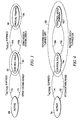
- Figure 3 illustrates a portion of the control architecture 44, shown in Figure 2. Namely, the control hold state 52, the active state 54, and the suspended state 56 are again shown. And, the transitions indicated by the lines 72 and 74 from the control hold state 52 to the active state 54 and from the active state 54 back to the control hold state 52 respectively also are again shown.
- Figure 3 further illustrates a control hold normal substate 94 and a virtual traffic substate 96. As shown, the control hold normal substate 94 is a substate of the control hold state 52, and the virtual traffic substate is a substate of the suspended state 56.
- a transition from the control hold state 52, or, more particularly, from the substate 94, to the virtual traffic substate 96 occurs when the mobile station is operated in the control hold state, but there is a period of communication inactivity corresponding to the time period T hold .
- an extended assignment of dedicated channel resources is required. Such assignation increases the probability that the channel assignment might block the allocation of a channel to another mobile station.
- a transition from the control hold state 52 to the virtual traffic substate occurs. If communication inactivity continues, a transition from the virtual traffic substate to the suspended state 56 (shown in Figure 2) occurs, as indicated by the line 76.
- Such continued period of communication inactivity is times, e.g., by a virtual traffic timer.
- Figure 4 also illustrates a portion of the control architecture 44 shown previously in Figure 2. Namely, the control hold state 52 and the active state 54 are again shown. And, the transitions, indicated by the lines 72 and 74 are also again shown.
- the control architecture is modified to include a control hold power save substate 102 in addition to the control hold normal substate 94.
- the QoS parameter calls for ready access to a dedicated traffic channel
- operation of a mobile station is transitioned from the control hold normal substate 94 to the control hold power save substate 102 for delay-sensitive communication applications.
- the air interface resource must be maintainted. That is to say, allocation of the dedicated control channel to the mobile station must be maintained.
- a transition is not made to the virtual traffic substate 96 (shown in Figure 3).
- Continuous transmission on the reverse-link, dedicated control channel (DCCH) is not required so, when a transition, indicated by the line 104, from the control hold normal substate 94 to the control hold power save substate 102 occurs, the reverse DCCH is turned-off.
- a transition indicated by the line 106, is made.
- the dedicated control channel is maintained in a mode where the mobile station transmits and receives discontinuously (i.e., the radio frequency transmitter is turned on and off). Because the dedicated control channel is maintained, signaling required to obtain a dedicated traffic channel is minimal.
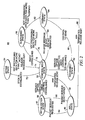
- Figure 5 illustrates a sequence diagram 112 representing the signaling procedures between the mobile station 14 (shown in Figure 1) and the BTS 16 (also shown in Figure 1) when the mobile station is operated in the virtual traffic substate (shown in Figure 3) when a channel is to be accessed by the mobile station.
- the mobile station transmits a packet transaction request on the reverse control channel to the base station 16.
- the BTS 16 responds, as indicated by the segment 116 with a channel assignment message on a forward control channel.
- An optional, supplemental request message is returned, indicated by the segment 118 on a reverse-link dedicated control channel to the BTS 16, and, responsive thereto, a supplemental channel assignment is provided by the BTS 16 on the dedicated control channel to the mobile station 14.
- data blocks formed of packet data are transmitted by the mobile station 14 and, if appropriate, also on a supplemental channel, to the BTS 16.
- the delay in allocation of a channel to the mobile station upon which to transmit the data might be increased, depending upon the system load at the time the packet transaction request is generated.
- Figure 6 illustrates a sequence diagram 132 representing the signaling procedures of a mobile station when the mobile station is operated in the control hold power save substate 102 (shown in Figure 4) when the mobile station is to access a dedicated channel.
- the control hold power save substate transmission on the reverse-link dedicated control channel is discontinuous.
- a pilot-on signal is transmitted to the BTS 16.
- the base station 16 returns a wake-up response on the dedicated control channel to the mobile station.
- the mobile station generates a transaction request, indicated by the segment 138 on the reverse-link dedicated control channel, and the BTS 16 responds with a channel assignment on the dedicated control channel indicated by the segment 142.
- a supplemental channel request indicated by the segment 144 and a supplemental channel assignment, indicated by the segment 146, responsive thereto is provided to the mobile station.
- a data block formed of packet data is generated by the mobile station on the fundamental channel assigned to the mobile station. And, if a supplemental channel assignment is given to the mobile station, additional data blocks are transmitted, indicated by the segment 152, on the supplementally-assigned channel. Because the transaction request, indicated by the segment 138, is transmitted upon a dedicated control channel without the need also first to transmit a packet transaction request pursuant to a random access procedure, delay access times are significantly reduced.
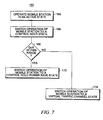
- Figure 7 illustrates a method, shown generally at 162, of an embodiment of the present invention.
- the method controls a packet data service for a mobile station operating in a telecommunications system.
- the mobile station is operated in an active state. Then, and as indicated by the block 166, the mobile station is switched to a control hold state.
- a manner is thereby provided by which to ensure that a channel remains allocated to a mobile station to communicate packet data thereon even subsequent to a period of communication inactivity, if a QoS parameter associated with a packet data service-type is of a selected value. Greater assurances are thereby provided that time sensitive data shall be timely communicated.
Landscapes
- Engineering & Computer Science (AREA)
- Computer Networks & Wireless Communication (AREA)
- Signal Processing (AREA)
- Mobile Radio Communication Systems (AREA)
Description
- The present invention relates generally to the allocation of resources in a communication system in which packet data is communicated between a sending station and a receiving station. More particularly, the present invention relates to apparatus, and an associated method, for allocating communication channels for packet data communications with a mobile station in a multi-user, radio communication system, such as a cellular communication system which provides for packet data communications.
- Advancements in digital telephony techniques have permitted the development, implementation, and widespread usage of multi-user, digital communication systems. Use of digital techniques is advantageous, inter alia, as the communication capacity of a digital communication system is typically greater than the capacity of a corresponding analog system. Error correction of signals transmitted during operation of such a system can also be improved.
- A cellular communication system is exemplary of a communication system which has been made possible as a result of such advancements. A cellular communication system permits communications to be effectuated with a mobile station by way of a radio channel, thereby obviating the need for a wire line connection to form a communication channel between a sending and a receiving station, Through use of a cellular communication system, communications are possible at locations at which the use of fixed or hard-wired connections would be inconvenient or impractical, such as in a motor vehicle. Cellular communication systems have been implemented using various communication schemes. A CDMA (code-division, multiple-access) cellular communication system is an exemplary communication system, implemented utilizing code-division techniques.
- Some cellular communication systems provide for the transmission of packet data to and from a mobile station. Information which is to be transmitted is formatted into discrete packets of data, and the packets are transmitted upon a communication channel. In a CDMA (code-division, multiple-access) communication scheme, for instance, a packet channel is assigned by allocation of a code, by which to encode packets of data which are to be transmitted by a transmitting station and to decode the packets, once received at a receiving station.
- A dedicated channel, allocated to a user to communicate packet data thereon ensures ready access to the communication channel to communicate packet data thereon. As such ready access to the traffic channel necessitates allocation of the communication resources of the communication system, perhaps to the exclusion of other users, providing such ready access to a particular user is relatively resource consumptive.
- Some packet data services are time-sensitive, while others are relatively time-insensitive. Packet-voice and packet-video services, e.g., are time-sensitive communication services. Ready access to the traffic channel upon which packet data is to be communicated is necessary to ensure timely delivery of the time-sensitive information. TC/IP communications, such as those utilized for web-browsing communications, are, conversely, relatively time-insensitive. Internet system resources need to be allocated in a manner which dedicates a channel to effectuate such communications. Allocation of a channel on an as-needed basis adequate to effectuate such communications. Another example can be found in document WO 97 47 112 (PHILIPS ELECTRONICS, 11 december 1997).
- A communication system which selectively provides for ready access to communicate packet data by ensuring allocation of a dedicated channel for its communication, depending upon the packet service-type would therefore be advantageous.
- It is in light of this background information related to packet communications, and communication systems permitting the communication of packet data, that the significant improvements of the present invention have evolved.
- According to one aspect of the invention there is provided in a communication system having network infrastructure and a mobile station between which packet data communications pursuant to at least one packet service-type are selectively permitted by way of a communication channel, a QoS (quality of service) parameter associated with each of the at least one packet service-type, the QoS parameter defining a communication channel access-time delay-period within which access to the communication channel is to be provided to effectuate the packet data communications, an improvement of state apparatus for controlling operational states in which the mobile station is operable, said state apparatus comprising: an active state in which to operate the mobile station when packet data is to be communicated between the mobile station and the network infrastructure, a dedicated traffic channel assigned to form the communication channel to communicate the packet data thereon when the mobile station is operated in said active state; a control hold state into which a transition operation of the mobile station from said active state responsive to a first selected period of communication inactivity; and a virtual traffic substate into which a transition operation of the mobile station from said control hold state when the QoS parameter associated with the packet data service-type is beyond a selected level, the dedicated traffic channel being released out of assignation to form the communication channel.
- According to a further aspect of the invention there is provided a method for operating a mobile station in a selected operational state, the mobile station forming a portion of a communication system and selectively permitted to communicate packet data pursuant to at least one packet service-typre with network infrastructure of the communication system, a QoS (quality of service) parameter associated with each of the at least one packet service-type, the QoS parameter defining a communication channel access-time delay period within which access to the communication channel is to be provided to effectuate the packet data communications, said method comprising: transitioning operation of the mobile station into an active state when the packet data it to be communicated between the mobile station and the network infrastructure, a dedicated traffic channel assigned to form the communication channel to communicate the packet data thereon when the mobile station is operated in the active state; transitioning operation of the mobile station into a control hold state from the active state responsive to a first selected period of communication inactivity; and transitioning operation of the mobile station into a virtual traffic substate from the control hold state when the QoS parameter associated with the packet data service-type is beyond a selected level, the dedicated control channel released from assignation to form the communication channel.
- The present invention, accordingly, advantageously provides apparatus, and an associated method, for allocating communication channels for packet data communications with a mobile station in a multi-user, radio communication system.
- One or more packet service-types are provided by the communication system. A QoS (quality of service) parameter is associated with each of the packet data service-types such as a packet-voice communications service or a packet-video communications service. The QoS parameter defines allowable access-delay times for access to communication channels to communicate packet data pursuant to the data service type thereon. System resources are allocated responsive to the QoS parameter of the service subscription. If the service subscription provides a QoS parameter calling for ready access to a communication channel upon which to communicate the packet data, the communication channel is allocated to a mobile station, even during periods of communication inactivity. If, conversely, the QoS parameter of the service subscription does not call for ready access to the communication channel to communicate packet data thereon, during periods of communication inactivity, a communication channel is not caused to remain allocated to the mobile station.
- State machine apparatus define operational states in which a data service is caused to be operated. Responsive to communication activity of a mobile station used to effectuate the data service and the QoS parameter of the service subscription, the mobile station is caused to be translated into other operational states and appropriate levels of system resources are caused to be allocated thereto.
- The operational states or substate, in which the data service is caused to be operated is dependent upon the QoS parameter of the service. The amount of system resources allocated to the data service pursuant to the operational state in which a mobile station used to effectuate the data service is operated is dependent upon the QoS parameter. If the QoS parameter is of at least a selected value, the mobile station is operated in a state in which a channel remains allocated to the mobile station for packet data communications even subsequent to a period of communication inactivity by the mobile station. By continuing to allocate the channel to the mobile station, little or no access delay times occur when additional packet data is to be communicated.
- An embodiment of the present invention forms a portion of a CDMA (code-division, multiple-access), cellular communication system, such as that constructed in compliance with the IS-95 interim standard, or a successor, promulgated by the EIA/TIA. Mobile stations operable in such a communication system are managed by way of a network control architecture having multiple numbers of states. State transitions are dependent upon communication activity of the mobile stations as well as the QoS parameters of the packet data service-types pursuant to which communications are to be effectuated. The value of the QoS parameter is determinative to which state a state transition is made. And, the state in which the mobile station, used to effectuate the data service, is operated is determinative of the level of resources allocated to the mobile station and, correspondingly, the access delay times within which a channel is made available for the communication of packet data thereon.
- In these and other aspects, therefore, apparatus, and an associated method, controls operational states of a data service in which, e.g., a mobile station is operable to effectuate the data service. The data service is operable in a communication system having network infrastructure between which the mobile station is selectively permitted to communicate packet data pursuant to at least one packet service-type by way of a communication channel. A QoS (quality of service) parameter is associated with each packet service-type. The QoS parameter defines a communication channel access-time delay-period within which access to the communication channel is to be provided to effectuate the packet data communications. The data service is selectively operable in an active state when packet data is to be communicated between the mobile station and the network infrastructure, A dedicated traffic channel is assigned to form the communication channel to communicate the packet data thereon when the mobile station is operated in the active state. Operation of the data service after a period of inactivity elapses during which a dedicated channel is maintained is transitioned into a control hold state from the active state responsive to a first selected period of communication inactivity. Operation of the data service is transitioned into a virtual traffic substate from the control hold state when the QoS parameter associated with the packet data service-type is beyond a selected level and the dedicated traffic channel and control channel are released from assignation to form the communication channel. In a further embodiment, when the QoS parameter is within the selected level, the dedicated control channel remains assigned to form the communication channel.
- A more complete appreciation of the present invention and the scope thereof can be obtained from the accompanying drawings which are briefly summarized below, the following detailed description of the presently-preferred embodiments of the invention, and the appended claims.
- Figure 1 illustrates a functional block diagram of an exemplary cellular communication system in which an embodiment of the present invention is operable.
- Figure 2 illustrates a state diagram of control architecture of which an embodiment of the present invention forms a portion.
- Figure 3 illustrates a state diagram of a portion of the control architecture of an embodiment of the present invention.
- Figure 4 illustrates another state diagram which also forms a portion of the control architecture of an embodiment of the present invention.
- Figure 5 illustrates a sequence diagram illustrating signal sequencing which occurs during operation of an embodiment of the present invention.
- Figure 6 illustrates another sequence diagram also showing signal sequencing which occurs during operation of an embodiment of the present invention.
- Figure 7 illustrates a method flow diagram listing the method steps of the method of operation of an embodiment of the present invention.
- Referring first to Figure 1, a portion of an exemplary, cellular communication system, shown generally at 10, permits two-way, wireless communication with a
mobile station 14. While, for purposes of illustration, only a singlemobile station 14 is illustrated in the Figure, in an actual cellular communication system, a plurality of mobile stations are permitted to communicate concurrently to form a multi-user communications system. Thecommunication system 10 is exemplary of a cellular communication system constructed pursuant to the specification proposed for the IS-95 3G interim standard; thecommunication system 10 is analogously representive of other radio communication systems capable of communicating packet data. - The
communication system 10 includes network infrastructure, of which a portion is illustrated in the Figure. The infrastructure includes a plurality of BTSs (base stations) of which the BTS 16 is representative. The BTS 16 defines acell 18 forming a coverage area in which downlink communications 22 and reverse-link communications 24 are permitted with themobile station 14 by way of radio air interface. - The
BTS 16 is coupled to a BSC (base station controller) 26, and theBSC 26 is, in turn, coupled to a MSC (mobile switching center) 30. TheMSC 30 is coupled to a PSTN (public-switched telephonic network) 32, thereby to permit communication between themobile station 14 and a communication station, such as thestation 34 coupled to thePSTN 32. - Packet data originated at, or to be terminated at, the
mobile station 14 pursuant to a particular packet data service-type is transmitted upon a dedicated communication channel to permit the communication of packet data to and from themobile station 14. System resources, e.g., the codes assigned in a CDMA system which define a dedicated channel, are limited. That is to say, the number of dedicated channels available to form radio links between mobile stations, such as themobile station 14 and the network infrastructure is limited. Dedicated channels allocated for point-to-point, or other, communications with a large number of mobile stations might be of a number which prevents additional communications to be effectuated with additional mobile stations upon other dedicated channels. Subsequent at least to a period of communication inactivity by a mobile station, a channel assigned for such communication is typically reallocated to permit the effectuation of communications with other mobile stations. - When a communication channel is released from its allocation to a particular mobile station, there might be an access-delay time subsequent to a request by the mobile station to communicate additional packet data over the radio air interface, Such an access-time delay might be inappropriate if the communication of the packet data is time-sensitive.
- If the communication channel were, however, to remain allocated to a mobile station even subsequent to periods of communication inactivity, there would be no access delay time necessitated to reallocate the channel to the mobile station when packet data subsequently is to be communicated between the mobile station and the network infrastructure. A QoS (quality of service) parameter representative of allowable access delay times in accessing a communication channel to effectuate the communication of packet data could be used to determine the allocation of resources to the mobile station in the communication system. The QoS parameter could form a portion of the subscription information associated with a packet data service-type stored at the subscription register 29 of the
HLR 28. Such a scheme would permit improved levels of channel allocations to particular mobile stations based upon the value of the QoS parameter of the service subscription pursuant to which the mobile station is operable. - Figure 2 illustrates control architecture, shown generally at 44, which is represented by a state diagram. The
control architecture 44 is representative of the MAC (medium access control) layer proposed for the IS-95 3G specification for providing packet data services for the communication of packet data originated at, or terminated at, a mobile station, such as themobile station 14 shown in Figure 1. Thecontrol architecture 44 is implemented at the network infrastructure, e.g., at a base station, such as the BTS 16 (shown in Figure 1). The state diagram forming thecontrol architecture 44 includes a plurality of states, here including a packetnull state 46, aninitialization state 48, acontrol hold state 52, anactive state 54, a suspendedstate 56, and adormant state 58. The suspendedstate 56 further comprises a slotted suspended state. - Each of the states 46-58 define operational states in which a mobile station is operated with respect to packet services. The particular state in which the mobile station is operated is determinative of the level of connection in the packet service. When operated in the various ones of the operational states, different portions of the protocol stack of the control architecture are connected. For instance, a fully-connected mobile station is operated in the
active state 54 whereat a PPP, a MAC layer, and physical layer connections are formed between the mobile station and the network infrastructure. - The state diagram representing the
control architecture 44 further illustrates the state transitions between the various states 46-62. For instance, a transition, indicated by theline 64, is made between the packetnull state 46 and theinitialization state 48 when packet service is requested. And, a transition, indicated by theline 66 from the initialization state back to the packet null state occurs when packet service is deactivated. And, a transition, indicated by theline 68, occurs from theinitialization state 48 to thecontrol hold state 52 when a service option is connected. When thistransition 68 is made, a dedicated signaling channel (DSCH) and a dedicated MAC channel (DMCH) are established. - A transition, indicated by the
line 72 from thecontrol hold state 52 to theactive state 54 occurs when a dedicated traffic channel is established upon which to communicate packet data between the network infrastructure and the mobile station. A transition, indicated by theline 74 from theactive state 54 back to thecontrol hold state 52 occurs when a determination is made that data has not been exchanged for more than a selected time, here Tactive. - A transition, indicated by the
line 76 from thecontrol hold state 52 to the suspendedstate 56 occurs when a determination is made of the absence of exchange of data for at least an additional, selected time period, here Thold. When the transition is made, the DSCH and DMCH are released. A transition, indicated by theline 78 from the suspendedstate 56 back to the control hold state occurs when the dedicated MAC channel and the dedicated signaling channel are established. And, a transition, indicated by theline 82 from the suspendedstate 56 to thedormant state 58 occurs when a determination is made that user data is not exchanged for more than another time period, here indicated by Tsuspend. A transition, indicated by theline 84 from thecontrol hold state 52 to thedormant state 58 occurs when a release message transmission is sent between the mobile station and the network infrastructure, but PPP communications are not terminated. - A transition, indicated by the
line 86 occurs from thedormant state 58 to the reconnectstate 62 when determination is made that packet data is to be communicated between the mobile station and the network infrastructure. And, a transition, indicated by theline 88 from thedormant state 58 to the packetnull state 46 occurs when the point-to-point communications are terminated and a release message indicative of such is transmitted. A transition, indicated by theline 92, from thecontrol hold state 52 to the packetnull state 46 also occurs when such a termination is made when the mobile station is operated in the control hold stage rather than the dormant state. - The operational states of the state diagram representing the
control architecture 44 are categorized in two groups, depending upon the status of the packet service option, vis., the states are either "connected" states or "disconnected" states from a service option standpoint. The control hold states 52, theactive state 54, and the suspendedstate 56 are all connected states. And, the remaining states, i.e., the packetnull state 46, theinitialization state 48, thedormant state 58, and the reconnectstate 62 are all disconnected states. - By introducing a QoS parameter relating to allowable access time delay period within which assess to a communication channel must be provided to effectuate communication pursuant to a particular packet data service-type, the
control architecture 44 can be modified to provide service responsive to the QoS parameter. - Figure 3 illustrates a portion of the
control architecture 44, shown in Figure 2. Namely, thecontrol hold state 52, theactive state 54, and the suspendedstate 56 are again shown. And, the transitions indicated by thelines control hold state 52 to theactive state 54 and from theactive state 54 back to thecontrol hold state 52 respectively also are again shown. Figure 3 further illustrates a control holdnormal substate 94 and avirtual traffic substate 96. As shown, the control holdnormal substate 94 is a substate of thecontrol hold state 52, and the virtual traffic substate is a substate of the suspendedstate 56. Here, a transition from thecontrol hold state 52, or, more particularly, from thesubstate 94, to thevirtual traffic substate 96 occurs when the mobile station is operated in the control hold state, but there is a period of communication inactivity corresponding to the time period Thold. When the mobile station is operated in the control hold state, an extended assignment of dedicated channel resources is required. Such assignation increases the probability that the channel assignment might block the allocation of a channel to another mobile station. In an embodiment of the present invention, if the delay requirement of the QoS parameter is greater than a selected threshold tdelay, then once a data buffer of a mobile station is emptied, a transition from thecontrol hold state 52 to the virtual traffic substate occurs. If communication inactivity continues, a transition from the virtual traffic substate to the suspended state 56 (shown in Figure 2) occurs, as indicated by theline 76. Such continued period of communication inactivity is times, e.g., by a virtual traffic timer. - Figure 4 also illustrates a portion of the
control architecture 44 shown previously in Figure 2. Namely, thecontrol hold state 52 and theactive state 54 are again shown. And, the transitions, indicated by thelines substate 102 in addition to the control holdnormal substate 94. When the QoS parameter calls for ready access to a dedicated traffic channel, operation of a mobile station is transitioned from the control holdnormal substate 94 to the control hold power savesubstate 102 for delay-sensitive communication applications. To ensure such ready access to the communication channel, the air interface resource must be maintainted. That is to say, allocation of the dedicated control channel to the mobile station must be maintained. So, a transition is not made to the virtual traffic substate 96 (shown in Figure 3). Continuous transmission on the reverse-link, dedicated control channel (DCCH) is not required so, when a transition, indicated by theline 104, from the control holdnormal substate 94 to the control hold power savesubstate 102 occurs, the reverse DCCH is turned-off. When packet data is to be communicated upon the dedicated traffic channel and the mobile station is operated in the control hold power save substate, a transition, indicated by theline 106, is made. The dedicated control channel is maintained in a mode where the mobile station transmits and receives discontinuously (i.e., the radio frequency transmitter is turned on and off). Because the dedicated control channel is maintained, signaling required to obtain a dedicated traffic channel is minimal. - Figure 5 illustrates a sequence diagram 112 representing the signaling procedures between the mobile station 14 (shown in Figure 1) and the BTS 16 (also shown in Figure 1) when the mobile station is operated in the virtual traffic substate (shown in Figure 3) when a channel is to be accessed by the mobile station. First, and as indicated by the
segment 114, the mobile station transmits a packet transaction request on the reverse control channel to thebase station 16. TheBTS 16 responds, as indicated by thesegment 116 with a channel assignment message on a forward control channel. An optional, supplemental request message is returned, indicated by thesegment 118 on a reverse-link dedicated control channel to theBTS 16, and, responsive thereto, a supplemental channel assignment is provided by theBTS 16 on the dedicated control channel to themobile station 14.
Thereafter, and as indicated by thesegments mobile station 14 and, if appropriate, also on a supplemental channel, to theBTS 16. As the packet transaction request, indicated by thesegment 114 goes through a random access procedure, the delay in allocation of a channel to the mobile station upon which to transmit the data might be increased, depending upon the system load at the time the packet transaction request is generated. - Figure 6 illustrates a sequence diagram 132 representing the signaling procedures of a mobile station when the mobile station is operated in the control hold power save substate 102 (shown in Figure 4) when the mobile station is to access a dedicated channel. As noted above, when the mobile station is operated in the control hold power save substate, transmission on the reverse-link dedicated control channel is discontinuous.
- First, and as indicated by the
segment 132, a pilot-on signal is transmitted to theBTS 16. Responsive thereto, thebase station 16 returns a wake-up response on the dedicated control channel to the mobile station. Thereafter, the mobile station generates a transaction request, indicated by thesegment 138 on the reverse-link dedicated control channel, and theBTS 16 responds with a channel assignment on the dedicated control channel indicated by thesegment 142. Optionally, a supplemental channel request, indicated by thesegment 144 and a supplemental channel assignment, indicated by thesegment 146, responsive thereto is provided to the mobile station. - Thereafter, and as indicated by the
segment 148, a data block formed of packet data is generated by the mobile station on the fundamental channel assigned to the mobile station. And, if a supplemental channel assignment is given to the mobile station, additional data blocks are transmitted, indicated by thesegment 152, on the supplementally-assigned channel. Because the transaction request, indicated by thesegment 138, is transmitted upon a dedicated control channel without the need also first to transmit a packet transaction request pursuant to a random access procedure, delay access times are significantly reduced. - Figure 7 illustrates a method, shown generally at 162, of an embodiment of the present invention. The method controls a packet data service for a mobile station operating in a telecommunications system.
- First, and as indicated by the
block 164, the mobile station is operated in an active state. Then, and as indicated by theblock 166, the mobile station is switched to a control hold state. - A determination is made, as indicated by the
decision block 168, whether the packet data service has a quality of service requirement within a predetermined range. If so, the yes branch is taken to theblock 172, and the mobile station is switched to a control hold power save substate. Otherwise, the no branch is taken from thedecision block 168 to theblock 174, and the mobile station is switched to a virtual traffic substate. - A manner is thereby provided by which to ensure that a channel remains allocated to a mobile station to communicate packet data thereon even subsequent to a period of communication inactivity, if a QoS parameter associated with a packet data service-type is of a selected value. Greater assurances are thereby provided that time sensitive data shall be timely communicated.
- The previous descriptions are of preferred examples for implementing the invention and, the scope of the invention should not necessarily be limited by this description. The scope of the present invention is defined by the following claims.
Claims (25)
- A state apparatus for use in a communication system (10) having network infrastructure and a mobile station (14) between which packet data communications pursuant to at least one packet service-type are selectively permitted by way of a communication channel, a quality of service parameter associated with each of the at least one packet service-type, the quality of service parameter defining a communication channel access-time delay-period within which access to the communication channel is to be provided to effectuate the packet data communications, an improvement of said state apparatus for controlling operational states in which the mobile station is operable, said state apparatus having:an active state (54) in which to operate the mobile station when packet data is to be communicated between the mobile station (14) and the network infrastructure, a dedicated traffic channel being assigned to form the communication channel to communicate the packet data thereon when the mobile station is operated in said active state (54);a control hold state (52) into which to transition operation of the mobile station (14) from said active state responsive to a first selected period of communication inactivity; anda virtual traffic substate (96) into which to transition operation of the mobile station (14) from said control hold state (52) when the quality of service parameter associated with the packet data service-type is beyond a selected level, the dedicated traffic channel being released out of assignation to form the communication channel when the mobile station is operated in said virtual traffic substate.
- The state apparatus of claim 1 further comprising a control-hold power save substate (102) into which to transition operation of the mobile station (14) from said control hold state (52) when the quality of service parameter associated with the mobile station (14) is within the selected level.
- The state apparatus of claims 1 or 2 further comprising a suspended state (56) into which to transition operation of the mobile station (14) from said virtual traffic substate (96) responsive to a second selected period of communication inactivity.
- The state apparatus of claim 3 further comprising a virtual-traffic timer operable responsive to transitioning of operation of the mobile station (14) into said virtual traffic substate (96), said virtual-traffic timer for timing a timing period corresponding to the second selected period, operation of the mobile station (14) transitioning to said suspended state (56) subsequent to timing-out of said virtual-traffic timer.
- The state apparatus of claims 3 or 4 wherein said suspended state (56) comprises a slotted suspended state.
- The state apparatus of any preceding claim wherein, when the mobile station is operated in said control hold state (52), the dedicated traffic channel is released out of assignation to form the communication channel.
- The state apparatus of any preceding claim wherein, when the mobile station (14) is in said active state (54), a (24) dedicated control channel is further assigned to form the communication channel between the mobile station (14) and the network infrastructure.
- The state apparatus of claim 7 wherein, when the mobile station (14) is operated in said control hold state (52), the dedicated control channel remains assigned to form the communication channel between the mobile station (14) and the network infrastructure.
- The state apparatus of claims 7 or 8 as dependent directly or indirectly on claim 2 wherein, when the mobile station (14) is operated in said control-hold power save substate (102), the reverse-link (24) dedicated control channel is operated in a discontinuous transmission mode.
- The state apparatus of any preceding claim wherein, when the mobile station (14) is operated in said virtual traffic substate (96), the dedicated control channel is released out of assignation to form the communication channel.
- The state apparatus of any preceding claim further comprising an activity timer operable responsive to operation of the mobile station (14) in the active state (54), said activity timer resettable during communication of packet data on the dedicated traffic channel, said activity timer for timing a timing period corresponding to the first selected period of communication inactivity, operation of the mobile station (14) transitioning to said control hold state (52) subsequent to timing-out of said activity timer.
- The state apparatus of any preceding claim, wherein the communication system comprises a CDMA-cellular communication system and the state apparatus is a state machine that forms part of a cellular base station of the network infrastructure and wherein said active state (54), said control hold state (52), and said virtual traffic substate (96) in which the mobile station (14) is operable comprise portions of the state machine.
- The state apparatus of any preceding claim, wherein said quality of service parameter comprises a threshold delay for returning operation of the mobile station (14) to said active state (54).
- The state apparatus of any preceding claim, wherein said threshold delay is compared against a predetermined value to determine if said quality of service parameter is beyond the selected level.
- A method for operating a mobile station (14) in a selected operational state, the mobile station (14) forming a portion of a communication system and being selectively permitted to communicate packet data pursuant to at least one packet service-type with network infrastructure of the communication system by way of a communication channel, a quality of service parameter associated with each of the at least one packet service-type, the quality of service parameter defining a communication channel access-time delay period within which access to the communication channel is to be provided to effectuate the packet data communications, said method comprising:transitioning operation of the mobile station (14) into an active state (54) when the packet data is to be communicated between the mobile station (14) and the network infrastructure, a dedicated traffic channel being assigned to form the communication channel to communicate the packet data thereon when the mobile station (14) is operated in the active state (54);transitioning operation of the mobile station (14) into a control hold state (52) from the active state (54) responsive to a first selected period of communication inactivity; andtransitioning operation of the mobile station (14) into a virtual traffic substate (96) from the control hold state (52) when the quality of service parameter associated with the packet data service-type is beyond a selected level, the dedicated traffic channel being released from assignation to form the communication channel.
- The method of claim 15 further comprising a step of transitioning operation of the mobile station (14) into a control-hold power save substate (102) from said control hold state (52) when the quality of service parameter associated with the mobile station (14) is within the selected level.
- The method of claim 15 comprising the additional operation, alternate to said operation of transitioning operation of the mobile station (14) into the virtual traffic substate (96), of transitioning operation of the mobile station (14) to a control-hold power-save substate (102) within the control hold state (52) when the quality of service parameter associated with the packet data service-type is within the selected level.
- The method of claim 17 comprising the additional operation, subsequent to said operation of transitioning operation of the mobile station (14) into the virtual traffic substate (96), when the mobile station (14) is to access the communication channel, of transitioning operation of the mobile station (14) back to the control hold state (52), and, thereafter back to the active state (54).
- The method of any of claims 15 tao 18 wherein said step of transitioning operation of the mobile station (14) into the control hold state (52) comprises releasing the dedicated traffic channel.
- The method of any of claims 15 to 19, wherein said step of transitioning operation of the mobile station into the active state comprises assigning a dedicated control channel to form the communication channel between the mobile station (14) and the network infrastructure.
- The method of claim 20, wherein said step of transitioning operation of the mobile station (14) into the control hold state comprises maintaining the assignment of the dedicated control channel to form the communication channel between the mobile station (14) and the network infrastructure.
- The method of claims 20 or 21 as dependent directly or indirectly on claim 16 wherein said step of transitioning the mobile station (14) into the control-hold power save substate (102) comprises operating the reverse-link (24) dedicated control channel in a discontinuous transmission mode.
- The method of any of claims 20 to 22 wherein the step of transitioning operation of the mobile station (14) into the virtual traffic substate (96) comprises releasing the dedicated control channel.
- The method of any of claims 15 to 23, wherein said quality of service parameter comprises a threshold delay for returning operation of the mobile station (14) to said active state (54).
- The method of claim 24 further comprising the step of comparing said threshold delay against a predetermined value to determine if said quality of service parameter is beyond the selected level.
Applications Claiming Priority (4)
| Application Number | Priority Date | Filing Date | Title |
|---|---|---|---|
| US7943998P | 1998-03-26 | 1998-03-26 | |
| US79439P | 1998-03-26 | ||
| US09/152,366 US6473419B1 (en) | 1998-03-26 | 1998-09-14 | State apparatus, and associated methods, for controlling packet data communications in a radio communication system |
| US152366 | 1998-09-14 |
Publications (3)
| Publication Number | Publication Date |
|---|---|
| EP0959634A2 EP0959634A2 (en) | 1999-11-24 |
| EP0959634A3 EP0959634A3 (en) | 2000-08-30 |
| EP0959634B1 true EP0959634B1 (en) | 2006-11-08 |
Family
ID=26762009
Family Applications (1)
| Application Number | Title | Priority Date | Filing Date |
|---|---|---|---|
| EP99302388A Expired - Lifetime EP0959634B1 (en) | 1998-03-26 | 1999-03-26 | Data communications in a radio communication system |
Country Status (3)
| Country | Link |
|---|---|
| US (1) | US6473419B1 (en) |
| EP (1) | EP0959634B1 (en) |
| DE (1) | DE69933906T2 (en) |
Families Citing this family (50)
| Publication number | Priority date | Publication date | Assignee | Title |
|---|---|---|---|---|
| BR9904919A (en) * | 1998-04-14 | 2000-10-10 | Samsung Electronics Co Ltd | Process for transmitting and receiving user data in a mobile communication system having at least one state transition. |
| WO1999056405A1 (en) * | 1998-04-25 | 1999-11-04 | Samsung Electronics Co., Ltd. | Power level arbitration between base station and mobile station in mobile communication system |
| FI108203B (en) * | 1998-11-27 | 2001-11-30 | Nokia Mobile Phones Ltd | Method and apparatus for transmitting information in a packet radio service |
| TW459461B (en) * | 1999-01-16 | 2001-10-11 | Koninkl Philips Electronics Nv | Radio communication system |
| US6731948B1 (en) * | 1999-05-12 | 2004-05-04 | Samsung Electronics Co., Ltd. | Method for supporting a discontinuous transmission mode in a base station in a mobile communication system |
| US6834190B1 (en) * | 1999-06-23 | 2004-12-21 | Samsung Electronics Co., Ltd | Controlling method and apparatus for transition between modes at traffic channel substrate in mobile communication system |
| US6728365B1 (en) * | 1999-09-13 | 2004-04-27 | Nortel Networks Limited | Method and system for providing quality-of-service on packet-based wireless connections |
| KR100717394B1 (en) * | 1999-11-23 | 2007-05-11 | 삼성전자주식회사 | Additional Channel Release Method of Code Division Multiple Access Mobile Communication System |
| KR100547851B1 (en) * | 1999-12-29 | 2006-02-01 | 삼성전자주식회사 | Data transmission method in code division multiple access system |
| KR100606064B1 (en) * | 2000-01-15 | 2006-07-26 | 삼성전자주식회사 | Apparatus and method for allocating additional channels in mobile communication system |
| FI20000138L (en) * | 2000-01-24 | 2001-07-25 | Nokia Networks Oy | Quality of Service Reservation in a Wireless Communication System |
| KR100329182B1 (en) * | 2000-01-25 | 2002-03-22 | 박종섭 | Method to allocate dedicated channel for transmitting packet in apparatus to perform function of CDMA media access control layer |
| KR20030047874A (en) | 2000-03-03 | 2003-06-18 | 퀄컴 인코포레이티드 | Method and apparatus for participating in group communication services in an existing communication system |
| DE10014396C2 (en) * | 2000-03-23 | 2002-10-24 | Siemens Ag | Method for resource allocation in a radio communication system and radio communication system for performing the method |
| US6876866B1 (en) * | 2000-07-13 | 2005-04-05 | Qualcomm Incorporated | Multi-state power control mechanism for a wireless communication system |
| US6819930B1 (en) | 2000-11-03 | 2004-11-16 | Lucent Technologies Inc. | Apparatus and method for use in allocating a channel resource in wireless multiple access communications systems |
| FI111599B (en) * | 2000-12-28 | 2003-08-15 | Nokia Corp | Method and apparatus for mobile telecommunications |
| US20040196861A1 (en) * | 2001-01-12 | 2004-10-07 | Joseph Rinchiuso | Packet data transmission within a broad-band communication system |
| US8121296B2 (en) | 2001-03-28 | 2012-02-21 | Qualcomm Incorporated | Method and apparatus for security in a data processing system |
| US9100457B2 (en) | 2001-03-28 | 2015-08-04 | Qualcomm Incorporated | Method and apparatus for transmission framing in a wireless communication system |
| US8077679B2 (en) | 2001-03-28 | 2011-12-13 | Qualcomm Incorporated | Method and apparatus for providing protocol options in a wireless communication system |
| KR20030086616A (en) * | 2001-03-28 | 2003-11-10 | 콸콤 인코포레이티드 | Method and apparatus for channel management for point-to-multipoint services in a communication system |
| US7342901B1 (en) * | 2001-05-01 | 2008-03-11 | Nortel Networks Limited | Medium access control (MAC) protocol for a wireless communication system |
| US7890129B2 (en) | 2001-05-15 | 2011-02-15 | Eric Rosen | Method and apparatus for delivering information to an idle mobile station in a group communication network |
| US6798764B2 (en) * | 2001-07-04 | 2004-09-28 | Asustek Computer Inc. | Wireless communications device with a state model |
| US20030040315A1 (en) * | 2001-08-20 | 2003-02-27 | Farideh Khaleghi | Reduced state transition delay and signaling overhead for mobile station state transitions |
| US7352868B2 (en) | 2001-10-09 | 2008-04-01 | Philip Hawkes | Method and apparatus for security in a data processing system |
| US7200125B2 (en) * | 2001-10-12 | 2007-04-03 | Nortel Networks Limited | Method and apparatus for differentiated communications in a wireless network |
| US7649829B2 (en) | 2001-10-12 | 2010-01-19 | Qualcomm Incorporated | Method and system for reduction of decoding complexity in a communication system |
| US7269448B2 (en) * | 2001-11-09 | 2007-09-11 | Electronics And Telecommunications Research Institute | Method for recognizing request for data transmission by mobile/base station RRC using network transfer device |
| US6717924B2 (en) * | 2002-01-08 | 2004-04-06 | Qualcomm Incorporated | Control-hold mode |
| GB2390263B (en) * | 2002-06-24 | 2004-05-12 | Technologies Inc Lucent | A method of selecting length of time of inactivity on a channel dedictated to a user terminal to be detected for the channel to be released, |
| US7599655B2 (en) | 2003-01-02 | 2009-10-06 | Qualcomm Incorporated | Method and apparatus for broadcast services in a communication system |
| US8279740B2 (en) * | 2003-01-13 | 2012-10-02 | Intellectual Ventures I Llc | Dynamic transmission protection in the presence of multiple modulation schemes |
| WO2004066661A1 (en) * | 2003-01-23 | 2004-08-05 | Fujitsu Limited | Communication resource management device |
| US7340615B2 (en) * | 2003-01-31 | 2008-03-04 | Microsoft Corporation | Method and apparatus for managing power in network interface modules |
| KR100547734B1 (en) * | 2003-06-13 | 2006-01-31 | 삼성전자주식회사 | Operation state control method of media access control layer in mobile communication system using orthogonal frequency division multiplexing |
| US8098818B2 (en) | 2003-07-07 | 2012-01-17 | Qualcomm Incorporated | Secure registration for a multicast-broadcast-multimedia system (MBMS) |
| US8718279B2 (en) | 2003-07-08 | 2014-05-06 | Qualcomm Incorporated | Apparatus and method for a secure broadcast system |
| US8107882B2 (en) * | 2003-07-30 | 2012-01-31 | Intellectual Ventures I Llc | Intelligent downstream traffic delivery to multi-protocol stations |
| US8724803B2 (en) | 2003-09-02 | 2014-05-13 | Qualcomm Incorporated | Method and apparatus for providing authenticated challenges for broadcast-multicast communications in a communication system |
| US8023985B1 (en) * | 2004-06-07 | 2011-09-20 | Nortel Networks Limited | Transitioning a state of a connection in response to an indication that a wireless link to a wireless device has been lost |
| WO2006078562A2 (en) * | 2005-01-19 | 2006-07-27 | Alcatel Lucent | System, node, and method optimizing data connections for packet services |
| US8689025B2 (en) * | 2006-02-21 | 2014-04-01 | Qualcomm Incorporated | Reduced terminal power consumption via use of active hold state |
| US8077595B2 (en) | 2006-02-21 | 2011-12-13 | Qualcomm Incorporated | Flexible time-frequency multiplexing structure for wireless communication |
| US9461736B2 (en) | 2006-02-21 | 2016-10-04 | Qualcomm Incorporated | Method and apparatus for sub-slot packets in wireless communication |
| US8396152B2 (en) | 2006-02-21 | 2013-03-12 | Qualcomm Incorporated | Feedback channel design for multiple-input multiple-output communication systems |
| US20090205633A1 (en) * | 2008-02-19 | 2009-08-20 | Hussong Manufacturing Company, Inc. | Simulated fire glow lights for fireplace |
| US9094163B2 (en) * | 2012-08-28 | 2015-07-28 | Aoptix Technologies, Inc. | Assessment and correction of transmitted data |
| US9445452B2 (en) | 2014-12-05 | 2016-09-13 | T-Mobile U.S.A. Inc. | Directed application control of user device radio |
Citations (1)
| Publication number | Priority date | Publication date | Assignee | Title |
|---|---|---|---|---|
| WO1999038278A1 (en) * | 1998-01-24 | 1999-07-29 | Samsung Electronics Co., Ltd. | Data communication method in mobile communication system |
Family Cites Families (8)
| Publication number | Priority date | Publication date | Assignee | Title |
|---|---|---|---|---|
| US5757772A (en) * | 1995-09-18 | 1998-05-26 | Telefonaktiebolaget Lm Ericsson | Packet switched radio channel traffic supervision |
| SE515264C2 (en) * | 1996-02-12 | 2001-07-09 | Telia Ab | Method to connect data services for GSM |
| US5787080A (en) * | 1996-06-03 | 1998-07-28 | Philips Electronics North America Corporation | Method and apparatus for reservation-based wireless-ATM local area network |
| US5903558A (en) * | 1996-06-28 | 1999-05-11 | Motorola, Inc. | Method and system for maintaining a guaranteed quality of service in data transfers within a communications system |
| US5708656A (en) * | 1996-09-11 | 1998-01-13 | Nokia Mobile Phones Limited | Method and apparatus for packet data transmission |
| US6249681B1 (en) * | 1997-04-01 | 2001-06-19 | Nokia Mobile Phones Ltd. | Method and apparatus for packet data call re-establishment in a telecommunications system |
| US6286122B1 (en) * | 1997-07-03 | 2001-09-04 | Nokia Mobile Phones Limited | Method and apparatus for transmitting DTX—low state information from mobile station to base station |
| US6216006B1 (en) * | 1997-10-31 | 2001-04-10 | Motorola, Inc. | Method for an admission control function for a wireless data network |
-
1998
- 1998-09-14 US US09/152,366 patent/US6473419B1/en not_active Expired - Lifetime
-
1999
- 1999-03-26 DE DE69933906T patent/DE69933906T2/en not_active Expired - Lifetime
- 1999-03-26 EP EP99302388A patent/EP0959634B1/en not_active Expired - Lifetime
Patent Citations (1)
| Publication number | Priority date | Publication date | Assignee | Title |
|---|---|---|---|---|
| WO1999038278A1 (en) * | 1998-01-24 | 1999-07-29 | Samsung Electronics Co., Ltd. | Data communication method in mobile communication system |
Also Published As
| Publication number | Publication date |
|---|---|
| DE69933906D1 (en) | 2006-12-21 |
| DE69933906T2 (en) | 2007-09-06 |
| US6473419B1 (en) | 2002-10-29 |
| EP0959634A3 (en) | 2000-08-30 |
| EP0959634A2 (en) | 1999-11-24 |
Similar Documents
| Publication | Publication Date | Title |
|---|---|---|
| EP0959634B1 (en) | Data communications in a radio communication system | |
| US6937861B2 (en) | Connection management for dual mode access terminals in a radio network | |
| EP1665546B1 (en) | Resource negotiation in wireless communications networks and methods | |
| RU2231223C2 (en) | Controlling temperature conditions during transmission of radio communication data modem | |
| EP1173986B1 (en) | Method and arrangement for managing packet data transfer in a cellular system | |
| US5708656A (en) | Method and apparatus for packet data transmission | |
| KR100432807B1 (en) | Code Division Multiple Access A mobile station that uses selective discontinuous transmission for high-speed data services in a multichannel reverse link structure. | |
| US8364159B2 (en) | Method and apparatus for monitoring a channel during an active session in a wireless communication system | |
| JP4908479B2 (en) | Synchronization of stored service parameters in a communication system | |
| KR20020071935A (en) | Method and wireless system for terminating a dormant mode in a packet data session | |
| KR20040097345A (en) | Handoff between base stations of different protocol revisions in a cdma system | |
| KR20010047880A (en) | Supplemental channel release method in cdma mobile communication system | |
| JP3635239B2 (en) | Dedicated channel allocation method for packet transmission | |
| AU2004306342B2 (en) | System and method for dynamic allocation and simultaneous operation of forward packet data and supplemental channels in EV-DV network | |
| AU5425399A (en) | Method of reducing radio channel access delay in gprs system, and packet radio system | |
| JP2009510831A (en) | Semi-active state to reduce channel establishment delay | |
| US6625137B1 (en) | Method for operating supplemental code channel for high speed data service in radio telecommunication system | |
| US7570961B2 (en) | Apparatus and method for reactivating multiple packet data sessions in a wireless network | |
| KR100257882B1 (en) | Method for changing and allocating channel of serving voice and data in wireless local loop system | |
| KR20030059699A (en) | Method for answering voice call during data service in mobile telecommunication system | |
| KR100856199B1 (en) | Traffic channel management method of mobile communication system supporting location query | |
| JP2003229811A (en) | Wireless communication system, base station and wireless communication terminal | |
| KR100300354B1 (en) | Method for originating call in cellular system | |
| KR20020011181A (en) | Method for power control of multi-channel in wireless telecommunication system | |
| KR20020051698A (en) | Wireless resource sharing method |
Legal Events
| Date | Code | Title | Description |
|---|---|---|---|
| PUAI | Public reference made under article 153(3) epc to a published international application that has entered the european phase |
Free format text: ORIGINAL CODE: 0009012 |
|
| AK | Designated contracting states |
Kind code of ref document: A2 Designated state(s): DE ES FR GB IT NL SE |
|
| AX | Request for extension of the european patent |
Free format text: AL;LT;LV;MK;RO;SI |
|
| PUAL | Search report despatched |
Free format text: ORIGINAL CODE: 0009013 |
|
| AK | Designated contracting states |
Kind code of ref document: A3 Designated state(s): AT BE CH CY DE DK ES FI FR GB GR IE IT LI LU MC NL PT SE |
|
| AX | Request for extension of the european patent |
Free format text: AL;LT;LV;MK;RO;SI |
|
| 17P | Request for examination filed |
Effective date: 20010124 |
|
| AKX | Designation fees paid |
Free format text: DE ES FR GB IT NL SE |
|
| RAP1 | Party data changed (applicant data changed or rights of an application transferred) |
Owner name: NOKIA CORPORATION |
|
| 17Q | First examination report despatched |
Effective date: 20040727 |
|
| GRAP | Despatch of communication of intention to grant a patent |
Free format text: ORIGINAL CODE: EPIDOSNIGR1 |
|
| GRAS | Grant fee paid |
Free format text: ORIGINAL CODE: EPIDOSNIGR3 |
|
| GRAA | (expected) grant |
Free format text: ORIGINAL CODE: 0009210 |
|
| AK | Designated contracting states |
Kind code of ref document: B1 Designated state(s): DE ES FR GB IT NL SE |
|
| PG25 | Lapsed in a contracting state [announced via postgrant information from national office to epo] |
Ref country code: NL Free format text: LAPSE BECAUSE OF FAILURE TO SUBMIT A TRANSLATION OF THE DESCRIPTION OR TO PAY THE FEE WITHIN THE PRESCRIBED TIME-LIMIT Effective date: 20061108 Ref country code: IT Free format text: LAPSE BECAUSE OF FAILURE TO SUBMIT A TRANSLATION OF THE DESCRIPTION OR TO PAY THE FEE WITHIN THE PRESCRIBED TIME-LIMIT;WARNING: LAPSES OF ITALIAN PATENTS WITH EFFECTIVE DATE BEFORE 2007 MAY HAVE OCCURRED AT ANY TIME BEFORE 2007. THE CORRECT EFFECTIVE DATE MAY BE DIFFERENT FROM THE ONE RECORDED. Effective date: 20061108 |
|
| REG | Reference to a national code |
Ref country code: GB Ref legal event code: FG4D |
|
| REF | Corresponds to: |
Ref document number: 69933906 Country of ref document: DE Date of ref document: 20061221 Kind code of ref document: P |
|
| PG25 | Lapsed in a contracting state [announced via postgrant information from national office to epo] |
Ref country code: SE Free format text: LAPSE BECAUSE OF FAILURE TO SUBMIT A TRANSLATION OF THE DESCRIPTION OR TO PAY THE FEE WITHIN THE PRESCRIBED TIME-LIMIT Effective date: 20070208 |
|
| PG25 | Lapsed in a contracting state [announced via postgrant information from national office to epo] |
Ref country code: ES Free format text: LAPSE BECAUSE OF FAILURE TO SUBMIT A TRANSLATION OF THE DESCRIPTION OR TO PAY THE FEE WITHIN THE PRESCRIBED TIME-LIMIT Effective date: 20070219 |
|
| NLV1 | Nl: lapsed or annulled due to failure to fulfill the requirements of art. 29p and 29m of the patents act | ||
| EN | Fr: translation not filed | ||
| PLBE | No opposition filed within time limit |
Free format text: ORIGINAL CODE: 0009261 |
|
| STAA | Information on the status of an ep patent application or granted ep patent |
Free format text: STATUS: NO OPPOSITION FILED WITHIN TIME LIMIT |
|
| 26N | No opposition filed |
Effective date: 20070809 |
|
| PG25 | Lapsed in a contracting state [announced via postgrant information from national office to epo] |
Ref country code: FR Free format text: LAPSE BECAUSE OF FAILURE TO SUBMIT A TRANSLATION OF THE DESCRIPTION OR TO PAY THE FEE WITHIN THE PRESCRIBED TIME-LIMIT Effective date: 20070622 |
|
| PG25 | Lapsed in a contracting state [announced via postgrant information from national office to epo] |
Ref country code: FR Free format text: LAPSE BECAUSE OF FAILURE TO SUBMIT A TRANSLATION OF THE DESCRIPTION OR TO PAY THE FEE WITHIN THE PRESCRIBED TIME-LIMIT Effective date: 20061108 |
|
| REG | Reference to a national code |
Ref country code: DE Ref legal event code: R082 Ref document number: 69933906 Country of ref document: DE Representative=s name: WAGNER & GEYER PARTNERSCHAFT PATENT- UND RECHT, DE |
|
| REG | Reference to a national code |
Ref country code: DE Ref legal event code: R082 Ref document number: 69933906 Country of ref document: DE Representative=s name: WAGNER & GEYER PARTNERSCHAFT MBB PATENT- UND R, DE Effective date: 20120529 Ref country code: DE Ref legal event code: R082 Ref document number: 69933906 Country of ref document: DE Representative=s name: WAGNER & GEYER PARTNERSCHAFT PATENT- UND RECHT, DE Effective date: 20120529 Ref country code: DE Ref legal event code: R081 Ref document number: 69933906 Country of ref document: DE Owner name: HTC CORPORATION, TW Free format text: FORMER OWNER: NOKIA CORP., 02610 ESPOO, FI Effective date: 20120529 Ref country code: DE Ref legal event code: R081 Ref document number: 69933906 Country of ref document: DE Owner name: HTC CORPORATION, TW Free format text: FORMER OWNER: NOKIA CORP., ESPOO, FI Effective date: 20120529 |
|
| REG | Reference to a national code |
Ref country code: GB Ref legal event code: 732E Free format text: REGISTERED BETWEEN 20120628 AND 20120704 |
|
| PGFP | Annual fee paid to national office [announced via postgrant information from national office to epo] |
Ref country code: GB Payment date: 20180321 Year of fee payment: 20 Ref country code: DE Payment date: 20180313 Year of fee payment: 20 |
|
| REG | Reference to a national code |
Ref country code: DE Ref legal event code: R071 Ref document number: 69933906 Country of ref document: DE |
|
| REG | Reference to a national code |
Ref country code: GB Ref legal event code: PE20 Expiry date: 20190325 |
|
| PG25 | Lapsed in a contracting state [announced via postgrant information from national office to epo] |
Ref country code: GB Free format text: LAPSE BECAUSE OF EXPIRATION OF PROTECTION Effective date: 20190325 |