JP3635239B2 - Dedicated channel allocation method for packet transmission - Google Patents
Dedicated channel allocation method for packet transmission Download PDFInfo
- Publication number
- JP3635239B2 JP3635239B2 JP2001011968A JP2001011968A JP3635239B2 JP 3635239 B2 JP3635239 B2 JP 3635239B2 JP 2001011968 A JP2001011968 A JP 2001011968A JP 2001011968 A JP2001011968 A JP 2001011968A JP 3635239 B2 JP3635239 B2 JP 3635239B2
- Authority
- JP
- Japan
- Prior art keywords
- packet
- state
- control unit
- mobile station
- mac layer
- Prior art date
- Legal status (The legal status is an assumption and is not a legal conclusion. Google has not performed a legal analysis and makes no representation as to the accuracy of the status listed.)
- Expired - Fee Related
Links
Images


Classifications
-
- H—ELECTRICITY
- H04—ELECTRIC COMMUNICATION TECHNIQUE
- H04B—TRANSMISSION
- H04B7/00—Radio transmission systems, i.e. using radiation field
- H04B7/24—Radio transmission systems, i.e. using radiation field for communication between two or more posts
- H04B7/26—Radio transmission systems, i.e. using radiation field for communication between two or more posts at least one of which is mobile
- H04B7/2628—Radio transmission systems, i.e. using radiation field for communication between two or more posts at least one of which is mobile using code-division multiple access [CDMA] or spread spectrum multiple access [SSMA]
- H04B7/2637—Radio transmission systems, i.e. using radiation field for communication between two or more posts at least one of which is mobile using code-division multiple access [CDMA] or spread spectrum multiple access [SSMA] for logical channel control
-
- H—ELECTRICITY
- H04—ELECTRIC COMMUNICATION TECHNIQUE
- H04W—WIRELESS COMMUNICATION NETWORKS
- H04W76/00—Connection management
- H04W76/20—Manipulation of established connections
- H04W76/27—Transitions between radio resource control [RRC] states
-
- H—ELECTRICITY
- H04—ELECTRIC COMMUNICATION TECHNIQUE
- H04W—WIRELESS COMMUNICATION NETWORKS
- H04W74/00—Wireless channel access
- H04W74/08—Non-scheduled access, e.g. ALOHA
- H04W74/0833—Random access procedures, e.g. with 4-step access
-
- H—ELECTRICITY
- H04—ELECTRIC COMMUNICATION TECHNIQUE
- H04W—WIRELESS COMMUNICATION NETWORKS
- H04W76/00—Connection management
- H04W76/30—Connection release
- H04W76/38—Connection release triggered by timers
Landscapes
- Engineering & Computer Science (AREA)
- Computer Networks & Wireless Communication (AREA)
- Signal Processing (AREA)
- Mobile Radio Communication Systems (AREA)
- Data Exchanges In Wide-Area Networks (AREA)
- Small-Scale Networks (AREA)
Description
【0001】
【発明の属する技術分野】
本発明は、CDMA(code division multiple access)移動通信システムにおける移動局MS(mobile station)と基地局BS(base station)との間のデータ伝送に関し、特に、CDMA移動通信システムにおいて移動局と基地局との間でパケットデータを伝送するとき、CDMA媒体アクセス制御MAC(media access control)階層の制御部におけるパケット伝送のための専用チャネル割当て方法に関する。
【0002】
【従来の技術】
従来の無線データサービスは、回線交換方式に基づき、データトラフィックサービスが音声トラフィックサービスと同様に提供されていた。この方式を利用すると、遅延時間が短いという長所はある。しかし、データサービスにおいても音声サービスのように、チャネルがデータ呼び出しに対して長時間占有されるため、無線資源効率が非常に低くなり、またパケットの変化の程度が非常に小さくなるという問題があった。特に、CDMA移動通信システムではチャネルを保持するために、必要以上の電力を消散し、システム全体の品質を低下させるという問題があった。
【0003】
【発明が解決しようとする課題】
本発明は、上述した従来の技術の問題を解決するため、CDMA移動通信システムにおいて移動局と基地局との間のパケットデータを伝送するとき、無線資源効率を向上させることができる、CDMA MAC階層の制御部におけるパケット伝送のための専用チャネル割当て方法を提供することを目的としている。
【0004】
【課題を解決するための手段】
上記目的を達成するため、本発明は、移動局と基地局とを含んだCDMA移動通信システムにおける、移動局と基地局との間でのパケット伝送のための専用チャネル割当て方法において、前記移動局のMAC階層の制御部で、パケットの発生に応じて該パケットのサービスオプションを決定する第1ステップと、該パケットのサービスオプションがコネクション形通信であれば、指定制御チャネルDCCH(dedicated control channel)割当てを要求し、該DCCHを受け取る第2ステップと、指定トラフィックチャネルDTCH(dedicated traffic channel)割当てを要求し、該DTCHを受け取る第3ステップと、前記DTCHを介して前記パケットを伝送する第4ステップとを含むことを特徴としている。
【0005】
ここで、前記パケットのサービスオプションを決定する前に、前記移動局のMAC階層の制御部が停止状態に遷移することが望ましい。
【0006】
また、前記移動局のMAC階層の制御部が、前記基地局の前記MAC階層の制御部に前記DCCHの割当てを要求することもできる。
【0007】
なお、前記第3ステップは、前記DCCHを受け取る前に停止状態のタイマーが終了しないとき、前記移動局のMAC階層の制御部が制御保持状態に遷移する第5ステップと、前記基地局のMAC階層の制御部に前記DTCH割当てを要求する第6ステップを含むことが望ましい。
【0008】
また、前記第4ステップは、前記DTCHを受け取る前に制御保持状態のタイマーが終了しないとき、前記DTCHを介して前記パケットを伝送する前に前記移動局のMAC階層の制御部を活性状態に遷移させる第7ステップと、活性状態のタイマーが終了する前に前記パケットを伝送する第8ステップと、前記活性状態のタイマーが終了した後、前記移動局のMAC階層の制御部が前記制御保持状態に遷移する第9ステップを含むことが望ましい。
【0009】
なお、前記第2ステップは、前記パケットのサービスオプションがコネクションレス形通信であるとき、任意に接続されている共通トラフィックチャネルCTCH(common traffic channel)を介して、前記パケットを伝送する第10ステップをさらに含むとよい。
【0010】
また、前記第3ステップは、前記DCCHが割り当てられる前に停止状態のタイマーが終了するとき、前記移動局のMAC階層の制御部が休止状態に遷移するか、または前記停止状態に戻る第11ステップをさらに含むことが望ましい。
【0011】
なお、λDは前記DCCHの要求率を示し、TSは停止状態のタイマー値を示すとき、前記休止状態に遷移する確率を(1-λD)/TSとし、前記停止状態に戻る確率を(1-λD)(1-(1/TS))とすることができる。
【0012】
また、前記第4ステップは、前記DTCHが割り当てられる前に制御保持状態のタイマーが終了するとき、前記移動局のMAC階層の制御部が前記停止状態に遷移するか、または前記制御保持状態に戻る第12ステップを含むことが望ましい。
【0013】
なお、前記μDは前記DTCHの要求率を示し、Tcは制御保持状態のタイマー値を示すとき、前記停止状態に遷移する確率を(1-μD)/Tcとし、前記制御保持状態に戻る確率を(1-μD)(1-(1/Tc))とすることができる。
【0014】
【発明の実施の形態】
以下、本発明の実施の形態に係るパケット伝送のための専用チャネル割当て方法について、添附した図面を参照し詳細に説明する。
【0015】
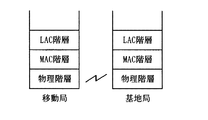
図1は、本発明の実施の形態に係るパケット伝送のための専用チャネル割当て方法における、移動局と基地局との間の下位CDMAプロトコル階層の積層構造を示した概念図である。
【0016】
移動局と基地局との間の物理階層のプロトコル要素は、移動局と基地局との間のCDMA無線インターフェースを制御する。また、MAC階層のプロトコル要素は、媒体アクセスを制御し、リンクアクセス制御LAC( Link Access Control)階層のプロトコル要素は、リンクアクセスを制御する。物理階層、MAC階層及びLAC階層のプロトコル要素は、移動局と基地局のそれぞれに含まれている。
【0017】
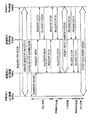
図2は、図1に示した各階層における、各プロトコル要素のそれぞれ該当する機能を遂行する各階層制御部間の動作を示すフローチャートである。ここで、物理階層制御部は物理階層機能を遂行するための装置であり、MAC階層の制御部はMAC階層機能を遂行するための装置であり、LAC階層の制御部はLAC階層機能を遂行するための装置である。
【0018】
図3は、本発明の実施の形態に係るパケット伝送のための専用チャネル割当て方法を示すフローチャートである。
【0019】
第1ステップは、移動局のMAC階層の制御部で、パケットの発生に応じて該パケットのサービスオプションを決定するまでの段階である。このとき、前記移動局のMAC階層の制御部を停止状態に遷移させるステップS11を、前記パケットのサービスオプションを決定するステップS12の前に設けることが望ましい。このとき、ステップS11及びS12が第1ステップに該当する。
【0020】
第2ステップとしては、前記決定の結果を受けて下記の2通りの段階が存在する。一方は、前記パケットのサービスオプションがコネクション形通信であったときで、指定制御チャネルDCCH(dedicated control channel)割当てを要求し、該DCCHを受け取る段階となり、ステップS13及びS14がこれに該当する。
【0021】
ステップS13では、前記DCCHの割当てを要求する。例えば、前記移動局のMAC階層の制御部が、基地局のMAC階層の制御部に前記DCCHの割当てを要求する。そして、ステップS14において、DCCHを受け取る前に、停止状態のタイマーが終了するか否かを判断し、第3ステップに進行する。
【0022】
他方は、パケットのサービスオプションがコネクションレス形通信であったときで、このとき、第2ステップは第10ステップをさらに含む段階となる。
【0023】
第10ステップは、移動局のMAC階層の制御部が、そこに任意に接続された共通トラフィックチャネルCTCH(common traffic channel)を介してパケットを伝送する段階であり、ステップS21がこれに該当する。図示したように、パケット伝送後はステップS11に戻る。
【0024】
第3ステップとしては、前記決定の結果を受けて下記の2通りの段階が存在する。一方は、前記DCCHを受け取る前に、停止状態のタイマーが終了しないときで、このとき第3ステップは、指定トラフィックチャネルDTCH(dedicated traffic channel)割当てを要求し、該DTCHを受け取る段階となる。このとき、第3ステップは、第5ステップ及び第6ステップを含むことが望ましい。
【0025】
第5ステップは、前記移動局のMAC階層の制御部が制御保持状態に遷移する段階であり、ステップS15がこれに該当する。第6ステップは、前記基地局のMAC階層の制御部に前記DTCH割当てを要求する段階であり、ステップS16がこれに該当する。
【0026】
ステップS17において、DTCHを受け取る前に制御保持状態のタイマーが終了するか否かを判断する。結果として、ステップS15、S16及びS17が第3ステップに該当する。制御保持状態のタイマーが終了しなければ、移動局のMAC階層の制御部が活性状態に遷移する第4ステップに移行し、また終了すると、ステップS11に戻る。
【0027】
他方は、前記DCCHが割り当てられる前に、停止状態のタイマーが終了するときで、このとき第3ステップは、第11ステップをさらに含む。
【0028】
第11ステップは、前記移動局のMAC階層の制御部が休止状態に遷移するか、または前記停止状態に戻る段階である。図示したように、ステップS14からステップS21に進み、また、ステップS21からステップS11に戻る。
【0029】
第4ステップとしては、前記決定の結果を受けて下記の2通りの段階が存在する。一方は、前記DTCHが割り当てられる前に制御保持状態のタイマーが終了しないときで、前記DTCHを介して前記パケットを伝送する段階となる。このとき、第4ステップは、第7ステップ、第8ステップ及び第9ステップを含むことが望ましい。
【0030】
第7ステップは、前記DTCHを介して前記パケットを伝送する前に前記移動局のMAC階層の制御部を活性状態に遷移させる段階であり、ステップS18がこれに該当する。第8ステップは、活性状態のタイマーが終了する前に前記パケットを伝送する段階であり、ステップS19がこれに該当する。
【0031】
ステップS19において、移動局のMAC階層の制御部は、割り当てられたDTCHを介してパケットを伝送する。そして、ステップS20において、前記パケットが伝送される前に、活性状態のタイマーが終了するか否かを判断する。終了しないと判断すると、前記パケットを伝送する手続きを完了し、また終了したと判断すると、第9ステップに進行する。
【0032】
第9ステップは、前記活性状態のタイマーが終了した後、前記移動局のMAC階層の制御部が前記制御保持状態に遷移する段階である。図示したように、ステップS20からステップS15に戻る。結果として、第4ステップには、ステップ17、18、19及び20が該当する。
【0033】
他方は、前記DTCHが割り当てられる前に、制御保持状態のタイマーが終了すると判断したときで、第4ステップは第12ステップを含む。
【0034】
第12ステップは、前記移動局のMAC階層の制御部が前記停止状態に遷移するか、または前記制御保持状態に戻る段階である。図示したように、ステップS17からステップS11に戻る。
【0035】
図4は、本発明の実施の形態に係るパケット伝送のための専用チャネル割当て方法における、MAC階層の制御部の状態遷移を示すフローチャートである。
【0036】
図4に示したように、MAC階層の制御部は、休止状態、停止状態、制御保持状態及び活性状態の四つのパターンで動作することができる。
【0037】
休止状態は、移動局が基地局からパイロット信号を受信する状態を意味する。休止状態において、システム情報は、伝送されないため、電力制御は行われず、消散される電力の量が極めて少ない状態である。コネクションレス形通信パケットは、休止状態でCTCHを介して任意に伝送される。すなわち、パケットバーストモード(packet burst mode)サービスは、この状態で行われる。コネクション形通信サービスを要求するパケットが発生すると、MAC階層の制御部は、停止状態に遷移する。停止状態とは、いかなる専用チャネル(DCCHやDTCH)も割り当てられていない、データサービスモードの初期状態を意味する。
【0038】
MAC階層の制御部は停止状態に遷移した後、DCCHを受け取る。DCCHを受け取る前に、停止状態のタイマーが終了すると、MAC階層の制御部は、DCCHを受け取るまで制御保持状態に遷移しない。制御保持状態とは、DCCHを受け取った後、DTCHが割り当てられるまでの状態を意味する。
【0039】
DTCHがパケットに割り当てられることによって、MAC階層の制御部は、活性状態に遷移する。しかし、制御保持状態のタイマーが、DTCHを受け取る前に終了すると、MAC階層の制御部は、停止状態に再び戻る。
【0040】
活性状態において、データサービスモードのパケットは、パケットに割り当てられたDTCHを介して伝送される。活性状態で消散される電力の量が、四つのパターンの中で最も多い。活性状態のタイマーが終了する前に、パケットの伝送は完了されるべきである。活性状態のタイマーが終了すると、MAC階層の制御部は、再び制御保持状態に戻る。
【0041】
パケットが、データサービスモードで発生する確率に対する等式は、λD =λ×PDである。ここでλは、パケットデータサービスモードを要求するコネクション形通信パケットデータが発生する確率を示し、PDは、パケットがMAC階層の制御部で発生する確率を示している。パケットがλDの確率で発生すると、移動局のMAC階層の制御部は、パケットのサービスオプションを決定する。コネクション形通信パケットであれば、MAC階層の制御部は、停止状態で、基地局のMAC階層の制御部に移動局の物理階層を介して、DCCHが割り当てられるように要求する。
【0042】
DCCHが割り当てられれば、MAC階層の制御部は、制御保持状態に遷移し、ついで、DTCHは、λDの確率で割り当てられる。ここで、λDは、DCCHの要求率を示す。DTCHが割り当てられれば、MAC階層の制御部は、活性状態に遷移し、割り当てられたDTCHを介してパケットを伝送する。
【0043】
パケットは、時間TAの間、活性状態で伝送される。時間TAが経過すると、MAC階層の制御部が、制御保持状態に戻る。この時間TAは、活性状態におけるシステムタイマーの値を示す。
【0044】
ついで、時間TCが経過したか否かを判断し、DTCHが割り当てられないまま時間TCが経過した後に、MAC階層の制御部は停止状態に遷移する。ここで、時間TSは、停止状態でのシステムタイマーの値を示す。
【0045】
パケットバーストモードサービスが行われる休止状態において、状態遷移の二つのパターンを仮定することができる。その一つは、第1自己状態への再遷移、すなわちパケットバーストモードが保持される状態であり、他の一つは停止状態への遷移すなわち、データサービスモードへの遷移である。データサービスモードに遷移する確率は、PDである。コネクション形通信パケットが発生すると、MAC階層の制御部は、直ちにデータサービスモードに遷移する。したがって、第1自己状態に遷移する確率は、(1-PD)、すなわちコネクションレス形通信パケットが発生する確率となる。コネクションレス形通信パケットが発生すると、MAC階層の制御部は、パケットバーストモードに続いて留まることとなる。
【0046】
停止状態では、三つのパターンの状態遷移を仮定することができる。その一つは、λDの確率でDCCHが割り当てられ、制御保持状態に遷移する場合である。他の二つのパターンは、DCCHが割り当てられなければ、それぞれ第2自己状態、すなわち停止状態に再遷移する場合と、休止状態に遷移する場合である。
【0047】
DCCHが割り当てられるまで、停止状態のタイマーの値時間TSは経過する。時間TSが経過すると、MAC階層の制御部は休止状態に遷移する。DCCHが割り当てられなければ、MAC階層の制御部は、時間1/TSごとに休止状態に遷移し、DCCHが割り当てられない確率は(1-λD)となる。したがって、休止状態に遷移する確率は、(1-λD)/TSとなり、また、第2自己状態に再遷移する確率は、(1-DCCHが割り当てられない確率-休止状態に遷移する確率)、すなわち(1-λD)(1-1/TS)である。
【0048】
制御保持状態では、状態遷移の3つのパターンを仮定することができる。その一つは、μDの確率でDTCHが割り当てられ、活性状態に遷移する場合である。他の二つのパターンは、DTCHが割り当てられず、それぞれ第3自己状態、すなわち制御保持状態に再遷移する場合と、停止状態に遷移する場合である。
【0049】
DTCHが割り当てられるまで、制御保持状態のタイマー値時間TCは経過する。時間TCが経過すると、MAC階層の制御部は、停止状態に遷移する。DTCHが割り当てられなければ、MAC階層の制御部は、時間1/TCごとに停止状態に遷移し、DTCHが割り当てられない確率は(1-μD)となる。したがって、停止状態に遷移する確率は、(1-μD)/TCとなり、また、第3自己状態に再び遷移する確率は、(1-DTCHが割り当てられない確率-停止状態に遷移する確率)、すなわち(1-μD)(1-1/TC)である。
【0050】
【発明の効果】
上述したように、本発明に係るパケット伝送のための専用チャネル割当て方法によれば、移動局と基地局との間でパケットデータを伝送するとき、コネクション形通信パケットに専用チャネルを割り当てることによって、パケット発生量の増加と関係なく、迅速なパケット処理速度を保持することができる。
【0051】
さらに詳細には、100名のユーザが0.8の確率でデータサービスモードを要求するとした場合、パケット伝送方法における平均遅延に関しては、従来の方法とあまり差はないが、処理率ではパケット発生量と関係なく常に54%以上を保持することができるという優れた効果がある。
【図面の簡単な説明】
【図1】 本発明の実施の形態に係るパケット伝送のための専用チャネル割当て方法における、移動局と基地局との間の下位CDMAプロトコル階層の積層構造を示した概念図である。
【図2】 図1に示した各階層における、各プロトコル要素のそれぞれ該当する機能を遂行する各階層制御部間の動作を示すフローチャートである。
【図3】 本発明の実施の形態に係るパケット伝送のための専用チャネル割当て方法を示すフローチャートである。
【図4】 本発明の実施の形態に係るパケット伝送のための専用チャネル割当て方法における、MAC階層の制御部の状態遷移を示すフローチャートである。[0001]
BACKGROUND OF THE INVENTION
The present invention relates to data transmission between a mobile station MS (mobile station) and a base station BS (base station) in a CDMA (code division multiple access) mobile communication system, and more particularly, to a mobile station and a base station in a CDMA mobile communication system. The present invention relates to a dedicated channel allocation method for packet transmission in a control unit of a CDMA medium access control MAC (media access control) layer.
[0002]
[Prior art]
In the conventional wireless data service, the data traffic service is provided in the same manner as the voice traffic service based on the circuit switching method. When this method is used, there is an advantage that the delay time is short. However, in the data service as well as the voice service, the channel is occupied for a long time for the data call, so that there is a problem that the radio resource efficiency is very low and the degree of packet change is very small. It was. In particular, in the CDMA mobile communication system, there is a problem that in order to maintain the channel, power more than necessary is dissipated and the quality of the entire system is deteriorated.
[0003]
[Problems to be solved by the invention]
The present invention solves the above-described problems of the prior art, and can improve radio resource efficiency when transmitting packet data between a mobile station and a base station in a CDMA mobile communication system. It is an object of the present invention to provide a dedicated channel assignment method for packet transmission in the control unit of the above.
[0004]
[Means for Solving the Problems]
To achieve the above object, the present invention provides a dedicated channel assignment method for packet transmission between a mobile station and a base station in a CDMA mobile communication system including the mobile station and the base station. A first step of determining a service option of the packet according to the occurrence of the packet, and if the service option of the packet is connection-type communication, the designated control channel DCCH (dedicated control channel) allocation A second step of receiving the DCCH, a third step of requesting a designated traffic channel DTCH (dedicated traffic channel) allocation and receiving the DTCH, and a fourth step of transmitting the packet via the DTCH; It is characterized by including.
[0005]
Here, it is preferable that the MAC layer control unit of the mobile station shifts to a stop state before determining the service option of the packet.
[0006]
Further, the MAC layer control unit of the mobile station may request the DCCH allocation to the MAC layer control unit of the base station.
[0007]
The third step includes a fifth step in which a control unit of the MAC layer of the mobile station transitions to a control holding state when a timer in a stopped state does not end before receiving the DCCH, and a MAC layer of the base station It is desirable to include a sixth step of requesting the DTCH allocation to the control unit.
[0008]
In addition, when the control hold state timer does not expire before receiving the DTCH, the fourth step transitions the MAC layer control unit of the mobile station to an active state before transmitting the packet via the DTCH. The seventh step of transmitting, the eighth step of transmitting the packet before the active timer ends, and the MAC layer control unit of the mobile station in the control holding state after the active timer ends. It is desirable to include a ninth step for transition.
[0009]
The second step includes a tenth step of transmitting the packet via a common traffic channel CTCH (common traffic channel) that is arbitrarily connected when the service option of the packet is connectionless communication. Furthermore, it is good to include.
[0010]
Further, the third step is an eleventh step in which, when the timer in the stopped state ends before the DCCH is assigned, the MAC layer control unit of the mobile station transitions to the dormant state or returns to the stopped state. It is desirable to further include.
[0011]
In addition, λ D indicates the request rate of the DCCH, and when T S indicates the timer value of the stopped state, the probability of transitioning to the dormant state is (1-λ D ) / T S, and the probability of returning to the stopped state Can be (1-λ D ) (1- (1 / T S )).
[0012]
Further, in the fourth step, when the control hold state timer ends before the DTCH is assigned, the MAC layer control unit of the mobile station transitions to the stop state or returns to the control hold state. It is desirable to include the 12th step.
[0013]
In addition, when the μ D indicates the request rate of the DTCH, and T c indicates the timer value of the control holding state, the probability of transition to the stop state is (1-μ D ) / T c , and the control holding state The probability of returning to (1-μ D ) (1- (1 / T c )) can be set.
[0014]
DETAILED DESCRIPTION OF THE INVENTION
Hereinafter, a dedicated channel assignment method for packet transmission according to an embodiment of the present invention will be described in detail with reference to the accompanying drawings.
[0015]
FIG. 1 is a conceptual diagram showing a layered structure of a lower CDMA protocol layer between a mobile station and a base station in a dedicated channel assignment method for packet transmission according to an embodiment of the present invention.
[0016]
Protocol elements in the physical layer between the mobile station and the base station control the CDMA radio interface between the mobile station and the base station. The MAC layer protocol element controls medium access, and the link access control LAC (Link Access Control) layer protocol element controls link access. Protocol elements of the physical layer, the MAC layer, and the LAC layer are included in each of the mobile station and the base station.
[0017]
FIG. 2 is a flowchart showing an operation between each layer control unit that performs a function corresponding to each protocol element in each layer shown in FIG. Here, the physical layer control unit is a device for performing the physical layer function, the MAC layer control unit is a device for performing the MAC layer function, and the LAC layer control unit performs the LAC layer function. It is a device for.
[0018]
FIG. 3 is a flowchart showing a dedicated channel assignment method for packet transmission according to the embodiment of the present invention.
[0019]
The first step is a stage until the service option of the packet is determined by the control unit of the MAC layer of the mobile station according to the generation of the packet. At this time, it is preferable to provide step S11 for transitioning the MAC layer control unit of the mobile station to a stop state before step S12 for determining the service option of the packet. At this time, steps S11 and S12 correspond to the first step.
[0020]
As the second step, there are the following two stages based on the result of the determination. On the other hand, when the service option of the packet is connection-type communication, it is a stage to request assignment of a designated control channel DCCH (dedicated control channel) and receive the DCCH, and steps S13 and S14 correspond to this.
[0021]
In step S13, the DCCH allocation is requested. For example, the MAC layer control unit of the mobile station requests the DCCH assignment to the MAC layer control unit of the base station. Then, in step S14, before receiving the DCCH, it is determined whether or not the stopped timer ends, and the process proceeds to the third step.
[0022]
The other is when the packet service option is connectionless communication. At this time, the second step further includes a tenth step.
[0023]
The tenth step is a stage in which the MAC layer control unit of the mobile station transmits a packet via a common traffic channel CTCH (common traffic channel) arbitrarily connected thereto, and step S21 corresponds to this. As shown in the figure, after packet transmission, the process returns to step S11.
[0024]
As the third step, there are the following two stages depending on the result of the determination. One is when the stopped timer does not end before receiving the DCCH. At this time, the third step is a step of requesting allocation of a designated traffic channel DTCH (dedicated traffic channel) and receiving the DTCH. At this time, it is desirable that the third step includes a fifth step and a sixth step.
[0025]
The fifth step is a stage in which the control unit of the MAC layer of the mobile station transitions to the control holding state, and step S15 corresponds to this. The sixth step is a step of requesting the DTCH assignment to the MAC layer control unit of the base station, and step S16 corresponds to this.
[0026]
In step S17, before receiving DTCH, it is determined whether or not the control hold timer ends. As a result, steps S15, S16 and S17 correspond to the third step. If the timer in the control hold state does not end, the control part of the MAC layer of the mobile station proceeds to the fourth step in which it transitions to the active state, and upon completion, returns to step S11.
[0027]
The other is when the stopped timer expires before the DCCH is allocated. At this time, the third step further includes an eleventh step.
[0028]
The eleventh step is a stage in which the MAC layer control unit of the mobile station transitions to a dormant state or returns to the suspended state. As shown in the figure, the process proceeds from step S14 to step S21, and returns from step S21 to step S11.
[0029]
As the fourth step, there are the following two stages depending on the result of the determination. One is when the control holding timer does not end before the DTCH is assigned, and the packet is transmitted via the DTCH. At this time, the fourth step preferably includes a seventh step, an eighth step, and a ninth step.
[0030]
The seventh step is a step of transitioning the MAC layer control unit of the mobile station to an active state before transmitting the packet via the DTCH, which corresponds to step S18. The eighth step is a step of transmitting the packet before the active timer expires, and step S19 corresponds to this step.
[0031]
In step S19, the MAC layer control unit of the mobile station transmits the packet via the assigned DTCH. In step S20, it is determined whether or not the active timer expires before the packet is transmitted. If it is determined not to end, the procedure for transmitting the packet is completed, and if it is determined that it has ended, the process proceeds to the ninth step.
[0032]
The ninth step is a stage in which the MAC layer control unit of the mobile station transitions to the control holding state after the active state timer ends. As shown, the process returns from step S20 to step S15. As a result, steps 17, 18, 19, and 20 correspond to the fourth step.
[0033]
The other is when it is determined that the timer in the control hold state ends before the DTCH is assigned, and the fourth step includes the twelfth step.
[0034]
The twelfth step is a stage in which the MAC layer control unit of the mobile station transitions to the stop state or returns to the control hold state. As illustrated, the process returns from step S17 to step S11.
[0035]
FIG. 4 is a flowchart showing state transition of the control unit of the MAC layer in the dedicated channel assignment method for packet transmission according to the embodiment of the present invention.
[0036]
As shown in FIG. 4, the control unit in the MAC layer can operate in four patterns: a dormant state, a stopped state, a control holding state, and an active state.
[0037]
The dormant state means a state in which the mobile station receives a pilot signal from the base station. Since system information is not transmitted in the hibernation state, power control is not performed, and the amount of power dissipated is extremely small. The connectionless communication packet is arbitrarily transmitted via CTCH in a dormant state. That is, a packet burst mode service is performed in this state. When a packet requesting a connection-type communication service occurs, the MAC layer control unit transitions to a stopped state. The stopped state means an initial state of the data service mode in which no dedicated channel (DCCH or DTCH) is assigned.
[0038]
The MAC layer control unit receives the DCCH after transitioning to the stop state. If the stopped timer expires before receiving the DCCH, the MAC layer control unit does not transition to the control holding state until the DCCH is received. The control holding state means a state until DTCH is assigned after receiving DCCH.
[0039]
When the DTCH is assigned to the packet, the MAC layer control unit transitions to the active state. However, if the timer in the control hold state ends before receiving DTCH, the MAC layer control unit returns to the stopped state again.
[0040]
In the active state, the data service mode packet is transmitted via the DTCH assigned to the packet. The amount of power dissipated in the active state is the largest of the four patterns. The packet transmission should be completed before the active timer expires. When the active timer expires, the MAC layer control unit returns to the control hold state again.
[0041]
The equation for the probability that a packet will occur in the data service mode is λ D = λ × P D. Here λ represents the probability that a connection type communication packet data requesting the packet data service mode occurs, P D, the packet indicates the probability of occurrence in the control unit of the MAC layer. When a packet is generated with a probability of λ D , the MAC layer control unit of the mobile station determines the service option of the packet. If the packet is a connection type communication packet, the control unit in the MAC layer requests the control unit in the MAC layer of the base station to allocate a DCCH via the physical layer of the mobile station in a stopped state.
[0042]
If the DCCH is assigned, the control unit in the MAC layer transitions to the control holding state, and then DTCH is assigned with a probability of λ D. Here, λ D indicates a DCCH request rate. If the DTCH is assigned, the MAC layer control unit transitions to the active state and transmits the packet via the assigned DTCH.
[0043]
Packet during the time T A, is transmitted in an active state. When the time T A elapses, the MAC layer control unit returns to the control holding state. The time T A indicates the value of a system timer in the active state.
[0044]
Then, the time T C is determined whether elapsed, after the elapse of still time T C is not assigned DTCH, the control unit of the MAC layer transits to the stop state. Here, the time T S indicates the value of the system timer in the stopped state.
[0045]
In the dormant state where the packet burst mode service is performed, two patterns of state transition can be assumed. One is a re-transition to the first self-state, that is, a state in which the packet burst mode is maintained, and the other is a transition to the stop state, that is, a transition to the data service mode. Probability of transition to a data service mode is P D. When a connection type communication packet is generated, the control unit of the MAC layer immediately shifts to the data service mode. Therefore, the probability of transition to the first self-state is (1-P D ), that is, the probability that a connectionless communication packet will occur. When a connectionless communication packet is generated, the MAC layer control unit remains following the packet burst mode.
[0046]
In the stop state, three patterns of state transitions can be assumed. One of them is a case where a DCCH is assigned with a probability of λ D and transitions to a control holding state. The other two patterns are a case where the DCCH is not assigned and a case where a transition is made again to the second self state, that is, a stop state and a case where a transition is made to a dormant state.
[0047]
DCCH until assigned the value time T S of timer stop state elapses. When the time T S elapses, the MAC layer control unit transitions to a dormant state. If no DCCH is assigned, the MAC layer control unit transitions to a dormant state every
[0048]
In the control holding state, three patterns of state transition can be assumed. One of them is a case where DTCH is assigned with a probability of μ D and transitions to an active state. The other two patterns are a case where DTCH is not assigned and each transitions to the third self state, that is, the control holding state, and transitions to the stop state.
[0049]
The timer value time T C in the control holding state elapses until DTCH is assigned. When the time T C elapses, the MAC layer control unit transitions to a stopped state. If DTCH is allocated, the control unit of the MAC layer transits to the stop state every
[0050]
【The invention's effect】
As described above, according to the dedicated channel assignment method for packet transmission according to the present invention, when transmitting packet data between a mobile station and a base station, by assigning a dedicated channel to a connection-type communication packet, A rapid packet processing speed can be maintained regardless of an increase in the amount of generated packets.
[0051]
More specifically, when 100 users request the data service mode with a probability of 0.8, the average delay in the packet transmission method is not much different from the conventional method, but the processing rate is related to the amount of packets generated. There is an excellent effect that it can always hold 54% or more.
[Brief description of the drawings]
FIG. 1 is a conceptual diagram illustrating a layered structure of a lower CDMA protocol layer between a mobile station and a base station in a dedicated channel assignment method for packet transmission according to an embodiment of the present invention.
FIG. 2 is a flowchart showing an operation between each layer control unit that performs a function corresponding to each protocol element in each layer shown in FIG. 1;
FIG. 3 is a flowchart illustrating a dedicated channel assignment method for packet transmission according to an embodiment of the present invention.
FIG. 4 is a flowchart showing state transition of a MAC layer control unit in a dedicated channel assignment method for packet transmission according to an embodiment of the present invention;
Claims (10)
前記移動局の媒体アクセス制御MAC(media access control)階層の制御部で、パケットの発生に応じて該パケットのサービスオプションを決定する第1ステップと、
該パケットのサービスオプションがコネクション形通信であれば、指定制御チャネルDCCH(dedicated control channel)割当てを要求し、該DCCHを受け取る第2ステップと、
指定トラフィックチャネルDTCH(dedicated traffic channel)割当てを要求し、該DTCHを受け取る第3ステップと、
前記DTCHを介して前記パケットを伝送する第4ステップ
を含むことを特徴とするパケット伝送のための専用チャネル割当て方法。In a dedicated channel allocation method for packet transmission between a mobile station and a base station in a CDMA (code division multiple access) mobile communication system including a mobile station and a base station,
In the mobile station medium access control MAC (media access control) layer control unit, a first step of determining a service option of the packet according to the occurrence of the packet,
If the service option of the packet is connection-type communication, a second step of requesting assignment of a designated control channel DCCH (dedicated control channel) and receiving the DCCH;
Requesting a designated traffic channel DTCH (dedicated traffic channel) allocation and receiving the DTCH;
A dedicated channel assignment method for packet transmission, comprising a fourth step of transmitting the packet via the DTCH.
前記DCCHを受け取る前に停止状態のタイマーが終了しないとき、前記移動局のMAC階層の制御部が制御保持状態に遷移する第5ステップと、
前記基地局のMAC階層の制御部に前記DTCH割当てを要求する第6ステップと
を含むことを特徴とする請求項1に記載のパケット伝送のための専用チャネル割当て方法。The third step includes
When the stopped timer does not expire before receiving the DCCH, the fifth step of the MAC layer control unit of the mobile station transition to the control holding state,
6. The dedicated channel assignment method for packet transmission according to claim 1, further comprising a sixth step of requesting the DTCH assignment to a control unit of a MAC layer of the base station.
前記DTCHを受け取る前に制御保持状態のタイマーが終了しないとき、前記DTCHを介して前記パケットを伝送する前に前記移動局のMAC階層の制御部を活性状態に遷移させる第7ステップと、
活性状態のタイマーが終了する前に前記パケットを伝送する第8ステップと、
前記活性状態のタイマーが終了した後、前記移動局のMAC階層の制御部が前記制御保持状態に遷移する第9ステップ
を含むことを特徴とする請求項1に記載のパケット伝送のための専用チャネル割当て方法。The fourth step includes
When the control hold state timer does not end before receiving the DTCH, the seventh step of transitioning the MAC layer control unit of the mobile station to the active state before transmitting the packet via the DTCH;
An eighth step of transmitting the packet before the active timer expires;
2. The dedicated channel for packet transmission according to claim 1, further comprising a ninth step in which a control unit of the MAC layer of the mobile station transitions to the control holding state after the timer in the active state has expired. Allocation method.
前記パケットのサービスオプションがコネクションレス形通信であるとき、任意に接続されている共通トラフィックチャネルCTCH(common traffic channel)を介して、前記パケットを伝送する第10ステップをさらに含むことを特徴とする請求項1に記載のパケット伝送のための専用チャネル割当て方法。The second step includes
The method further comprises a tenth step of transmitting the packet through a common traffic channel (CTCH) that is arbitrarily connected when the service option of the packet is connectionless communication. The dedicated channel allocation method for packet transmission according to Item 1.
前記DCCHを受け取る前に停止状態のタイマーが終了するとき、前記移動局のMAC階層の制御部が休止状態に遷移するか、または前記停止状態に戻る第11ステップをさらに含むことを特徴とする請求項4に記載のパケット伝送のための専用チャネル割当て方法。The third step includes
The method further comprises an eleventh step in which the MAC layer controller of the mobile station transitions to a dormant state or returns to the stopped state when a stopped timer expires before receiving the DCCH. Item 5. A dedicated channel allocation method for packet transmission according to Item 4.
前記DTCHを受け取る前に制御保持状態のタイマーが終了するとき、前記移動局のMAC階層の制御部が前記停止状態に遷移するか、または前記制御保持状態に戻る第12ステップを含むことを特徴とする請求項5に記載のパケット伝送のための専用チャネル割当て方法。The fourth step includes
When the control hold state timer expires before receiving the DTCH, the mobile station MAC layer control unit transitions to the stop state, or includes a twelfth step to return to the control hold state. 6. A dedicated channel assignment method for packet transmission according to claim 5.
Applications Claiming Priority (2)
| Application Number | Priority Date | Filing Date | Title |
|---|---|---|---|
| KR1020000003473A KR100329182B1 (en) | 2000-01-25 | 2000-01-25 | Method to allocate dedicated channel for transmitting packet in apparatus to perform function of CDMA media access control layer |
| KR2000-3473 | 2000-01-25 |
Publications (2)
| Publication Number | Publication Date |
|---|---|
| JP2001238255A JP2001238255A (en) | 2001-08-31 |
| JP3635239B2 true JP3635239B2 (en) | 2005-04-06 |
Family
ID=19641284
Family Applications (1)
| Application Number | Title | Priority Date | Filing Date |
|---|---|---|---|
| JP2001011968A Expired - Fee Related JP3635239B2 (en) | 2000-01-25 | 2001-01-19 | Dedicated channel allocation method for packet transmission |
Country Status (3)
| Country | Link |
|---|---|
| US (1) | US7020113B2 (en) |
| JP (1) | JP3635239B2 (en) |
| KR (1) | KR100329182B1 (en) |
Families Citing this family (16)
| Publication number | Priority date | Publication date | Assignee | Title |
|---|---|---|---|---|
| US20040196861A1 (en) * | 2001-01-12 | 2004-10-07 | Joseph Rinchiuso | Packet data transmission within a broad-band communication system |
| US7342901B1 (en) * | 2001-05-01 | 2008-03-11 | Nortel Networks Limited | Medium access control (MAC) protocol for a wireless communication system |
| US6912401B2 (en) * | 2001-05-15 | 2005-06-28 | Qualcomm Incorporated | Communication device for providing an efficient dormant mode for a group communication network |
| KR100840733B1 (en) * | 2002-01-05 | 2008-06-24 | 엘지전자 주식회사 | Method for processing packet data in communication system The system and the receiving device |
| KR100819290B1 (en) * | 2002-01-08 | 2008-04-03 | 삼성전자주식회사 | Apparatus for transmitting/receiving high speed-shared control channel in communication system using high speed downlink packet access scheme and method thereof |
| KR100857788B1 (en) * | 2002-02-05 | 2008-09-09 | 엘지전자 주식회사 | How to Convert from Control Hold Mode to Active Mode in Packet Data Systems |
| FR2840758B1 (en) * | 2002-06-11 | 2004-11-26 | Evolium Sas | METHOD FOR SUPPORTING REAL-TIME TRAFFIC IN A MOBILE RADIO COMMUNICATION SYSTEM |
| EP1535413B1 (en) * | 2002-08-09 | 2007-01-17 | Interdigital Technology Corporation | Efficient memory allocation in a wireless transmit/receiver unit |
| DE60317682T2 (en) | 2002-08-14 | 2008-10-30 | Koninklijke Philips Electronics N.V. | SELECTION BETWEEN TWO DIFFERENT CODING METHODS AND CORRESPONDING MODULATION PROCEDURES ACCORDING TO THE PERMITTED TRANSFER DELAY OF THE DATA |
| US7706405B2 (en) | 2002-09-12 | 2010-04-27 | Interdigital Technology Corporation | System for efficient recovery of Node-B buffered data following MAC layer reset |
| KR100704671B1 (en) * | 2003-12-22 | 2007-04-06 | 한국전자통신연구원 | Traffic Processing System and Method for High Speed Mobile Internet System |
| SG155195A1 (en) * | 2004-04-30 | 2009-09-30 | Interdigital Tech Corp | Method and apparatus for minimizing redundant enhanced uplink allocation requests |
| MX2010002747A (en) | 2007-09-11 | 2011-02-25 | Wi Lan Inc | ERROR CORRECTION FOR PERSISTENT RESOURCE ASSIGNMENT. |
| US8155655B1 (en) | 2010-06-16 | 2012-04-10 | Sprint Communications Company L.P. | Assigning an access channel based on a timer in a wireless communication system |
| CN103517318B (en) * | 2012-06-19 | 2017-06-06 | 华为终端有限公司 | A kind of data transmission method for uplink, device and system |
| EP2712242A4 (en) * | 2012-06-21 | 2015-06-24 | Huawei Device Co Ltd | Data sending method, device, and system |
Family Cites Families (11)
| Publication number | Priority date | Publication date | Assignee | Title |
|---|---|---|---|---|
| FI94700C (en) * | 1994-01-21 | 1995-10-10 | Nokia Telecommunications Oy | A network element of a mobile communication system and a method for packet data transmission in a mobile communication system |
| US6002677A (en) * | 1996-08-19 | 1999-12-14 | At&T Corporation | Method and apparatus for transmitting high rate packet data over under-utilized virtual circuits |
| US5901142A (en) * | 1996-09-18 | 1999-05-04 | Motorola, Inc. | Method and apparatus for providing packet data communications to a communication unit in a radio communication system |
| US6078577A (en) * | 1996-11-21 | 2000-06-20 | Motorola, Inc. | System and method for packet data communication |
| US6091717A (en) * | 1997-05-05 | 2000-07-18 | Nokia Mobile Phones Limited | Method for scheduling packet data transmission |
| US5872777A (en) * | 1997-09-30 | 1999-02-16 | Motorola, Inc. | Method and apparatus for conveying data packets in a packet data communication system |
| US6038223A (en) * | 1997-10-22 | 2000-03-14 | Telefonaktiebolaget Lm Ericsson (Publ) | Access scheme for packet data in a digital cellular communication system |
| US6519266B1 (en) * | 1998-01-05 | 2003-02-11 | Nortel Networks Limited | Layering of wireless packet data service |
| US6473419B1 (en) * | 1998-03-26 | 2002-10-29 | Nokia Corporation | State apparatus, and associated methods, for controlling packet data communications in a radio communication system |
| KR100326320B1 (en) * | 1998-07-13 | 2002-03-08 | 윤종용 | apparatus and method for communicating packet data in cdma communication system |
| EP1053605B1 (en) * | 1998-12-07 | 2007-02-14 | Samsung Electronics Co., Ltd. | Device and method for gating transmission in a cdma mobile communication system |
-
2000
- 2000-01-25 KR KR1020000003473A patent/KR100329182B1/en not_active Expired - Lifetime
-
2001
- 2001-01-19 JP JP2001011968A patent/JP3635239B2/en not_active Expired - Fee Related
- 2001-01-22 US US09/767,003 patent/US7020113B2/en not_active Expired - Lifetime
Also Published As
| Publication number | Publication date |
|---|---|
| KR100329182B1 (en) | 2002-03-22 |
| JP2001238255A (en) | 2001-08-31 |
| US7020113B2 (en) | 2006-03-28 |
| KR20010074409A (en) | 2001-08-04 |
| US20010010687A1 (en) | 2001-08-02 |
Similar Documents
| Publication | Publication Date | Title |
|---|---|---|
| JP3478542B2 (en) | Data transmission method in mobile communication system | |
| JP4805361B2 (en) | Radio transmitting / receiving apparatus and method having transition state for transition from monitor state to duplex connection state | |
| US7551588B2 (en) | Autonomous mode transmission from a mobile station | |
| CN100441037C (en) | Fast establishment of physical communication channel | |
| TWI504186B (en) | Paging over a high-speed downlink shared channel | |
| US7158495B2 (en) | Packet data transmitting/receiving method in mobile communication system | |
| CN101272619B (en) | Method and related device for improving data transmission efficiency of radio resource control program | |
| EP1665546B1 (en) | Resource negotiation in wireless communications networks and methods | |
| US20020160812A1 (en) | Channel supervision in a radio network | |
| WO2023010257A1 (en) | Sidelink communication method and apparatus, and device and storage medium | |
| CN1160992C (en) | Reduce control channel traffic | |
| JP2007527631A5 (en) | ||
| JP2007527631A (en) | Method and apparatus for switching mobile station between autonomous transmission and schedule transmission | |
| KR20020038922A (en) | Variable fast page mode | |
| US7787413B2 (en) | Method for mobile station request release of multiple packet data service sessions simultaneously using resource release request messages | |
| JP2001238255A (en) | Dedicated channel allocation method for packet transmission | |
| JP2008312209A (en) | Method and apparatus for improving downlink discontinuous reception capability in a wireless communication system | |
| CN1820534B (en) | Method for controlling radio resources associated with a mobile station, and radio communication system | |
| WO2010135985A1 (en) | Method, device and system for controlling allocation of credit resources of uplink enhanced dedicated channel | |
| US6625137B1 (en) | Method for operating supplemental code channel for high speed data service in radio telecommunication system | |
| US9094976B2 (en) | Method and related apparatus for enhancing resource utility rate in a wireless communications system | |
| RU2335867C2 (en) | Method of data transmission speed control, data transmission speed control system and mobile station | |
| KR100606662B1 (en) | Method of resource assignment using packet service in mobile commuincation system | |
| WO2007055221A1 (en) | Radio resource configuration method in mobile communication network | |
| JP2009065662A (en) | Method and apparatus for introducing paging reception function into queuing function of wireless communication system |
Legal Events
| Date | Code | Title | Description |
|---|---|---|---|
| A711 | Notification of change in applicant |
Free format text: JAPANESE INTERMEDIATE CODE: A711 Effective date: 20040116 |
|
| A521 | Request for written amendment filed |
Free format text: JAPANESE INTERMEDIATE CODE: A821 Effective date: 20040119 |
|
| A131 | Notification of reasons for refusal |
Free format text: JAPANESE INTERMEDIATE CODE: A131 Effective date: 20040316 |
|
| A711 | Notification of change in applicant |
Free format text: JAPANESE INTERMEDIATE CODE: A711 Effective date: 20040430 |
|
| A601 | Written request for extension of time |
Free format text: JAPANESE INTERMEDIATE CODE: A601 Effective date: 20040615 |
|
| A602 | Written permission of extension of time |
Free format text: JAPANESE INTERMEDIATE CODE: A602 Effective date: 20040705 |
|
| TRDD | Decision of grant or rejection written | ||
| A01 | Written decision to grant a patent or to grant a registration (utility model) |
Free format text: JAPANESE INTERMEDIATE CODE: A01 Effective date: 20041207 |
|
| A61 | First payment of annual fees (during grant procedure) |
Free format text: JAPANESE INTERMEDIATE CODE: A61 Effective date: 20041228 |
|
| R150 | Certificate of patent or registration of utility model |
Free format text: JAPANESE INTERMEDIATE CODE: R150 |
|
| LAPS | Cancellation because of no payment of annual fees |