EP0958239B1 - Method for manufacturing hydroxylamine - Google Patents
Method for manufacturing hydroxylamine Download PDFInfo
- Publication number
- EP0958239B1 EP0958239B1 EP97925418A EP97925418A EP0958239B1 EP 0958239 B1 EP0958239 B1 EP 0958239B1 EP 97925418 A EP97925418 A EP 97925418A EP 97925418 A EP97925418 A EP 97925418A EP 0958239 B1 EP0958239 B1 EP 0958239B1
- Authority
- EP
- European Patent Office
- Prior art keywords
- ion exchange
- effluent
- hydroxylamine
- desorbent
- stream
- Prior art date
- Legal status (The legal status is an assumption and is not a legal conclusion. Google has not performed a legal analysis and makes no representation as to the accuracy of the status listed.)
- Expired - Lifetime
Links
- AVXURJPOCDRRFD-UHFFFAOYSA-N Hydroxylamine Chemical compound ON AVXURJPOCDRRFD-UHFFFAOYSA-N 0.000 title claims abstract description 183
- 238000000034 method Methods 0.000 title claims description 82
- 238000004519 manufacturing process Methods 0.000 title description 8
- 238000005342 ion exchange Methods 0.000 claims abstract description 159
- XLYOFNOQVPJJNP-UHFFFAOYSA-N water Substances O XLYOFNOQVPJJNP-UHFFFAOYSA-N 0.000 claims abstract description 97
- -1 hydroxylammonium ion Chemical class 0.000 claims abstract description 72
- 150000001450 anions Chemical class 0.000 claims abstract description 14
- 239000007864 aqueous solution Substances 0.000 claims abstract description 10
- 239000000243 solution Substances 0.000 claims description 56
- NWUYHJFMYQTDRP-UHFFFAOYSA-N 1,2-bis(ethenyl)benzene;1-ethenyl-2-ethylbenzene;styrene Chemical group C=CC1=CC=CC=C1.CCC1=CC=CC=C1C=C.C=CC1=CC=CC=C1C=C NWUYHJFMYQTDRP-UHFFFAOYSA-N 0.000 claims description 42
- 239000000356 contaminant Substances 0.000 claims description 37
- 239000003729 cation exchange resin Substances 0.000 claims description 31
- 238000005406 washing Methods 0.000 claims description 25
- VHUUQVKOLVNVRT-UHFFFAOYSA-N Ammonium hydroxide Chemical compound [NH4+].[OH-] VHUUQVKOLVNVRT-UHFFFAOYSA-N 0.000 claims description 24
- 239000012527 feed solution Substances 0.000 claims description 18
- 239000000908 ammonium hydroxide Substances 0.000 claims description 11
- 239000003456 ion exchange resin Substances 0.000 claims description 11
- 229920003303 ion-exchange polymer Polymers 0.000 claims description 11
- 150000001768 cations Chemical class 0.000 claims description 8
- 150000001412 amines Chemical class 0.000 claims description 6
- XLYOFNOQVPJJNP-UHFFFAOYSA-M hydroxide Chemical compound [OH-] XLYOFNOQVPJJNP-UHFFFAOYSA-M 0.000 claims description 6
- 229910052739 hydrogen Inorganic materials 0.000 claims description 5
- 239000001257 hydrogen Substances 0.000 claims description 5
- 125000004122 cyclic group Chemical group 0.000 claims description 3
- 238000013459 approach Methods 0.000 claims description 2
- 239000011347 resin Substances 0.000 description 69
- 229920005989 resin Polymers 0.000 description 69
- 238000003795 desorption Methods 0.000 description 52
- 239000000047 product Substances 0.000 description 49
- QGZKDVFQNNGYKY-UHFFFAOYSA-N Ammonia Chemical compound N QGZKDVFQNNGYKY-UHFFFAOYSA-N 0.000 description 39
- 239000008367 deionised water Substances 0.000 description 24
- 229910021641 deionized water Inorganic materials 0.000 description 20
- 239000003463 adsorbent Substances 0.000 description 16
- 239000000463 material Substances 0.000 description 16
- 239000000284 extract Substances 0.000 description 15
- 238000000746 purification Methods 0.000 description 14
- 238000001179 sorption measurement Methods 0.000 description 13
- QAOWNCQODCNURD-UHFFFAOYSA-L Sulfate Chemical compound [O-]S([O-])(=O)=O QAOWNCQODCNURD-UHFFFAOYSA-L 0.000 description 12
- 150000002500 ions Chemical class 0.000 description 12
- 239000012535 impurity Substances 0.000 description 11
- CRJZNQFRBUFHTE-UHFFFAOYSA-N hydroxylammonium nitrate Chemical compound O[NH3+].[O-][N+]([O-])=O CRJZNQFRBUFHTE-UHFFFAOYSA-N 0.000 description 10
- 235000011114 ammonium hydroxide Nutrition 0.000 description 9
- 239000012530 fluid Substances 0.000 description 9
- QGZKDVFQNNGYKY-UHFFFAOYSA-O Ammonium Chemical compound [NH4+] QGZKDVFQNNGYKY-UHFFFAOYSA-O 0.000 description 8
- 229910021529 ammonia Inorganic materials 0.000 description 8
- 125000000129 anionic group Chemical group 0.000 description 8
- 125000002091 cationic group Chemical group 0.000 description 8
- 230000000694 effects Effects 0.000 description 8
- 229910000378 hydroxylammonium sulfate Inorganic materials 0.000 description 8
- 239000007788 liquid Substances 0.000 description 8
- 238000011068 loading method Methods 0.000 description 8
- 238000012544 monitoring process Methods 0.000 description 8
- 238000011084 recovery Methods 0.000 description 8
- 238000004458 analytical method Methods 0.000 description 7
- VGYYSIDKAKXZEE-UHFFFAOYSA-L hydroxylammonium sulfate Chemical compound O[NH3+].O[NH3+].[O-]S([O-])(=O)=O VGYYSIDKAKXZEE-UHFFFAOYSA-L 0.000 description 7
- 238000012360 testing method Methods 0.000 description 7
- 239000011800 void material Substances 0.000 description 7
- 239000002253 acid Substances 0.000 description 6
- 238000010924 continuous production Methods 0.000 description 6
- 150000002923 oximes Chemical class 0.000 description 6
- 150000003467 sulfuric acid derivatives Chemical class 0.000 description 6
- 238000010521 absorption reaction Methods 0.000 description 5
- 239000002245 particle Substances 0.000 description 5
- 238000004886 process control Methods 0.000 description 5
- QAOWNCQODCNURD-UHFFFAOYSA-N Sulfuric acid Chemical compound OS(O)(=O)=O QAOWNCQODCNURD-UHFFFAOYSA-N 0.000 description 4
- 239000002131 composite material Substances 0.000 description 4
- 150000002576 ketones Chemical class 0.000 description 4
- 239000000203 mixture Substances 0.000 description 4
- VLTRZXGMWDSKGL-UHFFFAOYSA-N perchloric acid Chemical compound OCl(=O)(=O)=O VLTRZXGMWDSKGL-UHFFFAOYSA-N 0.000 description 4
- 239000000523 sample Substances 0.000 description 4
- 238000000926 separation method Methods 0.000 description 4
- 239000007787 solid Substances 0.000 description 4
- 230000003068 static effect Effects 0.000 description 4
- 238000011144 upstream manufacturing Methods 0.000 description 4
- WMFOQBRAJBCJND-UHFFFAOYSA-M Lithium hydroxide Chemical compound [Li+].[OH-] WMFOQBRAJBCJND-UHFFFAOYSA-M 0.000 description 3
- 229910002651 NO3 Inorganic materials 0.000 description 3
- NHNBFGGVMKEFGY-UHFFFAOYSA-N Nitrate Chemical compound [O-][N+]([O-])=O NHNBFGGVMKEFGY-UHFFFAOYSA-N 0.000 description 3
- GRYLNZFGIOXLOG-UHFFFAOYSA-N Nitric acid Chemical compound O[N+]([O-])=O GRYLNZFGIOXLOG-UHFFFAOYSA-N 0.000 description 3
- KWYUFKZDYYNOTN-UHFFFAOYSA-M Potassium hydroxide Chemical compound [OH-].[K+] KWYUFKZDYYNOTN-UHFFFAOYSA-M 0.000 description 3
- HEMHJVSKTPXQMS-UHFFFAOYSA-M Sodium hydroxide Chemical compound [OH-].[Na+] HEMHJVSKTPXQMS-UHFFFAOYSA-M 0.000 description 3
- 150000007513 acids Chemical class 0.000 description 3
- 238000011109 contamination Methods 0.000 description 3
- 238000002474 experimental method Methods 0.000 description 3
- 230000007062 hydrolysis Effects 0.000 description 3
- 238000006460 hydrolysis reaction Methods 0.000 description 3
- 229910017604 nitric acid Inorganic materials 0.000 description 3
- 150000003839 salts Chemical class 0.000 description 3
- 239000002351 wastewater Substances 0.000 description 3
- VEXZGXHMUGYJMC-UHFFFAOYSA-M Chloride anion Chemical compound [Cl-] VEXZGXHMUGYJMC-UHFFFAOYSA-M 0.000 description 2
- ROSDSFDQCJNGOL-UHFFFAOYSA-N Dimethylamine Chemical compound CNC ROSDSFDQCJNGOL-UHFFFAOYSA-N 0.000 description 2
- QUSNBJAOOMFDIB-UHFFFAOYSA-N Ethylamine Chemical compound CCN QUSNBJAOOMFDIB-UHFFFAOYSA-N 0.000 description 2
- BAVYZALUXZFZLV-UHFFFAOYSA-N Methylamine Chemical compound NC BAVYZALUXZFZLV-UHFFFAOYSA-N 0.000 description 2
- RAHZWNYVWXNFOC-UHFFFAOYSA-N Sulphur dioxide Chemical compound O=S=O RAHZWNYVWXNFOC-UHFFFAOYSA-N 0.000 description 2
- 230000002378 acidificating effect Effects 0.000 description 2
- BFNBIHQBYMNNAN-UHFFFAOYSA-N ammonium sulfate Chemical compound N.N.OS(O)(=O)=O BFNBIHQBYMNNAN-UHFFFAOYSA-N 0.000 description 2
- 229910052921 ammonium sulfate Inorganic materials 0.000 description 2
- 235000011130 ammonium sulphate Nutrition 0.000 description 2
- 239000003957 anion exchange resin Substances 0.000 description 2
- 229940023913 cation exchange resins Drugs 0.000 description 2
- 238000006073 displacement reaction Methods 0.000 description 2
- 239000011521 glass Substances 0.000 description 2
- 238000010438 heat treatment Methods 0.000 description 2
- NILJXUMQIIUAFY-UHFFFAOYSA-N hydroxylamine;nitric acid Chemical compound ON.O[N+]([O-])=O NILJXUMQIIUAFY-UHFFFAOYSA-N 0.000 description 2
- 150000002443 hydroxylamines Chemical class 0.000 description 2
- 230000003472 neutralizing effect Effects 0.000 description 2
- 238000002360 preparation method Methods 0.000 description 2
- 239000012264 purified product Substances 0.000 description 2
- LPXPTNMVRIOKMN-UHFFFAOYSA-M sodium nitrite Chemical compound [Na+].[O-]N=O LPXPTNMVRIOKMN-UHFFFAOYSA-M 0.000 description 2
- 238000012546 transfer Methods 0.000 description 2
- ZNBNBTIDJSKEAM-UHFFFAOYSA-N 4-[7-hydroxy-2-[5-[5-[6-hydroxy-6-(hydroxymethyl)-3,5-dimethyloxan-2-yl]-3-methyloxolan-2-yl]-5-methyloxolan-2-yl]-2,8-dimethyl-1,10-dioxaspiro[4.5]decan-9-yl]-2-methyl-3-propanoyloxypentanoic acid Chemical compound C1C(O)C(C)C(C(C)C(OC(=O)CC)C(C)C(O)=O)OC11OC(C)(C2OC(C)(CC2)C2C(CC(O2)C2C(CC(C)C(O)(CO)O2)C)C)CC1 ZNBNBTIDJSKEAM-UHFFFAOYSA-N 0.000 description 1
- NLXLAEXVIDQMFP-UHFFFAOYSA-N Ammonium chloride Substances [NH4+].[Cl-] NLXLAEXVIDQMFP-UHFFFAOYSA-N 0.000 description 1
- UFHFLCQGNIYNRP-UHFFFAOYSA-N Hydrogen Chemical compound [H][H] UFHFLCQGNIYNRP-UHFFFAOYSA-N 0.000 description 1
- DGAQECJNVWCQMB-PUAWFVPOSA-M Ilexoside XXIX Chemical compound C[C@@H]1CC[C@@]2(CC[C@@]3(C(=CC[C@H]4[C@]3(CC[C@@H]5[C@@]4(CC[C@@H](C5(C)C)OS(=O)(=O)[O-])C)C)[C@@H]2[C@]1(C)O)C)C(=O)O[C@H]6[C@@H]([C@H]([C@@H]([C@H](O6)CO)O)O)O.[Na+] DGAQECJNVWCQMB-PUAWFVPOSA-M 0.000 description 1
- 238000007696 Kjeldahl method Methods 0.000 description 1
- PMZURENOXWZQFD-UHFFFAOYSA-L Sodium Sulfate Chemical compound [Na+].[Na+].[O-]S([O-])(=O)=O PMZURENOXWZQFD-UHFFFAOYSA-L 0.000 description 1
- 239000002250 absorbent Substances 0.000 description 1
- 230000002745 absorbent Effects 0.000 description 1
- 230000015572 biosynthetic process Effects 0.000 description 1
- 239000006227 byproduct Substances 0.000 description 1
- 238000005341 cation exchange Methods 0.000 description 1
- 238000006243 chemical reaction Methods 0.000 description 1
- 238000000354 decomposition reaction Methods 0.000 description 1
- 230000003247 decreasing effect Effects 0.000 description 1
- 230000002950 deficient Effects 0.000 description 1
- 238000013461 design Methods 0.000 description 1
- 238000011161 development Methods 0.000 description 1
- HPNMFZURTQLUMO-UHFFFAOYSA-N diethylamine Chemical compound CCNCC HPNMFZURTQLUMO-UHFFFAOYSA-N 0.000 description 1
- 239000003480 eluent Substances 0.000 description 1
- 238000005516 engineering process Methods 0.000 description 1
- 238000001704 evaporation Methods 0.000 description 1
- 230000008020 evaporation Effects 0.000 description 1
- 239000003337 fertilizer Substances 0.000 description 1
- 238000011049 filling Methods 0.000 description 1
- 239000008187 granular material Substances 0.000 description 1
- 230000003301 hydrolyzing effect Effects 0.000 description 1
- GPRLSGONYQIRFK-UHFFFAOYSA-N hydron Chemical compound [H+] GPRLSGONYQIRFK-UHFFFAOYSA-N 0.000 description 1
- RBLWMQWAHONKNC-UHFFFAOYSA-N hydroxyazanium Chemical compound O[NH3+] RBLWMQWAHONKNC-UHFFFAOYSA-N 0.000 description 1
- BMMNWPYKMOFBBE-UHFFFAOYSA-N hydroxylamine;perchloric acid Chemical compound ON.OCl(=O)(=O)=O BMMNWPYKMOFBBE-UHFFFAOYSA-N 0.000 description 1
- 238000002347 injection Methods 0.000 description 1
- 239000007924 injection Substances 0.000 description 1
- 229910052500 inorganic mineral Inorganic materials 0.000 description 1
- 239000007791 liquid phase Substances 0.000 description 1
- 229910052751 metal Inorganic materials 0.000 description 1
- 239000002184 metal Substances 0.000 description 1
- 229910021645 metal ion Inorganic materials 0.000 description 1
- 150000002739 metals Chemical class 0.000 description 1
- 239000011707 mineral Substances 0.000 description 1
- 238000002156 mixing Methods 0.000 description 1
- 238000006386 neutralization reaction Methods 0.000 description 1
- 150000002823 nitrates Chemical class 0.000 description 1
- 231100000252 nontoxic Toxicity 0.000 description 1
- 230000003000 nontoxic effect Effects 0.000 description 1
- 230000001590 oxidative effect Effects 0.000 description 1
- 239000008188 pellet Substances 0.000 description 1
- NBIIXXVUZAFLBC-UHFFFAOYSA-K phosphate Chemical compound [O-]P([O-])([O-])=O NBIIXXVUZAFLBC-UHFFFAOYSA-K 0.000 description 1
- 229940085991 phosphate ion Drugs 0.000 description 1
- 229920001467 poly(styrenesulfonates) Polymers 0.000 description 1
- 239000002952 polymeric resin Substances 0.000 description 1
- 238000011176 pooling Methods 0.000 description 1
- 238000012545 processing Methods 0.000 description 1
- 230000000750 progressive effect Effects 0.000 description 1
- 238000010791 quenching Methods 0.000 description 1
- 238000004064 recycling Methods 0.000 description 1
- 230000000717 retained effect Effects 0.000 description 1
- 229920006395 saturated elastomer Polymers 0.000 description 1
- 229910052708 sodium Inorganic materials 0.000 description 1
- 239000011734 sodium Substances 0.000 description 1
- 235000010288 sodium nitrite Nutrition 0.000 description 1
- 229910052938 sodium sulfate Inorganic materials 0.000 description 1
- 235000011152 sodium sulphate Nutrition 0.000 description 1
- 239000002594 sorbent Substances 0.000 description 1
- 230000002269 spontaneous effect Effects 0.000 description 1
- 239000000126 substance Substances 0.000 description 1
- 238000003786 synthesis reaction Methods 0.000 description 1
- 229920003002 synthetic resin Polymers 0.000 description 1
- 230000007704 transition Effects 0.000 description 1
- 239000002699 waste material Substances 0.000 description 1
Images









Classifications
-
- C—CHEMISTRY; METALLURGY
- C01—INORGANIC CHEMISTRY
- C01B—NON-METALLIC ELEMENTS; COMPOUNDS THEREOF; METALLOIDS OR COMPOUNDS THEREOF NOT COVERED BY SUBCLASS C01C
- C01B21/00—Nitrogen; Compounds thereof
- C01B21/082—Compounds containing nitrogen and non-metals and optionally metals
- C01B21/14—Hydroxylamine; Salts thereof
- C01B21/1409—Preparation
- C01B21/1445—Preparation of hydoxylamine from its salts
-
- C—CHEMISTRY; METALLURGY
- C01—INORGANIC CHEMISTRY
- C01B—NON-METALLIC ELEMENTS; COMPOUNDS THEREOF; METALLOIDS OR COMPOUNDS THEREOF NOT COVERED BY SUBCLASS C01C
- C01B21/00—Nitrogen; Compounds thereof
- C01B21/082—Compounds containing nitrogen and non-metals and optionally metals
- C01B21/14—Hydroxylamine; Salts thereof
- C01B21/1463—Concentration
-
- C—CHEMISTRY; METALLURGY
- C01—INORGANIC CHEMISTRY
- C01B—NON-METALLIC ELEMENTS; COMPOUNDS THEREOF; METALLOIDS OR COMPOUNDS THEREOF NOT COVERED BY SUBCLASS C01C
- C01B21/00—Nitrogen; Compounds thereof
- C01B21/082—Compounds containing nitrogen and non-metals and optionally metals
- C01B21/14—Hydroxylamine; Salts thereof
- C01B21/1481—Purification
Definitions
- This invention is an ion exchange process for producing purified, and in some cases, concentrated solutions of hydroxylamine from a solution comprising hydroxylammonium ion, and ionic impurities including sulfate ions.
- the process relies on the precise control of ion exchange operational parameters such as feed flow rate, wash and desorption temperature, liquid flow linear velocity, as well as the precise monitoring of ion exchange effluent stream parameters such as conductivity, and/or pH to identify when various ion exchange process steps should begin and end.
- Hydroxylamine is prepared commercially by the Raschig process or variations thereof in which ammonium or sodium nitrite is reacted in aqueous solution with ammonium or sodium bi-sulfite and sulfur dioxide and the resulting disulfonate salts are subsequently hydrolyzed to a solution containing essentially hydroxylammonium sulfate, sulfuric acid, ammonium sulfate and/or sodium sulfate plus minor amounts of the corresponding nitrates.
- This solution can be used, after neutralization with ammonia, as a source of hydroxylamine, e.g. for the synthesis of oximes from ketones.
- One method for obtaining pure hydroxylammonium salts consists of using a hydroxylammonium containing mixture to synthesize an oxime from a ketone, separating the oxime from the spent solution and hydrolyzing this oxime with a strong mineral acid to recover hydroxylammonium salt and the ketone which can be recycled.
- This method uses long periods of heating for the hydrolysis and requires expensive equipment for the separation of the oxime from the spent solution and of the hydroxylammonium salt from the ketone.
- salts of hydroxylamine with weak or oxidizing acids cannot be prepared by this method because these acids either do not effect hydrolysis of oximes or decompose the hydroxylammonium salt formed during hydrolysis. Salts of such acids can be prepared by neutralizing cold solutions of hydroxylamine with the corresponding acid.
- hydroxylammonium perchlorate can be produced either by liberating hydroxylamine from a hydroxylammonium salt by passage through an anion exchange resin and neutralizing with perchloric acid, or by absorbing hydroxylammonium ion on a cation exchange resin and then passing perchloric acid through the resin.
- This method does not separate hydroxylamine from other cations.
- a cation exchange method is described by Earl J. Wheelwright in Industrial Engineering Chemistry Process Design Development, Vol. 16 No. 2 (1977), page 220 for the preparation of hydroxylammonium nitrate. This method does not separate hydroxylamine from other cations and moreover the resulting solution of hydroxylammonium nitrate contains significant amounts of nitric acid.
- U.S. Patent No. 5,213,784 discloses a process for producing concentrated purified hydroxylammonium nitrate. The process involves admixing nitric acid having a concentration less than about 70% to solutions containing excess hydroxylamine. The process avoids spontaneous decomposition of the product.
- U.S. Patent No. 4,725,360 discloses a process for recovering hydroxylamine from waste water in the form of hydroxylammonium sulfate. The process consists of passing the waste water over a strongly acidic ion exchanger and then eluting hydroxylamine associated with the ion exchanger with sulfuric acid.
- U.S. Patent No. 4,202,765 discloses a method for purifying hydroxylamine using an ion exchanger. The process consists of passing a hydroxylamine containing solution across a bed of cationic exchange resin and desorbing absorbed hydroxylamine using a monovalent amine or hydroxide base.
- An object of this invention is to provide a process for manufacturing an aqueous hydroxylamine product that is operated at conditions that do not degrade hydroxylamine.
- Another object of this invention is to provide a process for producing an aqueous hydroxylamine product that contains essentially no anionic contaminants.
- Still another object of this invention is to provide a process that produces an essentially pure aqueous hydroxylamine product.
- a further object of this invention is to provide a continuous process for producing a hydroxylamine product by ion-exchange whereby the concentration of the essentially pure hydroxylamine in the product is greater than the concentration of the hydroxylamine in the feed.
- Yet another object of this invention is a process for manufacturing a pure aqueous hydroxylamine product in which process column effluent parameters such as pH, effluent conductivity, and ion exchange column resin bed height are monitored and used to control the transition from one ion exchange step to the next in order to provide an essentially pure non-degraded aqueous hydroxylamine product.
- column effluent parameters such as pH, effluent conductivity, and ion exchange column resin bed height are monitored and used to control the transition from one ion exchange step to the next in order to provide an essentially pure non-degraded aqueous hydroxylamine product.
- this invention is a process for purifying hydroxylamine from an aqueous solution comprising hydroxylammonium ion and ionic contaminants.
- the process begins by introducing an aqueous feed solution including hydroxylammonium ion and other ionic contaminants into an ion exchange column containing at least one cation exchange resin.
- hydroxylammonium ion is detected in a column effluent stream, the feed has broken through, and the hydroxylammonium ion containing feed is stopped.
- Deionized water is next introduced to the ion exchange column to give a water wash effluent stream.
- the deionized water feed is halted when the wash water effluent stream is essentially free of ionic contaminants present in the feed.
- an aqueous desorbent is fed into the ion exchange column.
- the aqueous desorbent will comprise water and desorbent that is capable of desorbing hydroxylammonium ion from the cation exchange resin.
- the aqueous desorbent is fed into the ion exchange column in an amount and concentration sufficient to desorb at least some hydroxylammonium ion from the cation exchange resin.
- rinse water is fed into the ion exchange column to give an ion exchange column desorption effluent stream that is collected to obtain an aqueous solution of essentially pure hydroxylamine and containing essentially no anion contaminants.
- Desorption effluent collection is halted as soon as significant amounts of ionic contaminants are detected.
- Rinse water is continued to the column until the column effluent is essentially free of hydroxylamine and ionic contaminants.
- this invention is a process for purifying hydroxylamine from a Raschig solution.
- the process begins by feeding an aqueous solution including hydroxylammonium ion, hydrogen ions, ammonium ions, and anion contaminants into an ion exchange column containing at least one cation exchange resin.
- the feed is halted when the ion exchange column effluent conductivity exceeds about 150 mMhos/cm and a deionized water wash feed is introduced into the ion exchange column to give a first ion exchange column water wash effluent stream.
- the water wash feed is halted when the ion exchange column effluent conductivity reaches about 0 mMhos/cm.
- an aqueous desorbent solution comprising ammonium hydroxide having a normality of at least 7.2 is fed into the ion exchange column.
- the aqueous desorbent feed is halted and a rinse water feed is started.
- the desorbent product manating from the ion exchange column is collected when the effluent conductivity rises above about 0 mMhos/cm to give an aqueous product stream of essentially pure hydroxylamine and containing essentially no ionic contaminants. Collection of the aqueous desorbent stream is halted when the effluent conductivity rises above about 0.15 mMhos/cm.
- the present invention relates to an ion-exchange process for purifying hydroxylamine from an aqueous solution including hydroxylammonium ion and ionic contaminants such as N + , NH 4 + and sulfates.
- the ion-exchange process of this invention is useful for producing a high purity aqueous hydroxylamine solution for subsequent manufacture of hydroxylamine salts such as hydroxylamine nitrate as well as hydroxylamine sulfate, and other hydroxylamine salts for various intermediate and end uses.
- An additional advantage of the process of this invention is its ability to produce a purified aqueous hydroxylamine product that is essentially free of ionic contaminants as well as anionic contaminants such as sulfates.
- the term "essentially free” as used herein, refers to a purified aqueous hydroxylamine product that has less than 10 ppm anionic contaminants such as sulfates and preferably 5 ppm or less of anionic contaminants.
- the term "essentially free" when used to describe ionic contaminants means less than 200 ppm ionic contaminants including cationic and anionic contaminants.
- the ion exchange process of this invention is useful for purifying and concentrating hydroxylammonium ions produced in a variety of processes. Such processes are disclosed and described, for example, in U.S. Patent Nos. 5,213,784 and 4,491,567 which describe processes for producing hydroxylammonium ion salts such as hydroxylammonium nitrate (HAN), and hydroxylammonium sulfate (HAS), and which are incorporated herein by reference.
- a common process for preparing a hydroxylammonium ion containing solution is the Raschig process. The Raschig process produces an aqueous solution comprising hydroxylammonium ions, hydrogen ions, ammonium ions, and sulfates.
- the process of this invention is useful for producing a purified and in some instances concentrated aqueous hydroxylamine solution from any aqueous hydroxylammonium ion containing solution, including, but not limited, Raschig solutions, HAN solutions and HAS solutions.
- the process of this invention will generally be described in the context of purifying and concentrating hydroxylamine from the aqueous hydroxylammonium ion containing solution product of the Raschig process.
- the process of this invention uses an ion-exchange column loaded with a cation exchange resin to bind to the hydroxylammonium ion in order to accomplish hydroxylamine purification.
- cation exchange resins are suitable, e.g. sulfonic, phosphoric or carboxylic types. Sulfonic resins are preferred because they have a very low affinity for protons and consequently it is possible to feed the relatively strongly acidic technical solutions available through the Raschig process directly onto the resin without feed pretreatment.
- any water soluble monovalent amine or hydroxide base can be used.
- Polyvalent bases are less suitable because their cations have great affinity for the exchange sites of the cationic resin and therefore cannot be readily displaced by hydroxylammonium ion in a subsequent ion-exchange loading cycle.
- Suitable monovalent bases include, for example, sodium hydroxide, potassium hydroxide, lithium hydroxide and the like; methylamine, ethylamine, dimethylamine, diethylamine and the like.
- the preferred base is ammonium hydroxide which has the advantages of being relatively inexpensive, non-toxic, of low molecular weight, and volatile.
- ammonium sulfate which is valuable as a fertilizer.
- a most preferred desorbent base is an aqueous ammonia solution having an ammonia normalcy of at least 7.0, and preferably a normalcy of at least 7.2.
- the volatility of ammonia allows for the use of a slight excess of ammonia in the desorption step in order to displace hydroxylamine completely from the resin because small amounts of ammonia that will contaminate the product hydroxylamine (less than about 200 ppm) during this operation can easily be removed by evaporation. Furthermore, any product contaminated with an unacceptable level of ammonium ion can be recycled to the feed stream. We have found, however, that it is possible to obtain essentially ammonia-free and ionic contaminant free hydroxylamine solutions directly from the resin by using a deficient amount of ammonia to displace hydroxylamine.
- the aqueous base solution which is used to desorb hydroxylamine from the ion exchange resin during the desorption step may optionally contain hydroxylamine.
- the ion exchange column effluent which is thereafter finally obtained by subsequently washing the resin bed with water contains hydroxylamine at a concentration which is substantially higher than the concentration obtained if no hydroxylamine were present in the aqueous base solution. This effect allows the recovery of relatively concentrated hydroxylamine liquors in a cyclic and/or continuous ion exchange process by simply recycling part of the hydroxylamine product solution to the unloading step of the next cycle after mixing with a base.
- the ion exchange process of this invention is conducted in essentially four steps.
- the first two steps are defined as the "loading steps" and consist of: (1) an ion exchange step in which a hydroxylammonium ion containing solution is passed across the cation exchange resin in order to allow the hydroxylammonium ion to bind to the cation exchange resin; and (2) a wash step whereby deionized water or some other wash solution is directed across the cation exchange resin in order to maximize the association of hydroxylammonium ion with the cation exchange resin.
- the water wash step also removes any non-exchanged ionic contaminants such as hydrogen ions, ammonium ions, and anionic contaminants such as anionic sulfates from the solution filling the void spaces between the cation exchange resin particles.
- the final steps of the process are known as the "unloading steps".
- the unloading steps are: (3) a desorption step; and (4) a rinse step.
- the desorption step uses concentrated aqueous base solution comprising a soluble amine or hydroxide base that has a higher affinity towards the cationic exchange resin than hydroxylamine.
- the soluble amine or hydroxide base replaces hydroxylammonium ion on the cationic resin thereby desorbing hydroxylamine and making it available for collecting in the ion exchange column effluent stream.
- a rinse step follows the desorption step and uses deionized water or some other aqueous rinse solution to elute the desorbed hydroxylamine from the ion exchange column where it is collected in a purified and, in some instances, a concentrated desorbent product.
- the rinse step also cleans the resin bed sufficiently so that no liquid phase reactions occur between the desorbent or eluted products and the subsequent feed.
- a feed solution comprising hydroxylammonium ion and ionic impurities such as sulfate or nitrate impurities is fed to a column of cation exchange resin during the ion exchange step.
- the feed solution may include other ionic contaminants such as hydrogen ion, ammonium ion, sulfate ion, nitrate ion, chloride ion, and phosphate ion.
- the type and amount of feed contaminants present will depend largely on the process used to manufacture the hydroxylammonium ion containing feed.
- the hydroxylammonium ion fed into the resin packed column is retained by the cation exchange resin until the resin is at least partially saturated with hydroxylammonium ion at which time the hydroxylammonium ion begins to appear in the column effluent and breakthrough is reached.
- This first method of loading the resin with hydroxylammonium ion until the breakthrough point is reached represents the maximum amount of hydroxylammonium ions that may be quantitatively removed by the ion cation exchange resin from the feed solution while minimizing loss of hydroxylammonium ion in the exchange step column effluent.
- hydroxylammonium ion feed into the resin packed column after hydroxylamine breakthrough occurs represents a second method of resin loading whereby hydroxylammonium ions appear in the column effluent stream in progressively larger concentrations until the mole-fraction of hydroxylammonium ion in the effluent approaches the mole-fraction of hydroxylammonium ion in the feed solution.
- the resin at this point is essentially at equilibrium with the feed solution and the hydroxylammonium ion loading on the cation exchange resin represents the equilibrium capacity of the resin for hydroxylammonium ion in the presence of excess feed solution.
- the second method for loading the cation exchange resin with hydroxylammonium ion described above maximizes the ability of the cationic exchange resin to load hydroxylammonium ion but it produces an unpurified effluent that contains large amounts of desired hydroxylammonium ion. This stream can be recycled to the feed stream if necessary.
- the concentration of hydroxylammonium ion in the column effluent during the ion exchange step be minimized while maximizing the loading of hydroxylammonium ion on the cationic exchange resin. This is accomplished by carefully monitoring various parameters of the effluent stream emanating from the ion exchange column during the ion exchange step. It has been discovered that the effluent conductivity and the effluent pH are good indicators of imminent hydroxylamine breakthrough. Specifically, it has been discovered that hydroxylammonium ion breakthrough is imminent when the ion exchange column effluent stream conductivity reaches from about 150 to about 250 mMhos/cm.
- the conductivity level at which the ion exchange step is halted will depend upon the solution hydroxylammonium ion concentration. For example, a Raschig solution fee will be halted at an effluent conductivity of about 150 mMhos/cm while a 30-40 weight percent solution of HAS will be fed into the column until the effluent conductivity reaches about 250 or more mMhos/cm. When the conductivity of the effluent stream reaches the preferred range, the ion exchange step is halted and water wash is begun.
- the ion exchange column effluent stream pH can be monitored to determine when hydroxylammonium ion breakthrough is imminent and the ion exchange step should be halted. It has been discovered that the pH of the ion exchange column effluent stream drops from about 5.0-7.5 to about 2.0-2.5 when hydroxylamine stream containing hydrogen and ammonium ions begins to break through the cation exchange resin in the ion exchange column. Thus, when the ion exchange column effluent pH reaches from about 2 to about 2.5, the ion exchange step is preferably halted and the water wash step begun.
- Another important ion exchange step operating parameter is the temperature of the feed solution that is fed to the ion exchange column during the ion exchange step.
- Hydroxylamine is very sensitive to temperature and it can degrade at elevated temperatures and contaminate the hydroxylammonium ion containing ion exchange column feed as well as the purified hydroxylamine product. Therefore, it is important to maintain the temperature of the hydroxylamine containing feed to the ion exchange column at a temperature from about 25 to about 50°C.
- Another important column operating parameter is the feed liner velocity which should be controlled at from about 2.0 to about 5.0 cm/min.
- the cation exchange resin that is loaded in an ion exchange column useful in the process of this invention will typically be a particle in the form of a granule or a spherical pellet. As a result, there are spaces between particles that are occupied by any fluid fed into the ion exchange column during the various process steps.
- the hydroxylammonium ion and anionic contaminant containing feed occupies the void spaces between the cation exchange resin particles and must be flushed from the column prior to desorbing hydroxylammonium ion from the resin in order to prevent anionic contaminants and other feed contaminants from contaminating the essentially pure aqueous hydroxylamine product.
- the conductivity of the ion exchange effluent stream during the water wash step is an indication of the amount of ionic impurities that are in the water wash effluent stream. It has been determined that the water wash step is optimally ended when the conductivity of the water wash effluent stream from the ion exchange column drops below about 0.10 mMhos/cm. At this point, essentially all impurities have been washed from the ion exchange column and the desorbent step is ensured to produce a high purity hydroxylamine solution.
- the pH of the ion exchange column effluent stream may be monitored during the water wash step and the water wash step is optimally halted when the pH increases from about 2.0 to from about 3.5 to about 4.0.
- the water wash feed temperature and space velocity are important parameters which can be controlled during the water wash step to minimize water wash feed volume.
- heating the deionized water used in the water wash step to from about 35° to about 50°C improves the efficiency of the water wash step by increasing the kinetics and solubility of ionic contaminants in the deionized water.
- the wash water can be cooled during the later stages of water wash step to quench the column if subsequent heat generated during desorption is too great.
- the linear velocity of the water flowing through the ion exchange column during the water wash step should be controlled at from 4 to 20 cm/min based upon the cross-sectional area of the ion exchange column.
- the purpose of the desorption step is to feed a desorbent solution into the ion exchange column that includes ions that will preferentially replace hydroxylammonium ion at the cationic exchange resin binding sites thereby eluting hydroxylamine from the resin and from the column.
- useful desorbents are preferably monovalent amine bases, hydroxide bases. or any combination thereof.
- a preferred desorbent is aqueous ammonium hydroxide having a normality of from about 7.0 to about 14.0. It is most preferred that the aqueous ammonium hydroxide solution have a normality of at least 7.2.
- the aqueous ammonium hydroxide solution is added to the washed ion exchange column at a linear velocity of from 1.5 to 2.5 cm/mm. It is important to maintain this low linear velocity of the desorbent solution in order to ensure that hydroxylamine is efficiently and completely desorbed from the cation exchange resin. It is also preferred that a predetermined amount of desorbent be added to the washed ion exchange column.
- the amount of desorbent used will depend upon the ion exchange resin used, the desorbent, and upon the desorbent concentration. For example, where a 7.2 normal solution of aqueous ammonium hydroxide is used as a desorbent, an amount of desorbent equal to 0.5 to 0.7 milliequivalents of ammonium hydroxide per milliliter of resin should be added during the desorption step.
- the temperature of the desorbent stream can also be adjusted for thermal control of the heat generated during desorption.
- the ion exchange column contains enough desorbent material to desorb bound hydroxylamine from the cation exchange resin.
- the volume of desorbent added to the ion exchange column is generally very small and hydroxylamine does not typically appear in the ion exchange column effluent stream while desorbent is added to the ion exchange column. Therefore, a rinse step is necessary to propel the desorbent through the column so as to completely desorb hydroxylamine from the cation exchange resin and to prepare the cation exchange resin for a subsequent ion exchange step.
- the rinse step performs two functions. It moves hydroxylamine out of the column and into the effluent stream from the ion exchange column and it prepares the ion exchange column for a subsequent sequence of ion exchange steps.
- the most important aspect of controlling the rinse step is to determine when to begin collecting a hydroxylamine containing ion exchange column effluent stream product and when to halt collecting the hydroxylamine containing ion exchange effluent stream product in order to maximize the volume and concentration of the hydroxylamine product while minimizing any contaminants in the collected product.
- the rinse step be performed using deionized water heated to from about 35° to about 50° C.
- the heated water increases the kinetics and solubility of contaminants and improves desorption kinetics as well.
- the linear velocity of the rinse water fed to the ion exchange column during the rinse step should be maintained at from about 2.0 to about 5.0 cm ⁇ min.
- the effluent stream from the ion exchange column during the rinse step be collected as soon as hydroxylamine is detected in the effluent stream. This occurs when the conductivity increases above about 0.01 to about 0.05 mMhos/cm.
- the hydroxylamine containing effluent stream is then collected until the conductivity reaches from about 0.40 to about 0.70 mMhos/cm at which time desorbent begins to become detectable in the column effluent stream.
- the conductivity range over which essentially pure hydroxylamine is collected will depend on the concentration of the hydroxylamine product.
- the hydroxylamine containing column effluent stream will be collected until the effluent conductivity of about 0.4 mMhos/cm is reached.
- a 30-40 weight percent HAS solution is being purified, he effluent conductivity of the effluent stream is collected until the conductivity surpasses about 0.7 mMhos/cm.
- the ion exchange column bed height and/or the effluent stream pH are alternate measures for determining when to begin and end pooling the hydroxylamine containing effluent stream from the ion exchange column.
- the column ion exchange resin bed height begins to increase as hydroxylamine breaks through into the column effluent stream. Therefore, collection of the column effluent stream may begin when an ion exchange column resin bed height increase is first detected. The collection should end when the bed height remains the same after from about 0.3 to about 0.5 bed volumes of rinse water has been added to the ion exchange column.
- pH monitoring can also be used to identify when to begin and end collecting the hydroxylamine containing ion exchange column effluent stream during the water wash step.
- the pH of the ion exchange column effluent stream begins to drop once the rinse step is begun.
- Ion exchange column extract effluent stream collection is begun when the pH reaches about 4.0 and begins increasing.
- the collection of the ion exchange effluent column stream is ended when the pH of the effluent stream reaches from about 9.9 to about 10.
- the process of this invention is able to produce an essentially pure aqueous hydroxylamine containing product.
- the cation exchange resin may be employed in the process in the form of a dense compact fixed bed which is alternatively contacted with the feed mixture and desorbent materials.
- the ion exchange resin is used in the form of a single static bed in a semi-continuous process.
- two or more. and preferably four static ion exchange resin beds are used in association with appropriate valving so that the feed solution may be passed through one or more ion exchange resin containing beds while the desorbent solution is passed through one or more of the remaining static beds.
- the flow of feed solution and desorbent solution may be either up or down through the resin bed.
- any conventional apparatus employed in static bed fluid-solid contacting may be used to accomplish the process of this invention.
- Counter-current moving-bed or simulated moving-bed counter-current flow systems are preferably used in the process of this invention because they have a much greater separation efficiency than fixed adsorbent bed systems.
- the adsorption and desorption operations are continuously taking place which allows both continuous production of an extract and a raffinate stream and the continual use of feed and desorbent streams.
- the raffinate stream comprises feed impurities, desorbent, and so forth and is comparable to the effluent from the ion exchange step described above and to the water wash step effluent stream.
- a liquid flow down the adsorbent chamber may be provided by a pump.
- the chamber circulation pump moves through different zones which require different flow rates.
- a programmed flow controller may be provided to set and regulate these flow rates.
- pH monitors and conductivity monitors can be associated with each effluent stream. The output from such monitors may be used to manually or automatically control the liquid access and effluent points in order to maximize the purity and concentration of the hydroxylamine product.
- the active liquid access points effectively divide the adsorbent chamber into separate zones, each of which has a different function.
- the adsorption zone, zone 1 is defined as the ion exchange resin located between the feed inlet stream and the raffinate outlet stream. In this zone, the feed contacts the ion exchange resin, an extract component is adsorbed, and a raffinate stream is withdrawn. Since the general flow through zone 1 is from the feed stream which passes into the zone to the raffinate stream which passes out of the zone, the flow in this zone is considered to be a downstream direction when proceeding from the feed inlet to the raffinate outlet streams.
- zone 2 Immediately upstream with respect to fluid flow in zone 1 is the purification zone, zone 2.
- the purification zone is defined as the ion-exchange resin between the extract outlet stream and the feed inlet stream.
- the basic operations taking place in zone 2 are the displacement from the non-selective void volume of the resin of any raffinate material carried into zone 2 by shifting of resin into this zone and the desorption of any raffinate material still bound to the surfaces of the resin particles.
- Purification is achieved by passing a portion of extract stream material leaving zone 3 into zone 2 at zone 2's upstream boundary, the extract outlet stream, to effect the displacement of raffinate material.
- the flow of material in zone 2 is in a downstream direction from the extract outlet stream to the feed inlet stream.
- the desorption zone is defined as the cation exchange resin between the desorbent inlet and the extract outlet stream.
- the function of the desorption zone is to allow a desorbent material which passes into this zone to displace the extract component which was bound upon the resin during a previous contact with feed in zone 1 in a prior cycle of operation.
- the flow of fluid in zone 3 is essentially in the same direction as that of zones 1 and 2.
- zone 4 an optional buffer zone, zone 4, is preferably utilized.
- This zone defined as the cation exchange resin between the raffinate outlet stream and the desorbent inlet stream is located immediately upstream with respect to the fluid flow to zone 3.
- Zone 4 would be utilized to conserve the amount of desorbent utilized in the desorption step since a portion of the raffinate stream which is removed from zone 1 can be passed into zone 4 to displace desorbent material present in that zone out of that zone into the desorption zone.
- Zone 4 will contain enough resin so that raffinate material present in the raffinate stream passing out of zone 1 and into zone 4 can be prevented from passing into zone 3 thereby contaminating extract stream removed from zone 3.
- the raffinate stream passed from zone 1 to zone 4 must be carefully monitored in order that the flow directly from zone 1 to zone 3 can be stopped when there is an appreciable quantity of raffinate material present in the raffinate stream passing from zone 1 into zone 3 so that the extract outlet stream is not contaminated.
- a cyclic advancement of the input and output streams through the fixed bed of resin can be accomplished by utilizing a manifold system in which the valves in the manifold are operated in a sequential manner to effect the shifting of the input and output streams, thereby allowing a flow of fluid with respect to solid adsorbent in a counter-current manner.
- Another mode of operation which can effect the counter-current flow of solid adsorbent with respect to fluid involves the use of a rotating disc valve in which the input and output streams are connected to the valve and the lines through which feed input, extract output, desorbent input and raffinate output streams pass are advanced in the same direction through the adsorbent bed. Both the manifold arrangement and disc valve are known in the art.
- one operational zone will contain a much larger quantity of resin than some other operational zone.
- the buffer zone can contain a minor amount of resin as compared to the resin required for the exchange and purification zones. It can also be seen that in instances in which desorbent is used which can easily desorb extract material from the resin that a relatively small amount of resin will be needed in a desorption zone as compared to the resin needed in the buffer zone or adsorption zone or purification zone or all of them. Since it is not required that the resin be located in a single column, the use of multiple chambers or a series of columns is within the scope of the invention.
- the apparatus which can be utilized to effect the process of this invention can also contain a series of individual beds connected by connecting conduits upon which are placed input or output taps to which the various input or output streams can be attached and alternately and periodically shifted to effect continuous operation.
- the connecting conduits can be connected to transfer taps which during the normal operations do not function as a conduit through which material passes into or out of the process.
- a 5.0 cm diameter by 120 cm long jacketed column was initially charged with 2.180 cm 3 of wet absorbent (in de-ionized water) and heated to 50° C.
- An aqueous feed containing 1.90N HA + , 4.40 NH 4 + and 2. ION H + with sulfate counter ions was fed at a flow rate of 16 cm 3 /min (0.9 cm/min linear velocity).
- the conductivity of the effluent was continuously monitored. Cations in the effluent were also measured by collecting small samples of the solution at a fixed time interval.
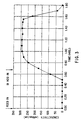
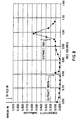
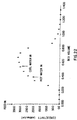
- the conductivity (+) and concentration profiles are shown in Figure 1.
- the desorption cycle began with a desorbent of 150 cm 3 of - 7.0N NH 4 OH at a flow rate of 16 cm 3 /min. This is calculated as a slight excess of ammonium ions in order to exchange the HA + on the resin adsorbent.
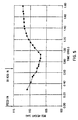
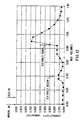
- the desorbent is switched to a de-ionized water rinse and the conductivity was monitored to determine when to collect product. Concentration profiles of desorbed hydroxylamine (HA) and NH 4 + were determined as shown in Figure 2. At the beginning of the desorption cycle, the conductivity is zero. After 0.5 BV of fluid has been passed through the column, the desorbed HA begins to breakthrough.
- a column of 5 cm diameter was loaded with 2,026 cm 3 of wet resin adsorbent. Testing conditions were similar to those described in Example 1 except the flow rate was increased to 21 cm 3 /min (1.07 cm/min linear velocity).
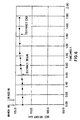
- the conductivity profiles as a function of time during the ion-exchange and desorption cycles are reproduced in Figures 3 and 4 respectively.
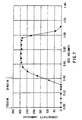
- the changes in bed height are shown in Figures 5 and 6 while the conductivity profiles are plotted as functions of BV as shown in Figures 7 and 8. While the collection of the desirable HA (extract) can be determined by time or bed volume if the flow rate and the desorbent concentration are controlled accurately, the use of conductivity is more effective for the monitor and the control of the purification process.
- the concentration of the HA product was 0.69 N.
- the final HA product concentration was 1.04 N.
- the reason for this higher product concentration is that a higher NH 4 OH concentration of 7.27N was used to elute HA + . This gives a sharper desorption profile, however, it requires a more stringent control procedure in order to prevent contamination of HA product with the HN 4 + eluent.
- Example 2 Four columns of 5 cm diameter were loaded with wet resin adsorbents of 1,825 to 2,098 cm 3 . Testing conditions were similar to those described in Example 1 except the flow rates were chosen at from 19 to 22 cm 3 /min (0.97 to 1.12 cm/min linear velocity).
- a conductivity probe was connected at the exit end of the column.
- the purified HA was collected from the effluent stream using the conductivity probe as the process control device with collection beginning at a conductivity of about 0.1 mMhos/cm and ending when the effluent conductivity reaches 0.4 mMhos/cm.
- the HA product concentrations ranged from 0.60-0.80 N, depending on the time of product collection and the concentration of NH 4 OH used as the desorbent.
- a 2.54 cm diameter by 94.5 cm long insulated column was initially charged with 475 cm 3 of wet adsorbent, IR-132C(H) (16-40 mesh) manufactured by Rohm and Haas Company (in de-ionized water).
- the ion-exchanger had been ion-exchanged to the NH 4 + form.
- An aqueous feed (183.1 mL, 0.39 bed volumes) containing 1.91N HA + , 4.50 NH 4 + and 2.16N H + with sulfate counter ions was heated to 45° C and fed at a flow rate of 11.4 cm 3 /min (2.25 cm/min linear velocity) into the column. This was followed by deionized water (45° C) at the same flow rate.
- the conductivity and pH of the effluent were continuously monitored. Cations in the effluent were also measured by collecting small samples of the solution at a fixed time interval. As the conductivity decreased to zero, deionized water of room temperature was, instead, used to cool the column. A total of 2165 ml of deionized water was used.
- the desorption cycle began with a desorbent of 35.7 cm 3 of 7.474N NH 4 OH (22° C) at a flow rate of 11.0 cm 3 /min. This was followed immediately by deionized water (45° C) at the same flow rate. A total of 1.2 bed volumes of water was used for the rinsing of the ion-exchanger for getting ready for the subsequent cycle. Cations and anions in the effluent were measured by collecting samples at each 30 seconds interval.
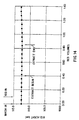
- the influent and effluent temperature profiles are illustrated in Figure 15.
- the effluent temperature during the desorption never exceeded more than 30° C.
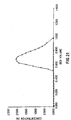
- the pH and conductivity profiles are shown in Figures 16 and 17 respectively.
- Example 5 The same column used in Example 5 was further tested with different process conditions.
- a feed containing 2.16N H + , 1.92N HA + , and 4.54N NH 4 + was heated to 45° C and pumped into the column at a flow rate of 23.6 mL/min (linear velocity of 4.42 cm/min). This was followed by a heated (45° C) deionized water at the same flow rate. After 3 minutes, the water coil was removed from the constant temperature bath and a total of 989 ml of water (2.07 bed volumes) was introduced. At that time, the column temperature was lowered to 22° C.
- a total of 1.4 bed volumes of water was used for the rinsing of the ion-exchanger material. During both the ion-exchange and desorption, conductivity and pH of the effluent solution were monitored. The concentrational profiles of HA and NH 4 + were monitored by collecting samples at an interval of 15 seconds.
- a column of 2.54 cm diameter was loaded with 480 cm 3 of wet resin adsorbent.
- Dowex HGR-W2 (16-40 mesh) from Dow Chemical Company.
- the resin material was exchanged to NH 4 + from H + form before it was loaded.
- a feed containing 2.16N H + , 1.91N HA + , and 4.52N NH 4 + was heated to 50° C and pumped into the column at a flow rate of 10.5 mL/min (linear velocity of 2.07 cm/min). This was followed by warm deionized water (50° C) for 8 minutes and then deionized water at room temperature for a total of 1.52 bed volumes. At the end of the water wash, the temperature of the column was returned to room temperature.
- Example 7 The same column and similar procedures as in Example 7 were used in this Example except both the feed flow rate and the desorbent flow rates were increased to 21 ml/min (4.14 cm/min linear velocity).
- the total feed was 175 ml (337.7 milliequivalents) and the desorbent concentration was 7.567N with a total volume of 36.4 mL (284.6 milliequivalents).
- a total of 173 mL of pure HA was recovered with a concentration of 1.16 N.
- the sulfale impurity increased to 23.7 ppm. This is consistent with the value of 31.6 ppm observed for Example 6 where the linear velocity was 4.42 cm/min.
- Example 7 Following the experiment described in Example 8, the same column and similar experimental procedures were used except that the flow rate was the same as used in Example 7. 175 mL of feed were used (337.7 milliequivalents). The desorbent used was 7.743N NH 4 OH with a total volume of 36.8 mL (284.6 milliequivalents). A total of 152 mL of pure HA was recovered at a concentration of 1.21 N. The sulfate impurity was lowered to 3.3 ppm showing a consistent result as comparing to that of Example 7.
- a moving bed process was designed on a laboratory scale using 30 glass columns of 2.67 cm ID x 1 m long associated with a laboratory model ISEP contactor manufactured by Advanced Separation Technologies Incorporated, Lakeland, FL.
- the process simulates moving of resin exchanger by rotation of the 30 cells around twenty (20) injection ports. All glass columns were loaded with 540 cm 3 IR-132C(H) resin (16-40 mesh) supplied by Rohm and Haas Company.
- the resin had been exchanged to NH 4 + from H + form before loading.
- the contactor was rotated at a rate of 162 minutes per revolution which is equivalent to the moving of the resin exchanger at 100 cm 3 /min.
- a feed containing 2.17N H + , 1.92N HA + , and 4.55N NH 4 + was injected into ports 8 and 9 at a flow rate of 43.2 cm 3 /min.
- the feed was heated at 45° C.
- temperatures at the inlet and the outlet of port 8 were 30.6 and 29.4° C respectively.
- Hydroxylamine ion was selectively adsorbed on the resin.
- Deionized water preheated at 45° C for adsorption washing was introduced at port 1 at a flow rate of 99.9 cm 3 /min and subsequently through port 2.
- the wash effluent was collected and reheated at the wash advance tank and distributed over ports 3-7 with equal flow rates. Since effluents from ports 3-5 contained some valuable HA + , they were collected, reheated and pumped through ports 10-11 to maximize the HA recovery.
- the moving bed contactor for this Example was configurated as described in Example 10.
- a feed containing 2.24N H + , 1.96N HA + , and 4.66N NH 4 + was injected into ports 8 and 9 at a flow rate of 46.8 cm 3 /min.
- the inlet and the outlet temperatures at port 8 were increased to 40 and 37.8° C respectively.
Landscapes
- Chemical & Material Sciences (AREA)
- Organic Chemistry (AREA)
- Inorganic Chemistry (AREA)
- Treatment Of Water By Ion Exchange (AREA)
- Organic Low-Molecular-Weight Compounds And Preparation Thereof (AREA)
- Crystals, And After-Treatments Of Crystals (AREA)
- General Preparation And Processing Of Foods (AREA)
Abstract
Description
| Purity of HA Samples | |
| Run Number | Wt. % of NH4NO3 |
| 1 | 0.086 |
| 2 | 0.124 |
| 3 | 0.191 |
| 4 | 0.258 |
| 5 | 0.116 |
| 6 | 0.249 |
| 7 | 0.228 |
| 8 | 0.151 |
| 9 | 0.123 |
| 10 | 0.123 |
| 11 | 0.120 |
| 12 | 0.532 |
| Results of Analysis on Samples Collected at the Exit of Each Port | ||||
| Port # | H+(N) | HA+(N) | NH4 +(N) | SO4 - (ppm) |
| 2 | 0 | 0 | 0 | - |
| 3 | 0 | 0 | 0 | 2370 |
| 4 | 0.34 | 0 | 0.48 | 36,000 |
| 5 | 1.95 | 1.56 | 4.31 | 386,000 |
| 6 | 1.92 | 1.37 | 4.62 | 424,000 |
| 7 | 1.58 | 0.87 | 4.17 | 327,000 |
| 8 | 0.90 | 0.16 | 2.89 | 190,000 |
| 9 | 0.72 | 0 | 2.57 | 167,000 |
| 10 | 0.29 | 0 | 2.39 | 134,000 |
| 11 | 0 | 0 | 0 | 26,200 |
| 12 | - | - | - | - |
| 13 | 0 | 0 | 0 | - |
| 14 | 0 | 0.57 | 0 | 11 |
| 15 | 0 | 1.55 | 0 | 12 |
| 16 | 0 | 1.46 | 0 | 14 |
| 17 | 0 | 0 | 0 | 25 |
| 18 | 0 | 0 | 0 | 23 |
| 19 | 0 | 0 | 0 | 26 |
| 20 | 0 | 0 | 0 | 25 |
| Results of Trace Metal Analysis for Samples from Ports 15 & 16 | ||||
| Metal Ion | Port #15 (ppb) | Port #16 (ppb) | ||
| Test #1 | Test #2 | Test #1 | Test #2 | |
| Cr | <30 | <30 | <30 | <30 |
| Co | <20 | <20 | <20 | <20 |
| Cu | 67 | 70 | 56 | 41 |
| Fe | <100 | <100 | 110 | <100 |
| Mn | <20 | <20 | <20 | <20 |
| Ni | <20 | <20 | <20 | <20 |
| V | <20 | <20 | <20 | <20 |
| Zn | <20 | <20 | <20 | <20 |
| Hg | 4.6 | 6.0 | 2.6 | 2.9 |
| Products Recovery in 300 Minute | |||
| Port 14 | Port 15 | Port 16 | |
| Total volume (cm3) | 4,230 | 4,080 | 4,200 |
| HA (N) | 0.50 | 1.57 | 1.55 |
| pH | 10.3 | 10.1 | 9.2 |
| SO4 - (ppm) | 10 | 12 | 17 |
| Results of Analysis on Samples Collected at the Exit of Each Port | ||||
| Port # | H+(N) | HA+(N) | NH4 +(N) | SO4 -(ppm) |
| 2 | 0 | 0 | 0 | 636 |
| 3 | 0 | 0 | 0 | 3,450 |
| 4 | 0 | 0 | 0 | 10,000 |
| 5 | 1.36 | 0.9 | 0.22 | 253,000 |
| 6 | 2.17 | 1.70 | 4.88 | 424,000 |
| 7 | 1.98 | 1.33 | 4.84 | 374,000 |
| 8 | 1.65 | 0.71 | 4.40 | 313.000 |
| 9 | 1.53 | 0.35 | 4.60 | 288.000 |
| 10 | 0.47 | 0 | 3.09 | 149.000 |
| 11 | 0 | 0 | 0 | 1.380 |
| 12 | - | - | - | - |
| 13 | 0 | 0 | 0 | 5.8 |
| 14 | 0 | 0.33 | 0 | 6.8 |
| 15 | 0 | 1.64 | 0 | 7.3 |
| 16 | 0 | 2.2 | 0 | 9.4 |
| 17 | 0 | 0 | 0 | 18 |
| 18 | 0 | 0 | 0 | 19 |
| 19 | 0 | 0 | 0 | 24 |
| 20 | 0 | 0 | 0 | 102 |
| Products Recovery in 300 Minutes | |||
| Port 14 | Port 15 | Port 16 | |
| Total volume (cm3) | 4,410 | 4,740 | 4,950 |
| HA (N) | 0.23 | 1.22 | 1.98 |
| pH | 10.0 | 10.3 | 9.5 |
| SO4 - (ppm) | 7 | 8 | 10 |
| Results of Analysis on Samples Collected at the Exit of Each Port | |||||
| Port # | H+(N) | HA+(N) | NH4 +(N) | pH | SO4 - (ppm) |
| 2 | 0 | 0 | 0 | 3.34 | 423 |
| 3 | 0 | 0 | 0 | 2.57 | 1,920 |
| 4 | 0 | 0 | 0 | 1.95 | 4,540 |
| 5 | 0.28 | 0.25 | 0.66 | 1.43 | 60,800 |
| 6 | 2.01 | 1.63 | 4.39 | 0.89 | 406,000 |
| 7 | 1.90 | 1.37 | 4.48 | 0.69 | 403,000 |
| 8 | 1.43 | 0.77 | 3.70 | 0.81 | 293,000 |
| 9 | 1.26 | 0.21 | 3.85 | 0.89 | 262,000 |
| 10 | 0.65 | 0 | 3.29 | 1.18 | 193,000 |
| 11 | 0 | 0 | 0 | 6.81 | 508 |
| 12 | 0 | 0 | 0 | 9.32 | 2.3 |
| 13 | 0 | 0.04 | 0 | 11.1 | 3.2 |
| 14 | 0 | 0.82 | 0 | 11.7 | 4.3 |
| 15 | 0 | 2.42 | 0.29 | 11.2 | 6.6 |
| 16 | 0 | 0 | 0 | 9.8 | 13.1 |
| 17 | 0 | 0 | 0 | 5.0 | 20.3 |
| 18 | 0 | 0 | 0 | 4.9 | 7.0 |
| 19 | 0 | 0 | 0 | 6.1 | 4.0 |
| 20 | - | - | - | - | - |
| Products Recovery in 360 Minutes | |||
| Port 13 | Port 14 | Port 15 | |
| Total volume (cm3) | 5,040 | 6,048 | 6,048 |
| HA (N) | 0.07 | 0.68 | 1.97 |
| pH | 10.4 | 11.1 | 10.9 |
| SO4 - (ppm) | <3 | 5 | <3 |
| Results of Analysis on Samples Collected at the Exit of Each Port | ||||
| Port # | H+(N) | HA+(N) | NH4 + (N) | SO4 -(ppm) |
| 1 | 0 | 0 | 0 | 51 |
| 2 | 0 | 0 | 0 | 374 |
| 3 | 0 | 0 | 0 | 1,200 |
| 4 | 0 | 0 | 0 | 4,900 |
| 5 | 0.43 | 0.34 | 0.92 | 83,000 |
| 6 | 2.08 | 1.68 | 4.59 | 412,000 |
| 7 | 1.85 | 1.29 | 4.42 | 371,000 |
| 8 | 1.49 | 0.81 | 3.82 | 299,000 |
| 9 | 1.32 | 0.21 | 4.10 | 277,000 |
| 10 | 0.71 | 0 | 3.30 | 195,000 |
| 11 | 0 | 0 | 0 | 6,143 |
| 12 | 0 | 0 | 0 | 2.6 |
| 13 | 0 | 0.04 | 0 | 3.3 |
| 14 | 0 | 0.49 | 0 | 2.8 |
| 15 | 0 | 1.96 | 0 | 3.5 |
| 16 | 0 | 1.32 | 0 | 16.8 |
| 17 | 0 | 0 | 0 | 12.8 |
| 18 | 0 | 0 | 0 | 6.8 |
| 19 | 0 | 0 | 0 | 71.4 |
| 20 | 0 | 0 | 0 | 7.5 |
| Products Recovery in 300 Minutes | |||
| Port 13 | Port 14 | Port 15 | |
| Total volume (cm3) | 5,910 | 6,000 | 5,820 |
| HA (N) | 0.05 | 0.57 | 1.91 |
| pH | 9.8 | 10.6 | 10.5 |
| SO4 - (ppm) | 3 | 3 | 4 |
Claims (8)
- A process for purifying hydroxylamine comprising the steps of:(a) feeding an aqueous feed solution including hydroxylammonium ion and anion contaminants into an ion exchange column containing at least one cation exchange resin until hydroxylammonium ion is detected in a column effluent stream;(b) feeding wash water into the ion exchange column to give a water wash effluent stream;(c) halting the wash water feed of step (b) when the wash water effluent stream is essentially free of anion contaminants;(d) feeding an aqueous desorbent into the ion exchange column comprising water and desorbent that is capable of desorbing hydroxylammonium ion from the cation exchange resin;(e) feeding a rinse water into the ion exchange column to give an ion exchange column desorbent effluent stream;(f) collecting the desorbent effluent stream comprising an aqueous stream of essentially pure hydroxylamine and essentially no anion contaminants; and(g) halting the collection of the desorbent effluent stream, characterised in that the desorbent effluent stream is collected when the effluent conductivity rises above about 0mMhos/cm and the desorbent effluent collection stream collection is halted when the desorbent effluent stream conductivity rises above about 0.40 mMhos/cm.
- The process of claim 1 wherein the desorbent effluent collection stream is halted when the desorbent effluent stream conductivity reaches from about 0.40 to about 0.70 mMhos/cm.
- The process of claim 1 or 2 wherein: the aqueous feed solution temperature is from about 25 to about 50°C; the aqueous feed solution step (a) is halted and water wash feed step (b) is begun when the conductivity of the column effluent exceeds about 250 mMhos/cm or until the pH of the column effluent is about 2.0; the water wash step (b) is halted when the water wash effluent stream conductivity approaches about 0mMhos/cm or the increasing water wash effluent pH reaches at least 3.0; and the superficial velocity of the aqueous desorbent and the rinse water added to the ion exchange column in step (d) and step (e) is less than about 3.0 cm3/min.
- The process of claim 1, 2 or 3 wherein the desorbent comprises one or more monovalent amine bases and hydroxide bases.
- A process for purifying hydroxylamine comprising the steps of:(a) feeding an aqueous solution including hydroxylammonium ions, ammonium ions, and anion contaminants into an ion exchange column containing at least one sulfonated cation exchange resin;(b) halting the feed of the aqueous feed solution and starting feeding of water into the ion exchange column when the ion exchange column effluent conductivity exceeds about 200 mMhos/cm to give a first ion exchange water wash effluent stream;(c) halting the water feed of step (b) when the ion exchange column effluent conductivity reaches about 0 mMhos/cm;(d) feeding an aqueous ammonium hydroxide solution having a normality of at least 7.2 into the ion exchange column;(e) halting the feed of aqueous ammonium hydroxide into the ion exchange column when a sufficient amount has been added to completely desorb the hydroxylamine;(f) feeding a rinse water feed into the ion exchange column;(g) collecting a desorbent stream emanating from the ion exchange column when the effluent conductivity rises above about 0mMhos/cm wherein the desorbent stream is an aqueous stream of essentially pure hydroxylamine and essentially no anion contaminants;(h) halting the collection of the desorbent stream when the effluent conductivity rises above about 0.40 mMhos/cm; and(i) halting the rinse water feed into the ion exchange column.
- The process of claim 5 wherein steps (a) through (i) are repeated in a cyclic process after the rinse water feed is halted in step (i).
- The process of claim 5 wherein the process is accomplished in a continuous simulated moving bed ion exchange apparatus.
- A process for concentrating and purifying hydroxylamine using a continuous simulated ion exchange apparatus including at least four ion exchange zones, each ion exchange column loaded with a sulfated cation exchange resin comprising the steps of:(a) feeding an aqueous feed solution including a first concentration of hydroxylammonium ions, hydrogen ions, ammonium ions and anion contaminants into a first ion exchange zone to give a sulfonated cation exchange resin loaded with hydroxylammonium ions;(b) feeding wash water into a second ion exchange zone including a sulfonated cation ion exchange resin loaded with hydroxylammonium ions to give a first ion exchange column water wash effluent stream;(c) feeding an aqueous ammonium hydroxide solution having a normality of at least 7.2 into the third ion exchange zone and collecting a third ion exchange zone effluent;(d) feeding a rinse water feed into the fourth ion exchange zone to give a fourth ion exchange zone desorbent stream; and(e) collecting the fourth ion exchange zone when the effluent conductivity rises above about 0 mMhos/cm and stopping the collecting of the fourth ion exchange zone effluent stream when the effluent conductivity rises above about 0.15 mMhos/cm to give an aqueous hydroxylamine product having a second hydroxylamine concentration that is greater than the first hydroxylamine concentration in the aqueous feed solution and including essentially no anion contaminants.
Applications Claiming Priority (3)
| Application Number | Priority Date | Filing Date | Title |
|---|---|---|---|
| US08/642,721 US5762897A (en) | 1996-05-03 | 1996-05-03 | Method for manufacturing hydroxylamine |
| PCT/US1997/007187 WO1997044276A1 (en) | 1996-05-03 | 1997-05-01 | Method for manufacturing hydroxylamine |
| US642721 | 2003-08-18 |
Publications (2)
| Publication Number | Publication Date |
|---|---|
| EP0958239A1 EP0958239A1 (en) | 1999-11-24 |
| EP0958239B1 true EP0958239B1 (en) | 2003-04-09 |
Family
ID=24577725
Family Applications (1)
| Application Number | Title | Priority Date | Filing Date |
|---|---|---|---|
| EP97925418A Expired - Lifetime EP0958239B1 (en) | 1996-05-03 | 1997-05-01 | Method for manufacturing hydroxylamine |
Country Status (11)
| Country | Link |
|---|---|
| US (1) | US5762897A (en) |
| EP (1) | EP0958239B1 (en) |
| AT (1) | ATE236853T1 (en) |
| CA (1) | CA2266453C (en) |
| CO (1) | CO4771106A1 (en) |
| DE (1) | DE69720789T2 (en) |
| DK (1) | DK0958239T3 (en) |
| ES (1) | ES2197996T3 (en) |
| PT (1) | PT958239E (en) |
| TW (1) | TW409111B (en) |
| WO (1) | WO1997044276A1 (en) |
Families Citing this family (7)
| Publication number | Priority date | Publication date | Assignee | Title |
|---|---|---|---|---|
| NL1013899C2 (en) * | 1999-12-21 | 2001-06-25 | Dsm Nv | Process for preparing and purifying a hydroxylammonium salt solution. |
| US6350614B1 (en) * | 2000-02-07 | 2002-02-26 | Concept Sciences, Inc | System for the ion exchange purification of hydroxylamine |
| DE60208577T2 (en) * | 2001-09-06 | 2006-07-06 | Basf Ag | IMPROVED METHOD FOR THE PRODUCTION OF HIGH-CONCENTRATED HYDROXYLAMINE SOLUTIONS |
| KR101007418B1 (en) * | 2008-05-28 | 2011-01-12 | 순천향대학교 산학협력단 | Method for recovering amines from amine containing wastewater |
| CN111111793B (en) * | 2020-01-02 | 2023-09-19 | 黎明化工研究设计院有限责任公司 | An ion exchange device and its application in preparing hydroxylamine nitrate or hydroxylamine perchlorate |
| CA3172415A1 (en) | 2020-03-02 | 2021-09-10 | The Research Foundation For The State University Of New York | Nitrogen sensor apparatus for simultaneously measuring nitrate/nitrite and ammonium in wastewater and method of operation same |
| CN112723328B (en) * | 2020-12-17 | 2022-03-11 | 浙江锦华新材料股份有限公司 | Preparation method of high-purity solid hydroxylamine hydrochloride |
Family Cites Families (13)
| Publication number | Priority date | Publication date | Assignee | Title |
|---|---|---|---|---|
| US2985589A (en) * | 1957-05-22 | 1961-05-23 | Universal Oil Prod Co | Continuous sorption process employing fixed bed of sorbent and moving inlets and outlets |
| US3040777A (en) * | 1959-04-10 | 1962-06-26 | Universal Oil Prod Co | Rotary valve |
| US3422848A (en) * | 1966-06-09 | 1969-01-21 | Universal Oil Prod Co | Multiport rotary disc valve with liner protection means |
| US3508864A (en) * | 1966-10-21 | 1970-04-28 | North American Rockwell | Hydroxylammonium perchlorate manufacture |
| US3989624A (en) * | 1972-12-20 | 1976-11-02 | Ecodyne Limited | Method and apparatus |
| DE2743324C2 (en) * | 1977-09-27 | 1979-11-22 | Basf Ag, 6700 Ludwigshafen | Process for the preparation of hydroxylammonium salts |
| US4147623A (en) * | 1977-10-28 | 1979-04-03 | Allied Chemical Corporation | Hydroxylamine purification via ion exclusion |
| US4202765A (en) * | 1977-10-28 | 1980-05-13 | Allied Chemical Corporation | Hydroxylamine purification via cation exchange |
| DE3026293A1 (en) * | 1980-07-11 | 1982-02-18 | Riedel-De Haen Ag, 3016 Seelze | METHOD FOR PRODUCING HYDROXYLAMMONIUM PERCHLORATE |
| DE3607998A1 (en) * | 1986-03-11 | 1987-09-17 | Basf Ag | METHOD FOR PROCESSING HYDROXYLAMINE OR WATER CONTAINING ITS SALTS |
| DE3916320A1 (en) * | 1989-05-19 | 1990-11-22 | Basf Ag | METHOD FOR PRODUCING CRYSTALLINE HYDROXYLAMMONIUM SULFATE WITH A LOW AMMONIUM SULFATE CONTENT |
| US5213784A (en) * | 1992-06-18 | 1993-05-25 | Olin Corporation | Process for the production of high purity hydroxylammonium nitrate |
| US5318762A (en) * | 1992-12-09 | 1994-06-07 | Olin Corporation | Process for treating aqueous solutions of hydroxylamine salts containing excess acid |
-
1996
- 1996-05-03 US US08/642,721 patent/US5762897A/en not_active Expired - Lifetime
-
1997
- 1997-04-18 CO CO97020697A patent/CO4771106A1/en unknown
- 1997-05-01 EP EP97925418A patent/EP0958239B1/en not_active Expired - Lifetime
- 1997-05-01 WO PCT/US1997/007187 patent/WO1997044276A1/en not_active Ceased
- 1997-05-01 DE DE69720789T patent/DE69720789T2/en not_active Expired - Lifetime
- 1997-05-01 PT PT97925418T patent/PT958239E/en unknown
- 1997-05-01 ES ES97925418T patent/ES2197996T3/en not_active Expired - Lifetime
- 1997-05-01 DK DK97925418T patent/DK0958239T3/en active
- 1997-05-01 CA CA002266453A patent/CA2266453C/en not_active Expired - Lifetime
- 1997-05-01 AT AT97925418T patent/ATE236853T1/en active
- 1997-05-29 TW TW086107340A patent/TW409111B/en not_active IP Right Cessation
Also Published As
| Publication number | Publication date |
|---|---|
| DE69720789D1 (en) | 2003-05-15 |
| CO4771106A1 (en) | 1999-04-30 |
| WO1997044276A1 (en) | 1997-11-27 |
| TW409111B (en) | 2000-10-21 |
| DE69720789T2 (en) | 2003-11-20 |
| CA2266453A1 (en) | 1997-11-27 |
| ES2197996T3 (en) | 2004-01-16 |
| US5762897A (en) | 1998-06-09 |
| PT958239E (en) | 2003-07-31 |
| DK0958239T3 (en) | 2003-04-28 |
| CA2266453C (en) | 2008-01-15 |
| EP0958239A1 (en) | 1999-11-24 |
| ATE236853T1 (en) | 2003-04-15 |
Similar Documents
| Publication | Publication Date | Title |
|---|---|---|
| EP2918574A1 (en) | Purification of succinic acid from the fermentation broth containing ammonium succinate | |
| EP1106602B1 (en) | Simulated moving bed chromatographic purification of amino acids | |
| CA2081226C (en) | Monitoring and control system for selective regeneration of alkanolamine from cation ion exchange resin with sodium hydroxide | |
| US4202765A (en) | Hydroxylamine purification via cation exchange | |
| JP2005298366A (en) | Method for separating and recovering amino acid and iminodicarboxylic acid | |
| US5762897A (en) | Method for manufacturing hydroxylamine | |
| US6969466B1 (en) | Purification of ammonia | |
| EP1427669B1 (en) | An improved process for manufacturing highly concentrated hydroxylamine | |
| JP3724247B2 (en) | Method for purifying hydrogen peroxide water | |
| CS9101566A2 (en) | Method of at least one organical substance separation from substances mixture | |
| CN100577641C (en) | Process for purifying aqueous acid solutions | |
| US2917368A (en) | Method of producing caustic by ion exchange and regeneration thereof | |
| JP3531403B2 (en) | Hydrogen peroxide water purification method | |
| JPH08231207A (en) | Purification method of hydrogen peroxide water | |
| US3522296A (en) | Method for producing choline salts of organic acids from choline chloride | |
| JPH01299458A (en) | Quantitative analysis method of alkaline earth metal by ion chromatography method | |
| JP4662420B2 (en) | Manufacturing method for separating and recovering amino acid and iminodicarboxylic acid | |
| JP4662419B2 (en) | Method for separating and producing organic acids | |
| JP2001335314A (en) | Method and apparatus for recovering boron from high purity boron-containing water | |
| JP2661648B2 (en) | Purification method of complex forming agent aqueous solution | |
| RU2382823C2 (en) | Method of extracting microbiological synthesis lysine | |
| JP2002233773A (en) | Method for recovering high-purity boron-containing water and apparatus for treating boron eluate eluted from boron selective adsorption resin | |
| JP2002029731A (en) | Recovery method and recovery device for high purity boron-containing water | |
| TH88286B (en) | Methods for purifying amino acids. | |
| TH75846A (en) | Amino acid purification method |
Legal Events
| Date | Code | Title | Description |
|---|---|---|---|
| PUAI | Public reference made under article 153(3) epc to a published international application that has entered the european phase |
Free format text: ORIGINAL CODE: 0009012 |
|
| 17P | Request for examination filed |
Effective date: 19990317 |
|
| AK | Designated contracting states |
Kind code of ref document: A1 Designated state(s): AT BE CH DE DK ES FI FR GB GR IE IT LI LU MC NL PT SE |
|
| 17Q | First examination report despatched |
Effective date: 20000420 |
|
| GRAH | Despatch of communication of intention to grant a patent |
Free format text: ORIGINAL CODE: EPIDOS IGRA |
|
| RAP1 | Party data changed (applicant data changed or rights of an application transferred) |
Owner name: BASF AKTIENGESELLSCHAFT |
|
| GRAH | Despatch of communication of intention to grant a patent |
Free format text: ORIGINAL CODE: EPIDOS IGRA |
|
| GRAA | (expected) grant |
Free format text: ORIGINAL CODE: 0009210 |
|
| AK | Designated contracting states |
Designated state(s): AT BE CH DE DK ES FI FR GB GR IE IT LI LU MC NL PT SE |
|
| REG | Reference to a national code |
Ref country code: GB Ref legal event code: FG4D |
|
| REG | Reference to a national code |
Ref country code: CH Ref legal event code: NV Representative=s name: SCHMAUDER & PARTNER AG PATENTANWALTSBUERO Ref country code: CH Ref legal event code: EP |
|
| REG | Reference to a national code |
Ref country code: DK Ref legal event code: T3 |
|
| REG | Reference to a national code |
Ref country code: SE Ref legal event code: TRGR |
|
| REG | Reference to a national code |
Ref country code: IE Ref legal event code: FG4D |
|
| REG | Reference to a national code |
Ref country code: GR Ref legal event code: EP Ref document number: 20030402141 Country of ref document: GR |
|
| REG | Reference to a national code |
Ref country code: ES Ref legal event code: FG2A Ref document number: 2197996 Country of ref document: ES Kind code of ref document: T3 |
|
| ET | Fr: translation filed | ||
| PLBE | No opposition filed within time limit |
Free format text: ORIGINAL CODE: 0009261 |
|
| STAA | Information on the status of an ep patent application or granted ep patent |
Free format text: STATUS: NO OPPOSITION FILED WITHIN TIME LIMIT |
|
| 26N | No opposition filed |
Effective date: 20040112 |
|
| REG | Reference to a national code |
Ref country code: CH Ref legal event code: PCAR Free format text: SCHMAUDER & PARTNER AG PATENT- UND MARKENANWAELTE VSP;ZWAENGIWEG 7;8038 ZUERICH (CH) |
|
| REG | Reference to a national code |
Ref country code: FR Ref legal event code: PLFP Year of fee payment: 20 |
|
| PGFP | Annual fee paid to national office [announced via postgrant information from national office to epo] |
Ref country code: NL Payment date: 20160525 Year of fee payment: 20 Ref country code: LU Payment date: 20160525 Year of fee payment: 20 |
|
| PGFP | Annual fee paid to national office [announced via postgrant information from national office to epo] |
Ref country code: ES Payment date: 20160627 Year of fee payment: 20 Ref country code: CH Payment date: 20160525 Year of fee payment: 20 Ref country code: GR Payment date: 20160526 Year of fee payment: 20 Ref country code: GB Payment date: 20160531 Year of fee payment: 20 Ref country code: IE Payment date: 20160526 Year of fee payment: 20 Ref country code: FI Payment date: 20160524 Year of fee payment: 20 Ref country code: MC Payment date: 20160525 Year of fee payment: 20 |
|
| PGFP | Annual fee paid to national office [announced via postgrant information from national office to epo] |
Ref country code: FR Payment date: 20160526 Year of fee payment: 20 Ref country code: IT Payment date: 20160523 Year of fee payment: 20 Ref country code: DK Payment date: 20160526 Year of fee payment: 20 Ref country code: SE Payment date: 20160531 Year of fee payment: 20 Ref country code: BE Payment date: 20160525 Year of fee payment: 20 Ref country code: AT Payment date: 20160525 Year of fee payment: 20 Ref country code: PT Payment date: 20160428 Year of fee payment: 20 |
|
| PGFP | Annual fee paid to national office [announced via postgrant information from national office to epo] |
Ref country code: DE Payment date: 20160729 Year of fee payment: 20 |
|
| REG | Reference to a national code |
Ref country code: DE Ref legal event code: R071 Ref document number: 69720789 Country of ref document: DE |
|
| REG | Reference to a national code |
Ref country code: NL Ref legal event code: MK Effective date: 20170430 |
|
| REG | Reference to a national code |
Ref country code: DK Ref legal event code: EUP Effective date: 20170501 |
|
| REG | Reference to a national code |
Ref country code: CH Ref legal event code: PL |
|
| REG | Reference to a national code |
Ref country code: GB Ref legal event code: PE20 Expiry date: 20170430 |
|
| REG | Reference to a national code |
Ref country code: IE Ref legal event code: MK9A |
|
| REG | Reference to a national code |
Ref country code: AT Ref legal event code: MK07 Ref document number: 236853 Country of ref document: AT Kind code of ref document: T Effective date: 20170501 |
|
| REG | Reference to a national code |
Ref country code: SE Ref legal event code: EUG |
|
| PG25 | Lapsed in a contracting state [announced via postgrant information from national office to epo] |
Ref country code: IE Free format text: LAPSE BECAUSE OF EXPIRATION OF PROTECTION Effective date: 20170501 Ref country code: GB Free format text: LAPSE BECAUSE OF EXPIRATION OF PROTECTION Effective date: 20170430 |
|
| PG25 | Lapsed in a contracting state [announced via postgrant information from national office to epo] |
Ref country code: PT Free format text: LAPSE BECAUSE OF EXPIRATION OF PROTECTION Effective date: 20170511 |
|
| REG | Reference to a national code |
Ref country code: ES Ref legal event code: FD2A Effective date: 20180508 |
|
| PG25 | Lapsed in a contracting state [announced via postgrant information from national office to epo] |
Ref country code: ES Free format text: LAPSE BECAUSE OF EXPIRATION OF PROTECTION Effective date: 20170502 |