EP0956343B1 - Recombinant swinepox virus - Google Patents
Recombinant swinepox virus Download PDFInfo
- Publication number
- EP0956343B1 EP0956343B1 EP97934946A EP97934946A EP0956343B1 EP 0956343 B1 EP0956343 B1 EP 0956343B1 EP 97934946 A EP97934946 A EP 97934946A EP 97934946 A EP97934946 A EP 97934946A EP 0956343 B1 EP0956343 B1 EP 0956343B1
- Authority
- EP
- European Patent Office
- Prior art keywords
- virus
- spv
- fragment
- gene
- dna
- Prior art date
- Legal status (The legal status is an assumption and is not a legal conclusion. Google has not performed a legal analysis and makes no representation as to the accuracy of the status listed.)
- Expired - Lifetime
Links
Images



















Classifications
-
- C—CHEMISTRY; METALLURGY
- C12—BIOCHEMISTRY; BEER; SPIRITS; WINE; VINEGAR; MICROBIOLOGY; ENZYMOLOGY; MUTATION OR GENETIC ENGINEERING
- C12N—MICROORGANISMS OR ENZYMES; COMPOSITIONS THEREOF; PROPAGATING, PRESERVING, OR MAINTAINING MICROORGANISMS; MUTATION OR GENETIC ENGINEERING; CULTURE MEDIA
- C12N15/00—Mutation or genetic engineering; DNA or RNA concerning genetic engineering, vectors, e.g. plasmids, or their isolation, preparation or purification; Use of hosts therefor
- C12N15/09—Recombinant DNA-technology
- C12N15/63—Introduction of foreign genetic material using vectors; Vectors; Use of hosts therefor; Regulation of expression
- C12N15/79—Vectors or expression systems specially adapted for eukaryotic hosts
- C12N15/85—Vectors or expression systems specially adapted for eukaryotic hosts for animal cells
- C12N15/86—Viral vectors
-
- A—HUMAN NECESSITIES
- A61—MEDICAL OR VETERINARY SCIENCE; HYGIENE
- A61P—SPECIFIC THERAPEUTIC ACTIVITY OF CHEMICAL COMPOUNDS OR MEDICINAL PREPARATIONS
- A61P31/00—Antiinfectives, i.e. antibiotics, antiseptics, chemotherapeutics
- A61P31/12—Antivirals
-
- C—CHEMISTRY; METALLURGY
- C07—ORGANIC CHEMISTRY
- C07K—PEPTIDES
- C07K14/00—Peptides having more than 20 amino acids; Gastrins; Somatostatins; Melanotropins; Derivatives thereof
- C07K14/005—Peptides having more than 20 amino acids; Gastrins; Somatostatins; Melanotropins; Derivatives thereof from viruses
-
- C—CHEMISTRY; METALLURGY
- C07—ORGANIC CHEMISTRY
- C07K—PEPTIDES
- C07K14/00—Peptides having more than 20 amino acids; Gastrins; Somatostatins; Melanotropins; Derivatives thereof
- C07K14/435—Peptides having more than 20 amino acids; Gastrins; Somatostatins; Melanotropins; Derivatives thereof from animals; from humans
- C07K14/46—Peptides having more than 20 amino acids; Gastrins; Somatostatins; Melanotropins; Derivatives thereof from animals; from humans from vertebrates
- C07K14/465—Peptides having more than 20 amino acids; Gastrins; Somatostatins; Melanotropins; Derivatives thereof from animals; from humans from vertebrates from birds
-
- C—CHEMISTRY; METALLURGY
- C12—BIOCHEMISTRY; BEER; SPIRITS; WINE; VINEGAR; MICROBIOLOGY; ENZYMOLOGY; MUTATION OR GENETIC ENGINEERING
- C12N—MICROORGANISMS OR ENZYMES; COMPOSITIONS THEREOF; PROPAGATING, PRESERVING, OR MAINTAINING MICROORGANISMS; MUTATION OR GENETIC ENGINEERING; CULTURE MEDIA
- C12N15/00—Mutation or genetic engineering; DNA or RNA concerning genetic engineering, vectors, e.g. plasmids, or their isolation, preparation or purification; Use of hosts therefor
- C12N15/09—Recombinant DNA-technology
- C12N15/11—DNA or RNA fragments; Modified forms thereof; Non-coding nucleic acids having a biological activity
-
- C—CHEMISTRY; METALLURGY
- C12—BIOCHEMISTRY; BEER; SPIRITS; WINE; VINEGAR; MICROBIOLOGY; ENZYMOLOGY; MUTATION OR GENETIC ENGINEERING
- C12N—MICROORGANISMS OR ENZYMES; COMPOSITIONS THEREOF; PROPAGATING, PRESERVING, OR MAINTAINING MICROORGANISMS; MUTATION OR GENETIC ENGINEERING; CULTURE MEDIA
- C12N7/00—Viruses; Bacteriophages; Compositions thereof; Preparation or purification thereof
-
- A—HUMAN NECESSITIES
- A61—MEDICAL OR VETERINARY SCIENCE; HYGIENE
- A61K—PREPARATIONS FOR MEDICAL, DENTAL OR TOILETRY PURPOSES
- A61K39/00—Medicinal preparations containing antigens or antibodies
-
- C—CHEMISTRY; METALLURGY
- C12—BIOCHEMISTRY; BEER; SPIRITS; WINE; VINEGAR; MICROBIOLOGY; ENZYMOLOGY; MUTATION OR GENETIC ENGINEERING
- C12N—MICROORGANISMS OR ENZYMES; COMPOSITIONS THEREOF; PROPAGATING, PRESERVING, OR MAINTAINING MICROORGANISMS; MUTATION OR GENETIC ENGINEERING; CULTURE MEDIA
- C12N2710/00—MICROORGANISMS OR ENZYMES; COMPOSITIONS THEREOF; PROPAGATING, PRESERVING, OR MAINTAINING MICROORGANISMS; MUTATION OR GENETIC ENGINEERING; CULTURE MEDIA dsDNA viruses
- C12N2710/00011—Details
- C12N2710/16011—Herpesviridae
- C12N2710/16711—Varicellovirus, e.g. human herpesvirus 3, Varicella Zoster, pseudorabies
- C12N2710/16722—New viral proteins or individual genes, new structural or functional aspects of known viral proteins or genes
-
- C—CHEMISTRY; METALLURGY
- C12—BIOCHEMISTRY; BEER; SPIRITS; WINE; VINEGAR; MICROBIOLOGY; ENZYMOLOGY; MUTATION OR GENETIC ENGINEERING
- C12N—MICROORGANISMS OR ENZYMES; COMPOSITIONS THEREOF; PROPAGATING, PRESERVING, OR MAINTAINING MICROORGANISMS; MUTATION OR GENETIC ENGINEERING; CULTURE MEDIA
- C12N2710/00—MICROORGANISMS OR ENZYMES; COMPOSITIONS THEREOF; PROPAGATING, PRESERVING, OR MAINTAINING MICROORGANISMS; MUTATION OR GENETIC ENGINEERING; CULTURE MEDIA dsDNA viruses
- C12N2710/00011—Details
- C12N2710/24011—Poxviridae
- C12N2710/24041—Use of virus, viral particle or viral elements as a vector
- C12N2710/24043—Use of virus, viral particle or viral elements as a vector viral genome or elements thereof as genetic vector
-
- C—CHEMISTRY; METALLURGY
- C12—BIOCHEMISTRY; BEER; SPIRITS; WINE; VINEGAR; MICROBIOLOGY; ENZYMOLOGY; MUTATION OR GENETIC ENGINEERING
- C12N—MICROORGANISMS OR ENZYMES; COMPOSITIONS THEREOF; PROPAGATING, PRESERVING, OR MAINTAINING MICROORGANISMS; MUTATION OR GENETIC ENGINEERING; CULTURE MEDIA
- C12N2710/00—MICROORGANISMS OR ENZYMES; COMPOSITIONS THEREOF; PROPAGATING, PRESERVING, OR MAINTAINING MICROORGANISMS; MUTATION OR GENETIC ENGINEERING; CULTURE MEDIA dsDNA viruses
- C12N2710/00011—Details
- C12N2710/24011—Poxviridae
- C12N2710/24111—Orthopoxvirus, e.g. vaccinia virus, variola
- C12N2710/24141—Use of virus, viral particle or viral elements as a vector
- C12N2710/24143—Use of virus, viral particle or viral elements as a vector viral genome or elements thereof as genetic vector
-
- C—CHEMISTRY; METALLURGY
- C12—BIOCHEMISTRY; BEER; SPIRITS; WINE; VINEGAR; MICROBIOLOGY; ENZYMOLOGY; MUTATION OR GENETIC ENGINEERING
- C12N—MICROORGANISMS OR ENZYMES; COMPOSITIONS THEREOF; PROPAGATING, PRESERVING, OR MAINTAINING MICROORGANISMS; MUTATION OR GENETIC ENGINEERING; CULTURE MEDIA
- C12N2740/00—Reverse transcribing RNA viruses
- C12N2740/00011—Details
- C12N2740/10011—Retroviridae
- C12N2740/13011—Gammaretrovirus, e.g. murine leukeamia virus
- C12N2740/13022—New viral proteins or individual genes, new structural or functional aspects of known viral proteins or genes
-
- C—CHEMISTRY; METALLURGY
- C12—BIOCHEMISTRY; BEER; SPIRITS; WINE; VINEGAR; MICROBIOLOGY; ENZYMOLOGY; MUTATION OR GENETIC ENGINEERING
- C12N—MICROORGANISMS OR ENZYMES; COMPOSITIONS THEREOF; PROPAGATING, PRESERVING, OR MAINTAINING MICROORGANISMS; MUTATION OR GENETIC ENGINEERING; CULTURE MEDIA
- C12N2760/00—MICROORGANISMS OR ENZYMES; COMPOSITIONS THEREOF; PROPAGATING, PRESERVING, OR MAINTAINING MICROORGANISMS; MUTATION OR GENETIC ENGINEERING; CULTURE MEDIA ssRNA viruses negative-sense
- C12N2760/00011—Details
- C12N2760/16011—Orthomyxoviridae
- C12N2760/16111—Influenzavirus A, i.e. influenza A virus
- C12N2760/16122—New viral proteins or individual genes, new structural or functional aspects of known viral proteins or genes
-
- C—CHEMISTRY; METALLURGY
- C12—BIOCHEMISTRY; BEER; SPIRITS; WINE; VINEGAR; MICROBIOLOGY; ENZYMOLOGY; MUTATION OR GENETIC ENGINEERING
- C12N—MICROORGANISMS OR ENZYMES; COMPOSITIONS THEREOF; PROPAGATING, PRESERVING, OR MAINTAINING MICROORGANISMS; MUTATION OR GENETIC ENGINEERING; CULTURE MEDIA
- C12N2760/00—MICROORGANISMS OR ENZYMES; COMPOSITIONS THEREOF; PROPAGATING, PRESERVING, OR MAINTAINING MICROORGANISMS; MUTATION OR GENETIC ENGINEERING; CULTURE MEDIA ssRNA viruses negative-sense
- C12N2760/00011—Details
- C12N2760/18011—Paramyxoviridae
- C12N2760/18111—Avulavirus, e.g. Newcastle disease virus
- C12N2760/18122—New viral proteins or individual genes, new structural or functional aspects of known viral proteins or genes
-
- C—CHEMISTRY; METALLURGY
- C12—BIOCHEMISTRY; BEER; SPIRITS; WINE; VINEGAR; MICROBIOLOGY; ENZYMOLOGY; MUTATION OR GENETIC ENGINEERING
- C12N—MICROORGANISMS OR ENZYMES; COMPOSITIONS THEREOF; PROPAGATING, PRESERVING, OR MAINTAINING MICROORGANISMS; MUTATION OR GENETIC ENGINEERING; CULTURE MEDIA
- C12N2760/00—MICROORGANISMS OR ENZYMES; COMPOSITIONS THEREOF; PROPAGATING, PRESERVING, OR MAINTAINING MICROORGANISMS; MUTATION OR GENETIC ENGINEERING; CULTURE MEDIA ssRNA viruses negative-sense
- C12N2760/00011—Details
- C12N2760/18011—Paramyxoviridae
- C12N2760/18511—Pneumovirus, e.g. human respiratory syncytial virus
- C12N2760/18522—New viral proteins or individual genes, new structural or functional aspects of known viral proteins or genes
-
- C—CHEMISTRY; METALLURGY
- C12—BIOCHEMISTRY; BEER; SPIRITS; WINE; VINEGAR; MICROBIOLOGY; ENZYMOLOGY; MUTATION OR GENETIC ENGINEERING
- C12N—MICROORGANISMS OR ENZYMES; COMPOSITIONS THEREOF; PROPAGATING, PRESERVING, OR MAINTAINING MICROORGANISMS; MUTATION OR GENETIC ENGINEERING; CULTURE MEDIA
- C12N2760/00—MICROORGANISMS OR ENZYMES; COMPOSITIONS THEREOF; PROPAGATING, PRESERVING, OR MAINTAINING MICROORGANISMS; MUTATION OR GENETIC ENGINEERING; CULTURE MEDIA ssRNA viruses negative-sense
- C12N2760/00011—Details
- C12N2760/18011—Paramyxoviridae
- C12N2760/18711—Rubulavirus, e.g. mumps virus, parainfluenza 2,4
- C12N2760/18722—New viral proteins or individual genes, new structural or functional aspects of known viral proteins or genes
-
- C—CHEMISTRY; METALLURGY
- C12—BIOCHEMISTRY; BEER; SPIRITS; WINE; VINEGAR; MICROBIOLOGY; ENZYMOLOGY; MUTATION OR GENETIC ENGINEERING
- C12N—MICROORGANISMS OR ENZYMES; COMPOSITIONS THEREOF; PROPAGATING, PRESERVING, OR MAINTAINING MICROORGANISMS; MUTATION OR GENETIC ENGINEERING; CULTURE MEDIA
- C12N2770/00—MICROORGANISMS OR ENZYMES; COMPOSITIONS THEREOF; PROPAGATING, PRESERVING, OR MAINTAINING MICROORGANISMS; MUTATION OR GENETIC ENGINEERING; CULTURE MEDIA ssRNA viruses positive-sense
- C12N2770/00011—Details
- C12N2770/24011—Flaviviridae
- C12N2770/24311—Pestivirus, e.g. bovine viral diarrhea virus
- C12N2770/24322—New viral proteins or individual genes, new structural or functional aspects of known viral proteins or genes
-
- C—CHEMISTRY; METALLURGY
- C12—BIOCHEMISTRY; BEER; SPIRITS; WINE; VINEGAR; MICROBIOLOGY; ENZYMOLOGY; MUTATION OR GENETIC ENGINEERING
- C12N—MICROORGANISMS OR ENZYMES; COMPOSITIONS THEREOF; PROPAGATING, PRESERVING, OR MAINTAINING MICROORGANISMS; MUTATION OR GENETIC ENGINEERING; CULTURE MEDIA
- C12N2830/00—Vector systems having a special element relevant for transcription
-
- C—CHEMISTRY; METALLURGY
- C12—BIOCHEMISTRY; BEER; SPIRITS; WINE; VINEGAR; MICROBIOLOGY; ENZYMOLOGY; MUTATION OR GENETIC ENGINEERING
- C12N—MICROORGANISMS OR ENZYMES; COMPOSITIONS THEREOF; PROPAGATING, PRESERVING, OR MAINTAINING MICROORGANISMS; MUTATION OR GENETIC ENGINEERING; CULTURE MEDIA
- C12N2830/00—Vector systems having a special element relevant for transcription
- C12N2830/15—Vector systems having a special element relevant for transcription chimeric enhancer/promoter combination
-
- C—CHEMISTRY; METALLURGY
- C12—BIOCHEMISTRY; BEER; SPIRITS; WINE; VINEGAR; MICROBIOLOGY; ENZYMOLOGY; MUTATION OR GENETIC ENGINEERING
- C12N—MICROORGANISMS OR ENZYMES; COMPOSITIONS THEREOF; PROPAGATING, PRESERVING, OR MAINTAINING MICROORGANISMS; MUTATION OR GENETIC ENGINEERING; CULTURE MEDIA
- C12N2830/00—Vector systems having a special element relevant for transcription
- C12N2830/60—Vector systems having a special element relevant for transcription from viruses
-
- C—CHEMISTRY; METALLURGY
- C12—BIOCHEMISTRY; BEER; SPIRITS; WINE; VINEGAR; MICROBIOLOGY; ENZYMOLOGY; MUTATION OR GENETIC ENGINEERING
- C12N—MICROORGANISMS OR ENZYMES; COMPOSITIONS THEREOF; PROPAGATING, PRESERVING, OR MAINTAINING MICROORGANISMS; MUTATION OR GENETIC ENGINEERING; CULTURE MEDIA
- C12N2840/00—Vectors comprising a special translation-regulating system
- C12N2840/20—Vectors comprising a special translation-regulating system translation of more than one cistron
-
- C—CHEMISTRY; METALLURGY
- C12—BIOCHEMISTRY; BEER; SPIRITS; WINE; VINEGAR; MICROBIOLOGY; ENZYMOLOGY; MUTATION OR GENETIC ENGINEERING
- C12N—MICROORGANISMS OR ENZYMES; COMPOSITIONS THEREOF; PROPAGATING, PRESERVING, OR MAINTAINING MICROORGANISMS; MUTATION OR GENETIC ENGINEERING; CULTURE MEDIA
- C12N2840/00—Vectors comprising a special translation-regulating system
- C12N2840/20—Vectors comprising a special translation-regulating system translation of more than one cistron
- C12N2840/203—Vectors comprising a special translation-regulating system translation of more than one cistron having an IRES
Definitions
- Swinepox virus belongs to the family Poxviridae . Viruses belonging to this group are large, double-stranded DNA viruses that characteristically develop in the cytoplasm of the host cell. SPV is the only member of the genus Suipoxvirus. Several features distinguish SPV from other poxviruses. SPV exhibits species specificity (18) compared to other poxviruses such as vaccinia which exhibit a broad host range. SPV infection of tissue culture cell lines also differs dramatically from other poxviruses (24).
- SPV does not exhibit antigenic cross-reactivity with vaccinia virus and shows no gross detectable homology at the DNA level with the ortho, lepori, avi or entomopox virus groups (24). Accordingly, what is known and described in the prior art regarding other poxviruses does not pertain a priori to swinepox virus.
- SPV is only mildly pathogenic, being characterized by a self-limiting infection with lesions detected only in the skin and regional lymph nodes. Although the SPV infection is quite limited, pigs which have recovered from SPV are refractory to challenge with SPV, indicating development of active immunity (18).
- the present invention concerns the use of SPV as a vector for the delivery of vaccine antigens and therapeutic agents to swine.
- the following properties of SPV support this rationale: SPV is only mildly pathogenic in swine, SPV is species specific, and SPV elicits a protective immune response. Accordingly, SPV is an excellent candidate for a viral vector delivery system, having little intrinsic risk which must be balanced against the benefit contributed by the vector's vaccine and therapeutic properties.
- poxviruses Five (vaccinia, fowlpox, canarypox, pigeon, and raccoon pox) have been engineered, previous to this disclosure, to contain foreign DNA sequences.
- Vaccinia virus has been used extensively to vector foreign genes (25) and is the subject of U.S. Patents 4,603,112 and 4,722,848.
- fowlpox has been used to vector foreign genes and is the subject of several patent applications EPA 0 284 416, PCT WO 89/03429, and PCT WO 89/12684.
- Raccoon pox (10) and Canarypox (31) have been utilized to express antigens from the rabies virus.
- WO95/03070 relates to a recombinant swinepox virus capable of replication comprising foreign DNA inserted into a site in the swinepox genome which is not essential for replication of the swinepox virus.
- the idea of using live viruses as delivery systems for antigens has a very long history going back to the first live virus vaccines.
- the antigens delivered were not foreign but were naturally expressed by the live virus in the vaccines.
- the use of viruses to deliver foreign antigens in the modern sense became obvious with the recombinant vaccinia virus studies.
- the vaccinia virus was the vector and various antigens from other disease causing viruses were the foreign antigens, and the vaccine was created by genetic engineering. While the concept became obvious with these disclosures, what was not obvious was the answer to a more practical question of what makes the best candidate virus vector.
- the prior art relating to the use of poxviruses to deliver therapeutic agents relates to the use of a vaccinia virus to deliver interleukin-2 (12).
- interleukin-2 had an attenuating effect on the vaccinia vector, the host did not demonstrate any therapeutic benefit.
- the therapeutic agent that is delivered by a viral vector of the present invention must be a biological molecule that is a by-product of swinepox virus replication. This limits the therapeutic agent in the first analysis to either DNA, RNA or protein.
- therapeutic agents from each of these classes of compounds in the form of anti-sense DNA, anti-sense RNA (16), ribozymes (34), suppressor tRNAs (2), interferon-inducing double stranded RNA and numerous examples of protein therapeutics, from hormones, e.g., insulin, to lymphokines, e.g., interferons and interleukins, to natural opiates.
- hormones e.g., insulin
- lymphokines e.g., interferons and interleukins
- This invention provides a recombinant swinepox virus comprising both as a first foreign DNA inserted into a swinepox virus genome, wherein the first foreign DNA is inserted into an EcoRI site within a region corresponding to a 3.2 Kb subfragment of the HindIII K fragment which contains both a HindIII and EcoRI site, wherein said 3.2 Kb subfragment comprises the nucleotide sequence 1 SEQ ID NO:1, and b) a second foreign DNA inserted into a swinepox virus genome, wherein the second foreign DNA is inserted into an AccI site within a region corresponding to a HindIII to BglII subfragment of the HindIII M fragment, and wherein to first foreign DNA and second foreign DNA are expressed in a host cell into which the virus is introduced.
- the recombinant viruses of the invention may be used as invention vaccines and in methods of immunization.
- the invention also provides a vaccine useful for immunizing an animal against swinepox virus which comprises an effective immunizing amount of the recombinant swinepox virus of the invention and a suitable carrier.
- the invention further provides a recombinant swinepox virus of the invention for use as a vaccine.
- This invention provides a recombinant swinepox virus comprising both a first foreign DNA inserted into a swinepox virus genome, wherein the first foreign DNA is inserted into an EcoRI site within a region corresponding to a 3.2 Kb subfragment of the HindIII K fragment which contains both a HindIII and EcoRI site, wherein said 3.2 Kb subfragment comprises the nucleotide sequence 1 SEQ ID NO:1, and b) a second foreign DNA inserted into a swinepox virus genome, wherein the second foreign DNA is inserted into an AccI site within a region corresponding to a HindIII to BglII subfragment of the HindIII M fragment, and wherein to first foreign DNA and second foreign DNA are expressed in a host cell into which the virus is introduced.
- the open reading frame encodes a B18R gene. In another embodiment the open reading frame encodes a B4R gene. In another embodiment the open reading frame encodes swinepox homologue of the 77.2 kD protein gene. In another embodiment the open reading frame encodes swinepox homologue of the T5 protein gene.
- the foreign DNA sequence is inserted within a EcoRV restriction endonuclease site within the approximately 2 kB HindIII to BamHI subfragment of the swinepox virus genome; the foreign DNA sequence is inserted within a SnaBI restriction endonuclease site within the approximately 2.0 kB HindIII to BamHI subfragment of the swinepox virus genome; the foreign DNA sequence is inserted within an approximately 1.2 kB BamHI to HindIII subfragment of the HindIII N fragment of the swinepox virus genome; the foreign DNA sequence is inserted into an open reading frame within an approximately 1.2 kB BamHI to HindIII subfragment of the HindIII N fragment of the swinepox virus genome; the foreign DNA sequence is inserted into an open reading frame which encodes a I4L gene; the foreign DNA sequence is inserted within a BgllI restriction endonuclease site within the approximately 1.2
- the recombinant swinepox virus contains a foreign DNA sequence inserted within an approximately 3.6 kB larger HindIII to BglII subfragment of the HindIII M fragment of the swinepox virus genomic DNA.
- the foreign DNA sequence is inserted into an open reading frame within an approximately 3.6 kB larger HindIII to BglII subfragment of the HindIII M fragment of the swinepox virus genomic DNA.
- the open reading frame encodes a I4L gene.
- the foreign DNA sequence of the recombinant swinepox virus is inserted within a non-essential Open Reading Frame (ORF) of the HindIII M fragment.
- ORF Open Reading Frame
- Example of ORF's include, but are not limited to: I4L, I2L, 01L, and E10L.
- the recombinant swinepox virus further comprises a foreign DNA sequence inserted into an open reading frame encoding swinepox virus thymidine kinase.
- the foreign DNA sequence is inserted into a Nde I site located within the open reading frame encoding the swinepox virus thymidine kinase.
- a recombinant swinepox virus capable of replication is a live swinepox virus which has been generated by the recombinant methods well known to those of skill in the art, e.g., the methods set forth in HOMOLOGOUS RECOMBINATION PROCEDURE FOR GENERATING RECOMBINANT SPV in Materials and Methods and has not had genetic material essential for the replication of the recombinant swinepox virus deleted.
- an insertion site which is not essential for replication of the swinepox virus is a region or a region which corresponds to a specific fragment in the swinepox viral genome where a sequence of DNA is not necessary for viral replication, for example, complex protein binding sequences, sequences which code for reverse transcriptase or an essential glycoprotein, DNA sequences necessary for packaging, etc.
- a “promoter” is a specific DNA sequence on the DNA molecule to which the foreign RNA polymerase attaches and at which transcription of the foreign RNA is initiated.
- an "open reading frame” is a segment of DNA which contains codons that can be transcribed into RNA which can be translated into an amino acid sequence and which does not contain a termination codon.
- the invention further provides a foreign DNA sequence or foreign RNA which encodes a polypeptide.
- the polypeptide is antigenic in the animal.
- this antigenic polypeptide is a linear polymer of more than 10 amino acids linked by peptide bonds which stimulates the animal to produce antibodies.
- the S-SPV-003 swinepox virus has been deposited pursuant to the Budapest Treaty on the International Deposit of Microorganisms for the Purposes of Patent Procedure with the Patent Culture Depository of the American Type Culture Collection, 12301 Parklawn Drive, Rockville, Maryland 20852 U.S.A. under ATCC Accession No. VR 2335.
- a "polypeptide which is a detectable marker” includes the bimer, trimer and tetramer form of the polypeptide.
- E. coli ⁇ -galactosidase is a tetramer composed of four polypeptides or monomer sub-units.
- Foreign DNA which code for a polypeptide include but are not limited to: feline leukemia virus surface protein, feline leukemia virus transmembrane protein, feline leukemia virus gag, feline leukemia virus transmembrane protease, feline immunodeficiency virus gag/protease, feline immunodeficiency virus envelope, feline leukemia virus gag/protease, feline leukemia virus envelope, canine parvovirus VP2, canine parvovirus VP1/2, bovine cytokine interleukin-12 protein 35, bovine cytokine interleukin-12 protein 40, Bovine Respiratory Syncytial Virus glycoprotein G, Newcastles Disease fusion, Infectious Rhinotracheitis Virus glycoprotein D, Canine Distemper Virus fusion, Canine Distemper Virus Hemagluttinin, DV HA, Bovine Viral Diarrhea Virus type 1 glycoprotein 45, Bovine Viral Diarrhea Virus type 1 glycoprotein 48, Bovine Vi
- the present invention further provides a retombinant swinepox virus in which the foreign DNA encodes an antigenic polypeptide is: Swine Influenza Virus hemagglutin, Swine Influenza Virus neurominidase,Swine Influenza Virus matrix, Swine Influenza Virus nuceloprotein, African Swine Fever Virus or Mycoplasma hyopneumoniae . Also disclosed are the virus, designated S-SPV-121, and S-SPV-122.
- the present invention further provides a recombinant swinepox virus in which the foreign DNA encodes an antigenic polypeptide is: cytokine is chicken macrophage migration inhibitory factor (cMIF), chicken myelomonocytic growth factor (cMGF) or chicken interferon (cIFN). Also disclosed are the viruses designated S-SPV-068, and S-SPV-105.
- cytokine is chicken macrophage migration inhibitory factor (cMIF), chicken myelomonocytic growth factor (cMGF) or chicken interferon (cIFN).
- cMIF chicken macrophage migration inhibitory factor
- cMGF chicken myelomonocytic growth factor
- cIFN chicken interferon
- the present invention further provides a recombinant swinepox virus in which the foreign DNA encodes an antigenic polypeptide is: porcine reproductive and respiratory syndrome virus (PRRS) ORF2, ORF3, ORF4, ORF5, ORF6 and ORF7, pseudorabies gB, gD, gI. Also disclosed are the viruses designated S-SPV-076, S-SPV-079, S-SPV-090, S-SPV-084,S-SPV-091, S-SPV-092, S-SPV-093, S-SPV-094, S-SPV-095.
- PRRS porcine reproductive and respiratory syndrome virus
- the present invention further provides a recombinant swinepox virus in which the foreign DNA encodes an antigenic polypeptide is: Infectious bovine rhinotracheitis virus glycoprotein B, glycoprotein D and glycoprotein I, bovine respiratory syncytial virus attachment protein (BRSV G), bovine respiratory syncytial virus fusion protein (BRSV F), bovine respiratory syncytial virus nucleocapsid protein (BRSV N). Also disclosed are the viruses designated S-SPV-109, S-SPV-110, S-SPV-111, S-SPV-113, S-SPV-115, S-SPV-119, S-SPV-112.
- the present invention further provides a recombinant swinepox virus in which the foreign DNA encodes an antigenic polypeptide is: bovine viral diarrhea virus (BVDV) glycoprotein 48 or glycoprotein 53. Also disclosed is the virus designated S-SPV-099.
- BVDV bovine viral diarrhea virus
- the present invention further provides a recombinant swinepox virus in which the foreign DNA encodes an antigenic polypeptide is: feline immunodeficiency virus gag/protease and envelope, feline leukemia virus gag/protease and envelope. Also disclosed are the viruses designated: S-SPV-106, S-SPV-089, S-SPV-100, S-SPV-107, S-SPV-108.
- the present invention further provides a recombinant swinepox virus in which the foreign DNA encodes an antigenic polypeptide is: canine parvovirus VP2 and VP1/2. Also disclosed are the viruses designated: S-SPV-114, S-SPV-116, S-SPV-117, S-SPV-118.
- the present invention provides a recombinant swinepox virus comprising a foreign DNA inserted into the swinepox virus genomic DNA, wherein the one or more foreign DNAs are inserted within each of the HindIII K fragment of the swinepox virus genomic DNA and within the HindIII M fragment of the swinepox virus genomic DNA and is capable of being expressed in a swinepox virus infected host cell.
- Preferred embodiments of such viruses are designated: S-SPV-127, S-SPV-128, S-SPV-131, and S-SPV-132.
- the present invention provides a recombinant swinepox virus comprising a foreign DNA inserted into the swinepox virus genomic DNA, wherein the one or more foreign DNAs which encode a fusion protein are inserted within each of the HindIII K fragment of the swinepox virus genomic DNA and within the HindIII M fragment of the swinepox virus genomic DNA and is capable of being expressed in a swinepox virus infected host cell. Also disclosed is the virus designated: S-SPV-130.
- the invention further provides a recombinant swinepox virus capable of replication which contains foreign DNA encoding an antigenic polypeptide which is or is from pseudorabies virus (PRV) g50 (gD), pseudorabies virus (PRV) gII (gB), Pseudorabies virus (PRV) gIII (gC), pseudorabies virus (PRV) glycoprotein H, pseudorabies virus (PRV) glycoprotein E, Transmissible gastroenteritis (TGE) glycoprotein 195, Transmissible gastroenteritis (TGE) matrix protein, swine rotavirus glycoprotein 38, swine parvovirus capsid protein, Serpulina hydodysenteriae protective antigen, Bovine Viral Diarrhea (BVD) glycoprotein 55, Newcastle Disease Virus (NDV) hemagglutinin-neuraminidase, swine flu hemagglutinin or swine flu neuraminidase.
- the antigenic polypeptide is Pseudorabies Virus (PRV) g50 (gD).
- PRV Pseudorabies Virus
- gD Pseudorabies Virus
- the antigenic protein is Newcastle Disease Virus (NDV) hemagglutinin-neuraminidase.
- the invention further provides a recombinant swinepox virus capable of replication which contains foreign DNA encoding an antigenic polypeptide which is or is from Serpulina hyodysenteriae , Foot and Mouth Disease Virus, Hog Cholera Virus, African Swine Fever Virus or Mycoplasma hyopneumoniae .
- the invention further provides for a recombinant swinepox virus capable of replication which contains foreign DNA encoding RNA encoding the antigenic polypeptide Newcastle Disease Virus (NDV) hemagglutinin-neuraminidase further comprising foreign DNA encoding a polypeptide which is a detectable marker.
- NDV Newcastle Disease Virus
- the present invention further provides a recombinant swinepox virus which comprises a foreign DNA sequence inserted into a non-essential site of the swinepox genome, wherein the foreign DNA sequence encodes an antigenic polypeptide derived from infectious bovine rhinotracheitis virus and is capable of being expressed in a host infected by the recombinant swinepox virus.
- antigenic polypeptide are infectious bovine rhinotracheitis virus glycoprotein E and glycoprotein G.
- the present invention further provides a recombinant swinepox virus which comprises a foreign DNA sequence inserted into a non-essential site of the swinepox genome, wherein the foreign DNA sequence encodes an antigenic polypeptide derived from infectious laryngotracheitis virus and is capable of being expressed in a host infected by the recombinant swinepox virus.
- antigenic polypeptide are infectious laryngotracheitis virus glycoprotein G and glycoprotein I.
- the foreign DNA sequence encodes a cytokine.
- the cytokine is chicken myelomonocytic growth factor (cMGF) or chicken interferon (cIFN).
- Cytokines include, but are not limited to: transforming growth factor beta, epidermal growth factor family, fibroblast growth factors, hepatocyte growth factor, insulin-like growth factor, vascular endothelial growth factor, interleukin 1, IL-1 receptor antagonist, interleukin-2, interleukin-3, interleukin-4, interleukin-5, interleukin-6, IL-6 soluble receptor, interleukin-7, interleukin-8, interleukin-9, interleukin-10, interleukin-11, interleukin-12, interleukin-13, angiogenin, chemokines, colony stimulating factors, granulocyte-macrophage colony stimulating factors, erythropoietin, interferon, interferon gamma, Stem cell factor (or known as mast cell growth factor, or c-kit ligand protein), leukemia inhibitory factor, oncostatin M, pleiotrophin, secretory leukocyte protease inhibitor, stem cell factor
- the present invention further provides a recombinant swinepox virus which comprises a foreign DNA sequence inserted into a non-essential site of the swinepox genome, wherein the foreign DNA sequence encodes an antigenic polypeptide derived from a human pathogen and is capable of being expressed in a host infected by the recombinant swinepox virus.
- Recombinant SPV expressing cytokines is used to enhance the immune response either alone or when combined with vaccines containing cytokines or antigen genes of disease causing microorganisms.
- Antigenic polypeptide of a human pathogen which are derived from human herpesvirus include, but are not limited to: hepatitis B virus and hepatitis C virus hepatitis B virus surface and core antigens, hepatitis C virus, human immunodeficiency virus, herpes simplex virus-1, herpes simplex virus-2, human cytomegalovirus, Epstein-Barr virus, Varicella-Zoster virus, human herpesvirus-6, human herpesvirus-7, human influenza, measles virus, hantaan virus, pneumonia virus, rhinovirus, poliovirus, human respiratory syncytial virus, retrovirus, human T-cell leukemia virus, rabies virus, mumps virus, malaria ( Plasmodium falciparum ), Bordetella pertussis, Diptheria, Rickettsia prowazekii , Borrelia berfdorferi, Tetanus toxoid, malignant tumor antigens.
- a recombinant swinepox virus contains the foreign DNA sequence encoding hepatitis B virus core protein.
- the present invention further provides a recombinant swinepox virus which comprises a foreign DNA sequence inserted into a non-essential site of the swinepox genome, wherein the foreign DNA sequence encodes a cytokine capable of stimulating an immune response in a host infected by the recombinant swinepox virus and is capable of being expressed in the host infected.
- the present invention further provides a recombinant swinepox virus which comprises a foreign DNA sequence inserted into a non-essential site of the swinepox genome, wherein the foreign DNA sequence encodes an antigenic polypeptide derived from an equine pathogen and is capable of being expressed in a host infected by the recombinant swinepox virus.
- the antigenic polypeptide of an equine pathogen can derived from equine influenza virus, or equine herpesvirus.
- the antigenic polypeptide is equine influenza neuraminidase or hemagglutinin.
- antigenic polypeptide examples include equine influenza virus type A/Alaska 91 neuraminidase, equine influenza virus type A/Prague 56 neuraminidase, equine influenza virus type A/Miami 63 neuraminidase, equine influenza virus type A/Kentucky 81 neuraminidase, equine influenza virus type A/Kentucky 92 neuraminidase equine herpesvirus type 1 glycoprotein B, equine herpesvirus type 1 glycoprotein D, Streptococcus equi, equine infectious anemia virus, equine encephalitis virus, equine rhinovirus and equine rotavirus.
- the present invention further provides an antigenic polypeptide which includes, but is not limited to: hog cholera virus gE1, hog cholera virus gE2, swine influenza virus hemagglutinin, neurominidase, matrix and nucleoprotein, pseudorabies virus gB, gC and gD, and PRRS virus ORF7.
- an antigenic polypeptide which includes, but is not limited to: hog cholera virus gE1, hog cholera virus gE2, swine influenza virus hemagglutinin, neurominidase, matrix and nucleoprotein, pseudorabies virus gB, gC and gD, and PRRS virus ORF7.
- the present invention further provides a recombinant swinepox virus which comprises a foreign DNA sequence inserted into a non-essential site of the swinepox genome, wherein the foreign DNA sequence encodes an antigenic polypeptide derived from bovine respiratory syncytial virus or bovine parainfluenza virus, and is capable of being expressed in a host infected by the recombinant swinepox virus.
- the antigenic polypeptide of derived from infectious bovine rhinotracheitis virus gE, bovine respiratory syncytial virus equine pathogen can derived from equine influenza virus is bovine respiratory syncytial virus attachment protein (BRSV G), bovine respiratory syncytial virus fusion protein (BRSV F), bovine respiratory syncytial virus nucleocapsid protein (BRSV N), bovine parainfluenza virus type 3 fusion protein, and the bovine parainfluenza virus type 3 hemagglutinin neuraminidase.
- BRSV G bovine respiratory syncytial virus attachment protein
- BRSV F bovine respiratory syncytial virus fusion protein
- BRSV N bovine respiratory syncytial virus nucleocapsid protein
- bovine parainfluenza virus type 3 fusion protein bovine parainfluenza virus type 3 fusion protein
- the present invention further provides a recombinant swinepox virus which comprises a foreign DNA sequence inserted into a non-essential site of the swinepox genome, wherein the foreign DNA sequence encodes bovine viral diarrhea virus (BVDV) glycoprotein 48 or glycoprotein 53, and wherein the foreign DNA sequence is capable of being expressed in a host infected by the recombinant swinepox virus.
- BVDV bovine viral diarrhea virus
- the present invention further provides a recombinant swinepox virus which comprises a foreign DNA sequence inserted into a non-essential site of the swinepox genome, wherein the foreign DNA sequence encodes an antigenic polypeptide derived from infectious bursal disease virus and wherein the foreign DNA sequence is capable of being expressed in a host infected by the recombinant swinepox virus.
- antigenic polypeptide are infectious bursal disease virus polyprotein and VP2.
- the present invention further provides a recombinant swinepox virus in which the foreign DNA sequence encodes an antigenic polypeptide which includes, but is not limited to: MDV gA, MDV gB, MDV gD, NDV HN, NDV F, ILT gB, ILT gI, ILT gD, IBDV VP2, IBDV VP3, IBDV VP4, IBDV polyprotein, IBV spike, IBV matrix, avian encephalomyelitis virus, avian reovirus, avian paramyxovirus, avian influenza virus, avian adenovirus, fowl pox virus, avian coronavirus, avian rotavirus, chick anemia virus, Salmonella spp.
- an antigenic polypeptide which includes, but is not limited to: MDV gA, MDV gB, MDV gD, NDV HN, NDV F, ILT gB, ILT gI
- E. coli Pasteurella spp., Bordetella spp., Eimeria spp., Histomonas spp., Trichomonas spp ., Poultry nematodes, cestodes, trematodes, poultry mites/lice, and poultry protozoa.
- the invention further provides that the inserted foreign DNA sequence is under the control of a promoter.
- a promoter In one embodiment the is a swinepox viral promoter.
- the foreign DNA sequence is under control of an endogenous upstream poxvirus promoter.
- the foreign DNA sequence is under control of a heterologous upstream promoter.
- promoters include but is not limited to: synthetic pox viral promoter, pox synthetic late promoter 1, pox synthetic late promoter 2 early promoter 2, pox O1L promoter, pox I4L promoter, pox I3L promoter, pox I2L promoter, pox I1L promoter, pox E10R promoter, PRV gX, HSV-1 alpha 4, HCMV immediate early, MDV gA, MDV gB, MDV gD, ILT gB, BHV-1.1 VP8 and ILT gD and internal ribosomal entry site promoter.
- Alternate promoters are generated by methods well known to those of skill in the art, for example, as set forth in the STRATEGY FOR THE CONSTRUCTION OF SYNTHETIC POX VIRAL PROMOTERS in Materials and Methods.
- the invention provides for a homology vector for producing a recombinant swinepox virus by inserting foreign DNA into the genomic DNA of a swinepox virus.
- the homology vector comprises a double-stranded DNA molecule consisting essentially of a double-stranded foreign DNA sequence or (RNA) which does not naturally occur in an animal into which the recombinant swinepox virus is introduced, with at one end of the foreign DNA, double-stranded swinepox viral DNA homologous to genomic DNA located at one side of a site on the genomic DNA which is not essential for replication of the swinepox virus, and at the other end of the foreign DNA, double-stranded swinepox viral DNA homologous to genomic DNA located at the other side of the same site on the genomic DNA.
- the RNA encodes a polypeptide.
- the double-stranded swinepox viral DNA of the homology vectors described above is homologous to genomic DNA present within the HindIII M fragment.
- the double-stranded swinepox viral DNA of the homology vectors described above is homologous to genomic DNA present within an approximately 2 Kb HindIII to BglII sub-fragment.
- the double-stranded swinepox viral DNA is homologous to genomic DNA present within the Bgl II site located in this Hind III to Bgl II subfragment.
- the double-stranded swinepox viral DNA is homologous to genomic DNA present within the open reading frame contained in the larger HindIII to BglII subfragment.
- the double-stranded swinepox viral DNA is homologous to genomic DNA present within the AccI restriction endonuclease site located in the larger HindIII to Bgl II subfragment.
- the polypeptide is a detectable marker.
- the polypeptide which is a detectable marker is E. coli ⁇ -galactosidase.
- the foreign DNA which codes for a polypeptide include but are not limited to: feline leukemia virus surface protein, feline leukemia virus transmembrane protein, feline leukemia virus gag, feline leukemia virus transmembrane protease, feline immunodeficiency virus gag/protease, feline immunodeficiency virus envelope, feline leukemia virus gag/protease, feline leukemia virus envelope, canine parvovirus VP2, canine parvovirus VP1/2, bovine cytokine interleukin-12 protein 35, bovine cytokine interleukin-12 protein 40, Bovine Respiratory Syncytial Virus glycoprotein G, Newcastles Disease fusion, Infectious Rhinotracheitis Virus glycoprotein D, Canine Distemper Virus fusion, Canine Distemper Virus Hemagluttinin, DV HA, Bovine Viral Diarrhea Virus type 1 glycoprotein 45, Bovine Viral Diarrhea Virus type 1 glycoprotein 48, Bovine
- polypeptides include: pseudorabies virus (PRV) g50 (gD), pseudorabies virus (PRV) gII (gB), Pseudorabies virus (PRV) gIII (gC), Pseudorabies virus (PRV) glycoprotein H, Transmissible gastroenteritis (TGE) glycoprotein 195, Transmissible gastroenteritis (TGE) matrix protein, swine rotavirus glycoprotein 38, swine parvovirus capsid protein, Serpulina hydodysenteriae protective antigen, Bovine Viral Diarrhea (BVD) glycoprotein 53 and g48, Newcastle Disease Virus (NDV) hemagglutinin-neuraminidase, swine flu hemagglutinin or swine flu neuraminidase.
- PRV pseudorabies virus
- PRV pseudorabies virus
- PRV pseudorabies virus
- PRV pseudorabies virus
- PRV pseudorab
- the antigenic polypeptide is or is from Serpulina hyodysenteriae , Foot and Mouth Disease Virus, Hog Cholera Virus gE1 and gE2, Swine Influenza Virus, African Swine Fever Virus or Mycoplasma hyopneumoniae , swine influenza virus hemagglutinin, neuraminidase and matrix and nucleoprotein, PRRS virus ORF7, and hepatitis B virus core protein.
- the polypeptide is antigenic in the animal.
- the double stranded foreign DNA sequence in the homology vector encodes an antigenic polypeptide derived from a human pathogen.
- the antigenic polypeptide of a human pathogen is derived from human herpesvirus, herpes simplex virus-1, herpes simplex virus-2, human cytomegalovirus, Epstein-Barr virus, Varicell-Zoster virus, human herpesvirus-6, human herpesvirus-7, human influenza, human immunodeficiency virus, rabies virus, measles virus, hepatitis B virus and hepatitis C virus.
- the antigenic polypeptide of a human pathogen may be associated with malaria or malignant tumor from the group conisting of Plasmodium falciparum , Bordetella pertusis, and malignant tumor.
- the double stranded foreign DNA sequence in the homology vector encodes a cytokine capable of stimulating human immune response.
- the cytokine is a chicken myelomonocytic growth factor (cMGF) or chicken interferon (cIFN).
- cMGF myelomonocytic growth factor
- cIFN chicken interferon
- the cytokine can be, but not limited to, interleukin-2, interleukin-6, interleukin-12, interferons, granulocyte-macrophage colony stimulating factors, and interleukin receptors.
- the double stranded foreign DNA sequence in the homology vector encodes an antigenic polypeptide derived from an equine pathogen.
- the antigenic polypeptide of an equine pathogen can derived from equine influenza virus or equine herpesvirus.
- antigenic polypeptide examples include equine influenza virus type A/Alaska 91 neuraminidase, equine influenza virus type A/Prague 56 neuraminidase, equine influenza virus type A/Miami 63 neuraminidase, equine influenza virus type A/Kentucky 81 neuraminidase equine herpesvirus type 1 glycoprotein B, and equine herpesvirus type 1 glycoprotein D.
- the double stranded foreign DNA sequence of the homology vector encodes an antigenic polypeptide derived from bovine respiratory syncytial virus or bovine parainfluenza virus.
- the antigenic polypeptide is derived from infectious bovine rhinotracheitis gE, bovine respiratory syncytial virus attachment protein (BRSV G), bovine respiratory syncytial virus fusion protein (BRSV F), bovine respiratory syncytial virus nucleocapsid protein (BRSV N), bovine parainfluenza virus type 3 fusion protein, and the bovine parainfluenza virus type 3 hemagglutinin neuraminidase.
- the double stranded foreign DNA sequence of the homology vector encodes an antigenic polypeptide derived from infectious bursal disease virus.
- antigenic polypeptide are infectious bursal disease virus polyprotein and infectious bursal disease virus VP2, VP3, or VP4.
- a "homology vector” is a plasmid constructed to insert foreign DNA in a specific site on the genome of a swinepox virus.
- the double-stranded swinepox viral DNA of the homology vectors described above is homologous to genomic DNA present within the open reading frame encoding swinepox thymidine kinase.
- the double-stranded swinepox viral DNA is homologous to genomic DNA present within the NdeI restriction endonuclease site located in the open reading frame encoding swinepox thymidine kinase.
- the invention further provides a homology vectors described above, the foreign DNA sequence of which is under control of a promoter located upstream of the foreign DNA sequence.
- the promoter can be an endogenous swinepox viral promoter or an exogenous promoter.
- Promoters include, but are not limited to: synthetic pox viral promoter, pox synthetic late promoter 1, pox synthetic late promoter 2 early promoter 2, pox O1L promoter, pox I4L promoter, pox I3L promoter, pox I2L promoter, pox I1L promoter, pox E10R promoter, PRV gX, HSV-1 alpha 4, HCMV immediate early, BHV-1.1 VP8, infectious laryngotracheitis virus glycoprotein B, infectious laryngotracheitis virus gD, marek's disease virus glycoprotein A, marek's disease virus glycoprotein B, and marek's disease virus glycoprotein D.
- the invention further provides a vaccine which comprises an effective immunizing amount of a recombinant swinepox virus of the present invention and a suitable carrier.
- Suitable carriers for the swinepox virus are well known in the art and include proteins, sugars, etc.
- a suitable carrier is a physiologically balanced culture medium containing one or more stabilizing agents such as stabilized, hydrolyzed proteins, lactose, etc.
- an "effective immunizing amount" of the recombinant swinepox virus of the present invention is within the range of 10 3 to 10 9 PFU/dose.
- the present invention also provides the swinepox viruses of the invention for use in a method of immunizing an animal, wherein the animal is a human, swine, bovine, equine, caprine or ovine.
- this includes immunizing the animal against the virus or viruses which cause the disease or diseases pseudorabies, transmissible gastroenteritis, swine rotavirus, swine parvovirus, Serpulina hyodysenteriae , bovine viral diarrhea, Newcastle disease, swine influenza, PRRS, bovine respiratory synctial virus, bovine parainfluenza virus type 3, foot and mouth disease, hog cholera, African swine fever or Mycoplasma hyopneumoniae.
- the method of immunizing also includes immunizing the animal against human pathogens, bovine pathogens, equine pathogens, avian pathogens described in the preceding part of this section.
- the vaccine may be administered to the animal in an effective immunizing dose.
- the vaccine may be administered by any of the methods well known to those skilled in the art, for example, by intramuscular, subcutaneous, intraperitoneal or intravenous injection. Alternatively, the vaccine may be administered intranasally or orally.
- This method comprises obtaining from the swine to be tested a sample of a suitable body fluid, detecting in the sample the presence of antibodies to pseudorabies virus, the absence of such antibodies indicating that the swine has been neither vaccinated nor infected, and for the swine in which antibodies to pseudorabies virus are present, detecting in the sample the absence of antibodies to pseudorabies virus antigens which are normally present in the body fluid of a swine infected by the naturally-occurring pseudorabies virus but which are not present in a vaccinated swine indicating that the swine was vaccinated and is not infected.
- the present invention provides a recombinant SPV which when inserted with a foreign DNA sequence or gene may be employed as a diagnostic assay.
- FIV env and gag genes and D. immitis p39 and 22kd are employed in a diagnostic assay to detect feline immunodeficiency caused by FIV and to detect heartworm caused by D. immits, respectively.
- the present invention also provides a host cell infected with a recombinant swinepox virus capable of replication.
- the host cell is a mammalian cell.
- the mammalian cell is a Vero cell.
- the mammalian cell is an ESK-4 cell, PK-15 cell or EMSK cell.
- a "host cell” is a cell used to propagate a vector and its insert. Infecting the cells was accomplished by methods well known to those of skill in the art, for example, as set forth in INFECTION - TRANSFECTION PROCEDURE in Material and Methods.
- Swinepox virus (SPV) samples were prepared by infecting embryonic swine kidney (EMSK) cells, ESK-4 cells, PK-15 cells or Vero cells at a multiplicity of infection of 0.01 PFU/cell in a 1:1 mixture of Iscove's Modified Dulbecco's Medium (IMDM) and RPMI 1640 medium containing 2 mM glutamine, 100 units/ml penicillin, 100 units/ml streptomycin (these components were obtained from Sigma or equivalent supplier, and hereafter are referred to as EMSK negative medium). Prior to infection, the cell monolayers were washed once with EMSK negative medium to remove traces of fetal bovine serum.
- IMDM Iscove's Modified Dulbecco's Medium
- RPMI 1640 medium containing 2 mM glutamine, 100 units/ml penicillin, 100 units/ml streptomycin
- the SPV contained in the initial inoculum (0.5 ml for 10 cm plate; 10 ml for T175 cm flask) was then allowed to absorb onto the cell monolayer for two hours, being redistributed every half hour. After this period, the original inoculum was brought up to the recommended volume with the addition of complete EMSK medium (EMSK negative medium plus 5% fetal bovine serum).
- EMSK medium EMSK negative medium plus 5% fetal bovine serum
- the plates were incubated at 37°C in 5% CO 2 until cytopathic effect was complete.
- the medium and cells were harvested and frozen in a 50 ml conical screw cap tube at -70°C. Upon thawing at 37°C, the virus stock was aliquoted into 1.0 ml vials and refrozen at -70°C.
- the titers were usually about 10 6 PFU/ml.
- the medium was decanted, and the cell pellet was gently resuspended in 1.0 ml Phosphate Buffer Saline (PBS: 1.5g Na 2 HPO 4 , 0.2g KH 2 PO 4 , 0.8g NaCL and 0.2g KCl per liter H 2 O) (per T175) and subjected to two successive freeze-thaws (-70° C to 37° C). Upon the last thaw, the cells (on ice) were sonicated two times for 30 seconds each with 45 seconds cooling time in between. Cellular debris was then removed by centrifuging (Sorvall RC-5B superspeed centrifuge) at 3000 rpm for 5 minutes in a HB4 rotor at 4° C.
- PBS Phosphate Buffer Saline
- SPV virions present in the supernatant, were then pelleted by centrifugation at 15,000 rpm for 20 minutes at 4° C in a SS34 rotor (Sorvall) and resuspended in 10 mM Tris (pH 7.5). This fraction was then layered onto a 36% sucrose gradient (w/v in 10 mM tris pH 7.5) and centrifuged (Beckman L8-70M Ultracentrifuge) at 18,000 rpm for 60 minutes in a SW41 rotor (Beckman) at 4° C. The virion pellet was resuspended in 1.0 ml of 10 mM tris pH 7.5 and sonicated on ice for 30 seconds.
- This fraction was layered onto a 20% to 50% continuous sucrose gradient and centrifuged 16,000 rpm for 60 minutes in a SW41 rotor at 4° C.
- the SPV virion band located about three quarters down the gradient was harvested, diluted with 20% sucrose and pelleted by centrifugation at 18,000 rpm for 60 minutes in a SW41 rotor at 4° C.
- the resultant pellet was then washed once with 10 mM Tris pH 7.5 to remove traces of sucrose and finally resuspended in 10 mM Tris pH 7.5.
- SPV DNA was then extracted from the purified virions by lysis (4 hours at 60° C) induced by the addition of EDTA, SDS, and proteinase K to final concentrations of 20 mM, 0.5% and 0.5 mg/ml, respectively. After digestion, three phenol:chloroform (1:1) extractions were conducted and the sample precipitated by the addition of two volumes of absolute ethanol and incubation at -20° C for 30 minutes. The sample was then centrifuged in an Eppendorf minifuge for 5 minutes at full speed. The supernatant was decanted, and the pellet air dried and rehydrated in 0.01 M Tris pH 7.5, 1 mM EDTA at 4° C.
- PREPARATION OF INFECTED CELL LYSATES For cell lysate preparation, serum free medium was used. A confluent monolayer of cells (EMSK, ESK-4, PK-15 or Vero for SPV or VERO for PRV) in a 25 cm 2 flask or a 60 mm petri dish was infected with 100 ⁇ l of virus sample. After cytopathic effect was complete, the medium and cells were harvested and the cells were pelleted at 3000 rpm for 5 minutes in a clinical centrifuge. The cell pellet was resuspended in 250 ⁇ l of disruption buffer (2% sodium dodecyl sulfate, 2% ⁇ -mercapto-ethanol). The samples were sonicated for 30 seconds on ice and stored at -20°C.
- disruption buffer 2% sodium dodecyl sulfate, 2% ⁇ -mercapto-ethanol
- WESTERN BLOTTING PROCEDURE Samples of lysates and protein standards were run on a polyacrylamide gel according to the procedure of Laemnli (1970). After gel electrophoresis the proteins were transferred and processed according to Sambrook et al . (1982).
- the primary antibody was a swine anti-PRV serum (Shope strain; 1ot370, PDV8201, NVSL, Ames, IA) diluted 1:100 with 5% non-fat dry milk in Tris-sodium chloride, and sodium Azide (TSA: 6.61g Tris-HCl, 0.97g Tris-base, 9.0g NaCl and 2.0g Sodium Azide per liter H 2 O).
- the secondary antibody was a goat anti-swine alkaline phosphatase conjugate diluted 1:1000 with TSA.
- MOLECULAR BIOLOGICAL TECHNIQUES Techniques for the manipulation of bacteria and DNA, including such procedures as digestion with restriction endonucleases, gel electrophoresis, extraction of DNA from gels, ligation, phosphorylation with kinase, treatment with phosphatase, growth of bacterial cultures, transformation of bacteria with DNA, and other molecular biological methods are described by Maniatis et al . (1982) and Sambrook et al . (1989). Except as noted, these were used with minor variation. DNA SEQUENCING . Sequencing was performed using the USB Sequenase Kit and 35 S-dATP (NEN). Reactions using both the dGTP mixes and the dITP mixes were performed to clarify areas of compression.
- HOMOLOGOUS RECOMBINATION PROCEDURE FOR GENERATING RECOMBINANT SPV This method relies upon the homologous recombination between the swinepox virus DNA and the plasmid homology vector DNA which occurs in the tissue culture cells containing both swinepox virus DNA and transfected plasmid homology vector.
- the monolayers of EMSK cells are infected with S-SPV-001 (Kasza SPV strain, 17) at a multiplicity of infection of 0.01 PFU/cell to introduce replicating SPV (i.e. DNA synthesis) into the cells.
- the plasmid homology vector DNA is then transfected into these cells according to the INFECTION - TRANSFECTION PROCEDURE.
- the construction of homology vectors used in this procedure is described below
- INFECTION - TRANSFECTION PROCEDURE 6 cm plates of EMSK cells (about 80% confluent) were infected with S-SPV-001 at a multiplicity of infection of 0.01 PFU/cell in EMSK negative medium and incubated at 37°C in a humidified 5% CO 2 environment for 5 hours.
- the transfection procedure used is essentially that recommended for LipofectinTM Reagent (BRL). Briefly, for each 6 cm plate, 15 ⁇ g of plasmid DNA was diluted up to 100 ⁇ l with H 2 O. Separately, 50 micrograms of Lipofectin Reagent was diluted to 100 ⁇ l with H 2 O.
- the 100 ⁇ l of diluted Lipofectin Reagent was then added dropwise to the diluted plasmid DNA contained in a polystyrene 5 ml snap cap tube and mixed gently. The mixture was then incubated for 15-20 minutes at room temperature. During this time, the virus inoculum was removed from the 6 cm plates and the cell monolayers washed once with EMSK negative medium. Three ml of EMSK negative medium was then added to the plasmid DNA/lipofectin mixture and the contents pipetted onto the cell monolayer. The cells were incubated overnight (about 16 hours) at 37°C in a humidified 5% CO 2 environment.
- EMSK negative medium was removed and replaced with 5 ml EMSK complete medium.
- the cells were incubated at 37°C in 5% CO 2 for 3-7 days until cytopathic effect from the virus was 80-100%.
- Virus was harvested as described above for the preparation of virus stocks. This stock was referred to as a transfection stock and was subsequently screened for recombinant virus by the BLUOGAL SCREEN FOR RECOMBINANT SWINEPOX VIRUS OR CPRG SCREEN FOR RECOMBINANT SWINEPOX VIRUS.
- CPRG Boehringer Mannheim
- the primary antibody was then diluted to the appropriate dilution with PBS and incubated on the cell monolayer for 2 hours at room temperature.
- PRV g50 (gD) expression from S-SPV-008 swine anti-PRV serum (Shope strain; lot370, PDV8201, NVSL, Ames, IA) was used (diluted 1:100).
- NDV HN expression from S-SPV-009 a rabbit antiserum specific for the HN protein (rabbit anti-NDV#2) was used (diluted 1:1000). Unbound antibody was then removed by washing the cells three times with PBS at room temperature.
- the secondary antibody either a goat anti-swine (PRV g50 (gD); S-SPV-008) or goat anti-rabbit (NDV HN; S-SPV-009), horseradish peroxidase conjugate was diluted 1:250 with PBS and incubated with the cells for 2 hours at room temperature. Unbound secondary antibody was then removed by washing the cells three times with PBS at room temperature. The cells were then incubated 15-30 minutes at room temperature with freshly prepared substrate solution (100 ⁇ g/ml 4-chloro-1-naphthol, 0.003% H 2 O 2 in PBS). Plaques expressing the correct antigen stain black.
- PRV g50 gD
- S-SPV-008 goat anti-rabbit
- NDV HN goat anti-rabbit
- Viral glycoproteins are purified using antibody affinity columns.
- 8 to 10 week old BALB/c female mice are vaccinated intraperitoneally seven times at two to four week intervals with 10 7 PFU of S-SPV-009, -014, -016, - 017, -018, or -019.
- mice are injected intraperitoneally with 40 mg of the corresponding viral glycoprotein. Spleens are removed from the mice three days after the last antigen dose.
- Splenocytes are fused with mouse NSl/Ag4 plasmacytoma cells by the procedure modified from Oi and Herzenberg, (41). Splenocytes and plasmacytoma cells are pelleted together by centrifugation at 300 x g for 10 minutes. One ml of a 50% solution of polyethylene glycol (m.w. 1300-1600) is added to the cell pellet with stirring over one minute. Dulbecco's modified Eagles's medium (5ml) is added to the cells over three minutes.
- polyethylene glycol m.w. 1300-1600
- Dulbecco's modified Eagles's medium 5ml
- Cells are pelleted by centrifugation at 300 x g for 10 minutes and resuspended in medium with 10% fetal bovine serum and containing 100 mM hypoxanthine, 0.4 mM aminopterin and 16 mM thymidine (HAT).
- HAT 16 mM thymidine
- Hybridoma culture supernatants are tested by the ELISA ASSAY in 96-well microtiter plates coated with 100 ng of viral glycoprotein. Supernatants from reactive hybridomas are further analyzed by black-plaque assay and by Western Blot. Selected hybridomas are cloned twice by limiting dilution. Ascetic fluid is produced by intraperitoneal injection of 5 x 10 6 hybridoma cells into pristane-treated BALB/c mice.
- Cell lysates from S-SPV-009, -014, -016, -017, -018, or -019 are obtained as described in PREPARATION OF INFECTED CELL LYSATES.
- the glycoprotein-containing cell lysates (100 mls) are passed through a 2-ml agarose affinity resin to which 20 mg of glycoprotein monoclonal antibody has been immobilized according to manufacturer's instructions (AFC Medium, New Brunswick Scientific, Edison, N.J.).
- the column is washed with 100 ml of 0.1% Nonidet P-40 in phosphate-buffered saline (PBS) to remove nonspecifically bound material.
- Bound glycoprotein is eluted with 100 mM carbonate buffer, pH 10.6 (40). Pre- and posteluted fractions are monitored for purity by reactivity to the SPV monoclonal antibodies in an ELISA system.
- ELISA ASSAY A standard enzyme-linked immunosorbent assay (ELISA) protocol is used to determine the immune status of cattle following vaccination and challenge.
- a glycoprotein antigen solution (100 ml at ng/ml in PBS) is allowed to absorb to the wells of microtiter dishes for 18 hours at 4°C.
- the coated wells are rinsed one time with PBS.
- Wells are blocked by adding 250 ml of PBS containing 1% BSA (Sigma) and incubating 1 hour at 37°C.
- the blocked wells are rinsed one time with PBS containing 0.02% Tween 20.
- 50 ml of test serum (previously diluted 1:2 in PBS containing 1% BSA) are added to the wells and incubated 1 hour at 37°C.
- the antiserum is removed and the wells are washed 3 times with PBS containing 0.02% Tween 20.
- STRATEGY FOR THE CONSTRUCTION OF SYNTHETIC POX VIRAL PROMOTERS For recombinant swinepox vectors synthetic pox promoters offer several advantages including the ability to control the strength and timing of foreign gene expression.
- a set of translational stop codons in all three reading frames and an early transcriptional termination signal (9) were also engineered downstream of the inframe fusion site.
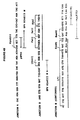
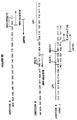
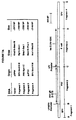
- DNA encoding each cassette was synthesized according to standard techniques and cloned into the appropriate homology vectors (see Figures 3 and 4).
- PFU plaque forming units
- Immunity is determined by measuring PRV serum antibody levels and by challenging the vaccinated pigs with virulent strain of pseudorabies virus. Three to four weeks post-vaccination, both vaccinated and non-vaccinated groups of pigs are challenged with virulent strain of pseudorabies virus (VDL4892). Post challenge, the pigs are observed daily for 14 days for clinical signs of pseudorabies.
- Serum samples are obtained at the time of vaccination, challenge, and at weekly intervals for two to three weeks post-vaccination and assayed for serum neutralizing antibody.
- the PCR primers were designed to incorporate restriction sites which permit the cloning of the amplified coding regions into vectors containing the appropriate signals for expression in SPV.
- One pair of oligonucleotides were required for each coding region.
- the g48 gene coding region from the BVDV Singer strain (49) was cloned using the following primers: 5'-ACGTCGGATCCCTTACCAAACCACGTCTTACTCTTGTTTTCC-3' for cDNA priming and combined with 5'-ACATAGGATCCCATGGGAGAAAACATAACACAGTGGAACC-3' for PCR.
- the g53 gene coding region from the BVDV Singer strain (49) was cloned using the following primers: 5'-CGTGGATCCTCAATTACAAGAGGTATCGTCTAC-3' for cDNA priming and combined with 5'-CATAGATCTTGTGGTGCTGTCCGACTTCGCA-3' for PCR. Note that this general strategy is used to clone the coding region of g48 and g53 genes from other strains of BVDV.
- the DNA fragment for BVDV g 48 was digested with Bam HI to yield an 678 bp fragment.
- the DNA fragment for BVDV g53 was digested with Bgl II and Bam HI to yield an 1187 bp fragment.
- the BVDV g48 or g53 DNA fragments were cloned into the Bam HI site next to the LP2EP2 promoter of the SPV homology vector to yield homology vectors, 727-78.1 and 738-96, respectively.
- the PCR primers were designed to incorporate restriction sites which permit the cloning of the amplified coding regions into vectors containing the appropriate signals for expression in SPV.
- One pair of oligonucleotides were required for each coding region.
- the F gene coding region from the BRSV strain 375 (VR-1339) was cloned using the following primers: 5'-TGCAGGATCCTCATTTACTAAAGGAAAGATTGTTGAT-3' for cDNA priming and combined with 5'-CTCTGGATCCTACAGCCATGAGGATGATCATCAGC-3' for PCR.
- the N gene coding region from BRSV strain 375 was cloned utilizing the following primers: 5'-CGTCGGATCCCTCACAGTTCCACATCATTGTCTTTGGGAT-3' for cDNA priming and combined with 5'-CTTAGGATCCCATGGCTCTTAGCAAGGTCAAACTAAATGAC-3' for PCR.
- the G gene coding region from BRSV strain 375 was cloned utilizing the following primers: 5'-CGTTGGATCCCTAGATCTGTGTAGTTGATTGATTTGTGTGA-3' for cDNA priming and combined with 5'-CTCTGGATCCTCATACCCATCATCTTAAATTCAAGACATTA-3' for PCR.
- Chicken spleens were dissected from 3 week old SPAFAS hatched chicks, washed, and disrupted through a syringe/needle to release cells. After allowing stroma and debri to settle out, the cells were pelleted and washed twice with PBS. The cell pellet was treated with a hypotonic lysis buffer to lyse red blood cells, and splenocytes were recovered and washed twice with PBS.
- the blue plaques were then picked onto fresh ESK-4 cells and purified by further blue plaque isolation.
- the assay involves plaque purifying white plaques from a background of parental blue plaques. In both cases viruses were typically purified with three rounds of plaque purification.
- the plasmid 515-85.1 was constructed for the purpose of inserting foreign DNA into SPV. It contains a unique AccI restriction enzyme site into which foreign DNA may be inserted. When a plasmid, containing a foreign DNA insert at the Acc I site, is used according to the HOMOLOGOUS RECOMBINATION PROCEDURE FOR GENERATING RECOMBINANT SPV a virus containing the foreign DNA will result.
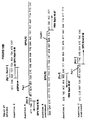
- a restriction map of the DNA insert in homology vector 515-85.1 is given in Figures 3A-3C. It may be constructed utilizing standard recombinant DNA techniques (22 and 29), by joining two restriction fragments from the following sources.
- the first fragment is an approximately 2972 base pair HindIII to BamHI restriction fragment of pSP64 (Promega).
- the second fragment is an approximately 3628 base pair HindIII to Bgl II restriction sub-fragment of the SPV Hind III restriction fragment M (23).
- the plasmid 520-17.5 was constructed for the purpose of inserting foreign DNA into SPV. It incorporates an E. coli ⁇ -galactosidase (lacZ) marker gene flanked by SPV DNA. Upstream of the marker gene is an approximately 2149 base pair fragment of SPV DNA. Downstream of the marker gene is an approximately 1484 base pair fragment of SPV DNA.
- lacZ E. coli ⁇ -galactosidase
- ⁇ -galactosidase (lacZ) marker gene is under the control of a synthetic early/late pox promoter.
- a detailed description of the plasmid is given in Figures 3A-3C. It may be constructed utilizing standard recombinant DNA techniques (22 and 30), by joining restriction fragments from the following sources with the synthetic DNA sequences indicated in Figures 3A-3C.
- the plasmid vector was derived from an approximately 2972 base pair HindIII to BamHI restriction fragment of pSP64 (Promega). Fragment 1 is an approximately 2149 base pair HindIII to AccI restriction sub-fragment of the SPV HindIII restriction fragment M (23).
- Fragment 2 is an approximately 3006 base pair BamHI to PvuII restriction fragment of plasmid pJF751 (11).
- Fragment 3 is an approximately 1484 base pair AccI to BglII restriction sub-fragment of the SPV HindIII fragment M (23).
- the plasmid 538-46.16 was constructed for the purpose of inserting foreign DNA into SPV. It incorporates an E. coli ⁇ -galactosidase (lacz) marker gene and the PRV g50 (gD) gene flanked by SPV DNA. Upstream of the foreign genes is an approximately 2149 base pair fragment of SPV DNA. Downstream of the foreign genes is an approximately 1484 base pair fragment of SPV DNA.
- lacz E. coli ⁇ -galactosidase
- gD PRV g50
- lacZ ⁇ -galactosidase
- LP1 synthetic late pox promoter
- EP1LP2 g50 gene
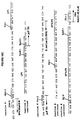
- 3A-3C A detailed description of the plasmid is given in 3A-3C. It may be constructed utilizing standard recombinant DNA techniques (22 and 30), by joining restriction fragments from the following sources with the synthetic DNA sequences indicated in Figures 3A-3C.
- the plasmid vector was derived from an approximately 2972 base pair Hind III to Bam HI restriction fragment of pSP64 (Promega).
- Fragment 1 is an approximately 2149 base pair HindIII to AccI restriction sub-fragment of the SPV HindIII restriction fragment M (23).
- Fragment 2 is an approximately 3006 base pair BamHI to Pvu II restriction fragment of plasmid pJF751 (11).
- Fragment 3 is an approximately 1571 base pair EcoRI to StuI restriction sub-fragment of the PRV BamHI fragment 7 (21). Note that the EcoRI site was introduced in to this fragment by PCR cloning. In this procedure the primers described below were used along with a template consisting of a PRV Bam HI #7 fragment subcloned into pSP64.
- the first primer 87.03 (5'- CGCGAATTCGCTCG CAGCGCTATTGGC-3') sits down on the PRV g50 (gD) sequence (26) at approximately amino acid 3 priming toward the 3' end of the gene.
- the second primer 87.06 (5'-GTAGGAGTGGCTGCTGAAG-3') sits down on the opposite strand at approximately amino acid 174 priming toward the 5' end of the gene.
- the PCR product may be digested with Eco RI and Sal I to produce an approximately 509 base pair fragment.
- Fragment 4 is an approximately 1484 base pair AccI to BglII restriction sub-fragment of the SPV HindIII fragment M (23).
- the plasmid 570-91.41 was constructed for the purpose of inserting foreign DNA into SPV. It incorporates an E. coli ⁇ -galactosidase (lacZ) marker gene and the PRV gIII (gC) gene flanked by SPV DNA. Upstream of the foreign DNA genes is an approximately 2149 base pair fragment of SPV DNA. Downstream of the foreign genes is an approximately 1484 base pair fragment of SPV DNA.
- lacZ E. coli ⁇ -galactosidase
- gC PRV gIII
- ⁇ -galactosidase (lacZ) marker gene is under the control of a synthetic late pox promoter (LP1)
- gIII (gC) gene is under the control of a synthetic early late pox promoter (EP1LP2).
- a detailed description of the plasmid is given in Figures 5A-5D. It may be constructed utilizing standard recombinant DNA techniques (22 and 30), by joining restriction fragments from the following sources with the synthetic DNA sequences indicated in 5A-5D.
- the plasmid vector was derived from an approximately 2972 base pair Hind III to Bam HI restriction fragment of pSP64 (Promega).
- Fragment 1 is an approximately 1484 base pair Bgl II to Acc I restriction sub-fragment of the SPV Hind III restriction fragment M (23).
- Fragment 2 is an approximately 3002 base pair BamHI to PvuII restriction fragment of plasmid pJF751 (11).
- Fragment 3 is an approximately 2378 base pair Nco I to Nco I fragment of plasmid 251-41.A, a subfragment of PRV Bam HI #2 and #9. Eco RI linkers have replaced the Nco I and Nco I sites at the ends of this fragment.
- Fragment 4 is an approximately 2149 base pair Acc I to Hind III restriction sub-fragment of the SPV Hind III fragment M (23). The Acc I sites in fragments 1 and 4 have been converted to Pst I sites using synthetic DNA linkers.
- the plasmid 570-91.64 was constructed for the purpose of inserting foreign DNA into SPV. It incorporates an E. coli ⁇ -galactosidase (lacZ) marker gene and the PRV gIII (gC) gene flanked by SPV DNA. Upstream of the foreign DNA genes is an approximately 1484 base pair fragment of SPV DNA. Downstream of the foreign genes is an approximately 2149 base pair fragment of SPV DNA.
- lacZ E. coli ⁇ -galactosidase
- gC PRV gIII
- ⁇ -galactosidase (lacZ) marker gene is under the control of a synthetic late pox promoter (LP1)
- gIII (gC) gene is under the control of a synthetic late early pox promoter (LP2EP2).
- LP1 synthetic late pox promoter
- gC gIII
- LP2EP2 synthetic late early pox promoter
- Figures 7A-7D It may be constructed utilizing standard recombinant DNA techniques (22 and 30), by joining restriction fragments from the following sources with the synthetic DNA sequences indicated in 5 A-5D.
- the plasmid vector was derived from an approximately 2972 base pair Hind III to BamHI restriction fragment of pSP64 (Promega).
- Fragment 1 is an approximately 1484 base pair Bgl II to Acc I restriction sub-fragment of the SPV HindIII restriction fragment M (23).
- Fragment 2 is an approximately 3002 base pair Bam HI to Pvu II restriction fragment of plasmid pJF751 (11).
- Fragment 3 is an approximately 2378 base pair Nco I to Nco I fragment of plasmid 251-41.A, a subfragment of PRV Bam HI #2 and #9. Eco RI linkers have replaced the N co I and Nco I sites at the ends of this fragment.
- Fragment 4 is an approximately 2149 base pair AccI to Hind III restriction sub-fragment of the SPV HindIII fragment M (23). The AccI sites in fragments 1 and 4 have been converted to PstI sites using synthetic DNA linkers.
- the plasmid 727-54.60 was constructed for the purpose of inserting foreign DNA into SPV. It incorporates an E. coli ⁇ -galactosidase (lacZ) marker gene and the pseudorabies virus (PRV) gII (gB) gene flanked by SPV DNA. Upstream of the foreign genes is an approximately 1484 base pair fragment of SPV DNA. Downstream of the foreign genes is an approximately 2149 base pair fragment of SPV DNA.
- lacZ E. coli ⁇ -galactosidase
- PRV pseudorabies virus
- gII pseudorabies virus
- ⁇ -galactosidase (lacZ) marker gene is under the control of a synthetic late pox promoter (LP1)
- the PRV gB gene is under the control of a synthetic late/early pox promoter (LP2EP2).
- LP1 synthetic late pox promoter
- LP2EP2 synthetic late/early pox promoter
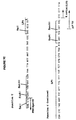
- FIGs 7A-7D A detailed description of the plasmid is given in Figures 7A-7D. It may be constructed utilizing standard recombinant DNA techniques (22, 30), by joining restriction fragments from the following sources with the synthetic DNA sequences indicated in Figures 7A-7D.
- the plasmid vector was derived from an approximately 2972 base pair HindIII to BamHI restriction fragment of pSP64 (Promega).
- Fragment 1 is an approximately 1484 base pair Bgl II to AccI restriction sub-fragment of the SPV HindIII restriction fragment M (23).
- Fragment 2 is an approximately 3500 base pair fragment which contains the coding sequence for the PRV gB gene within the KpnI C fragment of genomic PRV DNA(21). Fragment 2 contains an approximately 53 base pair synthetic fragment containing the amino terminus of the PRV gB gene, an approximately 78 base pair SmaI to Nhe I fragment from the PRV KpnI C genomic fragment, and an approximately 3370 base pair NheI to Eco RI fragment from the PRV KpnI C genomic fragment (21).
- Fragment 3 is an approximately 3010 base pair Bam HI to Pvu II restriction fragment of plasmid pJF751 (11).
- Fragment 4 is an approximately 2149 base pair Acc I to Hind III subfragment of the SPV Hind III fragment M. The AccI sites in fragments 1 and 4 were converted to unique No tI sites using No tI linkers.
- the plasmid 751-07.A1 was used to insert foreign DNA into SPV. It incorporates an E. coli ⁇ -galactosidase (lacZ) marker gene and the chicken interferon (cIFN) gene flanked by SPV DNA.
- lacZ E. coli ⁇ -galactosidase
- cIFN chicken interferon
- ⁇ -galactosidase (lacZ) marker gene is under the control of a synthetic late pox promoter (LP1) and the cIFN gene is under the control of a synthetic late/early pox promoter (LP2EP2).
- the homology vector was constructed utilizing standard recombinant DNA techniques (22 and 30), by joining restriction fragments from the following sources with the appropriate synthetic DNA sequences.
- the plasmid vector was derived from an approximately 2972 base pair HindIII to BamHI restriction fragment of pSP64 (Promega). Fragment 1 is an approximately 1146 base pair BgIII to AccI restriction sub-fragment of the SPV HindIII fragment M (23).
- Fragment 2 is an approximately 577 base pair EcoRI to BglII fragment coding for the cIFN gene (54) derived by reverse transcription and polymerase chain reaction (PCR) (Sambrook, et al., 1989) of RNA ISOLATED FROM CONCANAVALIN A STIMULATED CHICKEN SPLEEN CELLS.
- the antisense primer (6/94.13) used for reverse transcription and PCR was 5'-CGAC GGATCC GAGGTGCGTTTGGGGCTAAGTGC-3' (SEQ ID NO: 211).
- the sense primer (6/94.12) used for PCR was 5'-CCAC GGATCC AGCACAACGCGAGTCCCACCATGGCT-3' (SEQ ID NO: 212).
- the BamHI fragment resulting from reverse transcription and PCR was gel purified and used as a template for a second PCR reaction to introduce a unique EcoRI site at the 5' end and a unique BglII site at the 3' end.
- the second PCR reaction used primer 6/94.22 (5'-CCAC GAATTC GATGGCTGTGCCTGCAAGCCCACAG-3'; SEQ ID NO: 213) at the 5' end and primer 6/94.34 (5'-CGA AGATCT GAGGTGCGTTTGGGGCTAAGTGC-3'; SEQ ID NO: 214) at the 3' end to yield an approximately 577 base pair fragment.
- the DNA fragment contains the coding sequence from amino acid 1 to amino acid 193 of the chicken interferon protein (54) which includes a 31 amino acid signal sequence at the amino terminus and 162 amino acids of the mature protein encoding chicken interferon.
- Fragment 3 is an approximately 3002 base pair BamHI to PvuII restriction fragment of plasmid pJF751 (11).
- Fragment 4 is an approximately 2156 base-pair AccI to HindIII restriction sub-fragment of the SPV HindIII restriction fragment M (23). The AccI site in the SPV homology vector was converted to a unique NotI site.
- the plasmid 751-56.A1 was used to insert foreign DNA into SPV. It incorporates an E. coli ⁇ -galactosidase (lacZ) marker gene and the chicken myelomonocytic growth factor (cMGF) gene flanked by SPV DNA.
- lacZ E. coli ⁇ -galactosidase
- cMGF chicken myelomonocytic growth factor
- ⁇ -galactosidase (lacZ) marker gene is under the control of a synthetic late pox promoter (LP1) and the cMGF gene is under the control of a synthetic late/early pox promoter (LP2EP2).
- the homology vector was constructed utilizing standard recombinant DNA techniques (22 and 30), by joining restriction fragments from the following sources with the appropriate synthetic DNA sequences.
- the plasmid vector was derived from an approximately 2972 base pair HindIII to BamHI restriction fragment of pSP64 (Promega). Fragment 1 is an approximately 1146 base pair BglII to AccI restriction sub-fragment of the SPV HindIII fragment M (23).
- Fragment 2 is an approximately 640 base pair EcoRI to BamHI fragment coding for the cMGF gene(55) derived by reverse transcription and polymerase chain reaction (PCR) (Sambrook, et al., 1989) of RNA ISOLATED FROM CONCANAVALIN A STIMULATED CHICKEN SPLEEN CELLS.
- the antisense primer (6/94.20) used for reverse transcription and PCR was 5'-CGCA GGATCC GGGGCGTCAGAGGCGGGCGAGGTG-3' (SEQ ID NO: 215).
- the sense primer (5/94.5) used for PCR was 5'-GAGC GGATCC TGCAGGAGGAGACACAGAGCTG-3' (SEQ ID NO: 216).
- the BamHI fragment derived from PCR was subcloned into a plasmid and used as a template for a second PCR reaction using primer 6/94.16 (5'-GCGC GAATTC CATGTGCTGCCTCACCCCTGTG-3'; SEQ ID NO: 217) at the 5' end and primer 6/94.20 (5'-CGCA GGATCC GGGGCGTCAGAGGCGGGCGAGGTG-3'; SEQ ID NO: 218) at the 3' end to yield an approximately 640 base pair fragment.
- the DNA fragment contains the coding sequence from amino acid 1 to amino acid 201 of the cMGF protein (55) which includes a 23 amino acid signal sequence at the amino terminus and 178 amino acids of the mature protein encoding cMGF.
- Fragment 3 is an approximately 3002 base pair BamHI to PvuII restriction fragment of plasmid pJF751 (11).
- Fragment 4 is an approximately 2156 base pair AccI to HindIII restriction sub-fragment of the SPV HindIII restriction fragment M (23). The AccI site in the SPV homology vector was converted to a unique NotI site.
- the plasmid 752-22.1 was constructed for the purpose of inserting foreign DNA into SPV. It incorporates an E. coli ⁇ -galactosidase (lacZ) marker gene flanked by SPV DNA. Upstream of the foreign gene is an approximately 855 base pair fragment of SPV DNA. Downstream of the foreign genes is an approximately 1113 base pair fragment of SPV DNA.
- lacZ E. coli ⁇ -galactosidase
- the homology vector also contains the synthetic late/early promoter (LP2EP2) into which a second foreign gene is inserted into a unique BamHI or EcoRI site.
- LP2EP2 synthetic late/early promoter
- a detailed description of the plasmid is given in Figures 10A-10D. It was constructed utilizing standard recombinant DNA techniques (22, 30), by joining restriction fragments from the following sources with the synthetic DNA sequences indicated in Figures 10A-10D.
- the plasmid vector was derived from an approximately 2519 base pair. HindIII to SphI restriction fragment of pSP65 (Promega).
- Fragment 1 is an approximately 855 base pair sub-fragment of the SPV HindIII restriction fragment M (23) synthesized by polymerase chain reaction using DNA primers 5'-GAAGCATGCCCGTTCTTATCAATAGTTTAGTCGAAAATA-3' and 5'-CATAAGATCTGGCATTGTGTTATTATACTAACAAAAATAAG-3' to produce an 855 base pair fragment with SphI and BglII ends.
- Fragment 2 is a 3002 base pair Bam HI to PvuII fragment derived from plasmid pJF751 (49) containing the E. coli lacZ gene.
- Fragment 3 is an approximately 1113 base pair subfragment of the SPV HindIII fragment M synthesized by polymerase chain reaction using DNA primers 5'-CCGTA GTCGAC AAAGATCGACTTATTAATATGTATGGGATT-3' and 5'-GCCTG AAGCTT CTAGTACAGTATTTACGACTTTTGAAAT-3' to produce an 1113 base pair fragment with SalI and HindIII ends.
- the plasmid 759.33 was constructed for the purpose of inserting foreign DNA into SPV. It incorporates an E. coli ⁇ -galactosidase (lac Z) marker gene and an equine herpesvirus type 1 gB gene flanked by SPV DNA. Upstream of the foreign gene is an approximately 855 base pair fragment of SPV DNA. Downstream of the foreign genes is an approximately 113 base pair fragment of SPV DNA.
- ⁇ -galactosidase (lacZ) marker gene is under the control of a swinepox virus 01L gene promoter and the EHV-1 gB gene is under the control of the late/early promoter (LP2EP2).
- the LP2EP2 promoter-EHV-1 gB gene cassette was inserted into a NotI site of homology vector 738-94.4.
- Homology vector 752-29.33 was constructed utilizing standard recombinant DNA techniques (22, 30), by joining restriction fragments from the following sources with the synthetic DNA sequences.
- the plasmid vector was derived from an approximately 2519 base pair HindIII to SphI restriction fragment of pSP65 (Promega).
- Fragment 1 is an approximately 855 base pair sub-fragment of the SPV HindIII restriction fragment M (23) synthesized by polymerase chain reaction using DNA primers 5'-GAAGCATGCCCGTTCTTATCAATAGTTTAGTCGAAAATA-3' and 5'-CATAAGATCTGGCATTGTGTTATTATACTAACAAAAATAAG-3' to produce an 855 base pair fragment with SphI and BglII ends.
- Fragment 2 is a 3002 base pair Bam HI to Pvu II fragment derived from plasmid pJF751 (49) containing the E. coli lacz gene.
- Fragment 3 is the product of a PCR reaction (EcoRI to BamHI) and a restriction fragment (BamHI to PmeI) ligated together to yield an EHV-1 gB gene which is an EcoRI to PmeI fragment approximately 2941 base pairs (979 amino acids) in length.
- the PCR fragment is an approximately 429 base pair fragment having a synthetic EcoRI site at the 5' end of the gene and a natural BamHI site at the 3' end within the BamHI "a" fragment of EHV-1 genomic DNA.
- the restriction fragment is an approximately 2512 base pair fragment from BamHI to PmeI within the BamHI "I” fragment of EHV-1 genomic DNA.
- the primers described below were used with a template consisting of the EHV-1 BamHI "a" and "i" fragments.
- the first primer 5/94.3 (5'-CGGAATTCCTCTGGTTCGCCGT-3') sits down on the EHV-1 gB sequence at amino acid number 2 and introduces an EcoRI site at the 5' end of the EHV-1 gB gene and an ATG start codon.
- the second primer 5/94.4 (5'-GACGGTGGATCCGGTAGGCGGT-3') sits down on the EHV-1 gB sequence at approximately amino acid 144 on the opposite strand to primer 5/94.3 and primes toward the 5' end of the gene.
- the PCR product was digested with EcoRI and BamHI to yield a fragment 429 base pairs in length corresponding to the 5' end of the EHV-1 gB gene.
- Fragment 3 consists of the products of the PCR reaction (EcoRI to BamHI) and the restriction fragment (BamHI to PmeI) ligated together to yield an EHV-1 gB gene which is an EcoRI to PmeI fragment approximately 2941 base pairs (979 amino acids) in length.
- Fragment 4 is an approximately 1113 base pair subfragment of the SPV HindIII fragment M synthesized by polymerase chain reaction using DNA primers 5'-CCGTAGTCGACAAAGATCGACTTATTAATATGTATGGGATT-3' and 5'-GCCTGAAGCTTCTAGTACAGTATTTACGACTTTTGAAAT-3' to produce an 1113 base pair fragment with SalI and HindIII ends.
- the plasmid 746-94.1 was constructed for the purpose of inserting foreign DNA into SPV. It incorporates an E. coli ⁇ -galactosidase (lacZ) marker gene and an infectious bovine rhinotracheitis virus glycoprotein E (gE) gene flanked by SPV DNA. Upstream of the foreign gene is an approximately 855 base pair fragment of SPV DNA. Downstream of the foreign genes is an approximately 1113 base pair fragment of SPV DNA.
- lacZ E. coli ⁇ -galactosidase
- gE infectious bovine rhinotracheitis virus glycoprotein E
- ⁇ -galactosidase (lacZ) marker gene is under the control of a swinepox virus O1L gene promoter and the IBRV gE gene is under the control of the late/early promoter (LP2EP2). It was constructed utilizing standard recombinant DNA techniques (22, 30), by joining restriction fragments from the following sources with the synthetic DNA sequences. A 1250 base pair EcoRI to BamHI fragment coding for amino acids 1 to 417 of the IBRV gE gene (missing 158 amino acids of the carboxy terminal transmembrane region) was inserted into unique EcoRI and BamHI sites of homology vector 752-22.1 ( Figures 10A-10D).
- the 1250 base pair EcoRI to BamHI fragment was synthesized by polymerase chain reaction (15) using IBRV (Cooper) genomic DNA as a template and primer 10/94.23 (5'-GGG GAATTC AATGCAACCCACCGCGCCGCCCC-3'; SEQ ID NO: 219) at the 5' end of the IBRV gE gene (amino acid 1) and primer 10/94.22 (5'-GGG GGATCC TAGGGCGCGCCCGCCGGCTCGCT-3'; SEQ ID NO: 220) at amino acid 417 of the IBRV gE gene.
- the plasmid 767-67.3 was constructed for the purpose of inserting foreign DNA into SPV. It incorporates an E. coli ⁇ -galactosidase (lacZ) marker gene and an bovine viral diarrhea virus glycoprotein 53 (BVDV gp53) gene flanked by SPV DNA. Upstream of the foreign gene is an approximately 855 base pair fragment of SPV DNA. Downstream of the foreign genes is an approximately 1113 base pair fragment of SPV DNA.
- lacZ E. coli ⁇ -galactosidase
- BVDV gp53 bovine viral diarrhea virus glycoprotein 53
- ⁇ -galactosidase (lacZ) marker gene is under the control of a swinepox virus O1L gene promoter and the BVDV gp53 gene is under the control of the late/early promoter (LP2EP2). It was constructed utilizing standard recombinant DNA techniques (22, 30), by joining restriction fragments from the following sources with the synthetic DNA sequences.
- a 1187 base pair BamHI fragment coding for the BVDV gp53 was inserted into the unique BamHI sites of homology vector 752-22.1 ( Figures 10A-10D). The 1187 base pair BamHI fragment was synthesized by polymerase chain reaction (15) as described in CLONING OF BOVINE VIRAL DIARRHEA VIRUS gp48 AND gp53 GENES.
- the plasmid 771-55.11 was constructed for the purpose of inserting foreign DNA into SPV. It incorporates an E. coli ⁇ -galactosidase (lacZ) marker gene and an bovine viral diarrhea virus glycoprotein 48 (BVDV gp48) gene flanked by SPV DNA. Upstream of the foreign gene is an approximately 855 base pair fragment of SPV DNA. Downstream of the foreign genes is an approximately 1113 base pair fragment of SPV DNA.
- lacZ E. coli ⁇ -galactosidase
- BVDV gp48 bovine viral diarrhea virus glycoprotein 48
- ⁇ -galactosidase (lacZ) marker gene is under the control of a swinepox virus O1L gene promoter and the BVDV gp48 gene is under the control of the late/early promoter (LP2EP2). It was constructed utilizing standard recombinant DNA techniques (22, 30), by joining restriction fragments from the following sources with the synthetic DNA sequences.
- a 678 base pair BamHI fragment coding for the BVDV gp48 was inserted into the unique BamHI sites of homology vector 752-22.1 ( Figures 10A-10D). The 678 base pair BamHI fragment was synthesized by polymerase chain reaction (15) as described in CLONING OF BOVINE VIRAL DIARRHEA VIRUS gp48 AND gp53 GENES.
- the plasmid 551-47.23 was constructed for the purpose of inserting foreign DNA into SPV. It incorporates the E. coli ⁇ -glucuronidase ( ⁇ -glu) marker gene under the control of a late/early pox promoter (LP2EP2). It is useful to insert the marker gene into sites in the SPV genome to produce a recombinant swinepox virus. It was constructed utilizing standard recombinant DNA techniques (22, 30), by joining restriction fragments from the following sources. The plasmid vector was derived from an approximately 3005 base pair HindIII restriction fragment of pSP65 (Promega).
- Fragment 1 is an approximately 1823 base pair EcoRI to SmaI fragment of the plasmid pRAJ260 (Clonetech). Note that the EcoRI and SmaI sites were introduced by PCR cloning. Plasmid 551-47.23 was used to make recombinant swinepox viruses S-SPV-059, S-SPV-060, S-SPV-061, and S-SPV-062.
- the plasmid 779-94.31 was constructed for the purpose of inserting foreign DNA into SPV. It incorporates an E. coli ⁇ -galactosidase (lacZ) marker gene and the pseudorabies virus (PRV) gB (gII) gene flanked by SPV DNA. Upstream of the foreign genes is an approximately 538 base pair fragment of SPV DNA. Downstream of the foreign genes is an approximately 1180 base pair fragment of SPV DNA.
- lacZ E. coli ⁇ -galactosidase
- PRV pseudorabies virus
- gB pseudorabies virus
- ⁇ galactosidase (lacZ) marker gene is under the control of a synthetic late pox promoter (LP1) and the PRV gB gene is under the control of a synthetic late/early pox promoter (LP2EP2).
- LP1 synthetic late pox promoter
- LP2EP2 synthetic late/early pox promoter
- FIGs 12A-12E It was constructed utilizing standard recombinant DNA techniques (22, and 30), by joining restriction fragments from the following sources with the synthetic DNA sequences.
- the plasmid vector was derived from an approximately 2986 base pair HindIII to PstI restriction fragment of pSP64 (Promega). Fragment 1 is an approximately 542 base pair HindIII to BglII restriction sub-fragment of the SPV HindIII restriction fragment M (23).
- Fragment 2 is an approximately 3500 base pair fragment which contains the coding sequence for the PRV gB gene within the KpnI C fragment of genomic PRV DNA (21). Fragment 2 contains an approximately 53 base pair synthetic fragment containing the amino terminus of the PRV gB gene, an approximately 78 base pair SmaI to Nhe I fragment from the PRV KpnI C genomic fragment, and an approximately 3370 base pair NheI to EcoRI fragment from the PRV KpnI C genomic fragment (21). Fragment 3 is an approximately 3010 base pair BamHI to PvuII restriction fragment of plasmid pJF751 (11). Fragment 4 is an approximately 1180 base pair BglII to PstI subfragment of the SPV HindIII fragment M. The BglII sites in fragments 1 and 4 were converted to unique HindIII sites using HindIII linkers.
- the plasmid 789-41.7 was constructed for the purpose of inserting foreign DNA into SPV. It incorporates an E. coli ⁇ -galactosidase (lacZ) marker gene, the pseudorabies virus (PRV) gB (gII) gene and the PRV gD (g50) gene flanked by SPV DNA. Upstream of the foreign genes is an approximately 1484 base pair fragment of SPV DNA. Downstream of the foreign genes is an approximately 1560 base pair fragment of SPV DNA.
- lacZ E. coli ⁇ -galactosidase
- PRV pseudorabies virus
- gB pseudorabies virus
- PRV gD g50 gene flanked by SPV DNA.
- Upstream of the foreign genes is an approximately 1484 base pair fragment of SPV DNA.
- Downstream of the foreign genes is an approximately 1560 base pair fragment of SPV DNA.
- ⁇ galactosidase (lacZ) marker gene is under the control of a synthetic late pox promoter (LP1)
- the PRV gB gene is under the control of a synthetic late/early pox promoter (LP2EP2)
- the PRV gD gene is under the control of a synthetic early/late pox promoter (EP1LP2).
- Figures 13A-13D It was constructed utilizing standard recombinant DNA techniques (22, 30), by joining restriction fragments from the following sources with the synthetic DNA sequences.
- the plasmid vector was derived from an approximately 2972 base pair HindIII to BamHI restriction fragment of pSP64 (Promega).
- Fragment 1 is an approximately 1484 base pair BglII to AccI restriction sub-fragment of the SPV HindIII restriction fragment M (23).
- Fragment 2 is an approximately 1552 base pair subfragment of the PRV BamHI #7 fragment which contains the coding sequence of the PRV gD gene from amino acid 3 to amino acid 279.
- the EcoRI site and the ATG translation start codon are derived from a polymerase chain reaction using a 5' primer with an EcoRI site.
- the StuI site at the 3' end is normally within the PRV gI gene 3' to the PRV gD gene.
- the entire open reading frame beginning at the EcoRI site codes for 405 amino acids.
- Fragment 3 is an approximately 48 base pair AccI to NdeI subfragment of the SPV HindIII M fragment.
- Fragment 4 is an approximately 3500 base pair fragment which contains the coding sequence for the PRV gB gene within the KpnI C fragment of genomic PRV DNA(21).
- Fragment 4 contains an approximately 53 base pair synthetic fragment containing the amino terminus of the PRV gB gene, an approximately 78 base pair SmaI to Nhe I fragment from the PRV KpnI C genomic fragment, and an approximately 3370 base pair NheI to EcoRI fragment from the PRV KpnI C genomic fragment (21).
- Fragment 5 is an approximately 3010 base pair BamHI to PvuII restriction fragment of plasmid pJF751 (11).
- Fragment 6 is an approximately 1560 base pair NdeI to HindIII subfragment of the SPV HindIII fragment M.
- the AccI sites in fragments 1 and 3 were converted to unique PstI sites using PstI linkers.
- the NdeI sites in fragments 3 and 6 were converted to unique HindIII sites using HindIII linkers.
- An approximately 545 base pair NdeI to NdeI subfragment (Nucleotides 1560 to 2104;) of the SPV HindIII M fragment has been deleted which would span SPV fragments 3 and 6.
- HOMOLOGY VECTOR 789-41.27 The plasmid 789-41.27 was constructed for the purpose of inserting foreign DNA into SPV. It incorporates an E.
- coli ⁇ -galactosidase (lacZ) marker gene the pseudorabies virus (PRV) gB (gII) gene and the PRV gC (gIII) gene flanked by SPV DNA.
- Upstream of the foreign genes is an approximately 1560 base pair fragment of SPV DNA.
- Downstream of the foreign genes is an approximately 1484 base pair fragment of SPV DNA.
- ⁇ galactosidase (lacZ) marker gene is under the control of a synthetic late pox promoter (LP1)
- the PRV gB gene is under the control of a synthetic late/early pox promoter (LP2EP2)
- LP2EP2 synthetic late/early pox promoter
- EP1LP2 synthetic early/late pox promoter
- Figures 14A-14D It was constructed utilizing standard recombinant DNA techniques (22, 30), by joining restriction fragments from--the following sources with the synthetic DNA sequences indicated.
- the plasmid vector was derived from an approximately 2972 base pair HindIII to BamHI restriction fragment of pSP64 (Promega).
- Fragment 1 is an approximately 1560 base pair HindIII to NdeI subfragment of the SPV HindIII fragment M.
- Fragment 2 is an approximately 3500 base pair fragment which contains the coding sequence for the PRV gB gene within the KpnI C fragment of genomic PRV DNA(21).
- Fragment 2 contains an approximately 53 base pair synthetic fragment containing the amino terminus of the PRV gB gene, an approximately 78 base pair SmaI to Nhe I fragment from the PRV KpnI C genomic fragment, and an approximately 3370 base pair NheI to EcoRI fragment from the PRV KpnI C genomic fragment (21).
- Fragment 3 is an approximately 3010 base pair BamHI to PvuII restriction fragment of plasmid pJF751 (11).
- Fragment 4 is an approximately 48 base pair AccI to NdeI subfragment of the SPV HindIII M fragment.
- Fragment 5 is an approximately 2378 base pair NcoI to NcoI fragment of plasmid 251-41.A, a subfragment of PRV BamHI #2 and #9. EcoRI linkers have replaced the Ncol sites at the ends of the fragment.
- Fragment 6 is an approximately 1484 base pair AccI to BglII restriction sub-fragment of the SPV HindIII restriction fragment M (23). The NdeI sites in fragments 1 and 4 were converted to unique HindIII sites using HindIII linkers. The AccI site in fragments 4 and 6 were converted to unique PstI sites using PstI linkers. An approximately 545 base pair NdeI to NdeI (Nucleotides 1560 to 2104;) subfragment of the SPV HindIII M fragment has been deleted which would span SPV fragments 4 and 6.
- the plasmid 789-41.47 was constructed for the purpose of inserting foreign DNA into SPV. It incorporates an E. coli ⁇ -galactosidase (lacZ) marker gene, the pseudorabies virus (PRV) gC (gIII) gene and the PRV gD (g50) gene flanked by SPV DNA. Upstream of the foreign genes is an approximately 1484 base pair fragment of SPV DNA. Downstream of the foreign genes is an approximately 1560 base pair fragment of SPV DNA.
- the ⁇ galactosidase (lacZ) marker gene is under the control of a synthetic late pox promoter (LP1)
- the PRV gC gene is under the control of a synthetic early/late pox promoter (EP1LP2)
- the PRV gD gene is under the control of a synthetic early/late pox promoter (EP1LP2).
- Figures 15A-15D A detailed description of the plasmid is given in Figures 15A-15D.
- the plasmid vector was derived from an approximately 2972 base pair HindIII to BamHI restriction fragment of pSP64 (Promega).
- Fragment 1 is an approximately 1484 base pair BglII to AccI restriction sub-fragment of the SPV HindIII restriction fragment M (23).
- Fragment 2 is an approximately 1552 base pair subfragment of the PRV BamHI #7 fragment which contains the coding sequence of the PRV gD gene from amino acid 3 to amino acid 279.
- the EcoRI site and the ATG translation start codon are derived from a polymerase chain reaction using a 5' primer with an EcoRI site.
- Fragment 3 is an approximately 48 base pair AccI to NdeI subfragment of the SPV HindIII M fragment.
- Fragment 4 is an approximately 3010 base pair BamHI to PvuII restriction fragment of plasmid pJF751 (11).
- Fragment 5 is an approximately 2378 base pair NcoI to NcoI fragment of plasmid 251-41.A, a subfragment of PRV BamHI #2 and #9. EcoRI linkers have replaced the NcoI sites at the ends of the fragment.
- Fragment 6 is an approximately 1560 base pair NdeI to HindIII subfragment of the SPV HindIII fragment M.
- the AccI sites in fragments 1 and 3 were converted to unique PstI sites using PstI linkers.
- the NdeI sites in fragments 3 and 6 were converted to unique HindIII sites using HindIII linkers.
- An approximately 545 base pair NdeI to NdeI subfragment (Nucleotides 1560 to 2104;) of the SPV HindIII M fragment has been deleted which would span SPV fragments 3 and 6.
- the plasmid 789-41.73 was constructed for the purpose of inserting foreign DNA into SPV. It incorporates an E. coli ⁇ -galactosidase (lacZ) marker gene, the pseudorabies virus (PRV) gB (gII) gene, the PRV gC (gIII) gene and the PRV gD (g50) gene flanked by SPV DNA. Upstream of the foreign genes is an approximately 1484 base pair fragment of SPV DNA. Downstream of the foreign genes is an approximately 1560 base pair fragment of SPV DNA.
- the ⁇ galactosidase (lacZ) marker gene is under the control of a synthetic late pox promoter (LP1)
- the PRV gB gene is under the control of a synthetic late/early pox promoter (LP2EP2)
- the PRV gC gene is under the control of a synthetic early/late promoter (EP1LP2)
- the PRV gD gene is under the control of a synthetic late/early pox promoter (LP2EP2).
- the plasmid vector was derived from an approximately 2972 base pair HindIII to BamHI restriction fragment of pSP64 (Promega).
- Fragment 1 is an approximately 1484 base pair BglII to AccI restriction sub-fragment of the SPV HindIII restriction fragment M (23).
- Fragment 2 is an approximately 1552 base pair subfragment of the PRV BamHI #7 fragment which contains the coding sequence of the PRV gD gene from amino acid 3 to amino acid 279.
- the EcoRI site and the ATG translation start codon are derived from a polymerase chain reaction using a 5' primer with an EcoRI site.
- Fragment 3 is an approximately 2378 base pair NcoI to NcoI fragment of plasmid 251-41.A, a subfragment of PRV BamHI #2 and #9. EcoRI linkers have replaced the NcoI sites at the ends of the fragment.
- Fragment 4 is an approximately 48 base pair AccI to NdeI subfragment of the SPV HindIII M fragment.
- Fragment 5 is an approximately 3500 base pair fragment which contains the coding sequence for the PRV gB gene within the KpnI C fragment of genomic PRV DNA(21).
- Fragment 5 contains an approximately 53 base pair synthetic fragment containing the amino terminus of the PRV gB gene, an approximately 78 base pair SmaI to Nhe I fragment from the PRV KpnI C genomic fragment, and an approximately 3370 base pair NheI to EcoRI fragment from the PRV KpnI C genomic fragment (21).
- Fragment 6 is an approximately 3010 base pair BamHI to PvuII restriction fragment of plasmid pJF751 (11).
- Fragment 7 is an approximately 1560 base pair NdeI to HindIII subfragment of the SPV HindIII fragment M. The AccI sites in fragments 1 and 3 were converted to unique PstI sites using PstI linkers.
- NdeI sites in fragments 3 and 6 were converted to unique HindIII sites using HindIII linkers.
- An approximately 545 base pair NdeI to NdeI subfragment (Nucleotides 1560 to 2104; ) of the SPV HindIII M fragment has been deleted which would span SPV fragments 3 and 6.
- the plasmid 791-63.19 was constructed for the purpose of inserting foreign DNA into SPV. It incorporates an E. coli ⁇ -galactosidase (lacZ) marker gene flanked by SPV DNA. Upstream of the foreign genes is an approximately 1484 base pair fragment of SPV DNA. Downstream of the foreign genes is an approximately 2149 base pair fragment of SPV DNA.
- lacZ E. coli ⁇ -galactosidase
- ⁇ galactosidase (lacZ) marker gene is under the control of a synthetic late pox promoter (LP1). It was constructed utilizing standard recombinant DNA techniques (22, 30), by joining restriction fragments from the following sources with the synthetic DNA sequence.
- the plasmid vector was derived from an approximately 2972 base pair HindIII to BamHI restriction fragment of pSP64 (Promega).
- Fragment 1 is an approximately 1484 base pair BglII to AccI restriction sub-fragment of the SPV HindIII restriction fragment M (23).
- Fragment 2 is an approximately 3010 base pair 3amHI to PvuII restriction fragment of plasmid pJF751 (11).
- Fragment 3 is an approximately 2149 base pair AccI to HindIII subfragment of the SPV HindIII fragment M. The AccI sites in fragments 1 and 3 were converted to unique NotI sites using NotI linkers.
- the plasmid 791-63.41 was constructed for the purpose of inserting foreign DNA into SPV. It incorporates an E. coli ⁇ -galactosidase (lacZ) marker gene flanked by SPV DNA. Upstream of the foreign genes is an approximately 1484 base pair fragment of SPV DNA. Downstream of the foreign genes is an approximately 2149 base pair fragment of SPV DNA.
- lacZ E. coli ⁇ -galactosidase
- ⁇ galactosidase (lacZ) marker gene is under the control of a synthetic late pox promoter (LP2). It was constructed utilizing standard recombinant_DNA techniques (22, 30), by joining restriction fragments from the following sources with the synthetic DNA sequences.
- the plasmid vector was derived from an approximately 2972 base pair HindIII to BamHI restriction fragment of pSP64 (Promega).
- Fragment 1 is an approximately 1484 base pair BglII to AccI restriction sub-fragment of the SPV HindIII restriction fragment M (23).
- Fragment 2 is an approximately 3010 base pair BamHI to PvuII restriction fragment of plasmid pJF751 (11).
- Fragment 3 is an approximately 2149 base pair AccI to HindIII subfragment of the SPV HindIII fragment M. The AccI sites in fragments 1 and 3 were converted to unique NotI sites using NotI linkers.
- the plasmid 796-18.9 was constructed for the purpose of inserting foreign DNA into SPV. It incorporates an E. coli ⁇ -galactosidase (lacZ) marker gene flanked by SPV DNA. Upstream of the foreign genes is an approximately 1484 base pair fragment of SPV DNA. Downstream of the foreign genes is an approximately 2149 base pair fragment of SPV DNA.
- lacZ E. coli ⁇ -galactosidase
- ⁇ galactosidase (lacZ) marker gene is under the control of a synthetic early pox promoter (EP1). It was constructed utilizing standard recombinant DNA techniques (22, 30), by joining restriction fragments from the following sources with the synthetic DNA sequences.
- the plasmid vector was derived from an approximately 2972 base pair HindIII to BamHI restriction fragment of pSP64 (Promega).
- Fragment 1 is an approximately 1484 base pair BglII to AccI restriction sub-fragment of the SPV HindIII restriction fragment M (23).
- Fragment 2 is an approximately 3010 base pair BamHI to PvuII restriction fragment of plasmid pJF751 (11).
- Fragment 3 is an approximately 2149 base pair AccI to HindIII subfragment of the SPV HindIII fragment M. The AccI sites in fragments 1 and 3 were converted to unique NotI sites using NotI linkers.
- the plasmid 783-39.2 was constructed for the purpose of inserting foreign DNA into SPV. It incorporates an E. coli ⁇ -galactosidase (lacZ) marker gene and an bovine viral diarrhea virus glycoprotein 53 (BVDV gp53) gene flanked by SPV DNA. Upstream of the foreign gene is an approximately 1484 base pair fragment of SPV DNA. Downstream of the foreign genes is an approximately 2149 base pair fragment of SPV DNA.
- lacZ E. coli ⁇ -galactosidase
- BVDV gp53 bovine viral diarrhea virus glycoprotein 53
- lacZ ⁇ -galactosidase
- LP1 late promoter
- BVDV gp53 BVDV gp53 gene
- LP2EP2 late/early promoter
- the plasmid vector was derived from an approximately 2972 base pair HindIII to BamHI restriction fragment of pSP64 (Promega). Fragment 1 is an approximately 1484 base pair BglII to AccI restriction sub-fragment of the SPV HindIII restriction fragment M (23).
- Fragment 2 is an approximately 1187 base pair BamHI fragment coding for the BVDV gp53.
- the 1187 base pair BamHI fragment was synthesized by polymerase chain reaction (15) as described in CLONING OF BOVINE VIRAL DIARRHEA VIRUS gp48 AND gp53 GENES.
- Fragment 3 is an approximately 3010 base pair BamHI to PvuII restriction fragment of plasmid pJF751 (11).
- Fragment 4 is an approximately 2149 base pair AccI to HindIII subfragment of the SPV HindIII fragment M. The AccI sites in fragments 1 and 4 were converted to unique NotI sites using NotI linkers.
- the plasmid 749-75.78 was constructed for the purpose of inserting foreign DNA into SPV. It incorporates an E. coli ⁇ -galactosidase (lacZ) marker gene and the infectious bursal disease virus (IBDV) polymerase gene flanked by SPV DNA. Upstream of the foreign genes is an approximately 1484 base pair fragment of SPV DNA. Downstream of the foreign genes is an approximately 2149 base pair fragment of SPV DNA.
- lacZ E. coli ⁇ -galactosidase
- IBDV infectious bursal disease virus
- ⁇ galactosidase (lacZ) marker gene is under the control of a synthetic late pox promoter (LP1) and the IBDV polymerase gene is under the control of a synthetic late/early promoter (LP2EP2). It was constructed utilizing standard recombinant DNA techniques (22, 30), by joining restriction fragments from the following sources with the synthetic DNA sequences.
- the plasmid vector was derived from an approximately 2972 base pair HindIII to BamHI restriction fragment of pSP64 (Promega). Fragment 1 is an approximately 1484 base pair BglII to AccI restriction sub-fragment of the SPV HindIII restriction fragment M (23).
- Fragment 2 is an approximately 2700 EcoRI to AscI restriction fragment synthesized by cDNA cloning and polymerase chain reaction (PCR) from an IBDV RNA template.
- cDNA and PCR primers (5'-CAC GAATTC TGACATTTTCAACAGTCCACAGGCGC-3'; 12/93.4) and 5'-GCTGTTGGACATCACGGGCCAGG-3'; 9/93.28) were used to synthesize an approximately 1400 base pair EcoRI to BclI fragment at the 5' end of the IBDV polymerase gene.
- cDNA and PCR primers (5'-ACCCGGAACATATGGTCAGCTCCAT-3'; 12/93.2) and 5'- GGCGCGCC AGGCGAAGGCCGGGGATACGG-3'; 12/93.3) were used to synthesize an approximately 1800 base pair BclI to AscI fragment at the 3' end of the IBDV polymerase gene. The two fragments were ligated at the BclI site to form the approximately 2700 base pair EcoRI to BclI fragment.
- Fragment 3 is an approximately 3010 base pair BamHI to PvuII restriction fragment of plasmid pJF751 (11).
- Fragment 4 is an approximately 2149 base pair AccI to HindIII subfragment of the SPV HindIII fragment M. The AccI sites in fragments 1 and 4 were converted to unique NotI sites using NotI linkers.
- the plasmid 761-75.B18 was constructed for the purpose of inserting foreign DNA into SPV. It incorporates an E. coli ⁇ -galactosidase (lac Z) marker gene and a feline immunodeficiency virus (FIV) protease (gag) gene flanked by SPV DNA. Upstream of the foreign gene is an approximately 855 base pair fragment of SPV DNA. Downstream of the foreign genes is an approximately 1113 base pair fragment of SPV DNA.
- a virus containing DNA coding for the foreign genes will result.
- ⁇ galactosidase (lacz) marker gene is under the control of a swinepox virus O1L gene promoter and the FIV gag gene is under the control of the late/early promoter (LP2EP2).
- the homology vector was constructed utilizing standard recombinant DNA techniques (22, 30), by joining restriction fragments from the following sources with the synthetic DNA sequences.
- the plasmid vector was derived from an approximately 2519 base pair HindIII to SphI restriction fragment of pSP65 (Promega).
- Fragment 1 is an approximately 855 base pair sub-fragment of the SPV HindIII restriction fragment M (23) synthesized by polymerase chain reaction using DNA primers 5' GAAGCATGCCCGTTCTTATCAATAGTTTAGTCGAAAATA-3' and 5'-CATAAGATCTGGCATTGTGTTATTATACTAACAAAAATAAG-3' to produce an 855 base pair fragment with SphI and BglII ends.
- Fragment 2 is a 3002 base pair BamHI to PvuII fragment derived from plasmid pJF751 (49) containing the E. coli lacZ gene.
- Fragment 3 is an approximately 1878 base pair EcoRI to BglII restriction fragment synthesized by polymerase chain reaction (PCR) using cDNA from the FIV (PPR strain) (61).
- the primer (5' GCGT GAATTC GGGGAATGGACAGGGGCGAGAT-3'; 11/94.9) synthesizes from the 5' end of the FIV gag gene, introduces an EcoRI site at the 5' end of the gene and an ATG start codon.
- the primer (5'-GAGCC AGATCT GCTCTTTTTACTTTCCC-3'; 11/94.10) synthesizes from the 3' end of the FIV gag gene.
- Fragment 4 is an approximately 1113 base pair subfragment of the SPV HindIII fragment M synthesized by polymerase chain reaction using DNA primers 5'-CCGTAGTCGACAAAGATCGACTTATTAATATGTATGGGATT-3' and 5' GCCTGAAGCTTCTAGTACAGTATTTACGACTTTTGAAAT-3' to produce an 1113 base pair fragment with SalI and HindIII ends.
- the plasmid 781-84.C11 was used to insert foreign DNA into SPV. It incorporates an E. coli ⁇ -galactosidase (lacZ) marker gene and the feline immunodeficiency virus (FIV) envelope (env) gene flanked by SPV DNA. when this plasmid was used according to the HOMOLOGOUS RECOMBINATION PROCEDURE FOR GENERATING RECOMBINANT SPV a virus containing DNA coding for the foreign genes results.
- lacZ E. coli ⁇ -galactosidase
- FMV feline immunodeficiency virus
- env feline immunodeficiency virus
- ⁇ galactosidase (lacZ) marker gene is under the control of a synthetic late pox promoter (LP1) and the FIV env gene is under the control of a synthetic late/early pox promoter (LP2EP2).
- the homology vector was constructed utilizing standard recombinant DNA techniques (22 and 30), by joining restriction fragments from the following sources with the appropriate synthetic DNA sequences.
- the plasmid vector was derived from an approximately 2972 base pair HindIII to BamHI restriction fragment of pSP64 (Promega). Fragment 1 is an approximately 1484 base pair BglII to AccI restriction sub-fragment of the SPV HindIII fragment M (23).
- Fragment 3 is an approximately 2564 base pair Bam HI to Bam HI fragment of the FIV env gene (61) synthesized by CLONING WITH THE POLYMERASE CHAIN REACTION.
- the template for the PCR reaction was FIV strain PPR genomic cDNA (61).
- the upstream primer 10/93.21 (5'-GCCCGGATCCTATGGCAGAAGGGTTTGCAGC-3'; ) was synthesized corresponding to the 5' end of the FIV env gene starting at nucleotide 6263 of FIV strain PPR genomic cDNA, and the procedure introduced a BamHI site at the 5' end. The Bam HI site was destroyed during the cloning of the PCR fragment.
- the downstream primer 10/93.20 (5'-CCGTGGATCCGGCACTCCATCATTCCTCCTC-3'; ) was synthesized corresponding to the 3' end of the FIV env gene starting at nucleotide 8827 of FIV PPR genomic cDNA, and the procedure introduced a Bam HI site at the 3' end.
- Fragment 3 is an approximately 3010 base pair BamHI to PvuII restriction fragment of plasmid pJF751 (11).
- Fragment 4 is an approximately 2149 base pair AccI to HindIII restriction sub-fragment of the SPV HindIII restriction fragment M (23). The AccI site in the SPV homology vector was converted to a unique NotI site.
- the homology vector 515-85.1 is a plasmid useful for the insertion of foreign DNA into SPV.
- Plasmid 515-85.1 contains a unique AccI restriction site into which foreign DNA may be cloned.
- a plasmid containing such a foreign DNA insert may be used according to the HOMOLOGOUS RECOMBINATION PROCEDURE FOR GENERATING RECOMBINANT SPV to generate a SPV containing the foreign DNA.
- AccI insertion site
- recombinant virus was determined by the SCREEN FOR RECOMBINANT SPV EXPRESSING ⁇ -GALACTOSIDASE ASSAYS.
- Four of the six sites were found to generate recombinant virus, however the ability of each of these viruses to be purified away from the parental SPV varied greatly. In one case virus could not be purified above the level of 1%, in another case virus could not be purified above the level of 50%, and in a third case virus could not be purified above the level of 90%.
- the inability to purify these viruses indicates instability at the insertion site. This makes the corresponding sites inappropriate for insertion of foreign DNA. However the insertion at one site, the Acc I site of Homology vector 515-85.1, resulted in a virus which was easily purified to 100% (see example 2), clearly defining an appropriate site for the insertion of foreign DNA.
- the homology vector 515-85.1 was further characterized by DNA sequence analysis. Two regions of the homology vector were sequenced. The first region covers a 599 base pair sequence which flanks the unique AccI site. The second region covers the 899 base pairs upstream of the unique HindIII site. The sequence of the first region codes for an open reading frame (ORF) which shows homology to amino acids 1 to 115 of the vaccinia virus (VV) O1L open reading frame identified by Goebel et al , 1990 (see Figures 2A-2C). The sequence of the second region codes for an open reading frame which shows homology to amino acids 568 to 666 of the same vaccinia virus O1L open reading frame (see Figures 2A-2C).
- ORF open reading frame
- VV vaccinia virus
- the sequence of the second region codes for an open reading frame which shows homology to amino acids 568 to 666 of the same vaccinia virus O1L open reading frame (see Figures 2A-2C).
- VV O1L ORF contains a leucine zipper motif characteristic of certain eukaryotic transcriptional regulatory proteins, however they indicate that it is not known whether this gene is essential for virus replication.
- the DNA sequence located upstream of the VV 01L-like ORF would be expected to contain a swinepox viral promoter.
- This swinepox viral promoter will be useful as the control element of foreign DNA introduced into the swinepox genome.
- S-SPV-003 is a swinepox virus that expresses a foreign gene.
- the gene for E.coli ⁇ -galactosidase (lacZ gene) was inserted into the SPV 515-85.1 ORF.
- the foreign gene (lacZ) is under the control of a synthetic early/late promoter (EP1LP2).
- S-SPV-003 was derived from S-SPV-001 (Kasza strain). This was accomplished utilizing the homology vector 520-17.5 (see Materials and Methods ) and virus S-SPV-001 in the HOMOLOGOUS RECOMBINATION PROCEDURE FOR GENERATING RECOMBINANT SPV. The transfection stock was screened by the SCREEN FOR RECOMBINANT SPV EXPRESSING ⁇ -GALACTOSIDASE (BLUOGAL AND CPRG ASSAYS). The final result of red plaque purification was the recombinant virus designated S-SPV-003.
- This virus was assayed for ⁇ -galactosidase expression, purity, and insert stability by multiple passages monitored by the blue plaque assay as described in Materials and Methods . After the initial three rounds of purification, all plaques observed were blue indicating that the virus was pure, stable and expressing the foreign gene.
- the assays described here were carried out in VERO cells as well as EMSK cells, indicating that VERO cells would be a suitable substrate for the production of SPV recombinant vaccines.
- S-SPV-003 has been deposited with the ATCC under Accession No. VR 2335.
- S-SPV-008 is a swinepox virus that expresses at least two foreign genes.
- the gene for E. coli ⁇ -galactosidase (lacZ gene) and the gene for pseudorabies virus (PRV) g50 (gD) (26) were inserted into the SPV 515-85.1 ORF.
- the lacZ gene is under the control of a synthetic late promoter (LP1) and the g50 (gD) gene is under the control of a synthetic early/late promoter (EP1LP2).
- S-SPV-008 was derived from S-SPV-001 (Kasza strain) . This was accomplished utilizing the homology vector 538-46.16 (see Materials and Methods ) and virus S-SPV-001 in the HOMOLOGOUS RECOMBINATION PROCEDURE FOR GENERATING RECOMBINANT SPV. The transfection stock was screened by the SCREEN FOR RECOMBINANT SPV EXPRESSING ⁇ -GALACTOSIDASE (BLUOGAL AND CPRG ASSAYS). The final result of red plaque purification was the recombinant virus designated S-SPV-008.
- This virus was assayed for ⁇ -galactosidase expression, purity, and insert stability by multiple passages monitored by the blue plaque assay as described in Materials and Methods . After the initial three rounds of purification, all plaques observed were blue indicating that the virus was pure, stable and expressing the marker gene.
- S-SPV-008 was assayed for expression of PRV specific antigens using the BLACK PLAQUE SCREEN FOR FOREIGN GENE EXPRESSION IN RECOMBINANT SPV. Swine anti-PRV serum was shown to react specifically with S-SPV-008 plaques and not with S-SPV-009 negative control plaques. All S-SPV-008 observed plaques reacted with the swine antiserum indicating that the virus was stably expressing the PRV foreign gene. The black plaque assay was also performed on unfixed monolayers. The SPV plaques on the unfixed monolayers also exhibited specific reactivity with swine anti-?RV serum indicating that the PRV antigen is expressed on the infected cell surface.
- PRV g50 (gD) To confirm the expression of the PRV g50 (gD) gene product, cells were infected with SPV and samples of infected cell lysates were subjected to SDS-polyacrylamide gel electrophoresis. The gel was blotted and analyzed using the WESTERN BLOTTING PROCEDURE. The swine anti-PRV serum was used to detect expression of PRV specific proteins. The lysate from S-SPV-008 infected cells exhibits a specific band of approximately 48 kd, the reported size of PRV g50 (gD) (35).
- PRV g50 is the g50 (gD) homologue of HSV-1 (26).
- VV expressing HSV-1 g50 (gD) will protect mice against challenge with HSV-1 (6 and 34). Therefore the S-SPV-008 should be valuable as a vaccine to protect swine against PRV disease.
- PRV glycoproteins will be useful in the creation of recombinant swinepox vaccines to protect against PRV disease.
- PRV glycoproteins include gII (28), gIII (27), and gH (19).
- the PRV gIII coding region has been engineered behind several synthetic pox promoters.
- the techniques utilized for the creation of S-SPV-008 will be used to create recombinant swinepox viruses expressing all four of these PRV glycoprotein genes. Such recombinant swinepox viruses will be useful as vaccines against PRV disease.
- PRV vaccines described here do not express PRV gX or gI, they would be compatible with current PRV diagnostic tests (gX HerdChek®, gI HerdChek® and ClinEase®) which are utilized to distinguish vaccinated animals from infected animals.
- S-SPV-008 has been deposited with the ATCC under Accession No. VR 2339.
- S-SPV-013 is a swinepox virus that expresses at least two foreign genes.
- the gene for E. coli ⁇ -galactosidase (lacZ) and the gene for pseudorabies virus gIII (gC) were inserted into the unique PstI restriction site (PstI linkers inserted into a unique AccI site) of the homology vector 570-33.32.
- the lacZ gene is under the control of the synthetic late promoter (LP1) and the PRV gIII (gC) gene is under the control of the synthetic late early promoter (LP2EP2).
- S-SPV-013 was derived from S-SPV-001 (Kasza Strain). This was accomplished utilizing the homology vector 570-91.64 (see Materials and Methods) and virus S-SPV-001 in the HOMOLOGOUS RECOMBINATION PROCEDURE FOR GENERATING RECOMBINANT SPV. The transfection stock was screened by the SCREEN FOR RECOMBINANT SPV EXPRESSING ⁇ -galactosidase (BLUOGAL AND CPRG ASSAYS). The final result of red plaque purification was the recombinant virus designated S-SPV-013.
- This virus was assayed for ⁇ -galactosidase expression, purity, and insert stability by multiple passages monitored by the blue plaque assay as described in Materials and Methods. After the initial three rounds of purification, all plaques observed were blue indicating that the virus was pure, stable, and expressing the foreign gene.
- S-SPV-013 was assayed for expression of PRV specific antigens using the BLACK PLAQUE SCREEN FOR FOREIGN GENE EXPRESSION IN RECOMBINANT SPV.
- Polyclonal goat anti-PRV gIII (gC) antibody was shown to react specifically with S-SPV-013 plaques and not with S-SPV-001 negative control plaques. All S-SPV-013 observed plaques reacted with the swine anti-PRV serum indicating that the virus was stably expressing the PRV foreign gene.
- the assays described here were carried out in EMSK and VERO cells, indicating that EMSK cells would be a suitable substrate for the production of SPV recombinant vaccines.
- PRV gIII (gC) PRV gIII
- cells were infected with SPV and samples of infected cell lysates were subjected to SDS-polyacrylamide gel electrophoresis. The gel was blotted and analyzed using the WESTERN BLOTTING PROCEDURE. Polyclonal goat anti-PRV gIII (gC) antibody was used to detect expression of PRV specific proteins.
- the lysate from S-SPV-013 infected cells exhibits two specific bands which are the reported size of PRV gIII (gC) (37)-a 92 kd mature form and a 74 kd pre-Golgi form.
- a vaccine containing S-SPV-008 and S-SPV-013 (1 x 10 6 PFU/ml) (2ml of a 1:1 mixture of the two viruses) was given to two groups of pigs (5 pigs per group) by intradermal inoculation or by oral/pharyngeal spray.
- a control group of 5 pigs received S-SPV-001 by both intradermal and oral/pharyngeal inoculation.
- Pigs were challenged three weeks post-vaccination with virulent PRV, strain 4892, by intranasal inoculation. The table presents a summary of clinical responses.
- S-SPV-015 is a swinepox virus that expresses at least two foreign genes.
- the gene for E. coli ⁇ -galactosidase (lacZ) and the gene for pseudorabies virus (PRV) gII (gB) were inserted into the SPV 617-48.1 ORF (a unique Not I restriction site has replaced a unique AccI restriction site).
- the lacZ gene is under the control of the synthetic late promoter (LP1)
- the PRV gB gene is under the control of the synthetic late/early promoter (LP2EP2).
- S-SPV-015 was derived from S-SPV-001 (Kasza Strain).
- S-SPV-015 was assayed for expression of PRV-specific antigens using the BLACK PLAQUE SCREEN FOR FOREIGN GENE EXPRESSION IN RECOMBINANT SPV. Polyclonal swine anti-PRV serum was shown to react specifically with S-SPV-015 plaques and not with S-SPV-001 negative control plaques. All S-SPV-015 observed plaques reacted with the antiserum indicating that the virus was stably expressing the PRV foreign gene. The assays described here were carried out in ESK-4 cells, indicating that ESK-4 cells would be a suitable substrate for the production of SPV recombinant vaccines.
- S-SPV-015 is useful as a vaccine in swine against pseudorabies virus.
- a superior vaccine is formulated by combining S-SPV-008 (PRV g50), S-SPV-013 (PRV gIII), and S-SPV-015 for protection against pseudorabies in swine.
- S-SPV-015 should be valuable as a vaccine to protect swine against PRV disease. Since the PRV vaccines described here do not express PRV gX or gI, they would be compatible with current PRV diagnostic tests (gX HerdChek®, gI HerdChek® and ClinEase®) which are utilized to distinguish vaccinated animals from infected animals. S-SPV-015 has been deposited with the ATCC under Accession No. 2466.
- Recombinant swinepox virus expressing more than one pseudorabies virus (PRV) glycoproteins which can elicit production of neutralizing antibodies against pseudorabies virus, is constructed in order to obtain a recombinant swinepox virus with enhanced ability to protect against PRV infection than that which can be obtained by using a recombinant swinepox virus expressing only one of those PRV glycoproteins.
- PRV pseudorabies virus
- recombinant swinepox virus expressing more than one PRV glycoproteins a recombinant swinepox virus expressing PRV g50 (gD) and gIII (gC), a recombinant swinepox virus expressing PRV g50 (gD) and gII (gB); a recombinant swinepox virus expressing PRV gII (gB) and gIII (gC); and a recombinant swinepox virus expressing PRV g50 (gD), gIII (gC) and gII (gB).
- Each of the viruses cited above is also engineered to contain and express E. coli ⁇ -galactosidase (lac Z) gene, which will facilitate the cloning of the recombinant swinepox virus.
- E. coli ⁇ -galactosidase (lac Z) E. coli ⁇ -galactosidase listed below are three examples of a recombinant swinepox virus expressing PRV g50 (gD), PRV gIII (gC), PRV gII (gB) and E. coli ⁇ -galactosidase (lacZ):
- a vaccine containing S-SPV-008, S-SPV-013, or S-SPV-015 (2 ml of 1 X 10 7 PFU/ml of the virus) or a mixture of S-SPV-008, S-SPV-013, and S-SPV-015 (2ml of a 1:1:1 mixture of the three viruses; 1 X 10 7 PFU/ml) was given to four groups of pigs (5 pigs per group) by intramuscular inoculation.
- a control group of 5 pigs received S-SPV-001 by intramuscular inoculation.
- Pigs were challenged four weeks post-vaccination with virulent PRV, strain 4892, by intranasal inoculation.
- the pigs were observed daily for 14 days for clinical signs of pseudorabies, and the table presents a summary of clinical responses.
- the data show that pigs vaccinated with S-SPV-008, S-SPV-013, or S-SPV-015 had partial protection and pigs vacinated with the combination vaccine S-SPV-008/S-SPV-013/S-SPV-015 had complete protection against Aujeszky's disease caused by pseudorabies virus compared to the S-SPV-001 vaccinate controls.
- Post-challenge Respiratory Signs (# with signs/ total number)
- Post-challenge CNS signs (# with signs/ total number)
- Post-challenge Group average (Days of clinical signs)
- S-SPV-008 Intramuscular 2/5 2/5 2.0
- S-SPV-013 Intramuscular 1/5 0/5 0.4
- S-SPV-015 Intramuscular 3/5 0/5 1.0
- Intramuscular 0/5 0/5 0.0 S-SPV-001 (Control) Intramuscular 5/5 2/5 3.6
- TGE transmissible gastroenteritis virus
- glycoprotein 195 for use in the swinepox virus vector
- the clone of the neutralizing antigen is disclosed in U.S. Serial No. 078,519, filed July 27, 1987. It is contemplated that the procedures that have been used to express PRV g50 (gD) in SPV and are disclosed herein are applicable to TGE.
- the major capsid protein of the porcine (swine) parvovirus (PPV) was cloned for use in the swinepox virus vector.
- the clone of the capsid protein is disclosed in U.S. Patent No. 5,068,192 issued November 26, 1991. It is contemplated that the procedures that have been used to express PRV g50 (gD) in SPV and are disclosed herein are applicable to PPV.
- glycoprotein 38 The major neutralizing antigen of the swine rotavirus, glycoprotein 38, was cloned for use in the swinepox virus vector.
- the clone of glycoprotein 38 is disclosed in U.S. Patent No. 5,068,192 issued November 26, 1991. It is contemplated that the procedures that have been used to express PRV g50 (gD) in SPV and are disclosed herein are applicable to SRV.
- the major neutralizing antigen of the bovine viral diarrhea (BVD) virus was cloned as disclosed in U.S. Serial No. 225,032, filed July 27, 1988. Since the BVD and hog cholera viruses are cross protective (31), the BVD virus antigen has been targeted for use in the swinepox virus vector. It is contemplated that the procedures that have been used to express PRV g50 (gD) in SPV and are disclosed herein are applicable to BVD virus.
- a protective antigen of Serpulina hyodysenteriae (3), for use in the swinepox virus vector has been cloned. It is contemplated that the procedures that have been used to express PRV g50 in SPV and are disclosed herein are also applicable to Serpulina hyodysenteriae .
- Antigens from the following microorganisms may also be utilized to develop animal vaccines: swine influenza virus, foot and mouth disease virus, African swine fever virus, hog cholera virus, Mycoplasma hyopneumoniae , porcine reproductive and respiratory syndrome/swine infertility and respiratory syndrome (PRRS/SIRS).
- Antigens from the following microorganisms may also be utilized for animal vaccines: 1) canine - herpesvirus, canine distemper, canine adenovirus type 1 (hepatitis), adenovirus type 2 (respiratory disease), parainfluenza, Leptospira canicola, icterohemorragia, parvovirus, coronavirus, Borrelia burgdorferi, canine herpesvirus, Bordetella bronchiseptica, Dirofilaria immitis (heartworm) and rabies virus.
- Feline - Fiv gag and env feline leukemia virus, feline immunodeficiency virus, feline herpesvirus, feline infectious peritonitis virus, canine herpesvirus, canine coronavirus, canine parvovirus, parasitic diseases in animals (including Dirofilaria immitis in dogs and cats), equine infectious anemia, Streptococcus equi, coccidia, emeria, chicken anemia virus, Borrelia bergdorferi, bovine coronavirus, Pasteurella haemolytica .
- Homology Vector 738-94.4 is a swinepox virus vector that expresses one foreign gene.
- the gene for E. coli ⁇ -galactosidase (lacZ) was inserted into the the O1L open reading frame.
- the lacZ gene is under the control of the O1L promoter.
- the homology vector 738-94.4 contains a deletion of SPV DNA from nucleotides 1679 to 2452 (SEQ ID NO: 189) which deletes part of the O1L ORF.
- the upstream SPV sequences were synthesized by polymerase chain reaction using DNA primers 5'-GAAGCATGCCCGTTCTTATCAATAGTTTAGTCGAAAATA-3' and 5'-CATAAGATCTGGCATTGTGTTATTATACTAACAAAAATAAG-3' to produce an 855 base pair fragment with BglII and SphI ends.
- the O1L promoter is present on this fragment.
- the downstream SPV sequences were synthesized by polymerase chain reaction using DNA primers 5'-CCGTAGTCGACAAAGATCGACTTATTAATATGTATGGGATT-3' and 5'-GCCTGAAGCTTCTAGTACAGTATTTACGACTTTTGAAAT-3' to produce an 1113 base pair fragment with SalI and HindIII ends.
- a recombinant swinepox virus was derived utilizing homology vector 738-94.4 and S-SPV-001 (Kasza strain) in the HOMOLOGOUS RECOMBINATION PROCEDURE FOR GENERATING RECOMBINANT SPV.
- the transfection stock was screened by the SCREEN FOR RECOMBINANT SPV EXPRESSING ⁇ -galactosidase (BLUOGAL AND CPRG ASSAYS).
- the final result of red plaque purification is the recombinant virus. This virus is assayed for ⁇ -galactosidase expression, purity, and insert stability by multiple passages monitored by the blue plaque assay as described in Materials and Methods.
- Recombinant swinepox viruses derived from homology vector 738-94.4 are utilized as an expression vector to express foreign antigens and as a vaccine to raise a protective immune response in animals to foreign genes expressed by the recombinant swinepox virus.
- Other promoters in addition to the O1L promoter are inserted into the deleted region including LP1, EP1LP2, LP2EP2, HCMV immediate early, and one or more foreign genes are expressed from these promoters.
- Homology Vector 752-22.1 is a swinepox virus vector that is utilized to express two foreign genes.
- the gene for E. coli ⁇ -galactosidase (lacZ) was inserted into the the O1L open reading frame.
- the lacZ gene is under the control of the O1L promoter.
- a second foreign gene is expressed from the LP2EP2 promoter inserted into an EcoRI or BamFiI site following the LP2EP2 promoter sequence.
- the homology vector 752-22.1 contains a deletion of SPV DNA from nucleotides 1679 to 2452 (SEQ ID NO: 189) which deletes part of the O1L ORF.
- the homology vector 752-22.1 was derived from homology vector 738-94.4 by insertion of the LP2EP2 promoter fragment (see Materials and Methods). The homology vector 752-22.1 is further improved by placing the lacZ gene under the control of the synthetic LP1 promoter. The LP1 promoter results in higher levels of lacZ expression compared to the SPV O1L promoter
- S-SPV-041 is a swinepox virus that expresses at least two foreign genes.
- the gene for E. coli ⁇ -galactosidase (lacZ) and the gene for equine herpesvirus type 1 glycoprotein B (gB) were inserted into the 738-94.4 ORF (a 773 base pair deletion of the SPV O1L ORF; Deletion of nucleotides 1679 to 2452, SEQ ID NO: 189).
- lacZ gene is under the control of the swinepox O1L promoter
- the EHV-1 gB gene is under the control of the synthetic late/early promoter (LP2EP2).
- S-SPV-041 was derived from S-SPV-001 (Kasza Strain). This was accomplished utilizing the homology vector 752-29.33 (see Materials and Methods) and virus S-SPV-001 in the HOMOLOGOUS RECOMBINATION PROCEDURE FOR GENERATING RECOMBINANT SPV. The transfection stock was screened by the SCREEN FOR RECOMBINANT SPV EXPRESSING ⁇ -galactosidase (BLUOGAL AND CPRG ASSAYS). The final result of red plaque purification was the recombinant virus designated S-SPV-041.
- This virus was assayed for ⁇ -galactosidase expression, purity, and insert stability by multiple passages monitored by the blue plaque assay as described in Materials and Methods. After the initial three rounds of purification, all plaques observed were blue indicating that the virus was pure, stable, and expressing the foreign gene.
- S-SPV-041 is useful as a vaccine in horses against EHV-1 infection and is useful for expression of EHV-1 glycoprotein B.
- S-SPV-045 is a swinepox virus that expresses at least two foreign genes.
- the gene for E. coli ⁇ -galactosidase (lacZ) and the gene for infectious bovine rhinotracheitis virus glycoprotein E (gE) were inserted into the 738-94.4 ORF (a 773 base pair deletion of the SPV O1L ORF; Deletion of nucleotides 1679 to 2452, SEQ ID NO: 189).
- lacZ gene is under the control of the swinepox O1L promoter
- the IBRV gE gene is under the control of the synthetic late/early promoter (LP2EP2).
- S-SPV-045 was derived from S-SPV-001 (Kasza Strain) This was accomplished utilizing the homology vector 746-94.1 (see Materials and Methods) and virus S-SPV-001 in the HOMOLOGOUS RECOMBINATION PROCEDURE FOR GENERATING RECOMBINANT SPV.
- the transfection stock was screened by the SCREEN FOR RECOMBINANT SPV EXPRESSING ⁇ -galactosidase (BLUOGAL AND CPRG ASSAYS). The final result of red plaque purification was the recombinant virus designated S-SPV-045.
- This virus was assayed for ⁇ -galactosidase expression, purity, and insert stability by multiple passages monitored by the blue plaque assay as described in Materials and Methods. After the initial three rounds of purification, all plaques observed were blue indicating that the virus was pure, stable, and expressing the foreign gene.
- S-SPV-045 is useful for expression of IBRV glycoprotein E.
- S-SPV-049 is a swinepox virus that expresses at least two foreign genes.
- the gene for E. coli ⁇ -galactosidase (lacZ) and the gene for bovine viral diarrhea virus glycoprotein 48 (gp48) were inserted into the 738-94.4 ORF (a 773 base pair deletion of the SPV O1L ORF; Deletion of nucleotides 1679 to 2452, SEQ ID NO: 189).
- the lacZ gene is under the control of the swinepox O1L promoter
- the BVDV gp48 gene is under the control of the synthetic late/early promoter (LP2EP2).
- S-SPV-049 was derived from S-SPV-001 (Kasza Strain). This was accomplished utilizing the homology vector 771-55.11 (see Materials and Methods) and virus S-SPV-001 in the HOMOLOGOUS RECOMBINATION PROCEDURE FOR .
- the transfection stock was screened by the SCREEN FOR RECOMBINANT SPV EXPRESSING ⁇ -galactosidase (BLUOGAL AND CPRG ASSAYS).
- the final result of red plaque purification was the recombinant virus designated S-SPV-049. This virus was assayed for ⁇ -galactosidase expression, purity, and insert stability by multiple passages monitored by the blue plaque assay as described in Materials and Methods. After the initial three rounds of purification, all plaques observed were blue indicating that the virus was pure, stable, and expressing the foreign gene.
- S-SPV-049 is useful as a vaccine in cattle against BVDV infection and is useful for expression of BVDV glycoprotein 48.
- S-SPV-050 is a swinepox virus that expresses at least two foreign genes.
- the gene for E. coli ⁇ -galactosidase (lacZ) and the gene for the bovine viral diarrhea virus glycoprotein 53 (gp53) were inserted into the 738-94.4 ORF (a 773 base pair deletion of the SPV O1L ORF; Deletion of nucleotides 1679 to 2452, SEQ ID NO: 189).
- the lacZ gene is under the control of the swinepox O1L promoter
- the IBRV gE gene is under the control of the synthetic late/early promoter (LP2EP2).
- S-SPV-050 was derived from S-SPV-001 (Kasza Strain). This was accomplished utilizing the homology vector 767-67.3 (see Materials and Methods) and virus S-SPV-001 in the HOMOLOGOUS RECOMBINATION PROCEDURE FOR GENERATING RECOMBINANT SPV. The transfection stock was screened by the SCREEN FOR RECOMBINANT SPV EXPRESSING ⁇ -galactosidase (BLUOGAL AND CPRG ASSAYS). The final result of red plaque purification was the recombinant virus designated S-SPV-050.
- This virus was assayed for ⁇ -galactosidase expression, purity, and insert stability by multiple passages monitored by the blue plaque assay as described in Materials and Methods. After the initial three rounds of purification, all plaques observed were blue indicating that the virus was pure, stable, and expressing the foreign gene.
- S-SPV-050 is useful as a vaccine in cattle against BVDV infection and is useful for expression of BVDV glycoprotein 53.
- Recombinant swinepox virus, S-SPV-042 or S-SPV-043, expressing chicken interferon (cIFN) or chicken myelomonocytic growth factor (cMGF), respectively, are useful to enhance the immune response when added to vaccines against diseases of poultry.
- Chicken myelomonocytic growth factor (cMGF) is homologous to mammalian interleukin-6 protein
- chicken interferon (cIFN) is homologous to mammalian interferon.
- S-SPV-042 and S-SPV-043 When used in combination with vaccines against specific avian diseases, S-SPV-042 and S-SPV-043 provide enhanced mucosal, humoral, or cell mediated immunity against avian disease-causing viruses including, but not limited to, Marek's disease virus, Newcastle disease virus, infectious laryngotracheitis virus, infectious bronchitis virus, infectious bursal disease virus.
- avian disease-causing viruses including, but not limited to, Marek's disease virus, Newcastle disease virus, infectious laryngotracheitis virus, infectious bronchitis virus, infectious bursal disease virus.
- S-SPV-042 is a swinepox virus that expresses at least two foreign genes.
- the gene for E. coli ⁇ -galactosidase (lacZ) and the gene for chicken interferon (cIFN) were inserted into the SPV 617-48.1 ORF (a unique NotI restriction site has replaced a unique AccI restriction site).
- lacZ E. coli ⁇ -galactosidase
- cIFN chicken interferon
- S-SPV-042 was derived from S-SPV-001 (Kasza Strain). This was accomplished utilizing the homology vector 751-07.A1 (see Materials and Methods) and virus S-SPV-001 in the HOMOLOGOUS RECOMBINATION PROCEDURE FOR GENERATING RECOMBINANT SPV. The transfection stock was screened by the SCREEN FOR RECOMBINANT SPV EXPRESSING ⁇ -galactosidase (BLUOGAL AND CPRG ASSAYS). The final result of red plaque purification was the recombinant virus designated S-SPV-042.
- This virus was assayed for ⁇ -galactosidase expression, purity, and insert stability by multiple passages monitored by the blue plaque assay as described in Materials and Methods. After the initial three rounds of purification, all plaques observed were blue indicating that the virus was pure, stable, and expressing the foreign gene.
- S-SPV-042 has interferon activity in cell culture. Addition of S-SPV-042 conditioned media to chicken embryo fibroblast (CEF) cell culture inhibits infection of the CEF cells by vesicular stomatitis virus or by herpesvirus of turkeys. S-SPV-042 is useful to enhance the immune response when added to vaccines against diseases of poultry.
- CEF chicken embryo fibroblast
- S-SPV-043 is a swinepox virus that expresses at least two foreign genes.
- the gene for E. coli ⁇ -galactosidase (lacZ) and the gene for chicken myelomonocytic growth factor (cMGF) were inserted into the SPV 617-48.1 ORF (a unique NotI restriction site has replaced a unique AccI restriction site).
- lacZ E. coli ⁇ -galactosidase
- cMGF chicken myelomonocytic growth factor
- S-SPV-043 was derived from S-SPV-001 (Kasza Strain). This was accomplished utilizing the homology vector 751-56.A1 (see Materials and Methods) and virus S-SPV-001 in the HOMOLOGOUS RECOMBINATION PROCEDURE FOR GENERATING RECOMBINANT SPV. The transfection stock was screened by the SCREEN FOR RECOMBINANT SPV EXPRESSING ⁇ -galactosidase (BLUOGAL AND CPRG ASSAYS). The final result of red plaque purification was the recombinant virus designated S-SPV-043.
- This virus was assayed for ⁇ -galactosidase expression, purity, and insert stability by multiple passages monitored by the blue plaque assay as described in Materials and Methods. After the initial three rounds of purification, all plaques observed were blue indicating that the virus was pure, stable, and expressing the foreign gene. S-SPV-043 is useful to enhance the immune response when added to vaccines against diseases of poultry.
- a 2.0 kb HindIII to BglII region of the swinepox virus HindIII M fragment is useful for the insertion of foreign DNA into SPV.
- the foreign DNA is inserted into a unique BglII restriction site in the region Nucleotide 540 of SEQ ID NOs: 195).
- a plasmid containing a foreign DNA insert is used according to the HOMOLOGOUS RECOMBINATION PROCEDURE FOR GENERATING RECOMBINANT SPV to generate an SPV containing the foreign DNA.
- the unique BglII restriction site in the 2.0 kb HindIII to BglII region of the swinepox virus HindIII M fragment is located within the coding region of the SPV I4L open reading frame.
- the I4L ORF has sequence similarity to the vaccinia virus and smallpox virus ribonucleotide reductase (large subunit) gene (56-58).
- the ribonucleotide reductase (large subunit) gene is non-essential for DNA replication of vaccinia virus and is an appropriate insertion site in swinepox virus.
- S-SPV-047 is a swinepox virus that expresses two foreign genes.
- the gene for E. coli ⁇ -galactosidase (lacZ) and the gene for pseudorabies virus gB (gII) were inserted into a unique HindIII site (HindIII linker inserted into the BgIII restriction endonuclease site within the 2.0 kb BglII to HindIII subfragment of the HindIII M fragment.)
- the BglII insertion site is within the SPV I4L open reading frame which has significant homology to the vaccinia virus ribonucleoside-diphosphate reductase gene.
- the lacZ gene is under the control of the synthetic late promoter (LP1)
- the PRV gB (gII) gene is under the control of the synthetic late/early promoter (LP2EP2).
- S-SPV-047 was derived from S-SPV-001 (Kasza Strain). This was accomplished utilizing the homology vector 779-94.31 (see Materials and Methods) and virus S-SPV-001 in the HOMOLOGOUS RECOMBINATION PROCEDURE FOR GENERATING RECOMBINANT SPV. The transfection stock was screened by the SCREEN FOR RECOMBINANT SPV EXPRESSING ⁇ -galactosidase (BLUOGAL AND CPRG ASSAYS). The final result of red plaque purification was the recombinant virus designated S-SPV-047.
- This virus was assayed for ⁇ -galactosidase expression, purity, and insert stability by multiple passages monitored by the blue plaque assay as described in Materials and Methods. After the initial three rounds of purification, all plaques observed were blue indicating that the virus was pure, stable, and expressing the foreign gene.
- S-SPV-047 was assayed for expression of PRV specific antigens using the BLACK PLAQUE SCREEN FOR FOREIGN GENE EXPRESSION IN RECOMBINANT SPV. Polyclonal swine anti-PRV serum was shown to react specifically with S-SPV-047 plaques and not with S-SPV-001 negative control plaques. All S-SPV-047 observed plaques reacted with the swine anti-PRV serum indicating that the virus was stably expressing the PRV foreign gene. The assays described here were carried out in ESK-4 cells, indicating that ESK-4 cells would be a suitable substrate for the production of. SPV recombinant vaccines.
- PRV recombinant-expressed PRV gB has been shown to elicit a significant immune response in swine (37, 38; See example 8). Furthermore, PRV gB is expressed in recombinant SPV, significant protection from challenge with virulent PRV is obtained. (See Examples 6 and 8) Therefore S-SPV-047 is valuable as a vaccine to protect swine against PRV disease. Since the PRV vaccines described here do not express PRV gX or gI, they would be compatible with current PRV diagnostic tests (gX HerdChek®, gI HerdChek® and ClinEase®) which are utilized to distinguish vaccinated animals from infected animals.
- S-SPV-052 is a swinepox virus that expresses three foreign genes.
- the gene for E. coli ⁇ -galactosidase (lacZ) and the gene for pseudorabies virus gB (gII) were inserted into the unique HindIII restriction site (HindIII linkers inserted into a unique NdeI site in the SPV O1L open reading frame; An approximately 545 base pair NdeI to NdeI subfragment (Nucleotides 1560 to 2104; ) of the SPV HindIII M fragment has been deleted).
- the gene for PRV gD (g50) was inserted into the unique PstI restriction site (PstI linkers inserted into a unique AccI site in the SPV 01L open reading frame).
- the lacZ gene is under the control of the synthetic late promoter (LP1)
- the PRV gB (gII) gene is under the control of the synthetic late/early promoter (LP2EP2)
- the PRV gD (g50) gene is under the control of the synthetic early/late promoter (EPILP2).
- S-SPV-052 was derived from S-SPV-001 (Kasza Strain). This was accomplished utilizing the homology vector 789-41.7 (see Materials and Methods) and virus S-SPV-001 in the HOMOLOGOUS RECOMBINATION PROCEDURE FOR GENERATING RECOMBINANT SPV. The transfection stock was screened by the SCREEN FOR RECOMBINANT SPV EXPRESSING ⁇ -galactosidase (BLUOGAL AND CPRG ASSAYS). The final result of red plaque purification was the recombinant virus designated S-SPV 052.
- This virus was assayed for ⁇ -galactosidase expression, purity, and insert stability by multiple passages monitored by the blue plaque assay as described in Materials and Methods. After the initial three rounds of purification, all plaques observed were blue indicating that the virus was pure, stable, and expressing the foreign gene.
- S-SPV-052 was assayed for expression of PRV specific antigens using the BLACK PLAQUE SCREEN FOR FOREIGN GENE EXPRESSION IN RECOMBINANT SPV. Polyclonal swine anti-PRV serum was shown to react specifically with S-SPV-052 plaques and not with S-SPV-001 negative control plaques. All S-SPV-052 observed plaques reacted with the swine anti-PRV serum indicating that the virus was stably expressing the PRV foreign gene. The assays described here were carried out in ESK-4 cells, indicating that ESK-4 cells would be a suitable substrate for the production of SPV recombinant vaccines.
- PRV recombinant-expressed PRV gB and gD has been shown to elicit a significant immune response in swine (37, 38; See example 8). Furthermore, PRV gB and gD are expressed in recombinant SPV, significant protection from challenge with virulent PRV is obtained. (See Examples 6 and 8) Therefore S-SPV-052 is valuable as a vaccine to protect swine against PRV disease. Since the PRV vaccines described here do not express PRV gX or gI, they would be compatible with current PRV diagnostic tests (gX HerdChek®, gI HerdChek® and ClinEase®) which are utilized to distinguish vaccinated animals from infected animals.
- S-SPV-053 is a swinepox virus that expresses three foreign genes.
- the gene for E. coli ⁇ -galactosidase (lacZ) and the gene for pseudorabies virus gB (gII) were inserted into the unique HindIII restriction site (HindIII linkers inserted into a unique NdeI site in the SPV O1L open reading frame; An approximately 545 base pair NdeI to NdeI subfragment (Nucleotides 1560 to 2104; ) of the SPV HindIII M fragment has been deleted).
- the gene for PRV gC (gIII) was inserted into the unique PstI restriction site (PstI linkers inserted into a unique AccI site in the SPV 01L open reading frame).
- the lacZ gene is under the control of the synthetic late promoter (LP1)
- the PRV gB (gII) gene is under the control of the synthetic late/early promoter (LP2EP2)
- the PRV gC (gIII) gene is under the control of the synthetic early/late promoter (EP1LP2).
- S-SPV-053 was derived from S-SPV-001 (Kasza Strain). This was accomplished utilizing the homology vector 789-41.27 (see Materials and Methods) and virus S-SPV-001 in the HOMOLOGOUS RECOMBINATION PROCEDURE FOR GENERATING RECOMBINANT SPV. The transfection stock was screened by the SCREEN FOR RECOMBINANT SPV EXPRESSING ⁇ -galactosidase (BLUOGAL AND CPRG ASSAYS). The final result of red plaque purification was the recombinant virus designated S-SPV 053.
- This virus was assayed for ⁇ -galactosidase expression, purity, and insert stability by multiple passages monitored by the blue plaque assay as described in Materials and Methods. After the initial three rounds of purification, all plaques observed were blue indicating that the virus was pure, stable, and expressing the foreign gene.
- S-SPV-053 was assayed for expression of PRV specific antigens using the BLACK PLAQUE SCREEN FOR FOREIGN GENE EXPRESSION IN RECOMBINANT SPV. Polyclonal swine anti-PRV serum was shown to react specifically with S-SPV-053 plaques and not with S-SPV-001 negative control plaques. All S-SPV-053 observed plaques reacted with the swine anti-PRV serum indicating that the virus was stably expressing the PRV foreign gene. The assays described here were carried out in ESK-4 cells, indicating that ESK-4 cells would be a suitable substrate for the production of SPV recombinant vaccines.
- PRV gB and gC gene products were infected with S-SPV-053 and samples of infected cell lysates and culture supernatants were subjected to SDS polyacrylamide gel electrophoresis. The gel was blotted and analyzed using the WESTERN BLOTTING PROCEDURE. A polyclonal swine anti-PRV serum was used to detect expression of PRV specific proteins.
- the cell lysate and supernatants from S-SPV-053 infected cells exhibited bands corresponding to 120 kD, 67 kD and 58 kD, which are the expected size of the PRV glycoprotein B; and a 92 kD which is the expected size of the PRV glycoprotein C.
- PRV recombinant-expressed PRV gB and gC has been shown to elicit a significant immune response in swine (37, 38; See example 8). Furthermore, PRV gB and gC are expressed in recombinant SPV, significant protection from challenge with virulent PRV is obtained. (See Examples 6 and 8) Therefore S-SPV-053 is valuable as a vaccine to protect swine against PRV disease. Since the PRV vaccines described here do not express PRV gX or gI, they would be compatible with current PRV diagnostic tests (gX HerdChek®, gI HerdChek® and ClinEase®) which are utilized to distinguish vaccinated animals from infected animals.
- S-SPV-054 is a swinepox virus that expresses three foreign genes.
- the gene for E. coli ⁇ -galactosidase (lacZ) and the gene for pseudorabies virus gC (gIII) were inserted into the unique HindIII restriction site (HindIII linkers inserted into a unique NdeI site in the SPV O1L open reading frame; An approximately 545 base pair NdeI to NdeI subfragment (Nucleotides 1560 to 2104; ) of the SPV HindIII M fragment has been deleted).
- the gene for PRV gD (g50) was inserted into the unique PstI restriction site (PstI linkers inserted into a unique AccI site in the SPV 01L open reading frame).
- the lacZ gene is under the control of the synthetic late promoter (LP1)
- the PRV gC (gIII) gene is under the control of the synthetic early/late promoter (EP1LP2)
- the PRV gD (g50) gene is under the control of the synthetic early/late promoter (EPILP2).
- S-SPV-054 was derived from S-SPV-001 (Kasza Strain). This was accomplished utilizing the homology vector 789-41.47 (see Materials and Methods) and virus S-SPV-001 in the HOMOLOGOUS RECOMBINATION PROCEDURE FOR GENERATING RECOMBINANT SPV. The transfection stock was screened by the SCREEN FOR RECOMBINANT SPV EXPRESSING ⁇ -galactosidase (BLUOGAL AND CPRG ASSAYS). The final result of red plaque purification was the recombinant virus designated S-SPV 054.
- This virus was assayed for ⁇ -galactosidase expression, purity, and insert stability by multiple passages monitored by the blue plaque assay as described in Materials and Methods. After the initial three rounds of purification, all plaques observed were blue indicating that the virus was pure, stable, and expressing the foreign gene.
- S-SPV-054 was assayed for expression of PRV specific antigens using the BLACK PLAQUE SCREEN FOR FOREIGN GENE EXPRESSION IN RECOMBINANT SPV. Polyclonal swine anti-PRV serum was shown to react specifically with S-SPV-054 plaques and not with S-SPV-001 negative control plaques. All S-SPV-054 observed plaques reacted with the swine anti-PRV serum indicating that the virus was stably expressing the PRV foreign gene. The assays described here were carried out in ESK-4 cells, indicating that ESK-4 cells would be a suitable substrate for the production of SPV recombinant vaccines.
- PRV recombinant-expressed PRV gC and gD has been shown to elicit a significant immune response in swine (37, 38; See example 8). Furthermore, PRV gC and gD are expressed in recombinant SPV, significant protection from challenge with virulent PRV is obtained. (See Examples 6 and 8) Therefore S-SPV-054 is valuable as a vaccine to protect swine against PRV disease. Since the PRV vaccines described here do not express PRV gX or gI, they would be compatible with current PRV diagnostic tests (gX HerdChek®, gI HerdChek® and ClinEase®) which are utilized to distinguish vaccinated animals from infected animals.
- S-SPV-055 is a swinepox virus that expresses four foreign genes.
- the gene for E. coli ⁇ -galactosidase (lacZ) and the gene for pseudorabies virus gB (gII) were inserted into the unique HindIII restriction site (HindIII linkers inserted into a unique NdeI site in the SPV O1L open reading frame; An approximately 545 base pair NdeI to NdeI subfragment (Nucleotides 1560 to 2104; ) of the SPV HindIII M fragment has been deleted).
- the gene for PRV gD (g50) and PRV gC (gIII) were inserted into the unique PstI restriction site (PstI linkers inserted into a unique AccI site in the SPV 01L open reading frame).
- the lacZ gene is under the control of the synthetic late promoter (LP1)
- the PRV gB (gII) gene is under the control of the synthetic late/early promoter (LP2EP2)
- the PRV gD (g50) gene is under the control of the synthetic late/early promoter (LP2EP2)
- the PRV gC (gill) gene is under the control of the synthetic early/late promoter (EP1LP2).
- S-SPV-055 was derived from S-SPV-001 (Kasza Strain). This was accomplished utilizing the homology vector 789-41.73 (see Materials and Methods) and virus S-SPV-001 in the HOMOLOGOUS RECOMBINATION PROCEDURE FOR GENERATING RECOMBINANT SPV. The transfection stock was screened by the SCREEN FOR RECOMBINANT SPV EXPRESSING ⁇ -galactosidase (BLUOGAL AND CPRG ASSAYS). The final result of red plaque purification was the recombinant virus designated S-SPV 055.
- This virus was assayed for ⁇ -galactosidase expression, purity, and insert stability by multiple passages monitored by the blue plaque assay as described in Materials and Methods. After the initial three rounds of purification, all plaques observed were blue indicating that the virus was pure, stable, and expressing the foreign gene.
- PRV gB, gC and gD gene products were infected with S-SPV-055 and samples of infected cell lysates and culture supernatants were subjected to SDS polyacrylamide gel electrophoresis. The gel was blotted and analyzed using the WESTERN BLOTTING PROCEDURE. A polyclonal swine anti-PRV serum was used to detect expression of PRV specific proteins.
- the cell lysate and supernatants from S-SPV-055 infected cells exhibited a bands corresponding to 120 kD, 67 kD, and 58 kD which is the expected size of the PRV glycoprotein B; a 92 kD which is the expected size of the PRV glycoprotein C; and a 48 kD which is the expected size of the PRV glycoprotein D
- SPV recombinant-expressed PRV gB, gC and gD has been shown to elicit a significant immune response in swine (37, 38; See example 8). Furthermore, PRV gB, gC and gD are expressed in recombinant SPV, significant protection from challenge with virulent PRV is obtained. (See Examples 6 and 8) Therefore S-SPV-055 is valuable as a vaccine to protect swine against PRV disease.
- PRV vaccines described here do not express PRV gX or gI, they would be compatible with current PRV diagnostic tests (gX HerdChek®, gI HerdChek® and ClinEase®) which are utilized to distinguish vaccinated animals from infected animals.
- S-SPV-059 is a swinepox virus that expresses one foreign gene.
- the gene for E. coli B-glucuronidase (uidA) was inserted into the unique EcoRI restriction site in the SPV B18R open reading frame within the SPV HindIII K genomic fragment.
- the uidA gene is under the control of the synthetic late/early promoter (LP2EP2). Partial sequence of the SPV 3.2 kb region of the SPV 6.5 kb HindIII K fragment indicates three potential open reading frames.
- the SPV B18R ORF shows sequences homology to the vaccinia virus B18R gene, 77.2K protein from rabbit fibroma virus, vaccinia virus C19L/B25R ORF and an ankyrin repeat region from a human brain variant.
- the B18R gene codes for a soluble interferon receptor with high affinity and broad specificity.
- the SPV B4R open reading frame shows sequence homology to the T5 protein of rabbit firbroma virus.
- S-SPV-059 was derived from S-SPV-001 (Kasza Strain). This was accomplished utilizing the homology vector 796-50.31 and virus S-SPV-001 in the HOMOLOGOUS RECOMBINATION PROCEDURE FOR GENERATING RECOMBINANT SPV.
- Homology vector 796-50.31 was generated by insertion of a blunt ended NotI fragment containing the LP2EP2 promoter uidA cassette from plasmid 551-47.23 (see Materials and Methods) into a unique EcoRI site (blunt ended) in the SPV 6.5 kb HindIII K fragment, ( Figure 29B).
- the transfection stock was screened by the SCREEN FOR RECOMBINANT HERPESVIRUS EXPRESSING ENZYMATIC MARKER GENES.
- the final result of blue plaque purification was the recombinant virus designated S-SPV-059. This virus was assayed for B-glucuronidase expression, purity, and insert stability by multiple passages monitored by the blue plaque assay as described in Materials and Methods. After the initial three rounds of purification, plaques observed were blue indicating that the virus was pure, stable, and expressing the foreign gene.
- S-SPV-059 has been purified and expresses the foreign gene, E. coli uida, indicating that the EcoRI site within the 6.5 kb HindIII K fragment is a stable insertion site for foreign genes.
- Recombinant swinepox virus utilizing this insertion site is useful for expression of foreign antigen genes, as a vaccine against disease or as an expression vector to raise antibodies to the expressed foreign gene.
- S-SPV-060 is a swinepox virus that expresses one foreign gene.
- the gene for E. coli B-glucuronidase (uidA) was inserted into the unique EcoRV restriction site within the SPV HindIII N genomic fragment.
- the uidA gene is under the control of the synthetic late/early promoter (LP2EP2).
- Partial sequence of the SPV 3.2 kb HindIII N fragment indicates two potential open reading frames.
- the SPV I71 ORF shows sequences homology to protein I7 of vaccinia virus.
- the SPV I4L open reading frame shows sequence homology to the ribonucleoside diphosphate reductase gene of vaccinia virus.
- Two potential open reading frames I5L and I6L, between I4L adn I7L ORF are of unknown function.
- S-SPV-060 was derived from S-SPV-001 (Kasza Strain). This was accomplished utilizing the homology vector 796-71.31 and virus S-SPV-001 in the HOMOLOGOUS RECOMBINATION PROCEDURE FOR GENERATING RECOMBINANT SPV.
- Homology vector 796-71.31 was generated by insertion of a blunt ended NotI fragment containing the LP2EP2 promoter uidA cassette from plasmid 551-47.23 (see Materials and Methods) into a unique EcoRV site in the SPV 3.2 kb HindIII N fragment ( Figure 11A).
- the transfection stock was screened by the SCREEN FOR RECOMBINANT HERPESVIRUS EXPRESSING ENZYMATIC MARKER GENES.
- the final result of blue plaque purification is the recombinant virus designated S-SPV-060. This virus is assayed for ⁇ -glucuronidase expression, purity, and insert stability by multiple passages monitored by the blue plaque assay as described in Materials and Methods. After the initial three rounds of purification, plaques observed are blue indicating that the virus is pure, stable, and expressing the foreign gene.
- S-SPV-060 is purified and expresses the foreign gene, E. coli uidA, indicating that the EcoRI site within the 3.2 kb HindIII N fragment is a stable insertion site for foreign genes.
- Recombinant swinepox virus utilizing this insertion site is useful for expression of foreign antigen genes, as a vaccine against disease or as an expression vector to raise antibodies to the expressed foreign gene.
- S-SPV-061 is a swinepox virus that expresses one foreign gene.
- the gene for E. coli ⁇ -glucuronidase (uidA) was inserted into the unique SnaBI restriction site within the SPV HindIII N genomic fragment.
- the uidA gene is under the control of the synthetic late/early promoter (LP2EP2).
- Partial sequence of the SPV 3.2 kb HindIII N fragment indicates two potential open reading frames.
- the SPV I7L ORF shows sequence homology to protein 17 of vaccinia virus.
- the SPV I4L open reading frame shows sequence homology to the ribonucleoside diphosphate reductase gene of vaccinia virus.
- Two potential open reading frames 15L and I6L, between I4L ORF and I7L ORF are of unknown function.
- S-SPV-061 was derived from S-SPV-001 (Kasza Strain). This was accomplished utilizing the homology vector 796-71.41 and virus S-SPV-001 in the HOMOLOGOUS RECOMBINATION PROCEDURE FOR GENERATING RECOMBINANT SPV.
- Homology vector 796-71.41 was generated by insertion of a blunt ended NotI fragment containing the LP2EP2 promoter uidA cassette from plasmid 551-47.23 (see Materials and Methods) into a unique SnaBI site in the SPV 3.2 kb HindIII N fragment.
- the transfection stock was screened by the SCREEN FOR RECOMBINANT HERPESVIRUS EXPRESSING ENZYMATIC MARKER GENES.
- the final result of blue plaque purification is the recombinant virus designated S-SPV-061. This virus is assayed for ⁇ -glucuronidase expression, purity, and insert stability by multiple passages monitored by the blue plaque assay as described in Materials and Methods. After the initial three rounds of purification, plaques observed are blue indicating that the virus is pure, stable, and expressing the foreign gene.
- S-SPV-061 is purified and expresses the foreign gene, E. coli uidA, indicating that the SnaBI site within the 3.2 kb HindIII N fragment is a stable insertion site for foreign genes.
- Recombinant swinepox virus utilizing this insertion site is useful for expression of foreign antigen genes, as a vaccine against disease or as an expression vector to raise antibodies to the expressed foreign gene.
- S-SPV-062 is a swinepox virus that expresses one foreign gene.
- the gene for E. coli ⁇ -glucuronidase (uidA) was inserted into the unique BglII restriction site within the SPV HindIII N genomic fragment ( Figure 11A).
- the uidA gene is under the control of the synthetic late/early promoter (LP2EP2).
- Partial sequence of the SPV 3.2 kb HindIII N fragment indicates two potential open reading frames.
- the SPV I7L ORF shows sequence homology to protein 17 of vaccinia virus.
- the SPV I4L open reading frame shows sequence homology to the ribonucleoside diphosphate reductase gene of vaccinia virus.
- Two potential open reading frames I5L and I6L, between I4L ORF and I7L ORF are of unknown function.
- S-SPV-062 was derived from S-SPV-001 (Kasza Strain). This was accomplished utilizing the homology vector 796-71.51 and virus S-SPV-001 in the HOMOLOGOUS RECOMBINATION PROCEDURE FOR GENERATING RECOMBINANT SPV.
- Homology vector 796-71.51 was generated by insertion of a blunt ended NotI fragment containing the LP2EP2 promoter uidA cassette from plasmid 551-47.23 (see Materials and Methods) into a unique BglII site in the SPV 3.2 kb HindIII N fragment.
- the transfection stock was screened by the SCREEN FOR RECOMBINANT HERPESVIRUS EXPRESSING ENZYMATIC MARKER GENES.
- the final result of blue plaque purification is the recombinant virus designated S-SPV-062. This virus is assayed for ⁇ -glucuronidase expression, purity, and insert stability by multiple passages monitored by the blue plaque assay as described in Materials and Methods. After the initial three rounds of purification, plaques observed are blue indicating that the virus is pure, stable, and expressing the foreign gene.
- S-SPV-062 is purified and expresses the foreign gene, E. coli uidA, indicating that the BglII site within the 3.2 kb HindIII N fragment is a stable insertion site for foreign genes.
- Recombinant swinepox virus utilizing this insertion site is useful for expression of foreign antigen genes, as a vaccine against disease or as an expression vector to raise antibodies to the expressed foreign gene.
- S-SPV-056 was derived from S-SPV-001 (Kasza Strain). This was accomplished utilizing the homology vector 791-63.19 (see Materials and Methods) and virus S-SPV-001 in the HOMOLOGOUS RECOMBINATION PROCEDURE FOR GENERATING RECOMBINANT SPV. The transfection stock was screened by the SCREEN FOR RECOMBINANT SPV EXPRESSING ⁇ -galactosidase (BLUOGAL AND CPRG ASSAYS). S-SPV-057 was derived from S-SPV-001 (Kasza Strain).
- the transfection stock was screened by the SCREEN FOR RECOMBINANT SPV EXPRESSING ⁇ -galactosidase (BLUOGAL AND CPRG ASSAYS) .
- the final result of red plaque purification were the recombinant viruses designated S-SPV-056, S-SPY-057 and S-SPV-058.
- the viruses were assayed for ⁇ -galactosidase expression, purity, and insert stability by multiple passages monitored by the blue plaque assay as described in Materials and Methods. After the initial three rounds of purification, all plaques observed were blue indicating that the virus was pure, stable, and expressing the foreign gene.
- Recombinant swinepox virus expresses a foreign gene such as E. coli ⁇ -galactosidase in a human cell line but does not replicate in the human cell line.
- a foreign gene such as E. coli ⁇ -galactosidase
- S-SPV-056, S-SPV-057 and S-SPV-05B are used to compare optimal expression levels of E. coli ⁇ -galactosidase under the control of early or late synthetic pox viral promoters.
- the human cell lines in which expression of recombinant swinepox virus has been detected include, but are not limited to 143B (osteosarcoma), A431 (epidermoid carcinoma), A549 (lung carcinoma), Capan-1 (liver carcinoma), CF500 (foreskin fibroblasts), Chang Liver (liver), Detroit (down's foreskin fibroblasts), HEL-199 (embryonic lung), HeLa (cervical carcinoma), HEp-2 (epidermal larynx carcinoma), HISM (intestinal smooth muscle), HNK (neonatal kidney), MRC-5 (embryonic lung), NCI-H292 (pulmonary mucoepidermoid carcinoma), OVCAR-3 (ovarian carcinoma), RD (rhabdosarcoma), THP (monocyte leukemia), WIL2-NS (B lymphocyte line, non-secreting), WISH (amnion).
- 143B osteosarcoma
- A431
- S-SPV-051 is a swinepox virus that expresses at least two foreign genes.
- the gene for E. coli ⁇ -galactosidase (lacZ) and the gene for the bovine viral diarrhea virus glycoprotein 53 (g53) were inserted into the SPV 617-48.1 ORF (a unique NotI restriction site has replaced a unique AccI restriction site).
- the lacZ gene is under the control of the synthetic late promoter (LP1)
- the BVDV g53 gene is under the control of the synthetic late/early promoter (LP2EP2).
- S-SPV-051 was derived from S-SPV-001 (Kasza Strain). This was accomplished utilizing the homology vector 783-39.2 (see Materials and Methods) and virus S-SPV-001 in the HOMOLOGOUS RECOMBINATION PROCEDURE FOR GENERATING RECOMBINANT SPV. The transfection stock was screened by the SCREEN FOR RECOMBINANT SPV EXPRESSING ⁇ -galactosidase (BLUOGAL AND CPRG ASSAYS). The final result of red plaque purification was the recombinant virus designated S-SPV 051.
- This virus was assayed for ⁇ -galactosidase expression, purity, and insert stability by multiple passages monitored by the blue plaque assay as described in Materials and Methods. After the initial three rounds of purification, all plaques observed were blue indicating that the virus was pure, stable, and expressing the foreign gene.
- S-SPV-051 was assayed for expression of BVDV specific antigens using the BLACK PLAQUE SCREEN FOR FOREIGN GENE EXPRESSION IN RECOMBINANT SPV.
- a mouse monoclonal antibody to BVDV g53 was shown to react specifically with S-SPV-051 plaques and not with S-SPV-001 negative control plaques. All S-SPV-051 observed plaques reacted with the monoclonal antibody to BVDV g53 indicating that the virus was stably expressing the BVDV foreign gene.
- the assays described here were carried out in ESK-4 cells, indicating that ESK-4 cells would be a suitable substrate for the production of SPV recombinant vaccines.
- BVDV g53 To confirm the expression of the BVDV g53 gene product, cells were infected with S-SPV-051 and samples of infected cell lysates and culture supernatants were subjected to SDS polyacrylamide gel electrophoresis. The gel was blotted and analyzed using the WESTERN BLOTTING PROCEDURE. A mouse monoclonal antibody to BVDV g53 was used to detect expression of BVDV specific proteins. The cell lysate and supernatant from S-SPV-051 infected cells exhibited bands at 53 kd and higher indicating glycosylated and unglycosylated forms of the BVDV g53 protein.
- S-SPV-051 is useful as a vaccine in cattle against BVDV infection and is useful for expression of BVDV glycoprotein 53.
- S-SPV-044 is a swinepox virus that expresses at least two foreign genes.
- the gene for E. coli ⁇ -galactosidase (lacZ) and the gene for the infectious bursal disease virus (IBDV) polymerase protein were inserted into the 617-48.1 ORF (a unique NotI site has replaced a unique AccI restriction site).
- lacZ gene is under the control of the synthetic late promoter (LP1)
- the IBDV polymerase gene is under the control of the synthetic late/early promoter (LP2EP2).
- S-SPV-044 was derived from S-SPV-001 (Kasza Strain). This was accomplished utilizing the homology vector 749-75.78 (see Materials and Methods) and virus S-SPV-001 in the HOMOLOGOUS RECOMBINATION PROCEDURE FOR GENERATING RECOMBINANT SPV. The transfection stock was screened by the SCREEN FOR RECOMBINANT SPV EXPRESSING ⁇ -galactosidase (BLUOGAL AND CPRG ASSAYS). The final result of red plaque purification was the recombinant virus designated S-SPV-044.
- This virus was assayed for ⁇ -galactosidase expression, purity, and insert stability by multiple passages monitored by the blue plaque assay as described in Materials and Methods. After the initial three rounds of purification, all plaques observed were blue indicating that the virus was pure, stable, and expressing the foreign gene.
- S-SPV-044 is useful for expression of IBDV polymerase protein.
- S-SPV-044 is useful in an in vitro approach to a recombinant IBDV attenuated vaccine.
- RNA strands from the attenuated IBDV strain are synthesized in a bacterial expression system using T3 or T7 promoters (pBlueScript plasmid; Stratagene, Inc.) to synthesize double stranded short and long segments of the IBDV genome.
- T3 or T7 promoters pBlueScript plasmid; Stratagene, Inc.
- the IBDV double stranded RNA segments and S-SPV-044 are transfected into CEF cells.
- the swinepox virus expresses the IBDV polymerase but does not replicate in CEF cells.
- the IBDV polymerase produced from S-SPV-044 synthesizes infectious attenuated IBDV virus from the double stranded RNA genomic templates.
- the resulting attenuated IBDV virus is useful as a vaccine against infectious bursal disease in chickens.
- S-SPV-046 is a swinepox virus that expresses at least two foreign genes.
- the gene for E. coli ⁇ -galactosidase (lacZ) and the gene for the feline immunodeficiency virus (FIV) gag protease (gag) were inserted into the 738-94.4 ORF (a 773 base pair deletion of the SPV O1L ORF; Deletion of nucleotides 1669 to 2452, SEQ ID NO: 189).
- lacZ gene is under the control of the swinepox O1L promoter
- the FIV gag gene is under the control of the synthetic late/early promoter (LP2EP2).
- S-SPV-046 was derived from S-SPV-001 (Kasza Strain). This was accomplished utilizing the homology vector 761-75.B18 (see Materials and Methods) and virus S-SPV-001 in the HOMOLOGOUS RECOMBINATION PROCEDURE FOR GENERATING RECOMBINANT SPV. The transfection stock was screened by the SCREEN FOR RECOMBINANT SPV EXPRESSING ⁇ -galactosidase (BLUOGAL AND CPRG ASSAYS). The final result of red plaque purification was the recombinant virus designated S-SPV 046.
- This virus was assayed for ⁇ -galactosidase expression, purity, and insert stability by multiple passages monitored by the blue plaque assay as described in Materials and Methods. After the initial three rounds of purification, all plaques observed were blue indicating that the virus was pure, stable, and expressing the foreign gene.
- FIV gag gene product cells were infected with S-SPV-046 and samples of infected cell lysates and culture supernatants were subjected to SDS polyacrylamide gel electrophoresis. The gel was blotted and analyzed using the WESTERN BLOTTING PROCEDURE. Feline anti-FIV (PPR strain) sera was used to detect expression of FIV specific proteins. The cell lysate and supernatant from S-SPV-046 infected cells exhibited bands at 26 kd and 17 kd which are the expected sizes of the processed form of the FIV gag protein. The recombinant swinepox virus expressed FIV gag protein is processed properly and secreted into the culture media.
- S-SPV-048 is a swinepox virus that expresses at least two foreign genes.
- the gene for E. coli ⁇ -galactosidase (lacZ) and the gene for feline immunodeficiency virus (FIV) envelope (env) were inserted into the SPV 617 48.1 ORF (a unique NotI restriction site has replaced a unique AccI restriction site).
- lacZ gene is under the control of the synthetic late promoter (LP1)
- the FIV env gene is under the control of the synthetic late/early promoter (LP2EP2).
- S-SPV-048 was derived from S-SPV-001 (Kasza Strain). This was accomplished utilizing the homology vector 781-84.C11 (see Materials and Methods) and virus S-SPV-001 in the HOMOLOGOUS RECOMBINATION PROCEDURE FOR GENERATING RECOMBINANT SPV. The transfection stock was screened by the SCREEN FOR RECOMBINANT SPV EXPRESSING ⁇ -galactosidase (BLUOGAL AND CPRG ASSAYS). The final result of red plaque purification was the recombinant virus designated S-SPV 048.
- This virus was assayed for ⁇ -galactosidase expression, purity, and insert stability by multiple passages monitored by the blue plaque assay as described in Materials and Methods. After the initial three rounds of purification, all plaques observed were blue indicating that the virus was pure, stable, and expressing the foreign gene.
- S-SPV-046 and S-SPV-048 are useful alone or in combination as a vaccine in cats against FIV infection and are useful for expression of the FIV env and gag proteins.
- a recombinant swinepox virus expressing both the FIV env and gag proteins is useful as a vaccine in cats against FIV infection.
- Recombinant swinepox virus expressing human respiratory synctial virus F and G proteins is useful as a vaccine against the human disease.
- Virion cleared supernatants from SPV/cIFN, FPV/cIFN and FPV/cIFN/NDV infected cells were tested for the presence of viral inhibitory activity, results shown in Table 1. Briefly, CEF cells were incubated with serially diluted viral supernatants. Subsequently, 40,000 plaque forming units (pfu) /well of vesicular stomatitis virus (VSV) were added and 48 hours later, wells were scored for the presence of VSV cytopathic effect (CPE). Recombinant viral supernatants containing cIFN were shown to inhibit VSV induced CPE, whereas, control viral supernatants did not.
- VSV vesicular stomatitis virus
- VSV induced cytopathic effect could be reversed in the presence of rabbit anti-cIFN sera.
- Table 1 Recombinant Viral Supernatants- cIFN Activity (units/ml). a SPV/IFN 2,500 000 SPV ⁇ 100 FPV/IFN 250,000 FPV/cIFN/NDV 250,000 FPV ⁇ 100 a .
- One unit of cIFN activity is defined as the dilution of pox virus supernatant at which 100% VSV CPE was inhibited.
- SPV/cIFN Supernatant (units/ml a ) Number of HVT plaques 0 99 1000 0 100 0 10 45 a.
- One unit of cIFN activity is defined as the dilution of pox virus supernatant at which 100% VSV CPE was inhibited.
- HD 11 cells or bone marrow adherent cells were incubated with 1000unit/ml of cIFN from SPV/cIFN supernatants, lipopolysaccharide (LPS) (6ng/ml) or with both cIFN and LPS, results shown in Table 3. After 24 hours, supernatant fluids were collected and nitrite levels were measured. These data demonstrate that cIFN expressed from SPV/cIFN supernatants has the ability to activate chicken macrophages in the presence of LPS. Table 3. Cell source Nitrite (micro/mol) levels following stimulation with : LPS SPV/cIFN LPS + SPV/cIFN HD11 10.76 6.4 35.29 BMAC 13.1 5.8 35.10
- IBD virus RNA is directly manipulated reconstructing the virus using full length RNA derived from cDNA clones representing both the large (segment A) and small (segment B) double-stranded RNA subunits.
- Generation of IBD virus is this manner offers several advantages over the first two approaches. First, if IBD virus is re-generated using RNA templates, one is able to manipulate the cloned cDNA copies of the viral genome prior to transcription (generation of RNA).
- the present invention provides protection against the virulent IBDV strain while providing the safety and efficacy of the vaccine strain. Furthermore, using this approach, the present invention constructs and tests temperature sensitive IBD viruses generated using the RNA polymerase derived from the related birnavirus infectious pancreatic necrosis virus (IPNV) and the polyprotein derived from IBDV.
- IPNV birnavirus infectious pancreatic necrosis virus
- the hybrid virus is expected to be attenuated at the elevated temperature present in chickens.
- IBD viruses generated using the RNA polymerase derived from IBDV serotype 2 viruse and the polyprotein derived from IBDVserotype 1 virus..
- cDNA clones representing the complete genome of IBDV double stranded RNA segments A and B
- template RNA is prepared. Since IBDV exists as a bisegmented double-stranded RNA virus, both the sense and anti-sense RNA strands of each segment are produced using the pBlueScript plasmid; Stratagene, Inc.). These vectors utilize the highly specific phage promoters SP6 or T7 to produce substrate amounts of RNA in vitro. A unique restriction endonuclease site is engineered into the 3' PCR primer to linearize the DNA for the generation of run-off transcripts during transcription.
- RNA transcripts (4 strands) are transfected into chick embryo fibroblasts (CEF) cells to determine whether the RNA is infectious. If IBD virus is generated, as determined by black plaque assays using IBDV specific Mabs, no further manipulations are required and engineering of the vaccine strain can commence.
- IBD virus is generated, as determined by black plaque assays using IBDV specific Mabs, no further manipulations are required and engineering of the vaccine strain can commence.
- the advantage of this method is that engineered IBD viruses generated in this manner will be pure and require little/no purification, greatly decreasing the time required to generate new vaccines. If negative results are obtained using the purified RNA's, functional viral RNA polymerase is required by use of a helper virus.
- Birnaviruses replicate their nucleic acid by a strand displacement (semi-conservative) mechanism, with the RNA polymerase binding to the ends of the double-stranded RNA molecules forming circularized ring structures (Muller & Nitschke, Virology 159, 174-177, 1987).
- RNA polymerase open reading frame of about 878 amino acids in swinepox virus is expressed and this recombinant virus (S-SPV-044) is used to provide functional IBDV RNA polymerase in trans .
- the IBDV polymerase protein is expressed in the same cells as the transfected RNA using the swinepox vector without contaminating the cells with SPV replication.
- the present invention provides a virulent IBD strain or replacement of the VP2 variable region of the attenuated vaccine backbone with that of a virulent strain, thus protecting against the virulent strain while providing the safety and efficacy of the vaccine strain.
- Supernatants from SPV/cIFN (SPV 042) infected ESK-4 cells were harvested 48 hours after infection and then concentrated 5-10 times, by Centricon 10 columns (Amicon). One ml of concentrated supernatant was injected into a rabbit 3 times, at 3 week intervals, and then bled. This rabbit antisera was then used in culture to study the effect of interferon on the growth of HVT. It was shown that anti-cIFN reverses the block to HVT (1:200) and VSV(1:80) growth induced by the addition of cIFN in plaque assays.
- HVT is highly susceptible to interferon produced from CEFs and that when cIFN is blocked, HVT growth is enhanced.
- Applications include: (1) Use antibody to cIFN as an additive to increase HVT titers in vaccine stocks; (2) Use antibody to cIFN as an additive to facilitate the formation of new recombinant HVT viruses via cosmid reconstructions.
- S-SPV-063 is a swinepox virus that expresses at least two foreign genes.
- the gene for E. coli ⁇ -galactosidase (lacZ) and the gene for swine influenza virus (SIV) NP (H1N1) were inserted into the SPV 617 48.1 ORF (a unique NotI restriction site has replaced a unique AccI restriction site).
- the lacZ gene is under the control of the synthetic late promoter (LP1)
- the SIV NP gene is under the control of the synthetic late/early promoter (LP2EP2).
- S-SPV-063 was derived from S-SPV-001 (Kasza Strain). This was accomplished utilizing the homology vector 807-41.3 (see Materials and Methods) and virus S-SPV-001 in the HOMOLOGOUS RECOMBINATION PROCEDURE FOR GENERATING RECOMBINANT SPV.
- the transfection stock was screened by the SCREEN FOR RECOMBINANT SPV EXPRESSING ⁇ -galactosidase (BLUOGAL AND CPRG ASSAYS). The final result of red plaque purification was the recombinant virus designated S-SPV 063.
- This virus was assayed for ⁇ -galactosidase expression, purity, and insert stability by multiple passages monitored by the blue plaque assay as described in Materials and Methods. After the initial three rounds of purification, all plaques observed were blue indicating that the virus was pure, stable, and expressing the foreign gene.
- S-SPV-063 was assayed for expression of SIV specific antigens using the BLACK PLAQUE SCREEN FOR FOREIGN GENE EXPRESSION IN RECOMBINANT SPV. Polyclonal swine anti-SIV serum or a polyclonal goat anti-NP serum was shown to react specifically with S-SPV-063 plaques and not with S-SPV-001 negative control plaques. All S-SPV-063 observed plaques reacted with the swine anti-SIV serum or goat anti-NP serum indicating that the virus was stably expressing the SIV foreign gene. The assays described here were carried out in ESK-4 cells, indicating that ESK-4 cells would be a suitable substrate for the production of SPV recombinant vaccines.
- SIV NP gene products To confirm the expression of the SIV NP gene products, cells were infected with S-SPV-063 and samples of infected cell lysates and culture supernatants were subjected to SDS polyacrylamide gel electrophoresis, The gel was blotted and analyzed using the WESTERN BLOTTING PROCEDURE. A polyclonal swine anti-SIV serum or a polyclonal goat anti-NP serum was used to detect expression of SIV specific proteins. The cell lysate and supernatant from S-SPV-063 infected cells exhibited bands corresponding to 56 kd, which is the expected size of the SIV NP protein.
- S-SPV-063 is useful as a vaccine in swine against SIV infection and is useful for expression of SIV NP.
- S-SPV-063 is useful as a vaccine in combination with S-SPV-066 which expresses NA and S-SPV-065 which expresses SIV HA.
- S-SPV-064 is a swinepox virus that expresses one foreign gene.
- the gene for E. coli ⁇ -glucuronidase (uidA) was inserted into the unique XhoI restriction site within the 6.9 kb SPV HindIII J genomic fragment.
- the uidA gene is under the control of the synthetic late/early promoter (LP2EP2).
- the HindIII J genomic fragment contains part of the A50R ORF (aa 227 to 552).
- the unique XhoI site is not within the A50R ORF.
- the XhoI site is 25 kb from the 3'end of the swinepox virus genome (62).
- S-SPV-064 was derived from S-SPV-001 (Kasza Strain). This was accomplished utilizing the homology vector 807-42.28 and virus S-SPV-001 in the HOMOLOGOUS RECOMBINATION PROCEDURE FOR GENERATING RECOMBINANT SPV.
- Homology vector 807-42.28 was generated by insertion of a NotI fragment containing the LP2EP2 promoter uidA gene cassette from plasmid 551-47.23 (see Materials and Methods) into a NotI site (unique XhoI site converted to NotI by a DNA linker) in the SPV 6.9 kb HindIII J fragment.
- the transfection stock was screened by the SCREEN FOR RECOMBINANT HERPESVIRUS EXPRESSING ENZYMATIC MARKER GENES.
- the final result of blue plaque purification is the recombinant virus designated S-SPV-064. This virus is assayed for ⁇ -glucuronidase expression, purity, and insert stability by multiple passages monitored by the blue plaque assay as described in Materials and Methods. After the initial three rounds of purification, plaques observed are blue indicating that the virus is pure, stable, and expressing the foreign gene.
- S-SPV-064 is purified and expresses the foreign gene, E. coli uidA, indicating that the XhoI site within the 6.9 kb HindIII J fragment is a site non-essential for virus growth and a stable insertion site for foreign genes.
- Recombinant swinepox virus utilizing this insertion site is useful for expression of foreign antigen genes, as a vaccine against disease or as an expression vector to raise antibodies to the expressed foreign gene.
- S-SPV-065 is a swinepox virus that expresses at least two foreign genes.
- the gene for E. coli ⁇ -galactosidase (lacZ) and the gene for swine influenza virus (SIV) HA (H1N1) were inserted into the SPV 617 48.1 ORF (a unique NotI restriction site has replaced a unique AccI restriction site).
- the lacZ gene is under the control of the synthetic late promoter (LP1)
- the SIV HA gene is under the control of the synthetic late/early promoter (LP2EP2).
- S-SPV-065 was derived from S-SPV-001 (Kasza Strain). This was accomplished utilizing the homology vector 807-84.8 (see Materials and Methods) and virus S-SPV-001 in the HOMOLOGOUS RECOMBINATION PROCEDURE FOR GENERATING RECOMBINANT SPV. The transfection stock was screened by the SCREEN FOR RECOMBINANT SPV EXPRESSING ⁇ -galactosidase (BLUOGAL AND CPRG ASSAYS). The final result of red plaque purification was the recombinant virus designated S-SPV 065.
- This virus was assayed for ⁇ -galactosidase expression, purity, and insert stability by multiple passages monitored by the blue plaque assay as described in Materials and Methods. After the initial three rounds of purification, all plaques observed were blue indicating that the virus was pure, stable, and expressing the foreign gene.
- S-SPV-065 was assayed for expression of SIV specific antigens using the BLACK PLAQUE SCREEN FOR FOREIGN GENE EXPRESSION IN RECOMBINANT SPV. Polyclonal swine anti-SIV serum or a Polyclonal goat anti-HA serum was shown to react specifically with S-SPV-065 plaques and not with S-SPV-001 negative control plaques.
- the gel was blotted and analyzed using the WESTERN BLOTTING PROCEDURE.
- a Polyclonal swine anti-SIV serum or a Polyclonal goat anti-HA serum was used to detect expression SIV specific proteins.
- the cell lysate and supernatant from S-SPV-065 infected cells exhibited bands corresponding to 64 kd, which is the expected size of the SIV-HA protein.
- S-SPV-065 is useful as a vaccine in swine against SIV infection and is useful for expression of SIV HA.
- S-SPV-065 is useful as a vaccine in combination with S-SPV-066 which expresses NA and S-SPV-063 which expresses SIV NP.
- S-SPV-066 is a swinepox virus that expresses at least two foreign genes.
- the gene for E. coli ⁇ -galactosidase (lacZ) and the gene for swine influenza virus (SIV) NA (H1N1) were inserted into the SPV 617--48.1 ORF (a unique NotI restriction site has replaced a unique AccI restriction site).
- the lacZ gene is under the control of the synthetic late promoter (LP1)
- the SIV NA gene is under the control of the synthetic late/early promoter (LP2EP2).
- S-SPV-066 was derived from S-SPV-001 (Kasza Strain). This was accomplished utilizing the homology vector 807-84.35 (see Materials and Methods) and virus S-SPV-001 in the HOMOLOGOUS RECOMBINATION PROCEDURE FOR GENERATING RECOMBINANT SPV. The transfection stock was screened by the SCREEN FOR RECOMBINANT SPV EXPRESSING ⁇ -galactosidase (BLUOGAL AND CPRG ASSAYS). The final result of red plaque purification was the recombinant virus designated S-SPV 066.
- This virus was assayed for ⁇ -galactosidase expression, purity, and insert stability by multiple passages monitored by the blue plaque assay as described in Materials and Methods. After the initial three rounds of purification, all plaques observed were blue indicating that the virus was pure, stable, and expressing the foreign gene.
- SIV NA gene products cells were infected with S-SPV-066 and samples of infected cell lysates and culture supernatants were subjected to SDS polyacrylamide gel electrophoresis. The gel was blotted and analyzed using the WESTERN BLOTTING PROCEDURE. A Polyclonal swine anti-SIV serum or a Polyclonal goat anti-NA serum was used to detect expression of SIV specific proteins. The cell lysate and supernatant from S-SPV-066 infected cells exhibited bands corresponding to 64 kd, which is the expected size of the SIV HA protein.
- S-SPV-066 is useful as a vaccine in swine against SIV infection and is useful for expression of SIV-NA.
- S-SPV-066 is useful as a vaccine in combination with S-SPV-065 which expresses HA and S-SPV-063 which expresses SIV NP.
- S-SPV-071 is a swinepox virus that expresses at least four foreign genes.
- the gene for E. coli ⁇ -galactosidase (lacZ) and the genes for swine influenza virus (SIV) HA (H1N1) and NA (H1N1) were inserted into the SPV 617 48.1 ORF (a unique NotI restriction site has replaced a unique AccI restriction site).
- the lacZ gene is under the control of the synthetic late promoter (LP1)
- the SIV HA, and NA genes are under the control of the synthetic late/early promoter (LP2EP2).
- S-SPV-071 was derived from S-SPV-001 (Kasza Strain). This was accomplished utilizing the homology vector 817-86.35 (see Materials and Methods) and virus S-SPV-001 in the HOMOLOGOUS RECOMBINATION PROCEDURE FOR GENERATING RECOMBINANT SPV. The transfection stock was screened by the SCREEN FOR RECOMBINANT SPV EXPRESSING ⁇ -galactosidase (BLUOGAL AND CPRG ASSAYS). The final result of red plaque purification was the recombinant virus designated S-SPV 071.
- This virus was assayed for ⁇ -galactosidase expression, purity, and insert stability by multiple passages monitored by the blue plaque assay as described in Materials and Methods. After the initial three rounds of purification, all plaques observed were blue indicating that the virus was pure, stable, and expressing the foreign gene.
- S-SPV-071 was assayed for expression of SIV specific antigens using the BLACK PLAQUE SCREEN FOR FOREIGN GENE EXPRESSION IN RECOMBINANT SPV. Polyclonal goat anti-HA serum was shown to react specifically with S-SPV-071 plaques and not with S-SPV-001 negative control plaques. All S-SPV-071 observed plaques reacted with the goat anti-HA serum indicating that the virus was stably expressing the SIV foreign gene. The assays described here were carried out in ESK-4 cells, indicating that ESK-4 cells would be a suitable substrate for the production of SPV recombinant vaccines.
- SIV HA and NA gene products were infected with S-SPV-071 and samples of infected cell lysates and culture supernatants were subjected to SDS polyacrylamide gel electrophoresis. The gel was blotted and analyzed using the WESTERN BLOTTING PROCEDURE. A Polyclonal swine anti-SIV serum or a Polyclonal goat anti-HA serum was used to detect expression of SIV specific proteins. The cell lysate and supernatant from S-SPV-071 infected cells exhibited bands corresponding to 64 kd and 52 kd, which is the expected size of the SIV HA and NA protein.
- S-SPV-071 is useful as a vaccine in swine against SIV infection and is useful for expression of SIV-HA and NA.
- S-SPV-071 is useful as a vaccine in combination with S-SPV-063 which expresses SIV NP.
- S-SPV-074 is a swinepox virus that expresses at least four foreign genes.
- the gene for E. coli ⁇ -glucuronidase (uidA) and the genes for swine influenza virus (SIV) HA (H1N1) and NA (H1N1) were inserted into the SPV 617 48.1 ORF (a unique NotI restriction site has replaced a unique AccI restriction site).
- the uidA gene is under the control of the synthetic late/early promoter (LP2EP2), and the SIV HA and NA genes are under the control of the synthetic late/early promoter (LP2EP2).
- S-SPV-074 was derived from S-SPV-001 (Kasza Strain). This was accomplished utilizing the homology vector 817.14.2 (see Materials and Methods) and virus S-SPV-001 in the HOMOLOGOUS RECOMBINATION PROCEDURE FOR GENERATING RECOMBINANT SPV. The transfection stock was screened by the SCREEN FOR RECOMBINANT SPV EXPRESSING ⁇ -galactosidase (BLUOGAL AND CPRG ASSAYS). The final result of red plaque purification was the recombinant virus designated S-SPV 074.
- This virus was assayed for ⁇ -galactosidase expression, purity, and insert stability by multiple passages monitored by the blue plaque assay as described in Materials and Methods. After the initial three rounds of purification, all plaques observed were blue indicating that the virus was pure, stable, and expressing the foreign gene.
- S-SPV-074 was assayed for expression of SIV specific antigens using the BLACK PLAQUE SCREEN FOR FOREIGN GENE EXPRESSION IN RECOMBINANT SPV. Polyclonal swine anti-SIV serum was shown to react specifically with S-SPV-074 plaques and not with S-SPV-001 negative control plaques. All S-SPV-074 observed plaques reacted with the goat anti-HA serum indicating that the virus was stably expressing the SIV foreign gene. The assays described here were carried out in ESK-4 cells, indicating that ESK-4 cells would be a suitable substrate for the production of SPV recombinant vaccines.
- S-SPV-074 is useful as a vaccine in a swine against SIV infection and is useful for expression of SIV HA and NA.
- S-SPV-074 is useful as a vaccine in combination with S-SPV-063 which expresses SIV NP.
- S-SPV-063, -065, -066, -071, and -074 are useful alone or in combination as a vaccine in swine against swine influenza infection and are useful for expression of the SIV NP, HA, and NA proteins.
- S-SPV-068 is a swinepox virus that expresses at least two foreign genes.
- the gene for E. coli ⁇ -galactosidase (lacZ) and the gene for chicken macrophage migration inhibitory factor (cMIF) were inserted into the 738-94.4 ORF (a 773 base pair deletion of the SPV O1L ORF; Deletion of nucleotides 1679 to 2452, SEQ ID NO: 189).
- lacZ gene is under the control of the swinepox O1L promoter
- the cMIF gene is under the control of the synthetic late/early promoter (LP2EP2).
- S-SPV-068 was derived from S-SPV-001 (Kasza Strain). This was accomplished utilizing the homology vector 802-95.Al (see Materials and Methods) and virus S-SPV-001 in the HOMOLOGOUS RECOMBINATION PROCEDURE FOR GENERATING RECOMBINANT SPV. The transfection stock was screened by the SCREEN FOR RECOMBINANT SPV EXPRESSING ⁇ -galactosidase (BLUOGAL AND CPRG ASSAYS). The final result of red plaque purification was the recombinant virus designated S-SPV-068.
- This virus was assayed for ⁇ -galactosidase expression, purity, and insert stability by multiple passages monitored by the blue plaque assay as described in Materials and Methods. After the initial three rounds of purification, all plaques observed were blue indicating that the virus was pure, stable, and expressing the foreign gene.
- S-SPV-068 is useful as a vaccine in chickens to inhibit migration of macrophages and to stimulate an immune response against infection by avian pathogens.
- S-SPV-068 is useful for expression of cMIF.
- the plasmid 802-95.A1 was constructed for the purpose of inserting foreign DNA into SPV. It incorporates an E. coli ⁇ -galactosidase (lac Z) marker gene and an chicken macrophage migration inhibitory factor (cMIF) gene flanked by SPV DNA. Upstream of the foreign gene is an approximately 855 base pair fragment of SPV DNA. Downstream of the foreign genes is an approximately 1113 base pair fragment of SPV DNA.
- cMIF macrophage migration inhibitory factor
- ⁇ galactosidase (lacZ) marker gene is under the control of a swinepox virus O1L gene promoter and the cMIF gene is under the control of the late/early promoter (LP2EP2).
- the LP2EP2 cMIF gene cassette was inserted into a BamHI site of homology vector 752-22.1.
- Homology vector 802-95.A1 was constructed utilizing standard recombinant DNA techniques (22, 30), by joining restriction fragments from the following sources with the synthetic DNA sequences.
- the plasmid vector was derived from an approximately 2519 base pair HindIII to SphI restriction fragment of pSP65 (Promega).
- Fragment 1 is an approximately 855 base pair sub-fragment of the SPV HindIII restriction fragment M (23) synthesized by polymerase chain reaction using DNA primers 5' GAAGCATGCCCGTTCTTATCAATAGTTTAGTCGAAAATA-3' and 5'-CATAAGATCTGGCATTGTGTTATTATACTAACAAAAATAAG-3' to produce an 855 base pair fragment with SphI and BglII ends.
- Fragment 2 is a 3002 base pair Bam HI to Pvu II fragment derived from plasmid pJF751 (49) containing the E. coli lacz gene.
- Fragment 3 is an approximately 363 base pair BglII fragment coding for the cMIF gene (63) derived by reverse transcription and polymerase chain reaction (PCR) (Sambrook, et al., 1989) of RNA ISOLATED FROM CONCANAVALIN A STIMULATED CHICKEN SPLEEN CELLS.
- the antisense primer used for reverse transcription and PCR was 5' TCGA AGATCT TCTCATGCRAAGGTGGAACCGTTC -3' (6/95.28; SEQ ID NO: 58).
- the sense primer used for PCR was 5' TCGA AGATCT CATGCCTATGTTCACCATCCACAC -3' (6/95.27; SEQ ID NO: 59).
- the DNA fragment contains the open reading frame of 121 amino acids of the chicken macrophage migration inhibitory factor protein.
- the native methionine codon of cMIF is preceded by amino acid codons for met-asn-ser-asp-lys.
- Fragment 4 is an approximately 1113 base pair subfragment of the SPV HindIII fragment M synthesized by polymerase chain reaction using DNA primers 5'-CCGTAGTCGACAAAGATCGACTTATTAATATGTATGGGATT-3' (and 5' GCCTGAAGCTTCTAGTACAGTATTTACGACTTTTGAAAT-3' to produce an 1113 base pair fragment with SalI and HindIII ends.
- S-SPV-069 is a swinepox virus that expresses at least two foreign genes.
- the gene for E. coli ⁇ -galactosidase (lacZ) and the gene for human respiratory syncytial virus (HRSV) fusion (F) protein were inserted into the SPV 738-94.4 ORF (a 773 base pair deletion of the SPV O1L ORF; Deletion of nucleotides 1669 to 2452, SEQ ID NO: 189).
- the lacZ gene is under the control of the swinepox P OIL promoter and the HRSV F gene is under the control of the synthetic late/early promoter (LP2EP2).
- S-SPV-069 was derived from S-SPV-001 (Kasza Strain). This was accomplished utilizing the homology vector 810-29.A2 (see Materials and Methods) and virus S-SPV-001 in the HOMOLOGOUS RECOMBINATION PROCEDURE FOR GENERATING RECOMBINANT SPV. The transfection stock was screened by the SCREEN FOR RECOMBINANT SPV EXPRESSING ⁇ -galactosidase (BLUOGAL AND CPRG ASSAYS). The final result of red plaque purification was the recombinant virus designated S-SPV 069.
- This virus was assayed for ⁇ -galactosidase expression, purity, and insert stability by multiple passages monitored by the blue plaque assay as described in Materials and Methods. After the initial three rounds of purification, all plaques observed were blue indicating that the virus was pure, stable, and expressing the foreign gene.
- S-SPV-069 was assayed for expression of HRSV specific antigens using the BLACK PLAQUE SCREEN FOR FOREIGN GENE EXPRESSION IN RECOMBINANT SPV. Monoclonal antibody 621 (Biodesign, Inc.) against HRSV F was shown to react specifically with S-SPV-069 plaques and not with S-SPV-001 negative control plaques. All S-SPV-069 observed plaques reacted with the monoclonal antibody 621 indicating that the virus was stably expressing the PRV foreign gene. The assays described here were carried out in ESK-4 cells, indicating that ESK-4 cells would be a suitable substrate for the production of SPV recombinant vaccines.
- S-SPV-078 is a swinepox virus that expresses at least two foreign genes.
- the gene for E. coli ⁇ -galactosidase (lacZ) and the gene for human respiratory syncytial virus (HRSV) attachment (G) protein were inserted into the SPV 617 48.1 ORF (a unique NotI restriction site has replaced a unique AccI restriction site).
- the lacZ gene is under the control of the synthetic late/early promoter (LP2EP2)
- the HRSV G gene is under the control of the synthetic late/early promoter (LP2EP2).
- S-SPV-078 was derived from S-SPV-001 (Kasza Strain). This was accomplished utilizing the homology vector 822-52G.7 (see Materials and Methods) and virus S-SPV-001 in the HOMOLOGOUS RECOMBINATION PROCEDURE FOR GENERATING RECOMBINANT SPV. The transfection stock is screened by the SCREEN FOR RECOMBINANT SPV EXPRESSING ⁇ -galactosidase (BLUOGAL AND CPRG ASSAYS). The final result of red plaque purification is the recombinant virus designated S-SPV-078.
- This virus is assayed for ⁇ -galactosidase expression, purity, and insert stability by multiple passages monitored by the blue plaque assay as described in Materials and Methods. After the initial three rounds of purification, all plaques observed are blue indicating that the virus is pure, stable, and expressing the foreign gene.
- S-SPV-069 and S-SPV-078 are useful individually or in combination as a vaccine in swine against human respiratory syncytial virus infection and are useful for expression of HRSV F and G genes.
- the plasmid 810-29.A2 was constructed for the purpose of inserting foreign DNA into SPV. It incorporates an E. coli ⁇ -galactosidase (lac Z) marker gene and a human respiratory syncytial virus (HRSV) fusion (F) gene flanked by SPV DNA. Upstream of the foreign gene is an approximately 855 base pair fragment of SPV DNA. Downstream of the foreign genes is an approximately 1113 base pair fragment of SPV DNA.
- a virus containing DNA coding for the foreign genes will result.
- ⁇ galactosidase (lacZ) marker gene is under the control of a swinepox virus 01L gene promoter and the HRSV F gene is under the control of the late/early promoter (LP2EP2).
- the homology vector was constructed utilizing standard recombinant DNA techniques (22, 30), by joining restriction fragments from the following sources with the synthetic DNA sequences.
- the plasmid vector was derived from an approximately 2519 base pair HindIII to SphI restriction fragment of pSP65 (Promega).
- Fragment 1 is an approximately 855 base pair sub-fragment of the SPV HindIII restriction fragment M (23) synthesized by polymerase chain reaction using DNA primers 5' GAAGCATGCCCGTTCTTATCAATAGTTTAGTCGAAAATA-3' and 5'-CATAAGATCTGGCATTGTGTTATTATACTAACAHARATAAG-3' to produce an 855 base pair fragment with SphI and BglII ends.
- Fragment 2 is a 3002 base pair BamHI to PvuII fragment derived from plasmid pJF751 (49) containing the E. coli lacZ gene.
- Fragment 3 is an approximately 1728 base pair EcoRI restriction fragment synthesized by reverse transcriptase and polymerase chain reaction (PCR) (15, 42) using RNA from the HRSV Strain A2 (ATCC VR-1302).
- the primer (5' GCC GAATT CGCTAATCCTCAAAGCAAATGCAAT-3':4/95.23) synthesizes from the 5' end of the HRSV F gene, introduces an EcoRI site at the 5' end of the gene and an ATG start codon.
- the primer (5'-GGT GAATTC TTTATTTAGTTACTAAATGCAATATTATTT-3'; 4/95.24) synthesizes from the 3' end of the HRSV F gene and was used for reverse transcription and polymerase chain reaction.
- Fragment 4 is an approximately 1113 base pair subfragment of the SPV HindIII fragment M synthesized by polymerase chain reaction using DNA primers 5'-CCGTAGTCGACAAAGATCGACTTATTAATATGTATGGGATT-3' and 5' GCCTGAAGCTTCTAGTACAGTATTTACGACTTTTGAAAT-3' to produce an 1113 base pair fragment with SalI and HindIII ends.
- the plasmid 822-52G.7 was constructed for the purpose of inserting foreign DNA into SPV. It incorporates an E. coli ⁇ -galactosidase (lacZ) marker gene and the human respiratory syncytial virus (HRSV ) attachment (G) gene flanked by SPV DNA. Upstream of the foreign genes is an approximately 1484 base pair fragment of SPV DNA. Downstream of the foreign genes is an approximately 2149 base pair fragment of SPV DNA.
- lacZ E. coli ⁇ -galactosidase
- HRSV human respiratory syncytial virus
- G human respiratory syncytial virus
- ⁇ -galactosidase (lacZ) marker gene is under the control of a synthetic late/early pox promoter (LP2EP2) and the HRSV G gene is under the control of a synthetic late/early pox promoter (LP2EP2).
- lacZ ⁇ -galactosidase
- LP2EP2 synthetic late/early pox promoter
- It was constructed utilizing standard recombinant DNA techniques (22 and 30), by joining restriction fragments from the following sources.
- the plasmid vector was derived from an approximately 2972 base pair Hind III to BamH I restriction fragment of pSP65 (Promega).
- Fragment 1 is an approximately 1484 base pair AccI to BglII restriction sub-fragment of the SPV Hind III fragment M (23).
- Fragment 2 is an approximately 3006 base pair Bam HI to Pvu II restriction fragment of plasmid pJF751 (11).
- Fragment 3 is an approximately 899 base pair EcoRI restriction fragment synthesized by reverse transcriptase and polymerase chain reaction (PCR) (15, 42) using RNA from the HRSV Strain A2 (ATCC VR-1302).
- the primer (5' GCC GAATTC CAAAAACAAGGACCAACGCAC-3';4/95.25) synthesizes from the 5' end of the HRSV F gene, introduces an EcoRI site at the 5' end of the gene and an ATG start codon.
- the primer (5'-GCCGAATTCACTACTGGCGTGGTGTGTTG-3'; 4/95.26) synthesizes from the 3' end of the HRSV G gene and was used for reverse transcription and polymerase chain reaction.
- the PCR product was digested with EcoRI to yield a fragment 899 base pairs in length corresponding to the HRSV G gene.
- Fragment 4 is an approximately 2149 base pair HindIII to Acc I restriction sub-fragment of the SPV HindIII restriction fragment M (23).
- the plasmid 807-41.3 was used to insert foreign DNA into SPV. It incorporates an E. coli B-galactosidase (lacZ) marker gene and the swine influenza virus (SIV) nucleoprotein (NP) gene flanked by SPV DNA.
- lacZ E. coli B-galactosidase
- NP nucleoprotein
- the B galactosidase (lacZ) marker gene is under the control of a synthetic late pox promoter (LP1) and the SIV NP gene is under the control of a synthetic late/early pox promoter (LP2EP2).
- the homology vector was constructed utilizing standard recombinant DNA techniques (22 and 30), by joining restriction fragments from the following sources with the appropriate synthetic DNA sequences.
- the plasmid vector was derived from an approximately 2972 base pair Hindiii to Bam HI restriction fragment of pSP64 (Promega). Fragment 1 is an approximately 1484 base Bglii to AccI restriction sub-fragment of the SPV HindIII fragment M(23).
- Fragment 2 is an approximately 1501 base pair EcoRI to EcoRI fragment of the SIV NP gene synthesized by reverse transcription (RT) and polymerase chain reaction (PCR) (15,42) using RNA from the SIV H1N1 strain (NVSL).
- the primer (5'CATGAATTCTCAAGGCACCAAACGATCATATGAAC-3'; 6/95.13) synthesizes from the 5' end of the SIV NP gene and introduces an EcoRI site at the 5'-ATTTGAATTCAATTGTCATACTCCTCTCGCATTGTCT-3';6/95.14) synthesizes from the 3' end of the SIV NP gene, introduces an EcoRI site st the 3' end of the gene, and was used for reverse transcription and polymerase chain reaction.
- Fragment 3 is approximately 3010 base pair BamHI to PuvII restriction fragment of plasmid pJF751 (11).
- Fragment 4 is approximately 2149 base pair AccI to HindIII restriction sub-fragment of the SPV Hind III restriction fragment M (23)
- the plasmid 807-84.8 was used to insert foreign DNA into SPV. It incorporates an E. coli B-galactosidase (lacZ) marker gene and the swine influenza virus (SIV) hemmagglutinin (HA) gene flanked by SPV DNA.
- lacZ E. coli B-galactosidase
- SIV swine influenza virus
- HA hemmagglutinin
- B-galactosidase (lacZ) marker gene is under the control of a synthetic late pox promoter (LP1) and the SIV HA gene is under the control of a synthetic late/early promoter (LP2EP2).
- the homology vector was constructed utilizing standard recombinant DNA techniques (22 and 30), by joining restricting fragments from the following sources with the appropriate synthetic DNA sequences.
- the plasmid vector was derived from an approximately 2972 base pair HindIII to BamHI resriction fragment of pSP64 (Promega). Fragment 1 is an approximately 1484 base pair BglII to AccI restriction sub-fragment fo the SPV HindIII fragment M(23).
- Fragment 2 is an approximately 1721 base pair BamHI to BamHI gragment of the SIV HA gene synthesized by reverse transcription (RT) and polymerase chain reaction (PCR) (15,42) using RNA from the SIV H1N1 strain (NVSL).
- RT reverse transcription
- PCR polymerase chain reaction
- the primer (5'CCGAGGATCCGGCAATACTATTAGTCTTGCTATGTACAT-3'; 6/95.5) synthesizes from the 5' end of the SIV HA gene and introduces an BamHI site at the 5; end of the gene.
- the primer (5'- CTCTGGATCCTAATTTAAATACATATTCTGCACTGTS-3'; 6/95.6) synthesizes from the 3' end of the SIV HA gene, introduces a Bam HI site at the 3' end of the gene, and was used for the reverse transcription and polymerase chain reaction.
- the PCR product was idgested with EcoRI to yield a fragment 1721 base pairs in length corresponding to the SIV HA gene.
- Fragment 3 is an approximately 3010 base pair BamHI to PvuII restriction fragment of plasmid pJF751 (11).
- Fragment 4 is an approximately 2149 base pair AccI to fragmeny M (23).
- the plasmid 807-84.35 was used to insert foreign DNA into SPV. It incorporates an E. coli B-galactosidase (lacZ) marker gene and the swine influenza virus (SIV ) neuraminidase (NA) gene flanked by SPV DNA.
- lacZ E. coli B-galactosidase
- SIV swine influenza virus
- NA neuraminidase
- the homology vector was constructed utilizing standard recombinant DNA techniques (22 and 30) by joining restricting fragments from the following sources with the appropriate synthetic DNA sequences.
- the plasmid vector was derived from an approximately 2972 base pair HindIII to BamHI restriction fragment of pSP64 (Promega).
- Fragment 1 is an approximately 1484 base pair Bg1II to AccI restriction sub-fragment of the SPV HindIII fragment M (23).
- Fragment 2 is an approximately 1414 base pair EcoRI to BglII fragment of the SIV NA gene synthesized by reverse transcription (RT) and polymerase chain reaction) (PCR) (15,42) using RNA from the SIV H1N1 strain (NVSL).
- the primer (5' AATGAATTCAAATCAAAAAATAATAACCATTGGGTCAAT-3'; 6.95.12) synthesizes from the 3' end of the SIV NA gene, introduces an EcoRI site at the 5' end of the gene.
- the primer (5'-GGAAGATCTACTTGTCAATGGTGAATGGCAGATCAG-3';6/95.13) synthesizes from the 3' end of the SIV NA gene, introduces an BglII site at the 3' end of the gene, and was used for reverse transcription and polymerase chain reaction.
- the PCR product was digested with EcoRI to yield a fragment 1414 base pairs in length corresponding to the SIV NA gene.
- Fragment 3 is an approximately 3010 base pair BamHI to PvuII restriction fragment of plasmid pJF751 (11).
- Fragment 4 is an approximately 2149 base pair AccI to HindIII restriction sub-fragment of the SPV HindIII restriction fragment M (23).
- the plasmid 807-86.35 was used to insert foreign DNA into SPV. It incorporates an E. coli B-galactosidase (lacZ) marker gene and the swine influenza virus (SIV) HEMAGGLUTININ (HA) and neuraminidae (NA) gene flanked by SPV DNA.
- lacZ E. coli B-galactosidase
- HA HEMAGGLUTININ
- NA neuraminidae
- B-galactosidase (lacZ) marker gene is under the control of a synthetic late pox promoter (LP1) and the SIV NA and HA genes are each under the control of a synthetic late/early pox promoter (LP2EP2).
- the homology vector was constructed utilizing standard recombinant DNA techniques (22 and 30), by joining restriction fragments from the following sources with the appropriate synthetic DNA sequences.
- the plasmid vector was derived from an approximately 2972 base pair HindIII to BamHI restriction fragment of pSP64 (Promega). Fragment 1 is approximately 1484 base pair Bg1II to AccI restriction sub-fragment of the SPV HindIII fragment M (23).
- Fragment 2 is an approximately 1721 base pair BamHI to BamHI fragment fo the SIV HA gene synthesized by reverse transcription (RT) and polymerase chain reaction (PCR) (15,42) using RNA from the SIV H1N1 strain (NVSL).
- the primer (5' - CCGAGGATCCGGCAATACTATTAGTCTTGCTATGTACAT-3';6/95.5 synthesizes from the 5' end of the SIV HA gene and introduces an Bam HI site at the 5' end of the gene.
- the primer (5'-CTCTGGGATCCTAATTTTAAATACATATTCTGCACTGTA-3'; 6/95.6) synthesizes from the 3' end of the SIV HA gene, introduces an BamHI site at the 3' end of the gene, introduces an BamHI site at the 3' end of the gene, and was used for reverse transcription and polymerase chain reaction.
- the PCR product was digested with EcoRI to yield a fragment 1721 base pairs in length corresponding to the SIV HA gene.
- Fragment 3 is an approximately 1414 base pair EcoRI to BglII fragment of the SIV NA gene synthesized by reverse transcription (RT)_and polymerase chain reaction (PCR) (15,42) using RNA from the SIV H1N1 strain (NVSL).
- the primer (5' AATGAATTCAAATCAAAAAATAATAACCATTGGGTCAAT-3';6/95.12) synthesizes from the 5' end of the SIV NA gene and introduces an EcoRI site at the 5' end of the gene.
- the primer (5' - GGAAGATCTACTTGTCAATGGTGAATGGCAGATCAG-3'; 6/95.13) synthesizes from the 3' end of the SIV NA gene, introduces an BglII site at the 3' end of the gene, and was used for reverse transcription and polymerase chain reaction.
- the PCR product was digested with EcoRI to yield a fragment 1414 base pairs in length corresponding to the SIV NA gene.
- Fragment 4 is an approximately 2149 base pair AccI to HindIII restriction sub-fragment of the SPV HindIII restriction fragment M (23).
- the plasmid 817-14.2 was used to insert foreign DNA into SPV. It incorporates an E. coli B-galactosidase (lacZ) marker gene and the swine influenza virus (SIV) HEMAGGLUTININ (HA) and neuraminidae (NA) gene flanked by SPV DNA.
- lacZ E. coli B-galactosidase
- HA HEMAGGLUTININ
- NA neuraminidae
- the B-galactosidase (uida) marker gene is under the control of a synthetic late/early pox promoter (LP2EP2) and the SIV NA and HA genes are each under the control of a synthetic late/early pox promoter (LP2EP2).
- the homology vector was constructed utilizing standard recombinant DNA techniques (22 and 30), by joining restriction fragments from the following sources with the appropriate synthetic DNA sequences.
- the plasmid vector was derived from an approximately 2972 base pair HindIII to BamHI restriction fragment of pSP64 (Promega). Fragment 1 is an approximately 1484 base pair BgIII to AccI restriction subfragment to the SPV HindIII fragment M (23).
- Fragment 2 is an approximately 1721 base pair BamHI to BamHI fragment of the SIV HA gene synthesized by reverse transcription (RT) and polymerase chain reaction (PCR) (15,42) using RNA from the SIV H1N1 strain (NVSL).
- the primer (5' CCGAGGATCCGGCAATACTATTAGTCTTGCTATGTACAT-3';6/95.5) synthesizes from the 5' end of the SIV HA gene and introduces an BamHI site at the 5' end of the gene.
- the primer (5'-CTCTGGGATCCTAATTTTAAATACATATTCTGCACTGTA-3'; 6/95.6) synthesizes from the 3' end of the SIV HA gene, introduces an BamHI site at the 3' end of the gene, and was used for reverse transcription and polymerase chain reaction.
- the PCR product was digested with EcoRI to yield a fragment 1721 base pairs in length corresponding to the SIV HA gene.
- Fragment 3 is an approximately 1414 base pair EcoRI to BglII fragment of the SIV HA gene synthesized by reverse transcription (RT) and polymerase chain reaction (PCR) (15,42) using RNA for the SIV H1N1 strain (NVSL).
- the primer (5' AATGAATTCAAATCAAAAAATAATAACATTGGGTCAAT-3';6/95.12) synthesizes from the 5' end of the SIV NA gene, introduces an EcoRI site at the 5' end of the gene.
- the primer (5'-GGAAGATCTACTTGTCAATGGTGAATGGCAGATCAG-3';6/95.13) synthesizes from the 3' end of the SIV NA gene, introduces an BglII site at the 3' end of the gene, and was used for reverse transcription and polymerase chain reaction.
- the PCR product was digested with EcoRI to yield a fragment 1414 base pairs in length corresponding to the SIV NA gene.
- Fragment 4 is an approximately 1823 base pair NotI restriction fragment of plasmid pRAJ260 (Clonetech).
- Fragment 5 is an approximately 2149 base pair AccI to HindIII restriction sub-fragment of the SPV HindIII restriction fragment M (23).
- PRRS HOMOLOGY VECTORS CONTAINING SINGLE OR MULTIPLE PRRS GENES ORF2, ORF3, ORF4, ORF5, ORF6 or ORF7:
- the PRRS homology vector is constructed for the purpose of inserting foreign DNA into SPV. It incorporates an E. coli B-galactosidase (lacZ) marker gene and a porcine reproductive and respiratory syndrome virus (PRRS) ORF2, ORF3, ORF4, ORF5, ORF6 or ORF7 gene flanked by SPV DNA.
- Upstream of the foreign gene is an approximately 855 base pair fragment of SPV DNA.
- Downstream of the foreign genes is an approximately 1113 base pair frament of SPV DNA.
- the plasmid When the plasmid is used according to the HOMOLOGOUS RECOMBINATION PROCEDURE FOR GENERATING RECOMBINANT SPV, a virus containing DNA coding for the foreign genes will result.
- the B-galactosidase (lacZ) marker gene is under the control of a swinepox virus 01L gene promoter and the PRRS gene is under the control of the late/early promoter (LP2EP2).
- lacZ B-galactosidase
- LP2EP2EP2 late/early promoter
- the homology vector was constructed utilizing standard recombinant DNA sequences.
- the plasmid vector was derived from an approximately 2519 base pair HINDIII to SphI restriction fragment of pSP65 (Promega).
- Fragment 1 is an approximately 855 base pair sub-fragment of the SPV polymerase chain reaction using DNA primers 5' GAAGCATGCCCGTTCTTATCAATAGTTTAGTCGAAAATA-3' and 5'-CATAAGATCTGGCATTGTGTTATTATACTAACAAAAATAAG-3' to produce an 855 base pair fragment with SphI and BglII ends.
- Fragment 2 is a 3002 base pair BamHI to PvuII fragment derived from plasmid pJF751 (49) containing the E. coli lacZ gene.
- Fragment 3 is an EcoRI to BamHI restriction fragment synthesized by reverse transcription and polymerase chain reaction (PCR) using genomic RNA from a U.S.
- each homology vector contains one or multiple of the PRRS virus ORF2 through 7.
- the primer (5' AATGAATTCGAAATGGGTCCATGCAAAGCCTTTTTG-3';1/96.15) synthesizes from the 5' end of the PRRS ORF2 gene, introduces an EcoRI site at the 5' end of the gene.
- the primer (5'- CAAGGATCCCACACCGTGTAATTCACTGTGAGTTCG-3'; 1/96.16) is used for reverse transcription and PCR and synthesizes from the 3' end of the PRRS ORF2 gene.
- the PCR product was digested with EcoRI and BamHI to yield a fragment 771 base pairs in length corresponding to the PRRS ORF2 gene.
- the primer (5' TTCGAATTCGGCTAATAGCTGTACATTCCTCCATATTT-3'; 1/96.7) synthesizes from the 5' end of the PRRS ORF3 gene, introduces an EcoRI site at the 5' end fo the gene.
- the primer (5'- GGGGATCCTATCGCCGTACGGCACTGAGGG-3'; 1/96.8) is used for reverse transcription and PCR and synthesizes from the 3' end of the PRRS ORF3 gene.
- the primer (5' CCGAATTCGGCTGCGTCCCTTCTTTTCCTCATGG-3'; 1/96.11) synthesizes from the 5' end of the PRRS ORF4 gene, introduces an EcoRI site at the 5'-CTGGATCCTTCAAATTGCCAACAGAATGGCAAAAAGAC-3'; 1/96.12) is used for reverse transcription and PCR and synthesizes from the 3' end of the PRRS ORF4 gene.
- the PCR product was digested with EcoRI adn BamHI to yield a fragment 537 base pairs in length corresponding to the PRRS ORF4 gene.
- the primer (5' TTGAATTCGTTGGAGAAATGCTTGACCGCGGGC-3'; 1/96.13) synthesizes from the 5' end of the PRRS ORF5 gene, introduces an EcoRI site at the 5' end of the gene.
- the primer (5'- GAAGGATCCTAAGGACGACCCCATTGTTCCGCTG-3';1/96.14) is used for reverse transcription and PCR and synthesizes from the 3' end of the PRRS ORF5 gene.
- the PCR product was digested with EcoRI and BamHI to yield a fragment 603 base pairs in length corresponding to the PRRS ORF5 gene.
- the primer (5' CGGGAATTCGGGGTCGTCCTTAGATGACTTCTGCC-3'; 1/96.17) synthesizes from the 5' end of the PRRS ORF6 gene, introduces an EcoRI site at the 5' end of hte gene.
- the primer (5'-GCGGATCCTTGTTATGTGGCATATTTGACAAGGTTTAC-3'; 1/96.18) is used for reverse transcription and PCR and synthesize from the 3' end of the PRRS ORF6 gene.
- the PCR product was digested with EcoRI and BamHI to yield a fragment 525 base pairs in length corresponding to the PRRS ORF6 gene.
- the primer (5' GTCGAATTCGCCAAATAACAACGGCAAGCAGCAGAAG-3'; 1/96.19) synthesizes from the 3' end of the PRRS ORF7 gene.
- Fragment 4 is an approximately 1113 base pair subfragment of the SPV HindIII fragment M synthesized by polymerase chain reaction using DNA primers 5'-CCGTAGTCGACAAAGATCGACTTATTAATATGTATGGGATT-3' and 5' GCCTGAAGCTTCTAGTACAGTATTTACGACTTTTGAAT-3' to produce and 1113 base pair fragment with Sail and HindIII ends.
- S-SPV-076* is a swinepox virus that expresses at least three foreign genes.
- the gene for E. coli B-galactosidase (lacZ) and the genes for pseudorabies virus (PRV) gD and gI were inserted into the SPV 617 48.1 ORF (a unique NotI restriction site has replaced a unique AccI restriction site).
- the lacZ gene is under the control of the synthetic late promoter (LP1)
- the PRV gD and gI genes are under the control of the synthetic late/early promoter (LP2EP2).
- S-SPV-077* is a swinepox virus that expresses at least two foreign genes.
- the gene for E. coli B-galactosidase (lacZ) and the gene for pseudorabies virus (PRV) gI were inserted into the SPV 617 48.1 ORF (a unique NotI restriction site has replaced a unique AccI restriction site).
- lacZ gene is under the control of the synthetic late promoter (LP1)
- the PRV gI gene is under the control of the synthetic late/early promoter (LP2EP2).
- S-SPV-079* is a swinepox virus that expresses at least two foreign genes.
- the gene for E. coli B-galactosidase (lacZ) and the gene for pseudorabies virus (PRV) gI were inserted into the SPV 617 48.1 ORP (a unique NotI restriction site has replaced a unique AccI restriction site).
- lacZ gene is under the control of the synthetic late promoter (LP1)
- the PRV gB gene is under the control of the synthetic late/early promoter (LP2EP2).
- S-SPV-076, S-SPV-077, S-SPV-079 have been tested by BLACK PLAQUE ASSAY and WESTERN BLOT for expression of the PRV glycoproteins.
- S-SPV-076, S-SPV-077, and S-SPV-079 were derived from S-SPV-001 (Kasza Strain). This was accomplished utilizing a homology vector and virus S-SPV-001 in the HOMOLOGOUS RECOMBINATION PROCEDURE FOR GENERATING RECOMBINANT SPV. The transfection stock were screened by the SCREEN FOR RECOMBINANT SPV EXPRESSING B-galactosidase (BLUOGAL AND CPRG ASSAYS). The final result of red plaque purification was the recombinant virus designated S-SPV-076, S-SPV-077, and S-SPV-079.
- viruses were assayed for B-galactosidase expression, purity, and insert stability by multiple passages monitored by the blue plaque assay as described in Materials and Methods. After the initial three rounds of purification, all plaques observed were blue indicating that the virus was pure, stable, and expressing the foreign gene.
- S-SPV-076, S-SPV-077, and S-SPV-079 are useful as a vaccine in swine against PRV infection and is useful for expression of PRV gD, gI or gB.
- S-SPV-071 is useful as a vaccine in combination with a recombinant swinepox virus which expresses PRV gC, such as S-SPV-011, S-SPV-012 or S-SPV-013.
- Recombinant swinepox virus expressing PRRS genes ORF2, ORF3, ORF4, ORF5 and ORF6
- S-SPV-080 is a swinepox virus that expresses at least two foreign genes.
- the gene for E. coli B-galactosidase (lacZ) and the gene for porcine reproductive and respiratory syndrome virus (PRRS) ORF2 were inserted into the SPV 738-94.4 ORF (a 773 base pair deletion of the SPV O1L ORF; Deletion of nucleotides 1669 to 2452, (SEQ ID NO: 189).
- lacZ gene is under the control of the swinepox P 01L promoter and the PRRS ORF2 gene is under the control of the synthetic late/early promoter (LP2EP2).
- S-SPV-081* is a swinepox virus that expresses at least two foreign genes.
- the gene for E. coli B-galactosidase (lacZ) and the gene for porcine reproductive and respiratory syndrome virus (PRRS) ORF3 were inserted into the SPV 738-94.4 ORF (a 773 base pair deletion of the SPV O1L ORF; Deletion of nucleotides 1669 to 2452, (SEQ ID NO: 189).
- lacZ gene is under the control of the swinepox P 01L promoter and the PRRS ORF3 gene is under the control of the synthetic late/early promoter (LP2EP2).
- S-SPV-082* is a swinepox virus that expresses at least two foreign genes.
- the gene for E. coli B-galactosidase (lacZ) and the gene for porcine reproductive and respiratory syndrome virus (PRRS) ORF4 were inserted into the SPV 738-94.4 ORF (a 773 base pair deletion of the SPV O1L ORF; Deletion of nucleotides 1669 to 2452, (SEQ ID NO: 189).
- lacZ gene is under the control of the swinepox P 01L promoter and the PRRS ORF4 gene is under the control of the synthetic late/early promoter (LP2EP2).
- S-SPV-083* is a swinepox virus that expresses at least two foreign genes.
- the gene for E. coli B-galactosidase (lacZ) and the gene for porcine reproductive and respiratory syndrome virus (PRRS) ORP5 were inserted into the SPV 738-94.4 ORF (a 773 base pair deletion of the SPV O1L ORF; Deletion of nucleotides 1669 to 2452, (SEQ ID NO: 189).
- lacZ gene is under the control of the swinepox P 01L promoter and the PRRS ORF5 gene is under the control of the synthetic late/early promoter (LP2EP2).
- S-SPV-084* is a swinepox virus that expresses at least two foreign genes.
- the gene for E. coli B-galactosidase (lacZ) and the gene for porcine reproductive and respiratory syndrome virus (PRRS) ORF6 were inserted into the SPV 738-94.4 ORF (a 773 base pair deletion of the SPV O1L ORF; Deletion of nucleotides 1669 to 2452, (SEQ ID NO: 189).
- lacZ gene is under the control of the swinepox P 01L promoter and the PRRS ORF6 gene is under the control of the synthetic late/early promoter (LP2EP2).
- S-SPV-085* is a swinepox virus that expresses at least two foreign genes.
- the gene for E. coli B-galactosidase (lacZ) and the gene for porcine reproductive and respiratory syndrome virus (PRRS) ORF7 were inserted into the SPV 738-94.4 ORF (a 773 base pair deletion of the SPV O1L ORF; Deletion of nucleotides 1669 to 2452, (SEO ID NO: 189).
- lacZ gene is under the control of the swinepox P 01L promoter and the PRRS ORF7 gene is under the control of the synthetic late/early promoter (LP2EP2).
- S-SPV-080, S-SPV-081, S-SPV-082, S-SPV-083, S-SPV-084, S-SPV-085 were derived from S-SPV-001 (Kasza Strain). This was accomplished utilizing the homology vector Material and Methods (PRRS HOMOLOGY VECTORS) and virus S-SFV-001 in the HOMOLOGOUS RECOMBINATION PROCEDURE FOR GENERATING RECOMBINANT SPV. The transfection stock was screened by the SCREEN FOR RECOMBINANT SPV EXPRESSING B-galactosidase (BLUOGAL AND CPRG ASSAYS).
- the final result of red plaque purification was the recombinant virus designated S-SPV-080, S-SPV-081, S-SPV-082, S-SPV-083, S-SPV-084, S-SPV-085.
- This virus was assayed for B-galactosidase expression, purity, and insert stability by multiple passages monitored by the blue plaque assay as described in Materials and Methods. After the initial three rounds of purification, all plaques observed were blue indicating that the virus was pure, stable, and expressing the foreign gene.
- S-SPV-080, S-SPV-081, S-SPV-082, S-SPV-083, S-SPV-084, S-SPV-085 are useful individually or in combination as vaccines in swine against PRRS infection and are useful for expression of PRRS ORF2, ORF3, ORF4, ORF5, ORF6 and ORF7.
- Cells were rinsed three times with PBS, growth media was added, and cells were incubated at 37°C for four days.
- Cells were harvested and a lysate prepared in 200 microliters of PBS by freeze/thaw three times. Cell debris was pelleted, and 10 microliters of supernatant was assayed for -galactosidase activity by ONPG assay at 37°C for 1 1/2 hours.
- the table shows the results of infection of various human cell lines with S-SPV-003 and the relative levels of cytopathetic effect and expression of lacZ.
- Different pox promoters express lacZ from recombinant swinepox virus in a number of human cell lines.
- Six different swinepox viruses were constructed which expressed lacZ from EP1, LP1, LP2, EP1LP2, LP2EP2, or the SPV POlL promoter.
- Viruses were each used to infect A549, Chang liver, or 143B cells at o.l moi, and cells were rinsed between 2 and 3 hours later and then incubated for 4 days at 37°C. Each cell line maintained a different hierarchy of promoter activity, which was reproducible in following experiments.
- the EP1, LP2EP2, and PO1L promoters gave the most expression in 143B cells, while the LP2 was strongest in Chang liver cells, and the EP1LP2 in A549.
- expression from the POLL promoter was poorest, whereas in 143B, espression from LP2 was poorest. Therefore, different human cell lines utilize pox promoters in dissimilar ways. This may reflect how far the swinepox virus can proceed along the replication pathway in different cell lines.
- Recombinant swinepox virus is useful as a vaccine for human infectious disease and to deliver therapeutic agents to humans.
- Recombinant swinepox virus is useful as a vaccine against viral or bacterial infection in humans, and as a therapeutic for cancer or genetic disease to deliver antibodies, tumor antigens, cell surface ligands and receptors, immune modulating molecules such as cytokines
- A549 was given a ++ for cytopathic effect in one instance, when cells appeared to round up and come off the plate during infection, though this observation was not repeated. A549 also showed evidence in another case of a ten-fold increase in titer during passage, suggesting that it might support limited viral replication. ** B-galactosidase activity in A 260 units per cell lysate from 1/20 of a 35 mm dish: - No activity + 0.2-0.9 A 260 unit ++ 0.9-1,6 A 260 unit +++ greater than 1.6 A 260 units.
- S-SPV-112 is a swinepox virus that expresses three foreign genes.
- the gene for E. coli ⁇ -galactosidase (lacZ) and the gene for bovine respiratory syncytial virus (BRSV) attachment (G) were inserted into the unique NotI restriction site (NotI linkers inserted into a unique NdeI site in the SPV O1L open reading frame; An approximately 545 base pair NdeI to NdeI subfragment (Nucleotides 1560 to 2104; SEQ ID NO. 189) of the SPV HindIII M fragment has been deleted).
- the gene for BRSV fusion was inserted into the unique PstI restriction site (PstI linkers inserted into a unique AccI site in the SPV 01L open reading frame).
- the lacZ gene is under the control of the synthetic late promoter (LP1)
- the BRSV G and F genes are each under the control of the synthetic late/early promoter (LP2EP2).
- S-SPV-112 was derived from S-SPV-001 (Kasza Strain). This was accomplished utilizing the homology vector 848-02 (see Materials and Methods) and virus S-SPV-001 in the HOMOLOGOUS RECOMBINATION PROCEDURE FOR GENERATING RECOMBINANT SPV. The transfection stock was screened by the SCREEN FOR RECOMBINANT SPV EXPRESSING ⁇ -galactosidase (BLUOGAL AND CPRG ASSAYS). The final result of red plaque purification was the recombinant virus designated S-SPV 112.
- This virus was assayed for ⁇ -galactosidase expression, purity, and insert stability by multiple passages monitored by the blue plaque assay as described in Materials and Methods. After the initial three rounds of purification, all plaques observed were blue indicating that the virus was pure, stable, and expressing the foreign gene.
- S-SPV-112 is useful as a vaccine in bovine against disease caused by bovine respiratory syncytial virus.
- the BRSV antigens are key to raising a protective immune response in the animal.
- the recombinant viruses are useful alone or in combination as an effective vaccine.
- the swinepox virus is useful for cloning other subtypes of BRSV to protect against rapidly evolving variants in this disease.
- S-SPV-112 is also useful as an expression vector for expressing BRSV antigens. Such BRSV antigens are useful to identify antibodies directed against the wild-type BRSV.
- the virus is also useful as a source of antigens for the production of monospecific polyclonal or monoclonal antibodies.
- Monoclonal or polyclonal antibodies are generated in mice utilizing these viruses according to the PROCEDURE FOR PURIFICATION OF VIRAL GLYCOPROTEINS FOR USE AS DIAGNOSTICS (Materials and Methods).
- the plasmid 848-02 was constructed for the purpose of inserting foreign DNA into SPV. It incorporates an E. coli ⁇ -galactosidase (lacZ) marker gene, the bovine respiratory syncytial virus (BRSV) attachment (G) and fusion (F) genes flanked by SPV DNA. Upstream of the foreign genes is an approximately 1484 base pair fragment of SPV DNA. Downstream of the foreign genes is an approximately 1560 base pair fragment of SPV DNA.
- lacZ E. coli ⁇ -galactosidase
- BRSV bovine respiratory syncytial virus
- G bovine respiratory syncytial virus
- F fusion
- ⁇ galactosidase (lacZ) marker gene is under the control of a synthetic late pox promoter (LP1)
- LP2EP2 synthetic late/early pox promoter
- the plasmid vector was derived from an approximately 2972 base pair HindIII to BamHI restriction fragment of pSP64 (Promega).
- Fragment 1 is an approximately 1484 base pair BglII to AccI restriction sub-fragment of the SPV HindIII restriction fragment M (23) .
- Fragment 2 is an approximately 1722 base pair Bam HI fragment generated by PCR which contains the coding sequence of the BRSV F gene.
- Fragment 3 is an approximately 48 base pair AccI to NdeI subfragment of the SPV HindIII M fragment.
- Fragment 4 is an approximately 771 base pair Bam HI fragment generated by PCR which contains the coding sequence for the BRSV G gene.
- the BRSV F and G genes were synthesized by PCR as described in the CLONING OF BOVINE RESPIRATORY SYNCYTIAL VIRUS FUSION, NUCLEOCAPSID AND GLYCOPROTEIN GENES.
- Fragment 5 is an approximately 3010 base pair BamHI to PvuII restriction fragment of plasmid pJF751 (11).
- Fragment 6 is an approximately 1560 base pair NdeI to HindIII subfragment of the SPV HindIII fragment M. The AccI sites in fragments 1 and 3 were converted to unique PstI sites using PstI linkers. The NdeI sites in fragments 3 and 6 were converted to unique Not I sites using NotI linkers. An approximately 545 base pair NdeI to NdeI subfragment (Nucleotides 1560 to 2104; SEQ ID NO. 189) of the SPV HindIII M fragment has been deleted which would span SPV fragments 3 and 6.
- S-SPV-130 is a swinepox virus that expresses three foreign genes.
- the gene E. coli ⁇ -galactosidase (lacZ) is inserted into the unique PstI restriction site (PstI linkers inserted into a unique AccI site in the SPV O1L open reading frame).
- the genes for bovine respiratory syncytial virus (BRSV) attachment (G) and BRSV fusion (F) are inserted into the unique NotI restriction site (NotI linkers inserted into a unique NdeI site in the SPV O1L open reading frame; An approximately 545 base pair NdeI to NdeI subfragment (Nucleotides 1560 to 2104; SEQ ID NO.
- the lacZ gene is under the control of the synthetic late promoter (LP1)
- the BRSV F/G fusion gene is under the control of the synthetic late/early promoter (LP2EP2).
- the BRSV F/G fusion gene comprises approximately 1560 nucleotides of the F gene (520 amino acids including the amino terminus) fused in frame to approximately 580 nucleotides of the G gene (193 amino acids including the carboxy terminus).
- S-SPV-130 is derived from S-SPV-001 (Kasza Strain). This is accomplished utilizing the HOMOLOGY VECTOR 807-75.41 (see Materials and Methods) and virus S-SPV-001 in the HOMOLOGOUS RECOMBINATION PROCEDURE FOR GENERATING RECOMBINANT SPV.
- the transfection stock is screened by the SCREEN FOR RECOMBINANT SPV EXPRESSING ⁇ -galactosidase (BLUOGAL AND CPRG ASSAYS). The recombinant virus is isolated by red plaque purification.
- This virus is assayed for ⁇ -galactosidase expression, purity, and insert stability by multiple passages monitored by the blue plaque assay as described in Materials and Methods. After the initial three rounds of purification, all plaques observed are blue indicating that the virus was pure, stable, and expressing the foreign gene.
- S-SPV-130 is useful as a vaccine in bovine against disease caused by bovine respiratory syncytial virus.
- the BRSV F/G fusion protein is particularly effective and key to raising a protective immune response in the animal.
- the BRSV F/G fusion protein contains the intact amino terminus of the F protein and the intact carboxy terminus of the G protein which includes the known immunogenic region of each protein.
- the BRSV F/G fusion protein provides an improved immune response compared to expressing the BRSV F and G proteins separately or expressing isolated epitopes of the BRSV F and G proteins.
- the swinepox virus is useful for cloning other subtypes of BRSV to protect against rapidly evolving variants in this disease.
- Recombinant swinepox virus is also useful as an expression vector for expressing BRSV antigens.
- BRSV antigens are useful to identify antibodies directed against the wild-type BRSV.
- the virus is also useful as a source of antigens for the production of monospecific polyclonal or monoclonal antibodies. Such antibodies are useful in the development of diagnostic tests specific for the viral proteins.
- Monoclonal or polyclonal antibodies are generated in mice utilizing these viruses according to the PROCEDURE FOR PURIFICATION OF VIRAL GLYCOPROTEINS FOR USE AS DIAGNOSTICS (Materials and Methods).
- the homology vector 807-75.41 was constructed for the purpose of inserting foreign DNA into SPV. It incorporates an E. coli ⁇ -galactosidase (lacZ) marker gene, a fusion protein of the bovine respiratory syncytial virus (BRSV) attachment (G) and fusion (F) genes flanked by SPV DNA. Upstream of the foreign genes is an approximately 1484 base pair fragment of SPV DNA. Downstream of the foreign genes is an approximately 1560 base pair fragment of SPV DNA.
- lacZ E. coli ⁇ -galactosidase
- BRSV bovine respiratory syncytial virus
- F fusion
- the plasmid When the plasmid is used according to the HOMOLOGOUS RECOMBINATION PROCEDURE FOR GENERATING RECOMBINANT SPV, a virus containing DNA coding for the foreign genes will result.
- the ⁇ galactosidase (lacZ) marker gene is under the control of a synthetic late pox promoter (LP1)
- the BRSV F/G fusion gene is under the control of a synthetic late/early pox promoter (LP2EP2). It was constructed utilizing standard recombinant DNA techniques (22, 30), by joining restriction fragments from the following sources with the synthetic DNA sequences.
- the plasmid vector is derived from an approximately 2972 base pair HindIII to BamHI restriction fragment of pSP64 (Promega).
- Fragment 1 is an approximately 1484 base pair BglII to AccI restriction sub-fragment of the SPV HindIII restriction fragment M (23).
- Fragment 2 is an approximately 3010 base pair BamHI to PvuII restriction fragment of plasmid pJF751 (11).
- Fragment 3 is an approximately 48 base pair AccI to NdeI subfragment of the SPV HindIII M fragment.
- Fragment 4 is an approximately 1560 base pair Bam HI fragment generated by PCR which contains the coding sequence of the BRSV F gene.
- the F gene coding region from the BRSV strain 375 (VR-1339) was cloned using the following primers: 5'-GC GGATCC GGCGCGCCGGATTTTCCTACATCTACACT-3' (5/96.26; SEQ ID NO 12 ) for cDNA priming and combined with 5'-CTAAAATTGAATTGTAAT-3' (1/95.19; SEQ ID NO 13:) for PCR.
- the DNA encodes 520 amino acids at the amino terminus of the BRSV F protein.
- Fragment 5 is an approximately 580 base pair AscI fragment generated by PCR which contains the coding sequence for the BRSV G gene.
- the G gene coding region from the BRSV strain 375 was cloned using the following primers: 5' TT GGCGCGCC CTAGATCTGTGTAGTTGATTGATTTG-3' (5/96.28; SEQ ID NO 14: ) for cDNA priming and combined with 5' TAC GGCGCGCC GGGAAATGCTAAAGCCAAGCCCACA-3' (5/96.27; SEQ ID NO 15: ) for PCR.
- the DNA product encodes 193 amino acids (including a translation stop codon) of the carboxy terminus of the BRSV G protein.
- the BRSV F and G coding sequences are fused in the correct translational reading frame.
- Fragment 6 is an approximately 1560 base pair NdeI to HindIII subfragment of the SPV HindIII fragment M.
- the AccI sites in fragments 1 and 3 were converted to unique PstI sites using PstI linkers.
- the NdeI sites in fragments 3 and 6 were converted to unique Not I sites using NotI linkers.
- An approximately 545 base pair NdeI to NdeI subfragment (Nucleotides 1560 to 2104; SEQ ID NO. 189) of the SPV HindIII H fragment has been deleted which would span SPV fragments 3 and 6.
- S-SPV-099 is a swinepox virus that expresses two foreign genes.
- the gene E. coli ⁇ -galactosidase (lacZ) is inserted into the unique PstI restriction site (PstI linkers inserted into a unique AccI site in the SPV 01L open reading frame).
- the gene for bovine viral diarrhea virus type 2 (BVDV-2) (strain 890) glycoprotein 53 (gp53) was inserted into the unique NotI restriction site (NotI linkers inserted into a unique NdeI site in the SPV O1L open reading frame; An approximately 545 base pair NdeI to NdeI subfragment (Nucleotides 1560 to 2104; SEQ ID NO. 189) of the SPV HindIII M fragment has been deleted).
- the lacZ gene is under the control of the synthetic late promoter (LP1)
- the BVDV-2 gp53 gene is under the control of the synthetic late/early promoter (LP2EP2).
- S-SPV-099 was derived from S-SPV-001 (Kasza Strain). This was accomplished utilizing the homology vector 815-73.16A (see Materials and Methods) and virus S-SPV-001 in the HOMOLOGOUS RECOMBINATION PROCEDURE FOR GENERATING RECOMBINANT SPV. The transfection stock was screened by the SCREEN FOR RECOMBINANT SPV EXPRESSING ⁇ -galactosidase (BLUOGAL AND CPRG ASSAYS). The final result of red plaque purification was the recombinant virus designated S-SPV 099.
- This virus was assayed for ⁇ -galactosidase expression, purity, and insert stability by multiple passages monitored by the blue plaque assay as described in Materials and Methods. After the initial three rounds of purification, all plaques observed were blue indicating that the virus was pure, stable, and expressing the foreign gene.
- S-SPV-099 is useful as a vaccine in bovine against disease caused by bovine viral diarrhea virus.
- the BVDV-2 gp53 antigen is key to raising a protective immune response in the animal.
- the recombinant virus is useful alone or in combination as an effective vaccine.
- S-SPV-099 is also useful as an expression vector for expressing BVDV antigens. Such BVDV antigens are useful to identify antibodies directed against the wild-type BVDV.
- the virus is also useful as a source of antigens for the production of monospecific polyclonal or monoclonal antibodies. Such antibodies are useful in the development of diagnostic tests specific for the viral proteins.
- Monoclonal or polyclonal antibodies are generated in mice utilizing these viruses according to the PROCEDURE FOR PURIFICATION OF VIRAL GLYCOPROTEINS FOR USE AS DIAGNOSTICS (Materials and Methods).
- the homology vector 815-73.16A was constructed for the purpose of inserting foreign DNA into SPV. It incorporates an E. coli ⁇ -galactosidase (lacZ) marker gene and bovine viral diarrhea virus type 2 (BVDV-2) glycoprotein 53 (gp53) gene flanked by SPV DNA. Upstream of the foreign genes is an approximately 1484 base pair fragment of SPV DNA. Downstream of the foreign genes is an approximately 1560 base pair fragment of SPV DNA.
- lacZ E. coli ⁇ -galactosidase
- BVDV-2 bovine viral diarrhea virus type 2 glycoprotein 53 glycoprotein 53
- ⁇ galactosidase (lacZ) marker gene is under the control of a synthetic late pox promoter (LP1)
- theBVDV gp53 gene is under the control of a synthetic late/early pox promoter (LP2EP2). It was constructed utilizing standard recombinant DNA techniques (22, 30), by joining restriction fragments from the following sources with the synthetic DNA sequences.
- the plasmid vector was derived from an approximately 2972 base pair HindIII to BamHI restriction fragment of pSP64 (Promega). Fragment 1 is an approximately 1484 base pair BglII to AccI restriction sub-fragment of the SPV HindIII restriction fragment M (23).
- Fragment 2 is an approximately 3010 base pair BamHI to PvuII restriction fragment of plasmid pJF751 (11).
- Fragment 3 is an approximately 48 base pair AccI to NdeI subfragment of the SPV HindIII M fragment.
- Fragment 4 is an approximately 1113 base pair EcoRI/BamHI fragment generated by PCR which contains the coding sequence of the BVDV gp53 gene.
- BVDV gp53 gene coding region was cloned by reverse transcription and PCR using RNA from BVDV type 2 (Strain 890) as an RNA template for reverse transcription and the following PCR using primers: 5'-TTCGGATCCTGCTCAGACAGTATTGTGTATGTTATCAAGAGC-3' (2/96.32; SEQ ID NO 16 :) at the 3' end of the BVDV gp53 gene for reverse transcription and PCR combined with 5'-CCATGAATTCCTTCCCTGAATGCAAGGAGGGCTTC-3' (2/96.15; SEQ ID NO 17:) at the 5' end of the BVDV gp53 gene for PCR.
- the DNA encodes approximately 373 amino acids of the BVDV gp53 protein.
- Fragment 5 is an approximately 1560 base pair NdeI to HindIII subfragment of the SPV HindIII fragment M.
- the AccI sites in fragments 1 and 3 were converted to unique PstI sites using PstI linkers.
- the NdeI sites in fragments 3 and 5 were converted to unique Not I sites using NotI linkers.
- An approximately 545 base pair NdeI to NdeI subfragment (Nucleotides 1560 to 2104; SEQ ID NO. 189) of the SPV HindIII M fragment has been deleted which would span SPV fragments 3 and 5.
- S-SPV-109 is a swinepox virus that expresses two foreign genes.
- the gene E. coli ⁇ -galactosidase (lacZ) is inserted into the unique PstI restriction site (PstI linkers inserted into a unique AccI site in the SPV 01L open reading frame).
- the gene for infectious bovine rhinotracheitis virus (IBRV) glycoprotein D (gD) was inserted into the unique HindIII restriction site (HindIII linkers inserted into a unique NdeI site in the SPV O1L open reading frame; An approximately 545 base pair NdeI to NdeI subfragment (Nucleotides 1560 to 2104; SEQ ID NO. 189) of the SPV HindIII M fragment has been deleted).
- the lacZ gene is under the control of the synthetic late promoter (LP1)
- the IBRV gD gene is under the control of the synthetic late/early promoter (LP2EP2).
- S-SPV-109 was derived from S-SPV-001 (Kasza Strain). This was accomplished utilizing the homology vector 835-57.5 (see Materials and Methods) and virus S-SPV-001 in the HOMOLOGOUS RECOMBINATION PROCEDURE FOR GENERATING RECOMBINANT SPV. The transfection stock was screened by the SCREEN FOR RECOMBINANT SPV EXPRESSING ⁇ -galactosidase (BLUOGAL AND CPRG ASSAYS). The final result of red plaque purification was the recombinant virus designated S-SPV 109.
- This virus was assayed for ⁇ -galactosidase expression, purity, and insert stability by multiple passages monitored by the blue plaque assay as described in Materials and Methods. After the initial three rounds of purification, all plaques observed were blue indicating that the virus was pure, stable, and expressing the foreign gene.
- S-SPV-109 is useful as a vaccine in bovine against disease caused for infectious bovine rhinotracheitis virus.
- the IBRV gD antigen is key to raising a protective immune response in the animal.
- the recombinant viruses are useful alone or in combination as an effective vaccine.
- S-SPV-109 is also useful as an expression vector for expressing IBRV antigens. Such IBRV antigens are useful to identify antibodies directed against the wild-type IBRV.
- the virus is also useful as a source of antigens for the production of monospecific polyclonal or monoclonal antibodies. Such antibodies are useful in the development of diagnostic tests specific for the viral proteins.
- Monoclonal or polyclonal antibodies are generated in mice utilizing these viruses according to the PROCEDURE FOR PURIFICATION OF VIRAL GLYCOPROTEINS FOR USE AS DIAGNOSTICS (Materials and Methods).
- the homology vector 835-57.5 was constructed for the purpose of inserting foreign DNA into SPV. It incorporates an E. coli ⁇ -galactosidase (lacZ) marker gene and the infectious bovine rhinotracheitis virus (IBRV) glycoprotein D (gD) gene flanked by SPV DNA. Upstream of the foreign genes is an approximately 1484 base pair fragment of SPV DNA. Downstream of the foreign genes is an approximately 1560 base pair fragment of SPV DNA.
- lacZ E. coli ⁇ -galactosidase
- IBRV infectious bovine rhinotracheitis virus
- gD glycoprotein D
- the ⁇ galactosidase (lacZ) marker gene is under the control of a synthetic late pox promoter (LP1)
- the IBRV gD gene is under the control of a synthetic late/early pox promoter (LP2EP2). It was constructed utilizing standard recombinant DNA techniques (22, 30), by joining restriction fragments from the following sources with the synthetic DNA sequences.
- the plasmid vector was derived from an approximately 2972 base pair HindIII to BamHI restriction fragment of pSP64 (Promega). Fragment 1 is an approximately 1484 base pair BglII to AccI restriction sub-fragment of the SPV HindIII restriction fragment M (23).
- Fragment 2 is an approximately 3010 base pair BamHI to PvuII restriction fragment of plasmid pJF751 (11).
- Fragment 3 is an approximately 48 base pair AccI to NdeI subfragment of the SPV HindIII M fragment.
- Fragment 4 is an approximately 1320 base pair EcoRI/BamHI fragment generated by PCR which contains the coding sequence of the IBRV gD gene.
- the IBRV gD gene coding region was cloned by PCR using the HindIII K fragment of the IBRV Cooper strain (pSY 524) as DNA template and the following PCR primers: 5'-CG GGATCC TCACCCGGGCAGCGCGCTGTA-3' (4/96.12; SEQ ID NO 18 :) at the 3' end of the IBRV gD gene and combined with 5'- CG GAATTC ACAAGGGCCGACATTGGCC-3' (4/96.11; SEQ ID NO 19: ) at the 5' end of the IBRV gD gene.
- the DNA encodes approximately 440 amino acids of the IBRV gD protein.
- Fragment 5 is an approximately 1560 base pair NdeI to HindIII subfragment of the SPV HindIII fragment M.
- the AccI sites in fragments 1 and 3 were converted to unique PstI sites using PstI linkers.
- the NdeI sites in fragments 3 and 5 were converted to unique Not I sites using NotI linkers.
- An approximately 545 base pair NdeI to NdeI subfragment (Nucleotides 1560 to 2104; SEQ ID NO. 189) of the SPV HindIII M fragment has been deleted which would span SPV fragments 3 and 5.
- S-SPV-110 is a swinepox virus that expresses two foreign genes.
- the gene E. coli ⁇ -galactosidase (lacZ) is inserted into the unique PstI restriction site (PstI linkers inserted into a unique AccI site in the SPV 01L open reading frame).
- the gene for infectious bovine rhinotracheitis virus (IBRV) glycoprotein I (gI) was inserted into the unique HindIII restriction site (HindIII linkers inserted into a unique NdeI site in the SPV O1L open reading frame; An approximately 545 base pair NdeI to NdeI subfragment (Nucleotides 1560 to 2104; SEQ ID NO. 189) of the SPV HindIII M fragment has been deleted) .
- the lacZ gene is under the control of the synthetic late promoter (LP1)
- the IBRV gI gene is under the control of the synthetic late/early promoter (LP2EP2).
- S-SPV-110 was derived from S-SPV-001 (Kasza Strain). This was accomplished utilizing the homology vector 835-58.5 (see Materials and Methods) and virus S-SPV-001 in the HOMOLOGOUS RECOMBINATION PROCEDURE FOR GENERATING RECOMBINANT SPV. The transfection stock was screened by the SCREEN FOR RECOMBINANT SPV EXPRESSING ⁇ -galactosidase (BLUOGAL AND CPRG ASSAYS). The final result of red plaque purification was the recombinant virus designated S-SPV 110. This virus was assayed for ⁇ -galactosidase expression, purity, and insert stability by multiple passages monitored by the blue plaque assay as described in Materials and Methods.
- S-SPV-110 is useful as a vaccine in bovine against disease caused for infectious bovine rhinotracheitis virus.
- the IBRV gI antigen is key to raising a protective immune response in the animal.
- the recombinant viruses are useful alone or in combination as an effective vaccine.
- S-SPV-110 is also useful as an expression vector for expressing IBRV antigens. Such IBRV antigens are useful to identify antibodies directed against the wild-type IBRV.
- the virus is also useful as a source of antigens for the production of monospecific polyclonal or monoclonal antibodies. Such antibodies are useful in the development of diagnostic tests specific for the viral proteins.
- Monoclonal or polyclonal antibodies are generated in mice utilizing these viruses according to the PROCEDURE FOR PURIFICATION OF VIRAL GLYCOPROTEINS FOR USE AS DIAGNOSTICS (Materials and Methods).
- the homology vector 835-58.5 was constructed for the purpose of inserting foreign DNA into SPV. It incorporates an E. coli ⁇ -galactosidase (lacZ) marker gene and the infectious bovine rhinotracheitis virus (IBRV) glycoprotein I (gI) gene flanked by SPV DNA. Upstream of the foreign genes is an approximately 1484 base pair fragment of SPV DNA. Downstream of the foreign genes is an approximately 1560 base pair fragment of SPV DNA.
- lacZ E. coli ⁇ -galactosidase
- IBRV infectious bovine rhinotracheitis virus
- gI glycoprotein I
- the ⁇ galactosidase (lacZ) marker gene is under the control of a synthetic late pox promoter (LP1)
- the IBRV gI gene is under the control of a synthetic late/early pox promoter (LP2EP2). It was constructed utilizing standard recombinant DNA techniques (22, 30), by joining restriction fragments from the following sources with the synthetic DNA sequences.
- the plasmid vector was derived from an approximately 2972 base pair HindIII to BamHI restriction fragment of pSP64 (Promega). Fragment 1 is an approximately 1484 base pair BglII to AccI restriction sub-fragment of the SPV HindIII restriction fragment M (23).
- Fragment 2 is an approximately 3010 base pair BamHI to PvuII restriction fragment of plasmid pJF751 (11).
- Fragment 3 is an approximately 48 base pair AccI to NdeI subfragment of the SPV HindIII M fragment.
- Fragment 4 is an approximately 1140 base pair EcoRI/BamHI fragment generated by PCR which contains the coding sequence of the IBRV gI gene.
- the IBRV gI gene coding region was cloned by PCR using the HindIII K fragment of the IBRV Cooper strain (pSY 524) as DNA template and the following PCR primers: 5'-ATCG GGATCC CGTTATTCTTCGCTGATGGTGG-3' (4/96.18; SEQ ID NO 20) at the 3' end of the IBRV gI gene and combined with 5'-ATCG GAATTC GCGGTGCCTGTTGCTCTGGATG-3' (4/96.17; SEQ ID NO 21) at the 5' end of the IBRV gI gene.
- the DNA encodes approximately 380 amino acids of the IBRV gI protein.
- Fragment 5 is an approximately 1560 base pair NdeI to HindIII subfragment of the SPV HindIII fragment M.
- the AccI sites in fragments 1 and 3 were converted to unique PstI sites using PstI linkers.
- the NdeI sites in fragments 3 and 5 were converted to unique Not I sites using NotI linkers.
- An approximately 545 base pair NdeI to NdeI subfragment (Nucleotides 1560 to 2104; SEQ ID NO. 189) of the SPV HindIII M fragment has been deleted which would span SPV fragments 3 and 5.
- S-SPV-111 is a swinepox virus that expresses two foreign genes.
- the gene E. coli ⁇ -galactosidase (lacZ) is inserted into the unique PstI restriction site (PstI linkers inserted into a unique AccI site in the SPV 01L open reading frame).
- the gene for infectious bovine rhinotracheitis virus (IBRV) glycoprotein B (gB) was inserted into the unique NotI restriction site (NotI linkers inserted into a unique NdeI site in the SPV O1L open reading frame; An approximately 545 base pair NdeI to NdeI subfragment (Nucleotides 1560 to 2104; SEQ ID NO. 189) of the SPV HindIII M fragment has been deleted).
- the lacZ gene is under the control of the synthetic late promoter (LP1)
- the IBRV gB gene is under the control of the synthetic late/early promoter (LP2EP2).
- the direction of transcription of the IBRV gB gene is opposite the direction of transcription of the lacZ gene and the SPV O1L gene.
- S-SPV-111 was derived from S-SPV-001 (Kasza Strain). This was accomplished utilizing the homology vector 847-15.1C (see Materials and Methods) and virus S-SPV-001 in the HOMOLOGOUS RECOMBINATION PROCEDURE FOR GENERATING RECOMBINANT SPV. The transfection stock was screened by the SCREEN FOR RECOMBINANT SPV EXPRESSING ⁇ -galactosidase (BLUOGAL AND CPRG ASSAYS). The final result of red plaque purification was the recombinant virus designated S-SPV 111.
- This virus was assayed for ⁇ -galactosidase expression, purity, and insert stability by multiple passages monitored by the blue plaque assay as described in Materials and Methods. After the initial three rounds of purification, all plaques observed were blue indicating that the virus was pure, stable, and expressing the foreign gene.
- S-SPV-111 is useful as a vaccine in bovine against disease caused for infectious bovine rhinotracheitis virus.
- the IBRV gB antigen is key to raising a protective immune response in the animal.
- the recombinant viruses are useful alone or in combination as an effective vaccine.
- S-SPV-111 is also useful as an expression vector for expressing IBRV antigens. Such IBRV antigens are useful to identify antibodies directed against the wild-type IBRV.
- the virus is also useful as a source of antigens for the production of monospecific polyclonal or monoclonal antibodies. Such antibodies are useful in the development of diagnostic tests specific for the viral proteins.
- Monoclonal or polyclonal antibodies are generated in mice utilizing these viruses according to the PROCEDURE FOR PURIFICATION OF VIRAL GLYCOPROTEINS FOR USE AS DIAGNOSTICS (Materials and Methods).
- the homology vector 847-15.1C was constructed for the purpose of inserting foreign DNA into SPV. It incorporates an E. coli ⁇ -galactosidase (lacZ) marker gene and the infectious bovine rhinotracheitis virus (IBRV) glycoprotein B (gB) gene flanked by SPV DNA. The direction of transcription of the IBRV gB gene is opposite the direction of transcription of the lacZ gene and the SPV O1L gene. Upstream of the foreign genes is an approximately 1484 base pair fragment of SPV DNA. Downstream of the foreign genes is an approximately 1560 base pair fragment of SPV DNA.
- lacZ E. coli ⁇ -galactosidase
- IBRV infectious bovine rhinotracheitis virus
- gB infectious bovine rhinotracheitis virus glycoprotein B
- the plasmid When the plasmid is used according to the HOMOLOGOUS RECOMBINATION PROCEDURE FOR GENERATING RECOMBINANT SPV, a virus containing DNA coding for the foreign genes will result.
- the ⁇ galactosidase (lacZ) marker gene is under the control of a synthetic late pox promoter (LP1)
- the IBRV gB gene is under the control of a synthetic late/early pox promoter (LP2EP2). It was constructed utilizing standard recombinant DNA techniques (22, 30), by joining restriction fragments from the following sources with the synthetic DNA sequences.
- the plasmid vector was derived from an approximately 2972 base pair HindIII to BamHI restriction fragment of pSP64 (Promega).
- Fragment 1 is an approximately 1484 base pair BglII to AccI restriction sub-fragment of the SPV HindIII restriction fragment M (23).
- Fragment 2 is an approximately 3010 base pair BamHI to PvuII restriction fragment of plasmid pJF751 (11).
- Fragment 3 is an approximately 48 base pair AccI to NdeI subfragment of the SPV HindIII M fragment.
- Fragment 4 is an approximately 2800 base pair EcoRI/BamHI fragment generated by PCR which contains the coding sequence of the IBRV gB gene.
- the IBRV gB gene coding region was cloned by PCR using the HindIII A fragment of the IBRV Cooper strain (pSY 830-71) as DNA template and the following PCR primers: 5'-CTTCGGATGCTCATGCCCCCCCGACGTCGGCCATC-3' (4/96.15; SEQ ID NO 22) at the 3' end of the IBRV gB gene and combined with 5'- TCATGAATTCGGCCGCTCGCGCGGCGGTGCTGAACGC--3' (4/96.10; SEQ ID NO 23 ) at the 5' end of the IBRV gB gene.
- the DNA encodes approximately 932 amino acids of the IBRV gB protein.
- Fragment 5 is an approximately 1560 base pair NdeI to HindIII subfragment of the SPV HindIII fragment M.
- the AccI sites in fragments 1 and 3 were converted to unique PstI sites using PstI linkers.
- the NdeI sites in fragments 3 and 5 were converted to unique Not I sites using NotI linkers.
- An approximately 545 base pair NdeI to NdeI subfragment (Nucleotides 1560 to 2104; SEQ ID NO. 189) of the SPV HindIII M fragment has been deleted which would span SPV fragments 3 and 5.
- S-SPV-113 is a swinepox virus that expresses two foreign genes.
- the gene E. coli ⁇ -galactosidase (lacZ) is inserted into the unique PstI restriction site (PstI linkers inserted into a unique AccI site in the SPV 01L open reading frame).
- the gene for infectious bovine rhinotracheitis virus (IBRV) glycoprotein C (gC) was inserted into the unique NotI restriction site (NotI linkers inserted into a unique NdeI site in the SPV O1L open reading frame; An approximately 545 base pair NdeI to NdeI subfragment (Nucleotides 1560 to 2104; SEQ ID NO. 189) of the SPV HindIII M fragment has been deleted).
- the lacZ gene is under the control of the synthetic late promoter (LP1)
- the IBRV gC gene is under the control of the synthetic late/early promoter (LP2EP2).
- S-SPV-113 was derived from S-SPV-001 (Kasza Strain). This was accomplished utilizing the homology vector 848-08 (see Materials and Methods) and virus S-SPV-001 in the HOMOLOGOUS RECOMBINATION PROCEDURE FOR GENERATING RECOMBINANT SPV. The transfection stock was screened by the SCREEN FOR RECOMBINANT SPV EXPRESSING ⁇ -galactosidase (BLUOGAL AND CPRG ASSAYS). The final result of red plaque purification was the recombinant virus designated S-SPV 113.
- This virus was assayed for ⁇ -galactosidase expression, purity, and insert stability by multiple passages monitored by the blue plaque assay as described in Materials and Methods. After the initial three rounds of purification, all plaques observed were blue indicating that the virus was pure, stable, and expressing the foreign gene.
- S-SPV-113 is useful as a vaccine in bovine against disease caused by infectious bovine rhinotracheitis virus.
- the IBRV gC antigen is key to raising a protective immune response in the animal.
- the recombinant viruses are useful alone or in combination as an effective vaccine.
- S-SPV-113 is also useful as an expression vector for expressing IBRV antigens. Such IBRV antigens are useful to identify antibodies directed against the wild-type IBRV.
- the virus is also useful as a source of antigens for the production of monospecific polyclonal or monoclonal antibodies. Such antibodies are useful in the development of diagnostic tests specific for the viral proteins.
- Monoclonal or polyclonal antibodies are generated in mice utilizing these viruses according to the PROCEDURE FOR PURIFICATION OF VIRAL GLYCOPROTEINS FOR USE AS
- DIAGNOSTICS (Materials and Methods).
- the homology vector 848-08 was constructed for the purpose of inserting foreign DNA into SPV. It incorporates an E. coli ⁇ -galactosidase (lacZ) marker gene and the infectious bovine rhinotracheitis virus (IBRV) glycoprotein C (gC) gene flanked by SPV DNA. Upstream of the foreign genes is an approximately 1484 base pair fragment of SPV DNA. Downstream of the foreign genes is an approximately 1560 base pair fragment of SPV DNA.
- lacZ E. coli ⁇ -galactosidase
- IBRV infectious bovine rhinotracheitis virus
- gC glycoprotein C
- the ⁇ galactosidase (lacZ) marker gene is under the control of a synthetic late pox promoter (LP1)
- the IBRV gC gene is under the control of a synthetic late/early pox promoter (LP2EP2). It was constructed utilizing standard recombinant DNA techniques (22, 30), by joining restriction fragments from the following sources with the synthetic DNA sequences.
- the plasmid vector was derived from an approximately 2972 base pair HindIII to BamHI restriction fragment of pSP64 (Promega). Fragment 1 is an approximately 1484 base pair BglII to AccI restriction sub-fragment of the SPV HindIII restriction fragment M (23).
- Fragment 2 is an approximately 3010 base pair BamHI to PvuII restriction fragment of plasmid pJF751 (11).
- Fragment 3 is an approximately 48 base pair AccI to NdeI subfragment of the SPV HindIII M fragment.
- Fragment 4 is an approximately 1563 base pair EcoRI/BamHI fragment generated by PCR which contains the coding sequence of the IBRV gC gene.
- the IBRV gC gene coding region was cloned by PCR using the HindIII I fragment of the IBRV Cooper strain (pSY 830-71) as DNA template and the following PCR primers: 5'-CGGGAT CTAGGGCGCGGAGCCGAGGGC-3' (4/96.14; SEQ ID NO 24) at the 3' end of the IBRV gC gene and combined with 5'- CG GAATTC AGGCCCGCTGGGGCGAGCGTGG-3' (4/96.13; SEQ ID NO 25 ) at the 5' end of the IBRV gC gene.
- the DNA encodes approximately 521 amino acids of the IBRV gC protein.
- Fragment 5 is an approximately 1560 base pair NdeI to HindIII subfragment of the SPV HindIII fragment M.
- the AccI sites in fragments 1 and 3 were converted to unique PstI sites using PstI linkers.
- the NdeI sites in fragments 3 and 5 were converted to unique Not I sites using NotI linkers.
- An approximately 545 base pair NdeI to NdeI subfragment (Nucleotides 1560 to 2104; SEQ ID NO. 189) of the SPV HindIII M fragment has been deleted which would span SPV fragments 3 and 5.
- S-SPV-115 is a swinepox virus that expresses two foreign genes.
- the gene E. coli ⁇ -galactosidase (lacZ) is inserted into the unique PstI restriction site (PstI linkers inserted into a unique AccI site in the SPV 01L open reading frame).
- the gene for infectious bovine rhinotracheitis virus (IBRV) glycoprotein B (gB) was inserted into the unique NotI restriction site (NotI linkers inserted into a unique NdeI site in the SPV O1L open reading frame; An approximately 545 base pair NdeI to NdeI subfragment (Nucleotides 1560 to 2104; SEQ ID NO. 189) of the SPV HindIII M fragment has been deleted).
- the lacZ gene is under the control of the synthetic late promoter (LP1)
- the IBRV gB gene is under the control of the synthetic late/early promoter-(LP2EP2).
- the direction of transcription of the IBRV gB gene is the same as the direction of transcription of the lacZ gene and the SPV O1L gene.
- S-SPV-115 was derived from S-SPV-001 (Kasza Strain). This was accomplished utilizing the homology vector 847-19.59 (see Materials and Methods) and virus S-SPV-001 in the HOMOLOGOUS RECOMBINATION PROCEDURE FOR GENERATING RECOMBINANT SPV. The transfection stock was screened by the SCREEN FOR RECOMBINANT SPV EXPRESSING ⁇ -galactosidase (BLUOGAL AND CPRG ASSAYS). The final result of red plaque purification was the recombinant virus designated S-SPV 115.
- This virus was assayed for ⁇ -galactosidase expression, purity, and insert stability by multiple passages monitored by the blue plaque assay as described in Materials and Methods. After the initial three rounds of purification, all plaques observed were blue indicating that the virus was pure, stable, and expressing the foreign gene.
- S-SPV-115 is useful as a vaccine in bovine against disease caused for infectious bovine rhinotracheitis virus.
- the IBRV gB antigen is key to raising a protective immune response in the animal.
- the recombinant viruses are useful alone or in combination as an effective vaccine.
- S-SPV-115 is also useful as an expression vector for expressing IBRV antigens. Such IBRV antigens are useful to identify antibodies directed against the wild-type IBRV.
- the virus is also useful as a source of antigens for the production of monospecific polyclonal or monoclonal antibodies. Such antibodies are useful in the development of diagnostic tests specific for the viral proteins.
- Monoclonal or polyclonal antibodies are generated in mice utilizing these viruses according to the PROCEDURE FOR PURIFICATION OF VIRAL GLYCOPROTEINS FOR USE AS DIAGNOSTICS (Materials and Methods).
- the homology vector 847-19.59 was constructed for the purpose of inserting foreign DNA into SPV. It incorporates an E. coli ⁇ -galactosidase (lacZ) marker gene and the infectious bovine rhinotracheitis virus (IBRV) glycoprotein B (gB) gene flanked by SPV DNA.
- lacZ E. coli ⁇ -galactosidase
- IBRV infectious bovine rhinotracheitis virus
- gB glycoprotein B
- Upstream of the foreign genes is an approximately 1484 base pair fragment of SPV DNA. Downstream of the foreign genes is an approximately 1560 base pair fragment of SPV DNA.
- the plasmid When the plasmid is used according to the HOMOLOGOUS RECOMBINATION PROCEDURE FOR GENERATING RECOMBINANT SPV, a virus containing DNA coding for the foreign genes will result.
- the ⁇ galactosidase (lacZ) marker gene is under the control of a synthetic late pox promoter (LP1)
- the IBRV gB gene is under the control of a synthetic late/early pox promoter (LP2EP2). It was constructed utilizing standard recombinant DNA techniques (22, 30), by joining restriction fragments from the following sources with the synthetic DNA sequences.
- the plasmid vector was derived from an approximately 2972. base pair HindIII to BamHI restriction fragment of pSP64 (Promega).
- Fragment 1 is an approximately 1484 base pair BglII to AccI restriction sub-fragment of the SPV HindIII restriction fragment M (23).
- Fragment 2 is an approximately 3010 base pair BamHI to PvuII restriction fragment of plasmid pJF751 (11).
- Fragment 3 is an approximately 48 base pair AccI to NdeI subfragment of the SPV HindIII M fragment.
- Fragment 4 is an approximately 2800 base pair EcoRI/BamHI fragment generated by PCR which contains the coding sequence of the IBRV gB gene.
- the IBRV gB gene coding region was cloned by PCR using the HindIII A fragment of the IBRV Cooper strain (pSY 830-71) as DNA template and the following PCR primers: 5'-CTTC GGATCC TCATGCCCCCCCGACGTCGGCCATC-3' (4/96.15; SEQ ID NO 26 ) at the 3' end of the IBRV gB gene and combined with 5'- TCAT GAATTC GGCCGCTCGCGGCGGTGCTGAACGC-3' (4/96.10; SEQ ID NO 27) at the 5' end of the IBRV gB gene.
- the DNA encodes approximately 932 amino acids of the IBRV gB protein.
- Fragment 5 is an approximately 1560 base pair NdeI to HindIII subfragment of the SPV HindIII fragment M.
- the AccI sites in fragments 1 and 3 were converted to unique PstI sites using PstI linkers.
- the NdeI sites in fragments 3 and 5 were converted to unique Not I sites using NotI linkers.
- An approximately 545 base pair NdeI to NdeI subfragment (Nucleotides 1560 to 2104; SEQ ID NO. 189) of the SPV HindIII M fragment has been deleted which would span SPV fragments 3 and 5.
- S-SPV-119 is a swinepox virus that expresses three foreign genes.
- the gene E. coli ⁇ -galactosidase (lacZ) is inserted into the unique PstI restriction site (PstI linkers inserted into a unique AccI site in the SPV 01L open reading frame).
- the genes for infectious bovine rhinotracheitis virus (IBRV) glycoprotein D (gD) and glycoprotein I (gI) were inserted into the unique HindIII restriction site (HindIII linkers inserted into a unique NdeI site in the SPV O1L open reading frame; An approximately 545 base pair NdeI to NdeI subfragment (Nucleotides 1560 to 2104; SEQ ID NO.
- the lacZ gene is under the control of the synthetic late promoter (LP1)
- the IBRV gD and gI genes are each under the control of the synthetic late/early promoter (LP2EP2).
- S-SPV-119 was derived from S-SPV-001 (Kasza Strain). This was accomplished utilizing the homology vector 835-83 (see Materials and Methods) and virus S-SPV-001 in the HOMOLOGOUS RECOMBINATION PROCEDURE FOR GENERATING RECOMBINANT SPV. The transfection stock was screened by the SCREEN FOR RECOMBINANT SPV EXPRESSING ⁇ -galactosidase (BLUOGAL AND CPRG ASSAYS). The final result of red plaque purification was the recombinant virus designated S-SPV 119.
- This virus was assayed for ⁇ -galactosidase expression, purity, and insert stability by multiple passages monitored by the blue plaque assay as described in Materials and Methods. After the initial three rounds of purification, all plaques observed are blue indicating that the virus was pure, stable, and expressing the foreign gene.
- S-SPV-119 is useful as a vaccine in bovine against disease caused for infectious bovine rhinotracheitis virus.
- the IBRV gD and gI antigens are key to raising a protective immune response in the animal.
- the recombinant viruses are useful alone or in combination as an effective vaccine.
- S-SPV-119 is also useful as an expression vector for expressing IBRV antigens.
- IBRV antigens are useful to identify antibodies directed against the wild-type IBRV.
- the virus is also useful as a source of antigens for the production of monospecific polyclonal or monoclonal antibodies. Such antibodies are useful in the development of diagnostic tests specific for the viral proteins.
- Monoclonal or polyclonal antibodies are generated in mice utilizing these viruses according to the PROCEDURE FOR PURIFICATION OF VIRAL GLYCOPROTEINS FOR USE AS DIAGNOSTICS (Materials and Methods).
- the homology vector 835-83 was constructed for the purpose of inserting foreign DNA into SPV. It incorporates an E. coli ⁇ -galactosidase (lacZ) marker gene and the infectious bovine rhinotracheitis virus (IBRV) glycoprotein D (gD) and glycoprotein I (gI) genes flanked by SPV DNA. Upstream of the foreign genes is an approximately 1484 base pair fragment of SPV DNA. Downstream of the foreign genes is an approximately 1560 base pair fragment of SPV DNA.
- lacZ E. coli ⁇ -galactosidase
- IBRV infectious bovine rhinotracheitis virus
- gD glycoprotein D
- gI glycoprotein I
- the ⁇ galactosidase (lacZ) marker gene is under the control of a synthetic late pox promoter (LP1)
- the IBRV gI gene is under the control of a synthetic late/early pox promoter (LP2EP2). It was constructed utilizing standard recombinant DNA techniques (22, 30), by joining restriction fragments from the following sources with the synthetic DNA sequences.
- the plasmid vector was derived from an approximately 2972 base pair HindIII to BamHI restriction fragment of pSP64 (Promega). Fragment 1 is an approximately 1484 base pair BglII to AccI restriction sub-fragment of the SPV HindIII restriction fragment M (23).
- Fragment 2 is an approximately 3010 base pair BamHI to PvuII restriction fragment of plasmid pJF751 (11).
- Fragment 3 is an approximately 48 base pair AccI to NdeI subfragment of the SPV HindIII M fragment.
- Fragment 4 is an approximately 1320 base pair EcoRI/BamHI fragment generated by PCR which contains the coding sequence of the IBRV gD gene.
- the IBRV gD gene coding region was cloned by PCR using the HindIII K fragment of the IBRV Cooper strain (pSY 524) as DNA template and the following PCR primers: 5'-CG GGATCC TCACCCGGGCAGCGCGCTGTA-3' (4/96.12; SEQ ID NO 18) at the 3' end of the IBRV gD gene and combined with 5'- CG GAATTC ACAAGGGCCGACATTGGCC-3' (4/96.11; SEQ ID NO 19 ) at the 5' end of the IBRV gD gene.
- the DNA encodes approximately 440 amino acids of the IBRV gD protein.
- Fragment 5 is an approximately 1140 base pair EcoRI/BamHI fragment generated by PCR which contains the coding sequence of the IBRV gI gene.
- the IBRV gI gene coding region was cloned by PCR using the HindIII K fragment of the IBRV Cooper strain (pSY 524) as DNA template and the following PCR primers: 5'-ATCG GGATCC CGTTATTCTTCGCTGATGGTGG-3' (4/96.18; SEQ ID NO 20) at the 3' end of the IBRV gI gene and combined with 5'-ATCG GAATTC GCGGTGCCTGTTGCTCTGGATG-3' (4/96.17: SEQ ID NO 21) at the 5' end of the IBRV gI gene.
- Fragment 6 is an approximately 1560 base pair NdeI to HindIII subfragment of the SPV HindIII fragment M.
- the AccI sites in fragments 1 and 3 were converted to unique PstI sites using PstI linkers.
- the NdeI sites in fragments 3 and 6 were converted to unique Not I sites using NotI linkers.
- An approximately 545 base pair NdeI to NdeI subfragment (Nucleotides 1560 to 2104; SEQ ID NO. 189) of the SPV HindIII M fragment has been deleted which would span SPV fragments 3 and 6.
- S-SPV-114 is a swinepox virus that expresses two foreign genes.
- the gene E. coli ⁇ -galactosidase (lacZ) is inserted into the unique PstI restriction site (PstI linkers inserted into a unique AccI site in the SPV 01L open reading frame).
- the gene for canine parvovirus (CPV) VP2 protein was inserted into the unique NotI restriction site (NotI linkers inserted into a unique NdeI site in the SPV O1L open reading frame; An approximately 545 base pair NdeI to NdeI subfragment (Nucleotides 1560 to 2104; SEQ ID NO. 189) of the SPV HindIII M fragment has been deleted).
- the lacZ gene is under the control of the synthetic late promoter (LP1)
- the CPV VP2 gene is under the control of the synthetic late/early promoter (LP2EP2).
- the direction of transcription of the CPV VP2 gene is the same as the direction of transcription of the lacZ gene and the SPV O1L gene.
- S-SPV-114 was derived from S-SPV-001 (Kasza Strain). This was accomplished utilizing the homology vector 848-15.14 (see Materials and Methods) and virus S-SPV-001 in the HOMOLOGOUS RECOMBINATION PROCEDURE FOR GENERATING RECOMBINANT SPV. The transfection stock was screened by the SCREEN FOR RECOMBINANT SPV EXPRESSING ⁇ -galactosidase (BLUOGAL AND CPRG ASSAYS). The final result of red plaque purification was the recombinant virus designated S-SPV 114.
- This virus was assayed for ⁇ -galactosidase expression, purity, and insert stability by multiple passages monitored by the blue plaque assay as described in Materials and Methods. After the initial three rounds of purification, all plaques observed were blue indicating that the virus was pure, stable, and expressing the foreign gene.
- S-SPV-114 was assayed for expression of CPV-specific antigens using the BLACK PLAQUE SCREEN FOR FOREIGN GENE EXPRESSION IN RECOMBINANT SPV. Canine antiserum to CPV (from NVSL) was shown to react specifically with S-SPV-114 plaques and not with S-SPV-003 negative control plaques. All S-SPV-114 observed plaques reacted with the antiserum indicating that the virus was stably expressing the CPV foreign gene.
- S-SPV-114 is useful as a vaccine in canine against disease caused by canine parvovirus.
- the CPV VP2 antigen is key to raising a protective immune response in the animal.
- the recombinant viruses are useful alone or in combination as an effective vaccine.
- S-SPV-114 is also useful as an expression vector for expressing CPV antigens. Such CPV antigens are useful to identify antibodies directed against the wild-type CPV.
- the virus is also useful as a source of antigens for the production of monospecific polyclonal or monoclonal antibodies. Such antibodies are useful in the development of diagnostic tests specific for the viral proteins.
- Monoclonal or polyclonal antibodies are generated in mice utilizing these viruses according to the PROCEDURE FOR PURIFICATION OF VIRAL GLYCOPROTEINS FOR USE AS DIAGNOSTICS (Materials and Methods).
- the homology vector 848-15.14 was constructed for the purpose of inserting foreign DNA into SPV. It incorporates an E. coli ⁇ -galactosidase (lacZ) marker gene and for canine parvovirus (CPV) VP2 protein gene flanked by SPV DNA. The direction of transcription of the CPV VP2 gene is the same as the direction of transcription of the lacZ gene and the SPV O1L gene. Upstream of the foreign genes is an approximately 1484 base pair fragment of SPV DNA. Downstream of the foreign genes is an approximately 1560 base pair fragment of SPV DNA.
- lacZ E. coli ⁇ -galactosidase
- CPV canine parvovirus
- the plasmid When the plasmid is used according to the HOMOLOGOUS RECOMBINATION PROCEDURE FOR GENERATING RECOMBINANT SPV, a virus containing DNA coding for the foreign genes will result.
- the ⁇ galactosidase (lacZ) marker gene is under the control of a synthetic late pox promoter (LP1)
- the CPV VP2 gene is under the control of a synthetic late/early pox promoter (LP2EP2). It was constructed utilizing standard recombinant DNA techniques (22, 30), by joining restriction fragments from the following sources with the synthetic DNA sequences.
- the plasmid vector was derived from an approximately 2972 base pair HindIII to BamHI restriction fragment of pSP64 (Promega).
- Fragment 1 is an approximately 1484 base pair BglII to AccI restriction sub-fragment of the SPV HindIII restriction fragment M (23).
- Fragment 2 is an approximately 3010 base pair BamHI to PvuII restriction fragment of plasmid pJF751 (11).
- Fragment 3 is an approximately 48 base pair AccI to NdeI subfragment of the SPV HindIII M fragment.
- Fragment 4 is an approximately 1758 base pair EcoRI/BamHI fragment generated by PCR which contains the coding sequence of the CPV VP2 gene.
- the CPV VP2 gene coding region was cloned by PCR using DNA from CPV 2B field isolate (NVSL) as DNA template and t h e following PCR primers: 5'-CG GGATCC TTAATATAATTTTCTAGGTGCTAGTTG -3' (4/96.26; SEQ ID NO 28 ) at the 3' end of the CPV VP2 gene and combined with 5'- CG GAATTC GATGAGTGATGGAGCAGTTCAA -3' (4/96.25; SEQ ID NO 29 ) at the 5' end of the CPV VP2 gene.
- the DNA encodes approximately 586 amino acids of the CPV VP2 protein.
- Fragment 5 is an approximately 1560 base pair NdeI to HindIII subfragment of the SPV HindIII fragment M.
- the AccI sites in fragments 1 and 3 were converted to unique PstI sites using PstI linkers.
- the NdeI sites in fragments 3 and 5 were converted to unique Not I sites using NotI linkers.
- An approximately 545 base pair NdeI to NdeI subfragment (Nucleotides 1560 to 2104; SEQ ID NO. 189) of the SPV HindIII M fragment has been deleted which would span SPV fragments 3 and 5.
- S-SPV-116 is a swinepox virus that expresses two foreign genes.
- the gene E. coli ⁇ -galactosidase (lacZ) is inserted into the unique PstI restriction site (PstI linkers inserted into a unique AccI site in the SPV 01L open reading frame).
- the gene for canine parvovirus (CPV) VP2 protein was inserted into the unique NotI restriction site (NotI linkers inserted into a unique NdeI site in the SPV O1L open reading frame; An approximately 545 base pair NdeI to NdeI subfragment (Nucleotides 1560 to 2104; SEQ ID NO. 189) of the SPV HindIII M fragment has been deleted).
- the lacZ gene is under the control of the synthetic late promoter (LP1)
- the CPV VP2 gene is under the control of the synthetic late/early promoter (LP2EP2).
- the direction of transcription of the CPV VP2 gene is opposite the direction of transcription of the lacZ gene and the SPV O1L gene.
- S-SPV-116 was derived from S-SPV-001 (Kasza Strain). This was accomplished utilizing the homology vector 848-15.13 (see Materials and Methods) and virus S-SPV-001 in the HOMOLOGOUS RECOMBINATION PROCEDURE FOR GENERATING RECOMBINANT SPV. The transfection stock was screened by the SCREEN FOR RECOMBINANT SPV EXPRESSING ⁇ -galactosidase (BLUOGAL AND CPRG ASSAYS). The final result of red plaque purification was the recombinant virus designated S-SPV 116.
- This virus was assayed for ⁇ -galactosidase expression, purity, and insert stability by multiple passages monitored by the blue plaque assay as described in Materials and Methods. After the initial three rounds of purification, all plaques observed were blue indicating that the virus was pure, stable, and expressing the foreign gene.
- S-SPV-116 was assayed for expression of CPV-specific antigens using the BLACK PLAQUE SCREEN FOR FOREIGN GENE EXPRESSION IN RECOMBINANT SPV. Canine antiserum to CPV (from NVSL) was shown to react specifically with S-SPV-116 plaques and not with S-SPV-003 negative control plaques. All S-SPV-116 observed plaques reacted with the antiserum indicating that the virus was stably expressing the CPV foreign gene.
- S-SPV-116 is useful as a vaccine in canine against disease caused by canine parvovirus.
- the CPV VP2 antigen is key to raising a protective immune response in the animal.
- the recombinant viruses are useful alone or in combination as an effective vaccine.
- S-SPV-116 is also useful as an expression vector for expressing CPV antigens. Such CPV antigens are useful to identify antibodies directed against the wild-type CPV.
- the virus is also useful as a source of antigens for the production of monospecific polyclonal or monoclonal antibodies. Such antibodies are useful in the development of diagnostic tests specific for the viral proteins.
- Monoclonal or polyclonal antibodies are generated in mice utilizing these viruses according to the PROCEDURE FOR PURIFICATION OF VIRAL GLYCOPROTEINS FOR USE AS DIAGNOSTICS (Materials and Methods).
- the homology vector 848-15.13 was constructed for the purpose of inserting foreign DNA into SPV. It incorporates an E. coli ⁇ -galactosidase (lacZ) marker gene and for canine parvovirus (CPV) VP2 protein gene flanked by SPV DNA. The direction of transcription of the CPV VP2 gene is opposite the direction of transcription of the lacZ gene and the SPV O1L gene. Upstream of the foreign genes is an approximately 1484 base pair fragment of SPV DNA. Downstream of the foreign genes is an approximately 1560 base pair fragment of SPV DNA.
- lacZ E. coli ⁇ -galactosidase
- CPV canine parvovirus
- the plasmid When the plasmid is used according to the HOMOLOGOUS RECOMBINATION PROCEDURE FOR GENERATING RECOMBINANT SPV, a virus containing DNA coding for the foreign genes will result.
- the ⁇ galactosidase (lacZ) marker gene is under the control of a synthetic late pox promoter (LP1)
- the CPV VP2 gene is under the control of a synthetic late/early pox promoter (LP2EP2). It was constructed utilizing standard recombinant DNA techniques (22, 30), by joining restriction fragments from the following sources with the synthetic DNA sequences.
- the plasmid vector was derived from an approximately 2972 base pair HindIII to BamHI restriction fragment of pSP69 (Promega).
- Fragment 1 is an approximately 1484 base pair BglII to AccI restriction sub-fragment of the SPV HindIII restriction fragment M (23).
- Fragment 2 is an approximately 3010 base pair BamHI to PvuII restriction fragment of plasmid pJF751 (11).
- Fragment 3 is an approximately 48 base pair AccI to NdeI subfragment of the SPV HindIII M fragment.
- Fragment 4 is an approximately 1758 base pair EcoRI/BamHI fragment generated by PCR which contains the coding sequence of the CPV VP2 gene.
- the CPV VP2 gene coding region was cloned by PCR using DNA from CPV 2B field isolate (NVSL) as DNA template and the following PCR primers: 5'-CG GGATCC TTAATATAATTTTCTAGGTGCTAGTTG -3' (4/96.26; SEQ ID NO 30) at the 3' end of the CPV VP2 gene and combined with 5'- CG GAATTC GATGAGTGATGGAGCAGTTCAA -3' (4/96.25; SEQ ID NO 31 ) at the 5' end of the CPV VP2 gene.
- the DNA encodes approximately 586 amino acids of the CPV VP2 protein.
- Fragment 5 is an approximately 1560 base pair NdeI to HindIII subfragment of the SPV HindIII fragment M.
- the AccI sites in fragments 1 and 3 were converted to unique PstI sites using PstI linkers.
- the NdeI sites in fragments 3 and 5 were converted to unique Not I sites using NotI linkers.
- An approximately 545 base pair NdeI to NdeI subfragment (Nucleotides 1560 to 2104; SEQ ID NO. 189) of the SPV HindIII M fragment has been deleted which would span SPV fragments 3 and 5.
- S-SPV-117 is a swinepox virus that expresses two foreign genes.
- the gene E. coli ⁇ -galactosidase (lacZ) is inserted into the unique PstI restriction site (PstI linkers inserted into a unique AccI site in the SPV 01L open reading frame).
- the gene for canine parvovirus (CPV) VP1/2 protein was inserted into the unique NotI restriction site (NotI linkers inserted into a unique NdeI site in the SPV O1L open reading frame; An approximately 545 base pair NdeI to NdeI subfragment (Nucleotides 1560 to 2104; SEQ ID NO. 189) of the SPV HindIII M fragment has been deleted.
- the lacZ gene is under the control of the synthetic late promoter (LP1)
- the CPV VP1/2 gene is under the control of the synthetic late/early promoter (LP2EP2).
- the direction of transcription of the CPV VP1/2 gene is opposite the direction of transcription of the lacZ gene and the SPV O1L gene.
- S-SPV-117 was derived from S-SPV-001 (Kasza Strain). This was accomplished utilizing the homology vector 848-52A31 (see Materials and Methods) and virus S-SPV-001 in the HOMOLOGOUS RECOMBINATION PROCEDURE FOR GENERATING RECOMBINANT SPV. The transfection stock was screened by the SCREEN FOR RECOMBINANT SPV EXPRESSING ⁇ -galactosidase (BLUOGAL AND CPRG ASSAYS). The final result of red plaque purification was the recombinant virus designated S-SPV 117.
- This virus was assayed for ⁇ -galactosidase expression, purity, and insert stability by multiple passages monitored by the blue plaque assay as described in Materials and Methods. After the initial three rounds of purification, all plaques observed were blue indicating that the virus was pure, stable, and expressing the foreign gene.
- S-SPV-117 is useful as a vaccine in canine against disease caused by canine parvovirus.
- the CPV VP1/2 antigen is key to raising a protective immune response in the animal.
- the recombinant viruses are useful alone or in combination as an effective vaccine.
- S-SPV-117 is also useful as an expression vector for expressing CPV antigens. Such CPV antigens are useful to identify antibodies directed against the wild-type CPV.
- the virus is also useful as a source of antigens for the production of monospecific polyclonal or monoclonal antibodies. Such antibodies are useful in the development of diagnostic tests specific for the viral proteins.
- Monoclonal or polyclonal antibodies are generated in mice utilizing these viruses according to the PROCEDURE FOR PURIFICATION OF VIRAL GLYCOPROTEINS FOR USE AS DIAGNOSTICS (Materials and Methods).
- the homology vector 848-52A31 was constructed for the purpose of inserting foreign DNA into SPV. It incorporates an E. coli ⁇ -galactosidase (lacZ) marker gene and for canine parvovirus (CPV) VP1/2 protein gene flanked by SPV DNA. The direction of transcription of the CPV VP1/2 gene is opposite the direction of transcription of the lacZ gene and the SPV O1L gene. Upstream of the foreign genes is an approximately 1484 base pair fragment of SPV DNA. Downstream of the foreign genes is an approximately 1560 base pair fragment of SPV DNA.
- lacZ E. coli ⁇ -galactosidase
- CPV canine parvovirus
- the plasmid When the plasmid is used according to the HOMOLOGOUS RECOMBINATION PROCEDURE FOR GENERATING RECOMBINANT SPV, a virus containing DNA coding for the foreign genes will result.
- the ⁇ galactosidase (lacZ) marker gene is under the control of a synthetic late pox promoter (LP1)
- the CPV VP1/2 gene is under the control of a synthetic late/early pox promoter (LP2EP2). It was constructed utilizing standard recombinant DNA techniques (22, 30), by joining restriction fragments from the following sources with the synthetic DNA sequences.
- the plasmid vector was derived from an approximately 2972 base pair HindIII to BamHI restriction fragment of pSP64 (Promega).
- Fragment 1 is an approximately 1484 base pair BglII to AccI restriction sub-fragment of the SPV HindIII restriction fragment M (23).
- Fragment 2 is an approximately 3010 base pair BamHI to PvuII restriction fragment of plasmid pJF751 (11).
- Fragment 3 is an approximately 48 base pair AccI to NdeI subfragment of the SPV HindIII M fragment.
- Fragment 4 is an approximately 2172 base pair EcoRI/BamHI fragment generated by PCR which contains the coding sequence of the CPV VP1/2 gene.
- the CPV VP1/2 gene coding region was cloned by PCR using DNA from CPV 2B field isolate (NVSL) as DNA template and the following PCR primers: 5'-CG GGATCC TTAATATAATTTTCTAGGTGCTAGTTG -3' (4/96.26; SEQ ID NO 32) at the 3' end of the CPV VP1/2 gene and combined with 5'- CG GAATTC TATGTGTTTTTTTATAGGACTT -3' (5/96.25; SEQ ID NO 33 ) at the 5' end of the CPV VP1/2 gene.
- the DNA encodes approximately 724 amino acids of the CPV VP1/2 protein.
- Fragment 5 is an approximately 1560 base pair NdeI to HindIII subfragment of the SPV HindIII fragment M.
- the AccI sites in fragments 1 and 3 were converted to unique PstI sites using PstI linkers.
- the NdeI sites in fragments 3 and 5 were converted to unique Not I sites using NotI linkers.
- An approximately 545 base pair NdeI to NdeI subfragment (Nucleotides 1560 to 2104; SEQ ID NO. 189) of the SPV HindIII M fragment has been deleted which would span SPV fragments 3 and 5.
- S-SPV-118 is a swinepox virus that expresses two foreign genes.
- the gene E. coli ⁇ -galactosidase (lacZ) is inserted into the unique PstI restriction site (PstI linkers inserted into a unique AccI site in the SPV O1L open reading frame).
- the gene for canine parvovirus (CPV) VP1/2 protein was inserted into the unique NotI restriction site (NotI linkers inserted into a unique NdeI site in the SPV O1L open reading frame; An approximately 545 base pair NdeI to NdeI subfragment (Nucleotides 1560 to 2104; SEQ ID NO. 189) of the SPV HindIII M fragment has been deleted).
- the lacZ gene is under the control of the synthetic late promoter (LP1)
- the CPV VP1/2 gene is under the control bf the synthetic late/early promoter (LP2EP2).
- the direction of transcription of the CPV VP1/2 gene is the same as the direction of transcription of the lacZ gene and the SPV O1L gene.
- S-SPV-118 was derived from S-SPV-001 (Kasza Strain). This was accomplished utilizing the homology vector 848-52C8 (see Materials and Methods) and virus S-SPV-001 in the HOMOLOGOUS RECOMBINATION PROCEDURE FOR GENERATING RECOMBINANT SPV. The transfection stock was screened by the SCREEN FOR RECOMBINANT SPV EXPRESSING ⁇ -galactosidase (BLUOGAL AND CPRG ASSAYS). The final result of red plaque purification was the recombinant virus designated S-SPV 118.
- This virus was assayed for ⁇ -galactosidase expression, purity, and insert stability by multiple passages monitored by the blue plaque assay as described in Materials and Methods. After the initial three rounds of purification, all plaques observed are blue indicating that the virus is pure, stable, and expressing the foreign gene.
- S-SPV-118 is useful as a vaccine in canine against disease caused by canine parvovirus.
- the CPV VP1/2 antigen is key to raising a protective immune response in the animal.
- the recombinant viruses are useful alone or in combination as an effective vaccine.
- S-SPV-118 is also useful as an expression vector for expressing CPV antigens. Such CPV antigens are useful to identify antibodies directed against the wild-type CPV.
- the virus is also useful as a source of antigens for the production of monospecific polyclonal or monoclonal antibodies. Such antibodies are useful in the development of diagnostic tests specific for the viral proteins.
- Monoclonal or polyclonal antibodies are generated in mice utilizing these viruses according to the PROCEDURE FOR PURIFICATION OF VIRAL GLYCOPROTEINS FOR USE AS DIAGNOSTICS (Materials and Methods).
- the homology vector 848-52C8 was constructed for the purpose of inserting foreign DNA into SPV. It incorporates an E. coli ⁇ -galactosidase (lacZ) marker gene and for canine parvovirus (CPV) VP1/2 protein gene flanked by SPV DNA. The direction of transcription of the CPV VP1/2 gene is the same as the direction of transcription of the lacZ gene and the SPV O1L gene. Upstream of the foreign genes is an approximately 1484 base pair fragment of SPV DNA. Downstream of the foreign genes is an approximately 1560 base pair fragment of SPV DNA.
- lacZ E. coli ⁇ -galactosidase
- CPV canine parvovirus
- the plasmid When the plasmid is used according to the HOMOLOGOUS RECOMBINATION PROCEDURE FOR GENERATING RECOMBINANT SPV, a virus containing DNA coding for the foreign genes will result.
- the ⁇ galactosidase (lacZ) marker gene is under the control of a synthetic late pox promoter (LP1)
- the CPV VP1/2 gene is under the control of a synthetic late/early pox promoter (LP2EP2). It was constructed utilizing standard recombinant DNA techniques (22, 30), by joining restriction fragments from the following sources with the synthetic DNA sequences.
- the plasmid vector was derived from an approximately 2972 base pair HindIII to BamHI restriction fragment of pSP64 (Promega).
- Fragment 1 is an approximately 1484 base pair BglII to AccI restriction sub-fragment of the SPV HindIII restriction fragment M (23).
- Fragment 2 is an approximately 3010 base pair BamHI to PvuII restriction fragment of plasmid pJF751 (11).
- Fragment 3 is an approximately 48 base pair AccI to NdeI subfragment of the SPV HindIII M fragment.
- Fragment 4 is an approximately 2172 base pair EcoRI/BamHI fragment generated by PCR which contains the coding sequence of the CPV VP1/2 gene.
- the CPV VP1/2 gene coding region was cloned by PCR using DNA from CPV 2B field isolate (NVSL) as DNA template and the following PCR primers: 5'-CG GGATCC TTAATATAATTTTCTAGGTGCTAGTTG -3' (4/96.26; SEQ ID NO 34) at the 3' end of the CPV VP1/2 gene and combined with 5'- CG GAATTC TATGTGTTTTTTTATAGGACTT -3' (5/96.25; SEQ ID NO 35 ) at the 5' end of the CPV VP1/2 gene.
- the DNA encodes approximately 724 amino acids of the CPV VP1/2 protein.
- Fragment 5 is an approximately 1560 base pair NdeI to HindIII subfragment of the SPV HindIII fragment M.
- the AccI sites in fragments 1 and 3 were converted to unique PstI sites using PstI linkers.
- the NdeI sites in fragments 3 and 5 were converted to unique Not I sites using NotI linkers.
- An approximately 545 base pair NdeI to NdeI subfragment (Nucleotides 1560 to 2104; SEQ ID NO. 189) of the SPV HindIII M fragment has been deleted which would span SPV fragments 3 and 5.
- S-SPV-105 is a swinepox virus that expresses at least two foreign genes.
- the gene for E . coli ⁇ -galactosidase (lacZ) and the gene for chicken interferon gamma (cIFN ⁇ ) were inserted into the 738-94.4 ORF (a 773 base pair deletion of the SPV O1L ORF; Deletion of nucleotides 1679 to 2452, SEQ ID NO: 189).
- lacZ gene is under the control of the swinepox O1L promoter
- the cIFN ⁇ gene is under the control of the synthetic late/early promoter (LP2EP2).
- S-SPV-105 was derived from S-SPV-001 (Kasza Strain). This was accomplished utilizing the homology vector 840-72.A1 (see Materials and Methods) and virus S-SPV-001 in the HOMOLOGOUS RECOMBINATION PROCEDURE FOR GENERATING RECOMBINANT SPV. The transfection stock was screened by the SCREEN FOR RECOMBINANT SPV EXPRESSING ⁇ -galactosidase (BLUOGAL AND CPRG ASSAYS). The final result of red plaque purification was the recombinant virus designated S-SPV-105.
- This virus was assayed for ⁇ -galactosidase expression, purity, and insert stability by multiple passages monitored by the blue plaque assay as described in Materials and Methods. After the initial three rounds of purification, all plaques observed were blue indicating that the virus was pure, stable, and expressing the foreign gene.
- S-SPV-105 is confirmed to have cIFN ⁇ activity by measuring the inhibition of vesicular stomatitis virus growth in permissive cells by cocultivation with S-SPV-105 compared to cocultivation of VSV with S-SPV-003.
- S-SPV-105 is useful as a vaccine in chickens to stimulate a humoral and cell mediated immune response against infection by avian pathogens.
- S-SPV-105 is useful for expression of cIFN ⁇ .
- the plasmid 840-72.A1 was constructed for the purpose of inserting foreign DNA into SPV. It incorporates an E. coli ⁇ -galactosidase (lac Z) marker gene and an chicken interferon gamma (cIFN ⁇ ) gene flanked by SPV DNA. Upstream of the foreign gene is an approximately 855 base pair fragment of SPV DNA. Downstream of the foreign genes is an approximately 1113 base pair fragment of SPV DNA.
- a virus containing DNA coding for the foreign genes will result.
- ⁇ galactosidase (lacZ) marker gene is under the control of a swinepox virus 01L gene promoter and the cIFN ⁇ gene is under the control of the late/early promoter (LP2EP2).
- the LP2EP2 cIFN ⁇ gene cassette was inserted into a EcoRI and BamHI site of homology vector 752-22.1.
- Homology vector 840-72.A1 was constructed utilizing standard recombinant DNA techniques (22, 30), by joining restriction fragments from the following sources with the synthetic DNA sequences.
- the plasmid vector was derived from an approximately 2519 base pair HindIII to SphI restriction fragment of pSP65 (Promega).
- Fragment 1 is an approximately 855 base pair sub-fragment of the SPV HindIII restriction fragment M (23) synthesized by polymerase chain reaction using DNA primers 5' GAAGCATGCCCGTTCTTATCAATAGTTTAGTCGAAAATA-3 and 5'-CATAAGATCTGGCATTGTGTTATTATACTAACAAAAATAAG-3' to produce an 855 base pair fragment with SphI and BglII ends.
- Fragment 2 is a 3002 base pair BamHI to PvuII fragment derived from plasmid pJF751 (49) containing the E. coli lacz gene.
- Fragment 3 is an approximately 522 base pair EcoRI to BglII fragment coding for the cIFN ⁇ gene (62) derived by reverse transcription and polymerase chain reaction (PCR) (Sambrook, et al., 1989) of RNA ISOLATED FROM CONCANAVALIN A STIMULATED CHICKEN SPLEEN CELLS.
- the antisense primer used for reverse transcription and PCR was 5' CGTCAGATCTCAGGAGGTCATAAGATGCCATTAGC-3' (1/96.38; SEQ ID NO 36 ).
- the sense primer used for PCR was 5' CGTTGAATTCGATGACTTGCCAGACTTACAACTTG-3' (1/96.37; SEQ ID NO 37).
- the DNA fragment contains the open reading frame of 168 amino acids of the chicken interferon gamma protein.
- the native methionine codon of cIFN ⁇ is preceded by DNA codons for methionine-asparagine-serine.
- Fragment 4 is an approximately 1113 base pair subfragment of the SPV HindIII fragment M synthesized by polymerase chain reaction using DNA primers 5'-CCGTAGTCGACAAAGATCGACTTATTAATATGTATGGGATT-3' and 5' GCCTGAAGCTTCTAGTACAGTATTTACGACTTTTGAAAT-3' to produce an 1113 base pair fragment with SalI and HindIII ends.
- S-SPV-086 is a swinepox virus that expresses at least two foreign genes.
- the gene for E. coli B-galactosidase (lacZ) and antisense of the gene for chicken interferon gamma (cIFN ⁇ ) were inserted into the 738-94.4 ORF (a 773 base pair deletion of the SPV OIL ORF; Deletion of nucleotides 1679 to 2452, SEQ ID NO: 189),
- lacZ gene is under the control of the swinepox OIL promoter
- the antisense-cIFNy gene is under the control of the synthetic late/early promoter (LP2EP2).
- S-SPV-036 was derived from S-SPV-001 (Kasza Strain). This was accomplished utilizing the homology vector 836-62.B1 and virus S-SPV-001 in the HOMOLOGOUS RECOMBINATION PROCEDURE FOR GENERATING RECOMBINANT SPV. The transfection stock was screened by the SCREEN FOR RECOMBINANT SPV EXPRESSING B-galactosidase (BLUOGAL AND CPRG ASSAYS). The final result of red plaque purification was the recombinant virus designated S-SPV-086.
- Homology vector 836-62.B1 is constructed in the same manner as homology vector 840-72.A1 except that in 836-62.B1, the approximately 522 base pair EcoRI to BgIII fragment coding for he cIFN ⁇ gene is in the opposite orientation relative to the LP2EP2 promoter compared to 840-72.A1.
- S-SPV-086 was assayed for expression of B-galactosidase antigens using the BLACK PLAQUE SCREEN FOR FOREIGN GENE EXPRESSION IN RECOMBINANT SPV.
- Anti-B-galactosidase antiserum was shown to react specifically with S-SPV-086 plaques and not with S-SPV-003 negative control plaques. All S-SPV-086 observed plaques reacted with the antiserum indicating that the virus was stably expressing the B-galactosidase foreign gene.
- S-SPV-086 is useful for expression of antisense RNA to the cIFN ⁇ mRNA.
- S-SPV-986 When S-SPV-986 is transfected into duck embryo fibroblasts (DEF) or chicken embryo fibroblast (CEF) cells, it will not lyse the cells, but will express antisense cIFN ⁇ RNA in CEF cells and inhibit expression of cIFN ⁇ protein from DEF or CEF cells.
- Recombinant viruses such as herpesvirus of turkeys (HVT) or Marek's disease virus, grow to higher titers (10 8 to 10 10 pfu/ml) in S-SPV-086 transfected into DEF or CEF cells, and transfected cells are selected for puromycin resistance by growth in the presence of puromycin. These transfected cells will grow continuously, express antisense to cIFN ⁇ gene and permit high titer growth of herpesvirus to turkeys or Marek's disease virus (10 8 to 10 10 pfu/ml) .
- HVT herpesvirus of turkeys
- Marek's disease virus grow to higher titers (10 8 to 10 10 pfu/ml) in S-SPV-086 transfected into DEF or CEF cells, and transfected cells are selected for puromycin resistance by growth in the presence of puromycin. These transfected cells will grow continuously, express antisense to cIFN ⁇ gene and permit high titer growth of
- S-SPV-106 is a swinepox virus that expresses at least two foreign genes.
- the gene for E. coli ⁇ -galactosidase (lacZ) and the genes for feline immunodeficiency virus (FIV) envelope (env) and gag-protease were inserted into the SPV 617 48.1 ORF (a unique NotI restriction site has replaced a unique AccI restriction site).
- the lacZ gene is under the control of the synthetic late promoter (LP1)
- the FIV env and gag-protease genes are each under the control of the synthetic late/early promoter (LP2EP2).
- S-SPV-106 was derived from S-SPV-001 (Kasza Strain). This was accomplished utilizing the homology vector 836-22.Al (see Materials and Methods) and virus S-SPV-001 in the HOMOLOGOUS RECOMBINATION PROCEDURE FOR GENERATING RECOMBINANT SPV. The transfection stock was screened by the SCREEN FOR RECOMBINANT SPV EXPRESSING ⁇ -galactosidase (BLUOGAL AND CPRG ASSAYS). The final result of red plaque purification was the recombinant virus designated S-SPV 106.
- This virus was assayed for ⁇ -galactosidase expression, purity, and insert stability by multiple passages monitored by the blue plaque assay as described in Materials and Methods. After the initial five rounds of purification, all plaques observed were blue indicating that the virus was pure, stable, and expressing the foreign gene.
- S-SPV-106 was assayed for expression of FIV-specific antigens using the BLACK PLAQUE SCREEN FOR FOREIGN GENE EXPRESSION IN RECOMBINANT SPV. Monoclonal antibodies to FIV gag-protease were shown to react specifically with S-SPV-106 plaques and not with S-SPV-003 negative control plaques. All S-SPV-106 observed plaques reacted with the antiserum indicating that the virus was stably expressing the FIV gag foreign gene.
- S-SPV-106 is a recombinant swinepox virus expressing both the FIV env and gag-protease proteins and is useful as a vaccine in cats against FIV infection
- S-SPV-106 is also useful for expression of the FIV env and gag-protease proteins.
- the plasmid 836-22.A1 was used to insert foreign DNA into SPV. It incorporates an E. coli ⁇ -galactosidase (lacZ) marker gene and the feline immunodeficiency virus (FIV) envelope (env) and gag/protease genes flanked by SPV DNA.
- lacZ E. coli ⁇ -galactosidase
- FV feline immunodeficiency virus envelope
- gag/protease genes flanked by SPV DNA.
- ⁇ galactosidase (lacZ) marker gene is under the control of a synthetic late pox promoter (LP1) and the FIV env and gag/protease genes are under the control of a synthetic late/early pox promoter (LP2EP2).
- the homology vector was constructed utilizing standard recombinant DNA techniques (22 and 30), by joining restriction fragments from the following sources with the appropriate synthetic DNA sequences.
- the plasmid vector was derived from an approximately 2972 base pair HindIII to BamHI restriction fragment of pSP64 (Promega). Fragment 1 is an approximately 1484 base pair BglII to AccI restriction sub-fragment of the SPV HindIII fragment M (23).
- Fragment 2 is an approximately 2564 base pair Bam HI to Bam HI fragment of the FIV env gene (61) (approximately 860 amino acids which includes the full length SU and TM coding regions of FIV env) synthesized by CLONING WITH THE POLYMERASE CHAIN REACTION.
- the template for the PCR reaction was FIV strain PPR genomic cDNA (61).
- the upstream primer 10/93.21 (5'-GCCCGGATCCTATGGCAGAAGGGTTTGCAGC-3';) was synthesized corresponding to the 5' end of the FIV env gene starting at nucleotide 6263 of FIV strain PPR genomic cDNA, and the procedure introduced a BamHI site at the 5' end.
- the downstream primer 10/93.20 (5'-CCGTGGATCCGGCACTCCATCATTCCTCCTC-3';) was synthesized corresponding to the 3' end of the FIV env gene starting at nucleotide 8827 of FIV PPR genomic cDNA.
- Fragment 3 is an approximately 1878 base pair EcoRI to BglII restriction fragment of the FIV gag/protease (gag ORF is approximately 452 amino acids; protease ORF is approximately 209 amino acids) synthesized by polymerase chain reaction (PCR) using cDNA from the FIV (PPR strain) (61).
- the primer (5' GCGT GAATTC GGGGAATGGACAGGGGCGAGAT-3'; 11/94.9) synthesizes from the 5' end of the FIV gag-protease gene, introduces an EcoRI site at the 5' end of the gene.
- the primer (5'-GAGCC AGATCT GCTCTTTTTACTTTCCC-3'; 11/94.10) synthesizes from the 3' end of the FIV gag-protease gene and introduces a BgIII site at the 3' end of the gene.
- the PCR product was digested with EcoRI and BglII to yield a fragment 1878 base pairs in length corresponding to the FIV gag-protease gene.
- Fragment 4 is an approximately 3010 base pair BamHI to PvuII restriction fragment of plasmid pJF751 (11).
- Fragment 5 is an approximately 2149 base pair AccI to HindIII restriction sub-fragment of the SPV HindIII restriction fragment M (23). The AccI site in the SPV homology vector was converted to a unique NotI site.
- S-SPV-127 is a swinepox virus that expresses four foreign genes.
- the gene for E. coli ⁇ -galactosidase (lacZ) and the gene for the feline immunodeficiency virus (FIV) gag/protease (gag) were inserted into the 738-94.4 ORF (a 773 base pair deletion of the SPV O1L ORF; Deletion of nucleotides 1669 to 2452, SEQ ID NO: 189).
- lacZ E. coli ⁇ -galactosidase
- FV feline immunodeficiency virus gag/protease gag/protease gag/protease
- coli ⁇ -glucuronidase (uidA) and the gene for the feline immunodeficiency virus (FIV) envelope (env) were inserted into a unique NotI site (NotI linkers inserted into a unique EcoRI restriction site within an approximately 3.2 kb region (SEQ ID NO 1) of the 6.7 kb SPV HindIII K fragment).
- the lacZ gene is under the control of the swinepox O1L promoter
- the uidA gene is under the control of the synthetic early promoter (EP2)
- the FIV gag/protease and envelope genes are each under the control of the synthetic late/early promoter (LP2EP2).
- S-SPV-127 was derived from S-SPV-046 (Kasza Strain). This was accomplished utilizing the homology vector 849-61.A14 (see Materials and Methods) and virus S-SPV-046 in the HOMOLOGOUS RECOMBINATION PROCEDURE FOR GENERATING RECOMBINANT SPV.
- the transfection stock was screened by the SCREEN FOR RECOMBINANT SPV EXPRESSING ⁇ -galactosidase and ⁇ -glucuronidase (BLUOGAL AND CPRG ASSAYS and SCREEN FOR RECOMBINANT HERPESVIRUS EXPRESSING ENZYMATIC MARKER GENES).
- the final result of red plaque and blue plaque purification was the recombinant virus designated S-SPV-127. This virus was assayed for ⁇ -galactosidase and ⁇ -glucuronidase expression, purity, and insert stability by multiple passages monitored by the blue plaque assay as described in Materials and Methods. After the initial three rounds of purification, all plaques observed are blue indicating that the virus is pure, stable, and expressing the foreign genes.
- S-SPV-127 is useful as a vaccine in cats against FIV infection
- S-SPV-127 is also useful for expression of the FIV env and gag proteins.
- the plasmid 849-61.A14 was used to insert foreign DNA into SPV. It incorporates an E. coli ⁇ -glucuronidase (uidA) marker gene and the feline immunodeficiency virus (FIV) envelope (env) gene flanked by SPV DNA.
- uidA E. coli ⁇ -glucuronidase
- FV feline immunodeficiency virus envelope
- ⁇ -glucuronidase (uidA) gene is under the control of a synthetic early pox promoter (EP2) and the FIV env gene is under the control of a synthetic late/early pox promoter (LP2EP2).
- the homology vector was constructed utilizing standard recombinant DNA techniques (22 and 30), by joining restriction fragments from the following sources with the appropriate synthetic DNA sequences.
- the plasmid vector was derived from an approximately 3005 base pair Hind III restriction fragment of pSP65 (Promega). Fragment 1 is an approximately 1652 base pair Hind III to Eco RI restriction sub-fragment of the SPV Hin dIII restriction fragment K.
- Fragment 2 is an approximately 2564 base pair Bam HI to BamHI fragment of the FIV env gene (61) (approximately 860 amino acids which includes the full length SU and TM coding regions of FIV env ) synthesized by CLONING WITH THE POLYMERASE CHAIN REACTION.
- the template for the PCR reaction was FIV strain PPR genomic cDNA (61).
- the upstream primer 10/93.21 (5'-GCCCGGATCCTATGGCAGAAGGGTTTGCAGC-3';) was synthesized corresponding to the 5' end of the FIV env gene starting at nucleotide 6263 of FIV strain PPR genomic cDNA, and the procedure introduced a Bam HI site at the 5' end.
- the downstream primer 10/93.20 (5'-CCGTGGATCCGGCACTCCATCATTCCTCCTC-3';) was synthesized corresponding to the 3' end of the FIV env gene starting at nucleotide 8827 of FIV PPR genomic cDNA, and the procedure introduced a Bam HI site at the 3' end.
- Fragment 3 is an approximately 1800 base pair EcoRI to XmaI restriction fragment containing the E. coli uida gene.
- Fragment 4 is an approximately 3010 base pair BamHI to Pvu II restriction fragment of plasmid pJF751 (11).
- Fragment 5 is an approximately 5053 base pair EcoRI to HindIII restriction sub-fragment of the SPV HindIII restriction fragment K. The EcoRI site in fragments 1 and 5 of the SPV homology vector was converted to a unique NotI site.
- S-SPV-089 is a swinepox virus that expresses three foreign genes.
- the gene for E. coli ⁇ -galactosidase (lacZ) and the gene for feline leukemia virus (FeLV) gag/protease were inserted into the 738-94.4 ORF (a 773 base pair deletion of the SPV O1L ORF; Deletion of nucleotides 1679 to 2452, SEQ ID NO: 189).
- lacZ gene is under the control of the swinepox O1L promoter
- the FeLV gag/protease gene is under the control of the synthetic late/early promoter (LP2EP2).
- S-SPV-089 is derived from S-SPV-001 (Kasza Strain). This was accomplished utilizing the HOMOLOGY VECTOR 832-26.A1 (see Materials and Methods) and virus S-SPV-001 in the HOMOLOGOUS RECOMBINATION PROCEDURE FOR GENERATING RECOMBINANT SPV.
- the transfection stock was screened by the SCREEN FOR RECOMBINANT SPV EXPRESSING ⁇ -galactosidase (BLUOGAL AND CPRG ASSAYS). The final result of red plaque purification was the recombinant virus designated S-SPV 089.
- This virus was assayed for ⁇ -galactosidase expression, purity, and insert stability by multiple passages monitored by the blue plaque assay as described in Materials and Methods. After the initial three rounds of purification, all plaques observed were blue indicating that the virus is pure, stable, and expressing the foreign gene.
- S-SPV-089 was assayed for expression of FeLV-specific antigens using the BLACK PLAQUE SCREEN FOR FOREIGN GENE EXPRESSION IN RECOMBINANT SPV. Polyclonal mouse anti-p27 serum, rabbit anti-p27 serum and rabbit anti- ⁇ -galactosidase were shown to react specifically with S-SPV-089 plaques and not with S-SPV-003 negative control plaques. All S-SPV-089 observed plaques reacted with the antiserum indicating that the virus was stably expressing the FeLV gag protease and E. coli ⁇ -galactosidase proteins.
- S-SPV-089 is useful as a vaccine in cats against disease caused by feline leukemia virus.
- the FeLV gag/protease antigen is key to raising a protective immune response in the animal.
- the recombinant viruses are useful alone or in combination as an effective vaccine.
- S-SPV-089 is also useful as an expression vector for expressing FeLV antigens. Such FeLV antigens are useful to identify antibodies directed against the wild-type FeLV.
- the virus is also useful as a source of antigens for the production of monospecific polyclonal or monoclonal antibodies. Such antibodies are useful in the development of diagnostic tests specific for the viral proteins.
- Monoclonal or polyclonal antibodies are generated in mice utilizing these viruses according to the PROCEDURE FOR PURIFICATION OF VIRAL GLYCOPROTEINS FOR USE AS DIAGNOSTICS (Materials and Methods).
- the plasmid 832-26.Al was constructed for the purpose of inserting foreign DNA into SPV. It incorporates an E. coli ⁇ -galactosidase (lac Z) marker gene and the feline leukemia virus (FeLV) gag/protease gene flanked by SPV DNA. Upstream of the foreign gene is an approximately 855 base pair fragment of SPV DNA. Downstream of the foreign genes is an approximately 1113 base pair fragment of SPV DNA.
- a virus containing DNA coding for the foreign genes will result.
- ⁇ galactosidase (lacZ) marker gene is under the control of a swinepox virus O1L gene promoter and the FeLV gag/protease gene is under the control of the late/early promoter (LP2EP2).
- the LP2EP2 FeLV gag/protease gene cassette was inserted into a EcoRI and BamHI site of homology vector 752-22.1.
- Homology vector 832-26.A1 was constructed utilizing standard recombinant DNA techniques (22, 30), by joining restriction fragments from the following sources with the synthetic DNA sequences.
- the plasmid vector was derived from an approximately 2519 base pair HindIII to SphI restriction fragment of pSP65 (Promega).
- Fragment 1 is an approximately 855 base pair sub-fragment of the SPV HindIII restriction fragment M (23) synthesized by polymerase chain reaction using DNA primers 5' GAAGCATGCCCGTTCTTATCAATAGTTTAGTCGAAAATA-3' and 5'-CATAAGATCTGGCATTGTGTTATTATACTAACAAAAATAAG-3' to produce an 855 base pair fragment with SphI and BglII ends.
- Fragment 2 is a 3002 base pair Bam HI to Pvu II fragment derived from plasmid pJF751 (49) containing the E. coli lacZ gene.
- Fragment 3 is an approximately 2160 base pair EcoRI to BamHI restriction fragment of the FeLV gag/protease (gag ORF is approximately 584 amino acids; protease ORF is approximately 136 amino acids) synthesized by polymerase chain reaction (PCR) using cDNA from FeLV/FAIDS strain, Type A (cDNA clone p61E; Dr. Mullens, NIAIDS repository).
- the primer (5' CGTC GAATTC GATGTCTGGAGCCTCTAGTGGGA-3'; 1/96.32) ( SEQ ID NO 38 ) synthesizes from the 5' end of the FeLV gag/protease gene, introduces an EcoRI site at the 5' end of the gene and an ATG start codon.
- the primer (5'- CGTC GGATCC GGCTCAAATAGCCGATACTCTTCTT-3'; 1/96.33) ( SEQ ID NO 39 ) synthesizes from the 3' end of the FeLV gag/protease gene.
- the PCR product was digested with EcoRI and BglII to yield a fragment 2160 base pairs in length corresponding to the FeLV gag/protease gene.
- Fragment 4 is an approximately 1113 base pair subfragment of the SPV HindIII fragment M synthesized by polymerase chain reaction using DNA primers 5'-CCGTAGTCGACAAAGATCGACTTATTAATATGTATGGGATT-3' and 5' GCCTGAAGCTTCTAGTACAGTATTTACGACTTTTGAAAT-3' to produce an 1113 base pair fragment with SalI and HindIII ends.
- S-SPV-100 is a swinepox virus that expresses two foreign genes.
- the gene for E. coli ⁇ -galactosidase (lacZ) and the gene for feline leukemia virus (FeLV) envelope (env) gp70 + p15E were inserted into the SPV 617-48.1 ORF (a unique NotI restriction site has replaced a unique AccI restriction site).
- the lacZ gene is under the control of the synthetic late promoter (LP1)
- the FeLV env gene is under the control of the synthetic late/early promoter (LP2EP2).
- S-SPV-100 is derived from S-SPV-001 (Kasza Strain). This was accomplished utilizing the HOMOLOGY VECTOR 843-9.322 (see Materials and Methods) and virus S-SPV-001 in the HOMOLOGOUS RECOMBINATION PROCEDURE FOR GENERATING RECOMBINANT SPV.
- the transfection stock was screened by the SCREEN FOR RECOMBINANT SPV EXPRESSING ⁇ -galactosidase (BLUOGAL AND CPRG ASSAYS). The final result of red plaque purification was the recombinant virus designated S-SPV-100.
- This virus was assayed for ⁇ -galactosidase expression, purity, and insert stability by multiple passages monitored by the blue plaque assay as described in Materials and Methods. After the initial three rounds of purification, all plaques observed were blue indicating that the virus is pure, stable, and expressing the foreign gene.
- S-SPV-100 was assayed for expression of FeLV-specific antigens using the BLACK PLAQUE SCREEN FOR FOREIGN GENE EXPRESSION IN RECOMBINANT SPV. Polyclonal mouse anti-p70 serum and rabbit anti- ⁇ -galactosidase were shown to react specifically with S-SPV-100 plaques and not with S-SPV-003 negative control plaques. All S-SPV-100 observed plaques reacted with the antiserum indicating that the virus was stably expressing the FeLV env and E. coli ⁇ -galactosidase proteins.
- S-SPV-100 is useful as a vaccine in cats against disease caused by feline leukemia virus.
- the FeLV env antigen is key to raising a protective immune response in the animal.
- the recombinant viruses are useful alone or in combination as an effective vaccine.
- S-SPV-100 is also useful as an expression vector for expressing FeLV antigens. Such FeLV antigens are useful to identify antibodies directed against the wild-type FeLV.
- the virus is also useful as a source of antigens for the production of monospecific polyclonal or monoclonal antibodies. Such antibodies are useful in the development of diagnostic tests specific for the viral proteins.
- Monoclonal or polyclonal antibodies are generated in mice utilizing these viruses according to the PROCEDURE FOR PURIFICATION OF VIRAL GLYCOPROTEINS FOR USE AS DIAGNOSTICS (Materials and Methods).
- the plasmid 843-9.322 was constructed for the purpose of inserting foreign DNA into SPV. It incorporates an E. coli ⁇ -galactosidase (lacZ) marker gene and a feline leukemia virus (FeLV) envelope (env) gp70 + p15E gene flanked by SPV DNA. Upstream of the foreign gene is an approximately 1484 base pair fragment of SPV DNA. Downstream of the foreign genes is an approximately 2149 base pair fragment of SPV DNA.
- lacZ E. coli ⁇ -galactosidase
- FeLV feline leukemia virus
- env feline leukemia virus
- gp70 + p15E feline leukemia virus
- upstream of the foreign gene is an approximately 1484 base pair fragment of SPV DNA.
- Downstream of the foreign genes is an approximately 2149 base pair fragment of SPV DNA.
- lacZ ⁇ -galactosidase
- LP1 late promoter
- FeLV env gene is under the control of the late/early promoter (LP2EP2).
- LP1 late promoter
- LP2EP2 late/early promoter
- the plasmid vector was derived from an approximately 2972 base pair HindIII to BamHI restriction fragment of pSP64 (Promega). Fragment 1 is an approximately 1484 base pair BglII to AccI restriction sub-fragment of the SPV HindIII restriction fragment M (23).
- Fragment 2 is an approximately 1973 base pair EcoRI to BamHI restriction fragment of the FeLV env (gp70 + p15E) (env ORF is approximately 658 amino acids) synthesized by polymerase chain reaction (PCR) using cDNA from FeLV/FAIDS strain, Type A (cDNA clone p61E; Dr. Mullens, NIAIDS repository)
- the primer (5-'CGTC GAATTC AATGGAAAGTCCAACGCACCCAAAA-3'; 1/96.31) (SEQ ID NO 40) synthesizes from the 5' end of the FeLV env gene, introduces an EcoRI site at the 5' end of the gene and an ATG start codon.
- the primer (5'-CGTC GGATCC GGGGACTAAATGGAATCATACA -3'; 1/96.28) ( SEQ ID NO 41 ) synthesizes from the 3' end of the FeLV env gene.
- the PCR product was digested with EcoRI and BglII to yield a fragment 1973 base pairs in length corresponding to the FeLV env gene.
- Fragment 3 is an approximately 3010 base pair BamHI to PvuII restriction fragment of plasmid pJF751 (11).
- Fragment 3 is an approximately 2149 base pair AccI to HindIII subfragment of the SPV HindIII fragment M. The AccI sites in fragments 1 and 3 were converted to unique NotI sites using NotI linkers.
- S-SPV-107 is a swinepox virus that expresses three foreign genes.
- the gene E. coli ⁇ -galactosidase (lacZ) is inserted into the unique PstI restriction site (PstI linkers inserted into a unique AccI site in the SPV 01L open reading frame).
- the gene for feline leukemia virus (FeLV) gag/protease and envelope (env) gp70 + p15E was inserted into the unique NotI restriction site (NotI linkers inserted into a unique NdeI site in the SPV O1L open reading frame; An approximately 545 base pair NdeI to NdeI subfragment (Nucleotides 1560 to 2104; SEQ ID NO.
- the lacZ gene is under the control of the synthetic late promoter (LP1)
- the FeLV gag/protease and env genes are under the control of the synthetic late/early promoter (LP2EP2).
- the direction of transcription of the FeLV gag/protease and env gene are the same as direction of transcription of the lacZ gene and the SPV O1L gene.
- S-SPV-107 is derived from S-SPV-001 (Kasza Strain). This is accomplished utilizing the HOMOLOGY VECTOR 840-68.A1 and virus S-SPV-001 in the HOMOLOGOUS RECOMBINATION PROCEDURE FOR GENERATING RECOMBINANT SPV.
- the transfection stock is screened by the SCREEN FOR RECOMBINANT SPV EXPRESSING ⁇ -galactosidase (BLUOGAL AND CPRG ASSAYS).
- the final result of red plaque purification is the recombinant virus designated S-SPV 107.
- This virus is assayed for ⁇ -galactosidase expression, purity, and insert stability by multiple passages monitored by the blue plaque assay as described in Materials and Methods. After the initial three rounds of purification, all plaques observed were blue indicating that the virus is pure, stable, and expressing the foreign gene.
- S-SPV-108 is a swinepox virus that expresses three foreign genes.
- the gene E. coli ⁇ -galactosidase (lacZ) is inserted into the unique PstI restriction site (PstI linkers inserted into a unique AccI site in the SPV O1L open reading frame).
- the gene for feline leukemia virus (FeLV) gag/protease and envelope (env) gp70 + p15E was inserted into the unique NotI restriction site (NotI linkers inserted into a unique NdeI site in the SPV O1L open reading frame; An approximately 545 base pair NdeI to NdeI subfragment (Nucleotides 1560 to 2104; SEQ ID NO.
- the lacZ gene is under the control of the synthetic late promoter (LP1)
- the FeLV gag/protease and env gene is under the control of the synthetic late/early promoter (LP2EP2).
- the direction of transcription of the FeLV gag/protease and env gene are opposite the direction of transcription of the lacZ gene and the SPV O1L gene.
- S-SPV-108 is derived from S-SPV-001 (Kasza Strain). This is accomplished utilizing the HOMOLOGY VECTOR VECTOR 840-68.A6 and virus S-SPV-001 in the HOMOLOGOUS RECOMBINATION PROCEDURE FOR GENERATING RECOMBINANT SPV.
- the transfection stock is screened by the SCREEN FOR RECOMBINANT SPV EXPRESSING ⁇ -galactosidase (BLUOGAL AND CPRG ASSAYS).
- the final result of red plaque purification is the recombinant virus designated S-SPV-108.
- This virus is assayed for ⁇ -galactosidase expression, purity, and insert stability by multiple passages monitored by the blue plaque assay as described in Materials and Methods. After the initial three rounds of purification, all plaques observed were blue indicating that the virus is pure, stable, and expressing the foreign gene.
- S-SPV-107 or S-SPV-108 are useful as a vaccine in cats against disease caused by feline leukemia virus.
- the FeLV gag/protease and env antigens are key to raising a protective immune response in the animal.
- the recombinant viruses are useful alone or in combination as an effective vaccine.
- S-SPV-107 or S-SPV-108 are also useful as an expression vector for expressing FeLV antigens. Such FeLV antigens are useful to identify antibodies directed against the wild-type FeLV.
- the virus is also useful as a source of antigens for the production of monospecific polyclonal or monoclonal antibodies. Such antibodies are useful in the development of diagnostic tests specific for the viral proteins.
- Monoclonal or polyclonal antibodies are generated in mice utilizing these viruses according to the PROCEDURE FOR PURIFICATION OF VIRAL GLYCOPROTEINS FOR USE AS DIAGNOSTICS (Materials and Methods).
- the homology vector are constructed for the purpose of inserting foreign DNA into SPV. It incorporates an E. coli ⁇ -galactosidase (lacZ) marker gene and for feline leukemia virus (FeLV) protease (gag) and envelope (env) gp70 + p15E genes flanked by SPV DNA.
- lacZ E. coli ⁇ -galactosidase
- FeLV feline leukemia virus
- env envelope
- the direction of transcription of the FeLV gag/protease and env gene is the same as direction of transcription of the LacZ gene and the SPV O1L gene in homology vector 890-68.A1.
- the direction of transcription of the FeLV gag/protease and env gene is opposite the direction of transcription of the lacZ gene and the SPV O1L gene in 840-68.A6.
- Upstream of the foreign genes is an approximately 1484 base pair fragment of SPV DNA.
- Downstream of the foreign genes is an approximately 1560 base pair fragment of SPV DNA.
- ⁇ galactosidase (lacZ) marker gene is under the control of a synthetic late pox promoter (LP1)
- the FeLV gag/protease and env gene are each under the control of a synthetic late/early pox promoter (LP2EP2).
- LP1 synthetic late pox promoter
- LP2EP2 synthetic late/early pox promoter
- the plasmid vector was derived from an approximately 2972 base pair HindIII to BamHI restriction fragment of pSP64 (Promega). Fragment 1 is an approximately 1484 base pair BglII to AccI restriction sub-fragment of the SPV HindIII restriction fragment M (23).
- Fragment 2 is an approximately 3010 base pair BamHI to PvuII restriction fragment of plasmid pJF751 (11).
- Fragment 3 is an approximately 48 base pair AccI to NdeI subfragment of the SPV HindIII M fragment.
- Fragment 4 is an approximately 2160 base pair EcoRI to BamHI restriction fragment of the FeLV gag/protease (gag ORF is approximately 584 amino acids; protease ORF is approximately 136 amino acids) synthesized by polymerase chain reaction (PCR) using cDNA from FeLV/FAIDS strain, Type A (cDNA clone p61E; Dr. Mullens, NIAIDS repository) The primer (5' CGTC GAATTC GATGTCTGGAGCCTCTAGTGGGA-3'; 1/96.32) ( SEQ ID
- Fragment 5 is an approximately 1973 base pair EcoRI to BamHI restriction fragment of the FeLV env (gp70 + p15E) (env ORF is approximately 658 amino acids) synthesized by polymerase chain reaction (PCR) using cDNA from FeLV/FAIDS strain, Type A (cDNA clone p61E; Dr. Mullens, NIAIDS repository)
- the primer (5-'CGTC GAATTC AATGGAAAGTCCAACGCACCCAAAA-3'; 1/96.31) (SEQ ID NO 40) synthesizes from the 5' end of the FeLV env gene, introduces an EcoRI site at the 5' end of the gene.
- AGT One in frame start codon
- a second in frame start codon is in the gene coded by the PCR primer
- the primer (5'-CGTC GGATCC GGGGACTAAATGGAATCATACA -3'; 1/96.28) ( SEQ ID NO 41 ) synthesizes from the 3' end of the FeLV env gene.
- the PCR product was digested with EcoRI and BglII to yield a fragment 1973 base pairs in length corresponding to the FeLV env gene.
- Fragment 6 is an approximately 1560 base pair NdeI to HindIII subfragment of the SPV HindIII fragment M.
- the AccI sites in fragments 1 and 3 were converted to unique PstI sites using PstI linkers.
- the NdeI sites in fragments 3 and 6 were converted to unique Not I sites using NotI linkers.
- An approximately 545 base pair NdeI to NdeI subfragment (Nucleotides 1560 to 2104; SEQ ID NO. 189) of the SPV HindIII M fragment has been deleted which would span SPV fragments 3 and 6.
- S-SPV-128 is a swinepox virus that expresses four foreign genes.
- lacZ E. coli ⁇ -galactosidase
- FeLV feline leukemia virus
- coli ⁇ -glucuronidase (uidA) and the gene for the feline leukemia virus (FeLV) envelope (env) gp70 + p15E were inserted into a unique NotI site (NotI linkers inserted into a unique EcoRI restriction site within an approximately 3.2 kb region (SEQ ID NO 1) of the 6.7 kb SPV HindIII K fragment).
- the lacZ gene is under the control of the synthetic late promoter (LP1)
- the uidA gene is under the control of the synthetic early promoter (EP2)
- the FeLV gag/protease and envelope genes are each under the control of the synthetic late/early promoter (LP2EP2).
- S-SPV-128 was derived from S-SPV-089 (Kasza Strain). This was accomplished utilizing the homology vector 860-2 (see Materials and Methods) and virus S-SPV-089 in the HOMOLOGOUS RECOMBINATION PROCEDURE FOR GENERATING RECOMBINANT SPV.
- the transfection stock was screened by the SCREEN FOR RECOMBINANT SPV EXPRESSING ⁇ -galactosidase and ⁇ -glucuronidase (BLUOGAL AND CPRG ASSAYS and SCREEN FOR RECOMBINANT HERPESVIRUS EXPRESSING ENZYMATIC MARKER GENES).
- the final result of red plaque and blue plaque purification was the recombinant virus designated S-SPV-128.
- This virus was assayed for ⁇ -galactosidase and ⁇ -glucuronidase expression, purity, and insert stability by multiple passages monitored by the blue plaque assay as described in Materials and Methods. After the initial three rounds of purification, all plaques observed are blue indicating that the virus is pure, stable, and expressing the foreign genes.
- S-SPV-128 is useful as a vaccine in cats against FIV infection
- S-SPV-128 is also useful for expression of the FIV env and gag proteins.
- the plasmid 860-2 was used to insert foreign DNA into SPV. It incorporates a gene for E. coli ⁇ -glucuronidase (uidA) and the gene for the feline leukemia virus (FeLV) envelope (env) gp70 + p15E flanked by SPV DNA.
- uidA E. coli ⁇ -glucuronidase
- FeLV feline leukemia virus envelope
- env feline leukemia virus
- gp70 + p15E flanked by SPV DNA a virus containing DNA coding for the foreign genes results.
- ⁇ -glucuronidase (uidA) gene is under the control of a synthetic early pox promoter (EP2) and the FeLV env gene is under the control of a synthetic late/early pox promoter (LP2EP2).
- the homology vector was constructed utilizing standard recombinant DNA techniques (22 and 30), by joining restriction fragments from the following sources with the appropriate synthetic DNA sequences.
- the plasmid vector was derived from an approximately 3005 base pair Hin dIII restriction fragment of pSP65 (Promega). Fragment 1 is an approximately 1652 base pair Hin dIII to Eco RI restriction sub-fragment of the SPV Hin dIII restriction fragment K.
- Fragment 2 is an approximately 1973 base pair EcoRI to BamHI restriction fragment of the FeLV env (gp70 + p15E) (approximately 860 amino acids which includes the full length SU and TM coding regions of FIV env) synthesized by polymerase chain reaction (PCR) using cDNA from FeLV/FAIDS strain, Type A (cDNA clone p61E; Dr.
- the primer (5'-CGTC GAATTC AATGGAAAGTCCAACGCACCCAAAA-3'; 1/96.31) (SEQ ID NO 40) synthesizes from the 5' end of the FeLV env gene, introduces an EcoRI site at the 5' end of the gene and an ATG start codon.
- the primer (5'-CGTC GGATCC GGGGACTAAATGGAATCATACA -3'; 1/96.28) ( SEQ ID NO 41 ) synthesizes from the 3' end of the FeLV env gene.
- the PCR product was digested with EcoRI and BglII to yield a fragment 1973 base pairs in length corresponding to the FeLV env gene..
- Fragment 3 is an approximately 1800 base pair Eco RI to Xma I restriction fragment containing the E. coli uidA gene.
- Fragment 4 is an approximately 5053 base pair Eco RI to HindIII restriction sub-fragment of the SPV Hin dIII restriction fragment K. The Eco RI sites in fragments 1 and 4 of the SPV homology vector were converted to a unique NotI site.
- S-SPV-084 is a swinepox virus that expresses at least two foreign genes.
- the gene for E. coli ⁇ -galactosidase (lacZ) and the gene for porcine reproductive and respiratory syndrome virus (PRRS) ORF6 were inserted into the SPV 738-94.4 ORF (a 773 base pair deletion of the SPV O1L ORF; Deletion of nucleotides 1669 to 2452, SEQ ID NO: 189).
- lacZ gene is under the control of the swinepox POIL promoter and the PRRS ORF6 gene is under the control of the synthetic late/early promoter (LP2EP2).
- S-SPV-084 was derived from S-SPV-001 (Kasza Strain). This was accomplished utilizing the homology vector 831-38.22 (see Materials and Methods) and virus S-SPV-001 in the HOMOLOGOUS RECOMBINATION PROCEDURE FOR GENERATING RECOMBINANT SPV. The transfection stock was screened by the SCREEN FOR RECOMBINANT SPV EXPRESSING ⁇ -galactosidase (BLUOGAL AND CPRG ASSAYS). The final result of red plaque purification was the recombinant virus designated S-SPV 084.
- This virus was assayed for ⁇ -galactosidase expression, purity, and insert stability by multiple passages monitored by the blue plaque assay as described in Materials and Methods. After the initial three rounds of purification, all plaques observed were blue indicating that the virus was pure, stable, and expressing the foreign gene.
- S-SPV-084 is useful as a vaccine in swine against PRRS infection
- S-SPV-084 is also useful for expression of the PRRS ORF6 matrix protein.
- the homology vector 831-38.22 was constructed for the purpose of inserting foreign DNA into SPV. It incorporates an E. coli ⁇ -galactosidase (lacZ) marker gene and the porcine reproductive and respiratory syndrome virus (PRRS) ORF6 matrix gene flanked by SPV DNA. Upstream of the foreign genes is an approximately 855 base pair fragment of SPV DNA. Downstream of the foreign genes is an approximately 1113 base pair fragment of SPV DNA.
- lacZ E. coli ⁇ -galactosidase
- PRRS porcine reproductive and respiratory syndrome virus
- ⁇ galactosidase (lacZ) marker gene is under the control of the swinepox virus O1L promoter and the PRRS ORF6 matrix gene is under the control of a synthetic late/early pox promoter (LP2EP2). It was constructed utilizing standard recombinant DNA techniques (22, 30), by joining restriction fragments from the following sources with the synthetic DNA sequences.
- the plasmid vector was derived from an approximately 2519 base pair HindIII to SphI restriction fragment of pSP65 (Promega).
- Fragment 1 is an approximately 855 base pair sub-fragment of the SPV HindIII restriction fragment M (23) synthesized by polymerase chain reaction using DNA primers 5' GAAGCATGCCCGTTCTTATCAATAGTTTAGTCGAAAATA-3' and 5'-CATAAGATCTGGCATTGTGTTATTATACTAACAAAAATAAG-3' to produce an 855 base pair fragment with SphI and BglII ends.
- Fragment 2 is an approximately 3002 base pair BamHI to PvuII restriction fragment of plasmid pJF751 (11).
- Fragment 3 is an EcoRI to BamHI restriction fragment synthesized by reverse transcription and polymerase chain reaction (PCR) using genomic RNA from a U.S.
- the primer (SEQ ID NO 42 ) synthesizes from the 5', end of the PRRS ORF6 gene, introduces an EcoRI site at the 5' end of the gene.
- the primer (5' GC GGATCC TTGTTATGTGGCATATTTGACAAGGTTTAC-3'; 1/96.18) ( SEQ ID NO 43 ) is used for reverse transcription and PCR and synthesizes from the 3' end of the PRRS ORF6 gene.
- Fragment 4 is an approximately 1113 base pair subfragment of the SPV HindIII fragment M synthesized by polymerase chain reaction using DNA primers 5'-CCGTAGTCGACAAAGATCGACTTATTAATATGTATGGGATT-3' and 5' GCCTGAAGCTTCTAGTACAGTATTTACGACTTTTGAAAT-3' to produce an 1113 base pair fragment with SalI and HindIII ends.
- S-SPV-091 is a swinepox virus that expresses at least two foreign genes.
- the gene for E. coli ⁇ -galactosidase (lacZ) and the gene for porcine reproductive and respiratory syndrome virus (PRRS) ORF2 were inserted into the SPV 617-48.1 ORF (a unique NotI restriction site has replaced a unique AccI restriction site).
- lacZ E. coli ⁇ -galactosidase
- PRRS porcine reproductive and respiratory syndrome virus
- S-SPV-091 was derived from S-SPV-001 (Kasza Strain). This was accomplished utilizing the homology vector 844-15.110 (see Materials and Methods) and virus S-SPV-001 in the HOMOLOGOUS RECOMBINATION PROCEDURE FOR GENERATING RECOMBINANT SPV. The transfection stock was screened by the SCREEN FOR RECOMBINANT SPV EXPRESSING ⁇ -galactosidase (BLUOGAL AND CPRG ASSAYS). The final result of red plaque purification was the recombinant virus designated S-SPV 091.
- This virus was assayed for ⁇ -galactosidase expression, purity, and insert stability by multiple passages monitored by the blue plaque assay as described in Materials and Methods. After the initial three rounds of purification, all plaques observed were blue indicating that the virus was pure, stable, and expressing the foreign gene.
- S-SPV-091 is useful as a vaccine in swine against PRRS infection.
- S-SPV-091 is also useful for expression of the PRRS ORF2 protein.
- the plasmid 844-15.110 was constructed for the purpose of inserting foreign DNA into SPV. It incorporates an E. coli ⁇ -galactosidase (lacZ) marker gene and a porcine reproductive and respiratory syndrome virus (PRRS) ORF2 gene flanked by SPV DNA. Upstream of the foreign gene is an approximately 1484 base pair fragment of SPV DNA. Downstream of the foreign genes is an approximately 2149 base pair fragment of SPV DNA.
- lacZ E. coli ⁇ -galactosidase
- PRRS porcine reproductive and respiratory syndrome virus
- lacZ ⁇ -galactosidase
- LP1 late promoter
- PRRS ORF2 the PRRS ORF2 gene is under the control of the late/early promoter
- the plasmid vector was derived from an approximately 2972 base pair HindIII to BamHI restriction fragment of pSP64 (Promega). Fragment 1 is an approximately 1484 base pair BglII to AccI restriction sub-fragment of the SPV HindIII restriction fragment M (23).
- Fragment 2 is an EcoRI to BamHI restriction fragment synthesized by reverse transcription and polymerase chain reaction (PCR) using genomic RNA from a U.S. Isolate of PRRS obtained from the NVSL (Reference strain, IA-2).
- PCR reverse transcription and polymerase chain reaction
- the primer (5' AAT GAATTC GAAATGGGGTCCATGCAAAGCCTTTTTG-3'; 1/96.15) ( SEQ ID NO 44 ) synthesized from the 5' end of the PRRS ORF2 gene, introduced an EcoRI site at the 5' end of the gene.
- the primer (5'-CAA GGATCC CACACCGTGTAATTCACTGTGAGTTCG-3'; 1/96.16) ( SEQ ID NO 45 ) was used for reverse transcription and PCR and synthesized from the 3' end of the PRRS ORF2 gene.
- the PCR product was digested with EcoRI and BamHI to yield a fragment approximately 788 base pairs in length corresponding to the PRRS ORP2 gene.
- Fragment 3 is an approximately 3010 base pair BamHI to PvuII restriction fragment of plasmid pJF751 (11).
- Fragment 4 is an approximately 2149 base pair AccI to HindIII subfragment of the SPV HindIII fragment M. The AccI sites in fragments 1 and 4 were converted to unique NotI sites using NotI linkers.
- S-SPV-092 is a swinepox virus that expresses at least two foreign genes.
- the gene for E. coli ⁇ -galactosidase (lacZ) and the gene for porcine reproductive and respiratory syndrome virus (PRRS) ORF7 nucleocapsid were inserted into the SPV 617-48.1 ORF (a unique NotI restriction site has replaced a unique AccI restriction site).
- the lacZ gene is under the control of the synthetic late promoter (LP1)
- the PRRS ORF7 nucleocapsid gene is under the control of the synthetic late/early promoter (LP2EP2).
- S-SPV-092 was derived from S-SPV-001 (Kasza Strain). This was accomplished utilizing the homology vector 844-19.94 (see Materials and Methods) and virus S-SPV-001 in the HOMOLOGOUS RECOMBINATION PROCEDURE FOR GENERATING RECOMBINANT SPV. The transfection stock was screened by the SCREEN FOR RECOMBINANT SPV EXPRESSING ⁇ -galactosidase (BLUOGAL AND CPRG ASSAYS). The final result of red plaque purification was the recombinant virus designated S-SPV 092.
- This virus was assayed for ⁇ -galactosidase expression, purity, and insert stability by multiple passages monitored by the blue plaque assay as described in Materials and Methods. After the initial three rounds of purification, all plaques observed were blue indicating that the virus was pure, stable, and expressing the foreign gene.
- S-SPV-092 was assayed for expression of PRRS-specific antigens using the BLACK PLAQUE SCREEN FOR FOREIGN GENE EXPRESSION IN RECOMBINANT SPV.
- Polyclonal swine anti-PRRS (NVSL) serum and a monoclonal antibody to PRRS ORF7 nucleocapsid protein were each shown to react specifically with S-SPV-092 plaques and not with S-SPV-003 negative control plaques. All S-SPV-092 observed plaques reacted with the antiserum indicating that the virus was stably expressing the PRRS ORF7 nucleocapsid protein.
- S-SPV-092 is useful as a vaccine in swine against PRRS infection.
- S-SPV-092 is also useful for expression of the PRRS ORF7 nucleocapsid protein.
- the plasmid 844-19.94 was constructed for the purpose of inserting foreign DNA into SPV. It incorporates an E. coli ⁇ -galactosidase (lacZ) marker gene and a porcine reproductive and respiratory syndrome virus (PRRS) ORF7 gene flanked by SPV DNA. Upstream of the foreign gene is an approximately 1484 base pair fragment of SPV DNA. Downstream of the foreign genes is an approximately 2149 base pair fragment of SPV DNA.
- lacZ E. coli ⁇ -galactosidase
- PRRS porcine reproductive and respiratory syndrome virus
- lacZ ⁇ -galactosidase
- LP1 late promoter
- PRRS ORF7 the PRRS ORF7 gene
- LP2EP2 late/early promoter
- the plasmid vector was derived from an approximately 2972 base pair HindIII to BamHI restriction fragment of pSP64 (Promega). Fragment 1 is an approximately 1484 base pair BglII to AccI restriction sub-fragment of the SPV HindIII restriction fragment M (23).
- Fragment 2 is an EcoRI to BamHI restriction fragment synthesized by reverse transcription and polymerase chain reaction (PCR) using genomic RNA from a U.S. Isolate of PRRS obtained from the NVSL (Reference strain, IA-2).
- PCR reverse transcription and polymerase chain reaction
- the primer (5' GTC GAATTC GCCAAATAACAACGGCAAGCAGCAGAAG 3'; 1/96.19) ( SEQ ID NO 46) synthesized from the 5' end of the PRRS ORF7 gene, introduced an EcoRI site at the 5' end of the gene.
- the primer (5'-CAA GGATCC CAGCCCATCATGCTGAGGGTGATG-3'; 1/96.20) (SEQ ID NO 47) was used for reverse transcription and PCR and synthesized from the 3' end of the PRRS ORF7 gene.
- the PCR product was digested with EcoRI and BamHI to yield a fragment approximately 383 base pairs in length corresponding to the PRRS ORF7 gene.
- Fragment 3 is an approximately 3010 base pair BamHI to PvuII restriction fragment of plasmid pJF751 (11).
- Fragment 4 is an approximately 2149 base pair AccI to HindIII subfragment of the SPV HindIII fragment M. The AccI sites in fragments 1 and 4 were converted to unique NotI sites using NotI linkers.
- S-SPV-093 is a swinepox virus that expresses at least two foreign genes.
- the gene for E. coli ⁇ -galactosidase (lacZ) and the gene for porcine reproductive and respiratory syndrome virus (PRRS) ORF3 were inserted into the SPV 617-48.1 ORF (a unique NotI restriction site has replaced a unique AccI restriction site).
- lacZ E. coli ⁇ -galactosidase
- PRRS porcine reproductive and respiratory syndrome virus
- S-SPV-093 was derived from S-SPV-001 (Kasza Strain). This was accomplished utilizing the homology vector 839-58.9 (see Materials and Methods) and virus S-SPV-001 in the HOMOLOGOUS RECOMBINATION PROCEDURE FOR GENERATING RECOMBINANT SPV. The transfection stock was screened by the SCREEN FOR RECOMBINANT SPV EXPRESSING ⁇ -galactosidase (BLUOGAL AND CPRG ASSAYS). The final result of red plaque purification was the recombinant virus designated S-SPV 093.
- This virus was assayed for ⁇ -galactosidase expression, purity, and insert stability by multiple passages monitored by the blue plaque assay as described in Materials and Methods. After the initial three rounds of purification, all plaques observed were blue indicating that the virus was pure, stable, and expressing the foreign gene.
- S-SPV-093 was assayed for expression of PRRS-specific antigens using the BLACK PLAQUE SCREEN FOR FOREIGN GENE EXPRESSION IN RECOMBINANT SPV.
- Polyclonal swine anti-PRRS (NVSL) serum was shown to react specifically with S-SPV-093 plaques and not with S-SPV-003 negative control plaques. All S-SPV-093 observed plaques reacted with the antiserum indicating that the virus was stably expressing the PRRS ORF3 protein.
- PRRS ORF3 protein was shown to be secreted from infected cells into the culture media.
- S-SPV-093 is useful as a vaccine in swine against PRRS infection.
- S-SPV-093 is also useful for expression of the PRRS ORF3 protein.
- the plasmid 839-58.9 was constructed for the purpose of inserting foreign DNA into SPV. It incorporates an E. coli ⁇ -galactosidase (lacZ) marker gene and a porcine reproductive and respiratory syndrome virus (PRRS) ORF3 gene flanked by SPV DNA. Upstream of the foreign gene is an approximately 1484 base pair fragment of SPV DNA. Downstream of the foreign genes is an approximately 2149 base pair fragment of SPV DNA.
- lacZ E. coli ⁇ -galactosidase
- PRRS porcine reproductive and respiratory syndrome virus
- lacZ ⁇ -galactosidase
- LP1 late promoter
- PRRS ORF3 late/early promoter
- the plasmid vector was derived from an approximately 2972 base pair HindIII to BamHI restriction fragment of pSP64 (Promega). Fragment 1 is an approximately 1484 base pair BglII to AccI restriction sub-fragment of the SPV HindIII restriction fragment M (23).
- Fragment 2 is an EcoRI to BamHI restriction fragment synthesized by reverse transcription and polymerase chain reaction (PCR) using genomic RNA from a U.S. Isolate of PRRS obtained from the NVSL (Reference strain, IA-2).
- PRRS ORF3 the primer 5'-TTCGAATTCGGCTAATAGCTGTACATTCCTCCATATTT-3' ; 1/96.7) ( SEQ ID NO 48) synthesized from the 5' end of the PRRS ORF3 gene, introduced an EcoRI site at the 5' end of the gene.
- the primer (5'-GG GGATCC TATCGCCGTACGGCACTGAGGG-3'; 1/96.8) ( SEQ ID NO 49 ) was used for reverse transcription and PCR and synthesized from the 3' end of the PRRS ORF3 gene.
- the PCR product was digested with EcoRI and BamHI to yield a fragment approximately 768 base pairs in length corresponding to the PRRS ORF3 gene.
- Fragment 3 is an approximately 3010 base pair BamHI to PvuII restriction fragment of plasmid pJF751 (11).
- Fragment 4 is an approximately 2149 base pair AccI to HindIII subfragment of the SPV HindIII fragment M. The AccI sites in fragments 1 and 4 were converted to unique NotI sites using NotI linkers.
- S-SPV-094 is a swinepox virus that expresses at least two foreign genes.
- the gene for E. coli ⁇ -galactosidase (lacZ) and the gene for porcine reproductive and respiratory syndrome virus (PRRS) ORF4 were inserted into the SPV 617-48.1 ORF (a unique NotI restriction site has replaced a unique AccI restriction site).
- lacZ E. coli ⁇ -galactosidase
- PRRS porcine reproductive and respiratory syndrome virus
- S-SPV-094 was derived from S-SPV-001 (Kasza Strain). This was accomplished utilizing the homology vector 839-58.36 (see Materials and Methods) and virus S-SPV-001 in the HOMOLOGOUS RECOMBINATION PROCEDURE FOR GENERATING RECOMBINANT SPV. The transfection stock was screened by the SCREEN FOR RECOMBINANT SPV EXPRESSING ß-galactosidase (BLUOGAL AND CPRG ASSAYS). The final result of red plaque purification was the recombinant virus designated S-SPV 094.
- This virus was assayed for ⁇ -galactosidase expression, purity, and insert stability by multiple passages monitored by the blue plaque assay as described in Materials and Methods. After the initial three rounds of purification, all plaques observed were blue indicating that the virus was pure, stable, and expressing the foreign gene.
- S-SPV-094 was assayed for expression of PRRS-specific antigens using the BLACK PLAQUE SCREEN FOR FOREIGN GENE EXPRESSION IN RECOMBINANT SPV.
- Polyclonal swine anti-PRRS (NVSL) serum was shown to react specifically with S-SPV-094 plaques and not with S-SPV-003 negative control plaques. All S-SPV-094 observed plaques reacted with the antiserum indicating that the virus was stably expressing the PRRS ORF4 protein.
- S-SPV-094 is useful as a vaccine in swine against PRRS infection.
- S-SPV-094 is also useful for expression of the PRRS ORF4 protein.
- the plasmid 839-58.36 was constructed for the purpose of inserting foreign DNA into SPV. It incorporates an E. coli ⁇ -galactosidase (lacZ) marker gene and a porcine reproductive and respiratory syndrome virus (PRRS) ORF4 gene flanked by SPV DNA. Upstream of the foreign gene is an approximately 1484 base pair fragment of SPV DNA. Downstream of the foreign genes is an approximately 2149 base pair fragment of SPV DNA.
- lacZ E. coli ⁇ -galactosidase
- PRRS porcine reproductive and respiratory syndrome virus
- lacZ ⁇ -galactosidase
- LP1 late promoter
- PRRS ORF4 the PRRS ORF4 gene
- LP2EP2 late/early promoter
- the plasmid vector was derived from an approximately 2972 base pair HindIII to BamHI restriction fragment of pSP64 (Promega). Fragment 1 is an approximately 1484 base pair BglII to AccI restriction sub-fragment of the SPV HindIII restriction fragment M (23).
- Fragment 2 is an EcoRI to BamHI restriction fragment synthesized by reverse transcription and polymerase chain reaction (PCR) using genomic RNA from a U.S. Isolate of PRRS obtained from the NVSL (Reference strain, IA-2).
- PRRS ORF4 the primer (5'-CC GAATTC GGCTGCGTCCCTTCTTTTCCTCATGG-3'; 1/96.11) ( SEQ ID NO 50) synthesized from the 5' end of the PRRS ORF4 gene, introduced an EcoRI site at the 5' end of the gene.
- the primer (5' CT GGATCC TTCAAATTGCCAACAGAATGGCAAAAAGAC-3'; 1/96.12) ( SEQ ID NO 51 ) was used for reverse transcription and PCR and synthesized from the 3' end of the PRRS ORF4 gene.
- the PCR product was digested with EcoRI and BamHI to yield a fragment approximately 542 base pairs in length corresponding to the PRRS ORF4 gene.
- Fragment 3 is an approximately 3010 base pair BamHI to PvuII restriction fragment of plasmid pJF751 (11).
- Fragment 4 is an approximately 2149 base pair AccI to HindIII subfragment of the SPV HindIII fragment M. The AccI sites in fragments 1 and 4 were converted to unique NotI sites using NotI linkers.
- S-SPV-095 is a swinepox virus that expresses at least two foreign genes.
- the gene for E. coli ⁇ -galactosidase (lacZ) and the gene for porcine reproductive and respiratory syndrome virus (PRRS) ORF5 were inserted into the SPV 617-48.1 ORF (a unique NotI restriction site has replaced a unique AccI restriction site).
- lacZ E. coli ⁇ -galactosidase
- PRRS porcine reproductive and respiratory syndrome virus
- S-SPV-095 was derived from S-SPV-001 (Kasza Strain). This was accomplished utilizing the homology vector 839-58.43 (see Materials and Methods) and virus S-SPV-001 in the HOMOLOGOUS RECOMBINATION PROCEDURE FOR GENERATING RECOMBINANT SPV.
- the transfection stock was screened by the SCREEN FOR RECOMBINANT SPV EXPRESSING ⁇ -galactosidase (BLUOGAL AND CPRG ASSAYS). The final result of red plaque purification was the recombinant virus designated S-SPV 095.
- This virus was assayed for ⁇ -galactosidase expression, purity, and insert stability by multiple passages monitored by the blue plaque assay as described in Materials and Methods. After the initial three rounds of purification, all plaques observed were blue indicating that the virus was pure, stable, and expressing the foreign gene.
- S-SPV-095 is useful as a vaccine in swine against PRRS infection.
- S-SPV-095 is also useful for expression of the PRRS ORF5 protein.
- the plasmid 839-58.43 was constructed for the purpose of inserting foreign DNA into SPV. It incorporates an E. coli ⁇ -galactosidase (lacZ) marker gene and a porcine reproductive and respiratory syndrome virus (PRRS) ORF5 gene flanked by SPV DNA. Upstream of the foreign gene is an approximately 1484 base pair fragment of SPV DNA. Downstream of the foreign genes is an approximately 2149 base pair fragment of SPV DNA.
- lacZ E. coli ⁇ -galactosidase
- PRRS porcine reproductive and respiratory syndrome virus
- lacZ ⁇ -galactosidase
- LP1 late promoter
- PRRS ORF5 the PRRS ORF5 gene
- LP2EP2 late/early promoter
- the plasmid vector was derived from an approximately 2972 base pair HindIII to BamHI restriction fragment of pSP64 (Promega). Fragment 1 is an approximately 1484 base pair BglII to AccI restriction sub-fragment of the SPV HindIII restriction fragment M (23).
- Fragment 2 is an EcoRI to BamHI restriction fragment synthesized by reverse transcription and polymerase chain reaction (PCR) using genomic RNA from a U.S. Isolate of PRRS obtained from the NVSL (Reference strain, IA-2).
- PRRS ORF5 the primer (5'-TT GAATTC GTTGGAGAAATGCTTGACCGCGGGC-3'; 1/93) (SEQ ID NO 52 (synthesized from the 5' end of the PRRS ORF5 gene, introduced an EcoRI site at the 5' end of the gene.
- the primer (5'-GAA GGATCC TAAGGACGACCCCATTGTTCCGCTG-3'; 1/96.14) ( SEQ ID NO 53 ) was used for reverse transcription and PCR and synthesized from the 3' end of the PRRS ORF5 gene.
- the PCR product was digested with EcoRI and BamHI to yield a fragment approximately 606 base pairs in length corresponding to the PRRS ORF5 gene.
- Fragment 3 is an approximately 3010 base pair BamHI to PvuII restriction fragment of plasmid pJF751 (11).
- Fragment 4 is an approximately 2149 base pair AccI to HindIII subfragment of the SPV HindIII fragment M. The AccI sites in fragments 1 and 4 were converted to unique NotI sites using NotI linkers.
- S-SPV-076 is a swinepox virus that expresses at least two foreign genes.
- the gene for E. coli ⁇ -galactosidase (lacZ) and the gene for pseudorabies virus (PRV) glycoprotein D (gD) and glycoprotein I (gI) were inserted into the SPV 617-48.1 ORF (a unique NotI restriction site has replaced a unique AccI restriction site).
- the lacZ gene is under the control of the synthetic late promoter (LP1)
- the PRV gD and gI gene is under the control of the synthetic late/early promoter (LP2EP2).
- S-SPV-076 was derived from S-SPV-001 (Kasza Strain). This was accomplished utilizing the homology vector 829-55.16 (see Materials and Methods) and virus S-SPV-001 in the HOMOLOGOUS RECOMBINATION PROCEDURE FOR GENERATING RECOMBINANT SPV. The transfection stock was screened by the SCREEN FOR RECOMBINANT SPV EXPRESSING ⁇ -galactosidase (BLUOGAL AND CPRG ASSAYS). The final result of red plaque purification was the recombinant virus designated S-SPV-076.
- This virus was assayed for ⁇ -galactosidase expression, purity, and insert stability by multiple passages monitored by the blue plaque assay as described in Materials and Methods. After the initial three rounds of purification, all plaques observed were blue indicating that the virus was pure, stable, and expressing the foreign gene.
- S-SPV-076 was assayed for expression of PRV-specific antigens using the BLACK PLAQUE SCREEN FOR FOREIGN GENE EXPRESSION IN RECOMBINANT SPV. Polyclonal swine anti-PRV serum was shown to react specifically with S-SPV-076 plaques and not with S-SPV-003 negative control plaques. All S-SPV-076 observed plaques reacted with the antiserum indicating that the virus was stably expressing the PRV gD protein.
- S-SPV-076 is useful as a vaccine in swine against PRV infection.
- S-SPV-076 is also useful for expression of the PRV gD and gI proteins.
- the plasmid 829-55.16 was constructed for the purpose of inserting foreign DNA into SPV. It incorporates an E. coli ⁇ -galactosidase (lacZ) marker gene and a pseudorabies virus (PRV) glycoprotein D (gD) and glycoprotein I (gI) gene flanked by SPV DNA. Upstream of the foreign gene is an approximately 1484 base pair fragment of SPV DNA. Downstream of the foreign genes is an approximately 2149 base pair fragment of SPV DNA.
- lacZ E. coli ⁇ -galactosidase
- PRV pseudorabies virus
- gD glycoprotein D
- gI glycoprotein I
- ⁇ -galactosidase (lacZ) marker gene is under the control of a late promoter (LP1) and the PRV gD and gI genes are under the control of the late/early promoter (LP2EP2).
- the homology vector was constructed utilizing standard recombinant DNA techniques (22, 30), by joining restriction fragments from the following sources with the synthetic DNA sequences.
- the plasmid vector was derived from an approximately 2972 base pair HindIII to BamHI restriction fragment of pSP64 (Promega). Fragment 1 is an approximately 1484 base pair BglII to AccI restriction sub-fragment of the SPV HindIII restriction fragment M (23).
- Fragment 2 is an approximately 500 base pair EcoRI to SalI restriction fragment derived from plasmid 538-46.16 (See WO95/03070).
- Fragment 3 is an approximately 1900 base pair SalI to BamHI restriction subfragment of PRV BamHI#7 genomic DNA fragment.
- Fragment 4 is an approximately 3010 base pair BamHI to PvuII restriction fragment of plasmid pJF751 (11).
- Fragment 5 is an approximately 2149 base pair AccI to HindIII subfragment of the SPV HindIII fragment M. The AccI sites in fragments 1 and 5 were converted to unique NotI sites using NotI linkers.
- S-SPV-079 is a swinepox virus that expresses two foreign genes.
- the gene for E. coli ⁇ -galactosidase (lacZ) and the gene for pseudorabies virus (PRV) glycoprotein B (gB) were inserted into the unique HindIII restriction site (HindIII linkers inserted into a unique NdeI site in the SPV O1L open reading frame; An approximately 545 base pair NdeI to NdeI subfragment (Nucleotides 1560 to 2104; SEQ ID NO. 189) of the SPV HindIII M fragment has been deleted).
- the lacZ gene is under the control of the synthetic late promoter (LP1)
- the PRV gB gene is under the control of the synthetic late/early promoter (LP2EP2).
- S-SPV-079 contains a PRV gB gene which codes for a protein of 913 amino acids, including 69 amino acids at the carboxy terminus which are missing in the PRV gB gene of S-SPV-015.
- S-SPV-079 was derived from S-SPV-001 (Kasza Strain). This was accomplished utilizing the homology vector 825-84.3 (see Materials and Methods) and virus S-SPV-001 in the HOMOLOGOUS RECOMBINATION PROCEDURE FOR GENERATING RECOMBINANT SPV.
- the transfection stock was screened by the SCREEN FOR RECOMBINANT SPV EXPRESSING ⁇ -galactosidase (BLUOGAL AND CPRG ASSAYS).
- the final result of red plaque purification was the recombinant virus designated S-SPV 079. This virus was assayed for ⁇ -galactosidase expression, purity, and insert stability by multiple passages monitored by the blue plaque assay as described in Materials and Methods.
- S-SPV-079 was assayed for expression of PRV-specific antigens using the BLACK PLAQUE SCREEN FOR FOREIGN GENE EXPRESSION IN RECOMBINANT SPV. Polyclonal swine anti-PRV serum was shown to react specifically with S-SPV-079 plaques and not with S-SPV-003 negative control plaques. All S-SPV-079 observed plaques reacted with the antiserum indicating that the virus was stably expressing the PRV gB protein.
- PRV gB exists as a disulfide linked complex of these three forms.
- S-SPV-079 is useful as a vaccine in swine against PRV infection.
- S-SPV-079 is also useful for expression of the PRV gB protein.
- the plasmid 825-84.3 was constructed for the purpose of inserting foreign DNA into SPV. It incorporates an E. coli ⁇ -galactosidase (lacZ) marker gene and the pseudorabies virus (PRV) glycoprotein B (gB) gene flanked by SPV DNA. Upstream of the foreign genes is an approximately 1532 base pair fragment of SPV DNA. Downstream of the foreign genes is an approximately 1560 base pair fragment of SPV DNA.
- lacZ E. coli ⁇ -galactosidase
- PRV pseudorabies virus glycoprotein B glycoprotein B
- ⁇ galactosidase (lacZ) marker gene is under the control of a synthetic late pox promoter (LP1)
- the PRV gB gene is under the control of a synthetic late/early pox promoter (LP2EP2). It was constructed utilizing standard recombinant DNA techniques (22, 30), by joining restriction fragments from the following sources with the synthetic DNA sequences.
- the plasmid vector was derived from an approximately 2972 base pair HindIII to BamHI restriction fragment of pSP64 (Promega). Fragment 1 is an approximately 1532 base pair BglII to NdeI restriction sub-fragment of the SPV HindIII restriction fragment M (23).
- Fragment 2 is an approximately 2600 base pair EcoRI to SalI fragment derived from plasmid 727-54.60. Fragment 2 contains approximately 43 base pairs of synthetic DNA coding for PRV gB amino acids 1 to 16 and an approximately 2600 base pair SmaI to SalI fragment of PRV KpnI C genomic DNA. Fragment 3 is an approximately 210 base pair SalI to BamHI fragment generated by PCR which contains the coding sequence of the PRV gB gene. Fragment 3 contains the carboxy terminal 69 amino acids of PRV gB which are missing from S-SPV-015. Fragment 3 is an SalI to BamHI restriction fragment synthesized by polymerase chain reaction (PCR) using template DNA from PRV KpnI C genomic DNA.
- PCR polymerase chain reaction
- the primer (5' ATGAAGGCCCTGTACCCCGTCACGA -3'; 11/95.3) ( SEQ ID NO 54 ) synthesized across the SalI of the PRV gB gene and reproduced a SalI site internal to the gB gene.
- the primer (5'-CG GGATCC GGCTACAGGGCGTCGGGGTCCTC3'-3'; 11/95.4) ( SEQ ID NO 55 ) was used for PCR and synthesized from the 3' end of the PRV gB gene and introduced a BamHI site at the 3' end of the PRV gB gene.
- Fragment 4 is an approximately 3010 base pair BamHI to PvuII restriction fragment of plasmid pJF751 (11).
- Fragment 5 is an approximately 1560 base pair NdeI to HindIII subfragment of the SPV HindIII fragment M. The NdeI sites in fragments 1 and 5 were converted to unique HindIII sites using HindIII linkers. An approximately 545 base pair NdeI to NdeI subfragment (Nucleotides 1560 to 2104; SEQ ID NO. 189) of the SPV HindIII M fragment has been deleted which would span SPV fragments 1 and 5.
- S-SPV-090 is a swinepox virus that expresses at least two foreign genes.
- the gene for E. coli ⁇ -galactosidase (lacZ) and the gene for pseudorabies virus (PRV) glycoprotein I (gI) were inserted into the 738-94.4 ORF (a 773 base pair deletion of the SPV O1L ORF; Deletion of nucleotides 1679 to 2452, SEQ ID NO: 189).
- lacZ gene is under the control of the swinepox O1L promoter
- the PRV gI gene is under the control of the synthetic late/early promoter (LP2EP2).
- S-SPV-090 was derived from S-SPV-001 (Kasza Strain). This was accomplished utilizing the homology vector 837-58.14 (see Materials and Methods) and virus S-SPV-001 in the HOMOLOGOUS RECOMBINATION PROCEDURE FOR GENERATING RECOMBINANT SPV. The transfection stock was screened by the SCREEN FOR RECOMBINANT SPV EXPRESSING ⁇ -galactosidase (BLUOGAL AND CPRG ASSAYS). The final result of red plaque purification was the recombinant virus designated S-SPV-090.
- This virus was assayed for ⁇ -galactosidase expression, purity, and insert stability by multiple passages monitored by the blue plaque assay as described in Materials and Methods. After the initial three rounds of purification, all plaques observed were blue indicating that the virus was pure, stable, and expressing the foreign gene.
- S-SPV-090 is useful as a vaccine in swine against PRV infection.
- S-SPV-090 is also useful for expression of the PRV gI protein.
- the plasmid 837-58.14 was constructed for the purpose of inserting foreign DNA into SPV. It incorporates an E. coli ⁇ -galactosidase (lac Z) marker gene and an pseudorabies virus (PRV) glycoprotein I (gI) gene flanked by SPV DNA. Upstream of the foreign gene is an approximately 855 base pair fragment of SPV DNA. Downstream of the foreign genes is an approximately 1113 base pair fragment of SPV DNA.
- a virus containing DNA coding for the foreign genes will result.
- ⁇ galactosidase (lacZ) marker gene is under the control of a swinepox virus 01L gene promoter and the PRV gI gene is under the control of the late/early promoter (LP2EP2).
- the LP2EP2 PRV gI gene cassette was inserted into a NotI site of homology vector 752-22.1.
- Homology vector 840-72.Al was constructed utilizing standard recombinant DNA techniques (22, 30), by joining restriction fragments from the following sources with the synthetic DNA sequences.
- the plasmid vector was derived from an approximately 2519 base pair HindIII to SphI restriction fragment of pSP65 (Promega).
- Fragment 1 is an approximately 855 base pair sub-fragment of the SPV HindIII restriction fragment M (23) synthesized by polymerase chain reaction using DNA primers 5' GAAGCATGCCCGTTCTTATCAATAGTTTAGTCGAAAATA-3' and 5'-CATAAGATCTGGCATTGTGTTATTATACTAACAAAAATAAG-3' to produce an 855 base pair fragment with SphI and BglII ends.
- Fragment 2 is a 3002 base pair Bam HI to Pvu II fragment derived from plasmid pJF751 (49) containing the E. coli lacZ gene.
- Fragment 3 is an approximately 1150 base pair BamHI fragment coding for the PRV gI gene derived by polymerase chain reaction (PCR) (Sambrook, et al., 1989) using the PRV BamHI#7 DNA fragment (pSY 138.-09.W) as template for the PCR reaction.
- PCR polymerase chain reaction
- the primer 5'-CC GGATCC GGCGCGCGACGTGACCCGGCTC-3'; 11/95.1 ( SEQ ID NO 56 ) synthesized from the 5' end of the PRV gI gene and introduced a BamHI site at the 5' end of the gene.
- the primer (5'-CC GGATCC GCGGACGGAGATAAAACGCCACCCAC -3'; 11/95.2) ( SEQ ID NO 57 ) synthesized from the 3' end of the PRV gI gene and introduced a BamHI site at the 3' end of the gene.
- the PCR product was digested with BamHI to yield a fragment approximately 1150 base pairs in length corresponding to the PRV gI gene.
- Fragment 4 is an approximately 1113 base pair subfragment of the SPV HindIII fragment M synthesized by polymerase chain reaction using DNA primers 5'-CCGTAGTCGACAAAGATCGACTTATTAATATGTATGGGATT-3' and 5' GCCTGAAGCTTCTAGTACAGTATTTACGACTTTTGAAAT-3' to produce an 1113 base pair fragment with SalI and HindIII ends.
- Example 44 Homology Vectors Useful for Inserting Foreign DNA into the SPV HindIII K Genomic Region of a Recombinant Swinepox Virus
- Plasmid 854-90.1 was constructed for insertion of foreign DNA into a recombinant swinepox virus. Plasmid 854-90.1 was constructed by changing the unique Eco RI site within the SPV Hind III K genomic fragment (Nucleotides: SEQ ID NO: 1) to a unique Not I restriction site through use of a DNA linker.
- the homology vector 854-90.1 contains an 1652 base pair region of SPV DNA upstream of the Not I insertion site and 5058 base pair region of SPV DNA downstream of the Not I insertion site.
- a homology vector containing foreign DNA inserted into plasmid 854-90.1 is useful when combined with swinepox virus DNA by HOMOLOGOUS RECOMBINATION for the construction of recombinant swinepox viruses.
- Plasmid 855-37.5 was constructed for insertion of foreign DNA into a recombinant swinepox virus. Plasmid 855-37.5 was constructed by inserting an approximately 1875 base pair Dra I restriction fragment within swinepox virus HindIII K genome fragment from plasmid 854-90.1 containing the unique Not I insertion site, into plasmid PNEB193. The homology vector 855-37.5 contains an approximately 881 base pair region of SPV DNA upstream of the Not I insertion site and an approximately 994 base pair region of SPV DNA downstream of the Not I insertion site. The total size of homology vector 855-37.5 is approximately 3.9 kb making it ideal for the insertion of two or more foreign genes into the homology vector and by homologous recombination into a recombinant swinepox virus.
- Plasmid 847-42.2C was constructed for insertion of foreign DNA into a recombinant swinepox virus. Plasmid 847-42.2C was constructed by inserting the uidA gene into the unique Eco RI site within the SPV HindIII K genomic fragment. The uidA gene is under the control of the synthetic pox promoter, EP2: Additional foreign DNA is inserted upstream of the uid A gene into unique restriction sites Not I, Sfi I and Xho I.
- Plasmid 847-42.7B was constructed for insertion of foreign DNA into a recombinant swinepox virus.
- Plasmid 847-42.2C was constructed by inserting the uidA gene into the unique EcoRI site within the SPV HindIII K genomic fragment. The uidA gene is under the control of the synthetic early promoter, EP2. Additional foreign DNA is inserted downstream of the uidA gene into unique restriction sites Not I, Sfi I and Xho I.
- S-SPV-120 is a swinepox virus that expresses two foreign genes.
- the gene for E. coli ⁇ -galactosidase (lacZ) was inserted a unique AccI restriction site in the O1L ORF of the SPV HindIII M fragment.
- the gene for E. coli ⁇ -glucuronidase (uidA) was inserted into a unique NotI site (NotI linkers inserted into a unique EcoRI restriction site within an approximately 3.2 kb region (SEQ ID NO: 1) of the 6.7 kb SPV HindIII K fragment).
- the lacZ gene is under the control of the synthetic late promoter (LP1)
- the uidA gene is under the control of the synthetic early promoter (EP2).
- S-SPV-120 was derived from S-SPV-003 (Kasza Strain). This was accomplished utilizing the homology vector 847-42.2C (see above) and virus S-SPV-003 in the HOMOLOGOUS RECOMBINATION PROCEDURE FOR GENERATING RECOMBINANT SPV.
- the transfection stock was screened by the SCREEN FOR RECOMBINANT SPV EXPRESSING ⁇ -galactosidase or ⁇ -glucuronidase (BLUOGAL AND CPRG ASSAYS and SCREEN FOR RECOMBINANT HERPESVIRUS EXPRESSING ENZYMATIC MARKER GENES).
- the final result of red plaque purification was the recombinant virus designated S-SPV 120.
- This virus was assayed for ⁇ -galactosidase and ⁇ -glucuronidase expression, purity, and insert stability by multiple passages monitored by the blue plaque assay as described in Materials and Methods. After the initial three rounds of purification, all plaques observed are blue indicating that the virus is pure, stable, and expressing the foreign genes.
- S-SPV-120 is useful for inserting additional foreign DNA sequences into recombinant swinepox virus using white plaque selection in the presence of BLUOGAL or X-GLUC to selection for foreign DNA insertion into the unique AccI restriction site in the O1L ORF of the SPV HindIII M fragment and the unique EcoRI restriction site within an approximately 3.2 kb region of the 6.7 kb SPV HindIII K fragment.
- Some examples of recombinant swinepox viruses expressing foreign DNA in the unique AccI restriction site in the O1L ORF of the HindIII M fragment and the unique EcoRI restriction site within an approximately 3.2 kb region of the 6.7 kb SPV HindIII K fragment are: Recombinant SPV expressing swine influenza virus hemagglutinin, neuraminidase, and nucleoprotein; Recombinant SPV expressing porcine reproductive and respiratory disease virus ORF 5 and ORF6; Recombinant SPV expressing porcine reproductive and respiratory disease virus ORF2, ORF3, ORF4, ORF 5 and ORF6; Recombinant SPV expressing feline immunodeficiency virus gag/protease and envelope; Recombinant SPV expressing feline leukemia virus gag/protease and envelope; Recombinant SPV expressing feline immunodeficiency virus gag/protease and envelope and feline leukemia virus gag/protease and envelope; Recombinant SP
- foreign DNA insertion sites in recombinant swinepox virus are exemplified by, but not limited to, one or more of the following: the unique AccI restriction site in the O1L ORF of the SPV HindIII M fragment; the unique NdeI restriction site in the O1L ORF of the SPV HindIII M fragment (See Example S-SPV-052); the unique BglII restriction site within the 2.0 kb BglII to HindIII subfragment of the SPV HindIII M fragment (See Example S-SPV-047); the unique EcoRI restriction site within an approximately 3.2 kb region of the 6.7 kb SPV HindIII K fragment (See Example S-SPV-059); the unique XhoI restriction site within the SPV HindIII J fragment (See Example S-SPV-064); the unique BglII restriction site within the SPV HindIII N fragment (See Example S-SPV-062); the unique EcoRV restriction site within the SPV
- Example 45 Recombinant swinepox virus expressing swine influenza virus genes in the SPV HindIII M and SPV HindIII K insertion sites
- a recombinant swinepox virus expresses four foreign genes.
- the gene for swine influenza virus (SIV) hemagluttinin (HA) (H1N1) and the gene for E. coli ⁇ -galactosidase (lacZ) were inserted into the SPV 617-48.1 ORF (a unique NotI restriction site has replaced a unique AccI restriction site).
- coli ⁇ -glucuronidase (uidA) were inserted into a unique NotI site (NotI linkers inserted into a unique EcoRI restriction site within an approximately 3.2 kb region (SEQ ID NO: 1) of the 6.7 kb SPV HindIII K fragment).
- the SIV HA (H1N1) gene is under the control of the synthetic late/early promoter (LP2EP2)
- the SIV NA gene is under the control of the synthetic late/early promoter (LP2EP2)
- the lacZ gene is under the control of the synthetic late promoter (LP1)
- the uidA gene is under the control of the synthetic early promoter (EP2).
- the recombinant swinepox virus expressing swine influenza virus genes in the SPV HindIII M and SPV HindIII K insertion sites is derived from S-SPV-065 (Kasza Strain). This is accomplished utilizing the homology vector (with the SIV NA and E. coli uidA genes inserted into a unique NotI site in plasmid 855-37.5 (see above)) and virus S-SPV-065 in the HOMOLOGOUS RECOMBINATION PROCEDURE FOR GENERATING RECOMBINANT SPV.
- the transfection stock was screened by the SCREEN FOR RECOMBINANT SPV EXPRESSING ⁇ -galactosidase or ⁇ -glucuronidase (BLUOGAL AND CPRG ASSAYS and SCREEN FOR RECOMBINANT HERPESVIRUS EXPRESSING ENZYMATIC MARKER GENES).
- the final result of red plaque and blue plaque purification is the recombinant swinepox virus. This virus was assayed for ⁇ -galactosidase and ⁇ -glucuronidase expression, purity, and insert stability by multiple passages monitored by the blue plaque assay as described in Materials and Methods. After the initial three rounds of purification, all plaques observed are blue indicating that the virus is pure, stable, and expressing the foreign genes.
- Recombinant swinepox virus expressing swine influenza virus genes in the SPV HindIII M and SPV HindIII K insertion sites is useful as a vaccine in swine against SIV infection and is also useful for expression of the SIV HA and NA proteins.
- S-SPV-121 is a swinepox virus that expresses at least one foreign gene.
- the gene for swine influenza virus (SIV) hemagluttinin (HA) (H1N1) was inserted into a a unique NotI site (NotI linkers inserted into a unique EcoRI restriction site within an approximately 3.2 kb region (SEQ ID NO: 1) of the 6.7 kb SPV HindIII K fragment).
- SIV HA gene is under the control of the synthetic late/early promoter (LP2EP2).
- S-SPV-121 is derived from S-SPV-059 (Kasza Strain). This is accomplished utilizing the homology vector with the SIV HA gene into a unique NotI site in plasmid 855-37.5 (see above) and virus S-SPV-059 in the HOMOLOGOUS RECOMBINATION PROCEDURE FOR GENERATING RECOMBINANT SPV. The transfection stock was screened by the SCREEN FOR RECOMBINANT SPV EXPRESSING ENZYMATIC MARKER GENES (X-GLUC ASSAY). The final result of white plaque purification is the recombinant virus designated S-SPV-121.
- This virus is assayed for the absence of ⁇ -glucuronidase expression, purity, and insert stability by multiple passages monitored by the blue plaque assay as described in Materials and Methods. After the initial three rounds of purification, all plaques observed are white indicating that the virus is pure, stable, and expressing the foreign genes.
- S-SPV-121 is useful as a vaccine in swine against SIV infection
- S-SPV-121 is also useful for expression of the SIV HA protein.
- S-SPV-122 is a swinepox virus that expresses two foreign genes.
- the gene for swine influenza virus (SIV) hemagluttinin (HA) (H1N1) and neuraminidase (NA) were inserted into a unique NotI site (NotI linkers inserted into a unique EcoRI restriction site within an approximately 3.2 kb region (SEQ ID NO: 1) of the 6.7 kb SPV HindIII K fragment).
- SIV HA gene is under the control of the synthetic late/early promoter (LP2EP2) and the SIV NA gene is under the control of the synthetic early late promoter (EP2LP2).
- S-SPV-122 is derived from S-SPV-059 (Kasza Strain). This is accomplished utilizing the homology vector with the SIV HA and NA genes inserted into a unique NotI site in plasmid 855-37.5 (see above) and virus S-SPV-059 in the HOMOLOGOUS RECOMBINATION PROCEDURE FOR GENERATING RECOMBINANT SPV. The transfection stock was screened by the SCREEN FOR RECOMBINANT HERPESVIRUS EXPRESSING ENZYMATIC MARKER GENES. The final result of white plaque purification is the recombinant virus designated S-SPV-122.
- This virus is assayed for the absence of ⁇ -glucuronidase expression, purity, and insert stability by multiple passages monitored by the blue plaque assay as described in Materials and Methods. After the initial three rounds of purification, all plaques observed are white indicating that the virus is pure, stable, and expressing the foreign genes.
- S-SPV-122 is useful as a vaccine in swine against SIV infection
- S-SPV-122 is also useful for expression of the SIV HA and NA proteins.
- Example 46 Recombinant swinepox virus expressing porcine reproductive and respiratory syndrome virus genes in the SPV HindIII M and SPV HindIII K insertion sites
- a recombinant swinepox virus expresses four foreign genes.
- the gene for porcine reproductive and respiratory syndrome virus (PRRS) ORF5 and the gene for E. coli ⁇ -galactosidase (lacZ) were inserted into the SPV 617-48.1 ORF (a unique NotI restriction site has replaced a unique AccI restriction site).
- the gene for porcine reproductive and respiratory syndrome virus (PRRS) ORF6 and the gene for E. coli ⁇ -glucuronidase (uidA) were inserted into a unique NotI site (NotI linkers inserted into a unique EcoRI restriction site within an approximately 3.2 kb region (SEQ ID NO: 1) of the 6.7 kb SPV HindIII K fragment).
- the PRRS ORF5 gene is under the control of the synthetic late/early promoter (LP2EP2)
- the PRRS ORF6 gene is under the control of the synthetic late/early promoter (LP2EP2)
- the lacZ gene is under the control of the synthetic late promoter (LP1)
- the uidA gene is under the control of the synthetic early promoter (EP1)
- the recombinant swinepox virus expressing porcine reproductive and respiratory syndrome virus virus genes in the SPV HindIII M and SPV HindIII K insertion sites is derived from S-SPV-095 (Kasza Strain). This is accomplished utilizing the homology vector (with the PRRS ORF6 and E. coli uidA genes inserted into a unique NotI site in plasmid 855-37.5 (see above)) and virus S-SPV-095 in the HOMOLOGOUS RECOMBINATION PROCEDURE FOR GENERATING RECOMBINANT SPV.
- the transfection stock was screened by the SCREEN FOR RECOMBINANT SPV EXPRESSING ⁇ -galactosidase or ⁇ -glucuronidase (BLUOGAL AND CPRG ASSAYS and SCREEN FOR RECOMBINANT HERPESVIRUS EXPRESSING ENZYMATIC MARKER GENES).
- the final result of red plaque and blue plaque purification is the recombinant swinepox virus. This virus was assayed for ⁇ -galactosidase and ⁇ -glucuronidase expression, purity, and insert stability by multiple passages monitored by the blue plaque assay as described in Materials and Methods. After the initial three rounds of purification, all plaques observed are blue indicating that the virus is pure, stable, and expressing the foreign genes.
- a recombinant swinepox virus expresses four foreign genes.
- the gene for porcine reproductive and respiratory syndrome virus (PRRS) ORF6 and the gene for E. coli B-galactosidase (lacZ) are inserted into the SPV 617-48.1 ORF (a unique NotI restriction site has replaced a uniques AccI restriction site.)
- the gene for porcine reproductive and respiratory system virus (PRRS) ORF5 and the gene for E. coli B-glucuronidase (uidA) are inserted into a unique NotI site (NotI linkers inserted into a unique EcoRI restriction site within an approximately 3.2 kb region (SEQ ID NO 1) of the 6.7 kb SPV HindIII k fragment).
- the PRRS ORF6 gene is under the control of the synthetic late/early promoter (LP2EP2)
- the PRRS ORF5 gene is under the control of the synthetic late/early promoter (LP2EP2)
- the lacZ gene is under the control of the synthetic late promoter (LP1)
- the uidA gene is under the control of the synthetic early promoter (EP2).
- the recombinant swinepox virus expressing porcine reproductive and respiratory syndrome virus virus genes in the SPV HindIII M and SPV HindIII K insertion sites is derived from S-SPV-084 (Kasza Strain). This is accomplished utilizing the homology vector (with the PRRS ORF5 and E. coli uidA genes inserted into a unique NotI site in plasmid 855-37.5 (see above) and virus S-SPV-084 in the HOMOLOGOUS RECOMBINATION PROCEDURE FOR GENERATING RECOMBINANT SPV.
- the transfection stock in screened by the SCREEN FOR RECOMBINANT SPV EXPRESSING B-galactosidase or B-glucuronidase (BLUOGAL AND CPRG ASSAYS and SCREEN FOR RECOMBINANT HERPESVIRUS EXPRESSING ENZYMATIC MARKER GENES).
- the final result of red plaque and blue plaque purification is the recombinant swinepox virus. This virus is assayed for B-galactosidase and B-glucuronidase expression, purity, and insert stability by multiple passages monitored by the blue plaque assay as described in Materials and Methods. After the initial three rounds of purification, all plaques observed are blue indicating that the virus is pure, stable, and expressing the foreign genes.
- the recombinant swinepox virus expressing porcine reproductive and respiratory syndrome virus genes in the SPV HindIII M and SPV HindIII K insertion sites is useful as a vaccine in swine against PRRS infection and is also useful for expression of the PRRS ORF5 and ORF6 protein.
- Example 47 Recombinant swinepox virus expressing bovine viral diarrhea virus type 1 and type 2 genes in the SPV HindIII M and SPV HindIII K insertion sites
- S-SPV-132 is a recombinant swinepox virus which expresses four foreign genes.
- the gene for bovine viral diarrhea virus type 1 (BVDV-1) glycoprotein 53 (gp53) and the gene for E. coli B-galactosidase (lacZ) are inserted into the SPV 617-48.1 ORF (a unique NotI restriction site has replaced a unique AccI restriction site.)
- coli B-glucuronidase (uidA) are inserted into a unique NotI site (NotI linkers are inserted into a unique EcoRI restriction site within an approximately 3.2 kb region (SEQ ID NO 1) OF THE 6.7 KB SPV HindIII K fragment).
- Teh BVDV-1 gp53 gene and the BVDV-2 gp53 gene are under the control of the synthetic late/early promoter (LP2EP2), the lacZ gene is under the control of the synthetic late promoter (LP1), and the uidA gene is under the control of the synthetic early promoter (EP2).
- S-SPV-132 is derived from S-SPV-051 (Kasza Strain). This is accomplished utilizing the homology vector (with the BVDV-2 gp53 and E. coli uidA genes inserted into a unique NotI site in plasmid 855-37.5 (see above)) and virus S-SPV-051 in the HOMOLOGOUS RECOMBINATION PROCEDURE FOR GENERATING RECOMBINANT SPV.
- the transfection stock is screened by the SCREEN FOR RECOMBINANT SPV EXPRESSING B-galactosidase or B-glucuronidase (BLUOGAL AND CPRG ASSAYS and SCREEN FOR RECOMBINANT HERPESVIRUS EXPRESSING ENZYMATIC MARKER GENES).
- the final result of red plaque and blue plaque purification is the recombinant swinepox virus. This virus is assayed for B-galactosidase and B-glucuronidase expression, purity, and insert stability by multiple passages monitored by the blue plaque assay as described in Materials and Methods. After the initial three rounds of purification, all plaques observed are blue indicating that the virus is pure, stable, and expressing the foreign genes.
- S-SPV-132 is useful as a vaccine in swine against BVDV infection and is also useful for expression of the BVDV-1 gp53 and BVDV-2 gp53.
- S-SPV-134 is a swinepox virus that expresses four foreign genes.
- the gene for porcine reproductive and respiratory syndrome virus (PRRS) ORF6 and the gene for E. coli ⁇ -galactosidase (lacZ) were inserted into a unique Not I restriction site (NotI linkers inserted into a unique AccI restriction site in the O1L ORF of the SPV HindIII M fragment).
- porcine reproductive and respiratory syndrome virus (PRRS) ORF6 gene is under the control of the synthetic late/early promoter (LP2EP2)
- the porcine reproductive and respiratory syndrome virus (PRRS) ORF5 gene is under the control of the synthetic late/early promoter (LP2EP2).
- the lacZ gene is under the control of the synthetic late promoter (LP1)
- the uidA gene is under the control of the synthetic early promoter (EP2).
- S-SPV-134 was derived from S-SPV-084 (Kasza Strain). This was accomplished utilizing the homology vector 855-52.31 and virus S-SPV-084 in the HOMOLOGOUS RECOMBINATION PROCEDURE FOR GENERATING RECOMBINANT SPV.
- the transfection stock was screened by the SCREEN FOR RECOMBINANT SPV EXPRESSING ⁇ -glucuronidase (SCREEN FOR RECOMBINANT HERPESVIRUS EXPRESSING ENZYMATIC MARKER GENES). The final result of blue plaque purification was the recombinant virus designated S-SPV 134 .
- This virus was assayed for ⁇ -galactosidase and ⁇ -glucuronidase expression, purity, and insert stability by multiple passages monitored by the blue plaque assay as described in Materials and Methods. After the initial three rounds of purification, all plaques observed are blue indicating that the virus is pure, stable, and expressing the foreign genes.
- S-SPV-134 is a recombinant swinepox virus expressing the PRRS ORF5 and ORF6 proteins and is useful as a vaccine in swine against PRRS infection. S-SPV-134 is also useful for expression of the PRRS ORF5 and ORF6 proteins.
- the homology vector 855-52.31 was used to insert foreign DNA into SPV. It incorporates an E. coli ⁇ -glucuronidase (uidA) marker gene and the porcine reproductive and respiratory syndrome virus (PRRS) ORF5 gene flanked by SPV DNA.
- uidA E. coli ⁇ -glucuronidase
- PRRS porcine reproductive and respiratory syndrome virus
- ⁇ -glucuronidase (uidA) marker gene is under the control of a synthetic early pox promoter (EP2) and the porcine reproductive and respiratory syndrome virus (PRRS) ORF5 gene is under the control of a synthetic late/early pox promoter (LP2EP2).
- the homology vector was constructed utilizing standard recombinant DNA techniques (22 and 30), by joining restriction fragments from the following sources with the appropriate synthetic DNA sequences. Plasmid 855-52.31 was constructed using plasmid 847-42.7C. This plasmid was previously constructed by inserting the uidA gene into the unique EcoRI site within the SPV HindIII K genomic fragment. The uidA gene is under the control of the synthetic early promoter (EP2).
- the PRRS ORF5 gene was then inserted into a unique NotI site located upstream of the uidA gene resulting in plasmid 855-52.31.
- the transcriptional and translational orientation of the PRRS ORF5 gene is the same as the uidA gene.
- the PRRS ORF5 gene is an approximately 603 base pair EcoRI to BamHI fragment synthesized by reverse transcription (RT) and polymerase chain reaction (PCR) (15,42) using RNA from the PRRS NVSL reference strain.
- the upstream primer (5'-GAAGGATCCTAAGGACGACCCCATTGTTCCGCTG-3') synthesizes from the 5' end of the PRRS ORF5 gene and introduces an EcoRI site at the 5' end of the gene.
- the downstream primer was (5'-GCGGATCCTTGTTATGTGGCATATTTGACAAGGTTTAC-3') synthesizes from the 3' end of the PRRS ORF5 gene, introduces an BamHI site at the 3' end of the gene, and was used for reverse transcription and polymerase chain reaction.
- the PCR product was digested with EcoRI and BamHI to yield a fragment 603 base pairs in length corresponding to the PRRS ORF5 gene.
- S-SPV-136 is a swinepox virus that expresses four foreign genes.
- the gene for porcine reproductive and respiratory syndrome virus (PRRS) ORF6 and the gene for E. coli ⁇ -galactosidase (lacZ) were inserted into a unique Not I restriction site (NotI linkers inserted into a unique AccI restriction site in the O1L ORF of the SPV HindIII M fragment).
- porcine reproductive and respiratory syndrome virus (PRRS) ORF6 gene is under the control of the synthetic late/early promoter (LP2EP2)
- the porcine reproductive and respiratory syndrome virus (PRRS) ORF5 gene is under the control of the synthetic late/early promoter (LP2EP2).
- the lacZ gene is under the control of the synthetic late promoter (LP1)
- the uidA gene is under the control of the synthetic early promoter (EP2).
- S-SPV-136 was derived from S-SPV-084 (Kasza Strain). This was accomplished utilizing the homology vector 855-52.43 and virus S-SPV-084 in the HOMOLOGOUS RECOMBINATION PROCEDURE FOR GENERATING RECOMBINANT SPV.
- the transfection stock was screened by the SCREEN FOR RECOMBINANT SPV EXPRESSING ⁇ -glucuronidase (SCREEN FOR RECOMBINANT HERPESVIRUS EXPRESSING ENZYMATIC MARKER GENES). The final result of blue plaque purification was the recombinant virus designated S-SPV 136.
- This virus was assayed for ⁇ -galactosidase and ⁇ -glucuronidase expression, purity, and insert stability by multiple passages monitored by the blue plaque assay as described in Materials and Methods. After the initial three rounds of purification, all plaques observed are blue indicating that the virus is pure, stable, and expressing the foreign genes.
- S-SPV-136 is a recombinant swinepox virus expressing the PRRS ORE5 and ORF6 proteins and is useful as a vaccine in swine against PRRS infection. S-SPV-136 is also useful for expression of the PRRS ORF5 and ORF6 proteins.
- the homology vector 855-52.43 was used to insert foreign DNA into SPV. It incorporates an E. coli ⁇ -glucuronidase (uidA) marker gene and the porcine reproductive and respiratory syndrome virus (PRRS) ORF5 gene flanked by SPV DNA.
- uidA E. coli ⁇ -glucuronidase
- PRRS porcine reproductive and respiratory syndrome virus
- ⁇ -glucuronidase (uidA) marker gene is under the control of a synthetic early pox promoter (EP2) and the porcine reproductive and respiratory syndrome virus (PRRS) ORF5 gene is under the control of a synthetic late/early pox promoter (LP2EP2).
- the homology vector was constructed utilizing standard recombinant DNA techniques (22 and 30), by joining restriction fragments from the following sources with the appropriate synthetic DNA sequences. Plasmid 855-52.43 was constructed using plasmid 847-42.7C. This plasmid was previously constructed-by inserting the uidA gene into the unique EcoRI site within the SPV HindIII K genomic fragment. The uidA gene is under the control of the synthetic early promoter (EP2).
- the PRRS ORF5 gene was then inserted into a unique NotI site located upstream of the uidA gene resulting in plasmid 855-52.31.
- the transcriptional and translational orientation of the PRRS ORF5 gene is opposite of the uidA gene.
- the PRRS ORF5 gene is an approximately 603 base pair EcoRI to BamHI fragment synthesized by reverse transcription (RT) and polymerase chain reaction (PCR) (15,42) using RNA from the PRRS NVSL reference strain.
- the upstream primer (5'-GAAGGATCCTAAGGACGACCCCATTGTTCCGCTG-3') synthesizes from the 5' end of the PRRS ORF5 gene and introduces an EcoRI site at the 5' end of the gene.
- the downstream primer was (5'-GCGGATCCTTGTTATGTGGCATATTTGACAAGGTTTAC-3') synthesizes from the 3' end of the PRRS ORF5 gene, introduces an BamHI site at the 3' end of the gene, and was used for reverse transcription and polymerase chain reaction.
- the PCR product was digested with EcoRI and BamHI to yield a fragment 603 base pairs in length corresponding to the PRRS ORF5 gene.
- S-SPV-157 is a swinepox virus that expresses three foreign genes.
- the gene for swine influenza virus (SIV) neuraminidase (NA) (H1N1) and the gene for E. coli ⁇ -galactosidase (lacZ) were inserted into a unique Not I restriction site (Not I linkers inserted into a unique AccI restriction site in the O1L ORF of the SPV HindIII M fragment).
- the gene for swine influenza virus (SIV) hemagluttinin (HA) (H1N1) was inserted into a unique Not I site (Not I linkers inserted into a unique EcoRI restriction site within an approximately 3.2 kb region of the 6.7 kb SPV HindIII K fragment).
- the NA gene is under the control of the synthetic late/early promoter (LP2EP2)
- the HA gene is under the control of the synthetic late/early promoter (LP2EP2)
- the lacZ gene is under the control of the synthetic late promoter (LP1).
- S-SPV-157 was derived from S-SPV-121 (Kasza Strain). This was accomplished utilizing the homology vector 807-84.35 and virus S-SPV-121 in the HOMOLOGOUS RECOMBINATION PROCEDURE FOR GENERATING RECOMBINANT SPV.
- the transfection stock was screened by the SCREEN FOR RECOMBINANT SPV EXPRESSING ⁇ -galactosidase (BLUOGAL AND CPRG ASSAYS and SCREEN FOR RECOMBINANT HERPESVIRUS EXPRESSING ENZYMATIC MARKER GENES). The final result of red plaque purification was the recombinant virus designated S-SPV-157.
- This virus was assayed for ⁇ -galactosidase expression, purity, and insert stability by multiple passages monitored by the blue plaque assay as described in Materials and Methods. After the initial three rounds of purification, all plaques observed are blue indicating that the virus is pure, stable, and expressing the foreign genes.
- SIV HA and NA gene products were infected with S-SPV-157 and samples of infected cell lysates and culture supernatents were subjected to SDS polyacrylamide gel electrophoresis. The gel was blotted and analyzed using the WESTERN BLOTTING PROCEDURE. A polyclonal goat anti-HA or a polyclonal goat anti-NA serum was used to detect expression of SIV specific proteins. The cell lysate from SPV-157 infected cells exhibited bands corresponding to 64 kd and 52 kd, which is the expected size of the SIV HA and NA protein.
- S-SPV-157 was assayed for expression of SIV specific antigens using the BLACK PLAQUE SCREEN FOR FOREIGN GENE EXPRESSION IN RECOMBINANT SPV. Polyclonal swine anti-SIV or polyclonal goat anti-HA serum was shown to react specifically with S-SPV-157 plaques and not with S-SPV-001 negative control plaques. All S-SPV-157 observed plaques reacted with both serums indicating that the virus was stably expressing the SIV foreign genes. The assays described here were carried out in ESK-4 cells, indicating that ESK-4 cells would be a suitable substrate for the production of SPV recombinant vaccines.
- S-SPV-157 is a recombinant swinepox virus expressing the SIV HA and NA proteins and is useful as a vaccine in swine against SIV infection.
- S-SPV-157 is also useful for expression of the SIV HA and NA proteins.
- the homology vector 807-84.35 was used to insert foreign DNA into SPV. It incorporates an E. coli ⁇ -galactosidase (lacZ) marker gene and the swine influenza virus (SIV) neuraminidase (NA) gene flanked by SPV DNA.
- lacZ E. coli ⁇ -galactosidase
- SIV swine influenza virus
- NA neuraminidase
Landscapes
- Health & Medical Sciences (AREA)
- Life Sciences & Earth Sciences (AREA)
- Chemical & Material Sciences (AREA)
- Genetics & Genomics (AREA)
- Organic Chemistry (AREA)
- Engineering & Computer Science (AREA)
- Zoology (AREA)
- Bioinformatics & Cheminformatics (AREA)
- Wood Science & Technology (AREA)
- General Health & Medical Sciences (AREA)
- Biomedical Technology (AREA)
- Biochemistry (AREA)
- General Engineering & Computer Science (AREA)
- Biotechnology (AREA)
- Molecular Biology (AREA)
- Virology (AREA)
- Medicinal Chemistry (AREA)
- Biophysics (AREA)
- Microbiology (AREA)
- Gastroenterology & Hepatology (AREA)
- Proteomics, Peptides & Aminoacids (AREA)
- Plant Pathology (AREA)
- Physics & Mathematics (AREA)
- Immunology (AREA)
- Toxicology (AREA)
- Communicable Diseases (AREA)
- Oncology (AREA)
- Chemical Kinetics & Catalysis (AREA)
- General Chemical & Material Sciences (AREA)
- Nuclear Medicine, Radiotherapy & Molecular Imaging (AREA)
- Pharmacology & Pharmacy (AREA)
- Animal Behavior & Ethology (AREA)
- Public Health (AREA)
- Veterinary Medicine (AREA)
- Micro-Organisms Or Cultivation Processes Thereof (AREA)
- Medicines Containing Antibodies Or Antigens For Use As Internal Diagnostic Agents (AREA)
- Meat, Egg Or Seafood Products (AREA)
Abstract
Description
- Within this application several publications are referenced by arabic numerals within parentheses. Full citations for these publications may be found at the end of the specification immediately preceding the claims.
- Swinepox virus (SPV) belongs to the family Poxviridae. Viruses belonging to this group are large, double-stranded DNA viruses that characteristically develop in the cytoplasm of the host cell. SPV is the only member of the genus Suipoxvirus. Several features distinguish SPV from other poxviruses. SPV exhibits species specificity (18) compared to other poxviruses such as vaccinia which exhibit a broad host range. SPV infection of tissue culture cell lines also differs dramatically from other poxviruses (24). It has also been demonstrated that SPV does not exhibit antigenic cross-reactivity with vaccinia virus and shows no gross detectable homology at the DNA level with the ortho, lepori, avi or entomopox virus groups (24). Accordingly, what is known and described in the prior art regarding other poxviruses does not pertain a priori to swinepox virus.
- SPV is only mildly pathogenic, being characterized by a self-limiting infection with lesions detected only in the skin and regional lymph nodes. Although the SPV infection is quite limited, pigs which have recovered from SPV are refractory to challenge with SPV, indicating development of active immunity (18).
- The present invention concerns the use of SPV as a vector for the delivery of vaccine antigens and therapeutic agents to swine. The following properties of SPV support this rationale: SPV is only mildly pathogenic in swine, SPV is species specific, and SPV elicits a protective immune response. Accordingly, SPV is an excellent candidate for a viral vector delivery system, having little intrinsic risk which must be balanced against the benefit contributed by the vector's vaccine and therapeutic properties.
- The prior art for this invention stems first from the ability to clone and analyze DNA while in bacterial plasmids. The techniques that are available are detailed for the most part in Maniatis et al., 1983 and Sambrook et al., 1989. These publications teach state of the art general recombinant DNA techniques.
- Among the poxviruses, five (vaccinia, fowlpox, canarypox, pigeon, and raccoon pox) have been engineered, previous to this disclosure, to contain foreign DNA sequences. Vaccinia virus has been used extensively to vector foreign genes (25) and is the subject of U.S. Patents 4,603,112 and 4,722,848. Similarly, fowlpox has been used to vector foreign genes and is the subject of several patent applications EPA 0 284 416, PCT WO 89/03429, and PCT WO 89/12684. Raccoon pox (10) and Canarypox (31) have been utilized to express antigens from the rabies virus. These examples of insertions of foreign genes into poxviruses do not include an example from the genus Suipoxvirus. Thus, they do not teach methods to genetically engineer swinepox viruses, that is, where to make insertions and how to get expression in swinepox virus.
- WO95/03070 relates to a recombinant swinepox virus capable of replication comprising foreign DNA inserted into a site in the swinepox genome which is not essential for replication of the swinepox virus.
- The idea of using live viruses as delivery systems for antigens has a very long history going back to the first live virus vaccines. The antigens delivered were not foreign but were naturally expressed by the live virus in the vaccines. The use of viruses to deliver foreign antigens in the modern sense became obvious with the recombinant vaccinia virus studies. The vaccinia virus was the vector and various antigens from other disease causing viruses were the foreign antigens, and the vaccine was created by genetic engineering. While the concept became obvious with these disclosures, what was not obvious was the answer to a more practical question of what makes the best candidate virus vector. In answering this question, details of the pathogenicity of the virus, its site of replication, the kind of immune response it elicits, the potential it has to express foreign antigens, its suitability for genetic engineering, its probability of being licensed by regulatory agencies, etc, are all factors in the selection. The prior art does not teach these questions of utility.
- The prior art relating to the use of poxviruses to deliver therapeutic agents relates to the use of a vaccinia virus to deliver interleukin-2 (12). In this case, although the interleukin-2 had an attenuating effect on the vaccinia vector, the host did not demonstrate any therapeutic benefit.
- The therapeutic agent that is delivered by a viral vector of the present invention must be a biological molecule that is a by-product of swinepox virus replication. This limits the therapeutic agent in the first analysis to either DNA, RNA or protein. There are examples of therapeutic agents from each of these classes of compounds in the form of anti-sense DNA, anti-sense RNA (16), ribozymes (34), suppressor tRNAs (2), interferon-inducing double stranded RNA and numerous examples of protein therapeutics, from hormones, e.g., insulin, to lymphokines, e.g., interferons and interleukins, to natural opiates. The discovery of these therapeutic agents and the elucidation of their structure and function does not make obvious the ability to use them in a viral vector delivery system.
- This invention provides a recombinant swinepox virus comprising both as a first foreign DNA inserted into a swinepox virus genome, wherein the first foreign DNA is inserted into an EcoRI site within a region corresponding to a 3.2 Kb subfragment of the HindIII K fragment which contains both a HindIII and EcoRI site, wherein said 3.2 Kb subfragment comprises the
nucleotide sequence 1 SEQ ID NO:1, and b) a second foreign DNA inserted into a swinepox virus genome, wherein the second foreign DNA is inserted into an AccI site within a region corresponding to a HindIII to BglII subfragment of the HindIII M fragment, and wherein to first foreign DNA and second foreign DNA are expressed in a host cell into which the virus is introduced. - The recombinant viruses of the invention may be used as invention vaccines and in methods of immunization.
- The invention also provides a vaccine useful for immunizing an animal against swinepox virus which comprises an effective immunizing amount of the recombinant swinepox virus of the invention and a suitable carrier.
- The invention further provides a recombinant swinepox virus of the invention for use as a vaccine.
- Also provided is use of the recombinant swinepox virus of the invention in the manufacture of a medicament for immunizing an animal against a swinepox virus.
-
- Figures 1A - 1B:
Show a detailed diagram of SPV genomic DNA (Kasza strain) including the unique long and Terminal repeat (TR) regions. A restriction map for the enzyme HindIII is indicated (23). Fragments are lettered in order of decreasing size. Note that the terminal repeats are greater than 2.1 kb but less than 9.7 kb in size. - Figures 2A - 2C:
Show the homology which exists between the 515.85.1 ORF and the Vaccinia virus O1L ORF. Figure 2A shows two maps: The first line of Figure 2A is a restriction map of the SPV HindIII M fragment and the second is a restriction map of the DNA insertion in plasmid 515-85.1. The location of the 515-85.1 [W 01L-like] ORF is also indicated on the map. The locations of the DNA sequences shown in Figures 2B and 2C are indicated below the map by heavy bars in Figure 2A. Figure 2B shows the homology between theVV 01L ORF and the 515-85.1 ORF at their respective N-termini. Figure 2C shows the homology between theVV 01L ORF and the 515-85.1 ORF at their respective C-termini. - Figures 3A - 3C:
Show a description of the DNA insertion in Homology Vector 520-17.5. Figure 3A contains a diagram showing the orientation of DNA fragments assembled in plasmid 520-17.5 and table indicating the origin of each fragment. Figure 3B shows the sequences located at each of the junctions A and B between fragments, and Figure 3C shows the sequences located at Junctions C and D. Figures 3B and 3C further describe the restriction sites used to generate each fragment as well as the synthetic linker sequences which were used to join the fragments are described for each junction. The synthetic linker sequences are underlined by a heavy bar. The location of several gene coding regions and regulatory elements are also given. The following two conventions are used: numbers in parenthesis () refer to amino acids, and restriction sites in brackets [] indicate the remnants of sites which were destroyed during construction. The following abbreviations are used, swinepox virus (SPV), early promoter 1 (EP1), late promoter 2 (LP2), lactose operon Z gene (lacZ), and Escherichia coli (E. coli). - Figures 4A- 4D:
Show a detailed description of the DNA insertion in Homology Vector 538-46.16. Figure 4A contains a diagram showing the orientation of DNA fragments assembled in plasmid 538-46.16 and a table indicating the origin of each fragmerrt. Figure 4B shows the sequences located at Junctions A and B between fragments, Figure 4C shows sequences located at Junction C and Figure 4D shows sequences located at Junctions D and E. Figures 4B to 4D also describe the restriction sites used to generate each fragment as well as the synthetic linker sequences which were used to join the fragments are described for each junction. The synthetic linker sequences are underlined by a heavy bar. The location of several gene coding regions and regulatory elements is also given. The following two conventions are used: numbers in parenthesis () refer to amino acids, and restriction sites in brackets [] indicate the remnants of sites which were destroyed during construction. The following abbreviations are used, swinepox virus (SPV), pseudorabies virus (PRV), g50 (gD), glycoprotein 63 (g63), early promoter 1 (EP1), late promoter 1 (LP1), late promoter 2 (LP2), lactose operon Z gene (lacZ), and Escherichia coli (E. coli). - Figures 5A - 5D:
Show a detailed description of Swinepox Virus S-PRV-013 and the DNA insertion in Homology Vector 570-91.64. Figure 5A contains a diagram showing the orientation of DNA fragments assembled in plasmid 570-91.64 and a table indicating the origin of each fragment. Figure 5B shows the sequences located at Junctions A and B between fragments, Figure 5C shows the sequences located at Junction C, and Figure 5D shows the sequences located at Junctions D and E . The restriction sites used to generate each fragment as well as synthetic linker sequences which are used to join the fragments are described for each junction in Figures 5B to 5D. The location of several gene coding regions and regulatory elements is also given. The following two conventions are used: numbers in parentheses, (), refer to amino acids, and restriction sites in brackets, [], indicate the remnants of sites which are destroyed during construction. The following abbreviations are used: swinepox virus (SPV), pseudorabies virus (PRV), Escherichia coli (E. coli), pox synthetic late promoter 1 (LP1), pox syntheticlate promoter 2 early promoter 2 (LP2EP2), gIII (gC) base pairs (BP). - Figure 6:
Map showing the 5.6 kilobase pair HindIII M swinepox virus genomic DNA fragment. Open reading frames (ORF) are shown with the number of amino acids coding in each open reading frame. The swinepox virus ORFs show significant sequence identities to the vaccinia virus ORFs and are labeled with the vaccinia virus nomenclature (56 and 58). The I4L ORF (SEQ ID NO: 196) shows amino acid sequence homology to ribonucleotide reductase large subunit (57), and the O1L ORF (SEQ ID NO: 193) shows amino acid sequence homology to a leucine zipper motif characteristic of certain eukaryotic transcriptional regulatory proteins (13). The BglII site in the I4L ORF and the AccI site in the 01L ORF are insertion sites for foreign DNA into non-essential regions of the swinepox genome. The homology vector 738-94.4 contains a deletion of SPV DNA from nucleotides 1679 to 2452 (SEQ ID NO: 189). The black bar at the bottom indicates regions for which the DNA sequence is known and references the SEQ ID NOs: 189 and 195. Positions of restriction sites AccI, BglII, and HindIII are shown. I3L ORF (SEQ ID NO: 190), I2L ORF (SEQ ID NO: 191) and ElOR ORF (SEQ ID NO: 194) are shown. SEQ ID NO 221 contains the complete 5785 base pair sequence of the HindIII M fragment. Open reading frames within the SPV HindIII M fragment are the partial I4L ORF (445 AA;Nucl 2 to 1336); I3L ORF (275 AA; Nucl 1387 to 2211); I2L ORF (75 AA; Nucl 2215 to 2439) ; I1L ORF (313 AA; Nucl 2443 to 3381) ; O1L ORF (677 AA; Ncl 3520 to 5550) ; partial E1OR ORF (64 AA; Nucl 5787 to 5596). - Figures 7A - 7D:
Show a detailed description of Swinepox Virus S-SPV-015 and the DNA insertion in Homology Vector 727-54.60. Figure 7A contains a diagram showing the orientation of DNA fragments assembled in plasmid 727-54.60 and a table indicating the origin of each fragment. Figure 7B shows the sequences located at Junctions A and B between fragments, Figure 7C shows the sequences located at Junction C, and Figure 7D shows the sequences located at Junctions D and E. The restriction sites used to generate each fragment as well as synthetic linker sequences which are used to join the fragments are described for each junction in Figures 7B to 7D. The location of several gene coding regions and regulatory elements is also given. The following two conventions are used: numbers in parentheses, (), refer to amino acids, and restriction sites in brackets, [], indicate the remnants of sites which are destroyed during construction. The following abbreviations are used: swinepox virus (SPV), pseudorabies virus (PRV), Escheri chia coli (E. coli), pox synthetic late promoter 1 (LP1), pox syntheticlate promoter 2 early promoter 2 (LP2EP2), glycoprotein B (gB), base pairs (BP). - Figures 8A-8D:
Detailed description of Swinepox Virus S-SPV-042 and the DNA insertion in Homology Vector 751-07.A1. Diagram showing the orientation of DNA fragments assembled in plasmid 751-07.A1. The origin of each fragment is indicated in the table. The sequence located at each of the junctions between fragments is also shown. The restriction sites used to generate each fragment as well as synthetic linker sequences which are used to join the fragments are described for each junction. Figures 8A-8D show the sequences located at Junction A (SEQ ID NOS: 197), (SEQ ID NO: 198), C (SEQ ID NO: 199), D (SEQ ID NO: 200) and E (SEQ ID NO: 201) between fragments and the sequences located at the junctions. The location of several gene coding regions and regulatory elements is also given. The following two conventions are used: numbers in parentheses, (), refer to amino acids, and restriction sites in brackets, [], indicate the remnants of sites which are destroyed during construction. The following abbreviations are used: swinepox virus (SPV), chicken myelomonocytic growth factor (cMGF), Escherichia coli (E. coli), pox synthetic late promoter 1 (LP1), pox syntheticlate promoter 2 early promoter 2 (LP2EP2), polymerase chain reaction (PCR), base pairs (BP). - Figures 9A-9D:
Detailed description of Swinepox Virus S-SPV-043 and the DNA insertion in Homology Vector 751-56.A1. Diagram showing the orientation of DNA fragments assembled in plasmid 751-56.A1. The origin of each fragment is indicated in the table. The sequences located at each of the junctions between fragments is also shown. Figures 9A-9D show the sequences located at Junction A (SEQ ID NOS: 202), (SEQ ID NO: 203), C (SEQ ID NO: 204), D (SEQ ID NO: 205) and E (SEQ ID NO: 206) between fragments and the sequences located at the junctions. The restriction sites used to generate each fragment as well as synthetic linker sequences which are used to join the several gene coding regions and regulatory elements is also given. The following two conventions are used: numbers in parentheses, (), refer to amino acids, and restriction sites in brackets, [], indicate the remnants of sites which are destroyed during construction. The following abbreviations are used: swinepox virus (SPV),chicken interferon (cIFN), Escherichia coli (E. coli), pox synthetic late promoter 1 (LP1), pox syntheticlate promoter 2 early promoter 2 (LPE2EP2), polymerase chain reaction (PCR), base pairs (BP). - Figure 10A-10D:
Detailed description of Swinepox Virus S-SPV-037 and the DNA insertion in Homology Vector 752-22.1. Diagram showing the orientation of DNA fragments assembled in plasmid 752-22.1. The origin of each fragment is indicated in the table. The sequences located at each of the junctions between fragments is also shown. Figures 10A-10D show the sequences located at Junction A (SEQ ID NOS: 207), (SEQ ID NO: 208), C (SEQ ID NO: 209), and D (SEQ ID NO: 210) between fragments and the sequences located at the junctions. The restriction sites used to generate each fragment as well as synthetic linker sequences which are used to join the fragments are described for each junction. The location of several gene coding regions and regulatory elements is also given. The following two conventions are used: numbers in parentheses, (), refer to amino acids, and restrictions sites in brackets, [], indicate the remnants of sites which are destroyed during construction. The following abbreviations are used: swinepox virus (SPV), Escherichia coli (E. coli), pox syntheticlate promoter 2 early promoter 2 (LP2EP2), polymerase chain reaction (PCR), base pairs (BP). - Figures 11A-11B:
Figure 11A: Restriction Endonuclease Map and Open Reading Frames in the SPV HindIII N fragment and part of SPV HindIII M fragment. Insertions of a foreign gene into a non-essential site of the swinepox virus Hind III N and Hind III M genomic DNA include the EcoR V site (S-SPV-060), SnaB I site (S-SPV-061), Bgl II site in Hind III N (S-SPV-062), and the Bgl II site in Hind III M (S-SPV-047). Insertions of a foreign gene into the I7L ORF (SEQ ID NO. 230) and I4L ORF (SEQ ID NO. 231) indicates that the sequence of the entire open reading frame is non-essential for replication of the swinepox virus and suitable for insertion of foreign genes. Additional sites for insertion of foreign genes include, but are not limited to the two Hind III sites, Ava I site, and the BamHI site.
Figure 11B: Restriction Endonuclease Map and Open Reading Frames in the SPV Hind III K genomic fragment. Insertion of a foreign gene into a non-essential site of the swinepox virus Hind III K genomic DNA includes, but is not limited to the unique EcoR I site (S-SPV-059). Three open reading frames (ORFs) were identified within an approximately 3.2 kB region (SEQ ID NO. 1) of the approximately 6.7 kb SPV HindIII K fragment. Insertions of a foreign DNA into a unique EcoRI site within the SPV HindIII K genomic fragment indicates that the sequence is non-essential for replication of the swinepox virus and suitable for insertion of foreign genes.The unique EcoRI site is located between the 77.2 kd protein ORF and the T5 protein ORF in an intergenic region indicating that the intergenic region contains suitable sites for insertion of foreign DNA. Also identified are the 77.2 kd protein )RF (SEQ ID NO:3) and the T5 protein ORF (SEQ ID NO. 4) and an ORF of unknown function (SEQ ID NO. 2) which are suitable sites for insertion of a foreign DNA. The SPV 77.2 kd protein ORF (SEQ ID NO. 3) has amino acid sequence homology to rabbit fibroma virus (RFV) 77.2 kd protein. The SPV T5 protein ORF has amino acid sequence homology to rabbit fibroma virus (RFV) T5 protein. The identified open reading frames are within an approximately 3141 base pair segment of the SPV Hind III K fragment (SEQ ID NO. 1). The remaining approximately 3500 base pairs of the SPV Hind III K fragment has been sequenced previously (R.F. Massung, et al. Virology 197, 511-528 (1993)). - Figures 12A-12C:
Detailed description of Swinepox Virus S-SPV-047 and the DNA insertion in Homology Vector 779-94.31. Diagram showing the orientation of DNA fragments assembled in plasmid 779-94.31. The origin of each fragment is indicated in the table. The sequences located at each of the junctions between fragments is also shown. Figures 12A-12C show the sequences located at Junction A (S: ), , C , D , and E between fragments and the sequences located at the junctions. The restriction sites used to generate each fragment as well as synthetic linker sequences which are used to join the fragments are described for each junction. The location of several gene coding regions and regulatory elements is also given. The following two conventions are used: numbers in parentheses, (), refer to amino acids, and restrictions sites in brackets, [], indicate the remnants of sites which are destroyed during construction. The following abbreviations are used: swinepox virus (SPV), pseudorabies virus (PRV), Escherichia coli (E. coli), pox syntheticlate promoter 2 early promoter 2 (LP2EP2), pox synthetic late promoter 1 (LP1), base pairs (BP). - Figures 13A-13D:
Detailed description of Swinepox Virus S-SPV-052 and the DNA insertion in Homology Vector 789-41.7. Diagram showing the orientation of DNA fragments assembled in plasmid 789-41.7. The origin of each fragment is indicated in the table. The sequences located at each of the junctions between fragments is also shown. Figures 13A-13D show the sequences located at Junction A, B, C , D , E , and F between fragments and the sequences located at the junctions. The restriction sites used to generate each fragment as well as synthetic linker sequences which are used to join the fragments are described for each junction. The location of several gene coding regions and regulatory elements is also given. The following two conventions are used: numbers in parentheses, (), refer to amino acids, and restrictions sites in brackets, [], indicate the remnants of sites which are destroyed during construction. The following abbreviations are used: swinepox virus (SPV), pseudorabies virus (PRV), Escherichia coli (E. coli), pox syntheticlate promoter 2 early promoter 2 (LP2EP2), pox syntheticearly promoter 1 late promoter 2 (EP1LP2), pox synthetic late promoter 1 (LP1), base pairs (BP). - Figures 14A-14D:
Detailed description of Swinepox Virus S-SPV-053 and the DNA insertion in Homology Vector 789-41.27. Diagram showing the orientation of DNA fragments assembled in plasmid 789-41.27. The origin of each fragment is indicated in the table. The sequences located at each of the junctions between fragments is also shown. Figures 14A-14D show the sequences located at Junction A, B, C , D , E , F , and G between fragments and the sequences located at the junctions. The restriction sites used to generate each fragment as well as synthetic linker sequences which are used to join the fragments are described for each junction. The location of several gene coding regions and regulatory elements is also given. The following two conventions are used: numbers in parentheses, (), refer to amino acids, and restrictions sites in brackets, [], indicate the remnants of sites which are destroyed during construction. The following abbreviations are used: swinepox virus (SPV), pseudorabies virus (PRV), Escherichia coli (E. coli), pox syntheticlate promoter 2 early promoter 2 (LP2EP2), pox syntheticearly promoter 1 late promoter 2 (EP1LP2), pox synthetic late promoter 1 (LP1), base pairs (BP). - Figures 15A-15D:
Detailed description of Swinepox Virus S-SPV-054 and the DNA insertion in Homology Vector 789-41.47. Diagram showing the orientation of DNA fragments assembled in plasmid 789-41.47. The origin of each fragment is indicated in the table. The sequences located at each of the junctions between fragments is also shown. Figures 15A-15D show the sequences located at Junction A, B, C (SEQ ID NO: ), D , E , F , and G between fragments and the sequences located at the junctions. The restriction sites used to generate each fragment as well as synthetic linker sequences which are used to join the fragments are described for each junction. The location of several gene coding regions and regulatory elements is also given. The following two conventions are used: numbers in parentheses, (), refer to amino acids, and restrictions sites in brackets, [], indicate the remnants of sites which are destroyed during construction. The following abbreviations are used: swinepox virus (SPV), pseudorabies virus (PRV), Escherichia coli (E. coli), pox syntheticearly promoter 1 late promoter 2 (EP1LP2), pox synthetic late promoter 1 (LP1), base pairs (BP). - Figures 16A-16E:
Detailed description of Swinepox Virus S-SPV-055 and the DNA insertion in Homology Vector 789-41.73. Diagram showing the orientation of DNA fragments assembled in plasmid 789-41.73. The origin of each fragment is indicated in the table. The sequences located at each of the junctions between fragments is also shown. Figures 16A-16E show the sequences located at Junction A, B, C , D , E , F , G , and H between fragments and the sequences located at the junctions. The restriction sites used to generate each fragment as well as synthetic linker sequences which are used to join the fragments are described for each junction. The location of several gene coding regions and regulatory elements is also given. The following two conventions are used: numbers in parentheses, (), refer to amino acids, and restrictions sites in brackets, [], indicate the remnants of sites which are destroyed during construction. The following abbreviations are used: swinepox virus (SPV), pseudorabies virus (PRV), Escherichia coli (E. coli), pox syntheticlate promoter 2 early promoter 2 (LP2EP2), pox syntheticearly promoter 1 late promoter 2 (EP1LP2), pox synthetic late promoter 1 (LP1), base pairs (BP). - This invention provides a recombinant swinepox virus comprising both a first foreign DNA inserted into a swinepox virus genome, wherein the first foreign DNA is inserted into an EcoRI site within a region corresponding to a 3.2 Kb subfragment of the HindIII K fragment which contains both a HindIII and EcoRI site, wherein said 3.2 Kb subfragment comprises the
nucleotide sequence 1 SEQ ID NO:1, and b) a second foreign DNA inserted into a swinepox virus genome, wherein the second foreign DNA is inserted into an AccI site within a region corresponding to a HindIII to BglII subfragment of the HindIII M fragment, and wherein to first foreign DNA and second foreign DNA are expressed in a host cell into which the virus is introduced. - In another embodiment the open reading frame encodes a B18R gene. In another embodiment the open reading frame encodes a B4R gene. In another embodiment the open reading frame encodes swinepox homologue of the 77.2 kD protein gene. In another embodiment the open reading frame encodes swinepox homologue of the T5 protein gene.
- Also disclosed herein an the following: the foreign DNA sequence is inserted within a EcoRV restriction endonuclease site within the approximately 2 kB HindIII to BamHI subfragment of the swinepox virus genome; the foreign DNA sequence is inserted within a SnaBI restriction endonuclease site within the approximately 2.0 kB HindIII to BamHI subfragment of the swinepox virus genome; the foreign DNA sequence is inserted within an approximately 1.2 kB BamHI to HindIII subfragment of the HindIII N fragment of the swinepox virus genome; the foreign DNA sequence is inserted into an open reading frame within an approximately 1.2 kB BamHI to HindIII subfragment of the HindIII N fragment of the swinepox virus genome; the foreign DNA sequence is inserted into an open reading frame which encodes a I4L gene; the foreign DNA sequence is inserted within a BgllI restriction endonuclease site within the approximately 1.2 kB BamHI to HindIII subfragment of the swinepox virus genome.
- In the invention the recombinant swinepox virus contains a foreign DNA sequence inserted within an approximately 3.6 kB larger HindIII to BglII subfragment of the HindIII M fragment of the swinepox virus genomic DNA. In one embodiment the foreign DNA sequence is inserted into an open reading frame within an approximately 3.6 kB larger HindIII to BglII subfragment of the HindIII M fragment of the swinepox virus genomic DNA. In one embodiment the open reading frame encodes a I4L gene.
- In one embodiment the foreign DNA sequence of the recombinant swinepox virus is inserted within a non-essential Open Reading Frame (ORF) of the HindIII M fragment. Example of ORF's include, but are not limited to: I4L, I2L, 01L, and E10L.
- In another embodiment the recombinant swinepox virus further comprises a foreign DNA sequence inserted into an open reading frame encoding swinepox virus thymidine kinase. In one embodiment the foreign DNA sequence is inserted into a NdeI site located within the open reading frame encoding the swinepox virus thymidine kinase.
- For purposes of this invention, "a recombinant swinepox virus capable of replication" is a live swinepox virus which has been generated by the recombinant methods well known to those of skill in the art, e.g., the methods set forth in HOMOLOGOUS RECOMBINATION PROCEDURE FOR GENERATING RECOMBINANT SPV in Materials and Methods and has not had genetic material essential for the replication of the recombinant swinepox virus deleted.
- For purposes of this invention, "an insertion site which is not essential for replication of the swinepox virus" is a region or a region which corresponds to a specific fragment in the swinepox viral genome where a sequence of DNA is not necessary for viral replication, for example, complex protein binding sequences, sequences which code for reverse transcriptase or an essential glycoprotein, DNA sequences necessary for packaging, etc.
- For purposes of this invention, a "promoter" is a specific DNA sequence on the DNA molecule to which the foreign RNA polymerase attaches and at which transcription of the foreign RNA is initiated.
- For purposes of this invention, an "open reading frame" is a segment of DNA which contains codons that can be transcribed into RNA which can be translated into an amino acid sequence and which does not contain a termination codon.
- The invention further provides a foreign DNA sequence or foreign RNA which encodes a polypeptide. Preferably, the polypeptide is antigenic in the animal. Preferably, this antigenic polypeptide is a linear polymer of more than 10 amino acids linked by peptide bonds which stimulates the animal to produce antibodies.
- The S-SPV-003 swinepox virus has been deposited pursuant to the Budapest Treaty on the International Deposit of Microorganisms for the Purposes of Patent Procedure with the Patent Culture Depository of the American Type Culture Collection, 12301 Parklawn Drive, Rockville, Maryland 20852 U.S.A. under ATCC Accession No. VR 2335.
- For purposes of this invention, a "polypeptide which is a detectable marker" includes the bimer, trimer and tetramer form of the polypeptide. E. coli β-galactosidase is a tetramer composed of four polypeptides or monomer sub-units.
- Foreign DNA which code for a polypeptide include but are not limited to: feline leukemia virus surface protein, feline leukemia virus transmembrane protein, feline leukemia virus gag, feline leukemia virus transmembrane protease, feline immunodeficiency virus gag/protease, feline immunodeficiency virus envelope, feline leukemia virus gag/protease, feline leukemia virus envelope, canine parvovirus VP2, canine parvovirus VP1/2, bovine cytokine interleukin-12 protein 35, bovine cytokine interleukin-12
protein 40, Bovine Respiratory Syncytial Virus glycoprotein G, Newcastles Disease fusion, Infectious Rhinotracheitis Virus glycoprotein D, Canine Distemper Virus fusion, Canine Distemper Virus Hemagluttinin, DV HA, Bovine ViralDiarrhea Virus type 1 glycoprotein 45, Bovine ViralDiarrhea Virus type 1glycoprotein 48, Bovine ViralDiarrhea Virus type 1 glycoprotein 53, Bovine ViralDiarrhea Virus type 2 glycoprotein 53. - The present invention further provides a retombinant swinepox virus in which the foreign DNA encodes an antigenic polypeptide is: Swine Influenza Virus hemagglutin, Swine Influenza Virus neurominidase,Swine Influenza Virus matrix, Swine Influenza Virus nuceloprotein, African Swine Fever Virus or Mycoplasma hyopneumoniae. Also disclosed are the virus, designated S-SPV-121, and S-SPV-122.
- The present invention further provides a recombinant swinepox virus in which the foreign DNA encodes an antigenic polypeptide is: cytokine is chicken macrophage migration inhibitory factor (cMIF), chicken myelomonocytic growth factor (cMGF) or chicken interferon (cIFN). Also disclosed are the viruses designated S-SPV-068, and S-SPV-105.
- The present invention further provides a recombinant swinepox virus in which the foreign DNA encodes an antigenic polypeptide is: porcine reproductive and respiratory syndrome virus (PRRS) ORF2, ORF3, ORF4, ORF5, ORF6 and ORF7, pseudorabies gB, gD, gI. Also disclosed are the viruses designated S-SPV-076, S-SPV-079, S-SPV-090, S-SPV-084,S-SPV-091, S-SPV-092, S-SPV-093, S-SPV-094, S-SPV-095.
- The present invention further provides a recombinant swinepox virus in which the foreign DNA encodes an antigenic polypeptide is: Infectious bovine rhinotracheitis virus glycoprotein B, glycoprotein D and glycoprotein I, bovine respiratory syncytial virus attachment protein (BRSV G), bovine respiratory syncytial virus fusion protein (BRSV F), bovine respiratory syncytial virus nucleocapsid protein (BRSV N). Also disclosed are the viruses designated S-SPV-109, S-SPV-110, S-SPV-111, S-SPV-113, S-SPV-115, S-SPV-119, S-SPV-112.
- The present invention further provides a recombinant swinepox virus in which the foreign DNA encodes an antigenic polypeptide is: bovine viral diarrhea virus (BVDV)
glycoprotein 48 or glycoprotein 53. Also disclosed is the virus designated S-SPV-099. - The present invention further provides a recombinant swinepox virus in which the foreign DNA encodes an antigenic polypeptide is: feline immunodeficiency virus gag/protease and envelope, feline leukemia virus gag/protease and envelope. Also disclosed are the viruses designated: S-SPV-106, S-SPV-089, S-SPV-100, S-SPV-107, S-SPV-108.
- The present invention further provides a recombinant swinepox virus in which the foreign DNA encodes an antigenic polypeptide is: canine parvovirus VP2 and VP1/2. Also disclosed are the viruses designated: S-SPV-114, S-SPV-116, S-SPV-117, S-SPV-118.
- The present invention provides a recombinant swinepox virus comprising a foreign DNA inserted into the swinepox virus genomic DNA, wherein the one or more foreign DNAs are inserted within each of the HindIII K fragment of the swinepox virus genomic DNA and within the HindIII M fragment of the swinepox virus genomic DNA and is capable of being expressed in a swinepox virus infected host cell. Preferred embodiments of such viruses are designated: S-SPV-127, S-SPV-128, S-SPV-131, and S-SPV-132.
- The present invention provides a recombinant swinepox virus comprising a foreign DNA inserted into the swinepox virus genomic DNA, wherein the one or more foreign DNAs which encode a fusion protein are inserted within each of the HindIII K fragment of the swinepox virus genomic DNA and within the HindIII M fragment of the swinepox virus genomic DNA and is capable of being expressed in a swinepox virus infected host cell. Also disclosed is the virus designated: S-SPV-130.
- The invention further provides a recombinant swinepox virus capable of replication which contains foreign DNA encoding an antigenic polypeptide which is or is from pseudorabies virus (PRV) g50 (gD), pseudorabies virus (PRV) gII (gB), Pseudorabies virus (PRV) gIII (gC), pseudorabies virus (PRV) glycoprotein H, pseudorabies virus (PRV) glycoprotein E, Transmissible gastroenteritis (TGE)
glycoprotein 195, Transmissible gastroenteritis (TGE) matrix protein, swine rotavirus glycoprotein 38, swine parvovirus capsid protein, Serpulina hydodysenteriae protective antigen, Bovine Viral Diarrhea (BVD) glycoprotein 55, Newcastle Disease Virus (NDV) hemagglutinin-neuraminidase, swine flu hemagglutinin or swine flu neuraminidase. Preferably, the antigenic polypeptide is Pseudorabies Virus (PRV) g50 (gD). Preferably, the antigenic protein is Newcastle Disease Virus (NDV) hemagglutinin-neuraminidase. - The invention further provides a recombinant swinepox virus capable of replication which contains foreign DNA encoding an antigenic polypeptide which is or is from Serpulina hyodysenteriae, Foot and Mouth Disease Virus, Hog Cholera Virus, African Swine Fever Virus or Mycoplasma hyopneumoniae.
- The invention further provides for a recombinant swinepox virus capable of replication which contains foreign DNA encoding RNA encoding the antigenic polypeptide Newcastle Disease Virus (NDV) hemagglutinin-neuraminidase further comprising foreign DNA encoding a polypeptide which is a detectable marker.
- The present invention further provides a recombinant swinepox virus which comprises a foreign DNA sequence inserted into a non-essential site of the swinepox genome, wherein the foreign DNA sequence encodes an antigenic polypeptide derived from infectious bovine rhinotracheitis virus and is capable of being expressed in a host infected by the recombinant swinepox virus. Examples of such antigenic polypeptide are infectious bovine rhinotracheitis virus glycoprotein E and glycoprotein G.
- The present invention further provides a recombinant swinepox virus which comprises a foreign DNA sequence inserted into a non-essential site of the swinepox genome, wherein the foreign DNA sequence encodes an antigenic polypeptide derived from infectious laryngotracheitis virus and is capable of being expressed in a host infected by the recombinant swinepox virus. Examples of such antigenic polypeptide are infectious laryngotracheitis virus glycoprotein G and glycoprotein I.
- In one embodiment of the recombinant swinepox virus the foreign DNA sequence encodes a cytokine. In another embodiment the cytokine is chicken myelomonocytic growth factor (cMGF) or chicken interferon (cIFN). Cytokines include, but are not limited to: transforming growth factor beta, epidermal growth factor family, fibroblast growth factors, hepatocyte growth factor, insulin-like growth factor, vascular endothelial growth factor,
interleukin 1, IL-1 receptor antagonist, interleukin-2, interleukin-3, interleukin-4, interleukin-5, interleukin-6, IL-6 soluble receptor, interleukin-7, interleukin-8, interleukin-9, interleukin-10, interleukin-11, interleukin-12, interleukin-13, angiogenin, chemokines, colony stimulating factors, granulocyte-macrophage colony stimulating factors, erythropoietin, interferon, interferon gamma, Stem cell factor (or known as mast cell growth factor, or c-kit ligand protein), leukemia inhibitory factor, oncostatin M, pleiotrophin, secretory leukocyte protease inhibitor, stem cell factor, tumor necrosis factors, and soluble TNF receptors. These cytokines are from humans, bovine, equine, feline, canine, porcine or avian. - The present invention further provides a recombinant swinepox virus which comprises a foreign DNA sequence inserted into a non-essential site of the swinepox genome, wherein the foreign DNA sequence encodes an antigenic polypeptide derived from a human pathogen and is capable of being expressed in a host infected by the recombinant swinepox virus.
- Recombinant SPV expressing cytokines is used to enhance the immune response either alone or when combined with vaccines containing cytokines or antigen genes of disease causing microorganisms.
- Antigenic polypeptide of a human pathogen which are derived from human herpesvirus include, but are not limited to: hepatitis B virus and hepatitis C virus hepatitis B virus surface and core antigens, hepatitis C virus, human immunodeficiency virus, herpes simplex virus-1, herpes simplex virus-2, human cytomegalovirus, Epstein-Barr virus, Varicella-Zoster virus, human herpesvirus-6, human herpesvirus-7, human influenza, measles virus, hantaan virus, pneumonia virus, rhinovirus, poliovirus, human respiratory syncytial virus, retrovirus, human T-cell leukemia virus, rabies virus, mumps virus, malaria (Plasmodium falciparum), Bordetella pertussis, Diptheria, Rickettsia prowazekii, Borrelia berfdorferi, Tetanus toxoid, malignant tumor antigens.
- In one embodiment of the invention, a recombinant swinepox virus contains the foreign DNA sequence encoding hepatitis B virus core protein.
- The present invention further provides a recombinant swinepox virus which comprises a foreign DNA sequence inserted into a non-essential site of the swinepox genome, wherein the foreign DNA sequence encodes a cytokine capable of stimulating an immune response in a host infected by the recombinant swinepox virus and is capable of being expressed in the host infected.
- The present invention further provides a recombinant swinepox virus which comprises a foreign DNA sequence inserted into a non-essential site of the swinepox genome, wherein the foreign DNA sequence encodes an antigenic polypeptide derived from an equine pathogen and is capable of being expressed in a host infected by the recombinant swinepox virus.
- The antigenic polypeptide of an equine pathogen can derived from equine influenza virus, or equine herpesvirus. In one embodiment the antigenic polypeptide is equine influenza neuraminidase or hemagglutinin. Examples of such antigenic polypeptide are equine influenza virus type A/Alaska 91 neuraminidase, equine influenza virus type A/Prague 56 neuraminidase, equine influenza virus type A/Miami 63 neuraminidase, equine influenza virus type A/Kentucky 81 neuraminidase, equine influenza virus type A/Kentucky 92 neuraminidase
equine herpesvirus type 1 glycoprotein B,equine herpesvirus type 1 glycoprotein D, Streptococcus equi, equine infectious anemia virus, equine encephalitis virus, equine rhinovirus and equine rotavirus. - The present invention further provides an antigenic polypeptide which includes, but is not limited to: hog cholera virus gE1, hog cholera virus gE2, swine influenza virus hemagglutinin, neurominidase, matrix and nucleoprotein, pseudorabies virus gB, gC and gD, and PRRS virus ORF7.
- The present invention further provides a recombinant swinepox virus which comprises a foreign DNA sequence inserted into a non-essential site of the swinepox genome, wherein the foreign DNA sequence encodes an antigenic polypeptide derived from bovine respiratory syncytial virus or bovine parainfluenza virus, and is capable of being expressed in a host infected by the recombinant swinepox virus.
- For example, the antigenic polypeptide of derived from infectious bovine rhinotracheitis virus gE, bovine respiratory syncytial virus equine pathogen can derived from equine influenza virus is bovine respiratory syncytial virus attachment protein (BRSV G), bovine respiratory syncytial virus fusion protein (BRSV F), bovine respiratory syncytial virus nucleocapsid protein (BRSV N), bovine
parainfluenza virus type 3 fusion protein, and the bovineparainfluenza virus type 3 hemagglutinin neuraminidase. - The present invention further provides a recombinant swinepox virus which comprises a foreign DNA sequence inserted into a non-essential site of the swinepox genome, wherein the foreign DNA sequence encodes bovine viral diarrhea virus (BVDV)
glycoprotein 48 or glycoprotein 53, and wherein the foreign DNA sequence is capable of being expressed in a host infected by the recombinant swinepox virus. - The present invention further provides a recombinant swinepox virus which comprises a foreign DNA sequence inserted into a non-essential site of the swinepox genome, wherein the foreign DNA sequence encodes an antigenic polypeptide derived from infectious bursal disease virus and wherein the foreign DNA sequence is capable of being expressed in a host infected by the recombinant swinepox virus. Examples of such antigenic polypeptide are infectious bursal disease virus polyprotein and VP2.
- The present invention further provides a recombinant swinepox virus in which the foreign DNA sequence encodes an antigenic polypeptide which includes, but is not limited to: MDV gA, MDV gB, MDV gD, NDV HN, NDV F, ILT gB, ILT gI, ILT gD, IBDV VP2, IBDV VP3, IBDV VP4, IBDV polyprotein, IBV spike, IBV matrix, avian encephalomyelitis virus, avian reovirus, avian paramyxovirus, avian influenza virus, avian adenovirus, fowl pox virus, avian coronavirus, avian rotavirus, chick anemia virus, Salmonella spp. E. coli, Pasteurella spp., Bordetella spp., Eimeria spp., Histomonas spp., Trichomonas spp., Poultry nematodes, cestodes, trematodes, poultry mites/lice, and poultry protozoa.
- The invention further provides that the inserted foreign DNA sequence is under the control of a promoter. In one embodiment the is a swinepox viral promoter. In another embodiment the foreign DNA sequence is under control of an endogenous upstream poxvirus promoter. In another embodiment the foreign DNA sequence is under control of a heterologous upstream promoter.
- For purposes of this invention, promoters include but is not limited to: synthetic pox viral promoter, pox synthetic
late promoter 1, pox syntheticlate promoter 2early promoter 2, pox O1L promoter, pox I4L promoter, pox I3L promoter, pox I2L promoter, pox I1L promoter, pox E10R promoter, PRV gX, HSV-1alpha 4, HCMV immediate early, MDV gA, MDV gB, MDV gD, ILT gB, BHV-1.1 VP8 and ILT gD and internal ribosomal entry site promoter. Alternate promoters are generated by methods well known to those of skill in the art, for example, as set forth in the STRATEGY FOR THE CONSTRUCTION OF SYNTHETIC POX VIRAL PROMOTERS in Materials and Methods. - The invention provides for a homology vector for producing a recombinant swinepox virus by inserting foreign DNA into the genomic DNA of a swinepox virus. The homology vector comprises a double-stranded DNA molecule consisting essentially of a double-stranded foreign DNA sequence or (RNA) which does not naturally occur in an animal into which the recombinant swinepox virus is introduced, with at one end of the foreign DNA, double-stranded swinepox viral DNA homologous to genomic DNA located at one side of a site on the genomic DNA which is not essential for replication of the swinepox virus, and at the other end of the foreign DNA, double-stranded swinepox viral DNA homologous to genomic DNA located at the other side of the same site on the genomic DNA. Preferably, the RNA encodes a polypeptide.
- In another embodiment of the present invention, the double-stranded swinepox viral DNA of the homology vectors described above is homologous to genomic DNA present within the HindIII M fragment. In another embodiment the double-stranded swinepox viral DNA of the homology vectors described above is homologous to genomic DNA present within an approximately 2 Kb HindIII to BglII sub-fragment. In a preferred embodiment the double-stranded swinepox viral DNA is homologous to genomic DNA present within the BglII site located in this HindIII to BglII subfragment.
- In another embodiment the double-stranded swinepox viral DNA is homologous to genomic DNA present within the open reading frame contained in the larger HindIII to BglII subfragment. Preferably, the double-stranded swinepox viral DNA is homologous to genomic DNA present within the AccI restriction endonuclease site located in the larger HindIII to BglII subfragment.
- In one embodiment, the polypeptide is a detectable marker. Preferably, the polypeptide which is a detectable marker is E. coli β-galactosidase.
- In one embodiment, the foreign DNA which codes for a polypeptide include but are not limited to: feline leukemia virus surface protein, feline leukemia virus transmembrane protein, feline leukemia virus gag, feline leukemia virus transmembrane protease, feline immunodeficiency virus gag/protease, feline immunodeficiency virus envelope, feline leukemia virus gag/protease, feline leukemia virus envelope, canine parvovirus VP2, canine parvovirus VP1/2, bovine cytokine interleukin-12 protein 35, bovine cytokine interleukin-12
protein 40, Bovine Respiratory Syncytial Virus glycoprotein G, Newcastles Disease fusion, Infectious Rhinotracheitis Virus glycoprotein D, Canine Distemper Virus fusion, Canine Distemper Virus Hemagluttinin, DV HA, Bovine ViralDiarrhea Virus type 1 glycoprotein 45, Bovine ViralDiarrhea Virus type 1glycoprotein 48, Bovine ViralDiarrhea Virus type 1 glycoprotein 53, Bovine ViralDiarrhea Virus type 2 glycoprotein 53. - Other polypeptides include: pseudorabies virus (PRV) g50 (gD), pseudorabies virus (PRV) gII (gB), Pseudorabies virus (PRV) gIII (gC), Pseudorabies virus (PRV) glycoprotein H, Transmissible gastroenteritis (TGE)
glycoprotein 195, Transmissible gastroenteritis (TGE) matrix protein, swine rotavirus glycoprotein 38, swine parvovirus capsid protein, Serpulina hydodysenteriae protective antigen, Bovine Viral Diarrhea (BVD) glycoprotein 53 and g48, Newcastle Disease Virus (NDV) hemagglutinin-neuraminidase, swine flu hemagglutinin or swine flu neuraminidase. Preferably, the antigenic polypeptide is or is from Serpulina hyodysenteriae, Foot and Mouth Disease Virus, Hog Cholera Virus gE1 and gE2, Swine Influenza Virus, African Swine Fever Virus or Mycoplasma hyopneumoniae, swine influenza virus hemagglutinin, neuraminidase and matrix and nucleoprotein, PRRS virus ORF7, and hepatitis B virus core protein. - In one embodiment, the polypeptide is antigenic in the animal.
- In an embodiment of the present invention, the double stranded foreign DNA sequence in the homology vector encodes an antigenic polypeptide derived from a human pathogen.
- For example, the antigenic polypeptide of a human pathogen is derived from human herpesvirus, herpes simplex virus-1, herpes simplex virus-2, human cytomegalovirus, Epstein-Barr virus, Varicell-Zoster virus, human herpesvirus-6, human herpesvirus-7, human influenza, human immunodeficiency virus, rabies virus, measles virus, hepatitis B virus and hepatitis C virus. Furthermore, the antigenic polypeptide of a human pathogen may be associated with malaria or malignant tumor from the group conisting of Plasmodium falciparum, Bordetella pertusis, and malignant tumor.
- In an embodiment of the present invention, the double stranded foreign DNA sequence in the homology vector encodes a cytokine capable of stimulating human immune response. In one embodiment the cytokine is a chicken myelomonocytic growth factor (cMGF) or chicken interferon (cIFN). For example, the cytokine can be, but not limited to, interleukin-2, interleukin-6, interleukin-12, interferons, granulocyte-macrophage colony stimulating factors, and interleukin receptors.
- In an embodiment of the present invention, the double stranded foreign DNA sequence in the homology vector encodes an antigenic polypeptide derived from an equine pathogen.
- The antigenic polypeptide of an equine pathogen can derived from equine influenza virus or equine herpesvirus. Examples of such antigenic polypeptide are equine influenza virus type A/Alaska 91 neuraminidase, equine influenza virus type A/Prague 56 neuraminidase, equine influenza virus type A/Miami 63 neuraminidase, equine influenza virus type A/Kentucky 81 neuraminidase
equine herpesvirus type 1 glycoprotein B, andequine herpesvirus type 1 glycoprotein D. - In an embodiment of the present invention, the double stranded foreign DNA sequence of the homology vector encodes an antigenic polypeptide derived from bovine respiratory syncytial virus or bovine parainfluenza virus.
- For example, the antigenic polypeptide is derived from infectious bovine rhinotracheitis gE, bovine respiratory syncytial virus attachment protein (BRSV G), bovine respiratory syncytial virus fusion protein (BRSV F), bovine respiratory syncytial virus nucleocapsid protein (BRSV N), bovine
parainfluenza virus type 3 fusion protein, and the bovineparainfluenza virus type 3 hemagglutinin neuraminidase. - In an embodiment of the present invention, the double stranded foreign DNA sequence of the homology vector encodes an antigenic polypeptide derived from infectious bursal disease virus. Examples of such antigenic polypeptide are infectious bursal disease virus polyprotein and infectious bursal disease virus VP2, VP3, or VP4.
- For purposes of this invention, a "homology vector" is a plasmid constructed to insert foreign DNA in a specific site on the genome of a swinepox virus.
- In one embodiment of the invention, the double-stranded swinepox viral DNA of the homology vectors described above is homologous to genomic DNA present within the open reading frame encoding swinepox thymidine kinase. Preferably, the double-stranded swinepox viral DNA is homologous to genomic DNA present within the NdeI restriction endonuclease site located in the open reading frame encoding swinepox thymidine kinase.
- The invention further provides a homology vectors described above, the foreign DNA sequence of which is under control of a promoter located upstream of the foreign DNA sequence. The promoter can be an endogenous swinepox viral promoter or an exogenous promoter. Promoters include, but are not limited to: synthetic pox viral promoter, pox synthetic
late promoter 1, pox syntheticlate promoter 2early promoter 2, pox O1L promoter, pox I4L promoter, pox I3L promoter, pox I2L promoter, pox I1L promoter, pox E10R promoter, PRV gX, HSV-1alpha 4, HCMV immediate early, BHV-1.1 VP8, infectious laryngotracheitis virus glycoprotein B, infectious laryngotracheitis virus gD, marek's disease virus glycoprotein A, marek's disease virus glycoprotein B, and marek's disease virus glycoprotein D. - The invention further provides a vaccine which comprises an effective immunizing amount of a recombinant swinepox virus of the present invention and a suitable carrier.
- Suitable carriers for the swinepox virus are well known in the art and include proteins, sugars, etc. One example of such a suitable carrier is a physiologically balanced culture medium containing one or more stabilizing agents such as stabilized, hydrolyzed proteins, lactose, etc.
- For purposes of this invention, an "effective immunizing amount" of the recombinant swinepox virus of the present invention is within the range of 103 to 109 PFU/dose.
- The present invention also provides the swinepox viruses of the invention for use in a method of immunizing an animal, wherein the animal is a human, swine, bovine, equine, caprine or ovine. For purposes of this invention, this includes immunizing the animal against the virus or viruses which cause the disease or diseases pseudorabies, transmissible gastroenteritis, swine rotavirus, swine parvovirus, Serpulina hyodysenteriae, bovine viral diarrhea, Newcastle disease, swine influenza, PRRS, bovine respiratory synctial virus, bovine
parainfluenza virus type 3, foot and mouth disease, hog cholera, African swine fever or Mycoplasma hyopneumoniae. For purposes of this invention, the method of immunizing also includes immunizing the animal against human pathogens, bovine pathogens, equine pathogens, avian pathogens described in the preceding part of this section. - The vaccine may be administered to the animal in an effective immunizing dose. The vaccine may be administered by any of the methods well known to those skilled in the art, for example, by intramuscular, subcutaneous, intraperitoneal or intravenous injection. Alternatively, the vaccine may be administered intranasally or orally.
- Also disclosed is a method for testing a swine to determine whether the swine has been vaccinated with the vaccine of the present invention, particularly the embodiment which contains the recombinant swinepox virus S-SPV-008 (ATCC Accession No. VR 2339), or is infected with a naturally-occurring, wild-type pseudorabies virus. This method comprises obtaining from the swine to be tested a sample of a suitable body fluid, detecting in the sample the presence of antibodies to pseudorabies virus, the absence of such antibodies indicating that the swine has been neither vaccinated nor infected, and for the swine in which antibodies to pseudorabies virus are present, detecting in the sample the absence of antibodies to pseudorabies virus antigens which are normally present in the body fluid of a swine infected by the naturally-occurring pseudorabies virus but which are not present in a vaccinated swine indicating that the swine was vaccinated and is not infected.
- The present invention provides a recombinant SPV which when inserted with a foreign DNA sequence or gene may be employed as a diagnostic assay. In one embodiment FIV env and gag genes and D. immitis p39 and 22kd are employed in a diagnostic assay to detect feline immunodeficiency caused by FIV and to detect heartworm caused by D. immits, respectively.
- The present invention also provides a host cell infected with a recombinant swinepox virus capable of replication. In one embodiment, the host cell is a mammalian cell. Preferably, the mammalian cell is a Vero cell. Preferably, the mammalian cell is an ESK-4 cell, PK-15 cell or EMSK cell.
- For purposes of this invention a "host cell" is a cell used to propagate a vector and its insert. Infecting the cells was accomplished by methods well known to those of skill in the art, for example, as set forth in INFECTION - TRANSFECTION PROCEDURE in Material and Methods.
- Methods for constructing, selecting and purifying recombinant swinepox viruses described above are detailed below in Materials and Methods.
- PREPARATION OF SWINEPOX VIRUS STOCK SAMPLES. Swinepox virus (SPV) samples were prepared by infecting embryonic swine kidney (EMSK) cells, ESK-4 cells, PK-15 cells or Vero cells at a multiplicity of infection of 0.01 PFU/cell in a 1:1 mixture of Iscove's Modified Dulbecco's Medium (IMDM) and RPMI 1640 medium containing 2 mM glutamine, 100 units/ml penicillin, 100 units/ml streptomycin (these components were obtained from Sigma or equivalent supplier, and hereafter are referred to as EMSK negative medium). Prior to infection, the cell monolayers were washed once with EMSK negative medium to remove traces of fetal bovine serum. The SPV contained in the initial inoculum (0.5 ml for 10 cm plate; 10 ml for T175 cm flask) was then allowed to absorb onto the cell monolayer for two hours, being redistributed every half hour. After this period, the original inoculum was brought up to the recommended volume with the addition of complete EMSK medium (EMSK negative medium plus 5% fetal bovine serum). The plates were incubated at 37°C in 5% CO2 until cytopathic effect was complete. The medium and cells were harvested and frozen in a 50 ml conical screw cap tube at -70°C. Upon thawing at 37°C, the virus stock was aliquoted into 1.0 ml vials and refrozen at -70°C. The titers were usually about 106 PFU/ml.
- PREPARATION OF SPV DNA. For swinepox virus DNA isolation, a confluent monolayer of EMSK cells in a T175 cm2 flask was infected at a multiplicity of 0.1 and incubated 4-6 days until the cells were showing 100% cytopathic effect. The infected cells were then harvested by scraping the cells into the medium and centrifuging at 3000 rpm for 5 minutes in a clinical centrifuge. The medium was decanted, and the cell pellet was gently resuspended in 1.0 ml Phosphate Buffer Saline (PBS: 1.5g Na2HPO4, 0.2g KH2PO4, 0.8g NaCL and 0.2g KCl per liter H2O) (per T175) and subjected to two successive freeze-thaws (-70° C to 37° C). Upon the last thaw, the cells (on ice) were sonicated two times for 30 seconds each with 45 seconds cooling time in between. Cellular debris was then removed by centrifuging (Sorvall RC-5B superspeed centrifuge) at 3000 rpm for 5 minutes in a HB4 rotor at 4° C. SPV virions, present in the supernatant, were then pelleted by centrifugation at 15,000 rpm for 20 minutes at 4° C in a SS34 rotor (Sorvall) and resuspended in 10 mM Tris (pH 7.5). This fraction was then layered onto a 36% sucrose gradient (w/v in 10 mM tris pH 7.5) and centrifuged (Beckman L8-70M Ultracentrifuge) at 18,000 rpm for 60 minutes in a SW41 rotor (Beckman) at 4° C. The virion pellet was resuspended in 1.0 ml of 10 mM tris pH 7.5 and sonicated on ice for 30 seconds. This fraction was layered onto a 20% to 50% continuous sucrose gradient and centrifuged 16,000 rpm for 60 minutes in a SW41 rotor at 4° C. The SPV virion band located about three quarters down the gradient was harvested, diluted with 20% sucrose and pelleted by centrifugation at 18,000 rpm for 60 minutes in a SW41 rotor at 4° C. The resultant pellet was then washed once with 10 mM Tris pH 7.5 to remove traces of sucrose and finally resuspended in 10 mM Tris pH 7.5. SPV DNA was then extracted from the purified virions by lysis (4 hours at 60° C) induced by the addition of EDTA, SDS, and proteinase K to final concentrations of 20 mM, 0.5% and 0.5 mg/ml, respectively. After digestion, three phenol:chloroform (1:1) extractions were conducted and the sample precipitated by the addition of two volumes of absolute ethanol and incubation at -20° C for 30 minutes. The sample was then centrifuged in an Eppendorf minifuge for 5 minutes at full speed. The supernatant was decanted, and the pellet air dried and rehydrated in 0.01 M Tris pH 7.5, 1 mM EDTA at 4° C.
- PREPARATION OF INFECTED CELL LYSATES. For cell lysate preparation, serum free medium was used. A confluent monolayer of cells (EMSK, ESK-4, PK-15 or Vero for SPV or VERO for PRV) in a 25 cm2 flask or a 60 mm petri dish was infected with 100 µl of virus sample. After cytopathic effect was complete, the medium and cells were harvested and the cells were pelleted at 3000 rpm for 5 minutes in a clinical centrifuge. The cell pellet was resuspended in 250 µl of disruption buffer (2% sodium dodecyl sulfate, 2% β-mercapto-ethanol). The samples were sonicated for 30 seconds on ice and stored at -20°C.
- WESTERN BLOTTING PROCEDURE. Samples of lysates and protein standards were run on a polyacrylamide gel according to the procedure of Laemnli (1970). After gel electrophoresis the proteins were transferred and processed according to Sambrook et al. (1982). The primary antibody was a swine anti-PRV serum (Shope strain; 1ot370, PDV8201, NVSL, Ames, IA) diluted 1:100 with 5% non-fat dry milk in Tris-sodium chloride, and sodium Azide (TSA: 6.61g Tris-HCl, 0.97g Tris-base, 9.0g NaCl and 2.0g Sodium Azide per liter H2O). The secondary antibody was a goat anti-swine alkaline phosphatase conjugate diluted 1:1000 with TSA.
- MOLECULAR BIOLOGICAL TECHNIQUES. Techniques for the manipulation of bacteria and DNA, including such procedures as digestion with restriction endonucleases, gel electrophoresis, extraction of DNA from gels, ligation, phosphorylation with kinase, treatment with phosphatase, growth of bacterial cultures, transformation of bacteria with DNA, and other molecular biological methods are described by Maniatis et al. (1982) and Sambrook et al. (1989). Except as noted, these were used with minor variation.DNA SEQUENCING. Sequencing was performed using the USB Sequenase Kit and 35S-dATP (NEN). Reactions using both the dGTP mixes and the dITP mixes were performed to clarify areas of compression. Alternatively, compressed areas were resolved on formamide gels. Templates were double-stranded plasmid subclones or single stranded M13 subclones, and primers were either made to the vector just outside the insert to be sequenced, or to previously obtained sequence. Sequence obtained was assembled and compared using Dnastar software. Manipulation and comparison of sequences obtained was performed with Superclone™ and Supersee™ programs from Coral Software.
- CLONING WITH THE POLYMERASE CHAIN REACTION. The polymerase chain reaction (PCR) was used to introduce restriction sites convenient for the manipulation of various DNAs. The procedures used are described by Innis, et al. (1990). In general, amplified fragments were less than 500 base pairs in size and critical regions of amplified fragments were confirmed by DNA sequencing. The primers used in each case are detailed in the descriptions of the construction of homology vectors below.
- HOMOLOGOUS RECOMBINATION PROCEDURE FOR GENERATING RECOMBINANT SPV. This method relies upon the homologous recombination between the swinepox virus DNA and the plasmid homology vector DNA which occurs in the tissue culture cells containing both swinepox virus DNA and transfected plasmid homology vector. For homologous recombination to occur, the monolayers of EMSK cells are infected with S-SPV-001 (Kasza SPV strain, 17) at a multiplicity of infection of 0.01 PFU/cell to introduce replicating SPV (i.e. DNA synthesis) into the cells. The plasmid homology vector DNA is then transfected into these cells according to the INFECTION - TRANSFECTION PROCEDURE. The construction of homology vectors used in this procedure is described below
- INFECTION - TRANSFECTION PROCEDURE. 6 cm plates of EMSK cells (about 80% confluent) were infected with S-SPV-001 at a multiplicity of infection of 0.01 PFU/cell in EMSK negative medium and incubated at 37°C in a humidified 5% CO2 environment for 5 hours. The transfection procedure used is essentially that recommended for Lipofectin™ Reagent (BRL). Briefly, for each 6 cm plate, 15 µg of plasmid DNA was diluted up to 100 µl with H2O. Separately, 50 micrograms of Lipofectin Reagent was diluted to 100 µl with H2O. The 100 µl of diluted Lipofectin Reagent was then added dropwise to the diluted plasmid DNA contained in a
polystyrene 5 ml snap cap tube and mixed gently. The mixture was then incubated for 15-20 minutes at room temperature. During this time, the virus inoculum was removed from the 6 cm plates and the cell monolayers washed once with EMSK negative medium. Three ml of EMSK negative medium was then added to the plasmid DNA/lipofectin mixture and the contents pipetted onto the cell monolayer. The cells were incubated overnight (about 16 hours) at 37°C in a humidified 5% CO2 environment. The next day the 3 ml of EMSK negative medium was removed and replaced with 5 ml EMSK complete medium. The cells were incubated at 37°C in 5% CO2 for 3-7 days until cytopathic effect from the virus was 80-100%. Virus was harvested as described above for the preparation of virus stocks. This stock was referred to as a transfection stock and was subsequently screened for recombinant virus by the BLUOGAL SCREEN FOR RECOMBINANT SWINEPOX VIRUS OR CPRG SCREEN FOR RECOMBINANT SWINEPOX VIRUS. - SCREEN FOR RECOMBINANT SPV EXPRESSING β-galactosidase (BLUOGAL AND CPRG ASSAYS). When the E. coli β-galactosidase (lacZ) marker gene was incorporated into a recombinant virus the plaques containing the recombinants were visualized by one of two simple methods. In the first method, the chemical Bluogal™ (Bethesda Research Labs) was incorporated (200 µg/ml) into the agarose overlay during the plaque assay, and plaques expressing active β-galactosidase turned blue. The blue plaques were then picked onto fresh cells (EMSK) and purified by further blue plaque isolation. In the second method, CPRG (Boehringer Mannheim) was incorporated (400 µg/ml) into the agarose overlay during the plaque assay, and plaques expressing active β-galactosidase turned red. The red plaques were then picked onto fresh cells (EMSK) and purified by further red plaque isolation. In both cases viruses were typically purified with three rounds of plaque purification.
- SCREEN FOR FOREIGN GENE EXPRESSION IN RECOMBINANT SPV USING BLACK PLAQUE ASSAYS. To analyze expression of foreign antigens expressed by recombinant swinepox viruses, monolayers of EMSK cells were infected with recombinant SPV, overlayed with nutrient agarose media and incubated for 6-7 days at 37°C for plaque development to occur. The agarose overlay was then removed from the dish, the cells fixed with 100% methanol for 10 minutes at room temperature and the cells air dried. Fixation of the cells results in cytoplasmic antigen as well as surface antigen detection whereas specific surface antigen expression can be detected using non-fixed cells. The primary antibody was then diluted to the appropriate dilution with PBS and incubated on the cell monolayer for 2 hours at room temperature. To detect PRV g50 (gD) expression from S-SPV-008, swine anti-PRV serum (Shope strain; lot370, PDV8201, NVSL, Ames, IA) was used (diluted 1:100). To detect NDV HN expression from S-SPV-009, a rabbit antiserum specific for the HN protein (rabbit anti-NDV#2) was used (diluted 1:1000). Unbound antibody was then removed by washing the cells three times with PBS at room temperature. The secondary antibody, either a goat anti-swine (PRV g50 (gD); S-SPV-008) or goat anti-rabbit (NDV HN; S-SPV-009), horseradish peroxidase conjugate was diluted 1:250 with PBS and incubated with the cells for 2 hours at room temperature. Unbound secondary antibody was then removed by washing the cells three times with PBS at room temperature. The cells were then incubated 15-30 minutes at room temperature with freshly prepared substrate solution (100 µg/ml 4-chloro-1-naphthol, 0.003% H2O2 in PBS). Plaques expressing the correct antigen stain black.
- PROCEDURE FOR PURIFICATION OF VIRAL GLYCOPROTEINS FOR USE AS DIAGNOSTICS. Viral glycoproteins are purified using antibody affinity columns. To produce monoclonal antibodies, 8 to 10 week old BALB/c female mice are vaccinated intraperitoneally seven times at two to four week intervals with 107 PFU of S-SPV-009, -014, -016, - 017, -018, or -019. Three weeks after the last vaccination, mice are injected intraperitoneally with 40 mg of the corresponding viral glycoprotein. Spleens are removed from the mice three days after the last antigen dose.
- Splenocytes are fused with mouse NSl/Ag4 plasmacytoma cells by the procedure modified from Oi and Herzenberg, (41). Splenocytes and plasmacytoma cells are pelleted together by centrifugation at 300 x g for 10 minutes. One ml of a 50% solution of polyethylene glycol (m.w. 1300-1600) is added to the cell pellet with stirring over one minute. Dulbecco's modified Eagles's medium (5ml) is added to the cells over three minutes. Cells are pelleted by centrifugation at 300 x g for 10 minutes and resuspended in medium with 10% fetal bovine serum and containing 100 mM hypoxanthine, 0.4 mM aminopterin and 16 mM thymidine (HAT). Cells (100 ml) are added to the wells of eight to ten 96-well tissue culture plates containing 100 ml of normal spleen feeder layer cells and incubated at 37°C. Cells are fed with fresh HAT medium every three to four days.
- Hybridoma culture supernatants are tested by the ELISA ASSAY in 96-well microtiter plates coated with 100 ng of viral glycoprotein. Supernatants from reactive hybridomas are further analyzed by black-plaque assay and by Western Blot. Selected hybridomas are cloned twice by limiting dilution. Ascetic fluid is produced by intraperitoneal injection of 5 x 10⁶ hybridoma cells into pristane-treated BALB/c mice.
- Cell lysates from S-SPV-009, -014, -016, -017, -018, or -019 are obtained as described in PREPARATION OF INFECTED CELL LYSATES. The glycoprotein-containing cell lysates (100 mls) are passed through a 2-ml agarose affinity resin to which 20 mg of glycoprotein monoclonal antibody has been immobilized according to manufacturer's instructions (AFC Medium, New Brunswick Scientific, Edison, N.J.). The column is washed with 100 ml of 0.1% Nonidet P-40 in phosphate-buffered saline (PBS) to remove nonspecifically bound material. Bound glycoprotein is eluted with 100 mM carbonate buffer, pH 10.6 (40). Pre- and posteluted fractions are monitored for purity by reactivity to the SPV monoclonal antibodies in an ELISA system.
- ELISA ASSAY. A standard enzyme-linked immunosorbent assay (ELISA) protocol is used to determine the immune status of cattle following vaccination and challenge.
- A glycoprotein antigen solution (100 ml at ng/ml in PBS) is allowed to absorb to the wells of microtiter dishes for 18 hours at 4°C. The coated wells are rinsed one time with PBS. Wells are blocked by adding 250 ml of PBS containing 1% BSA (Sigma) and incubating 1 hour at 37°C. The blocked wells are rinsed one time with PBS containing 0.02
% Tween 20. 50 ml of test serum (previously diluted 1:2 in PBS containing 1% BSA) are added to the wells and incubated 1 hour at 37°C. The antiserum is removed and the wells are washed 3 times with PBS containing 0.02% Tween 20. 50 ml of a solution containing anti-bovine IgG coupled to horseradish peroxidase (diluted 1:500 in PBS containing 1% BSA, Kirkegaard and Perry Laboratories, Inc.) is added to visualize the wells containing antibody against the specific antigen. The solution is incubated 1 hour at 37°C, then removed and the wells are washed 3 times with PBS containing 0.02% Tween 20. 100 ml of substrate solution (ATBS, Kirkegaard and Perry Laboratories, Inc.) are added to each well and color is allowed to develop for 15 minutes. The reaction is terminated by addition of 0.1M oxalic acid. The color is read at absorbance 410nm on an automatic plate reader. - STRATEGY FOR THE CONSTRUCTION OF SYNTHETIC POX VIRAL PROMOTERS. For recombinant swinepox vectors synthetic pox promoters offer several advantages including the ability to control the strength and timing of foreign gene expression. Three promoter cassettes LP1, EP1 and LP2 based on promoters that have been defined in the vaccinia virus (1, 7 and 8) were designed. Each cassette was designed to contain the DNA sequences defined in vaccinia flanked by restriction sites which could be used to combine the cassettes in any order or combination. Initiator methionines were also designed into each cassette such that inframe fusions could be made at either EcoRI or BamHI sites. A set of translational stop codons in all three reading frames and an early transcriptional termination signal (9) were also engineered downstream of the inframe fusion site. DNA encoding each cassette was synthesized according to standard techniques and cloned into the appropriate homology vectors (see Figures 3 and 4).
- VACCINATION STUDIES IN SWINE USING RECOMBINANT SWINEPOX VIRUS CONTAINING PSEUDORABIES VIRUS GLYCOPROTEIN GENES: Young weaned pigs from pseudorabies-free herd are used to test the efficacy of the recombinant swinepox virus containing one or more of the pseudorabies virus glycoprotein genes (SPV/PRV). The piglets are inoculated intramuscularly, intradermally or orally about 103 to 107 plaque forming units (PFU) of the recombinant SPV/PRV viruses.
- Immunity is determined by measuring PRV serum antibody levels and by challenging the vaccinated pigs with virulent strain of pseudorabies virus. Three to four weeks post-vaccination, both vaccinated and non-vaccinated groups of pigs are challenged with virulent strain of pseudorabies virus (VDL4892). Post challenge, the pigs are observed daily for 14 days for clinical signs of pseudorabies.
- Serum samples are obtained at the time of vaccination, challenge, and at weekly intervals for two to three weeks post-vaccination and assayed for serum neutralizing antibody.
- CLONING OF BOVINE VIRAL DIARRHEA VIRUS g48 and g53 GENES. The bovine viral diarrhea g48 and g53 genes were cloned by a PCR CLONING procedure essentially as described by Katz et al. (42) for the HA gene of human influenza. Viral RNA prepared from BVD virus Singer strain grown in Madin-Darby bovine kidney (MDBK) cells was first converted to cDNA utilizing an oligonucleotide primer specific for the target gene. The cDNA was then used as a template for polymerase chain reaction (PCR) cloning (15) of the targeted region. The PCR primers were designed to incorporate restriction sites which permit the cloning of the amplified coding regions into vectors containing the appropriate signals for expression in SPV. One pair of oligonucleotides were required for each coding region. The g48 gene coding region from the BVDV Singer strain (49) was cloned using the following primers: 5'-ACGTCGGATCCCTTACCAAACCACGTCTTACTCTTGTTTTCC-3' for cDNA priming and combined with 5'-ACATAGGATCCCATGGGAGAAAACATAACACAGTGGAACC-3' for PCR. The g53 gene coding region from the BVDV Singer strain (49) was cloned using the following primers: 5'-CGTGGATCCTCAATTACAAGAGGTATCGTCTAC-3' for cDNA priming and combined with 5'-CATAGATCTTGTGGTGCTGTCCGACTTCGCA-3' for PCR. Note that this general strategy is used to clone the coding region of g48 and g53 genes from other strains of BVDV. The DNA fragment for
BVDV g 48 was digested with BamHI to yield an 678 bp fragment. The DNA fragment for BVDV g53 was digested with BglII and BamHI to yield an 1187 bp fragment. The BVDV g48 or g53 DNA fragments were cloned into the BamHI site next to the LP2EP2 promoter of the SPV homology vector to yield homology vectors, 727-78.1 and 738-96, respectively. - CLONING OF BOVINE RESPIRATORY SYNCYTIAL VIRUS FUSION, NUCLEOCAPSID AND GLYCOPROTEIN GENES. The bovine respiratory syncytial virus fusion (F), nucleocapsid (N), and glycoprotein (G) genes were cloned by a PCR CLONING procedure essentially as described by Katz et al. (42) for the HA gene of human influenza. Viral RNA prepared from BRSV virus grown in bovine nasal turbinate (BT) cells was first converted to cDNA utilizing an oligonucleotide primer specific for the target gene. The cDNA was then used as a template for polymerase chain reaction (PCR) cloning (15) of the targeted region. The PCR primers were designed to incorporate restriction sites which permit the cloning of the amplified coding regions into vectors containing the appropriate signals for expression in SPV. One pair of oligonucleotides were required for each coding region. The F gene coding region from the BRSV strain 375 (VR-1339) was cloned using the following primers: 5'-TGCAGGATCCTCATTTACTAAAGGAAAGATTGTTGAT-3' for cDNA priming and combined with 5'-CTCTGGATCCTACAGCCATGAGGATGATCATCAGC-3' for PCR. The N gene coding region from BRSV strain 375 (VR-1339) was cloned utilizing the following primers: 5'-CGTCGGATCCCTCACAGTTCCACATCATTGTCTTTGGGAT-3' for cDNA priming and combined with 5'-CTTAGGATCCCATGGCTCTTAGCAAGGTCAAACTAAATGAC-3' for PCR. The G gene coding region from BRSV strain 375 (VR-1339) was cloned utilizing the following primers: 5'-CGTTGGATCCCTAGATCTGTGTAGTTGATTGATTTGTGTGA-3' for cDNA priming and combined with 5'-CTCTGGATCCTCATACCCATCATCTTAAATTCAAGACATTA-3' for PCR. Note that this general strategy is used to clone the coding region of F, N and G genes from other strains of BRSV. The DNA fragments for BRSV F, N, or G were digested with BamHI to yield 1722 bp, 1173 bp, or 771 bp fragments, respectively. The BRSV F, N, and G DNA fragments were cloned into the BamHI site next to the LP2EP2 promoter of the SPV homology vector to yield homology vectors, 727-20.10, 713-55.37 and 727-20.5, respectively.
- RNA ISOLATED PROM CONCANAVALIN A STIMULATED CHICKEN SPLEEN CELLS. Chicken spleens were dissected from 3 week old SPAFAS hatched chicks, washed, and disrupted through a syringe/needle to release cells. After allowing stroma and debri to settle out, the cells were pelleted and washed twice with PBS. The cell pellet was treated with a hypotonic lysis buffer to lyse red blood cells, and splenocytes were recovered and washed twice with PBS. Splenocytes were resuspended at 5 x 10⁶ cells/ml in RPMI containing 5% FBS and 5 µg/ml Concanavalin A and incubated at 39° for 48 hours. Total RNA was isolated from the cells using guanidine isothionate lysis reagents and protocols from the Promega RNA isoiation kit (Promega Corporation, Madison WI). 4µg of total RNA was used in each 1st strand reaction containing the appropriate antisense primers and AMV reverse transcriptase (Promega Corporation, Madison WI). cDNA synthesis was performed in the same tube following the reverse transcriptase reaction, using the appropriate sense primers and Vent® DNA polymerase (Life Technologies, Inc. Bethesda, MD).
- SCREEN FOR RECOMBINANT HERPESVIRUS EXPRESSING ENZYMATIC MARKER GENES. When the E.coli β-glucuronidase (uidA) marker gene was incorporated into a recombinant virus the plaques containing recombinants were visualized by a simple assay. The enzymatic substrate was incorporated (300 µg/ml) into the agarose overlay during the plaque assay. For the uidA marker gene the substrate X-Glucuro Chx (5-bromo-4-chloro-3-indolyl-β-D-glucuronic acid Cyclohexylammonium salt, Biosynth AG) was used. Plaques that expressed active marker enzyme turned blue. The blue plaques were then picked onto fresh ESK-4 cells and purified by further blue plaque isolation. In recombinant virus strategies in which the enzymatic marker gene is removed the assay involves plaque purifying white plaques from a background of parental blue plaques. In both cases viruses were typically purified with three rounds of plaque purification.
- HOMOLOGY VECTOR 515-85.1. The plasmid 515-85.1 was constructed for the purpose of inserting foreign DNA into SPV. It contains a unique AccI restriction enzyme site into which foreign DNA may be inserted. When a plasmid, containing a foreign DNA insert at the AccI site, is used according to the HOMOLOGOUS RECOMBINATION PROCEDURE FOR GENERATING RECOMBINANT SPV a virus containing the foreign DNA will result. A restriction map of the DNA insert in homology vector 515-85.1 is given in Figures 3A-3C. It may be constructed utilizing standard recombinant DNA techniques (22 and 29), by joining two restriction fragments from the following sources. The first fragment is an approximately 2972 base pair HindIII to BamHI restriction fragment of pSP64 (Promega). The second fragment is an approximately 3628 base pair HindIII to BglII restriction sub-fragment of the SPV HindIII restriction fragment M (23).
- HOMOLOGY VECTOR 520-17.5. The plasmid 520-17.5 was constructed for the purpose of inserting foreign DNA into SPV. It incorporates an E. coli β-galactosidase (lacZ) marker gene flanked by SPV DNA. Upstream of the marker gene is an approximately 2149 base pair fragment of SPV DNA. Downstream of the marker gene is an approximately 1484 base pair fragment of SPV DNA. When this plasmid is used according to the HOMOLOGOUS RECOMBINATION PROCEDURE FOR GENERATING RECOMBINANT SPV a virus containing DNA coding for the marker gene will result. Note that the β-galactosidase (lacZ) marker gene is under the control of a synthetic early/late pox promoter. A detailed description of the plasmid is given in Figures 3A-3C. It may be constructed utilizing standard recombinant DNA techniques (22 and 30), by joining restriction fragments from the following sources with the synthetic DNA sequences indicated in Figures 3A-3C. The plasmid vector was derived from an approximately 2972 base pair HindIII to BamHI restriction fragment of pSP64 (Promega).
Fragment 1 is an approximately 2149 base pair HindIII to AccI restriction sub-fragment of the SPV HindIII restriction fragment M (23).Fragment 2 is an approximately 3006 base pair BamHI to PvuII restriction fragment of plasmid pJF751 (11).Fragment 3 is an approximately 1484 base pair AccI to BglII restriction sub-fragment of the SPV HindIII fragment M (23). - HOMOLOGY VECTOR 538-46.16. The plasmid 538-46.16 was constructed for the purpose of inserting foreign DNA into SPV. It incorporates an E. coli β-galactosidase (lacz) marker gene and the PRV g50 (gD) gene flanked by SPV DNA. Upstream of the foreign genes is an approximately 2149 base pair fragment of SPV DNA. Downstream of the foreign genes is an approximately 1484 base pair fragment of SPV DNA. When this plasmid is used according to the HOMOLOGOUS RECOMBINATION PROCEDURE FOR GENERATING RECOMBINANT SPV a virus containing DNA coding for the foreign genes will result. Note that the β-galactosidase (lacZ) marker gene is under the control of a synthetic late pox promoter (LP1) and the g50 (gD) gene is under the control of a synthetic early/late pox promoter (EP1LP2). A detailed description of the plasmid is given in 3A-3C. It may be constructed utilizing standard recombinant DNA techniques (22 and 30), by joining restriction fragments from the following sources with the synthetic DNA sequences indicated in Figures 3A-3C. The plasmid vector was derived from an approximately 2972 base pair HindIII to BamHI restriction fragment of pSP64 (Promega).
Fragment 1 is an approximately 2149 base pair HindIII to AccI restriction sub-fragment of the SPV HindIII restriction fragment M (23).Fragment 2 is an approximately 3006 base pair BamHI to PvuII restriction fragment of plasmid pJF751 (11).Fragment 3 is an approximately 1571 base pair EcoRI to StuI restriction sub-fragment of the PRV BamHI fragment 7 (21). Note that the EcoRI site was introduced in to this fragment by PCR cloning. In this procedure the primers described below were used along with a template consisting of aPRV BamHI # 7 fragment subcloned into pSP64. The first primer 87.03 (5'- CGCGAATTCGCTCG CAGCGCTATTGGC-3') sits down on the PRV g50 (gD) sequence (26) at approximatelyamino acid 3 priming toward the 3' end of the gene. The second primer 87.06 (5'-GTAGGAGTGGCTGCTGAAG-3') sits down on the opposite strand at approximately amino acid 174 priming toward the 5' end of the gene. The PCR product may be digested with EcoRI and SalI to produce an approximately 509 base pair fragment. The approximately 1049 base pair SalI to StuI sub-fragment ofPRV BamHI # 7 may then be ligated to the approximately 509 base pair EcoRI to SalI fragment to generate the approximately 1558 base pair EcoRI toStuI fragment 3.Fragment 4 is an approximately 1484 base pair AccI to BglII restriction sub-fragment of the SPV HindIII fragment M (23). - HOMOLOGY VECTOR 570-91.41. The plasmid 570-91.41 was constructed for the purpose of inserting foreign DNA into SPV. It incorporates an E. coli β-galactosidase (lacZ) marker gene and the PRV gIII (gC) gene flanked by SPV DNA. Upstream of the foreign DNA genes is an approximately 2149 base pair fragment of SPV DNA. Downstream of the foreign genes is an approximately 1484 base pair fragment of SPV DNA. When this plasmid is used according to the HOMOLOGOUS RECOMBINATION PROCEDURE FOR GENERATING RECOMBINANT SPV, a virus containing DNA coding for the foreign genes will result. Note that the β-galactosidase (lacZ) marker gene is under the control of a synthetic late pox promoter (LP1), and the gIII (gC) gene is under the control of a synthetic early late pox promoter (EP1LP2). A detailed description of the plasmid is given in Figures 5A-5D. It may be constructed utilizing standard recombinant DNA techniques (22 and 30), by joining restriction fragments from the following sources with the synthetic DNA sequences indicated in 5A-5D. The plasmid vector was derived from an approximately 2972 base pair HindIII to BamHI restriction fragment of pSP64 (Promega).
Fragment 1 is an approximately 1484 base pair BglII to AccI restriction sub-fragment of the SPV HindIII restriction fragment M (23).Fragment 2 is an approximately 3002 base pair BamHI to PvuII restriction fragment of plasmid pJF751 (11).Fragment 3 is an approximately 2378 base pair NcoI to NcoI fragment of plasmid 251-41.A, a subfragment ofPRV BamHI # 2 and #9. EcoRI linkers have replaced the NcoI and NcoI sites at the ends of this fragment.Fragment 4 is an approximately 2149 base pair AccI to HindIII restriction sub-fragment of the SPV HindIII fragment M (23). The AccI sites infragments - HOMOLOGY VECTOR 570-91.64. The plasmid 570-91.64 was constructed for the purpose of inserting foreign DNA into SPV. It incorporates an E. coli β-galactosidase (lacZ) marker gene and the PRV gIII (gC) gene flanked by SPV DNA. Upstream of the foreign DNA genes is an approximately 1484 base pair fragment of SPV DNA. Downstream of the foreign genes is an approximately 2149 base pair fragment of SPV DNA. When this plasmid is used according to the HOMOLOGOUS RECOMBINATION PROCEDURE FOR GENERATING RECOMBINANT SPV, a virus containing DNA coding for the foreign genes will result. Note that the β-galactosidase (lacZ) marker gene is under the control of a synthetic late pox promoter (LP1), and the gIII (gC) gene is under the control of a synthetic late early pox promoter (LP2EP2). A detailed description of the plasmid is given in Figures 7A-7D. It may be constructed utilizing standard recombinant DNA techniques (22 and 30), by joining restriction fragments from the following sources with the synthetic DNA sequences indicated in 5 A-5D. The plasmid vector was derived from an approximately 2972 base pair HindIII to BamHI restriction fragment of pSP64 (Promega).
Fragment 1 is an approximately 1484 base pair BglII to AccI restriction sub-fragment of the SPV HindIII restriction fragment M (23).Fragment 2 is an approximately 3002 base pair BamHI to PvuII restriction fragment of plasmid pJF751 (11).Fragment 3 is an approximately 2378 base pair NcoI to NcoI fragment of plasmid 251-41.A, a subfragment ofPRV BamHI # 2 and #9. EcoRI linkers have replaced the NcoI and NcoI sites at the ends of this fragment.Fragment 4 is an approximately 2149 base pair AccI to HindIII restriction sub-fragment of the SPV HindIII fragment M (23). The AccI sites infragments - HOMOLOGY VECTOR 727-54.60. The plasmid 727-54.60 was constructed for the purpose of inserting foreign DNA into SPV. It incorporates an E. coli β-galactosidase (lacZ) marker gene and the pseudorabies virus (PRV) gII (gB) gene flanked by SPV DNA. Upstream of the foreign genes is an approximately 1484 base pair fragment of SPV DNA. Downstream of the foreign genes is an approximately 2149 base pair fragment of SPV DNA. When the plasmid is used according to the HOMOLOGOUS RECOMBINATION PROCEDURE FOR GENERATING RECOMBINANT SPV, a virus containing DNA coding for the foreign genes will result. Note that the β-galactosidase (lacZ) marker gene is under the control of a synthetic late pox promoter (LP1), and the PRV gB gene is under the control of a synthetic late/early pox promoter (LP2EP2). A detailed description of the plasmid is given in Figures 7A-7D. It may be constructed utilizing standard recombinant DNA techniques (22, 30), by joining restriction fragments from the following sources with the synthetic DNA sequences indicated in Figures 7A-7D. The plasmid vector was derived from an approximately 2972 base pair HindIII to BamHI restriction fragment of pSP64 (Promega).
Fragment 1 is an approximately 1484 base pair BglII to AccI restriction sub-fragment of the SPV HindIII restriction fragment M (23).Fragment 2 is an approximately 3500 base pair fragment which contains the coding sequence for the PRV gB gene within the KpnI C fragment of genomic PRV DNA(21).Fragment 2 contains an approximately 53 base pair synthetic fragment containing the amino terminus of the PRV gB gene, an approximately 78 base pair SmaI to Nhe I fragment from the PRV KpnI C genomic fragment, and an approximately 3370 base pair NheI to EcoRI fragment from the PRV KpnI C genomic fragment (21).Fragment 3 is an approximately 3010 base pair BamHI to PvuII restriction fragment of plasmid pJF751 (11).Fragment 4 is an approximately 2149 base pair AccI to HindIII subfragment of the SPV HindIII fragment M. The AccI sites infragments - HOMOLOGY VECTOR 751-07.A1. The plasmid 751-07.A1 was used to insert foreign DNA into SPV. It incorporates an E. coli β-galactosidase (lacZ) marker gene and the chicken interferon (cIFN) gene flanked by SPV DNA. When this plasmid was used according to the HOMOLOGOUS RECOMBINATION PROCEDURE FOR GENERATING RECOMBINANT SPV a virus containing DNA coding for the foreign genes results. Note that the β-galactosidase (lacZ) marker gene is under the control of a synthetic late pox promoter (LP1) and the cIFN gene is under the control of a synthetic late/early pox promoter (LP2EP2). The homology vector was constructed utilizing standard recombinant DNA techniques (22 and 30), by joining restriction fragments from the following sources with the appropriate synthetic DNA sequences. The plasmid vector was derived from an approximately 2972 base pair HindIII to BamHI restriction fragment of pSP64 (Promega).
Fragment 1 is an approximately 1146 base pair BgIII to AccI restriction sub-fragment of the SPV HindIII fragment M (23).Fragment 2 is an approximately 577 base pair EcoRI to BglII fragment coding for the cIFN gene (54) derived by reverse transcription and polymerase chain reaction (PCR) (Sambrook, et al., 1989) of RNA ISOLATED FROM CONCANAVALIN A STIMULATED CHICKEN SPLEEN CELLS. The antisense primer (6/94.13) used for reverse transcription and PCR was 5'-CGACGGATCCGAGGTGCGTTTGGGGCTAAGTGC-3' (SEQ ID NO: 211). The sense primer (6/94.12) used for PCR was 5'-CCACGGATCCAGCACAACGCGAGTCCCACCATGGCT-3' (SEQ ID NO: 212). The BamHI fragment resulting from reverse transcription and PCR was gel purified and used as a template for a second PCR reaction to introduce a unique EcoRI site at the 5' end and a unique BglII site at the 3' end. The second PCR reaction usedprimer 6/94.22 (5'-CCACGAATTCGATGGCTGTGCCTGCAAGCCCACAG-3'; SEQ ID NO: 213) at the 5' end andprimer 6/94.34 (5'-CGAAGATCTGAGGTGCGTTTGGGGCTAAGTGC-3'; SEQ ID NO: 214) at the 3' end to yield an approximately 577 base pair fragment. The DNA fragment contains the coding sequence fromamino acid 1 to amino acid 193 of the chicken interferon protein (54) which includes a 31 amino acid signal sequence at the amino terminus and 162 amino acids of the mature protein encoding chicken interferon.Fragment 3 is an approximately 3002 base pair BamHI to PvuII restriction fragment of plasmid pJF751 (11).Fragment 4 is an approximately 2156 base-pair AccI to HindIII restriction sub-fragment of the SPV HindIII restriction fragment M (23). The AccI site in the SPV homology vector was converted to a unique NotI site. - HOMOLOGY VECTOR 751-56.A1. The plasmid 751-56.A1 was used to insert foreign DNA into SPV. It incorporates an E. coli β-galactosidase (lacZ) marker gene and the chicken myelomonocytic growth factor (cMGF) gene flanked by SPV DNA. When this plasmid was used according to the HOMOLOGOUS RECOMBINATION PROCEDURE FOR GENERATING RECOMBINANT SPV a virus containing DNA coding for the foreign genes results. Note that the β-galactosidase (lacZ) marker gene is under the control of a synthetic late pox promoter (LP1) and the cMGF gene is under the control of a synthetic late/early pox promoter (LP2EP2). The homology vector was constructed utilizing standard recombinant DNA techniques (22 and 30), by joining restriction fragments from the following sources with the appropriate synthetic DNA sequences. The plasmid vector was derived from an approximately 2972 base pair HindIII to BamHI restriction fragment of pSP64 (Promega).
Fragment 1 is an approximately 1146 base pair BglII to AccI restriction sub-fragment of the SPV HindIII fragment M (23).Fragment 2 is an approximately 640 base pair EcoRI to BamHI fragment coding for the cMGF gene(55) derived by reverse transcription and polymerase chain reaction (PCR) (Sambrook, et al., 1989) of RNA ISOLATED FROM CONCANAVALIN A STIMULATED CHICKEN SPLEEN CELLS. The antisense primer (6/94.20) used for reverse transcription and PCR was 5'-CGCAGGATCCGGGGCGTCAGAGGCGGGCGAGGTG-3' (SEQ ID NO: 215). The sense primer (5/94.5) used for PCR was 5'-GAGCGGATCCTGCAGGAGGAGACACAGAGCTG-3' (SEQ ID NO: 216). The BamHI fragment derived from PCR was subcloned into a plasmid and used as a template for a second PCRreaction using primer 6/94.16 (5'-GCGCGAATTCCATGTGCTGCCTCACCCCTGTG-3'; SEQ ID NO: 217) at the 5' end andprimer 6/94.20 (5'-CGCAGGATCCGGGGCGTCAGAGGCGGGCGAGGTG-3'; SEQ ID NO: 218) at the 3' end to yield an approximately 640 base pair fragment. The DNA fragment contains the coding sequence fromamino acid 1 to amino acid 201 of the cMGF protein (55) which includes a 23 amino acid signal sequence at the amino terminus and 178 amino acids of the mature protein encoding cMGF.Fragment 3 is an approximately 3002 base pair BamHI to PvuII restriction fragment of plasmid pJF751 (11).Fragment 4 is an approximately 2156 base pair AccI to HindIII restriction sub-fragment of the SPV HindIII restriction fragment M (23). The AccI site in the SPV homology vector was converted to a unique NotI site. - HOMOLOGY VECTOR 752-22.1. The plasmid 752-22.1 was constructed for the purpose of inserting foreign DNA into SPV. It incorporates an E. coli β-galactosidase (lacZ) marker gene flanked by SPV DNA. Upstream of the foreign gene is an approximately 855 base pair fragment of SPV DNA. Downstream of the foreign genes is an approximately 1113 base pair fragment of SPV DNA. When the plasmid is used according to the HOMOLOGOUS RECOMBINATION PROCEDURE FOR GENERATING RECOMBINANT SPV, a virus containing DNA coding for the foreign genes will result. Note that the β-galactosidase (lacZ) marker gene is under the control of a
swinepox virus 01L gene promoter. The homology vector also contains the synthetic late/early promoter (LP2EP2) into which a second foreign gene is inserted into a unique BamHI or EcoRI site. A detailed description of the plasmid is given in Figures 10A-10D. It was constructed utilizing standard recombinant DNA techniques (22, 30), by joining restriction fragments from the following sources with the synthetic DNA sequences indicated in Figures 10A-10D. The plasmid vector was derived from an approximately 2519 base pair. HindIII to SphI restriction fragment of pSP65 (Promega).Fragment 1 is an approximately 855 base pair sub-fragment of the SPV HindIII restriction fragment M (23) synthesized by polymerase chain reaction using DNA primers 5'-GAAGCATGCCCGTTCTTATCAATAGTTTAGTCGAAAATA-3' and 5'-CATAAGATCTGGCATTGTGTTATTATACTAACAAAAATAAG-3' to produce an 855 base pair fragment with SphI and BglII ends.Fragment 2 is a 3002 base pair BamHI to PvuII fragment derived from plasmid pJF751 (49) containing the E. coli lacZ gene.Fragment 3 is an approximately 1113 base pair subfragment of the SPV HindIII fragment M synthesized by polymerase chain reaction using DNA primers 5'-CCGTAGTCGACAAAGATCGACTTATTAATATGTATGGGATT-3' and 5'-GCCTGAAGCTTCTAGTACAGTATTTACGACTTTTGAAAT-3' to produce an 1113 base pair fragment with SalI and HindIII ends. - HOMOLOGY VECTOR 752-29.33. The plasmid 759.33 was constructed for the purpose of inserting foreign DNA into SPV. It incorporates an E. coli β-galactosidase (lac Z) marker gene and an
equine herpesvirus type 1 gB gene flanked by SPV DNA. Upstream of the foreign gene is an approximately 855 base pair fragment of SPV DNA. Downstream of the foreign genes is an approximately 113 base pair fragment of SPV DNA. When the plasmid is used according to the HOMOLOGOUS RECOMBINATION PROCEDURE FOR GENERATING RECOMBINANT SPV, a virus containing DNA coding for the foreign genes will result. Note that the β-galactosidase (lacZ) marker gene is under the control of aswinepox virus 01L gene promoter and the EHV-1 gB gene is under the control of the late/early promoter (LP2EP2). The LP2EP2 promoter-EHV-1 gB gene cassette was inserted into a NotI site of homology vector 738-94.4. Homology vector 752-29.33 was constructed utilizing standard recombinant DNA techniques (22, 30), by joining restriction fragments from the following sources with the synthetic DNA sequences. The plasmid vector was derived from an approximately 2519 base pair HindIII to SphI restriction fragment of pSP65 (Promega).Fragment 1 is an approximately 855 base pair sub-fragment of the SPV HindIII restriction fragment M (23) synthesized by polymerase chain reaction using DNA primers 5'-GAAGCATGCCCGTTCTTATCAATAGTTTAGTCGAAAATA-3' and 5'-CATAAGATCTGGCATTGTGTTATTATACTAACAAAAATAAG-3' to produce an 855 base pair fragment with SphI and BglII ends.Fragment 2 is a 3002 base pair BamHI to PvuII fragment derived from plasmid pJF751 (49) containing the E. coli lacz gene.Fragment 3 is the product of a PCR reaction (EcoRI to BamHI) and a restriction fragment (BamHI to PmeI) ligated together to yield an EHV-1 gB gene which is an EcoRI to PmeI fragment approximately 2941 base pairs (979 amino acids) in length. The PCR fragment is an approximately 429 base pair fragment having a synthetic EcoRI site at the 5' end of the gene and a natural BamHI site at the 3' end within the BamHI "a" fragment of EHV-1 genomic DNA. The restriction fragment is an approximately 2512 base pair fragment from BamHI to PmeI within the BamHI "I" fragment of EHV-1 genomic DNA. In the procedure to produce the 5' end PCR fragment, the primers described below were used with a template consisting of the EHV-1 BamHI "a" and "i" fragments. - The
first primer 5/94.3 (5'-CGGAATTCCTCTGGTTCGCCGT-3') sits down on the EHV-1 gB sequence atamino acid number 2 and introduces an EcoRI site at the 5' end of the EHV-1 gB gene and an ATG start codon. Thesecond primer 5/94.4 (5'-GACGGTGGATCCGGTAGGCGGT-3') sits down on the EHV-1 gB sequence at approximately amino acid 144 on the opposite strand toprimer 5/94.3 and primes toward the 5' end of the gene. The PCR product was digested with EcoRI and BamHI to yield a fragment 429 base pairs in length corresponding to the 5' end of the EHV-1 gB gene.Fragment 3 consists of the products of the PCR reaction (EcoRI to BamHI) and the restriction fragment (BamHI to PmeI) ligated together to yield an EHV-1 gB gene which is an EcoRI to PmeI fragment approximately 2941 base pairs (979 amino acids) in length.Fragment 4 is an approximately 1113 base pair subfragment of the SPV HindIII fragment M synthesized by polymerase chain reaction using DNA primers 5'-CCGTAGTCGACAAAGATCGACTTATTAATATGTATGGGATT-3' and 5'-GCCTGAAGCTTCTAGTACAGTATTTACGACTTTTGAAAT-3' to produce an 1113 base pair fragment with SalI and HindIII ends. - HOMOLOGY VECTOR 746-94.1. The plasmid 746-94.1 was constructed for the purpose of inserting foreign DNA into SPV. It incorporates an E. coli β-galactosidase (lacZ) marker gene and an infectious bovine rhinotracheitis virus glycoprotein E (gE) gene flanked by SPV DNA. Upstream of the foreign gene is an approximately 855 base pair fragment of SPV DNA. Downstream of the foreign genes is an approximately 1113 base pair fragment of SPV DNA. When the plasmid is used according to the HOMOLOGOUS RECOMBINATION PROCEDURE FOR GENERATING RECOMBINANT SPV, a virus containing DNA coding for the foreign genes will result. Note that the β-galactosidase (lacZ) marker gene is under the control of a swinepox virus O1L gene promoter and the IBRV gE gene is under the control of the late/early promoter (LP2EP2). It was constructed utilizing standard recombinant DNA techniques (22, 30), by joining restriction fragments from the following sources with the synthetic DNA sequences. A 1250 base pair EcoRI to BamHI fragment coding for
amino acids 1 to 417 of the IBRV gE gene (missing 158 amino acids of the carboxy terminal transmembrane region) was inserted into unique EcoRI and BamHI sites of homology vector 752-22.1 (Figures 10A-10D). The 1250 base pair EcoRI to BamHI fragment was synthesized by polymerase chain reaction (15) using IBRV (Cooper) genomic DNA as a template andprimer 10/94.23 (5'-GGGGAATTCAATGCAACCCACCGCGCCGCCCC-3'; SEQ ID NO: 219) at the 5' end of the IBRV gE gene (amino acid 1) andprimer 10/94.22 (5'-GGGGGATCCTAGGGCGCGCCCGCCGGCTCGCT-3'; SEQ ID NO: 220) at amino acid 417 of the IBRV gE gene. - HOMOLOGY VECTOR 767-67.3. The plasmid 767-67.3 was constructed for the purpose of inserting foreign DNA into SPV. It incorporates an E. coli β-galactosidase (lacZ) marker gene and an bovine viral diarrhea virus glycoprotein 53 (BVDV gp53) gene flanked by SPV DNA. Upstream of the foreign gene is an approximately 855 base pair fragment of SPV DNA. Downstream of the foreign genes is an approximately 1113 base pair fragment of SPV DNA. When the plasmid is used according to the HOMOLOGOUS RECOMBINATION PROCEDURE FOR GENERATING RECOMBINANT SPV, a virus containing DNA coding for the foreign genes will result. Note that the β-galactosidase (lacZ) marker gene is under the control of a swinepox virus O1L gene promoter and the BVDV gp53 gene is under the control of the late/early promoter (LP2EP2). It was constructed utilizing standard recombinant DNA techniques (22, 30), by joining restriction fragments from the following sources with the synthetic DNA sequences. A 1187 base pair BamHI fragment coding for the BVDV gp53 was inserted into the unique BamHI sites of homology vector 752-22.1 (Figures 10A-10D). The 1187 base pair BamHI fragment was synthesized by polymerase chain reaction (15) as described in CLONING OF BOVINE VIRAL DIARRHEA VIRUS gp48 AND gp53 GENES.
- HOMOLOGY VECTOR 771-55.11. The plasmid 771-55.11 was constructed for the purpose of inserting foreign DNA into SPV. It incorporates an E. coli β-galactosidase (lacZ) marker gene and an bovine viral diarrhea virus glycoprotein 48 (BVDV gp48) gene flanked by SPV DNA. Upstream of the foreign gene is an approximately 855 base pair fragment of SPV DNA. Downstream of the foreign genes is an approximately 1113 base pair fragment of SPV DNA. When the plasmid is used according to the HOMOLOGOUS RECOMBINATION PROCEDURE FOR GENERATING RECOMBINANT SPV, a virus containing DNA coding for the foreign genes will result. Note that the β-galactosidase (lacZ) marker gene is under the control of a swinepox virus O1L gene promoter and the BVDV gp48 gene is under the control of the late/early promoter (LP2EP2). It was constructed utilizing standard recombinant DNA techniques (22, 30), by joining restriction fragments from the following sources with the synthetic DNA sequences. A 678 base pair BamHI fragment coding for the BVDV gp48 was inserted into the unique BamHI sites of homology vector 752-22.1 (Figures 10A-10D). The 678 base pair BamHI fragment was synthesized by polymerase chain reaction (15) as described in CLONING OF BOVINE VIRAL DIARRHEA VIRUS gp48 AND gp53 GENES.
- PLASMID 551-47.23. The plasmid 551-47.23 was constructed for the purpose of inserting foreign DNA into SPV. It incorporates the E. coli β-glucuronidase (β-glu) marker gene under the control of a late/early pox promoter (LP2EP2). It is useful to insert the marker gene into sites in the SPV genome to produce a recombinant swinepox virus. It was constructed utilizing standard recombinant DNA techniques (22, 30), by joining restriction fragments from the following sources. The plasmid vector was derived from an approximately 3005 base pair HindIII restriction fragment of pSP65 (Promega).
Fragment 1 is an approximately 1823 base pair EcoRI to SmaI fragment of the plasmid pRAJ260 (Clonetech). Note that the EcoRI and SmaI sites were introduced by PCR cloning. Plasmid 551-47.23 was used to make recombinant swinepox viruses S-SPV-059, S-SPV-060, S-SPV-061, and S-SPV-062. - HOMOLOGY VECTOR 779-94.31. The plasmid 779-94.31 was constructed for the purpose of inserting foreign DNA into SPV. It incorporates an E. coli β-galactosidase (lacZ) marker gene and the pseudorabies virus (PRV) gB (gII) gene flanked by SPV DNA. Upstream of the foreign genes is an approximately 538 base pair fragment of SPV DNA. Downstream of the foreign genes is an approximately 1180 base pair fragment of SPV DNA. When the plasmid is used according to the HOMOLOGOUS RECOMBINATION PROCEDURE FOR GENERATING RECOMBINANT SPV, a virus containing DNA coding for the foreign genes will result. Note that the β galactosidase (lacZ) marker gene is under the control of a synthetic late pox promoter (LP1) and the PRV gB gene is under the control of a synthetic late/early pox promoter (LP2EP2). A detailed description of the plasmid is given in Figures 12A-12E. It was constructed utilizing standard recombinant DNA techniques (22, and 30), by joining restriction fragments from the following sources with the synthetic DNA sequences. The plasmid vector was derived from an approximately 2986 base pair HindIII to PstI restriction fragment of pSP64 (Promega).
Fragment 1 is an approximately 542 base pair HindIII to BglII restriction sub-fragment of the SPV HindIII restriction fragment M (23).Fragment 2 is an approximately 3500 base pair fragment which contains the coding sequence for the PRV gB gene within the KpnI C fragment of genomic PRV DNA (21).Fragment 2 contains an approximately 53 base pair synthetic fragment containing the amino terminus of the PRV gB gene, an approximately 78 base pair SmaI to Nhe I fragment from the PRV KpnI C genomic fragment, and an approximately 3370 base pair NheI to EcoRI fragment from the PRV KpnI C genomic fragment (21).Fragment 3 is an approximately 3010 base pair BamHI to PvuII restriction fragment of plasmid pJF751 (11).Fragment 4 is an approximately 1180 base pair BglII to PstI subfragment of the SPV HindIII fragment M. The BglII sites infragments - HOMOLOGY VECTOR 789-41.7. The plasmid 789-41.7 was constructed for the purpose of inserting foreign DNA into SPV. It incorporates an E. coli β-galactosidase (lacZ) marker gene, the pseudorabies virus (PRV) gB (gII) gene and the PRV gD (g50) gene flanked by SPV DNA. Upstream of the foreign genes is an approximately 1484 base pair fragment of SPV DNA. Downstream of the foreign genes is an approximately 1560 base pair fragment of SPV DNA. When the plasmid is used according to the HOMOLOGOUS RECOMBINATION PROCEDURE FOR GENERATING RECOMBINANT SPV, a virus containing DNA coding for the foreign genes will result. Note that the β galactosidase (lacZ) marker gene is under the control of a synthetic late pox promoter (LP1), the PRV gB gene is under the control of a synthetic late/early pox promoter (LP2EP2), and the PRV gD gene is under the control of a synthetic early/late pox promoter (EP1LP2). A detailed description of the plasmid is given in Figures 13A-13D. It was constructed utilizing standard recombinant DNA techniques (22, 30), by joining restriction fragments from the following sources with the synthetic DNA sequences. The plasmid vector was derived from an approximately 2972 base pair HindIII to BamHI restriction fragment of pSP64 (Promega).
Fragment 1 is an approximately 1484 base pair BglII to AccI restriction sub-fragment of the SPV HindIII restriction fragment M (23).Fragment 2 is an approximately 1552 base pair subfragment of thePRV BamHI # 7 fragment which contains the coding sequence of the PRV gD gene fromamino acid 3 to amino acid 279. The EcoRI site and the ATG translation start codon are derived from a polymerase chain reaction using a 5' primer with an EcoRI site. The StuI site at the 3' end is normally within the PRV gI gene 3' to the PRV gD gene. The entire open reading frame beginning at the EcoRI site codes for 405 amino acids.Fragment 3 is an approximately 48 base pair AccI to NdeI subfragment of the SPV HindIII M fragment.Fragment 4 is an approximately 3500 base pair fragment which contains the coding sequence for the PRV gB gene within the KpnI C fragment of genomic PRV DNA(21).Fragment 4 contains an approximately 53 base pair synthetic fragment containing the amino terminus of the PRV gB gene, an approximately 78 base pair SmaI to Nhe I fragment from the PRV KpnI C genomic fragment, and an approximately 3370 base pair NheI to EcoRI fragment from the PRV KpnI C genomic fragment (21).Fragment 5 is an approximately 3010 base pair BamHI to PvuII restriction fragment of plasmid pJF751 (11).Fragment 6 is an approximately 1560 base pair NdeI to HindIII subfragment of the SPV HindIII fragment M. The AccI sites infragments fragments Fragment 1 is an approximately 1560 base pair HindIII to NdeI subfragment of the SPV HindIIIfragment M. Fragment 2 is an approximately 3500 base pair fragment which contains the coding sequence for the PRV gB gene within the KpnI C fragment of genomic PRV DNA(21).Fragment 2 contains an approximately 53 base pair synthetic fragment containing the amino terminus of the PRV gB gene, an approximately 78 base pair SmaI to Nhe I fragment from the PRV KpnI C genomic fragment, and an approximately 3370 base pair NheI to EcoRI fragment from the PRV KpnI C genomic fragment (21).Fragment 3 is an approximately 3010 base pair BamHI to PvuII restriction fragment of plasmid pJF751 (11).Fragment 4 is an approximately 48 base pair AccI to NdeI subfragment of the SPV HindIII M fragment.Fragment 5 is an approximately 2378 base pair NcoI to NcoI fragment of plasmid 251-41.A, a subfragment ofPRV BamHI # 2 and #9. EcoRI linkers have replaced the Ncol sites at the ends of the fragment.Fragment 6 is an approximately 1484 base pair AccI to BglII restriction sub-fragment of the SPV HindIII restriction fragment M (23). The NdeI sites infragments fragments - HOMOLOGY VECTOR 789-41.47. The plasmid 789-41.47 was constructed for the purpose of inserting foreign DNA into SPV. It incorporates an E. coli β-galactosidase (lacZ) marker gene, the pseudorabies virus (PRV) gC (gIII) gene and the PRV gD (g50) gene flanked by SPV DNA. Upstream of the foreign genes is an approximately 1484 base pair fragment of SPV DNA. Downstream of the foreign genes is an approximately 1560 base pair fragment of SPV DNA. When the plasmid is used according to the HOMOLOGOUS RECOMBINATION PROCEDURE FOR GENERATING RECOMBINANT SPV, a virus containing DNA coding for the foreign genes will result. Note that the β galactosidase (lacZ) marker gene is under the control of a synthetic late pox promoter (LP1), the PRV gC gene is under the control of a synthetic early/late pox promoter (EP1LP2), and the PRV gD gene is under the control of a synthetic early/late pox promoter (EP1LP2). A detailed description of the plasmid is given in Figures 15A-15D. It was constructed utilizing standard recombinant DNA techniques (22, 30), by joining restriction fragments from the following sources with the synthetic DNA sequences. The plasmid vector was derived from an approximately 2972 base pair HindIII to BamHI restriction fragment of pSP64 (Promega).
Fragment 1 is an approximately 1484 base pair BglII to AccI restriction sub-fragment of the SPV HindIII restriction fragment M (23).Fragment 2 is an approximately 1552 base pair subfragment of thePRV BamHI # 7 fragment which contains the coding sequence of the PRV gD gene fromamino acid 3 to amino acid 279. The EcoRI site and the ATG translation start codon are derived from a polymerase chain reaction using a 5' primer with an EcoRI site. The StuI site at the 3' end is normally within the PRV gI gene 3' to the PRV gD gene. The entire open reading frame beginning at the EcoRI site codes for 405 amino acids.Fragment 3 is an approximately 48 base pair AccI to NdeI subfragment of the SPV HindIII M fragment.Fragment 4 is an approximately 3010 base pair BamHI to PvuII restriction fragment of plasmid pJF751 (11).Fragment 5 is an approximately 2378 base pair NcoI to NcoI fragment of plasmid 251-41.A, a subfragment ofPRV BamHI # 2 and #9. EcoRI linkers have replaced the NcoI sites at the ends of the fragment.Fragment 6 is an approximately 1560 base pair NdeI to HindIII subfragment of the SPV HindIII fragment M. The AccI sites infragments fragments - HOMOLOGY VECTOR 789-41.73. The plasmid 789-41.73 was constructed for the purpose of inserting foreign DNA into SPV. It incorporates an E. coli β-galactosidase (lacZ) marker gene, the pseudorabies virus (PRV) gB (gII) gene, the PRV gC (gIII) gene and the PRV gD (g50) gene flanked by SPV DNA. Upstream of the foreign genes is an approximately 1484 base pair fragment of SPV DNA. Downstream of the foreign genes is an approximately 1560 base pair fragment of SPV DNA. When the plasmid is used according to the HOMOLOGOUS RECOM8INATION PROCEDURE FOR GENERATING RECOMBINANT SPV, a virus containing DNA coding for the foreign genes will result. Note that the β galactosidase (lacZ) marker gene is under the control of a synthetic late pox promoter (LP1), the PRV gB gene is under the control of a synthetic late/early pox promoter (LP2EP2), the PRV gC gene is under the control of a synthetic early/late promoter (EP1LP2), and the PRV gD gene is under the control of a synthetic late/early pox promoter (LP2EP2). A detailed description of the plasmid is given in Figures 16A-16E. It was constructed utilizing standard recombinant DNA techniques (22, 30), by joining restriction fragments from the following sources with the synthetic DNA sequences. The plasmid vector was derived from an approximately 2972 base pair HindIII to BamHI restriction fragment of pSP64 (Promega).
Fragment 1 is an approximately 1484 base pair BglII to AccI restriction sub-fragment of the SPV HindIII restriction fragment M (23).Fragment 2 is an approximately 1552 base pair subfragment of thePRV BamHI # 7 fragment which contains the coding sequence of the PRV gD gene fromamino acid 3 to amino acid 279. The EcoRI site and the ATG translation start codon are derived from a polymerase chain reaction using a 5' primer with an EcoRI site. The StuI site at the 3' end is normally within the PRV gI gene 3' to the PRV gD gene. The entire open reading frame beginning at the EcoRI site codes for 405 amino acids.Fragment 3 is an approximately 2378 base pair NcoI to NcoI fragment of plasmid 251-41.A, a subfragment ofPRV BamHI # 2 and #9. EcoRI linkers have replaced the NcoI sites at the ends of the fragment.Fragment 4 is an approximately 48 base pair AccI to NdeI subfragment of the SPV HindIII M fragment.Fragment 5 is an approximately 3500 base pair fragment which contains the coding sequence for the PRV gB gene within the KpnI C fragment of genomic PRV DNA(21).Fragment 5 contains an approximately 53 base pair synthetic fragment containing the amino terminus of the PRV gB gene, an approximately 78 base pair SmaI to Nhe I fragment from the PRV KpnI C genomic fragment, and an approximately 3370 base pair NheI to EcoRI fragment from the PRV KpnI C genomic fragment (21).Fragment 6 is an approximately 3010 base pair BamHI to PvuII restriction fragment of plasmid pJF751 (11).Fragment 7 is an approximately 1560 base pair NdeI to HindIII subfragment of the SPV HindIII fragment M. The AccI sites infragments fragments - HOMOLOGY VECTOR 791-63.19. The plasmid 791-63.19 was constructed for the purpose of inserting foreign DNA into SPV. It incorporates an E. coli β-galactosidase (lacZ) marker gene flanked by SPV DNA. Upstream of the foreign genes is an approximately 1484 base pair fragment of SPV DNA. Downstream of the foreign genes is an approximately 2149 base pair fragment of SPV DNA. When the plasmid is used according to the HOMOLOGOUS RECOMBINATION PROCEDURE FOR GENERATING RECOMBINANT SPV, a virus containing DNA coding for the foreign genes will result. Note that the β galactosidase (lacZ) marker gene is under the control of a synthetic late pox promoter (LP1). It was constructed utilizing standard recombinant DNA techniques (22, 30), by joining restriction fragments from the following sources with the synthetic DNA sequence. The plasmid vector was derived from an approximately 2972 base pair HindIII to BamHI restriction fragment of pSP64 (Promega).
Fragment 1 is an approximately 1484 base pair BglII to AccI restriction sub-fragment of the SPV HindIII restriction fragment M (23).Fragment 2 is an approximately 3010 base pair 3amHI to PvuII restriction fragment of plasmid pJF751 (11).Fragment 3 is an approximately 2149 base pair AccI to HindIII subfragment of the SPV HindIII fragment M. The AccI sites infragments - HOMOLOGY VECTOR 791-63.41. The plasmid 791-63.41 was constructed for the purpose of inserting foreign DNA into SPV. It incorporates an E. coli β-galactosidase (lacZ) marker gene flanked by SPV DNA. Upstream of the foreign genes is an approximately 1484 base pair fragment of SPV DNA. Downstream of the foreign genes is an approximately 2149 base pair fragment of SPV DNA. When the plasmid is used according to the HOMOLOGOUS RECOMBINATION PROCEDURE FOR GENERATING RECOMBINANT SPV, a virus containing DNA coding for the foreign genes will result. Note that the β galactosidase (lacZ) marker gene is under the control of a synthetic late pox promoter (LP2). It was constructed utilizing standard recombinant_DNA techniques (22, 30), by joining restriction fragments from the following sources with the synthetic DNA sequences. The plasmid vector was derived from an approximately 2972 base pair HindIII to BamHI restriction fragment of pSP64 (Promega).
Fragment 1 is an approximately 1484 base pair BglII to AccI restriction sub-fragment of the SPV HindIII restriction fragment M (23).Fragment 2 is an approximately 3010 base pair BamHI to PvuII restriction fragment of plasmid pJF751 (11).Fragment 3 is an approximately 2149 base pair AccI to HindIII subfragment of the SPV HindIII fragment M. The AccI sites infragments - HOMOLOGY VECTOR 796-18.9. The plasmid 796-18.9 was constructed for the purpose of inserting foreign DNA into SPV. It incorporates an E. coli β-galactosidase (lacZ) marker gene flanked by SPV DNA. Upstream of the foreign genes is an approximately 1484 base pair fragment of SPV DNA. Downstream of the foreign genes is an approximately 2149 base pair fragment of SPV DNA. When the plasmid is used according to the HOMOLOGOUS RECOMBINATION PROCEDURE FOR GENERATING RECOMBINANT SPV, a virus containing DNA coding for the foreign genes will result. Note that the β galactosidase (lacZ) marker gene is under the control of a synthetic early pox promoter (EP1). It was constructed utilizing standard recombinant DNA techniques (22, 30), by joining restriction fragments from the following sources with the synthetic DNA sequences. The plasmid vector was derived from an approximately 2972 base pair HindIII to BamHI restriction fragment of pSP64 (Promega).
Fragment 1 is an approximately 1484 base pair BglII to AccI restriction sub-fragment of the SPV HindIII restriction fragment M (23).Fragment 2 is an approximately 3010 base pair BamHI to PvuII restriction fragment of plasmid pJF751 (11).Fragment 3 is an approximately 2149 base pair AccI to HindIII subfragment of the SPV HindIII fragment M. The AccI sites infragments - HOMOLOGY VECTOR 783-39.2. The plasmid 783-39.2 was constructed for the purpose of inserting foreign DNA into SPV. It incorporates an E. coli β-galactosidase (lacZ) marker gene and an bovine viral diarrhea virus glycoprotein 53 (BVDV gp53) gene flanked by SPV DNA. Upstream of the foreign gene is an approximately 1484 base pair fragment of SPV DNA. Downstream of the foreign genes is an approximately 2149 base pair fragment of SPV DNA. When the plasmid is used according to the HOMOLOGOUS RECOMBINATION PROCEDURE FOR GENERATING RECOMBINANT SPV, a virus containing DNA coding for the foreign genes will result. Note that the β-galactosidase (lacZ) marker gene is under the control of a late promoter (LP1) and the BVDV gp53 gene is under the control of the late/early promoter (LP2EP2). It was constructed utilizing standard recombinant DNA techniques (22, 30), by joining restriction fragments from the following sources with the synthetic DNA sequences. The plasmid vector was derived from an approximately 2972 base pair HindIII to BamHI restriction fragment of pSP64 (Promega).
Fragment 1 is an approximately 1484 base pair BglII to AccI restriction sub-fragment of the SPV HindIII restriction fragment M (23).Fragment 2 is an approximately 1187 base pair BamHI fragment coding for the BVDV gp53. The 1187 base pair BamHI fragment was synthesized by polymerase chain reaction (15) as described in CLONING OF BOVINE VIRAL DIARRHEA VIRUS gp48 AND gp53 GENES.Fragment 3 is an approximately 3010 base pair BamHI to PvuII restriction fragment of plasmid pJF751 (11).Fragment 4 is an approximately 2149 base pair AccI to HindIII subfragment of the SPV HindIII fragment M. The AccI sites infragments - HOMOLOGY VECTOR 749-75.78. The plasmid 749-75.78 was constructed for the purpose of inserting foreign DNA into SPV. It incorporates an E. coli β-galactosidase (lacZ) marker gene and the infectious bursal disease virus (IBDV) polymerase gene flanked by SPV DNA. Upstream of the foreign genes is an approximately 1484 base pair fragment of SPV DNA. Downstream of the foreign genes is an approximately 2149 base pair fragment of SPV DNA. When the plasmid is used according to the HOMOLOGOUS RECOMBINATION PROCEDURE FOR GENERATING RECOMBINANT SPV, a virus containing DNA coding for the foreign genes will result. Note that the β galactosidase (lacZ) marker gene is under the control of a synthetic late pox promoter (LP1) and the IBDV polymerase gene is under the control of a synthetic late/early promoter (LP2EP2). It was constructed utilizing standard recombinant DNA techniques (22, 30), by joining restriction fragments from the following sources with the synthetic DNA sequences. The plasmid vector was derived from an approximately 2972 base pair HindIII to BamHI restriction fragment of pSP64 (Promega).
Fragment 1 is an approximately 1484 base pair BglII to AccI restriction sub-fragment of the SPV HindIII restriction fragment M (23).Fragment 2 is an approximately 2700 EcoRI to AscI restriction fragment synthesized by cDNA cloning and polymerase chain reaction (PCR) from an IBDV RNA template. cDNA and PCR primers (5'-CACGAATTCTGACATTTTCAACAGTCCACAGGCGC-3'; 12/93.4) and 5'-GCTGTTGGACATCACGGGCCAGG-3'; 9/93.28) were used to synthesize an approximately 1400 base pair EcoRI to BclI fragment at the 5' end of the IBDV polymerase gene. cDNA and PCR primers (5'-ACCCGGAACATATGGTCAGCTCCAT-3'; 12/93.2) and 5'-GGCGCGCCAGGCGAAGGCCGGGGATACGG-3'; 12/93.3) were used to synthesize an approximately 1800 base pair BclI to AscI fragment at the 3' end of the IBDV polymerase gene. The two fragments were ligated at the BclI site to form the approximately 2700 base pair EcoRI to BclI fragment.Fragment 3 is an approximately 3010 base pair BamHI to PvuII restriction fragment of plasmid pJF751 (11).Fragment 4 is an approximately 2149 base pair AccI to HindIII subfragment of the SPV HindIII fragment M. The AccI sites infragments - HOMOLOGY VECTOR 761-75.B18. The plasmid 761-75.B18 was constructed for the purpose of inserting foreign DNA into SPV. It incorporates an E. coli β-galactosidase (lac Z) marker gene and a feline immunodeficiency virus (FIV) protease (gag) gene flanked by SPV DNA. Upstream of the foreign gene is an approximately 855 base pair fragment of SPV DNA. Downstream of the foreign genes is an approximately 1113 base pair fragment of SPV DNA. When the plasmid is used according to the HOMOLOGOUS RECOMBINATION PROCEDURE FOR GENERATING RECOMBINANT SPV, a virus containing DNA coding for the foreign genes will result. Note that the β galactosidase (lacz) marker gene is under the control of a swinepox virus O1L gene promoter and the FIV gag gene is under the control of the late/early promoter (LP2EP2). The homology vector was constructed utilizing standard recombinant DNA techniques (22, 30), by joining restriction fragments from the following sources with the synthetic DNA sequences. The plasmid vector was derived from an approximately 2519 base pair HindIII to SphI restriction fragment of pSP65 (Promega).
Fragment 1 is an approximately 855 base pair sub-fragment of the SPV HindIII restriction fragment M (23) synthesized by polymerase chain reaction using DNA primers 5' GAAGCATGCCCGTTCTTATCAATAGTTTAGTCGAAAATA-3' and 5'-CATAAGATCTGGCATTGTGTTATTATACTAACAAAAATAAG-3' to produce an 855 base pair fragment with SphI and BglII ends.Fragment 2 is a 3002 base pair BamHI to PvuII fragment derived from plasmid pJF751 (49) containing the E. coli lacZ gene.Fragment 3 is an approximately 1878 base pair EcoRI to BglII restriction fragment synthesized by polymerase chain reaction (PCR) using cDNA from the FIV (PPR strain) (61). The primer (5' GCGTGAATTCGGGGAATGGACAGGGGCGAGAT-3'; 11/94.9) synthesizes from the 5' end of the FIV gag gene, introduces an EcoRI site at the 5' end of the gene and an ATG start codon. The primer (5'-GAGCCAGATCTGCTCTTTTTACTTTCCC-3'; 11/94.10) synthesizes from the 3' end of the FIV gag gene. The PCR product was digested with EcoRI and BglII to yield a fragment 1878 base pairs in length corresponding to the FIV gag gene.Fragment 4 is an approximately 1113 base pair subfragment of the SPV HindIII fragment M synthesized by polymerase chain reaction using DNA primers 5'-CCGTAGTCGACAAAGATCGACTTATTAATATGTATGGGATT-3' and 5' GCCTGAAGCTTCTAGTACAGTATTTACGACTTTTGAAAT-3' to produce an 1113 base pair fragment with SalI and HindIII ends. - HOMOLOGY VECTOR 781-84.C11. The plasmid 781-84.C11 was used to insert foreign DNA into SPV. It incorporates an E. coli β-galactosidase (lacZ) marker gene and the feline immunodeficiency virus (FIV) envelope (env) gene flanked by SPV DNA. when this plasmid was used according to the HOMOLOGOUS RECOMBINATION PROCEDURE FOR GENERATING RECOMBINANT SPV a virus containing DNA coding for the foreign genes results. Note that the β galactosidase (lacZ) marker gene is under the control of a synthetic late pox promoter (LP1) and the FIV env gene is under the control of a synthetic late/early pox promoter (LP2EP2). The homology vector was constructed utilizing standard recombinant DNA techniques (22 and 30), by joining restriction fragments from the following sources with the appropriate synthetic DNA sequences. The plasmid vector was derived from an approximately 2972 base pair HindIII to BamHI restriction fragment of pSP64 (Promega).
Fragment 1 is an approximately 1484 base pair BglII to AccI restriction sub-fragment of the SPV HindIII fragment M (23).Fragment 3 is an approximately 2564 base pair BamHI to BamHI fragment of the FIV env gene (61) synthesized by CLONING WITH THE POLYMERASE CHAIN REACTION. The template for the PCR reaction was FIV strain PPR genomic cDNA (61). Theupstream primer 10/93.21 (5'-GCCCGGATCCTATGGCAGAAGGGTTTGCAGC-3'; ) was synthesized corresponding to the 5' end of the FIV env gene starting at nucleotide 6263 of FIV strain PPR genomic cDNA, and the procedure introduced a BamHI site at the 5' end. The BamHI site was destroyed during the cloning of the PCR fragment. Thedownstream primer 10/93.20 (5'-CCGTGGATCCGGCACTCCATCATTCCTCCTC-3'; ) was synthesized corresponding to the 3' end of the FIV env gene starting at nucleotide 8827 of FIV PPR genomic cDNA, and the procedure introduced a BamHI site at the 3' end.Fragment 3 is an approximately 3010 base pair BamHI to PvuII restriction fragment of plasmid pJF751 (11).Fragment 4 is an approximately 2149 base pair AccI to HindIII restriction sub-fragment of the SPV HindIII restriction fragment M (23). The AccI site in the SPV homology vector was converted to a unique NotI site. - The following Examples relate to viruses according to the invention and associated viruses (such as those used in construction of the viruses of the invention). In the following Examples, those examples and specific viruses not falling within the scope of the claims are marked with an asterisk (*), but are retained for illustrative purposes to assist with the understanding of the invention.
- Homology Vector 515-85.1. The homology vector 515-85.1 is a plasmid useful for the insertion of foreign DNA into SPV. Plasmid 515-85.1 contains a unique AccI restriction site into which foreign DNA may be cloned. A plasmid containing such a foreign DNA insert may be used according to the HOMOLOGOUS RECOMBINATION PROCEDURE FOR GENERATING RECOMBINANT SPV to generate a SPV containing the foreign DNA. For this procedure to be successful it is important that the insertion site (AccI) be in a region non-essential to the replication of the SPV and that the site be flanked with swinepox virus DNA appropriate for mediating homologous recombination between virus and plasmid DNAs. AccI site in homology vector 515-85.1 is used to insert foreign DNA into at least three recombinant SPV (see examples 2-4).
- In order to define an appropriate insertion site, a library of SPV HindIII restriction fragments was generated. Several of these restriction fragments (HindIII fragments G, J, and M see Figures 1A-1B) were subjected to restriction mapping analysis. Two restriction sites were identified in each fragment as potential insertion sites. These sites included HpaI and NruI in fragment G, BalI and XbaI in fragment J, and AccI and PstI in fragment M. A β-galactosidase (lacZ) marker gene was inserted in each of the potential sites. The resulting plasmids were utilized in the HOMOLOGOUS RECOMBINATION PROCEDURE FOR GENERATING RECOMBINANT SPV. The generation of recombinant virus was determined by the SCREEN FOR RECOMBINANT SPV EXPRESSING β-GALACTOSIDASE ASSAYS. Four of the six sites were found to generate recombinant virus, however the ability of each of these viruses to be purified away from the parental SPV varied greatly. In one case virus could not be purified above the level of 1%, in another case virus could not be purified above the level of 50%, and in a third case virus could not be purified above the level of 90%. The inability to purify these viruses indicates instability at the insertion site. This makes the corresponding sites inappropriate for insertion of foreign DNA. However the insertion at one site, the Acc I site of Homology vector 515-85.1, resulted in a virus which was easily purified to 100% (see example 2), clearly defining an appropriate site for the insertion of foreign DNA.
- The homology vector 515-85.1 was further characterized by DNA sequence analysis. Two regions of the homology vector were sequenced. The first region covers a 599 base pair sequence which flanks the unique AccI site. The second region covers the 899 base pairs upstream of the unique HindIII site. The sequence of the first region codes for an open reading frame (ORF) which shows homology to
amino acids 1 to 115 of the vaccinia virus (VV) O1L open reading frame identified by Goebel et al, 1990 (see Figures 2A-2C). The sequence of the second region codes for an open reading frame which shows homology to amino acids 568 to 666 of the same vaccinia virus O1L open reading frame (see Figures 2A-2C). These data suggest that the AccI site interrupts the presumptive VV O1L-like ORF at approximately amino acid 41, suggesting that this ORF codes for a gene non-essential for SPV replication. Goebel et al. suggest that the VV O1L ORF contains a leucine zipper motif characteristic of certain eukaryotic transcriptional regulatory proteins, however they indicate that it is not known whether this gene is essential for virus replication. - The DNA sequence located upstream of the
VV 01L-like ORF would be expected to contain a swinepox viral promoter. This swinepox viral promoter will be useful as the control element of foreign DNA introduced into the swinepox genome. - S-SPV-003 is a swinepox virus that expresses a foreign gene. The gene for E.coli β-galactosidase (lacZ gene) was inserted into the SPV 515-85.1 ORF. The foreign gene (lacZ) is under the control of a synthetic early/late promoter (EP1LP2).
- S-SPV-003 was derived from S-SPV-001 (Kasza strain). This was accomplished utilizing the homology vector 520-17.5 (see Materials and Methods) and virus S-SPV-001 in the HOMOLOGOUS RECOMBINATION PROCEDURE FOR GENERATING RECOMBINANT SPV. The transfection stock was screened by the SCREEN FOR RECOMBINANT SPV EXPRESSING β-GALACTOSIDASE (BLUOGAL AND CPRG ASSAYS). The final result of red plaque purification was the recombinant virus designated S-SPV-003. This virus was assayed for β-galactosidase expression, purity, and insert stability by multiple passages monitored by the blue plaque assay as described in Materials and Methods. After the initial three rounds of purification, all plaques observed were blue indicating that the virus was pure, stable and expressing the foreign gene. The assays described here were carried out in VERO cells as well as EMSK cells, indicating that VERO cells would be a suitable substrate for the production of SPV recombinant vaccines. S-SPV-003 has been deposited with the ATCC under Accession No. VR 2335.
- S-SPV-008 is a swinepox virus that expresses at least two foreign genes. The gene for E. coli β-galactosidase (lacZ gene) and the gene for pseudorabies virus (PRV) g50 (gD) (26) were inserted into the SPV 515-85.1 ORF. The lacZ gene is under the control of a synthetic late promoter (LP1) and the g50 (gD) gene is under the control of a synthetic early/late promoter (EP1LP2).
- S-SPV-008 was derived from S-SPV-001 (Kasza strain) . This was accomplished utilizing the homology vector 538-46.16 (see Materials and Methods) and virus S-SPV-001 in the HOMOLOGOUS RECOMBINATION PROCEDURE FOR GENERATING RECOMBINANT SPV. The transfection stock was screened by the SCREEN FOR RECOMBINANT SPV EXPRESSING β-GALACTOSIDASE (BLUOGAL AND CPRG ASSAYS). The final result of red plaque purification was the recombinant virus designated S-SPV-008. This virus was assayed for β-galactosidase expression, purity, and insert stability by multiple passages monitored by the blue plaque assay as described in Materials and Methods. After the initial three rounds of purification, all plaques observed were blue indicating that the virus was pure, stable and expressing the marker gene.
- S-SPV-008 was assayed for expression of PRV specific antigens using the BLACK PLAQUE SCREEN FOR FOREIGN GENE EXPRESSION IN RECOMBINANT SPV. Swine anti-PRV serum was shown to react specifically with S-SPV-008 plaques and not with S-SPV-009 negative control plaques. All S-SPV-008 observed plaques reacted with the swine antiserum indicating that the virus was stably expressing the PRV foreign gene. The black plaque assay was also performed on unfixed monolayers. The SPV plaques on the unfixed monolayers also exhibited specific reactivity with swine anti-?RV serum indicating that the PRV antigen is expressed on the infected cell surface.
- To confirm the expression of the PRV g50 (gD) gene product, cells were infected with SPV and samples of infected cell lysates were subjected to SDS-polyacrylamide gel electrophoresis. The gel was blotted and analyzed using the WESTERN BLOTTING PROCEDURE. The swine anti-PRV serum was used to detect expression of PRV specific proteins. The lysate from S-SPV-008 infected cells exhibits a specific band of approximately 48 kd, the reported size of PRV g50 (gD) (35).
- PRV g50 (gD) is the g50 (gD) homologue of HSV-1 (26). Several investigators have shown that VV expressing HSV-1 g50 (gD) will protect mice against challenge with HSV-1 (6 and 34). Therefore the S-SPV-008 should be valuable as a vaccine to protect swine against PRV disease.
- It is anticipated that several other PRV glycoproteins will be useful in the creation of recombinant swinepox vaccines to protect against PRV disease. These PRV glycoproteins include gII (28), gIII (27), and gH (19). The PRV gIII coding region has been engineered behind several synthetic pox promoters. The techniques utilized for the creation of S-SPV-008 will be used to create recombinant swinepox viruses expressing all four of these PRV glycoprotein genes. Such recombinant swinepox viruses will be useful as vaccines against PRV disease. Since the PRV vaccines described here do not express PRV gX or gI, they would be compatible with current PRV diagnostic tests (gX HerdChek®, gI HerdChek® and ClinEase®) which are utilized to distinguish vaccinated animals from infected animals. S-SPV-008 has been deposited with the ATCC under Accession No. VR 2339.
- S-SPV-013 is a swinepox virus that expresses at least two foreign genes. The gene for E. coli β-galactosidase (lacZ) and the gene for pseudorabies virus gIII (gC) were inserted into the unique PstI restriction site (PstI linkers inserted into a unique AccI site) of the homology vector 570-33.32. The lacZ gene is under the control of the synthetic late promoter (LP1) and the PRV gIII (gC) gene is under the control of the synthetic late early promoter (LP2EP2).
- S-SPV-013 was derived from S-SPV-001 (Kasza Strain). This was accomplished utilizing the homology vector 570-91.64 (see Materials and Methods) and virus S-SPV-001 in the HOMOLOGOUS RECOMBINATION PROCEDURE FOR GENERATING RECOMBINANT SPV. The transfection stock was screened by the SCREEN FOR RECOMBINANT SPV EXPRESSING β-galactosidase (BLUOGAL AND CPRG ASSAYS). The final result of red plaque purification was the recombinant virus designated S-SPV-013. This virus was assayed for β-galactosidase expression, purity, and insert stability by multiple passages monitored by the blue plaque assay as described in Materials and Methods. After the initial three rounds of purification, all plaques observed were blue indicating that the virus was pure, stable, and expressing the foreign gene.
- S-SPV-013 was assayed for expression of PRV specific antigens using the BLACK PLAQUE SCREEN FOR FOREIGN GENE EXPRESSION IN RECOMBINANT SPV. Polyclonal goat anti-PRV gIII (gC) antibody was shown to react specifically with S-SPV-013 plaques and not with S-SPV-001 negative control plaques. All S-SPV-013 observed plaques reacted with the swine anti-PRV serum indicating that the virus was stably expressing the PRV foreign gene. The assays described here were carried out in EMSK and VERO cells, indicating that EMSK cells would be a suitable substrate for the production of SPV recombinant vaccines.
- To confirm the expression of the PRV gIII (gC) gene product, cells were infected with SPV and samples of infected cell lysates were subjected to SDS-polyacrylamide gel electrophoresis. The gel was blotted and analyzed using the WESTERN BLOTTING PROCEDURE. Polyclonal goat anti-PRV gIII (gC) antibody was used to detect expression of PRV specific proteins. The lysate from S-SPV-013 infected cells exhibits two specific bands which are the reported size of PRV gIII (gC) (37)-a 92 kd mature form and a 74 kd pre-Golgi form.
- Recombinant-expressed PRV gIII (gC) has been shown to elicit a significant immune response in mice and swine (37, 38). Furthermore, when gIII (gC) is coexpressed with gII (gB) or g50 (gD), significant protection from challenge with virulent PRV is obtained. (39) Therefore S-SPV-013 is valuable as a vaccine to protect swine against PRV disease. Since the PRV vaccines described here do not express PRV gX or gI, they would be compatible with current PRV diagnostic tests (gX HerdChek®, gI HerdChek® and ClinEase®) which are utilized to distinguish vaccinated animals from infected animals. S-SPV-013 has been deposited with the ATCC under Accession No. 2418.
- Protection against Aujeszky's disease using recombinant swinepox virus vaccines S-SPV-008 and S-SPV-013.
- A vaccine containing S-SPV-008 and S-SPV-013 (1 x 10⁶PFU/ml) (2ml of a 1:1 mixture of the two viruses) was given to two groups of pigs (5 pigs per group) by intradermal inoculation or by oral/pharyngeal spray. A control group of 5 pigs received S-SPV-001 by both intradermal and oral/pharyngeal inoculation. Pigs were challenged three weeks post-vaccination with virulent PRV, strain 4892, by intranasal inoculation. The table presents a summary of clinical responses. The data support an increase in protection against Aujeszky's disease in the S-SPV-008/S-SFV-013 vaccinates compared to the S-SPV-001 vaccinate controls..
Vaccine Route of inoculation Post-challenge Respiratory Signs: (# with signs/ total number) Post-challenge CNS signs: (# with signs/ total number) Post-challenge Group average: (Days of clinical signs) S-SPV-008 + S-SPV- 013 Intradermal 3/5 0/5 2.6 S-SPV-008 + S-SPV-013 Oral/ pharyngeal 3/5 0/5 2.2 S-SPV-001 (Control) Intradermal + Oral/ Pharyngeal 5/5 2/5 7.8 - S-SPV-015 is a swinepox virus that expresses at least two foreign genes. The gene for E. coli β-galactosidase (lacZ) and the gene for pseudorabies virus (PRV) gII (gB) were inserted into the SPV 617-48.1 ORF (a unique NotI restriction site has replaced a unique AccI restriction site). The lacZ gene is under the control of the synthetic late promoter (LP1), and the PRV gB gene is under the control of the synthetic late/early promoter (LP2EP2). S-SPV-015 was derived from S-SPV-001 (Kasza Strain). This was accomplished utilizing the homology vector 727-54.60 (see Materials and Methods) and virus S-SPV-001 in the HOMOLOGOUS RECOMBINATION PROCEDURE FOR GENERATING RECOMBINANT SPV. The transfection stock was screened by the SCREEN FOR RECOMBINANT SPV EXPRESSING β-galactosidase (BLUOGAL AND CPRG ASSAYS). The final result of red plaque purification was the recombinant virus designated S-SPV-015. This virus was assayed for β-galactosidase expression, purity, and insert stability by multiple passages monitored by the blue plaque assay as described in Materials and Methods. After the initial three rounds of purification, all plaques observed were blue indicating that the virus was pure, stable, and expressing the foreign gene.
- S-SPV-015 was assayed for expression of PRV-specific antigens using the BLACK PLAQUE SCREEN FOR FOREIGN GENE EXPRESSION IN RECOMBINANT SPV. Polyclonal swine anti-PRV serum was shown to react specifically with S-SPV-015 plaques and not with S-SPV-001 negative control plaques. All S-SPV-015 observed plaques reacted with the antiserum indicating that the virus was stably expressing the PRV foreign gene. The assays described here were carried out in ESK-4 cells, indicating that ESK-4 cells would be a suitable substrate for the production of SPV recombinant vaccines.
- To confirm the expression of the PRV gII gene product, cells were infected with SPV-015 and samples of infected cell lysates were subjected to SDS-polyacrylamide gel electrophoresis. The gel was blotted and analyzed using the WESTERN BLOTTING PROCEDURE. Polyclonal swine anti-PRV serum was used to detect expression of PRV specific proteins. The lysate from S-SPV-015 infected cells exhibited bands corresponding to 120 kd, 67 kd and 58 kd, which are the expected size of the PRV gII glycoprotein. S-SPV-015 is useful as a vaccine in swine against pseudorabies virus. A superior vaccine is formulated by combining S-SPV-008 (PRV g50), S-SPV-013 (PRV gIII), and S-SPV-015 for protection against pseudorabies in swine.
- Therefore S-SPV-015 should be valuable as a vaccine to protect swine against PRV disease. Since the PRV vaccines described here do not express PRV gX or gI, they would be compatible with current PRV diagnostic tests (gX HerdChek®, gI HerdChek® and ClinEase®) which are utilized to distinguish vaccinated animals from infected animals. S-SPV-015 has been deposited with the ATCC under Accession No. 2466.
- Recombinant swinepox virus expressing more than one pseudorabies virus (PRV) glycoproteins, which can elicit production of neutralizing antibodies against pseudorabies virus, is constructed in order to obtain a recombinant swinepox virus with enhanced ability to protect against PRV infection than that which can be obtained by using a recombinant swinepox virus expressing only one of those PRV glycoproteins.
- There are several examples of such recombinant swinepox virus expressing more than one PRV glycoproteins: a recombinant swinepox virus expressing PRV g50 (gD) and gIII (gC), a recombinant swinepox virus expressing PRV g50 (gD) and gII (gB); a recombinant swinepox virus expressing PRV gII (gB) and gIII (gC); and a recombinant swinepox virus expressing PRV g50 (gD), gIII (gC) and gII (gB). Each of the viruses cited above is also engineered to contain and express E. coli β-galactosidase (lac Z) gene, which will facilitate the cloning of the recombinant swinepox virus. Listed below are three examples of a recombinant swinepox virus expressing PRV g50 (gD), PRV gIII (gC), PRV gII (gB) and E. coli β-galactosidase (lacZ):
- a) Recombinant swinepox virus containing and expressing PRV g50 (gD) gene, PRV gIII (gC) gene, PRV gII (gB) gene and lacZ gene. All four genes are inserted into the unique AccI restriction endonuclease site within the HindIII M fragment of the swinepox virus genome. PRV g50 (gD) gene is under the control of a synthetic early/late promoter (EP1LP2), PRV gIII (gC) gene is under the control of a synthetic early promoter (EP2), PRV gII (gB) gene is under the control of a synthetic late/early promoter (LP2EP2) and lacZ gene is under the control of a synthetic late promoter (LP1).
- b) Recombinant swinepox virus containing and expressing PRV g50 (gD) gene, PRV gIII (gC) gene, PRV gII (gB) gene and lacZ gene. All four genes are inserted into the unique AccI restriction endonuclease site within the HindIII M fragment of the swinepox virus genome. PRV g50 (gD) gene is under the control of a synthetic early/late promoter (EP1LP2), PRV gIII (gC) gene is under the control of a synthetic early/late promoter (EP1LP2), PRV gII (gB) gene is under the control of a synthetic late/early promoter (LP2EP2) and lacZ gene is under the control of a synthetic late promoter (LP1).
- c) Recombinant swinepox virus containing and expressing PRV g50 (gD) gene, PRV gIII (gC) gene, PRV gII (gB) gene and lacZ gene. All four genes are inserted into the unique AccI restriction endonuclease site within the HindIII M fragment of the swinepox virus genome. PRV g50 (gD) gene is under the control of a synthetic early/late promoter (EP1LP2), PRV gIII (gC) gene is under the control of a synthetic late/early promoter (LP2EP2), PRV gII (gB) gene is under the control of a synthetic late/early promoter (LP2EP2) and lacZ gene is under the control of a synthetic late promoter (LP1).
- Protection against Aujeszky's disease using recombinant swinepox virus vaccines S-SPV-008, S-SPV-013 and S-SPV-015.
- A vaccine containing S-SPV-008, S-SPV-013, or S-SPV-015 (2 ml of 1 X 10⁷ PFU/ml of the virus) or a mixture of S-SPV-008, S-SPV-013, and S-SPV-015 (2ml of a 1:1:1 mixture of the three viruses; 1
X 107 PFU/ml) was given to four groups of pigs (5 pigs per group) by intramuscular inoculation. A control group of 5 pigs received S-SPV-001 by intramuscular inoculation. Pigs were challenged four weeks post-vaccination with virulent PRV, strain 4892, by intranasal inoculation. The pigs were observed daily for 14 days for clinical signs of pseudorabies, and the table presents a summary of clinical responses.The data show that pigs vaccinated with S-SPV-008, S-SPV-013, or S-SPV-015 had partial protection and pigs vacinated with the combination vaccine S-SPV-008/S-SPV-013/S-SPV-015 had complete protection against Aujeszky's disease caused by pseudorabies virus compared to the S-SPV-001 vaccinate controls.Vaccine Route of inoculation Post-challenge Respiratory Signs: (# with signs/ total number) Post-challenge CNS signs: (# with signs/ total number) Post-challenge Group average: (Days of clinical signs) S-SPV-008 Intramuscular 2/5 2/5 2.0 S-SPV-013 Intramuscular 1/5 0/5 0.4 S-SPV- 015 Intramuscular 3/5 0/5 1.0 S-SPV-008 + S-SPV-013 + S-SPV- 015 Intramuscular 0/5 0/5 0.0 S-SPV-001 (Control) Intramuscular 5/5 2/5 3.6 - The development of vaccines utilizing the swinepox virus to express antigens from various disease causing microorganisms can be engineered.
- The major neutralizing antigen of the transmissible gastroenteritis virus (TGE),
glycoprotein 195, for use in the swinepox virus vector has been cloned. The clone of the neutralizing antigen is disclosed in U.S. Serial No. 078,519, filed July 27, 1987. It is contemplated that the procedures that have been used to express PRV g50 (gD) in SPV and are disclosed herein are applicable to TGE. - The major capsid protein of the porcine (swine) parvovirus (PPV) was cloned for use in the swinepox virus vector. The clone of the capsid protein is disclosed in U.S. Patent No. 5,068,192 issued November 26, 1991. It is contemplated that the procedures that have been used to express PRV g50 (gD) in SPV and are disclosed herein are applicable to PPV.
- The major neutralizing antigen of the swine rotavirus, glycoprotein 38, was cloned for use in the swinepox virus vector. The clone of glycoprotein 38 is disclosed in U.S. Patent No. 5,068,192 issued November 26, 1991. It is contemplated that the procedures that have been used to express PRV g50 (gD) in SPV and are disclosed herein are applicable to SRV.
- The major neutralizing antigen of the bovine viral diarrhea (BVD) virus was cloned as disclosed in U.S. Serial No. 225,032, filed July 27, 1988. Since the BVD and hog cholera viruses are cross protective (31), the BVD virus antigen has been targeted for use in the swinepox virus vector. It is contemplated that the procedures that have been used to express PRV g50 (gD) in SPV and are disclosed herein are applicable to BVD virus.
- A protective antigen of Serpulina hyodysenteriae (3), for use in the swinepox virus vector has been cloned. It is contemplated that the procedures that have been used to express PRV g50 in SPV and are disclosed herein are also applicable to Serpulina hyodysenteriae.
- Antigens from the following microorganisms may also be utilized to develop animal vaccines: swine influenza virus, foot and mouth disease virus, African swine fever virus, hog cholera virus, Mycoplasma hyopneumoniae, porcine reproductive and respiratory syndrome/swine infertility and respiratory syndrome (PRRS/SIRS).
- Antigens from the following microorganisms may also be utilized for animal vaccines: 1) canine - herpesvirus, canine distemper, canine adenovirus type 1 (hepatitis), adenovirus type 2 (respiratory disease), parainfluenza, Leptospira canicola, icterohemorragia, parvovirus, coronavirus, Borrelia burgdorferi, canine herpesvirus, Bordetella bronchiseptica, Dirofilaria immitis (heartworm) and rabies virus. 2) Feline - Fiv gag and env, feline leukemia virus, feline immunodeficiency virus, feline herpesvirus, feline infectious peritonitis virus, canine herpesvirus, canine coronavirus, canine parvovirus, parasitic diseases in animals (including Dirofilaria immitis in dogs and cats), equine infectious anemia, Streptococcus equi, coccidia, emeria, chicken anemia virus, Borrelia bergdorferi, bovine coronavirus, Pasteurella haemolytica.
- Homology Vector 738-94.4 is a swinepox virus vector that expresses one foreign gene. The gene for E. coli β-galactosidase (lacZ) was inserted into the the O1L open reading frame. The lacZ gene is under the control of the O1L promoter. The homology vector 738-94.4 contains a deletion of SPV DNA from nucleotides 1679 to 2452 (SEQ ID NO: 189) which deletes part of the O1L ORF.
- The upstream SPV sequences were synthesized by polymerase chain reaction using DNA primers 5'-GAAGCATGCCCGTTCTTATCAATAGTTTAGTCGAAAATA-3' and 5'-CATAAGATCTGGCATTGTGTTATTATACTAACAAAAATAAG-3' to produce an 855 base pair fragment with BglII and SphI ends. The O1L promoter is present on this fragment. The downstream SPV sequences were synthesized by polymerase chain reaction using DNA primers 5'-CCGTAGTCGACAAAGATCGACTTATTAATATGTATGGGATT-3' and 5'-GCCTGAAGCTTCTAGTACAGTATTTACGACTTTTGAAAT-3' to produce an 1113 base pair fragment with SalI and HindIII ends.
- A recombinant swinepox virus was derived utilizing homology vector 738-94.4 and S-SPV-001 (Kasza strain) in the HOMOLOGOUS RECOMBINATION PROCEDURE FOR GENERATING RECOMBINANT SPV. The transfection stock was screened by the SCREEN FOR RECOMBINANT SPV EXPRESSING β-galactosidase (BLUOGAL AND CPRG ASSAYS). The final result of red plaque purification is the recombinant virus. This virus is assayed for β-galactosidase expression, purity, and insert stability by multiple passages monitored by the blue plaque assay as described in Materials and Methods. After the initial three rounds of purification, all plaques observed are blue indicating that the virus is pure, stable, and expressing the foreign gene. Recombinant swinepox viruses derived from homology vector 738-94.4 are utilized as an expression vector to express foreign antigens and as a vaccine to raise a protective immune response in animals to foreign genes expressed by the recombinant swinepox virus. Other promoters in addition to the O1L promoter are inserted into the deleted region including LP1, EP1LP2, LP2EP2, HCMV immediate early, and one or more foreign genes are expressed from these promoters.
- Homology Vector 752-22.1 is a swinepox virus vector that is utilized to express two foreign genes. The gene for E. coli β-galactosidase (lacZ) was inserted into the the O1L open reading frame. The lacZ gene is under the control of the O1L promoter. A second foreign gene is expressed from the LP2EP2 promoter inserted into an EcoRI or BamFiI site following the LP2EP2 promoter sequence. The homology vector 752-22.1 contains a deletion of SPV DNA from nucleotides 1679 to 2452 (SEQ ID NO: 189) which deletes part of the O1L ORF. The homology vector 752-22.1 was derived from homology vector 738-94.4 by insertion of the LP2EP2 promoter fragment (see Materials and Methods). The homology vector 752-22.1 is further improved by placing the lacZ gene under the control of the synthetic LP1 promoter. The LP1 promoter results in higher levels of lacZ expression compared to the SPV O1L promoter
- S-SPV-041 is a swinepox virus that expresses at least two foreign genes. The gene for E. coli β-galactosidase (lacZ) and the gene for
equine herpesvirus type 1 glycoprotein B (gB) were inserted into the 738-94.4 ORF (a 773 base pair deletion of the SPV O1L ORF; Deletion of nucleotides 1679 to 2452, SEQ ID NO: 189). The lacZ gene is under the control of the swinepox O1L promoter, and the EHV-1 gB gene is under the control of the synthetic late/early promoter (LP2EP2). - S-SPV-041 was derived from S-SPV-001 (Kasza Strain). This was accomplished utilizing the homology vector 752-29.33 (see Materials and Methods) and virus S-SPV-001 in the HOMOLOGOUS RECOMBINATION PROCEDURE FOR GENERATING RECOMBINANT SPV. The transfection stock was screened by the SCREEN FOR RECOMBINANT SPV EXPRESSING β-galactosidase (BLUOGAL AND CPRG ASSAYS). The final result of red plaque purification was the recombinant virus designated S-SPV-041. This virus was assayed for β-galactosidase expression, purity, and insert stability by multiple passages monitored by the blue plaque assay as described in Materials and Methods. After the initial three rounds of purification, all plaques observed were blue indicating that the virus was pure, stable, and expressing the foreign gene. S-SPV-041 is useful as a vaccine in horses against EHV-1 infection and is useful for expression of EHV-1 glycoprotein B.
- S-SPV-045 is a swinepox virus that expresses at least two foreign genes. The gene for E. coli β-galactosidase (lacZ) and the gene for infectious bovine rhinotracheitis virus glycoprotein E (gE) were inserted into the 738-94.4 ORF (a 773 base pair deletion of the SPV O1L ORF; Deletion of nucleotides 1679 to 2452, SEQ ID NO: 189). The lacZ gene is under the control of the swinepox O1L promoter, and the IBRV gE gene is under the control of the synthetic late/early promoter (LP2EP2).
- S-SPV-045 was derived from S-SPV-001 (Kasza Strain) This was accomplished utilizing the homology vector 746-94.1 (see Materials and Methods) and virus S-SPV-001 in the HOMOLOGOUS RECOMBINATION PROCEDURE FOR GENERATING RECOMBINANT SPV. The transfection stock was screened by the SCREEN FOR RECOMBINANT SPV EXPRESSING β-galactosidase (BLUOGAL AND CPRG ASSAYS). The final result of red plaque purification was the recombinant virus designated S-SPV-045. This virus was assayed for β-galactosidase expression, purity, and insert stability by multiple passages monitored by the blue plaque assay as described in Materials and Methods. After the initial three rounds of purification, all plaques observed were blue indicating that the virus was pure, stable, and expressing the foreign gene.
- S-SPV-045 is useful for expression of IBRV glycoprotein E.
- S-SPV-049 is a swinepox virus that expresses at least two foreign genes. The gene for E. coli β-galactosidase (lacZ) and the gene for bovine viral diarrhea virus glycoprotein 48 (gp48) were inserted into the 738-94.4 ORF (a 773 base pair deletion of the SPV O1L ORF; Deletion of nucleotides 1679 to 2452, SEQ ID NO: 189). The lacZ gene is under the control of the swinepox O1L promoter, and the BVDV gp48 gene is under the control of the synthetic late/early promoter (LP2EP2).
- S-SPV-049 was derived from S-SPV-001 (Kasza Strain). This was accomplished utilizing the homology vector 771-55.11 (see Materials and Methods) and virus S-SPV-001 in the HOMOLOGOUS RECOMBINATION PROCEDURE FOR . The transfection stock was screened by the SCREEN FOR RECOMBINANT SPV EXPRESSING β-galactosidase (BLUOGAL AND CPRG ASSAYS). The final result of red plaque purification was the recombinant virus designated S-SPV-049. This virus was assayed for β-galactosidase expression, purity, and insert stability by multiple passages monitored by the blue plaque assay as described in Materials and Methods. After the initial three rounds of purification, all plaques observed were blue indicating that the virus was pure, stable, and expressing the foreign gene.
- S-SPV-049 is useful as a vaccine in cattle against BVDV infection and is useful for expression of
BVDV glycoprotein 48. - S-SPV-050 is a swinepox virus that expresses at least two foreign genes. The gene for E. coli β-galactosidase (lacZ) and the gene for the bovine viral diarrhea virus glycoprotein 53 (gp53) were inserted into the 738-94.4 ORF (a 773 base pair deletion of the SPV O1L ORF; Deletion of nucleotides 1679 to 2452, SEQ ID NO: 189). The lacZ gene is under the control of the swinepox O1L promoter, and the IBRV gE gene is under the control of the synthetic late/early promoter (LP2EP2).
- S-SPV-050 was derived from S-SPV-001 (Kasza Strain). This was accomplished utilizing the homology vector 767-67.3 (see Materials and Methods) and virus S-SPV-001 in the HOMOLOGOUS RECOMBINATION PROCEDURE FOR GENERATING RECOMBINANT SPV. The transfection stock was screened by the SCREEN FOR RECOMBINANT SPV EXPRESSING β-galactosidase (BLUOGAL AND CPRG ASSAYS). The final result of red plaque purification was the recombinant virus designated S-SPV-050. This virus was assayed for β-galactosidase expression, purity, and insert stability by multiple passages monitored by the blue plaque assay as described in Materials and Methods. After the initial three rounds of purification, all plaques observed were blue indicating that the virus was pure, stable, and expressing the foreign gene.
- S-SPV-050 is useful as a vaccine in cattle against BVDV infection and is useful for expression of BVDV glycoprotein 53.
- Recombinant swinepox virus, S-SPV-042 or S-SPV-043, expressing chicken interferon (cIFN) or chicken myelomonocytic growth factor (cMGF), respectively, are useful to enhance the immune response when added to vaccines against diseases of poultry. Chicken myelomonocytic growth factor (cMGF) is homologous to mammalian interleukin-6 protein, and chicken interferon (cIFN) is homologous to mammalian interferon. When used in combination with vaccines against specific avian diseases, S-SPV-042 and S-SPV-043 provide enhanced mucosal, humoral, or cell mediated immunity against avian disease-causing viruses including, but not limited to, Marek's disease virus, Newcastle disease virus, infectious laryngotracheitis virus, infectious bronchitis virus, infectious bursal disease virus.
- S-SPV-042 is a swinepox virus that expresses at least two foreign genes. The gene for E. coli β-galactosidase (lacZ) and the gene for chicken interferon (cIFN) were inserted into the SPV 617-48.1 ORF (a unique NotI restriction site has replaced a unique AccI restriction site). The lacZ gene is under the control of the synthetic late promoter (LP1), and the cIFN gene is under the control of the synthetic late/early promoter (LP2EP2).
- S-SPV-042 was derived from S-SPV-001 (Kasza Strain). This was accomplished utilizing the homology vector 751-07.A1 (see Materials and Methods) and virus S-SPV-001 in the HOMOLOGOUS RECOMBINATION PROCEDURE FOR GENERATING RECOMBINANT SPV. The transfection stock was screened by the SCREEN FOR RECOMBINANT SPV EXPRESSING β-galactosidase (BLUOGAL AND CPRG ASSAYS). The final result of red plaque purification was the recombinant virus designated S-SPV-042. This virus was assayed for β-galactosidase expression, purity, and insert stability by multiple passages monitored by the blue plaque assay as described in Materials and Methods. After the initial three rounds of purification, all plaques observed were blue indicating that the virus was pure, stable, and expressing the foreign gene.
- S-SPV-042 has interferon activity in cell culture. Addition of S-SPV-042 conditioned media to chicken embryo fibroblast (CEF) cell culture inhibits infection of the CEF cells by vesicular stomatitis virus or by herpesvirus of turkeys. S-SPV-042 is useful to enhance the immune response when added to vaccines against diseases of poultry.
- S-SPV-043 is a swinepox virus that expresses at least two foreign genes. The gene for E. coli β-galactosidase (lacZ) and the gene for chicken myelomonocytic growth factor (cMGF) were inserted into the SPV 617-48.1 ORF (a unique NotI restriction site has replaced a unique AccI restriction site). The lacZ gene is under the control of the synthetic late promoter (LP1), and the cMGF gene is under the control of the synthetic late/early promoter (LP2EP2).
- S-SPV-043 was derived from S-SPV-001 (Kasza Strain). This was accomplished utilizing the homology vector 751-56.A1 (see Materials and Methods) and virus S-SPV-001 in the HOMOLOGOUS RECOMBINATION PROCEDURE FOR GENERATING RECOMBINANT SPV. The transfection stock was screened by the SCREEN FOR RECOMBINANT SPV EXPRESSING β-galactosidase (BLUOGAL AND CPRG ASSAYS). The final result of red plaque purification was the recombinant virus designated S-SPV-043. This virus was assayed for β-galactosidase expression, purity, and insert stability by multiple passages monitored by the blue plaque assay as described in Materials and Methods. After the initial three rounds of purification, all plaques observed were blue indicating that the virus was pure, stable, and expressing the foreign gene. S-SPV-043 is useful to enhance the immune response when added to vaccines against diseases of poultry.
- A 2.0 kb HindIII to BglII region of the swinepox virus HindIII M fragment is useful for the insertion of foreign DNA into SPV. The foreign DNA is inserted into a unique BglII restriction site in the region Nucleotide 540 of SEQ ID NOs: 195). A plasmid containing a foreign DNA insert is used according to the HOMOLOGOUS RECOMBINATION PROCEDURE FOR GENERATING RECOMBINANT SPV to generate an SPV containing the foreign DNA. For this procedure to be successful, it is important that the insertion site be in a region non-essential to the replication of the SPV and that the site be flanked with swinepox virus DNA appropriate for mediating homologous recombination between virus and plasmid DNAs. The unique BglII restriction site in the 2.0 kb HindIII to BglII region of the swinepox virus HindIII M fragment is located within the coding region of the SPV I4L open reading frame. The I4L ORF has sequence similarity to the vaccinia virus and smallpox virus ribonucleotide reductase (large subunit) gene (56-58). The ribonucleotide reductase (large subunit) gene is non-essential for DNA replication of vaccinia virus and is an appropriate insertion site in swinepox virus.
- S-SPV-047 is a swinepox virus that expresses two foreign genes. The gene for E. coli β-galactosidase (lacZ) and the gene for pseudorabies virus gB (gII) were inserted into a unique HindIII site (HindIII linker inserted into the BgIII restriction endonuclease site within the 2.0 kb BglII to HindIII subfragment of the HindIII M fragment.) The BglII insertion site is within the SPV I4L open reading frame which has significant homology to the vaccinia virus ribonucleoside-diphosphate reductase gene. The lacZ gene is under the control of the synthetic late promoter (LP1), and the PRV gB (gII) gene is under the control of the synthetic late/early promoter (LP2EP2).
- S-SPV-047 was derived from S-SPV-001 (Kasza Strain). This was accomplished utilizing the homology vector 779-94.31 (see Materials and Methods) and virus S-SPV-001 in the HOMOLOGOUS RECOMBINATION PROCEDURE FOR GENERATING RECOMBINANT SPV. The transfection stock was screened by the SCREEN FOR RECOMBINANT SPV EXPRESSING β-galactosidase (BLUOGAL AND CPRG ASSAYS). The final result of red plaque purification was the recombinant virus designated S-SPV-047. This virus was assayed for β-galactosidase expression, purity, and insert stability by multiple passages monitored by the blue plaque assay as described in Materials and Methods. After the initial three rounds of purification, all plaques observed were blue indicating that the virus was pure, stable, and expressing the foreign gene.
- S-SPV-047 was assayed for expression of PRV specific antigens using the BLACK PLAQUE SCREEN FOR FOREIGN GENE EXPRESSION IN RECOMBINANT SPV. Polyclonal swine anti-PRV serum was shown to react specifically with S-SPV-047 plaques and not with S-SPV-001 negative control plaques. All S-SPV-047 observed plaques reacted with the swine anti-PRV serum indicating that the virus was stably expressing the PRV foreign gene. The assays described here were carried out in ESK-4 cells, indicating that ESK-4 cells would be a suitable substrate for the production of. SPV recombinant vaccines.
- To confirm the expression of the PRV gB gene product, cells were infected with S-SPV-047 and samples of infected cell lysates and culture supernatants were subjected to SDS polyacrylamide gel electrophoresis. The gel was blotted and analyzed using the WESTERN BLOTTING PROCEDURE. A polyclonal swine anti-PRV serum was used to detect expression of PRV specific proteins. The cell lysate and supernatants from S-SPV-047 infected cells exhibited bands corresponding to 120 kD, 67 kD and 58 kD, which are the expected size of the PRV glycoprotein B.
- SPV recombinant-expressed PRV gB has been shown to elicit a significant immune response in swine (37, 38; See example 8). Furthermore, PRV gB is expressed in recombinant SPV, significant protection from challenge with virulent PRV is obtained. (See Examples 6 and 8) Therefore S-SPV-047 is valuable as a vaccine to protect swine against PRV disease. Since the PRV vaccines described here do not express PRV gX or gI, they would be compatible with current PRV diagnostic tests (gX HerdChek®, gI HerdChek® and ClinEase®) which are utilized to distinguish vaccinated animals from infected animals.
- S-SPV-052 is a swinepox virus that expresses three foreign genes. The gene for E. coli β-galactosidase (lacZ) and the gene for pseudorabies virus gB (gII) were inserted into the unique HindIII restriction site (HindIII linkers inserted into a unique NdeI site in the SPV O1L open reading frame; An approximately 545 base pair NdeI to NdeI subfragment (Nucleotides 1560 to 2104; ) of the SPV HindIII M fragment has been deleted). The gene for PRV gD (g50) was inserted into the unique PstI restriction site (PstI linkers inserted into a unique AccI site in the
SPV 01L open reading frame). The lacZ gene is under the control of the synthetic late promoter (LP1), the PRV gB (gII) gene is under the control of the synthetic late/early promoter (LP2EP2), and the PRV gD (g50) gene is under the control of the synthetic early/late promoter (EPILP2). - S-SPV-052 was derived from S-SPV-001 (Kasza Strain). This was accomplished utilizing the homology vector 789-41.7 (see Materials and Methods) and virus S-SPV-001 in the HOMOLOGOUS RECOMBINATION PROCEDURE FOR GENERATING RECOMBINANT SPV. The transfection stock was screened by the SCREEN FOR RECOMBINANT SPV EXPRESSING β-galactosidase (BLUOGAL AND CPRG ASSAYS). The final result of red plaque purification was the recombinant virus designated S-
SPV 052. This virus was assayed for β-galactosidase expression, purity, and insert stability by multiple passages monitored by the blue plaque assay as described in Materials and Methods. After the initial three rounds of purification, all plaques observed were blue indicating that the virus was pure, stable, and expressing the foreign gene. - S-SPV-052 was assayed for expression of PRV specific antigens using the BLACK PLAQUE SCREEN FOR FOREIGN GENE EXPRESSION IN RECOMBINANT SPV. Polyclonal swine anti-PRV serum was shown to react specifically with S-SPV-052 plaques and not with S-SPV-001 negative control plaques. All S-SPV-052 observed plaques reacted with the swine anti-PRV serum indicating that the virus was stably expressing the PRV foreign gene. The assays described here were carried out in ESK-4 cells, indicating that ESK-4 cells would be a suitable substrate for the production of SPV recombinant vaccines.
- To confirm the expression of the PRV gB and gD gene products, cells were infected with S-SPV-052 and samples of infected cell lysates and culture supernatants were subjected to SDS polyacrylamide gel electrophoresis. The gel was blotted and analyzed using the WESTERN BLOTTING PROCEDURE. A polyclonal swine anti-PRV serum was used to detect expression of PRV specific proteins. The cell lysate and supernatants from S-SPV-052 infected cells exhibited bands corresponding to 120 kD, 67 kD and 58 kD, which are the expected size of the PRV glycoprotein B; and a 48 kD which is the expected size of the PRV glycoprotein D.
- SPV recombinant-expressed PRV gB and gD has been shown to elicit a significant immune response in swine (37, 38; See example 8). Furthermore, PRV gB and gD are expressed in recombinant SPV, significant protection from challenge with virulent PRV is obtained. (See Examples 6 and 8) Therefore S-SPV-052 is valuable as a vaccine to protect swine against PRV disease. Since the PRV vaccines described here do not express PRV gX or gI, they would be compatible with current PRV diagnostic tests (gX HerdChek®, gI HerdChek® and ClinEase®) which are utilized to distinguish vaccinated animals from infected animals.
- S-SPV-053 is a swinepox virus that expresses three foreign genes. The gene for E. coli β-galactosidase (lacZ) and the gene for pseudorabies virus gB (gII) were inserted into the unique HindIII restriction site (HindIII linkers inserted into a unique NdeI site in the SPV O1L open reading frame; An approximately 545 base pair NdeI to NdeI subfragment (Nucleotides 1560 to 2104; ) of the SPV HindIII M fragment has been deleted). The gene for PRV gC (gIII) was inserted into the unique PstI restriction site (PstI linkers inserted into a unique AccI site in the
SPV 01L open reading frame). The lacZ gene is under the control of the synthetic late promoter (LP1), the PRV gB (gII) gene is under the control of the synthetic late/early promoter (LP2EP2), and the PRV gC (gIII) gene is under the control of the synthetic early/late promoter (EP1LP2). - S-SPV-053 was derived from S-SPV-001 (Kasza Strain). This was accomplished utilizing the homology vector 789-41.27 (see Materials and Methods) and virus S-SPV-001 in the HOMOLOGOUS RECOMBINATION PROCEDURE FOR GENERATING RECOMBINANT SPV. The transfection stock was screened by the SCREEN FOR RECOMBINANT SPV EXPRESSING β-galactosidase (BLUOGAL AND CPRG ASSAYS). The final result of red plaque purification was the recombinant virus designated S-
SPV 053. This virus was assayed for β-galactosidase expression, purity, and insert stability by multiple passages monitored by the blue plaque assay as described in Materials and Methods. After the initial three rounds of purification, all plaques observed were blue indicating that the virus was pure, stable, and expressing the foreign gene. - S-SPV-053 was assayed for expression of PRV specific antigens using the BLACK PLAQUE SCREEN FOR FOREIGN GENE EXPRESSION IN RECOMBINANT SPV. Polyclonal swine anti-PRV serum was shown to react specifically with S-SPV-053 plaques and not with S-SPV-001 negative control plaques. All S-SPV-053 observed plaques reacted with the swine anti-PRV serum indicating that the virus was stably expressing the PRV foreign gene. The assays described here were carried out in ESK-4 cells, indicating that ESK-4 cells would be a suitable substrate for the production of SPV recombinant vaccines.
- To confirm the expression of the PRV gB and gC gene products, cells were infected with S-SPV-053 and samples of infected cell lysates and culture supernatants were subjected to SDS polyacrylamide gel electrophoresis. The gel was blotted and analyzed using the WESTERN BLOTTING PROCEDURE. A polyclonal swine anti-PRV serum was used to detect expression of PRV specific proteins. The cell lysate and supernatants from S-SPV-053 infected cells exhibited bands corresponding to 120 kD, 67 kD and 58 kD, which are the expected size of the PRV glycoprotein B; and a 92 kD which is the expected size of the PRV glycoprotein C.
- SPV recombinant-expressed PRV gB and gC has been shown to elicit a significant immune response in swine (37, 38; See example 8). Furthermore, PRV gB and gC are expressed in recombinant SPV, significant protection from challenge with virulent PRV is obtained. (See Examples 6 and 8) Therefore S-SPV-053 is valuable as a vaccine to protect swine against PRV disease. Since the PRV vaccines described here do not express PRV gX or gI, they would be compatible with current PRV diagnostic tests (gX HerdChek®, gI HerdChek® and ClinEase®) which are utilized to distinguish vaccinated animals from infected animals.
- S-SPV-054 is a swinepox virus that expresses three foreign genes. The gene for E. coli β-galactosidase (lacZ) and the gene for pseudorabies virus gC (gIII) were inserted into the unique HindIII restriction site (HindIII linkers inserted into a unique NdeI site in the SPV O1L open reading frame; An approximately 545 base pair NdeI to NdeI subfragment (Nucleotides 1560 to 2104; ) of the SPV HindIII M fragment has been deleted). The gene for PRV gD (g50) was inserted into the unique PstI restriction site (PstI linkers inserted into a unique AccI site in the
SPV 01L open reading frame). The lacZ gene is under the control of the synthetic late promoter (LP1), the PRV gC (gIII) gene is under the control of the synthetic early/late promoter (EP1LP2), and the PRV gD (g50) gene is under the control of the synthetic early/late promoter (EPILP2). - S-SPV-054 was derived from S-SPV-001 (Kasza Strain). This was accomplished utilizing the homology vector 789-41.47 (see Materials and Methods) and virus S-SPV-001 in the HOMOLOGOUS RECOMBINATION PROCEDURE FOR GENERATING RECOMBINANT SPV. The transfection stock was screened by the SCREEN FOR RECOMBINANT SPV EXPRESSING β-galactosidase (BLUOGAL AND CPRG ASSAYS). The final result of red plaque purification was the recombinant virus designated S-
SPV 054. This virus was assayed for β-galactosidase expression, purity, and insert stability by multiple passages monitored by the blue plaque assay as described in Materials and Methods. After the initial three rounds of purification, all plaques observed were blue indicating that the virus was pure, stable, and expressing the foreign gene. - S-SPV-054 was assayed for expression of PRV specific antigens using the BLACK PLAQUE SCREEN FOR FOREIGN GENE EXPRESSION IN RECOMBINANT SPV. Polyclonal swine anti-PRV serum was shown to react specifically with S-SPV-054 plaques and not with S-SPV-001 negative control plaques. All S-SPV-054 observed plaques reacted with the swine anti-PRV serum indicating that the virus was stably expressing the PRV foreign gene. The assays described here were carried out in ESK-4 cells, indicating that ESK-4 cells would be a suitable substrate for the production of SPV recombinant vaccines.
- To confirm the expression of the PRV gC and gD gene products, cells were infected with S-SPV-054 and samples of infected cell lysates and culture supernatants were subjected to SDS polyacrylamide gel electrophoresis. The gel was blotted and analyzed using the WESTERN BLOTTING PROCEDURE. A polyclonal swine anti-PRV serum was used to detect expression of PRV specific proteins. The cell lysate and supernatants from S-SPV-054 infected cells exhibited a band corresponding to 92 kD which is the expected size of the PRV glycoprotein C and a 48 kD which is the expected size of the PRV glycoprotein D.
- SPV recombinant-expressed PRV gC and gD has been shown to elicit a significant immune response in swine (37, 38; See example 8). Furthermore, PRV gC and gD are expressed in recombinant SPV, significant protection from challenge with virulent PRV is obtained. (See Examples 6 and 8) Therefore S-SPV-054 is valuable as a vaccine to protect swine against PRV disease. Since the PRV vaccines described here do not express PRV gX or gI, they would be compatible with current PRV diagnostic tests (gX HerdChek®, gI HerdChek® and ClinEase®) which are utilized to distinguish vaccinated animals from infected animals.
- S-SPV-055 is a swinepox virus that expresses four foreign genes. The gene for E. coli β-galactosidase (lacZ) and the gene for pseudorabies virus gB (gII) were inserted into the unique HindIII restriction site (HindIII linkers inserted into a unique NdeI site in the SPV O1L open reading frame; An approximately 545 base pair NdeI to NdeI subfragment (Nucleotides 1560 to 2104; ) of the SPV HindIII M fragment has been deleted). The gene for PRV gD (g50) and PRV gC (gIII) were inserted into the unique PstI restriction site (PstI linkers inserted into a unique AccI site in the
SPV 01L open reading frame). The lacZ gene is under the control of the synthetic late promoter (LP1), the PRV gB (gII) gene is under the control of the synthetic late/early promoter (LP2EP2), the PRV gD (g50) gene is under the control of the synthetic late/early promoter (LP2EP2), and the PRV gC (gill) gene is under the control of the synthetic early/late promoter (EP1LP2). - S-SPV-055 was derived from S-SPV-001 (Kasza Strain). This was accomplished utilizing the homology vector 789-41.73 (see Materials and Methods) and virus S-SPV-001 in the HOMOLOGOUS RECOMBINATION PROCEDURE FOR GENERATING RECOMBINANT SPV. The transfection stock was screened by the SCREEN FOR RECOMBINANT SPV EXPRESSING β-galactosidase (BLUOGAL AND CPRG ASSAYS). The final result of red plaque purification was the recombinant virus designated S-
SPV 055. This virus was assayed for β-galactosidase expression, purity, and insert stability by multiple passages monitored by the blue plaque assay as described in Materials and Methods. After the initial three rounds of purification, all plaques observed were blue indicating that the virus was pure, stable, and expressing the foreign gene. - S-SPV-055 was assayed for expression of PRV specific antigens using the BLACK PLAQUE SCREEN FOR FOREIGN GENE
- EXPRESSION IN RECOMBINANT SPV. Polyclonal swine anti-PRV serum was shown to react specifically with S-SPV-055 plaques and not with S-SPV-001 negative control plaques. All S-SPV-055 observed plaques reacted with the swine anti-PRV serum indicating that the virus was stably expressing the PRV foreign gene. The assays described here were carried out in ESK-4 cells, indicating that ESK-4 cells would be a suitable substrate for the production of SPV recombinant vaccines.
- To confirm the expression of the PRV gB, gC and gD gene products, cells were infected with S-SPV-055 and samples of infected cell lysates and culture supernatants were subjected to SDS polyacrylamide gel electrophoresis. The gel was blotted and analyzed using the WESTERN BLOTTING PROCEDURE. A polyclonal swine anti-PRV serum was used to detect expression of PRV specific proteins. The cell lysate and supernatants from S-SPV-055 infected cells exhibited a bands corresponding to 120 kD, 67 kD, and 58 kD which is the expected size of the PRV glycoprotein B; a 92 kD which is the expected size of the PRV glycoprotein C; and a 48 kD which is the expected size of the PRV glycoprotein D
- SPV recombinant-expressed PRV gB, gC and gD has been shown to elicit a significant immune response in swine (37, 38; See example 8). Furthermore, PRV gB, gC and gD are expressed in recombinant SPV, significant protection from challenge with virulent PRV is obtained. (See Examples 6 and 8) Therefore S-SPV-055 is valuable as a vaccine to protect swine against PRV disease. Since the PRV vaccines described here do not express PRV gX or gI, they would be compatible with current PRV diagnostic tests (gX HerdChek®, gI HerdChek® and ClinEase®) which are utilized to distinguish vaccinated animals from infected animals.
- S-SPV-059 is a swinepox virus that expresses one foreign gene. The gene for E. coli B-glucuronidase (uidA) was inserted into the unique EcoRI restriction site in the SPV B18R open reading frame within the SPV HindIII K genomic fragment. The uidA gene is under the control of the synthetic late/early promoter (LP2EP2). Partial sequence of the SPV 3.2 kb region of the SPV 6.5 kb HindIII K fragment indicates three potential open reading frames. The SPV B18R ORF shows sequences homology to the vaccinia virus B18R gene, 77.2K protein from rabbit fibroma virus, vaccinia virus C19L/B25R ORF and an ankyrin repeat region from a human brain variant. The B18R gene codes for a soluble interferon receptor with high affinity and broad specificity. The SPV B4R open reading frame shows sequence homology to the T5 protein of rabbit firbroma virus.
- S-SPV-059 was derived from S-SPV-001 (Kasza Strain). This was accomplished utilizing the homology vector 796-50.31 and virus S-SPV-001 in the HOMOLOGOUS RECOMBINATION PROCEDURE FOR GENERATING RECOMBINANT SPV. Homology vector 796-50.31 was generated by insertion of a blunt ended NotI fragment containing the LP2EP2 promoter uidA cassette from plasmid 551-47.23 (see Materials and Methods) into a unique EcoRI site (blunt ended) in the SPV 6.5 kb HindIII K fragment, (Figure 29B). The transfection stock was screened by the SCREEN FOR RECOMBINANT HERPESVIRUS EXPRESSING ENZYMATIC MARKER GENES. The final result of blue plaque purification was the recombinant virus designated S-SPV-059. This virus was assayed for B-glucuronidase expression, purity, and insert stability by multiple passages monitored by the blue plaque assay as described in Materials and Methods. After the initial three rounds of purification, plaques observed were blue indicating that the virus was pure, stable, and expressing the foreign gene.
- S-SPV-059 has been purified and expresses the foreign gene, E. coli uida, indicating that the EcoRI site within the 6.5 kb HindIII K fragment is a stable insertion site for foreign genes. Recombinant swinepox virus utilizing this insertion site is useful for expression of foreign antigen genes, as a vaccine against disease or as an expression vector to raise antibodies to the expressed foreign gene.
- S-SPV-060 is a swinepox virus that expresses one foreign gene. The gene for E. coli B-glucuronidase (uidA) was inserted into the unique EcoRV restriction site within the SPV HindIII N genomic fragment. The uidA gene is under the control of the synthetic late/early promoter (LP2EP2). Partial sequence of the SPV 3.2 kb HindIII N fragment (SEQ ID NO.) indicates two potential open reading frames. The SPV I71 ORF shows sequences homology to protein I7 of vaccinia virus. The SPV I4L open reading frame shows sequence homology to the ribonucleoside diphosphate reductase gene of vaccinia virus. Two potential open reading frames I5L and I6L, between I4L adn I7L ORF are of unknown function.
- S-SPV-060 was derived from S-SPV-001 (Kasza Strain). This was accomplished utilizing the homology vector 796-71.31 and virus S-SPV-001 in the HOMOLOGOUS RECOMBINATION PROCEDURE FOR GENERATING RECOMBINANT SPV. Homology vector 796-71.31 was generated by insertion of a blunt ended NotI fragment containing the LP2EP2 promoter uidA cassette from plasmid 551-47.23 (see Materials and Methods) into a unique EcoRV site in the SPV 3.2 kb HindIII N fragment (Figure 11A). The transfection stock was screened by the SCREEN FOR RECOMBINANT HERPESVIRUS EXPRESSING ENZYMATIC MARKER GENES. The final result of blue plaque purification is the recombinant virus designated S-SPV-060. This virus is assayed for β-glucuronidase expression, purity, and insert stability by multiple passages monitored by the blue plaque assay as described in Materials and Methods. After the initial three rounds of purification, plaques observed are blue indicating that the virus is pure, stable, and expressing the foreign gene.
- S-SPV-060 is purified and expresses the foreign gene, E. coli uidA, indicating that the EcoRI site within the 3.2 kb HindIII N fragment is a stable insertion site for foreign genes. Recombinant swinepox virus utilizing this insertion site is useful for expression of foreign antigen genes, as a vaccine against disease or as an expression vector to raise antibodies to the expressed foreign gene.
- S-SPV-061 is a swinepox virus that expresses one foreign gene. The gene for E. coli β-glucuronidase (uidA) was inserted into the unique SnaBI restriction site within the SPV HindIII N genomic fragment. The uidA gene is under the control of the synthetic late/early promoter (LP2EP2). Partial sequence of the SPV 3.2 kb HindIII N fragment indicates two potential open reading frames. The SPV I7L ORF shows sequence homology to protein 17 of vaccinia virus. The SPV I4L open reading frame shows sequence homology to the ribonucleoside diphosphate reductase gene of vaccinia virus. Two potential open reading frames 15L and I6L, between I4L ORF and I7L ORF are of unknown function.
- S-SPV-061 was derived from S-SPV-001 (Kasza Strain). This was accomplished utilizing the homology vector 796-71.41 and virus S-SPV-001 in the HOMOLOGOUS RECOMBINATION PROCEDURE FOR GENERATING RECOMBINANT SPV. Homology vector 796-71.41 was generated by insertion of a blunt ended NotI fragment containing the LP2EP2 promoter uidA cassette from plasmid 551-47.23 (see Materials and Methods) into a unique SnaBI site in the SPV 3.2 kb HindIII N fragment. The transfection stock was screened by the SCREEN FOR RECOMBINANT HERPESVIRUS EXPRESSING ENZYMATIC MARKER GENES. The final result of blue plaque purification is the recombinant virus designated S-SPV-061. This virus is assayed for β-glucuronidase expression, purity, and insert stability by multiple passages monitored by the blue plaque assay as described in Materials and Methods. After the initial three rounds of purification, plaques observed are blue indicating that the virus is pure, stable, and expressing the foreign gene.
- S-SPV-061 is purified and expresses the foreign gene, E. coli uidA, indicating that the SnaBI site within the 3.2 kb HindIII N fragment is a stable insertion site for foreign genes. Recombinant swinepox virus utilizing this insertion site is useful for expression of foreign antigen genes, as a vaccine against disease or as an expression vector to raise antibodies to the expressed foreign gene.
- S-SPV-062 is a swinepox virus that expresses one foreign gene. The gene for E. coli β-glucuronidase (uidA) was inserted into the unique BglII restriction site within the SPV HindIII N genomic fragment (Figure 11A). The uidA gene is under the control of the synthetic late/early promoter (LP2EP2). Partial sequence of the SPV 3.2 kb HindIII N fragment indicates two potential open reading frames. The SPV I7L ORF shows sequence homology to protein 17 of vaccinia virus. The SPV I4L open reading frame shows sequence homology to the ribonucleoside diphosphate reductase gene of vaccinia virus. Two potential open reading frames I5L and I6L, between I4L ORF and I7L ORF are of unknown function.
- S-SPV-062 was derived from S-SPV-001 (Kasza Strain). This was accomplished utilizing the homology vector 796-71.51 and virus S-SPV-001 in the HOMOLOGOUS RECOMBINATION PROCEDURE FOR GENERATING RECOMBINANT SPV. Homology vector 796-71.51 was generated by insertion of a blunt ended NotI fragment containing the LP2EP2 promoter uidA cassette from plasmid 551-47.23 (see Materials and Methods) into a unique BglII site in the SPV 3.2 kb HindIII N fragment. The transfection stock was screened by the SCREEN FOR RECOMBINANT HERPESVIRUS EXPRESSING ENZYMATIC MARKER GENES. The final result of blue plaque purification is the recombinant virus designated S-SPV-062. This virus is assayed for β-glucuronidase expression, purity, and insert stability by multiple passages monitored by the blue plaque assay as described in Materials and Methods. After the initial three rounds of purification, plaques observed are blue indicating that the virus is pure, stable, and expressing the foreign gene.
- S-SPV-062 is purified and expresses the foreign gene, E. coli uidA, indicating that the BglII site within the 3.2 kb HindIII N fragment is a stable insertion site for foreign genes. Recombinant swinepox virus utilizing this insertion site is useful for expression of foreign antigen genes, as a vaccine against disease or as an expression vector to raise antibodies to the expressed foreign gene.
- Recombinant swinepox virus expressing E coli β-galactosidase (lacZ) under the control of a synthetic early or synthetic late pox promoter.
- Three recombinant swinepox viruses, S-SPV-056, S-SPV-057, and S-SPV-058 expressing E coli β-galactosidase (lacZ) under the control of a synthetic pox promoter, LP1, LP2, and EP1, respectively, have been constructed.
- S-SPV-056 was derived from S-SPV-001 (Kasza Strain). This was accomplished utilizing the homology vector 791-63.19 (see Materials and Methods) and virus S-SPV-001 in the HOMOLOGOUS RECOMBINATION PROCEDURE FOR GENERATING RECOMBINANT SPV. The transfection stock was screened by the SCREEN FOR RECOMBINANT SPV EXPRESSING β-galactosidase (BLUOGAL AND CPRG ASSAYS). S-SPV-057 was derived from S-SPV-001 (Kasza Strain). This was accomplished utilizing the homology vector 791-63.41 (see Materials and Methods) and virus S-SPV-001 in the HOMOLOGOUS RECOMBINATION PROCEDURE FOR GENERATING RECOMBINANT SPV. The transfection stock was screened by the SCREEN FOR RECOMBINANT SPV EXPRESSING β-galactosidase (BLVOGAL AND CPRG ASSAYS). S-SPV-058 was derived from S-SPV-001 (Kasza Strain). This was accomplished utilizing the homology vector 796-18.9 (see Materials and Methods) and virus S-SPV-001 in the HOMOLOGOUS RECOMBINATION PROCEDURE FOR GENERATING RECOMBINANT SPV. The transfection stock was screened by the SCREEN FOR RECOMBINANT SPV EXPRESSING β-galactosidase (BLUOGAL AND CPRG ASSAYS) . The final result of red plaque purification were the recombinant viruses designated S-SPV-056, S-SPY-057 and S-SPV-058. The viruses were assayed for β-galactosidase expression, purity, and insert stability by multiple passages monitored by the blue plaque assay as described in Materials and Methods. After the initial three rounds of purification, all plaques observed were blue indicating that the virus was pure, stable, and expressing the foreign gene.
- Recombinant swinepox virus expresses a foreign gene such as E. coli β-galactosidase in a human cell line but does not replicate in the human cell line. To optimize expression of the foreign gene, S-SPV-056, S-SPV-057 and S-SPV-05B are used to compare optimal expression levels of E. coli β-galactosidase under the control of early or late synthetic pox viral promoters. The human cell lines in which expression of recombinant swinepox virus has been detected include, but are not limited to 143B (osteosarcoma), A431 (epidermoid carcinoma), A549 (lung carcinoma), Capan-1 (liver carcinoma), CF500 (foreskin fibroblasts), Chang Liver (liver), Detroit (down's foreskin fibroblasts), HEL-199 (embryonic lung), HeLa (cervical carcinoma), HEp-2 (epidermal larynx carcinoma), HISM (intestinal smooth muscle), HNK (neonatal kidney), MRC-5 (embryonic lung), NCI-H292 (pulmonary mucoepidermoid carcinoma), OVCAR-3 (ovarian carcinoma), RD (rhabdosarcoma), THP (monocyte leukemia), WIL2-NS (B lymphocyte line, non-secreting), WISH (amnion).
- S-SPV-051 is a swinepox virus that expresses at least two foreign genes. The gene for E. coli β-galactosidase (lacZ) and the gene for the bovine viral diarrhea virus glycoprotein 53 (g53) were inserted into the SPV 617-48.1 ORF (a unique NotI restriction site has replaced a unique AccI restriction site). The lacZ gene is under the control of the synthetic late promoter (LP1), and the BVDV g53 gene is under the control of the synthetic late/early promoter (LP2EP2).
- S-SPV-051 was derived from S-SPV-001 (Kasza Strain). This was accomplished utilizing the homology vector 783-39.2 (see Materials and Methods) and virus S-SPV-001 in the HOMOLOGOUS RECOMBINATION PROCEDURE FOR GENERATING RECOMBINANT SPV. The transfection stock was screened by the SCREEN FOR RECOMBINANT SPV EXPRESSING β-galactosidase (BLUOGAL AND CPRG ASSAYS). The final result of red plaque purification was the recombinant virus designated S-SPV 051. This virus was assayed for β-galactosidase expression, purity, and insert stability by multiple passages monitored by the blue plaque assay as described in Materials and Methods. After the initial three rounds of purification, all plaques observed were blue indicating that the virus was pure, stable, and expressing the foreign gene.
- S-SPV-051 was assayed for expression of BVDV specific antigens using the BLACK PLAQUE SCREEN FOR FOREIGN GENE EXPRESSION IN RECOMBINANT SPV. A mouse monoclonal antibody to BVDV g53 was shown to react specifically with S-SPV-051 plaques and not with S-SPV-001 negative control plaques. All S-SPV-051 observed plaques reacted with the monoclonal antibody to BVDV g53 indicating that the virus was stably expressing the BVDV foreign gene. The assays described here were carried out in ESK-4 cells, indicating that ESK-4 cells would be a suitable substrate for the production of SPV recombinant vaccines.
- To confirm the expression of the BVDV g53 gene product, cells were infected with S-SPV-051 and samples of infected cell lysates and culture supernatants were subjected to SDS polyacrylamide gel electrophoresis. The gel was blotted and analyzed using the WESTERN BLOTTING PROCEDURE. A mouse monoclonal antibody to BVDV g53 was used to detect expression of BVDV specific proteins. The cell lysate and supernatant from S-SPV-051 infected cells exhibited bands at 53 kd and higher indicating glycosylated and unglycosylated forms of the BVDV g53 protein.
- S-SPV-051 is useful as a vaccine in cattle against BVDV infection and is useful for expression of BVDV glycoprotein 53.
- S-SPV-044 is a swinepox virus that expresses at least two foreign genes. The gene for E. coli β-galactosidase (lacZ) and the gene for the infectious bursal disease virus (IBDV) polymerase protein were inserted into the 617-48.1 ORF (a unique NotI site has replaced a unique AccI restriction site). The lacZ gene is under the control of the synthetic late promoter (LP1), and the IBDV polymerase gene is under the control of the synthetic late/early promoter (LP2EP2).
- S-SPV-044 was derived from S-SPV-001 (Kasza Strain). This was accomplished utilizing the homology vector 749-75.78 (see Materials and Methods) and virus S-SPV-001 in the HOMOLOGOUS RECOMBINATION PROCEDURE FOR GENERATING RECOMBINANT SPV. The transfection stock was screened by the SCREEN FOR RECOMBINANT SPV EXPRESSING β-galactosidase (BLUOGAL AND CPRG ASSAYS). The final result of red plaque purification was the recombinant virus designated S-SPV-044. This virus was assayed for β-galactosidase expression, purity, and insert stability by multiple passages monitored by the blue plaque assay as described in Materials and Methods. After the initial three rounds of purification, all plaques observed were blue indicating that the virus was pure, stable, and expressing the foreign gene.
- S-SPV-044 is useful for expression of IBDV polymerase protein. S-SPV-044 is useful in an in vitro approach to a recombinant IBDV attenuated vaccine. RNA strands from the attenuated IBDV strain are synthesized in a bacterial expression system using T3 or T7 promoters (pBlueScript plasmid; Stratagene, Inc.) to synthesize double stranded short and long segments of the IBDV genome. The IBDV double stranded RNA segments and S-SPV-044 are transfected into CEF cells. The swinepox virus expresses the IBDV polymerase but does not replicate in CEF cells. The IBDV polymerase produced from S-SPV-044 synthesizes infectious attenuated IBDV virus from the double stranded RNA genomic templates. The resulting attenuated IBDV virus is useful as a vaccine against infectious bursal disease in chickens.
- S-SPV-046 is a swinepox virus that expresses at least two foreign genes. The gene for E. coli β-galactosidase (lacZ) and the gene for the feline immunodeficiency virus (FIV) gag protease (gag) were inserted into the 738-94.4 ORF (a 773 base pair deletion of the SPV O1L ORF; Deletion of nucleotides 1669 to 2452, SEQ ID NO: 189). The lacZ gene is under the control of the swinepox O1L promoter, and the FIV gag gene is under the control of the synthetic late/early promoter (LP2EP2).
- S-SPV-046 was derived from S-SPV-001 (Kasza Strain). This was accomplished utilizing the homology vector 761-75.B18 (see Materials and Methods) and virus S-SPV-001 in the HOMOLOGOUS RECOMBINATION PROCEDURE FOR GENERATING RECOMBINANT SPV. The transfection stock was screened by the SCREEN FOR RECOMBINANT SPV EXPRESSING β-galactosidase (BLUOGAL AND CPRG ASSAYS). The final result of red plaque purification was the recombinant virus designated S-SPV 046. This virus was assayed for β-galactosidase expression, purity, and insert stability by multiple passages monitored by the blue plaque assay as described in Materials and Methods. After the initial three rounds of purification, all plaques observed were blue indicating that the virus was pure, stable, and expressing the foreign gene.
- To confirm the expression of the FIV gag gene product, cells were infected with S-SPV-046 and samples of infected cell lysates and culture supernatants were subjected to SDS polyacrylamide gel electrophoresis. The gel was blotted and analyzed using the WESTERN BLOTTING PROCEDURE. Feline anti-FIV (PPR strain) sera was used to detect expression of FIV specific proteins. The cell lysate and supernatant from S-SPV-046 infected cells exhibited bands at 26 kd and 17 kd which are the expected sizes of the processed form of the FIV gag protein. The recombinant swinepox virus expressed FIV gag protein is processed properly and secreted into the culture media.
- S-SPV-048 is a swinepox virus that expresses at least two foreign genes. The gene for E. coli β-galactosidase (lacZ) and the gene for feline immunodeficiency virus (FIV) envelope (env) were inserted into the SPV 617 48.1 ORF (a unique NotI restriction site has replaced a unique AccI restriction site). The lacZ gene is under the control of the synthetic late promoter (LP1), and the FIV env gene is under the control of the synthetic late/early promoter (LP2EP2).
- S-SPV-048 was derived from S-SPV-001 (Kasza Strain). This was accomplished utilizing the homology vector 781-84.C11 (see Materials and Methods) and virus S-SPV-001 in the HOMOLOGOUS RECOMBINATION PROCEDURE FOR GENERATING RECOMBINANT SPV. The transfection stock was screened by the SCREEN FOR RECOMBINANT SPV EXPRESSING β-galactosidase (BLUOGAL AND CPRG ASSAYS). The final result of red plaque purification was the recombinant virus designated S-SPV 048. This virus was assayed for β-galactosidase expression, purity, and insert stability by multiple passages monitored by the blue plaque assay as described in Materials and Methods. After the initial three rounds of purification, all plaques observed were blue indicating that the virus was pure, stable, and expressing the foreign gene.
- S-SPV-046 and S-SPV-048 are useful alone or in combination as a vaccine in cats against FIV infection and are useful for expression of the FIV env and gag proteins. A recombinant swinepox virus expressing both the FIV env and gag proteins is useful as a vaccine in cats against FIV infection.
- Recombinant swinepox virus expressing human respiratory synctial virus F and G proteins is useful as a vaccine against the human disease.
- Growth properties of recombinant viruses in cell culture. Gowth properties of recombinant S-SPV-042 were not effected in embryonic swine kidney cells (ESK-4) compared to wild-type swinpox virus.
- Western blot analysis was performed on supernatants from cells infected with SPV/cIFN recombinant virus. Rabbit and mouse antisera were raised against cIFN from concentrated SPV/cIFN infected supernatants and pre-cleared against ESK-4 cells infected with wild-type SPV in preparation for western analysis. Rabbit and mouse anti-cIFN antisera were reacted with denatured proteins on nitrocellulose from recombinant SPV/cIFN and SPV wild type virus infected supernatants. A reactive band with an estimated molecular weight size range of 17-20 kilodaltons was present in the SPV/cIFN lanes, and absent in the SPV wild type control lanes.
- Virion cleared supernatants from SPV/cIFN, FPV/cIFN and FPV/cIFN/NDV infected cells were tested for the presence of viral inhibitory activity, results shown in Table 1. Briefly, CEF cells were incubated with serially diluted viral supernatants. Subsequently, 40,000 plaque forming units (pfu) /well of vesicular stomatitis virus (VSV) were added and 48 hours later, wells were scored for the presence of VSV cytopathic effect (CPE). Recombinant viral supernatants containing cIFN were shown to inhibit VSV induced CPE, whereas, control viral supernatants did not. VSV induced cytopathic effect could be reversed in the presence of rabbit anti-cIFN sera.
Table 1. Recombinant Viral Supernatants- cIFN Activity (units/ml).a SPV/IFN 2,500 000 SPV <100 FPV/IFN 250,000 FPV/cIFN/NDV 250,000 FPV <100 a. One unit of cIFN activity is defined as the dilution of pox virus supernatant at which 100% VSV CPE was inhibited. - Supernatant containing recombinant cIFN from ESK-4 cells infected with SPV/cIFN virus, was tested for its ability to inhibit the growth of herpes virus of turkeys (HVT) in CEF cells, results shown in Table 2. Briefly, serially diluted supernatants were incubated with CEF cells, and then subsequently infected with 100 pfu/well of wild-type HVT. Plaques were counted in all wells after 48 hours. It was shown that 10-100 units of cIFN activity inhibited plaque formation of HVT(100 pfu/well). Supernatants from wild type SPV did not inhibit HVT plaque formation.
Table 2. SPV/cIFN Supernatant (units/mla) Number of HVT plaques 0 99 1000 0 100 0 10 45 a. One unit of cIFN activity is defined as the dilution of pox virus supernatant at which 100% VSV CPE was inhibited. -
HD 11 cells or bone marrow adherent cells were incubated with 1000unit/ml of cIFN from SPV/cIFN supernatants, lipopolysaccharide (LPS) (6ng/ml) or with both cIFN and LPS, results shown in Table 3. After 24 hours, supernatant fluids were collected and nitrite levels were measured. These data demonstrate that cIFN expressed from SPV/cIFN supernatants has the ability to activate chicken macrophages in the presence of LPS.Table 3. Cell source Nitrite (micro/mol) levels following stimulation with : LPS SPV/cIFN LPS + SPV/cIFN HD11 10.76 6.4 35.29 BMAC 13.1 5.8 35.10 -
- 1. Recombinant swinepox viruses express biologically active chicken interferon into the supernatants of infected cells, as measured by protection of CEF cells from VSV infection.
- 2. Chicken interferon expressed in supernatants from recombinant SPV/cIFN infected cells has been shown to protect CEF cells against infection with HVT in a dose dependent manner.
- 3. Chicken interferon expressed from SPV/cIFN acted synergistically with LPS to activate chicken macrophages as detected by nitric oxide induction.
- 4. The foregoing data indicate that recombinant swinepox viruses expressing chicken IFN may have beneficial applications as immune modulating agents in vitro, in vivo and in ovo.
- As an alternative to the construction of a IBD vaccine using a viral vectored delivery system and/or subunit approaches, IBD virus RNA is directly manipulated reconstructing the virus using full length RNA derived from cDNA clones representing both the large (segment A) and small (segment B) double-stranded RNA subunits. Generation of IBD virus is this manner offers several advantages over the first two approaches. First, if IBD virus is re-generated using RNA templates, one is able to manipulate the cloned cDNA copies of the viral genome prior to transcription (generation of RNA). Using this approach, it is possible to either attenuate a virulent IBD strain or replace the VP2 variable region of the attenuated vaccine backbone with that of virulent strains. In doing so, the present invention provides protection against the virulent IBDV strain while providing the safety and efficacy of the vaccine strain. Furthermore, using this approach, the present invention constructs and tests temperature sensitive IBD viruses generated using the RNA polymerase derived from the related birnavirus infectious pancreatic necrosis virus (IPNV) and the polyprotein derived from IBDV. The IPNV polymerase has optimum activity at a temperature lower than that of IBDV. If the IPNV polymerase recognizes the regulatory signals present on IBDV, the hybrid virus is expected to be attenuated at the elevated temperature present in chickens. Alternatively, it is possible to construct and test IBD viruses generated using the RNA polymerase derived from
IBDV serotype 2 viruse and the polyprotein derived fromIBDVserotype 1 virus.. - cDNA clones representing the complete genome of IBDV (double stranded RNA segments A and B) is constructed, initially using the BursaVac vaccine strain (Sterwin Labs). Once cDNA clones representing full length copies of segment A and B are constructed, template RNA is prepared. Since IBDV exists as a bisegmented double-stranded RNA virus, both the sense and anti-sense RNA strands of each segment are produced using the pBlueScript plasmid; Stratagene, Inc.). These vectors utilize the highly specific phage promoters SP6 or T7 to produce substrate amounts of RNA in vitro. A unique restriction endonuclease site is engineered into the 3' PCR primer to linearize the DNA for the generation of run-off transcripts during transcription.
- The purified RNA transcripts (4 strands) are transfected into chick embryo fibroblasts (CEF) cells to determine whether the RNA is infectious. If IBD virus is generated, as determined by black plaque assays using IBDV specific Mabs, no further manipulations are required and engineering of the vaccine strain can commence. The advantage of this method is that engineered IBD viruses generated in this manner will be pure and require little/no purification, greatly decreasing the time required to generate new vaccines. If negative results are obtained using the purified RNA's, functional viral RNA polymerase is required by use of a helper virus. Birnaviruses replicate their nucleic acid by a strand displacement (semi-conservative) mechanism, with the RNA polymerase binding to the ends of the double-stranded RNA molecules forming circularized ring structures (Muller & Nitschke, Virology 159, 174-177, 1987). RNA polymerase open reading frame of about 878 amino acids in swinepox virus is expressed and this recombinant virus (S-SPV-044) is used to provide functional IBDV RNA polymerase in trans. Swinpox virus expressed immunologically recognizable foreign antigens in avian cells (CEF cells), where there are no signs of productive replication of the viral vector. In the present invention the IBDV polymerase protein is expressed in the same cells as the transfected RNA using the swinepox vector without contaminating the cells with SPV replication.
- With the demonstration that IBD virus is generated in vitro using genomic RNA, an improved live attenuated virus vaccines against infectious bursal disease is developed. Using recombinant DNA technology along with the newly defined system of generating IBD virus, specific deletions within the viral genome, facilitating the construction of attenuated viruses are made. Using this technology, the region of IBDV responsible for virulence and generate attenuated, immunogenic IBDV vaccines are identified. The present invention provides a virulent IBD strain or replacement of the VP2 variable region of the attenuated vaccine backbone with that of a virulent strain, thus protecting against the virulent strain while providing the safety and efficacy of the vaccine strain.
- Supernatants from SPV/cIFN (SPV 042) infected ESK-4 cells were harvested 48 hours after infection and then concentrated 5-10 times, by
Centricon 10 columns (Amicon). One ml of concentrated supernatant was injected into arabbit 3 times, at 3 week intervals, and then bled. This rabbit antisera was then used in culture to study the effect of interferon on the growth of HVT. It was shown that anti-cIFN reverses the block to HVT (1:200) and VSV(1:80) growth induced by the addition of cIFN in plaque assays. Furthermore, it was shown that the addition of anti-cIFN (1:100) in the media of CEFs transiently transfected with sub-plaqueing levels of HVT viral DNA, enhances the formation of HVT plaques (200 plaques/well). CEFs transfected with HVT DNA in the absence of anti-cIFN did not yield plaques. - HVT is highly susceptible to interferon produced from CEFs and that when cIFN is blocked, HVT growth is enhanced.
- Applications include: (1) Use antibody to cIFN as an additive to increase HVT titers in vaccine stocks; (2) Use antibody to cIFN as an additive to facilitate the formation of new recombinant HVT viruses via cosmid reconstructions.
- S-SPV-063 is a swinepox virus that expresses at least two foreign genes. The gene for E. coli β-galactosidase (lacZ) and the gene for swine influenza virus (SIV) NP (H1N1) were inserted into the SPV 617 48.1 ORF (a unique NotI restriction site has replaced a unique AccI restriction site). The lacZ gene is under the control of the synthetic late promoter (LP1), and the SIV NP gene is under the control of the synthetic late/early promoter (LP2EP2).
- S-SPV-063 was derived from S-SPV-001 (Kasza Strain). This was accomplished utilizing the homology vector 807-41.3 (see Materials and Methods) and virus S-SPV-001 in the HOMOLOGOUS RECOMBINATION PROCEDURE FOR GENERATING RECOMBINANT SPV. The transfection stock was screened by the SCREEN FOR RECOMBINANT SPV EXPRESSING β-galactosidase (BLUOGAL AND CPRG ASSAYS). The final result of red plaque purification was the recombinant virus designated S-SPV 063. This virus was assayed for β-galactosidase expression, purity, and insert stability by multiple passages monitored by the blue plaque assay as described in Materials and Methods. After the initial three rounds of purification, all plaques observed were blue indicating that the virus was pure, stable, and expressing the foreign gene.
- S-SPV-063 was assayed for expression of SIV specific antigens using the BLACK PLAQUE SCREEN FOR FOREIGN GENE EXPRESSION IN RECOMBINANT SPV. Polyclonal swine anti-SIV serum or a polyclonal goat anti-NP serum was shown to react specifically with S-SPV-063 plaques and not with S-SPV-001 negative control plaques. All S-SPV-063 observed plaques reacted with the swine anti-SIV serum or goat anti-NP serum indicating that the virus was stably expressing the SIV foreign gene. The assays described here were carried out in ESK-4 cells, indicating that ESK-4 cells would be a suitable substrate for the production of SPV recombinant vaccines.
- To confirm the expression of the SIV NP gene products, cells were infected with S-SPV-063 and samples of infected cell lysates and culture supernatants were subjected to SDS polyacrylamide gel electrophoresis, The gel was blotted and analyzed using the WESTERN BLOTTING PROCEDURE. A polyclonal swine anti-SIV serum or a polyclonal goat anti-NP serum was used to detect expression of SIV specific proteins. The cell lysate and supernatant from S-SPV-063 infected cells exhibited bands corresponding to 56 kd, which is the expected size of the SIV NP protein.
- S-SPV-063 is useful as a vaccine in swine against SIV infection and is useful for expression of SIV NP. S-SPV-063 is useful as a vaccine in combination with S-SPV-066 which expresses NA and S-SPV-065 which expresses SIV HA.
- S-SPV-064 is a swinepox virus that expresses one foreign gene. The gene for E. coli β-glucuronidase (uidA) was inserted into the unique XhoI restriction site within the 6.9 kb SPV HindIII J genomic fragment. The uidA gene is under the control of the synthetic late/early promoter (LP2EP2). The HindIII J genomic fragment contains part of the A50R ORF (aa 227 to 552). The unique XhoI site is not within the A50R ORF. The XhoI site is 25 kb from the 3'end of the swinepox virus genome (62).
- S-SPV-064 was derived from S-SPV-001 (Kasza Strain). This was accomplished utilizing the homology vector 807-42.28 and virus S-SPV-001 in the HOMOLOGOUS RECOMBINATION PROCEDURE FOR GENERATING RECOMBINANT SPV. Homology vector 807-42.28 was generated by insertion of a NotI fragment containing the LP2EP2 promoter uidA gene cassette from plasmid 551-47.23 (see Materials and Methods) into a NotI site (unique XhoI site converted to NotI by a DNA linker) in the SPV 6.9 kb HindIII J fragment. The transfection stock was screened by the SCREEN FOR RECOMBINANT HERPESVIRUS EXPRESSING ENZYMATIC MARKER GENES. The final result of blue plaque purification is the recombinant virus designated S-SPV-064. This virus is assayed for β-glucuronidase expression, purity, and insert stability by multiple passages monitored by the blue plaque assay as described in Materials and Methods. After the initial three rounds of purification, plaques observed are blue indicating that the virus is pure, stable, and expressing the foreign gene.
- S-SPV-064 is purified and expresses the foreign gene, E. coli uidA, indicating that the XhoI site within the 6.9 kb HindIII J fragment is a site non-essential for virus growth and a stable insertion site for foreign genes. Recombinant swinepox virus utilizing this insertion site is useful for expression of foreign antigen genes, as a vaccine against disease or as an expression vector to raise antibodies to the expressed foreign gene.
- S-SPV-065 is a swinepox virus that expresses at least two foreign genes. The gene for E. coli β-galactosidase (lacZ) and the gene for swine influenza virus (SIV) HA (H1N1) were inserted into the SPV 617 48.1 ORF (a unique NotI restriction site has replaced a unique AccI restriction site). The lacZ gene is under the control of the synthetic late promoter (LP1), and the SIV HA gene is under the control of the synthetic late/early promoter (LP2EP2).
- S-SPV-065 was derived from S-SPV-001 (Kasza Strain). This was accomplished utilizing the homology vector 807-84.8 (see Materials and Methods) and virus S-SPV-001 in the HOMOLOGOUS RECOMBINATION PROCEDURE FOR GENERATING RECOMBINANT SPV. The transfection stock was screened by the SCREEN FOR RECOMBINANT SPV EXPRESSING β-galactosidase (BLUOGAL AND CPRG ASSAYS). The final result of red plaque purification was the recombinant virus designated S-SPV 065. This virus was assayed for β-galactosidase expression, purity, and insert stability by multiple passages monitored by the blue plaque assay as described in Materials and Methods. After the initial three rounds of purification, all plaques observed were blue indicating that the virus was pure, stable, and expressing the foreign gene. S-SPV-065 was assayed for expression of SIV specific antigens using the BLACK PLAQUE SCREEN FOR FOREIGN GENE EXPRESSION IN RECOMBINANT SPV. Polyclonal swine anti-SIV serum or a Polyclonal goat anti-HA serum was shown to react specifically with S-SPV-065 plaques and not with S-SPV-001 negative control plaques. All S-SPV-065 observed plaques reacted with the swine anti-SIV serum or the SIV foreign gene. The assays described here were carried out in ESK-4 cells, indicating that ESK-4 cells would be a suitable substrate for the production of SPV recombinant vaccines.
- To confirm the expression of the SIV NP gene products, cells were infected with S-SPV-065 and samples of infected cell lysates and culture supernatants were subjected to SDS polyacrylamide gel electrophoresis.
- The gel was blotted and analyzed using the WESTERN BLOTTING PROCEDURE. A Polyclonal swine anti-SIV serum or a Polyclonal goat anti-HA serum was used to detect expression SIV specific proteins. The cell lysate and supernatant from S-SPV-065 infected cells exhibited bands corresponding to 64 kd, which is the expected size of the SIV-HA protein.
- S-SPV-065 is useful as a vaccine in swine against SIV infection and is useful for expression of SIV HA. S-SPV-065 is useful as a vaccine in combination with S-SPV-066 which expresses NA and S-SPV-063 which expresses SIV NP.
- S-SPV-066 is a swinepox virus that expresses at least two foreign genes. The gene for E. coli β-galactosidase (lacZ) and the gene for swine influenza virus (SIV) NA (H1N1) were inserted into the SPV 617--48.1 ORF (a unique NotI restriction site has replaced a unique AccI restriction site). The lacZ gene is under the control of the synthetic late promoter (LP1), and the SIV NA gene is under the control of the synthetic late/early promoter (LP2EP2).
- S-SPV-066 was derived from S-SPV-001 (Kasza Strain). This was accomplished utilizing the homology vector 807-84.35 (see Materials and Methods) and virus S-SPV-001 in the HOMOLOGOUS RECOMBINATION PROCEDURE FOR GENERATING RECOMBINANT SPV. The transfection stock was screened by the SCREEN FOR RECOMBINANT SPV EXPRESSING β-galactosidase (BLUOGAL AND CPRG ASSAYS). The final result of red plaque purification was the recombinant virus designated S-SPV 066. This virus was assayed for β-galactosidase expression, purity, and insert stability by multiple passages monitored by the blue plaque assay as described in Materials and Methods. After the initial three rounds of purification, all plaques observed were blue indicating that the virus was pure, stable, and expressing the foreign gene.
- To confirm the expression of the SIV NA gene products, cells were infected with S-SPV-066 and samples of infected cell lysates and culture supernatants were subjected to SDS polyacrylamide gel electrophoresis. The gel was blotted and analyzed using the WESTERN BLOTTING PROCEDURE. A Polyclonal swine anti-SIV serum or a Polyclonal goat anti-NA serum was used to detect expression of SIV specific proteins. The cell lysate and supernatant from S-SPV-066 infected cells exhibited bands corresponding to 64 kd, which is the expected size of the SIV HA protein.
- S-SPV-066 is useful as a vaccine in swine against SIV infection and is useful for expression of SIV-NA. S-SPV-066 is useful as a vaccine in combination with S-SPV-065 which expresses HA and S-SPV-063 which expresses SIV NP.
- S-SPV-071 is a swinepox virus that expresses at least four foreign genes. The gene for E. coli β-galactosidase (lacZ) and the genes for swine influenza virus (SIV) HA (H1N1) and NA (H1N1) were inserted into the SPV 617 48.1 ORF (a unique NotI restriction site has replaced a unique AccI restriction site). The lacZ gene is under the control of the synthetic late promoter (LP1), and the SIV HA, and NA genes are under the control of the synthetic late/early promoter (LP2EP2).
- S-SPV-071 was derived from S-SPV-001 (Kasza Strain). This was accomplished utilizing the homology vector 817-86.35 (see Materials and Methods) and virus S-SPV-001 in the HOMOLOGOUS RECOMBINATION PROCEDURE FOR GENERATING RECOMBINANT SPV. The transfection stock was screened by the SCREEN FOR RECOMBINANT SPV EXPRESSING β-galactosidase (BLUOGAL AND CPRG ASSAYS). The final result of red plaque purification was the recombinant virus designated S-SPV 071. This virus was assayed for β-galactosidase expression, purity, and insert stability by multiple passages monitored by the blue plaque assay as described in Materials and Methods. After the initial three rounds of purification, all plaques observed were blue indicating that the virus was pure, stable, and expressing the foreign gene.
- S-SPV-071 was assayed for expression of SIV specific antigens using the BLACK PLAQUE SCREEN FOR FOREIGN GENE EXPRESSION IN RECOMBINANT SPV. Polyclonal goat anti-HA serum was shown to react specifically with S-SPV-071 plaques and not with S-SPV-001 negative control plaques. All S-SPV-071 observed plaques reacted with the goat anti-HA serum indicating that the virus was stably expressing the SIV foreign gene. The assays described here were carried out in ESK-4 cells, indicating that ESK-4 cells would be a suitable substrate for the production of SPV recombinant vaccines.
- To confirm the expression of the SIV HA and NA gene products, cells were infected with S-SPV-071 and samples of infected cell lysates and culture supernatants were subjected to SDS polyacrylamide gel electrophoresis. The gel was blotted and analyzed using the WESTERN BLOTTING PROCEDURE. A Polyclonal swine anti-SIV serum or a Polyclonal goat anti-HA serum was used to detect expression of SIV specific proteins. The cell lysate and supernatant from S-SPV-071 infected cells exhibited bands corresponding to 64 kd and 52 kd, which is the expected size of the SIV HA and NA protein.
- S-SPV-071 is useful as a vaccine in swine against SIV infection and is useful for expression of SIV-HA and NA. S-SPV-071 is useful as a vaccine in combination with S-SPV-063 which expresses SIV NP.
- S-SPV-074 is a swinepox virus that expresses at least four foreign genes. The gene for E. coli β-glucuronidase (uidA) and the genes for swine influenza virus (SIV) HA (H1N1) and NA (H1N1) were inserted into the SPV 617 48.1 ORF (a unique NotI restriction site has replaced a unique AccI restriction site). The uidA gene is under the control of the synthetic late/early promoter (LP2EP2), and the SIV HA and NA genes are under the control of the synthetic late/early promoter (LP2EP2).
- S-SPV-074 was derived from S-SPV-001 (Kasza Strain). This was accomplished utilizing the homology vector 817.14.2 (see Materials and Methods) and virus S-SPV-001 in the HOMOLOGOUS RECOMBINATION PROCEDURE FOR GENERATING RECOMBINANT SPV. The transfection stock was screened by the SCREEN FOR RECOMBINANT SPV EXPRESSING β-galactosidase (BLUOGAL AND CPRG ASSAYS). The final result of red plaque purification was the recombinant virus designated S-SPV 074. This virus was assayed for β-galactosidase expression, purity, and insert stability by multiple passages monitored by the blue plaque assay as described in Materials and Methods. After the initial three rounds of purification, all plaques observed were blue indicating that the virus was pure, stable, and expressing the foreign gene.
- S-SPV-074 was assayed for expression of SIV specific antigens using the BLACK PLAQUE SCREEN FOR FOREIGN GENE EXPRESSION IN RECOMBINANT SPV. Polyclonal swine anti-SIV serum was shown to react specifically with S-SPV-074 plaques and not with S-SPV-001 negative control plaques. All S-SPV-074 observed plaques reacted with the goat anti-HA serum indicating that the virus was stably expressing the SIV foreign gene. The assays described here were carried out in ESK-4 cells, indicating that ESK-4 cells would be a suitable substrate for the production of SPV recombinant vaccines.
- S-SPV-074 is useful as a vaccine in a swine against SIV infection and is useful for expression of SIV HA and NA. S-SPV-074 is useful as a vaccine in combination with S-SPV-063 which expresses SIV NP. S-SPV-063, -065, -066, -071, and -074, are useful alone or in combination as a vaccine in swine against swine influenza infection and are useful for expression of the SIV NP, HA, and NA proteins.
- S-SPV-068 is a swinepox virus that expresses at least two foreign genes. The gene for E. coli β-galactosidase (lacZ) and the gene for chicken macrophage migration inhibitory factor (cMIF) were inserted into the 738-94.4 ORF (a 773 base pair deletion of the SPV O1L ORF; Deletion of nucleotides 1679 to 2452, SEQ ID NO: 189). The lacZ gene is under the control of the swinepox O1L promoter, and the cMIF gene is under the control of the synthetic late/early promoter (LP2EP2).
- S-SPV-068 was derived from S-SPV-001 (Kasza Strain). This was accomplished utilizing the homology vector 802-95.Al (see Materials and Methods) and virus S-SPV-001 in the HOMOLOGOUS RECOMBINATION PROCEDURE FOR GENERATING RECOMBINANT SPV. The transfection stock was screened by the SCREEN FOR RECOMBINANT SPV EXPRESSING β-galactosidase (BLUOGAL AND CPRG ASSAYS). The final result of red plaque purification was the recombinant virus designated S-SPV-068. This virus was assayed for β-galactosidase expression, purity, and insert stability by multiple passages monitored by the blue plaque assay as described in Materials and Methods. After the initial three rounds of purification, all plaques observed were blue indicating that the virus was pure, stable, and expressing the foreign gene.
- To confirm the expression of the cMIF gene product, cells were infected with S-SPV-068 and samples of infected cell lysates were subjected to SDS polyacrylamide gel electrophoresis. The gel was blotted and analyzed using the WESTERN BLOTTING PROCEDURE. A polyclonal goat anti-human cMIF antibody was used to detect expression of cMIF specific proteins. The cell lysate from S-SPV-068 infected cells exhibited a band corresponding to approximately 15 kd, which is the expected size of the cMIF protein.
- S-SPV-068 is useful as a vaccine in chickens to inhibit migration of macrophages and to stimulate an immune response against infection by avian pathogens. S-SPV-068 is useful for expression of cMIF.
- HOMOLOGY VECTOR 802-95.A1. The plasmid 802-95.A1 was constructed for the purpose of inserting foreign DNA into SPV. It incorporates an E. coli β-galactosidase (lac Z) marker gene and an chicken macrophage migration inhibitory factor (cMIF) gene flanked by SPV DNA. Upstream of the foreign gene is an approximately 855 base pair fragment of SPV DNA. Downstream of the foreign genes is an approximately 1113 base pair fragment of SPV DNA. When the plasmid is used according to the HOMOLOGOUS RECOMBINATION PROCEDURE FOR GENERATING RECOMBINANT SPV, a virus containing DNA coding for the foreign genes will result. Note that the β galactosidase (lacZ) marker gene is under the control of a swinepox virus O1L gene promoter and the cMIF gene is under the control of the late/early promoter (LP2EP2). The LP2EP2 cMIF gene cassette was inserted into a BamHI site of homology vector 752-22.1. Homology vector 802-95.A1 was constructed utilizing standard recombinant DNA techniques (22, 30), by joining restriction fragments from the following sources with the synthetic DNA sequences. The plasmid vector was derived from an approximately 2519 base pair HindIII to SphI restriction fragment of pSP65 (Promega).
Fragment 1 is an approximately 855 base pair sub-fragment of the SPV HindIII restriction fragment M (23) synthesized by polymerase chain reaction using DNA primers 5' GAAGCATGCCCGTTCTTATCAATAGTTTAGTCGAAAATA-3' and 5'-CATAAGATCTGGCATTGTGTTATTATACTAACAAAAATAAG-3' to produce an 855 base pair fragment with SphI and BglII ends.Fragment 2 is a 3002 base pair BamHI to PvuII fragment derived from plasmid pJF751 (49) containing the E. coli lacz gene.Fragment 3 is an approximately 363 base pair BglII fragment coding for the cMIF gene (63) derived by reverse transcription and polymerase chain reaction (PCR) (Sambrook, et al., 1989) of RNA ISOLATED FROM CONCANAVALIN A STIMULATED CHICKEN SPLEEN CELLS. The antisense primer used for reverse transcription and PCR was 5' TCGAAGATCTTCTCATGCRAAGGTGGAACCGTTC -3' (6/95.28; SEQ ID NO: 58). The sense primer used for PCR was 5' TCGAAGATCTCATGCCTATGTTCACCATCCACAC -3' (6/95.27; SEQ ID NO: 59). The DNA fragment contains the open reading frame of 121 amino acids of the chicken macrophage migration inhibitory factor protein. The native methionine codon of cMIF is preceded by amino acid codons for met-asn-ser-asp-lys.Fragment 4 is an approximately 1113 base pair subfragment of the SPV HindIII fragment M synthesized by polymerase chain reaction using DNA primers 5'-CCGTAGTCGACAAAGATCGACTTATTAATATGTATGGGATT-3' (and 5' GCCTGAAGCTTCTAGTACAGTATTTACGACTTTTGAAAT-3' to produce an 1113 base pair fragment with SalI and HindIII ends. - S-SPV-069 is a swinepox virus that expresses at least two foreign genes. The gene for E. coli β-galactosidase (lacZ) and the gene for human respiratory syncytial virus (HRSV) fusion (F) protein were inserted into the SPV 738-94.4 ORF (a 773 base pair deletion of the SPV O1L ORF; Deletion of nucleotides 1669 to 2452, SEQ ID NO: 189). The lacZ gene is under the control of the swinepox POIL promoter and the HRSV F gene is under the control of the synthetic late/early promoter (LP2EP2). S-SPV-069 was derived from S-SPV-001 (Kasza Strain). This was accomplished utilizing the homology vector 810-29.A2 (see Materials and Methods) and virus S-SPV-001 in the HOMOLOGOUS RECOMBINATION PROCEDURE FOR GENERATING RECOMBINANT SPV. The transfection stock was screened by the SCREEN FOR RECOMBINANT SPV EXPRESSING β-galactosidase (BLUOGAL AND CPRG ASSAYS). The final result of red plaque purification was the recombinant virus designated S-SPV 069. This virus was assayed for β-galactosidase expression, purity, and insert stability by multiple passages monitored by the blue plaque assay as described in Materials and Methods. After the initial three rounds of purification, all plaques observed were blue indicating that the virus was pure, stable, and expressing the foreign gene.
- S-SPV-069 was assayed for expression of HRSV specific antigens using the BLACK PLAQUE SCREEN FOR FOREIGN GENE EXPRESSION IN RECOMBINANT SPV. Monoclonal antibody 621 (Biodesign, Inc.) against HRSV F was shown to react specifically with S-SPV-069 plaques and not with S-SPV-001 negative control plaques. All S-SPV-069 observed plaques reacted with the monoclonal antibody 621 indicating that the virus was stably expressing the PRV foreign gene. The assays described here were carried out in ESK-4 cells, indicating that ESK-4 cells would be a suitable substrate for the production of SPV recombinant vaccines.
- S-SPV-078 is a swinepox virus that expresses at least two foreign genes. The gene for E. coli β-galactosidase (lacZ) and the gene for human respiratory syncytial virus (HRSV) attachment (G) protein were inserted into the SPV 617 48.1 ORF (a unique NotI restriction site has replaced a unique AccI restriction site). The lacZ gene is under the control of the synthetic late/early promoter (LP2EP2), and the HRSV G gene is under the control of the synthetic late/early promoter (LP2EP2).
- S-SPV-078 was derived from S-SPV-001 (Kasza Strain). This was accomplished utilizing the homology vector 822-52G.7 (see Materials and Methods) and virus S-SPV-001 in the HOMOLOGOUS RECOMBINATION PROCEDURE FOR GENERATING RECOMBINANT SPV. The transfection stock is screened by the SCREEN FOR RECOMBINANT SPV EXPRESSING β-galactosidase (BLUOGAL AND CPRG ASSAYS). The final result of red plaque purification is the recombinant virus designated S-SPV-078. This virus is assayed for β-galactosidase expression, purity, and insert stability by multiple passages monitored by the blue plaque assay as described in Materials and Methods. After the initial three rounds of purification, all plaques observed are blue indicating that the virus is pure, stable, and expressing the foreign gene.
- S-SPV-069 and S-SPV-078 are useful individually or in combination as a vaccine in swine against human respiratory syncytial virus infection and are useful for expression of HRSV F and G genes.
- HOMOLOGY VECTOR 810-29.A2. The plasmid 810-29.A2 was constructed for the purpose of inserting foreign DNA into SPV. It incorporates an E. coli β-galactosidase (lac Z) marker gene and a human respiratory syncytial virus (HRSV) fusion (F) gene flanked by SPV DNA. Upstream of the foreign gene is an approximately 855 base pair fragment of SPV DNA. Downstream of the foreign genes is an approximately 1113 base pair fragment of SPV DNA. When the plasmid is used according to the HOMOLOGOUS RECOMBINATION PROCEDURE FOR GENERATING RECOMBINANT SPV, a virus containing DNA coding for the foreign genes will result. Note that the β galactosidase (lacZ) marker gene is under the control of a
swinepox virus 01L gene promoter and the HRSV F gene is under the control of the late/early promoter (LP2EP2). The homology vector was constructed utilizing standard recombinant DNA techniques (22, 30), by joining restriction fragments from the following sources with the synthetic DNA sequences. The plasmid vector was derived from an approximately 2519 base pair HindIII to SphI restriction fragment of pSP65 (Promega).Fragment 1 is an approximately 855 base pair sub-fragment of the SPV HindIII restriction fragment M (23) synthesized by polymerase chain reaction using DNA primers 5' GAAGCATGCCCGTTCTTATCAATAGTTTAGTCGAAAATA-3' and 5'-CATAAGATCTGGCATTGTGTTATTATACTAACAHARATAAG-3' to produce an 855 base pair fragment with SphI and BglII ends.Fragment 2 is a 3002 base pair BamHI to PvuII fragment derived from plasmid pJF751 (49) containing the E. coli lacZ gene.Fragment 3 is an approximately 1728 base pair EcoRI restriction fragment synthesized by reverse transcriptase and polymerase chain reaction (PCR) (15, 42) using RNA from the HRSV Strain A2 (ATCC VR-1302). The primer (5' GCCGAATTCGCTAATCCTCAAAGCAAATGCAAT-3':4/95.23) synthesizes from the 5' end of the HRSV F gene, introduces an EcoRI site at the 5' end of the gene and an ATG start codon. The primer (5'-GGTGAATTCTTTATTTAGTTACTAAATGCAATATTATTT-3'; 4/95.24) synthesizes from the 3' end of the HRSV F gene and was used for reverse transcription and polymerase chain reaction. The PCR product was digested with EcoRI to yield a fragment 1728 base pairs in length corresponding to the HRSV F gene.Fragment 4 is an approximately 1113 base pair subfragment of the SPV HindIII fragment M synthesized by polymerase chain reaction using DNA primers 5'-CCGTAGTCGACAAAGATCGACTTATTAATATGTATGGGATT-3' and 5' GCCTGAAGCTTCTAGTACAGTATTTACGACTTTTGAAAT-3' to produce an 1113 base pair fragment with SalI and HindIII ends. - HOMOLOGY VECTOR 822-52G.7. The plasmid 822-52G.7 was constructed for the purpose of inserting foreign DNA into SPV. It incorporates an E. coli β-galactosidase (lacZ) marker gene and the human respiratory syncytial virus (HRSV ) attachment (G) gene flanked by SPV DNA. Upstream of the foreign genes is an approximately 1484 base pair fragment of SPV DNA. Downstream of the foreign genes is an approximately 2149 base pair fragment of SPV DNA. When this plasmid is used according to the HOMOLOGOUS RECOMBINATION PROCEDURE FOR GENERATING RECOMBINANT SPV a virus containing DNA coding for the foreign genes will result. Note that the β-galactosidase (lacZ) marker gene is under the control of a synthetic late/early pox promoter (LP2EP2) and the HRSV G gene is under the control of a synthetic late/early pox promoter (LP2EP2).It was constructed utilizing standard recombinant DNA techniques (22 and 30), by joining restriction fragments from the following sources. The plasmid vector was derived from an approximately 2972 base pair HindIII to BamHI restriction fragment of pSP65 (Promega).
Fragment 1 is an approximately 1484 base pair AccI to BglII restriction sub-fragment of the SPV HindIII fragment M (23).Fragment 2 is an approximately 3006 base pair BamHI to PvuII restriction fragment of plasmid pJF751 (11).Fragment 3 is an approximately 899 base pair EcoRI restriction fragment synthesized by reverse transcriptase and polymerase chain reaction (PCR) (15, 42) using RNA from the HRSV Strain A2 (ATCC VR-1302). The primer (5' GCCGAATTCCAAAAACAAGGACCAACGCAC-3';4/95.25) synthesizes from the 5' end of the HRSV F gene, introduces an EcoRI site at the 5' end of the gene and an ATG start codon. The primer (5'-GCCGAATTCACTACTGGCGTGGTGTGTTG-3'; 4/95.26) synthesizes from the 3' end of the HRSV G gene and was used for reverse transcription and polymerase chain reaction. The PCR product was digested with EcoRI to yield a fragment 899 base pairs in length corresponding to the HRSV G gene.Fragment 4 is an approximately 2149 base pair HindIII to AccI restriction sub-fragment of the SPV HindIII restriction fragment M (23). - HOMOLOGY VECTOR 807-41.3. The plasmid 807-41.3 was used to insert foreign DNA into SPV. It incorporates an E. coli B-galactosidase (lacZ) marker gene and the swine influenza virus (SIV) nucleoprotein (NP) gene flanked by SPV DNA. When this plasmid was used according to the HOMOLOGOUS RECOMBINATION PROCEDURE FOR GENERATING RECOMBINANT SPV a virus containing DNA coding for the foreign genes results. Note that the B galactosidase (lacZ) marker gene is under the control of a synthetic late pox promoter (LP1) and the SIV NP gene is under the control of a synthetic late/early pox promoter (LP2EP2). The homology vector was constructed utilizing standard recombinant DNA techniques (22 and 30), by joining restriction fragments from the following sources with the appropriate synthetic DNA sequences. The plasmid vector was derived from an approximately 2972 base pair Hindiii to Bam HI restriction fragment of pSP64 (Promega).
Fragment 1 is an approximately 1484 base Bglii to AccI restriction sub-fragment of the SPV HindIII fragment M(23).Fragment 2 is an approximately 1501 base pair EcoRI to EcoRI fragment of the SIV NP gene synthesized by reverse transcription (RT) and polymerase chain reaction (PCR) (15,42) using RNA from the SIV H1N1 strain (NVSL). The primer (5'CATGAATTCTCAAGGCACCAAACGATCATATGAAC-3'; 6/95.13) synthesizes from the 5' end of the SIV NP gene and introduces an EcoRI site at the 5'-ATTTGAATTCAATTGTCATACTCCTCTCGCATTGTCT-3';6/95.14) synthesizes from the 3' end of the SIV NP gene, introduces an EcoRI site st the 3' end of the gene, and was used for reverse transcription and polymerase chain reaction. The PCR product was digested with EcoRI to yield a fragment 1501 base pairs in length corresponding to the SIV NP gene.Fragment 3 is approximately 3010 base pair BamHI to PuvII restriction fragment of plasmid pJF751 (11).Fragment 4 is approximately 2149 base pair AccI to HindIII restriction sub-fragment of the SPV Hind III restriction fragment M (23) - HOMOLOGY VECTOR 807-84.8. The plasmid 807-84.8 was used to insert foreign DNA into SPV. It incorporates an E. coli B-galactosidase (lacZ) marker gene and the swine influenza virus (SIV) hemmagglutinin (HA) gene flanked by SPV DNA. When this plasmid was used according to the HOMOLOGOUS RECOMBINATION PROCEDURE FOR GENERATING RECOMBINANT SPV a virus containing DNA coding for the foreign genes results. Note that the B-galactosidase (lacZ) marker gene is under the control of a synthetic late pox promoter (LP1) and the SIV HA gene is under the control of a synthetic late/early promoter (LP2EP2). The homology vector was constructed utilizing standard recombinant DNA techniques (22 and 30), by joining restricting fragments from the following sources with the appropriate synthetic DNA sequences. The plasmid vector was derived from an approximately 2972 base pair HindIII to BamHI resriction fragment of pSP64 (Promega).
Fragment 1 is an approximately 1484 base pair BglII to AccI restriction sub-fragment fo the SPV HindIII fragment M(23).Fragment 2 is an approximately 1721 base pair BamHI to BamHI gragment of the SIV HA gene synthesized by reverse transcription (RT) and polymerase chain reaction (PCR) (15,42) using RNA from the SIV H1N1 strain (NVSL). The primer (5'CCGAGGATCCGGCAATACTATTAGTCTTGCTATGTACAT-3'; 6/95.5) synthesizes from the 5' end of the SIV HA gene and introduces an BamHI site at the 5; end of the gene.The primer (5'- CTCTGGATCCTAATTTAAATACATATTCTGCACTGTS-3'; 6/95.6) synthesizes from the 3' end of the SIV HA gene, introduces a Bam HI site at the 3' end of the gene, and was used for the reverse transcription and polymerase chain reaction. The PCR product was idgested with EcoRI to yield a fragment 1721 base pairs in length corresponding to the SIV HA gene.Fragment 3 is an approximately 3010 base pair BamHI to PvuII restriction fragment of plasmid pJF751 (11).Fragment 4 is an approximately 2149 base pair AccI to fragmeny M (23). - HOMOLOGY VECTOR 807-84.35. The plasmid 807-84.35 was used to insert foreign DNA into SPV. It incorporates an E. coli B-galactosidase (lacZ) marker gene and the swine influenza virus (SIV ) neuraminidase (NA) gene flanked by SPV DNA. When this PROCEDURE FOR GENERATING RECOMBINANT SPV a virus containing DNA coding for the foreign genes results. Note that the B-galactosidase (lacZ) marker gene is under the control of a synthetic late pox promoter (LP1) and the SIV NA gene isunder the control of a synthetic late/early pox promoter (LP2EP2). The homology vector was constructed utilizing standard recombinant DNA techniques (22 and 30) by joining restricting fragments from the following sources with the appropriate synthetic DNA sequences. The plasmid vector was derived from an approximately 2972 base pair HindIII to BamHI restriction fragment of pSP64 (Promega).
Fragment 1 is an approximately 1484 base pair Bg1II to AccI restriction sub-fragment of the SPV HindIII fragment M (23).Fragment 2 is an approximately 1414 base pair EcoRI to BglII fragment of the SIV NA gene synthesized by reverse transcription (RT) and polymerase chain reaction) (PCR) (15,42) using RNA from the SIV H1N1 strain (NVSL). The primer (5' AATGAATTCAAATCAAAAAATAATAACCATTGGGTCAAT-3'; 6.95.12) synthesizes from the 3' end of the SIV NA gene, introduces an EcoRI site at the 5' end of the gene. The primer (5'-GGAAGATCTACTTGTCAATGGTGAATGGCAGATCAG-3';6/95.13) synthesizes from the 3' end of the SIV NA gene, introduces an BglII site at the 3' end of the gene, and was used for reverse transcription and polymerase chain reaction. The PCR product was digested with EcoRI to yield a fragment 1414 base pairs in length corresponding to the SIV NA gene.Fragment 3 is an approximately 3010 base pair BamHI to PvuII restriction fragment of plasmid pJF751 (11).Fragment 4 is an approximately 2149 base pair AccI to HindIII restriction sub-fragment of the SPV HindIII restriction fragment M (23). - HOMOLOGY VECTOR 807-86.35. The plasmid 807-86.35 was used to insert foreign DNA into SPV. It incorporates an E. coli B-galactosidase (lacZ) marker gene and the swine influenza virus (SIV) HEMAGGLUTININ (HA) and neuraminidae (NA) gene flanked by SPV DNA. When this plasmid was used according to the HOMOLOGOUS RECOMBINATION PROCEDURE FOR GENERATING RECOMBINANT SPV a virus containing DNA coding for the foreign genes results. Note that the B-galactosidase (lacZ) marker gene is under the control of a synthetic late pox promoter (LP1) and the SIV NA and HA genes are each under the control of a synthetic late/early pox promoter (LP2EP2). The homology vector was constructed utilizing standard recombinant DNA techniques (22 and 30), by joining restriction fragments from the following sources with the appropriate synthetic DNA sequences. The plasmid vector was derived from an approximately 2972 base pair HindIII to BamHI restriction fragment of pSP64 (Promega).
Fragment 1 is approximately 1484 base pair Bg1II to AccI restriction sub-fragment of the SPV HindIII fragment M (23). -
Fragment 2 is an approximately 1721 base pair BamHI to BamHI fragment fo the SIV HA gene synthesized by reverse transcription (RT) and polymerase chain reaction (PCR) (15,42) using RNA from the SIV H1N1 strain (NVSL). The primer (5' - CCGAGGATCCGGCAATACTATTAGTCTTGCTATGTACAT-3';6/95.5 synthesizes from the 5' end of the SIV HA gene and introduces an Bam HI site at the 5' end of the gene. The primer (5'-CTCTGGGATCCTAATTTTAAATACATATTCTGCACTGTA-3'; 6/95.6) synthesizes from the 3' end of the SIV HA gene, introduces an BamHI site at the 3' end of the gene, introduces an BamHI site at the 3' end of the gene, and was used for reverse transcription and polymerase chain reaction. The PCR product was digested with EcoRI to yield a fragment 1721 base pairs in length corresponding to the SIV HA gene.Fragment 3 is an approximately 1414 base pair EcoRI to BglII fragment of the SIV NA gene synthesized by reverse transcription (RT)_and polymerase chain reaction (PCR) (15,42) using RNA from the SIV H1N1 strain (NVSL). The primer (5' AATGAATTCAAATCAAAAAATAATAACCATTGGGTCAAT-3';6/95.12) synthesizes from the 5' end of the SIV NA gene and introduces an EcoRI site at the 5' end of the gene. The primer (5' - GGAAGATCTACTTGTCAATGGTGAATGGCAGATCAG-3'; 6/95.13) synthesizes from the 3' end of the SIV NA gene, introduces an BglII site at the 3' end of the gene, and was used for reverse transcription and polymerase chain reaction. The PCR product was digested with EcoRI to yield a fragment 1414 base pairs in length corresponding to the SIV NA gene.Fragment 4 is an approximately 2149 base pair AccI to HindIII restriction sub-fragment of the SPV HindIII restriction fragment M (23). - HOMOLOGY VECTOR 817-14.2. The plasmid 817-14.2 was used to insert foreign DNA into SPV. It incorporates an E. coli B-galactosidase (lacZ) marker gene and the swine influenza virus (SIV) HEMAGGLUTININ (HA) and neuraminidae (NA) gene flanked by SPV DNA. When this plasmid was used according to the HOMOLOGOUS RECOMBINATION PROCEDURE FOR GENERATING RECOMBINANT SPV a virus containing DNA coding for the foreign genes results. Note that the B-galactosidase (uida) marker gene is under the control of a synthetic late/early pox promoter (LP2EP2) and the SIV NA and HA genes are each under the control of a synthetic late/early pox promoter (LP2EP2). The homology vector was constructed utilizing standard recombinant DNA techniques (22 and 30), by joining restriction fragments from the following sources with the appropriate synthetic DNA sequences. The plasmid vector was derived from an approximately 2972 base pair HindIII to BamHI restriction fragment of pSP64 (Promega).
Fragment 1 is an approximately 1484 base pair BgIII to AccI restriction subfragment to the SPV HindIII fragment M (23).Fragment 2 is an approximately 1721 base pair BamHI to BamHI fragment of the SIV HA gene synthesized by reverse transcription (RT) and polymerase chain reaction (PCR) (15,42) using RNA from the SIV H1N1 strain (NVSL). The primer (5' CCGAGGATCCGGCAATACTATTAGTCTTGCTATGTACAT-3';6/95.5) synthesizes from the 5' end of the SIV HA gene and introduces an BamHI site at the 5' end of the gene. The primer (5'-CTCTGGGATCCTAATTTTAAATACATATTCTGCACTGTA-3'; 6/95.6) synthesizes from the 3' end of the SIV HA gene, introduces an BamHI site at the 3' end of the gene, and was used for reverse transcription and polymerase chain reaction. The PCR product was digested with EcoRI to yield a fragment 1721 base pairs in length corresponding to the SIV HA gene.Fragment 3 is an approximately 1414 base pair EcoRI to BglII fragment of the SIV HA gene synthesized by reverse transcription (RT) and polymerase chain reaction (PCR) (15,42) using RNA for the SIV H1N1 strain (NVSL). The primer (5' AATGAATTCAAATCAAAAAATAATAACATTGGGTCAAT-3';6/95.12) synthesizes from the 5' end of the SIV NA gene, introduces an EcoRI site at the 5' end of the gene. The primer (5'-GGAAGATCTACTTGTCAATGGTGAATGGCAGATCAG-3';6/95.13) synthesizes from the 3' end of the SIV NA gene, introduces an BglII site at the 3' end of the gene, and was used for reverse transcription and polymerase chain reaction. The PCR product was digested with EcoRI to yield a fragment 1414 base pairs in length corresponding to the SIV NA gene.Fragment 4 is an approximately 1823 base pair NotI restriction fragment of plasmid pRAJ260 (Clonetech).Fragment 5 is an approximately 2149 base pair AccI to HindIII restriction sub-fragment of the SPV HindIII restriction fragment M (23). - PRRS HOMOLOGY VECTORS CONTAINING SINGLE OR MULTIPLE PRRS GENES (ORF2, ORF3, ORF4, ORF5, ORF6 or ORF7: The PRRS homology vector is constructed for the purpose of inserting foreign DNA into SPV. It incorporates an E. coli B-galactosidase (lacZ) marker gene and a porcine reproductive and respiratory syndrome virus (PRRS) ORF2, ORF3, ORF4, ORF5, ORF6 or ORF7 gene flanked by SPV DNA. Upstream of the foreign gene is an approximately 855 base pair fragment of SPV DNA. Downstream of the foreign genes is an approximately 1113 base pair frament of SPV DNA. When the plasmid is used according to the HOMOLOGOUS RECOMBINATION PROCEDURE FOR GENERATING RECOMBINANT SPV, a virus containing DNA coding for the foreign genes will result. Note that the B-galactosidase (lacZ) marker gene is under the control of a
swinepox virus 01L gene promoter and the PRRS gene is under the control of the late/early promoter (LP2EP2). The homology vector was constructed utilizing standard recombinant DNA sequences. The plasmid vector was derived from an approximately 2519 base pair HINDIII to SphI restriction fragment of pSP65 (Promega).Fragment 1 is an approximately 855 base pair sub-fragment of the SPV polymerase chain reaction using DNA primers 5' GAAGCATGCCCGTTCTTATCAATAGTTTAGTCGAAAATA-3' and 5'-CATAAGATCTGGCATTGTGTTATTATACTAACAAAAATAAG-3' to produce an 855 base pair fragment with SphI and BglII ends.Fragment 2 is a 3002 base pair BamHI to PvuII fragment derived from plasmid pJF751 (49) containing the E. coli lacZ gene.Fragment 3 is an EcoRI to BamHI restriction fragment synthesized by reverse transcription and polymerase chain reaction (PCR) using genomic RNA from a U.S. Isolate of PRRS obtained from the NVSL (Reference strain). Each homology vector contains one or multiple of the PRRS virus ORF2 through 7. To synthesize PRRS ORF2, the primer (5' AATGAATTCGAAATGGGTCCATGCAAAGCCTTTTTG-3';1/96.15) synthesizes from the 5' end of the PRRS ORF2 gene, introduces an EcoRI site at the 5' end of the gene. The primer (5'- CAAGGATCCCACACCGTGTAATTCACTGTGAGTTCG-3'; 1/96.16) is used for reverse transcription and PCR and synthesizes from the 3' end of the PRRS ORF2 gene. The PCR product was digested with EcoRI and BamHI to yield a fragment 771 base pairs in length corresponding to the PRRS ORF2 gene. To synthesize PRRS ORF3, the primer (5' TTCGAATTCGGCTAATAGCTGTACATTCCTCCATATTT-3'; 1/96.7) synthesizes from the 5' end of the PRRS ORF3 gene, introduces an EcoRI site at the 5' end fo the gene. The primer (5'- GGGGATCCTATCGCCGTACGGCACTGAGGG-3'; 1/96.8) is used for reverse transcription and PCR and synthesizes from the 3' end of the PRRS ORF3 gene. To synthesize PRRS ORF4, the primer (5' CCGAATTCGGCTGCGTCCCTTCTTTTCCTCATGG-3'; 1/96.11) synthesizes from the 5' end of the PRRS ORF4 gene, introduces an EcoRI site at the 5'-CTGGATCCTTCAAATTGCCAACAGAATGGCAAAAAGAC-3'; 1/96.12) is used for reverse transcription and PCR and synthesizes from the 3' end of the PRRS ORF4 gene. The PCR product was digested with EcoRI adn BamHI to yield a fragment 537 base pairs in length corresponding to the PRRS ORF4 gene. To synthesize PRRS ORF5, the primer (5' TTGAATTCGTTGGAGAAATGCTTGACCGCGGGC-3'; 1/96.13) synthesizes from the 5' end of the PRRS ORF5 gene, introduces an EcoRI site at the 5' end of the gene. The primer (5'- GAAGGATCCTAAGGACGACCCCATTGTTCCGCTG-3';1/96.14) is used for reverse transcription and PCR and synthesizes from the 3' end of the PRRS ORF5 gene. The PCR product was digested with EcoRI and BamHI to yield a fragment 603 base pairs in length corresponding to the PRRS ORF5 gene. To synthesize PRRS ORF6, the primer (5' CGGGAATTCGGGGTCGTCCTTAGATGACTTCTGCC-3'; 1/96.17) synthesizes from the 5' end of the PRRS ORF6 gene, introduces an EcoRI site at the 5' end of hte gene. The primer (5'-GCGGATCCTTGTTATGTGGCATATTTGACAAGGTTTAC-3'; 1/96.18) is used for reverse transcription and PCR and synthesize from the 3' end of the PRRS ORF6 gene. The PCR product was digested with EcoRI and BamHI to yield a fragment 525 base pairs in length corresponding to the PRRS ORF6 gene. To synthesize PRRS ORF7, the primer (5' GTCGAATTCGCCAAATAACAACGGCAAGCAGCAGAAG-3'; 1/96.19) synthesizes from the 3' end of the PRRS ORF7 gene.Fragment 4 is an approximately 1113 base pair subfragment of the SPV HindIII fragment M synthesized by polymerase chain reaction using DNA primers 5'-CCGTAGTCGACAAAGATCGACTTATTAATATGTATGGGATT-3' and 5' GCCTGAAGCTTCTAGTACAGTATTTACGACTTTTGAAT-3' to produce and 1113 base pair fragment with Sail and HindIII ends. - S-SPV-076* is a swinepox virus that expresses at least three foreign genes. The gene for E. coli B-galactosidase (lacZ) and the genes for pseudorabies virus (PRV) gD and gI were inserted into the SPV 617 48.1 ORF (a unique NotI restriction site has replaced a unique AccI restriction site). The lacZ gene is under the control of the synthetic late promoter (LP1), and the PRV gD and gI genes are under the control of the synthetic late/early promoter (LP2EP2).
- S-SPV-077* is a swinepox virus that expresses at least two foreign genes. The gene for E. coli B-galactosidase (lacZ) and the gene for pseudorabies virus (PRV) gI were inserted into the SPV 617 48.1 ORF (a unique NotI restriction site has replaced a unique AccI restriction site). The lacZ gene is under the control of the synthetic late promoter (LP1), and the PRV gI gene is under the control of the synthetic late/early promoter (LP2EP2).
- S-SPV-079* is a swinepox virus that expresses at least two foreign genes. The gene for E. coli B-galactosidase (lacZ) and the gene for pseudorabies virus (PRV) gI were inserted into the SPV 617 48.1 ORP (a unique NotI restriction site has replaced a unique AccI restriction site). The lacZ gene is under the control of the synthetic late promoter (LP1), and the PRV gB gene is under the control of the synthetic late/early promoter (LP2EP2).
- S-SPV-076, S-SPV-077, S-SPV-079 have been tested by BLACK PLAQUE ASSAY and WESTERN BLOT for expression of the PRV glycoproteins.
- S-SPV-076, S-SPV-077, and S-SPV-079 were derived from S-SPV-001 (Kasza Strain). This was accomplished utilizing a homology vector and virus S-SPV-001 in the HOMOLOGOUS RECOMBINATION PROCEDURE FOR GENERATING RECOMBINANT SPV. The transfection stock were screened by the SCREEN FOR RECOMBINANT SPV EXPRESSING B-galactosidase (BLUOGAL AND CPRG ASSAYS). The final result of red plaque purification was the recombinant virus designated S-SPV-076, S-SPV-077, and S-SPV-079. The viruses were assayed for B-galactosidase expression, purity, and insert stability by multiple passages monitored by the blue plaque assay as described in Materials and Methods. After the initial three rounds of purification, all plaques observed were blue indicating that the virus was pure, stable, and expressing the foreign gene.
- S-SPV-076, S-SPV-077, and S-SPV-079 are useful as a vaccine in swine against PRV infection and is useful for expression of PRV gD, gI or gB. S-SPV-071 is useful as a vaccine in combination with a recombinant swinepox virus which expresses PRV gC, such as S-SPV-011, S-SPV-012 or S-SPV-013.
- 143B
- carcinoma* osteosarcoma*
- A431
- epidermoid carcinoma*
- A549
- lung carcinoma*
- Capan-1
- liver carcinoma*
- CF500
- foreskin fibroblasts
- Chang Liver
- liver
- Detroit
- Downs'foreskin fibroblasts
- HEL-199
- embryonic lung
- HeLa
- cervical carcinoma*
- Hep-2
- epidermal larynx carcinoma
- HISM
- intestinal smooth muscle
- HNK
- neonatal kidney
- MRC-5
- embryonic lung
- NCI-H292
- pulmonary mucoepidermoid
- OVCAR-3
- ovarian carcinoma*
- RD
- rhabdosarcoma*
- THP
- monocyte (leukemia)*
- WIL2-NS
- B lymphocyte line, non-secreting
- WISH
- amnion
- PBL
- peripheral blood lymphocytes
- S-SPV-080 is a swinepox virus that expresses at least two foreign genes. The gene for E. coli B-galactosidase (lacZ) and the gene for porcine reproductive and respiratory syndrome virus (PRRS) ORF2 were inserted into the SPV 738-94.4 ORF (a 773 base pair deletion of the SPV O1L ORF; Deletion of nucleotides 1669 to 2452, (SEQ ID NO: 189). The lacZ gene is under the control of the swinepox P01L promoter and the PRRS ORF2 gene is under the control of the synthetic late/early promoter (LP2EP2). S-SPV-081* is a swinepox virus that expresses at least two foreign genes. The gene for E. coli B-galactosidase (lacZ) and the gene for porcine reproductive and respiratory syndrome virus (PRRS) ORF3 were inserted into the SPV 738-94.4 ORF (a 773 base pair deletion of the SPV O1L ORF; Deletion of nucleotides 1669 to 2452, (SEQ ID NO: 189). The lacZ gene is under the control of the swinepox P01L promoter and the PRRS ORF3 gene is under the control of the synthetic late/early promoter (LP2EP2).
- S-SPV-082* is a swinepox virus that expresses at least two foreign genes. The gene for E. coli B-galactosidase (lacZ) and the gene for porcine reproductive and respiratory syndrome virus (PRRS) ORF4 were inserted into the SPV 738-94.4 ORF (a 773 base pair deletion of the SPV O1L ORF; Deletion of nucleotides 1669 to 2452, (SEQ ID NO: 189). The lacZ gene is under the control of the swinepox P01L promoter and the PRRS ORF4 gene is under the control of the synthetic late/early promoter (LP2EP2).
- S-SPV-083* is a swinepox virus that expresses at least two foreign genes. The gene for E. coli B-galactosidase (lacZ) and the gene for porcine reproductive and respiratory syndrome virus (PRRS) ORP5 were inserted into the SPV 738-94.4 ORF (a 773 base pair deletion of the SPV O1L ORF; Deletion of nucleotides 1669 to 2452, (SEQ ID NO: 189). The lacZ gene is under the control of the swinepox P01L promoter and the PRRS ORF5 gene is under the control of the synthetic late/early promoter (LP2EP2).
- S-SPV-084* is a swinepox virus that expresses at least two foreign genes. The gene for E. coli B-galactosidase (lacZ) and the gene for porcine reproductive and respiratory syndrome virus (PRRS) ORF6 were inserted into the SPV 738-94.4 ORF (a 773 base pair deletion of the SPV O1L ORF; Deletion of nucleotides 1669 to 2452, (SEQ ID NO: 189). The lacZ gene is under the control of the swinepox P01L promoter and the PRRS ORF6 gene is under the control of the synthetic late/early promoter (LP2EP2).
- S-SPV-085* is a swinepox virus that expresses at least two foreign genes. The gene for E. coli B-galactosidase (lacZ) and the gene for porcine reproductive and respiratory syndrome virus (PRRS) ORF7 were inserted into the SPV 738-94.4 ORF (a 773 base pair deletion of the SPV O1L ORF; Deletion of nucleotides 1669 to 2452, (SEO ID NO: 189). The lacZ gene is under the control of the swinepox P01L promoter and the PRRS ORF7 gene is under the control of the synthetic late/early promoter (LP2EP2).
- S-SPV-080, S-SPV-081, S-SPV-082, S-SPV-083, S-SPV-084, S-SPV-085 were derived from S-SPV-001 (Kasza Strain). This was accomplished utilizing the homology vector Material and Methods (PRRS HOMOLOGY VECTORS) and virus S-SFV-001 in the HOMOLOGOUS RECOMBINATION PROCEDURE FOR GENERATING RECOMBINANT SPV. The transfection stock was screened by the SCREEN FOR RECOMBINANT SPV EXPRESSING B-galactosidase (BLUOGAL AND CPRG ASSAYS). The final result of red plaque purification was the recombinant virus designated S-SPV-080, S-SPV-081, S-SPV-082, S-SPV-083, S-SPV-084, S-SPV-085. This virus was assayed for B-galactosidase expression, purity, and insert stability by multiple passages monitored by the blue plaque assay as described in Materials and Methods. After the initial three rounds of purification, all plaques observed were blue indicating that the virus was pure, stable, and expressing the foreign gene. S-SPV-080, S-SPV-081, S-SPV-082, S-SPV-083, S-SPV-084, S-SPV-085 are useful individually or in combination as vaccines in swine against PRRS infection and are useful for expression of PRRS ORF2, ORF3, ORF4, ORF5, ORF6 and ORF7.
- The following experiment was performed to determine the ability of swinepox virus to infect human cells in culture and express a foreign DNA as lacZ.
- S-SPV-003 was absorbed to the human cell lines listed in the Table below at an MOI=0.1 for 2 to 3 hours. Cells were rinsed three times with PBS, growth media was added, and cells were incubated at 37°C for four days. Cells were harvested and a lysate prepared in 200 microliters of PBS by freeze/thaw three times. Cell debris was pelleted, and 10 microliters of supernatant was assayed for -galactosidase activity by ONPG assay at 37°C for 1 1/2 hours. The table shows the results of infection of various human cell lines with S-SPV-003 and the relative levels of cytopathetic effect and expression of lacZ.
- The results show that various human cell lines vary in the ability to take up S-SPV-003 and express lacZ. CPE was minimal in all cases and did not result in viral replication. One exception A549 cells which did show some rounding of cells and lifting off the plate in one instance, and another instance of ten-fold increase in titer during passage suggesting limited viral replication. Several cell lines how significant lacZ activity with no cytopathetic effect.
- Different pox promoters express lacZ from recombinant swinepox virus in a number of human cell lines. Six different swinepox viruses were constructed which expressed lacZ from EP1, LP1, LP2, EP1LP2, LP2EP2, or the SPV POlL promoter. Viruses were each used to infect A549, Chang liver, or 143B cells at o.l moi, and cells were rinsed between 2 and 3 hours later and then incubated for 4 days at 37°C. Each cell line maintained a different hierarchy of promoter activity, which was reproducible in following experiments.
- For example, the EP1, LP2EP2, and PO1L promoters gave the most expression in 143B cells, while the LP2 was strongest in Chang liver cells, and the EP1LP2 in A549. In the Chang liver and A549 cells, expression from the POLL promoter was poorest, whereas in 143B, espression from LP2 was poorest. Therefore, different human cell lines utilize pox promoters in dissimilar ways. This may reflect how far the swinepox virus can proceed along the replication pathway in different cell lines.
- These early and late promoters exhibited lower or higher lacZ activity depending on the human cell type infected by the recombinant swinepox virus. By choosing different promoters for different target tissues, one is able to regulate the amounts of foreign gene product delivered by the swinepox virus to target tissues.
- Recombinant swinepox virus is useful as a vaccine for human infectious disease and to deliver therapeutic agents to humans. Recombinant swinepox virus is useful as a vaccine against viral or bacterial infection in humans, and as a therapeutic for cancer or genetic disease to deliver antibodies, tumor antigens, cell surface ligands and receptors, immune modulating molecules such as cytokines
-
S-SPV-003 Expression of lacZ in human cell lines Measurement of cytopathic effect and lacz expression Cell Type Cytopathetic Effect* LacZ Expression** A431 epidermoid carcinoma* ---------- ---------- A549 lung carcinoma* ++ +++ Capan-1 liver carcinoma* ---------- ---------- CF500 foreskin fibroblasts + + Chang Liver + +++ Detroit Down's foreskin fibroblasts +/- --------- HEL-199 embryonic lung +/- +++ HEp-2 epidermal larynx carcinoma* ---------- ---------- HISM intestinal smooth muscle + + HNK neonatal kidney ----------- ++ MRC-5 embryonic lung +/- + NCI-H292 pulmonary mucoepidermoid carcinoma* ---------- +++ OVCAR-3 ovarian carcinoma* ---------- +++ RD rhabdosarcoma* ---------- + THP monocyte (leukemia)* ---------- + WIL2-NS -B lymphocyte line, non-secreting ---------- ---------- WISH amnion +/- ++ HeLa ---------- +++ PBL peripheral blood lymphocytes ---------- ---------- * When human cells are infected with SPV, a cytopathic effect is sometimes seen. In most cell lines, this cytopathic effec is evidenced by a chang in the appearance of the cells, with cells becoming thinner and more ragged along the edges; cells look stressed. This phenomenon was assessed as follows:
- indicates no difference between infected & uninfected cells;
+/- indicates that the monolayer is visibly different from uninfected, though most cells appear normal;
+ indicates that the monolayer is obviously affected, with most cells looking stressed. It should be noted that in certain cell lines (HeLa, CF500, 143B), in which titers were obtained after serial passage, there was no evidence for replication of SPV, with one exception.A549 was given a ++ for cytopathic effect in one instance, when cells appeared to round up and come off the plate during infection, though this observation was not repeated. A549 also showed evidence in another case of a ten-fold increase in titer during passage, suggesting that it might support limited viral replication. ** B-galactosidase activity in A260 units per cell lysate from 1/20 of a 35 mm dish:
- No activity
+ 0.2-0.9 A260 unit
++ 0.9-1,6 A260 unit
+++ greater than 1.6 A260 units. - S-SPV-112 is a swinepox virus that expresses three foreign genes. The gene for E. coli β-galactosidase (lacZ) and the gene for bovine respiratory syncytial virus (BRSV) attachment (G) were inserted into the unique NotI restriction site (NotI linkers inserted into a unique NdeI site in the SPV O1L open reading frame; An approximately 545 base pair NdeI to NdeI subfragment (Nucleotides 1560 to 2104; SEQ ID NO. 189) of the SPV HindIII M fragment has been deleted). The gene for BRSV fusion (F) was inserted into the unique PstI restriction site (PstI linkers inserted into a unique AccI site in the
SPV 01L open reading frame). The lacZ gene is under the control of the synthetic late promoter (LP1), the BRSV G and F genes are each under the control of the synthetic late/early promoter (LP2EP2). - S-SPV-112 was derived from S-SPV-001 (Kasza Strain). This was accomplished utilizing the homology vector 848-02 (see Materials and Methods) and virus S-SPV-001 in the HOMOLOGOUS RECOMBINATION PROCEDURE FOR GENERATING RECOMBINANT SPV. The transfection stock was screened by the SCREEN FOR RECOMBINANT SPV EXPRESSING β-galactosidase (BLUOGAL AND CPRG ASSAYS). The final result of red plaque purification was the recombinant virus designated S-SPV 112. This virus was assayed for β-galactosidase expression, purity, and insert stability by multiple passages monitored by the blue plaque assay as described in Materials and Methods. After the initial three rounds of purification, all plaques observed were blue indicating that the virus was pure, stable, and expressing the foreign gene.
- S-SPV-112 is useful as a vaccine in bovine against disease caused by bovine respiratory syncytial virus. The BRSV antigens are key to raising a protective immune response in the animal. The recombinant viruses are useful alone or in combination as an effective vaccine. The swinepox virus is useful for cloning other subtypes of BRSV to protect against rapidly evolving variants in this disease. S-SPV-112 is also useful as an expression vector for expressing BRSV antigens. Such BRSV antigens are useful to identify antibodies directed against the wild-type BRSV. The virus is also useful as a source of antigens for the production of monospecific polyclonal or monoclonal antibodies. Such antibodies are useful in the development of diagnostic tests specific for the viral proteins. Monoclonal or polyclonal antibodies are generated in mice utilizing these viruses according to the PROCEDURE FOR PURIFICATION OF VIRAL GLYCOPROTEINS FOR USE AS DIAGNOSTICS (Materials and Methods).
- HOMOLOGY VECTOR 848-02. The plasmid 848-02 was constructed for the purpose of inserting foreign DNA into SPV. It incorporates an E. coli β-galactosidase (lacZ) marker gene, the bovine respiratory syncytial virus (BRSV) attachment (G) and fusion (F) genes flanked by SPV DNA. Upstream of the foreign genes is an approximately 1484 base pair fragment of SPV DNA. Downstream of the foreign genes is an approximately 1560 base pair fragment of SPV DNA. When the plasmid is used according to the HOMOLOGOUS RECOMBINATION PROCEDURE FOR GENERATING RECOMBINANT SPV, a virus containing DNA coding for the foreign genes will result. Note that the β galactosidase (lacZ) marker gene is under the control of a synthetic late pox promoter (LP1), the BRSV F and G genes are under the control of a synthetic late/early pox promoter (LP2EP2). It was constructed utilizing standard recombinant DNA techniques (22, 30), by joining restriction fragments from the following sources with the synthetic DNA sequences. The plasmid vector was derived from an approximately 2972 base pair HindIII to BamHI restriction fragment of pSP64 (Promega).
Fragment 1 is an approximately 1484 base pair BglII to AccI restriction sub-fragment of the SPV HindIII restriction fragment M (23) .Fragment 2 is an approximately 1722 base pair Bam HI fragment generated by PCR which contains the coding sequence of the BRSV F gene.Fragment 3 is an approximately 48 base pair AccI to NdeI subfragment of the SPV HindIII M fragment.Fragment 4 is an approximately 771 base pair Bam HI fragment generated by PCR which contains the coding sequence for the BRSV G gene. The BRSV F and G genes were synthesized by PCR as described in the CLONING OF BOVINE RESPIRATORY SYNCYTIAL VIRUS FUSION, NUCLEOCAPSID AND GLYCOPROTEIN GENES.Fragment 5 is an approximately 3010 base pair BamHI to PvuII restriction fragment of plasmid pJF751 (11).Fragment 6 is an approximately 1560 base pair NdeI to HindIII subfragment of the SPV HindIII fragment M. The AccI sites infragments fragments - S-SPV-130 is a swinepox virus that expresses three foreign genes. The gene E. coli β-galactosidase (lacZ) is inserted into the unique PstI restriction site (PstI linkers inserted into a unique AccI site in the SPV O1L open reading frame). The genes for bovine respiratory syncytial virus (BRSV) attachment (G) and BRSV fusion (F) are inserted into the unique NotI restriction site (NotI linkers inserted into a unique NdeI site in the SPV O1L open reading frame; An approximately 545 base pair NdeI to NdeI subfragment (Nucleotides 1560 to 2104; SEQ ID NO. 189) of the SPV HindIII M fragment has been deleted). The lacZ gene is under the control of the synthetic late promoter (LP1), the BRSV F/G fusion gene is under the control of the synthetic late/early promoter (LP2EP2). The BRSV F/G fusion gene comprises approximately 1560 nucleotides of the F gene (520 amino acids including the amino terminus) fused in frame to approximately 580 nucleotides of the G gene (193 amino acids including the carboxy terminus).
- S-SPV-130 is derived from S-SPV-001 (Kasza Strain). This is accomplished utilizing the HOMOLOGY VECTOR 807-75.41 (see Materials and Methods) and virus S-SPV-001 in the HOMOLOGOUS RECOMBINATION PROCEDURE FOR GENERATING RECOMBINANT SPV. The transfection stock is screened by the SCREEN FOR RECOMBINANT SPV EXPRESSING β-galactosidase (BLUOGAL AND CPRG ASSAYS). The recombinant virus is isolated by red plaque purification. This virus is assayed for β-galactosidase expression, purity, and insert stability by multiple passages monitored by the blue plaque assay as described in Materials and Methods. After the initial three rounds of purification, all plaques observed are blue indicating that the virus was pure, stable, and expressing the foreign gene.
- S-SPV-130 is useful as a vaccine in bovine against disease caused by bovine respiratory syncytial virus. The BRSV F/G fusion protein is particularly effective and key to raising a protective immune response in the animal. The BRSV F/G fusion protein contains the intact amino terminus of the F protein and the intact carboxy terminus of the G protein which includes the known immunogenic region of each protein. The BRSV F/G fusion protein provides an improved immune response compared to expressing the BRSV F and G proteins separately or expressing isolated epitopes of the BRSV F and G proteins. The swinepox virus is useful for cloning other subtypes of BRSV to protect against rapidly evolving variants in this disease. Recombinant swinepox virus is also useful as an expression vector for expressing BRSV antigens. Such BRSV antigens are useful to identify antibodies directed against the wild-type BRSV. The virus is also useful as a source of antigens for the production of monospecific polyclonal or monoclonal antibodies. Such antibodies are useful in the development of diagnostic tests specific for the viral proteins. Monoclonal or polyclonal antibodies are generated in mice utilizing these viruses according to the PROCEDURE FOR PURIFICATION OF VIRAL GLYCOPROTEINS FOR USE AS DIAGNOSTICS (Materials and Methods).
- HOMOLOGY VECTOR 807-75.41. The homology vector 807-75.41 was constructed for the purpose of inserting foreign DNA into SPV. It incorporates an E. coli β-galactosidase (lacZ) marker gene, a fusion protein of the bovine respiratory syncytial virus (BRSV) attachment (G) and fusion (F) genes flanked by SPV DNA. Upstream of the foreign genes is an approximately 1484 base pair fragment of SPV DNA. Downstream of the foreign genes is an approximately 1560 base pair fragment of SPV DNA. When the plasmid is used according to the HOMOLOGOUS RECOMBINATION PROCEDURE FOR GENERATING RECOMBINANT SPV, a virus containing DNA coding for the foreign genes will result. Note that the β galactosidase (lacZ) marker gene is under the control of a synthetic late pox promoter (LP1), the BRSV F/G fusion gene is under the control of a synthetic late/early pox promoter (LP2EP2). It was constructed utilizing standard recombinant DNA techniques (22, 30), by joining restriction fragments from the following sources with the synthetic DNA sequences. The plasmid vector is derived from an approximately 2972 base pair HindIII to BamHI restriction fragment of pSP64 (Promega).
Fragment 1 is an approximately 1484 base pair BglII to AccI restriction sub-fragment of the SPV HindIII restriction fragment M (23).Fragment 2 is an approximately 3010 base pair BamHI to PvuII restriction fragment of plasmid pJF751 (11).Fragment 3 is an approximately 48 base pair AccI to NdeI subfragment of the SPV HindIII M fragment.Fragment 4 is an approximately 1560 base pair Bam HI fragment generated by PCR which contains the coding sequence of the BRSV F gene. The F gene coding region from the BRSV strain 375 (VR-1339) was cloned using the following primers: 5'-GCGGATCCGGCGCGCCGGATTTTCCTACATCTACACT-3' (5/96.26; SEQ ID NO 12) for cDNA priming and combined with 5'-CTAAAATTGAATTGTAAT-3' (1/95.19; SEQ ID NO 13:) for PCR. The DNA encodes 520 amino acids at the amino terminus of the BRSV F protein.Fragment 5 is an approximately 580 base pair AscI fragment generated by PCR which contains the coding sequence for the BRSV G gene. The G gene coding region from the BRSV strain 375 (VR-1339) was cloned using the following primers: 5' TTGGCGCGCCCTAGATCTGTGTAGTTGATTGATTTG-3' (5/96.28; SEQ ID NO 14:) for cDNA priming and combined with 5' TACGGCGCGCCGGGAAATGCTAAAGCCAAGCCCACA-3' (5/96.27; SEQ ID NO 15:) for PCR. The DNA product encodes 193 amino acids (including a translation stop codon) of the carboxy terminus of the BRSV G protein. The BRSV F and G coding sequences are fused in the correct translational reading frame.Fragment 6 is an approximately 1560 base pair NdeI to HindIII subfragment of the SPV HindIII fragment M. The AccI sites infragments fragments - S-SPV-099 is a swinepox virus that expresses two foreign genes. The gene E. coli β-galactosidase (lacZ) is inserted into the unique PstI restriction site (PstI linkers inserted into a unique AccI site in the
SPV 01L open reading frame). The gene for bovine viral diarrhea virus type 2 (BVDV-2) (strain 890) glycoprotein 53 (gp53) was inserted into the unique NotI restriction site (NotI linkers inserted into a unique NdeI site in the SPV O1L open reading frame; An approximately 545 base pair NdeI to NdeI subfragment (Nucleotides 1560 to 2104; SEQ ID NO. 189) of the SPV HindIII M fragment has been deleted). The lacZ gene is under the control of the synthetic late promoter (LP1), the BVDV-2 gp53 gene is under the control of the synthetic late/early promoter (LP2EP2). - S-SPV-099 was derived from S-SPV-001 (Kasza Strain). This was accomplished utilizing the homology vector 815-73.16A (see Materials and Methods) and virus S-SPV-001 in the HOMOLOGOUS RECOMBINATION PROCEDURE FOR GENERATING RECOMBINANT SPV. The transfection stock was screened by the SCREEN FOR RECOMBINANT SPV EXPRESSING β-galactosidase (BLUOGAL AND CPRG ASSAYS). The final result of red plaque purification was the recombinant virus designated S-SPV 099. This virus was assayed for β-galactosidase expression, purity, and insert stability by multiple passages monitored by the blue plaque assay as described in Materials and Methods. After the initial three rounds of purification, all plaques observed were blue indicating that the virus was pure, stable, and expressing the foreign gene.
- S-SPV-099 is useful as a vaccine in bovine against disease caused by bovine viral diarrhea virus. The BVDV-2 gp53 antigen is key to raising a protective immune response in the animal. The recombinant virus is useful alone or in combination as an effective vaccine. S-SPV-099 is also useful as an expression vector for expressing BVDV antigens. Such BVDV antigens are useful to identify antibodies directed against the wild-type BVDV. The virus is also useful as a source of antigens for the production of monospecific polyclonal or monoclonal antibodies. Such antibodies are useful in the development of diagnostic tests specific for the viral proteins. Monoclonal or polyclonal antibodies are generated in mice utilizing these viruses according to the PROCEDURE FOR PURIFICATION OF VIRAL GLYCOPROTEINS FOR USE AS DIAGNOSTICS (Materials and Methods).
- HOMOLOGY VECTOR 815-73.16A. The homology vector 815-73.16A was constructed for the purpose of inserting foreign DNA into SPV. It incorporates an E. coli β-galactosidase (lacZ) marker gene and bovine viral diarrhea virus type 2 (BVDV-2) glycoprotein 53 (gp53) gene flanked by SPV DNA. Upstream of the foreign genes is an approximately 1484 base pair fragment of SPV DNA. Downstream of the foreign genes is an approximately 1560 base pair fragment of SPV DNA. When the plasmid is used according to the HOMOLOGOUS RECOMBINATION PROCEDURE FOR GENERATING RECOMBINANT SPV, a virus containing DNA coding for the foreign genes will result. Note that the β galactosidase (lacZ) marker gene is under the control of a synthetic late pox promoter (LP1), theBVDV gp53 gene is under the control of a synthetic late/early pox promoter (LP2EP2). It was constructed utilizing standard recombinant DNA techniques (22, 30), by joining restriction fragments from the following sources with the synthetic DNA sequences. The plasmid vector was derived from an approximately 2972 base pair HindIII to BamHI restriction fragment of pSP64 (Promega).
Fragment 1 is an approximately 1484 base pair BglII to AccI restriction sub-fragment of the SPV HindIII restriction fragment M (23).Fragment 2 is an approximately 3010 base pair BamHI to PvuII restriction fragment of plasmid pJF751 (11).Fragment 3 is an approximately 48 base pair AccI to NdeI subfragment of the SPV HindIII M fragment.Fragment 4 is an approximately 1113 base pair EcoRI/BamHI fragment generated by PCR which contains the coding sequence of the BVDV gp53 gene. BVDV gp53 gene coding region was cloned by reverse transcription and PCR using RNA from BVDV type 2 (Strain 890) as an RNA template for reverse transcription and the following PCR using primers: 5'-TTCGGATCCTGCTCAGACAGTATTGTGTATGTTATCAAGAGC-3' (2/96.32; SEQ ID NO 16:) at the 3' end of the BVDV gp53 gene for reverse transcription and PCR combined with 5'-CCATGAATTCCTTCCCTGAATGCAAGGAGGGCTTC-3' (2/96.15; SEQ ID NO 17:) at the 5' end of the BVDV gp53 gene for PCR. The DNA encodes approximately 373 amino acids of the BVDV gp53 protein.Fragment 5 is an approximately 1560 base pair NdeI to HindIII subfragment of the SPV HindIII fragment M. The AccI sites infragments fragments - S-SPV-109 is a swinepox virus that expresses two foreign genes. The gene E. coli β-galactosidase (lacZ) is inserted into the unique PstI restriction site (PstI linkers inserted into a unique AccI site in the
SPV 01L open reading frame). The gene for infectious bovine rhinotracheitis virus (IBRV) glycoprotein D (gD) was inserted into the unique HindIII restriction site (HindIII linkers inserted into a unique NdeI site in the SPV O1L open reading frame; An approximately 545 base pair NdeI to NdeI subfragment (Nucleotides 1560 to 2104; SEQ ID NO. 189) of the SPV HindIII M fragment has been deleted). The lacZ gene is under the control of the synthetic late promoter (LP1), the IBRV gD gene is under the control of the synthetic late/early promoter (LP2EP2). - S-SPV-109 was derived from S-SPV-001 (Kasza Strain). This was accomplished utilizing the homology vector 835-57.5 (see Materials and Methods) and virus S-SPV-001 in the HOMOLOGOUS RECOMBINATION PROCEDURE FOR GENERATING RECOMBINANT SPV. The transfection stock was screened by the SCREEN FOR RECOMBINANT SPV EXPRESSING β-galactosidase (BLUOGAL AND CPRG ASSAYS). The final result of red plaque purification was the recombinant virus designated S-SPV 109. This virus was assayed for β-galactosidase expression, purity, and insert stability by multiple passages monitored by the blue plaque assay as described in Materials and Methods. After the initial three rounds of purification, all plaques observed were blue indicating that the virus was pure, stable, and expressing the foreign gene.
- S-SPV-109 is useful as a vaccine in bovine against disease caused for infectious bovine rhinotracheitis virus. The IBRV gD antigen is key to raising a protective immune response in the animal. The recombinant viruses are useful alone or in combination as an effective vaccine. S-SPV-109 is also useful as an expression vector for expressing IBRV antigens. Such IBRV antigens are useful to identify antibodies directed against the wild-type IBRV. The virus is also useful as a source of antigens for the production of monospecific polyclonal or monoclonal antibodies. Such antibodies are useful in the development of diagnostic tests specific for the viral proteins. Monoclonal or polyclonal antibodies are generated in mice utilizing these viruses according to the PROCEDURE FOR PURIFICATION OF VIRAL GLYCOPROTEINS FOR USE AS DIAGNOSTICS (Materials and Methods).
- HOMOLOGY VECTOR 835-57.5. The homology vector 835-57.5 was constructed for the purpose of inserting foreign DNA into SPV. It incorporates an E. coli β-galactosidase (lacZ) marker gene and the infectious bovine rhinotracheitis virus (IBRV) glycoprotein D (gD) gene flanked by SPV DNA. Upstream of the foreign genes is an approximately 1484 base pair fragment of SPV DNA. Downstream of the foreign genes is an approximately 1560 base pair fragment of SPV DNA. When the plasmid is used according to the HOMOLOGOUS RECOMBINATION PROCEDURE FOR GENERATING RECOMBINANT SPV, a virus containing DNA coding for the foreign genes will result. Note that the β galactosidase (lacZ) marker gene is under the control of a synthetic late pox promoter (LP1), the IBRV gD gene is under the control of a synthetic late/early pox promoter (LP2EP2). It was constructed utilizing standard recombinant DNA techniques (22, 30), by joining restriction fragments from the following sources with the synthetic DNA sequences. The plasmid vector was derived from an approximately 2972 base pair HindIII to BamHI restriction fragment of pSP64 (Promega).
Fragment 1 is an approximately 1484 base pair BglII to AccI restriction sub-fragment of the SPV HindIII restriction fragment M (23).Fragment 2 is an approximately 3010 base pair BamHI to PvuII restriction fragment of plasmid pJF751 (11).Fragment 3 is an approximately 48 base pair AccI to NdeI subfragment of the SPV HindIII M fragment.Fragment 4 is an approximately 1320 base pair EcoRI/BamHI fragment generated by PCR which contains the coding sequence of the IBRV gD gene. The IBRV gD gene coding region was cloned by PCR using the HindIII K fragment of the IBRV Cooper strain (pSY 524) as DNA template and the following PCR primers: 5'-CGGGATCCTCACCCGGGCAGCGCGCTGTA-3' (4/96.12; SEQ ID NO 18:) at the 3' end of the IBRV gD gene and combined with 5'- CGGAATTCACAAGGGCCGACATTGGCC-3' (4/96.11; SEQ ID NO 19:) at the 5' end of the IBRV gD gene. The DNA encodes approximately 440 amino acids of the IBRV gD protein.Fragment 5 is an approximately 1560 base pair NdeI to HindIII subfragment of the SPV HindIII fragment M. The AccI sites infragments fragments - S-SPV-110 is a swinepox virus that expresses two foreign genes. The gene E. coli β-galactosidase (lacZ) is inserted into the unique PstI restriction site (PstI linkers inserted into a unique AccI site in the
SPV 01L open reading frame). The gene for infectious bovine rhinotracheitis virus (IBRV) glycoprotein I (gI) was inserted into the unique HindIII restriction site (HindIII linkers inserted into a unique NdeI site in the SPV O1L open reading frame; An approximately 545 base pair NdeI to NdeI subfragment (Nucleotides 1560 to 2104; SEQ ID NO. 189) of the SPV HindIII M fragment has been deleted) . The lacZ gene is under the control of the synthetic late promoter (LP1), the IBRV gI gene is under the control of the synthetic late/early promoter (LP2EP2). - S-SPV-110 was derived from S-SPV-001 (Kasza Strain). This was accomplished utilizing the homology vector 835-58.5 (see Materials and Methods) and virus S-SPV-001 in the HOMOLOGOUS RECOMBINATION PROCEDURE FOR GENERATING RECOMBINANT SPV. The transfection stock was screened by the SCREEN FOR RECOMBINANT SPV EXPRESSING β-galactosidase (BLUOGAL AND CPRG ASSAYS). The final result of red plaque purification was the recombinant virus designated S-
SPV 110. This virus was assayed for β-galactosidase expression, purity, and insert stability by multiple passages monitored by the blue plaque assay as described in Materials and Methods. - After the initial three rounds of purification, all plaques observed were blue indicating that the virus was pure, stable, and expressing the foreign gene.
- S-SPV-110 is useful as a vaccine in bovine against disease caused for infectious bovine rhinotracheitis virus. The IBRV gI antigen is key to raising a protective immune response in the animal. The recombinant viruses are useful alone or in combination as an effective vaccine. S-SPV-110 is also useful as an expression vector for expressing IBRV antigens. Such IBRV antigens are useful to identify antibodies directed against the wild-type IBRV. The virus is also useful as a source of antigens for the production of monospecific polyclonal or monoclonal antibodies. Such antibodies are useful in the development of diagnostic tests specific for the viral proteins. Monoclonal or polyclonal antibodies are generated in mice utilizing these viruses according to the PROCEDURE FOR PURIFICATION OF VIRAL GLYCOPROTEINS FOR USE AS DIAGNOSTICS (Materials and Methods).
- HOMOLOGY VECTOR 835-58.5. The homology vector 835-58.5 was constructed for the purpose of inserting foreign DNA into SPV. It incorporates an E. coli β-galactosidase (lacZ) marker gene and the infectious bovine rhinotracheitis virus (IBRV) glycoprotein I (gI) gene flanked by SPV DNA. Upstream of the foreign genes is an approximately 1484 base pair fragment of SPV DNA. Downstream of the foreign genes is an approximately 1560 base pair fragment of SPV DNA. When the plasmid is used according to the HOMOLOGOUS RECOMBINATION PROCEDURE FOR GENERATING RECOMBINANT SPV, a virus containing DNA coding for the foreign genes will result. Note that the β galactosidase (lacZ) marker gene is under the control of a synthetic late pox promoter (LP1), the IBRV gI gene is under the control of a synthetic late/early pox promoter (LP2EP2). It was constructed utilizing standard recombinant DNA techniques (22, 30), by joining restriction fragments from the following sources with the synthetic DNA sequences. The plasmid vector was derived from an approximately 2972 base pair HindIII to BamHI restriction fragment of pSP64 (Promega).
Fragment 1 is an approximately 1484 base pair BglII to AccI restriction sub-fragment of the SPV HindIII restriction fragment M (23).Fragment 2 is an approximately 3010 base pair BamHI to PvuII restriction fragment of plasmid pJF751 (11).Fragment 3 is an approximately 48 base pair AccI to NdeI subfragment of the SPV HindIII M fragment.Fragment 4 is an approximately 1140 base pair EcoRI/BamHI fragment generated by PCR which contains the coding sequence of the IBRV gI gene. The IBRV gI gene coding region was cloned by PCR using the HindIII K fragment of the IBRV Cooper strain (pSY 524) as DNA template and the following PCR primers: 5'-ATCGGGATCCCGTTATTCTTCGCTGATGGTGG-3' (4/96.18; SEQ ID NO 20) at the 3' end of the IBRV gI gene and combined with 5'-ATCGGAATTCGCGGTGCCTGTTGCTCTGGATG-3' (4/96.17; SEQ ID NO 21) at the 5' end of the IBRV gI gene. The DNA encodes approximately 380 amino acids of the IBRV gI protein.Fragment 5 is an approximately 1560 base pair NdeI to HindIII subfragment of the SPV HindIII fragment M. The AccI sites infragments fragments - S-SPV-111 is a swinepox virus that expresses two foreign genes. The gene E. coli β-galactosidase (lacZ) is inserted into the unique PstI restriction site (PstI linkers inserted into a unique AccI site in the
SPV 01L open reading frame). The gene for infectious bovine rhinotracheitis virus (IBRV) glycoprotein B (gB) was inserted into the unique NotI restriction site (NotI linkers inserted into a unique NdeI site in the SPV O1L open reading frame; An approximately 545 base pair NdeI to NdeI subfragment (Nucleotides 1560 to 2104; SEQ ID NO. 189) of the SPV HindIII M fragment has been deleted). The lacZ gene is under the control of the synthetic late promoter (LP1), the IBRV gB gene is under the control of the synthetic late/early promoter (LP2EP2). The direction of transcription of the IBRV gB gene is opposite the direction of transcription of the lacZ gene and the SPV O1L gene. - S-SPV-111 was derived from S-SPV-001 (Kasza Strain). This was accomplished utilizing the homology vector 847-15.1C (see Materials and Methods) and virus S-SPV-001 in the HOMOLOGOUS RECOMBINATION PROCEDURE FOR GENERATING RECOMBINANT SPV. The transfection stock was screened by the SCREEN FOR RECOMBINANT SPV EXPRESSING β-galactosidase (BLUOGAL AND CPRG ASSAYS). The final result of red plaque purification was the recombinant virus designated S-
SPV 111. This virus was assayed for β-galactosidase expression, purity, and insert stability by multiple passages monitored by the blue plaque assay as described in Materials and Methods. After the initial three rounds of purification, all plaques observed were blue indicating that the virus was pure, stable, and expressing the foreign gene. - S-SPV-111 is useful as a vaccine in bovine against disease caused for infectious bovine rhinotracheitis virus. The IBRV gB antigen is key to raising a protective immune response in the animal. The recombinant viruses are useful alone or in combination as an effective vaccine. S-SPV-111 is also useful as an expression vector for expressing IBRV antigens. Such IBRV antigens are useful to identify antibodies directed against the wild-type IBRV. The virus is also useful as a source of antigens for the production of monospecific polyclonal or monoclonal antibodies. Such antibodies are useful in the development of diagnostic tests specific for the viral proteins. Monoclonal or polyclonal antibodies are generated in mice utilizing these viruses according to the PROCEDURE FOR PURIFICATION OF VIRAL GLYCOPROTEINS FOR USE AS DIAGNOSTICS (Materials and Methods).
- HOMOLOGY VECTOR 847-15.1C. The homology vector 847-15.1C was constructed for the purpose of inserting foreign DNA into SPV. It incorporates an E. coli β-galactosidase (lacZ) marker gene and the infectious bovine rhinotracheitis virus (IBRV) glycoprotein B (gB) gene flanked by SPV DNA. The direction of transcription of the IBRV gB gene is opposite the direction of transcription of the lacZ gene and the SPV O1L gene. Upstream of the foreign genes is an approximately 1484 base pair fragment of SPV DNA. Downstream of the foreign genes is an approximately 1560 base pair fragment of SPV DNA. When the plasmid is used according to the HOMOLOGOUS RECOMBINATION PROCEDURE FOR GENERATING RECOMBINANT SPV, a virus containing DNA coding for the foreign genes will result. Note that the β galactosidase (lacZ) marker gene is under the control of a synthetic late pox promoter (LP1), the IBRV gB gene is under the control of a synthetic late/early pox promoter (LP2EP2). It was constructed utilizing standard recombinant DNA techniques (22, 30), by joining restriction fragments from the following sources with the synthetic DNA sequences. The plasmid vector was derived from an approximately 2972 base pair HindIII to BamHI restriction fragment of pSP64 (Promega).
Fragment 1 is an approximately 1484 base pair BglII to AccI restriction sub-fragment of the SPV HindIII restriction fragment M (23).Fragment 2 is an approximately 3010 base pair BamHI to PvuII restriction fragment of plasmid pJF751 (11).Fragment 3 is an approximately 48 base pair AccI to NdeI subfragment of the SPV HindIII M fragment.Fragment 4 is an approximately 2800 base pair EcoRI/BamHI fragment generated by PCR which contains the coding sequence of the IBRV gB gene. The IBRV gB gene coding region was cloned by PCR using the HindIII A fragment of the IBRV Cooper strain (pSY 830-71) as DNA template and the following PCR primers: 5'-CTTCGGATGCTCATGCCCCCCCGACGTCGGCCATC-3' (4/96.15; SEQ ID NO 22) at the 3' end of the IBRV gB gene and combined with 5'- TCATGAATTCGGCCGCTCGCGGCGGTGCTGAACGC--3' (4/96.10; SEQ ID NO 23) at the 5' end of the IBRV gB gene. The DNA encodes approximately 932 amino acids of the IBRV gB protein.Fragment 5 is an approximately 1560 base pair NdeI to HindIII subfragment of the SPV HindIII fragment M. The AccI sites infragments fragments - S-SPV-113 is a swinepox virus that expresses two foreign genes. The gene E. coli β-galactosidase (lacZ) is inserted into the unique PstI restriction site (PstI linkers inserted into a unique AccI site in the
SPV 01L open reading frame). The gene for infectious bovine rhinotracheitis virus (IBRV) glycoprotein C (gC) was inserted into the unique NotI restriction site (NotI linkers inserted into a unique NdeI site in the SPV O1L open reading frame; An approximately 545 base pair NdeI to NdeI subfragment (Nucleotides 1560 to 2104; SEQ ID NO. 189) of the SPV HindIII M fragment has been deleted). The lacZ gene is under the control of the synthetic late promoter (LP1), the IBRV gC gene is under the control of the synthetic late/early promoter (LP2EP2). - S-SPV-113 was derived from S-SPV-001 (Kasza Strain). This was accomplished utilizing the homology vector 848-08 (see Materials and Methods) and virus S-SPV-001 in the HOMOLOGOUS RECOMBINATION PROCEDURE FOR GENERATING RECOMBINANT SPV. The transfection stock was screened by the SCREEN FOR RECOMBINANT SPV EXPRESSING β-galactosidase (BLUOGAL AND CPRG ASSAYS). The final result of red plaque purification was the recombinant virus designated S-SPV 113. This virus was assayed for β-galactosidase expression, purity, and insert stability by multiple passages monitored by the blue plaque assay as described in Materials and Methods. After the initial three rounds of purification, all plaques observed were blue indicating that the virus was pure, stable, and expressing the foreign gene.
- S-SPV-113 is useful as a vaccine in bovine against disease caused by infectious bovine rhinotracheitis virus. The IBRV gC antigen is key to raising a protective immune response in the animal. The recombinant viruses are useful alone or in combination as an effective vaccine. S-SPV-113 is also useful as an expression vector for expressing IBRV antigens. Such IBRV antigens are useful to identify antibodies directed against the wild-type IBRV. The virus is also useful as a source of antigens for the production of monospecific polyclonal or monoclonal antibodies. Such antibodies are useful in the development of diagnostic tests specific for the viral proteins. Monoclonal or polyclonal antibodies are generated in mice utilizing these viruses according to the PROCEDURE FOR PURIFICATION OF VIRAL GLYCOPROTEINS FOR USE AS
- DIAGNOSTICS (Materials and Methods).
- HOMOLOGY VECTOR 848-08. The homology vector 848-08 was constructed for the purpose of inserting foreign DNA into SPV. It incorporates an E. coli β-galactosidase (lacZ) marker gene and the infectious bovine rhinotracheitis virus (IBRV) glycoprotein C (gC) gene flanked by SPV DNA. Upstream of the foreign genes is an approximately 1484 base pair fragment of SPV DNA. Downstream of the foreign genes is an approximately 1560 base pair fragment of SPV DNA. When the plasmid is used according to the HOMOLOGOUS RECOMBINATION PROCEDURE FOR GENERATING RECOMBINANT SPV, a virus containing DNA coding for the foreign genes will result. Note that the β galactosidase (lacZ) marker gene is under the control of a synthetic late pox promoter (LP1), the IBRV gC gene is under the control of a synthetic late/early pox promoter (LP2EP2). It was constructed utilizing standard recombinant DNA techniques (22, 30), by joining restriction fragments from the following sources with the synthetic DNA sequences. The plasmid vector was derived from an approximately 2972 base pair HindIII to BamHI restriction fragment of pSP64 (Promega).
Fragment 1 is an approximately 1484 base pair BglII to AccI restriction sub-fragment of the SPV HindIII restriction fragment M (23).Fragment 2 is an approximately 3010 base pair BamHI to PvuII restriction fragment of plasmid pJF751 (11).Fragment 3 is an approximately 48 base pair AccI to NdeI subfragment of the SPV HindIII M fragment.Fragment 4 is an approximately 1563 base pair EcoRI/BamHI fragment generated by PCR which contains the coding sequence of the IBRV gC gene. The IBRV gC gene coding region was cloned by PCR using the HindIII I fragment of the IBRV Cooper strain (pSY 830-71) as DNA template and the following PCR primers: 5'-CGGGAT CTAGGGCGCGGAGCCGAGGGC-3' (4/96.14; SEQ ID NO 24) at the 3' end of the IBRV gC gene and combined with 5'- CGGAATTCAGGCCCGCTGGGGCGAGCGTGG-3' (4/96.13; SEQ ID NO 25) at the 5' end of the IBRV gC gene. The DNA encodes approximately 521 amino acids of the IBRV gC protein.Fragment 5 is an approximately 1560 base pair NdeI to HindIII subfragment of the SPV HindIII fragment M. The AccI sites infragments fragments - S-SPV-115 is a swinepox virus that expresses two foreign genes. The gene E. coli β-galactosidase (lacZ) is inserted into the unique PstI restriction site (PstI linkers inserted into a unique AccI site in the
SPV 01L open reading frame). The gene for infectious bovine rhinotracheitis virus (IBRV) glycoprotein B (gB) was inserted into the unique NotI restriction site (NotI linkers inserted into a unique NdeI site in the SPV O1L open reading frame; An approximately 545 base pair NdeI to NdeI subfragment (Nucleotides 1560 to 2104; SEQ ID NO. 189) of the SPV HindIII M fragment has been deleted). The lacZ gene is under the control of the synthetic late promoter (LP1), the IBRV gB gene is under the control of the synthetic late/early promoter-(LP2EP2). The direction of transcription of the IBRV gB gene is the same as the direction of transcription of the lacZ gene and the SPV O1L gene. - S-SPV-115 was derived from S-SPV-001 (Kasza Strain). This was accomplished utilizing the homology vector 847-19.59 (see Materials and Methods) and virus S-SPV-001 in the HOMOLOGOUS RECOMBINATION PROCEDURE FOR GENERATING RECOMBINANT SPV. The transfection stock was screened by the SCREEN FOR RECOMBINANT SPV EXPRESSING β-galactosidase (BLUOGAL AND CPRG ASSAYS). The final result of red plaque purification was the recombinant virus designated S-SPV 115. This virus was assayed for β-galactosidase expression, purity, and insert stability by multiple passages monitored by the blue plaque assay as described in Materials and Methods. After the initial three rounds of purification, all plaques observed were blue indicating that the virus was pure, stable, and expressing the foreign gene.
- S-SPV-115 is useful as a vaccine in bovine against disease caused for infectious bovine rhinotracheitis virus. The IBRV gB antigen is key to raising a protective immune response in the animal. The recombinant viruses are useful alone or in combination as an effective vaccine. S-SPV-115 is also useful as an expression vector for expressing IBRV antigens. Such IBRV antigens are useful to identify antibodies directed against the wild-type IBRV. The virus is also useful as a source of antigens for the production of monospecific polyclonal or monoclonal antibodies. Such antibodies are useful in the development of diagnostic tests specific for the viral proteins. Monoclonal or polyclonal antibodies are generated in mice utilizing these viruses according to the PROCEDURE FOR PURIFICATION OF VIRAL GLYCOPROTEINS FOR USE AS DIAGNOSTICS (Materials and Methods).
- HOMOLOGY VECTOR 847-19.59. The homology vector 847-19.59 was constructed for the purpose of inserting foreign DNA into SPV. It incorporates an E. coli β-galactosidase (lacZ) marker gene and the infectious bovine rhinotracheitis virus (IBRV) glycoprotein B (gB) gene flanked by SPV DNA. The direction of transcription of the IBRV gB gene is the same as the direction of transcription of the lacZ gene and the SPV O1L gene. Upstream of the foreign genes is an approximately 1484 base pair fragment of SPV DNA. Downstream of the foreign genes is an approximately 1560 base pair fragment of SPV DNA. When the plasmid is used according to the HOMOLOGOUS RECOMBINATION PROCEDURE FOR GENERATING RECOMBINANT SPV, a virus containing DNA coding for the foreign genes will result. Note that the β galactosidase (lacZ) marker gene is under the control of a synthetic late pox promoter (LP1), the IBRV gB gene is under the control of a synthetic late/early pox promoter (LP2EP2). It was constructed utilizing standard recombinant DNA techniques (22, 30), by joining restriction fragments from the following sources with the synthetic DNA sequences. The plasmid vector was derived from an approximately 2972. base pair HindIII to BamHI restriction fragment of pSP64 (Promega).
Fragment 1 is an approximately 1484 base pair BglII to AccI restriction sub-fragment of the SPV HindIII restriction fragment M (23).Fragment 2 is an approximately 3010 base pair BamHI to PvuII restriction fragment of plasmid pJF751 (11).Fragment 3 is an approximately 48 base pair AccI to NdeI subfragment of the SPV HindIII M fragment.Fragment 4 is an approximately 2800 base pair EcoRI/BamHI fragment generated by PCR which contains the coding sequence of the IBRV gB gene. The IBRV gB gene coding region was cloned by PCR using the HindIII A fragment of the IBRV Cooper strain (pSY 830-71) as DNA template and the following PCR primers: 5'-CTTCGGATCCTCATGCCCCCCCGACGTCGGCCATC-3' (4/96.15; SEQ ID NO 26) at the 3' end of the IBRV gB gene and combined with 5'- TCATGAATTCGGCCGCTCGCGGCGGTGCTGAACGC-3' (4/96.10; SEQ ID NO 27) at the 5' end of the IBRV gB gene. The DNA encodes approximately 932 amino acids of the IBRV gB protein.Fragment 5 is an approximately 1560 base pair NdeI to HindIII subfragment of the SPV HindIII fragment M. The AccI sites infragments fragments - S-SPV-119 is a swinepox virus that expresses three foreign genes. The gene E. coli β-galactosidase (lacZ) is inserted into the unique PstI restriction site (PstI linkers inserted into a unique AccI site in the
SPV 01L open reading frame). The genes for infectious bovine rhinotracheitis virus (IBRV) glycoprotein D (gD) and glycoprotein I (gI) were inserted into the unique HindIII restriction site (HindIII linkers inserted into a unique NdeI site in the SPV O1L open reading frame; An approximately 545 base pair NdeI to NdeI subfragment (Nucleotides 1560 to 2104; SEQ ID NO. 189) of the SPV HindIII M fragment has been deleted). The lacZ gene is under the control of the synthetic late promoter (LP1), the IBRV gD and gI genes are each under the control of the synthetic late/early promoter (LP2EP2). - S-SPV-119 was derived from S-SPV-001 (Kasza Strain). This was accomplished utilizing the homology vector 835-83 (see Materials and Methods) and virus S-SPV-001 in the HOMOLOGOUS RECOMBINATION PROCEDURE FOR GENERATING RECOMBINANT SPV. The transfection stock was screened by the SCREEN FOR RECOMBINANT SPV EXPRESSING β-galactosidase (BLUOGAL AND CPRG ASSAYS). The final result of red plaque purification was the recombinant virus designated S-SPV 119. This virus was assayed for β-galactosidase expression, purity, and insert stability by multiple passages monitored by the blue plaque assay as described in Materials and Methods. After the initial three rounds of purification, all plaques observed are blue indicating that the virus was pure, stable, and expressing the foreign gene.
- S-SPV-119 is useful as a vaccine in bovine against disease caused for infectious bovine rhinotracheitis virus. The IBRV gD and gI antigens are key to raising a protective immune response in the animal. The recombinant viruses are useful alone or in combination as an effective vaccine. S-SPV-119 is also useful as an expression vector for expressing IBRV antigens. Such IBRV antigens are useful to identify antibodies directed against the wild-type IBRV. The virus is also useful as a source of antigens for the production of monospecific polyclonal or monoclonal antibodies. Such antibodies are useful in the development of diagnostic tests specific for the viral proteins. Monoclonal or polyclonal antibodies are generated in mice utilizing these viruses according to the PROCEDURE FOR PURIFICATION OF VIRAL GLYCOPROTEINS FOR USE AS DIAGNOSTICS (Materials and Methods).
- HOMOLOGY VECTOR 835-83. The homology vector 835-83 was constructed for the purpose of inserting foreign DNA into SPV. It incorporates an E. coli β-galactosidase (lacZ) marker gene and the infectious bovine rhinotracheitis virus (IBRV) glycoprotein D (gD) and glycoprotein I (gI) genes flanked by SPV DNA. Upstream of the foreign genes is an approximately 1484 base pair fragment of SPV DNA. Downstream of the foreign genes is an approximately 1560 base pair fragment of SPV DNA. When the plasmid is used according to the HOMOLOGOUS RECOMBINATION PROCEDURE FOR GENERATING RECOMBINANT SPV, a virus containing DNA coding for the foreign genes will result. Note that the β galactosidase (lacZ) marker gene is under the control of a synthetic late pox promoter (LP1), the IBRV gI gene is under the control of a synthetic late/early pox promoter (LP2EP2). It was constructed utilizing standard recombinant DNA techniques (22, 30), by joining restriction fragments from the following sources with the synthetic DNA sequences. The plasmid vector was derived from an approximately 2972 base pair HindIII to BamHI restriction fragment of pSP64 (Promega).
Fragment 1 is an approximately 1484 base pair BglII to AccI restriction sub-fragment of the SPV HindIII restriction fragment M (23).Fragment 2 is an approximately 3010 base pair BamHI to PvuII restriction fragment of plasmid pJF751 (11).Fragment 3 is an approximately 48 base pair AccI to NdeI subfragment of the SPV HindIII M fragment.Fragment 4 is an approximately 1320 base pair EcoRI/BamHI fragment generated by PCR which contains the coding sequence of the IBRV gD gene. The IBRV gD gene coding region was cloned by PCR using the HindIII K fragment of the IBRV Cooper strain (pSY 524) as DNA template and the following PCR primers: 5'-CGGGATCCTCACCCGGGCAGCGCGCTGTA-3' (4/96.12; SEQ ID NO 18) at the 3' end of the IBRV gD gene and combined with 5'- CGGAATTCACAAGGGCCGACATTGGCC-3' (4/96.11; SEQ ID NO 19) at the 5' end of the IBRV gD gene. The DNA encodes approximately 440 amino acids of the IBRV gD protein.Fragment 5 is an approximately 1140 base pair EcoRI/BamHI fragment generated by PCR which contains the coding sequence of the IBRV gI gene. The IBRV gI gene coding region was cloned by PCR using the HindIII K fragment of the IBRV Cooper strain (pSY 524) as DNA template and the following PCR primers: 5'-ATCGGGATCCCGTTATTCTTCGCTGATGGTGG-3' (4/96.18; SEQ ID NO 20) at the 3' end of the IBRV gI gene and combined with 5'-ATCGGAATTCGCGGTGCCTGTTGCTCTGGATG-3' (4/96.17: SEQ ID NO 21) at the 5' end of the IBRV gI gene. The DNA encodes approximately 380 amino acids of the IBRV gI protein.Fragment 6 is an approximately 1560 base pair NdeI to HindIII subfragment of the SPV HindIII fragment M. The AccI sites infragments fragments - S-SPV-114 is a swinepox virus that expresses two foreign genes. The gene E. coli β-galactosidase (lacZ) is inserted into the unique PstI restriction site (PstI linkers inserted into a unique AccI site in the
SPV 01L open reading frame). The gene for canine parvovirus (CPV) VP2 protein was inserted into the unique NotI restriction site (NotI linkers inserted into a unique NdeI site in the SPV O1L open reading frame; An approximately 545 base pair NdeI to NdeI subfragment (Nucleotides 1560 to 2104; SEQ ID NO. 189) of the SPV HindIII M fragment has been deleted). The lacZ gene is under the control of the synthetic late promoter (LP1), the CPV VP2 gene is under the control of the synthetic late/early promoter (LP2EP2). The direction of transcription of the CPV VP2 gene is the same as the direction of transcription of the lacZ gene and the SPV O1L gene. - S-SPV-114 was derived from S-SPV-001 (Kasza Strain). This was accomplished utilizing the homology vector 848-15.14 (see Materials and Methods) and virus S-SPV-001 in the HOMOLOGOUS RECOMBINATION PROCEDURE FOR GENERATING RECOMBINANT SPV. The transfection stock was screened by the SCREEN FOR RECOMBINANT SPV EXPRESSING β-galactosidase (BLUOGAL AND CPRG ASSAYS). The final result of red plaque purification was the recombinant virus designated S-SPV 114. This virus was assayed for β-galactosidase expression, purity, and insert stability by multiple passages monitored by the blue plaque assay as described in Materials and Methods. After the initial three rounds of purification, all plaques observed were blue indicating that the virus was pure, stable, and expressing the foreign gene.
- S-SPV-114 was assayed for expression of CPV-specific antigens using the BLACK PLAQUE SCREEN FOR FOREIGN GENE EXPRESSION IN RECOMBINANT SPV. Canine antiserum to CPV (from NVSL) was shown to react specifically with S-SPV-114 plaques and not with S-SPV-003 negative control plaques. All S-SPV-114 observed plaques reacted with the antiserum indicating that the virus was stably expressing the CPV foreign gene.
- To confirm the expression of the CPV VP2 gene product, cells were infected with S-SPV-114 and samples of infected cell lysates were subjected to SDS polyacrylamide gel electrophoresis. The gel was blotted and analyzed using the WESTERN BLOTTING PROCEDURE. A canine antiserum to CPV (from NVSL) was used to detect expression of CPV specific proteins. The cell lysate from S-SPV-114 infected cells exhibited bands corresponding to 60 kd, which are the expected size of the CPV VP2 protein.
- S-SPV-114 is useful as a vaccine in canine against disease caused by canine parvovirus. The CPV VP2 antigen is key to raising a protective immune response in the animal. The recombinant viruses are useful alone or in combination as an effective vaccine. S-SPV-114 is also useful as an expression vector for expressing CPV antigens. Such CPV antigens are useful to identify antibodies directed against the wild-type CPV. The virus is also useful as a source of antigens for the production of monospecific polyclonal or monoclonal antibodies. Such antibodies are useful in the development of diagnostic tests specific for the viral proteins. Monoclonal or polyclonal antibodies are generated in mice utilizing these viruses according to the PROCEDURE FOR PURIFICATION OF VIRAL GLYCOPROTEINS FOR USE AS DIAGNOSTICS (Materials and Methods).
- HOMOLOGY VECTOR 848-15.14. The homology vector 848-15.14 was constructed for the purpose of inserting foreign DNA into SPV. It incorporates an E. coli β-galactosidase (lacZ) marker gene and for canine parvovirus (CPV) VP2 protein gene flanked by SPV DNA. The direction of transcription of the CPV VP2 gene is the same as the direction of transcription of the lacZ gene and the SPV O1L gene. Upstream of the foreign genes is an approximately 1484 base pair fragment of SPV DNA. Downstream of the foreign genes is an approximately 1560 base pair fragment of SPV DNA. When the plasmid is used according to the HOMOLOGOUS RECOMBINATION PROCEDURE FOR GENERATING RECOMBINANT SPV, a virus containing DNA coding for the foreign genes will result. Note that the β galactosidase (lacZ) marker gene is under the control of a synthetic late pox promoter (LP1), the CPV VP2 gene is under the control of a synthetic late/early pox promoter (LP2EP2). It was constructed utilizing standard recombinant DNA techniques (22, 30), by joining restriction fragments from the following sources with the synthetic DNA sequences. The plasmid vector was derived from an approximately 2972 base pair HindIII to BamHI restriction fragment of pSP64 (Promega).
Fragment 1 is an approximately 1484 base pair BglII to AccI restriction sub-fragment of the SPV HindIII restriction fragment M (23).Fragment 2 is an approximately 3010 base pair BamHI to PvuII restriction fragment of plasmid pJF751 (11).Fragment 3 is an approximately 48 base pair AccI to NdeI subfragment of the SPV HindIII M fragment.Fragment 4 is an approximately 1758 base pair EcoRI/BamHI fragment generated by PCR which contains the coding sequence of the CPV VP2 gene. The CPV VP2 gene coding region was cloned by PCR using DNA from CPV 2B field isolate (NVSL) as DNA template and t h e following PCR primers: 5'-CGGGATCCTTAATATAATTTTCTAGGTGCTAGTTG -3' (4/96.26; SEQ ID NO 28) at the 3' end of the CPV VP2 gene and combined with 5'- CGGAATTCGATGAGTGATGGAGCAGTTCAA -3' (4/96.25; SEQ ID NO 29) at the 5' end of the CPV VP2 gene. The DNA encodes approximately 586 amino acids of the CPV VP2 protein.Fragment 5 is an approximately 1560 base pair NdeI to HindIII subfragment of the SPV HindIII fragment M. The AccI sites infragments fragments - S-SPV-116 is a swinepox virus that expresses two foreign genes. The gene E. coli β-galactosidase (lacZ) is inserted into the unique PstI restriction site (PstI linkers inserted into a unique AccI site in the
SPV 01L open reading frame). The gene for canine parvovirus (CPV) VP2 protein was inserted into the unique NotI restriction site (NotI linkers inserted into a unique NdeI site in the SPV O1L open reading frame; An approximately 545 base pair NdeI to NdeI subfragment (Nucleotides 1560 to 2104; SEQ ID NO. 189) of the SPV HindIII M fragment has been deleted). The lacZ gene is under the control of the synthetic late promoter (LP1), the CPV VP2 gene is under the control of the synthetic late/early promoter (LP2EP2). The direction of transcription of the CPV VP2 gene is opposite the direction of transcription of the lacZ gene and the SPV O1L gene. - S-SPV-116 was derived from S-SPV-001 (Kasza Strain). This was accomplished utilizing the homology vector 848-15.13 (see Materials and Methods) and virus S-SPV-001 in the HOMOLOGOUS RECOMBINATION PROCEDURE FOR GENERATING RECOMBINANT SPV. The transfection stock was screened by the SCREEN FOR RECOMBINANT SPV EXPRESSING β-galactosidase (BLUOGAL AND CPRG ASSAYS). The final result of red plaque purification was the recombinant virus designated S-SPV 116. This virus was assayed for β-galactosidase expression, purity, and insert stability by multiple passages monitored by the blue plaque assay as described in Materials and Methods. After the initial three rounds of purification, all plaques observed were blue indicating that the virus was pure, stable, and expressing the foreign gene.
- S-SPV-116 was assayed for expression of CPV-specific antigens using the BLACK PLAQUE SCREEN FOR FOREIGN GENE EXPRESSION IN RECOMBINANT SPV. Canine antiserum to CPV (from NVSL) was shown to react specifically with S-SPV-116 plaques and not with S-SPV-003 negative control plaques. All S-SPV-116 observed plaques reacted with the antiserum indicating that the virus was stably expressing the CPV foreign gene.
- To confirm the expression of the CPV VP2 gene product, cells were infected with S-SPV-116 and samples of infected cell lysates were subjected to SDS polyacrylamide gel electrophoresis. The gel was blotted and analyzed using the WESTERN BLOTTING PROCEDURE. A canine antiserum to CPV (from NVSL) was used to detect expression of CPV specific proteins. The cell lysate from S-SPV-116 infected cells exhibited bands corresponding to 60 kd, which are the expected size of the CPV VP2 protein.
- S-SPV-116 is useful as a vaccine in canine against disease caused by canine parvovirus. The CPV VP2 antigen is key to raising a protective immune response in the animal. The recombinant viruses are useful alone or in combination as an effective vaccine. S-SPV-116 is also useful as an expression vector for expressing CPV antigens. Such CPV antigens are useful to identify antibodies directed against the wild-type CPV. The virus is also useful as a source of antigens for the production of monospecific polyclonal or monoclonal antibodies. Such antibodies are useful in the development of diagnostic tests specific for the viral proteins. Monoclonal or polyclonal antibodies are generated in mice utilizing these viruses according to the PROCEDURE FOR PURIFICATION OF VIRAL GLYCOPROTEINS FOR USE AS DIAGNOSTICS (Materials and Methods).
- HOMOLOGY VECTOR 848-15.13. The homology vector 848-15.13 was constructed for the purpose of inserting foreign DNA into SPV. It incorporates an E. coli β-galactosidase (lacZ) marker gene and for canine parvovirus (CPV) VP2 protein gene flanked by SPV DNA. The direction of transcription of the CPV VP2 gene is opposite the direction of transcription of the lacZ gene and the SPV O1L gene. Upstream of the foreign genes is an approximately 1484 base pair fragment of SPV DNA. Downstream of the foreign genes is an approximately 1560 base pair fragment of SPV DNA. When the plasmid is used according to the HOMOLOGOUS RECOMBINATION PROCEDURE FOR GENERATING RECOMBINANT SPV, a virus containing DNA coding for the foreign genes will result. Note that the β galactosidase (lacZ) marker gene is under the control of a synthetic late pox promoter (LP1), the CPV VP2 gene is under the control of a synthetic late/early pox promoter (LP2EP2). It was constructed utilizing standard recombinant DNA techniques (22, 30), by joining restriction fragments from the following sources with the synthetic DNA sequences. The plasmid vector was derived from an approximately 2972 base pair HindIII to BamHI restriction fragment of pSP69 (Promega).
Fragment 1 is an approximately 1484 base pair BglII to AccI restriction sub-fragment of the SPV HindIII restriction fragment M (23).Fragment 2 is an approximately 3010 base pair BamHI to PvuII restriction fragment of plasmid pJF751 (11).Fragment 3 is an approximately 48 base pair AccI to NdeI subfragment of the SPV HindIII M fragment.Fragment 4 is an approximately 1758 base pair EcoRI/BamHI fragment generated by PCR which contains the coding sequence of the CPV VP2 gene. The CPV VP2 gene coding region was cloned by PCR using DNA from CPV 2B field isolate (NVSL) as DNA template and the following PCR primers: 5'-CGGGATCCTTAATATAATTTTCTAGGTGCTAGTTG -3' (4/96.26; SEQ ID NO 30) at the 3' end of the CPV VP2 gene and combined with 5'- CGGAATTCGATGAGTGATGGAGCAGTTCAA -3' (4/96.25; SEQ ID NO 31) at the 5' end of the CPV VP2 gene. The DNA encodes approximately 586 amino acids of the CPV VP2 protein.Fragment 5 is an approximately 1560 base pair NdeI to HindIII subfragment of the SPV HindIII fragment M. The AccI sites infragments fragments - S-SPV-117 is a swinepox virus that expresses two foreign genes. The gene E. coli β-galactosidase (lacZ) is inserted into the unique PstI restriction site (PstI linkers inserted into a unique AccI site in the
SPV 01L open reading frame). The gene for canine parvovirus (CPV) VP1/2 protein was inserted into the unique NotI restriction site (NotI linkers inserted into a unique NdeI site in the SPV O1L open reading frame; An approximately 545 base pair NdeI to NdeI subfragment (Nucleotides 1560 to 2104; SEQ ID NO. 189) of the SPV HindIII M fragment has been deleted. The lacZ gene is under the control of the synthetic late promoter (LP1), the CPV VP1/2 gene is under the control of the synthetic late/early promoter (LP2EP2). The direction of transcription of the CPV VP1/2 gene is opposite the direction of transcription of the lacZ gene and the SPV O1L gene. - S-SPV-117 was derived from S-SPV-001 (Kasza Strain). This was accomplished utilizing the homology vector 848-52A31 (see Materials and Methods) and virus S-SPV-001 in the HOMOLOGOUS RECOMBINATION PROCEDURE FOR GENERATING RECOMBINANT SPV. The transfection stock was screened by the SCREEN FOR RECOMBINANT SPV EXPRESSING β-galactosidase (BLUOGAL AND CPRG ASSAYS). The final result of red plaque purification was the recombinant virus designated S-SPV 117. This virus was assayed for β-galactosidase expression, purity, and insert stability by multiple passages monitored by the blue plaque assay as described in Materials and Methods. After the initial three rounds of purification, all plaques observed were blue indicating that the virus was pure, stable, and expressing the foreign gene.
- S-SPV-117 is useful as a vaccine in canine against disease caused by canine parvovirus. The CPV VP1/2 antigen is key to raising a protective immune response in the animal. The recombinant viruses are useful alone or in combination as an effective vaccine. S-SPV-117 is also useful as an expression vector for expressing CPV antigens. Such CPV antigens are useful to identify antibodies directed against the wild-type CPV. The virus is also useful as a source of antigens for the production of monospecific polyclonal or monoclonal antibodies. Such antibodies are useful in the development of diagnostic tests specific for the viral proteins. Monoclonal or polyclonal antibodies are generated in mice utilizing these viruses according to the PROCEDURE FOR PURIFICATION OF VIRAL GLYCOPROTEINS FOR USE AS DIAGNOSTICS (Materials and Methods).
- HOMOLOGY VECTOR 848-52A31. The homology vector 848-52A31 was constructed for the purpose of inserting foreign DNA into SPV. It incorporates an E. coli β-galactosidase (lacZ) marker gene and for canine parvovirus (CPV) VP1/2 protein gene flanked by SPV DNA. The direction of transcription of the CPV VP1/2 gene is opposite the direction of transcription of the lacZ gene and the SPV O1L gene. Upstream of the foreign genes is an approximately 1484 base pair fragment of SPV DNA. Downstream of the foreign genes is an approximately 1560 base pair fragment of SPV DNA. When the plasmid is used according to the HOMOLOGOUS RECOMBINATION PROCEDURE FOR GENERATING RECOMBINANT SPV, a virus containing DNA coding for the foreign genes will result. Note that the β galactosidase (lacZ) marker gene is under the control of a synthetic late pox promoter (LP1), the CPV VP1/2 gene is under the control of a synthetic late/early pox promoter (LP2EP2). It was constructed utilizing standard recombinant DNA techniques (22, 30), by joining restriction fragments from the following sources with the synthetic DNA sequences. The plasmid vector was derived from an approximately 2972 base pair HindIII to BamHI restriction fragment of pSP64 (Promega).
Fragment 1 is an approximately 1484 base pair BglII to AccI restriction sub-fragment of the SPV HindIII restriction fragment M (23).Fragment 2 is an approximately 3010 base pair BamHI to PvuII restriction fragment of plasmid pJF751 (11).Fragment 3 is an approximately 48 base pair AccI to NdeI subfragment of the SPV HindIII M fragment.Fragment 4 is an approximately 2172 base pair EcoRI/BamHI fragment generated by PCR which contains the coding sequence of the CPV VP1/2 gene. The CPV VP1/2 gene coding region was cloned by PCR using DNA from CPV 2B field isolate (NVSL) as DNA template and the following PCR primers: 5'-CGGGATCCTTAATATAATTTTCTAGGTGCTAGTTG -3' (4/96.26; SEQ ID NO 32) at the 3' end of the CPV VP1/2 gene and combined with 5'- CGGAATTCTATGTGTTTTTTTATAGGACTT -3' (5/96.25; SEQ ID NO 33) at the 5' end of the CPV VP1/2 gene. The DNA encodes approximately 724 amino acids of the CPV VP1/2 protein.Fragment 5 is an approximately 1560 base pair NdeI to HindIII subfragment of the SPV HindIII fragment M. The AccI sites infragments fragments - S-SPV-118 is a swinepox virus that expresses two foreign genes. The gene E. coli β-galactosidase (lacZ) is inserted into the unique PstI restriction site (PstI linkers inserted into a unique AccI site in the SPV O1L open reading frame). The gene for canine parvovirus (CPV) VP1/2 protein was inserted into the unique NotI restriction site (NotI linkers inserted into a unique NdeI site in the SPV O1L open reading frame; An approximately 545 base pair NdeI to NdeI subfragment (Nucleotides 1560 to 2104; SEQ ID NO. 189) of the SPV HindIII M fragment has been deleted). The lacZ gene is under the control of the synthetic late promoter (LP1), the CPV VP1/2 gene is under the control bf the synthetic late/early promoter (LP2EP2). The direction of transcription of the CPV VP1/2 gene is the same as the direction of transcription of the lacZ gene and the SPV O1L gene.
- S-SPV-118 was derived from S-SPV-001 (Kasza Strain). This was accomplished utilizing the homology vector 848-52C8 (see Materials and Methods) and virus S-SPV-001 in the HOMOLOGOUS RECOMBINATION PROCEDURE FOR GENERATING RECOMBINANT SPV. The transfection stock was screened by the SCREEN FOR RECOMBINANT SPV EXPRESSING β-galactosidase (BLUOGAL AND CPRG ASSAYS). The final result of red plaque purification was the recombinant virus designated S-SPV 118. This virus was assayed for β-galactosidase expression, purity, and insert stability by multiple passages monitored by the blue plaque assay as described in Materials and Methods. After the initial three rounds of purification, all plaques observed are blue indicating that the virus is pure, stable, and expressing the foreign gene.
- S-SPV-118 is useful as a vaccine in canine against disease caused by canine parvovirus. The CPV VP1/2 antigen is key to raising a protective immune response in the animal. The recombinant viruses are useful alone or in combination as an effective vaccine. S-SPV-118 is also useful as an expression vector for expressing CPV antigens. Such CPV antigens are useful to identify antibodies directed against the wild-type CPV. The virus is also useful as a source of antigens for the production of monospecific polyclonal or monoclonal antibodies. Such antibodies are useful in the development of diagnostic tests specific for the viral proteins. Monoclonal or polyclonal antibodies are generated in mice utilizing these viruses according to the PROCEDURE FOR PURIFICATION OF VIRAL GLYCOPROTEINS FOR USE AS DIAGNOSTICS (Materials and Methods).
- HOMOLOGY VECTOR 848-52C8. The homology vector 848-52C8 was constructed for the purpose of inserting foreign DNA into SPV. It incorporates an E. coli β-galactosidase (lacZ) marker gene and for canine parvovirus (CPV) VP1/2 protein gene flanked by SPV DNA. The direction of transcription of the CPV VP1/2 gene is the same as the direction of transcription of the lacZ gene and the SPV O1L gene. Upstream of the foreign genes is an approximately 1484 base pair fragment of SPV DNA. Downstream of the foreign genes is an approximately 1560 base pair fragment of SPV DNA. When the plasmid is used according to the HOMOLOGOUS RECOMBINATION PROCEDURE FOR GENERATING RECOMBINANT SPV, a virus containing DNA coding for the foreign genes will result. Note that the β galactosidase (lacZ) marker gene is under the control of a synthetic late pox promoter (LP1), the CPV VP1/2 gene is under the control of a synthetic late/early pox promoter (LP2EP2). It was constructed utilizing standard recombinant DNA techniques (22, 30), by joining restriction fragments from the following sources with the synthetic DNA sequences. The plasmid vector was derived from an approximately 2972 base pair HindIII to BamHI restriction fragment of pSP64 (Promega).
Fragment 1 is an approximately 1484 base pair BglII to AccI restriction sub-fragment of the SPV HindIII restriction fragment M (23).Fragment 2 is an approximately 3010 base pair BamHI to PvuII restriction fragment of plasmid pJF751 (11).Fragment 3 is an approximately 48 base pair AccI to NdeI subfragment of the SPV HindIII M fragment.Fragment 4 is an approximately 2172 base pair EcoRI/BamHI fragment generated by PCR which contains the coding sequence of the CPV VP1/2 gene. The CPV VP1/2 gene coding region was cloned by PCR using DNA from CPV 2B field isolate (NVSL) as DNA template and the following PCR primers: 5'-CGGGATCCTTAATATAATTTTCTAGGTGCTAGTTG -3' (4/96.26; SEQ ID NO 34) at the 3' end of the CPV VP1/2 gene and combined with 5'- CGGAATTCTATGTGTTTTTTTATAGGACTT -3' (5/96.25; SEQ ID NO 35) at the 5' end of the CPV VP1/2 gene. The DNA encodes approximately 724 amino acids of the CPV VP1/2 protein.Fragment 5 is an approximately 1560 base pair NdeI to HindIII subfragment of the SPV HindIII fragment M. The AccI sites infragments fragments - S-SPV-105 is a swinepox virus that expresses at least two foreign genes. The gene for E. coli β-galactosidase (lacZ) and the gene for chicken interferon gamma (cIFNγ) were inserted into the 738-94.4 ORF (a 773 base pair deletion of the SPV O1L ORF; Deletion of nucleotides 1679 to 2452, SEQ ID NO: 189). The lacZ gene is under the control of the swinepox O1L promoter, and the cIFNγ gene is under the control of the synthetic late/early promoter (LP2EP2).
- S-SPV-105 was derived from S-SPV-001 (Kasza Strain). This was accomplished utilizing the homology vector 840-72.A1 (see Materials and Methods) and virus S-SPV-001 in the HOMOLOGOUS RECOMBINATION PROCEDURE FOR GENERATING RECOMBINANT SPV. The transfection stock was screened by the SCREEN FOR RECOMBINANT SPV EXPRESSING β-galactosidase (BLUOGAL AND CPRG ASSAYS). The final result of red plaque purification was the recombinant virus designated S-SPV-105. This virus was assayed for β-galactosidase expression, purity, and insert stability by multiple passages monitored by the blue plaque assay as described in Materials and Methods. After the initial three rounds of purification, all plaques observed were blue indicating that the virus was pure, stable, and expressing the foreign gene.
- S-SPV-105 is confirmed to have cIFNγ activity by measuring the inhibition of vesicular stomatitis virus growth in permissive cells by cocultivation with S-SPV-105 compared to cocultivation of VSV with S-SPV-003.
- S-SPV-105 is useful as a vaccine in chickens to stimulate a humoral and cell mediated immune response against infection by avian pathogens. S-SPV-105 is useful for expression of cIFNγ.
- HOMOLOGY VECTOR 840-72.A1. The plasmid 840-72.A1 was constructed for the purpose of inserting foreign DNA into SPV. It incorporates an E. coli β-galactosidase (lac Z) marker gene and an chicken interferon gamma (cIFNγ) gene flanked by SPV DNA. Upstream of the foreign gene is an approximately 855 base pair fragment of SPV DNA. Downstream of the foreign genes is an approximately 1113 base pair fragment of SPV DNA. When the plasmid is used according to the HOMOLOGOUS RECOMBINATION PROCEDURE FOR GENERATING RECOMBINANT SPV, a virus containing DNA coding for the foreign genes will result. Note that the β galactosidase (lacZ) marker gene is under the control of a
swinepox virus 01L gene promoter and the cIFNγ gene is under the control of the late/early promoter (LP2EP2). The LP2EP2 cIFNγ gene cassette was inserted into a EcoRI and BamHI site of homology vector 752-22.1. Homology vector 840-72.A1 was constructed utilizing standard recombinant DNA techniques (22, 30), by joining restriction fragments from the following sources with the synthetic DNA sequences. The plasmid vector was derived from an approximately 2519 base pair HindIII to SphI restriction fragment of pSP65 (Promega).Fragment 1 is an approximately 855 base pair sub-fragment of the SPV HindIII restriction fragment M (23) synthesized by polymerase chain reaction using DNA primers 5' GAAGCATGCCCGTTCTTATCAATAGTTTAGTCGAAAATA-3 and 5'-CATAAGATCTGGCATTGTGTTATTATACTAACAAAAATAAG-3' to produce an 855 base pair fragment with SphI and BglII ends.Fragment 2 is a 3002 base pair BamHI to PvuII fragment derived from plasmid pJF751 (49) containing the E. coli lacz gene.Fragment 3 is an approximately 522 base pair EcoRI to BglII fragment coding for the cIFNγ gene (62) derived by reverse transcription and polymerase chain reaction (PCR) (Sambrook, et al., 1989) of RNA ISOLATED FROM CONCANAVALIN A STIMULATED CHICKEN SPLEEN CELLS. The antisense primer used for reverse transcription and PCR was 5' CGTCAGATCTCAGGAGGTCATAAGATGCCATTAGC-3' (1/96.38; SEQ ID NO 36). The sense primer used for PCR was 5' CGTTGAATTCGATGACTTGCCAGACTTACAACTTG-3' (1/96.37; SEQ ID NO 37). The DNA fragment contains the open reading frame of 168 amino acids of the chicken interferon gamma protein. The native methionine codon of cIFNγ is preceded by DNA codons for methionine-asparagine-serine.Fragment 4 is an approximately 1113 base pair subfragment of the SPV HindIII fragment M synthesized by polymerase chain reaction using DNA primers 5'-CCGTAGTCGACAAAGATCGACTTATTAATATGTATGGGATT-3' and 5' GCCTGAAGCTTCTAGTACAGTATTTACGACTTTTGAAAT-3' to produce an 1113 base pair fragment with SalI and HindIII ends. - S-SPV-086 is a swinepox virus that expresses at least two foreign genes. The gene for E. coli B-galactosidase (lacZ) and antisense of the gene for chicken interferon gamma (cIFNγ) were inserted into the 738-94.4 ORF (a 773 base pair deletion of the SPV OIL ORF; Deletion of nucleotides 1679 to 2452, SEQ ID NO: 189), The lacZ gene is under the control of the swinepox OIL promoter, and the antisense-cIFNy gene is under the control of the synthetic late/early promoter (LP2EP2).
- S-SPV-036 was derived from S-SPV-001 (Kasza Strain). This was accomplished utilizing the homology vector 836-62.B1 and virus S-SPV-001 in the HOMOLOGOUS RECOMBINATION PROCEDURE FOR GENERATING RECOMBINANT SPV. The transfection stock was screened by the SCREEN FOR RECOMBINANT SPV EXPRESSING B-galactosidase (BLUOGAL AND CPRG ASSAYS). The final result of red plaque purification was the recombinant virus designated S-SPV-086. This virus was assayed for B-galactosidase expression, purity, and insert stability by multiple passages monitored by the blue plaque assay as described in Materials and Methods. After the initial three rounds of purification, all plaques observed were blue indicating that the virus was pure, stable, and expressing the foreign gene. Homology vector 836-62.B1 is constructed in the same manner as homology vector 840-72.A1 except that in 836-62.B1, the approximately 522 base pair EcoRI to BgIII fragment coding for he cIFNγ gene is in the opposite orientation relative to the LP2EP2 promoter compared to 840-72.A1.
- S-SPV-086 was assayed for expression of B-galactosidase antigens using the BLACK PLAQUE SCREEN FOR FOREIGN GENE EXPRESSION IN RECOMBINANT SPV. Anti-B-galactosidase antiserum was shown to react specifically with S-SPV-086 plaques and not with S-SPV-003 negative control plaques. All S-SPV-086 observed plaques reacted with the antiserum indicating that the virus was stably expressing the B-galactosidase foreign gene.
- S-SPV-086 is useful for expression of antisense RNA to the cIFNγ mRNA. When S-SPV-986 is transfected into duck embryo fibroblasts (DEF) or chicken embryo fibroblast (CEF) cells, it will not lyse the cells, but will express antisense cIFNγ RNA in CEF cells and inhibit expression of cIFNγ protein from DEF or CEF cells. Recombinant viruses, such as herpesvirus of turkeys (HVT) or Marek's disease virus, grow to higher titers (108 to 1010 pfu/ml) in S-SPV-086 transfected into DEF or CEF cells, and transfected cells are selected for puromycin resistance by growth in the presence of puromycin. These transfected cells will grow continuously, express antisense to cIFNγ gene and permit high titer growth of herpesvirus to turkeys or Marek's disease virus (108 to 1010 pfu/ml) .
- S-SPV-106 is a swinepox virus that expresses at least two foreign genes. The gene for E. coli β-galactosidase (lacZ) and the genes for feline immunodeficiency virus (FIV) envelope (env) and gag-protease were inserted into the SPV 617 48.1 ORF (a unique NotI restriction site has replaced a unique AccI restriction site). The lacZ gene is under the control of the synthetic late promoter (LP1), and the FIV env and gag-protease genes are each under the control of the synthetic late/early promoter (LP2EP2).
- S-SPV-106 was derived from S-SPV-001 (Kasza Strain). This was accomplished utilizing the homology vector 836-22.Al (see Materials and Methods) and virus S-SPV-001 in the HOMOLOGOUS RECOMBINATION PROCEDURE FOR GENERATING RECOMBINANT SPV. The transfection stock was screened by the SCREEN FOR RECOMBINANT SPV EXPRESSING β-galactosidase (BLUOGAL AND CPRG ASSAYS). The final result of red plaque purification was the recombinant virus designated S-SPV 106. This virus was assayed for β-galactosidase expression, purity, and insert stability by multiple passages monitored by the blue plaque assay as described in Materials and Methods. After the initial five rounds of purification, all plaques observed were blue indicating that the virus was pure, stable, and expressing the foreign gene.
- S-SPV-106 was assayed for expression of FIV-specific antigens using the BLACK PLAQUE SCREEN FOR FOREIGN GENE EXPRESSION IN RECOMBINANT SPV. Monoclonal antibodies to FIV gag-protease were shown to react specifically with S-SPV-106 plaques and not with S-SPV-003 negative control plaques. All S-SPV-106 observed plaques reacted with the antiserum indicating that the virus was stably expressing the FIV gag foreign gene.
- S-SPV-106 is a recombinant swinepox virus expressing both the FIV env and gag-protease proteins and is useful as a vaccine in cats against FIV infection S-SPV-106 is also useful for expression of the FIV env and gag-protease proteins.
- HOMOLOGY VECTOR 836-22.A1. The plasmid 836-22.A1 was used to insert foreign DNA into SPV. It incorporates an E. coli β-galactosidase (lacZ) marker gene and the feline immunodeficiency virus (FIV) envelope (env) and gag/protease genes flanked by SPV DNA. When this plasmid was used according to the HOMOLOGOUS RECOMBINATION PROCEDURE FOR GENERATING RECOMBINANT SPV a virus containing DNA coding for the foreign genes results. Note that the β galactosidase (lacZ) marker gene is under the control of a synthetic late pox promoter (LP1) and the FIV env and gag/protease genes are under the control of a synthetic late/early pox promoter (LP2EP2). The homology vector was constructed utilizing standard recombinant DNA techniques (22 and 30), by joining restriction fragments from the following sources with the appropriate synthetic DNA sequences. The plasmid vector was derived from an approximately 2972 base pair HindIII to BamHI restriction fragment of pSP64 (Promega).
Fragment 1 is an approximately 1484 base pair BglII to AccI restriction sub-fragment of the SPV HindIII fragment M (23).Fragment 2 is an approximately 2564 base pair BamHI to BamHI fragment of the FIV env gene (61) (approximately 860 amino acids which includes the full length SU and TM coding regions of FIV env) synthesized by CLONING WITH THE POLYMERASE CHAIN REACTION. The template for the PCR reaction was FIV strain PPR genomic cDNA (61). Theupstream primer 10/93.21 (5'-GCCCGGATCCTATGGCAGAAGGGTTTGCAGC-3';) was synthesized corresponding to the 5' end of the FIV env gene starting at nucleotide 6263 of FIV strain PPR genomic cDNA, and the procedure introduced a BamHI site at the 5' end. Thedownstream primer 10/93.20 (5'-CCGTGGATCCGGCACTCCATCATTCCTCCTC-3';) was synthesized corresponding to the 3' end of the FIV env gene starting at nucleotide 8827 of FIV PPR genomic cDNA.Fragment 3 is an approximately 1878 base pair EcoRI to BglII restriction fragment of the FIV gag/protease (gag ORF is approximately 452 amino acids; protease ORF is approximately 209 amino acids) synthesized by polymerase chain reaction (PCR) using cDNA from the FIV (PPR strain) (61). The primer (5' GCGTGAATTCGGGGAATGGACAGGGGCGAGAT-3'; 11/94.9) synthesizes from the 5' end of the FIV gag-protease gene, introduces an EcoRI site at the 5' end of the gene. The primer (5'-GAGCCAGATCTGCTCTTTTTACTTTCCC-3'; 11/94.10) synthesizes from the 3' end of the FIV gag-protease gene and introduces a BgIII site at the 3' end of the gene. The PCR product was digested with EcoRI and BglII to yield a fragment 1878 base pairs in length corresponding to the FIV gag-protease gene.Fragment 4 is an approximately 3010 base pair BamHI to PvuII restriction fragment of plasmid pJF751 (11).Fragment 5 is an approximately 2149 base pair AccI to HindIII restriction sub-fragment of the SPV HindIII restriction fragment M (23). The AccI site in the SPV homology vector was converted to a unique NotI site. - S-SPV-127 is a swinepox virus that expresses four foreign genes. The gene for E. coli β-galactosidase (lacZ) and the gene for the feline immunodeficiency virus (FIV) gag/protease (gag) were inserted into the 738-94.4 ORF (a 773 base pair deletion of the SPV O1L ORF; Deletion of nucleotides 1669 to 2452, SEQ ID NO: 189). The gene for E. coli β-glucuronidase (uidA) and the gene for the feline immunodeficiency virus (FIV) envelope (env) were inserted into a unique NotI site (NotI linkers inserted into a unique EcoRI restriction site within an approximately 3.2 kb region (SEQ ID NO 1) of the 6.7 kb SPV HindIII K fragment). The lacZ gene is under the control of the swinepox O1L promoter, the uidA gene is under the control of the synthetic early promoter (EP2) and the FIV gag/protease and envelope genes are each under the control of the synthetic late/early promoter (LP2EP2).
- S-SPV-127 was derived from S-SPV-046 (Kasza Strain). This was accomplished utilizing the homology vector 849-61.A14 (see Materials and Methods) and virus S-SPV-046 in the HOMOLOGOUS RECOMBINATION PROCEDURE FOR GENERATING RECOMBINANT SPV. The transfection stock was screened by the SCREEN FOR RECOMBINANT SPV EXPRESSING β-galactosidase and β-glucuronidase (BLUOGAL AND CPRG ASSAYS and SCREEN FOR RECOMBINANT HERPESVIRUS EXPRESSING ENZYMATIC MARKER GENES). The final result of red plaque and blue plaque purification was the recombinant virus designated S-SPV-127. This virus was assayed for β-galactosidase and β-glucuronidase expression, purity, and insert stability by multiple passages monitored by the blue plaque assay as described in Materials and Methods. After the initial three rounds of purification, all plaques observed are blue indicating that the virus is pure, stable, and expressing the foreign genes.
- S-SPV-127 is useful as a vaccine in cats against FIV infection S-SPV-127 is also useful for expression of the FIV env and gag proteins.
- HOMOLOGY VECTOR 849-61.A14. The plasmid 849-61.A14 was used to insert foreign DNA into SPV. It incorporates an E. coli β-glucuronidase (uidA) marker gene and the feline immunodeficiency virus (FIV) envelope (env) gene flanked by SPV DNA. When this plasmid was used according to the HOMOLOGOUS RECOMBINATION PROCEDURE FOR GENERATING RECOMBINANT SPV a virus containing DNA coding for the foreign genes results. Note that the β-glucuronidase (uidA) gene is under the control of a synthetic early pox promoter (EP2) and the FIV env gene is under the control of a synthetic late/early pox promoter (LP2EP2). The homology vector was constructed utilizing standard recombinant DNA techniques (22 and 30), by joining restriction fragments from the following sources with the appropriate synthetic DNA sequences. The plasmid vector was derived from an approximately 3005 base pair HindIII restriction fragment of pSP65 (Promega).
Fragment 1 is an approximately 1652 base pair HindIII to EcoRI restriction sub-fragment of the SPV HindIII restrictionfragment K. Fragment 2 is an approximately 2564 base pair BamHI to BamHI fragment of the FIV env gene (61) (approximately 860 amino acids which includes the full length SU and TM coding regions of FIV env) synthesized by CLONING WITH THE POLYMERASE CHAIN REACTION. The template for the PCR reaction was FIV strain PPR genomic cDNA (61). Theupstream primer 10/93.21 (5'-GCCCGGATCCTATGGCAGAAGGGTTTGCAGC-3';) was synthesized corresponding to the 5' end of the FIV env gene starting at nucleotide 6263 of FIV strain PPR genomic cDNA, and the procedure introduced a BamHI site at the 5' end. Thedownstream primer 10/93.20 (5'-CCGTGGATCCGGCACTCCATCATTCCTCCTC-3';) was synthesized corresponding to the 3' end of the FIV env gene starting at nucleotide 8827 of FIV PPR genomic cDNA, and the procedure introduced a BamHI site at the 3' end.Fragment 3 is an approximately 1800 base pair EcoRI to XmaI restriction fragment containing the E. coli uida gene.Fragment 4 is an approximately 3010 base pair BamHI to PvuII restriction fragment of plasmid pJF751 (11).Fragment 5 is an approximately 5053 base pair EcoRI to HindIII restriction sub-fragment of the SPV HindIII restriction fragment K. The EcoRI site infragments - S-SPV-089 is a swinepox virus that expresses three foreign genes.. The gene for E. coli β-galactosidase (lacZ) and the gene for feline leukemia virus (FeLV) gag/protease were inserted into the 738-94.4 ORF (a 773 base pair deletion of the SPV O1L ORF; Deletion of nucleotides 1679 to 2452, SEQ ID NO: 189). The lacZ gene is under the control of the swinepox O1L promoter, and the FeLV gag/protease gene is under the control of the synthetic late/early promoter (LP2EP2).
- S-SPV-089 is derived from S-SPV-001 (Kasza Strain). This was accomplished utilizing the HOMOLOGY VECTOR 832-26.A1 (see Materials and Methods) and virus S-SPV-001 in the HOMOLOGOUS RECOMBINATION PROCEDURE FOR GENERATING RECOMBINANT SPV. The transfection stock was screened by the SCREEN FOR RECOMBINANT SPV EXPRESSING β-galactosidase (BLUOGAL AND CPRG ASSAYS). The final result of red plaque purification was the recombinant virus designated S-SPV 089. This virus was assayed for β-galactosidase expression, purity, and insert stability by multiple passages monitored by the blue plaque assay as described in Materials and Methods. After the initial three rounds of purification, all plaques observed were blue indicating that the virus is pure, stable, and expressing the foreign gene.
- S-SPV-089 was assayed for expression of FeLV-specific antigens using the BLACK PLAQUE SCREEN FOR FOREIGN GENE EXPRESSION IN RECOMBINANT SPV. Polyclonal mouse anti-p27 serum, rabbit anti-p27 serum and rabbit anti-β-galactosidase were shown to react specifically with S-SPV-089 plaques and not with S-SPV-003 negative control plaques. All S-SPV-089 observed plaques reacted with the antiserum indicating that the virus was stably expressing the FeLV gag protease and E. coli β-galactosidase proteins.
- S-SPV-089 is useful as a vaccine in cats against disease caused by feline leukemia virus. The FeLV gag/protease antigen is key to raising a protective immune response in the animal. The recombinant viruses are useful alone or in combination as an effective vaccine. S-SPV-089 is also useful as an expression vector for expressing FeLV antigens. Such FeLV antigens are useful to identify antibodies directed against the wild-type FeLV. The virus is also useful as a source of antigens for the production of monospecific polyclonal or monoclonal antibodies. Such antibodies are useful in the development of diagnostic tests specific for the viral proteins. Monoclonal or polyclonal antibodies are generated in mice utilizing these viruses according to the PROCEDURE FOR PURIFICATION OF VIRAL GLYCOPROTEINS FOR USE AS DIAGNOSTICS (Materials and Methods).
- HOMOLOGY VECTOR 832-26.Al. The plasmid 832-26.Al was constructed for the purpose of inserting foreign DNA into SPV. It incorporates an E. coli β-galactosidase (lac Z) marker gene and the feline leukemia virus (FeLV) gag/protease gene flanked by SPV DNA. Upstream of the foreign gene is an approximately 855 base pair fragment of SPV DNA. Downstream of the foreign genes is an approximately 1113 base pair fragment of SPV DNA. When the plasmid is used according to the HOMOLOGOUS RECOMBINATION PROCEDURE FOR GENERATING RECOMBINANT SPV, a virus containing DNA coding for the foreign genes will result. Note that the β galactosidase (lacZ) marker gene is under the control of a swinepox virus O1L gene promoter and the FeLV gag/protease gene is under the control of the late/early promoter (LP2EP2). The LP2EP2 FeLV gag/protease gene cassette was inserted into a EcoRI and BamHI site of homology vector 752-22.1. Homology vector 832-26.A1 was constructed utilizing standard recombinant DNA techniques (22, 30), by joining restriction fragments from the following sources with the synthetic DNA sequences. The plasmid vector was derived from an approximately 2519 base pair HindIII to SphI restriction fragment of pSP65 (Promega).
Fragment 1 is an approximately 855 base pair sub-fragment of the SPV HindIII restriction fragment M (23) synthesized by polymerase chain reaction using DNA primers 5' GAAGCATGCCCGTTCTTATCAATAGTTTAGTCGAAAATA-3' and 5'-CATAAGATCTGGCATTGTGTTATTATACTAACAAAAATAAG-3' to produce an 855 base pair fragment with SphI and BglII ends.Fragment 2 is a 3002 base pair BamHI to PvuII fragment derived from plasmid pJF751 (49) containing the E. coli lacZ gene.Fragment 3 is an approximately 2160 base pair EcoRI to BamHI restriction fragment of the FeLV gag/protease (gag ORF is approximately 584 amino acids; protease ORF is approximately 136 amino acids) synthesized by polymerase chain reaction (PCR) using cDNA from FeLV/FAIDS strain, Type A (cDNA clone p61E; Dr. Mullens, NIAIDS repository). The primer (5' CGTCGAATTCGATGTCTGGAGCCTCTAGTGGGA-3'; 1/96.32) (SEQ ID NO 38) synthesizes from the 5' end of the FeLV gag/protease gene, introduces an EcoRI site at the 5' end of the gene and an ATG start codon. The primer (5'- CGTCGGATCCGGCTCAAATAGCCGATACTCTTCTT-3'; 1/96.33) (SEQ ID NO 39) synthesizes from the 3' end of the FeLV gag/protease gene. The PCR product was digested with EcoRI and BglII to yield a fragment 2160 base pairs in length corresponding to the FeLV gag/protease gene.Fragment 4 is an approximately 1113 base pair subfragment of the SPV HindIII fragment M synthesized by polymerase chain reaction using DNA primers 5'-CCGTAGTCGACAAAGATCGACTTATTAATATGTATGGGATT-3' and 5' GCCTGAAGCTTCTAGTACAGTATTTACGACTTTTGAAAT-3' to produce an 1113 base pair fragment with SalI and HindIII ends. - S-SPV-100 is a swinepox virus that expresses two foreign genes. The gene for E. coli β-galactosidase (lacZ) and the gene for feline leukemia virus (FeLV) envelope (env) gp70 + p15E were inserted into the SPV 617-48.1 ORF (a unique NotI restriction site has replaced a unique AccI restriction site). The lacZ gene is under the control of the synthetic late promoter (LP1), and the FeLV env gene is under the control of the synthetic late/early promoter (LP2EP2).
- S-SPV-100 is derived from S-SPV-001 (Kasza Strain). This was accomplished utilizing the HOMOLOGY VECTOR 843-9.322 (see Materials and Methods) and virus S-SPV-001 in the HOMOLOGOUS RECOMBINATION PROCEDURE FOR GENERATING RECOMBINANT SPV. The transfection stock was screened by the SCREEN FOR RECOMBINANT SPV EXPRESSING β-galactosidase (BLUOGAL AND CPRG ASSAYS). The final result of red plaque purification was the recombinant virus designated S-SPV-100. This virus was assayed for β-galactosidase expression, purity, and insert stability by multiple passages monitored by the blue plaque assay as described in Materials and Methods. After the initial three rounds of purification, all plaques observed were blue indicating that the virus is pure, stable, and expressing the foreign gene.
- S-SPV-100 was assayed for expression of FeLV-specific antigens using the BLACK PLAQUE SCREEN FOR FOREIGN GENE EXPRESSION IN RECOMBINANT SPV. Polyclonal mouse anti-p70 serum and rabbit anti-β-galactosidase were shown to react specifically with S-SPV-100 plaques and not with S-SPV-003 negative control plaques. All S-SPV-100 observed plaques reacted with the antiserum indicating that the virus was stably expressing the FeLV env and E. coli β-galactosidase proteins.
- S-SPV-100 is useful as a vaccine in cats against disease caused by feline leukemia virus. The FeLV env antigen is key to raising a protective immune response in the animal. The recombinant viruses are useful alone or in combination as an effective vaccine. S-SPV-100 is also useful as an expression vector for expressing FeLV antigens. Such FeLV antigens are useful to identify antibodies directed against the wild-type FeLV. The virus is also useful as a source of antigens for the production of monospecific polyclonal or monoclonal antibodies. Such antibodies are useful in the development of diagnostic tests specific for the viral proteins. Monoclonal or polyclonal antibodies are generated in mice utilizing these viruses according to the PROCEDURE FOR PURIFICATION OF VIRAL GLYCOPROTEINS FOR USE AS DIAGNOSTICS (Materials and Methods).
- HOMOLOGY VECTOR 843-9.322. The plasmid 843-9.322 was constructed for the purpose of inserting foreign DNA into SPV. It incorporates an E. coli β-galactosidase (lacZ) marker gene and a feline leukemia virus (FeLV) envelope (env) gp70 + p15E gene flanked by SPV DNA. Upstream of the foreign gene is an approximately 1484 base pair fragment of SPV DNA. Downstream of the foreign genes is an approximately 2149 base pair fragment of SPV DNA. When the plasmid is used according to the HOMOLOGOUS RECOMBINATION PROCEDURE FOR GENERATING RECOMBINANT SPV, a virus containing DNA coding for the foreign genes will result. Note that the β-galactosidase (lacZ) marker gene is under the control of a late promoter (LP1) and the FeLV env gene is under the control of the late/early promoter (LP2EP2). It was constructed utilizing standard recombinant DNA techniques (22, 30), by joining restriction fragments from the following sources with the synthetic DNA sequences. The plasmid vector was derived from an approximately 2972 base pair HindIII to BamHI restriction fragment of pSP64 (Promega).
Fragment 1 is an approximately 1484 base pair BglII to AccI restriction sub-fragment of the SPV HindIII restriction fragment M (23).Fragment 2 is an approximately 1973 base pair EcoRI to BamHI restriction fragment of the FeLV env (gp70 + p15E) (env ORF is approximately 658 amino acids) synthesized by polymerase chain reaction (PCR) using cDNA from FeLV/FAIDS strain, Type A (cDNA clone p61E; Dr. Mullens, NIAIDS repository) The primer (5-'CGTCGAATTCAATGGAAAGTCCAACGCACCCAAAA-3'; 1/96.31) (SEQ ID NO 40) synthesizes from the 5' end of the FeLV env gene, introduces an EcoRI site at the 5' end of the gene and an ATG start codon. The primer (5'-CGTCGGATCCGGGGACTAAATGGAATCATACA -3'; 1/96.28) (SEQ ID NO 41) synthesizes from the 3' end of the FeLV env gene. The PCR product was digested with EcoRI and BglII to yield a fragment 1973 base pairs in length corresponding to the FeLV env gene.Fragment 3 is an approximately 3010 base pair BamHI to PvuII restriction fragment of plasmid pJF751 (11).Fragment 3 is an approximately 2149 base pair AccI to HindIII subfragment of the SPV HindIII fragment M. The AccI sites infragments - S-SPV-107 is a swinepox virus that expresses three foreign genes. The gene E. coli β-galactosidase (lacZ) is inserted into the unique PstI restriction site (PstI linkers inserted into a unique AccI site in the
SPV 01L open reading frame). The gene for feline leukemia virus (FeLV) gag/protease and envelope (env) gp70 + p15E was inserted into the unique NotI restriction site (NotI linkers inserted into a unique NdeI site in the SPV O1L open reading frame; An approximately 545 base pair NdeI to NdeI subfragment (Nucleotides 1560 to 2104; SEQ ID NO. 189) of the SPV HindIII M fragment has been deleted). The lacZ gene is under the control of the synthetic late promoter (LP1), the FeLV gag/protease and env genes are under the control of the synthetic late/early promoter (LP2EP2). The direction of transcription of the FeLV gag/protease and env gene are the same as direction of transcription of the lacZ gene and the SPV O1L gene. - S-SPV-107 is derived from S-SPV-001 (Kasza Strain). This is accomplished utilizing the HOMOLOGY VECTOR 840-68.A1 and virus S-SPV-001 in the HOMOLOGOUS RECOMBINATION PROCEDURE FOR GENERATING RECOMBINANT SPV. The transfection stock is screened by the SCREEN FOR RECOMBINANT SPV EXPRESSING β-galactosidase (BLUOGAL AND CPRG ASSAYS). The final result of red plaque purification is the recombinant virus designated S-SPV 107. This virus is assayed for β-galactosidase expression, purity, and insert stability by multiple passages monitored by the blue plaque assay as described in Materials and Methods. After the initial three rounds of purification, all plaques observed were blue indicating that the virus is pure, stable, and expressing the foreign gene.
- S-SPV-108 is a swinepox virus that expresses three foreign genes. The gene E. coli β-galactosidase (lacZ) is inserted into the unique PstI restriction site (PstI linkers inserted into a unique AccI site in the SPV O1L open reading frame). The gene for feline leukemia virus (FeLV) gag/protease and envelope (env) gp70 + p15E was inserted into the unique NotI restriction site (NotI linkers inserted into a unique NdeI site in the SPV O1L open reading frame; An approximately 545 base pair NdeI to NdeI subfragment (Nucleotides 1560 to 2104; SEQ ID NO. 189) of the SPV HindIII M fragment has been deleted). The lacZ gene is under the control of the synthetic late promoter (LP1), the FeLV gag/protease and env gene is under the control of the synthetic late/early promoter (LP2EP2). The direction of transcription of the FeLV gag/protease and env gene are opposite the direction of transcription of the lacZ gene and the SPV O1L gene.
- S-SPV-108 is derived from S-SPV-001 (Kasza Strain). This is accomplished utilizing the HOMOLOGY VECTOR VECTOR 840-68.A6 and virus S-SPV-001 in the HOMOLOGOUS RECOMBINATION PROCEDURE FOR GENERATING RECOMBINANT SPV. The transfection stock is screened by the SCREEN FOR RECOMBINANT SPV EXPRESSING β-galactosidase (BLUOGAL AND CPRG ASSAYS). The final result of red plaque purification is the recombinant virus designated S-SPV-108. This virus is assayed for β-galactosidase expression, purity, and insert stability by multiple passages monitored by the blue plaque assay as described in Materials and Methods. After the initial three rounds of purification, all plaques observed were blue indicating that the virus is pure, stable, and expressing the foreign gene.
- S-SPV-107 or S-SPV-108 are useful as a vaccine in cats against disease caused by feline leukemia virus. The FeLV gag/protease and env antigens are key to raising a protective immune response in the animal. The recombinant viruses are useful alone or in combination as an effective vaccine. S-SPV-107 or S-SPV-108 are also useful as an expression vector for expressing FeLV antigens. Such FeLV antigens are useful to identify antibodies directed against the wild-type FeLV. The virus is also useful as a source of antigens for the production of monospecific polyclonal or monoclonal antibodies. Such antibodies are useful in the development of diagnostic tests specific for the viral proteins. Monoclonal or polyclonal antibodies are generated in mice utilizing these viruses according to the PROCEDURE FOR PURIFICATION OF VIRAL GLYCOPROTEINS FOR USE AS DIAGNOSTICS (Materials and Methods).
- HOMOLOGY VECTORS 840-68.A1 AND 840-68.A6. The homology vector are constructed for the purpose of inserting foreign DNA into SPV. It incorporates an E. coli β-galactosidase (lacZ) marker gene and for feline leukemia virus (FeLV) protease (gag) and envelope (env) gp70 + p15E genes flanked by SPV DNA. The direction of transcription of the FeLV gag/protease and env gene is the same as direction of transcription of the LacZ gene and the SPV O1L gene in homology vector 890-68.A1. The direction of transcription of the FeLV gag/protease and env gene is opposite the direction of transcription of the lacZ gene and the SPV O1L gene in 840-68.A6. Upstream of the foreign genes is an approximately 1484 base pair fragment of SPV DNA. Downstream of the foreign genes is an approximately 1560 base pair fragment of SPV DNA. When the plasmid is used according to the HOMOLOGOUS RECOMBINATION PROCEDURE FOR GENERATING RECOMBINANT SPV, a virus containing DNA coding for the foreign genes will result. Note that the β galactosidase (lacZ) marker gene is under the control of a synthetic late pox promoter (LP1), the FeLV gag/protease and env gene are each under the control of a synthetic late/early pox promoter (LP2EP2). It was constructed utilizing standard recombinant DNA techniques (22, 30), by joining restriction fragments from the following sources with the synthetic DNA sequences. The plasmid vector was derived from an approximately 2972 base pair HindIII to BamHI restriction fragment of pSP64 (Promega).
Fragment 1 is an approximately 1484 base pair BglII to AccI restriction sub-fragment of the SPV HindIII restriction fragment M (23).Fragment 2 is an approximately 3010 base pair BamHI to PvuII restriction fragment of plasmid pJF751 (11).Fragment 3 is an approximately 48 base pair AccI to NdeI subfragment of the SPV HindIII M fragment.Fragment 4 is an approximately 2160 base pair EcoRI to BamHI restriction fragment of the FeLV gag/protease (gag ORF is approximately 584 amino acids; protease ORF is approximately 136 amino acids) synthesized by polymerase chain reaction (PCR) using cDNA from FeLV/FAIDS strain, Type A (cDNA clone p61E; Dr. Mullens, NIAIDS repository) The primer (5' CGTCGAATTCGATGTCTGGAGCCTCTAGTGGGA-3'; 1/96.32) (SEQ ID - NO 38) synthesizes from the 5' end of the FeLV gag/protease gene, introduces an EcoRI site at the 5' end of the gene. One in frame start codon (ATG) is in the LP2EP2 promoter, and a second in frame start codon is in the gene coded by the PCR primer. The primer (5'-CGTCGGATCCGGCTCAAATAGCCGATACTCTTCTT-3'; 1/96.33) (SEQ ID NO 39) synthesizes from the 3' end of the FeLV gag/protease gene. The PCR product was digested with EcoRI and BglII to yield a fragment 2160 base pairs in length corresponding to the FeLV gag/protease gene.
-
Fragment 5 is an approximately 1973 base pair EcoRI to BamHI restriction fragment of the FeLV env (gp70 + p15E) (env ORF is approximately 658 amino acids) synthesized by polymerase chain reaction (PCR) using cDNA from FeLV/FAIDS strain, Type A (cDNA clone p61E; Dr. Mullens, NIAIDS repository) The primer (5-'CGTCGAATTCAATGGAAAGTCCAACGCACCCAAAA-3'; 1/96.31) (SEQ ID NO 40) synthesizes from the 5' end of the FeLV env gene, introduces an EcoRI site at the 5' end of the gene. One in frame start codon (ATG) is in the LP2EP2 promoter, and a second in frame start codon is in the gene coded by the PCR primer The primer (5'-CGTCGGATCCGGGGACTAAATGGAATCATACA -3'; 1/96.28) (SEQ ID NO 41) synthesizes from the 3' end of the FeLV env gene. The PCR product was digested with EcoRI and BglII to yield a fragment 1973 base pairs in length corresponding to the FeLV env gene.Fragment 6 is an approximately 1560 base pair NdeI to HindIII subfragment of the SPV HindIII fragment M. The AccI sites infragments fragments - S-SPV-128 is a swinepox virus that expresses four foreign genes. The gene for E. coli β-galactosidase (lacZ) and the gene for for feline leukemia virus (FeLV) gag/protease and were inserted into the 738-94.4 ORF (a 773 base pair deletion of the SPV O1L ORF; Deletion of nucleotides 1669 to 2452, SEQ ID NO: 189). The gene for E. coli β-glucuronidase (uidA) and the gene for the feline leukemia virus (FeLV) envelope (env) gp70 + p15E were inserted into a unique NotI site (NotI linkers inserted into a unique EcoRI restriction site within an approximately 3.2 kb region (SEQ ID NO 1) of the 6.7 kb SPV HindIII K fragment). The lacZ gene is under the control of the synthetic late promoter (LP1), the uidA gene is under the control of the synthetic early promoter (EP2) and the FeLV gag/protease and envelope genes are each under the control of the synthetic late/early promoter (LP2EP2).
- S-SPV-128 was derived from S-SPV-089 (Kasza Strain). This was accomplished utilizing the homology vector 860-2 (see Materials and Methods) and virus S-SPV-089 in the HOMOLOGOUS RECOMBINATION PROCEDURE FOR GENERATING RECOMBINANT SPV. The transfection stock was screened by the SCREEN FOR RECOMBINANT SPV EXPRESSING β-galactosidase and β-glucuronidase (BLUOGAL AND CPRG ASSAYS and SCREEN FOR RECOMBINANT HERPESVIRUS EXPRESSING ENZYMATIC MARKER GENES). The final result of red plaque and blue plaque purification was the recombinant virus designated S-SPV-128. This virus was assayed for β-galactosidase and β-glucuronidase expression, purity, and insert stability by multiple passages monitored by the blue plaque assay as described in Materials and Methods. After the initial three rounds of purification, all plaques observed are blue indicating that the virus is pure, stable, and expressing the foreign genes.
- S-SPV-128 is useful as a vaccine in cats against FIV infection S-SPV-128 is also useful for expression of the FIV env and gag proteins.
- HOMOLOGY VECTOR 860-2. The plasmid 860-2 was used to insert foreign DNA into SPV. It incorporates a gene for E. coli β-glucuronidase (uidA) and the gene for the feline leukemia virus (FeLV) envelope (env) gp70 + p15E flanked by SPV DNA. When this plasmid was used according to the HOMOLOGOUS RECOMBINATION PROCEDURE FOR GENERATING RECOMBINANT SPV a virus containing DNA coding for the foreign genes results. Note that the β-glucuronidase (uidA) gene is under the control of a synthetic early pox promoter (EP2) and the FeLV env gene is under the control of a synthetic late/early pox promoter (LP2EP2). The homology vector was constructed utilizing standard recombinant DNA techniques (22 and 30), by joining restriction fragments from the following sources with the appropriate synthetic DNA sequences. The plasmid vector was derived from an approximately 3005 base pair HindIII restriction fragment of pSP65 (Promega).
Fragment 1 is an approximately 1652 base pair HindIII to EcoRI restriction sub-fragment of the SPV HindIII restrictionfragment K. Fragment 2 is an approximately 1973 base pair EcoRI to BamHI restriction fragment of the FeLV env (gp70 + p15E) (approximately 860 amino acids which includes the full length SU and TM coding regions of FIV env) synthesized by polymerase chain reaction (PCR) using cDNA from FeLV/FAIDS strain, Type A (cDNA clone p61E; Dr. Mullens, NIAIDS repository) The primer (5'-CGTCGAATTCAATGGAAAGTCCAACGCACCCAAAA-3'; 1/96.31) (SEQ ID NO 40) synthesizes from the 5' end of the FeLV env gene, introduces an EcoRI site at the 5' end of the gene and an ATG start codon. The primer (5'-CGTCGGATCCGGGGACTAAATGGAATCATACA -3'; 1/96.28) (SEQ ID NO 41) synthesizes from the 3' end of the FeLV env gene. The PCR product was digested with EcoRI and BglII to yield a fragment 1973 base pairs in length corresponding to the FeLV env gene..Fragment 3 is an approximately 1800 base pair EcoRI to XmaI restriction fragment containing the E. coli uidA gene.Fragment 4 is an approximately 5053 base pair EcoRI to HindIII restriction sub-fragment of the SPV HindIII restriction fragment K. The EcoRI sites infragments - S-SPV-084 is a swinepox virus that expresses at least two foreign genes. The gene for E. coli β-galactosidase (lacZ) and the gene for porcine reproductive and respiratory syndrome virus (PRRS) ORF6 were inserted into the SPV 738-94.4 ORF (a 773 base pair deletion of the SPV O1L ORF; Deletion of nucleotides 1669 to 2452, SEQ ID NO: 189). The lacZ gene is under the control of the swinepox POIL promoter and the PRRS ORF6 gene is under the control of the synthetic late/early promoter (LP2EP2).
- S-SPV-084 was derived from S-SPV-001 (Kasza Strain). This was accomplished utilizing the homology vector 831-38.22 (see Materials and Methods) and virus S-SPV-001 in the HOMOLOGOUS RECOMBINATION PROCEDURE FOR GENERATING RECOMBINANT SPV. The transfection stock was screened by the SCREEN FOR RECOMBINANT SPV EXPRESSING β-galactosidase (BLUOGAL AND CPRG ASSAYS). The final result of red plaque purification was the recombinant virus designated S-SPV 084. This virus was assayed for β-galactosidase expression, purity, and insert stability by multiple passages monitored by the blue plaque assay as described in Materials and Methods. After the initial three rounds of purification, all plaques observed were blue indicating that the virus was pure, stable, and expressing the foreign gene.
- To confirm the expression of the PRRS ORF6 matrix protein gene product, cells were infected with S-SPV-084 and samples of infected cell lysates were subjected to SDS polyacrylamide gel electrophoresis. The gel was blotted and analyzed using the WESTERN BLOTTING PROCEDURE. A polyclonal swine anti-PRRS (NVSL) serum was used to detect expression of PRRS specific proteins. The cell lysate from S-SPV-084 infected cells exhibited a band corresponding to 18 kd, which is the expected size of the PRRS ORF6 matrix protein.
- S-SPV-084 is useful as a vaccine in swine against PRRS infection S-SPV-084 is also useful for expression of the PRRS ORF6 matrix protein.
- HOMOLOGY VECTOR 831-38.22. The homology vector 831-38.22 was constructed for the purpose of inserting foreign DNA into SPV. It incorporates an E. coli β-galactosidase (lacZ) marker gene and the porcine reproductive and respiratory syndrome virus (PRRS) ORF6 matrix gene flanked by SPV DNA. Upstream of the foreign genes is an approximately 855 base pair fragment of SPV DNA. Downstream of the foreign genes is an approximately 1113 base pair fragment of SPV DNA. When the plasmid is used according to the HOMOLOGOUS RECOMBINATION PROCEDURE FOR GENERATING RECOMBINANT SPV, a virus containing DNA coding for the foreign genes will result. Note that the β galactosidase (lacZ) marker gene is under the control of the swinepox virus O1L promoter and the PRRS ORF6 matrix gene is under the control of a synthetic late/early pox promoter (LP2EP2). It was constructed utilizing standard recombinant DNA techniques (22, 30), by joining restriction fragments from the following sources with the synthetic DNA sequences. The plasmid vector was derived from an approximately 2519 base pair HindIII to SphI restriction fragment of pSP65 (Promega).
Fragment 1 is an approximately 855 base pair sub-fragment of the SPV HindIII restriction fragment M (23) synthesized by polymerase chain reaction using DNA primers 5' GAAGCATGCCCGTTCTTATCAATAGTTTAGTCGAAAATA-3' and 5'-CATAAGATCTGGCATTGTGTTATTATACTAACAAAAATAAG-3' to produce an 855 base pair fragment with SphI and BglII ends.Fragment 2 is an approximately 3002 base pair BamHI to PvuII restriction fragment of plasmid pJF751 (11).Fragment 3 is an EcoRI to BamHI restriction fragment synthesized by reverse transcription and polymerase chain reaction (PCR) using genomic RNA from a U.S. Isolate of PRRS obtained from the NVSL (Reference strain, IA-2). To synthesize PRRS ORF6 matrix gene, the primer (5' CGGGAATTCGGGGTCGTCCTTAGATGACTTCTGCC-3' ; 1/96.17) (SEQ ID NO 42) synthesizes from the 5', end of the PRRS ORF6 gene, introduces an EcoRI site at the 5' end of the gene. The primer (5' GCGGATCCTTGTTATGTGGCATATTTGACAAGGTTTAC-3'; 1/96.18) (SEQ ID NO 43) is used for reverse transcription and PCR and synthesizes from the 3' end of the PRRS ORF6 gene. The PCR product was digested with EcoRI and BamHI to yield a fragment 532 base pairs in length corresponding to the PRRS ORF6 gene.Fragment 4 is an approximately 1113 base pair subfragment of the SPV HindIII fragment M synthesized by polymerase chain reaction using DNA primers 5'-CCGTAGTCGACAAAGATCGACTTATTAATATGTATGGGATT-3' and 5' GCCTGAAGCTTCTAGTACAGTATTTACGACTTTTGAAAT-3' to produce an 1113 base pair fragment with SalI and HindIII ends. - S-SPV-091 is a swinepox virus that expresses at least two foreign genes. The gene for E. coli β-galactosidase (lacZ) and the gene for porcine reproductive and respiratory syndrome virus (PRRS) ORF2 were inserted into the SPV 617-48.1 ORF (a unique NotI restriction site has replaced a unique AccI restriction site). The lacZ gene is under the control of the synthetic late promoter (LP1), and the PRRS ORF2 gene is under the control of the synthetic late/early promoter (LP2EP2).
- S-SPV-091 was derived from S-SPV-001 (Kasza Strain). This was accomplished utilizing the homology vector 844-15.110 (see Materials and Methods) and virus S-SPV-001 in the HOMOLOGOUS RECOMBINATION PROCEDURE FOR GENERATING RECOMBINANT SPV. The transfection stock was screened by the SCREEN FOR RECOMBINANT SPV EXPRESSING β-galactosidase (BLUOGAL AND CPRG ASSAYS). The final result of red plaque purification was the recombinant virus designated S-SPV 091. This virus was assayed for β-galactosidase expression, purity, and insert stability by multiple passages monitored by the blue plaque assay as described in Materials and Methods. After the initial three rounds of purification, all plaques observed were blue indicating that the virus was pure, stable, and expressing the foreign gene.
- S-SPV-091 is useful as a vaccine in swine against PRRS infection. S-SPV-091 is also useful for expression of the PRRS ORF2 protein.
- HOMOLOGY VECTOR 844-15.110. The plasmid 844-15.110 was constructed for the purpose of inserting foreign DNA into SPV. It incorporates an E. coli β-galactosidase (lacZ) marker gene and a porcine reproductive and respiratory syndrome virus (PRRS) ORF2 gene flanked by SPV DNA. Upstream of the foreign gene is an approximately 1484 base pair fragment of SPV DNA. Downstream of the foreign genes is an approximately 2149 base pair fragment of SPV DNA. When the plasmid is used according to the HOMOLOGOUS RECOMBINATION PROCEDURE FOR GENERATING RECOMBINANT SPV, a virus containing DNA coding for the foreign genes will result. Note that the β-galactosidase (lacZ) marker gene is under the control of a late promoter (LP1) and the PRRS ORF2 gene is under the control of the late/early promoter (LP2EP2). It was constructed utilizing standard recombinant DNA techniques (22, 30), by joining restriction fragments from the following sources with the synthetic DNA sequences. The plasmid vector was derived from an approximately 2972 base pair HindIII to BamHI restriction fragment of pSP64 (Promega).
Fragment 1 is an approximately 1484 base pair BglII to AccI restriction sub-fragment of the SPV HindIII restriction fragment M (23).Fragment 2 is an EcoRI to BamHI restriction fragment synthesized by reverse transcription and polymerase chain reaction (PCR) using genomic RNA from a U.S. Isolate of PRRS obtained from the NVSL (Reference strain, IA-2). To synthesize PRRS ORF2, the primer (5' AATGAATTCGAAATGGGGTCCATGCAAAGCCTTTTTG-3'; 1/96.15) (SEQ ID NO 44) synthesized from the 5' end of the PRRS ORF2 gene, introduced an EcoRI site at the 5' end of the gene. The primer (5'-CAAGGATCCCACACCGTGTAATTCACTGTGAGTTCG-3'; 1/96.16) (SEQ ID NO 45) was used for reverse transcription and PCR and synthesized from the 3' end of the PRRS ORF2 gene. The PCR product was digested with EcoRI and BamHI to yield a fragment approximately 788 base pairs in length corresponding to the PRRS ORP2 gene.Fragment 3 is an approximately 3010 base pair BamHI to PvuII restriction fragment of plasmid pJF751 (11).Fragment 4 is an approximately 2149 base pair AccI to HindIII subfragment of the SPV HindIII fragment M. The AccI sites infragments - S-SPV-092 is a swinepox virus that expresses at least two foreign genes. The gene for E. coli β-galactosidase (lacZ) and the gene for porcine reproductive and respiratory syndrome virus (PRRS) ORF7 nucleocapsid were inserted into the SPV 617-48.1 ORF (a unique NotI restriction site has replaced a unique AccI restriction site). The lacZ gene is under the control of the synthetic late promoter (LP1), and the PRRS ORF7 nucleocapsid gene is under the control of the synthetic late/early promoter (LP2EP2).
- S-SPV-092 was derived from S-SPV-001 (Kasza Strain). This was accomplished utilizing the homology vector 844-19.94 (see Materials and Methods) and virus S-SPV-001 in the HOMOLOGOUS RECOMBINATION PROCEDURE FOR GENERATING RECOMBINANT SPV. The transfection stock was screened by the SCREEN FOR RECOMBINANT SPV EXPRESSING β-galactosidase (BLUOGAL AND CPRG ASSAYS). The final result of red plaque purification was the recombinant virus designated S-SPV 092. This virus was assayed for β-galactosidase expression, purity, and insert stability by multiple passages monitored by the blue plaque assay as described in Materials and Methods. After the initial three rounds of purification, all plaques observed were blue indicating that the virus was pure, stable, and expressing the foreign gene.
- S-SPV-092 was assayed for expression of PRRS-specific antigens using the BLACK PLAQUE SCREEN FOR FOREIGN GENE EXPRESSION IN RECOMBINANT SPV. Polyclonal swine anti-PRRS (NVSL) serum and a monoclonal antibody to PRRS ORF7 nucleocapsid protein were each shown to react specifically with S-SPV-092 plaques and not with S-SPV-003 negative control plaques. All S-SPV-092 observed plaques reacted with the antiserum indicating that the virus was stably expressing the PRRS ORF7 nucleocapsid protein.
- S-SPV-092 is useful as a vaccine in swine against PRRS infection. S-SPV-092 is also useful for expression of the PRRS ORF7 nucleocapsid protein.
- HOMOLOGY VECTOR 844-19.94. The plasmid 844-19.94 was constructed for the purpose of inserting foreign DNA into SPV. It incorporates an E. coli β-galactosidase (lacZ) marker gene and a porcine reproductive and respiratory syndrome virus (PRRS) ORF7 gene flanked by SPV DNA. Upstream of the foreign gene is an approximately 1484 base pair fragment of SPV DNA. Downstream of the foreign genes is an approximately 2149 base pair fragment of SPV DNA. When the plasmid is used according to the HOMOLOGOUS RECOMBINATION PROCEDURE FOR GENERATING RECOMBINANT SPV, a virus containing DNA coding for the foreign genes will result. Note that the β-galactosidase (lacZ) marker gene is under the control of a late promoter (LP1) and the PRRS ORF7 gene is under the control of the late/early promoter (LP2EP2). It was constructed utilizing standard recombinant DNA techniques (22, 30), by joining restriction fragments from the following sources with the synthetic DNA sequences. The plasmid vector was derived from an approximately 2972 base pair HindIII to BamHI restriction fragment of pSP64 (Promega).
Fragment 1 is an approximately 1484 base pair BglII to AccI restriction sub-fragment of the SPV HindIII restriction fragment M (23).Fragment 2 is an EcoRI to BamHI restriction fragment synthesized by reverse transcription and polymerase chain reaction (PCR) using genomic RNA from a U.S. Isolate of PRRS obtained from the NVSL (Reference strain, IA-2). To synthesize PRRS ORF7, the primer (5' GTCGAATTCGCCAAATAACAACGGCAAGCAGCAGAAG 3'; 1/96.19) (SEQ ID NO 46) synthesized from the 5' end of the PRRS ORF7 gene, introduced an EcoRI site at the 5' end of the gene. The primer (5'-CAAGGATCCCAGCCCATCATGCTGAGGGTGATG-3'; 1/96.20) (SEQ ID NO 47) was used for reverse transcription and PCR and synthesized from the 3' end of the PRRS ORF7 gene. The PCR product was digested with EcoRI and BamHI to yield a fragment approximately 383 base pairs in length corresponding to the PRRS ORF7 gene.Fragment 3 is an approximately 3010 base pair BamHI to PvuII restriction fragment of plasmid pJF751 (11).Fragment 4 is an approximately 2149 base pair AccI to HindIII subfragment of the SPV HindIII fragment M. The AccI sites infragments - S-SPV-093 is a swinepox virus that expresses at least two foreign genes. The gene for E. coli β-galactosidase (lacZ) and the gene for porcine reproductive and respiratory syndrome virus (PRRS) ORF3 were inserted into the SPV 617-48.1 ORF (a unique NotI restriction site has replaced a unique AccI restriction site). The lacZ gene is under the control of the synthetic late promoter (LP1), and the PRRS ORF3 gene is under the control of the synthetic late/early promoter (LP2EP2.).
- S-SPV-093 was derived from S-SPV-001 (Kasza Strain). This was accomplished utilizing the homology vector 839-58.9 (see Materials and Methods) and virus S-SPV-001 in the HOMOLOGOUS RECOMBINATION PROCEDURE FOR GENERATING RECOMBINANT SPV. The transfection stock was screened by the SCREEN FOR RECOMBINANT SPV EXPRESSING β-galactosidase (BLUOGAL AND CPRG ASSAYS). The final result of red plaque purification was the recombinant virus designated S-SPV 093. This virus was assayed for β-galactosidase expression, purity, and insert stability by multiple passages monitored by the blue plaque assay as described in Materials and Methods. After the initial three rounds of purification, all plaques observed were blue indicating that the virus was pure, stable, and expressing the foreign gene.
- S-SPV-093 was assayed for expression of PRRS-specific antigens using the BLACK PLAQUE SCREEN FOR FOREIGN GENE EXPRESSION IN RECOMBINANT SPV. Polyclonal swine anti-PRRS (NVSL) serum was shown to react specifically with S-SPV-093 plaques and not with S-SPV-003 negative control plaques. All S-SPV-093 observed plaques reacted with the antiserum indicating that the virus was stably expressing the PRRS ORF3 protein.
- To confirm the expression of the PRRS ORF3 protein gene product, cells were infected with S-SPV-093 and samples of infected cell lysates and culture supernatants were subjected to SDS polyacrylamide gel electrophoresis. The gel was blotted and analyzed using the WESTERN BLOTTING PROCEDURE. A polyclonal swine anti-PRRS (NVSL) serum was used to detect expression of PRRS specific proteins. The cell lysate a nd culture supernatant from S-SPV-093 infected cells exhibited a band corresponding to 45 kd, which is the expected size of the PRRS ORF3 protein. ORF3 protein was shown to be secreted from infected cells into the culture media.
- S-SPV-093 is useful as a vaccine in swine against PRRS infection. S-SPV-093 is also useful for expression of the PRRS ORF3 protein.
- HOMOLOGY VECTOR 839-58.9. The plasmid 839-58.9 was constructed for the purpose of inserting foreign DNA into SPV. It incorporates an E. coli β-galactosidase (lacZ) marker gene and a porcine reproductive and respiratory syndrome virus (PRRS) ORF3 gene flanked by SPV DNA. Upstream of the foreign gene is an approximately 1484 base pair fragment of SPV DNA. Downstream of the foreign genes is an approximately 2149 base pair fragment of SPV DNA. When the plasmid is used according to the HOMOLOGOUS RECOMBINATION PROCEDURE FOR GENERATING RECOMBINANT SPV, a virus containing DNA coding for the foreign genes will result. Note that the β-galactosidase (lacZ) marker gene is under the control of a late promoter (LP1) and the PRRS ORF3 gene is under the control of the late/early promoter (LP2EP2). It was constructed utilizing standard recombinant DNA techniques (22, 30), by joining restriction fragments from the following sources with the synthetic DNA sequences. The plasmid vector was derived from an approximately 2972 base pair HindIII to BamHI restriction fragment of pSP64 (Promega).
Fragment 1 is an approximately 1484 base pair BglII to AccI restriction sub-fragment of the SPV HindIII restriction fragment M (23).Fragment 2 is an EcoRI to BamHI restriction fragment synthesized by reverse transcription and polymerase chain reaction (PCR) using genomic RNA from a U.S. Isolate of PRRS obtained from the NVSL (Reference strain, IA-2). To synthesize PRRS ORF3, the primer 5'-TTCGAATTCGGCTAATAGCTGTACATTCCTCCATATTT-3' ; 1/96.7) (SEQ ID NO 48) synthesized from the 5' end of the PRRS ORF3 gene, introduced an EcoRI site at the 5' end of the gene. The primer (5'-GGGGATCCTATCGCCGTACGGCACTGAGGG-3'; 1/96.8) (SEQ ID NO 49) was used for reverse transcription and PCR and synthesized from the 3' end of the PRRS ORF3 gene. The PCR product was digested with EcoRI and BamHI to yield a fragment approximately 768 base pairs in length corresponding to the PRRS ORF3 gene.Fragment 3 is an approximately 3010 base pair BamHI to PvuII restriction fragment of plasmid pJF751 (11).Fragment 4 is an approximately 2149 base pair AccI to HindIII subfragment of the SPV HindIII fragment M. The AccI sites infragments - S-SPV-094 is a swinepox virus that expresses at least two foreign genes. The gene for E. coli β-galactosidase (lacZ) and the gene for porcine reproductive and respiratory syndrome virus (PRRS) ORF4 were inserted into the SPV 617-48.1 ORF (a unique NotI restriction site has replaced a unique AccI restriction site). The lacZ gene is under the control of the synthetic late promoter (LP1), and the PRRS ORF4 gene is under the control of the synthetic late/early promoter (LP2EP2).
- S-SPV-094 was derived from S-SPV-001 (Kasza Strain). This was accomplished utilizing the homology vector 839-58.36 (see Materials and Methods) and virus S-SPV-001 in the HOMOLOGOUS RECOMBINATION PROCEDURE FOR GENERATING RECOMBINANT SPV. The transfection stock was screened by the SCREEN FOR RECOMBINANT SPV EXPRESSING ß-galactosidase (BLUOGAL AND CPRG ASSAYS). The final result of red plaque purification was the recombinant virus designated S-SPV 094. This virus was assayed for β-galactosidase expression, purity, and insert stability by multiple passages monitored by the blue plaque assay as described in Materials and Methods. After the initial three rounds of purification, all plaques observed were blue indicating that the virus was pure, stable, and expressing the foreign gene.
- S-SPV-094 was assayed for expression of PRRS-specific antigens using the BLACK PLAQUE SCREEN FOR FOREIGN GENE EXPRESSION IN RECOMBINANT SPV. Polyclonal swine anti-PRRS (NVSL) serum was shown to react specifically with S-SPV-094 plaques and not with S-SPV-003 negative control plaques. All S-SPV-094 observed plaques reacted with the antiserum indicating that the virus was stably expressing the PRRS ORF4 protein.
- To confirm the expression of the PRRS ORF4 protein gene product, cells were infected with S-SPV-094 and samples of infected cell lysates were subjected to SDS polyacrylamide gel electrophoresis. The gel was blotted and analyzed using the WESTERN BLOTTING PROCEDURE. A polyclonal swine anti-PRRS (NVSL) serum was used to detect expression of PRRS specific proteins. The cell lysate from S-SPV-094 infected cells exhibited a band corresponding to 31 kd, which is the expected size of the PRRS ORF4 protein (202 amino acids).
- S-SPV-094 is useful as a vaccine in swine against PRRS infection. S-SPV-094 is also useful for expression of the PRRS ORF4 protein.
- HOMOLOGY VECTOR 839-58.36. The plasmid 839-58.36 was constructed for the purpose of inserting foreign DNA into SPV. It incorporates an E. coli β-galactosidase (lacZ) marker gene and a porcine reproductive and respiratory syndrome virus (PRRS) ORF4 gene flanked by SPV DNA. Upstream of the foreign gene is an approximately 1484 base pair fragment of SPV DNA. Downstream of the foreign genes is an approximately 2149 base pair fragment of SPV DNA. When the plasmid is used according to the HOMOLOGOUS RECOMBINATION PROCEDURE FOR GENERATING RECOMBINANT SPV, a virus containing DNA coding for the foreign genes will result. Note that the β-galactosidase (lacZ) marker gene is under the control of a late promoter (LP1) and the PRRS ORF4 gene is under the control of the late/early promoter (LP2EP2). It was constructed utilizing standard recombinant DNA techniques (22, 30), by joining restriction fragments from the following sources with the synthetic DNA sequences. The plasmid vector was derived from an approximately 2972 base pair HindIII to BamHI restriction fragment of pSP64 (Promega).
Fragment 1 is an approximately 1484 base pair BglII to AccI restriction sub-fragment of the SPV HindIII restriction fragment M (23).Fragment 2 is an EcoRI to BamHI restriction fragment synthesized by reverse transcription and polymerase chain reaction (PCR) using genomic RNA from a U.S. Isolate of PRRS obtained from the NVSL (Reference strain, IA-2). To synthesize PRRS ORF4, the primer (5'-CCGAATTCGGCTGCGTCCCTTCTTTTCCTCATGG-3'; 1/96.11) (SEQ ID NO 50) synthesized from the 5' end of the PRRS ORF4 gene, introduced an EcoRI site at the 5' end of the gene. The primer (5' CTGGATCCTTCAAATTGCCAACAGAATGGCAAAAAGAC-3'; 1/96.12) (SEQ ID NO 51) was used for reverse transcription and PCR and synthesized from the 3' end of the PRRS ORF4 gene. The PCR product was digested with EcoRI and BamHI to yield a fragment approximately 542 base pairs in length corresponding to the PRRS ORF4 gene.Fragment 3 is an approximately 3010 base pair BamHI to PvuII restriction fragment of plasmid pJF751 (11).Fragment 4 is an approximately 2149 base pair AccI to HindIII subfragment of the SPV HindIII fragment M. The AccI sites infragments - S-SPV-095 is a swinepox virus that expresses at least two foreign genes. The gene for E. coli β-galactosidase (lacZ) and the gene for porcine reproductive and respiratory syndrome virus (PRRS) ORF5 were inserted into the SPV 617-48.1 ORF (a unique NotI restriction site has replaced a unique AccI restriction site). The lacZ gene is under the control of the synthetic late promoter (LP1), and the PRRS ORF5 gene is under the control of the synthetic late/early promoter (LP2EP2).
- S-SPV-095 was derived from S-SPV-001 (Kasza Strain). This was accomplished utilizing the homology vector 839-58.43 (see Materials and Methods) and virus S-SPV-001 in the HOMOLOGOUS RECOMBINATION PROCEDURE FOR GENERATING RECOMBINANT SPV. The transfection stock was screened by the SCREEN FOR RECOMBINANT SPV EXPRESSING β-galactosidase (BLUOGAL AND CPRG ASSAYS). The final result of red plaque purification was the recombinant virus designated S-SPV 095. This virus was assayed for β-galactosidase expression, purity, and insert stability by multiple passages monitored by the blue plaque assay as described in Materials and Methods. After the initial three rounds of purification, all plaques observed were blue indicating that the virus was pure, stable, and expressing the foreign gene.
- To confirm the expression of the PRRS ORF5 protein gene product, cells were infected with S-SPV-095 and samples of infected cell lysates were subjected to SDS polyacrylamide gel electrophoresis. The gel was blotted and analyzed using the WESTERN BLOTTING PROCEDURE. A polyclonal swine anti-PRRS (NVSL) serum was used to detect expression of PRRS specific proteins. The cell lysate from S-SPV-095 infected cells exhibited a band corresponding to 26 kd, which is the expected size of the PRRS ORF5 protein.
- S-SPV-095 is useful as a vaccine in swine against PRRS infection. S-SPV-095 is also useful for expression of the PRRS ORF5 protein.
- HOMOLOGY VECTOR 839-58.43. The plasmid 839-58.43 was constructed for the purpose of inserting foreign DNA into SPV. It incorporates an E. coli β-galactosidase (lacZ) marker gene and a porcine reproductive and respiratory syndrome virus (PRRS) ORF5 gene flanked by SPV DNA. Upstream of the foreign gene is an approximately 1484 base pair fragment of SPV DNA. Downstream of the foreign genes is an approximately 2149 base pair fragment of SPV DNA. When the plasmid is used according to the HOMOLOGOUS RECOMBINATION PROCEDURE FOR GENERATING RECOMBINANT SPV, a virus containing DNA coding for the foreign genes will result. Note that the β-galactosidase (lacZ) marker gene is under the control of a late promoter (LP1) and the PRRS ORF5 gene is under the control of the late/early promoter (LP2EP2). It was constructed utilizing standard recombinant DNA techniques (22, 30), by joining restriction fragments from the following sources with the synthetic DNA sequences. The plasmid vector was derived from an approximately 2972 base pair HindIII to BamHI restriction fragment of pSP64 (Promega).
Fragment 1 is an approximately 1484 base pair BglII to AccI restriction sub-fragment of the SPV HindIII restriction fragment M (23).Fragment 2 is an EcoRI to BamHI restriction fragment synthesized by reverse transcription and polymerase chain reaction (PCR) using genomic RNA from a U.S. Isolate of PRRS obtained from the NVSL (Reference strain, IA-2). To synthesize PRRS ORF5, the primer (5'-TTGAATTCGTTGGAGAAATGCTTGACCGCGGGC-3'; 1/93) (SEQ ID NO 52 (synthesized from the 5' end of the PRRS ORF5 gene, introduced an EcoRI site at the 5' end of the gene. The primer (5'-GAAGGATCCTAAGGACGACCCCATTGTTCCGCTG-3'; 1/96.14) (SEQ ID NO 53) was used for reverse transcription and PCR and synthesized from the 3' end of the PRRS ORF5 gene. The PCR product was digested with EcoRI and BamHI to yield a fragment approximately 606 base pairs in length corresponding to the PRRS ORF5 gene.Fragment 3 is an approximately 3010 base pair BamHI to PvuII restriction fragment of plasmid pJF751 (11).Fragment 4 is an approximately 2149 base pair AccI to HindIII subfragment of the SPV HindIII fragment M. The AccI sites infragments - S-SPV-076 is a swinepox virus that expresses at least two foreign genes. The gene for E. coli β-galactosidase (lacZ) and the gene for pseudorabies virus (PRV) glycoprotein D (gD) and glycoprotein I (gI) were inserted into the SPV 617-48.1 ORF (a unique NotI restriction site has replaced a unique AccI restriction site). The lacZ gene is under the control of the synthetic late promoter (LP1), and the PRV gD and gI gene is under the control of the synthetic late/early promoter (LP2EP2).
- S-SPV-076 was derived from S-SPV-001 (Kasza Strain). This was accomplished utilizing the homology vector 829-55.16 (see Materials and Methods) and virus S-SPV-001 in the HOMOLOGOUS RECOMBINATION PROCEDURE FOR GENERATING RECOMBINANT SPV. The transfection stock was screened by the SCREEN FOR RECOMBINANT SPV EXPRESSING β-galactosidase (BLUOGAL AND CPRG ASSAYS). The final result of red plaque purification was the recombinant virus designated S-SPV-076. This virus was assayed for β-galactosidase expression, purity, and insert stability by multiple passages monitored by the blue plaque assay as described in Materials and Methods. After the initial three rounds of purification, all plaques observed were blue indicating that the virus was pure, stable, and expressing the foreign gene.
- S-SPV-076 was assayed for expression of PRV-specific antigens using the BLACK PLAQUE SCREEN FOR FOREIGN GENE EXPRESSION IN RECOMBINANT SPV. Polyclonal swine anti-PRV serum was shown to react specifically with S-SPV-076 plaques and not with S-SPV-003 negative control plaques. All S-SPV-076 observed plaques reacted with the antiserum indicating that the virus was stably expressing the PRV gD protein.
- S-SPV-076 is useful as a vaccine in swine against PRV infection. S-SPV-076 is also useful for expression of the PRV gD and gI proteins.
- HOMOLOGY VECTOR 829-55.16. The plasmid 829-55.16 was constructed for the purpose of inserting foreign DNA into SPV. It incorporates an E. coli β-galactosidase (lacZ) marker gene and a pseudorabies virus (PRV) glycoprotein D (gD) and glycoprotein I (gI) gene flanked by SPV DNA. Upstream of the foreign gene is an approximately 1484 base pair fragment of SPV DNA. Downstream of the foreign genes is an approximately 2149 base pair fragment of SPV DNA. When the plasmid is used according to the HOMOLOGOUS RECOMBINATION PROCEDURE FOR GENERATING RECOMBINANT SPV, a virus containing DNA coding for the foreign genes will result. Note that the β-galactosidase (lacZ) marker gene is under the control of a late promoter (LP1) and the PRV gD and gI genes are under the control of the late/early promoter (LP2EP2). The homology vector was constructed utilizing standard recombinant DNA techniques (22, 30), by joining restriction fragments from the following sources with the synthetic DNA sequences. The plasmid vector was derived from an approximately 2972 base pair HindIII to BamHI restriction fragment of pSP64 (Promega).
Fragment 1 is an approximately 1484 base pair BglII to AccI restriction sub-fragment of the SPV HindIII restriction fragment M (23).Fragment 2 is an approximately 500 base pair EcoRI to SalI restriction fragment derived from plasmid 538-46.16 (See WO95/03070).Fragment 3 is an approximately 1900 base pair SalI to BamHI restriction subfragment ofPRV BamHI# 7 genomic DNA fragment.Fragment 4 is an approximately 3010 base pair BamHI to PvuII restriction fragment of plasmid pJF751 (11).Fragment 5 is an approximately 2149 base pair AccI to HindIII subfragment of the SPV HindIII fragment M. The AccI sites infragments - S-SPV-079 is a swinepox virus that expresses two foreign genes. The gene for E. coli β-galactosidase (lacZ) and the gene for pseudorabies virus (PRV) glycoprotein B (gB) were inserted into the unique HindIII restriction site (HindIII linkers inserted into a unique NdeI site in the SPV O1L open reading frame; An approximately 545 base pair NdeI to NdeI subfragment (Nucleotides 1560 to 2104; SEQ ID NO. 189) of the SPV HindIII M fragment has been deleted). The lacZ gene is under the control of the synthetic late promoter (LP1), the PRV gB gene is under the control of the synthetic late/early promoter (LP2EP2). S-SPV-079 contains a PRV gB gene which codes for a protein of 913 amino acids, including 69 amino acids at the carboxy terminus which are missing in the PRV gB gene of S-SPV-015.
- S-SPV-079 was derived from S-SPV-001 (Kasza Strain). This was accomplished utilizing the homology vector 825-84.3 (see Materials and Methods) and virus S-SPV-001 in the HOMOLOGOUS RECOMBINATION PROCEDURE FOR GENERATING RECOMBINANT SPV. The transfection stock was screened by the SCREEN FOR RECOMBINANT SPV EXPRESSING β-galactosidase (BLUOGAL AND CPRG ASSAYS). The final result of red plaque purification was the recombinant virus designated S-SPV 079. This virus was assayed for β-galactosidase expression, purity, and insert stability by multiple passages monitored by the blue plaque assay as described in Materials and Methods.
- After the initial three rounds of purification, all plaques observed were blue indicating that the virus was pure, stable, and expressing the foreign gene.
- S-SPV-079 was assayed for expression of PRV-specific antigens using the BLACK PLAQUE SCREEN FOR FOREIGN GENE EXPRESSION IN RECOMBINANT SPV. Polyclonal swine anti-PRV serum was shown to react specifically with S-SPV-079 plaques and not with S-SPV-003 negative control plaques. All S-SPV-079 observed plaques reacted with the antiserum indicating that the virus was stably expressing the PRV gB protein.
- To confirm the expression of the PRV gB gene product, cells were infected with S-SPV-079 and samples of infected cell lysates were subjected to SDS polyacrylamide gel electrophoresis. The gel was blotted and analyzed using the WESTERN BLOTTING PROCEDURE. A polyclonal swine anti-PRV serum was used to detect expression of PRV specific proteins. The cell lysate from S-SPV-079 infected cells exhibited bands corresponding to 120 kd gB precursor and the 67 kd and 58 kd processed forms, which are the expected size of the PRV gB protein. PRV gB exists as a disulfide linked complex of these three forms.
- S-SPV-079 is useful as a vaccine in swine against PRV infection. S-SPV-079 is also useful for expression of the PRV gB protein.
- HOMOLOGY VECTOR 825-84.3. The plasmid 825-84.3 was constructed for the purpose of inserting foreign DNA into SPV. It incorporates an E. coli β-galactosidase (lacZ) marker gene and the pseudorabies virus (PRV) glycoprotein B (gB) gene flanked by SPV DNA. Upstream of the foreign genes is an approximately 1532 base pair fragment of SPV DNA. Downstream of the foreign genes is an approximately 1560 base pair fragment of SPV DNA. When the plasmid is used according to the HOMOLOGOUS RECOMBINATION PROCEDURE FOR GENERATING RECOMBINANT SPV, a virus containing DNA coding for the foreign genes will result. Note that the β galactosidase (lacZ) marker gene is under the control of a synthetic late pox promoter (LP1), the PRV gB gene is under the control of a synthetic late/early pox promoter (LP2EP2). It was constructed utilizing standard recombinant DNA techniques (22, 30), by joining restriction fragments from the following sources with the synthetic DNA sequences. The plasmid vector was derived from an approximately 2972 base pair HindIII to BamHI restriction fragment of pSP64 (Promega).
Fragment 1 is an approximately 1532 base pair BglII to NdeI restriction sub-fragment of the SPV HindIII restriction fragment M (23).Fragment 2 is an approximately 2600 base pair EcoRI to SalI fragment derived from plasmid 727-54.60.Fragment 2 contains approximately 43 base pairs of synthetic DNA coding for PRVgB amino acids 1 to 16 and an approximately 2600 base pair SmaI to SalI fragment of PRV KpnI C genomic DNA.Fragment 3 is an approximately 210 base pair SalI to BamHI fragment generated by PCR which contains the coding sequence of the PRV gB gene.Fragment 3 contains the carboxy terminal 69 amino acids of PRV gB which are missing from S-SPV-015.Fragment 3 is an SalI to BamHI restriction fragment synthesized by polymerase chain reaction (PCR) using template DNA from PRV KpnI C genomic DNA. The primer (5' ATGAAGGCCCTGTACCCCGTCACGA -3'; 11/95.3) (SEQ ID NO 54) synthesized across the SalI of the PRV gB gene and reproduced a SalI site internal to the gB gene. The primer (5'-CGGGATCCGGCTACAGGGCGTCGGGGTCCTC3'-3'; 11/95.4) (SEQ ID NO 55) was used for PCR and synthesized from the 3' end of the PRV gB gene and introduced a BamHI site at the 3' end of the PRV gB gene. The PCR product was digested with SalI and BamHI to yield a fragment approximately 210 base pairs in length corresponding to the carboxy terminus of the PRV gB gene.Fragment 4 is an approximately 3010 base pair BamHI to PvuII restriction fragment of plasmid pJF751 (11).Fragment 5 is an approximately 1560 base pair NdeI to HindIII subfragment of the SPV HindIII fragment M. The NdeI sites infragments - S-SPV-090 is a swinepox virus that expresses at least two foreign genes. The gene for E. coli β-galactosidase (lacZ) and the gene for pseudorabies virus (PRV) glycoprotein I (gI) were inserted into the 738-94.4 ORF (a 773 base pair deletion of the SPV O1L ORF; Deletion of nucleotides 1679 to 2452, SEQ ID NO: 189). The lacZ gene is under the control of the swinepox O1L promoter, and the PRV gI gene is under the control of the synthetic late/early promoter (LP2EP2).
- S-SPV-090 was derived from S-SPV-001 (Kasza Strain). This was accomplished utilizing the homology vector 837-58.14 (see Materials and Methods) and virus S-SPV-001 in the HOMOLOGOUS RECOMBINATION PROCEDURE FOR GENERATING RECOMBINANT SPV. The transfection stock was screened by the SCREEN FOR RECOMBINANT SPV EXPRESSING β-galactosidase (BLUOGAL AND CPRG ASSAYS). The final result of red plaque purification was the recombinant virus designated S-SPV-090. This virus was assayed for β-galactosidase expression, purity, and insert stability by multiple passages monitored by the blue plaque assay as described in Materials and Methods. After the initial three rounds of purification, all plaques observed were blue indicating that the virus was pure, stable, and expressing the foreign gene.
- S-SPV-090 is useful as a vaccine in swine against PRV infection. S-SPV-090 is also useful for expression of the PRV gI protein.
- HOMOLOGY VECTOR 837-58.14. The plasmid 837-58.14 was constructed for the purpose of inserting foreign DNA into SPV. It incorporates an E. coli β-galactosidase (lac Z) marker gene and an pseudorabies virus (PRV) glycoprotein I (gI) gene flanked by SPV DNA. Upstream of the foreign gene is an approximately 855 base pair fragment of SPV DNA. Downstream of the foreign genes is an approximately 1113 base pair fragment of SPV DNA. When the plasmid is used according to the HOMOLOGOUS RECOMBINATION PROCEDURE FOR GENERATING RECOMBINANT SPV, a virus containing DNA coding for the foreign genes will result. Note that the β galactosidase (lacZ) marker gene is under the control of a
swinepox virus 01L gene promoter and the PRV gI gene is under the control of the late/early promoter (LP2EP2). The LP2EP2 PRV gI gene cassette was inserted into a NotI site of homology vector 752-22.1. Homology vector 840-72.Al was constructed utilizing standard recombinant DNA techniques (22, 30), by joining restriction fragments from the following sources with the synthetic DNA sequences. The plasmid vector was derived from an approximately 2519 base pair HindIII to SphI restriction fragment of pSP65 (Promega).Fragment 1 is an approximately 855 base pair sub-fragment of the SPV HindIII restriction fragment M (23) synthesized by polymerase chain reaction using DNA primers 5' GAAGCATGCCCGTTCTTATCAATAGTTTAGTCGAAAATA-3' and 5'-CATAAGATCTGGCATTGTGTTATTATACTAACAAAAATAAG-3' to produce an 855 base pair fragment with SphI and BglII ends.Fragment 2 is a 3002 base pair BamHI to PvuII fragment derived from plasmid pJF751 (49) containing the E. coli lacZ gene.Fragment 3 is an approximately 1150 base pair BamHI fragment coding for the PRV gI gene derived by polymerase chain reaction (PCR) (Sambrook, et al., 1989) using thePRV BamHI# 7 DNA fragment (pSY 138.-09.W) as template for the PCR reaction. To synthesize PRV gI, the primer (5'-CCGGATCCGGCGCGCGACGTGACCCGGCTC-3'; 11/95.1) (SEQ ID NO 56) synthesized from the 5' end of the PRV gI gene and introduced a BamHI site at the 5' end of the gene. The primer (5'-CCGGATCCGCGGACGGAGATAAAACGCCACCCAC -3'; 11/95.2) (SEQ ID NO 57) synthesized from the 3' end of the PRV gI gene and introduced a BamHI site at the 3' end of the gene. The PCR product was digested with BamHI to yield a fragment approximately 1150 base pairs in length corresponding to the PRV gI gene.Fragment 4 is an approximately 1113 base pair subfragment of the SPV HindIII fragment M synthesized by polymerase chain reaction using DNA primers 5'-CCGTAGTCGACAAAGATCGACTTATTAATATGTATGGGATT-3' and 5' GCCTGAAGCTTCTAGTACAGTATTTACGACTTTTGAAAT-3' to produce an 1113 base pair fragment with SalI and HindIII ends. - Plasmid 854-90.1 was constructed for insertion of foreign DNA into a recombinant swinepox virus. Plasmid 854-90.1 was constructed by changing the unique Eco RI site within the SPV Hind III K genomic fragment (Nucleotides: SEQ ID NO: 1) to a unique Not I restriction site through use of a DNA linker. The homology vector 854-90.1 contains an 1652 base pair region of SPV DNA upstream of the Not I insertion site and 5058 base pair region of SPV DNA downstream of the Not I insertion site. A homology vector containing foreign DNA inserted into plasmid 854-90.1 is useful when combined with swinepox virus DNA by HOMOLOGOUS RECOMBINATION for the construction of recombinant swinepox viruses.
- Plasmid 855-37.5 was constructed for insertion of foreign DNA into a recombinant swinepox virus. Plasmid 855-37.5 was constructed by inserting an approximately 1875 base pair Dra I restriction fragment within swinepox virus HindIII K genome fragment from plasmid 854-90.1 containing the unique Not I insertion site, into plasmid PNEB193. The homology vector 855-37.5 contains an approximately 881 base pair region of SPV DNA upstream of the Not I insertion site and an approximately 994 base pair region of SPV DNA downstream of the Not I insertion site. The total size of homology vector 855-37.5 is approximately 3.9 kb making it ideal for the insertion of two or more foreign genes into the homology vector and by homologous recombination into a recombinant swinepox virus.
- Plasmid 847-42.2C was constructed for insertion of foreign DNA into a recombinant swinepox virus. Plasmid 847-42.2C was constructed by inserting the uidA gene into the unique EcoRI site within the SPV HindIII K genomic fragment. The uidA gene is under the control of the synthetic pox promoter, EP2: Additional foreign DNA is inserted upstream of the uidA gene into unique restriction sites NotI, SfiI and XhoI.
- Plasmid 847-42.7B was constructed for insertion of foreign DNA into a recombinant swinepox virus. Plasmid 847-42.2C was constructed by inserting the uidA gene into the unique EcoRI site within the SPV HindIII K genomic fragment. The uidA gene is under the control of the synthetic early promoter, EP2. Additional foreign DNA is inserted downstream of the uidA gene into unique restriction sites NotI, SfiI and XhoI.
- S-SPV-120 is a swinepox virus that expresses two foreign genes. The gene for E. coli β-galactosidase (lacZ) was inserted a unique AccI restriction site in the O1L ORF of the SPV HindIII M fragment. The gene for E. coli β-glucuronidase (uidA) was inserted into a unique NotI site (NotI linkers inserted into a unique EcoRI restriction site within an approximately 3.2 kb region (SEQ ID NO: 1) of the 6.7 kb SPV HindIII K fragment). The lacZ gene is under the control of the synthetic late promoter (LP1), the uidA gene is under the control of the synthetic early promoter (EP2).
- S-SPV-120 was derived from S-SPV-003 (Kasza Strain). This was accomplished utilizing the homology vector 847-42.2C (see above) and virus S-SPV-003 in the HOMOLOGOUS RECOMBINATION PROCEDURE FOR GENERATING RECOMBINANT SPV. The transfection stock was screened by the SCREEN FOR RECOMBINANT SPV EXPRESSING β-galactosidase or β-glucuronidase (BLUOGAL AND CPRG ASSAYS and SCREEN FOR RECOMBINANT HERPESVIRUS EXPRESSING ENZYMATIC MARKER GENES). The final result of red plaque purification was the recombinant virus designated S-
SPV 120. This virus was assayed for β-galactosidase and β-glucuronidase expression, purity, and insert stability by multiple passages monitored by the blue plaque assay as described in Materials and Methods. After the initial three rounds of purification, all plaques observed are blue indicating that the virus is pure, stable, and expressing the foreign genes. - S-SPV-120 is useful for inserting additional foreign DNA sequences into recombinant swinepox virus using white plaque selection in the presence of BLUOGAL or X-GLUC to selection for foreign DNA insertion into the unique AccI restriction site in the O1L ORF of the SPV HindIII M fragment and the unique EcoRI restriction site within an approximately 3.2 kb region of the 6.7 kb SPV HindIII K fragment.
- Some examples of recombinant swinepox viruses expressing foreign DNA in the unique AccI restriction site in the O1L ORF of the HindIII M fragment and the unique EcoRI restriction site within an approximately 3.2 kb region of the 6.7 kb SPV HindIII K fragment are: Recombinant SPV expressing swine influenza virus hemagglutinin, neuraminidase, and nucleoprotein; Recombinant SPV expressing porcine reproductive and respiratory
disease virus ORF 5 and ORF6; Recombinant SPV expressing porcine reproductive and respiratory disease virus ORF2, ORF3, ORF4,ORF 5 and ORF6; Recombinant SPV expressing feline immunodeficiency virus gag/protease and envelope; Recombinant SPV expressing feline leukemia virus gag/protease and envelope; Recombinant SPV expressing feline immunodeficiency virus gag/protease and envelope and feline leukemia virus gag/protease and envelope; Recombinant SPV expressing infectious bovine rhinotracheitis glycoprotein B, glycoprotein D, and glycoprotein I. - Additional examples of foreign DNA insertion sites in recombinant swinepox virus are exemplified by, but not limited to, one or more of the following: the unique AccI restriction site in the O1L ORF of the SPV HindIII M fragment; the unique NdeI restriction site in the O1L ORF of the SPV HindIII M fragment (See Example S-SPV-052); the unique BglII restriction site within the 2.0 kb BglII to HindIII subfragment of the SPV HindIII M fragment (See Example S-SPV-047); the unique EcoRI restriction site within an approximately 3.2 kb region of the 6.7 kb SPV HindIII K fragment (See Example S-SPV-059); the unique XhoI restriction site within the SPV HindIII J fragment (See Example S-SPV-064); the unique BglII restriction site within the SPV HindIII N fragment (See Example S-SPV-062); the unique EcoRV restriction site within the SPV HindIII N fragment (See Example S-SPV-060); the unique SnaBI restriction site within the SPV HindIII N fragment (See Example S-SPV-061).
- A recombinant swinepox virus expresses four foreign genes. The gene for swine influenza virus (SIV) hemagluttinin (HA) (H1N1) and the gene for E. coli β-galactosidase (lacZ) were inserted into the SPV 617-48.1 ORF (a unique NotI restriction site has replaced a unique AccI restriction site).The gene for swine influenza virus (SIV) neuraminidase (NA) and the gene for E. coli β-glucuronidase (uidA) were inserted into a unique NotI site (NotI linkers inserted into a unique EcoRI restriction site within an approximately 3.2 kb region (SEQ ID NO: 1) of the 6.7 kb SPV HindIII K fragment). The SIV HA (H1N1) gene is under the control of the synthetic late/early promoter (LP2EP2), the SIV NA gene is under the control of the synthetic late/early promoter (LP2EP2), the lacZ gene is under the control of the synthetic late promoter (LP1), and the uidA gene is under the control of the synthetic early promoter (EP2).
- The recombinant swinepox virus expressing swine influenza virus genes in the SPV HindIII M and SPV HindIII K insertion sites is derived from S-SPV-065 (Kasza Strain). This is accomplished utilizing the homology vector (with the SIV NA and E. coli uidA genes inserted into a unique NotI site in plasmid 855-37.5 (see above)) and virus S-SPV-065 in the HOMOLOGOUS RECOMBINATION PROCEDURE FOR GENERATING RECOMBINANT SPV. The transfection stock was screened by the SCREEN FOR RECOMBINANT SPV EXPRESSING β-galactosidase or β-glucuronidase (BLUOGAL AND CPRG ASSAYS and SCREEN FOR RECOMBINANT HERPESVIRUS EXPRESSING ENZYMATIC MARKER GENES). The final result of red plaque and blue plaque purification is the recombinant swinepox virus. This virus was assayed for β-galactosidase and β-glucuronidase expression, purity, and insert stability by multiple passages monitored by the blue plaque assay as described in Materials and Methods. After the initial three rounds of purification, all plaques observed are blue indicating that the virus is pure, stable, and expressing the foreign genes.
- Recombinant swinepox virus expressing swine influenza virus genes in the SPV HindIII M and SPV HindIII K insertion sites is useful as a vaccine in swine against SIV infection and is also useful for expression of the SIV HA and NA proteins.
- S-SPV-121 is a swinepox virus that expresses at least one foreign gene. The gene for swine influenza virus (SIV) hemagluttinin (HA) (H1N1) was inserted into a a unique NotI site (NotI linkers inserted into a unique EcoRI restriction site within an approximately 3.2 kb region (SEQ ID NO: 1) of the 6.7 kb SPV HindIII K fragment). The SIV HA gene is under the control of the synthetic late/early promoter (LP2EP2).
- S-SPV-121 is derived from S-SPV-059 (Kasza Strain). This is accomplished utilizing the homology vector with the SIV HA gene into a unique NotI site in plasmid 855-37.5 (see above) and virus S-SPV-059 in the HOMOLOGOUS RECOMBINATION PROCEDURE FOR GENERATING RECOMBINANT SPV. The transfection stock was screened by the SCREEN FOR RECOMBINANT SPV EXPRESSING ENZYMATIC MARKER GENES (X-GLUC ASSAY). The final result of white plaque purification is the recombinant virus designated S-SPV-121. This virus is assayed for the absence of β-glucuronidase expression, purity, and insert stability by multiple passages monitored by the blue plaque assay as described in Materials and Methods. After the initial three rounds of purification, all plaques observed are white indicating that the virus is pure, stable, and expressing the foreign genes.
- S-SPV-121 is useful as a vaccine in swine against SIV infection S-SPV-121 is also useful for expression of the SIV HA protein.
- S-SPV-122 is a swinepox virus that expresses two foreign genes. The gene for swine influenza virus (SIV) hemagluttinin (HA) (H1N1) and neuraminidase (NA) were inserted into a unique NotI site (NotI linkers inserted into a unique EcoRI restriction site within an approximately 3.2 kb region (SEQ ID NO: 1) of the 6.7 kb SPV HindIII K fragment). The SIV HA gene is under the control of the synthetic late/early promoter (LP2EP2) and the SIV NA gene is under the control of the synthetic early late promoter (EP2LP2).
- S-SPV-122 is derived from S-SPV-059 (Kasza Strain). This is accomplished utilizing the homology vector with the SIV HA and NA genes inserted into a unique NotI site in plasmid 855-37.5 (see above) and virus S-SPV-059 in the HOMOLOGOUS RECOMBINATION PROCEDURE FOR GENERATING RECOMBINANT SPV. The transfection stock was screened by the SCREEN FOR RECOMBINANT HERPESVIRUS EXPRESSING ENZYMATIC MARKER GENES. The final result of white plaque purification is the recombinant virus designated S-SPV-122. This virus is assayed for the absence of β-glucuronidase expression, purity, and insert stability by multiple passages monitored by the blue plaque assay as described in Materials and Methods. After the initial three rounds of purification, all plaques observed are white indicating that the virus is pure, stable, and expressing the foreign genes.
- S-SPV-122 is useful as a vaccine in swine against SIV infection S-SPV-122 is also useful for expression of the SIV HA and NA proteins.
- A recombinant swinepox virus expresses four foreign genes. The gene for porcine reproductive and respiratory syndrome virus (PRRS) ORF5 and the gene for E. coli β-galactosidase (lacZ) were inserted into the SPV 617-48.1 ORF (a unique NotI restriction site has replaced a unique AccI restriction site). The gene for porcine reproductive and respiratory syndrome virus (PRRS) ORF6 and the gene for E. coli β-glucuronidase (uidA) were inserted into a unique NotI site (NotI linkers inserted into a unique EcoRI restriction site within an approximately 3.2 kb region (SEQ ID NO: 1) of the 6.7 kb SPV HindIII K fragment). The PRRS ORF5 gene is under the control of the synthetic late/early promoter (LP2EP2), the PRRS ORF6 gene is under the control of the synthetic late/early promoter (LP2EP2), the lacZ gene is under the control of the synthetic late promoter (LP1), and the uidA gene is under the control of the synthetic early promoter (EP1),
- The recombinant swinepox virus expressing porcine reproductive and respiratory syndrome virus virus genes in the SPV HindIII M and SPV HindIII K insertion sites is derived from S-SPV-095 (Kasza Strain). This is accomplished utilizing the homology vector (with the PRRS ORF6 and E. coli uidA genes inserted into a unique NotI site in plasmid 855-37.5 (see above)) and virus S-SPV-095 in the HOMOLOGOUS RECOMBINATION PROCEDURE FOR GENERATING RECOMBINANT SPV. The transfection stock was screened by the SCREEN FOR RECOMBINANT SPV EXPRESSING β-galactosidase or β-glucuronidase (BLUOGAL AND CPRG ASSAYS and SCREEN FOR RECOMBINANT HERPESVIRUS EXPRESSING ENZYMATIC MARKER GENES). The final result of red plaque and blue plaque purification is the recombinant swinepox virus. This virus was assayed for β-galactosidase and β-glucuronidase expression, purity, and insert stability by multiple passages monitored by the blue plaque assay as described in Materials and Methods. After the initial three rounds of purification, all plaques observed are blue indicating that the virus is pure, stable, and expressing the foreign genes.
- A recombinant swinepox virus expresses four foreign genes. The gene for porcine reproductive and respiratory syndrome virus (PRRS) ORF6 and the gene for E. coli B-galactosidase (lacZ) are inserted into the SPV 617-48.1 ORF (a unique NotI restriction site has replaced a uniques AccI restriction site.) The gene for porcine reproductive and respiratory system virus (PRRS) ORF5 and the gene for E. coli B-glucuronidase (uidA) are inserted into a unique NotI site (NotI linkers inserted into a unique EcoRI restriction site within an approximately 3.2 kb region (SEQ ID NO 1) of the 6.7 kb SPV HindIII k fragment). The PRRS ORF6 gene is under the control of the synthetic late/early promoter (LP2EP2), the PRRS ORF5 gene is under the control of the synthetic late/early promoter (LP2EP2), the lacZ gene is under the control of the synthetic late promoter (LP1), and the uidA gene is under the control of the synthetic early promoter (EP2).
- The recombinant swinepox virus expressing porcine reproductive and respiratory syndrome virus virus genes in the SPV HindIII M and SPV HindIII K insertion sites is derived from S-SPV-084 (Kasza Strain). This is accomplished utilizing the homology vector (with the PRRS ORF5 and E. coli uidA genes inserted into a unique NotI site in plasmid 855-37.5 (see above) and virus S-SPV-084 in the HOMOLOGOUS RECOMBINATION PROCEDURE FOR GENERATING RECOMBINANT SPV. The transfection stock in screened by the SCREEN FOR RECOMBINANT SPV EXPRESSING B-galactosidase or B-glucuronidase (BLUOGAL AND CPRG ASSAYS and SCREEN FOR RECOMBINANT HERPESVIRUS EXPRESSING ENZYMATIC MARKER GENES). The final result of red plaque and blue plaque purification is the recombinant swinepox virus. This virus is assayed for B-galactosidase and B-glucuronidase expression, purity, and insert stability by multiple passages monitored by the blue plaque assay as described in Materials and Methods. After the initial three rounds of purification, all plaques observed are blue indicating that the virus is pure, stable, and expressing the foreign genes.
- The recombinant swinepox virus expressing porcine reproductive and respiratory syndrome virus genes in the SPV HindIII M and SPV HindIII K insertion sites is useful as a vaccine in swine against PRRS infection and is also useful for expression of the PRRS ORF5 and ORF6 protein.
- S-SPV-132 is a recombinant swinepox virus which expresses four foreign genes. The gene for bovine viral diarrhea virus type 1 (BVDV-1) glycoprotein 53 (gp53) and the gene for E. coli B-galactosidase (lacZ) are inserted into the SPV 617-48.1 ORF (a unique NotI restriction site has replaced a unique AccI restriction site.) The gene for bovine viral diarrhea virus type 2 (BVDV-2) glycoprotein 53 (gp53) and the gene for E. coli B-glucuronidase (uidA) are inserted into a unique NotI site (NotI linkers are inserted into a unique EcoRI restriction site within an approximately 3.2 kb region (SEQ ID NO 1) OF THE 6.7 KB SPV HindIII K fragment). Teh BVDV-1 gp53 gene and the BVDV-2 gp53 gene are under the control of the synthetic late/early promoter (LP2EP2), the lacZ gene is under the control of the synthetic late promoter (LP1), and the uidA gene is under the control of the synthetic early promoter (EP2).
- S-SPV-132 is derived from S-SPV-051 (Kasza Strain). This is accomplished utilizing the homology vector (with the BVDV-2 gp53 and E. coli uidA genes inserted into a unique NotI site in plasmid 855-37.5 (see above)) and virus S-SPV-051 in the HOMOLOGOUS RECOMBINATION PROCEDURE FOR GENERATING RECOMBINANT SPV. The transfection stock is screened by the SCREEN FOR RECOMBINANT SPV EXPRESSING B-galactosidase or B-glucuronidase (BLUOGAL AND CPRG ASSAYS and SCREEN FOR RECOMBINANT HERPESVIRUS EXPRESSING ENZYMATIC MARKER GENES). The final result of red plaque and blue plaque purification is the recombinant swinepox virus. This virus is assayed for B-galactosidase and B-glucuronidase expression, purity, and insert stability by multiple passages monitored by the blue plaque assay as described in Materials and Methods. After the initial three rounds of purification, all plaques observed are blue indicating that the virus is pure, stable, and expressing the foreign genes.
- S-SPV-132 is useful as a vaccine in swine against BVDV infection and is also useful for expression of the BVDV-1 gp53 and BVDV-2 gp53.
- S-SPV-134 is a swinepox virus that expresses four foreign genes. The gene for porcine reproductive and respiratory syndrome virus (PRRS) ORF6 and the gene for E. coli β-galactosidase (lacZ) were inserted into a unique Not I restriction site (NotI linkers inserted into a unique AccI restriction site in the O1L ORF of the SPV HindIII M fragment). The gene for porcine reproductive and respiratory syndrome virus (PRRS) ORF5 and the gene for E. coli β-glucuronidase (uidA) were inserted into a unique NotI site (NotI linkers inserted into a unique EcoRI restriction site within an approximately 3.2 kb region of the 6.7 kb SPV HindIII K fragment). The porcine reproductive and respiratory syndrome virus (PRRS) ORF6 gene is under the control of the synthetic late/early promoter (LP2EP2), the porcine reproductive and respiratory syndrome virus (PRRS) ORF5 gene is under the control of the synthetic late/early promoter (LP2EP2). The lacZ gene is under the control of the synthetic late promoter (LP1), the uidA gene is under the control of the synthetic early promoter (EP2).
- S-SPV-134 was derived from S-SPV-084 (Kasza Strain). This was accomplished utilizing the homology vector 855-52.31 and virus S-SPV-084 in the HOMOLOGOUS RECOMBINATION PROCEDURE FOR GENERATING RECOMBINANT SPV. The transfection stock was screened by the SCREEN FOR RECOMBINANT SPV EXPRESSING β-glucuronidase (SCREEN FOR RECOMBINANT HERPESVIRUS EXPRESSING ENZYMATIC MARKER GENES). The final result of blue plaque purification was the recombinant virus designated S-SPV 134 . This virus was assayed for β-galactosidase and β-glucuronidase expression, purity, and insert stability by multiple passages monitored by the blue plaque assay as described in Materials and Methods. After the initial three rounds of purification, all plaques observed are blue indicating that the virus is pure, stable, and expressing the foreign genes.
- To confirm the expression of the porcine reproductive and respiratory syndrome virus (PRRS) ORF5 and ORF6 gene products, cells were infected with S-SPV-134 and samples of infected cell lysates were subjected to SDS polyacrylamide gel electrophoresis. The gel was blotted and analyzed using the WESTERN BLOTTING PROCEDURE. A polyclonal swine anti-PRRS (NVSL) serum was used to detect expression of PRRS specific proteins. The cell lysate from SPV-134 infected cells exhibited bands corresponding to 26 kd and 18 kd, which is the expected size of the SIV ORF5 and ORF6 protein. A 40 kd band, representing a heterodimer formed between ORF5 and ORF6 protein, was also seen under nonreducing conditions suggesting the formation of a disulfide-linked complex between ORF5 and ORF6 proteins. The assay described here were carried out in ESK-4 cells, indicating that ESK-4 cells would be a suitable substrate for the production of SPV recombinant vaccines.
- S-SPV-134 is a recombinant swinepox virus expressing the PRRS ORF5 and ORF6 proteins and is useful as a vaccine in swine against PRRS infection. S-SPV-134 is also useful for expression of the PRRS ORF5 and ORF6 proteins.
- HOMOLOGY VECTOR 855-52.31. The homology vector 855-52.31 was used to insert foreign DNA into SPV. It incorporates an E. coli β-glucuronidase (uidA) marker gene and the porcine reproductive and respiratory syndrome virus (PRRS) ORF5 gene flanked by SPV DNA. When this homology vector was used according to the HOMOLOGOUS RECOMBINATION PROCEDURE FOR GENERATING RECOMBINANT SPV a virus containing DNA coding for the foreign genes results. Note that the β-glucuronidase (uidA) marker gene is under the control of a synthetic early pox promoter (EP2) and the porcine reproductive and respiratory syndrome virus (PRRS) ORF5 gene is under the control of a synthetic late/early pox promoter (LP2EP2). The homology vector was constructed utilizing standard recombinant DNA techniques (22 and 30), by joining restriction fragments from the following sources with the appropriate synthetic DNA sequences. Plasmid 855-52.31 was constructed using plasmid 847-42.7C. This plasmid was previously constructed by inserting the uidA gene into the unique EcoRI site within the SPV HindIII K genomic fragment. The uidA gene is under the control of the synthetic early promoter (EP2). The PRRS ORF5 gene was then inserted into a unique NotI site located upstream of the uidA gene resulting in plasmid 855-52.31. The transcriptional and translational orientation of the PRRS ORF5 gene is the same as the uidA gene.
- The PRRS ORF5 gene is an approximately 603 base pair EcoRI to BamHI fragment synthesized by reverse transcription (RT) and polymerase chain reaction (PCR) (15,42) using RNA from the PRRS NVSL reference strain. The upstream primer (5'-GAAGGATCCTAAGGACGACCCCATTGTTCCGCTG-3') synthesizes from the 5' end of the PRRS ORF5 gene and introduces an EcoRI site at the 5' end of the gene. The downstream primer was (5'-GCGGATCCTTGTTATGTGGCATATTTGACAAGGTTTAC-3') synthesizes from the 3' end of the PRRS ORF5 gene, introduces an BamHI site at the 3' end of the gene, and was used for reverse transcription and polymerase chain reaction. The PCR product was digested with EcoRI and BamHI to yield a fragment 603 base pairs in length corresponding to the PRRS ORF5 gene.
- S-SPV-136 is a swinepox virus that expresses four foreign genes. The gene for porcine reproductive and respiratory syndrome virus (PRRS) ORF6 and the gene for E. coli β-galactosidase (lacZ) were inserted into a unique Not I restriction site (NotI linkers inserted into a unique AccI restriction site in the O1L ORF of the SPV HindIII M fragment). The gene for porcine reproductive and respiratory syndrome virus (PRRS) ORF5 and the gene for E. coli β-glucuronidase (uidA) were inserted into a unique NotI site (NotI linkers inserted into a unique EcoRI restriction site within an approximately 3.2 kb region of the 6.7 kb SPV HindIII K fragment). The porcine reproductive and respiratory syndrome virus (PRRS) ORF6 gene is under the control of the synthetic late/early promoter (LP2EP2), the porcine reproductive and respiratory syndrome virus (PRRS) ORF5 gene is under the control of the synthetic late/early promoter (LP2EP2). The lacZ gene is under the control of the synthetic late promoter (LP1), the uidA gene is under the control of the synthetic early promoter (EP2).
- S-SPV-136 was derived from S-SPV-084 (Kasza Strain). This was accomplished utilizing the homology vector 855-52.43 and virus S-SPV-084 in the HOMOLOGOUS RECOMBINATION PROCEDURE FOR GENERATING RECOMBINANT SPV. The transfection stock was screened by the SCREEN FOR RECOMBINANT SPV EXPRESSING β-glucuronidase (SCREEN FOR RECOMBINANT HERPESVIRUS EXPRESSING ENZYMATIC MARKER GENES). The final result of blue plaque purification was the recombinant virus designated S-SPV 136. This virus was assayed for β-galactosidase and β-glucuronidase expression, purity, and insert stability by multiple passages monitored by the blue plaque assay as described in Materials and Methods. After the initial three rounds of purification, all plaques observed are blue indicating that the virus is pure, stable, and expressing the foreign genes.
- To confirm the expression of the porcine reproductive and respiratory syndrome virus (PRRS) ORF5 and ORF6 gene products, cells were infected with S-SPV-136 and samples of infected cell lysates were subjected to SDS polyacrylamide gel electrophoresis. The gel was blotted and analyzed using the WESTERN BLOTTING PROCEDURE. A polyclonal swine anti-PRRS (NVSL) serum was used to detect expression of PRRS specific proteins. The cell lysate from SPV-136 infected cells exhibited bands corresponding to 26 kd and 18 kd, which is the expected size of the SIV ORF5 and ORF6 protein. A 40 kd band, representing a heterodimer formed between ORF5 and ORF6 protein, was also seen under nonreducing conditions suggesting the formation of a disulfide-linked complex between ORF5 and ORF6 proteins. The assay described here were carried out in ESK-4 cells, indicating that ESK-4 cells would be a suitable substrate for the production of SPV recombinant vaccines.
- S-SPV-136 is a recombinant swinepox virus expressing the PRRS ORE5 and ORF6 proteins and is useful as a vaccine in swine against PRRS infection. S-SPV-136 is also useful for expression of the PRRS ORF5 and ORF6 proteins.
- HOMOLOGY VECTOR 855-52.43. The homology vector 855-52.43 was used to insert foreign DNA into SPV. It incorporates an E. coli β-glucuronidase (uidA) marker gene and the porcine reproductive and respiratory syndrome virus (PRRS) ORF5 gene flanked by SPV DNA. When this homology vector was used according to the HOMOLOGOUS RECOMBINATION PROCEDURE FOR GENERATING RECOMBINANT SPV a virus containing DNA coding for the foreign genes results. Note that the β-glucuronidase (uidA) marker gene is under the control of a synthetic early pox promoter (EP2) and the porcine reproductive and respiratory syndrome virus (PRRS) ORF5 gene is under the control of a synthetic late/early pox promoter (LP2EP2). The homology vector was constructed utilizing standard recombinant DNA techniques (22 and 30), by joining restriction fragments from the following sources with the appropriate synthetic DNA sequences. Plasmid 855-52.43 was constructed using plasmid 847-42.7C. This plasmid was previously constructed-by inserting the uidA gene into the unique EcoRI site within the SPV HindIII K genomic fragment. The uidA gene is under the control of the synthetic early promoter (EP2). The PRRS ORF5 gene was then inserted into a unique NotI site located upstream of the uidA gene resulting in plasmid 855-52.31. The transcriptional and translational orientation of the PRRS ORF5 gene is opposite of the uidA gene.
The PRRS ORF5 gene is an approximately 603 base pair EcoRI to BamHI fragment synthesized by reverse transcription (RT) and polymerase chain reaction (PCR) (15,42) using RNA from the PRRS NVSL reference strain. The upstream primer (5'-GAAGGATCCTAAGGACGACCCCATTGTTCCGCTG-3') synthesizes from the 5' end of the PRRS ORF5 gene and introduces an EcoRI site at the 5' end of the gene. The downstream primer was (5'-GCGGATCCTTGTTATGTGGCATATTTGACAAGGTTTAC-3') synthesizes from the 3' end of the PRRS ORF5 gene, introduces an BamHI site at the 3' end of the gene, and was used for reverse transcription and polymerase chain reaction. The PCR product was digested with EcoRI and BamHI to yield a fragment 603 base pairs in length corresponding to the PRRS ORF5 gene. - S-SPV-157 is a swinepox virus that expresses three foreign genes. The gene for swine influenza virus (SIV) neuraminidase (NA) (H1N1) and the gene for E. coli β-galactosidase (lacZ) were inserted into a unique Not I restriction site (Not I linkers inserted into a unique AccI restriction site in the O1L ORF of the SPV HindIII M fragment). The gene for swine influenza virus (SIV) hemagluttinin (HA) (H1N1) was inserted into a unique Not I site (Not I linkers inserted into a unique EcoRI restriction site within an approximately 3.2 kb region of the 6.7 kb SPV HindIII K fragment). The NA gene is under the control of the synthetic late/early promoter (LP2EP2), The HA gene is under the control of the synthetic late/early promoter (LP2EP2), and the lacZ gene is under the control of the synthetic late promoter (LP1).
- S-SPV-157 was derived from S-SPV-121 (Kasza Strain). This was accomplished utilizing the homology vector 807-84.35 and virus S-SPV-121 in the HOMOLOGOUS RECOMBINATION PROCEDURE FOR GENERATING RECOMBINANT SPV. The transfection stock was screened by the SCREEN FOR RECOMBINANT SPV EXPRESSING β-galactosidase (BLUOGAL AND CPRG ASSAYS and SCREEN FOR RECOMBINANT HERPESVIRUS EXPRESSING ENZYMATIC MARKER GENES). The final result of red plaque purification was the recombinant virus designated S-SPV-157. This virus was assayed for β-galactosidase expression, purity, and insert stability by multiple passages monitored by the blue plaque assay as described in Materials and Methods. After the initial three rounds of purification, all plaques observed are blue indicating that the virus is pure, stable, and expressing the foreign genes.
- To confirm the expression of the SIV HA and NA gene products, cells were infected with S-SPV-157 and samples of infected cell lysates and culture supernatents were subjected to SDS polyacrylamide gel electrophoresis. The gel was blotted and analyzed using the WESTERN BLOTTING PROCEDURE. A polyclonal goat anti-HA or a polyclonal goat anti-NA serum was used to detect expression of SIV specific proteins. The cell lysate from SPV-157 infected cells exhibited bands corresponding to 64 kd and 52 kd, which is the expected size of the SIV HA and NA protein.
- S-SPV-157 was assayed for expression of SIV specific antigens using the BLACK PLAQUE SCREEN FOR FOREIGN GENE EXPRESSION IN RECOMBINANT SPV. Polyclonal swine anti-SIV or polyclonal goat anti-HA serum was shown to react specifically with S-SPV-157 plaques and not with S-SPV-001 negative control plaques. All S-SPV-157 observed plaques reacted with both serums indicating that the virus was stably expressing the SIV foreign genes. The assays described here were carried out in ESK-4 cells, indicating that ESK-4 cells would be a suitable substrate for the production of SPV recombinant vaccines.
- S-SPV-157 is a recombinant swinepox virus expressing the SIV HA and NA proteins and is useful as a vaccine in swine against SIV infection. S-SPV-157 is also useful for expression of the SIV HA and NA proteins.
- HOMOLOGY VECTOR 807-84.35. The homology vector 807-84.35 was used to insert foreign DNA into SPV. It incorporates an E. coli β-galactosidase (lacZ) marker gene and the swine influenza virus (SIV) neuraminidase (NA) gene flanked by SPV DNA. When this homology vector was used according to the HOMOLOGOUS RECOMBINATION PROCEDURE FOR GENERATING RECOMBINANT SPV a virus containing DNA coding for the foreign genes results. Note that the β galactosidase (lacZ) marker gene is under the control of a synthetic late pox promoter (LP1) and the SIV NA gene is under the control of a synthetic late/early pox promoter (LP2EP2). The homology vector was constructed utilizing standard recombinant DNA techniques (22 and 30), by joining restriction fragments from the following sources with the appropriate synthetic DNA sequences. The plasmid vector was derived from an approximately 2972 base pair HindIII to BamHI restriction fragment of pSP64 (Promega).
Fragment 1 is an approximately 1484 base pair BglII to AccI restriction sub-fragment of the SPV HindIII fragment M (23).Fragment 2 is an approximately 1414 base pair EcoRI to BglII fragment of the SIV NA gene synthesized by reverse transcription (RT) and polymerase chain reaction (PCR) (15,42) using RNA from the SIV H1N1 strain (NVSL.). The upstream primer (5'-AATGAATTCAAATCAAAAAATAATAACCATTGGGTCAAT-3') synthesizes from the 5' end of the SIV NA gene and introduces an EcoRI site at the 5' end of the gene. The down stream primer was (5'-GGAAGATCTACTTGTCAATGGTGAATGGCAGATCAG-3') synthesizes from the 3' end of the SIV NA gene, introduces an BglII site at the 3' end of the gene, and was used for reverse transcription and polymerase chain reaction. The PCR product was digested with EcoRI and BglII to yield a fragment 1414 base pairs in length corresponding to the SIV NA gene.Fragment 3 is an approximately 3010 base pair BamHI to PvuII restriction fragment of plasmid pJF751 (11).Fragment 4 is an approximately 2149 base pair AccI to HindIII restriction sub-fragment of the SPV HindIII restriction fragment M (23). The AccI site in the SPV homology vector was converted to a unique NotI site using synthetic linkers. - S-SPV-158 is a swinepox virus that expresses four foreign genes. The gene for swine influenza virus (SIV) nucleoprotein (NP) (H1N1) and the gene for E. coli β-galactosidase (lacZ) were inserted into a unique Not I restriction site (Not I linkers inserted into a unique AccI restriction site in the O1L ORF of the SPV HindIII M fragment). The genes for swine influenza virus (SIV) hemagluttinin (HA) (H1N1) and neuraminidase (NA) (H1N1) were inserted into a unique Not I site (Not I linkers inserted into a unique EcoRI restriction site within an approximately 3.2 kb region of the 6.7 kb SPV HindIII K fragment). The NA gene is under the control of the synthetic late/early promoter (LP2EP2), the HA gene is under the control of the synthetic late/early promoter (LP2EP2), the NP gene is under the control of the synthetic late/early promoter (LP2EP2), and the lacZ gene is under the control of the synthetic late promoter (LP1).
- S-SPV-158 was derived from S-SPV-122 (Kasza Strain). This was accomplished utilizing the homology vector 807-41.03 and virus S-SPV-122 in the HOMOLOGOUS RECOMBINATION PROCEDURE FOR GENERATING RECOMBINANT SPV. The transfection stock was screened by the SCREEN FOR RECOMBINANT SPV EXPRESSING β-galactosidase (BLUOGAL AND CPRG ASSAYS and SCREEN FOR RECOMBINANT HERPESVIRUS EXPRESSING ENZYMATIC MARKER GENES). The final result of red plaque purification was the recombinant virus designated S-SPV-158. This virus was assayed for β-galactosidase expression, purity, and insert stability by multiple passages monitored by the blue plaque assay as described in Materials and Methods. After the initial three rounds of purification, all plaques observed are blue indicating that the virus is pure, stable, and expressing the foreign genes.
- To confirm the expression of the SIV HA, NA, and NP gene products, cells were infected with S-SPV-158 and samples of infected cell lysates and culture supernatients were subjected to SDS polyacrylamide gel electrophoresis. The gel was blotted and analyzed using the WESTERN BLOTTING PROCEDURE. A polyclonal goat anti-HA, a polyclonal goat anti-NP, or a polyclonal goat anti-NA serum was used to detect expression of SIV specific proteins. The cell lysate from SPV-158 infected cells exhibited bands corresponding to 64 kd, 52 kd, and 56 kd, which is the expected size of the SIV HA, NA, and NP proteins, respectively.
- S-SPV-158 was assayed for expression of SIV specific antigens using the BLACK PLAQUE SCREEN FOR FOREIGN GENE EXPRESSION IN RECOMBINANT SPV. A polyclonal swine anti-SIVserum, a polyclonal goat anti-HA serum, or a polyclonal goat anti-NP serum was shown to react specifically with S-SPV-158 plaques and not with S-SPV-001 negative control plaques. All S-SPV-158 observed plaques reacted with all three serological reagents indicating that the virus was stably expressing the SIV foreign genes. The assays described here were carried out in ESK-4 cells, indicating that ESK-4 cells would be a suitable substrate for the production of SPV recombinant vaccines.
- S-SPV-158 is a recombinant swinepox virus expressing the SIV HA, NA, and NP proteins and is useful as a vaccine in swine against SIV infection. S-SPV-158 is also useful for expression of the SIV HA, NA, and NP proteins.
- HOMOLOGY VECTOR 807-41.03. The homology vector 807-41.03 was used to insert foreign DNA into SPV. It incorporates an E. coli β-galactosidase (lacZ) marker gene and the swine influenza virus (SIV) nucleoprotein (NP) gene flanked by SPV DNA. When this homology vector was used according to the HOMOLOGOUS RECOMBINATION PROCEDURE FOR GENERATING RECOMBINANT SPV a virus containing DNA coding for the foreign genes results. Note that the β galactosidase (lacZ) marker gene is under the control of a synthetic late pox promoter (LP1) and the SIV NP gene is under the control of a synthetic late/early pox promoter (LP2EP2). The homology vector was constructed utilizing standard recombinant DNA techniques (22 and 30), by joining restriction fragments from the following sources with the appropriate synthetic DNA sequences. The plasmid vector was derived from an approximately 2972 base pair HindIII to BamHI restriction fragment of pSP64 (Promega).
Fragment 1 is an approximately 1484 base pair BglII to AccI restriction sub-fragment of the SPV HindIII fragment M (23).Fragment 2 is an approximately 1501 base pair EcoRI to EcoRI fragment of the SIV NP gene synthesized by reverse transcription (RT) and polymerase chain reaction (PCR) (15,42) using RNA from the SIV H1N1 strain (NVSL). The upstream primer (5'-CATGAATTCTCAAGGCACCAAAQGATCATATGAAC-3') synthesizes from the 5' end of the SIV NP gene and introduces an EcoRI site at the 5' end of the gene. The downstream primer was (5'-ATTTGAATTCAATTGTCATACTCCTCTGCATTGTCT-3') synthesizes from the 3' end of the SIV NP gene, introduces an EcoRI site at the 3' end of the gene, and was used for reverse transcription and polymerase chain reaction. The PCR product was digested with EcoRI to yield a fragment 1501 base pairs in length corresponding to the SIV NP gene.Fragment 3 is an approximately 3010 base pair BamHI to PvuII restriction fragment of plasmid pJF751 (11).Fragment 4 is an approximately 2149 base pair AccI to HindIII restriction sub-fragment of the SPV HindIII restriction fragment M (23). The AccI site in the SPV homology vector was converted to a unique NotI site using synthetic linkers. - S-SPV-217 is a swinepox virus that expresses four foreign genes. The gene for porcine reproductive and respiratory syndrome virus (PRRS) ORF5 and the gene for E. coli β-galactosidase (lacZ) are inserted into a unique Not I restriction site (NotI linkers inserted into a unique AccI restriction site in the O1L ORF of the SPV HindIII M fragment). The gene for porcine reproductive and respiratory syndrome virus (PRRS) ORF6 and the gene for E. coli β-glucuronidase (uidA) are inserted into a unique NotI site (NotI linkers inserted into a unique EcoRI restriction site within an approximately 3.2 kb region of the 6.7 kb SPV HindIII K fragment). The porcine reproductive and respiratory syndrome virus (PRRS) ORF6 gene is under the control of the synthetic early promoter (EP1), the porcine reproductive and respiratory syndrome virus (PRRS) ORF5 gene is under the control of the synthetic early promoter (EP2). The lacZ gene is under the control of the synthetic late promoter (LP1), the uidA gene is under the control of the synthetic early promoter (EP2).
- S-SPV-217 is derived from S-SPV-174 (Kasza Strain). This was accomplished utilizing a homology vector and virus S-SPV-174 in the HOMOLOGOUS RECOMBINATION PROCEDURE FOR GENERATING RECOMBINANT SPV. The transfection stock is screened by the SCREEN FOR RECOMBINANT SPV EXPRESSING β-glucuronidase (SCREEN FOR RECOMBINANT HERPESVIRUS EXPRESSING ENZYMATIC MARKER GENES). The final result of blue plaque purification is the recombinant virus designated S-SP-217. This virus is assayed for β-galactosidase and β-glucuronidase expression, purity, and insert stability by multiple passages monitored by the blue plaque assay as described in Materials and Methods.
- S-SPV-217 is a recombinant swinepox virus expressing the PRRS ORF5 and ORF6 proteins and is useful as a vaccine in swine against PRRS infection. S-SPV-134 is also useful for expression of the PRRS ORF5 and ORF6 proteins.
- S-SPV-218 is a swinepox virus that expresses four foreign genes. The gene for porcine reproductive and respiratory syndrome virus (PRRS) ORF5 and the gene for E. coli β-galactosidase (lacZ) are inserted into a unique Not I restriction site (NotI linkers inserted into a unique AccI restriction site in the O1L ORF of the SPV HindIII M fragment). The gene for porcine reproductive and respiratory syndrome virus (PRRS) ORF6 and the gene for E. coli β-glucuronidase (uidA) are inserted into a unique NotI site (NotI linkers inserted into a unique EcoRI restriction site within an approximately 3.2 kb region of the 6.7 kb SPV HindIII K fragment). The porcine reproductive and respiratory syndrome virus (PRRS) ORF6 gene is under the control of the synthetic late promoter (LP1), the porcine reproductive and respiratory syndrome virus (PRRS) ORF5 gene is under the control of the synthetic early promoter (EP2). The lacZ gene is under the control of the synthetic late promoter (LP1), the uidA gene is under the control of the synthetic early promoter (EP2).
- S-SPV-218 is derived from S-SPV-174 (Kasza Strain). This was accomplished utilizing a homology vector and virus S-SPV-174 in the HOMOLOGOUS RECOMBINATION PROCEDURE FOR GENERATING RECOMBINANT SPV. The transfection stock is screened by the SCREEN FOR RECOMBINANT SPV EXPRESSING β-glucuronidase (SCREEN FOR RECOMBINANT HERPESVIRUS EXPRESSING ENZYMATIC MARKER GENES). The final result of blue plaque purification is the recombinant virus designated S-SP-218. This virus is assayed for β-galactosidase and β-glucuronidase expression, purity, and insert stability by multiple passages monitored by the blue plaque assay as described in Materials and Methods.
- S-SPV-218 is a recombinant swinepox virus expressing the PRRS ORF5 and ORF6 proteins and is useful as a vaccine in swine against PRRS infection. S-SPV-134 is also useful for expression of the PRRS ORF5 and ORF6 proteins.
- S-SPV-195 is a swinepox virus that expresses one foreign gene. The full length gene encoding the surface and transmembrane protein subunits for FeLV (SU+TM) and the gene for E. coli β-galactosidase (lacZ) were inserted into a unique Not I restriction site (Not I linkers inserted into a unique AccI restriction site in the O1L ORF of the SPV HindIII M fragment). The FeLV envelope gene is under the control of the synthetic early promoter (EP1) and the lacZ gene is under the control of the synthetic late promoter (LP1).
- S-SPV-195 was derived from S-SPV-001 (Kasza Strain). This was accomplished utilizing the homology vector 911-4.A1 and virus S-SPV-001 in the HOMOLOGOUS RECOMBINATION PROCEDURE FOR GENERATING RECOMBINANT SPV. The transfection stock was screened by the SCREEN FOR RECOMBINANT SPV EXPRESSING β-galactosidase. (BLUOGAL AND CPRG ASSAYS and SCREEN FOR RECOMBINANT HERPESVIRUS EXPRESSING ENZYMATIC MARKER GENES). The final result of red plaque purification was the recombinant virus designated S-
SPV 195. This virus was assayed for β-galactosidase expression and is currently under going multiple passages to determine purity and stability. - S-SPV-195 was assayed for expression of FeLV envelope, gp70, using the BLACK PLAQUE SCREEN FOR FOREIGN GENE EXPRESSION IN RECOMBINANT SPV. Monoclonal mouse anti-FeLV gp70 was shown to react specifically with S-SPV-195 plaques and not with S-SPV-001 negative control plaques. All S-SPV-195 plaques observed reacted with the monoclonal antibody indicating that the virus was stably expressing the FeLV foreign gene. The assays described here were carried out in ESK-4 cells, indicating that ESK-4 cells would be a suitable substrate for the production of SPV recombinant vaccines.
- S-SPV-195 is a recombinant swinepox virus expressing the FeLV envelope proteins and is useful as a vaccine in cats against feline leukemia infection. S-SPV-195 is also useful for expression of the FeLV envelope protein.
- HOMOLOGY VECTOR 911-4.A1. The homology vector 911-4.A1 was used to insert foreign DNA into SPV. It incorporates an E. coli β-galactosidase (lacZ) marker gene and the full-length FeLV envelope gene flanked by SPV DNA. When this homology vector was used according to the HOMOLOGOUS RECOMBINATION PROCEDURE FOR GENERATING RECOMBINANT SPV a virus containing DNA coding for the foreign genes results. Note that the β galactosidase (lacZ) marker gene is under the control of a synthetic late pox promoter (LP1) and the FeLV envelope gene is under the control of a synthetic early pox promoter (EP1). The homology vector was constructed utilizing standard recombinant DNA techniques (22 and 30), by joining restriction fragments from the following sources with the appropriate synthetic DNA sequences. The plasmid vector was derived from an approximately 2972 base pair HindIII to BamHI restriction fragment of pSP64 (Promega).
Fragment 1 is an approximately 1484 base pair BglII to AccI restriction sub-fragment of the SPV HindIII fragment M (23).Fragment 2 is an approximately 1929 base pair EcoRI to BamHI fragment of the FeLV envelope gene synthesized by reverse transcription (RT) and polymerase chain reaction (PCR) (15,42) using FeLV cDNA from the p61E, subtype A FeLV/FAIDs strain. The upstream primer (5' - CGTCGGATCCGGACAGCCCCAGCTTAGACGATC -3') synthesizes from the 5' end of the FeLV envelope gene and introduces an EcoRI site at the 5' end of the gene. The down stream primer (5'-CGTCGGATCCGGGGACTAAATGGAATCATACA-3') synthesizes from the 3' end of the FeLV envelope gene, and introduces a BamHI site at the 3' end of the gene. These primers were used for reverse transcription and polymerase chain reaction by CLONING WITH THE POLYMERASE CHAIN REACTION. The PCR product was digested with EcoRI and BamHI to yield a fragment of approximately 1929 base pairs in length corresponding to the FeLV envelope gene. -
Fragment 3 is an approximately 3010 base pair BamHI to PvuII restriction fragment of plasmid pJF751 (11).Fragment 4 is an approximately 2149 base pair AccI to HindIII restriction sub-fragment of the SPV HindIII restriction fragment M (23). The AccI site in the SPV homology vector was converted to a unique Not I site using synthetic linkers. - S-SPV-205 is a swinepox virus that expresses four foreign genes. The gene for feline leukemia virus (FeLV) gag/protease the gene for E. coli β-galactosidase (lacZ) were inserted into a unique Not I restriction site (Not I linkers inserted into a unique AccI restriction site in the O1L ORF of the SPV HindIII M fragment). The gene for FeLV envelope and β-glucuronidase (uidA) were inserted into a unique Not I site (Not I linkers inserted into a unique EcoRI restriction site within an approximately 3.2 kb region of the 6.7 kb SPV HindIII K fragment). The FeLV gag/protease gene is under the control of the synthetic late/early promoter (LP2EP2), and the FeLV envelope gene is under the control of a synthetic early promoter (EP1). The lacZ gene is under the control of the synthetic late promoter, LP1 and the uidA gene is under the control of the synthetic early pox promoter, EP2.
- S-SPV-205 was derived from S-SPV-089 (Kasza Strain). This was accomplished by utilizing the homology vector 905-31.Al and virus S-SPV-089 in the HOMOLOGOUS RECOMBINATION PROCEDURE FOR GENERATING RECOMBINANT SPV. The transfection stock was screened by the SCREEN FOR RECOMBINANT SPV EXPRESSING β-glucoronidase (X-GLUC and SCREEN FOR RECOMBINANT HERPESVIRUS EXPRESSING ENZYMATIC MARKER GENES). Recombinant plaques expressing the marker gene were shown to be positive for β-glucuronidase by blue/green plaque detection and were designated as SPV 205.
- This virus was assayed for β-glucuronidase expression, purity, and insert stability by multiple passages monitored by the blue/green plaque assay as described in Materials and Methods. After the initial three rounds of passage, all plaques observed are blue/green, indicating that the virus is pure. Analysis of expression of the FeLV gag and envelope genes and stability analysis are in progress.
- HOMOLOGY VECTOR 905-31.A1. The homology vector 905-31.A1 was used to insert foreign DNA into SPV089. It incorporates an E. coli β-glucuronidase (uidA) marker gene and the FeLV envelope gene flanked by SPV DNA. When this homology vector was used according to the HOMOLOGOUS RECOMBINATION PROCEDURE FOR GENERATING RECOMBINANT SPV a virus containing DNA coding for the foreign genes results. Note that the β-glucuronidase (uidA) marker gene is under the control of a synthetic early pox promoter (EP2) and the FeLV envelope gene is under the control of a separate and unique synthetic early pox promoter (EP1). The homology vector was constructed utilizing standard recombinant DNA techniques (22 and 30), by joining restriction fragments from the following sources with the appropriate synthetic DNA sequences. Plasmid 905-31.A1 was constructed using plasmid 847-42.2C. This plasmid was previously constructed by inserting the uidA gene into the unique EcoRI site within the SPV HindIII K genomic fragment. The FeLV envelope gene was then inserted into a unique Not I site located upstream of the uidA gene resulting in plasmid 905-31.A1.
The FeLV envelope gene is an approximately 1929 base pair EcoRI to BamHI fragment synthesized by reverse transcription (RT) and polymerase chain reaction (PCR) (15,42) using FeLV cDNA from the p61E, subtype A FeLV/FAIDs strain. The upstream primer (5'-CGTCGGATCCGGACAGCCCCAGCTTAGACGATC-3') synthesizes from the 5' end of the FeLV envelope gene and introduces an EcoRI site at the 5' end of the gene. The downstream primer (5'-CGTCGGATCCGGGGACTAAATGGAATCATACA-3') synthesizes from the 3' end of the FeLV envelope gene, and introduces a BamHI site at the 3' end of the gene. These primers were used for reverse transcription and polymerase chain reaction. The PCR product was digested with EcoRI and BamHI to yield a fragment of approximately 1929 base pairs in length corresponding to the FeLV envelope gene. - S-SPV-197 is a swinepox virus that expresses one foreign gene. The full-length envelope gene from feline leukemia virus, subtype A (FeLV) and the gene encoding E. coli β-glucuronidase (uidA) were inserted into a unique Not I restriction site (Not I linkers inserted into a unique AccI restriction site in the O1L ORF of the SPV HindIII M fragment). The gene for FeLV envelope was inserted into a unique Not I site (Not I linkers inserted into a unique EcoRI restriction site within an approximately 3.2 kb region of the 6.7 kb SPV HindIII K fragment). The envelope gene is under the control of the synthetic early promoter (EP2) and the uidA gene is under the control of a separate and unique synthetic early promoter (EP2).
- S-SPV-197 was derived from S-SPV-001 (Kasza Strain). This was accomplished utilizing the homology vector 905-31.Al and virus S-SPV-001 in the HOMOLOGOUS RECOMBINATION PROCEDURE FOR GENERATING RECOMBINANT SPV. The transfection stock was screened by the SCREEN FOR RECOMBINANT SPV EXPRESSING β-glucoronidase (X-GLUC and SCREEN FOR RECOMBINANT HERPESVIRUS EXPRESSING ENZYMATIC MARKER GENES). The final result of blue/green purification was the recombinant virus designated S-SPV-197.
- This virus was assayed for β-glucoronidase expression, purity, and insert stability by multiple passages monitored by the blue plaque assay as described in Materials and Methods. After the initial three rounds of purification, all plaques observed were blue/green indicating that the virus is pure, stable, and expressing the foreign genes.
- To confirm the expression of the FeLV envelope foreign gene product, cells were infected with S-SPV-197 and samples of infected cell lysates were subjected to SDS polyacrylamide gel electrophoresis. The gel was blotted and analyzed using the WESTERN BLOTTING PROCEDURE. A mouse monoclonal anti-FelVgp70 antibody was used to detect expression of FeLV gp70 specific protein. The cell lysate from SPV-195 infected cells exhibited bands corresponding to 85kda and 70kda, which are the expected sizes for the unprocessed FeLV envelope protein and the processed
gp 70 envelope surface protein. The 70kda protein product was predominant in the cell lysates. - S-SPV-197 was assayed for expression of FeLV envelope, gp70, using the BLACK PLAQUE SCREEN FOR FOREIGN GENE EXPRESSION IN RECOMBINANT SPV. Monoclonal mouse anti-FeLV gp70 was shown to react specifically with S-SPV-197 plaques and not with S-SPV-001 negative control plaques. All S-SPV-197 plaques observed reacted with the monoclonal antibody indicating that the virus was stably expressing the FeLV envelope gene. The assays described here were carried out in ESK-4 cells, indicating that ESK-4 cells would be a suitable substrate for the production of SPV recombinant vaccines.
- S-SPV-197 is a recombinant swinepox virus expressing the FeLV envelope proteins and is useful as a vaccine in cats against feline leukemia infection. S-SPV-197 is also useful for expression of the FeLV envelope protein.
- HOMOLOGY VECTOR 905-31.A1: The homology vector 905-31.A1 was used to insert foreign DNA into SPV. It incorporates an E. coli β-glucuronidase (uidA) marker gene and the FeLV envelope gene flanked by SPV DNA. When this homology vector was used according to the HOMOLOGOUS RECOMBINATION PROCEDURE FOR GENERATING RECOMBINANT SPV, a virus containing DNA coding for the foreign genes results. Note that the β-glucuronidase (uidA) marker gene is under the control of a synthetic early pox promoter (EP2) and the FeLV envelope virus gene is under the control of a separate and unique synthetic early pox promoter (EP1). The homology vector was constructed utilizing standard recombinant DNA techniques (22 and 30), by joining restriction fragments from the following sources with the appropriate synthetic DNA sequences. Plasmid 905-31.A1 was constructed using plasmid 847-42.2C. This plasmid was previously constructed by inserting the uidA gene into the unique EcoRI site within the SPV HindIII K genomic fragment. The FeLV envelope gene was then inserted into a unique Not I site located upstream of the uidA gene resulting in plasmid 905-31.A1.
- The FeLV envelope gene is an approximately 1929 base pair EcoRI to BamHI fragment synthesized by reverse transcription (RT) and polymerase chain reaction (PCR) (15,42) using FeLV cDNA from the p61E, subtype A FeLV/FAIDs strain. The upstream primer (5'-CGTCGGATCCGGACAGCCCCAGCTTAGACGATC-3') synthesizes from the 5' end of the FeLV envelope gene and introduces an EcoRI site at the 5' end of the gene. The downstream primer (5'-CGTCGGATCCGGGGACTAAATGGAATCATACA-3') synthesizes from the 3' end of the FeLV envelope gene, and introduces a BamHI site at the 3' end of the gene. These primers were used for reverse transcription and polymerase chain reaction. The PCR product was digested with EcoRI and BamHI to yield a fragment of approximately 1929 base pairs in length corresponding to the FeLV envelope gene.
- S-SPV-198 is a swinepox virus that expresses two foreign genes. The full-length envelope gene from feline leukemia virus, subtype A (FeLV) and the gene encoding E. coli β-glucuronidase (uidA) were inserted into a unique Not I restriction site (Not I linkers inserted into a unique AccI restriction site in the O1L ORF of the SPV HindIII M fragment). The gene for FeLV envelope was inserted into a unique Not I site (Not I linkers inserted into a unique EcoRI restriction site within an approximately 3.2 kb region of the 6.7 kb SPV HindIII K fragment). The β-glucuronidase gene is under the control of the synthetic early pox promoter, EP2. The FeLV envelope gene is under the control of the early/late synthetic pox promoter, EP1. Note that the two promoter/gene cassettes are orientated in opposing directions, to avoid possible homologous recombination between identical promoter elements (EP2).
- S-SPV-198 was derived from S-SPV-001 (Kasza Strain). This was accomplished utilizing the homology vector 860-2.A5 and virus S-SPV-001 in the HOMOLOGOUS RECOMBINATION PROCEDURE FOR GENERATING RECOMBINANT SPV. The transfection stock was screened by the SCREEN FOR RECOMBINANT SPV EXPRESSING β-glucoronidase (X-GLUC and SCREEN FOR RECOMBINANT HERPESVIRUS EXPRESSING ENZYMATIC MARKER GENES). Recombinant plaques expressing the marker gene were shown to be positive for β-glucuronidase by blue/green plaque detection and are designated as SPV 198.
- S-SPV-198 is in the process of purification, analysis of foreign gene expression and stability using black plaque and western blot assays, as described in Materials and Methods. The assays described here are carried out in ESK-4 cells, indicating that ESK-4 cells would be a suitable substrate for the production of SPV recombinant vaccines.
- S-SPV-198 is a recombinant swinepox virus expressing the FeLV envelope protein and is useful as a vaccine in cats against feline leukemia infection. S-SPV-198 is also useful for expression of the FeLV envelope protein.
- HOMOLOGY VECTOR 860-2.A5. The homology vector 860-2.A5 was used to insert foreign DNA into SPV. It incorporates an E. coli β-glucuronidase (uidA) marker gene and the FeLV envelope gene flanked by SPV DNA. When this homology vector was used according to the HOMOLOGOUS RECOMBINATION PROCEDURE FOR GENERATING RECOMBINANT SPV, a virus containing DNA coding for the foreign genes results. Note that the β-glucuronidase (uidA) marker gene is under the early synthetic pox promoter (EP2) and the FeLV envelope gene is under the control of a synthetic early/late pox promoter (LP2/EP2). The homology vector was constructed utilizing standard recombinant DNA techniques (22 and 30), by joining restriction fragments from the following sources with the appropriate synthetic DNA sequences. Plasmid 860-2.A5 was constructed using plasmid 847-42.2C. This plasmid was previously constructed by inserting the uidA gene into the unique EcoRI site within the SPV HindIII K genomic fragment. The FeLV envelope gene was then inserted into a unique NotI site located upstream of the uidA gene resulting in plasmid 860-2.A5.
- The FeLV envelope gene is an approximately 1929 base pair EcoRI to BamHI fragment synthesized by reverse transcription (RT) and polymerase chain reaction (PCR) (15,42) using FeLV cDNA from the p61E, subtype A, FeLV/FAIDs strain (received from the NIAIDS repository, cat.# 109). The upstream primer (5'-CGTCGGATCCGGACAGCCCCAGCTTAGACGATC-3') synthesizes from the 5' end of the FeLV envelope gene and introduces an EcoRI site at the 5' end of the gene. The downstream primer introduces an EcoRI site at the 5' end of the gene. The downstream primer (5'-CGTCGGATCCGGGGACTAAATGGAATCATACA-3') synthesizes from the 3' end of the FeLV envelope gene, and introduces a BamHI site at the 3' end of the gene. These primers were used for reverse transcription and polymerase chain reaction. The PCR product was digested with EcoRI and BamHI to yield a fragment of approximately 1929 base pairs in length corresponding to the FeLV envelope gene.
- S-SPV-206 is a swinepox virus that expresses four foreign genes. The gene for FIV envelope and the gene for E. coli β-galactosidase (lacZ) were inserted into a unique Not I restriction site (Not I linkers inserted into a unique AccI restriction site in the O1L ORF of the SPV HindIII M fragment). The gene for FIV. gag/protease and the gene for E.coli β-glucuronidase (uidA) was inserted into a unique Not I site (Not I linkers inserted into a unique EcoRI restriction site within an approximately 3.2 kb region of the 6.7 kb SPV HindIII K fragment). The FIV gag/protease and envelope genes are under the control of separate, and identical synthetic late/early promoters (LP2EP2).The lacZ gene is under the control of the synthetic late promoter (LP1) and the uidA gene is under the control of the synthetic early promoter (EP2).
- S-SPV-206 was derived from S-SPV-048. This was accomplished utilizing the homology vector 913-11.4 and virus S-SPV-048 in the HOMOLOGOUS RECOMBINATION PROCEDURE FOR GENERATING RECOMBINANT SPV. The transfection stock was screened by the SCREEN FOR RECOMBINANT SPV EXPRESSING β-glucuronidase (X-GLUC ASSAYS and SCREEN FOR RECOMBINANT HERPESVIRUS EXPRESSING ENZYMATIC MARKER GENES). The final result of blue/green purification was the recombinant virus designated S-SPV-206. This virus was assayed for β-glucuronidase expression, purity, and insert stability by multiple passages monitored by the blue/green plaque assay as described in Materials and Methods. After the initial three rounds of passage, all plaques observed were blue/green indicating that the virus is pure, stable, and expressing the foreign genes.
- To confirm the expression of the FIV gag/protease and envelope gene products, cells were infected with S-SPV-206 and samples of infected cell lysates and culture supernatants were subjected to SDS polyacrylamide gel electrophoresis. The gel was blotted and analyzed using the WESTERN BLOTTING PROCEDURE. A polyclonal cat anti-FIV PPR serum or a monoclonal mouse anti-FIVgag(P24) antibody was used to detect expression of FIV envelope and gag specific proteins. The cell lysate from SPV-200 infected cells exhibited bands corresponding expected size bands of the FIV gag/protease and envelope proteins.
- S-SPV-200 was assayed for expression of FIV gag/protease specific antigen using the BLACK PLAQUE SCREEN FOR FOREIGN GENE EXPRESSION IN RECOMBINANT SPV. Monoclonal mouse anti-FIV gag (P24) antibody was shown to react specifically with S-SPV-206 plaques and not with S-SPV-001 negative control plaques. All S-SPV-206 observed plaques reacted with this antibody indicating that the virus was stably expressing the FIV gag/protease foreign gene. The assays described here were carried out in ESK-4 cells, indicating that ESK-4 cells would be a suitable substrate for the production of SPV recombinant vaccines.
- S-SPV-206 is a recombinant swinepox virus expressing the FIV gag/protease and envelope proteins and is useful as a vaccine in cats against FIV infection. S-SPV-206 is also useful for expression of the FIV gag/protease and envelope genes.
- HOMOLOGY VECTOR 913-11.4. The homology vector 913-11.4 was used to insert foreign DNA into SPV 048. It incorporates an E. coli β-glucuronidase (uidA) marker gene and FIV gag/protease gene flanked by SPV DNA. When this homology vector was used according to the HOMOLOGOUS RECOMBINATION PROCEDURE FOR GENERATING RECOMBINANT SPV a virus containing DNA coding for the foreign genes results. Note that the uidA marker gene is under the control of a synthetic early pox promoter EP2 and the FIVgag/protease is under the control of a synthetic late/early pox promoter (LP2EP2). These two promoter/gene cassettes were oriented in opposing directions with the promoters adjacent, but in opposite orientations to avoid homologous recombination between identical EP2 promoter elements. The homology vector was constructed utilizing standard recombinant DNA techniques (22 and 30), by joining restriction fragments from the following sources with the appropriate synthetic DNA sequences. Plasmid 913-11.4 was constructed using plasmid 847-42.2C. This plasmid was previously constructed by inserting the uidA gene into the unique EcoRI site within the SPV HindIII K genomic fragment. The uidA gene is under the control of the synthetic early promoter (EP2). The FIVgag/protease gene was then inserted into a unique NotI site located upstream of the uidA gene resulting in plasmid 913-11.4.
- The FIV gag/protease gene was synthesized by reverse transcription (RT) and polymerase chain reaction (PCR) (15,42) using cDNA from the FIV PPR strain. The upstream primer (5'-GCGTGAATTCGGGGAATGGACAGGGGCGAGAT-3') synthesizes from the 5' end of the FIV gag/protease gene and introduces an EcoRI site at the 5' end of the gene. The downstream primer was (5'-GAGCCAGATCTGCTCTTTTTACTTTCCC -3') synthesizes from the 3' end of the FIV gag/protease gene, introduces an BglII site at the 3' end of the gene, and was used for reverse transcription and polymerase chain reaction. The PCR product was digested with EcoRI and BglII to yield a fragment approximately 1839 base pairs in length corresponding to the FIV gag/protease gene.
- S-SPV-200 is a swinepox virus that expresses three foreign genes. The genes for feline immunodeficiency virus (FIV) gag/protease, and full length envelope and the gene for E. coli β-galactosidase (lacZ) were inserted into a unique Not I restriction site (Not I linkers inserted into a unique AccI restriction site in the O1L ORF of the SPV HindIII M fragment). The FIVgag/protease and envelope genes are under the control of separate, but identical synthetic late/early promoter (LP2EP2. The lacZ gene is under the control of the synthetic late promoter (LP1).
- S-SPV-200 was derived from S-SPV-001 (Kasza Strain). This was accomplished utilizing the homology vector 904-63.B7 and virus S-SPV-001 in the HOMOLOGOUS RECOMBINATION PROCEDURE FOR GENERATING RECOMBINANT SPV. The transfection stock was screened by the SCREEN FOR RECOMBINANT SPV EXPRESSING β-galactosidase (BLUOGAL AND CPRG ASSAYS and SCREEN FOR RECOMBINANT HERPESVIRUS EXPRESSING ENZYMATIC MARKER GENES). The final result of red plaque purification was the recombinant virus designated S-SPV-157. This virus was assayed for β-galactosidase expression by the blue plaque assay as described in Materials and Methods. Analysis of purity, and insert stability by multiple passages is in progress and will be monitored by the blue plaque assay as described in Materials and Methods.
- S-SPV-200 is a recombinant swinepox virus expressing the FiVgag/protease and FIV envelope proteins and is useful as a vaccine in swine against SIV infection. S-SPV-200 is also useful for expression of the FIV gag/protease and envelope proteins.
- HOMOLOGY VECTOR 904-63.B7. The homology vector 904-63.B7 was used to insert foreign DNA into SPV 001. It incorporates an E. coli β-galactosidase (lacZ) marker gene and the feline immunodeficiency virus (FIV) gag/protease and envelope genes flanked by SPV DNA. When this homology vector was used according to the HOMOLOGOUS RECOMBINATION PROCEDURE FOR GENERATING RECOMBINANT SPV a virus containing DNA coding for the foreign genes results. Note that the β galactosidase (lacZ) marker gene is under the control of a synthetic late pox promoter (LP1) and the FIV gag/protease and envelope genes are under the control of separate, but identical synthetic late/early pox promoters (LP2EP2). The FIVgag/protease and FIV envelope promoter/gene cassettes are oriented in opposing directions such that transcription of the gag/protease and envelope genes runs toward each other to avoid the possibility of homologous recombination between identical promoters. The homology vector was constructed utilizing standard recombinant DNA techniques (22 and 30), by joining restriction fragments from the following sources with the appropriate synthetic DNA sequences. The plasmid vector was derived from an approximately 2972 base pair HindIII to BamHI restriction fragment of pSP64 (Promega).
Fragment 1 is an approximately 1484 base pair BglII to AccI restriction sub-fragment of the SPV HindIII fragment M (23).Fragment 2 is an approximately 2580 base pair EcoRI to BglII fragment of the FIV envelope gene synthesized by reverse transcription (RT) and polymerase chain reaction (PCR) (15,42) using cDNA from the FIV PPR strain. The upstream primer (5'-GCCCGGATCCTATGGCAGAAGGGTTTGCAGC-3') synthesizes from the 5' end of the FIV envelope gene and introduces a BamHI site at the 5' end of the gene. The downstream primer was (5'-CCGTGGATCCGGCACTCCATCATTCCTCCTC -3') synthesizes from the 3' end of the FIV envelope gene, introduces an BamHI site at the 3' end of the gene, and was used for reverse transcription and polymerase chain reaction. The PCR product was digested with BamHI to yield a fragment 2580 base pairs in length corresponding to the FIV envelope gene.Fragment 3 is an approximately 1839 base pair EcoRI to BglII fragment of the FIV gag/protease gene synthesized by reverse transcription (RT) and polymerase chain reaction (PCR) (15,42) using cDNA from the FIV PPR strain. The upstream primer (5'-GCGTGAATTCGGGGAATGGACAGGGGCGAGAT-3') synthesizes from the 5' end of the FIV gag/protease gene and introduces an EcoRI site at the 5' end of the gene. The downstream primer was (5'-GAGCCAGATCTGCTCTTTTTACTTTCCC -3') synthesizes from the 3' end of the FIV gag/protease gene, introduces an BglII site at the 3' end of the gene, and was used for reverse transcription and polymerase chain reaction. The PCR product was digested with EcoRI and BglII to yield a fragment approximately 1839 base pairs in length corresponding to the FIV gag/protease gene.Fragment 4 is an approximately 3010 base pair BamHI to PvuII restriction fragment of plasmid pJF751 (11).Fragment 5 is an approximately 2149 base pair AccI to HindIII restriction sub-fragment of the SPV HindIII restriction fragment M (23). The AccI site in the SPV homology vector was converted to a unique NotI site using synthetic linkers. - S-SPV-207 is a swinepox virus that expresses four foreign genes. The gene for FIV gag/protease and the gene for E. coli β-galactosidase (lacZ) were inserted into a unique Not I restriction site (Not I linkers inserted into a unique AccI restriction site in the O1L ORF of the SPV HindIII M fragment). The gene for FIV envelope and the gene for E.coli β-glucuronidase(uidA) was inserted into a unique Not I site (Not I linkers inserted into a unique EcoRI restriction site within an approximately 3.2 kb region of the 6.7 kb SPV HindIII K fragment). The FIV gag/protease gene is under the control of the late/early promoters (LP2EP2).The lacZ gene is under the control of the constitutive SPV promoter, O1L. The FIV envelope gene is under the control of the synthetic early pox promoter (EP1) and the uidA gene is under the control of the synthetic early promoter (EP2).
- S-SPV-207 was derived from S-SPV-046. This was accomplished utilizing the homology vector 911-96.A2 and virus S-SPV-046 in the HOMOLOGOUS RECOMBINATION PROCEDURE FOR GENERATING RECOMBINANT SPV. The transfection stock was screened by the SCREEN FOR RECOMBINANT SPV EXPRESSING β-glucuronidase (X-GLUC ASSAYS and SCREEN FOR RECOMBINANT HERPESVIRUS EXPRESSING ENZYMATIC MARKER GENES). The final result of blue/green purification was the recombinant virus designated S-SPV-207. Initial virus purifications were assayed for β-glucuronidase expression by the blue/green plaque assay as described in Materials and Methods. Final purification and expression analysis of foreign genes is in progress.
- S-SPV-207 is a recombinant swinepox virus expressing the FIV gag/protease and envelope proteins and is useful as a vaccine in cats against FIV infection. S-SPV-207 is also useful for expression of the FIV gag/protease and envelope genes.
- HOMOLOGY VECTOR 911-96.A2. The homology vector 911-96.A2 was used to insert foreign DNA into SPV 046. It incorporates an E. coli β-glucuronidase (uidA) marker gene and FIV envelope gene flanked by SPV DNA. When this homology vector was used according to the HOMOLOGOUS RECOMBINATION PROCEDURE FOR GENERATING RECOMBINANT SPV a virus containing DNA coding for the foreign genes results. Note that the uidA marker gene is under the control of a synthetic early pox promoter (EP2) and the FIV envelope is under the control of a synthetic early pox promoter (EP1). The homology vector was constructed utilizing standard recombinant DNA techniques (22 and 30), by joining restriction fragments from the following sources with the appropriate synthetic DNA sequences. Plasmid 911-96.A2 was constructed using plasmid 847-42.2C. This plasmid was previously constructed by inserting the uidA gene into the unique EcoRI site within the SPV HindIII K genomic fragment. The uidA gene is under the control of the synthetic early promoter (EP2). The FIV envelope gene was then inserted into a unique NotI site located upstream of the uidA gene resulting in plasmid 911-96.A2.
- The FIV envelope gene was synthesized by reverse transcription (RT) and polymerase chain reaction (PCR) (15,42) using cDNA from the FIV PPR strain. The upstream primer (5'-GCCCGGATCCTATGGCAGAAGGGTTTGCAGC -3') synthesizes from the 5' end of the FIV envelope gene and introduces a BamHI site at the 5' end of the gene. The downstream primer was was used for reverse transcription and polymerase chain reaction. The PCR product was digested with BamHI to yield a fragment approximately 2580 base pairs in length corresponding to the FIV gag/protease gene.
- S-SPV-142 is a swinepox virus that expresses three foreign genes. The genes for bovine viral diarrhea virus type 1 (BVDV1) E2 glycoprotein and the gene for E. coli β-galactosidase (lacZ) were inserted into a unique Not I restriction site (Not I linkers inserted into a unique AccI restriction site in the O1L ORF of the SPV HindIII M fragment). The genes for bovine viral diarrhea virus type 1 (BVDV1) Erns glycoprotein, bovine viral diarrhea virus type 2 (BVDV2) E2 glycoprotein and the E. coli β-glucuronidase (uidA) marker gene were inserted into unique Bam HI, Not I and Pst I sites respectively (sites originating from a synthetic polylinker linker inserted into a unique EcoRI restriction site within an approximately 3.2 kb region of the 6.7 kb SPV HindIII K fragment). The E2 genes are under the control of the synthetic late/early promoter (LP2EP2), The Erns gene and the lacZ gene are under the control of the synthetic late promoter (LP1), and the uidA gene is under the control of the synthetic early promoter (EP2) .
- S-SPV-142 was derived from S-SPV-051 (Kasza Strain). This was accomplished utilizing the homology vector 874-4.6A and virus S-SPV-051 in the HOMOLOGOUS RECOMBINATION PROCEDURE FOR GENERATING RECOMBINANT SPV. The
BVDV type 1 E2 gene and the lacZ gene in the Hind III M site were already present in virus S-SPV-051. The transfection stock was screened by the SCREEN FOR RECOMBINANT SPV EXPRESSING β-glucuronidase (X-Gluc ASSAY and SCREEN FOR RECOMBINANT HERPESVIRUS EXPRESSING ENZYMATIC MARKER GENES). The final result of green plaque purification was the recombinant virus designated S-SPV-142. This virus was assayed for β-glucuronidase expression, purity, and insert stability by multiple passages monitored by the green plaque assay as described in Materials and Methods. After the initial four rounds of purification, all plaques observed are green indicating that the virus is pure, stable, and expressing the foreign genes. - To confirm the expression of the
BVDV type 2 E2 and type 1 Erns gene products, cells were infected with S-SPV-142 and samples of infected cell lysates and culture supernatents were subjected to SDS polyacrylamide gel electrophoresis. The gel was blotted and analyzed using the WESTERN BLOTTING PROCEDURE. A monoclonal mouse anti-E2 (type 2) or a monoclonal mouse anti-Erns (type 1) serum was used to detect expression of BVDV-specific proteins. The cell lysate from S-SPV-142 infected cells exhibited bands corresponding to 53 kd and 42 kd, which is the expected size of the E2 glycoprotein (53 kd) but slightly smaller than the expected size of the Erns glycoprotein (48 kd). - S-SPV-142 was assayed for expression of BVDV-specific antigens using the BLACK PLAQUE SCREEN FOR FOREIGN GENE EXPRESSION IN RECOMBINANT SPV. Monoclonal mouse anti-E2 sera were shown to react specifically with S-SPV-142 plaques and not with S-SPV-001 negative control plaques. All S-SPV-142 observed plaques reacted with both a
type 1 E2 and atype 2 E2 serum indicating that the virus was stably expressing the BVDV E2 foreign genes. No reagent is currently available that reacts specifically with the Erns glycoprotein in a black plaque assay. The assays described here were carried out in ESK-4 cells, indicating that ESK-4 cells would be a suitable substrate for the production of SPV recombinant vaccines. - S-SPV-142 is a recombinant swinepox virus expressing the types 1&2 BVDV E2 glycoproteins and the type 1 Erns glycoprotein and is useful as a vaccine in cattle against BVDV infection.
- HOMOLOGY VECTOR 874-4.6A. The homology vector 874-4.6A was used to insert foreign DNA into SPV. It incorporates an E. coli β-glucuronidase (uidA) marker gene and the bovine viral diarrhea virus (BVDV) type 1 Erns gene and the
BVDV type 2 E2 gene flanked by SPV DNA. When this homology vector was used according to the HOMOLOGOUS RECOMBINATION PROCEDURE FOR GENERATING RECOMBINANT SPV a virus containing DNA coding for the foreign genes results. Note that the β-glucuronidase (uidA) marker gene is under the control of a synthetic early pox promoter (EP2), the Erns gene is under control of the late synthetic pox promoter (LP1) and the BVDV E2 gene is under the control of a synthetic late/early pox promoter (LP2EP2). The homology vector was constructed utilizing standard recombinant DNA techniques (22 and 30), by joining restriction fragments from the following sources with the appropriate synthetic DNA sequences. Plasmid 874-4.6A was constructed using plasmid 847-90.1A. This plasmid was previously constructed by inserting theBVDV type 2 E2 gene under control of the synthetic late/early promoter (LP2EP2) into a unique Not I site flanked by the EP2-uidA cassette downstream of the Not I site. The Not I site originated from a synthetic polylinker inserted into the unique Eco RI site of the SPV HindIII K genomic fragment. The EP2-uidA cassette had previously been inserted into a unique Pst I site within the same polylinker. The BVDV Erns gene was inserted into the blunt-ended (filled in with a Klenow reaction) Bam HI site at the 3' terminus of the E2 gene resulting in plasmid 874-4.6A. The transcriptional and translational orientation of the Erns gene was the reverse of the E2 and uidA genes. - The BVDV Erns gene is an approximately 744 base pair (63 bp signal sequence + 681 bp coding sequence) Eco RI to Bam HI fragment synthesized by reverse transcription (RT) and polymerase chain reaction using RNA from the BVDV1-Singer strain. The upstream primer (5'-CCATGAATTCGCTGGAAAAAGCATTGCTGGCATGGGC-3') synthesizes from the 5' end of the BVDV Erns gene signal sequence and introduces an Eco RI site at the 5' end of the gene. The down stream primer (5'-TTCGGATCCTTACGCGTATGCTCCAAACCACGT-3') synthesizes from the 3' end of the Erns gene and introduces a Bam HI site at the 3' end of the gene. The PCR product was digested with Eco RI and Bam HI to yield a fragment 744 base pairs in length corresponding to the BVDV1 Erns gene.
- S-SPV-187 is a swinepox virus that expresses 2 foreign genes. The gene for Newcastle disease virus (NDV) F and the gene for E. coli β-glucuronidase (uidA) were inserted into a unique Not1 site (Not1 linkers inserted into a unique EcoRI restriction site within an approximately 3.2 kb region of the 6.7 kb SPV HindIII K fragment). The NDV F gene is under the control of the synthetic early/late promoter (EP1/LP2) and the uidA gene is under the control of the synthetic early promoter (EP2).
- S-SPV-187 was derived from S-SPV-001 (Kasza Strain). This was accomplished utilizing the homology vector 894-21.25 and virus S-SPV-001 in the HOMOLOGOUS RECOMBINATION PROCEDURE FOR GENERATING RECOMBINANT SPV. The transfection stock was screened by the SCREEN FOR RECOMBINANT SPV EXPRESSING β-glucuronidase (BLUOGAL AND CPRG ASSAYS and SCREEN FOR RECOMBINANT HERPESVIRUS EXPRESSING ENZYMATIC MARKER GENES). The final result of blue plaque purification was the recombinant virus designated S-SPV 187. This virus was assayed for β-glucuronidase expression, purity, and insert stability by multiple passages monitored by the blue plaque assay as described in Materials and Methods. After the initial 5 rounds of purification, all plaques observed are blue indicating that the virus is pure, stable, and expressing the foreign genes.
- S-SPV-187 was assayed for expression of NDV specific antigens using the BLACK PLAQUE SCREEN FOR FOREIGN GENE EXPRESSION IN RECOMBINANT SPV. Monoclonal mouse anti-NDV F was shown to react specifically with S-SPV-187 plaques and not with S-SPV-003 negative control plaques. All S-SPV-187 observed plaques reacted with the monoclonal antibody indicating that the virus was stably expressing the NDV foreign genes. The assays described here were carried out in ESK-4 cells, indicating that ESK-4 cells would be a suitable substrate for the production of SPV recombinant vaccines.
- S-SPV-187 is a recombinant swinepox virus expressing the NDV F protein and is useful as a vaccine in chickens against NDV infection. S-SPV-187 is also useful for expression of the NDV F protein.
- 059 HOMOLOGY VECTOR CONTAINING FOREIGN GENE AND UIDA: HOMOLOGY VECTOR 894-21.25 . The homology vector 894-21.25 was used to insert foreign DNA into SPV. It incorporates an E. coli β-glucuronidase (uidA) marker gene and the NDV F gene flanked by SPV DNA. When this homology vector was used according to the HOMOLOGOUS RECOMBINATION PROCEDURE FOR GENERATING RECOMBINANT SPV a virus containing DNA coding for the results. Note that the β-glucuronidase (uidA) marker gene is under the control of a synthetic early pox promoter (EP2) and the NDV F gene is under the control of a synthetic early/late pox promoter (EP1/LP2 ). The homology vector was constructed utilizing standard recombinant DNA techniques (22 and 30), by joining restriction fragments from the following sources with the appropriate synthetic DNA sequences. Plasmid 894-21.22 was constructed using plasmid 847-42.7C and plasmid 493-91.11. Plasmid 847-42.7C was previously constructed by inserting the uidA gene into the unique EcoRI site within the SPV HindIII K genomic fragment. The uidA gene is under the control of the synthetic early promoter (EP2). Plasmid 493-11.1 was previously constructed and contains the EP1/LP2 promoter upstream of the coding region of the NDV F gene, an approximately 2100 base pair fragment derived from the full length molecular clone (5025F). The EP1/LP2-NDV F cassette was then inserted into a unique NotI site located upstream of the uidA gene resulting in plasmid 894-21.25. The transcriptional and translational orientation of the NDV F gene is opposite to that of the uidA gene.
- S-SPV-188 is a swinepox virus that expresses 4 foreign genes. The gene for Newcastle disease virus (NDV) HN and the gene for E. coli β-galactosidase (lacZ) were inserted into a unique Not1 restriction site (Not1 linkers inserted into a unique AccI restriction site in the O1L ORF of the SPV HindIII M fragment). The gene for Newcastle disease virus (NDV) F and the gene for E. coli β-glucuronidase (uidA) were inserted into a unique Not1 site (Not1 linkers inserted into a unique EcoRI restriction site within an approximately 3.2 kb region of the 6.7 kb SPV HindIII K fragment). The NDV HN gene is under the control of the synthetic early/late promoter (EP1/LP2), the NDV F gene is under the control of the synthetic early/late promoter (EP1/LP2). The lacZ gene is under the control of the synthetic late promoter (LP1), the uidA gene is under the control of the synthetic early promoter (EP2).
- S-SPV-188 was derived from S-SPV-009 (Kasza Strain), which contains the EP1/LP2-NDV HN and LP1-LacZ in the 003 site. This was accomplished utilizing the homology vector 894-21.25 and virus S-SPV-009 in the HOMOLOGOUS RECOMBINATION PROCEDURE FOR GENERATING RECOMBINANT SPV. The transfection stock was screened by the SCREEN FOR RECOMBINANT SPV EXPRESSING β-glucuronidase (BLUOGAL AND CPRG ASSAYS and SCREEN FOR RECOMBINANT HERPESVIRUS EXPRESSING ENZYMATIC MARKER GENES). The final result of blue plaque purification was the recombinant virus designated S-SPV 188. This virus was assayed for β-glucuronidase expression, purity, and insert stability by multiple passages monitored by the blue plaque assay as described in Materials and Methods. After the initial five rounds of purification, all plaques observed were blue indicating that the virus is pure, stable, and expressing the foreign genes.
- S-SPV-188 was assayed for expression of NDV specific antigens using the BLACK PLAQUE SCREEN FOR FOREIGN GENE EXPRESSION IN RECOMBINANT SPV. Monoclonal mouse anti-NDV F and monoclonal mouse anti-NDV HN were shown to react specifically with S-SPV-188 plaques and not with S-SPV-003 negative control plaques. All S-SPV-188 observed plaques reacted with the monoclonal antibodies indicating that the virus was stably expressing the NDV foreign genes. The assays described here were carried out in ESK-4 cells, indicating that ESK-4 cells would be a suitable substrate for the production of SPV recombinant vaccines: EXPRESSION IN RECOMBINANT SPV. Monoclonal mouse anti-NDV F and monoclonal mouse anti-NDV HN were shown to react specifically with S-SPV-188 plaques and not with S-SPV-003 negative control plaques. All S-SPV-188 observed plaques reacted with the monoclonal antibodies indicating that the virus was stably expressing the NDV foreign genes. The assays described here were carried out in ESK-4 cells, indicating that ESK-4 cells would be a suitable substrate for the production of SPV recombinant vaccines.
- S-SPV-188 is a recombinant swinepox virus expressing the NDV HN and F proteins and is useful as a vaccine in chickens against NDV infection. S-SPV-188 is also useful for expression of the NDV HN and F proteins.
- 059 HOMOLOGY VECTOR CONTAINING FOREIGN GENE AND UIDA: HOMOLOGY VECTOR 894-21.25 . The homology vector 894-21.25 was used to insert foreign DNA into SPV. It incorporates an E. coli β-glucuronidase (uidA) marker gene and the NDV F gene flanked by SPV DNA. When this homology vector was used according to the HOMOLOGOUS RECOMBINATION PROCEDURE FOR GENERATING RECOMBINANT SPV a virus containing DNA coding for the foreign genes results. Note that the β-glucuronidase (uidA) marker gene is under the control of a synthetic early pox promoter (EP2) and the NDV F gene is under the control of a synthetic early/late pox promoter (EP1/LP2). The homology vector was constructed utilizing standard recombinant DNA techniques (22 and 30), by joining restriction fragments from the following sources with the appropriate synthetic DNA sequences. Plasmid 894-21.22 was constructed using plasmid 847-42.7C and plasmid 493-91.11. Plasmid 847-42.7C was previously constructed by inserting the uidA gene into the unique EcoRI site within the SPV HindIII K genomic fragment. The uidA gene is under the control of the synthetic early promoter (EP2). Plasmid 493-11.1 was previously constructed and contains the EP1/LP2 promoter upstream of the coding region of the NDV F gene, an approximately 2100 base pair fragment derived from the full length molecular clone (5025F). The EP1/LP2-NDV F cassette was then inserted into a unique NotI site located upstream of the uidA gene resulting in plasmid 894-21.25. The transcriptional and translational orientation of the NDV F gene is opposite to that of the uidA gene. ,
- S-SPV-148 is a swinepox virus that expresses two foreign genes. The gene for bovine herpersvirus (BHV-1) truncated glycoprotein D (gD) and the gene for E. coli β-galactosidase (lacZ) were inserted into a unique Not I restriction site (Not I linkers inserted into a unique AccI restriction site in the O1L ORF of the SPV HindIII M fragment). The gD gene is under the control of the synthetic late/early promoter (LP2EP2) and the lacz gene is under the control of the synthetic late promoter (LP1).
- S-SPV-148 was derived from S-SPV-001 (Kasza Strain). This was accomplished utilizing the homology vector 859-52.30 and virus S-SPV-001 in the HOMOLOGOUS RECOMBINATION PROCEDURE FOR GENERATING RECOMBINANT SPV. The transfection stock was screened by the SCREEN FOR RECOMBINANT SPV EXPRESSING β-galactosidase (BLUOGAL AND CPRG ASSAYS). The final result of red plaque purification was the recombinant virus designated S-SPV-148. This virus was assayed for β-galactosidase expression, purity, and insert stability by multiple passages monitored by the blue plaque assay as described in Materials and Methods. After the initial three rounds of purification, all plaques observed are blue indicating that the virus is pure, stable, and expressing the foreign genes.
- To confirm the expression of the BHV-1 gD gene product, cells were infected with S-SPV-148 and samples of infected cell lysates and culture supernatients were subjected to SDS polyacrylamide gel electrophoresis. The gel was blotted and analyzed using the WESTERN BLOTTING PROCEDURE. A polyclonal bovine anti-BHV-1 serum was used to detect expression of BHV-1 specific proteins. The cell lysate from SPV-148 infected cells exhibited bands corresponding to 60 kd, which is the expected size of the BHV-1 truncated gD protein.
- S-SPV-148 is a recombinant swinepox virus expressing the BHV-1 gD protein and is useful as a vaccine in cows against BHV-1 infection. S-SPV-148 is also useful for expression of the BHV-1 gD protein. Infectious bovine rhinotracheitis virus glycoprotein D (IBR gD) having a deleted transmembrane domain improves the immune response against IBR gD and improves the vaccine efficiency.
- HOMOLOGY VECTOR 859-52.30. The homology vector 859-52.30 was used to insert foreign DNA into SPV. It incorporates an E. coli β-galactosidase (lacZ) marker gene and the truncated bovine herpesvirus glycoprotein D (gD) gene flanked by SPV DNA. When this homology vector was used according to the HOMOLOGOUS RECOMBINATION PROCEDURE FOR GENERATING RECOMBINANT SPV a virus containing DNA coding for the foreign genes results. Note that the β galactosidase (lacZ) marker gene is under the control of a synthetic late pox promoter (LP1) and the truncated BHV-1 gD gene is under the control of a synthetic late/early pox promoter (LP2EP2). The homology vector was constructed utilizing standard recombinant DNA techniques (22 and 30), by joining restriction fragments from the following sources with the appropriate synthetic DNA sequences. The plasmid vector was derived from an approximately 2972 base pair HindIII to BamHI restriction fragment of pSP64 (Promega).
Fragment 1 is an approximately 1484 base pair BglII to AccI restriction sub-fragment of the SPV HindIII fragment M (23).Fragment 2 is an approximately 1086 base pair EcoRI to BamHI fragment of the BHV-1 truncated gD gene synthesized by polymerase chain reaction (PCR) (15,42) using DNA from the BHV-1 Cooper strain genomic fragment. The upstream primer (5'- CGGAATTCACAAGGGCCGACATTGGCC -3') synthesizes from the 5' end of the BHV-1 gD gene and introduces an EcoRI site at the 5' end of the gene. The downstream primer was (5'- GCTGGGATCCACGGCGTCGGGGGCCGCGGGCGT -3') synthesizes from the 3' end of the BHV-1 gD gene, introduces an BamHI site at the 3' end of the gene. The PCR product was digested with EcoRI and BamHI to yield a fragment 1086 base pairs in length corresponding to the BHV-1 truncated gD gene.Fragment 3 is an approximately 3010 base pair BamHI to PvuII restriction fragment of plasmid pJF751 (11).Fragment 4 is an approximately 2149 base pair AccI to HindIII restriction sub-fragment of the SPV HindIII restriction fragment M (23). The AccI site in the SPV homology vector was converted to a unique NotI site using synthetic linkers. - S-SPV-186 is a swinepox virus that expresses two foreign genes. The gene for canine distemper virus (CDV) hemagluttinin (HA) and the gene and the gene for E. coli E. coli β-glucuronidase (uidA) were inserted into a unique Not I site (Not I linkers inserted into a unique EcoRI restriction site within an approximately 3.2 kb region of the 6.7 kb SPV HindIII K fragment).
- The HA gene is under the control of the synthetic late promoter (LP2), and the uidA gene is under the control of the synthetic early promoter (EP2).
- S-SPV-186 was derived from S-SPV-001 (Kasza Strain). This was accomplished utilizing the homology vector 899-20 and virus S-SPV-001 in the HOMOLOGOUS RECOMBINATION PROCEDURE FOR GENERATING RECOMBINANT SPV. The transfection stock was screened by the SCREEN FOR RECOMBINANT SPV EXPRESSING β- glucuronidase (x-gluc). The final result of red plaque purification was the recombinant virus designated S-SPV-186. This virus was assayed for β glucuronidase expression, purity, and insert stability by multiple passages monitored by the blue plaque assay as described in Materials and Methods. After the initial three rounds of purification, all plaques observed are blue indicating that the virus is pure, stable, and expressing the foreign genes.
- To confirm the expression of the CDV HA gene product, cells were infected with S-SPV-186 and samples of infected cell lysates and culture supernatients were subjected to SDS polyacrylamide gel electrophoresis. The gel was blotted and analyzed using the WESTERN BLOTTING PROCEDURE. A polyclonal dog anti-CDV serum was used to detect expression of CDV specific protein. The cell lysate from SPV-186 infected cells exhibited bands corresponding to 70kd, which is the expected size of the CDV HA protein.
- S-SPV-186 is a recombinant swinepox virus expressing the cDV HA protein and is useful as a vaccine in dogs against CDV infection. S-SPV-186 is also useful for expression of the CDV HA protein.
- HOMOLOGY VECTOR 899-20. The homology vector 899-20 was used to insert foreign DNA into SPV. It incorporates an E. coli β- glucuronidase (uidA) marker gene and the canine distemper virus (CDV) hemagluttinin (HA) gene flanked by SPV DNA. When this homology vector was used according to the HOMOLOGOUS RECOMBINATION PROCEDURE FOR GENERATING RECOMBINANT SPV a virus containing DNA coding for the foreign genes results. Note that the β glucuronidase (uidA) marker gene is under the control of a synthetic early pox promoter (EP2) and the CDV HA gene is under the control of a synthetic late pox promoter (LP2). The homology vector was constructed utilizing standard recombinant DNA techniques (22 and 30), The CDV HA gene is an approximately 1875 base pair BglII fragment synthesized by reverse transcription (RT) and polymerase chain reaction (PCR) (15,42) using RNA from the CDV (NVSL challenge strain). The upstream primer (5'-GAAGATCTAATGCTCTCCTACCAAGACAAGGTGGGTGCCT-3') synthesizes from the 5' end of the CDV HA gene and introduces an BglII site at the 5' end of the gene. The downstream primer was (5'-GAAGATCTTCAAGGTTTTGAACGGTCACATGAGAATCTT -3') synthesizes from the 3' end of the CDV HA gene, introduces an BglII site at the 3' end of the gene, and was used for reverse transcription and polymerase chain reaction. The PCR product was digested with BglII to yield a fragment 1875 base pairs in length corresponding to the CDV HA gene.
- S-SPV-185 is a swinepox virus that expresses five foreign genes. The gene for bovine herpesvirus BHV-1 glycoprotein D (gD) and the gene for E. coli β-galactosidase (lacZ) were inserted into a unique Not I restriction site (Not I linkers inserted into a unique AccI restriction site in the OIL ORF of the SPV HindIII M fragment). The gene for bovine cytokine interleukin-12 (bIL-12) p40, p35 and the gene for E. coli _-glucuronidase (uidA) genes were inserted into a unique Not I site (Not I linkers inserted into a unique EcoRI restriction site within an approximately 3.2 kb region of the 6.7 kb SPV HindIII K fragment). The gD gene is under the control of the synthetic late/early promoter (LP2EP2), The bIL-12 p40 and p35 genes are under the control of the synthetic late promoter (LP2 and LP1), the uidA gene is under the control of synthetic early promoter (EP2) and the lacZ gene is under the control of the synthetic late promoter (LP1).
- S-SPV-185 was derived from S-SPV-148 (Kasza Strain). This was accomplished utilizing the homology vector 870-56 and virus S-SPV-148 in the HOMOLOGOUS RECOMBINATION PROCEDURE FOR GENERATING RECOMBINANT SPV. The transfection stock was screened by the SCREEN FOR RECOMBINANT SPV EXPRESSING β- glucuronidase (x-gluc). The final result of red plaque purification was the recombinant virus designated S-SPV-185. This virus was assayed for β- glucuronidase expression, purity, and insert stability by multiple passages monitored by the blue plaque assay as described in Materials and Methods. After the initial three rounds of purification, all plaques observed are blue indicating that the virus is pure, stable, and expressing the foreign genes.
- To confirm the expression of the BHV-1 gD and bIL-12 p40, p35 gene products, cells were infected with S-SPV-185 and samples of infected cell lysates and culture supernatients were subjected to SDS polyacrylamide gel electrophoresis. The gel was blotted and analyzed using the WESTERN BLOTTING PROCEDURE. A polyclonal goat anti-hIL-12 and polyclonal bovine anti-BHV sera were used to detect expression of bIL-12 and BHV-1 gD specific proteins. The cell lysate from SPV-185 infected cells exhibited bands corresponding to 60 kd, 40kd and 35 kd, which is the expected size of the BHV-1 truncated gD, bIL-12 p40 and p35 proteins.
- S-SPV-185 was assayed for expression of bIL-12 specific antigens using the BLACK PLAQUE SCREEN FOR FOREIGN GENE EXPRESSION IN RECOMBINANT SPV. Polyclonal goat anti-hIL-12 serum was shown to react specifically with S-SPV-185 plaques and not with S-SPV-148 negative control plaques. All S-SPV-185 observed plaques reacted with serological reagent indicating that the virus was stably expressing the bovine foreign genes. The assays described here were carried out in ESK-4 cells, indicating that ESK-4 cells would be a suitable substrate for the production of SPV recombinant vaccines.
- S-SPV-185 is a recombinant swinepox virus expressing the bovine antigen proteins and is useful as a vaccine in cows against viral infection. S-SPV-185 is also useful for expression of the BHV-1 gD, bIL-12 p40 and p35 proteins. A vaccine containing S-SPV-185 stimulates cell mediated immunity and improves growth and weight gain of the animal.
- HOMOLOGY VECTOR 870-56. The homology vector 870-56 was used to insert foreign DNA into SPV. It incorporates an E. coli β-glucuronidase (uidA) marker gene and the bovine cytokine interleukin-12 (bIL-12) p40 and p35 genes flanked by SPV DNA. When this homology vector was used according to the HOMOLOGOUS RECOMBINATION PROCEDURE FOR GENERATING RECOMBINANT SPV a virus containing DNA coding for the foreign genes results. Note that the β-glucuronidase (uidA) marker gene is under the control of a synthetic early pox promoter (EP2) and bovine cytokine interleukin-12 genes (bIL-12) is under the control of a synthetic late pox promoters (LP2 and LP1). The homology vector was constructed utilizing standard recombinant DNA techniques (22 and 30), by joining restriction fragments from the following sources with the appropriate synthetic DNA sequences. Plasmid 870-56 was constructed using plasmid 847-42.2C. This plasmid was previously constructed by inserting the uidA gene into the unique EcoRI site within the SPV HindIII K genomic fragment. The uidA gene is under the control of the synthetic early promoter (EP2). The bIL-12 genes were then inserted into a unique NotI site located upstream of the uidA gene resulting in plasmid 870-56. The transcriptional and translational orientation of the bIL-12 genes are the same as the uidA gene.
The bIL-12 p40 gene is an approximately 984 base pair BamHI to BamHI fragment synthesized by polymerase chain reaction (PCR) (15,42) using DNA from the plasmid containing IL-12 gene. The upstream primer (5'-CGTCGGATCCAATGCACCCTCAGCAGTTGGTC -3') synthesizes from the 5' end of the bIL-12 p40 gene and introduces an BamHI site at the 5' end of the gene. The downstream primer was (5'-GTTGGATCCTAACTGCAGGACACAGATGCCC-3') synthesizes from the 3' end of the bIL-12 p40 gene, introduces an BamHI site at the 3' end of the gene. The PCR product was digested with BamHI to yield a fragment 984 base pairs in length corresponding to the bIL-12 p40 gene. The bIL-12 p35 gene is an approximately 665 base pair BglII to BglII fragment synthesized by polymerase chain reaction (PCR) (15,42) using DNA from the plasmid containing IL-12 gene. The upstream primer (5'- GTCAGATCTAATGTGCCCGCTTCGCAGCCTCCTCCTCATA -3') synthesizes from the 5' end of the bIL-12 p35 gene and introduces an BglII site at the 5' end of the gene. The downstream primer was (5'-CTCAGAGATCTAGGAAGAACTCAGATAGCTCA-3') synthesizes from the 3' end of the bIL-12 p35 gene, introduces an BglII site at the 3' end of the gene. The PCR product was digested with BgIII to yield a fragment 665 base pairs in length corresponding to the bIL-12 p35 gene. - S-SPV-184 is a swinepox virus that expresses five foreign genes. The gene for bovine herpesvirus BHV-1 glycoprotein D (gD) and the gene for E. coli β-galactosidase (lacZ) were inserted into a unique Not I restriction site (Not I linkers inserted into a unique AccI restriction site in the O1L ORF of the SPV HindIII M fragment). The gene for bovine cytokine interleukin-12 (bIL-12) p40, p35 and the gene for E. coli -glucuronidase (uidA) genes were inserted into a unique Not I site (Not I linkers inserted into a unique EcoRI restriction site within an approximately 3.2 kb region of the 6.7 kb SPV HindIII K fragment). The gD gene is under the control of the synthetic late/early promoter (LP2EP2), The bIL-12 p40 gene is under the control of the synthetic late promoter (LP2), the bIL-12 p35 gene is under the control of an internal ribosomal entry site (IRES), the uidA gene is under the control of synthetic early promoter (EP2) and the lacZ gene is under the control of the synthetic late promoter (LP1). S-SPV-184 was derived from S-SPV-148 (Kasza Strain). This was accomplished utilizing the homology vector 870-46 and virus S-SPV-148 in the HOMOLOGOUS RECOMBINATION PROCEDURE FOR GENERATING RECOMBINANT SPV.
The transfection stock was screened by the SCREEN FOR RECOMBINANT SPV EXPRESSING β- glucuronidase (x-gluc). The final result of red plaque purification was the recombinant virus designated S-SPV-184. This virus was assayed for β- glucuronidase expression, purity, and insert stability by multiple passages monitored by the blue plaque assay as described in Materials and Methods. After the initial three rounds of purification, all plaques observed are blue indicating that the virus is pure, stable, and expressing the foreign genes. - To confirm the expression of the BHV-1 gD and bIL-12 p40, p35 gene products, cells were infected with S-SPV-184 and samples of infected cell lysates and culture supernatients were subjected to SDS polyacrylamide gel electrophoresis. The gel was blotted and analyzed using the WESTERN BLOTTING PROCEDURE. A polyclonal goat anti-hIL-12 and polyclonal bovine anti-BHV sera were used to detect expression of bIL-12 and BHV-1 gD specific proteins. The cell lysate from SPV-184 infected cells exhibited bands corresponding to 60 kd, 40kd and 35 kd, which is the expected size of the BHV-1 truncated gD, bIL-12 p40 and p35 proteins.
- S-SPV-184 was assayed for expression of SIV specific antigens using the BLACK PLAQUE SCREEN FOR FOREIGN GENE EXPRESSION IN RECOMBINANT SPV. Polyclonal goat anti-hIL-12 serum was shown to react specifically with S-SPV-184 plaques and not with S-SPV-148 negative control plaques. All S-SPV-184 observed plaques reacted with serological reagent indicating that the virus was stably expressing the bovine foreign genes. The assays described here were carried out in ESK-4 cells, indicating that ESK-4 cells would be a suitable substrate for the production of SPV recombinant vaccines.
- S-SPV-184 is a recombinant swinepox virus expressing the bovine antigen proteins and is useful as a vaccine in cows against viral infection. S-SPV-184 is also useful for expression of the BHV-1 gD, bIL-12 p40 and p35 proteins. A vaccine containing S-SPV-184 stimulates cell mediated immunity and improves growth and weight gain of the animal.
- HOMOLOGY VECTOR 870-46. HOMOLOGY VECTOR 870-46. The homology vector 870-46 was used to insert foreign DNA into SPV. It incorporates an E. coli β-glucuronidase (uidA) marker gene and the bovine cytokine interleukin-12 (bIL-12) p40 and p35 genes flanked by SPV DNA. When this homology vector was used according to the HOMOLOGOUS RECOMBINATION PROCEDURE FOR GENERATING RECOMBINANT SPV a virus containing DNA coding for the foreign genes results. Note that the β-glucuronidase (uidA) marker gene is under the control of a synthetic early pox promoter (EP2) and bovine cytokine interleukin-12 genes (bIL-12) is under the control of a synthetic late pox promoter (LP2). The homology vector was constructed utilizing standard recombinant DNA techniques (22 and 30), by joining restriction fragments from the following sources with the appropriate synthetic DNA sequences. Plasmid 870-46 was constructed using plasmid 847-42.2C. This plasmid was previously constructed by inserting the uidA gene into the unique EcoRI site within the SPV HindIII K genomic fragment. The uidA gene is under the control of the synthetic early promoter (EP2). The bIL-12 genes were then inserted into a unique NotI site located upstream of the uidA gene resulting in plasmid 870-46. The transcriptional and translational orientation of the bIL-12 genes are the same as the uidA gene.
The bIL-12 p40 gene is an approximately 984 base pair BamHI to BamHI fragment synthesized by polymerase chain reaction (PCR) (15,42) using DNA from the plasmid containing IL-12 gene. The upstream primer (5'-CGTCGGATCCAATGCACCCTCAGCAGTTGGTC -3') synthesizes from the 5' end of the bIL-12 p40 gene and introduces an BamHI site at the 5' end of the gene. The downstream primer was (5'-GTTGGATCCTAACTGCAGGACACAGATGCCC-3') synthesizes from the 3' end of the bIL-12 p40 gene, introduces an BamHI site at the 3' end of the gene. The PCR product was digested with BamHI to yield a fragment 984 base pairs in length corresponding to the bIL-12 p40 gene. The IRES sequence is an 509 base pairs fragment synthesized by PCR using DNA from Novagen®. The upstream primer (5'-AATGGCGCGCCGGTTATTTTCCACCATA-3') synthesized from the 5'-end of the IRES and introduces an AscI site at the 5'-end. The downstream primer was (5'- GTGGGATCCATATTATCATCGTGTTTTTC -3') synthesizes from the 3' end of the IRES, introduces an BamHI site at the 3' end of the gene. The PCR product was digested with AscI and BamHI to yield a fragment 509 base pairs in length corresponding to the IRES sequence. The bIL-12 p35 gene is an approximately 665 base pair BglII to AscI fragment synthesized by polymerase chain reaction (PCR) (15,42) using DNA from the plasmid containing IL-12 gene. The upstream primer (5'-GTCAGATCTAATGTGCCCGCTTCGCAGCCTCCTCCTCATA -3') synthesizes from the 5' end of the bIL-12 p35 gene and introduces an BglII site at the 5' end of the gene. The downstream primer was (5'- CCTGGCGCGCCTAGGAAGAACTCAGATA -3') synthesizes from the 3' end of the bIL-12 p35 gene, introduces an AscI site at the 3' end of the gene. The PCR product was digested with BgIII and AscI to yield a fragment 665 base pairs in length corresponding to the bIL-12 p35 gene. - S-SPV-183 is a swinepox virus that expresses two foreign genes. The gene for canine distempter virus (CDV) fusion (F) and the gene for E. coli E. coli β-glucuronidase (uidA) were inserted into a unique Not I site (Not I linkers inserted into a unique EcoRI restriction site within an approximately 3.2 kb region of the 6.7 kb SPV HindIII K fragment). The F gene is under the control of the synthetic late promoter (LP1), and the uidA gene is under the control of the synthetic early promoter (EP2).
- S-SPV-183 was derived from S-SPV-001 (Kasza Strain). This was accomplished utilizing the homology vector 888-81 and virus S-SPV-001 in the HOMOLOGOUS RECOMBINATION PROCEDURE FOR GENERATING RECOMBINANT SPV. The transfection stock was screened by the SCREEN FOR RECOMBINANT SPV EXPRESSING β-glucuronidase (x-gluc). The final result of blue plaque purification was the recombinant virus designated S-SPV-183. This virus was assayed for β-glucuronidase expression, purity, and insert stability by multiple passages monitored by the blue plaque assay as described in Materials and Methods. After the initial three rounds of purification, all plaques observed are blue indicating that the virus is pure, stable, and expressing the foreign genes.
- To confirm the expression of the CDV F gene product, cells were infected with S-SPV-183 and samples of infected cell lysates and culture supernatients were subjected to SDS polyacrylamide gel electrophoresis. The gel was blotted and analyzed using the WESTERN BLOTTING PROCEDURE. A polyclonal dog anti-CDV serum was used to detect expression of CDV specific protein. The cell lysate from SPV-183 infected cells exhibited band corresponding to 60kd, which is the expected size of the CDV F protein.
- S-SPV-183 is a recombinant swinepox virus expressing the CDV F protein and is useful as a vaccine in dogs against CDV infection. S-SPV-183 is also useful for expression of the CDV F protein.
- HOMOLOGY VECTOR 888-81. The homology vector 888-81 was used to insert foreign DNA into SPV. It incorporates an E. coli β-glucuronidase (uidA) marker gene and the canine distemper virus (CDV) fusion (F) gene flanked by SPV DNA. When this homology vector was used according to the HOMOLOGOUS RECOMBINATION PROCEDURE FOR GENERATING RECOMBINANT SPV a virus containing DNA coding for the foreign genes results. Note that the β-glucuronidase (uidA) marker gene is under the control of a synthetic early pox promoter (EP2) and the canine distemper virus fusion (F) gene is under the control of a synthetic late pox promoter (LP1). The homology vector was constructed utilizing standard recombinant DNA techniques (22 and 30), by joining restriction fragments from the following sources with the appropriate synthetic DNA sequences. Plasmid 888-81 was constructed using plasmid 847-42.2C. This plasmid was previously constructed by inserting the uidA gene into the unique EcoRI site within the SPV HindIII K genomic fragment. The uidA gene is under the control of the synthetic early promoter (EP2). The CDV F gene was then inserted into a unique NotI site located upstream of the uidA gene resulting in plasmid 888-81. The transcriptional and translational orientation of the CDV F gene is the same as the uidA gene.
The CDV F gene is an approximately 2000 base pair BamHI fragment synthesized by reverse transcription (RT) and polymerase chain reaction (PCR) (15,42) using RNA from the CDV (NVSL challenge strain). The upstream primer (5'- CGGGATCCCATGCACAGGGGAATCCCCAAAAGCTCCACC-3') synthesizes from the 5' end of the CDV F gene and introduces an BamHI site at the 5' end of the gene. The downstream primer was (5'-CGGGATCCTCAGAGTGATCTCACATAGGATTTCGAAGTTC-3') synthesizes from the 3' end of the CDV F gene, introduces an BamHI site at the 3' end of the gene, and was used for reverse transcription and polymerase chain reaction. The PCR product was digested with BamHI to yield afragment 2000 base pairs in length corresponding to the CDV F gene. - S-SPV-165 is a swinepox virus that expresses three foreign genes. The genes for bovine cytokine interleukin-12 (IL-12) p35, p40 and the gene for E. coli β-glucuronidase (uidA) were inserted into a unique Not I site (Not I linkers inserted into a unique EcoRI restriction site within an approximately 3.2 kb region of the 6.7 kb SPV HindIII K fragment). The p40 gene is under the control of the synthetic late promoter (LP2), the p35 gene is under the control of the synthetic late promoter (LP1) and the uidA gene is under the control of the synthetic early promoter (EP2).
- S-SPV-165 was derived from S-SPV-001 (Kasza Strain) This was accomplished utilizing the homology vector 870-56 and virus S-SPV-001 in the HOMOLOGOUS RECOMBINATION PROCEDURE FOR GENERATING RECOMBINANT SPV. The transfection stock was screened by the SCREEN FOR RECOMBINANT SPV EXPRESSING β-glucuronidase (X-gluc). The final result of blue plaque purification was the recombinant virus designated S-SPV-165. This virus was assayed for β-glucuronidase expression, purity, and insert stability by multiple passages monitored by the blue plaque assay as described in Materials and Methods. After the initial three rounds of purification, all plaques observed are blue indicating that the virus is pure, stable, and expressing the foreign genes.
- To confirm the expression of the bIL-12 gene products, cells were infected with S-SPV-165 and samples of infected cell lysates and culture supernatients were subjected to SDS polyacrylamide gel electrophoresis. The gel was blotted and analyzed using the WESTERN BLOTTING PROCEDURE. A polyclonal goat anti-human IL-12 (hIL-12) serum was used to detect expression of bIL-12 specific proteins. The cell lysate from SPV-165 infected cells exhibited bands corresponding to 40kd, and 35kd, which is the expected size of the bIL-12 p40 and p35 proteins, respectively.
- S-SPV-165 was assayed for expression of IL-12 specific antigens using the BLACK PLAQUE SCREEN FOR FOREIGN GENE EXPRESSION IN RECOMBINANT SPV. A polyclonal a polyclonal goat anti-hIL-12 antiserum was shown to react specifically with S-SPV-165 plaques and not with S-SPV-001 negative control plaques. All S-SPV-165 observed plaques reacted with serological reagent indicating that the virus was stably expressing the bIL-12 foreign genes. The assays described here were carried out in ESK-4 cells, indicating that ESK-4 cells would be a suitable substrate for the production of SPV recombinant vaccines.
- S-SPV-165 is a recombinant swinepox virus expressing the bIL-12 p40 and p35 proteins and is useful as a vaccine in cows against viral infection. S-SPV-165 is also useful for expression of the bIL-12 proteins. A vaccine containing S-SPV-165 stimulates cell mediated immunity and improves growth and weight gain of the animal.
- HOMOLOGY VECTOR 870-56. The homology vector 870-56 was used to insert foreign DNA into SPV. It incorporates an E. coli β-glucuronidase (uidA) marker gene and the bovine cytokine interleukin-12 (bIL-12) p40 and p35 genes flanked by SPV DNA. When this homology vector was used according to the HOMOLOGOUS RECOMBINATION PROCEDURE FOR GENERATING RECOMBINANT SPV a virus containing DNA coding for the foreign genes results. Note that the β-glucuronidase (uidA) marker gene is under the control of a synthetic early pox promoter (EP2) and bovine cytokine interleukin-12 genes (bIL-12) is under the control of a synthetic late pox promoters (LP2 and LP1). The homology vector was constructed utilizing standard recombinant DNA techniques (22 and 30), by joining restriction fragments from the following sources with the appropriate synthetic DNA sequences. Plasmid 870-56 was constructed using plasmid 847-42.2C. This plasmid was previously constructed by inserting the uidA gene into the unique EcoRI site within the SPV HindIII K genomic fragment. The uidA gene is under the control of the synthetic early promoter (EP2). The bIL-12 genes were then inserted into a unique NotI site located upstream of the uidA gene resulting in plasmid 870-56. The transcriptional and translational orientation of the bIL-12 genes are the same as the uidA gene. The bIL-12 p40 gene is an approximately 984 base pair BamHI to BamHI fragment synthesized by polymerase chain reaction (PCR) (15,42) using DNA from the plasmid containing IL-12 gene. The upstream primer (5'-CGTCGGATCCAATGCACCCTCAGCAGTTGGTC -3') synthesizes from the 5' end of the bIL-12 p40 gene and introduces an BamHI site at the 5' end of the gene. The downstream primer was (5'-GTTGGATCCTAACTGCAGGACACAGATGCCC-3') synthesizes from the 3' end of the bIL-12 p40 gene, introduces an BamHI site at the 3' end of the gene. The PCR product was digested with BamHI to yield a fragment 984 base pairs in length corresponding to the bIL-12 p40 gene. The bIL-12 p35 gene is an approximately 665 base pair BglII to BglII fragment synthesized by polymerase chain reaction (PCR) (15,42) using DNA from the plasmid containing IL-12 gene. The upstream primer (5'- GTCAGATCTAATGTGCCCGCTTCGCAGCCTCCTCCTCATA -3') synthesizes from the 5' end of the bIL-12 p35 gene and introduces an BglII site at the 5' end of the gene. The down stream primer was (5'-CTCAGAGATCTAGGAAGAACTCAGATAGCTCA-3') synthesizes from the 3' end of the bIL-12 p35 gene, introduces an BglII site at the 3' end of the gene. The PCR product was digested with BgIII to yield a fragment 665 base pairs in length corresponding to the bIL-12 p35 gene.
- S-SPV-164 is a swinepox virus that expresses three foreign genes. The genes for bovine cytokine interleukin-12 (IL-12) p35, p40 and the gene for E. coli β-glucuronidase (uidA) were inserted into a unique Not I site (Not I linkers inserted into a unique EcoRI restriction site within an approximately 3.2 kb region of the 6.7 kb SPV HindIII K fragment). The p40 gene is under the control of the synthetic late promoter (LP2), the p35 gene is under the control of an internal ribosomal entry site (IRES), and the uidA gene is under the control of the synthetic early promoter (EP2).
- S-SPV-164 was derived from S-SPV-001 (Kasza Strain). This was accomplished utilizing the homology vector 870-46 and virus S-SPV-001 in the HOMOLOGOUS RECOMBINATION PROCEDURE FOR GENERATING RECOMBINANT SPV. The transfection stock was screened by the SCREEN FOR RECOMBINANT SPV EXPRESSING β-glucuronidase (X-gluc). The final result of blue plaque purification was the recombinant virus designated S-SPV-164. This virus was assayed for β-glucuronidase expression, purity, and insert stability by multiple passages monitored by the blue plaque assay as described in Materials and Methods. After the initial three rounds of purification, all plaques observed are blue indicating that the virus is pure, stable, and expressing the foreign genes.
- To confirm the expression of the bIL-12 gene products, cells were infected with S-SPV-164 and samples of infected cell lysates and culture supernatients were subjected to SDS polyacrylamide gel electrophoresis. The gel was blotted and analyzed using the WESTERN BLOTTING PROCEDURE. A polyclonal goat anti-human IL-12 (hIL-12) serum was used to detect expression of bIL-12 specific proteins. The cell lysate from SPV-164 infected cells exhibited bands corresponding to 40kd, and 35kd, which is the expected size of the bIL-12 p40 and p35 proteins, respectively.
- S-SPV-164 was assayed for expression of IL-12 specific antigens using the BLACK PLAQUE SCREEN FOR FOREIGN GENE EXPRESSION IN RECOMBINANT SPV. A polyclonal a polyclonal goat anti-hIL-12 antiserum was shown to react specifically with S-SPV-164 plaques and not with S-SPV-001 negative control plaques. All S-SPV-164 observed plaques reacted with serological reagent indicating that the virus was stably expressing the bIL-12 foreign genes. The assays described here were carried out in ESK-4 cells, indicating that ESK-4 cells would be a suitable substrate for the production of SPV recombinant vaccines.
- S-SPV-164 is a recombinant swinepox virus expressing the bIL-12 p40 and p35 proteins and is useful as a vaccine in cows against viral infection. S-SPV-164 is also useful for expression of the bIL-12 proteins. A vaccine containing S-SPV-164 stimulates cell mediated immunity and improves growth and weight gain of the animal.
- HOMOLOGY VECTOR 870-46. The homology vector 870-46 was used to insert foreign DNA into SPV. It incorporates an E. coli β-glucuronidase (uidA) marker gene and the bovine cytokine interleukin-12 (bIL-12) p40 and p35 genes flanked by SPV DNA. When this homology vector was used according to the HOMOLOGOUS RECOMBINATION PROCEDURE FOR GENERATING RECOMBINANT SPV a virus containing DNA coding for the foreign genes results. Note that the β-glucuronidase (uidA) marker gene is under the control of a synthetic early pox promoter (EP2) and bovine cytokine interleukin-12 genes (bIL-12) is under the control of a synthetic late pox promoter (LP2). The homology vector was constructed utilizing standard recombinant DNA techniques (22 and 30), by joining restriction fragments from the following sources with the appropriate synthetic DNA sequences. Plasmid 870-46 was constructed using plasmid 847-42.2C. This plasmid was previously constructed by inserting the uidA gene into the unique EcoRI site within the SPV HindIII K genomic fragment. The uidA gene is under the control of the synthetic early promoter (EP2). The bIL-12 genes were then inserted into a unique NotI site located upstream of the uidA gene resulting in plasmid 870-46. The transcriptional and translational orientation of the bIL-12 genes are the same as the uidA gene.
The bIL-12 p40 gene is an approximately 984 base pair BamHI to BamHI fragment synthesized by polymerase chain reaction (PCR) (15,42) using DNA from the plasmid containing IL-12 gene. The upstream primer (5'-CGTCGGATCCAATGCACCCTCAGCAGTTGGTC -3') synthesizes from the 5' end of the bIL-12 p40 gene and introduces an BamHI site at the 5' end of the gene. The downstream primer was (5'-GTTGGATCCTAACTGCAGGACACAGATGCCC-3') synthesizes from the 3' end of the bIL-12 p40 gene, introduces an BamHI site at the 3' end of the gene. The PCR product was digested with BamHI to yield a fragment 984 base pairs in length corresponding to the bIL-12 p40 gene. The IRES sequence is an 509 base pairs fragment synthesized by PCR using DNA from Novagen®. The upstream primer (5'-AATGGCGCGCCGGTTATTTTCCACCATA-3') synthesized from the 5'-end of the IRES and introduces an AscI site at the 5'-end. The downstream primer was (5'- GTGGGATCCATATTATCATCGTGTTTTTC -3') synthesizes from the 3' end of the IRES, introduces an BamHI site at the 3' end of the gene. The PCR product was digested with AscI and BamHI to yield a fragment 509 base pairs in length corresponding to the IRES sequence. The bIL-12 p35 gene is an approximately 665 base pair BglII to AscI fragment synthesized by polymerase chain reaction (PCR) (15,42) using DNA from the plasmid containing IL-12 gene. The upstream primer (5'-GTCAGATCTAATGTGCCCGCTTCGCAGCCTCCTCCTCATA -3') synthesizes from the 5' end of the bIL-12 p35 gene and introduces an BglII site at the 5' end of the gene. The downstream primer was (5'- CCTGGCGCGCCTAGGAAGAACTCAGATA -3') synthesizes from the 3' end of the bIL-12 p35 gene, introduces an AscI site at the 3' end of the gene. The PCR product was digested with BgIII and AscI to yield a fragment 665 base pairs in length corresponding to the bIL-12 p35 gene. - S-SPV-176 is a swinepox virus that expresses four foreign genes. The gene for bovine respiratory syncytial virus glycoprotein (G) and the gene for E. coli β-galactosidase (lacZ) were inserted into a unique Not I restriction site (NotI linkers inserted into a unique AccI restriction site in the O1L ORF of the SPV HindIII M fragment). The gene for bovine respiratory syncytial virus fusion (F) and the gene for E. coli β-glucuronidase (uidA) were inserted into a unique NotI site (NotI linkers inserted into a unique EcoRI restriction site within an approximately 3.2 kb region of the 6.7 kb SPV HindIII K fragment).. The gene for bovine respiratory syncytial virus glycoprotein G is under the control of the synthetic late/early promoter (LP2EP2), . The gene for bovine respiratory syncytial virus fusion (F) is under the control of the synthetic late promoter (LP1). The lacZ gene is under the control of the synthetic late promoter (LP1), the uidA gene is under the control of the synthetic early promoter (EP2).
- S-SPV-176 was derived from S-SPV-020 (Kasza Strain). This was accomplished utilizing the homology vector 888-38.9 and virus S-SPV-020 in the HOMOLOGOUS RECOMBINATION PROCEDURE FOR GENERATING RECOMBINANT SPV. The transfection stock was screened by the SCREEN FOR RECOMBINANT SPV EXPRESSING β-glucuronidase (SCREEN FOR RECOMBINANT HERPESVIRUS EXPRESSING ENZYMATIC MARKER GENES). The final result of blue plaque purification was the recombinant virus designated S-SPV-176 . This virus was assayed for β-galactosidase and β-glucuronidase expression, purity, and insert stability by multiple passages monitored by the blue plaque assay as described in Materials and Methods. After the initial three rounds of purification, all plaques observed are blue indicating that the virus is pure, stable, and expressing the foreign genes.
- To confirm the expression of bovine respiratory syncytial virus glycoprotein (G) and fusion (F) gene products, cells were infected with S-SPV-176 and samples of infected cell lysates were subjected to SDS polyacrylamide gel electrophoresis. The gel was blotted and analyzed using the WESTERN BLOTTING PROCEDURE. Bovine anti-FITC (Accurate Chemicals) or a F specific Mab (Mab19) was used to detect expression of BRSV specific proteins. The cell lysate from SPV-176 infected cells exhibited bands corresponding to 80 kd to 90 kd and 70 kd which is the expected size of the bovine respiratory syncytial virus glycoprotein (G) and fusion (F) gene products. The assay described here were carried out in ESK-4 cells, indicating that ESK-4 cells would be a suitable substrate for the production of SPV recombinant vaccines.
- S-SPV-176 is a recombinant swinepox virus expressing the PRRS ORF5 and ORF6 proteins and is useful as a vaccine in swine against PRRS infection. S-SPV-134 is also useful for expression of the PRRS ORF5 and ORF6 proteins.
- HOMOLOGY VECTOR 888-38.9. The homology vector 888-38.9 was used to insert foreign DNA into SPV. It incorporates an E. coli β-glucuronidase (uidA) marker gene and the bovine respiratory syncytial virus fusion (F) gene flanked by SPV DNA. When this homology vector was used according to the HOMOLOGOUS RECOMBINATION PROCEDURE FOR GENERATING RECOMBINANT SPV a virus containing DNA coding for the foreign genes results. Note that the β-glucuronidase (uidA) marker gene is under the control of a synthetic early pox promoter (EP2) and the bovine respiratory syncytial virus fusion (F) gene is under the control of a synthetic late pox promoter (LP1). The homology vector was constructed utilizing standard recombinant DNA techniques (22 and 30), by joining restriction fragments from the following sources with the appropriate synthetic DNA sequences. Plasmid 888-38.9 was constructed using plasmid 847-42.7C. This plasmid was previously constructed by inserting the uidA gene into the unique EcoRI site within the SPV HindIII K genomic fragment. The uidA gene is under the control of the synthetic early promoter (EP2). The bovine respiratory syncytial virus fusion (F) gene was then inserted into a unique d o w n s t r e a m primer (5'-CTCTGGATCCTACAGCCATGAGGATGATCATCAGC-3') synthesizes from the 3' end of the fusion (F) gene, introduces an BamHI site at the 3' end of the gene, and was used for reverse transcription and polymerase chain reaction. The PCR product was digested with Bam HI to yield a fragment 1723 base pairs in length corresponding to the fusion (F) gene.
- S-SPV-143 is a swinepox virus that expresses three foreign genes. The genes for bovine viral diarrhea virus type 1 (BVDV1) E2 glycoprotein and the gene for E. coli β-galactosidase (lacZ) were inserted into a unique Not I restriction site (Not I linkers inserted into a unique AccI restriction site in the O1L ORF of the SPV HindIII M fragment). The genes for bovine viral diarrhea d virus type 1(BVDV1) E glycoprotein, bovine viral diarrhea virus type 2(BVDV2) E2 gylcoprotein and the E. coli β-glucuronidase (uidA) marker gene were inserted into unique Bam HI, Not I and Pst I site respectively (sites originating from a synthetic polylinker inserted into a unique EcoRI restriction site within an approximately 3.2 kb region (SEQ ID NO) of the 6.7 kb SPV HindIII K Fragment). The E gene and the lacZ gene are under the control of the synthetic late promoter (LP1), and the uidA gene is under the control of the synthetic early promoter.
- S-SPV-143 was derived from S-SPV-051 (Kasza Strain). This was accomplishing utilizing the homology vector 874-06.20B and virus S-SPV-051 in the HOMOLOGOUS RECOMBINATION PROCEDURE FOR GENERATING RECOMBINANT SPV. The
BVDV type 1 E2 gene and the lacZ gene in the HindIII M site were already present in virus S-SPV-051. The transfection stock was screened by the SCREEN FOR RECOMBINANT SPV EXPRESSING β-GLUCURONIDASE (x-Gluc ASSAY and SCREEN FROM RECOMBINANT HERPESVIRUS EXPRESSING ENZYMATIC MARKER GENES). The final result of green plaque purification was the recombinant virus designated S-SPV-143. The virus was assayed for β-glucuronidase expression, purity, and insert stability by multiple passages monitored by the green plaque assay as describes in Materials and Methods. After the initial four rounds of purification, all plaques observed are green indicating that the virus is pure stable, and expressing the foreign genes. - To comfirm the expression of the
BVDV type 2 E2 and type 1 E gene products, cells were infected with S-SPV-143 and samples of infected cell lysates were subjected to SDS polyacrylamide gel electrophoresis. The gel was blotted and analyzed using the WESTERN BLOTTING PROCEDURE. A monoclonal mouse anti-E2 (type 2) of a monoclonal mouse anti-E (type 1)serum was used to detect expression of BVDV-specific proteins. The cell lysate from S-SPV-143 infected cell exhibited bands corresponding to 53 kd and 42 kd, which is the expected size of the E2 glycoprotein (53 kd) but slightly smaller than the expected size of the E glycoprotein (48 kd). - S-SPV-143 was assayed for expression of BVDV-specific antigens using the BLACK PLAQUE SCREEN FOR FOREIGN GENE EXPRESSING IN RECOMBINANT SPV. Monoclonal mouse anti-E2 sera were shown to react specifically with S-SPV-143 plaques and not with S-SPV-001 negative control plaques. All S-SPV-143 observed plaques reacted with both a
type 1 E2 and atype 2 E2 serum indicating that the virus was stably expressing the BVDV E2 foreign genes. No reagent is currently available that reacts specifically with the E glycoprotein in a black plaque assay. The assays described here were carried out in ESK-4 cells, indicating that ESK-4 cells would be a suitable substrate for the production for SPV recombinant vaccines. - S-S.V.-143 is a recombinant swinepox virus expressing the
types 1 & 1 BVDV E2 glycoproteins and the type 1 E glycoprotein and is useful as a vaccine against BVDV infection. - HOMOLOGY VECTOR 874-06.20B. The homology vector 874-06.20B was used to insert foreign DNA into SPV. It incorporates an E. coli β- glucuronidase (uidA) marker gene and the bovine viral diarrhea virus (BVDV) type 1 E gene and the
BVDV type 2 E2 gen flanked by SPV DNA. When this homology vector was used according to the HOMOLOGOUS RECOMBINATION PROCEDURE FOR GENERATING RECOMBINANT SPV a virus containing DNA coding for the foreign genes results. Note the β-glucuronidase marker gene is under the control of a synthetic early pox promoter (EP2), the E gene is under control of the late synthetic pox promoter (LP1) and the BVDV E2 gene is under the control of a synthetic late/early pox promoter (LP2EP2). The homology vector was constructed utilizing standard recombinant DNA techniques (22 and 30), by joining restriction fragments form the following sources with the appropriate synthetic DNA sequences. Plasmid 874-06.20B was constructed using plasmid 847-90.2B. This plasmid was previously constructed by inserting theBVDV type 2 E2 gene under the control of the synthetic late/early promoter (LP2EP2) into a unique Not I site flanked by the EP2-uidA cassette downstream of the Not I site. The Not I originated from a synthetic polylinker inserted into the unique Eco RI site of the SPV HindIII K genomic fragment. The EP 2-uidA cassette had previously been inserted into the blunt-ended resulting in plasmid 874-06.20B. The translational orientation of the E gene is the same as theE 2 and uidA genes. - The BVDV E gene is an approximately 744 base pair (63 bp signal sequence +681 bp coding sequence) Eco RI to Bam HI fragment synthesized by reverse transcription (RT) and polymerase chain reaction using RNA from the BVDV1-Singer strain. The upstream primer (5'-CCATGAATTCGCTGGAAAAAGCATTGCTGGCATGGGC-3'; 8/96.3) synthesizes from the 5' end of the BVDV E gene signal sequence and introduces an Eco RI site at the 5' end of the gene. The downstream primer (5'-TTCGGATCCTTACGCGTATGCTCCAAACCACGT-3' ; 8/96.4) synthesizes form the 3' end of the E gene and introduces a Bam HI site at the 3' end of the gene. The PCR product was disgested with Eco RI and Bam HI to yield a fragment 744 base pairs in length corresponding to the BVDV1 E gene.
-
- 1. C. Bertholet, et al.,
EMBO Journal 5, 1951-1957 (1986). - 2. R. A. Bhat, et al., Nucleic Acids Research 17, 1159-1176 (1989).
- 3. D. A. Boyden, et al., Infection and Immunity 57, 3808-3815 (1989).
- 4. D. B. Boyle and B. E. H. Coupar,
Virus Research 10, 343-356 (1988). - 5. R. M. Buller, et al., Nature 317, 813-815 (1985).
- 6. K. J. Cremer, et al., Science 22 8, 737-739 (1985).
- 7. A. J. Davidson and B. Moss, J. Mol. Biol. 210, 749-769 (1989).
- 8. A. J. Davidson and B. Moss, J. Mol. Biol. 210, 771-784 (1989).
- 9. P. L. Earl, et al., Journal of
Virology 64, 2448-2451 (1990). - 10. J. J. Esposito, et a1. , Virology 165, 313 (1988).
- 11. F. A. Ferrari, et al., J. of Bacteriology 161, 556-562 (1985).
- 12. C. Flexner, et al.,
Vaccine 8, 17-21 (1990). - 13. S. J. Goebel, et al., Virology 179, 247-266 (1990).
- 14. U. Gubler and B. J. Hoffman, Gene 25, 263-269 (1983).
- 15. M. A. Innis, et al., PCR Protocols A Guide to Methods and Applications, 84-91, Academic Press, Inc., San Diego (1990).
- 16. S. Joshi, et al., Journal of Virology. 65, 5524-5530 (1991).
- 17. L. Kasza, et al., Am. J. Vet. Res. 21, 269-273 (1960).
- 18. L. Kasza, Diseases of Swine, 254-260, Ed. A.D. Leman, et al., The Iowa State University Press, Ames, Iowa (1981).
- 19. B. G. Klupp and T. C. Mettenleiter, Virology 182, 732-741 (1991).
- 20. U. K. Laemnli, Nature 227, 680-685 (1970).
- 21. B. Lominiczi, et al., Journal of Virology 49, 970-979 (1984).
- 22. T. Maniatis, et al., Molecular Cloning: A Laboratory Manual, Cold Spring Harbor Press, Cold Spring Harbor, New York (1982).
- 23. R. F. Massung, and R. W. Moyer, Virology 180, 347-354 (1991).
- 24. R. F. Massung, and R. W. Moyer, Virology 180, 355-364 (1991).
- 25. B. Moss, Science 252, 1662-1667 (1991).
- 26. E. A. Petrovskis, et al., Journal of Virology 59, 216-223 (1986).
- 27. A. K. Robbins et al., Journal of Virology 58, 339-347 (1986).
- 28. A. K. Robbins et al., Journal of Virology 61, 2691-2701 (1987).
- 29. A. C. R. Samson, Journal of Virology 67, 1199-1203 (1986).
- 30. J. Sambrook, et al., Molecular Cloning A Laboratory Manual Second Edition, Cold Spring Harbor Press, Cold Spring Harbor, New York (1989).
- 31. Sheffy, et al., Proceedings 65th Annual Meeting of the United
States Livestock Association 65, 347-353 (1961) . - 32. W. M. Schnitzlein and D. N. Tripathy, Virology 181, 727-732, (1991) .
- 33. J. Taylor, et al.,
Vaccine 9, 190-193, (1991). - 34. M. Wachsman, et al., Journal of
General Virology 70, 2513-2520 (1989). - 35. M. W. Wathen, et al., Journal of Virology 51, 57-62 (1984).
- 36. M. Weerasinge, Journal of
Virology 65, 5531-5534 (1991). - 37. T. Ben-Porat, et al., Journal of Virology, volume 154, 325-334 (1986).
- 38. F. Zuckerman, et al., Vaccination and Control of Adjesky's Disease, J. T. Van Oirchot (ed.). Kluwer Academic Publishers, London, pp. 107-117 (1989).
- 39. Paolette, et al., Journal of Virology , volume 66, pp. 3424-3434 (June, 1992).
- 40. M. W. Mellencamp, et al., Journal of Clinical Microbiology, volume 27, pp. 2208-2213 (1989).
- 41. L. A. Herzenberg, et al., Selected Methods in Cellular Immunology, Freeman Publ. Co., San Francisco, 351-372 (1980).
- 42. Katz et al., Journal of
Virology 64, 1808-1811 (1990). - 43. Taniguchi, T., et al., Biochem. Biophys. Res. Commun. 115 1040-1047 (1983) .
- 44. Cochran, M.D. and Macdonald, R.D., WO 93/02104, published February 4, 1993.
- 45. Galibert, F., et al., Nature 281, 646-650 (1979).
- 46. Thomsen, D.R., et al., Proc. Natl. Acad. Sci. USA 81, 659-663 (1984).
- 47. Catalog Number 267402, Beckman Instruments, Inc., Fullerton California.
- 48. Whalley, J.M., et al., Journal of General Virology 57 307-323 (1981).
- 49. Collett, M.S., et al., Virology 165 200-208 (1988).
- 50. Schodel, F. et al., Journal of Virology 66, 106-114 (1992).
- 51. Cochran, M.D., WO 93/25665, published December 23, 1993.
- 52. C.A. Hjerpe, The bovine Respiratory Disease Complex. Ed. by J.L. Howard, Philadelphia, W.B. Saunders Co., 670-680 (1986).
- 53. F. Fenner, et al., Veterinary Virology. Academic Press, Inc., Orlando Florida, 183-202 (1987).
- 54. A. Leutz, et al., EMBO Journal 8: 175-182 (1989).
- 55. M.J. Sekellick, et al., Journal of Interferon Research 14: 71-79 (1994).
- 56. S.J. Child, et al., Virology 174: 625-629 (1990).
- 57. G.P. Johnson, et al. Virology 196: 381-401 (1993).
- 58. R.F Massung, et al. Virology 201: 215-240 (1994).
- 60. Child, S.J. et al., Virology 174, 625-629 (1990).
- 61. T.R. Phillips, et al.,
J. Virology 64, 4605-4613 (1990). - 62. Digby, M.R., and Lowenthal, J.W., Journal of Interferon and Cytokine Research 15: 939 (1996).
- 63. G.J. Winston et al., Proc. Natl. Acad. Sci. USA 90: 1272 (1993).
-
- (1) GENERAL INFORMATION:
- (i) APPLICANTS: Cochran Ph.D., Mark D
Junker M.S., David E - (ii) TITLE OF INVENTION: Recombinant Swinepox Virus
- (iii) NUMBER OF SEQUENCES: 101
- (iv) CORRESPONDENCE ADDRESS:
- (A) ADDRESSEE: John P. White
- (B) STREET: 1185 Avenue of the Americas
- (C) CITY: New York
- (D) STATE: New York
- (E) COUNTRY: USA
- (F) ZIP: 10036
- (v) COMPUTER READABLE FORM:
- (A) MEDIUM TYPE: Floppy disk
- (B) COMPUTER: IBM PC compatible
- (C) OPERATING SYSTEM: PC-DOS/MS-DOS
- (D) SOFTWARE: PatentIn Release #1.0, Version #1.25
- (vi) CURRENT APPLICATION DATA:
- (A) APPLICATION NUMBER:
- (B) FILING DATE:
- (C) CLASSIFICATION:
- (viii) ATTORNEY/AGENT INFORMATION:
- (A) NAME: White, John P
- (B) REGISTRATION NO:28,678
- (ix) TELECOMMUNICATION INFORMATION:
- (A) TELEPHONE: (212)278-0400
- (B) TELEFAX: (212)391-0526
- (C) TELEX: 422523
- (i) APPLICANTS: Cochran Ph.D., Mark D
- (2) INFORMATION FOR SEQ ID NO:1:
- (i) SEQUENCE CHARACTERISTICS:
- (A) LENGTH: 3164 base pairs
- (B) TYPE: nucleic acid
- (C) STRANDEDNESS: double
- (D) TOPOLOGY: linear
- (ii) MOLECULE TYPE: DNA (genomic)
- (iii) HYPOTHETICAL: NO
- (iv) ANTI-SENSE: NO
- (vi) ORIGINAL SOURCE:
- (A) ORGANISM: Swinepox virus
- (B) STRAIN: Kasza Strain
- (ix) FEATURE:
- (A) NAME/KEY: CDS
- (B) LOCATION: 1..231
- (ix) FEATURE:
- (A) NAME/KEY: CDS
- (B) LOCATION: 339..1628
- (ix) FEATURE:
- (A) NAME/KEY: CDS
- (B) LOCATION: 1683..3161
- (xi) SEQUENCE DESCRIPTION: SEQ ID NO:1:


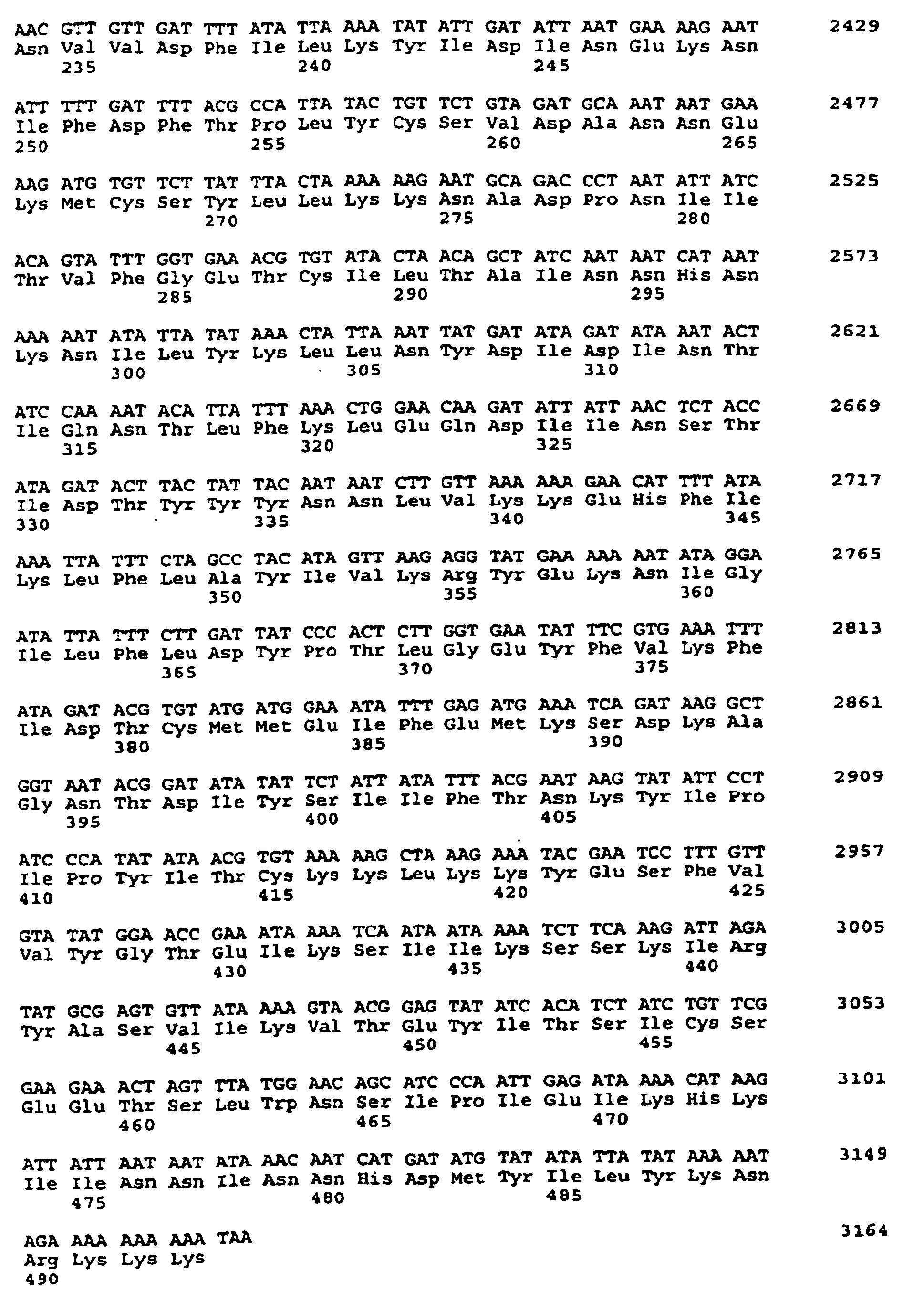
- (i) SEQUENCE CHARACTERISTICS:
- (2) INFORMATION FOR SEQ ID NO:2:
- (i) SEQUENCE CHARACTERISTICS:
- (A) LENGTH: 77 amino acids
- (B) TYPE: amino acid
- (D) TOPOLOGY: linear
- (ii) MOLECULE TYPE: protein
- (xi) SEQUENCE DESCRIPTION: SEQ ID NO:2:

- (i) SEQUENCE CHARACTERISTICS:
- (2) INFORMATION FOR SEQ ID NO:3:
- (i) SEQUENCE CHARACTERISTICS:
- (A) LENGTH: 430 amino acids
- (B) TYPE: amino acid
- (D) TOPOLOGY: linear
- (ii) MOLECULE TYPE: protein
- (xi) SEQUENCE DESCRIPTION: SEQ ID NO:3:


- (i) SEQUENCE CHARACTERISTICS:
- (2) INFORMATION FOR SEQ ID NO:4:
- (i) SEQUENCE CHARACTERISTICS:
- (A) LENGTH: 493 amino acids
- (B) TYPE: amino acid
- (D) TOPOLOGY: linear
- (ii) MOLECULE TYPE: protein
- (xi) SEQUENCE DESCRIPTION: SEQ ID NO:4:


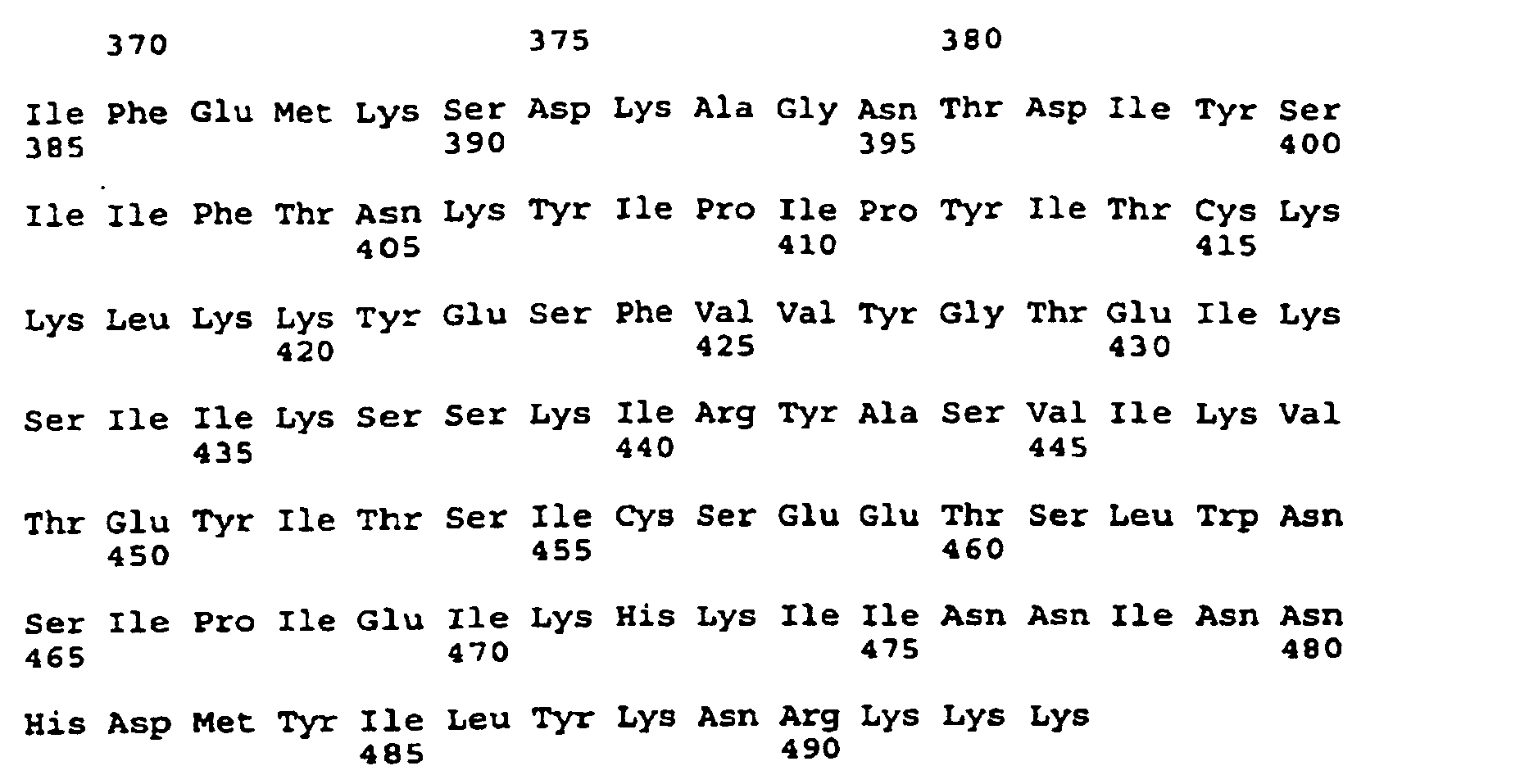
- (i) SEQUENCE CHARACTERISTICS:
- (2) INFORMATION FOR SEQ ID NO:5:
- (i) SEQUENCE CHARACTERISTICS:
- (A) LENGTH: 3295 base pairs
- (B) TYPE: nucleic acid
- (C) STRANDEDNESS: single
- (D) TOPOLOGY: linear
- (ii) MOLECULE TYPE: RNA (genomic)
- (iii) HYPOTHETICAL: NO
- (iv) ANTI-SENSE: NO
- (vi) ORIGINAL SOURCE:
- (A) ORGANISM: Porcine Reproductive and Respiratory Virus
- (B) STRAIN: IA-2 Strain (NVSL)
- (ix) FEATURE:
- (A) NAME/KEY: CDS
- (B) LOCATION: 47..814
- (ix) FEATURE:
- (A) NAME/KEY: CDS
- (B) LOCATION: 670..1431
- (ix) FEATURE:
- (A) NAME/KEY: CDS
- (B) LOCATION: 1215..1748
- (ix) FEATURE:
- (A) NAME/KEY: CDS
- (B) LOCATION: 1762..2361
- (ix) FEATURE:
- (A) NAME/KEY: CDS
- (B) LOCATION: 2349..2870
- (ix) FEATURE:
- (A) NAME/KEY: CDS
- (B) LOCATION: 2863..3231
- (xi) SEQUENCE DESCRIPTION: SEQ ID NO:5:


- (i) SEQUENCE CHARACTERISTICS:
- (2) INFORMATION FOR SEQ ID NO:7:
- (i) SEQUENCE CHARACTERISTICS:
- (A) LENGTH: 254 amino acids
- (B) TYPE: amino acid
- (D) TOPOLOGY: linear
- (ii) MOLECULE TYPE: protein
- (xi) SEQUENCE DESCRIPTION: SEQ ID NO:7:


- (i) SEQUENCE CHARACTERISTICS:
- (2) INFORMATION FOR SEQ ID NO:8:
- (i) SEQUENCE CHARACTERISTICS:
- (A) LENGTH: 178 amino acids
- (B) TYPE: amino acid
- (D) TOPOLOGY: linear
- (ii) MOLECULE TYPE: protein
- (xi) SEQUENCE DESCRIPTION: SEQ ID NO:8:


- (i) SEQUENCE CHARACTERISTICS:
- (2) INFORMATION FOR SEQ ID NO:9:
- (i) SEQUENCE CHARACTERISTICS:
- (A) LENGTH: 200 amino acids
- (B) TYPE: amino acid
- (D) TOPOLOGY: linear
- (ii) MOLECULE TYPE: protein
- (xi) SEQUENCE DESCRIPTION: SEQ ID NO:9:

- (i) SEQUENCE CHARACTERISTICS:
- (2) INFORMATION FOR SEQ ID NO:10:
- (i) SEQUENCE CHARACTERISTICS:
- (A) LENGTH: 174 amino acids
- (B) TYPE: amino acid
- (D) TOPOLOGY: linear
- (ii) MOLECULE TYPE: protein
- (xi) SEQUENCE DESCRIPTION: SEQ ID NO:10:

- (i) SEQUENCE CHARACTERISTICS:
- (2) INFORMATION FOR SEQ ID NO:11:
- (i) SEQUENCE CHARACTERISTICS:
- (A) LENGTH: 123 amino acids
- (B) TYPE: amino acid
- (D) TOPOLOGY: linear
- (ii) MOLECULE TYPE: protein
- (xi) SEQUENCE DESCRIPTION: SEQ ID NO:11:


- (i) SEQUENCE CHARACTERISTICS:
- (2) INFORMATION FOR SEQ ID NO:12:
- (i) SEQUENCE CHARACTERISTICS:
- (A) LENGTH: 37 base pairs
- (B) TYPE: nucleic acid
- (C) STRANDEDNESS: double
- (D) TOPOLOGY: linear
- (ii) MOLECULE TYPE: DNA (genomic)
- (iii) HYPOTHETICAL: NO
- (iv) ANTI-SENSE: NO
- (xi) SEQUENCE DESCRIPTION: SEQ ID NO:12:

- (i) SEQUENCE CHARACTERISTICS:
- (2) INFORMATION FOR SEQ ID N0:13:
- (i) SEQUENCE CHARACTERISTICS:
- (A) LENGTH: 18 base pairs
- (B) TYPE: nucleic acid
- (C) STRANDEDNESS: double
- (D) TOPOLOGY: linear
- (ii) MOLECULE TYPE: DNA (genomic)
- (iii) HYPOTHETICAL: NO
- (iv) ANTI-SENSE: NO
- (xi) SEQUENCE DESCRIPTION: SEQ ID NO:13:

- (i) SEQUENCE CHARACTERISTICS:
- (2) INFORMATION FOR SEQ ID NO:14:
- (i) SEQUENCE CHARACTERISTICS:
- (A) LENGTH: 36 base pairs
- (B) TYPE: nucleic acid
- (C) STRANDEDNESS: double
- (D) TOPOLOGY: linear
- (ii) MOLECULE TYPE: DNA (genomic)
- (iii) HYPOTHETICAL: NO
- (iv) ANTI-SENSE: NO
- (xi) SEQUENCE DESCRIPTION: SEQ ID NO:14:

- (i) SEQUENCE CHARACTERISTICS:
- (2) INFORMATION FOR SEQ ID NO:15:
- (i) SEQUENCE CHARACTERISTICS:
- (A) LENGTH: 36 base pairs
- (B) TYPE: nucleic acid
- (C) STRANDEDNESS: double
- (D) TOPOLOGY: linear
- (ii) MOLECULE TYPE: DNA (genomic)
- (iii) HYPOTHETICAL: NO
- (iv) ANTI-SENSE: NO
- (xi) SEQUENCE DESCRIPTION: SEQ ID NO:15:

- (i) SEQUENCE CHARACTERISTICS:
- (2) INFORMATION FOR SEQ ID NO:16:
- (i) SEQUENCE CHARACTERISTICS:
- (A) LENGTH: 42 base pairs
- (B) TYPE: nucleic acid
- (C) STRANDEDNESS: double
- (D) TOPOLOGY: linear
- (ii) MOLECULE TYPE: DNA (genomic)
- (iii) HYPOTHETICAL: NO
- (iv) ANTI-SENSE: NO
- (xi) SEQUENCE DESCRIPTION: SEQ ID NO:16:

- (i) SEQUENCE CHARACTERISTICS:
- (2) INFORMATION FOR SEQ ID NO:17:
- (i) SEQUENCE CHARACTERISTICS:
- (A) LENGTH: 35 base pairs
- (B) TYPE: nucleic acid
- (C) STRANDEDNESS: double
- (D) TOPOLOGY: linear
- (ii) MOLECULE TYPE: DNA (genomic)
- (iii) HYPOTHETICAL: NO
- (iv) ANTI-SENSE: NO
- (xi) SEQUENCE DESCRIPTION: SEQ ID NO:17:

- (i) SEQUENCE CHARACTERISTICS:
- (2) INFORMATION FOR SEQ ID NO:18:
- (i) SEQUENCE CHARACTERISTICS:
- (A) LENGTH: 29 base pairs
- (B) TYPE: nucleic acid
- (C) STRANDEDNESS: double
- (D) TOPOLOGY: linear
- (ii) MOLECULE TYPE: DNA (genomic)
- (iii) HYPOTHETICAL: NO
- (iv) ANTI-SENSE: NO
- (xi) SEQUENCE DESCRIPTION: SEQ ID NO:18:

- (i) SEQUENCE CHARACTERISTICS:
- (2) INFORMATION FOR SEO ID NO:19:
- (i) SEQUENCE CHARACTERISTICS:
- (A) LENGTH: 27 base pairs
- (B) TYPE: nucleic acid
- (C) STRANDEDNESS: double
- (D) TOPOLOGY: linear
- (ii) MOLECULE TYPE: DNA (genomic)
- (iii) HYPOTHETICAL: NO
- (iv) ANTI-SENSE: NO
- (xi) SEQUENCE DESCRIPTION: SEQ ID NO:19:

- (i) SEQUENCE CHARACTERISTICS:
- (2) INFORMATION FOR SEQ ID NO:20:
- (i) SEQUENCE CHARACTERISTICS:
- (A) LENGTH: 32 base pairs
- (B) TYPE: nucleic acid
- (C) STRANDEDNESS: double
- (D) TOPOLOGY: linear
- (ii) MOLECULE TYPE: DNA (genomic)
- (iii) HYPOTHETICAL: NO
- (iv) ANTI-SENSE: NO
- (xi) SEQUENCE DESCRIPTION: SEQ ID N0:20:

- (i) SEQUENCE CHARACTERISTICS:
- (2) INFORMATION FOR SEQ ID NO:21:
- (i) SEQUENCE CHARACTERISTICS:
- (A) LENGTH: 32 base pairs
- (B) TYPE: nucleic acid
- (C) STRANDEDNESS: double
- (D) TOPOLOGY: linear
- (ii) MOLECULE TYPE: DNA (genomic)
- (iii) HYPOTHETICAL: NO
- (iv) ANTI-SENSE: NO
- (xi) SEQUENCE DESCRIPTION: SEQ ID NO:21:

- (i) SEQUENCE CHARACTERISTICS:
- (2) INFORMATION FOR SEQ ID NO:22:
- (i) SEQUENCE CHARACTERISTICS:
- (A) LENGTH: 35 base pairs
- (B) TYPE: nucleic acid
- (C) STRANDEDNESS: double
- (D) TOPOLOGY: linear
- (ii) MOLECULE TYPE: DNA (genomic)
- (iii) HYPOTHETICAL: NO
- (iv) ANTI-SENSE: NO
- (xi) SEQUENCE DESCRIPTION: SEQ ID NO:22:

- (i) SEQUENCE CHARACTERISTICS:
- (2) INFORMATION FOR SEQ ID NO:23:
- (i) SEQUENCE CHARACTERISTICS:
- (A) LENGTH: 35 base pairs
- (B) TYPE: nucleic acid
- (C) STRANDEDNESS: double
- (D) TOPOLOGY: linear
- (ii) MOLECULE TYPE: DNA (genomic)
- (iii) HYPOTHETICAL: NO
- (iv) ANTI-SENSE: NO
- (xi) SEQUENCE DESCRIPTION: SEQ ID NO:23:

- (i) SEQUENCE CHARACTERISTICS:
- (2) INFORMATION FOR SEQ ID NO:24:
- (i) SEQUENCE CHARACTERISTICS:
- (A) LENGTH: 29 base pairs
- (B) TYPE: nucleic acid
- (C) STRANDEDNESS: double
- (D) TOPOLOGY: linear
- (ii) MOLECULE TYPE: DNA (genomic)
- (iii) HYPOTHETICAL: NO
- (iv) ANTI-SENSE: NO
- (xi) SEQUENCE DESCRIPTION: SEQ ID NO:24:

- (i) SEQUENCE CHARACTERISTICS:
- (2) INFORMATION FOR SEQ ID NO:25:
- (i) SEQUENCE CHARACTERISTICS:
- (A) LENGTH: 30 base pairs
- (B) TYPE: nucleic acid
- (C) STRANDEDNESS: double
- (D) TOPOLOGY: linear
- (ii) MOLECULE TYPE: DNA (genomic)
- (iii) HYPOTHETICAL: NO
- (iv) ANTI-SENSE: NO
- (xi) SEQUENCE DESCRIPTION: SEQ ID NO:25:

- (i) SEQUENCE CHARACTERISTICS:
- (2) INFORMATION FOR SEQ ID NO:26:
- (i) SEQUENCE CHARACTERISTICS:
- (A) LENGTH: 35 base pairs
- (B) TYPE: nucleic acid
- (C) STRANDEDNESS: double
- (D) TOPOLOGY: linear
- (ii) MOLECULE TYPE: DNA (genomic)
- (iii) HYPOTHETICAL: NO
- (iv) ANTI-SENSE: NO
- (xi) SEQUENCE DESCRIPTION: SEQ ID NO:26:

- (i) SEQUENCE CHARACTERISTICS:
- (2) INFORMATION FOR SEQ ID NO:27:
- (i) SEQUENCE CHARACTERISTICS:
- (A) LENGTH: 35 base pairs
- (B) TYPE: nucleic acid
- (C) STRANDEDNESS: double
- (D) TOPOLOGY: linear
- (ii) MOLECULE TYPE: DNA (genomic)
- (iii) HYPOTHETICAL: NO
- (iv) ANTI-SENSE: NO
- (xi) SEQUENCE DESCRIPTION: SEQ ID NO:27:

- (i) SEQUENCE CHARACTERISTICS:
- (2) INFORMATION FOR SEQ ID NO:28:
- (i) SEQUENCE CHARACTERISTICS:
- (A) LENGTH: 35 base pairs
- (B) TYPE: nucleic acid
- (C) STRANDEDNESS: double
- (D) TOPOLOGY: linear
- (ii) MOLECULE TYPE: DNA (genomic)
- (iii) HYPOTHETICAL: NO
- (iv) ANTI-SENSE: NO
- (xi) SEQUENCE DESCRIPTION: SEQ ID NO:28:

- (i) SEQUENCE CHARACTERISTICS:
- (2) INFORMATION FOR SEQ ID NO:29:
- (i) SEQUENCE CHARACTERISTICS:
- (A) LENGTH: 30 base pairs
- (B) TYPE: nucleic acid
- (C) STRANDEDNESS: double
- (D) TOPOLOGY: linear
- (ii) MOLECULE TYPE: DNA (genomic)
- (iii) HYPOTHETICAL: NO
- (iv) ANTI-SENSE: NO
- (xi) SEQUENCE DESCRIPTION: SEQ ID NO:29:

- (i) SEQUENCE CHARACTERISTICS:
- (2) INFORMATION FOR SEQ ID NO:30:
- (i) SEQUENCE CHARACTERISTICS:
- (A) LENGTH: 35 base pairs
- (B) TYPE: nucleic acid
- (C) STRANDEDNESS: double
- (D) TOPOLOGY: linear
- (ii) MOLECULE TYPE: DNA (genomic)
- (iii) HYPOTHETICAL: NO
- (iv) ANTI-SENSE: NO
- (xi) SEQUENCE DESCRIPTION: SEQ ID NO:30:

- (i) SEQUENCE CHARACTERISTICS:
- (2) INFORMATION FOR SEQ ID NO:31:
- (i) SEQUENCE CHARACTERISTICS:
- (A) LENGTH: 30 base pairs
- (B) TYPE: nucleic acid
- (C) STRANDEDNESS: double
- (D) TOPOLOGY: linear
- (ii) MOLECULE TYPE: DNA (genomic)
- (iii) HYPOTHETICAL: NO
- (iv) ANTI-SENSE: NO
- (xi) SEQUENCE DESCRIPTION: SEQ ID NO:31:

- (i) SEQUENCE CHARACTERISTICS:
- (2) INFORMATION FOR SEQ ID NO:32:
- (i) SEQUENCE CHARACTERISTICS:
- (A) LENGTH: 35 base pairs
- (B) TYPE: nucleic acid
- (C) STRANDEDNESS: double
- (D) TOPOLOGY: linear
- (ii) MOLECULE TYPE: DNA (genomic)
- (iii) HYPOTHETICAL: NO
- (iv) ANTI-SENSE: NO
- (xi) SEQUENCE DESCRIPTION: SEQ ID NO:32:

- (i) SEQUENCE CHARACTERISTICS:
- (2) INFORMATION FOR SEQ ID NO:33:
- (i) SEQUENCE CHARACTERISTICS:
- (A) LENGTH: 30 base pairs
- (B) TYPE: nucleic acid
- (C) STRANDEDNESS: double
- (D) TOPOLOGY: linear
- (ii) MOLECULE TYPE: DNA (genomic)
- (iii) HYPOTHETICAL: NO
- (iv) ANTI-SENSE: NO
- (xi) SEQUENCE DESCRIPTION: SEQ ID NO:33:

- (i) SEQUENCE CHARACTERISTICS:
- (2) INFORMATION FOR SEQ ID NO:34:
- (i) SEQUENCE CHARACTERISTICS:
- (A) LENGTH: 35 base pairs
- (B) TYPE: nucleic acid
- (C) STRANDEDNESS: double
- (D) TOPOLOGY: linear
- (ii) MOLECULE TYPE: DNA (genomic)
- (iii) HYPOTHETICAL: NO
- (iv) ANTI-SENSE: NO
- (xi) SEQUENCE DESCRIPTION: SEQ ID NO:34:

- (i) SEQUENCE CHARACTERISTICS:
- (2) INFORMATION FOR SEQ ID NO:35:
- (i) SEQUENCE CHARACTERISTICS:
- (A) LENGTH: 30 base pairs
- (B) TYPE: nucleic acid
- (C) STRANDEDNESS: double
- (D) TOPOLOGY: linear
- (ii) MOLECULE TYPE: DNA (genomic)
- (iii) HYPOTHETICAL: NO
- (iv) ANTI-SENSE: NO
- (xi) SEQUENCE DESCRIPTION: SEQ ID NO:35:

- (i) SEQUENCE CHARACTERISTICS:
- (2) INFORMATION FOR SEQ ID NO:36:
- (i) SEQUENCE CHARACTERISTICS:
- (A) LENGTH: 35 base pairs
- (B) TYPE: nucleic acid
- (C) STRANDEDNESS: double
- (D) TOPOLOGY: linear
- (ii) MOLECULE TYPE: DNA (genomic)
- (iii) HYPOTHETICAL: NO
- (iv) ANTI-SENSE: NO
- (xi) SEQUENCE DESCRIPTION: SEQ ID NO:36:

- (i) SEQUENCE CHARACTERISTICS:
- (2) INFORMATION FOR SEQ ID NO:37:
- (i) SEQUENCE CHARACTERISTICS:
- (A) LENGTH: 35 base pairs
- (B) TYPE: nucleic acid
- (C) STRANDEDNESS: double
- (D) TOPOLOGY: linear
- (ii) MOLECULE TYPE: DNA (genomic)
- (iii) HYPOTHETICAL: NO
- (iv) ANTI-SENSE: NO
- (xi) SEQUENCE DESCRIPTION: SEQ ID NO:37:

- (i) SEQUENCE CHARACTERISTICS:
- (2) INFORMATION FOR SEQ ID NO:38:
- (i) SEQUENCE CHARACTERISTICS:
- (A) LENGTH: 33 base pairs
- (B) TYPE: nucleic acid
- (C) STRANDEDNESS: double
- (D) TOPOLOGY: linear
- (ii) MOLECULE TYPE: DNA (genomic)
- (iii) HYPOTHETICAL: NO
- (iv) ANTI-SENSE: NO
- (xi) SEQUENCE DESCRIPTION: SEQ ID NO:38:

- (i) SEQUENCE CHARACTERISTICS:
- (2) INFORMATION FOR SEQ ID NO:39:
- (i) SEQUENCE CHARACTERISTICS:
- (A) LENGTH: 35 base pairs
- (B) TYPE: nucleic acid
- (C) STRANDEDNESS: double
- (D) TOPOLOGY: linear
- (ii) MOLECULE TYPE: DNA (genomic)
- (iii) HYPOTHETICAL: NO
- (iv) ANTI-SENSE: NO
- (xi) SEQUENCE DESCRIPTION: SEQ ID NO:39:

- (i) SEQUENCE CHARACTERISTICS:
- (2) INFORMATION FOR SEQ ID NO:40:
- (i) SEQUENCE CHARACTERISTICS:
- (A) LENGTH: 35 base pairs
- (B) TYPE: nucleic acid
- (C) STRANDEDNESS: double
- (D) TOPOLOGY: linear
- (ii) MOLECULE TYPE: DNA (genomic)
- (iii) HYPOTHETICAL: NO
- (iv) ANTI-SENSE: NO
- (xi) SEQUENCE DESCRIPTION: SEQ ID NO:40:

- (i) SEQUENCE CHARACTERISTICS:
- (2) INFORMATION FOR SEQ ID NO:41:
- (i) SEQUENCE CHARACTERISTICS:
- (A) LENGTH: 32 base pairs
- (B) TYPE: nucleic acid
- (C) STRANDEDNESS: double
- (D) TOPOLOGY: linear
- (ii) MOLECULE TYPE: DNA (genomic)
- (iii) HYPOTHETICAL: NO
- (iv) ANTI-SENSE: NO
- (xi) SEQUENCE DESCRIPTION: SEQ ID NO:41:

- (i) SEQUENCE CHARACTERISTICS:
- (2) INFORMATION FOR SEQ ID NO:42:
- (i) SEQUENCE CHARACTERISTICS:
- (A) LENGTH: 35 base pairs
- (B) TYPE: nucleic acid
- (C) STRANDEDNESS: double
- (D) TOPOLOGY: linear
- (ii) MOLECULE TYPE: DNA (genomic)
- (iii) HYPOTHETICAL: NO
- (iv) ANTI-SENSE: NO
- (xi) SEQUENCE DESCRIPTION: SEQ ID NO:42:

- (i) SEQUENCE CHARACTERISTICS:
- (2) INFORMATION FOR SEQ ID NO:43:
- (i) SEQUENCE CHARACTERISTICS:
- (A) LENGTH: 38 base pairs
- (B) TYPE: nucleic acid
- (C) STRANDEDNESS: double
- (D) TOPOLOGY: linear
- (ii) MOLECULE TYPE: DNA (genomic)
- (iii) HYPOTHETICAL: NO
- (iv) ANTI-SENSE: NO
- (xi) SEQUENCE DESCRIPTION: SEQ ID NO:43:

- (i) SEQUENCE CHARACTERISTICS:
- (2) INFORMATION FOR SEQ ID NO:44:
- (i) SEQUENCE CHARACTERISTICS:
- (A) LENGTH: 37 base pairs
- (B) TYPE: nucleic acid
- (C) STRANDEDNESS: double
- (D) TOPOLOGY: linear
- (ii) MOLECULE TYPE: DNA (genomic)
- (iii) HYPOTHETICAL: NO
- (iv) ANTI-SENSE: NO
- (xi) SEQUENCE DESCRIPTION: SEQ ID NO:44:

- (i) SEQUENCE CHARACTERISTICS:
- (2) INFORMATION FOR SEQ ID NO:45:
- (i) SEQUENCE CHARACTERISTICS:
- (A) LENGTH: 36 base pairs
- (B) TYPE: nucleic acid
- (C) STRANDEDNESS: double
- (D) TOPOLOGY: linear
- (ii) MOLECULE TYPE: DNA (genomic)
- (iii) HYPOTHETICAL: NO
- (iv) ANTI-SENSE: NO
- (xi) SEQUENCE DESCRIPTION: SEQ ID NO:45:

- (i) SEQUENCE CHARACTERISTICS:
- (2) INFORMATION FOR SEQ ID NO:46:
- (i) SEQUENCE CHARACTERISTICS:
- (A) LENGTH: 37 base pairs
- (B) TYPE: nucleic acid
- (C) STRANDEDNESS: double
- (D) TOPOLOGY: linear
- (ii) MOLECULE TYPE: DNA (genomic)
- (iii) HYPOTHETICAL: NO
- (iv) ANTI-SENSE: NO
- (xi) SEQUENCE DESCRIPTION: SEQ ID NO:46:

- (i) SEQUENCE CHARACTERISTICS:
- (2) INFORMATION FOR SEQ ID NO:47:
- (i) SEQUENCE CHARACTERISTICS:
- (A) LENGTH: 33 base pairs
- (B) TYPE: nucleic acid
- (C) STRANDEDNESS: double
- (D) TOPOLOGY: linear
- (ii) MOLECULE TYPE: DNA (genomic)
- (iii) HYPOTHETICAL: NO
- (iv) ANTI-SENSE: NO
- (xi) SEQUENCE DESCRIPTION: SEQ ID NO:47:

- (i) SEQUENCE CHARACTERISTICS:
- (2) INFORMATION FOR SEQ ID NO:48:
- (i) SEQUENCE CHARACTERISTICS:
- (A) LENGTH: 38 base pairs
- (B) TYPE: nucleic acid
- (C) STRANDEDNESS: double
- (D) TOPOLOGY: linear
- (ii) MOLECULE TYPE: DNA (genomic)
- (iii) HYPOTHETICAL: NO
- (iv) ANTI-SENSE: NO
- (xi) SEQUENCE DESCRIPTION: SEQ ID NO:48:

- (i) SEQUENCE CHARACTERISTICS:
- (2) INFORMATION FOR SEQ ID NO:49:
- (i) SEQUENCE CHARACTERISTICS:
- (A) LENGTH: 30 base pairs
- (B) TYPE: nucleic acid
- (C) STRANDEDNESS: double
- (D) TOPOLOGY: linear
- (ii) MOLECULE TYPE: DNA (genomic)
- (iii) HYPOTHETICAL: NO
- (iv) ANTI-SENSE: NO
- (xi) SEQUENCE DESCRIPTION: SEQ ID NO:49:

- (i) SEQUENCE CHARACTERISTICS:
- (2) INFORMATION FOR SEQ ID NO:50:
- (i) SEQUENCE CHARACTERISTICS:
- (A) LENGTH: 34 base pairs
- (B) TYPE: nucleic acid
- (C) STRANDEDNESS: double
- (D) TOPOLOGY: linear
- (ii) MOLECULE TYPE: DNA (genomic)
- (iii) HYPOTHETICAL: NO
- (iv) ANTI-SENSE: NO
- (xi) SEQUENCE DESCRIPTION: SEQ ID NO:50:

- (i) SEQUENCE CHARACTERISTICS:
- (2) INFORMATION FOR SEQ ID N0:51:
- (i) SEQUENCE CHARACTERISTICS:
- (A) LENGTH: 36 base pairs
- (B) TYPE: nucleic acid
- (C) STRANDEDNESS: double
- (D) TOPOLOGY: linear
- (ii) MOLECULE TYPE: DNA (genomic)
- (iii) HYPOTHETICAL: NO
- (iv) ANTI-SENSE: NO
- (xi) SEQUENCE DESCRIPTION: SEQ ID NO:51:

- (i) SEQUENCE CHARACTERISTICS:
- (2) INFORMATION FOR SEQ ID NO:52:
- (i) SEQUENCE CHARACTERISTICS:
- (A) LENGTH: 33 base pairs
- (B) TYPE: nucleic acid
- (C) STRANDEDNESS: double
- (D) TOPOLOGY: linear
- (ii) MOLECULE TYPE: DNA (genomic)
- (iii) HYPOTHETICAL: NO
- (iv) ANTI-SENSE: NO
- (xi) SEQUENCE DESCRIPTION: SEQ ID NO:52:

- (i) SEQUENCE CHARACTERISTICS:
- (2) INFORMATION FOR SEQ ID NO:53:
- (i) SEQUENCE CHARACTERISTICS:
- (A) LENGTH: 34 base pairs
- (B) TYPE: nucleic acid
- (C) STRANDEDNESS: double
- (D) TOPOLOGY: linear
- (ii) MOLECULE TYPE: DNA (genomic)
- (iii) HYPOTHETICAL: NO
- (iv) ANTI-SENSE: NO
- (xi) SEQUENCE DESCRIPTION: SEQ ID NO:53:

- (i) SEQUENCE CHARACTERISTICS:
- (2) INFORMATION FOR SEQ ID NO:54:
- (i) SEQUENCE CHARACTERISTICS:
- (A) LENGTH: 25 base pairs
- (B) TYPE: nucleic acid
- (C) STRANDEDNESS: double
- (D) TOPOLOGY: linear
- (ii) MOLECULE TYPE: DNA (genomic)
- (iii) HYPOTHETICAL: NO
- (iv) ANTI-SENSE: NO
- (xi) SEQUENCE DESCRIPTION: SEQ ID NO:54:

- (i) SEQUENCE CHARACTERISTICS:
- (2) INFORMATION FOR SEQ ID NO:55:
- (i) SEQUENCE CHARACTERISTICS:
- (A) LENGTH: 31 base pairs
- (B) TYPE: nucleic acid
- (C) STRANDEDNESS: double
- (D) TOPOLOGY: linear
- (ii) MOLECULE TYPE: DNA (genomic)
- (iii) HYPOTHETICAL: NO
- (iv) ANTI-SENSE: NO
- (xi) SEQUENCE DESCRIPTION: SEQ ID NO:S5:

- (i) SEQUENCE CHARACTERISTICS:
- (2) INFORMATION FOR SEQ ID NO:56:
- (i) SEQUENCE CHARACTERISTICS:
- (A) LENGTH: 30 base pairs
- (B) TYPE: nucleic acid
- (C) STRANDEDNESS: double
- (D) TOPOLOGY: linear
- (ii) MOLECULE TYPE: DNA (genomic)
- (iii) HYPOTHETICAL: NO
- (iv) ANTI-SENSE: NO
- (xi) SEQUENCE DESCRIPTION: SEQ ID NO:56:

- (i) SEQUENCE CHARACTERISTICS:
- (2) INFORMATION FOR SEQ ID NO:57:
- (i) SEQUENCE CHARACTERISTICS:
- (A) LENGTH: 34 base pairs
- (B) TYPE: nucleic acid
- (C) STRANDEDNESS: double
- (D) TOPOLOGY: linear
- (ii) MOLECULE TYPE: DNA (genomic)
- (iii) HYPOTHETICAL: NO
- (iv) ANTI-SENSE: NO


- (i) SEQUENCE CHARACTERISTICS:
- (2) INFORMATION FOR SEQ ID NO:59:
- (i) SEQUENCE CHARACTERISTICS:
- (A) LENGTH: 34 base pairs
- (B) TYPE: nucleic acid
- (C) STRANDEDNESS: double
- (D) TOPOLOGY: linear
- (ii) MOLECULE TYPE: DNA (genomic)
- (iii) HYPOTHETICAL: NO
- (iv) ANTI-SENSE: NO
- (xi) SEQUENCE DESCRIPTION: SEQ ID NO:59:

- (i) SEQUENCE CHARACTERISTICS:
- (2) INFORMATION FOR SEQ ID NO:60:
- (i) SEQUENCE CHARACTERISTICS:
- (A) LENGTH: 34 base pairs
- (B) TYPE: nucleic acid
- (C) STRANDEDNESS: double
- (D) TOPOLOGY: linear
- (ii) MOLECULE TYPE: DNA (genomic)
- (iii) HYPOTHETICAL: NO
- (iv) ANTI-SENSE: NO
- (xi) SEQUENCE DESCRIPTION: SEQ ID NO:60:

- (i) SEQUENCE CHARACTERISTICS:
- (2) INFORMATION FOR SEQ ID NO:189:
- (i) SEQUENCE CHARACTERISTICS:
- (A) LENGTH: 3942 base pairs
- (B) TYPE: nucleic acid
- (C) STRANDEDNESS: double
- (D) TOPOLOGY: linear
- (ii) MOLECULE TYPE: DNA (genomic)
- (iii) HYPOTHETICAL: NO
- (iv) ANTI-SENSE: NO
- (vi) ORIGINAL SOURCE:
- (A) ORGANISM: Swinepox virus
- (B) STRAIN: Kasza
- (C) INDIVIDUAL ISOLATE: S-SPV-001
- (ix) FEATURE:
- (A) NAME/KEY: CDS
- (B) LOCATION: 1..369
- (ix) FEATURE:
- (A) NAME/KEY: CDS
- (B) LOCATION: 370..597
- (ix) FEATURE:
- (A) NAME/KEY: CDS
- (B) LOCATION: 598..1539
- (ix) FEATURE:
- (A) NAME/KEY: CDS
- (B) LOCATION: 1675..3708
- (ix) FEATURE:
- (A) NAME/KEY: CDS
- (B) LOCATION: complement (3748..3942)
- (xi) SEQUENCE DESCRIPTION: SEQ ID NO:189:


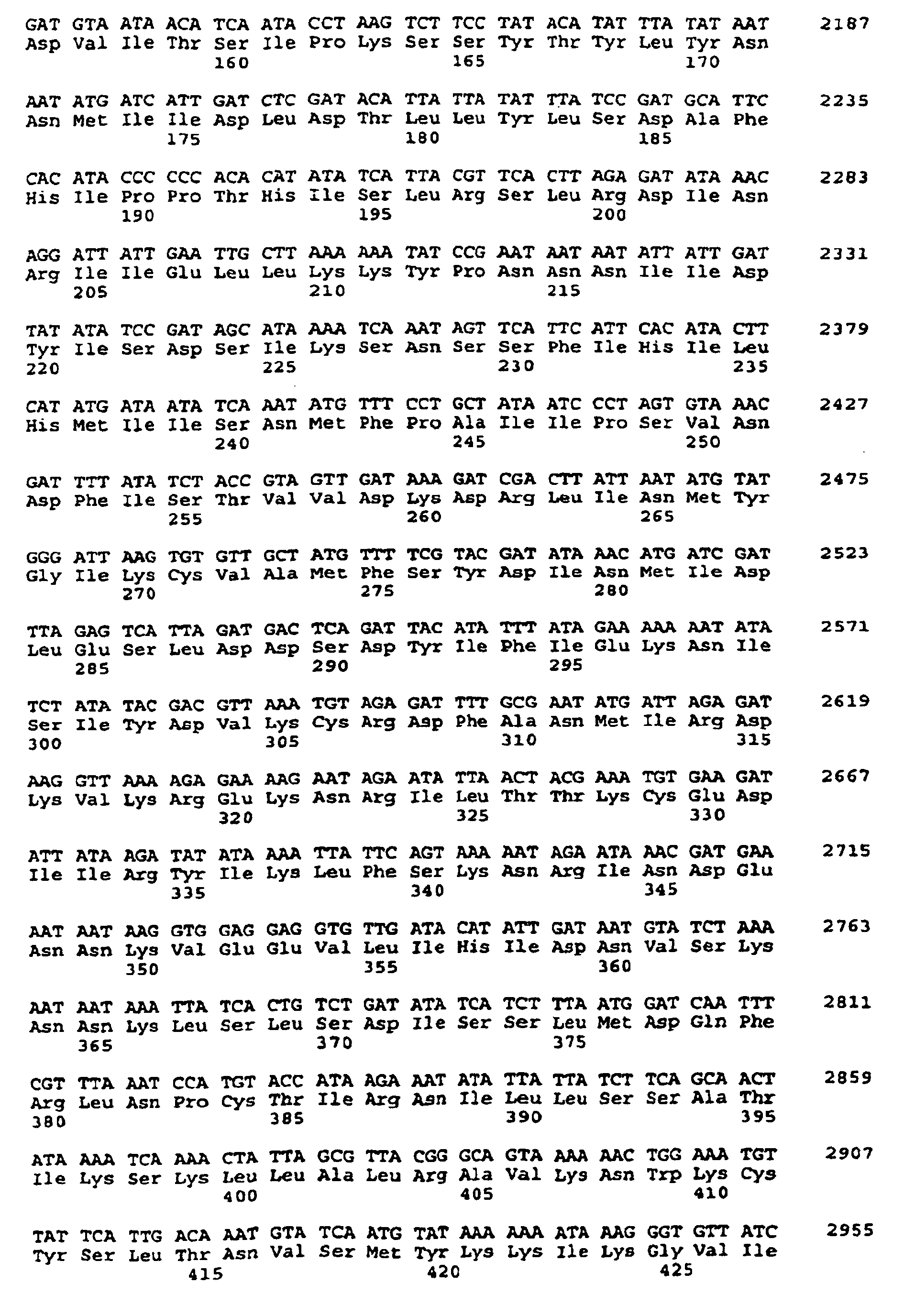


- (i) SEQUENCE CHARACTERISTICS:
- (2) INFORMATION FOR SEQ ID NO:190:
- (i) SEQUENCE CHARACTERISTICS:
- (A) LENGTH: 122 amino acids
- (B) TYPE: amino acid
- (D) TOPOLOGY: linear
- (ii) MOLECULE TYPE: peptide
- (xi) SEQUENCE DESCRIPTION: SEQ ID NO:190:

- (i) SEQUENCE CHARACTERISTICS:
- (2) INFORMATION FOR SEQ ID NO:191:
- (i) SEQUENCE CHARACTERISTICS:
- (A) LENGTH: 75 amino acids
- (B) TYPE: amino acid
- (D) TOPOLOGY: linear
- (ii) MOLECULE TYPE: protein
- (xi) SEQUENCE DESCRIPTION: SEQ ID NO:191:

- (i) SEQUENCE CHARACTERISTICS:
- (2) INFORMATION FOR SEQ ID NO:192:
- (i) SEQUENCE CHARACTERISTICS:
- (A) LENGTH: 313 amino acids
- (B) TYPE: amino acid
- (D) TOPOLOGY: linear
- (ii) MOLECULE TYPE: protein
- (xi) SEQUENCE DESCRIPTION: SEQ ID NO:192:


- (i) SEQUENCE CHARACTERISTICS:
- (2) INFORMATION FOR SEQ ID NO:193:
- (i) SEQUENCE CHARACTERISTICS:
- (A) LENGTH: 677 amino acids
- (B) TYPE: amino acid
- (D) TOPOLOGY: linear
- (ii) MOLECULE TYPE: protein
- (xi) SEQUENCE DESCRIPTION: SEQ ID NO:193:


- (i) SEQUENCE CHARACTERISTICS:
- (2) INFORMATION FOR SEQ ID NO:194:
- (i) SEQUENCE CHARACTERISTICS:
- (A) LENGTH: 64 amino acids
- (B) TYPE: amino acid
- (D) TOPOLOGY: linear
- (ii) MOLECULE TYPE: protein
- (xi) SEQUENCE DESCRIPTION: SEQ ID NO:194:

- (i) SEQUENCE CHARACTERISTICS:
- (2) INFORMATION FOR SEQ ID NO:195:
- (i) SEQUENCE CHARACTERISTICS:
- (A) LENGTH: 583 base pairs
- (B) TYPE: nucleic acid
- (C) STRANDEDNESS: double
- (D) TOPOLOGY: linear
- (ii) MOLECULE TYPE: DNA (genomic)
- (iii) HYPOTHETICAL: NO
- (iv) ANTI-SENSE: NO
- (vi) ORIGINAL SOURCE:
- (A) ORGANISM: Swinepox virus
- (B) STRAIN: Kasza
- (C) INDIVIDUAL ISOLATE: S-SPV-001
- (ix) FEATURE:
- (A) NAME/KEY: CDS
- (B) LOCATION: 2..583
- (xi) SEQUENCE DESCRIPTION: SEQ ID NO:195:

- (i) SEQUENCE CHARACTERISTICS:
- (2) INFORMATION FOR SEQ ID NO:196:
- (i) SEQUENCE CHARACTERISTICS:
- (A) LENGTH: 194 amino acids
- (B) TYPE: amino acid
- (D) TOPOLOGY: linear
- (ii) MOLECULE TYPE: protein
- (xi) SEQUENCE DESCRIPTION: SEQ ID NO:196:


- (i) SEQUENCE CHARACTERISTICS:
- (2) INFORMATION FOR SEQ ID NO:197:
- (i) SEQUENCE CHARACTERISTICS:
- (A) LENGTH: 51 base pairs
- (B) TYPE: nucleic acid
- (C) STRANDEDNESS: double
- (D) TOPOLOGY: linear
- (ii) MOLECULE TYPE: DNA (genomic)
- (iii) HYPOTHETICAL: NO
- (iv) ANTI-SENSE: NO
- (xi) SEQUENCE DESCRIPTION: SEQ ID NO:197:

- (i) SEQUENCE CHARACTERISTICS:
- (2) INFORMATION FOR SEQ ID NO:198:
- (i) SEQUENCE CHARACTERISTICS:
- (A) LENGTH: 138 base pairs
- (B) TYPE: nucleic acid
- (C) STRANDEDNESS: double
- (D) TOPOLOGY: linear
- (ii) MOLECULE TYPE: DNA (genomic)
- (iii) HYPOTHETICAL: NO
- (iv) ANTI-SENSE: NO
- (xi) SEQUENCE DESCRIPTION: SEQ ID NO:198:

- (i) SEQUENCE CHARACTERISTICS:
- (2) INFORMATION FOR SEQ ID NO:199:
- (i) SEQUENCE CHARACTERISTICS:
- (A) LENGTH: 120 base pairs
- (B) TYPE: nucleic acid
- (C) STRANDEDNESS: double
- (D) TOPOLOGY: linear
- (ii) MOLECULE TYPE: DNA (genomic)
- (iii) HYPOTHETICAL: NO
- (iv) ANTI-SENSE: NO
- (xi) SEQUENCE DESCRIPTION: SEQ ID NO:199:

- (i) SEQUENCE CHARACTERISTICS:
- (2) INFORMATION FOR SEQ ID NO:200:
- (i) SEQUENCE CHARACTERISTICS:
- (A) LENGTH: 116 base pairs
- (B) TYPE: nucleic acid
- (C) STRANDEDNESS: double
- (D) TOPOLOGY: linear
- (ii) MOLECULE TYPE: DNA (genomic)
- (iii) HYPOTHETICAL: NO
- (iv) ANTI-SENSE: NO
- (xi) SEQUENCE DESCRIPTION: SEQ ID NO:200:

- (i) SEQUENCE CHARACTERISTICS:
- (2) INFORMATION FOR SEQ ID NO:201:
- (i) SEQUENCE CHARACTERISTICS:
- (A) LENGTH: 51 base pairs
- (B) TYPE: nucleic acid
- (C) STRANDEDNESS: double
- (D) TOPOLOGY: linear
- (ii) MOLECULE TYPE: DNA (genomic)
- (iii) HYPOTHETICAL: NO
- (iv) ANTI-SENSE: NO
- (xi) SEQUENCE DESCRIPTION: SEQ ID NO:201:

- (i) SEQUENCE CHARACTERISTICS:
- (2) INFORMATION FOR SEQ ID NO:202:
- (i) SEQUENCE CHARACTERISTICS:
- (A) LENGTH: 51 base pairs
- (B) TYPE: nucleic acid
- (C) STRANDEDNESS: double
- (D) TOPOLOGY: linear
- (ii) MOLECULE TYPE: DNA (genomic)
- (iii) HYPOTHETICAL: NO
- (iv) ANTI-SENSE: NO
- (xi) SEQUENCE DESCRIPTION: SEQ ID NO:202:

- (i) SEQUENCE CHARACTERISTICS:
- (2) INFORMATION FOR SEQ ID NO:203:
- (i) SEQUENCE CHARACTERISTICS:
- (A) LENGTH: 141 base pairs
- (B) TYPE: nucleic acid
- (C) STRANDEDNESS: double
- (D) TOPOLOGY: linear
- (ii) MOLECULE TYPE: DNA (genomic)
- (iii) HYPOTHETICAL: NO
- (iv) ANTI-SENSE: NO
- (xi) SEQUENCE DESCRIPTION: SEQ ID NO:203:

- (i) SEQUENCE CHARACTERISTICS:
- (2) INFORMATION FOR SEQ ID NO:204:
- (i) SEQUENCE CHARACTERISTICS:
- (A) LENGTH: 120 base pairs
- (B) TYPE: nucleic acid
- (C) STRANDEDNESS: double
- (D) TOPOLOGY: linear
- (ii) MOLECULE TYPE: DNA (genomic)
- (iii) HYPOTHETICAL: NO
- (iv) ANTI-SENSE: NO
- (xi) SEQUENCE DESCRIPTION: SEQ ID NO:204:

- (i) SEQUENCE CHARACTERISTICS:
- (2) INFORMATION FOR SEQ ID NO:205:
- (i) SEQUENCE CHARACTERISTICS:
- (A) LENGTH: 116 base pairs
- (B) TYPE: nucleic acid
- (C) STRANDEDNESS: double
- (D) TOPOLOGY: linear
- (ii) MOLECULE TYPE: DNA (genomic)
- (iii) HYPOTHETICAL: NO
- (iv) ANTI-SENSE: NO
- (xi) SEQUENCE DESCRIPTION: SEQ ID NO:205:

- (i) SEQUENCE CHARACTERISTICS:
- (2) INFORMATION FOR SEQ ID NO:206:
- (i) SEQUENCE CHARACTERISTICS:
- (A) LENGTH: 51 base pairs
- (B) TYPE: nucleic acid
- (C) STRANDEDNESS: double
- (D) TOPOLOGY: linear
- (ii) MOLECULE TYPE: DNA (genomic)
- (iii) HYPOTHETICAL: NO
- (iv) ANTI-SENSE: NO
- (xi) SEQUENCE DESCRIPTION: SEQ ID NO:206:

- (i) SEQUENCE CHARACTERISTICS:
- (2) INFORMATION FOR SEQ ID NO:207:
- (i) SEQUENCE CHARACTERISTICS:
- (A) LENGTH: 45 base pairs
- (B) TYPE: nucleic acid
- (C) STRANDEDNESS: double
- (D) TOPOLOGY: linear
- (ii) MOLECULE TYPE: DNA (genomic)
- (iii) HYPOTHETICAL: NO
- (iv) ANTI-SENSE: NO
- (xi) SEQUENCE DESCRIPTION: SEQ ID NO:207:

- (i) SEQUENCE CHARACTERISTICS:
- (2) INFORMATION FOR SEQ ID NO:208:
- (i) SEQUENCE CHARACTERISTICS:
- (A) LENGTH: 57 base pairs
- (B) TYPE: nucleic acid
- (C) STRANDEDNESS: double
- (D) TOPOLOGY: linear
- (ii) MOLECULE TYPE: DNA (genomic)
- (iii) HYPOTHETICAL: NO
- (iv) ANTI-SENSE: NO
- (xi) SEQUENCE DESCRIPTION: SEQ ID NO:208:

- (i) SEQUENCE CHARACTERISTICS:
- (2) INFORMATION FOR SEQ ID NO:209:
- (i) SEQUENCE CHARACTERISTICS:
- (A) LENGTH: 249 base pairs
- (B) TYPE: nucleic acid
- (C) STRANDEDNESS: double
- (D) TOPOLOGY: linear
- (ii) MOLECULE TYPE: DNA (genomic)
- (iii) HYPOTHETICAL: NO
- (iv) ANTI-SENSE: NO
- (xi) SEQUENCE DESCRIPTION: SEQ ID NO:209:

- (i) SEQUENCE CHARACTERISTICS:
- (2) INFORMATION FOR SEQ ID NO:210:
- (i) SEQUENCE CHARACTERISTICS:
- (A) LENGTH: 45 base pairs
- (B) TYPE: nucleic acid
- (C) STRANDEDNESS: double
- (D) TOPOLOGY: linear
- (ii) MOLECULE TYPE: DNA (genomic)
- (iii) HYPOTHETICAL: NO
- (iv) ANTI-SENSE: NO
- (xi) SEQUENCE DESCRIPTION: SEQ ID NO:210:

- (i) SEQUENCE CHARACTERISTICS:
- (2) INFORMATION FOR SEQ ID NO:211:
- (i) SEQUENCE CHARACTERISTICS:
- (A) LENGTH: 33 base pairs
- (B) TYPE: nucleic acid
- (C) STRANDEDNESS: double
- (D) TOPOLOGY: linear
- (ii) MOLECULE TYPE: DNA (genomic)
- (iii) HYPOTHETICAL: NO
- (iv) ANTI-SENSE: NO
- (xi) SEQUENCE DESCRIPTION: SEQ ID NO:211:

- (i) SEQUENCE CHARACTERISTICS:
- (2) INFORMATION FOR SEQ ID NO:212:
- (i) SEQUENCE CHARACTERISTICS:
- (A) LENGTH: 36 base pairs
- (B) TYPE: nucleic acid
- (C) STRANDEDNESS: double
- (D) TOPOLOGY: linear
- (ii) MOLECULE TYPE: DNA (genomic)
- (iii) HYPOTHETICAL: NO
- (iv) ANTI-SENSE: NO
- (xi) SEQUENCE DESCRIPTION: SEQ ID NO:212:

- (i) SEQUENCE CHARACTERISTICS:
- (2) INFORMATION FOR SEQ ID NO:213:
- (i) SEQUENCE CHARACTERISTICS:
- (A) LENGTH: 35 base pairs
- (B) TYPE: nucleic acid
- (C) STRANDEDNESS: double
- (D) TOPOLOGY: linear
- (ii) MOLECULE TYPE: DNA (genomic)
- (iii) HYPOTHETICAL: NO
- (iv) ANTI-SENSE: NO
- (xi) SEQUENCE DESCRIPTION: SEQ ID NO:213:

- (i) SEQUENCE CHARACTERISTICS:
- (2) INFORMATION FOR SEQ ID NO:214:
- (i) SEQUENCE CHARACTERISTICS:
- (A) LENGTH: 32 base pairs
- (B) TYPE: nucleic acid
- (C) STRANDEDNESS: double
- (D) TOPOLOGY: linear
- (ii) MOLECULE TYPE: DNA (genomic)
- (iii) HYPOTHETICAL: NO
- (iv) ANTI-SENSE: NO
- (xi) SEQUENCE DESCRIPTION: SEQ ID NO:214:

- (i) SEQUENCE CHARACTERISTICS:
- (2) INFORMATION FOR SEQ ID NO:215:
- (i) SEQUENCE CHARACTERISTICS:
- (A) LENGTH: 34 base pairs
- (B) TYPE: nucleic acid
- (C) STRANDEDNESS: double
- (D) TOPOLOGY: linear
- (ii) MOLECULE TYPE: DNA (genomic)
- (iii) HYPOTHETICAL: NO
- (iv) ANTI-SENSE: NO
- (xi) SEQUENCE DESCRIPTION: SEQ ID NO:215:

- (i) SEQUENCE CHARACTERISTICS:
- (2) INFORMATION FOR SEQ ID NO:216:
- (i) SEQUENCE CHARACTERISTICS:
- (A) LENGTH: 32 base pairs
- (B) TYPE: nucleic acid
- (C) STRANDEDNESS: double
- (D) TOPOLOGY: linear
- (ii) MOLECULE TYPE: DNA (genomic)
- (iii) HYPOTHETICAL: NO
- (iv) ANTI-SENSE: NO
- (xi) SEQUENCE DESCRIPTION: SEQ ID NO:216:

- (i) SEQUENCE CHARACTERISTICS:
- (2) INFORMATION FOR SEQ ID NO:217:
- (i) SEQUENCE CHARACTERISTICS:
- (A) LENGTH: 32 base pairs
- (B) TYPE: nucleic acid
- (C) STRANDEDNESS: double
- (D) TOPOLOGY: linear
- (ii) MOLECULE TYPE: DNA (genomic)
- (iii) HYPOTHETICAL: NO
- (iv) ANTI-SENSE: NO
- (xi) SEQUENCE DESCRIPTION: SEQ ID NO:217:

- (i) SEQUENCE CHARACTERISTICS:
- (2) INFORMATION FOR SEQ ID NO:218:
- (i) SEQUENCE CHARACTERISTICS:
- (A) LENGTH: 34 base pairs
- (B) TYPE: nucleic acid
- (C) STRANDEDNESS: double
- (D) TOPOLOGY: linear
- (ii) MOLECULE TYPE: DNA (genomic)
- (iii) HYPOTHETICAL: NO
- (iv) ANTI-SENSE: NO
- (xi) SEQUENCE DESCRIPTION: SEQ ID NO:218:

- (i) SEQUENCE CHARACTERISTICS:
- (2) INFORMATION FOR SEQ ID NO:219:
- (i) SEQUENCE CHARACTERISTICS:
- (A) LENGTH: 32 base pairs
- (B) TYPE: nucleic acid
- (C) STRANDEDNESS: double
- (D) TOPOLOGY: linear
- (ii) MOLECULE TYPE: DNA (genomic)
- (iii) HYPOTHETICAL: NO
- (iv) ANTI-SENSE: NO
- (xi) SEQUENCE DESCRIPTION: SEQ ID NO:219:

- (i) SEQUENCE CHARACTERISTICS:
- (2) INFORMATION FOR SEQ ID NO:220:
- (i) SEQUENCE CHARACTERISTICS:
- (A) LENGTH: 32 base pairs
- (B) TYPE: nucleic acid
- (C) STRANDEDNESS: double
- (D) TOPOLOGY: linear
- (ii) MOLECULE TYPE: DNA (genomic)
- (iii) HYPOTHETICAL: NO
- (iv) ANTI-SENSE: NO
- (xi) SEQUENCE DESCRIPTION: SEQ ID NO:220:

- (i) SEQUENCE CHARACTERISTICS:
- (2) INFORMATION FOR SEQ ID NO:221:
- (i) SEQUENCE CHARACTERISTICS:
- (A) LENGTH: 5785 base pairs
- (B) TYPE: nucleic acid
- (C) STRANDEDNESS: single
- (D) TOPOLOGY: linear
- (ii) MOLECULE TYPE: DNA (genomic)
- (iii) HYPOTHETICAL: N
- (iv) ANTI-SENSE: N
- (xi) SEQUENCE DESCRIPTION: SEQ ID NO:221:


- (i) SEQUENCE CHARACTERISTICS:
- (2) INFORMATION FOR SEQ ID NO:222:
- (i) SEQUENCE CHARACTERISTICS:
- (A) LENGTH: 722 base pairs
- (B) TYPE: nucleic acid
- (C) STRANDEDNESS: single
- (D) TOPOLOGY: linear
- (ii) MOLECULE TYPE: DNA (genomic)
- (iii) HYPOTHETICAL: N
- (iv) ANTI-SENSE: N
- (xi) SEQUENCE DESCRIPTION: SEQ ID NO:222:

- (i) SEQUENCE CHARACTERISTICS:
- (2) INFORMATION FOR SEQ ID NO:223:
- (i) SEQUENCE CHARACTERISTICS:
- (A) LENGTH: 234 base pairs
- (B) TYPE: nucleic acid
- (C) STRANDEDNESS: single
- (D) TOPOLOGY: linear
- (ii) MOLECULE TYPE: DNA (genomic)
- (iii) HYPOTHETICAL: N
- (iv) ANTI-SENSE: N
- (xi) SEQUENCE DESCRIPTION: SEQ ID NO-.223:

- (i) SEQUENCE CHARACTERISTICS:
- (2) INFORMATION FOR SEQ ID NO:224:
- (i) SEQUENCE CHARACTERISTICS:
- (A) LENGTH: 1025 base pairs
- (B) TYPE: nucleic acid
- (C) STRANDEDNESS: single
- (D) TOPOLOGY: linear
- (ii) MOLECULE TYPE: DNA (genomic)
- (iii) HYPOTHETICAL: N
- (iv) ANTI-SENSE: N
- (xi) SEQUENCE DESCRIPTION: SEQ ID NO:224:


- (i) SEQUENCE CHARACTERISTICS:
- (2) INFORMATION FOR SEQ ID NO:225:
- (i) SEQUENCE CHARACTERISTICS:
- (A) LENGTH: 305 base pairs
- (B) TYPE: nucleic acid
- (C) STRANDEDNESS: single
- (D) TOPOLOGY: linear
- (ii) MOLECULE TYPE: DNA (genomic)
- (iii) HYPOTHETICAL: N
- (iv) ANTI-SENSE: N
- (xi) SEQUENCE DESCRIPTION: SEQ ID NO:225:

- (i) SEQUENCE CHARACTERISTICS:
- (2) INFORMATION FOR SEQ ID NO:226:
- (i) SEQUENCE CHARACTERISTICS:
- (A) LENGTH: 1721 base pairs
- (B) TYPE: nucleic acid
- (C) STRANDEDNESS: single
- (D) TOPOLOGY: linear
- (ii) MOLECULE TYPE: DNA (genomic)
- (iii) HYPOTHETICAL: N
- (iv) ANTI-SENSE: N
- (ix) FEATURE:
- (A) NAME/KEY: CDS
- (B) LOCATION: 1..1721
- (D) OTHER INFORMATION:
- (xi) SEQUENCE DESCRIPTION: SEQ ID NO:226:
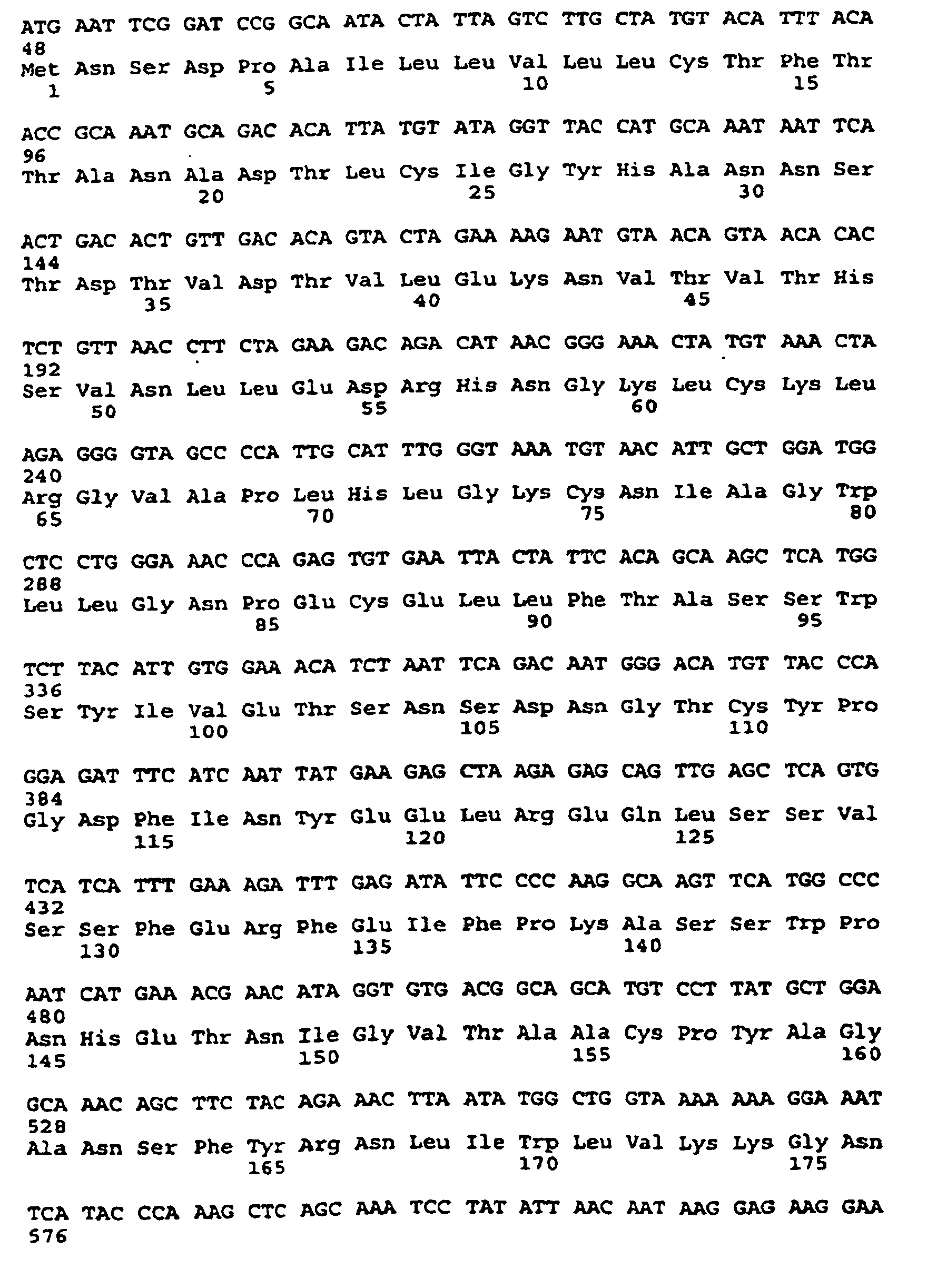


- (i) SEQUENCE CHARACTERISTICS:
- (2) INFORMATION FOR SEQ ID NO:227:
- (i) SEQUENCE CHARACTERISTICS:
- (A) LENGTH: 573 amino acids
- (B) TYPE: amino acid
- (D) TOPOLOGY: linear
- (ii) MOLECULE TYPE: protein
- (xi) SEQUENCE DESCRIPTION: SEQ ID NO:227:


- (i) SEQUENCE CHARACTERISTICS:
- (2) INFORMATION FOR SEQ ID NO:228:
- (i) SEQUENCE CHARACTERISTICS:
- (A) LENGTH: 1414 base pairs
- (B) TYPE: nucleic acid
- (C) STRANDEDNESS: single
- (D) TOPOLOGY: linear
- (ii) MOLECULE TYPE: DNA (genomic)
- (iii) HYPOTHETICAL: N
- (iv) ANTI-SENSE: N
- (ix) FEATURE:
- (A) NAME/KEY: CDS
- (B) LOCATION: 1..1414
- (D) OTHER INFORMATION:
- (xi) SEQUENCE DESCRIPTION: SEQ ID NO:228:


- (i) SEQUENCE CHARACTERISTICS:
- (2) INFORMATION FOR SEO ID NO:229:
- (i) SEQUENCE CHARACTERISTICS:
- (A) LENGTH: 471 amino acids
- (B) TYPE: amino acid
- (D) TOPOLOGY: linear
- (ii) MOLECULE TYPE: protein
- (xi) SEQUENCE DESCRIPTION: SEQ ID NO:229:


- (i) SEQUENCE CHARACTERISTICS:
- (2) INFORMATION FOR SEQ ID NO:230:
- (i) SEQUENCE CHARACTERISTICS:
- (A) LENGTH: 1501 base pairs
- (B) TYPE: nucleic acid
- (C) STRANDEDNESS: single
- (D) TOPOLOGY: linear
- (ii) MOLECULE TYPE: DNA (genomic)
- (iii) HYPOTHETICAL: N
- (iv) ANTI-SENSE: N
- (ix) FEATURE:
- (A) NAME/KEY: CDS
- (B) LOCATION: 1..1501
- (D) OTHER INFORMATION:
- (xi) SEQUENCE DESCRIPTION: SEQ ID NO:230:


- (i) SEQUENCE CHARACTERISTICS:
- (2) INFORMATION FOR SEQ ID NO:231:
- (i) SEQUENCE CHARACTERISTICS:
- (A) LENGTH: 500 amino acids
- (B) TYPE: amino acid
- (D) TOPOLOGY: linear
- (ii) MOLECULE TYPE: protein
- (xi) SEQUENCE DESCRIPTION: SEQ ID NO:231:


- (i) SEQUENCE CHARACTERISTICS:
Claims (19)
- A recombinant swinepox virus comprising both a) a first foreign DNA inserted into a swinepox virus genome, wherein the first foreign DNA is inserted into an EcoRI site within a region corresponding to a 3.2 Kb subfragment of the HindIII K fragment which contains both a HindIII and an EcoRI site, wherein said 3-2 kb subfragment comprises the nucleotide sequences 1 SEQ ID NO:1, and b) a second foreign DNA inserted into a swinepox virus genome, wherein the second foreign DNA is inserted into an AccI site within a region corresponding to a 3.6 Kb HindIII to BglII subfragment of the HindIII M fragment, and wherein both the first foreign DNA and the second foreign DNA are expressed in a host cell into which the virus is introduced.
- The recombinant swinepox virus of claim 1, wherein the first foreign DNA encodes a polypeptide.
- The recombinant swinepox virus of claim 1, wherein the second foreign DNA encodes a polypeptide.
- The recombinant swinepox virus of claim 1 , wherein the first foreign DNA encodes E. coli beta-galactosidase or E. coli beta-glucuronidase.
- The recombinant swinepox virus of claim 1, wherein the second foreign DNA encodes E. coli beta-galactosidase or E. coli beta-glucuronidase.
- The recombinant swinepox virus of claim 1, wherein the first foreign DNA is under control of a heterologous upstream promoter.
- The recombinant swinepox virus of claim 1, wherein the second foreign DNA is under control of a heterologous upstream promoter.
- The recombinant swinepox virus of claim 6 or 7, wherein the promoter is: synthetic pox viral promoter, pox synthetic late promoter 1, pox early promoter 2, pox synthetic late promoter 2 early promoter 2, pox synthetic early promoter 2, pox O1L promoter, pox I4L promoter, pox I3L promoter, pox 12L promoter, pox I1L promoter, pox E1OR promoter, PRV gX, HSV-1 alpha 4, internal ribosomal entry site, or HCMV immediate early.
- The recombinant swinepox virus of claim 2 or 3, wherein the polypeptide is: swine influenza virus hemagglutinin, swine influenza virus neuraminidase, swine influenza virus matrix, or swine influenza virus nucleoprotein.
- The recombinant swinepox virus of claim 1,
wherein said virus (S-SPV-120) comprises the gene for E. coli β-galactosidase (lacz) and the gene for E. coli β-glucuronidase (uidA); and
wherein said lacZ gene is inserted into said Accl site, and said uidA gene is inserted into a unique Notl site inserted into said EcoRI site of said 3.2 kb region. - The recombinant swinepox virus of claim 1 , wherein the first foreign DNA encodes a cytokine.
- The recombinant swinepox virus of claims 1, wherein the second foreign DNA encodes a cytokine.
- The recombinant swinepox virus of claim 2 or 3, wherein the polypeptide is: swine influenza virus hemagglutinin, swine influenza virus neuraminidase, swine influenza virus matrix, swine influenza virus nucleoprotein, pseudorabies virus glycoprotein B, pseudorabies virus glycoprotein C, pseudorabies virus glycoprotein D, porcine respiratory and reproductive virus ORF2, porcine respiratory and reproductive virus ORF3, porcine respiratory and reproductive virus ORF4, porcine respiratory and reproductive virus ORF5, porcine respiratory, and reproductive virus ORF6, or porcine respiratory and reproductive virus ORF7.
- The recombinant swinepox virus of claim 2 or 3, wherein the polypeptide is : feline leukemia virus surface protein, feline leukemia virus transmentbrane protein, feline leukemia virus gag, feline leukemia virus transmembrane protease, feline immunodeficiency virus gag/protease, feline immunodeficiency virus envelope, feline leukemia virus gag/protease, feline leukemia virus envelope, canine parvovixus VP2, or canine parvovirus VP1/2.
- The recombinant swinepox virus of claim 2 or 3, wherein the polypeptide is: bovine cytokine interleukin-12 protein 35, bovine cytokine interleukin-12 protein 40, Bovine Respiratory Syncytial Virus glycoprotein G, Bovine Respiratory Syncytial Virus fusion, Newcastles Disease fusion, Newcastles Disease hemagluttinin, Infectious Rhinotracheitis Virus glycoprotein D, Canine Distemper Virus fusion, Canine Distemper Virus hemagluttinin, DV HA, Bovine Viral Diarrhea Virus type 1 glycoprotein 45, Bovine Viral Diarrhea Virus type 1 glycoprotein 48, Bovine Viral Diarrhea Virus type 1 glycoprotein 53, or Bovine Viral Diarrhea Virus type 2 glycoprotein 53.
- The recombinant swinepox virus of claim 1, wherein said virus (S-SPV-217) further comprises a third foreign DNA and a fourth foreign DNA,
wherein said first foreign DNA is the gene for E. coli β-gatactosidase (lacZ), said second foreign DNA is the gene for E. coli β-glucuronidase (uidA), said third foreign DNA is the porcine reproductive and respiratory virus (PRRS) ORF5, and said fourth foreign DNA is the PRRS ORF6; and
wherein said PRRS ORF5 and said lacZ gene are inserted into a unique Notl site inserted into said Accl site;
wherein said PRRS ORF6 and said uidA gene are inserted into a unique NotI site inserted in said EcoRI site of said 3.2 kb region; and
wherein said first foreign DNA, said second foreign DNA, said third foreign DNA, and said fourth foreign DNA are expressed in a host cell into which the virus is introduced. - A vaccine useful for immunizing an animal against swinepox virus which comprises an effective immunizing amount of the recombinant swinepox virus of any preceding claim and a suitable carrier.
- The recombinant swinepox virus of any preceding claim for use as a vaccine.
- Use of the recombinant swinepox virus of any preceding claim in the manufacture of a medicament for immunizing an animal against a swinepox virus.
Applications Claiming Priority (3)
| Application Number | Priority Date | Filing Date | Title |
|---|---|---|---|
| US08/686,968 US6221361B1 (en) | 1995-01-19 | 1996-07-25 | Recombinant swinepox virus |
| US686968 | 1996-07-25 | ||
| PCT/US1997/012212 WO1998004684A1 (en) | 1996-07-25 | 1997-07-25 | Recombinant swinepox virus |
Publications (3)
| Publication Number | Publication Date |
|---|---|
| EP0956343A1 EP0956343A1 (en) | 1999-11-17 |
| EP0956343A4 EP0956343A4 (en) | 2002-11-06 |
| EP0956343B1 true EP0956343B1 (en) | 2006-03-29 |
Family
ID=24758494
Family Applications (1)
| Application Number | Title | Priority Date | Filing Date |
|---|---|---|---|
| EP97934946A Expired - Lifetime EP0956343B1 (en) | 1996-07-25 | 1997-07-25 | Recombinant swinepox virus |
Country Status (13)
| Country | Link |
|---|---|
| US (1) | US6221361B1 (en) |
| EP (1) | EP0956343B1 (en) |
| JP (1) | JP3939358B2 (en) |
| KR (1) | KR100492283B1 (en) |
| AT (1) | ATE321844T1 (en) |
| AU (1) | AU741256B2 (en) |
| CA (1) | CA2260759C (en) |
| DE (1) | DE69735594T2 (en) |
| ES (1) | ES2262183T3 (en) |
| HU (1) | HUP9902710A3 (en) |
| IL (1) | IL128117A0 (en) |
| NZ (1) | NZ333975A (en) |
| WO (1) | WO1998004684A1 (en) |
Families Citing this family (21)
| Publication number | Priority date | Publication date | Assignee | Title |
|---|---|---|---|---|
| US6875856B2 (en) | 1993-09-24 | 2005-04-05 | Syntro Corporation | Recombinant infectious laryngotracheitis virus and uses thereof |
| CA2245224A1 (en) | 1998-08-14 | 2000-02-14 | Jiang-Hong Giong | Chemokine receptor antagonists and chemotherapeutics |
| DE69914463T2 (en) | 1998-03-13 | 2004-11-11 | The University Of British Columbia, Vancouver | THERAPEUTIC CHEMOKINE RECEPTOR ANTAGONISTS |
| CA2305787A1 (en) | 2000-05-09 | 2001-11-09 | The University Of British Columbia | Cxcr4 antagonist treatment of hematopoietic cells |
| US7279168B2 (en) | 1998-05-01 | 2007-10-09 | Texas A & M University System | Recombinant virus expressing foreign DNA encoding feline CD86 and uses thereof |
| CA2327528C (en) * | 1998-05-01 | 2010-10-12 | Barbara J. Winslow | Recombinant virus expressing foreign dna encoding feline cd80, feline ctla-4 or feline cd86 and uses thereof |
| US6294176B1 (en) | 1998-07-10 | 2001-09-25 | Schering-Plough Veterinary Corp. | Recombinant raccoonpox virus and uses thereof as a vaccine in mammalian and avian species |
| US7378098B2 (en) | 2000-04-12 | 2008-05-27 | The University Of British Columbia | CXC chemokine receptor 4 agonist peptides |
| US7368425B2 (en) | 2006-03-24 | 2008-05-06 | Chemokine Therapeutics Corp. | Cyclic peptides for modulating growth of neo-vessels and their use in therapeutic angiogenesis |
| US20050059584A1 (en) | 2002-08-16 | 2005-03-17 | Ahmed Merzouk | Novel chemokine mimetics synthesis and their use |
| US20020090707A1 (en) * | 2000-09-26 | 2002-07-11 | Sven Enerback | Promoter sequences |
| AR031405A1 (en) * | 2000-11-21 | 2003-09-24 | Wyeth Corp | METHODS AND VACCINES TO CONFERENCE PROTECTION IN OVO AGAINST TURKEY'S RHINOTRACHISIS |
| US8058248B2 (en) * | 2001-04-26 | 2011-11-15 | The United States Of America As Represented By The Secretary Of Agriculture | Foot and mouth disease virus vaccine comprising interferons |
| AU2002363322A1 (en) * | 2001-10-26 | 2003-05-19 | Large Scale Biology Corporation | Endothelial cell derived hemotopoietic growth factor |
| US8546082B2 (en) * | 2003-09-11 | 2013-10-01 | Ibis Biosciences, Inc. | Methods for identification of sepsis-causing bacteria |
| US8097416B2 (en) | 2003-09-11 | 2012-01-17 | Ibis Biosciences, Inc. | Methods for identification of sepsis-causing bacteria |
| US20120122102A1 (en) | 2003-09-11 | 2012-05-17 | Rangarajan Sampath | Compositions for use in identification of bacteria |
| US20080138808A1 (en) * | 2003-09-11 | 2008-06-12 | Hall Thomas A | Methods for identification of sepsis-causing bacteria |
| US20070087338A1 (en) * | 2005-10-17 | 2007-04-19 | Rangarajan Sampath | Compositions for use in identification of influenza viruses |
| EP2929018A4 (en) * | 2012-12-07 | 2016-07-13 | Univ Illinois | PORCINE REPRODUCTIVE AND RESPIRATORY SYNDROME VIRUS COMPOSITION AND USES THEREOF |
| CN116751264B (en) * | 2023-05-30 | 2024-04-16 | 华中农业大学 | A recombinant protein and its application in differential diagnosis of LSDV |
Family Cites Families (2)
| Publication number | Priority date | Publication date | Assignee | Title |
|---|---|---|---|---|
| US5382425A (en) * | 1992-01-13 | 1995-01-17 | Syntro Corporation | Recombinant swinepox virus |
| US5869312A (en) * | 1992-01-13 | 1999-02-09 | Syntro Corporation | Recombinant swinepox virus |
-
1996
- 1996-07-25 US US08/686,968 patent/US6221361B1/en not_active Expired - Fee Related
-
1997
- 1997-07-25 JP JP50885098A patent/JP3939358B2/en not_active Expired - Fee Related
- 1997-07-25 AU AU37995/97A patent/AU741256B2/en not_active Ceased
- 1997-07-25 KR KR10-1999-7000716A patent/KR100492283B1/en not_active Expired - Fee Related
- 1997-07-25 HU HU9902710A patent/HUP9902710A3/en unknown
- 1997-07-25 AT AT97934946T patent/ATE321844T1/en not_active IP Right Cessation
- 1997-07-25 DE DE69735594T patent/DE69735594T2/en not_active Expired - Lifetime
- 1997-07-25 ES ES97934946T patent/ES2262183T3/en not_active Expired - Lifetime
- 1997-07-25 EP EP97934946A patent/EP0956343B1/en not_active Expired - Lifetime
- 1997-07-25 WO PCT/US1997/012212 patent/WO1998004684A1/en not_active Ceased
- 1997-07-25 IL IL12811797A patent/IL128117A0/en not_active IP Right Cessation
- 1997-07-25 CA CA002260759A patent/CA2260759C/en not_active Expired - Fee Related
- 1997-07-25 NZ NZ333975A patent/NZ333975A/en not_active IP Right Cessation
Also Published As
| Publication number | Publication date |
|---|---|
| ATE321844T1 (en) | 2006-04-15 |
| HUP9902710A2 (en) | 1999-11-29 |
| US6221361B1 (en) | 2001-04-24 |
| KR100492283B1 (en) | 2005-05-31 |
| HK1024931A1 (en) | 2000-10-27 |
| JP2000513944A (en) | 2000-10-24 |
| WO1998004684A1 (en) | 1998-02-05 |
| ES2262183T3 (en) | 2006-11-16 |
| CA2260759C (en) | 2010-01-05 |
| DE69735594D1 (en) | 2006-05-18 |
| IL128117A0 (en) | 1999-11-30 |
| EP0956343A1 (en) | 1999-11-17 |
| AU741256B2 (en) | 2001-11-29 |
| HUP9902710A3 (en) | 2001-06-28 |
| KR20000029645A (en) | 2000-05-25 |
| DE69735594T2 (en) | 2006-11-23 |
| AU3799597A (en) | 1998-02-20 |
| CA2260759A1 (en) | 1998-02-05 |
| EP0956343A4 (en) | 2002-11-06 |
| JP3939358B2 (en) | 2007-07-04 |
| NZ333975A (en) | 2000-09-29 |
Similar Documents
| Publication | Publication Date | Title |
|---|---|---|
| AU711815C (en) | Recombinant herpesvirus of turkeys and uses thereof | |
| CA2260759C (en) | Recombinant swinepox virus | |
| US6001369A (en) | Recombinant fowlpox viruses and uses thereof | |
| AU729518B2 (en) | Recombinant fowlpox viruses and uses thereof | |
| CA2166406C (en) | Recombinant swinepox virus | |
| US6033904A (en) | Recombinant swinepox virus | |
| US6136318A (en) | Recombinant fowlpox viruses and uses thereof | |
| US5925358A (en) | Recombinant fowlpox viruses and uses thereof | |
| CA2210732C (en) | Recombinant swinepox virus | |
| JP4053591B2 (en) | Recombinant swinepox virus | |
| EP0745133A1 (en) | Recombinant infectious bovine rhinotracheitis virus s-ibr-052 and uses thereof | |
| US6497882B1 (en) | Recombinant swinepox virus | |
| HK1024931B (en) | Recombinant swinepox virus | |
| AU755763B2 (en) | Recombinant swinepox virus | |
| US6251403B1 (en) | Recombinant swinepox virus | |
| AU7215900A (en) | Recombinant fowlpox viruses and uses thereof | |
| MXPA99000844A (en) | Recombinant swinepox virus | |
| AU4863396A (en) | Recombinant swinepox virus |
Legal Events
| Date | Code | Title | Description |
|---|---|---|---|
| PUAI | Public reference made under article 153(3) epc to a published international application that has entered the european phase |
Free format text: ORIGINAL CODE: 0009012 |
|
| 17P | Request for examination filed |
Effective date: 19990212 |
|
| AK | Designated contracting states |
Kind code of ref document: A1 Designated state(s): AT BE CH DE DK ES FI FR GB GR IE IT LI LU MC NL PT SE |
|
| A4 | Supplementary search report drawn up and despatched |
Effective date: 20020923 |
|
| AK | Designated contracting states |
Kind code of ref document: A4 Designated state(s): AT BE CH DE DK ES FI FR GB GR IE IT LI LU MC NL PT SE |
|
| 17Q | First examination report despatched |
Effective date: 20030718 |
|
| GRAP | Despatch of communication of intention to grant a patent |
Free format text: ORIGINAL CODE: EPIDOSNIGR1 |
|
| GRAS | Grant fee paid |
Free format text: ORIGINAL CODE: EPIDOSNIGR3 |
|
| GRAA | (expected) grant |
Free format text: ORIGINAL CODE: 0009210 |
|
| AK | Designated contracting states |
Kind code of ref document: B1 Designated state(s): AT BE CH DE DK ES FI FR GB GR IE IT LI LU MC NL PT SE |
|
| PG25 | Lapsed in a contracting state [announced via postgrant information from national office to epo] |
Ref country code: NL Free format text: LAPSE BECAUSE OF FAILURE TO SUBMIT A TRANSLATION OF THE DESCRIPTION OR TO PAY THE FEE WITHIN THE PRESCRIBED TIME-LIMIT Effective date: 20060329 Ref country code: LI Free format text: LAPSE BECAUSE OF FAILURE TO SUBMIT A TRANSLATION OF THE DESCRIPTION OR TO PAY THE FEE WITHIN THE PRESCRIBED TIME-LIMIT Effective date: 20060329 Ref country code: IT Free format text: LAPSE BECAUSE OF FAILURE TO SUBMIT A TRANSLATION OF THE DESCRIPTION OR TO PAY THE FEE WITHIN THE PRE;WARNING: LAPSES OF ITALIAN PATENTS WITH EFFECTIVE DATE BEFORE 2007 MAY HAVE OCCURRED AT ANY TIME BEFORE 2007. THE CORRECT EFFECTIVE DATE MAY BE DIFFERENT FROM THE ONE RECORDED.SCRIBED TIME-LIMIT Effective date: 20060329 Ref country code: CH Free format text: LAPSE BECAUSE OF FAILURE TO SUBMIT A TRANSLATION OF THE DESCRIPTION OR TO PAY THE FEE WITHIN THE PRESCRIBED TIME-LIMIT Effective date: 20060329 Ref country code: AT Free format text: LAPSE BECAUSE OF FAILURE TO SUBMIT A TRANSLATION OF THE DESCRIPTION OR TO PAY THE FEE WITHIN THE PRESCRIBED TIME-LIMIT Effective date: 20060329 |
|
| REG | Reference to a national code |
Ref country code: GB Ref legal event code: FG4D |
|
| REG | Reference to a national code |
Ref country code: CH Ref legal event code: EP |
|
| RAP2 | Party data changed (patent owner data changed or rights of a patent transferred) |
Owner name: SCHERING-PLOUGH LTD. |
|
| REG | Reference to a national code |
Ref country code: IE Ref legal event code: FG4D |
|
| REF | Corresponds to: |
Ref document number: 69735594 Country of ref document: DE Date of ref document: 20060518 Kind code of ref document: P |
|
| REG | Reference to a national code |
Ref country code: HK Ref legal event code: GR Ref document number: 1024931 Country of ref document: HK |
|
| PG25 | Lapsed in a contracting state [announced via postgrant information from national office to epo] |
Ref country code: SE Free format text: LAPSE BECAUSE OF FAILURE TO SUBMIT A TRANSLATION OF THE DESCRIPTION OR TO PAY THE FEE WITHIN THE PRESCRIBED TIME-LIMIT Effective date: 20060629 Ref country code: DK Free format text: LAPSE BECAUSE OF FAILURE TO SUBMIT A TRANSLATION OF THE DESCRIPTION OR TO PAY THE FEE WITHIN THE PRESCRIBED TIME-LIMIT Effective date: 20060629 |
|
| NLT2 | Nl: modifications (of names), taken from the european patent patent bulletin |
Owner name: SCHERING-PLOUGH LTD. Effective date: 20060419 |
|
| PG25 | Lapsed in a contracting state [announced via postgrant information from national office to epo] |
Ref country code: MC Free format text: LAPSE BECAUSE OF NON-PAYMENT OF DUE FEES Effective date: 20060731 |
|
| PG25 | Lapsed in a contracting state [announced via postgrant information from national office to epo] |
Ref country code: PT Free format text: LAPSE BECAUSE OF FAILURE TO SUBMIT A TRANSLATION OF THE DESCRIPTION OR TO PAY THE FEE WITHIN THE PRESCRIBED TIME-LIMIT Effective date: 20060829 |
|
| REG | Reference to a national code |
Ref country code: CH Ref legal event code: PL |
|
| NLV1 | Nl: lapsed or annulled due to failure to fulfill the requirements of art. 29p and 29m of the patents act | ||
| REG | Reference to a national code |
Ref country code: ES Ref legal event code: FG2A Ref document number: 2262183 Country of ref document: ES Kind code of ref document: T3 |
|
| ET | Fr: translation filed | ||
| PLBE | No opposition filed within time limit |
Free format text: ORIGINAL CODE: 0009261 |
|
| STAA | Information on the status of an ep patent application or granted ep patent |
Free format text: STATUS: NO OPPOSITION FILED WITHIN TIME LIMIT |
|
| 26N | No opposition filed |
Effective date: 20070102 |
|
| PG25 | Lapsed in a contracting state [announced via postgrant information from national office to epo] |
Ref country code: GR Free format text: LAPSE BECAUSE OF FAILURE TO SUBMIT A TRANSLATION OF THE DESCRIPTION OR TO PAY THE FEE WITHIN THE PRESCRIBED TIME-LIMIT Effective date: 20060630 |
|
| PG25 | Lapsed in a contracting state [announced via postgrant information from national office to epo] |
Ref country code: FI Free format text: LAPSE BECAUSE OF FAILURE TO SUBMIT A TRANSLATION OF THE DESCRIPTION OR TO PAY THE FEE WITHIN THE PRESCRIBED TIME-LIMIT Effective date: 20060329 |
|
| PG25 | Lapsed in a contracting state [announced via postgrant information from national office to epo] |
Ref country code: LU Free format text: LAPSE BECAUSE OF NON-PAYMENT OF DUE FEES Effective date: 20060725 |
|
| PGFP | Annual fee paid to national office [announced via postgrant information from national office to epo] |
Ref country code: IE Payment date: 20110725 Year of fee payment: 15 Ref country code: FR Payment date: 20110805 Year of fee payment: 15 |
|
| PGFP | Annual fee paid to national office [announced via postgrant information from national office to epo] |
Ref country code: ES Payment date: 20110726 Year of fee payment: 15 Ref country code: DE Payment date: 20110727 Year of fee payment: 15 Ref country code: GB Payment date: 20110725 Year of fee payment: 15 |
|
| PGFP | Annual fee paid to national office [announced via postgrant information from national office to epo] |
Ref country code: BE Payment date: 20110728 Year of fee payment: 15 |
|
| BERE | Be: lapsed |
Owner name: *SCHERING-PLOUGH LTD Effective date: 20120731 |
|
| GBPC | Gb: european patent ceased through non-payment of renewal fee |
Effective date: 20120725 |
|
| REG | Reference to a national code |
Ref country code: FR Ref legal event code: ST Effective date: 20130329 |
|
| PG25 | Lapsed in a contracting state [announced via postgrant information from national office to epo] |
Ref country code: GB Free format text: LAPSE BECAUSE OF NON-PAYMENT OF DUE FEES Effective date: 20120725 Ref country code: FR Free format text: LAPSE BECAUSE OF NON-PAYMENT OF DUE FEES Effective date: 20120731 Ref country code: DE Free format text: LAPSE BECAUSE OF NON-PAYMENT OF DUE FEES Effective date: 20130201 |
|
| REG | Reference to a national code |
Ref country code: IE Ref legal event code: MM4A |
|
| PG25 | Lapsed in a contracting state [announced via postgrant information from national office to epo] |
Ref country code: BE Free format text: LAPSE BECAUSE OF NON-PAYMENT OF DUE FEES Effective date: 20120731 |
|
| PG25 | Lapsed in a contracting state [announced via postgrant information from national office to epo] |
Ref country code: IE Free format text: LAPSE BECAUSE OF NON-PAYMENT OF DUE FEES Effective date: 20120725 |
|
| REG | Reference to a national code |
Ref country code: DE Ref legal event code: R119 Ref document number: 69735594 Country of ref document: DE Effective date: 20130201 |
|
| REG | Reference to a national code |
Ref country code: ES Ref legal event code: FD2A Effective date: 20131021 |
|
| PG25 | Lapsed in a contracting state [announced via postgrant information from national office to epo] |
Ref country code: ES Free format text: LAPSE BECAUSE OF NON-PAYMENT OF DUE FEES Effective date: 20120726 |