EP0941999A2 - Preparation of azithromycin dihydrate - Google Patents
Preparation of azithromycin dihydrate Download PDFInfo
- Publication number
- EP0941999A2 EP0941999A2 EP99301788A EP99301788A EP0941999A2 EP 0941999 A2 EP0941999 A2 EP 0941999A2 EP 99301788 A EP99301788 A EP 99301788A EP 99301788 A EP99301788 A EP 99301788A EP 0941999 A2 EP0941999 A2 EP 0941999A2
- Authority
- EP
- European Patent Office
- Prior art keywords
- azithromycin
- aqueous solution
- process according
- water
- acetone
- Prior art date
- Legal status (The legal status is an assumption and is not a legal conclusion. Google has not performed a legal analysis and makes no representation as to the accuracy of the status listed.)
- Withdrawn
Links
- VQEMDSRIOVZAOM-UHFFFAOYSA-N 4-(4-methylsulfonylphenyl)-1,3-thiazol-2-amine Chemical compound C1=CC(S(=O)(=O)C)=CC=C1C1=CSC(N)=N1 VQEMDSRIOVZAOM-UHFFFAOYSA-N 0.000 title claims abstract description 22
- 229960004924 azithromycin dihydrate Drugs 0.000 title claims abstract description 22
- 238000002360 preparation method Methods 0.000 title claims description 10
- CSCPPACGZOOCGX-UHFFFAOYSA-N Acetone Chemical compound CC(C)=O CSCPPACGZOOCGX-UHFFFAOYSA-N 0.000 claims abstract description 36
- 229960004099 azithromycin Drugs 0.000 claims abstract description 26
- MQTOSJVFKKJCRP-BICOPXKESA-N azithromycin Chemical compound O([C@@H]1[C@@H](C)C(=O)O[C@@H]([C@@]([C@H](O)[C@@H](C)N(C)C[C@H](C)C[C@@](C)(O)[C@H](O[C@H]2[C@@H]([C@H](C[C@@H](C)O2)N(C)C)O)[C@H]1C)(C)O)CC)[C@H]1C[C@@](C)(OC)[C@@H](O)[C@H](C)O1 MQTOSJVFKKJCRP-BICOPXKESA-N 0.000 claims abstract description 26
- 239000007864 aqueous solution Substances 0.000 claims abstract description 16
- 150000004683 dihydrates Chemical class 0.000 claims abstract description 5
- XLYOFNOQVPJJNP-UHFFFAOYSA-N water Substances O XLYOFNOQVPJJNP-UHFFFAOYSA-N 0.000 claims description 25
- 238000000034 method Methods 0.000 claims description 22
- HEMHJVSKTPXQMS-UHFFFAOYSA-M Sodium hydroxide Chemical group [OH-].[Na+] HEMHJVSKTPXQMS-UHFFFAOYSA-M 0.000 claims description 18
- VEXZGXHMUGYJMC-UHFFFAOYSA-N Hydrochloric acid Chemical compound Cl VEXZGXHMUGYJMC-UHFFFAOYSA-N 0.000 claims description 14
- HQUPLSLYZHKKQT-WVVFQGGUSA-N (2r,3s,4r,5r,8r,10r,11r,12s,13s,14r)-11-[(2s,3r,4s,6r)-4-(dimethylamino)-3-hydroxy-6-methyloxan-2-yl]oxy-2-ethyl-3,4,10-trihydroxy-13-[(2r,4r,5s,6s)-5-hydroxy-4-methoxy-4,6-dimethyloxan-2-yl]oxy-3,5,6,8,10,12,14-heptamethyl-1-oxa-6-azacyclopentadecan-15-o Chemical compound O.O([C@@H]1[C@@H](C)C(=O)O[C@@H]([C@@]([C@H](O)[C@@H](C)N(C)C[C@H](C)C[C@@](C)(O)[C@H](O[C@H]2[C@@H]([C@H](C[C@@H](C)O2)N(C)C)O)[C@H]1C)(C)O)CC)[C@H]1C[C@@](C)(OC)[C@@H](O)[C@H](C)O1 HQUPLSLYZHKKQT-WVVFQGGUSA-N 0.000 claims description 11
- 239000000243 solution Substances 0.000 claims description 11
- 229960003256 azithromycin monohydrate Drugs 0.000 claims description 10
- 239000000725 suspension Substances 0.000 claims description 8
- 239000000203 mixture Substances 0.000 claims description 7
- 238000003756 stirring Methods 0.000 claims description 6
- 150000004682 monohydrates Chemical class 0.000 claims description 5
- 239000002253 acid Substances 0.000 claims description 3
- QTBSBXVTEAMEQO-UHFFFAOYSA-N Acetic acid Chemical compound CC(O)=O QTBSBXVTEAMEQO-UHFFFAOYSA-N 0.000 claims 2
- 238000001914 filtration Methods 0.000 description 5
- 239000007787 solid Substances 0.000 description 5
- WYURNTSHIVDZCO-UHFFFAOYSA-N Tetrahydrofuran Chemical compound C1CCOC1 WYURNTSHIVDZCO-UHFFFAOYSA-N 0.000 description 4
- 239000002904 solvent Substances 0.000 description 4
- ULGZDMOVFRHVEP-RWJQBGPGSA-N Erythromycin Chemical compound O([C@@H]1[C@@H](C)C(=O)O[C@@H]([C@@]([C@H](O)[C@@H](C)C(=O)[C@H](C)C[C@@](C)(O)[C@H](O[C@H]2[C@@H]([C@H](C[C@@H](C)O2)N(C)C)O)[C@H]1C)(C)O)CC)[C@H]1C[C@@](C)(OC)[C@@H](O)[C@H](C)O1 ULGZDMOVFRHVEP-RWJQBGPGSA-N 0.000 description 3
- 229930006677 Erythromycin A Natural products 0.000 description 3
- 238000006243 chemical reaction Methods 0.000 description 3
- 229960003276 erythromycin Drugs 0.000 description 3
- 238000002329 infrared spectrum Methods 0.000 description 3
- VLKZOEOYAKHREP-UHFFFAOYSA-N n-Hexane Chemical compound CCCCCC VLKZOEOYAKHREP-UHFFFAOYSA-N 0.000 description 3
- 238000000634 powder X-ray diffraction Methods 0.000 description 3
- 238000001757 thermogravimetry curve Methods 0.000 description 3
- 150000001338 aliphatic hydrocarbons Chemical class 0.000 description 2
- 239000003814 drug Substances 0.000 description 2
- 238000004519 manufacturing process Methods 0.000 description 2
- SBOJXQVPLKSXOG-UHFFFAOYSA-N o-amino-hydroxylamine Chemical compound NON SBOJXQVPLKSXOG-UHFFFAOYSA-N 0.000 description 2
- 238000001228 spectrum Methods 0.000 description 2
- YLQBMQCUIZJEEH-UHFFFAOYSA-N tetrahydrofuran Natural products C=1C=COC=1 YLQBMQCUIZJEEH-UHFFFAOYSA-N 0.000 description 2
- 241000894006 Bacteria Species 0.000 description 1
- 238000006237 Beckmann rearrangement reaction Methods 0.000 description 1
- 230000000844 anti-bacterial effect Effects 0.000 description 1
- 230000015556 catabolic process Effects 0.000 description 1
- 239000013078 crystal Substances 0.000 description 1
- 230000007423 decrease Effects 0.000 description 1
- 238000006731 degradation reaction Methods 0.000 description 1
- 230000001419 dependent effect Effects 0.000 description 1
- 229940079593 drug Drugs 0.000 description 1
- 208000015181 infectious disease Diseases 0.000 description 1
- 231100001231 less toxic Toxicity 0.000 description 1
- 239000003120 macrolide antibiotic agent Substances 0.000 description 1
- 238000007069 methylation reaction Methods 0.000 description 1
- 150000002923 oximes Chemical class 0.000 description 1
- 239000000825 pharmaceutical preparation Substances 0.000 description 1
- 229940127557 pharmaceutical product Drugs 0.000 description 1
- 231100000683 possible toxicity Toxicity 0.000 description 1
- 230000002035 prolonged effect Effects 0.000 description 1
- 230000002829 reductive effect Effects 0.000 description 1
- 210000002345 respiratory system Anatomy 0.000 description 1
- 238000002560 therapeutic procedure Methods 0.000 description 1
- 231100000419 toxicity Toxicity 0.000 description 1
- 230000001988 toxicity Effects 0.000 description 1
Images

Classifications
-
- C—CHEMISTRY; METALLURGY
- C07—ORGANIC CHEMISTRY
- C07H—SUGARS; DERIVATIVES THEREOF; NUCLEOSIDES; NUCLEOTIDES; NUCLEIC ACIDS
- C07H17/00—Compounds containing heterocyclic radicals directly attached to hetero atoms of saccharide radicals
- C07H17/04—Heterocyclic radicals containing only oxygen as ring hetero atoms
- C07H17/08—Hetero rings containing eight or more ring members, e.g. erythromycins
-
- A—HUMAN NECESSITIES
- A61—MEDICAL OR VETERINARY SCIENCE; HYGIENE
- A61P—SPECIFIC THERAPEUTIC ACTIVITY OF CHEMICAL COMPOUNDS OR MEDICINAL PREPARATIONS
- A61P31/00—Antiinfectives, i.e. antibiotics, antiseptics, chemotherapeutics
-
- A—HUMAN NECESSITIES
- A61—MEDICAL OR VETERINARY SCIENCE; HYGIENE
- A61P—SPECIFIC THERAPEUTIC ACTIVITY OF CHEMICAL COMPOUNDS OR MEDICINAL PREPARATIONS
- A61P31/00—Antiinfectives, i.e. antibiotics, antiseptics, chemotherapeutics
- A61P31/04—Antibacterial agents
Definitions
- This invention relates to a process for the preparation of azithromycin dihydrate.
- Azithromycin is a well gown semisynthetic macrolide antibiotic (Bright US 4,474,768; Kobrehel US 4,517,359) of formula: which exhibits excellent antibacterial activity against gram-positive and some gram-negative bacteria. Azithromycin is a useful therapy for infections of the upper respiratory tract in children and adults.
- Azithromycin can exist in at least two distinct crystalline forms (Douglas; WO 89/00576), that are usually referred to as azithromycin monohydrate and azithromycin dihydrate.
- the crystal forms can be identified and differentiated by their infrared spectra, by differential scanning calorimetric thermogram and by their powder x-ray diffraction patterns.
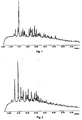
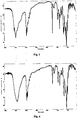
- Figs. 1, 3 and 5 show, respectively, the powder x-ray diffraction spectrum, the infrared spectrum, and the differential scanning calorimetric (DSC) thermogram of azithromycin dihydrate.
- Figs. 2, 4 and 6 show, respectively, the powder x-ray diffraction spectrum, the infrared spectrum, and the differential scanning calorimetric (DSC) thermogram of azithromycin monohydrate.
- thermodynamically more stable azithromycin dihydrate This crystalline form has been prepared from the monohydrate by crystallising from a mixture of tetrahydrofuran (THF) and an aliphatic hydrocarbon (C 5 -C 7 ) in the presence of at least two molar equivalents of water, as described in WO 89/00576.
- THF tetrahydrofuran
- C 5 -C 7 an aliphatic hydrocarbon
- a process for the preparation of azithromycin dihydrate from azithromycin which comprises adding a base to an aqueous solution of azithromycin to crystallise the dihydrate, the aqueous solution having a pH of from 1 to 5 and containing acetone.
- Azithromycin can be prepared from erythromycin A. This process involves conversion of erythromycin A into its oxime; Beckmann rearrangement of the oxmie to the amino ether of erythromycin A; reduction of the amino ether to 9-deoxo-9a-aza-9a-homoerethromycin; and, finally, reductive N-methylations to obtain azithromycin.
- crude azithromycin is dissolved in water at a pH of 1 to 5.
- the low pH is obtained by addition of an acid such as dilute aqueous hydrochloric acid for example.
- an acid such as dilute aqueous hydrochloric acid for example.
- the best results are achieved by using a volume of water of from 3 to 7 times the weight of crude azithromycin, but other volumes outside these limits can also be used.
- any suitable acid can be used to set the pH but we prefer to use hydrochloric acid.
- the temperature is usually between 0°C and 35°C. Higher temperatures may lead to degradation of the product.
- acetone is then added to the aqueous solution of azithromycin in order to obtain a mixture wherein the weight ratio of acetone to water is from 7:3 to 3:7.
- a ratio of from 1:1 to 1:2 is preferred.
- the pH of azithromycin solution is then adjusted to from 9 to 10 by the addition of an appropriate base.
- an appropriate base There are no limitations concerning the base which can be used but we prefer to use an aqueous solution of sodium hydroxide.
- the suspension of crystallised azithromycin is stirred for a period of from 6 to 30 hours at a temperature of from 0°C to 25°C.
- the time taken for this phase is critical to obtain high purity and yields of azithromycin dihydrate as initially large quantities, or even all, of the monohydrate can be precipitated at this time.
- Prolonged stirring serves to convert the monohydrate form completely to the dihydrate form. The exact time depends upon the temperature and composition of the solvent.
- the yield is dependent on the amount of acetone present in the mixture.
- the yield decreases when the amount of acetone increases.
- the azithromycin may crystallise in the form of azithromycin monohydrate.
- An additional advantage of the present invention is that when azithromycin monohydrate is suspended in a mixture of water and acetone in the weight ratio of between 7:3 and 3:7 and the suspension is stirred at a temperature of between 0°C and 25°C, azithromycin dihydrate is formed. Again, the time required for complete conversion may vary from 6 to 30 hours although times outside this range may be necessary depending on the temperature.
- azithromycin dihydrate 5g of crude azithromycin, prepared as described in EP 9803945.4, was dissolved in 22.6 ml of water and 2.4 ml of hydrochloric acid (6N) at a temperature of from 20°C to 25°C. To this solution was added 25 ml of acetone and 2.8 ml of 20% (w/v) aqueous sodium hydroxide solution to adjust the pH to 9.8. After stirring for 5 hours at a temperature of from 20°C to 25°C the suspension was cooled to from 5°C to 0°C and stirred for 1 hour at this temperature. The resulting solid was collected by filtration, washed with water (3 times 5 ml of water cooled at 5°C) and dried at 35-40°C to give azithromycin dihydrate (3.3g).
- azithromycin dihydrate Preparation of azithromycin dihydrate. 5g of crude azithromycin was dissolved in 12.6 ml of water and 2.4 ml of hydrochloric acid (6N) at a temperature of from 20°C to 25°C. To this solution was added 35 ml of acetone and 2.8 ml of 20% (w/v) aqueous sodium hydroxide solution to adjust the pH to 9.8. After stirring for 5 hours at a temperature of from 20°C to 25°C the suspension was cooled to from 5°C to 0°C and stirred for 1 hour at this temperature. The resulting solid was collected by filtration, washed with water (3 times 5 ml of water cooled at 5°C) and dried at 35-40°C to give azithromycin dihydrate (2.6g).
- 6N hydrochloric acid
- azithromycin dihydrate Preparation of azithromycin dihydrate. 5g of crude azithromycin was dissolved in 32.6 ml of water and 2.4 ml of hydrochloric acid (6N) at a temperature of from 20°C to 25°C. To this solution was added 15 ml of acetone and 2.8 ml of 20% (w/v) aqueous sodium hydroxide solution to adjust the pH to 9.8. After stirring for 29 hours at a temperature of from 20°C to 25°C the suspension was cooled to from 5°C to 0°C and stirred for 1 hour at this temperature. The resulting solid was collected by filtration, washed with water (3 times 5 ml of water cooled at 5°C) and dried at 35-40°C to give azithromycin dihydrate (4.6g).
- 6N hydrochloric acid
- azithromycin monohydrate 5g of crude azithromycin, prepared as described in EP 9803945.4, was dissolved in 37.6 ml of water and 2.4 ml of hydrochloric acid (6N) at a temperature of from 20°C to 25°C. To this solution was added 10 ml of acetone and 2.8 ml of 20% (w/v) aqueous sodium hydroxide solution to adjust the pH to 9.8. After stirring for 4 hours at a temperature of from 20°C to 25°C the suspension was cooled to from 5°C to 0°C and stirred for 1 hour at this temperature. The resulting solid was collected by filtration, washed with water (3 times 5 ml of water cooled at 5°C) and dried at 35-40°C to give azithromycin monohydrate (4.6g).
- azithromycin monohydrate Conversion of azithromycin monohydrate to azithromycin dihydrate.
- Azithromycin monohydrate (5g) was suspended in 50 ml of water/acetone (30:70 by weight) and stirred for 24 hours at 20-25°C. The solid was collected by filtration, and dried at 35-40°C to give azithromycin dihydrate (4.8g).
Landscapes
- Health & Medical Sciences (AREA)
- Chemical & Material Sciences (AREA)
- Organic Chemistry (AREA)
- General Health & Medical Sciences (AREA)
- Life Sciences & Earth Sciences (AREA)
- General Chemical & Material Sciences (AREA)
- Veterinary Medicine (AREA)
- Nuclear Medicine, Radiotherapy & Molecular Imaging (AREA)
- Chemical Kinetics & Catalysis (AREA)
- Pharmacology & Pharmacy (AREA)
- Oncology (AREA)
- Animal Behavior & Ethology (AREA)
- Communicable Diseases (AREA)
- Public Health (AREA)
- Medicinal Chemistry (AREA)
- Engineering & Computer Science (AREA)
- Biochemistry (AREA)
- Biotechnology (AREA)
- Genetics & Genomics (AREA)
- Molecular Biology (AREA)
- Pharmaceuticals Containing Other Organic And Inorganic Compounds (AREA)
- Saccharide Compounds (AREA)
Abstract
Description
- This invention relates to a process for the preparation of azithromycin dihydrate.
- Azithromycin is a well gown semisynthetic macrolide antibiotic (Bright US 4,474,768; Kobrehel US 4,517,359) of formula:which exhibits excellent antibacterial activity against gram-positive and some gram-negative bacteria. Azithromycin is a useful therapy for infections of the upper respiratory tract in children and adults.

- Azithromycin can exist in at least two distinct crystalline forms (Douglas; WO 89/00576), that are usually referred to as azithromycin monohydrate and azithromycin dihydrate. The crystal forms can be identified and differentiated by their infrared spectra, by differential scanning calorimetric thermogram and by their powder x-ray diffraction patterns.
- Figs. 1, 3 and 5 show, respectively, the powder x-ray diffraction spectrum, the infrared spectrum, and the differential scanning calorimetric (DSC) thermogram of azithromycin dihydrate.
- Figs. 2, 4 and 6 show, respectively, the powder x-ray diffraction spectrum, the infrared spectrum, and the differential scanning calorimetric (DSC) thermogram of azithromycin monohydrate.
- Drugs currently on the market are formulated from the thermodynamically more stable azithromycin dihydrate. This crystalline form has been prepared from the monohydrate by crystallising from a mixture of tetrahydrofuran (THF) and an aliphatic hydrocarbon (C5-C7) in the presence of at least two molar equivalents of water, as described in WO 89/00576.
- However, we have noted that the preferred aliphatic hydrocarbon in WO 89/00576, hexane, whilst an excellent solvent is not otherwise ideal since it is classified in ICH class 2 due to its toxicity potential (ICH: International Conference on Harmonisation of Technical Requirements for Registration of Pharmaceuticals for Human Use). It would be advantageous to be able to manufacture azithromycin dihydrate by a process which uses less toxic solvents. In addition, the dihydrate is conventionally prepared from the isolated monohydrate and it would be advantageous if a way could be found of preparing azithromycin dihydrate directly from azithromycin itself.
- We have now found a new process for the preparation of azithromycin dihydrate, which process does not require the azithromycin monohydrate form to be isolated. Furthermore, this process does not necessitate the use of solvents which have any potential toxicity problems in the production of pharmaceutical products.
- According to the present invention, there is provided a process for the preparation of azithromycin dihydrate from azithromycin, which comprises adding a base to an aqueous solution of azithromycin to crystallise the dihydrate, the aqueous solution having a pH of from 1 to 5 and containing acetone.
- Azithromycin can be prepared from erythromycin A. This process involves conversion of erythromycin A into its oxime; Beckmann rearrangement of the oxmie to the amino ether of erythromycin A; reduction of the amino ether to 9-deoxo-9a-aza-9a-homoerethromycin; and, finally, reductive N-methylations to obtain azithromycin.
- In one procedure according to the invention, crude azithromycin is dissolved in water at a pH of 1 to 5. The low pH is obtained by addition of an acid such as dilute aqueous hydrochloric acid for example. The best results are achieved by using a volume of water of from 3 to 7 times the weight of crude azithromycin, but other volumes outside these limits can also be used. In the same way, any suitable acid can be used to set the pH but we prefer to use hydrochloric acid. The temperature is usually between 0°C and 35°C. Higher temperatures may lead to degradation of the product.
- In this preferred procedure, acetone is then added to the aqueous solution of azithromycin in order to obtain a mixture wherein the weight ratio of acetone to water is from 7:3 to 3:7. A ratio of from 1:1 to 1:2 is preferred.
- The pH of azithromycin solution is then adjusted to from 9 to 10 by the addition of an appropriate base. There are no limitations concerning the base which can be used but we prefer to use an aqueous solution of sodium hydroxide.
- Preferably, the suspension of crystallised azithromycin is stirred for a period of from 6 to 30 hours at a temperature of from 0°C to 25°C. The time taken for this phase is critical to obtain high purity and yields of azithromycin dihydrate as initially large quantities, or even all, of the monohydrate can be precipitated at this time. Prolonged stirring serves to convert the monohydrate form completely to the dihydrate form. The exact time depends upon the temperature and composition of the solvent.
- The yield is dependent on the amount of acetone present in the mixture. The yield decreases when the amount of acetone increases. When the quantity of water in the mixture is higher than 80% the azithromycin may crystallise in the form of azithromycin monohydrate.
- An additional advantage of the present invention is that when azithromycin monohydrate is suspended in a mixture of water and acetone in the weight ratio of between 7:3 and 3:7 and the suspension is stirred at a temperature of between 0°C and 25°C, azithromycin dihydrate is formed. Again, the time required for complete conversion may vary from 6 to 30 hours although times outside this range may be necessary depending on the temperature.
- The following non-limiting Examples illustrate the present invention.
- Preparation of azithromycin dihydrate. 5g of crude azithromycin, prepared as described in EP 9803945.4, was dissolved in 22.6 ml of water and 2.4 ml of hydrochloric acid (6N) at a temperature of from 20°C to 25°C. To this solution was added 25 ml of acetone and 2.8 ml of 20% (w/v) aqueous sodium hydroxide solution to adjust the pH to 9.8. After stirring for 5 hours at a temperature of from 20°C to 25°C the suspension was cooled to from 5°C to 0°C and stirred for 1 hour at this temperature. The resulting solid was collected by filtration, washed with water (3 times 5 ml of water cooled at 5°C) and dried at 35-40°C to give azithromycin dihydrate (3.3g).
- Preparation of azithromycin dihydrate. 5g of crude azithromycin was dissolved in 12.6 ml of water and 2.4 ml of hydrochloric acid (6N) at a temperature of from 20°C to 25°C. To this solution was added 35 ml of acetone and 2.8 ml of 20% (w/v) aqueous sodium hydroxide solution to adjust the pH to 9.8. After stirring for 5 hours at a temperature of from 20°C to 25°C the suspension was cooled to from 5°C to 0°C and stirred for 1 hour at this temperature. The resulting solid was collected by filtration, washed with water (3 times 5 ml of water cooled at 5°C) and dried at 35-40°C to give azithromycin dihydrate (2.6g).
- Preparation of azithromycin dihydrate. 5g of crude azithromycin was dissolved in 32.6 ml of water and 2.4 ml of hydrochloric acid (6N) at a temperature of from 20°C to 25°C. To this solution was added 15 ml of acetone and 2.8 ml of 20% (w/v) aqueous sodium hydroxide solution to adjust the pH to 9.8. After stirring for 29 hours at a temperature of from 20°C to 25°C the suspension was cooled to from 5°C to 0°C and stirred for 1 hour at this temperature. The resulting solid was collected by filtration, washed with water (3 times 5 ml of water cooled at 5°C) and dried at 35-40°C to give azithromycin dihydrate (4.6g).
- Preparation of azithromycin monohydrate. 5g of crude azithromycin, prepared as described in EP 9803945.4, was dissolved in 37.6 ml of water and 2.4 ml of hydrochloric acid (6N) at a temperature of from 20°C to 25°C. To this solution was added 10 ml of acetone and 2.8 ml of 20% (w/v) aqueous sodium hydroxide solution to adjust the pH to 9.8. After stirring for 4 hours at a temperature of from 20°C to 25°C the suspension was cooled to from 5°C to 0°C and stirred for 1 hour at this temperature. The resulting solid was collected by filtration, washed with water (3 times 5 ml of water cooled at 5°C) and dried at 35-40°C to give azithromycin monohydrate (4.6g).
- Conversion of azithromycin monohydrate to azithromycin dihydrate. Azithromycin monohydrate (5g) was suspended in 50 ml of water/acetone (30:70 by weight) and stirred for 24 hours at 20-25°C. The solid was collected by filtration, and dried at 35-40°C to give azithromycin dihydrate (4.8g).
Claims (13)
- A process for the preparation of azithromycin dihydrate from azithromycin, which comprises adding a base to an aqueous solution of azithromycin to crystallise the dihydrate, the aqueous solution having a pH of from 1 to 5 and containing acetone.
- A process according to claim 1, wherein said aqueous solution is made by dissolving azithromycin in acidified water of pH 1 to 5, and then adding acetone.
- A process according to claim 1, wherein said aqueous solution is formed by adding an acid to a solution of azithromycin in water to provide a pH of from 1.0 to 5.0, and subsequently adding acetone.
- A process according to claim 1, 2 or 3, wherein the pH of said aqueous solution is from 3.0 to 5.0.
- A process according to claim 4, wherein the pH of said aqueous solution is substantially 5.
- A process according to any of claims 1 to 5, wherein said solution contains acetic or hydrochloric acid.
- A process according to any of claims 1 to 6, wherein said aqueous solution contains a volume of water from 3 to 7 times the weight of azithromycin.
- A process according to any of claims 1 to 7, wherein said aqueous solution comprises crude azithromycin.
- A process according to any of claims 1 to 8, wherein said aqueous solution comprises azithromycin monohydrate.
- A process according to any of claims 1 to 9, wherein the weight ratio acetone: water in said aqueous solution is from 7:3 to 3:7, preferably 1:1 to 1:2.
- A process according to any of claims 1 to 10, wherein the base is sodium hydroxide.
- A process according to any of claims 1 to 11, wherein after addition of the base, the suspension so formed is stirred for from 6 to 30h at 0° to 25°C.
- A process for the preparation of azithromycin dihydrate from azithromycin monohydrate, which comprises suspending the monohydrate in a mixture of water and acetone, in an acetone: water weight ratio of from 3:7 to 7:3, and stirring the suspension at 0°C to 25°C.
Applications Claiming Priority (2)
| Application Number | Priority Date | Filing Date | Title |
|---|---|---|---|
| PT102130A PT102130A (en) | 1998-03-13 | 1998-03-13 | METHOD FOR PREPARING AZITHROMYCY DIHYDRATE |
| PT10213098 | 1998-03-13 |
Publications (2)
| Publication Number | Publication Date |
|---|---|
| EP0941999A2 true EP0941999A2 (en) | 1999-09-15 |
| EP0941999A3 EP0941999A3 (en) | 1999-10-13 |
Family
ID=20085748
Family Applications (1)
| Application Number | Title | Priority Date | Filing Date |
|---|---|---|---|
| EP99301788A Withdrawn EP0941999A3 (en) | 1998-03-13 | 1999-03-10 | Preparation of azithromycin dihydrate |
Country Status (9)
| Country | Link |
|---|---|
| EP (1) | EP0941999A3 (en) |
| JP (1) | JPH11322776A (en) |
| KR (1) | KR19990077826A (en) |
| CN (1) | CN1232037A (en) |
| AU (1) | AU1952599A (en) |
| CA (1) | CA2265412A1 (en) |
| HU (1) | HUP9900550A3 (en) |
| NO (1) | NO991204L (en) |
| PT (1) | PT102130A (en) |
Cited By (17)
| Publication number | Priority date | Publication date | Assignee | Title |
|---|---|---|---|---|
| WO2001000640A1 (en) * | 1999-06-29 | 2001-01-04 | Biochemie S.A. | Macrolides |
| WO2001087912A1 (en) * | 2000-05-17 | 2001-11-22 | Ercros Industrial, S.A. | Polymorphic form of azithromycin dihydrate and preparation method thereof |
| WO2002042315A2 (en) | 2000-11-27 | 2002-05-30 | Biochemie S.A. | Macrolide solvates |
| US6451990B1 (en) | 1999-11-26 | 2002-09-17 | Astur-Pharma, S.A. | Azithromycin preparation in its noncryst alline and crystalline dihydrate forms |
| EP1246831A4 (en) * | 2000-01-04 | 2003-04-23 | Teva Pharma | Preparation method of azithromycin dihydrate |
| WO2003082889A1 (en) * | 2001-03-21 | 2003-10-09 | Hanmi Pharm. Co., Ltd. | Process of preparing azithromycin and crystalline 9-deoxo-9a-aza-9a-homoerythromycin a hydrate used therein |
| EP1227102B1 (en) * | 2001-01-29 | 2004-03-31 | Alembic Limited | An improved process for the preparation of non-hygroscopic azithromycin dihydrate |
| WO2005003144A1 (en) * | 2003-07-03 | 2005-01-13 | Jubilant Organosys Limited | Process for preparing non-hygroscopic azithromycin dihydrate |
| US6861413B2 (en) | 2001-05-22 | 2005-03-01 | Pfizer Inc. | Stable non-dihydrate azithromycin oral suspensions |
| RU2260012C1 (en) * | 2004-01-29 | 2005-09-10 | Открытое акционерное общество "Акционерное курганское общество медицинских препаратов и изделий "Синтез" | Method for crystallizing azithromycin dihydrate |
| US6977243B2 (en) | 2001-05-22 | 2005-12-20 | Pfizer Inc. | Crystal forms of azithromycin |
| EP1490382A4 (en) * | 2002-04-03 | 2007-09-12 | Hanmi Pharm Ind Co Ltd | Process of preparing azithromycin and crystalline 9-deoxo-9a-aza-9a-homoerythromycin a hydrate used therein |
| CN100341886C (en) * | 2000-11-27 | 2007-10-10 | 桑多斯股份公司 | Macrolide solvates |
| US7468428B2 (en) | 2004-03-17 | 2008-12-23 | App Pharmaceuticals, Llc | Lyophilized azithromycin formulation |
| US7569549B2 (en) | 2002-03-18 | 2009-08-04 | Pliva Hrvatska D.O.O. | Isostructural pseudopolymorphs of 9-deoxo-9a-aza-9a-methyl-9a-homoerythromycin A |
| US7683162B2 (en) | 2004-08-30 | 2010-03-23 | Taro Pharmaceutical Industries Limited | Process of preparing a crystalline azithromycin monohydrate |
| US8470787B2 (en) | 2008-07-10 | 2013-06-25 | Li Liu | Hydrates of erythromycin salts, preparation and use thereof |
Families Citing this family (2)
| Publication number | Priority date | Publication date | Assignee | Title |
|---|---|---|---|---|
| KR100431431B1 (en) * | 2001-04-25 | 2004-05-14 | 한미약품 주식회사 | Clathrate of azithromycin hydrate with 1,2-propyleneglycol, methods for the manufacture thereof, and pharmaceutical compositions thereof |
| EP1660495B1 (en) * | 2003-09-04 | 2007-07-11 | Wockhardt Limited | Benzoquinolizine-2-carboxylic acid arginine salt tetrahydrate |
Family Cites Families (2)
| Publication number | Priority date | Publication date | Assignee | Title |
|---|---|---|---|---|
| RO107257B1 (en) * | 1987-07-09 | 1993-10-30 | Pfizer | Preparation process of a crystalline azitromicine dihydrate |
| ES2122905B1 (en) * | 1996-07-11 | 1999-11-16 | Astur Pharma Sa | SYNTHESIS OF 11,12-HYDROGENOORTOBORATE 9-DESOXO-9A-AZA-11,12-DESOXI-9A-METHYL-9A-HOMOERYTHROMYCIN A. A PROCEDURE FOR THE PREPARATION OF 9-DESOXO-9A-AZA-9A-METHYL-9A -HOMOERYTHROMYCIN TO DIHYDRATE (AZYTHROMYCIN DIHYDRATE). |
-
1998
- 1998-03-13 PT PT102130A patent/PT102130A/en not_active Application Discontinuation
-
1999
- 1999-03-08 HU HU9900550A patent/HUP9900550A3/en unknown
- 1999-03-10 AU AU19525/99A patent/AU1952599A/en not_active Abandoned
- 1999-03-10 EP EP99301788A patent/EP0941999A3/en not_active Withdrawn
- 1999-03-11 NO NO991204A patent/NO991204L/en unknown
- 1999-03-11 JP JP11065443A patent/JPH11322776A/en active Pending
- 1999-03-12 CN CN99105538A patent/CN1232037A/en active Pending
- 1999-03-12 CA CA002265412A patent/CA2265412A1/en not_active Abandoned
- 1999-03-12 KR KR1019990008297A patent/KR19990077826A/en not_active Withdrawn
Non-Patent Citations (2)
| Title |
|---|
| DJOKIC, S. ET AL: "Erythromycin Series. Part 13. Synthesis and Structure Elucidation of 10-Dihydro-10-deoxo-11-methyl-11-azaerythromycin A", J. CHEM. RESEARCH (M), 1988, pages 1239 - 1261, XP002942685 |
| DJOKIC, S. ET AL: "Erythromycin Series. Part 13. Synthesis and Structure Elucidation of 10-Dihydro-10-deoxo-11-methyl-11-azaerythromycin A", J. CHEM. RESEARCH (S), 1988, pages 152 - 153, XP002943155 |
Cited By (35)
| Publication number | Priority date | Publication date | Assignee | Title |
|---|---|---|---|---|
| US6703372B1 (en) | 1999-06-29 | 2004-03-09 | Biochemie S.A. | Macrolides |
| WO2001000640A1 (en) * | 1999-06-29 | 2001-01-04 | Biochemie S.A. | Macrolides |
| HRP20010956B1 (en) * | 1999-06-29 | 2010-09-30 | Biochemie S.A. | macrolides |
| EP1712556A1 (en) * | 1999-06-29 | 2006-10-18 | Sandoz AG | Azithromycin monohydrate |
| US6451990B1 (en) | 1999-11-26 | 2002-09-17 | Astur-Pharma, S.A. | Azithromycin preparation in its noncryst alline and crystalline dihydrate forms |
| EP1246831A4 (en) * | 2000-01-04 | 2003-04-23 | Teva Pharma | Preparation method of azithromycin dihydrate |
| US6586576B2 (en) | 2000-01-04 | 2003-07-01 | Teva Pharmaceutical Industries Ltd | Preparation method of azithromycin hydrates |
| WO2001087912A1 (en) * | 2000-05-17 | 2001-11-22 | Ercros Industrial, S.A. | Polymorphic form of azithromycin dihydrate and preparation method thereof |
| ES2162764A1 (en) * | 2000-05-17 | 2002-01-01 | Ercros Ind Sa | Polymorphic form of azithromycin dihydrate and preparation method thereof |
| HRP20030430B1 (en) * | 2000-11-27 | 2011-11-30 | Biochemie S.A. | Macrolide solvates |
| CZ303343B6 (en) * | 2000-11-27 | 2012-08-08 | Sandoz Ag | Process for preparing azithromycin monohydrate |
| WO2002042315A3 (en) * | 2000-11-27 | 2002-10-31 | Biochemie Sa | Macrolide solvates |
| US6949519B2 (en) | 2000-11-27 | 2005-09-27 | Sandoz Ag | Macrolide solvates |
| KR100815163B1 (en) * | 2000-11-27 | 2008-03-19 | 바이오케미 에스.에이. | Macrolide Solvate |
| WO2002042315A2 (en) | 2000-11-27 | 2002-05-30 | Biochemie S.A. | Macrolide solvates |
| CN100341886C (en) * | 2000-11-27 | 2007-10-10 | 桑多斯股份公司 | Macrolide solvates |
| EP1227102B1 (en) * | 2001-01-29 | 2004-03-31 | Alembic Limited | An improved process for the preparation of non-hygroscopic azithromycin dihydrate |
| WO2003082889A1 (en) * | 2001-03-21 | 2003-10-09 | Hanmi Pharm. Co., Ltd. | Process of preparing azithromycin and crystalline 9-deoxo-9a-aza-9a-homoerythromycin a hydrate used therein |
| US7205395B2 (en) | 2001-03-21 | 2007-04-17 | Hanmi Pharm Co., Ltd. | Process of preparing azithromycin and crystalline 9-deoxo-9a-aza-9a-homoerythromycin A hydrate used therein |
| US7053192B2 (en) | 2001-05-22 | 2006-05-30 | Pfizer Inc. | Crystal forms of azithromycin |
| US6977243B2 (en) | 2001-05-22 | 2005-12-20 | Pfizer Inc. | Crystal forms of azithromycin |
| US6861413B2 (en) | 2001-05-22 | 2005-03-01 | Pfizer Inc. | Stable non-dihydrate azithromycin oral suspensions |
| US7081525B2 (en) | 2001-05-22 | 2006-07-25 | Pfizer Inc. | Crystal forms of azithromycin |
| US7282486B2 (en) | 2001-05-22 | 2007-10-16 | Pfizer Inc | Crystal forms of azithromycin |
| US7307156B2 (en) | 2001-05-22 | 2007-12-11 | Pfizer Inc. | Crystal forms of azithromycin |
| US7309782B2 (en) | 2001-05-22 | 2007-12-18 | Pfizer Inc. | Crystal forms of azithromycin |
| US7105179B2 (en) | 2001-05-22 | 2006-09-12 | Pfizer Inc. | Crystal forms of azithromycin |
| US7569549B2 (en) | 2002-03-18 | 2009-08-04 | Pliva Hrvatska D.O.O. | Isostructural pseudopolymorphs of 9-deoxo-9a-aza-9a-methyl-9a-homoerythromycin A |
| EP1490382A4 (en) * | 2002-04-03 | 2007-09-12 | Hanmi Pharm Ind Co Ltd | Process of preparing azithromycin and crystalline 9-deoxo-9a-aza-9a-homoerythromycin a hydrate used therein |
| WO2005003144A1 (en) * | 2003-07-03 | 2005-01-13 | Jubilant Organosys Limited | Process for preparing non-hygroscopic azithromycin dihydrate |
| RU2260012C1 (en) * | 2004-01-29 | 2005-09-10 | Открытое акционерное общество "Акционерное курганское общество медицинских препаратов и изделий "Синтез" | Method for crystallizing azithromycin dihydrate |
| US7468428B2 (en) | 2004-03-17 | 2008-12-23 | App Pharmaceuticals, Llc | Lyophilized azithromycin formulation |
| US7683162B2 (en) | 2004-08-30 | 2010-03-23 | Taro Pharmaceutical Industries Limited | Process of preparing a crystalline azithromycin monohydrate |
| US8470787B2 (en) | 2008-07-10 | 2013-06-25 | Li Liu | Hydrates of erythromycin salts, preparation and use thereof |
| RU2510659C2 (en) * | 2008-07-10 | 2014-04-10 | Ли Лю | Hydrates of erythromycin salts, their obtaining and application |
Also Published As
| Publication number | Publication date |
|---|---|
| HUP9900550A2 (en) | 1999-09-28 |
| NO991204D0 (en) | 1999-03-11 |
| CA2265412A1 (en) | 1999-09-13 |
| PT102130A (en) | 1999-09-30 |
| AU1952599A (en) | 1999-09-23 |
| EP0941999A3 (en) | 1999-10-13 |
| NO991204L (en) | 1999-09-14 |
| HUP9900550A3 (en) | 2000-04-28 |
| JPH11322776A (en) | 1999-11-24 |
| CN1232037A (en) | 1999-10-20 |
| HU9900550D0 (en) | 1999-04-28 |
| KR19990077826A (en) | 1999-10-25 |
Similar Documents
| Publication | Publication Date | Title |
|---|---|---|
| EP0941999A2 (en) | Preparation of azithromycin dihydrate | |
| EP1254146B1 (en) | Processes for preparing clarithromycin polymorphs and novel polymorph iv | |
| IE833045L (en) | Crystalline cephem-acid addition salts | |
| KR100403256B1 (en) | Crystalline N-Acetyl Neuraminic Acid Derivatives and Processes for Their Preparation | |
| US20020016456A1 (en) | Process for the preparation of highly pure crystalline (R,S) - cefuroxime axetil | |
| EP1227102B1 (en) | An improved process for the preparation of non-hygroscopic azithromycin dihydrate | |
| HU217553B (en) | Process for the preparation of azithromycin dihydrochloride | |
| US20060019908A1 (en) | Process for the preparation of azithromycin monohydrate isopropanol clathrate | |
| KR100912214B1 (en) | Crystalline form of cefdinir cesium salt | |
| WO2006035291A1 (en) | Crystalline forms of cefdinir potassium | |
| EP0018760B1 (en) | D-sesquisodium salt of an oxa-beta-lactam diacid compound and its preparation | |
| CN111704625A (en) | Preparation method of latamoxef sodium decarboxylation hydrolysate | |
| US20020037864A1 (en) | 2'-Propionate clarithromycin dodecyl sulfate and its preparation and pharmaceutical composition containing the same | |
| KR100247730B1 (en) | Process for the preparation of fusidic acid sodium salt | |
| US4474780A (en) | Crystalline cephalosporin | |
| EP1907406B1 (en) | Crystalline forms of macrolide compounds endowed with antiinflammatory activity | |
| JPH0687881A (en) | Rokitamycin monohydrate crystal and its production | |
| CN112694487A (en) | Preparation method of cefprozil | |
| MX2008000279A (en) | Crystalline forms of macrolide compounds endowed with antiinflammatory activity | |
| KR20020031391A (en) | A process for the synthesis of beta-lactam derivatives | |
| KR20040092058A (en) | Manufacture method of Erdosteine |
Legal Events
| Date | Code | Title | Description |
|---|---|---|---|
| PUAI | Public reference made under article 153(3) epc to a published international application that has entered the european phase |
Free format text: ORIGINAL CODE: 0009012 |
|
| PUAL | Search report despatched |
Free format text: ORIGINAL CODE: 0009013 |
|
| AK | Designated contracting states |
Kind code of ref document: A2 Designated state(s): AT BE CH CY DE DK ES FI FR GB GR IE IT LI LU MC NL PT SE |
|
| AX | Request for extension of the european patent |
Free format text: AL;LT;LV;MK;RO;SI |
|
| AK | Designated contracting states |
Kind code of ref document: A3 Designated state(s): AT BE CH CY DE DK ES FI FR GB GR IE IT LI LU MC NL PT SE |
|
| AX | Request for extension of the european patent |
Free format text: AL;LT;LV;MK;RO;SI |
|
| AKX | Designation fees paid | ||
| REG | Reference to a national code |
Ref country code: DE Ref legal event code: 8566 |
|
| STAA | Information on the status of an ep patent application or granted ep patent |
Free format text: STATUS: THE APPLICATION IS DEEMED TO BE WITHDRAWN |
|
| 18D | Application deemed to be withdrawn |
Effective date: 20000414 |
|
| TPAD | Observations filed by third parties |
Free format text: ORIGINAL CODE: EPIDOS TIPA |