EP0934952A2 - Peptides containing an N-substituted glycine residue - Google Patents
Peptides containing an N-substituted glycine residue Download PDFInfo
- Publication number
- EP0934952A2 EP0934952A2 EP98124653A EP98124653A EP0934952A2 EP 0934952 A2 EP0934952 A2 EP 0934952A2 EP 98124653 A EP98124653 A EP 98124653A EP 98124653 A EP98124653 A EP 98124653A EP 0934952 A2 EP0934952 A2 EP 0934952A2
- Authority
- EP
- European Patent Office
- Prior art keywords
- group
- residue
- formula
- amino acid
- depsipeptide
- Prior art date
- Legal status (The legal status is an assumption and is not a legal conclusion. Google has not performed a legal analysis and makes no representation as to the accuracy of the status listed.)
- Withdrawn
Links
- 0 CCCCNC* Chemical compound CCCCNC* 0.000 description 6
Classifications
-
- C—CHEMISTRY; METALLURGY
- C07—ORGANIC CHEMISTRY
- C07K—PEPTIDES
- C07K7/00—Peptides having 5 to 20 amino acids in a fully defined sequence; Derivatives thereof
- C07K7/04—Linear peptides containing only normal peptide links
- C07K7/06—Linear peptides containing only normal peptide links having 5 to 11 amino acids
-
- A—HUMAN NECESSITIES
- A61—MEDICAL OR VETERINARY SCIENCE; HYGIENE
- A61K—PREPARATIONS FOR MEDICAL, DENTAL OR TOILETRY PURPOSES
- A61K38/00—Medicinal preparations containing peptides
Definitions
- This invention relates to a novel depsipeptide containing N-substituted glycine residue and a pharmaceutical composition containing the same as an active ingredient.
- the depsipeptides of the invention have a promoting activity on the production of apolipoprotein E and are useful as therapeutic agents for neurologic damages, especially dementia, and hyperlipemia.
- apolipoprotein E may be generated at a high level at the damaged sites of nervous systems which are being repaired (For example, refer to M. J. Igunatius et al., Proc. Natl. Acad. Sci. U.S.A., 83, 1125 (1986)). This suggests that apolipoprotein E will play an important role in repairing the damaged nervous systems.
- apolipoprotein E is administered intravenously to WHHL rabbit, which is a model animal for human familial hypercholesterolemia homozygote (Yamada et al., Proceeding of National Academy Science USA, Vol. 86, pp. 665-669, 1989). Also, it has been reported that plasma cholesterol and plasma triglyceride can be noticeably decreased by transducing a gene for apolipoprotein E into the mouse liver and expressing apolipoprotein E in a large mass (Shimano, H. et al., Journal of Clinical Investigation, Vol. 90, pp. 2084-2091, 1992).
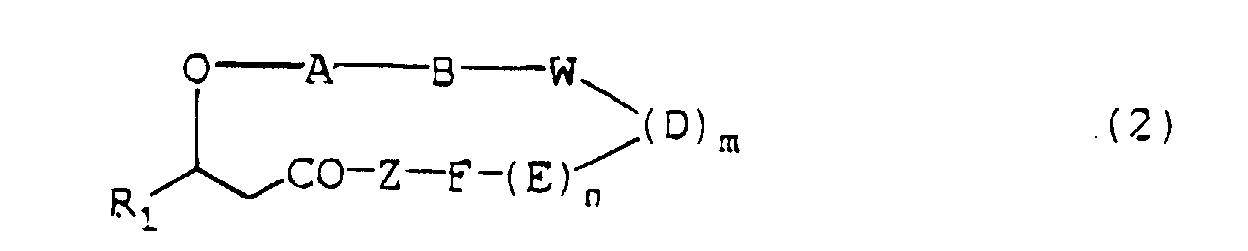
- the present invention relates to a depsipeptide containing N-substituted glycine residue having the formula (1) or (2): wherein
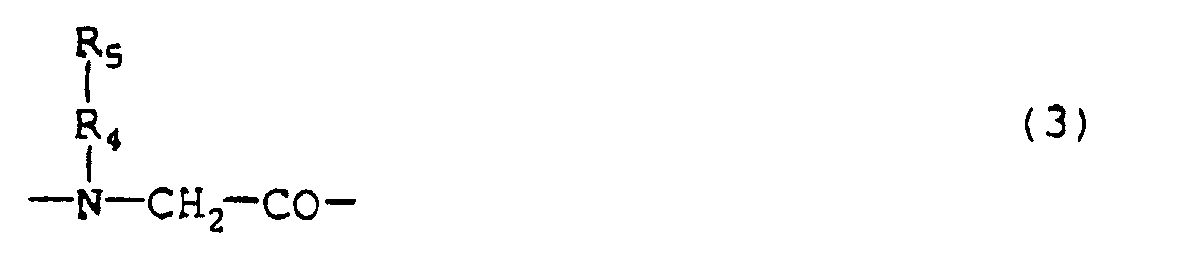
- A, B, D, E, F, G and J independently are the N-substituted glycine residue of the formula (3) or a residue of an amino acid selected from the group of alanine, valine, leucine, isoleucine, phenylalanine, tyrosine, proline, ⁇ -t-butylalanine and aspartic acid;
- W is a residue of an amino acid selected from the group consisting of aspartic acid, glutamic acid and the amino acid of the formula (4) ;
- Z is a residue of an amino acid selected from the group consisting of aspartic acid, asparagine, glutamic acid, glutamine, alanine, serine and lysine or the N-substituted glycine residue of the formula (3) and at least one of A, B, D, E, F, G, J and W is the N-substituted glycine residue of the formula (3) and at least one of A, B, D, E, F, G,
- Preferable compounds of the formula (1) are the depsipeptides wherein A is an N-(C 1 -C 4 ) alkylglycine residue of the formula (3) ; B is a residue of an amino acid selected from the group consisting of leucine, isoleucine, phenylalanine, ⁇ -t-butylalanine and aspartic acid; D is a residue of an amino acid selected from the group consisting of valine, phenylalanine, alanine and aspartic acid; E, F, G and J are each independently residues of an amino acid selected from the group consisting of leucine, isoleucine and alanine; W is a residue of an amino acid selected from the group consisting of aspartic acid, glutamic acid and the amino acid of the formula (4) ; Z is a residue of an amino acid selected from the group consisting of aspartic acid, glutamic acid, glutamine, asparagine and lysine or the N-substituted g
- More preferable compounds of the invention are the depsipeptides of the formula (1) wherein A is an N-(C 1 -C 4 ) alkylglycine residue of the formula (3) ; B is an N-(C 1 -C 4 ) alkylglycine residue of the formula (3) ; D is a residue of an amino acid selected from the group consisting of valine, phenylalanine, alanine and aspartic acid; E, F, G and J are each independently residues of an amino acid selected from the group consisting of leucine, isoleucine and alanine; W is a residue of an amino acid selected from the group consisting of aspartic acid, glutamic acid and the amino acid of the formula (4) ; Z is a residue of an amino acid selected from the group consisting of aspartic acid, glutamic acid, glutamine, asparagine and lysine or the N-substituted glycine residue of the formula (3) ; and m and n are 1, or
- Most preferable compounds of the formula (1) are the depsipeptides wherein A, B, D, E, F, G and J are the N-(C 1 -C 4 ) alkylglycine residue of the formula (3) ; W is a residue of an amino acid selected from the group consisting of aspartic acid, glutamic acid and the amino acid of the formula (4) ; Z is a residue of an amino acid selected from the group consisting of aspartic acid, glutamic acid, glutamine, asparagine and lysine or the N-substituted glycine residue of the formula (3) ; and m and n are 1, or a pharmacologically acceptable salt thereof.
- the present invention relates to a pharmaceutical composition which contains as an active ingredient a therapeutically effective amount of the depsipeptide of the formula (1) or (2) and a pharmaceutically acceptable carrier therefor.
- the invention especially relates to a pharmaceutical composition for promoting the production of apolipoprotein E which contains as an active ingredient a therapeutically effective amount of the depsipeptide of the formula (1) or (2) and a pharmaceutically acceptable carrier therefor.
- the invention further relates to a pharmaceutical composition for treating neurologic damages, dementia or hyperlipemia which contains as an active ingredient a therapeutically effective amount of the depsipeptide of the formula (1) or (2) and a pharmaceutically acceptable carrier therefor.
- the invention relates to a method for treating neurologic damages, dementia or hyperlipemia which comprises a therapeutically effective amount of the depsipeptide of the formula (1) or (2) to a host affected with neurologic damages, dementia or hyperlipemia.
- the invention still further relates to the use of the depsipeptide of the formula (1) or (2) for treating neurologic damages, dementia or hyperlipemia.
- R 1 is preferably a straight alkyl or alkoxymethyl group of 6-12 carbon atoms and R 3 is preferably a hydroxyl group.
- alkenyl group of 1-4 carbon atoms represented by R 4 there may be mentioned a methylene, propylene, 1-methyl-ethylene group or butylene group or the like.
- the above amino acids of which the depsipeptide of the invention is composed may be in the form of either L-isomer or D-isomer, while the amino acids represented by A, D, F, J, W and Z in the depsipeptide of the above formula (1) or (2) may be preferably L-isomers and the amino acid represented by B and E may be preferably D-isomers.
- protecting groups which may be applied for protecting a free amino group in the amino acid residue, there may be mentioned, for example, a t-butoxycarbonyl (hereinafter referred to as "Boc") group, a benzyloxycarbonyl group (hereinafter referred to as “Cbz”), a p-methoxy-benzyloxycarbonyl group or a 9-fluorenylmethoxycarbonyl (hereinafter referred to as "Fmoc”) or the like; a benzyloxy group (hereinafter referred to as "OBzl”) or a t-butoxy (hereinafter referred to as "OtBu”) or the like as a protecting group for carboxyl group; 4,4'-dimethoxybenzhydryl (hereinafter referred to as "Mbh”) group, a trityl group (hereinafter referred to as "Trt”) or the like as a protecting group for terminal carbamido group of Gln or As
- protecting group for a hydroxy group in the amino acid residue there may be mentioned a OBzl group, a OtBu group, etc.
- protecting group for a mercapto group there may be mentioned a benzyl group, a Trt group, an acetamidomethyl group, etc.
- the protecting group for a C-terminal carboxyl group in the above depsipeptide there may be mentioned a OBzI group, a OtBu group, etc.
- the depsipeptides of the invention have a promoting activity on the production. of apolipoprotein E in Hep G2 cells having various functions in the liver. Since apolipoprotein E has a repairing action on neurologic damages and further a lowering action on cholesterol and triglyceride levels in the blood, the depsipeptides of this invention having a promoting activity on the production of apolipoprotein E are useful as the therapeutic agents for neurologic damages, especially as an antidementia agent, and also as a therapeutic agent for hyperlipemia.
- depsipeptides of the invention or pharmacologically acceptable salts thereof may be prepared according to any methods conventionally employed for peptide synthesis.
- a condensing agent method an azide method, a chloride method, an acid anhydride method, an active ester method, a redox method, an enzyme method or the like as disclosed in Nobuo Izumiya et al., "Fundamentals and Experiments for Peptide Synthesis (in Japanese)", issued from Maruzen Co., Ltd., 1985.
- depsipeptides presented by the formula (1) or pharmacologically acceptable salts thereof may be prepared, for example, by protecting or activating the carboxy group of a 3-hydroxypropionic acid derivative represented by the formula (5) (wherein R 1 is as defined above) and condensing the product thus obtained successively with the desired amino acids according to a conventional method.
- the protection of the carboxyl group in the compound of the formula (5) as depicted above may be carried out according to the esterification reaction for methyl esters by reacting with diazomethane in a solvent of ether, methanol or the like under ice-cooling or at room temperature or the esterification reaction for benzyl esters by reacting with benzyl bromide in the presence of a basic substance such as triethylamine in a solvent such as dimethylformamide (hereinafter referred to as "DMF"), dimethyl sulfoxide (hereinafter referred to as "DMSO”) or the like at a temperature of from room temperature to heating temperature.
- a basic substance such as triethylamine
- a solvent such as dimethylformamide (hereinafter referred to as "DMF"), dimethyl sulfoxide (hereinafter referred to as "DMSO”) or the like at a temperature of from room temperature to heating temperature.
- DMF dimethylformamide
- DMSO dimethyl
- the condensation of an amino acid to the hydroxy group in a compound having the protected carboxyl group may be carried out by employing as a condensing reagent N,N'-dicyclohexylcarbodiimide (hereinafter referred to as "DCC") or 1-ethyl-3-(3'-dimethylaminopropyl)carbodiimide hydrochloride, i.e.
- DCC N,N'-dicyclohexylcarbodiimide
- 1-ethyl-3-(3'-dimethylaminopropyl)carbodiimide hydrochloride i.e.
- WSCI water-soluble carbodiimide
- a solvent such as ether, chloroform, dichloromethane, ethyl acetate, DMF, tetrahydrofuran (hereinafter referred to as “THF”), acetonitrile, DMSO or the like under ice-cooling or at room temperature, preferably in the presence of an acylation catalyst such as dimethylaminopyridine (hereinafter referred to as "DMAP”) or the like.
- DMAP dimethylaminopyridine
- 3-hydroxycarboxylic acid of the formula (5) which is a starting material to be used for the depsipeptide of this invention
- 3-hydroxy-caprylic acid 3-hydroxy-pelargonic acid, 3-hydroxy-capric acid, 3-hydroxy-lauric acid, 3-hydroxy-myristic acid, 3-hydroxy-palmitic acid, 3-hydroxy-margaric acid and 3-hydroxy-stearic acid.
- a condensing agent when a condensing agent is to be used, there may be used DCC, WSCI, O-(1H-benzotriazol-1-yl)-N,N,N' ,N'-tetramethyluronium tetrafluoroborate (TBTU) or O-(7-azabenzotriazol-1-yl)-1,2,3-tetramethyluronium hexafluorophosphate (HATU) and the like.
- DCC condensing agent
- WSCI O-(1H-benzotriazol-1-yl)-N,N,N' ,N'-tetramethyluronium tetrafluoroborate
- HATU O-(7-azabenzotriazol-1-yl)-1,2,3-tetramethyluronium hexafluorophosphate
- DPPA diphenylphosphoric acid azide
- the depsipeptides of the invention has the feature that at least one of A, B, D, E, F, G, J and Z is a N-substituted glycine, and a N-substituted glycine is to be used in place of one of the amino acids during the step of condensation of the amino acid.
- the N-substituted glycine is used for the condensation reaction after the amino group at the ⁇ -position or the carboxyl group is protected, and the protecting group for this case may be any of various protecting groups as depicted above.
- Removal of the protecting group in the steps is required to leave the protecting group without giving any influence upon the peptide linkage and may be appropriately selected in compliance with the type of the protecting group used.
- the solvent which may be employed for each peptide synthesis as described above, there may be mentioned, for example, anhydrous or hydrous chloroform, dichloromethane, ethyl acetate, DMF, DMSO, pyridine, dioxane, THF, dimethoxyethane, acetonitrile, etc. and any combination of two or more thereof may be used if necessary. Also, this condensation reaction is carried out at a temperature ranging about -20 to 50°C similarly to conventional condensation reactions.
- the depsipeptide represented by the above formula (2) may be prepared according to a conventional peptide synthesis procedure as described below.
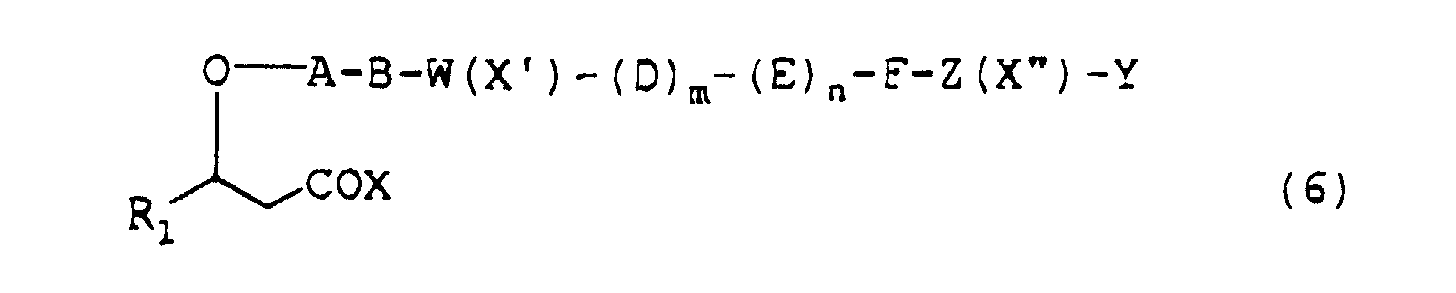
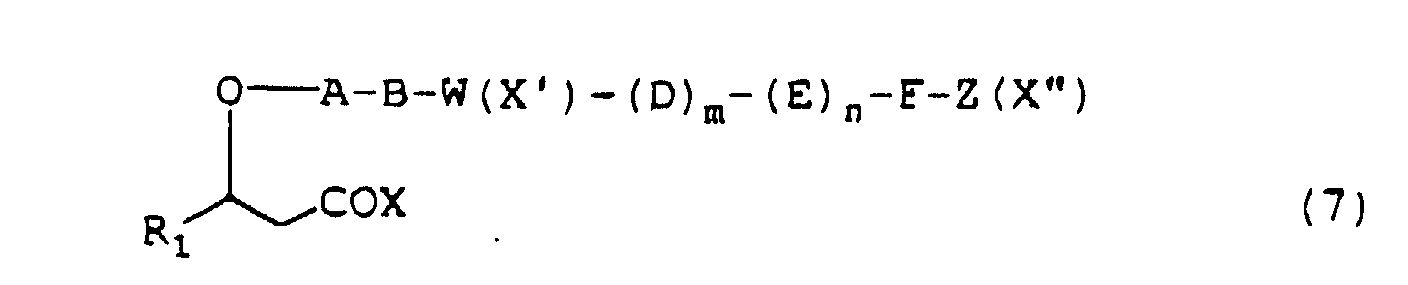
- cyclic depsipeptide represented by the above formula (2) may be prepared by sequential steps of:
- depsipeptides represented by the above formula (1) or (2) may be prepared by stepwise condensations of amino acids one by one according to a conventional method for peptide synthesis and subsequent self-condensation or alternatively by condensation of some oligopeptides previously synthesized followed by self condensation.
- the introduction of the N-substituted glycine residue of the formula (3) into the peptide chain in the depsipeptide of the present invention may be carried out by acylating the N-terminal amino group of the peptide with a halogenated acetic acid such as bromoacetic acid, and then reacting the resulting product with an amine of the formula (9) H 2 N-R 4 -R 5 (wherein R 4 and R 5 are as defined above).
- depsipeptides of the invention in the form of salts thereof may be converted to the corresponding free form, and the so-obtained depsipeptides of the invention in the form of the free form thereof may be converted to the corresponding pharmacologically acceptable salts thereof.
- salts with inorganic bases such as sodium, potassium, calcium and ammonium salts or the like and with organic bases such as triethylamine salt
- inorganic acids such as hydrochloric acid, hydrobromic acid, sulfuric acid and phosphoric acid or the like and with organic acids such as acetic acid, succinic acid, oxalic acid, tartaric acid or the like.
- the depsipeptides or pharmacologically acceptable salts thereof according to this invention may be formulated to pharmaceutical preparations of various dosage forms. More specifically, such pharmaceutical preparations may be, for example, solid preparations such as tablets, hard capsules, soft capsules, granules, powders, etc. and liquid preparations such as solutions, emulsions, suspensions, etc. As the preparations for parenteral administration may be mentioned injections, suppositories, etc.
- conventional additives may be incorporated, for example, excipients, stabilizers, antiseptics, solubilizing agents, wetting agents, emulsifying agents, lubricants, sweetening agents, coloring agents, flavoring agents, isotonic agents, buffering agents, antioxidants and the like.
- additives there may be mentioned, for example, starch, sucrose, fructose, lactose, glucose, mannitol, sorbitol, precipitated calcium carbonate, crystalline cellulose, carboxymethylcellulose, dextrin, gelatin, acacia, magnesium stearate, talc, hydroxypropylmethylcellulose and the like.
- the depsipeptide of the invention may be used by dissolving or suspending in any conventional diluent.
- the diluent may include, for example, physiological saline, Ringer's solution, an aqueous glucose solution, an alcohol, a fatty acid ester, glycerol, a glycol, an oil derived from plant or animal sources, a paraffin and the like.
- These preparations may be prepared according to a conventional method.
- a usual clinical dose may be in the range of 1-2000 mg per day for adult when orally given. More preferably, it is in the range of 5-1000 mg.
- depsipeptides of the invention may influence upon the productivity of apolipoprotein E in Hep G2 cells, together with the test procedure as used.
- D-MEM medium Dulbecco's modified Eagle medium (manufactured by Nissui Seiyaku Co., Ltd.; hereinafter referred to as "D-MEM medium") containing 10% fetal bovine serum and 1 ml each of the suspension was poured into a 24-well tissue culture plate.
- the cells were cultivated at 37°C under atmosphere of a mixed gas composed of 5% carbon dioxide and 95% air. After 3 days, the medium was removed by means of a pipette, 1 ml of a fresh D-MEM medium was added and then 10 ⁇ l of a methanolic solution of the depsipeptide of the invention was further added at the concentration as shown in Table 1.
- the medium was again replaced with D-MEM medium, 10 ⁇ l of a methanolic solution of the depsipeptide was added and cultivation was further conducted at 37°C for 8 hours. The supernatant thus obtained was used as a sample solution.
- the apolipoprotein E produced in the cultured broth was assayed by means of an enzyme immunoassay method.
- PBS represents phosphate-buffered saline
- PBS-T represents phosphate-buffered saline having incorporated Tween 20
- a blocking solution is the phosphate buffer containing the immunosuppressive agent "Block Ace" which is derived from lactoprotein and manufactured by Dainippon Pharmaceutical Co., Ltd.
- PBS (pH 7.2) KH 2 PO 4 0.2 g Na 2 HPO 4 •12H 2 O 2.9 g NaCl 8.0 g KCl 0.2 g Distilled water q.s, Total 1000 ml PBS-T (pH 7.2) KH 2 PO 4 0.2 g Na 2 HPO 4 •12H 2 O 2.9 g NaCl 8.0 g KCl 0.2 g Tween 20 0.5 g Distilled water q.s. Total 1000 ml Blocking solution (pH 7.2) Block Ace 250 ml KH 2 PO 4 0.2 g Na 2 HPO 4 •12H 2 O 2.9 g NaCl 8.0 g KCl 0.2 g Distilled water q.s. Total 1000 ml
- mice antihuman apolipoprotein E monoclonal antibody (manufactured by BYOSIS, S. A., France) was dissolved in a 0.05M aqueous sodium hydrogencarbonate solution (pH 9.5) at a concentration of 5 ⁇ g/ml. 50 ⁇ l each of the solution was poured into Nunc immunoplates which were then allowed to stand at 4°C for 16 hours. They were washed three times with 300 ⁇ l of PBS, 300 ⁇ l of the blocking solution was added and the mixture was allowed to stand at 37°C for 2 hours and then at 4°C for 16 hours.
- the reaction was quenched by the addition of 100 ⁇ l of 2N sulfuric acid and absorbance was measured at 490 nm using absorbance at 650 nm as a control.
- An amount of apolipoprotein E in the present depsipeptide was determined upon the calibration curve drawn up when a commercially available apolipoprotein E (Chemicon Co., Ltd., U. S. A.) was used as a standard.
- test Example the same procedure as described above was carried out except that methanol alone was added instead of the methanolic solution of the depsipeptide of this invention and an apolipoprotein E amount was measured as a control.
- a relative apolipoprotein E amount by the present depsipeptide was represented in terms of a relative value (%) when the control was defined as 100.
- magnesium silicate and lactose were admixed and kneaded with an alcoholic solution of hydroxypropylcellulose and then granulated to appropriate particle size, dried, and sized. Then, magnesium stearate and hydrogenated vegetable oil were added and blended to form uniform granules. The granules were then prepared to tablets, each having a diameter of 7.0 mm, a weight of 150 mg and a hardness of 6 kg, by means of a rotary tableting machine.
- Sucrose, D-sorbitol, ethyl paraoxybenzoate, propyl paraoxybenzoate and Compound 2 were dissolved in purified water (warm water). After cooling, a solution of flavoring agent in glycerol and ethanol was added and then purified water was added to the mixture to make up a volume to 100 ml.
- Compound 2 was dissolved in glycerol and then Macrogol 4000 was added and dissolved by warming. Then, the mixture was injected into a suppository die and solidified by cooling to prepare suppositories, each weighing 1.5 g.
Landscapes
- Chemical & Material Sciences (AREA)
- Organic Chemistry (AREA)
- Genetics & Genomics (AREA)
- Biochemistry (AREA)
- Biophysics (AREA)
- General Health & Medical Sciences (AREA)
- Health & Medical Sciences (AREA)
- Medicinal Chemistry (AREA)
- Molecular Biology (AREA)
- Proteomics, Peptides & Aminoacids (AREA)
- Life Sciences & Earth Sciences (AREA)
- Medicines That Contain Protein Lipid Enzymes And Other Medicines (AREA)
- Peptides Or Proteins (AREA)
Abstract

Description


or a pharmacologically acceptable salt thereof.




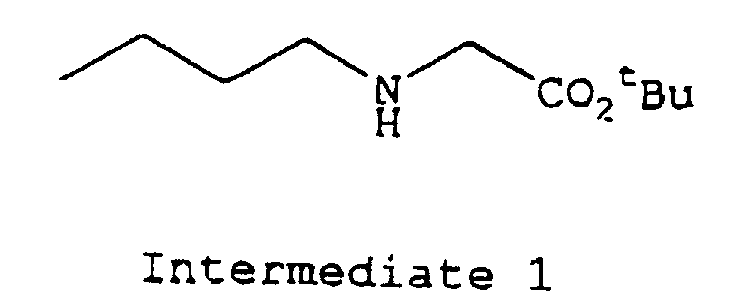
1H-NMR (CDCl3, 400 MHz) δ 3.29 (s, 2H), 2.58 (t, J=7.1 Hz, 2H), 1.61 (br s, 1H), 1.47 (s, 9H), 1.31-1.51 (m, 4H), 0.92 (t, J=7.3 Hz, 3H)
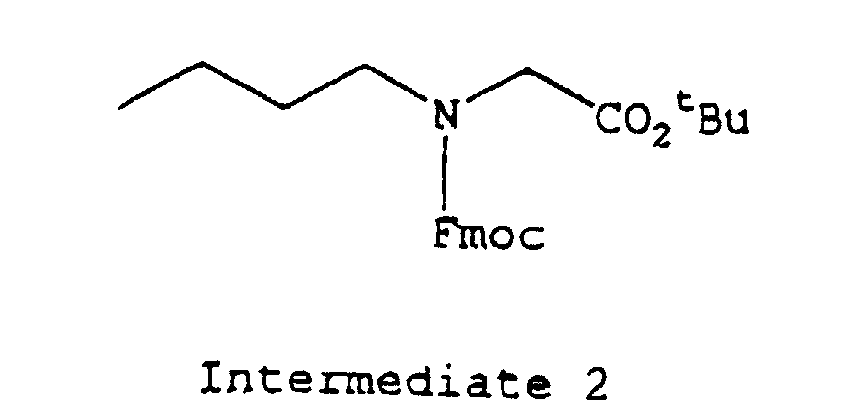
1H-NMR (CDCl3, 400 MHz) δ 7.75 (d, J=7.3 Hz, 2H), 7.60-7.58 (m, 2H), 7.41-7.37 (m, 2H), 7,33-7.28 (m, 2H), 4.49 (d, J=6.3 Hz, 1H), 4.36 (d, J=6.8 Hz, 1H), 4.27-4.20 (m, 1H), 3.88 and 3.87 (s, 2H), 3.35 and 3.17 (m, 2H), 1.46 and 1.45 (s, 9H), 1.56-1.13 (m, 4H), 0.93 and 0.86 (t, J=7.3 Hz, 3H)
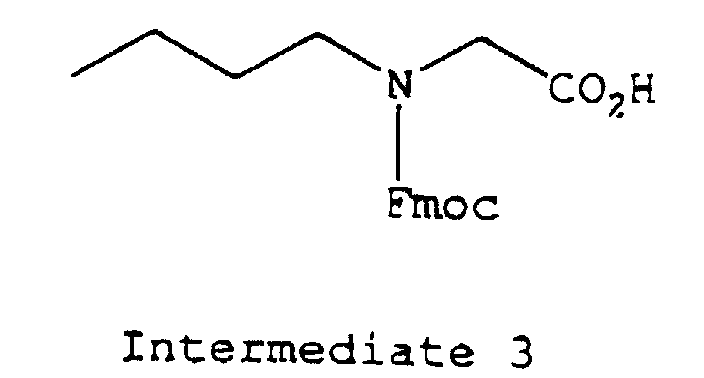
1H-NMR (CDCl3, 400 MHz) δ 9.87 (br, 1H), 7.77-7.71 (m, 2H), 7.59-7.52 (m, 2H), 7.41-7.25 (m, 4H), 4.54-4.45 (m, 2H), 4.27-4.11 (m, 1H), 4.00 and 3.87 (s, 2H), 3.33-3.29 and 3.17-3.14 (m, 2H), 1.51-1.10 (m, 4H), 0.91 and 0.85 (t, J=7.3 Hz, 3H)
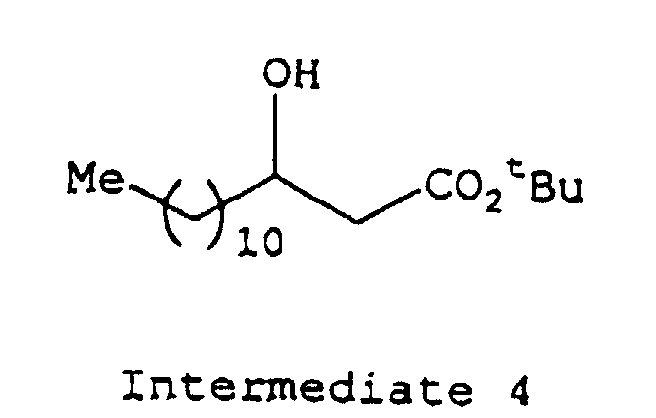
1H-NMR (CDCl3, 400 MHz) δ 3.97-3.94 (m, 1H), 3.06 (d, J=3.7 Hz, 1H), 2.42 (dd, J=2.9, 16 Hz, 1H), 2.31 (dd, J=9.0, 16 Hz, 1H), 1.47 (s, 9H), 1.30-1.19 (m, 2H), 0.88 (t, J=6.8 Hz, 3H)

1H-NMR (CDCl3, 400 MHz) δ 7.77-7.74 (m, 2H), 7.60-7.51 (m, 2H), 7.41-7.37 (m, 2H), 7.33-7.28 (m, 2H), 5.28-5.20 (m, 1H), 4.51-3.86 (m, 5H), 3.37-3.33 and 3.20-3.15 (m, 2H), 2.54-2.40 (m, 2H), 1.56-1.15 (m, 33H), 0.89-0.84 (m, 3H)

1H-NMR (CDCl3, 400 MHz) δ 5.30-5.23 (m, 1H), 3.39 (d, J=17 Hz, 1H), 3.34 (d, J=17 Hz, 1H), 2.59 (t, J=7.3 Hz, 2H), 2.52-2.43 (m, 2H), 1.51-1.25 (m, 33H), 0.93-0.86 (m, 6H)
1H-NMR (CDCl3, 400 MHz) δ 7.76 (d, J=7.8 Hz, 2H), 7.59 (d, J=7.3 Hz, 2H), 7.41-7.27 (m, 9H), 6.77 (d, J=8.3 Hz, 1H), 5.42 (d, J=8.8 Hz, 1H), 5.22-5.19 (m, 1H), 4.43-4.04 (m, 4H), 3.00 (dd, J=3.9, 17 Hz, 1H), 2.70 (dd, J=3.9, 17 Hz, 1H), 2.12-2.10 (m, 1H), 1.39 (s, 9H), 0.96 (d, J=6.3 Hz, 3H), 0.91 (d, J=6.3 Hz, 3H)
1H-NMR (CDCl3, 400 MHz) δ 8.12 (d, J=8.3 Hz, 1H), 7.86 (d, J=7.8 Hz, 2H), 7.74-7.70 (m, 2H), 7.42-7.38 (m, 2H), 7.34-7.30 (m, 5H), 4.59-4.53 (m, 1H), 4.29-4.21 (m, 3H), 3.91-3.87 (m, 1H), 2.71-2.52 (m, 2H), 1.99-1.95 (m, 1H), 1.36 (s, 9H), 0.89-0.85 (m, 6H)
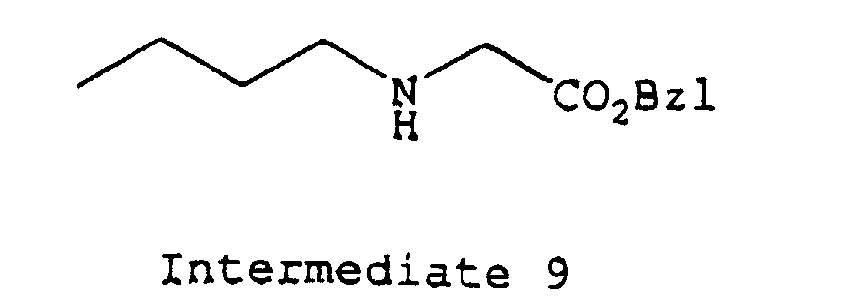
1H-NMR (CDCl3, 400 MHz) δ 7.36-7.32 (m, 5H), 5.17 (s, 2H), 3.45 (s, 2H), 2.60 (t, J=6.8 Hz, 2H), 1.60 (bs, 1H), 1.51-1.43 (m, 2H), 1.40-1.31 (m, 2H), 0.91 (t, J=7.3 Hz, 3H)

1H-NMR (CDCl3, 400 MHz) δ 7.76 (d, J=7.3 Hz, 2H), 7.59 (d, J=6.8 Hz, 2H), 7.41-7.30 (m, 9H), 5.36-5.11 (m, 4H), 4.46-4.00 (m, 7H), 3.43-3.35 (m, 2H), 2.74-2.46 (m, 2H), 2.13-2.09 (m, 1H), 1.59-1.24 (m, 13H), 0.94-0.83 (m, 9H)

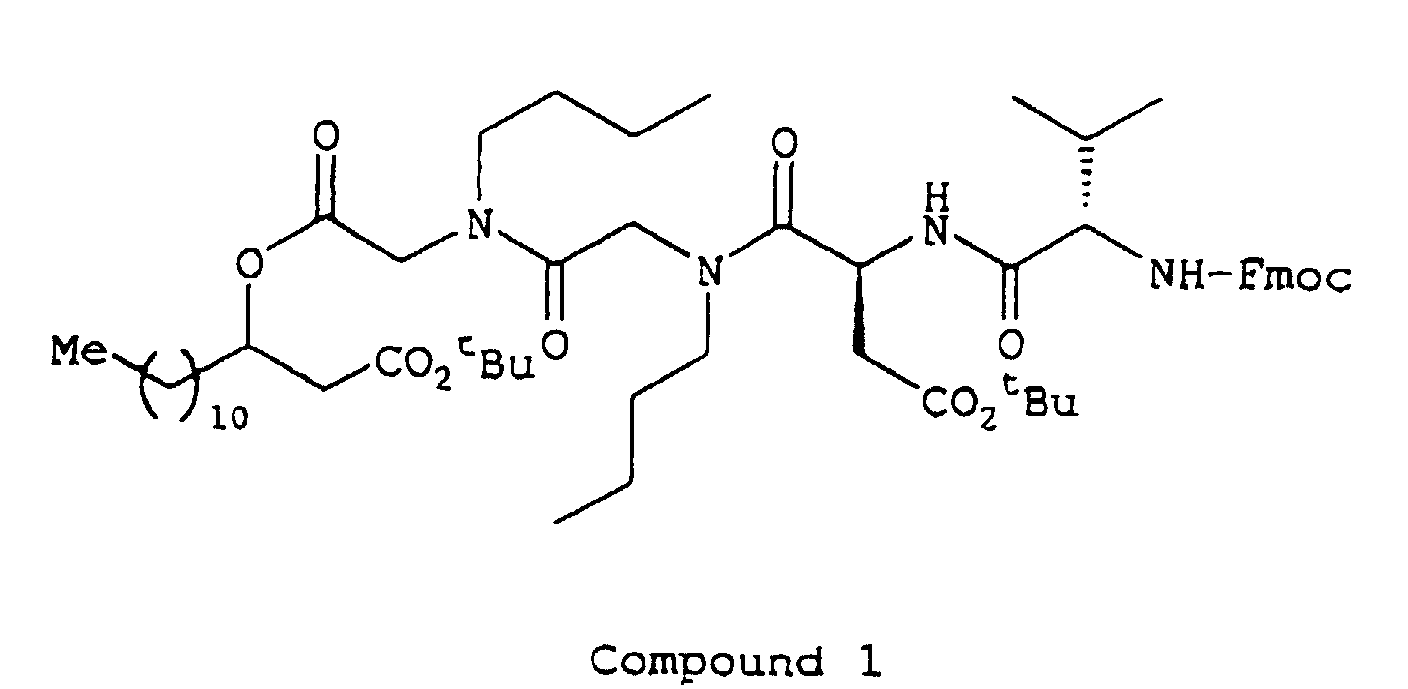
Mass spectrum (ESI) m/z 1019.6 (MH+)
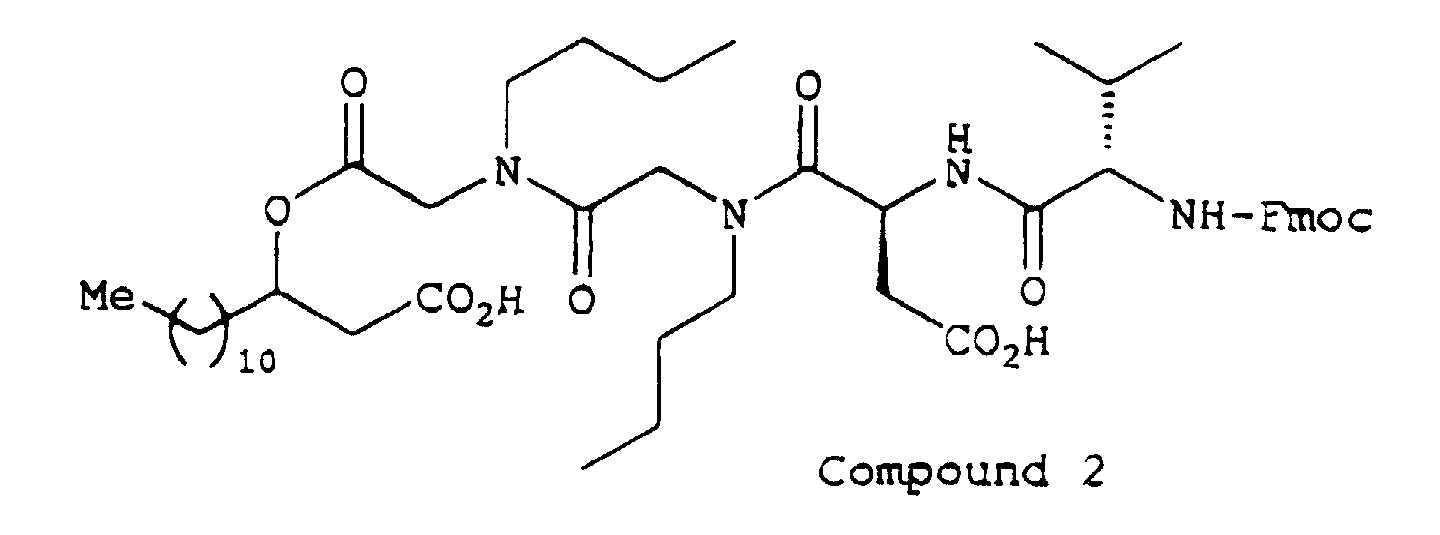
Mass spectrum (ESI) m/z 907.5 (MH+)
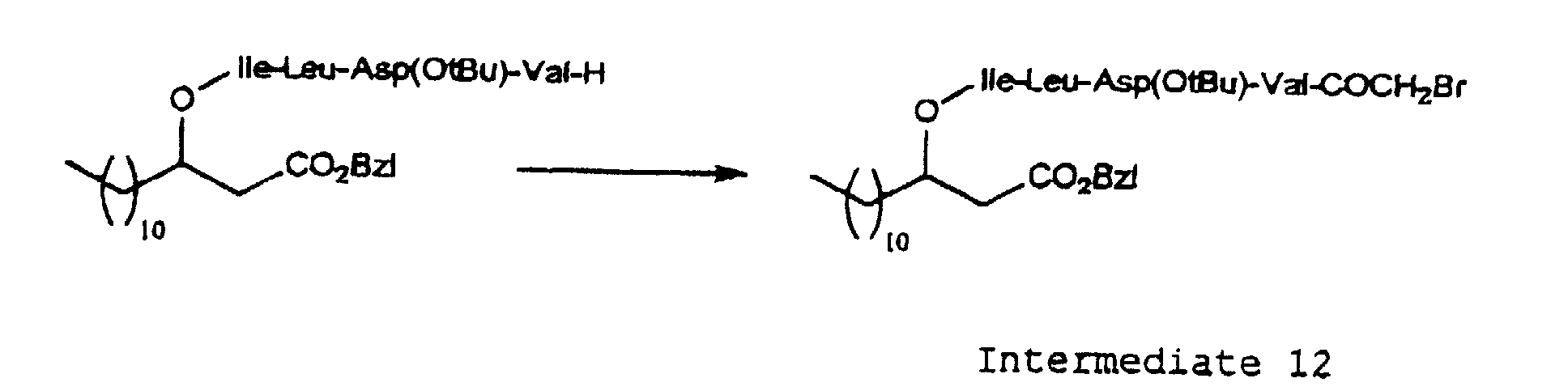
1H-NMR (CDCl3, 400 MHz): 7.24-7.41 (m, 6H), 7.09 (d, J=7.8 Hz, 1H), 6.98 (d, J=7.8 Hz, 1H), 6.56 (t, J=8.5 Hz, 1H), 5.22-5.32 (m, 1H), 5.12 (d, J=12 Hz, 1H), 5.08 (d, J=12 Hz, 1H), 4.67-4.75 (m, 1H), 4.46-4.53 (m, 1H), 4.36-4.45 (m, 1H), 4.24 (t, J=6.8 Hz, 1H), 4.10 (s, 2H), 2.93 (dd, J=3.9, 17 Hz, 1H), 2.55-2.72 (m, 3H), 2.16-2.27 (m, 1H), 1.79-1.97 (m, 1H), 1.52-1.75 (m, 5H), 1.44 (s, 9H), 1.05-1.48 (m, 20H), 1.00 (d, J=6.8 Hz, 3H), 0.98 (d, J=6.8 Hz, 3H), 0.80-0.96 (m, 15H).
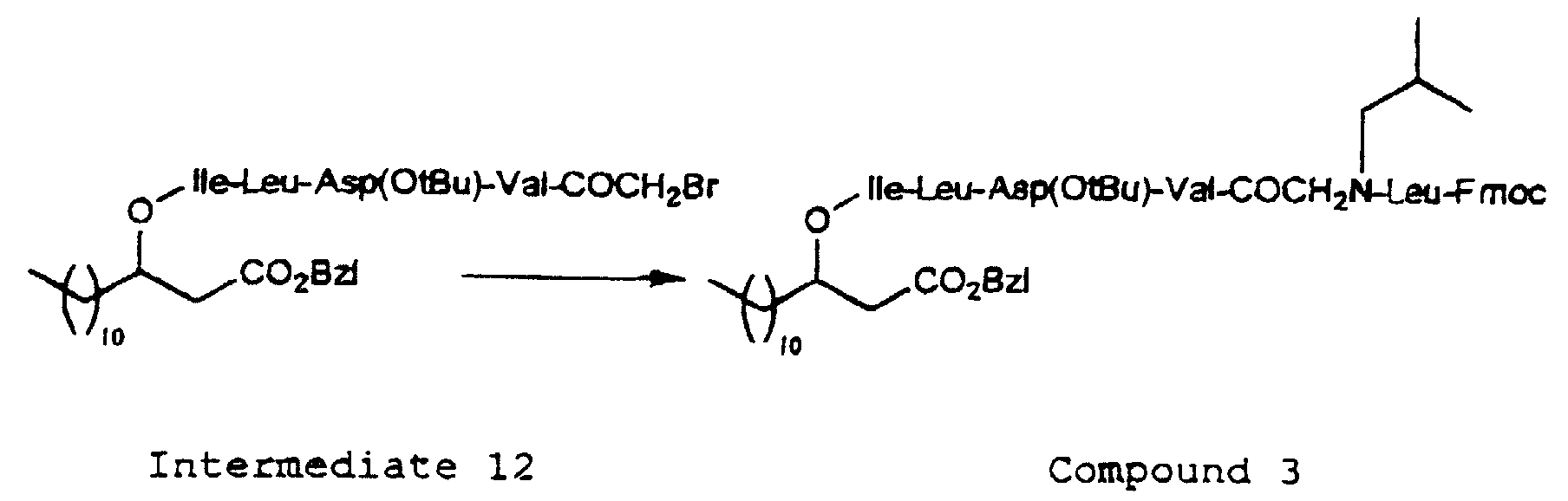
1H-NMR (CDCl3, 400 MHz) 7.75 (d, J=7.3 Hz, 2H), 7.55-7.63 (m, 2H), 7.21-7.44 (m, 10H), 7.05-7.11 (m, 1H), 6.73 (t, J=7.3 Hz, 1H), 6.57 (d, J=4.9 Hz, 1H), 5.98 (d, J=9.3 Hz, 1H), 5.26 (br s, 1H), 5.06-5.13 (m, 2H), 4.66-4.80 (m, 2H), 4.36-4.52 (m, 3H), 4.05-4.33 (m, 2H), 3.80 (d, J=16 Hz, 1H), 3.37 (dd, J=7.3, 15 Hz, 1H), 3.27 (dd, J=8.5, 15 Hz, 1H), 2.86-2.98 (m, 1H), 2.65-2.80 (m, 2H), 2.52-2.61 (m, 1H), 2.03-2.25 (m, 2H), 1.51-1.94 (m, 11H), 1.43 (s, 9H), 1.06-1.48 (m, 20H), 0.69-1.05 (m, 33H).
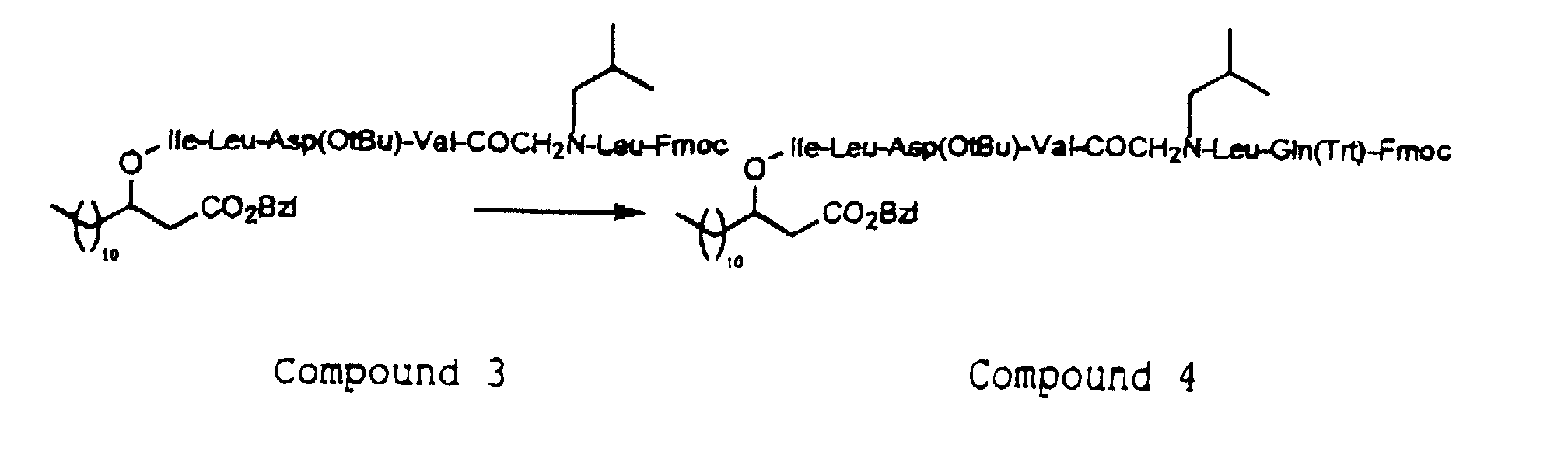
Mass spectrum (ESI) m/z 1649 (M+1)+
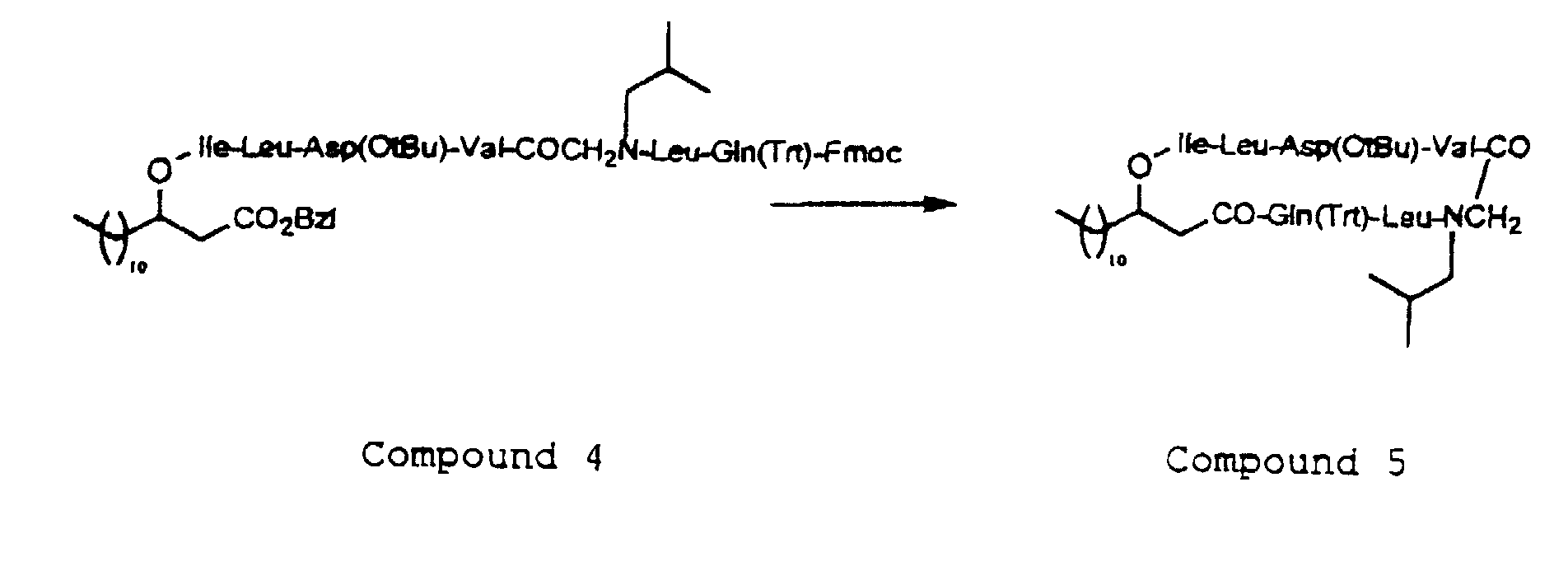
Mass spectrum (ESI) m/z 1319 (M+1)+
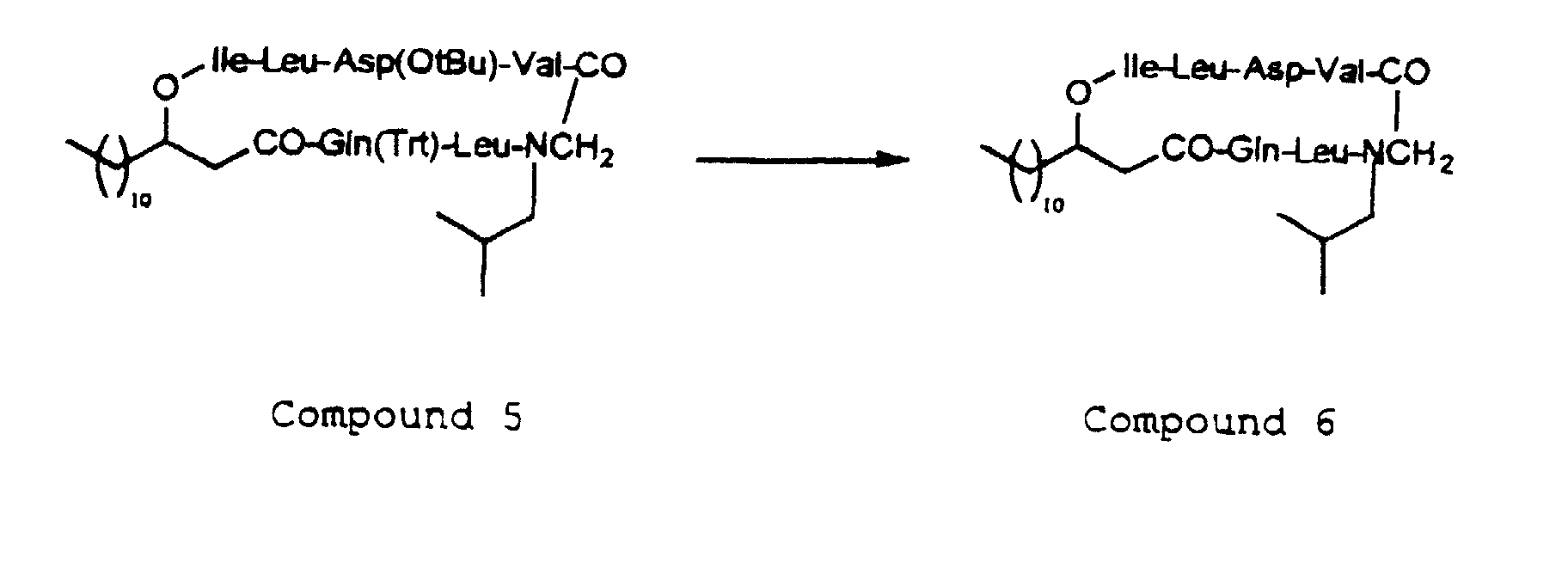
Mass spectrum (ESI) m/z 1021 (M+1)+
| PBS | (pH 7.2) | |
| KH2PO4 | 0.2 g | |
| Na2HPO4•12H2O | 2.9 g | |
| NaCl | 8.0 g | |
| KCl | 0.2 g | |
| Distilled water | q.s, | |
| Total | 1000 ml |
| PBS-T | (pH 7.2) | |
| KH2PO4 | 0.2 g | |
| Na2HPO4•12H2O | 2.9 g | |
| NaCl | 8.0 g | |
| KCl | 0.2 g | |
| Tween 20 | 0.5 g | |
| Distilled water | q.s. | |
| Total | 1000 ml |
| Blocking solution (pH 7.2) | |
| Block Ace | 250 ml |
| KH2PO4 | 0.2 g |
| Na2HPO4•12H2O | 2.9 g |
| NaCl | 8.0 g |
| KCl | 0.2 g |
| Distilled water | q.s. |
| Total | 1000 ml |
| Compound | Conc.(µM) | Relative amount of apolipoprotein E (%) |
| 2 | 1 | 256 |
| 2 | 5 | 389 |
| Compound 2 | 20 mg |
| Magnesium silicate | 20 mg |
| Lactose | 98.5 mg |
| Hydroxypropylcellulose | 7.5 mg |
| Magnesium stearate | 1 mg |
| Hydrogenated vegetable oil | 3 mg |
| Total | 150 mg |
| Compound 2 | 10 mg |
| Magnesium oxide | 40 mg |
| Dibasic calcium phosphate | 38 mg |
| Lactose | 10 mg |
| Hydroxypropylcellulose | 20 mg |
| Compound 2 | 1.000 g |
| Sucrose | 30.000 g |
| D-Sorbitol 70 w/v% | 25.000 g |
| Ethyl paraoxybenzoate | 0.030 g |
| Propyl paraoxybenzoate | 0.015 g |
| Flavoring agent | 0.200 g |
| Glycerol | 0.150 g |
| 96% Ethanol | 0.500 g |
| Purified water | q.s. |
| Total | 100 ml |
| Sodium salt of Compound 2 | 10.0 mg |
| Sodium chloride | 81.0 mg |
| Sodium hydrogencarbonate | 8.40 mg |
| Distilled water for injection | q.s. |
| Total | 10.0 ml |
| Compound 2 | 2 g |
| Macrogol 4000 | 20 g |
| Glycerol | 78 g |
| Total | 100 g |
Claims (13)
- A depsipeptide containing N-substituted glycine residue having the formula (1) or (2):
 wherein
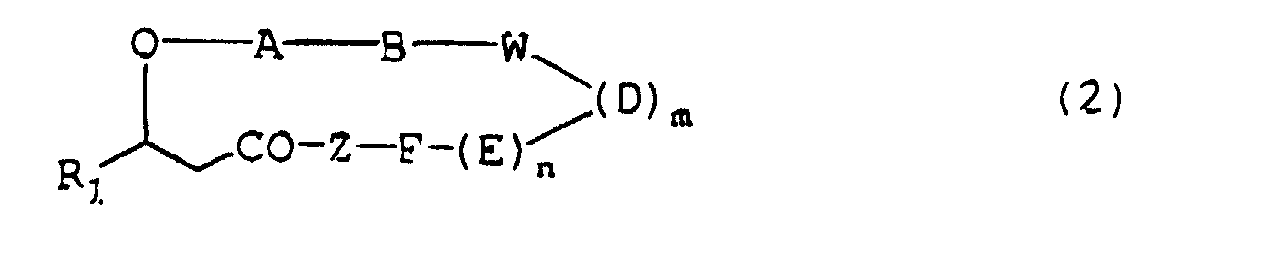 or a pharmacologically acceptable salt thereof.R1 is a straight or branched alkyl group of 5-20 carbon atoms or a straight or branched alkoxymethyl group of 5-15 carbon atoms;R2 is a group of the formula -A-B-W-(D)m-(E)n, -A-B-W-(D)m-(E)n-F or -A-B-W-(D)m-(E)n-F-Z;R3 is a hydroxyl group, a C1-C6 alkoxy group, a benzyloxy group, or a group of the formula -Z, -Z-G or -Z-G-J;A, B, D, E, F, G and J independently are a N-substituted glycine residue having the formula (3)(in which R4 is an alkylene group of 1-4 carbon atoms and R5 is a hydrogen atom, a hydroxy group, a carboxy group or a carbamido group) or a residue of an amino acid selected from the group consisting of alanine, valine, leucine, isoleucine, serine, threonine, lysine, hydroxylysine, arginine, cysteine, methionine, phenylalanine, tyrosine, tryptophan, histidine, proline, 4-hydroxyproline, piperidine-4-carboxylic acid, homoproline, octahydroindole-2-carboxylic acid, norvaline, norleucine, α-t-butylglycine, cyclohexylglycine, azetidine-2-carboxylic acid, 3-(3-pyridyl)alanine, (3-N-methyl)piperidylalanine, 3-(2-naphthyl)alanine, β-cyclohexylalanine, β-t-butylalanine, 9-anthracenylalanine, α-methylalanine, 2-aminobutanoic acid, aspartic acid, asparagine, glutamic acid and glutamine which is optionally substituted with an N-(C1-C4) alkyl;
 W is a residue of an amino acid selected from the group consisting of aspartic acid, glutamic acid and an amino acid of the formula (4)(wherein p is an integer of 1-4);
 Z is a residue of an amino acid selected from the group consisting of aspartic acid, asparagine, glutamic acid, glutamine, alanine, serine and lysine or the N-substituted glycine residue of the formula (3);m and n are independently 0 or 1;provided that a free amino group, a free carboxy group, a free hydroxy group, a free mercapto group or a free ω-carbamido group and/or a N-terminal amino group possibly existing in said amino acid residues for the above A, B, D, E, F, G, J, W and Z may be protected by a group commonly used as a protecting group in peptide chemistry, and when A, B, D, E, F, G, J, W and Z are a residue of lysine, hydroxylysine, glutamic acid or aspartic acid, either α- or ω-amino or carboxyl group existing in said residue may form a peptide linkage with its adjacent amino acid and at least one of A, B, D, E, F, G, J, W and Z is the N-substituted glycine residue of the formula (3),
 - The depsipeptide of the formula (1) or (2) as claimed in claim 1 wherein A, B, D, E, F, G and J independently are the N-substituted glycine residue of the formula (3) or a residue of an amino acid selected from the group of alanine, valine, leucine, isoleucine, phenylalanine, tyrosine, proline, β-t-butylalanine and aspartic acid; W is a residue of an amino acid selected from the group consisting of aspartic acid, glutamic acid and the amino acid of the formula (4) ; Z is a residue of an amino acid selected from the group consisting of aspartic acid, asparagine, glutamic acid, glutamine, alanine, serine and lysine or the N-substituted glycine residue of the formula (3) , and at least one of A, B, D, E, F, G, J and Z is the N-substituted glycine residue of the formula (3) ; and m and n are 1, or a pharmacologically acceptable salt thereof.
- The depsipeptide of the formula (1) or (2) as claimed in claim 1 wherein A is a N-(C1-C4) alkylglycine residue of the formula (3) ; B is a residue of an amino acid selected from the group consisting of leucine, isoleucine, phenylalanine, β-t-butylalanine and aspartic acid; D is a residue of an amino acid selected from the group consisting of valine, phenylalanine, alanine and aspartic acid; E, F, G and J are each independently residues of an amino acid selected from the group consisting of leucine, isoleucine and alanine; W is a residue of an amino acid selected from the group consisting of aspartic acid, glutamic acid and the amino acid of the formula (4) ; Z is a residue of an amino acid selected from the group consisting of aspartic acid, glutamic acid, glutamine, asparagine and lysine or the N-substituted glycine residue of the formula (3) ; and m and n are 1, or a pharmacologically acceptable salt thereof.
- The depsipeptide of the formula (1) or (2) as claimed in claim 1 wherein A is an N-(C1-C4) alkylglycine residue of the formula (3) ; B is an N-(C1-C4) alkylglycine residue of the formula (3) ; D is a residue of an amino acid selected from the group consisting of valine, phenylalanine, alanine and aspartic acid; E, F, G and J are each independently residues of an amino acid selected from the group consisting of leucine, isoleucine and alanine; W is a residue of an amino acid selected from the group consisting of aspartic acid, glutamic acid and the amino acid of the formula (4) ; Z is a residue of an amino acid selected from the group consisting of aspartic acid, glutamic acid, glutamine, asparagine and lysine or the N-substituted glycine residue of the formula (3) ; and m and n are 1, or a pharmacologically acceptable salt thereof.
- The depsipeptide of the formula (1) as claimed in claim 1 wherein A, B, D, E, F, G and J are the N-(C1-C4) alkylglycine residue of the formula (3) ; W is a residue of an amino acid selected from the group consisting of aspartic acid, glutamic acid and the amino acid of the formula (4) ; Z is a residue of an amino acid selected from the group consisting of aspartic acid, glutamic acid, asparagine, glutamine and lysine or the N-substituted glycine residue of the formula (3) ; and m and n are 1, or a pharmacologically acceptable salt thereof.
- A pharmaceutical composition which contains as an active ingredient a therapeutically effective amount of the depsipeptide as claimed in claim 1 and a pharmaceutically acceptable carrier therefor.
- A pharmaceutical composition for promoting the production of apolipoprotein E which contains as an active ingredient a therapeutically effective amount of the depsipeptide as claimed in claim 1 and a pharmaceutically acceptable carrier therefor.
- A pharmaceutical composition for treating neurologic damages which contains as an active ingredient a therapeutically effective amount of the depsipeptide as claimed in claim 1 and a pharmaceutically acceptable carrier therefor.
- A pharmaceutical composition for treating dementia which contains as an active ingredient a therapeutically effective amount of the depsipeptide as claimed in claim 1 and a pharmaceutically acceptable carrier therefor.
- A pharmaceutical composition for treating hyperlipemia which contains as an active ingredient a therapeutically effective amount of the depsipeptide as claimed in claim 1 and a pharmaceutically acceptable carrier therefor.
- Use of the depsipeptide as claimed in claim 1 for treating neurologic damages.
- Use of the depsipeptide as claimed in claim 1 for treating dementia.
- Use of the depsipeptide as claimed in claim 1 for treating hyperlipemia.
Applications Claiming Priority (2)
| Application Number | Priority Date | Filing Date | Title |
|---|---|---|---|
| JP35776697 | 1997-12-25 | ||
| JP35776697 | 1997-12-25 |
Publications (2)
| Publication Number | Publication Date |
|---|---|
| EP0934952A2 true EP0934952A2 (en) | 1999-08-11 |
| EP0934952A3 EP0934952A3 (en) | 1999-12-29 |
Family
ID=18455821
Family Applications (1)
| Application Number | Title | Priority Date | Filing Date |
|---|---|---|---|
| EP98124653A Withdrawn EP0934952A3 (en) | 1997-12-25 | 1998-12-24 | Peptides containing an N-substituted glycine residue |
Country Status (2)
| Country | Link |
|---|---|
| US (2) | US6001815A (en) |
| EP (1) | EP0934952A3 (en) |
Families Citing this family (7)
| Publication number | Priority date | Publication date | Assignee | Title |
|---|---|---|---|---|
| JP3947228B2 (en) * | 1996-06-25 | 2007-07-18 | 株式会社日清製粉グループ本社 | Cyclic depsipeptide and pharmaceutical comprising the same |
| US6001815A (en) * | 1997-12-25 | 1999-12-14 | Nisshin Flour Milling Co., Ltd. | Depsipeptides containing N-substituted glycine residue |
| US6828302B1 (en) | 1999-12-08 | 2004-12-07 | Xcyte Therapies, Inc. | Therapeutic uses of depsipeptides and congeners thereof |
| BR0016154A (en) * | 1999-12-08 | 2003-02-25 | Xcyte Therapies Inc | Depsipeptide and its counterparts for use as immunosuppressants |
| EP1794588A2 (en) * | 2004-09-09 | 2007-06-13 | Biosite Incorporated | Methods and compositions for measuring canine bnp and uses thereof |
| MX391259B (en) | 2015-10-14 | 2025-03-21 | X Therma Inc | COMPOSITIONS AND METHODS FOR REDUCING ICE CRYSTAL FORMATION. |
| US11643438B2 (en) | 2018-07-20 | 2023-05-09 | The Board Of Regents Of The University Of Oklahoma | Antimicrobial peptides and methods of use |
Family Cites Families (6)
| Publication number | Priority date | Publication date | Assignee | Title |
|---|---|---|---|---|
| US4582639A (en) * | 1984-06-18 | 1986-04-15 | Bristol-Myers Company | Antitumor antibiotic compound |
| DE69519669T2 (en) * | 1994-05-26 | 2001-04-26 | Nisshin Flour Milling Co., Ltd. | CYCLODEPSIPEPTIDE |
| JP3947228B2 (en) * | 1996-06-25 | 2007-07-18 | 株式会社日清製粉グループ本社 | Cyclic depsipeptide and pharmaceutical comprising the same |
| JP3947229B2 (en) * | 1996-06-25 | 2007-07-18 | 株式会社日清製粉グループ本社 | Depsipeptide and medicine containing the same as an active ingredient |
| US6001815A (en) * | 1997-12-25 | 1999-12-14 | Nisshin Flour Milling Co., Ltd. | Depsipeptides containing N-substituted glycine residue |
| US6211145B1 (en) * | 1997-12-25 | 2001-04-03 | Nisshin Flour Milling Co., Ltd. | Bicyclic depsipeptides |
-
1998
- 1998-12-21 US US09/218,125 patent/US6001815A/en not_active Expired - Fee Related
- 1998-12-24 EP EP98124653A patent/EP0934952A3/en not_active Withdrawn
-
1999
- 1999-08-24 US US09/379,614 patent/US6316406B1/en not_active Expired - Fee Related
Also Published As
| Publication number | Publication date |
|---|---|
| US6316406B1 (en) | 2001-11-13 |
| EP0934952A3 (en) | 1999-12-29 |
| US6001815A (en) | 1999-12-14 |
Similar Documents
| Publication | Publication Date | Title |
|---|---|---|
| JP2002521386A (en) | Urokinase and angiogenesis inhibitors | |
| JPH01151600A (en) | Cyclosporin | |
| US6255286B1 (en) | Depsipeptides and drugs containing the same as the active ingredient | |
| JPH0364514B2 (en) | ||
| US4997648A (en) | Peptides and medical use thereof | |
| EP0253190A2 (en) | Partially retro-inverted tuftsin analogues, method for the preparation thereof and pharmaceutical compositions containing them | |
| JPH04208299A (en) | Prolyl endopeptidase-inhibiting peptide | |
| US6316406B1 (en) | Depsipeptides containing N-substituted glycine residue | |
| EP0333071A2 (en) | Polypeptides, methods for their preparation, pharmaceutical compositions comprising them and use | |
| IE862031L (en) | Tri and tetra peptide amino alcohol derivatives | |
| US5786335A (en) | Sulfhydryl containing peptides for treating vascular disease | |
| JPH09507213A (en) | Antithrombotic azacycloalkylalkanoyl and pseudopeptides | |
| US6252041B1 (en) | Depsipeptides containing non-natural amino acids | |
| US6211145B1 (en) | Bicyclic depsipeptides | |
| JP3947228B2 (en) | Cyclic depsipeptide and pharmaceutical comprising the same | |
| AU721261B2 (en) | Peptide inhibitors of hematopoietic cell proliferation | |
| JPH0892282A (en) | Cyclopeptide | |
| ES2259812T3 (en) | DERIVATIVES OF (3R) -3-AMINO-4-CARBOXIBUTIRALDEHIDO INHIBITORS OF THE LIBERATION OF INTERLEUQUINA-1 / BETA. | |
| JPH11263797A (en) | Depsipeptide containing n-substituted glycine residual group | |
| US6288038B1 (en) | Depsipeptide derivatives bearing piperazinone rings | |
| JP2640778B2 (en) | Peptide and anti-dementia agent containing the same | |
| KR20000016536A (en) | Cyclic depsipeptides and drugs containing the same as the active ingredient | |
| JPH11322786A (en) | Depsipeptide containing non-natural amino acid | |
| JPH0826067B2 (en) | Peptide derivative and anti-dementia agent containing the same | |
| JPH11246594A (en) | Bicuyclic depsipeptide |
Legal Events
| Date | Code | Title | Description |
|---|---|---|---|
| PUAI | Public reference made under article 153(3) epc to a published international application that has entered the european phase |
Free format text: ORIGINAL CODE: 0009012 |
|
| AK | Designated contracting states |
Kind code of ref document: A2 Designated state(s): DE FR GB IT |
|
| AX | Request for extension of the european patent |
Free format text: AL;LT;LV;MK;RO;SI |
|
| PUAL | Search report despatched |
Free format text: ORIGINAL CODE: 0009013 |
|
| AK | Designated contracting states |
Kind code of ref document: A3 Designated state(s): AT BE CH CY DE DK ES FI FR GB GR IE IT LI LU MC NL PT SE |
|
| AX | Request for extension of the european patent |
Free format text: AL;LT;LV;MK;RO;SI |
|
| 17P | Request for examination filed |
Effective date: 20000621 |
|
| AKX | Designation fees paid |
Free format text: DE FR GB IT |
|
| RAP1 | Party data changed (applicant data changed or rights of an application transferred) |
Owner name: NISSHIN SEIFUN GROUP INC. |
|
| 17Q | First examination report despatched |
Effective date: 20011203 |
|
| GRAP | Despatch of communication of intention to grant a patent |
Free format text: ORIGINAL CODE: EPIDOSNIGR1 |
|
| STAA | Information on the status of an ep patent application or granted ep patent |
Free format text: STATUS: THE APPLICATION IS DEEMED TO BE WITHDRAWN |
|
| 18D | Application deemed to be withdrawn |
Effective date: 20050331 |