EP0916734B1 - 3'untranslated regions of alpha-amylase genes - Google Patents
3'untranslated regions of alpha-amylase genes Download PDFInfo
- Publication number
- EP0916734B1 EP0916734B1 EP98306747A EP98306747A EP0916734B1 EP 0916734 B1 EP0916734 B1 EP 0916734B1 EP 98306747 A EP98306747 A EP 98306747A EP 98306747 A EP98306747 A EP 98306747A EP 0916734 B1 EP0916734 B1 EP 0916734B1
- Authority
- EP
- European Patent Office
- Prior art keywords
- mrna
- αamy3
- gene
- sequence
- rice
- Prior art date
- Legal status (The legal status is an assumption and is not a legal conclusion. Google has not performed a legal analysis and makes no representation as to the accuracy of the status listed.)
- Expired - Lifetime
Links
- 108090000637 alpha-Amylases Proteins 0.000 title claims description 36
- 108091036066 Three prime untranslated region Proteins 0.000 title claims description 22
- 241000209094 Oryza Species 0.000 claims description 53
- 235000007164 Oryza sativa Nutrition 0.000 claims description 53
- 235000009566 rice Nutrition 0.000 claims description 53
- 235000000346 sugar Nutrition 0.000 claims description 51
- 238000009825 accumulation Methods 0.000 claims description 50
- 108091026890 Coding region Proteins 0.000 claims description 48
- 230000014509 gene expression Effects 0.000 claims description 47
- 108020004999 messenger RNA Proteins 0.000 claims description 44
- 108090000623 proteins and genes Proteins 0.000 claims description 37
- 238000000034 method Methods 0.000 claims description 31
- 229920001184 polypeptide Polymers 0.000 claims description 31
- 108090000765 processed proteins & peptides Proteins 0.000 claims description 31
- 102000004196 processed proteins & peptides Human genes 0.000 claims description 31
- 241000218922 Magnoliophyta Species 0.000 claims description 18
- 239000002773 nucleotide Substances 0.000 claims description 15
- 125000003729 nucleotide group Chemical group 0.000 claims description 15
- 239000013598 vector Substances 0.000 claims description 12
- 239000013604 expression vector Substances 0.000 claims description 11
- 238000013518 transcription Methods 0.000 claims description 11
- 230000035897 transcription Effects 0.000 claims description 11
- 230000001131 transforming effect Effects 0.000 claims description 4
- 108010076504 Protein Sorting Signals Proteins 0.000 claims 11
- 108020005345 3' Untranslated Regions Proteins 0.000 description 84
- 210000004027 cell Anatomy 0.000 description 80
- 230000035508 accumulation Effects 0.000 description 44
- 210000001938 protoplast Anatomy 0.000 description 44
- WQZGKKKJIJFFOK-GASJEMHNSA-N Glucose Natural products OC[C@H]1OC(O)[C@H](O)[C@@H](O)[C@@H]1O WQZGKKKJIJFFOK-GASJEMHNSA-N 0.000 description 42
- 239000008103 glucose Substances 0.000 description 42
- 229930006000 Sucrose Natural products 0.000 description 36
- 239000005720 sucrose Substances 0.000 description 36
- CZMRCDWAGMRECN-UGDNZRGBSA-N Sucrose Chemical compound O[C@H]1[C@H](O)[C@@H](CO)O[C@@]1(CO)O[C@@H]1[C@H](O)[C@@H](O)[C@H](O)[C@@H](CO)O1 CZMRCDWAGMRECN-UGDNZRGBSA-N 0.000 description 35
- 239000013612 plasmid Substances 0.000 description 32
- 241000196324 Embryophyta Species 0.000 description 25
- 239000002609 medium Substances 0.000 description 24
- 239000012634 fragment Substances 0.000 description 23
- 238000004458 analytical method Methods 0.000 description 21
- 108091032973 (ribonucleotides)n+m Proteins 0.000 description 18
- 108020004707 nucleic acids Proteins 0.000 description 17
- 102000039446 nucleic acids Human genes 0.000 description 17
- 150000007523 nucleic acids Chemical class 0.000 description 17
- RJURFGZVJUQBHK-UHFFFAOYSA-N actinomycin D Natural products CC1OC(=O)C(C(C)C)N(C)C(=O)CN(C)C(=O)C2CCCN2C(=O)C(C(C)C)NC(=O)C1NC(=O)C1=C(N)C(=O)C(C)=C2OC(C(C)=CC=C3C(=O)NC4C(=O)NC(C(N5CCCC5C(=O)N(C)CC(=O)N(C)C(C(C)C)C(=O)OC4C)=O)C(C)C)=C3N=C21 RJURFGZVJUQBHK-UHFFFAOYSA-N 0.000 description 16
- 239000000725 suspension Substances 0.000 description 15
- 108020004414 DNA Proteins 0.000 description 14
- 102000004139 alpha-Amylases Human genes 0.000 description 10
- 230000001419 dependent effect Effects 0.000 description 10
- 230000009261 transgenic effect Effects 0.000 description 10
- 229940024171 alpha-amylase Drugs 0.000 description 9
- 235000003642 hunger Nutrition 0.000 description 9
- 230000037351 starvation Effects 0.000 description 9
- 108010092160 Dactinomycin Proteins 0.000 description 8
- RJURFGZVJUQBHK-IIXSONLDSA-N actinomycin D Chemical compound C[C@H]1OC(=O)[C@H](C(C)C)N(C)C(=O)CN(C)C(=O)[C@@H]2CCCN2C(=O)[C@@H](C(C)C)NC(=O)[C@H]1NC(=O)C1=C(N)C(=O)C(C)=C2OC(C(C)=CC=C3C(=O)N[C@@H]4C(=O)N[C@@H](C(N5CCC[C@H]5C(=O)N(C)CC(=O)N(C)[C@@H](C(C)C)C(=O)O[C@@H]4C)=O)C(C)C)=C3N=C21 RJURFGZVJUQBHK-IIXSONLDSA-N 0.000 description 8
- 239000002299 complementary DNA Substances 0.000 description 8
- 229960000640 dactinomycin Drugs 0.000 description 8
- 239000001963 growth medium Substances 0.000 description 7
- 102000017795 Perilipin-1 Human genes 0.000 description 6
- 108010067162 Perilipin-1 Proteins 0.000 description 6
- 238000012217 deletion Methods 0.000 description 6
- 230000037430 deletion Effects 0.000 description 6
- 230000000694 effects Effects 0.000 description 6
- 238000010839 reverse transcription Methods 0.000 description 6
- 230000009466 transformation Effects 0.000 description 6
- 239000002202 Polyethylene glycol Substances 0.000 description 5
- 239000011543 agarose gel Substances 0.000 description 5
- 230000003247 decreasing effect Effects 0.000 description 5
- 238000002474 experimental method Methods 0.000 description 5
- 230000006870 function Effects 0.000 description 5
- 239000000463 material Substances 0.000 description 5
- 229920001223 polyethylene glycol Polymers 0.000 description 5
- 230000004044 response Effects 0.000 description 5
- 238000012360 testing method Methods 0.000 description 5
- 108010085238 Actins Proteins 0.000 description 4
- 108020004635 Complementary DNA Proteins 0.000 description 4
- TWRXJAOTZQYOKJ-UHFFFAOYSA-L Magnesium chloride Chemical compound [Mg+2].[Cl-].[Cl-] TWRXJAOTZQYOKJ-UHFFFAOYSA-L 0.000 description 4
- 108091028043 Nucleic acid sequence Proteins 0.000 description 4
- 108090000848 Ubiquitin Proteins 0.000 description 4
- WQZGKKKJIJFFOK-VFUOTHLCSA-N beta-D-glucose Chemical compound OC[C@H]1O[C@@H](O)[C@H](O)[C@@H](O)[C@@H]1O WQZGKKKJIJFFOK-VFUOTHLCSA-N 0.000 description 4
- 230000015556 catabolic process Effects 0.000 description 4
- 238000006731 degradation reaction Methods 0.000 description 4
- 238000005516 engineering process Methods 0.000 description 4
- ZMMJGEGLRURXTF-UHFFFAOYSA-N ethidium bromide Chemical compound [Br-].C12=CC(N)=CC=C2C2=CC=C(N)C=C2[N+](CC)=C1C1=CC=CC=C1 ZMMJGEGLRURXTF-UHFFFAOYSA-N 0.000 description 4
- 229960005542 ethidium bromide Drugs 0.000 description 4
- 238000011534 incubation Methods 0.000 description 4
- 230000001404 mediated effect Effects 0.000 description 4
- 239000000203 mixture Substances 0.000 description 4
- 239000002245 particle Substances 0.000 description 4
- 230000001105 regulatory effect Effects 0.000 description 4
- 239000000523 sample Substances 0.000 description 4
- 210000001519 tissue Anatomy 0.000 description 4
- 239000005631 2,4-Dichlorophenoxyacetic acid Substances 0.000 description 3
- 102000007469 Actins Human genes 0.000 description 3
- 241000589158 Agrobacterium Species 0.000 description 3
- IAZDPXIOMUYVGZ-UHFFFAOYSA-N Dimethylsulphoxide Chemical compound CS(C)=O IAZDPXIOMUYVGZ-UHFFFAOYSA-N 0.000 description 3
- 102000004190 Enzymes Human genes 0.000 description 3
- 108090000790 Enzymes Proteins 0.000 description 3
- YQYJSBFKSSDGFO-UHFFFAOYSA-N Epihygromycin Natural products OC1C(O)C(C(=O)C)OC1OC(C(=C1)O)=CC=C1C=C(C)C(=O)NC1C(O)C(O)C2OCOC2C1O YQYJSBFKSSDGFO-UHFFFAOYSA-N 0.000 description 3
- 108060001084 Luciferase Proteins 0.000 description 3
- 238000006243 chemical reaction Methods 0.000 description 3
- 229940088598 enzyme Drugs 0.000 description 3
- 102000004169 proteins and genes Human genes 0.000 description 3
- 230000002285 radioactive effect Effects 0.000 description 3
- 238000003757 reverse transcription PCR Methods 0.000 description 3
- 230000002441 reversible effect Effects 0.000 description 3
- 150000008163 sugars Chemical class 0.000 description 3
- 238000001890 transfection Methods 0.000 description 3
- 230000007306 turnover Effects 0.000 description 3
- QKNYBSVHEMOAJP-UHFFFAOYSA-N 2-amino-2-(hydroxymethyl)propane-1,3-diol;hydron;chloride Chemical compound Cl.OCC(N)(CO)CO QKNYBSVHEMOAJP-UHFFFAOYSA-N 0.000 description 2
- 229920000936 Agarose Polymers 0.000 description 2
- 101710165031 Alpha-amylase 3 Proteins 0.000 description 2
- UXVMQQNJUSDDNG-UHFFFAOYSA-L Calcium chloride Chemical compound [Cl-].[Cl-].[Ca+2] UXVMQQNJUSDDNG-UHFFFAOYSA-L 0.000 description 2
- OKTJSMMVPCPJKN-UHFFFAOYSA-N Carbon Chemical compound [C] OKTJSMMVPCPJKN-UHFFFAOYSA-N 0.000 description 2
- 108020004705 Codon Proteins 0.000 description 2
- 101100136353 Dictyostelium discoideum gpmA gene Proteins 0.000 description 2
- 229930091371 Fructose Natural products 0.000 description 2
- 239000005715 Fructose Substances 0.000 description 2
- RFSUNEUAIZKAJO-ARQDHWQXSA-N Fructose Chemical compound OC[C@H]1O[C@](O)(CO)[C@@H](O)[C@@H]1O RFSUNEUAIZKAJO-ARQDHWQXSA-N 0.000 description 2
- 108010060309 Glucuronidase Proteins 0.000 description 2
- 102000053187 Glucuronidase Human genes 0.000 description 2
- 239000005089 Luciferase Substances 0.000 description 2
- 101150005851 NOS gene Proteins 0.000 description 2
- 239000013614 RNA sample Substances 0.000 description 2
- FAPWRFPIFSIZLT-UHFFFAOYSA-M Sodium chloride Chemical compound [Na+].[Cl-] FAPWRFPIFSIZLT-UHFFFAOYSA-M 0.000 description 2
- 102000044159 Ubiquitin Human genes 0.000 description 2
- 240000008042 Zea mays Species 0.000 description 2
- 235000016383 Zea mays subsp huehuetenangensis Nutrition 0.000 description 2
- 235000002017 Zea mays subsp mays Nutrition 0.000 description 2
- 230000008901 benefit Effects 0.000 description 2
- 108010051210 beta-Fructofuranosidase Proteins 0.000 description 2
- 230000033228 biological regulation Effects 0.000 description 2
- 239000001110 calcium chloride Substances 0.000 description 2
- 229910001628 calcium chloride Inorganic materials 0.000 description 2
- 229910052799 carbon Inorganic materials 0.000 description 2
- 238000004113 cell culture Methods 0.000 description 2
- 210000002421 cell wall Anatomy 0.000 description 2
- 238000010367 cloning Methods 0.000 description 2
- 238000010586 diagram Methods 0.000 description 2
- 238000001962 electrophoresis Methods 0.000 description 2
- 210000002257 embryonic structure Anatomy 0.000 description 2
- 239000000499 gel Substances 0.000 description 2
- 230000035784 germination Effects 0.000 description 2
- PCHJSUWPFVWCPO-UHFFFAOYSA-N gold Chemical compound [Au] PCHJSUWPFVWCPO-UHFFFAOYSA-N 0.000 description 2
- 239000010931 gold Substances 0.000 description 2
- 229910052737 gold Inorganic materials 0.000 description 2
- 230000005764 inhibitory process Effects 0.000 description 2
- 239000001573 invertase Substances 0.000 description 2
- 235000011073 invertase Nutrition 0.000 description 2
- 239000007788 liquid Substances 0.000 description 2
- 229910001629 magnesium chloride Inorganic materials 0.000 description 2
- 235000009973 maize Nutrition 0.000 description 2
- 239000006870 ms-medium Substances 0.000 description 2
- 108010058731 nopaline synthase Proteins 0.000 description 2
- 230000000243 photosynthetic effect Effects 0.000 description 2
- 229920002401 polyacrylamide Polymers 0.000 description 2
- 230000002829 reductive effect Effects 0.000 description 2
- 239000007787 solid Substances 0.000 description 2
- 241000894007 species Species 0.000 description 2
- ATHGHQPFGPMSJY-UHFFFAOYSA-N spermidine Chemical compound NCCCCNCCCN ATHGHQPFGPMSJY-UHFFFAOYSA-N 0.000 description 2
- 238000010186 staining Methods 0.000 description 2
- 238000010561 standard procedure Methods 0.000 description 2
- 238000004114 suspension culture Methods 0.000 description 2
- 238000013519 translation Methods 0.000 description 2
- 102000040650 (ribonucleotides)n+m Human genes 0.000 description 1
- OWEGMIWEEQEYGQ-UHFFFAOYSA-N 100676-05-9 Natural products OC1C(O)C(O)C(CO)OC1OCC1C(O)C(O)C(O)C(OC2C(OC(O)C(O)C2O)CO)O1 OWEGMIWEEQEYGQ-UHFFFAOYSA-N 0.000 description 1
- HXKWSTRRCHTUEC-UHFFFAOYSA-N 2,4-Dichlorophenoxyaceticacid Chemical compound OC(=O)C(Cl)OC1=CC=C(Cl)C=C1 HXKWSTRRCHTUEC-UHFFFAOYSA-N 0.000 description 1
- 101710197633 Actin-1 Proteins 0.000 description 1
- 108020005544 Antisense RNA Proteins 0.000 description 1
- 241000972773 Aulopiformes Species 0.000 description 1
- 241000701489 Cauliflower mosaic virus Species 0.000 description 1
- FBPFZTCFMRRESA-KVTDHHQDSA-N D-Mannitol Chemical compound OC[C@@H](O)[C@@H](O)[C@H](O)[C@H](O)CO FBPFZTCFMRRESA-KVTDHHQDSA-N 0.000 description 1
- 102000007260 Deoxyribonuclease I Human genes 0.000 description 1
- 108010008532 Deoxyribonuclease I Proteins 0.000 description 1
- 240000005979 Hordeum vulgare Species 0.000 description 1
- 235000007340 Hordeum vulgare Nutrition 0.000 description 1
- 102100034343 Integrase Human genes 0.000 description 1
- FAIXYKHYOGVFKA-UHFFFAOYSA-N Kinetin Natural products N=1C=NC=2N=CNC=2C=1N(C)C1=CC=CO1 FAIXYKHYOGVFKA-UHFFFAOYSA-N 0.000 description 1
- 241000209510 Liliopsida Species 0.000 description 1
- GUBGYTABKSRVRQ-PICCSMPSSA-N Maltose Natural products O[C@@H]1[C@@H](O)[C@H](O)[C@@H](CO)O[C@@H]1O[C@@H]1[C@@H](CO)OC(O)[C@H](O)[C@H]1O GUBGYTABKSRVRQ-PICCSMPSSA-N 0.000 description 1
- 229930195725 Mannitol Natural products 0.000 description 1
- 241001529936 Murinae Species 0.000 description 1
- 238000000636 Northern blotting Methods 0.000 description 1
- 239000004677 Nylon Substances 0.000 description 1
- 108091034117 Oligonucleotide Proteins 0.000 description 1
- 238000012408 PCR amplification Methods 0.000 description 1
- 101710091688 Patatin Proteins 0.000 description 1
- 108700001094 Plant Genes Proteins 0.000 description 1
- 108010092799 RNA-directed DNA polymerase Proteins 0.000 description 1
- 238000010240 RT-PCR analysis Methods 0.000 description 1
- 238000012300 Sequence Analysis Methods 0.000 description 1
- 108020003224 Small Nucleolar RNA Proteins 0.000 description 1
- 102000042773 Small Nucleolar RNA Human genes 0.000 description 1
- 229920002472 Starch Polymers 0.000 description 1
- 108010043934 Sucrose synthase Proteins 0.000 description 1
- 108010006785 Taq Polymerase Proteins 0.000 description 1
- 108020004566 Transfer RNA Proteins 0.000 description 1
- 108700019146 Transgenes Proteins 0.000 description 1
- 241000209140 Triticum Species 0.000 description 1
- 235000021307 Triticum Nutrition 0.000 description 1
- 108091023045 Untranslated Region Proteins 0.000 description 1
- 241000700605 Viruses Species 0.000 description 1
- 244000126002 Ziziphus vulgaris Species 0.000 description 1
- 235000008529 Ziziphus vulgaris Nutrition 0.000 description 1
- JLCPHMBAVCMARE-UHFFFAOYSA-N [3-[[3-[[3-[[3-[[3-[[3-[[3-[[3-[[3-[[3-[[3-[[5-(2-amino-6-oxo-1H-purin-9-yl)-3-[[3-[[3-[[3-[[3-[[3-[[5-(2-amino-6-oxo-1H-purin-9-yl)-3-[[5-(2-amino-6-oxo-1H-purin-9-yl)-3-hydroxyoxolan-2-yl]methoxy-hydroxyphosphoryl]oxyoxolan-2-yl]methoxy-hydroxyphosphoryl]oxy-5-(5-methyl-2,4-dioxopyrimidin-1-yl)oxolan-2-yl]methoxy-hydroxyphosphoryl]oxy-5-(6-aminopurin-9-yl)oxolan-2-yl]methoxy-hydroxyphosphoryl]oxy-5-(6-aminopurin-9-yl)oxolan-2-yl]methoxy-hydroxyphosphoryl]oxy-5-(6-aminopurin-9-yl)oxolan-2-yl]methoxy-hydroxyphosphoryl]oxy-5-(6-aminopurin-9-yl)oxolan-2-yl]methoxy-hydroxyphosphoryl]oxyoxolan-2-yl]methoxy-hydroxyphosphoryl]oxy-5-(5-methyl-2,4-dioxopyrimidin-1-yl)oxolan-2-yl]methoxy-hydroxyphosphoryl]oxy-5-(4-amino-2-oxopyrimidin-1-yl)oxolan-2-yl]methoxy-hydroxyphosphoryl]oxy-5-(5-methyl-2,4-dioxopyrimidin-1-yl)oxolan-2-yl]methoxy-hydroxyphosphoryl]oxy-5-(5-methyl-2,4-dioxopyrimidin-1-yl)oxolan-2-yl]methoxy-hydroxyphosphoryl]oxy-5-(6-aminopurin-9-yl)oxolan-2-yl]methoxy-hydroxyphosphoryl]oxy-5-(6-aminopurin-9-yl)oxolan-2-yl]methoxy-hydroxyphosphoryl]oxy-5-(4-amino-2-oxopyrimidin-1-yl)oxolan-2-yl]methoxy-hydroxyphosphoryl]oxy-5-(4-amino-2-oxopyrimidin-1-yl)oxolan-2-yl]methoxy-hydroxyphosphoryl]oxy-5-(4-amino-2-oxopyrimidin-1-yl)oxolan-2-yl]methoxy-hydroxyphosphoryl]oxy-5-(6-aminopurin-9-yl)oxolan-2-yl]methoxy-hydroxyphosphoryl]oxy-5-(4-amino-2-oxopyrimidin-1-yl)oxolan-2-yl]methyl [5-(6-aminopurin-9-yl)-2-(hydroxymethyl)oxolan-3-yl] hydrogen phosphate Polymers Cc1cn(C2CC(OP(O)(=O)OCC3OC(CC3OP(O)(=O)OCC3OC(CC3O)n3cnc4c3nc(N)[nH]c4=O)n3cnc4c3nc(N)[nH]c4=O)C(COP(O)(=O)OC3CC(OC3COP(O)(=O)OC3CC(OC3COP(O)(=O)OC3CC(OC3COP(O)(=O)OC3CC(OC3COP(O)(=O)OC3CC(OC3COP(O)(=O)OC3CC(OC3COP(O)(=O)OC3CC(OC3COP(O)(=O)OC3CC(OC3COP(O)(=O)OC3CC(OC3COP(O)(=O)OC3CC(OC3COP(O)(=O)OC3CC(OC3COP(O)(=O)OC3CC(OC3COP(O)(=O)OC3CC(OC3COP(O)(=O)OC3CC(OC3COP(O)(=O)OC3CC(OC3COP(O)(=O)OC3CC(OC3COP(O)(=O)OC3CC(OC3CO)n3cnc4c(N)ncnc34)n3ccc(N)nc3=O)n3cnc4c(N)ncnc34)n3ccc(N)nc3=O)n3ccc(N)nc3=O)n3ccc(N)nc3=O)n3cnc4c(N)ncnc34)n3cnc4c(N)ncnc34)n3cc(C)c(=O)[nH]c3=O)n3cc(C)c(=O)[nH]c3=O)n3ccc(N)nc3=O)n3cc(C)c(=O)[nH]c3=O)n3cnc4c3nc(N)[nH]c4=O)n3cnc4c(N)ncnc34)n3cnc4c(N)ncnc34)n3cnc4c(N)ncnc34)n3cnc4c(N)ncnc34)O2)c(=O)[nH]c1=O JLCPHMBAVCMARE-UHFFFAOYSA-N 0.000 description 1
- 238000000246 agarose gel electrophoresis Methods 0.000 description 1
- 230000003625 amylolytic effect Effects 0.000 description 1
- 238000000137 annealing Methods 0.000 description 1
- 238000013459 approach Methods 0.000 description 1
- 238000003556 assay Methods 0.000 description 1
- 108010019077 beta-Amylase Proteins 0.000 description 1
- GUBGYTABKSRVRQ-QUYVBRFLSA-N beta-maltose Chemical compound OC[C@H]1O[C@H](O[C@H]2[C@H](O)[C@@H](O)[C@H](O)O[C@@H]2CO)[C@H](O)[C@@H](O)[C@@H]1O GUBGYTABKSRVRQ-QUYVBRFLSA-N 0.000 description 1
- HOZOZZFCZRXYEK-GSWUYBTGSA-M butylscopolamine bromide Chemical compound [Br-].C1([C@@H](CO)C(=O)O[C@H]2C[C@@H]3[N+]([C@H](C2)[C@@H]2[C@H]3O2)(C)CCCC)=CC=CC=C1 HOZOZZFCZRXYEK-GSWUYBTGSA-M 0.000 description 1
- 239000001506 calcium phosphate Substances 0.000 description 1
- 229910000389 calcium phosphate Inorganic materials 0.000 description 1
- 235000011010 calcium phosphates Nutrition 0.000 description 1
- 230000023852 carbohydrate metabolic process Effects 0.000 description 1
- 235000021256 carbohydrate metabolism Nutrition 0.000 description 1
- 150000001720 carbohydrates Chemical class 0.000 description 1
- 235000014633 carbohydrates Nutrition 0.000 description 1
- 108091092328 cellular RNA Proteins 0.000 description 1
- 239000004464 cereal grain Substances 0.000 description 1
- 235000013339 cereals Nutrition 0.000 description 1
- 239000003795 chemical substances by application Substances 0.000 description 1
- 239000003184 complementary RNA Substances 0.000 description 1
- 238000010276 construction Methods 0.000 description 1
- 239000000356 contaminant Substances 0.000 description 1
- 230000001351 cycling effect Effects 0.000 description 1
- 230000001934 delay Effects 0.000 description 1
- 238000004925 denaturation Methods 0.000 description 1
- 230000036425 denaturation Effects 0.000 description 1
- 230000000368 destabilizing effect Effects 0.000 description 1
- 230000004069 differentiation Effects 0.000 description 1
- 230000029087 digestion Effects 0.000 description 1
- BNIILDVGGAEEIG-UHFFFAOYSA-L disodium hydrogen phosphate Chemical compound [Na+].[Na+].OP([O-])([O-])=O BNIILDVGGAEEIG-UHFFFAOYSA-L 0.000 description 1
- 229910000397 disodium phosphate Inorganic materials 0.000 description 1
- 238000004520 electroporation Methods 0.000 description 1
- 230000000408 embryogenic effect Effects 0.000 description 1
- 239000003623 enhancer Substances 0.000 description 1
- 230000002708 enhancing effect Effects 0.000 description 1
- 241001233957 eudicotyledons Species 0.000 description 1
- 210000003527 eukaryotic cell Anatomy 0.000 description 1
- 108010052305 exodeoxyribonuclease III Proteins 0.000 description 1
- 239000000284 extract Substances 0.000 description 1
- 239000012526 feed medium Substances 0.000 description 1
- 238000010230 functional analysis Methods 0.000 description 1
- 239000007789 gas Substances 0.000 description 1
- 150000004676 glycans Chemical class 0.000 description 1
- 101150054900 gus gene Proteins 0.000 description 1
- XLYOFNOQVPJJNP-ZSJDYOACSA-N heavy water Substances [2H]O[2H] XLYOFNOQVPJJNP-ZSJDYOACSA-N 0.000 description 1
- 239000001307 helium Substances 0.000 description 1
- 229910052734 helium Inorganic materials 0.000 description 1
- SWQJXJOGLNCZEY-UHFFFAOYSA-N helium atom Chemical compound [He] SWQJXJOGLNCZEY-UHFFFAOYSA-N 0.000 description 1
- 230000007062 hydrolysis Effects 0.000 description 1
- 238000006460 hydrolysis reaction Methods 0.000 description 1
- 238000005213 imbibition Methods 0.000 description 1
- 238000001727 in vivo Methods 0.000 description 1
- 230000006698 induction Effects 0.000 description 1
- 230000001939 inductive effect Effects 0.000 description 1
- 230000004941 influx Effects 0.000 description 1
- 230000002401 inhibitory effect Effects 0.000 description 1
- 238000003780 insertion Methods 0.000 description 1
- 230000037431 insertion Effects 0.000 description 1
- 238000002955 isolation Methods 0.000 description 1
- QANMHLXAZMSUEX-UHFFFAOYSA-N kinetin Chemical compound N=1C=NC=2N=CNC=2C=1NCC1=CC=CO1 QANMHLXAZMSUEX-UHFFFAOYSA-N 0.000 description 1
- 229960001669 kinetin Drugs 0.000 description 1
- 208000032839 leukemia Diseases 0.000 description 1
- 230000000670 limiting effect Effects 0.000 description 1
- 238000012417 linear regression Methods 0.000 description 1
- -1 mRNA Proteins 0.000 description 1
- 239000000594 mannitol Substances 0.000 description 1
- 235000010355 mannitol Nutrition 0.000 description 1
- 238000004519 manufacturing process Methods 0.000 description 1
- 230000007246 mechanism Effects 0.000 description 1
- 238000002844 melting Methods 0.000 description 1
- 230000008018 melting Effects 0.000 description 1
- 239000012528 membrane Substances 0.000 description 1
- 239000002207 metabolite Substances 0.000 description 1
- 238000000520 microinjection Methods 0.000 description 1
- 230000004048 modification Effects 0.000 description 1
- 238000012986 modification Methods 0.000 description 1
- 238000010369 molecular cloning Methods 0.000 description 1
- 238000000329 molecular dynamics simulation Methods 0.000 description 1
- 238000003199 nucleic acid amplification method Methods 0.000 description 1
- 235000021232 nutrient availability Nutrition 0.000 description 1
- 229920001778 nylon Polymers 0.000 description 1
- 230000029553 photosynthesis Effects 0.000 description 1
- 238000010672 photosynthesis Methods 0.000 description 1
- 230000035479 physiological effects, processes and functions Effects 0.000 description 1
- 238000003752 polymerase chain reaction Methods 0.000 description 1
- 108010055896 polyornithine Proteins 0.000 description 1
- 229920001282 polysaccharide Polymers 0.000 description 1
- 239000005017 polysaccharide Substances 0.000 description 1
- 238000001556 precipitation Methods 0.000 description 1
- 230000008569 process Effects 0.000 description 1
- 210000001236 prokaryotic cell Anatomy 0.000 description 1
- 230000035755 proliferation Effects 0.000 description 1
- 230000002035 prolonged effect Effects 0.000 description 1
- 230000000644 propagated effect Effects 0.000 description 1
- 238000011002 quantification Methods 0.000 description 1
- 239000011541 reaction mixture Substances 0.000 description 1
- 238000011084 recovery Methods 0.000 description 1
- 230000008929 regeneration Effects 0.000 description 1
- 238000011069 regeneration method Methods 0.000 description 1
- 230000008844 regulatory mechanism Effects 0.000 description 1
- 230000010076 replication Effects 0.000 description 1
- 230000029058 respiratory gaseous exchange Effects 0.000 description 1
- 108020004418 ribosomal RNA Proteins 0.000 description 1
- 229920002477 rna polymer Polymers 0.000 description 1
- 235000019515 salmon Nutrition 0.000 description 1
- 230000037432 silent mutation Effects 0.000 description 1
- 239000011780 sodium chloride Substances 0.000 description 1
- 229940063673 spermidine Drugs 0.000 description 1
- 235000019698 starch Nutrition 0.000 description 1
- 239000008107 starch Substances 0.000 description 1
- 125000000185 sucrose group Chemical group 0.000 description 1
- 238000003786 synthesis reaction Methods 0.000 description 1
- 230000008685 targeting Effects 0.000 description 1
- 230000002103 transcriptional effect Effects 0.000 description 1
- 238000012546 transfer Methods 0.000 description 1
- 230000001052 transient effect Effects 0.000 description 1
- 230000010474 transient expression Effects 0.000 description 1
- QORWJWZARLRLPR-UHFFFAOYSA-H tricalcium bis(phosphate) Chemical compound [Ca+2].[Ca+2].[Ca+2].[O-]P([O-])([O-])=O.[O-]P([O-])([O-])=O QORWJWZARLRLPR-UHFFFAOYSA-H 0.000 description 1
- 238000011144 upstream manufacturing Methods 0.000 description 1
- 230000003442 weekly effect Effects 0.000 description 1
Images


Classifications
-
- C—CHEMISTRY; METALLURGY
- C12—BIOCHEMISTRY; BEER; SPIRITS; WINE; VINEGAR; MICROBIOLOGY; ENZYMOLOGY; MUTATION OR GENETIC ENGINEERING
- C12N—MICROORGANISMS OR ENZYMES; COMPOSITIONS THEREOF; PROPAGATING, PRESERVING, OR MAINTAINING MICROORGANISMS; MUTATION OR GENETIC ENGINEERING; CULTURE MEDIA
- C12N9/00—Enzymes; Proenzymes; Compositions thereof; Processes for preparing, activating, inhibiting, separating or purifying enzymes
- C12N9/14—Hydrolases (3)
- C12N9/24—Hydrolases (3) acting on glycosyl compounds (3.2)
- C12N9/2402—Hydrolases (3) acting on glycosyl compounds (3.2) hydrolysing O- and S- glycosyl compounds (3.2.1)
- C12N9/2405—Glucanases
- C12N9/2408—Glucanases acting on alpha -1,4-glucosidic bonds
- C12N9/2411—Amylases
- C12N9/2414—Alpha-amylase (3.2.1.1.)
- C12N9/2422—Alpha-amylase (3.2.1.1.) from plant source
Definitions
- This invention relates to the field of gene expression regulation in plant cells.
- ⁇ -amylases are the major amylolytic enzymes for hydrolysis of starch stored in the endosperm during germination of cereal grains. These enzymes are encoded by a group of genes whose expression is repressed by sugars. In the embryos of germinating rice seeds, the transient expression of certain ⁇ -amylase genes is thought to be induced by sugar depletion in the embryos following imbibition of the seeds, and suppressed by sugar influx from the endosperm as germination proceeds (Yu et al., Plant Mol. Biol. 30 :1277-1289, 1996).
- ⁇ -amylase genes in cultured rice suspension cells has also been shown to be suppressed by sugar present in the medium and induced in its absence (Yu et al., J. Biol. Chem. , 266 :21131-21137, 1991, Gene 122 :247-253 1992; Chen et al., Plant J. , 6 :625-636, 1994). Further studies reveal that the transcription rate of ⁇ -amylase genes in rice suspension cells increase in response to sucrose depletion in the culture medium (Sheu et al., Plant J. , 5 :655-664, 1994). Protein expression systems have been established to make use of the sugar-responsive promoters of these ⁇ -Amylase genes (US Patent No. 5,460,952 to Yu et al.).
- RNA transcripts are selected for degradation in a sequence-dependent manner (Sachs, Cell , 74 :413-421, 1993). Yet it remains largely unknown what sequences in RNA transcripts are responsible for targeting degradation in plants.
- the invention is based on the discovery that the 3' untranslated regions of a rice ⁇ -amylase gene can cis -regulate mRNA stability in angiosperm cells in a sugar-responsive manner.
- an expression vector comprising:
- the 3'UTR is no longer linked to an ⁇ -amylase coding sequence as in its cognate ⁇ -amylase gene or a cDNA obtained therefrom.
- a coding sequence e.g., a non- ⁇ -amylase coding sequence
- the coding sequence and the 3'UTR are transcribed into a single messenger ribonucleic acid (mRNA).
- mRNA messenger ribonucleic acid
- An angiosperm cell is a monocotyledon, such as cereal (e.g., rice, barley, and wheat), or dicotyledon cell.
- the promoter in the expression vectors can be a ubiquitously active one, such as one that is derived from an actin gene, cauliflower mosaic virus 35S ("CaMV35S”) RNA or a ubiquitin gene, or an inducible one, such as one that is derived from an ⁇ -amylase (e.g., the rice ⁇ Amy3 , ⁇ Amy6 , ⁇ Amy7 , ⁇ Amy8 , or ⁇ Amy10 gene, which are also sugar-responsive, see U.S. Patent No. 5,460,952), invertase, sucrose synthase, patatin, ⁇ -amylase, or sporamin gene.
- Other appropriate transcription regulatory elements such as enhancers can also be included in the vectors.
- the sugar-suppressible promoters such as the photosynthetic gene and ⁇ -amylase gene promoters can be used.
- the coding sequence can encode, for example, a polypeptide, or an antisense RNA that interferes with the function of another RNA (e.g., mRNA, transfer RNA, ribosomal RNA, and small nucleolar RNA).
- a polypeptide e.g., mRNA, transfer RNA, ribosomal RNA, and small nucleolar RNA.
- the 3' untranslated region is typically selected for its ability to cis -regulate RNA stability in a sugar-responsive manner.
- the 3' untranslated region can be derived from a 3' untranslated region (3'UTR) of a rice ⁇ -amylase 3 ( ⁇ Amy3 ) gene, i.e., an ⁇ Amy3 gene of any rice strain; that is, the 3'UTR of the vectors can be identical to, or a functional variant (e.g., containing one or more silent mutations) of, a rice ⁇ Amy3 3'UTR.
- the 3'UTR can be obtained either by chemical synthesis or recombinant technology.
- the 3'UTRs are sequences spanning nucleotides 1-124, 184-258 or 124-184 of SEQ ID NO:1.
- the 3'UTR can be in either correct or reverse orientation in relation to the promoter's direction.
- the expression vectors can further comprise a signal-peptide-encoding sequence (e.g., one that is derived from a rice ⁇ -amylase gene) downstream of the promoter, so that the polypeptide products expressed from the expression vectors can be secreted by host cells.
- a signal-peptide-encoding sequence e.g., one that is derived from a rice ⁇ -amylase gene
- the expression vectors of the invention may comprise multiple restriction sites downstream of the promoter so that a coding sequence can be conveniently inserted into the vector between the promoter and the rice 3'UTR.
- the invention also provides a method of producing a polypeptide in an angiosperm cell, said method comprising:
- Another method of producing a polypeptide in an angiosperm cell in accordance with the present invention comprises:
- the coding sequence and the untranslated region are not naturally transcribed into a single mRNA, but are so in the construct. Such a construct is also within the scope of the invention.
- appropriate angiosperm host cells are first transformed by the expression construct, and the transformed cells (including cells derived therefrom, e.g., through replication, regeneration, or differentiation) are there subjected to a sugar-free, or sugar-containing, environment to promote Expression of the polypeptide.
- the 3'UTR contained in the expression construct enhances, mRNA stability when the host cells are placed in a medium or environment containing sugar (at, e.g., 1 mM to 300 mM)
- the transformants are subjected to such a medium or environment to promote expression of the polypeptide; such a 3'UTR is a sequence spanning nucleotides, 124-184 of SEQ ID NO:1.
- the transformants can be placed in such an environment to promote the polypeptide's production;
- examples of such a 3'UTR are sequences spanning nucleotides 1-124 and 184-258 of SEQ ID NO:1.
- a sugar can be sucrose, glucose, fructose, maltose, or any polysaccharide as long as it is metabolizable and provides a carbon source for cells
- a sugar-free (i.e., sugar-starved) environment refers to an environment, e.g., a culture medium, that does not contain any sugar, or an environment whose sugar concentration is so low that it does not support the proliferation or respiration of cells. Occurrence of sugar starvation depends on multiple factors such as sugar concentration, the cell-to-medium volume ratio, and the length of incubation time in a medium.
- transformants can also be regenerated to tissue or even a whole plant (i.e., a transgenic plant) to promote expression of the polypeptide. Seeds of such a transgenic plant may also be germinated to promote expression of the recombinant polypeptide.
- the promoter in the expression construct can be sugar-responsive in synergy with the 3'UTR.
- a promoter that is activated by sugar starvation e.g., a promoter derived from a rice ⁇ Amy3 , ⁇ Amy6 , ⁇ Amy7 , ⁇ Amy8 , and ⁇ Amy10 gene
- a promoter derived from a rice ⁇ Amy3 , ⁇ Amy6 , ⁇ Amy7 , ⁇ Amy8 , and ⁇ Amy10 gene can be employed in the expression construct.
- a coding sequence in association with an ⁇ Amy3 promoter and the full length ⁇ Amy3 3'UTR is highly expressed in sugar-starved cells.
- a signal-peptide-encoding sequence can be integrated into the expression construct at an appropriate position, e.g., between the promoter and a coding sequence for the polypeptide.
- the polypeptide can be secreted to the culture medium, and thereby conveniently recovered.
- the expression vectors of the invention which contain a 3'UTR of a rice ⁇ -amylase gene, can be generated by standard recombinant technology (see, e.g., Sambrook et al., Molecular Cloning, A Laboratory Manual, 2nd Ed., Cold Spring Harbor Press, Cold Spring Harbor, New York, 1989; and Ausubel et al., Current Protocols in Molecular Biology , Greene Publishing and Wiley-Interscience, New York, New York, 1993).
- a DNA fragment containing the 3'UTR is first obtained by polymerase chain reaction, using a rice ⁇ -amylase cDNA as a template, and then inserted into a plasmid that has already had an appropriate angiosperm promoter (or additionally, a coding sequence downstream of the promoter) in place.
- Plant cells can be transfected with the expression vectors using standard methods, such as electroporation, particle bombardment, microinjection, ultrasonic method, polyethylene glycol-mediated protoplast transformation, poly-L ornithine method, calcium phosphate method, and Agrobacterium-mediated transformation system (see, e.g., U.S. Patent No. 5,460,952, columns 17-18; and references the patent).
- standard methods such as electroporation, particle bombardment, microinjection, ultrasonic method, polyethylene glycol-mediated protoplast transformation, poly-L ornithine method, calcium phosphate method, and Agrobacterium-mediated transformation system (see, e.g., U.S. Patent No. 5,460,952, columns 17-18; and references the patent).
- Plant cells transformed by expression constructs i.e., expression vectors containing a sequence encoding, e.g., a desired polypeptide
- the polypeptide can be subsequently extracted and purified from the cells using standard techniques.
- the polypeptide can be isolated from the culture medium if the expression constructs contain a signal peptide-encoding sequence so that the polypeptide is secreted into the medium (Chen et al., Plant J. , 6 :625-638, 1994; Sijmons et al., Bio/Technology , 8 :217-221, 1990).
- One advantage of purifying proteins directly from a culture medium is that the amount of contaminant protein is substantially lower in culture media than in cell extracts.
- Transformed plant cells can also be regenerated to transgenic tissue or a transgenic plant by well known techniques (see, e.g., Datta et al., Bio/Technology , 8 :736-740, 1990; Peng et al., Plant Cell Reports , 9 :168-172, 1990; Yang et al., Plant Cell Reports , 7 :421-425, 1988; U.S. Patent Applications 08/509,962 and 08/639,792).
- the recombinant polypeptide can then be recovered from the transgenic tissue or plant (or a part of the plant, such as its leaves, sheaths, stems, seeds, and roots, depending on the tissue-specificity of the promoter used).
- Both photosynthetic leaves and the endosperm of germinating seeds provide high amounts of sugar; thus, recombinant polypeptides can be harvested from these tissues if the polypeptide expression vectors contain 3'UTRs that stabilize mRNAs in a sugar-containing environment.
- This example concerns the sugar-regulated stability of an ⁇ Amy3 mRNA.
- Studies disclosed in this example demonstrate that the full-length ⁇ Amy3 3'UTR and two of its three subdomains, i.e., subdomains I and III, function as destabilizing determinants in mRNA turnover in the presence of sugars.
- the rice variety used for transformation was Oryzae sativa L. cv. Tainan 5. Embryogenic calli were initiated as described by (Chan et al. Plant Mol. Biol. , 22 :491-506, 1993). except that the medium was replaced with MS medium (Murashige, Physiol. Plant , 15 :473-497, 1962). containing 1% agarose (w/v), 3% sucrose, and 2 ⁇ g/ml 2,4-Dichlorophenoxyacetic acid ("2,4-D"; pH 5.8).
- suspension cultures were initiated by transferring the calli into a liquid MS medium containing 3% sucrose, 2 ⁇ g/ml 2,4-D, 0.2 ⁇ g/ml kinetin, and 0.1 ⁇ g/ml GA 3 .
- the suspension culture was shaken on a reciprocal shaker at 120 rpm and incubated at 26°C in the dark. Suspension cells were subcultured weekly prior to bombardment.
- Transgenic cells were cultured in suspension in sucrose-containing (+S) medium for 96 h and transferred to sucrose-free (-S) medium for 24 h. Actinomycin D (ActD) was then added to the medium to a final concentration of 10 ⁇ g/ml. Cells were incubated for another 12 hours (h) and then divided into two halves. One half of the cells were transferred to a +S medium containing ActD, while the other half of cells were transferred to a -S medium containing ActD. Cells were harvested after 0.5 to 9 h, and total cellular RNAs were extracted, electrophoresed on polyacrylamide gel, and transferred to a nylon membrane.
- ActD Actinomycin D
- RNAs Northern blot analysis of the RNAs was performed using radioactive probe that hybridized to the luciferase gene ( Luc ) sequence. Radioactive signals were quantified using a PhosphoImager. The mRNA level in each lane was normalized to the rRNA level (obtained using an rRNA probe). The logarithm values of mRNA levels were subjected to linear regression analysis and plotted as a function of time.
- aAmy3 3'UTR Effects of an aAmy3 3'UTR on the accumulation of a heterologous mRNA were investigated in transgenic rice cell lines.
- plasmids pLAm and pLN (see Example 2, infra ), which contained (i) the full-length ⁇ Amy3 3'UTR, and (ii) the Agrobacterium nopaline synthase gene ( Nos ) 3'UTR, respectively, downstream from the ubiquitin ( Ubi ) promoter and the Luc coding region.
- plasmids pLIN, pLIIN, and pLIIIN were also used.
- plasmids pLIN, pLIIN, and pLIIIN which respectively contained fragments I, II, and III of the full-length ⁇ Amy3 3'UTR between the Luc coding region and the Nos 3'UTR. Schematic structures of these plasmids are shown in Fig. 1. Identification of transgenic rice calli was confirmed by Southern analysis of genomic DNA.
- RNA dot blot analysis Five independently-transformed cell lines were randomly selected for each plasmid construct, and levels of the Luc mRNA were examined by RNA dot blot analysis using a segment derived from the Luc coding sequence as a probe (Fig. 2). Radioactive signals generated by the hybridized Luc mRNA in each dot were quantified using a PhosphoImager (Molecular Dynamics). The ratio of mRNA levels in the absence (-S) versus presence (+S) of sucrose was determined for each transformed cell line. Logarithm value of each ratio (open circle) was then used to plot the graph. Bold horizontal bars represent the average value for each construct. A ratio higher than log10° (i.e., 1) indicates that the Luc mRNA level was increased by sucrose starvation, whereas a ratio lower than log10° indicates the Luc mRNA level was decreased by sucrose starvation.
- Fig. 2 shows that the Luc mRNA levels in cell lines transformed with pLAm, pLIN, and pLIIIN were increased by sucrose starvation; in contrast, the Luc mRNA levels in cell lines transformed with pLN and pLIIN were decreased by sucrose starvation.
- levels of the endogenous ⁇ Amy3 mRNA were increased, while levels of the endogenous actin ( Act ) mRNA were decreased, by sucrose starvation.
- the half-lives of the chimeric mRNAs were measured by shutting off transcription of the pLAm-transformed cells.
- Half-lives of mRNAs were determined by Northern analysis following transcription inhibition by ActD (Sheu, et al., Plant J. , 5 :655-664, 1994).
- Luc - ⁇ Amy3 i.e., mRNAs containing the Luc coding sequence and an ⁇ Amy3 3'UTR
- endogenous ⁇ Amy3 mRNAs were low or undetectable in cells provided with sucrose, but increased significantly after cells were sucrose-starved for 24, 36, or 45 h.
- the Luc- ⁇ Amy3 and ⁇ Amy3 mRNAs that accumulated after cells had been starved for 24 h and then treated with ActD for 12 h decayed slowly in cells subsequently starved for sucrose, but decayed rapidly in cells subsequently provided with sucrose.
- the levels of actin mRNA were high in cells provided with sucrose, but were low in cells starved for sucrose or provided with ActD.
- the relative half-lives of Luc- ⁇ Amy3 and ⁇ Amy3 mRNAs were both found to be 70 minute (min) in cells provided with sucrose.
- the half-lives increased to 300 and 320 min, respectively, when the cells were starved for sucrose.
- the Luc - Nos and Luc -II- Nos (i.e., mRNA containing the Luc coding sequence, the subdomain II of the ⁇ Amy3 3'UTR, and the Nos 3'UTR) mRNAs decayed slowly in the presence of sucrose, but decayed rapidly in the absence of sucrose.
- the Luc -I- Nos , Luc -III- Nos mRNAs as well as the endogenous ⁇ Amy3 mRNA decayed rapidly in the presence of sucrose, but decayed slowly in the absence of sucrose.
- CRT-PCR c o-amplification r everse t ranscriptase- p olymerase c hain r eaction
- Suspension cell culture of rice ( Oryzae sativa cv. Tainan 5) were propagated as described previously (Yu et al., J. Biol. Chem. 266 :21131-21137, 1991).
- Protoplasts were isolated from rice suspension cells according to the methods described by Lee et al. (1989). For transfection, protoplast concentration was adjusted to 1 x 10 7 protoplasts/ml in KPR medium (Kao and Michayluk, 1975).
- Plasmid p ⁇ Amy3 was constructed using the pBluescript-KS(+) vector (Stratagene) and contains a 1.7-kb insert derived from a rice ⁇ Amy3 cDNA (Sheu et al., J. Biol. Chem. , 271 :26998-27004, 1996). Plasmid pcRAc1.3 was constructed using the pBluescriptII-KS vector (McElroy et al., Plant Mol. Biol. , 14 :163-171, 1990) and contains a 1.4-kb insert derived from a rice actin cDNA ( Act1 ). These two plasmids were used as templates for PCR amplification of 3'UTRs.
- All of the plasmids contain a maize ubiquitin gene ( Ubi ) promoter, a luciferase ( Luc ) or ⁇ -glucuronidase ( Gus ) coding sequence linked to the Ubi promoter, and a 3'UTR of the ⁇ Amy3, Act1, or Nos gene.
- Ubi maize ubiquitin gene
- Luc luciferase
- Gus ⁇ -glucuronidase
- Hind III- Bam HI DNA fragment containing the Ubi promoter, exon 1, intron 1, and part of exon 2 from pAHC18 was then inserted upstream of the ⁇ Amy3 3'UTR in pMTC 37 to generate plasmid pMTC24.
- pMTC24 was linearized with KpnI and HIndIII, bluntended, and re-ligated to remove the multiple cloning sites.
- the Luc coding sequence was then excised from pAHC18 by Bam HI and inserted into the same site between the Ubi promoter and the ⁇ Amy3 3'UTR in pMTC241 to generate plasmid pLAm.
- the Nos 3'UTR was excised from pAHC18 by Bam HI and Sac I.
- the plasmids pLAc and pLN were similarly constructed as was pLAm, except that they contained the Act1 and Nos 3'UTRs downstream of the Luc gene, respectively.
- pLAm was linearized at the Kpn I and Spe I sites located between the Luc coding sequence and the ⁇ Amy3 3'UTR, and then subjected to Exonuclease III (Erase-a-Base kit, Promega) digestion at 15°C for 2 min. Samples were taken at 30-second intervals. The resulting plasmid DNAs were amplified by PCR, using LuRT2 and 3RT2 (Table 1) as primers.
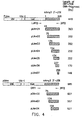
- PCR products were examined by electrophoresis on 6% nondenaturing polyacrylamide gel; and plasmids yielding the desired lengths of products, i.e., containing the desired 5'-deleted ⁇ Amy3 3'UTR, were selected. These plasmids were designated as pLAmD1 through pLAmD7 (Fig. 4). The exact deletion points were determined by DNA sequence analysis. The Luc coding sequence in pLAm, pLAmD2, pLAmD3, and pLAmD5 were replaced with Gus , generating plasmid pGAm, pGAmD2, pGAmD3, and pGAmD5.
- DNA fragments encompassing the regions were first obtained by PCR, using pMTC37 as a template and pairs of oligonucleotides flanking these regions as primers (Table 1).
- Primers 3R1 and 3R2 were used to generate fragment I (i.e., subdomain I); primers 3R3 and 3R4 for fragment II (i.e., subdomain II); and primers 3R5 and 3R6 for fragment III (i.e., subdomain III). These fragments all contained, at both ends, a Sac I site introduced by the PCR primers.
- PCR products were hence digested with Sac I and inserted into the same site between the Luc coding sequence and the Nos 3'UTR in pLN. Fragments I, II, and III were inserted into pLN in obverse orientation to generate pLIN, pLIIN, and pLIIIN, and in reverse orientation to generate pLIRN, pLIIRN, and pLIIIRN.
- the PEG-mediated transfection of rice protoplasts was performed by a method as described by Lyznik et al, ( Biotechniques , 10 :294-300, 1991), with modification. 100 ⁇ l of rice protoplasts were transferred to a 1.5-ml Eppendorf tube and mixed with 5 ⁇ g of supercoiled plasmid DNA. If cotransfection was performed, 4 ⁇ g of test plasmid and 2 ⁇ g of reference plasmid were mixed and added.
- the protoplasts were transferred into a 1.5 ml Eppendorf tube and centrifuged for 5 seconds.
- the protoplasts were resuspended in 0.5 ml of modified KPR medium containing glucose or mannitol, transferred into a well of another 24-well microculture plate, and incubated for various lengths of time.
- Primers for the coding regions of the ⁇ Amy3 , Act1 , Luc , or Gus gene, and for a 3'UTRs of ⁇ Amy3 , Act1 , or Nos gene were designed so that the molecular weight of the RT (reverse transcription)-PCR products for the various endogenous and transgene transcripts were different from each other and could be distinguished by agarose gel electrophoresis. Locations and nucleotide sequences of these primers are shown in Figs. 1 and 4, and listed in Table 1.
- Reverse transcription of the RNA was performed in 20 ⁇ l of the reaction mix, which contained 50 mM Tris-HCl, pH 8.3, 75 mM KCl, and 3mM MgCl 2 , 10 ⁇ g of the RNA, 50 pmole oligo (dT) 18 primer, 5 mM DTT, 0.5 mM each dNTP, 2 units/ ⁇ l RNasin, and 10 units/ ⁇ l Maloney murine leukaemia virus reverse transcriptase (MMLV-RTase).
- the reaction was carried out at room temperature for 10 min, then at 37°C for 1 h, and was terminated at 94°C for 5 min.
- the RT product mix was used as a cDNA stock and could be stored at -70°C for several months.
- PCR was carried out in a volume of 50 ⁇ l containing 2.5 ⁇ l RT product mix prepared above, 10 mM Tris-HCl (pH 8.3), 50 mM KCl, 3 mM MgCl 2 , 0.1 mM each dNTP, 100 pmole each primer, 10% DMSO, and 3 units super Taq DNA polymerase (Promega). Cycling was controlled by a programmable thermal cycler (Hybaid). Denaturation was at 94°C for 1 min; primer annealing at 50°C for 1.5 min; and primer extension at 72°C for 2 min. The reaction was run for 30 cycles before a final 10 min of primer extension at 72°C. The RT-PCR products were fractionated in 2% agarose gel and visualized by ethidium bromide staining.
- Primer extension analysis was performed by a method essentially the same as described by (Sutliff et al., Plant Mol. Biol. , 16 :579-591, 1991), except that 10 ⁇ g of total RNA was used as a template and the primer extension products were analyzed on 1% agarose gel.
- CRT-PCR A method of Measuring Steady-State mRNA Levels of Individual Several Genes Simultaneously
- CRT-PCR was chosen for this purpose, because it can measure individual steady-state mRNA levels of several genes simultaneously.
- the principle of CRT-PCR is illustrated in Fig. 1: At least two sets of gene-specific primers are included in the same RT-PCR reaction to amplify cDNAs from mRNAs of interested genes. Positions of the primers corresponding to individual genes are designed so as to produce DNA fragments of distinct sizes that are diagnostic for each mRNA.
- the relative intensity of the DNA bands obtained after electrophoresis and ethidium bromide staining correlate with the relative amounts of different mRNAs present in the sample, thus allowing simultaneous quantification of transcripts from different genes.
- CRT-PCR The validity of CRT-PCR was demonstrated in a reconstruction experiment.
- various amounts of mRNA purified from rice suspension cells cultured with or without glucose for 2 days were reverse transcribed; and the RT products were PCR-amplified, using 2 pairs of primers specific for the cDNAs of the Act1 and ⁇ Amy3 mRNAs (Fig. 1).
- Two PCR products were produced, one corresponding to the Act1 cDNA (640 bp) and the other to the ⁇ Amy3 cDNA (500 bp).
- the band intensities of both products decreased with reduced mRNA input.
- the band intensity of ⁇ Amy3 DNA was higher than that of Act1 DNA for all RNA samples from glucose-starved cells, and vice versa for all RNA samples from glucose-provided cells.
- a series of constructs (Fig. 1) were prepared. Plasmids pLAm containing Ubi - Luc - ⁇ Amy3 , pLAc containing Ubi-Luc - Act1 , and pLN containing Ubi - Luc - Nos were transfected into rice protoplasts. The protoplasts were then incubated in a glucose-containing or glucose-free medium.
- Glucose instead of sucrose, was used as the carbon source here.
- rice protoplasts contain no cell walls and hence no cell wall-bound invertase, which hydrolyzes sucrose into glucose and fructose before up-take by intact suspension cells (Yu et al., J. Biol. Chem. , 266 :21131-21137, 1991), and that sucrose cannot be transported efficiently into protoplasts. It has been shown that glucose represses ⁇ - amylase gene expression as well as sucrose does (Yu et al., J. Biol. Chem. , 266 :21131-21137, 1991).
- RNA was purified from the protoplasts, and CRT-PCR was performed using multiple sets of primers which simultaneously amplified cDNAs derived from the endogenous Act1 and ⁇ Amy3 mRNAs, and from the foreign chimeric Luc- ⁇ Amy3 , Luc - Act1 , or Luc-Nos mRNAs (Fig. 1).
- a reference gene can also be co-transfected with the test genes, with its expression used as an internal control.
- plasmid pGN containing Ubi - Gus - Nos was co-transfected with pLN or pLAm into rice protoplasts which were subsequently incubated in a medium with or without glucose.
- CRT-PCR was performed using primers that amplified cDNAs derived from the foreign chimeric Gus - Nos , Luc - Nos , or Luc - ⁇ Amy3 mRNAs (Fig. 1).
- the data showed that accumulation of the Gus - Nos mRNA, like that of the Luc - Nos mRNAs, was enhanced by glucose.
- accumulation of the Luc- ⁇ Amy3 mRNA was repressed by glucose. This result further demonstrates that the ⁇ Amy3 3'UTR specifically enhances the accumulation of reporter mRNA in response to glucose starvation.
- Levels of the extension products derived from the endogenous ⁇ Amy3 (1.7 kb) and the chimeric Luc - ⁇ Amy3 (2.1 kb) mRNAs in pLAm-transfected protoplasts were shown to be reduced by glucose.
- levels of the extension products derived from the endogenous Act1 (1.4 kb) and the chimeric Luc - Act1 (2.1 kb) mRNAs in pLAc-transfected protoplasts were enhanced by glucose.
- ⁇ Amy3 3'UTR To identify sequences in the ⁇ Amy3 3'UTR that determine the sugar-dependent instability of mRNA, a series of 5' deletions of the ⁇ Amy3 3'UTR were generated. The truncated ⁇ Amy3 3'UTRs were inserted downstream of the Ubi promoter- Luc coding region (Fig. 4). The resulting constructs were then transfected into rice protoplasts and their expression analyzed by CRT-PCR. CRT-PCR products were analyzed on agarose gel.
- Accumulations of the endogenous Act1 mRNA were shown to be enhanced by glucose, and those of the ⁇ Amy3 mRNA were suppressed by glucose, in either transfected or non-transfected protoplasts. Accumulations of the wild type or mutant Luc - ⁇ Amy3 mRNA in protoplasts transfected with pLAm, pLAmD1, pLAmD2, pLAmD5, and pLAmD6 were suppressed by glucose. In contrast, accumulations of the mutant Luc - ⁇ Amy3 mRNA in protoplasts transfected with pLAmD3, pLAmD4, and pLAmD7 were enhanced by glucose. This result indicates that multiple regions in the ⁇ Amy3 3'UTR repress or de-repress the accumulation of Luc mRNA in a sugar-dependent manner.
- pGN was cotransfected with each of the wild type or mutant plasmids used in the experiments into the rice protoplasts. Accumulation of mRNAs determined by CRT-PCR was as expected.
- the CRT-PCR analysis showed that the Gus - Nos mRNA levels (internal control) were enhanced by glucose as expected, and the accumulation of the Luc -I- Nos or Luc -III- Nos mRNA in protoplasts containing pLIN or PLIIIN was suppressed by glucose. On the contrary, accumulation of the Luc -II- Nos mRNA in protoplasts transfected with pLIIN was enhanced by glucose.
Landscapes
- Life Sciences & Earth Sciences (AREA)
- Health & Medical Sciences (AREA)
- Chemical & Material Sciences (AREA)
- Genetics & Genomics (AREA)
- Organic Chemistry (AREA)
- Zoology (AREA)
- Engineering & Computer Science (AREA)
- Bioinformatics & Cheminformatics (AREA)
- Wood Science & Technology (AREA)
- Molecular Biology (AREA)
- Biotechnology (AREA)
- Microbiology (AREA)
- Biomedical Technology (AREA)
- Medicinal Chemistry (AREA)
- Biochemistry (AREA)
- General Engineering & Computer Science (AREA)
- General Health & Medical Sciences (AREA)
- Botany (AREA)
- Micro-Organisms Or Cultivation Processes Thereof (AREA)
- Breeding Of Plants And Reproduction By Means Of Culturing (AREA)
- Preparation Of Compounds By Using Micro-Organisms (AREA)
Description
- This invention relates to the field of gene expression regulation in plant cells.
- Sugar repression of gene expression is a ubiquitous regulatory mechanism for both prokaryotic and eukaryotic cells to adjust to changes in nutrient availability. In multicellular plants, expression of enzymes involved in carbohydrate metabolism is often feedback-regulated by sugar metabolites (Sheen, J., Photosynth. Res., 39:427-438, 1994). For instance, carbohydrate depletion has been shown to enhance expression of a wide variety of genes involved in photosynthesis, reserve mobilization, and export processes (Koch, Annu. Rev. Plant Physiol. Plant Mol. Biol., 47:509-540, 1996).
- α-amylases are the major amylolytic enzymes for hydrolysis of starch stored in the endosperm during germination of cereal grains. These enzymes are encoded by a group of genes whose expression is repressed by sugars. In the embryos of germinating rice seeds, the transient expression of certain α-amylase genes is thought to be induced by sugar depletion in the embryos following imbibition of the seeds, and suppressed by sugar influx from the endosperm as germination proceeds (Yu et al., Plant Mol. Biol. 30:1277-1289, 1996). Similarly, expression of α-amylase genes in cultured rice suspension cells has also been shown to be suppressed by sugar present in the medium and induced in its absence (Yu et al., J. Biol. Chem., 266:21131-21137, 1991, Gene 122:247-253 1992; Chen et al., Plant J., 6:625-636, 1994). Further studies reveal that the transcription rate of α-amylase genes in rice suspension cells increase in response to sucrose depletion in the culture medium (Sheu et al., Plant J., 5:655-664, 1994). Protein expression systems have been established to make use of the sugar-responsive promoters of these α-Amylase genes (US Patent No. 5,460,952 to Yu et al.).
- Sugar-regulated stability of rice α-amylase mRNAs, on the other hand, has also been investigated. Under transcription-inhibiting conditions, the mRNA half-lives of three α-amylase genes were found to be prolonged by sucrose-starvation (Sheu et al., J. Biol. Chem., 271:26998-27004, 1996). This result suggests that, in addition to enhanced transcription rate, increased mRNA stability may also contribute to the elevation of the steady-state levels of certain α-amylase mRNA species in sucrose-starved cells. It is unclear, however, what mechanism is responsible for the increased degradation of α-amylase mRNAs in cells provided with sucrose as compared to cells deprived of sucrose. It has been postulated that mRNA transcripts are selected for degradation in a sequence-dependent manner (Sachs, Cell, 74:413-421, 1993). Yet it remains largely unknown what sequences in RNA transcripts are responsible for targeting degradation in plants.
- The invention is based on the discovery that the 3' untranslated regions of a rice α-amylase gene can cis-regulate mRNA stability in angiosperm cells in a sugar-responsive manner.
- Accordingly, the invention provides an expression vector comprising:
- a promoter capable of directing expression of a coding sequence in an angiosperm cell, and
- a modulator of mRNA accumulation; wherein the a modulator of mRNA accumulation is a 3' untranslated region of a rice α-amylase gene and wherein, after the coding sequence is inserted into the vector, the 3' untranslated region and the coding sequence are transcribed into a single mRNAs;
-
- In these vectors, the 3'UTR is no longer linked to an α-amylase coding sequence as in its cognate α-amylase gene or a cDNA obtained therefrom. After a coding sequence (e.g., a non-α-amylase coding sequence) is inserted into the vectors, the coding sequence and the 3'UTR are transcribed into a single messenger ribonucleic acid (mRNA). An angiosperm cell is a monocotyledon, such as cereal (e.g., rice, barley, and wheat), or dicotyledon cell.
- The promoter in the expression vectors can be a ubiquitously active one, such as one that is derived from an actin gene, cauliflower mosaic virus 35S ("CaMV35S") RNA or a ubiquitin gene, or an inducible one, such as one that is derived from an α-amylase (e.g., the rice αAmy3, αAmy6, αAmy7, αAmy8, or αAmy10 gene, which are also sugar-responsive, see U.S. Patent No. 5,460,952), invertase, sucrose synthase, patatin, β-amylase, or sporamin gene. Other appropriate transcription regulatory elements such as enhancers can also be included in the vectors.
- If the α-amylase 3'UTR is used to stabilize mRNA in the absence or low concentration of sugars, the sugar-suppressible promoters, such as the photosynthetic gene and α-amylase gene promoters can be used.
- The coding sequence can encode, for example, a polypeptide, or an antisense RNA that interferes with the function of another RNA (e.g., mRNA, transfer RNA, ribosomal RNA, and small nucleolar RNA).
- The 3' untranslated region is typically selected for its ability to cis-regulate RNA stability in a sugar-responsive manner. The 3' untranslated region can be derived from a 3' untranslated region (3'UTR) of a rice α-amylase 3 (αAmy3) gene, i.e., an αAmy3 gene of any rice strain; that is, the 3'UTR of the vectors can be identical to, or a functional variant (e.g., containing one or more silent mutations) of, a rice αAmy3 3'UTR. The 3'UTR can be obtained either by chemical synthesis or recombinant technology. The 3'UTRs are sequences spanning nucleotides 1-124, 184-258 or 124-184 of SEQ ID NO:1. The 3'UTR can be in either correct or reverse orientation in relation to the promoter's direction.
- The expression vectors can further comprise a signal-peptide-encoding sequence (e.g., one that is derived from a rice α-amylase gene) downstream of the promoter, so that the polypeptide products expressed from the expression vectors can be secreted by host cells.
- To facilitate cloning, the expression vectors of the invention may comprise multiple restriction sites downstream of the promoter so that a coding sequence can be conveniently inserted into the vector between the promoter and the rice 3'UTR.
- The invention also provides a method of producing a polypeptide in an angiosperm cell, said method comprising:
- providing an expression construct which comprises (i) a coding sequence for the polypeptide, (ii) a promoter capable of directing expression of the coding sequence in the angiosperm cell, and (iii) a modulator of mRNA accumulation, wherein the mRNA stability regulator is a 3' untranslated region of a rice α-amylase gene, wherein the coding sequence and the unstranslated region, which are not naturally transcribed into a single mRNA, are positioned for transcription into a single mRNA for sugar-responsive mRNA stability;
- transforming an angiosperm host cell with the expression construct; and
- subjecting the transformant host cell to a sugar free environment to promote expression of the polypeptide; characterised in that said α-amylase gene is an αAmy3 gene, and in that said 3' untranslated region comprises a sequence spanning nucleotides 1-124 or 184-258 of SEQ ID NO:1, or a combination thereof.
-
- Another method of producing a polypeptide in an angiosperm cell in accordance with the present invention comprises:
- providing an expression construct which comprises (i) a coding sequence for the polypeptide, (ii) a promoter capable of directing expression of the coding sequence in the angiosperm cell, and (iii) a modulator of mRNA accumulation, wherein the mRNA stability regulator is a 3' untranslated region of a rice α-amylase gene, wherein the coding sequence and the unstranslated region, which are not naturally transcribed into a single mRNA, are positioned for transcription into a single mRNA for sugar-responsive mRNA stability;
- transforming an angiosperm host cell with the construct; and
- subjecting the transformant host cell to a sugar-containing environment to promote expression of the polypeptide; characterised in that said α-amylase gene is an αAmy3 gene, and in that said 3' untranslated region comprises a sequence spanning nucleotides 124-184 of SEQ ID NO:1.
-
- The coding sequence and the untranslated region are not naturally transcribed into a single mRNA, but are so in the construct. Such a construct is also within the scope of the invention.
- In a method of the invention, appropriate angiosperm host cells are first transformed by the expression construct, and the transformed cells (including cells derived therefrom, e.g., through replication, regeneration, or differentiation) are there subjected to a sugar-free, or sugar-containing, environment to promote Expression of the polypeptide. If the 3'UTR contained in the expression construct enhances, mRNA stability when the host cells are placed in a medium or environment containing sugar (at, e.g., 1 mM to 300 mM), then the transformants are subjected to such a medium or environment to promote expression of the polypeptide; such a 3'UTR is a sequence spanning nucleotides, 124-184 of SEQ ID NO:1. On the other hand, if the 3'UTR enhances mRNA stability when the host cells are placed in a sugar-free environment, the transformants can be placed in such an environment to promote the polypeptide's production; examples of such a 3'UTR are sequences spanning nucleotides 1-124 and 184-258 of SEQ ID NO:1.
- A sugar can be sucrose, glucose, fructose, maltose, or any polysaccharide as long as it is metabolizable and provides a carbon source for cells
- A sugar-free (i.e., sugar-starved) environment refers to an environment, e.g., a culture medium, that does not contain any sugar, or an environment whose sugar concentration is so low that it does not support the proliferation or respiration of cells. Occurrence of sugar starvation depends on multiple factors such as sugar concentration, the cell-to-medium volume ratio, and the length of incubation time in a medium.
- Of course, the above transformants can also be regenerated to tissue or even a whole plant (i.e., a transgenic plant) to promote expression of the polypeptide. Seeds of such a transgenic plant may also be germinated to promote expression of the recombinant polypeptide.
- To further promote expression of the polypeptide, the promoter in the expression construct can be sugar-responsive in synergy with the 3'UTR. For instance, if the 3'UTR enhances mRNA stability in the absence of sugar, then a promoter that is activated by sugar starvation (e.g., a promoter derived from a rice αAmy3, αAmy6, αAmy7, αAmy8, and αAmy10 gene) can be employed in the expression construct. By way of example, a coding sequence in association with an αAmy3 promoter and the full length αAmy3 3'UTR is highly expressed in sugar-starved cells.
- To facilitate recovery of the expressed polypeptide, a signal-peptide-encoding sequence can be integrated into the expression construct at an appropriate position, e.g., between the promoter and a coding sequence for the polypeptide. As a result, the polypeptide can be secreted to the culture medium, and thereby conveniently recovered.
- Other features and advantages of the invention will be apparent from the following detailed description, and from the claims.
-
- Fig. 1 is a set of schematic diagrams showing the various plasmid constructs used for rice transformation. Positions of primers (arrowheads; for sequences, see Table 1) for CRT-PCR and expected lengths of PCR products are also shown. All the constructs contain the maize ubiquitin (Ubi) promoter, the Ubi first intron (Ubi-I), the luciferase (Luc) or β-glucuronidase (Gus) coding sequence, and a 3' UTR of αAmy3, Agrobacterium nopaline synthase (Nos), or actin 1 (Act1) gene. Fragments (or subdomains) I, II, and III derived from the various regions of the full-length αAmy3 3'UTR were inserted into pLN between the Luc coding region and the Nos 3'UTR. The nucleotide sequences are numbered from the first nucleotide after the translation stop codon TGA.
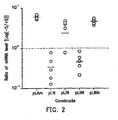
- Fig. 2 is a graph showing that the full-length αAmy3 3'UTR and three fragments thereof mediate sugar-dependent decrease or increase of heterologous mRNA accumulation in transgenic rice suspension cells.
- Fig. 3 is a set of graphs showing that various αAmy3 3' UTR fragments affect mRNA half-life in a sugar-responsive manner. The time on the horizontal axis is shown in hours. The open and filled circles indicate mRNA from cells grown in sugar-plus (+S) and sugar-minus (-S) medium, respectively. The dashed line indicates the time at which 50% of mRNA remained.
- Fig. 4 is a set of schematic diagrams showing the structures of chimeric genes containing various 5' deletions of the full-length αAmy3 3'UTR. The nucleotide sequences are numbered from the first nucleotide after the translation stop codon TGA. Arrowheads indicate the positions of primers used for CRT-PCR. Expected sizes of the gene-specific DNA fragments generated by CRT-PCR are indicated in bp (base pairs).
-
- Described below is the discovery that the full-length 3' untranslated region (SEQ ID NO:1) of a rice α-amylase gene (αAmy3) enhances mRNA stability in the absence of sugar (e.g., sucrose and glucose), and promotes mRNA degradation in the presence of sugar; and that fragments of the full-length αAmy3 3' untranslated region (3'UTR) can independently regulate mRNA accumulation in a sugar-responsive manner.
- The expression vectors of the invention, which contain a 3'UTR of a rice α-amylase gene, can be generated by standard recombinant technology (see, e.g., Sambrook et al., Molecular Cloning, A Laboratory Manual, 2nd Ed., Cold Spring Harbor Press, Cold Spring Harbor, New York, 1989; and Ausubel et al., Current Protocols in Molecular Biology, Greene Publishing and Wiley-Interscience, New York, New York, 1993). For instance, a DNA fragment containing the 3'UTR is first obtained by polymerase chain reaction, using a rice α-amylase cDNA as a template, and then inserted into a plasmid that has already had an appropriate angiosperm promoter (or additionally, a coding sequence downstream of the promoter) in place.
- Plant cells can be transfected with the expression vectors using standard methods, such as electroporation, particle bombardment, microinjection, ultrasonic method, polyethylene glycol-mediated protoplast transformation, poly-L ornithine method, calcium phosphate method, and Agrobacterium-mediated transformation system (see, e.g., U.S. Patent No. 5,460,952, columns 17-18; and references the patent).
- Plant cells transformed by expression constructs (i.e., expression vectors containing a sequence encoding, e.g., a desired polypeptide) can be maintained and expanded in a sugar-free or sugar-containing culture medium to promote expression of the polypeptide. The polypeptide can be subsequently extracted and purified from the cells using standard techniques. Alternatively, the polypeptide can be isolated from the culture medium if the expression constructs contain a signal peptide-encoding sequence so that the polypeptide is secreted into the medium (Chen et al., Plant J., 6:625-638, 1994; Sijmons et al., Bio/Technology, 8:217-221, 1990). One advantage of purifying proteins directly from a culture medium is that the amount of contaminant protein is substantially lower in culture media than in cell extracts.
- Transformed plant cells can also be regenerated to transgenic tissue or a transgenic plant by well known techniques (see, e.g., Datta et al., Bio/Technology, 8:736-740, 1990; Peng et al., Plant Cell Reports, 9:168-172, 1990; Yang et al., Plant Cell Reports, 7:421-425, 1988; U.S. Patent Applications 08/509,962 and 08/639,792). The recombinant polypeptide can then be recovered from the transgenic tissue or plant (or a part of the plant, such as its leaves, sheaths, stems, seeds, and roots, depending on the tissue-specificity of the promoter used). Both photosynthetic leaves and the endosperm of germinating seeds provide high amounts of sugar; thus, recombinant polypeptides can be harvested from these tissues if the polypeptide expression vectors contain 3'UTRs that stabilize mRNAs in a sugar-containing environment.
- Unless otherwise defined, all technical and scientific terms used herein have the same meaning as commonly understood by one of ordinary skill in the art to which this invention belongs. Although methods and materials similar or equivalent to those described herein can be used in the practice or testing of the present invention, exemplary methods and materials are described below.
- In addition, the materials, methods, and examples are illustrative only and not intended to be limiting.
- The following data and protocols are used as examples to illustrate, but not limit, the expression vectors, constructs, and methods of the invention.
- This example concerns the sugar-regulated stability of an αAmy3 mRNA. Studies disclosed in this example demonstrate that the full-length αAmy3 3'UTR and two of its three subdomains, i.e., subdomains I and III, function as destabilizing determinants in mRNA turnover in the presence of sugars.
- The rice variety used for transformation was Oryzae sativa L. cv. Tainan 5. Embryogenic calli were initiated as described by (Chan et al. Plant Mol. Biol., 22:491-506, 1993). except that the medium was replaced with MS medium (Murashige, Physiol. Plant, 15:473-497, 1962). containing 1% agarose (w/v), 3% sucrose, and 2 µg/
ml 2,4-Dichlorophenoxyacetic acid ("2,4-D"; pH 5.8). After four weeks, suspension cultures were initiated by transferring the calli into a liquid MS medium containing 3% sucrose, 2 µg/ml 2,4-D, 0.2 µg/ml kinetin, and 0.1 µg/ml GA3. The suspension culture was shaken on a reciprocal shaker at 120 rpm and incubated at 26°C in the dark. Suspension cells were subcultured weekly prior to bombardment. - In a volume of 70 µl, 1.5 mg of gold particles (Bio-Rad) with an average size of 1 µm in diameter were coated with 2 µg of test plasmid and 1 µg of pTRA151 (a plasmid containing hygromycin resistant gene (Zheng, et al., Plant Physiol., 97:832-835, 1991) by a CaCl2/spermidine precipitation method (Cao et al., Plant Gene Transfer, eds. Lamb, C.J. & Beachy, R.N., Wiley-Liss, New York, pp. 21-33, 1990). Rice suspension cells were bombarded with the coated gold particles as described by Cao et al. (Plant Cell Rep., 11:586-591., 1992) using a helium gas retrofitted BIOLISTIC™ PDS-1000 Particle Delivery System (Bio-Rad). Bombarded cells were transferred to fresh MS solid medium and incubated at 26°C in the dark for 6 days before being transferred to MS solid medium containing 50 µg/ml hygromycin. After 4 weeks, all putative transformed calli were subcultured to MS liquid medium containing 50 µg/ml hygromycin to generate suspension cell culture.
- Transgenic cells were cultured in suspension in sucrose-containing (+S) medium for 96 h and transferred to sucrose-free (-S) medium for 24 h. Actinomycin D (ActD) was then added to the medium to a final concentration of 10 µg/ml. Cells were incubated for another 12 hours (h) and then divided into two halves. One half of the cells were transferred to a +S medium containing ActD, while the other half of cells were transferred to a -S medium containing ActD. Cells were harvested after 0.5 to 9 h, and total cellular RNAs were extracted, electrophoresed on polyacrylamide gel, and transferred to a nylon membrane. Northern blot analysis of the RNAs was performed using radioactive probe that hybridized to the luciferase gene (Luc) sequence. Radioactive signals were quantified using a PhosphoImager. The mRNA level in each lane was normalized to the rRNA level (obtained using an rRNA probe). The logarithm values of mRNA levels were subjected to linear regression analysis and plotted as a function of time.
- Effects of an aAmy3 3'UTR on the accumulation of a heterologous mRNA were investigated in transgenic rice cell lines. Used for transformation were plasmids pLAm and pLN (see Example 2, infra), which contained (i) the full-length αAmy3 3'UTR, and (ii) the Agrobacterium nopaline synthase gene (Nos) 3'UTR, respectively, downstream from the ubiquitin (Ubi) promoter and the Luc coding region. Also used were plasmids pLIN, pLIIN, and pLIIIN (see Example 2, infra), which respectively contained fragments I, II, and III of the full-length αAmy3 3'UTR between the Luc coding region and the Nos 3'UTR. Schematic structures of these plasmids are shown in Fig. 1. Identification of transgenic rice calli was confirmed by Southern analysis of genomic DNA.
- Five independently-transformed cell lines were randomly selected for each plasmid construct, and levels of the Luc mRNA were examined by RNA dot blot analysis using a segment derived from the Luc coding sequence as a probe (Fig. 2). Radioactive signals generated by the hybridized Luc mRNA in each dot were quantified using a PhosphoImager (Molecular Dynamics). The ratio of mRNA levels in the absence (-S) versus presence (+S) of sucrose was determined for each transformed cell line. Logarithm value of each ratio (open circle) was then used to plot the graph. Bold horizontal bars represent the average value for each construct. A ratio higher than log10° (i.e., 1) indicates that the Luc mRNA level was increased by sucrose starvation, whereas a ratio lower than log10° indicates the Luc mRNA level was decreased by sucrose starvation.
- Fig. 2 shows that the Luc mRNA levels in cell lines transformed with pLAm, pLIN, and pLIIIN were increased by sucrose starvation; in contrast, the Luc mRNA levels in cell lines transformed with pLN and pLIIN were decreased by sucrose starvation. In all the cell lines tested, levels of the endogenous αAmy3 mRNA were increased, while levels of the endogenous actin (Act) mRNA were decreased, by sucrose starvation.
- The above results were consistent with those of the transient assays in rice protoplasts (Example 2, infra): The full-length αAmy3 3'UTR and at least two of its different subdomains specifically mediate sugar-dependent decrease of the accumulation of the Luc-Nos mRNA (i.e., mRNA containing the Luc coding sequence and the Nos 3'UTR) whose accumulation otherwise is increased by sugar provision. Of note, in the presence of sucrose, levels of the Luc mRNA in cells transformed with pLAm, pLIN, and pLIIIN were still detectable, while those of the endogenous αAmy3 mRNA were not. This was probably due to a higher transcriptional activity of the Ubi promoter than the αAmy3 promoter in sucrose-provided cells.
- To determine whether the low accumulation of the αAmy3 3'UTR-containing chimeric mRNAs in sucrose-provided cells was due to their rapid turnover, the half-lives of the chimeric mRNAs were measured by shutting off transcription of the pLAm-transformed cells. Half-lives of mRNAs were determined by Northern analysis following transcription inhibition by ActD (Sheu, et al., Plant J., 5:655-664, 1994).
- Levels of the Luc-αAmy3 (i.e., mRNAs containing the Luc coding sequence and an αAmy3 3'UTR) and endogenous αAmy3 mRNAs were low or undetectable in cells provided with sucrose, but increased significantly after cells were sucrose-starved for 24, 36, or 45 h. The Luc-αAmy3 and αAmy3 mRNAs that accumulated after cells had been starved for 24 h and then treated with ActD for 12 h decayed slowly in cells subsequently starved for sucrose, but decayed rapidly in cells subsequently provided with sucrose. In contrast, the levels of actin mRNA were high in cells provided with sucrose, but were low in cells starved for sucrose or provided with ActD.
- The relative half-lives of Luc-αAmy3 and αAmy3 mRNAs were both found to be 70 minute (min) in cells provided with sucrose. The half-lives increased to 300 and 320 min, respectively, when the cells were starved for sucrose. These results demonstrate that the Luc mRNA carrying the full-length αAmy3 3'UTR is more stable in cells starved for sucrose.
- Since insertion of subdomains I or III of the full-length αAmy3 3'UTR between the Luc coding region and the Nos 3'UTR conferred sugar-dependent decrease of mRNA accumulation (Fig. 2), we sought to determine whether the two subdomains confer differential stability to the heterologous mRNA. The turnover of mRNAs in transgenic rice suspension cells was determined by Northern analysis following transcription inhibition by ActD. In the pLN- and pLIIN-transformed cells, the Luc-Nos and Luc-II-Nos (i.e., mRNA containing the Luc coding sequence, the subdomain II of the αAmy3 3'UTR, and the Nos 3'UTR) mRNAs decayed slowly in the presence of sucrose, but decayed rapidly in the absence of sucrose. In contrast, in the pLIN- and pLIIIN-transformed cells, the Luc-I-Nos, Luc-III-Nos mRNAs as well as the endogenous αAmy3 mRNA decayed rapidly in the presence of sucrose, but decayed slowly in the absence of sucrose. These results demonstrate that subdomains I and III, but not subdomain II, increase the stability of the Luc-Nos mRNA in response to sucrose starvation.
- Half-lives of the above Luc mRNAs were determined and shown in Fig. 3. In the absence of sucrose, the half-life of the Luc-Nos mRNA was 55 min, which was similar to that of the Luc-I-Nos (60 min) and Luc-II-Nos (55 min) mRNA but 3.4-fold less than that of the Luc-III-Nos (185 min). In the presence of sucrose, the half-life of Luc-Nos mRNA was 200 min, which was 6.7-fold of the Luc-I-Nos mRNA (30 min), 2-fold of the Luc-II-Nos mRNA (100 min), and 2.5-fold of the Luc-III-Nos mRNA (80 min). These results suggest that in the absence of sucrose, fragment III delays the decay of the Luc-Nos mRNA. However, in the presence of sucrose, all three fragments promote the decay of the Luc-Nos mRNA.
- In this example, the effects of various αAmy3 3' UTRs (i.e., various regions of the full-length αAmy3 3'UTR) on mRNA accumulation in rice protoplasts were examined with a highly sensitive method termed co-amplification reverse transcriptase-polymerase chain reaction (CRT-PCR). Unlike Northern or dot blot analysis, CRT-PCR allows simultaneous detecting and/or quantitation of multiple RNA transcript species. In this example, by "the αAmy3 3'UTR" is meant that the full length αAmy3 3'UTR.
- Suspension cell culture of rice (Oryzae sativa cv. Tainan 5) were propagated as described previously (Yu et al., J. Biol. Chem. 266:21131-21137, 1991). Protoplasts were isolated from rice suspension cells according to the methods described by Lee et al. (1989). For transfection, protoplast concentration was adjusted to 1 x 10⁷ protoplasts/ml in KPR medium (Kao and Michayluk, 1975).
- Plasmid pαAmy3 was constructed using the pBluescript-KS(+) vector (Stratagene) and contains a 1.7-kb insert derived from a rice αAmy3 cDNA (Sheu et al., J. Biol. Chem., 271:26998-27004, 1996). Plasmid pcRAc1.3 was constructed using the pBluescriptII-KS vector (McElroy et al., Plant Mol. Biol., 14:163-171, 1990) and contains a 1.4-kb insert derived from a rice actin cDNA (Act1). These two plasmids were used as templates for PCR amplification of 3'UTRs.
- All of the plasmids contain a maize ubiquitin gene (Ubi) promoter, a luciferase (Luc) or β-glucuronidase (Gus) coding sequence linked to the Ubi promoter, and a 3'UTR of the αAmy3, Act1, or Nos gene. To generate these plasmids, the PCR amplified 3'UTRs of αAmy3 and Act1 containing XbaI and SacII sites at two ends were first subcloned into pBluescriptII-KS(+), resulting in plasmids pMTC37 and pMTC39, respectively. The HindIII-BamHI DNA fragment containing the Ubi promoter,
exon 1,intron 1, and part ofexon 2 from pAHC18 (Bruce et al., Proc. Natl. Acad. Sci., 86:9692-9696, 1989) was then inserted upstream of the αAmy3 3'UTR in pMTC 37 to generate plasmid pMTC24. To generate pMTC241, pMTC24 was linearized with KpnI and HIndIII, bluntended, and re-ligated to remove the multiple cloning sites. The Luc coding sequence was then excised from pAHC18 by BamHI and inserted into the same site between the Ubi promoter and the αAmy3 3'UTR in pMTC241 to generate plasmid pLAm. The Nos 3'UTR was excised from pAHC18 by BamHI and SacI. Then the plasmids pLAc and pLN were similarly constructed as was pLAm, except that they contained the Act1 and Nos 3'UTRs downstream of the Luc gene, respectively. - To construct the plasmids containing serial deletions from the 5' end of the full-length αAmy3 3'UTR, pLAm was linearized at the KpnI and SpeI sites located between the Luc coding sequence and the αAmy3 3'UTR, and then subjected to Exonuclease III (Erase-a-Base kit, Promega) digestion at 15°C for 2 min. Samples were taken at 30-second intervals. The resulting plasmid DNAs were amplified by PCR, using LuRT2 and 3RT2 (Table 1) as primers. PCR products were examined by electrophoresis on 6% nondenaturing polyacrylamide gel; and plasmids yielding the desired lengths of products, i.e., containing the desired 5'-deleted αAmy3 3'UTR, were selected. These plasmids were designated as pLAmD1 through pLAmD7 (Fig. 4). The exact deletion points were determined by DNA sequence analysis. The Luc coding sequence in pLAm, pLAmD2, pLAmD3, and pLAmD5 were replaced with Gus, generating plasmid pGAm, pGAmD2, pGAmD3, and pGAmD5.

- To construct plasmids containing other αAmy3 3'UTRs, DNA fragments encompassing the regions were first obtained by PCR, using pMTC37 as a template and pairs of oligonucleotides flanking these regions as primers (Table 1). Primers 3R1 and 3R2 were used to generate fragment I (i.e., subdomain I); primers 3R3 and 3R4 for fragment II (i.e., subdomain II); and primers 3R5 and 3R6 for fragment III (i.e., subdomain III). These fragments all contained, at both ends, a SacI site introduced by the PCR primers. The PCR products were hence digested with SacI and inserted into the same site between the Luc coding sequence and the Nos 3'UTR in pLN. Fragments I, II, and III were inserted into pLN in obverse orientation to generate pLIN, pLIIN, and pLIIIN, and in reverse orientation to generate pLIRN, pLIIRN, and pLIIIRN.
- The PEG-mediated transfection of rice protoplasts was performed by a method as described by Lyznik et al, (Biotechniques, 10:294-300, 1991), with modification. 100 µl of rice protoplasts were transferred to a 1.5-ml Eppendorf tube and mixed with 5 µg of supercoiled plasmid DNA. If cotransfection was performed, 4 µg of test plasmid and 2 µg of reference plasmid were mixed and added. Subsequently, 10 µg of salmon sperm DNA, and 100 µl of F-medium (140 mM NaCl, 5 mM KCl, 0.75 mM Na2HPO4, 5 mM glucose, and 125 mM CaCl2·2H2O, pH 7.0) containing 40% (w/v) PEG (mol. wt. 8000, Sigma) were also added to the plasmid/cell mix. After incubation at room temperature for 20 min, 0.2 ml of DNA/cell mix was added into a well of a 24-well microculture plate. The well contained 2 ml of solidified 0.2% low melting temperature agarose (Gibco-BRL) in modified KPR medium. After 18 h of incubation, the protoplasts were transferred into a 1.5 ml Eppendorf tube and centrifuged for 5 seconds. The protoplasts were resuspended in 0.5 ml of modified KPR medium containing glucose or mannitol, transferred into a well of another 24-well microculture plate, and incubated for various lengths of time.
- Primers for the coding regions of the αAmy3, Act1, Luc, or Gus gene, and for a 3'UTRs of αAmy3, Act1, or Nos gene were designed so that the molecular weight of the RT (reverse transcription)-PCR products for the various endogenous and transgene transcripts were different from each other and could be distinguished by agarose gel electrophoresis. Locations and nucleotide sequences of these primers are shown in Figs. 1 and 4, and listed in Table 1.
- Total RNA was extracted from protoplasts by the method of Verwoerd et al. (1989). Twenty µg of total RNA was incubated in a volume of 20 µl with 5 µM DTT, 2 units/µl RNasin (Promega), and 1 unit of RNase-free DNase I (Promega). After 15 min of incubation at 37°C, the RNA was incubated at 80°C for 3 min and placed on ice. Reverse transcription of the RNA was performed in 20 µl of the reaction mix, which contained 50 mM Tris-HCl, pH 8.3, 75 mM KCl, and 3mM MgCl2, 10 µg of the RNA, 50 pmole oligo (dT)18 primer, 5 mM DTT, 0.5 mM each dNTP, 2 units/µl RNasin, and 10 units/µl Maloney murine leukaemia virus reverse transcriptase (MMLV-RTase). The reaction was carried out at room temperature for 10 min, then at 37°C for 1 h, and was terminated at 94°C for 5 min. The RT product mix was used as a cDNA stock and could be stored at -70°C for several months.
- PCR was carried out in a volume of 50 µl containing 2.5 µl RT product mix prepared above, 10 mM Tris-HCl (pH 8.3), 50 mM KCl, 3 mM MgCl2, 0.1 mM each dNTP, 100 pmole each primer, 10% DMSO, and 3 units super Taq DNA polymerase (Promega). Cycling was controlled by a programmable thermal cycler (Hybaid). Denaturation was at 94°C for 1 min; primer annealing at 50°C for 1.5 min; and primer extension at 72°C for 2 min. The reaction was run for 30 cycles before a final 10 min of primer extension at 72°C. The RT-PCR products were fractionated in 2% agarose gel and visualized by ethidium bromide staining.
- Primer extension analysis was performed by a method essentially the same as described by (Sutliff et al., Plant Mol. Biol., 16:579-591, 1991), except that 10 µg of total RNA was used as a template and the primer extension products were analyzed on 1% agarose gel.
- To define cis-acting sequences in the α-amylase mRNA that control gene expression in vivo, we sought to develop a method for measuring mRNA levels in rice protoplasts. CRT-PCR was chosen for this purpose, because it can measure individual steady-state mRNA levels of several genes simultaneously. The principle of CRT-PCR is illustrated in Fig. 1: At least two sets of gene-specific primers are included in the same RT-PCR reaction to amplify cDNAs from mRNAs of interested genes. Positions of the primers corresponding to individual genes are designed so as to produce DNA fragments of distinct sizes that are diagnostic for each mRNA. The relative intensity of the DNA bands obtained after electrophoresis and ethidium bromide staining correlate with the relative amounts of different mRNAs present in the sample, thus allowing simultaneous quantification of transcripts from different genes.
- The validity of CRT-PCR was demonstrated in a reconstruction experiment. In this experiment, various amounts of mRNA purified from rice suspension cells cultured with or without glucose for 2 days were reverse transcribed; and the RT products were PCR-amplified, using 2 pairs of primers specific for the cDNAs of the Act1 and αAmy3 mRNAs (Fig. 1). Two PCR products were produced, one corresponding to the Act1 cDNA (640 bp) and the other to the αAmy3 cDNA (500 bp). As shown in ethidium bromide-stained agarose gel, the band intensities of both products decreased with reduced mRNA input. The band intensity of αAmy3 DNA was higher than that of Act1 DNA for all RNA samples from glucose-starved cells, and vice versa for all RNA samples from glucose-provided cells.
- These results are consistent with the previous blot analysis of RNA from intact suspension cells (Sheu et al., J. Biol. Chem., 271:26998-270041996). When the amounts of PCR products as shown in ethidium bromide-stained agarose gel were quantified and plotted against the amounts of input RNA used for CRT-PCR, a linear relationship was observed between the levels of the CRT-PCR products and the concentrations of input mRNAs. Thus, the relative amount of mRNA can be estimated from its CRT-PCR product.
- To determine whether the 3'UTR of αAmy3 functions as a determinant of mRNA stability in response to sugar availability, a series of constructs (Fig. 1) were prepared. Plasmids pLAm containing Ubi-Luc-αAmy3, pLAc containing Ubi-Luc-Act1, and pLN containing Ubi-Luc-Nos were transfected into rice protoplasts. The protoplasts were then incubated in a glucose-containing or glucose-free medium.
- Glucose, instead of sucrose, was used as the carbon source here. The reason was that rice protoplasts contain no cell walls and hence no cell wall-bound invertase, which hydrolyzes sucrose into glucose and fructose before up-take by intact suspension cells (Yu et al., J. Biol. Chem., 266:21131-21137, 1991), and that sucrose cannot be transported efficiently into protoplasts. It has been shown that glucose represses α-amylase gene expression as well as sucrose does (Yu et al., J. Biol. Chem., 266:21131-21137, 1991).
- Total RNA was purified from the protoplasts, and CRT-PCR was performed using multiple sets of primers which simultaneously amplified cDNAs derived from the endogenous Act1 and αAmy3 mRNAs, and from the foreign chimeric Luc-αAmy3, Luc-Act1, or Luc-Nos mRNAs (Fig. 1).
- The data showed that, in both transfected and non-transfected protoplasts, accumulation of the endogenous Act1 mRNA was enhanced by glucose, and that of the αAmy3 mRNA was suppressed by glucose. This result indicates that expression of the endogenous Act1 and αAmy3 is subject to opposite regulation by glucose in protoplasts as well as in intact suspension cells (Sheu et al., J. Biol. Chem 271:26998-27004, 1996). Accumulation of the Luc-αAmy3 mRNA in pLAm-transfected protoplasts was also suppressed by glucose. In contrast, accumulation of the Luc-Act1 mRNA in pLAc-transfected protoplasts, and accumulation of the Luc-Nos mRNA in pLN-transfected protoplasts, were both enhanced by glucose. These results demonstrate that the αAmy3 3'UTR enhances, while the Act1 and Nos 3'UTRs reduce, accumulation of the Luc mRNA in glucose-starved cells.
- In the above experiments, the expression of endogenous Act1 and αAmy3 was used as an internal control for indication of normal physiology in response to availability of glucose.
- A reference gene can also be co-transfected with the test genes, with its expression used as an internal control. For instance, plasmid pGN containing Ubi-Gus-Nos was co-transfected with pLN or pLAm into rice protoplasts which were subsequently incubated in a medium with or without glucose. CRT-PCR was performed using primers that amplified cDNAs derived from the foreign chimeric Gus-Nos, Luc-Nos, or Luc-αAmy3 mRNAs (Fig. 1). The data showed that accumulation of the Gus-Nos mRNA, like that of the Luc-Nos mRNAs, was enhanced by glucose. In contrast, accumulation of the Luc-αAmy3 mRNA was repressed by glucose. This result further demonstrates that the αAmy3 3'UTR specifically enhances the accumulation of reporter mRNA in response to glucose starvation.
- The effect of the αAmy3 3'UTR on mRNA accumulation was confirmed with another approach - primer extension analysis. Plasmids pLAm and pLAc were transfected into rice protoplasts which were then incubated in a medium with or without glucose. Total RNA was purified from the protoplasts and used as templates for primer extension analysis using primer 3RT2 or A30 (Table 1) that was also used in CRT-PCR analyses (Fig. 1). Levels of the extension products derived from the endogenous αAmy3 (1.7 kb) and the chimeric Luc-αAmy3 (2.1 kb) mRNAs in pLAm-transfected protoplasts were shown to be reduced by glucose. In contrast, levels of the extension products derived from the endogenous Act1 (1.4 kb) and the chimeric Luc-Act1 (2.1 kb) mRNAs in pLAc-transfected protoplasts were enhanced by glucose.
- This result was consistent with that obtained with CRT-PCR, confirming that the αAmy3 3'UTR plays a role in the sugar-dependent repression of mRNA accumulation.
- To analyze the kinetics of accumulation of a reporter mRNA carrying the αAmy3 3'UTR, rice protoplasts were transfected with pLAm and then incubated for various lengths of time in a medium with or without glucose. CRT-PCR analysis showed that, within 2 days, levels of Act1 mRNA remained high in the presence of glucose, but decreased with time in the absence of glucose. In contrast, levels of both the endogenous αAmy3 and chimeric Luc-αAmy3 mRNAs were initially low in the presence of glucose, but increased significantly within 12 hr following glucose depletion. At
day 2, levels of Act1 and αAmy3 mRNAs in transfected protoplasts in the presence or absence of glucose, respectively, were similar to those in non-transfected protoplasts. This result suggests that the sugar-dependent expression pattern of the foreign chimeric gene is similar to that of the endogenous gene. - Similar experiments were performed to define more precisely the time required for induction of Luc-αAmy3 mRNA accumulation by glucose depletion. Levels of both endogenous αAmy3 and chimeric Luc-αAmy3 mRNAs were found to increase significantly within 2 h after depletion of glucose, confirming that accumulation of the Luc mRNA carrying the αAmy3 3'UTR has the same kinetics as that of the endogenous αAmy3 mRNA.
- To identify sequences in the αAmy3 3'UTR that determine the sugar-dependent instability of mRNA, a series of 5' deletions of the αAmy3 3'UTR were generated. The truncated αAmy3 3'UTRs were inserted downstream of the Ubi promoter-Luc coding region (Fig. 4). The resulting constructs were then transfected into rice protoplasts and their expression analyzed by CRT-PCR. CRT-PCR products were analyzed on agarose gel.
- Accumulations of the endogenous Act1 mRNA were shown to be enhanced by glucose, and those of the αAmy3 mRNA were suppressed by glucose, in either transfected or non-transfected protoplasts. Accumulations of the wild type or mutant Luc-αAmy3 mRNA in protoplasts transfected with pLAm, pLAmD1, pLAmD2, pLAmD5, and pLAmD6 were suppressed by glucose. In contrast, accumulations of the mutant Luc-αAmy3 mRNA in protoplasts transfected with pLAmD3, pLAmD4, and pLAmD7 were enhanced by glucose. This result indicates that multiple regions in the αAmy3 3'UTR repress or de-repress the accumulation of Luc mRNA in a sugar-dependent manner.
- To use a reference gene as an internal control, pGN was cotransfected with each of the wild type or mutant plasmids used in the experiments into the rice protoplasts. Accumulation of mRNAs determined by CRT-PCR was as expected.
- To test whether the effect of deletion on mRNA accumulation changed with different coding sequences, three DNA fragments containing the deleted αAmy3 3'UTRs were chosen and fused downstream of the Ubi promoter-Gus coding region (Fig. 4). The resulting constructs were then cotransfected with pLN into rice protoplasts and their expression analyzed by CRT-PCR. Levels of the Luc-Nos mRNA were shown to be higher in the presence of glucose than in the absence of glucose. This result was consistent with the results in Part (2). Accumulations of the wild type or mutant Gus-αAmy3 mRNA in protoplasts transfected with pGAm, pGAmD2, and pGAmD5 were suppressed by glucose. In contrast, accumulation of the mutant Gus-αAmy3 mRNA in protoplasts transfected with pGAmD3 was enhanced by glucose. These results demonstrate that the sugar-dependent repression or derepression of mRNA accumulation controlled by multiple sequences in the αAmy3 3'UTR is independent of the connected coding sequences.
- As shown by the above deletional analysis, in the absence of glucose, the sequences in the αAmy3
3'UTR spanning nucleotides 1 to 124 and 184 to 258 were involved in enhancing mRNA accumulation, whereas thesequence spanning nucleotides 124 to 184 were involved in suppressing mRNA accumulation. - To investigate whether these regions by themselves can play the same roles,DNA fragments containing the αAmy3 3'UTR from
sequences 3 to 135 (fragment I), 119 to 199 (fragment II), and 182 to 276 (fragment III) were amplified by PCR. These fragments were inserted between the Ubi promoter-Luc coding region and the Nos 3'UTR (Fig. 1) to generate pLIN, pLIIN, and pLIIIN, respectively (see also Example 1, supra). The resulting constructs were then cotransfected with pGN into rice protoplasts and their expression analyzed by CRT-PCR. - The CRT-PCR analysis showed that the Gus-Nos mRNA levels (internal control) were enhanced by glucose as expected, and the accumulation of the Luc-I-Nos or Luc-III-Nos mRNA in protoplasts containing pLIN or PLIIIN was suppressed by glucose. On the contrary, accumulation of the Luc-II-Nos mRNA in protoplasts transfected with pLIIN was enhanced by glucose.
- Thus, the above analyses demonstrate that at least two regions (or subdomains) in the αAmy3 3'UTR could confer a sugar-dependent repression of accumulation of the Luc-Nos mRNA whose accumulation otherwise was enhanced by sugar. These results were consistent with those obtained by RNA dot blot analysis (see Example 1, supra, e.g., Fig. 21).
-
- (1) GENERAL INFORMATION
- (i) APPLICANT: Yu, Su-May Chan, Ming-Tsair
- (ii) TITLE OF THE INVENTION: 3' UNTRANSLATED REGIONS OF ALPHA-AMYLASE GENES
- (iii) NUMBER OF SEQUENCES: 17
- (iv) CORRESPONDENCE ADDRESS:
- (A) ADDRESSEE: Fish & Richardson, P.C.
- (B) STREET: 225 Franklin Street
- (C) CITY: Boston
- (D) STATE: MA
- (E) COUNTRY: US
- (F) ZIP: 02110-2804
- (v) COMPUTER READABLE FORM:
- (A) MEDIUM TYPE: Diskette
- (B) COMPUTER: IBM Compatible
- (C) OPERATING SYSTEM: Windows95
- (D) SOFTWARE: FastSEQ for Windows Version 2.0
- (vi) CURRENT APPLICATION DATA:
- (A) APPLICATION NUMBER:
- (B) FILING DATE: 16-OCT-1997
- (C) CLASSIFICATION:
- (vii) PRIOR APPLICATION DATA:
- (A) APPLICATION NUMBER:
- (B) FILING DATE:
- (viii) ATTORNEY/AGENT INFORMATION:
- (A) NAME: Tsao, Y. Rocky
- (B) REGISTRATION NUMBER: 34,053
- (C) REFERENCE/DOCKET NUMBER: 08919/002001
- (ix) TELECOMMUNICATION INFORMATION:
- (A) TELEPHONE: 617-542-5070
- (B) TELEFAX: 617-542-8906
- (C) TELEX: 200154
- (2) INFORMATION FOR SEQ ID NO:1:
- (i) SEQUENCE CHARACTERISTICS:
- (A) LENGTH: 320 base pairs
- (B) TYPE: nucleic acid
- (C) STRANDEDNESS: single
- (D) TOPOLOGY: linear
- (xi) SEQUENCE DESCRIPTION: SEQ ID NO:1:

- (2) INFORMATION FOR SEQ ID NO:2:
- (i) SEQUENCE CHARACTERISTICS:
- (A) LENGTH: 27 base pairs
- (B) TYPE: nucleic acid
- (C) STRANDEDNESS: single
- (D) TOPOLOGY: linear
- (xi) SEQUENCE DESCRIPTION: SEQ ID NO:2:

- (2) INFORMATION FOR SEQ ID NO:3:
- (i) SEQUENCE CHARACTERISTICS:
- (A) LENGTH: 23 base pairs
- (B) TYPE: nucleic acid
- (C) STRANDEDNESS: single
- (D) TOPOLOGY: linear
- (xi) SEQUENCE DESCRIPTION: SEQ ID NO:3:

- (2) INFORMATION FOR SEQ ID NO:4:
- (i) SEQUENCE CHARACTERISTICS:
- (A) LENGTH: 16 base pairs
- (B) TYPE: nucleic acid
- (C) STRANDEDNESS: single
- (D) TOPOLOGY: linear
- (xi) SEQUENCE DESCRIPTION: SEQ ID NO:4:

- (2) INFORHATION FOR SEQ ID NO:5:
- (i) SEQUENCE CHARACTERISTICS:
- (A) LENGTH: 24 base pairs
- (B) TYPE: nucleic acid
- (C) STRANDEDNESS: single
- (D) TOPOLOGY: linear
- (xi) SEQUENCE DESCRIPTION: SEQ ID NO:5:

- (2) INFORMATION FOR SEQ ID NO:6:
- (i) SEQUENCE CHARACTERISTICS:
- (A) LENGTH: 23 base pairs
- (B) TYPE: nucleic acid
- (C) STRANDEDNESS: single
- (D) TOPOLOGY: linear
- (xi) SEQUENCE DESCRIPTION: SEQ ID NO:6:

- (2) INFORMATION FOR SEQ ID NO:7:
- (i) SEQUENCE CHARACTERISTICS:
- (A) LENGTH: 20 base pairs
- (B) TYPE: nucleic acid
- (C) STRANDEDNESS: single
- (D) TOPOLOGY: linear
- (xi) SEQUENCE DESCRIPTION: SEQ ID NO:7:

- (2) INFORMATION FOR SEQ ID NO:8:
- (i) SEQUENCE CHARACTERISTICS:
- (A) LENGTH: 20 base pairs
- (B) TYPE: nucleic acid
- (C) STRANDEDNESS: single
- (D) TOPOLOGY: linear
- (xi) SEQUENCE DESCRIPTION: SEQ ID NO:8:

- (2) INFORMATION FOR SEQ ID NO:9:
- (i) SEQUENCE CHARACTERISTICS:
- (A) LENGTH: 20 base pairs
- (B) TYPE: nucleic acid
- (C) STRANDEDNESS: single
- (D) TOPOLOGY: linear
- (xi) SEQUENCE DESCRIPTION: SEQ ID NO:9:

- (2) INFORMATION FOR SEQ ID NO:10:
- (i) SEQUENCE CHARACTERISTICS:
- (A) LENGTH: 20 base pairs
- (B) TYPE: nucleic acid
- (C) STRANDEDNESS: single
- (D) TOPOLOGY: linear
- (xi) SEQUENCE DESCRIPTION: SEQ ID NO:10:

- (2) INFORMATION FOR SEQ ID NO:11:
- (i) SEQUENCE CHARACTERISTICS:
- (A) LENGTH: 20 base pairs
- (B) TYPE: nucleic acid
- (C) STRANDEDNESS: single
- (D) TOPOLOGY: linear
- (xi) SEQUENCE DESCRIPTION: SEQ ID NO:11:

- (2) INFORMATION FOR SEQ ID NO:12:
- (i) SEQUENCE CHARACTERISTICS:
- (A) LENGTH: 22 base pairs
- (B) TYPE: nucleic acid
- (C) STRANDEDNESS: single
- (D) TOPOLOGY: linear
- (xi) SEQUENCE DESCRIPTION: SEQ ID NO:12:

- (2) INFORMATION FOR SEQ ID NO:13:
- (i) SEQUENCE CHARACTERISTICS:
- (A) LENGTH: 22 base pairs
- (B) TYPE: nucleic acid
- (C) STRANDEDNESS: single
- (D) TOPOLOGY: linear
- (xi) SEQUENCE DESCRIPTION: SEQ ID NO:13:

- (2) INFORMATION FOR SEQ ID NO:14:
- (i) SEQUENCE CHARACTERISTICS:
- (A) LENGTH: 22 base pairs
- (B) TYPE: nucleic acid
- (C) STRANDEDNESS: single
- (D) TOPOLOGY: linear
- (xi) SEQUENCE DESCRIPTION: SEQ ID NO:14:

- (2) INFORMATION FOR SEQ ID NO:15:
- (i) SEQUENCE CHARACTERISTICS:
- (A) LENGTH: 22 base pairs
- (B) TYPE: nucleic acid
- (C) STRANDEDNESS: single
- (D) TOPOLOGY: linear
- (xi) SEQUENCE DESCRIPTION: SEQ ID NO:15:

- (2) INFORMATION FOR SEQ ID NO:16:
- (i) SEQUENCE CHARACTERISTICS:
- (A) LENGTH: 21 base pairs
- (B) TYPE: nucleic acid
- (C) STRANDEDNESS: single
- (D) TOPOLOGY: linear
- (xi) SEQUENCE DESCRIPTION: SEQ ID NO:16:

- (2) INFORMATION FOR SEQ ID NO:17:
- (i) SEQUENCE CHARACTERISTICS:
- (A) LENGTH: 22 base pairs
- (B) TYPE: nucleic acid
- (C) STPANDEDNESS: single
- (D) TOPOLOGY: linear
- (ii) MOLECULE TYPE: cDNA
- (xi) SEQUENCE DESCRIPTION: SEQ ID NO:17:

-
characterised in that said α-amylase gene is an αAmy3 gene, and in that said 3' untranslated region comprises a sequence spanning nucleotides 1-124, 184-258 or 124-184 of SEQ ID NO: 1, or a combination thereof.
Claims (12)
- An expression vector comprising:wherein the a modulator of mRNA accumulation is a 3' untranslated region of a rice α-amylase gene and wherein, after the coding sequence is inserted into the vector, the 3' untranslated region and the coding sequence are transcribed into a single mRNA characterised in that said α-amylase gene is an αAmy3 gene, and in that said 3' untranslated region comprises a sequence spanning nucleotides 1-124, 184-258 or 124-184 of SEQ ID NO: 1, or a combination thereof.a promoter capable of directing expression of a coding sequence in an angiosperm cell, anda modulator of mRNA accumulation;
- The vector of claim 1, further comprising a signal sequence encoding a signal peptide, wherein said signal sequence is situated downstream of said promoter.
- The vector of claim 2, wherein said signal sequence is derived from an α-amylase gene.
- The vector of claim 3, wherein said signal sequence is derived from a rice αAmy8 gene.
- A method of producing a polypeptide in an angiosperm cell, said method comprising:characterised in that said α-amylase gene is an αAmy3 gene, and in that said 3' untranslated region comprises a sequence spanning nucleotides 1-124 or 184-258 of SEQ ID NO:1, or a combination thereof.providing an expression construct which comprises (i) a coding sequence for the polypeptide, (ii) a promoter capable of directing expression of the coding sequence in the angiosperm cell, and (iii) a modulator of mRNA accumulation, wherein the mRNA stability regulator is a 3' untranslated region of a rice α-amylase gene, wherein the coding sequence and the unstranslated region, which are not naturally transcribed into a single mRNA, are positioned for transcription into a single mRNA for sugar-responsive mRNA stability;transforming an angiosperm host cell with the expression construct; andsubjecting the transformant host cell to a sugar free environment to promote expression of the polypeptide;
- The method of claim 5, wherein the expression construct further comprises, between the promoter and the coding sequence, a signal sequence encoding a signal peptide.
- The method of claim 6, wherein the signal sequence is derived from a rice αAmy8 gene.
- The method of claim 5, wherein the modulator of mRNA accumulation further comprises a sequence spanning nucleotides 124-184 of SEQ ID NO:1.
- A method of producing a polypeptide in an angiosperm cell, said method comprising:characterised in that said α-amylase gene is an αAmy3 gene, and in that said 3' untranslated region comprises a sequence spanning nucleotides 124-184 of SEQ ID NO:1.providing an expression construct which comprises (i) a coding sequence for the polypeptide, (ii) a promoter capable of directing expression of the coding sequence in the angiosperm cell, and (iii) a modulator of mRNA accumulation, wherein the mRNA stability regulator is a 3' untranslated region of a rice α-amylase gene, wherein the coding sequence and the unstranslated region, which are not naturally transcribed into a single mRNA, are positioned for transcription into a single mRNA for sugar-responsive mRNA stability;transforming an angiosperm host cell with the construct; andsubjecting the transformant host cell to a sugar-containing environment to promote expression of the polypeptide;
- The method of claim 9, wherein the expression construct further comprises, between the promoter and the coding sequence, a signal sequence encoding a signal peptide.
- The method of claim 10, wherein the signal sequence is derived from a rice αAmy8 gene.
- The method of claim 9, wherein the modulator of mRNA accumulation further comprises a sequence spanning nucleotides 1-124 or 184-258 of SEQ ID NO:1, or a combination thereof.
Applications Claiming Priority (2)
| Application Number | Priority Date | Filing Date | Title |
|---|---|---|---|
| US951718 | 1997-10-16 | ||
| US08/951,718 US5969127A (en) | 1997-10-16 | 1997-10-16 | 3' untranslated regions of α-amylase genes |
Publications (3)
| Publication Number | Publication Date |
|---|---|
| EP0916734A2 EP0916734A2 (en) | 1999-05-19 |
| EP0916734A3 EP0916734A3 (en) | 2000-12-27 |
| EP0916734B1 true EP0916734B1 (en) | 2005-04-20 |
Family
ID=25492059
Family Applications (1)
| Application Number | Title | Priority Date | Filing Date |
|---|---|---|---|
| EP98306747A Expired - Lifetime EP0916734B1 (en) | 1997-10-16 | 1998-08-24 | 3'untranslated regions of alpha-amylase genes |
Country Status (4)
| Country | Link |
|---|---|
| US (1) | US5969127A (en) |
| EP (1) | EP0916734B1 (en) |
| DE (1) | DE69829824T2 (en) |
| TW (1) | TW538126B (en) |
Family Cites Families (1)
| Publication number | Priority date | Publication date | Assignee | Title |
|---|---|---|---|---|
| US5460952A (en) * | 1992-11-04 | 1995-10-24 | National Science Counsil Of R.O.C. | Gene expression system comprising the promoter region of the α-amylase genes |
-
1997
- 1997-10-16 US US08/951,718 patent/US5969127A/en not_active Expired - Fee Related
-
1998
- 1998-08-24 DE DE69829824T patent/DE69829824T2/en not_active Expired - Lifetime
- 1998-08-24 EP EP98306747A patent/EP0916734B1/en not_active Expired - Lifetime
- 1998-10-13 TW TW087116990A patent/TW538126B/en not_active IP Right Cessation
Also Published As
| Publication number | Publication date |
|---|---|
| TW538126B (en) | 2003-06-21 |
| DE69829824T2 (en) | 2006-01-12 |
| US5969127A (en) | 1999-10-19 |
| EP0916734A3 (en) | 2000-12-27 |
| EP0916734A2 (en) | 1999-05-19 |
| DE69829824D1 (en) | 2005-05-25 |
Similar Documents
| Publication | Publication Date | Title |
|---|---|---|
| US5994628A (en) | Process for protein production in plants | |
| US5712112A (en) | Gene expression system comprising the promoter region of the alpha-amylase genes | |
| US6288302B1 (en) | Application of α-amylase gene promoter and signal sequence in the production of recombinant proteins in transgenic plants and transgenic plant seeds | |
| EP0781849B1 (en) | Method employing tissue specific promoter | |
| Karrer et al. | Differential expression of α-amylase genes in germinating rice and barley seeds | |
| US5460952A (en) | Gene expression system comprising the promoter region of the α-amylase genes | |
| Meyer et al. | Horizontal gene transfer: regulated expression of a tobacco homologue of the Agrobacterium rhizogenes rolC gene | |
| Mandel et al. | Definition of constitutive gene expression in plants: the translation initiation factor 4A gene as a model | |
| Li et al. | Characterization of expression of the OsPUL gene encoding a pullulanase-type debranching enzyme during seed development and germination in rice | |
| US6624296B1 (en) | Plastid promoters for transgene expression in the plastids of higher plants | |
| SK2042001A3 (en) | Plastid-targeting nucleic acid sequence, beta-amylase sequence, a stimulus-responsive promoter and uses thereof | |
| AU782957B2 (en) | Plant seed endosperm-specific promoter | |
| US5969127A (en) | 3' untranslated regions of α-amylase genes | |
| Cejudo et al. | Amyl expression during wheat seed germination | |
| EP0962533B1 (en) | Sugar-responsive enhancers in alpha-amylase genes | |
| JP3305281B2 (en) | Sugar-responsive enhancer in α-amylase gene | |
| US9441243B2 (en) | Importation of a ribozyme into vegetable mitochondria by a pseudo-tRNA that can be aminoacylated by valine | |
| US6048973A (en) | Sugar-regulatory sequences in alpha-amylase genes | |
| US7303873B2 (en) | Cryptic regulatory elements obtained from plants | |
| Garrido et al. | Promoter activity of a putative pollen monosaccharide transporter in Petunia hybrida and characterisation of a transposon insertion mutant | |
| WO2001012798A2 (en) | Male sterile plants | |
| US6949693B2 (en) | Promoters for gene expression in caryopses of plants | |
| Ohyama et al. | Characterization of the promoter of the Wiv-1 (Lin6) gene encoding a wound-inducible cell wall-bound acid invertase in tomato | |
| JP2000157080A (en) | Gene expression system comprising promoter region of alpha-amylase gene | |
| JP2003259868A (en) | Recombinant nucleic acid having rice α-amylase transcription enhancer, and stably transformed plant cells and transformed plants containing the same |
Legal Events
| Date | Code | Title | Description |
|---|---|---|---|
| PUAI | Public reference made under article 153(3) epc to a published international application that has entered the european phase |
Free format text: ORIGINAL CODE: 0009012 |
|
| 17P | Request for examination filed |
Effective date: 19980916 |
|
| AK | Designated contracting states |
Kind code of ref document: A2 Designated state(s): BE DE FR GB NL |
|
| AX | Request for extension of the european patent |
Free format text: AL;LT;LV;MK;RO;SI |
|
| PUAL | Search report despatched |
Free format text: ORIGINAL CODE: 0009013 |
|
| AK | Designated contracting states |
Kind code of ref document: A3 Designated state(s): AT BE CH CY DE DK ES FI FR GB GR IE IT LI LU MC NL PT SE |
|
| AX | Request for extension of the european patent |
Free format text: AL;LT;LV;MK;RO;SI |
|
| AKX | Designation fees paid |
Free format text: BE DE FR GB NL |
|
| 17Q | First examination report despatched |
Effective date: 20030924 |
|
| GRAP | Despatch of communication of intention to grant a patent |
Free format text: ORIGINAL CODE: EPIDOSNIGR1 |
|
| GRAS | Grant fee paid |
Free format text: ORIGINAL CODE: EPIDOSNIGR3 |
|
| GRAA | (expected) grant |
Free format text: ORIGINAL CODE: 0009210 |
|
| AK | Designated contracting states |
Kind code of ref document: B1 Designated state(s): BE DE FR GB NL |
|
| REG | Reference to a national code |
Ref country code: GB Ref legal event code: FG4D |
|
| REF | Corresponds to: |
Ref document number: 69829824 Country of ref document: DE Date of ref document: 20050525 Kind code of ref document: P |
|
| PLBE | No opposition filed within time limit |
Free format text: ORIGINAL CODE: 0009261 |
|
| STAA | Information on the status of an ep patent application or granted ep patent |
Free format text: STATUS: NO OPPOSITION FILED WITHIN TIME LIMIT |
|
| ET | Fr: translation filed | ||
| 26N | No opposition filed |
Effective date: 20060123 |
|
| PGFP | Annual fee paid to national office [announced via postgrant information from national office to epo] |
Ref country code: GB Payment date: 20110825 Year of fee payment: 14 Ref country code: DE Payment date: 20110830 Year of fee payment: 14 Ref country code: FR Payment date: 20110830 Year of fee payment: 14 |
|
| PGFP | Annual fee paid to national office [announced via postgrant information from national office to epo] |
Ref country code: NL Payment date: 20110901 Year of fee payment: 14 Ref country code: BE Payment date: 20110825 Year of fee payment: 14 |
|
| BERE | Be: lapsed |
Owner name: *ACADEMIA SINICA Effective date: 20120831 |
|
| REG | Reference to a national code |
Ref country code: NL Ref legal event code: V1 Effective date: 20130301 |
|
| GBPC | Gb: european patent ceased through non-payment of renewal fee |
Effective date: 20120824 |
|
| PG25 | Lapsed in a contracting state [announced via postgrant information from national office to epo] |
Ref country code: NL Free format text: LAPSE BECAUSE OF NON-PAYMENT OF DUE FEES Effective date: 20130301 |
|
| REG | Reference to a national code |
Ref country code: FR Ref legal event code: ST Effective date: 20130430 |
|
| PG25 | Lapsed in a contracting state [announced via postgrant information from national office to epo] |
Ref country code: BE Free format text: LAPSE BECAUSE OF NON-PAYMENT OF DUE FEES Effective date: 20120831 |
|
| PG25 | Lapsed in a contracting state [announced via postgrant information from national office to epo] |
Ref country code: DE Free format text: LAPSE BECAUSE OF NON-PAYMENT OF DUE FEES Effective date: 20130301 Ref country code: GB Free format text: LAPSE BECAUSE OF NON-PAYMENT OF DUE FEES Effective date: 20120824 |
|
| PG25 | Lapsed in a contracting state [announced via postgrant information from national office to epo] |
Ref country code: FR Free format text: LAPSE BECAUSE OF NON-PAYMENT OF DUE FEES Effective date: 20120831 |
|
| REG | Reference to a national code |
Ref country code: DE Ref legal event code: R119 Ref document number: 69829824 Country of ref document: DE Effective date: 20130301 |