Background of the Invention
Field of the Invention
The present invention relates generally to reversed-phase liquid chromatography.
More specifically, the present invention relates to a chemical composition used as a
stationary phase in the reversed-phase liquid chromatography, a method for preparing the
composition, a column used in the liquid chromatography, and a method for performing the
liquid chromatography.
Description of related art
Reversed-phase liquid chromatography is the most popular separation method in
liquid chromatography. More than 50 percent of all the applications in liquid
chromatography are performed in reversed-phase mode. This popularity stems from a
number of factors such as ease of use, rapid analysis time, and commercial availability of
a large number of reversed-phase columns. Besides, the theory of reversed-phase liquid
chromatography is also very well developed.
Early, many of the reversed-phase systems were developed using silica gel as the
stationary phase matrix. However, conventional silica gel based packing materials have
several disadvantages.
One disadvantage relastes to the presence of acidic/active silanol groups. The
presence of unreacted silanol groups lead to the adsorption of basic chemicals on the
column, resulting sometimes in tailing peaks or complete disappearance. To alleviate this,
the use of masking agents like alkylamine or the use of low pH mobile phases which would
protonate the silanols became common practice.
Another disadvantage relates to pH stability. Conventional silica gel based packing
materials have limited range of pH stability (2.5 to 7.5). At low pH, the silica-carbon bonds
break down leading to the erosion of the bonded phase. At high pH, on the other hand, the
silica gel itself dissolves, resulting in a loss of bonded phases. In both these instances, there
is a change in the chromatographic profile. Recently, silica-based alkyl bonded phases
which are stable to extended range of pH have been synthesized. Popular
alkyl bonded phases are pentyl, octyl, and octadecyl bonded silica gels (respectively C5, C8,
and C18) which are stable in the range of pH 1.5 to 10.0.
The separation power of liquid chromatography, on the other hand, can be attributed
to the unlimited selectability of mobile phase conditions. The optimal utilization of the
power of liquid chromatography requires development of new stationary phases. In this
regard, another popular phase in reversed-phase liquid chromatography which has different
and unique selectivities compared to the alkyl (C5, C8, and C18) bonded phases is phenyl
phase (CnPh). Certain phenyl bonded phases have been developed and their phenyl groups
are generally bound with silica gel via zero to four methylene groups; i.e., n = 0, 1, 2, 3,
or 3 in (CnPh). However, these phases have limited pH stability and show poor retention
capacity compared with the octyl (C8) and octadecyl (C18) bonded phases.
As a result, there is a need for a new phenyl bonded phase that has high pH stability
at both extremes and improved retention capacity compared with the conventional alkyl
bonded phases, hence better resolution.
Summary of the Invention
The aforementioned needs are satisfied by several aspects of the present invention.
One aspect of the present invention provides a chemical compositon for use as a stationary
phase in reversed-phase liquid chromatography, comprising a polymer-based
chromatographic support which comprises chemically stable and porous particles having a
surface, the surface of said particles having alkyl-phenyl bonded thereto, wherein said alkyl-phenyl
has from five to ten methylene groups in the alkyl group.
Another aspect of the present invention provides a column for separating a plurality
of different chemicals in a sample, said column comprising a hollow tube with two open
ends and a composition of alkyl-phenyl bonded stationary phase packed inside said hollow
tube, wherein said alkyl-phenyl has from five to ten methylene groups in the alkyl group.
Another aspect of the present invention provides a method for preparing a desired
alkyl-phenyl bonded silica gel, wherein said alkyl-phenyl has five to ten methylene groups
in the alkyl group, comprising reacting silica gel with a reactive alkyl-phenylsilane, wherein
the alkyl group of said reactive alkyl-phenylsilane has the same number of methylene groups
in the alkyl group as said desired alkyl-phenyl bonded silica gel has.
Further aspect of the present invention provides a method for separating a plurality
of different chemicals in a sample comprising said different chemicals, said method
comprising the steps of: preparing an alkyl-phenyl bonded stationary phase, comprising a
polymer-based chromatographic support which comprises chemically stable and porous
particles having a surface, the surface of said particles having alkyl-phenyl bonded thereto,
wherein the alkyl group of said alkyl-phenyl has from five to ten methylene groups in the
alkyl group; packing said alkyl-phenyl bonded stationary phase inside a column; injecting
said sample comprising a plurality of different chemicals into a first end of the column; and
applying liquid flow into said first end of said column, thereby forcing said sample through
said column and out of a second end of said column, whereby said different chemicals come
out of said second end of said column at different times.
More further aspect of the present invention provides a composition for use as a
stationary phase in reversed-phase liquid chromatography, comprising a polymer-based
chromatographic support which comprises chemically stable and porous particles having a
surface, wherein said surface of said particles has two or more different alkyl-phenyls
bonded thereto, wherein said alkyl-phenyls have from five to ten methylene groups in their
alkyl groups.
Brief Description of the Drawings
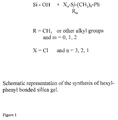
FIG. 1 shows schematic reaction for synthesis of an alkyl-phenyl bonded silica gel.
FIGS. 2A and 2B show the effect of pH on the stability of hexyl-phenyl bonded
silica gel.
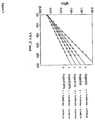
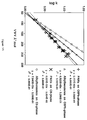
FIG. 3 is a plot for showing selectivities of alkyl (C5, C8, and C18) and alkyl-phenyl
(C3Ph and C6Ph) bonded phase for alkylbenzenes in 80% acetonitrile.
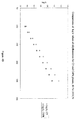
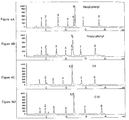
FIGS. 4A and 4B show the selectivities of pentyl (C5) and hexyl-phenyl (C6Ph)
bodned phases for alkylbenzenes in 70% and 80% aqueous acetonitrile respectively. FIG.
4C and 4D show the selectivity of octyl-phenyl (C8Ph) bodned phase for alkylbenzenes in
70% and 80% aqueous acetonitrile respectively.
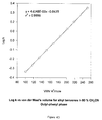
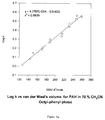
FIG. 5A is a plot for comparing the selectivities of octyl (C8) and hexyl-phenyl
(C6Ph) bonded phases for alkylbenzenes and polyaromatic hydrocarbons (PAH). FIG. 5B
shows the selectivity of octyl-phenyl (C8Ph) bonded phase for polyaromatic hydrocarbons
(PAH).
FIGS. 6A, 6B, 6C, 6D and 6E show results of separating antibacterial drugs on
hexyl-phenyl (C6Ph), propyl-phenyl (C3Ph), octyl (C8), octadecyl (C18), and octyl-phenyl
(C8Ph) bonded phases, respectively.
Detailed Description of the Preferred Embodiment
We analyzed the molecular and chromatographic properties of phenyl bonded phases,
attached to silica gel via one to twelve methelene groups by calculating the log P values
thereof. The calculation of log P value is disclosed in R.F. Rekker, "The hydrophobic
fragmental constant", Elsevier, Amsterdam, (1997) which is hereby incorporated herein by
reference. The calculated log P values based on Rekker's fragmental constants for different
functional groups are summarized in TABLE 1.
The log P values of bonded phases indicate the retention capacity and the chemical
stability. The log P values of chemically unstale phases, such as propyl-phenyl, propyl-amino,
propyl-cyano, and butyl-groups are small, and these phases show lesser retention and
lower stability. The larger log P values mean higher hydrophobicity, and lead to longer
retention and higher stability of the bonded phase.
The low retentivity and stability of the conventional phenyl phases are the result of
short alkyl chains, e.g. methyl, ethyl, and propyl used in attaching the phenyl group on the
surface of the silica gel. Because of this low hydrophobicity, the unique selectivity of the
phenyl phases cannot be fully realized. The reason for the instability of the short chain
bonded phase can be understood from the effect of alkyl chain length on hydrogen bonding
capacity of alkanols. Up to four methylene units (butyl groups) the hydrogen bonding
capability of hydroxy groups is affected by the alkyl chain length, but the longer alkyl chain
does not further affect the hydrogen bonding capability. As such, the butyl bonded phase
is not stable in high pH solutions, but the stability of pentyl bonded phases is equivalent to
octyl and octadecyl bonded phases.
The analysis of the properties of bonded phases of silica gels from their molecular
masses and log P values, as seen in Table 1, indicate that alkyl-phenyl bonded phases
having 4 to 10 methylene groups in their alkyl group should theoretically lead to better
stability and selectivity than propyl-phenyl, ethyl-phenyl, or methyl-phenyl bonded phase.
Preferably, alkyl-phenyl bonded phase, having five to ten methylene groups in the alkyl
group have high stability and selectivity. More preferably, hexyl-phenyl and octyl phenyl
have the ideal stability and selectivity.
We prepared the alkyl-phenyl bonded silica gels and tested its stability and separation
power compared to the other alkyl bonded phases. According to the present invention,
alkyl-phenyl bonded silica gels can be synthesized using a variety of silylating reagents.
The synthesis was carried out by reacting a mono-, di-, or tri- functional alkyl-phenylsilane
with the silanol groups of silica gels in a suitable media under high temperature as depicted
in FIG. 1. The functional groups are good leaving group such as halogens, methoxy,
ethoxy, etc, and the alkyl-phenylsilane having one to three leaving groups, hereinafter, is
refered as a "reactive alkyl-phenylsilane".
The important aspect of the present invention is that the alkyl-phenyl bonded phases
of the present invention shows chemical stability over extended pH range of 1.50 to 10.00
and has unique selectivity for the separation of organic molecules compared to other alkyl
bonded phases. The stability and selectivity of alkyl-phenyl bonded phase of the present
invention are not limited by the use of various polymer-based chromatographic supports
such as silica gel, polystyrene-divinylbenzene copolymer, polyhydroxymethacrylate,
cellulose, etc. Additionally, various alkyl-phenyl bonded phases can be mixed to provide
a mixed phase while maintaing their own selectivities and retaining capacities. In sum, the
alkyl-phenyl bonded phases of the present invention have many advantages when applied
to perform HPLC, in terms of its inertness (low silanophyllic activity), extended pH stability
and unique selectivity.
EXAMPLE 1
Preparation Of Alkyl-Phenyl Silica Gels And Columns Packed Therewith
In a typical experiment, twenty grams of the silica gel were washed with 0.1 N
hydrochloric acid (HCl) on a filter funnel followed by distilled and dionized water till the
pH of wash was neutral (nearly 7.0). The silica gel was then washed with acetone and dried
in an oven at 80°C under vacuum for 10 hours.
A dry 500 mL capacity round bottom flask was set up in a fume hood, and 20 grams
of hexyl-phenyl methyldichlorosilane as a silytating agent for obtaining hexyl-phenyl bonded
phase and 200 mL of dry toluene were added to it. The two were mixed thoroughly and
the twenty grams of dried silica gel were added to the reaction mixture while continuously
stirring the mixture. The flask was then attached to a condenser with water circulating
through it and heated to boiling using a heating mantle. After allowing the reaction to
proceed for 18 hours, the flask was cooled to room temperature and the silica gel which had
hexyl-phenyl group on the surfaces was filtered. The hexyl-phenyl bonded silica gel was
then washed with 100 mL dichloromethane, 100 mL methanol and 100 mL acetone and
dried under vacuum at 80°C. A similar reaction and procedure were carried out to prepare
propyl-phenyl bonded silica gel and octyl-phenyl bonded silica gel.
After the bonding step, the unreacted silanol groups on the surface of the silica gel
were blocked by an end-capping step as follows: the bonded silica gel was added to a
mixture of 40 mL of trimethylchlorosilane and 200 mL of toluene in a round bottom flask
and reacted for 18 hours. At the end of the reaction, the silica gel was subjected to the
washing/drying procedures as described earlier in the bonding step.
The end-capped propyl-phenyl, hexyl-phenyl, and octyl-phenyl bonded silica gels
were packed into two individual 150 mm L x 4.6 mm I.D. columns for the chromatographic
evaluation.
Similar reactions and procedures are carried out to prepare other alkyl-phenyl bonded
silica gels which have 4, 5, 7, 9, or 10 methylene groups in their alkyl groups, to end-cap
unreacted silanols on their surfaces, and to provide columns inside of which is packed with
the alkyl-phenyl bonded silica gels.
All the organic solvents used in the reaction were obtained from J. T. Baker
(Phillipsburg, New Jersey, USA). The organosilane reagents were from Silar Laboratories
(Wilmington, North Carolina, USA). The silica gel used was obtained from Phenomenex,
Inc. (Torrance, California, USA) and had the following specifications: 5 µm dp, with 100
Å average pore diameter and 400 m2/g surface area.
EXAMPLE 2
Inertness And Chemical Stability Of Alkyl-Phenyl Bonded Phases
The inertness and the chemical stability of the synthesized hexyl-phenyl bonded silica
gel were studied by looking at the rention factors and peak shapes of pyridine, benzoic acid,
8-hydroxyquinoline, and naphthalene disclosed in T. Hanai, Encyclopedia of Analytical
Science (1995), Academic Press, London, p. 2558 - 1567 which is hereby incorporated
herein by reference. The retention factor, in terms of measured parameters, is "k = (tR -tO)/tO":
where tR is retention time of the measured peak; and tO is retention time of non-retained
component.
The plots 20 and 25 in FIGs. 2A and 2B show chemical stability of hexyl-phenyl
bonded phase in acidic and basic solutions. The lines 21 and 26 indicate retention time (tR)
for toluene, and the lines 22 and 27 represent retention factors (k) for toluene in acidic and
basic solutions respectively. The lines 23 and 28 indicate peak asymmetry for toluene, and
the lines 24 and 29 for pyridine. Asymmetry is a factor describing the shapes of
chromatographic peaks, and the factor is the ratio of the distance between the peak apex and
the back side of the chromatrographic curve and the front side of the curve at 10% peak
height. As shown in FIGs. 2A and 2B, the retention time and retention factor for toluene
was almost constant in continuous operation of more than 2,500 hours (more than 60,000
column volumes) both in 10 mM sodium phosphate buffer (pH 10) and 0.1% trifluoro acetic
(pH 1.5) solutions. In addition, the peak shapes of toluene and pyridine were almost
symmetric. The surface was also inert for trace metal sensitive test using 8-hydroxyquinoline,
thereby showing a low level of metal contamination.
EXAMPLE 3
Retention Capacity Of Alkyl-Phenyl Bonded Phases
The retention capacities of alkyl-phenyl bonded silica gels were compared from the
retention factors for alkylbenzenes and polycyclic aromatic hydrocarbons (PAH). The log
k values of benzene, 16 PAHs, and 10 alkylbenzenes for different bonded phases are listed
in Tables 2A and 2B.
The log k values of alkylbenzenes were measured by reversed-phase liquid
chormatography in aqueous 80% acetonitrile at 40°C. The log k values were used for the
analysis of hydrophobicity of bonded phases using van der Waals volumes of analytes as
the standard. The relations between log k values and van der Waals volumes of
alkylbenzenes in different bonded phases are shown in FIG. 3. The relations indicate that
the retention capacities related to hydrophobicity of hexyl-phenyl and propyl-phenyl bonded
phases (respectively C6Ph and C3Ph) were less than that of the pentyl bonded phase (C5).
The relation between their slope and alkyl chain length was: Alkyl chain length = 4.321 x
(slope) - 22.729, r2 = 0.997 (n=3).
The retention capacity of synthesized hexyl-phenyl bonded phase (C6Ph) for
alkylbenzenes in 70% aqueous acetonitrile was equivalent to that of pentyl bonded phase
(C5) as shown in FIG. 4A; however, that for polycyclic aromatic hydrocarbons (PAH) on
C6Ph was equivalent to that of octyl bonded phase (C8) as shown in FIG. 5. As shown in
FIG. 4B, pentyl bonded phase (C5) is slightly more retentivity than hexyl-phenyl bonded
phased (C6Ph) in 80% aqueous acetonitrile. Advantageously, the difference in retentivity
seen with different solvents can be used to effect better separation simply by changing
solvents.
When the retention time of alkylbenzenes was used as the standard, the ratios of the
slopes for the plot of log k values and van der Waals volumes indicated the difference of
retention capacity of these bonded phases (calculated from FIG. 5). The retention capacity
for alkylbenzenes was 1.27 (6.523/5.117) times greater than that for PAH on C6Ph phase.
The retention capacity for alkylbenzenes was 1.73 (7.840/4.531) times greater than that for
PAH on C8 phase. This means that PAHs were retained 1.36 (1.73/1.27) times on C6Ph
phase than on C8 phase.
The selectivity of the synthesized octyl-phenyl (C8Ph) bodned phase for
alkylbenzenes in 70% and 80% aqueous acetonitrile are shown in FIG. 4C and 4D. Also,
the selectivity of octyl-phenyl (C8Ph) bonded phase for polyaromatic hydrocarbons (PAH)
is shown in FIG. 5B. The octyl-phenyl phase was found to be less retentive than the hexyl
phenyl phase for all the applications tested.
EXAMPLE 4
Selectivity of hexyl-phenyl bonded phase for antibacterial drugs
The selectivities of the alkyl-phenyl and alkyl bonded phases were examined for the
separation of antibacterial drugs. The mixtures of carbadox, thiamphenicol, furazolidone,
oxolinic acid, sulfadimethoxine, sulfaquinoxaline, nalidixic acid and piromidic acid, which
are respectively numbered as 1 to 8 in FIG. 6, were chromatographed using
potassiumdihydrogen phosphate and acetonitrile mixtures. The total elution time was about
20 minutes in C3Ph, C6Ph, C8, C18, and C6Ph bonded phases as shown in FIGs. 6A, 6B,
6C, 6D, and 6E, respectively. The perfect resolution between sulfadimethoxine and
sulfaquinoxaline was achieved only on C6Ph and C8 phases, and the separation of these two
compounds was not possible on C8 and C18 phases. In the separation of the two sulfa
drugs, sulfadimethoxine and sulfaquinoxaline, C8Ph phase showed better resolution than
C6Ph phase. However, nalidixic acid eluded much earlier on C8Ph phase than on C6Ph
phase, and in between the two sulfa drugs on C8Ph as shown in FIG. 6E.
In conclusion, such selective retention capability of phenyl bonded phases can expand
the separation power in reversed-phase liquid chromatography. An eluent for C8-bonded
phase can be easily applied to C6Ph phase for the further separation. Such two-dimensional
chromatograms can speed up the analysis of complex mixtures. Above results also indicate
that hexadecyl-phenyl bonded phase will be a compatible phase to C12 bonded phase for
improving separation power in reversed-phase liquid chromatography.
The computer used for the molecular calculations were Macintosh 8100/100 running
the CAChe™ program including ProjectLeader™ from Sony-Tektronix (Tokyo). Rlog P
values were calculated by a method based on that proposed by Rekker. The van der Waals
volumes were calculated by MOPAC-Blog P program provided by Sony-Tektronix. The
molecules were first optimized by molecular mechanics calculation, and optimized again by
MOPAC, then their van der Waals volumes and log P values were obtained with the Blog
P program disclosed in CAChe Manual, Sony-Tektronix, (1995) which is hereby
incorporated herein by reference. Properties for the calculation were selected according to
the manual from CAChe Scientific.
The liquid chromatograph was a model HP1090 from Hewlett-Packard (Palo Alto,
California, USA), and the chemically-bonded silica gel columns, -C18, -C8 and -C5, -C6Ph,
-C3Ph, 15 cm x 4.6 mm I.D., were from Phenomenex Inc. (Torrance, California, USA).
Chemicals used were from Aldrich and ChemService. HPLC grade acetonitrile and water
were from Fisher Scientific (Tustin, California, USA).
| Log P Values of Bonded Groups |
| CHEMICAL NAME | STRUCTURE | LOG P |
| Phenyl | (-Ph) | 1.89 |
| Methyl-phenyl | -CH2Ph | 2.42 |
| Ethyl-phenyl | -(CH2)2Ph | 2.95 |
| Propyl-phenyl | -(CH2)3Ph | 3.46 |
| Butyl-phenyl | -(CH2)4Ph | 3.99 |
| Hexyl-phenyl | -(CH2)6Ph | 5.05 |
| Octyl-phenyl | -(CH2)8Ph | 6.09 |
| Decyl-phenyl | -(CH2)10Ph | 7.15 |
| Dodecyl-phenyl | -(CH2)12Ph | 8.21 |
| Methyl or C1 | -CH3 | 0.70 |
| Ethyl or C2 | -CH2CH3 | 1.40 |
| Propyl or C3 | -CH2CH2CH3 | 2.10 |
| Butyl or C4 | -CH2CH2-CH2CH3 | 2.93 |
| Octyl or C8 | -(CH2)7CH3 | 4.41 |
| Octadecyl or C18 | -(CH2)17CH3 | 9.01 |
| Cyano | -(CH2)3CN | 0.52 |
| N-Methyl-N-cyanoethyl | -N(CH3)(CH2)2CN | -1.46 |
| Propyl amino | -(CH2)3NH2 | 0.16 |
| Butyl amino | -(CH2)4NH2 | 0.69 |
van der Waal's Volumes and Log K Values of PAH
|
| | log k in 70% CH3CN |
| PAH | VWV A3/mole | C5 | C8 | C18 | C3Ph | C6Ph |
| Benzene | 83.789 | 0.209 | 0.281 | 0.340 | 0.167 | 0.230 |
| Naphthalene | 127.598 | 0.410 | 0.486 | 0.582 | 0.305 | 0.470 |
| Acenaphthylene | 144.969 | 0.450 | 0.540 | 0.663 | 0.364 | 0.521 |
| Acenaphthene | 150.675 | - | 0.629 | 0.814 | 0.447 | 0.616 |
| Fluorene | 161.639 | 0.527 | 0.629 | 0.794 | 0.436 | 0.602 |
| Phenanthrene | 171.286 | 0.538 | 0.660 | 0.854 | 0.468 | 0.655 |
| Anthracene | 171.486 | 0.562 | 0.688 | 0.894 | 0.490 | 0.679 |
| Pyrene | 187.603 | 0.614 | 0.777 | 1.038 | 0.553 | 0.778 |
| Fluoranthene | 188.723 | 0.599 | 0.747 | 0.989 | 0.535 | 0.746 |
| Chrysene | 214.558 | 0.673 | 0.842 | 1.160 | 0.635 | 0.869 |
| Benzo(a)anthracene | 215.641 | 0.692 | 0.860 | 1.177 | 0.647 | 0.878 |
| Benzo(a)pyrene | 231.048 | 0.755 | 0.071 | 1.375 | 0.733 | 1.009 |
| Benzo(k)fluoranthene | 232.418 | 0.741 | 0.959 | 1.347 | 0.726 | 0.982 |
| Benzo(b)fluoranthene | 232.462 | 0.741 | 0.943 | 1.325 | 0.714 | 0.970 |
| Benzo(g,h,i)perylene | 247.198 | 0.822 | 1.067 | - | 0.799 | 1.118 |
| Dibenzo(a,h)anthracene | 259.435 | 0.803 | 1.032 | 1.479 | 0.806 | 1.071 |
| Indeno(1,2,3 cd)pyrene | 248.683 | 0.822 | 1.067 | - | 0.803 | 1.102 |
van der Waal's Volumes and Log K Values of Alkylbenzenes
|
| | log k in 70% CH3CN |
| Alkylbenzene | VWV A3/mole | C5 | C8 | C18 | C3Ph | C6Ph |
| Toluene | 100.456 | 0.312 | 0.396 | 0.489 | -0.253 | 0.326 |
| Ethylbenzene | 117.067 | 0.417 | 0.513 | 0.628 | 0.348 | 0.428 |
| Propylbenzene | 133.897 | 0.537 | 0.644 | 0.800 | 0.449 | 0.538 |
| Butylbenzene | 150.713 | 0.653 | 0.776 | 0.963 | 0.548 | 0.648 |
| Pentylbenzene | 167.564 | 0.772 | 0.908 | 1.134 | 0.646 | 0.758 |
| Hexylbenzene | 184.315 | 0.894 | 1.043 | 1.310 | 0.747 | 0.871 |
| Heptylbenzene | 201.171 | 1.019 | 1.181 | 1.491 | 0.851 | 0.985 |
| Octylbenzene | 217.884 | 1.144 | 1.318 | 1.673 | 0.947 | 1.095 |
| Nonylbenzene | 234.706 | 1.271 | 1.457 | - | 1.046 | 1.204 |
| Decylbenzene | 251.540 | 1.400 | - | - | 1.146 | 1.313 |
| | log K in 80% CH3CN |
| Alkylbenzene | | C5 | C8 | C18 | C3Ph | C6Ph |
| Toluene | 0.170 | 0.225 | 0.267 | 0.049 | 0.137 |
| Ethylbenzene | 0.258 | 0.324 | 0.394 | 0.121 | 0.215 |
| Propylbenzene | 0.362 | 0.442 | 0.548 | 0.196 | 0.303 |
| Butylbenzene | 0.462 | 0.561 | 0.702 | 0.274 | 0.391 |
| Pentylbenzene | 0.567 | 0.680 | 0.858 | 0.350 | 0.480 |
| Hexylbenzene | 0.679 | 0.806 | 1.021 | 0.430 | 0.572 |
| Heptylbenzene | 0.794 | 0.937 | 1.188 | 0.512 | 0.667 |
| Octylbenzene | 0.906 | 1.063 | 1.356 | 0.589 | 0.757 |
| Nonylbenzene | 1.022 | 1.193 | 1.528 | 0.688 | 0.849 |
| Decylbenzene | 1.139 | 1.324 | 1.697 | 0.748 | 0.941 |