EP0899290B1 - Porous cellulose sheet and method for manufacturing the same - Google Patents
Porous cellulose sheet and method for manufacturing the same Download PDFInfo
- Publication number
- EP0899290B1 EP0899290B1 EP98116140A EP98116140A EP0899290B1 EP 0899290 B1 EP0899290 B1 EP 0899290B1 EP 98116140 A EP98116140 A EP 98116140A EP 98116140 A EP98116140 A EP 98116140A EP 0899290 B1 EP0899290 B1 EP 0899290B1
- Authority
- EP
- European Patent Office
- Prior art keywords
- sheet
- cellulose
- porous
- solution
- coagulant
- Prior art date
- Legal status (The legal status is an assumption and is not a legal conclusion. Google has not performed a legal analysis and makes no representation as to the accuracy of the status listed.)
- Expired - Lifetime
Links
- 229920002678 cellulose Polymers 0.000 title claims description 80
- 239000001913 cellulose Substances 0.000 title claims description 79
- 238000004519 manufacturing process Methods 0.000 title claims description 21
- 238000000034 method Methods 0.000 title description 20
- 239000000203 mixture Substances 0.000 claims description 45
- 239000000701 coagulant Substances 0.000 claims description 36
- 239000011148 porous material Substances 0.000 claims description 25
- 239000002253 acid Substances 0.000 claims description 16
- 239000004088 foaming agent Substances 0.000 claims description 16
- 230000001172 regenerating effect Effects 0.000 claims description 16
- 150000005323 carbonate salts Chemical class 0.000 claims description 15
- 239000012783 reinforcing fiber Substances 0.000 claims description 9
- 230000001112 coagulating effect Effects 0.000 claims description 7
- 239000000243 solution Substances 0.000 description 54
- 229920000297 Rayon Polymers 0.000 description 26
- 238000000465 moulding Methods 0.000 description 21
- VTYYLEPIZMXCLO-UHFFFAOYSA-L Calcium carbonate Chemical compound [Ca+2].[O-]C([O-])=O VTYYLEPIZMXCLO-UHFFFAOYSA-L 0.000 description 15
- VEXZGXHMUGYJMC-UHFFFAOYSA-N Hydrochloric acid Chemical compound Cl VEXZGXHMUGYJMC-UHFFFAOYSA-N 0.000 description 14
- XLYOFNOQVPJJNP-UHFFFAOYSA-N water Substances O XLYOFNOQVPJJNP-UHFFFAOYSA-N 0.000 description 14
- 238000005345 coagulation Methods 0.000 description 12
- 230000015271 coagulation Effects 0.000 description 12
- 238000001125 extrusion Methods 0.000 description 10
- 239000000835 fiber Substances 0.000 description 10
- HEMHJVSKTPXQMS-UHFFFAOYSA-M Sodium hydroxide Chemical compound [OH-].[Na+] HEMHJVSKTPXQMS-UHFFFAOYSA-M 0.000 description 9
- 238000005266 casting Methods 0.000 description 9
- 239000013078 crystal Substances 0.000 description 8
- 239000000463 material Substances 0.000 description 8
- 239000010446 mirabilite Substances 0.000 description 8
- 230000008929 regeneration Effects 0.000 description 8
- 238000011069 regeneration method Methods 0.000 description 8
- RSIJVJUOQBWMIM-UHFFFAOYSA-L sodium sulfate decahydrate Chemical compound O.O.O.O.O.O.O.O.O.O.[Na+].[Na+].[O-]S([O-])(=O)=O RSIJVJUOQBWMIM-UHFFFAOYSA-L 0.000 description 8
- 229920000298 Cellophane Polymers 0.000 description 7
- 229910000019 calcium carbonate Inorganic materials 0.000 description 7
- 230000000052 comparative effect Effects 0.000 description 7
- 239000002245 particle Substances 0.000 description 7
- NLXLAEXVIDQMFP-UHFFFAOYSA-N Ammonia chloride Chemical compound [NH4+].[Cl-] NLXLAEXVIDQMFP-UHFFFAOYSA-N 0.000 description 6
- 238000006477 desulfuration reaction Methods 0.000 description 5
- 230000023556 desulfurization Effects 0.000 description 5
- 238000002156 mixing Methods 0.000 description 5
- 239000000126 substance Substances 0.000 description 5
- 238000005406 washing Methods 0.000 description 5
- QAOWNCQODCNURD-UHFFFAOYSA-N Sulfuric acid Chemical compound OS(O)(=O)=O QAOWNCQODCNURD-UHFFFAOYSA-N 0.000 description 4
- 238000004061 bleaching Methods 0.000 description 4
- 238000006243 chemical reaction Methods 0.000 description 4
- 238000010438 heat treatment Methods 0.000 description 4
- 235000002639 sodium chloride Nutrition 0.000 description 4
- QTBSBXVTEAMEQO-UHFFFAOYSA-N Acetic acid Chemical compound CC(O)=O QTBSBXVTEAMEQO-UHFFFAOYSA-N 0.000 description 3
- 244000025254 Cannabis sativa Species 0.000 description 3
- 235000012766 Cannabis sativa ssp. sativa var. sativa Nutrition 0.000 description 3
- 235000012765 Cannabis sativa ssp. sativa var. spontanea Nutrition 0.000 description 3
- PEDCQBHIVMGVHV-UHFFFAOYSA-N Glycerine Chemical compound OCC(O)CO PEDCQBHIVMGVHV-UHFFFAOYSA-N 0.000 description 3
- 239000005708 Sodium hypochlorite Substances 0.000 description 3
- 150000007513 acids Chemical class 0.000 description 3
- 239000003513 alkali Substances 0.000 description 3
- 235000019270 ammonium chloride Nutrition 0.000 description 3
- 235000009120 camo Nutrition 0.000 description 3
- 235000005607 chanvre indien Nutrition 0.000 description 3
- MTHSVFCYNBDYFN-UHFFFAOYSA-N diethylene glycol Chemical compound OCCOCCO MTHSVFCYNBDYFN-UHFFFAOYSA-N 0.000 description 3
- 239000011521 glass Substances 0.000 description 3
- 239000011487 hemp Substances 0.000 description 3
- 229920002635 polyurethane Polymers 0.000 description 3
- 239000004814 polyurethane Substances 0.000 description 3
- 238000007665 sagging Methods 0.000 description 3
- 150000003839 salts Chemical class 0.000 description 3
- SUKJFIGYRHOWBL-UHFFFAOYSA-N sodium hypochlorite Chemical compound [Na+].Cl[O-] SUKJFIGYRHOWBL-UHFFFAOYSA-N 0.000 description 3
- 229910052979 sodium sulfide Inorganic materials 0.000 description 3
- GRVFOGOEDUUMBP-UHFFFAOYSA-N sodium sulfide (anhydrous) Chemical compound [Na+].[Na+].[S-2] GRVFOGOEDUUMBP-UHFFFAOYSA-N 0.000 description 3
- 229920003169 water-soluble polymer Polymers 0.000 description 3
- CURLTUGMZLYLDI-UHFFFAOYSA-N Carbon dioxide Chemical compound O=C=O CURLTUGMZLYLDI-UHFFFAOYSA-N 0.000 description 2
- 229920000742 Cotton Polymers 0.000 description 2
- NBIIXXVUZAFLBC-UHFFFAOYSA-N Phosphoric acid Chemical compound OP(O)(O)=O NBIIXXVUZAFLBC-UHFFFAOYSA-N 0.000 description 2
- WCUXLLCKKVVCTQ-UHFFFAOYSA-M Potassium chloride Chemical compound [Cl-].[K+] WCUXLLCKKVVCTQ-UHFFFAOYSA-M 0.000 description 2
- FAPWRFPIFSIZLT-UHFFFAOYSA-M Sodium chloride Chemical compound [Na+].[Cl-] FAPWRFPIFSIZLT-UHFFFAOYSA-M 0.000 description 2
- AYJRCSIUFZENHW-UHFFFAOYSA-L barium carbonate Chemical compound [Ba+2].[O-]C([O-])=O AYJRCSIUFZENHW-UHFFFAOYSA-L 0.000 description 2
- WPYMKLBDIGXBTP-UHFFFAOYSA-N benzoic acid Chemical compound OC(=O)C1=CC=CC=C1 WPYMKLBDIGXBTP-UHFFFAOYSA-N 0.000 description 2
- 230000015572 biosynthetic process Effects 0.000 description 2
- 229940021231 clearskin Drugs 0.000 description 2
- 238000000354 decomposition reaction Methods 0.000 description 2
- 238000004090 dissolution Methods 0.000 description 2
- 238000001035 drying Methods 0.000 description 2
- 239000010408 film Substances 0.000 description 2
- 239000006260 foam Substances 0.000 description 2
- 238000005187 foaming Methods 0.000 description 2
- 239000007789 gas Substances 0.000 description 2
- LELOWRISYMNNSU-UHFFFAOYSA-N hydrogen cyanide Chemical compound N#C LELOWRISYMNNSU-UHFFFAOYSA-N 0.000 description 2
- ZLNQQNXFFQJAID-UHFFFAOYSA-L magnesium carbonate Chemical compound [Mg+2].[O-]C([O-])=O ZLNQQNXFFQJAID-UHFFFAOYSA-L 0.000 description 2
- 239000001095 magnesium carbonate Substances 0.000 description 2
- 229910000021 magnesium carbonate Inorganic materials 0.000 description 2
- 239000000047 product Substances 0.000 description 2
- 230000003014 reinforcing effect Effects 0.000 description 2
- 238000005185 salting out Methods 0.000 description 2
- 238000003756 stirring Methods 0.000 description 2
- 238000012360 testing method Methods 0.000 description 2
- QGZKDVFQNNGYKY-UHFFFAOYSA-O Ammonium Chemical compound [NH4+] QGZKDVFQNNGYKY-UHFFFAOYSA-O 0.000 description 1
- 239000005711 Benzoic acid Substances 0.000 description 1
- KXDHJXZQYSOELW-UHFFFAOYSA-M Carbamate Chemical compound NC([O-])=O KXDHJXZQYSOELW-UHFFFAOYSA-M 0.000 description 1
- 229920000049 Carbon (fiber) Polymers 0.000 description 1
- 102000008186 Collagen Human genes 0.000 description 1
- 108010035532 Collagen Proteins 0.000 description 1
- RYGMFSIKBFXOCR-UHFFFAOYSA-N Copper Chemical compound [Cu] RYGMFSIKBFXOCR-UHFFFAOYSA-N 0.000 description 1
- 235000019738 Limestone Nutrition 0.000 description 1
- 229920000881 Modified starch Polymers 0.000 description 1
- 239000004677 Nylon Substances 0.000 description 1
- PMZURENOXWZQFD-UHFFFAOYSA-L Sodium Sulfate Chemical compound [Na+].[Na+].[O-]S([O-])(=O)=O PMZURENOXWZQFD-UHFFFAOYSA-L 0.000 description 1
- 229920002472 Starch Polymers 0.000 description 1
- FMRLDPWIRHBCCC-UHFFFAOYSA-L Zinc carbonate Chemical compound [Zn+2].[O-]C([O-])=O FMRLDPWIRHBCCC-UHFFFAOYSA-L 0.000 description 1
- 238000010306 acid treatment Methods 0.000 description 1
- 239000000654 additive Substances 0.000 description 1
- 229910000147 aluminium phosphate Inorganic materials 0.000 description 1
- BFNBIHQBYMNNAN-UHFFFAOYSA-N ammonium sulfate Chemical compound N.N.OS(O)(=O)=O BFNBIHQBYMNNAN-UHFFFAOYSA-N 0.000 description 1
- 229910052921 ammonium sulfate Inorganic materials 0.000 description 1
- 235000011130 ammonium sulphate Nutrition 0.000 description 1
- 235000010233 benzoic acid Nutrition 0.000 description 1
- 239000001569 carbon dioxide Substances 0.000 description 1
- 229910002092 carbon dioxide Inorganic materials 0.000 description 1
- 239000004917 carbon fiber Substances 0.000 description 1
- 229920002301 cellulose acetate Polymers 0.000 description 1
- 239000012461 cellulose resin Substances 0.000 description 1
- 239000007795 chemical reaction product Substances 0.000 description 1
- 239000003795 chemical substances by application Substances 0.000 description 1
- 229920001436 collagen Polymers 0.000 description 1
- 238000011437 continuous method Methods 0.000 description 1
- 238000013270 controlled release Methods 0.000 description 1
- 238000001816 cooling Methods 0.000 description 1
- 229910052802 copper Inorganic materials 0.000 description 1
- 239000010949 copper Substances 0.000 description 1
- 238000005260 corrosion Methods 0.000 description 1
- 230000007797 corrosion Effects 0.000 description 1
- 238000009792 diffusion process Methods 0.000 description 1
- 238000004851 dishwashing Methods 0.000 description 1
- 230000000694 effects Effects 0.000 description 1
- 230000003631 expected effect Effects 0.000 description 1
- 238000001879 gelation Methods 0.000 description 1
- 239000003365 glass fiber Substances 0.000 description 1
- 238000005470 impregnation Methods 0.000 description 1
- 229910052806 inorganic carbonate Inorganic materials 0.000 description 1
- 239000012784 inorganic fiber Substances 0.000 description 1
- 239000006028 limestone Substances 0.000 description 1
- 238000003754 machining Methods 0.000 description 1
- QSHDDOUJBYECFT-UHFFFAOYSA-N mercury Chemical compound [Hg] QSHDDOUJBYECFT-UHFFFAOYSA-N 0.000 description 1
- 229910052753 mercury Inorganic materials 0.000 description 1
- VNWKTOKETHGBQD-UHFFFAOYSA-N methane Chemical compound C VNWKTOKETHGBQD-UHFFFAOYSA-N 0.000 description 1
- 150000007522 mineralic acids Chemical class 0.000 description 1
- 235000019426 modified starch Nutrition 0.000 description 1
- 230000007935 neutral effect Effects 0.000 description 1
- 231100000252 nontoxic Toxicity 0.000 description 1
- 230000003000 nontoxic effect Effects 0.000 description 1
- 230000001473 noxious effect Effects 0.000 description 1
- 229920001778 nylon Polymers 0.000 description 1
- 150000007524 organic acids Chemical class 0.000 description 1
- 239000003960 organic solvent Substances 0.000 description 1
- 238000005498 polishing Methods 0.000 description 1
- -1 poly(vinyl alcohol) Polymers 0.000 description 1
- 229920000058 polyacrylate Polymers 0.000 description 1
- 229920000728 polyester Polymers 0.000 description 1
- 238000006116 polymerization reaction Methods 0.000 description 1
- 229920002451 polyvinyl alcohol Polymers 0.000 description 1
- 238000002459 porosimetry Methods 0.000 description 1
- 239000001103 potassium chloride Substances 0.000 description 1
- 235000011164 potassium chloride Nutrition 0.000 description 1
- 229920001592 potato starch Polymers 0.000 description 1
- 239000000843 powder Substances 0.000 description 1
- 229940088417 precipitated calcium carbonate Drugs 0.000 description 1
- 239000002964 rayon Substances 0.000 description 1
- 239000004627 regenerated cellulose Substances 0.000 description 1
- 230000002787 reinforcement Effects 0.000 description 1
- 239000012266 salt solution Substances 0.000 description 1
- 238000000926 separation method Methods 0.000 description 1
- 239000011780 sodium chloride Substances 0.000 description 1
- 229910052938 sodium sulfate Inorganic materials 0.000 description 1
- 235000011152 sodium sulphate Nutrition 0.000 description 1
- 229910001220 stainless steel Inorganic materials 0.000 description 1
- 239000010935 stainless steel Substances 0.000 description 1
- 239000008107 starch Substances 0.000 description 1
- 235000019698 starch Nutrition 0.000 description 1
- 229920002994 synthetic fiber Polymers 0.000 description 1
- 239000012209 synthetic fiber Substances 0.000 description 1
- 229920003002 synthetic resin Polymers 0.000 description 1
- 239000000057 synthetic resin Substances 0.000 description 1
- 239000010409 thin film Substances 0.000 description 1
- ZIBGPFATKBEMQZ-UHFFFAOYSA-N triethylene glycol Chemical compound OCCOCCOCCO ZIBGPFATKBEMQZ-UHFFFAOYSA-N 0.000 description 1
- 239000011667 zinc carbonate Substances 0.000 description 1
- 235000004416 zinc carbonate Nutrition 0.000 description 1
- 229910000010 zinc carbonate Inorganic materials 0.000 description 1
Images

Classifications
-
- C—CHEMISTRY; METALLURGY
- C08—ORGANIC MACROMOLECULAR COMPOUNDS; THEIR PREPARATION OR CHEMICAL WORKING-UP; COMPOSITIONS BASED THEREON
- C08J—WORKING-UP; GENERAL PROCESSES OF COMPOUNDING; AFTER-TREATMENT NOT COVERED BY SUBCLASSES C08B, C08C, C08F, C08G or C08H
- C08J9/00—Working-up of macromolecular substances to porous or cellular articles or materials; After-treatment thereof
- C08J9/26—Working-up of macromolecular substances to porous or cellular articles or materials; After-treatment thereof by elimination of a solid phase from a macromolecular composition or article, e.g. leaching out
-
- C—CHEMISTRY; METALLURGY
- C08—ORGANIC MACROMOLECULAR COMPOUNDS; THEIR PREPARATION OR CHEMICAL WORKING-UP; COMPOSITIONS BASED THEREON
- C08J—WORKING-UP; GENERAL PROCESSES OF COMPOUNDING; AFTER-TREATMENT NOT COVERED BY SUBCLASSES C08B, C08C, C08F, C08G or C08H
- C08J5/00—Manufacture of articles or shaped materials containing macromolecular substances
- C08J5/18—Manufacture of films or sheets
-
- C—CHEMISTRY; METALLURGY
- C08—ORGANIC MACROMOLECULAR COMPOUNDS; THEIR PREPARATION OR CHEMICAL WORKING-UP; COMPOSITIONS BASED THEREON
- C08J—WORKING-UP; GENERAL PROCESSES OF COMPOUNDING; AFTER-TREATMENT NOT COVERED BY SUBCLASSES C08B, C08C, C08F, C08G or C08H
- C08J9/00—Working-up of macromolecular substances to porous or cellular articles or materials; After-treatment thereof
- C08J9/04—Working-up of macromolecular substances to porous or cellular articles or materials; After-treatment thereof using blowing gases generated by a previously added blowing agent
- C08J9/06—Working-up of macromolecular substances to porous or cellular articles or materials; After-treatment thereof using blowing gases generated by a previously added blowing agent by a chemical blowing agent
- C08J9/08—Working-up of macromolecular substances to porous or cellular articles or materials; After-treatment thereof using blowing gases generated by a previously added blowing agent by a chemical blowing agent developing carbon dioxide
-
- C—CHEMISTRY; METALLURGY
- C08—ORGANIC MACROMOLECULAR COMPOUNDS; THEIR PREPARATION OR CHEMICAL WORKING-UP; COMPOSITIONS BASED THEREON
- C08J—WORKING-UP; GENERAL PROCESSES OF COMPOUNDING; AFTER-TREATMENT NOT COVERED BY SUBCLASSES C08B, C08C, C08F, C08G or C08H
- C08J2201/00—Foams characterised by the foaming process
- C08J2201/04—Foams characterised by the foaming process characterised by the elimination of a liquid or solid component, e.g. precipitation, leaching out, evaporation
- C08J2201/044—Elimination of an inorganic solid phase
-
- C—CHEMISTRY; METALLURGY
- C08—ORGANIC MACROMOLECULAR COMPOUNDS; THEIR PREPARATION OR CHEMICAL WORKING-UP; COMPOSITIONS BASED THEREON
- C08J—WORKING-UP; GENERAL PROCESSES OF COMPOUNDING; AFTER-TREATMENT NOT COVERED BY SUBCLASSES C08B, C08C, C08F, C08G or C08H
- C08J2301/00—Characterised by the use of cellulose, modified cellulose or cellulose derivatives
-
- Y—GENERAL TAGGING OF NEW TECHNOLOGICAL DEVELOPMENTS; GENERAL TAGGING OF CROSS-SECTIONAL TECHNOLOGIES SPANNING OVER SEVERAL SECTIONS OF THE IPC; TECHNICAL SUBJECTS COVERED BY FORMER USPC CROSS-REFERENCE ART COLLECTIONS [XRACs] AND DIGESTS
- Y10—TECHNICAL SUBJECTS COVERED BY FORMER USPC
- Y10T—TECHNICAL SUBJECTS COVERED BY FORMER US CLASSIFICATION
- Y10T428/00—Stock material or miscellaneous articles
- Y10T428/249921—Web or sheet containing structurally defined element or component
- Y10T428/249953—Composite having voids in a component [e.g., porous, cellular, etc.]
- Y10T428/249987—With nonvoid component of specified composition
- Y10T428/249988—Of about the same composition as, and adjacent to, the void-containing component
-
- Y—GENERAL TAGGING OF NEW TECHNOLOGICAL DEVELOPMENTS; GENERAL TAGGING OF CROSS-SECTIONAL TECHNOLOGIES SPANNING OVER SEVERAL SECTIONS OF THE IPC; TECHNICAL SUBJECTS COVERED BY FORMER USPC CROSS-REFERENCE ART COLLECTIONS [XRACs] AND DIGESTS
- Y10—TECHNICAL SUBJECTS COVERED BY FORMER USPC
- Y10T—TECHNICAL SUBJECTS COVERED BY FORMER US CLASSIFICATION
- Y10T428/00—Stock material or miscellaneous articles
- Y10T428/249921—Web or sheet containing structurally defined element or component
- Y10T428/249953—Composite having voids in a component [e.g., porous, cellular, etc.]
- Y10T428/249987—With nonvoid component of specified composition
- Y10T428/249988—Of about the same composition as, and adjacent to, the void-containing component
- Y10T428/249989—Integrally formed skin
Definitions
- This invention relates to a porous cellulose sheet having no substantial difference in thickness between skin layers on both sides thereof, and a method for manufacturing it continuously.
- porous sheets are used for a variety of articles including car-washing and dish-washing sponges, cloths, mats and shoe insoles.
- Conventional such porous sheets are typically made of cellulose and synthetic resins such as polyurethane and poly(vinyl alcohol).
- polyurethane is particularly preferred because of its desirable properties.
- freon gas has to be generally used as a foaming agent. When burned, they produce noxious gases such as hydrogen cyanide. When buried in the ground, they do not biodegrade. Thus, porous sheets such as sponges that are made from cellulose are gathering much attention in these days because cellulose is biodegradable and thus more friendly to the environment.
- porous sheets such as sponges from cellulose
- a mixture of a viscose, reinforcing fiber and Glauber's salt crystals are poured into a mold and coagulated by heating, the viscose is completely regenerated by use of an acid, and the Glauber's salt crystals are washed out with water or hot water to obtain a molded product.
- This technique is disclosed in examined Japanese patent publications 36-10992 and 36-11982.
- the skin layers are dense films on surface having a thickness of 0.1/ ⁇ m or over and clearly different in structure from the porous core which is a bulk layer.
- Performance of porous sheets largely depends on its structure. But in the above method, it is difficult to control the porous structure itself, that is, the number and size of pores, though the total volume of pores inside is adjustable. If high water absorbancy is required, skin layers should rather be not present. Thus, a sheet is formed in the form of a block and the skin layers are sliced off. But this method is extremely low in productivity.
- the viscose mixture is poured into a mold, and after the heating step, it is cooled and the molded article is removed from the mold. Then, the acid treatment and water-washing steps follow.
- the process is thus batchwise. It takes three to four hours at 90-100°C to coagulate and regenerate the viscose mixture. Thus, the process is extremely troublesome and time-consuming.
- Japanese patent publications 49-16115 and 4-136046 propose methods and devices for continuously manufacturing a sheet by extruding a viscose mixture onto a net conveyor, coagulating by heating from up and down, and peeling the sheet from a net as a support. These methods have a problem in that since the molded article tangle with the net, it tends to be broken when peeled off the net. Also, the net tends to leave its telltale mark on the molded article.
- One way to form a porous sheet that is free of a back-front difference is to apply a method for continuously manufacturing cellophane using a viscose solution.
- Such a method comprises the steps of submerging a die lip called a casting hopper into a coagulant, which is sulfuric acid, to extrude the viscose, and subjecting the extruded article to desulfurization, bleaching and softening while stretching to produce a film 20-40 ⁇ m thick.
- the casting hopper is submerged in the coagulant because cellophane is a thin film and thus it is necessary to coagulate it as soon as possible to give it the required wet strength.
- the gap of the opening of the casting hopper is increased to the size equal to the thickness of the intended sheet, it sounds feasible to manufacture a cellulose sheet.
- the casting hopper would soon get clogged because the coagulant diffuses into the viscose in the casting hopper, thus coagulating the viscose near the opening. Also, materials usable for the casting hopper are extremely limited, because high corrosion resistance to acids and high machining accuracy are required for the casting hopper.
- Glauber's salt crystals are used as a pore-forming material. Since they are water-soluble salts, if they are dissolved in a large amount into a viscose solution, not only will the volume of pores in the porous sheet formed decrease, but the fluidity of the viscose solution may worsen or it may gelate due to salting out. Thus, in order to minimize dissolution of Glauber's salt crystals into the viscose solution, it is necessary to add and mix it while cooling it or to proceed to the next step quickly. But actually, an extra amount of it is usually added taking the amount dissolved into account.
- An object of this invention is to provide a porous cellulose sheet which is less likely to develop curl and twist, and which can be continuously and stably manufactured, and a method of manufacturing the same.
- a porous cellulose sheet having pores inside and formed with skin layers on both sides, wherein the difference in thickness between the skin layers is not more than 50%.
- the method of manufacturing a porous cellulose sheet comprising the steps of continuously extruding a mixture of an alkaline cellulose solution and a carbonate salt as a foaming agent toward a coagulant containing an acid, and coagulating and regenerating the extruded mixture with the coagulant.
- the porous cellulose sheet according to this invention has pores inside and the inner porous structure is symmetrical in the direction of thickness. Skin layers formed on both sides thereof have such thicknesses that the difference in thickness between them is 50% or less.
- Such a sheet can be formed by continuously extruding a mixture of an alkaline cellulose solution and a foaming agent toward a coagulant to coagulate and regenerate it.
- the origin of cellulose for forming the porous sheet is not limited but may be pulp, cotton or hemp.
- the alkaline cellulose solution may be a viscose solution, a cellulose cuprammonium solution or a cellulose carbamate solution. Among them, a viscose solution for manufacturing cellophane is preferred. If a viscose solution is selected as the alkaline cellulose solution, its cellulose concentration should preferably be 3-15 wt%, more preferably 4-10 wt%. If it is lower than 3 wt%, the regenerated cellulose sheet may be broken off during manufacturing due to low mechanical strength. If higher than 15 wt%, it will become difficult to uniformly mix and disperse other additives and to extrude the mixture due to increased viscosity, though the viscosity also varies with the polymerization degree of cellulose.
- the concentration of alkali in the viscose solution should preferably be 2-15 wt%, more preferably 5-13 wt%, in terms of sodium hydroxide concentration. Also, the viscose solution should preferably have an ammonium chloride value of 3-12, more preferably 4-9.
- a foaming agent is added to the alkaline cellulose solution to form a molding mixture.
- an inorganic carbonate salt may be used.
- the carbonate salt produces carbon dioxide by reacting with an acid used during coagulation and regeneration. This makes the cellulose sheet porous.
- the kind of carbonate salt used is not limited so long as it does not markedly change the properties of the alkaline cellulose solution, but it is preferable to use a carbonate salt which is insoluble in water and which is likely to produce foam by acid decomposition.
- Such carbonate salts include calcium carbonate, magnesium carbonate, barium carbonate and zinc carbonate. Among them, calcium carbonate is especially preferable because it is inexpensive and nontoxic, and high-purity products are easily available.
- Calcium carbonate may be precipitated calcium carbonate or lime stone powder.
- the particle size of the carbonate salt used is not limited so long as it can pass through a lip of a die used for extrusion. But the greater the particle size, the worse the fluidity of the molding mixture and the more liable the die lip get clogged.
- the particle size of the carbonate salt is preferably as small as possible so long as it is dispersed sufficiently into the alkaline cellulose solution.
- the carbonate salt should preferably have an average particle size of 1-15 ⁇ m. Within this range, the particle size will have little influence on the inner porous structure of the sheet obtained, and it is possible to form pores having diameters of several tens to several hundreds of micrometers.
- porosity is ordinarily used, which is the percentage of the pores with respect to the total volume of the material.
- the porous cellulose sheet according to this invention should preferably have a porosity of 30-98%. If this value is less than 30%, no good effects are expectable as a porous material. If over 98%, the mechanical strength of the porous sheet will decrease markedly.
- the amount of the foaming agent in the molding mixture of the alkaline cellulose solution and the foaming agent is preferably 10-500 wt%, more preferably 50-300 wt%, with respect to the amount of the cellulose in the alkaline cellulose solution.
- this amount it is possible to control the pore structure formed. If this amount is less than 10 wt%, only an extremely small number of pores can be formed. If the foaming agent is added by more than 500 wt%, not only is it impossible to increase the porosity, but the fluidity of the alkaline cellulose solution during continuous extrusion will worsen.
- the foaming agent may be added directly or after dispersed in water or a sodium hydroxide solution, into the alkaline cellulose solution while stirring the latter in a mixer or a kneader.
- the order in which the materials are added is not limited.
- the viscosity of the molding mixture may be adjusted depending upon the way of extrusion, the capacity of the pump, etc, but is preferably 10000-100000 centipoise. If the viscosity is lower than 10000 centipoise, the molding mixture would drip in thin lines through the extrusion port during extrusion. This makes it difficult to mold the mixture into a desired shape and size. If higher than 100000 centipoise, the mixing and dispersing properties of the foaming agent and other agents would deteriorate, so that it would take a long time for uniform mixing and dispersing.
- water-soluble polymer may be added to improve fluidity and increase the viscosity.
- Various kinds of water-soluble polymers are usable for this purpose, but starch and starch derivatives are especially preferable because they are not only inexpensive, but remain little in the sheet because they are hydrolyzed by the acid used as a coagulant and elute during the subsequent washing process.
- starch and starch derivatives are especially preferable because they are not only inexpensive, but remain little in the sheet because they are hydrolyzed by the acid used as a coagulant and elute during the subsequent washing process.
- microscopic pores are formed in the molded article due to microphase separation of the water-soluble polymer. Such pores, smaller than the pores formed by the foaming agent, serve to improve flexibility of the porous sheet obtained.
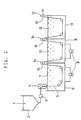
- the molding mixture 1 is stored in a reservoir 2 as shown in Fig. 1 and fed to a die 4 by a feed pump 3.
- the die 4 forms the molding mixture 1 into a sheet.
- An extrusion means are not limited to any specific type.
- the kind of die 4 is also not limited but may be selected from various types according to the fluidity of the molding mixture 1 and the intended shape and size of the end product. For example, by using an ordinary T-die, an I-die, an annular die, etc., the mixture can be formed into the shape of a sheet, a prism, a column, a tube, etc.
- the die 4 may be provided at any position as long as it can prevent diffusion of the coagulant 7 into the viscose. But in order to prevent the die 4 from being splashed with coagulant 7 and deformation of the porous sheet due to sagging of the mixture 1, the die 4 should be provided above the coagulant 7 with its outlet directed toward the coagulant 7 at a suitable distance from its surface. This makes it possible to use a die 4 made of an ordinary stainless steel, unlike a casting hopper which is immersed in coagulant for manufacturing cellophane. It is thus possible to reduce the manufacturing cost of the device.
- the die 4 can be provided above the coagulant unlike a method for manufacturing cellophane. This is because the molding mixture 1 discharged from the die 4 is higher in viscosity than a viscose as a cellophane material, so that sagging is not so remarkable and the state before coagulation can be kept to some extent. Thus, the outlet of the die 4 can be provided at such a distance from the surface of the coagulant 7 that no sagging will occur in the uncoagulated molding mixture discharged from the die 4.
- the feed pump 3 may be of any type as long as it can perform smooth, quantitative feed and allow stable extrusion from the die.
- the pump 3 may be a screw pump or a gear pump.
- the mixture in the reservoir 2 may be fed pneumatically by e.g. a compressor.
- the sheet 5 formed by the die 4 is then immersed in the coagulant 7 in the coagulating bath 6, so that the sheet 5 is coagulated and the foaming agent decomposes and foams.
- a variety of substances are usable as the coagulant, including concentrated salt solution and organic solvents.
- an inorganic acid such as hydrochloric acid, sulfuric acid or phosphoric acid, or an organic acid such as acetic acid or benzoic acid is preferable.
- hydrochloric acid is particularly preferable because it does not produce any salt insoluble or slightly soluble in water after acid decomposition of the carbonate salt, and because forming and coagulation proceed quickly.
- hydrochloric acid is used as the coagulant 7
- its concentration should be 1.5-20 wt%, preferably 3.5-15 wt%. If under 1.5 wt%, it will take a long time for the alkaline cellulose solution to coagulate. If over 20 wt%, rapid regeneration of cellulose will occur and lead to inhomogeneous coagulation, thus markedly deforming the sheet.
- one or more than one inorganic neutral salts such as sodium chloride, potassium chloride, ammonium chloride, sodium sulfate or ammonium sulfate may be added to the coagulant 7, or the coagulant 7 may be heated.
- the sheet 5 fed from the die 4 coagulates while being moved by guide rollers in the coagulant, and is fed into a regenerating solution 10 in a regenerating bath by driving rollers 13 and nip rollers 14.
- the regenerating bath 9 is provided to completely regenerate the alkaline cellulose into cellulose.
- the regenerating solution 10 may be any of the acids listed above as being usable as the coagulant 7.
- the regenerating solution 10 may be the same as the acids used as the coagulants, or the regenerating solution may have a higher acid concentration than the coagulant to shorten the regenerating time.
- the regenerating time can also be shortened by increasing the temperature of the regenerating solution 10.
- the regenerated sheet 5 is fed into water 12 in a washing bath 11, and after washed sufficiently, fed to a drying process.
- a bleaching step for bleaching the sheet using e.g. a sodium hypochlorite solution, or a step for softening with glycerol, diethylene glycol, triethylene glycol, etc. may be inserted to improve a feel to the touch of the dried porous cellulose sheet.
- a desulfurization step using sodium sulfide may be inserted after the regenerating step.
- the thickness of the thus obtained porous cellulose sheet can be determined according to the intended use, but is preferably 100 ⁇ m-10 mm, more preferably 500 ⁇ m-5 mm. If thinner than 100 ⁇ m, the pores formed cannot fully exhibit expected effects. If thicker than 10 mm, during continuous manufacturing, coagulation and regeneration of cellulose would be insufficient near the center.
- the pores in the porous cellulose sheet are ghosts of bubbles formed by the reaction of the carbonate salt with the acid of the coagulant 7. That is, the pores are formed simultaneously with coagulation. Thus, pores are formed deep inside the sheet, so that the bulk layer 21 inside the sheet is formed with a sufficient amount of pores as shown in Fig. 2A.
- the porous cellulose sheet obtained has, on both sides of the bulk layer 21, skin layers 22 which are film-like layers that are denser than the bulk layer 21.
- the difference in thickness between skin layers should be not more than 50%. This prevents curl and twist of the porous cellulose sheet obtained.
- reinforcing fiber may be mixed and dispersed in the molding mixture 1 to provide a porous cellulose sheet containing reinforcing fiber.
- the type of reinforcing fiber is not limited as long as it does not interfere with the mixing and dispersing in the alkaline cellulose solution and the extrusion.
- it may be natural fiber such as hemp, cotton or pulp, regenerated fiber such as rayon or collagen, semisynthetic fiber such as cellulose acetate, synthetic fiber such as polyester, nylon or polyacrylate, inorganic fiber such as carbon fiber or glass fiber, or a mixture thereof. They may be physically, chemically or biologically modified.
- the fiber length is preferably 0.5-10 mm, more preferably 2-6 mm. If the fiber length is less than 0.5 mm, no marked reinforcing effect will appear. If longer than 10 mm, fibers may tangle with each other or conglomerate, impairing mixing and dispersing and consequently clogging the die.
- the amount of reinforcing fiber added should be adjusted according to the intended degree of reinforcement and intended use, but is preferably 5-200 wt% of cellulose in the alkaline cellulose solution. If its amount is less than 5 wt%, the reinforcing effect will be less likely to appear. If higher than 200 wt%, the fiber may lower the fluidity of the molding mixture and suppress foaming of the foaming agent and thus formation of pores.
- fiber may be added directly or after dispersed in water or a sodium hydroxide solution, into the alkaline cellulose solution while stirring the latter in a mixer or a kneader.
- the order in which the materials are added is not limited.
- the porous cellulose sheet according to this invention is symmetrical in the thickness direction with no front-back difference, and is porous, if used as a controlled release carrier for chemicals, as long as there is no need to release a chemical in one direction, it is convenient for handling of chemicals such as impregnation. Further, with little curl and twist, its commercial-value is kept high. Also, by adjusting the thicknesses of the skin layers formed on both sides of the sheet, it is possible to control the release rate of chemicals. According to the intended use, the skin layers may not be necessary. In such a case, the skin layers can be easily removed by polishing the surface of the sheet while immersing it in alkali.
- Viscosities are values measured by use of a Brookfield viscometer at 20°C.
- the porosity of the porous cellulose sheet obtained in each Example was measured by mercury porosimetry.
- the thicknesses of the skin layers were measured by measuring them on a sectional photo of each sheet taken by a scanning electron microscope.
- For tensile strength each sheet was subjected to moisture control in a constant-temperature, constant-humidity room kept at 20°C and 65%RH, and measured for tensile strength as a dumbbell form test piece under JIS K7113 1-1/2 by a universal testing machine at a tensile speed of 50 mm/min.
- the coagulated sheet 5 was completely regenerated into cellulose by use of a 7% hydrochloric acid solution as the regenerating solution 10, and after desulfurization with a 3 g/l sodium sulfide solution heated to 70 °C, the sheet was bleached with a 0.3% sodium hypochlorite solution. Finally, the sheet 5 was washed sufficiently with water and dried by use of a cylinder drier to obtain a cellulose sheet.
- the sheet was 1.2 mm thick. When observed under a scanning electron microscope, as shown in Fig. 2A, it was confirmed that skin layers were formed on both sides. They were 6.2 ⁇ m and 5.3 ⁇ m thick, respectively. The difference therebetween was very small, i.e. 17%. The porosity was 68%, which shows that the sheet was very porous. The tensile strength was 9.2 kgf/cm 2 . No curl or twist was observed in the sheet obtained.
- a cellulose sheet was formed in a good extruding state in the same manner as in Example 1, except that 190g of hemp fiber (length: 2 mm, thickness: 5d) was added.
- This sheet was 1.8 mm thick. Under a scanning electron microscope, skin layers were observed on both sides. They were 5.5 ⁇ m and 4.8 ⁇ m thick, respectively. The difference therebetween was very small, i.e. 15%. The porosity was 64.6%. The tensile strength was 38.3 kgf/cm 2 . No curl or twist was observed in the sheet obtained.
- a cellulose sheet was formed in a good extruding state in the same manner as in Example 2, except that a cellulose cuprammonium solution (copper concentration: 4.0%, ammonium concentration: 9.8%, cellulose concentration: 5.7%) was used instead of the viscose solution and desulfurization was not done.
- This sheet was 1.5 mm thick. Under a scanning electron microscope, skin layers were observed on both sides. They were 12.4 ⁇ m and 9.6 ⁇ m thick, respectively. The difference therebetween was very small, i.e. 29%. The porosity was very high, i.e. 58.7%. The tensile strength was 24.0 kgf/cm 2 . No curl or twist was observed in the sheet obtained.
- a cellulose sheet was formed in a good extruding state in the same manner as in Example 2, except that magnesium carbonate was used instead of calcium carbonate, and 380 g potato starch and 1900 g water were added to increase viscosity.
- This sheet was 1.4 mm thick. Under a scanning electron microscope, skin layers were observed on both sides. They were 8.0 ⁇ m and 6.6 ⁇ m thick, respectively. The difference therebetween was very small, i.e. 21%. The porosity was 71.0%. The tensile strength was 27.8 kgf/cm 2 . No curl or twist was observed in the sheet obtained.
- a cellulose sheet was formed in a good extruding state in the same manner as in Example 1, except that calcium carbonate was not used.
- This sheet was 1.1 mm thick. Under a scanning electron microscope, though there was no front-back difference, the sheet was like a dense, hard plate. No porous core was observed. Thus, the sheet was nonporous with the porosity of less than 3.0%. The tensile strength was very high, i.e. 570 kgf/cm 2 . No curl or twist was observed in the sheet obtained.
- the molding mixture prepared in Example 1 was cast on a glass plate to the thickness of 3 mm, and immersed in 3.5% hydrochloric acid together with the glass plate for coagulation.
- the thus coagulated and separated sheet was immersed in a 7% hydrochloric acid solution as a regenerating solution for regeneration, and after washing under running water, subjected to desulfurization in 3 g/l sodium sulfide solution heated to 70 °C, and bleaching in a 0.3% sodium hypochlorite solution. Then, the sheet was washed sufficiently with water and dried by a cylinder drier to obtain a cellulose sheet.
- This sheet was 1.8 mm thick.
- the sheet was very porous with the porosity of 71.2%. But when observed under a scanning electron microscope, as shown in Fig. 2B, although a clear skin layer was seen on one side, a skin layer was scarcely seen on the other side. Thus, the front-back difference was large.
- the skin layers were 18.9 ⁇ m and 3.4 ⁇ m thick, respectively. The difference therebetween was very large, i.e. 456%.
- the tensile strength was 6.8 kgf/cm 2 . When the obtained sheet was left to stand, large curl and twist were observed.
- Example 1-4 the molding mixture was extruded from the die in a good condition, and coagulated stably into a uniform sheet form even without a support. Thus, sufficiently porous cellulose sheets were obtained. Also, the sheets obtained scarcely curled or twisted.
- Comparative Example 1 In contrast, in Comparative Example 1, in which no foaming agent was used, no porous sheet was obtained.
- Glauber's salt crystals were used as a pore forming material in the manufacturing method according to the present application, as in Comparative Example 2, the die got clogged, making it impossible to continuously coagulate the mixture into a sheet form.
- Comparative Example 3 when a porous cellulose sheet was manufactured by a conventional casting, as in Comparative Example 3, the inner structure of the sheet obtained was asymmetrical and unhomogeneous, and the tensile strength dropped to 68% compared to Example 1. The difference in thickness between the front and back skin layers was large. Thus, when this sheet was left to stand, its roughness increased by absorbing water or drying, resulting in curl and twist.
- Example 2 by adding reinforcing fiber, the tensile strength increased dramatically to about four times compared to Example 1, which used no reinforcing fiber.
- the porous cellulose sheet according to this invention has no back-front difference, so that it is possible to prevent curl and twist of the sheet.
- the mixture is extruded not in the coagulant but above the coagulant, it is possible to prevent the die, which serves as the outlet of the extruder, from getting clogged due to reaction of the alkaline cellulose solution with the coagulant.
Landscapes
- Chemical & Material Sciences (AREA)
- Engineering & Computer Science (AREA)
- Polymers & Plastics (AREA)
- Health & Medical Sciences (AREA)
- Chemical Kinetics & Catalysis (AREA)
- Medicinal Chemistry (AREA)
- Materials Engineering (AREA)
- Organic Chemistry (AREA)
- Manufacturing & Machinery (AREA)
- General Chemical & Material Sciences (AREA)
- Manufacture Of Porous Articles, And Recovery And Treatment Of Waste Products (AREA)
- Extrusion Moulding Of Plastics Or The Like (AREA)
- Laminated Bodies (AREA)
Description
- This invention relates to a porous cellulose sheet having no substantial difference in thickness between skin layers on both sides thereof, and a method for manufacturing it continuously.
- Due to their high water absorbency, porous sheets are used for a variety of articles including car-washing and dish-washing sponges, cloths, mats and shoe insoles. Conventional such porous sheets are typically made of cellulose and synthetic resins such as polyurethane and poly(vinyl alcohol). Among them, polyurethane is particularly preferred because of its desirable properties.
- But in order to manufacture polyurethane porous sheets such as sponges, freon gas has to be generally used as a foaming agent. When burned, they produce noxious gases such as hydrogen cyanide. When buried in the ground, they do not biodegrade. Thus, porous sheets such as sponges that are made from cellulose are gathering much attention in these days because cellulose is biodegradable and thus more friendly to the environment.
- In order to form porous sheets such as sponges from cellulose, a mixture of a viscose, reinforcing fiber and Glauber's salt crystals are poured into a mold and coagulated by heating, the viscose is completely regenerated by use of an acid, and the Glauber's salt crystals are washed out with water or hot water to obtain a molded product. This technique is disclosed in examined Japanese patent publications 36-10992 and 36-11982.
- Inside the cellulose porous sheets formed by this method, relatively large pores are formed by the Glauber's salt crystals. On both surfaces, skin layers are formed. Such skin layers are seen when the section of a cellulose porous sheet is observed under a microscope. The skin layers are dense films on surface having a thickness of 0.1/µm or over and clearly different in structure from the porous core which is a bulk layer.
- Although no detailed formation mechanism of such skin layers is known, it is considered as follows. The moment the viscose contacts with heat or acid, the film-like skin layer is formed on the surface of the article, and then the heat or acid conducts or diffuses to inside through the skin layer. Thus, the coagulation or regeneration speed between the skin layer and the inside bulk layer is markedly so different that structurally completely different layers, i.e. skin layer and porous core, are formed.
- Performance of porous sheets largely depends on its structure. But in the above method, it is difficult to control the porous structure itself, that is, the number and size of pores, though the total volume of pores inside is adjustable. If high water absorbancy is required, skin layers should rather be not present. Thus, a sheet is formed in the form of a block and the skin layers are sliced off. But this method is extremely low in productivity.
- Further, in the above method, the viscose mixture is poured into a mold, and after the heating step, it is cooled and the molded article is removed from the mold. Then, the acid treatment and water-washing steps follow. The process is thus batchwise. It takes three to four hours at 90-100°C to coagulate and regenerate the viscose mixture. Thus, the process is extremely troublesome and time-consuming.
- On the other hand, in conventional continuous methods, as disclosed in examined Japanese patent publications 43-26098, 45-12676 and 46-6185, a viscose mixture is uniformly extruded onto a belt conveyor, and coagulated by heating.
- But in these methods, there is a difference in the coagulating rate between a surface that is in contact and a surface not in contact with the heated continuous belt as a support. This results in an asymmetrical porous structure inside the cellulose sponge obtained, and different thicknesses of the skin layers on both sides. Such a difference in thickness between the skin layers on both sides can be a cause of such problems as curl and twist.
- To prevent this problem, examined Japanese patent publications 49-16115 and 4-136046 propose methods and devices for continuously manufacturing a sheet by extruding a viscose mixture onto a net conveyor, coagulating by heating from up and down, and peeling the sheet from a net as a support. These methods have a problem in that since the molded article tangle with the net, it tends to be broken when peeled off the net. Also, the net tends to leave its telltale mark on the molded article.
- One way to form a porous sheet that is free of a back-front difference is to apply a method for continuously manufacturing cellophane using a viscose solution. Such a method comprises the steps of submerging a die lip called a casting hopper into a coagulant, which is sulfuric acid, to extrude the viscose, and subjecting the extruded article to desulfurization, bleaching and softening while stretching to produce a film 20-40 µm thick. The casting hopper is submerged in the coagulant because cellophane is a thin film and thus it is necessary to coagulate it as soon as possible to give it the required wet strength. Thus, if the gap of the opening of the casting hopper is increased to the size equal to the thickness of the intended sheet, it sounds feasible to manufacture a cellulose sheet.
- But with this method, the casting hopper would soon get clogged because the coagulant diffuses into the viscose in the casting hopper, thus coagulating the viscose near the opening. Also, materials usable for the casting hopper are extremely limited, because high corrosion resistance to acids and high machining accuracy are required for the casting hopper.
- In any of the above methods, Glauber's salt crystals are used as a pore-forming material. Since they are water-soluble salts, if they are dissolved in a large amount into a viscose solution, not only will the volume of pores in the porous sheet formed decrease, but the fluidity of the viscose solution may worsen or it may gelate due to salting out. Thus, in order to minimize dissolution of Glauber's salt crystals into the viscose solution, it is necessary to add and mix it while cooling it or to proceed to the next step quickly. But actually, an extra amount of it is usually added taking the amount dissolved into account.
- An object of this invention is to provide a porous cellulose sheet which is less likely to develop curl and twist, and which can be continuously and stably manufactured, and a method of manufacturing the same.
- According to this invention, there is provided a porous cellulose sheet having pores inside and formed with skin layers on both sides, wherein the difference in thickness between the skin layers is not more than 50%.
- According to the present invention, there is also provided the method of manufacturing a porous cellulose sheet comprising the steps of continuously extruding a mixture of an alkaline cellulose solution and a carbonate salt as a foaming agent toward a coagulant containing an acid, and coagulating and regenerating the extruded mixture with the coagulant.
- Other features and objects of the present invention will become apparent from the following description made with reference to the accompanying drawings, in which:
- Fig. 1 is a schematic view showing the method of manufacturing a porous cellulose sheet according to this invention;
- Fig. 2A is a sectional photo of a porous cellulose sheet obtained in Example 1, as taken by a scanning electron microscope; and
- Fig. 2B is a sectional photo of a porous cellulose sheet obtained in Comparative Example 1, as taken by a scanning electron microscope.
-
- Embodiments of this invention will be described.
- The porous cellulose sheet according to this invention has pores inside and the inner porous structure is symmetrical in the direction of thickness. Skin layers formed on both sides thereof have such thicknesses that the difference in thickness between them is 50% or less. Such a sheet can be formed by continuously extruding a mixture of an alkaline cellulose solution and a foaming agent toward a coagulant to coagulate and regenerate it.
- The origin of cellulose for forming the porous sheet is not limited but may be pulp, cotton or hemp. The alkaline cellulose solution may be a viscose solution, a cellulose cuprammonium solution or a cellulose carbamate solution. Among them, a viscose solution for manufacturing cellophane is preferred. If a viscose solution is selected as the alkaline cellulose solution, its cellulose concentration should preferably be 3-15 wt%, more preferably 4-10 wt%. If it is lower than 3 wt%, the regenerated cellulose sheet may be broken off during manufacturing due to low mechanical strength. If higher than 15 wt%, it will become difficult to uniformly mix and disperse other additives and to extrude the mixture due to increased viscosity, though the viscosity also varies with the polymerization degree of cellulose.
- If a viscose solution is used as the alkaline cellulose solution, the concentration of alkali in the viscose solution should preferably be 2-15 wt%, more preferably 5-13 wt%, in terms of sodium hydroxide concentration. Also, the viscose solution should preferably have an ammonium chloride value of 3-12, more preferably 4-9.
- A foaming agent is added to the alkaline cellulose solution to form a molding mixture. As the foaming agent, an inorganic carbonate salt may be used. The carbonate salt produces carbon dioxide by reacting with an acid used during coagulation and regeneration. This makes the cellulose sheet porous. The kind of carbonate salt used is not limited so long as it does not markedly change the properties of the alkaline cellulose solution, but it is preferable to use a carbonate salt which is insoluble in water and which is likely to produce foam by acid decomposition. Such carbonate salts include calcium carbonate, magnesium carbonate, barium carbonate and zinc carbonate. Among them, calcium carbonate is especially preferable because it is inexpensive and nontoxic, and high-purity products are easily available. Calcium carbonate may be precipitated calcium carbonate or lime stone powder.
- The particle size of the carbonate salt used is not limited so long as it can pass through a lip of a die used for extrusion. But the greater the particle size, the worse the fluidity of the molding mixture and the more liable the die lip get clogged. Thus, the particle size of the carbonate salt is preferably as small as possible so long as it is dispersed sufficiently into the alkaline cellulose solution. Specifically, the carbonate salt should preferably have an average particle size of 1-15 µm. Within this range, the particle size will have little influence on the inner porous structure of the sheet obtained, and it is possible to form pores having diameters of several tens to several hundreds of micrometers.
- As the index of the amount of such pores, porosity is ordinarily used, which is the percentage of the pores with respect to the total volume of the material. The porous cellulose sheet according to this invention should preferably have a porosity of 30-98%. If this value is less than 30%, no good effects are expectable as a porous material. If over 98%, the mechanical strength of the porous sheet will decrease markedly.
- In order to attain such a porosity, the amount of the foaming agent in the molding mixture of the alkaline cellulose solution and the foaming agent is preferably 10-500 wt%, more preferably 50-300 wt%, with respect to the amount of the cellulose in the alkaline cellulose solution. By adjusting this amount, it is possible to control the pore structure formed. If this amount is less than 10 wt%, only an extremely small number of pores can be formed. If the foaming agent is added by more than 500 wt%, not only is it impossible to increase the porosity, but the fluidity of the alkaline cellulose solution during continuous extrusion will worsen.
- The foaming agent may be added directly or after dispersed in water or a sodium hydroxide solution, into the alkaline cellulose solution while stirring the latter in a mixer or a kneader. The order in which the materials are added is not limited.
- The viscosity of the molding mixture may be adjusted depending upon the way of extrusion, the capacity of the pump, etc, but is preferably 10000-100000 centipoise. If the viscosity is lower than 10000 centipoise, the molding mixture would drip in thin lines through the extrusion port during extrusion. This makes it difficult to mold the mixture into a desired shape and size. If higher than 100000 centipoise, the mixing and dispersing properties of the foaming agent and other agents would deteriorate, so that it would take a long time for uniform mixing and dispersing.
- If the viscosity of the molding mixture is insufficient for extrusion, a small amount of water-soluble polymer may be added to improve fluidity and increase the viscosity. Various kinds of water-soluble polymers are usable for this purpose, but starch and starch derivatives are especially preferable because they are not only inexpensive, but remain little in the sheet because they are hydrolyzed by the acid used as a coagulant and elute during the subsequent washing process. Further, while the molding mixture is coagulated after molding, microscopic pores are formed in the molded article due to microphase separation of the water-soluble polymer. Such pores, smaller than the pores formed by the foaming agent, serve to improve flexibility of the porous sheet obtained.
- The method for manufacturing a porous cellulose sheet according to this invention is now described.
- The
molding mixture 1 is stored in areservoir 2 as shown in Fig. 1 and fed to adie 4 by afeed pump 3. Thedie 4 forms themolding mixture 1 into a sheet. An extrusion means are not limited to any specific type. The kind ofdie 4 is also not limited but may be selected from various types according to the fluidity of themolding mixture 1 and the intended shape and size of the end product. For example, by using an ordinary T-die, an I-die, an annular die, etc., the mixture can be formed into the shape of a sheet, a prism, a column, a tube, etc. - The
die 4 may be provided at any position as long as it can prevent diffusion of the coagulant 7 into the viscose. But in order to prevent thedie 4 from being splashed with coagulant 7 and deformation of the porous sheet due to sagging of themixture 1, thedie 4 should be provided above the coagulant 7 with its outlet directed toward the coagulant 7 at a suitable distance from its surface. This makes it possible to use adie 4 made of an ordinary stainless steel, unlike a casting hopper which is immersed in coagulant for manufacturing cellophane. It is thus possible to reduce the manufacturing cost of the device. - One may wonder why the
die 4 can be provided above the coagulant unlike a method for manufacturing cellophane. This is because themolding mixture 1 discharged from thedie 4 is higher in viscosity than a viscose as a cellophane material, so that sagging is not so remarkable and the state before coagulation can be kept to some extent. Thus, the outlet of thedie 4 can be provided at such a distance from the surface of the coagulant 7 that no sagging will occur in the uncoagulated molding mixture discharged from thedie 4. - The
feed pump 3 may be of any type as long as it can perform smooth, quantitative feed and allow stable extrusion from the die. For example, thepump 3 may be a screw pump or a gear pump. Also, instead of thepump 3, the mixture in thereservoir 2 may be fed pneumatically by e.g. a compressor. - The
sheet 5 formed by thedie 4 is then immersed in the coagulant 7 in the coagulatingbath 6, so that thesheet 5 is coagulated and the foaming agent decomposes and foams. A variety of substances are usable as the coagulant, including concentrated salt solution and organic solvents. In order to cause foaming by decomposing a carbonate salt as a foaming agent simultaneously with the coagulation of the alkaline cellulose solution, an inorganic acid such as hydrochloric acid, sulfuric acid or phosphoric acid, or an organic acid such as acetic acid or benzoic acid is preferable. Among them, hydrochloric acid is particularly preferable because it does not produce any salt insoluble or slightly soluble in water after acid decomposition of the carbonate salt, and because forming and coagulation proceed quickly. - If hydrochloric acid is used as the coagulant 7, its concentration should be 1.5-20 wt%, preferably 3.5-15 wt%. If under 1.5 wt%, it will take a long time for the alkaline cellulose solution to coagulate. If over 20 wt%, rapid regeneration of cellulose will occur and lead to inhomogeneous coagulation, thus markedly deforming the sheet.
- In order to promote coagulation of the alkaline cellulose solution, one or more than one inorganic neutral salts such as sodium chloride, potassium chloride, ammonium chloride, sodium sulfate or ammonium sulfate may be added to the coagulant 7, or the coagulant 7 may be heated.
- The
sheet 5 fed from thedie 4 coagulates while being moved by guide rollers in the coagulant, and is fed into a regeneratingsolution 10 in a regenerating bath by drivingrollers 13 and niprollers 14. The regenerating bath 9 is provided to completely regenerate the alkaline cellulose into cellulose. The regeneratingsolution 10 may be any of the acids listed above as being usable as the coagulant 7. The regeneratingsolution 10 may be the same as the acids used as the coagulants, or the regenerating solution may have a higher acid concentration than the coagulant to shorten the regenerating time. The regenerating time can also be shortened by increasing the temperature of the regeneratingsolution 10. - Since the coagulant 7 and the regenerating
solution 10 are circulated by a circulating pump 8, it is possible to prevent the coagulant 7 and the regeneratingsolution 10 from getting less homogeneous with coagulation and regeneration reactions. - The regenerated
sheet 5 is fed intowater 12 in awashing bath 11, and after washed sufficiently, fed to a drying process. - In this manufacturing process, a bleaching step for bleaching the sheet using e.g. a sodium hypochlorite solution, or a step for softening with glycerol, diethylene glycol, triethylene glycol, etc. may be inserted to improve a feel to the touch of the dried porous cellulose sheet. Especially if a viscose is used as the alkaline cellulose solution, a desulfurization step using sodium sulfide may be inserted after the regenerating step.
- The thickness of the thus obtained porous cellulose sheet can be determined according to the intended use, but is preferably 100µm-10 mm, more preferably 500 µm-5 mm. If thinner than 100 µm, the pores formed cannot fully exhibit expected effects. If thicker than 10 mm, during continuous manufacturing, coagulation and regeneration of cellulose would be insufficient near the center.
- The pores in the porous cellulose sheet are ghosts of bubbles formed by the reaction of the carbonate salt with the acid of the coagulant 7. That is, the pores are formed simultaneously with coagulation. Thus, pores are formed deep inside the sheet, so that the
bulk layer 21 inside the sheet is formed with a sufficient amount of pores as shown in Fig. 2A. - As shown in Fig. 2A, the porous cellulose sheet obtained has, on both sides of the
bulk layer 21, skin layers 22 which are film-like layers that are denser than thebulk layer 21. The difference in thickness between skin layers should be not more than 50%. This prevents curl and twist of the porous cellulose sheet obtained. - Since the cellulose sheet manufactured by this method is porous, its mechanical strength may be insufficient for some use. In order to increase the strength of the porous cellulose sheet, reinforcing fiber may be mixed and dispersed in the
molding mixture 1 to provide a porous cellulose sheet containing reinforcing fiber. The type of reinforcing fiber is not limited as long as it does not interfere with the mixing and dispersing in the alkaline cellulose solution and the extrusion. For example, it may be natural fiber such as hemp, cotton or pulp, regenerated fiber such as rayon or collagen, semisynthetic fiber such as cellulose acetate, synthetic fiber such as polyester, nylon or polyacrylate, inorganic fiber such as carbon fiber or glass fiber, or a mixture thereof. They may be physically, chemically or biologically modified. - Although depending upon the kind of fiber, the fiber length is preferably 0.5-10 mm, more preferably 2-6 mm. If the fiber length is less than 0.5 mm, no marked reinforcing effect will appear. If longer than 10 mm, fibers may tangle with each other or conglomerate, impairing mixing and dispersing and consequently clogging the die.
- The amount of reinforcing fiber added should be adjusted according to the intended degree of reinforcement and intended use, but is preferably 5-200 wt% of cellulose in the alkaline cellulose solution. If its amount is less than 5 wt%, the reinforcing effect will be less likely to appear. If higher than 200 wt%, the fiber may lower the fluidity of the molding mixture and suppress foaming of the foaming agent and thus formation of pores.
- As for the method of mixing and dispersing reinforcing fiber in the molding mixture, fiber may be added directly or after dispersed in water or a sodium hydroxide solution, into the alkaline cellulose solution while stirring the latter in a mixer or a kneader. The order in which the materials are added is not limited.
- Since the porous cellulose sheet according to this invention is symmetrical in the thickness direction with no front-back difference, and is porous, if used as a controlled release carrier for chemicals, as long as there is no need to release a chemical in one direction, it is convenient for handling of chemicals such as impregnation. Further, with little curl and twist, its commercial-value is kept high. Also, by adjusting the thicknesses of the skin layers formed on both sides of the sheet, it is possible to control the release rate of chemicals. According to the intended use, the skin layers may not be necessary. In such a case, the skin layers can be easily removed by polishing the surface of the sheet while immersing it in alkali.
- Examples are shown to more specifically describe the present invention.
- In the following description, "%" indicates percent by weight. Viscosities are values measured by use of a Brookfield viscometer at 20°C. The porosity of the porous cellulose sheet obtained in each Example was measured by mercury porosimetry. The thicknesses of the skin layers were measured by measuring them on a sectional photo of each sheet taken by a scanning electron microscope. For tensile strength, each sheet was subjected to moisture control in a constant-temperature, constant-humidity room kept at 20°C and 65%RH, and measured for tensile strength as a dumbbell form test piece under JIS K7113 1-1/2 by a universal testing machine at a tensile speed of 50 mm/min.
- 10 kg of a viscose for manufacturing cellophane (cellulose concentration: 9.5%, ammonium chloride value: 7, alkali concentration: 5.6%, viscosity: 5,500 centipoise), and 2850 g of calcium carbonate (
SS# 30, made by Nippon Funka Kogyo Co., Ltd. average particle size: 7.4 µm) were put in a kneader and stirred and mixed at room temperature to produce a molding mixture having a viscosity of 10,500 cps. - When this mixture was fed into a coat-hanger die (lip width: 260 mm, clearance: 3 mm) placed over the coagulating
bath 6 at a rate of 500 ml/min. by a gear pump at room temperature, asheet 5 was extruded into 3.5% hydrochloric acid solution as the coagulant 7 in a good condition. - Then, the
coagulated sheet 5 was completely regenerated into cellulose by use of a 7% hydrochloric acid solution as the regeneratingsolution 10, and after desulfurization with a 3 g/l sodium sulfide solution heated to 70 °C, the sheet was bleached with a 0.3% sodium hypochlorite solution. Finally, thesheet 5 was washed sufficiently with water and dried by use of a cylinder drier to obtain a cellulose sheet. - The sheet was 1.2 mm thick. When observed under a scanning electron microscope, as shown in Fig. 2A, it was confirmed that skin layers were formed on both sides. They were 6.2 µm and 5.3 µm thick, respectively. The difference therebetween was very small, i.e. 17%. The porosity was 68%, which shows that the sheet was very porous. The tensile strength was 9.2 kgf/cm2. No curl or twist was observed in the sheet obtained.
- A cellulose sheet was formed in a good extruding state in the same manner as in Example 1, except that 190g of hemp fiber (length: 2 mm, thickness: 5d) was added.
- This sheet was 1.8 mm thick. Under a scanning electron microscope, skin layers were observed on both sides. They were 5.5 µm and 4.8µm thick, respectively. The difference therebetween was very small, i.e. 15%. The porosity was 64.6%. The tensile strength was 38.3 kgf/cm2. No curl or twist was observed in the sheet obtained.
- A cellulose sheet was formed in a good extruding state in the same manner as in Example 2, except that a cellulose cuprammonium solution (copper concentration: 4.0%, ammonium concentration: 9.8%, cellulose concentration: 5.7%) was used instead of the viscose solution and desulfurization was not done.
- This sheet was 1.5 mm thick. Under a scanning electron microscope, skin layers were observed on both sides. They were 12.4 µm and 9.6µm thick, respectively. The difference therebetween was very small, i.e. 29%. The porosity was very high, i.e. 58.7%. The tensile strength was 24.0 kgf/cm2. No curl or twist was observed in the sheet obtained.
- A cellulose sheet was formed in a good extruding state in the same manner as in Example 2, except that magnesium carbonate was used instead of calcium carbonate, and 380 g potato starch and 1900 g water were added to increase viscosity.
- This sheet was 1.4 mm thick. Under a scanning electron microscope, skin layers were observed on both sides. They were 8.0 µm and 6.6µm thick, respectively. The difference therebetween was very small, i.e. 21%. The porosity was 71.0%. The tensile strength was 27.8 kgf/cm2. No curl or twist was observed in the sheet obtained.
- A cellulose sheet was formed in a good extruding state in the same manner as in Example 1, except that calcium carbonate was not used.
- This sheet was 1.1 mm thick. Under a scanning electron microscope, though there was no front-back difference, the sheet was like a dense, hard plate. No porous core was observed. Thus, the sheet was nonporous with the porosity of less than 3.0%. The tensile strength was very high, i.e. 570 kgf/cm 2. No curl or twist was observed in the sheet obtained.
- Continuous extrusion of a molding mixture was tried in the same manner as in Example 1, except that 5700 g Glauber's salt crystals having an average particle size of 1 mm was used instead of calcium carbonate, and the mixture was stirred at 10°C to minimize dissolution of the Glauber's salt crystals. But the die got clogged soon, and no cellulose sheet was obtainable.
- The molding mixture prepared in Example 1 was cast on a glass plate to the thickness of 3 mm, and immersed in 3.5% hydrochloric acid together with the glass plate for coagulation. The thus coagulated and separated sheet was immersed in a 7% hydrochloric acid solution as a regenerating solution for regeneration, and after washing under running water, subjected to desulfurization in 3 g/l sodium sulfide solution heated to 70 °C, and bleaching in a 0.3% sodium hypochlorite solution. Then, the sheet was washed sufficiently with water and dried by a cylinder drier to obtain a cellulose sheet.
- This sheet was 1.8 mm thick. The sheet was very porous with the porosity of 71.2%. But when observed under a scanning electron microscope, as shown in Fig. 2B, although a clear skin layer was seen on one side, a skin layer was scarcely seen on the other side. Thus, the front-back difference was large. The skin layers were 18.9 µm and 3.4 µm thick, respectively. The difference therebetween was very large, i.e. 456%. The tensile strength was 6.8 kgf/cm2. When the obtained sheet was left to stand, large curl and twist were observed.
- The reason why a skin layer was scarcely seen on one side is presumably that since the mixture was cast on the glass plate, the sheet was brought into contact with the coagulant only on one side, so that a clear skin layer was formed on this side, while a skin layer was scarcely formed on the other side.
- In Examples 1-4, the molding mixture was extruded from the die in a good condition, and coagulated stably into a uniform sheet form even without a support. Thus, sufficiently porous cellulose sheets were obtained. Also, the sheets obtained scarcely curled or twisted.
- In contrast, in Comparative Example 1, in which no foaming agent was used, no porous sheet was obtained. When Glauber's salt crystals were used as a pore forming material in the manufacturing method according to the present application, as in Comparative Example 2, the die got clogged, making it impossible to continuously coagulate the mixture into a sheet form. Further, when a porous cellulose sheet was manufactured by a conventional casting, as in Comparative Example 3, the inner structure of the sheet obtained was asymmetrical and unhomogeneous, and the tensile strength dropped to 68% compared to Example 1. The difference in thickness between the front and back skin layers was large. Thus, when this sheet was left to stand, its roughness increased by absorbing water or drying, resulting in curl and twist.
- Further, as described in Example 2, by adding reinforcing fiber, the tensile strength increased dramatically to about four times compared to Example 1, which used no reinforcing fiber.
- The porous cellulose sheet according to this invention has no back-front difference, so that it is possible to prevent curl and twist of the sheet.
- Since a mixture containing an alkaline cellulose solution is extruded at a level above the coagulant, and the thus molded article is soon put in the coagulant for coagulation and regeneration without a support, it is possible to minimize the front-back difference of the sheet due to contact with the support.
- Since the mixture is extruded not in the coagulant but above the coagulant, it is possible to prevent the die, which serves as the outlet of the extruder, from getting clogged due to reaction of the alkaline cellulose solution with the coagulant.
- Further, since a slightly water-soluble carbonate salt is used as a pore-forming material, it is possible to prevent worsening of fluidity of the molding mixture or gelation due to salting out.
- Since pores are formed easily by the reaction of the carbonate salt with the acid in the coagulant and the acid disperses quickly into the sheet through the pores formed, it is possible to shorten the regeneration time.
Claims (3)
- A porous cellulose sheet having pores inside and formed with skin layers on both sides, wherein the difference in thickness between said skin layers is not more than 50%.
- A method of manufacturing a porous cellulose sheet as claimed in claim 1, comprising the steps of continuously extruding a mixture of an alkaline cellulose solution and a carbonate salt as a foaming agent toward a coagulant containing an acid, and coagulating and regenerating said extruded mixture with said coagulant.
- A method of manufacturing a porous cellulose sheet as claimed in claim 2 wherein reinforcing fiber is added to said mixture.
Applications Claiming Priority (3)
| Application Number | Priority Date | Filing Date | Title |
|---|---|---|---|
| JP24783297 | 1997-08-27 | ||
| JP247832/97 | 1997-08-27 | ||
| JP9247832A JPH1160778A (en) | 1997-08-27 | 1997-08-27 | Porous cellulose sheet and method for producing the same |
Publications (3)
| Publication Number | Publication Date |
|---|---|
| EP0899290A2 EP0899290A2 (en) | 1999-03-03 |
| EP0899290A3 EP0899290A3 (en) | 2000-04-05 |
| EP0899290B1 true EP0899290B1 (en) | 2001-07-25 |
Family
ID=17169348
Family Applications (1)
| Application Number | Title | Priority Date | Filing Date |
|---|---|---|---|
| EP98116140A Expired - Lifetime EP0899290B1 (en) | 1997-08-27 | 1998-08-26 | Porous cellulose sheet and method for manufacturing the same |
Country Status (5)
| Country | Link |
|---|---|
| US (1) | US20010009717A1 (en) |
| EP (1) | EP0899290B1 (en) |
| JP (1) | JPH1160778A (en) |
| DE (1) | DE69801195T2 (en) |
| ES (1) | ES2161006T3 (en) |
Families Citing this family (7)
| Publication number | Priority date | Publication date | Assignee | Title |
|---|---|---|---|---|
| US7563504B2 (en) * | 1998-03-27 | 2009-07-21 | Siemens Energy, Inc. | Utilization of discontinuous fibers for improving properties of high temperature insulation of ceramic matrix composites |
| DE10125207A1 (en) * | 2001-05-18 | 2002-11-21 | Kalle Gmbh & Co Kg | Smoke permeable nutrient material skin based on polyamide modified with glycols and containing a bubble former, useful in the production of smoked sausages |
| DE102005007270A1 (en) * | 2005-02-17 | 2006-08-24 | Kalle Gmbh | Sponge cloth, process for its preparation and its use |
| WO2010114097A1 (en) * | 2009-04-01 | 2010-10-07 | オーミケンシ株式会社 | Process for producing sponge |
| US8585806B2 (en) * | 2011-01-11 | 2013-11-19 | Hydration Systems, Llc | Gas separation membrane |
| KR20240014043A (en) * | 2021-04-26 | 2024-01-31 | 솔리드 랩 에스디엔 비에이치디 | Slurry feedstock for extrusion-based 3D printing of inclined functional articles, casting of metal/ceramic articles at room temperature and low pressure, method and system therefor |
| CN118727228B (en) * | 2024-08-30 | 2025-01-17 | 新疆东纯兴纺织有限公司 | Apocynum venetum fiber blended yarn and preparation method thereof |
Family Cites Families (2)
| Publication number | Priority date | Publication date | Assignee | Title |
|---|---|---|---|---|
| JPH04136046A (en) * | 1990-09-27 | 1992-05-11 | Lion Corp | Method for manufacturing cellulose sponge |
| AT403584B (en) * | 1993-09-13 | 1998-03-25 | Chemiefaser Lenzing Ag | METHOD AND DEVICE FOR PRODUCING CELLULOSIC FLAT OR TUBE FILMS |
-
1997
- 1997-08-27 JP JP9247832A patent/JPH1160778A/en active Pending
-
1998
- 1998-08-25 US US09/139,277 patent/US20010009717A1/en not_active Abandoned
- 1998-08-26 DE DE69801195T patent/DE69801195T2/en not_active Expired - Fee Related
- 1998-08-26 ES ES98116140T patent/ES2161006T3/en not_active Expired - Lifetime
- 1998-08-26 EP EP98116140A patent/EP0899290B1/en not_active Expired - Lifetime
Also Published As
| Publication number | Publication date |
|---|---|
| EP0899290A2 (en) | 1999-03-03 |
| ES2161006T3 (en) | 2001-11-16 |
| EP0899290A3 (en) | 2000-04-05 |
| DE69801195T2 (en) | 2001-11-08 |
| DE69801195D1 (en) | 2001-08-30 |
| US20010009717A1 (en) | 2001-07-26 |
| JPH1160778A (en) | 1999-03-05 |
Similar Documents
| Publication | Publication Date | Title |
|---|---|---|
| US4232128A (en) | Porous shaped cellulose hydrate article with an improved cleaning effect | |
| US6346557B1 (en) | Porous material, method for making same and applications | |
| EP0268498B1 (en) | Absorbent products and their manufacture | |
| AU2006282701B2 (en) | Hydroxyl polymer fiber fibrous structures and processes for making same | |
| EP0967670A2 (en) | Noncircular fiber battery separator and method | |
| EP0946798B1 (en) | Dispersion spinning process for poly(tetrafluoroethylene) and related polymers | |
| JPH0649708A (en) | Method for continuous spinning of hollow fiber membrane by using solvent mixture as precipitant | |
| US3772059A (en) | Method for producing microporous sheet material | |
| EP0899290A2 (en) | Porous cellulose sheet and method for manufacturing the same | |
| US20100021513A1 (en) | Absorbant substance and method of preparation thereof | |
| JPH11503197A (en) | Cellulose sponge and method for producing the same | |
| US3382090A (en) | Process of making hydrophilic polyurethane foam body | |
| US3860680A (en) | Methods of making microporous polymer materials | |
| US3729536A (en) | Method of producing water vapor permeable sheet material | |
| JP6949705B2 (en) | A porous hydrogel molded product containing polyvinyl alcohol and a method for producing the same. | |
| JP3609887B2 (en) | Synthetic leather and method for producing the same | |
| US3714307A (en) | Aqueous coagulation of salt containing polyurethane to form porous sheet | |
| JP5982274B2 (en) | Method for producing metal fine particle-containing resin pellet, method for producing molded body, and method for producing molded body having plated film | |
| JP3011779B2 (en) | Use of polymer blend membranes as supports for diagnostic test strips | |
| US3547837A (en) | Polyvinyl formal porous products obtained from aqueous solutions of zinc chloride or acetic acid | |
| JPH0657519A (en) | Finely porous polymer and its production | |
| JPH074420B2 (en) | Method for manufacturing base material for artificial blood vessel | |
| JP4070337B2 (en) | Method for producing cellulose porous body | |
| CN101336264A (en) | Molded article or expanded molded article containing water-swellable substance, method for producing them, and method for using them | |
| JPH06263911A (en) | Skinless cellulose sponge and its production |
Legal Events
| Date | Code | Title | Description |
|---|---|---|---|
| PUAI | Public reference made under article 153(3) epc to a published international application that has entered the european phase |
Free format text: ORIGINAL CODE: 0009012 |
|
| AK | Designated contracting states |
Kind code of ref document: A2 Designated state(s): DE ES FR GB |
|
| AX | Request for extension of the european patent |
Free format text: AL;LT;LV;MK;RO;SI |
|
| PUAL | Search report despatched |
Free format text: ORIGINAL CODE: 0009013 |
|
| AK | Designated contracting states |
Kind code of ref document: A3 Designated state(s): AT BE CH CY DE DK ES FI FR GB GR IE IT LI LU MC NL PT SE |
|
| AX | Request for extension of the european patent |
Free format text: AL;LT;LV;MK;RO;SI |
|
| 17P | Request for examination filed |
Effective date: 20000510 |
|
| GRAG | Despatch of communication of intention to grant |
Free format text: ORIGINAL CODE: EPIDOS AGRA |
|
| 17Q | First examination report despatched |
Effective date: 20000925 |
|
| AKX | Designation fees paid |
Free format text: DE ES FR GB |
|
| GRAG | Despatch of communication of intention to grant |
Free format text: ORIGINAL CODE: EPIDOS AGRA |
|
| GRAH | Despatch of communication of intention to grant a patent |
Free format text: ORIGINAL CODE: EPIDOS IGRA |
|
| GRAH | Despatch of communication of intention to grant a patent |
Free format text: ORIGINAL CODE: EPIDOS IGRA |
|
| GRAA | (expected) grant |
Free format text: ORIGINAL CODE: 0009210 |
|
| AK | Designated contracting states |
Kind code of ref document: B1 Designated state(s): DE ES FR GB |
|
| REF | Corresponds to: |
Ref document number: 69801195 Country of ref document: DE Date of ref document: 20010830 |
|
| ET | Fr: translation filed | ||
| REG | Reference to a national code |
Ref country code: ES Ref legal event code: FG2A Ref document number: 2161006 Country of ref document: ES Kind code of ref document: T3 |
|
| REG | Reference to a national code |
Ref country code: GB Ref legal event code: IF02 |
|
| PLBE | No opposition filed within time limit |
Free format text: ORIGINAL CODE: 0009261 |
|
| STAA | Information on the status of an ep patent application or granted ep patent |
Free format text: STATUS: NO OPPOSITION FILED WITHIN TIME LIMIT |
|
| 26N | No opposition filed | ||
| PGFP | Annual fee paid to national office [announced via postgrant information from national office to epo] |
Ref country code: ES Payment date: 20020813 Year of fee payment: 5 |
|
| PGFP | Annual fee paid to national office [announced via postgrant information from national office to epo] |
Ref country code: FR Payment date: 20030808 Year of fee payment: 6 |
|
| PGFP | Annual fee paid to national office [announced via postgrant information from national office to epo] |
Ref country code: GB Payment date: 20030820 Year of fee payment: 6 |
|
| PG25 | Lapsed in a contracting state [announced via postgrant information from national office to epo] |
Ref country code: ES Free format text: LAPSE BECAUSE OF NON-PAYMENT OF DUE FEES Effective date: 20030827 |
|
| PGFP | Annual fee paid to national office [announced via postgrant information from national office to epo] |
Ref country code: DE Payment date: 20030904 Year of fee payment: 6 |
|
| PG25 | Lapsed in a contracting state [announced via postgrant information from national office to epo] |
Ref country code: GB Free format text: LAPSE BECAUSE OF NON-PAYMENT OF DUE FEES Effective date: 20040826 |
|
| REG | Reference to a national code |
Ref country code: ES Ref legal event code: FD2A Effective date: 20030827 |
|
| PG25 | Lapsed in a contracting state [announced via postgrant information from national office to epo] |
Ref country code: DE Free format text: LAPSE BECAUSE OF NON-PAYMENT OF DUE FEES Effective date: 20050301 |
|
| GBPC | Gb: european patent ceased through non-payment of renewal fee |
Effective date: 20040826 |
|
| PG25 | Lapsed in a contracting state [announced via postgrant information from national office to epo] |
Ref country code: FR Free format text: LAPSE BECAUSE OF NON-PAYMENT OF DUE FEES Effective date: 20050429 |
|
| REG | Reference to a national code |
Ref country code: FR Ref legal event code: ST |