EP0889731B1 - Injectable therapy for control of muscle spasms and pain related to muscle spasms - Google Patents
Injectable therapy for control of muscle spasms and pain related to muscle spasms Download PDFInfo
- Publication number
- EP0889731B1 EP0889731B1 EP97916168A EP97916168A EP0889731B1 EP 0889731 B1 EP0889731 B1 EP 0889731B1 EP 97916168 A EP97916168 A EP 97916168A EP 97916168 A EP97916168 A EP 97916168A EP 0889731 B1 EP0889731 B1 EP 0889731B1
- Authority
- EP
- European Patent Office
- Prior art keywords
- muscle
- injected
- group
- spasm
- block
- Prior art date
- Legal status (The legal status is an assumption and is not a legal conclusion. Google has not performed a legal analysis and makes no representation as to the accuracy of the status listed.)
- Expired - Lifetime
Links
- 208000005392 Spasm Diseases 0.000 title claims description 17
- 208000007101 Muscle Cramp Diseases 0.000 title description 4
- 238000002560 therapeutic procedure Methods 0.000 title description 2
- 208000000112 Myalgia Diseases 0.000 title 1
- 208000013465 muscle pain Diseases 0.000 title 1
- 210000003205 muscle Anatomy 0.000 claims abstract description 146
- 108030001720 Bontoxilysin Proteins 0.000 claims abstract description 31
- 229940053031 botulinum toxin Drugs 0.000 claims abstract description 27
- 230000005574 cross-species transmission Effects 0.000 claims abstract description 23
- 239000000842 neuromuscular blocking agent Substances 0.000 claims abstract description 10
- 239000003795 chemical substances by application Substances 0.000 claims abstract description 9
- 206010021118 Hypotonia Diseases 0.000 claims abstract description 5
- 230000036640 muscle relaxation Effects 0.000 claims abstract description 5
- WITZDNDAZYTMTC-MJQGTENLSA-N erabutoxin b Chemical compound NC(=O)C[C@@H](C(O)=O)NC(=O)[C@H](CC(N)=O)NC(=O)[C@H](CS)NC(=O)[C@H](C(C)C)NC(=O)[C@H](CCC(O)=O)NC(=O)[C@H](CO)NC(=O)[C@H](CCC(O)=O)NC(=O)[C@H](CS)NC(=O)[C@H](CS)NC(=O)[C@H](CO)NC(=O)[C@H](CC(C)C)NC(=O)[C@H](CCCCN)NC(=O)[C@H]([C@@H](C)CC)NC(=O)CNC(=O)[C@@H]1CCCN1C(=O)[C@H](CCCCN)NC(=O)[C@H](C(C)C)NC(=O)[C@H]([C@@H](C)O)NC(=O)[C@H]1N(C(=O)[C@H](CS)NC(=O)CNC(=O)[C@H](CS)NC(=O)CNC(=O)[C@H](CCCNC(N)=N)NC(=O)[C@H](CCC(O)=O)NC(=O)[C@@H](NC(=O)[C@@H](NC(=O)[C@@H](NC(=O)CNC(=O)[C@H](CCCNC(N)=N)NC(=O)[C@H](CC=2C=CC=CC=2)NC(=O)[C@H](CC(O)=O)NC(=O)[C@H](CO)NC(=O)[C@H](CC=2C3=CC=CC=C3NC=2)NC(=O)[C@H](CCC(N)=O)NC(=O)[C@H](CCCCN)NC(=O)[C@H](CC=2NC=NC=2)NC(=O)[C@H](CC=2C=CC(O)=CC=2)NC(=O)[C@H](CS)NC(=O)[C@H](CO)NC(=O)[C@H](CO)NC(=O)[C@H](CCC(O)=O)NC(=O)CNC(=O)[C@H](CO)NC(=O)[C@H]2N(CCC2)C(=O)[C@H](CS)NC(=O)[C@@H](NC(=O)[C@H](CCCCN)NC(=O)[C@@H](NC(=O)[C@@H](NC(=O)[C@H](CCC(N)=O)NC(=O)[C@H]2N(CCC2)C(=O)[C@H](CCC(N)=O)NC(=O)[C@H](CO)NC(=O)[C@H](CO)NC(=O)[C@H](CC=2NC=NC=2)NC(=O)[C@H](CCC(N)=O)NC(=O)[C@H](CC(N)=O)NC(=O)[C@H](CC=2C=CC=CC=2)NC(=O)[C@H](CS)NC(=O)[C@@H](NC(=O)[C@@H](N)CCCNC(N)=N)[C@@H](C)CC)[C@@H](C)O)[C@@H](C)O)[C@@H](C)O)[C@@H](C)O)[C@@H](C)CC)[C@@H](C)CC)CCC1 WITZDNDAZYTMTC-MJQGTENLSA-N 0.000 claims description 52
- 108010033899 erabutoxin b Proteins 0.000 claims description 52
- YSSBJODGIYRAMI-UHFFFAOYSA-N vesamicol Chemical compound OC1CCCCC1N1CCC(C=2C=CC=CC=2)CC1 YSSBJODGIYRAMI-UHFFFAOYSA-N 0.000 claims description 50
- 229960003819 vecuronium Drugs 0.000 claims description 23
- BGSZAXLLHYERSY-XQIGCQGXSA-N vecuronium Chemical compound N1([C@@H]2[C@@H](OC(C)=O)C[C@@H]3CC[C@H]4[C@@H]5C[C@@H]([C@@H]([C@]5(CC[C@@H]4[C@@]3(C)C2)C)OC(=O)C)[N+]2(C)CCCCC2)CCCCC1 BGSZAXLLHYERSY-XQIGCQGXSA-N 0.000 claims description 23
- 238000010255 intramuscular injection Methods 0.000 claims description 14
- 230000009467 reduction Effects 0.000 claims description 14
- 239000007927 intramuscular injection Substances 0.000 claims description 13
- 210000002027 skeletal muscle Anatomy 0.000 claims description 13
- 241001465754 Metazoa Species 0.000 claims description 11
- 238000010171 animal model Methods 0.000 claims description 8
- 241000270295 Serpentes Species 0.000 claims description 7
- 230000004936 stimulating effect Effects 0.000 claims description 7
- NNJVILVZKWQKPM-UHFFFAOYSA-N Lidocaine Chemical compound CCN(CC)CC(=O)NC1=C(C)C=CC=C1C NNJVILVZKWQKPM-UHFFFAOYSA-N 0.000 claims description 6
- 229960004194 lidocaine Drugs 0.000 claims description 6
- AOJJSUZBOXZQNB-TZSSRYMLSA-N Doxorubicin Chemical compound O([C@H]1C[C@@](O)(CC=2C(O)=C3C(=O)C=4C=CC=C(C=4C(=O)C3=C(O)C=21)OC)C(=O)CO)[C@H]1C[C@H](N)[C@H](O)[C@H](C)O1 AOJJSUZBOXZQNB-TZSSRYMLSA-N 0.000 claims description 5
- UGJMXCAKCUNAIE-UHFFFAOYSA-N Gabapentin Chemical compound OC(=O)CC1(CN)CCCCC1 UGJMXCAKCUNAIE-UHFFFAOYSA-N 0.000 claims description 5
- 108010055044 Tetanus Toxin Proteins 0.000 claims description 5
- AAOVKJBEBIDNHE-UHFFFAOYSA-N diazepam Chemical compound N=1CC(=O)N(C)C2=CC=C(Cl)C=C2C=1C1=CC=CC=C1 AAOVKJBEBIDNHE-UHFFFAOYSA-N 0.000 claims description 5
- IQMHGRIOYXVPSE-UHFFFAOYSA-N 2-acetamido-5-[formyl(hydroxy)amino]-n-[1-[3-[5-[3-[formyl(hydroxy)amino]propyl]-3,6-dioxopiperazin-2-yl]propyl-hydroxyamino]-3-hydroxy-1-oxopropan-2-yl]pentanamide Chemical compound O=CN(O)CCCC(NC(=O)C)C(=O)NC(CO)C(=O)N(O)CCCC1NC(=O)C(CCCN(O)C=O)NC1=O IQMHGRIOYXVPSE-UHFFFAOYSA-N 0.000 claims description 4
- 239000002207 metabolite Substances 0.000 claims description 4
- GNXFOGHNGIVQEH-UHFFFAOYSA-N 2-hydroxy-3-(2-methoxyphenoxy)propyl carbamate Chemical compound COC1=CC=CC=C1OCC(O)COC(N)=O GNXFOGHNGIVQEH-UHFFFAOYSA-N 0.000 claims description 3
- KPYSYYIEGFHWSV-UHFFFAOYSA-N Baclofen Chemical compound OC(=O)CC(CN)C1=CC=C(Cl)C=C1 KPYSYYIEGFHWSV-UHFFFAOYSA-N 0.000 claims description 3
- YEJCDKJIEMIWRQ-UHFFFAOYSA-N Linopirdine Chemical compound O=C1N(C=2C=CC=CC=2)C2=CC=CC=C2C1(CC=1C=CN=CC=1)CC1=CC=NC=C1 YEJCDKJIEMIWRQ-UHFFFAOYSA-N 0.000 claims description 3
- WMSYWJSZGVOIJW-ONUALHDOSA-L Mivacurium chloride Chemical compound [Cl-].[Cl-].C([C@@H]1C2=CC(OC)=C(OC)C=C2CC[N+]1(C)CCCOC(=O)CC/C=C/CCC(=O)OCCC[N+]1(CCC=2C=C(C(=CC=2[C@H]1CC=1C=C(OC)C(OC)=C(OC)C=1)OC)OC)C)C1=CC(OC)=C(OC)C(OC)=C1 WMSYWJSZGVOIJW-ONUALHDOSA-L 0.000 claims description 3
- HCHKCACWOHOZIP-UHFFFAOYSA-N Zinc Chemical compound [Zn] HCHKCACWOHOZIP-UHFFFAOYSA-N 0.000 claims description 3
- FAKRSMQSSFJEIM-RQJHMYQMSA-N captopril Chemical compound SC[C@@H](C)C(=O)N1CCC[C@H]1C(O)=O FAKRSMQSSFJEIM-RQJHMYQMSA-N 0.000 claims description 3
- LTWQNYPDAUSXBC-CDJGKPBYSA-L dantrolene sodium hemiheptahydrate Chemical compound O.O.O.O.O.O.O.[Na+].[Na+].C1=CC([N+](=O)[O-])=CC=C1C(O1)=CC=C1\C=N\N1C(=O)[N-]C(=O)C1.C1=CC([N+](=O)[O-])=CC=C1C(O1)=CC=C1\C=N\N1C(=O)[N-]C(=O)C1 LTWQNYPDAUSXBC-CDJGKPBYSA-L 0.000 claims description 3
- 229960003529 diazepam Drugs 0.000 claims description 3
- WKGXYQFOCVYPAC-UHFFFAOYSA-N felbamate Chemical compound NC(=O)OCC(COC(N)=O)C1=CC=CC=C1 WKGXYQFOCVYPAC-UHFFFAOYSA-N 0.000 claims description 3
- YOEWQQVKRJEPAE-UHFFFAOYSA-L succinylcholine chloride (anhydrous) Chemical compound [Cl-].[Cl-].C[N+](C)(C)CCOC(=O)CCC(=O)OCC[N+](C)(C)C YOEWQQVKRJEPAE-UHFFFAOYSA-L 0.000 claims description 3
- YLJREFDVOIBQDA-UHFFFAOYSA-N tacrine Chemical compound C1=CC=C2C(N)=C(CCCC3)C3=NC2=C1 YLJREFDVOIBQDA-UHFFFAOYSA-N 0.000 claims description 3
- 229960001685 tacrine Drugs 0.000 claims description 3
- PJDFLNIOAUIZSL-UHFFFAOYSA-N vigabatrin Chemical compound C=CC(N)CCC(O)=O PJDFLNIOAUIZSL-UHFFFAOYSA-N 0.000 claims description 3
- 239000011701 zinc Substances 0.000 claims description 3
- 229910052725 zinc Inorganic materials 0.000 claims description 3
- GXFZCDMWGMFGFL-KKXMJGKMSA-N (+)-Tubocurarine chloride hydrochloride Chemical compound [Cl-].[Cl-].C([C@H]1[N+](C)(C)CCC=2C=C(C(=C(OC3=CC=C(C=C3)C[C@H]3C=4C=C(C(=CC=4CC[NH+]3C)OC)O3)C=21)O)OC)C1=CC=C(O)C3=C1 GXFZCDMWGMFGFL-KKXMJGKMSA-N 0.000 claims description 2
- SGNXVBOIDPPRJJ-PSASIEDQSA-N 1-[(1r,6r)-9-azabicyclo[4.2.1]non-4-en-5-yl]ethanone Chemical compound CC(=O)C1=CCC[C@@H]2CC[C@H]1N2 SGNXVBOIDPPRJJ-PSASIEDQSA-N 0.000 claims description 2
- XFSBVAOIAHNAPC-XTHSEXKGSA-N 16-Ethyl-1alpha,6alpha,19beta-trimethoxy-4-(methoxymethyl)-aconitane-3alpha,8,10alpha,11,18alpha-pentol, 8-acetate 10-benzoate Chemical compound O([C@H]1[C@]2(O)C[C@H]3[C@@]45C6[C@@H]([C@@]([C@H]31)(OC(C)=O)[C@@H](O)[C@@H]2OC)[C@H](OC)[C@@H]4[C@]([C@@H](C[C@@H]5OC)O)(COC)CN6CC)C(=O)C1=CC=CC=C1 XFSBVAOIAHNAPC-XTHSEXKGSA-N 0.000 claims description 2
- KGRIGHVGXOOCOY-ALYDTWDZSA-N 2-(acetyloxy)-12-methyl-4-(1-methylethenyl)-17-oxo-(1r,2s,4s,10r,12r,14r,15r)-11,16,18,19-tetraoxapentacyclo(12.2.2.16,9.01,15.010,12)nonadeca-6,8-diene-7-carboxaldehyde Chemical compound CC(=O)O[C@H]([C@@]12C(=O)O[C@@H]([C@H]2O1)C[C@@]1(C)O[C@H]11)C[C@H](C(C)=C)CC2=C(C=O)C=C1O2 KGRIGHVGXOOCOY-ALYDTWDZSA-N 0.000 claims description 2
- BLGAWVGDKRRESC-UHFFFAOYSA-N 3-(6-chloropyridin-3-yl)-7-azabicyclo[2.2.1]heptane;hydrochloride Chemical compound Cl.C1=NC(Cl)=CC=C1C1C(N2)CCC2C1 BLGAWVGDKRRESC-UHFFFAOYSA-N 0.000 claims description 2
- XFSBVAOIAHNAPC-UHFFFAOYSA-N Aconitin Natural products CCN1CC(C(CC2OC)O)(COC)C3C(OC)C(C(C45)(OC(C)=O)C(O)C6OC)C1C32C4CC6(O)C5OC(=O)C1=CC=CC=C1 XFSBVAOIAHNAPC-UHFFFAOYSA-N 0.000 claims description 2
- ISNYUQWBWALXEY-UHFFFAOYSA-N Batrachotoxin Natural products C=1CC2(C3=CCC4C5(C)CCC(C4)(O)OC53C(O)C3)OCCN(C)CC32C=1C(C)OC(=O)C=1C(C)=CNC=1C ISNYUQWBWALXEY-UHFFFAOYSA-N 0.000 claims description 2
- 239000008709 Curare Substances 0.000 claims description 2
- AQASRZOCERRGBL-UHFFFAOYSA-N Dauricine Natural products CN1CCC2=CC(OC)=C(OC)C=C2C1CC1=CC=C(O)C(OC2=CC=C(C=C2)CC2N(C)CCC=3C=C(C(=CC=32)OC)OC)=C1 AQASRZOCERRGBL-UHFFFAOYSA-N 0.000 claims description 2
- MTCUAOILFDZKCO-UHFFFAOYSA-N Decamethonium Chemical compound C[N+](C)(C)CCCCCCCCCC[N+](C)(C)C MTCUAOILFDZKCO-UHFFFAOYSA-N 0.000 claims description 2
- 108010059378 Endopeptidases Proteins 0.000 claims description 2
- 102000005593 Endopeptidases Human genes 0.000 claims description 2
- ZRJBHWIHUMBLCN-SEQYCRGISA-N Huperzine A Natural products N1C(=O)C=CC2=C1C[C@H]1/C(=C/C)[C@]2(N)CC(C)=C1 ZRJBHWIHUMBLCN-SEQYCRGISA-N 0.000 claims description 2
- 101000963954 Naja atra Cobrotoxin-b Proteins 0.000 claims description 2
- 101000822877 Naja naja Cobrotoxin homolog Proteins 0.000 claims description 2
- PPEKGEBBBBNZKS-UHFFFAOYSA-N Neosaxitoxin Natural products N=C1N(O)C(COC(=O)N)C2N=C(N)NC22C(O)(O)CCN21 PPEKGEBBBBNZKS-UHFFFAOYSA-N 0.000 claims description 2
- BQGIDCZWFREXJV-UHFFFAOYSA-N Neosurugatoxin Natural products O=C1NC2=CC(Br)=CC=C2C11C(C)(O)C2=NC(C(NC(=O)N3)=O)=C3NCC2C1C(=O)OC1C(O)C(O)C(O)C(O)C1OC1OCC(O)C(O)C1O BQGIDCZWFREXJV-UHFFFAOYSA-N 0.000 claims description 2
- BQGIDCZWFREXJV-FERWQKPKSA-N Neosurugatoxin Chemical compound O([C@@H]1[C@@H](O)[C@H](O)[C@H](O)[C@H](O)[C@H]1OC(=O)[C@H]1[C@@H]2CNC3=C(C(NC(=O)N3)=O)N=C2[C@]([C@]11C2=CC=C(Br)C=C2NC1=O)(O)C)[C@@H]1OC[C@@H](O)[C@H](O)[C@H]1O BQGIDCZWFREXJV-FERWQKPKSA-N 0.000 claims description 2
- 108010003551 Phyllomedusa bicolor dermaseptin B2 Proteins 0.000 claims description 2
- PIJVFDBKTWXHHD-UHFFFAOYSA-N Physostigmine Natural products C12=CC(OC(=O)NC)=CC=C2N(C)C2C1(C)CCN2C PIJVFDBKTWXHHD-UHFFFAOYSA-N 0.000 claims description 2
- ZRJBHWIHUMBLCN-UHFFFAOYSA-N Shuangyiping Natural products N1C(=O)C=CC2=C1CC1C(=CC)C2(N)CC(C)=C1 ZRJBHWIHUMBLCN-UHFFFAOYSA-N 0.000 claims description 2
- 241001279009 Strychnos toxifera Species 0.000 claims description 2
- FVECELJHCSPHKY-UHFFFAOYSA-N Veratridine Natural products C1=C(OC)C(OC)=CC=C1C(=O)OC1C2(O)OC34CC5(O)C(CN6C(CCC(C)C6)C6(C)O)C6(O)C(O)CC5(O)C4CCC2C3(C)CC1 FVECELJHCSPHKY-UHFFFAOYSA-N 0.000 claims description 2
- NENGQHMHXLLENH-MRJYPZKYSA-L [(2s,3s,5s,8r,9s,10r,13s,14s,16s,17r)-17-acetyloxy-2,16-bis(4,4-dimethylpiperazin-4-ium-1-yl)-5,10,13-trimethyl-1,2,3,4,6,7,8,9,11,12,14,15,16,17-tetradecahydrocyclopenta[a]phenanthren-3-yl] acetate;dibromide Chemical compound [Br-].[Br-].N1([C@@H]2[C@@H](OC(C)=O)C[C@]3(C)CC[C@H]4[C@@H]5C[C@@H]([C@@H]([C@]5(CC[C@@H]4[C@@]3(C)C2)C)OC(=O)C)N2CC[N+](C)(C)CC2)CC[N+](C)(C)CC1 NENGQHMHXLLENH-MRJYPZKYSA-L 0.000 claims description 2
- 229940039750 aconitine Drugs 0.000 claims description 2
- STDXGNLCJACLFY-UHFFFAOYSA-N aconitine Natural products CCN1CC2(COC)C(O)CC(O)C34C5CC6(O)C(OC)C(O)C(OC(=O)C)(C5C6OC(=O)c7ccccc7)C(C(OC)C23)C14 STDXGNLCJACLFY-UHFFFAOYSA-N 0.000 claims description 2
- PYGMIKHWUKCELA-HODHKHPLSA-N adenoregulin Chemical compound C1=CC=C2C(C[C@@H](C(=O)N[C@@H](CO)C(=O)N[C@@H](CCCCN)C(=O)N[C@@H]([C@@H](C)CC)C(=O)N[C@@H](CCCCN)C(=O)N[C@@H](CCC(O)=O)C(=O)N[C@@H](C(C)C)C(=O)NCC(=O)N[C@@H](CCCCN)C(=O)N[C@@H](CCC(O)=O)C(=O)N[C@@H](C)C(=O)N[C@@H](C)C(=O)N[C@@H](CCCCN)C(=O)N[C@@H](C)C(=O)N[C@@H](C)C(=O)N[C@@H](C)C(=O)N[C@@H](CCCCN)C(=O)N[C@@H](C)C(=O)N[C@@H](C)C(=O)NCC(=O)N[C@@H](CCCCN)C(=O)N[C@@H](C)C(=O)N[C@@H](C)C(=O)N[C@@H](CC(C)C)C(=O)NCC(=O)N[C@@H](C)C(=O)N[C@@H](C(C)C)C(=O)N[C@@H](CO)C(=O)N[C@@H](CCC(O)=O)C(=O)N[C@@H](C)C(=O)N[C@@H](C(C)C)C(O)=O)NC(=O)[C@H](CC(C)C)NC(=O)CN)=CNC2=C1 PYGMIKHWUKCELA-HODHKHPLSA-N 0.000 claims description 2
- 229960002945 atracurium besylate Drugs 0.000 claims description 2
- XXZSQOVSEBAPGS-UHFFFAOYSA-L atracurium besylate Chemical compound [O-]S(=O)(=O)C1=CC=CC=C1.[O-]S(=O)(=O)C1=CC=CC=C1.C1=C(OC)C(OC)=CC=C1CC1[N+](CCC(=O)OCCCCCOC(=O)CC[N+]2(C)C(C3=CC(OC)=C(OC)C=C3CC2)CC=2C=C(OC)C(OC)=CC=2)(C)CCC2=CC(OC)=C(OC)C=C21 XXZSQOVSEBAPGS-UHFFFAOYSA-L 0.000 claims description 2
- 229960000794 baclofen Drugs 0.000 claims description 2
- 229960000830 captopril Drugs 0.000 claims description 2
- 229960003710 dantrolene sodium Drugs 0.000 claims description 2
- AQASRZOCERRGBL-ROJLCIKYSA-N dauricine Chemical compound CN1CCC2=CC(OC)=C(OC)C=C2[C@H]1CC1=CC=C(O)C(OC2=CC=C(C=C2)C[C@H]2N(C)CCC=3C=C(C(=CC=32)OC)OC)=C1 AQASRZOCERRGBL-ROJLCIKYSA-N 0.000 claims description 2
- 229950000405 decamethonium Drugs 0.000 claims description 2
- 229960003450 doxacurium chloride Drugs 0.000 claims description 2
- 229960004679 doxorubicin Drugs 0.000 claims description 2
- 229960003472 felbamate Drugs 0.000 claims description 2
- 108010090705 foroxymithine Proteins 0.000 claims description 2
- 229960002870 gabapentin Drugs 0.000 claims description 2
- 229960003054 gallamine Drugs 0.000 claims description 2
- ICLWTJIMXVISSR-UHFFFAOYSA-N gallamine Chemical compound CCN(CC)CCOC1=CC=CC(OCCN(CC)CC)=C1OCCN(CC)CC ICLWTJIMXVISSR-UHFFFAOYSA-N 0.000 claims description 2
- ZRJBHWIHUMBLCN-YQEJDHNASA-N huperzine A Chemical compound N1C(=O)C=CC2=C1C[C@H]1\C(=C/C)[C@]2(N)CC(C)=C1 ZRJBHWIHUMBLCN-YQEJDHNASA-N 0.000 claims description 2
- 229960004248 linopirdine Drugs 0.000 claims description 2
- 238000004519 manufacturing process Methods 0.000 claims description 2
- APADFLLAXHIMFU-LGIHQUBZSA-L meso-doxacurium chloride Chemical compound [Cl-].[Cl-].COC1=C(OC)C(OC)=CC(C[C@@H]2[N@@+](CCC3=C2C(=C(OC)C(OC)=C3)OC)(C)CCCOC(=O)CCC(=O)OCCC[N@@+]2(C)[C@@H](C3=C(OC)C(OC)=C(OC)C=C3CC2)CC=2C=C(OC)C(OC)=C(OC)C=2)=C1 APADFLLAXHIMFU-LGIHQUBZSA-L 0.000 claims description 2
- 229960002330 methocarbamol Drugs 0.000 claims description 2
- XLTANAWLDBYGFU-VTLKBQQISA-N methyllycaconitine Chemical compound C([C@]12CN([C@@H]3[C@@]4(O)[C@]5(O)[C@H]6[C@@H](OC)[C@@H]([C@H](C5)OC)C[C@H]6[C@@]3([C@@H]1[C@@H]4OC)[C@@H](OC)CC2)CC)OC(=O)C1=CC=CC=C1N1C(=O)C[C@H](C)C1=O XLTANAWLDBYGFU-VTLKBQQISA-N 0.000 claims description 2
- FRZAEBZEHFXWKR-UHFFFAOYSA-N methyllycaconitine Natural products CCN1CC2(COC(=O)c3ccccc3N4C(=O)CC(C)C4=O)CCC(O)C56C7CC8C(O)C7C(O)(CC8OC)C(O)(C(OC)C25)C16 FRZAEBZEHFXWKR-UHFFFAOYSA-N 0.000 claims description 2
- XLTANAWLDBYGFU-UHFFFAOYSA-N methyllycaconitine hydrochloride Natural products C1CC(OC)C2(C3C4OC)C5CC(C(C6)OC)C(OC)C5C6(O)C4(O)C2N(CC)CC31COC(=O)C1=CC=CC=C1N1C(=O)CC(C)C1=O XLTANAWLDBYGFU-UHFFFAOYSA-N 0.000 claims description 2
- 229960001437 mivacurium chloride Drugs 0.000 claims description 2
- PPEKGEBBBBNZKS-HGRQIUPRSA-N neosaxitoxin Chemical compound N=C1N(O)[C@@H](COC(=O)N)[C@@H]2NC(=N)N[C@@]22C(O)(O)CCN21 PPEKGEBBBBNZKS-HGRQIUPRSA-N 0.000 claims description 2
- 229960003379 pancuronium bromide Drugs 0.000 claims description 2
- NPIJXCQZLFKBMV-YTGGZNJNSA-L pancuronium bromide Chemical compound [Br-].[Br-].C[N+]1([C@@H]2[C@@H](OC(C)=O)C[C@@H]3CC[C@H]4[C@@H]5C[C@@H]([C@@H]([C@]5(CC[C@@H]4[C@@]3(C)C2)C)OC(=O)C)[N+]2(C)CCCCC2)CCCCC1 NPIJXCQZLFKBMV-YTGGZNJNSA-L 0.000 claims description 2
- 229960001789 papaverine Drugs 0.000 claims description 2
- XQYZDYMELSJDRZ-UHFFFAOYSA-N papaverine Chemical compound C1=C(OC)C(OC)=CC=C1CC1=NC=CC2=CC(OC)=C(OC)C=C12 XQYZDYMELSJDRZ-UHFFFAOYSA-N 0.000 claims description 2
- 229960001697 physostigmine Drugs 0.000 claims description 2
- PIJVFDBKTWXHHD-HIFRSBDPSA-N physostigmine Chemical compound C12=CC(OC(=O)NC)=CC=C2N(C)[C@@H]2[C@@]1(C)CCN2C PIJVFDBKTWXHHD-HIFRSBDPSA-N 0.000 claims description 2
- 229960004919 procaine Drugs 0.000 claims description 2
- MFDFERRIHVXMIY-UHFFFAOYSA-N procaine Chemical compound CCN(CC)CCOC(=O)C1=CC=C(N)C=C1 MFDFERRIHVXMIY-UHFFFAOYSA-N 0.000 claims description 2
- ZZYXNRREDYWPLN-UHFFFAOYSA-N pyridine-2,3-diamine Chemical compound NC1=CC=CN=C1N ZZYXNRREDYWPLN-UHFFFAOYSA-N 0.000 claims description 2
- ZRJBHWIHUMBLCN-BMIGLBTASA-N rac-huperzine A Natural products N1C(=O)C=CC2=C1C[C@@H]1C(=CC)[C@@]2(N)CC(C)=C1 ZRJBHWIHUMBLCN-BMIGLBTASA-N 0.000 claims description 2
- 229940120904 succinylcholine chloride Drugs 0.000 claims description 2
- CFMYXEVWODSLAX-QOZOJKKESA-N tetrodotoxin Chemical compound O([C@@]([C@H]1O)(O)O[C@H]2[C@@]3(O)CO)[C@H]3[C@@H](O)[C@]11[C@H]2[C@@H](O)N=C(N)N1 CFMYXEVWODSLAX-QOZOJKKESA-N 0.000 claims description 2
- CFMYXEVWODSLAX-UHFFFAOYSA-N tetrodotoxin Natural products C12C(O)NC(=N)NC2(C2O)C(O)C3C(CO)(O)C1OC2(O)O3 CFMYXEVWODSLAX-UHFFFAOYSA-N 0.000 claims description 2
- 229950010357 tetrodotoxin Drugs 0.000 claims description 2
- 229960001918 tiagabine Drugs 0.000 claims description 2
- PBJUNZJWGZTSKL-MRXNPFEDSA-N tiagabine Chemical compound C1=CSC(C(=CCCN2C[C@@H](CCC2)C(O)=O)C2=C(C=CS2)C)=C1C PBJUNZJWGZTSKL-MRXNPFEDSA-N 0.000 claims description 2
- ISNYUQWBWALXEY-OMIQOYQYSA-N tsg6xhx09r Chemical compound O([C@@H](C)C=1[C@@]23CN(C)CCO[C@]3(C3=CC[C@H]4[C@]5(C)CC[C@@](C4)(O)O[C@@]53[C@H](O)C2)CC=1)C(=O)C=1C(C)=CNC=1C ISNYUQWBWALXEY-OMIQOYQYSA-N 0.000 claims description 2
- 229940072690 valium Drugs 0.000 claims description 2
- FVECELJHCSPHKY-JLSHOZRYSA-N veratridine Chemical compound C1=C(OC)C(OC)=CC=C1C(=O)O[C@@H]1[C@@]2(O)O[C@]34C[C@@]5(O)[C@H](CN6[C@@H](CC[C@H](C)C6)[C@@]6(C)O)[C@]6(O)[C@@H](O)C[C@@]5(O)[C@@H]4CC[C@H]2[C@]3(C)CC1 FVECELJHCSPHKY-JLSHOZRYSA-N 0.000 claims description 2
- 229960005318 vigabatrin Drugs 0.000 claims description 2
- 101000822793 Ophiophagus hannah Alpha-elapitoxin-Oh2b Proteins 0.000 claims 2
- 101000822779 Ophiophagus hannah Long neurotoxin 4 Proteins 0.000 claims 2
- 101000822798 Ophiophagus hannah Long neurotoxin OH-5 Proteins 0.000 claims 2
- 101000963936 Pseudonaja textilis Short neurotoxin N1 Proteins 0.000 claims 2
- 101000963941 Pseudonaja textilis Short neurotoxin N2 Proteins 0.000 claims 2
- YXBQTKPMFURSAT-AZDLGQIMSA-N (2s)-2-[[(2s)-6-amino-2-[[2-[[(2r)-2-[[(2s)-2-[[(2s)-1-[2-[[(2r)-2-[[(5s)-5-[(2-aminoacetyl)amino]-8-(diaminomethylideneamino)-4-oxo-2-(sulfanylmethyl)octanoyl]amino]-3-sulfanylpropanoyl]amino]-3-(1h-imidazol-5-yl)propanoyl]pyrrolidine-2-carbonyl]amino]pr Chemical compound C([C@H]1C(=O)N[C@@H](C)C(=O)N[C@@H](CS)C(=O)NCC(=O)N[C@@H](CCCCN)C(=O)N[C@@H](CC(N)=O)C(=O)N[C@@H](CC=2C=CC(O)=CC=2)C(=O)N[C@@H](CO)C(=O)N[C@@H](CS)C(N)=O)CCN1C(=O)C(NC(=O)[C@H](CS)NC(=O)C(CS)CC(=O)[C@H](CCCN=C(N)N)NC(=O)CN)CC1=CN=CN1 YXBQTKPMFURSAT-AZDLGQIMSA-N 0.000 claims 1
- RZQNLLLGFKJVKV-UHFFFAOYSA-N 1-(azepan-1-yl)aziridine-2,3-dione Chemical compound N1(CCCCCC1)N1C(C1=O)=O RZQNLLLGFKJVKV-UHFFFAOYSA-N 0.000 claims 1
- VYVRIXWNTVOIRD-UHFFFAOYSA-N ciguatoxin Natural products O1C(C(C(C)C2OC3CC(C)CC4OC5(C)C(O)CC6OC7C=CC8OC9CC%10C(C(C%11OC(C=CCC%11O%10)C=CC(O)CO)O)OC9C=CC8OC7CC=CCC6OC5CC4OC3CC2O2)O)C2C(C)C(C)C21CC(O)CO2 VYVRIXWNTVOIRD-UHFFFAOYSA-N 0.000 claims 1
- 229940039227 diagnostic agent Drugs 0.000 claims 1
- 239000000032 diagnostic agent Substances 0.000 claims 1
- 230000000694 effects Effects 0.000 abstract description 59
- 238000000034 method Methods 0.000 abstract description 9
- 230000000903 blocking effect Effects 0.000 abstract description 7
- 230000002232 neuromuscular Effects 0.000 abstract description 6
- 238000002347 injection Methods 0.000 description 59
- 239000007924 injection Substances 0.000 description 59
- 230000003518 presynaptic effect Effects 0.000 description 40
- 238000002474 experimental method Methods 0.000 description 35
- 230000001242 postsynaptic effect Effects 0.000 description 34
- 230000000638 stimulation Effects 0.000 description 24
- OIPILFWXSMYKGL-UHFFFAOYSA-N acetylcholine Chemical compound CC(=O)OCC[N+](C)(C)C OIPILFWXSMYKGL-UHFFFAOYSA-N 0.000 description 22
- 229960004373 acetylcholine Drugs 0.000 description 22
- 102000034337 acetylcholine receptors Human genes 0.000 description 22
- 108020000715 acetylcholine receptors Proteins 0.000 description 21
- 108700012359 toxins Proteins 0.000 description 20
- 230000036461 convulsion Effects 0.000 description 18
- 239000003053 toxin Substances 0.000 description 18
- 231100000765 toxin Toxicity 0.000 description 18
- 239000005557 antagonist Substances 0.000 description 17
- 206010029315 Neuromuscular blockade Diseases 0.000 description 14
- 229940079593 drug Drugs 0.000 description 14
- 239000003814 drug Substances 0.000 description 14
- 241000282326 Felis catus Species 0.000 description 12
- 239000003158 myorelaxant agent Substances 0.000 description 12
- 239000003112 inhibitor Substances 0.000 description 11
- 238000011084 recovery Methods 0.000 description 11
- 230000004044 response Effects 0.000 description 11
- 108010057266 Type A Botulinum Toxins Proteins 0.000 description 9
- 230000009471 action Effects 0.000 description 9
- OIRDTQYFTABQOQ-KQYNXXCUSA-N adenosine Chemical compound C1=NC=2C(N)=NC=NC=2N1[C@@H]1O[C@H](CO)[C@@H](O)[C@H]1O OIRDTQYFTABQOQ-KQYNXXCUSA-N 0.000 description 8
- 229940094657 botulinum toxin type a Drugs 0.000 description 8
- 230000000946 synaptic effect Effects 0.000 description 8
- 230000003556 anti-epileptic effect Effects 0.000 description 7
- 239000001961 anticonvulsive agent Substances 0.000 description 7
- 230000002860 competitive effect Effects 0.000 description 7
- 230000005764 inhibitory process Effects 0.000 description 6
- 238000007918 intramuscular administration Methods 0.000 description 6
- 238000001990 intravenous administration Methods 0.000 description 6
- 230000002427 irreversible effect Effects 0.000 description 6
- 238000003860 storage Methods 0.000 description 6
- FAPWRFPIFSIZLT-UHFFFAOYSA-M Sodium chloride Chemical compound [Na+].[Cl-] FAPWRFPIFSIZLT-UHFFFAOYSA-M 0.000 description 5
- 239000002329 esterase inhibitor Substances 0.000 description 5
- 230000005923 long-lasting effect Effects 0.000 description 5
- 210000000715 neuromuscular junction Anatomy 0.000 description 5
- 239000002581 neurotoxin Substances 0.000 description 5
- 210000003497 sciatic nerve Anatomy 0.000 description 5
- 239000011780 sodium chloride Substances 0.000 description 5
- 239000002126 C01EB10 - Adenosine Substances 0.000 description 4
- 108091006146 Channels Proteins 0.000 description 4
- 229960005305 adenosine Drugs 0.000 description 4
- 239000002776 alpha toxin Substances 0.000 description 4
- 239000002249 anxiolytic agent Substances 0.000 description 4
- 230000000949 anxiolytic effect Effects 0.000 description 4
- 150000001875 compounds Chemical class 0.000 description 4
- 210000005036 nerve Anatomy 0.000 description 4
- 231100000618 neurotoxin Toxicity 0.000 description 4
- 239000003367 nicotinic antagonist Substances 0.000 description 4
- 102000005962 receptors Human genes 0.000 description 4
- 108020003175 receptors Proteins 0.000 description 4
- 230000002441 reversible effect Effects 0.000 description 4
- 230000035939 shock Effects 0.000 description 4
- 239000003378 sodium channel stimulating agent Substances 0.000 description 4
- 201000002849 spasmodic dystonia Diseases 0.000 description 4
- 229940118376 tetanus toxin Drugs 0.000 description 4
- 101000874088 Centruroides noxius Toxin Cn3 Proteins 0.000 description 3
- 241000193155 Clostridium botulinum Species 0.000 description 3
- 102000004190 Enzymes Human genes 0.000 description 3
- 108090000790 Enzymes Proteins 0.000 description 3
- 229940122601 Esterase inhibitor Drugs 0.000 description 3
- 101000761023 Loxosceles intermedia U2-sicaritoxin-Li1a Proteins 0.000 description 3
- 101000675481 Naja sputatrix Neurotoxin 3 Proteins 0.000 description 3
- 101000723129 Oxyuranus scutellatus scutellatus Short neurotoxin 1 Proteins 0.000 description 3
- 206010067672 Spasmodic dysphonia Diseases 0.000 description 3
- 208000004350 Strabismus Diseases 0.000 description 3
- 206010044074 Torticollis Diseases 0.000 description 3
- 230000003444 anaesthetic effect Effects 0.000 description 3
- 230000002567 autonomic effect Effects 0.000 description 3
- 230000008901 benefit Effects 0.000 description 3
- 230000036772 blood pressure Effects 0.000 description 3
- 229940088598 enzyme Drugs 0.000 description 3
- BTCSSZJGUNDROE-UHFFFAOYSA-N gamma-aminobutyric acid Chemical class NCCCC(O)=O BTCSSZJGUNDROE-UHFFFAOYSA-N 0.000 description 3
- 230000003387 muscular Effects 0.000 description 3
- 210000000826 nictitating membrane Anatomy 0.000 description 3
- 201000002851 oromandibular dystonia Diseases 0.000 description 3
- 230000001515 vagal effect Effects 0.000 description 3
- 239000005541 ACE inhibitor Substances 0.000 description 2
- 241000272079 Bungarus multicinctus Species 0.000 description 2
- 244000025254 Cannabis sativa Species 0.000 description 2
- 108010078791 Carrier Proteins Proteins 0.000 description 2
- 108090000371 Esterases Proteins 0.000 description 2
- 102000004310 Ion Channels Human genes 0.000 description 2
- 108090000862 Ion Channels Proteins 0.000 description 2
- 206010028347 Muscle twitching Diseases 0.000 description 2
- 101710086426 Myotoxin Proteins 0.000 description 2
- 206010033799 Paralysis Diseases 0.000 description 2
- 210000001015 abdomen Anatomy 0.000 description 2
- 230000001800 adrenalinergic effect Effects 0.000 description 2
- 239000000556 agonist Substances 0.000 description 2
- 230000000692 anti-sense effect Effects 0.000 description 2
- 229960003965 antiepileptics Drugs 0.000 description 2
- 229940005530 anxiolytics Drugs 0.000 description 2
- 230000005540 biological transmission Effects 0.000 description 2
- 230000002051 biphasic effect Effects 0.000 description 2
- 206010005159 blepharospasm Diseases 0.000 description 2
- 230000000744 blepharospasm Effects 0.000 description 2
- 239000002981 blocking agent Substances 0.000 description 2
- 230000001713 cholinergic effect Effects 0.000 description 2
- 230000009989 contractile response Effects 0.000 description 2
- 230000008602 contraction Effects 0.000 description 2
- 230000002999 depolarising effect Effects 0.000 description 2
- 238000011156 evaluation Methods 0.000 description 2
- 239000000411 inducer Substances 0.000 description 2
- 230000003447 ipsilateral effect Effects 0.000 description 2
- 230000002045 lasting effect Effects 0.000 description 2
- 239000003589 local anesthetic agent Substances 0.000 description 2
- 230000007774 longterm Effects 0.000 description 2
- 230000007246 mechanism Effects 0.000 description 2
- 230000004060 metabolic process Effects 0.000 description 2
- 239000000203 mixture Substances 0.000 description 2
- 239000000472 muscarinic agonist Substances 0.000 description 2
- 208000018360 neuromuscular disease Diseases 0.000 description 2
- 230000003957 neurotransmitter release Effects 0.000 description 2
- 230000000144 pharmacologic effect Effects 0.000 description 2
- 229940125422 potassium channel blocker Drugs 0.000 description 2
- 239000003450 potassium channel blocker Substances 0.000 description 2
- 230000002035 prolonged effect Effects 0.000 description 2
- 231100000654 protein toxin Toxicity 0.000 description 2
- 102000004169 proteins and genes Human genes 0.000 description 2
- 108090000623 proteins and genes Proteins 0.000 description 2
- 239000003998 snake venom Substances 0.000 description 2
- 229940125794 sodium channel blocker Drugs 0.000 description 2
- 239000003195 sodium channel blocking agent Substances 0.000 description 2
- 239000000021 stimulant Substances 0.000 description 2
- 230000001225 therapeutic effect Effects 0.000 description 2
- 210000001186 vagus nerve Anatomy 0.000 description 2
- NZVZVGPYTICZBZ-UHFFFAOYSA-N 1-benzylpiperidine Chemical class C=1C=CC=CC=1CN1CCCCC1 NZVZVGPYTICZBZ-UHFFFAOYSA-N 0.000 description 1
- 229940124133 Acetylcholine release inhibitor Drugs 0.000 description 1
- 102000009346 Adenosine receptors Human genes 0.000 description 1
- 108050000203 Adenosine receptors Proteins 0.000 description 1
- 241000427202 Adria Species 0.000 description 1
- 229940086440 Angiotensin I converting enzyme inhibitor Drugs 0.000 description 1
- 231100000699 Bacterial toxin Toxicity 0.000 description 1
- 101710117542 Botulinum neurotoxin type A Proteins 0.000 description 1
- OYPRJOBELJOOCE-UHFFFAOYSA-N Calcium Chemical compound [Ca] OYPRJOBELJOOCE-UHFFFAOYSA-N 0.000 description 1
- 108010058699 Choline O-acetyltransferase Proteins 0.000 description 1
- 102100023460 Choline O-acetyltransferase Human genes 0.000 description 1
- 108010009685 Cholinergic Receptors Proteins 0.000 description 1
- 206010012373 Depressed level of consciousness Diseases 0.000 description 1
- 208000014094 Dystonic disease Diseases 0.000 description 1
- 241000196324 Embryophyta Species 0.000 description 1
- 229940124143 Endopeptidase inhibitor Drugs 0.000 description 1
- 229940091860 GABA uptake inhibitor Drugs 0.000 description 1
- 241000238631 Hexapoda Species 0.000 description 1
- XQFRJNBWHJMXHO-RRKCRQDMSA-N IDUR Chemical compound C1[C@H](O)[C@@H](CO)O[C@H]1N1C(=O)NC(=O)C(I)=C1 XQFRJNBWHJMXHO-RRKCRQDMSA-N 0.000 description 1
- 238000012404 In vitro experiment Methods 0.000 description 1
- OWYWGLHRNBIFJP-UHFFFAOYSA-N Ipazine Chemical compound CCN(CC)C1=NC(Cl)=NC(NC(C)C)=N1 OWYWGLHRNBIFJP-UHFFFAOYSA-N 0.000 description 1
- 241000272039 Laticauda semifasciata Species 0.000 description 1
- 241000270322 Lepidosauria Species 0.000 description 1
- 206010028289 Muscle atrophy Diseases 0.000 description 1
- 241001494875 Naja naja Species 0.000 description 1
- 101710138657 Neurotoxin Proteins 0.000 description 1
- 108091005804 Peptidases Proteins 0.000 description 1
- 102000035195 Peptidases Human genes 0.000 description 1
- 101710096328 Phospholipase A2 Proteins 0.000 description 1
- 102100026918 Phospholipase A2 Human genes 0.000 description 1
- TXWBOBJCRVVBJF-YTGGZNJNSA-L Pipecuronium bromide Chemical compound [Br-].[Br-].N1([C@@H]2[C@@H](OC(C)=O)C[C@@H]3CC[C@H]4[C@@H]5C[C@@H]([C@@H]([C@]5(CC[C@@H]4[C@@]3(C)C2)C)OC(=O)C)N2CC[N+](C)(C)CC2)CC[N+](C)(C)CC1 TXWBOBJCRVVBJF-YTGGZNJNSA-L 0.000 description 1
- 239000004365 Protease Substances 0.000 description 1
- 108010052164 Sodium Channels Proteins 0.000 description 1
- 102000018674 Sodium Channels Human genes 0.000 description 1
- 208000003217 Tetany Diseases 0.000 description 1
- 108060008539 Transglutaminase Proteins 0.000 description 1
- 208000013142 Writer cramp Diseases 0.000 description 1
- 108010079650 abobotulinumtoxinA Proteins 0.000 description 1
- 230000036982 action potential Effects 0.000 description 1
- 239000000464 adrenergic agent Substances 0.000 description 1
- 108010073374 agrin receptor Proteins 0.000 description 1
- VREFGVBLTWBCJP-UHFFFAOYSA-N alprazolam Chemical compound C12=CC(Cl)=CC=C2N2C(C)=NN=C2CN=C1C1=CC=CC=C1 VREFGVBLTWBCJP-UHFFFAOYSA-N 0.000 description 1
- 229940088457 anectine Drugs 0.000 description 1
- 229940044094 angiotensin-converting-enzyme inhibitor Drugs 0.000 description 1
- 230000003276 anti-hypertensive effect Effects 0.000 description 1
- 230000004872 arterial blood pressure Effects 0.000 description 1
- 210000000544 articulatio talocruralis Anatomy 0.000 description 1
- 230000001580 bacterial effect Effects 0.000 description 1
- 239000000688 bacterial toxin Substances 0.000 description 1
- APADFLLAXHIMFU-UHFFFAOYSA-L bis[3-[6,7,8-trimethoxy-2-methyl-1-[(3,4,5-trimethoxyphenyl)methyl]-3,4-dihydro-1h-isoquinolin-2-ium-2-yl]propyl] butanedioate;dichloride Chemical compound [Cl-].[Cl-].COC1=C(OC)C(OC)=CC(CC2[N+](CCC3=C2C(=C(OC)C(OC)=C3)OC)(C)CCCOC(=O)CCC(=O)OCCC[N+]2(C)C(C3=C(OC)C(OC)=C(OC)C=C3CC2)CC=2C=C(OC)C(OC)=C(OC)C=2)=C1 APADFLLAXHIMFU-UHFFFAOYSA-L 0.000 description 1
- 229940057336 black widow spider venom Drugs 0.000 description 1
- 230000037396 body weight Effects 0.000 description 1
- 229940089093 botox Drugs 0.000 description 1
- 231100001103 botulinum neurotoxin Toxicity 0.000 description 1
- 230000036471 bradycardia Effects 0.000 description 1
- 208000006218 bradycardia Diseases 0.000 description 1
- 239000011575 calcium Substances 0.000 description 1
- 229910052791 calcium Inorganic materials 0.000 description 1
- 229940097633 capoten Drugs 0.000 description 1
- 210000001715 carotid artery Anatomy 0.000 description 1
- 238000013216 cat model Methods 0.000 description 1
- 210000000170 cell membrane Anatomy 0.000 description 1
- 201000002866 cervical dystonia Diseases 0.000 description 1
- 238000006243 chemical reaction Methods 0.000 description 1
- 238000002512 chemotherapy Methods 0.000 description 1
- OJYGBLRPYBAHRT-IPQSZEQASA-N chloralose Chemical compound O1[C@H](C(Cl)(Cl)Cl)O[C@@H]2[C@@H](O)[C@@H]([C@H](O)CO)O[C@@H]21 OJYGBLRPYBAHRT-IPQSZEQASA-N 0.000 description 1
- 239000000544 cholinesterase inhibitor Substances 0.000 description 1
- 231100001102 clostridial toxin Toxicity 0.000 description 1
- 108050003126 conotoxin Proteins 0.000 description 1
- 238000012937 correction Methods 0.000 description 1
- 230000006378 damage Effects 0.000 description 1
- 229940119321 dantrium Drugs 0.000 description 1
- 230000003247 decreasing effect Effects 0.000 description 1
- 230000001419 dependent effect Effects 0.000 description 1
- 238000011161 development Methods 0.000 description 1
- 230000018109 developmental process Effects 0.000 description 1
- 238000010586 diagram Methods 0.000 description 1
- 238000006073 displacement reaction Methods 0.000 description 1
- 231100000673 dose–response relationship Toxicity 0.000 description 1
- 229940098753 dysport Drugs 0.000 description 1
- 230000003086 effect on acetylcholine Effects 0.000 description 1
- 238000005516 engineering process Methods 0.000 description 1
- 239000003623 enhancer Substances 0.000 description 1
- 230000000763 evoking effect Effects 0.000 description 1
- 230000028023 exocytosis Effects 0.000 description 1
- 229940099239 felbatol Drugs 0.000 description 1
- 238000010304 firing Methods 0.000 description 1
- 201000002865 focal hand dystonia Diseases 0.000 description 1
- 230000002538 fungal effect Effects 0.000 description 1
- 239000002843 gaba uptake inhibitor Substances 0.000 description 1
- 229960003692 gamma aminobutyric acid Drugs 0.000 description 1
- 239000003457 ganglion blocking agent Substances 0.000 description 1
- 230000000574 ganglionic effect Effects 0.000 description 1
- 238000003306 harvesting Methods 0.000 description 1
- 229960004716 idoxuridine Drugs 0.000 description 1
- 238000001727 in vivo Methods 0.000 description 1
- 230000000415 inactivating effect Effects 0.000 description 1
- 230000001965 increasing effect Effects 0.000 description 1
- 230000006698 induction Effects 0.000 description 1
- 208000018197 inherited torticollis Diseases 0.000 description 1
- 238000013383 initial experiment Methods 0.000 description 1
- 230000000977 initiatory effect Effects 0.000 description 1
- 230000030214 innervation Effects 0.000 description 1
- 239000002919 insect venom Substances 0.000 description 1
- 230000035987 intoxication Effects 0.000 description 1
- 231100000566 intoxication Toxicity 0.000 description 1
- 238000007913 intrathecal administration Methods 0.000 description 1
- 238000010253 intravenous injection Methods 0.000 description 1
- 230000000366 juvenile effect Effects 0.000 description 1
- 210000000629 knee joint Anatomy 0.000 description 1
- 210000002414 leg Anatomy 0.000 description 1
- 229940063721 lioresal Drugs 0.000 description 1
- 229960005015 local anesthetics Drugs 0.000 description 1
- 210000003141 lower extremity Anatomy 0.000 description 1
- 239000012528 membrane Substances 0.000 description 1
- ZAHQPTJLOCWVPG-UHFFFAOYSA-N mitoxantrone dihydrochloride Chemical compound Cl.Cl.O=C1C2=C(O)C=CC(O)=C2C(=O)C2=C1C(NCCNCCO)=CC=C2NCCNCCO ZAHQPTJLOCWVPG-UHFFFAOYSA-N 0.000 description 1
- 229940110232 mivacron Drugs 0.000 description 1
- 239000003149 muscarinic antagonist Substances 0.000 description 1
- 229940035363 muscle relaxants Drugs 0.000 description 1
- 201000000585 muscular atrophy Diseases 0.000 description 1
- 238000013164 myectomy Methods 0.000 description 1
- OXGOZFMBRNBENC-UHFFFAOYSA-N n-(azepan-1-yl)acetamide Chemical class CC(=O)NN1CCCCCC1 OXGOZFMBRNBENC-UHFFFAOYSA-N 0.000 description 1
- 229930014626 natural product Natural products 0.000 description 1
- 230000000926 neurological effect Effects 0.000 description 1
- 210000002569 neuron Anatomy 0.000 description 1
- 229940072228 neurontin Drugs 0.000 description 1
- 239000002858 neurotransmitter agent Substances 0.000 description 1
- 231100000252 nontoxic Toxicity 0.000 description 1
- 230000003000 nontoxic effect Effects 0.000 description 1
- 230000001151 other effect Effects 0.000 description 1
- 230000036515 potency Effects 0.000 description 1
- 238000002360 preparation method Methods 0.000 description 1
- 230000002265 prevention Effects 0.000 description 1
- 108090000765 processed proteins & peptides Proteins 0.000 description 1
- 239000003379 purinergic P1 receptor agonist Substances 0.000 description 1
- 239000000296 purinergic P1 receptor antagonist Substances 0.000 description 1
- 238000011158 quantitative evaluation Methods 0.000 description 1
- 239000000018 receptor agonist Substances 0.000 description 1
- 229940044601 receptor agonist Drugs 0.000 description 1
- 230000002829 reductive effect Effects 0.000 description 1
- 230000001105 regulatory effect Effects 0.000 description 1
- 230000000717 retained effect Effects 0.000 description 1
- 238000012552 review Methods 0.000 description 1
- 229940063637 robaxin Drugs 0.000 description 1
- 229940106773 sabril Drugs 0.000 description 1
- 206010039722 scoliosis Diseases 0.000 description 1
- 230000035945 sensitivity Effects 0.000 description 1
- 239000000050 smooth muscle relaxant Substances 0.000 description 1
- QGMRQYFBGABWDR-UHFFFAOYSA-N sodium;5-ethyl-5-pentan-2-yl-1,3-diazinane-2,4,6-trione Chemical compound [Na+].CCCC(C)C1(CC)C(=O)NC(=O)NC1=O QGMRQYFBGABWDR-UHFFFAOYSA-N 0.000 description 1
- 239000000243 solution Substances 0.000 description 1
- 239000002708 spider venom Substances 0.000 description 1
- 230000006641 stabilisation Effects 0.000 description 1
- 238000011105 stabilization Methods 0.000 description 1
- 239000000126 substance Substances 0.000 description 1
- 230000002889 sympathetic effect Effects 0.000 description 1
- 210000002504 synaptic vesicle Anatomy 0.000 description 1
- 230000009885 systemic effect Effects 0.000 description 1
- 238000012360 testing method Methods 0.000 description 1
- 210000001519 tissue Anatomy 0.000 description 1
- 239000003558 transferase inhibitor Substances 0.000 description 1
- 102000003601 transglutaminase Human genes 0.000 description 1
- 230000032258 transport Effects 0.000 description 1
- VEPSYABRBFXYIB-PWXDFCLTSA-M vecuronium bromide Chemical compound [Br-].N1([C@@H]2[C@@H](OC(C)=O)C[C@@H]3CC[C@H]4[C@@H]5C[C@@H]([C@@H]([C@]5(CC[C@@H]4[C@@]3(C)C2)C)OC(=O)C)[N+]2(C)CCCCC2)CCCCC1 VEPSYABRBFXYIB-PWXDFCLTSA-M 0.000 description 1
- 231100000611 venom Toxicity 0.000 description 1
- 230000028973 vesicle-mediated transport Effects 0.000 description 1
- 102000008396 voltage-gated potassium channel activity proteins Human genes 0.000 description 1
- 108040002559 voltage-gated potassium channel activity proteins Proteins 0.000 description 1
- 230000003313 weakening effect Effects 0.000 description 1
- LYTCVQQGCSNFJU-LKGYBJPKSA-N α-bungarotoxin Chemical compound C(/[C@H]1O[C@H]2C[C@H]3O[C@@H](CC(=C)C=O)C[C@H](O)[C@]3(C)O[C@@H]2C[C@@H]1O[C@@H]1C2)=C/C[C@]1(C)O[C@H]1[C@@]2(C)O[C@]2(C)CC[C@@H]3O[C@@H]4C[C@]5(C)O[C@@H]6C(C)=CC(=O)O[C@H]6C[C@H]5O[C@H]4C[C@@H](C)[C@H]3O[C@H]2C1 LYTCVQQGCSNFJU-LKGYBJPKSA-N 0.000 description 1
- 108091058551 α-conotoxin Proteins 0.000 description 1
- LYTCVQQGCSNFJU-PJLYXUTNSA-N β-bungarotoxin Chemical compound C([C@H]1O[C@H]2C[C@H]3O[C@@H](CC(=C)C=O)C[C@H](O)[C@]3(C)O[C@@H]2C[C@@H]1O[C@@H]1C2)=CC[C@]1(C)O[C@H]1[C@@]2(C)O[C@]2(C)CC[C@@H]3O[C@@H]4C[C@]5(C)O[C@@H]6C(C)=CC(=O)O[C@H]6C[C@H]5O[C@H]4C[C@@H](C)[C@H]3O[C@H]2C1 LYTCVQQGCSNFJU-PJLYXUTNSA-N 0.000 description 1
Images



Classifications
-
- G—PHYSICS
- G01—MEASURING; TESTING
- G01N—INVESTIGATING OR ANALYSING MATERIALS BY DETERMINING THEIR CHEMICAL OR PHYSICAL PROPERTIES
- G01N33/00—Investigating or analysing materials by specific methods not covered by groups G01N1/00 - G01N31/00
- G01N33/48—Biological material, e.g. blood, urine; Haemocytometers
- G01N33/50—Chemical analysis of biological material, e.g. blood, urine; Testing involving biospecific ligand binding methods; Immunological testing
- G01N33/5005—Chemical analysis of biological material, e.g. blood, urine; Testing involving biospecific ligand binding methods; Immunological testing involving human or animal cells
- G01N33/5008—Chemical analysis of biological material, e.g. blood, urine; Testing involving biospecific ligand binding methods; Immunological testing involving human or animal cells for testing or evaluating the effect of chemical or biological compounds, e.g. drugs, cosmetics
- G01N33/5082—Supracellular entities, e.g. tissue, organisms
- G01N33/5088—Supracellular entities, e.g. tissue, organisms of vertebrates
-
- A—HUMAN NECESSITIES
- A61—MEDICAL OR VETERINARY SCIENCE; HYGIENE
- A61K—PREPARATIONS FOR MEDICAL, DENTAL OR TOILETRY PURPOSES
- A61K38/00—Medicinal preparations containing peptides
- A61K38/16—Peptides having more than 20 amino acids; Gastrins; Somatostatins; Melanotropins; Derivatives thereof
- A61K38/17—Peptides having more than 20 amino acids; Gastrins; Somatostatins; Melanotropins; Derivatives thereof from animals; from humans
- A61K38/1703—Peptides having more than 20 amino acids; Gastrins; Somatostatins; Melanotropins; Derivatives thereof from animals; from humans from vertebrates
-
- A—HUMAN NECESSITIES
- A61—MEDICAL OR VETERINARY SCIENCE; HYGIENE
- A61K—PREPARATIONS FOR MEDICAL, DENTAL OR TOILETRY PURPOSES
- A61K38/00—Medicinal preparations containing peptides
- A61K38/16—Peptides having more than 20 amino acids; Gastrins; Somatostatins; Melanotropins; Derivatives thereof
- A61K38/43—Enzymes; Proenzymes; Derivatives thereof
- A61K38/46—Hydrolases (3)
- A61K38/48—Hydrolases (3) acting on peptide bonds (3.4)
- A61K38/4886—Metalloendopeptidases (3.4.24), e.g. collagenase
- A61K38/4893—Botulinum neurotoxin (3.4.24.69)
-
- A—HUMAN NECESSITIES
- A61—MEDICAL OR VETERINARY SCIENCE; HYGIENE
- A61P—SPECIFIC THERAPEUTIC ACTIVITY OF CHEMICAL COMPOUNDS OR MEDICINAL PREPARATIONS
- A61P21/00—Drugs for disorders of the muscular or neuromuscular system
-
- A—HUMAN NECESSITIES
- A61—MEDICAL OR VETERINARY SCIENCE; HYGIENE
- A61P—SPECIFIC THERAPEUTIC ACTIVITY OF CHEMICAL COMPOUNDS OR MEDICINAL PREPARATIONS
- A61P21/00—Drugs for disorders of the muscular or neuromuscular system
- A61P21/02—Muscle relaxants, e.g. for tetanus or cramps
-
- A—HUMAN NECESSITIES
- A61—MEDICAL OR VETERINARY SCIENCE; HYGIENE
- A61P—SPECIFIC THERAPEUTIC ACTIVITY OF CHEMICAL COMPOUNDS OR MEDICINAL PREPARATIONS
- A61P25/00—Drugs for disorders of the nervous system
-
- A—HUMAN NECESSITIES
- A61—MEDICAL OR VETERINARY SCIENCE; HYGIENE
- A61P—SPECIFIC THERAPEUTIC ACTIVITY OF CHEMICAL COMPOUNDS OR MEDICINAL PREPARATIONS
- A61P39/00—General protective or antinoxious agents
-
- A—HUMAN NECESSITIES
- A61—MEDICAL OR VETERINARY SCIENCE; HYGIENE
- A61P—SPECIFIC THERAPEUTIC ACTIVITY OF CHEMICAL COMPOUNDS OR MEDICINAL PREPARATIONS
- A61P43/00—Drugs for specific purposes, not provided for in groups A61P1/00-A61P41/00
-
- G—PHYSICS
- G01—MEASURING; TESTING
- G01N—INVESTIGATING OR ANALYSING MATERIALS BY DETERMINING THEIR CHEMICAL OR PHYSICAL PROPERTIES
- G01N2800/00—Detection or diagnosis of diseases
- G01N2800/10—Musculoskeletal or connective tissue disorders
Definitions
- the present invention relates to the use and selection of neuromuscular blocking agents having a duration of activity shorter than theieriromuscular blocking activity of botulinum toxin.
- Botulinum toxin is a neurotoxin produced by the bacterium Clostridium botulinum , of which there are seven subtypes: A - G, and has a molecular weight of 150,000. This toxin binds to haemagglutinin and other nontoxic proteins to form a much bigger molecular complex.
- the toxin binds rapidly and strongly to presynaptic cholinergic nerve terminals and inhibits the exocytosis of acetylcholine by decreasing the frequency of acetylcholine release. This results in local paralysis and hence relaxation of the muscle afflicted by spasm.
- botulinum toxin is a generic term embracing the family of toxins produced by the anaerobic bacterium Clostridium botulinum and, to date, seven immunologically distinct neurotoxins serotype have been identified. These have been given the designations A, B, C, D, E, F and G.
- A, B, C, D, E, F and G are immunologically distinct neurotoxins serotypes.
- Botulinum toxin is obtained commercially by establishing and growing cultures of C. botulinum in a fermenter and then harvesting and purifying the fermented mixture in accordance with known techniques.
- Botulinum toxin type A the toxin type generally utilized in treating neuromuscular conditions, is currently available commercially from several sources; for example, from Porton Products Ltd. UK, under the trade name "DYSPORT,” and from Allergan, Inc., Irvine, California, under the trade name BOTOX® Botulinum Toxin Type A purified complex.
- the injection of botulinum toxin into an affected hyperactive muscle results in the selective weakening of that muscle alone.
- the accuracy of placement of the injection may be improved by the use of electromyographic (EMG) assistance.
- EMG electromyographic
- the toxin is injected down a hollow EMG electrode, the electrode first having been used to locate the hyperactive muscle or part of the muscle. This technique has been shown both to improve the results of treatment and to reduce the incidence of side-effects.
- the paralysis produced by the injections is of a variable degree, depending on the does of toxin used and the size of the muscle, larger muscles requiring larger doses.
- the onset time is typically between two and five days, peaking in effect a 7 - 14 days, and the duration of the effect is normally about three months. Even after return of muscle tone there may be a further prolonged effect for some time due to the muscle wasting that had resulted from the disuse of the muscle.
- the injection usually needs to be repeated every four to six months for the therapeutic effect to be maintained over a prolonged period.
- the treatment can be repeated indefinitely.
- the present invention is directed toward such a procedure and to the evaluation and selection of neuromuscular blocking agents suitable for use in the administration of Botulinum toxin and separately on short term muscle relaxants.
- the diagnostic use of botulinum toxin includes the steps of selecting at least one neuromuscular blocking agent having a duration of activity shorter than the muscular blocking activity of botulinum toxin. Thereafter at least one muscle into which the selected agent is to be intramuscularly injected is selected from a muscle group. Observation of muscle relaxation in both the selected muscle and other nonselected muscles in the muscle group is made to determine spill-over cover muscle tone and balance.
- botulinum toxin is intramuscularly injected into the other muscle selection.
- intramuscular blocking agent having a duration of activity shorter than that of botulinum toxins are utilized to not only identify and select muscles for injection of botulinum toxin, but to ensure proper placement of the injection inward at the later onset and the affects of botulinum toxin, which last for many days, is efficiently injected and accordingly enhances the longer term effect of the botulinum toxin.
- the method in accordance with the present invention may utilize vecuronium or erabutoxin-b or combinations of both.
- the step of selecting at least one narrow muscular blocking agent in accordance with the present invention may include the step of stimulating a group of muscles in the laboratory animal with electrical pulses to induce spasm therein; thereafter a selected muscle of the muscle group of the laboratory animal is to be intramuscularly injected with a proposed agent.
- Observation is then conducted with regard to reduction in spasm of the injected selected muscle of the laboratory animal as well as observing a reduction in spasm of nonselected muscles of the muscle group of the laboratory animal and thereafter comparing the observations to determine spill-over effects from the injected muscle to non-injected muscles.
- the present invention provides a diagnostic use for patients that may be suffering from any condition which compromises neuromuscular function. These conditions can be detected under the procedures of the present invention before injection of botulinum toxin to which the patient may show an exaggerated response.
- NMJ Neuromuscular Junction
- a proper toxin such as the hereinabove referenced snake toxins which have a duration of activity shorter than the neuromuscular blocking activity of the botulinum toxins
- the selected shorter activity toxin is injected into the selected muscle of a patient and muscle relaxation in both the selected muscle and other non-selected muscles to determine spill-over muscle tone and balance.
- botulinum toxin is then injected for the treatment of the patient in an amount of botulinum toxin and type is that typically the use for therapeutic treatment as is well known in the art.
- the present invention is not directed to the quantity or type of botulinum toxin utilized but rather to a method of administering to a patient in a precise manner that amount known to be effective in the art.
- Erabutoxin-b is an irreversible competitive nicotinic antagonist while vesamicol is an inhibitor of vesicular acetylcholine storage.
- ACE Inhibitor zinc endopeptidase inhibitor Choline acetyl transferase inhibitors Pre Synaptic CAT Inhibitors Cholinesterase Inhibitors Synaptic Cleft ACh Esterase Inhibitors Ciguatoxins Presynaptic Sodium Channel Conotoxin MI (alpha Conotoxin) Postsynaptic AChR Antagonist Conotoxin- ⁇ GIIIA (mu-CT) Na+ channel blocker Conotoxin- ⁇ GVIA (omega-CT) Ca2+ channel blocker in neurons only Curare Postsynaptic AChR Antagonist Nondepolarizing Dantrolene Sodium (Dantrium, P & G) Postsynaptic Skeletal Muscle Relaxant Dauricine Post Synaptic AChR antagonist Decamethonium Bromide Presynaptic Ganglionic blocker Dendrotoxin Pre and Post Synaptic Potassium Channel blocker Diaminopyridine (3-4 DAP) Presynaptic Botulinum toxin in
- Presynaptic Local Anesthetics Linopirdine (DuP 996, Dupont Merck) Presynaptic ACh Release Enhancer Lophotoxin and analogs Postsynaptic AChR Antagonist Irreversible Marine Natural Products Methocarbamol (Robaxin, Robins Co.) CNS Depression, muscle relaxation. Methyllycaconitine Mivacurium chloride (Mivacron®, BW- BWI090U, Burroughs Wellcome) Postsynaptic AChR Antagonist Nondepolarizing muscle relaxant Modified Clostridial Toxins Pre Synaptic ACh Release Inhibitor Monoclonal antibodies against NMJ components receptor, agrin, neurotransmitters, plasma membrane components, inactivating enzymes, etc.
- Muscarinic Agonist and Antagonists Pre and Post Synaptic, CNS Muscarinic Agonist Antagonist Neosaxitoxin Presynaptic Sodium Channel Blocker Neosurugatoxin Autonomic Ganglionic AChR Blocker. (no effect @ NMJ) Neuromuscular Blocking Agents Postsynaptic AChR Antagonists AChR Depolarizing Neurotoxins from reptile, insects, and other sources Pre and Post Synaptic as well as Synaptic Cleft varies Pancuronium Bromide (Organon) Postsynaptic AChR Antagonist Nondepolarizing muscle relaxant Pancuronium-3-OH metabolites (Organon) Postsynaptic AChR Antagonist Nondepolarizing muscle relaxant Papaverine HCl (30 mg/ml) Smooth Muscle Relaxants Physostigmine and Analogs Synaptic Cleft ACh Esterase inhibitor Pipercuronium (Arduan, Organon) Postsynaptic AChR Antagonist Nondepolarizing muscle
- the sciatic nerve was stimulated at rates from 0.1 Hz - 200 Hz using rectangular pulses of 0.2 ms duration and of a strength greater than that required to produce a maximal twitch.
- Arterial blood pressure was recorded from the carotid artery using a Statham PC45 pressure transducer. The blood pressure pulse was used to trigger a cardiotachograph to display the heart rate.
- both vagus nerves were ligated and, at 100s intervals, the right vagus nerve was stimulated with 10s duration trains at a frequency of 2-5 Hz and with pulses of 0.5 ms duration and strength greater than that required to produce a maximal reduction in heart rate.
- Contractions of the nictitating membrane were evoked every 100s by preganglionic stimulation of the cervical sympathetic nerve with 10s duration trains at a frequency of 5 Hz and of strength to produce maximal contractions of the nictitating membrane. Contractile responses of muscles were recorded using Grass FT03C and FT10C force displacement transducers. All responses were displayed on a Grass model 5 ink writing oscillograph.
- Intramuscular injection of vecuronium was made into the central portion of the belly of the tibialis anterior muscle which was being stimulated at 0. I Hz via the sciatic nerve.
- the local effects in the tibialis muscle were compared with systemic effects on the ipsilateral soleus muscle.
- the effects of vecuronium by the intramuscular route were small, variable, and not obviously dose-dependent. Attempts were made to obtain better block by injecting into different areas of the muscle, including in one cat, 3 injections virtually simultaneously into different areas. None of these attempts were successful. Examination of the nervous supply to the muscle demonstrated the diffuse nature of the innervation to different parts of this large muscle mass.
- vecuronium Doses of between 20 and 100 ⁇ g of vecuronium were injected intramuscularly with a maximum block of around 25% of tibialis twitch height being achieved.
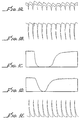
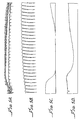
- the blocks produced were of long duration (several hours), showing little or no signs of recovery towards control levels (Fig 3). At the lowest levels of block produced, around 5%, the fastest recovery time observed was I hour. This compares with a 10-15 minute total duration of action of vecuronium on the tibialis muscle after intravenous injection (Fig 1).
- the block on the tibialis muscle developed later than that on the soleus muscle, and the blocks of the muscles began to wear off in 20 minutes in the tibialis muscle and 30 minutes for the soleus muscle.
- siamensis toxin-3 Two experiments were performed with siamensis toxin-3. In one experiment the first injection of toxin produced a small amount of block in the injected muscle, but there was some evidence of spillover into the general circulation as slight block was observed in the non-injected contralateral tibialis. Further injections showed marked evidence of spillover. In the second experiment siamensis toxin-3 produced no measurable effects at all despite repeated intramuscular injections into different areas of the muscle.
- Intramuscular injection of erabutoxin-b proved to be the most successful of any of the drugs tested. Most experiments were performed using this toxin alone, or in combination with vesamicol (see later section).
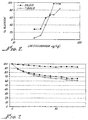
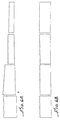
- erabutoxin-b In the experiments using erabutoxin-b alone, 0.2 mg of the toxin was injected. Stimulation rate was 0.1'Hz. In four experiments erabutoxin-b produced a very slow developing block in the injected muscle (Figs 6 and 7). There was no evidence of block in the contralateral tibialis muscle, indicating lack of significant spillover into the general circulation. The maximum level of neuromuscular block achieved ranged from 25-60% block. The maximum block was achieved in 11 ⁇ 2-2 hours and stabilized thereafter. In 3 of the cats the block was monitored for 4 hours after injection; in only one animal was there a small amount of recovery; in the other two the block showed no signs of recovering from its plateau level.
- erabutoxin-b The effects of intravenous erabutoxin-b were tested in one cat which had previously received two injections of erabutoxin-b into the same tibialis anterior muscle. Erabutoxin-b (0.2 mg i.v.) had no measurable effect on either the partially blocked previously injected muscle, or on the unaffected contralateral muscle; 0.5 mg erabutoxin-b i.v. produced complete block of both muscles with 5 minutes.
- Snake ⁇ -toxins are highly specific for acetylcholine receptors at the neuromuscular junction. It was therefore not surprising that no effects attributable to the toxin were observed on responses of tissues to autonomic stimulation. The lack of spillover into the general circulation would also be expected to be a contributing factor to the lack of autonomic actions.
- vesamicol (2-[4-phenylpiperidino] cyclohexanol), an inhibitor of acetylcholine storage by cholinergic synaptic vesicles, is that the action of the compound is highly frequency dependent.
- rapid stimulation in the presence of vesamicol leads to a depletion of stores of acetylcholine and the eventual failure of transmission.
- vesamicol at higher doses and in the few in vivo experiments that have been reported, possesses some other effects including postjunctional block and local anaesthetic activity; the two effects may be related.
- vesamicol The biphasic effect of vesamicol suggested that more than one mechanism was involved.
- One possibility was that the local anaesthetic effect of vesamicol was responsible for the rapid onset, relatively short duration block. This possibility was confirmed by the i.m. injection of lignocaine.
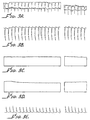
- lignocaine-(2 mg) produced an immediate, relatively short-lasting block with no spillover effect (Fig 8).
- Fig 8 There was no secondary slow onset of neuromuscular block. It is therefore concluded that the secondary, longer lasting neuromuscular block produced by vesamicol is likely to reflect the action of the compound on acetylcholine storage.
- the lack of secondary, slow block on the first injection probably indicates that, with this dose, acetylcholine release has not fallen below the threshold required for the endplate potentials to trigger muscle action potentials in all the fibres.
- erabutoxin-b was injected at 0.1 mg i.e. half the dose used in the previous experiments with erabutoxin-b alone. Only a very slight blocking action was seen in the injected muscle (Fig 11).
- Vesamicol (1 mg) was injected 20 minutes after the injection of erabutoxin-b, producing an 80-90% reduction of twitch tension (Fig 11). The block then plateaued for 30 minutes before recoveryw(Fig 11).
- a second injection of vesamicol (1 mg) produced almost identical effects. No evidence of spillover of the drugs into the general circulation was observed. The plateau phase of the neuromuscular block seen in this experiment was of interest.
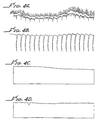
- erabutoxin-b produced an initial 10% drop in twitch tension immediately after injection, followed by a very gradual deepening of the block in the injected muscle to around 15% after 20 minutes (Figs 13 and 14).
- the first injection of vesamicol rapidly deepened the block to 40%, continued to slowly deepen to 45% over the next 10 minutes, and then to slowly recover.
- the second injection of vesamicol took place when the block had recovered almost to 40%.
- This secondary injection produced a less precipitous block than that of the first injection, the block reading 55% in 10 minutes before recovery commenced.
- Recovery from the effects of vesamicol proceeded for a further 20 minutes before the overall block began to re-develop, presumably due to the increasing effects or erabutoxin-b with time.
- the block then continued to deepen over the next 3 hours in the injected muscle.
- the anaesthetized cat model described appears to be a useful system for investigating neuromuscular block produced by intramuscularly injected drugs which are suitable in the administration of botulinum toxin as hereinabove described.
- the model has been used to show that local injections of reversible competitive neuromuscular blocking drugs (such as vecuronium) produce small effects which are not dose-related. Injections of larger doses of these drugs appear to lead to spillover of the compound into the general circulation.
- intramuscular injections of erabutoxin-b, an irreversible competitive nicotinic antagonist produced a slowly-developed and long-lasting neuromuscular block with no spillover into the general circulation.
- intramuscular injections of erabutoxin-b, an irreversible competitive nicotinic antagonist produced a slowly-developed and long-lasting neuromuscular block with no spillover into the general circulation.
- vesamicol an inhibitor of vesicular acetylcholine storage
Landscapes
- Health & Medical Sciences (AREA)
- Life Sciences & Earth Sciences (AREA)
- Engineering & Computer Science (AREA)
- Chemical & Material Sciences (AREA)
- Medicinal Chemistry (AREA)
- General Health & Medical Sciences (AREA)
- Bioinformatics & Cheminformatics (AREA)
- Immunology (AREA)
- Public Health (AREA)
- Pharmacology & Pharmacy (AREA)
- Animal Behavior & Ethology (AREA)
- Veterinary Medicine (AREA)
- Biomedical Technology (AREA)
- Organic Chemistry (AREA)
- Nuclear Medicine, Radiotherapy & Molecular Imaging (AREA)
- General Chemical & Material Sciences (AREA)
- Chemical Kinetics & Catalysis (AREA)
- Molecular Biology (AREA)
- Proteomics, Peptides & Aminoacids (AREA)
- Urology & Nephrology (AREA)
- Hematology (AREA)
- Cell Biology (AREA)
- Epidemiology (AREA)
- Gastroenterology & Hepatology (AREA)
- Toxicology (AREA)
- Neurology (AREA)
- Microbiology (AREA)
- Food Science & Technology (AREA)
- Marine Sciences & Fisheries (AREA)
- Tropical Medicine & Parasitology (AREA)
- Biotechnology (AREA)
- Physical Education & Sports Medicine (AREA)
- Pathology (AREA)
- Orthopedic Medicine & Surgery (AREA)
- General Physics & Mathematics (AREA)
- Zoology (AREA)
- Physics & Mathematics (AREA)
- Analytical Chemistry (AREA)
- Biochemistry (AREA)
- Pain & Pain Management (AREA)
Applications Claiming Priority (3)
| Application Number | Priority Date | Filing Date | Title |
|---|---|---|---|
| US619780 | 1996-03-20 | ||
| US08/619,780 US5721215A (en) | 1996-03-20 | 1996-03-20 | Injectable therapy for control of muscle spasms and pain related to muscle spasms |
| PCT/US1997/004643 WO1997034624A1 (en) | 1996-03-20 | 1997-03-20 | Injectable therapy for control of muscle spasms and pain related to muscle spasms |
Publications (2)
| Publication Number | Publication Date |
|---|---|
| EP0889731A1 EP0889731A1 (en) | 1999-01-13 |
| EP0889731B1 true EP0889731B1 (en) | 2004-11-24 |
Family
ID=24483270
Family Applications (1)
| Application Number | Title | Priority Date | Filing Date |
|---|---|---|---|
| EP97916168A Expired - Lifetime EP0889731B1 (en) | 1996-03-20 | 1997-03-20 | Injectable therapy for control of muscle spasms and pain related to muscle spasms |
Country Status (8)
| Country | Link |
|---|---|
| US (1) | US5721215A (enExample) |
| EP (1) | EP0889731B1 (enExample) |
| JP (2) | JP4053600B2 (enExample) |
| AU (1) | AU716374B2 (enExample) |
| CA (1) | CA2249196A1 (enExample) |
| DE (1) | DE69731736T2 (enExample) |
| ES (1) | ES2232864T3 (enExample) |
| WO (1) | WO1997034624A1 (enExample) |
Cited By (1)
| Publication number | Priority date | Publication date | Assignee | Title |
|---|---|---|---|---|
| US20230018920A1 (en) * | 2019-06-21 | 2023-01-19 | Fastox Pharma Sa | Composition modulating botulinum neurotoxin effect |
Families Citing this family (44)
| Publication number | Priority date | Publication date | Assignee | Title |
|---|---|---|---|---|
| GB9410871D0 (en) | 1994-05-31 | 1994-07-20 | Imperial College | Modification of tetanus toxin for use as a transport protein |
| EP0760681B1 (en) * | 1994-05-31 | 1999-09-01 | Allergan, Inc | Modification of clostridial toxins for use as transport proteins |
| US6780413B2 (en) | 1996-09-19 | 2004-08-24 | The United States Of America As Represented By The Department Of Health And Human Services | Immunotoxin (mAB-RICIN) for the treatment of focal movement disorders |
| WO1999027914A1 (en) * | 1997-11-27 | 1999-06-10 | Akzo Nobel N.V. | A pharmaceutical formulation of monoquaternary 2,16-bispiperidinylandrostane for intramuscular administration |
| AU3748499A (en) * | 1998-04-29 | 1999-11-16 | Allergan, Inc. | Compositions and methods for extending the action of clostridial neurotoxin |
| TW574036B (en) | 1998-09-11 | 2004-02-01 | Elan Pharm Inc | Stable liquid compositions of botulinum toxin |
| DE19856897A1 (de) | 1998-12-10 | 2000-06-15 | Biotecon Ges Fuer Biotechnologische Entwicklung & Consulting Mbh | Therapeutikum zur Unterdrückung von Schnarchgeräuschen |
| US6627632B2 (en) * | 1998-12-14 | 2003-09-30 | Cellegy Pharmaceuticals, Inc. | Compositions and methods for the treatment of anorectal disorders |
| US6113915A (en) * | 1999-10-12 | 2000-09-05 | Allergan Sales, Inc. | Methods for treating pain |
| US8632785B2 (en) * | 2000-02-08 | 2014-01-21 | Allergan, Inc. | Clostridial toxin pharmaceutical composition containing a gelatin fragment |
| CA2478621C (en) * | 2000-02-08 | 2006-11-21 | Allergan, Inc. | Botulinum toxin pharmaceutical compositions |
| US20060269575A1 (en) * | 2000-02-08 | 2006-11-30 | Allergan, Inc. | Botulinum toxin pharmaceutical compositions formulated with recombinant albumin |
| US7780967B2 (en) | 2000-02-08 | 2010-08-24 | Allergan, Inc. | Reduced toxicity Clostridial toxin pharmaceutical compositions |
| US20030118598A1 (en) * | 2000-02-08 | 2003-06-26 | Allergan, Inc. | Clostridial toxin pharmaceutical compositions |
| US6753315B2 (en) | 2000-02-24 | 2004-06-22 | Brown University Research Foundation | α-bungarotoxin molecules and uses thereof |
| US6464986B1 (en) | 2000-04-14 | 2002-10-15 | Allegan Sales, Inc. | Method for treating pain by peripheral administration of a neurotoxin |
| US6565870B1 (en) | 2000-04-28 | 2003-05-20 | Allergan, Inc. | Methods for treating bone tumors |
| US20040170665A1 (en) * | 2000-06-02 | 2004-09-02 | Allergan, Inc. | Intravitreal botulinum toxin implant |
| US7491799B2 (en) | 2000-07-21 | 2009-02-17 | Allergan, Inc. | Modified botulinum neurotoxins |
| US6903187B1 (en) * | 2000-07-21 | 2005-06-07 | Allergan, Inc. | Leucine-based motif and clostridial neurotoxins |
| US20040219619A1 (en) * | 2000-07-21 | 2004-11-04 | Ester Fernandez-Salas | Methods of identifying compounds that alter toxin persistence and/or protease activity |
| US7691983B2 (en) * | 2000-07-21 | 2010-04-06 | Allergan, Inc. | Chimera botulinum toxin type E |
| US6423319B1 (en) | 2000-10-04 | 2002-07-23 | Allergan Sales, Inc. | Methods for treating muscle injuries |
| US20020086036A1 (en) | 2000-12-05 | 2002-07-04 | Allergan Sales, Inc. | Methods for treating hyperhidrosis |
| US7255865B2 (en) * | 2000-12-05 | 2007-08-14 | Allergan, Inc. | Methods of administering botulinum toxin |
| ITUD20010002A1 (it) * | 2001-01-05 | 2002-07-05 | Univ Degli Studi Udine | Uso della tossina botulinica per la soluzione di patologie articolari, in particolare della coxartrosi, della epicondilite e della patolo |
| FR2820423B1 (fr) * | 2001-02-05 | 2005-12-02 | Assist Publ Hopitaux De Paris | Tartrate et phosphate de 3,4-diaminopyridine, compositions pharmaceutiques et utilisations |
| JP5331959B2 (ja) * | 2001-11-15 | 2013-10-30 | ファイトトックス リミテッド | 3,4−プロピノペルヒドロプリンを含む医薬組成物及び神経伝達遮断に対するその使用 |
| US20030224019A1 (en) * | 2002-03-01 | 2003-12-04 | O'brien Christopher | Methods of treating nerve entrapment syndromes |
| WO2004035011A2 (en) * | 2002-10-15 | 2004-04-29 | Allergan, Inc. | Botulinum toxin dental therapies and procedures |
| RU2257914C1 (ru) * | 2004-03-31 | 2005-08-10 | Государственное учреждение Межотраслевой научно-технический комплекс "Микрохирургия глаза" им. акад. С.Н. Федорова Министерства Здравоохранения Российской Федерации | Способ лечения паралитического косоглазия |
| CA2607206C (en) * | 2004-05-07 | 2016-06-14 | Phytotox Limited | Transdermal administration of phycotoxins |
| EP1824488B1 (en) * | 2004-05-07 | 2017-08-09 | Algenis SpA | Phycotoxins and uses thereof |
| ES2643507T3 (es) | 2012-03-12 | 2017-11-23 | William J. Binder | Tratamiento de las cefaleas por migraña con la neurotoxina presináptica |
| US8491917B1 (en) | 2012-03-12 | 2013-07-23 | William J. Bender | Treatment of migraine headache with diffusion of toxin in non-muscle related areas of the head |
| JP6336970B2 (ja) | 2012-05-30 | 2018-06-06 | プレジデント・アンド・フェロウズ・オブ・ハーバード・カレッジ | 操作されたボツリヌス神経毒素 |
| DK3274364T3 (da) | 2015-03-26 | 2021-10-18 | Harvard College | Modificeret botulinumneurotoksin |
| IL263058B2 (en) | 2016-06-08 | 2023-11-01 | Childrens Medical Center | Engineered botulinum neurotoxins |
| PT3481852T (pt) | 2016-07-08 | 2023-02-22 | Childrens Medical Center | Nova neurotoxina botulínica e seus derivados |
| JP7100020B2 (ja) | 2016-08-24 | 2022-07-12 | プレジデント・アンド・フェロウズ・オブ・ハーバード・カレッジ | 操作されたボツリヌス神経毒素 |
| JP2021500871A (ja) | 2017-09-29 | 2021-01-14 | ザ チルドレンズ メディカル センター コーポレーション | ニューロトキシン様トキシンおよびそれらの使用 |
| KR102088104B1 (ko) * | 2018-06-29 | 2020-03-11 | 호서대학교 산학협력단 | 개망초 꽃 에센셜 오일을 포함하는 신경 근육 관련 질환 예방 및 치료용 조성물 |
| WO2020163495A1 (en) * | 2019-02-06 | 2020-08-13 | Allergan, Inc. | Combination therapy using clostridial toxin derivative and at least one chemical depolarizing agent |
| CN114957482B (zh) | 2021-02-26 | 2024-09-24 | 重庆誉颜制药有限公司 | 一种经修饰的神经毒素的单链多肽及其用途 |
Family Cites Families (5)
| Publication number | Priority date | Publication date | Assignee | Title |
|---|---|---|---|---|
| US5183462A (en) * | 1990-08-21 | 1993-02-02 | Associated Synapse Biologics | Controlled administration of chemodenervating pharmaceuticals |
| US5401243A (en) * | 1990-08-21 | 1995-03-28 | Associated Synapse Biologics | Controlled administration of chemodenervating pharmaceuticals |
| AU6030494A (en) * | 1993-01-15 | 1994-08-15 | Associated Synapse Biologics | Method for treating myofascial pain syndrome |
| DE69435194D1 (de) * | 1993-12-28 | 2009-04-16 | Allergan Sales Inc | Verwendung von Botulinumtoxin Typ B zur Herstellung eines Medikaments zur Reduzierung von Schmerzen bedingt durch Muskelkrankheit |
| AU2431995A (en) * | 1994-05-09 | 1995-11-29 | William J. Binder | Method for reduction of headache pain |
-
1996
- 1996-03-20 US US08/619,780 patent/US5721215A/en not_active Expired - Lifetime
-
1997
- 1997-03-20 ES ES97916168T patent/ES2232864T3/es not_active Expired - Lifetime
- 1997-03-20 JP JP53375497A patent/JP4053600B2/ja not_active Expired - Lifetime
- 1997-03-20 CA CA002249196A patent/CA2249196A1/en not_active Abandoned
- 1997-03-20 AU AU23417/97A patent/AU716374B2/en not_active Ceased
- 1997-03-20 EP EP97916168A patent/EP0889731B1/en not_active Expired - Lifetime
- 1997-03-20 WO PCT/US1997/004643 patent/WO1997034624A1/en not_active Ceased
- 1997-03-20 DE DE69731736T patent/DE69731736T2/de not_active Expired - Fee Related
-
2007
- 2007-05-07 JP JP2007122169A patent/JP4861244B2/ja not_active Expired - Lifetime
Cited By (1)
| Publication number | Priority date | Publication date | Assignee | Title |
|---|---|---|---|---|
| US20230018920A1 (en) * | 2019-06-21 | 2023-01-19 | Fastox Pharma Sa | Composition modulating botulinum neurotoxin effect |
Also Published As
| Publication number | Publication date |
|---|---|
| JP4053600B2 (ja) | 2008-02-27 |
| JP2007197463A (ja) | 2007-08-09 |
| CA2249196A1 (en) | 1997-09-25 |
| JP4861244B2 (ja) | 2012-01-25 |
| AU716374B2 (en) | 2000-02-24 |
| DE69731736D1 (de) | 2004-12-30 |
| EP0889731A1 (en) | 1999-01-13 |
| ES2232864T3 (es) | 2005-06-01 |
| AU2341797A (en) | 1997-10-10 |
| DE69731736T2 (de) | 2005-12-08 |
| JP2000508629A (ja) | 2000-07-11 |
| US5721215A (en) | 1998-02-24 |
| WO1997034624A1 (en) | 1997-09-25 |
Similar Documents
| Publication | Publication Date | Title |
|---|---|---|
| US5721215A (en) | Injectable therapy for control of muscle spasms and pain related to muscle spasms | |
| Lacković et al. | Activity of botulinum toxin type A in cranial dura: implications for treatment of migraine and other headaches | |
| US6376467B1 (en) | Use of inhibitors of protein kinase C epsilon to treat pain | |
| Racette et al. | Botulinum toxin B reduces sialorrhea in parkinsonism | |
| Kramar et al. | The late consolidation of an aversive memory is promoted by VTA dopamine release in the dorsal hippocampus | |
| JP4214053B2 (ja) | 毒素効果の決定方法 | |
| Funauchi et al. | Effects of an inhibitor for calcium/calmodulin-dependent protein phosphatase, calcineurin, on induction of long-term potentiation in rat visual cortex | |
| Torii et al. | Quantitative determination of biological activity of botulinum toxins utilizing compound muscle action potentials (CMAP), and comparison of neuromuscular transmission blockage and muscle flaccidity among toxins | |
| Barmack et al. | Cholinergic projection to the dorsal cap of the inferior olive of the rat, rabbit, and monkey | |
| Fabris et al. | Facial neuromuscular junctions and brainstem nuclei are the target of tetanus neurotoxin in cephalic tetanus | |
| Counelis et al. | Bilateral subthalamic nucleus deep brain stimulation for advanced PD: correlation of intraoperative MER and postoperative MRI with neuropathological findings | |
| Scheff et al. | The properties, distribution and function of Na+–Ca2+ exchanger isoforms in rat cutaneous sensory neurons | |
| EP2085093A1 (en) | Preparation containing highly purified botulinum toxin type a derived from infant botulism pathogen | |
| Hicks et al. | Amino acids as the source of considerable excitation in cerebral cortex | |
| US20050163809A1 (en) | Remedy for hypermyotonia | |
| García‐Moreno et al. | Hypothyroidism and Parkinson's disease and the issue of diagnostic confusion | |
| Datta et al. | Protein kinase A in the pedunculopontine tegmental nucleus of rat contributes to regulation of rapid eye movement sleep | |
| CN116808171A (zh) | 一种多肽用于制备治疗创伤后应激障碍药物的应用 | |
| Postuma et al. | Dopa‐responsive dystonia presenting with prominent isolated bilateral resting leg tremor: Evidence for a role of parkin? | |
| Stivers et al. | Anatomical analysis of frontal cortex sites at which carbachol induces motor seizures in the rat | |
| Volle | On the mechanism of ganglionic blockade by methacholine | |
| Hayashi et al. | Efficacy of propranolol in hyperthyroid‐induced chorea: A case report | |
| Reeves et al. | Treatment of essential blepharospasm with quetiapine | |
| Molenaar | Physiology, Biochemistry, and Pathology of Neuromuscular Transmission | |
| Fernández‐Álvarez et al. | Hand tremor and orofacial dyskinesia: clinical manifestations of glutaric aciduria type I in a young girl |
Legal Events
| Date | Code | Title | Description |
|---|---|---|---|
| PUAI | Public reference made under article 153(3) epc to a published international application that has entered the european phase |
Free format text: ORIGINAL CODE: 0009012 |
|
| 17P | Request for examination filed |
Effective date: 19981020 |
|
| AK | Designated contracting states |
Kind code of ref document: A1 Designated state(s): DE ES FR GB IT |
|
| 17Q | First examination report despatched |
Effective date: 20011008 |
|
| RAP1 | Party data changed (applicant data changed or rights of an application transferred) |
Owner name: ALLERGAN, INC. |
|
| RIC1 | Information provided on ipc code assigned before grant |
Ipc: 7A 61P 43/00 - Ipc: 7A 61K 31/58 - Ipc: 7A 61K 31/445 - Ipc: 7A 61K 38/17 - Ipc: 7A 61K 38/16 A |
|
| GRAP | Despatch of communication of intention to grant a patent |
Free format text: ORIGINAL CODE: EPIDOSNIGR1 |
|
| GRAS | Grant fee paid |
Free format text: ORIGINAL CODE: EPIDOSNIGR3 |
|
| GRAA | (expected) grant |
Free format text: ORIGINAL CODE: 0009210 |
|
| AK | Designated contracting states |
Kind code of ref document: B1 Designated state(s): DE ES FR GB IT |
|
| REG | Reference to a national code |
Ref country code: GB Ref legal event code: FG4D |
|
| REF | Corresponds to: |
Ref document number: 69731736 Country of ref document: DE Date of ref document: 20041230 Kind code of ref document: P |
|
| REG | Reference to a national code |
Ref country code: ES Ref legal event code: FG2A Ref document number: 2232864 Country of ref document: ES Kind code of ref document: T3 |
|
| PLBE | No opposition filed within time limit |
Free format text: ORIGINAL CODE: 0009261 |
|
| STAA | Information on the status of an ep patent application or granted ep patent |
Free format text: STATUS: NO OPPOSITION FILED WITHIN TIME LIMIT |
|
| REG | Reference to a national code |
Ref country code: HK Ref legal event code: WD Ref document number: 1017848 Country of ref document: HK |
|
| 26N | No opposition filed |
Effective date: 20050825 |
|
| ET | Fr: translation filed | ||
| PGFP | Annual fee paid to national office [announced via postgrant information from national office to epo] |
Ref country code: ES Payment date: 20080326 Year of fee payment: 12 |
|
| PGFP | Annual fee paid to national office [announced via postgrant information from national office to epo] |
Ref country code: GB Payment date: 20080327 Year of fee payment: 12 |
|
| PGFP | Annual fee paid to national office [announced via postgrant information from national office to epo] |
Ref country code: FR Payment date: 20080317 Year of fee payment: 12 Ref country code: DE Payment date: 20080430 Year of fee payment: 12 |
|
| PGFP | Annual fee paid to national office [announced via postgrant information from national office to epo] |
Ref country code: IT Payment date: 20080328 Year of fee payment: 12 |
|
| GBPC | Gb: european patent ceased through non-payment of renewal fee |
Effective date: 20090320 |
|
| REG | Reference to a national code |
Ref country code: FR Ref legal event code: ST Effective date: 20091130 |
|
| PG25 | Lapsed in a contracting state [announced via postgrant information from national office to epo] |
Ref country code: DE Free format text: LAPSE BECAUSE OF NON-PAYMENT OF DUE FEES Effective date: 20091001 |
|
| PG25 | Lapsed in a contracting state [announced via postgrant information from national office to epo] |
Ref country code: GB Free format text: LAPSE BECAUSE OF NON-PAYMENT OF DUE FEES Effective date: 20090320 Ref country code: FR Free format text: LAPSE BECAUSE OF NON-PAYMENT OF DUE FEES Effective date: 20091123 |
|
| REG | Reference to a national code |
Ref country code: ES Ref legal event code: FD2A Effective date: 20090321 |
|
| PG25 | Lapsed in a contracting state [announced via postgrant information from national office to epo] |
Ref country code: ES Free format text: LAPSE BECAUSE OF NON-PAYMENT OF DUE FEES Effective date: 20090321 |
|
| PG25 | Lapsed in a contracting state [announced via postgrant information from national office to epo] |
Ref country code: IT Free format text: LAPSE BECAUSE OF NON-PAYMENT OF DUE FEES Effective date: 20090320 |