BACKGROUND
This invention relates to olefin polymerization processes and the
resultant polymer products.
Ultra high molecular weight olefin polymers such as polyethylene
are useful in many demanding and extremely critical applications, such as
human joint replacements, gears, bullet proof vests, skis, and other applications.
Since ultra high molecular weight the polymer cannot be pelletized after
leaving the reactor, the polymer must be sold as a fluff or a powder. Therefore,
particle size and toughness of the resultant polymer is critical.
Many commercial methods are available to produce olefin
polymers, such as polyethylene. One of the most economical routes to most
commercial grades of olefin polymers is a loop/slurry process with a paraffin
diluent wherein the polymerization process carried out at a temperature low
enough that the resulting polymer is largely insoluble in the diluent. It is
believed that commercially acceptable ultra high molecular weight
polyethylenes traditionally are made using a stirred tank process, in a heavy
hydrocarbon diluent.
SUMMARY OF THE INVENTION
It is an object of this invention to provide a very tough ultra high
molecular weight polyethylene.
It is a further object of this invention to provide an improved
olefin polymerization process.
It is yet another object of this invention to provide an improved
polymerization process for preparing ultra high molecular weight polyethylene.
In accordance with this invention, a process is provided to
polymerize ethylene in a loop/slurry process using a Ziegler/Natta-type catalyst
system to produce a very tough ultra high molecular weight polyethylene.
In accordance with another embodiment of this invention, a very
tough, ultra high molecular weight polyethylene is provided.
DESCRIPTION OF THE DRAWINGS
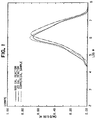
FIG. 1 shows three (3) molecular weight distributions obtained
from size exclusion chromatography (SEC) of three different polyethylene
samples. "UHMWPE" designates ultra high molecular weight polyethylene.
The x-axis, labeled "LOG M", is the log of the polyethylene molecular weight.
The y-axis, labeled "DW/D(LOG M)", is the differential mass fraction. Two
curves, designated as "600 Gallon Reactor"and "23 Gallon Reactor", are curves
of ethylene homopolymers prepared in accordance with the novel, inventive
process. The third curve, designated as "Commercial Sample," is a
commercially available polyethylene, GUR 4150 made by Hoechst Celanese
USA.
DESCRIPTION OF THE PREFERRED EMBODIMENTS
Catalyst System
Generally, the catalyst system used in the present invention must
be a titanium-containing catalyst system, commonly referred to as "Ziegler-Natta"
catalysts. Commercially available titanium catalyst systems typically
comprise complexes of titanium halides with organometallic compounds, such
as aluminum alkyls. Exemplary magnesium/titanium catalyst systems include,
but are not limited to, those disclosed in U.S. Patent No.'s 4,394,291;
4,326,988; and 4,347,158, herein incorporated by reference.
Preferably, the catalyst system is a titanium-containing catalyst
and is deposited on an inorganic oxide support. As used in this disclosure, the
term "support" refers to a carrier for another catalytic component. Any support
useful to support catalyst systems can be used. Exemplary catalyst supports
include, but are not limited to, inorganic oxides, either alone or in combination,
phosphated inorganic oxides, and mixtures thereof. Particularly preferred are
supports selected from the group consisting of silica, silica-alumina, alumina,
fluorided alumina, silated alumina, thoria, aluminophosphate, aluminum
phosphate, phosphated silica, phosphated alumina, silica-titania, coprecipitated
silica/titania, fluorided/silated alumina, and mixtures thereof. Preferably, the
catalyst system support comprises silica, titania, alumina, either alone or in
combination and either modified or unmodified.
The presently most preferred catalyst system support is a silica-containing
support. As used in this application, the reference to silica means a
silica-containing material generally composed of 80 to 100 weight percent
silica, the remainder, if any, being selected from alumina, boria, magnesia,
thoria, zirconia, or mixtures thereof. For instance, the silica-containing material
can consist essentially of silica and no more than 20 weight percent of alumina,
titania or other metal oxide. Other ingredients which do not adversely affect
the catalyst system, or which are present to produce some unrelated result, also
can be present.
As stated previously, the particle size of the polymer fluff is
critical. In accordance with this invention, it has been found that a correct
selection of particle size of the catalyst system particles can control the particle
size of the resultant polymer fluff. Usually, catalyst system particles are within
a range of about 1 to about 40 microns, preferably within a range of about 2 to
about 20 microns. Most preferably, in order to have a correctly sized polymer
product, catalyst particles are kept within a size range of about 4 to about 16
microns.
Titanium usually is present in the catalyst system in an amount
within a range of about 0.01 to about 5 weight percent, preferably within a
range of about 0.1 to about 2.5 weight percent, based on the total mass of the
catalyst system (support plus titanium compound). Most preferably, titanium is
present in the catalyst system in an amount within a range of 0.2 to 1 weight
percent based on the total mass of the catalyst system for best catalyst system
activity and productivity, as well as best polymer product particle size.
The titanium-containing catalyst is combined, preferably in the
reactor, with an aluminum alkyl cocatalyst, expressed by the general formulae
AlR3, AlR2X, and/or AlRX2, wherein R is an alkyl group having from about 1
to about 12 carbon atoms per molecule and X is a halogen atom. Exemplary
aluminum alkyl cocatalysts include, but are not limited to triethylaluminum
(TEA), triisobutyl aluminum (TIBAL), diethylaluminum chloride (DEAC),
ethylaluminum sesquichloride (EASC), and mixtures of two or more thereof.
Preferably, the cocatalyst is a trialkyl aluminum cocatalyst, such as TEA,
TIBAL and mixtures thereof for best catalyst system activity and reactivity.
If used, a cocatalyst can be present in the reactor in an amount
within a range of about 5 to about 500 mg/kg (ppm), based on the weight of
diluent, such as isobutane in the reactor. Preferably, a cocatalyst, if used is
present in the reactor in an amount within a range of about 50 to about 100
mg/kg in order to optimize catalyst activity and productivity. Precontacting
catalyst and cocatalyst can occur, but is not required. While not wishing to be
bound by theory, it is believed that precontacting catalyst system and cocatalyst
can reduce the quantity of cocatalyst used in the reactor.
Reactants
The polymers produced in accordance with the process of this
invention are predominately homopolymers of ethylene. Trace amounts of
comonomers can be present, but comonomers preferably are not present in any
significant amount since comonomers can reduce the molecular weight of the
desired ultra high molecular weight polymer product. Preferably, the ethylene
concentration in the polymerization reactor is within a range of from about 2
weight percent to about 15 weight percent, based on the total liquid contents of
the reactor. Most preferably, the ethylene concentration in the polymerization
reactor is within a range of from about 4 to about 7 weight percent. While
ethylene concentration does not significantly affect the molecular weight of the
resultant polymer, higher or lower ethylene concentration can effect catalyst
activity.
Polymerization Process
Polymerization of the monomer must be carried out under
loop/slurry, also known as particle form, polymerization conditions wherein the
temperature is kept below the temperature at which polymer swells. Such
polymerization techniques are well known in the art and are disclosed, for
instance, in Norwood, U.S. Patent No. 3,248,179, the disclosure of which is
herein incorporated by reference. A loop polymerization process is much more
preferred than a stirred tank reactor because diluent can be flashed off,
eliminating the necessity of separating polymer product from solvent, greater
heat transfer surface of the loop reactor, much more versatility for plant
operation, and often less polymer swelling during polymerization.
The temperature of the polymerization reactor, or reaction zone,
according to this invention, is critical and must be kept within a range of about
150°F to about 180°F, preferably within a range of about 160° to about 170°F.
Most preferably, the reaction zone temperature is within a range of 162° to
168°F. The temperature range is critical in order to produce an ultra high
molecular weight polyethylene. Too high of a reactor temperature can produce
a polymer with too low of a molecular weight; too low of a reactor temperature
can make the polymerization process inoperable because a lower reactor
temperature can be difficult to maintain due to the exothermic polymerization
reaction, flashing off reactor diluent can be difficult, and a can produce a
polymer with a commercially unacceptable molecular weight.
The loop/slurry process used in this invention must be carried out
in an inert diluent (medium), selected from the group consisting of
hydrocarbons having three and four carbon atoms per molecule. Exemplary
diluents include, but are not limited to propane, n-butane, isobutane, and
mixtures thereof. Diluents having greater or less than three or four carbon
atoms per molecule can be difficult to separate from the polymer product
during the polymer recovery process. Isobutane is the most preferred diluent
due to low cost and ease of use.
Pressures in the loop/slurry process can vary from about 110 to
about 1000 psia (0.76-4.8 MPa) or higher, preferably 500 to 700 psia. The
catalyst system is kept in suspension and is contacted with ethylene at a
sufficient pressure to maintain the medium and at least a portion of the ethylene
in a liquid phase. The reactor medium and temperature thus are selected such
that the polymer is produced and recovered as solid particles. Catalyst system
concentrations in the reactor can be such that the catalyst system content ranges
from 0.0001 to about 0.1 weight percent based, on the weight of the reactor
contents.
Hydrogen never is added to the polymerization reactor because
hydrogen has too great of an effect on the molecular weight of the resultant
polymer.
Products
Polymers produced in accordance with this invention are
considered a homopolymer of ethylene, even though trace, insignificant
amounts of comonomers can be present in the resultant polymer. Polymers
produced according to this invention have an ultra high weight average (Mw)
molecular weight, generally above one million (1,000,000). Preferably,
polymers produced in accordance with this invention have a molecular weight
within a range of greater than about two million (2,000,000) and most
preferably, within a range of greater than or equal to about 2,500,000 up to
about 10,000,000.
Since the molecular weight of these polymers is so high, the
polymers will exhibit a value of zero (0) for both the melt index (MI) and high
load melt index (HLMI). The inherent viscosity (IV) of the polymers generally
is greater than about 19, preferably within a range of about 20 to about 30.
Most preferably, the polymers will have an IV within a range of 22 to 28.
The density of these novel polymers usually is within a range of
about 0.92 g/cc to about 0.94 g/cc, preferably from about 0.925 to about 0.936
g/cc. Most preferably, the polymer density is within a range of about 0.927 to
about 0.933 g/cc.
Another critical, defining physical characteristic of these
polymers is the fluff, or powder, size. Usually, the particle size is less than
about 400 microns (40 mesh), preferably within a range of about 400 microns
to about 40 microns (300 mesh). Most preferably, the particle size is within a
range of about 50 to about 400 microns. Particle sizes of larger that about 400
microns often can appear in the in the finished product as a flaw, or a white
patch. While not wishing to be bound by theory, it is believed that this defect
appears because the particles are not molded by typical methods in the art, but
are merely fused together by compression. Fine, or small, particles can inhibit
transport of the powder through conveyor blowers because the fine particles
can cling to walls by static and can plug downstream filters due to blowover.
Polymers produced according to this invention must be very
tough, as evidenced by a sand wheel abrasion test, tensile strength, elongation,
flexural modulus, hardness and Izod impact strength. The most important of
these tests is the sand wheel abrasion test wherein a plaque of compression
molded polymer is subjected to sanding and the amount of polymer lost is
measured. Generally, the compression molded polymer sample loss is less than
or equal to about 150 grams, preferably, less than about 140 grams. Most
preferably, the compression molded polymer sample loses between zero (0) and
125 grams.
Polymer tensile strength at yield is within a range of about 15 to
about 30 MPa, preferably, within a range of about 19 to about 24 MPa. Most
preferably, as an indicator of toughness, the tensile strength at yield is within a
range of 20 to 24 MPa. Tensile strength at break usually is greater or equal to
about 30 MPa, preferably greater than about 35 MPa. Most preferably, as an
indicator of toughness, the tensile strength at break is greater than 38 and less
than 75 MPa.
Izod impact usually is greater or equal to about 45 kJ/m2,
preferably greater than about 50 kJ/m2. Most preferably, as another indicator
of toughness, the Izod impact is within a range of about 55 to about 200 kJ/m2.
Izod impact is not only related to the polymer itself, but also is an indicator of
how well the polymer particles fuse, or knit, together during the fusion process.
Polymers having too high a molecular weight can have poor Izod impact
strength because of poor fusion. Thus, Izod impact strength often can go
through a maximum as molecular weight is increased.
Another critical property of these novel, ultra high molecular
weight polymers include physical appearance, such as cleanliness and
whiteness. High bulk density also is important because bulk density is related
to the amount of compression of the polymer during fusion. A low bulk density
can inhibit and slow down processing rates. Generally, polymers produced in
accordance with this invention have a bulk density of greater than about 0.25
g/cc, preferably, greater than about 0.3 g/cc. Most preferably, polymer bulk
density is within a range of 0.35 to 1 g/cc.
A further understanding of the present invention and its
advantages are provided by reference to the following examples.
EXAMPLES
Example 1
Ethylene homopolymers were prepared in a continuous particle
form process by contacting the catalyst with ethylene, employing a liquid full
loop reactor, having a volume of 23 gallons (87 liters), isobutane as the diluent;
no hydrogen or comonomer were added to the reactor. The reactor was
operated to have a residence time of 1.25 hrs. The reactor temperature was
164°F (73.3°C), unless stated differently, and the pressure was 4 MPa (580 psi).
At steady state conditions, the isobutane feed rate was 46 l/hr, the ethylene feed
rate was about 30 lbs/hr, with a reactor ethylene concentration within a range of
about 3.5 to about 5 weight percent. Polymer was removed from the reactor at
the rate of 22 lbs/hr. The catalyst systems used were commercially available
catalyst systems purchased from W.R. Grace and Company, the Davison
business unit, designated as Davison Sylopol® 5910, having an average particle
size of 10 microns. Sales literature for Sylopol® 5910 provides a chemical
analysis (weight percent) of 15.16% Cl, 4.44% Al, 2.95% Mg, 0.60% Ti and a
Mg/Ti molar ratio of 9.69. Generally, the catalyst system is a silica-supported
Ziegler-Natta catalyst, also described as a Ziegler-Natta catalyst deposited on
silica. Triethyl aluminum (TEA) cocatalyst was present in the reactor at 50
mg/kg, based on the weight of the isobutane feed.
Polymer product was collected from each run and passed through
a 40 mesh (400 micron ) screen to remove large particles. The sieved product
was blended with 0.4 weight percent, based on the weight of polymer, calcium
stearate (Ca St) by tumbling. Sieved and CaSt blended samples were
compression molded and tested according to the following procedures:
Polymer properties are given in Table 1.
| Property | Result |
| Density, g/cc | 0.931 |
| Bulk Density, lbs/ft3 | 24 |
| Tensile Strength, Yield, MPa | 22.4 ± 0.3 |
| Tensile Strength, Break, MPa | 43.7 ± 1.0 |
| Elongation, % | 232 ± 5 |
| Izod Impact, kJ/m2 | 59 ± 3 |
| Tensile Impact, kJ/m2 | 2545 ± 82 |
| Flexural Modulus, MPa | 727 ± 26 |
| Sand Wheel Abrasion | 90 ± 7 |
| Shore D Hardness | 70 |
The data in Table 1 show that the resultant polymer has desirable
properties, such as a low bulk density, high tensile strength and a low sand
wheel abrasion test result.
Example 2
Polymer was prepared as described in Example 1, but ethylene
concentration in the reactor was varied from about 2 weight percent to about 8
weight percent. All other variable remained constant. The results are given in
Table 2.
| Effect of Ethylene Concentration |
| Run | 201 | 202 | 203 | 204 |
| Ethylene Conc: (wt%) | 2.2 | 4.75 | 6.7 | 7.25 |
| Density (g/cc) | 0.9317 | 0.9312 | 0.9308 | 0.9311 |
| Bulk Density (lbs/ft3) | 25.6 | 24.2 | 24.2 | 24.2 |
| Avg Particle Size (microns) | 165 | 247 | 251 | 279 |
| Finer than 100 mesh (wt%) | 58 | 41 | 37 | 30.3 |
| Finer than 200 mesh (wt%) | 29 | 15.8 | 15.7 | 10.1 |
| Larger than 35 mesh (wt%) | 1.6 | 7.7 | 7.7 | 8.7 |
| Activity (ppm Ti) | 1.1 | 0.8 | 0.5 | 0.5 |
The data in Table 2 show that ethylene concentration in the
reactor does not affect polymer molecular weight, as evidenced by density and
bulk density. However, the polymer particle size varied significantly. The data
demonstrate that as ethylene concentration increased, the catalyst became more
active and larger polymer particles were produced, as evidenced by particle size
distribution measurements. Thus, ethylene concentration can be used to control
polymer particle size.
Size exclusion chromatograph (SEC) results are shown in Figure
1. The curve designated as "23 Gallon Reactor" is exemplary for all products
made in the above-described 23 gallon reactor. All 23 gallon reactor samples
analyzed by SEC have a weight average molecular weight (Mw) of greater than
or equal to about 3,000,000.
Example 3
Another run was made, under similar conditions to those
described in Example 1. The same catalyst system described in Examples 1 and
2 was used in Runs 301-307; the catalyst system used in Runs 311-313 was
similar to the catalyst system described in Examples 1 and 2, but the particle
size was between 4 and 16 microns; the catalyst system used in Runs 321-326
was similar to the catalyst system described in Examples 1 and 2, but the
particle size was between 4 and 16 microns and the titanium level was
decreased to make the catalyst less active. Ethylene concentration, again, was
varied between 0.65 and 10 weight percent and no hydrogen was introduced.
Reactor temperatures were about 164°F, unless stated differently. The results
of these runs are given below in Tables 3, 4 and 5.
| Effect of Ethylene Concentration with Sylopol® 5910 |
| Run | 301 | 302 | 303 | 304 | 305 | 306 | 307 |
| Ethylene Conc: (wt%) | 0.65 | 2.0 | 2.5 | 3.8 | 4.9 | 7.5 | 8.9 |
| Density (g/cc) | 0.9327 | 0.9316 | 0.9318 | 0.9308 | 0.9310 | 0.9310 | 0.9308 |
| Bulk Density (lbs/ft3) | 23.4 | 25.2 | 24.2 | 25.6 | 24.5 | 23.4 | 24.2 |
| Avg Particle Size (microns) | 81 | 140 | 172 | 156 | 193 | 257 | 226 |
| Finer than 100 mesh (wt%) | 87.0 | 80.0 | 65.3 | 60.5 | 69.7 | 44.1 | 48.5 |
| Finder than 200 mesh (wt%) | 69.0 | 29.4 | 23.6 | 29.6 | 16.8 | 9.7 | 10.3 |
| Larger than 35 mesh (wt%) | 0.32 | 0.9 | 1.89 | 1.61 | 4.0 | 8.0 | 3.8 |
| Activity (ppm Ti) | 9.7 | 2.2 | 1.3 | 1.0 | 0.6 | 0.4 | 0.4 |
| Effect of Ethylene Concentration with Specifically Tailored
Catalyst (4-16 Micron and Low Titanium) |
| Run | 311 | 312 | 313 |
| Ethylene Conc: (wt %) | 4.5 | 6.9 | 10.6 |
| Density (g/cc) | 0.9320 | 0.9319 | 0.9319 |
| Bulk Density (lbs/ft3) | 26.3 | 26.6 | 25.2 |
| Avg Particle Size (microns) | 164 | 220 | 163 |
| Finer than 100 mesh (wt%) | 66.6 | 31.5 | 65.6 |
| Finer than 200 mesh (wt%) | 6.9 | 7.6 | 7.6 |
| Larger than 35 mesh (wt%) | 0.54 | 1.39 | 0.68 |
| Activity (ppm Ti) | 1.2 | 0.6 | 0.9 |
| Effect of Reactor Temperature |
| Run | 321 | 322 | 323 | 324 | 325 | 326 |
| Ethylene Cone: (wt %) | 4.5 | 4.0 | 3.4 | 3.4 | 4.5 | 5.3 |
| Temperature °F | 164 | 174 | 185 | 205 | 220 | 225 |
| Density (g/cc) | 0.9322 | 0.9339 | 0.9378 | 0.9412 | 0.9433 | 0.9435 |
| Bulk Density (lbs/ft3) | 27.0 | 25.9 | 26.6 | 27.0 | 28.5 | 28.8 |
| Avg. Particle Size (microns) | 199 | 206 | 245 | 263 | 266 | 267 |
| Particles finer than 100 mesh (%) | 34 | 30 | 22 | 13.5 | 13 | 17 |
| Particles finer than 200 mesh (%) | 8.1 | 6.6 | 4.2 | 2.3 | 2.8 | 3.6 |
| Particles larger than 35 mesh (%) | 0.43 | 0.38 | 1.25 | 0.48 | 0.58 | 1.85 |
| Activity (ppm Ti) | 0.8 | 0.7 | 0.4 | 0.2 | 0.2 | 0.4 |
The data in Table 3 demonstrate the effects of ethylene
concentration on polymer density, bulk density and average polymer particle
size.
The data is Table 4 show that the effect of ethylene concentration
with a catalyst system having a particle size within a range of 4 to 16 microns
and low titanium content.
The data in Table 5 show the effect of reactor temperature and
that higher temperatures can increase polymer density.
Example 4
Ethylene homopolymers were prepared in a continuous particle
form process by contacting the catalyst with ethylene, as described above, but a
larger reactor was used. The liquid full loop reactor had a volume of 600
gallons (2271 liters), isobutane was the diluent; no hydrogen or comonomer
were added to the reactor. The reactor was operated to have a residence time of
about 1.25 hrs. The reactor temperature was 164°F (73.3°C), unless stated
differently, and the pressure was 4.14 MPa (600 psi). Polymer was removed
from the reactor at the rate of 800 to 1000 lbs/hr. The catalyst systems used
were the same as those described above, Davison Sylopol® 5910. Triethyl
aluminum (TEA) cocatalyst was present in the reactor at 75 mg/kg, based on
the weight of the isobutane feed.
Polymer product was collected from each run and treated as
described above. Polymer product then was analyzed for physical properties,
however sample preparation was different than described above. For Runs
401-403, a polymer plaque was prepared by pressing 460 grams of polymer at
420°F for 60 minutes, then cooling for 30 minutes, all at 1000 psi. Intrinsic
viscosity (IV) was determined as described above. The results of the analyses
are listed below in Table 6.
| Ultrahigh Molecular Weight Polyethylene Properties |
| Property | Run 401 | Run 402 | Run 403 | Commercial Sample A | Commercial Sample B |
| Density, g/cc | 0.932 | 0.932 | 0.931 | 0.932 | 0.929 |
| Tensile Strength, Yield, MPa | 21.2 | 20.0 | 19.8 | 22 | 20.4 |
| Tensile Strength, Break, MPa | 36.4 | 34.6 | 35.0 | 41.7 | 39.9 |
| Elongation, % | 240 | 228 | 211 | 287 | 345 |
| Izod Impact, kJ/m2 | 59 | 63 | 50 | 55.3 | 90.6 |
| Tensile Impact, kJ/m2 | 2334 | 2290 | 2283 | 1890 | 2400 |
| Flexural Modulus, MPa | 770 | 804 | 772 | 712 | 606 |
| Flexural Strength, MPa | 770 | 804 | 772 | 712 | 606 |
| Sand Wheel Abrasion | 107 | 107 | 108 | 106 | 96 |
| IV, 1st analysis | 23.7 | 25.1 | 24.4 | N/A | N/A |
| IV, 2d analysis | 24.9 | 23.7 | 24.3 | N/A | N/A |
| IV, average | 23.2 | 19.7 | 21.4 | 28 | 27 |
| N/A = not available |
The data in Table 6 shows that polymers produced in accordance
with the invention have high inherent viscosity (IV) values and are polymers of
ethylene having ultrahigh molecular weights.
Size exclusion chromatography (SEC) results are shown in Figure
I. The curve designated as "600 Gallon Reactor" is exemplary for all products
made in the above-described 600 gallon reactor. All 600 gallon reactor samples
analyzed by SEC have a weight average molecular weight (Mw) of greater than
or equal to about 2,500,000. Note that the curve designated as a "Commercial
Sample" had a similar SEC curve as that of the 600 gallon reactor sample.
While this invention has been described in detail for the purpose
of illustration, it is not to be construed as limited thereby but is intended to
cover all changes and modifications within the spirit and scope thereof.