EP0877817B1 - A procedure for large-scale production of astaxanthin from haematococcus - Google Patents
A procedure for large-scale production of astaxanthin from haematococcus Download PDFInfo
- Publication number
- EP0877817B1 EP0877817B1 EP97901245A EP97901245A EP0877817B1 EP 0877817 B1 EP0877817 B1 EP 0877817B1 EP 97901245 A EP97901245 A EP 97901245A EP 97901245 A EP97901245 A EP 97901245A EP 0877817 B1 EP0877817 B1 EP 0877817B1
- Authority
- EP
- European Patent Office
- Prior art keywords
- cells
- haematococcus
- astaxanthin
- process according
- conditions
- Prior art date
- Legal status (The legal status is an assumption and is not a legal conclusion. Google has not performed a legal analysis and makes no representation as to the accuracy of the status listed.)
- Expired - Lifetime
Links
Images
Classifications
-
- C—CHEMISTRY; METALLURGY
- C12—BIOCHEMISTRY; BEER; SPIRITS; WINE; VINEGAR; MICROBIOLOGY; ENZYMOLOGY; MUTATION OR GENETIC ENGINEERING
- C12P—FERMENTATION OR ENZYME-USING PROCESSES TO SYNTHESISE A DESIRED CHEMICAL COMPOUND OR COMPOSITION OR TO SEPARATE OPTICAL ISOMERS FROM A RACEMIC MIXTURE
- C12P23/00—Preparation of compounds containing a cyclohexene ring having an unsaturated side chain containing at least ten carbon atoms bound by conjugated double bonds, e.g. carotenes
Definitions
- the present invention concerns a process for cultivating Haematococcus cells for the large-scale production of astaxanthin.
- the present invention also relates to a process for the large-scale production of astaxanthin-enriched Haematococcus cells.
- Haematococcus is a group of green microalgae which are able to accumulate a large amount of a keto-carotenoid, astaxanthin, under certain environmental conditions (Boussiba et aL 1992). Astaxanthin is the major pigment imparting the red-pinkish color of salmon, trout and shrimp, whose prices are largely determined by their color.
- the major commercially available source of astaxanthin is in the form of a synthetic product, which is expensive (>US$3,000 per kilogram) and may contain astaxanthin compounds having an unnatural configuration.
- H. pluvialis has a unique life cycle comprising two stages: a green, motile, vegetative stage in which the cells continuously divide and synthesize chlorophyll and a red, non-motile resting stage (cyst) in which cell division stops, chlorophyll content remains constant and astaxanthin content and cellular dry weight continuously increase.
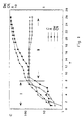
- Fig. 1 depicts graphically the relationship between four parameters of the growth of H. pluvialis , namely, chlorophyll, astaxanthin, dry weight and cell number.
- the optimal environmental and nutritional conditions required for these two stages are quite different. For vegetative growth, full nutrient medium, moderate light intensity and adequate temperature and pH are essential.
- the known processes suffer from a number of drawbacks, including the need for expensive growth media, apparatuses, use of sterile equipment and media and/or the use of expensive antibiotics or other anti-microbial agents to prevent contamination of the desired Haematococcus cultures by other microorganisms such as other microalgae, fungi, yeasts and bacteria.
- Such processes are expensive and time-consuming to perform, and they also do not always provide a high yield of Haematococcus cells and/or of astaxanthin in the cultivated cells.
- a new two-phase cultivating process for the large growth of Haematococcus cells for the purposes of large-scale astaxanthin production has been developed.
- a new process for the large-scale production of astaxanthin-enriched Haematococcus cells has been developed which utilizes the aforesaid two-phase cultivating process for cultivating Haematococcus cells.
- the first phase provides for the maintenance of optimal vegetative growth of the cells under controlled environmental conditions.
- This first stage or phase is characterized by the cells having continuous cell division, and astaxanthin/chlorophyll ratio between about 0.1 to 0.4 and an increase in chlorophyll content during the cultivation process, this being indicative of optimal Haematococcus cell growth.
- the results obtained in accordance with the present invention indicate that the production rate of cells grown under the conditions of this first phase was about 0.5 to 0.7 gr cells/l culture/day.
- astaxanthin induction and accumulation within the cells was achieved by collecting the cells from the above green cell culture and subjecting them to stress by nutrient deprivation by re-suspending the cells in tap water enriched with CO 2 , followed by cultivation of the cells under exposure to full sunlight. It was found in accordance with the present invention that under these conditions of stress, encystment is rapid and that the cultivational duration usually lasts no longer than five to six days for the obtention of axtaxanthin-enriched red cells.
- the rate of biomass production was found to range between about 0.3 to 0.4 gr cells/l culture/day, and the amount of astaxanthin within the cells being about 3 to 5%, as determined from the dry biomass of cells collected and dried following the second phase of culture. It should be noted that heretofore no cultivation process has succeeded in providing Haematococcus cells in which the enrichedment of axtaxanthin is at such high levels, the previously known procedures having provided cells with up to about 2% astaxanthin.
- the present invention provides:
- a process for cultivating Haematococcus cells for the large scale production of axtaxanthin-enriched Haematococcus cells comprising:
- Fig. 1 depicts graphically the previously determined relationship between four parameters of growth of Haematococcus pluvialis: chlorophyll (open diamonds) astaxanthin (solid diamonds), dry weight of cells (solid circles), and cell number (open circles). These four parameters are depicted for the first, vegetative or “green” stage of cell growth and for the second "red” stage of growth in which astaxanthin accumulates. These four parameters are shown in the form of their relative amounts as a function of the duration of cell growth (time in days).
- C-A indicates the content of chlorophyll (open diamonds) or astaxanthin (solid diamonds), in mg•L -1 , "T” indicates the time (days), Dw is the dry weight (solid circles), “CN” is the cell number (X10 6 •ml -1 ) (open circles), “i” indicates the first stage, and “II” the second stage, of cell growth.
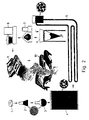
- Fig. 2 is a schematic flow-chart of the processes of the invention wherein Haematococcus cells are prepared for large-scale cultivation by first growing them on agar plates or slants (1), followed by growth in successively large liquid cultures (2), (3) and inoculation of cultures from (3) into a photobioreactor of the vertical panel type (4) to facilitate large-scale vegetative or "green” cell growth under controlled conditions.
- the astaxanthin induction and acclunulation is by inoculating cells from the photobioreactor (4) into another photobioreactor of the tubular photobioreactor type (5) under conditions of stress (nutrient depletion and higher light intensity) favorable for astaxanthin induction.
- the processing of the astaxanthin-enriched cells is provided by collection of cells from the photobioreactor of (5) and subjecting them to sedimentation in a funnel (6) followed by centrifugation (7) of the sedimented cells to provide a concentrated cell pellet which is ground under cryogenic conditions in an impact mill (8) to yield an astaxanthin-enriched product.
- the astaxanthin-enriched product from (8) can then be introduced as an ingredient for fish food (9) for various kinds of commercially important fish, for example, salmon, trout, shrimps, etc. (10).
- the above processes are described hereinbelow in detail in the exemplified embodiment of the invention.
- the present invention concerns processes for the cultivation of Haematococcus cells for large-scale production of astaxanthin-enriched Haematococcus cells; and for the large-scale production of astaxanthin-enriched cells employing such a cultivation process.
- any of a number of strains of Haematococcus may be employed, for example, strains such as those shown in Table I below.
- Haematococcus Strains & Species Strains & Species Source H. pluvialis flotow CCAG. Gottingen H. pluvialis fiotow NIES Tsukuba. Japan H. lacustris UTEX 16 CCAT. USA H. pluvialis flotow ETTL 1958/3 Ceska republika H. pluvialis Flo-TAKAOOVA 1983/1 Same as above H. Droecbkensis CCAP 43/2G CCAP, UK H. pluvialis Flo. 1844 em. Willie K-0084 SCCAP. Denmark
- the above strains are well documented in the art.
- the preferred strain in accordance with the invention is the strain exemplified herein below, H. pluvialis Flo. (K-0084), which has amongst its characteristics a very low tendency to clump, making it particularly useful for large-scale cultures.
- the preferred procedure is that of sedimentation in a funnel, of the collected red cells by virtue of their tendency to sediment, followed by centrifugation or filtration under vacuum to further concentrate the cells and drying of the concentrated cells.
- the dried cell mass is then preferably stored at very low temperatures (e.g., -80°C or even lower) under oxygen-free conditions, e.g., by vacuum packing, or preferably, by introduction into plastic bags or the like together with nitrogen (N 2 ) to remove the oxygen.
- the final stage of producing an astaxanthin-enriched product in the form of small particles easily digested by fish may also be carried out in a number of ways as previously described in the art (for example, WO 89/06910).
- the preferred procedure is the one exemplified hereinbelow, which involves the use of a standard impact mill in which the dried cell mass is ground under cryogenic conditions in the presence of any suitable anti-oxidant to prevent oxidation of the astaxanthin-enriched product. This yields a powder-like product of small particle size particularly useful as an additive to fish meal, these small astaxanthin-rich particles being easily digested.
- the procedure for cultivating the astaxanthin producing strains of Haematococcus in accordance with the present invention consists of two phases, Phase I and Phase II:
- Phase I Cultivation of Haematococcus strains under controlled environmental conditions for optimal growth of Haematococcus strains in their so-called "green stage" of growth .
- a preferred Haematococcus strain, Haematococcus pluvialis Flo. (Strain No. K-0084) was obtained from the Scandinavia Culture Center for Algae and Protozoa, University of Copenhagen, Denmark, and was grown in a growth medium that was a Modified BG-11 medium containing:
- Basal medium was usually mixed with the Modified BG-11 medium for optimal growth of the Haematococcus strain in the initial stage only of growing the cells on ager plates or slants.
- the Basal Medium used was the Standard Basal Medium, as described by Kobayashi et al. (1991).
- the Phase I growth procedure has the following steps:
- This procedure is thus particularly efficient for growing large-scale cultures of Haematococcus , while effectively preventing contamination by other microorganisms without the need for expensive and time-consuming steps such as careful sterilization of all apparatus and media, and use of antibiotics or any other anti-microbial agents.
- the Haematococcus strain of choice for this Phase II cultivation procedure was Haematococcus pluvialis Flo. (strain No. K-0084).
- the Phase II cultivation procedure was as follows:
- the green cells were inoculated in the form of a suspension of green cells in tap water, usually the green cells obtained from Phase I cultivation being resuspended in tap water in an approximately 1:3 dilution.
- CO 2 was added (by injection into the tubes of the device). The temperature in the tubular photobioreactor was maintained at temperatures below 32°C.
- the ability to stop the green-stage growth and collect the cells has another advantage, in that it also allows for a batch-wise production process, namely, it is not essential to go directly from green-stage to red-stage growth, an interval may be introduced as desired in consideration of production needs and limitations. This ability to stop the process between the green and red stages of growth has not been described prior to the present invention.
- the Haematococcus cells require only carbon as the major nutrient source, this having been supplied, as noted above, by injection of CO 2 directly into the tubes of the tubular photobioreactor. This injection of CO 2 may be performed during the day and during the night. However, the CO 2 is essential only during the day, and thus a further saving of CO 2 may be achieved by stopping the injection during the night.
- Phase II cultivation procedure of the invention provides a number of advantages over the previously described procedures:
- the above sedimented and concentrated Haematococcus red cell culture was then collected from the funnel and subjected to centrifugation or vacuum filtration to further concentrate the red cells.
- a biomass yield of about 40% solids (pellet of red cells) was obtained following the centrifugation step (see step (7), Fig. 2), or about 30% solids following vacuum filtration.
- the approximately 60% of the total volume subjected to centrifugation; or approximately 70% of the total volume subjected to vacuum filtration, being the supernatant volume could also be collected and used for another round of the Phase II cultivation procedure, this supernatant being primarily the original tap water used in the Phase II procedure.
- the concentrated red cell pellet obtained from the above centrisugation step was then dried, preferably by lyophilization, although spray drying also proved to be effective.
- the resulting dried powder was homogenized, packed into a plastic bag pre-filled with nitrogen gas to remove oxygen (which causes pigment oxidation, i.e. degradation of the astaxanthin) and then stored at -20°C prior to processing to prepare the food additive for fish coloration.
- the above harvesting procedure in accordance with the invention, is particularly advantageous in that standard equipment is utilizable and both the equipment and their maintenance are generally inexpensive and do not require highly skilled personnel for this operation. Further, about 70% of the initial red cell culture volume obtained from the Phase II cultivation is recyclable for further Phase II cultivations, and added to this, a further 60% of the initially sedimented red cell biomass, as obtained from the subsequent centrifugation of the sedimented red cells, is also recyclable for further Phase II cultivations. Accordingly, even a cheap resource such as the tap water used in the Phase II cultivation, is almost fully recyclable in the process of the invention.
- the dry powder of Haematococcus cells stored at -20°C (C. above) was ground under these cryogenic conditions.
- the apparatus of choice used was a standard impact mill (see step (8), Fig. 2).
- a commercial antioxidant was used such as, for example, ethoxyquin, butylated hydroxyanisole, butylated hydroxytoluene (BHT), tocopherols, di-tert-butyl-paracresol, and propyl gallate.
- the preferred anti-oxidant was found to be BHT, which also has a U.S.-FDA approval making it particularly acceptable, in cases like the present, where the final product is intended for use as a food-additive for fish which, themselves, are ultimately intended for human consumption.
- the amount of anti-oxidant added in the grinding procedure will range from about 0.05 to 5% (w/w) of the amount of dry powder being ground.
- ground powder containing the anti-oxidant for preservation of the astaxanthin from oxidation may then be utilized directly or in admixture with other ingredients, for example, edible oils and the like, as an additive to fish meal for the sake of coloration, as mentioned herein above (see steps (9) and (10) of Fig. 2).
Landscapes
- Organic Chemistry (AREA)
- Chemical & Material Sciences (AREA)
- Engineering & Computer Science (AREA)
- Zoology (AREA)
- Life Sciences & Earth Sciences (AREA)
- Wood Science & Technology (AREA)
- Chemical Kinetics & Catalysis (AREA)
- Microbiology (AREA)
- General Chemical & Material Sciences (AREA)
- Biotechnology (AREA)
- Health & Medical Sciences (AREA)
- Biochemistry (AREA)
- Bioinformatics & Cheminformatics (AREA)
- General Engineering & Computer Science (AREA)
- General Health & Medical Sciences (AREA)
- Genetics & Genomics (AREA)
- Preparation Of Compounds By Using Micro-Organisms (AREA)
- Micro-Organisms Or Cultivation Processes Thereof (AREA)
- Acyclic And Carbocyclic Compounds In Medicinal Compositions (AREA)
Description
| Haematococcus Strains & Species | |
| Strains & Species | Source |
| H. pluvialis flotow | CCAG. Gottingen |
| H. pluvialis fiotow | NIES Tsukuba. Japan |
| | CCAT. USA |
| H. pluvialis flotow ETTL 1958/3 | Ceska republika |
| H. pluvialis Flo-TAKAOOVA 1983/1 | Same as above |
| H. Droecbkensis CCAP 43/2G | CCAP, UK |
| H. pluvialis Flo. 1844 em. Willie K-0084 | SCCAP. Denmark |
Claims (17)
- A process for cultivating Haematococcus cells for the large scale production of astaxanthin-enriched Haematococcus cells comprising:(a) cultivating said Haematococcus cells under conditions suitable for optimal vegetative growth of said cells, wherein said conditions comprise growing the cells under a light intensity in the range of about 30-140 µmol photons·m-2·S-1 and at a temperature of between about 15-28°C; and(b) collecting the cells grown according to (a) and cultivating them further under conditions suitable for optimal induction and accumulation of astaxanthin in said cells, wherein said conditions comprise inoculating said cells of (a) into a growth solution consisting essentially of tap water to which is added CO2 as the carbon source for the cells, and growing said cells at a temperature of below 35°C.
- A process according to claim 1, wherein said optimal vegetative growth conditions of (a) are by growing said cells in a photobioreactor to facilitate the controlled environmental conditions of said light intensity and temperature.
- A process according to claim 2, wherein said photobioreactor is a vertical photobioreactor.
- A process according to claim 2, wherein said photobioreactor is a tubular panel photobioreactor.
- A process according to any one of claims 1-4, wherein the growth conditions of (a) further comprise growing said cells in Modified BG-11 medium and agitation of the cells by a flow of a mixture of CO2 in air through the culture.
- A process according to any one of claims 1-5, wherein the initial concentration of cells used for the cultivation in (a) is about 0.1-0.3 x 10⁶ cells/ml.
- A process according to any one of claims 1-6, wherein the cultivating step (a) comprises the conditions of growing the cells under a light intensity in the range of about 70-90 µmol photons. m-2s-1 and at a temperature of between about 22-25°C.
- A process according to any one of claims 1-7, wherein said optimal conditions for the induction and accumulation of astaxanthin in the cells of (b) are by growing said cells in a photobioreactor to facilitate the effective maintenance of the temperature at below 35°C.
- A process according to claim 8, wherein said photobioreactor is a tubular bioreactor.
- A process according to any one of claims 8-9, wherein said cultivation of (b) is carried out outdoors and the light source for the cells is sunlight.
- A process according to any one of claims 8-10, wherein said cultivation of (b) is carried out under conditions of temperature control at below 32°C.
- A process for the large-scale production of astaxanthin-enriched Haematococcus cells comprising cultivating Haematococcus cells according to any one of claims 1-11 and further comprising the steps:(c) harvesting the cells cultivated in (b) by collecting said cells, concentrating the collected cells, drying the concentrated cells and freezing the dried cells; and(d) processing the frozen dried cells of (c) by grinding them under cryogenic conditions in the presence of a suitable antioxidant to obtain an astaxanthin-enriched product.
- A process according to claim 12, wherein the collection and concentration of said cells is by sedimentation followed. by centrifugation or filtration under vacuum, and wherein the drying of the said cells is by lyophilization, or by spray drying.
- A process according to claim 12 or claim 13, wherein the grinding of said dry cells is by way of an impact mill.
- A process according to any one of claims 12-14, wherein the antioxidant is selected from the group consisting of ethoxyquin, butylated hydroxyanisole, butylated hydroxytoluene (BHT), tocopherols, di-tert-butyl-paracresol and propyl gallate.
- A process according to any one of claims 1-11, wherein the Haematococcus cells are of the strain Haematococcus pluvialis.
- A process according to any one of claims 12-15, wherein the astaxanthin-enriched cells are Haematococcus pluvialis cells.
Applications Claiming Priority (3)
| Application Number | Priority Date | Filing Date | Title |
|---|---|---|---|
| IL11699596 | 1996-02-01 | ||
| IL11699596A IL116995A (en) | 1996-02-01 | 1996-02-01 | Procedure for large-scale production of astaxanthin from haematococcus |
| PCT/IL1997/000042 WO1997028274A1 (en) | 1996-02-01 | 1997-01-30 | A procedure for large-scale production of astaxanthin from haematococcus |
Publications (2)
| Publication Number | Publication Date |
|---|---|
| EP0877817A1 EP0877817A1 (en) | 1998-11-18 |
| EP0877817B1 true EP0877817B1 (en) | 2002-07-03 |
Family
ID=11068504
Family Applications (1)
| Application Number | Title | Priority Date | Filing Date |
|---|---|---|---|
| EP97901245A Expired - Lifetime EP0877817B1 (en) | 1996-02-01 | 1997-01-30 | A procedure for large-scale production of astaxanthin from haematococcus |
Country Status (9)
| Country | Link |
|---|---|
| US (1) | US6022701A (en) |
| EP (1) | EP0877817B1 (en) |
| CA (1) | CA2246048C (en) |
| DK (1) | DK0877817T3 (en) |
| ES (1) | ES2178749T3 (en) |
| IL (1) | IL116995A (en) |
| NO (1) | NO319558B1 (en) |
| WO (1) | WO1997028274A1 (en) |
| ZA (1) | ZA97830B (en) |
Cited By (1)
| Publication number | Priority date | Publication date | Assignee | Title |
|---|---|---|---|---|
| EP1681060A1 (en) | 2005-01-15 | 2006-07-19 | Cognis IP Management GmbH | Improved process for obtaining actives from algae or cyanobacteria |
Families Citing this family (40)
| Publication number | Priority date | Publication date | Assignee | Title |
|---|---|---|---|---|
| US20050239182A1 (en) * | 2002-05-13 | 2005-10-27 | Isaac Berzin | Synthetic and biologically-derived products produced using biomass produced by photobioreactors configured for mitigation of pollutants in flue gases |
| US8507253B2 (en) | 2002-05-13 | 2013-08-13 | Algae Systems, LLC | Photobioreactor cell culture systems, methods for preconditioning photosynthetic organisms, and cultures of photosynthetic organisms produced thereby |
| US20050064577A1 (en) * | 2002-05-13 | 2005-03-24 | Isaac Berzin | Hydrogen production with photosynthetic organisms and from biomass derived therefrom |
| US20050260553A1 (en) * | 2002-05-13 | 2005-11-24 | Isaac Berzin | Photobioreactor and process for biomass production and mitigation of pollutants in flue gases |
| CA2529055C (en) * | 2003-06-19 | 2013-10-15 | Advanced Bionutrition Corp. | Improved absorption of fat-soluble nutrients |
| KR101009000B1 (en) | 2003-07-01 | 2011-01-17 | 학교법인 포항공과대학교 | Astaxanthin production method |
| KR100490641B1 (en) * | 2003-12-16 | 2005-05-19 | 인하대학교 산학협력단 | Multiple layer photobioreactors and method for culturing photosynthetic microorganisms using them |
| DE102004004925A1 (en) * | 2004-01-31 | 2005-08-18 | Cognis Deutschland Gmbh & Co. Kg | Method for stabilizing carotenoid-containing biomass |
| GB0501365D0 (en) * | 2005-01-21 | 2005-03-02 | Promar As | Compositions |
| EP2371967B1 (en) | 2005-03-18 | 2015-06-03 | DSM IP Assets B.V. | Production of carotenoids in oleaginous yeast and fungi |
| US20060275863A1 (en) * | 2005-05-17 | 2006-12-07 | Yamaha Hatsudoki Kabushiki Kaisha | Method for preserving xanthophyll in algal cell |
| US20070054351A1 (en) * | 2005-09-06 | 2007-03-08 | Yamaha Hatsudoki Kabushiki Kaisha | Green algae having a high astaxanthin content and method for producing the same |
| US8110395B2 (en) | 2006-07-10 | 2012-02-07 | Algae Systems, LLC | Photobioreactor systems and methods for treating CO2-enriched gas and producing biomass |
| EP2152848A2 (en) | 2007-04-27 | 2010-02-17 | Greenfuel Technologies Corporation | Photobioreactor systems positioned on bodies of water |
| TW200934872A (en) | 2008-02-05 | 2009-08-16 | Echem Hightech Co Ltd | A strain of genetically reengineered escherichia coli for biosynthesis of high yield carotenoids after mutation screening |
| CN102498200B (en) * | 2009-07-28 | 2014-11-26 | 焦耳无限科技公司 | Photobioreactors, solar energy gathering systems, and thermal control methods |
| US11512278B2 (en) | 2010-05-20 | 2022-11-29 | Pond Technologies Inc. | Biomass production |
| US8969067B2 (en) | 2010-05-20 | 2015-03-03 | Pond Biofuels Inc. | Process for growing biomass by modulating supply of gas to reaction zone |
| US8889400B2 (en) | 2010-05-20 | 2014-11-18 | Pond Biofuels Inc. | Diluting exhaust gas being supplied to bioreactor |
| US8940520B2 (en) | 2010-05-20 | 2015-01-27 | Pond Biofuels Inc. | Process for growing biomass by modulating inputs to reaction zone based on changes to exhaust supply |
| US20120156669A1 (en) | 2010-05-20 | 2012-06-21 | Pond Biofuels Inc. | Biomass Production |
| US20120276633A1 (en) | 2011-04-27 | 2012-11-01 | Pond Biofuels Inc. | Supplying treated exhaust gases for effecting growth of phototrophic biomass |
| PT105809B (en) * | 2011-07-13 | 2013-10-25 | Algicel Biotecnologia E Investigacao Lda | PRODUCTION PROCESS AT THE INDUSTRIAL ASTAXANTINE RANGE FROM ASTAXANTINE PRODUCING MICROALGAS |
| US9534261B2 (en) | 2012-10-24 | 2017-01-03 | Pond Biofuels Inc. | Recovering off-gas from photobioreactor |
| WO2014074772A1 (en) | 2012-11-09 | 2014-05-15 | Heliae Development, Llc | Mixotrophic, phototrophic, and heterotrophic combination methods and systems |
| WO2014074770A2 (en) | 2012-11-09 | 2014-05-15 | Heliae Development, Llc | Balanced mixotrophy methods |
| CA2961473A1 (en) | 2014-09-15 | 2016-03-24 | Sustainable Aquatics, Inc. | Method and apparatus for producing astaxanthin |
| RU2573944C1 (en) * | 2014-12-18 | 2016-01-27 | Федеральное государственное бюджетное образовательное учреждение высшего образования "Московский государственный университет имени М.В. Ломоносова", (МГУ) | Strain of microalga haematococcus pluvialis - producent of natural astaxanthin |
| JP7549444B2 (en) | 2016-06-30 | 2024-09-11 | クーンル アグロシステムズ,インコーポレイテッド | Improved heterotrophic production methods for microbial biomass and bioproducts - Patents.com |
| US20180066288A1 (en) | 2016-08-05 | 2018-03-08 | Kuehnle Agrosystems, Inc. | Producing and altering microbial fermentation products using non-commonly used lignocellulosic hydrolysates |
| US20190141924A1 (en) * | 2017-11-13 | 2019-05-16 | Arevik Minasyan | Relatively inexpensive process to turn green cells of Haematococcus pluvialis into astaxanthin accumulating red cysts |
| US11497758B2 (en) | 2018-11-15 | 2022-11-15 | Samuel L. Shepherd | Method of treating oxidative stress due to radiation exposure |
| US11065269B1 (en) | 2018-11-15 | 2021-07-20 | Samuel L. Shepherd | Method of using astaxanthin for the treatment of diseases, and more particularly, the treatment of cancer |
| US11377675B2 (en) | 2019-01-16 | 2022-07-05 | Kuehnle Agrosystems, Inc. | Subterranean microalgae for production of microbial biomass, substances, and compositions |
| WO2021057711A1 (en) * | 2019-09-23 | 2021-04-01 | 山东拜昂生物技术有限公司 | Method for producing astaxanthin by heterotrophic culture of haematococcus pluvialis |
| IT202000032402A1 (en) | 2020-12-24 | 2022-06-24 | Innobio S R L | IMMUNOSTIMULATOR COMPOSITION TO INDUCE AN IMMUNE RESPONSE |
| IT202000032396A1 (en) | 2020-12-24 | 2022-06-24 | Innobio S R L | COMBINATION COMPOSITION CONTAINING AN ACTIVE INGREDIENT DERIVED FROM ALGAE AND ITS USES IN THE MEDICAL AND NUTRITIONAL FIELDS |
| AU2022204064A1 (en) | 2021-07-16 | 2023-02-02 | Samuel L. Shepherd | Method of treating oxidative stress due to radiation exposure |
| AU2022224703A1 (en) | 2021-09-28 | 2023-04-13 | Samuel L. Shepherd | Tetraterpenes for use in cancer therapy |
| IT202200010115A1 (en) | 2022-05-16 | 2023-11-16 | Safi Medical Care S R L | COMPOSITION FOR THE PREVENTION AND TREATMENT OF INFLAMMATORY-BASED SKIN DISEASES PARTICULARLY ASSOCIATED WITH SKIN AGING |
Family Cites Families (3)
| Publication number | Priority date | Publication date | Assignee | Title |
|---|---|---|---|---|
| US4871551A (en) * | 1988-02-08 | 1989-10-03 | Microbio Resources, Inc. | Pigmentation supplements for animal feed compositions |
| JP3163127B2 (en) * | 1991-09-11 | 2001-05-08 | ヒガシマル醤油株式会社 | Method for producing astaxanthin |
| JP3499259B2 (en) * | 1993-07-30 | 2004-02-23 | ヒガシマル醤油株式会社 | Method for producing astaxanthin |
-
1996
- 1996-02-01 IL IL11699596A patent/IL116995A/en not_active IP Right Cessation
-
1997
- 1997-01-30 EP EP97901245A patent/EP0877817B1/en not_active Expired - Lifetime
- 1997-01-30 ES ES97901245T patent/ES2178749T3/en not_active Expired - Lifetime
- 1997-01-30 WO PCT/IL1997/000042 patent/WO1997028274A1/en not_active Ceased
- 1997-01-30 DK DK97901245T patent/DK0877817T3/en active
- 1997-01-30 US US09/117,497 patent/US6022701A/en not_active Expired - Lifetime
- 1997-01-30 CA CA002246048A patent/CA2246048C/en not_active Expired - Lifetime
- 1997-01-31 ZA ZA97830A patent/ZA97830B/en unknown
-
1998
- 1998-07-24 NO NO19983423A patent/NO319558B1/en not_active IP Right Cessation
Cited By (1)
| Publication number | Priority date | Publication date | Assignee | Title |
|---|---|---|---|---|
| EP1681060A1 (en) | 2005-01-15 | 2006-07-19 | Cognis IP Management GmbH | Improved process for obtaining actives from algae or cyanobacteria |
Also Published As
| Publication number | Publication date |
|---|---|
| NO983423L (en) | 1998-10-01 |
| IL116995A0 (en) | 1996-06-18 |
| IL116995A (en) | 2000-08-31 |
| AU734157B2 (en) | 2001-06-07 |
| NO319558B1 (en) | 2005-08-29 |
| ES2178749T3 (en) | 2003-01-01 |
| EP0877817A1 (en) | 1998-11-18 |
| CA2246048A1 (en) | 1997-08-07 |
| US6022701A (en) | 2000-02-08 |
| AU1455697A (en) | 1997-08-22 |
| NO983423D0 (en) | 1998-07-24 |
| CA2246048C (en) | 2008-07-29 |
| WO1997028274A1 (en) | 1997-08-07 |
| DK0877817T3 (en) | 2002-07-22 |
| ZA97830B (en) | 1997-07-30 |
Similar Documents
| Publication | Publication Date | Title |
|---|---|---|
| US6022701A (en) | Procedure for large-scale production of astaxanthin from haematococcus | |
| CN103571906B (en) | A kind of new method efficiently producing astaxanthin using microalgae | |
| Iwamoto | Industrial production of microalgal cell‐mass and secondary products‐major industrial species: chlorella | |
| Barghbani et al. | Investigating the effects of several parameters on the growth of Chlorella vulgaris using Taguchi's experimental approach | |
| US8357510B2 (en) | Process for obtaining lutein from algae | |
| AU2008264771B2 (en) | Golden yellow algae and method of producing the same | |
| US20040077036A1 (en) | Process to produce astaxanthin from haematococcus biomass | |
| JPWO2005085465A1 (en) | Method for producing astaxanthin-containing lipid | |
| KR101828217B1 (en) | The method of culturing and growing Cordyceps sinensis in medium that consist of hemp seed and mineral water | |
| US20220356504A1 (en) | Method for producing astaxanthin by heterotrophic culture of haematococcus pluvialis | |
| JPH0568585A (en) | Production of astaxanthin | |
| Borowitzka | Algae as food | |
| EP1681060B1 (en) | Improved process for obtaining carotene and carotenoids from algae or cyanobacteria | |
| Fagiri et al. | Impact of physico-chemical parameters on the physiological growth of Arthrospira (Spirulina platensis) exogenous strain UTEXLB2340 | |
| KR101168140B1 (en) | Manufacturing method of live chlorella eatable with natural condition | |
| AU734157C (en) | A procedure for large-scale production of astaxanthin from haematococcus | |
| EP1806411B1 (en) | Process for obtaining zeaxanthin from algae | |
| CN110129062A (en) | A kind of algae competent cell soil conditioning agent producing process | |
| KR101283149B1 (en) | Development of medium and culture condition for mixed culture Lyophyllum cinerascens, Pleurotus ostreatus, Flammulina velutipes, Pleurotus eryngii etc with phaffia rhodozyma and Method for production of feed additive with astaxanthin having antioxidant effect. | |
| JP2004129504A (en) | Method for production of astaxanthin-containing lipid | |
| CN104662162A (en) | Method using micro-algae for high-efficiency production of astaxanthin | |
| CN113462575A (en) | Haematococcus pluvialis culture medium, preparation method thereof and haematococcus pluvialis culture method | |
| KR102897913B1 (en) | Method for producing high yield desired products from microalgae | |
| KR20060017033A (en) | Medium composition for growth optimization and maximum harvest of spirulina | |
| Ryu | Semicontinuous production of red pigment by immobilized cells of Bacillus sp. BH-99 using column bioreactor |
Legal Events
| Date | Code | Title | Description |
|---|---|---|---|
| PUAI | Public reference made under article 153(3) epc to a published international application that has entered the european phase |
Free format text: ORIGINAL CODE: 0009012 |
|
| 17P | Request for examination filed |
Effective date: 19980820 |
|
| AK | Designated contracting states |
Kind code of ref document: A1 Designated state(s): DK ES FI FR GB IT NL SE |
|
| 17Q | First examination report despatched |
Effective date: 20010509 |
|
| GRAG | Despatch of communication of intention to grant |
Free format text: ORIGINAL CODE: EPIDOS AGRA |
|
| GRAG | Despatch of communication of intention to grant |
Free format text: ORIGINAL CODE: EPIDOS AGRA |
|
| GRAH | Despatch of communication of intention to grant a patent |
Free format text: ORIGINAL CODE: EPIDOS IGRA |
|
| GRAH | Despatch of communication of intention to grant a patent |
Free format text: ORIGINAL CODE: EPIDOS IGRA |
|
| GRAA | (expected) grant |
Free format text: ORIGINAL CODE: 0009210 |
|
| AK | Designated contracting states |
Kind code of ref document: B1 Designated state(s): DK ES FI FR GB IT NL SE |
|
| REG | Reference to a national code |
Ref country code: DK Ref legal event code: T3 |
|
| ET | Fr: translation filed | ||
| REG | Reference to a national code |
Ref country code: ES Ref legal event code: FG2A Ref document number: 2178749 Country of ref document: ES Kind code of ref document: T3 |
|
| PLBE | No opposition filed within time limit |
Free format text: ORIGINAL CODE: 0009261 |
|
| STAA | Information on the status of an ep patent application or granted ep patent |
Free format text: STATUS: NO OPPOSITION FILED WITHIN TIME LIMIT |
|
| 26N | No opposition filed |
Effective date: 20030404 |
|
| PGFP | Annual fee paid to national office [announced via postgrant information from national office to epo] |
Ref country code: FI Payment date: 20040225 Year of fee payment: 8 |
|
| PGFP | Annual fee paid to national office [announced via postgrant information from national office to epo] |
Ref country code: DK Payment date: 20040227 Year of fee payment: 8 |
|
| PG25 | Lapsed in a contracting state [announced via postgrant information from national office to epo] |
Ref country code: FI Free format text: LAPSE BECAUSE OF NON-PAYMENT OF DUE FEES Effective date: 20050130 |
|
| PG25 | Lapsed in a contracting state [announced via postgrant information from national office to epo] |
Ref country code: DK Free format text: LAPSE BECAUSE OF NON-PAYMENT OF DUE FEES Effective date: 20050131 |
|
| REG | Reference to a national code |
Ref country code: DK Ref legal event code: EBP |
|
| PG25 | Lapsed in a contracting state [announced via postgrant information from national office to epo] |
Ref country code: IT Free format text: LAPSE BECAUSE OF NON-PAYMENT OF DUE FEES Effective date: 20100130 |
|
| PGRI | Patent reinstated in contracting state [announced from national office to epo] |
Ref country code: IT Effective date: 20110616 |
|
| REG | Reference to a national code |
Ref country code: FR Ref legal event code: PLFP Year of fee payment: 20 |
|
| PGFP | Annual fee paid to national office [announced via postgrant information from national office to epo] |
Ref country code: NL Payment date: 20160125 Year of fee payment: 20 |
|
| PGFP | Annual fee paid to national office [announced via postgrant information from national office to epo] |
Ref country code: IT Payment date: 20160129 Year of fee payment: 20 Ref country code: ES Payment date: 20160223 Year of fee payment: 20 |
|
| PGFP | Annual fee paid to national office [announced via postgrant information from national office to epo] |
Ref country code: FR Payment date: 20160129 Year of fee payment: 20 Ref country code: GB Payment date: 20160129 Year of fee payment: 20 Ref country code: SE Payment date: 20160128 Year of fee payment: 20 |
|
| REG | Reference to a national code |
Ref country code: NL Ref legal event code: MK Effective date: 20170129 |
|
| REG | Reference to a national code |
Ref country code: GB Ref legal event code: PE20 Expiry date: 20170129 |
|
| REG | Reference to a national code |
Ref country code: SE Ref legal event code: EUG |
|
| REG | Reference to a national code |
Ref country code: ES Ref legal event code: FD2A Effective date: 20170509 |
|
| PG25 | Lapsed in a contracting state [announced via postgrant information from national office to epo] |
Ref country code: GB Free format text: LAPSE BECAUSE OF EXPIRATION OF PROTECTION Effective date: 20170129 |
|
| PG25 | Lapsed in a contracting state [announced via postgrant information from national office to epo] |
Ref country code: ES Free format text: LAPSE BECAUSE OF EXPIRATION OF PROTECTION Effective date: 20170131 |