EP0873772B1 - Interactive, predictive game control system - Google Patents
Interactive, predictive game control system Download PDFInfo
- Publication number
- EP0873772B1 EP0873772B1 EP98302964A EP98302964A EP0873772B1 EP 0873772 B1 EP0873772 B1 EP 0873772B1 EP 98302964 A EP98302964 A EP 98302964A EP 98302964 A EP98302964 A EP 98302964A EP 0873772 B1 EP0873772 B1 EP 0873772B1
- Authority
- EP
- European Patent Office
- Prior art keywords
- central controller
- broadcast
- live broadcast
- remote
- time
- Prior art date
- Legal status (The legal status is an assumption and is not a legal conclusion. Google has not performed a legal analysis and makes no representation as to the accuracy of the status listed.)
- Expired - Lifetime
Links
- 230000002452 interceptive effect Effects 0.000 title claims abstract description 19
- 230000005540 biological transmission Effects 0.000 claims abstract description 7
- 230000004044 response Effects 0.000 claims description 12
- 238000000034 method Methods 0.000 claims description 7
- 230000009471 action Effects 0.000 claims description 6
- 238000012544 monitoring process Methods 0.000 claims description 3
- 230000004913 activation Effects 0.000 claims description 2
- 230000015654 memory Effects 0.000 description 9
- 238000002360 preparation method Methods 0.000 description 5
- 241000283086 Equidae Species 0.000 description 4
- 230000008859 change Effects 0.000 description 4
- 238000004891 communication Methods 0.000 description 3
- 241001303755 Porpita porpita Species 0.000 description 2
- 238000012790 confirmation Methods 0.000 description 2
- 230000006870 function Effects 0.000 description 2
- 230000008569 process Effects 0.000 description 2
- 230000035484 reaction time Effects 0.000 description 2
- 238000010998 test method Methods 0.000 description 2
- 230000003466 anti-cipated effect Effects 0.000 description 1
- 239000012141 concentrate Substances 0.000 description 1
- 230000003111 delayed effect Effects 0.000 description 1
- 238000010586 diagram Methods 0.000 description 1
- 230000000977 initiatory effect Effects 0.000 description 1
- 238000003780 insertion Methods 0.000 description 1
- 230000037431 insertion Effects 0.000 description 1
Images






Classifications
-
- H—ELECTRICITY
- H04—ELECTRIC COMMUNICATION TECHNIQUE
- H04N—PICTORIAL COMMUNICATION, e.g. TELEVISION
- H04N7/00—Television systems
- H04N7/16—Analogue secrecy systems; Analogue subscription systems
- H04N7/173—Analogue secrecy systems; Analogue subscription systems with two-way working, e.g. subscriber sending a programme selection signal
- H04N7/17309—Transmission or handling of upstream communications
- H04N7/17318—Direct or substantially direct transmission and handling of requests
-
- A—HUMAN NECESSITIES
- A63—SPORTS; GAMES; AMUSEMENTS
- A63F—CARD, BOARD, OR ROULETTE GAMES; INDOOR GAMES USING SMALL MOVING PLAYING BODIES; VIDEO GAMES; GAMES NOT OTHERWISE PROVIDED FOR
- A63F13/00—Video games, i.e. games using an electronically generated display having two or more dimensions
- A63F13/30—Interconnection arrangements between game servers and game devices; Interconnection arrangements between game devices; Interconnection arrangements between game servers
- A63F13/33—Interconnection arrangements between game servers and game devices; Interconnection arrangements between game devices; Interconnection arrangements between game servers using wide area network [WAN] connections
- A63F13/338—Interconnection arrangements between game servers and game devices; Interconnection arrangements between game devices; Interconnection arrangements between game servers using wide area network [WAN] connections using television networks
-
- A—HUMAN NECESSITIES
- A63—SPORTS; GAMES; AMUSEMENTS
- A63F—CARD, BOARD, OR ROULETTE GAMES; INDOOR GAMES USING SMALL MOVING PLAYING BODIES; VIDEO GAMES; GAMES NOT OTHERWISE PROVIDED FOR
- A63F13/00—Video games, i.e. games using an electronically generated display having two or more dimensions
- A63F13/30—Interconnection arrangements between game servers and game devices; Interconnection arrangements between game devices; Interconnection arrangements between game servers
- A63F13/35—Details of game servers
- A63F13/358—Adapting the game course according to the network or server load, e.g. for reducing latency due to different connection speeds between clients
-
- A—HUMAN NECESSITIES
- A63—SPORTS; GAMES; AMUSEMENTS
- A63F—CARD, BOARD, OR ROULETTE GAMES; INDOOR GAMES USING SMALL MOVING PLAYING BODIES; VIDEO GAMES; GAMES NOT OTHERWISE PROVIDED FOR
- A63F13/00—Video games, i.e. games using an electronically generated display having two or more dimensions
- A63F13/60—Generating or modifying game content before or while executing the game program, e.g. authoring tools specially adapted for game development or game-integrated level editor
- A63F13/65—Generating or modifying game content before or while executing the game program, e.g. authoring tools specially adapted for game development or game-integrated level editor automatically by game devices or servers from real world data, e.g. measurement in live racing competition
-
- A—HUMAN NECESSITIES
- A63—SPORTS; GAMES; AMUSEMENTS
- A63F—CARD, BOARD, OR ROULETTE GAMES; INDOOR GAMES USING SMALL MOVING PLAYING BODIES; VIDEO GAMES; GAMES NOT OTHERWISE PROVIDED FOR
- A63F13/00—Video games, i.e. games using an electronically generated display having two or more dimensions
- A63F13/80—Special adaptations for executing a specific game genre or game mode
- A63F13/812—Ball games, e.g. soccer or baseball
-
- A—HUMAN NECESSITIES
- A63—SPORTS; GAMES; AMUSEMENTS
- A63F—CARD, BOARD, OR ROULETTE GAMES; INDOOR GAMES USING SMALL MOVING PLAYING BODIES; VIDEO GAMES; GAMES NOT OTHERWISE PROVIDED FOR
- A63F13/00—Video games, i.e. games using an electronically generated display having two or more dimensions
- A63F13/45—Controlling the progress of the video game
- A63F13/46—Computing the game score
-
- A—HUMAN NECESSITIES
- A63—SPORTS; GAMES; AMUSEMENTS
- A63F—CARD, BOARD, OR ROULETTE GAMES; INDOOR GAMES USING SMALL MOVING PLAYING BODIES; VIDEO GAMES; GAMES NOT OTHERWISE PROVIDED FOR
- A63F2300/00—Features of games using an electronically generated display having two or more dimensions, e.g. on a television screen, showing representations related to the game
- A63F2300/40—Features of games using an electronically generated display having two or more dimensions, e.g. on a television screen, showing representations related to the game characterised by details of platform network
- A63F2300/409—Data transfer via television network
-
- A—HUMAN NECESSITIES
- A63—SPORTS; GAMES; AMUSEMENTS
- A63F—CARD, BOARD, OR ROULETTE GAMES; INDOOR GAMES USING SMALL MOVING PLAYING BODIES; VIDEO GAMES; GAMES NOT OTHERWISE PROVIDED FOR
- A63F2300/00—Features of games using an electronically generated display having two or more dimensions, e.g. on a television screen, showing representations related to the game
- A63F2300/50—Features of games using an electronically generated display having two or more dimensions, e.g. on a television screen, showing representations related to the game characterized by details of game servers
- A63F2300/53—Features of games using an electronically generated display having two or more dimensions, e.g. on a television screen, showing representations related to the game characterized by details of game servers details of basic data processing
- A63F2300/534—Features of games using an electronically generated display having two or more dimensions, e.g. on a television screen, showing representations related to the game characterized by details of game servers details of basic data processing for network load management, e.g. bandwidth optimization, latency reduction
-
- A—HUMAN NECESSITIES
- A63—SPORTS; GAMES; AMUSEMENTS
- A63F—CARD, BOARD, OR ROULETTE GAMES; INDOOR GAMES USING SMALL MOVING PLAYING BODIES; VIDEO GAMES; GAMES NOT OTHERWISE PROVIDED FOR
- A63F2300/00—Features of games using an electronically generated display having two or more dimensions, e.g. on a television screen, showing representations related to the game
- A63F2300/60—Methods for processing data by generating or executing the game program
- A63F2300/61—Score computation
-
- A—HUMAN NECESSITIES
- A63—SPORTS; GAMES; AMUSEMENTS
- A63F—CARD, BOARD, OR ROULETTE GAMES; INDOOR GAMES USING SMALL MOVING PLAYING BODIES; VIDEO GAMES; GAMES NOT OTHERWISE PROVIDED FOR
- A63F2300/00—Features of games using an electronically generated display having two or more dimensions, e.g. on a television screen, showing representations related to the game
- A63F2300/60—Methods for processing data by generating or executing the game program
- A63F2300/69—Involving elements of the real world in the game world, e.g. measurement in live races, real video
-
- A—HUMAN NECESSITIES
- A63—SPORTS; GAMES; AMUSEMENTS
- A63F—CARD, BOARD, OR ROULETTE GAMES; INDOOR GAMES USING SMALL MOVING PLAYING BODIES; VIDEO GAMES; GAMES NOT OTHERWISE PROVIDED FOR
- A63F2300/00—Features of games using an electronically generated display having two or more dimensions, e.g. on a television screen, showing representations related to the game
- A63F2300/80—Features of games using an electronically generated display having two or more dimensions, e.g. on a television screen, showing representations related to the game specially adapted for executing a specific type of game
- A63F2300/8011—Ball
Definitions
- the invention relates to an interactive, predictive game control system for use in conjunction with a live TV broadcast.
- remote players attempt to predict certain events which may or may not occur during the broadcast and will be awarded prizes, monetary or otherwise, if they are successful.
- Examples of interactive, predictive games include horse racing where the players can try to predict winners or place bets on particular horses to win or be placed in a race, and football matches where players may try to predict the final score or the time of occurrence of certain events such as the time of the first goal, first booking etc.
- Other examples are rugby, motor racing, tennis and cricket.
- An example of an interactive system is described in US-A-4592546. This document describes in detail how the remote units are organised and controlled but provides very little information on the central location.
- an interactive broadcast network comprises an interactive, predictive game control system including a central controller for generating game playing data for transmission with a live TV broadcast to remote player (s) and for receiving information from the remote player(s), an input device connected to the central controller, and a database connected to the central controller for storing data relating to the content of the live broadcast and known in advance of the live broadcast, the central controller being responsive to signals from the input device:
- a method of handling an interactive, predictive game in conjunction with a live TV broadcast received by one or more remote players comprises:
- the database will store information relevant to future predictions.
- the operator is able to select data appropriate to the live TV broadcast from the database and arrange for this to be assembled as appropriate into a display format which can then be transmitted in association with a TV broadcast, either in advance of and/or during the live TV broadcast, to the remote player(s). This then allows the operator to concentrate on monitoring the live broadcast for the occurrence of events which are to be predicted by the remote player(s) without having to enter large amounts of data through the input device.
- the time at which the event(s) occur during the live broadcast may be entered by the operator later, for example after the live broadcast has ended but preferably the operator indicates the time of occurrence immediately.
- the time of occurrence can then be recorded as the actual time at which an operator provides an indication or as the actual time when amended to take account of the operator's and system's response time.
- the central controller computes the actual time of occurrence of an event by monitoring the time of a signal generated by the input device in response to operator activation, and modifies that time to take account of the operator's and system's response time.
- an operator will undergo a test procedure in which his response time and the system latency is determined by the central controller and this response time and latency is then stored for later use in computing the actual time of occurrence of events in the live broadcast.
- Time stamped signals supplied to the remote player(s) can be used in a variety of ways at the remote location.
- the signal can be used as a lock-out command preventing further predictions being made by the remote player(s). It can also be used, of course, to enable the remote player(s) to determine whether or not he has made a successful prediction.
- players predictions are communicated back to the central controller for adjudication but in other systems the local unit is able to determine, following information received from the central controller, whether or not the associated player has won and can then communicate that information to the central controller only in the case of a winning player. This reduces the amount of time needed to communicate with the central controller and the number of remote units which have to communicate at the same time.
- communication from the remote player(s) to the central controller will be via an existing communication network such as public switched telephone network and the like although a permanent connection is also possible.
- the action of updating the database can cause a time to be recorded by the central controller. This could be, for example, the case where fixed odds stored within the database are updated and the time of updating is then recorded by the central controller in response to signals from the database.
- the interactive broadcast network shown in Figure 1 comprises a game control system A including a central controller 1 which will include a computer such as a PC operating a Windows based system, connected to an input device 2 such as a keyboard and/or mouse and the like and to an output device 3 which may include a monitor and/or printer.
- a database 4A stores data relating to service functions and remote users, which can be accessed and amended by the central controller 1, while a Live File store 4B is provided for storing data relating to the game being or to be broadcast.
- the central controller 1 generates data which can be converted to TV display signals and other control signals associated with various service functions, on a land line 5 connected to a combining unit 6 defining an insertion point of a TV broadcast system B.
- the combining unit 6 receives television broadcast signals from a studio 7 (or outside broadcast (OB) location, in the case of a live event), and combines these with the signals on the line 5 so that they are transmitted simultaneously by a transmitter 8 to remote users or players C. In other applications, the signals from the central controller 1 and the studio or OB 7 will be transmitted separately.
- a studio 7 or outside broadcast (OB) location, in the case of a live event
- OB outside broadcast
- the signals applied to the combiner 6 may be transmitted to the remote units within a vertical banking interval (VBI) of the normal TV signal or on a separate radio FM-SCA channel or other data format such as a cable modem.
- VBI vertical banking interval
- Each remote user C has a home or remote unit 9 having a television receiver 10 connected to an aerial 11 and a monitor 12.
- the home unit 9 includes an address/databus 13 connected to the receiver 10, the bus 13 being connected to a microprocessor 14, a memory 15, such as a ROM, storing programme instructions for the processor 14, one or more input devices 16 such as a keyboard or mouse, and a control memory (RAM) 17.
- Signals transmitted by the processor 14 can be communicated to the central controller 1 via a public switched telephone network 18 which is selectively accessed by a telephone interface unit 19 connected to the bus 13.
- Alternative media such as cable or the internet can be used for the return signals (as for the signals transmitted to the remote unit C).
- the return signals will be transmitted over a different medium to the incoming signals.
- the game control system A can be used to control a variety of games including interactive, predictive games and two examples of such interactive, predictive games will be described below.
- the remote players are able to attempt to predict certain events prior to commencement of a live football match which is broadcast by the transmitter 8 and can also attempt to predict certain events during the live broadcast.
- an operator uses the input device 2 to set up certain predetermined information relating to the live broadcast for transmission to the remote players.
- the operator is first presented with a screen as shown in Figure 2 in which he can select a home team and an away team from a list of such teams which have been previously stored in the database 4A.
- the input device 2 such as a mouse
- he can select the appropriate home and away teams and then click the OK button.
- This information is then stored in the Live File store 4B.
- the database 4A stores information relating to each team squad which will typically include more players than those actually selected to play the match. Shortly before commencement of the match, the actual team will be announced and this information will be conveyed to the operator.
- the operator takes a calibration of his own reaction time and the system latency. This can be obtained during a test procedure in which the central controller 1 presents a particular display on a monitor of the output device 3 to which the operator must react as quickly as possible.
- the central controller 1 determines the time between initiating the display and the time at which a response is sensed and this will be a latency value which is used to adjust future times of occurrence of events which are entered by the operator. This process can be repeated at intervals during the game either automatically or on operator request. This enables the latency to be updated to take account of variation in the operator's response times.
- the operator also sets up the particular types of event which can be predicted during the live broadcast.
- these events include the time of the first goal, the time of the first booking etc. Examples of such events are indicated by the line of buttons at 50 in Figure 4.
- the operator will bring up the screen shown in Figure 5 and by clicking the button 51, the predefined information will then be transmitted to the combiner 6 and broadcast to all the remote players C where it will be stored in each memory 17.
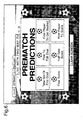
- a remote player wishes to play the interactive game, he operates his input device 16 to indicate to the processor 14 that the game is to be initiated and the processor 14 will respond to the information supplied from the central controller 1 and stored in the memory 17 to display a screen similar to that shown in Figure 6. This indicates to the player the type of prediction which he can attempt.
- a comparison of Figures 4 and 6 will show that six of the events selected by the operator for prediction set out in the line 50 are displayed on the display of Figure 6.
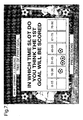
- the remote player can then select one or more of the predictions. For example, if he selects, using the input device 16, the "Time Slot of First Goal", the screen shown in Figure 7 will be displayed which defines six different 15 minute periods during the playing of a football game. The player can then indicate one of those periods using the input device 16, for example, the period 16-30 minutes, and this prediction is then stored in the memory 17. In a similar way, the player can predict any one or more of the other items set out in Figure 6.
- the time of the first goal transmitted to the remote players will be the time at which the button 62 was pressed adjusted by the prestored latency. This is sent as a time stamp to the remote players.
- the Half Time button 64 will allow the operator to enter the half time score which is then transmitted to the remote players where it can be compared with their predictions.
- the respective microprocessors 14 compare the associated player's predictions with the actual events as time stamped and supplied from the central controller 1. If the local player was successful in his prediction then the microprocessor 14 will indicate this to the player and will also pass that information via the PSTN 18 to the central controller 1. This is particularly useful where players will be rewarded with a financial prize or token allowing them additional use of certain games which require payment. In other applications, however, where no financial or other prize is awarded, communication with the central controller 1 is not necessary.
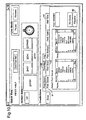
- the remote players are given the opportunity to predict whether a penalty kick will be scored, missed or saved, the operator controlling these predictions via the button 65 on the screen of Figure 10.
- the central controller 1 also allows a further game to be played by the remote players during the live broadcast of the football match. This is known as "Action Ball".
- Action Ball a further game to be played by the remote players during the live broadcast of the football match. This is known as "Action Ball”.
- a counter 65 begins countdown from 10 giving the operator 10 seconds to define the event as a shot on target, goal or corner kick by pressing one of the three buttons 54,55,56 or cancelling the indication by pressing the Deny button 58.
- buttons 54-56 causes the central controller 1 to send an appropriate message to each of the remote players C in conjunction with a TV broadcast and each microprocessor 14 responds to receipt of that message by awarding points to those remote players who have correctly anticipated that one or the three events had occurred.
- Each remote player has 15 opportunities per half to anticipate that a shot on target, goal or corner kick will occur by operating his input device 16 which will initiate a 10 second period.
- the action by the remote player of pressing any blue button on his input device records a time stamp on the memory 17. The time that the event occurs as input by the operator, after suitable back stamping, will be broadcast as a time stamp to each remote player C.
- Each microprocessor 14 compares the time stamp supplied to it corresponding to the time at which the event button 53 was clicked and if the remote player pressed his blue button in less than ten seconds from the time stamp received by the microprocessor 14 then the player will have been successful and receive points.
- the PlayLive Racing game will be described.
- the central controller 1 will receive details about available races including declared riders and runners and this information will be stored in the database 4A and the operator will decide which races are to be included in the game.
- the database 4A will include details of all available races and in this example, the operator selects three using the screen shown in Figure 11 and the input device 2, the selected information being stored in the Live File store 4B.
- the operator selects each race in turn and, for the first race, the screen shown in Figure 12 is displayed to the operator.
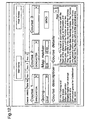
- This will display certain fixed information already provided in the Live File store 4B such as the going of the course but allows the operator to add further information in the Course Details box as may be appropriate on the day.
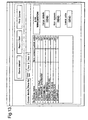
- the operator For each race, the operator then displays the screen shown in Figure 13 allowing him to select the names of all runners and non-runners as this information is received. Alternatively, this can be carried out automatically via the database 4A as that portion is updated.
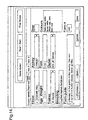
- the database 4A holds information relating to the horse and the operator can display this and modify it as necessary as shown in the screen shown in Figure 14.
- the odds for each horse can be manually entered by the operator as they change or this could be carried out upon loading the odds into the store 4B. In either event, on a change of odds, this information will be broadcast to the remote units together with a time stamp defining the time of the change. Again, this information can then be displayed by the remote user.
- the operator will take a calibration of his own reaction time and the system latency as described above in connection with the PlayLive Football application. This calibration is then used to compensate input times by back stamping by the appropriate number of frames per second by which the action is delayed. Updates can also be obtained as before.
- each remote player can display the details of races, horses, odds and the like as necessary. For example, as shown in Figure 15, the remote player can display a list of horses and jockeys for a particular race.
- the remote players are given the opportunity to predict the outcome of that race using one of the variety of bets on offer (i.e. win, place, each way).
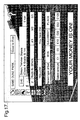
- the remote player can choose to place a bet via an appropriate screen ( Figure 17) and once he has selected a bet and confirmed the amount of money he wishes to wager, he will receive confirmation that the bet has been accepted and these details will be stored by the microprocessor 14 in the memory 17.
- each microprocessor 14 will lock out all future predictions and to cancel any predictions made after the time defined by the back stamped time stamp.
- the operator sends out the results in two stages, first as unconfirmed results and then as confirmed results once these have been confirmed by the appropriate race authority.
- Each remote unit responds to the result information to determine whether the local player or players is successful and to determine the winning amount and displays this as appropriate, for example as shown in Figure 16. In this case, there are four local players.
Landscapes
- Engineering & Computer Science (AREA)
- Multimedia (AREA)
- Signal Processing (AREA)
- Two-Way Televisions, Distribution Of Moving Picture Or The Like (AREA)
- Management, Administration, Business Operations System, And Electronic Commerce (AREA)
- Television Signal Processing For Recording (AREA)
- Pinball Game Machines (AREA)
Abstract
Description
- The invention relates to an interactive, predictive game control system for use in conjunction with a live TV broadcast.
- In an interactive, predictive game played in conjunction with a live TV broadcast, remote players attempt to predict certain events which may or may not occur during the broadcast and will be awarded prizes, monetary or otherwise, if they are successful. Examples of interactive, predictive games include horse racing where the players can try to predict winners or place bets on particular horses to win or be placed in a race, and football matches where players may try to predict the final score or the time of occurrence of certain events such as the time of the first goal, first booking etc. Other examples are rugby, motor racing, tennis and cricket. An example of an interactive system is described in US-A-4592546. This document describes in detail how the remote units are organised and controlled but provides very little information on the central location.
- In order to enhance the enjoyment of such games, it is desirable to be able to present players with information relating to the game in advance of, and on occasion during, the playing of the game so that they can make intelligent predictions. For example, in the case of a horse race, it would be desirable to give the players information regarding the horses, the jockeys, the course and the odds while for a football game, players would like to have details of the teams, past form and current position in a league table. Much of this information, in particular information on odds and the like, will change in the run-up to the game and consequently there is a continuing need for instantaneous updates.
- In accordance with one aspect of the present invention, an interactive broadcast network comprises an interactive, predictive game control system including a central controller for generating game playing data for transmission with a live TV broadcast to remote player (s) and for receiving information from the remote player(s), an input device connected to the central controller, and a database connected to the central controller for storing data relating to the content of the live broadcast and known in advance of the live broadcast, the central controller being responsive to signals from the input device:
- a) prior to the live broadcast, to select data from the database for transmission to the remote user(s) in advance of and/or during the live broadcast, and
- b) during or after the live broadcast, to record the time of occurrence of one or more events relating to the live broadcast which are to be predicted by the remote player(s), as indicated by an operator to the central controller via the input device; and a number of remote units for receiving signals, transmitted in association with a TV broadcast, from the central controller, each remote unit including a microprocessor responsive to signals received from the central controller and connected to an input device for use by a remote player, and a store for storing the data transmitted by the central controller.
-
- In accordance with a second aspect of the present invention, a method of handling an interactive, predictive game in conjunction with a live TV broadcast received by one or more remote players comprises:
- a) prior to a live broadcast, selecting data from a database which stores data relating to the content of the live broadcast and known in advance of the live broadcast, transmitting the selected data with a TV broadcast to remote player(s) in advance of and/or during the live broadcast and storing the data locally to the remote player, and
- b) during or after the live broadcast, recording the time at which one or more events occur within the live broadcast and which are to be predicted by the remote player(s).
-
- We have devised a control system and method which allows an operator to achieve as much preparation as possible prior to the commencement of a live TV broadcast. Typically, the database will store information relevant to future predictions. The operator is able to select data appropriate to the live TV broadcast from the database and arrange for this to be assembled as appropriate into a display format which can then be transmitted in association with a TV broadcast, either in advance of and/or during the live TV broadcast, to the remote player(s). This then allows the operator to concentrate on monitoring the live broadcast for the occurrence of events which are to be predicted by the remote player(s) without having to enter large amounts of data through the input device.
- The time at which the event(s) occur during the live broadcast may be entered by the operator later, for example after the live broadcast has ended but preferably the operator indicates the time of occurrence immediately. The time of occurrence can then be recorded as the actual time at which an operator provides an indication or as the actual time when amended to take account of the operator's and system's response time.
- In the preferred control system, therefore, the central controller computes the actual time of occurrence of an event by monitoring the time of a signal generated by the input device in response to operator activation, and modifies that time to take account of the operator's and system's response time.
- Typically, an operator will undergo a test procedure in which his response time and the system latency is determined by the central controller and this response time and latency is then stored for later use in computing the actual time of occurrence of events in the live broadcast.
- In order to communicate times between the control system and the remote player(s), it is necessary to encode those times into signals which are transmitted between the two locations. This is most conveniently achieved by a process known as "time stamping" in which data defining the times are attached to messages between the two. Time stamped signals supplied to the remote player(s) can be used in a variety of ways at the remote location. For example, the signal can be used as a lock-out command preventing further predictions being made by the remote player(s). It can also be used, of course, to enable the remote player(s) to determine whether or not he has made a successful prediction.
- In some cases, players predictions are communicated back to the central controller for adjudication but in other systems the local unit is able to determine, following information received from the central controller, whether or not the associated player has won and can then communicate that information to the central controller only in the case of a winning player. This reduces the amount of time needed to communicate with the central controller and the number of remote units which have to communicate at the same time.
- Typically, communication from the remote player(s) to the central controller will be via an existing communication network such as public switched telephone network and the like although a permanent connection is also possible.
- In some cases, the action of updating the database can cause a time to be recorded by the central controller. This could be, for example, the case where fixed odds stored within the database are updated and the time of updating is then recorded by the central controller in response to signals from the database.
- An example of a control system and method according to the invention will now be described with reference to the accompanying drawings, in which:-
- Figure 1 is a schematic block diagram of the control system and an interactive broadcast network incorporating the control system;
- Figures 2-5 illustrate examples of screen displays presented to an operator during preparation for a live football game referred to as PlayLive Football;
- Figures 6 and 7 illustrate screen displays presented to a remote player of PlayLive Football;
- Figures 8 to 10 illustrate screens presented to an operator during a PlayLive Football game;
- Figures 11-14 illustrate screen displays presented to an operator during preparation for a live horse racing game referred to as PlayLive Racing; and,
- Figures 15-17 illustrate screen displays presented to a player during a PlayLive Racing game.
-
- The interactive broadcast network shown in Figure 1 comprises a game control system A including a
central controller 1 which will include a computer such as a PC operating a Windows based system, connected to aninput device 2 such as a keyboard and/or mouse and the like and to anoutput device 3 which may include a monitor and/or printer. Adatabase 4A stores data relating to service functions and remote users, which can be accessed and amended by thecentral controller 1, while aLive File store 4B is provided for storing data relating to the game being or to be broadcast. Thecentral controller 1 generates data which can be converted to TV display signals and other control signals associated with various service functions, on aland line 5 connected to a combiningunit 6 defining an insertion point of a TV broadcast system B. The combiningunit 6 receives television broadcast signals from a studio 7 (or outside broadcast (OB) location, in the case of a live event), and combines these with the signals on theline 5 so that they are transmitted simultaneously by atransmitter 8 to remote users or players C. In other applications, the signals from thecentral controller 1 and the studio orOB 7 will be transmitted separately. - The signals applied to the
combiner 6 may be transmitted to the remote units within a vertical banking interval (VBI) of the normal TV signal or on a separate radio FM-SCA channel or other data format such as a cable modem. - Each remote user C has a home or
remote unit 9 having atelevision receiver 10 connected to an aerial 11 and amonitor 12. Thehome unit 9 includes an address/databus 13 connected to thereceiver 10, thebus 13 being connected to amicroprocessor 14, amemory 15, such as a ROM, storing programme instructions for theprocessor 14, one ormore input devices 16 such as a keyboard or mouse, and a control memory (RAM) 17. Signals transmitted by theprocessor 14 can be communicated to thecentral controller 1 via a public switchedtelephone network 18 which is selectively accessed by atelephone interface unit 19 connected to thebus 13. - Alternative media such as cable or the internet can be used for the return signals (as for the signals transmitted to the remote unit C). In general the return signals will be transmitted over a different medium to the incoming signals.
- The game control system A can be used to control a variety of games including interactive, predictive games and two examples of such interactive, predictive games will be described below. In the first example, play live football, the remote players are able to attempt to predict certain events prior to commencement of a live football match which is broadcast by the
transmitter 8 and can also attempt to predict certain events during the live broadcast. - Initially, prior to commencement of the live broadcast, an operator uses the
input device 2 to set up certain predetermined information relating to the live broadcast for transmission to the remote players. In this example, the operator is first presented with a screen as shown in Figure 2 in which he can select a home team and an away team from a list of such teams which have been previously stored in thedatabase 4A. Using theinput device 2, such as a mouse, he can select the appropriate home and away teams and then click the OK button. This information is then stored in the LiveFile store 4B. Thedatabase 4A stores information relating to each team squad which will typically include more players than those actually selected to play the match. Shortly before commencement of the match, the actual team will be announced and this information will be conveyed to the operator. He then causes thecentral controller 1 to display all members of the squad of each team (Figure 3) allowing the operator to indicate which members of the squad have been picked to play and at the same time, he can define the type of player, for example goalkeeper, attacker, midfield or defender. Once that information has been indicated, it is then stored in theLive File store 4B. - Also, before the game begins, the operator takes a calibration of his own reaction time and the system latency. This can be obtained during a test procedure in which the
central controller 1 presents a particular display on a monitor of theoutput device 3 to which the operator must react as quickly as possible. Thecentral controller 1 then determines the time between initiating the display and the time at which a response is sensed and this will be a latency value which is used to adjust future times of occurrence of events which are entered by the operator. This process can be repeated at intervals during the game either automatically or on operator request. This enables the latency to be updated to take account of variation in the operator's response times. - The operator also sets up the particular types of event which can be predicted during the live broadcast. In this example, these events include the time of the first goal, the time of the first booking etc. Examples of such events are indicated by the line of buttons at 50 in Figure 4.
- Once all the information for the live broadcast has been set up by the operator, a screen such as that shown in Figure 4 is displayed which at this time is inactive since the interactive game has not commenced. It will be noted, however, that the operator has been able to set up a significant amount of information in advance of the live broadcast itself.
- At the appropriate time, but before commencement of the football game, the operator will bring up the screen shown in Figure 5 and by clicking the
button 51, the predefined information will then be transmitted to thecombiner 6 and broadcast to all the remote players C where it will be stored in eachmemory 17. - If a remote player wishes to play the interactive game, he operates his
input device 16 to indicate to theprocessor 14 that the game is to be initiated and theprocessor 14 will respond to the information supplied from thecentral controller 1 and stored in thememory 17 to display a screen similar to that shown in Figure 6. This indicates to the player the type of prediction which he can attempt. A comparison of Figures 4 and 6 will show that six of the events selected by the operator for prediction set out in theline 50 are displayed on the display of Figure 6. - The remote player can then select one or more of the predictions. For example, if he selects, using the
input device 16, the "Time Slot of First Goal", the screen shown in Figure 7 will be displayed which defines six different 15 minute periods during the playing of a football game. The player can then indicate one of those periods using theinput device 16, for example, the period 16-30 minutes, and this prediction is then stored in thememory 17. In a similar way, the player can predict any one or more of the other items set out in Figure 6. - Immediately the game commences, the operator clicks on the "Start First Half" button 59 (Figure 5) and this will cause the
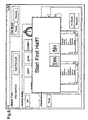
central controller 1 to display the screen of Figure 8 asking the operator to confirm. Following confirmation, the screen of Figure 9 is displayed allowing the operator to lock out further predictions at the start of the game. In response thecentral controller 1 will issue a lock-out signal which is broadcast to the remote units C and to which eachprocessor 14 responds to prevent any further predictions from being entered. The lock-out signal will carry a time stamp which defines the instant at which the operator clicked on thebutton 60 but back stamped by an appropriate number of frames corresponding to the earlier determined calibration of the operator response time and system latency. Eachmicroprocessor 14 responds to the received lock-out signal to lock-out any future predictions and also any previous predictions which occurred after the back adjusted time stamp. - In order to obtain accurate synchronisation between the central controller clock and each remote unit C, all parts of the interactive network work to a common universal system clock. Synchronisation is maintained by the
central controller 1 repeatedly issuing synchronisation signals as part of the messages which are broadcast. Eachmicroprocessor 14 monitors the time of arrival of a synchronisation signal and compares this with its own clock and if there is a discrepancy gradually adjusts its clock to agree with the synchronisation signal. - As the game develops, various events may or will occur. For example, when the first goal is scored, the operator clicks on the
First Scorer button 61 to enable him to select the appropriate score and also clicks on theFirst Goal button 62 to indicate the time of the first goal. This information is then confirmed by the operator by clicking theResolve button 63 and the information is then transmitted in the usual manner to the remote players. - The time of the first goal transmitted to the remote players will be the time at which the
button 62 was pressed adjusted by the prestored latency. This is sent as a time stamp to the remote players. - Similarly, at half time, clicking the
Half Time button 64 will allow the operator to enter the half time score which is then transmitted to the remote players where it can be compared with their predictions. - During and/or after a game, the
respective microprocessors 14 compare the associated player's predictions with the actual events as time stamped and supplied from thecentral controller 1. If the local player was successful in his prediction then themicroprocessor 14 will indicate this to the player and will also pass that information via thePSTN 18 to thecentral controller 1. This is particularly useful where players will be rewarded with a financial prize or token allowing them additional use of certain games which require payment. In other applications, however, where no financial or other prize is awarded, communication with thecentral controller 1 is not necessary. - If there are any penalties at the end of the football match, the remote players are given the opportunity to predict whether a penalty kick will be scored, missed or saved, the operator controlling these predictions via the
button 65 on the screen of Figure 10. - The
central controller 1 also allows a further game to be played by the remote players during the live broadcast of the football match. This is known as "Action Ball". During the football game, when the operator identifies a shot on target, a goal or a corner kick, he/she immediately registers this action by pressing theevent button 53. Acounter 65 begins countdown from 10 giving theoperator 10 seconds to define the event as a shot on target, goal or corner kick by pressing one of the threebuttons button 58. Clicking one of the buttons 54-56 causes thecentral controller 1 to send an appropriate message to each of the remote players C in conjunction with a TV broadcast and eachmicroprocessor 14 responds to receipt of that message by awarding points to those remote players who have correctly anticipated that one or the three events had occurred. Each remote player has 15 opportunities per half to anticipate that a shot on target, goal or corner kick will occur by operating hisinput device 16 which will initiate a 10 second period. The action by the remote player of pressing any blue button on his input device records a time stamp on thememory 17. The time that the event occurs as input by the operator, after suitable back stamping, will be broadcast as a time stamp to each remote player C. Eachmicroprocessor 14 compares the time stamp supplied to it corresponding to the time at which theevent button 53 was clicked and if the remote player pressed his blue button in less than ten seconds from the time stamp received by themicroprocessor 14 then the player will have been successful and receive points. - In the second example, the PlayLive Racing game will be described. In this example, the
central controller 1 will receive details about available races including declared riders and runners and this information will be stored in thedatabase 4A and the operator will decide which races are to be included in the game. Thedatabase 4A will include details of all available races and in this example, the operator selects three using the screen shown in Figure 11 and theinput device 2, the selected information being stored in theLive File store 4B. - The operator then selects each race in turn and, for the first race, the screen shown in Figure 12 is displayed to the operator. This will display certain fixed information already provided in the
Live File store 4B such as the going of the course but allows the operator to add further information in the Course Details box as may be appropriate on the day. - For each race, the operator then displays the screen shown in Figure 13 allowing him to select the names of all runners and non-runners as this information is received. Alternatively, this can be carried out automatically via the
database 4A as that portion is updated. - For each horse, the
database 4A holds information relating to the horse and the operator can display this and modify it as necessary as shown in the screen shown in Figure 14. - Once the operator has set up this predefined information in the
Line File 4B, he will cause it to be made available to the remote units by broadcasting the information in the usual way. Each remote unit will receive the information and themicroprocessor 14 will store that information in thecontrol memory 17. - The odds for each horse can be manually entered by the operator as they change or this could be carried out upon loading the odds into the
store 4B. In either event, on a change of odds, this information will be broadcast to the remote units together with a time stamp defining the time of the change. Again, this information can then be displayed by the remote user. - Finally, in preparation for the horse race, the operator will take a calibration of his own reaction time and the system latency as described above in connection with the PlayLive Football application. This calibration is then used to compensate input times by back stamping by the appropriate number of frames per second by which the action is delayed. Updates can also be obtained as before.
- Once the operator has made his preparations, the information is transmitted to each remote player and stored in the
memories 17. Each remote player can display the details of races, horses, odds and the like as necessary. For example, as shown in Figure 15, the remote player can display a list of horses and jockeys for a particular race. - Just prior to the start of a race, the remote players are given the opportunity to predict the outcome of that race using one of the variety of bets on offer (i.e. win, place, each way). The remote player can choose to place a bet via an appropriate screen (Figure 17) and once he has selected a bet and confirmed the amount of money he wishes to wager, he will receive confirmation that the bet has been accepted and these details will be stored by the
microprocessor 14 in thememory 17. - As soon as the race begins, the operator will indicate this via the
input device 2 and an appropriately back stamped time stamp signal will be broadcast causing eachmicroprocessor 14 to lock out all future predictions and to cancel any predictions made after the time defined by the back stamped time stamp. Once the race is finished, the operator sends out the results in two stages, first as unconfirmed results and then as confirmed results once these have been confirmed by the appropriate race authority. Each remote unit responds to the result information to determine whether the local player or players is successful and to determine the winning amount and displays this as appropriate, for example as shown in Figure 16. In this case, there are four local players.
Claims (4)
- An interactive broadcast network comprising an interactive, predictive game control system including a central controller (1) for generating game playing data for transmission with a live TV broadcast to remote player (s) and for receiving information from the remote player(s), an input device (2) connected to the central controller (1), and a database (4A) connected to the central controller (1) for storing data relating to the content of the live broadcast and known in advance of the live broadcast, the central controller being responsive to signals from the input device:a) prior to the live broadcast, to select data from the database (4A) for transmission to the remote user(s) in advance of and/or during the live broadcast, andb) during or after the live broadcast, to record the time of occurrence of one or more events relating to the live broadcast which are to be predicted by the remote player(s), as indicated by an operator to the central controller (1) via the input device (2); and a number of remote units for receiving signals, transmitted in association with a TV broadcast, from the central controller (1), each remote unit including a microprocessor (14) responsive to signals received from the central controller (1) and connected to an input device (16) for use by a remote player, and a store (14) for storing the data transmitted by the central controller (1).
- A network according to claim 1, wherein the central controller computes the actual time of occurrence of an event by monitoring the time of a signal generated by the input device (2) connected to the central controller in response to operator activation, and modifies that time to take account of the operator's and system's response time.
- A network according to claim 1 or claim 2, wherein the action of updating the database (4A) causes a time to be recorded by the central controller (1).
- A method of handling an interactive, predictive game in conjunction with a live TV broadcast received by one or more remote players, the method comprisinga) prior to a live broadcast, selecting data from a database (4A) which stores data relating to the content of the live broadcast and known in advance of the live broadcast, transmitting the selected data with a TV broadcast to remote player (s) in advance of and/or during the live broadcast and storing the data locally to the remote player, andb) during or after the live broadcast, recording the time at which one or more events occur within the live broadcast and which are to be predicted by the remote player(s).
Applications Claiming Priority (2)
| Application Number | Priority Date | Filing Date | Title |
|---|---|---|---|
| GB9708061 | 1997-04-22 | ||
| GBGB9708061.8A GB9708061D0 (en) | 1997-04-22 | 1997-04-22 | Interactive, predictive game control system |
Publications (2)
| Publication Number | Publication Date |
|---|---|
| EP0873772A1 EP0873772A1 (en) | 1998-10-28 |
| EP0873772B1 true EP0873772B1 (en) | 2003-03-19 |
Family
ID=10811118
Family Applications (1)
| Application Number | Title | Priority Date | Filing Date |
|---|---|---|---|
| EP98302964A Expired - Lifetime EP0873772B1 (en) | 1997-04-22 | 1998-04-16 | Interactive, predictive game control system |
Country Status (11)
| Country | Link |
|---|---|
| US (1) | US6287199B1 (en) |
| EP (1) | EP0873772B1 (en) |
| JP (1) | JP4160153B2 (en) |
| AT (1) | ATE234652T1 (en) |
| AU (1) | AU725730B2 (en) |
| CA (1) | CA2231946C (en) |
| DE (1) | DE69812206T2 (en) |
| ES (1) | ES2195278T3 (en) |
| GB (1) | GB9708061D0 (en) |
| NZ (1) | NZ330242A (en) |
| PT (1) | PT873772E (en) |
Cited By (7)
| Publication number | Priority date | Publication date | Assignee | Title |
|---|---|---|---|---|
| US7201658B2 (en) | 2000-03-31 | 2007-04-10 | Ods Properties, Inc. | Interactive wagering system |
| US9826280B2 (en) | 2000-05-30 | 2017-11-21 | Conversant Wireless Licensing S.ar.l. | Navigation aware news service |
| US10856031B2 (en) | 2003-04-15 | 2020-12-01 | MedialP, Inc. | Method and apparatus for generating interactive programming in a communication network |
| USRE48579E1 (en) | 2002-04-15 | 2021-06-01 | Media Ip, Inc. | Method and apparatus for internet-based interactive programming |
| US12017130B2 (en) | 2006-01-10 | 2024-06-25 | Winview Ip Holdings, Llc | Method of and system for conducting multiple contests of skill with a single performance |
| US12267566B2 (en) | 2005-06-20 | 2025-04-01 | Winview Ip Holdings, Llc | Method of and system for managing client resources and assets for activities on computing devices |
| US12342048B2 (en) | 2006-04-12 | 2025-06-24 | Winview Ip Holdings, Llc | Methodology for equalizing systemic latencies in television reception in connection with games of skill played in connection with live television programming |
Families Citing this family (158)
| Publication number | Priority date | Publication date | Assignee | Title |
|---|---|---|---|---|
| US5830068A (en) | 1995-09-08 | 1998-11-03 | Ods Technologies, L.P. | Interactive wagering systems and processes |
| US7355621B1 (en) * | 1998-06-10 | 2008-04-08 | Fernandez Dennis S | Digital television with subscriber conference overlay |
| US6339842B1 (en) * | 1998-06-10 | 2002-01-15 | Dennis Sunga Fernandez | Digital television with subscriber conference overlay |
| PL195186B1 (en) * | 1998-09-08 | 2007-08-31 | Sivera Obschestvo S Ogranichen | Method for playing a lottery game and system for realising the same |
| EP1003313B1 (en) * | 1998-09-11 | 2004-11-17 | Two Way Media Limited | Delivering interactive applications |
| NZ500956A (en) * | 1998-12-04 | 2000-08-25 | Two Way Tv Ltd | Interactive TV game system, start signal transmitted to all users simultaneously |
| JP2002542735A (en) * | 1999-04-16 | 2002-12-10 | ノキア コーポレイション | Real-time interactive video service |
| JP2000333139A (en) * | 1999-05-18 | 2000-11-30 | Sony Corp | Information providing apparatus and method, information receiving apparatus and method, lottery system and method, and medium |
| AU5590300A (en) * | 1999-05-28 | 2001-03-19 | Nokia Corporation | Real-time, interactive and personalized video services |
| AR029163A1 (en) | 1999-06-11 | 2003-06-18 | Ods Properties Inc | SYSTEM FOR PERFORMING BETS INTERACTIVELY |
| US6735487B1 (en) | 1999-07-01 | 2004-05-11 | Ods Properties, Inc. | Interactive wagering system with promotions |
| NZ516877A (en) * | 1999-07-01 | 2003-08-29 | Ods Properties Inc | Interactive wagering systems and methods for recording wagering events |
| AU1236001A (en) * | 1999-10-29 | 2001-05-14 | Interactive Sports Holdings, Inc. | System and method for displaying real-time information based on real-life events |
| JP2001137556A (en) * | 1999-11-12 | 2001-05-22 | Akihiro Mino | Device and method for sport expecting game, memory medium and transmission medium |
| WO2001041025A2 (en) | 1999-12-06 | 2001-06-07 | Ods Properties, Inc. | Systems and methods for interactive wagering |
| AUPQ509200A0 (en) * | 2000-01-14 | 2000-02-10 | Zone Properties Pty Ltd | Game for play in conjunction with a competition |
| US6712701B1 (en) | 2000-03-01 | 2004-03-30 | Ods Technologies, L.P. | Electronic book interactive wagering system |
| US7788686B1 (en) * | 2000-03-01 | 2010-08-31 | Andrews Christopher C | Method of and apparatus for describing, promoting, publishing, aggregating, distributing and accessing live content information |
| US7379886B1 (en) | 2000-03-01 | 2008-05-27 | Ods Properties, Inc. | Cellular telephone interactive wagering system |
| US7774259B1 (en) | 2000-03-01 | 2010-08-10 | Ods Properties, Inc. | Interactive wagering system with criteria wagering |
| FI20000624A0 (en) * | 2000-03-17 | 2000-03-17 | Prikatti Ab Oy | Improved procedure, system and business model for arranging electric betting |
| NZ521635A (en) * | 2000-04-05 | 2004-03-26 | Ods Properties Inc | Interactive wagering systems and methods for restricting wagering access |
| US6674448B1 (en) | 2000-04-05 | 2004-01-06 | Ods Properties, Inc. | Interactive wagering system with controllable graphic displays |
| AU5323201A (en) | 2000-04-05 | 2001-10-23 | Ods Properties Inc | Systems and methods for recognizing preferred wagerers |
| MXPA02009861A (en) | 2000-04-05 | 2004-10-14 | Ods Properties Inc | Interactive wagering systems and methods with multiple television feeds. |
| US6837791B1 (en) | 2000-04-05 | 2005-01-04 | Ods Properties, Inc. | Interactive wagering system with totalisator selection |
| AR035397A1 (en) | 2000-04-05 | 2004-05-26 | Ods Properties Inc | PROVISIONS AND METHODS TO ACCESS A BET INTERFACE THROUGH CROSSED PLATFORMS |
| GB2356071A (en) * | 2000-04-06 | 2001-05-09 | Sporting Exchange Ltd | Internet betting matches bets and lays |
| EP1290894A2 (en) * | 2000-05-30 | 2003-03-12 | Nokia Corporation | Video message sending |
| US8175921B1 (en) | 2000-05-30 | 2012-05-08 | Nokia Corporation | Location aware product placement and advertising |
| JP2002027431A (en) * | 2000-07-04 | 2002-01-25 | Copcom Co Ltd | Question distribution and answer collection system |
| GB2364485B (en) * | 2000-07-04 | 2002-06-12 | Saj Muzaffar | Interactive broadcast system |
| GB0022862D0 (en) * | 2000-09-18 | 2000-11-01 | Tradingsports Ltd | Betting system |
| FR2814630B1 (en) * | 2000-09-22 | 2003-04-18 | Eric Amsellem | INTERACTIVE TELEVISION METHOD AND SYSTEM, AND DEVICE CARRYING OUT SAID METHOD |
| US6447396B1 (en) * | 2000-10-17 | 2002-09-10 | Nearlife, Inc. | Method and apparatus for coordinating an interactive computer game with a broadcast television program |
| US7244181B2 (en) * | 2000-11-14 | 2007-07-17 | Netamin Communication Corp. | Multi-player game employing dynamic re-sequencing |
| AU2697902A (en) | 2000-11-28 | 2002-06-11 | Ods Properties Inc | Systems and methods for providing fixed-odds and pari-mutuel wagering |
| US20020065120A1 (en) | 2000-11-29 | 2002-05-30 | Ods Properties, Inc. | Interactive wagering system with automatic runner selection |
| US7172508B2 (en) | 2001-01-23 | 2007-02-06 | Burton Simon | Multi-person parimutuel betting games based on sporting events |
| US7740539B2 (en) * | 2001-01-23 | 2010-06-22 | Burt Simon | Multi-person games for parimutuel betting on live events |
| JP2002246994A (en) * | 2001-02-20 | 2002-08-30 | Sony Corp | Program broadcasting device, receiving device, program broadcasting method, and program of program broadcasting device |
| US7311606B2 (en) * | 2001-02-20 | 2007-12-25 | Cantor Index, Llc | System and method for betting on a subset of participants in an event wherein betting parameters may change over time |
| US20040198483A1 (en) * | 2003-04-03 | 2004-10-07 | Amaitis Lee M. | System and method for betting on a subset of participants in an event |
| JP2002271307A (en) * | 2001-03-09 | 2002-09-20 | Sega Corp | Terminal synchronization method, communication system and terminal device |
| WO2003012748A2 (en) * | 2001-04-23 | 2003-02-13 | Kim Updike | Methods and apparatus for fairly placing players in bet positions |
| JP4558980B2 (en) * | 2001-05-29 | 2010-10-06 | 株式会社テレビ朝日 | Broadcast system, server apparatus, and control program therefor |
| JP2003000954A (en) | 2001-06-22 | 2003-01-07 | Konami Computer Entertainment Osaka:Kk | Server device for network game, network game advancing control method and network game advancing control program |
| JP3454357B2 (en) | 2001-07-05 | 2003-10-06 | 株式会社コナミコンピュータエンタテインメントスタジオ | Network game server device, network game progress control method, and network game progress control program |
| US7153211B2 (en) * | 2001-07-10 | 2006-12-26 | Bect Power, Inc. | Method and system to optimize group achievement employing group members' collective intelligence |
| WO2003013679A1 (en) * | 2001-08-03 | 2003-02-20 | Nokia Corporation | A method, system and terminal for synchronising a plurality of terminals |
| US7343487B2 (en) | 2001-10-10 | 2008-03-11 | Nokia Corporation | Datacast distribution system |
| JP3766012B2 (en) * | 2001-11-01 | 2006-04-12 | アルゼ株式会社 | GAME SYSTEM AND GAME SYSTEM CONTROL METHOD |
| US20040032486A1 (en) | 2002-08-16 | 2004-02-19 | Shusman Chad W. | Method and apparatus for interactive programming using captioning |
| WO2003091853A2 (en) * | 2002-04-25 | 2003-11-06 | Rossides Michael T | Method and medium for financial disclosure |
| US20030209853A1 (en) * | 2002-05-09 | 2003-11-13 | Sabin Harris | Weather lottery game |
| US20080274802A1 (en) | 2002-05-31 | 2008-11-06 | Raymond Anthony Joao | Apparatus and method for facilitating gaming activity and/or gambling activity |
| US20040029627A1 (en) * | 2002-08-12 | 2004-02-12 | Michael Hannan | Skill based lottery system |
| US20040087356A1 (en) * | 2002-11-01 | 2004-05-06 | Collins Jonathan Douglas | Methods and apparatuses for gaming |
| US9003461B2 (en) | 2002-12-10 | 2015-04-07 | Ol2, Inc. | Streaming interactive video integrated with recorded video segments |
| US8840475B2 (en) | 2002-12-10 | 2014-09-23 | Ol2, Inc. | Method for user session transitioning among streaming interactive video servers |
| US20090118019A1 (en) | 2002-12-10 | 2009-05-07 | Onlive, Inc. | System for streaming databases serving real-time applications used through streaming interactive video |
| US8661496B2 (en) * | 2002-12-10 | 2014-02-25 | Ol2, Inc. | System for combining a plurality of views of real-time streaming interactive video |
| US9032465B2 (en) * | 2002-12-10 | 2015-05-12 | Ol2, Inc. | Method for multicasting views of real-time streaming interactive video |
| US8549574B2 (en) | 2002-12-10 | 2013-10-01 | Ol2, Inc. | Method of combining linear content and interactive content compressed together as streaming interactive video |
| US8949922B2 (en) | 2002-12-10 | 2015-02-03 | Ol2, Inc. | System for collaborative conferencing using streaming interactive video |
| US9108107B2 (en) | 2002-12-10 | 2015-08-18 | Sony Computer Entertainment America Llc | Hosting and broadcasting virtual events using streaming interactive video |
| US7558525B2 (en) | 2002-12-10 | 2009-07-07 | Onlive, Inc. | Mass storage repository for a wireless network |
| US8832772B2 (en) | 2002-12-10 | 2014-09-09 | Ol2, Inc. | System for combining recorded application state with application streaming interactive video output |
| US20110126255A1 (en) * | 2002-12-10 | 2011-05-26 | Onlive, Inc. | System and method for remote-hosted video effects |
| US8387099B2 (en) | 2002-12-10 | 2013-02-26 | Ol2, Inc. | System for acceleration of web page delivery |
| US20110122063A1 (en) * | 2002-12-10 | 2011-05-26 | Onlive, Inc. | System and method for remote-hosted video effects |
| US8468575B2 (en) | 2002-12-10 | 2013-06-18 | Ol2, Inc. | System for recursive recombination of streaming interactive video |
| US8495678B2 (en) * | 2002-12-10 | 2013-07-23 | Ol2, Inc. | System for reporting recorded video preceding system failures |
| US8893207B2 (en) | 2002-12-10 | 2014-11-18 | Ol2, Inc. | System and method for compressing streaming interactive video |
| US7231404B2 (en) | 2003-01-31 | 2007-06-12 | Nokia Corporation | Datacast file transmission with meta-data retention |
| AU2004211721B2 (en) | 2003-02-11 | 2009-08-20 | Nds Limited | Apparatus and methods for handling interactive applications in broadcast networks |
| US20060135252A1 (en) * | 2004-12-22 | 2006-06-22 | Amaitis Lee M | System and method for betting on a subset of participants in an event according to multiple groups |
| US9098883B2 (en) | 2004-02-03 | 2015-08-04 | Cantor Index, Llc | Managing bets that select events and participants |
| US8636571B2 (en) | 2004-02-03 | 2014-01-28 | Cantor Index, Llc | System and method for managing select five horseracing bets |
| US20050187000A1 (en) * | 2004-02-23 | 2005-08-25 | Cantor Index Llc | Method for wagering |
| US8376855B2 (en) | 2004-06-28 | 2013-02-19 | Winview, Inc. | Methods and apparatus for distributed gaming over a mobile device |
| US8870639B2 (en) | 2004-06-28 | 2014-10-28 | Winview, Inc. | Methods and apparatus for distributed gaming over a mobile device |
| US10226698B1 (en) | 2004-07-14 | 2019-03-12 | Winview, Inc. | Game of skill played by remote participants utilizing wireless devices in connection with a common game event |
| US20060217994A1 (en) * | 2005-03-25 | 2006-09-28 | The Motley Fool, Inc. | Method and system for harnessing collective knowledge |
| WO2006104534A2 (en) * | 2005-03-25 | 2006-10-05 | The Motley Fool, Inc. | Scoring items based on user sentiment and determining the proficiency of predictors |
| CA2603045A1 (en) * | 2005-03-28 | 2006-10-05 | The Directv Group, Inc. | Interactive mosaic channel video stream with barker channel and guide |
| JP5193854B2 (en) * | 2005-05-18 | 2013-05-08 | シーエフピーエイチ, エル.エル.シー. | A system that provides wagers about halfway points in race events that use fractional time measurements |
| US8738694B2 (en) | 2005-06-20 | 2014-05-27 | Winview, Inc. | Method of and system for managing client resources and assets for activities on computing devices |
| US8348748B2 (en) | 2005-07-20 | 2013-01-08 | The Sporting Exchange, Ltd. | Betting on games using a betting exchange system |
| US7713125B2 (en) * | 2005-07-26 | 2010-05-11 | Cantor Index, Llc | Jackpot race event |
| US8708789B2 (en) | 2005-07-26 | 2014-04-29 | Cantor Index, Llc | Conducting a jackpot race event |
| CA2621499C (en) * | 2005-09-08 | 2014-02-11 | The Directv Group, Inc. | Mosaic channel video stream with interactive services |
| US9511287B2 (en) | 2005-10-03 | 2016-12-06 | Winview, Inc. | Cellular phone games based upon television archives |
| US8705195B2 (en) | 2006-04-12 | 2014-04-22 | Winview, Inc. | Synchronized gaming and programming |
| US9919210B2 (en) | 2005-10-03 | 2018-03-20 | Winview, Inc. | Synchronized gaming and programming |
| US20070082730A1 (en) * | 2005-10-08 | 2007-04-12 | Brown Patrick L | Pari-mutuel betting kiosk |
| US10556183B2 (en) | 2006-01-10 | 2020-02-11 | Winview, Inc. | Method of and system for conducting multiple contest of skill with a single performance |
| US8002618B1 (en) | 2006-01-10 | 2011-08-23 | Winview, Inc. | Method of and system for conducting multiple contests of skill with a single performance |
| AR059820A1 (en) * | 2006-03-10 | 2008-04-30 | Directv Group Inc | SYSTEM FOR SELECTING PREDICTIONS THROUGH MULTIPLE PLATFORMS. |
| JP4753759B2 (en) * | 2006-03-17 | 2011-08-24 | 日本テレビ放送網株式会社 | Data broadcasting information display method and system, and program |
| US7645191B1 (en) * | 2006-03-22 | 2010-01-12 | My Horse Player, Inc. | Systems and methods for handicapping a horse race |
| US20070265043A1 (en) * | 2006-04-12 | 2007-11-15 | Wang Andy Y | Team-based networked video gaming and automatic event management |
| US11082746B2 (en) | 2006-04-12 | 2021-08-03 | Winview, Inc. | Synchronized gaming and programming |
| KR100855377B1 (en) | 2006-06-05 | 2008-09-01 | 한겨레엔(주) | Betting game system and sports betting method using sports game image |
| BRPI0713992A2 (en) * | 2006-06-30 | 2012-11-20 | Directv Group Inc | interactive matrix video channel displayed on a video monitor, apparatus for displaying a mosaic video channel, selective video cell display system on a video channel |
| WO2008027464A2 (en) | 2006-08-30 | 2008-03-06 | The Directv Group, Inc. | Mosaic channel video stream with interactive services |
| US20080189738A1 (en) * | 2006-12-18 | 2008-08-07 | Purpura Richard F | Active channel for interactive television services |
| US7673878B2 (en) * | 2007-01-04 | 2010-03-09 | Skoff Roger E | Method and apparatus for playing a wagering game based upon the arrival of an elevator car |
| CA2682024A1 (en) * | 2007-03-28 | 2008-10-02 | Ntn Buzztime, Inc. | Mobile device used as controller in interactive gaming environment |
| US20080242409A1 (en) * | 2007-03-30 | 2008-10-02 | Ntn Buzztime, Inc. | Video Feed Synchronization in an Interactive Environment |
| US9218720B2 (en) | 2007-04-16 | 2015-12-22 | Cfph, Llc | Box office game |
| US8813112B1 (en) | 2007-10-23 | 2014-08-19 | Winview, Inc. | Method of and apparatus for utilizing SMS while running an application on a mobile device controlling a viewer's participation with a broadcast |
| JP2009200961A (en) * | 2008-02-22 | 2009-09-03 | Ntt Docomo Inc | Content providing system, server device, terminal device, and content providing method |
| US9716918B1 (en) | 2008-11-10 | 2017-07-25 | Winview, Inc. | Interactive advertising system |
| US8360842B2 (en) * | 2009-04-09 | 2013-01-29 | Burton Simon | Poker-like game based on a live sporting event |
| US8904421B2 (en) * | 2009-06-30 | 2014-12-02 | At&T Intellectual Property I, L.P. | Shared multimedia experience including user input |
| US8387085B2 (en) * | 2009-09-18 | 2013-02-26 | Verizon Patent And Licensing Inc. | Methods and systems for tailoring an interactive game associated with a media content instance to a user |
| US20110207524A1 (en) * | 2010-02-19 | 2011-08-25 | Burton Simon | Pool seeding for parimutuel betting operations |
| GB2484594A (en) | 2010-10-13 | 2012-04-18 | Wms Gaming Inc | Integrating video feeds and wagering-game web content |
| US20120200667A1 (en) * | 2011-02-08 | 2012-08-09 | Gay Michael F | Systems and methods to facilitate interactions with virtual content |
| WO2013102083A1 (en) * | 2011-12-30 | 2013-07-04 | Mindforce Consulting, Llc | Designing a real sports companion match-play crowdsourcing electronic game |
| US8905832B2 (en) | 2012-01-30 | 2014-12-09 | Cfph, Llc | Event wagering with group and/or in run options |
| JP5255713B1 (en) * | 2012-03-07 | 2013-08-07 | 株式会社コナミデジタルエンタテインメント | GAME MANAGEMENT DEVICE, GAME SYSTEM, GAME MANAGEMENT METHOD, AND PROGRAM |
| JP5250126B1 (en) * | 2012-03-07 | 2013-07-31 | 株式会社コナミデジタルエンタテインメント | GAME MANAGEMENT DEVICE, GAME SYSTEM, GAME MANAGEMENT METHOD, AND PROGRAM |
| JP5250127B1 (en) * | 2012-03-07 | 2013-07-31 | 株式会社コナミデジタルエンタテインメント | GAME MANAGEMENT DEVICE, GAME SYSTEM, GAME MANAGEMENT METHOD, AND PROGRAM |
| US8588944B1 (en) * | 2012-06-18 | 2013-11-19 | The Mohegan Tribe of Indians of Connecticut | Virtual user-based scoring of real events |
| US10546441B2 (en) | 2013-06-04 | 2020-01-28 | Raymond Anthony Joao | Control, monitoring, and/or security, apparatus and method for premises, vehicles, and/or articles |
| JP5982411B2 (en) * | 2014-02-04 | 2016-08-31 | 株式会社コナミデジタルエンタテインメント | GAME MANAGEMENT DEVICE, GAME SYSTEM, GAME MANAGEMENT METHOD, AND PROGRAM |
| US11055967B2 (en) | 2014-03-26 | 2021-07-06 | Cfph, Llc | Event wagering with group and/or in run options |
| JP5674977B1 (en) * | 2014-06-03 | 2015-02-25 | ケイ・アンド・アイ有限会社 | Soccer prediction voting system |
| US10037656B2 (en) * | 2014-12-16 | 2018-07-31 | Igt Canada Solutions Ulc | Techniques of performing cloud-based hosting of shared gaming activities |
| US20160300431A1 (en) * | 2015-04-10 | 2016-10-13 | IPro, Inc. | System and method for on-line fantasy wagering |
| CA2945119A1 (en) | 2015-10-09 | 2017-04-09 | Burton Simon | Tournament based on poker-like games based on live sporting events |
| US9918128B2 (en) * | 2016-04-08 | 2018-03-13 | Orange | Content categorization using facial expression recognition, with improved detection of moments of interest |
| US11551529B2 (en) | 2016-07-20 | 2023-01-10 | Winview, Inc. | Method of generating separate contests of skill or chance from two independent events |
| US10504327B2 (en) * | 2016-12-12 | 2019-12-10 | Kevin Royer | Real-time supplemental gaming system |
| US12430993B2 (en) | 2017-08-09 | 2025-09-30 | Raymond Anthony Joao | Sports betting apparatus and method |
| US11069195B2 (en) | 2017-08-09 | 2021-07-20 | Raymond Anthony Joao | Sports betting apparatus and method |
| US10885746B2 (en) * | 2017-08-09 | 2021-01-05 | Raymond Anthony Joao | Sports betting apparatus and method |
| US12444266B2 (en) * | 2017-08-09 | 2025-10-14 | Raymond Anthony Joao | Sports betting apparatus and method |
| US12424060B2 (en) | 2018-12-01 | 2025-09-23 | Raymond Anthony Joao | Sports betting apparatus and method |
| US12387568B2 (en) | 2018-03-31 | 2025-08-12 | Raymond Anthony Joao | Sports betting apparatus and method |
| US12354444B2 (en) | 2019-10-17 | 2025-07-08 | Raymond Anthony Joao | Sports betting apparatus and method |
| US12412451B2 (en) | 2019-03-12 | 2025-09-09 | Raymond Anthony Joao | Sports betting apparatus and method |
| US12387569B2 (en) | 2020-02-25 | 2025-08-12 | Raymond Anthony Joao | Sports betting apparatus and method |
| US12347277B2 (en) | 2018-08-01 | 2025-07-01 | Raymond Anthony Joao | Sports betting apparatus and method |
| US11308765B2 (en) | 2018-10-08 | 2022-04-19 | Winview, Inc. | Method and systems for reducing risk in setting odds for single fixed in-play propositions utilizing real time input |
| US20230024852A1 (en) * | 2019-05-27 | 2023-01-26 | Raymond Anthony Joao | Sports betting apparatus and method |
| US12381953B2 (en) | 2019-07-01 | 2025-08-05 | Raymond Anthony Joao | Control, monitoring, and/or security, apparatus and method for premises, vehicles, and/or articles |
| US12380294B2 (en) | 2019-11-01 | 2025-08-05 | Raymond Anthony Joao | Control, monitoring, and/or security, apparatus and method for premises, vehicles, and/or articles |
| WO2021242130A1 (en) * | 2020-05-25 | 2021-12-02 | Алексей Валерьевич ИВАНОВ | Gaming device and system for carrying out interactive games |
| US11354975B2 (en) * | 2020-10-05 | 2022-06-07 | Vinod Khosla | Systems and methods of predictive gameplay |
| US12145063B2 (en) * | 2020-11-24 | 2024-11-19 | Jeffrey Lewis | System for providing data and user interfaces for a multi-round multiplayer prediction game |
| US20240105024A1 (en) * | 2021-10-07 | 2024-03-28 | Adrenalineip | System for wagering on event outcomes based on two timings during an event |
| WO2023135665A1 (en) * | 2022-01-12 | 2023-07-20 | 日本電信電話株式会社 | Lag time measurement server, lag time measurement method, and program |
| WO2023220027A1 (en) * | 2022-05-09 | 2023-11-16 | SB22, Inc. | Systems and methods for navigating interactive elements of an application |
| US12591999B2 (en) * | 2023-05-26 | 2026-03-31 | Schlumberger Technology Corporation | System, apparatus, and method for continuous digital image calibration |
| US12574586B2 (en) * | 2024-04-10 | 2026-03-10 | Disney Enterprises, Inc. | Automated motion feature-based video synchronization |
Family Cites Families (8)
| Publication number | Priority date | Publication date | Assignee | Title |
|---|---|---|---|---|
| US4540174A (en) * | 1984-04-16 | 1985-09-10 | Coppock C Wallace | Game of chance particularly adapted for play in conjunction with a team sport contest |
| US4592546A (en) * | 1984-04-26 | 1986-06-03 | David B. Lockton | Game of skill playable by remote participants in conjunction with a live event |
| US5759101A (en) * | 1986-03-10 | 1998-06-02 | Response Reward Systems L.C. | Central and remote evaluation of responses of participatory broadcast audience with automatic crediting and couponing |
| FR2658375B2 (en) * | 1989-05-25 | 1994-04-22 | Adventure | ELECTRONIC DEVICE FOR ALLOWING INDIVIDUAL PARTICIPATION IN A BROADCASTING PROGRAM. |
| US5971854A (en) * | 1989-10-27 | 1999-10-26 | William Junkin Trust | Interactive contest system |
| US5683090A (en) * | 1995-06-07 | 1997-11-04 | Zeile; Kim A. | Sports chance game apparatus and method of playing same |
| US5860862A (en) * | 1996-01-05 | 1999-01-19 | William W. Junkin Trust | Interactive system allowing real time participation |
| US5899810A (en) * | 1997-01-24 | 1999-05-04 | Kaon Interactive Corporation | Distributed game architecture to overcome system latency |
-
1997
- 1997-04-22 GB GBGB9708061.8A patent/GB9708061D0/en active Pending
-
1998
- 1998-04-16 AT AT98302964T patent/ATE234652T1/en not_active IP Right Cessation
- 1998-04-16 PT PT98302964T patent/PT873772E/en unknown
- 1998-04-16 EP EP98302964A patent/EP0873772B1/en not_active Expired - Lifetime
- 1998-04-16 ES ES98302964T patent/ES2195278T3/en not_active Expired - Lifetime
- 1998-04-16 DE DE69812206T patent/DE69812206T2/en not_active Expired - Lifetime
- 1998-04-21 JP JP11031298A patent/JP4160153B2/en not_active Expired - Fee Related
- 1998-04-21 AU AU62831/98A patent/AU725730B2/en not_active Ceased
- 1998-04-21 NZ NZ330242A patent/NZ330242A/en unknown
- 1998-04-21 US US09/064,118 patent/US6287199B1/en not_active Expired - Lifetime
- 1998-04-22 CA CA002231946A patent/CA2231946C/en not_active Expired - Fee Related
Cited By (8)
| Publication number | Priority date | Publication date | Assignee | Title |
|---|---|---|---|---|
| US7201658B2 (en) | 2000-03-31 | 2007-04-10 | Ods Properties, Inc. | Interactive wagering system |
| US9826280B2 (en) | 2000-05-30 | 2017-11-21 | Conversant Wireless Licensing S.ar.l. | Navigation aware news service |
| USRE48579E1 (en) | 2002-04-15 | 2021-06-01 | Media Ip, Inc. | Method and apparatus for internet-based interactive programming |
| US10856031B2 (en) | 2003-04-15 | 2020-12-01 | MedialP, Inc. | Method and apparatus for generating interactive programming in a communication network |
| US12267566B2 (en) | 2005-06-20 | 2025-04-01 | Winview Ip Holdings, Llc | Method of and system for managing client resources and assets for activities on computing devices |
| US12549827B2 (en) | 2005-06-20 | 2026-02-10 | Winview Ip Holdings, Llc | Method of and system for managing client resources and assets for activities on computing devices |
| US12017130B2 (en) | 2006-01-10 | 2024-06-25 | Winview Ip Holdings, Llc | Method of and system for conducting multiple contests of skill with a single performance |
| US12342048B2 (en) | 2006-04-12 | 2025-06-24 | Winview Ip Holdings, Llc | Methodology for equalizing systemic latencies in television reception in connection with games of skill played in connection with live television programming |
Also Published As
| Publication number | Publication date |
|---|---|
| DE69812206T2 (en) | 2003-11-27 |
| ES2195278T3 (en) | 2003-12-01 |
| NZ330242A (en) | 1998-10-28 |
| JPH1146356A (en) | 1999-02-16 |
| GB9708061D0 (en) | 1997-06-11 |
| CA2231946A1 (en) | 1998-10-22 |
| EP0873772A1 (en) | 1998-10-28 |
| DE69812206D1 (en) | 2003-04-24 |
| JP4160153B2 (en) | 2008-10-01 |
| AU6283198A (en) | 1998-10-29 |
| AU725730B2 (en) | 2000-10-19 |
| ATE234652T1 (en) | 2003-04-15 |
| CA2231946C (en) | 2007-06-12 |
| PT873772E (en) | 2003-07-31 |
| US6287199B1 (en) | 2001-09-11 |
Similar Documents
| Publication | Publication Date | Title |
|---|---|---|
| US6287199B1 (en) | Interactive, predictive game control system | |
| AU756580B2 (en) | Interactive applications | |
| EP0999883B1 (en) | Lottery system | |
| US6193605B1 (en) | Lottery system | |
| AU2001255266B2 (en) | Interactive wagering systems and methods with parimutuel pool features | |
| AU2001256984B2 (en) | Interactive wagering systems and methods with multiple television feeds | |
| US4592546A (en) | Game of skill playable by remote participants in conjunction with a live event | |
| AU2001290890B2 (en) | Gaming machine with devices able to output entertainment content | |
| US20010051540A1 (en) | Interactive wagering systems and methods with parimutuel pool features | |
| US20070202937A1 (en) | Method and System for a Game of Knowledge For Multiple Players Including Wagering | |
| AU2001256984A1 (en) | Interactive wagering systems and methods with multiple television feeds | |
| AU2001255266A1 (en) | Interactive wagering systems and methods with parimutuel pool features | |
| AU2001290890A1 (en) | Gaming machine with devices able to output entertainment content | |
| HK1202088A1 (en) | Game show with specialized voting procedure | |
| KR100480411B1 (en) | Server device for network game, and method and computer readable media storing program for managing network game | |
| EP1005885B1 (en) | Interactive applications | |
| WO2001033482A2 (en) | System and method for displaying real-time information based on real-life events | |
| KR20010007945A (en) | Method of taking part in motorboat-race by real time webcasting and system for the method | |
| CA2300826C (en) | Lottery system | |
| CA1274903A (en) | Game of skill playable by remote participants in conjunction with a live event | |
| WO2005079483A2 (en) | Methods and computer program for multimedia interaction | |
| AU2004202762A1 (en) | Interactive Wagering Systems and Methods with Parimutuel Pool Features |
Legal Events
| Date | Code | Title | Description |
|---|---|---|---|
| PUAI | Public reference made under article 153(3) epc to a published international application that has entered the european phase |
Free format text: ORIGINAL CODE: 0009012 |
|
| AK | Designated contracting states |
Kind code of ref document: A1 Designated state(s): AT BE CH DE DK ES FR GB GR IE IT LI NL PT SE |
|
| AX | Request for extension of the european patent |
Free format text: AL;LT;LV;MK;RO;SI |
|
| 17P | Request for examination filed |
Effective date: 19990419 |
|
| AKX | Designation fees paid |
Free format text: AT BE CH DE DK ES FR GB GR IE IT LI NL PT SE |
|
| RAP1 | Party data changed (applicant data changed or rights of an application transferred) |
Owner name: TWO WAY TV LIMITED |
|
| 17Q | First examination report despatched |
Effective date: 20020301 |
|
| GRAH | Despatch of communication of intention to grant a patent |
Free format text: ORIGINAL CODE: EPIDOS IGRA |
|
| RIC1 | Information provided on ipc code assigned before grant |
Free format text: 7A 63F 13/00 A, 7H 04N 7/173 B |
|
| GRAH | Despatch of communication of intention to grant a patent |
Free format text: ORIGINAL CODE: EPIDOS IGRA |
|
| GRAA | (expected) grant |
Free format text: ORIGINAL CODE: 0009210 |
|
| AK | Designated contracting states |
Designated state(s): AT BE CH DE DK ES FR GB GR IE IT LI NL PT SE |
|
| REG | Reference to a national code |
Ref country code: GB Ref legal event code: FG4D |
|
| REG | Reference to a national code |
Ref country code: CH Ref legal event code: NV Representative=s name: ISLER & PEDRAZZINI AG Ref country code: CH Ref legal event code: EP |
|
| PGFP | Annual fee paid to national office [announced via postgrant information from national office to epo] |
Ref country code: AT Payment date: 20030411 Year of fee payment: 6 |
|
| PGFP | Annual fee paid to national office [announced via postgrant information from national office to epo] |
Ref country code: CH Payment date: 20030416 Year of fee payment: 6 |
|
| REG | Reference to a national code |
Ref country code: IE Ref legal event code: FG4D |
|
| PGFP | Annual fee paid to national office [announced via postgrant information from national office to epo] |
Ref country code: GR Payment date: 20030422 Year of fee payment: 6 |
|
| REF | Corresponds to: |
Ref document number: 69812206 Country of ref document: DE Date of ref document: 20030424 Kind code of ref document: P |
|
| REG | Reference to a national code |
Ref country code: SE Ref legal event code: TRGR |
|
| PG25 | Lapsed in a contracting state [announced via postgrant information from national office to epo] |
Ref country code: DK Free format text: LAPSE BECAUSE OF FAILURE TO SUBMIT A TRANSLATION OF THE DESCRIPTION OR TO PAY THE FEE WITHIN THE PRESCRIBED TIME-LIMIT Effective date: 20030619 |
|
| PGFP | Annual fee paid to national office [announced via postgrant information from national office to epo] |
Ref country code: PT Payment date: 20030625 Year of fee payment: 6 Ref country code: BE Payment date: 20030625 Year of fee payment: 6 |
|
| REG | Reference to a national code |
Ref country code: GR Ref legal event code: EP Ref document number: 20030402096 Country of ref document: GR |
|
| ET | Fr: translation filed | ||
| PLBE | No opposition filed within time limit |
Free format text: ORIGINAL CODE: 0009261 |
|
| STAA | Information on the status of an ep patent application or granted ep patent |
Free format text: STATUS: NO OPPOSITION FILED WITHIN TIME LIMIT |
|
| 26N | No opposition filed |
Effective date: 20031222 |
|
| PG25 | Lapsed in a contracting state [announced via postgrant information from national office to epo] |
Ref country code: AT Free format text: LAPSE BECAUSE OF NON-PAYMENT OF DUE FEES Effective date: 20040416 |
|
| PG25 | Lapsed in a contracting state [announced via postgrant information from national office to epo] |
Ref country code: SE Free format text: LAPSE BECAUSE OF NON-PAYMENT OF DUE FEES Effective date: 20040417 |
|
| PG25 | Lapsed in a contracting state [announced via postgrant information from national office to epo] |
Ref country code: LI Free format text: LAPSE BECAUSE OF NON-PAYMENT OF DUE FEES Effective date: 20040430 Ref country code: CH Free format text: LAPSE BECAUSE OF NON-PAYMENT OF DUE FEES Effective date: 20040430 Ref country code: BE Free format text: LAPSE BECAUSE OF NON-PAYMENT OF DUE FEES Effective date: 20040430 |
|
| REG | Reference to a national code |
Ref country code: GB Ref legal event code: 732E |
|
| PG25 | Lapsed in a contracting state [announced via postgrant information from national office to epo] |
Ref country code: PT Free format text: LAPSE BECAUSE OF NON-PAYMENT OF DUE FEES Effective date: 20041018 |
|
| BERE | Be: lapsed |
Owner name: *TWO WAY TV LTD Effective date: 20040430 |
|
| PG25 | Lapsed in a contracting state [announced via postgrant information from national office to epo] |
Ref country code: GR Free format text: LAPSE BECAUSE OF NON-PAYMENT OF DUE FEES Effective date: 20041103 |
|
| EUG | Se: european patent has lapsed | ||
| REG | Reference to a national code |
Ref country code: PT Ref legal event code: PC4A Free format text: TWO WAY MEDIA LIMITED GB Effective date: 20041013 |
|
| REG | Reference to a national code |
Ref country code: CH Ref legal event code: PL |
|
| REG | Reference to a national code |
Ref country code: PT Ref legal event code: MM4A Free format text: LAPSE DUE TO NON-PAYMENT OF FEES Effective date: 20041018 |
|
| NLS | Nl: assignments of ep-patents |
Owner name: TWO WAY MEDIA LIMITED |
|
| REG | Reference to a national code |
Ref country code: FR Ref legal event code: TP |
|
| PGFP | Annual fee paid to national office [announced via postgrant information from national office to epo] |
Ref country code: SE Payment date: 20030404 Year of fee payment: 6 |
|
| PGFP | Annual fee paid to national office [announced via postgrant information from national office to epo] |
Ref country code: ES Payment date: 20080430 Year of fee payment: 11 |
|
| PGFP | Annual fee paid to national office [announced via postgrant information from national office to epo] |
Ref country code: IT Payment date: 20080430 Year of fee payment: 11 |
|
| PGFP | Annual fee paid to national office [announced via postgrant information from national office to epo] |
Ref country code: NL Payment date: 20080430 Year of fee payment: 11 Ref country code: IE Payment date: 20080515 Year of fee payment: 11 |
|
| REG | Reference to a national code |
Ref country code: GB Ref legal event code: 732E |
|
| REG | Reference to a national code |
Ref country code: FR Ref legal event code: TP |
|
| NLV4 | Nl: lapsed or anulled due to non-payment of the annual fee |
Effective date: 20091101 |
|
| REG | Reference to a national code |
Ref country code: IE Ref legal event code: MM4A |
|
| PG25 | Lapsed in a contracting state [announced via postgrant information from national office to epo] |
Ref country code: NL Free format text: LAPSE BECAUSE OF NON-PAYMENT OF DUE FEES Effective date: 20091101 |
|
| PG25 | Lapsed in a contracting state [announced via postgrant information from national office to epo] |
Ref country code: IE Free format text: LAPSE BECAUSE OF NON-PAYMENT OF DUE FEES Effective date: 20090416 |
|
| REG | Reference to a national code |
Ref country code: ES Ref legal event code: FD2A Effective date: 20090417 |
|
| PG25 | Lapsed in a contracting state [announced via postgrant information from national office to epo] |
Ref country code: ES Free format text: LAPSE BECAUSE OF NON-PAYMENT OF DUE FEES Effective date: 20090417 |
|
| PG25 | Lapsed in a contracting state [announced via postgrant information from national office to epo] |
Ref country code: IT Free format text: LAPSE BECAUSE OF NON-PAYMENT OF DUE FEES Effective date: 20090416 |
|
| REG | Reference to a national code |
Ref country code: FR Ref legal event code: PLFP Year of fee payment: 19 |
|
| REG | Reference to a national code |
Ref country code: FR Ref legal event code: PLFP Year of fee payment: 20 |
|
| PGFP | Annual fee paid to national office [announced via postgrant information from national office to epo] |
Ref country code: FR Payment date: 20170322 Year of fee payment: 20 |
|
| PGFP | Annual fee paid to national office [announced via postgrant information from national office to epo] |
Ref country code: GB Payment date: 20170328 Year of fee payment: 20 |
|
| PGFP | Annual fee paid to national office [announced via postgrant information from national office to epo] |
Ref country code: DE Payment date: 20170428 Year of fee payment: 20 |
|
| REG | Reference to a national code |
Ref country code: DE Ref legal event code: R071 Ref document number: 69812206 Country of ref document: DE |
|
| REG | Reference to a national code |
Ref country code: GB Ref legal event code: PE20 Expiry date: 20180415 |
|
| PG25 | Lapsed in a contracting state [announced via postgrant information from national office to epo] |
Ref country code: GB Free format text: LAPSE BECAUSE OF EXPIRATION OF PROTECTION Effective date: 20180415 |